
Piston.my

Latest News

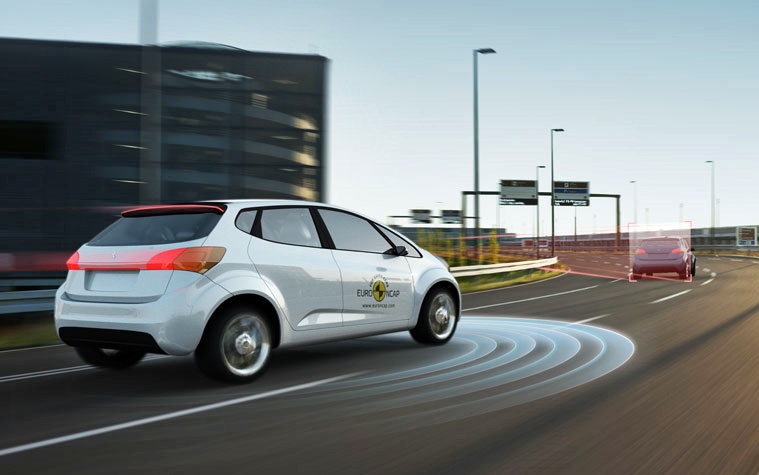
Euro NCAP, the independent organization which evaluates the safety levels of vehicles sold in Europe, has developed a dedicated test and assessment protocol, as well as a grading system for its Highway Assist tests. These tests are aimed at ensuring the safe adoption of assisted driving technologies and to provide consumers information to make their buying decisions.

Increasingly, vehicle manufacturers have been making use of the sensor-sets fitted to their vehicles to provide more extensive support to the driver. This is a prelude to greater autonomous motoring that will come in future.

Highway Assist
Highway Assist, the general name for a technology designed to make highway driving safer, helps by reducing fatigue. The system can help the driver to maintain a steady cruising speed, and to keep a safe distance from the vehicle in front. Such systems are generally known as Adaptive Cruise Control and can be found on an increasing number of models.

Adaptive Cruise Control can adjust the set cruising speed to maintain a safe gap with a vehicle ahead.

There is also a system to help keep the vehicle within its lane, with sensors monitoring lines on the road for guidance. If the vehicle is found to be departing from the lane, the driver will be alerted and some systems can also exert force to guide the vehicle back into the correct position in the lane.
However, the driver always needs to be responsible and engaged behind the wheel – the assisted system is there to do just that – assist. The systems are not flawless and should not lead or have full control, at least not at this stage in semi-autonomous motoring.

A camera monitors road lines to determine the position of the car in the lane, and the system will alert the driver if the car deviates from the lane.
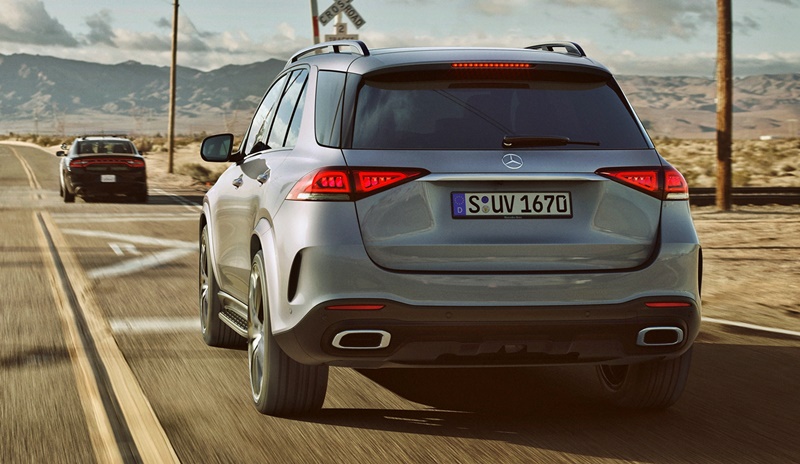
The test series has so far covered 10 models that offer Highway Assist – the Audi Q8, BMW 3-Series, Ford Kuga, Mercedes GLE, Nissan Juke, Peugeot 2008, Renault Clio, Tesla Model 3, Volkswagen Passat and Volvo V60.

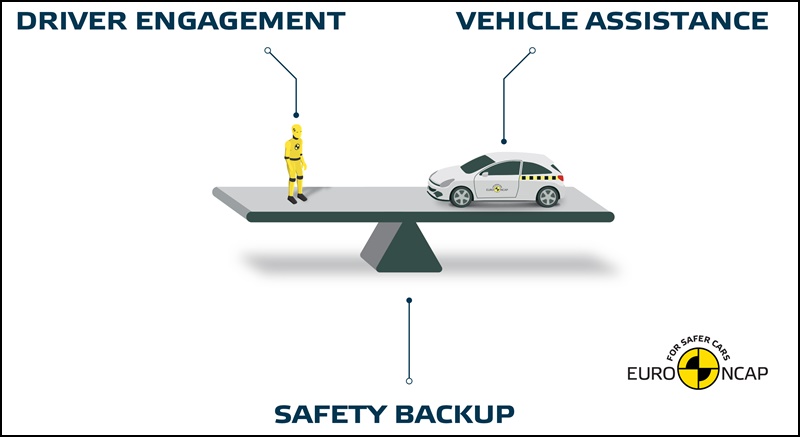
Euro NCAP’s new assessment protocols focus on two main areas: Assistance Competence – a balance between the technical competencies of the system (Vehicle Assistance) and the extent to which it keeps the driver alert and engaged (Driver Engagement) – and Safety Back-up, the car’s safety net in critical situations.

A unique grading system – similar to the 5-star safety rating – helps consumers understand the conclusions of the tests and compare assistance performance at the highest level. Each model falls into one of 4 categories: Entry, Moderate, Good and Very Good.

The findings
Three models in the premium segment – the Mercedes-Benz GLE, the BMW 3-Series and Audi Q8 – were graded Very Good, achieving a good balance between offering a high level of driving assistance but keeping the driver engaged and in control of the driving task. They also provide a good crash avoidance back-up system and respond appropriately if the driver becomes incapacitated while the car is in assistance mode.

BHPetrol RON95 Euro4M

High volume sellers Renault Clio and Peugeot 2008 were both given an Entry grade. Lacking the sophistication of the more advanced systems tested, they provide a relatively modest level of assistance, ensuring that the driver is not disengaged from the driving task.
Tesla’s pioneering role in self-driving technology is reflected in its top scores for Vehicle Assistance and Safety Back-up. However, its Autopilot system was found to do little to keep the driver engaged. Its distinct steering strategy gives the impression that either the car is driving itself or the driver has full control, and the system is more ‘authoritarian’ than cooperative. Grading-wise, the car is badly let down by its performance in Driver Engagement and ended up ranked ‘Moderate’.
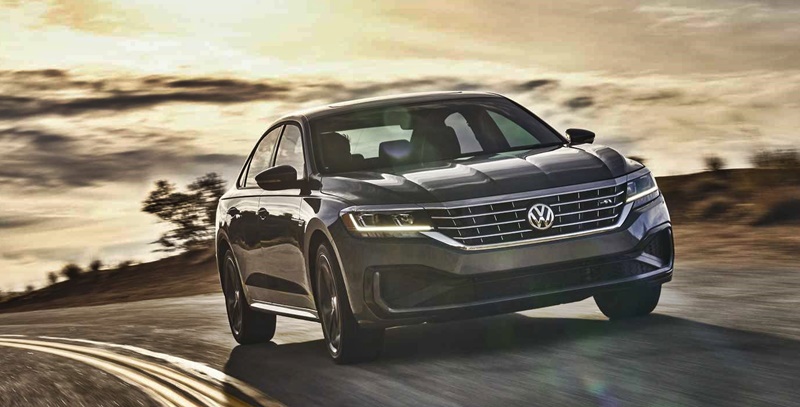
The Volkswagen Passat, Nissan Juke and Volvo V60 were also graded as Moderate. In particular, the Volvo, already on the market for a few years, shows that rapid advancements made in driving assistance technology require more frequent updates to keep up with premium cars. Finally, Ford’s latest Kuga achieved a Good grading, demonstrating that well-balanced, advanced systems are also available on mainstream mid-class vehicles.

Improved driver monitoring necessary
“Assisted driving technologies offer enormous benefits by reducing fatigue and encouraging safe driving. However, manufacturers must ensure that assisted driving technology does not increase the amount of harm incurred by drivers or other road-users compared to conventional driving. The best systems offer a balance between the amount of assistance they provide and the level of driver engagement – and should be supported by an effective safety back-up,” noted Dr. Michiel van Ratingen, Euro NCAP Secretary General.

“The results of this round of tests demonstrate that driving assistance is fast becoming better and more readily available, but until driver monitoring is significantly improved, the driver needs to remain responsible at all times.”

Euro NCAP assessments become tougher in 2020 with new protocols

BHPetrol Euro5 Diesel

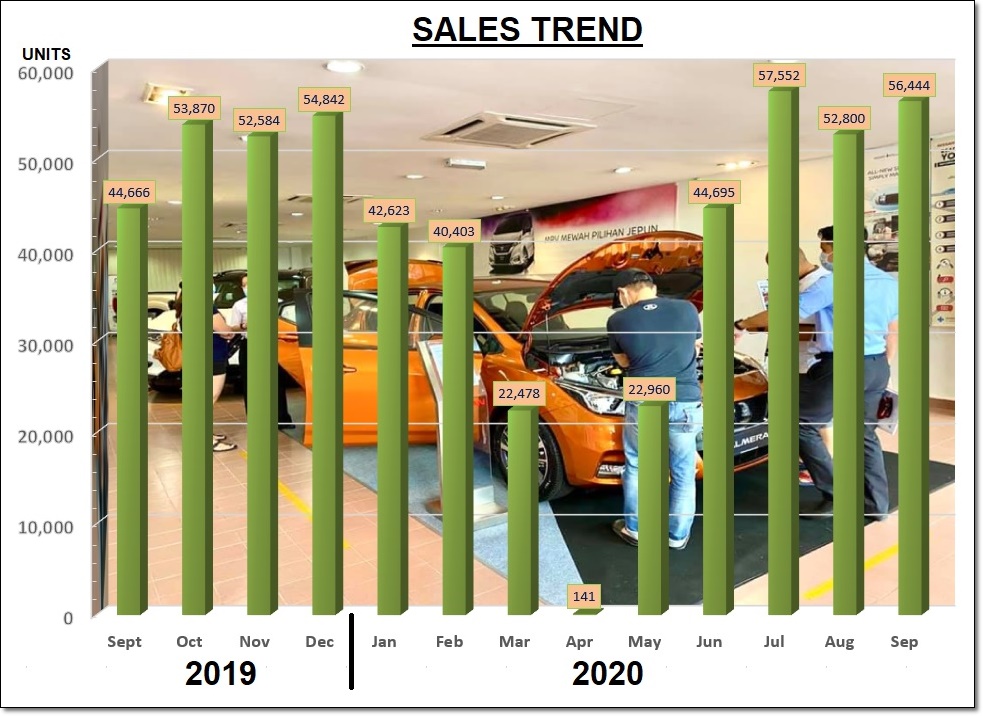
Source: Monthly reports of Malaysian Automotive Association

♦ The government’s Sales Tax exemption incentive continued to encourage many to buy new vehicles in September, pushing the Total Industry Volume past 56,000 units. In fact, it was 26% higher than the same month in 2019.

♦ Of the 56,444 units registered, 9.7% were commercial vehicles which includes pick-up trucks.

♦ Cumulative sales after 9 months have reached 341,489 units, To achieve the MAA’s 470,000-unit forecast for 2020, the industry must sell an average of 42,837 units in the remaining 3 months. Since July, the monthly sales have been over 50,000 units so the question will be whether this level can be sustained until the end of the year?

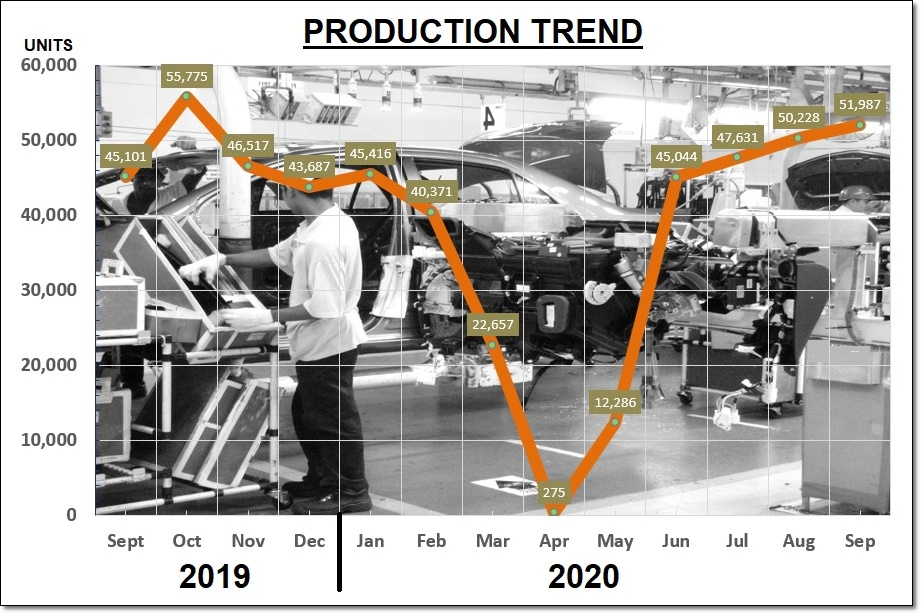
♦ Production rose slightly as most plants assembled as many units as possible to meet the higher demand. The output rose of 51,987 units was 15% higher than the same month in 2019, but output of commercial vehicles was lower by 26%.

♦ October numbers could be lower as the burden of making monthly instalments has resumed with the cessation of the loan moratorium that was provided by the banks as a form of assistance during this pandemic period. Furthermore, the imposition of the CMCO for two weeks in the month (if not longer) in the region with the most new vehicle sales may have an effect too. However, unlike the situation in March when all car companies had to suspend all activities, businesses can presently continue operating and relevant government agencies also process new vehicle registrations.

Source: Monthly reports of Malaysian Automotive Association

Social distancing

Social distance

As a leader in automotive safety, Volvo has obviously stayed abreast of all developments which affect drivers and driving. Understanding that maintaining concentration on driving and on the road ahead are vital for safety, the focus has always been to minimise distractions.

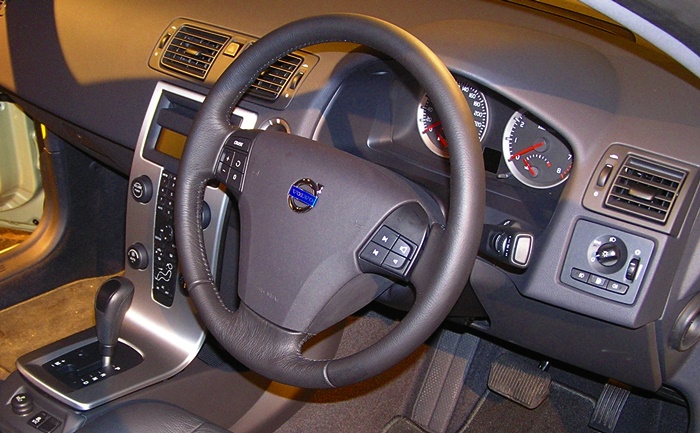
In the early 2000s, for example, the company introduced IDIS (Intelligent Driver Information System), an innovative feature in the S40. IDIS helped the driver prioritise the information and services in the car depending on the current driving situation. If necessary, the system would delay incoming phone calls and other information during times when the driver was in a situation of higher ‘workload’.

2nd generation of the S40 had IDIS (Intelligent Driver Information System) to reduce distractions during times when the driver was in a situation of higher ‘workload’.

More distractions today
In more recent times, with the increased use of smartphones and touchscreens inside cars, there has been a growing debate around the dangers of distraction behind the wheel. There are laws that restrict use of mobilephones during driving, and to address this, manufacturers installed handsfree systems to manage calls.

However, the safety experts at Volvo Cars see the issue n a different light. They say that distraction is ‘a fact of life’, and that technology should be used to support people in their daily commute. The company’s own safety research and behavioural science work suggests that when used correctly, modern technology inside the car can actively reduce distraction, boost road safety and help people to be better and more focused drivers.

“It is easy to think that phones and screens are the only scourge of the modern driver, but life as a whole is distracting,” said Malin Ekholm, Head of the Volvo Cars Safety Centre. “We know people do not get distracted on purpose, but it happens. You could be late for an appointment and somewhat stressed, or you get behind the wheel after a bad day at work – all this affects you as a driver.”

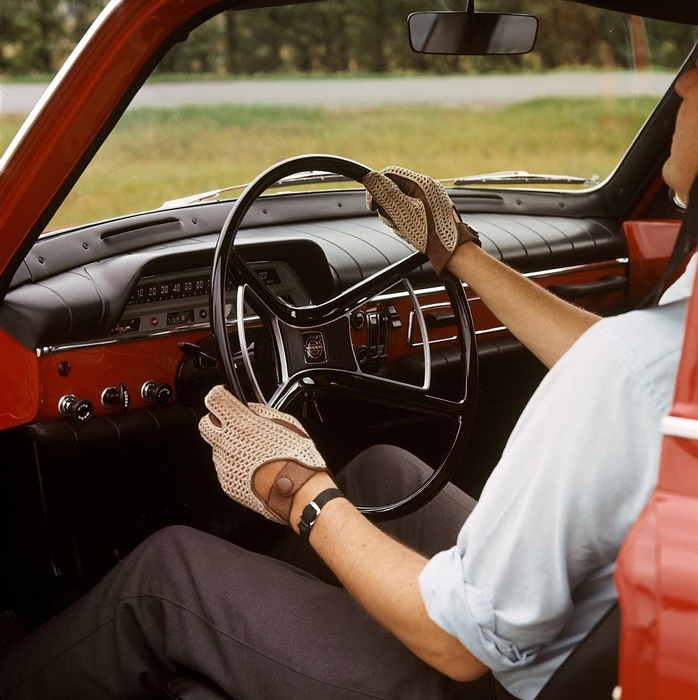
Perhaps older cars were ‘safer’ because the driver had less devices on-board to distract him?

How drivers and society really operate
Some would say that from a distraction point of view, a car from the 1940s is safer than today’s cars – after all, it does not contain a screen, phone connectivity or even a radio. But that is not how today’s drivers and society operate.

“The reality is that people want to engage with friends, family, work and entertainment, and everyone responds differently to distraction,” said Ekholm. “So we want to meet our customers where they are, not where we want them to be. That is why our focus is on using technology in the right way, so we can use it to help you stay safe behind the wheel.”

Volvo Cars actively uses technology to combat the dangers of distraction, so as to offer some of the safest cars on the road. For example, its Active Safety systems with autobrake and steer assist are designed to be on guard to help drivers if they lose concentration or are distracted for a split-second.

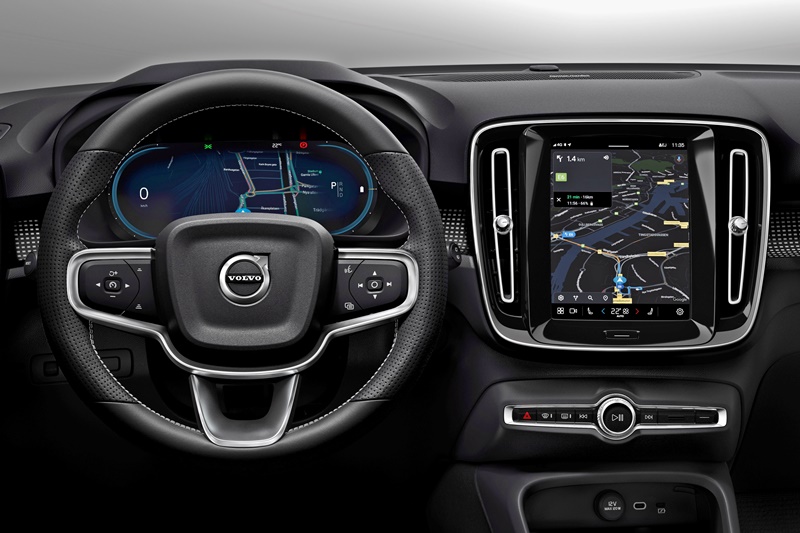
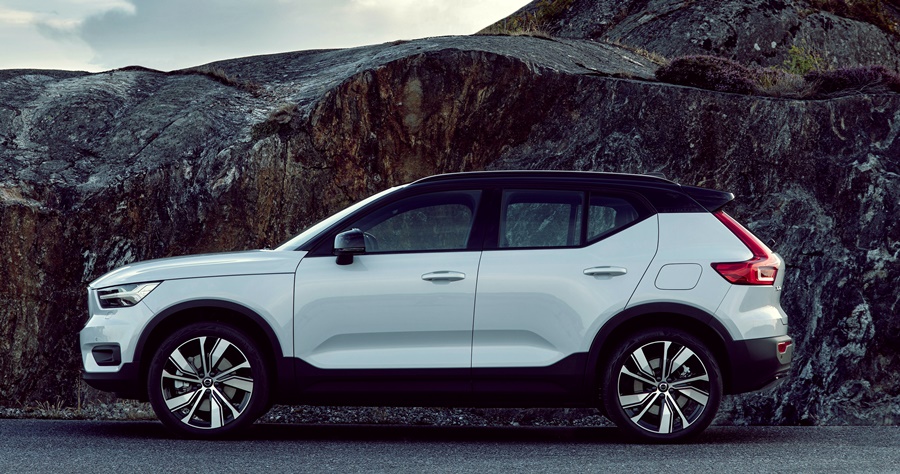
All-electric XC40 Recharge has a new Android-powered infotainment system that can help reduce distractions.

Andorid-powered infotainment system
In the new XC40 Recharge Pure Electric, an advanced voice control on Volvo Cars’ new Android-powered infotainment system allows drivers to control the temperature, set a destination, play their favourite music and podcasts or call their mum on her birthday – all while keeping their hands on the wheel and eyes on the road ahead.

“Being able to control key features on your Volvo by voice allows you to keep your hands on the wheel and your eyes on the road,” said Ekholm. “Active Safety systems such as City Safety, Run-off Road Mitigation and Oncoming Lane Mitigation with Steer Assist can act as an extra pair of eyes watching over you.”

New XC40 Recharge

Volvo Cars believes that distraction should also be addressed via in-car cameras and other sensors that monitor the driver. With such technologies, if a clearly distracted (or drunk) driver does not respond to warning signals and risks a serious, potentially lethal accident, the car could intervene.

That intervention could involve limiting the car’s speed, alerting the Volvo on Call assistance service and, as a last resort, actively slowing down and safely parking the car. Volvo Cars plans to start introducing these cameras on the next generation of Volvo’s scalable SPA2 vehicle platform.

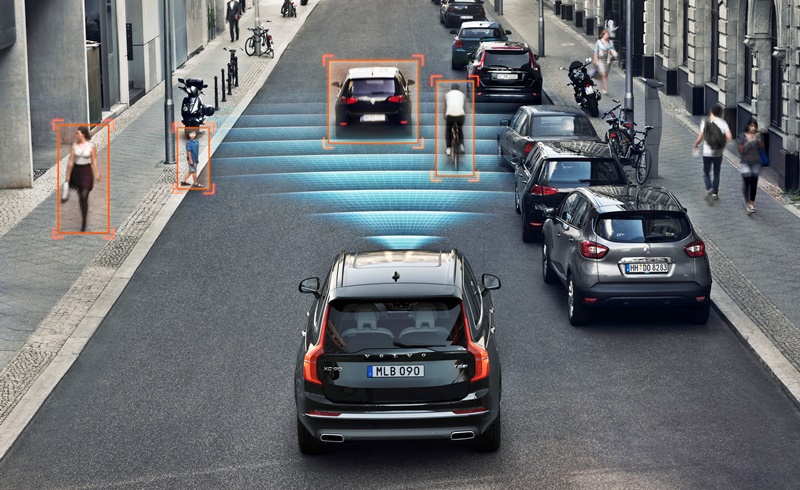
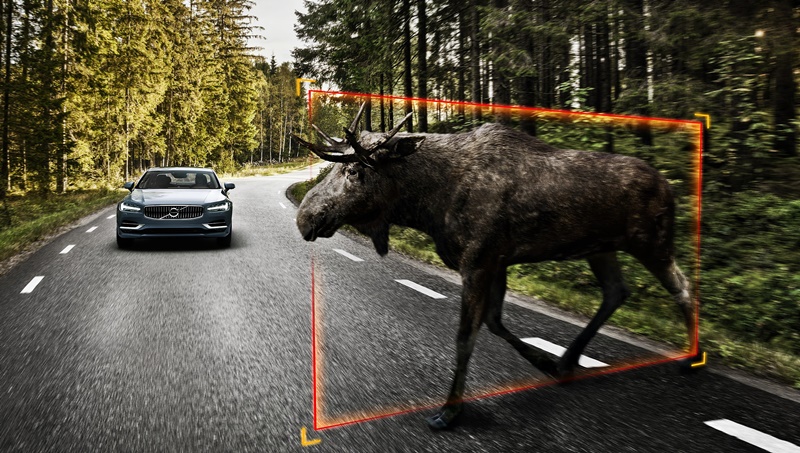
Volvo has already installed Active Safety Systems that can spot pedestrians and animals on the road and stop the car if the driver does not take the right action.

Humans have not changed much during a couple of thousand years. It’s a huge challenge to educate a human being into the perfect driver so Volvo designs its vehcles instead to help prevent the driver from having an accident – and to protect everyone in the car as well as possible if a crash is unavoidable.

Soon, you will be able to go only up to 180 km/h in any Volvo

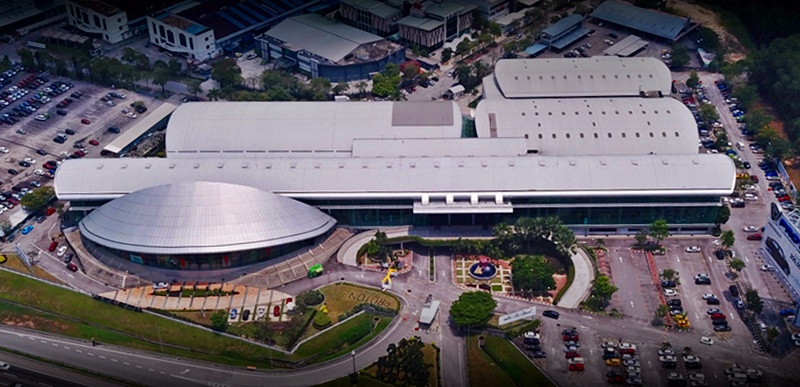
Following an earlier report of one employee at the Proton complex being found to have tested positive for COVID-19 on October 14, the carmaker has now found that there are another 49 others who are also infected at the Shah Alam, Selangor, facility. All the affected personnel are from the Engineering Division at the facility.

Beside notifying the authorities, Proton has requested all non-essential personnel who work within  the facility to work from home as a precautionary measure. The company has been adhering  to official protocols and SOPs and will continue its efforts with more stringent actions to ensure prevention of further spread.

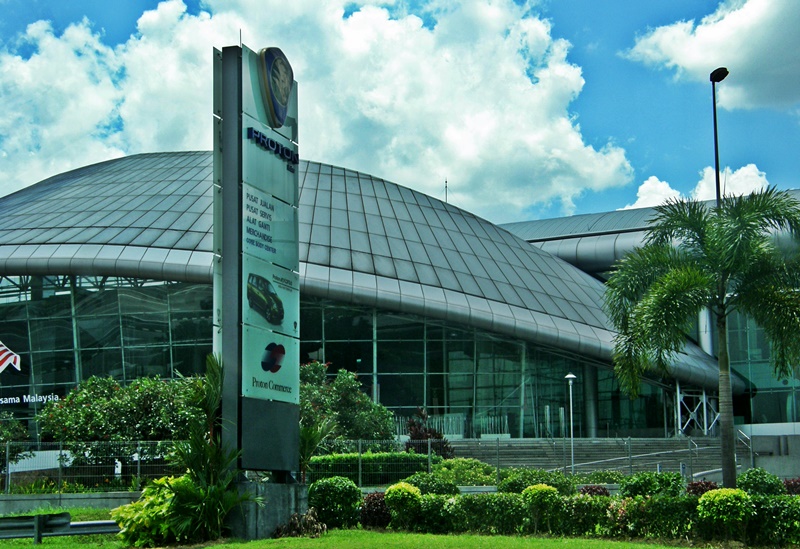
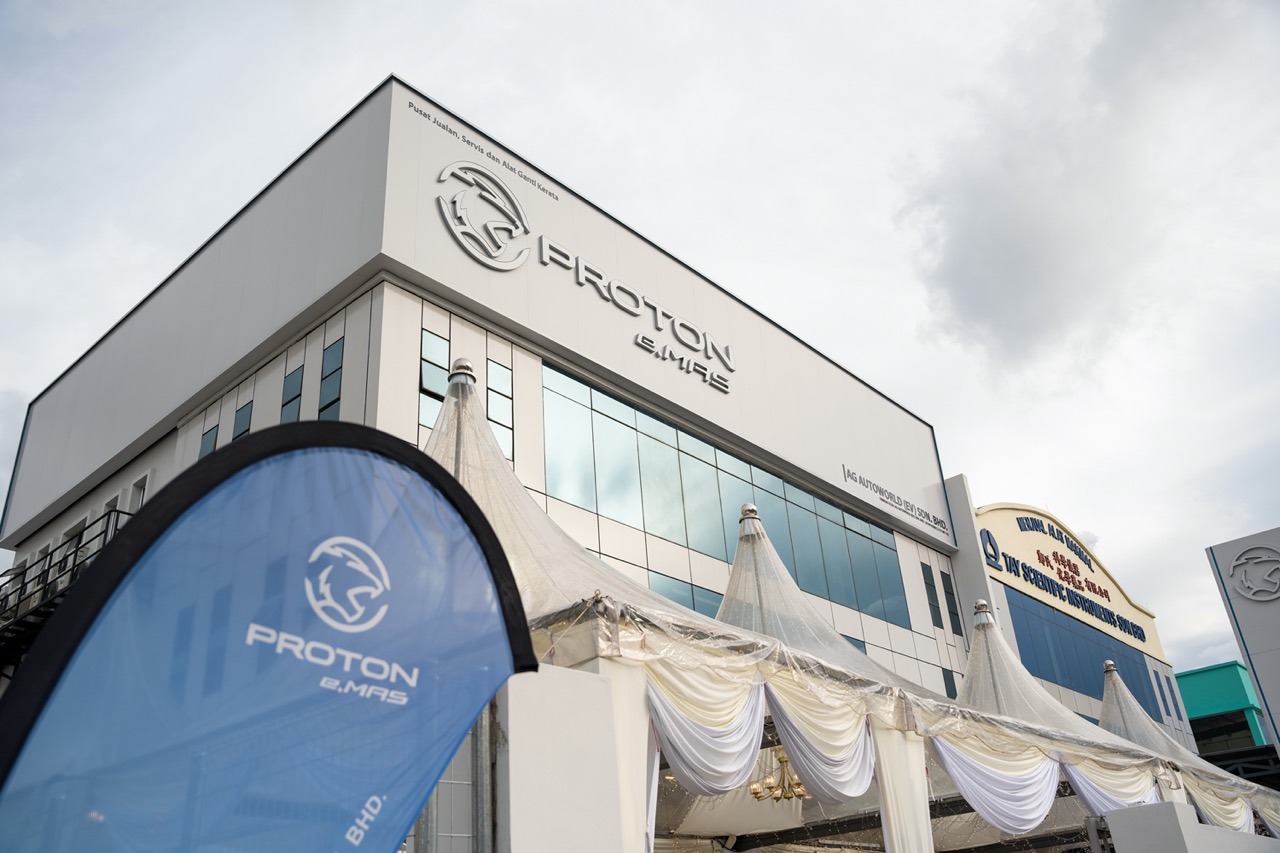
Proton head office and Centre of Service Excellence/Showroom in Shah Alam, Selangor

Hourly disinfection procedure at COSE
Contact tracing is ongoing and a COVID-19 team is monitoring the situation very closely. In a statement issued this evening, Proton reassures all its customers that it will continue to strictly follow all  guidelines and procedures as it has been doing from the start of the pandemic. The Centre of Service  Excellence (COSE) and showroom are disinfected hourly and all customer-facing personnel follow a rigorous  procedure.

“Proton is working with the authorities who have guided the company through the process and are satisfied with the actions taken thus far. The safety of all Proton staff, customers and Malaysians is of  the utmost importance to the company and will be its main priority,” the statement said.

Proton employee tested positive for COVID-19

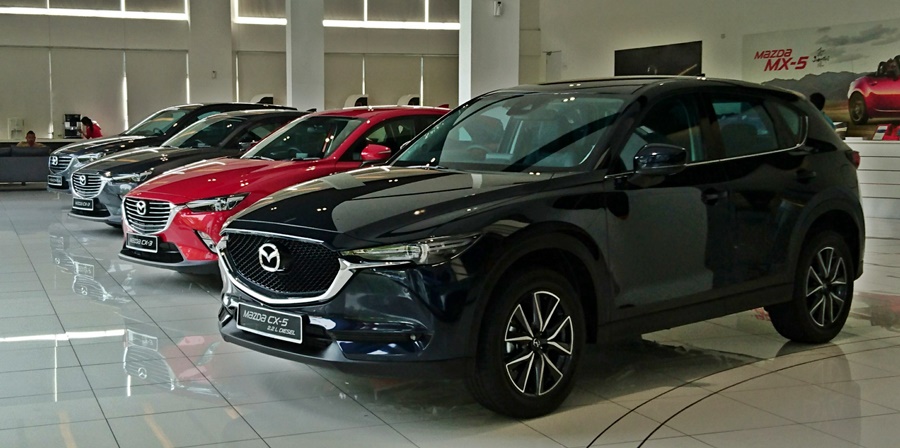
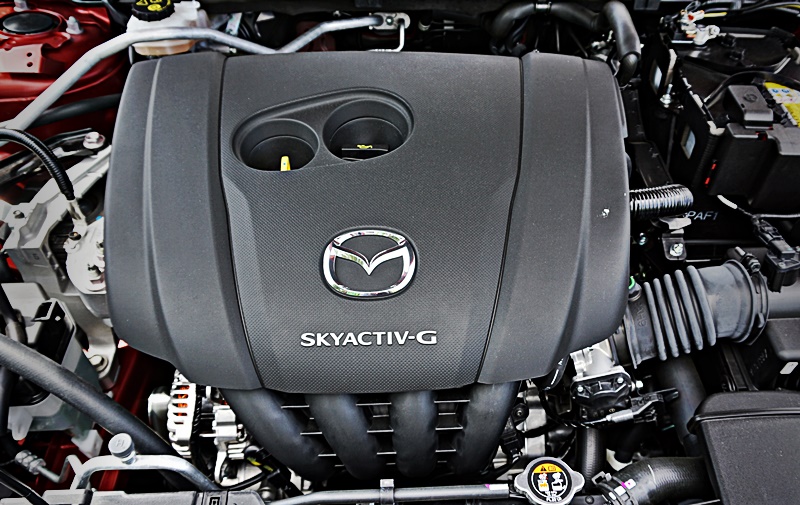
Mazda Corporation has announced a product recall of 6 of its models which were manufactured between 2017 and 2019. The recall is a precautionary measure relating to a fuel delivery module (fuel pump) which needs to be replaced. A defect in the module could result in loss of engine power or vehicle stalling.

19,685 units in Malaysia
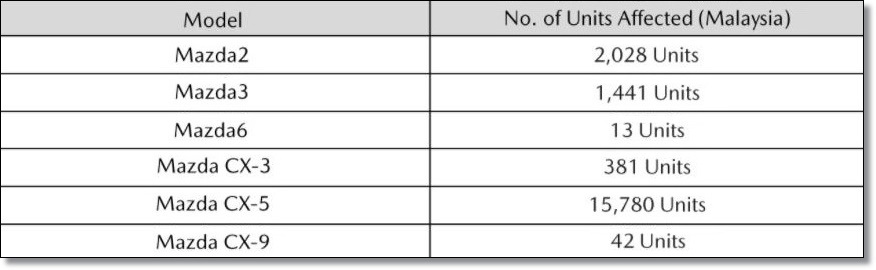
Mazda vehicles sold in China, ASEAN and other are affected and in Malaysia, Mazda has identified a total of 19,685 units of vehicles affected. The model ranges affected are the Mazda2, Mazda3, Mazda6, CX-3, CX-5 and CX-9. Bermaz Motor, the distributor, stresses that all 2020 production models are not affected.

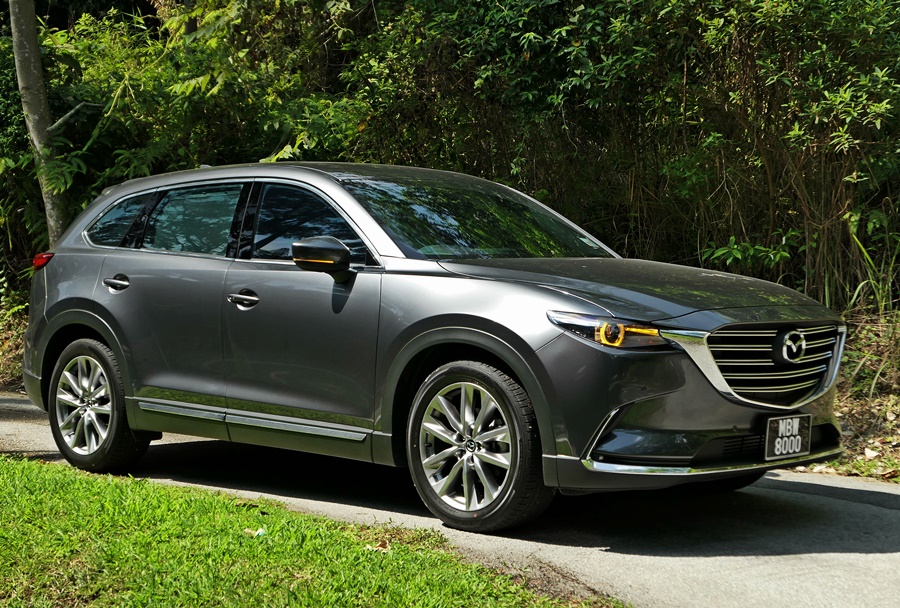
CX-9 is among the models affected.

Owners being notified my mail and SMS
Bermaz Motor is handling the matter as quickly as possible to minimise inconvenience to owners. All owners of affected vehicle will be informed via notification letters and mobile SMS, which will include details of the product recall. Upon receipt of notification to replace the fuel pump, they should contact any Bermaz authorized service centres to make an appointment for the replacement.

In the meantime, if an owner experiences unusual conditions while driving the vehicle, it is important to stop the vehicle in a safe place and make contact with a Bermaz authorized dealer or service centre for advice and assistance.

Replacement costs are covered by Bermaz
The replacement of the fuel pump all costs related to this activity will be borne by Mazda Motor Corporation. The duration of work is estimated to take approximately 1.5 hours or slightly longer, depending on the model and the service centre workload at the time of appointment. Replacement stocks will be available in stages.

It is possible that some owners may not receive the notification as they may not be the original owners and their contact details might not be with Bermaz. In such a case, they can check by visiting the Mazda Recall Information Centre website at mazda.com.my/mazda-recall-information-centre. By providing their vehicle chassis number, they will be able to know if it is on the recall list.

Click here for other news and articles about Mazda and Bermaz Motor.


Three-cylinder engines in cars are nothing new; Daihatsu popularized the engine configuration in the late 1970s with its Charade and then it was widely used by Perodua. Since the 21st century began 20 years ago, manufacturers have been downsizing engines as one way to reduce fuel consumption. However, unlike those older small engines, today’s downsized engines have a lot of advanced technology to help them develop high outputs and run even more efficiently.

The HR10DET engine in the all-new Nissan Almera Turbo is a good example. It has a displacement of 1 litre but can generate up to 100 ps with 152 Nm. This is comparable to a 1.5-litre engine so the driver enjoys the benefit of a smaller displacement which will consume less fuel – without sacrificing performance, which was the case before.

Nissan HR10DET engine in Nissan Almera Turbo

Some of the features which helps the HR10DET engine, which has 3 cylinders, achieve its high output are 4 valves per cylinder for better breathing efficiency and two overhead camshafts in the cylinder head (DOHC).

Boost from turbocharger
A major contributor to the power output is the use of a turbocharger. Once found only in high-performance engines, the turbocharger is now commonly used for small engines to boost output and response. In the case of the Nissan engine, maximum torque is available between 2,400 and 4,000 rpm, a range that is frequently used in daily driving. With maximum torque available, overtaking can be done quickly and safely.

The turbocharger has an Electronic Wastegate which operates far more efficiently than a conventional mechanical wastegate. A sensor monitors compression levels and enables the wastegate to activate whenever necessary, allowing turbocharging to be maximized. As a result, turbo lag is virtually eliminated for strong acceleration when needed.

Cooling down the air
For a turbocharger to operate at its best, the air flowing through needs to be cool so it can be compressed as much as possible, maximizing the charge. For this reason, an intercooler is installed behind the front grille and effectively cools down the air.

BHPetrol RON95 Euro4M

Technology from GT-R engine
Friction robs an engine of power and engineers work hard to find ways to bring internal friction down. For the HR10DET engine, they drew on the Mirror Bore Coating technology from the legendary Nissan GT-R. Mirror Bore Coating technology can raise energy efficiency by reducing the friction significantly inside the engine.

Rather than inserting a cylinder liner, the technology uses molten iron sprayed onto the surface of the cylinder bore to form a layer of iron coating on the walls inside. This achieves a mirror-like finish that is exceptionally smooth, thereby bringing down friction levels.

Normally, the cylinder liner is 2 mm thick but with Mirror Bore Coating technology, the layer is just 0.2 mm thick, saving weight. The extremely thin layer allows better heat conduction which results in enhanced cooling performance and less engine knocking. The efficiency of the engine as a whole is improved, and fuel economy as well as engine power are enhanced.

D-Step Logic System
The powertrain of the Almera Turbo also includes a next-generation XTRONIC CVT with D-Step Logic System to improve shift feel and responsiveness. The D-Step Logic System is a computer program that uses dynamic inputs such as vehicle speed, accelerator pedal position and application speed to determine ideal gear ratios needed to provide smooth, constant acceleration.

Drivers will feel the shifting being like a conventional automatic transmission with a torque converter (which we can confirm after our short test drive) and with the flexibility and smoothness of a CVT. A Sport mode is available to gain stronger acceleration when required.

“The all-new 1-litre turbo engine is designed to meet our customers’ needs. It provides the highest level of fuel economy – up to 18.4 kms per litre – which can provide up to 650 kms on one full tank. The CO2 emission level has also significantly been reduced by 18% compared to its predecessor. making the All-New Almera Turbo even more environmentally friendly,” said Christopher Tan, Sales & Marketing Director of Edaran Tan Chong Motor.

Selected Nissan showrooms around the country are offering test-drives of the new model so you can experience for yourself the performance of the car. Visit www.almeraturbo.com.my to locate a showroom and by the way, when you take a test-drive, you could also win an Apple iPhone SE worth RM2,199.

Archive

Follow us on Facebook

Follow us on YouTube