Piston.my

English

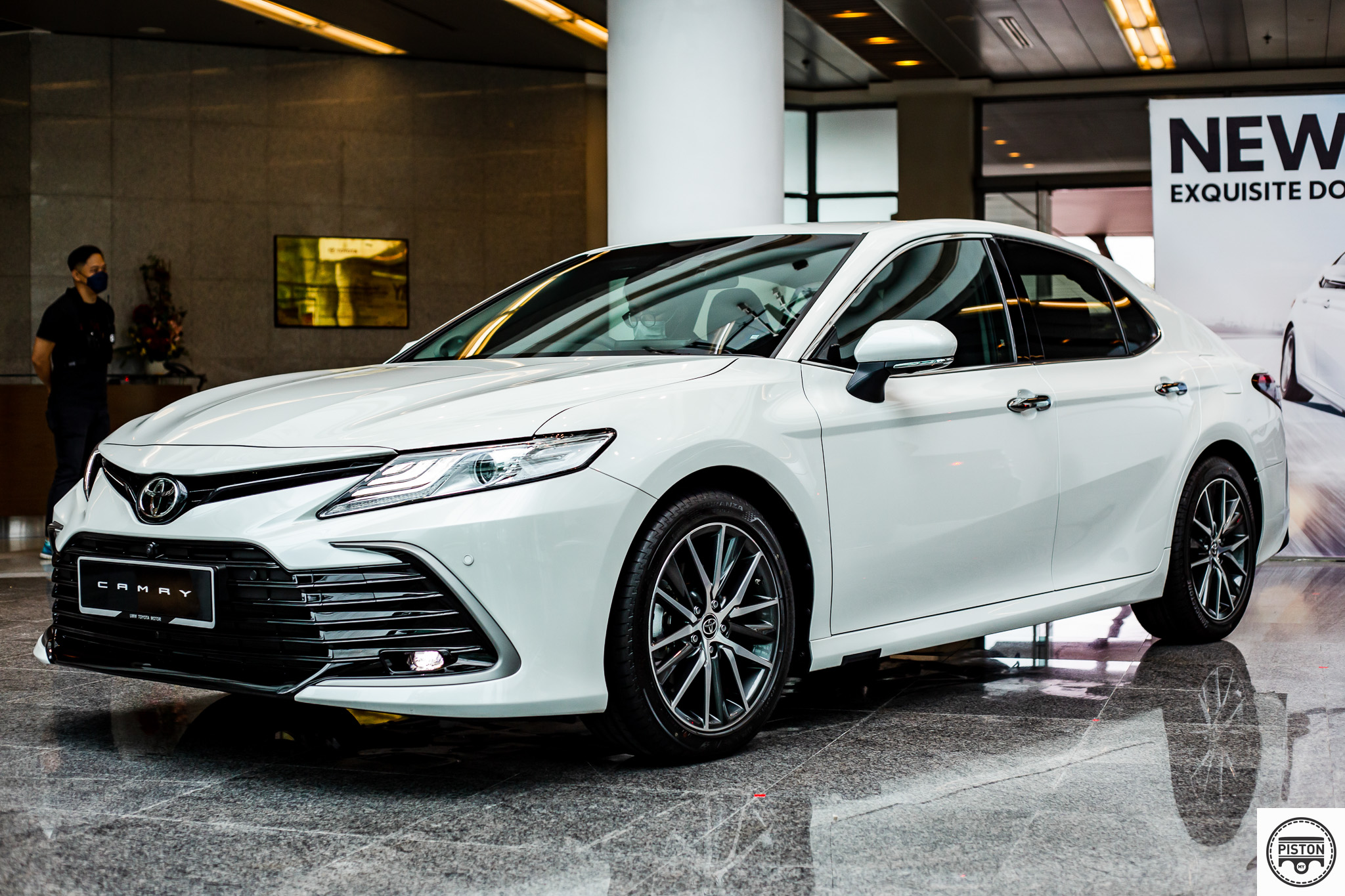
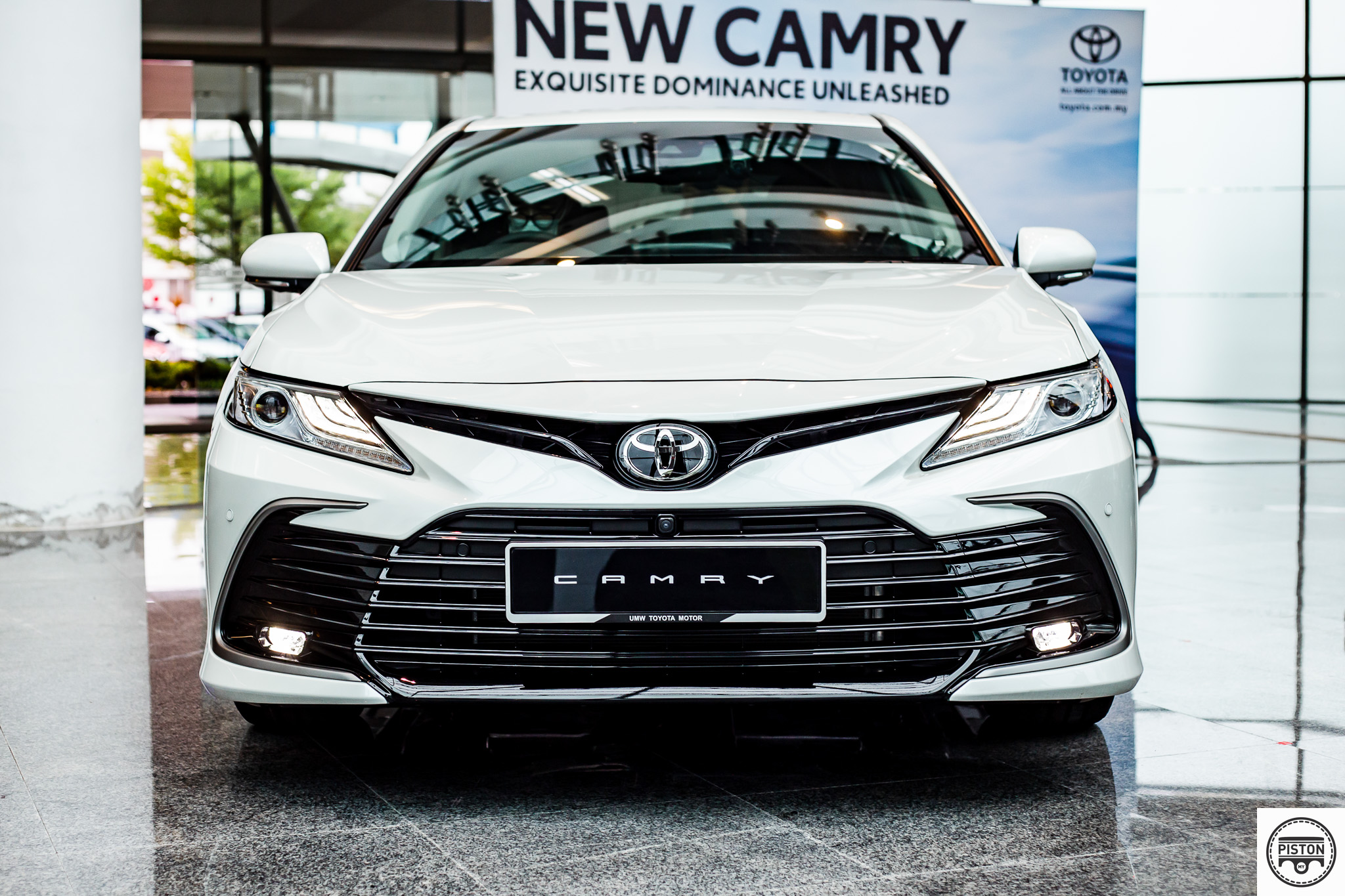
The current Toyota Camry was introduced in 2018 in Malaysia and in the normal course of a model cycle, it would be around now that some freshening takes place. Typically, this involves cosmetic changes and perhaps the addition of an extra feature or two so that the model remains competitive against newer rivals with the latest features.

Rarely would you find the model getting a new engine and in fact, powertrains used to be maintained for at least a decade because it cost so much to develop them. But these days, the market is more competitive and so changes have to be more frequent than before.
Dynamic Force engine
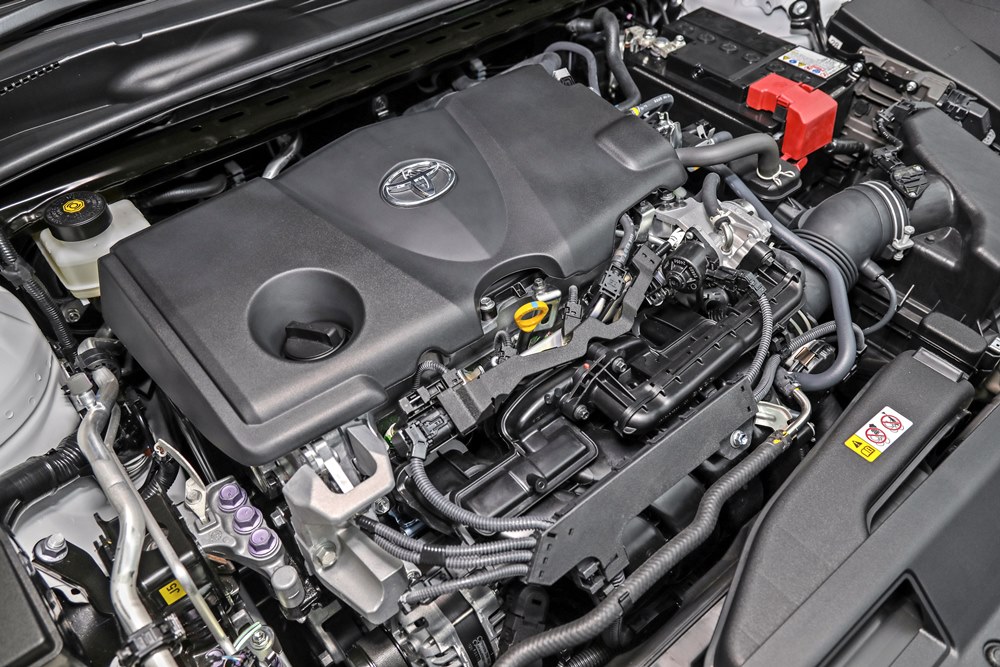
That’s the case with the latest Toyota Camry 2.5V which gets a brand new engine. It’s from the Dynamic Force family which is a new range of engines that use high-speed combustion technologies to achieve what is claimed to be world-leading thermal efficiency for production engines. With the significantly reduced energy losses, the 4-cylinder engine produces 209 ps/253 Nm, which represent increases of 25 ps (+13.6%) and 18 Nm (7.6%), compared to the previous engine which had the same displacement.
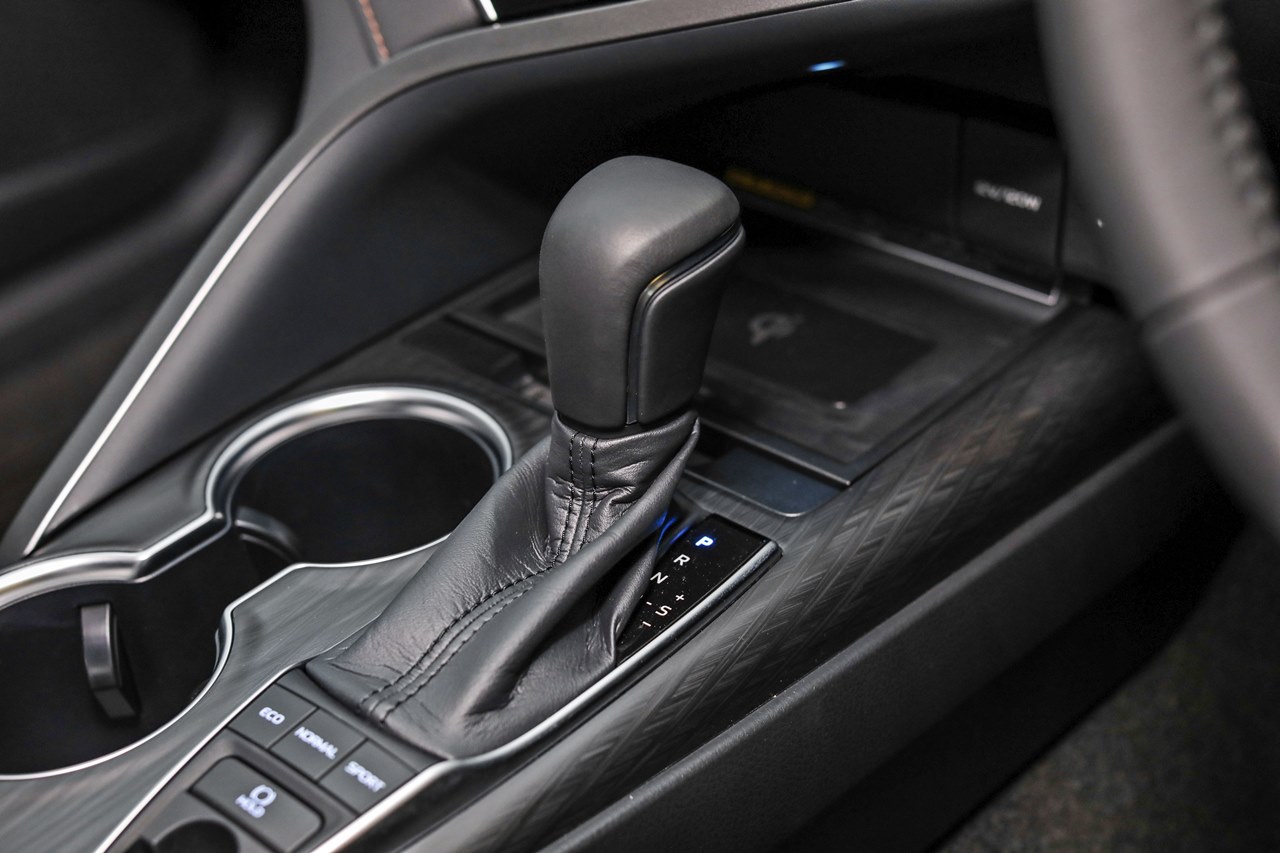
With the new engine, the development team also took the opportunity to upgrade the transmission, replacing the 6-speeder with a more advanced Direct Shift 8-AT automatic transmission. This makes the Camry the only model in its class (locally) to offer an 8-speed automatic transmission. Though having more gear ratios, the transmission is lighter and more compact, and operates with greater efficiency too.

The Dynamic Force engine was developed together with the Toyota New Global Architecture, or TNGA in short, which is a lightweight, high-performance platform used for this generation. Having developed the engine together with the TNGA has provided better optimization with the engineers having greater flexibility to enhance not just fundamental vehicle performance but also styling.

More intelligent safety systems
The other area which has received upgrading is the Toyota Safety Sense (TSS) system. This integrates 5 active safety systems which use a camera and radar. The two sensors scan the road ahead to identify other vehicles as well as recognize lane markings. The information and imagery is then constantly analyzed and if an accident is predicted, the driver will be warned. If no corrective action is taken, then the computer will take its own action, like activating the brakes.

For the new Camry 2.5V, the camera has increased recognition capabilities and can also detect pedestrians and cyclists during the day as well as at night when lighting conditions are low.
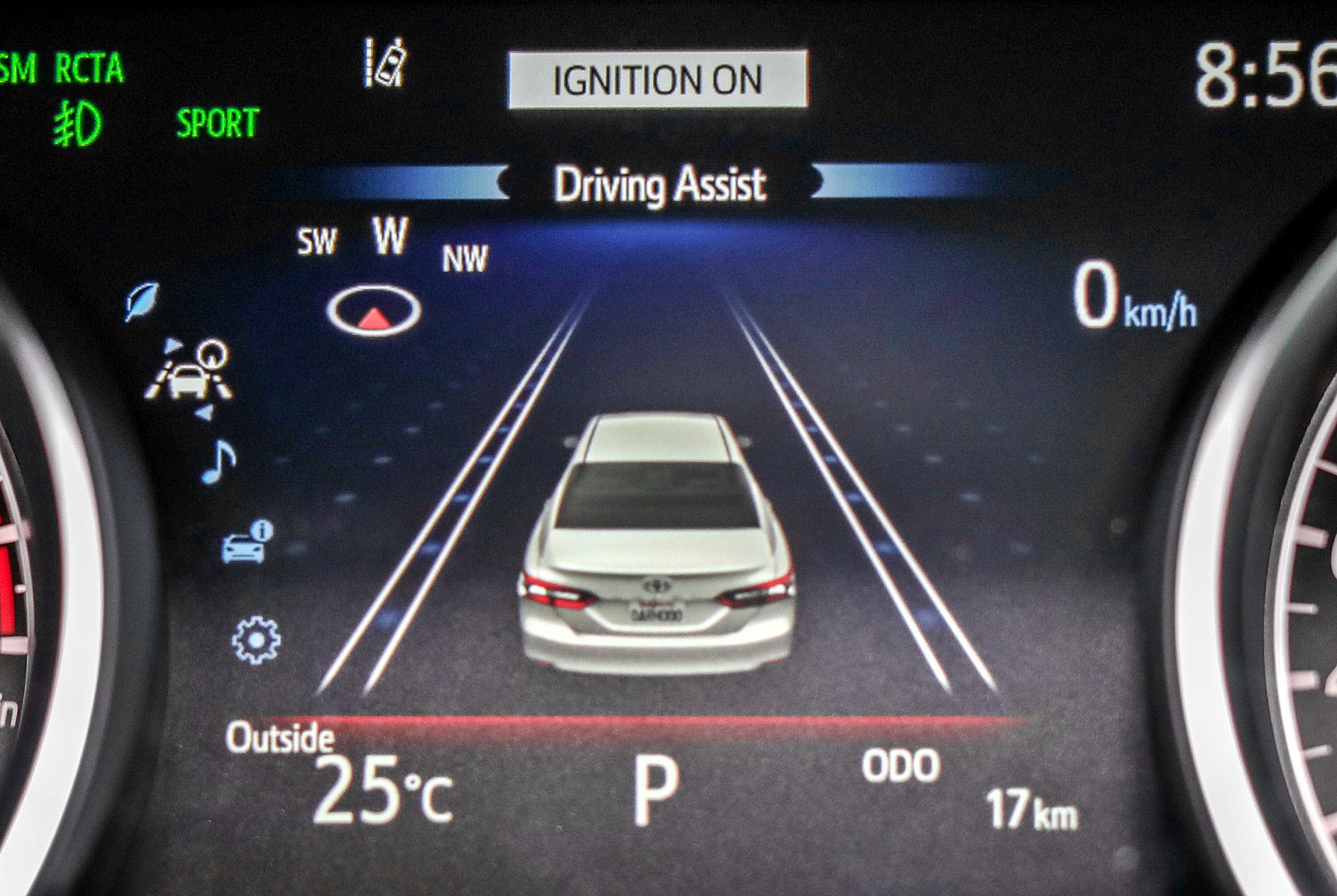
TSS includes a lane-keeping capability and this is useful on long journeys. By keeping the car within its lane, the driver will be less fatigued as steering effort is reduced. More importantly, it can warn the driver when he or she loses concentration and the car starts to move out of its lane. Again, if corrective action is not taken, the system will make steering corrections to guide the car back safely.

Dynamic Radar Cruise Control is part of TSS but earlier, it had limitations in speed. With the new Camry, the system has been upgraded to be active at all speeds. This means that the car can even slow down to a stop if the vehicle in front stops, and then resume moving when the vehicle ahead moves. It can make driving in start/stop traffic less stressful and the only thing the driver has to do is steer because a safe gap will always be maintained.
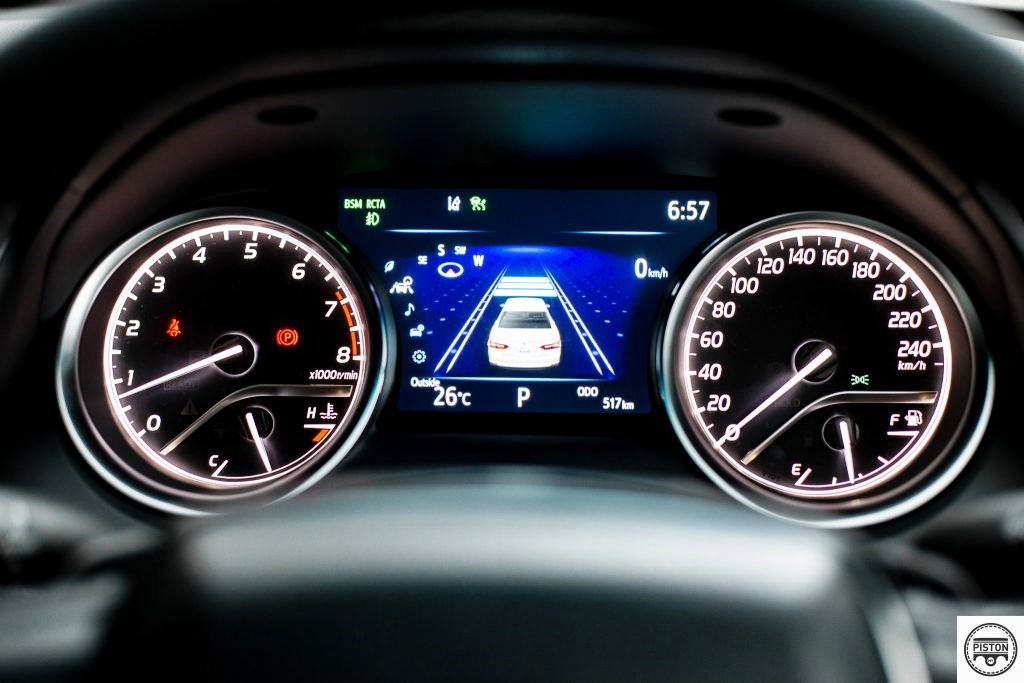
The final sub-system of TSS is Adaptive High Beam which basically adjusts between high and low beams automatically. This is to provide illumination that is as strong as possible but switching to low beams when necessary to avoid blinding oncoming drivers. Incidentally, the headlights have new Bi-Beam LEDs which deliver even stronger lighting.

Besides TSS, the Camry also comes with other driver assistance systems such as a Panoramic View Monitor, Rear Cross Traffic Auto Brake (RCTAB), Blind Spot Monitor, and Intelligent Clearance Sonar (ICS).

While the Rear Cross Traffic Alert was available in the previous model, the system in the latest Camry has been improved with the addition of an automatic braking capability (RCTAB). Besides just alerting the driver of a vehicle approaching from the left or right as the car is being reversed out of a bay, the system will also brake the car if the driver does not stop. This can prevent an accident or reduce the severity if it does occur.
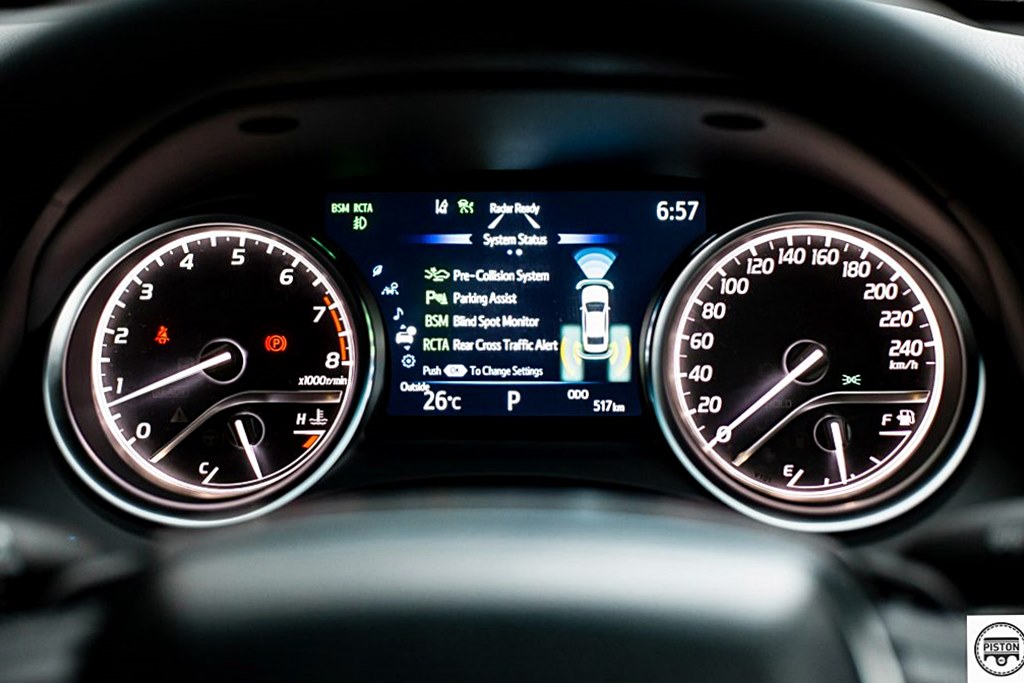
Newly added, ICS is an advancement over having just sensors at the front and rear bumpers to detect obstacles or walls when parking. It is ‘intelligent’ as it will determine if there is a risk of the car hitting an obstacle like a wall or post and if so, the brakes will be applied to stop the movement of the car. This will help prevent damage to the car’s bodywork.

More scope for cabin packaging
With the adoption of TNGA, the 8th generation Camry could be completely redesigned with a wider scope than ever before. This allowed for a completely new interior layout combining functionality, advanced styling and a high degree of personal craftsmanship. The layout has a strong focus on the driver’s area and to improve viewing for the driver, the centre display screen position has been set higher, located above the centre air vents.
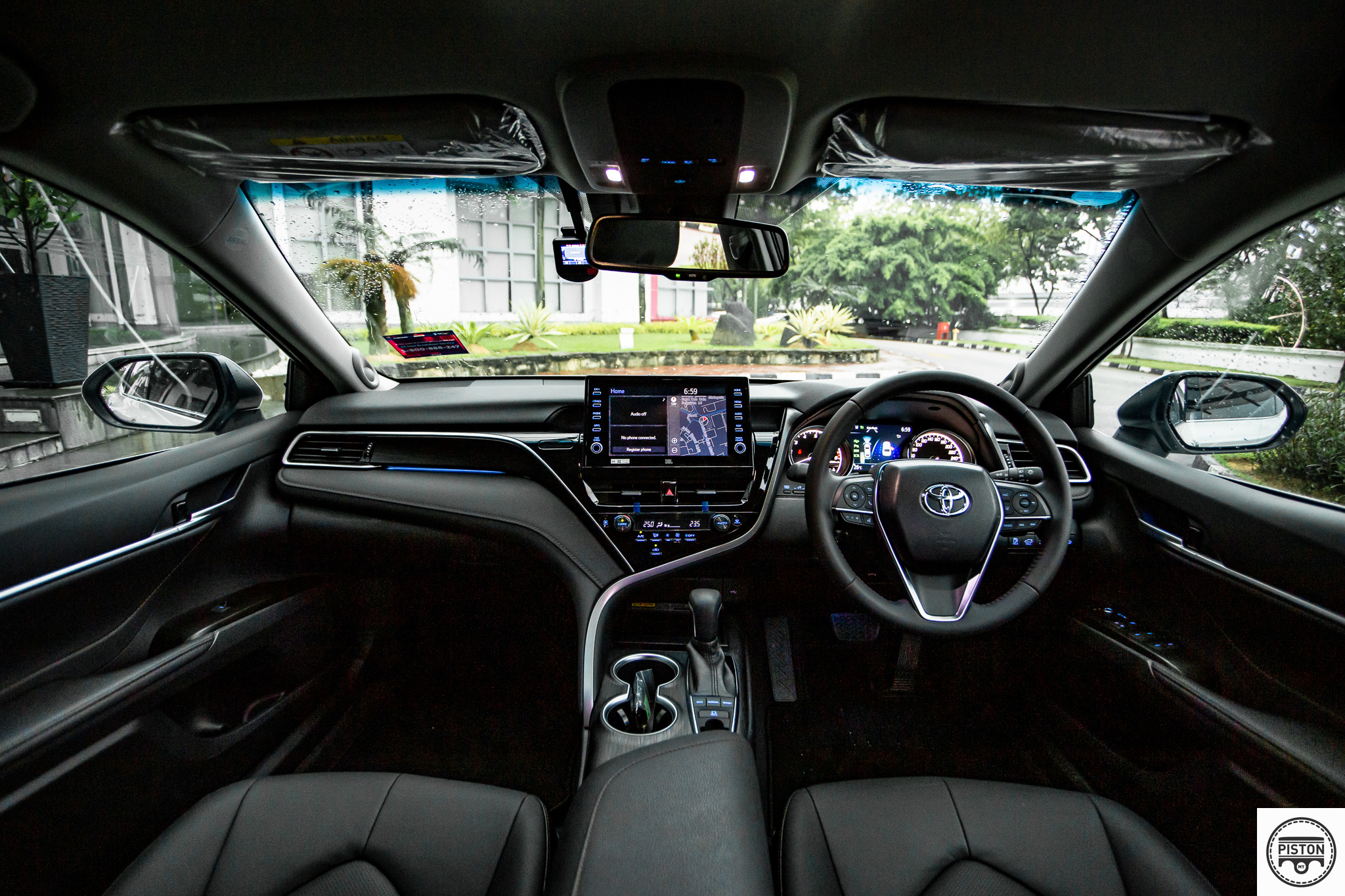
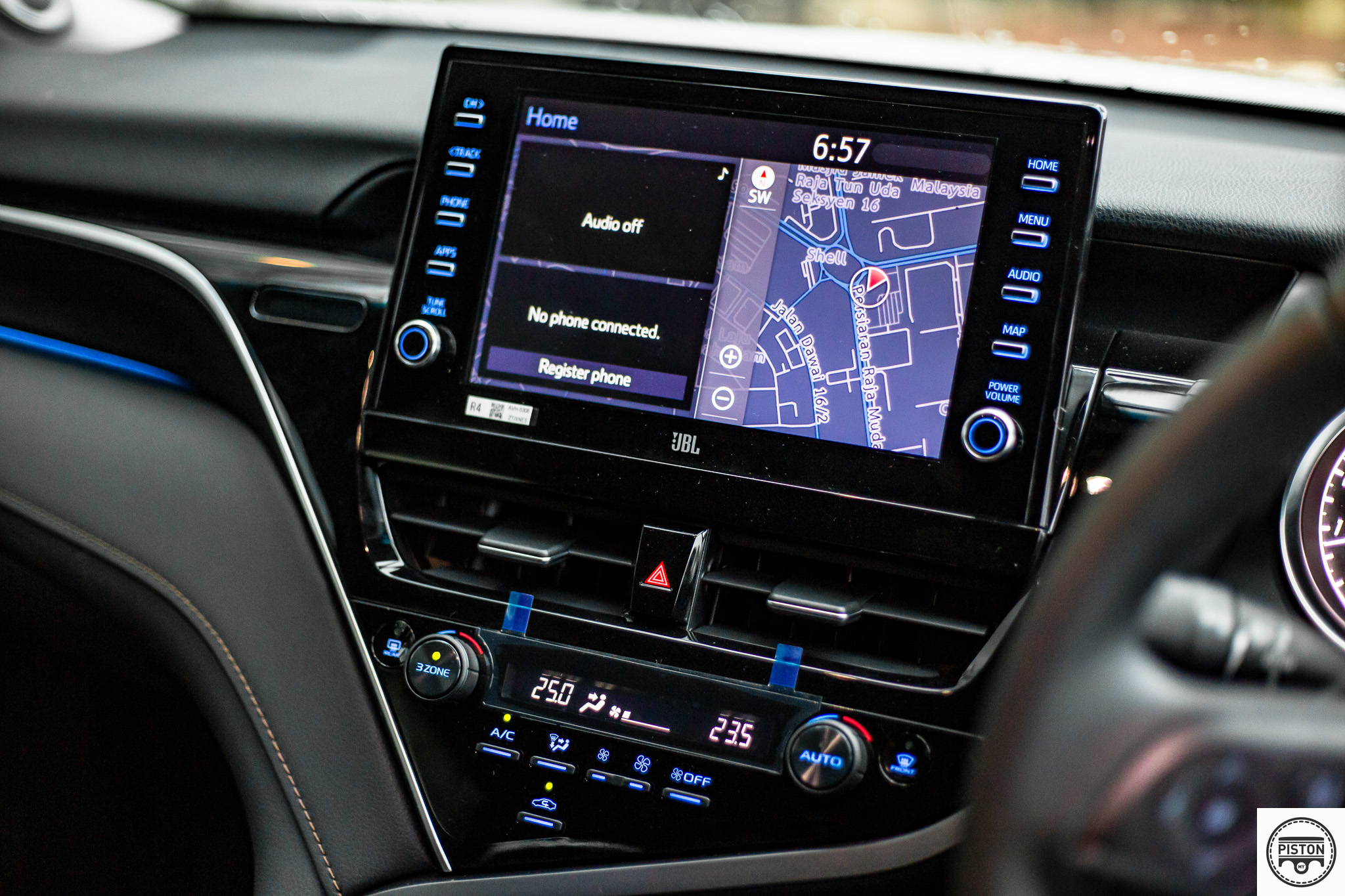
Besides the Optitron meters, the driver can also refer to the Head-up Display (HUD) projected on the windscreen ahead of the steering wheel. Information shown is the road speed, gear position, Driving Support System (directions, ACC display, LDA Display, Parking Sensor), audio details and TSS warning alerts. The HUD, adapted from aircraft displays, allows the driver to keep his or her eyes on the road ahead for better driving safety.

New futuristic grey ornamentation has been added to provide an elegant and neat impression. Based on a composite pattern with straight lines and overlapping an organic base pattern, the ornamentation evokes an expansive and layered feel that creates an elegant ambience.
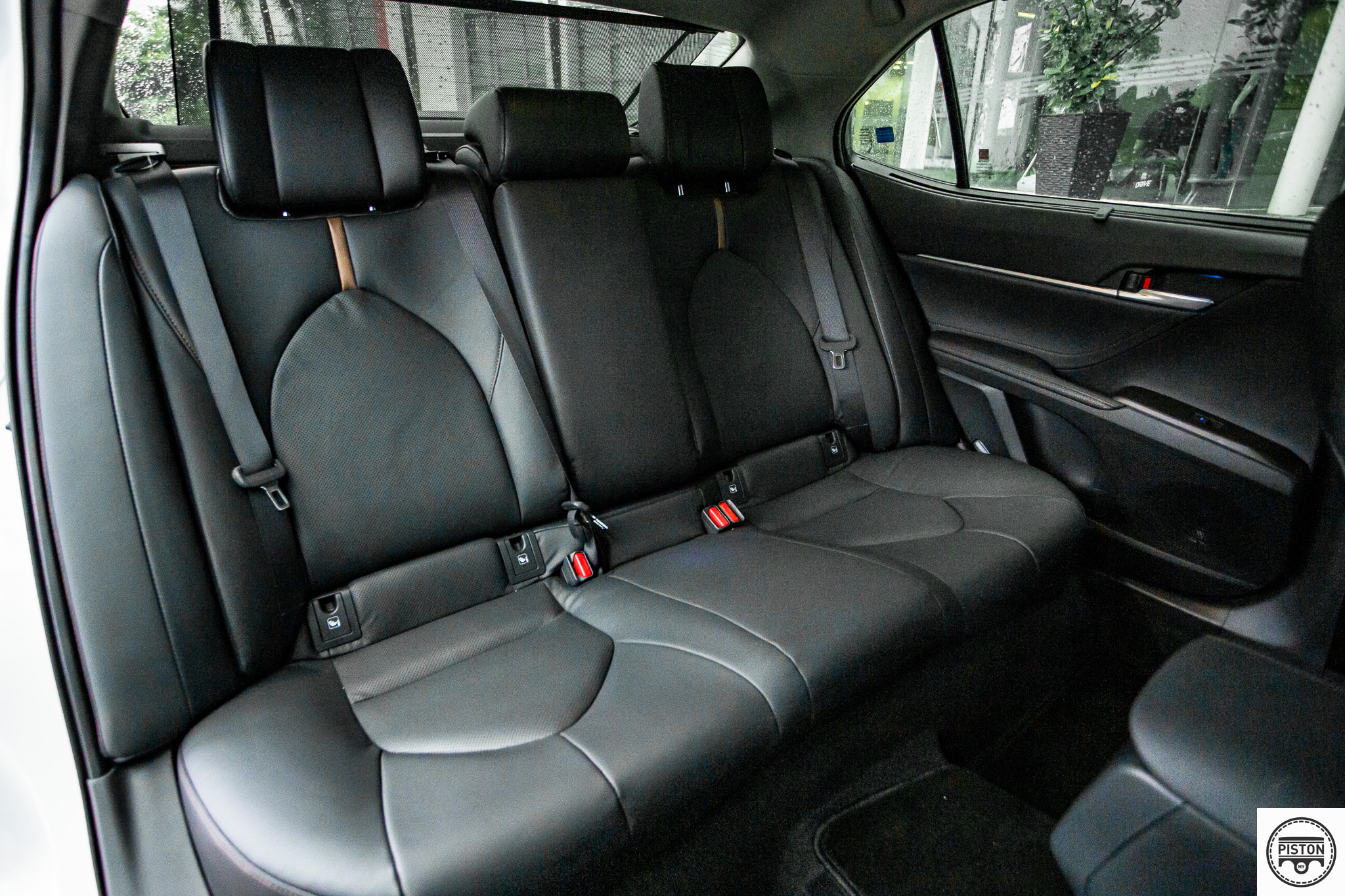
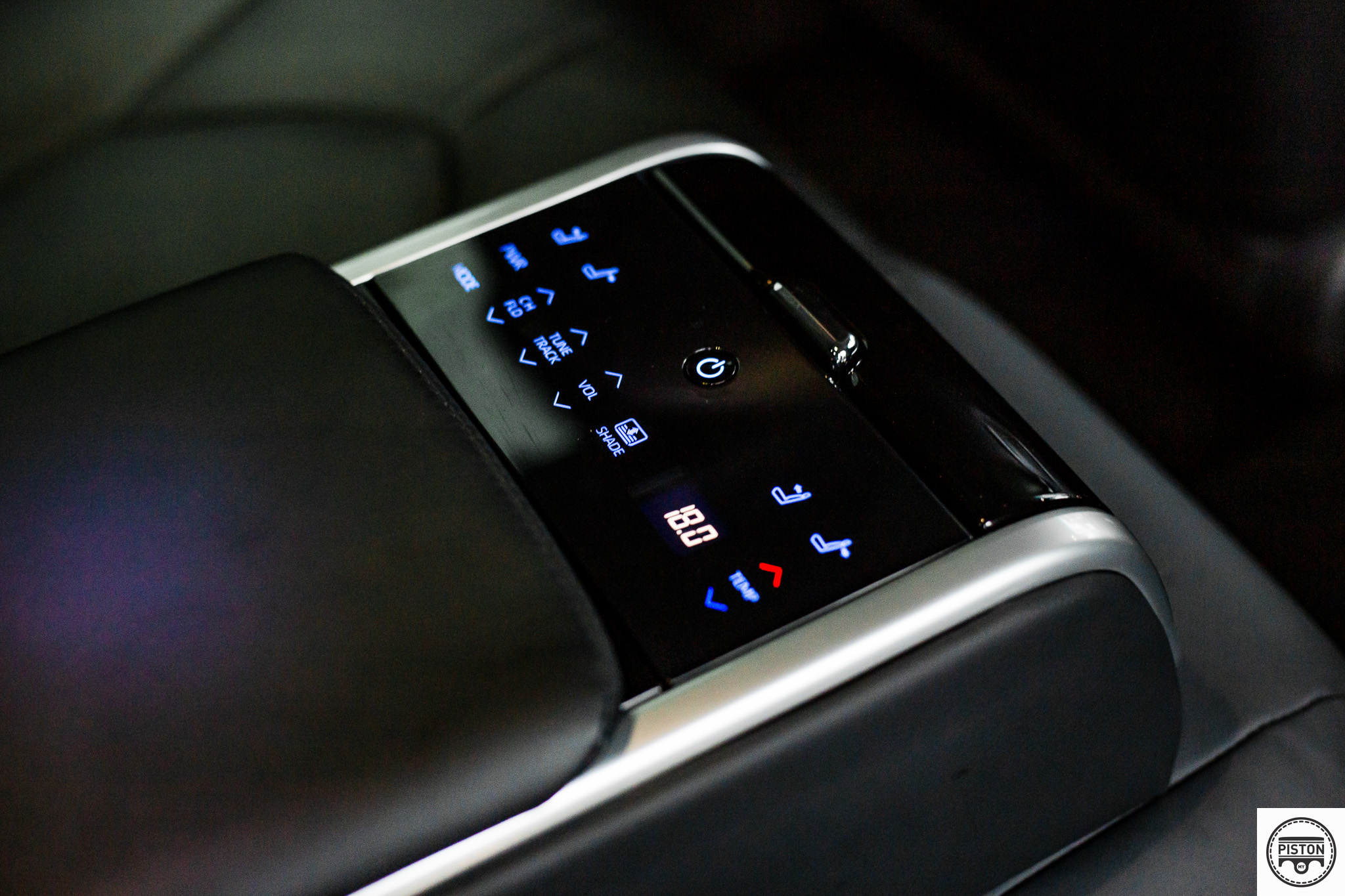
Given the popularity of the Camry as an executive sedan, much attention has also been given to the comfort for the rear passengers. New for 2022 are power adjustment for the rear seats with the outer seats able to recline by 8 degrees for a more comfortable seating position. There are also larger headrests fitted for enhanced comfort. Adjustments for the seat as well as the rear air-conditioning, sun-shade and audio system can be conveniently done on the control panel within the centre armrest – something which you would find in much more expensive luxury models.

Also new for 2022 is the Tri-zone Automatic Climate Control system which allows the driver, front passenger and rear passengers to independently set their own temperature. This system is comparable to those in luxury models, and provides better individual comfort for every occupant.

ON THE ROAD
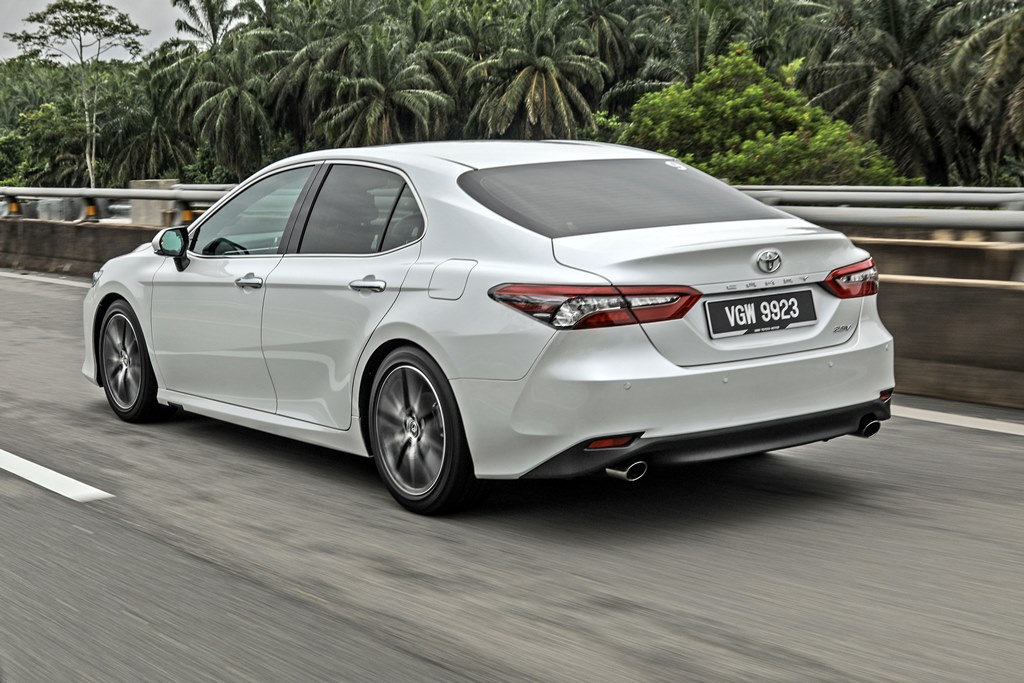
In earlier years, the Camry was seen as an ‘uncle’s car’, the sort driven by older people who might not care about driving dynamics and performance. But with this generation and its more aggressive, bolder looks, it’s hard to think of it that way. Of course, looks can only go so far and if it’s all looks and no go, then it’s still an ‘uncle’s car’.
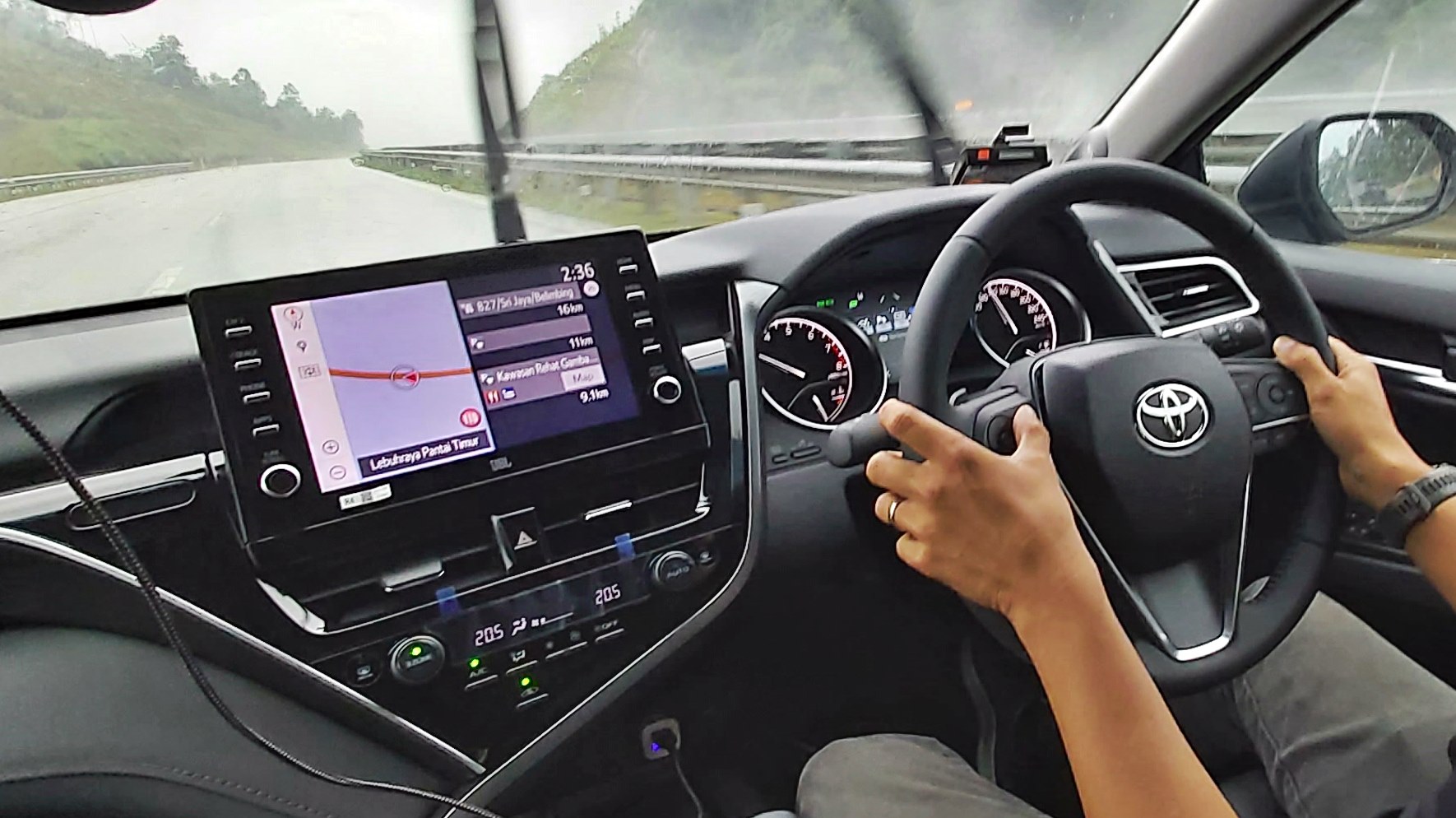
The previous 2.5-litre engine gave fairly decent performance and provided smooth propulsion from A to B. With the new powertrain, there is even less noise emanating from the front, and refinement has been raised a notch or two. Power delivery is very linear, a bit slow initially but becoming more muscular as the revs rise. Overtaking can be done confidently as the midrange torque is notably strong.

Toyota’s transmissions have always been smooth and the Direct Shift – 8AT has nearly imperceptible gearshifts. You can, at the press of a button, alter the character to be more sporty but unless pushed hard, you won’t feel a big difference. There are also paddle shifters but it is likely that the ‘intelligence’ of the transmission will make it less necessary to intervene with manual selection of gears.

TNGA is certainly an excellent piece of engineering work, allowing the car to have the comfort levels expected of an executive sedan as well without sacrificing dynamic handling. Thanks to the lower centre of gravity and responsive steering, the car is easy to maneuver, and its agility belies its size (and weight).

The space in the cabin deserves mention and whether you sit in front or behind, there’s generous space all round. We have Toyota USA to thank for this: had they not rejected the original design in 1990, we might still have a conservative narrow-bodied sedan which had been proposed. By insisting on something bigger to suit Americans in particular, we got a car that is today bordering on being a luxury model.

Just as nobody ever got fired for choosing IBM in the old days (because IBM computers were so good and so was their service support), you can’t really go wrong with a Camry… or any Toyota for that matter. The notion that Toyotas are boring cars is also an outdated one and with the new Dynamic Force powertrain, you can have an enjoyable spirited drive while the comfort levels will also please the people sitting behind.
UMW Toyota Motor starts 2022 with almost double the sales volume compared to January 2021
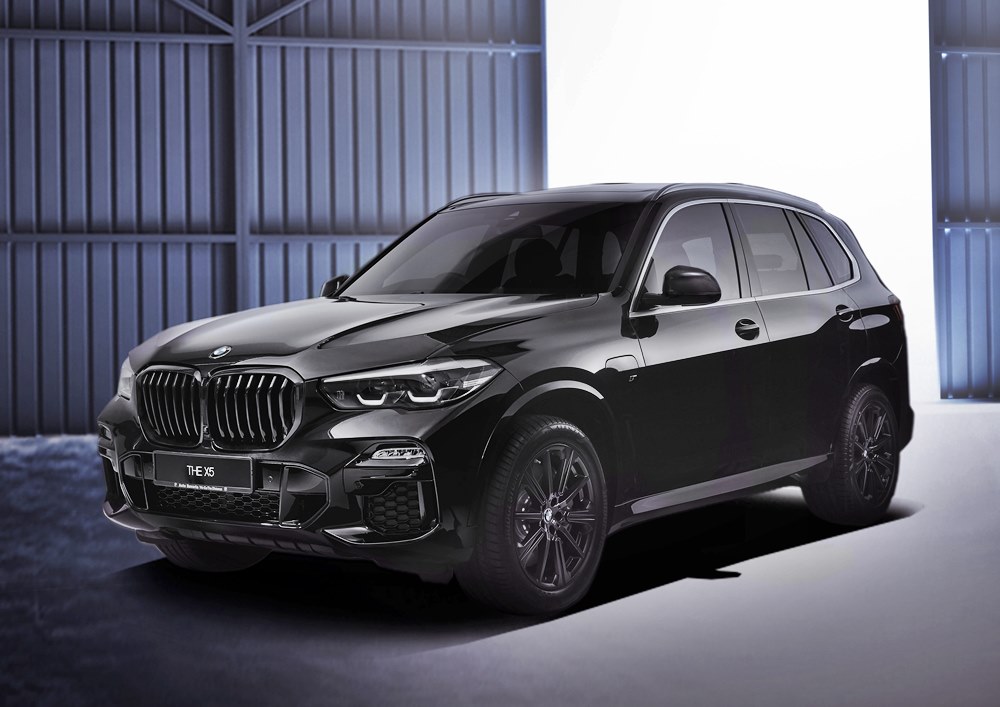
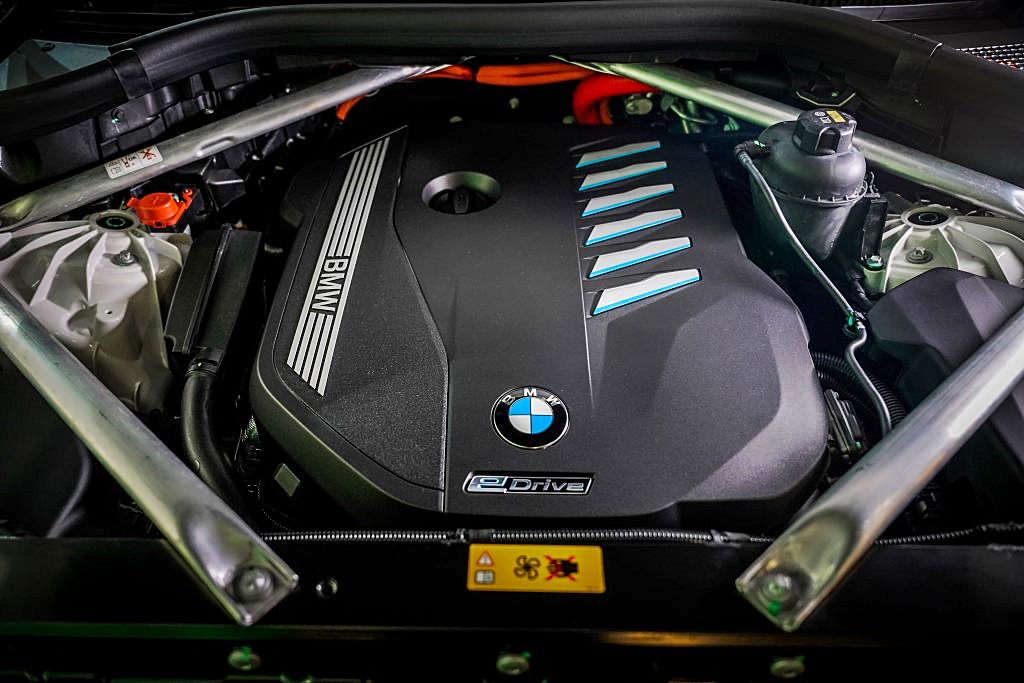
Exclusivity is always desired, especially in the upper end of the car market and this was evident last year when Auto Bavaria offered a limited edition of BMW X5 xDrive 45e with M Performance Parts. Only 30 units were available, assembled at the BMW facility within the Inokom plant in Kedah, and all found owners within a week.

Only 22 units available this time
The response to that limited edition encouraged Auto Bavaria to place an order for a second batch but this time, only 22 units are available. “We are now able to once again offer our esteem customers a second opportunity to own this extremely premium vehicle. Auto Bavaria brand has become synonymous with top-notch quality for both sales and service, which is why we are the preferred BMW dealership,” said Vi Thim Juan, Managing Director of Auto Bavaria.

Each Sport Activity Vehicle (SAV), priced from RM480,000 (excluding insurance) comes with M Performance parts which not only give sportier looks but actually improve aerodynamics.

BMW X5 xDrive 45e Ltd Edition 2022

BMW X5 xDrive 45e Ltd Edition 2022

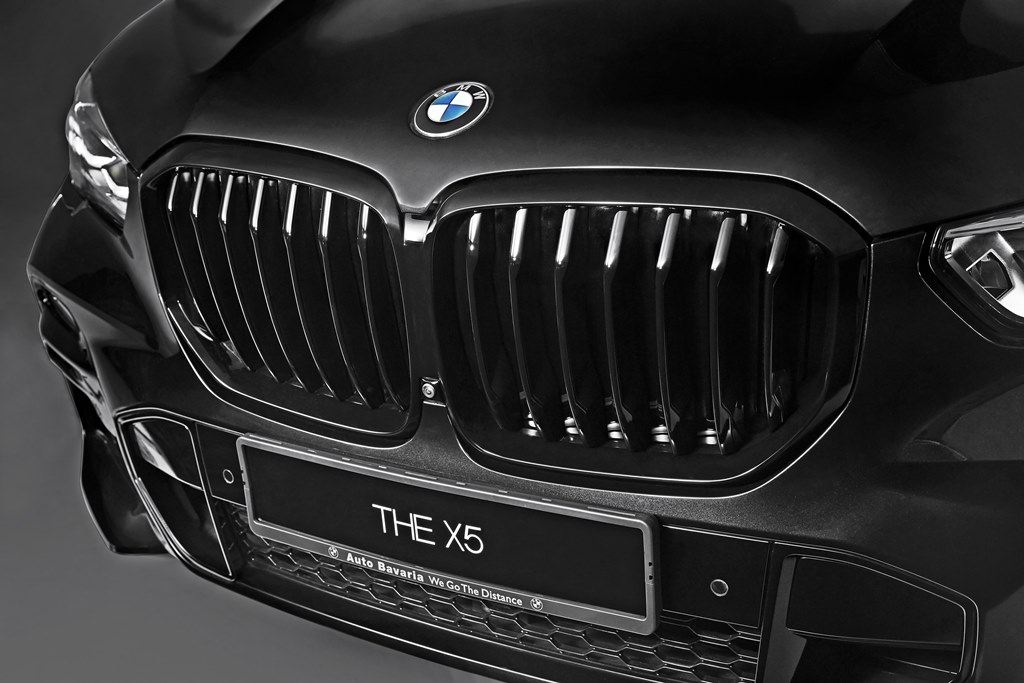
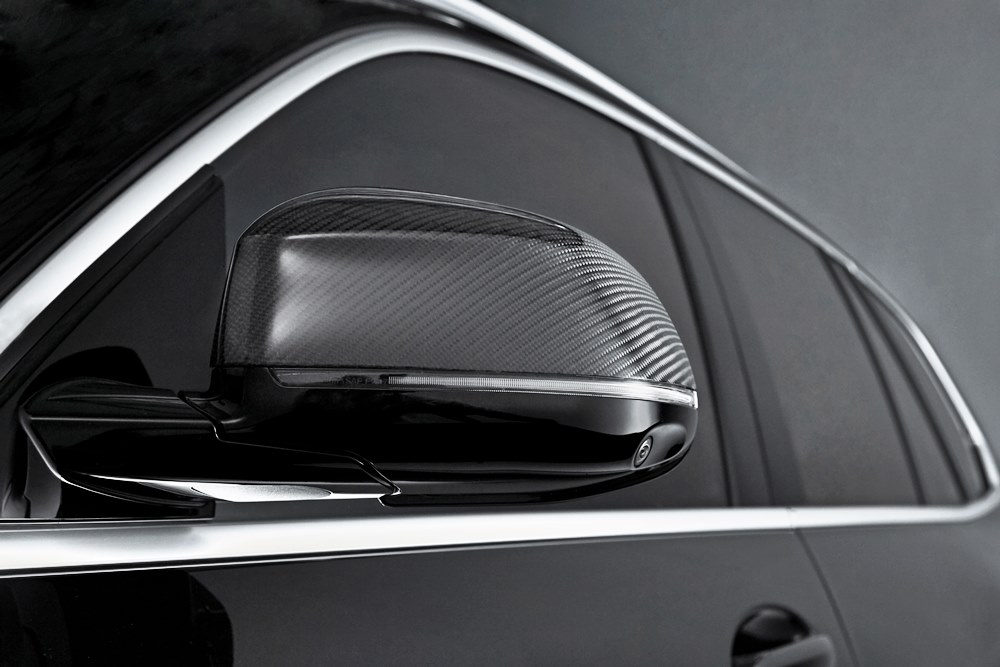
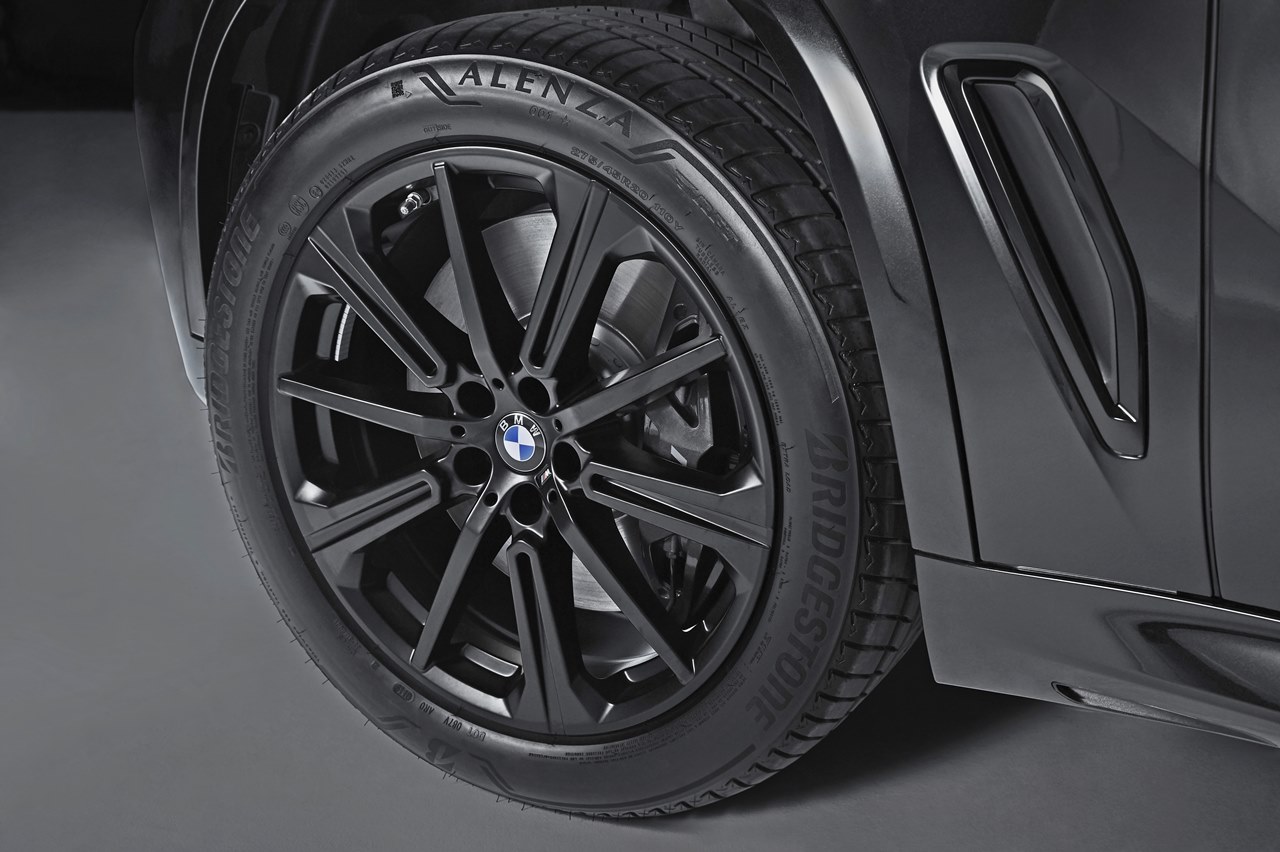
Specifically, the parts (which are worth RM36,500) are a gloss black front grille, carbonfibre housings for the door mirrors and Star Spoke 748M 20-inch light alloy wheels. Each tyre is linked to the Tyre Pressure monitoring system which will alert the driver if the pressure is abnormal.

BMW X5 xDrive 45e Ltd Edition 2022

Complimentary gifts worth RM22,000
This time round, those who buy the X5 also get complimentary gifts worth RM22,000. These are a luxury suitcase, BMW umbrella, BMW Leather Care Set with UV protection, BMW Brake Pad & Brake Disc Voucher, and STTOKE Classic Insulated Ceramic Reusable Cup.

Bestselling SAV of the range
The X5 is the bestselling model of BMW’s SAV range worldwide. It was the company’s first SAV and the current generation is the fourth one since 1999. Powering the X5 xDrive45e M Sport is a 3-litre 6-cylinder engine with BMW eDrive technology. With a combined maximum output of 394 bhp/600 Nm, the SAV is claimed to have a top speed of 235 km/h and a 0 to 100 km/h capability of 5.6 seconds.

Running with just the electric motor, the claimed range can be up to 77 kms on a fully charged lithium-ion battery pack, with a maximum speed of 135 km/h. With the hybrid powertrain optimizing fuel efficiency, the fuel consumption is said to be up to 40 kms/litre.

All X5s have all-wheel drive which is provided by BMW’s proven xDrive system. Power delivery first goes through an 8-speed Steptronic transmission with enhanced shift dynamics and then to all four wheels with torque distribution according to grip and surface conditions.

If you missed the opportunity to get on last May, you now have a second chance but you should hurry to an Auto Bavaria showroom quickly.

New variants for locally-assembled BMW X3 and X4

Buying a used vehicle is sometimes risky as the mechanical condition may not be fully known since someone else used it before. If unlucky, the vehicle may have problems and the new owner may have to spend extra money to fix the problems. In the worst case, the vehicle could be a nightmare to own as it may keep having problems.

Now, for those who want to buy pre-owned Honda vehicles, Honda Malaysia can give more peace of mind as it is introducing Honda Certified Used Car (HCUC). This is an additional and trustworthy business channel that will offer verified, pre-owned Honda vehicles.

6 HCUC outlets
HCUC is starting off at 6 dealerships located in different regions. The dealerships are MJN Motors Sdn. Bhd. (Selangor), Tiong Nam Motor (M) Sdn. Bhd. (Selangor), Kah Motor Co. Sdn. Bhd. (Penang), Kah Motor Co. Sdn. Bhd. (Johor), Yong Ming Motor Sdn. Bhd. (Johor) and Chuan Thye Motor Sdn. Bhd. (Pahang). As demand grows, Honda Malaysia will gradually expand the number of HCUC outlets around the country.

“Honda Malaysia is committed to offering products and services of the highest quality and ensuring that all our cars, be it new or pre-owned, provide a feeling of joy to the car owners. As such, we have rolled out HCUC as an additional option for customers to own their preferred Honda cars and enjoy being a Honda owner,” said Honda Malaysia’s Managing Director & CEO, Madoka Chujo.

Not more than 5 years old
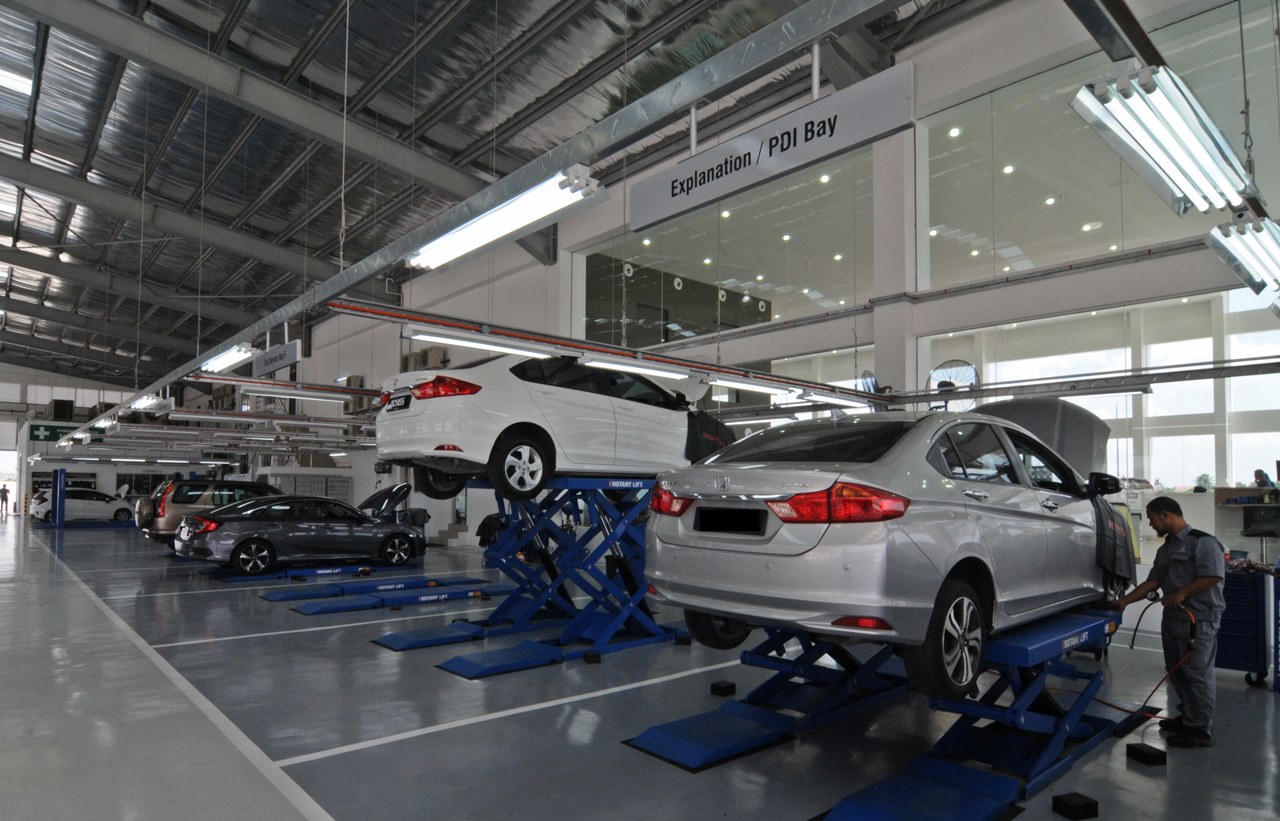
Through HCUC, customers can choose different models of Honda pre-owned cars. All the Honda pre-owned cars will be no more than 5 years old, with no more than 100,000 kms of usage. Honda Malaysia ensures that the cars sold by HCUC have undergone a thorough and stringent 288-point inspection conducted by Honda Certified Inspectors.

This inspection covers the condition of the engine and transmission, functionality and undercarriage as well as the exterior and interior conditions. This will enable customers to drive the vehicles with peace of mind knowing that they are certified to be in good condition, equipped with genuine parts and free from major accidents and flood damage.

For the convenience of customers, the registration and transfer process will be done by the HCUC dealers.

Owners of vehicles purchased from HCUC can also enjoy the full range of aftersales services from authorised Honda dealers throughout the country.

Extended warranty provided
Additionally, vehicles purchased from HCUC will have an additional one-year extended warranty on top of the existing warranty that is still valid (terms and conditions apply). Needless to say, once they are owners of the vehicles, they can enjoy the same high standards of aftersales support from all authorised Honda dealerships.

In addition, customers will have access to the Honda network of authorised dealerships nationwide such as sending their certified pre-owned cars to any Honda dealerships for after-sales services.

For more information on the location of HCUC dealerships, visit www.honda.com.my or call  Honda Malaysia’s Toll-Free number at 1-800-88-2020.

Honda Malaysia aims to sell 80,000 units in 2022 and introduce Certified Used Car business

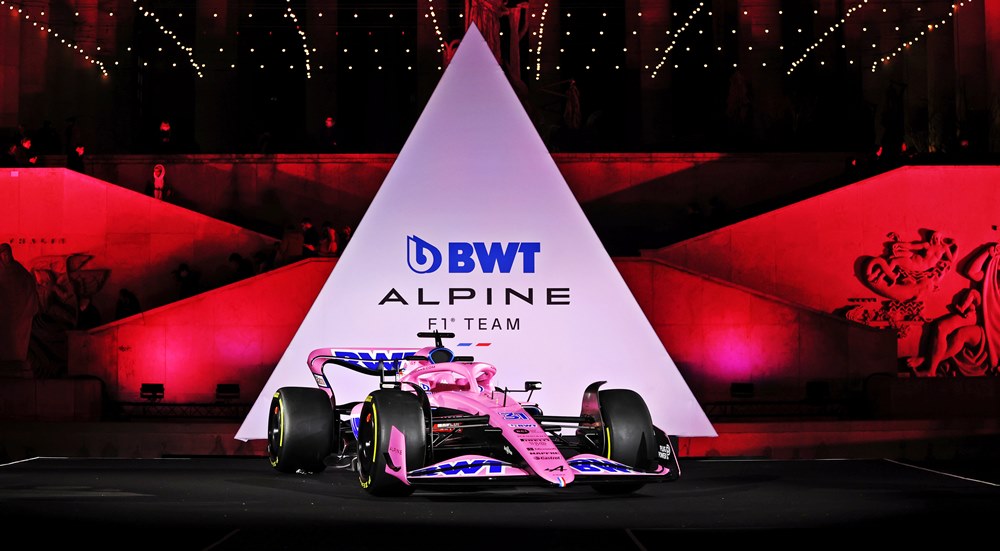
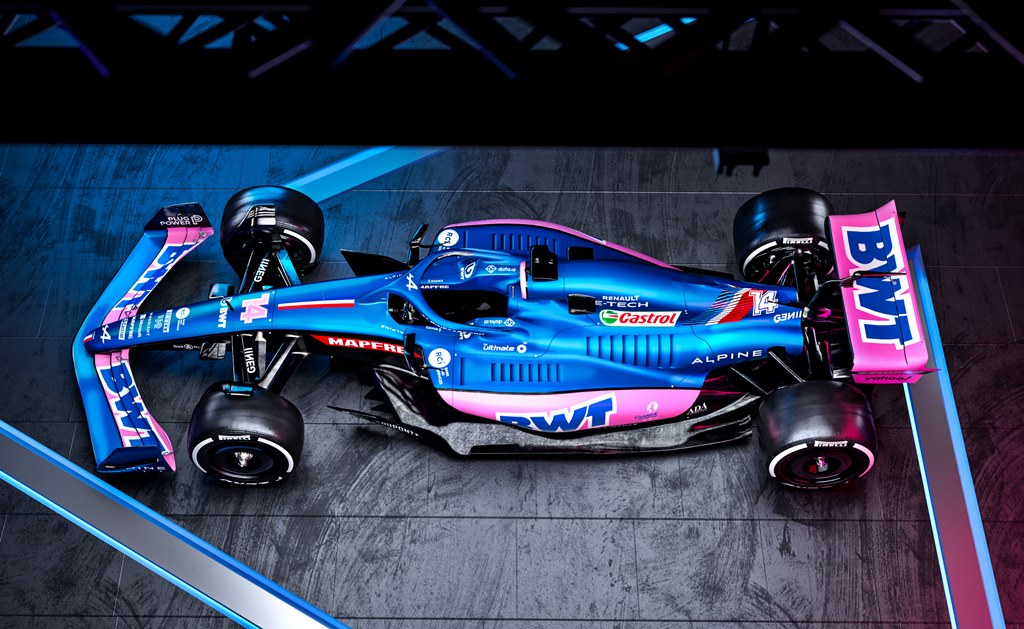
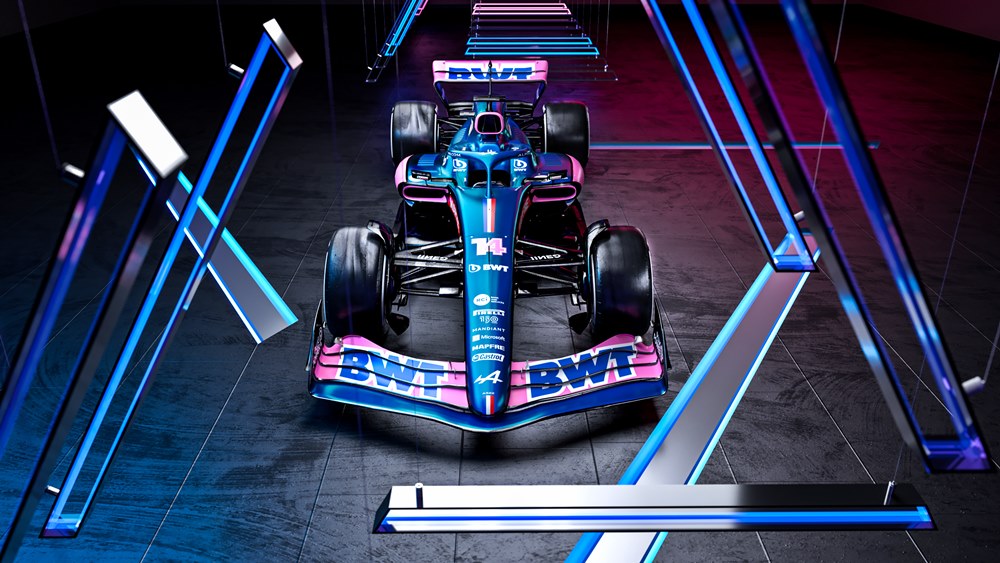
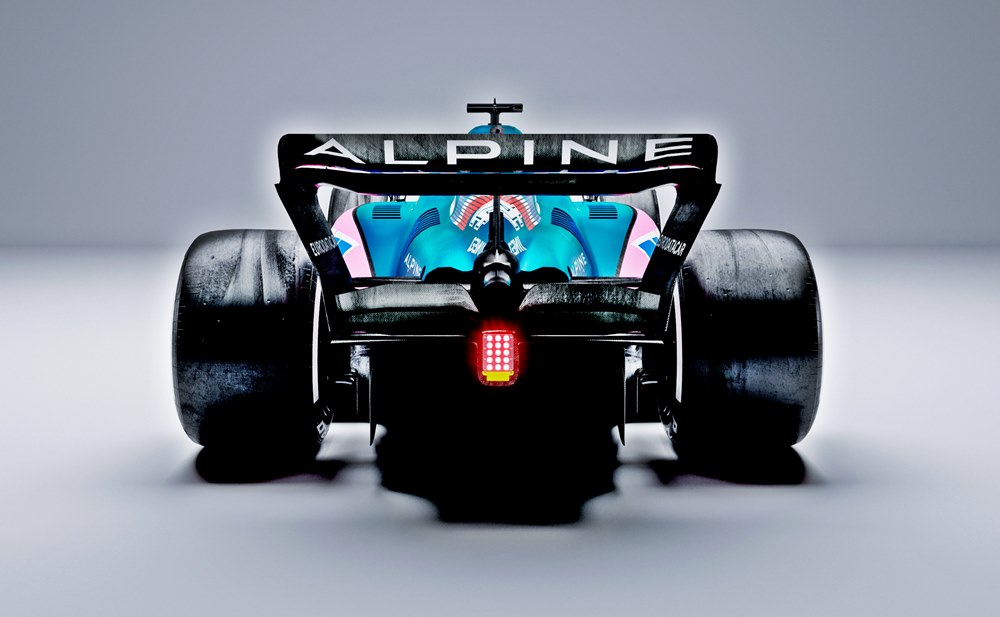
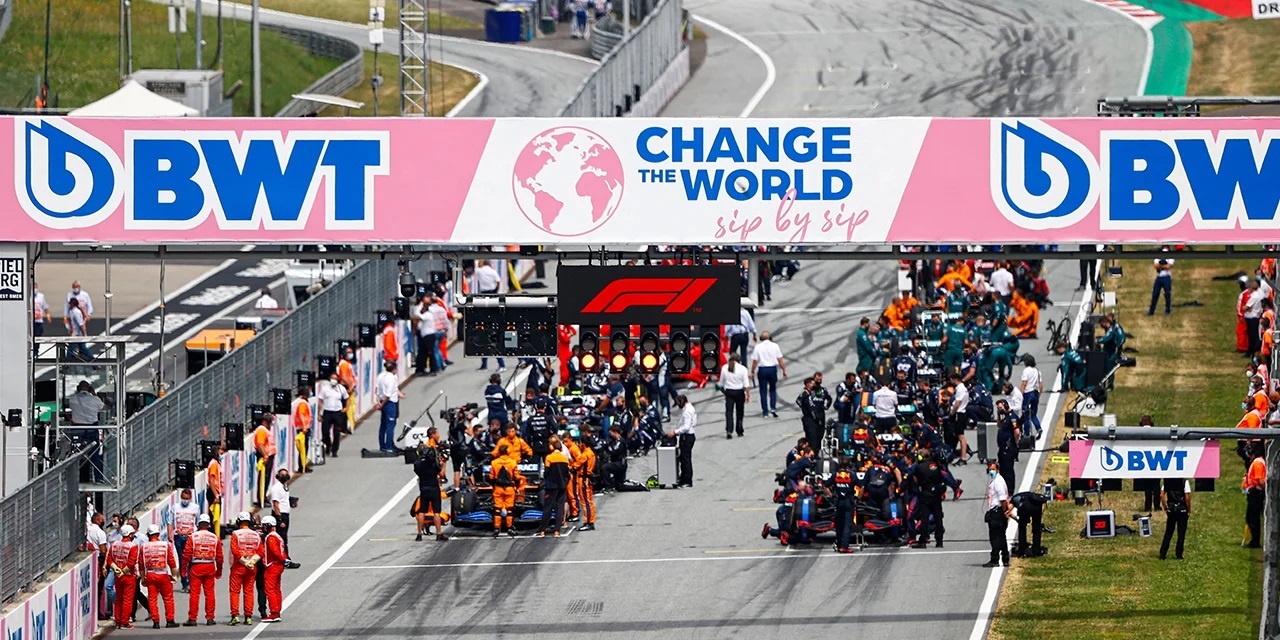
With BWT (a supplier of water treatment systems) partnering with the Alpine F1 team, the new 2022 racing cars have taken on ‘flipped’ livery with pink becoming the most prominent colour. This unique livery, which highlights the partnership with BWT, will be used for the first two races of the season while the historic blue of the Alpine brand will be maintained.

Second F1 car by Alpine
The BWT Alpine F1 Team’s new car is known as the A522 which is its second F1 car. It has been under development over the past 18 months to meet the significant regulation changes introduced for the 2022 season.

Besides a completely new chassis and car build, the A522 also has an all-new RE22 power unit. The engine specification and packaging has allowed the team some extra freedom in shaping the rest of the car to better exploit the latest technical regulations and adjust for the new E10 fuel specification, E10 which is the next step to sustainable fuels in the sport.

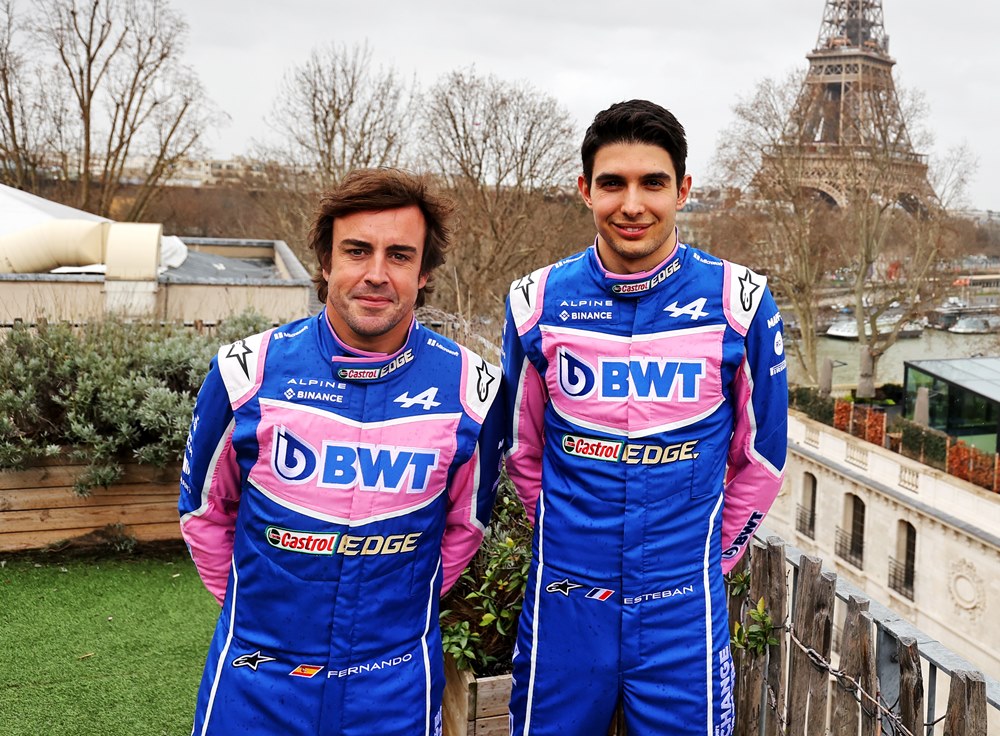
Fernando Alonso and Esteban Ocon F1
Fernando Alonso (left) is a 2-time World Champion, while Esteban Ocon has been in F1 since 2016.

The team will again have the services of Fernando Alonso and Esteban Ocon, who were ranked 10th and 11th in the Drivers Championship last year. Ocon enters his third consecutive year powered by a Renault engine, while Alonso embarks on a historic and potentially record-breaking 20th season in F1. The 40-year old Spaniard has been World Champion twice (2005 and 2006) and was the youngest world champion, and then youngest 2-time champion in the sport’s history at the time.

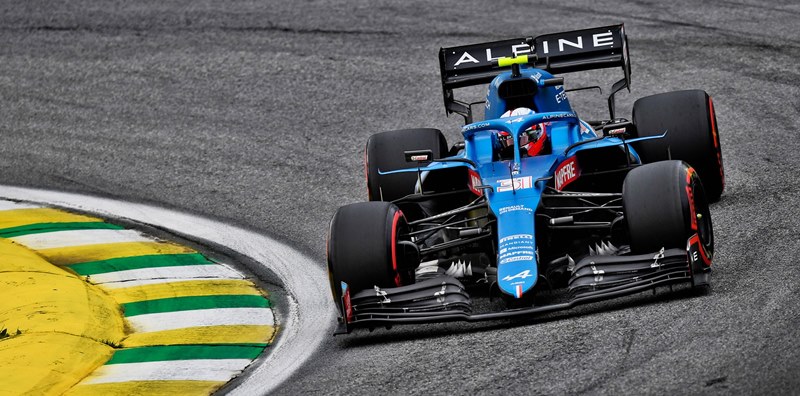
The Alpine A521 in last year’s championship where the team finished fifth in the Constructors Championship.

About BWT
BWT (Best Water Technology) is Europe’s market leader in water treatment, with the mission to provide water of perfect quality for all purposes, everywhere in the world, directly from the tap, the water dispenser, or the table water filter. Its pink colour symbolizes the company’s mission to ‘Change the World – sip by sip’ and to make it a little bit better every day by implementing the Bottle Free Zone concept. In this respect, BWT will also be deepening its partnership with Formula 1 over the next few years. A multi-year partnership is part of the joint commitment against the use of single-use plastic and for sustainable positive change.

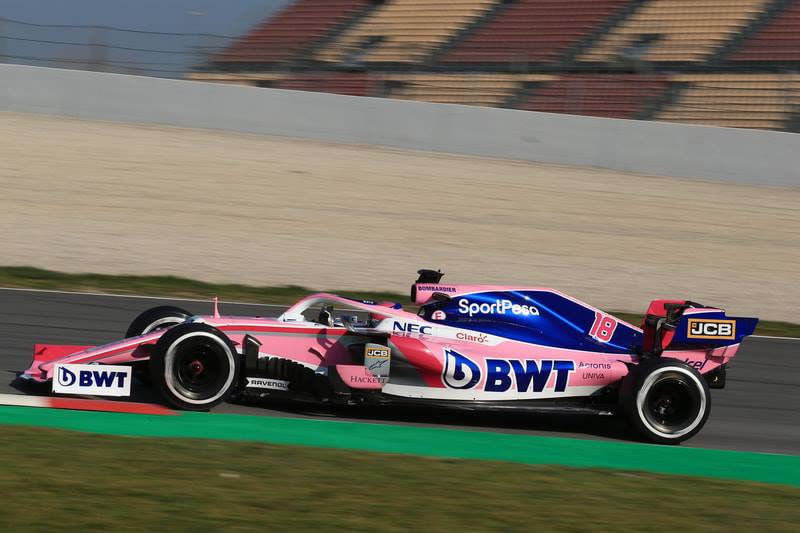
BWT was earlier involved in F1 with the Racing Point team which was rebranded in 2021 to become the Aston Martin COGNIZANT F1 Team.
Besides partnering with the Alpine F1 team, BWT is also a partner with Formula 1 and is committed to eliminating the use of single-use plastic bottles at event facilities.

“We plan to make the Paddock free of single-use plastic bottles by 2025. To achieve this goal, BWT is providing water stations throughout the Paddock and the Paddock Club where drivers, crew and fans alike can enjoy fresh local water mineralized with magnesium, zinc, and silica in reusable bottles,” a statement from BWT said.

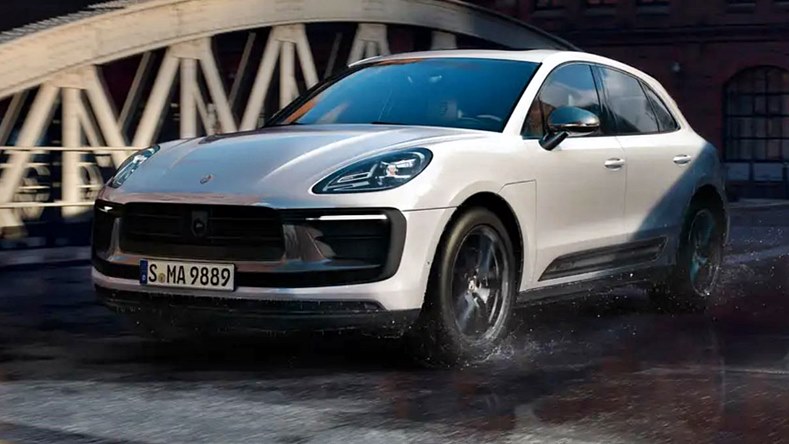
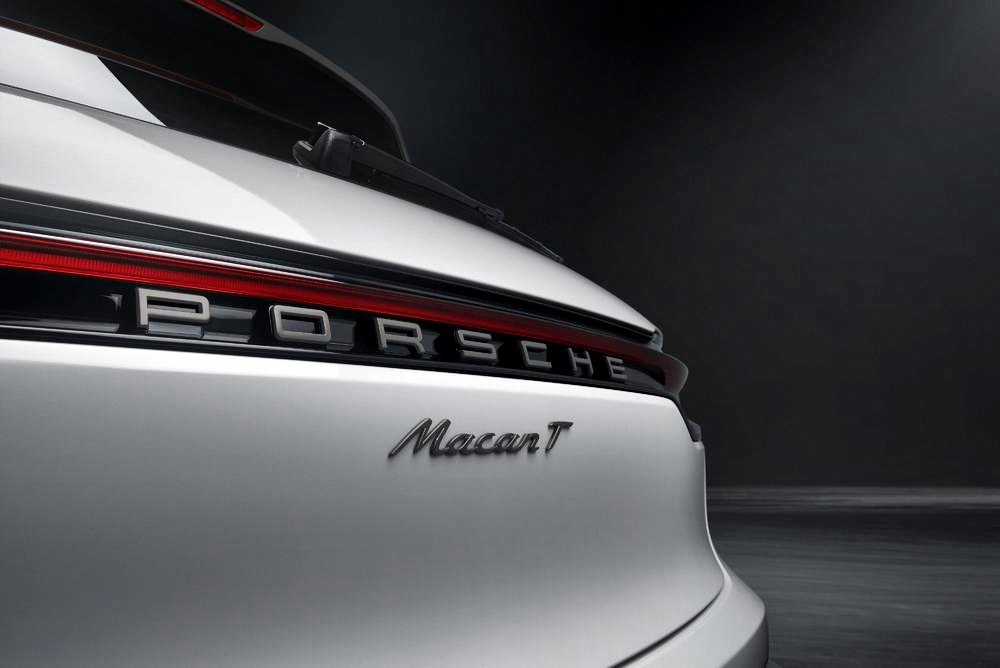
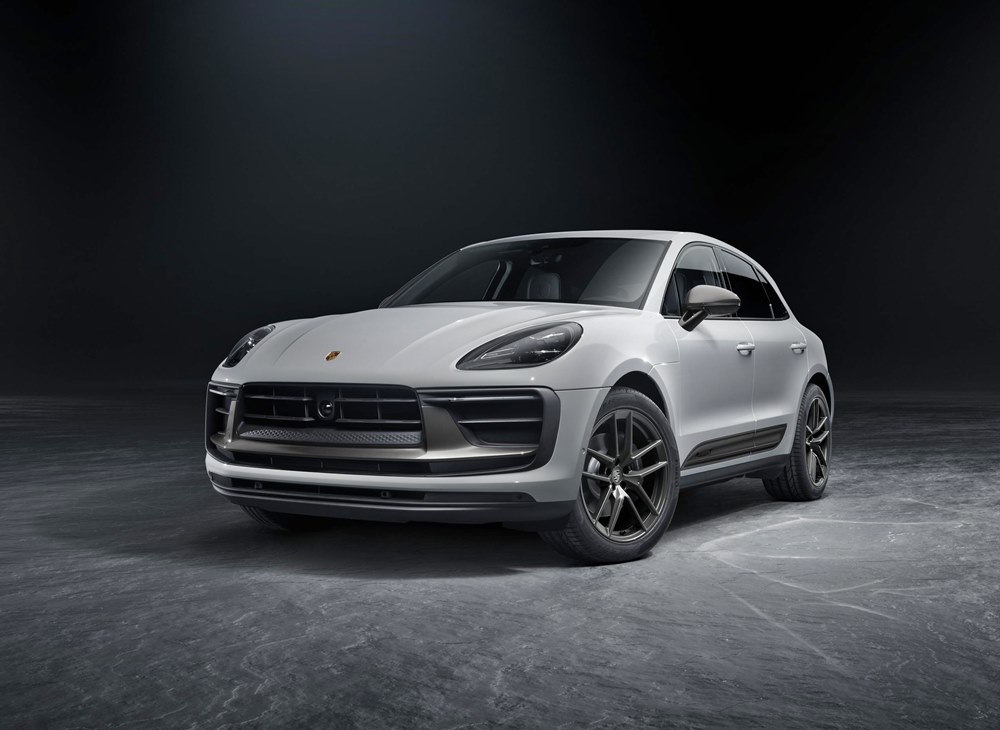
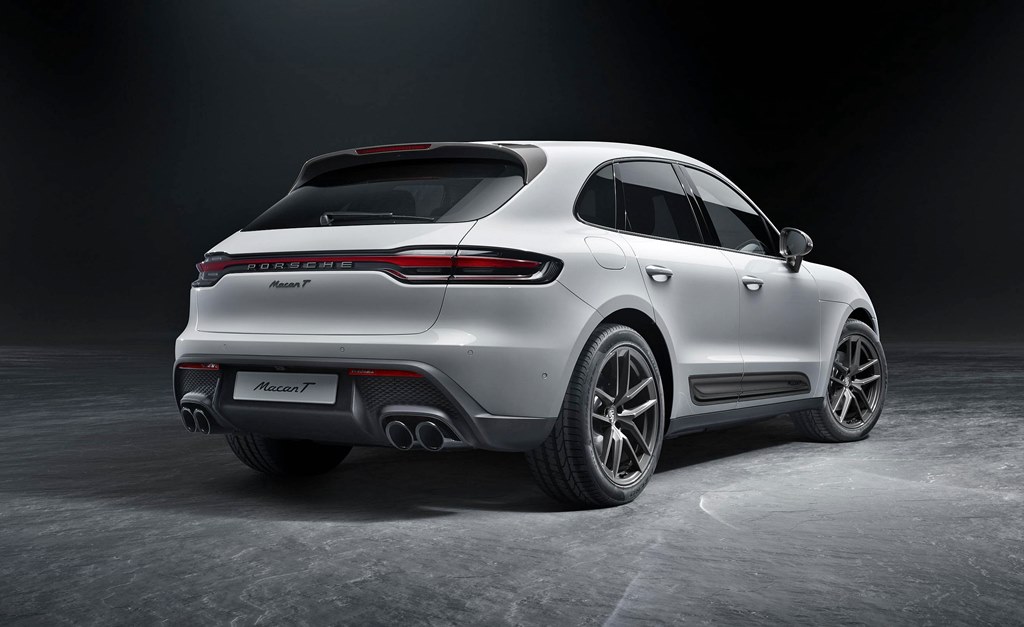
‘T’ normally comes after ‘S’ but in the case of the new Porsche Macan T, it is positioned between the Macan and Macan S. Rather than being a sequential designator, the ‘T’ refers to ‘Touring’ and until now, only the 911 and 718 have ever had ‘T’ version. It’s a designation that goes back to 1968 when a special version of the 911 had a more dynamic set-up and reduced weight.

2022 Porsche Macan T

In 2022, the Macan T is conceived with the same concept and is the first 4-door sportscar from the company with the designation. It’s also the only Porsche model to feature steel suspension with Porsche Active Suspension Management (PASM) as standard, combined with the body being lowered by 15 mm.

2022 Porsche Macan T

Further optimisation of chassis
The anti-roll bars on the front axle are more rigid and the car’s chassis tuning has been optimised to provide very responsive steering behaviour and agile handling. The Porsche Traction Management (PTM) has also been adapted to a more demanding driving style and has been specially designed with a rear-wheel bias.

Adding adaptive air suspension with PASM and lowering the body is also an option – a new feature for Macan models with 4-cylinder engines. Porsche Torque Vectoring Plus (PTV Plus) can also be added and the system has been adapted to the dynamic characteristics of the T model and further sharpens the driving dynamics.

2-litre, 4-cylinder turbo engine
With the 2-litre 4-cylinder turbocharged engine (which you will also find in the latest VW Golf GTI), weight has been taken away and with 58.8 kgs less of it on the front axle, start-off performance and cornering ability are enhanced.

2022 Porsche Macan T

The lightweight engine has an output of 265 ps and a broad spread of 400 Nm of torque which flows through a fast-switching 7-speed dual clutch transmission (PDK) and the Porsche Traction Management (PTM) all-wheel drive system. When fitted with the standard Sport Chrono Package including the mode switch and Sport Response button on the steering wheel, the Macan T is said to be able to accelerate from 0 to 100 km/h in 6.2 seconds and reach a top speed of 232 km/h.

Differentiating colour scheme
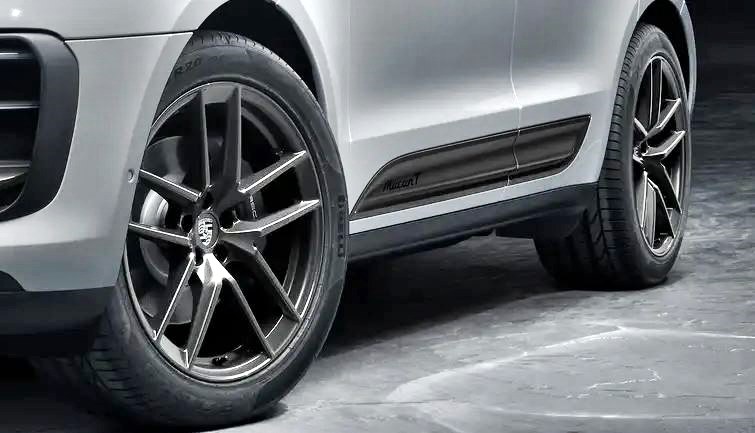
Besides a range of 13 plain, metallic and special colours for the exterior, the Macan T is identifiable by design elements painted in Agate Grey Metallic on the front, flank and rear. The exclusive contrast colour can be seen on the painted front trim, exterior mirrors, side blades, roof spoiler and logos on the rear. Sports tailpipes and side window trims in Black (high gloss) are included as standard and the side blades feature the ‘Macan T’ logo in Black. The 20-inch Macan S wheels are finished exclusively in dark titanium.

2022 Porsche Macan T

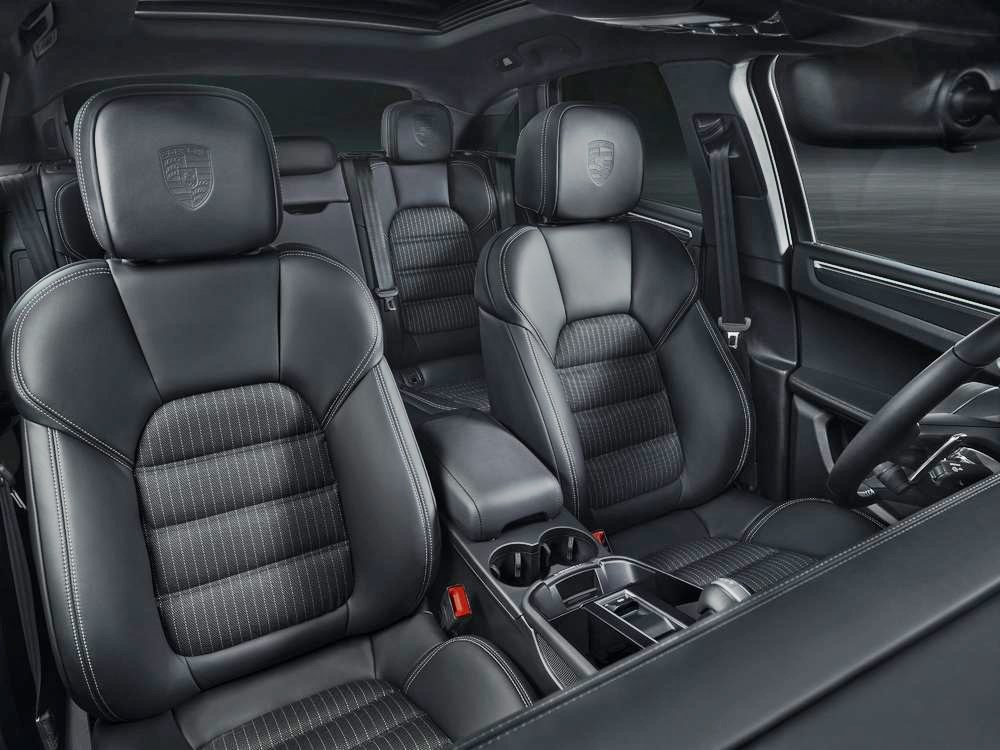
The interior of the Macan T comes with standard, 8-way electrically adjustable heated sports seats upholstered with an exclusive Black leather package. The centres of the front seats and the outer rear seats are delivered with the Sport-Tex Stripe pattern and the front headrests each have an embossed Porsche crest. The contrasting colour from the exterior continues inside the vehicle in the form of decorative silver stitching on the seats, headrests and steering wheel.

Standard equipment also includes a multifunction GT heated sports steering wheel and the Sport Chrono stopwatch in the upper part of the dashboard. The door entry guards come in black aluminium as standard and feature a Macan T logo.

2022 Porsche Macan T

Pricing has not been announced but authorized Porsche showrooms in Malaysia are accepting pre-orders if you want to be among the first in the country to own this new version of the best-selling Porsche model line in 2021.

3 variants of updated Porsche Macan now available for booking in Malaysia, prices start from RM433,154

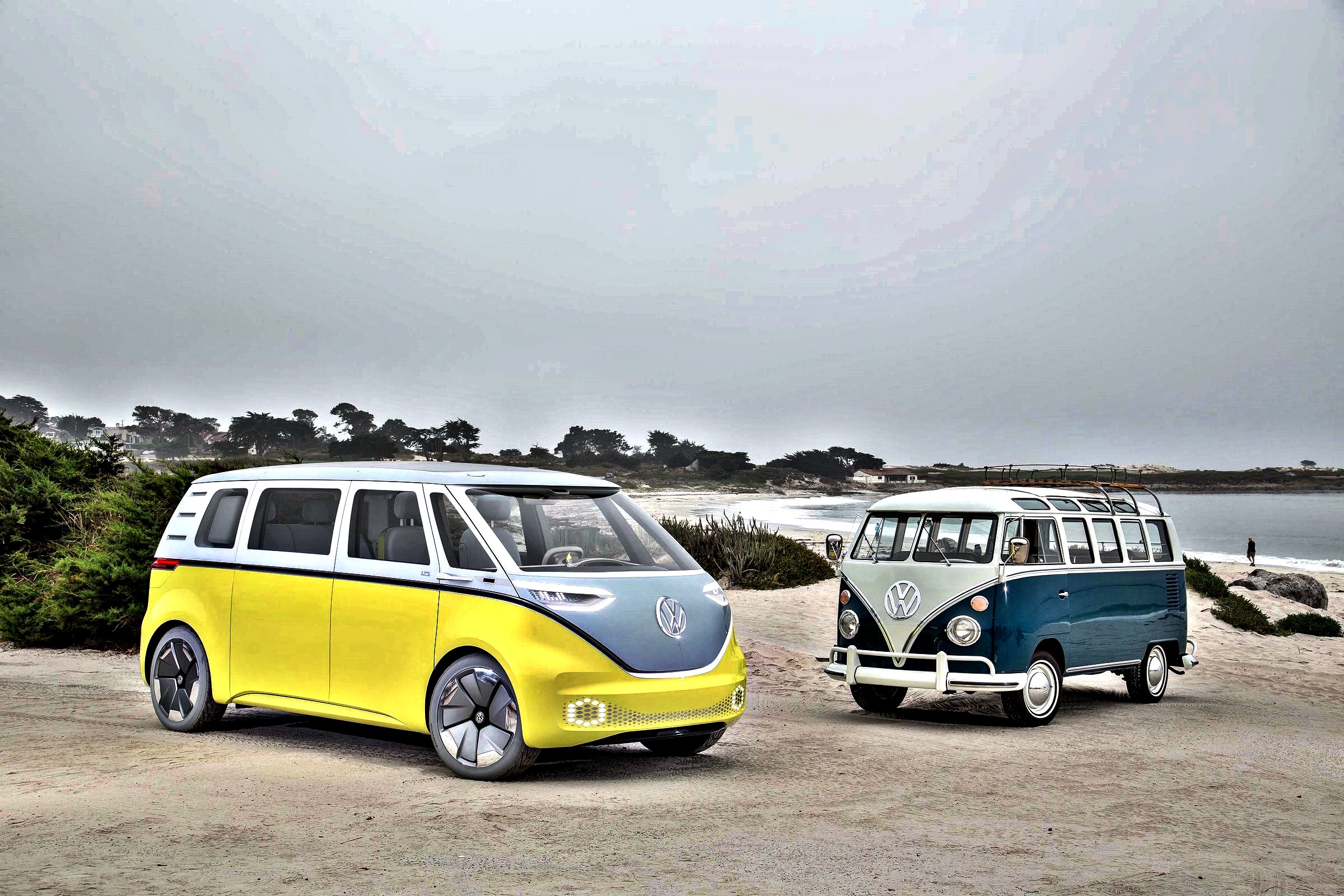
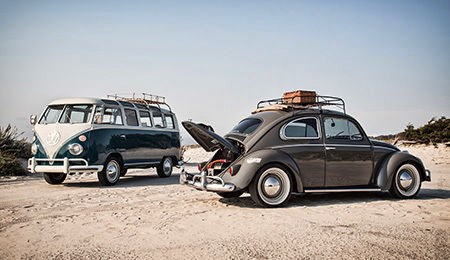
Over 70 years ago, a Volkswagen importer in Holland by the name of Ben Pons saw an opportunity to offer customers a versatile vehicle which could be adapted from the platform of the Beetle, then still a young product. He sketched a box like body on top of the Beetle platform and suggested it to Volkswagen which agreed to build prototypes. When the public saw the model, simply referred to as ‘T1’, there was great demand and so was born a vehicle that would become an icon in the decades that followed.

The I.D. BUZZ concept in 2017 with the original Microbus Kombi T1.

The original multi-purpose vehicle
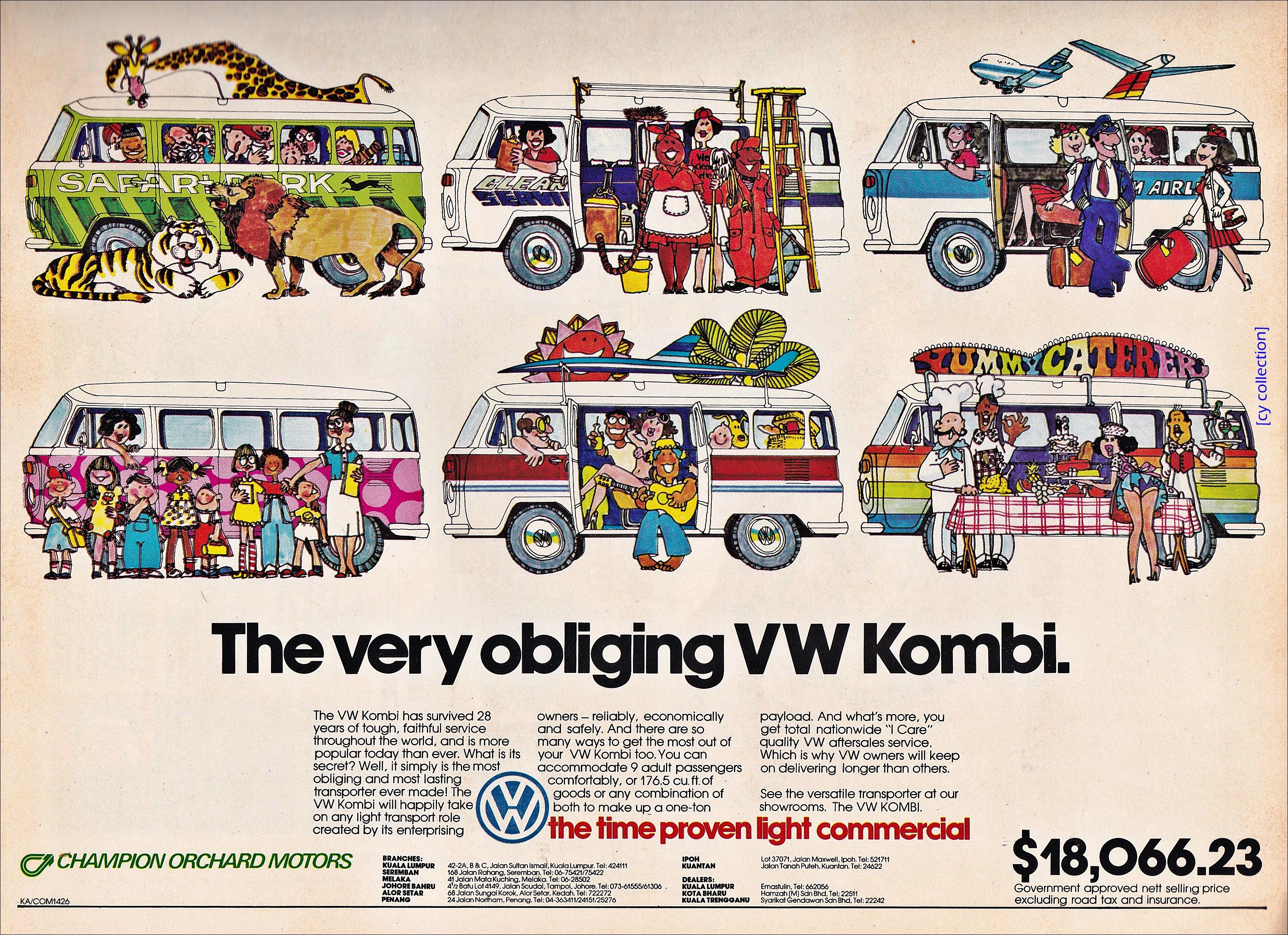
It came to have various names – Kombi, Transporter, Caravelle, among them – and found use in numerous roles from people-carrier to goods transporter. In America, it was a ‘Microbus’ and became one of the symbols of the counter-culture movement there. Its low cost and simplicity made it easily affordable by the hippies who would live in it and gave the vehicles a lot of character with creative paintwork.

The original rounded form evolved into a more cubic shape with the third generation in 1979 and in 1983, the air-cooled engine was replaced by a water-cooled unit. The current generation is the T6 which was introduced in 2015 and continues to be a popular model in the midsize van segment.

Part of ID. family of EVs
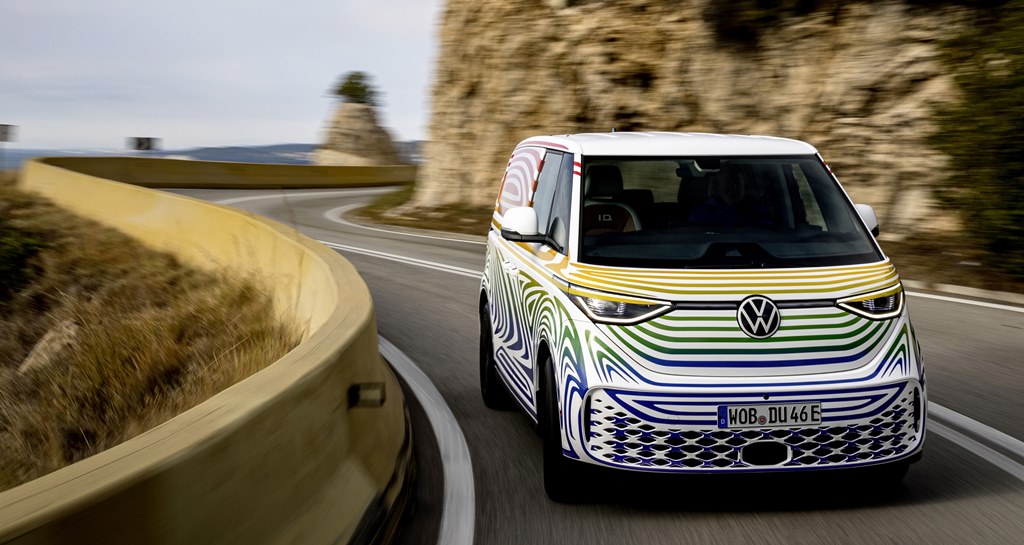
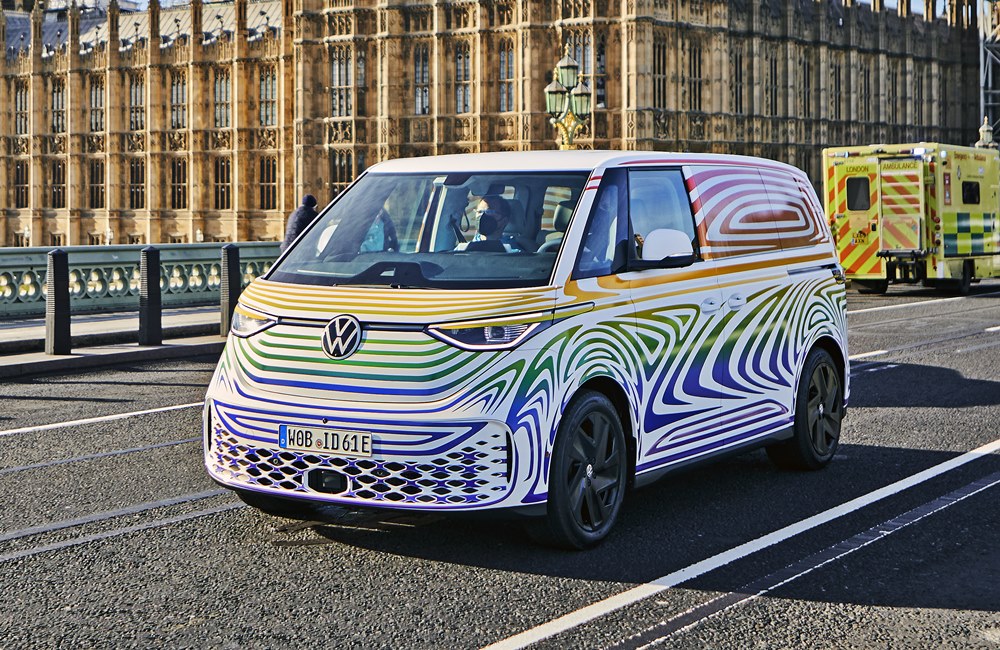
However, with the trend towards electrification, Volkswagen has had to think of how to continue this iconic model with a zero emission powerplant. Its answer is a model known as the Buzz, which will be part of the ID. family of battery electric vehicles BEVs. The model, to be unveiled early next month, was shown in 2017 as the BUZZ concept and it received sufficient positive feedback that it was approved for production.

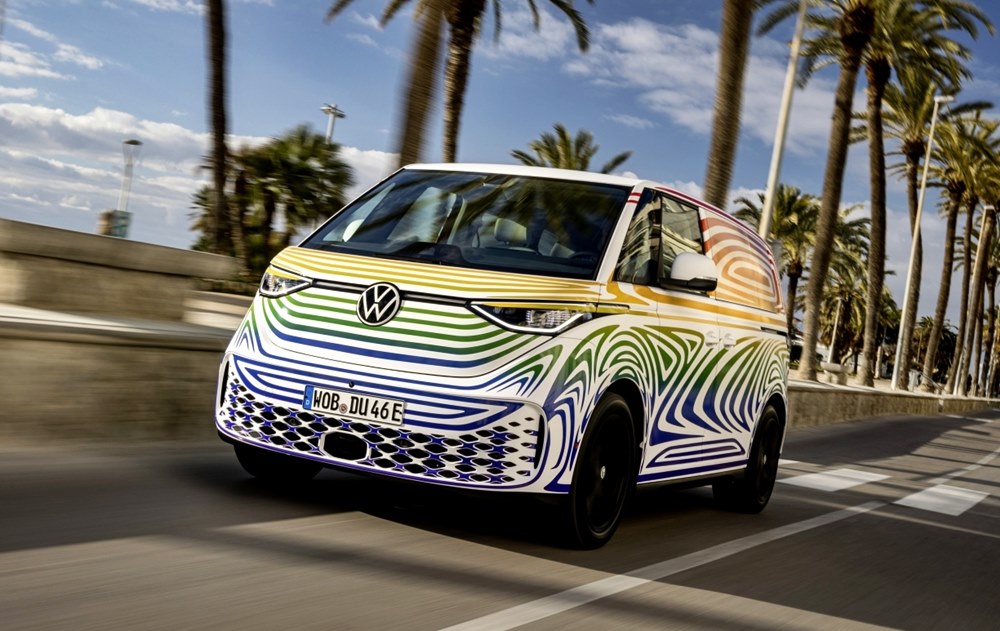
Prototypes have been driven on public roads for many months as part of the final phase of the development program before unveiling next month.

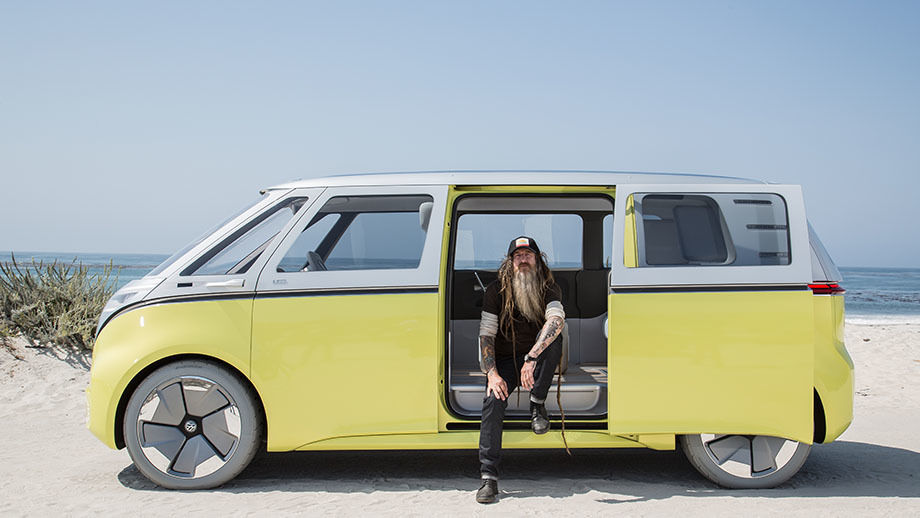
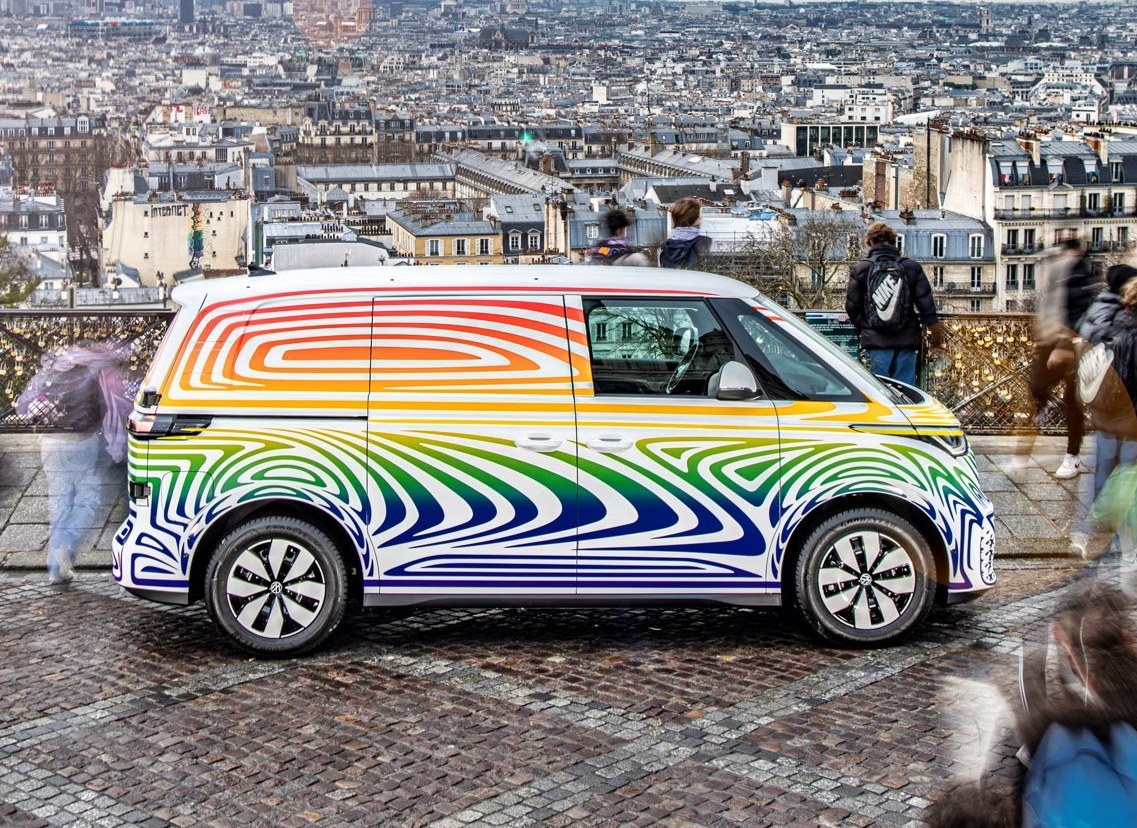
Volkswagen will have two versions of the electrically-powered model – the Buzz (a 5-seater) and Buzz Cargo (a van). The designers have transferred the styling of the 2017 concept car to the production version, and it has the design elements of the legendary T1. Those elements include extremely short body overhangs, maximum utilization of space on a minimal footprint, the classic division of the vehicle body design into an upper and lower level, and the V-shaped face. And just like the original, the Buzz also has rear-wheel drive.

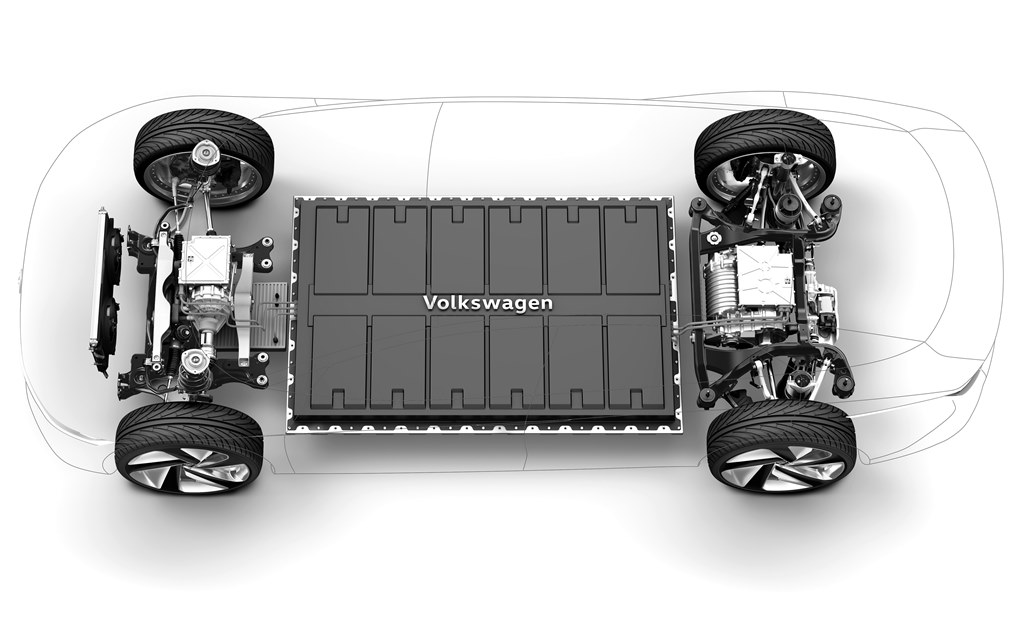
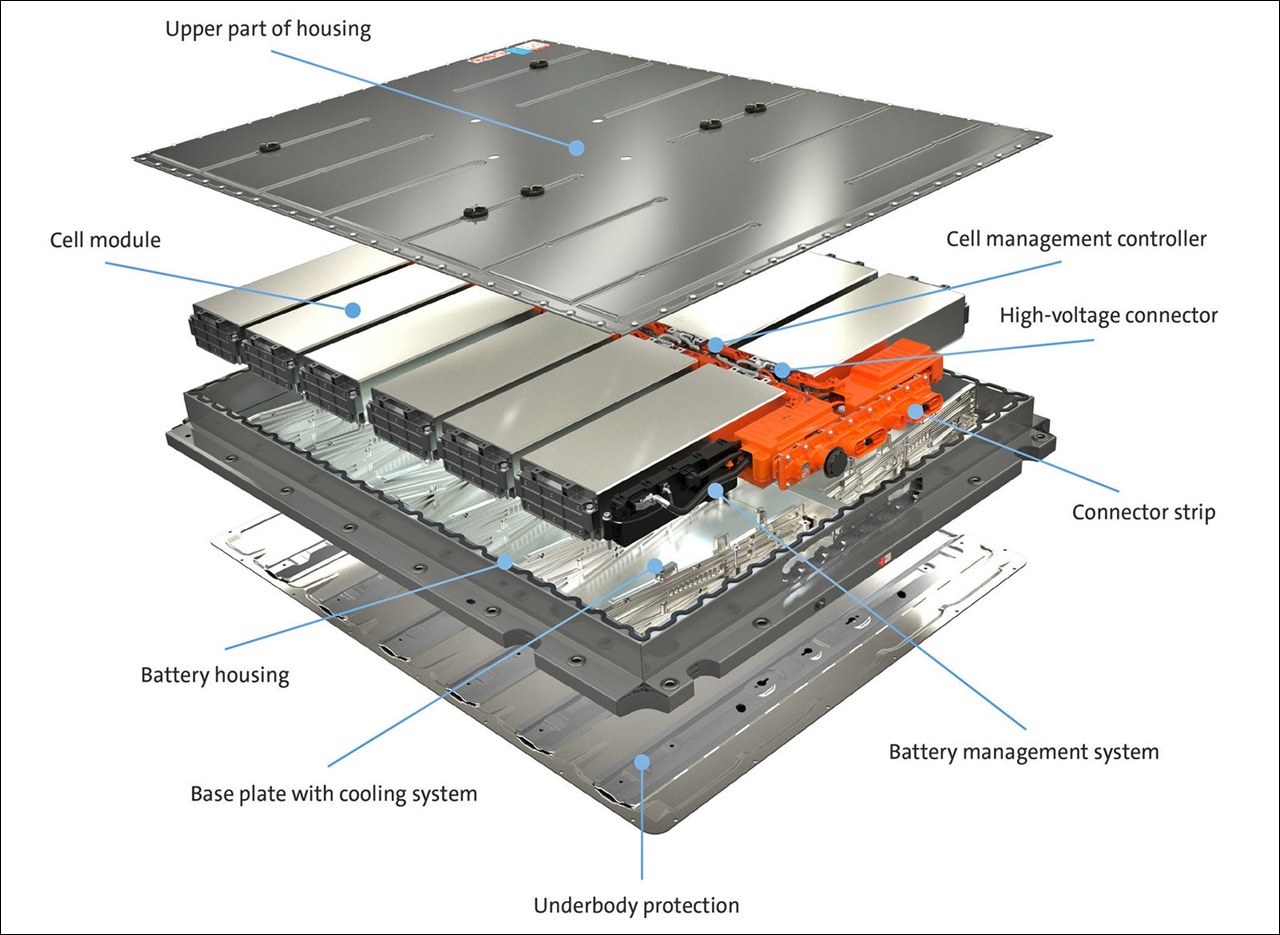
The Volkswagen Group MEB platform for battery electric vehicles uses a new generation of battery packs (below).

VW Group MEB platform
The new model line is based on the Volkswagen Group’s Modular Electric Drive Kit (MEB). This uses a high-voltage lithium-ion battery providing gross energy content of 82 kWh, supplying 150 kW to the  electric motor integrated in and driving the rear axle. The top speed is electronically limited at 145 km/h but official figures for range are not yet available. Unlike its combustion engine predecessor, the Buzz will be more agile with maximum torque of 310 Nm available when moving off.

2022 VW ID.BUZZ

Maximum space utilization
The MEB architecture has been designed to be variable and Volkswagen’s engineers have developed a versatile structure that facilitates a wide spectrum of roles – as a 5-seater leisure vehicle as well as a 3-seater cargo transporter. The range will be extended when another variant with a longer wheelbase and more possibilities of interior configurations debuts in 2023.

The standard wheelbase versions (2988 mm) of the Buzz and Buzz Cargo are just 4712 mm long. By way of comparison, the wheelbase of the Buzz is only 2 mm different to that of the current T6, which is 4904 mm long. The Buzz thus offers a similar internal length but is able to use smaller parking spaces. The passenger Buzz, which has a generous greenhouse, is 1937 mm high, which is lower than the T6, and is also 81 mm wider.

The original T1 van was developed from the same platform as the Beetle and was Volkswagen’s second model.

Thanks to the space-saving MEB concept, the two electric vans can offer good space utilization. The Buzz can take up to 1,121 litres of luggage even with all 5 seats occupied. For the Buzz Cargo, there‘s a volume of 3.9 cubic metres behind a partition that separates the front seats.
‘Plug & Charge’ and bi-directional charging
Using the latest ID. software, the model line will in future offer convenient charging methods such as the ‘Plug & Charge’ function. Using this function, the Buzz authenticates itself at many providers’ quick-charging (DC) stations via the charging connector, exchanging all necessary data with it in this way. And there is also the possibility of bi-directional charging which is available in some markets. This technology opens up a whole new spectrum of possibilities, such as the ability to store excess power from a home’s solar panels in the vehicle’s battery pack and to feed it back into the home in the evening.

2022 VW ID.BUZZ

Like other ID. models, the Buzz can receive software updates over the air (provided there is a connection). These include both updates for the infotainment system and updates relating to charging or driver assist functions. The spectrum of driver-assist systems available across various markets includes innovatively interconnected technologies such as the new ‘Trained Parking’ function (automatic maneuvering into and out of parking spaces); ‘Car2X’ (warnings and hazard alerts in the local vicinity); and the latest version of ‘Travel Assist’ that features crowd=sourced data to facilitate forward and lateral guidance on a partly automated basis across the full speed range.

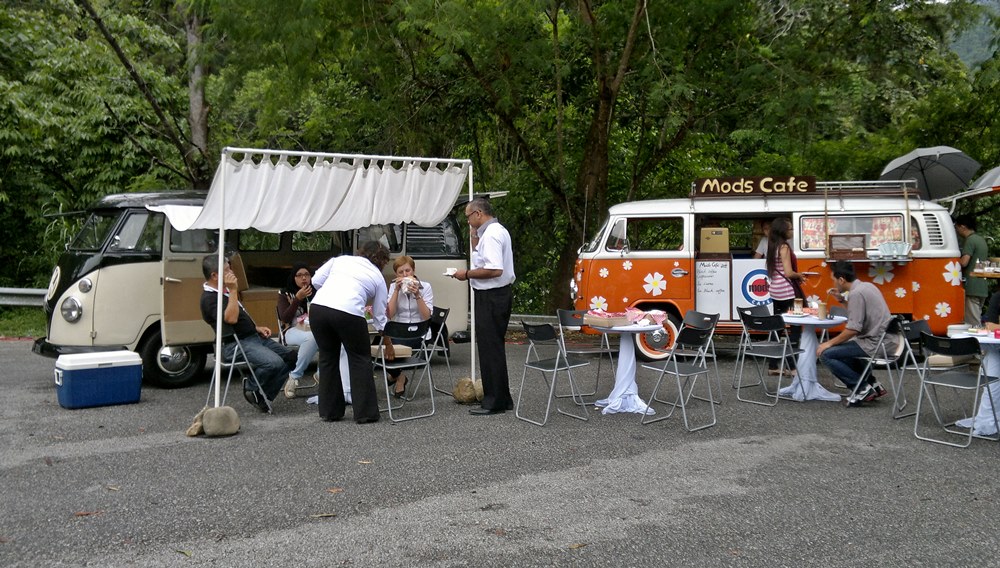
The model was assembled and sold in Malaysia and used in many roles. Some units are still in use today, their owners turning them into mobile food trucks (below).

Lower-priced Volkswagen ID.LIFE to help increase adoption of EVs

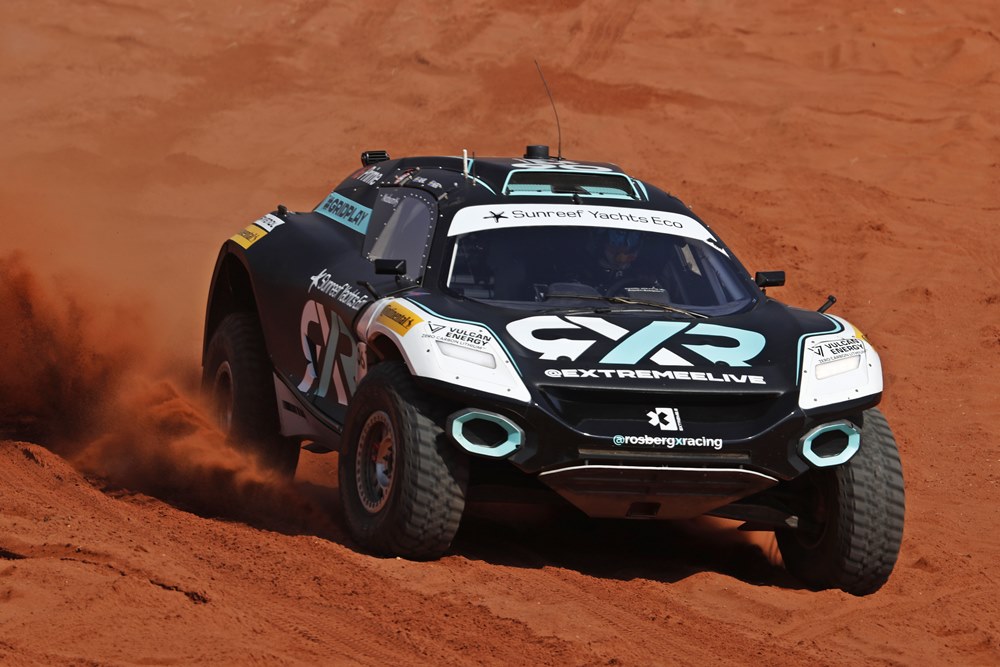
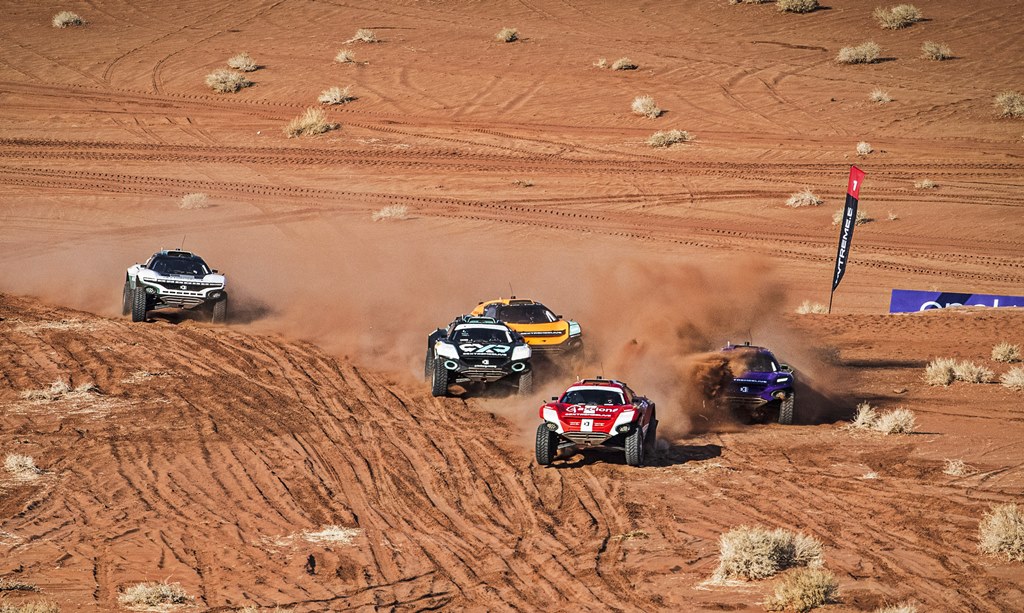
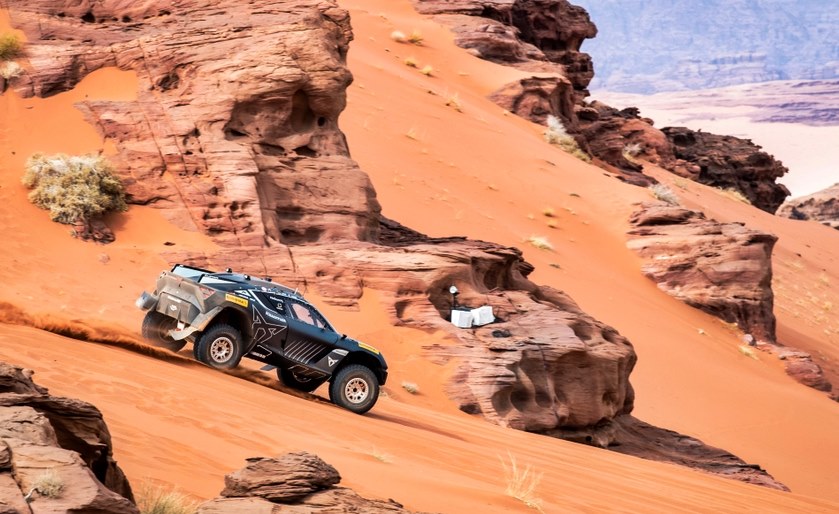
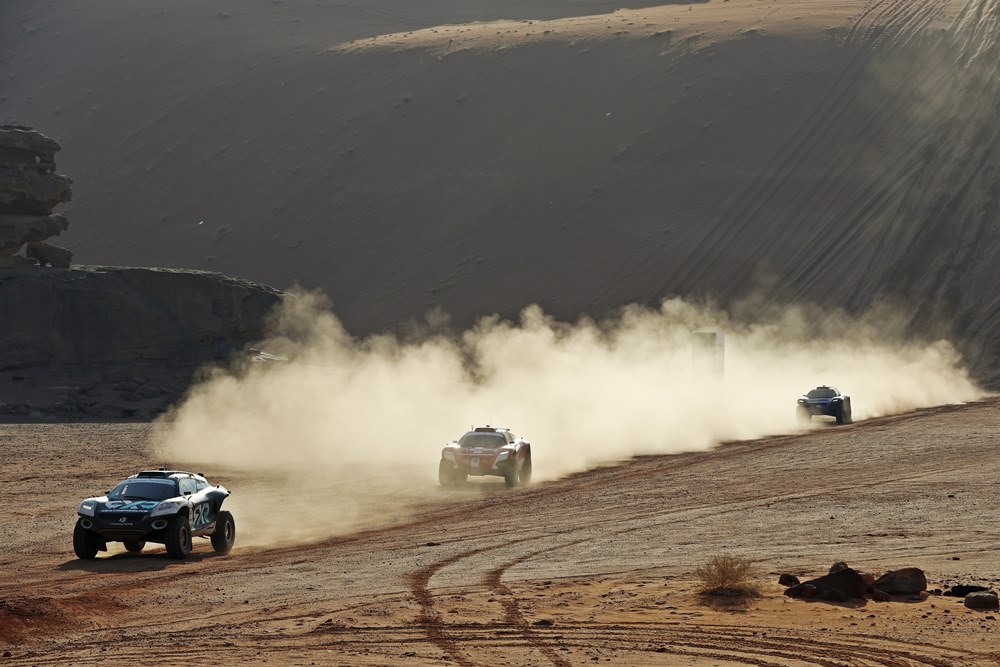
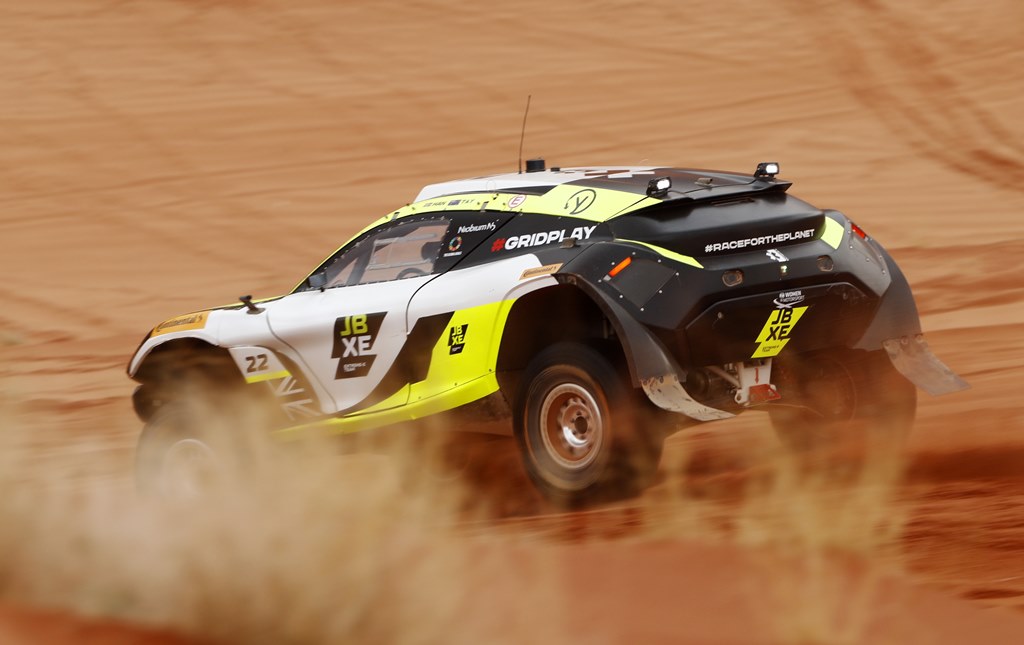
Reigning Extreme E champions Rosberg X Racing (RXR) continued their winning ways with overall victory in the opening round of the all-electric off-road series in NEOM, Saudi Arabia. This is the second season of Extreme E and for this season, RXR (owned and managed by Nico Rosberg, the former F1 champion) retained the services of Johan Kristoffersson with a new team-mate. Mikaela Ahlin-Kottulinsky.
The pair were the victors in a Final of two halves, as a red flag was brought out at the end of the first lap following a big accident for McLaren XE’s Tanner Foust who, in a bid for third place clipped the back of the RXR car driven by Ahlin-Kottulinsky and then rolled his ODYSSEY 21 on the opening lap.

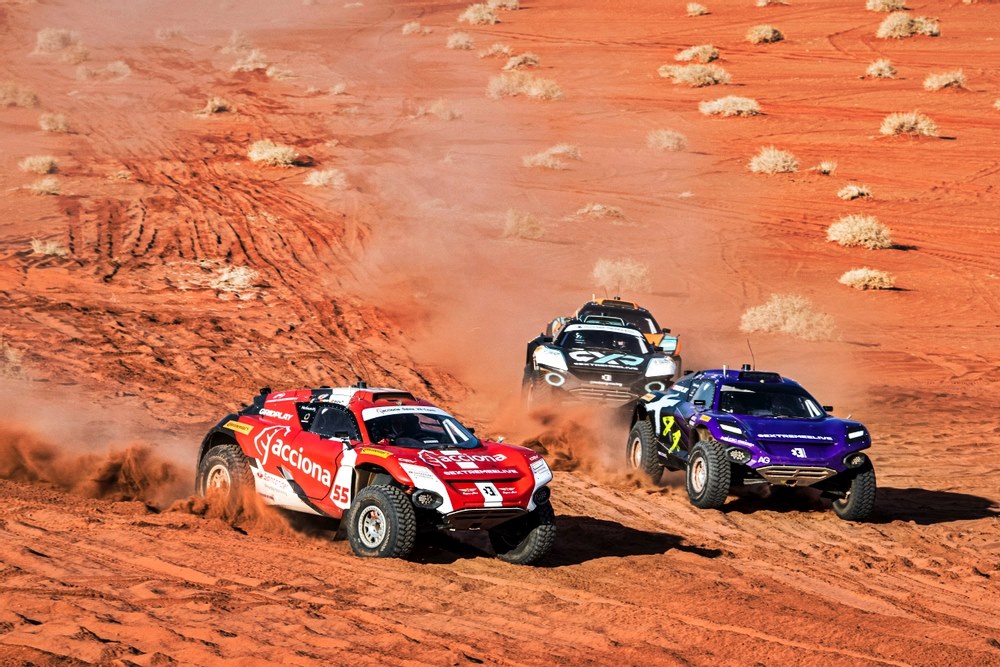
The race resumed for a one-lap shootout, with the four teams released at intervals that matched how they had entered the Switch Zone. X44’s Cristina Gutierrez attempted to close down Laia Sanz in the ACCIONA | Sainz XE Team car, while Kristoffersson closed the gap on the two Spaniards from third.

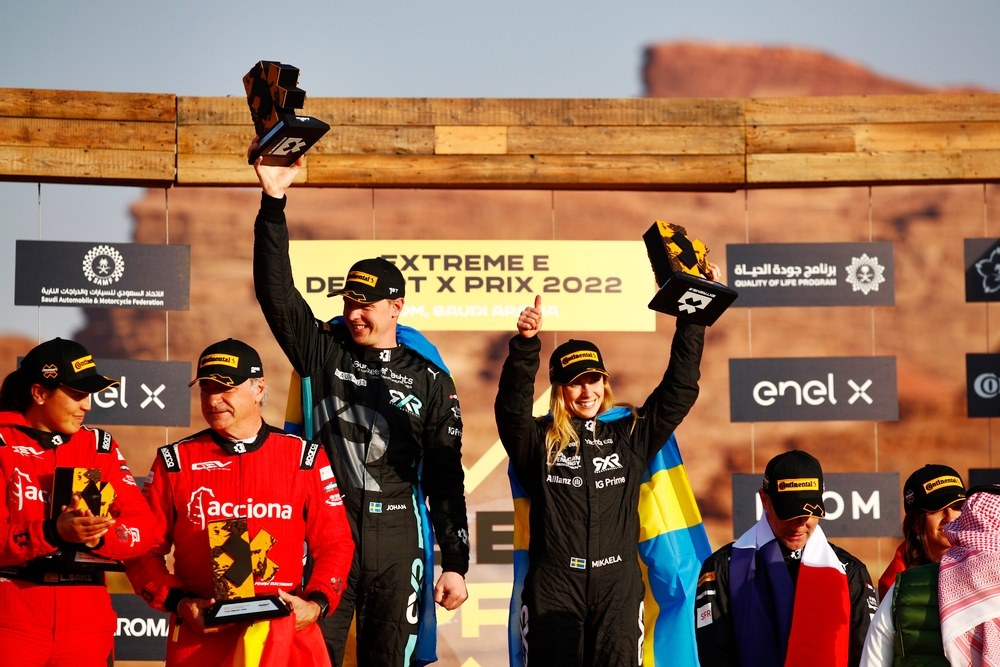
The RXR driver soon passed Gutierrrez on the inside, setting his sights on Sanz. As the Desert X Prix entered its closing stages, Kristoffersson took a wide line into the second to last corner for an aggressive overtake on Sanz and secure a dramatic win ahead of ACCIONA | Sainz XE Team, with X44 completing the podium.

Chip Ganassi Racing came fourth having secured a spot in the Final with a win in Semi-Final 2, and McLaren XE finished fifth despite Foust’s crash having made an excellent comeback from Qualifying to win the Crazy Race.

“It feels really good, but every week feels good. Every time we go for a race, we have the aim to win, but the competition is so high this year, especially with McLaren coming in, which raises the bar even higher. We learned quite a lot last year, but now things are even tighter we’ll have to work even harder. I’m just very happy to start off the season with maximum points,” said Kristoffersson.

RXR’s win was not surprising as the team set the pace in the first qualifying session. It was a dramatic first session over the 6.9-km course which was disrupted by a red flag following a crash for Veloce Racing’s Christine GZ. The Spanish driver, partnering Lance Woolridge, had looked strong throughout their Qualifying run, but the huge crash denied them a shot at the top spot. GZ was able to exit the car but sustained an injury to her foot.

There was also drama in the first of the new 5-car Heats in Qualifying 2. Sebastian Loeb and ACCIONA | Sainz XE Team’s Carlos Sainz Snr. delivered the strongest starts with Nasser Al-Attiyah running third ahead of Sara Price, all taking very different racing lines up the hill.

As the front three pulled away, the ABT Cupra XE car passed Sainz on the inside, but Nasser Al-Attiyah’s pace caused him to miss the flag and, in recovering, he collided with the Spaniard. Sainz brought the damaged ODYSSEY 21 back to the Switch Zone before retiring from the Heat. After the Stewards reviewed the collision, ABT CUPRA XE were classified last of the 4 runners in Heat 1, with the team relegated to ninth overall.

Championship Standings after Round 1
1. Rosberg X Racing – 30 points
2. Acciona | Sainz XE Team – 18 points
3. X44 – 15 points
4. Chip Ganassi Racing – 12 points
5. McLaren XE – 10 points
6. Genesys Andretti United Extreme E – 8 points
7. XITE Energy Racing – 6 points
8. ABT Cupra XE – 4 points
9. JBXE – 2 points
10. Veloce Racing – 1 point

Following the opening round, the next one will be held in Sardinia, Italy, on May 7/8. The long gap between rounds is partly because the cars and equipment travel by a ship to reduce the carbon footprint of the event which is also being used to promote climate and environmental issues on the planet.

Extreme E to add Extreme H in 2024 with hydrogen fuel-cell powered rallycars

For those following auto industry trends, it would appear that the future has to be electrified; first, hybrids with a combustion engine and electric motor, and then just an electric motor alone. It’s considered the only way to address climate change which is blamed partly on exhaust emissions of motor vehicles. Increasingly stringent regulations have made it more and more challenging for manufacturers to develop combustion engines to meet tougher standards and it seems that going electric is the only solution.

Perhaps it is – in the longer term – but for now, the technology is still expensive and hybrid powertrains are just beginning to have cost levels that can reach a much larger number of consumers than fully electric vehicles or battery electric vehicles (BEVs). Furthermore, in many countries, the infrastructure to support BEVs is still not sufficiently developed so it will be inconvenient and impractical owning such vehicles that need regular recharging. In Malaysia, for example, there are around 400 recharging stations at the moment – versus around 3,700 stations selling petrol and diesel.

For these reasons, some manufacturers are looking at other approaches which can give consumers choices. Five Japanese manufacturers – Kawasaki, Mazda, Subaru, Toyota, and Yamaha – are collaborating to find ways to continue using internal combustion engines in a way that can meet stringent regulations and still aim for carbon neutrality.

They are not against full electrification and are developing BEVs too (Toyota will spend 4 trillion yen during this decade on BEV development), but they also think of customers in less developed countries where BEVs will be too expensive. Such people still need transport, so they will be provided vehicles with powertrains that are sufficiently ‘green’.

Realistic alternative approach
This alternative approach is realistic and given the combined technical resources of the 5 companies, new solutions will be found. Back in the early 1970s, when tough exhaust emissions regulations were introduced in America and forced manufacturers to fit catalytic converters, Honda was able to develop its CVCC engine which could run on low-octane fuel and meet the regulations without having a catalytic converter.

Toyota and Yamaha have been jointly working on engines that can run on hydrogen, while Mazda is working on engines that use next-generation bio-diesel. The carmaker previously developed the SKYACTIV-D turbodiesel which was a very efficient engine, and this engine is now being modified to use a 100% bio-derived next-generation fuel called Susteo developed by Japanese firm Euglena Co. Ltd.

Testing in endurance racing
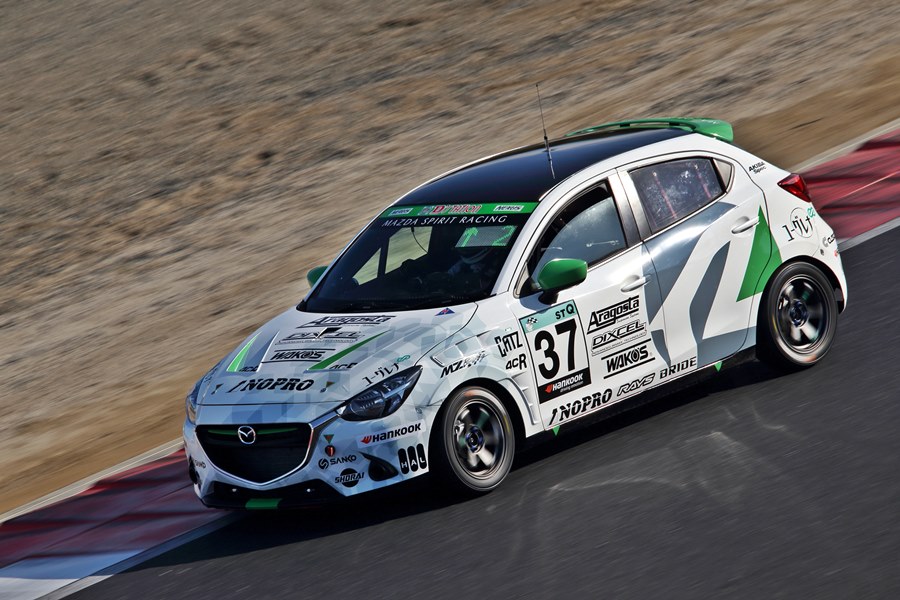
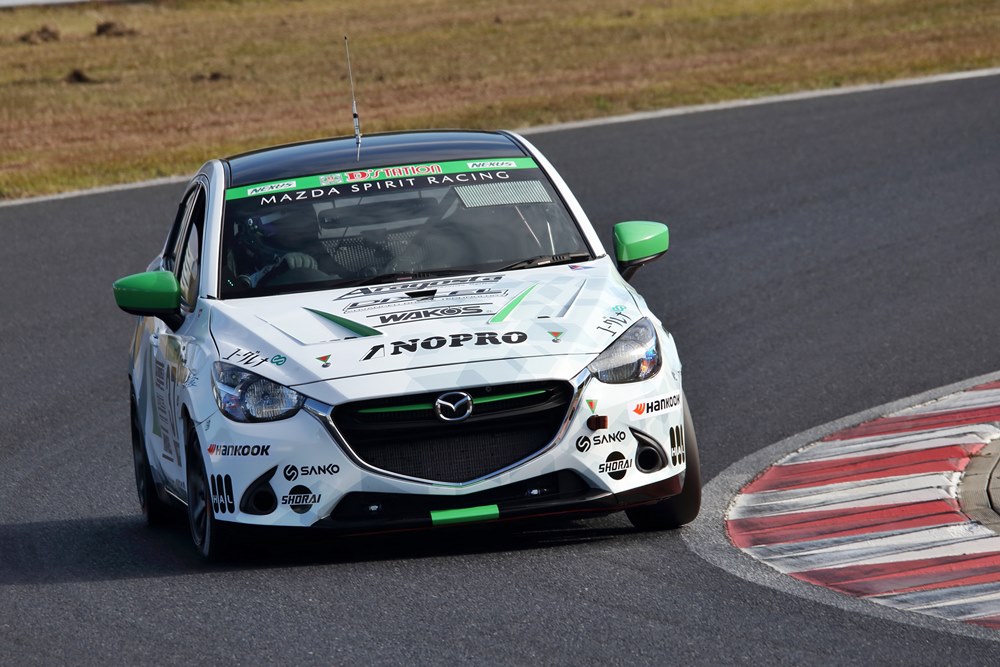
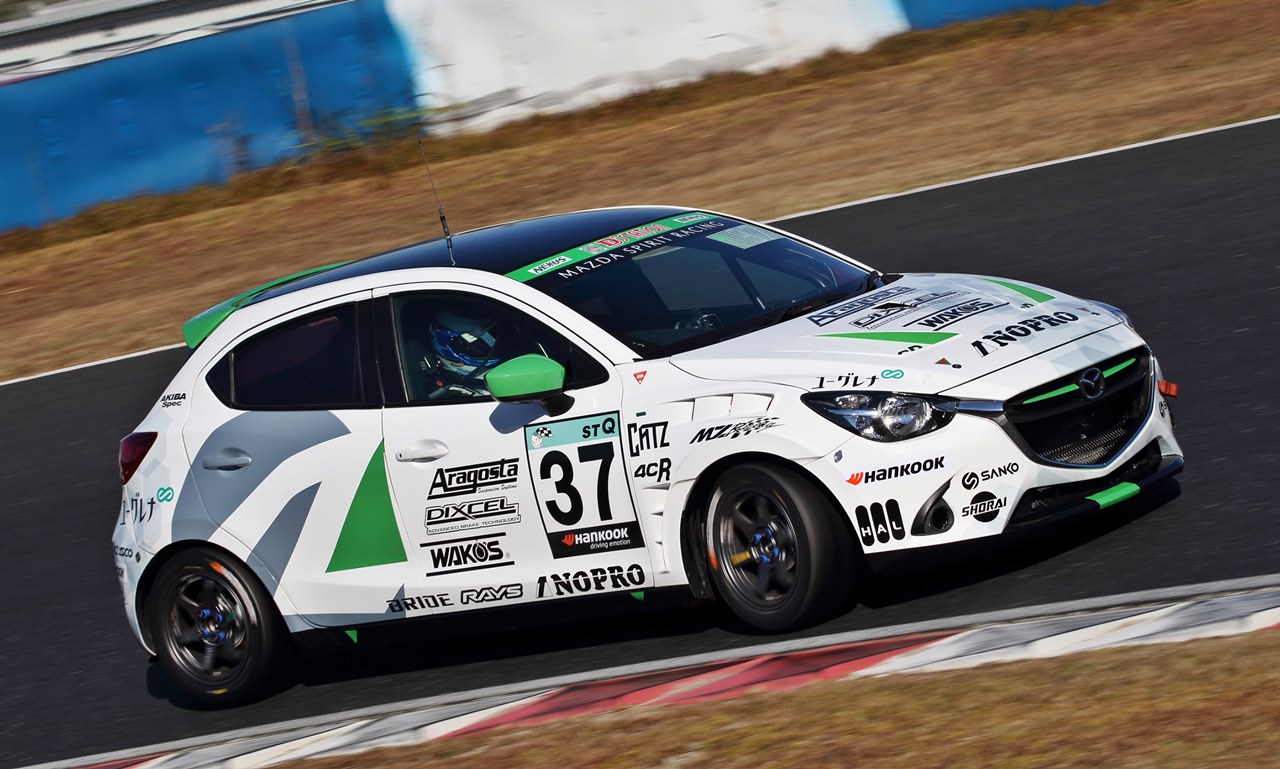
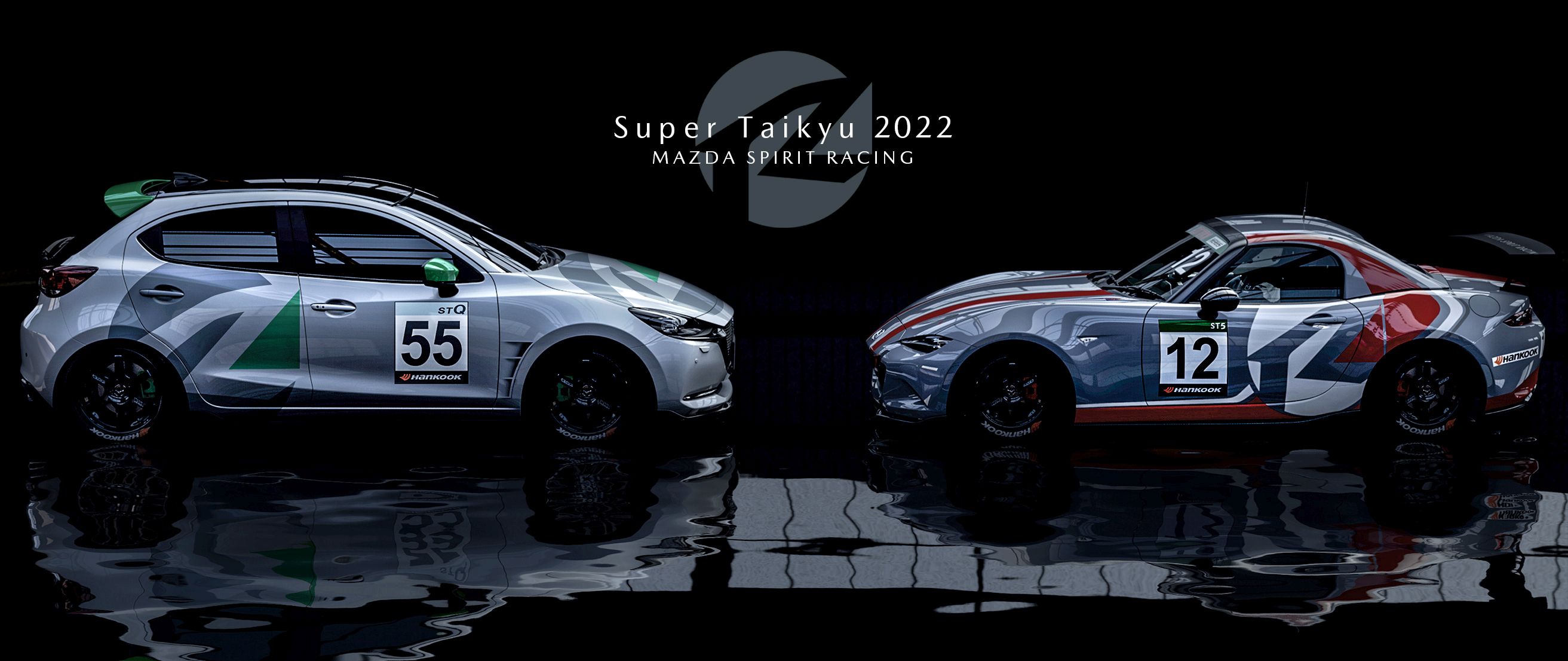
The prototype engine is installed in the Mazda2 Bio concept car and part of its development will include being raced in Japan’s leading domestic endurance racing series, the Super Taikyu Series. This series, which consists of 7 rounds, starts next month at Suzuka and there will be races of 5 or 6 hours as well as a 24-hour event.

Mazda already demonstrated the potential of the 1.5-litre SKYACTIV-D powered car with Euglena’s 100% bio-based fuel made from used cooking oil and microalgae fats when the Mazda2 competed in last November’s Super Taikyu Race.

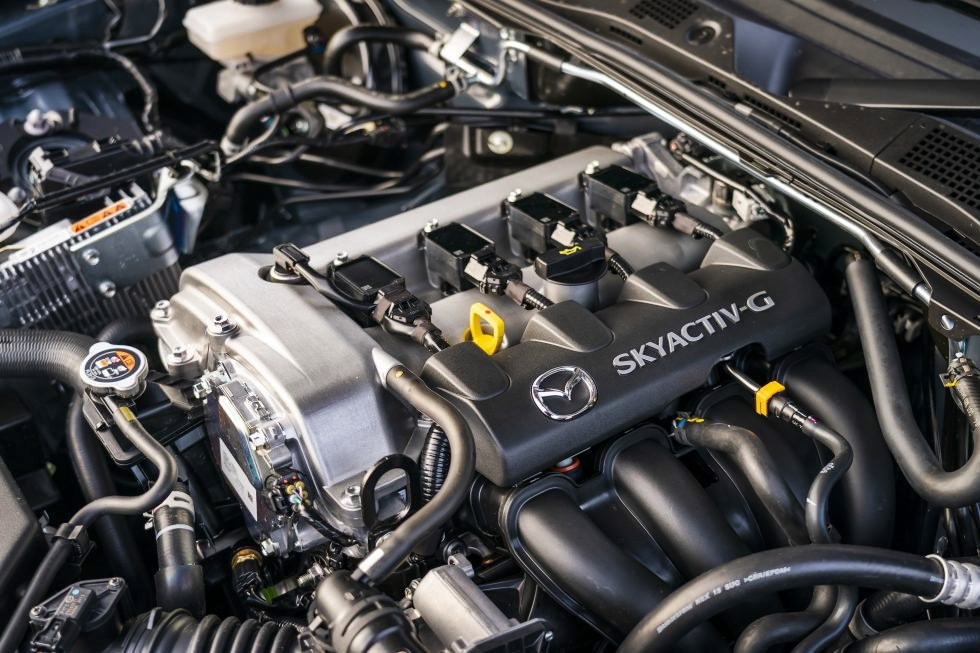
Participating in the ST-Q class with the Mazda2 Bio concept, Mazda will take part in the full series with a new silver livery. From the third round, it will also compete with a SKYACTIV-G petrol-powered MX-5 in the ST-5 production class, a class that has seen privateer teams have huge success with MX-5s over the last few years.

Mazda SKYACTIV-G engine in MX-5
SKYACTIV-G engine in the MX-5.

Multi-solution approach
Mazda is following a comprehensive strategy called the multi-solution approach, which takes into account all available solutions to reach climate neutrality and to suit individual mobility needs as well as regional conditions. It will continue to make investments in developing conventional hybrids, diesel engine models, BEV models and plug-in hybrid (PHEV) models while, at the same time, promoting initiatives in renewable fuels such as 100% bio-based fuels.

Next-generation biodiesel fuels, which are made from sustainable raw materials such as microalgae fats and used cooking oil, do not compete with food crops, which has been an issue with existing biodiesel fuels. As these fuels can also be used as alternatives to diesel in existing vehicles and equipment without any modification, no additional fuel supply infrastructure is required. Therefore, biodiesel can be expected to play a prominent role as an excellent liquid fuel source in promoting carbon neutrality.

High-performance Lexus V8 modified to run on hydrogen in Toyota-Yamaha project

You’ve probably not heard about the UK-based RML Group but this family-owned company is an ‘engineering powerhouse’ (as described by Autocar UK) which provides specialised services to many carmakers. It develops high-performance derivatives and also builds prototypes, showcars as well as restores historic road and racing cars. It’s also produced racing cars since 1958 and involved in many successful teams.

RML typically does work for others but just over 3 years ago, they decided that a car was needed to showcase the quality and breadth of their work in the automotive industry. “For many people, RML is synonymous with motorsport success at the very highest level but over the last 2 decades, it has diversified considerably, undertaking many complex projects outside of the competition arena,” said Michael Mallock, RML’s CEO.

RML’s own product
“Much of its core design, engineering and manufacturing work within the automotive sector is now as a ‘white label’ partner to prestige OEMs (carmakers) around the world, and this work is quite rightly confidential. But our vehicle could wear the RML badge, and also benefit from the vast experience our in-house team has gained producing some of the industry’s most advanced engineering solutions for other companies. And that ‘vehicle’ has now materialised: the RML Short Wheelbase is complete and production will start imminently,” he explained.

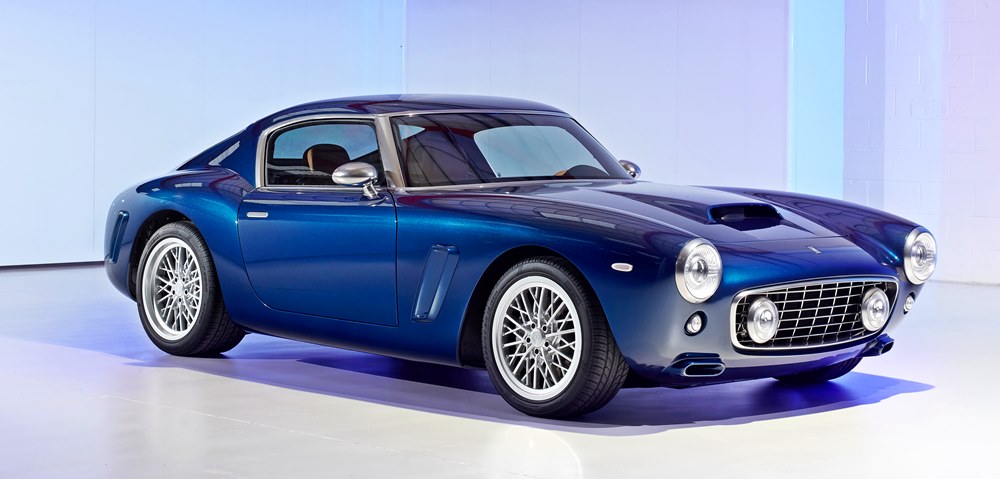
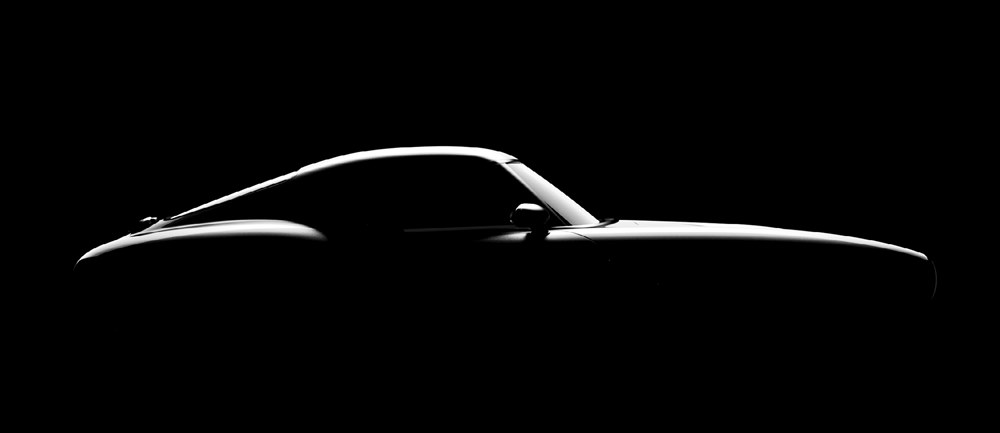
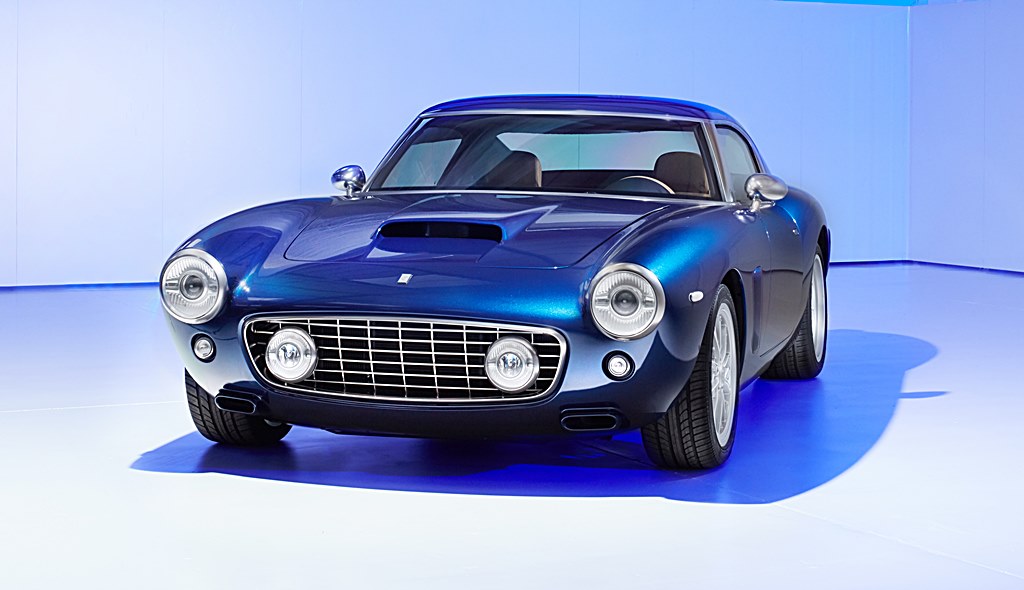
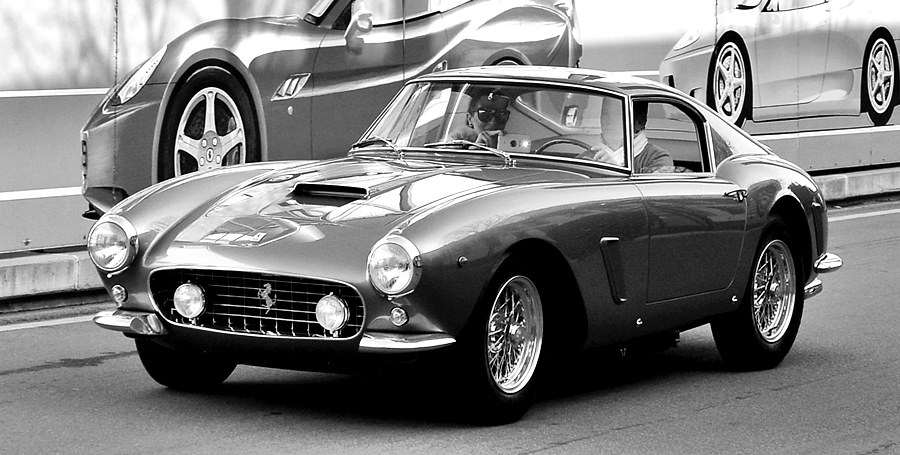
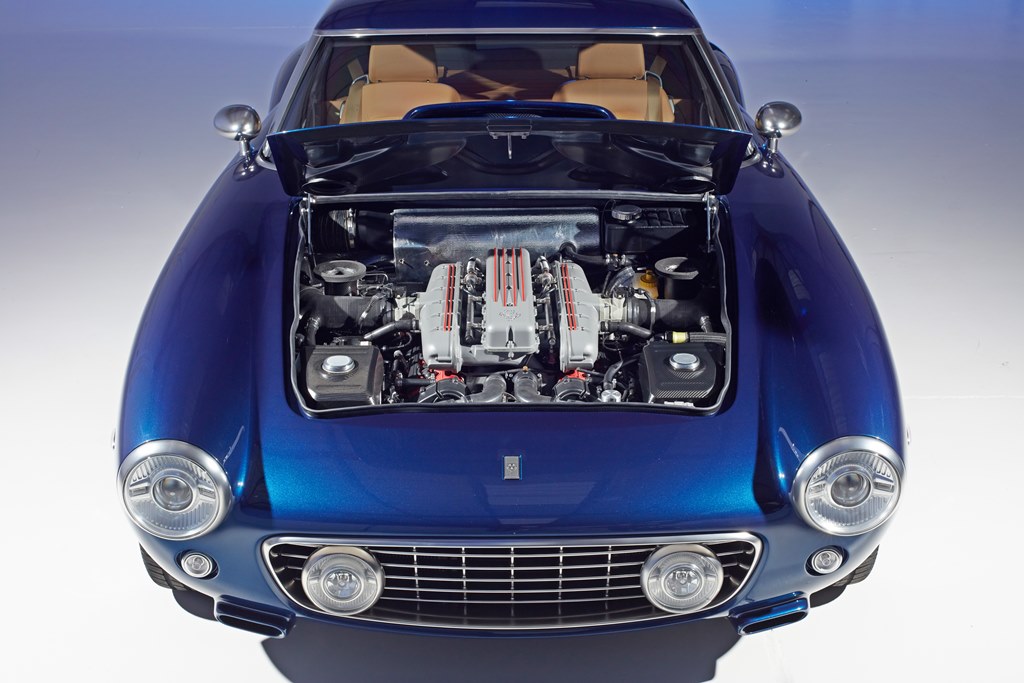
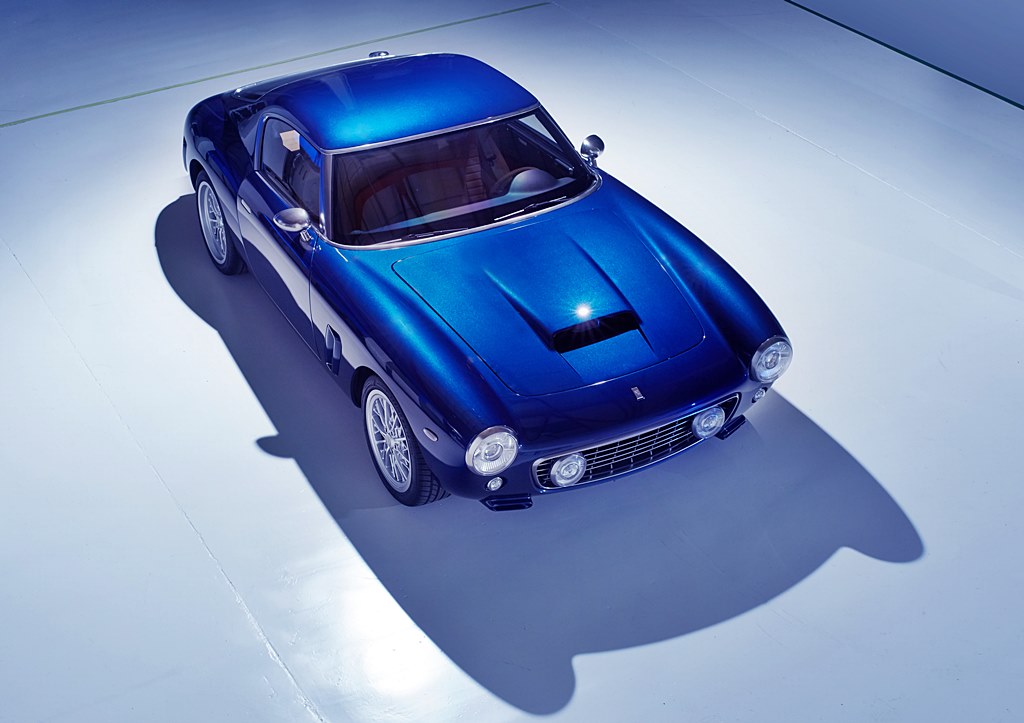
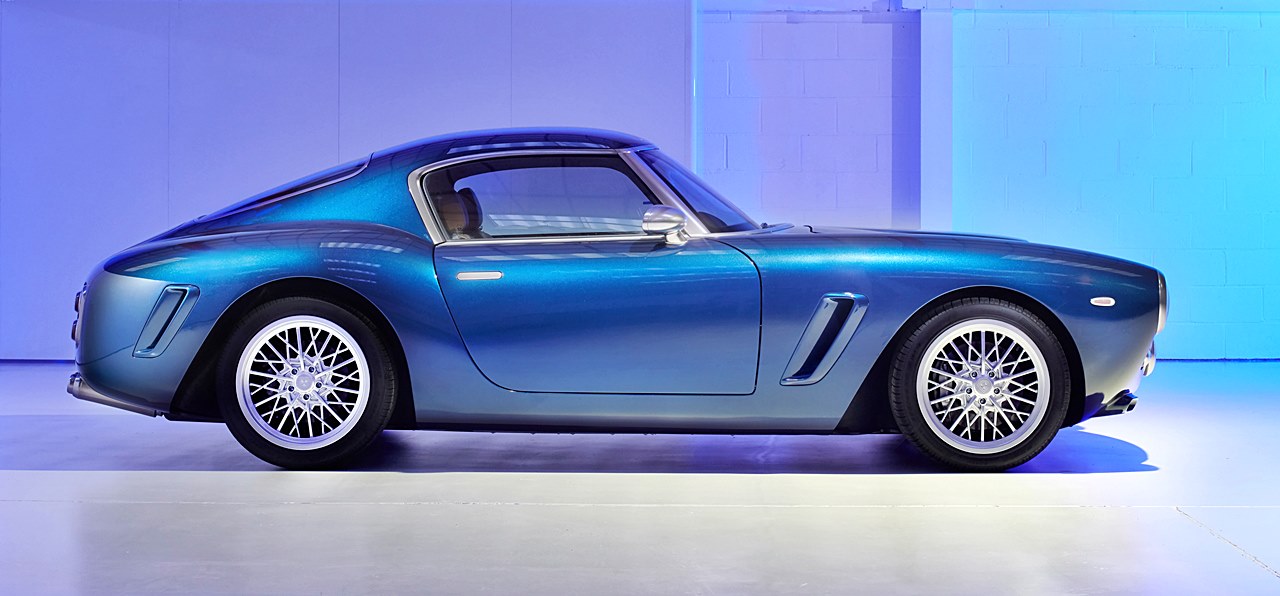
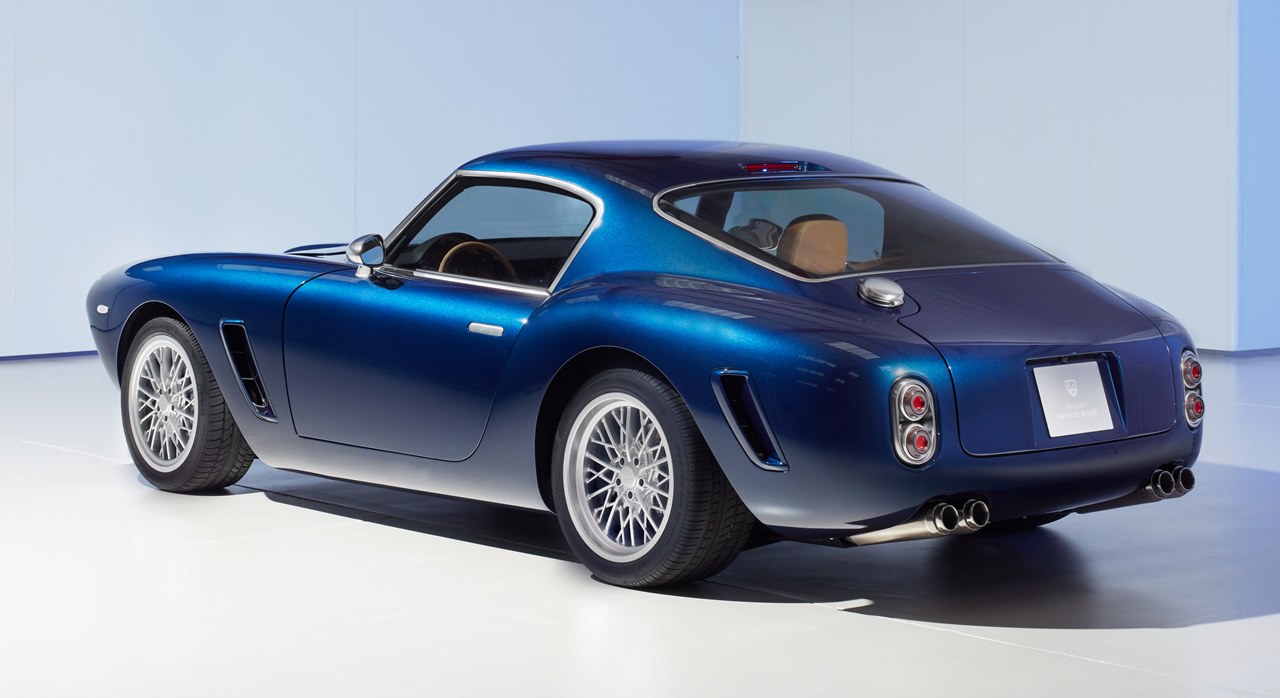
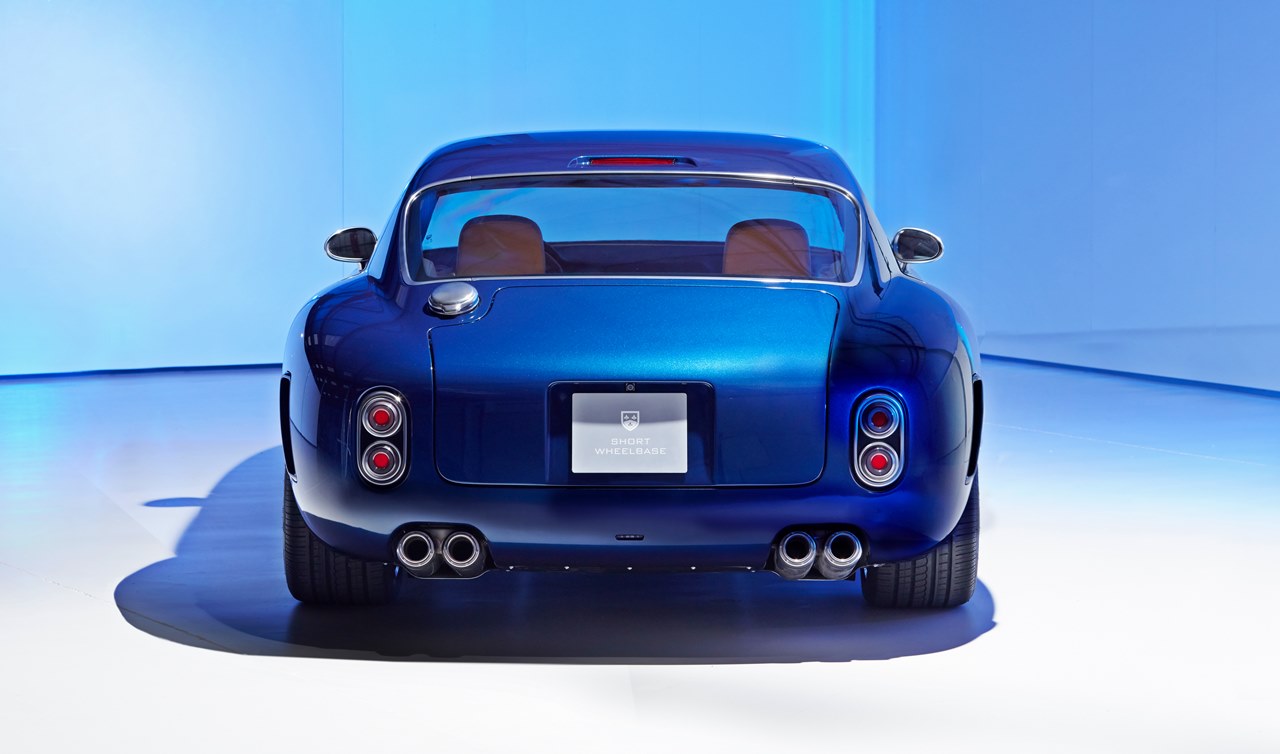
Inspired by the Ferrari 250 SWB, the RML Short Wheelbase is a 2-seat, high-performance GT, the design of its lightweight, carbon-composite body paying homage to the driving purity of supercars from the past, while offering 21st-century comfort and convenience.  Classic features like its stacked rear lights, exposed fuel filler, chip-cutter front grille and vents appearing behind each wheel and on the bonnet have all been carefully reimagined.

2022 RML Short Wheelbase
The RML Short Wheelbase is inspired by the Ferrari 250 SWB of the 1960s (below).

Classic Ferrari V12 engine
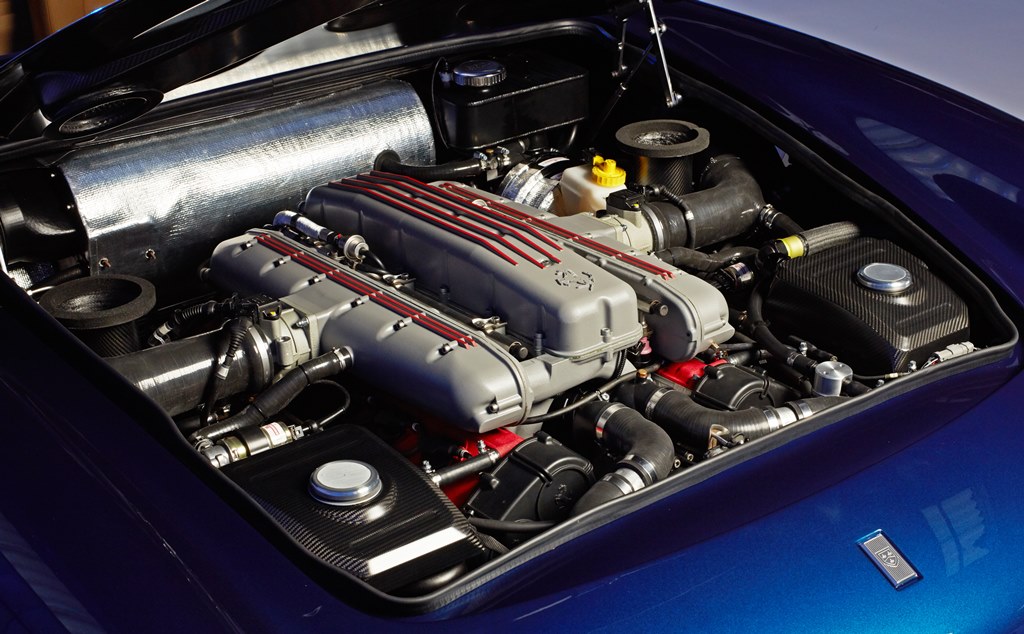
Under the long bonnet is a 5.5-litre V12 engine, and it’s one of the all-time great high-performance engines from Ferrari. Developing 479 bhp/568 Nm. 0 to 60 mph (96 km/h) time, it gives the car a claimed 0 to 60 mph (96 km/h) time of 4.1 seconds with a top speed of 290 km/h. The V12 engine power goes to the rear wheels through a 6-speed manual gearbox and transaxle which incorporates a limited-slip differential.

2022 RML Short Wheelbase

An engine like the Ferrari V12 should not only be seen but also heard, and the RML team developed an all-new exhaust system from the manifold to its quad tailpipes (apart from the catalyst) to achieve this. Acoustically sonorous, but meeting all current noise regulations, the system also had to be free-flowing enough not to impede the engine’s original performance.

2022 RML Short Wheelbase

With a target to emulate the exhaust note of a classic V12 road-racer, RML’s engineering team started by making recordings of the original Ferrari engine from inside and outside the car at various speeds and loads, from idle to full-throttle acceleration. The engine was also put on a dynamometer, and data from both tests was built into a computer-simulated model that could be adapted to suit the new noise requirements of the Short Wheelbase.

Classic ambience, 21st century comfort
With such performance, the Short Wheelbase should be capable of crossing great distances with a degree of comfort and convenience that wouldn’t have been dreamt of 60 years ago. That convenience has extended to a cabin with an interior design in the classic style, yet with modern technology discreetly integrated throughout.

It has also been packaged to be able to accommodate tall occupants. “Very early on, we built a buck that could accept a broad range of human sizes,” recalls Bowen. “We actually built it around RML’s shortest employee, and tallest one – our CEO Michael Mallock wearing a race helmet, in fact! This effectively set the roof-line, and all other dimensions flowed from there,” revealed RML’s Head of Design, Jonathan Bowen.

2022 RML Short Wheelbase

No plastic
“We had a ‘no-plastic’ mantra when we started designing the interior,” added Bowen. “It would have been easy to save tens of thousands of pounds buying off-the-shelf dials and controls, but they would not have met our high standards. Therefore, every switch, button and clock you see in the Short Wheelbase is bespoke, and developed in-house.”

2022 RML Short Wheelbase

The conical dials across the dashboard are inspired by high-end watchmaking, and everything else that can be seen or touched is either machined aluminium, glass or leather. And despite the Short Wheelbase cabin’s classic design, a compact high-performance air-conditioning unit has been developed which drew on the company’s experience with component engineering for other carmakers.

The unique infotainment system incorporates everything you’d expect from a high-end modern car, such as Apple CarPlay, Android Auto and  mobilephone connectivity. The system can be hidden completely, appearing from the central gear tunnel when it’s needed. “To make sure that happened every time, we put it through a 10-thousand cycle test and it passed with flying colours!” said Bowen.

2022 RML Short Wheelbase

Production run of 30 units
Priced from £1.35 million (about RM7.7 million), each car from the proposed run of 30 units will take around 6 months to complete, with the capability of up to 6 builds in process at any one time to meet the already strong demand from across the world. Around 70% of sales will be for export, with the majority expected to be in North America.

2022 RML Short Wheelbase

250 SWB Revival – legendary Sixties Ferrari modernised

In November last year, 5 Japanese companies – Kawasaki Heavy Industries, Mazda Motor Corporation, Subaru Corporation, Toyota Motor Corporation and Yamaha Motor – jointly announced that they would begin discussions for conducting collaborative research into possible avenues for expanding the range of fuel options for internal combustion engines in the quest for carbon neutrality.

Giving customers more choices
Specifically, the companies intend to unite and pursue 3 initiatives: 1) participating in races using carbon-neutral fuels, 2) exploring the use of hydrogen engines in 2-wheeled and other vehicles, and 3) continuing to race using hydrogen engines. This is in an effort to provide customers with greater choice so that, in Toyota’s words’, ‘no customer is left behind’.

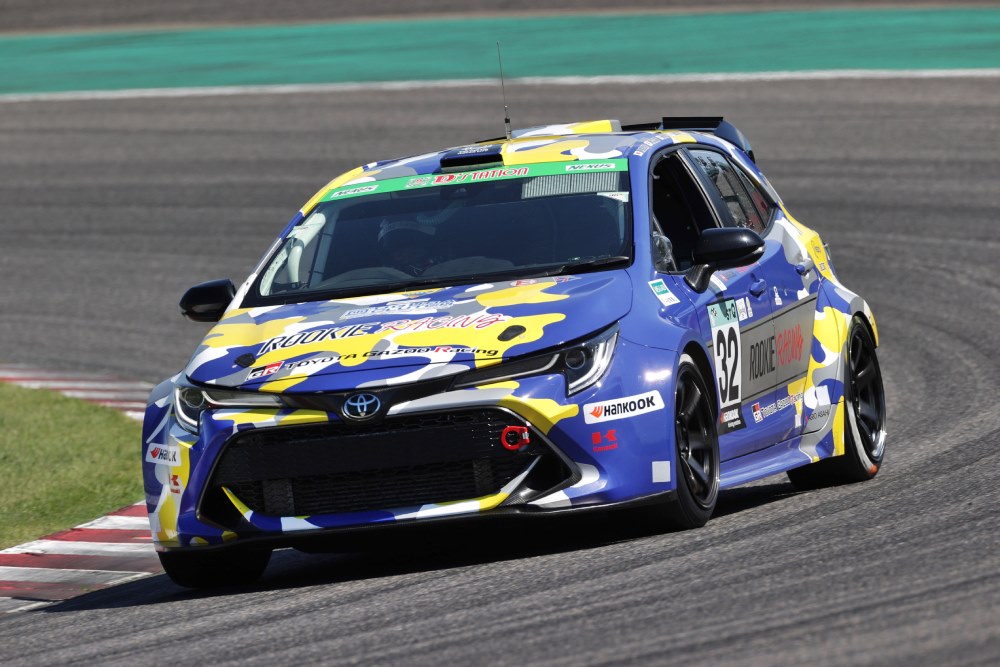
Toyota has been working with Yamaha Motor, Denso Corporation and other related parties to develop a hydrogen engine since 2016. It has entered a Corolla equipped with a prototype hydrogen-fueled engine in 3 races in Japan, with Toyota President & CEO Akio Toyoda also participating in the races.

Toyota has been racing a Corolla with a prototype hydrogen-fueled engine in Japan. It is also known to be developing a GR Yaris to run on hydrogen.

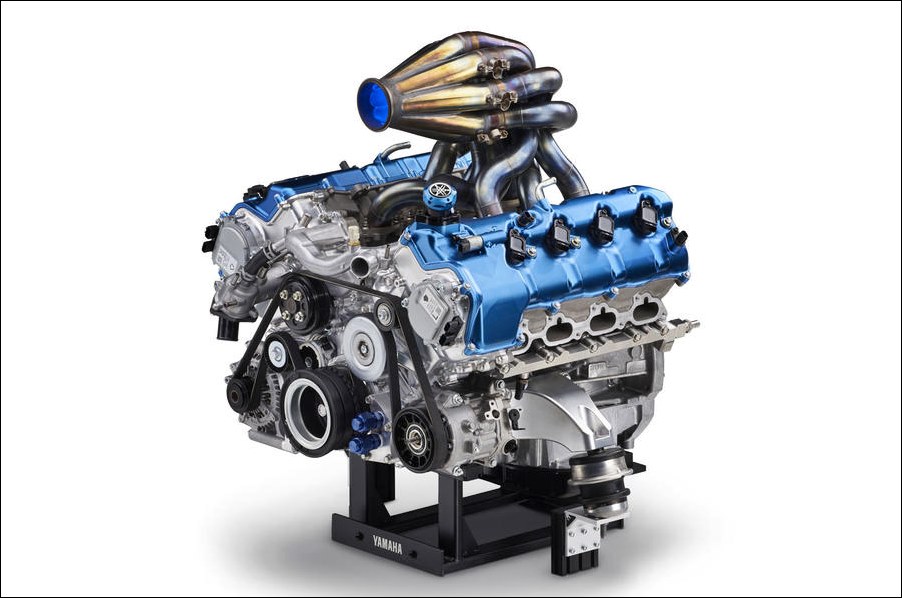
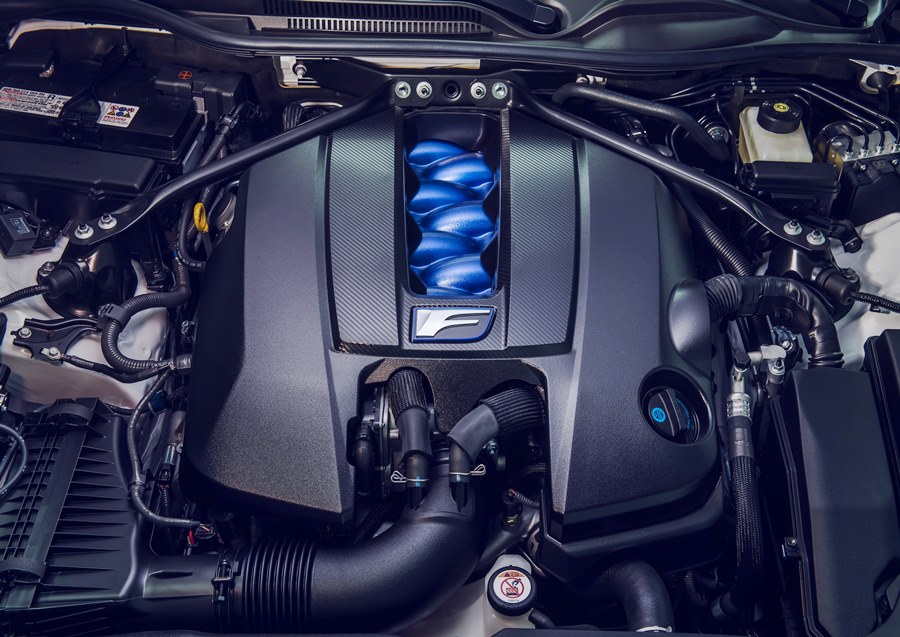
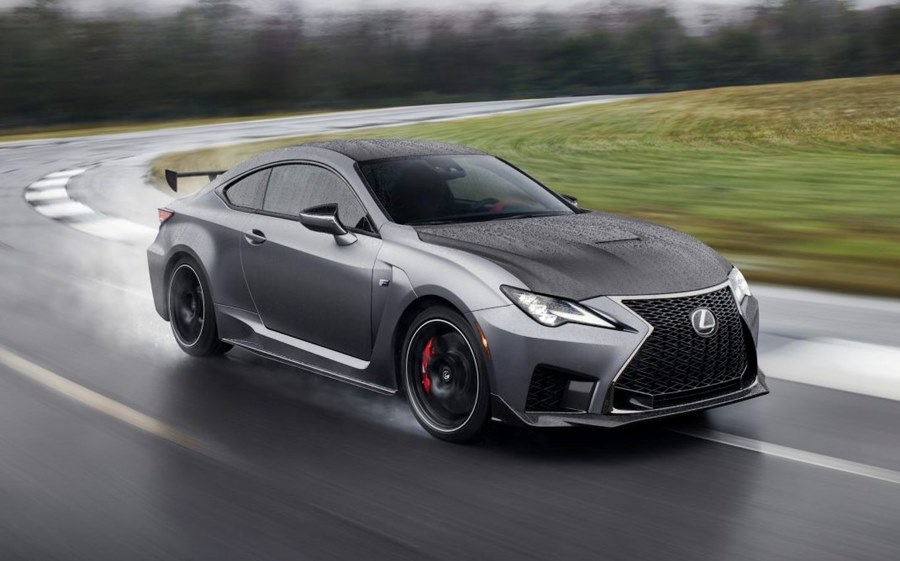
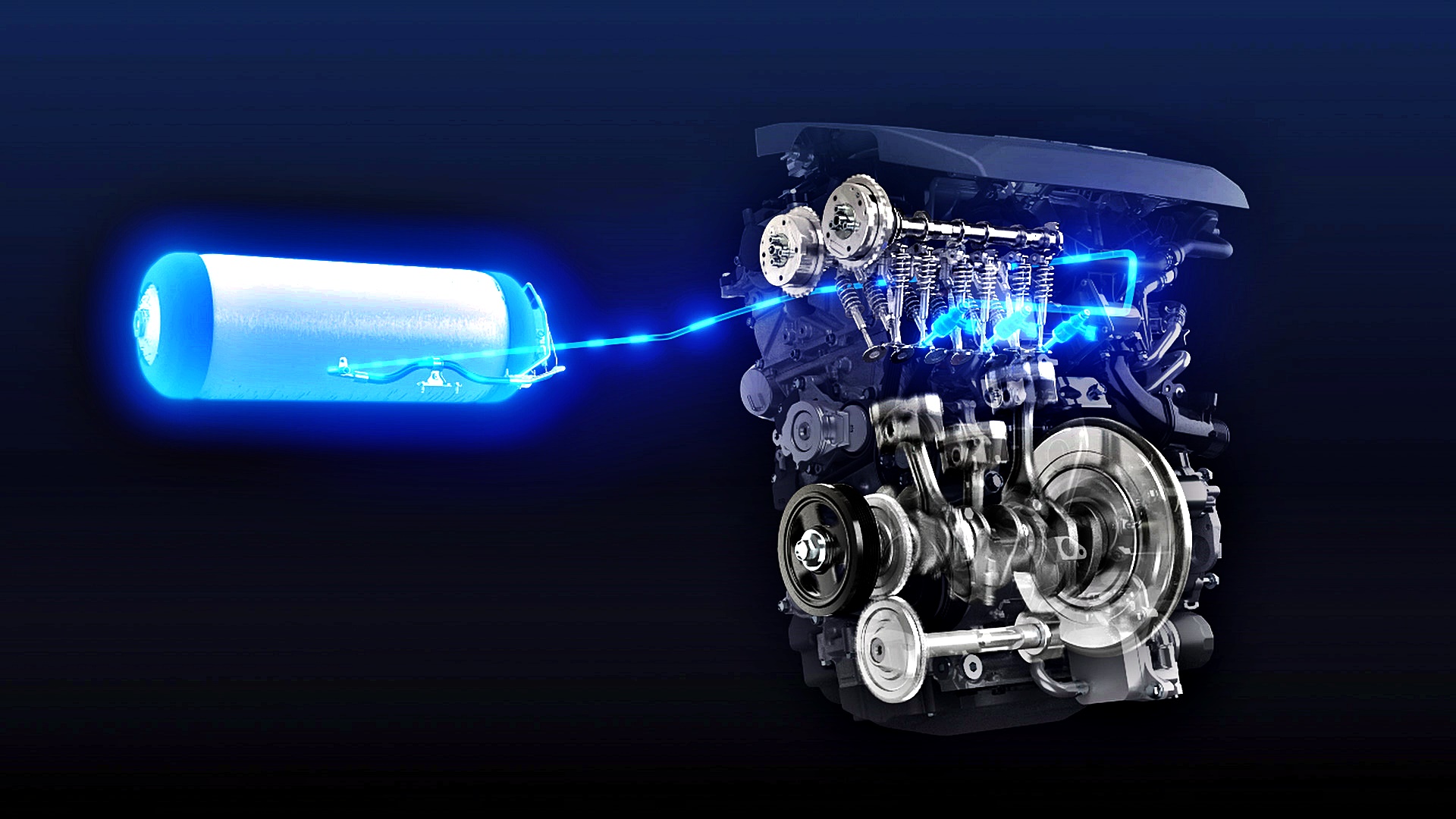
Besides the engine in the Corolla, it has been revealed that there is another engine which Yamaha has been commissioned to develop by Toyota. This is a 5-litre V8 engine that can be used for automobiles which is fueled entirely by hydrogen. Shown to the public recently, the unit is based on the engine of the same size and configuration in the Lexus RC F sport coupe.

The V8 engine in the Lexus RC F. For the prototype engine to run on hydrogen, it has been modified in many areas.

Modifications have been made to the injectors, cylinder heads, intake manifold, and more, and it is claimed to produce up to 455 bhp at 6,800 rpm, with maximum torque of 540 Nm at 3,600 rpm. The 32-valve engine running on petrol has been able to produce up to 472 bhp and 535 Nm, although emission regulations have lowered it to 457 bhp in recent years.

Lexus RC F

5-year experience with hydrogen engine
Actually, Yamaha began developing a hydrogen engine for cars about 5 years ago. Takeshi Yamada from the Technical Research & Development Centre’s Automotive Development Section who is a member of the hydrogen engine development team, recalls having a of sense ‘the depth of potential in the powerplant’ as the project progressed.

“I started to see that engines using only hydrogen for fuel actually had very fun, easy-to-use performance characteristics,” he explained. “Hydrogen engines have an innately friendly feel that makes them easy to use even without resorting to electronic driving aids. Everyone who came to test-drive the prototype car would start off somewhat skeptical, but emerged from the car with a big smile on their face at the end. As I watched this, I started to believe that there is actually enormous potential in the characteristics unique to hydrogen engines instead of simply treating it as a substitute for petrol.”

Another thing that Yamada and the team value in the development process is kanno seino, meaning ‘sensual’ or ‘exhilarating’ performance. One example is the harmonic high-frequency exhaust note produced by the engine’s 8-into-1 exhaust manifold. “This is a challenge we can sink our teeth into as engineers and I personally want to pursue not just performance but also a new allure for the internal combustion engine that the world has yet to see,” declared Yamada.

“Hydrogen engines house the potential to be carbon-neutral while keeping our passion for the internal combustion engine alive at the same time,” proclaimed Yamaha President Hidaka. “Teaming up with companies with different corporate cultures and areas of expertise as well as growing the number of partners we have is how we want to lead the way into the future.”

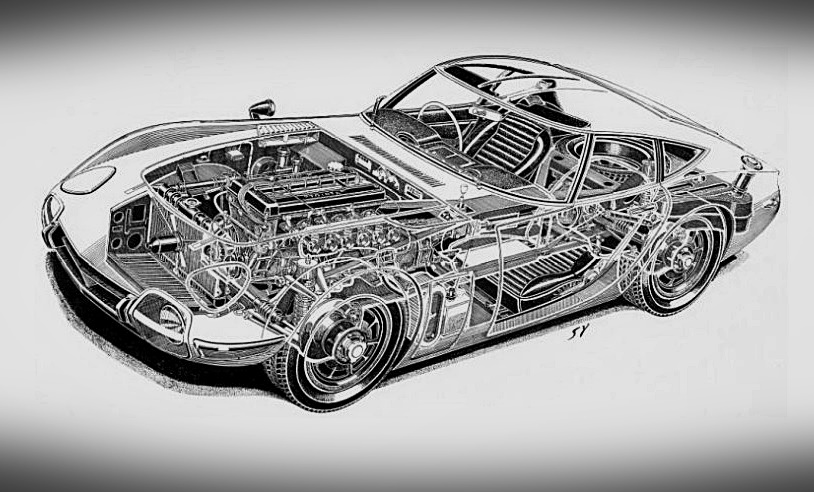
Yamaha was involved in the development, particularly the 6-cylinder engine, of the Toyota 2000GT, Japan’s first supercar in the 1960s.

Long history of collaboration
Toyota has had a 5% stake in Yamaha since 2019 but the two companies have a long history of working together, going back to the 1960s. Although well known for its motorcycles, Yamaha has great expertise in engines and was involved in the development as well as manufacture of high-performance engines for Toyota models, including the 2000GT, Japan’s first supercar.

Toyota: “No customer is left behind” in quest for carbon neutrality

Archive

Follow us on Facebook

Follow us on YouTube