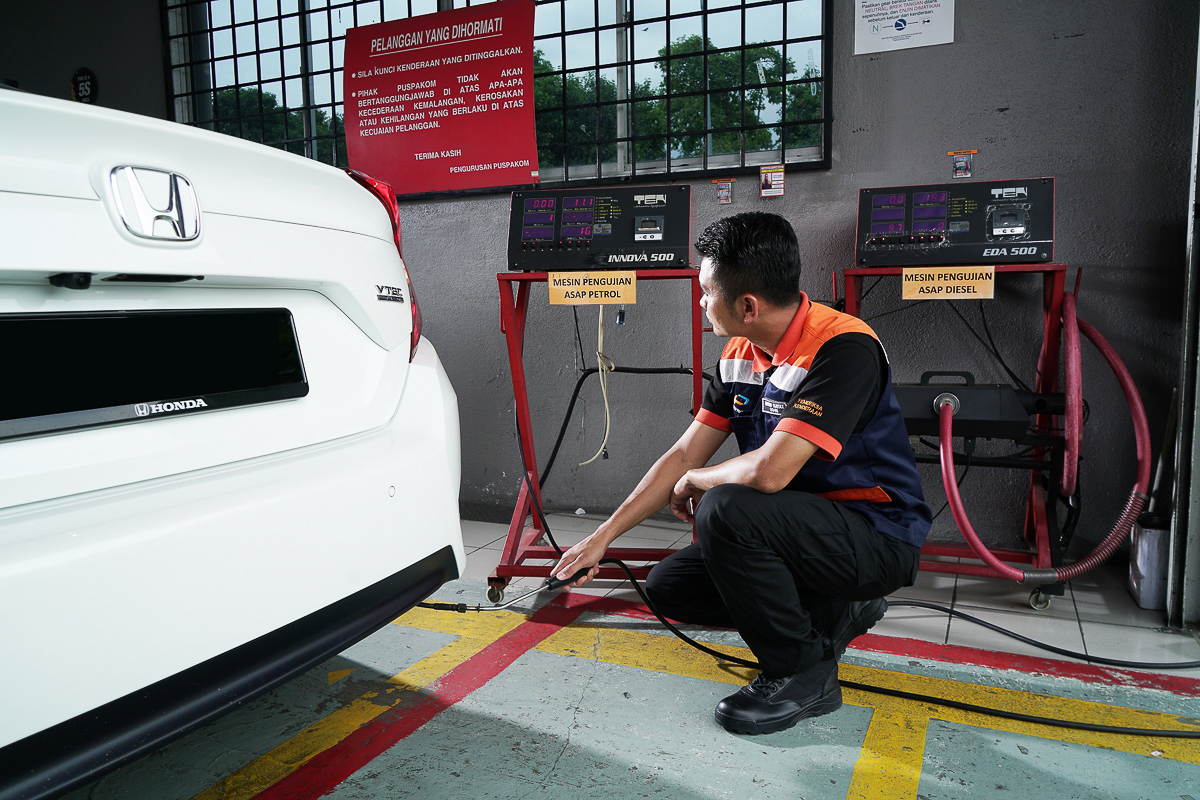
With the gradual removal of restrictions under the Movement Control Order – now known as the Conditional Movement Control Order or CMCO – PUSPAKOM resumed its operations on April 29, 41 days after it had remained closed. However, its inspection services were limited to commercial vehicles of certain categories.
West coast states and Pahang from tomorrow
From today, the company is providing vehicle inspection services to all categories of vehicles including those that are registered for private use. The resumption of full services started today at branches in Johor, Negeri Sembilan, Melaka, Kedah, Kelantan, Terengganu, Sabah and Sarawak. Branches in the Klang Valley, Penang, Perak, Perlis and Pahang (with the exception of the one in Pekan) will provide full services from tomorrow (May 12).
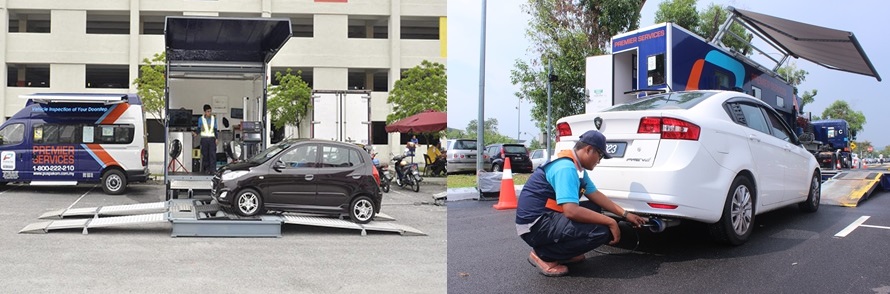
All vehicle inspection centres will operate from 8 am to 5:30 pm 5 days a week. Those in the Klang Valley, Negeri Sembilan, Melaka, Pulau Pinang, Perak, Perlis, Pahang, Sabah and Sarawak will be closed on Saturdays and Sunday, while those in Johor, Kedah, Kelantan dan Terengganu will be closed on Fridays and Saturdays. Mobile inspection services are also available from certain locations.
PUSPAKOM also offers vehicle inspection services away from its centres with mobile trucks and vans. [File picture]Vehicle owners are requested to make an appointment for a slot and those who do not have an appointment will not be accepted. Appointments can be made at www.puspakom.com.myor use the MyPUSPAKOM app available from Google Play.
Strict procedures to be followed
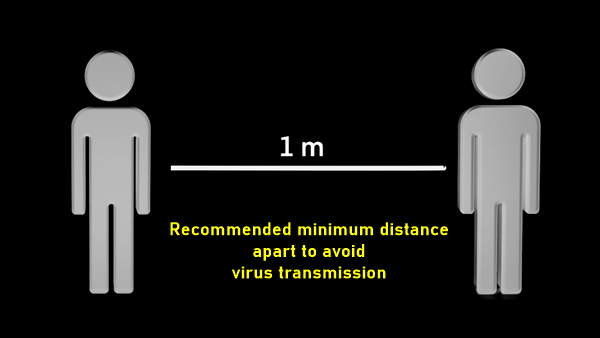
While at the inspection centre, owners are required to follow strict procedures to comply with government requirements for the protection of the public and PUSPAKOM employees. These include the use of face masks at all times and cleaning with hand sanitizers. Gathering in groups is also not allowed and there should be a 1-metre gap between people. It goes without saying that visitors should have no symptoms of COVID-19. They should not visit PUSPAKOM if they are unwell and should seek medical attention to check their condition.
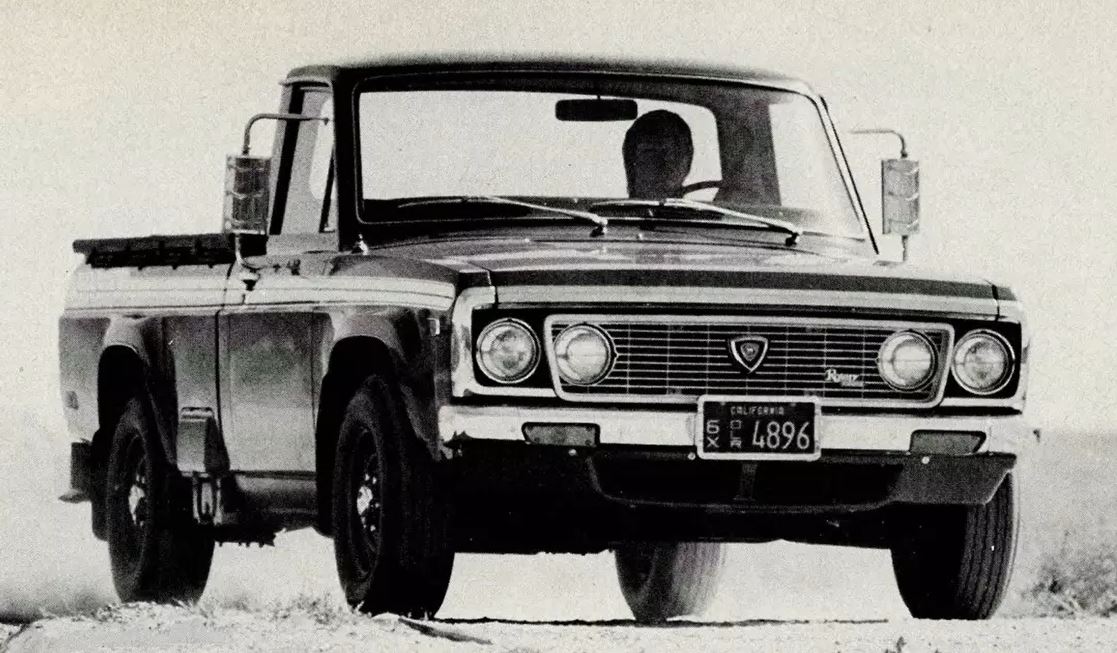
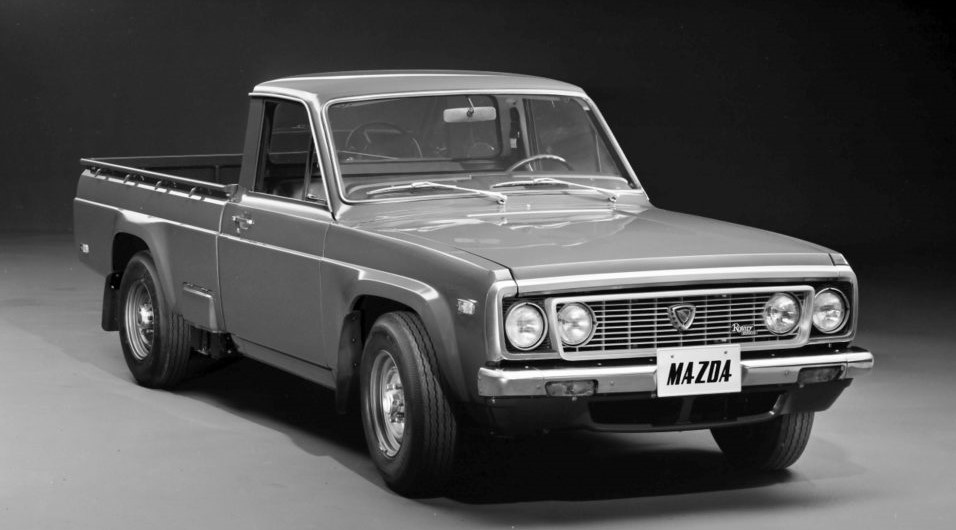
The history of the Mazda BT-50 goes back over 50 years and along the way, in the mid-1970s, the carmaker developed and sold the first and only production pick-up truck with a rotary engine. As is well known, Mazda was the only company that successfully commercialised the rotary engine (also known as the Wankel engine) and installed it in a number of models.
With its commitment to the rotary engine, it was only natural that it would look for as many models as possible to use the powerplant and seven years after launching the world’s first production car with a rotary engine, in 1974, the company developed a variant of the second-generation B-Series truck with a powerful rotary engine.
The truck had a simple name: Rotary Pick-Up and used the 1.3-litre (13B) 4-cylinder version with two rotors. According to the American Road & Track magazine, the power output was 110 bhp/158 Nm and fuel consumption was 14.3 kms/litre. It went from 0 to 60 mph (96.5 km/h) in 11 seconds, certainly a lot quicker than other trucks.
Priced at US$3,500 then, the Rotary Pick-Up was sold mostly in North America. Production at the Hiroshima factory began in 1974 and continued till 1977 and some 15,000 units were believed to have been made.
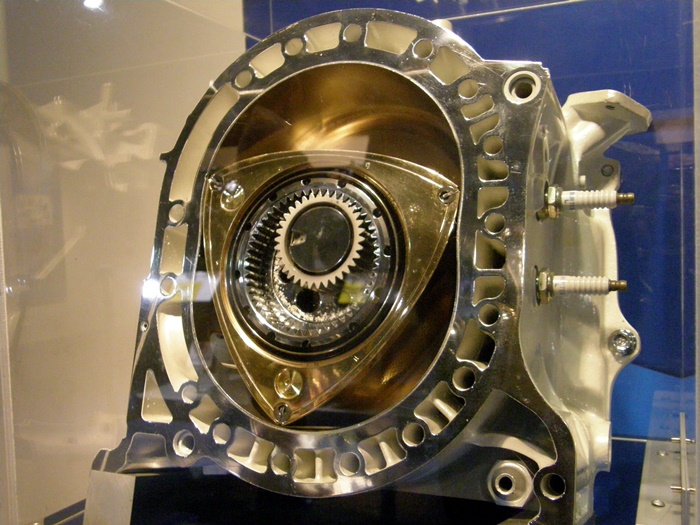
The rotary engine had no pistons and instead used rotors inside the combustion chanbers.An advertisement published in America in 1975 for the Rotary Pick-Up.
The 1970s were a time when the energy crisis was on and the rotary engine’s inherent drawback of high consumption quickly diminished it popularity. During that decade too, emission control regulations became tougher and the Mazda engineers found it difficult to make the rotary engine cleaner. So the Rotary Pick-Up never continued into the next generation although the B-Series went on and even became a jointly-developed product with Ford which called their model the Ranger.
To know more about today’s Mazda pick-up truck, the BT-50, visit www.mazda.com.my.
Virtually all industries and businesses in Malaysia suspended operations on May 18 as the Movement Control Order (MCO) started, a measure to stop the spread of the COVID-19 coronavirus.With the situation improving, the government is allowing resumption of operations of most industries.
Assembly Services Sdn Bhd (ASSB), UMW Toyota Motor’s subsidiary involved in manufacturing Toyota vehicles, is among those that has resumed its assembly operations. It has two assembly plants in Selangor and the newer one at the Bukit Raja Industrial Park commences today. This plant assembles the popular Vios and Yaris models and has been in operation since January 2019. The second plant in Shah Alam, among the oldest in Malaysia, will commence operations on June 9, 2020.
The ASSB plant in Bukit Raja, Selangor which assembles the Yaris and Vios models.
“We are grateful to the Selangor State Government for its decision to implement the CMCO with customised details and understand that it is in the best interest of the state and people,” said Ravindran K., President of UMW Toyota Motor. “With the resumption of operations, we hope to help in boosting the economy and add momentum to the automotive industry and business moving forward.”
As with all companies allowed to resume their operations at full capacity, there are strict Standard Operating Procedures (SOPs) which must be followed. ASSB will fully adhere to these SOPs for the protection and health of the approximately 2,000 employees working at its facilities.
The SOPs include establishing distances of 1 metre or more between workers; regular temperature checks; provision and use of hand sanitizers and face masks; and sanitization of various areas around the plant three times daily. Where necessary, working hours and work flows are adjusted to create a safe environment.
“Toyota Motor Corporation is also very serious about providing safe and healthy conditions for all employees. As a member of the global Toyota family, ASSB can therefore draw on healthcare advice and best practices from TMC regarding additional measures that can be taken here in Selangor,” added Akio Takeyama, Deputy Chairman of UMW Toyota Motor.
Today is the final day of the special exercise under Gerak Malaysia which has allowed those stuck in other places during the Movement Control Order (MCO) to return to their homes. The MCO, now changed to Conditional Movement Control Order (CMCO), forbids interstate travel but a special one-time provision was made from May 7 to 10 to allow such travel.
Over 500,000 applications were received by the police via the Gerak Malaysia mobile app for approval to do interstate travel. Of this number, by the time the exercise started, there were 226,181 approvals given to motorists in all the states in Peninsular Malaysia. A schedule was prepared with travellers from different states designated specific days during the 4-day period.
Traffic flow has been smooth, and no incidents were reported. However, the police set up a number of roadblocks along the highways to conduct checks. The QR code that was sent to the applicants had to be shown to allow them to continue their journey.
No more interstate travel after midnight today
The interstate travel ends at midnight tonight for the last batch of travellers from Negeri Sembilan, Selangor and Terengganu. However, applications can still be made via the Gerak Malaysia app (or at police stations) for consideration in special cases (eg to attend a funeral) , including work reasons. The Prime Minister today also said that for married couples where the husband and wife are working in different states, permission can also be granted for travel.
However, unauthorised movements across state lines are not permitted and the usual balik kampung journey is not allowed. Nevertheless, things have been relaxed it was also announced today – along with the extension of the CMCO for another four weeks – that visits to homes during Hari Raya will be permitted as long as they are within the same state. Visitors should not number more than 20 at a time and practices such as social distancing (1 metre apart) and use of face masks are expected. Providing hand sanitizers for guests would also be a good idea although many people carry their own nowadays.
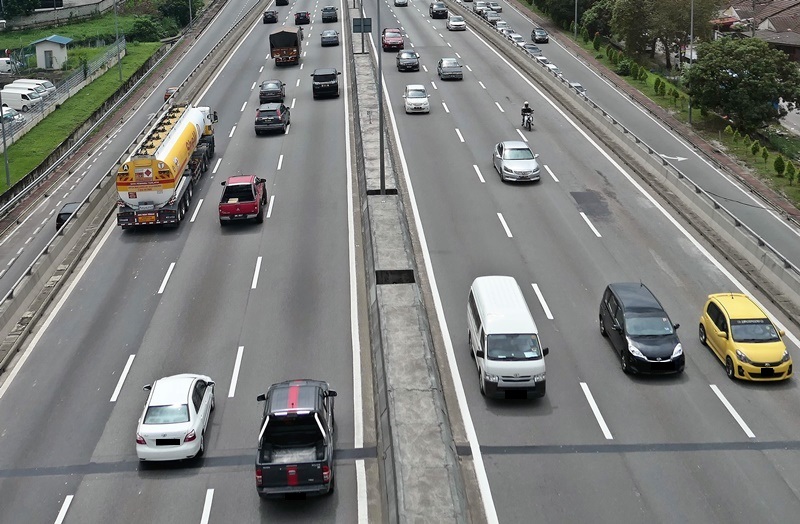
As more businesses and industries have been allowed to resume operations, traffic volumes have been rising with people going to work daily.
Gradual relaxation of regulations
The regulations under the CMCO have been gradually relaxed and with many businesses allowed to resume operations at full capacity, traffic volumes on the roads have increased. There is no longer a 10-km limit to travel distance except for areas under the Enhanced MCO where movement in or out is strictly not permitted.
Up to 4 persons are allowed to travel in a private vehicle provided they are from the same house. When the MCO was introduced originally, only one person was allowed in the vehicle. With the current ruling, it makes things easier for people, especially those who may require assistance from others when buying food or other things. It is also beneficial to couples who have been sharing a car to go to work; prior to this change, it was suggested that one person use public transport which incurred extra cost daily at a time when many face financial challenges.
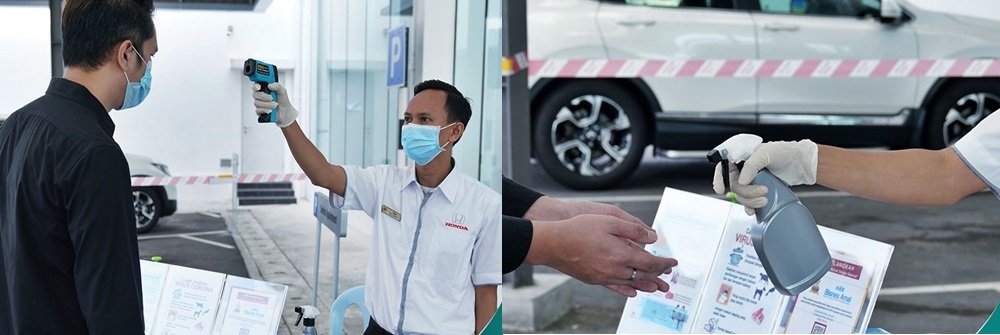
The new ‘normal’ at Honda dealerships where Standard Operating Procedures are followed.
Car companies re-open outlets
Most car companies have received approval from MITI to resume operations and are progressively doing so. They are required to follow Standard Operating Procedures (SOPs) for the protection of their customers as well as staff so things will be different now. Some service centres report an influx of vehicles as they have been overdue for scheduled servicing. Owners are asked to call first to make an appointment and walk-ins will not be entertained. Measures such as social distancing and contactless transactions are carried out at public areas.
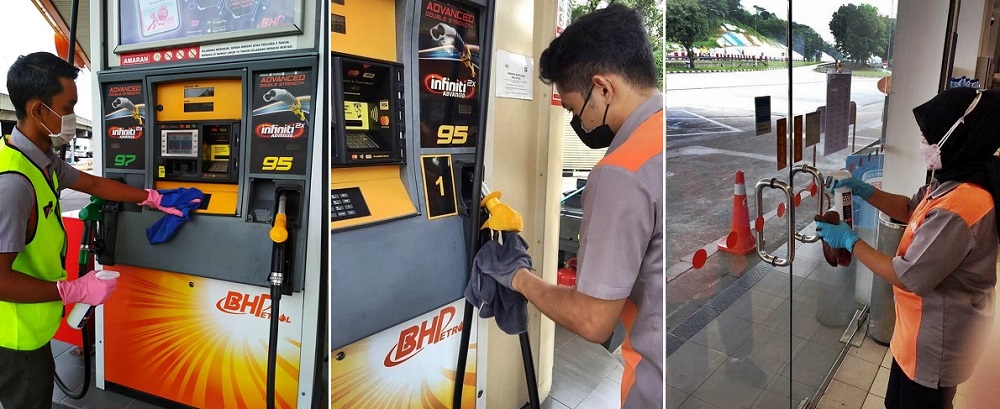
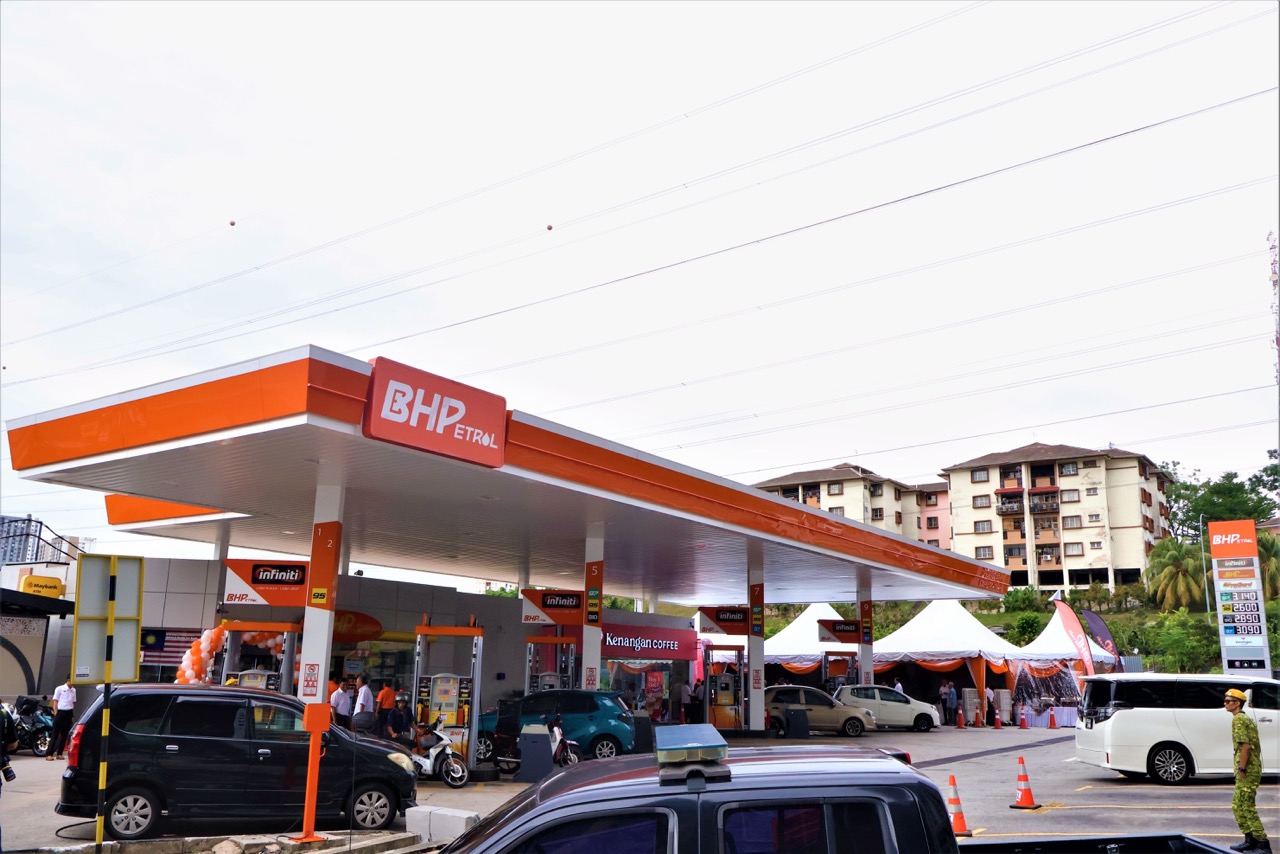
At petrol stations, measures to prevent virus spread include regular disinfecting of touchpoints.
The extension of the CMCO until June 9, 2020 may be greeted with dismay by many. Understandably, everyone wants things to get back to normal and the end of the CMCO would signal that. Unfortunately, ‘normal’ is not going to be the same as before and even though the number of persons infected with COVID-19 may decrease, the threat remains and the public must continue to be on guard and be responsible enough to follow the measures recommended by the Health Ministry.
With many accidents occurring due to a driver not seeing another vehicle or motorcyclist in his vehicle’s ‘blind spot’, many carmakers have installed blind spot monitors which scan along the sides of the vehicle. When the sensors detect another vehicle nearby, the driver is alerted by warning lights on the door mirrors, or on the mirror mount inside the vehicle. Some systems may also use sound although this is often found to be too intrusive and irritating.
Honda has a good system called Lane Watch which uses a small camera on the left (or right) side of the vehicle to show real-time imagery. The image is displayed on the screen in the dashboard and the advantage of this is that the driver does not have to turn the head so much. With a mirror-mounted warning system, the driver has to have his head turned to the right to notice the flashing light.
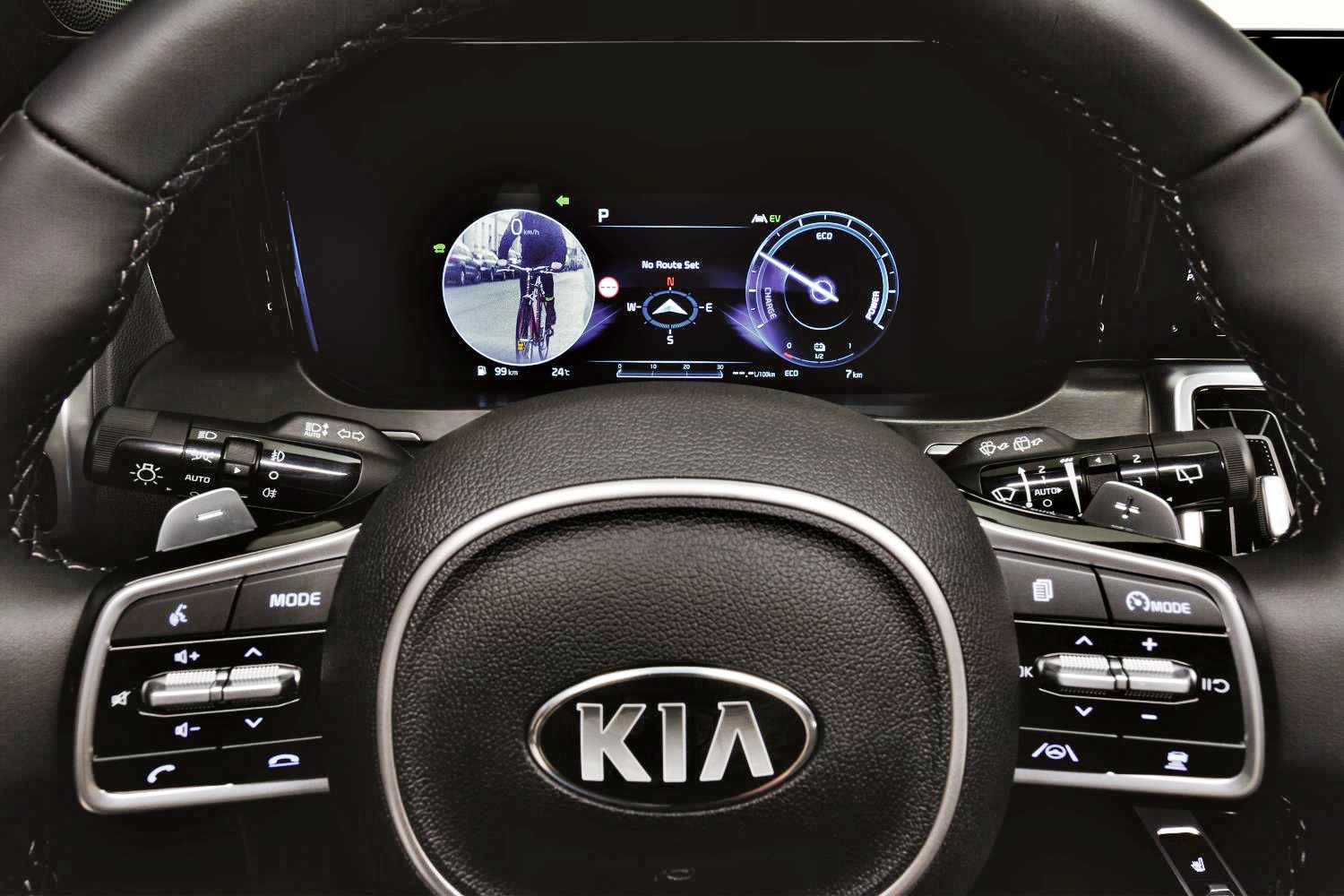
Now Kia has gone further with such a driver aid with its new Blind-Spot View Monitor (BVM) technology. This ‘second pair of eyes’ for drivers is designed to enhance driving safety by providing a good view of both the left and right blind spots of the vehicle. The view is shown within the instrument panel so the driver does not need to swivel his head.
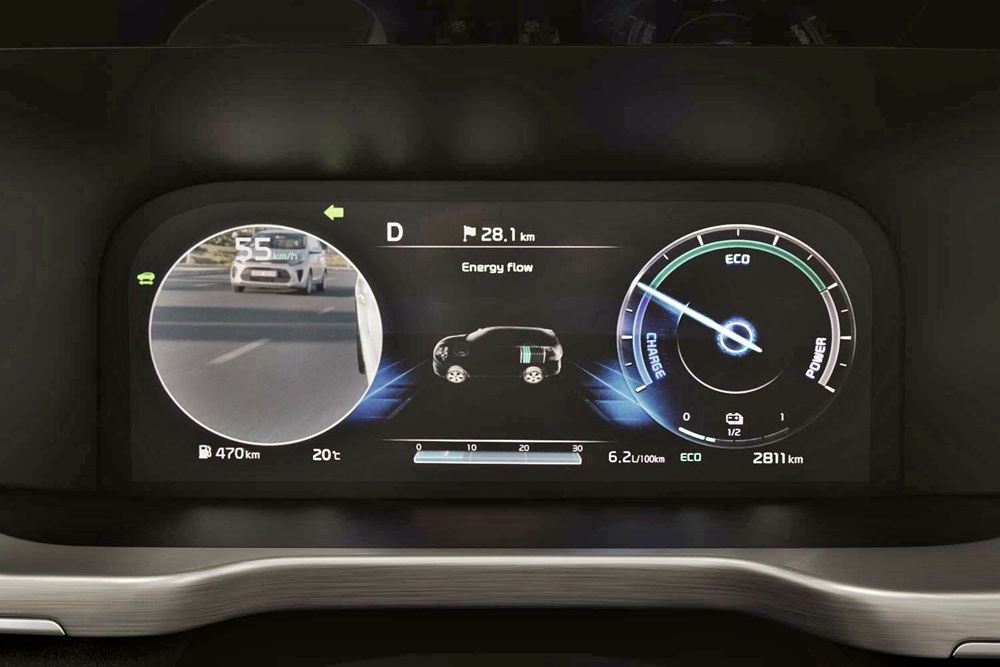
This advanced driving assistance feature, activated whenever the driver uses the turn signal, displays a high-resolution video feed on the left or right side of the TFT-LCD instrument cluster. The video of the blind spot briefly takes the place of either the speedometer or tachometer display while still showing the driver the vehicle’s current speed.
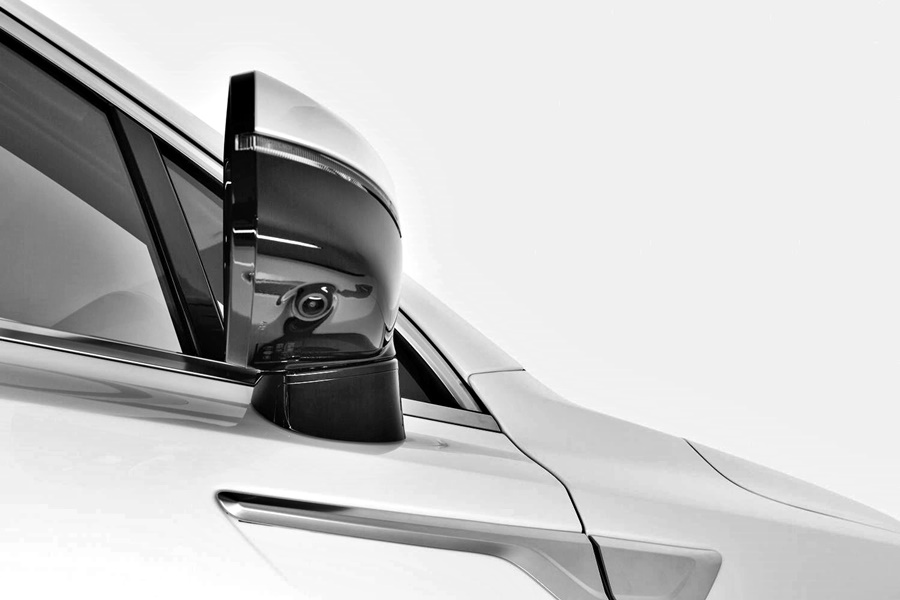
The video feed comes from discreet wide-angle, high-resolution cameras, one hidden in each of the door mirror housings. These provide a wider viewing angle than the mirrors themselves to give drivers a clear view of other vehicles or motorcyclists coming up alongside
The BVM is one of a range of functions on the fully-digital ‘Supervision’ 12.3-inch instrument cluster of the latest Sorento. Other systems include a Surround View Monitor and Parking Collision-Avoidance Assist, along with Blind-Spot Collision-Avoidance Assist.
The ‘Supervision’ digital instrument cluster is designed to deliver information to the driver as clearly as possible. With a high-definition 1920 x 720-pixel display, the digital cluster replaces conventional speedometer and tachometer dials with a single, seamless display, incorporating pin-sharp digital dials for road and engine speeds.
A multi-function display between the dials displays turn-by-turn GPS navigation instructions, audio information, and in-depth trip information, as well as vehicle diagnostics alerts, and pop-up notifications linked to the car’s various active safety and driver assist technologies.
When people started buying hybrids and electric vehicles, the issue of battery pack costs was not so apparent. Perhaps it was due to having used batteries in conventional cars which could last a few years and replaced periodically at a relatively low cost. However, the battery pack in an electrified vehicle (hybrid/EV) is different from the typical 12V battery in millions of vehicles. While the small battery in the engine bay provides electricity to start the engine primarily, the battery pack in an electrified vehicle actually powers the vehicle.
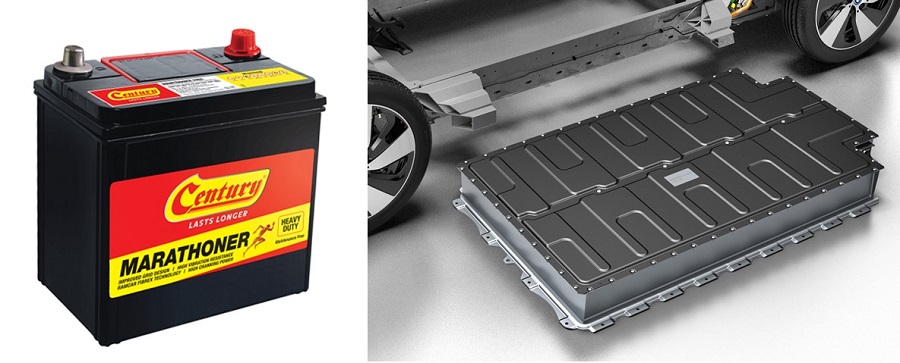
Due to the need to store large amounts of electrical energy, the battery packs have to be bigger and use more advanced technologies and materials. Conventional 12V batteries have typically used a lead-acid combination and though improved over the years, their process of generating electricity through chemical reaction has not changed.
Unlike the conventional 12V battery (left) that has been used for decades in millions of vehicles, battery packs in hybrids and EVs are much larger and cost a great deal more.
Because battery pack technology is still evolving as storage capacity increases, the cost of the new technology is still high, not to mention the economies of scale are still lower than for conventional lead-acid batteries. This means they cost much more and for the early owners of electrified vehicles, there was the sudden shock of discovering that the cost of replacement was very high.
In Malaysia, depending on the model, the price was RM7,000 upwards. This led to reduced appeal for electrified vehicles and in order to provide peace of mind, the companies selling such vehicles began to offer a separate warranty on the battery pack which was longer than the factory warranty for the vehicle.
The prices have come down a bit and the battery pack for some Honda models sold in Malaysia is around RM5,500. Like those 12V batteries, the battery pack can last a while though there is no specific service life promised. Extreme operating conditions or rare system problems can shorten the life which is why the warranty is useful. But this does have an effect on resale value since the next owner would have to consider the added cost of replacement at some point in time.
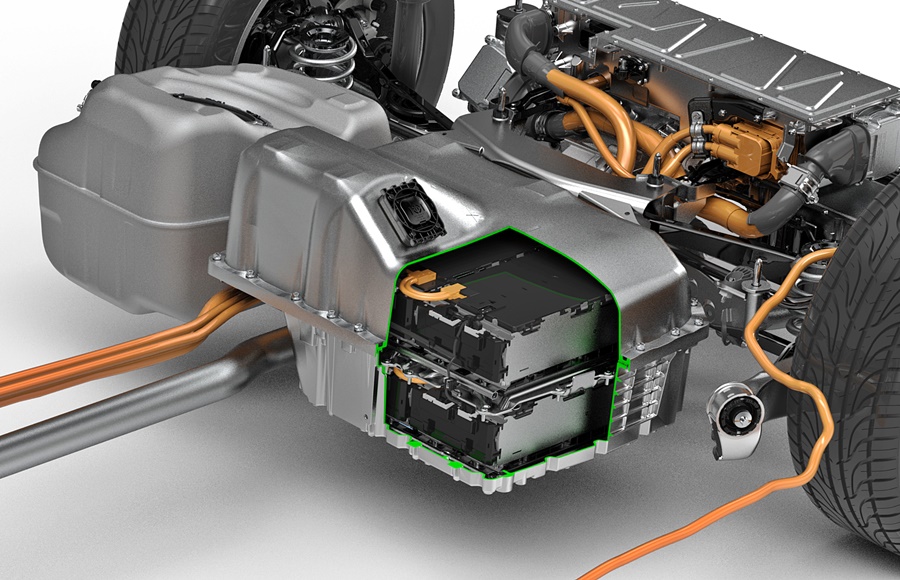
Battery pack in a BMW 530e M Sport (one section exposed to show the cell module inside).
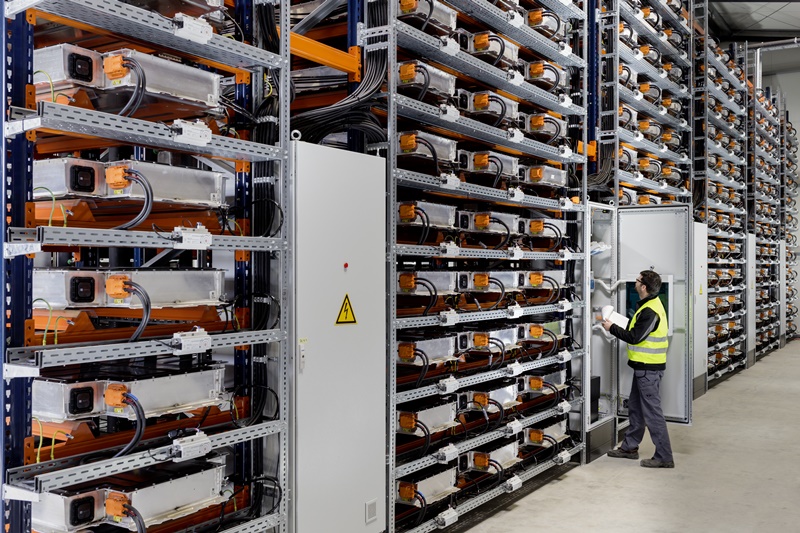
To address this key concern for electrified vehicle ownership, BMW’s high-voltage battery presents solutions to concerns around repair and maintenance by developing their batteries where single modules are replaceable. In the case of a lithium-ion battery pack (increasingly used) that houses multiple modules, there are multiple cells.
In most cases, if a battery pack starts to have problems or has reached the end of its service life, the whole unit has to be replaced – at considerable cost. However, the high-voltage battery pack used in BMWs does not necessarily require this expensive approach.
In the 530e M Sport, for example, the battery pack gas up to 6 cell modules. Should one of the modules be faulty, it does not mean the whole battery pack needs to be replace. Just that module can be changed and the cost is RM5,000 per cell. Although built to last the lifetime of the vehicle, BMW Group Malaysia still offers a comprehensive warranty coverage of 6 years/100,000 kms for the battery packs in its vehicles which should give peace of mind to owners.
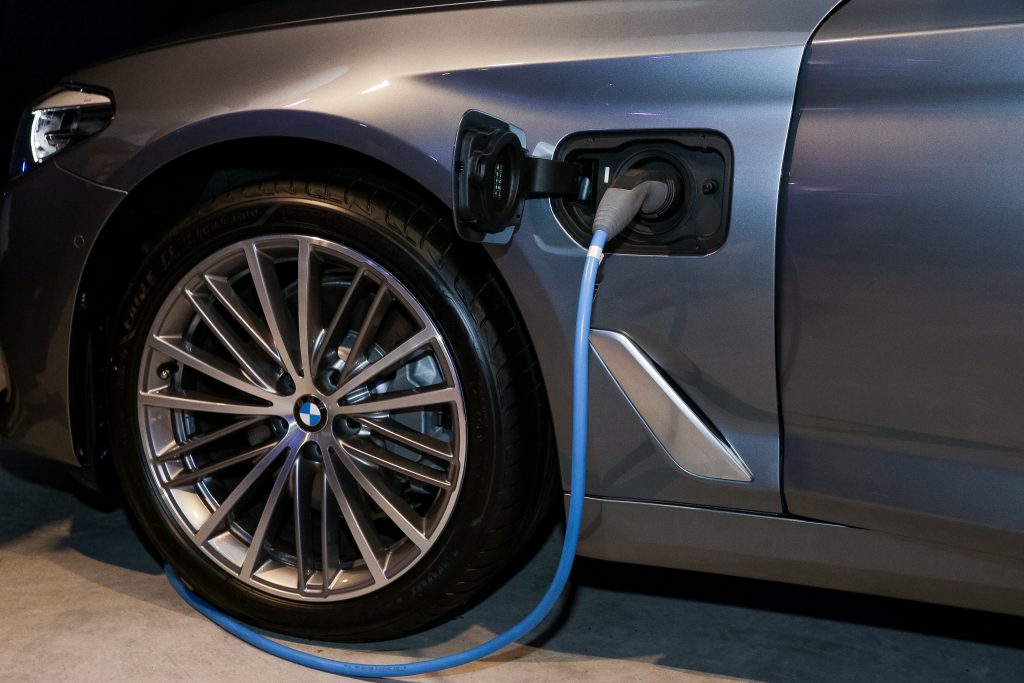
The lightweight battery pack is capable of storing a great deal of energy, giving the 530e M Sport a maximum output of 83 kW which can get it to a maximum speed of 120 km/h in full electric driving. Recharging time is dependent on the type of system used but said to be under 3 hours with the BMW i Wallbox, with a fully charged battery pack giving an all-electric range of up to 40 kms.
BMW Group’s high-voltage battery technology is available in the plug-in hybrid variants of both BMW and MINI models.
BMW’s high-voltage battery technology is available in the plug-in hybrid variants of the 5-Series, 7-Series, as well as the all-electric i3s and the MINI Plug-In Hybrid.