
Piston.my

Latest News

To know about other promotions, visit www.bhpetrol.com.my.

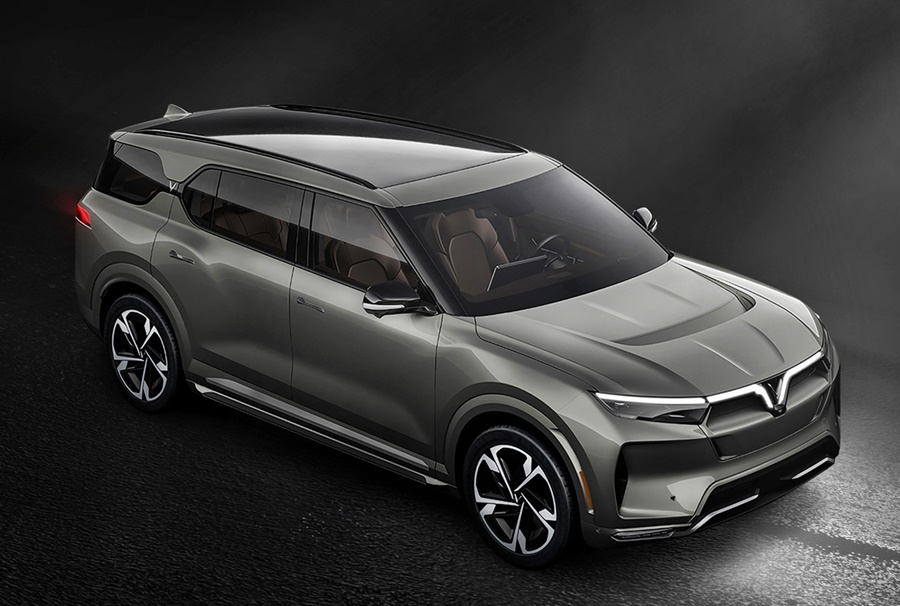
Vinfast, the Vietnamese carmaker which has been in operation for 3 years, has completed development of its first three smart cars. While the company aims to become a major global player in the EV (electric vehicle) segment, these new models are also available with 2-litre petrol engines.

The new range consists of the VF31, VF32, VF33, in which VF31 is a mid-size C-segment SUV while the VF32 will be one size up in the D-segment and the VF33 will be in the E-segment. The VF31 will be available with only an electric powertrain, while the VF32 and VF33 will each have 2 electric and petrol versions.

All 3 models have Level 2-3 autonomous features, with 30 smart features divided into 7 groups. These include intelligent driver assistance system, adaptive lane control system, cruise control system active, multi-point collision warning system, comprehensive collision mitigation system, intelligent automatic parking system and driver monitoring system.
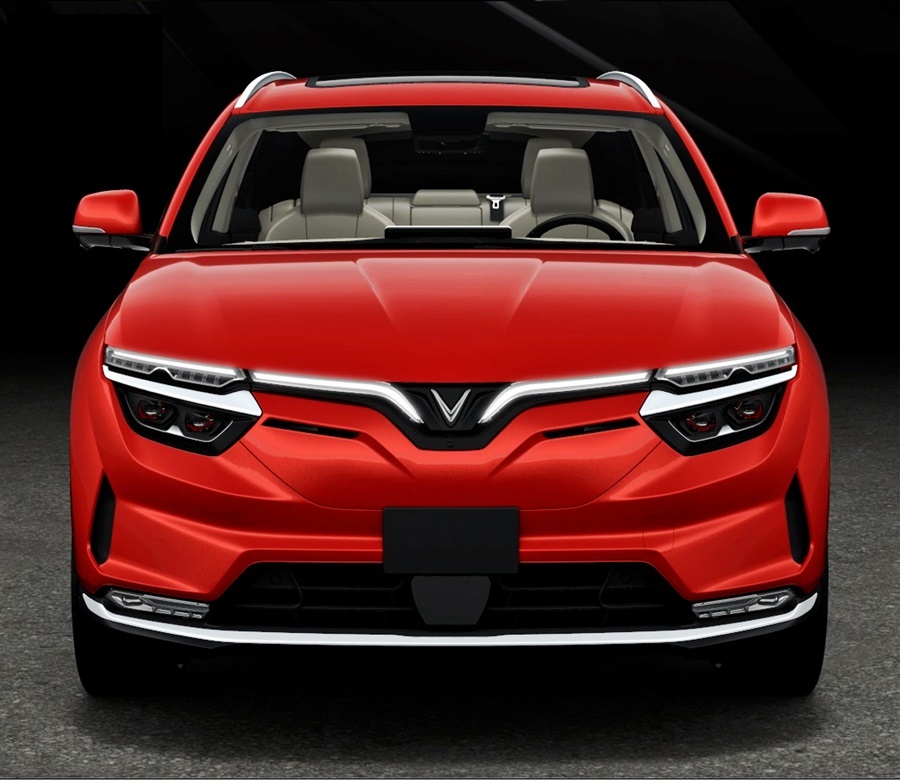
Vinfast expects that, at launch, these will be the few SUVs in the world with many Level 3 autonomous features. For the high-end versions, high-performance sensor systems will be used. These will employ LiDAR sensors with 14 cameras capable of detecting objects up to 687 metres away. Around the vehicles will be 19 sensors to scan 360 degrees which can operate at high speeds above 100 km/h.

The self-driving system controlled by the Orin-X chip can process up to 200 GB of data per second, allowing control and navigation 8 times faster than current generations. In addition, the premium version of all 3 models is equipped with some Level 4 autonomous features such as automatic 3-dimensional map setting (market-dependent), allowing automatic parking and location, as well as summoning the vehicle.
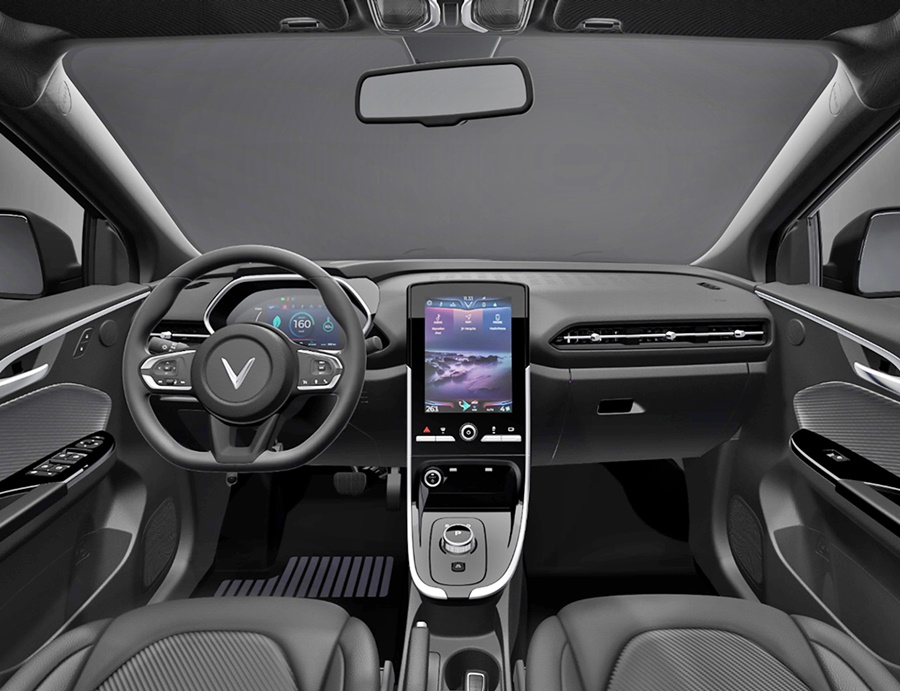
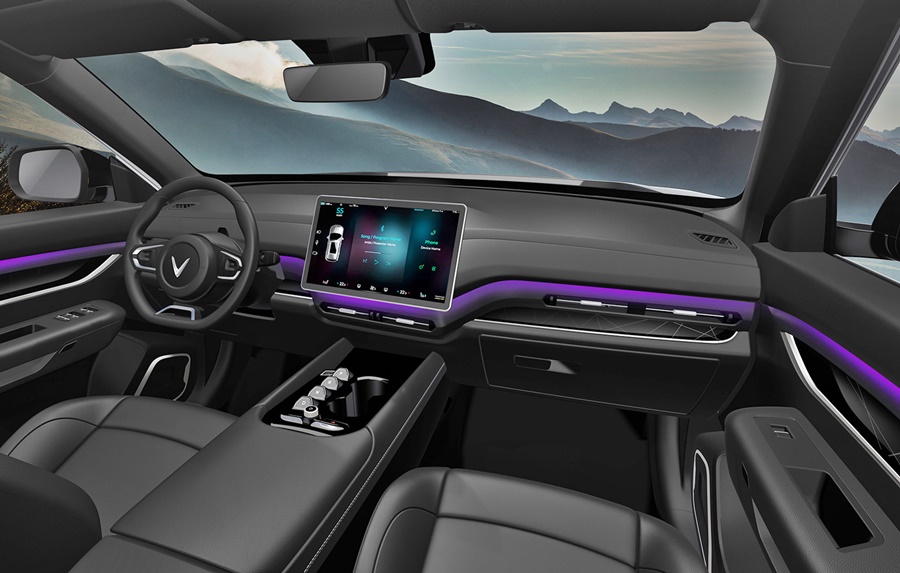
In addition to autonomous features, Vinfast has applied a user-centric development philosophy. There are smart features in the e-cockpit virtual cockpit which makes use of artificial intelligence technology (AI), machine learning and deep learning, facial recognition, and a multilingual virtual assistant.

The objective of using advanced technologies is to provide comfort and enjoyment when travelling in the vehicle. The occupants will also have an extensive range of customization so that they can personalize the vehicle according to characteristics and usage habits.
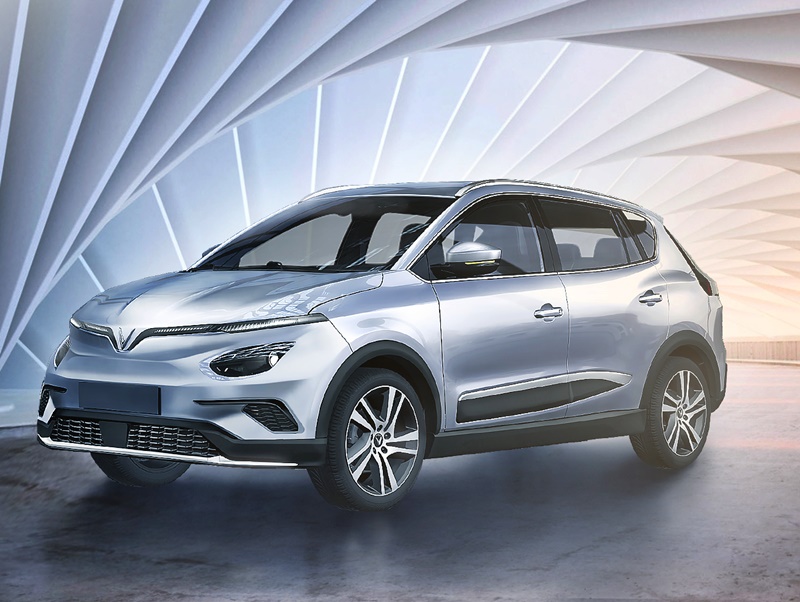
The vehicles are engineered to meet the world’s highest safety standards and are expected to be able to score the maximum 5-star ratings in the US NHTSA and Euro NCAP assessments. Besides the usual active safety systems to assist the driver, there are also automatic detection, warning and notification systems to medical facilities in the event of an accident.

Vinfast says that the battery packs. Which can provide a range of over 500 kms, are situated under the floor of the vehicle. They are designed to high safety standards and will have the ability to update software remotely, automatically detect faults on the vehicle and automatically contact the service centre.
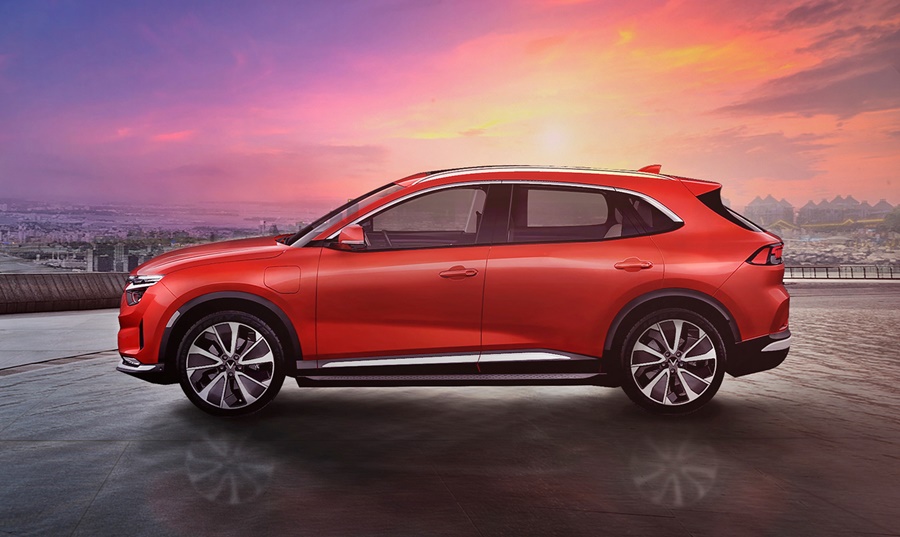
The first model to go into production this year will be the VF31 and orders from the domestic market will be accepted from May, with deliveries to begin from November 2021. Order-taking for the VF32 and VF33 models will start from September 2021, with first deliveries planned to start from February 2022.

Vinfast also has ambitions to export the SUVs to the US market by the middle of next year. It is not easy to get into the US market as the regulations are tough, especially for safety. Emissions should of course be no problem since it is electric, and the autonomous capabilities should put Vinfast ahead of others.

Vinfast to offer one of the most powerful SUVs in the world

To know more, visit www.bhpetrol.com.my.

The Total Industry Volume (TIV) for 2020 was expected to be lower than the 604,281 units recorded in 2019 and in the first half of the year, many would have expected it to be significantly lower. However, with the consistently high numbers in the second half of the year, the TIV closed at 529,434 units, 12% lower than 2019 but well past the forecast of 470,000 made by the Malaysian Automotive Association (MAA).

When the year had started, the MAA had actually forecast 607,000 units for the year, but revised it substantially downwards by 23% as the seriousness of the pandemic and its impact on the industry became clear. The nationwide shutdown naturally resulted in lost sales, with April seeing the most dramatic drop to virtually zero as no business could be conducted.

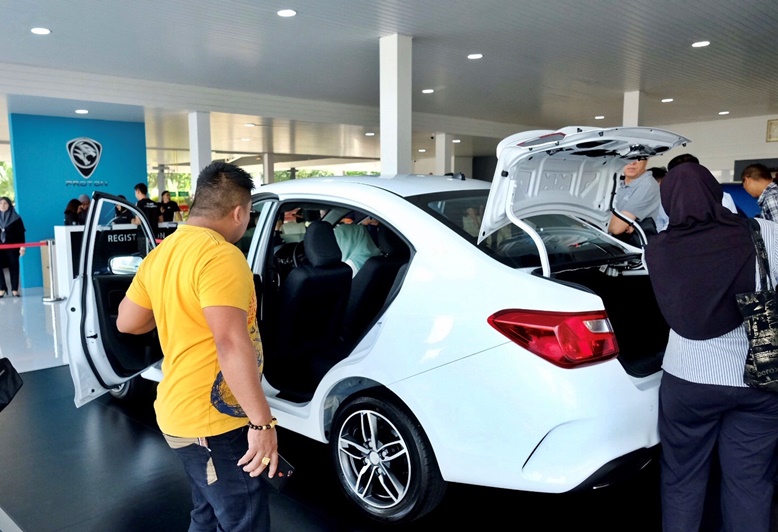
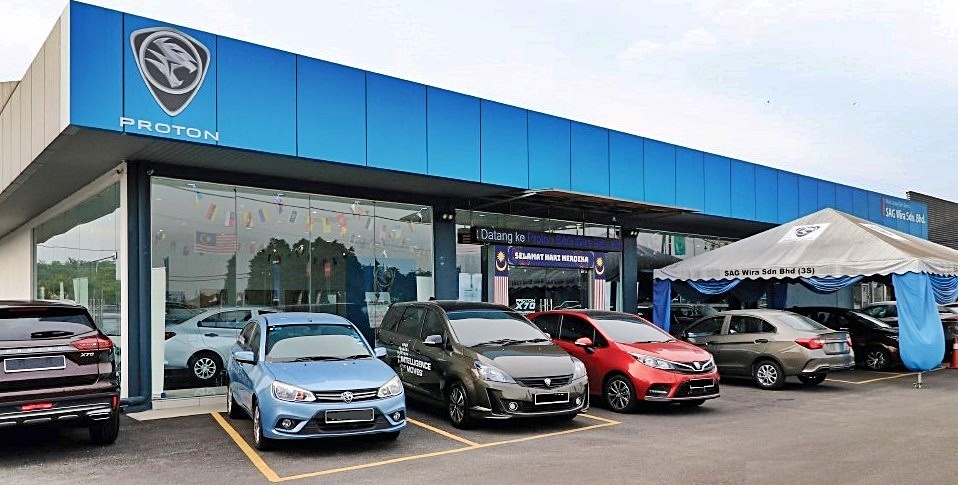
Proton sales rose in 2020 and its overall market share went above 20% for the first time since 2013.

When the commercial sector was progressively allowed to resume, there was some consumer hesitance but then the government came out with its PENJANA program to help the economy recover and  for the auto industry, the help was in the form of sales tax exemption for 6 months (extended a further 6 months until June 2021). This would lower retail prices and Malaysians always love it when they can escape paying tax, of course. The exemption applied to both locally-assembled and CBU models, except that the exemption for the latter was half and not the full 10%. Still, it made a difference, especially for the expensive models that are mostly CBU anyway.

Proton sales increased
It was expected that the sales volumes would be lower in 2020 but Proton didn’t suffer such a decline. The carmaker already had a healthy order bank and during the year, total vehicle deliveries were 8,524 units higher than in 2019, finishing off at 108,524 units. The volume was an increase of 8.8% over the 100,821 units sold in 2019.

Perodua, in spite of a big backlog of orders, still saw a reduction in volume of 20,178 units, 8.4% lower than the 240,341 units delivered in 2019. But it still retained the No. 1 position which it has had since 2006.

Among the non-national brands, Honda was in the lead but sold almost 25,000 fewer vehicles. Next was Toyota which sold 58,501 vehicles, while Nissan reported 14,160 vehicles. For the rest of the brands, the reduction in sales volume amounted to 20,451 units.

Malaysian makes gain in market share
In terms of market share, both Malaysian makes gained at the expense of the main rivals. Reflecting its higher sales, Proton’s share rose to 20.5%, an increase of 3.9%. The last time the carmaker had a share of 20% or more was in 2013 and the years before. Perodua, in spite of less deliveries, saw a 1.8% increase in its share to just above 41%. In most years, its share has been around 30%+.

#StayAtHome

Optimistic forecast for 2021
For 2021, the MAA is forecasting 570,000 units – an increase of 100,000 units from its 2020 forecast, which is 8% higher than the actual TIV achieved. Strong growth (18%) is expected in the commercial vehicle segment which will continue to require vehicles for the various projects underway around the country. If the pandemic doesn’t worsen, the association and its members expect the high demand to continue into 2022 before settling down to a 3% rate of increase annually.

New vehicle sales in 2020 declined by 12% but exceeded 470,000-unit forecast

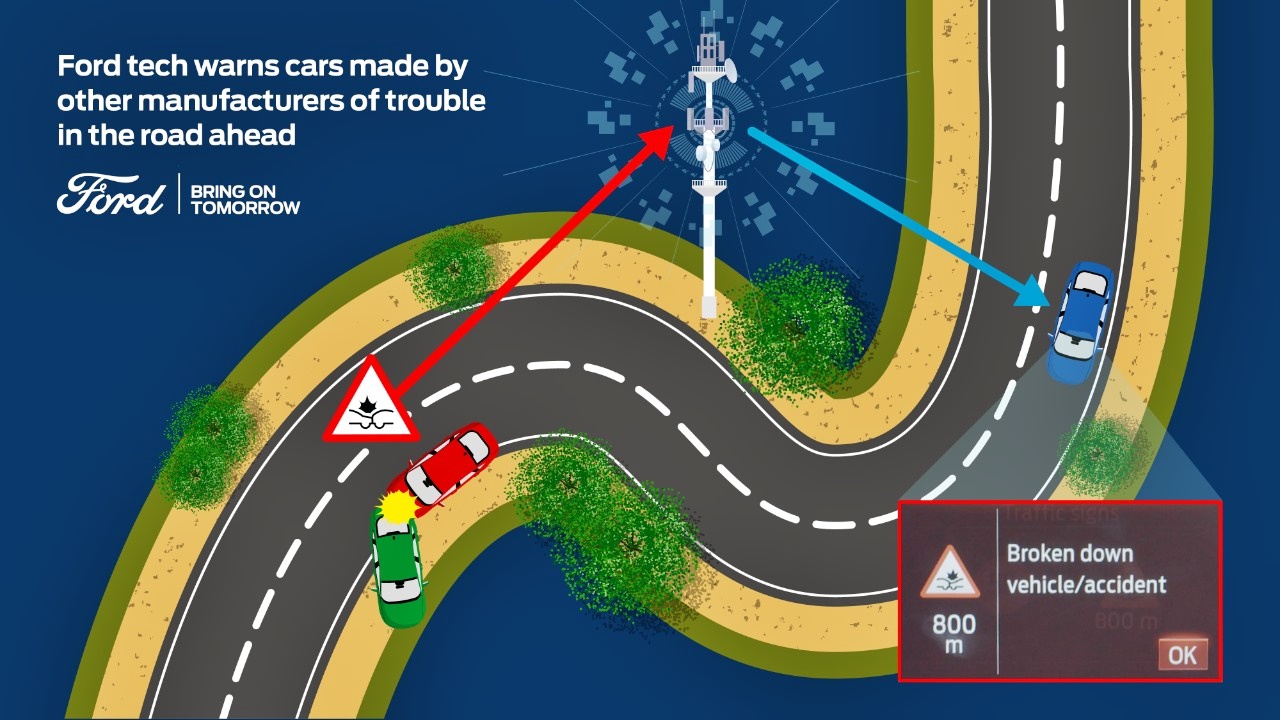
Normally, if a vehicle breaks down and poses a danger to other vehicles because it is in the middle of the road, a responsible owner may run further back to warn approaching drivers, especially if there is a blind corner. Unfortunately, not many do that, so there is a high risk of an accident.

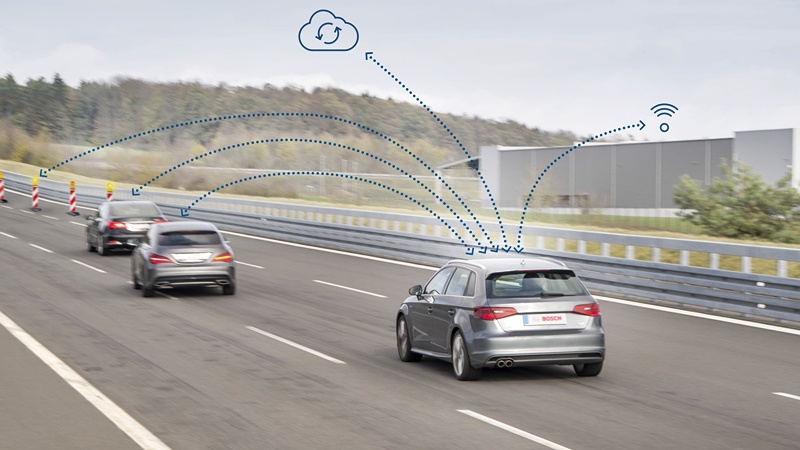
What if there is a system whereby approaching drivers can be warned of such a danger even before they see it? They would then be able to slow down and avoid turning a vehicle breakdown into a possible tragedy with a serious accident.

Such a system has already been developed and is being used in Europe. It is the result of the Data for Road Safety initiative backed by the European Community (EC) and partners include BMW, Ford Mercedes-Benz, Volvo, TomTom, HERE Technologies, and EU traffic management centres. The agreement for the partnership follows a 16-month proof of concept during which tens of millions of Safety‑Related Traffic Information (SRTI) messages – such as broken-down vehicles, slippery roads or reduced visibility – were exchanged between different vehicles.

Anonymised data from the vehicle, such as use of foglights, emergency braking or airbag activation, is computed onboard to determine the presence and location of potential hazards. These warning messages are sent and distributed to SRTI partners who collate hazard messages from various sources and then share with multiple vehicle brands.

Any relevant SRTI messages are immediately sent – again, using cellular communications – to vehicles in the vicinity of the potential hazard and appear on the driver’s dashboard display. As well as warning other drivers, the information can be used to alert emergency services, providing accurate location data in seconds to help accelerate assistance.

“The Data for Road Safety ecosystem is a public-private partnership that delivers enriched data to improve road safety in a very tangible way, so it is a win-win situation for society as a whole,” said Joost Vantomme, chairman of the new SRTI ecosystem. “The vehicle manufacturers participating in the project are willing to share data on a daily basis, and will continue their endeavours to contribute to the SRTI data ecosystem, together with all partners.”

In the case of Ford, its system known as Local Hazard Information (LHI) was introduced in early 2020 and is now being enabled on new models in Europe. LHI connected car technology warns other drivers of Ford vehicles (which have the system) of safety incidents and can also connect to vehicles of multiple brands.

This means many vehicles on the roads can send out advance warnings of potentially dangerous driving conditions on the road ahead.  This will help improve road safety by enabling more drivers to prepare for dangers ahead.

StayAtHome

“Connected vehicles help drivers to anticipate hazards that may be lurking just around the next bend,” said Peter Geffers, manager, Connected Vehicles, Ford of Europe. “Road-safety data-sharing ecosystems are more effective the more vehicles and telematics sources they include, extending the benefits of this technology to those who do not drive Ford cars represents a significant step forward.”

Road accidents can be reduced by studying why they happen

To know about other promotions, visit www.bhpetrol.com.my.

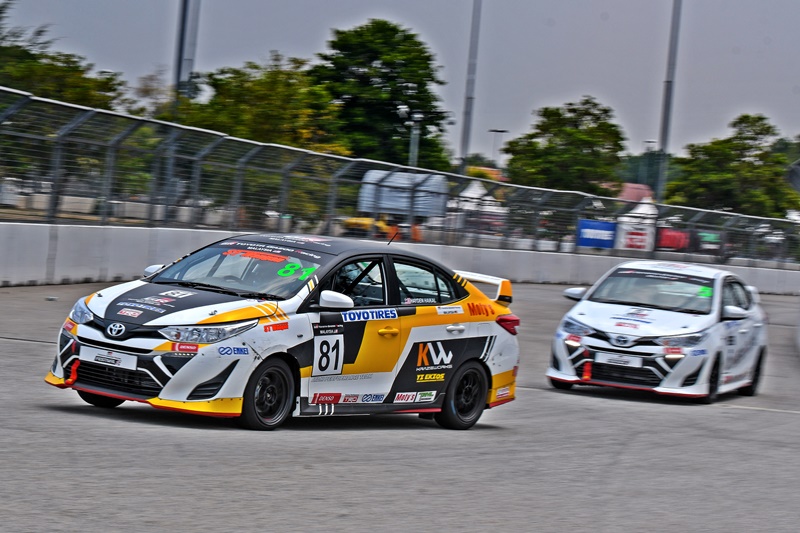
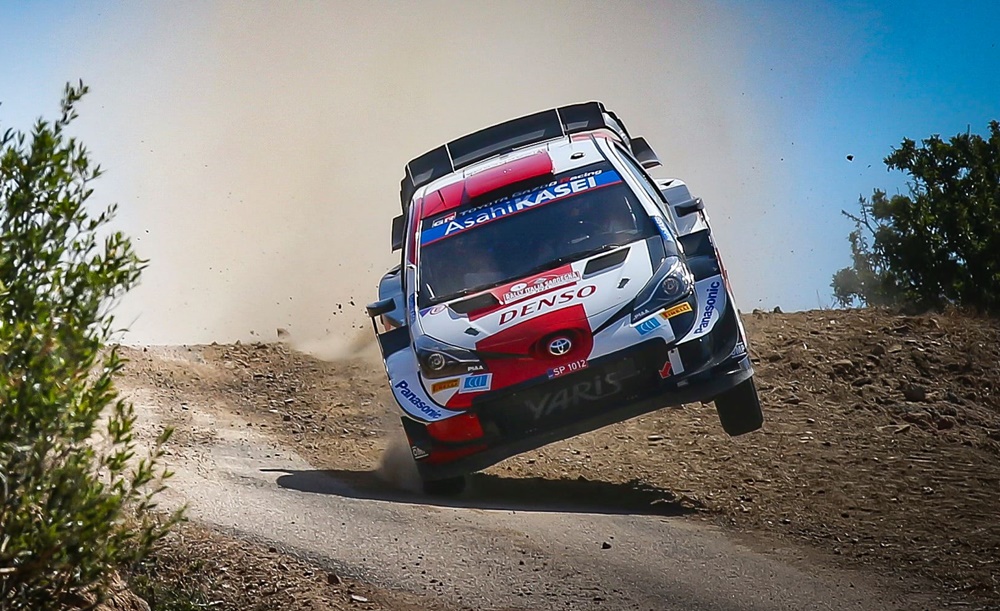
Last year, the sudden and extended period of the Movement Control Order (MCO) affected all evens in Malaysia, forcing cancellations or postponements. Motorsports were no exception and UMW Toyota Motor (UMWT) had to cancel the final round of its Vios Challenge one-make series that was to be held at the Sepang International Circuit.

This year, it was hoped that as things improved, the fourth season of the successful series could proceed as planned, with the first of 6 events with 11 races to begin on January 28. Unfortunately, the pandemic has become more severe again in the past few months with new cases at the 4-digit level daily. This has led the government to impose the MCO again with restrictions on movement that include a ban on interstate travel and a maximum range of 10 kms of travel from the home for essential errands.

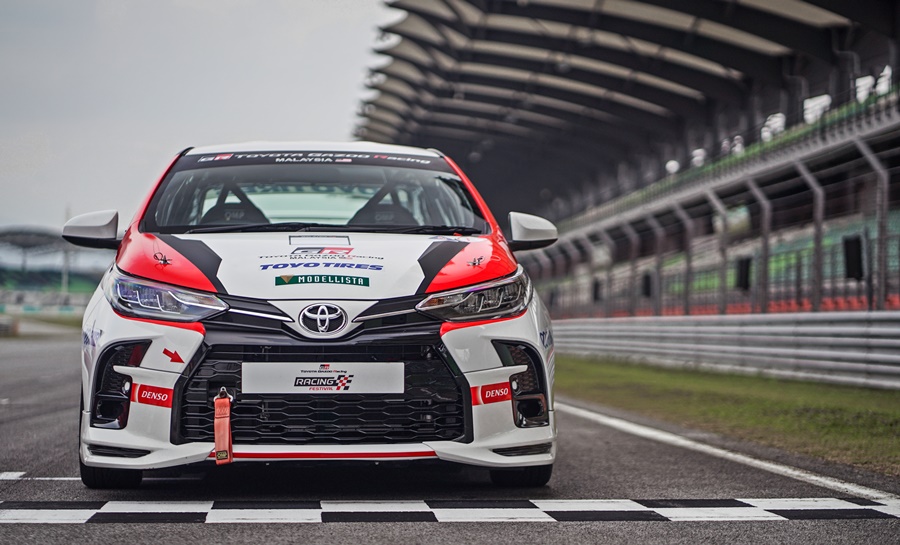
TOYOTA GAZOO Racing Festival Vios Challenge

In view of this situation, UMWT has to postpone the open round of the Vios Challenge, part of the TOYOTA GAZOO Racing Festival. A new date cannot be provided at this time, especially as there is also a state of Emergency (since January 12, 2021) which will be in effect until August 1, 2021. Although it is not an Emergency like the one that the country experienced during the years fighting communist terrorists, there are still restrictions which are aimed at fighting the acovid-19 pandemic.


Related: Season 4 of Toyota GAZOO Racing Festival in 2021


“As we collectively continue to help flatten the ‘curve’ of the COVID-19 pandemic, we recognize and acknowledge the unprecedented toll that it has inflicted on the nation. The race will and must go on – but not until we can together, successfully mitigate the threat of COVID-19 to ensure the safety of all racers, participating teams, officials, spectators and stakeholders,” said Akio Takeyama, GAZOO Racing Malaysia’s Chief Motorsport Officer and also UMWT’s Deputy Chairman.

TOYOTA GAZOO Racing Festival Vios Challenge

When the situation permits and Season 4 of the TOYOTA GAZOO Racing Festival can commence, there will be three individual racing series (Vios Challenge, GAZOO Racing Vios Sprint Cup and GAZOO Racing Enduro Cup) which will provide a total of 11 races.

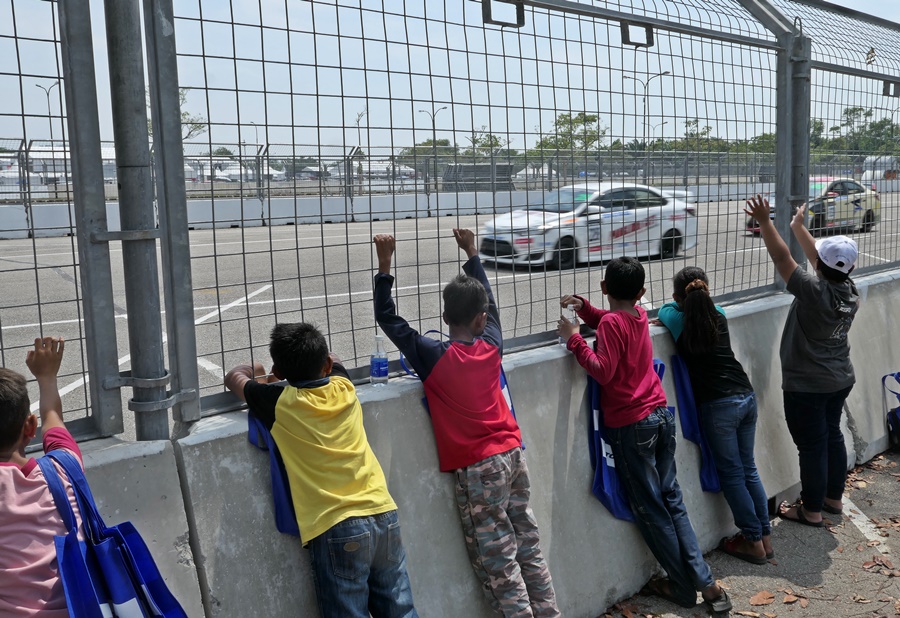
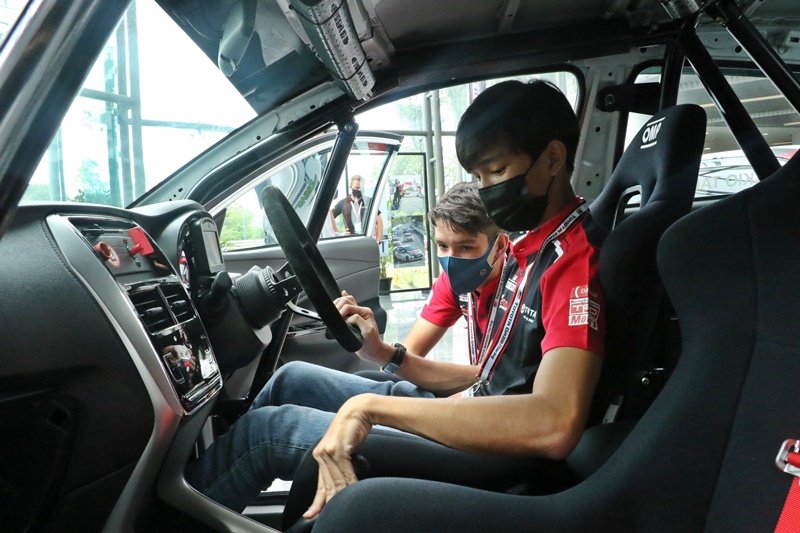
It has been one of UMWT’s aims to draw a new generation to motorsports with these events and it has been successful in this. There has been growing participation by young racers over the past 3  seasons and many have shown promise. To provide further support, the company has also established a GAZOO Racing School for a Rookie Class in the Vios Challenge.

GAZOO Racing Young Talent Development Program


Related: GAZOO Racing Young Talent Development Program


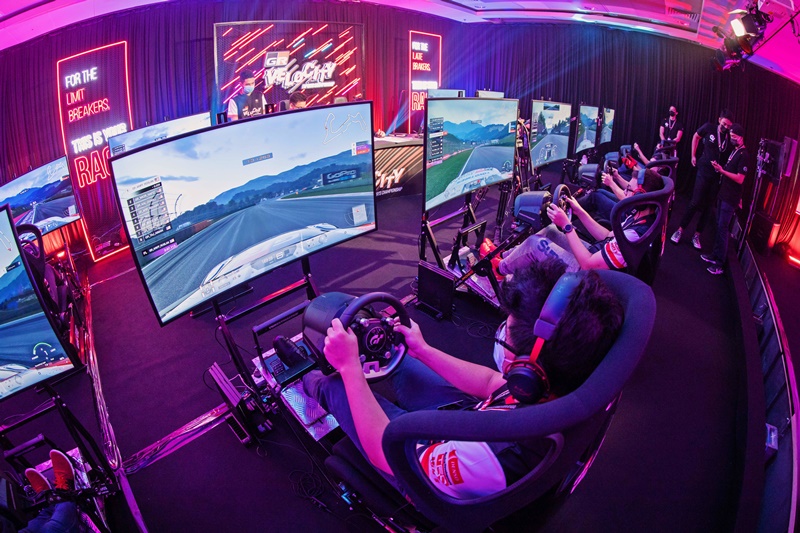
Additionally, besides track events, UMWT has also had alternative motorsport-related activities in the form of online racing which has been timely in view of the current situation. It was the first local car company to become involved in simulator racing or eSports when it started the Toyota GR Velocity eSports Championship in 2018. Last year’s season saw some 720 participants taking part. The 2020 championship offered more than RM70,000 in total prize money, the most lucrative virtual racing event in Malaysia.

2020 Toyota GR Velocity Esports Championship


Related: Toyota GR Velocity Esports Championship Grand Final


For updates on the TOYOTA GAZOO Racing Festival and Vios Challenge, visit toyota.com.my/tgrmalaysia/.

The story behind TOYOTA GAZOO Racing and why it was created

To know more about promotions at BHPetrol stations, visit www.bhpetrol.com.my.

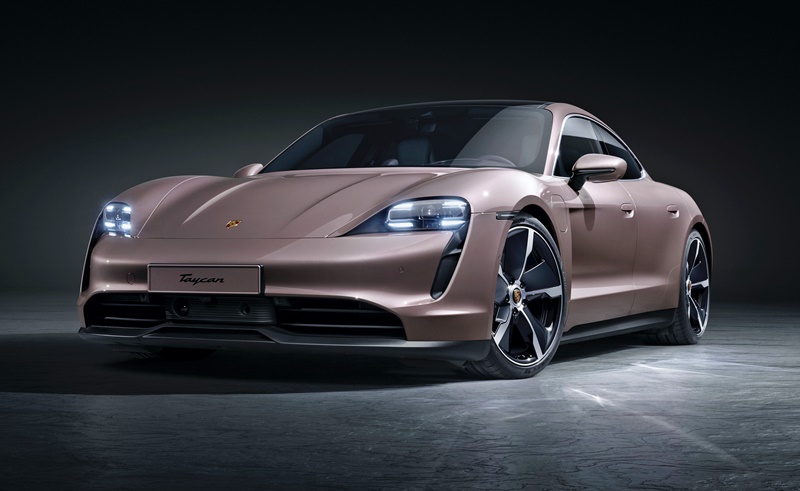
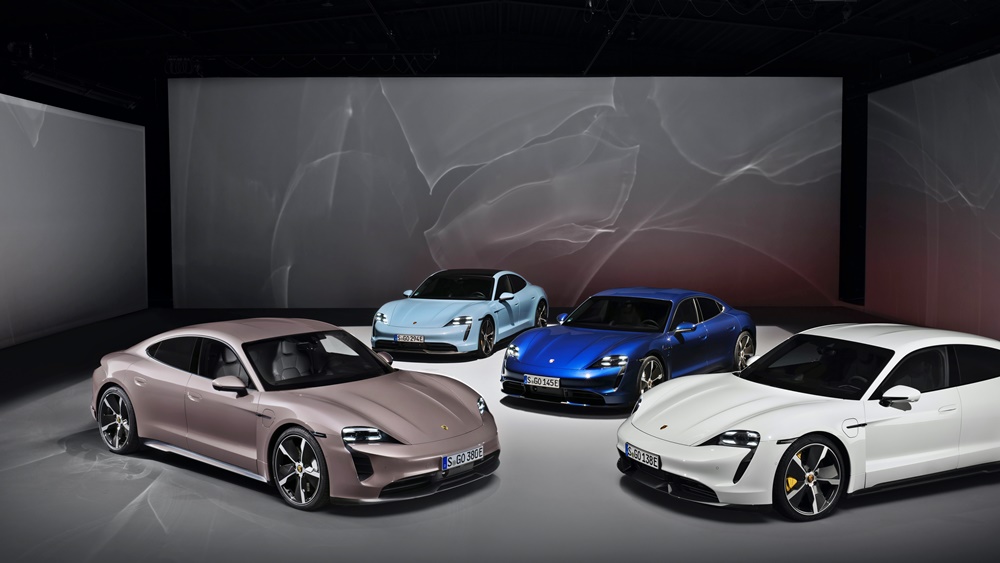
Porsche is steadily expanding its all-electric Taycan range with a fourth variant that has rear-wheel drive. It is called just Taycan, no suffix, which reflects it entry-level position in the range which has the Taycan Turbo S, Taycan Turbo and Taycan 4S. Sime Darby Auto Performance will have the model in Malaysian showrooms from March this year and is pricing it from RM584,561 with sales tax until June 30, 2021.

As the youngest member of the family, the Taycan comes with the new features introduced in the other versions at the model year changeover. As on the other variants, optional equipment includes a colour head-up display and an on-board charger with a charging capacity of up to 22 kW.

2021 Porsche Taycan

Two battery pack choices
Two battery pack sizes are available: the standard Performance Battery and the optional Performance Battery Plus. The new entry-level model delivers up to 300 kW (408 ps) in ‘overboost’ mode with Launch Control; this increases to an output of up to 350 kW (476 ps) with the optional battery pack. Nominal power is 240 kW (326 ps) or 280 kW (380 ps), respectively. The range with the standard battery pack is claimed to be up to 431 kms, while the more powerful pack will extend it to 484 kms.

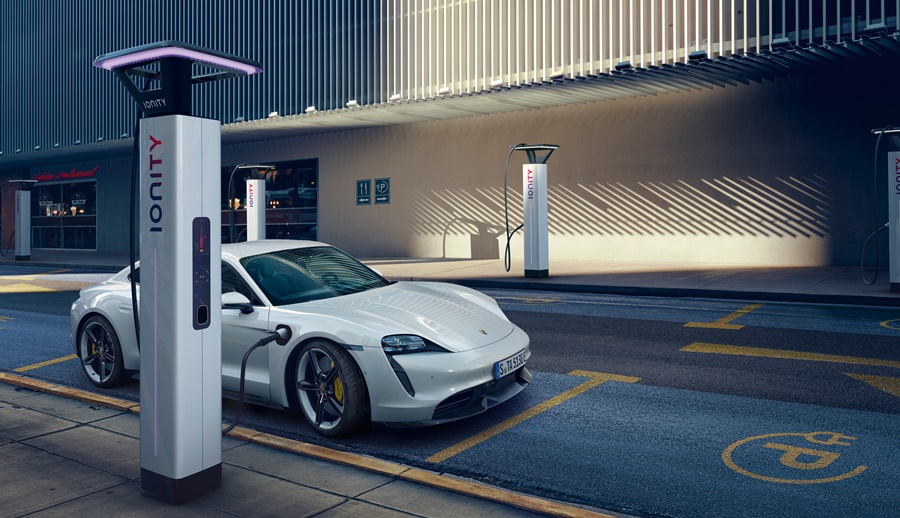
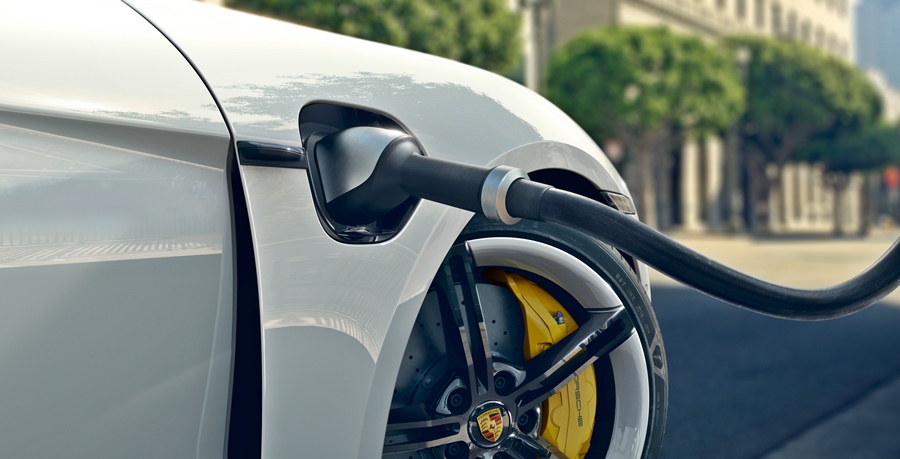
Maximum charging capacity is up to 225 kW (Performance Battery) or up to 270 kW (Performance Battery Plus). This means that both batteries can be charged from 5% to 80% in 22.5 minutes and that power for a further 100 kilometres is achieved after only 5 minutes. Just as with the other variants, the Taycan has intelligent charging management.

2021 Porsche Taycan

The Taycan can accelerate from a standing start to 100 km/h in 5.4 seconds, it is claimed, and having the more powerful battery pack makes no difference to acceleration time nor top speed which is said to be 230 km/h.

In addition to the electric  motor on the rear axle, the drive architecture also includes a 2-speed transmission. With a Cd value from 0.22, its aerodynamics make a significant contribution to its low energy consumption, contributing to long range.

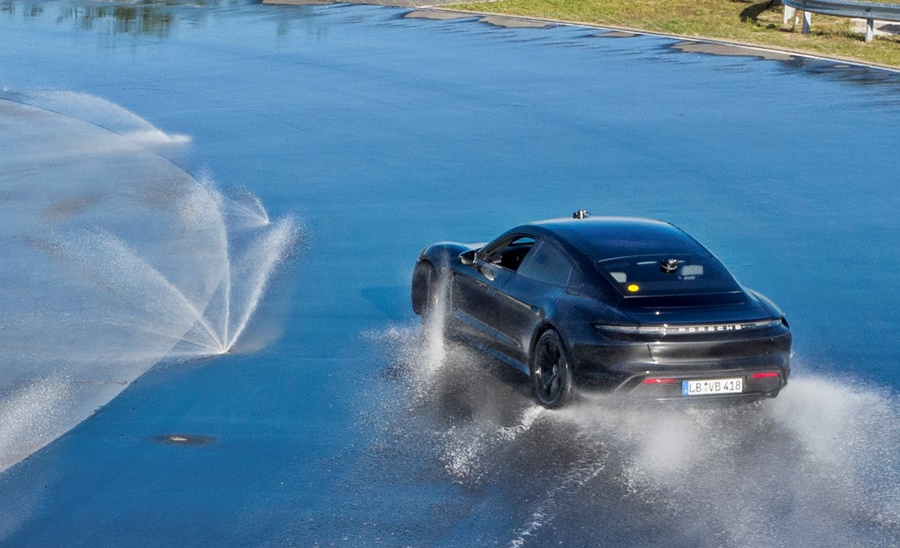
Incidentally, this new rear-wheel drive Taycan also holds the Guinness World Record for the longest drift with an electric car, having been driven sideways non-stop for exactly 42.171 kms. You can read about it here.

A Taycan drifting its way to a Guinness World record in 2020.

Purist exterior design, Porsche DNA
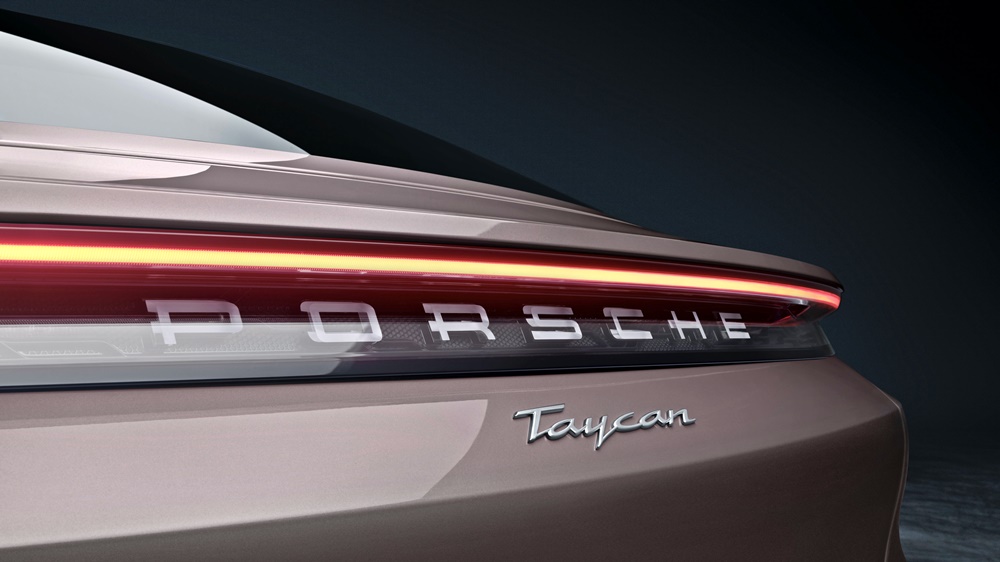
With its purist design, the Taycan signals the beginning of a new era. At the same time, it retains the unmistakable Porsche design DNA. From the front, the electric sportscar looks particularly low and wide, with highly contoured wings. Its silhouette is shaped by its sporty roof line sloping downward to the rear, while its highly sculpted side sections are also characteristic. These features are complemented by innovative elements such as the glass-look lettering for the Porsche logo in the rear light bar.

2021 Porsche Taycan

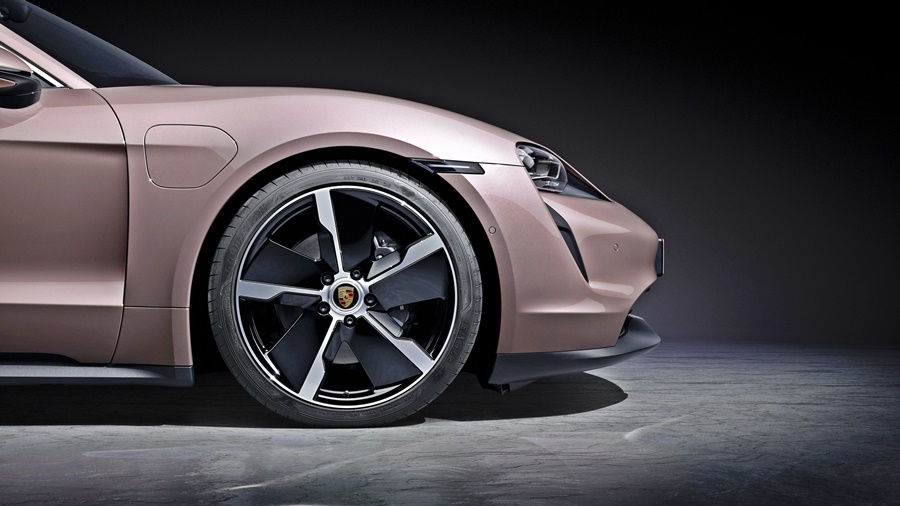
Distinguishing features of the Taycan within its model family include aerodynamically optimised 19-inch Taycan Aero wheels and black anodised brake callipers. The front apron, side sills and rear diffuser in black are the same as those on the Taycan 4S. LED headlights are fitted as standard.
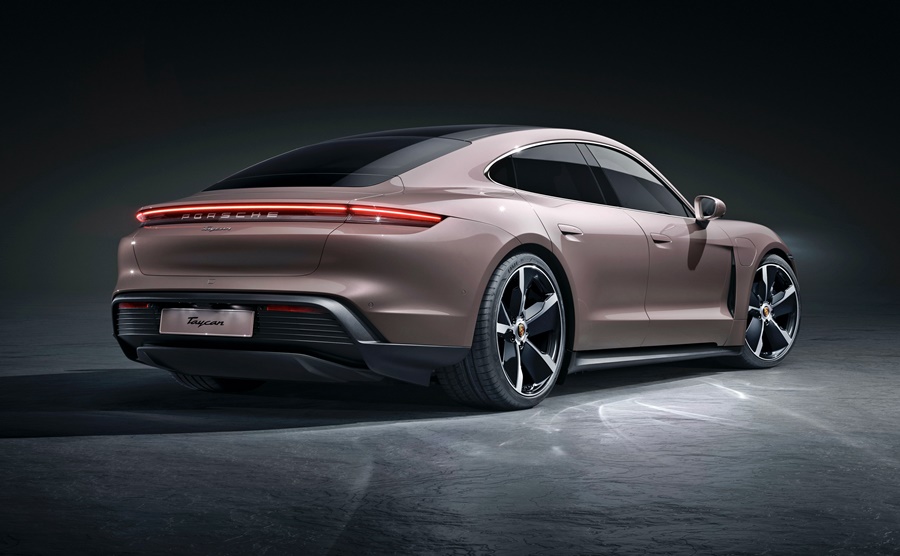
2021 Porsche Taycan

2021 Porsche Taycan

Unique interior design
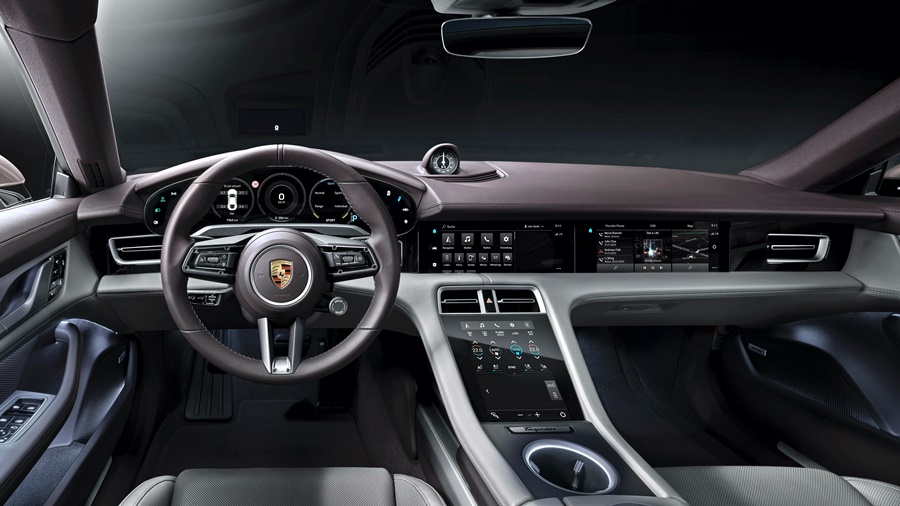
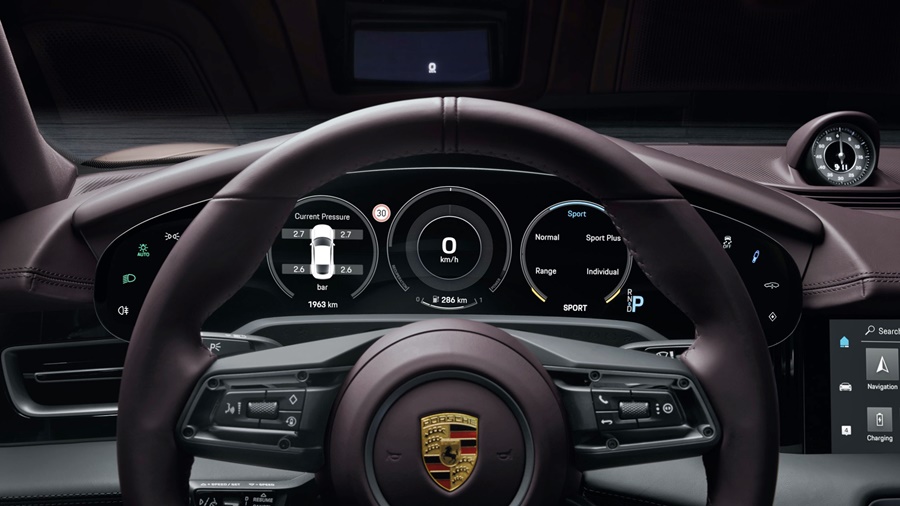
The cockpit of the Taycan unique with its clear structure and completely new architecture. The free-standing curved instrument cluster forms the highest point on the dashboard. This places a clear focus on the driver axis. Other elements include a central 10.9-inch infotainment display and an optional display for the front passenger.
The Taycan is the first Porsche model available with an entirely leather-free interior. Interiors made from innovative recycled materials underscore the sustainable concept of the electric sports car.

2021 Porsche Taycan

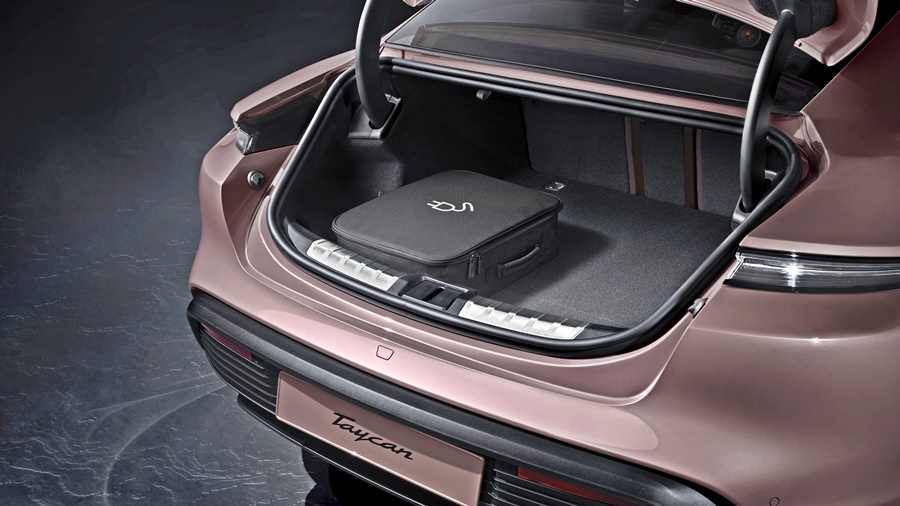
As standard, the Taycan comes with a partial leather interior as well as front comfort seats with 8-way electrical adjustment. There are two luggage compartments – 84 litres at the front, and up to 407 litres at the rear.

Adaptive air suspension
The adaptive air suspension is equipped with a Smartlift function which allows the car to be programmed so that it raises its ride height automatically at certain recurring locations such as road humps or garage driveways. The Smartlift function can also actively influence the height on motorway journeys and can adjust this height for the best possible balance between efficiency and driving comfort.

2021 Porsche Taycan

6-piston aluminium monobloc fixed-calliper brakes at the front and 4-piston aluminium monobloc fixed-calliper brakes at the rear are standard. The brake callipers have a black anodised finish. Customers can also choose an optional high-performance Porsche Surface Coated Brake.

2021 Porsche Taycan

Over 20,000 sold worldwide
Porsche has delivered just over 20,000 Taycans to customers worldwide in 2020. In Norway, the Taycan currently accounts for 70% of all Porsche models sold, and start of November saw the 1,000th unit being delivered in that market.

All-electric Porsche Taycan debuts in Malaysia with pricetag starting from RM725,000

Archive

Follow us on Facebook

Follow us on YouTube