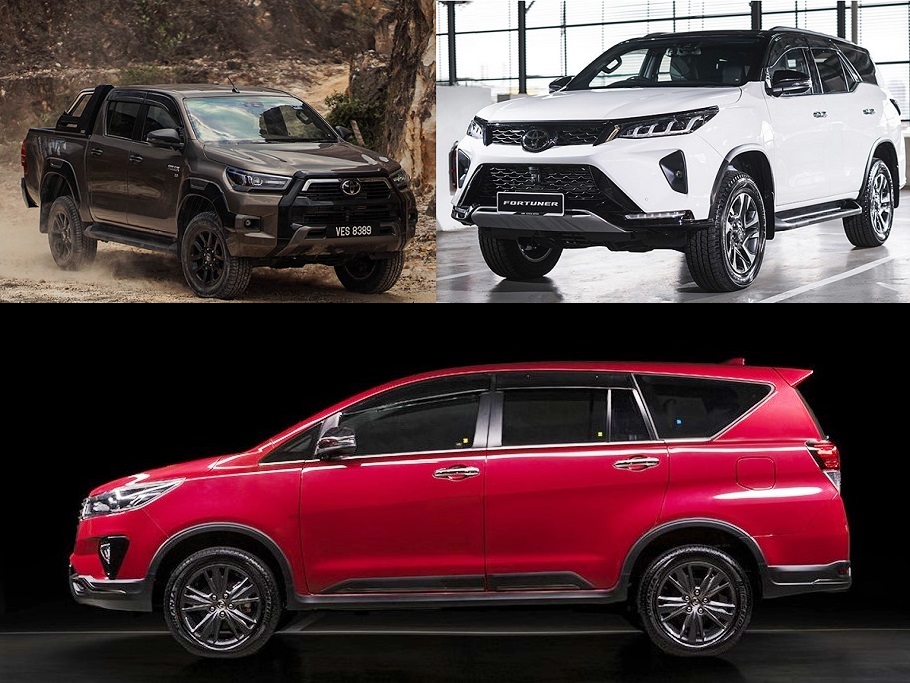
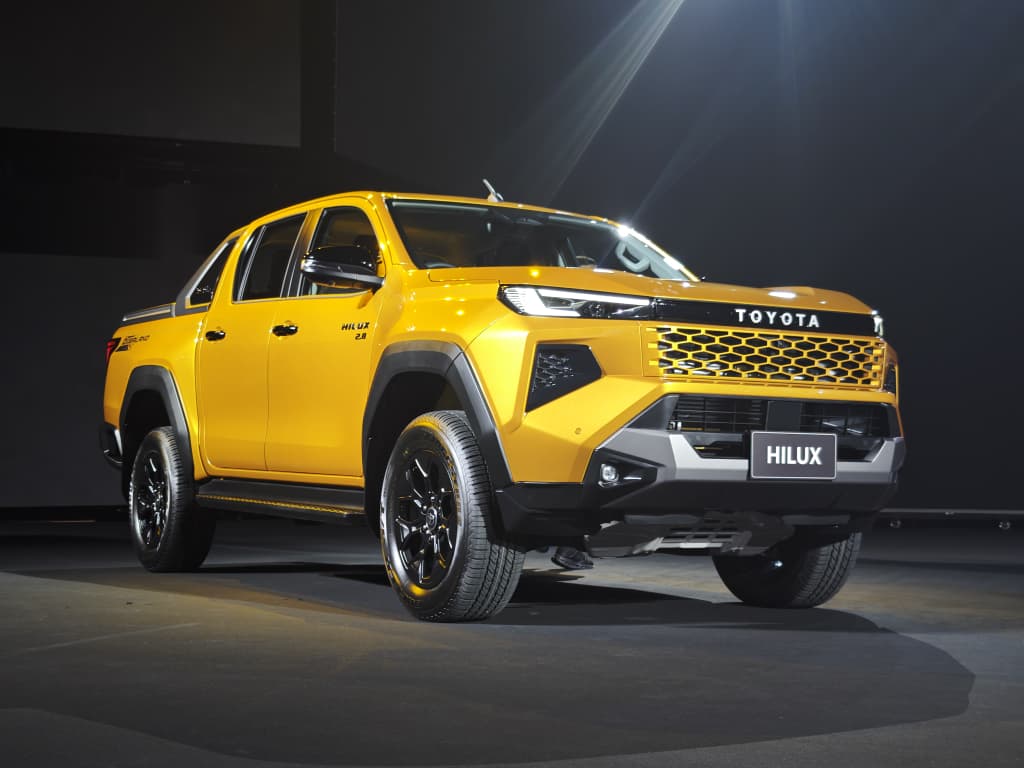
The Toyota IMV (Innovative International Multi-Purpose Vehicle) range which has been in the market since 2005 has continuously received updates over the two generations produced. The range consists of the Hilux pick-up, Fortuner SUV and Innova MPV, all conceived within the same development programme although the platforms differ due to the different operating requirements.
Another round of updates has taken place and the latest models have been announced with the following prices (without insurance):
Toyota Hilux (5 variants) – from RM92,880
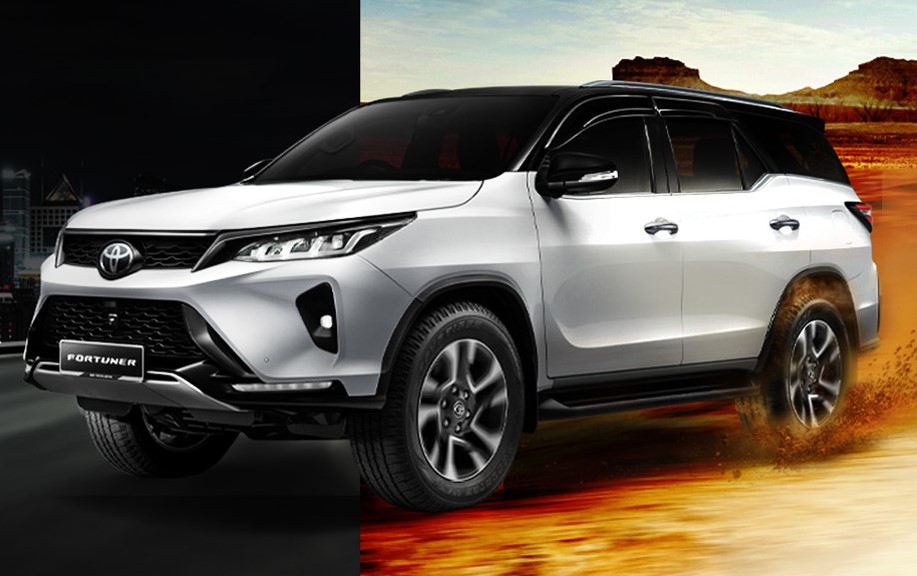
Toyota Fortuner (3 variants) – from RM169,167
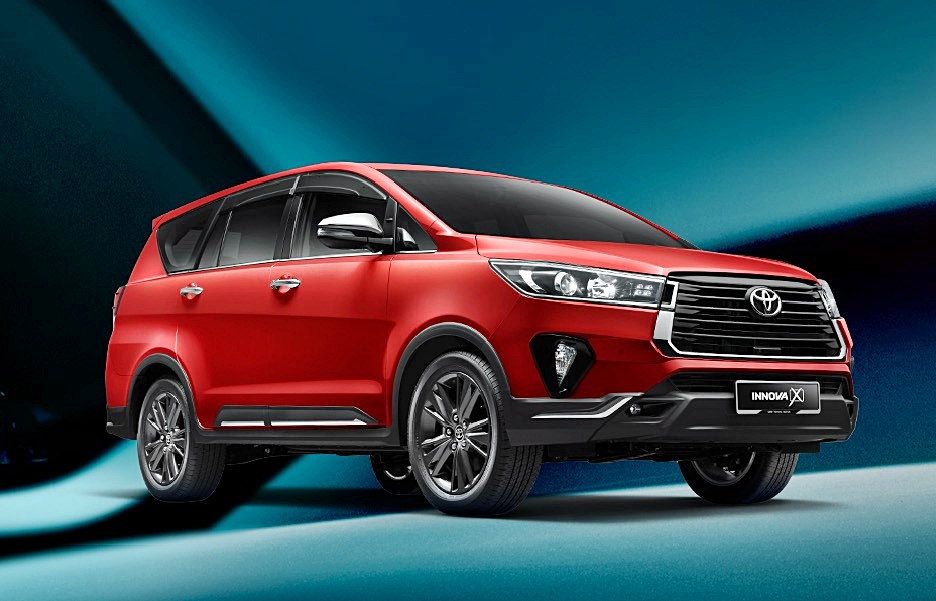
Toyota Innova (3 variants) – from RM115,553
Orders are now being accepted at all authorised Toyota showrooms nationwide and while the Hilux pick-up is readily available, deliveries of the Fortuner SUV and Innova will commence only in January 2022. With the extension given by the government, customers can still enjoy the full sales tax exemption next year for the Fortuner and Innova but the Hilux, being a light commercial vehicle, does not qualify for the exemption. All the models are assembled locally at the ASSB plant in Shah Alam, Selangor.
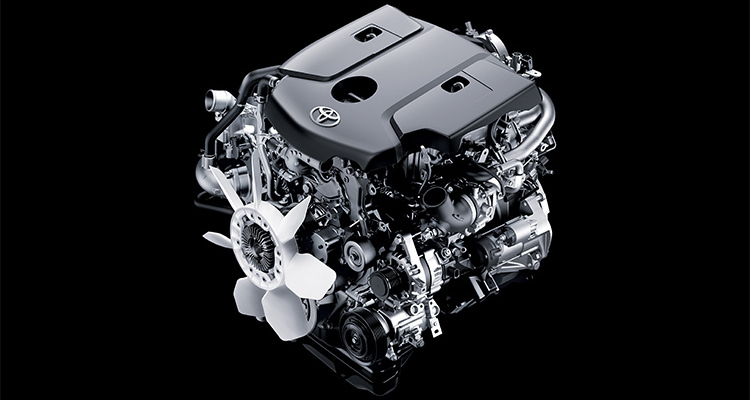
The engines have been retuned to meet stricter exhaust emission standards that will be introduced in Malaysia next year.
The updates improve convenience and comfort, with the petrol engines tuned to meet stricter emission control standards in advance of implementation of the Euro4 standards in 2022.
“The IMV range of products has been a great success in Malaysia and other markets around the world, providing durable and reliable mobility for thousands. The Hilux, in particular, has been the best-selling pick-up in Malaysia for many years and even today, we see demand exceeding supply. Rest assured that our assembly plant is rushing to fulfil outstanding orders but as always, without sacrificing quality,” said UMW Toyota Motor President, Ravindran K.
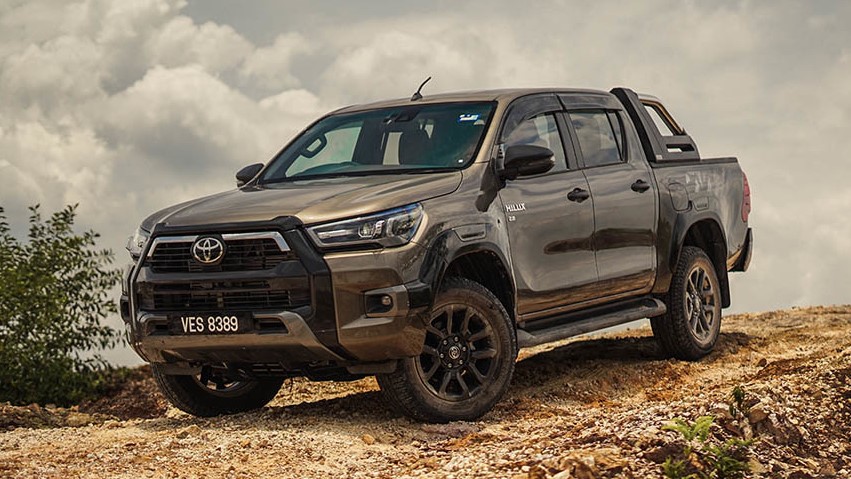
New Hilux
Malaysia’s best-selling pick-up truck is available in 5 with a choice of 2 turbodiesel 4-cylinder engines with 2.4-litre and 2.8- litre displacements. Both engines are fuel-efficient and extra fuel-saving can be achieved with the use of an ECO mode.
The passenger-oriented double cab variants – Hilux 2.8 Rogue, 2.4 V and 2.4 E – have 6-speed automatic transmissions and a dual-range 4×4 system. The other variants – Hilux Double Cab 2.4 G and Single Cab 2.4 – are equipped with 6-speed manual transmissions but both also have 4×4 drivetrains. These are intended more for customers who require vehicles for heavy-duty work.
The Hilux is well equipped with a wide range of features and equipment for convenience and safety. For the latest Hilux 2.8 Rogue and 2.4 V, the front air-conditioning system is upgraded to a dual zone type in place of the single-zone type. With the dual-zone feature, the driver and front passenger can set their preferred temperatures separately.
New Fortuner
The Fortuner is a 3-row 7-seater SUV which took over the role of the Land Cruiser in ASEAN markets, The medium-sized SUV is available in three variants – Fortuner 2.8 VRZ, Fortuner 2.7 SRZ and Fortuner 2.4. Responding to market demand, the Fortuner 2.4 is now made available throughout Malaysia, together with Fortuner 2.8 VRZ and 2.7 SRZ.
Like the Hilux, the front air-conditioner of the latest Fortuner 2.8 VRZ and 2.7 SRZ have a dual-zone feature to allow separate temperature settings for the driver and front passenger. A wireless charger pad for compatible smartphones is now standard for all variants. The rear USB port for the Fortuner 2.8 VRZ has also been changed to the newer Type-C port, making it more convenient to recharge for those with the newer generation of smartphones.
The same proven and reliable powertrains are used with 6-speed electronic automatic transmissions and dual-range 4×4 systems. The 2.7-litre petrol engine has been retuned so that it can meet stricter emission control standards, upgrading to Euro4 from Euro2 standards.
New Innova
The Innova offers seating for 8 persons with generous storage space. Currently in its second generation, this Toyota MPV is available in three variants – Innova 2.0X, 2.0G and 2.0E. While all three variants have the same 3-row cabin, the Innova 2.0X comes with generously sized Captain’s Seats in the middle (so the occupancy is reduced by one person).
For those who have compatible smartphones, a wireless charging pad is now standard in every variant. This makes it simpler to recharge a compatible phone as no cables are needed. Multiple USB ports are also available around the cabin, making it easier to charge phones and tablets.
The fuel-efficient and reliable 2-litre 16-valve petrol engine for all three variants has also been upgraded to meet the stricter Euro4 emission control standards.
5-year warranty
All three models come with a 5-year warranty with unlimited mileage for the Fortuner and Innova, and a maximum of 150,000 kms for the Hilux (terms and conditions apply). UMW Toyota Motor also offers a wide range of financing plans, including subscription plans, to suit different needs. There are also financing and leasing programs for those who are purchasing vehicles for commercial use.
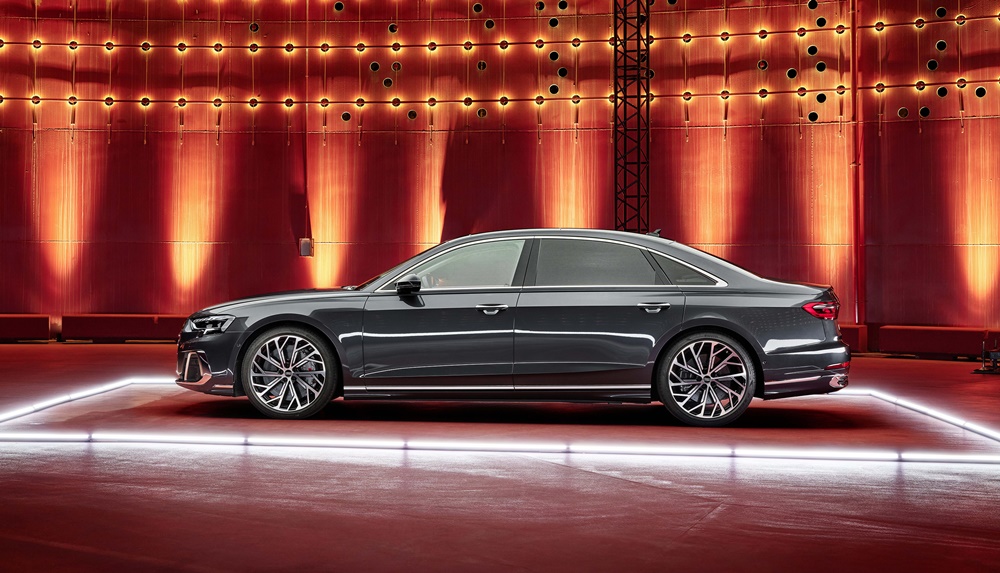
The Audi A8 is one of the German carmaker’s older models with a history going back to 1994. Asa a flagship model, it typically introduced pioneering technology and the first A8 was built with a significant innovation – an aluminium monocoque structure called the Audi Space Frame (ASF) which brought weight down without losing structural strength. The weight savings were of great value to a large limousine like the A8.
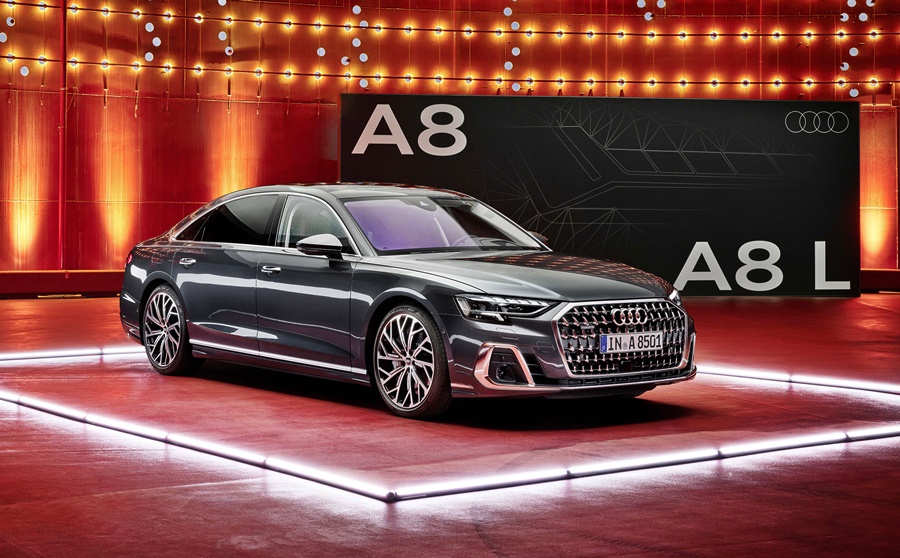
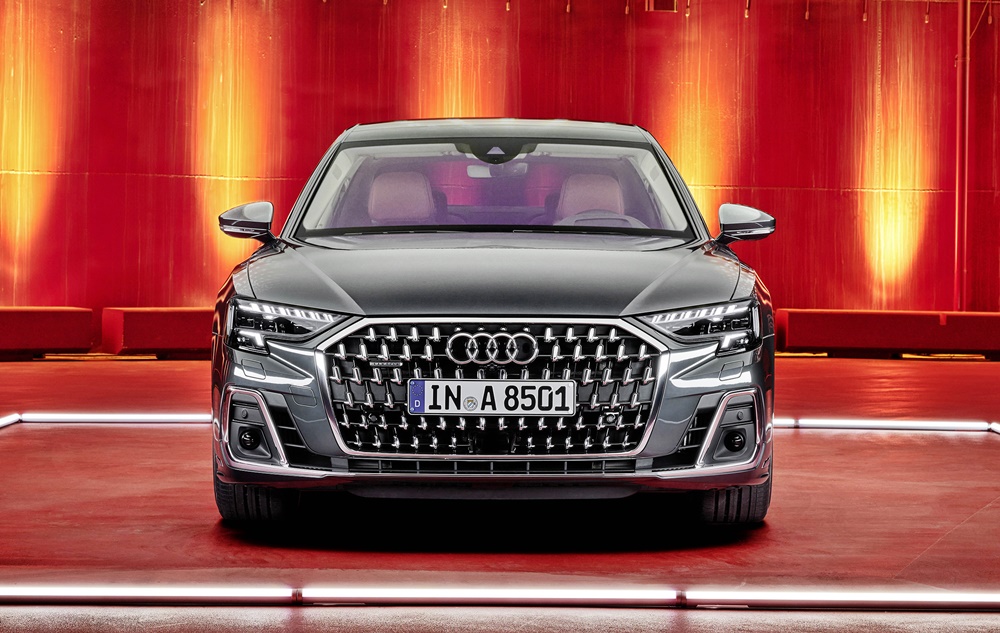
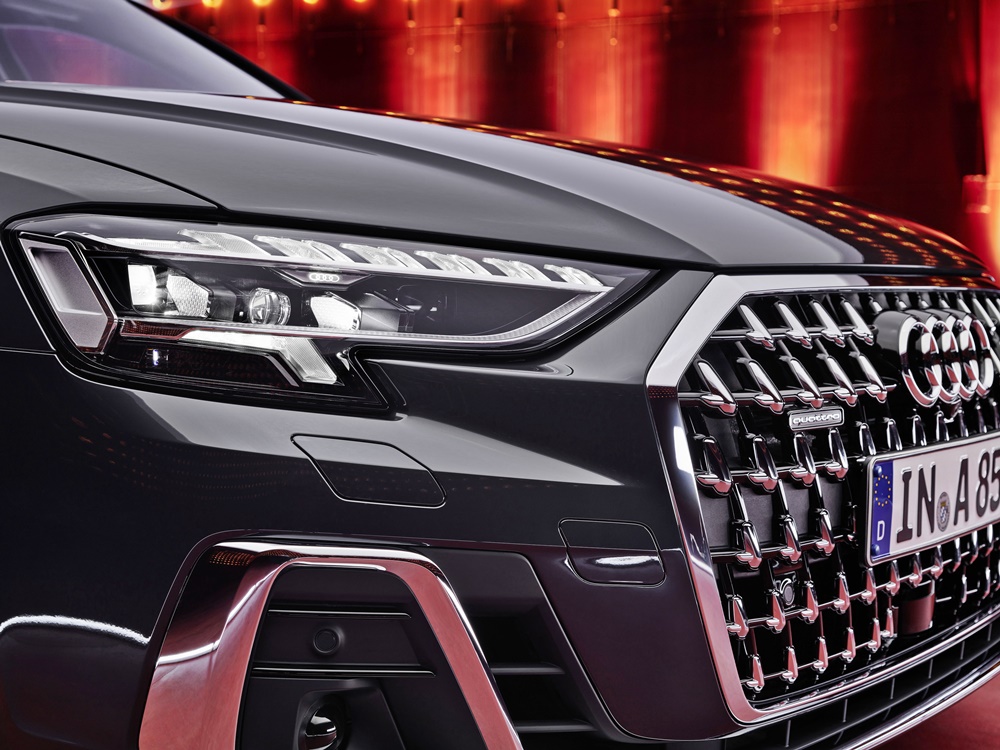
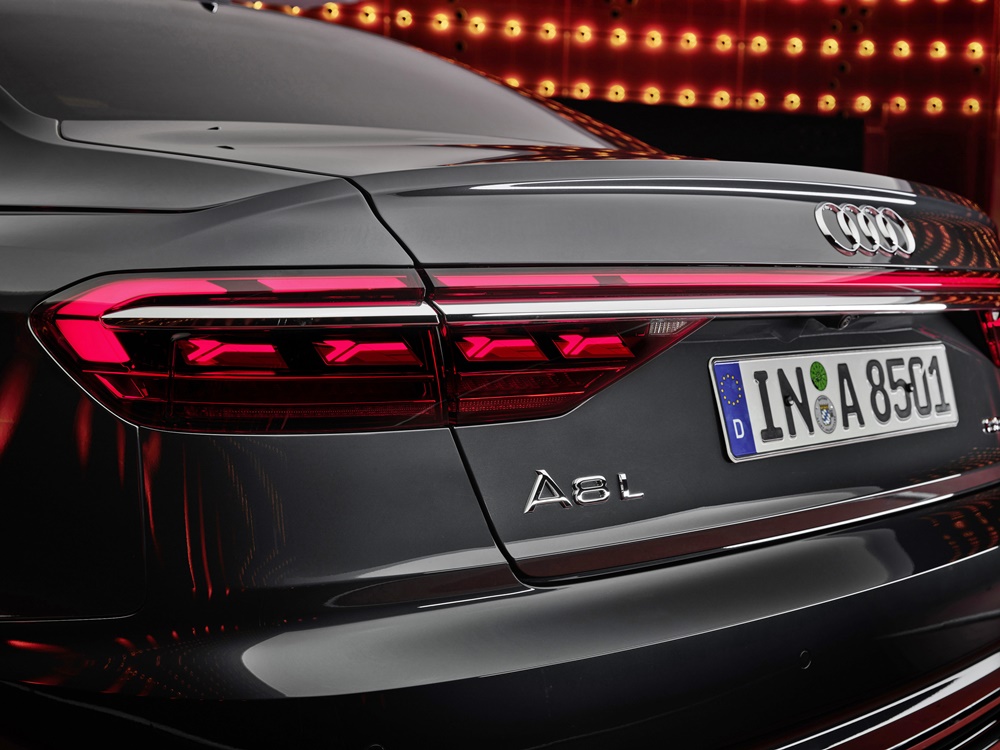
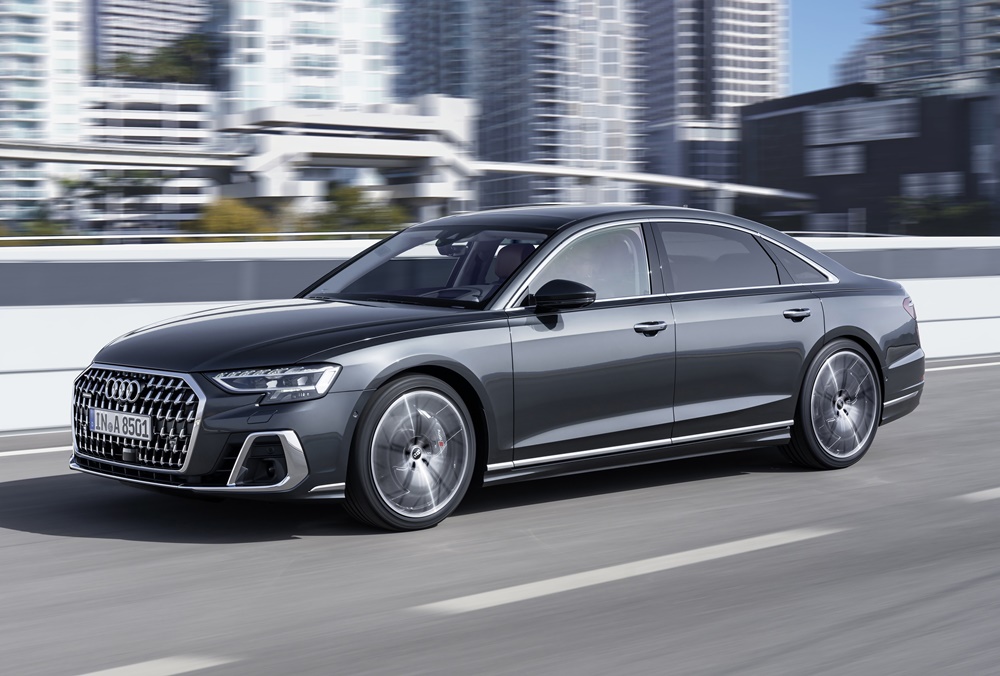
Since then, the model has had four generations, the current one having been introduced in 2017. An update has therefore been due and the enhanced A8 makes it debut this week. Noticeable exterior changes are the new advanced headlights and taillights, new elements which give a sharper design, while also adding presence and authority.
Advanced headlight systems
Comparable with video projectors, the Digital Matrix LED headlights use DMD (digital micromirror device) technology. Each headlight has approximately 1.3 million micromirrors, which disperse the light in tiny pixels and precisely control them.
One new function is lane and orientation lights for highways. The new A8 comes with Digital OLED rear lights (OLED = organic light emitting diode) as a standard feature. When ordering the car, there are two rear light signatures to choose from – three with the S8. In conjunction with the assistance systems, the digital OLED rear lights have a proximity indication feature.
Beyond the basic exterior, Audi is offering its customers a chrome exterior package and, for the first time in the A8, the new S line exterior package. The look is even more defined with the additional black appearance package.
Reduction as a design medium
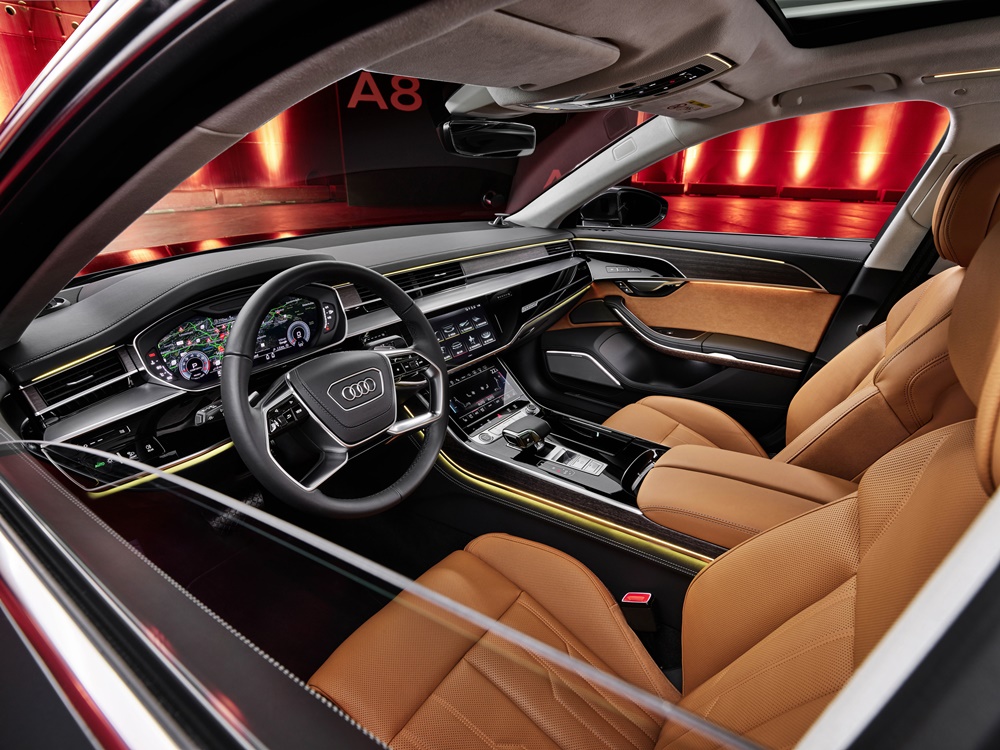
The architecture of the interior is strictly horizontally oriented to emphasize the car’s width. In the dark, the ambient light package plus stages the interior and the reading lights in the rear use Matrix LED technology.
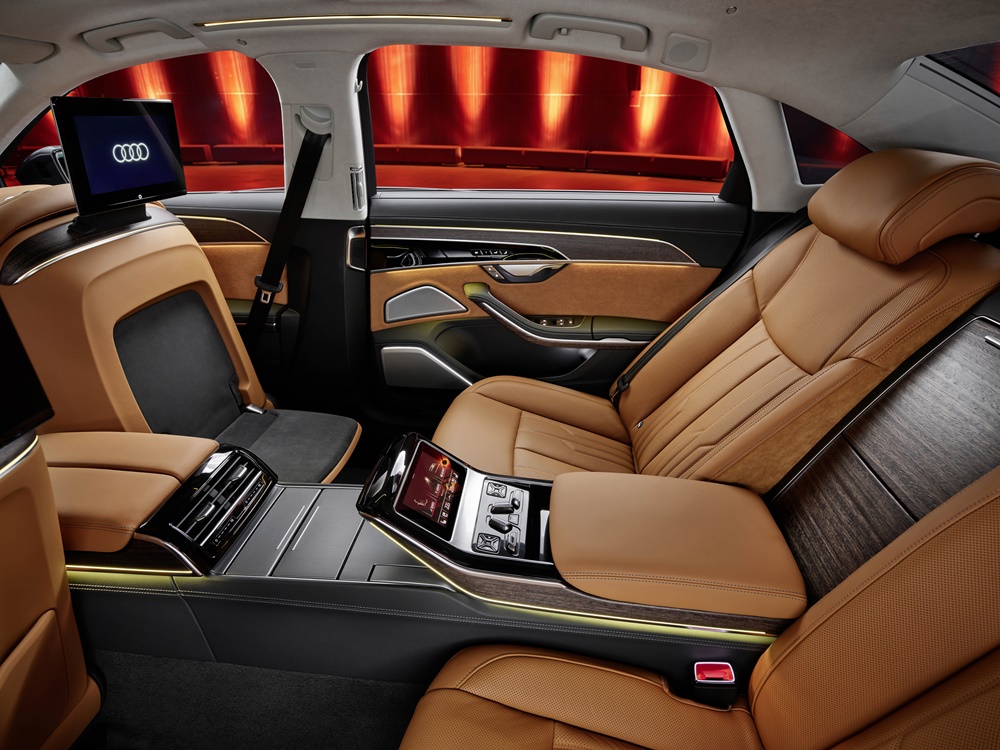
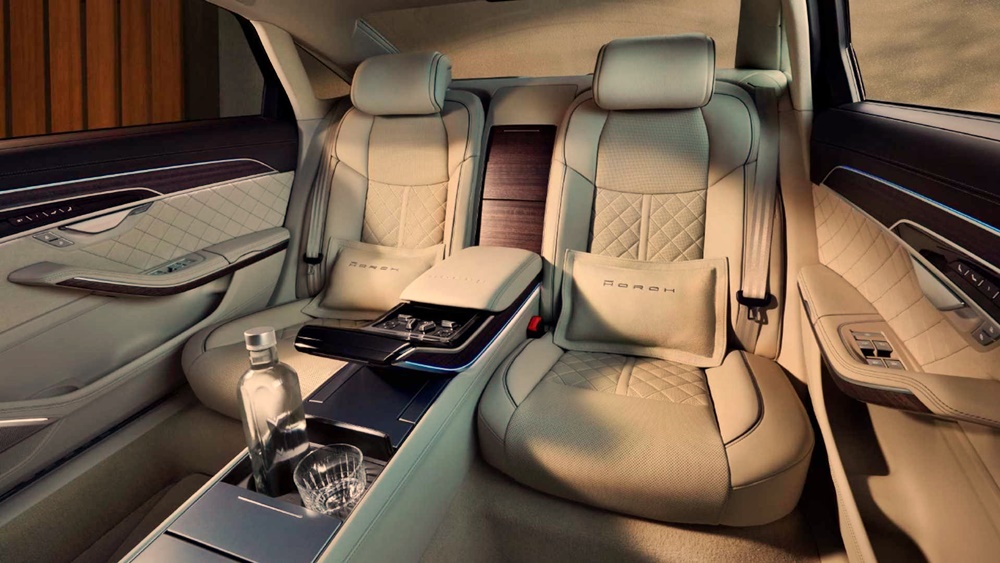
The range of seats and seat equipment is varied;– especially for the back seats, many options are available. The relaxation seat in the A8 L is the most luxurious with numerous adjustment options and a footrest on the back of the passenger seat. Passengers can use it to have the bottoms of their feet warmed and massaged to various degrees.
Navigation and Audi connect
MMI Navigation plus is standard and supported by the third generation modular infotainment toolkit (MIB 3). The likewise standard online and Car-2-X services from Audi connect augment the navigation system. They are divided into two packages: Audi connect Navigation & Infotainment and Audi connect Safety & Service with Audi connect Remote & Control.
Customers can also choose various infotainment hardware. The new screens in the back are tailored to the usage needs of today’s rear-seat passengers. That means two 10.1-inch displays with full HD resolution and full connectivity options.
Three different driver assistance systems
There are about 40 driver assistance systems available for the enhanced Audi A8. Some of them – including the Audi pre sense basic and Audi pre sense front safety systems – are standard. The options are clustered into the ‘Park’, ‘City’, and ‘Tour’ packages. The assistance package plus consolidates the packages. Features like the night vision assistant and surround view cameras are available separately.
Engine range
For this generation, there are three powertrain options. Apart from the 3.0 TFSI as a V6 engine, the 4.0 TFSI, which is available for the A8 and the S8 in various output levels, distributes its 4 litres of displacement to 8 cylinders with cylinder on demand technology. The A8 is also available with a turbodiesel engine and a plug-in hybrid model will follow.
All engines use an 8-step Tiptronic and with an electric oil pump, the automatic transmission can change gears even when the combustion engine is not running. The constant all-wheel drive quattro with the self-locking centre differential is also standard, and can be optionally supplemented with the sport differential (standard in the S8 ). It actively distributes torque between the rear wheels during fast cornering and thereby makes the handling even sportier and more stable. The adaptive air suspension with controlled damping is standard. Progressive steering is another standard feature but dynamic all-wheel steering is an option.
As for the S8 S8 TSFI quattro – the sporty top version of the flagship family – the biturbo V8 generates 571 ps/800 Nm and has mild hybrid technology. This uses the A8’s 48-volt main electrical system. Only in the S8 comes with predictive active suspension, sport differential, and dynamic all-wheel steering built.
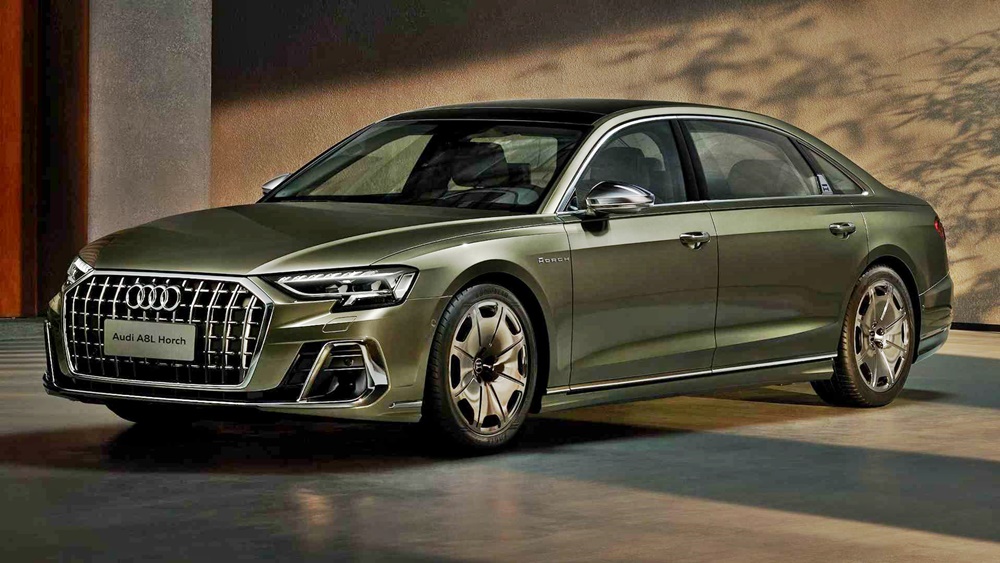
A8 L Horch for China
Exclusively for the Chinese market is the A8 L Horch. This is 5.45 metres long, which is 13 cm longer than the standard A8 L. Inside, the expanded diamond quilting, logo embossing in the cushions, and deep-pile floor mats in the back emphasize the exclusivity of this version for the largest car market in the world. On the exterior, there is a specially designed Singleframe with vertical braces as well as the Horch badge and the ‘H’ crown. For the first time in the D segment, customers in China will be able to order their car with a 2-color finish.
Following a successful October when sales grew by 28.7% compared to the previous month, Proton has now exceeded the cumulative volume that was achieved for the same period of 10 months in 2020. With 13,362 units sold in October, the cumulative volume has reached 86,379 units, 1.6% higher than the same period in 2020 when 84,999 units were sold.
“Proton’s sales in October can be summarized as a story of strong buyer demand and unrealized sales potential. While we are happy with the continued popularity of the Proton Saga and our achievement with the two SUVs, we missed out on adding more units to our final tally as we continue ramping up our supply of components. Market demand however is expected to remain strong towards the end of year, so we are working diligently towards closing 2021 on a high note,” said Roslan Abdullah, CEO of Proton Edar.
Proton’s performance is in contrast to the overall market which has fallen by an estimated 4.7% despite selling more than 65,000 units for the first time in 2021 in October. Proton’s total sales volume in October is expected to be represent a 20.5% market share, while the cumulative volume should put the brand’s share at 22.7%.
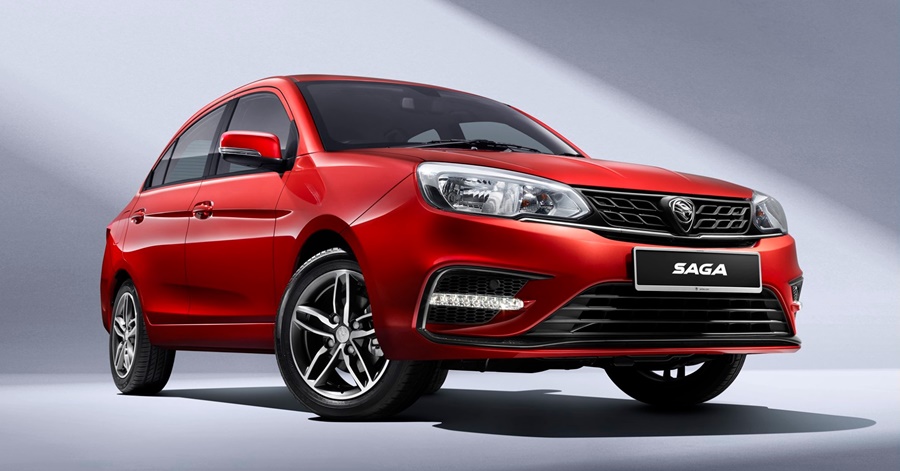
As has been the case for every month in 2021, the Saga has been the bestseller. 5,107 units were sold in October, the third time the model’s sales volume has exceeded 5,000 units during the year. According to Proton, the Saga has been the A-segment sedan volume leader in 2021.
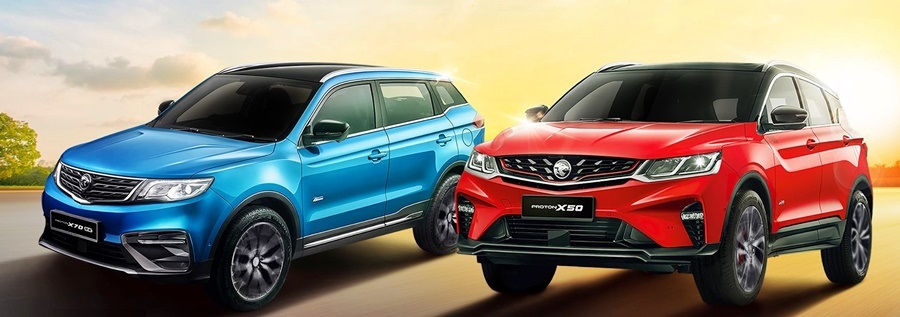
Two other volume leaders for the company are both the SUVs, the X50 and X70. The B-segment X50 managed achieved its best month since launch with 3,839 units sold, while the larger X70 had its best month of sales since March this year with 2,165 units sold.
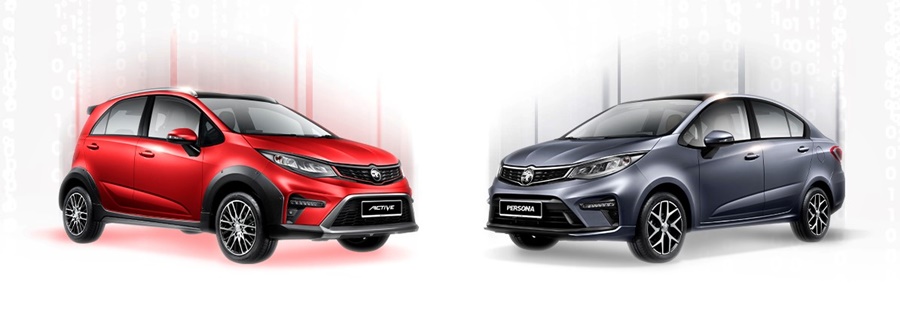
As for the rest of the model range, the evergreen Exora continued to dominate the C-segment MPV market with 359 units sold. However, the latest Iriz and Persona were badly affected by microchip shortages that limited their production volumes and delaying deliveries.
Proton, like other companies, is happy that the government has made the decision to extend the exemption of Sales and Service Tax (SST) another 6 months until June 30, 2022. This benefits both the car companies which are still recovering and need every sale they can get, as well as car-buyers who can save money.
“Customers who have been patiently waiting for their vehicles no longer need to worry about missing out on the incentives if their deliveries can only be made next year. The extension gives us a chance to fulfil the bookings we have already received and doesn’t unfairly penalize customers who are waiting due to circumstances beyond their control,” said Encik Roslan. “We predict the extension will also help to spur sales through the first half of next year when there could be more new models introduced to the market.”
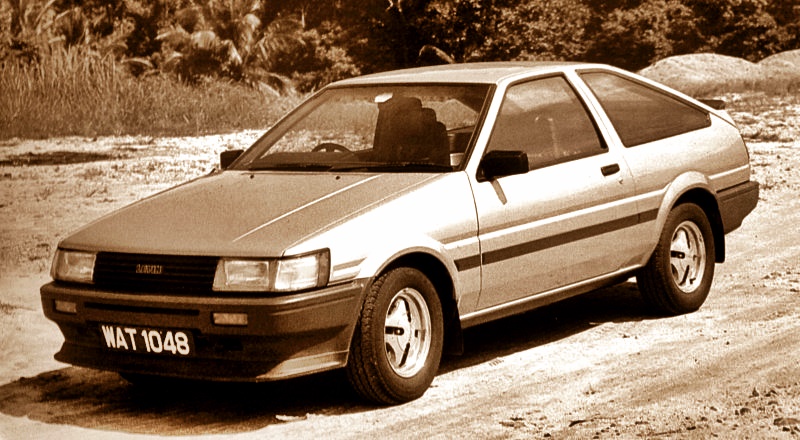
Toyota has made many sportscars over the years and some of them have become legendary and are still sought after decades after production ceased. One of them is the model that was in the fifth generation of the Corolla family in the 1980s. It had the model code of ‘AE86’ and in the Japanese market, it was known as Levin or Trueno (the name used for the Sprinter sister version) and as Corolla GT in most export markets. Today, it is also referred to as ‘hachi-roku’ which is Japanese for ‘86’.
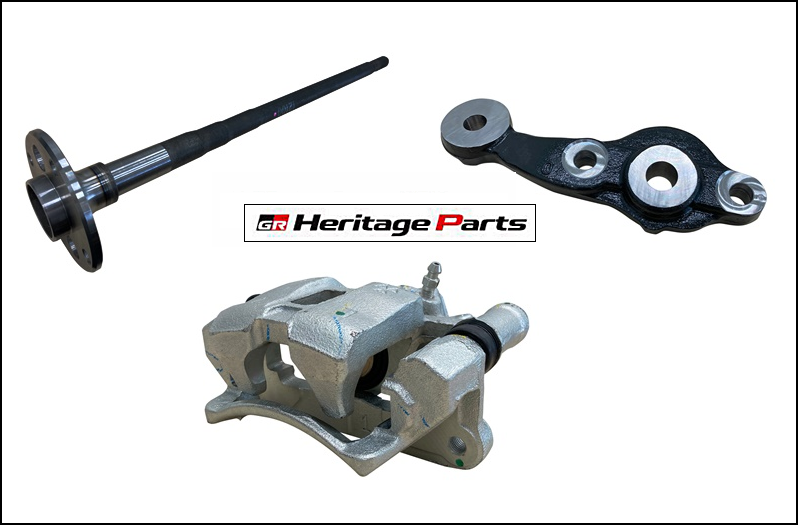
Because of the many units of AE86 still in use around the world, replacement parts are still circulating, mostly by aftermarket suppliers. Now TOYOTA GAZOO Racing (TGR) has made the decision to include the model in its GR Heritage Parts Project which reproduces spare parts that have been discontinued and sells them as genuine parts.
Fifth model for heritage parts project
TGR has already been reproducing spare parts for the A70 and A80 Supra, the 2000GT, and the 40-Series Land Cruiser. Now owners of the AE86 will be able to get parts which would have the same high quality and durability as genuine parts.
Of course, unlike when the car was still in production, the reproduced parts will not be the entire list of thousands of parts. From market studies, TGR has identified parts which are in demand and for now, it will offer rear brake calipers, steering knuckle arms and rear driveshafts (from December).
Limited production run
The production run for the parts will be limited so they will be available until stocks run out. The parts will be sold by authorized Toyota dealers in various countries in the same way as normal genuine parts.
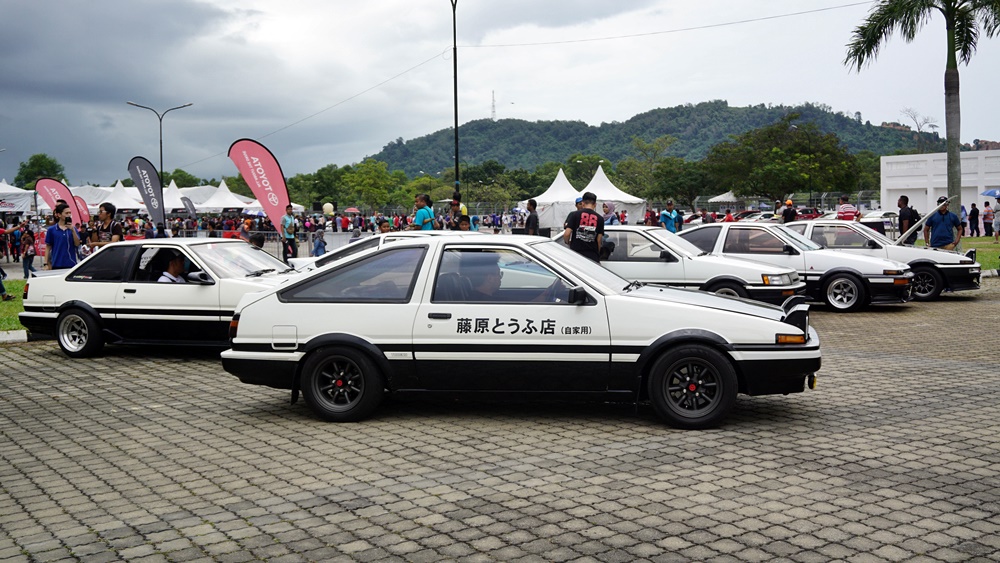
The AE86 has been amazingly enduring, with well maintained units that are over 30 years old able to have values similar or even higher (if they have performance parts added) than what the original customers paid for them in the 1980s. Even the engineers of the team that developed the model were surprised by how the car is still in demand by enthusiasts. When they developed it, the AE86 was just another variant of the world’s most bestselling car.
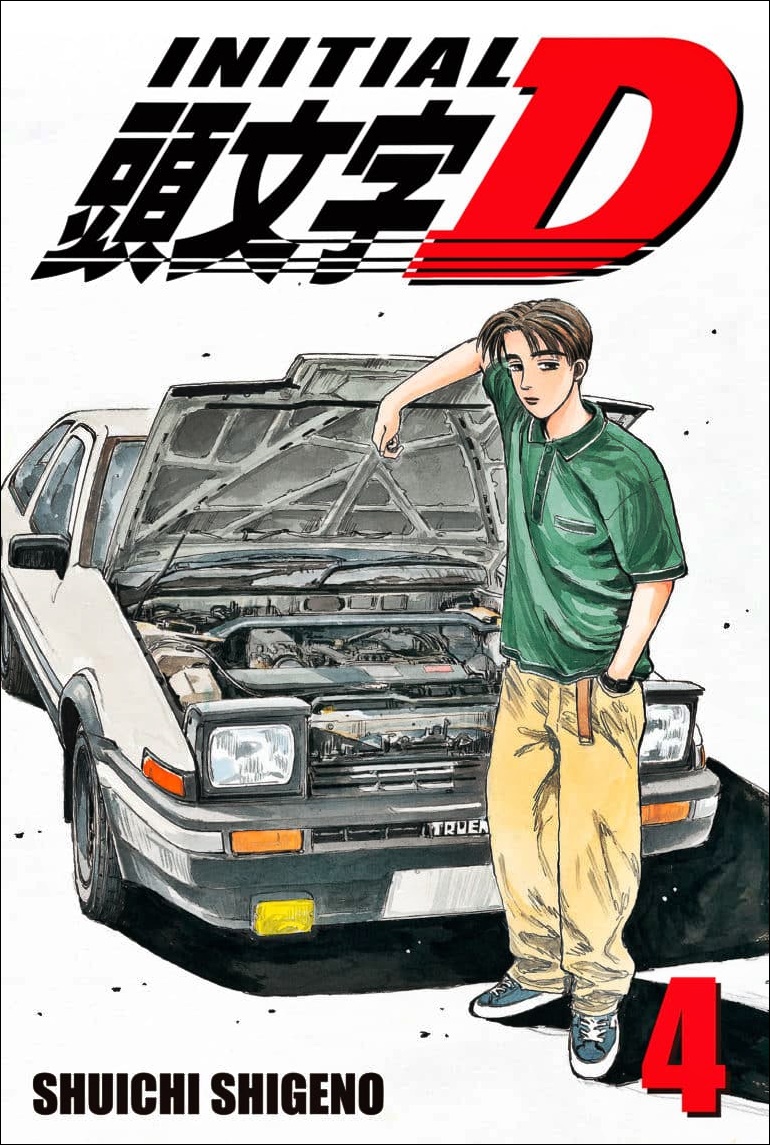
The ‘Initial D’ series, which featured a Trueno prominently, also helped to boost the car’s popularity.
One of the first models to used 4A-GE
It was one of the first models to use the 4A-GE LASRE (Lightweight Advanced Super Response Engine), a 1600 cc DOHC all-aluminium 16-valve engine with 4 valves per cylinder (later versions had 5 valves per cylinder). The engine, which was developed in collaboration with Yamaha (which had also helped Toyota develop earlier high-performance engines) had a high output of 130 bhp. But it was the handling of the car that made it popular, especially among those who used it for drifting.
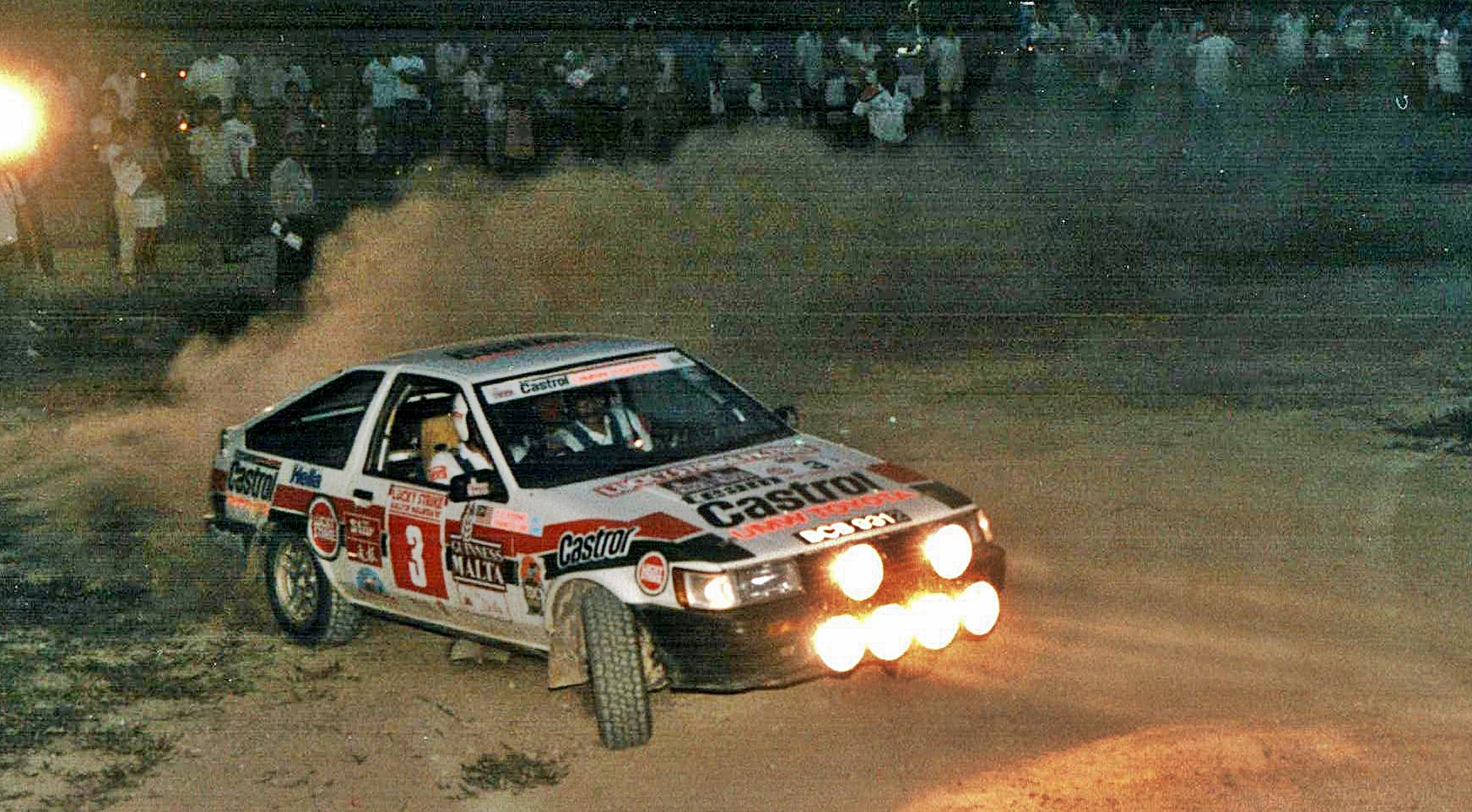
In Malaysia, UMW Toyota Motor imported a small number for sale (at prices under RM50,000!) as well as for use by its rally team in the 1980s, where it won many events. It was something of a ‘giant killer’, able to take on more powerful cars like the Nissan 240RS, although that was also largely due to having skilled drivers like Y.S. Khong behind the wheel. In later years, many used units would be brought in and readily sold.
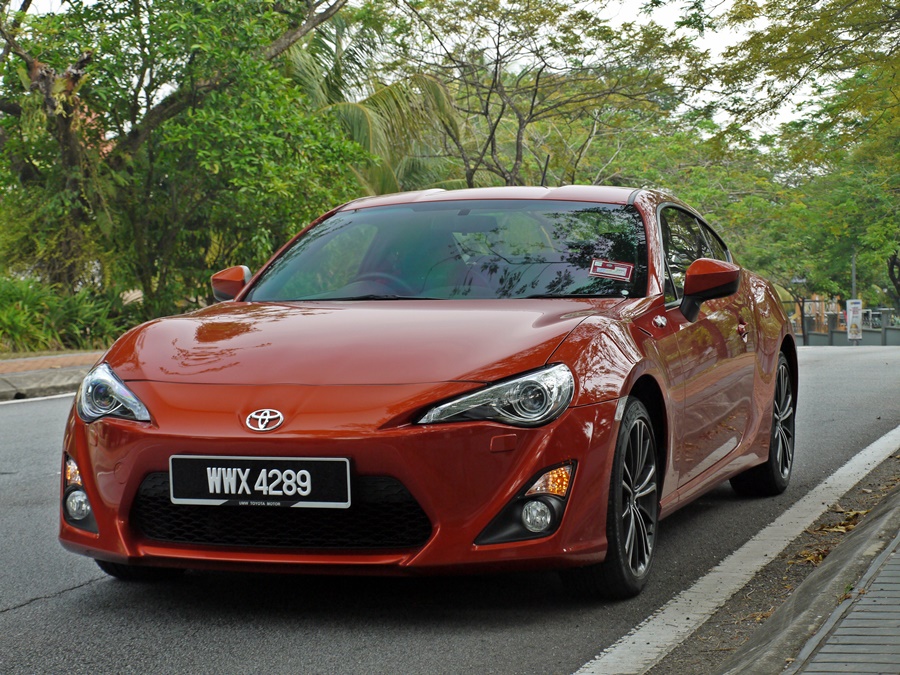
UMW Toyota Motor’s rally team in the 1980s used the Toyota AE86 with much success.Toyota 86 introduced in 2012 is the spiritual successor of the original ‘hachi-roku’.
AE86 reborn
The AE86 was reborn in the modern Toyota 86 model in 2012, adopting new technologies but also inherited the culture and tradition of the ‘hachi-roku’. This has been followed by the GR86 which went on sale last month in Japan.
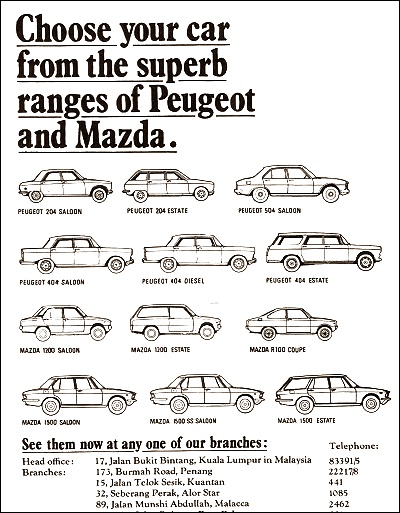
In the 1970s, a company called Asia Motor was the first distributor of Mazda and Peugeot cars in Malaysia. It handled the two brands (and even assembled some models at its own plant) until the late 1980s when other companies took over each brand. Then in the early 2000s, both brands somehow ended up being taken on by the same company – Cycle & Carriage – which sold their cars till 2008. Mazda was then taken up by Bermaz while Peugeot went to Nasim Motors.
An advertisement from the 1970s when a company called Asia Motor sold both Peugeot and Mazda cars.
Now, history seems to be repeating itself as the Mazda and Peugeot brands are again being handled by the same company or rather, the same group. Late last year, Bermaz formed a new joint venture company with Berjaya Corporation known as Berjaya Auto Alliance Sdn Bhd (BAASB) which was appointed to the new role of Peugeot distributor. The BAASB name has since changed to Bermaz Auto Alliance Sdn Bhd and the company which imports the vehicles is Mega Galeri Sdn Bhd. While BAASB and Bermaz Motor are separate companies, the core people are the same and they are veterans in the auto industry.
Following its appointment, BAASB was busy setting up the new business which was interrupted by the pandemic and long lockdown period, delaying some plans. But since mid-August when the government began to relax restrictions and businesses could operate again, BAASB has been busy preparing to launch new models.
Meanwhile, in January this year, Peugeot’s parent company, Groupe PSA, had merged with the FCA Group (which has Chrysler and a number of Italian brands) to form Stellantis. While this did not really affect BAASB, it did see the change of ownership of the plant in Kedah which was originally bought over from the NAZA Group by Groupe PSA. The intention was to use the plant as a regional hub for Peugeot models and this was already underway.
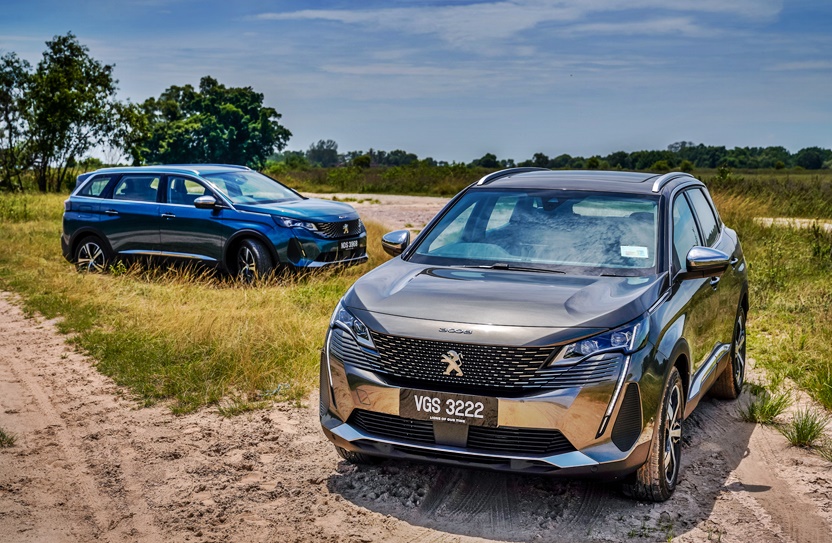
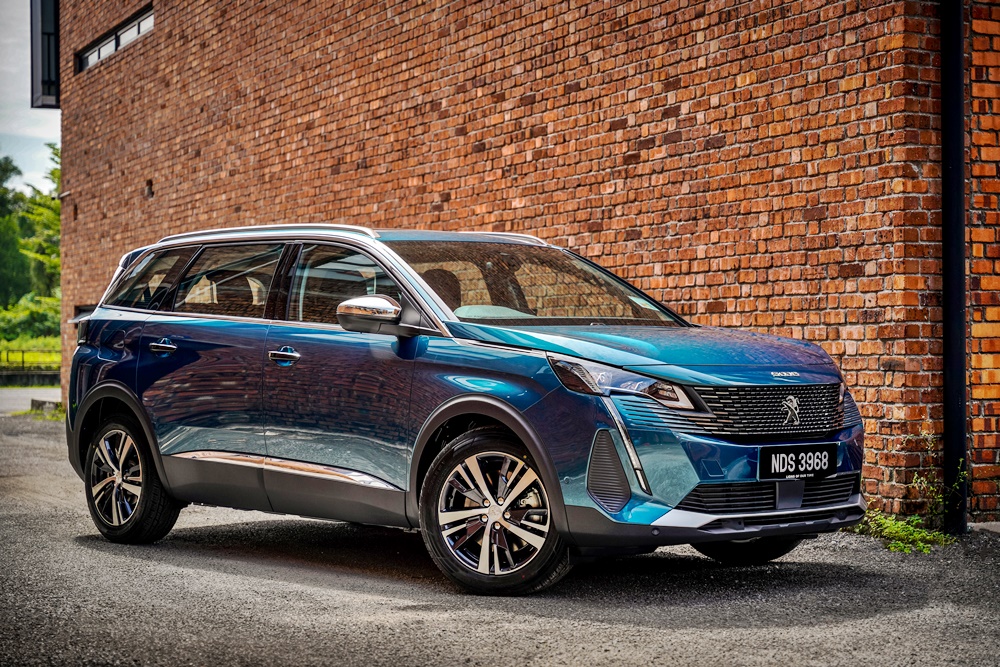
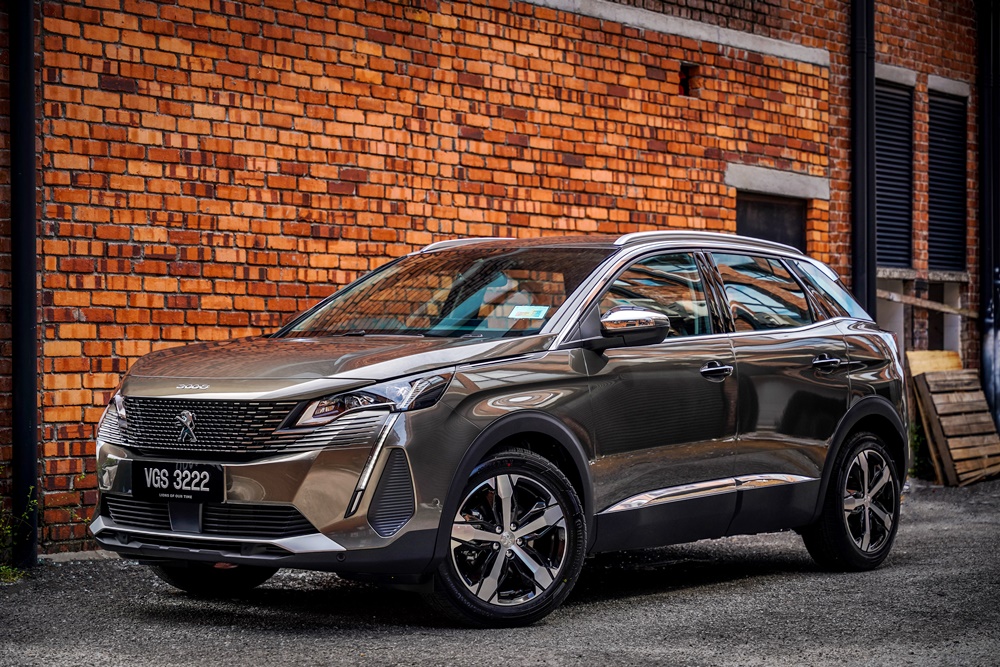
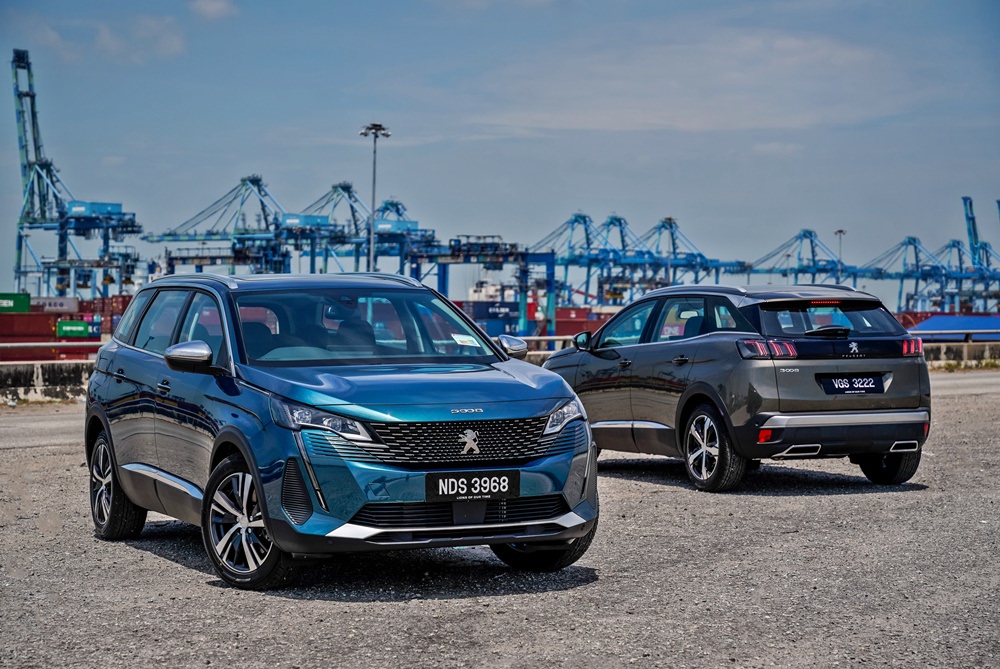
Peugeot 5008Peugeot 3008
2008 to join locally-assembled range
Currently, three models are being assembled at the plant – the 3008, 5008 and 2008, the latter to be launched in the near future. With no more restrictions on gatherings and crossing borders, BAASB wasted no time organizing a media event to introduce themselves, the Stellantis people and the new 3008 and 5008 with a quick drive to Genting Highlands and back.
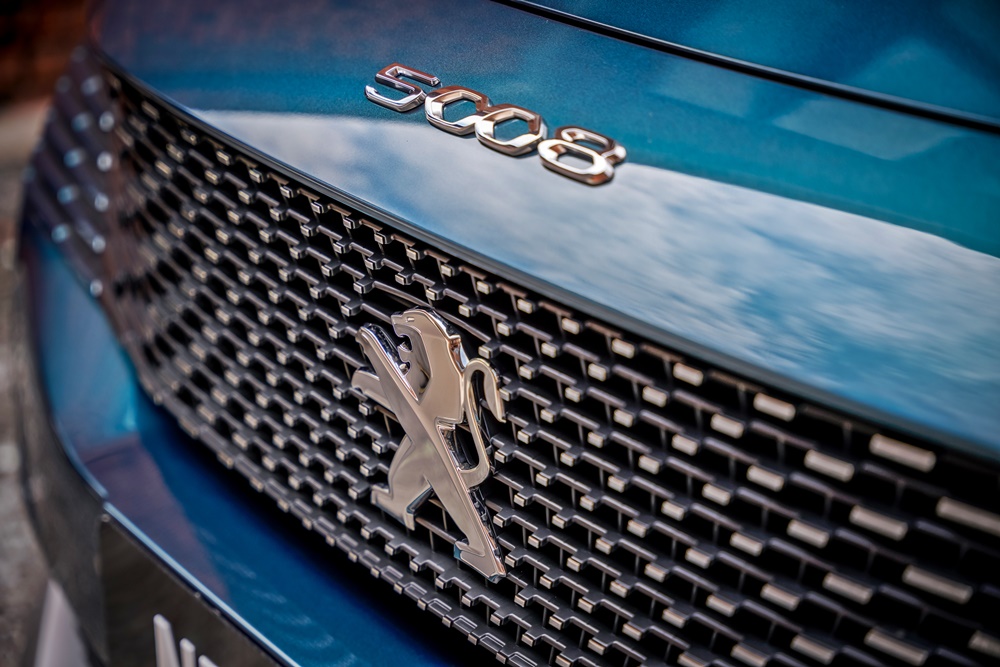
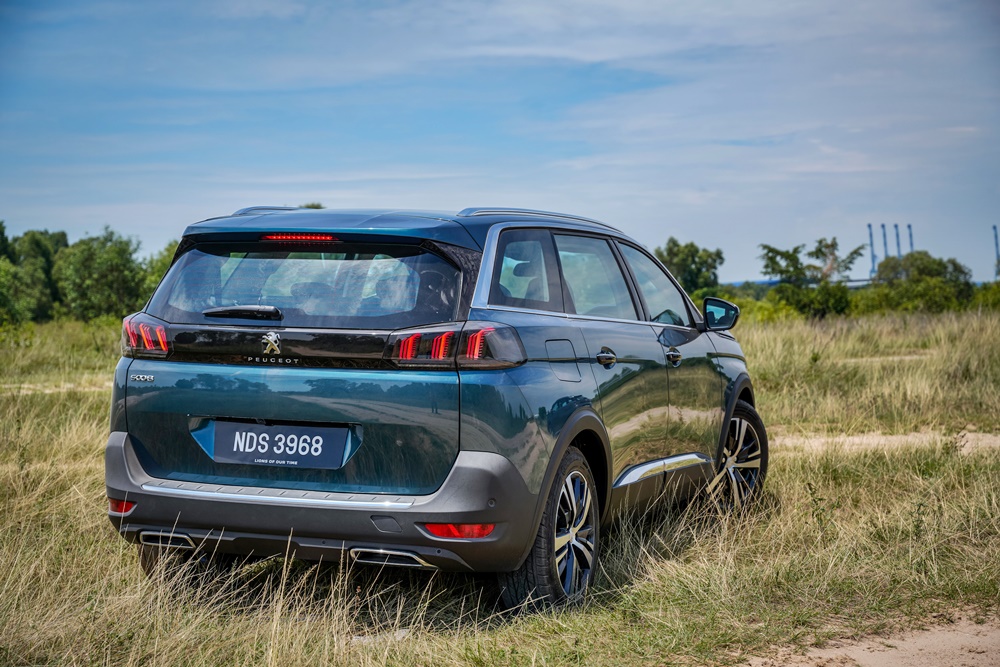
Both the SUVs are not new to the market, the 3008 having been introduced in second generation form in 2017, and the 5008 in 2018. However, they have received updates since their original introductions which adopt the latest design language of the carmaker. While the overall styling is unchanged, the notable differences can be seen in the front end. The grille is new with a large mass of textured elements and no frame.
The Peugeot Lion is also new and unlike previous ones, only its head is now shown (for corporate materials but the full body remains on the products). This is 11th time since the 1850s (although the original company was founded in 1810) that the brand identity and logo have been changed and the recreated emblem is said to ‘a shift in stance; a new state of mind, and a new lifestyle’. Above the Lion, on the edge of the bonnet, is the model identifier.
As their first digit indicates, the 3008 and 5008 are positioned at different levels in the market with the ‘double 00’ used for models that have a taller body structure, which means SUVs and crossovers. Comparing the two, the 3008 has a sleeker profile with bold lines whereas the 5008, being a 7-seater, is essentially an MPV but can also pass as a SUV. Both cars certainly have a premium appearance which is not unexpected of European brands.
Same engine for both models
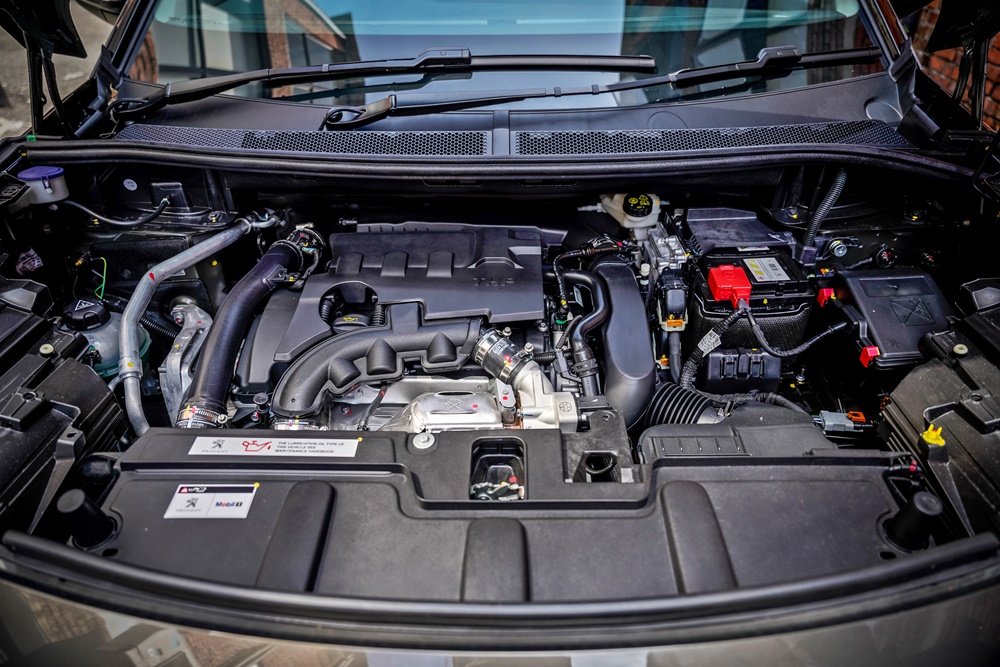
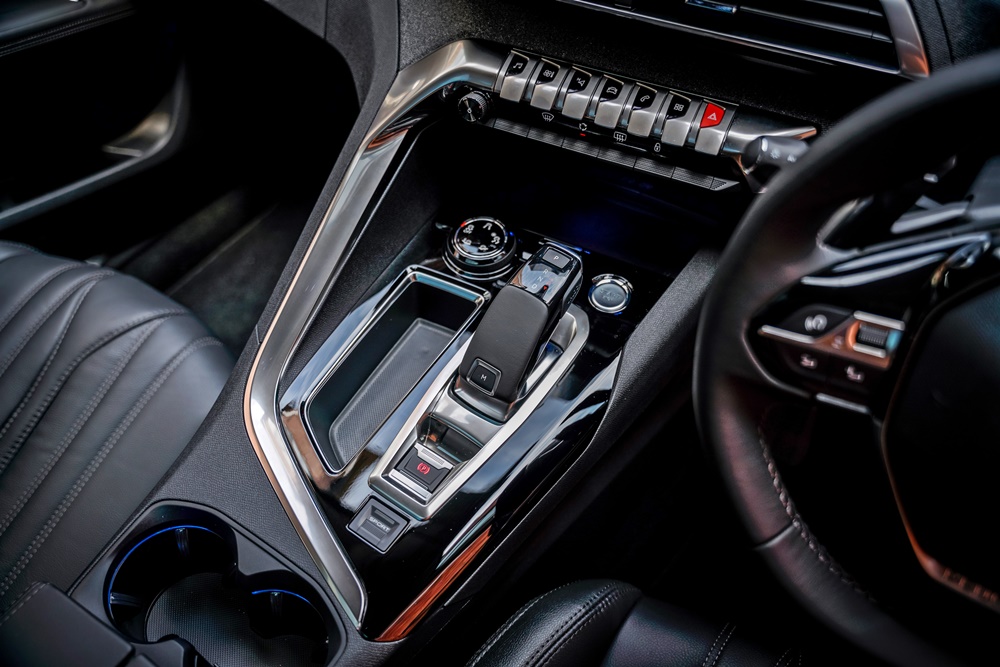
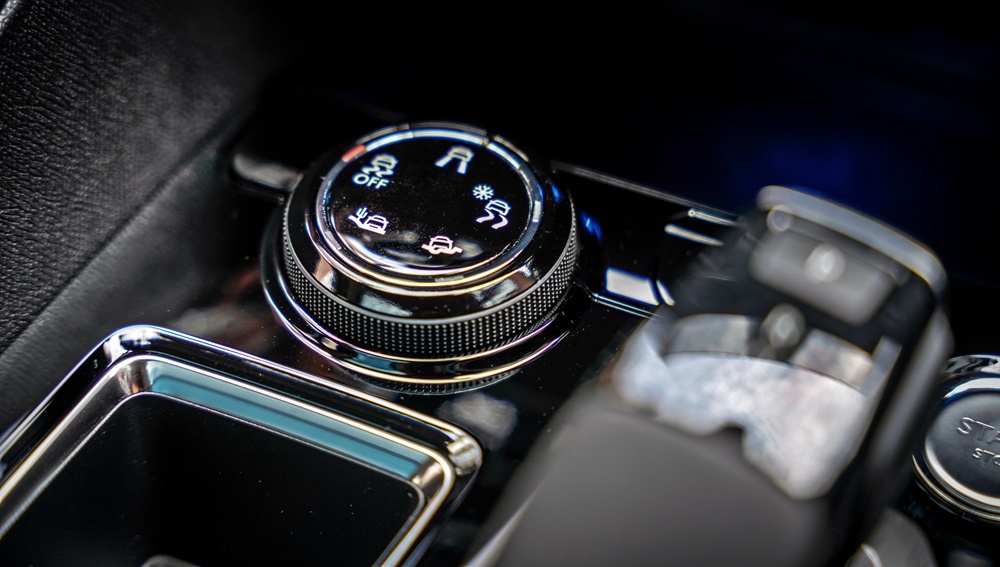
To simplify production, both models use the same engine (for now at least) which is the same 1.6-litre THP 4-cylinder unit that came with the original introduction. Power output is 167 ps with 240 Nm of torque and the 6-speed automatic transmission is also the same one supplied by Aisin. To optimize grip on different surfaces, there are 5 modes which the driver can choose using a rotary dial.
Known as Advanced Grip Control, the system has been available in some Peugeot models since 2013 and adjusts the grip and torque to the front wheels. It helps most on very slippery surfaces when there is a need to be more sensitive with the throttle and a computer can do that better than a human foot. In most cases, drivers can probably leave it in standard mode which will be fine for most conditions.
Peugeot i-Cockpit
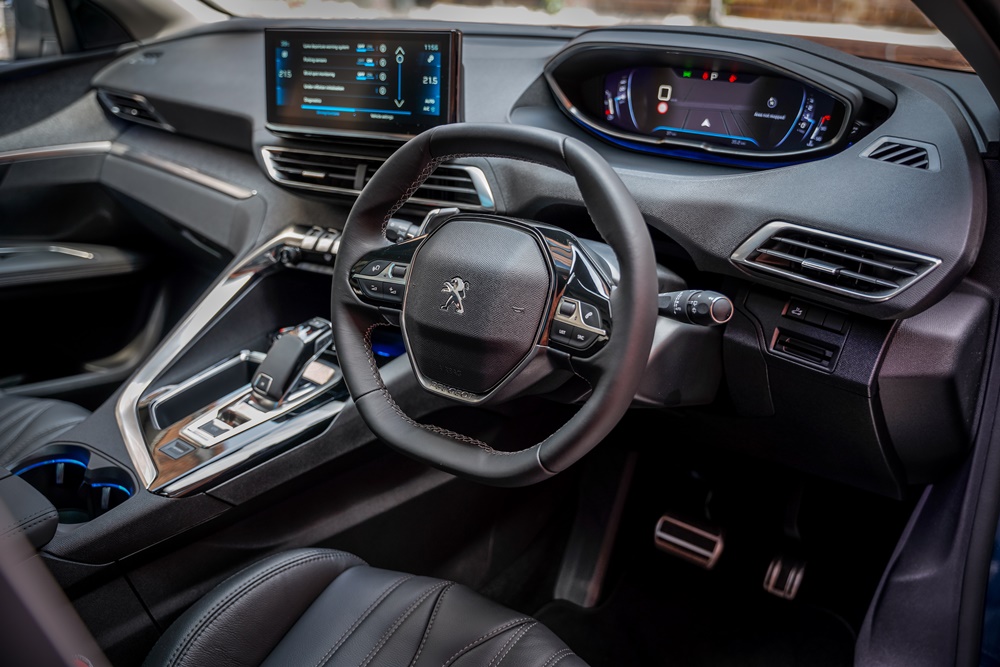
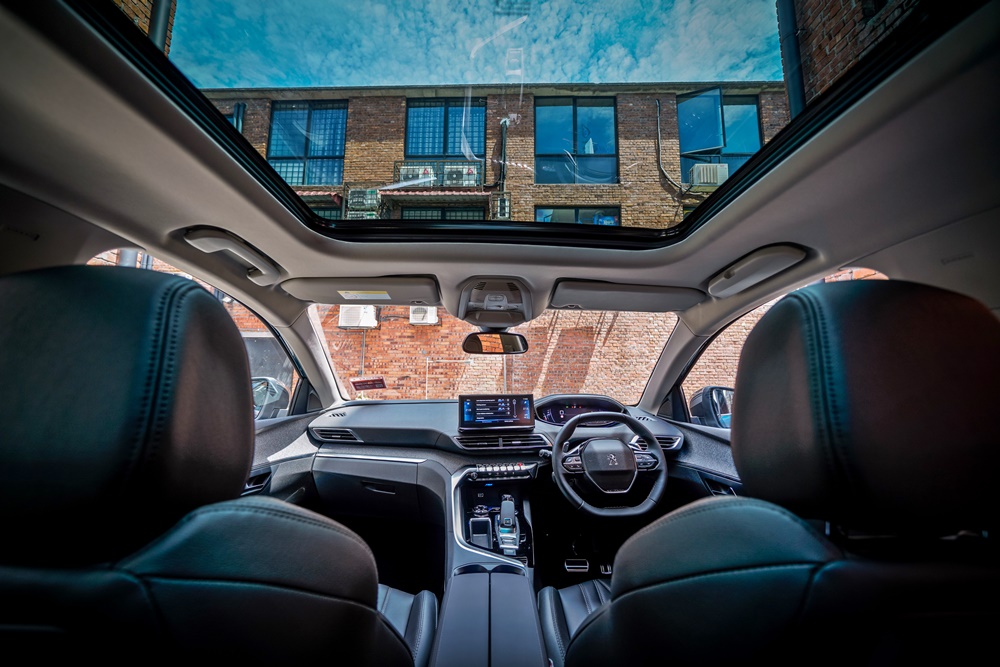
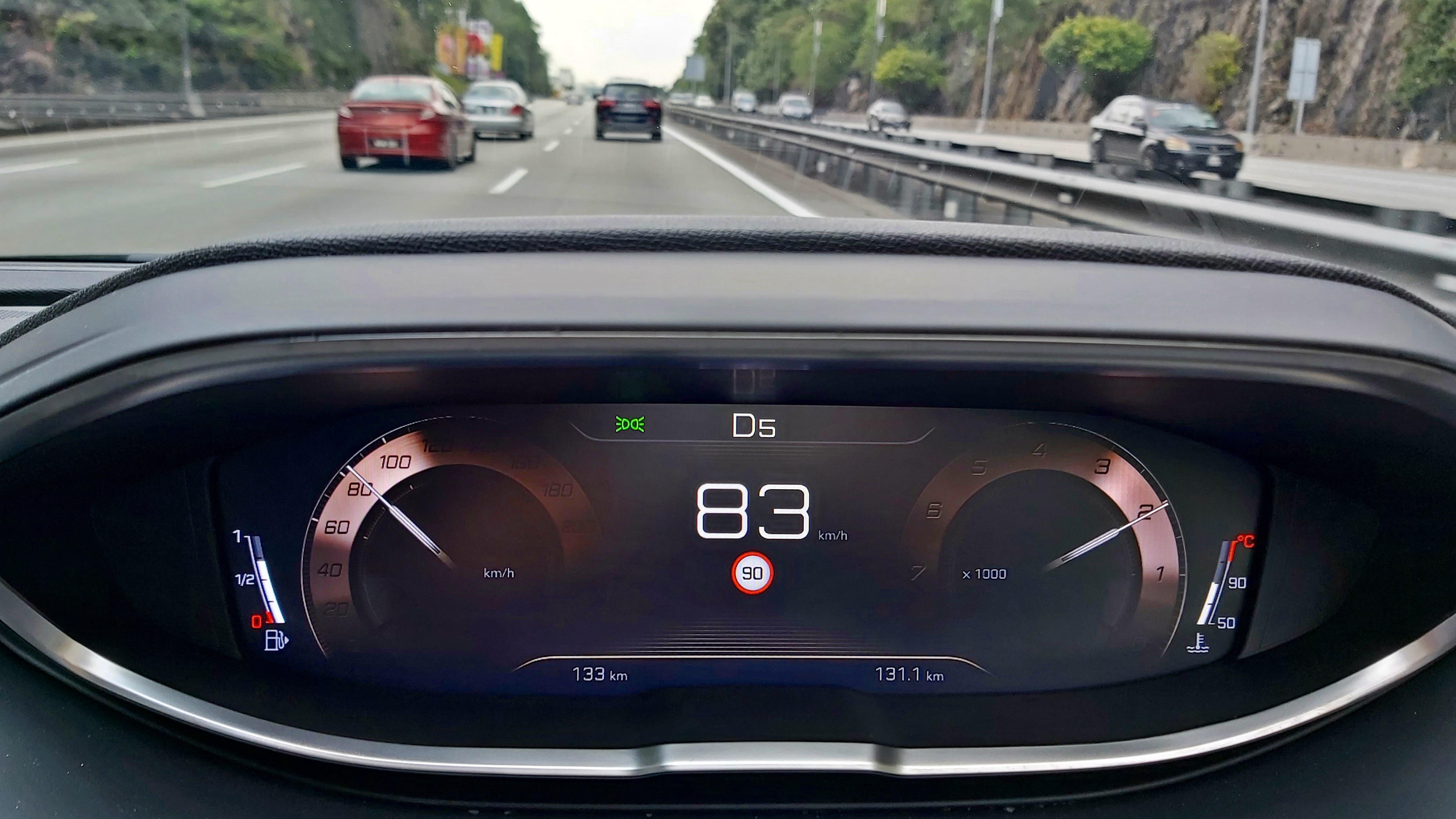
The highlight of the interior which Peugeot usually starts off with is the i-Cockpit. First introduced in 2012, this dashboard concept has evolved over the years and in the 3008 and 5008, it has been fully digitized. Peugeot calls the 12.3-inch digi-graphic instrument panel a ‘head-up instrument panel’ which might have people looking for the head-up display (HUD) on the windscreen ahead. However, what Peugeot’s designers have done is to position the panel in such a way that it allows the driver to keep his head up to watch the road ahead as well as still see the information on the panel.
An important contributor to the effectiveness of this arrangement is the steering wheel which is compact and flat at the top and bottom (looks like something from a racing car). It allows a clear view of the display and though compact, there is surprising ease of maneuverability. With the arms no longer needing to be so open and wide to hold the steering wheel, the actual amount of movement during maneuvers is reduced. Incidentally, for the 5008, there are also paddle shifters.
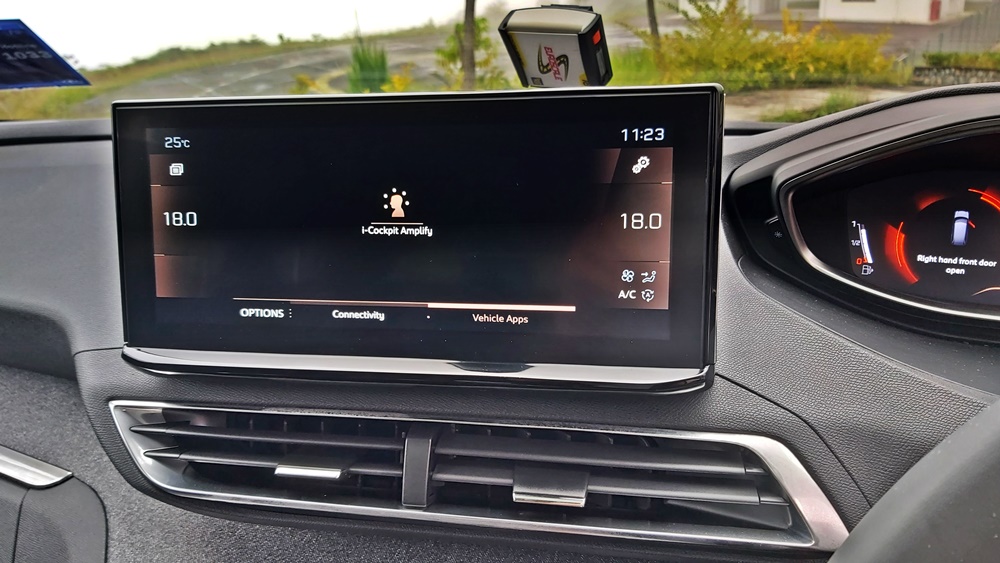
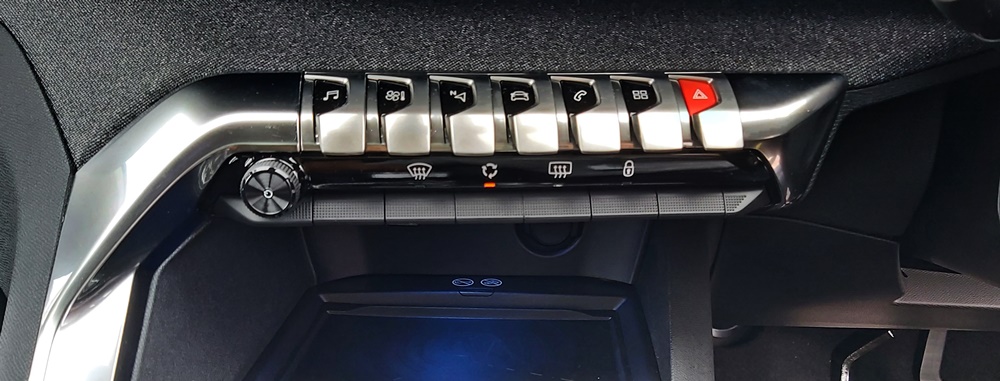
The third element of the i-Cockpit is a display in the middle of the dashboard. Resembling a tablet, this has a high-resolution full colour screen which is now 10 inches instead of 8 inches wide. It provides supplementary information and can be accessed either by touching the screen or by using the row of ‘piano keys’ below.
Connectivity is extensive with conventional cable ports, Bluetooth and Apple CarPlay/Android Auto compatibility (for Android Auto, a cable is needed and, of course, the app installed in the smartphone). Those who have the latest smartphones with wireless charging will also be pleased to find that there is a wireless charging pad added to the vehicles.
Comprehensive equipment list
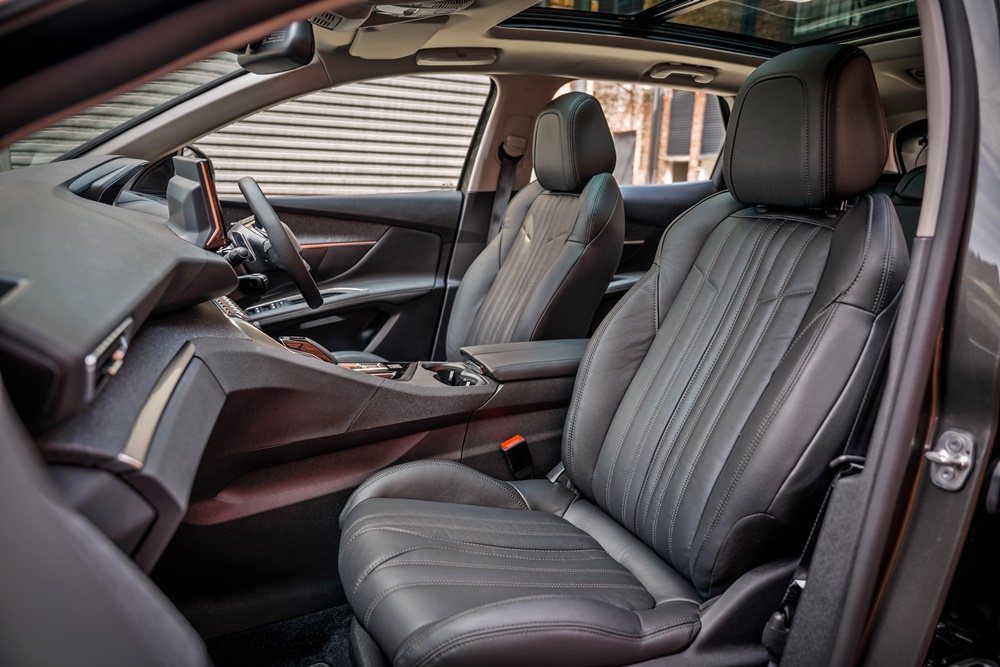
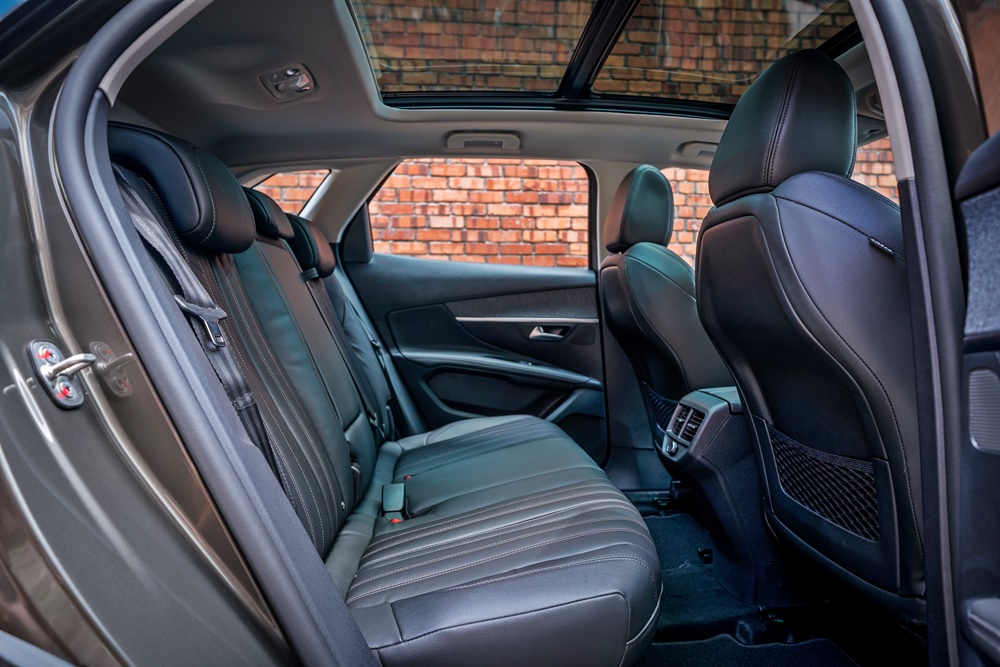
With the Mazda range, the Bermaz team has always made it a point to offer the most comprehensive equipment level possible to give the best value for money. The same thinking seems to have gone into the 3008 and 5008 (available only in one version) as standard equipment includes a panoramic sunroof, handsfree powered tailgate, power adjustments for the front seats, leather upholstery, and dual zone air-conditioning.
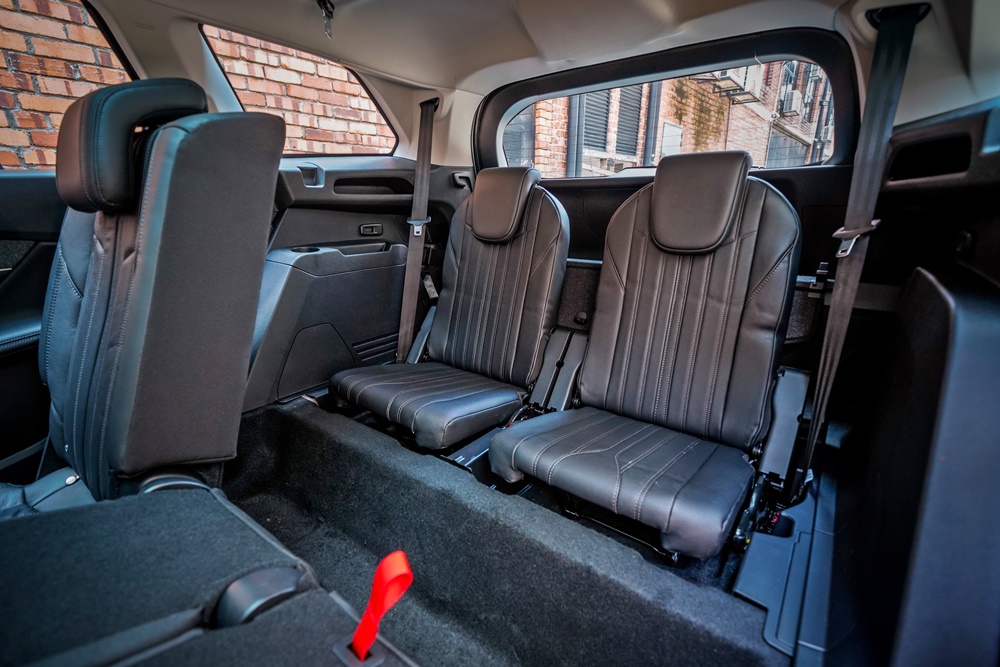
The differences in overall length – 4670 mm for the 5008 and 4510 mm for the 3008 – are indicative of the different occupant capacity. In the case of the longer model, there is a third row of two seats which can be folded flat when not needed. While being flat when not in use is good, it does not mean that the seat is sitting right down on the boot floor with limited legroom.
The extra length of the 5008 gives it a minimum of 952 litres of boot volume, 361 litres more than the 3008. At maximum volume with the rear seats folded down, the 3008’s volume can go up to 1,670 litres while the 5008 has an expansive 2,042 litres.
As for safety, both models have been rated the maximum of 5 stars by EuroNCAP and should certainly be able to achieve the same if assessed by ASEAN NCAP. There are extensive active and passive safety systems which assist the driver but no integrated system which we are seeing in many other cars these days.
BRIEF DRIVING EXPERIENCES
We had a chance to try both models driving Genting Highlands and back to the BAASB headquarters at Glenmarie, Selangor. Although it’s been a while since being behind the wheel of these French cars, there was still a familiarity in feel that Peugeots uniquely have. It’s a feeling of stability and supple ride that you do not expect of a car that also handles well. A Peugeot engineer once suggested that it’s long experience in suspension tuning that has achieved that and something to do with damper valving.
The driving dynamics are competent and confidence-inspiring with a solid feel at all speeds. The THP engine delivers strong midrange which made for easy overtaking and the transmission’s operation was fairly unobtrusive. Between the 3008 and 5008, the smaller model felt nicer to drive with less roll and a bit more nimbleness. This could be largely due to the 100+ kg difference in weight more than the body size.
But unlike older Peugeots (and older cars in general), today’s new generation of cars have a lot of electronic systems and because electronics do not take up much space, many more features are crammed in. To use them, you need to spend a little while figuring out which button to press or how to bring up the menu on the screen.
It can be daunting at first and European manufacturers have different control approaches to the Japanese. So if you are switching from a Japanese model to a Peugeot, be prepared to have to relearn many things! But having said that, once you become familiar with all the controls, then they make driving more convenient.
The i-Cockpit layout – specifically the instrument panel – is ergonomically sound in concept but also needs a bit of getting used to as it is located differently from conventional instrument panels. The display can be configured from minimal to maximum information, depending on your preference.
One thing that is disconcerting is the tachometer and this has been the case since the first i-Cockpit. The sweep of the pointer does not follow convention, ie from left to right. Instead, for some sort of visual symmetry, it sweeps from right to left. In the early versions with traditional meter displays, it was sometimes disturbing to see the pointer somewhere at the 2 o’clock position which would usually mean you are running at high revs but actually, the revs are around 3,000 rpm.
With the latest graphic display, this is less disturbing because the calibrations are not show entirely and only a small segment before and after are shown. But as mentioned earlier, it’s a matter of getting used to this difference and after a while, an owner will be okay. For us who spend only a couple of hours with the car, that familiarity is not always achieved.
It’s the same as having signal stalks on the left side or right side and getting into a car where it is on the opposite side to what you are used to. You keep activating the wipers and curse a lot for a while but after a week or so, you no longer have that problem.
Want to buy one?
Both models are offered with a choice of three common colours (Amazonite Grey, Pearl White and Nera Black) and Cuprite Brown exclusively for the 3008, with Emerald Crystal only for the 5008. Pricing starts from RM161,616.66 for the 3008 and RM177,311.90 for 5008 without insurance. As they are both assembled in Malaysia, the government is exempting the full amount of sales tax until June 30, 2022 so you save some money.
For those who are wondering about aftersales service, we feel sure that the BAASB team will certainly be making sure that it is of the high quality appropriate to the brand. They’re giving free maintenance for the first 3 years (or maximum of 60,000 kms) as well as a 5-year warranty or maximum of 100,000 kms.
Information on showroom locations can be found at www.peugeot.com.my and if you are already owning a Peugeot, BAASB would really like to get your contact details. This will enable them to keep in touch with you and provide the aftersales support, especially if there are any technical updates available for your car.