
Electric cars, hybrids or plug-in hybrids? That seems to be the golden question for all car makers these days, doesn’t it?
And while some car makers have thrown their weight behind EV’s, some have adopted a wait and see approach.
This cautious approach seems to have paid off as car makers who had initially announced an all-electric target by a certain year, are now back tracking and working on multiple powertrain options once again.

“Power of choice”, some call it. Did we not have this choice before? One can’t help but wonder if these slogans are a cover up for obviously disastrous future planning.
The cost of this backtrack has been monumental as well, with some European giants reporting losses in the billions of Euros.
Japanese car makers like Honda though, have been more cautious. The wait and see approach has benefitted the company even though their initial reluctance to adopt electric powertrains meant that environmental groups trained their crosshairs on the company.
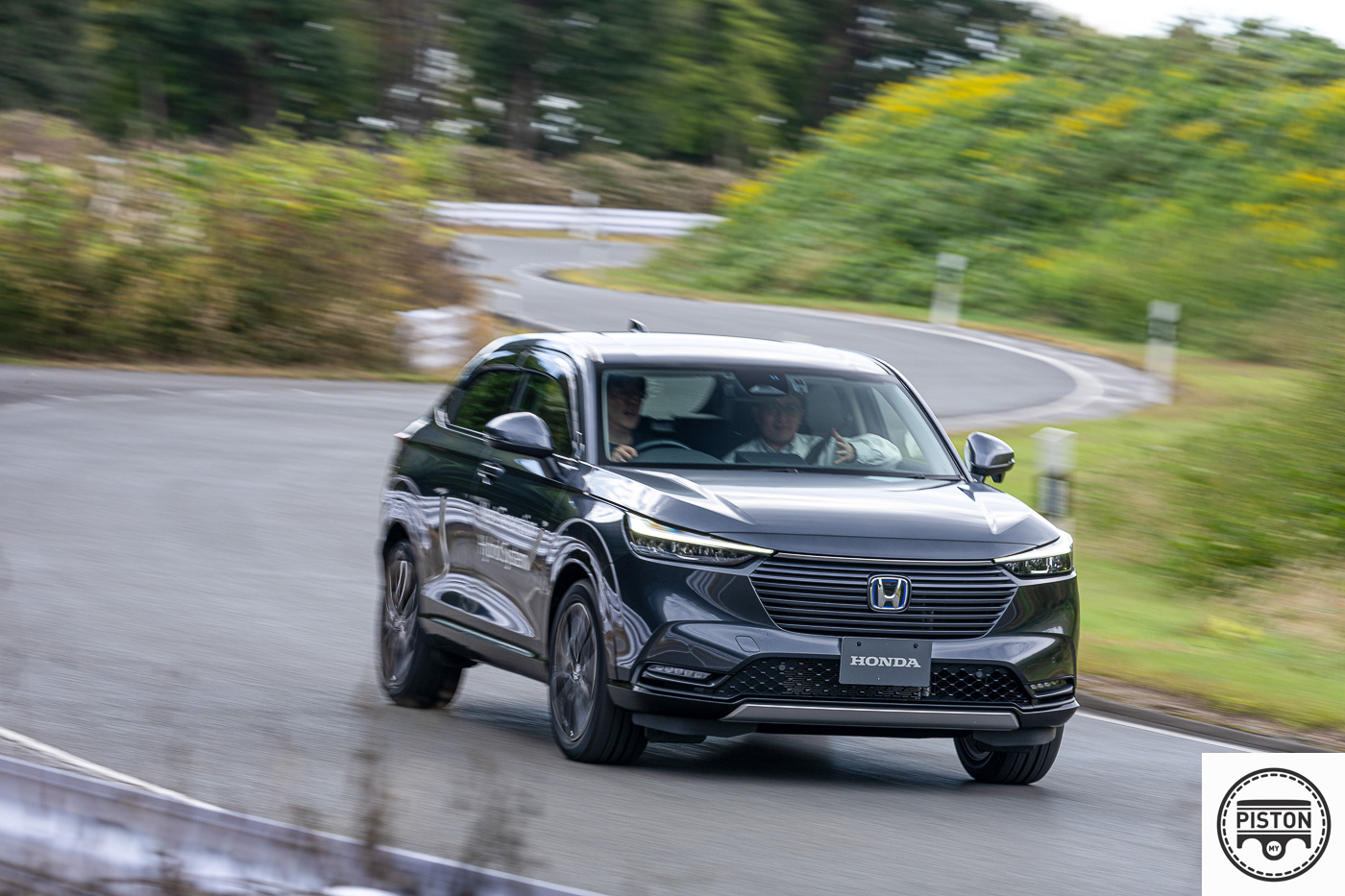
It was not only these groups though, even car fans and buyers shied away, saying that Honda’s slow development meant that the company was lost and thus finished.
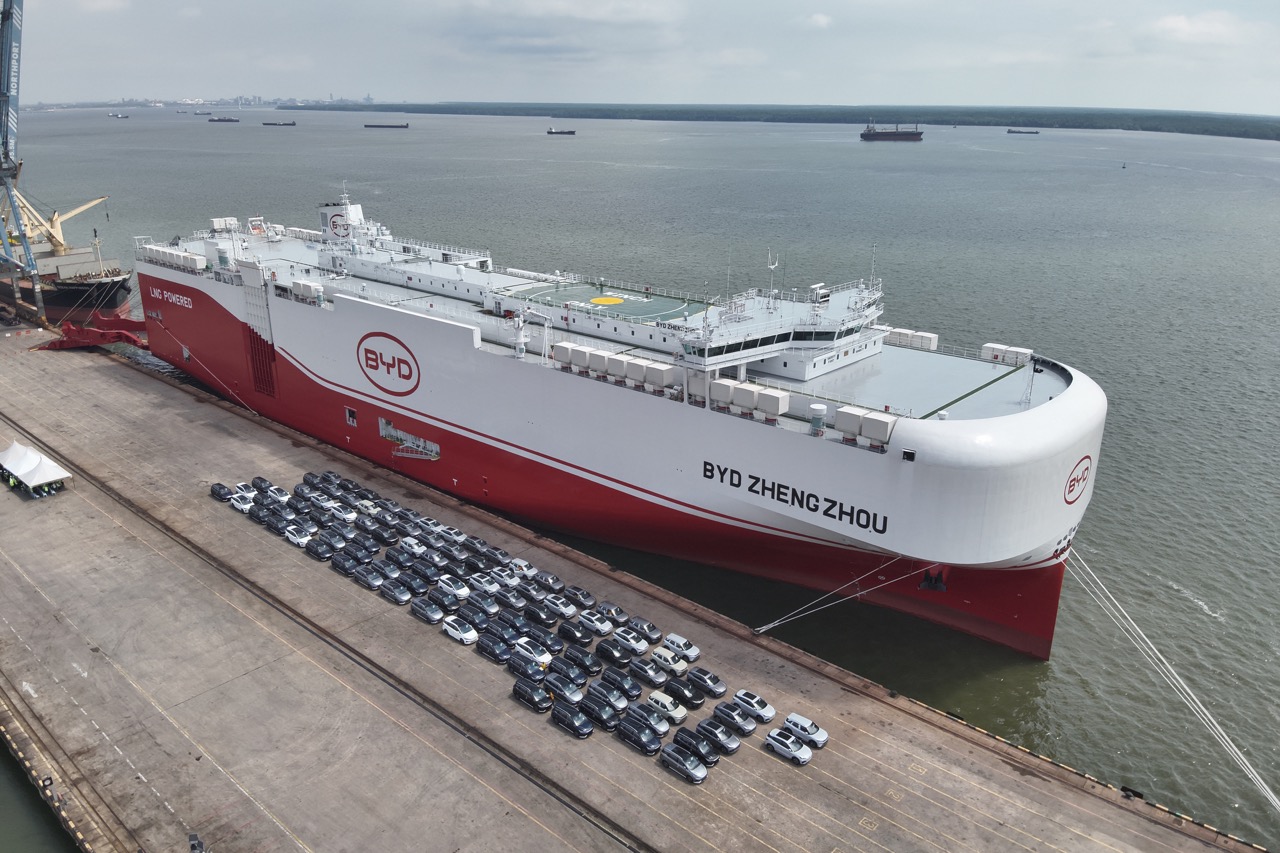
Even the seemingly unstoppable Chinese companies are now expanding beyond electric cars. BYD, the company that has championed EV’s for years is now moving towards plug-in hybrids.
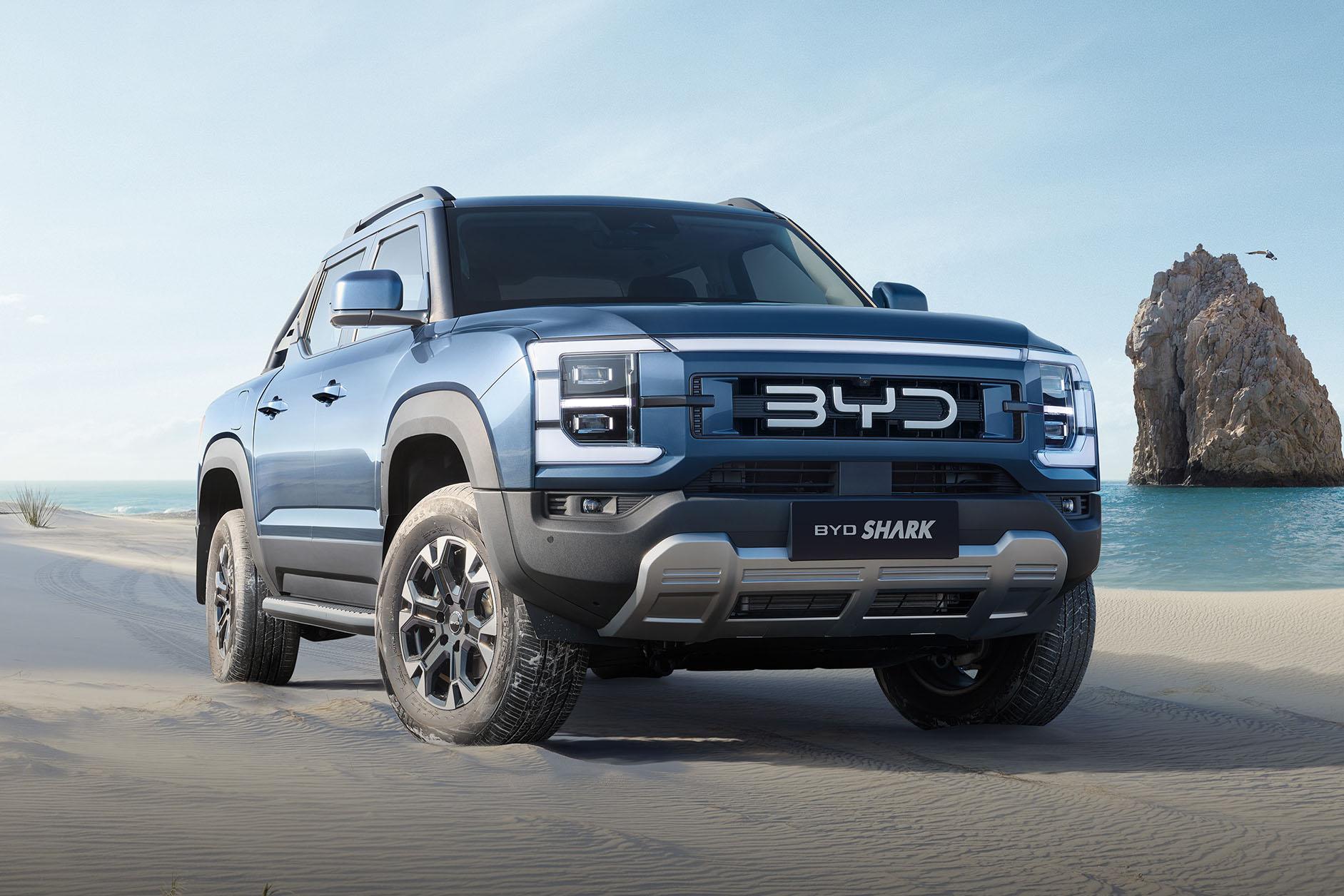
BYD Malaysia recently previewed the Shark, a plug-in hybrid pick-up truck. Though it is unlikely to be launched here unless BYD locally assembles it, it does indicate that the company is toying with the idea of introducing plug-in hybrid powertrains for the Malaysian market.
What does all this mean for car buyers? Trust the company that seems to be taking it slow.
Like Lionel Messi’s field observation skills, Honda too observes and then decides where to place itself to maximise the chance of creating an impact in the industry. Or in this matter, introduce the right technology that car buyers will appreciate the most.
Honda’s cautious steps seems to have been the right move. But it does not mean that the company has shied away from development. Far from it in fact, the company has been quietly developing new tech in the background, and it will soon be ready to launch them all and claim its throne once again.
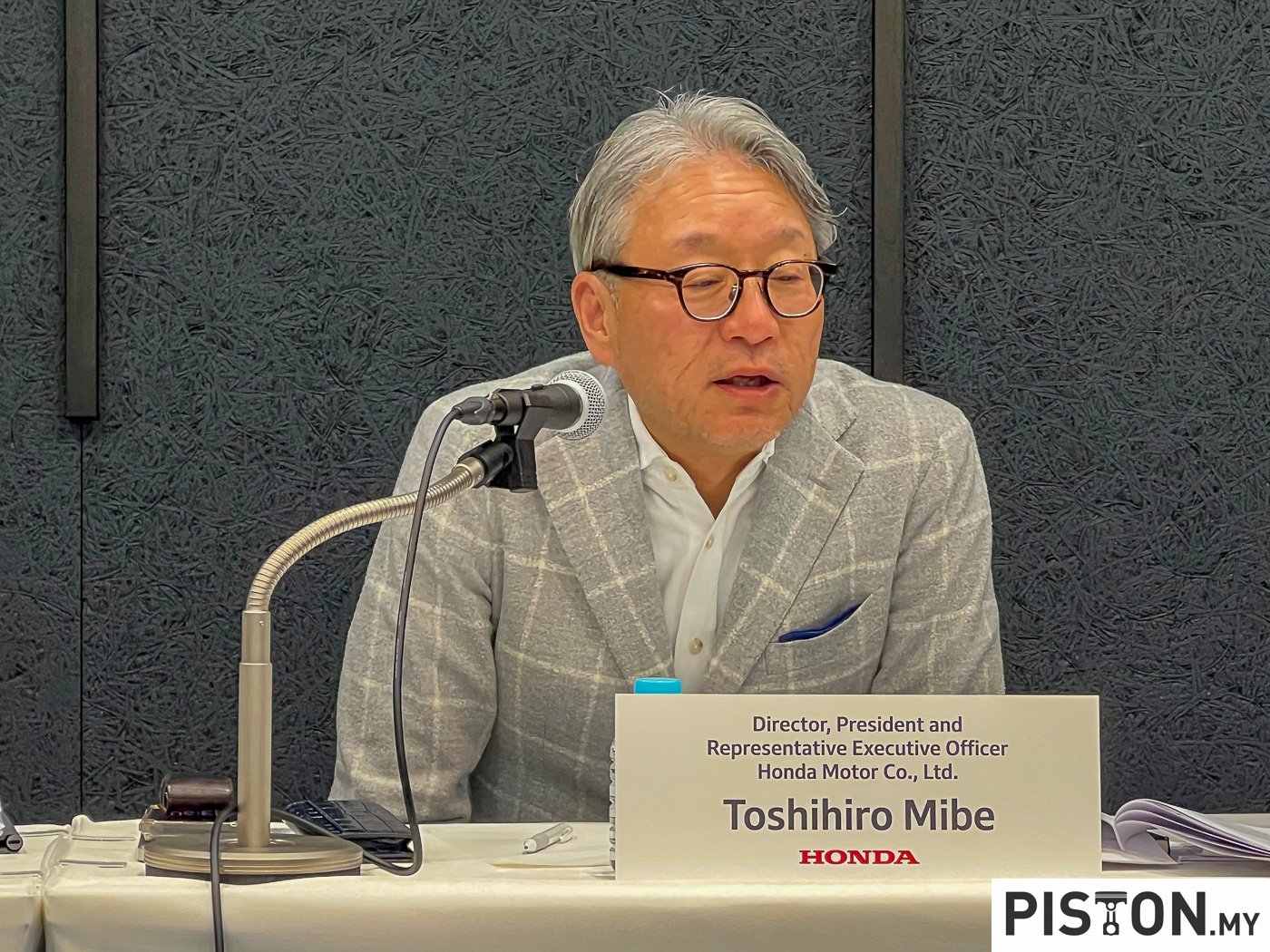
I was recently in Japan with Honda and visited the Honda booth during the 2025 Japan Mobility Show and even listened to Honda’s vision of the future, delivered by non-other than Toshihiro Mibe (above), the President and CEO of Honda Motor Company Limited.
After that, we visited Honda’s proving ground in Tochigi, where Honda presented its future electric and hybrid models.
So, what do they have in store?
New platforms that will bring back the joy of driving yet improve assembly time and cost.
Honda has thrown out the rule book for platforms and has rethought how they should work.
For years we have been told that body rigidity and suspension tuning is the key to improve the driveability of car. But Honda is now saying no!
Honda’s next generation medium sized platform that will underpin models like the next generation Civic and CR-V is set to be introduced in 2027. This new platform will focus on lowering weight, improving driving dynamics, lower cabin noise and vibration, as well as lower manufacturing cost.
But more importantly, it is going to achieve this by introducing flex. You read that right, Honda wants its platform to be able to twist and bend while cornering, particularly at the front of the car.
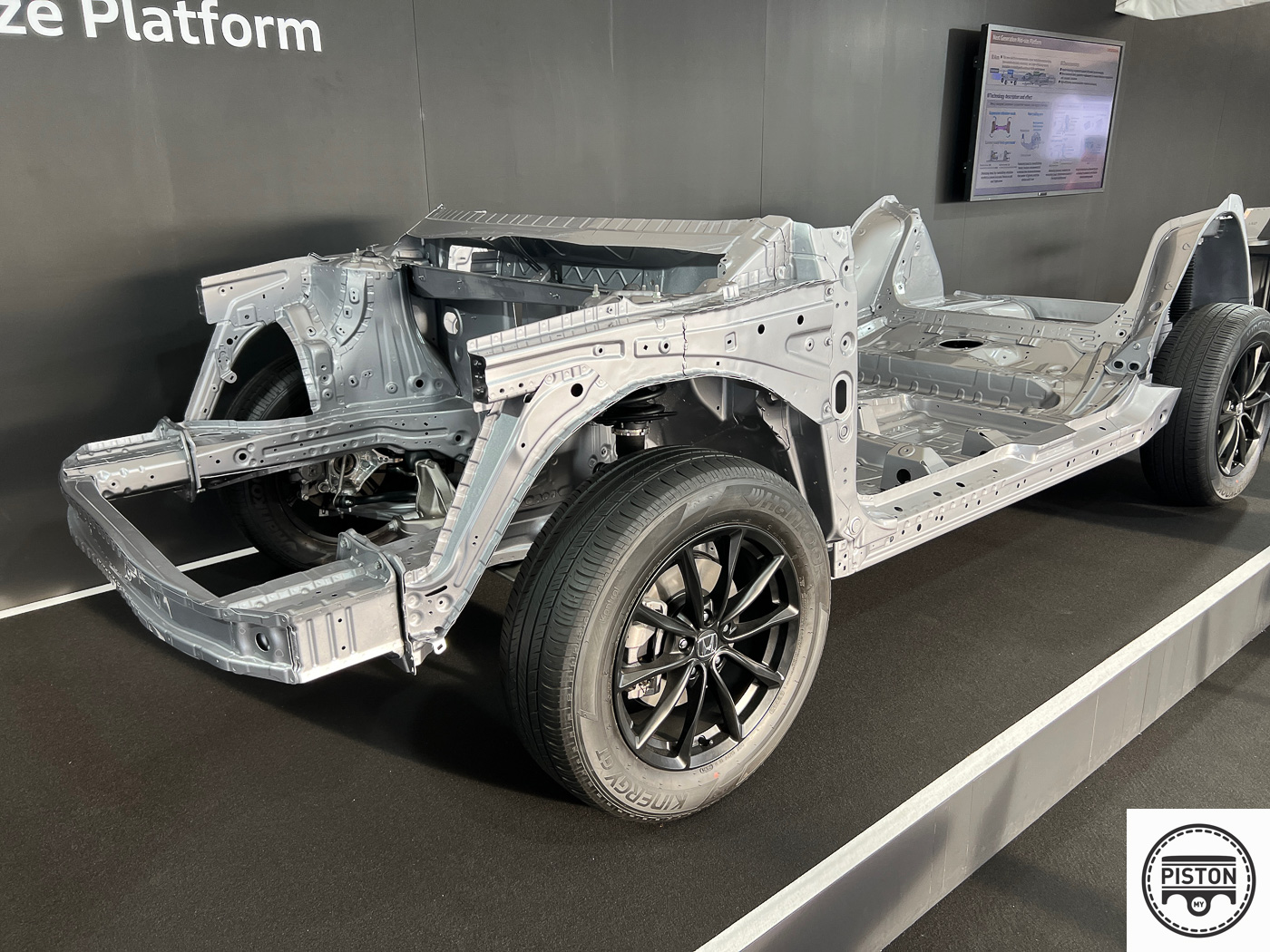
Engineers will usually stiffen a body around the engine and areas that are prone to deform when cornering. But now, Honda’s engineers have shifted rigidity to key areas around the front of the car.
How does this help? Imagine this. You are driving into a fast right-hand corner. With Honda’s new platform, the left front of the car will deform slightly to push the front left wheel down. This enlarges the contact patch of the tyre, thus stabilising the car and giving you more grip and confidence in that corner.
It is simple yet genius at the same time.
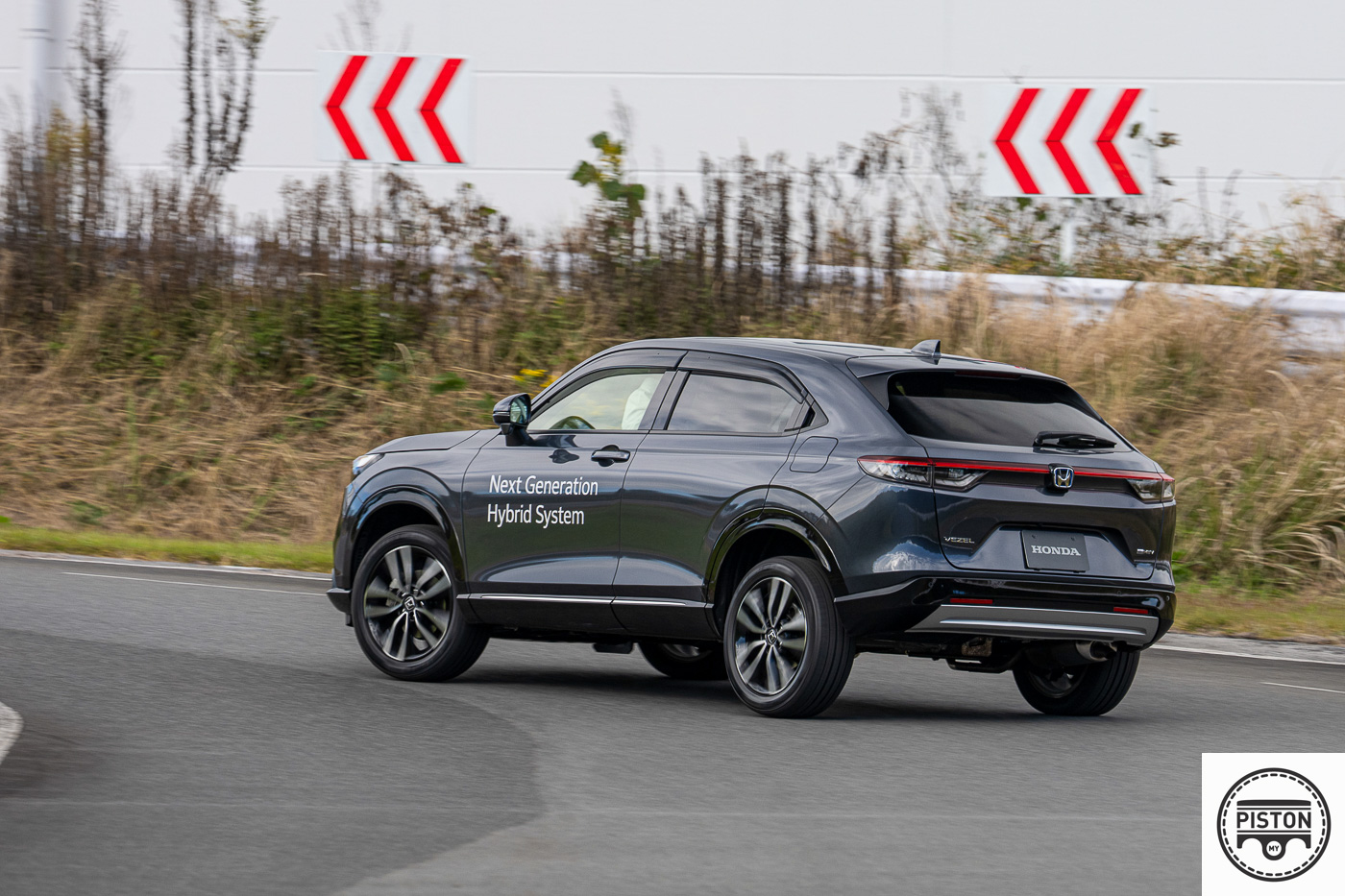
But besides giving you better handling, it should also be more comfortable as a flexible platform will be able to better absorb hits and bumps.
On top of that, this reduces the overall weight of the car by an incredible 90kg compared to the current platform, improving efficiency in the process.
Talking about efficiency, this new platform will also increase the percentage of parts that are shared among Honda models. In fact, Honda is aiming for parts commonality of more than 60% across all models that use this new platform.
This will then enable the efficient production of distinctive and diverse models while keeping cost down.
It is not all about flex and cost reduction though. Honda also plans to introduce clever new technologies that will also improve the joy of driving Honda cars.
These new technologies include Motion Management System that improves posture, and a new pitch control technology that will work concurrently with the current Agile Handling Assist system. The latter was introduced in the new Prelude and Accord and works to support smoother vehicle behaviour during cornering.
A new, large hybrid system.
Besides the new platforms, Honda is also working on the next-generation of its large, V6 engines. It is important to note that this engine is unlikely to be made available for Malaysian buyers due to the simple fact that the models powered by Honda’s V6 engines are all unavailable here.
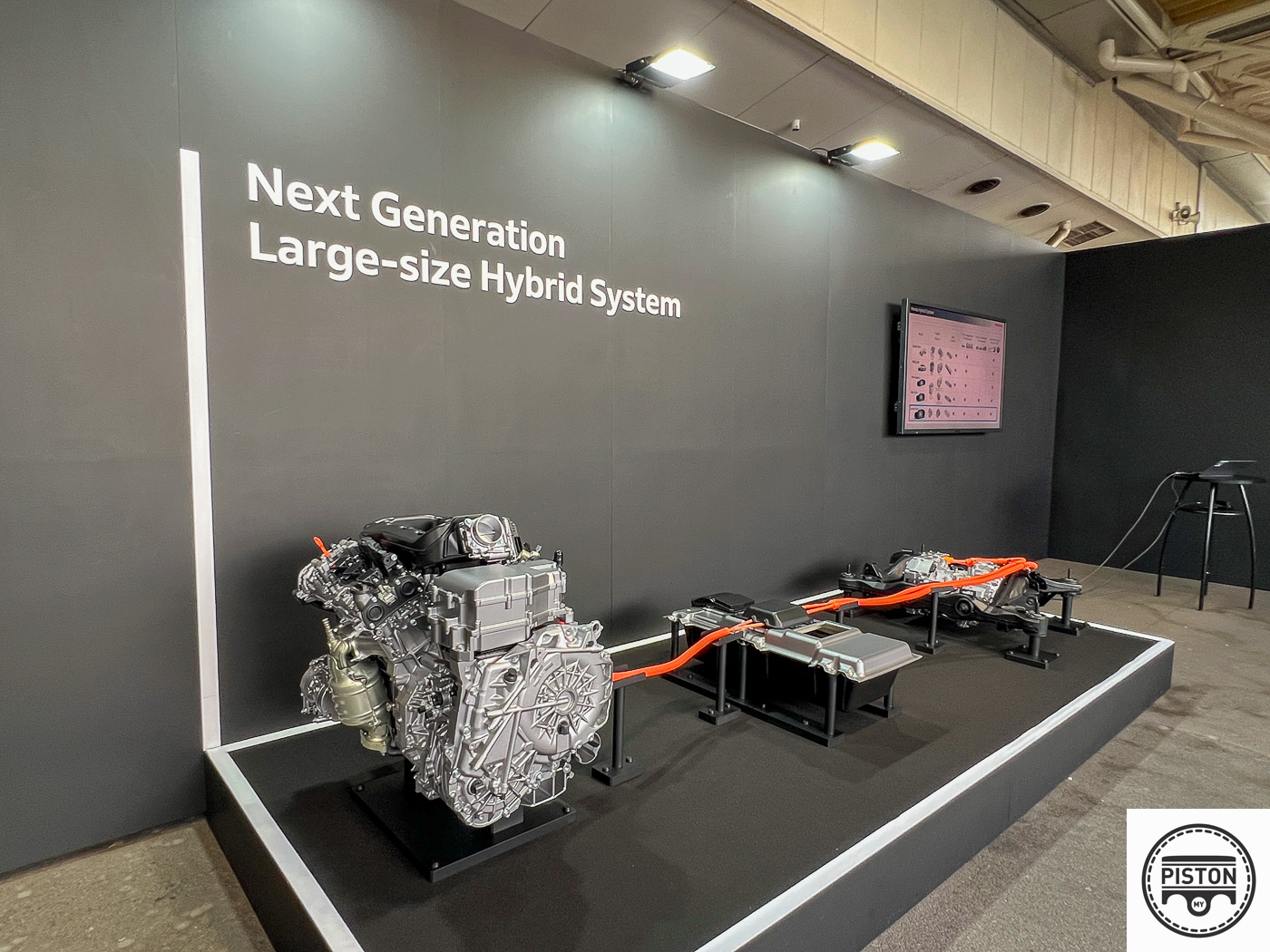
Models like the Honda Pilot, Odyssey, Passport or even some of the Acura models all use a V6 engine, and none of those models are available in Malaysia.
Still, it is worth mentioning that Honda is refining this engine in the name of efficiency and joy of driving.
During its product presentation on the new engine, Honda’s engineers made no mention of the displacement of the engine.
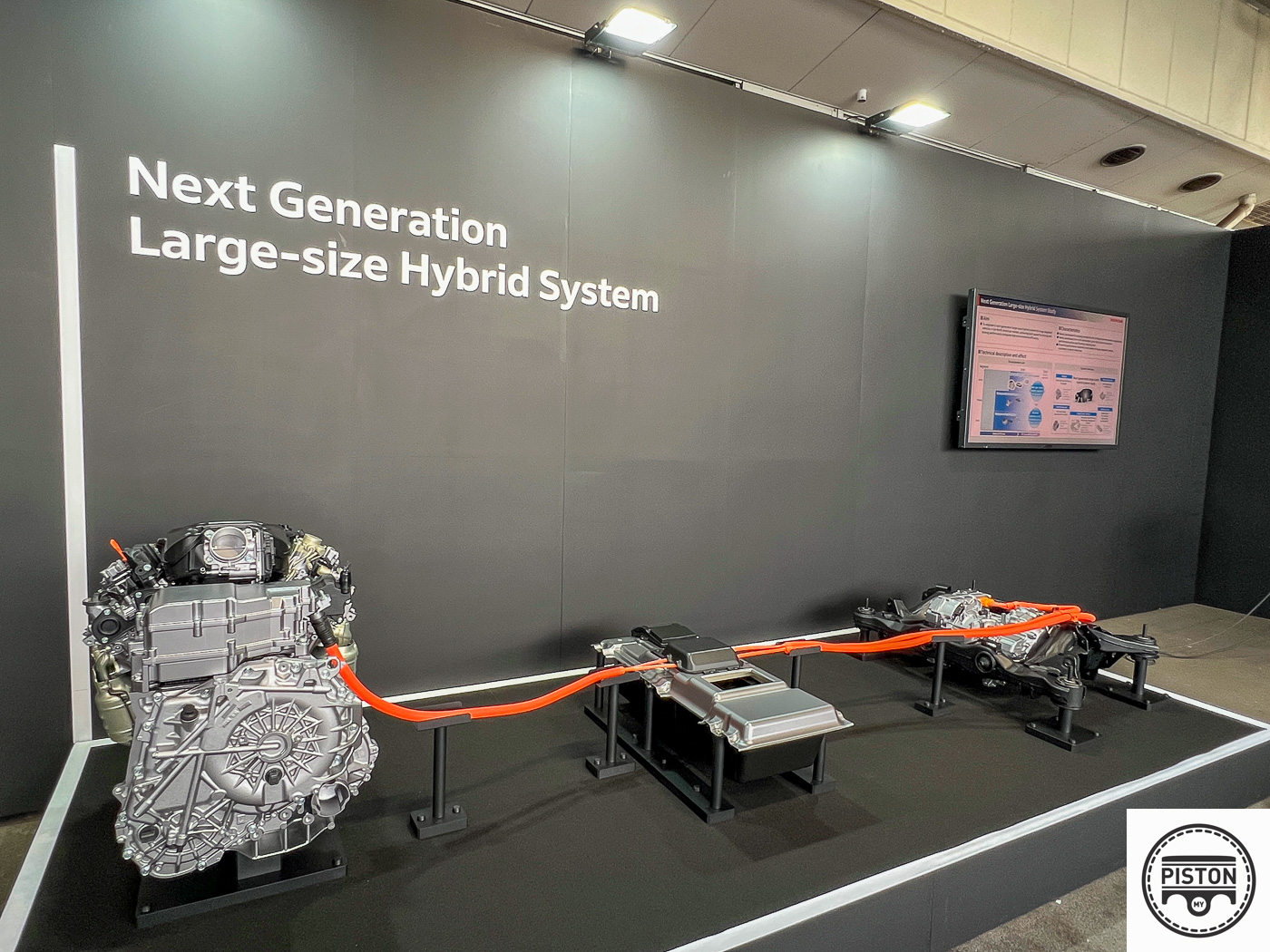
However, we do know that this engine will be part of an elaborate hybrid powertrain with what looks like a rear-mounted electric motor, possibly for added towing and off-road grunt.
Honda did not share much in terms of the tech for the powertrain, but it did mention that the engine will power the next-generation large hybrid models and will have improved fuel efficiency by as much as 30%.
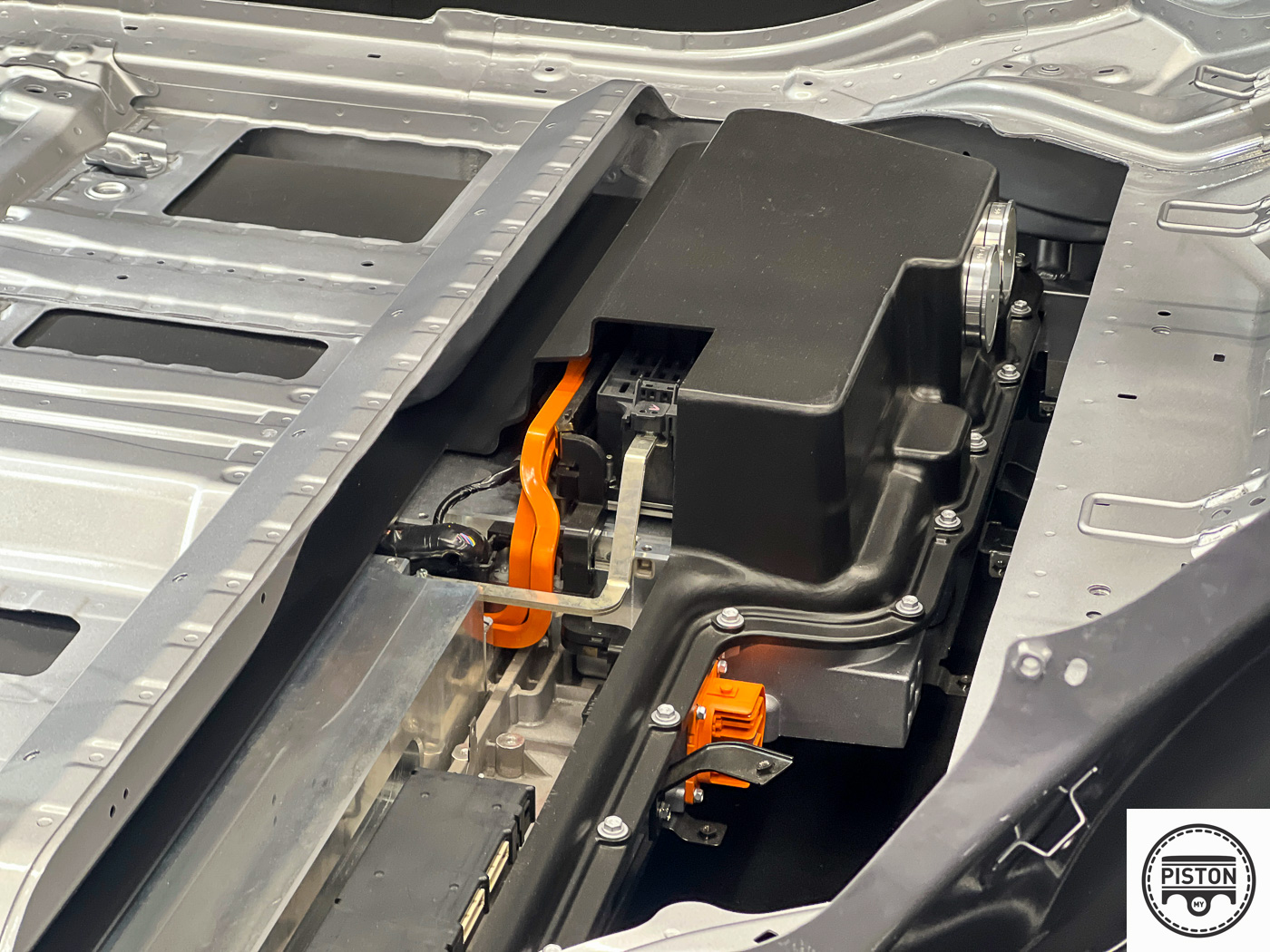
But this does not mean that performance will take a hit, instead Honda says that it is striving to improve full-throttle acceleration by more than 10% compared to existing large-sized hybrid models.
Honda wants to reintroduce the joy of driving, as well.
Among the many powerpoint slides that I sat through, there were three recurring themes, efficiency, electrification, as well as the joy of driving.
Honda is serious about all three elements and understands that EV’s and hybrids can be dull to drive. But it has figured out how to make driving them a lot more interesting.
And that is by introducing elements that we love from cars with an internal combustion engine to EV’s and hybrids.
Let’s get straight to the point, besides improving handling and power, Honda also wants to introduce the feel of gears shifting, even though there is no gearbox in any EV or hybrids.
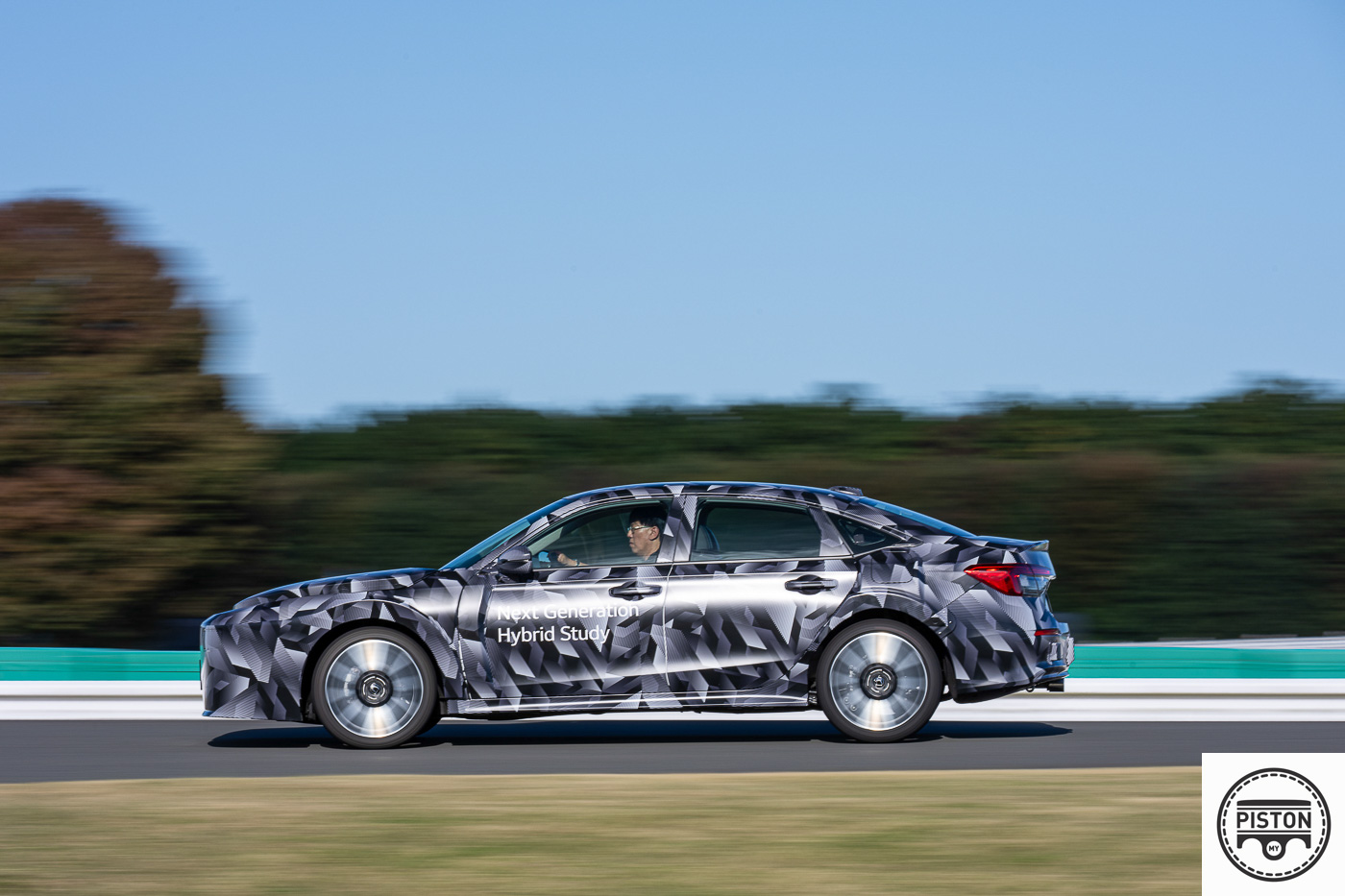
Part of the programme at Honda’s Tochigi proving ground included driving a prototype model of what looked like the Honda Civic. When queried, Honda’s engineers were reluctant to confirm the model, but it was quite obviously a Civic from the taillights as well as from bits and pieces of the interior.
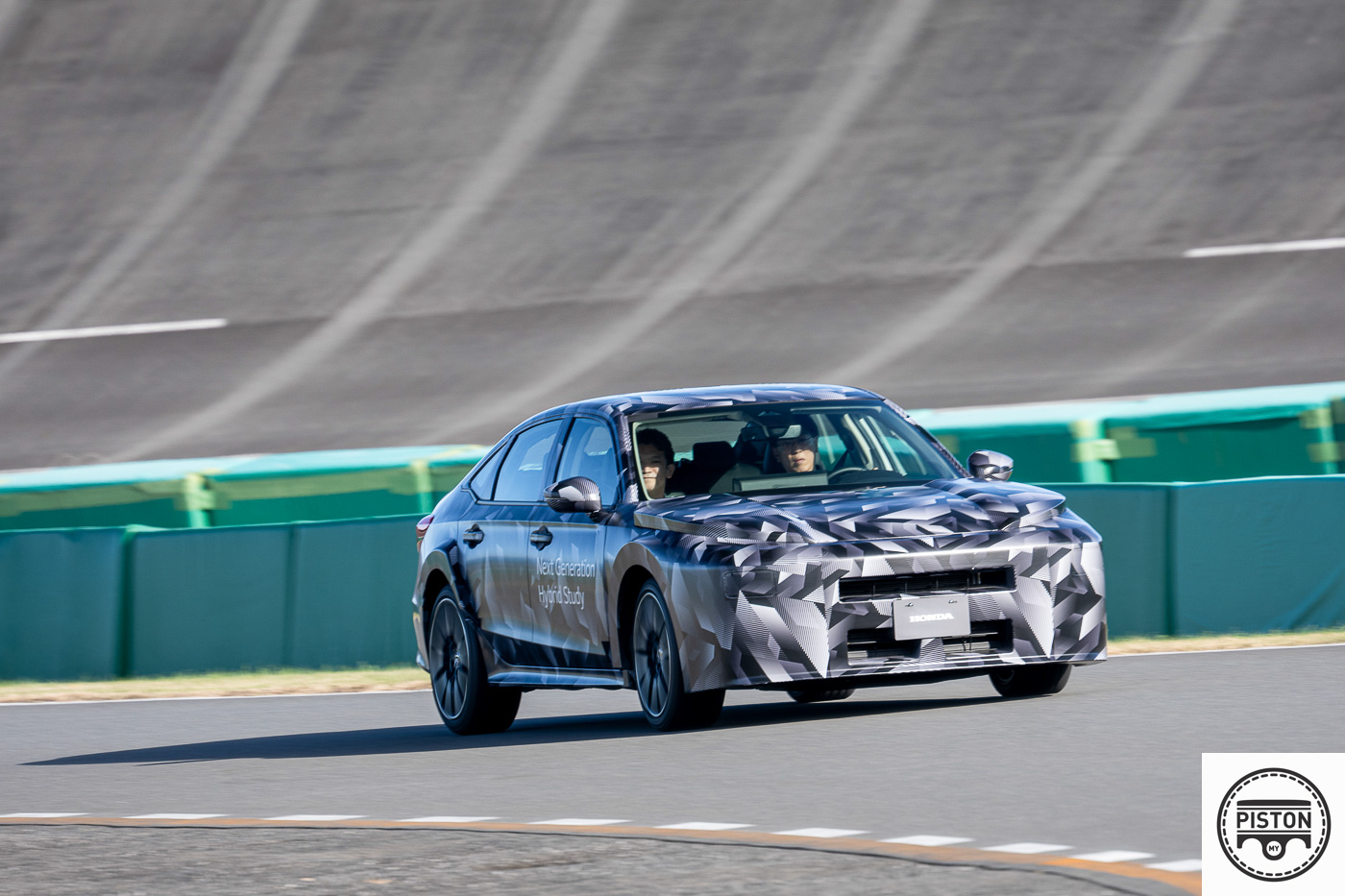
But it was just a Civic in body, because what lay underneath made it an entirely different machine. Unlike the current Civic, this model sounded sportier especially during acceleration, felt sharper during corner entry and just felt a lot more eager to be driven fast.
It felt like Honda had finally figured out the one thing that the current Civic does not have, character. And if Honda manages to programme such a character into all its car’s then we are in for a treat.
The other thing that I experienced is something called S+ Shift (pronounced as S Plus). This is basically a collection of drive modes as well as intelligent wizardry designed to make your mind believe that you are actually driving a fire breathing monster when all you’re doing is driving a Honda hybrid.
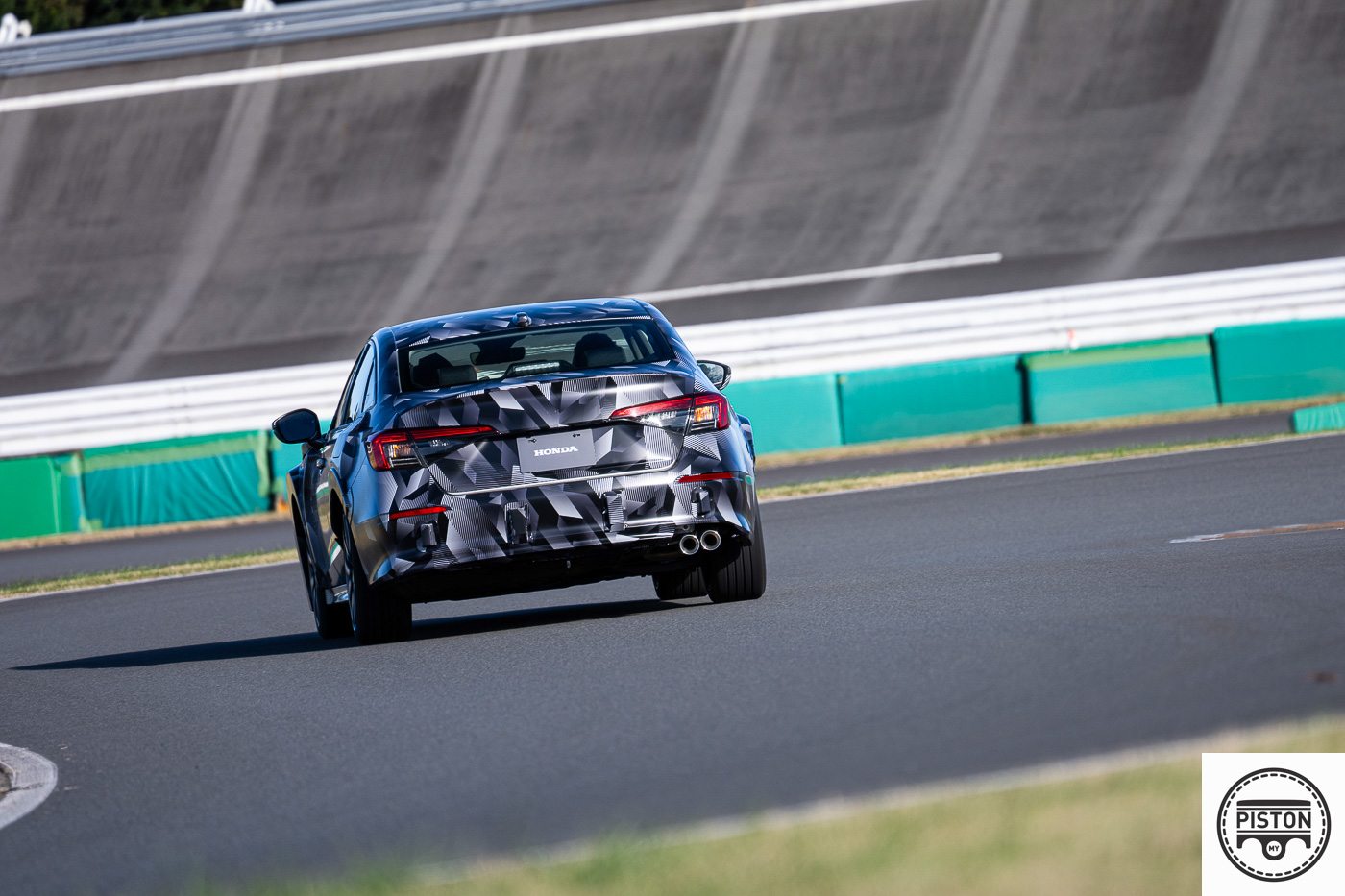
I experienced Honda’s S+ Shift in the new Prelude (I’ll detail my experience with that car in a different article) and was blown away by the experience.
The new Prelude is powered by Honda’s hybrid powertrain, which means that the wheels are driven directly by an electric motor and there is no gearbox. The 2.0-litre naturally-aspirated engine is not exactly spirited by itself either.
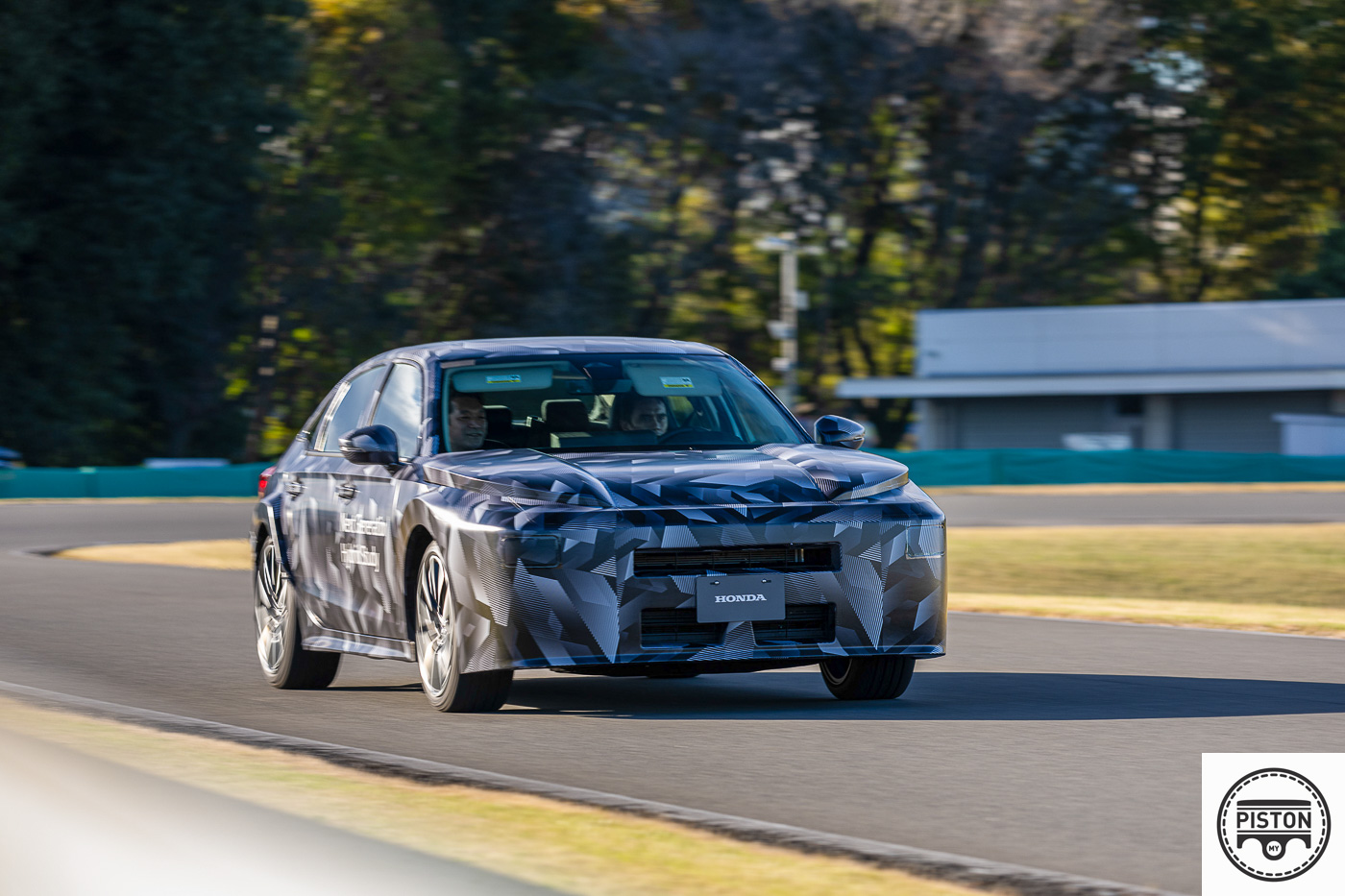
But the S+ Shift worked wonders by making the engine sound a lot sportier than it actually is. This sound is channelled into the cabin through the speakers. But before you say this is not new technology, this augmented sound is paired with simulated gearshifts.
Honda has managed to perfectly mimic gearshifts complete with power cuts (or fuel cuts if you are so inclined), downshift blips and such. The sound and the feel is intoxicating, and this is exactly what Honda means by joy of driving.
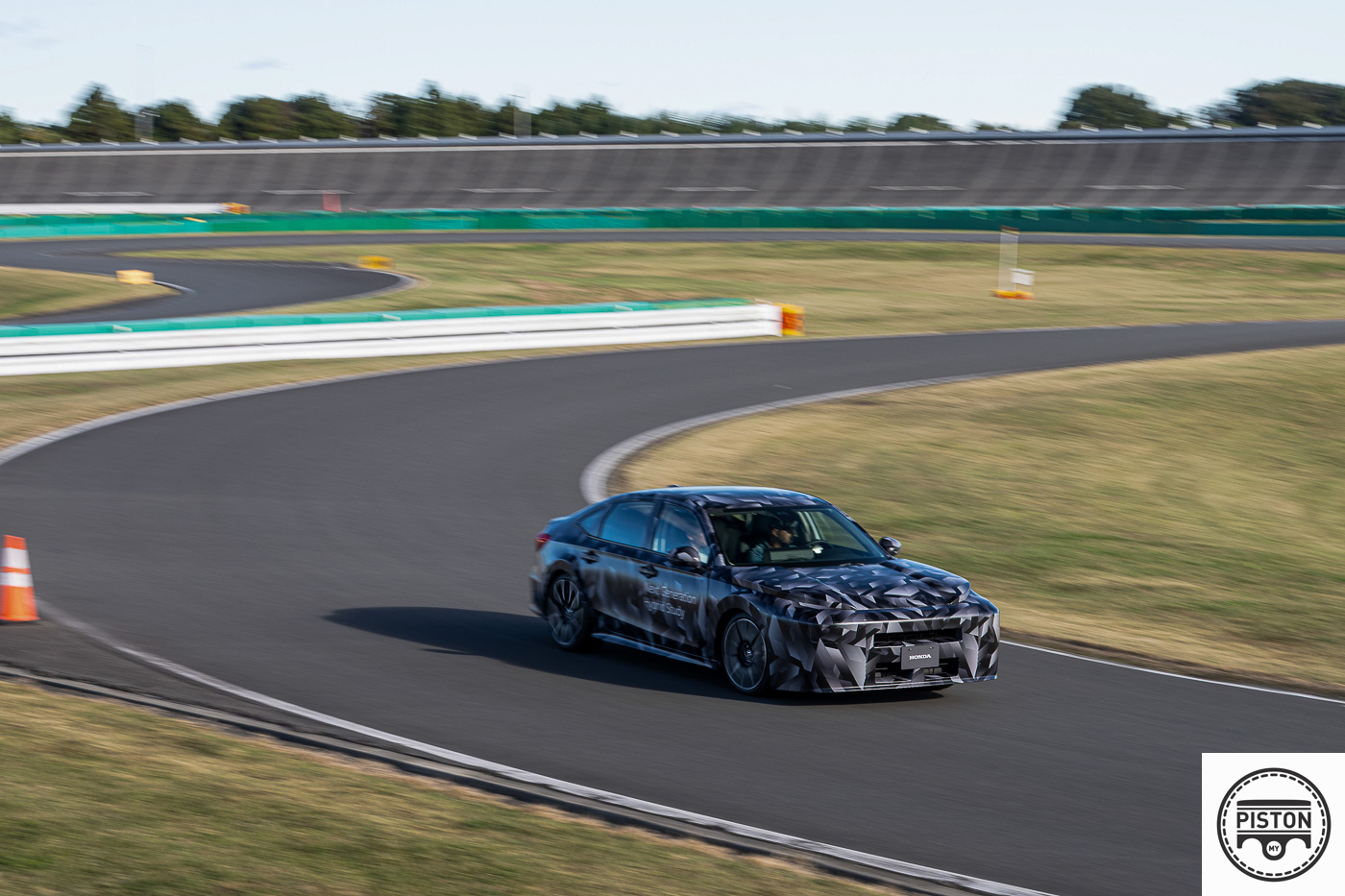
So, Honda may be adopting hybrid powertrains, but it has not forgotten to have fun, and it does not want you to forget the joy of driving either.
What about electrification though?
Honda believes in letting its customers decide which powertrain they want rather than dictate to them what they should be driving.
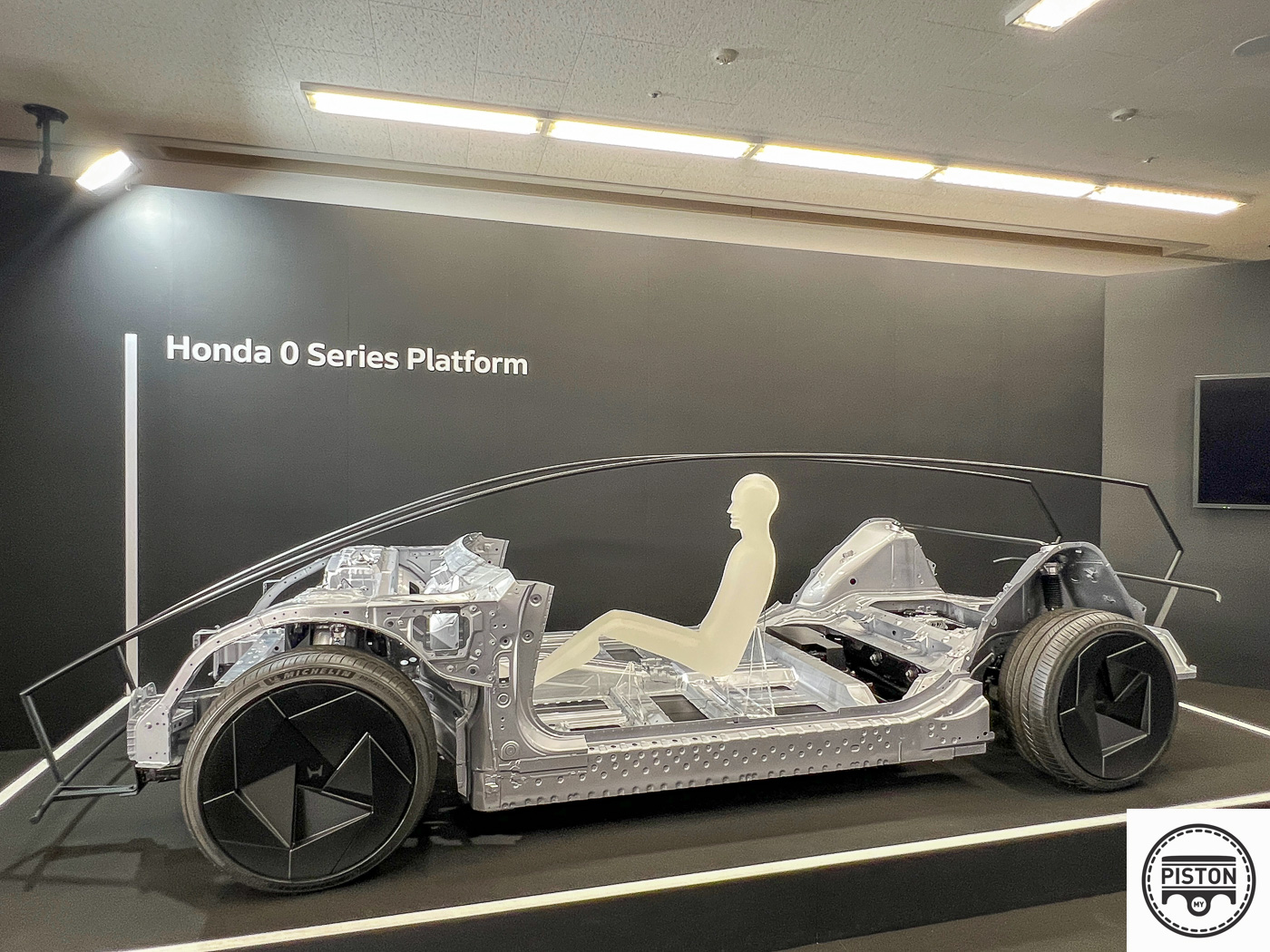
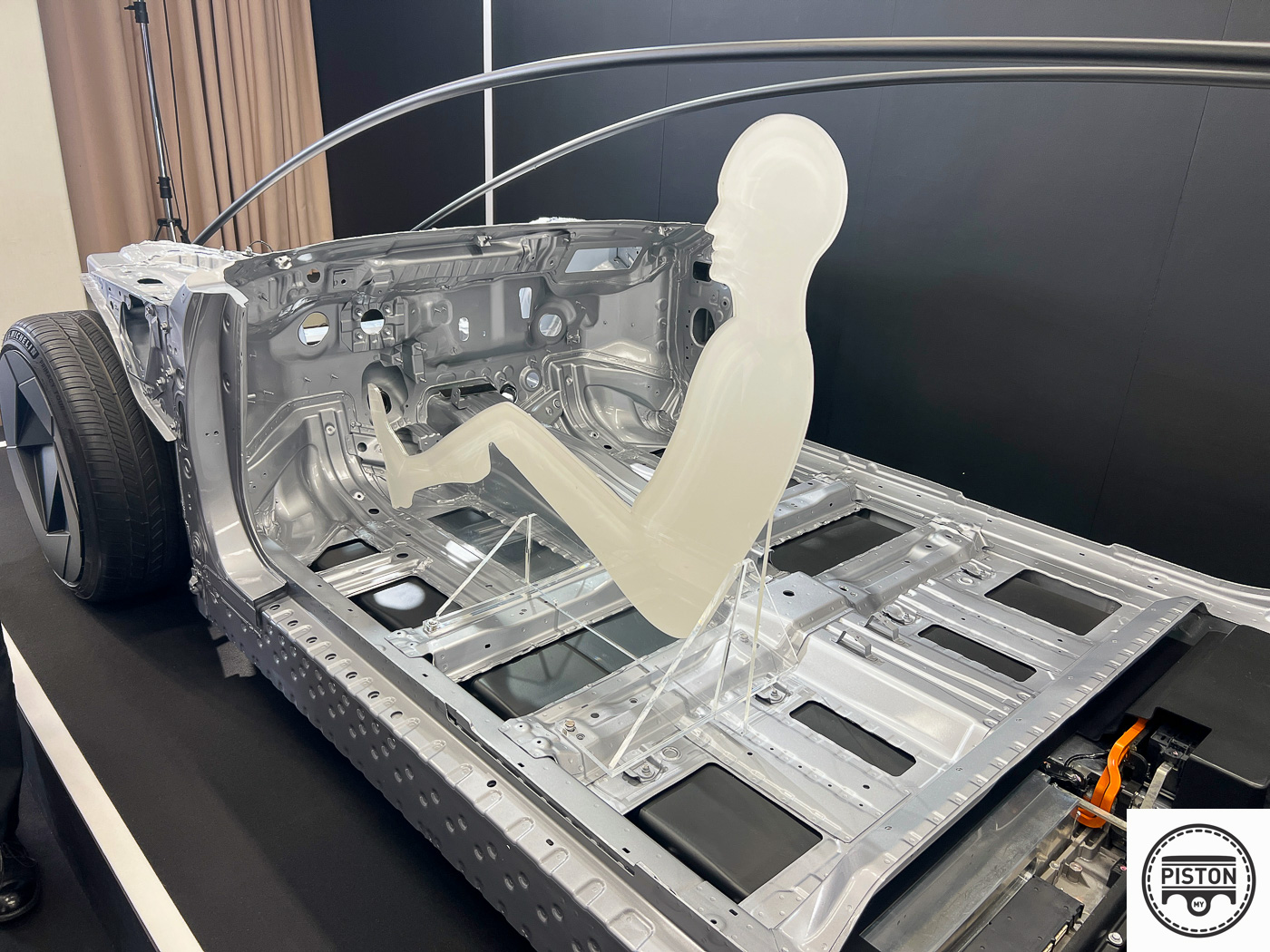
Hence Honda is busy building the next generation of electric cars using something called the 0 series platform. From this, there will be sedans, and large and medium sized SUVs as well.
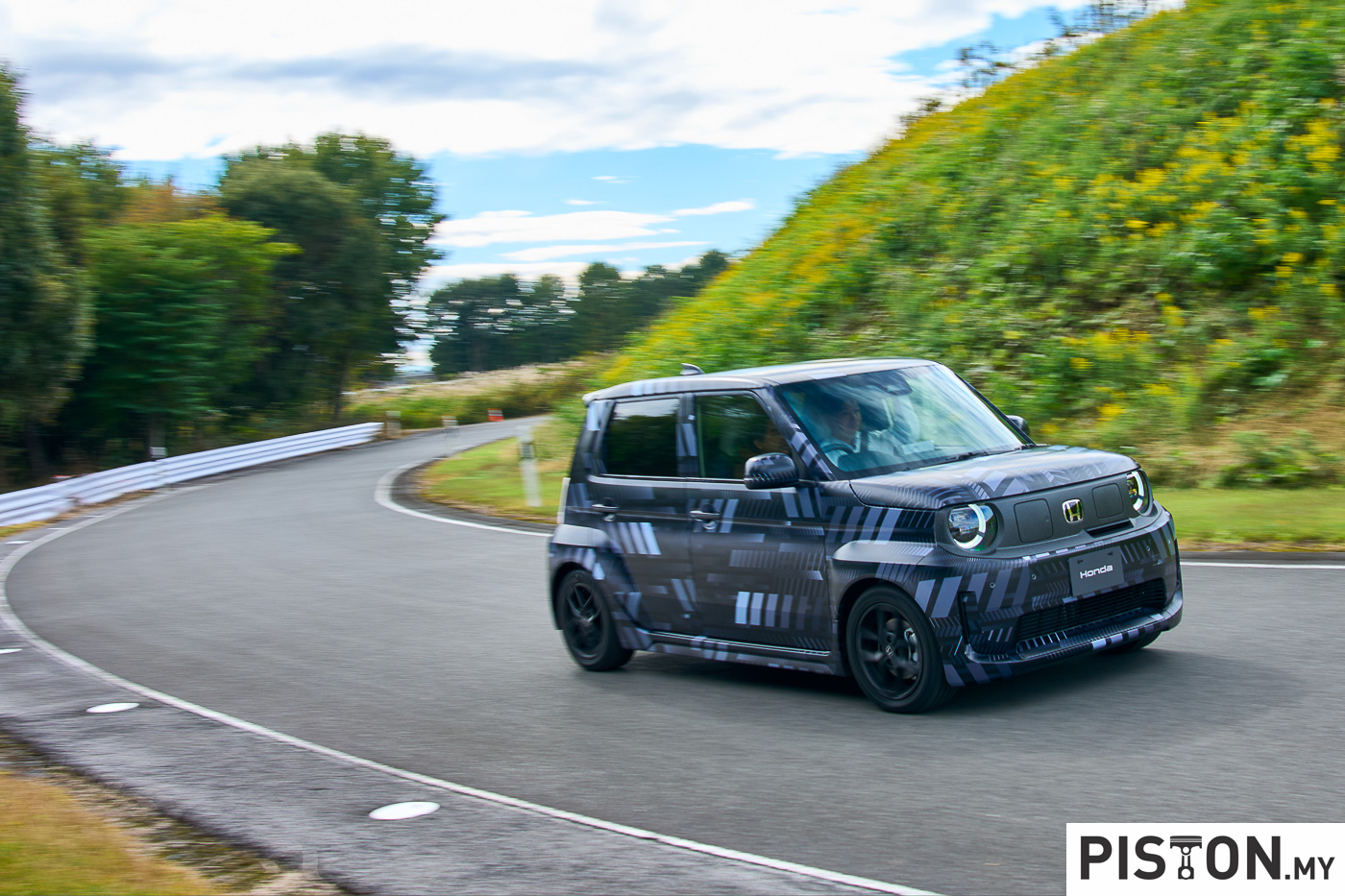
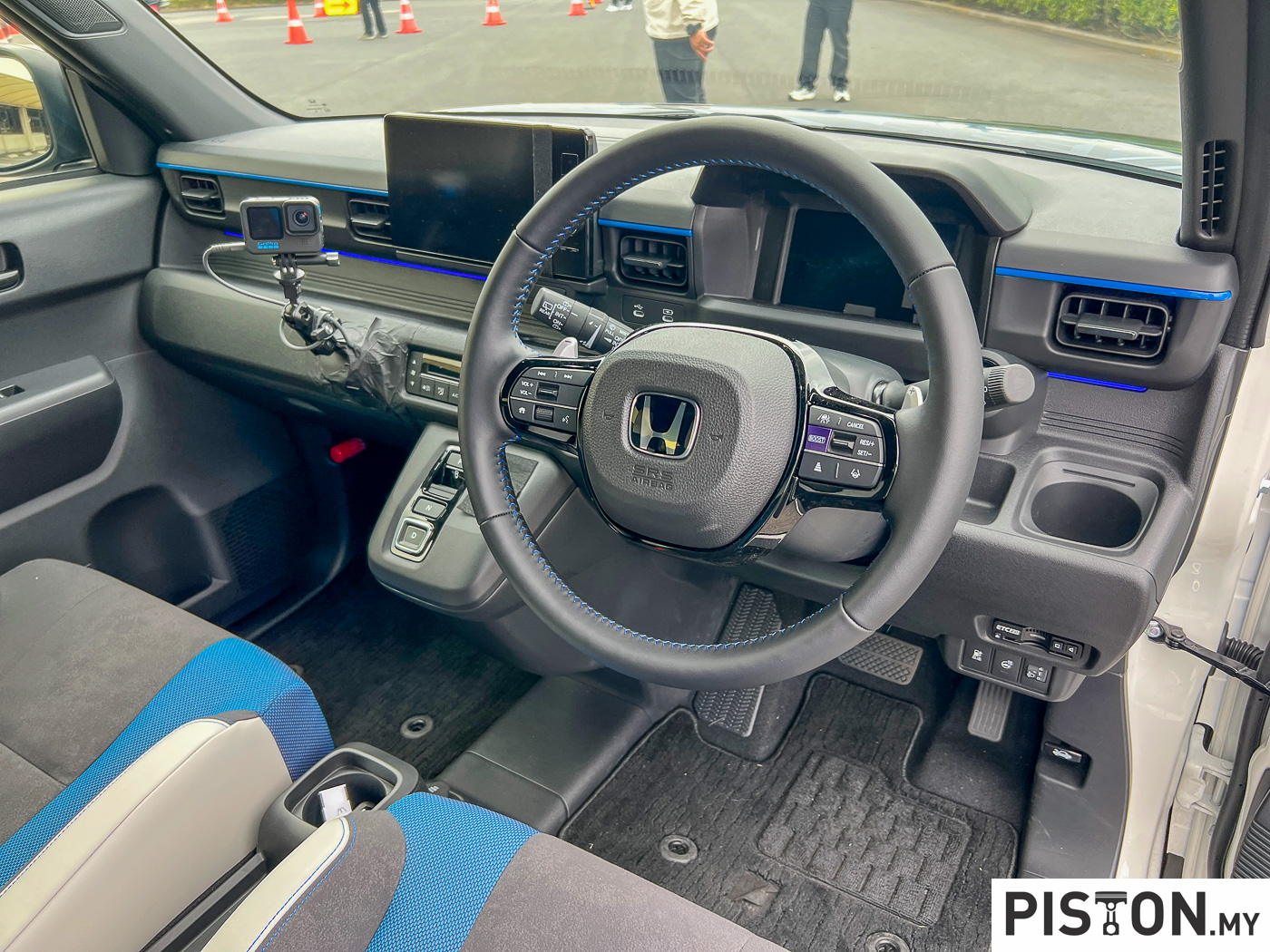
In fact, we also drove the Super One Prototype, a small electric kei car that is also a joy to drive.
So Honda has all its bases covered and unlike some other car makers, it has not forgotten how to have fun along the way.