
Piston.my

Latest News

In spite of the long period of shutdown in the middle of the year, 2021 looks to be a year as busy as any other in the pre-COVID-19 era. Perhaps it’s like what happened with F1 in 2020 when the calendar was compressed and run in the second half of the year, making for a rather hectic time for teams.

In a ‘normal’ year, new model introductions would be spaced out throughout the 12 months but now everyone seems to be rushing to launch – or at least unveil – new models before the year ends. The most significant would be the new Toyota Corolla Cross Hybrid, the first Toyota model with a hybrid powertrain assembled in Malaysia. UMW Toyota Motor (UMWT) had already announced investments last year to assemble hybrids, and although the lockdown may have caused a slight delay, it appears that the launch is pretty near if they are now accepting orders.

ASSB Bukit Raja, Selangor
The ASSB plant in Bukit Raja, Selangor where the first Toyota model with a hybrid electric powertrain will be assembled.

The Corolla Cross Hybrid will be one of three variants of the model to be assembled at ASSB in Bukit Raja, Selangor. The other two are the Corolla Cross 1.8V and 1.8G which were on sale earlier in the year as CBU imports from Thailand. The estimated prices (excluding insurance) are:
Toyota Corolla Cross 1.8 Hybrid: RM137,000
Toyota Corolla Cross 1.8V: RM129,000
Toyota Corolla Cross 1.8G: RM123,000
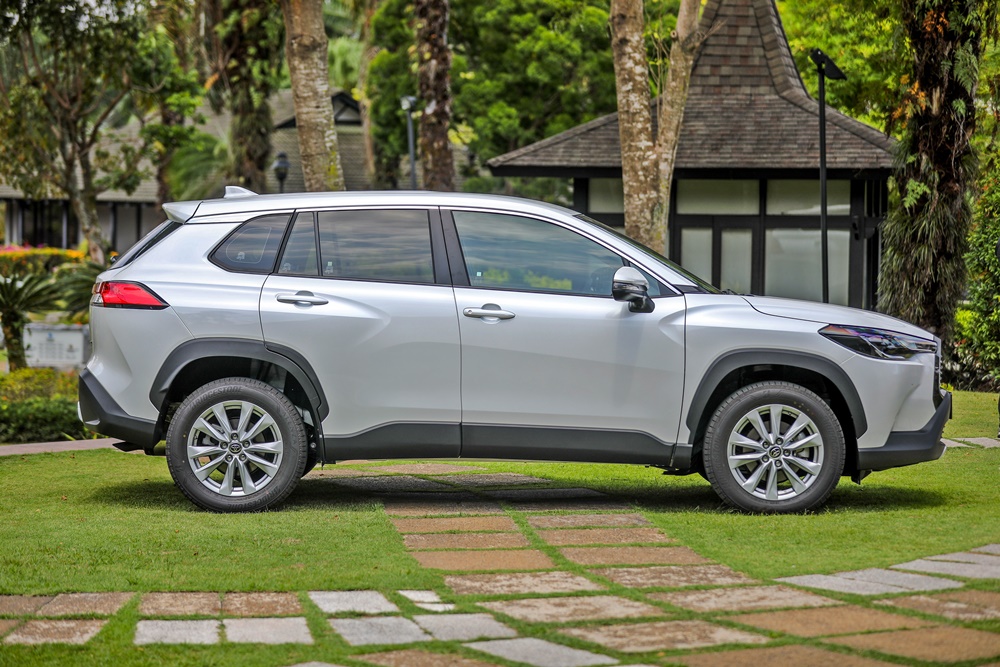
“We are excited about launching the first locally-assembled Toyota model with Hybrid Electric Vehicle (HEV) technology. Assembling locally means more attractive and affordable pricing so that more people can enjoy the benefits of the advanced technology,” said Ravindran K, President of UMW Toyota Motor.

The hybrid powertrain in the Corolla Cross Hybrid is the product of over 25 years of continuous development and improvement. Toyota was the first carmaker to introduce the world’s first mass-produced passenger car with a hybrid electric powertrain in the late 1990s. To date, the carmaker has sold over 18.1 million hybrid vehicles around the world and from one model called the Prius, there are now 45 HEV models of different sizes and bodystyles.
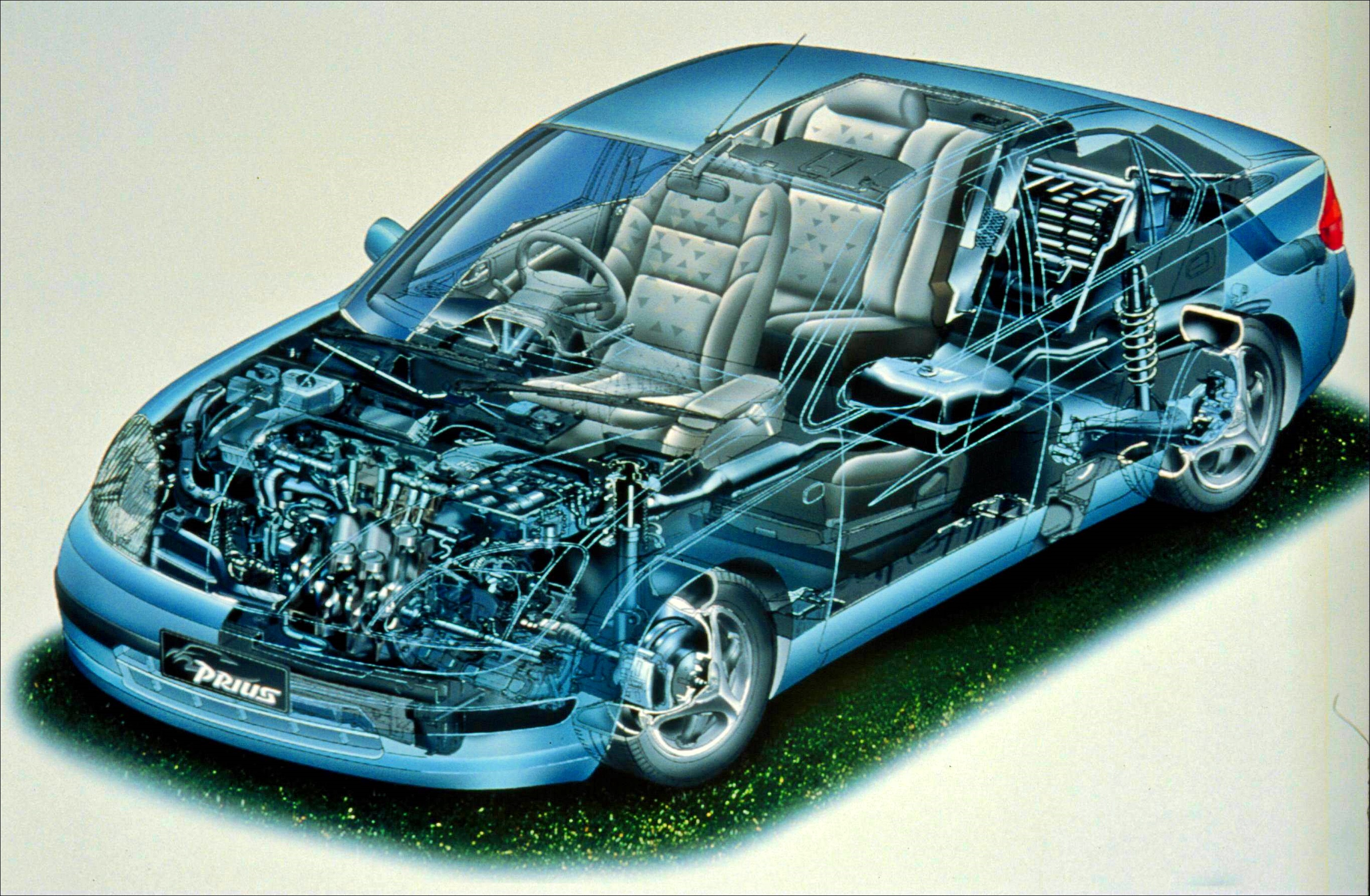
The first mass-produced car with a hybrid electric powertrain was the Toyota Prius and since it was launched in the late 1990s, Toyota has constantly developed, improved and refined the technology. The latest 4th generation hybrid technology will be used for the Corolla Cross Hybrid.

As part of its electrification strategy, Toyota intends to have almost every model it sells with a hybrid variant available in markets that require it. The technology has proven to be reliable and unlike fully electric vehicles, does not require any additional public infrastructure. It is therefore ideal for Malaysia at this stage of its journey towards electrification.

“The local assembly of the new Toyota Corolla Cross Hybrid is another major milestone in Toyota’s long history in Malaysia. The Corolla contributed to the motorization of the country when it was first introduced in the 1960s, and now with the Corolla Cross Hybrid, Toyota is contributing to the country’s transition towards the era of electrification,” said Akio Takeyama, Deputy Chairman of UMW Toyota Motor.

The hybrid electric powertrain of the Corolla Cross Hybrid employs the fourth generation of Toyota’s Hybrid Electric System. This consists of a 1.8-litre petrol engine which works together with an electric motor, with power to the wheels coming from the engine or the motor, or a combination of both, depending on driving conditions. For stronger acceleration, more power may be drawn from the petrol engine, while the electric motor is used more when moving off from standstill. In certain conditions, it is even possible to drive on just electric power, with almost noiseless movement and zero emissions.
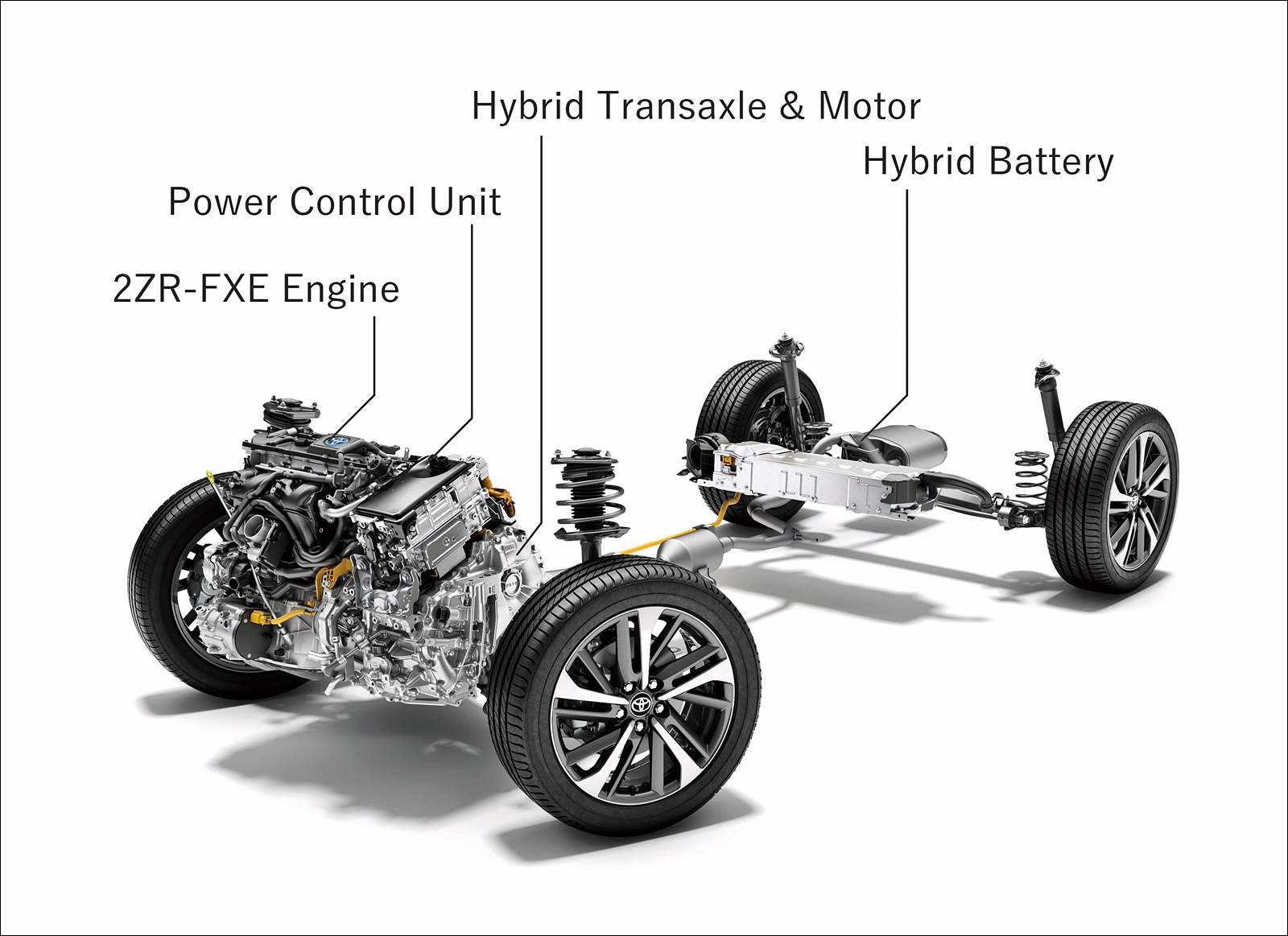
The power output of the petrol engine is 72 kW/98 ps at 5,200 rpm with 142 Nm of torque at 3,600 rpm. From the electric motor comes 53 kW (equal to 72 ps) and 163 Nm of torque which is available from almost idling speed; when maximum performance is required, the outputs of both power sources will be used. Power delivery is via an E-CVT with 4 drive modes – SPORT | ECO | NORMAL | EV.

The Corolla Cross 1.8V and 1.8G have similar 1.8-litre DOHC 16-valve petrol engines with Dual VVT-i. The output from this engine is 139 ps/172 Nm, flowing to the front wheels via a Shiftmatic transmission (CVT) which also has manual selection of gears.

TNGA
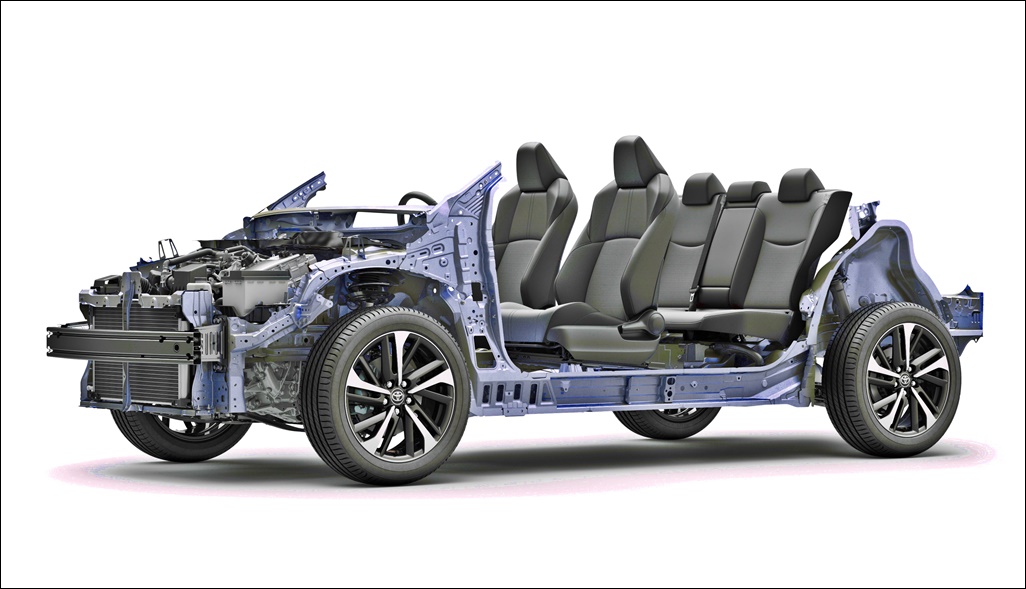
As with most of the latest Toyota models, the Corolla Cross uses the Toyota New Global Architecture (TNGA, a structure and platform that allows more design and engineering flexibility. It can be used for a variety of bodystyles and one of its strong points is a lower centre of gravity to Improve. At the same time, as this is a  SUV model, the eye level of the driver can still be 121 mm higher than that in the Corolla Sedan. The ground clearance is also higher at 161 mm, in keeping with the crossover SUV image and functionality of the model.
Toyota Safety Sense
The Corolla Cross Hybrid comes with Toyota Safety Sense (TSS) 2.0 which is a driver-assistance system that uses various active safety systems which work with each other. They rely on the radar and camera to detect other vehicles ahead and maintain a safe gap while cruising or in the event of a likely collision, automatically activate the brakes if the driver does not take corrective action.
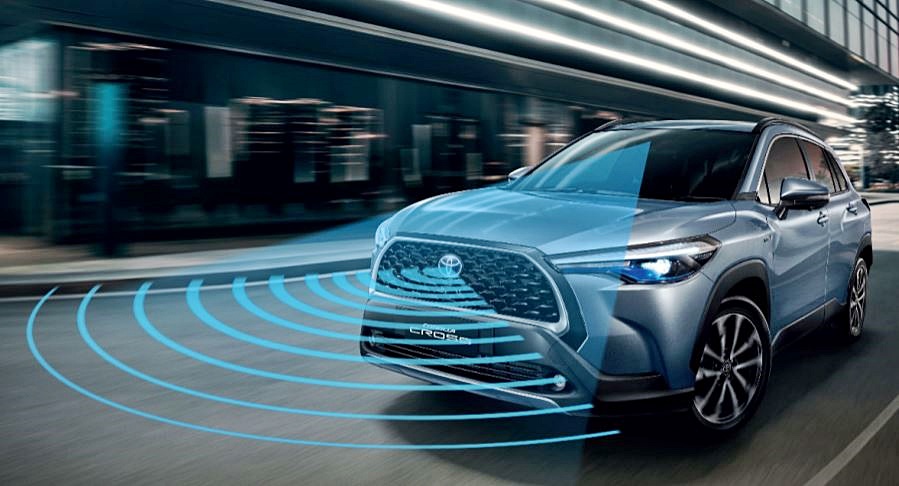
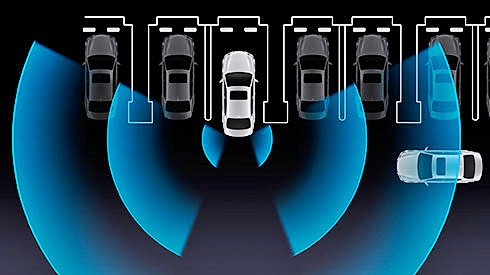
Active safety systems for the Corolla Cross Hybrid include Rear Cross Traffic Alert which monitors either side of the vehicle as it is reversing out of a parking bay. If a vehicle is approaching, the driver will be warned so that action can taken to prevent an accident.

TSS is complemented by other safety technologies such as a Blind Spot Monitor (BSM) with Rear Cross Traffic Alert (RCTA), 3D Panoramic View Monitor, Driver Start Control and a Tyre Pressure Warning System (TPWS).

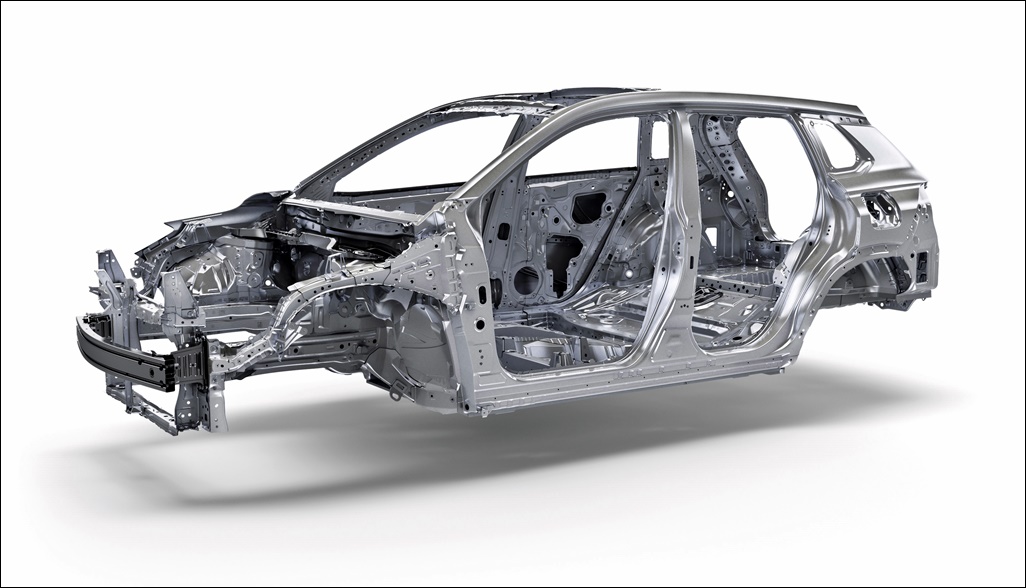
Besides the high-strength TNGA platform, the structure of the Corolla Cross is engineered to withstand impact forces from all sides during an accident, reducing or preventing injuries to the occupants. In crash testing and technical evaluation by ASEAN NCAP, the model received a maximum 5-star safety rating.
8-year warranty for battery pack
As with other Toyota passenger car models, the Corolla Cross comes with a factory warranty of 5 years, with unlimited mileage. Understanding that customers have concerns about the lithium-ion battery pack (which is much more expensive than the small one found in the engine bay), UMWT offers a separate warranty of 8 years for the item. The warranty also covers the Inverter and Power Management Control ECU, which may not be the case with other such warranties. Customers also have the option of extending full coverage for a further 2 years.

Supporting government’s commitment
UMWT’s investment in local assembly of hybrid electric vehicles is timely as it supports the Malaysian government’s commitment to reduce the intensity of greenhouse gas emission across the economy by 45% in 2030. This commitment will be made at the ongoing United Nations Framework Convention on Climate Change (UNFCCC) COP26 in Scotland.

“The reduction of carbon dioxide emissions from having more hybrid vehicles on the road in Malaysia will help to meet the Malaysian government’s commitment to cut greenhouse gases, as well as contribute to Toyota’s own goal of achieving carbon neutrality by 2050 in all its products and activities,” said Mr. Takeyama.

Using a variety of approaches and solutions, Toyota aims to achieve carbon neutrality in all its activities, products and manufacturing processes by 2050.

“Even before COP26, Toyota has been actively working on reducing emissions from vehicles and the solution has not been just by full electrification. Depending on each country’s conditions, the approaches taken are different to ensure that no customer is left behind. In the case of Malaysia, Hybrid Electric Technology is the most suitable and Toyota offers the best and most advanced technology because we have been developing it since the late 1990s,” he added.

UMW Toyota Motor to invest RM270 million for assembly of Toyota hybrid models

20 years ago, Perodua’s average monthly sales were around 7,800 units; 10 years ago, the monthly average rose to 15,000 units and the brand was No.1 in the market with a 30% share in 2011.

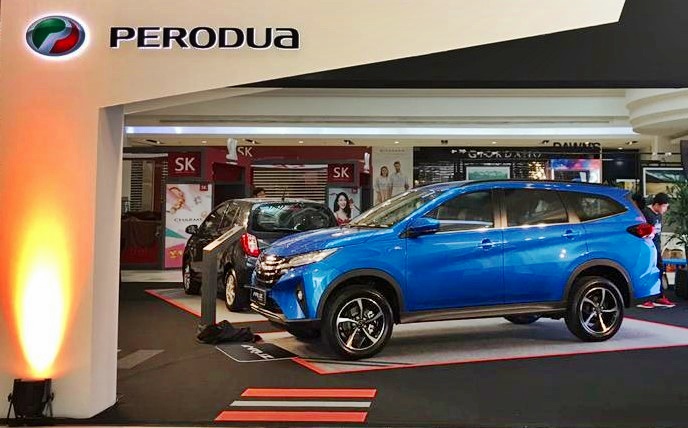
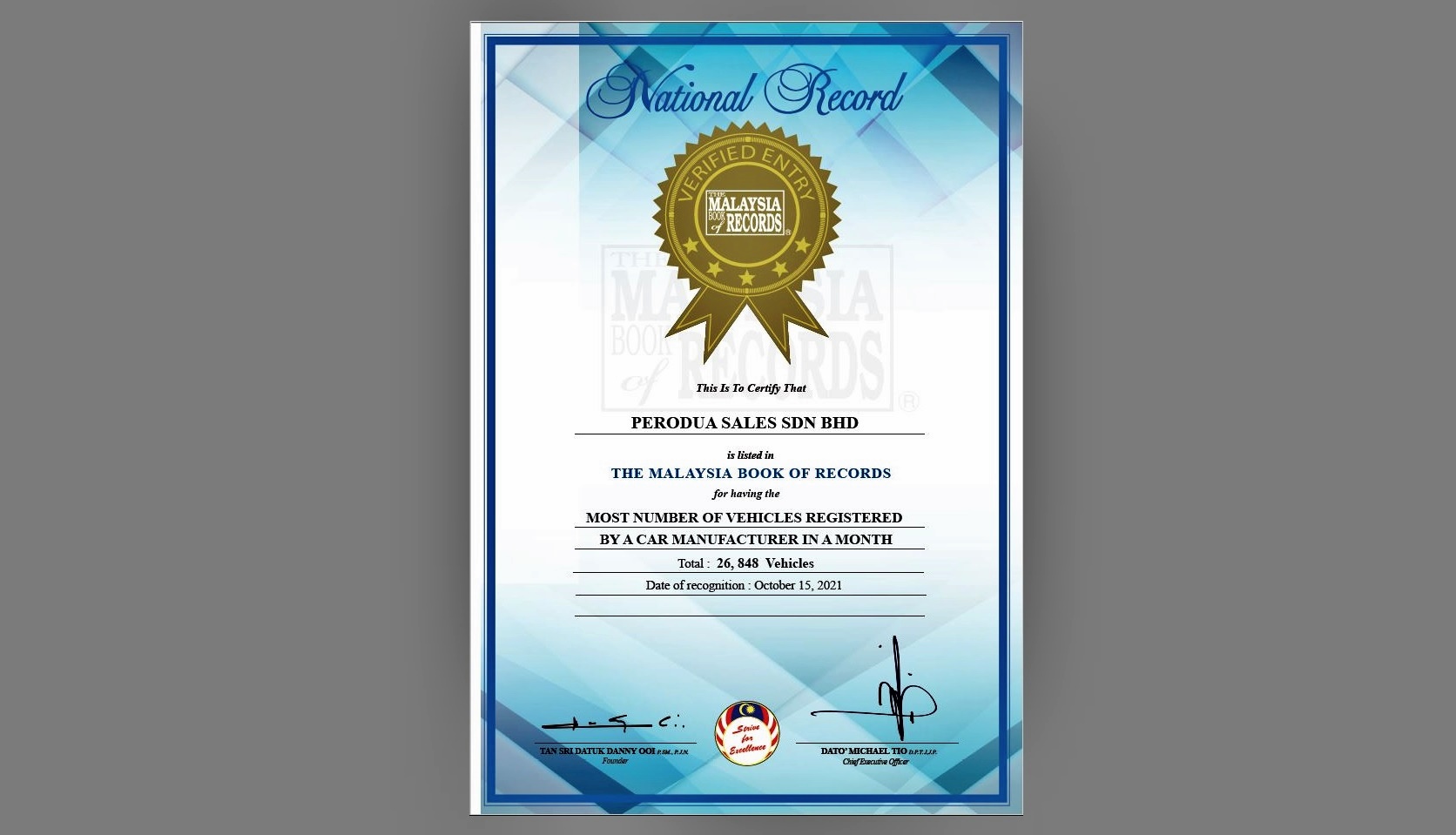
In October 2021, Perodua delivered 27,858 vehicles throughout Malaysia, setting a new record after the last record of 26,848 vehicles was set exactly 12 months earlier. For this achievement, the brand has been given a listing in the Malaysia Book of Records.

The new record comes with improved production and swift deliveries of vehicles to customers as the Malaysian carmaker is trying to deliver as many vehicles as possible in the fourth quarter of 2021.

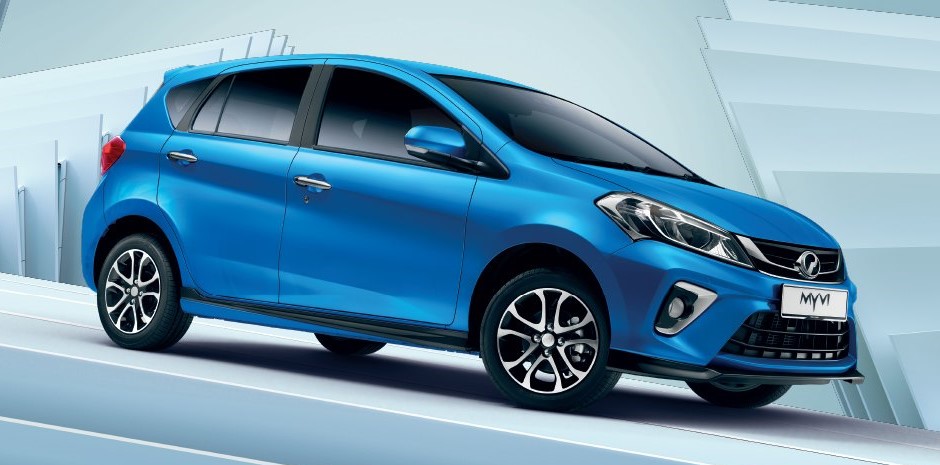
The 27,858 units consisted of 8,761 (31.4%) Myvis; 5,973 Axias; 5,257 Bezzas; 3,973 Ativas, 2,553 Alzas, and 1,341 Aruz. For the first 10 months of this year, Perodua delivered 146,951 units, 14.5% less than the 171,861 units reported in the same period of 2020.

“This achievement is our commitment towards our customers and represents a 90.67% increase from 14,160 units sold in September 2021. We are now working to further improve production, especially for the rest of the year,” said Perodua President & CEO, Dato’ Zainal Abidin Ahmad said.

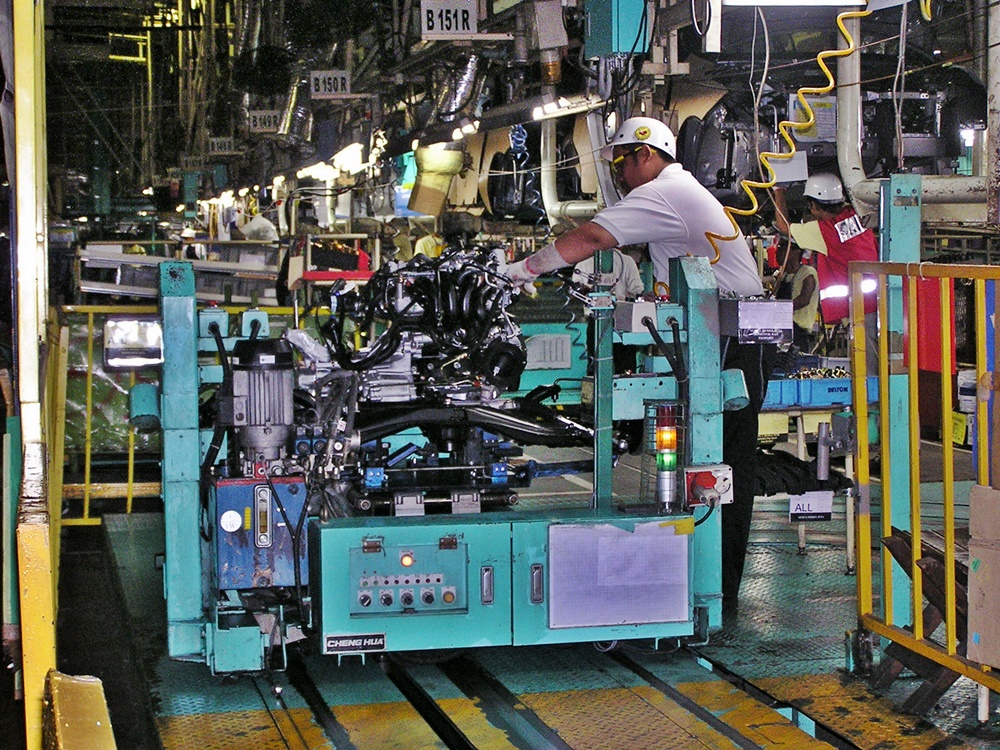
Together with the sales record, the month of October also saw the highest ever number of vehicles made at the two factories – 29,803 units. According to Dato’ Zainal, this output was beyond Perodua’s current production capacity, yet the staff was able to boost their productivity with the same level of quality without new people, equipment or machinery.

“I wish to take this opportunity to thank the Perodua staff who have gone beyond their best to ensure that our customers receive their Perodua vehicle as quickly as possible,” Dato’ Zainal said.

He added that the company is constantly mindful of both the safety and health aspects by ensuring that all employees follow the COVID-19 prevention guidelines while, at the same time, ensuring that they go beyond all quality requirements.

The Myvi remains the brand’s bestselling model and accounts for almost a third of total sales.

On the extension of the sales tax exemption until the end of June 2022, Dato’ Zainal said it is most welcomed as it will allow the automotive ecosystem more room to recover from the recent lockdown as well as catch up with demand.

“The extension of the Tax Sales Exemption will also benefit everyone, from consumers to vehicle manufacturers to suppliers, who are also affected by the global semiconductor supply shortage,” he added.

“The remaining two months will be a challenge as both Perodua and its ecosystem are still facing supply challenges due to the ongoing pandemic and we sincerely thank our customers for their patience and understanding in terms of vehicle delivery,” he said.

Perodua sales picking up but sales target for 2021 is lowered by 10.8%

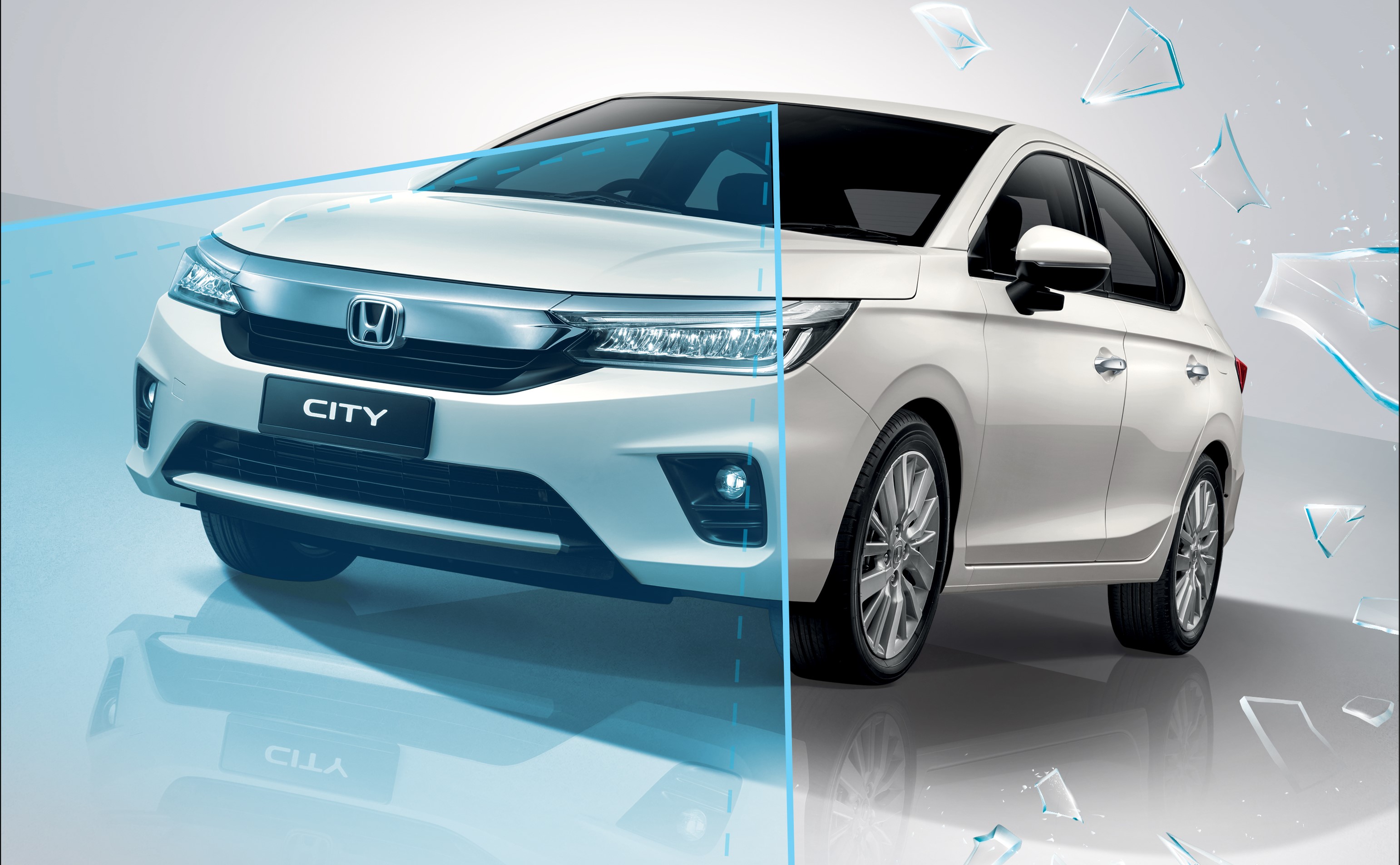
Even with just two months remaining of a difficult year, Honda Malaysia continues to surprise with new variants being introduced and the latest one to be announced is the City V-SENSING. This is the second variant of the latest City generation, introduced in 2020, to have Honda SENSING after the City RS e:HEV. The new variant is priced at RM90,212.36, without insurance and without sales tax (the exemption has been extended till June 30, 2022).

Honda SENSING

Honda SENSING + Honda LaneWatch
Honda SENSING, introduced with the CR-V four years ago, is an integrated suite of active safety systems which help the driver to avoid an accident, prevent or reduce the effects of a collision and also generally reduce driving stress. The systems in Honda SENSING are:  Adaptive Cruise Control (ACC), Collision Mitigation Braking System (CMBS), Forward Collision Warning (FCW), Lane Keep Assist System (LKAS), Road Departure Mitigation (RDM). Lane Departure Warning (LDW), and Auto High Beam (AHB).

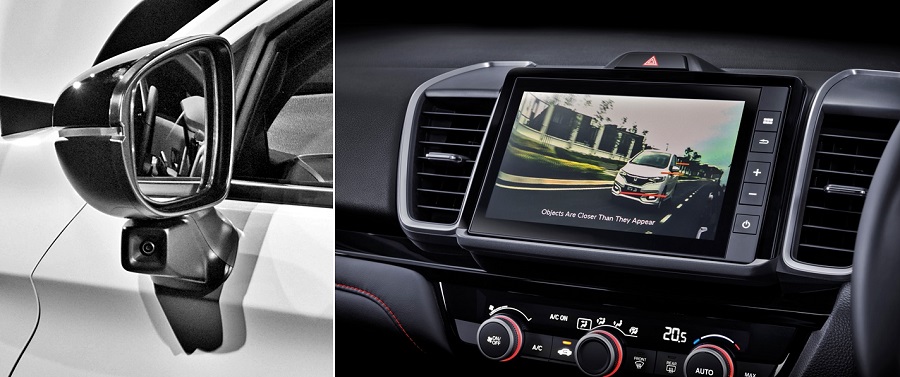
Honda LaneWatch (shown below), a camera-based blindspot system, is also standard for this variant. It uses a small camera on the left door mirror to capture images of the area along the side of the car. The imagery is displayed on the infotainment screen in real-time, providing the driver with a clear view (even at night) of the blind spot so that any approaching vehicle can be spotted.

“Safety is predominantly Honda’s priority and the City has always been the forerunner in offering safety features for both drivers and passengers using advanced technology. We are delighted to introduce this new variant to the Malaysian market, enabling them to now have more options to choose from in the City line-up with a total of 5 variants available,” said Honda Malaysia’s Managing Director & CEO, Madoka Chujo.

“The City V-SENSING appeals to more targeted audiences such as young families or young working adults who seek for ample performance as well as advanced safety features for their daily commute. It has the most complete advanced safety features in the B-segment with an attractive pricetag that is below RM100,000. We believe this model will continue to receive much recognition for its overall package of class-leading advanced features, space, comfort and unparalleled performance,” she said.

1.5-litre i-VTEC engine
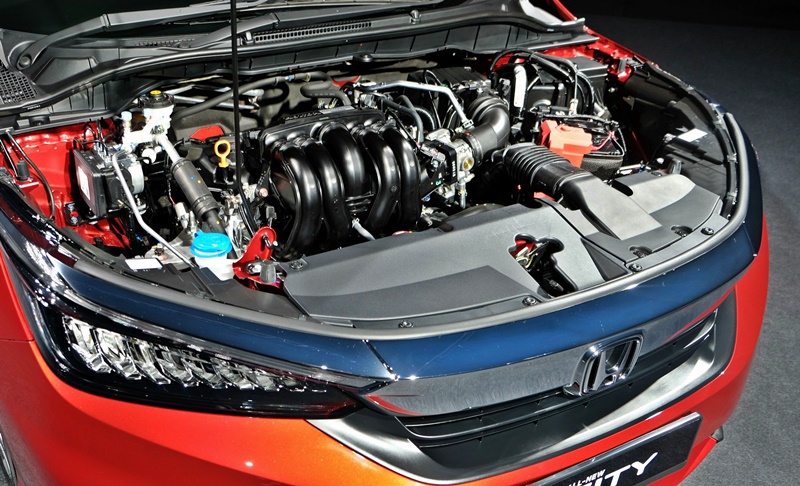
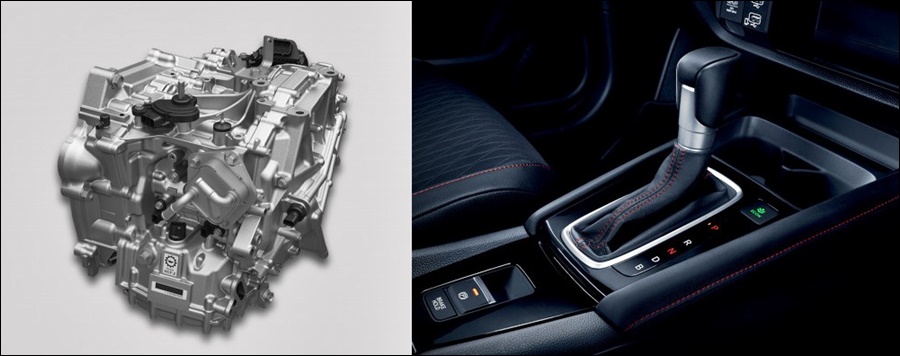
The City V-SENSING has a 1.5-litre DOHC i–VTEC engine – the most powerful in its segment – coupled with Continuous Variable Transmission (CVT). The engine output is 121 ps with maximum torque of 145 Nm, enabling the car to travel up to 18.5 kms per litre or around 750 kms per full tank.

Standard exterior features include LED Headlights and LED Day Running Lights (DRL), LED foglights, LED taillights, and 16-inch alloy wheels.

Premium materials inside
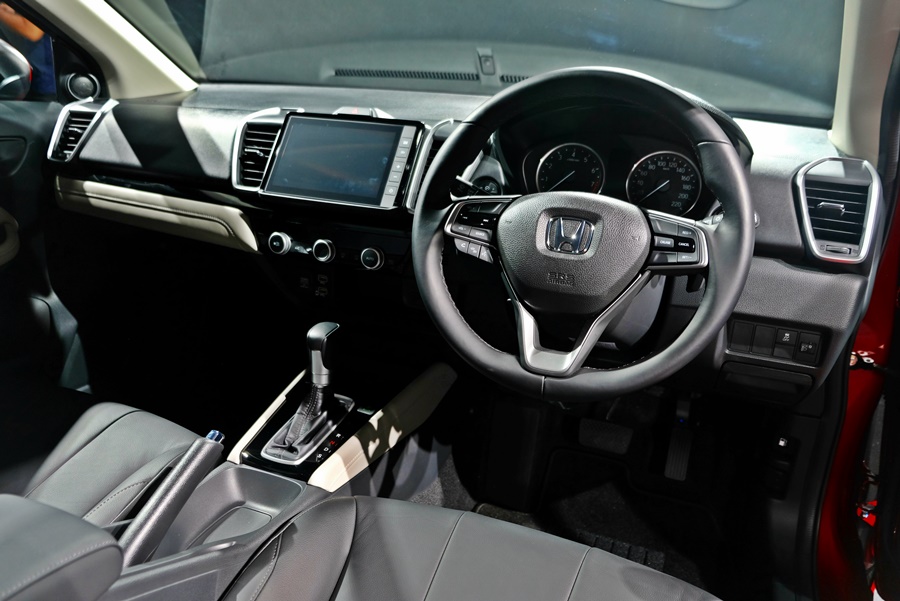
As with the other City variants, the interior has premium high-quality textures. The combination leather upholstery for the seats has ivory highlights for a touch of class. The infotainment system with an 8-inch touchscreen comes with Apple CarPlay and Android Auto connectivity so many of the smartphone apps can also be brought to the dashboard and used from there.

For the driver, who has a 7-inch TFT meter display, there are paddle shifters to use when manual shifting is preferred and the Remote Engine Start allows the engine to be started from outside the car so the air-conditioning can be activated to cool down the cabin first. Rear occupants also enjoy more comfort as there are vents behind the centre console box to bring cool air to them.

“Since we launched the 5th Generation City in October 2020, we have recorded total sales of more than 23,300 units. To date, the City has contributed 34% to Honda Malaysia’s total sales between January and October 2021, making it the best-selling model in Honda Malaysia,” Ms. Chujo added.

For more information on the City V-SENSING or to test-drive Honda models in Malaysia, visit any authorized Honda dealership. The locations can be found at www.honda.com.my or by calling Honda Malaysia’s Toll-Free number at 1-800-88-2020.

New vs Old Honda City: Why current City owners should trade up!

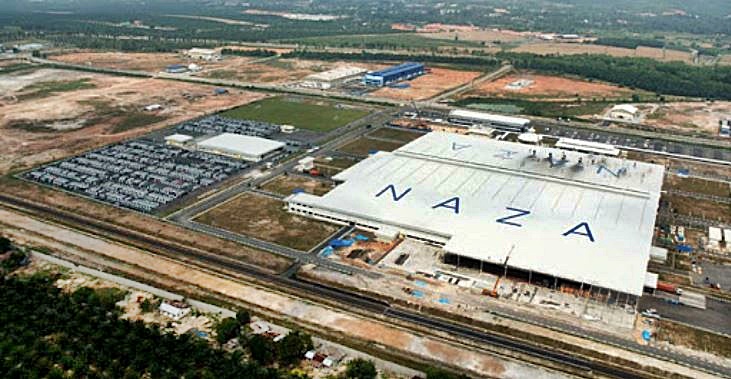
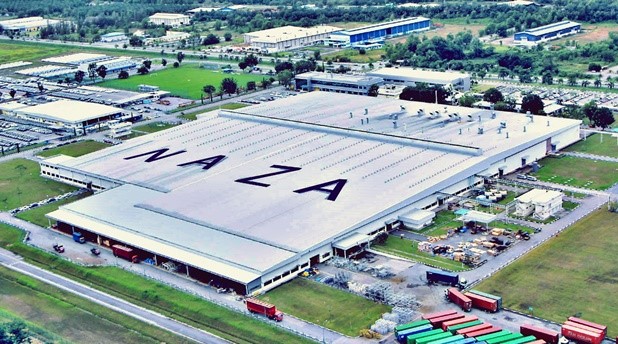
NAZA Automotive Manufacturing, the assembly plant previously set up by the NAZA Group and then taken over by the Groupe PSA has now been acquired by Stellantis, the new company created out of the merger between the French Groupe PSA and the FCA Group in January this year. Stellantis obtained full ownership of the 17-year old plant, located in Gurun, Kedah, at the end of October.

The completed acquisition marks a significant milestone for Stellantis in southeast Asia as it has plans to invest and expand its footprint as part of a localisation strategy. “We have an ambitious growth strategy that will enable us to build on the existing production outputs in Gurun, as well as extend the breadth of brands and models within the Stellantis portfolio built in ASEAN for ASEAN. This is a very exciting proposition,” said Christophe Musy, Stellantis’ Senior Vice-President, ASEAN & General Distributors.
File photo of NAM in 2015.

“Stellantis is deeply committed to growing our presence in ASEAN, and taking full ownership and responsibility of the plant in Gurun, Kedah is a very important step towards strengthening our operations, production outputs and workforce in the region,” he added.

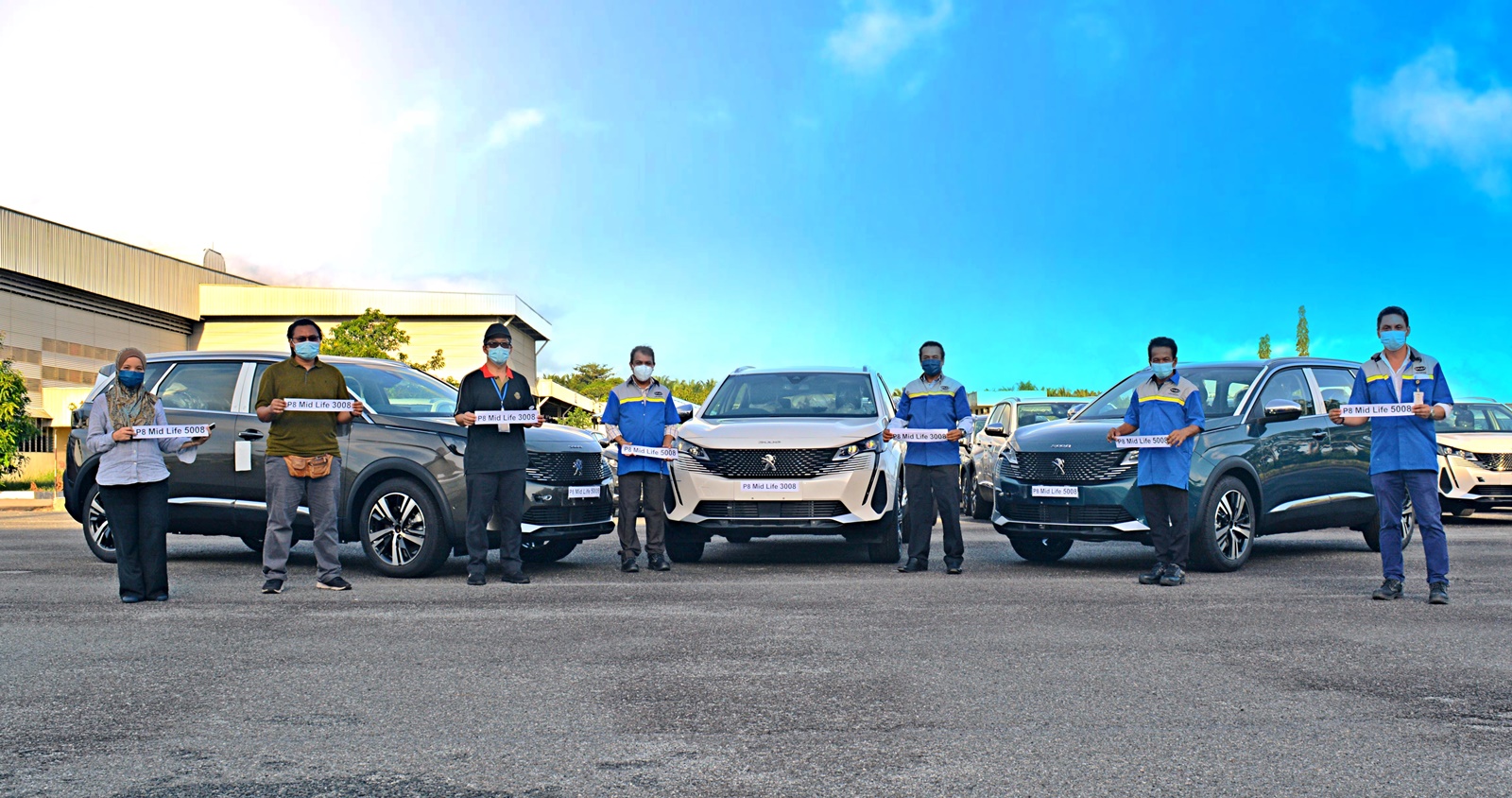
Updated versions of the Peugeot 3008 and 5008 are now rolling out after operations resumed recently. The SUVs are for the Malaysian market as well as for export to neighbouring countries.

Operations at the plant were suspended for over 2 months as part of the government’s effort to fight the COVID-19 pandemic, and have resumed recently. Assembly of the updated Peugeot 3008 and 5008 have been rolling out at pre-pandemic production rates, with volumes now ramping up for the remainder of 2021.

Both models are supplied to Malaysia, Thailand, the Philippines and other ASEAN markets. In the near future, the locally-assembled range will be joined by the 2008, Mr. Musy revealed. He added that, in Malaysia, they are now working with their new sold distributor, Berjaya Auto Alliance Sdn Bhd (BAASB), which was appointed last December.
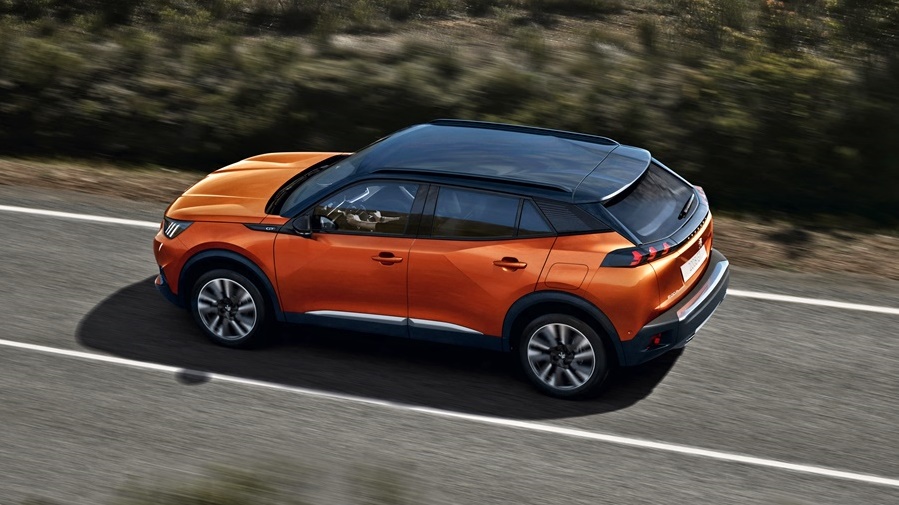
The next Peugeot model to be assembled in Malaysia will be the new 2008.

“We are focused on our mission to achieve world-class manufacturing in Gurun, to build high-quality, Malaysian-produced vehicles for southeast Asia. We are working closely with our partners to increase plant capacity by almost 40% to meet demand and this, combined with our strong product plan and determination to achieve the highest standards in quality and safety, has set us up for great success in Malaysia,” he said.

Groupe PSA starts Peugeot vehicle exports from Naza Automotive Manufacturing, its production hub for ASEAN

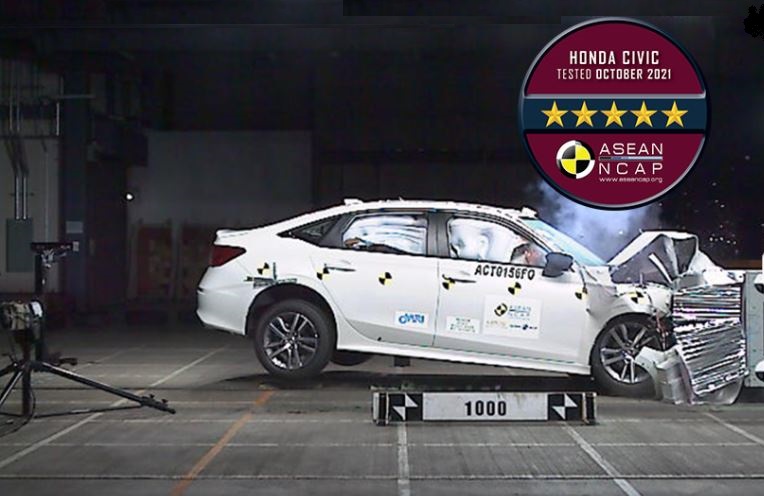
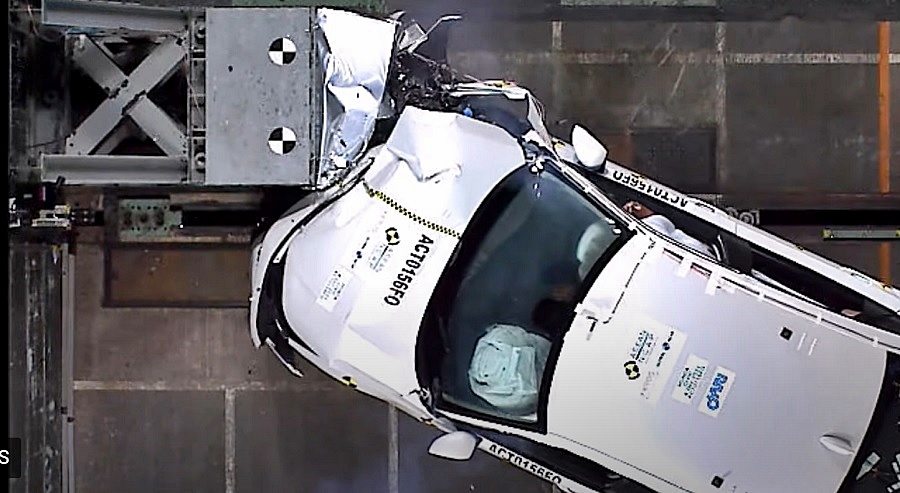
Honda sets high standards of safety for all its models, and any new model that arrives in the market can usually score maximum or almost maximum points in assessments by various organisations. The latest generation of the Honda Civic is no exception and what’s more impressive is that it is the first Honda model to be assessed under the new ASEAN NCAP 2021-2025 protocol.

Under the new protocols formulated by the New Car Assessment Program for Southeast Asian Countries (ASEAN NCAP), the Civic was rated the full 5 stars with an overall score of 83.47 points. For each category of assessment, the following: 36.59 points out of 40.00 for Adult Occupant Protection (AOP), 18.32 points out of 20.00 for Child Occupant Protection (COP) category, 18.16 points out of 20.00 for Safety Assist Technologies (SAT), and 10.39 points for Motorcyclist Safety (MS) category.

Specifically, for the ASEAN NCAP 2021-2025 assessment protocol, Honda has taken a step upwards by equipping the Civic with a new AEB (Automatic Emergency Braking) technology for Motorcycles as standard fitment in all its variants. This new technology is able to detect the presence of motorcycle that is located in front of the car and perform automatic emergency braking in the event the driver is unaware of the motorcyclist.

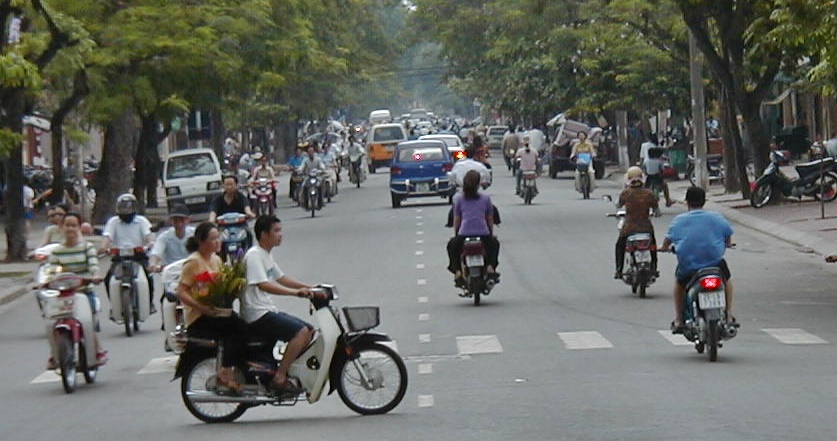
With the larger number of motorcycles on roads in ASEAN and a high rate of accidents involving motorcyclists, Honda has improved its detection system to recognise motorcycles and perform automatic emergency braking if necessary.

Commending Honda for developing the AEB for Motorcycles, MIROS Director-General who is also ASEAN NCAP Secretary-General and Acting Chairman, Hon. Assistant Commissioner (CD) Adjunct Prof. Ir. Ts. Dr. Khairil Anwar Abu Kassim said: “This is a significant milestone for vehicle safety as we are targeting to reduce the number of fatalities involving motorcyclists. As such, we are proud that vehicle manufacturers are devoting their energy in the next level of vehicle safety. With the launch of the Global Plan for the Second Decade of Action for Road Safety 2021–2030, we hope this will be a catalyst for more vehicle manufacturers to follow this footstep to ensure we meet the desired target.”

“Despite the pandemic situation, car manufacturers have strived to ensure the new vehicles that they are producing meet the needed safety requirements under the new ASEAN NCAP 2021-2025 protocol. I am pleased that another of Honda’s models has achieved another 5-Star rating, despite the stringent requirement the new protocol has set,” he said when commenting on the results.
He added: “The current COVID-19 pandemic situation has pushed us to be more innovative in our work, and ASEAN NCAP is no exception. We had to fully utilize whatever communication applications currently are available. Due to travelling restrictions, ASEAN NCAP performed an assessment on the new Honda Civic via video conference call.”

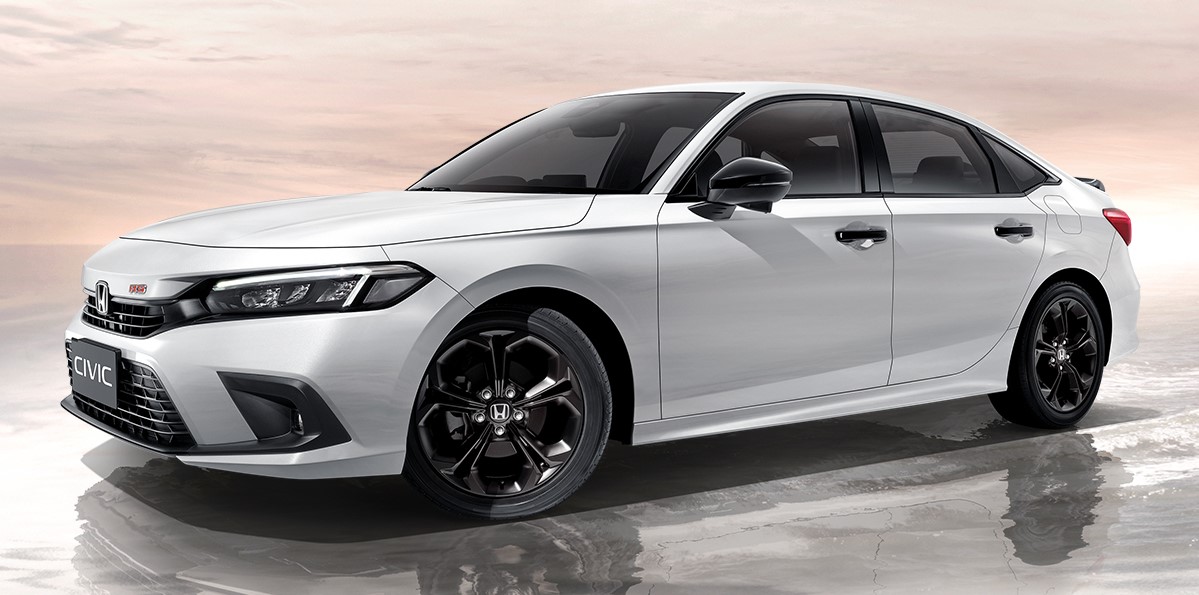
11th generation Honda Civic is on sale in Thailand and progressively being introduced in other ASEAN markets.

Even with the previous generation, the Civic already had a very high standard of active and passive safety, including the integrated Honda SENSING system. Its AEB systems cover City, Inter-Urban, Pedestrian, Bicycle, and Motorcycle situations, complementing ), Child Presence Detection (CPD) and Pedestrian Protection technology. The model comes with 6 or 4 airbags, depending on the market. There is also a Seatbelt Reminder System for front and rear occupants, and Blind Spot Visualization (BSV) on the passenger side.

The new Civic, which is the 11th generation of the model, has been launched in Thailand and is progressively being launched in other regional markets. It is likely to be launched in Malaysia in 2022 although Honda Malaysia might start giving the public a preview before the end of this year.

11th generation Honda Civic debuts in Thailand

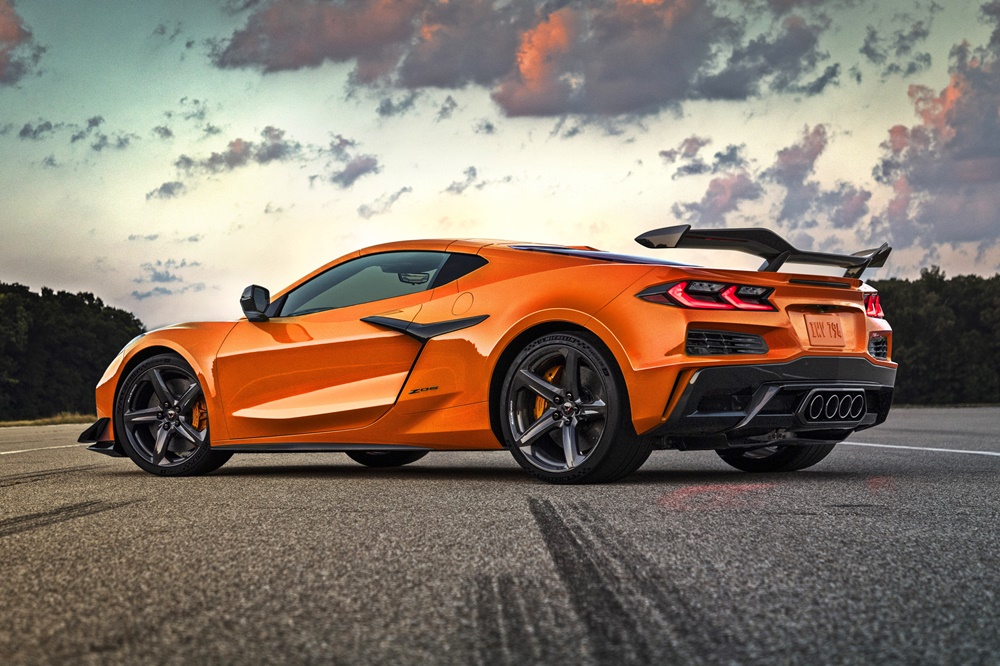
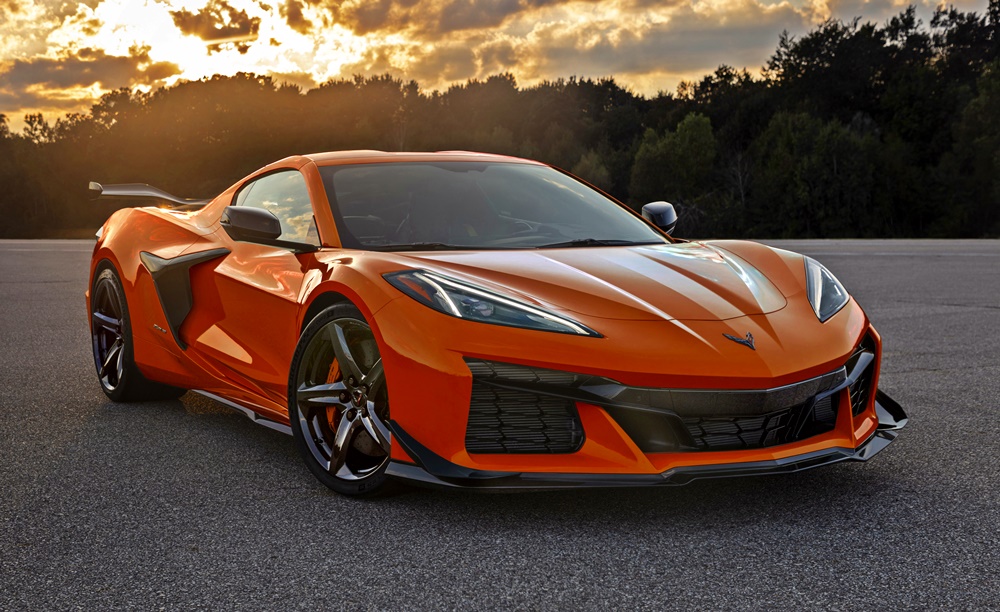
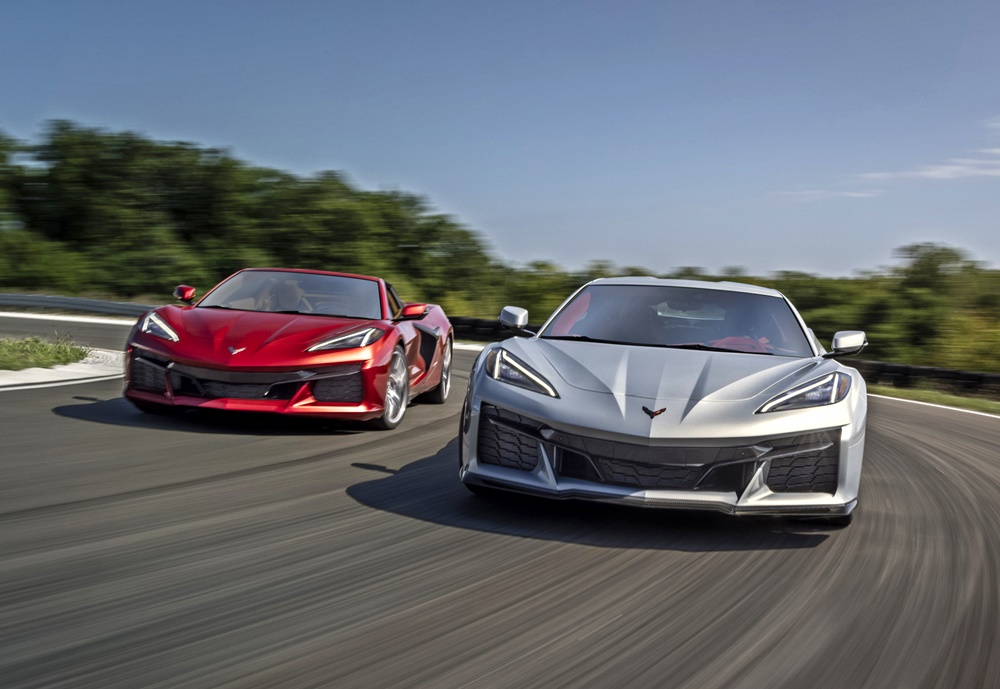
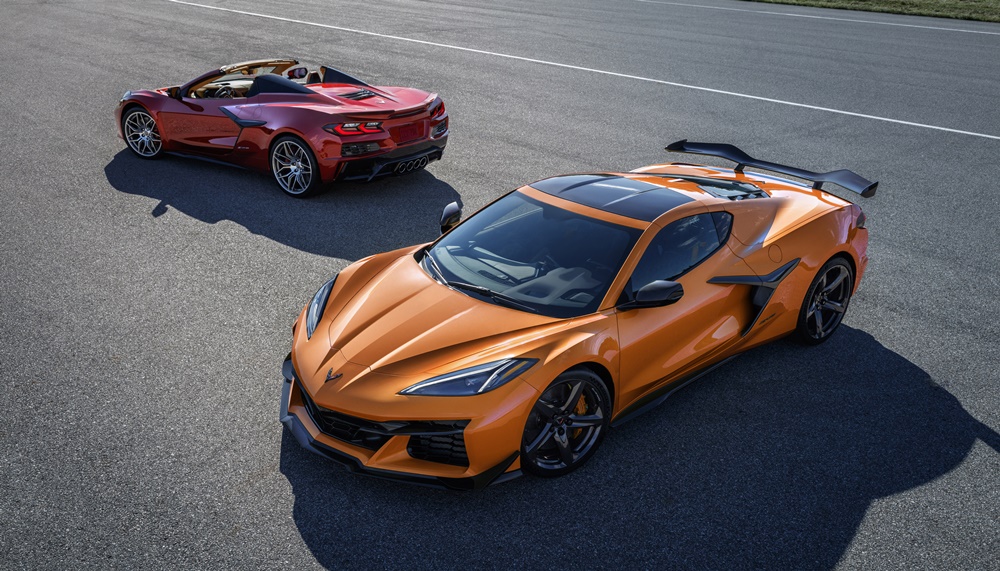
The Chevrolet Corvette Z06 was born in 1963 and was intended for racers as it was fitted with an  optional Special Equipment Package intended for racers. Now, 58 years later, the next chapter in the Corvette journey begins with the introduction of the new Corvette Z06 which arrives 2 years after the first production mid-engine Corvette Stingray debuted.

While the Z06 was created to dominate on the track when it debuted in 1963, the Z06 nameplate has also come to symbolize the American supercar. The performance envelope of Z06 builds on the foundation laid by the Stingray, as does Z06’s design language. Expanded material offerings, new interior packages and features unique to Z06 enable owners to customise their car.

2022 Chevrolet Corvette Z06

Raising the performance bar
“Corvette has always brought a discerning customer to the Chevy family,” said Steve Hill, Vice-President of Chevrolet. “This new Z06 is designed and engineered to set a higher bar with increased levels of craftsmanship, personalization and performance so customers can truly have their own bespoke performance car.”

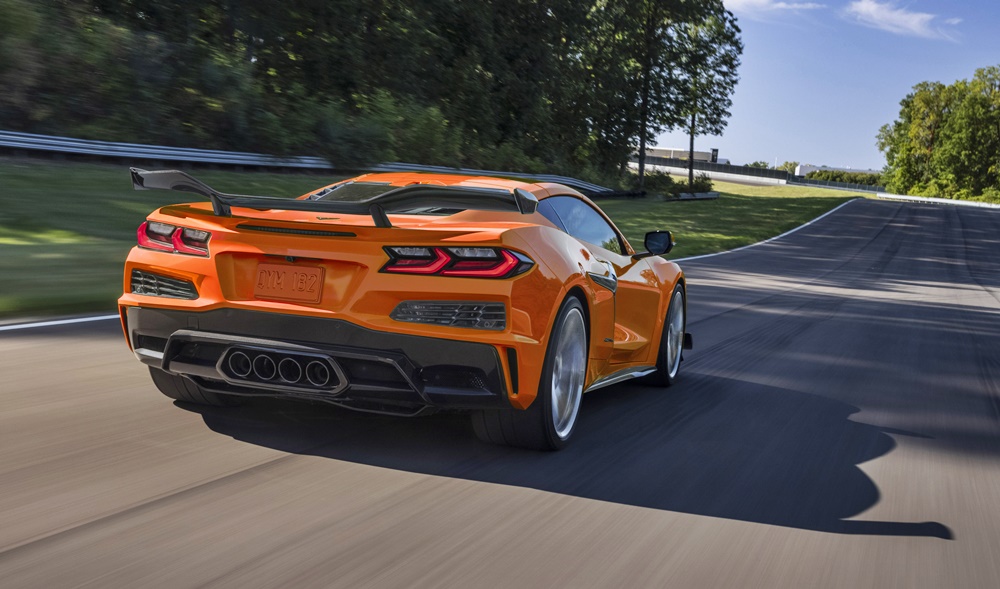
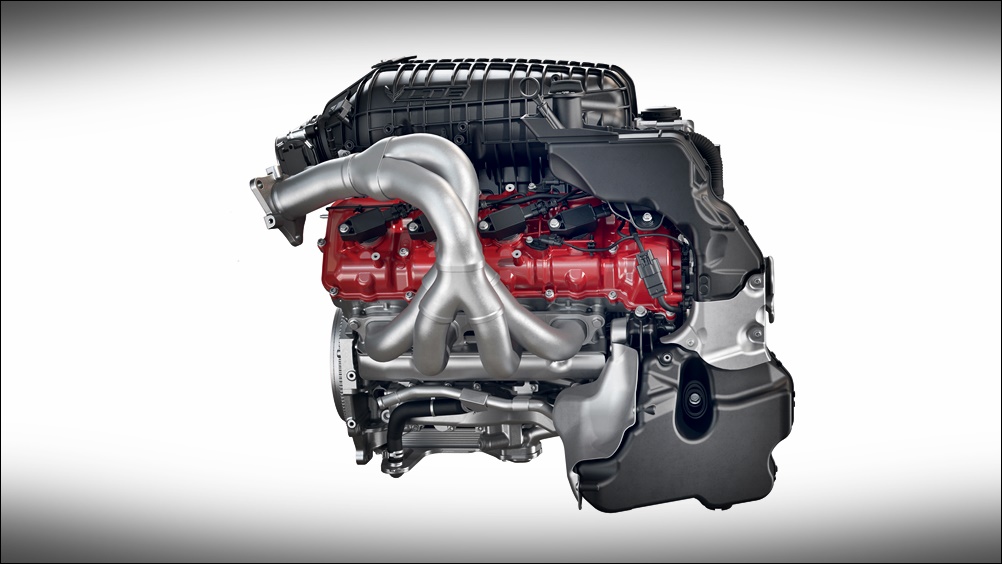
The Z06 is set apart by its all-new LT6, with 670 bhp – the highest horsepower of any naturally-aspirated V8 in a production car today. An all-new flat-plane crankshaft design allows the driver to spin the engine to 8,600 rpm, accompanied all the way up by a distinctive, rich exhaust tone unlike anything ever heard from a Corvette.

2022 Chevrolet Corvette Z06

Racing at its core
The sound and appearance of the Z06 take direction from Corvette Racing. The direct knowledge transfer from the track to the street comes from the Z06 chassis based on Corvette Racing’s C8.R since it began competing in 2020. Thanks to a shared chassis, similar engine architecture and exterior proportions, the C8.R has been referred to internally as the ‘Z06 hiding in plain sight’.

2022 Chevrolet Corvette Z06

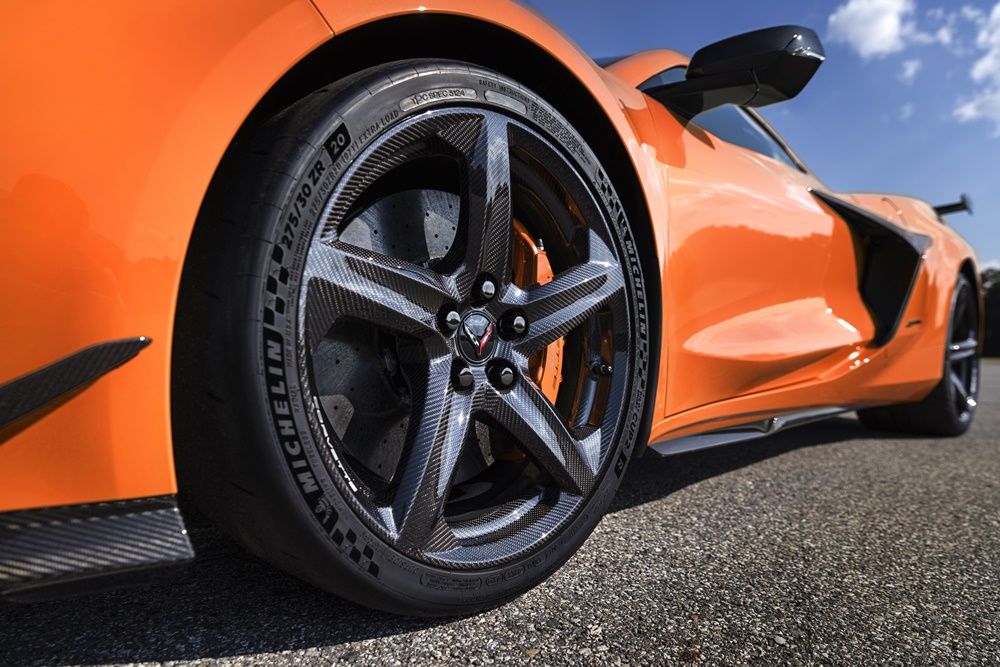
Apart from the more dramatic styling, the Z06 is 9.4 cm wider than the Stingray, accommodating massive 345-series rear tyres and allowing more airflow through side air vents. The standard 20-inch front and 21-inch rear forged aluminium ‘spider’ wheels are the largest ever fitted on a production Corvette. Carbonfibre wheels are also available and take away 18.6 kgs.

The all-new 5.5-litre DOHC V8 all-aluminium engine with 623 Nm marks a return to natural aspiration for the track-capable performance model. A version of the LT6 has powered the C8.R race cars since 2019, and the demands of endurance road racing helped engineers refine the engine’s performance and durability. An 8-speed dual-clutch transmission with a shorter 5.56 final drive ratio (compared to the Corvette Stingray) enhances acceleration.

2022 Chevrolet Corvette Z06

Track-proven performance technologies
The new Z06 retains the SLA-type front and rear suspension design of the Corvette Stingray, but more specifically calibrated for its higher performance capabilities. Magnetic Selective Ride Control 4.0 is standard and can be adjusted for touring comfort or maximum track performance via the Driver Mode Selector. Like the Stingray, the selector tailors more than a dozen features of the Z06 to suit the driver’s preferences. These include Launch Control and adjusting the engagement rate of the electronic limited slip differential.

2022 Chevrolet Corvette Z06

2022 Chevrolet Corvette Z06

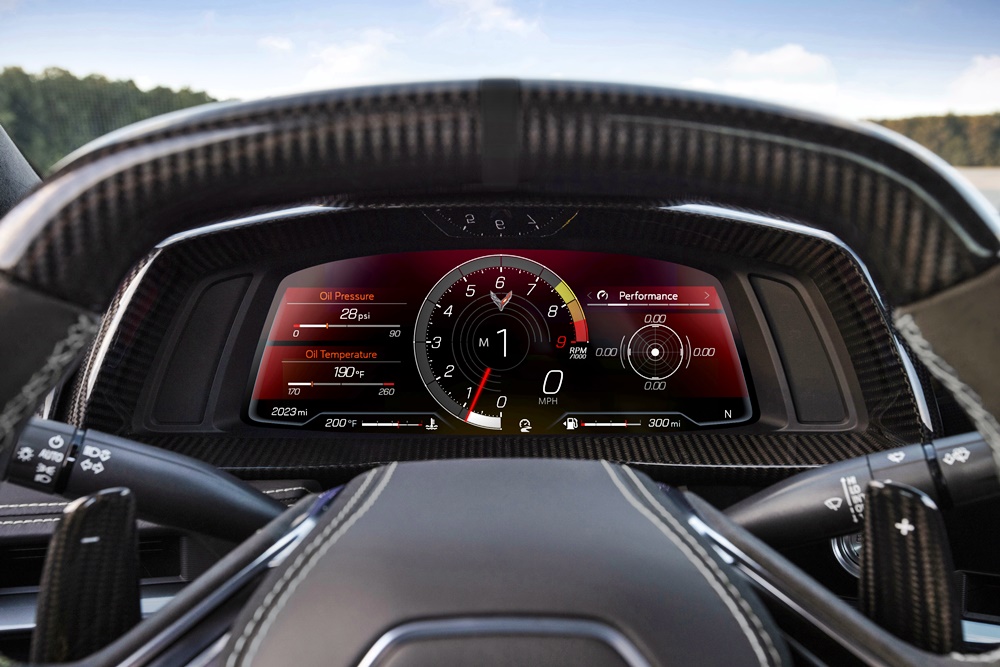
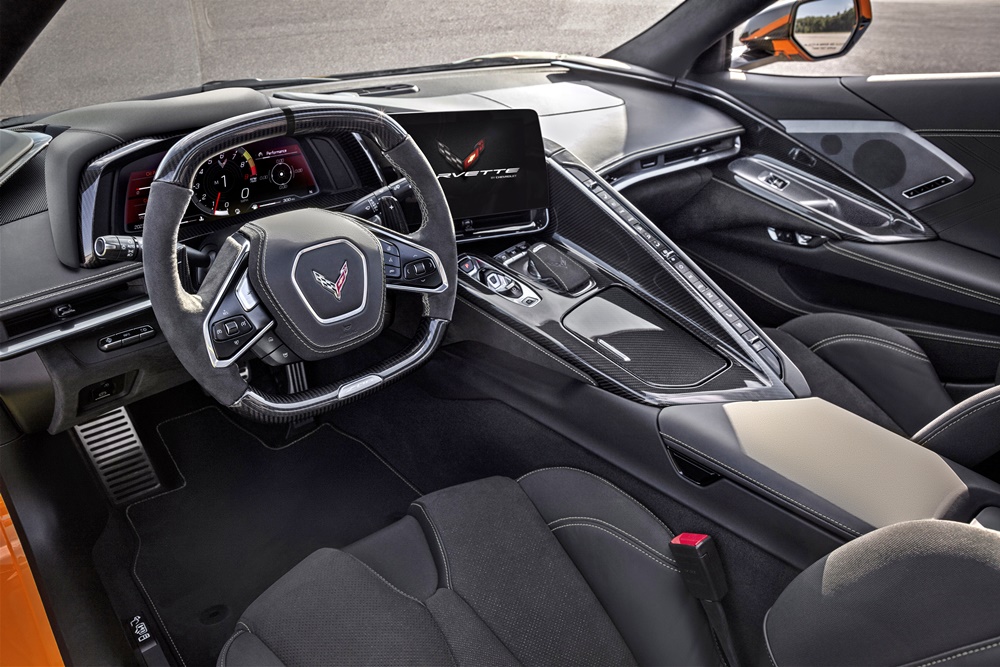
The Z06 is based on the same robust architecture as the Stingray so it can be offered in as a hardtop convertible. Inside, exclusive features include a carbonfibre-wrapped steering wheel, shift paddles and new carbonfibre interior trim.

“Racing was the reason the Z06 was developed in 1963, and it continues to support development of the road models that make them better on the street and the track,” said Tadge Juechter, Executive Chief Engineer, Corvette. “It also means we’ve tested the Z06 on the best tracks around the world, from Circuit of the Americas here in the USA, to the Nurburgring in Germany.”
2022 Chevrolet Corvette Z06

Chevrolet Corvette Stingray is North American Car of the Year for the third time

Archive

Follow us on Facebook

Follow us on YouTube