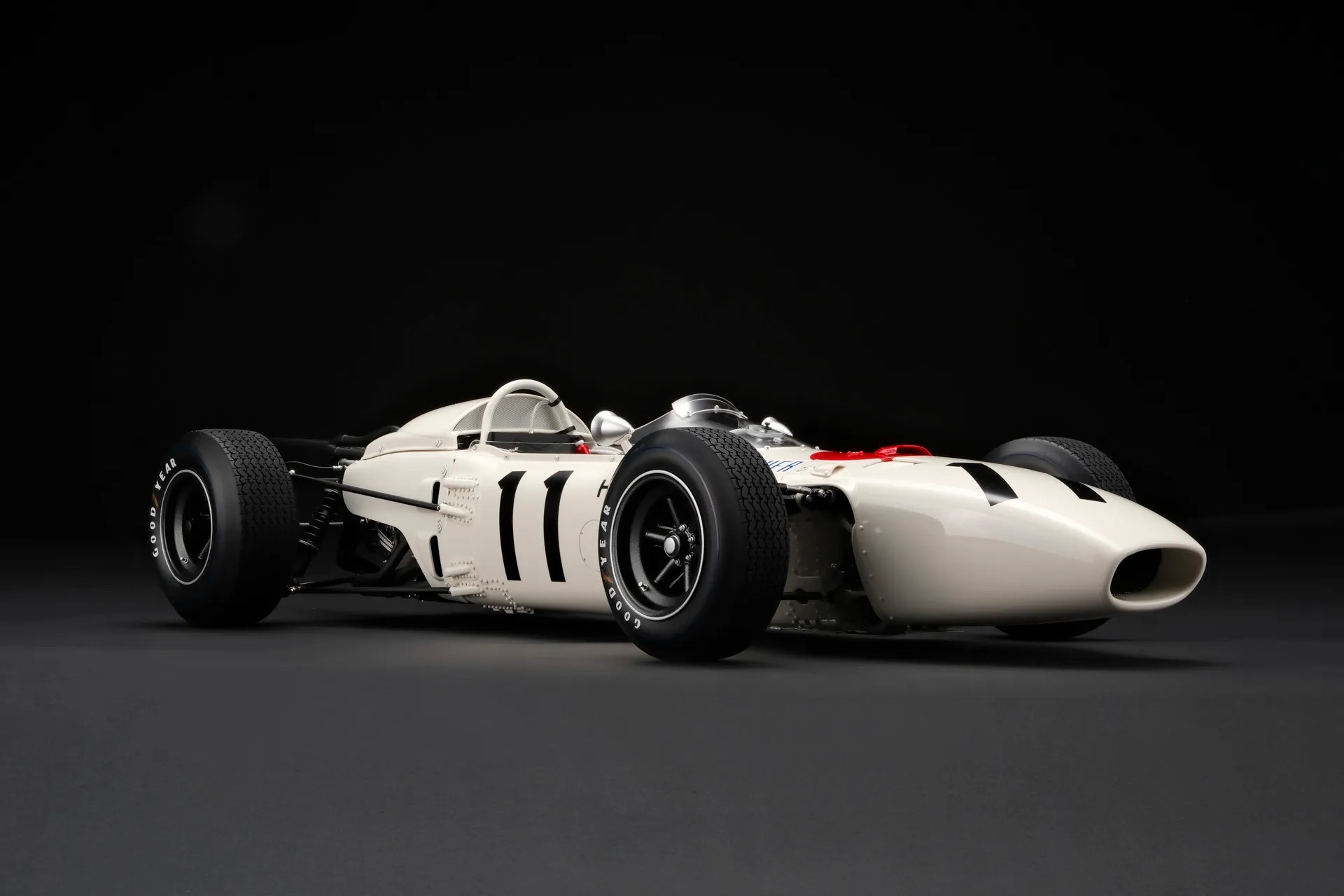
Honda has announced a collaboration with renowned scale model maker Amalgam to produce a limited run of meticulously hand-built replicas of the RA272 Formula 1 car, commemorating the 60th anniversary of its first Grand Prix victory.
The collection will feature just 30 models at 1:8 scale, each priced at USD 28,995 (approximately RM135,000), alongside 300 units at 1:18 scale costing USD 1,735 (around RM8,000). Built as collector’s items rather than playthings, these precision-crafted pieces are aimed squarely at enthusiasts and serious collectors.
The Japanese manufacturer is marking the landmark of its 1965 Mexico Grand Prix triumph, a race that saw Richie Ginther steer the RA272 to Honda’s first-ever Formula 1 win, and the first for any Japanese car, engine, or team. Remarkably, this achievement came just two years after the company entered the automotive market.
Each model consists of over 1,600 precision-engineered components and will be supplied with a signed certificate of authenticity and a commemorative booklet from Honda Racing Corporation President Koji Watanabe. Amalgam, known for its highly detailed scale replicas of iconic cars, many carrying five-figure price tags, is regarded as a natural partner for the project.
Hybrids are becoming more popular. Would you believe that? It is not that hard to believe with petrol becoming more expensive and the cost of replacing batteries dropping significantly.
It was just about a decade ago when car buyers were spooked by the monumental cost of replacing hybrid batteries. Technology has caught up, hybrid batteries are cheaper than ever (in the rare event they need to be replaced), and hybrid cars themselves are more accessible.
But did you know that there are different hybrid technologies available in the market? There are basic capacitor-based technologies. These store energy so that your car can continue to run when the engine automatically shuts off at the traffic light to save precious fuel.
And then there are more sophisticated ones whose sole purpose is to use as little fuel as possible.
Take Honda’s hybrid tech for example, based on the Atkinson Cycle internal combustion engine, it is one of the most efficient systems in the market right now with official fuel consumption ratings of just 20km per litre of fuel (we managed 19.8km per litre during an independent test).
What is Atkinson Cycle?
There are two main but different combustion technologies available in the market. One is the more conventional Otto Cycle which is found in most cars, and the other is Atkinson Cycle.
We are about to get more technical but the fundamental difference between the two is in the stroke ratio. A stroke is described as a “single complete movement of a piston in one direction, either upwards or downwards, within the cylinder”.
There are three important strokes, an intake stroke which draws a mixture of air and fuel into the cylinder. Then there is the compression stroke which compresses the air-fuel mixture when the cylinder moves upwards. And then there is the power stroke, where the compressed mixture is ignited by a spark plug, causing a powerful explosion thus generation power to move the wheels.
To describe the difference between Otto and Atkinson Cycles, we will focus on the compression and the power stroke.
In an Otto Cycle engine, the compression stroke and the power stroke are of equal length. With an Atkinson Cycle, the power stroke is longer than the compression stroke.
The benefits of a longer compression stroke is that all the gases can expand more fully, thus extracting more energy from the fuel before it is sent out as exhaust fumes.
This leads to significantly higher thermal efficiency but there is a trade-off. Atkinson Cycle engines have a lower power density and less torque, especially at lower RPM’s.
Honda’s engineers though, have found a solution to that and that is to mate the more efficient Atkinson Cycle engine to an electric motor.
The motor solve the core issue of the Atkinson Cycle engine because they create almost all their torque from just zero rpm. Providing acceleration akin to an electric vehicle.
So, how does it benefit you?
Simply put, it lets you travel further with lesser fuel.
Honda’s e:HEV system has three modes:
1. EV drive mode: During acceleration and at low speeds, the car is driven purely by the electric motor. The engine is completely shut at this point.
2. Hybrid drive mode: At moderate speed such as in the city, the Atkinson Cycle works as a generator. It works at a constant, highly efficient rpm rate to generate electricity which drives the wheels. The engine does not drive the wheels directly in this mode.
3. Engine drive mode: At high speeds such as on the highway, the engine drives the wheels directly through a lock-up clutch. In this mode, the engine runs at a constant rate where it is most efficient. As such, it can directly power the car without any compensation from the electric motor.
All of this happens with you barely noticing anything. If you really tune in and put your ear down, you can make out a slight hum indicating the engine is working.
Which Honda models offer this tech?
All of Honda’s models have a hybrid variant, and all Honda hybrid models come with technology mentioned above.
But we recently took a Honda Civic and Honda CR-V on a drive to Penang to understand how they work, and there is one thing that surprised us.
As similar as the systems are, the hybrid technologies in the Civic and the CR-V are quite different.
With Honda’s hybrid technology, there is no gearbox in the traditional sense. Instead, the wheels are powered via the electric motors and by the engine at high speed, through a lock-up clutch.
So even though Honda’s specification sheets say there is an e-CVT transmission, the reality is that there are no gearshifts happening underneath the car.
That sound of gears shifting when you drive the car? Well, that is purposefully engineered and piped into the cabin through the speakers. In essence, the sound is artificially augmented for your driving pleasure, and it sounds real good too.
But that is not to say there are no gears whatsoever, and therein lays the key difference between the Civic and the CR-V.
The Civic only has one high gear that drives the wheels at all times. The CR-V on the other hand has a high gear and a low gear.
The reason why the CR- V has a low gear is that in some markets, towing capability is essential. And that is what the low gear is for – towing.
Whether it is towing a jet ski or a motorcycle, the fact of the matter is, the CR-V is built to handle it.
As for towing capacity, the CR-V can manage up to 750kg’s of braked towing, that means a trailer with a braking system. Or up to 600kg’s without a braking system.
What about the cars themselves?
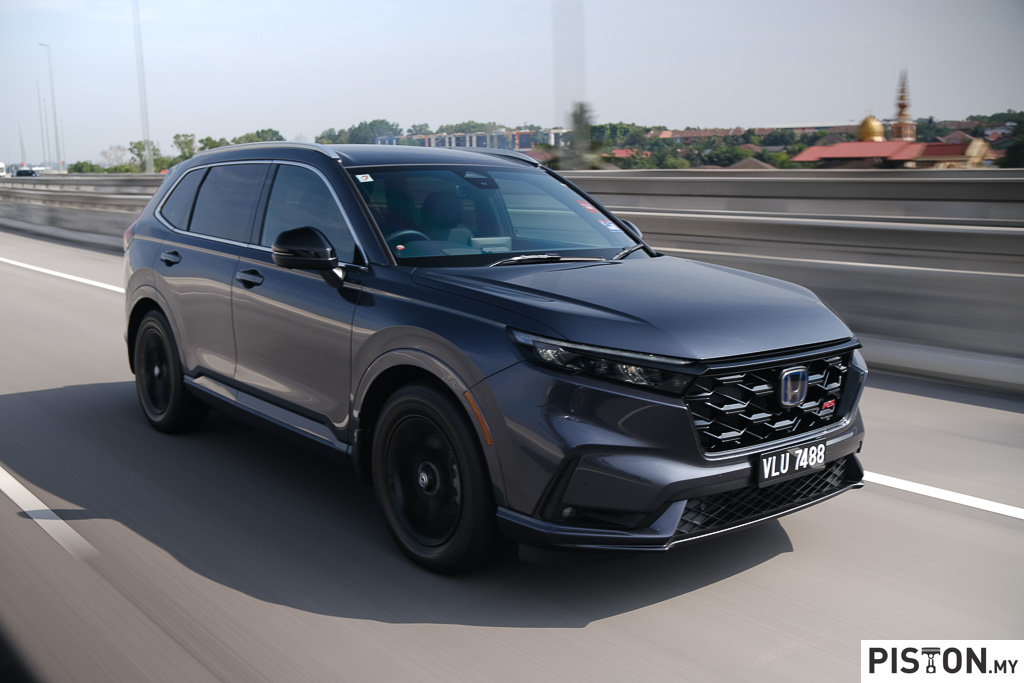
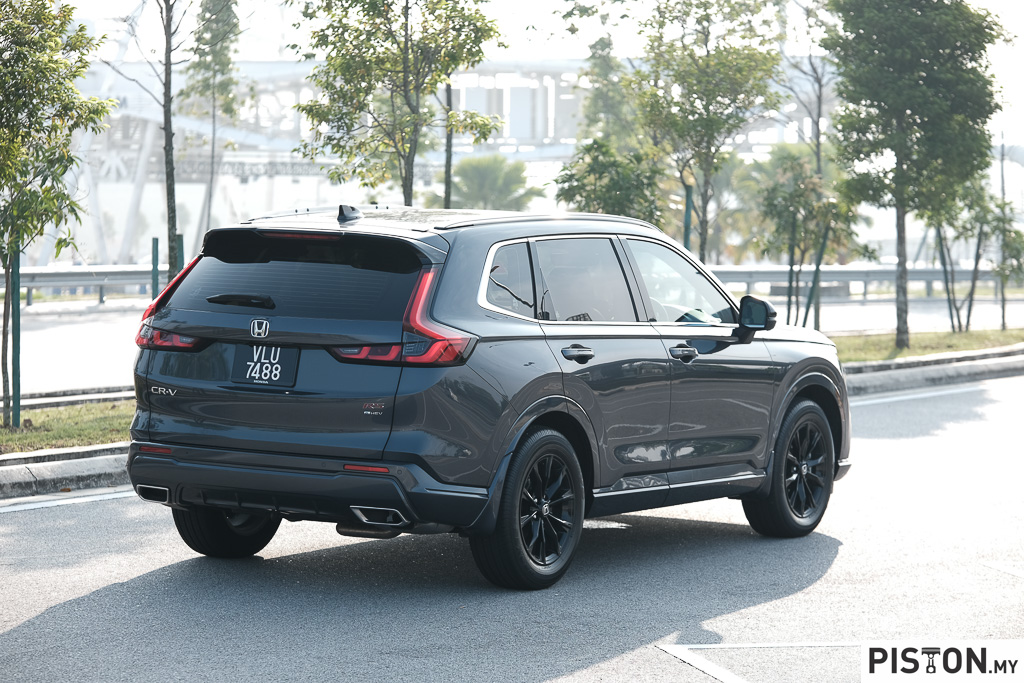
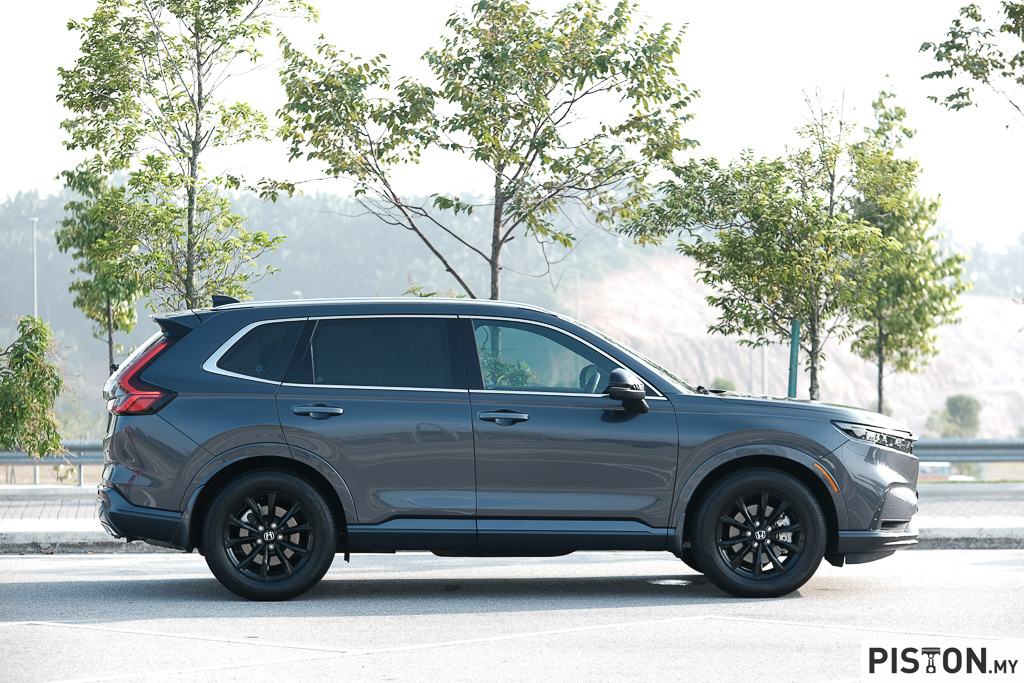
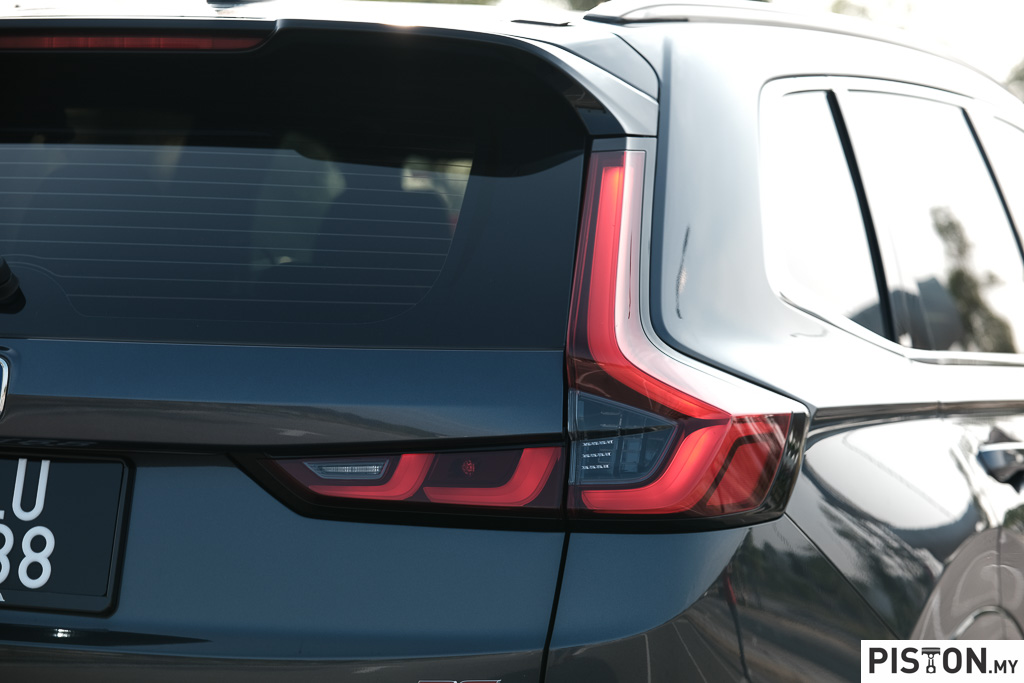
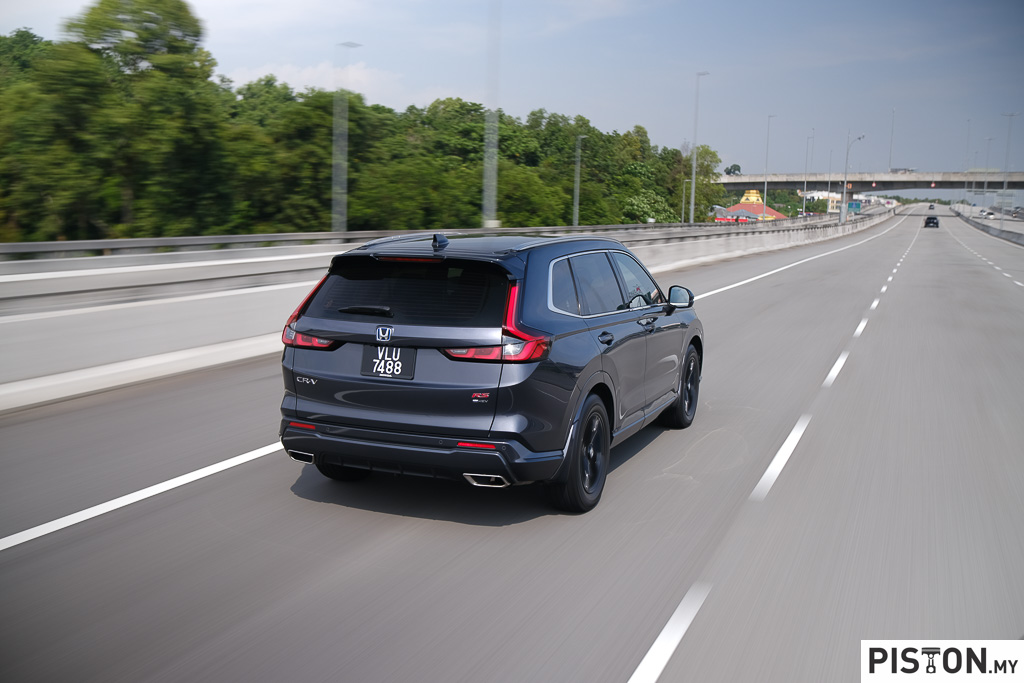
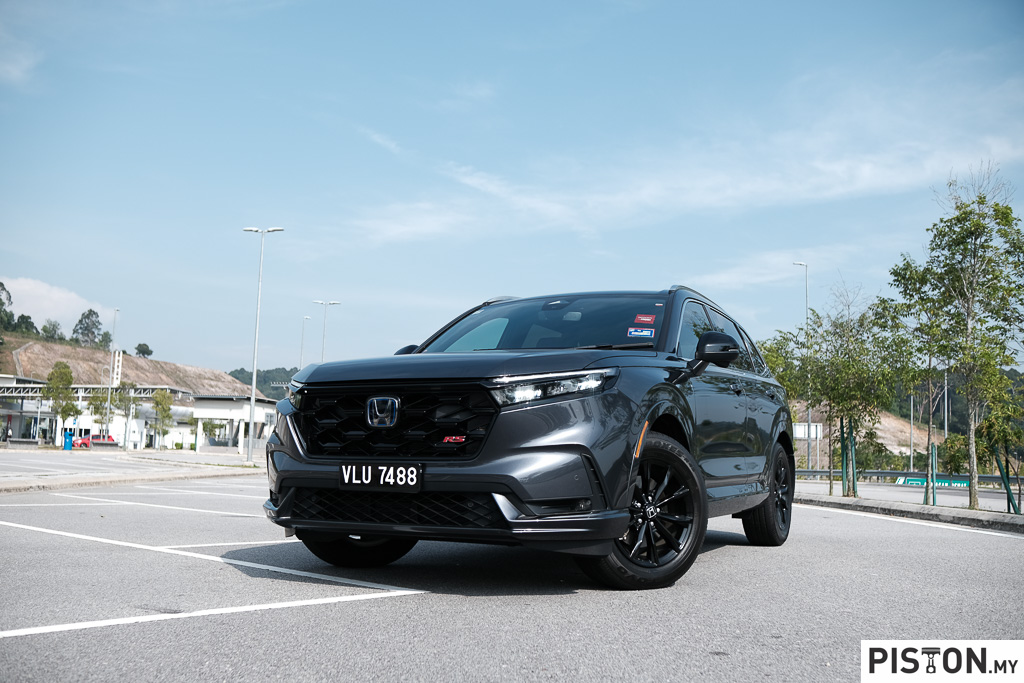
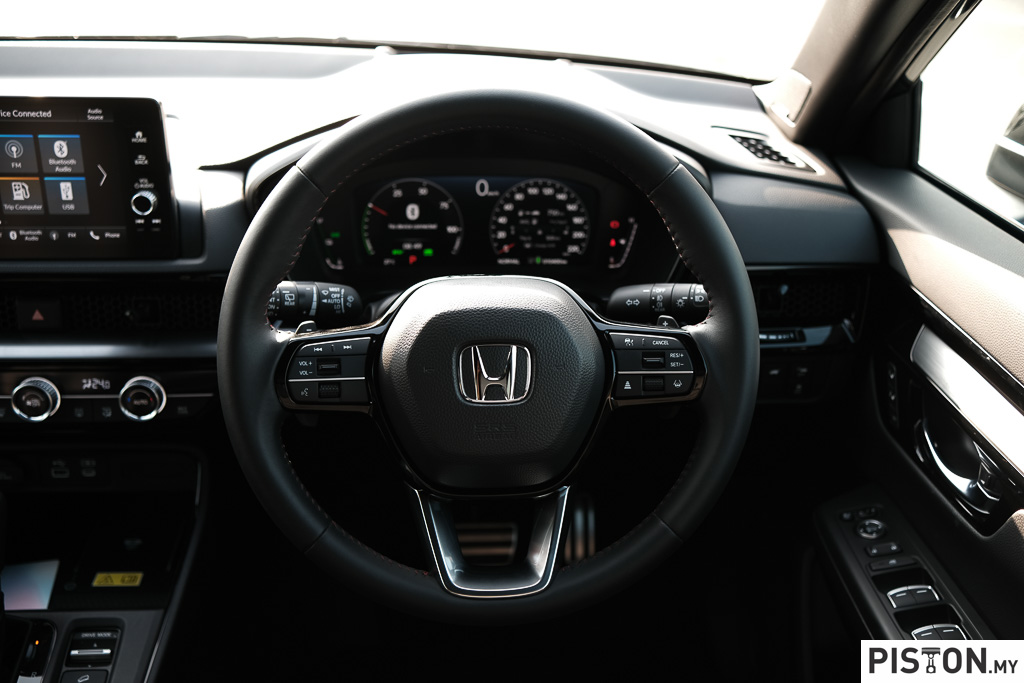
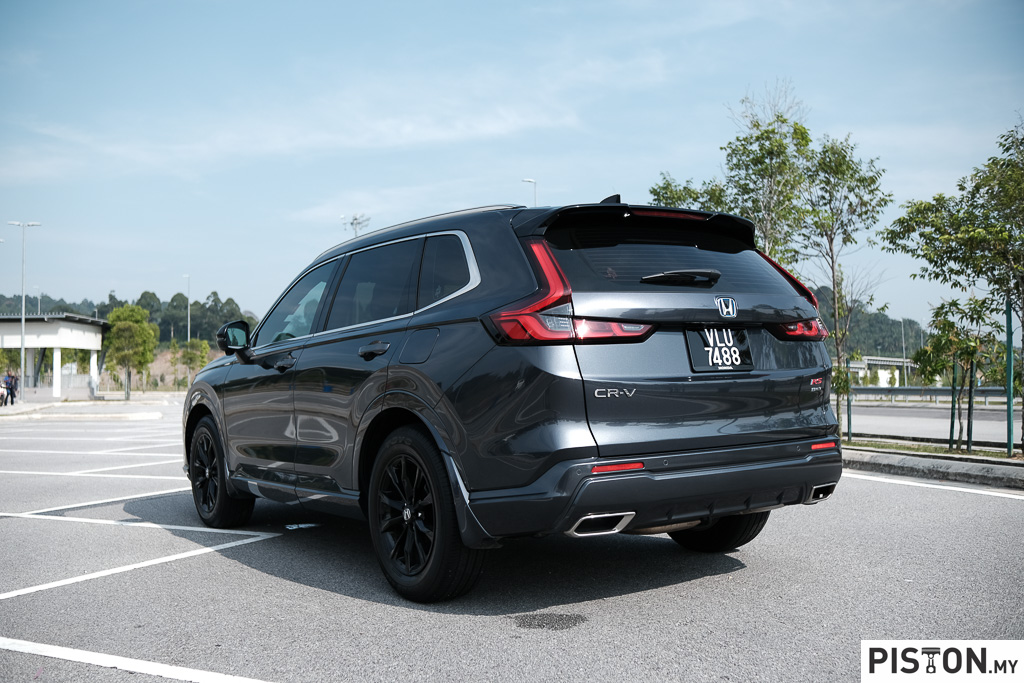
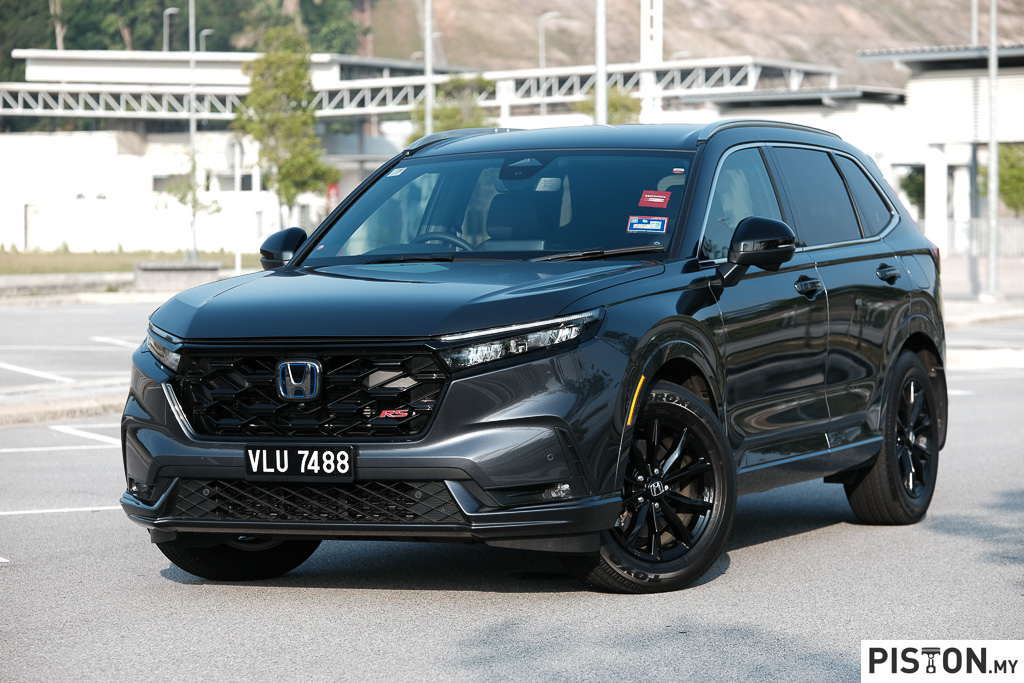
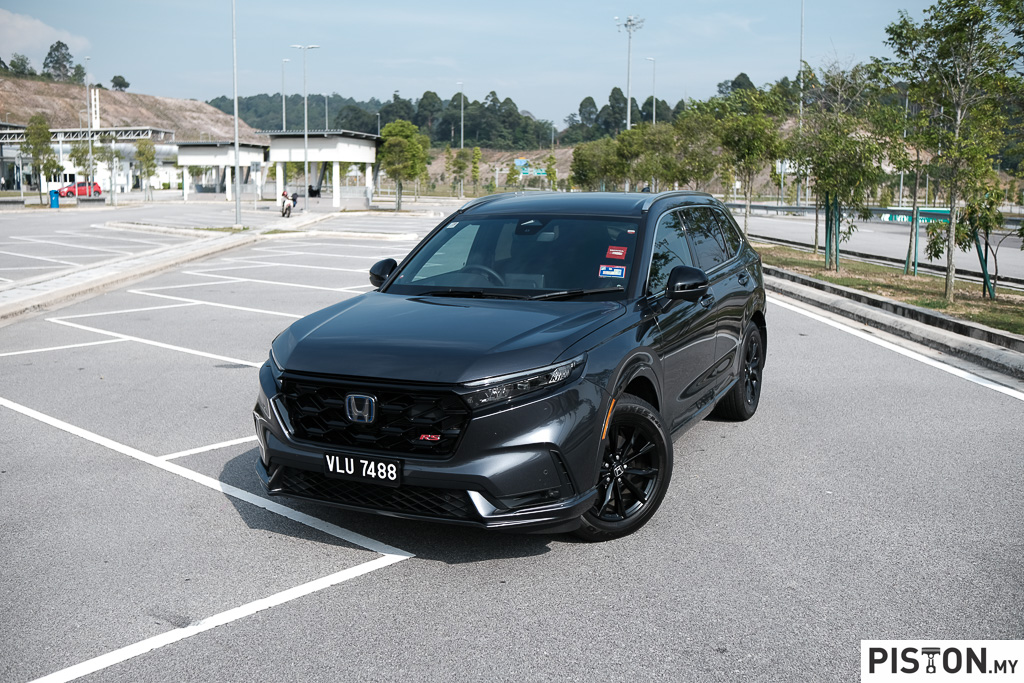
Since we only drove the Civic and the CR-V, we will focus on that. The CR-V e:HEV RS is the flagship Honda for the Malaysian market, and it feels like it too.
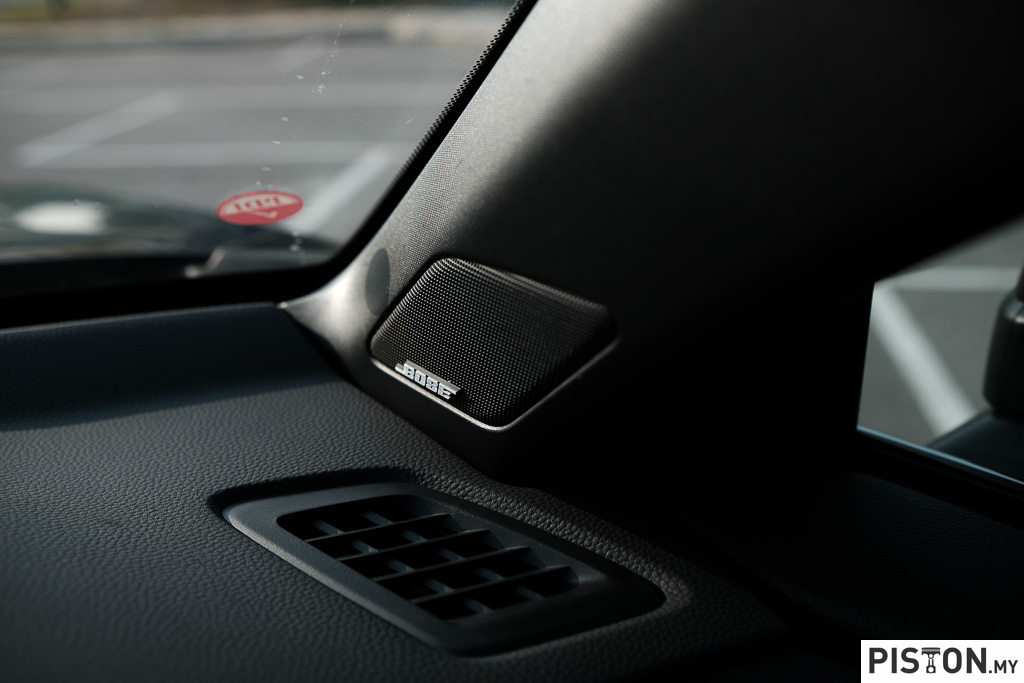
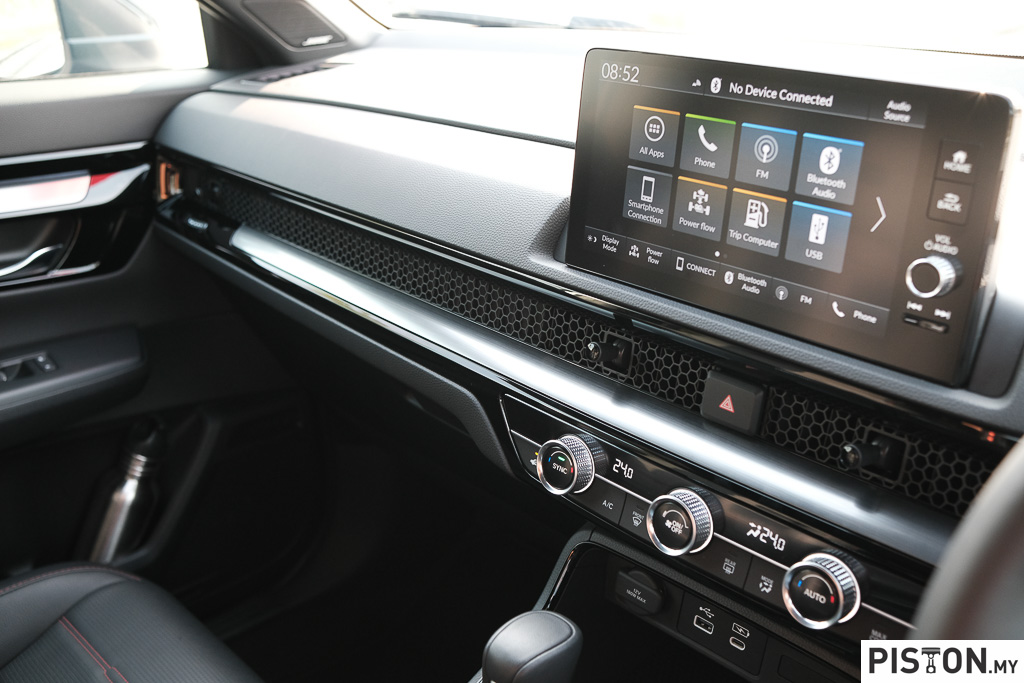
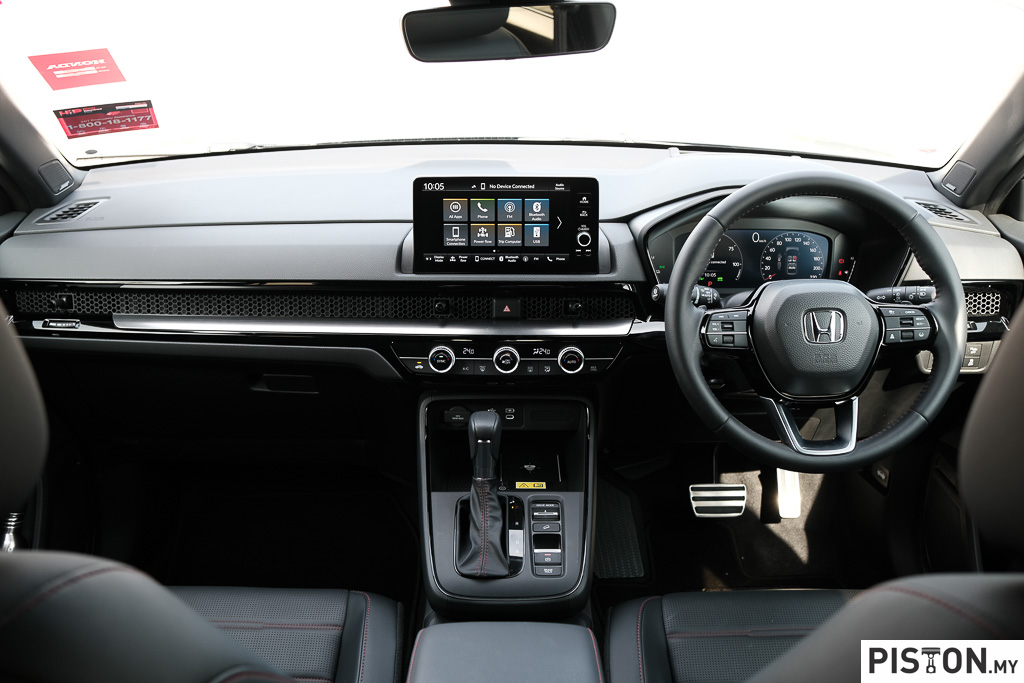
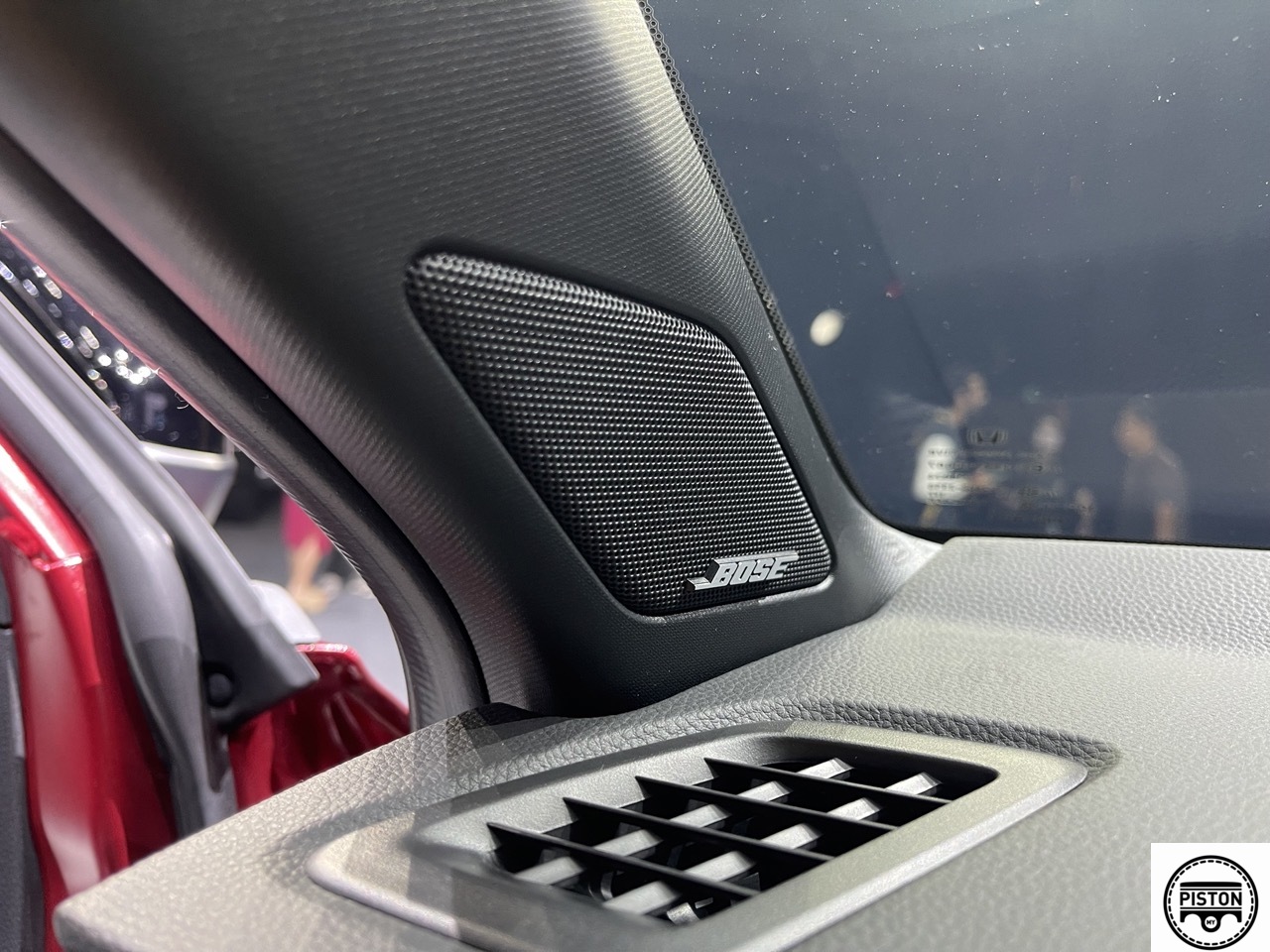
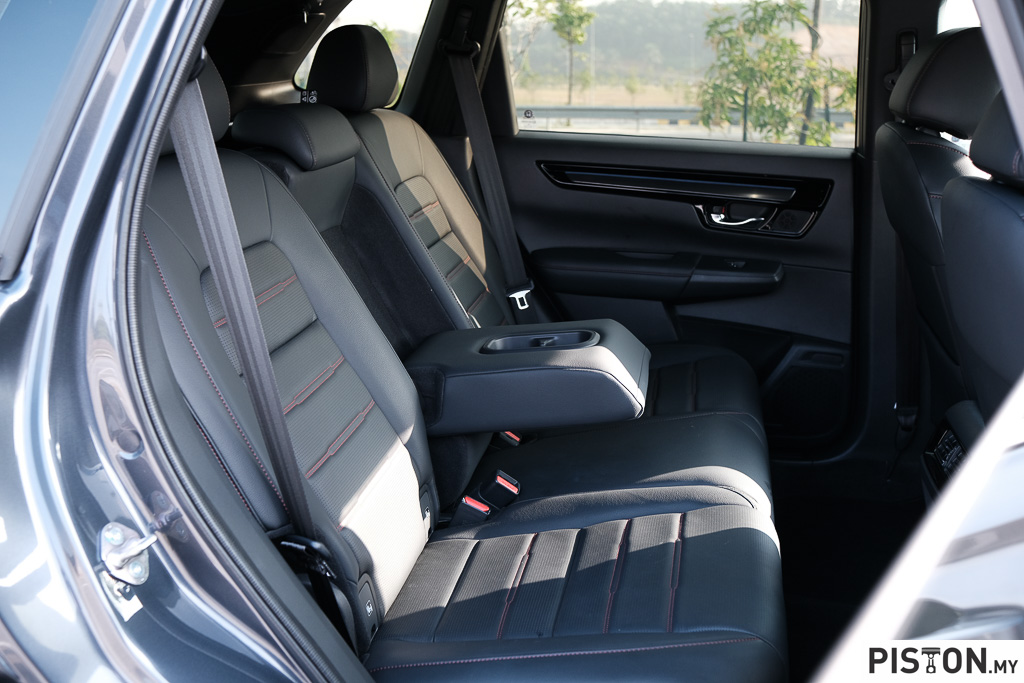
It offers a spacious cabin with the 12-speaker BOSE sound system being the jewel of the interior. It is rare for a car of this price range to come with a BOSE sound system so credit to Honda Malaysia for managing that.
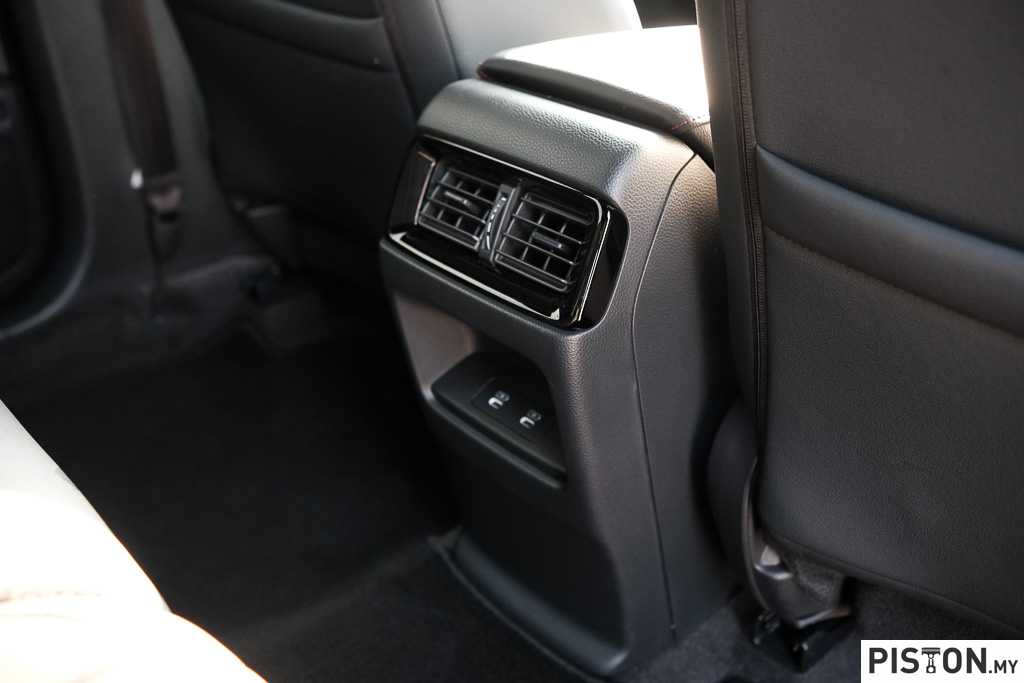
Besides being spacious, the interior of the CR-V hybrid is one that is incredibly refined. Achieved through a combination of technologies such as double-glazed windows, noise cancelling technology and even sound resonator wheels. All this works in unison to keep the interior incredibly quiet and refined even at highways speed.
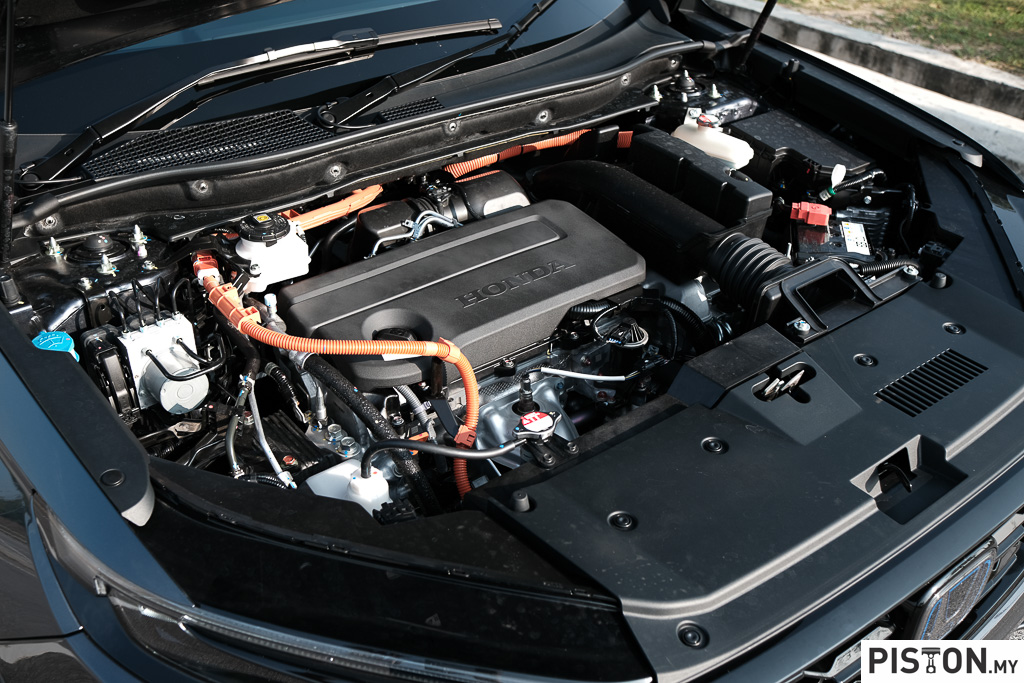
The CR-V is powered by a 2.0-litre, naturally-aspirated, Atkinson Cycle engine with electric motors. It produces a combined system output of 244PS and 335Nm of torque. As for performance, it has a top speed of 187km/h and accelerates to 100km/h in just nine seconds.
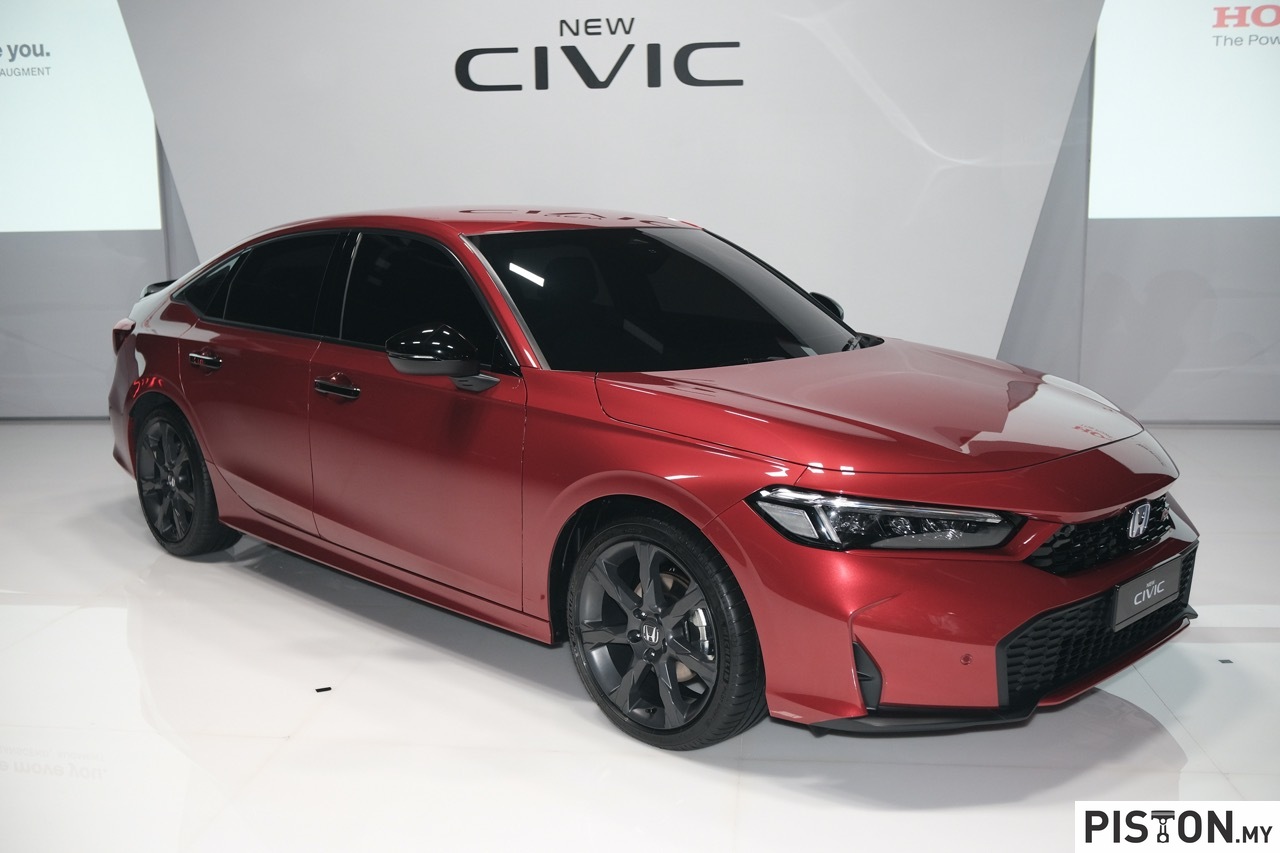
The Civic on the other hand feels a lot sportier. Perhaps it is because you sit closer to the ground, and this makes the entire experience feel a lot more purposeful.
The new Civic has grown substantially and this translates to a roomier interior.
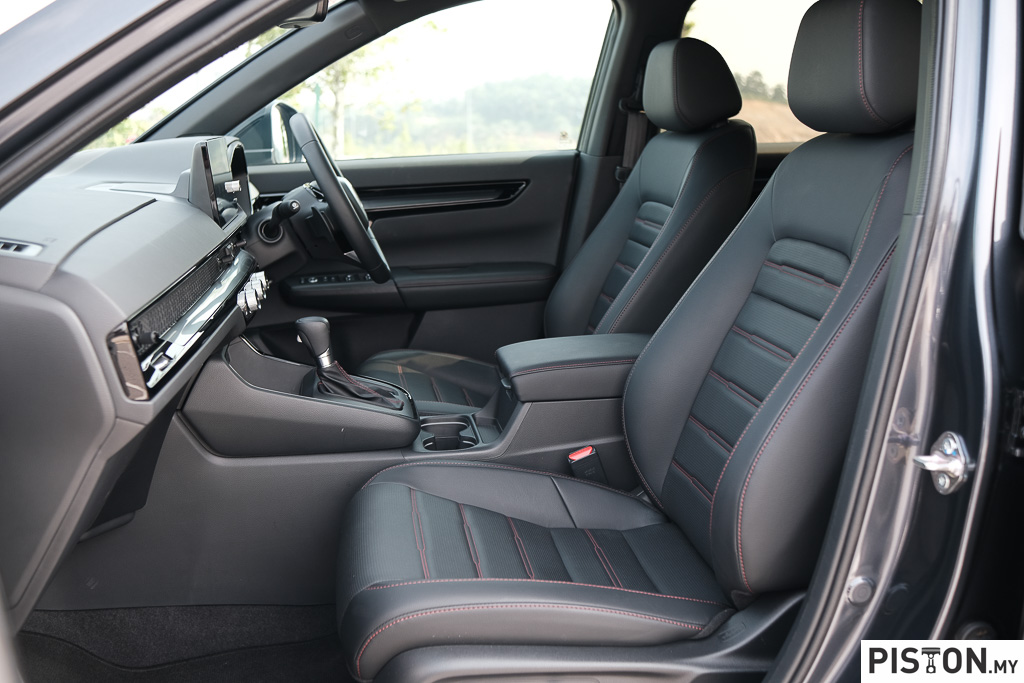
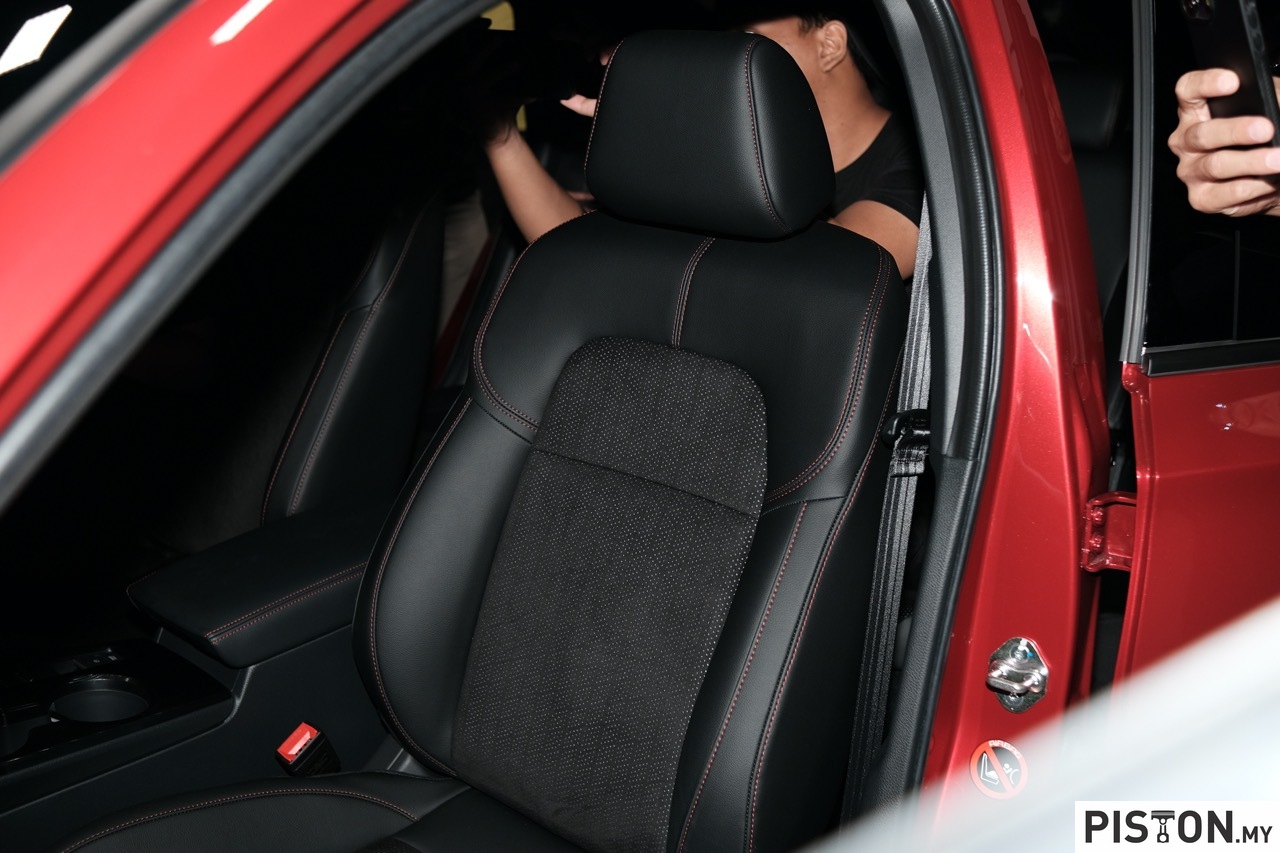
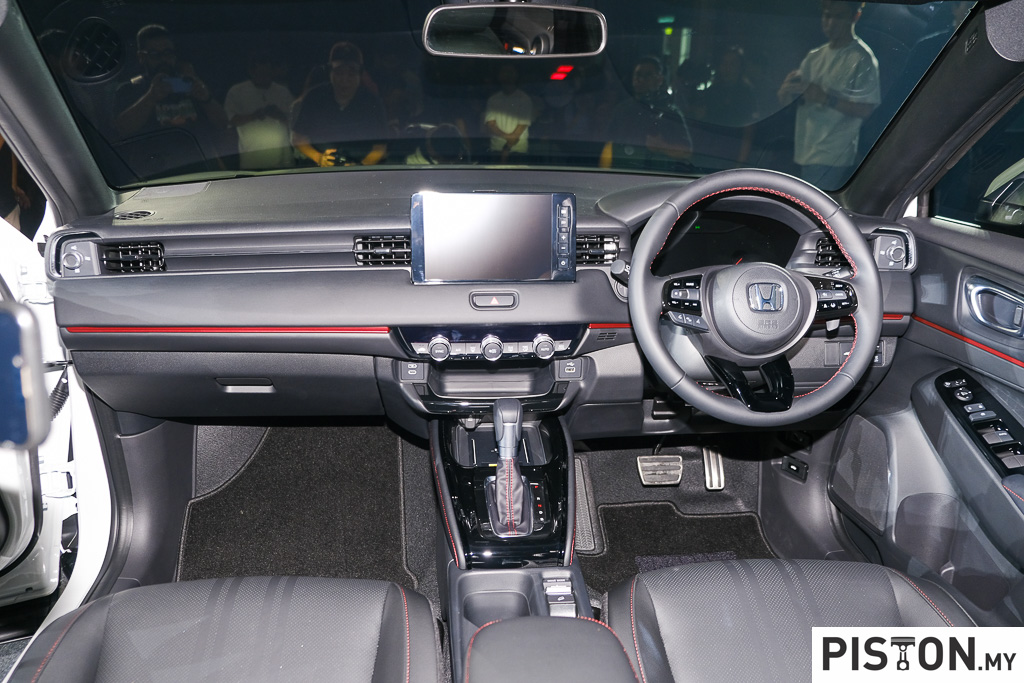
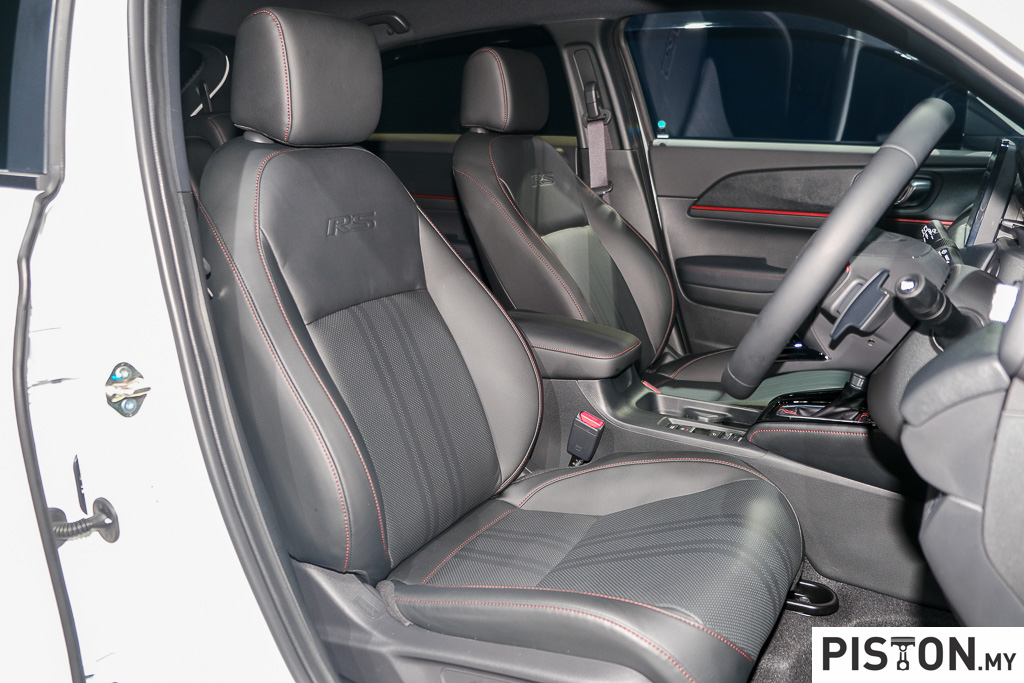
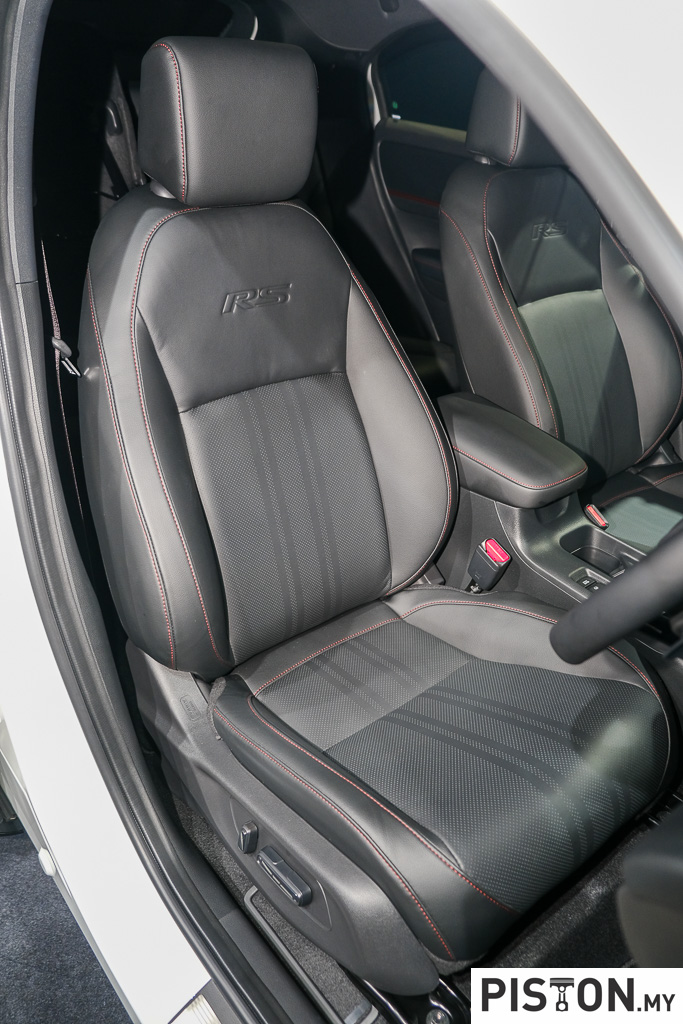
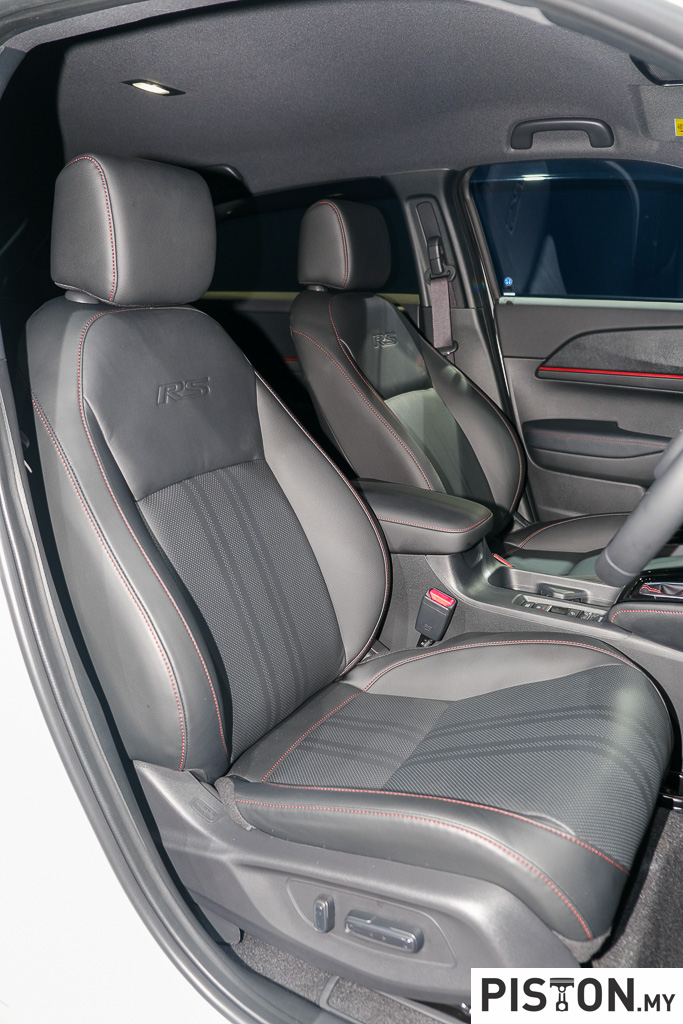
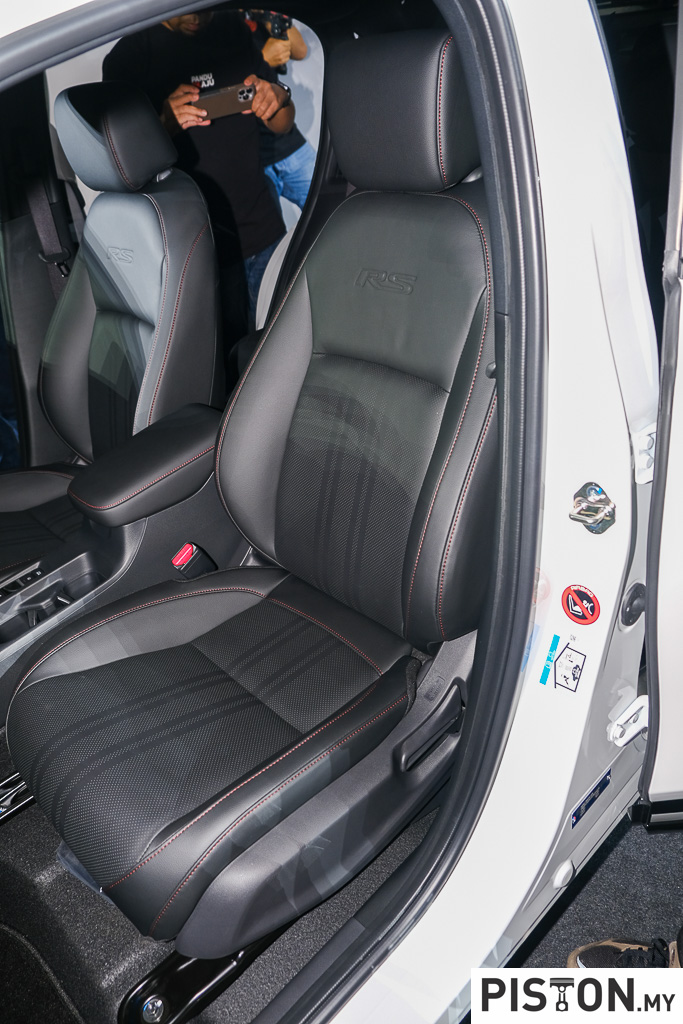
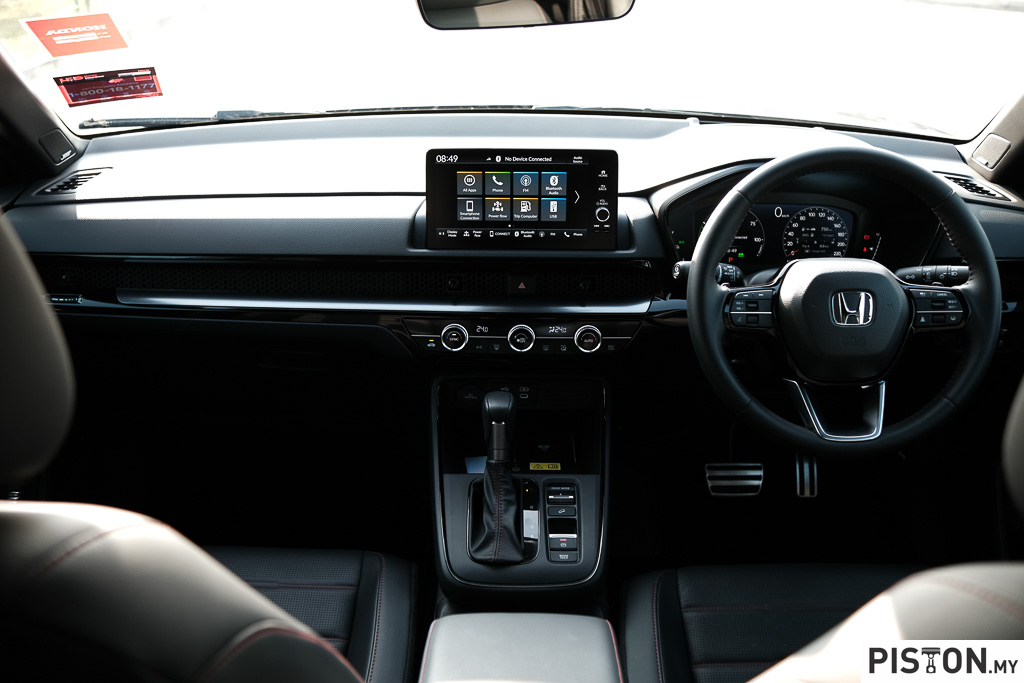
The two cars share similar dashboards but the seats on the Civic e:HEV RS are wrapped in a combination of half leather and suede like material.
This writer personally prefers the leather seat on the Civic V-Spec because it offers more padding and as such feels more comfortable. The seats on the RS feel sportier in comparison. Perhaps age may be a factor.
The Civic does not have as much sound deadening tech as the CR-V, as such you hear more of the world outside.
As for the powertrain, the Civic is also powered by a 2.0-litre, naturally-aspirated, Atkinson Cycle engine mated to an electric motor.
With 235PS and 315Nm of torque, the Civic sees off the charge to 100km/h in 7.9 seconds and tops out at 180km/h.
But where the Civic lacks power, it makes up for in efficiency. The Civic needs just four-litres of fuel to travel 100km while the CR-V needs five-litres.
Final words.
In a world where new car brands are emerging faster than ever, legacy car makers like Honda are important because of their engineering prowess.
Honda Malaysia’s entire management team was on hand to talk about hybrid powertrains.
The hybrid technologies of both the Honda CR-V and the Civic are undeniably impressive. Not only efficient, but power for both models are also available from near standstill.
It is this ability to provide technology to suit everyday life that sets Honda apart from the rest.
There is no doubt that some company will soon reverse engineer Honda’s tech and call it their own with clever acronyms and such.
Honda Malaysia flew in engineers from Japan and locally to teach us about hybrid powertrains.
But Honda has been building and rebuilding since 1999 with the Honda Insight and its hybrid powertrain called the Integrated Motor Assist. It is no wonder that Honda Malaysia has shifted over 60,000 hybrid cars in Malaysia alone.
So, if it’s a reliable, powerful yet efficient powertrain that you want, then the Honda Civic and the CR-V are worth a good hard look. This is a company that innovates and not just reverse engineers.
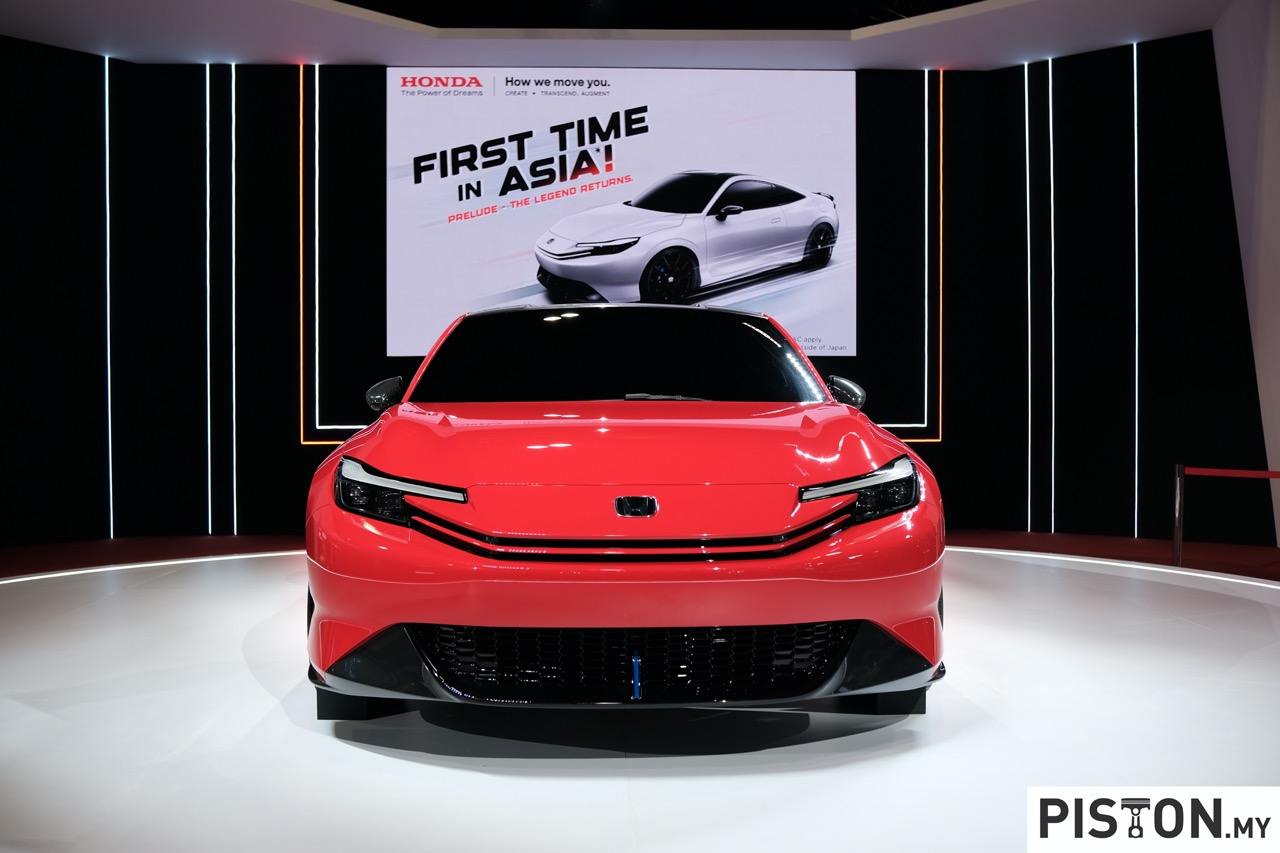
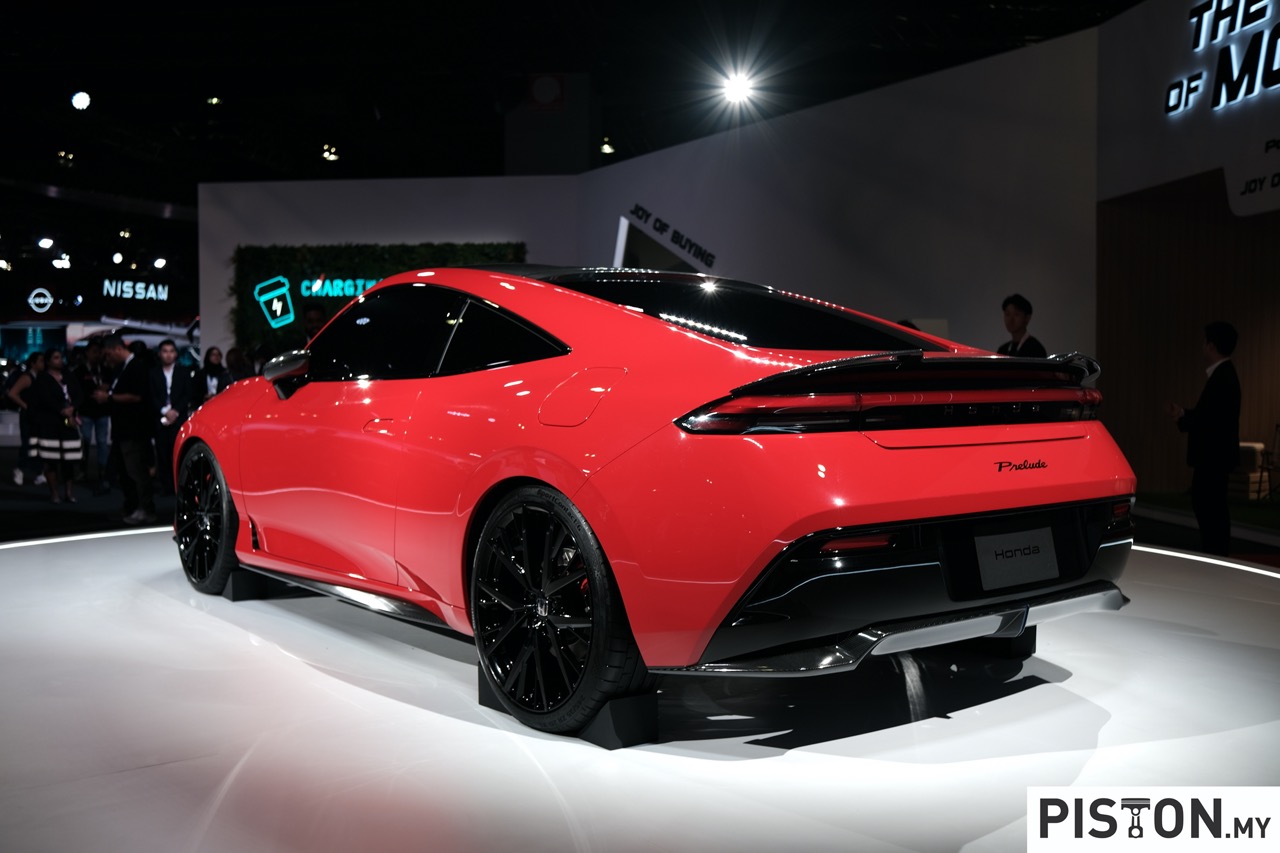
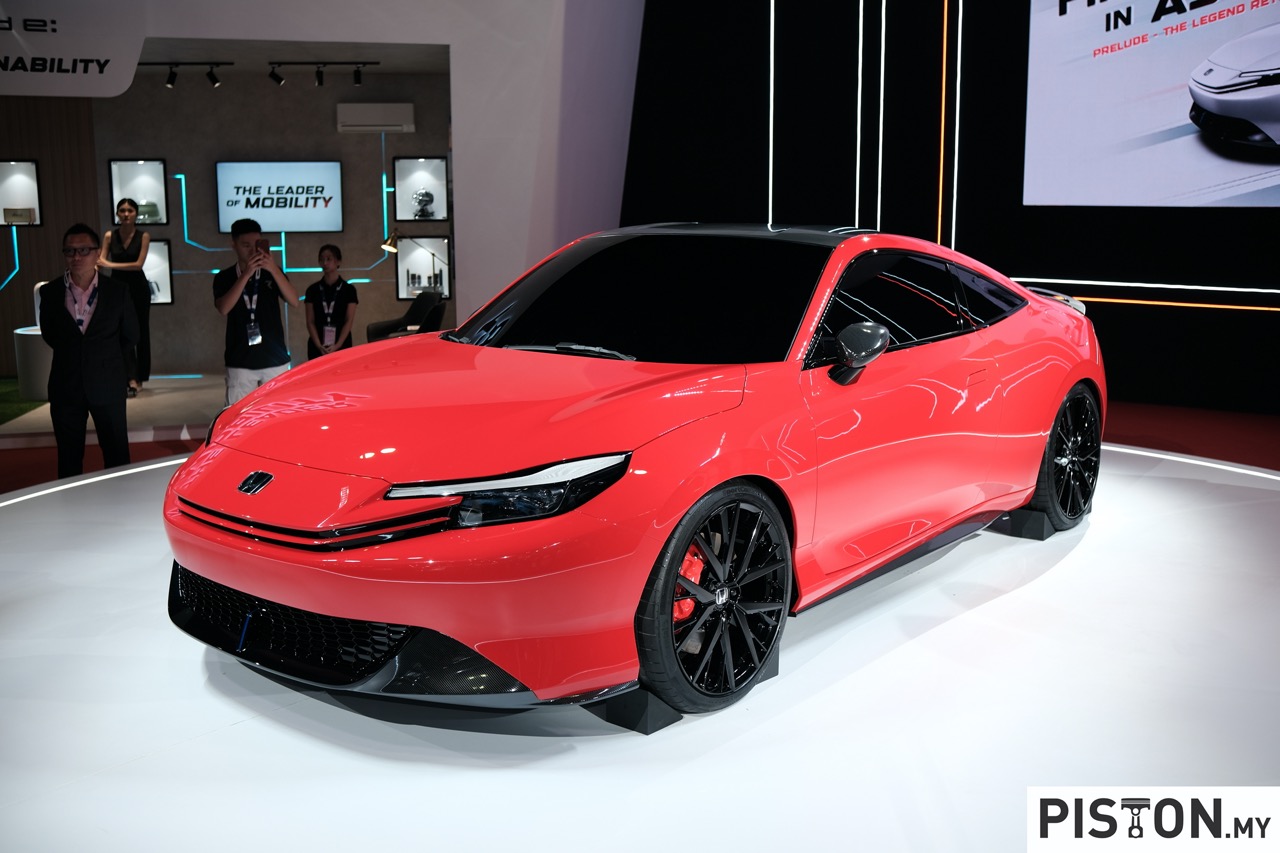
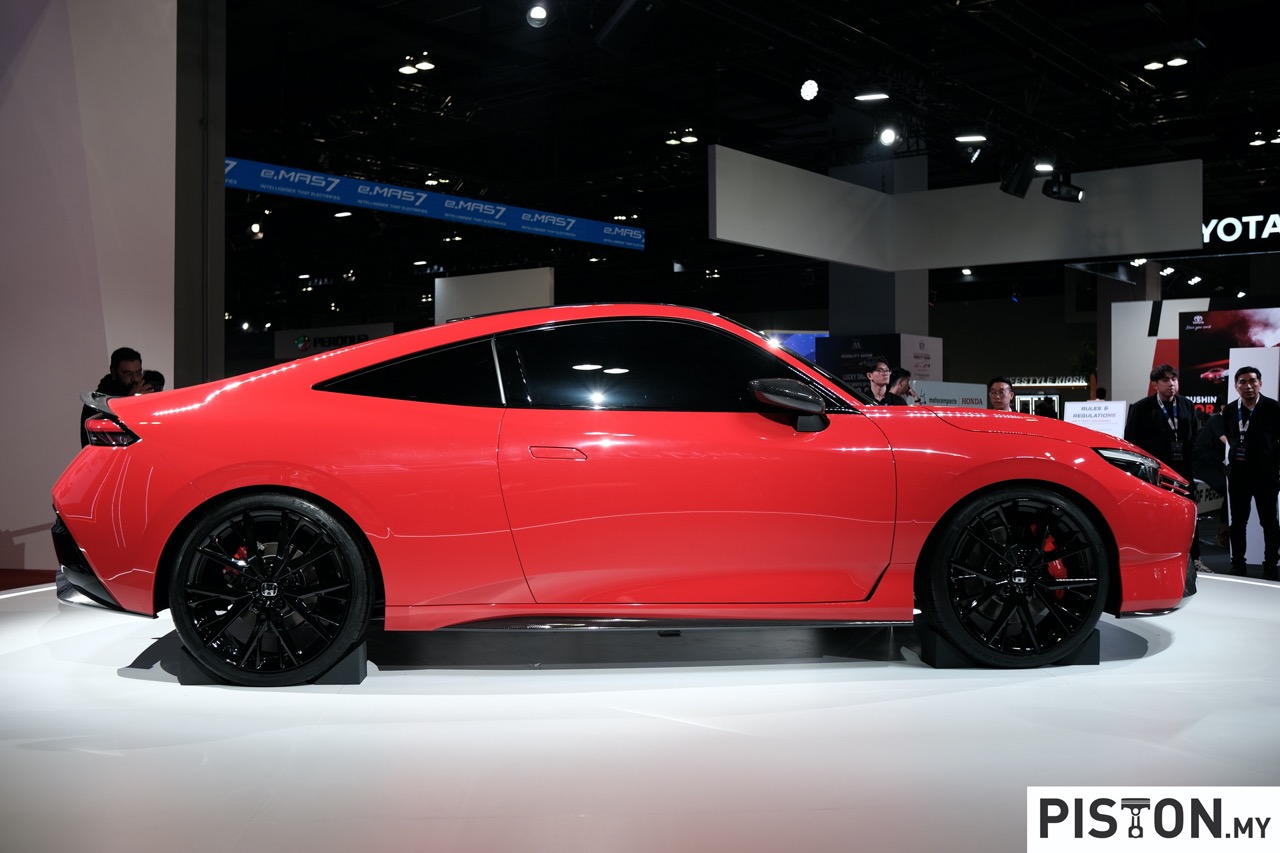
Honda kini dalam perancangan untuk menghidupkan semula nama ikonik Prelude, kali ini dengan pendekatan yang lebih moden dan seimbang—menggabungkan kecekapan sistem hibrid dengan elemen kejuruteraan berprestasi tinggi. Model baharu ini bakal menampilkan satu gabungan unik yang membezakan dirinya daripada barisan kenderaan berasaskan Civic yang lain.
Antara tarikan utama Prelude generasi baharu ialah penggunaan sistem suspensi hadapan jenis dwi-paksi, iaitu komponen sama yang digunakan dalam Honda Civic Type R. Gabungan ini dipertingkatkan lagi dengan trek hadapan yang lebih lebar serta sistem brek Brembo berprestasi tinggi, memberi gambaran awal bahawa meskipun berteraskan hibrid, Prelude tetap serius dari segi prestasi.
Namun berbeza dengan Civic Type R yang menggunakan enjin pengecas turbo, Honda Prelude baharu akan dikuasakan oleh sistem kuasa hibrid yang diambil daripada Civic e:HEV. Ini menjadikan Prelude sebagai sebuah kenderaan yang tidak mempunyai pesaing langsung di pasaran semasa—sebuah coupe dua pintu dengan prestasi mantap, tetapi memanfaatkan kecekapan janaan elektrik.
Honda is preparing to reintroduce the Prelude nameplate with a compelling blend of performance engineering and hybrid efficiency, setting it apart from the rest of the Civic-based range. The revived model will stand out by featuring the same dual-axis front suspension setup found in the acclaimed Civic Type R, combined with that model’s wider front track and high-performance Brembo brakes. However, instead of being driven by a turbocharged engine, the new Prelude will employ the powertrain from the Civic Hybrid.
This unique pairing of the Civic Hybrid’s electrified power system with the precision handling of the Type R chassis is expected to create a car without direct rivals in the market. While some manufacturers have explored the idea of combining hybrid technology with performance applications, it remains an unconventional strategy across the industry.
Honda appears to be positioning the new Prelude as a grand tourer rather than a full-blown sports coupe. This direction preserves certain elements from previous generations, including its two-door, front-wheel-drive configuration. However, enthusiasts hoping for the return of a manual transmission will be disappointed. Unlike the CR-Z hybrid, which proudly offered a six-speed manual gearbox, the latest iteration of the Prelude will forgo that option entirely.
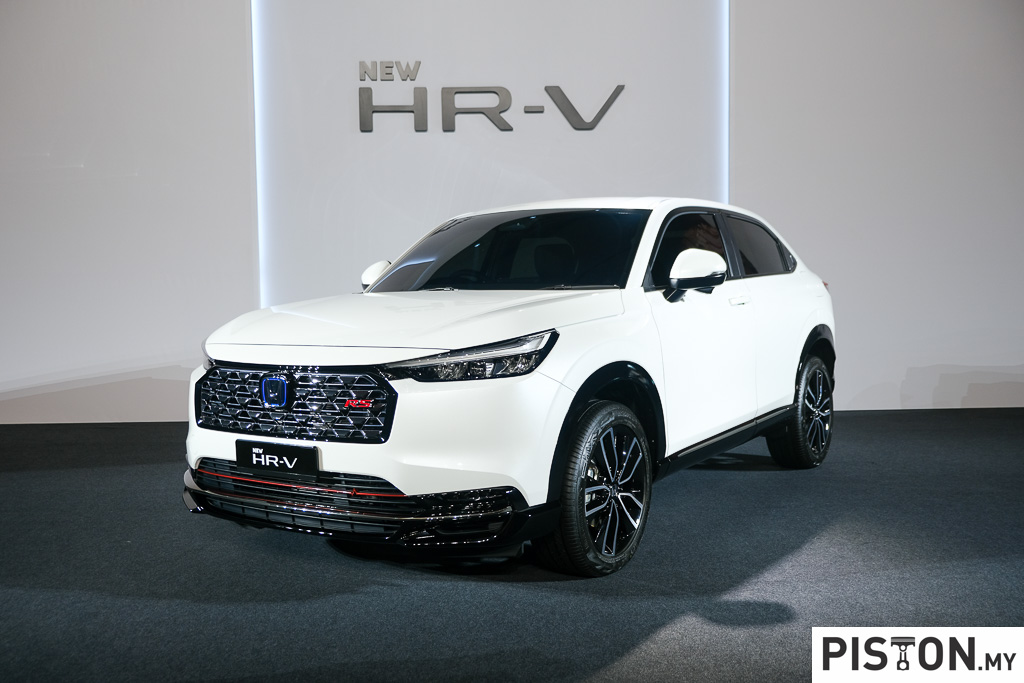
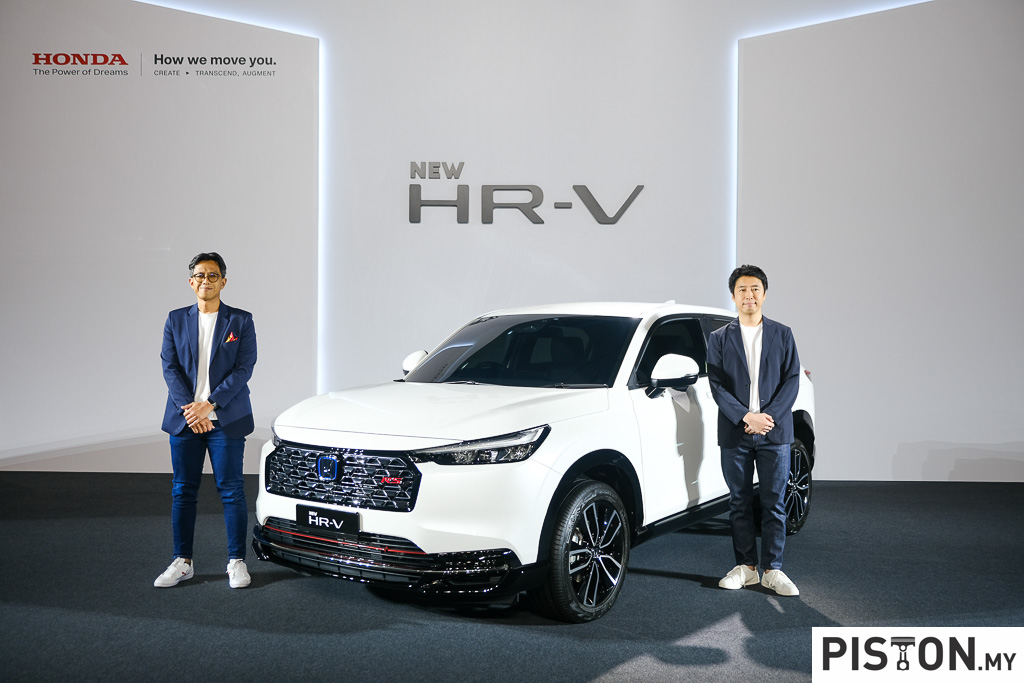
Selepas beberapa minggu menayangkan teasernya, Honda Malaysia secara rasmi telah melancarkan Honda HR-V baharu yang telah difacelift.
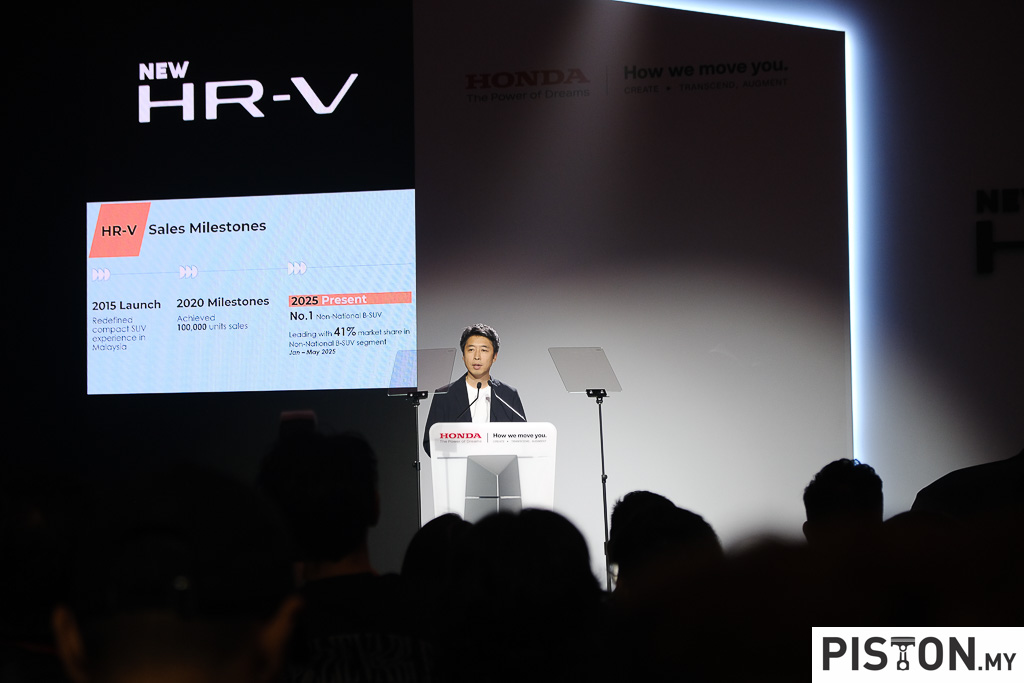
Dengan lebih 170,000 unit telah dijual sejak ia pertama kali diperkenalkan, HR-V baharu ini dijangka akan meneruskan kisah kejayaannya.
Model generasi ketiga yang dikemas kini ini hadir dengan pelbagai pembaharuan yang mengukuhkan lagi kedudukannya sebagai SUV Segmen B bukan nasional nombor satu di negara ini.
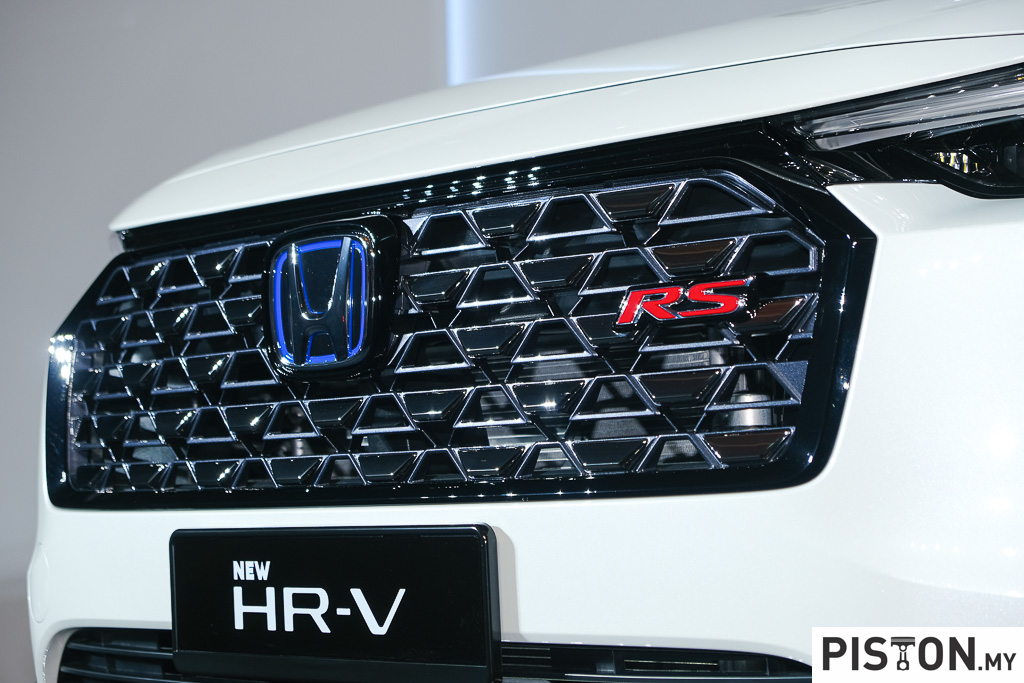
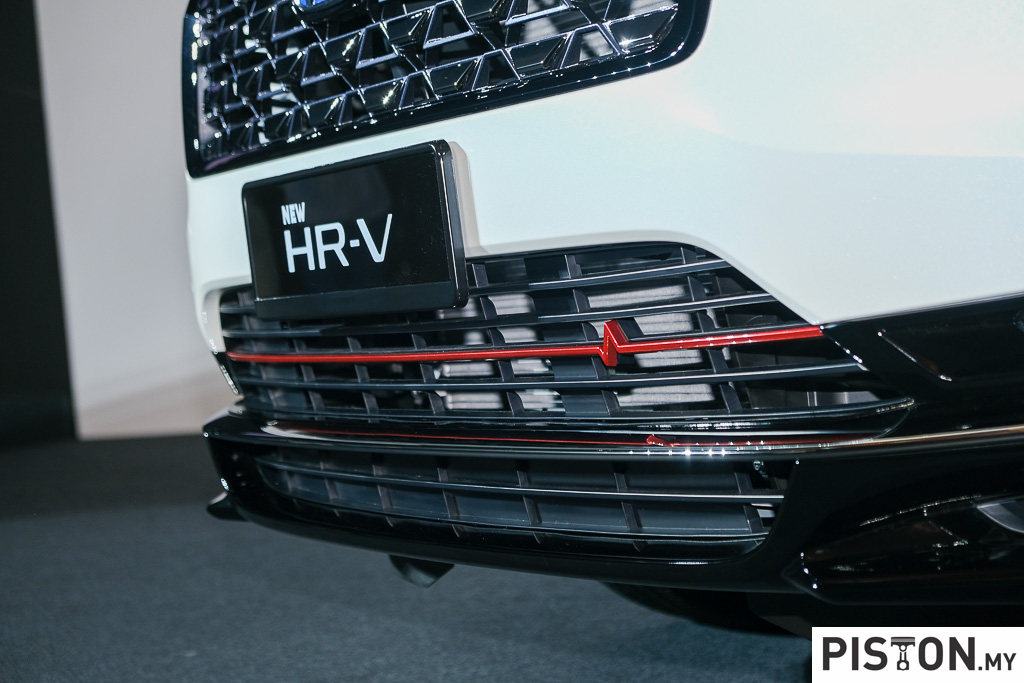
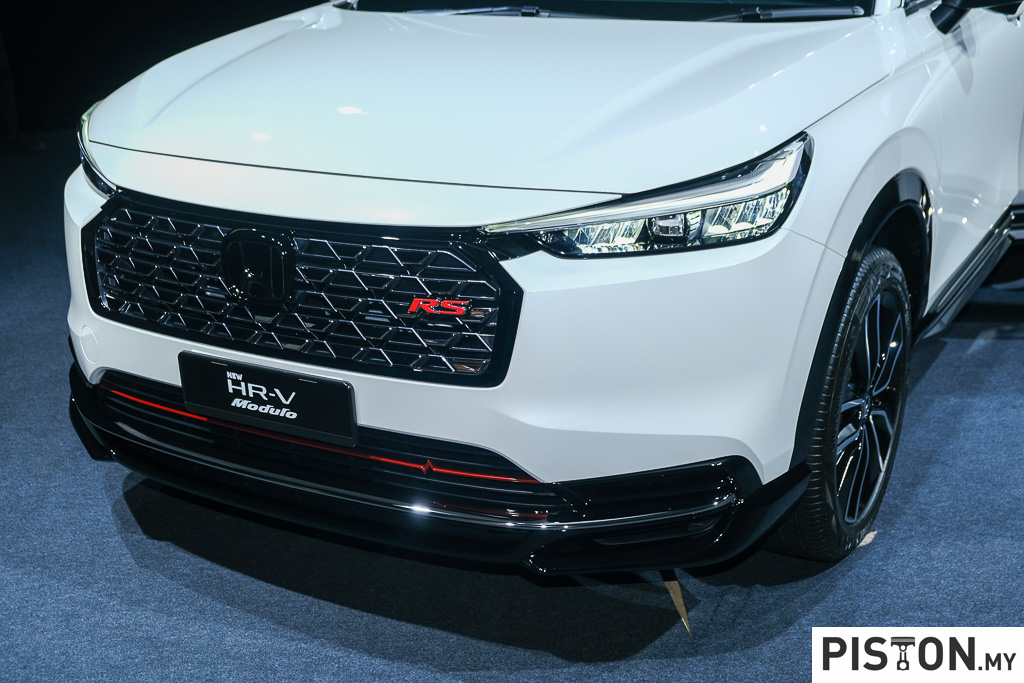
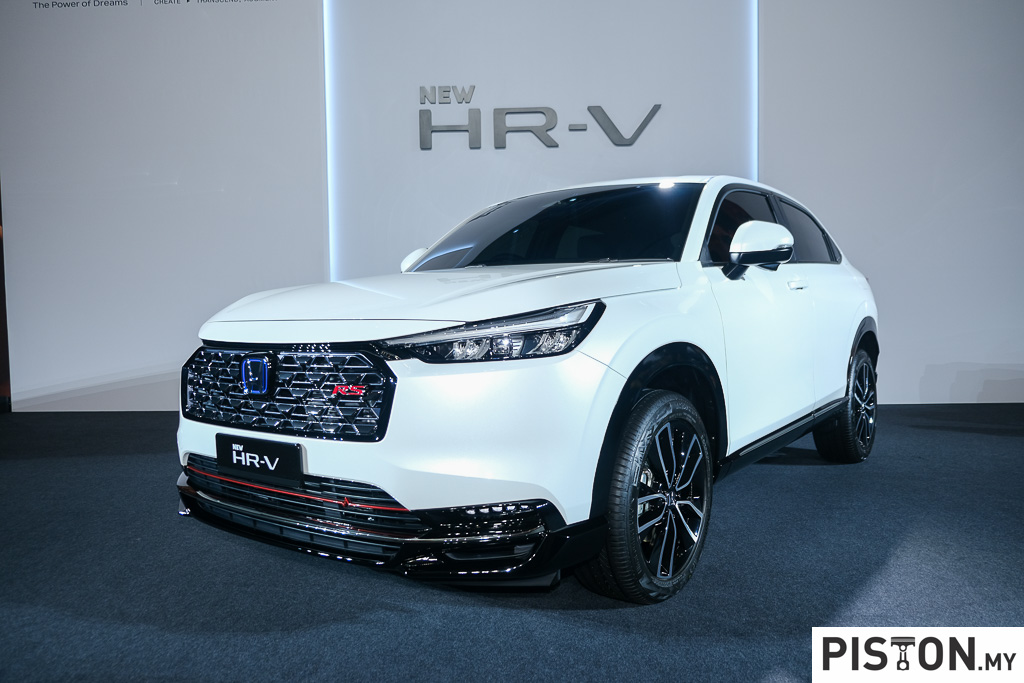
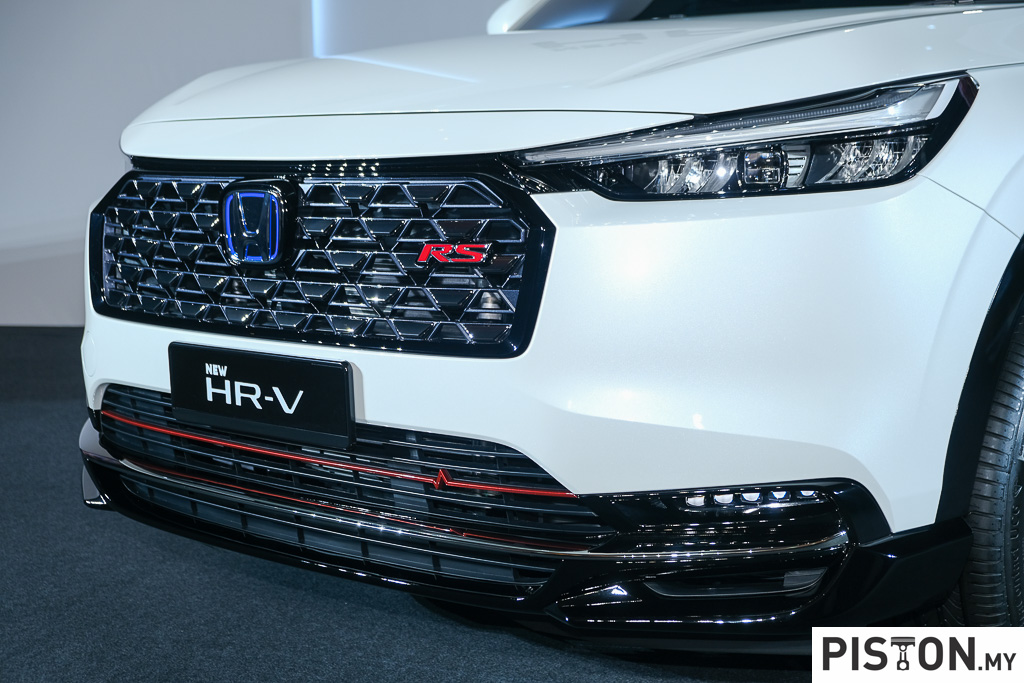
Dari luar, pembaharuan termasuk gril hadapan baharu yang lebih lebar berbanding sebelum ini. Bahagian hadapan baharu ini seterusnya dibezakan oleh bampar hadapan yang direka semula.
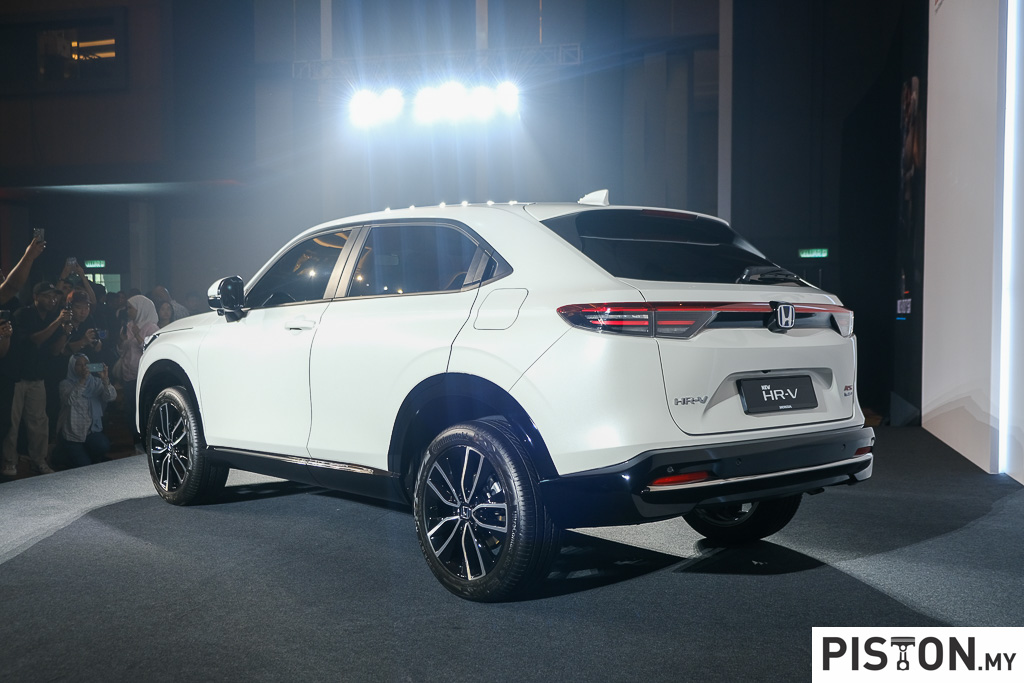
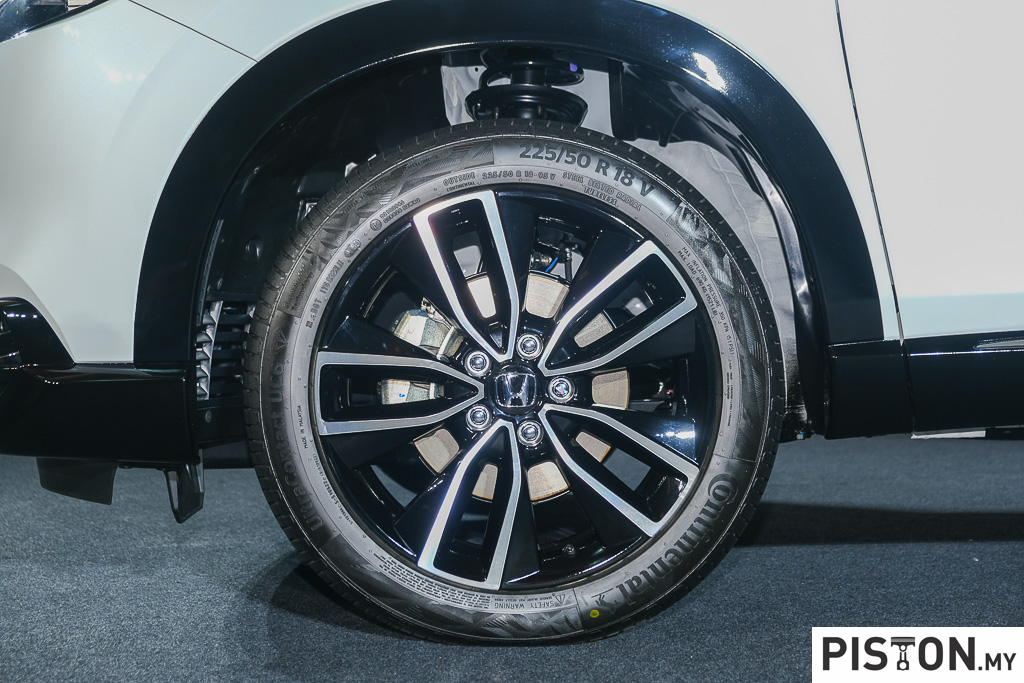
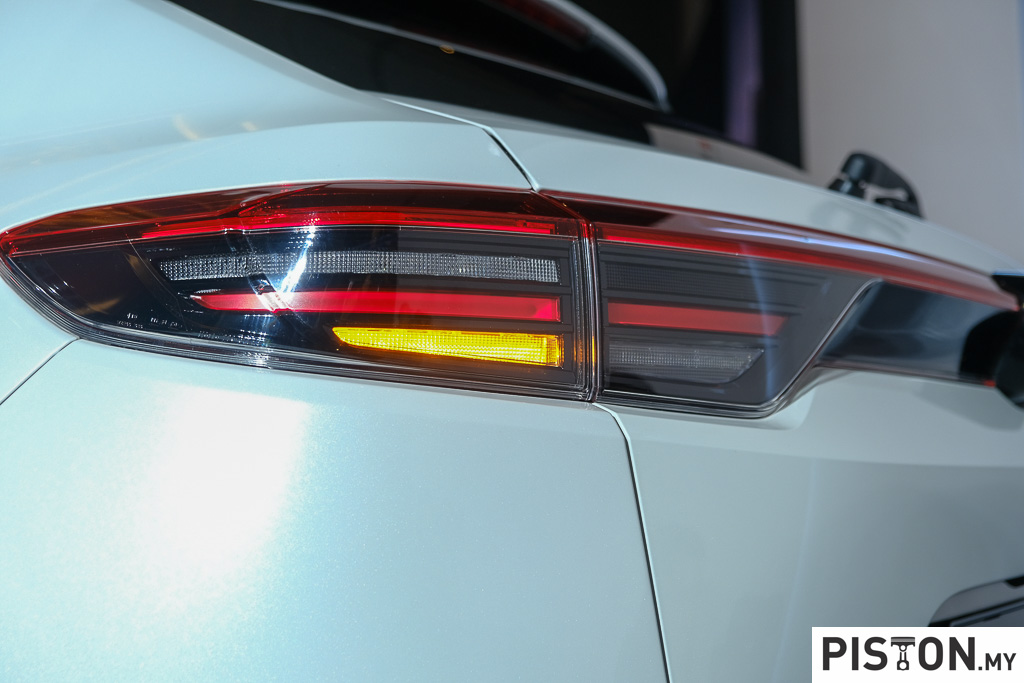
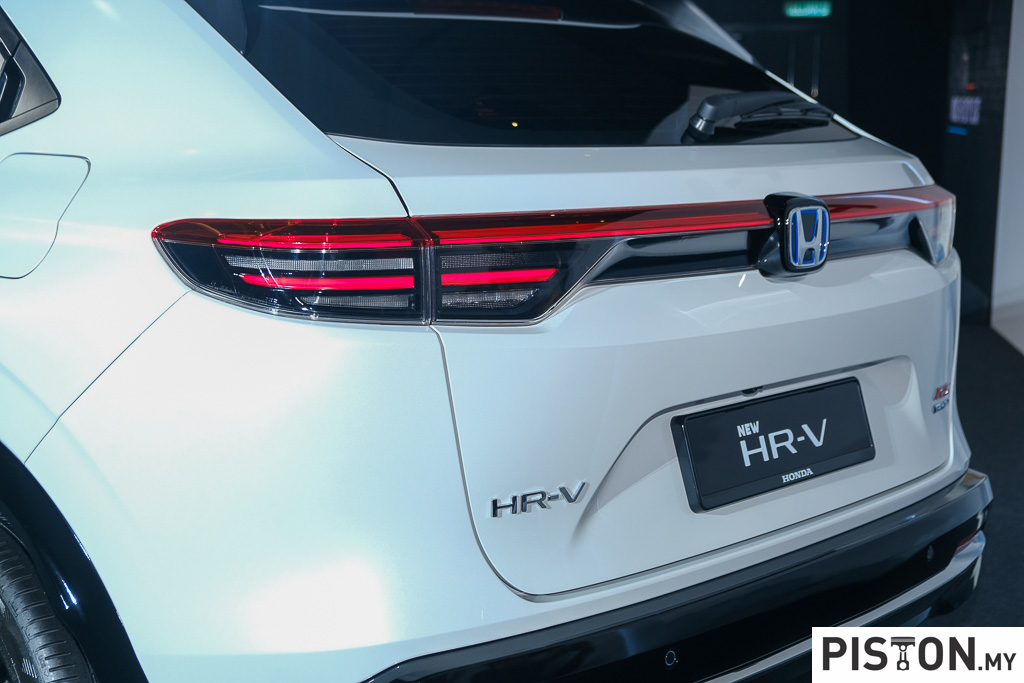
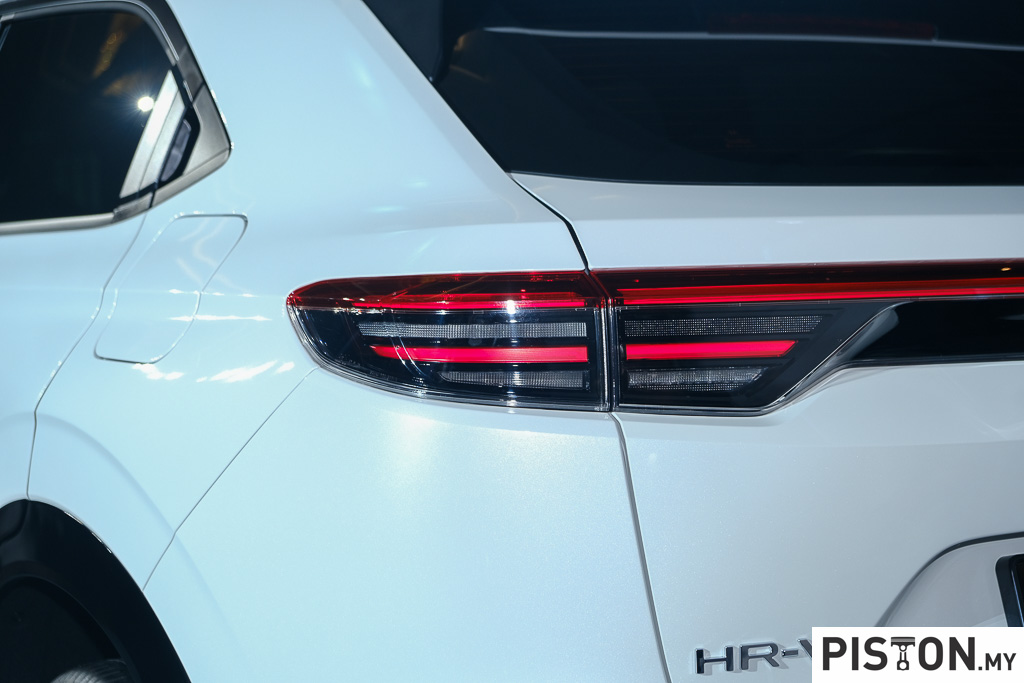
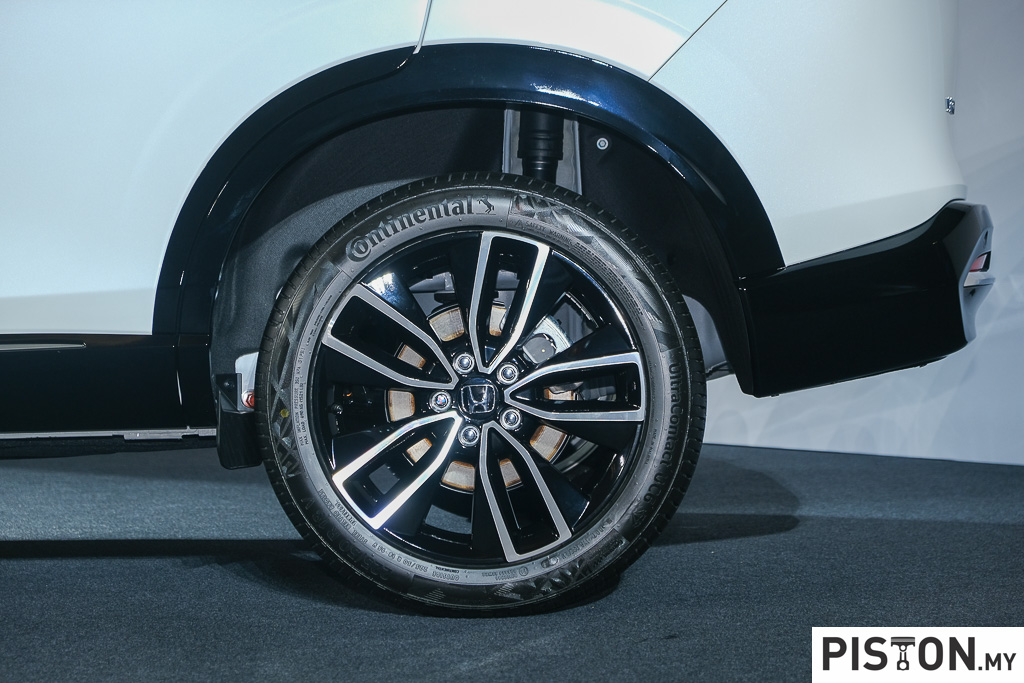
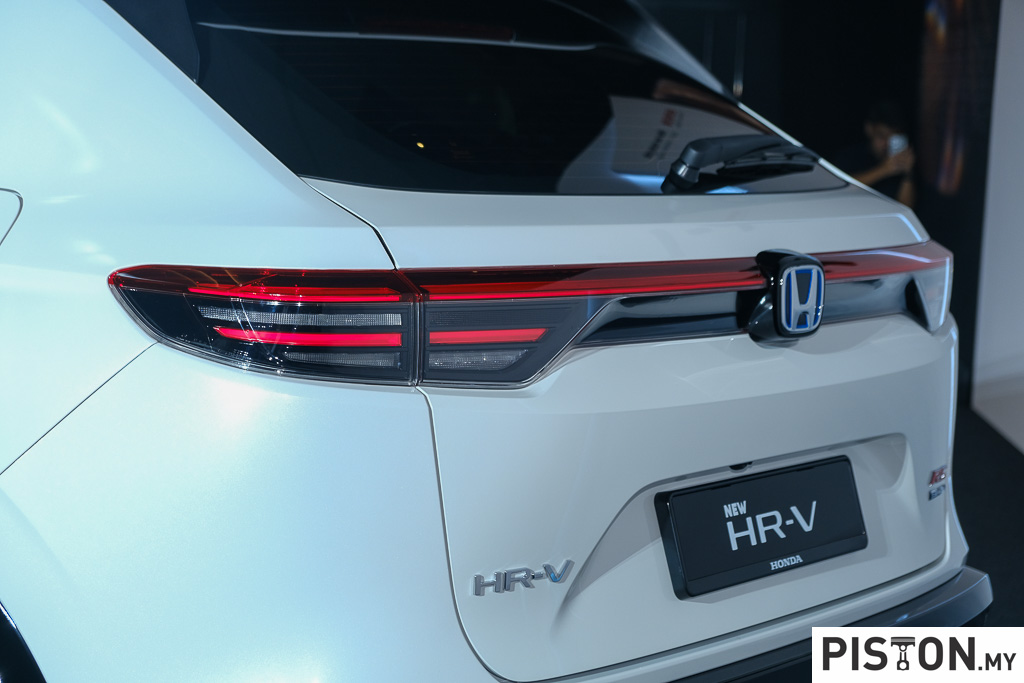
Pembaharuan pada bahagian belakang terhad kepada gugusan lampu belakang LED penuh yang baharu dan lebih ramping, manakala pembaharuan luaran lain termasuk rim yang direka semula.
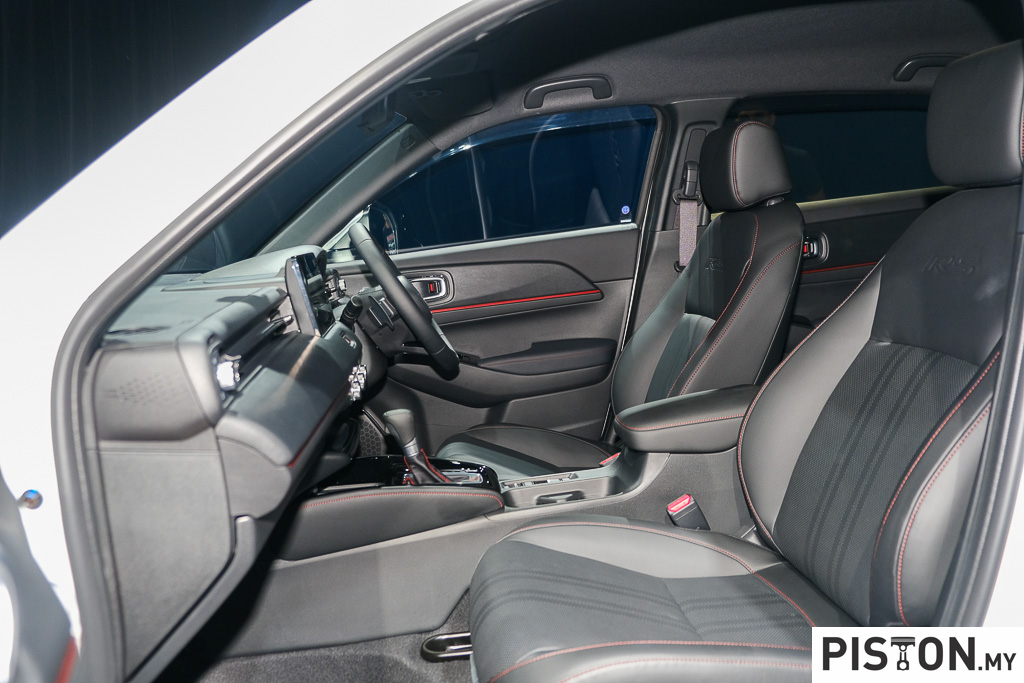
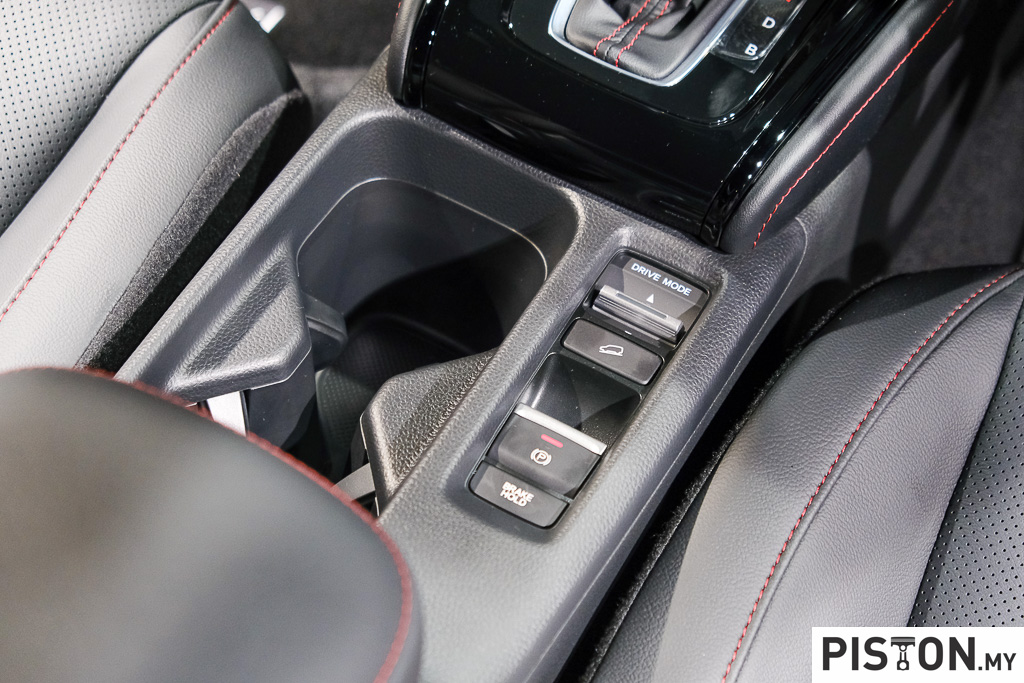
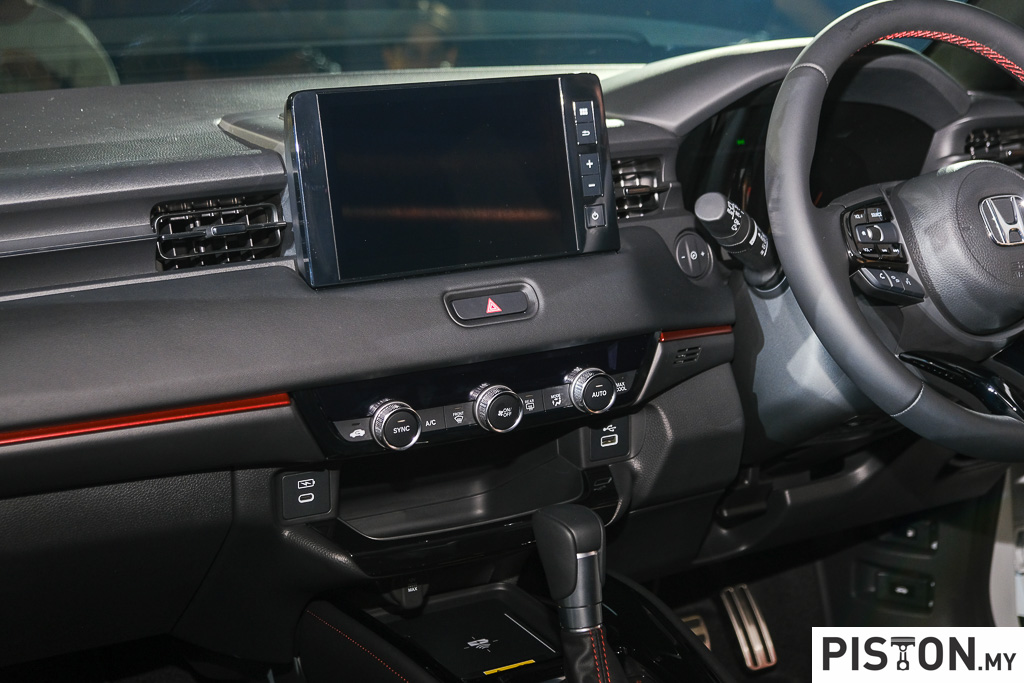
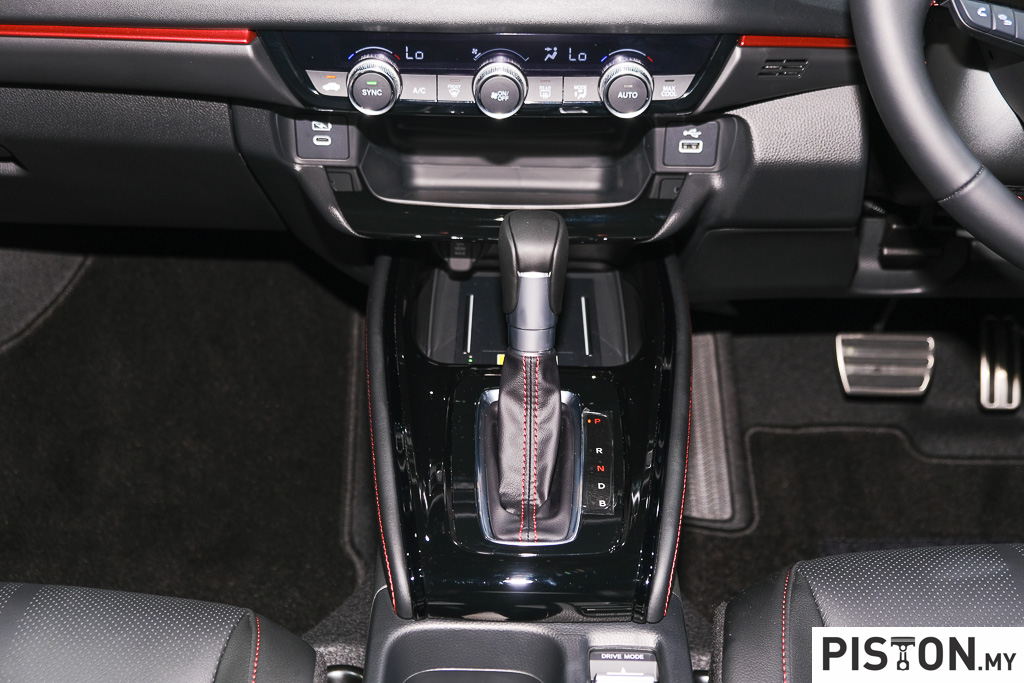
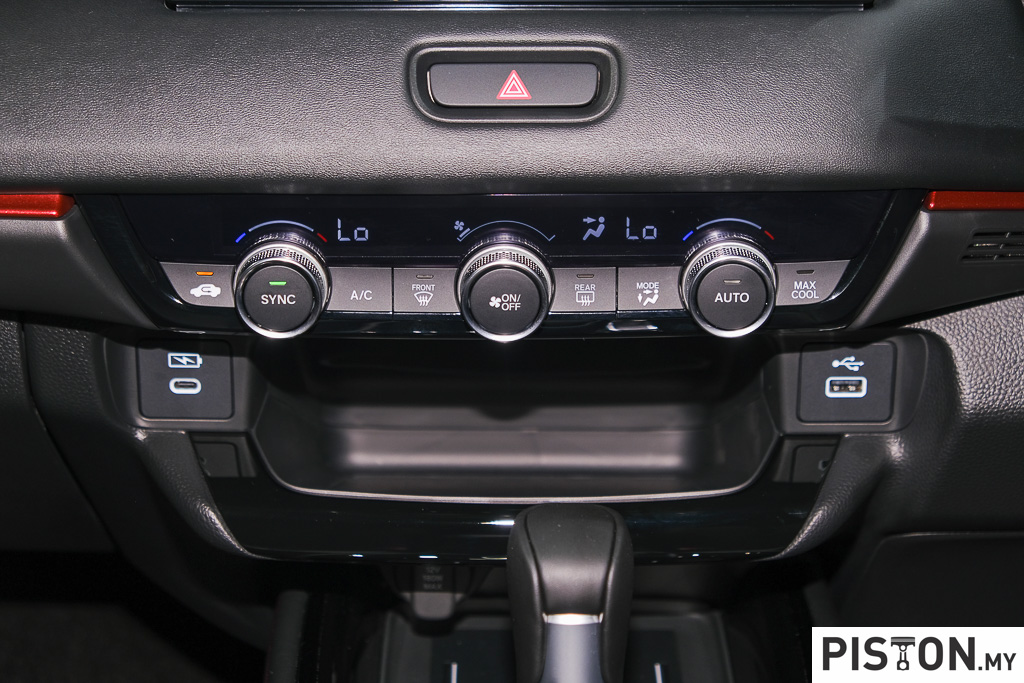
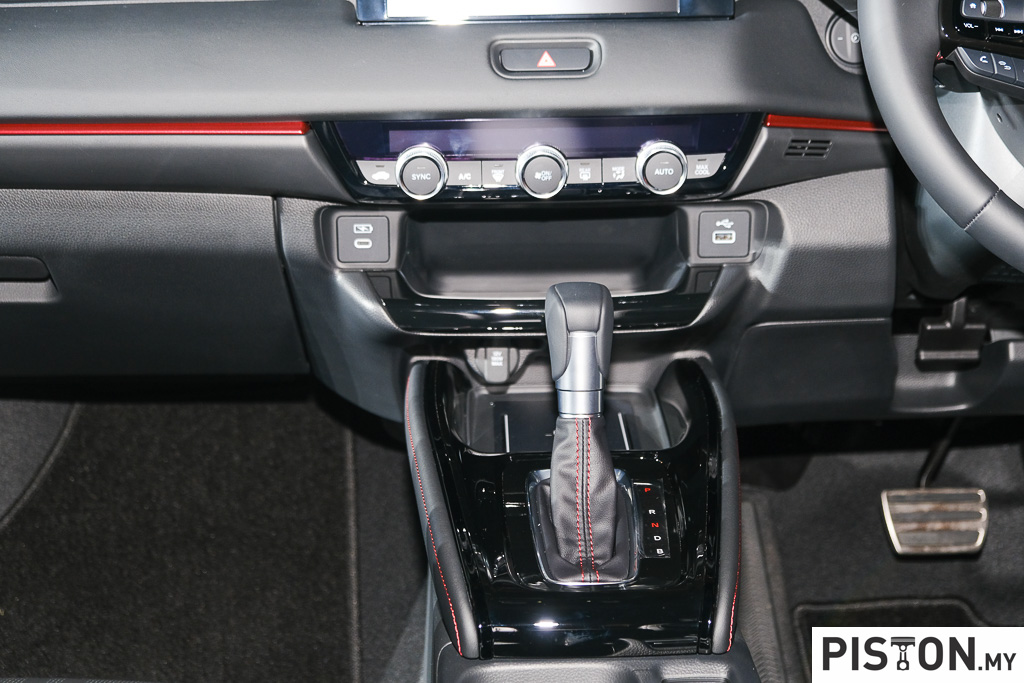
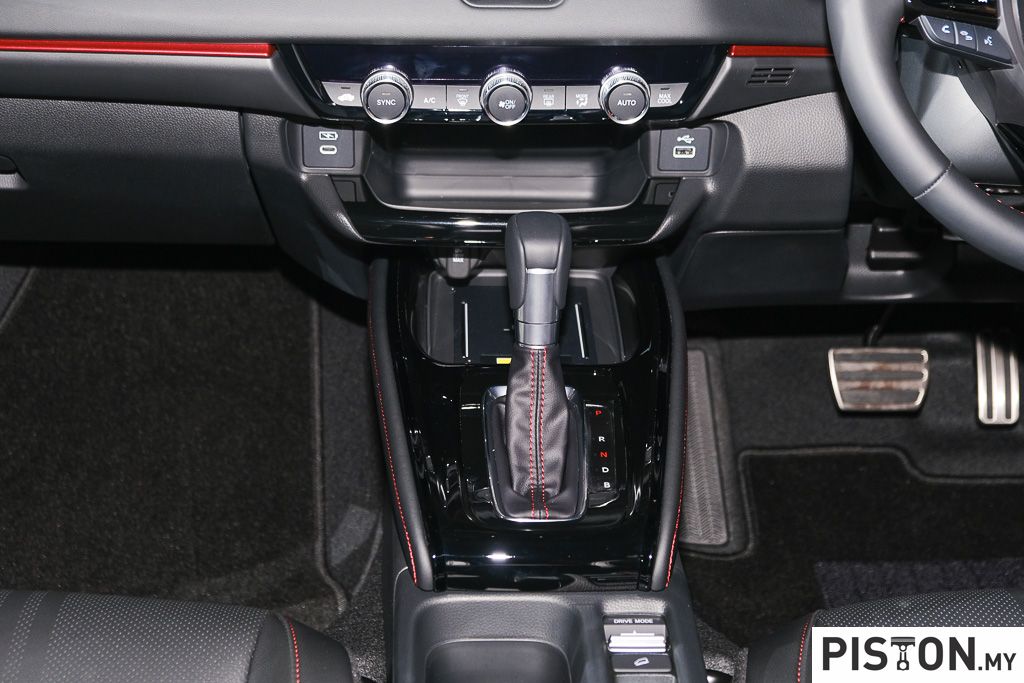
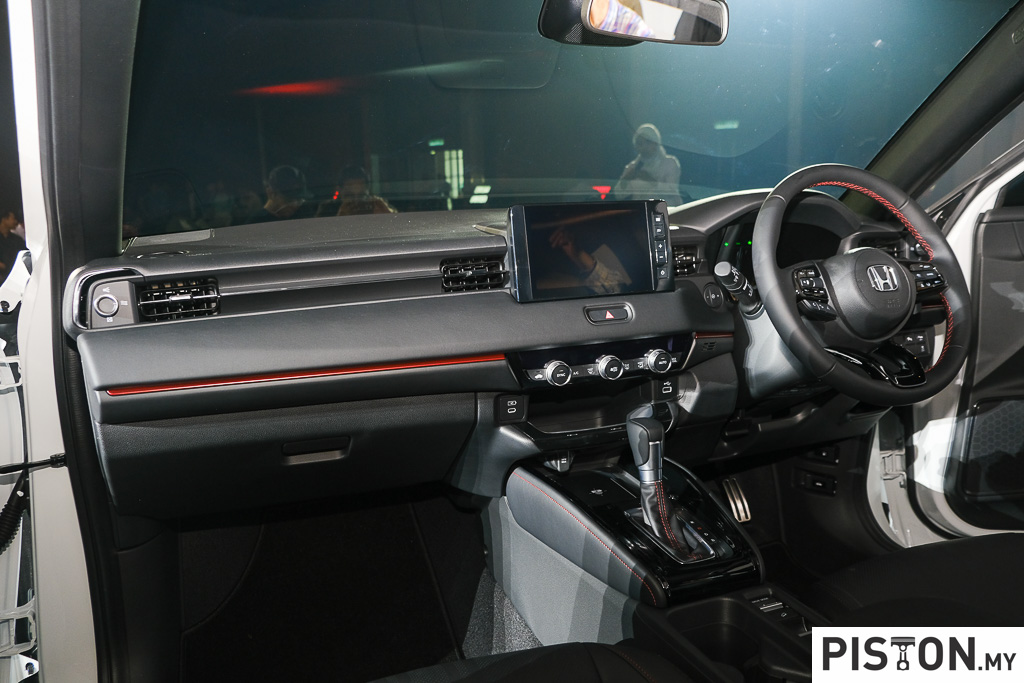
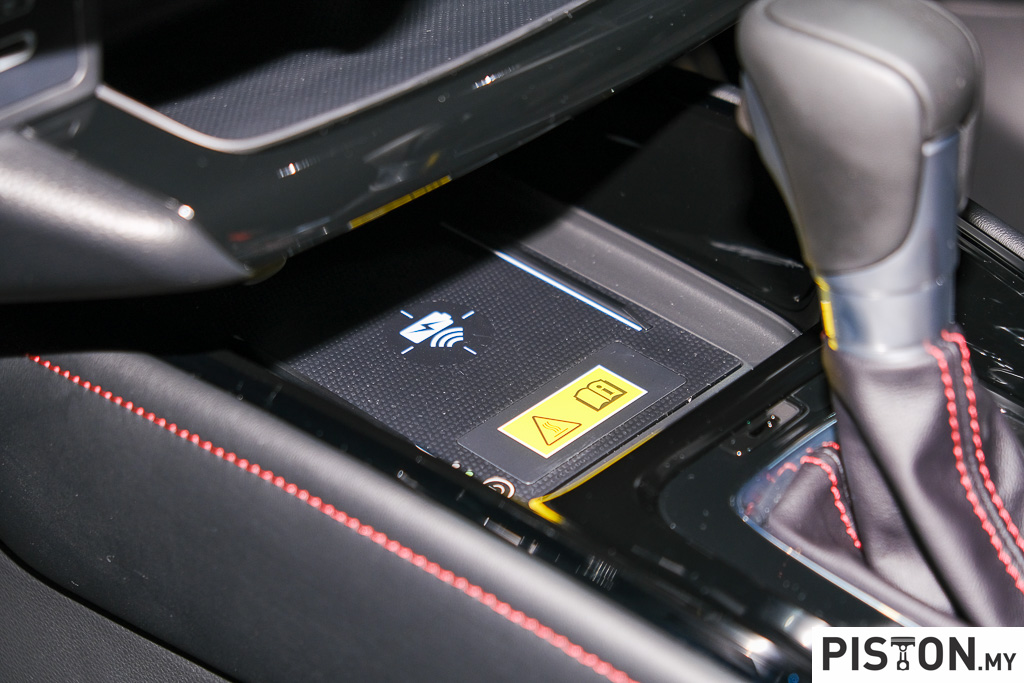
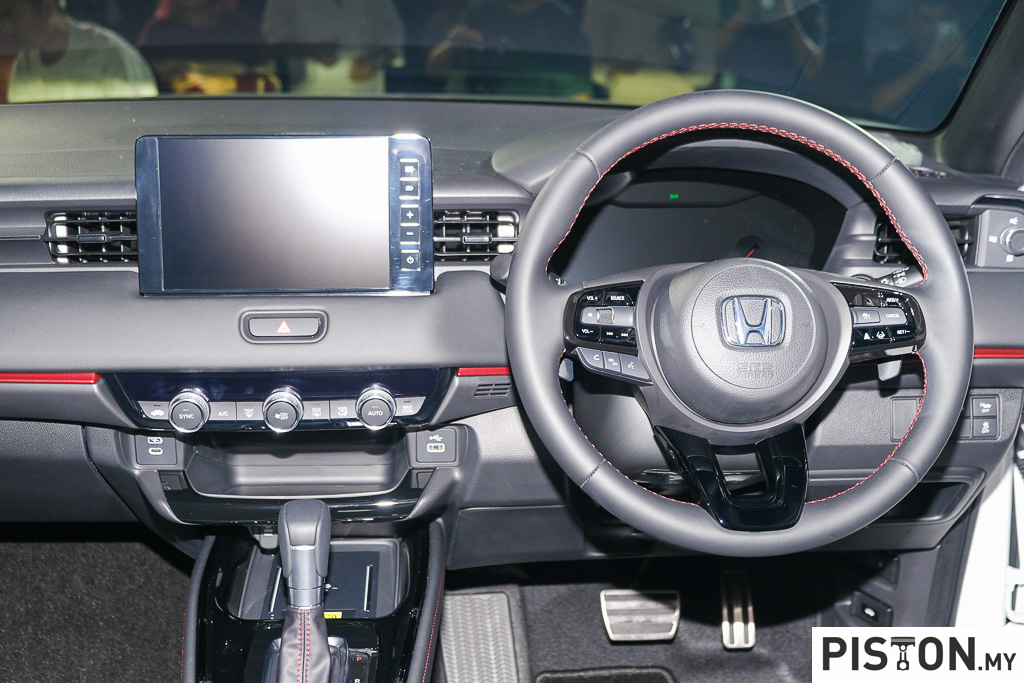
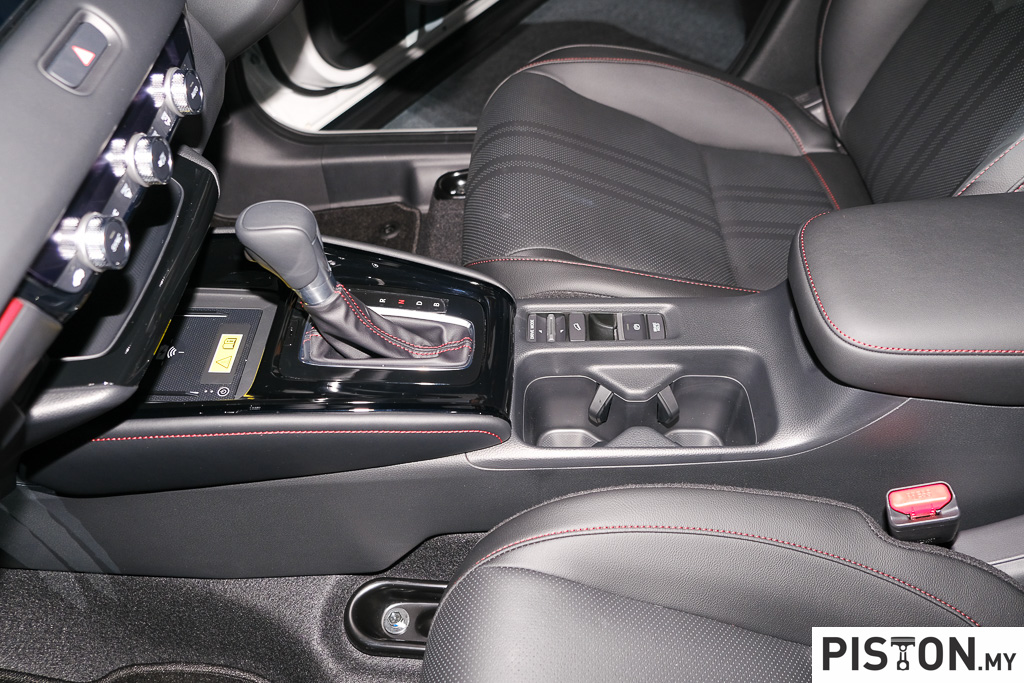
Bagi bahagian dalaman kereta, konsol tengah telah dikemas kini dan kini termasuk ruang penyimpanan yang terletak tepat di bawah kawalan penyaman udara.
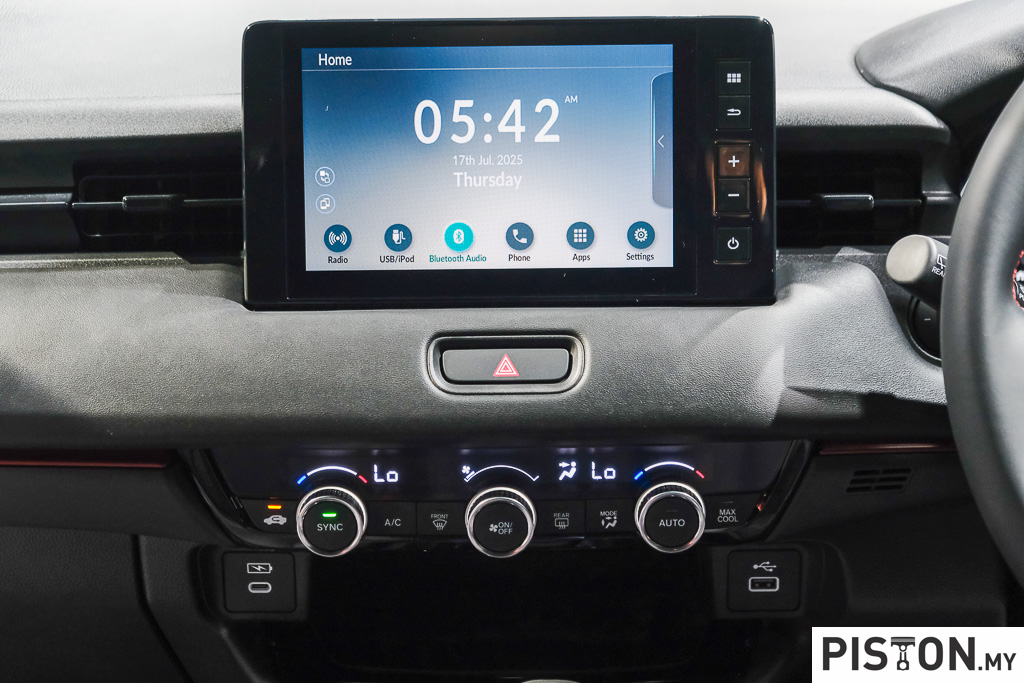
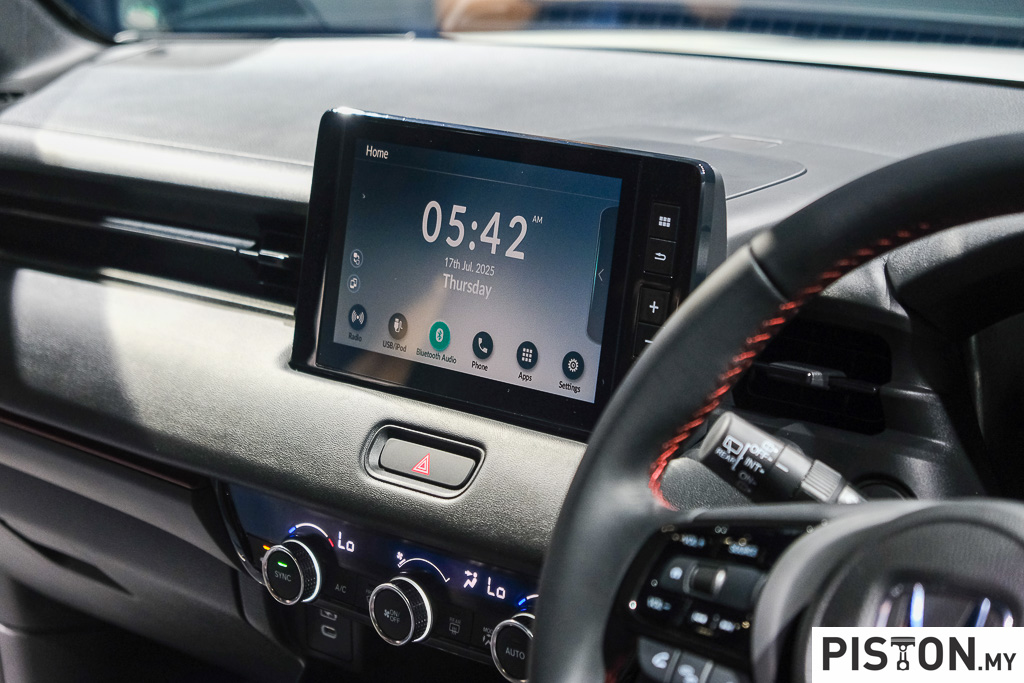
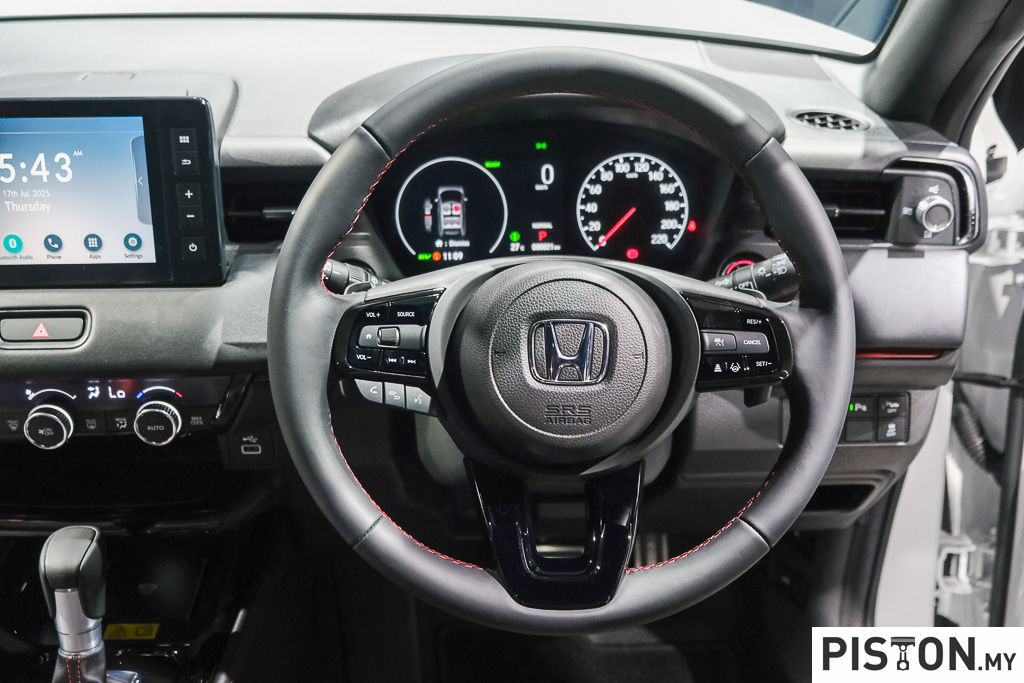
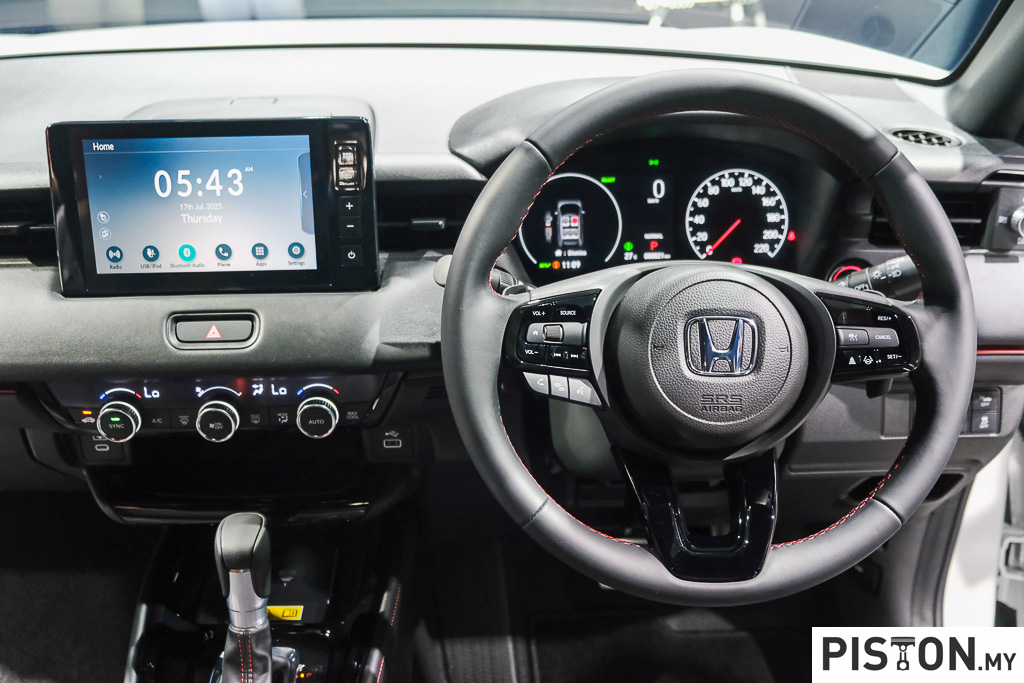
Sistem infotainmen lapan inci kini dilengkapi dengan sambungan Apple CarPlay dan Android Auto tanpa wayar.
Pilihan rangkaian kuasa adalah sama seperti sebelum ini, dengan enjin 1.5 liter, naturally-aspiated, empat silinder DOHC, i-VTEC yang menghasilkan 121PS dan 145Nm tork, dihantar ke roda melalui kotak gear CVT. Ini terdapat pada HR-V peringkat permulaan dan merupakan enjin yang sama yang menggerakkan Honda City.
Seterusnya, terdapat enjin 1.5 liter VTEC Turbo yang menghasilkan 181PS dan 240Nm dengan kuasa dihantar ke roda melalui kotak gear CVT.
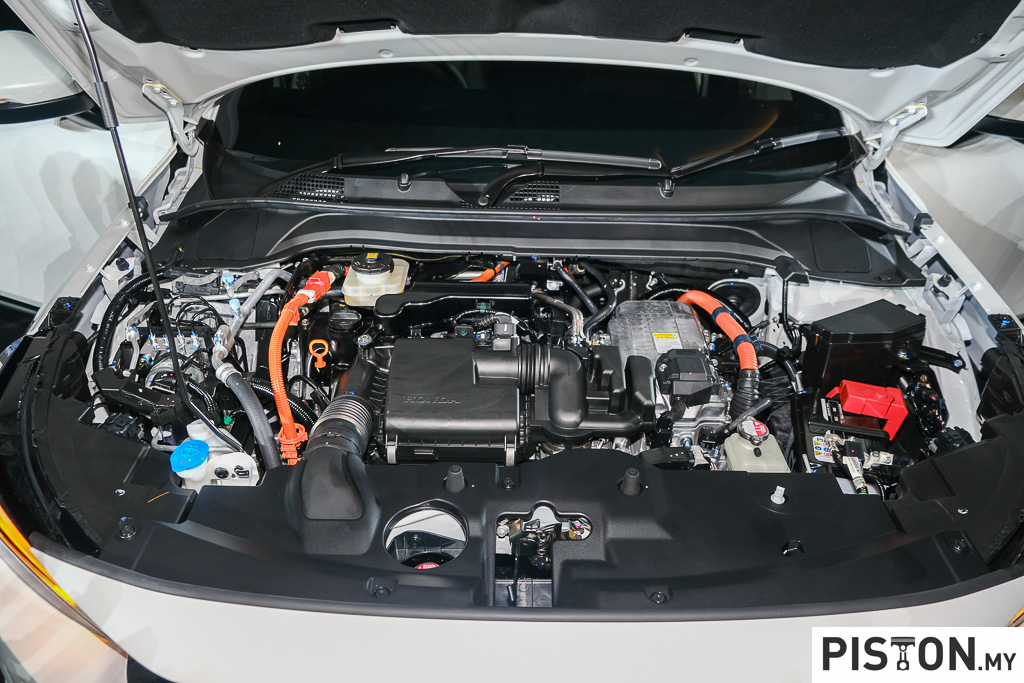
Model hibrid e:HEV juga kekal tidak berubah dari segi rangkaian kuasa. Ia menawarkan enjin yang berfungsi sebagai penjana untuk motor elektrik. Motor menghasilkan 131PS dan 253Nm manakala enjin 1.5 liter, naturally-aspirated, DOHC, i-VTEC empat silinder menghasilkan 105PS dan 127Nm.
Sistem hibrid dalam kereta Honda adalah unik kerana tidak seperti rangkaian kuasa hibrid lain, enjin Kitaran Atkinson mampu menggerakkan kereta secara eksklusif pada kelajuan tinggi tanpa sokongan motor elektrik.
Bagi sistem keselamatan, Honda Sensing kini tersedia untuk semua varian. Walau bagaimanapun, terdapat dua sistem baharu yang kini telah disertakan untuk model perdana, iaitu Adaptive Driving Beam dan Active Cornering Light.
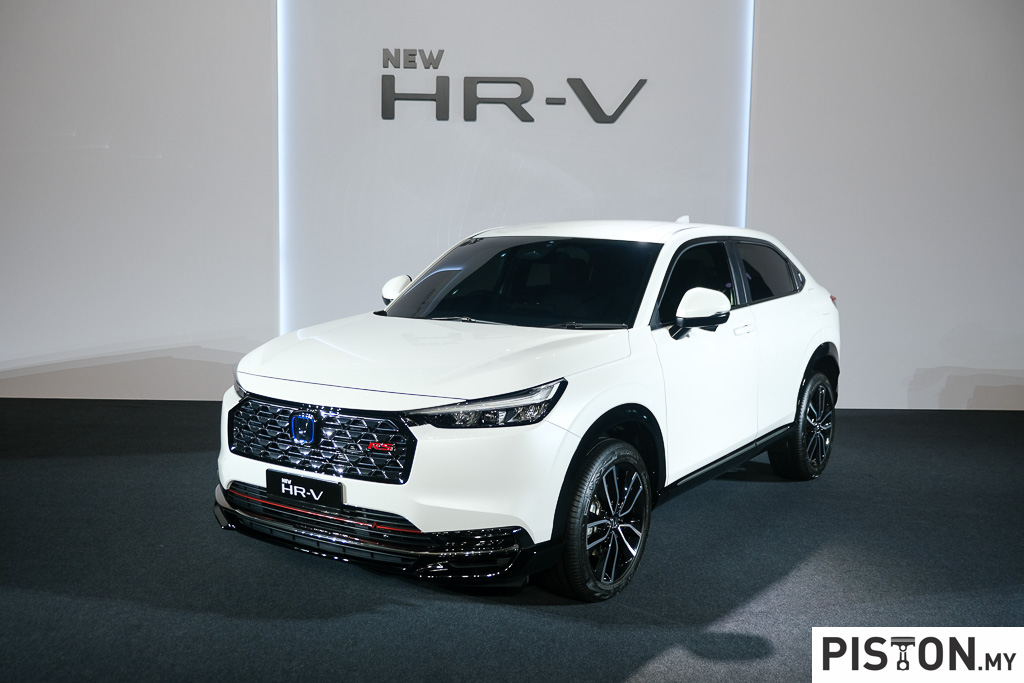
After weeks of teasing, Honda Malaysia has officially taken the cover off the new, facelifted Honda HR-V.
With over 170,000 units sold after it was first introduced, the new HR-V is set to continue the success story.
The updated third-generation model brings with it a slew of updates that further cement its position as the number one non-national B-Segment SUV in the country.
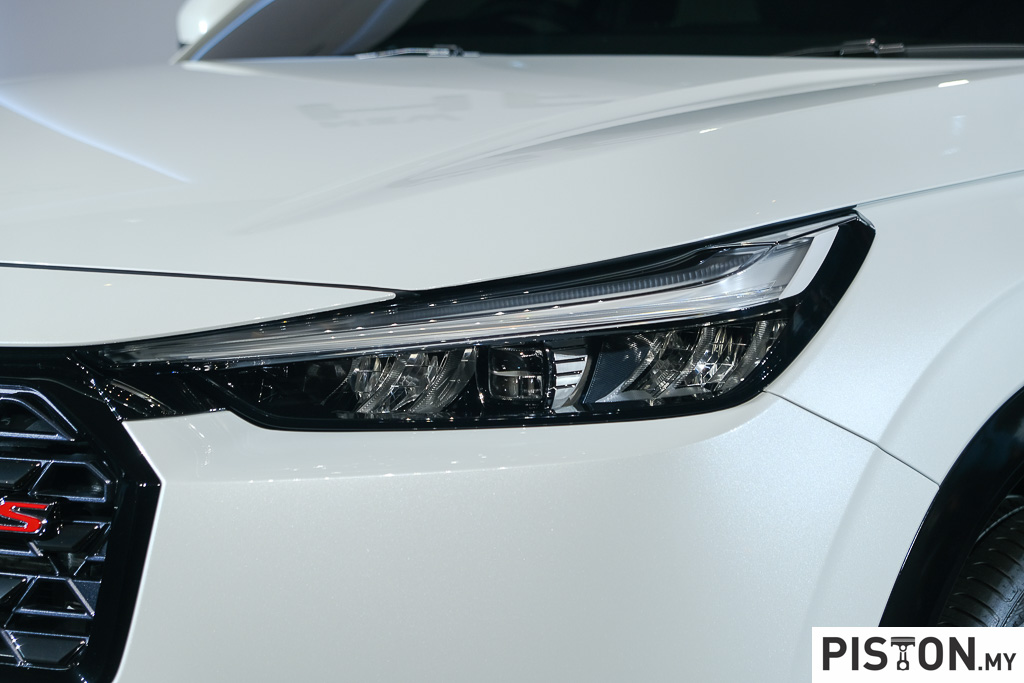
From the outside, the updates include a new front grille that is wider than before.
The new front is further distinguished by a redesigned front bumper.
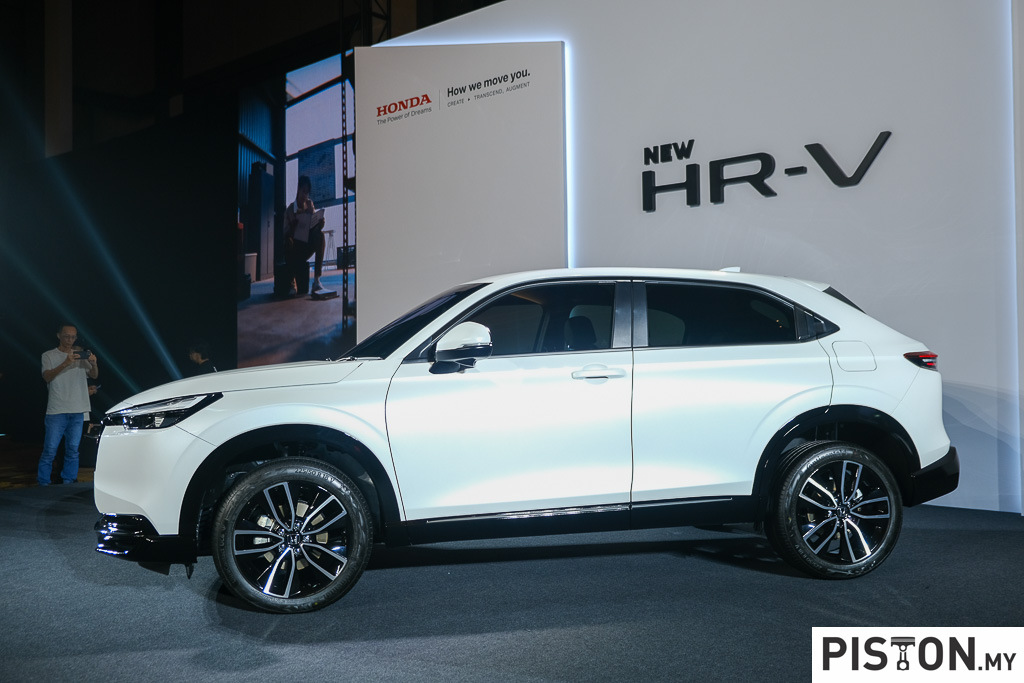
The updates to the rear are limited to a new, sleeker full-LED tail light cluster while other exterior updates include redesigned wheels.
All variants also come with 18-inch wheels now while before the lower two variants ran on 17-inchers.
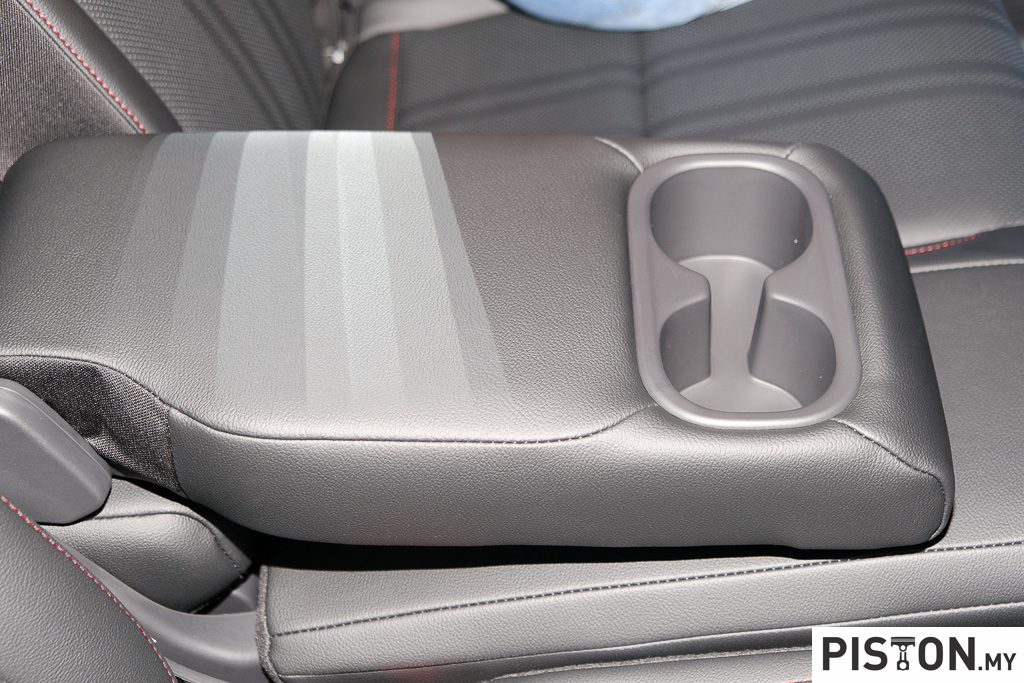
As for the interior of the car, the centre console has been updated and now includes a storage compartment slotted right below the air-conditioning controls.
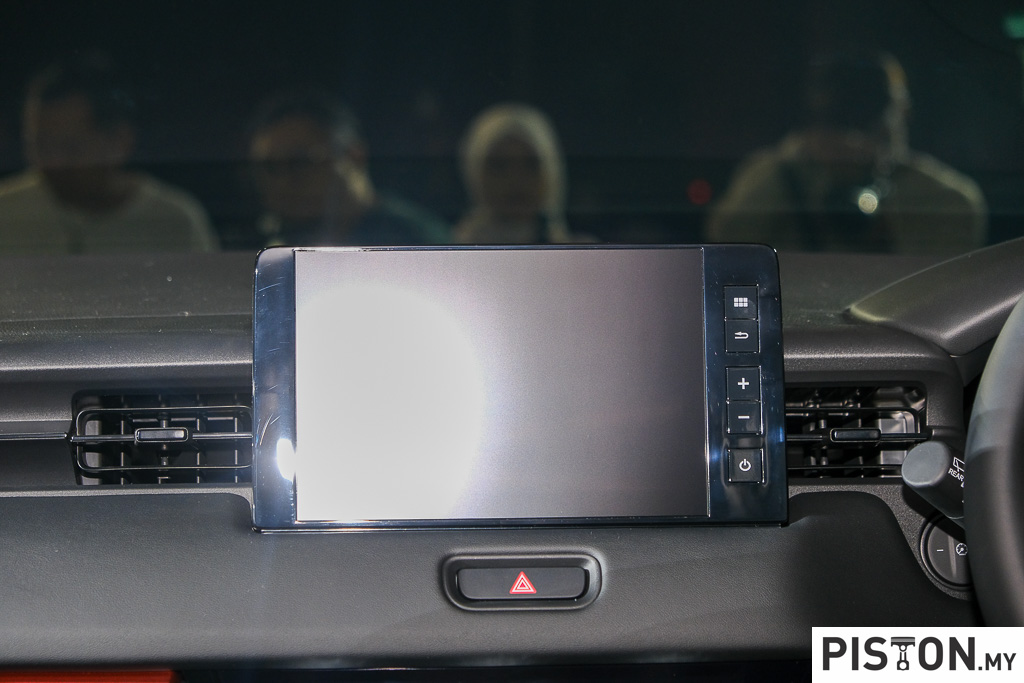
The eight-inch infotainment system now comes with wireless Apple CarPlay and Android Auto connectivity.
Choice of powertrains are the same as before, with a 1.5-litre, naturally-aspirated, four-cylinder DOHC, i-VTEC engine putting out 121PS and 145Nm of torque, transferred to the wheels through a CVT gearbox. This is found in the entry level HRVs and is the same engine powering the Honda City.
Further up, there is a 1.5-litre VTEC, Turbo engine rated at 181PS and 240Nm with power sent to the wheels through a CVT gearbox.
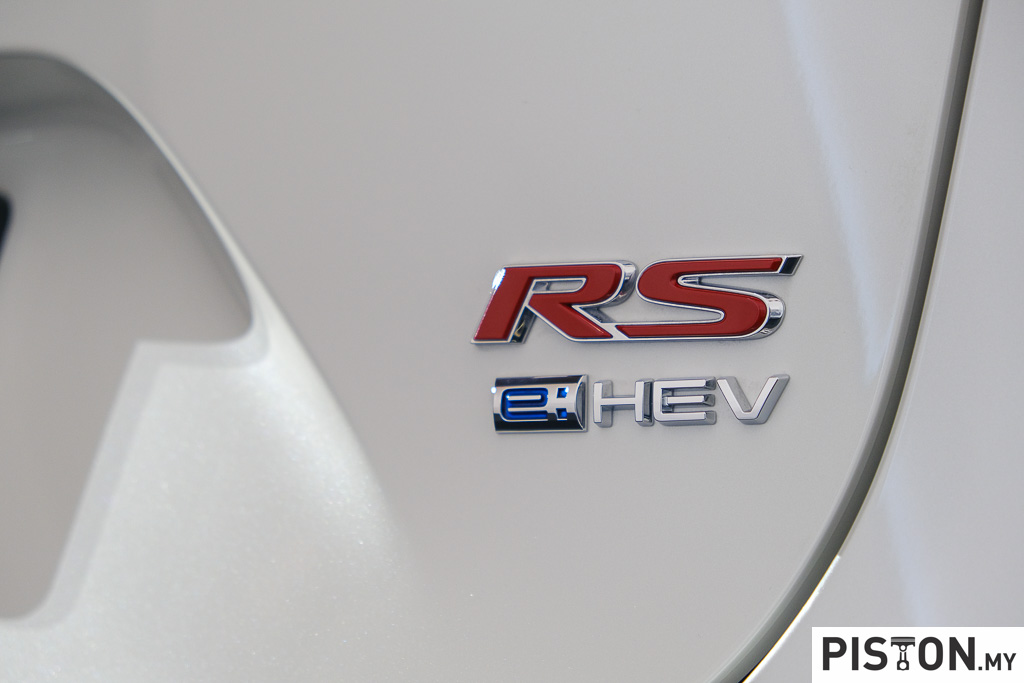
The flagship e:HEV hybrid model also remains unchanged as far as the powertrain is concerned. It offers an engine that works as a generator for an electric motor.
The motor puts out 131PS and 253Nm while the 1.5-litre, naturally-aspirated, DOHC, I-VTEC four-pot engine puts out 105PS and 127Nm.
The hybrid system in Hondas is unique because unlike other hybrid powertrains, the Atkinson Cycle engine is able to exclusively power the car at high speed without the electric motor backing it up.
As for safety systems, Honda Sensing is now available for all variants. However, there are two new systems that have now been included for the flagship, the Adaptive Driving Beam and the Active Cornering Light.
Over the years, the Honda CR-V has cemented itself as the darling of Malaysian car buyers looking for a spacious SUV.
Ever since it was first introduced back in 1997, the CR-V has found a place in close to half a million homes, or perhaps more.
It is not difficult to see why it is so popular either. The CR-V offers a pleasant combination of comfort, practicality and advanced features.
Over the years, the CR-V has found itself in the crosshairs of aggressive competitors. First it was competition from other Japanese marques, particularly the Toyota RAV4, Nissan X-Trail, Subaru Forester and the Suzuki Grand Vitara.
Then came the Koreans with the Hyundai Tucson and the Kia Sportage. Later the Americans joined the fight too with the Ford Escape and Chevrolet Captiva.
Of course, the competition has been relentless with more salvo’s from within Japan with Mazda introducing the CX-7, Mitsubishi and the Outlander / ASX and even the Europeans with the Volkswagen Tiguan and the Peugeot 3008.
Fast forward a couple of years though, and it is safe to say that the competition has never been more heated.
Now, we have fights on almost all fronts. Proton shook things up with the X70 and Chinese marques like Chery and the Tiggo 7 and the Haval H6 has meant that the CR-V is now a big fish in an ever-decreasing pond.
It is a good time to be a buyer though because you are spoilt for choice. So, in a world of choices, does the Honda CR-V still make a solid case for itself to convince you to part with your hard-earned money?
We think so, and here are five reasons why:
1. Efficiency.
In the context of the flagship Honda CR-V RS e:HEV, efficiency is something that it excels at.
Honda Malaysia claims that the hybrid CR-V can travel 20km on just a litre of fuel. Now car makers have a tendency of overestimating the capabilities of their cars, so we put that claim to the test earlier this year and achieved a remarkable 19.8km per litre. That is pretty close and good enough for us.
So, in a time where everything seems to be getting more expensive and unpredictable, a car that is consistently efficient should be a relief.
2. BOSE audio system.
A good audio system should never be underestimated. We spend a lot of time in our cars and one of the best things to do is to listen to your favourite music in absolute clarity.
A lot of car makers offer decent connectivity these days with Apple Carplay and Android Auto, but very few offer a good sound system.
We have tried out the BOSE sound system and it is simply remarkable. And let’s not forget that BOSE was once only available in more expensive cars, so the fact that Honda Malaysia is offering it in its flagship CR-V is commendable.
3. Refinement.
Another point never to be underestimated. Not sure about you, but we find it incredibly annoying when wind and tyre noise is noticeable inside the cabin. That is a deal breaker, and a lot of car models have been ticked off the list by buyers simply because their cabins were noisy when on the move.
Not the Honda CR-V RS e:HEV though. It offers a silent, refined interior which it achieves by using two key pieces of technology: wheel resonators and active noise cancellation.
Wheel resonators are small chambers in wheels with enclosed plastic or rubber materials. These are usually attached to the surface of the wheel to absorb sound and vibrations.
And the Active Noise Cancellation technology is a clever piece of technology which was first introduced in the headphones worn by pilots some years ago. This technology emits sound frequencies through the speakers that cancel out ambient sounds, making the cabin quieter.
And there is no better indication of a premium car than a cabin that remains quiet in all situations.
4. Driving dynamics.
How do you tell apart the “OG’s” from the newcomers? From the way they drive of course.
So, there might be a lot of newcomers to the SUV market, but there is one thing that almost all of them will struggle to match and that is the driving dynamics of Honda cars.
This may not be important to all car buyers, but after you have driven a car with a well-tuned ride and handling, it will be difficult to drive anything else.
Have you ever felt dead spots in a car’s steering? The part where you turn the steering wheel, but nothing happens? Annoying, isn’t it? You don’t get that in a Honda.
Honda cars are designed to respond to all your steering input and it is something that you must feel to believe. So, visit your closest Honda showroom to feel it for yourself.
5. Honda Sensing.
Safety, safety, safety. Every car maker talks about it and every car has it. Honda included.
But what is Honda Sensing you might ask? It is basically a suite of advanced safety systems designed to keep you and other road users safe. And the Honda CR-V RS e:HEV comes filled to the brim with safety systems.
It comes with such systems like Forward Collision Warning, Collision Mitigation Braking System, Lane Departure Warning and even Adaptive Cruise Control with Low-Speed Follow.
It has many other systems, but the hybrid variant is the only CR-V to come with Adaptive Driving Beam. This ensures you don’t accidentally blind oncoming cars by automatically moving the light beam away to illuminate other dark spots on the road. Clever, isn’t it? Thought so too.
Never a better time to buy a Honda CR-V.
It’s true. Among the many competitors, the Honda CR-V has made a name for itself as a purveyor of space, comfort and practicality.
And Honda Malaysia has further sweetened the deal with its Mid-Year Bonanza rebates. This is where you will get to enjoy total combined rewards of up to RM13,000* (RM10,000* in cash and RM3,000* service voucher and valid until 31st of July 2025).
So, if a big SUV at under RM200,000 is what you want, the Honda CRV e:HEV RS is the one you want.
Sejak bertahun-tahun lamanya, Honda CR-V telah berjaya mengukuhkan kedudukannya sebagai pilihan utama dalam kalangan pembeli kereta di Malaysia yang menginginkan sebuah SUV yang luas dan praktikal. Sejak ia mula diperkenalkan pada tahun 1997, model ini telah memasuki hampir setengah juta kediaman di seluruh negara — mungkin lebih.
Tidak sukar untuk memahami mengapa CR-V begitu popular. Ia menawarkan gabungan keselesaan, kepraktisan dan ciri-ciri moden yang memikat. Sepanjang perjalanannya, CR-V telah berdepan dengan saingan yang semakin sengit. Pada awalnya, persaingan datang daripada jenama Jepun lain seperti Toyota RAV4, Nissan X-Trail, Subaru Forester dan Suzuki Grand Vitara. Kemudian, pengeluar Korea seperti Hyundai Tucson dan Kia Sportage menyertai perlumbaan, diikuti oleh wakil Amerika dengan Ford Escape dan Chevrolet Captiva.
Persaingan terus meningkat apabila Mazda memperkenalkan CX-7, Mitsubishi dengan Outlander dan ASX, serta kemasukan jenama Eropah seperti Volkswagen Tiguan dan Peugeot 3008. Kini, dengan kehadiran model-model seperti Proton X70 serta SUV dari China seperti Chery, Tiggo 7 dan Haval H6, pasaran SUV menjadi semakin padat. Dalam landskap yang penuh dengan pilihan ini, Honda CR-V terus membuktikan nilainya.
Jika anda sedang mempertimbangkan SUV, berikut adalah lima sebab utama mengapa Honda CR-V RS e:HEV patut berada dalam senarai teratas anda:
1. Kecekapan Penggunaan Bahan Api Honda CR-V RS e:HEV benar-benar menonjol dari segi kecekapan. Honda Malaysia mendakwa bahawa varian hibrid ini mampu mencatat penggunaan bahan api sekitar 20km bagi setiap liter. Ujian awal tahun ini mengesahkan kecekapan itu dengan pencapaian 19.8km seliter — angka yang sangat hampir dan cukup mengagumkan. Dalam era di mana kos sara hidup semakin meningkat, kecekapan seperti ini tentunya melegakan pemilik.
2. Sistem Audio BOSE yang Premium Sistem audio berkualiti adalah sesuatu yang tidak seharusnya dipandang ringan. Walaupun ramai pembuat kereta kini menawarkan sambungan seperti Apple CarPlay dan Android Auto, tidak banyak yang memberikan sistem audio yang benar-benar memuaskan. CR-V RS e:HEV hadir dengan sistem bunyi BOSE yang sebelum ini hanya ditawarkan dalam kereta mewah. Kualiti bunyinya memukau dan jelas — satu pujian buat Honda kerana menawarkan ciri sebegini dalam model ini.
3. Penghalusan Kabin Satu lagi kelebihan CR-V ialah ketenangan kabinnya. Tiada bunyi angin atau tayar yang mengganggu — satu aspek penting yang sering diabaikan pembeli sehingga mereka mengalaminya sendiri. CR-V menggunakan dua teknologi utama: resonator roda dan pembatalan bunyi aktif (Active Noise Cancellation). Resonator menyerap getaran dan bunyi, manakala sistem pembatalan bunyi aktif mengeluarkan frekuensi bertentangan bagi meneutralkan bunyi luar. Hasilnya? Satu pengalaman pemanduan yang senyap dan selesa.
4. Dinamik Pemanduan yang Unggul Salah satu kekuatan utama Honda ialah keupayaan pemanduan. Walaupun terdapat banyak pesaing baharu dalam pasaran SUV, tidak ramai yang mampu menandingi keseronokan dan ketepatan pemanduan yang ditawarkan oleh Honda. Stereng CR-V responsif dan tepat — tanpa sebarang ‘titik mati’ yang menjengkelkan. Ia memberikan keyakinan dan keselesaan kepada pemandu. Sesi pandu uji di bilik pameran Honda akan cukup untuk membuktikan keistimewaan ini.
5. Ciri Keselamatan Honda Sensing Honda Sensing ialah pakej keselamatan pintar yang komprehensif. Ia merangkumi sistem seperti Amaran Perlanggaran Hadapan, Sistem Brek Pencegahan Perlanggaran, Amaran Keluar Lorong, dan Kawalan Pelayaran Adaptif dengan keupayaan berhenti dan mula secara automatik. Varian RS e:HEV turut dilengkapi dengan Adaptive Driving Beam — teknologi pintar yang melaras pancaran lampu tinggi secara automatik bagi mengelakkan menyilaukan pemandu lain. Ini membuktikan bahawa keselamatan benar-benar menjadi keutamaan dalam CR-V.
Masa Terbaik untuk Membeli CR-V Dengan semua kelebihan ini, Honda CR-V kekal sebagai pilihan kukuh dalam pasaran SUV. Dan sekarang, Honda Malaysia memperhebatkan lagi penawarannya dengan kempen Bonanza Pertengahan Tahun yang memberikan ganjaran bernilai sehingga RM13,000* — termasuk rebat tunai RM10,000* dan baucar servis RM3,000*. Tawaran ini sah sehingga 31 Julai 2025.
Jika anda sedang mencari SUV yang besar, canggih dan efisien di bawah RM200,000, maka Honda CR-V RS e:HEV adalah jawapan yang tepat.
Nissan dilaporkan sedang mempertimbangkan untuk menghidupkan semula kapasiti pengeluarannya yang tidak aktif di Amerika Syarikat melalui satu kemungkinan kerjasama strategik bersama Honda. Laporan industri terkini mencadangkan bahawa Nissan sedang dalam perbincangan untuk menghasilkan trak pikap bagi pihak Honda, dengan kilang Nissan di Canton, Mississippi muncul sebagai lokasi utama yang berpotensi untuk pelaksanaan projek ini.
Sekiranya perjanjian ini menjadi kenyataan, ia boleh menandakan satu langkah pemulihan penting bagi operasi Nissan di Amerika Utara, yang sebelum ini telah mengalami penguncupan ketara susulan kerugian kewangan yang besar. Syarikat itu baru-baru ini mencatat kerugian bersih sebanyak AS$4.5 bilion dalam tahun fiskal terakhir, mendorong mereka untuk menilai semula kapasiti pembuatan dan merancang pengurangan dalam pengeluaran masa hadapan di rantau berkenaan.
Perbincangan mengenai kerjasama antara dua gergasi automotif Jepun ini bukanlah sesuatu yang mengejutkan. Pada awal tahun ini, khabar angin mengenai kemungkinan penggabungan antara Honda dan Nissan telah menimbulkan spekulasi hangat dalam industri. Kedua-dua syarikat juga dilaporkan terbuka untuk berkongsi sumber bagi menjayakan pelbagai usaha sama. Salah satu cadangan yang muncul adalah penggunaan platform badan atas rangka (body-on-frame) Nissan oleh Honda untuk membolehkan syarikat itu memperluas kehadiran dalam pasaran trak pikap A.S., yang sangat kompetitif.
Nissan may be on the brink of revitalising dormant manufacturing capacity in the United States, as reports suggest the company is in discussions to build a pickup truck for Honda. Although no official sources were cited, speculation points to Nissan’s Canton plant in Mississippi as a likely candidate for the potential production agreement.
This development could represent a major turnaround for Nissan’s North American operations, which have been significantly downsized in response to steep financial losses. The Japanese automaker recently reported a staggering net loss of $4.5 billion in its most recent fiscal year, prompting the company to scale back both current output and future manufacturing projections across the region.
Rumblings of a collaboration between the two Japanese giants are not new. Earlier this year, when speculation of a possible merger between Honda and Nissan gained traction, both firms acknowledged the prospect of sharing resources. Among the potential joint ventures discussed was the use of Nissan’s body-on-frame platforms by Honda to expand its presence in the U.S. truck segment.
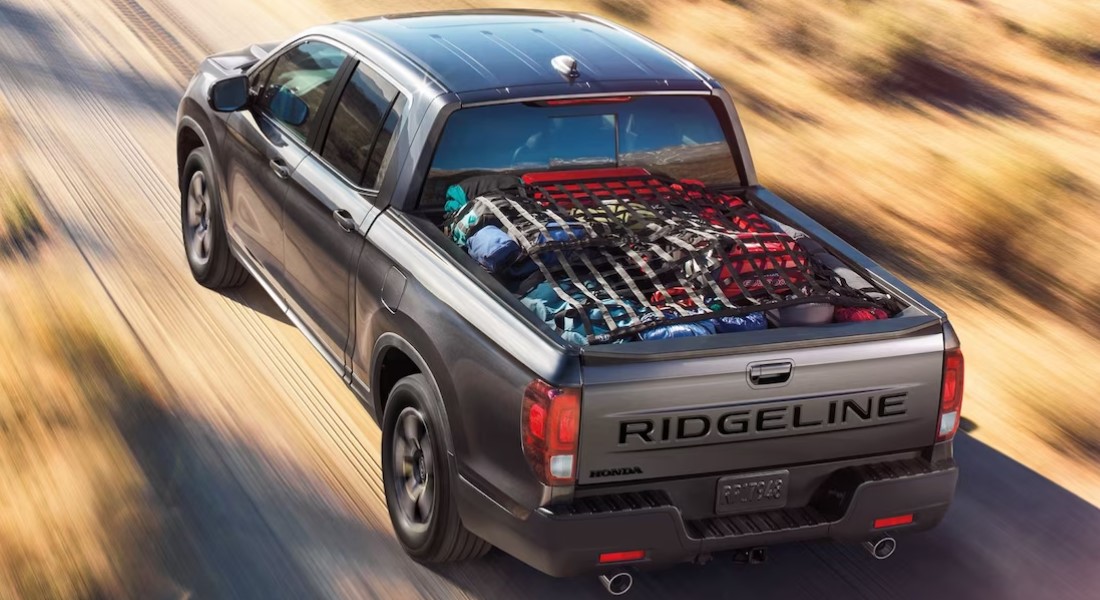
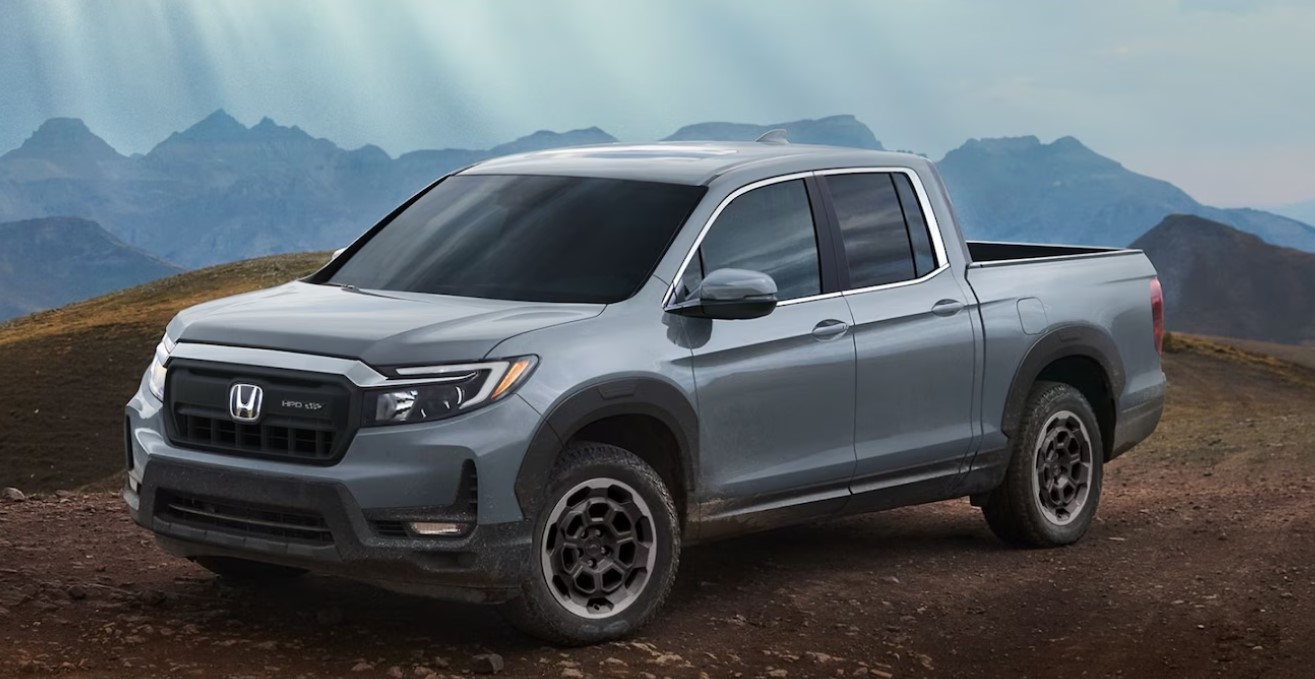
At present, Honda’s only pickup offering for the American market is the Ridgeline, a unibody model. Nissan, on the other hand, manufactures the Frontier — a body-on-frame truck — at the Canton facility. Honda currently lacks a comparable vehicle in its line-up, raising the possibility that the automaker could be considering a significant shift in platform architecture for future pickup models.