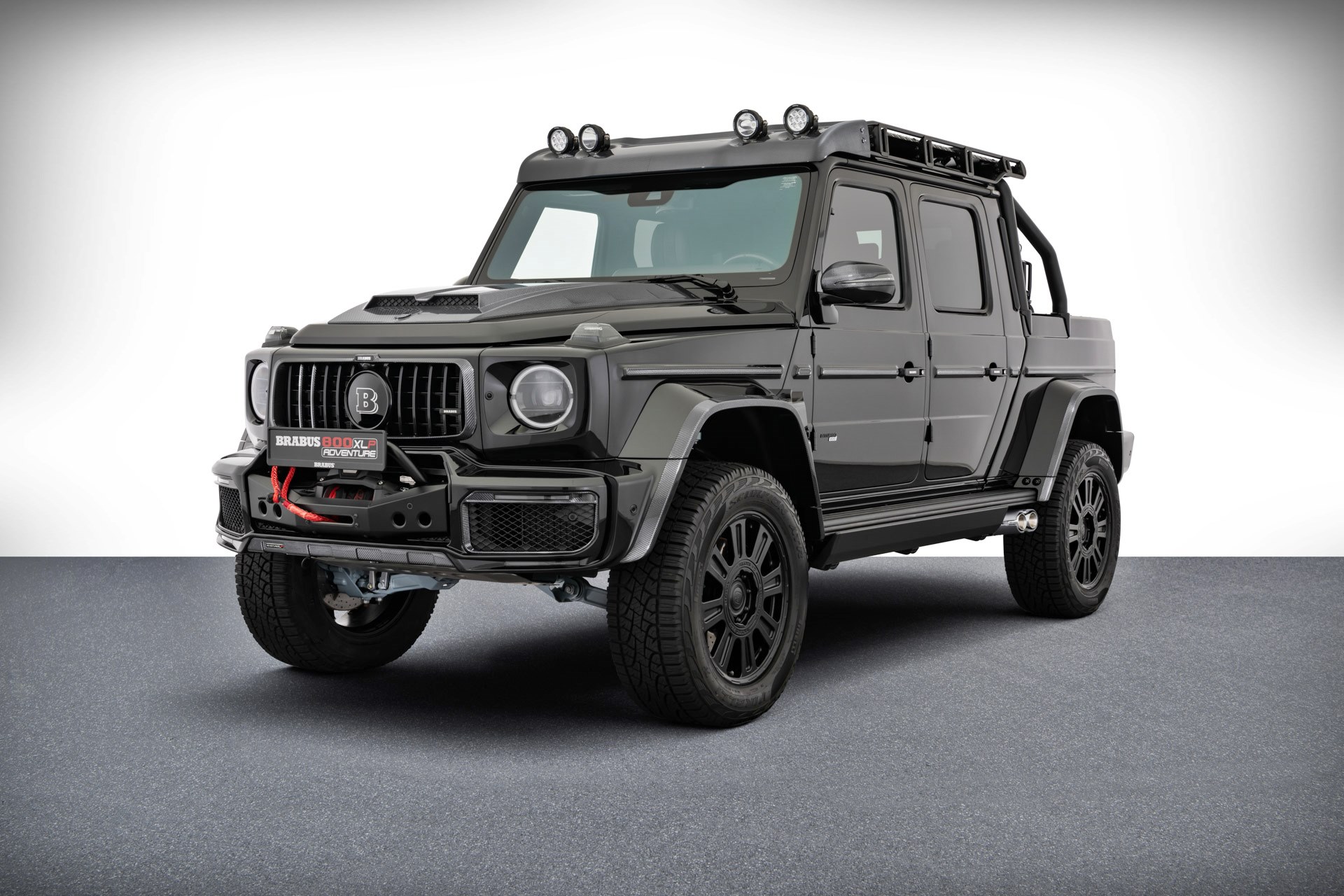
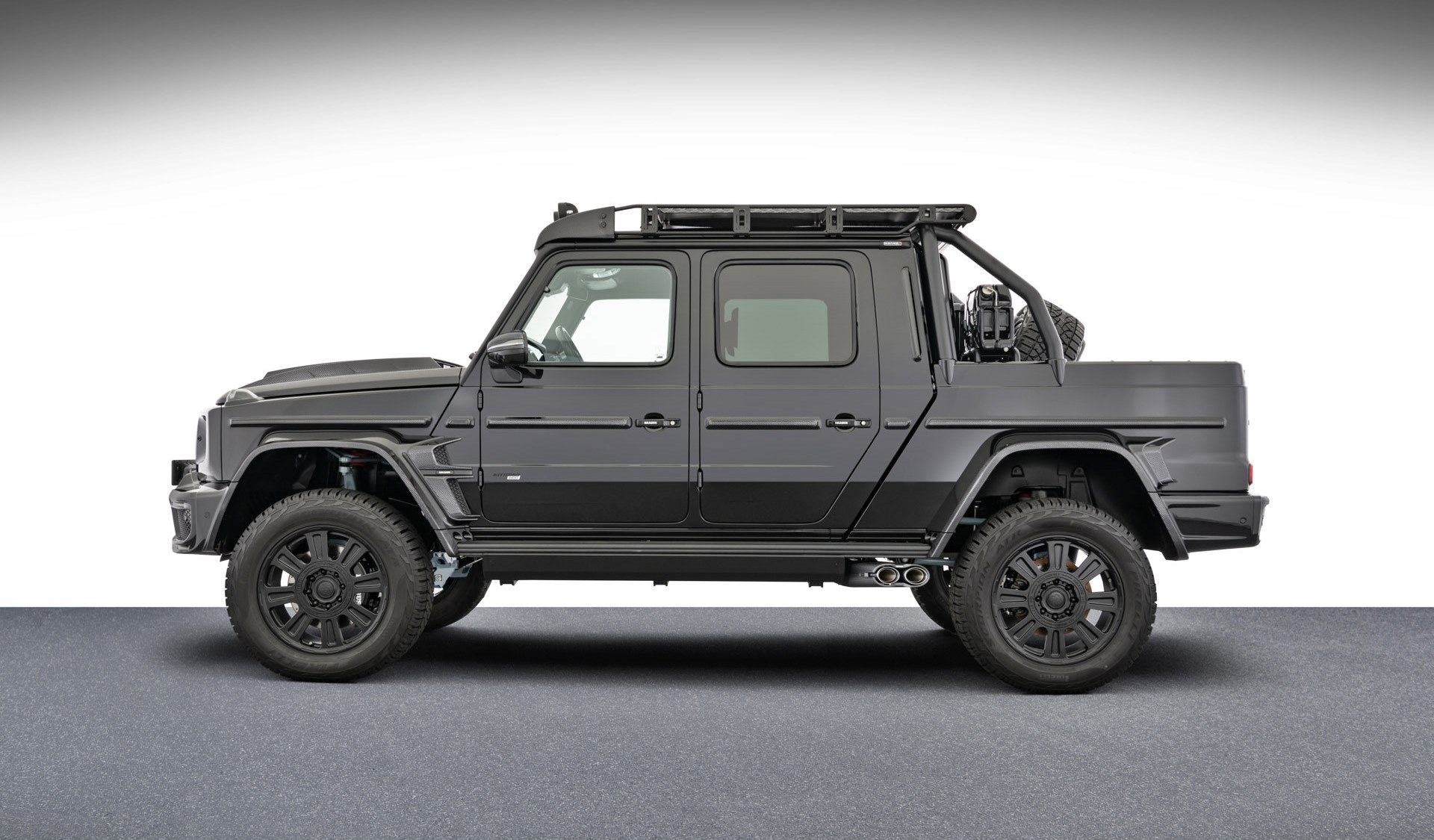
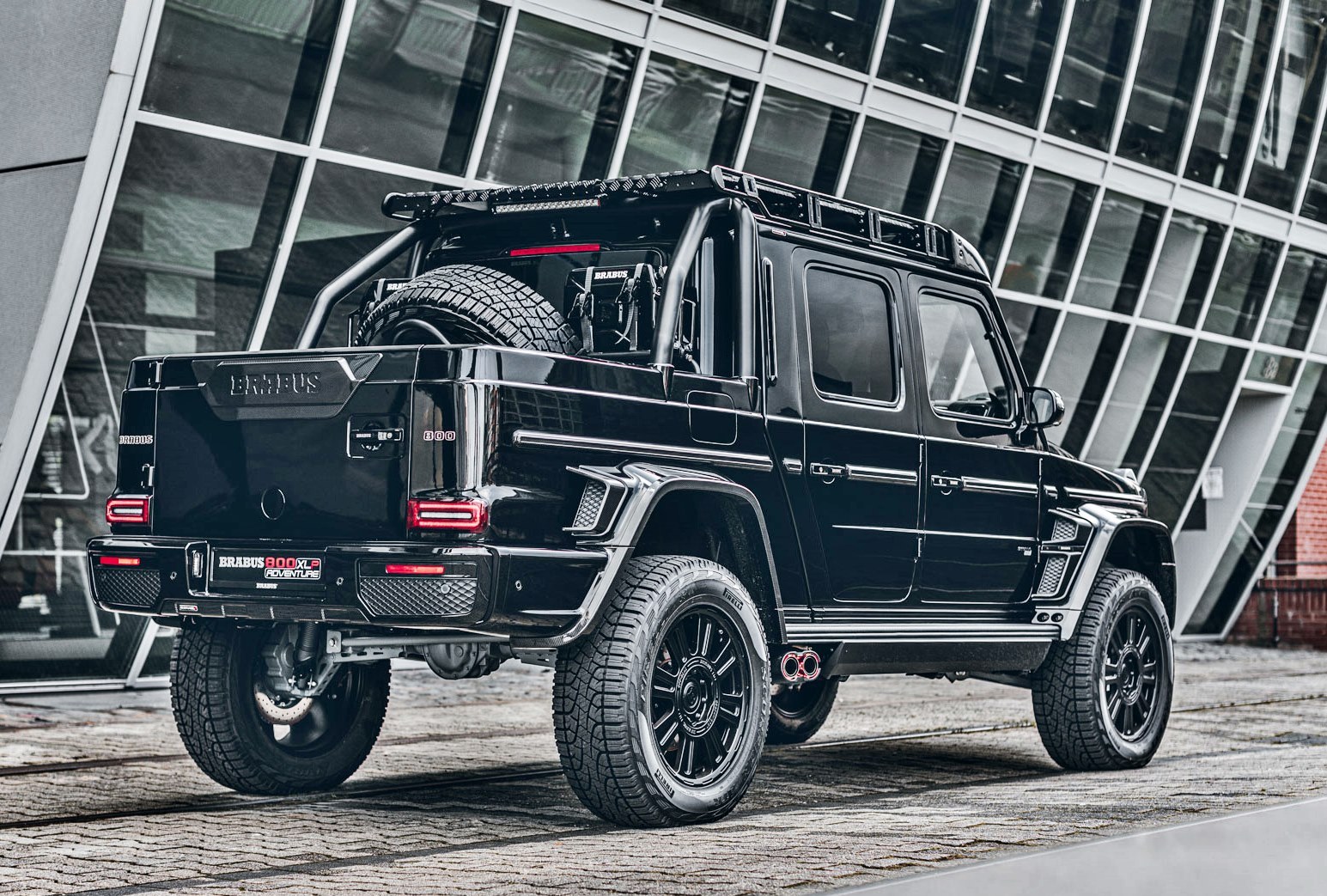
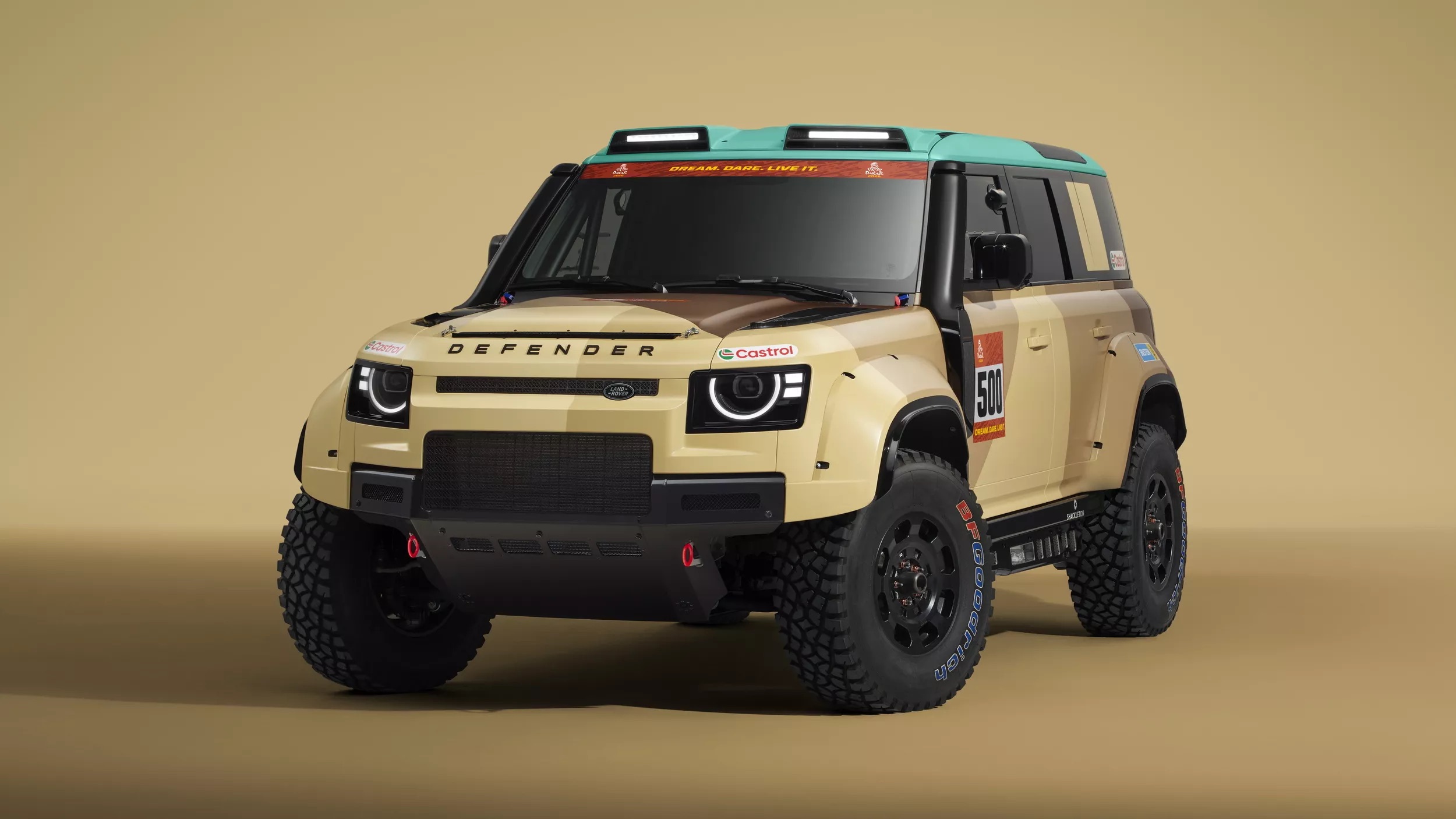
BRABUS is well known for taking Mercedes-Benz products and injecting them with an extra dose of power for those who want to stay ahead all the time. Much of its work is on engine and chassis upgrades but with the 800 Adventure XLP Superblack, they have gone further. This new model begins life as a Mercedes-AMG G63 SUV and BRABUS engineers then add 500 mm to the wheelbase to allow the overall length to be extended by 690 mm. They also add the brand’s Widestar bodykit which increases the width by 117 mm.
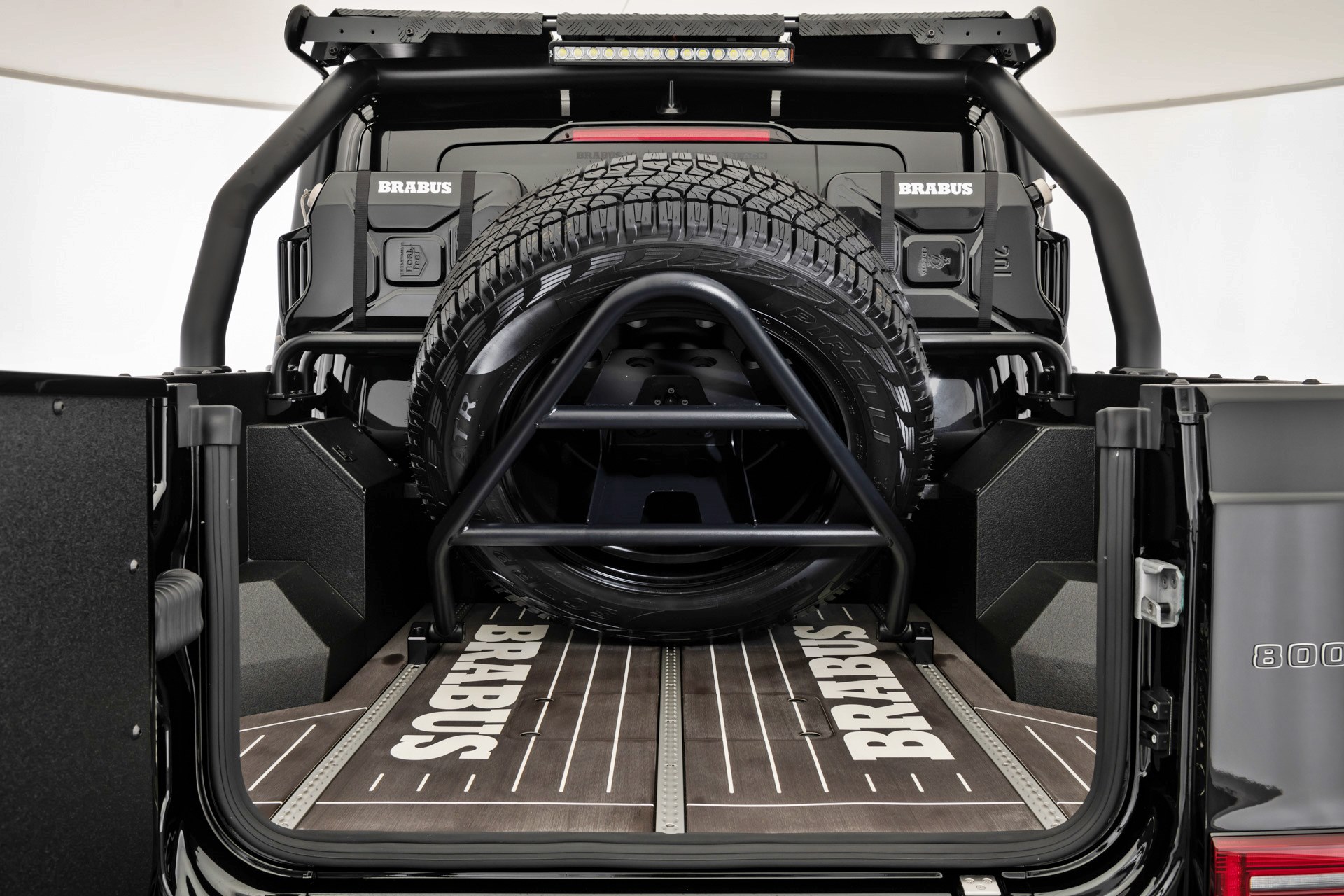
The company fabricates elements from sheet steel such as the new rear wall of the cab, the robust cargo bed and the side-opening tailgate. The bedsides are produced from carbonfibre using the complex prepreg process. The likewise black Flexiteek bedliner is a direct technology transfer from the construction of high-performance boats by BRABUS Marine.
The rear end of the 4-door cabin is shortened with the boot area becoming an open cargo bed and the spare wheel that was on the back door moved right against the cabin. And that transforms the ‘Godfather of SUVs’ into the ‘Godfather of Pickups’.
The rear view is characterized by the pickup tailgate that reveals the origin of this supercar with an exposed carbonfibre panel. The WIDESTAR rear fascia with stylized exposed carbonfibre skidplate rounds off the view from the rear.
To make getting in and out easier with the high ground clearance, BRABUS has added black-coated running boards. Adapted to the extended wheelbase, they can optionally be supplemented with power-retractable steps. LED lights in the flares, which are activated by pulling on a door handle or by the Keyless-Go signal when approaching the vehicle, ensure a safe step also in the dark. They illuminate the ground to the left and right of the vehicle as well as the running boards of the rocker panels.
‘Black on black’ theme
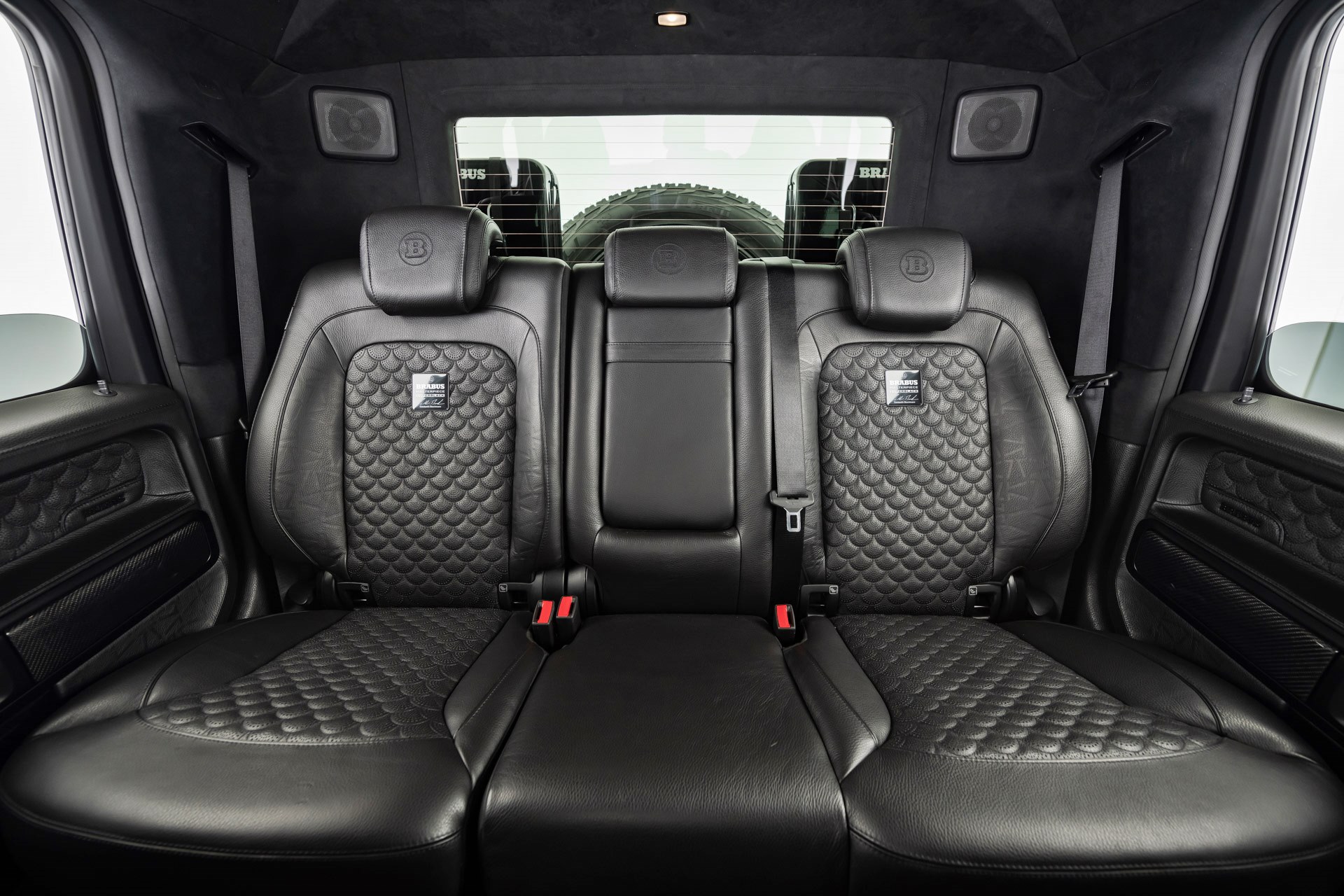
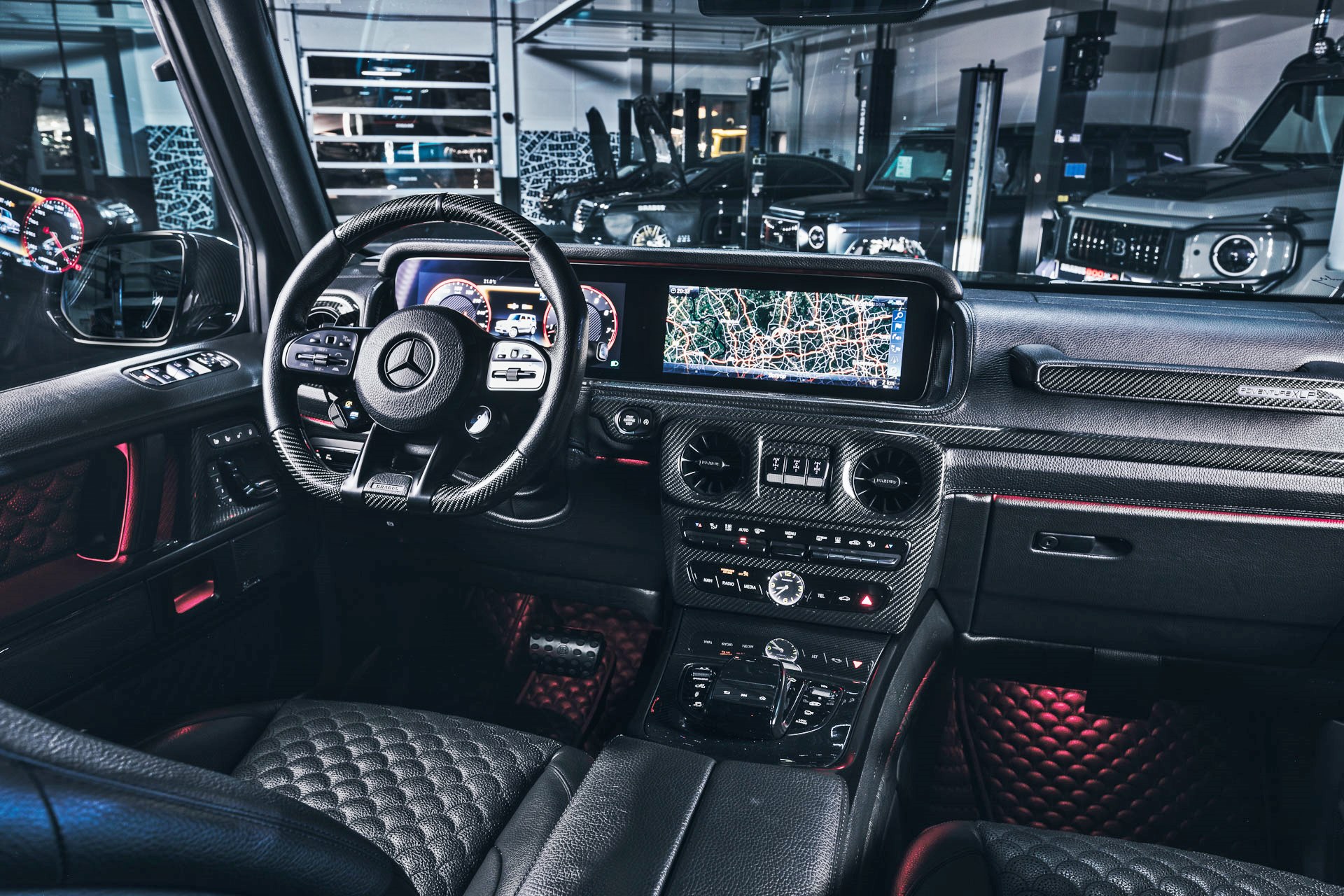
‘Black on black’ is the theme for the interior of the 800 Adventure XLP SUPERBLACK. The upholstery shop created a particularly exclusive BRABUS Masterpiece interior that has the finest black leather with sporty carbonfibre elements. Along with the headliner made from black Alcantara, high-end refinement includes covering the entire interior and the vehicle floor with the finest black leather.
The centre sections of the seats feature seashell diamond quilting and perforations applied with pinpoint precision. Many interior elements were enhanced with the ‘Heritage’ brand pattern, which pays tribute to the founding year of BRABUS with its embossed ‘77’ signets. No less than 206 cockpit elements (trim panels, handles, switches, loudspeaker covers, air vents, etc) are glazed in ‘Shadow Chrome’ to match the interior design.
Carbonfibre elements on the steering wheel, dashboard, centre console and door panels add sporty touches in the cockpit. They are complemented with aluminium for components such as the pedals, door lock pins and the BRABUS RACE paddle shifters on the steering wheel.
PowerXtra+ treatment for engine
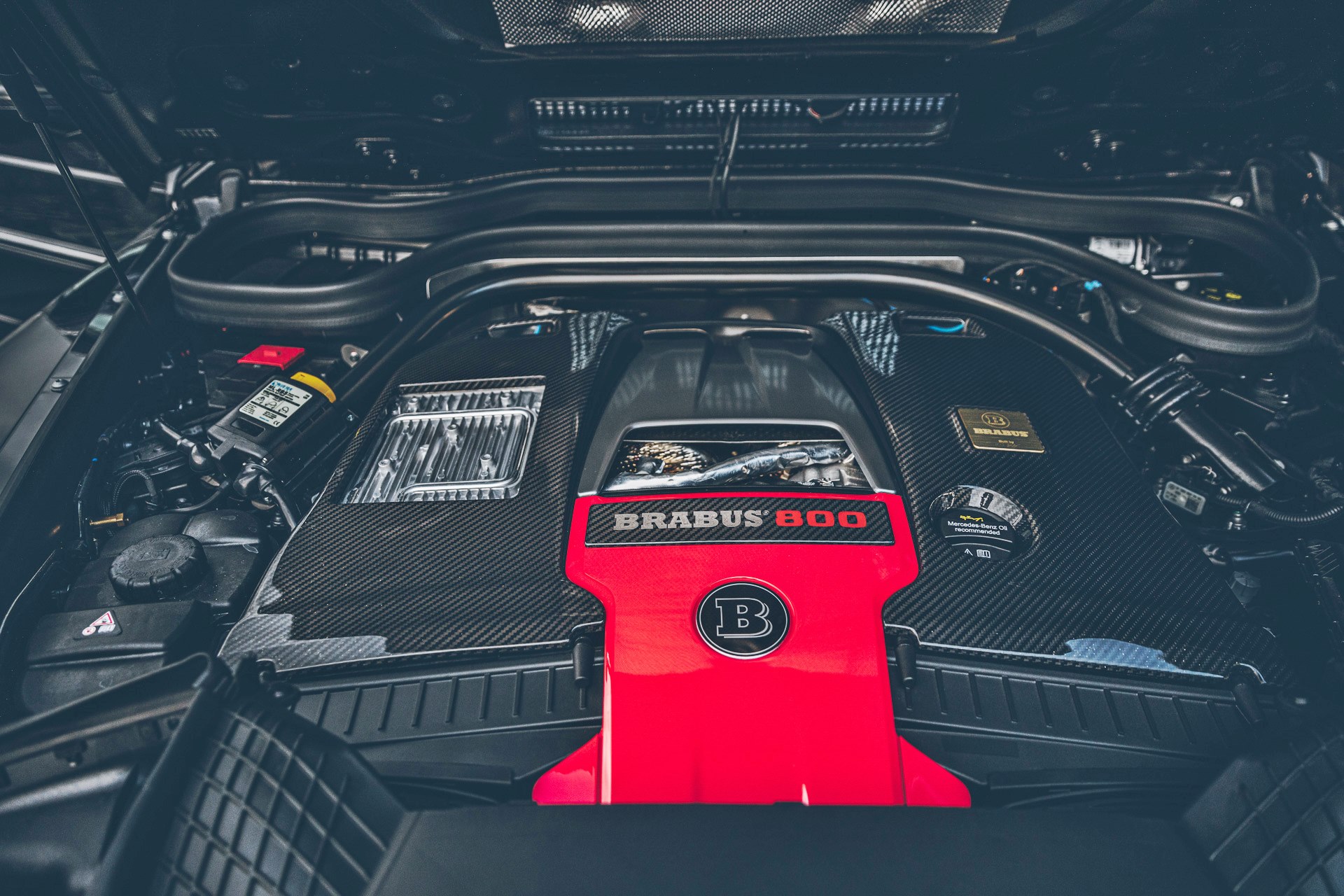
It would not be worthy of the BRABUS badge without a power boost which comes from the 800 PowerXtra+ tuning package for the G63’s twin-turbocharged, 4-litre V8. PowerXtra + treatment includes replacing the production turbos with two newly configured BRABUS high-performance turbos. In addition to a larger compressor unit, they have a modified core assembly with reinforced axial bearing and produce a maximum boost pressure of 1.6 bar. This bumps the output to 800 ps/1,000 Nm which flows to all four 22-inch Monoblock HD wheels through a 9-speed automatic transmission.
The 5.2-metre long pickup, which weighs 2,936 kgs, can reach 100 km/h in a claimed 4.8 seconds after take-off and the top speed is electronically limited to 210 km/h due to the all-terrain tyres.
If you buy one in Germany, the price of the 800 Adventure XLP SUPERBLACK starts from 725,900 euros (about RM3.44 million ringgit). Import the vehicle to Malaysia before June 30, 2022 and you can save 50% on sales tax.
Following the appointment of Bermaz Auto Alliance Sdn Bhd (BAASB) as the distributor of Peugeot vehicles in Malaysia, the range of locally assembled models has been refreshed, starting with the Peugeot 3008 and 5008 which were launched late last year.
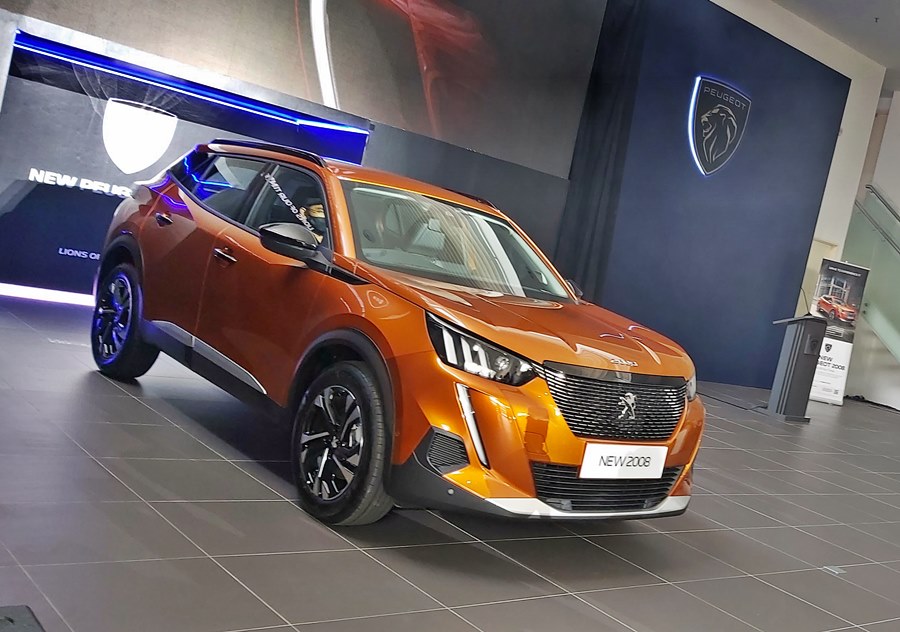
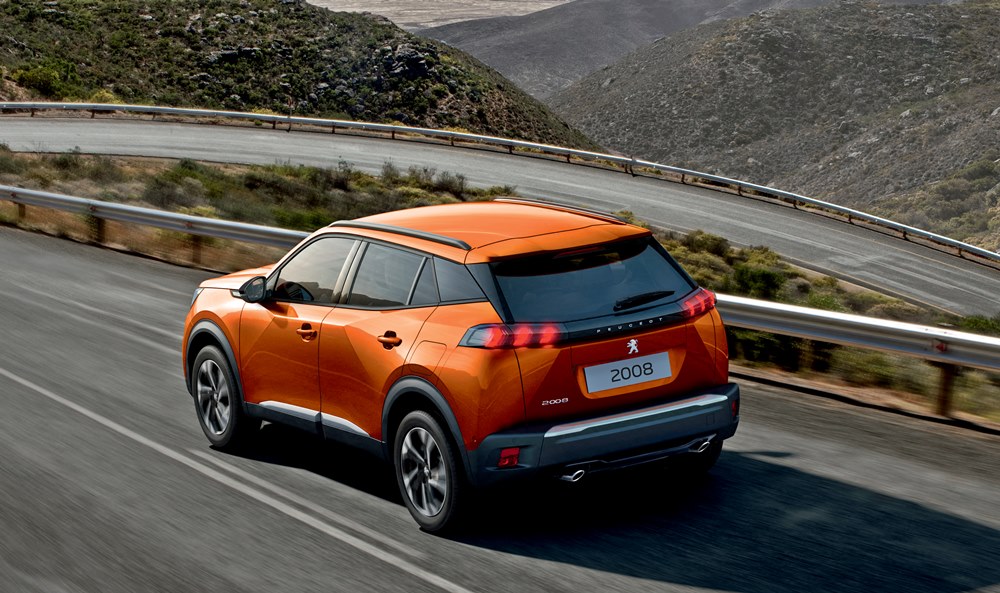
Today, the third model from the Stellantis assembly plant in Kedah (formerly owned by the NAZA Group) was officially launched, this being the 2008 crossover SUV. The 2008 has been in Malaysia since 2014 when the first generation was launched by the previous distributors. The current second generation was launched in Europe in 2019 but due to Nasim’s sudden end to handling the French brand, it did not make its appearance as expected in 2021 (though the COVID-19 would also have upset plans).
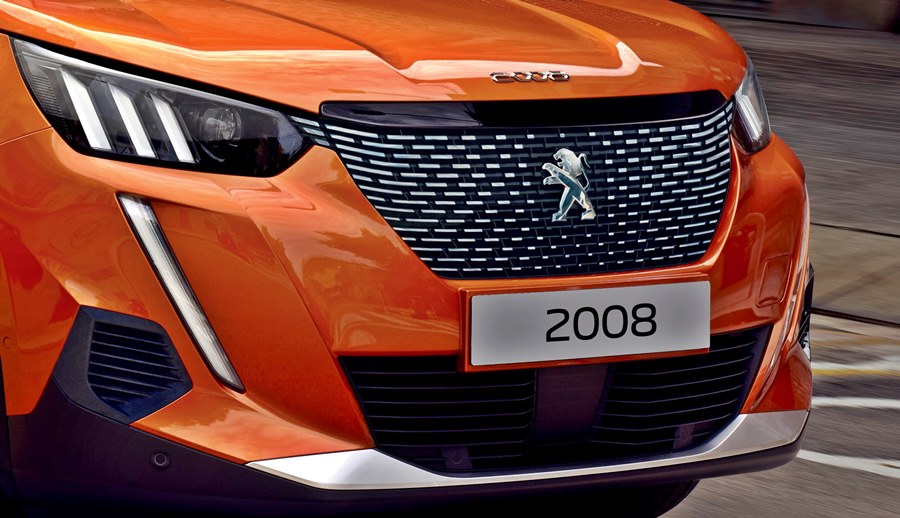
So as it makes a fresh start with BAASB, Peugeot has a brand new model to introduce to the market with the new design language that includes a new brand logo and Lion as well. The new Peugeot logo (which has changed at least 8 times in over 200 years) has an all-new take on the iconic Peugeot lion.
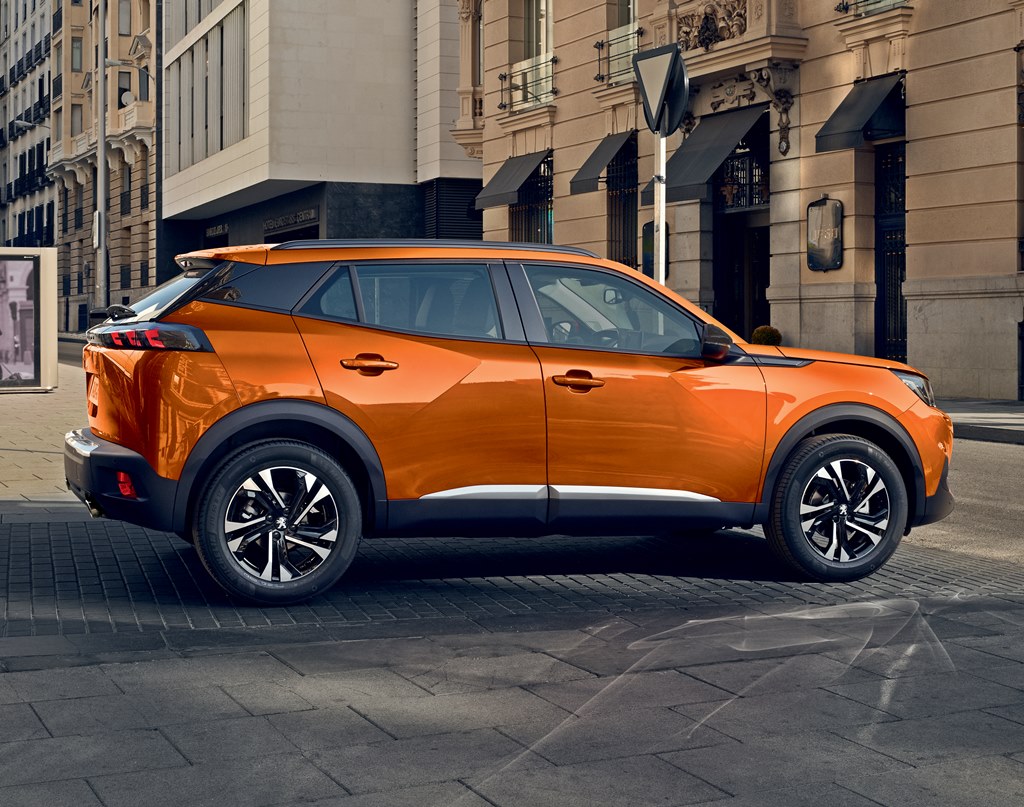
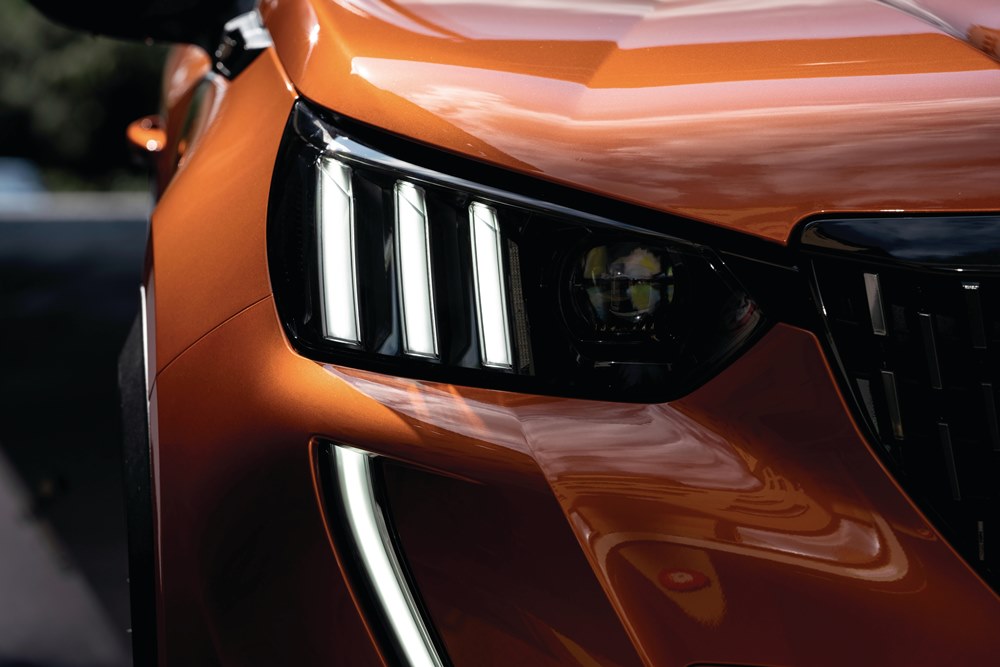
Compared to the first generation, the second generation has a more striking profile with a set-back windscreen that emphasizes the streamlined and athletic design. The more horizontal bonnet sweeps back from a large grille that is flanked by the distinctive ‘3-claw’ daytime running lights that are the signature of the latest Peugeot models.
The overall design also shares elements with the 5008 and 3008, bringing to mind earlier generations of Peugeot models that had common styling elements and the only difference (at a glance) was that they were of different sizes.
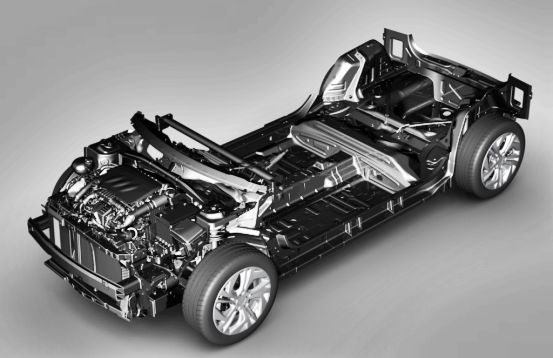
In the 21st century, sharing is a necessity to spread development costs and the 2008 uses Peugeot’s CMP (Common Modular Platform) small car architecture which was originally developed with China’s Dongfeng. The platform has been used for sub-compact and compact models since 2019 and is also engineered to be suitable for electric powertrains.
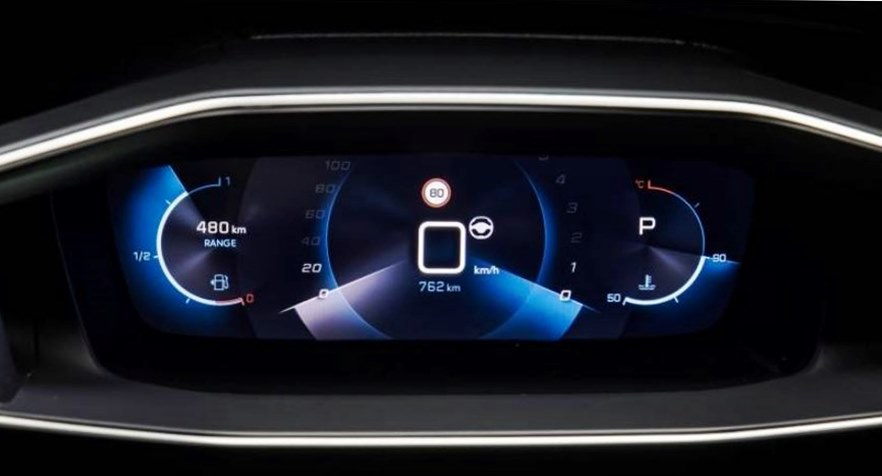
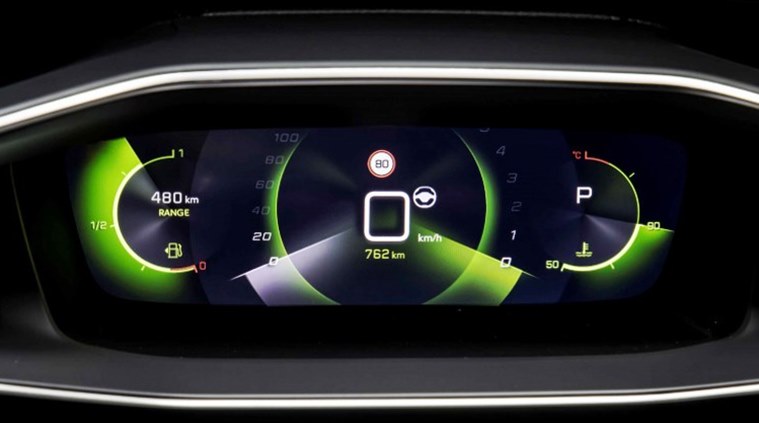
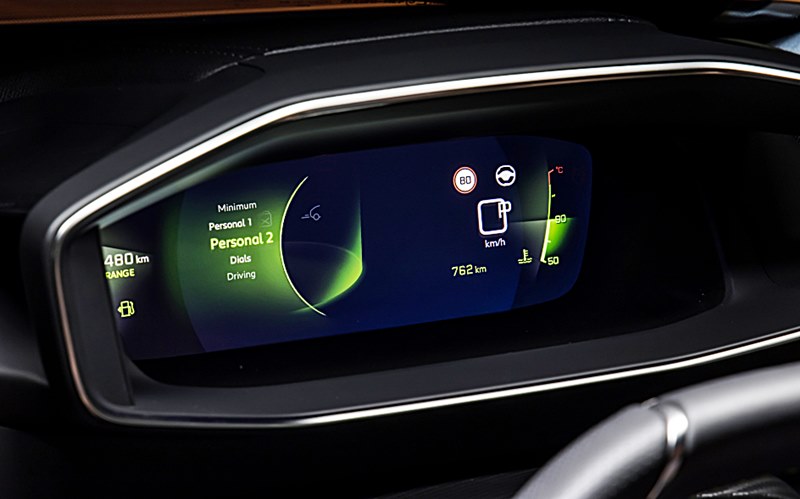
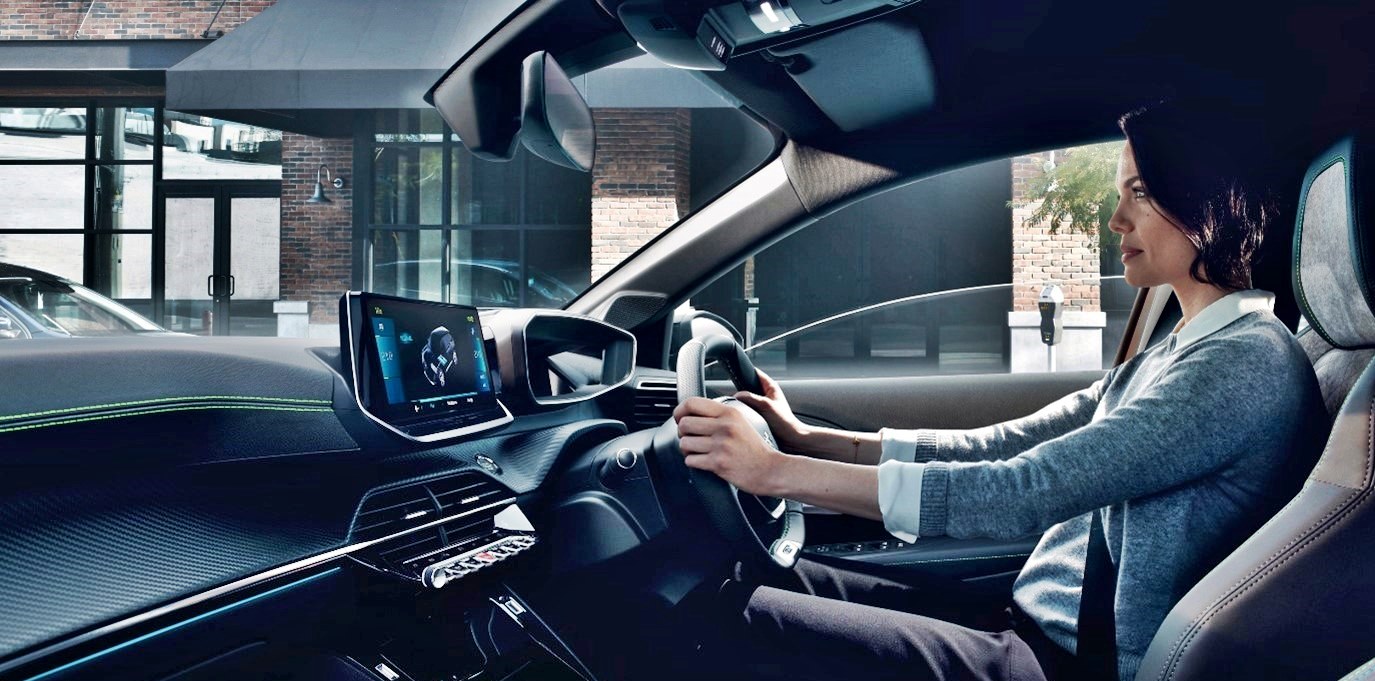
Inside, the 2008 is the first Peugeot model to get the new 3D i-Cockpit technology, a world’s first. This is the next evolution of the i-Cockpit that first appeared in the 208 in 2012, giving the popular hatchback an iconic feature that would become an element in the brand’s DNA. With the i-Cockpit, key information is directly within the driver’s line of sight, reducing the need to take the eyes off the road. It’s almost like the Head-Up Display (HUD) except that it does not project information on the windscreen ahead of the driver. It is therefore not as expensive to incorporate but at the same time differs from traditional instrument panel layout and positioning.
The new 3D version’s instrument cluster, fully digital and graphic, has advanced reflections that create the impressions of 3D graphics. Depending on the importance of information presented, the indications appear ‘closer’ to the eyes of the driver. The digital cluster displays.
The cluster is composed of a high-definition 10.25-inch ‘background’ thin-film transistor (TFT) and a 7-inch ‘foreground’ TFT projected on a semi-reflective blade. The leading-edge display creates a 3D projection of approximately 15 mm between the front and rear images. This projects information like a hologram and the information is dynamic and animated. It can get closer to the eye depending on the degree of importance or urgency, and potentially increasing driver reactivity by half a second.
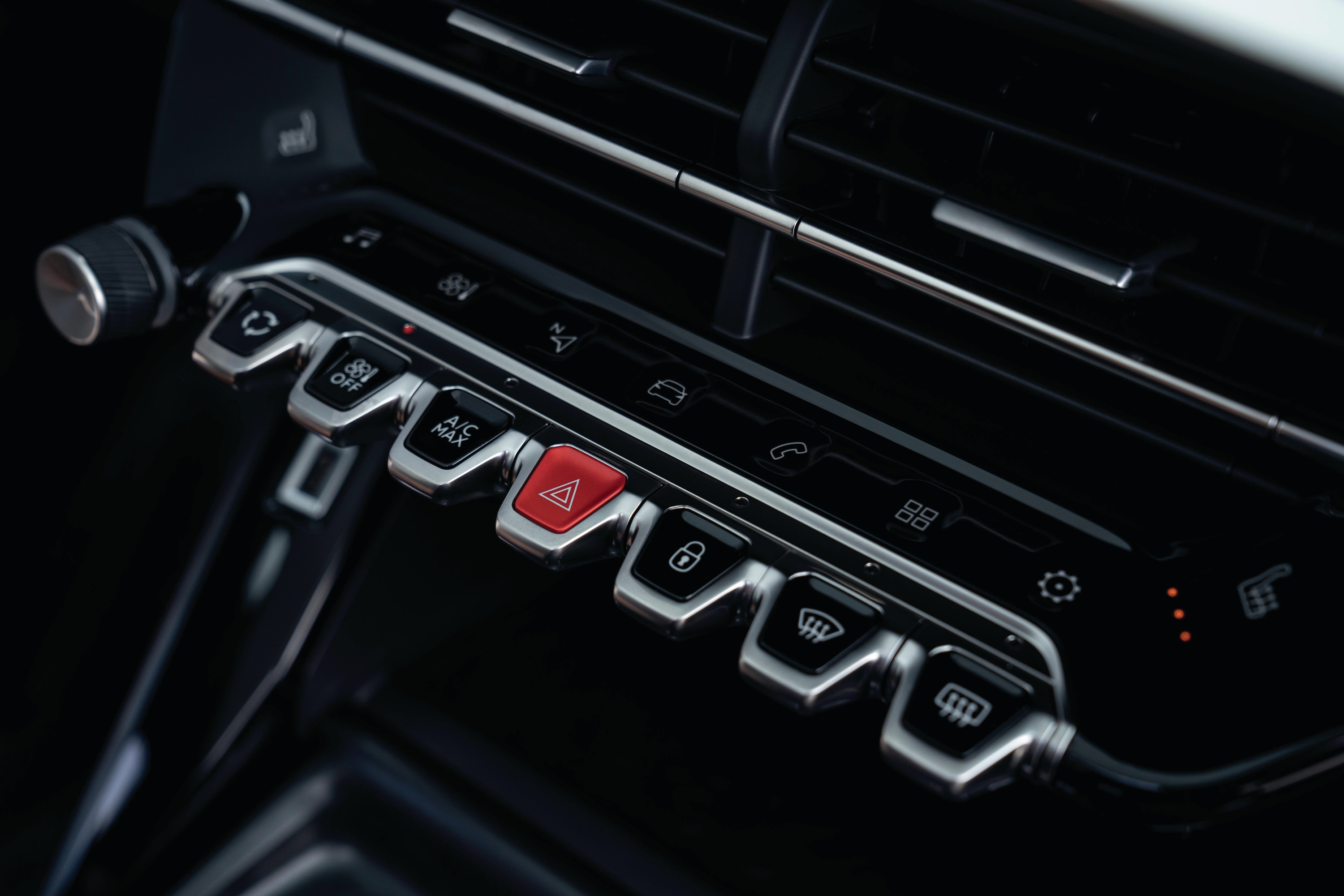
The other elements of the i-Cockpit are the compact steering wheel, raised instrument display, and a series of piano keys (or toggle switches) allowing direct and permanent access to the main comfort functions. There is a 3-level arrangement for efficient ergonomics and driving comfort. Like a HUD, the information falls within the driver’s line of sight so that he or she does not need to take their eyes off the road ahead, improving safety. With traditional layouts, the eyes usually have to be diverted downwards a bit to view the meters, momentarily drawing the driver’s vision away from the road.
The Allure version comes with a 7-inch touchscreen display for the infotainment system. As with many new models, it has Apple CarPlay and Android Auto for smartphone connectivity. The system also responds to voice commands and Bluetooth can be used for handsfree telephony. Premium features include Automatic Climate Control, leather upholstery, mood lighting, electronic parking brake and cruise control.
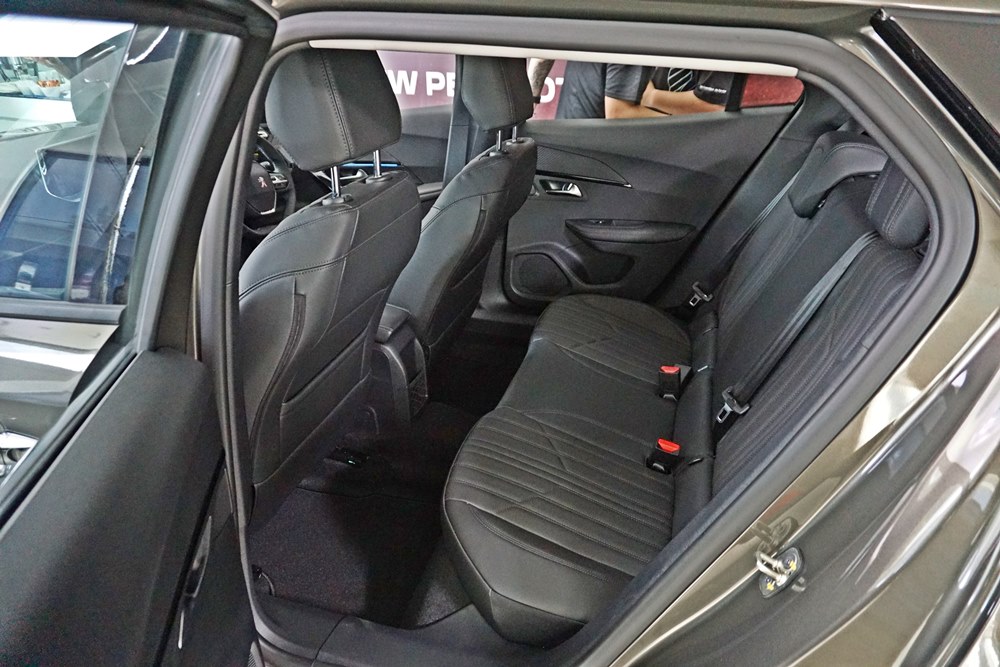
Although having compact exterior dimensions, passenger accommodation has been maximised through intelligent packaging. The driver and front passenger have 6-way seat adjustment while the rear backrest is divided in a 60:40 ratio for variable layouts.
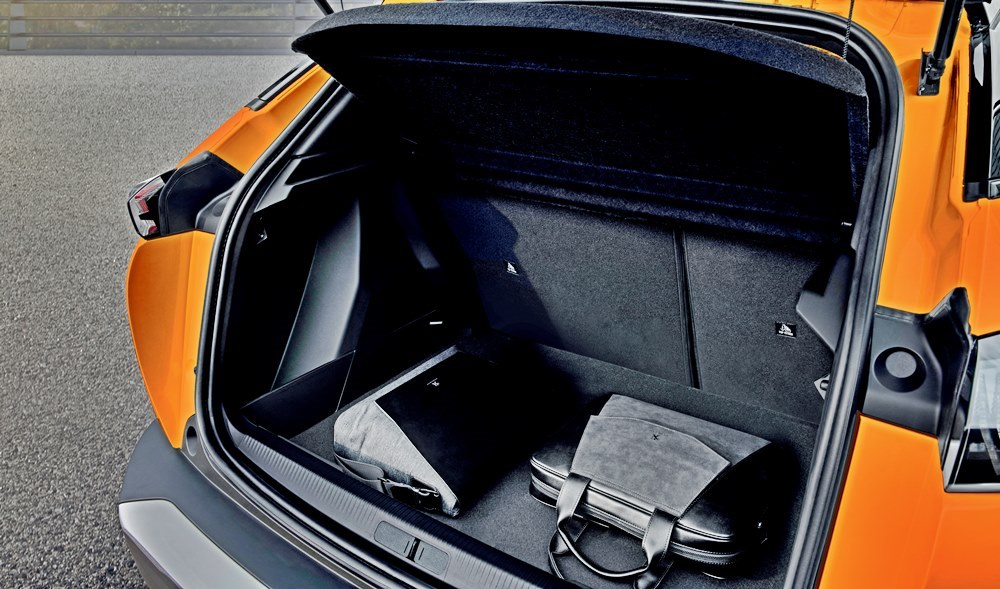
The boot is also pretty spacious with up to 434 litres of volume which can be expanded to 1,467 litres if you don’t have anyone in the back seats. There’s also another 80 litres in a compartment hidden under the floor which would be useful for valuable items although there is a removable tonneau cover to hide the contents of the boot.
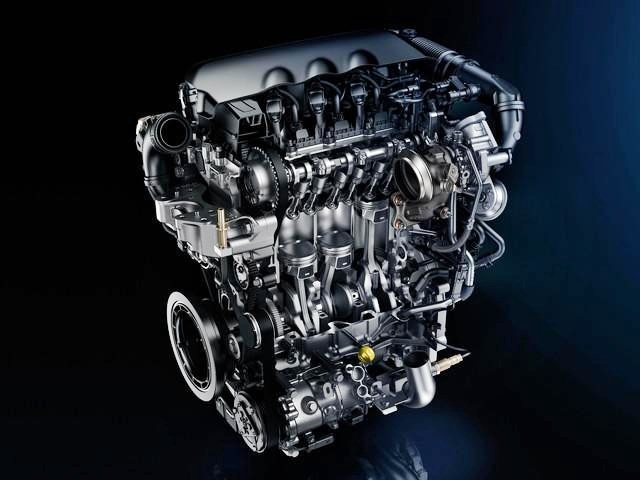
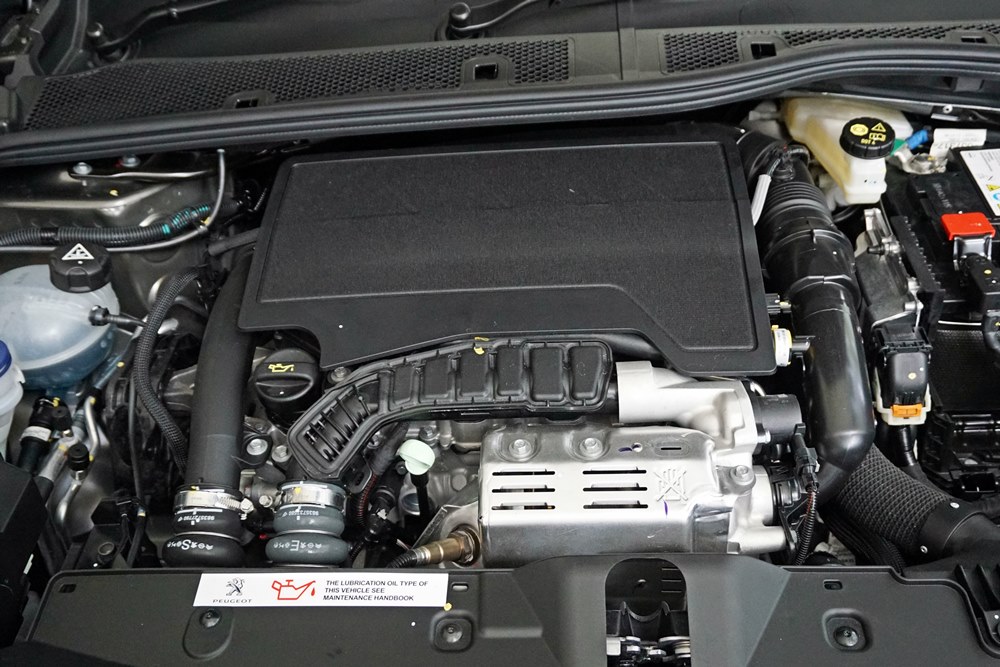
All 2008s with petrol engines use the same 1.2-litre 3-cylinder DOHC 12V turbocharged PureTech engine. This engine has been a category winner a few times in the ‘International Engine of the Year’ Awards. With direct injection, it produces 130 ps/230 Nm and is paired with a 6-speed ATS III automatic transmission from Aisin.
According to Stellantis Senior Vice-President ASEAN & General Distributors, Christophe Musy, much effort has been put into ensuring that the engine is suited to local conditions. Extensive testing has been carried out and the Peugeot people are now more aware of the fact that conditions in this region are significantly different. There is assurance that there won’t be issues like those which affected the engines in the old 308.
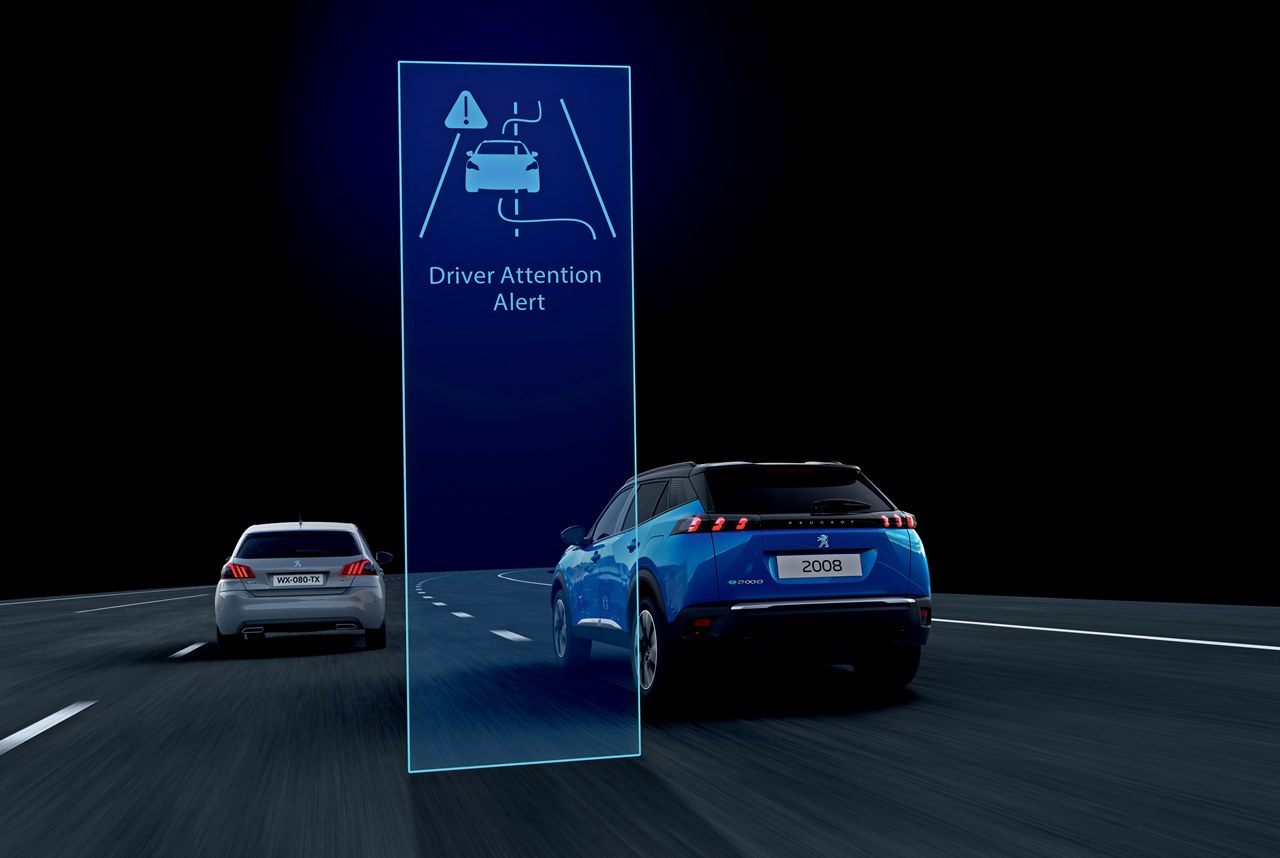
Although the 2008 doesn’t have a suite of active safety systems like what you find in many new models, it nevertheless has a number of the systems that you find in such suites. These include Lane-Keeping Assist, High Beam Assist, Blind Spot Monitoring, Driver Attention Warning and an Active Safety Brake. Also included as standard is a Tyre Pressure Monitoring System, which should make regular checks unnecessary.
There are also front, side and curtain airbags, along with ABS, stability control, anti-skid control and hillstart-assist. Parents with small children don’t have to break the law as they can install childseats on the ISOFIX points securely, while warnings will remind everyone to use seatbelts.
Priced from RM126,753 (without insurance and without sales tax until June 30, 2022), the 2008 comes with a choice of 4 colours and a warranty of 5 years or maximum of 100,000 kms. Customers also enjoy free scheduled servicing for the first 3 years (or maximum of 60,000 kms.
Although UMW Toyota Motor (UMWT) has been promoting hybrids a lot in the past few months, Toyota hybrids are not new to the Malaysian market. While the first model, the Prius which was the world’s first mass-produced hybrid car, was not marketed here, it did make a brief appearance in 2000 to introduce the hybrid electric technology to government officials. However, it would only be 10 years later that the government’s exemption of all duties for hybrid electric vehicles (HEVs) and battery electric vehicles (BEVs) would see UMWT selling many HEVS. It imported the Prius, by then in its third generation as well as the smaller Prius c and also the Lexus Ct200h. Without the high duties imposed, the models were attractively priced and sold well.
However, when the duty-exemption was withdrawn a few years later, prices shot up again and sales fell to zero. Although the government had hoped that the car companies would follow up after the duty-free period to assemble HEVs locally, only one company chose to do so while the others did not bother. The government instead focussed on encouraging the local assembly of ‘energy efficient vehicles’ (EEVs) for which incentives would be given to offset production costs and lower retail prices.
Last year, UMWT decided that it would move forward with a view towards electrification of its range, in line with the aim of Toyota Motor Corporation to achieve carbon neutrality by 2050. However, the company’s strategy does not entirely focus on electrification of its products to the extent that future models will no longer be powered by combustion engines in the near-term. Instead, it has a multi-pronged approach which will be determined by various factors in each country and region.
The more advanced countries have an extensive network of charging stations to support BEVs but in Malaysia, this is still something that is under development. To date, there are only around 500 charging stations in the whole country, mostly in urban areas and mainly in the Klang Valley. In Toyota’s view, that’s not a suitable situation to be introducing BEVs at this time, so it has chosen to start its electrification journey in Malaysia with HEVs. This is more practical as hybrid powertrains are not reliant on a charging infrastructure since they can recharge their battery packs on the move, and the technology cost of HEVs is lower than BEVs so they are within reach of a greater number of customers.
This led to the decision to invest RM270 million in the assembly plant and related expenditures to assemble HEVs locally. It’s the first time that a Toyota HEV is being assembled locally and though this may seem like it was prompted by the government’s efforts to promote greater electrification of motor vehicles as announced in the Budget last October, UMWT made their announcement last July, many months before the government’s announcement. In any case, the incentives are only for BEVs and HEVs will continue to receive the EEV incentives which will still help offset production costs.
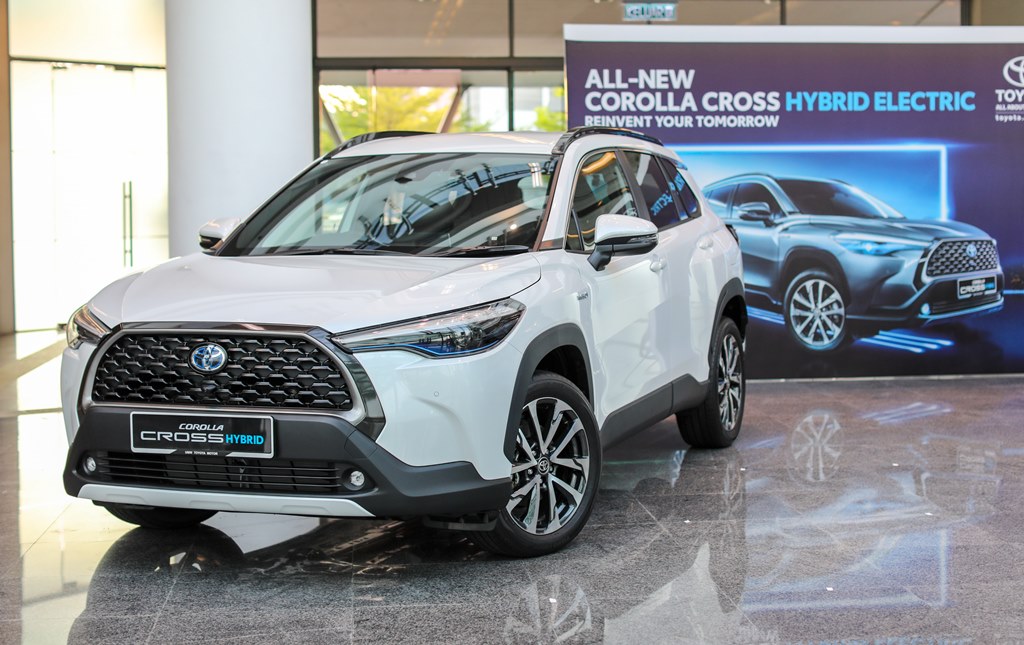
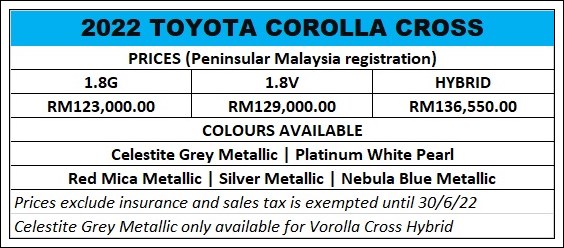
Tonight, the launch of the Toyota Corolla Cross Hybrid represents the culmination of the project to assemble HEVs locally and it would be the first of a range of HEVs to come. As can be seen from the price, it is attractive enough, unlike BEVs which, even with full tax exemption, are starting from RM150,000. Since the Corolla Cross Hybrid is being assembled, UMWT has also decided to include the Corolla Cross with a 1.8-litre petrol engine as well and this is available in two variants.
As mentioned earlier, HEVs are not reliant on external charging so a customer can buy and use one just like any other car with a combustion engine. Hybrid electric technology, which has matured after 25 years, is a ‘transparent’ technology in that the driver doesn’t really see the difference (although the feel might be different). It’s just like the introduction of multivalve engines and EFI in the 1980s and turbochargers becoming common in the 2000s.
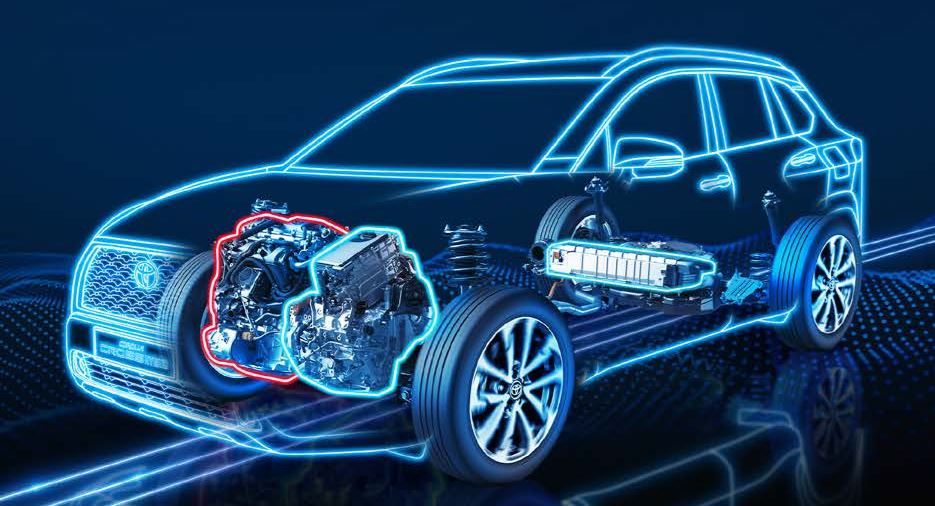
For those who may not be entirely familiar with hybrid electric technology, here’s a quick explanation. As the term suggests, the powertrain is a combination of two power sources – a petrol engine and an electric motor (actually the Toyota system has two motors). In some systems, they may work independently but Toyota’s system, now in its fourth generation, is designed to work in a collaborative manner. Running conditions and the amount of energy in the battery pack determine how the collaboration works but basically, the car will move off with only electric power and as the speed increases, the engine will provide the additional power needed to go faster.
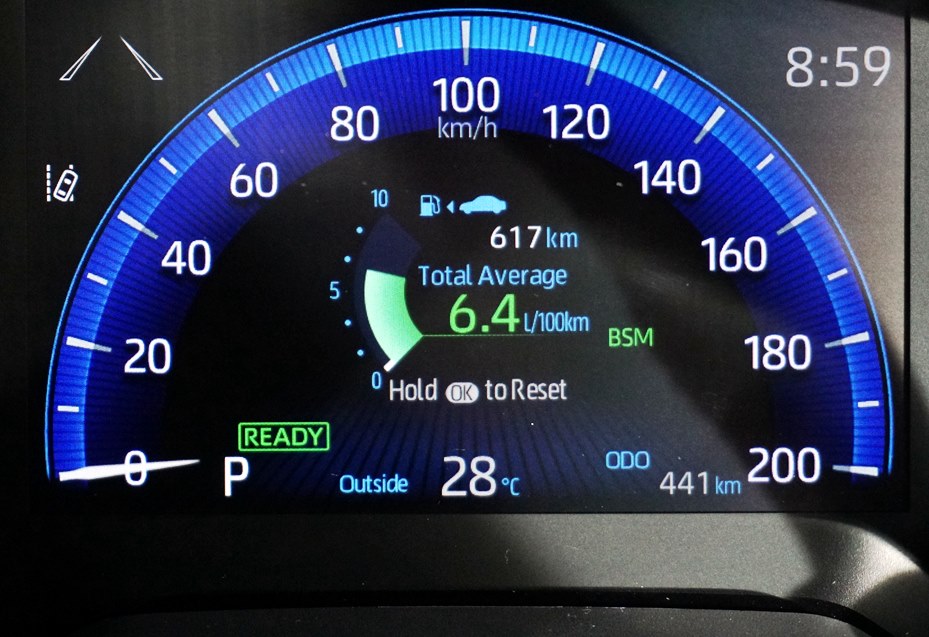
While cruising, the system will be varying the use from each power source so at times, the electric motor may be doing all the work, which means no fuel is used and that helps in fuel-saving. It can be quite significant as we discovered on a drive from the Klang Valley to Penang where the average consumption was 6.4 litres/100 kms or 15.6 kms/litre. Other members of the media were able to get even better figures.
The motor relies on electricity supplied by the lithium-ion battery pack so what happens when there is no more? That should not happen as the amount of energy will be constantly replenished while the car is moving. This is done by regenerative braking (where energy lost during braking is converted into energy for electricity) or the generator (the second motor) charges the battery pack. In the event that there is heavy usage of electricity, then the engine will be used more as the recharging takes place.
This self-charging capability takes away the ‘range anxiety’ that users of BEVs may have. This relates to the concern about running out of electricity on a long journey. With a HEV like the Corolla Cross Hybrid, you can still move using the engine and can refuel at one of 3,700 stations all over the country. But with a BEV, you might be stranded by the side of the highway or along some remote country road. It will be a long, long time before BEV technology is so advanced that you can recharge with a portable powerbank like you do now for your mobilephone.
Battery technology has been constantly advancing since the first Prius. In the early days, the battery pack was big and heavy and did not hold a lot of electricity. Since then, the battery packs have become smaller and yet more energy-dense while using more efficient processes like lithium-ion interaction. Their cost has also come down while reliability and durability have improved. For owners’ peace of mind, UMWT offers an 8-year warranty on the battery pack and this warranty, unlike others, includes some hybrid-related systems as well. There’s also an option to extend the warranty to 10 years, but the general vehicle warranty is 5 years with unlimited mileage.
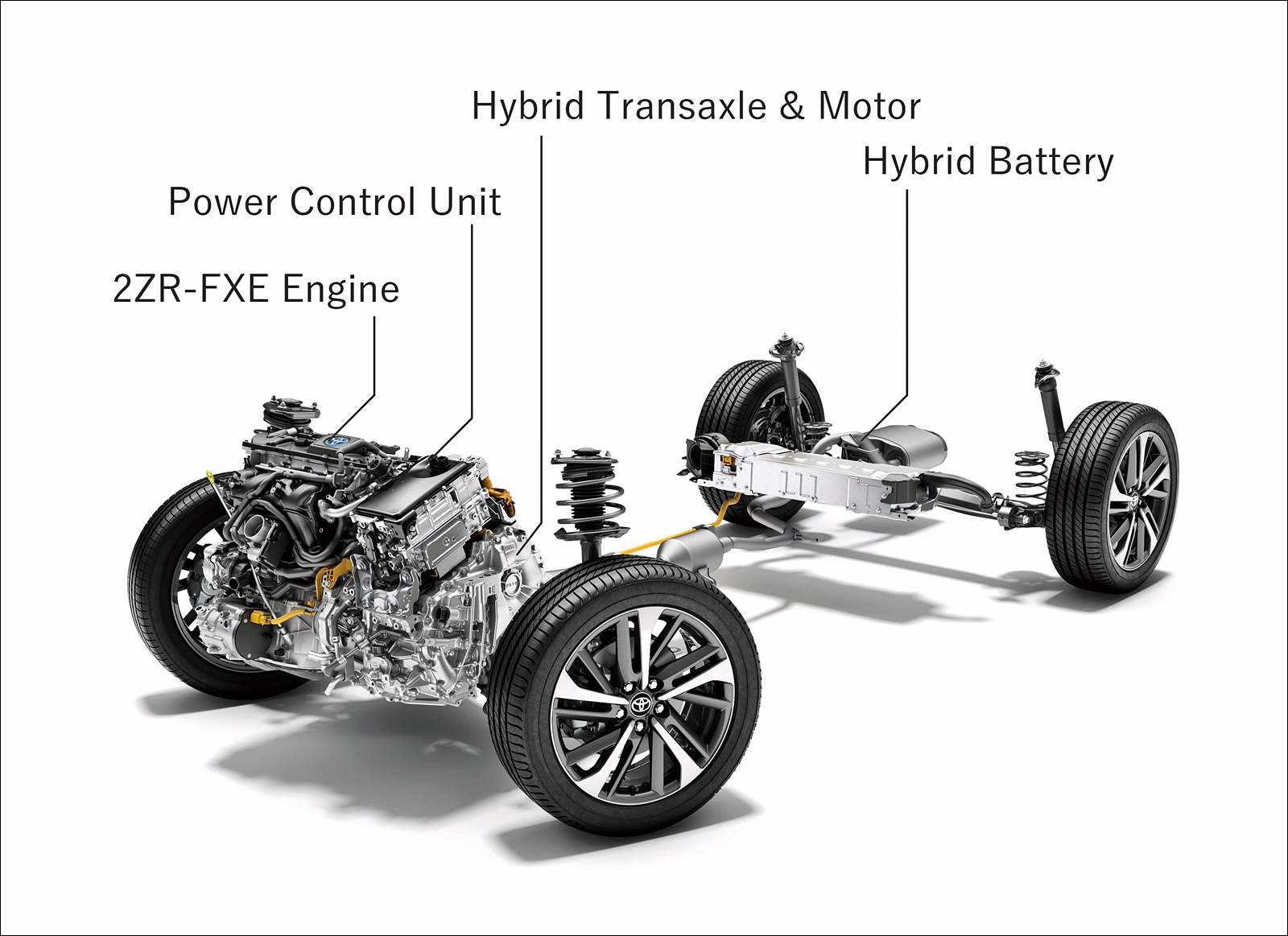
The powertrain for the Corolla Cross Hybrid has a 1.8-litre 4-cylinder petrol engine which is the same as the one in the Corolla Cross 1.8V and 1.8G. It produces 98 ps/142 Nm while the primary electric motor contributes 53 kW (equal to 72 ps) and 163 Nm of torque. Power delivery is via an E-CVT specially engineered for use in HEVs.
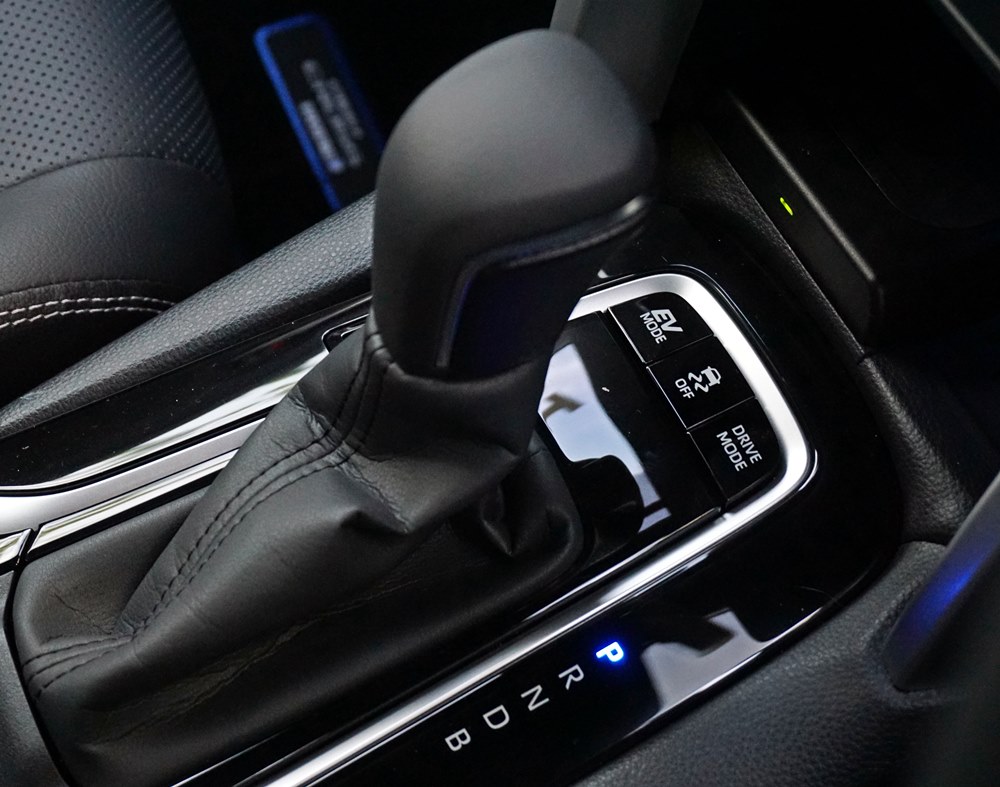
There are 4 modes – NORMAL | SPORT | ECO | EV – which the driver can select at the touch of a button while on the move to suit driving preferences or to maximize fuel-saving. The EV mode is a unique mode which gives an experience similar to driving a fully electric vehicle. In this mode, only the electric motor is used so there are zero emissions and the vehicle moves around noiselessly. The distance can be several hundred metres (depending on battery condition and driving speed) and would be ideal when moving around a carpark looking for a space.
The air-conditioning system in the Corolla Cross Hybrid is also unique, specially designed for HEVs. Unlike conventional air-conditioning systems which use an engine-driven compressor to pump the refrigerant around, the system is electrically powered. It can therefore run even when the engine is off, drawing its power from the battery pack. Should the battery pack capacity be low, the engine will restart to recharge it as it continues to power the air-conditioner’s electric compressor.
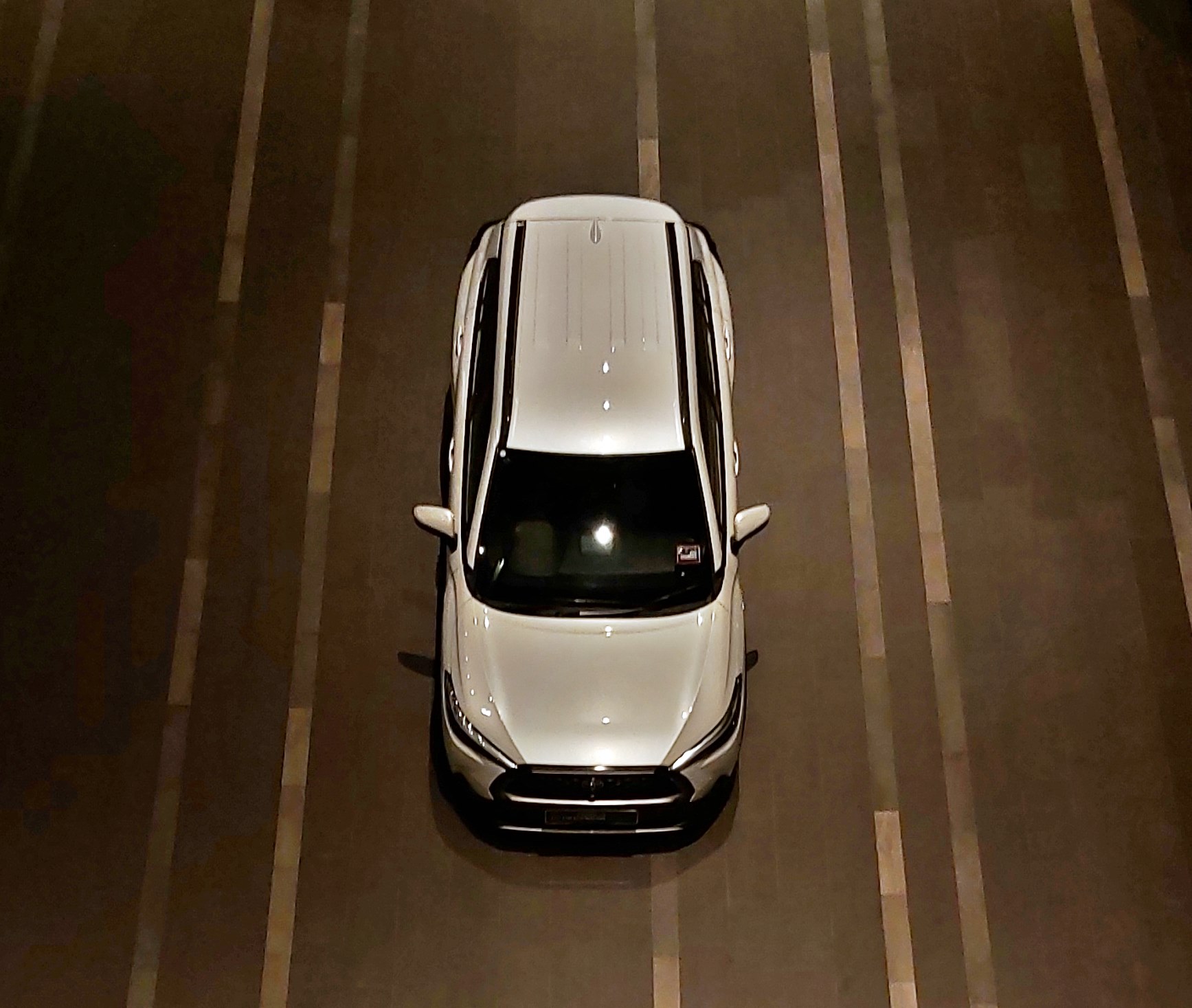
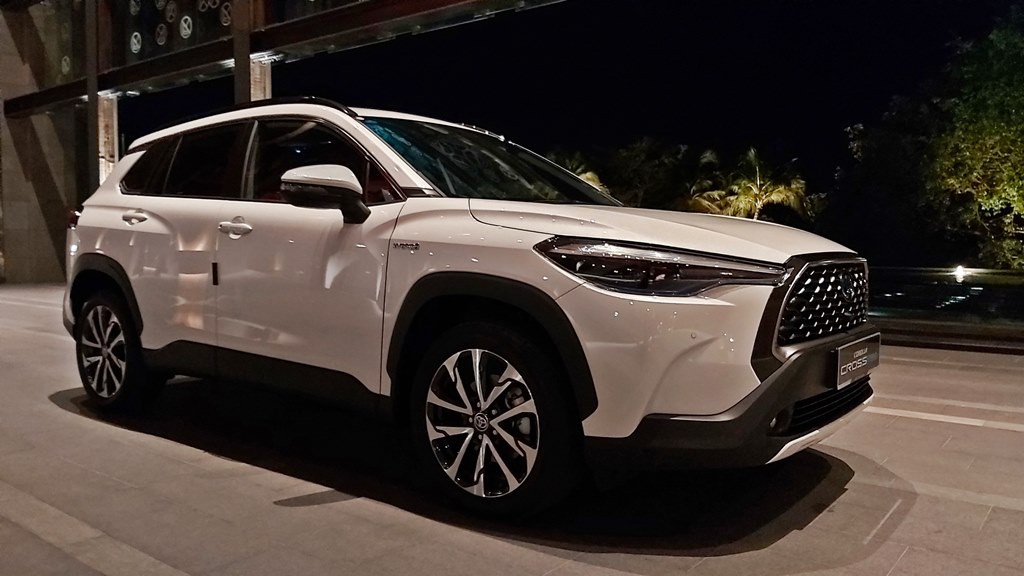
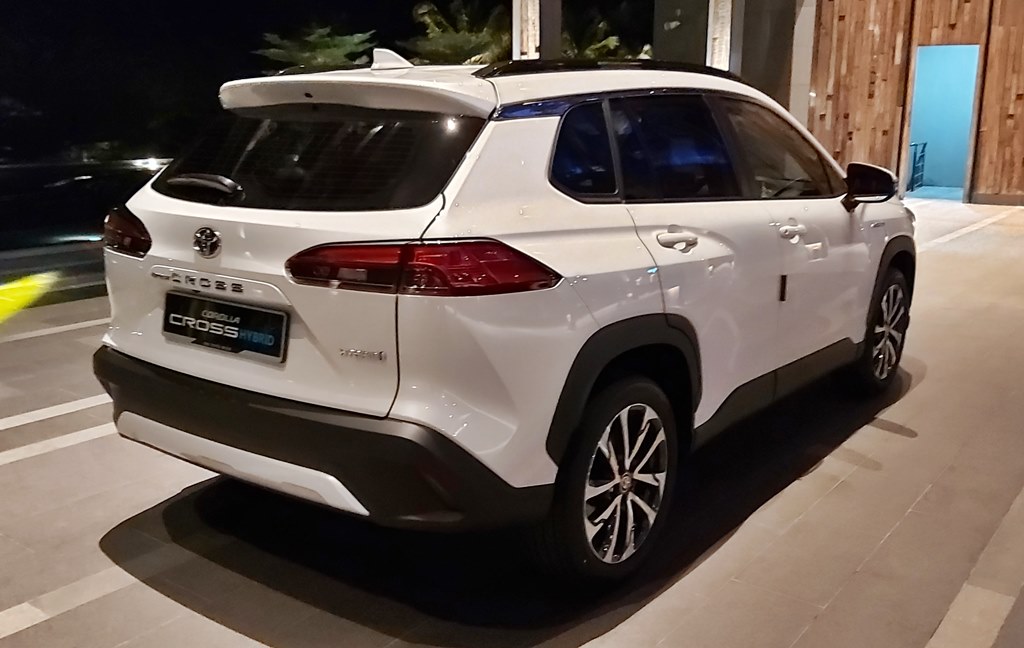
Appearance-wise, the Corolla Cross Hybrid is not exactly new on Malaysian roads as the non-hybrid model was introduced last April, imported from Thailand. However, due to the long period of shutdown in the middle of the year and some supply issues caused by the microchip shortage, the number on the roads is limited. Now, as a locally-assembled model, you should start to see more of them.
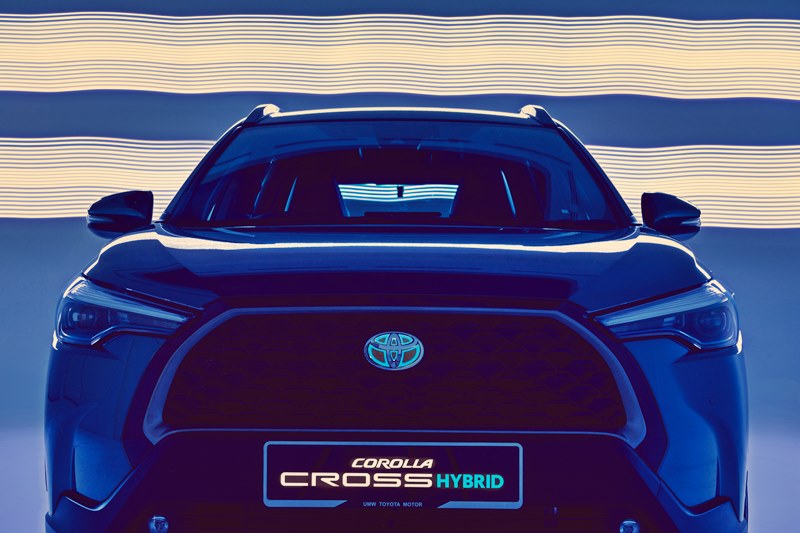
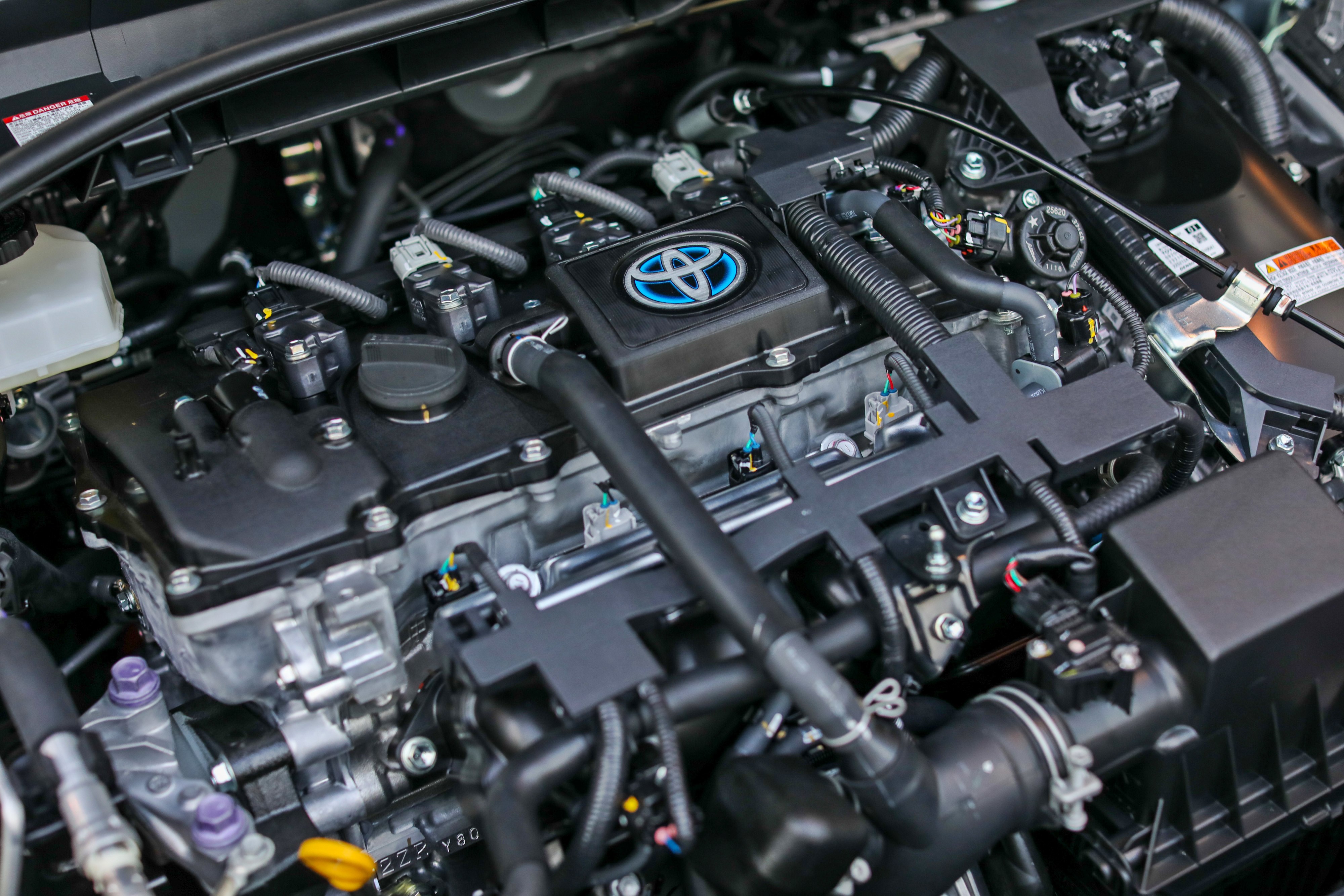
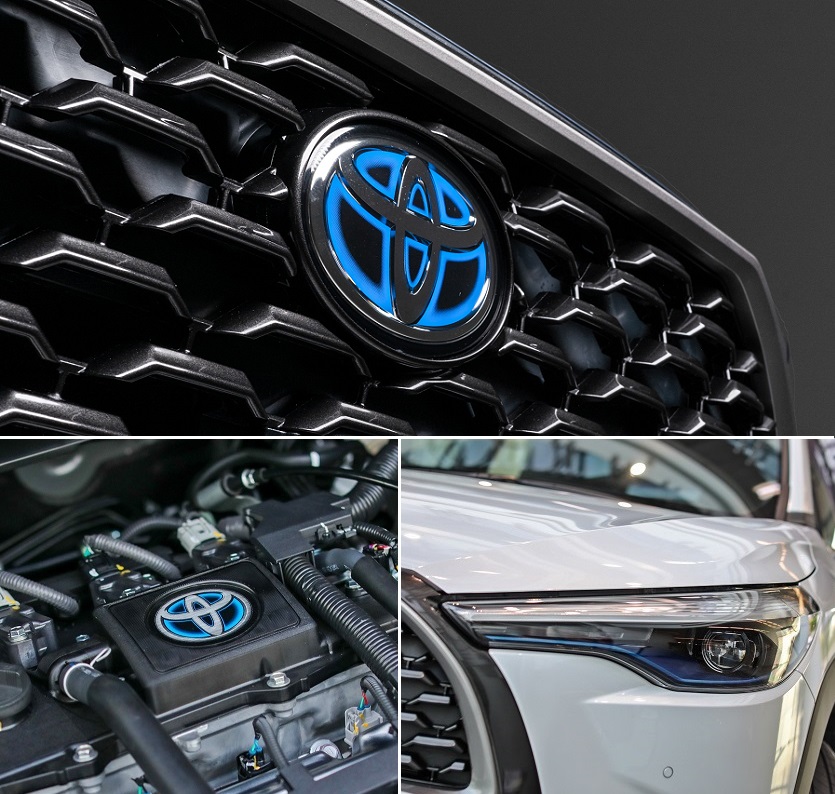
Where is the past, a variant bodystyle of the Corolla would still have some common elements with the sedan (usually the front end), the Corolla Cross Hybrid looks like a different model altogether. Toyota could have raised a Corolla Hatchback and ‘ruggedized’ its looks (as some manufacturers do to create a ‘SUV’) but they instead came out with a new SUV design and placed the model in the family of the all-time bestselling car in the world. To differentiate a Corolla Cross Hybrid and a non-hybrid, there are blue accents on the grille badge, logo on the engine, headlights and the rear badge.
Besides being the first Toyota HEV assembled locally, the Corolla Cross is also the first model with Toyota New Global Architecture (TNGA) to be assembled in Malaysia. TNGA has been used for all recent new models and has been engineered for variability, allowing engineers a lot of freedom to adapt it to different types of models. It is used for sedans and hatchbacks as well as SUVs and while there is differentiation in designs, there are also many common elements and parts and that is one of the secrets of reducing production costs.
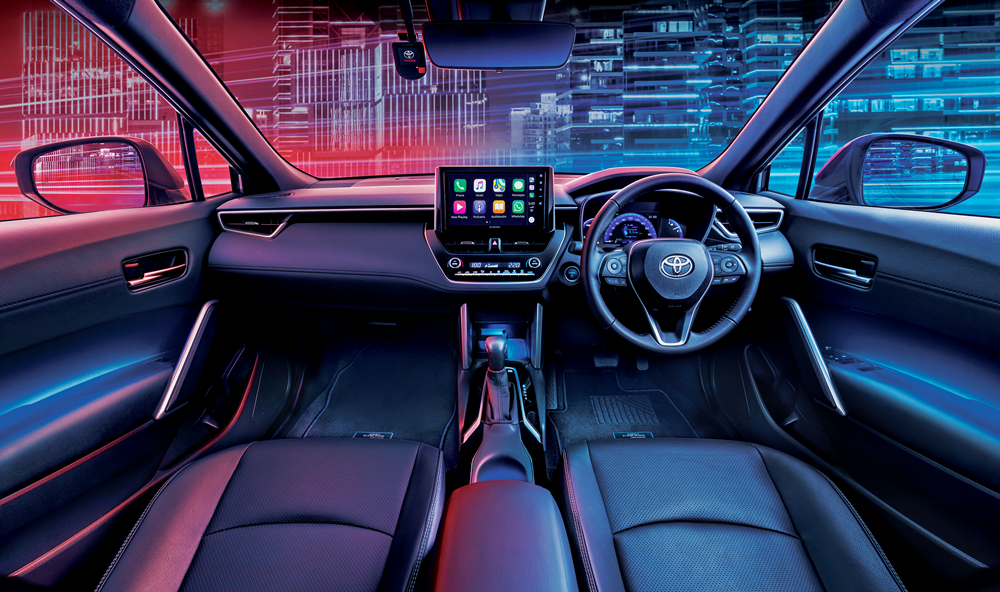
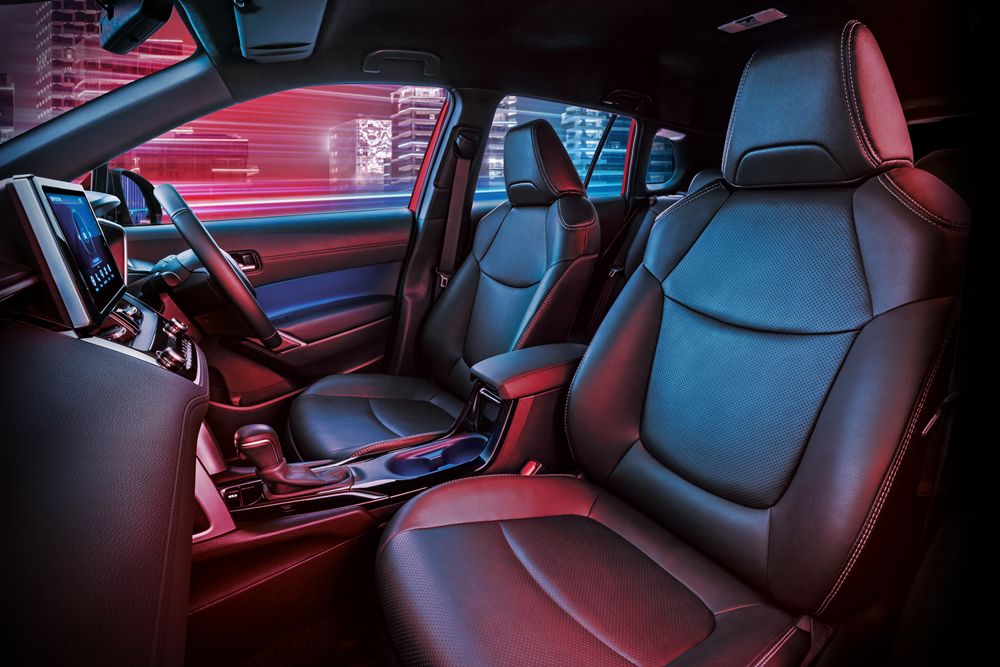
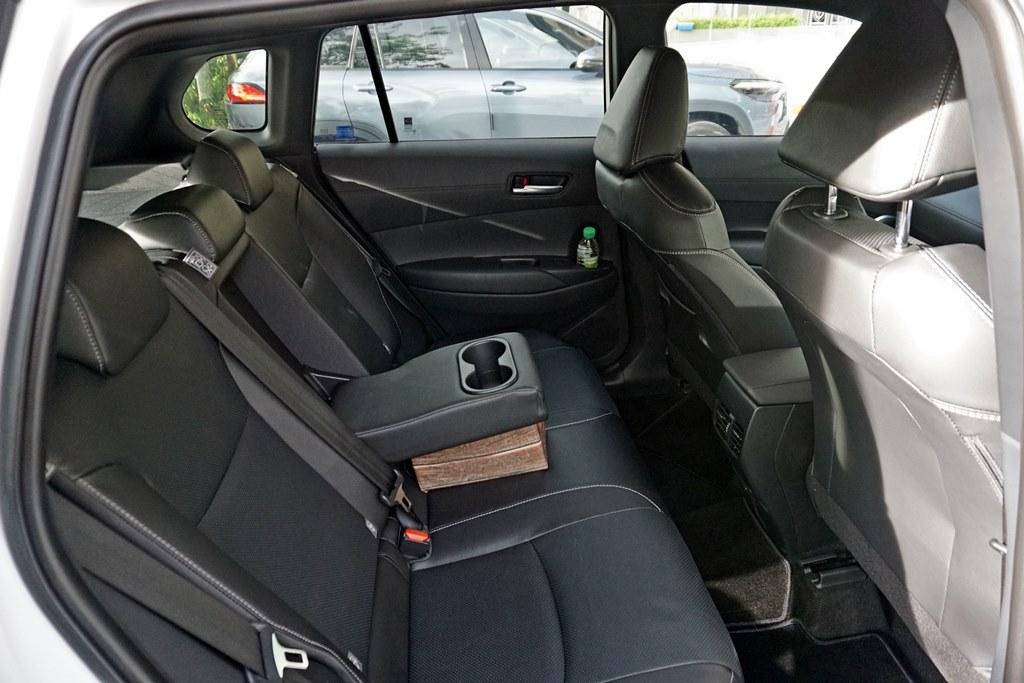
The passenger car-like interior of today’s SUVs was pioneered by the Toyota RAV4 some 25 years ago. This is continued in the Corolla Cross Hybrid andthere is claimed to be significantly better headroom than other competitor SUV models in the same class. The wide body dimensions also allow the centre console to be wider for more storage space.
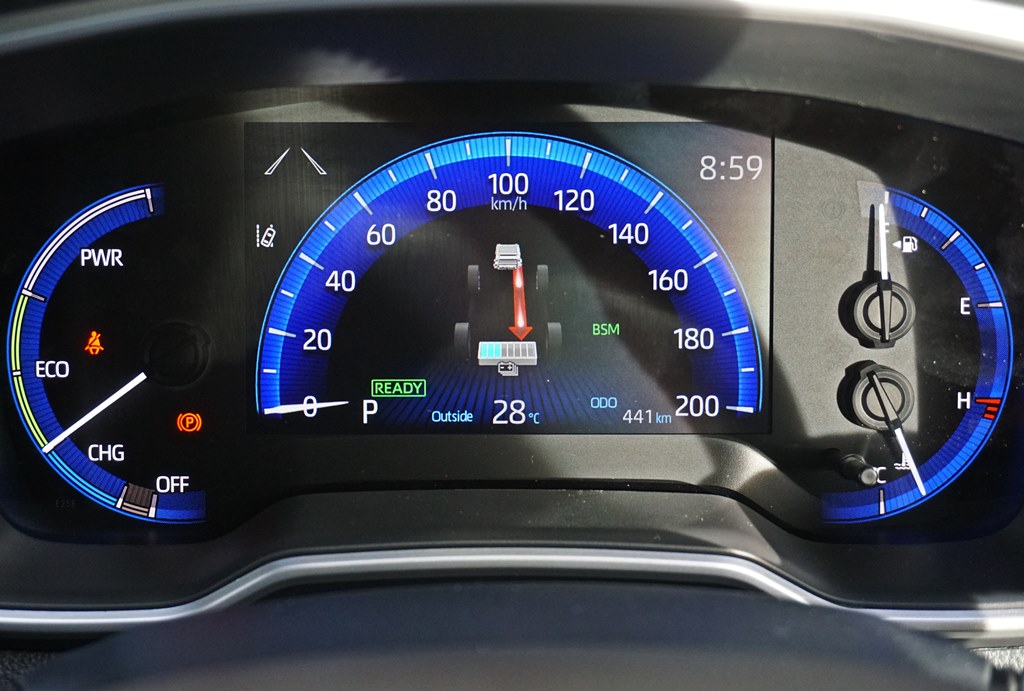
The blue accents on the exterior that identify the Corolla Cross Hybrid are also evident in the instrument panel. There is a colour 7-inch Multi Information Display (MID) with two styles – detailed and simple. Due to the quietness of operation, a READY indicator is shown to let the driver know when the system is ready to run when the START/STOP button is pressed.
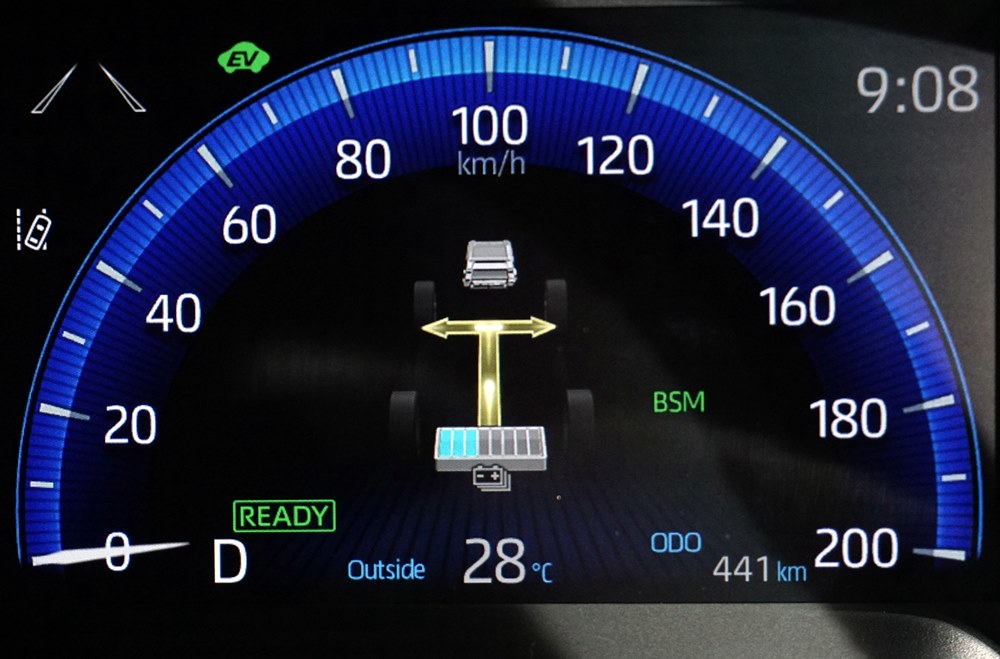
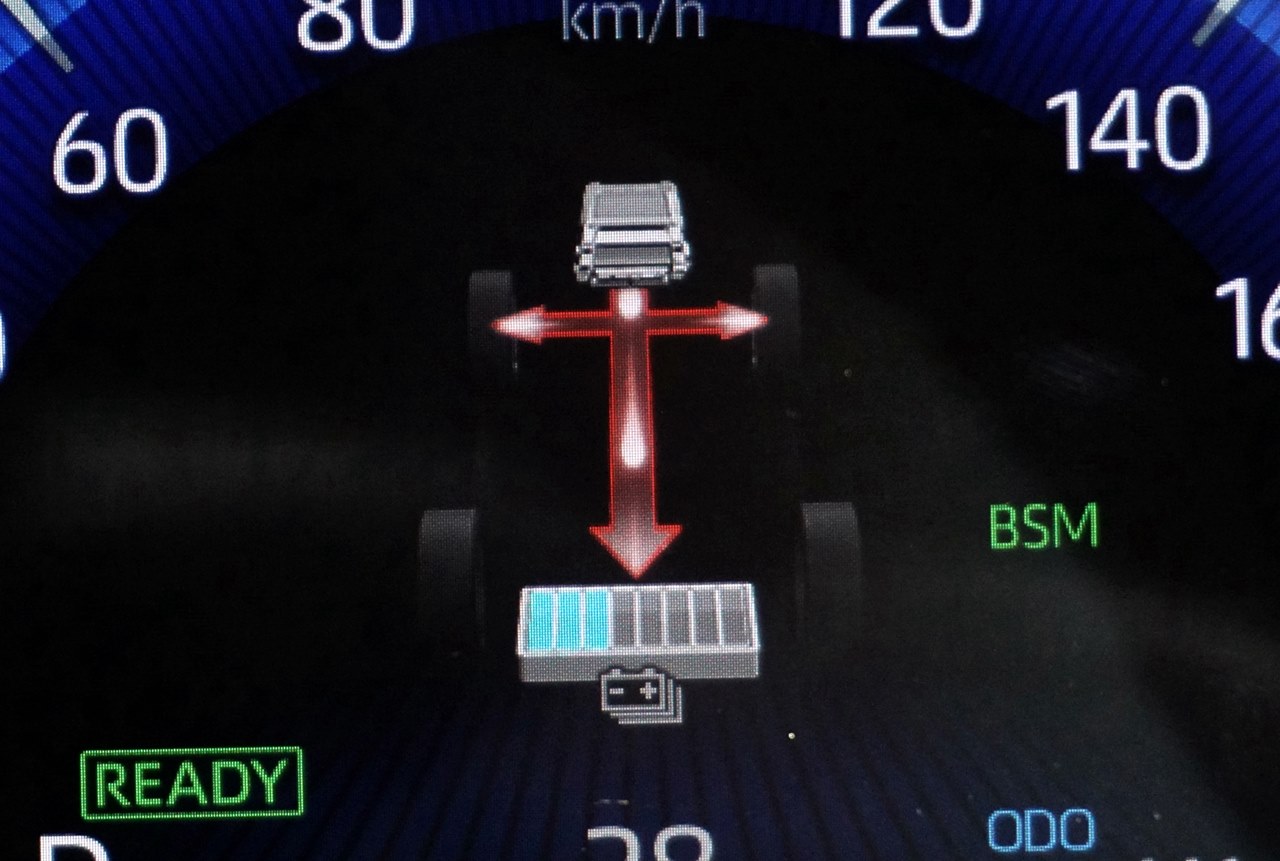
Various types of information are presented to the driver in the MID and one of the displays shows the flow of power and electricity between the engine, motor, battery pack and wheels. The flows are shown in real-time and show the driver when the battery is being recharged and the level of electricity in it.
To help the driver of the Corolla Cross Hybrid achieve the best fuel economy, an ECO display in the instrument panel provides guidance on accelerating optimally. At the end of each journey, the driver can refer to an ECO Score to see how eco-friendly the driving style has been. With such a feature, drivers may be inspired to achieve a good score daily and save more fuel!
A large 9-inch panel in the middle of the dashboard provides information for the infotainment systems, as well as the image from the rearview camera. The system is Apple CarPlay and Android Auto ready so compatible smartphone apps can easily be transferred and accessed from the dashboard. Other connectivity options include USB mirroring, AUX and Bluetooth.
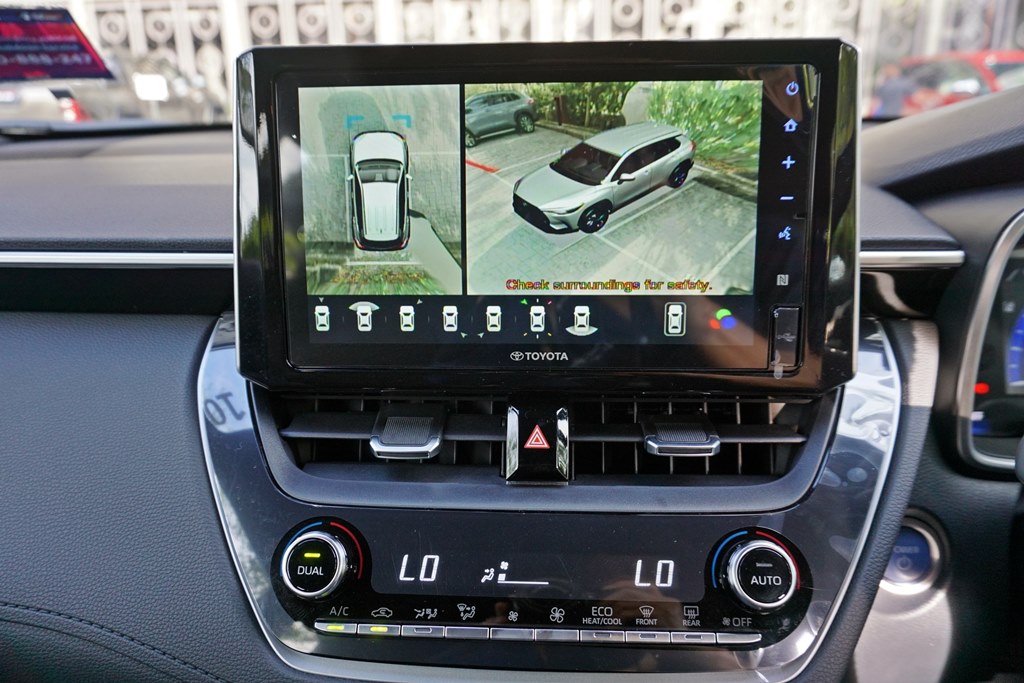
To assist the driver during parking or manoeuvering the vehicle is a 3D Panoramic View Monitor (shown above) which also uses the display on the 9-inch panel. Utilising small cameras on all sides of the vehicle, a 3-dimension view of the surroundings on all sides is presented to the driver. This not only enables easier positioning of the vehicle but also allows the driver to spot hazards or little children that might not be visible from the driver’s seat.
The air-conditioning system operated by an electric compressor has automatic operation to keep the cabin at the desired temperature. Airflow and temperature can be set differently for the driver and front passenger and with the S-Flow function, the airflow will be concentrated only on seats with people sitting on them. Cool air is also carried to the rear occupants by additional vents between the front seats.
Although a HEV has generally lower noise levels than a car with a combustion engine, additional efforts went into making the cabin quieter by adding an insulator sheet under the bonnet to isolate noise from the engine bay. The windscreen glass is also an acoustic type, reducing transmission of wind and other external noises.
Besides the convenience of a Smart Entry & Push Start System to lock/unlock the doors and start/stop the engine, the Corolla Cross also comes with a Power Back Door that opens and closes automatically by just positioning a foot under the rear bumper which has a proximity sensor. This allows for handsfree operation which will be convenient when both hands are holding bags or other items. For safety, the automatic opening will not work if the engine is running.
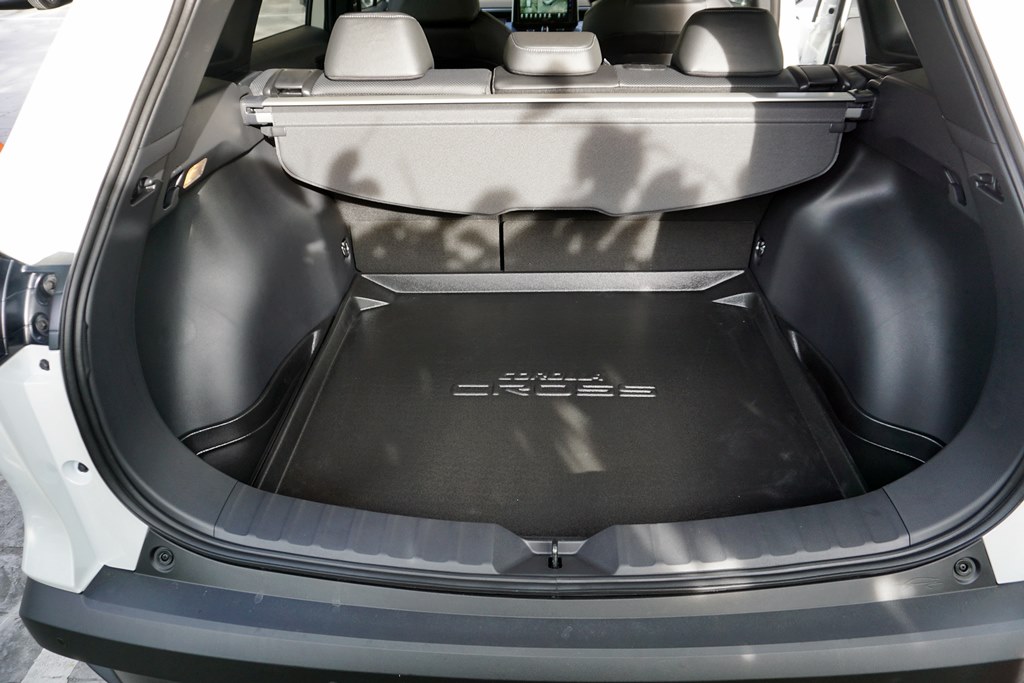
Instead of being installed in the boot area as in past models, the battery pack is under the rear seat, so no boot space is lost.
Besides the high-strength TNGA platform, the structure of the Corolla Cross is engineered to withstand impact forces from all sides during an accident, reducing or preventing injuries to the occupants. In crash testing and technical evaluation by ASEAN NCAP, the Corolla Cross Hybrid and Corolla Cross, as with many other Toyota models, has received a maximum 5-star safety rating.
The Corolla Cross Hybrid and Corolla Cross 1.8V come with Toyota Safety Sense (TSS) 2.0, a suite of Active Safety technologies that help a driver avoid accidents or reduce the damaging effects should a collision occur. Besides having automatic emergency braking and automatic high beam adjustment among the 5 main systems, the adaptive cruise control is also available at all speeds, maintaining a safe gap from the vehicle ahead whatever the set speed is. It can even bring the vehicle to a complete stop if the preceding vehicle stops without the driver needing to depress the brake pedal. When the vehicle ahead starts to move, it will automatically resume moving as well.
For the brands that sell high-performance cars, going electric has added challenges. They need to not only ensure that the electrically-powered cars offer the same sort of performance levels their customers expect from their brand but also new requirements like charging times and range. The latter especially was not so important before as customers are okay with high fuel consumption and can refuel as needed. With an electric car, you cannot ‘refuel’ as easily and at this time, it still takes a while to recharge battery packs (although that time is getting shorter),
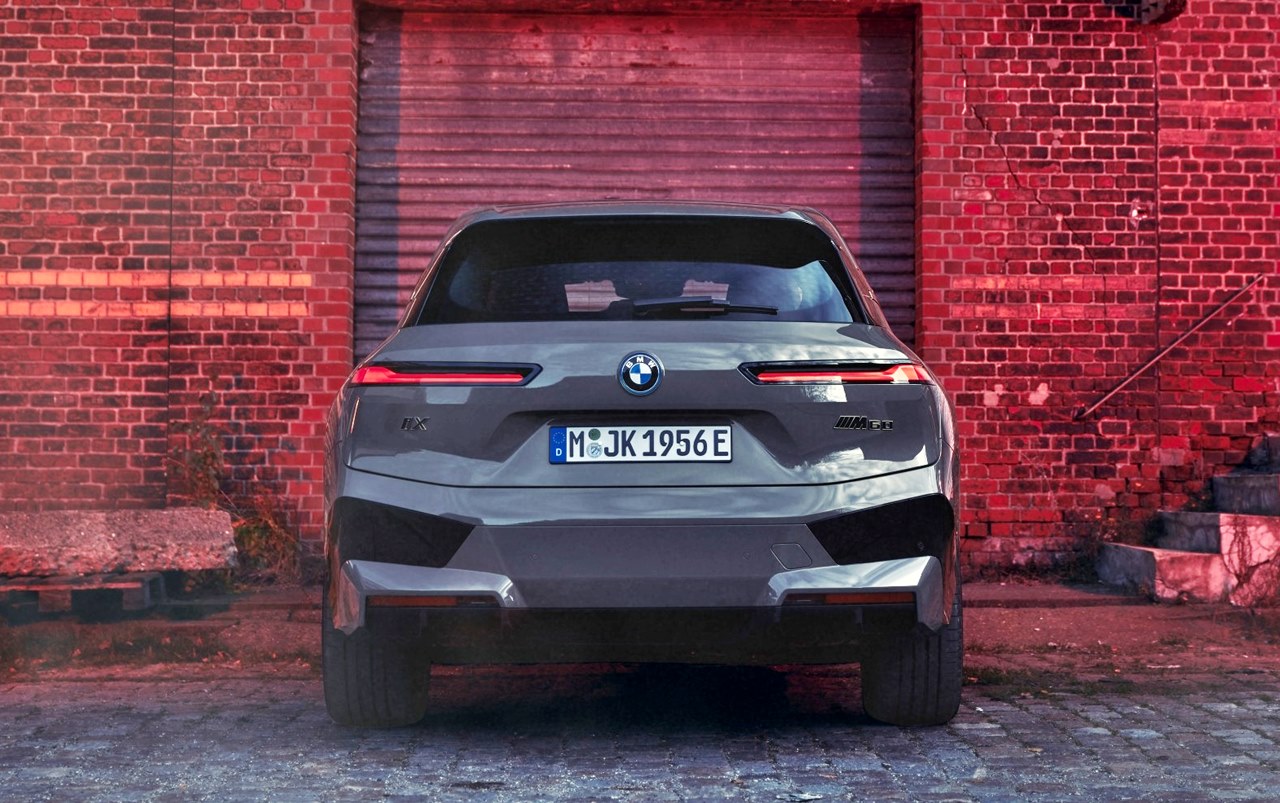
For a company like BMW M, which has built up a reputation producing cars with superlative performance, going electric meant that they had also to be able to offer the same kind of performance. Drawing on the BMW Group’s expertise in the field, BMW M also had its own specialized skills to develop electric cars worthy of the M badge.
3.8 seconds from 0 to 100 km/h
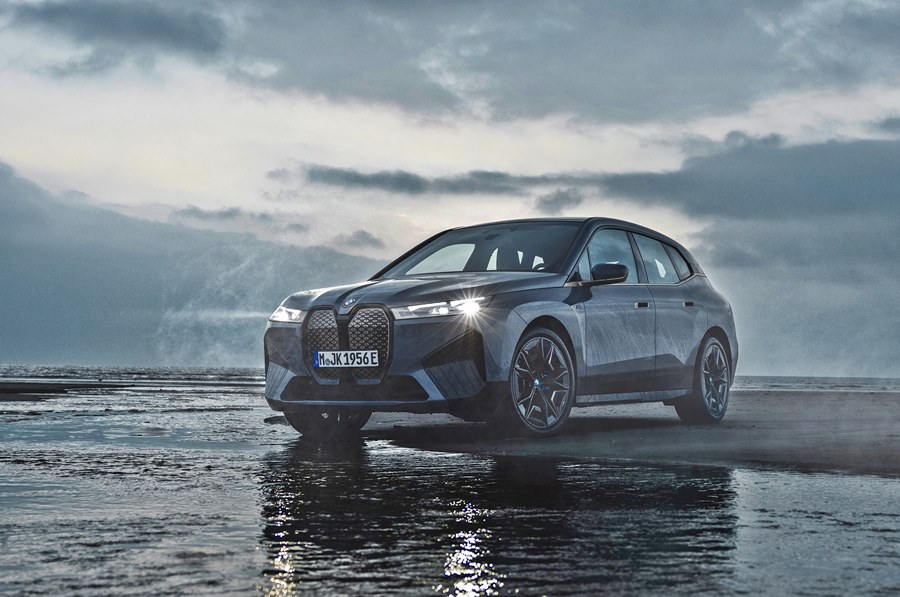
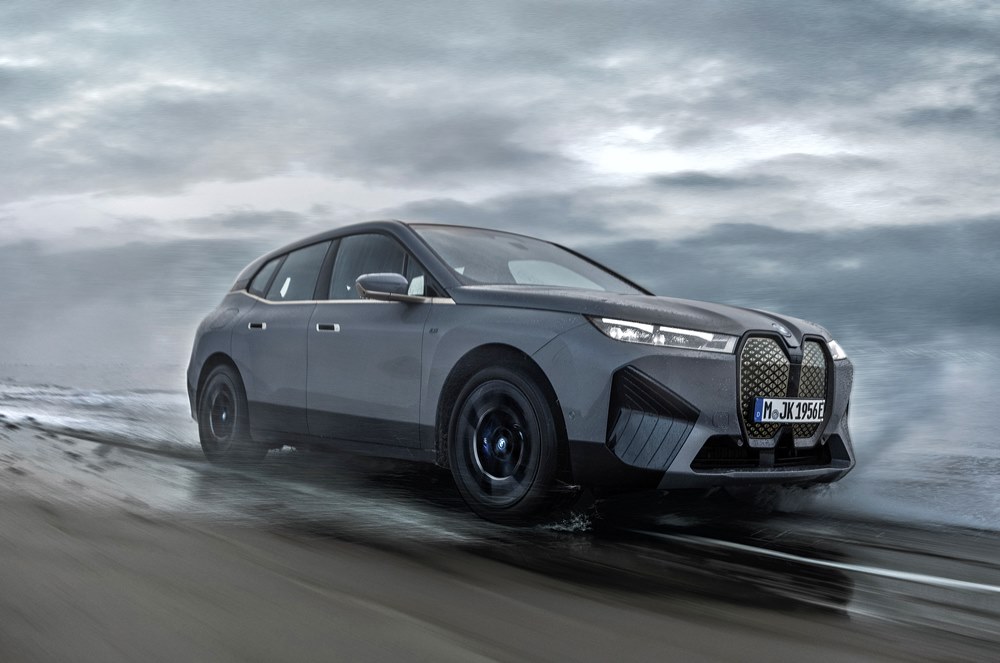
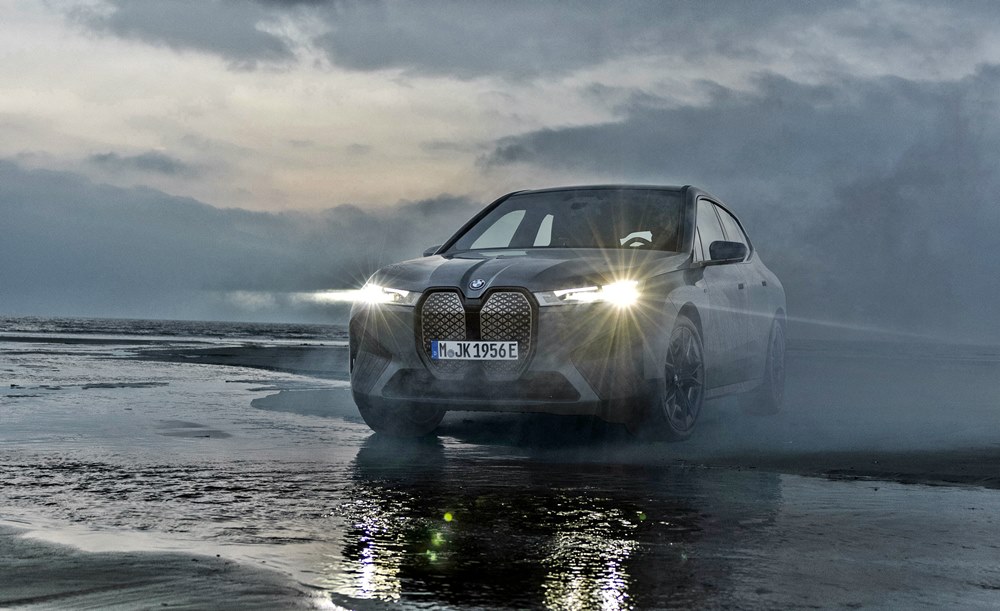
The first BMW M automobile designed for purely electric mobility from the outset – the new iX M60 – should provide reassurance to fans of M. With an output of 455 kW/619 ps and maximum torque of up to 1.015 Nm, it has a claimed standstill to 100 km/h time of 3.8 seconds and can go over 250 km/h but is limited to that top speed. With a fully charged battery pack, factory tests have shown it to be able to travel up to 566 kms.
The 111.5-kWh battery pack can be recharged using a DC fast-charger and add 150 kms of range within 10 minutes. Leave it connected to the charger longer and after 35 minutes, the energy content can be up to 80% from 10%.
The suspension technology of the iX M60 includes a double-wishbone front axle, a 5-link rear axle and electric steering with Servotronic function and variable ratio. In addition, there’s adaptive dual- axle air suspension with electronically-controlled shock absorbers. The dual axle air suspension ensures the optimum vehicle height at any speed, regardless of the load. The air supply to the suspension is regulated individually for each wheel and can thus also compensate for uneven loading.
The damper forces are adaptively controlled with an M-specific characteristic via continuously adjustable valves, which take into account longitudinal and lateral acceleration, road speed and steering angle as well as body and wheel acceleration on the front axle in order to activate the required damper force within a few milliseconds.
BMW IconicSounds Electric
Like all BMW i models, the iX M60 will have BMW IconicSounds Electric with specific characteristics for its M exclusivity. The emotional soundtrack that the occupants will hear was created in a collaboration between film music composer and Academy Award winner Hans Zimmer and BMW Group Creative Director Sound Renzo Vitale.
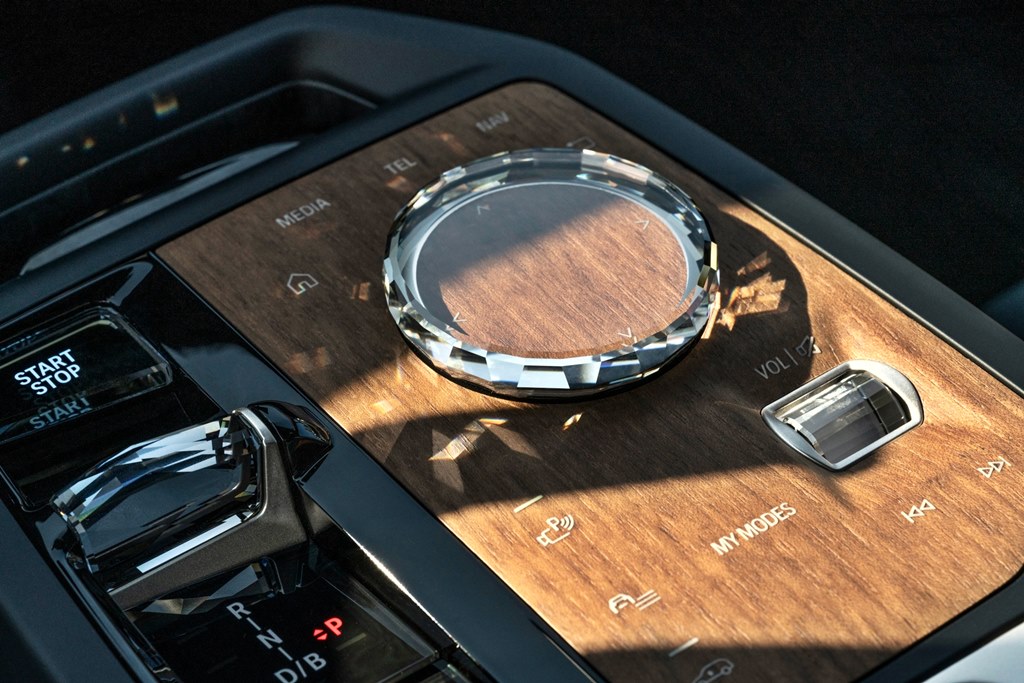
Even pressing the START/STOP button is acknowledged with an inspiring acoustic signal. While driving, the BMW IconicSounds Electric provide authentic feedback to every movement of the accelerator pedal. The sound of the drive is characterized by a particularly energy-charged sound development. The sound characteristics are based on the setting selected with the Driving Experience Control Switch.
Milestone for BMW M
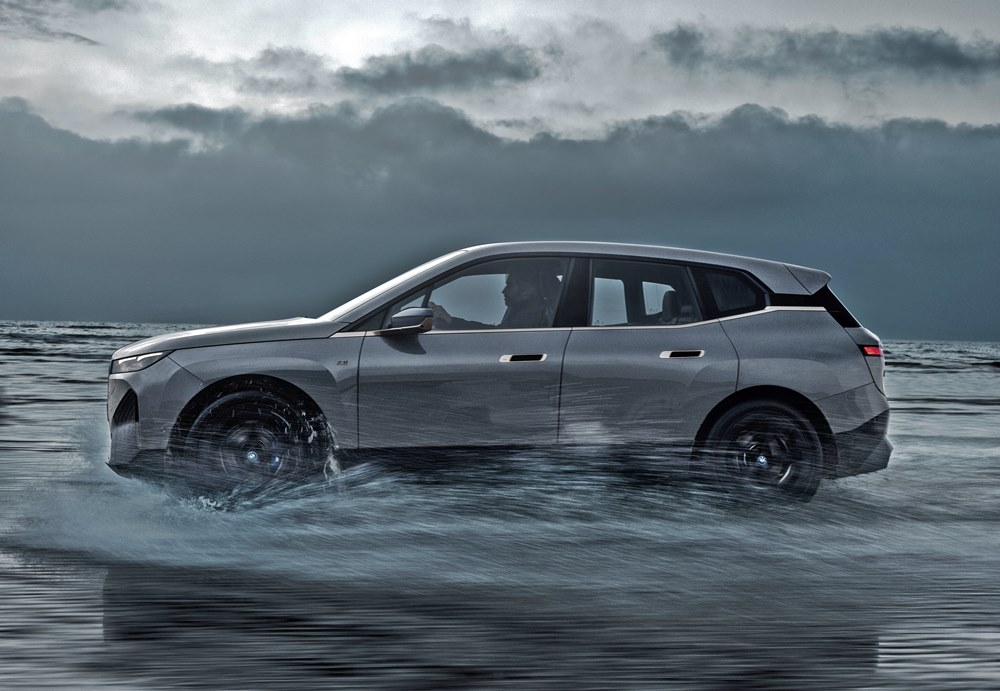
The debut of the iX M60 marks a milestone in the history of BMW M, 50 years old this year, as it enters the segment of electrified performance cars. Like all recent BMW fully electric models, the architecture is completely new and designed for electric powertrains. So the full benefits are exploited and performance can be optimized. The iX M60’s performance, efficiency and range also benefit from its optimized aerodynamics which give it a Cd of 0.26 (in Sport Mode).
Lightweight construction principles
The vehicle concept of the iX provides an ideal basis for an all-electric SAV with high-performance characteristics. Both the body structure and the design principle as well as suspension set-up are geared towards combining ride comfort with sporty handling characteristics. The aluminium spaceframe concept and the carbonfibre cage with carbonfibre reinforced plastic (CFRP) in the roof, side and rear sections are an intelligent mix of materials that combines increased rigidity with optimized weight.
The use of CFRP to reduce weight has a long tradition at BMW M. The particularly lightweight high-tech material already achieved great results in combining engine performance and weight in the M3 CSL which was introduced in 2003. In fact, BMW M pioneered the use of CFRP in large-scale automotive production and today uses it in numerous current models as part of the intelligent lightweight construction principle.
The high-voltage battery is located deep down in the underbody, lowering the vehicle’s centre of gravity for agile handling as well as balanced axle load distribution. Like the other models, the iX M60 also has an extensive range of driver assistance systems. A new generation of sensors, a new software stack and a powerful computing platform also provide considerable potential for consistently advancing automated driving and parking functions – with level 3 functionality in the medium term.
Future modular system
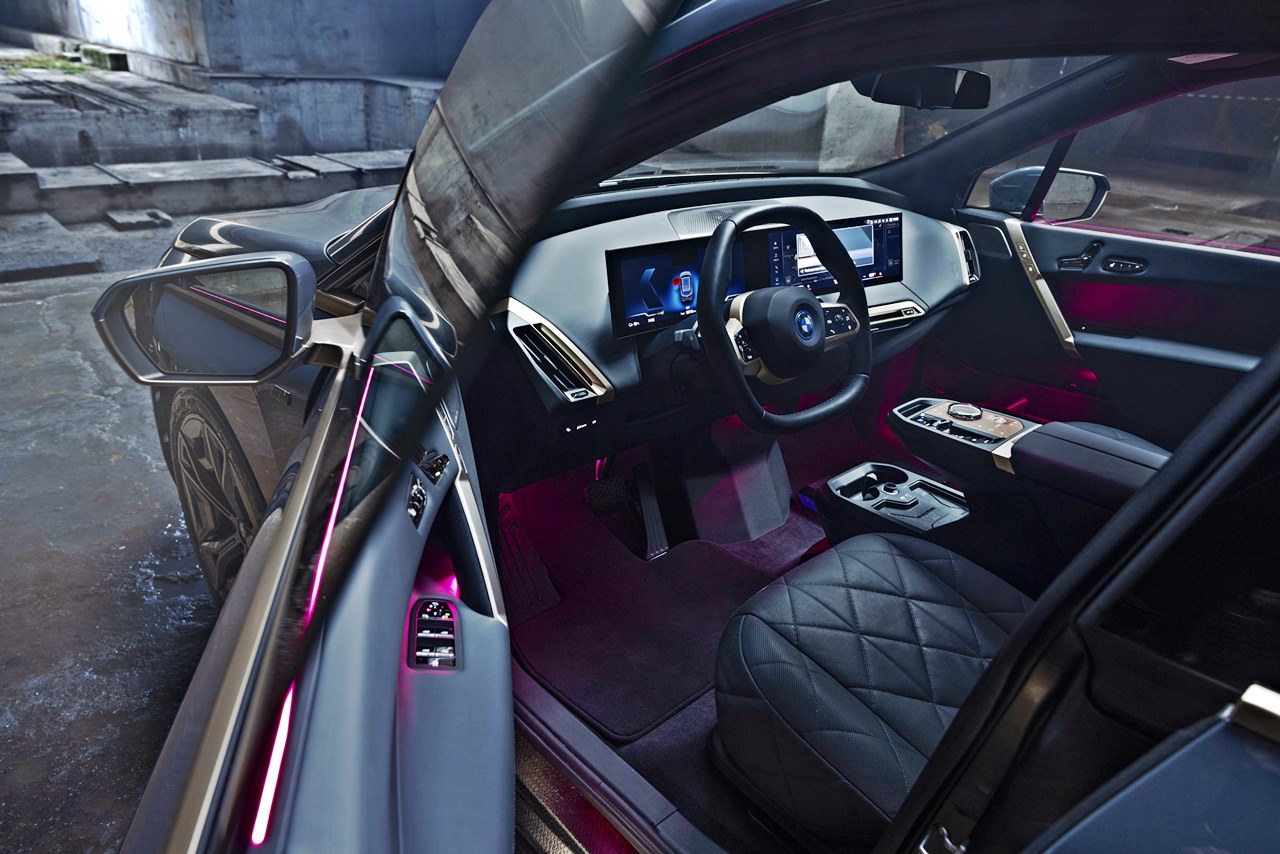
The iX M60 combines its typical M performance characteristics with the exceptionally advanced technology of the BMW Group’s new future modular system in the areas of automated driving, operation, connectivity and digital services. This creates an experience of premium mobility that is unique in the competitive environment. The completely redeveloped interior architecture also contributes to this, creating an exceptionally generous feeling of space.
In the 20th century, becoming a significant player in the auto industry required experience and staying power to withstand the cyclical nature of the industry. From the time of the world’s first car by Karl Benz, hundreds of individuals and companies have come and gone in their attempts to establish themselves, only the fittest and strongest making it through the decades to today.
But in the 21st century, the game has changed and long experience is not necessarily required. The products are changing and instead of ‘transport’, ‘mobility’ is the catchword today. Numerous start-ups have appeared in the industry in the past 20 years, offering a new generation of vehicles, mostly running on electricity. Though fragmented in one sense, they pose a challenge to the established brands which have resources but are hampered by their size when it comes to charting new courses forward.
The best example of these newcomers is Tesla, just 17 years old and, in 2021, Kantar BrandZ found it to be the most valuable and fastest growing auto brand on the planet, more than trebling its value from 2020. And its co-founder, Elon Musk, became the richest person in the world with a US$278 billion net worth at the end of 2021.
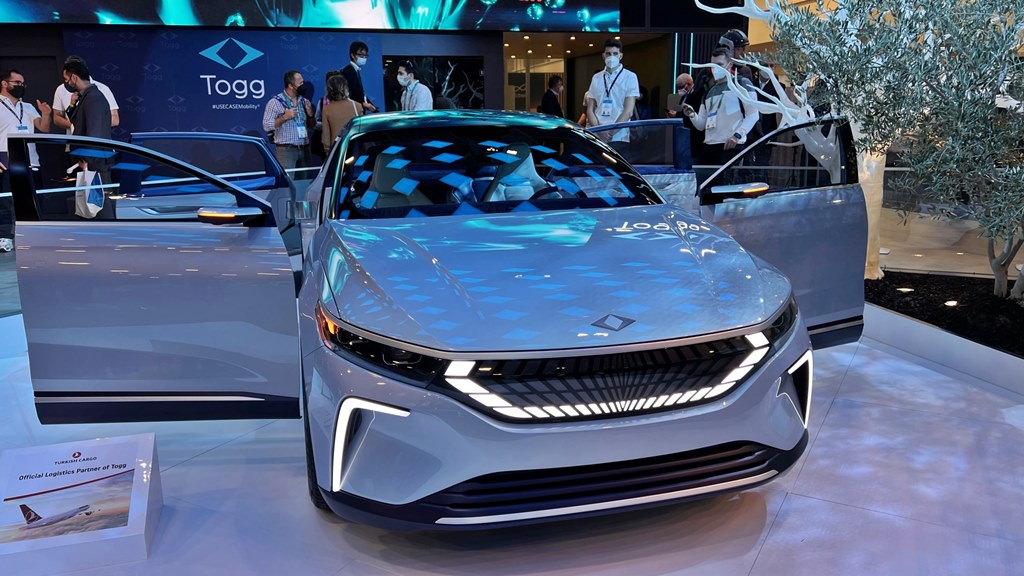
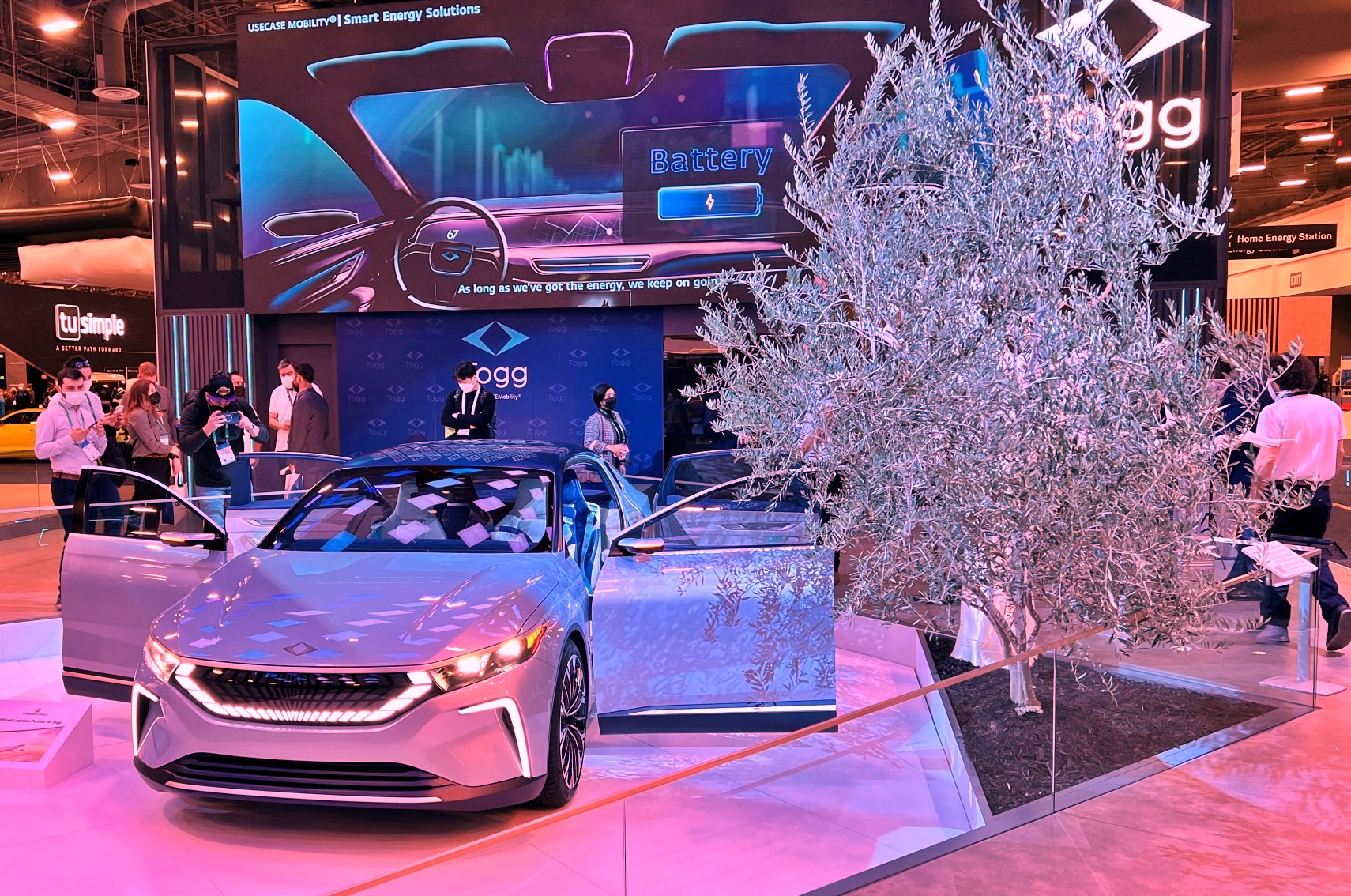
Others are obviously inspired by such success and in Turkey, M. Gurcan Karakas has started a company that is not a traditional automobile manufacturer but will enter the auto industry with differentiated approach as a technology brand focused on mobility. Introducing his 3-year old company, Togg, at CES 2022 this week, Gurcan Karakas said: “The transformation that occurred in the mobilephone industry in response to changing user expectations is occurring in the automotive industry today. More agile, creative, collaborative, user-centric organizations, not necessarily the big and established brands, will be the most successful in the near future. The race in this field is just beginning, and we are in this race. Moreover, we have a significant advantage because we were born into this world.”
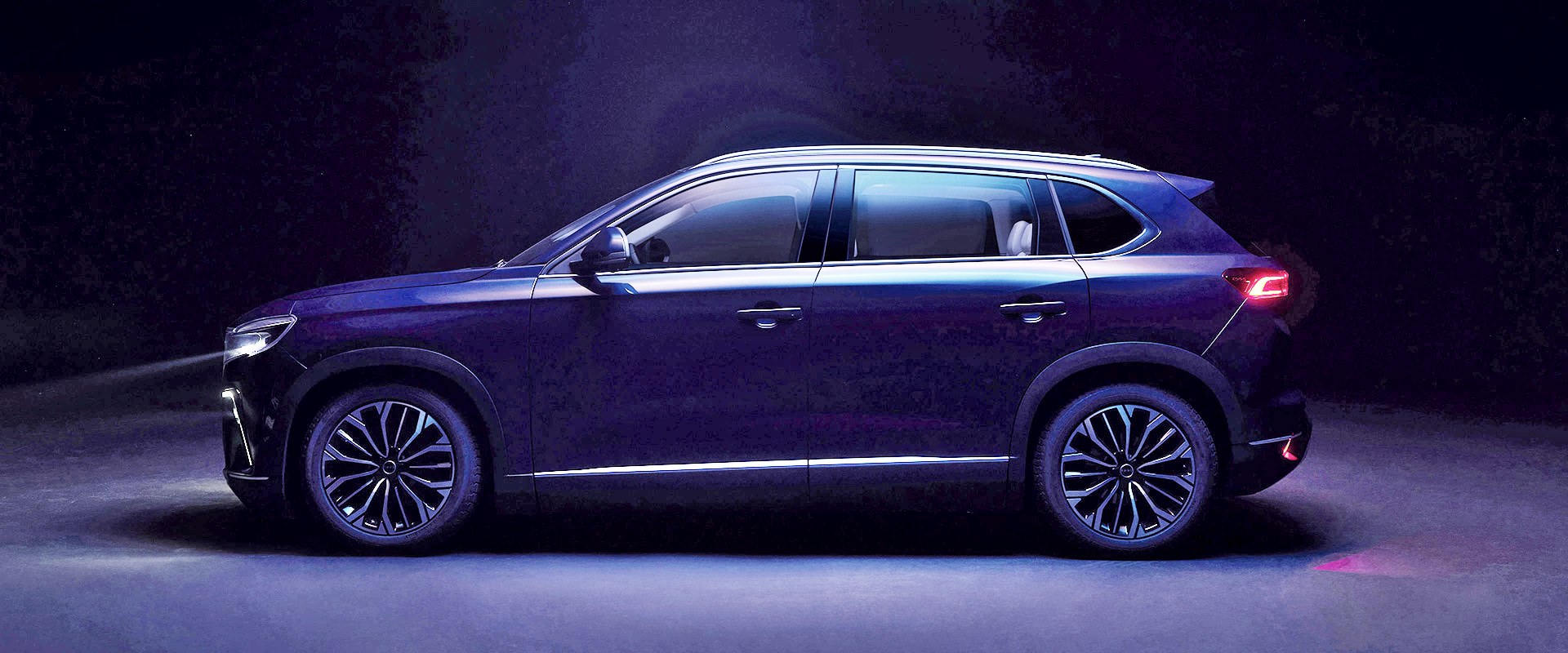
Togg aims to serve as the backbone of the Turkish mobility ecosystem with 100% Turkish intellectual and industrial property. It will be Europe’s first non-classical born electric SUV manufacturer when it begins production in Gemlik later this year, rolling out electric and connected next-generation vehicles and a mobility ecosystem to support them. By the end of this decade, the company expects to be producing a million vehicles in 5 different segments.
“By the end of 2022, we will launch our first mass production vehicle,” said Gurkan Karakas. “Our first vehicle in the C-segment, an SUV, will be launched in the first quarter of 2023 following the completion of homologation tests. It will be the first electric SUV produced in continental Europe by a non-traditional manufacturer. A C-segment sedan and a C-segment hatchback will then enter production. With the addition of the B-SUV and C-MPV to the family in the coming years, our product range will be completed with 5 models sharing the same DNA and same platform.”
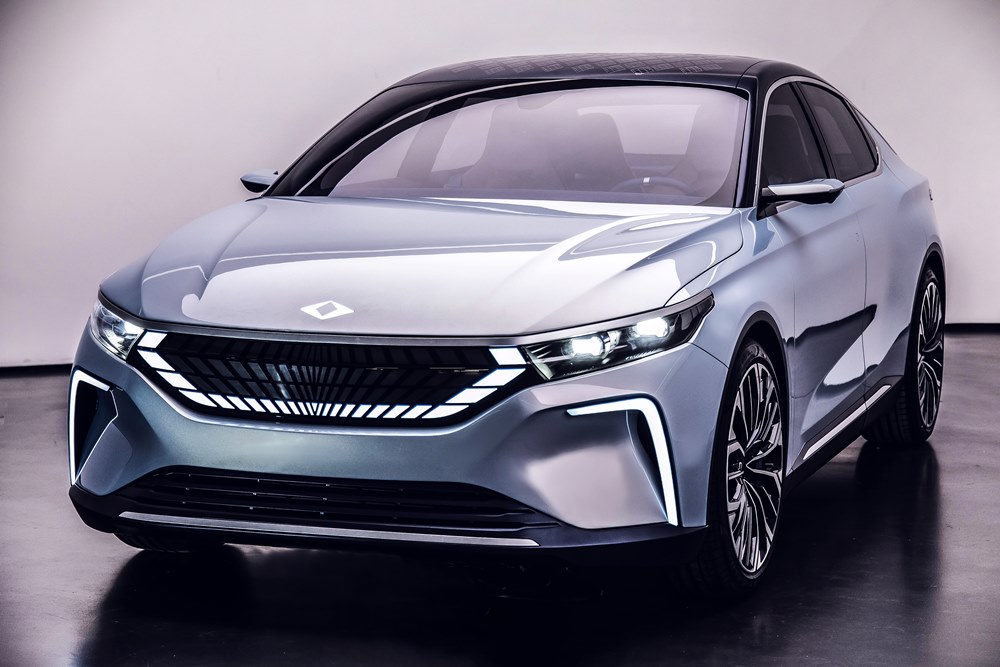
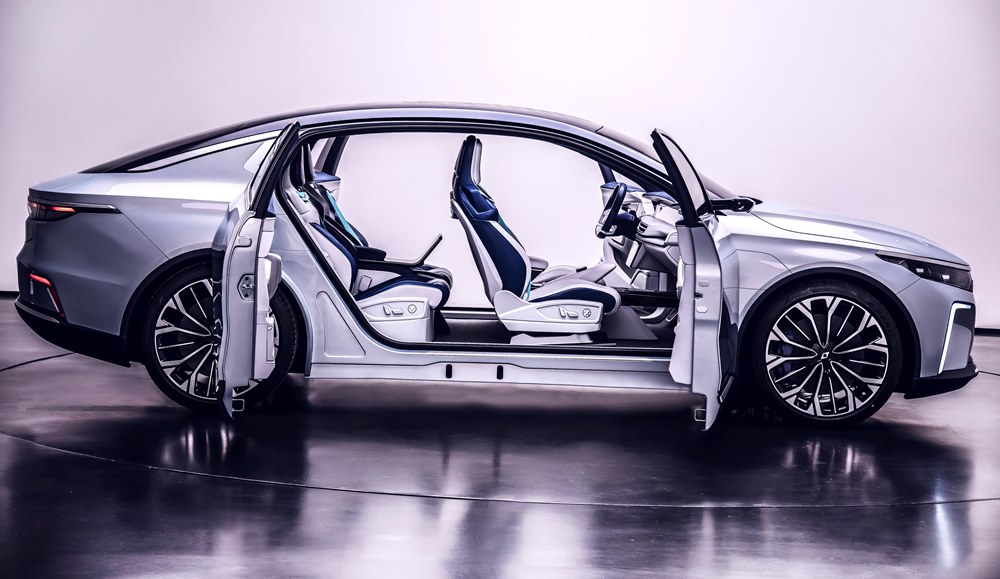
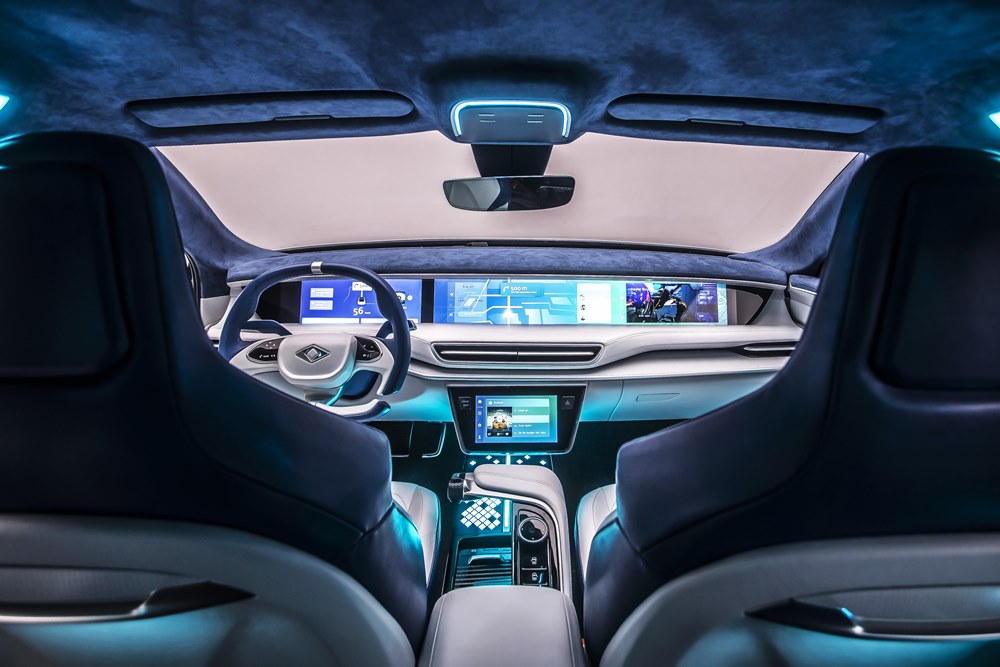
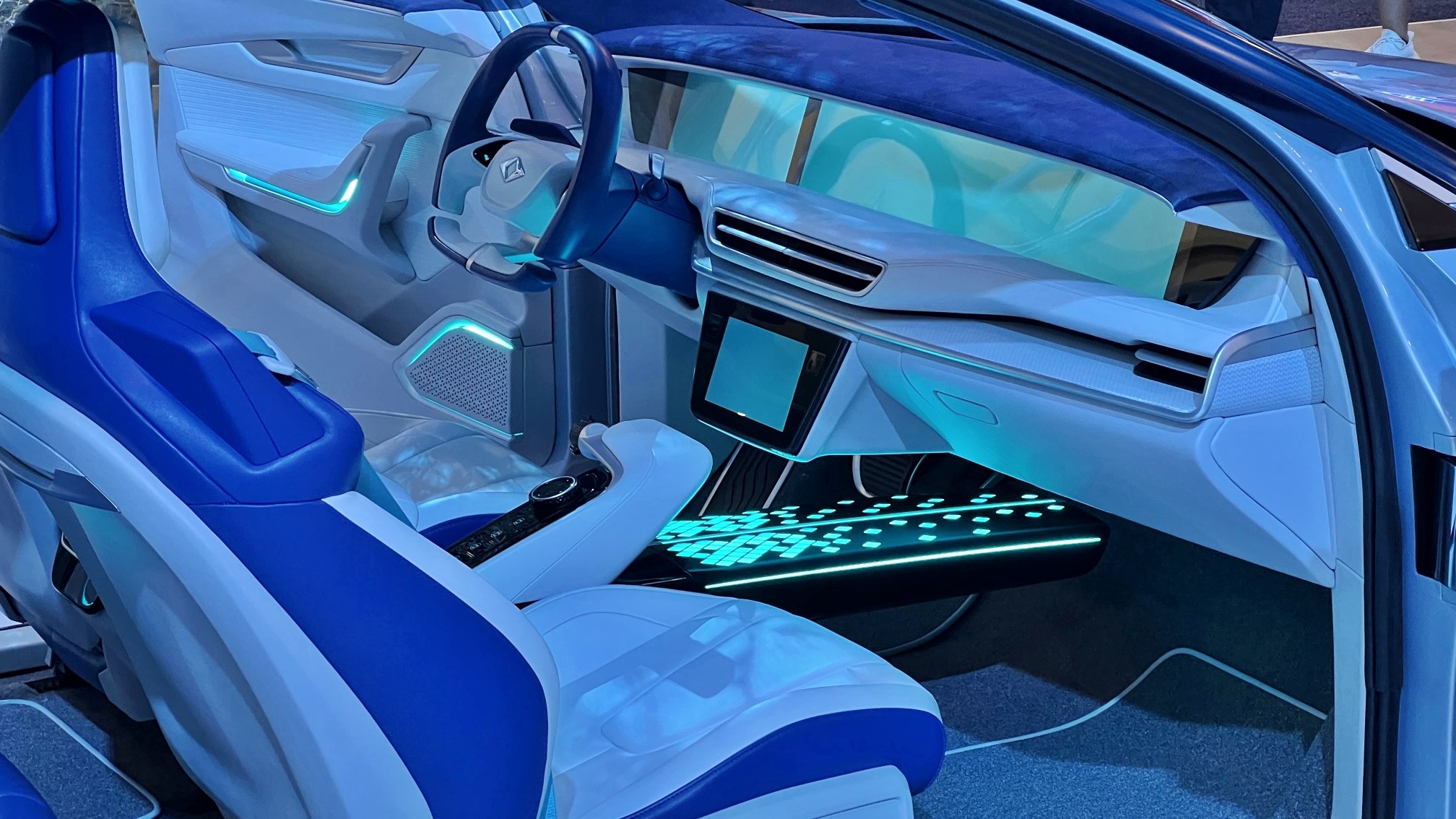
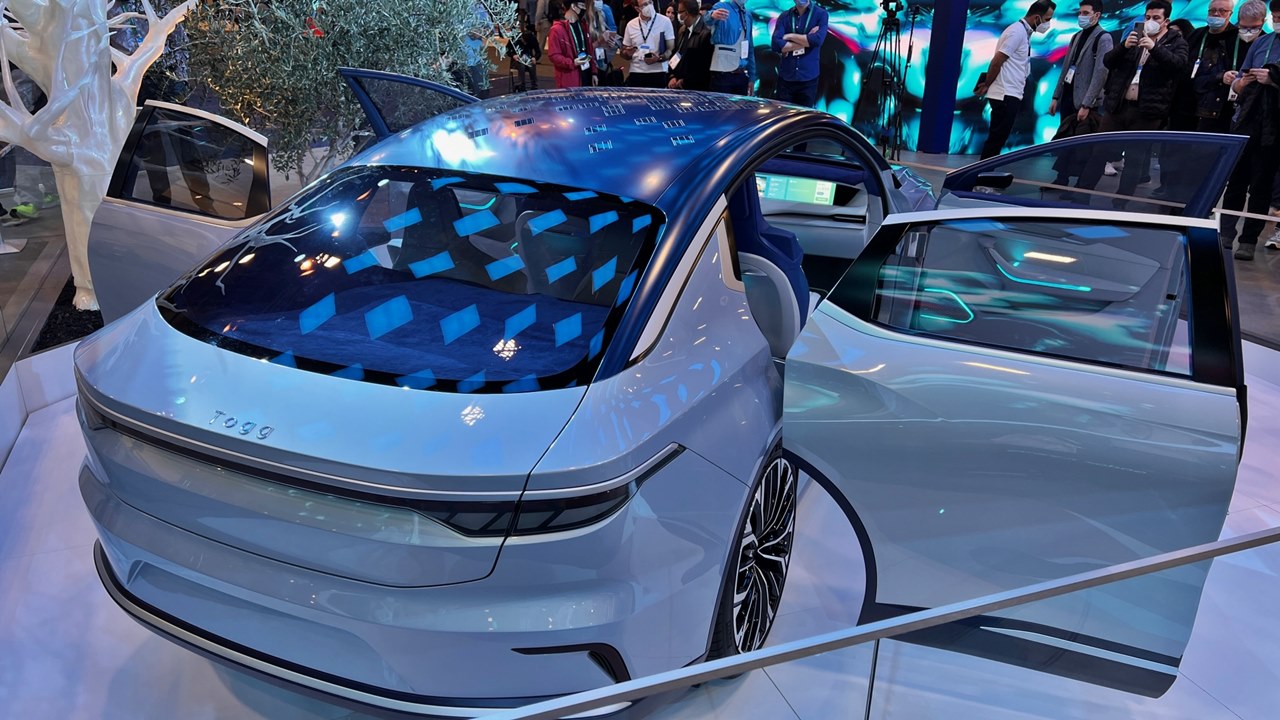
Referring to its model shown at CES 2022 as a ‘smart device’, the car has a dynamic fastback form that introduces Togg’s styling DNA. The basis of the car’s styling concept is the muscular rear design and the shoulderline that extends from the headlights to the rear, presenting a strong side profile.
Togg’s team sought to retain the company’s Turkish origins while creating a global brand. The car’s illuminated Togg logo is said to represent the unification of Eastern and Western cultures. “The two arrows in the logo design represent the fusion of East and West, forming a gemstone in the center. The duality theme in our logo encourages us to strive for a rational and emotional balance between East and West in both exterior and interior design. Additionally, our logo emphasizes that Togg is a technology company that connects technology and people at the juncture of today and tomorrow through its life-improving mobility solutions,” Gurkan Karakas explained.
Gemlik, the home of Togg located 128 kms south of Istanbul, is a world leader in olive production. By establishing what is claimed to be Europe’s cleanest production facility, Togg aims to ensure that the centuries-old olive trees in the city continue to thrive for thousands of years. This ambition was presented at CES by a real olive tree – with a lifespan of over 1,000 years – planted alongside a 3D-printed olive tree made from recycled plastic, created in 1001 hours.
Carmakers wanting to enter the US market have often found that the west coast state of California is a good place to start. It seems that consumers there are receptive to new trends and new cars, so Volvo Cars will introduce its unsupervised autonomous driving feature, Ride Pilot, to customers in the state of California first.
‘Unsupervised’ would mean that Ride Pilot offers the highest level of autonomous motoring where humans do not have to be involved at all. It’s the stuff of science fiction movies and will free up more time for the occupants to do other things. Whether we can call it ‘driving’ any longer is something that will need to be debated.
In tandem with the introduction of Ride Pilot, the company is also setting a new standard for safety, with over-the-air (OTA) software updates in combination with a state-of-the-art sensor set-up. The software is developed by autonomous driving software company Zenseact, together with Volvo Cars’ in-house team of developers, and developers from Luminar, one of its technology partners.
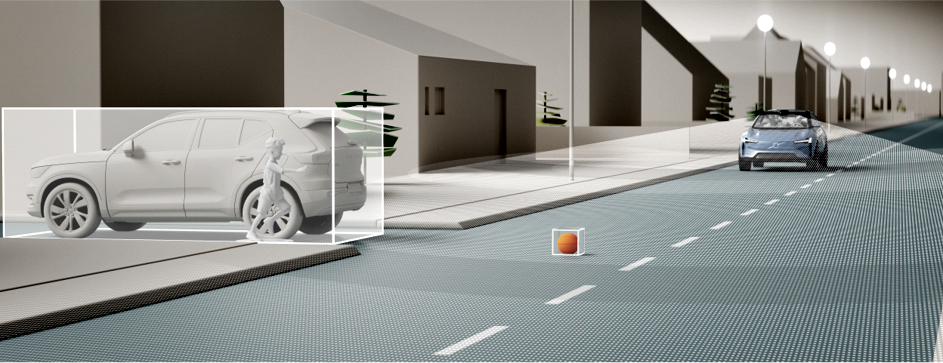
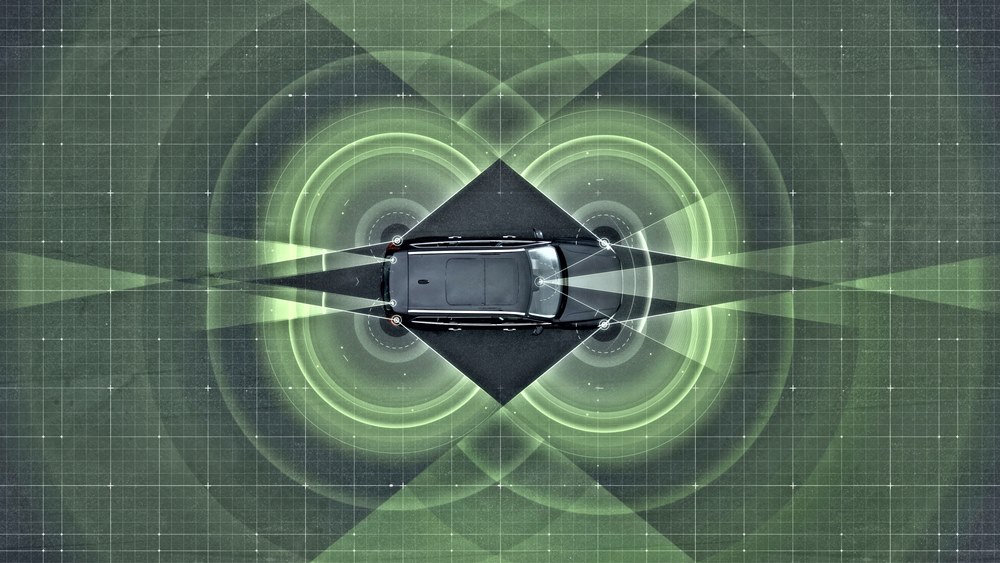
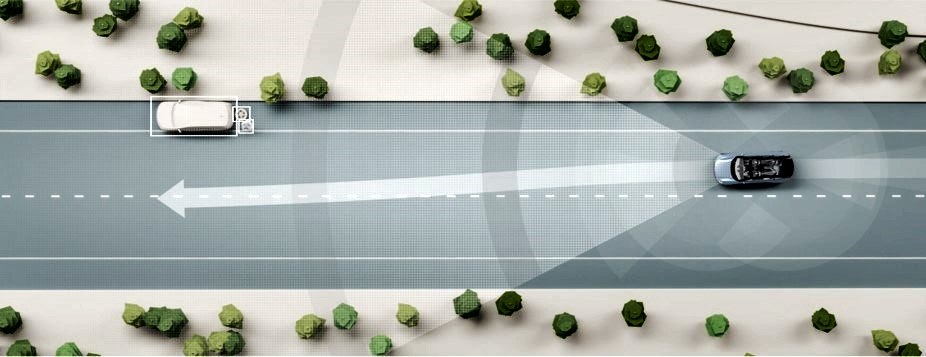
The sensor set-up consists of more than 2 dozen sensors, including Luminar’s cutting-edge Iris LiDAR sensor, which will be tightly integrated with the developed software. Luminar’s LiDAR sensor will complement 5 radars, 8 cameras and 16 ultrasonic sensors in Volvo Cars’ upcoming fully electric SUV. This standard sensor set-up provides excellent vision and perception reliability. Together with continuous, over-the-air software rollouts, the system will ensure full redundancy and enable Volvo Cars to achieve safe autonomous driving with Ride Pilot.
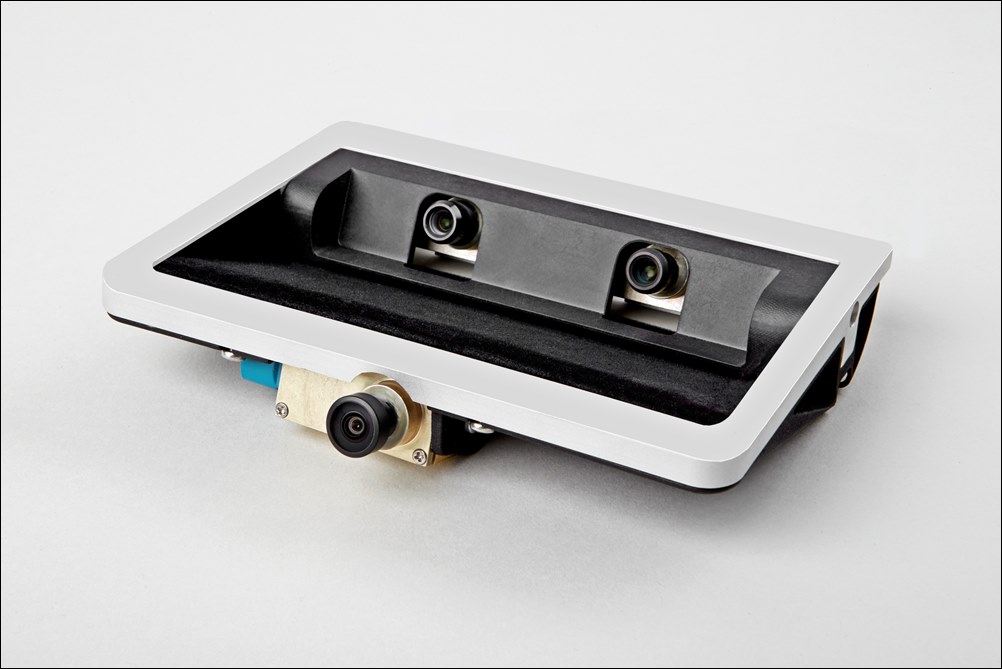
For autonomous motoring to be safe with no supervision by humans, the vehicle will have to be able to scan all round with various sensors to detect other vehicles and hazards. The sensors will include cameras mounted in the windscreen like the ones shown below.
Rigorous testing and verification
While this software-sensor combination, and the safety it enables, will be standard, available from day one on the new SUV and improved over time, Ride Pilot will be made available to customers only once it has gone through Volvo Cars’ rigorous verification and testing protocol. This includes validation of the technology as safe for use on highways in a number of varying conditions. This new flagship for the company will be revealed later this year.
As part of this verification process, Volvo Cars is already testing autonomous driving functionalities on roads in Sweden together with Zenseact, and collecting data across Europe and the USA. By the middle of this year, the company intends to begin testing on roads in California (pending approvals from relevant authorities), where the climate, traffic conditions and regulatory framework provide a favourable environment for the introduction of autonomous driving.
But where and how far autonomous driving will be permitted is not known yet. In some countries where autonomous vehicles are permitted to operate, only limited sections of public roads can be used. On such roads, the surrounding environment is properly prepared to ensure that the imagery systems can correctly function to detect and identify road hazards and signage.
More free time on a journey
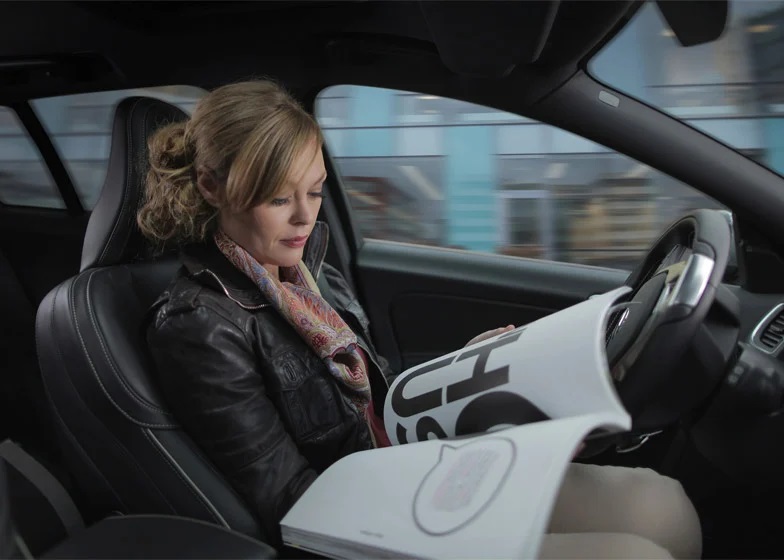
The name ‘Ride Pilot’ implies what the driver can expect: when the car is driving on its own, Volvo Cars takes responsibility for the driving, offering the driver comfort and peace of mind. By using Ride Pilot, drivers will be able to free up time while driving, and spend it on secondary activities such as reading, writing, working or socialising. The feature can also help drivers arrive at their destination rested and recharged, by reducing the mental strain that may come with driving, especially in traffic jams or heavy traffic.
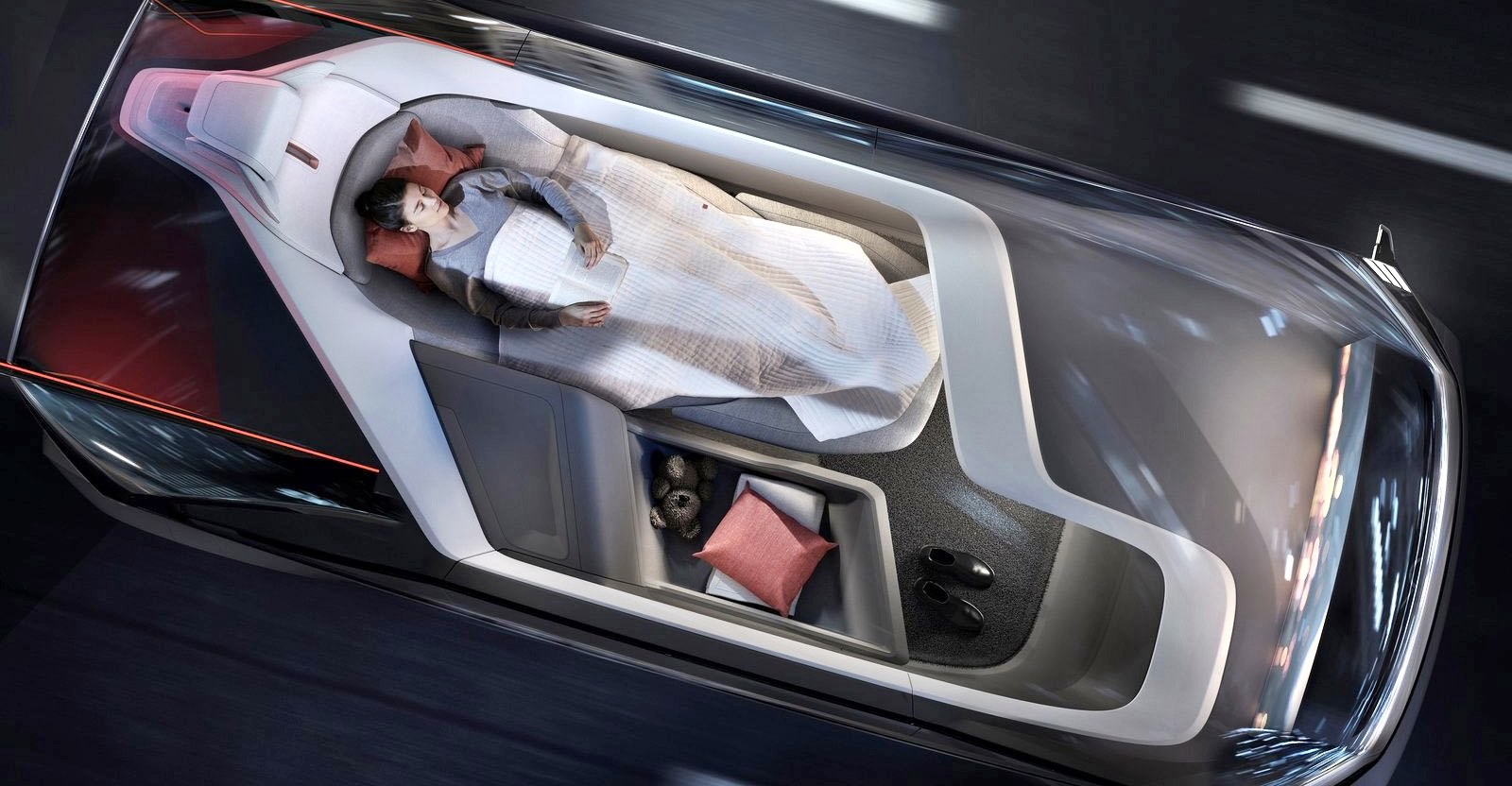
Without the need to supervise what the car is doing, the driver will be able to do other things like read or even talk on a phone without breaking any law. Perhaps the occupants could even sleep on the journey – but can it be called ‘driving’ then?
“We are proud to announce the planned US launch of our first truly unsupervised autonomous driving feature, as we look to set a new industry standard for autonomy without compromising safety,” said Mats Moberg, Head of Research and Development at Volvo Cars. “Having Zenseact’s brand-new AD software and Luminar’s LiDAR standard in our new fully electric SUV is a game-changer for Volvo Cars, as well as for automotive safety and autonomous driving.”
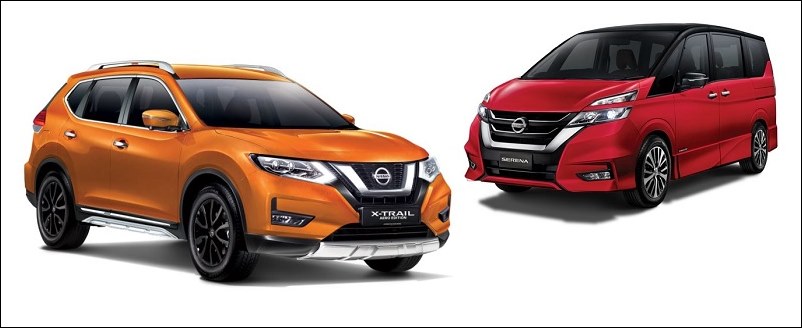
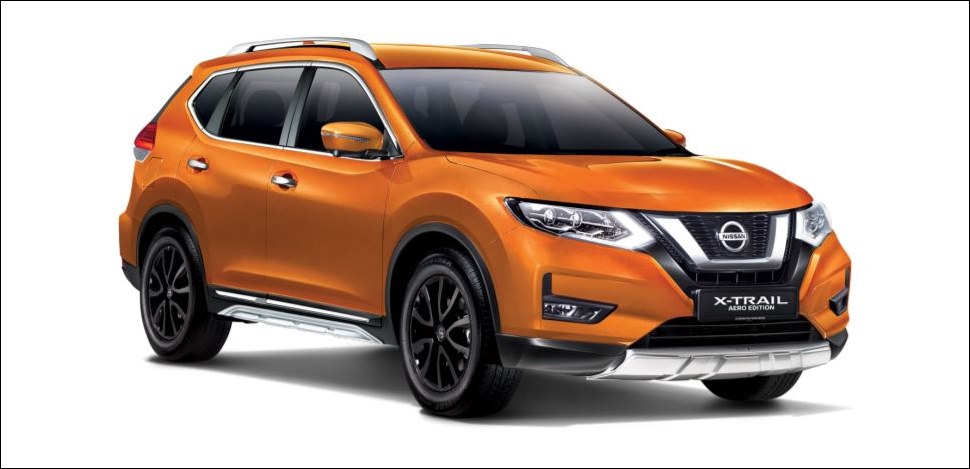
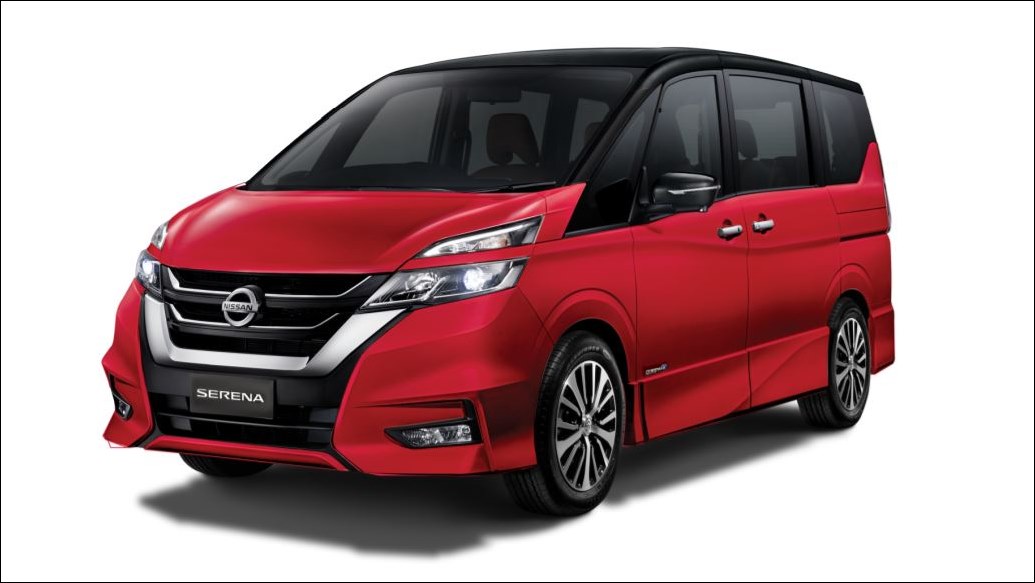
Red and orange are traditionally the colours used for Chinese New Year celebrations as they signify luck, prosperity and happiness. To welcome the new Year of the Water Tiger, Edaran Tan Chong Motor (ETCM) is offering two of its popular Nissan models in the colours.
The X-Trail 2.0L Mid version will come with Monarch Orange, while the Serena S-Hybrid will be available in a distinctive Radiant Red finish with a ‘floating‘ black roof.
Priced from RM139,643 (without insurance and sales tax) the X-Trail Mid version comes with an Aero kit with RM5,000. It is equipped with Nissan Intelligent Mobility (NIM) technologies for safer motoring. These active safety technologies include Intelligent Forward Collision Warning with Intelligent Forward Emergency Braking, Intelligent Cruise Control, Lane Departure Warning, Blind Spot Warning, Rear Cross Traffic Alert and High Beam Assist.
The 5+2-seater SUV is powered by a 2-litre 4-cylinder engine which develops 106 ps/200 Nm, delivered to the front wheels through a 7-speed X-TRONIC CVT. Fuel consumption is claimed to be 13.4 kms/litre so the 60-litre fuel tank should give a range of around 800 kms.
The version of the Serena S-Hybrid with the special Radiant Red colour is the Premium Highway Star, priced from RM140,226 (excluding insurance and sale tax). The 7-seater MPV’s proven 2-litre MR20DD powerplant is highly fuel efficient, with 14.2 kms per litre claimed for fuel consumption. Brisk performance is provided by the output of 150 ps/200 Nm and XTRONIC CVT with Adaptive Shift Control.
Safety and convenience features include a Hands-Free Dual Power Sliding Door, Dual Back Door, 7 USB-Powered Ports, Intelligent Around View Monitor with Intelligent Moving Object Detection, and smartphone connectivity with Apple CarPlay and Android Auto.
Those who are planning on buying a new vehicle to celebrate Chinese New Year can enjoy a low 1.88% p.a. interest rate for financing of selected Nissan models. This offer period will be on until February 28, 2022, and customers who purchase and register a vehicle can participate and win Lazada Vouchers up to RM50,000.
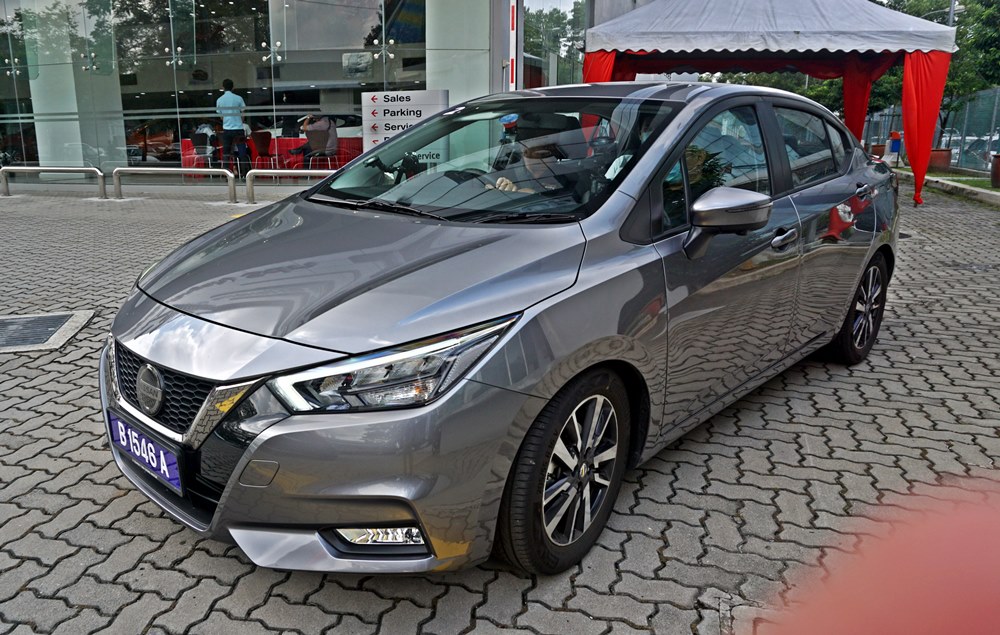
Additionally, customers who test drive the latest Almera Turbo (shown below) during the campaign period are also eligible to win a RM500 Watsons voucher.
More information is available at any authorised Nissan showroom nationwide. To locate a showroom or find out more, visit www.nissan.com.my or call the Nissan Customer Care Centre hotline at 1800-88-3838.
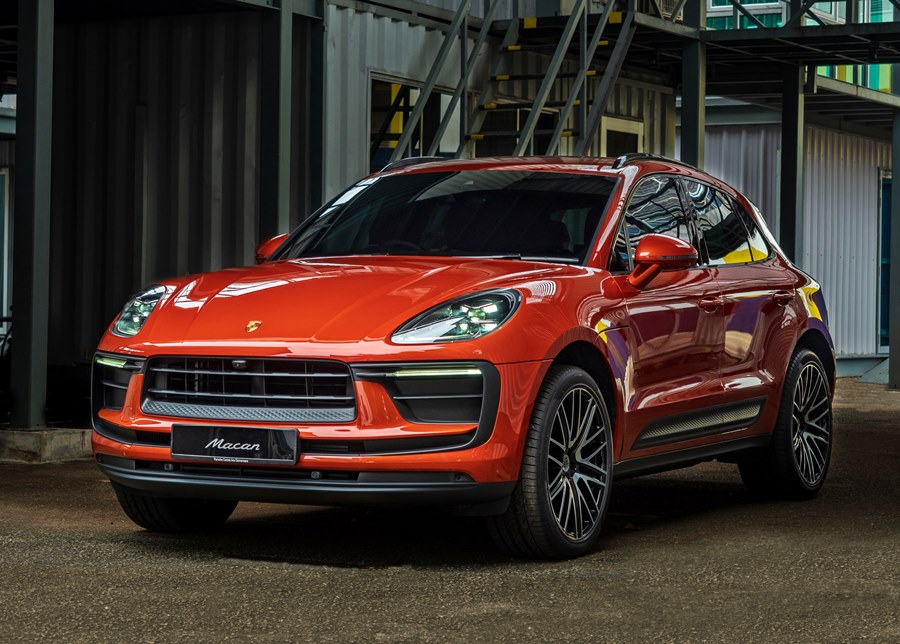
Sime Darby Auto Performance (SDAP) has begun selling the updated Porsche Macan with cosmetic changes on the outside, enhancements within and improved powertrains. Prices (excluding insurance) start from RM433,154 for the Macan, RM623,593 for the Macan S, and RM786,232 for the Macan GTS with 2 years warranty coverage and 2 years free scheduled maintenance. The Premium Package is included as standard for the Macan and Macan S.
Redesigned front end
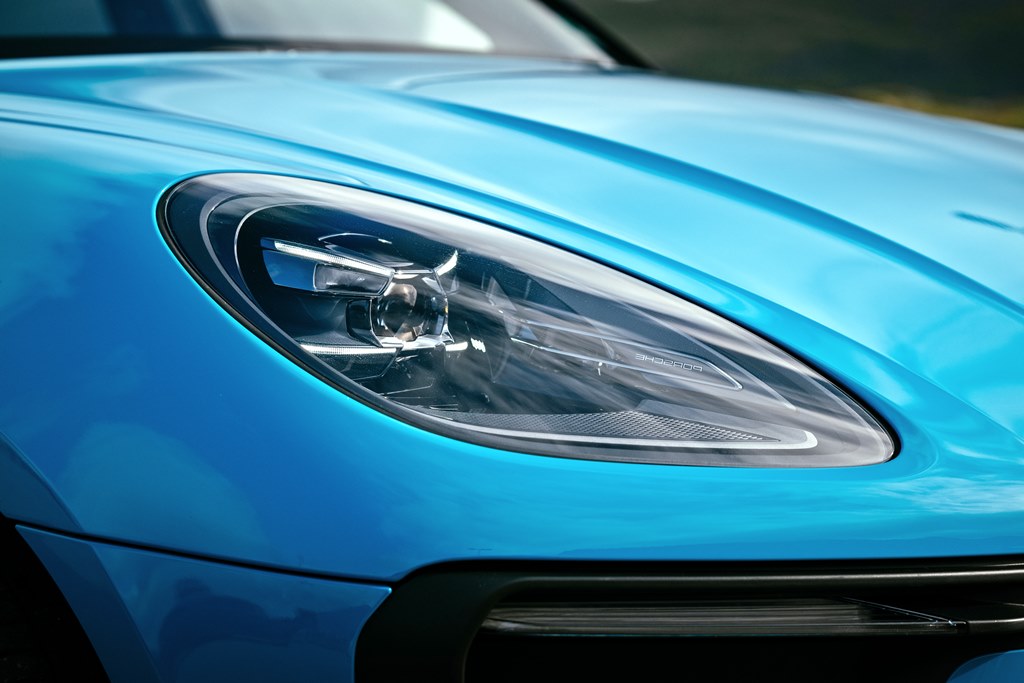
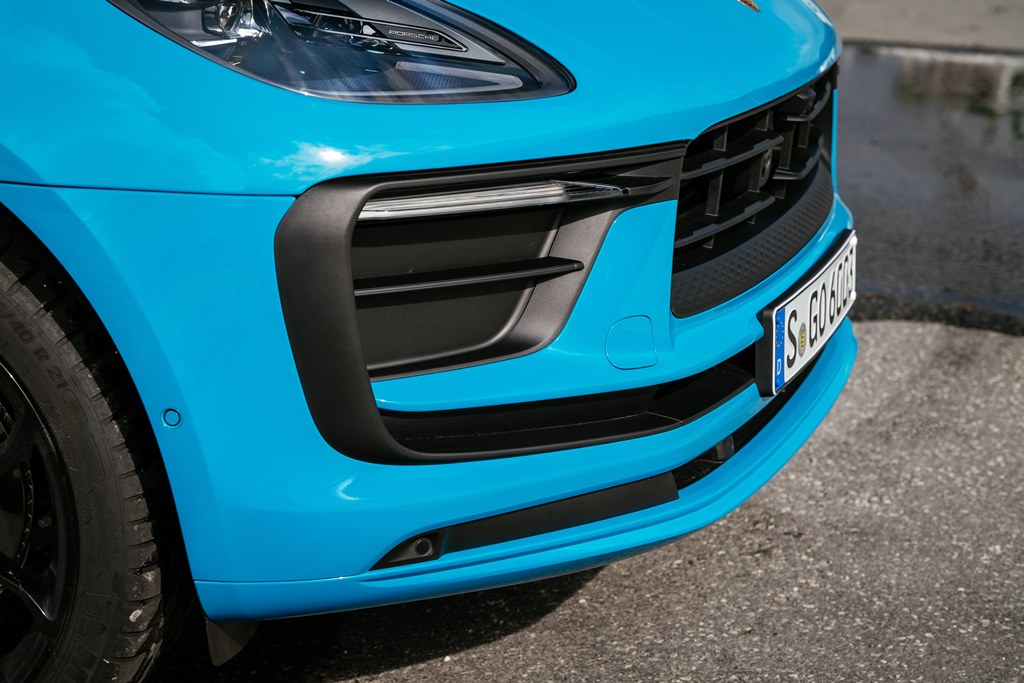
The compact SUV, still in its first generation after 7 years, has a redesigned front end with an inlay in the exterior colour, visually emphasizing the vehicle’s width. New 3D structural elements and dynamic side blades enhance the sporty look. LED headlights with the Porsche Dynamic Light System and Sport Design exterior mirrors are now standard on all models. At the back is a striking diffuser with a particularly technical design.
Customers can choose from no less than 14 exterior colours, including the new colours Papaya Metallic and Gentian Blue Metallic; Python Green is exclusively for the Macan GTS. With its Individual Colour and Paint To Sample options, Porsche Exclusive Manufaktur can further personalise the Macan.
Futuristic centre console
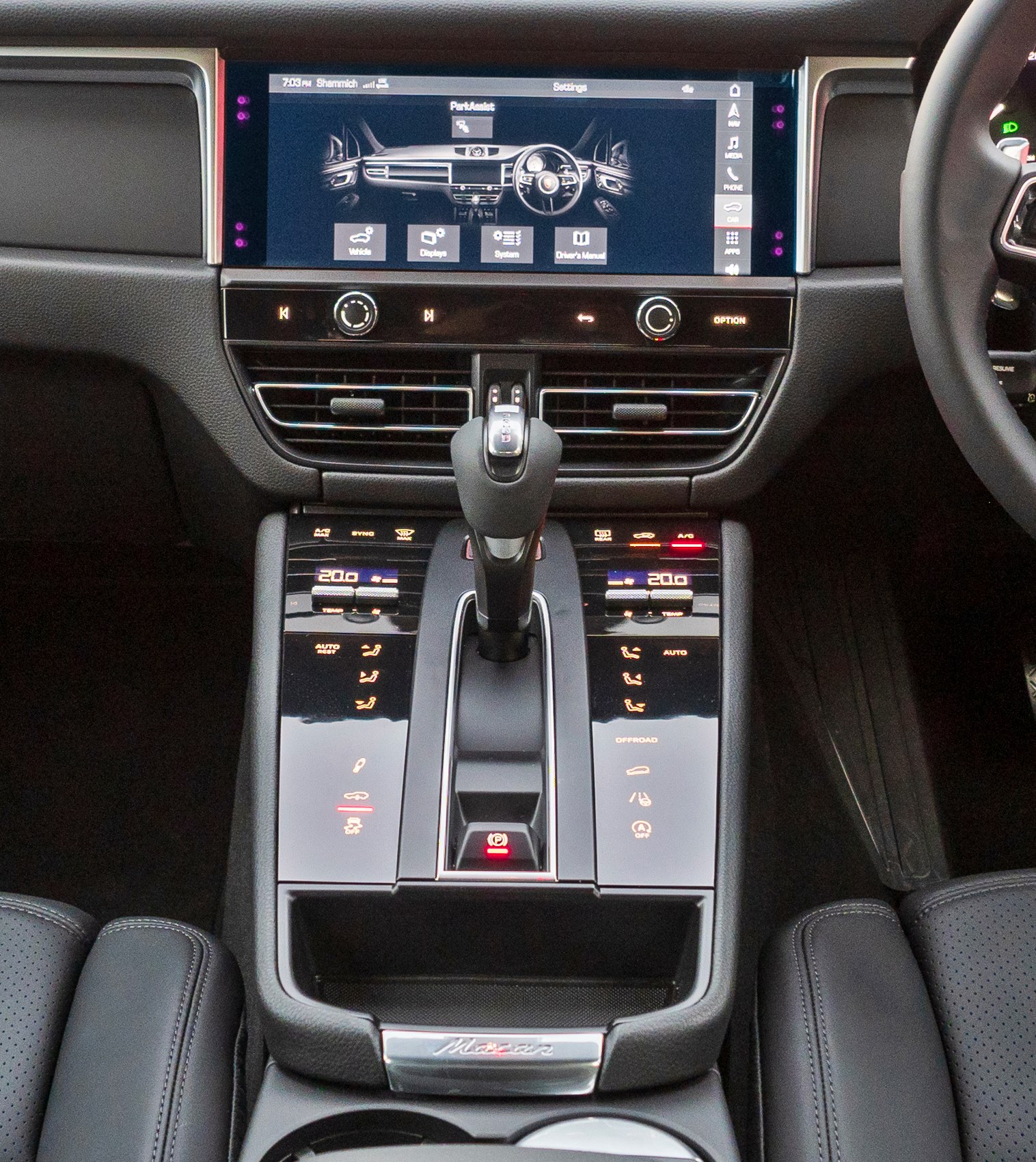
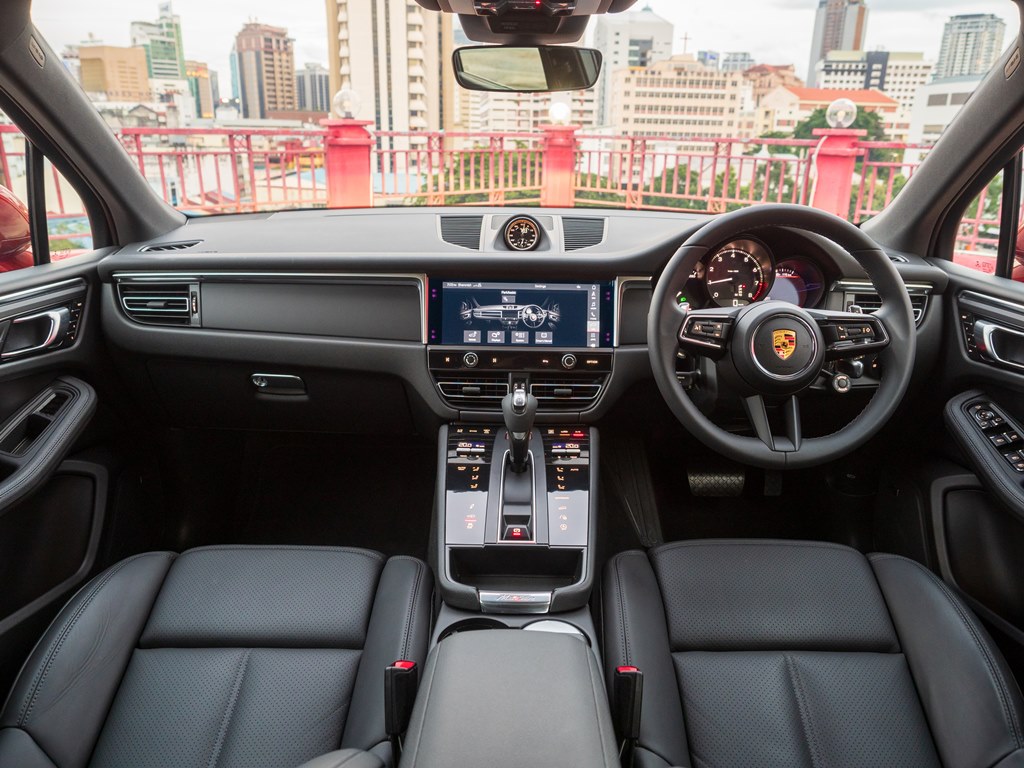
Inside the latest Macan, there is selected equipment from the 911 Carrera, as well as a futuristic centre console with a high-quality glass look. Intuitive touch-sensitive surfaces, instead of tactile buttons, provide a cleaner appearance while the new operating concept brings a clear and futuristic structure to the cockpit.
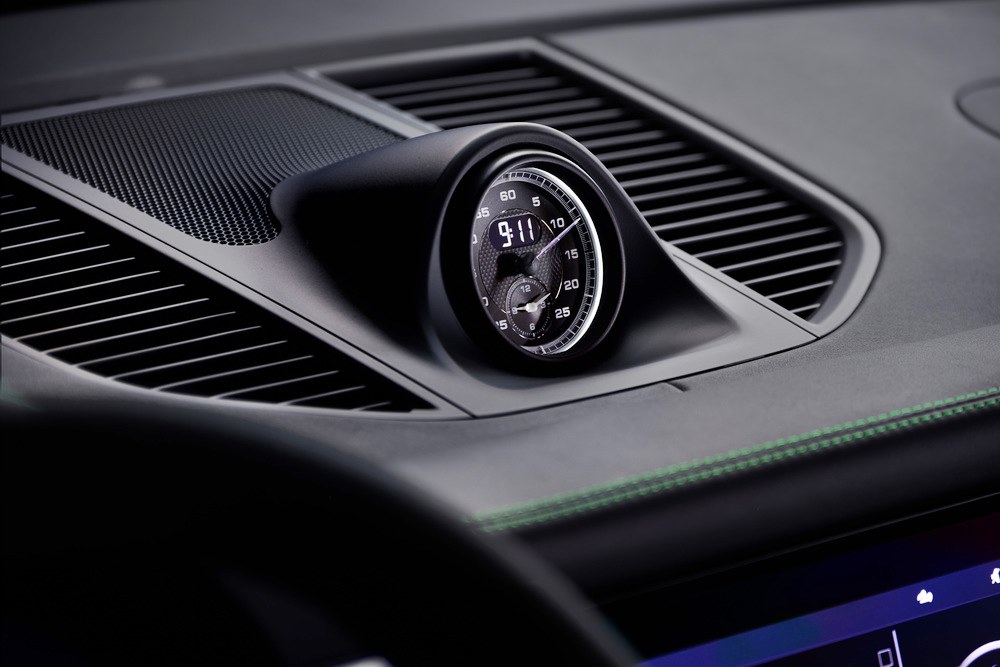
A new, shorter selector lever sits in the centre of the functionally organized control module. The analogue clock at the top of the dashboard is now also standard equipment, while many online functions and services are offered as standard. These can be controlled via the 10.9-inch full HD touch display of the Porsche Communication Management or by means of voice commands. The latest Macan also inherits the new multifunction and GT Sport steering wheels from the 911.
The Macan and Macan S with a Premium Package as standard get additional comfort and luxury features such as 14-way electric comfort seats with memory package, Power Steering Plus, Park Assist including reversing camera and surround view, automatic dimming interior and exterior mirrors, and BOSE Surround Sound System.
Redeveloped engine, increased performance
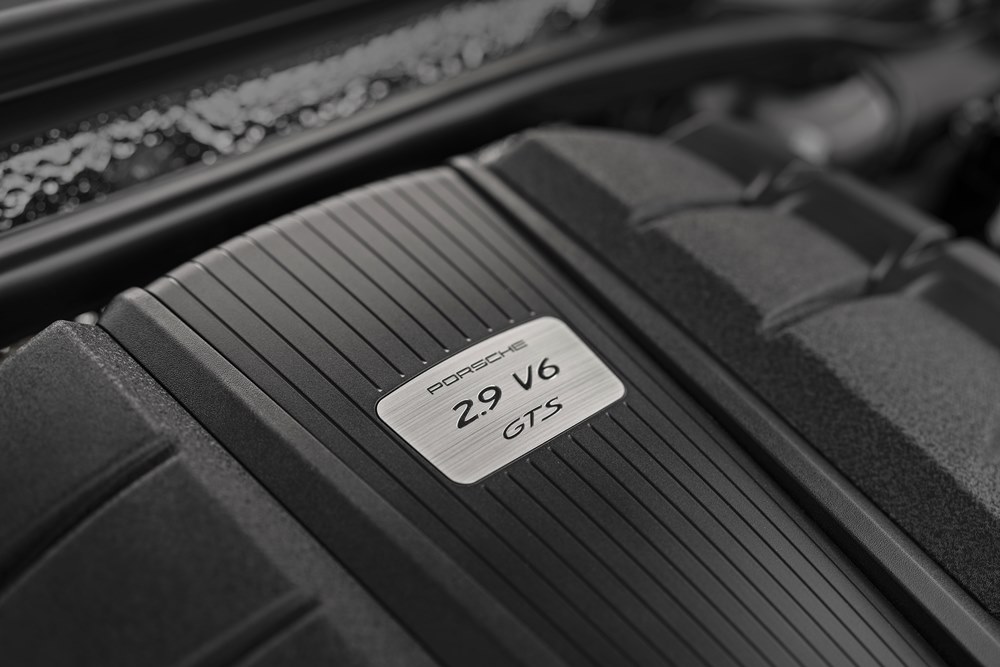
The redeveloped 2.9-litre V6 biturbo engine now produces 380 ps, 26 ps more than before. Torque has gone up to 520 Nm, 40 Nm higher than before. The new powerplant improves acceleration to for the 0 to 100 km/h to a claimed 4.6 seconds, with a top speed of up to 259 km/h.
For the flagship Macan GTS, the engine now delivers 440 ps, an increase of 60 ps, while 30 Nm more torque takes the peak figure up to 550 Nm. When fitted with the Sport Chrono package, the claimed 0 to 100 km/h time is 4.3 seconds and the top speed is 272 km/h.
At the entry-level, the 2-litre inline 4-cylinder turbocharged engine delivers 265 ps/400 Nm; compared to the engine used before, the difference is 13 ps/30 Nm. The higher output improves acceleration time marginally to take the Macan from standstill to 100 km/h in a claimed 6.2 seconds and on top a sop speed of 232 km/h.
All the engines have the same 7-speed Porsche dual-clutch transmission (PDK), with Porsche Traction Management (PTM) delivering power to all four wheels. Specifically tuned to the Macan it is equipped in, PTM enhances driving dynamics, improves driving safety and maximise grip and stability.
A key benefit of PTM is that it works efficiently with all driving dynamics systems and these systems complement each other. The most significant partner system is Porsche Stability Management, which controls power distribution to all four wheels on an even more individual basis using anti-slip regulation and automatic brake differential functions.
Optimised chassis and brakes
The wide suspension bandwidth balances maximum suspension comfort and dynamic sportscar performance. The chassis has been optimized further to allow the Macan to now respond with even more sensitivity and more directly to the driving situation and road conditions, giving the driver even better feedback via the steering wheel.
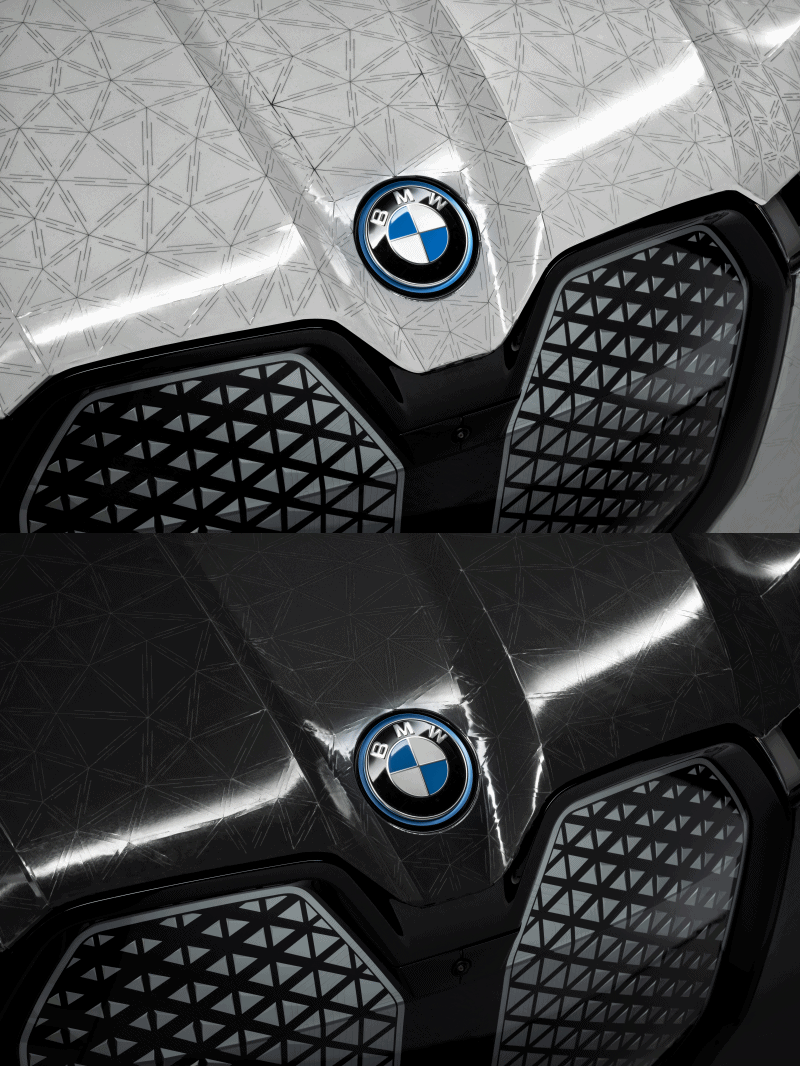
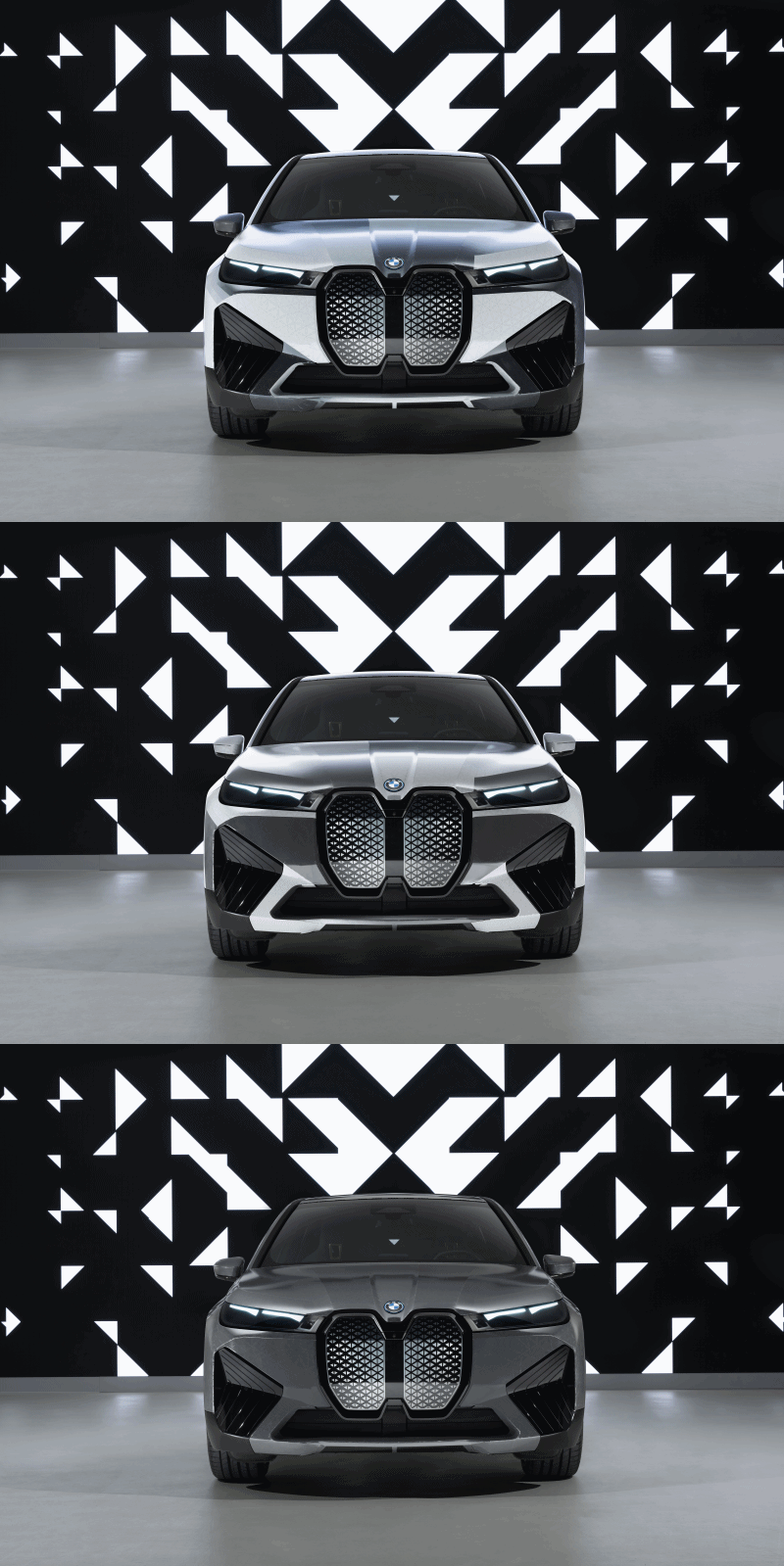
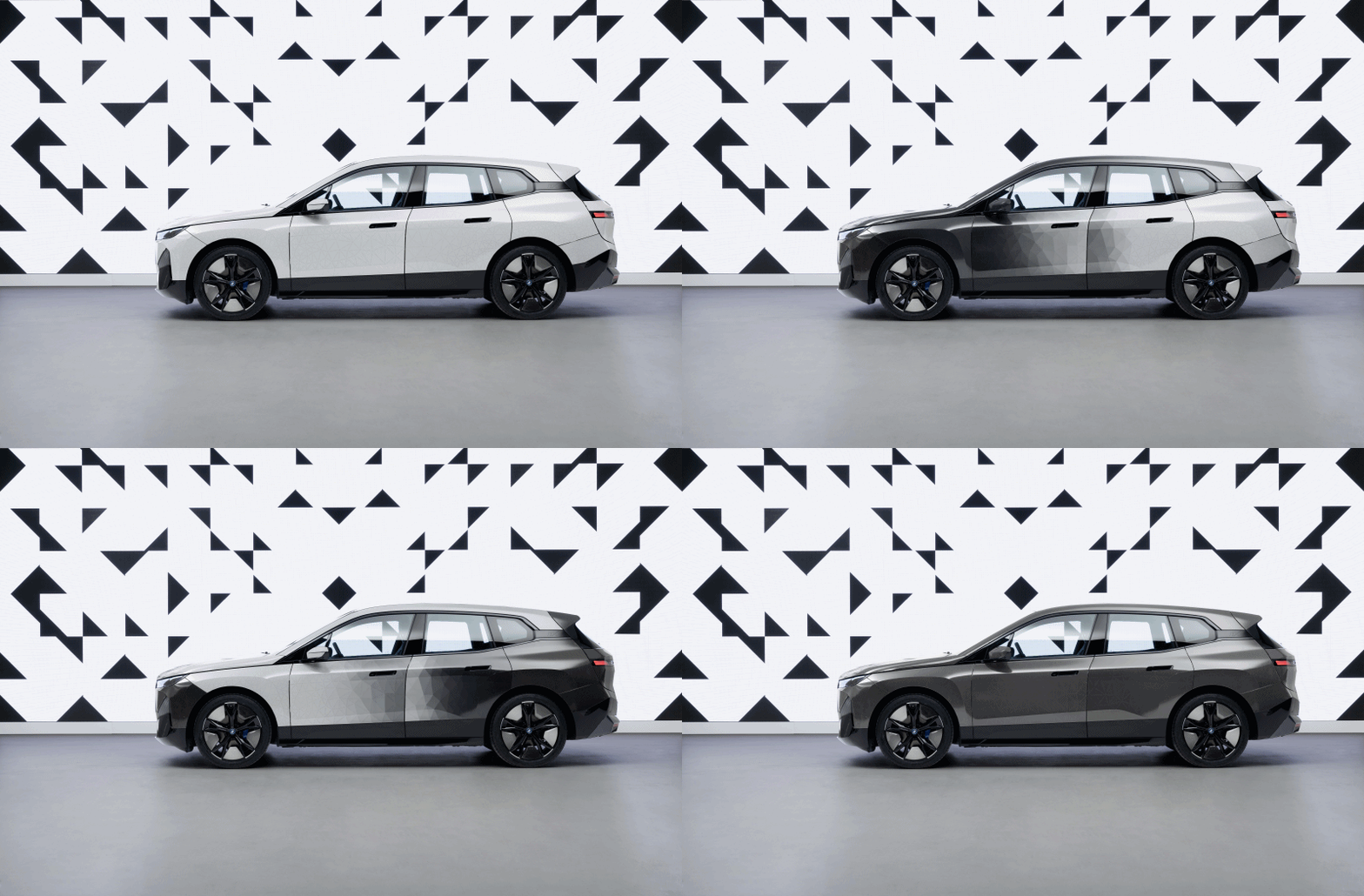
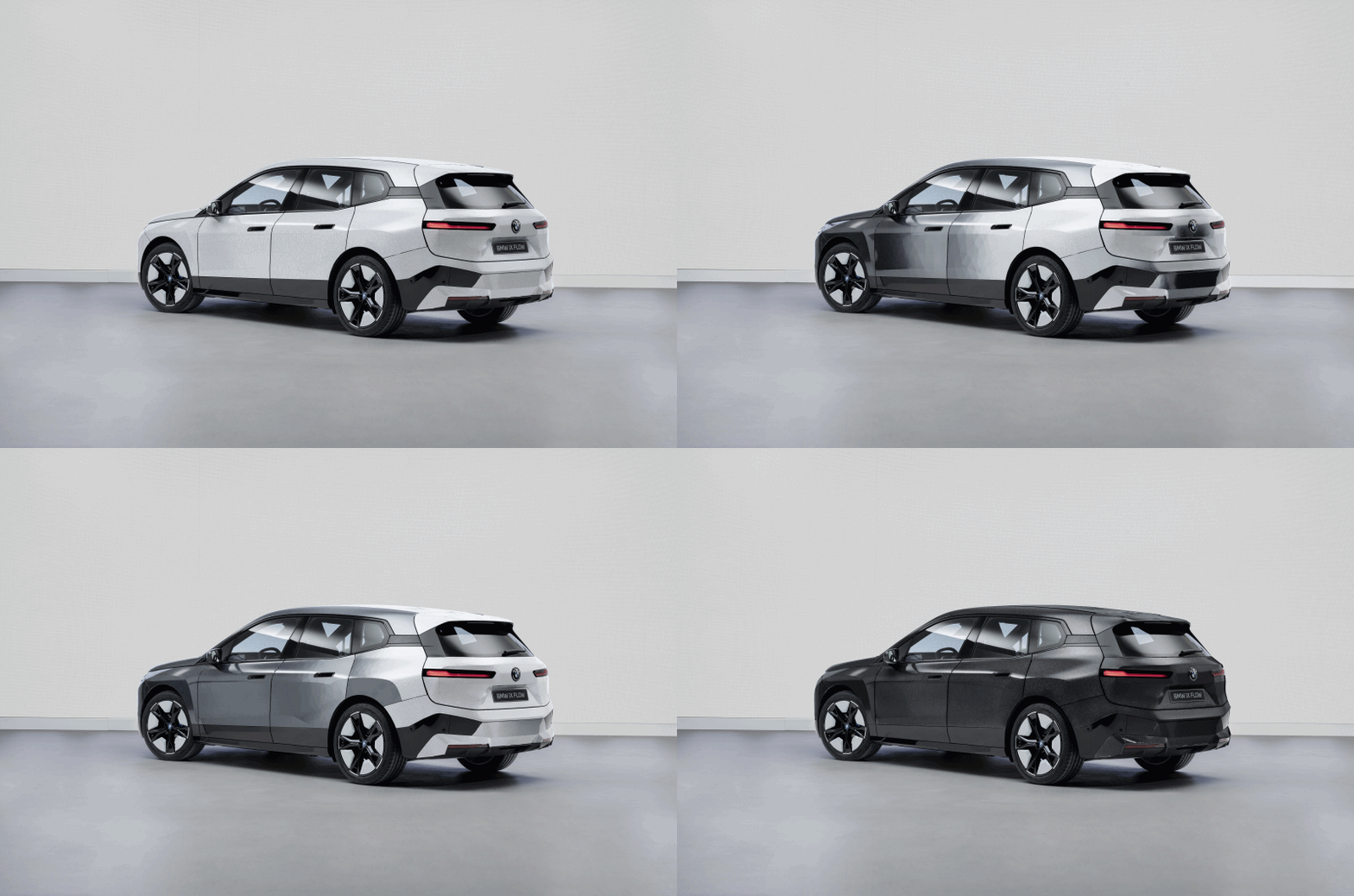
In the 1960s, James Bond’s Aston Martin had changing numberplates and in 2021, BMW’s iX Flow featuring E Ink has changing body colours. But just like the feature on James Bond’s car, don’t expect it to be offered on BMWs anytime soon. It is a demonstration of future technology for a model displayed this week at CES 2022 (the consumer electronics trade show in Las Vegas) to show how digitisation can be used to adapt the exterior of a vehicle to different situations and individual wishes.
The fluid colour changes are made possible by a specially developed body wrap that is tailored precisely to the contours of the all-electric Sports Activity Vehicle from BMW. When stimulated by electrical signals, the electrophoretic technology brings different colour pigments to the surface, causing the body skin to take on the desired colouration.
More sophisticated personalisation
The use of innovative E Ink technology opens completely new ways of changing the vehicle’s appearance in line with the driver’s aesthetic preferences, the environmental conditions or even functional requirements. The technology thus offers unprecedented potential for personalisation in the area of exterior design and the iX Flow demonstrates this potential to impressive effect.
Already today, the colour chosen for a car is an expression of the driver’s personality. The choice of exterior finishes available for current BMW models covers a wide colour spectrum. In this way, the longing for a wildly expressive, extravagant, or sporty appearance on the outside can be taken into account as well as the desire for an understated, subtle or elegant appearance.
Against this background, the BMW Group is driving the development of the technology so that a new form of personalisation can be experienced both on the outside and in the inside of future production vehicles. Apart from a greater degree of personalisation, a customer will also not have to settle for just one colour – he or she can have many more for different occasions!
“This gives the driver the freedom to express different facets of their personality or even their enjoyment of change outwardly, and to redefine this each time they sit into their car,” said Stella Clarke, Head of Project for the BMW iX Flow featuring E Ink. “Similar to fashion or the status ads on social media channels, the vehicle then becomes an expression of different moods and circumstances in daily life.”
Increased efficiency too
A variable exterior colour can also contribute to wellness in the interior and to the efficiency of the vehicle. This is done by taking account of the different abilities of light and dark colours when it comes to reflecting sunlight and the associated absorption of thermal energy. A white surface reflects a lot more sunlight than a black one. By implication, heating of the vehicle and passenger compartment as a result of strong sunlight and high outside temperatures can be reduced by changing the exterior to a light colour. In cooler weather, a dark outer skin will help the vehicle to absorb noticeably more warmth from the sun.
In both cases, selective colour changes can help to cut the amount of cooling and heating required from the vehicle’s air conditioning. This reduces the amount of energy the vehicle electrical system needs and with it also the vehicle’s fuel or electricity consumption. In an all-electric car, changing the colour in line with the weather can therefore also help to increase the range. In the interior, the technology could, for example, prevent the dashboard from heating up too much.
E Ink technology itself is extremely energy efficient (though, at this time, it would be very expensive technology). Unlike displays or projectors, the electrophoretic technology needs absolutely no energy to keep the chosen colour state constant. Current only flows during the short colour changing phase.
Millions of paint capsules
Electrophoretic colouring is based on a technology developed by E Ink that is most well-known from the displays used in eReaders like Kindle. The surface coating of the iX Flow contains many millions of microcapsules, with a diameter equivalent to the thickness of a human hair. Each of these microcapsules contains negatively charged white pigments and positively charged black pigments. Depending on the chosen setting, stimulation by means of an electrical field causes either the white or the black pigments to collect at the surface of the microcapsule, giving the car body the desired shade.
Achieving this effect on a vehicle body involves the application of many precisely fitted ePaper segments. Generative design processes are implemented to ensure the segments reflect the characteristic contours of the vehicle and the resulting variations in light and shadow. The generative design algorithms enable the necessary formability and flexibility required to tailor the ePaper exactly to the design lines of the vehicle.
Laser cutting technologies are used to guarantee high precision in generating each segment. After the segments are applied and the power supply for stimulating the electrical field is connected, the entire body is warmed and sealed to guarantee optimum and uniform colour reproduction during every colour change.
“Digital experiences won’t just be limited to displays [inside the car] in the future. There will be more and more melding of the real and virtual. With the BMW iX Flow, we are bringing the car body to life,” said Frank Weber, Member of the Board of Management of BMW AG, Development.
At CES 2020 (the major consumer electronics trade show in Las Vegas), the Sony Group announced that it would be venturing further into the mobility business, with a sleek prototype car called the VISION-S. At that time, though, what it displayed seemed to be a concept car to show off various technologies, which is also done by other electronics companies
However, the company was actually going further with the concept car and began quietly developing it into a running prototype. By CES 2021, it revealed that there was a running prototype and it was being tested on public roads and on a test track in Austria. Engineers also started verification tests of the safety and user experience of the imaging and sensing technology installed inside and outside the vehicle, along with the human-machine interface (HMI) system.
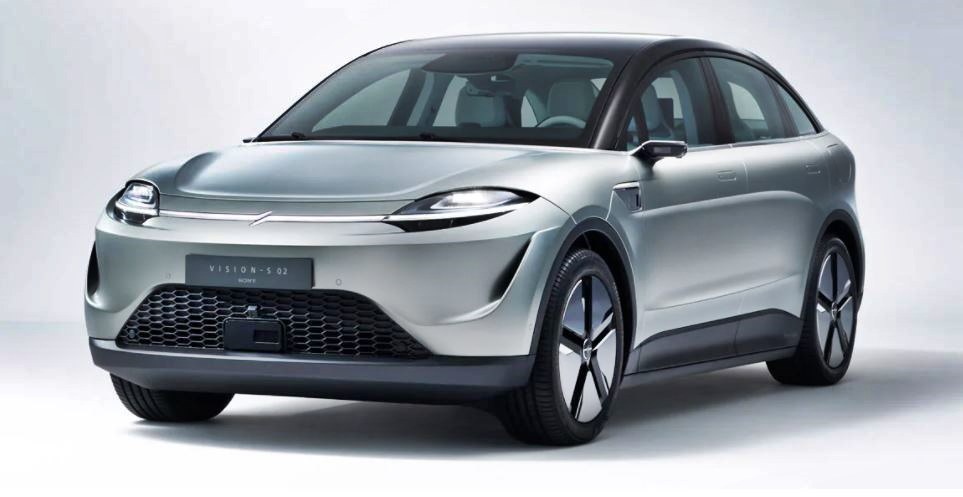
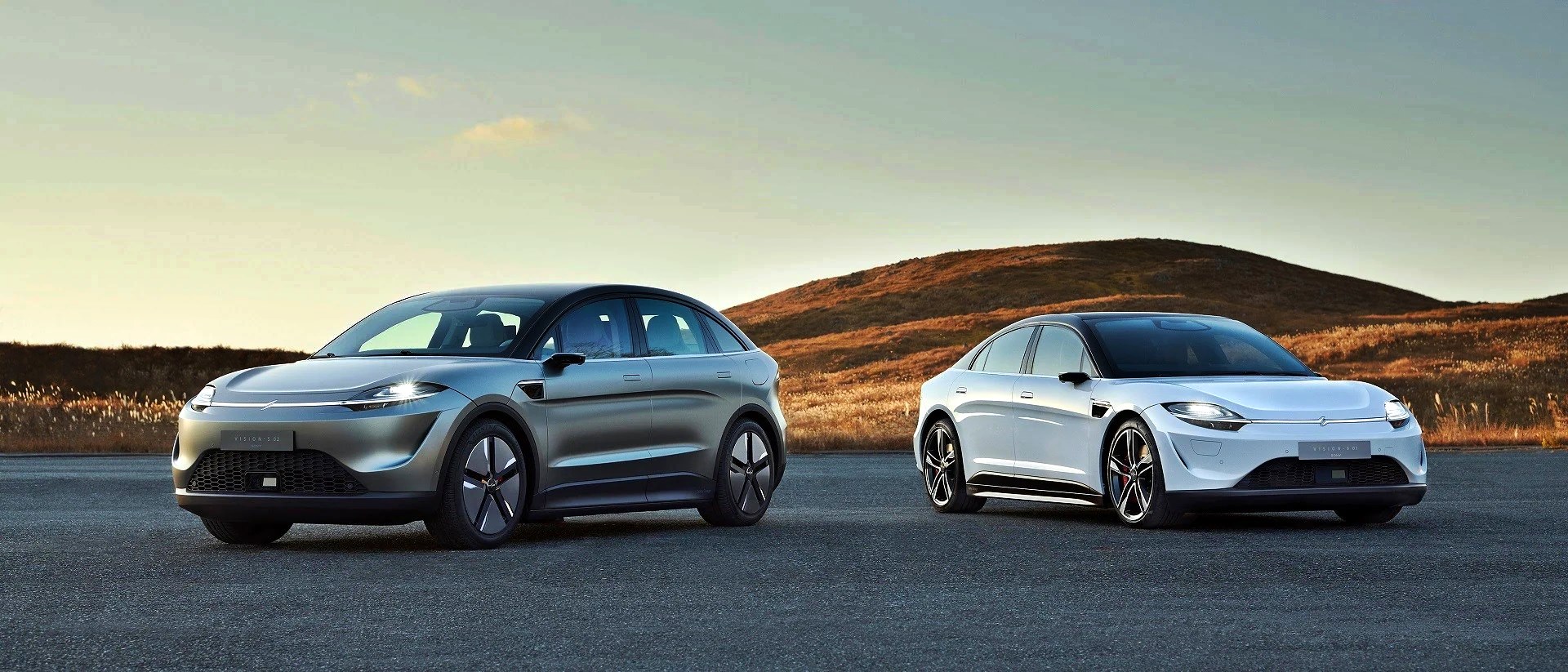
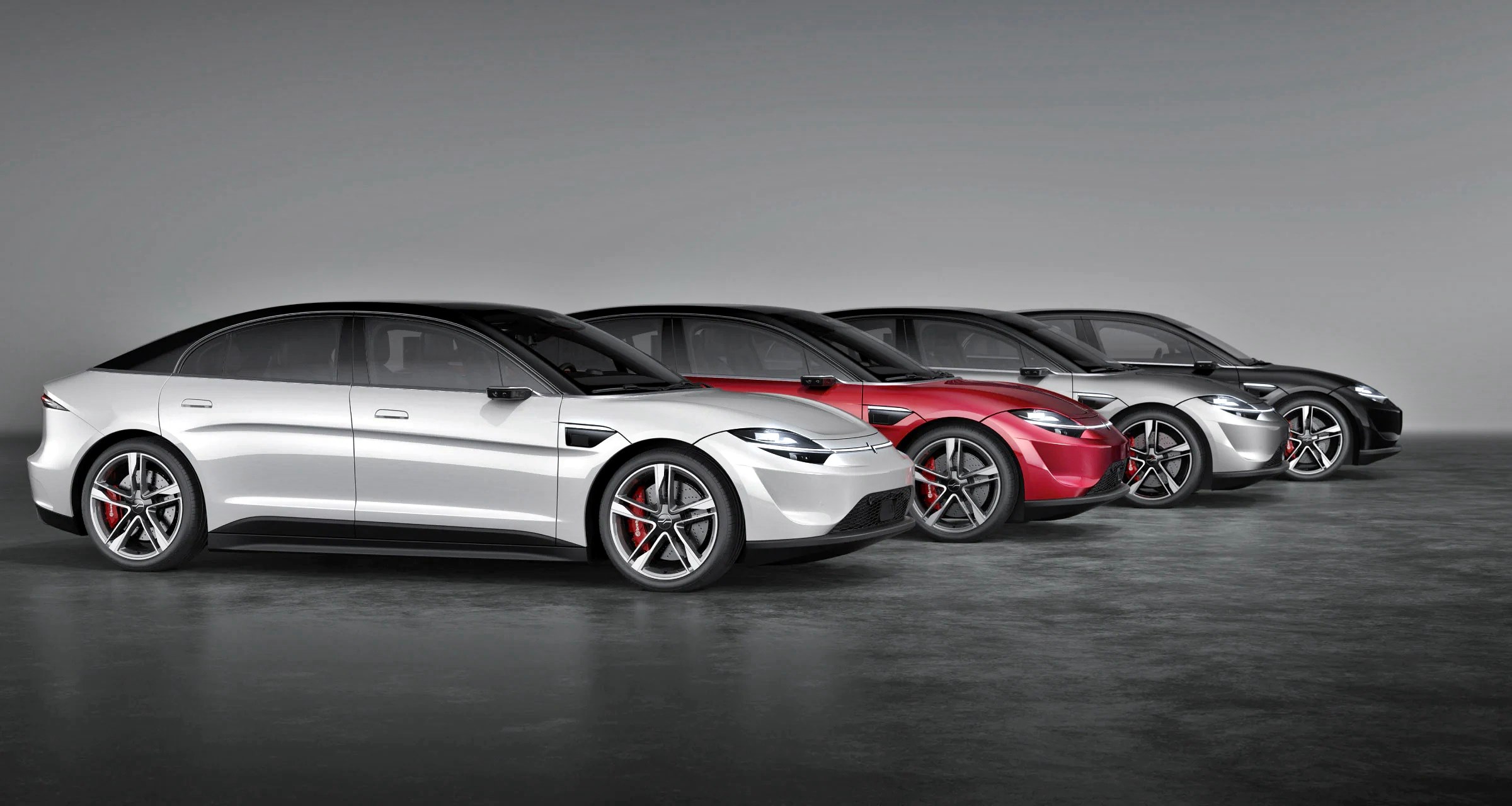
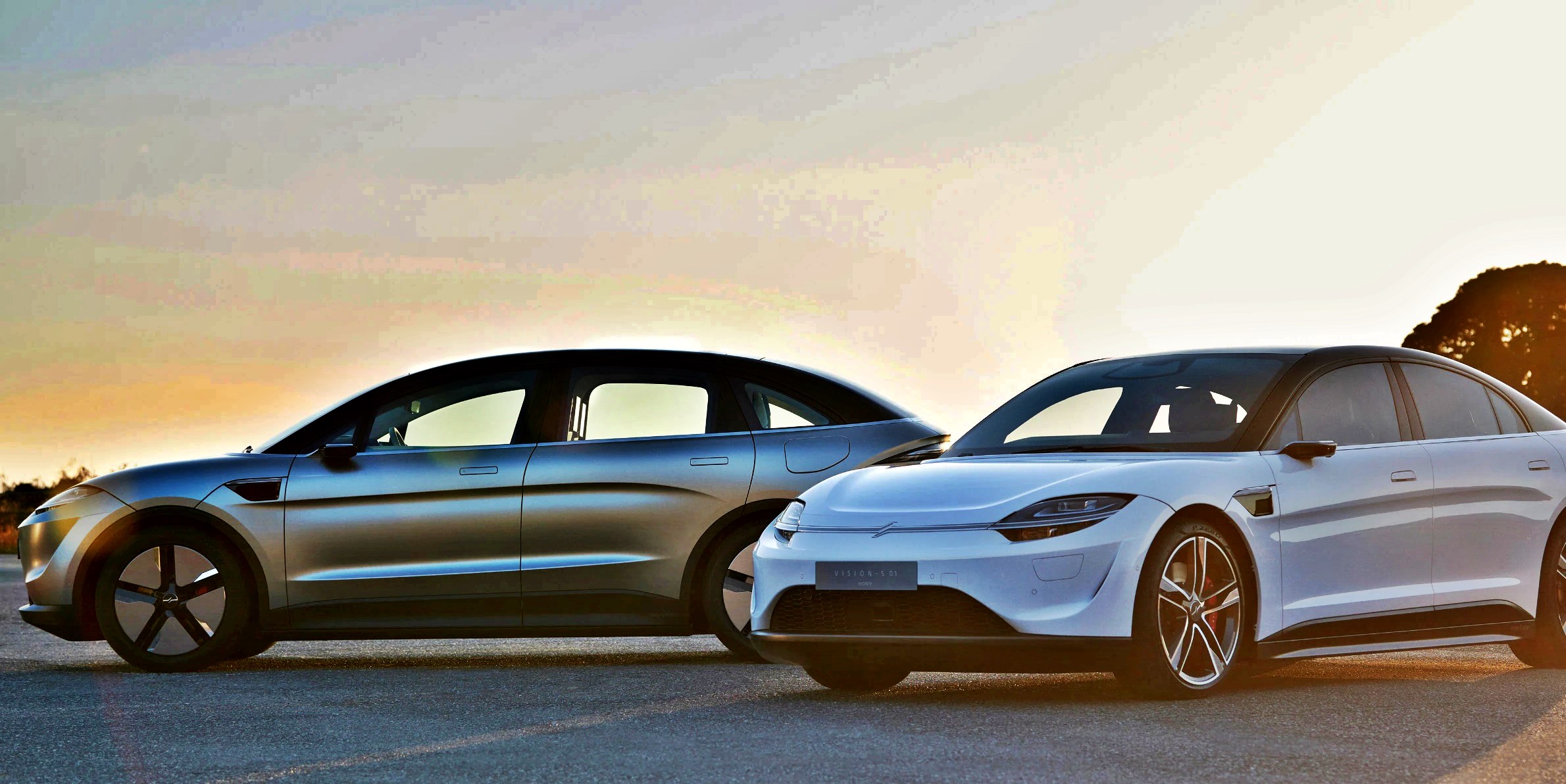
The VISION-S 02 concept (left) joins the original VISION-S 01 prototype.
Second prototype displayed
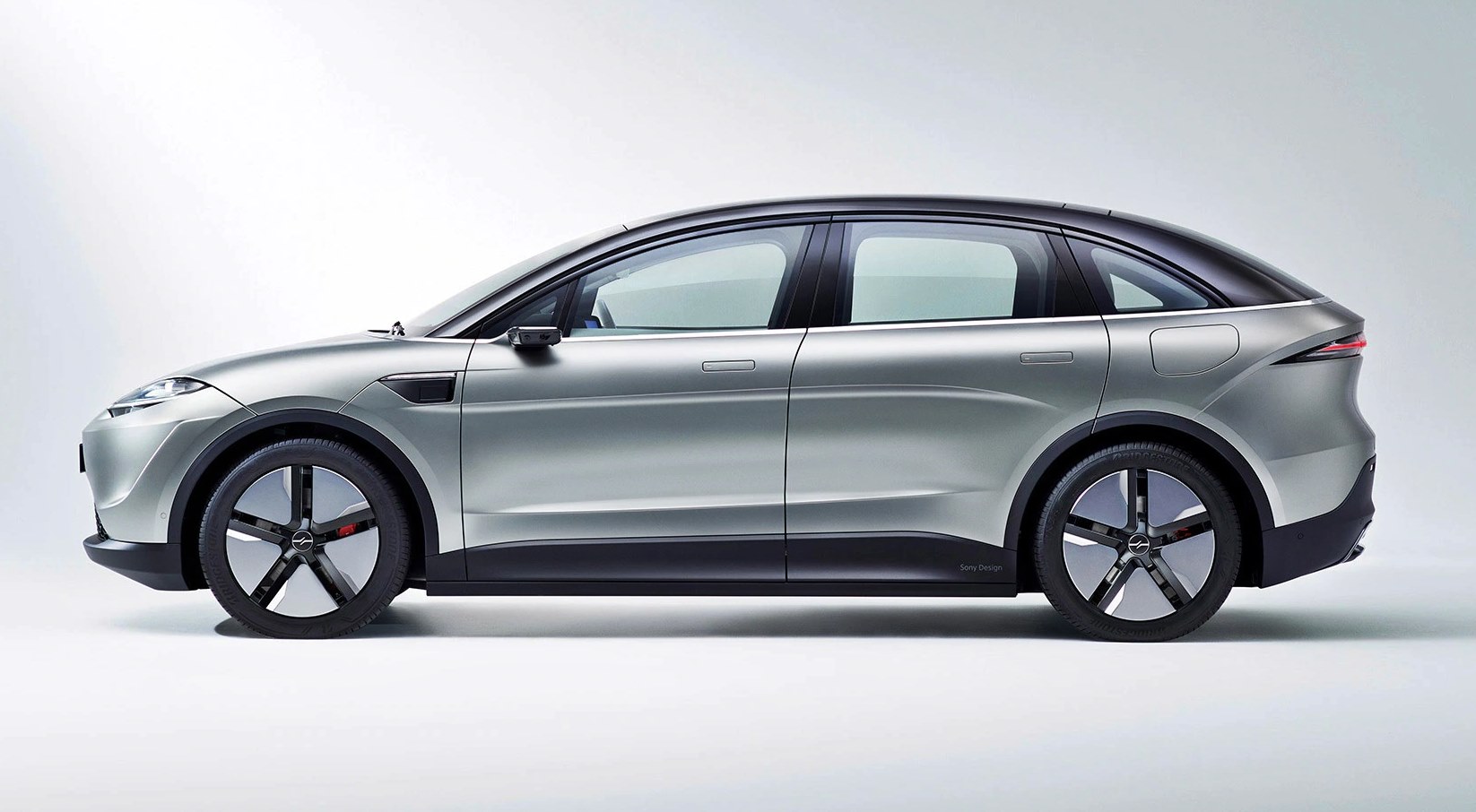
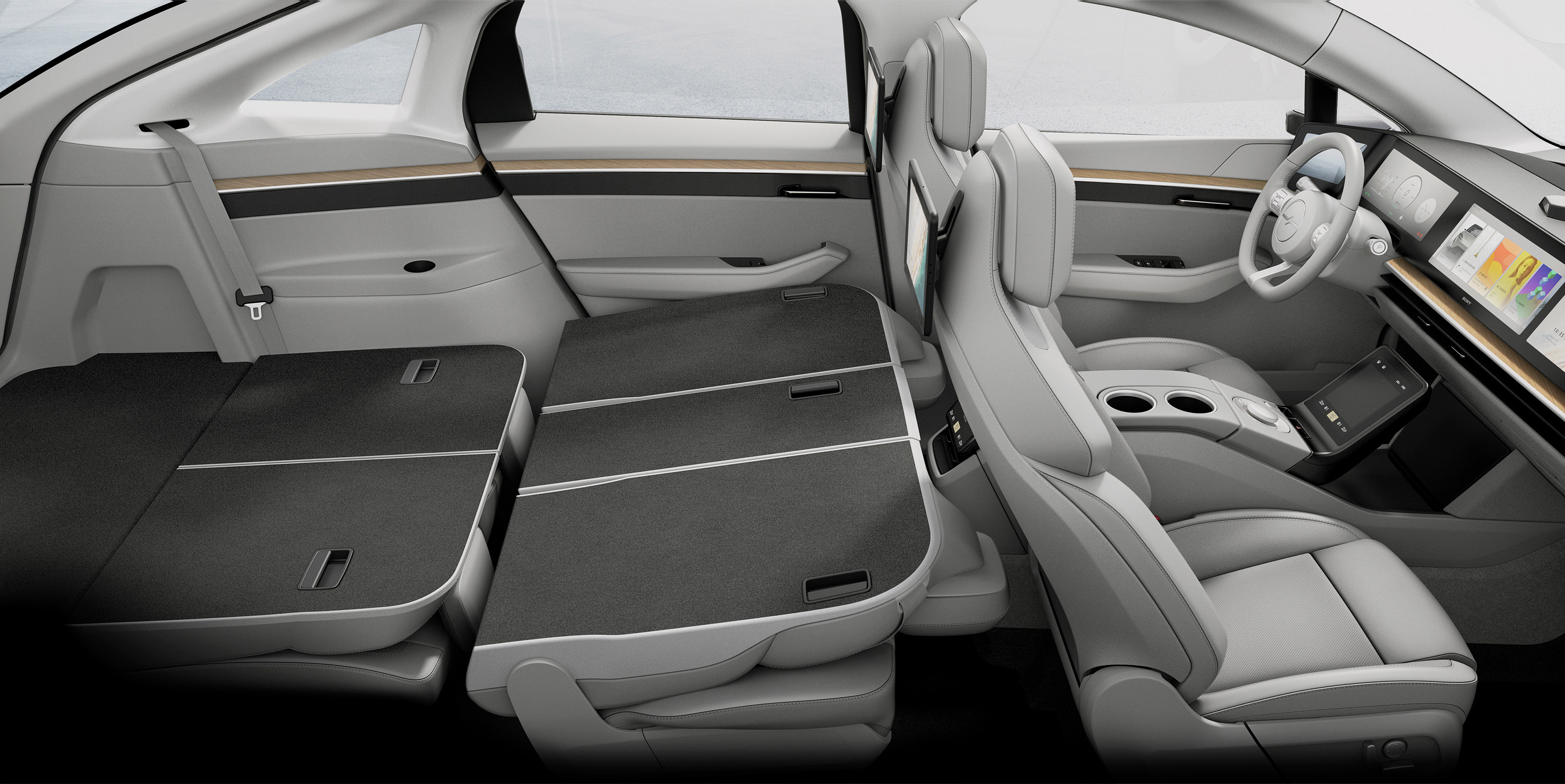
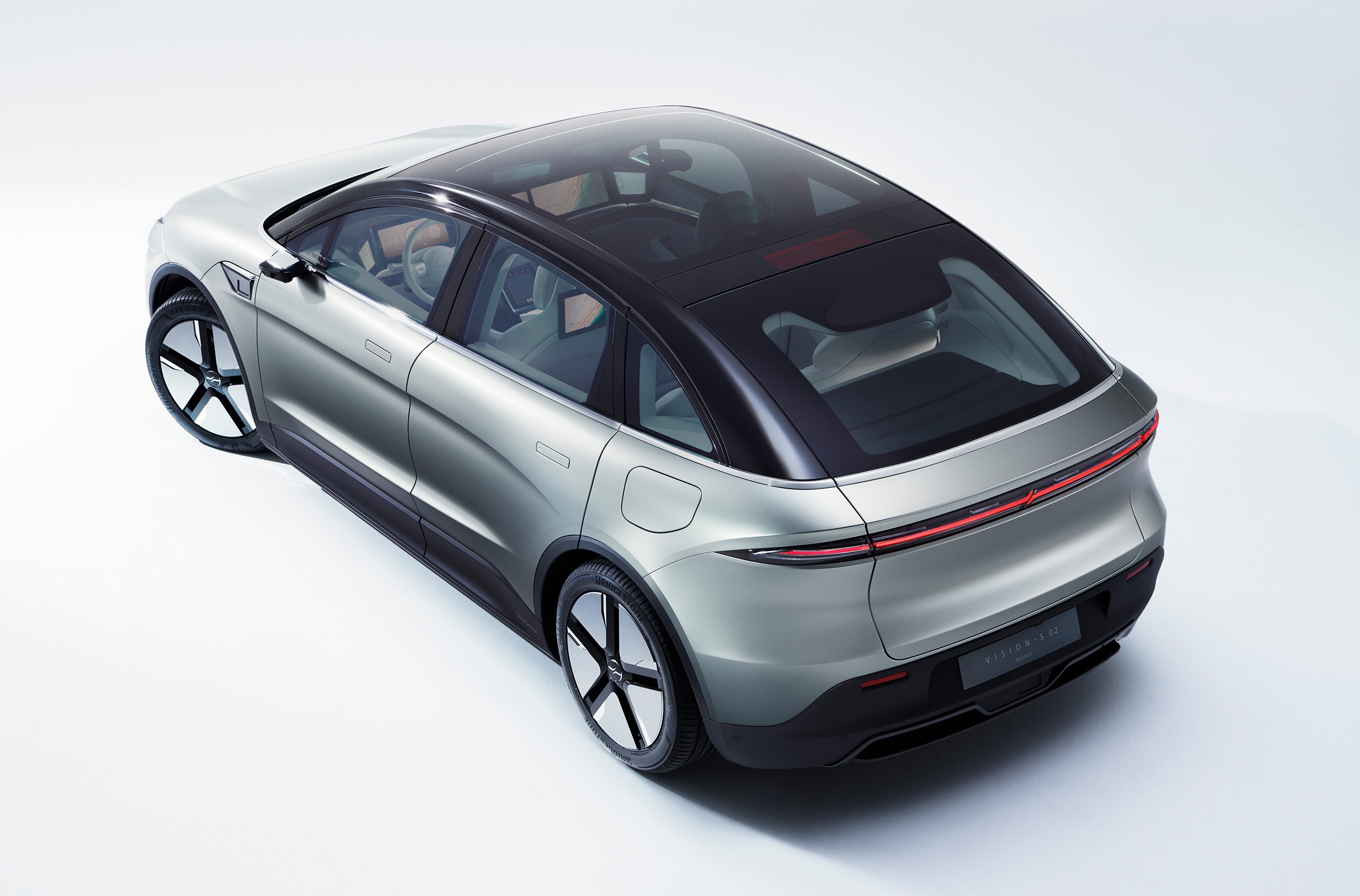
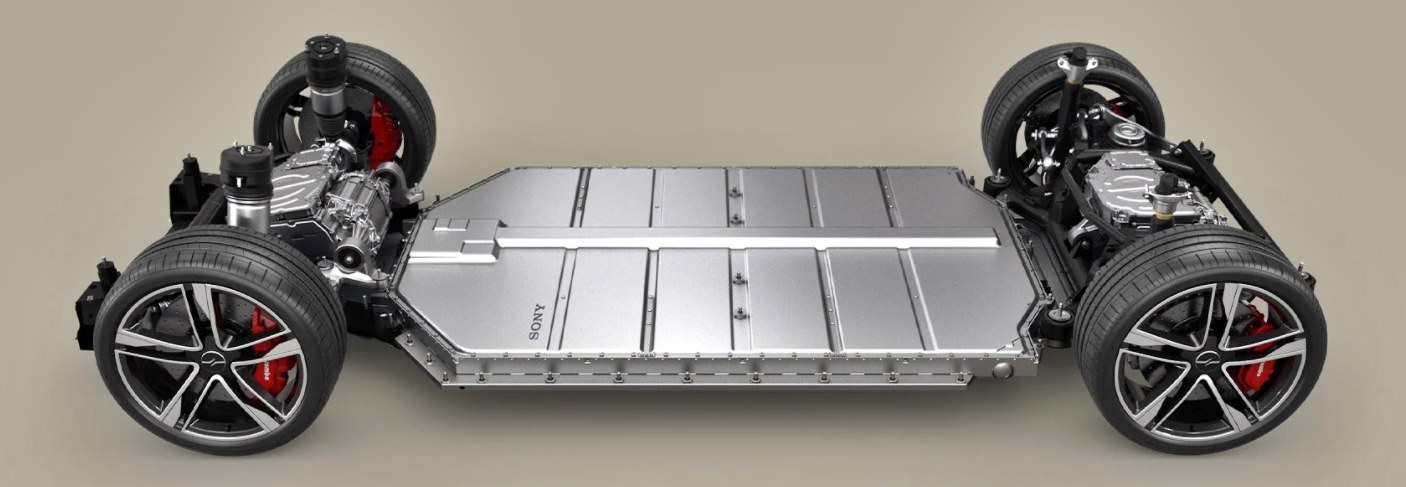
At CES 2022 this week, Sony has not only provided an update on the progress of the project but is also displaying a second prototype, the VISION-S 02. This has a SUV design as a new form factor and rides on the same EV/cloud platform as the original VISION-S 01 prototype. By offering entertainment experiences utilizing the large interior space and variations of a 7-seater, this new prototype will promote the accommodation of a large variety of lifestyles within a society where values are becoming increasingly diversified.
The VISION-S 02 measures almost 4900 mm long and 1930 mm wide, which is about the size of a Lexus RX300. It has 200 kW electric motors powering the front and rear wheels so there’s all-wheel drive and the claimed top speed is expected to be over 180 km/h.
Advanced sensor system
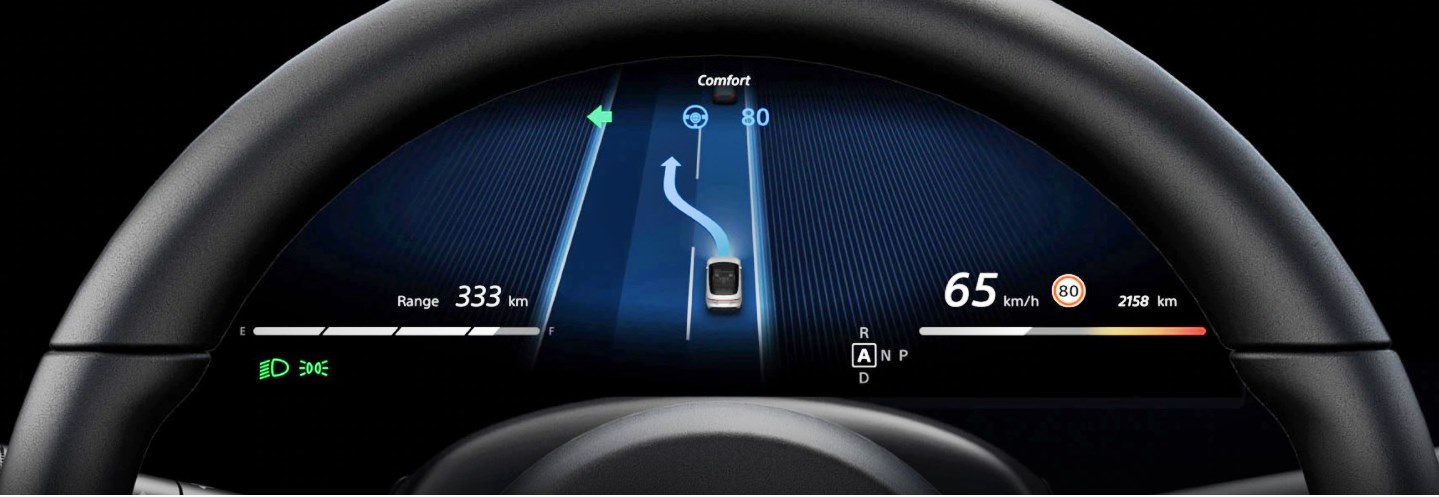
Electronics are obviously one of Sony’s strengths and it has been developing a sensors system to support the driver. The system recognizes and analyzes the surrounding environment in real-time, using sensors installed to cover all around the vehicle. These sensors include high-sensitivity, high-resolution, wide dynamic range CMOS image sensors and LiDAR sensors that accurately sense 3-dimensional space.
In addition, the system provides intuitive driver interaction in conjunction with the vehicle’s sound system and HMI system, so that the driver can accurately judge the status of the surrounding environment, such as the presence of emergency vehicles, even from inside the vehicle.
Time-of-Flight (ToF) sensors are used to provide monitoring functions for driver authentication and to watch over passengers. They also support intuitive gesture and voice commands that are intended to enhance usability of the car interface. Additionally, in order to deliver an environment that suits each user’s preferences, the vehicle will include a new function that allows users to customize the display theme and the acceleration and deceleration sounds of the vehicle.
Vehicle settings, key locks, and user settings can be synchronized by linking the vehicle to the cloud using mobile communication, including 5G communication, which features low-latency, high-capacity, and high-speed capabilities. In addition, since updates are reflected in the vehicle via over the air (OTA), it is possible to provide security and evolve service functions and value-added offerings continuously.
5G connectivity
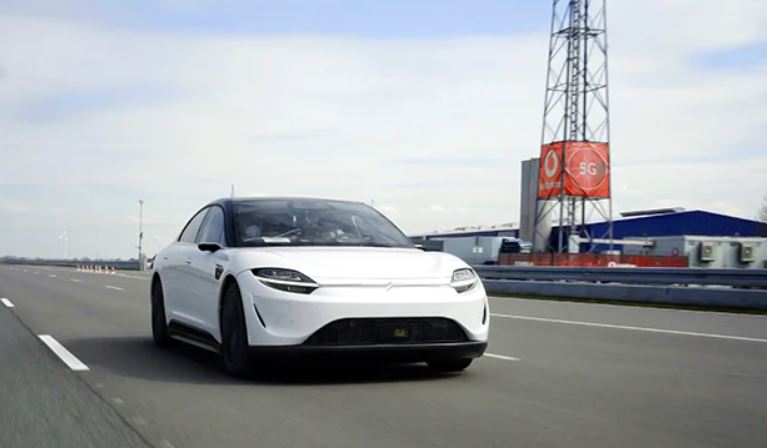
5G driving tests were also conducted from April 2021, the next-generation network connectivity enabling a continuous connection between the in-vehicle systems and the cloud, in order to synchronize data and control signals, and update the systems OTA (Over The Air).
“Real time mobile communication turns cars into databases on wheels. In our 5G Mobility Lab, the VISION-S Prototype learns to communicate in real time. Together with Sony, we are preparing the first prototype for 5G so that in the future new features can be imported into the car over the air and with a simple software update,” said Hannes Ametsreiter, CEO of Vodafone Germany, which is collaborating with the Japanese company.
Utilizing Sony’s in-house technologies and knowledge of communication technology and security cultivated through the development of smartphones, it has positioned remote operation as an important technology in anticipation of the arrival of the autonomous driving era.
Enriching the mobility entertainment space
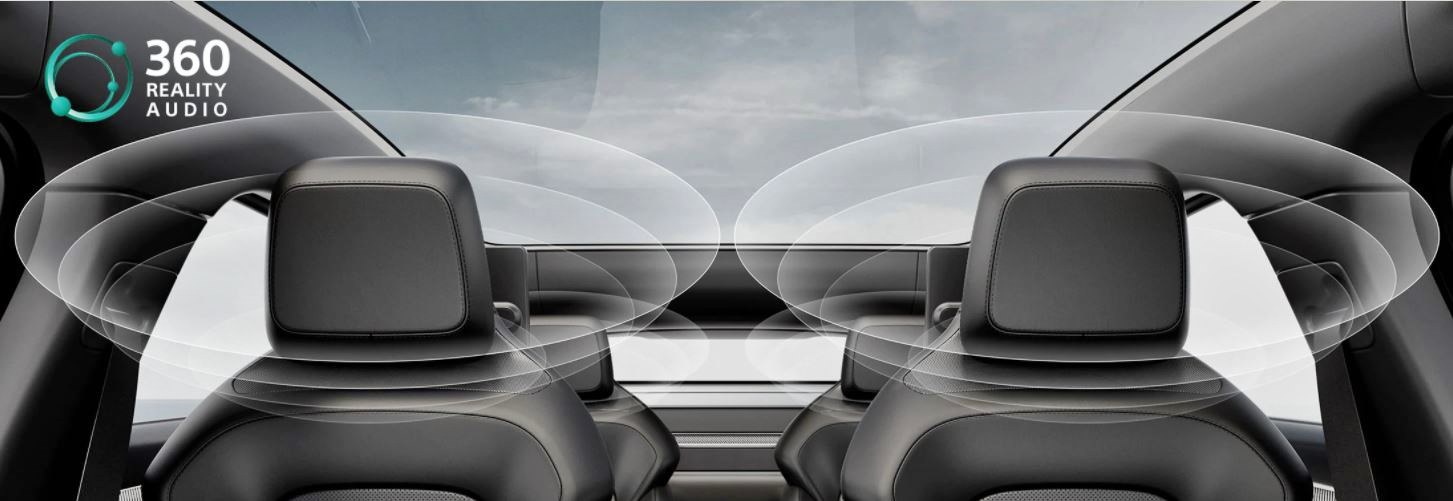
The seat speakers, which create a three-dimensional sound field, and the streaming service compatible with ‘360 Reality Audio’ provide an immersive music experience. The high quality would only be expected from Sony, which has a strong reputation in this field.
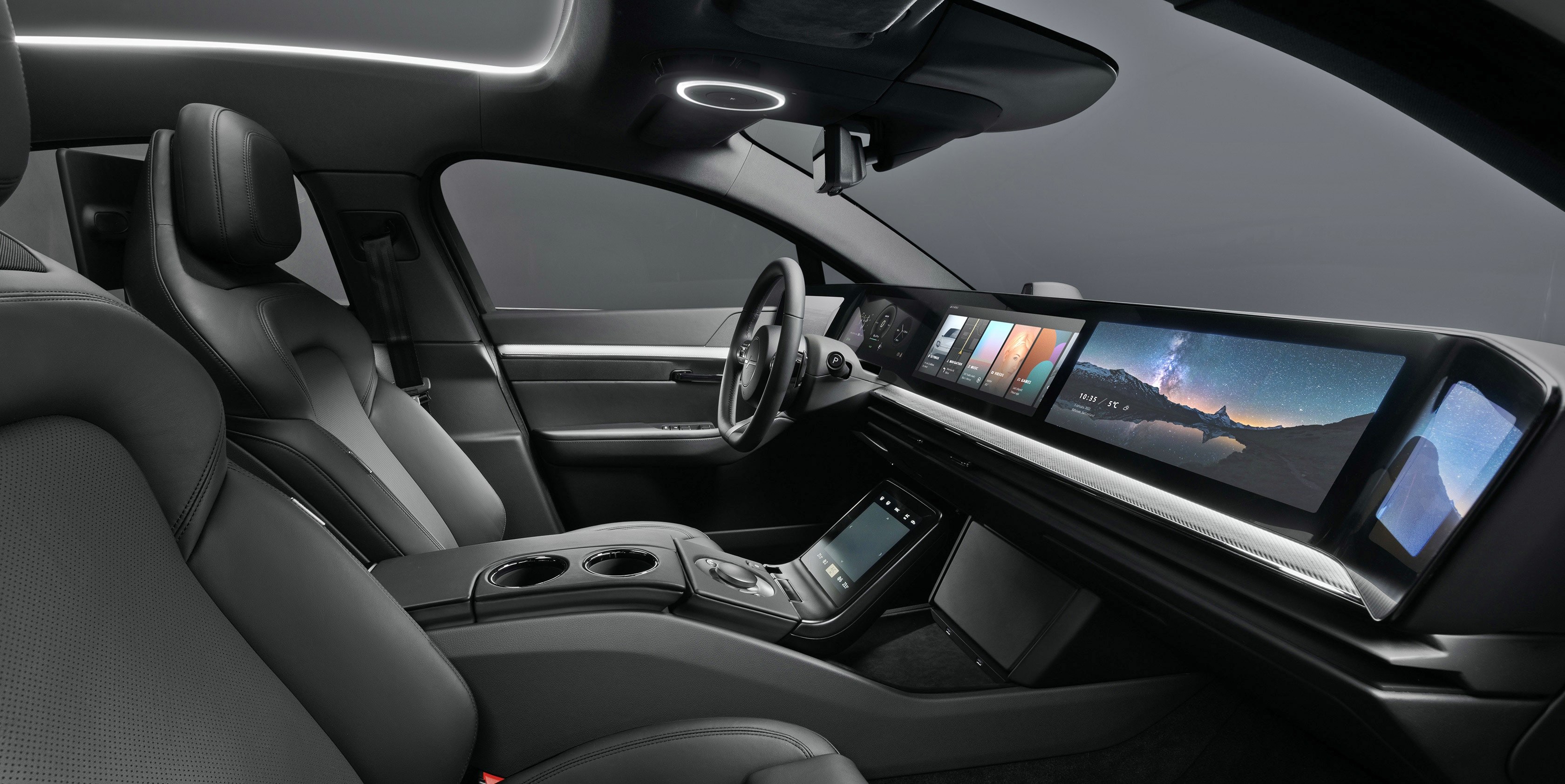
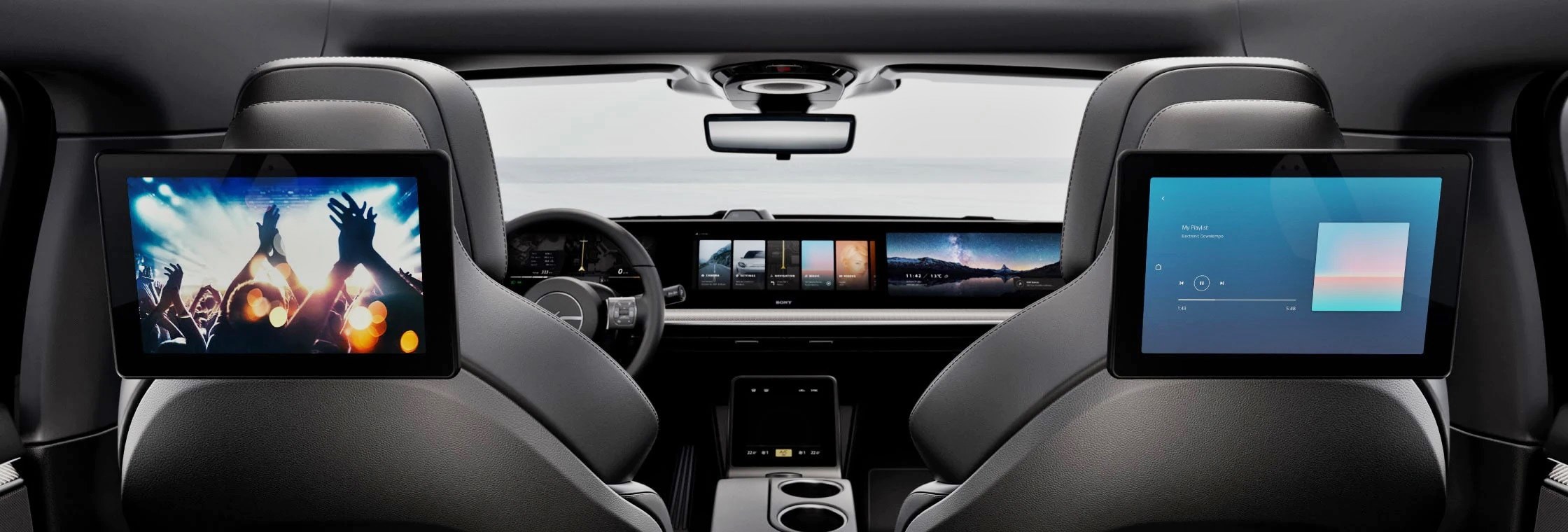
In addition, to provide a high-quality movie experience, the VISION-S models include the fully integrated digital video service ‘BRAVIA CORE for VISION-S’. The service enables shared or individual video playback on the front panoramic screen and individual rear-seat displays. Further extending the possibilities of in-vehicle entertainment, gaming capabilities have expanded to being able to play PlayStation games through a remote connection to a console at home, in addition to the ability to play streaming games through the cloud.
To make the best use of AI and robotics technologies, Sony will soon establish an operating company called Sony Mobility Inc., through which the company intends to explore entry into the EV market.