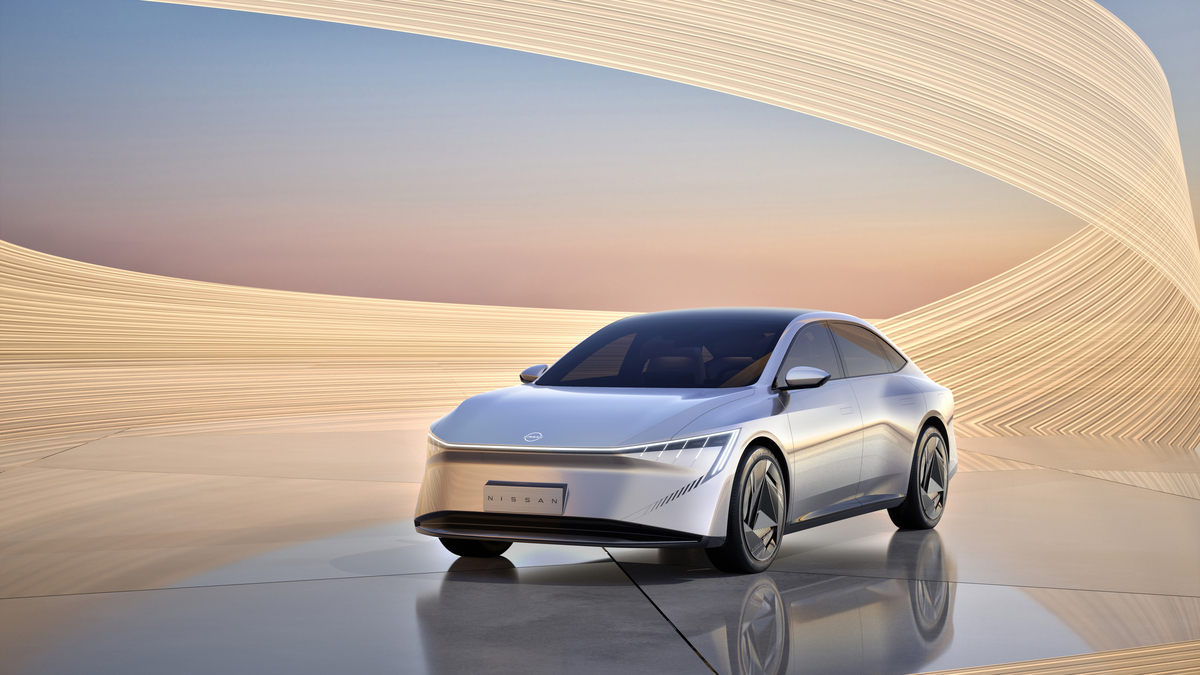
Nissan is preparing to begin exports of electric vehicles (EVs) produced at its Chinese manufacturing facilities starting in 2026, as part of a strategic plan to revitalise its global business. Target markets for these exports include Southeast Asia, the Middle East, and other regions where the company already maintains an established after-sales service network.
The Japanese automaker, which has been grappling with delays in product rollouts and structural inefficiencies, is currently undertaking a comprehensive review of its global production framework. Central to its turnaround plan is the export of EVs assembled in China, capitalising on the country’s manufacturing scale and cost advantages.
Leading this export initiative is the Nissan N7, a mid-size sedan developed through the company’s joint venture in China. Introduced to the Chinese market in April, the N7 rapidly achieved 10,000 orders, marking the fastest uptake for a joint-venture brand in the region. The model is manufactured at Nissan’s plant in Guangzhou, located in Guangdong Province.

The N7 features advanced automotive software enhanced by artificial intelligence developed by Chinese technology firms. However, for Nissan to distribute the vehicle internationally, modifications to the software will be necessary due to regulatory limitations on the use of China-origin AI in certain countries. To support this requirement, Nissan has invested in IAT Automobile Technology, a local software developer tasked with tailoring software for export models.
In a further step to strengthen its export infrastructure, Dongfeng Motor—Nissan’s Chinese partner—has established a new joint venture with Nissan’s wholly owned subsidiary, NCIC. Announced on 25 June, the venture is focused exclusively on automotive exports. With a registered capital of 1 billion yuan, Dongfeng Motor will hold a 40 per cent stake, contributing 400 million yuan, while NCIC will invest 600 million yuan for the remaining 60 per cent.
Chinese media outlet XHBY reported that Nissan views EVs made in China as highly competitive on price, which is expected to generate strong demand in international markets. The company is also broadening its product line-up in China, with plans to launch additional electric and plug-in hybrid vehicles, including its first electric pickup truck slated for release before the end of the year.

Nissan’s recent challenges stem largely from its slow pace in bringing new models to market. In response, the company unveiled a recovery plan in May that involves significant restructuring. Key elements of the plan include reducing its workforce by 20,000 employees and consolidating its manufacturing operations from 17 factories down to 10. At the same time, Nissan aims to optimise its supply chain and elevate EVs to the centre of its future product strategy.
By exporting EVs from China and realigning its operations around electrification, Nissan hopes to reclaim competitiveness and strengthen its position in the evolving global automotive landscape.