Mitsubishi Motors Corporation has formally ended its decades-long manufacturing involvement in China by dissolving its joint venture with Shenyang Aerospace Mit. Engine Mfg. Ltd., marking the final step in its withdrawal from the Chinese automotive sector. The move follows the cessation of Mitsubishi’s local vehicle production in 2023 and is being seen as a strategic response to the sweeping transformation of China’s car industry, now heavily dominated by electric vehicles (EVs).
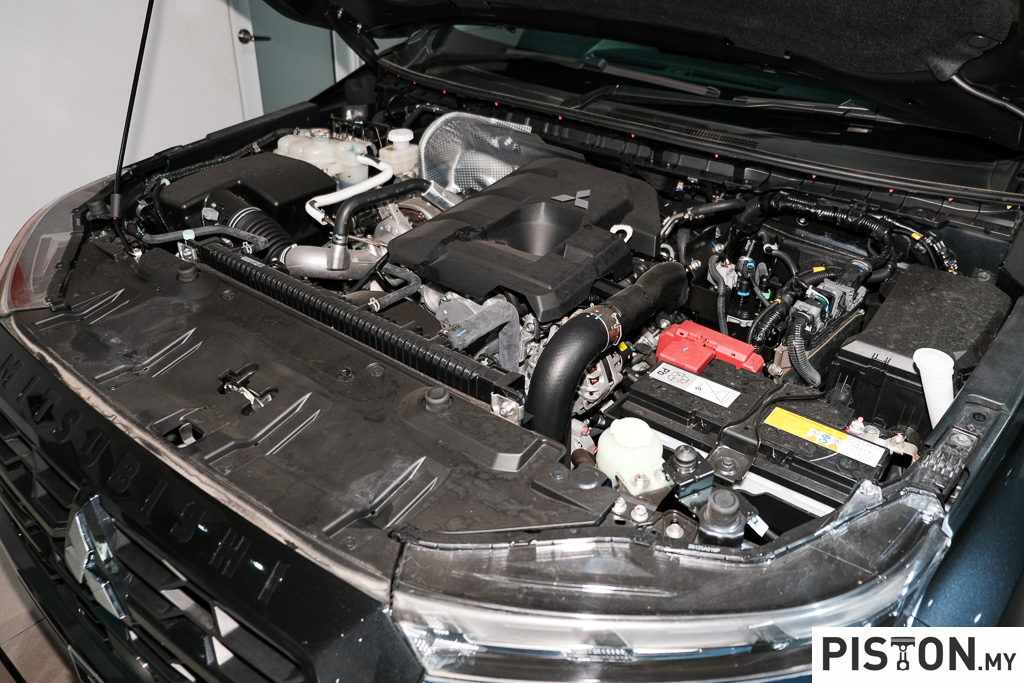
The joint venture, Shenyang Aerospace Mitsubishi, was established in August 1997 and had played a central role in Mitsubishi’s operations in China. The engine plant, which began production in 1998, manufactured powertrains for both Mitsubishi’s own models and a wide range of vehicles from Chinese manufacturers. However, on 2 July 2025, the entity was officially rebranded as Shenyang Guoqing Power Technology Co., Ltd., following the exit of Mitsubishi Motors and Mitsubishi Corporation as shareholders.
In announcing its exit, Mitsubishi Motors cited the accelerated transformation of China’s automotive landscape, particularly its rapid adoption of electrified vehicles, as the key reason for its strategic pullout. The company signalled that this decision was part of a broader reassessment of its regional business focus.
Mitsubishi’s ties to China stretch back to 1973, when it began exporting medium-duty trucks to the country. During the early 2000s, its engine production partnerships supplied nearly a third of all engines for domestically built vehicles, cementing its early influence in the Chinese automotive sector. However, as China emerged as a powerhouse for new energy vehicle production, consumer demand increasingly shifted away from internal combustion engines. Mitsubishi, like many traditional automakers, found it increasingly difficult to maintain relevance.
A critical component of Mitsubishi’s more recent strategy in China was its joint venture with Guangzhou Automobile Group (GAC) and Mitsubishi Corporation. Established in 2012 as GAC Mitsubishi, the partnership—structured as a 50:30:20 shareholding—initially showed strong potential. The joint venture enjoyed its best year in 2018, selling 144,000 vehicles, with the Outlander SUV alone accounting for 105,600 units. However, Mitsubishi’s fortunes declined rapidly. By 2022, annual sales had plunged to just 33,600 units, largely due to rising competition from Chinese EV brands that offered technologically advanced models at competitive prices.
Financially, the venture also faltered. GAC’s 2023 disclosures revealed that by 31 March of that year, GAC Mitsubishi held assets valued at 4.198 billion yuan (around RM2.73 billion) against liabilities of 5.613 billion yuan (around RM3.65 billion), resulting in a negative net worth of 1.414 billion yuan (around RM920 million). In October 2023, Mitsubishi confirmed it would end vehicle production in China and begin restructuring its operations in the country.
Following Mitsubishi’s decision, GAC acquired full control of the joint venture, repurposing the production facility to manufacture vehicles under its Aion EV brand. The revamped plant was targeted to begin mass production by June 2024.
Mitsubishi’s withdrawal underscores the broader difficulties foreign automakers are facing in China’s fiercely competitive electric vehicle market. Homegrown brands such as BYD have surged ahead in both market share and consumer perception, while global players struggle to adapt to the rapid pace of electrification. Even once-prominent joint ventures like GAC-FCA have crumbled entirely under the weight of shifting consumer preferences and strategic misalignment.
Commenting on the development, automotive analyst Chen Liwei told Chinese outlet Jiemian News that Mitsubishi’s exit was emblematic of a wider trend. He stated that China’s automotive sector has become a proving ground for EV innovation, leaving legacy automakers behind as domestic players dominate the race.
Mitsubishi’s departure marks the end of a significant chapter in China’s automotive history and reinforces the growing influence of local manufacturers in shaping the industry’s electric future.