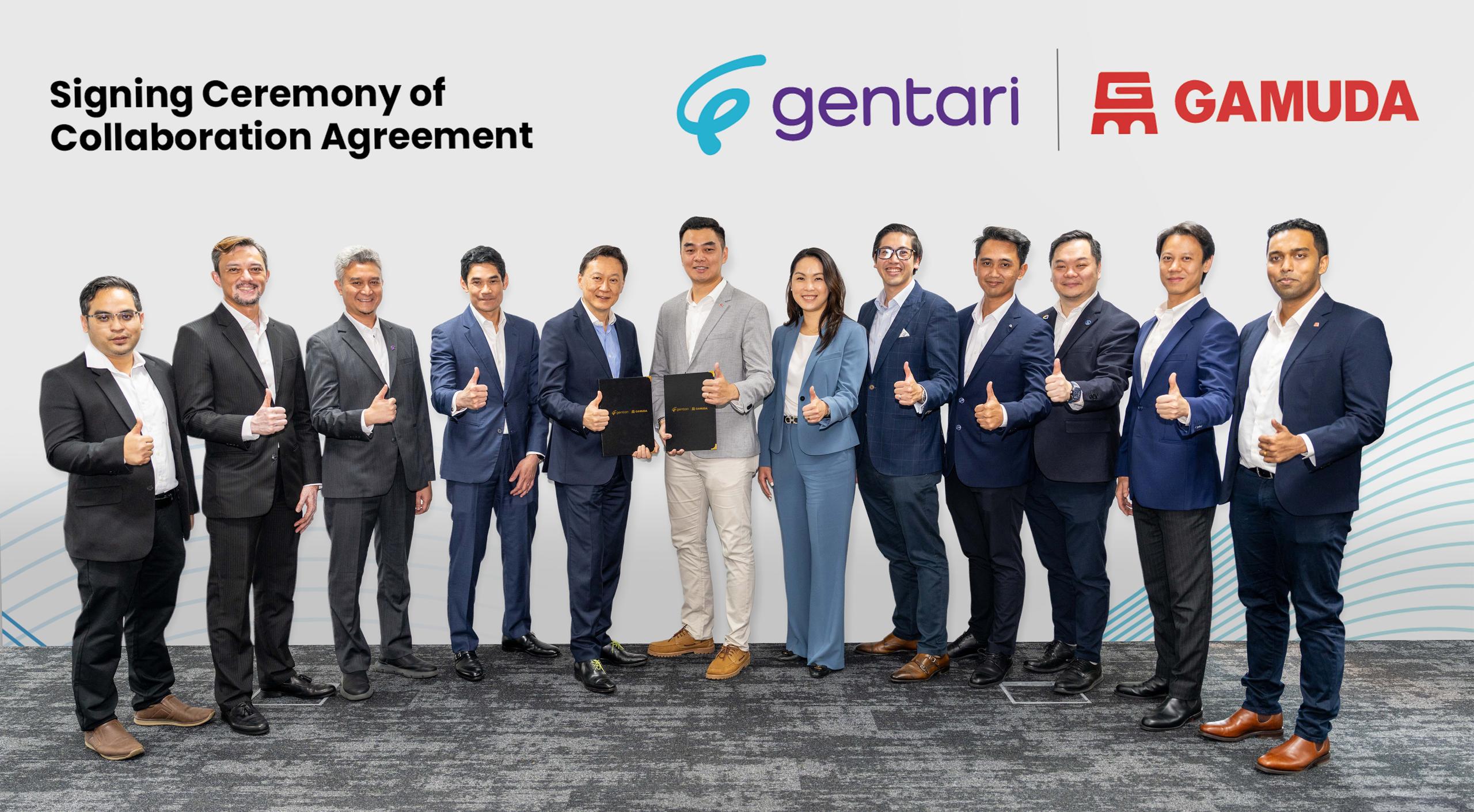
Malaysia’s transition towards clean energy has taken another significant step forward as Gentari Renewables Sdn Bhd, a subsidiary of Gentari, and Gamuda Energy Sdn Bhd, a subsidiary of Gamuda, confirmed a landmark collaboration to develop around 1.5 GW of renewable energy capacity. The project will focus on solar photovoltaic power plants integrated with battery energy storage systems (BESS), designed to supply the growing energy needs of hyperscale data centres in the country.
The new capacity is being established under the Corporate Renewable Energy Supply Scheme (CRESS) framework, reflecting the government’s ambition to accelerate renewable energy adoption. With demand from data centres projected to exceed 5 GW by 2035, the partnership comes at a crucial moment for Malaysia’s energy landscape.
Gentari brings with it a strong record in large-scale renewable energy development and operational expertise, having already built a portfolio of over 8 GW of installed and under-construction capacity across its markets. Gamuda, on the other hand, contributes decades of experience in engineering, construction and delivery of complex infrastructure projects, including renewable energy initiatives. Together, the two companies believe their complementary strengths can help position Malaysia as a regional digital hub while advancing the national net-zero agenda.
Hyperscale data centres are increasingly critical for cloud computing, artificial intelligence and digital services. Their rapid expansion in Malaysia has intensified the need for reliable, scalable and sustainable power solutions. The Gentari-Gamuda partnership is designed to directly address this requirement, ensuring that future facilities can operate efficiently while reducing their carbon footprint.
Beyond the environmental benefits, the collaboration also strengthens Malaysia’s attractiveness as an investment destination. Clean energy availability has become a key consideration for foreign direct investment, particularly among leading global technology companies seeking to anchor their operations in Southeast Asia. By offering a dedicated pipeline of sustainable energy, the project is expected to boost investor confidence and support the country’s aspirations as a regional leader in both renewable energy and the digital economy.
Industry observers view the alliance as more than just a business agreement. It is seen as a model for future collaborations that aim to align industrial growth with environmental responsibility. Both Gentari and Gamuda have positioned the partnership as a demonstration of how renewable energy can drive sustainable development while creating long-term value for Malaysia’s economy.
This collaboration highlights the growing intersection between energy and technology. As Malaysia advances its digital infrastructure, the need for clean, reliable and scalable power solutions will only intensify. With projects such as this, the nation is taking tangible steps towards ensuring that its digital growth is underpinned by a sustainable energy framework.