Piston.my

Global News

Chery is preparing to expand its Tiggo 5 family with a brand-new model called the Tiggo 5 Pro, a compact SUV that takes a different design direction from the current Tiggo 5x sold in China. While the Tiggo 5 series has so far consisted of the two Tiggo 5x variants, the Pro arrives with a noticeably larger footprint and a fresh look, even though it remains a petrol-powered model.

The Tiggo 5 Pro stretches to 4540 mm in length and 1835 mm in width, making it longer and slightly wider than both existing Tiggo 5x versions, which measure either 4400 mm or 4358 mm long, with both sharing the same 1830 mm width. All three models, however, sit on an identical 2630 mm wheelbase. Its height matches one of the current Tiggo 5x versions at 1588 mm, giving it a similar stance despite its extended body.

What sets the Tiggo 5 Pro apart visually is its new design language, which Chery has reserved for this model. Most striking is the closed-off front end — an unusual choice for a petrol-powered SUV — paired with sharp surface lines and slim headlights. The designers have added a narrow rectangular grille in the middle and a polygonal lower grille that gives the car a layered, more expressive front profile. It’s a cleaner, more modern interpretation that moves away from the busier styling cues often seen on entry-level SUVs.

(more…)

The Japan Car of the Year (JCOTY) award has been presented annually since 1980, beginning with the Mazda Familia—better known to some as the Mazda GLC. Over the decades, Toyota and Honda have dominated the awards, securing 15 and 14 wins each. Subaru, meanwhile, has only occasionally taken the top spot, but when it does, it tends to make an impression.

Subaru’s first JCOTY win came in 2003 with the fourth-generation Legacy, a model that bids farewell this year. The second title arrived in 2016 with the fifth-generation Impreza, followed in 2020 by the second-generation Levorg (sold in some markets as the WRX Wagon). The brand can now add a fourth win to its record.

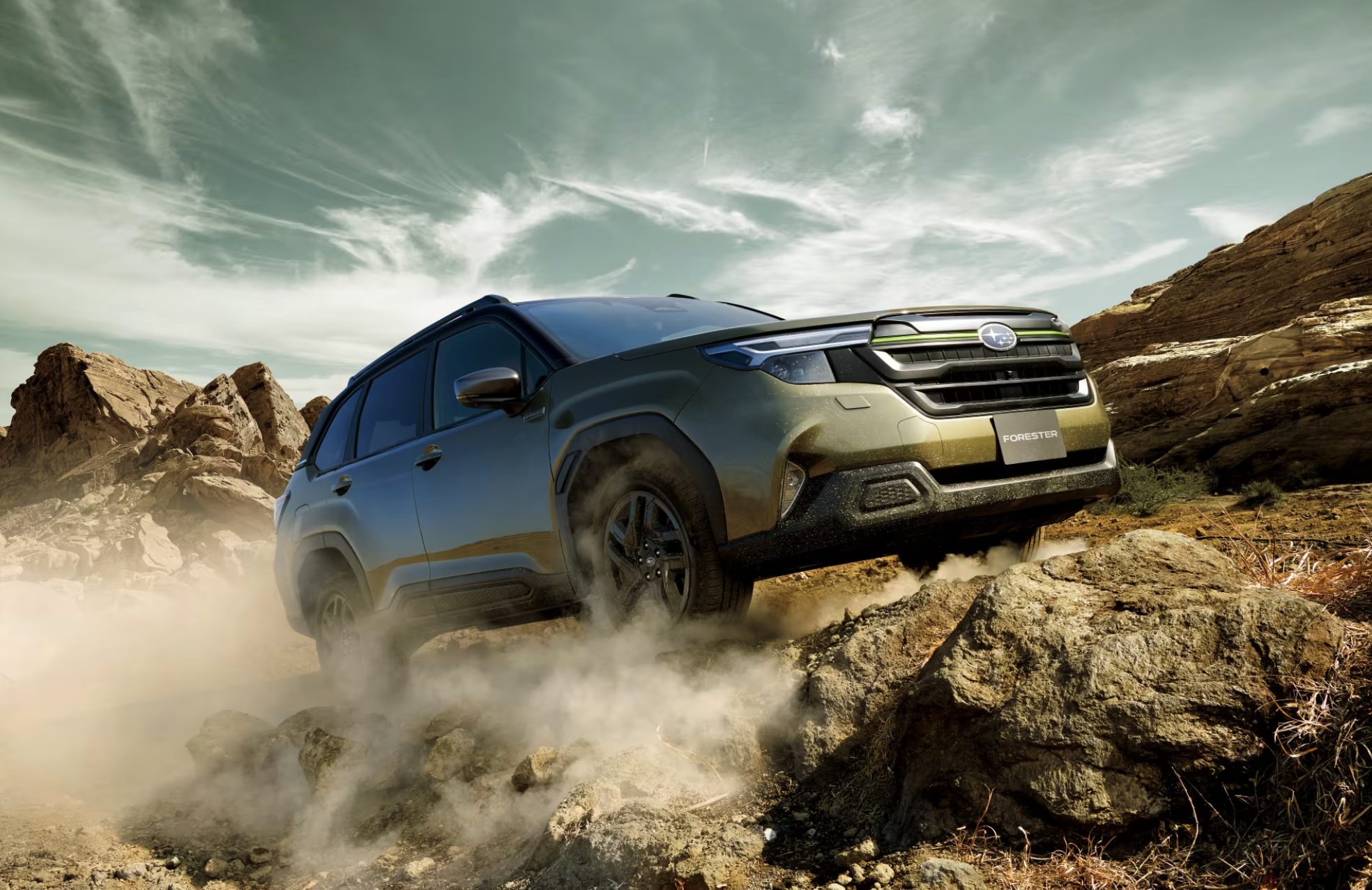
The Forester Hybrid—marketed in Japan as the Forester e-Boxer—has been named the 2024 Japan Car of the Year. The award recognises the crossover’s balance of performance, everyday usability, efficiency, and safety. In Japan, the Forester e-Boxer is also competitively priced, ranging from ¥4,202,000 to ¥4,598,000 (around RM131,000 and RM144,000).

(more…)

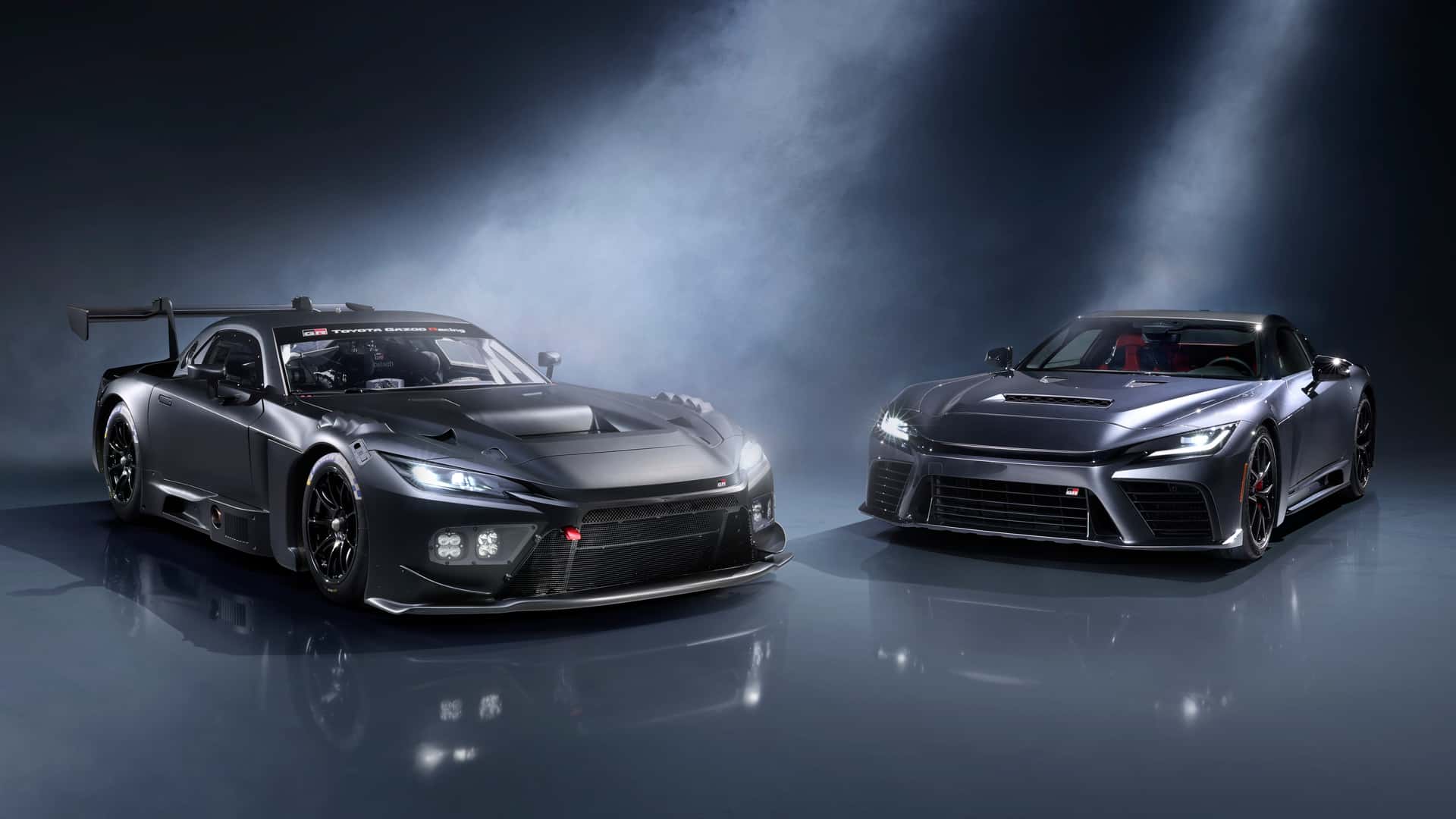
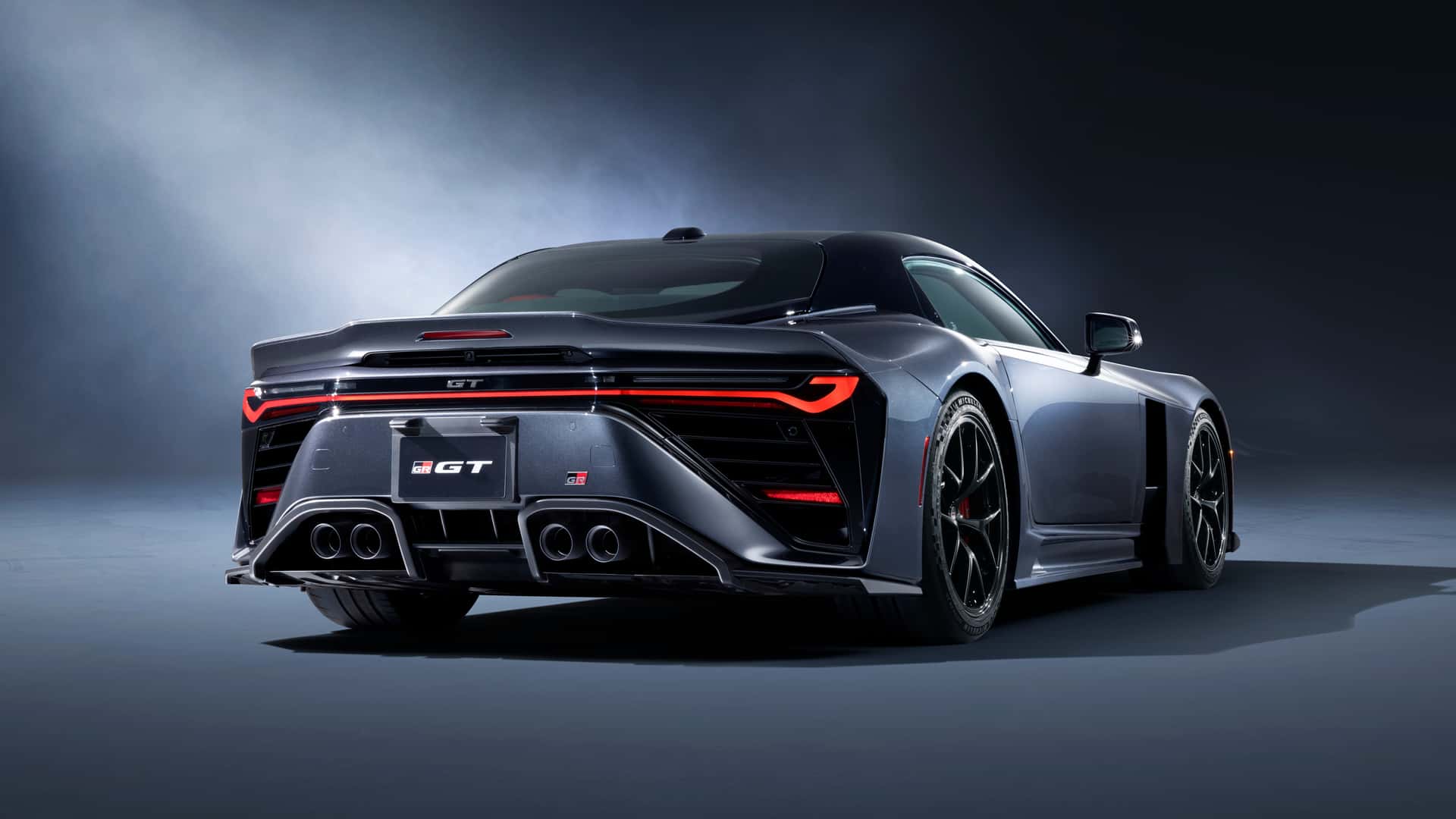
Toyota has announced its latest high-performance model, the GR GT, describing it as a road-legal machine shaped by motorsport engineering. It follows a lineage that began with the Toyota 2000GT and continued decades later with the Lexus LFA, marking a new milestone for the brand’s performance arm, Gazoo Racing.

Development of the GR GT was guided by three priorities: achieving a very low centre of gravity, reducing overall weight, and creating a rigid structure to support aerodynamic efficiency. Early figures suggest Toyota has committed to these goals. The car is expected to produce at least 640hp, its centre of gravity sits strikingly low, and the structure uses Toyota’s first all-aluminium frame to keep weight down.

Power comes from a newly developed twin-turbo V8 paired with a single electric motor mounted within the transaxle. Toyota is targeting a minimum of 640hp and 850Nm of torque, all channelled to the rear wheels through an eight-speed automatic gearbox. Toyota stresses that these figures represent baseline targets for the prototype, hinting that the production version may exceed them.

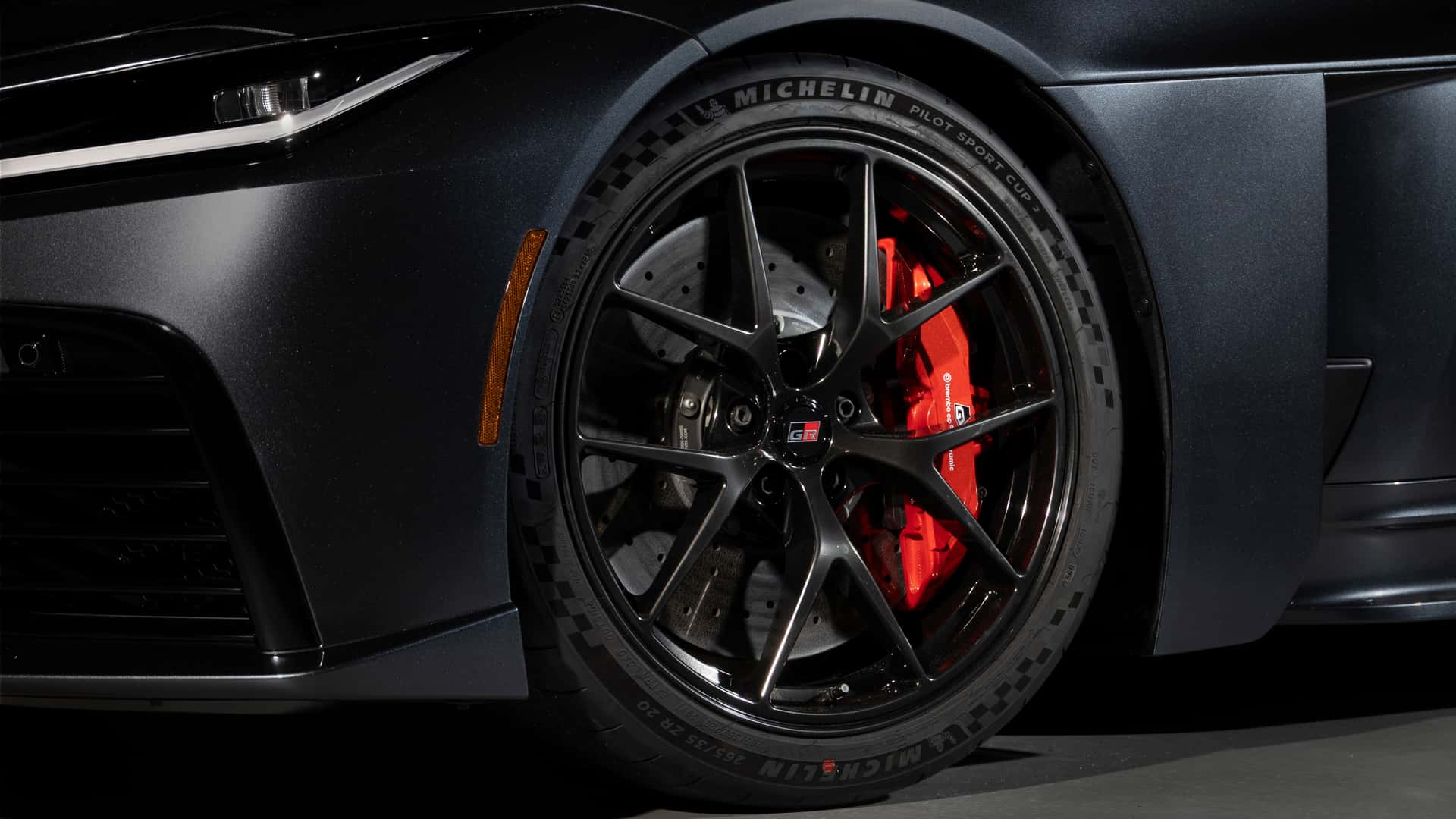
The GR GT’s chassis marks a first for Toyota: a fully aluminium frame, combined with exterior panels made from aluminium and carbon fibre-reinforced plastic. The focus on weight reduction brings a series of benefits, including improved stability, sharper responses, and more effective aerodynamics. Carbon-ceramic brakes and 20-inch wheels wrapped in Michelin Pilot Sport Cup 2 tyres—325-section at the rear—complete the package.

(more…)

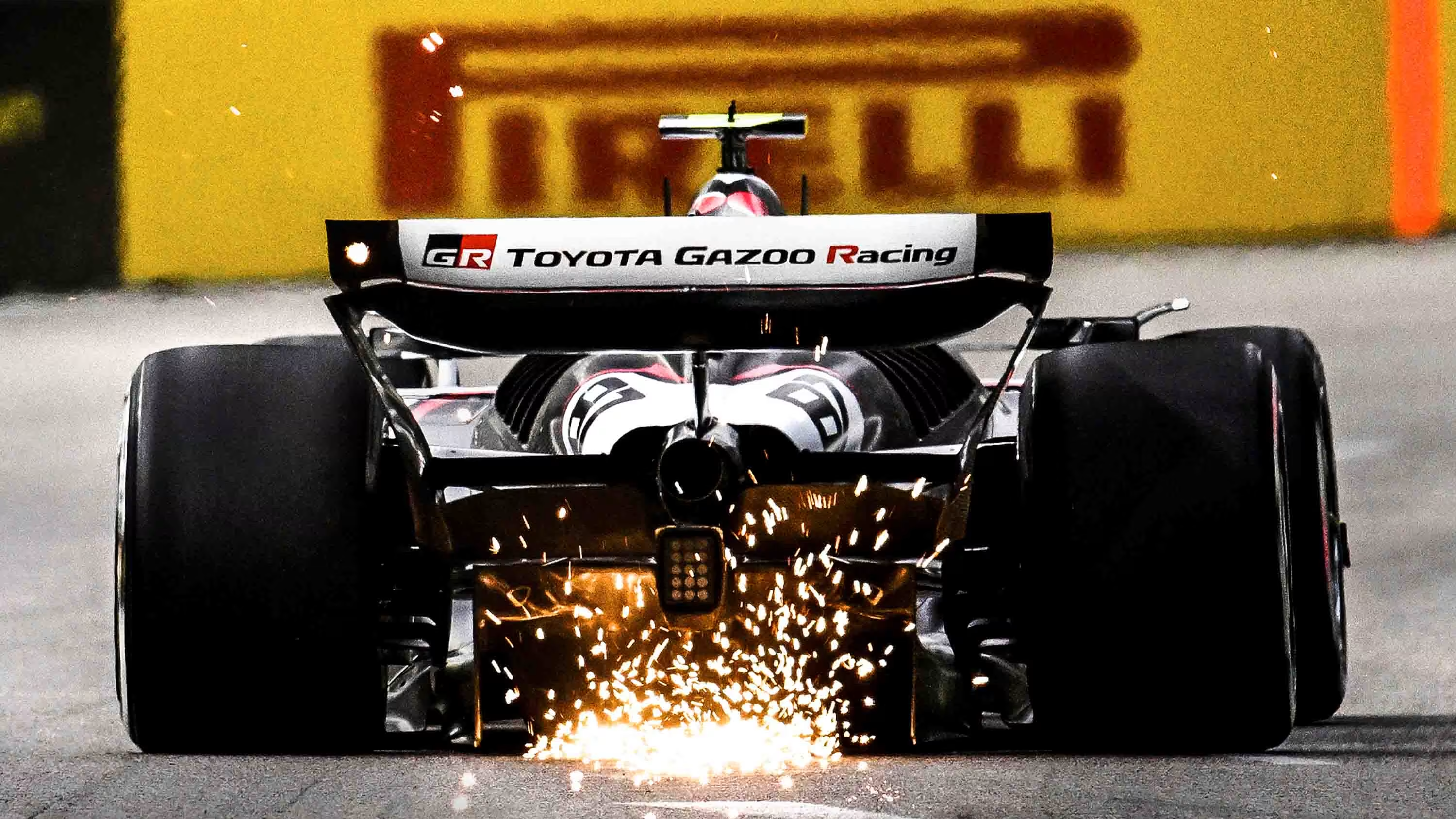
Toyota has announced that it will become the title sponsor of the Haas Formula One Team in 2026, replacing digital payment firm Moneygram.

After officially leaving the sport in 2009, Toyota marked its return to Formula One last year with Haas as part of a technical partnership through Toyota’s motorsport and research and development division Toyota Gazoo Racing (TGR).

The announcement shouldn’t come as too much of a surprise though as a key element of the multi-year partnership was signed back in 2024 and in centred around the creation of Haas’ first Testing of Previous Car (TPC) programme that launched in 2025.

Over the course of 14 days, Japanese race drivers Ryo Hirakawa, Ritomo Miyata, Sho Tsuboi and race veteran Kamui Kobayashi all had outings in the previous generation cars through their TGR associations.

The deal has also allowed for the installation of the team’s first-ever personal simulator at the UK base in Banbury, which is set to come online next season.

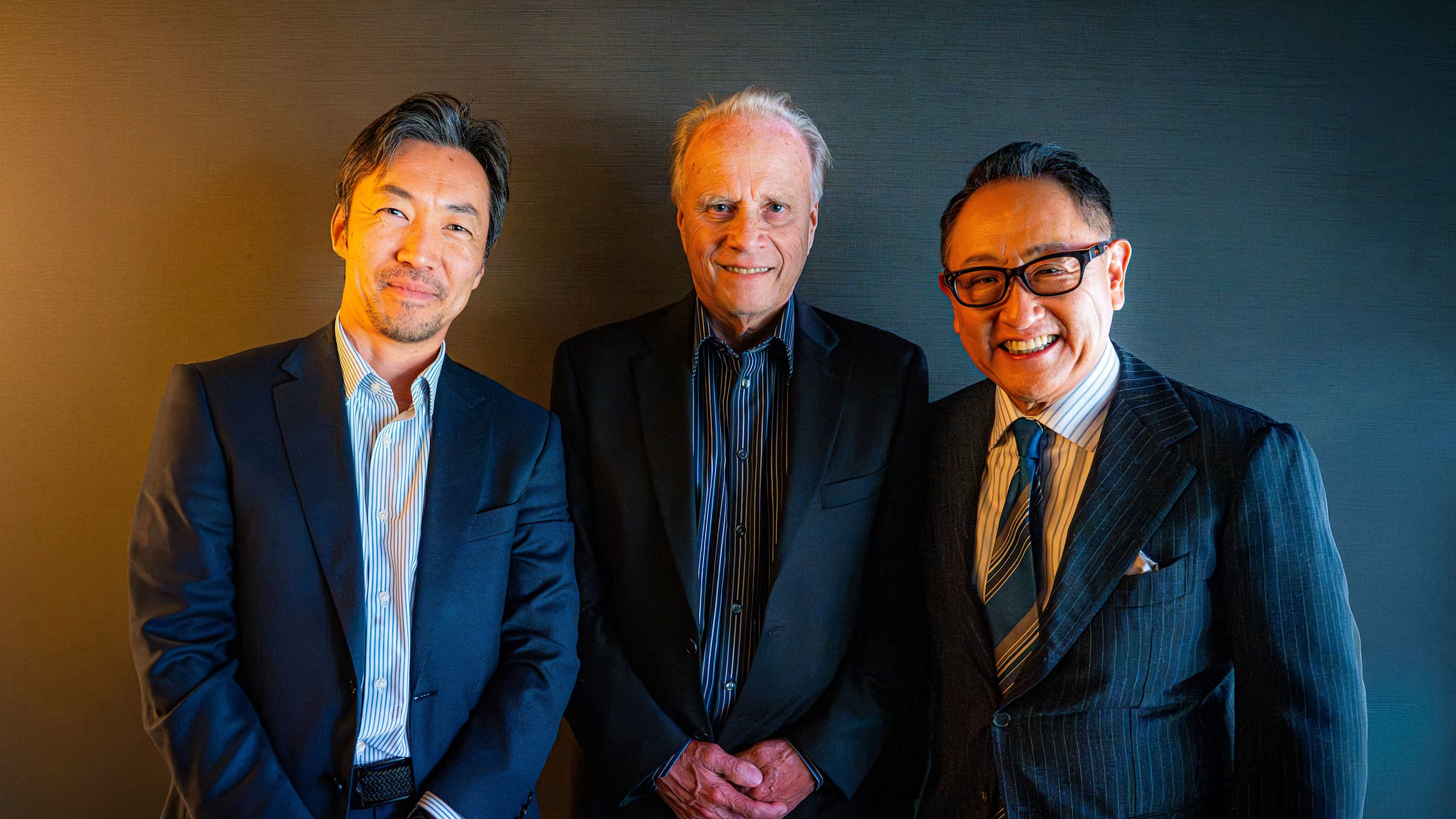
Chairman of Toyota Motor Corporation Akio Toyoda said: “Throughout our challenges in the 2025 season, I witnessed young TGR drivers and engineers begin to believe in their own potential and set their sights on even greater dreams.

“Seeing this transformation moved me deeply. And today, I can say this with confidence, Toyota has finally begun to move – really move. I would like to express my sincere gratitude to Gene Haas and Ayao Komatsu (Haas Team Principal) for standing alongside our young members, believing in their potential, and facing the future with the same passion and perspective.

“By taking our partnership with Haas another step forward next year, TGR’s ‘People, Product, Pipeline’ mantra – will accelerate in a way we have never seen before.

“The time has come for the next generation to take their first steps toward the world stage. Together with Gene Haas, Ayao, and everyone at TGR Haas F1 Team, we will build both a culture and a team for the future. Toyota is now truly on the move.”

The new Toyota deal will run alongside Haas’s existing deal with Ferrari, which began when Haas entered Formula One back in 2016, and includes the supply of Ferrari’s power unit, gearbox and other selected parts and use of the Ferrari simulator at Maranello.

Haas is currently eight in the Teams Championship, just seven points behind Aston Martin with one round to go in Abu Dhabi this weekend.

Also with this deal, one can’t help but wonder if Toyota is inching its way forward to a full works team return to Formula One. Now that would be exciting.

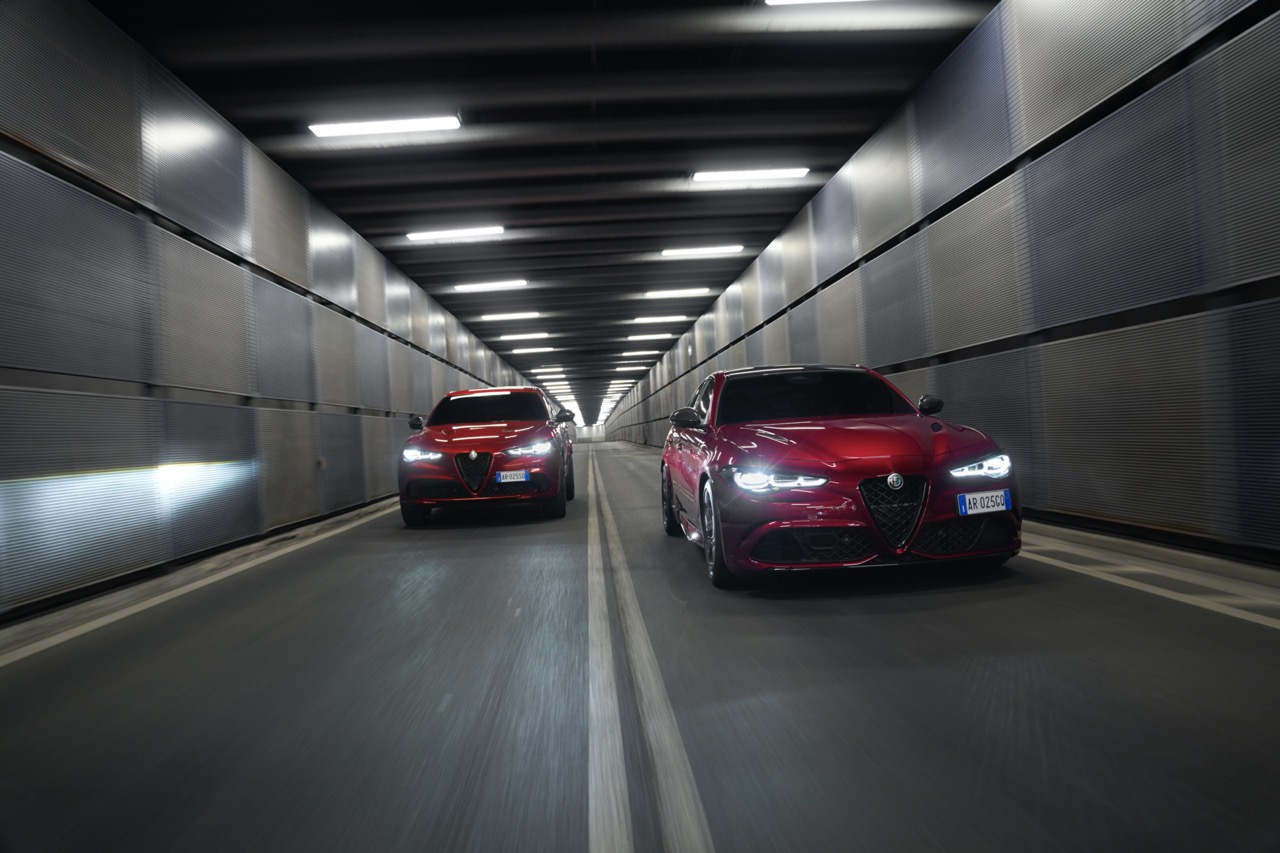
Alfa Romeo has introduced two highly exclusive creations, the Giulia Quadrifoglio Collezione and Stelvio Quadrifoglio Collezione, developed in tribute to one of the brand’s most enduring icons — the Quadrifoglio. The emblem, first painted onto Ugo Sivocci’s Alfa Romeo RL when he won the 1923 Targa Florio, became the mark of the brand’s racing machinery for decades. In 1963 it shifted from the circuit to the road with the Giulia Ti Super, and from then on it distinguished Alfa Romeo’s most powerful and exclusive road-going models.

That pivotal year forms the inspiration for this new Collezione series, which has been limited to just 63 units worldwide. Two Giulia units have been earmarked for the UK, while the rest will be distributed across Europe, the Middle East, China and Japan.

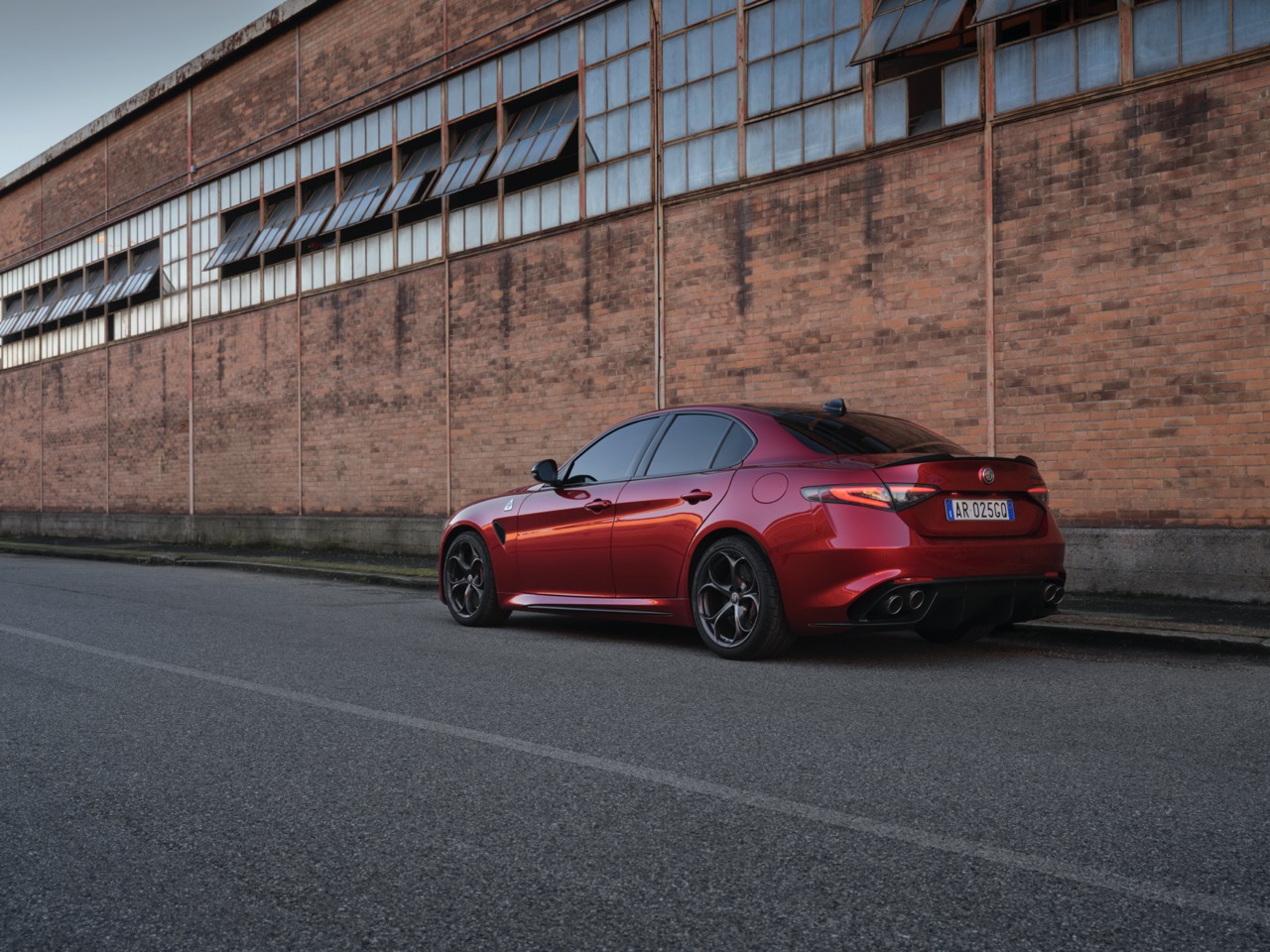
Giulia Quadrifoglio Collezione

Both Collezione models are assembled at Alfa Romeo’s Cassino plant, bringing together traditional Italian craftsmanship and advanced manufacturing techniques. Each car is finished in one of two new interpretations of the ‘Rosso Villa D’Este’ paint made famous by the 33 Stradale. The Giulia wears ‘Rosso Collezione Giulia’, a deep shade that appears almost black depending on the light, while the Stelvio receives ‘Rosso Collezione Stelvio’, a brighter and more open shade of red.

(more…)

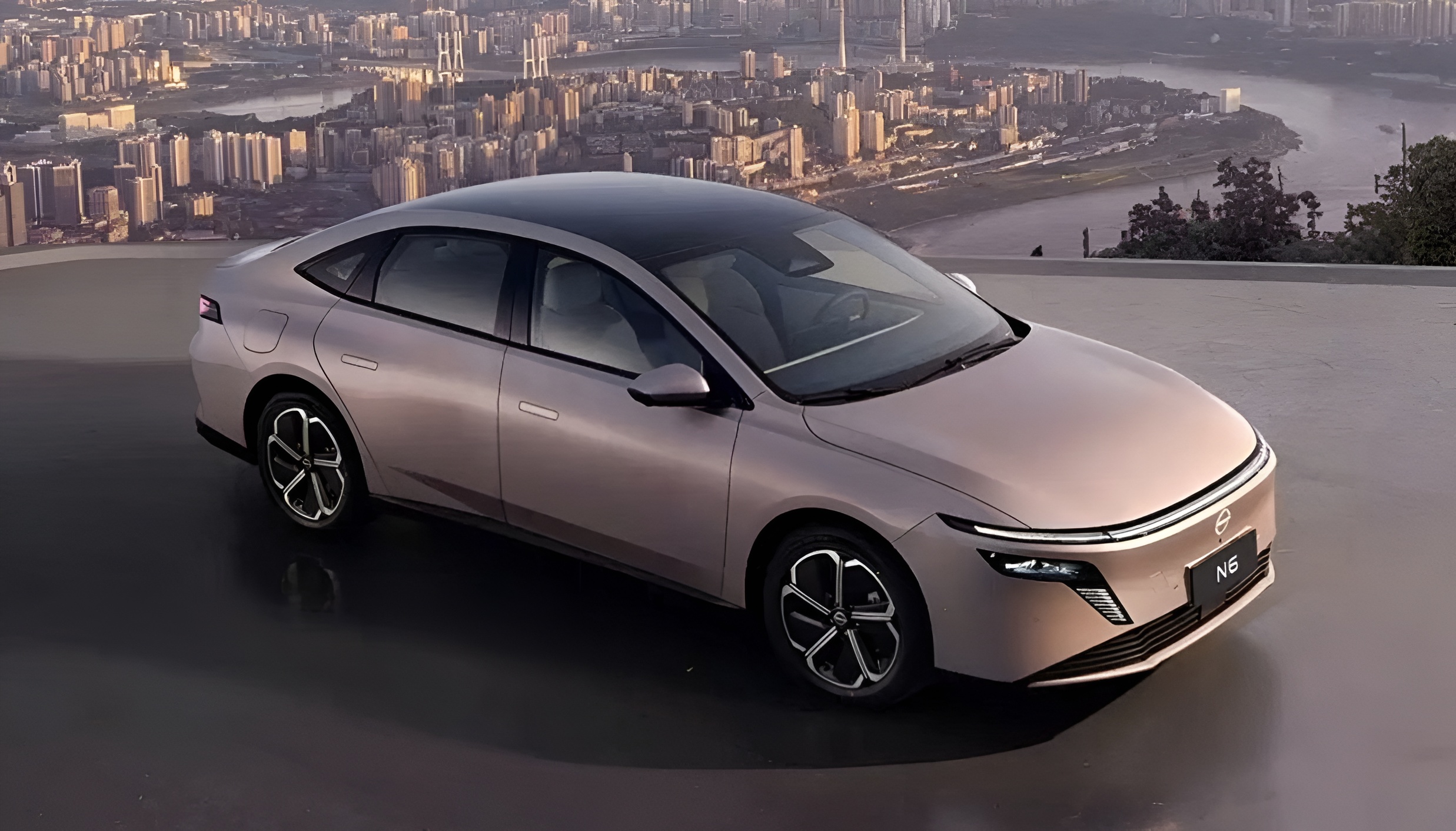
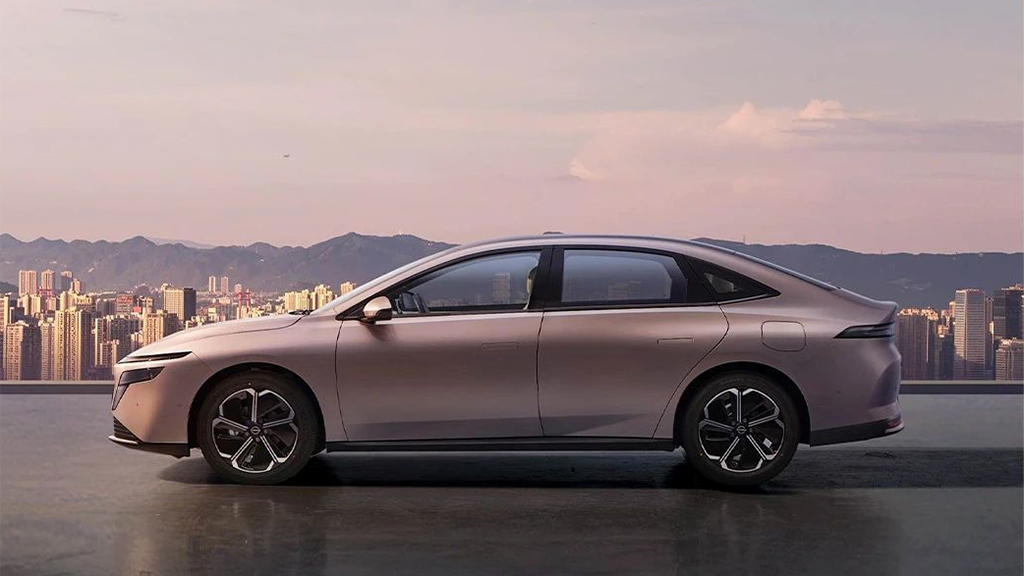
The latest mid-size plug-in hybrid sedan from Dongfeng Nissan, the N6, has officially debuted in China with a starting price tag of 99,900 yuan — roughly RM66,200. A promotional “benefit price” of 91,900 yuan (about RM61,000) has also been made available for a limited time.

The company signalled that the N6 could reach markets in Southeast Asia, the Middle East and parts of Latin America in the future, marking it as the brand’s first “N-series” vehicle beyond its pure-electric offerings.

Styled in line with the fully electric N7, the N6 presents a modern, sleek appearance. The front end features a closed-off nose, a full-width light bar above, L-shaped lower lights, an illuminated “NISSAN” badge, flush door handles and an integrated charging port on the rear quarter panel. The rear profile adopts a coupe-like flow, with a continuous taillight strip and a clean bumper that hides the exhaust outlets, adding subtle sophistication to its silhouette.

(more…)

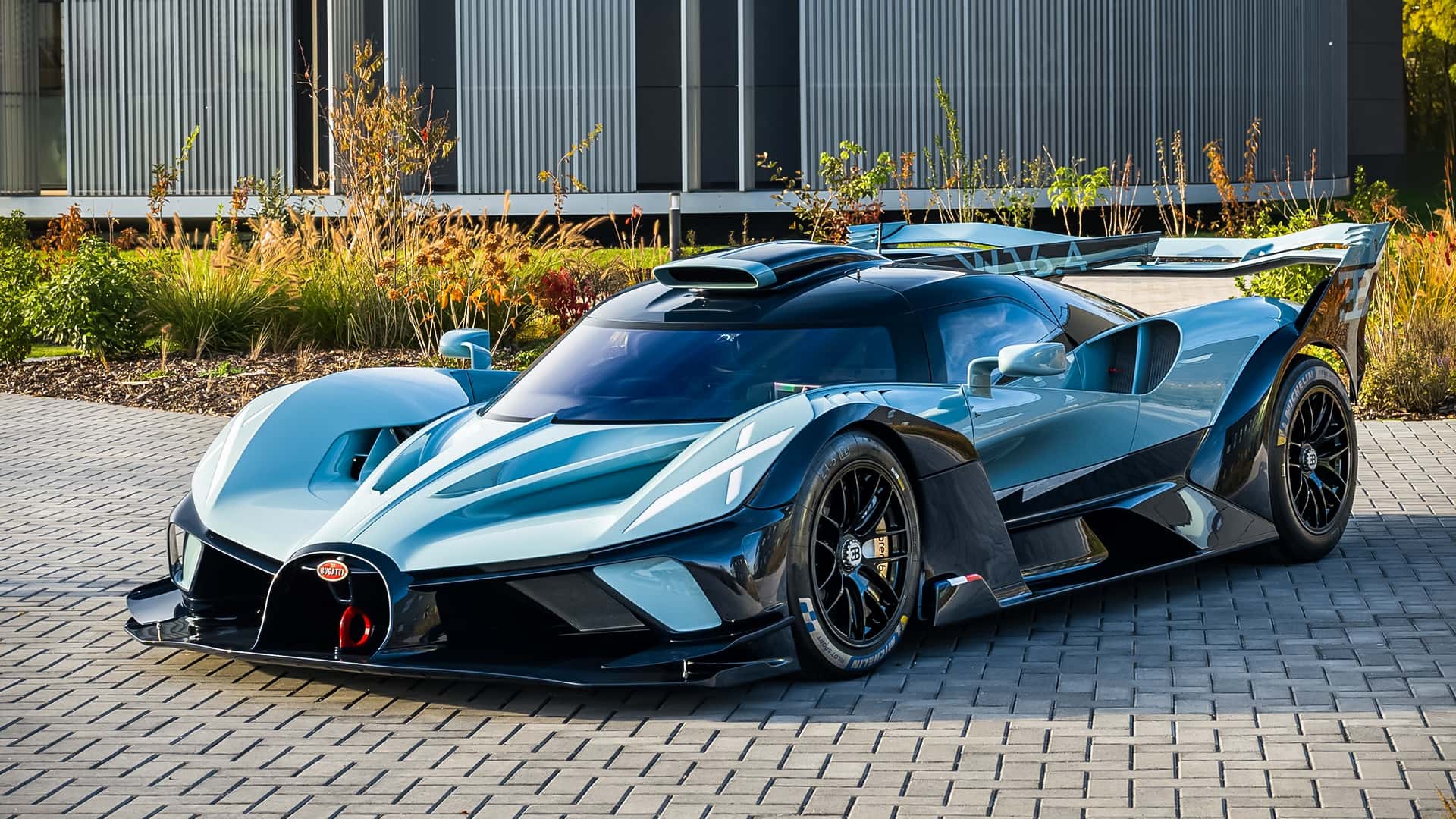
Bugatti has completed production of the Bolide, bringing the second-to-last chapter of its W-16 engine legacy to a close. The final example — number 40 of 40 — has now left the factory in Molsheim, marking the end of the extreme, track-only hypercar’s build run. The customer travelled to northeastern France to take delivery directly from Bugatti’s headquarters.

The final Bolide belongs to a long-time Bugatti collector who already owns several notable models, including a classic Type 35 — the brand’s landmark racing car from the 1920s — and the last-ever Veyron Grand Sport. The buyer paid €4 million for the Bolide, a machine designed solely for circuit use and therefore not eligible for road registration.

Both the customer’s Veyron and Bolide share a coordinated specification, featuring a Black Blue and Special Blue Lyonnais exterior paired with a Lake Blue Alcantara interior. The configuration is striking enough to raise the question of whether any buyers might explore road-legal conversions. British engineering specialist Lanzante has already announced plans to work on such a transformation for at least one Bolide.

(more…)

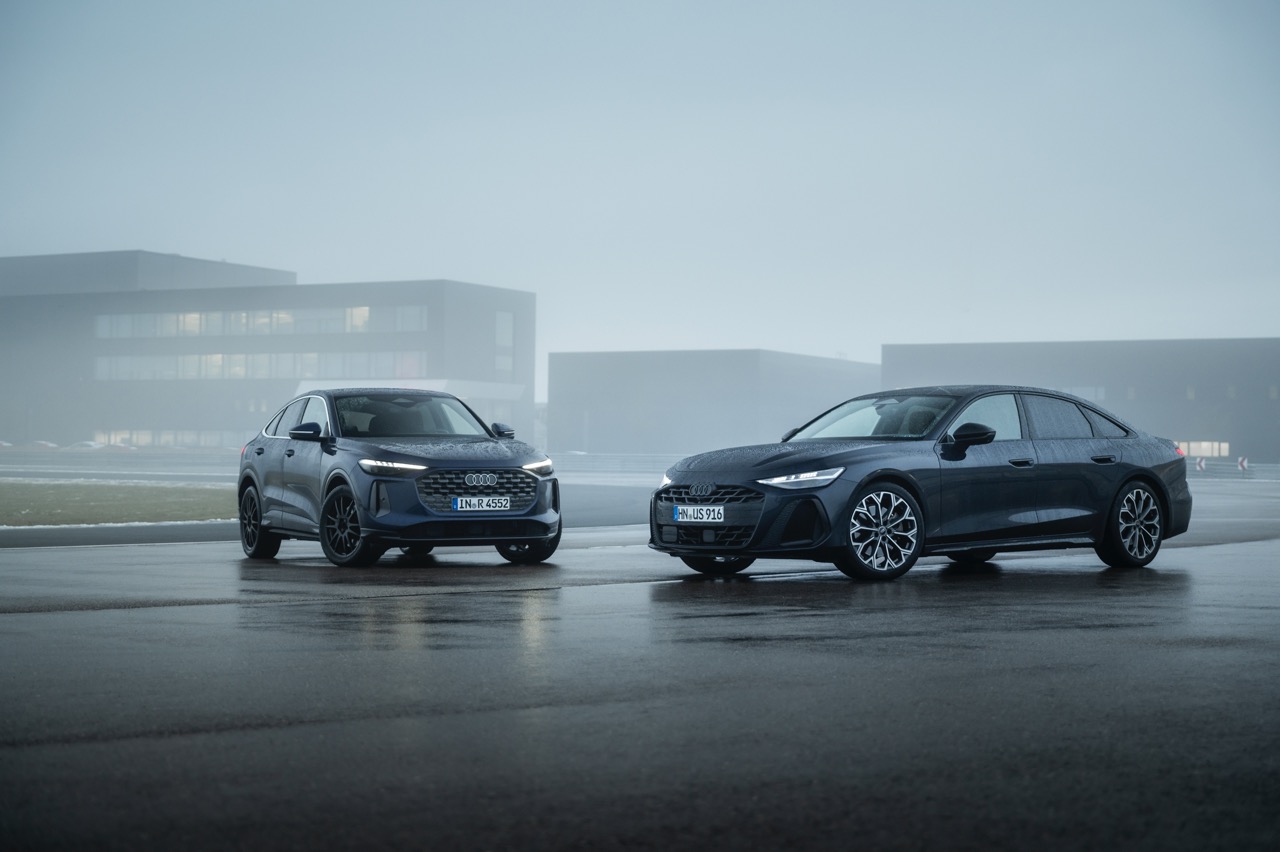
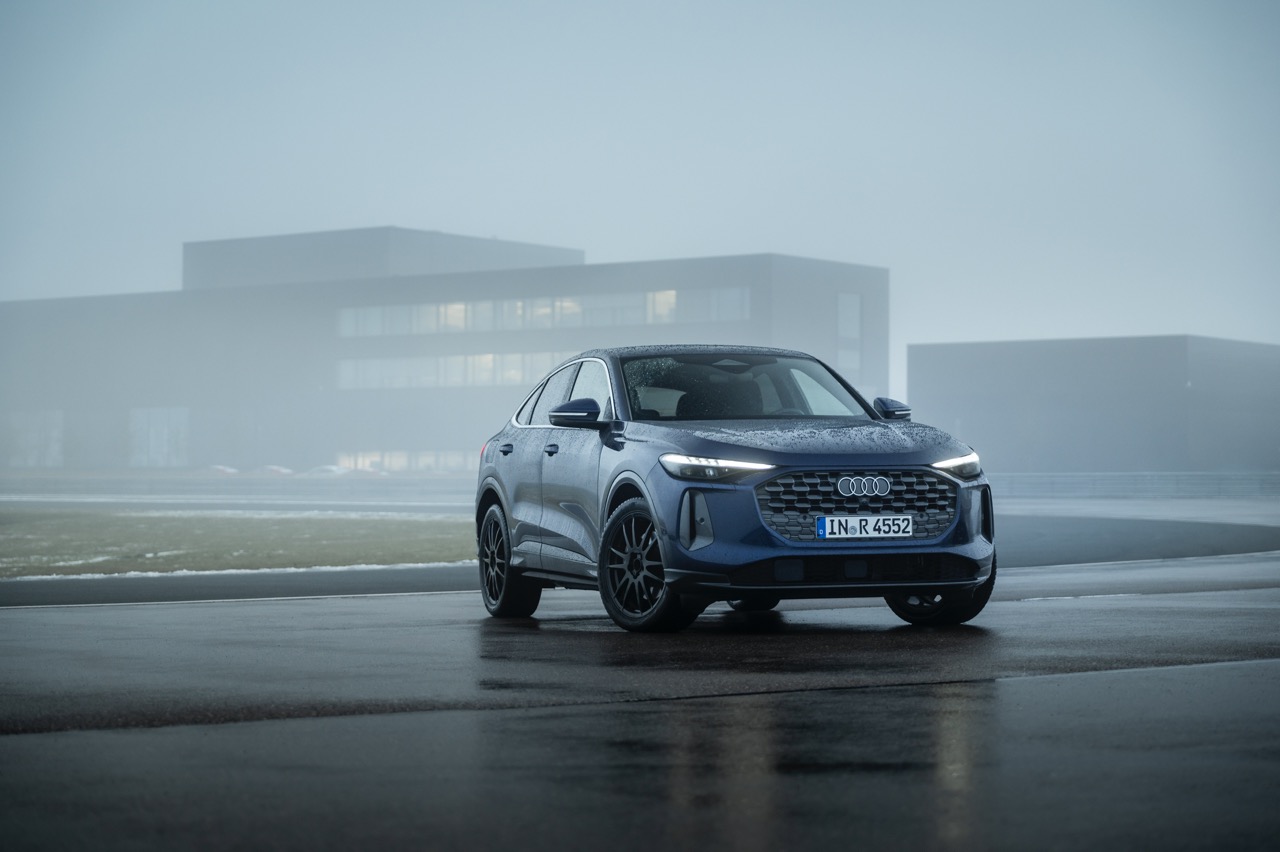
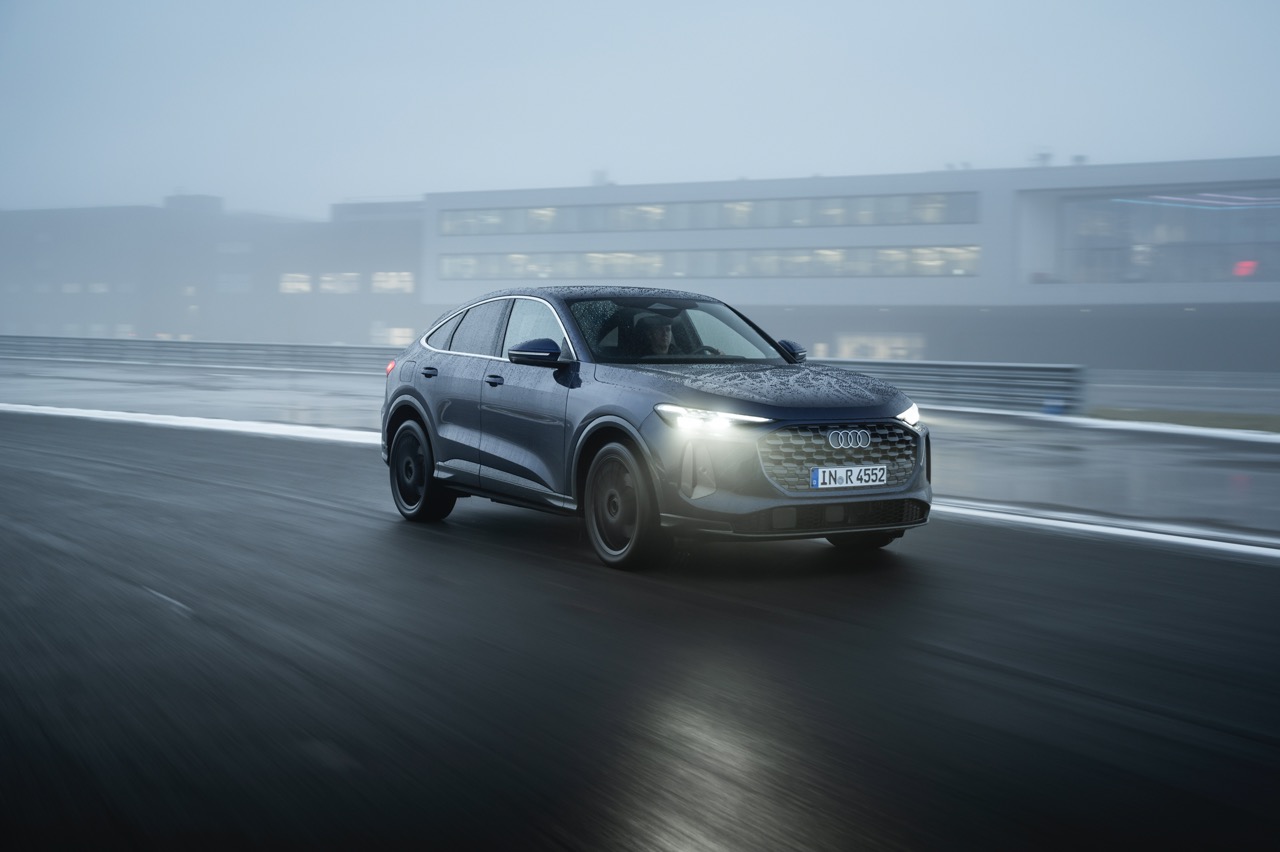
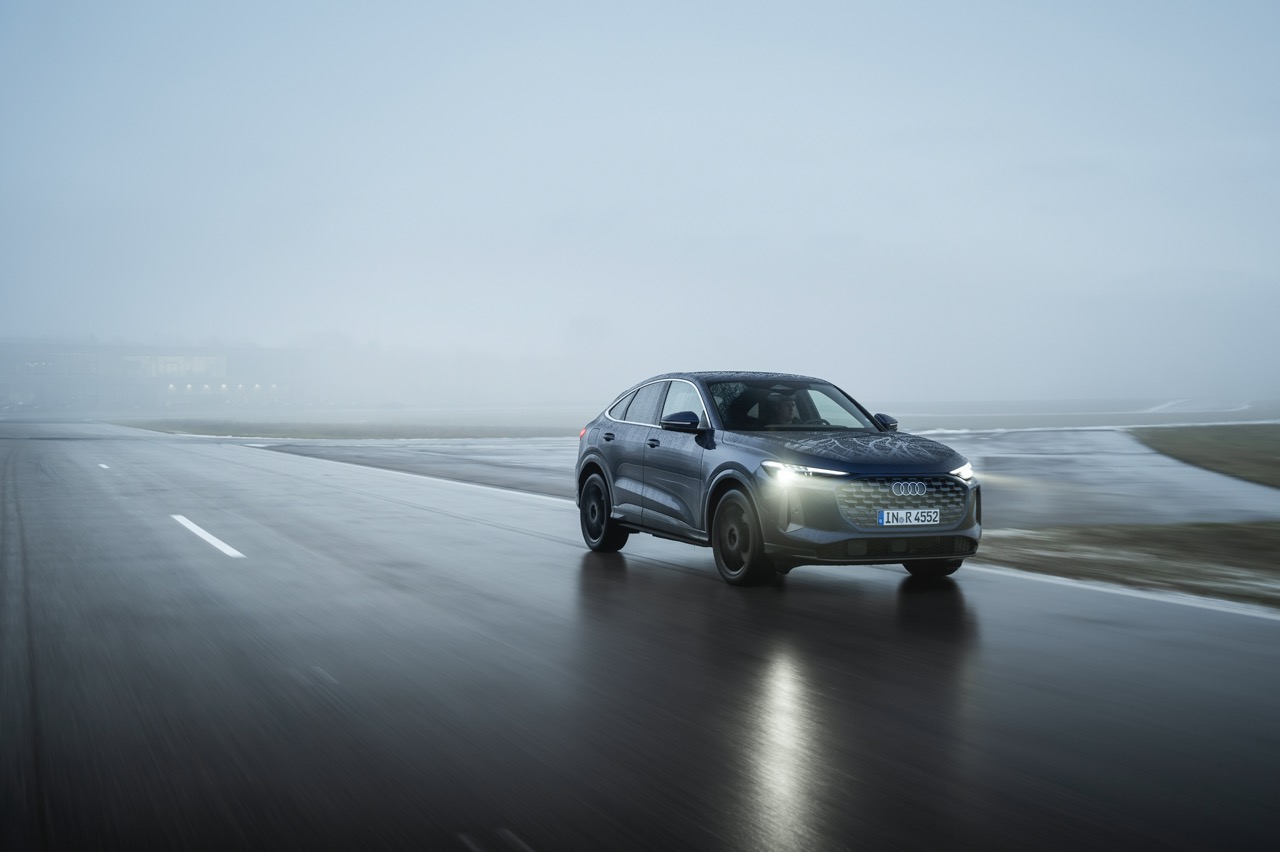
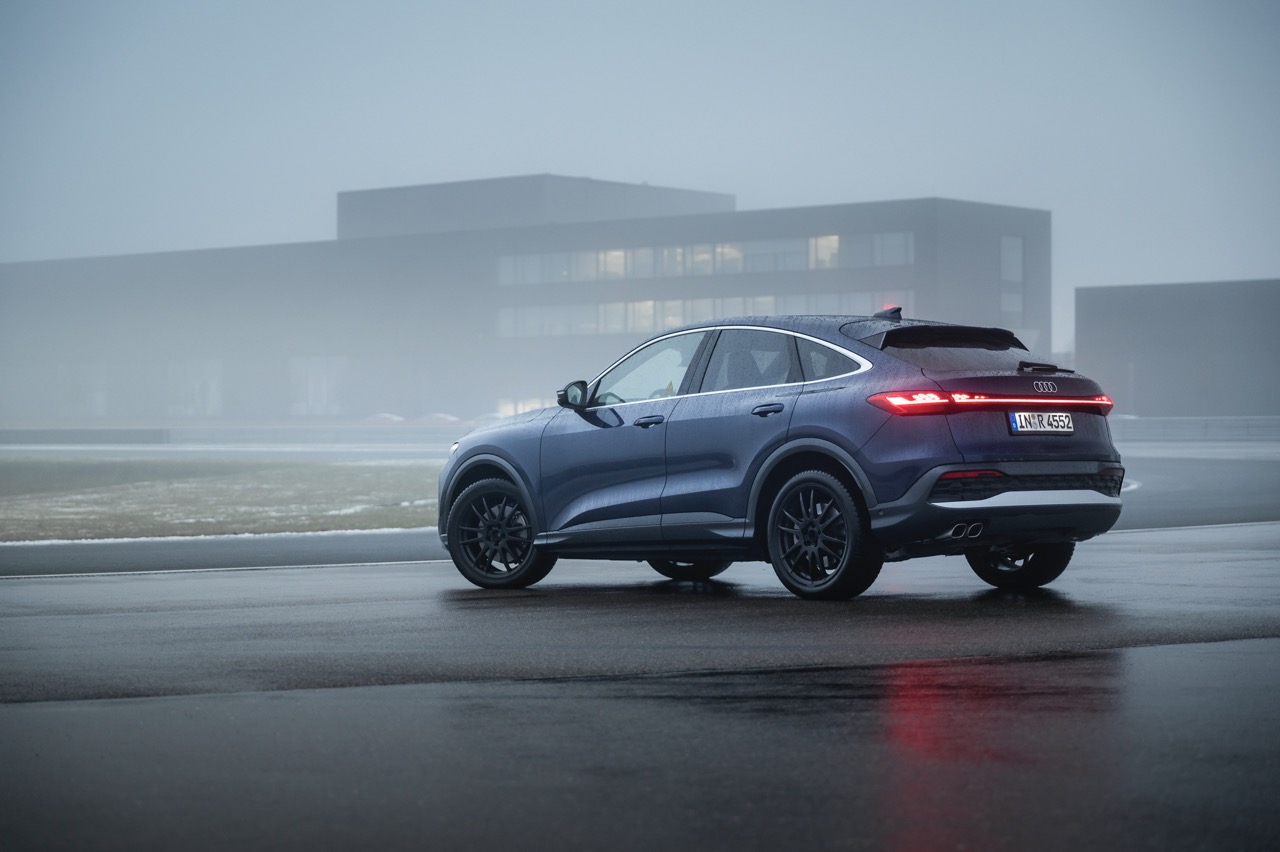
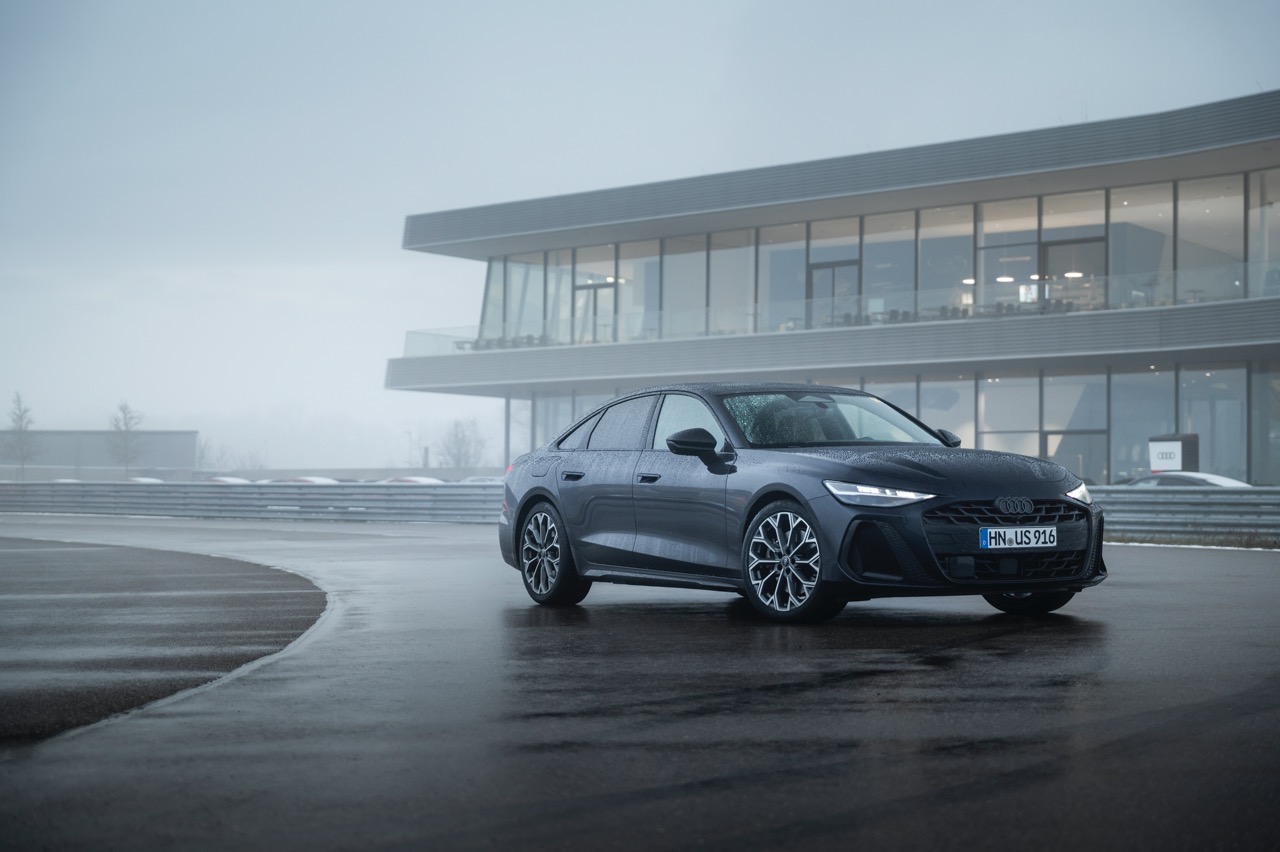
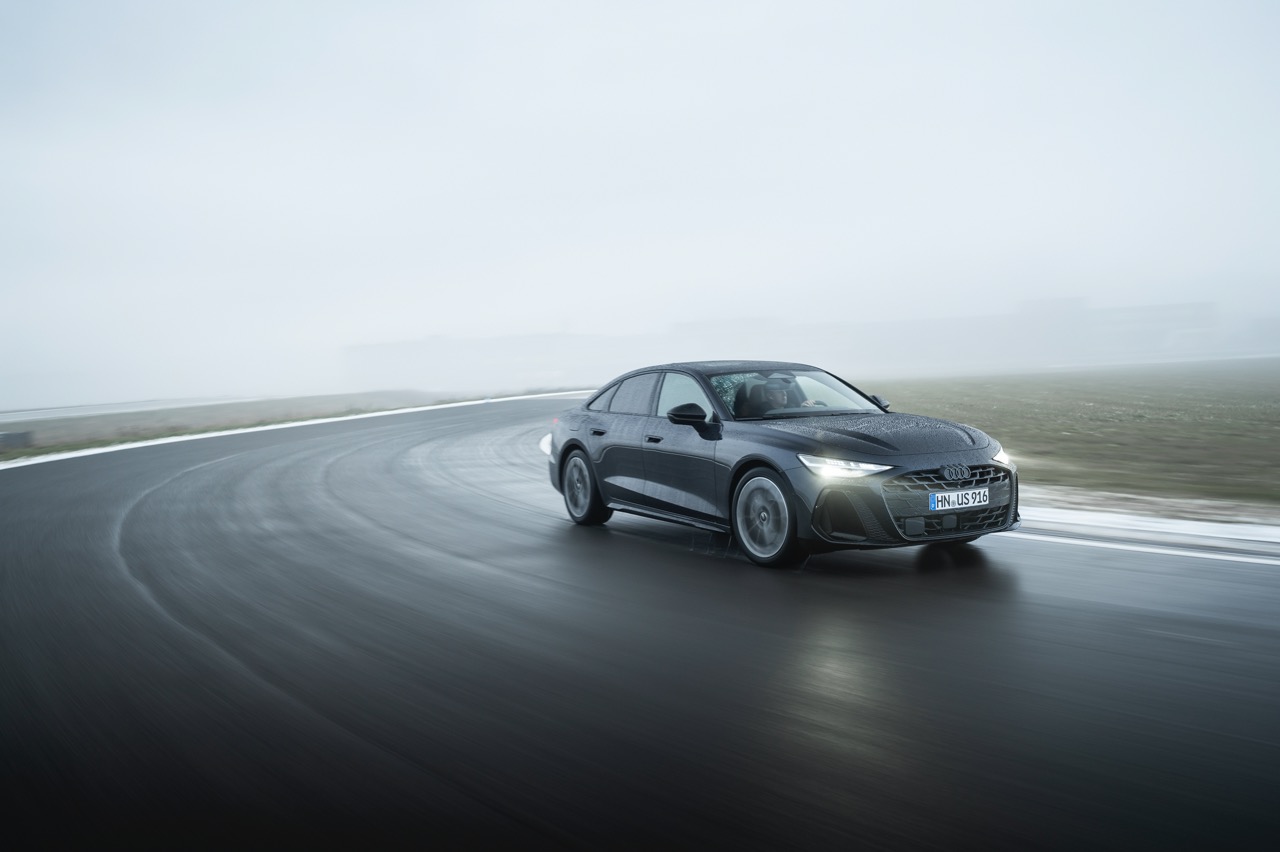
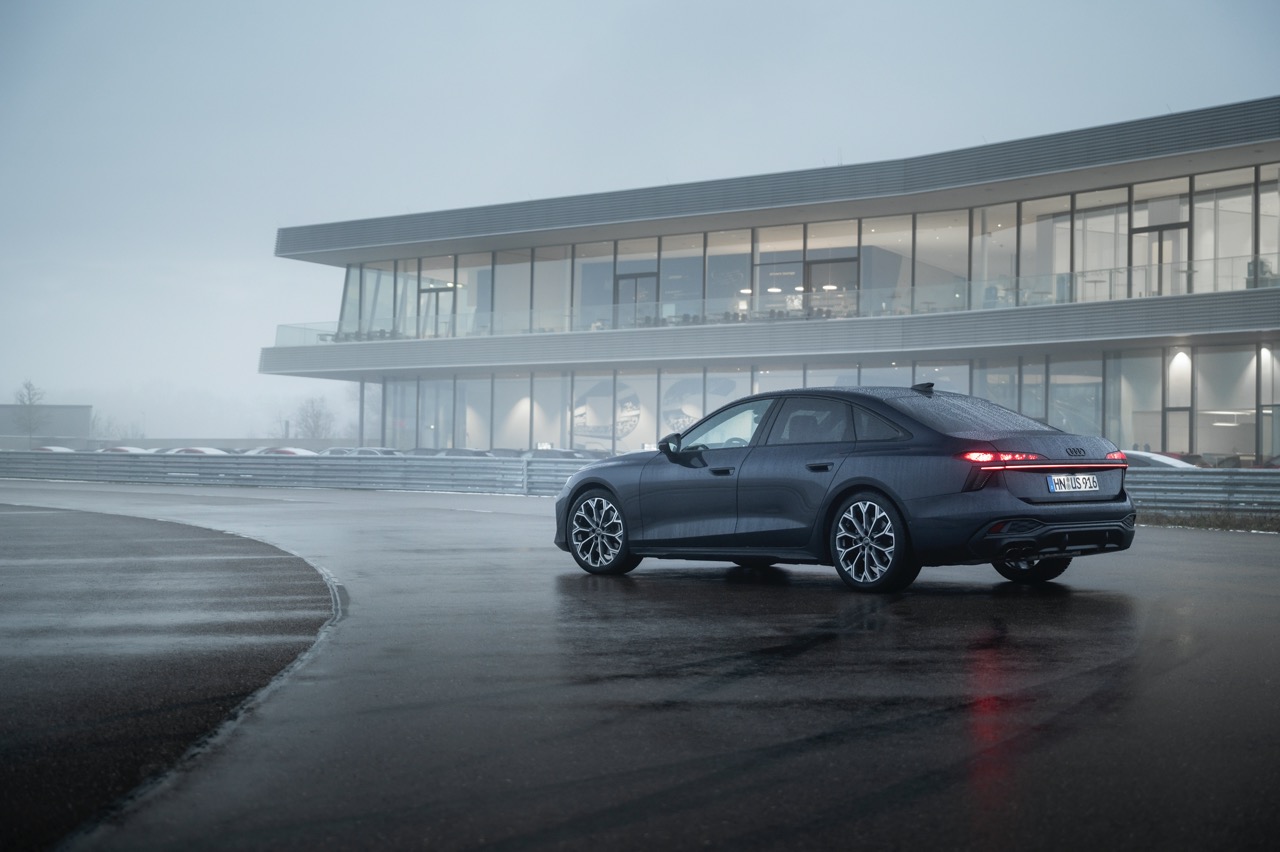
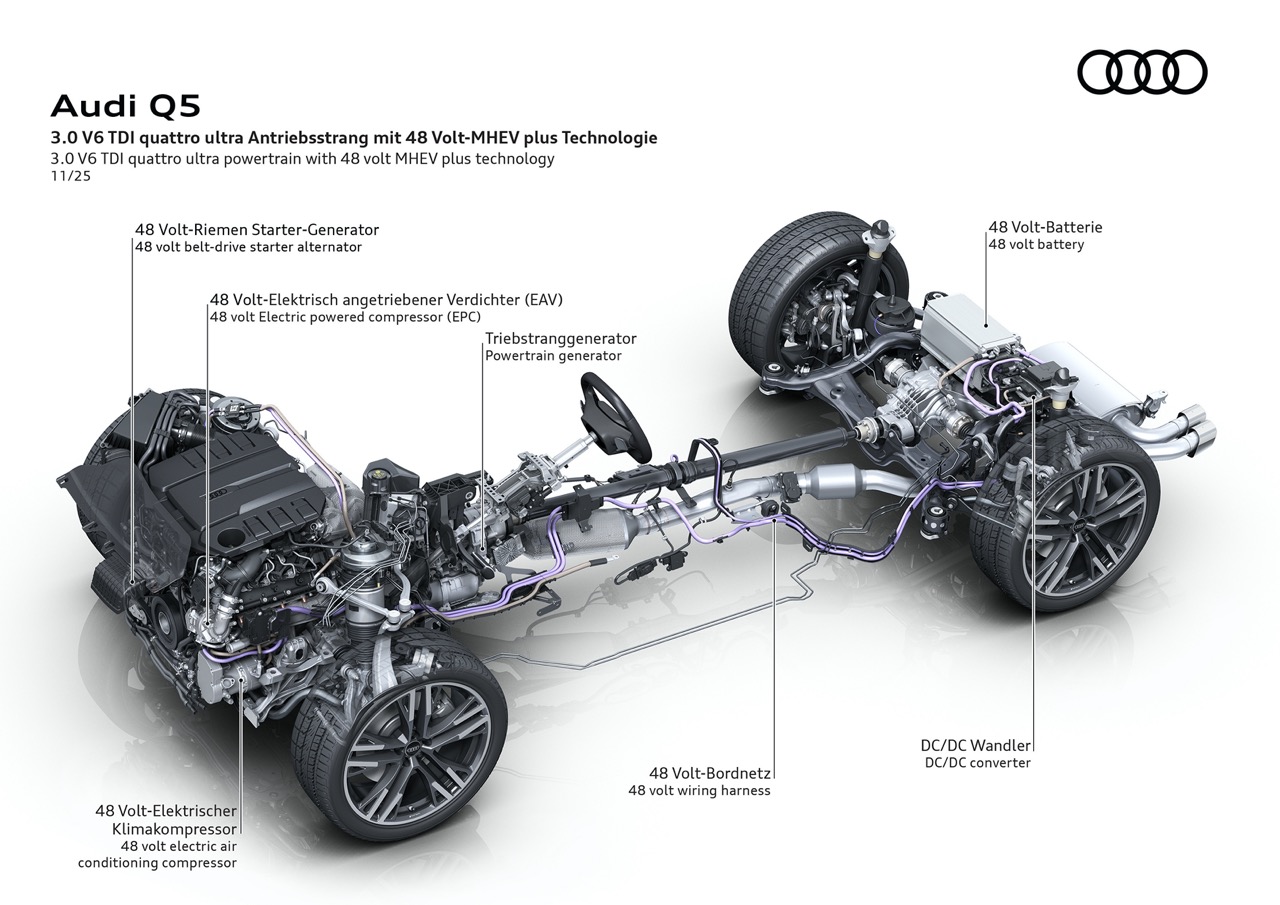
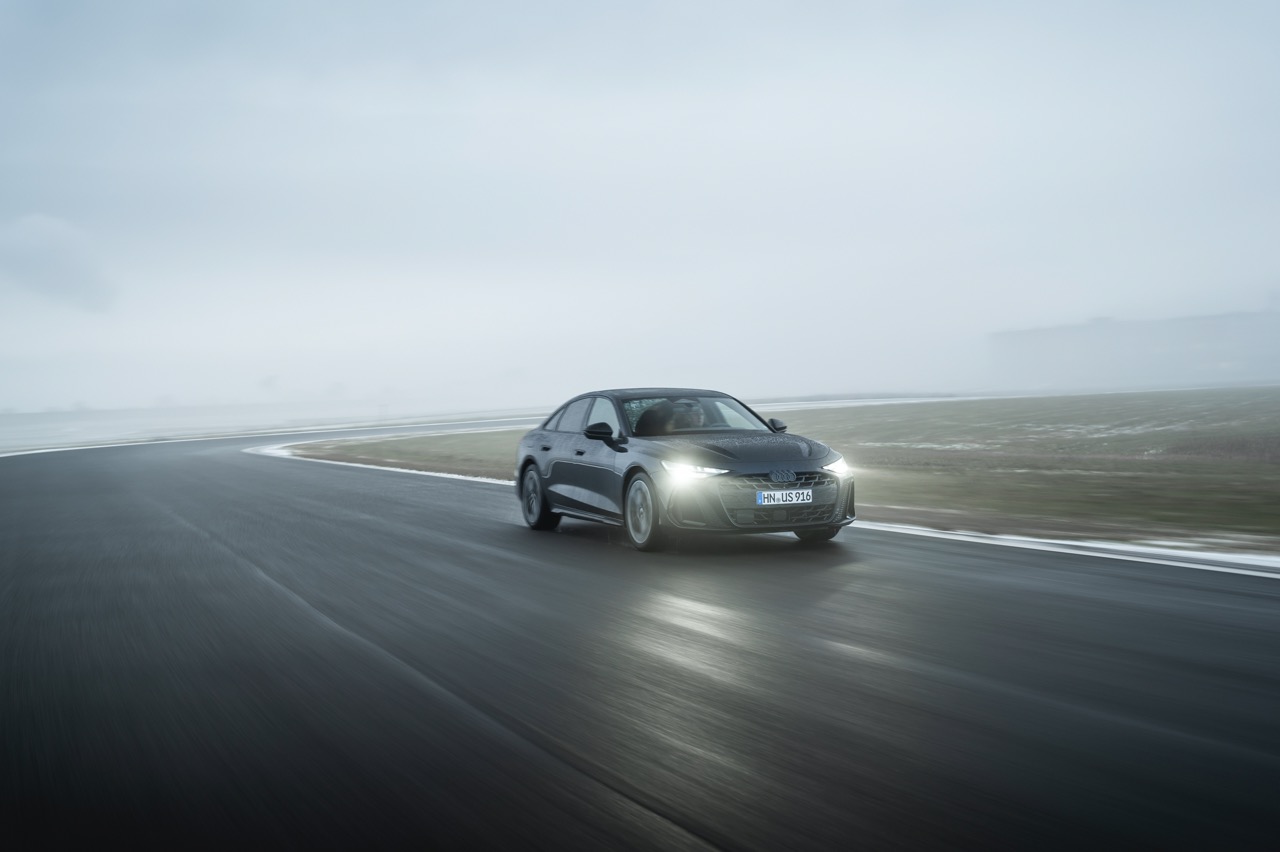
Audi has added a new three-litre V6 diesel engine to the Q5 and A6 ranges, producing 299 PS and 580 Nm of torque. This version of the engine marks the first time the brand has paired its MHEV plus system with an electrically powered compressor, creating a more responsive and efficient setup than previous diesel units. Orders for models equipped with the V6 TDI quattro are now open.

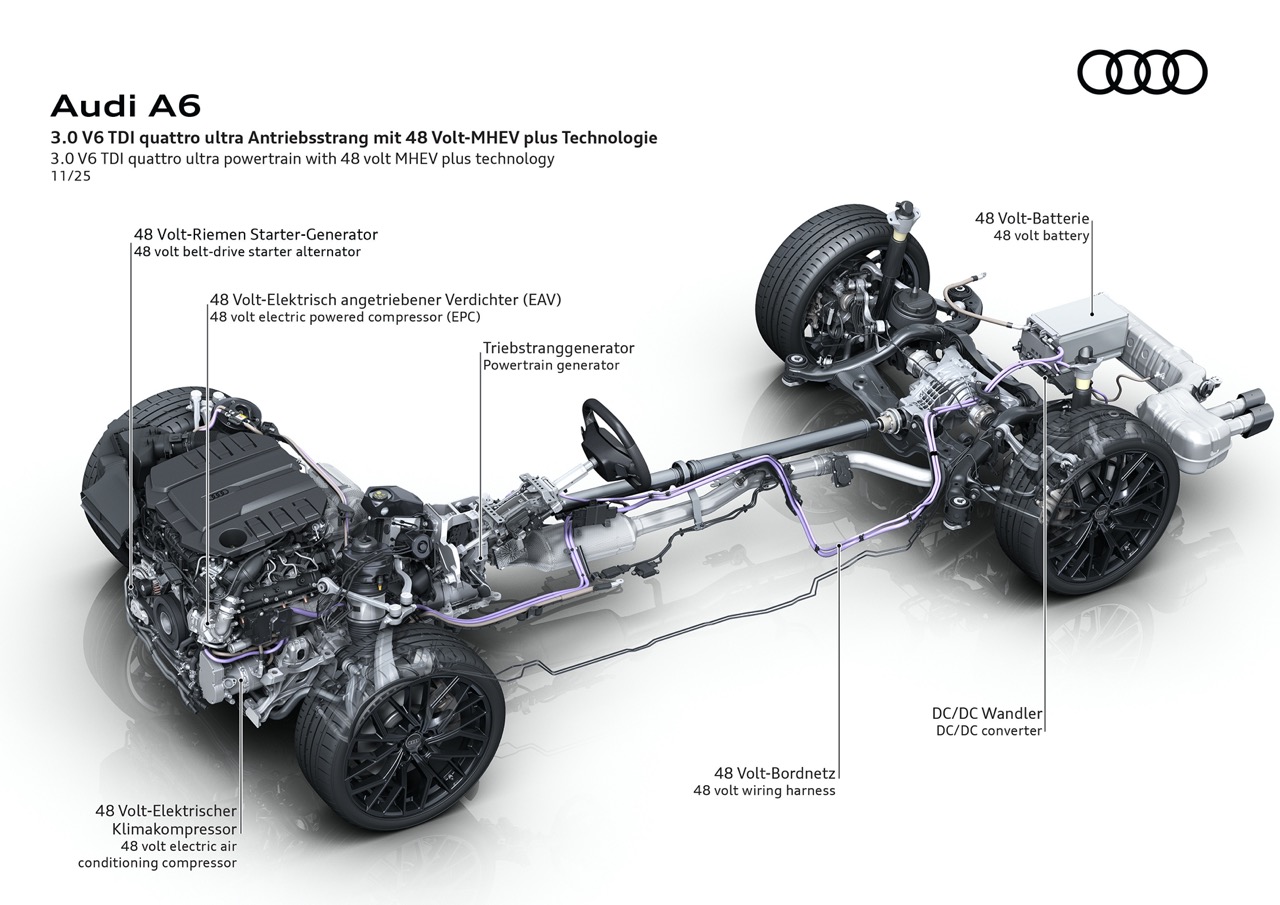
The MHEV plus system builds on Audi’s earlier mild-hybrid technology by bringing together a belt alternator starter, a powertrain generator and a lithium iron phosphate battery. The belt alternator starter starts the engine and supplies energy to the battery, while the powertrain generator enables short periods of fully electric driving in low-speed or steady-flow traffic.

It also delivers an additional 230 Nm of torque and up to 24 PS when setting off or overtaking, and it recovers up to 25 kW of energy when braking.
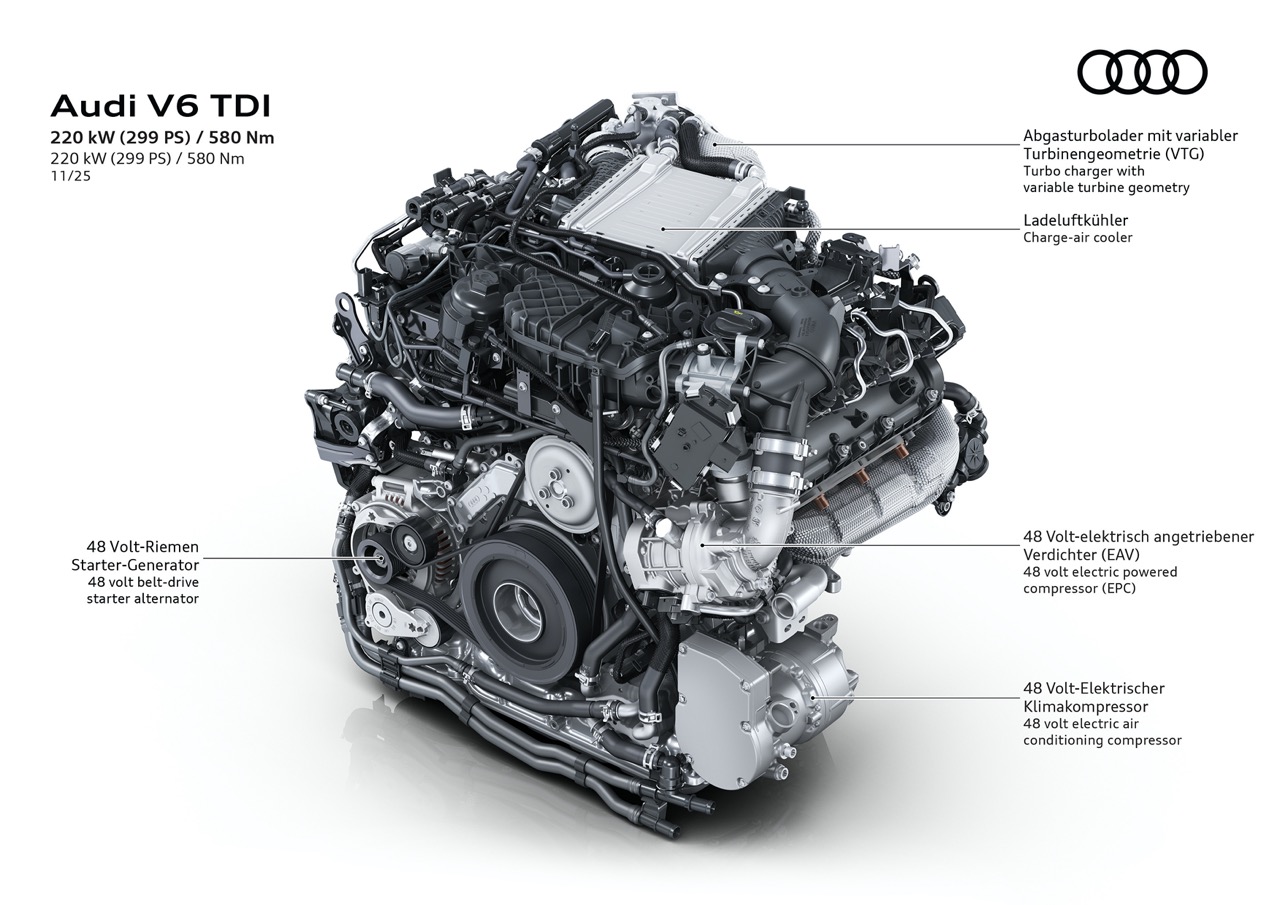
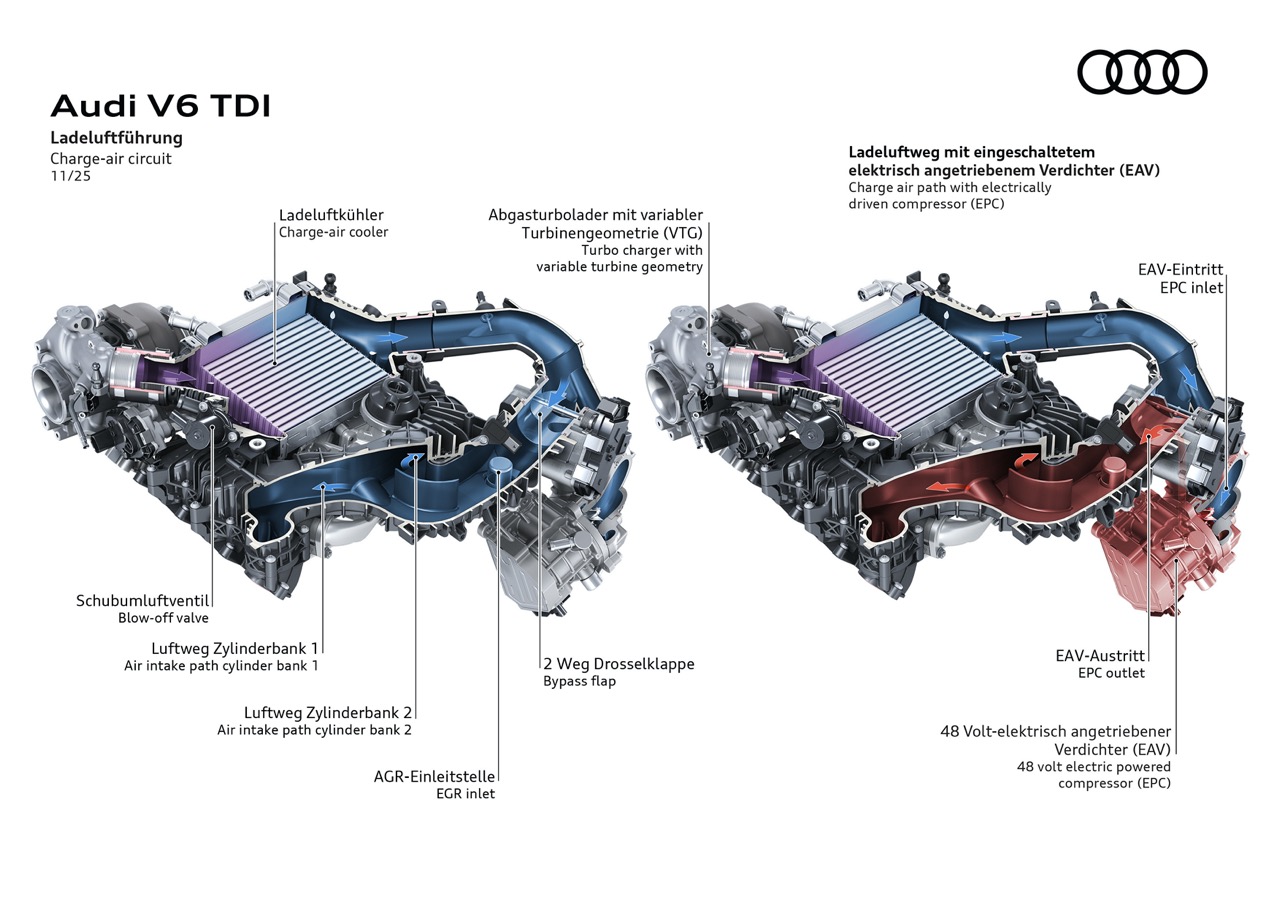
For the first time, Audi has paired this hybrid setup with an electrically powered compressor. This addition plays a key role in both the charging system and the engine’s combustion strategy. Working alongside the turbocharger in a two-stage system, it improves response at low engine speeds and helps balance strong performance with reduced fuel consumption. The combination of the new compressor, the belt alternator starter and the powertrain generator gives the V6 TDI strong acceleration whether starting from rest, joining faster traffic or cruising at higher speeds.

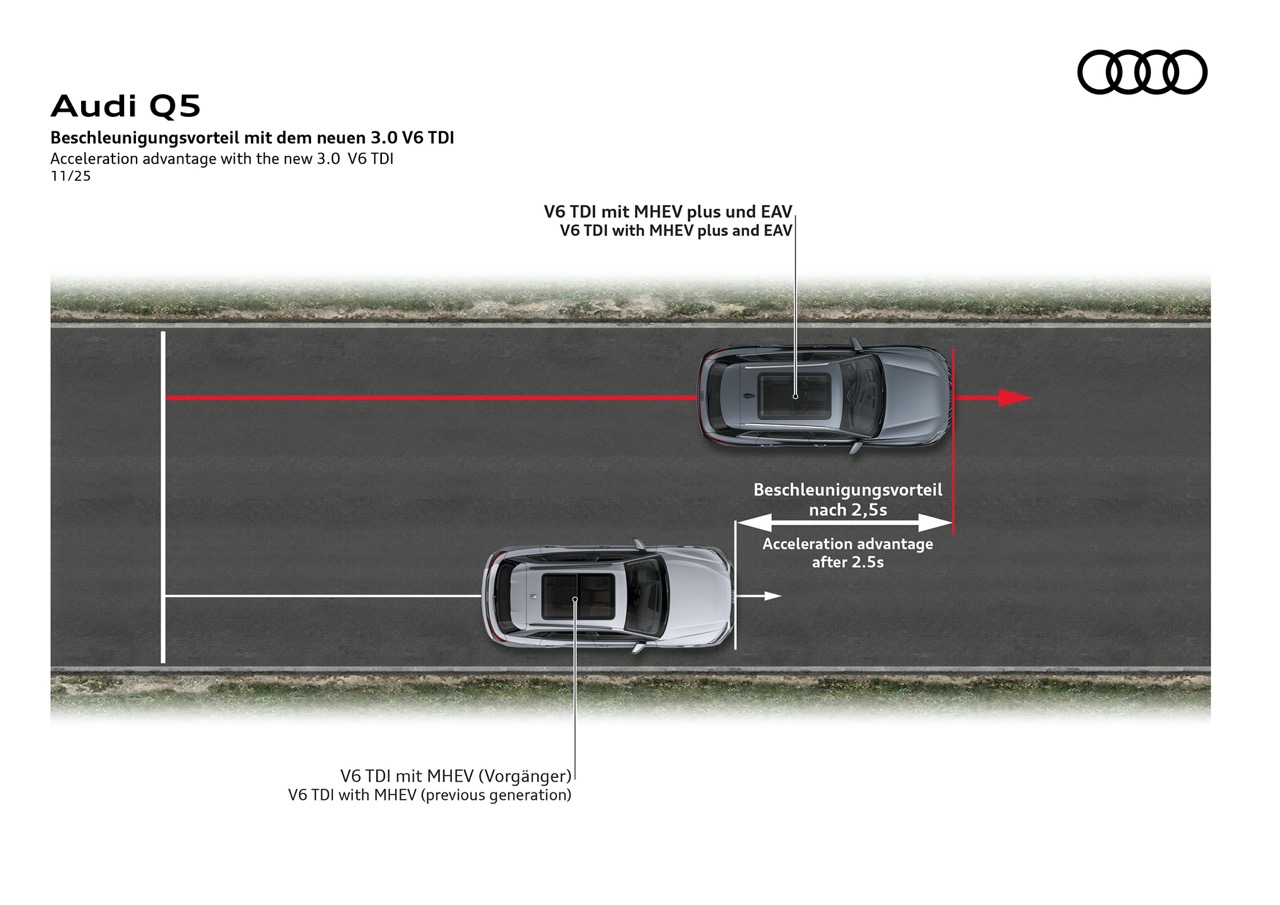
The electrically powered compressor addresses turbo lag by supplying immediate boost, allowing the engine to produce high torque even at low revs. Audi says the improved response is clear during the first moments of acceleration, with the car covering noticeably more distance in the same time than the earlier V6 TDI. As the engine increases its revs, the belt alternator starter provides support, the powertrain generator contributes torque and the compressor increases boost pressure almost instantly. Together, these elements create a more direct and confident driving feel.
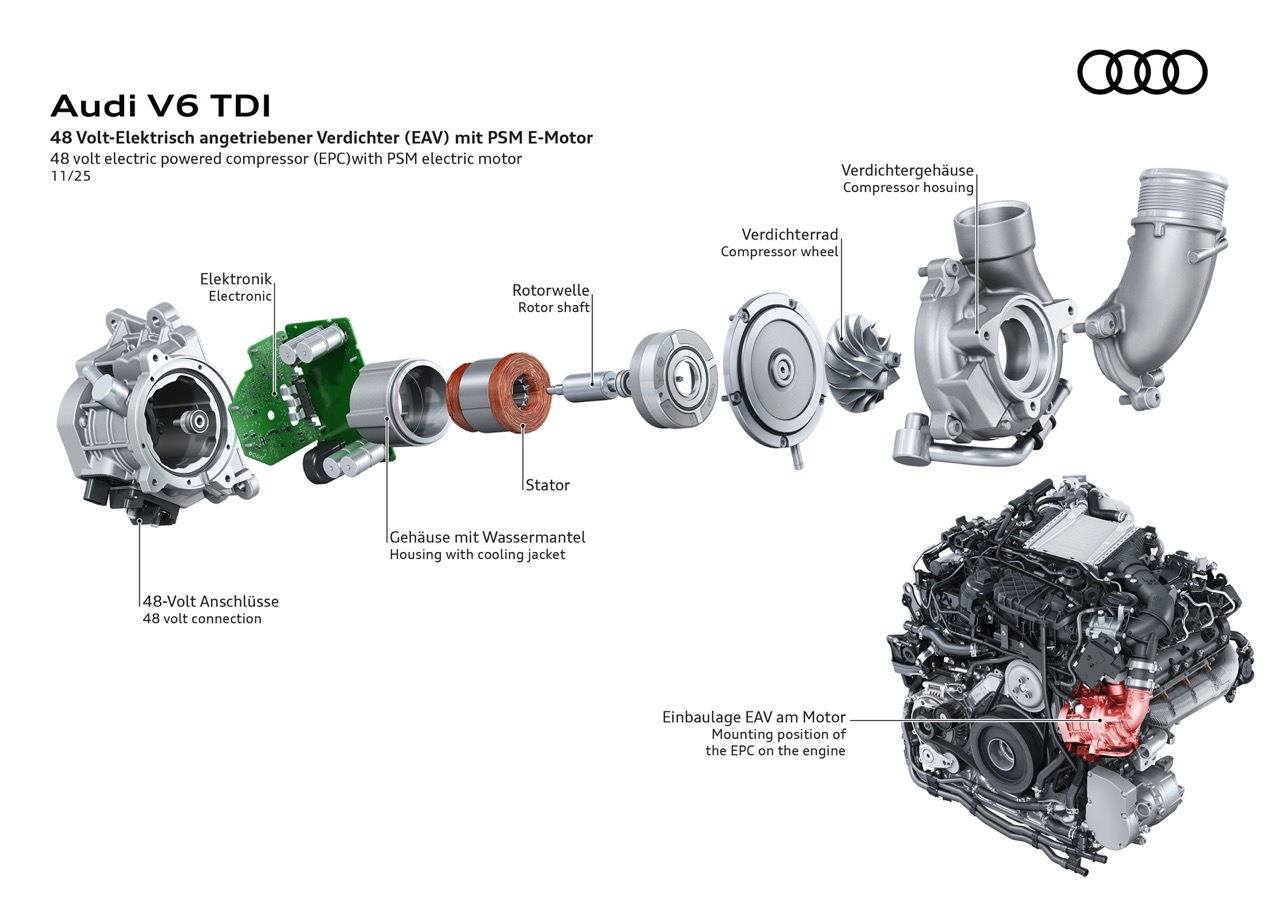
Compared with earlier Audi models that used an electrically powered compressor, such as the S4 and SQ5, the latest version operates across the full engine speed range rather than within a narrow band. A redesigned airflow system and a more advanced permanent-magnet synchronous motor have widened its operating window and improved efficiency.

The compressor wheel can reach 90,000 rpm in around 250 milliseconds, almost 40 per cent faster than before, helping build the maximum boost pressure of 3.6 bar nearly a second quicker than the outgoing engine. Audi notes that the result is acceleration similar in immediacy to that of an electric motor.
The new V6 TDI is also compatible with HVO 100, a renewable diesel that meets European standard EN 15940 and is identified by an XTL label on the fuel cap. HVO, made from waste oils and by-products from the food and agriculture sectors, can reduce CO₂ emissions by 70 to 95 per cent compared with fossil diesel.

It can be blended with standard diesel or used on its own. Audi now fills new vehicles, leaving its Ingolstadt and Neckarsulm plants with HVO fuel, highlighting its move towards lower-carbon operation even before customer use.

With the introduction of its latest electrified diesel, Audi is aiming to deliver improved efficiency, stronger everyday performance and wider fuel flexibility—while keeping conventional engines relevant within a changing emissions landscape.

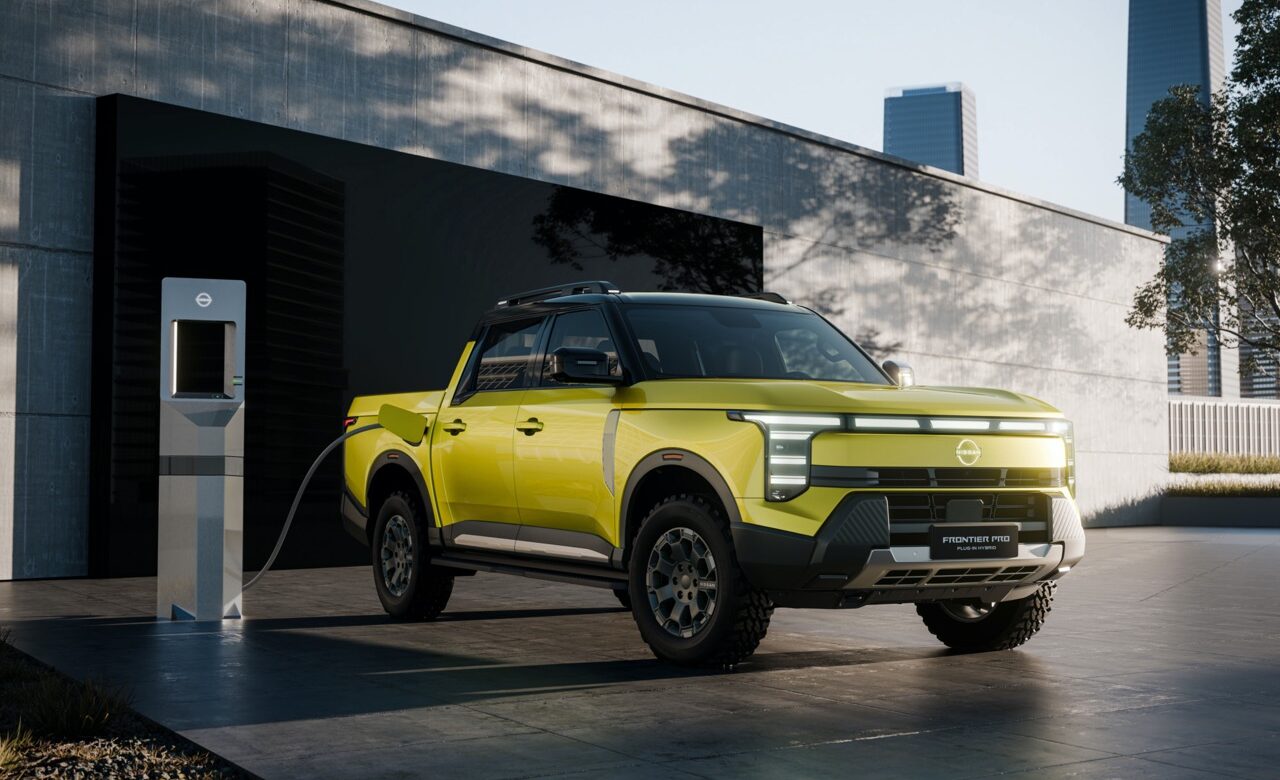
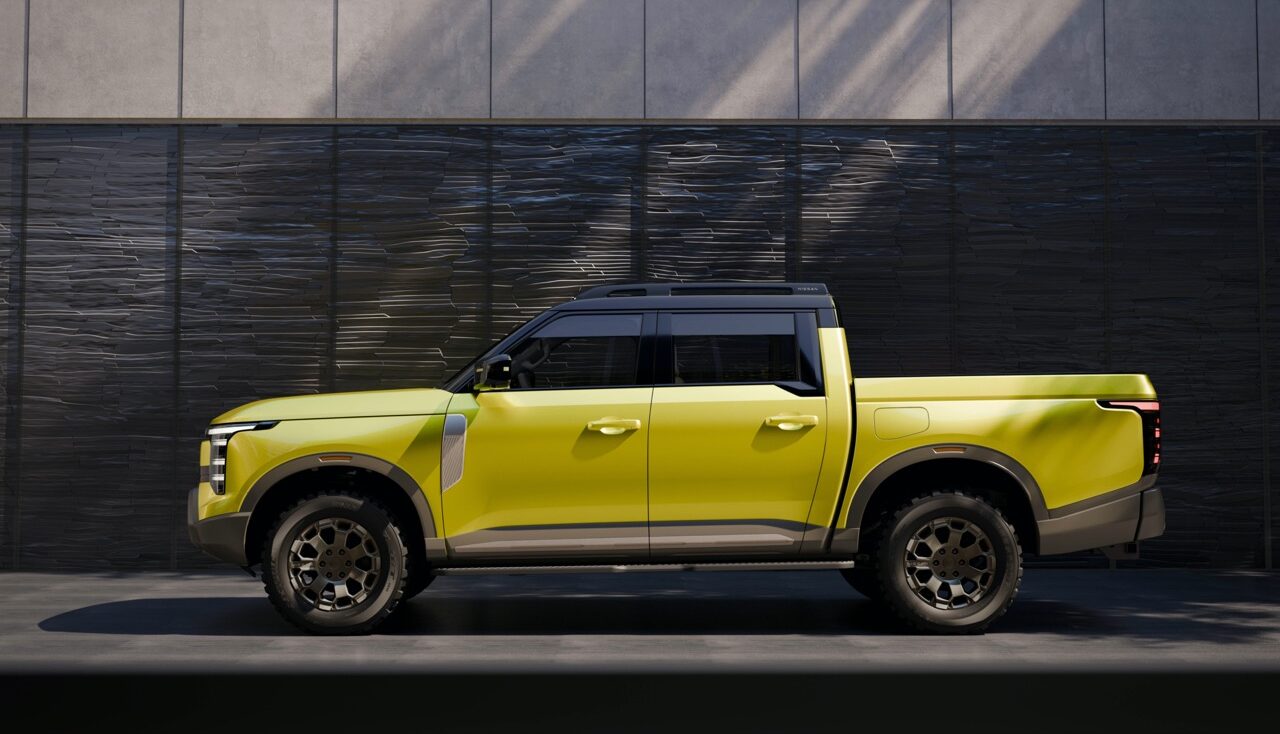
Zhengzhou Nissan has launched its all-new Frontier Pro series of pickup trucks, marking the first time a Nissan model has been fully designed, developed and built in China with plans for global distribution. The price for the new Frontier Pro line-up ranges from roughly RM 114,240 to RM 132,480, while the plug-in hybrid electric vehicle (PHEV) variant is priced between around RM 127,680 and RM 168,000.

The Frontier Pro delivers a striking presence, measuring 5,520 mm long, 1,960 mm wide and 1,950 mm tall, riding on a 3,300 mm wheelbase, which makes it wider and taller than the Nissan Navara. Its cargo bed offers substantial carrying capacity, measuring 1,520 mm in length, 1,600 mm in width and 490 mm in depth. Some variants also offer a convenient electric soft-down tailgate for easier loading and unloading.

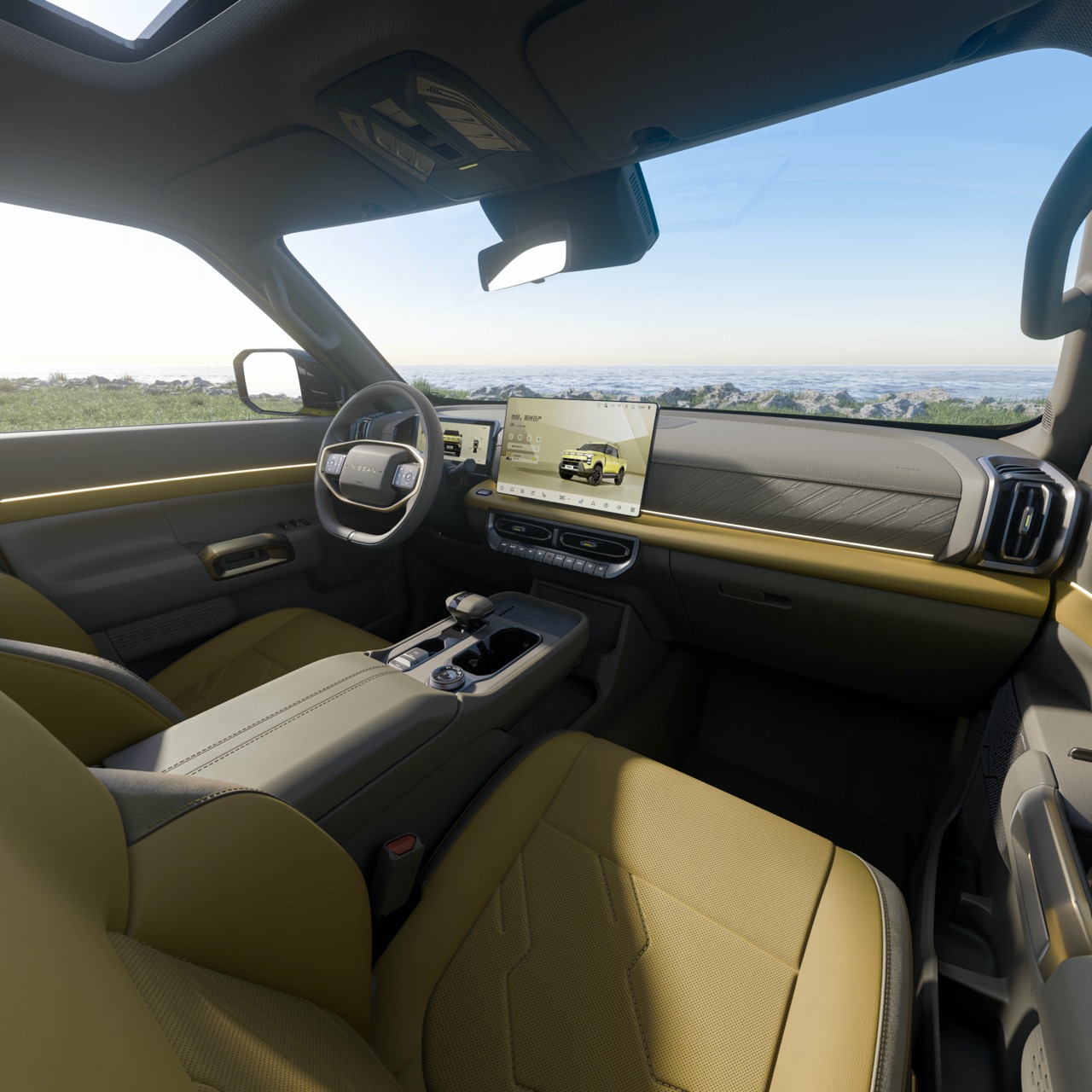
Inside the cabin, Nissan has combined modern amenities with rugged practicality. A digital instrument panel sits alongside a large central touchscreen, and a row of traditional buttons remains on the centre console for ease of use. The interior materials aim high, featuring soft-touch surfaces paired with a 12-speaker JLA audio system for a comfortable and refined driving environment.

(more…)

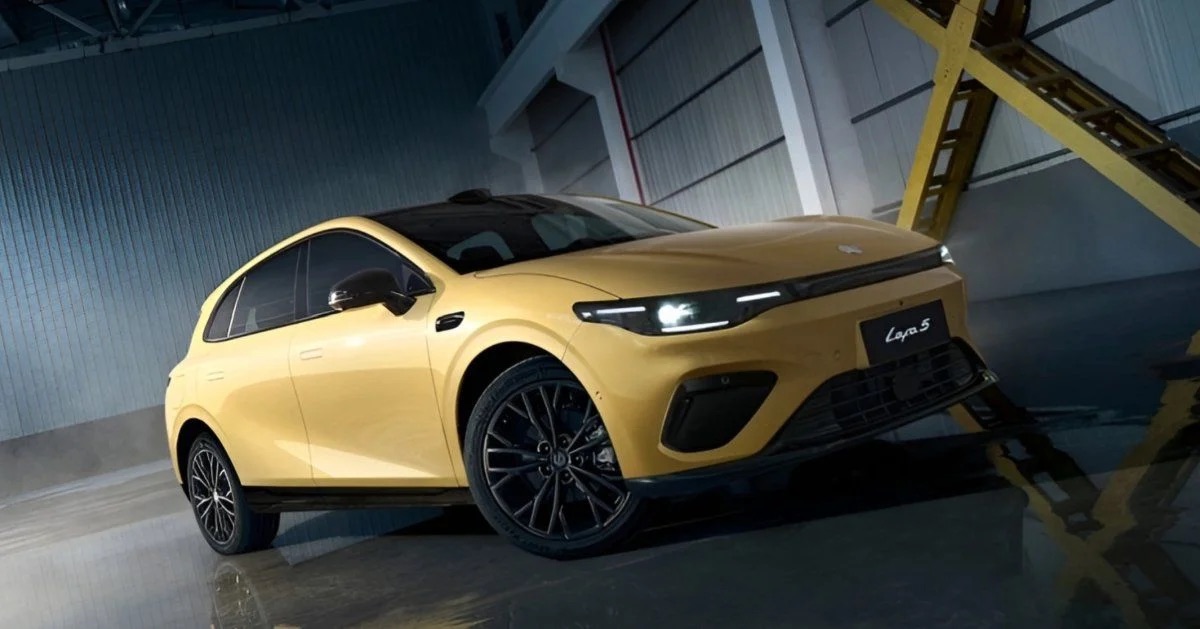
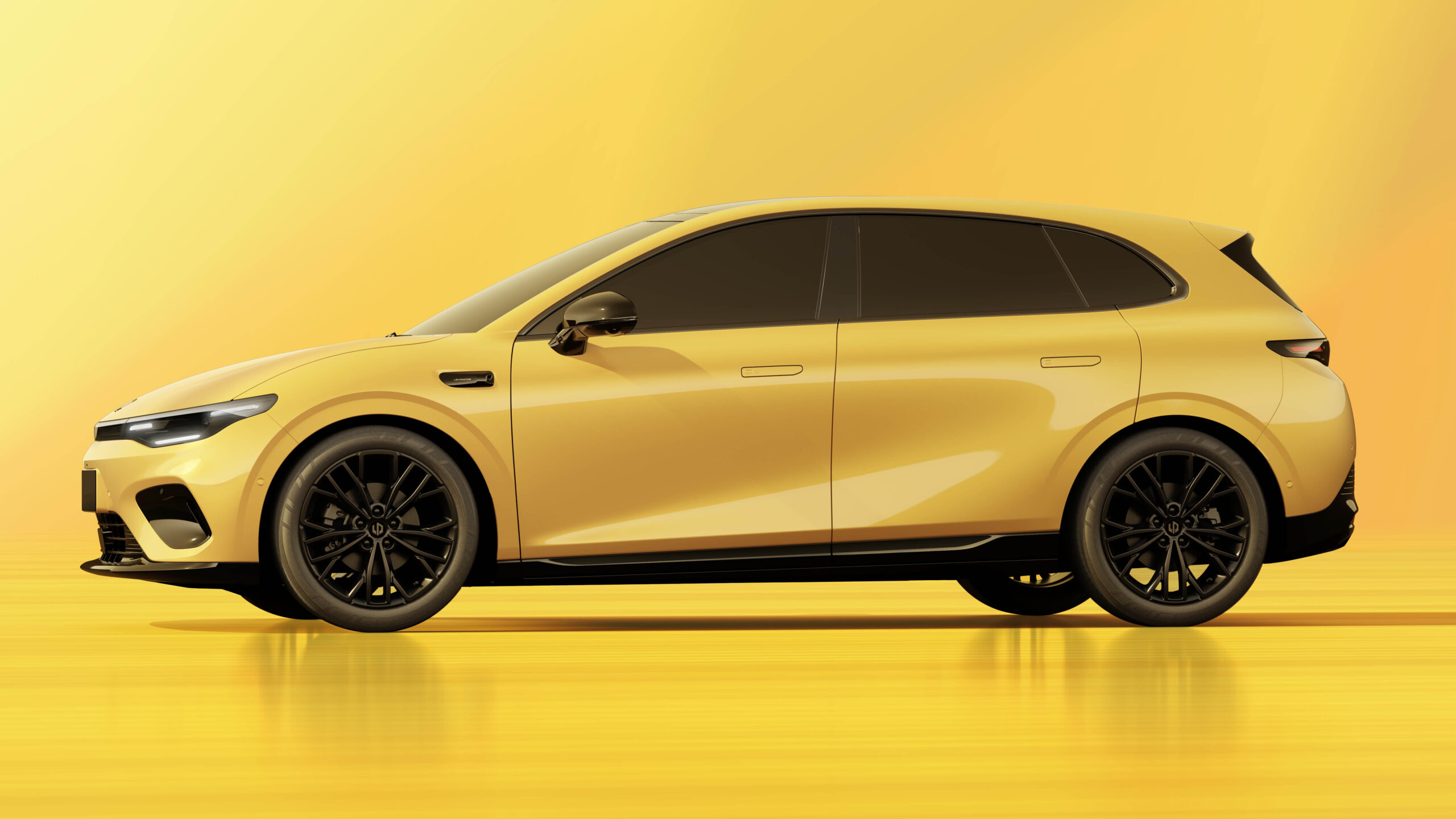
Leapmotor has unveiled its latest compact electric hatchback, the B05 — known in China as the Lafa5 — with five trim levels designed to meet varied budgets and driving needs. The model starts with the 515 Plus at 97,800 yuan (about USD 13,800), while the top-end 605 Max fetches 121,800 yuan. Early buyers benefit from a roughly 5,000 yuan discount across the line-up.

Built on the LEAP 3.5 platform, the B05 measures 4,430 mm in length, 1,880 mm in width and 1,520 mm in height, riding on a 2,735 mm wheelbase, similar in size to the smart #3. Buyers can choose between two battery configurations — a 56.2 kWh pack for a CLTC-rated 515 km range, or a 67.1 kWh pack for 605 km. Both use a rear-mounted electric motor, available in outputs of 177hp or 215hp.

Inside, the B05 offers a modern cabin complete with an 8.8-inch digital instrument cluster and a 14.6-inch 2.5K central touchscreen running Leapmotor OS 4.0 Plus on a Snapdragon-based processor. Depending on trim, equipment may include ventilated and heated seats, a panoramic roof, 256-colour ambient lighting, wireless charging built into a cleverly designed “magic expansion island” centre console, and upholstery spanning fabric, faux-suede, or Nappa leather.

(more…)

Archive

Follow us on Facebook

Follow us on YouTube