Piston.my

Reviews

When Porsche first introduced its first all-electric model, the Taycan, it was met with mixed reactions. For some, it was a step into the future for the legendary brand with technology derived from its motorsport exploits, particularly the 24 hours of Le Mans. Afterall, Porsche has had tremendous success at the legendary endurance race for nearly a century.

For others, Porsche had lost the plot with the Taycan.
For some fans, the German sports car maker is known for its boxer engines, and also happens to build some of the best SUV’s in the industry, so it should continue building just that.

For hardcore fans Porsche is the 911, the Boxster, the Cayman, the Cayenne and the Macan. For them, Porsche has no business producing electric vehicles. Hybrids was as far as they should go since that is what the company used in motor racing as well.
But the naysayers had always put down Porsche’s future models. The antagonism was at its height when Porsche wanted to introduce the Boxster. Fans were up in arms against it, but the Boxster ended up saving the company from bankruptcy.

Porsche fans once again had their pitchforks and torches in the air when it introduced the Cayenne. And despite initial scepticism, the success of the Cayenne provided much needed funding for the company to continue racing.
But the most successful Porsche in terms of sales is the Macan. It is the best-selling Porsche model of all time, and yes it too was met with cynicism from the fanbase in its early years.

Then came the Taycan in 2019. Despite all the negativity levelled against it, the Taycan outsold the 911 in 2021. That was not a difficult milestone to achieve though because the 911, Porsche’s halo car, was already outsold first by the Cayenne and later by the Macan.
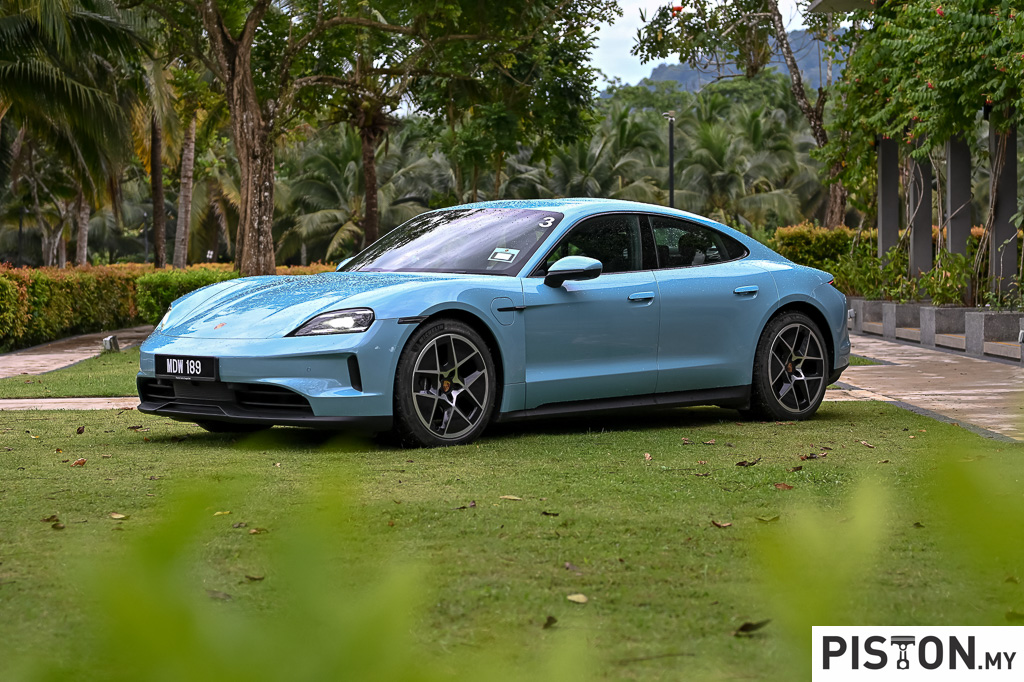
But for an all-electric model to outsell the car that arguably defines Porsche is quite shocking. But is it really?

China is Porsche’s biggest market by far, and the Chinese market is all about electric powertrains due to government legislations. So, it is quite natural for the Taycan to do well there.

Besides China, the United States too is a big fan of the Taycan as well and in 2022, Porsche sold a near equal number of Taycan’s in China and the United States.

According to Porsche’s own media site and an interview with the former CEO of Porsche China by CarNewsChina.com, Porsche sold 7,315 Taycan’s in China and 7,271 units in the United States.

Canada and Europe are the other big markets for the Taycan.

And then sales plummeted by a staggering 51% by early 2024, forcing Porsche back to the drawing board to rethink its strategies.
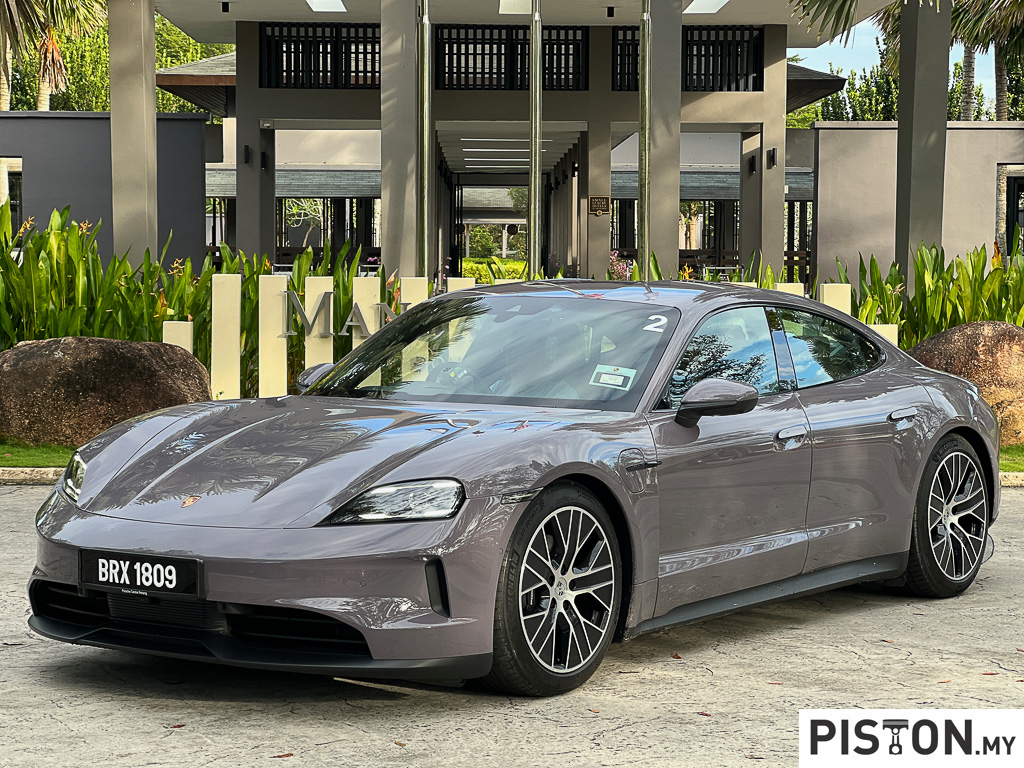
In 2022, Porsche set out a rather ambitious goal, the company said that it half of its cars sold in 2025 will either be plug-in hybrids or battery electric vehicles (BEV). And that by 2030, a staggering 80% of Porsche cars sold will be BEV’s.

But with declining, Porsche announced in early 2024 that it will re-strategize its goals and will instead focus on hybrids and internal combustion engines once again since that is what its customers want.

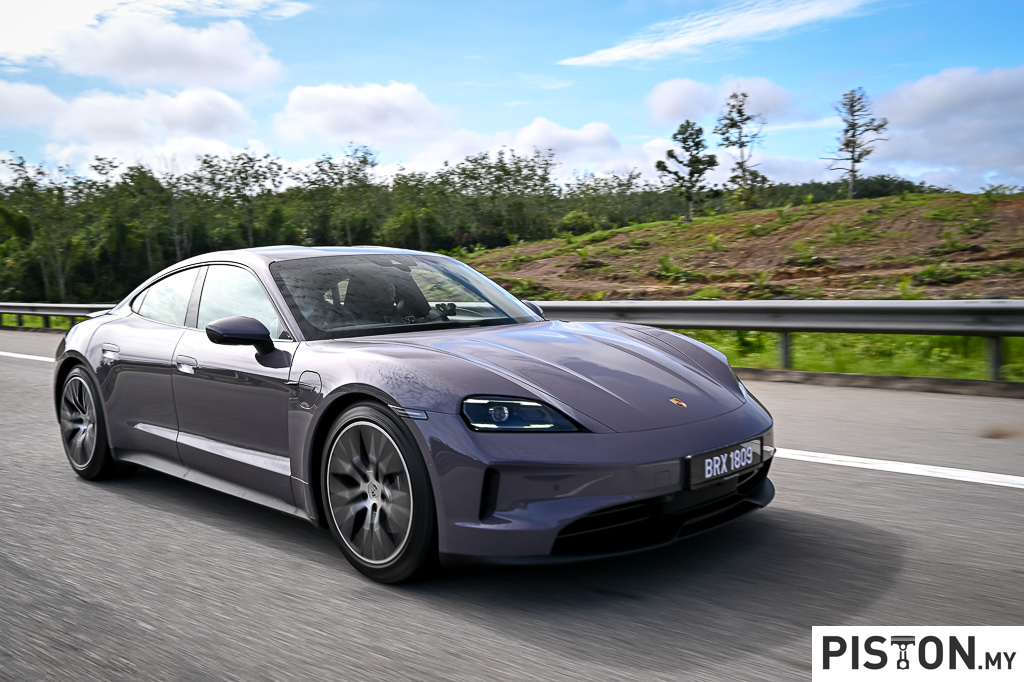
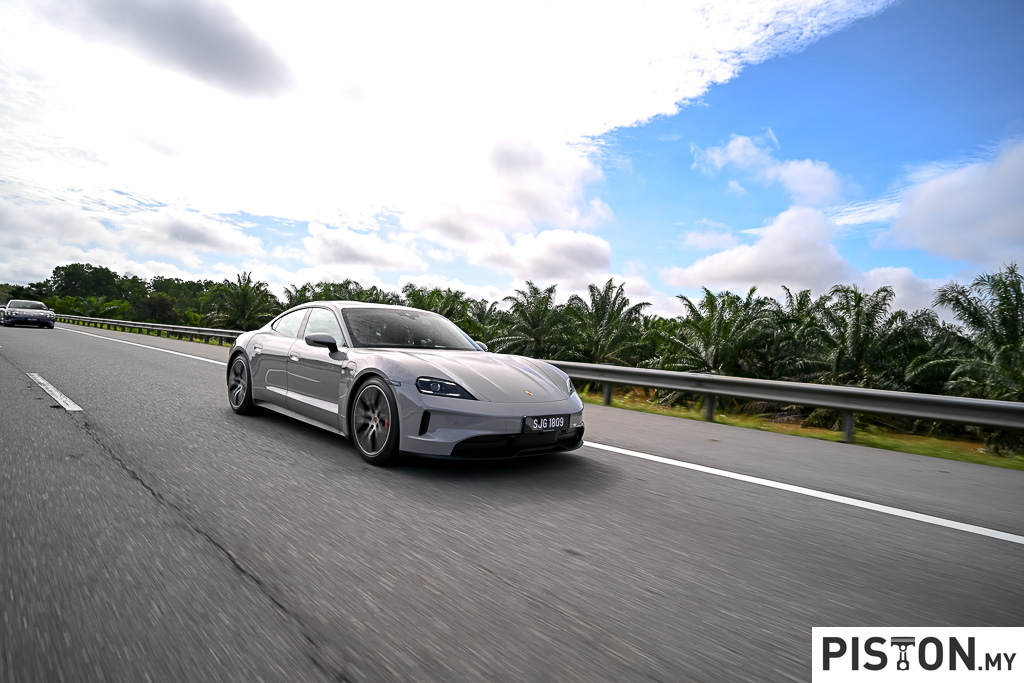
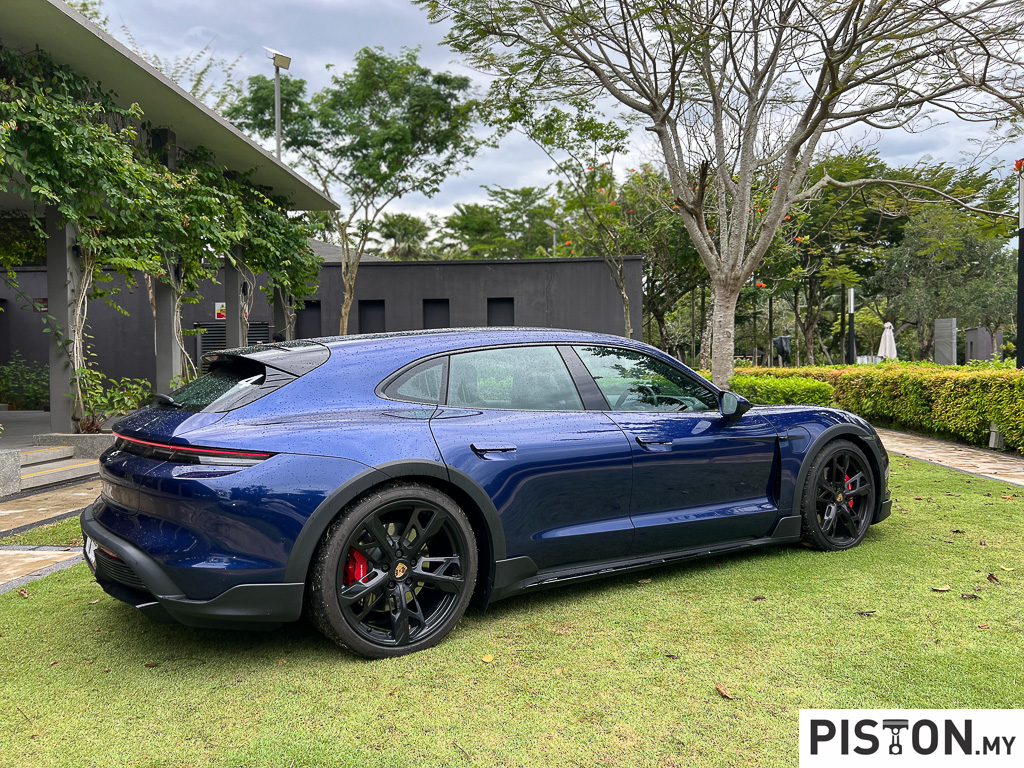
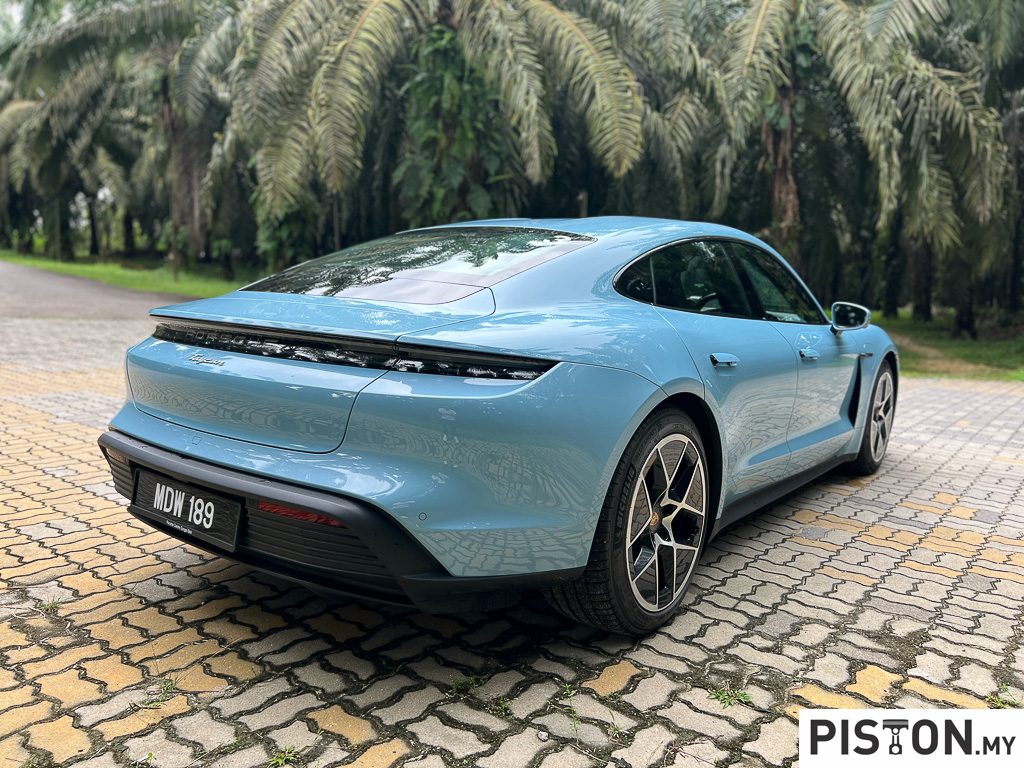
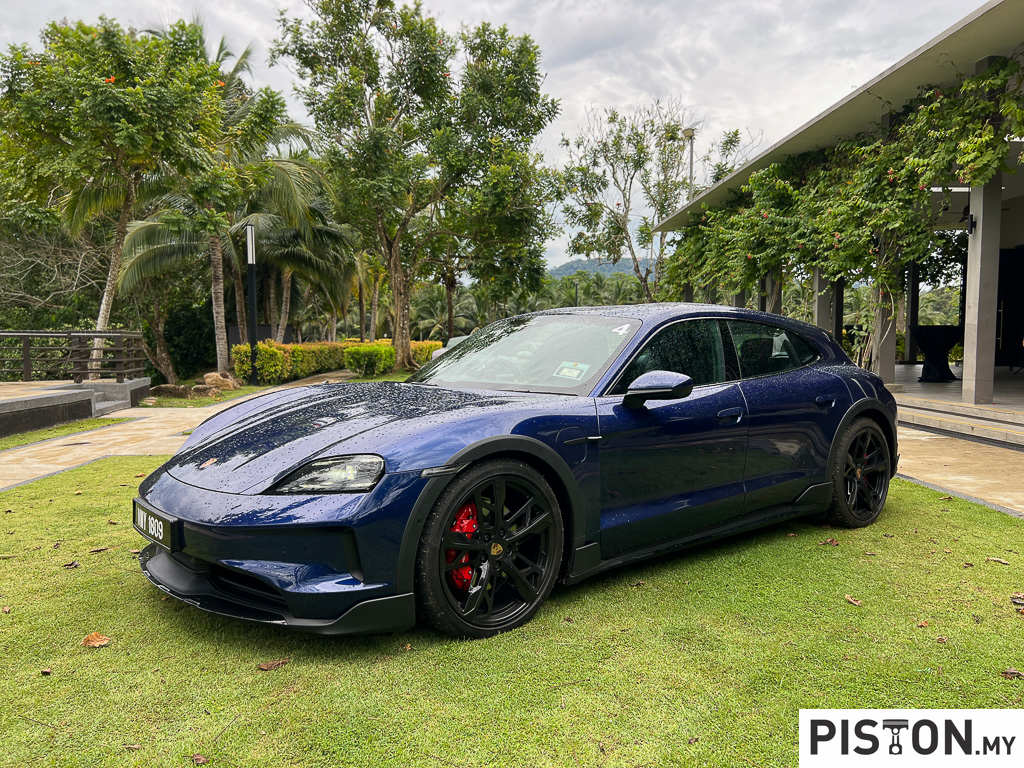
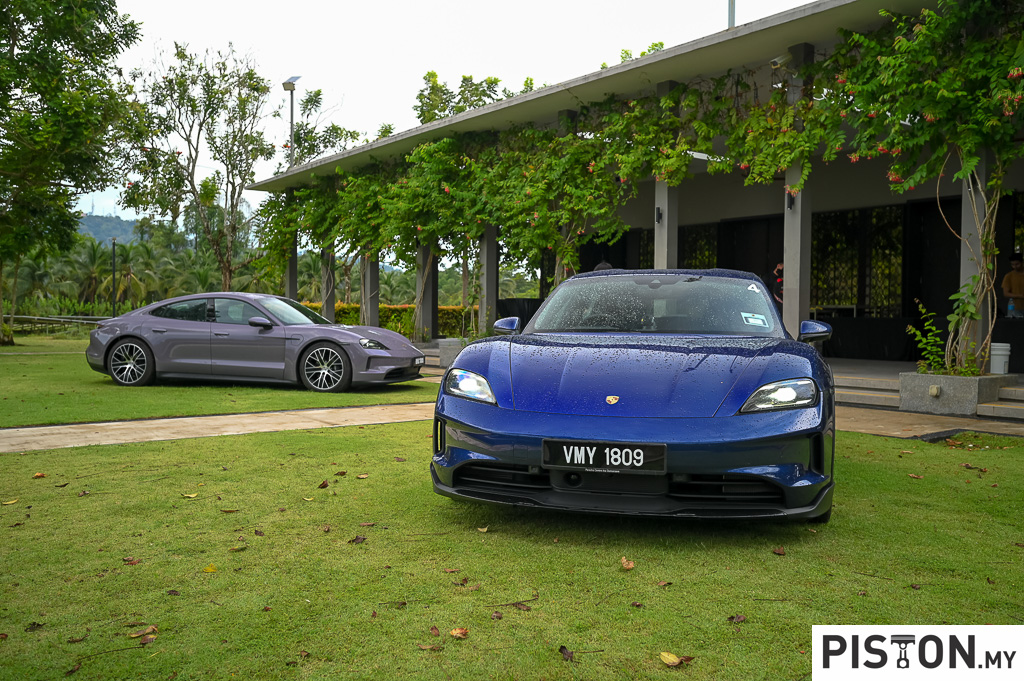
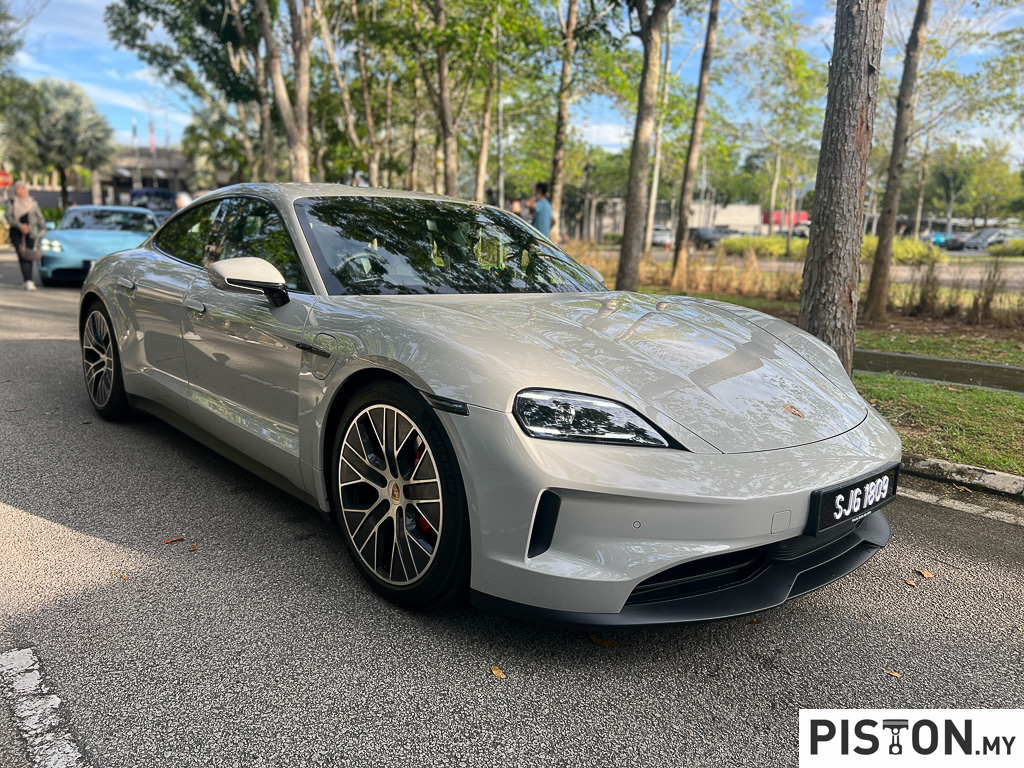
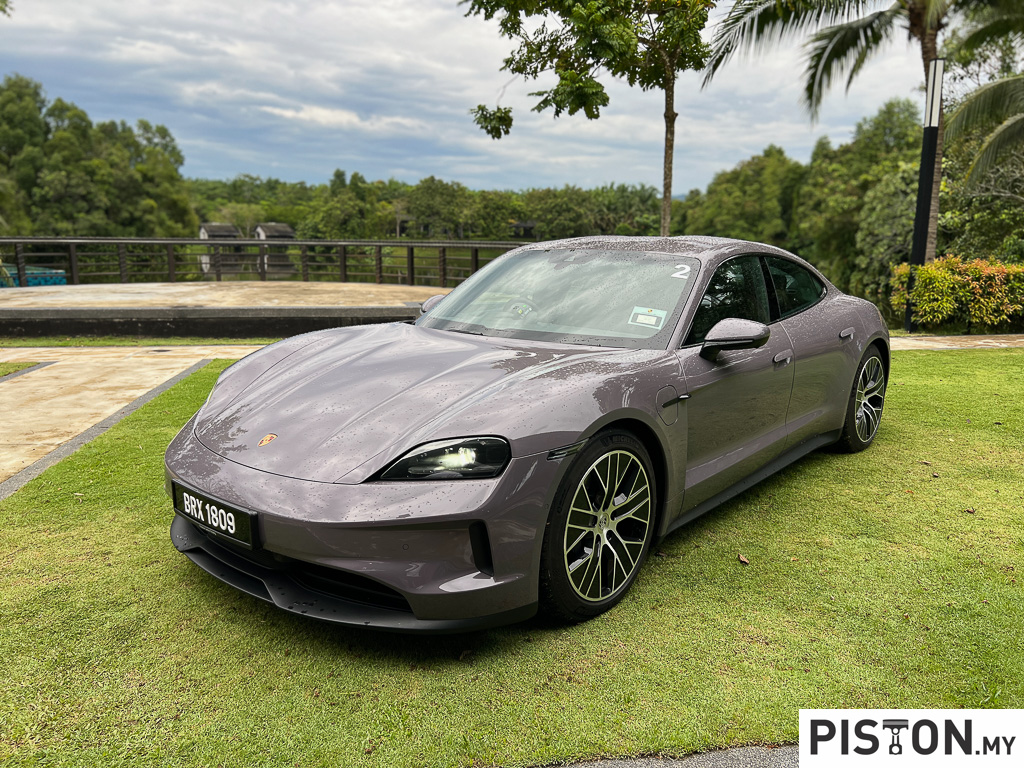
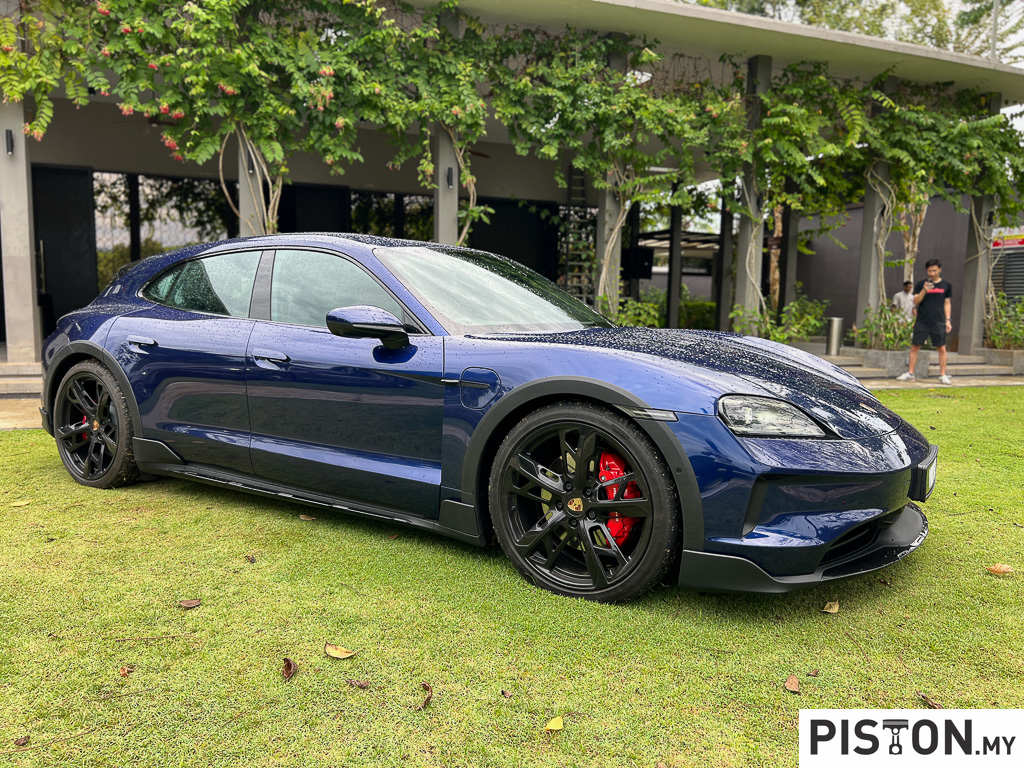
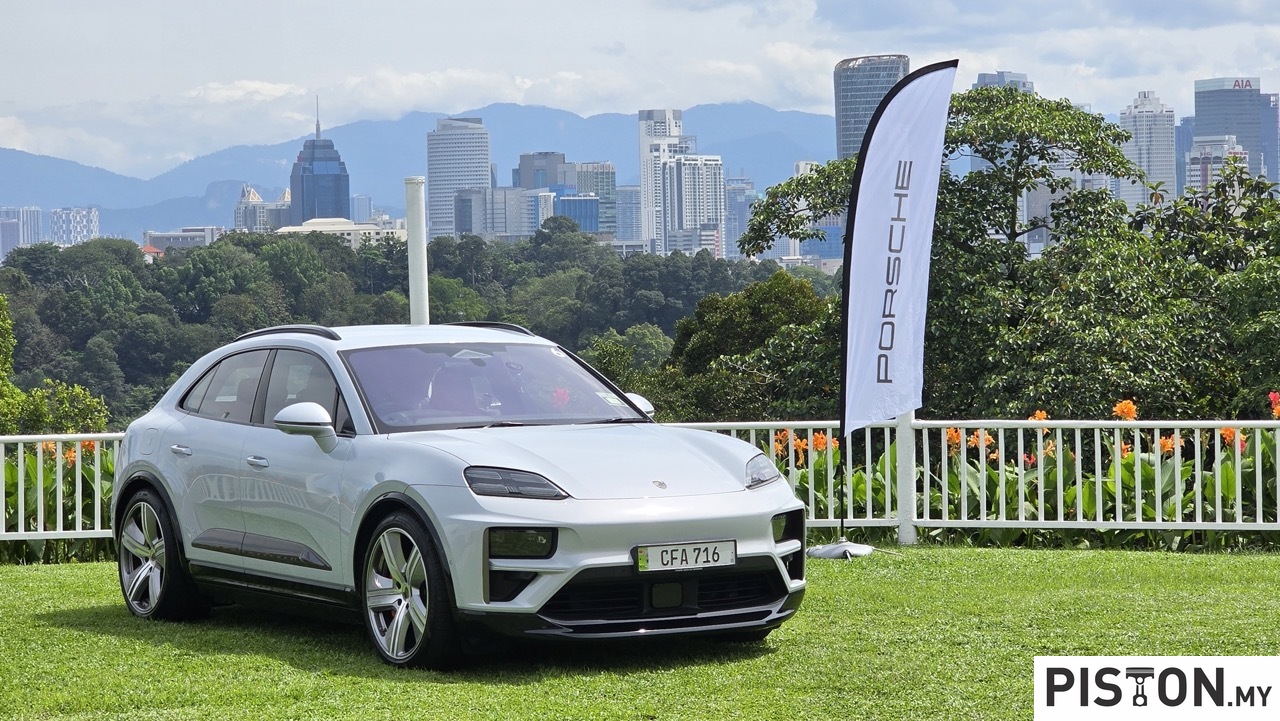
But that does not mean that Porsche has abandoned the Taycan, in fact the company has introduced the latest version of it. Porsche does not like to use the term facelift, but rather calls it an evolution of the original, and we have driven it.

Porsche Malaysia organised a drive to Kuantan for select members of the Malaysian motoring media. The drive, called the Taycan E-xperience, involved putting the long-distance capability of the Taycan to test. The route was from Kuala Lumpur to Kuantan, to Genting Highlands and back to our starting point at Saujana Hotel.

What’s new and why is it a big deal?
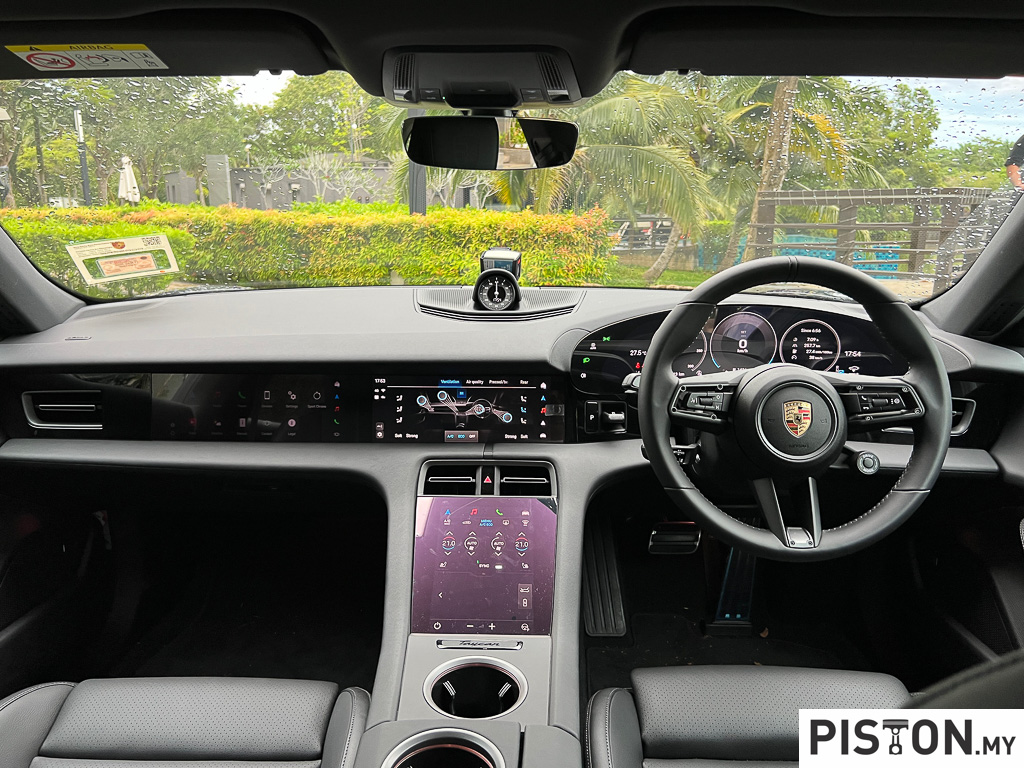
The Taycan is a big deal because it is a Porsche and that means status. It is a big deal because there are few other brands that have the heritage and sporting pedigree of a Porsche. It is also a big deal because despite it being a heavy electric vehicle, it is capable of some ferocious performance very much expected of a Porsche.

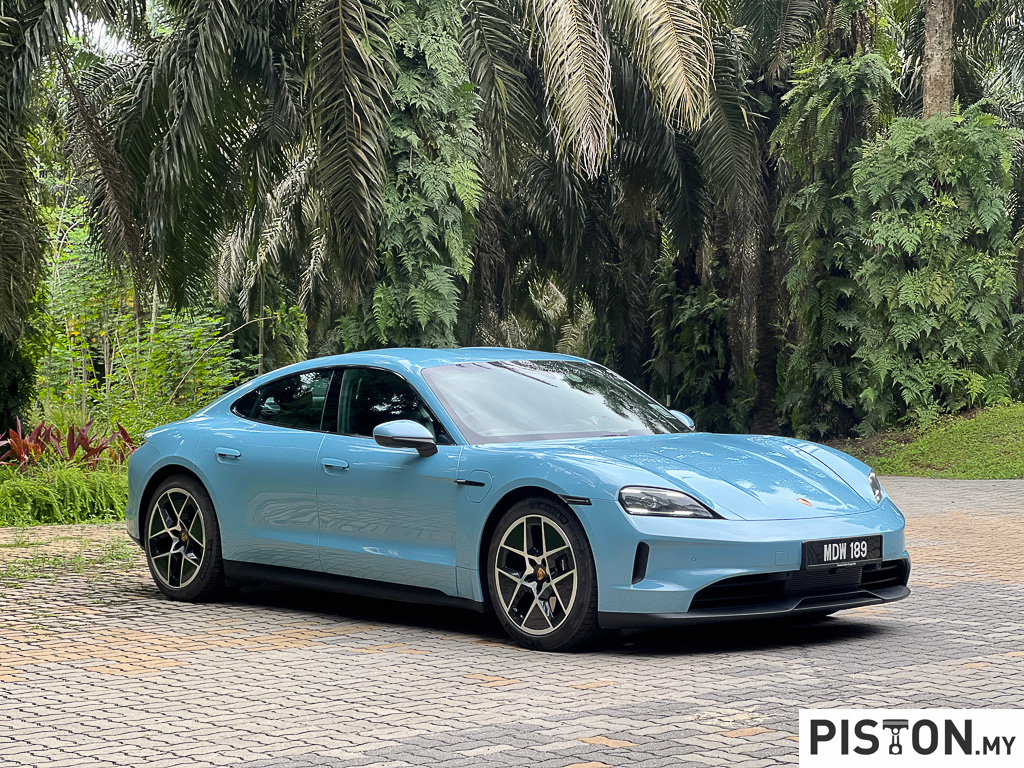
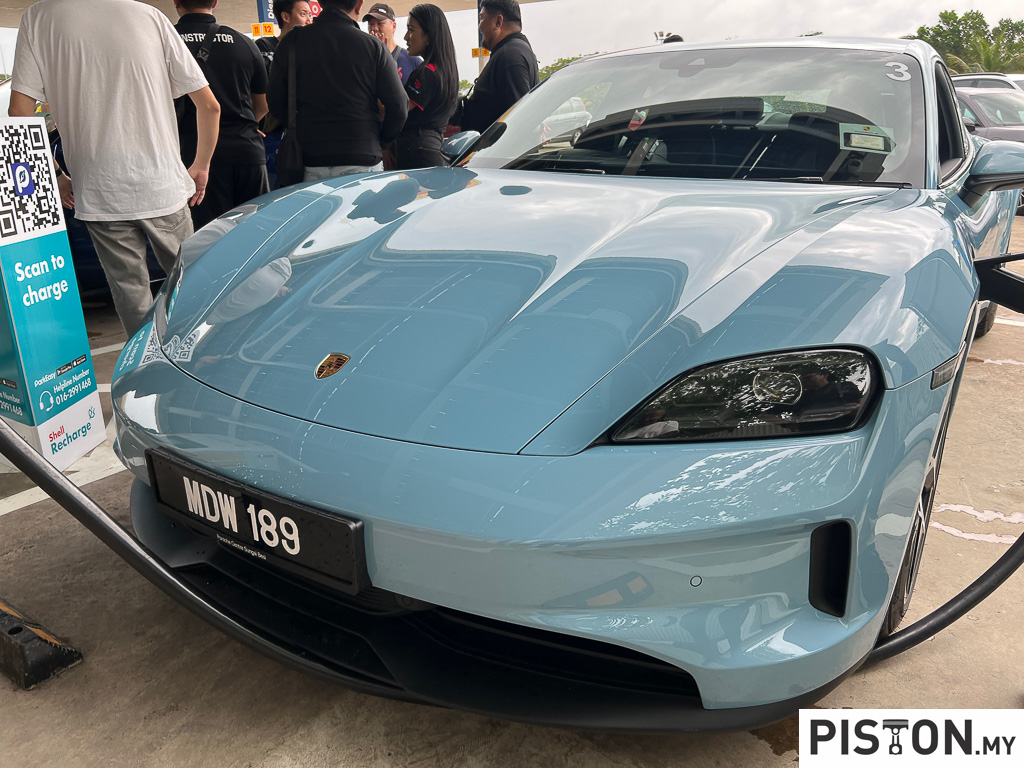
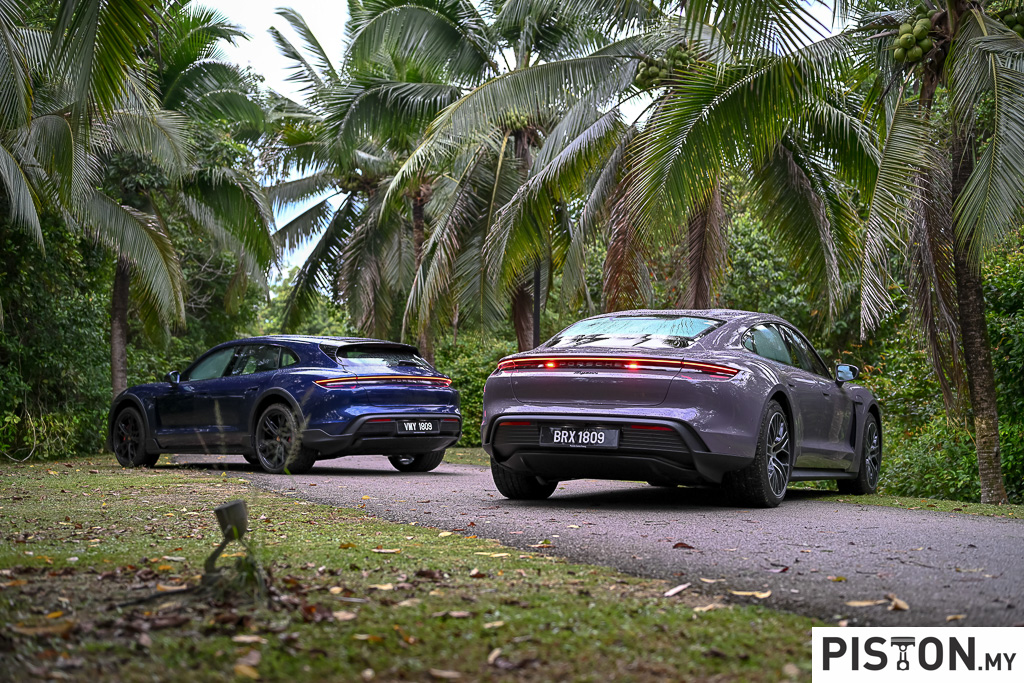
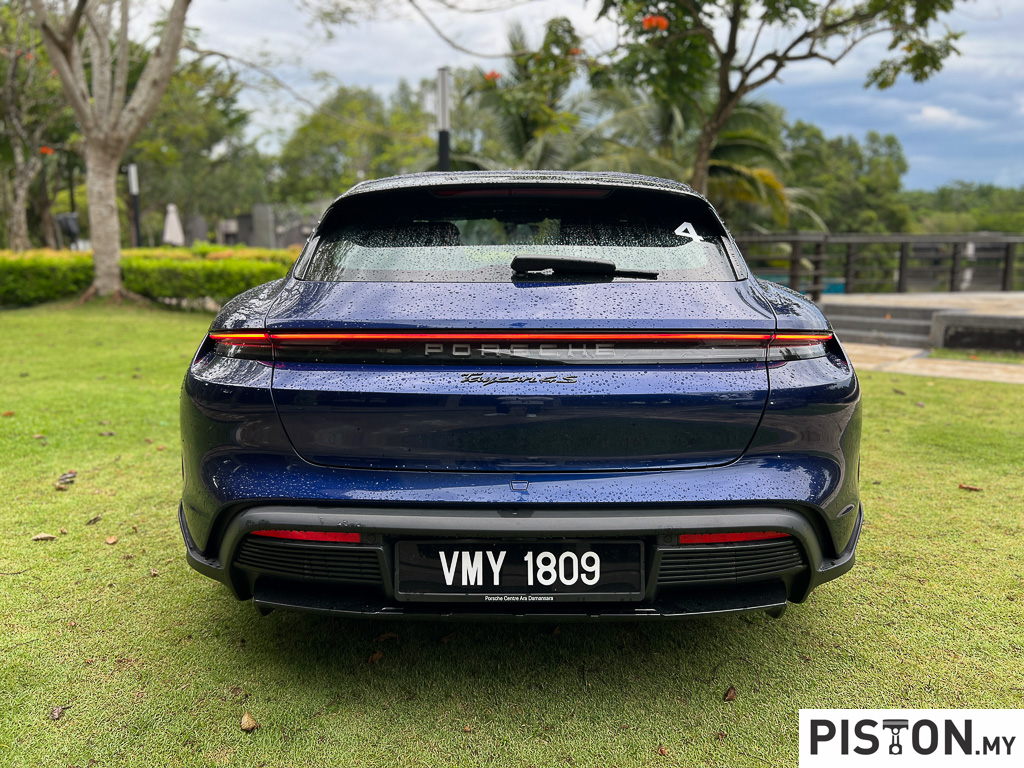
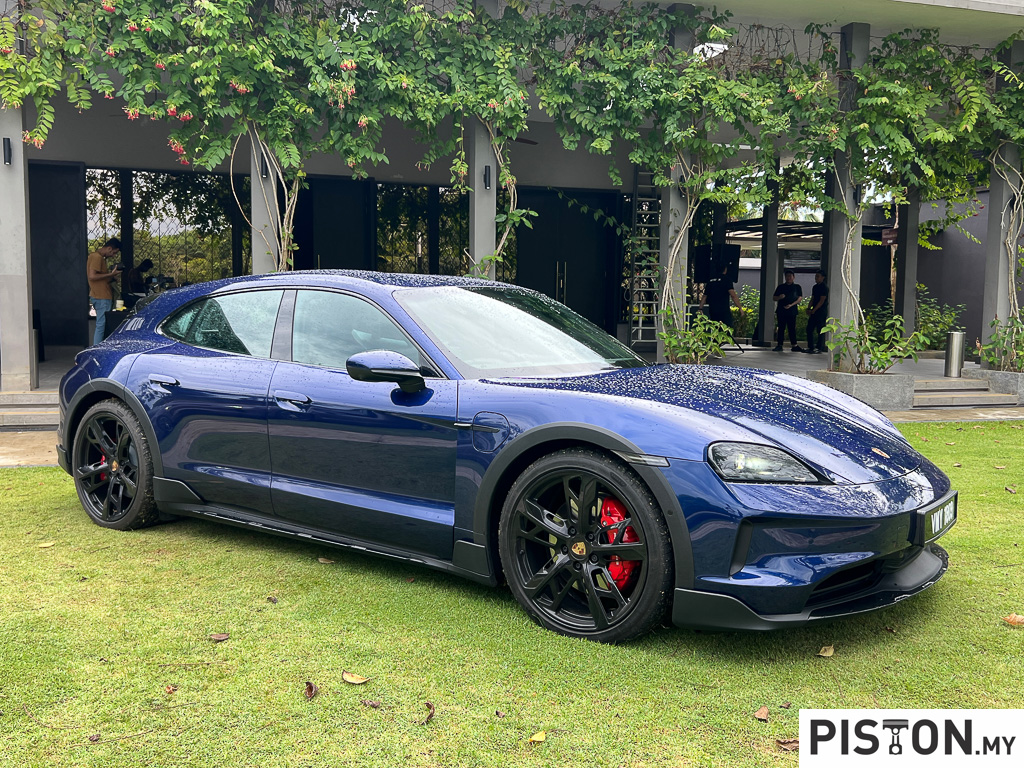
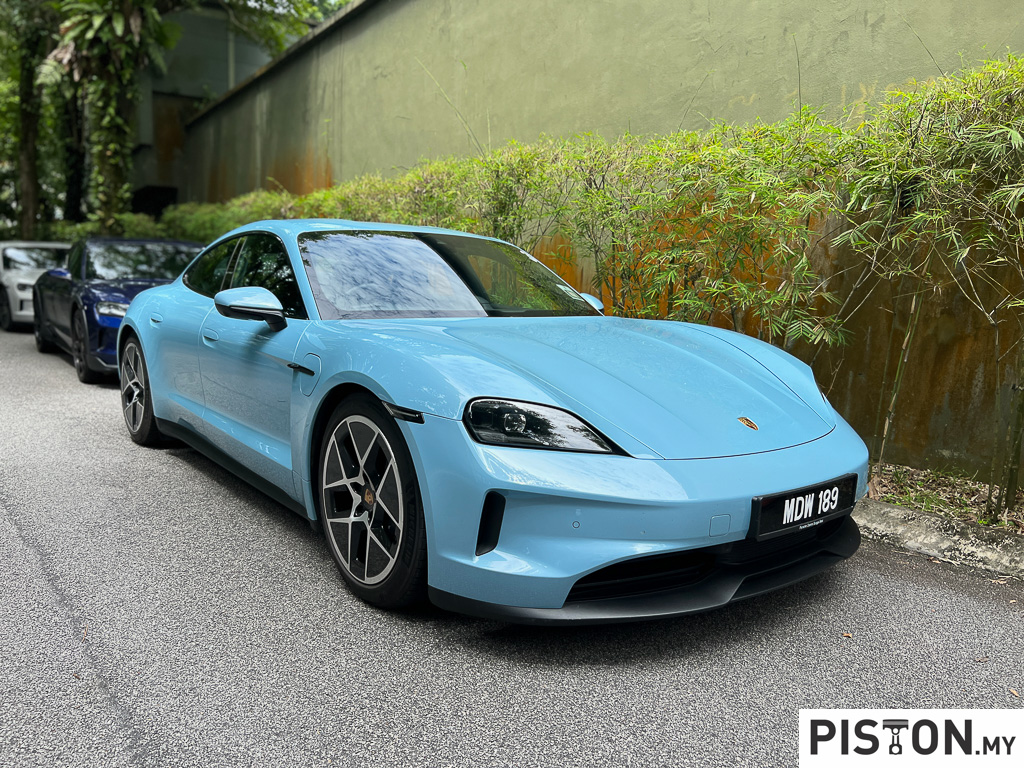
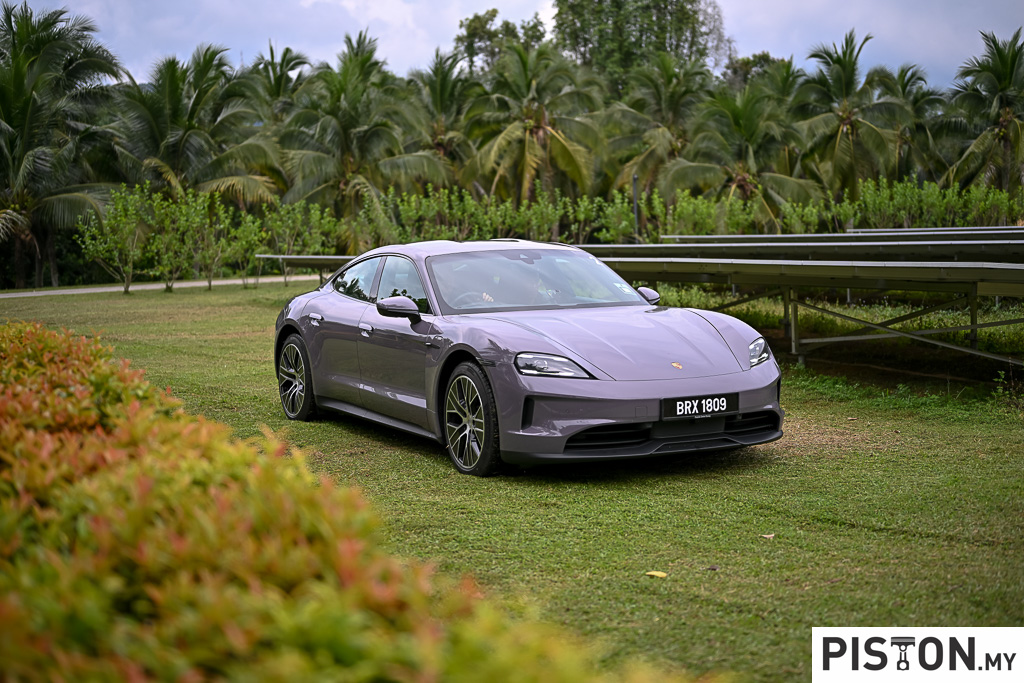
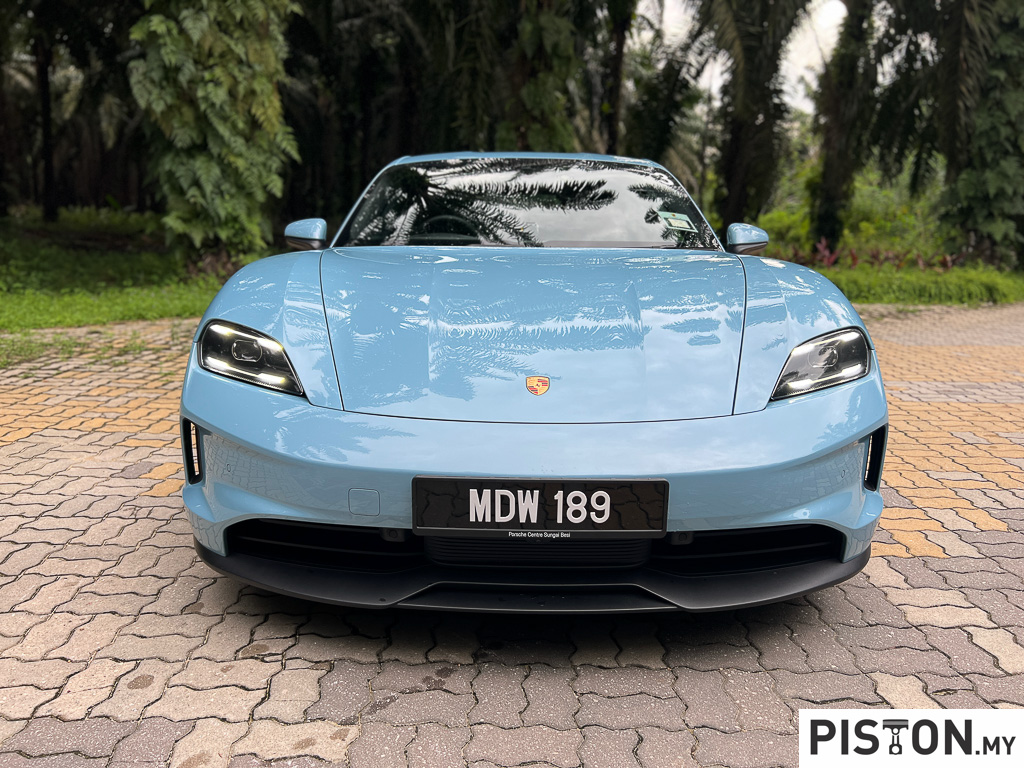
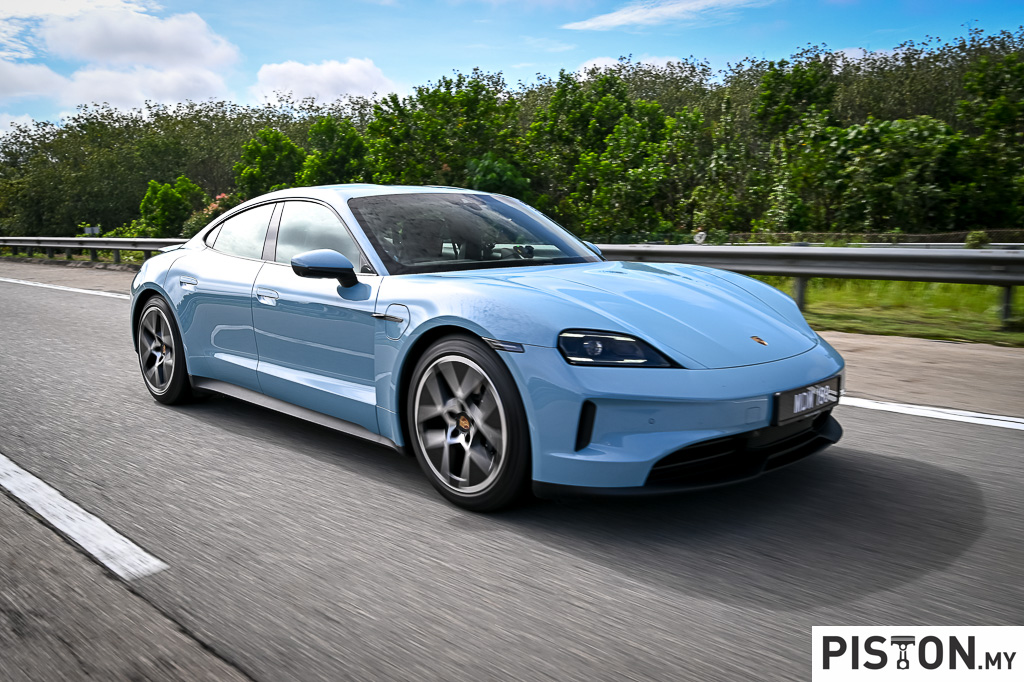
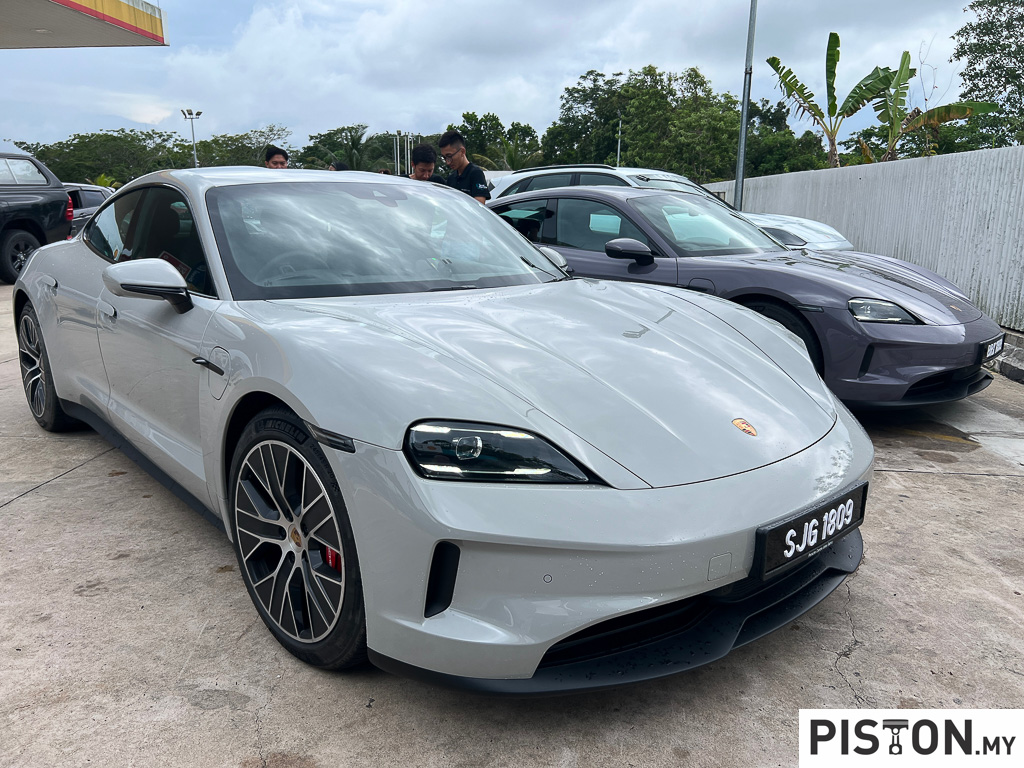
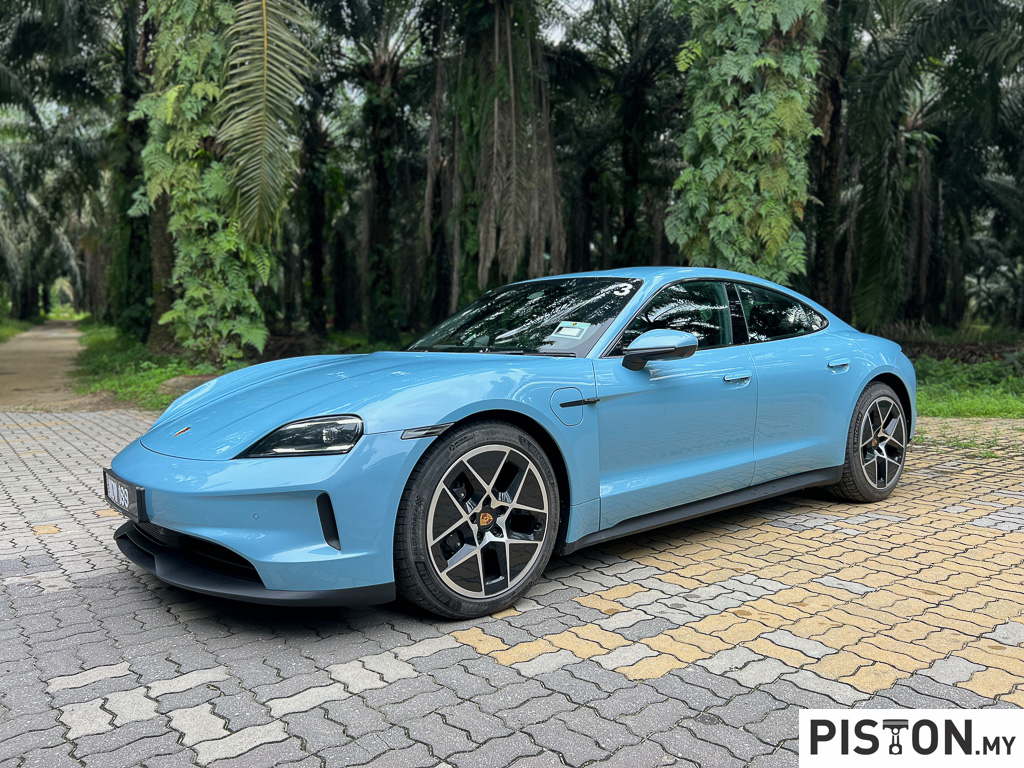
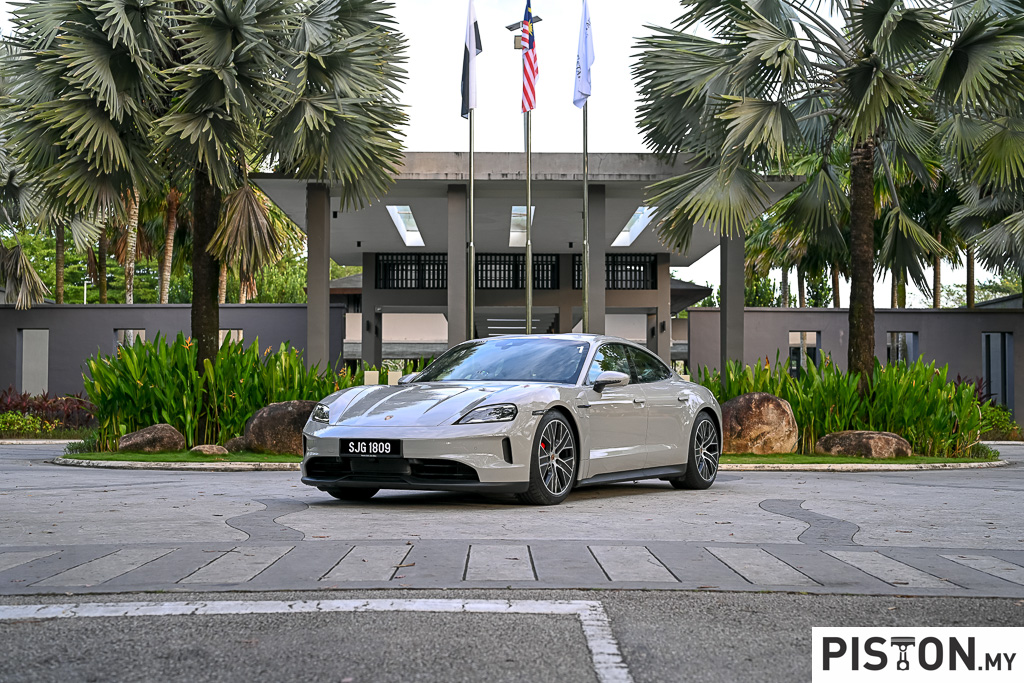
The new Taycan builds on that and though it looks the same from the outside there are some minor updates, particularly the new front bumper that has lost the black tear that drips from the headlights to the side air vents.
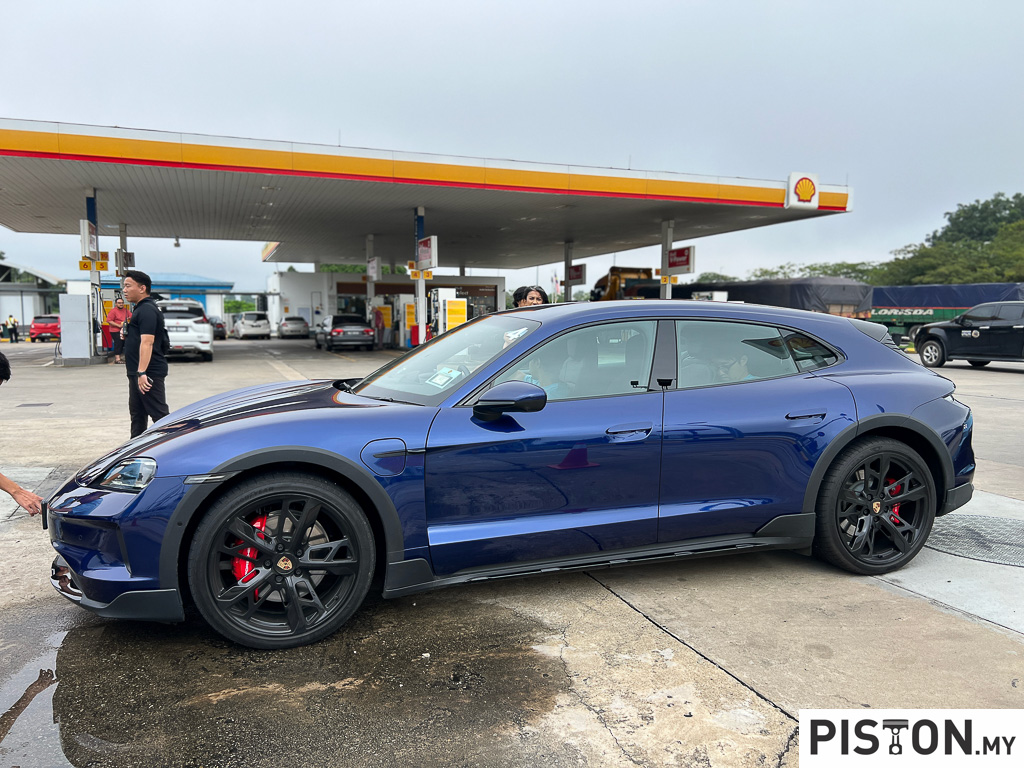
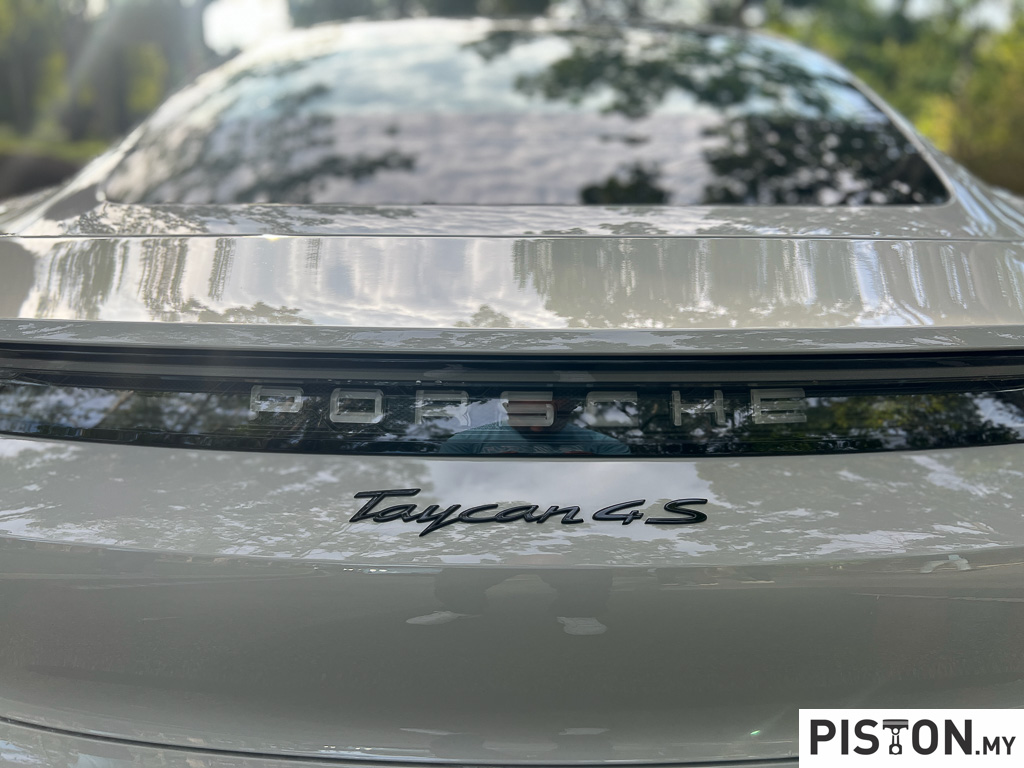
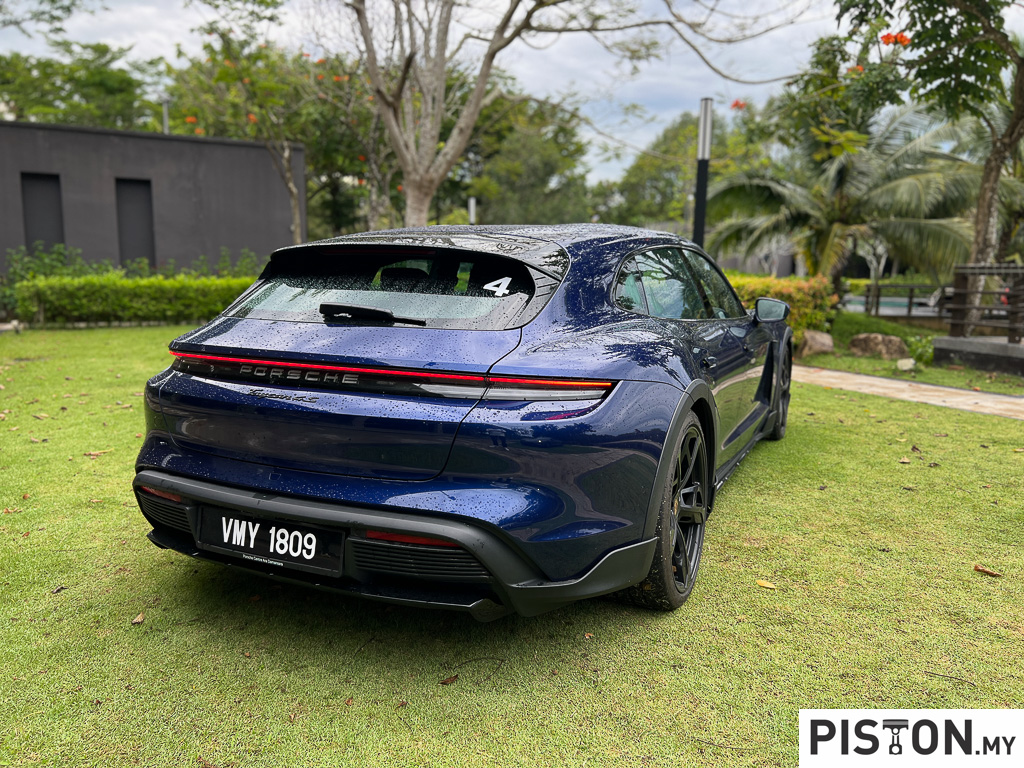
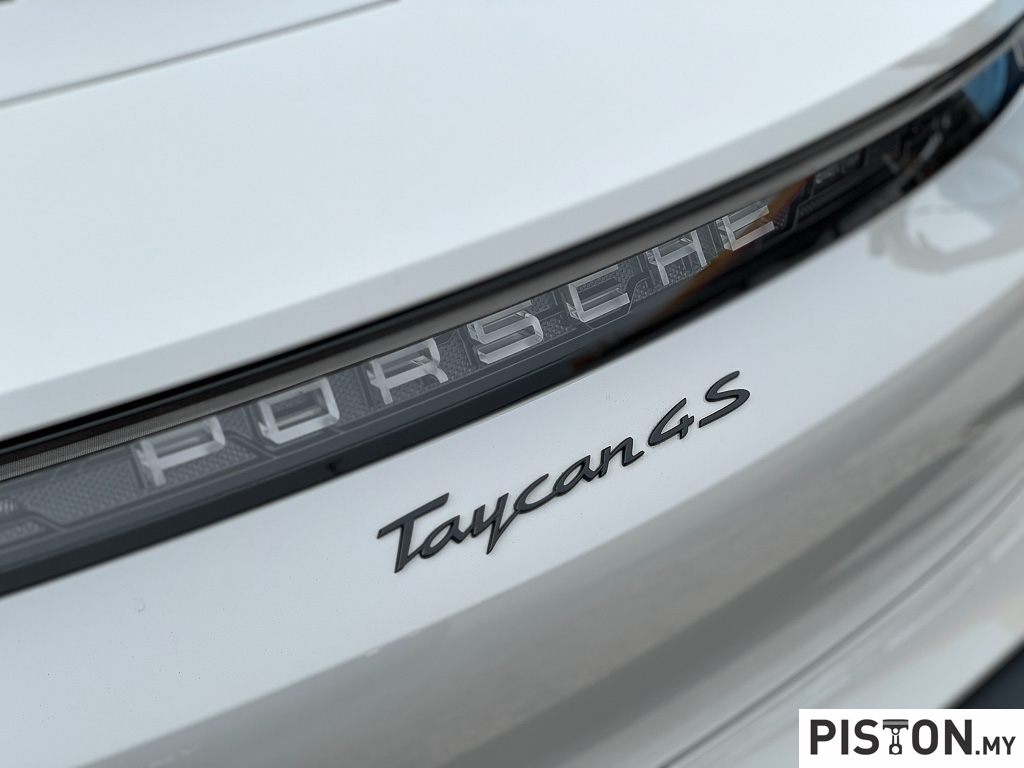
The headlights too have been revised and now come with quad-projector matrix LED’s as an option. Also optional is the Porsche logo in the rear light strip that now features a three-dimensional, glass-look design that can also be illuminated.

Other than that, though, the key updates are under the skin. For example, the new Taycan is now lighter than before thanks to clever weight savings around the car.
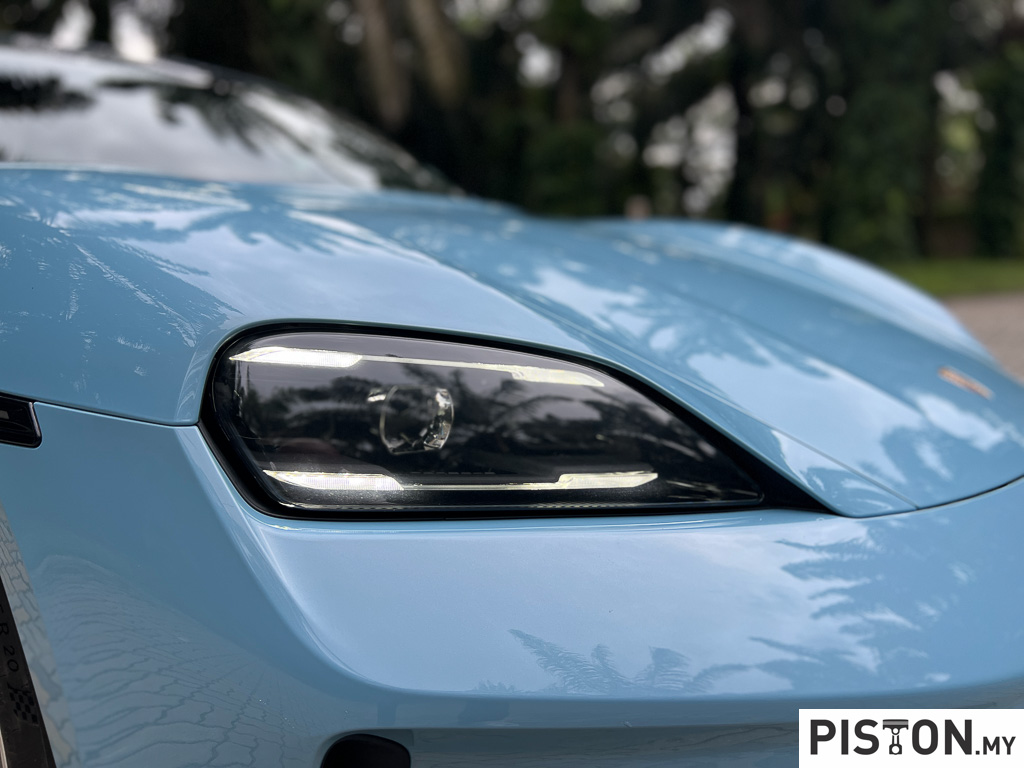
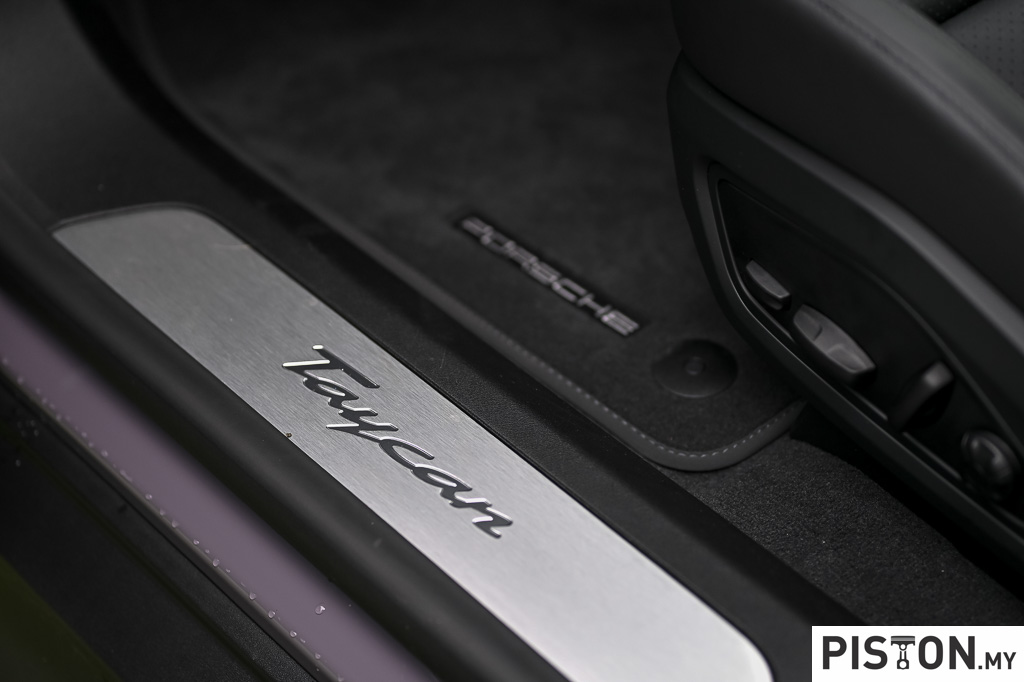
But being a Porsche, you can customise your Taycan whichever way you want. And that is what makes Malaysian Taycan’s so unique because it already has an extensive list of standard equipment before any customisation.

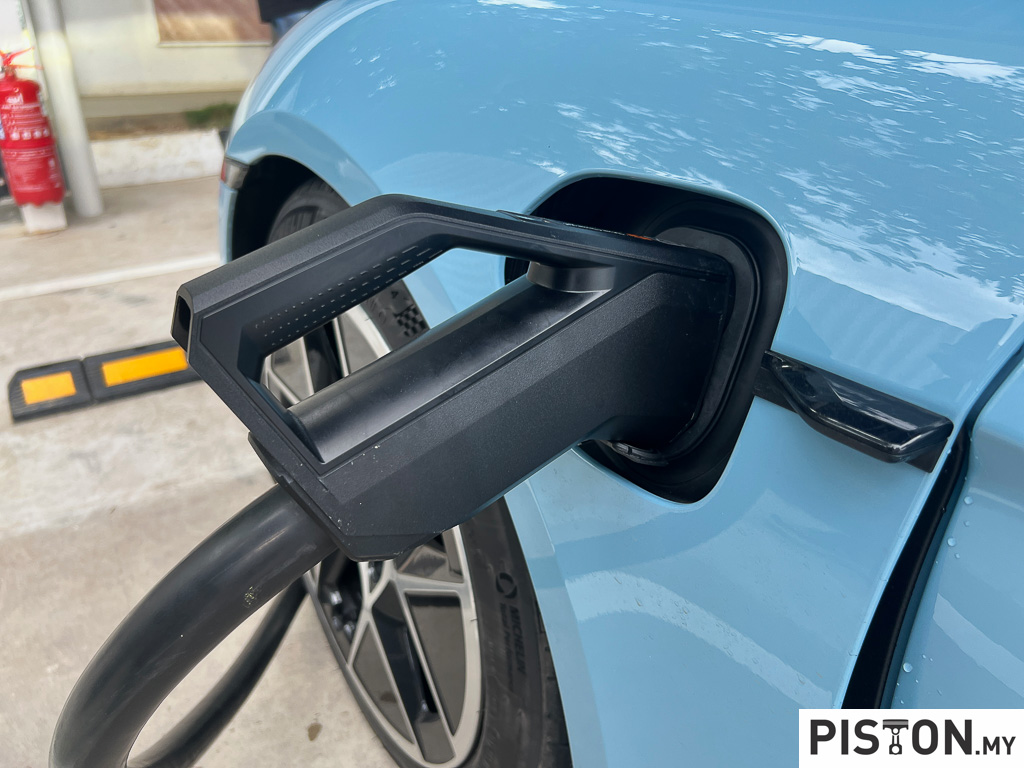
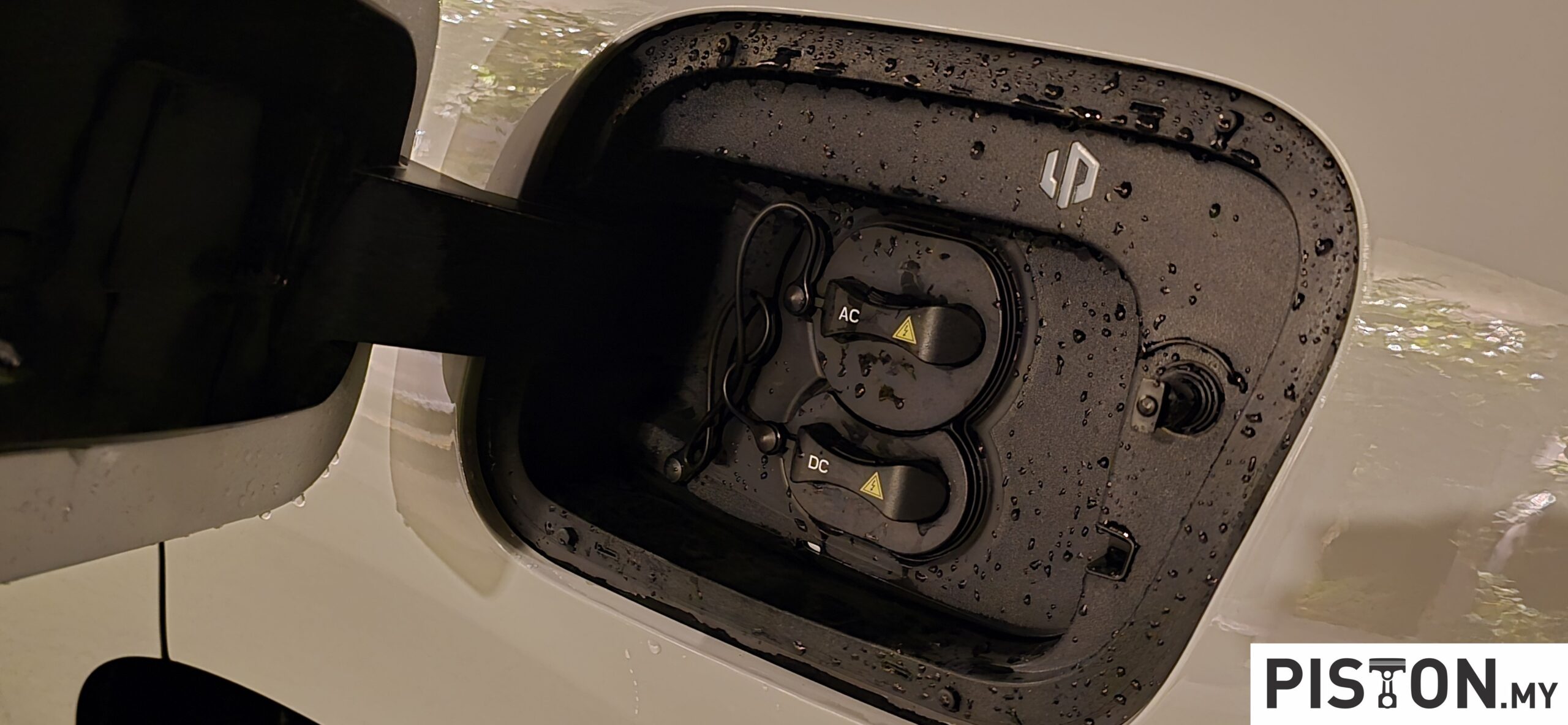
The list of standard items for the new Taycan include air suspension, ambient lighting, Porsche Intelligent Range Manager (PIRM), a redesigned cooling system for better battery thermal management, and electrically opening charging ports on the driver and front passenger side.

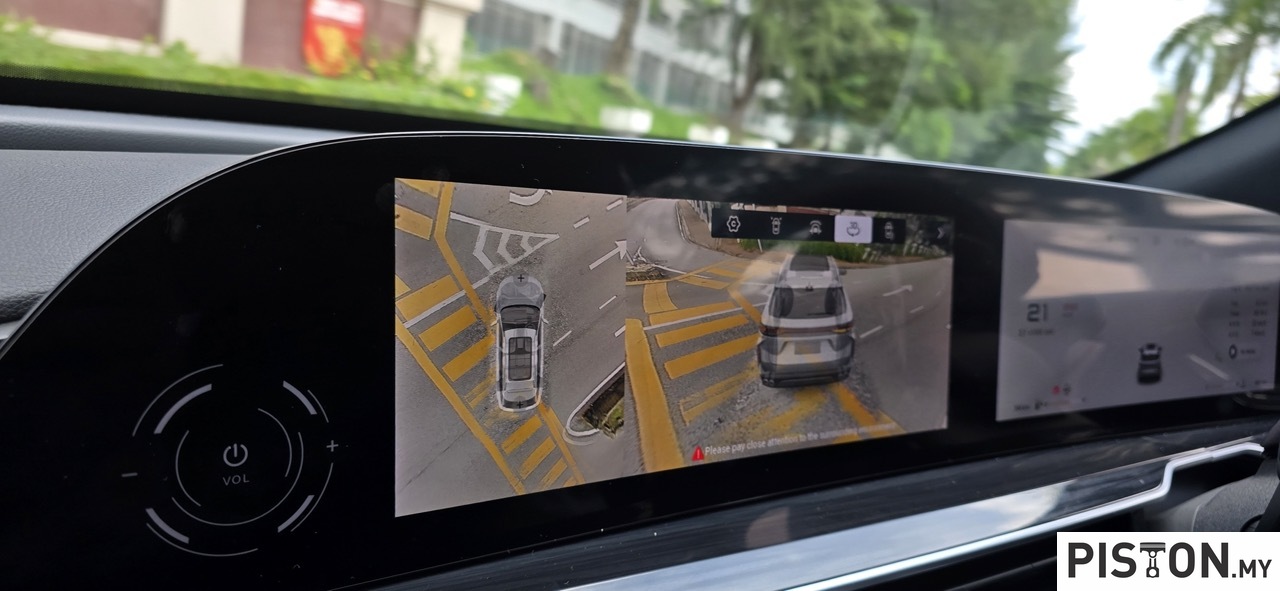
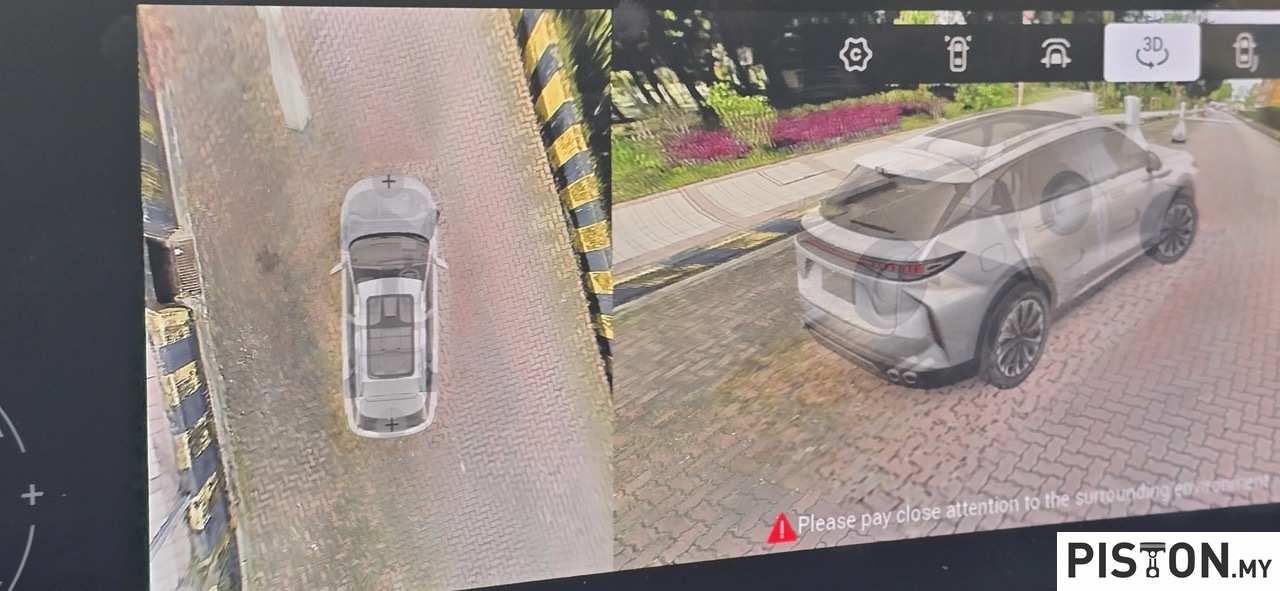
The list continues with 20-inch wheels offered as standard as well, and ParkAssist with Surround View.
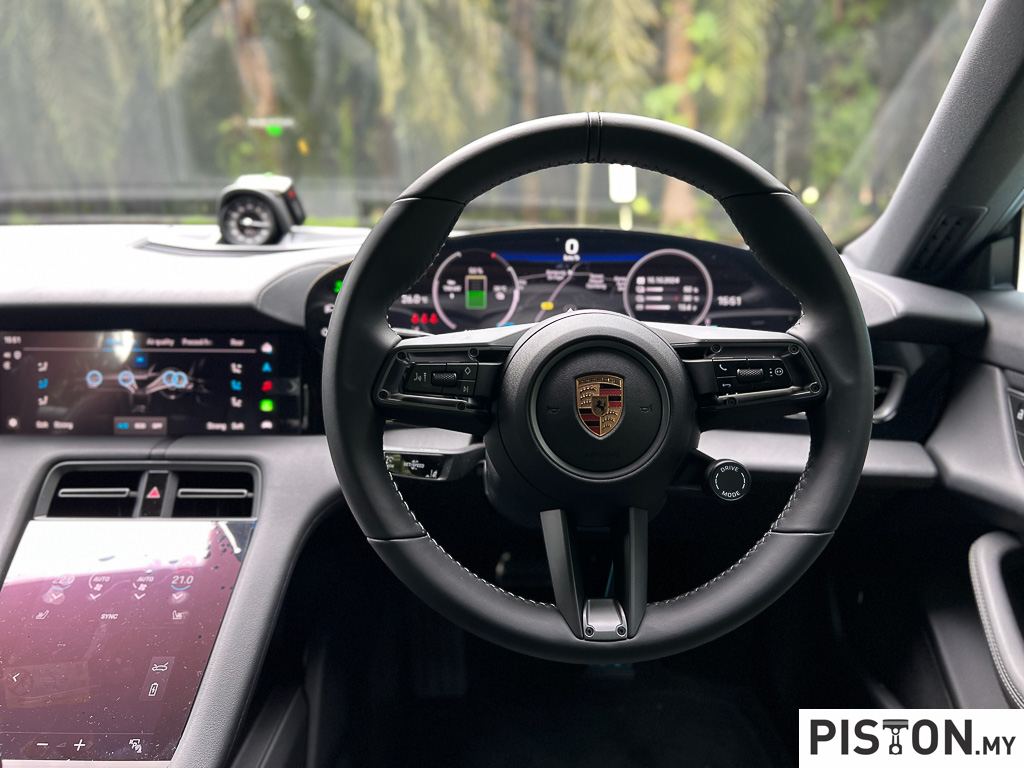
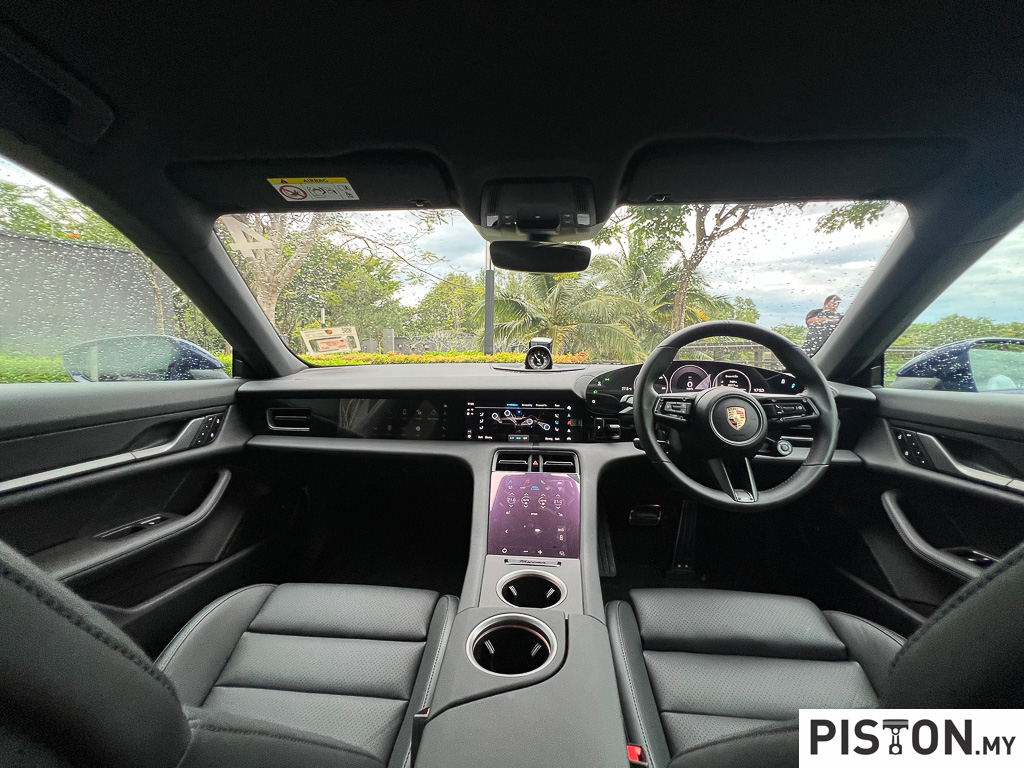
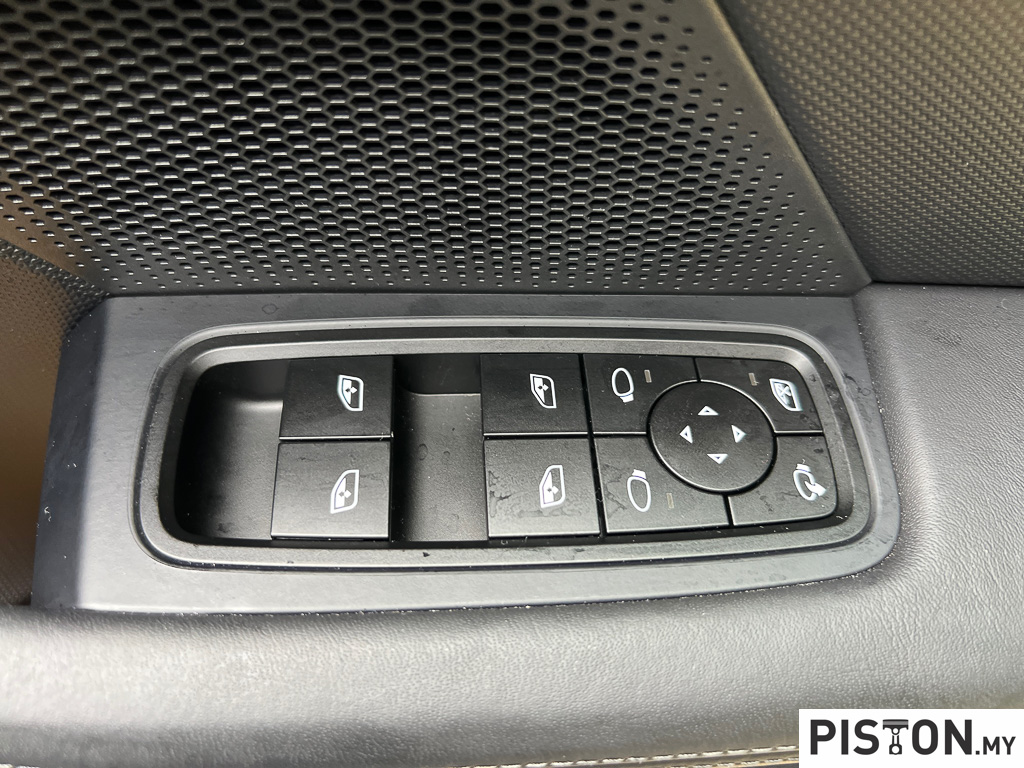
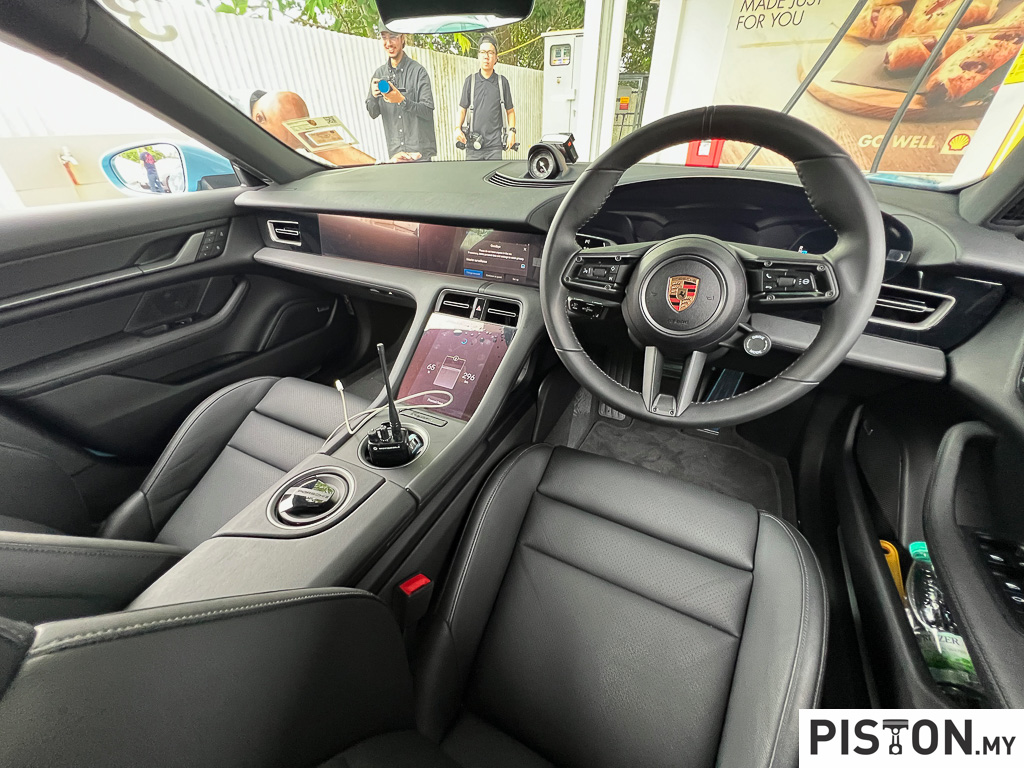
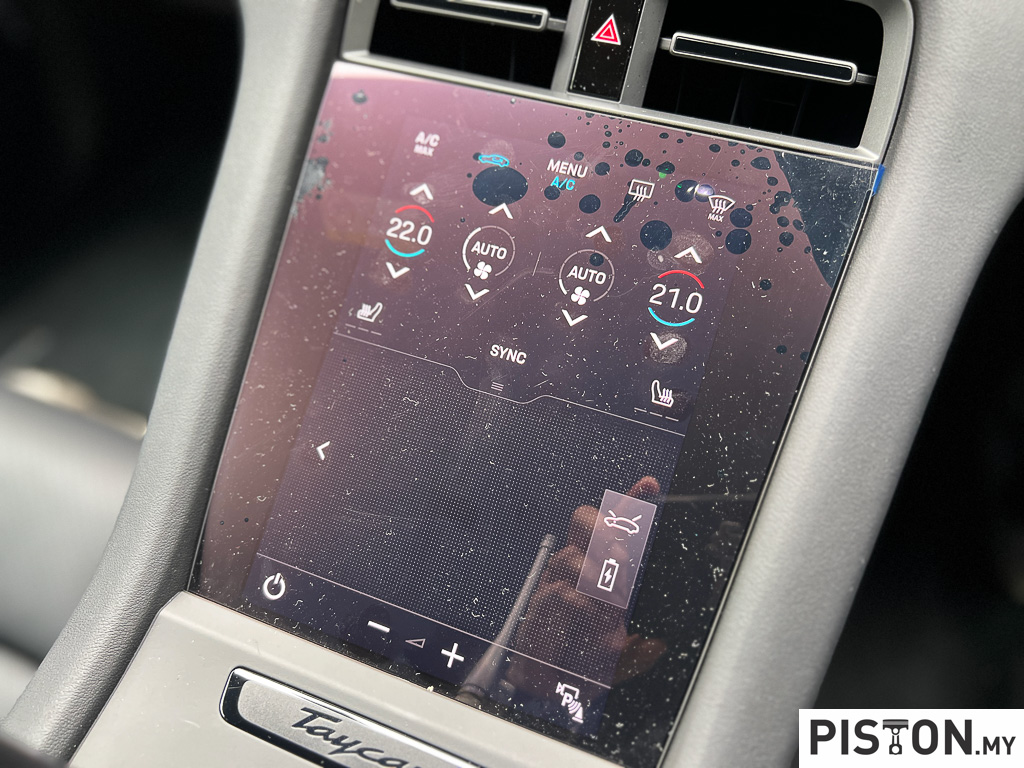
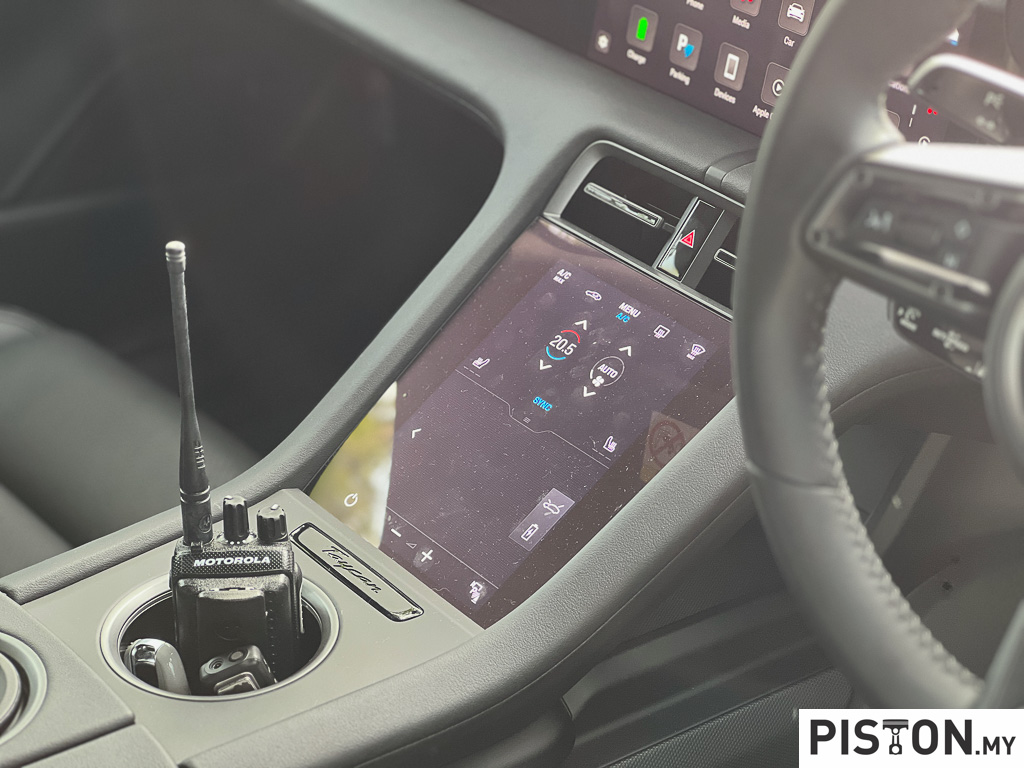
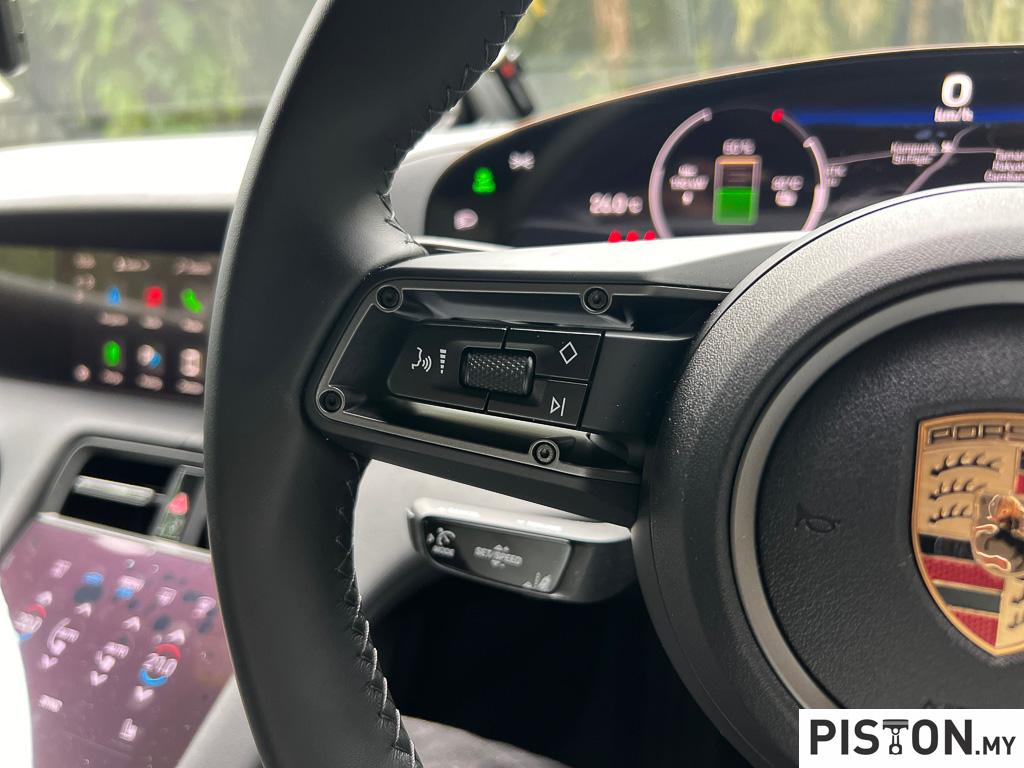
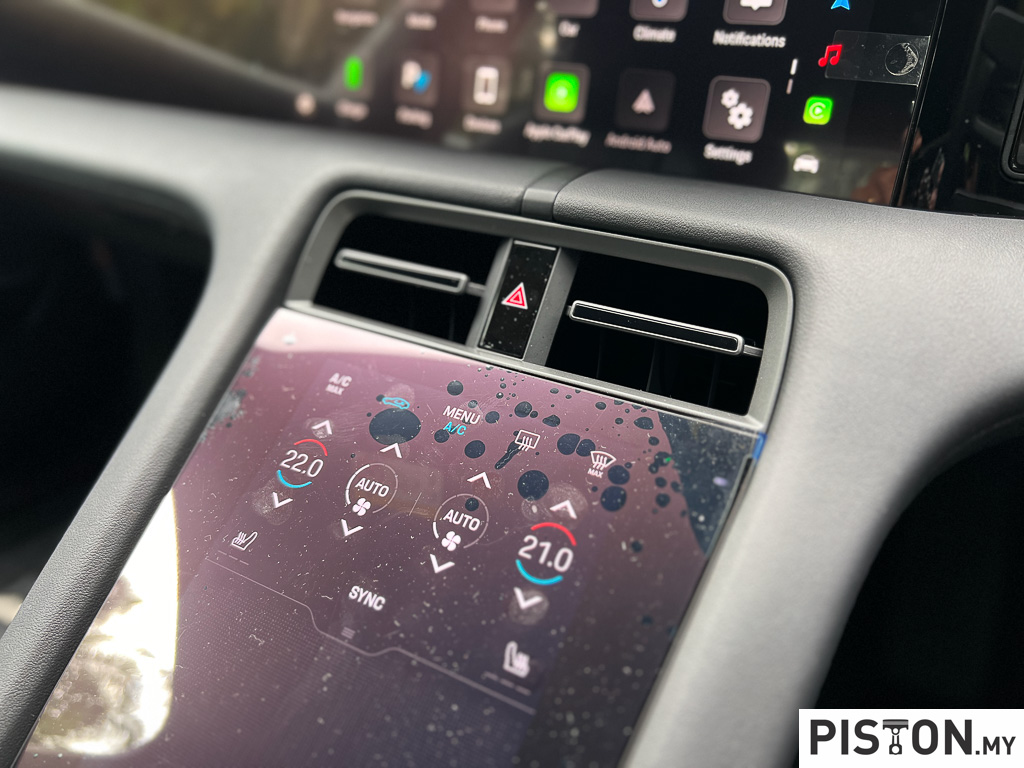
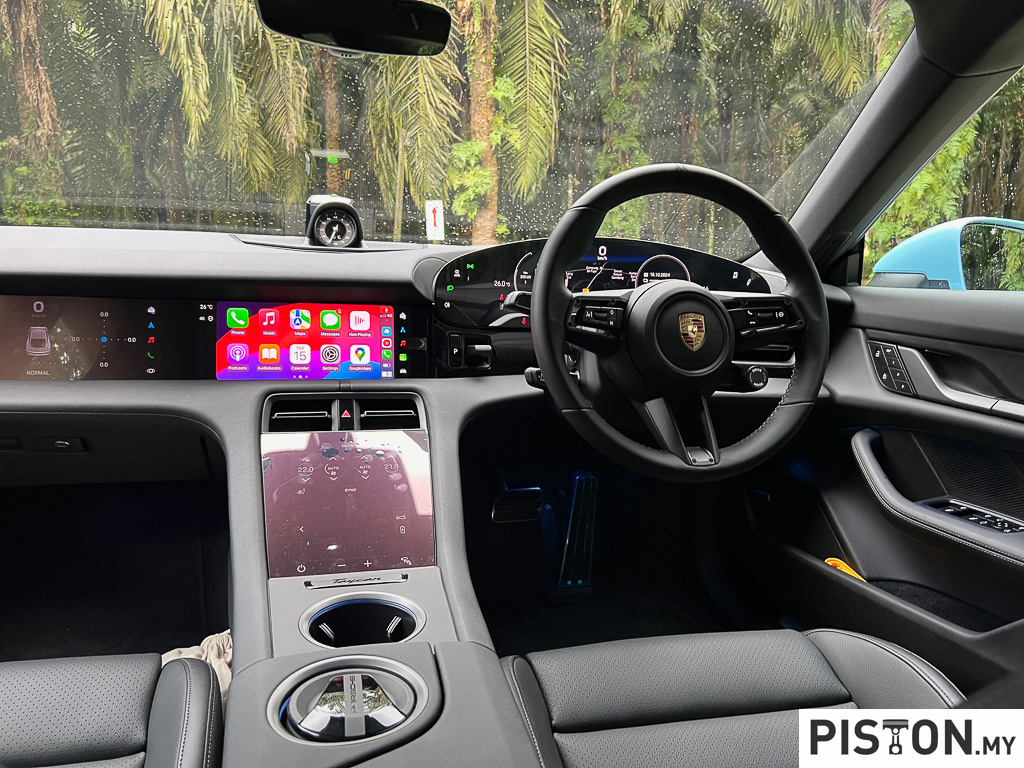
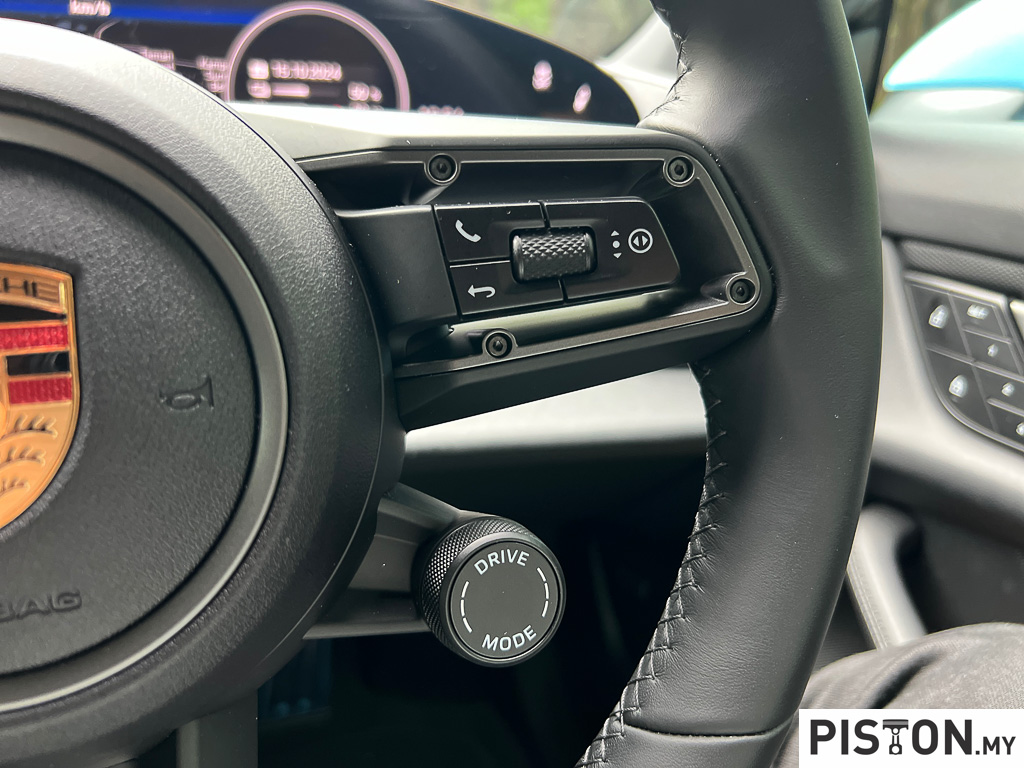
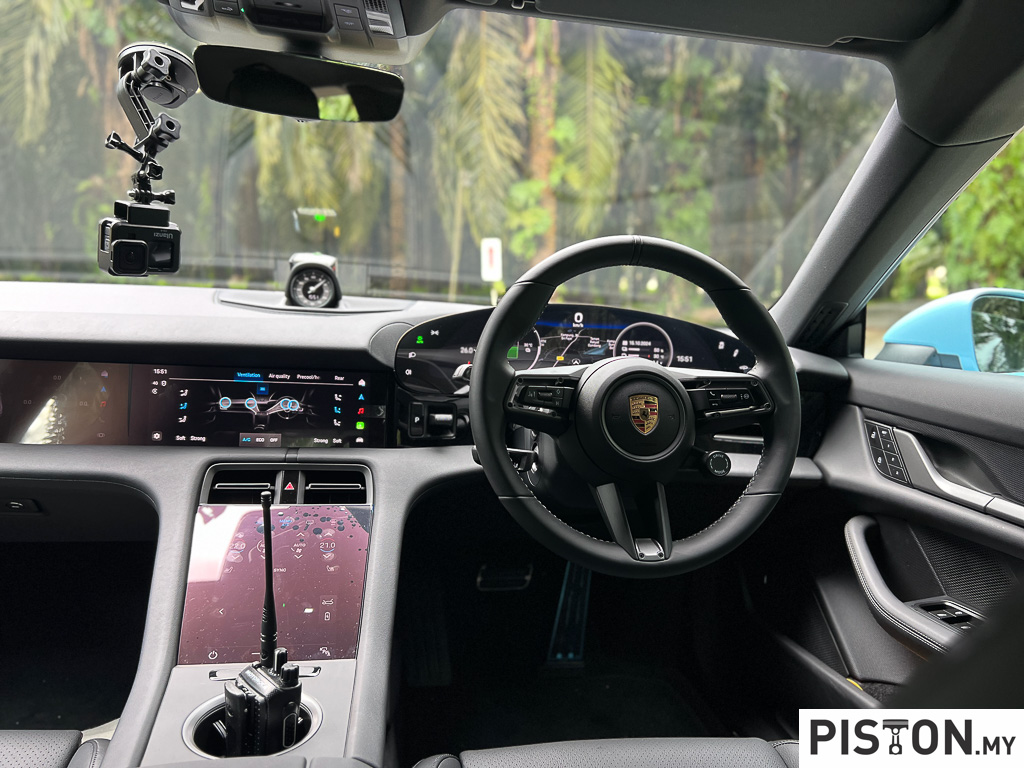
Inside, the new Taycan comes with electrically folding exterior mirrors with mirror surround lighting, a cooled smartphone tray for wireless charging and Drive Mode Select Switch as standard.

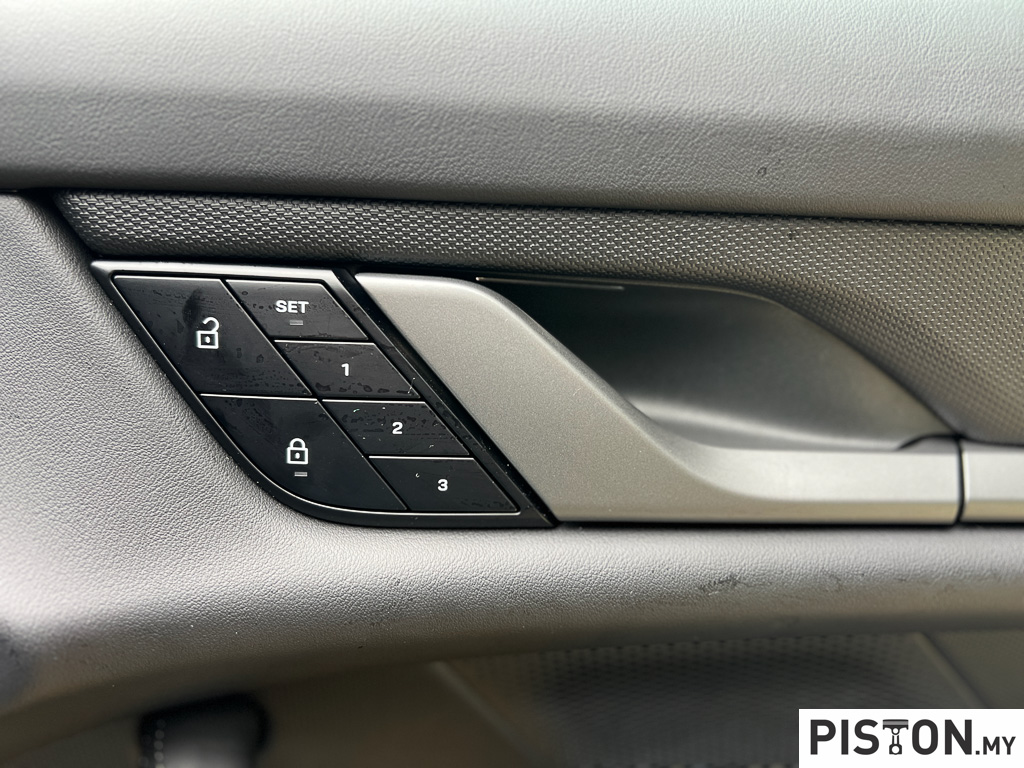
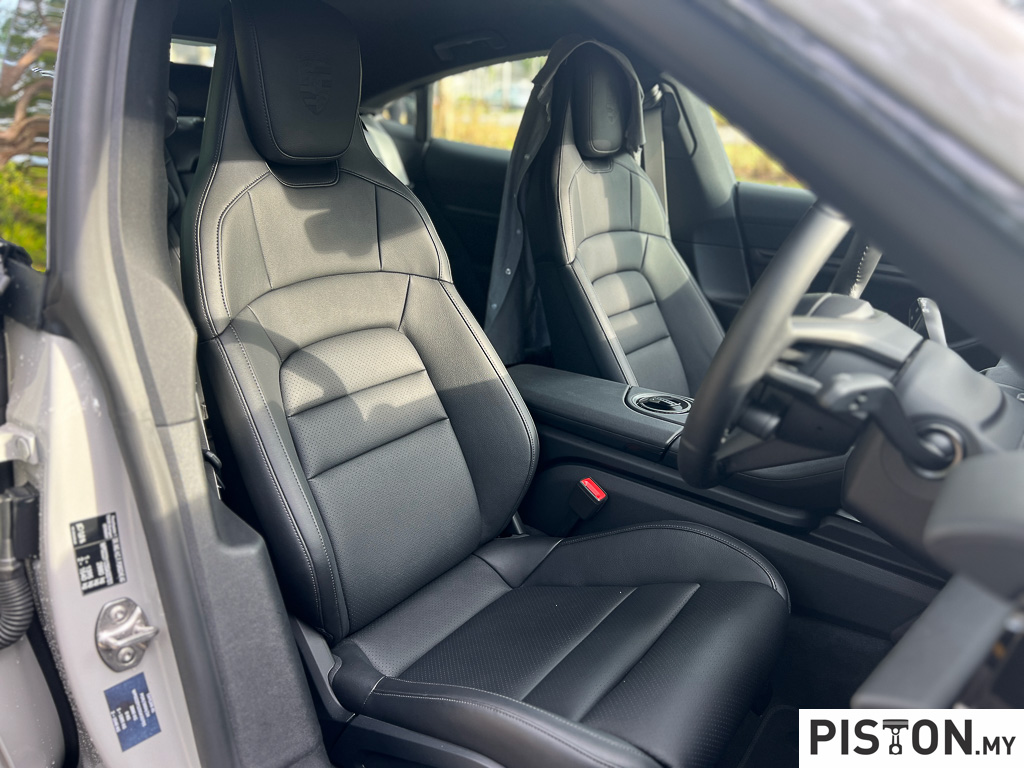
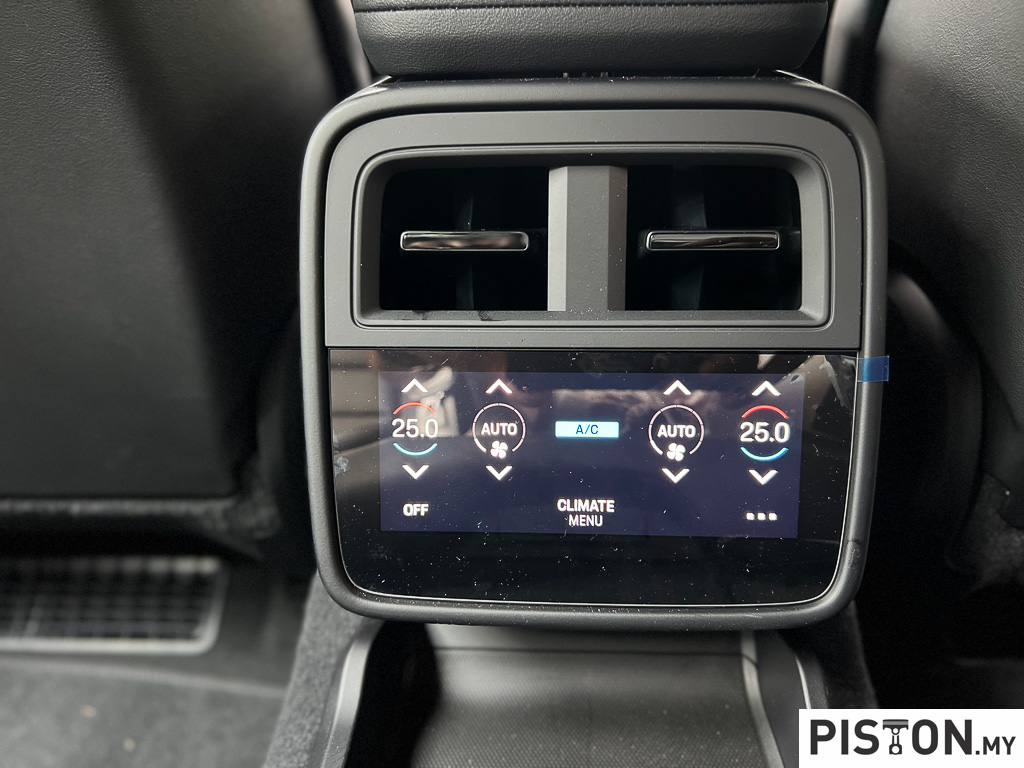
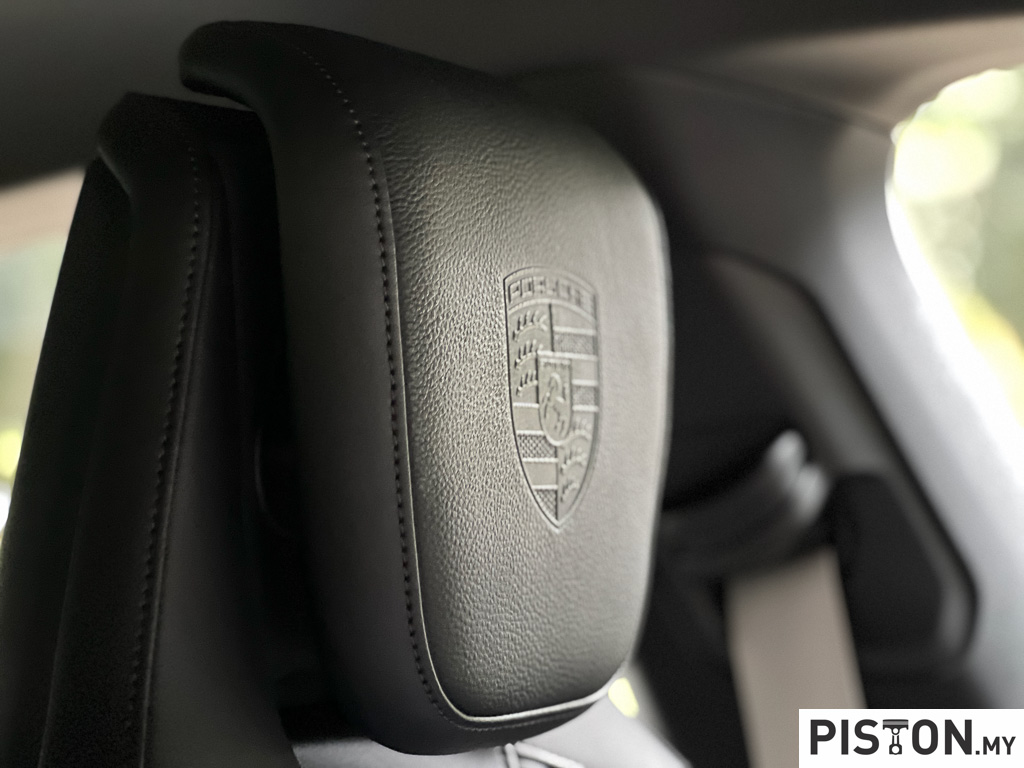
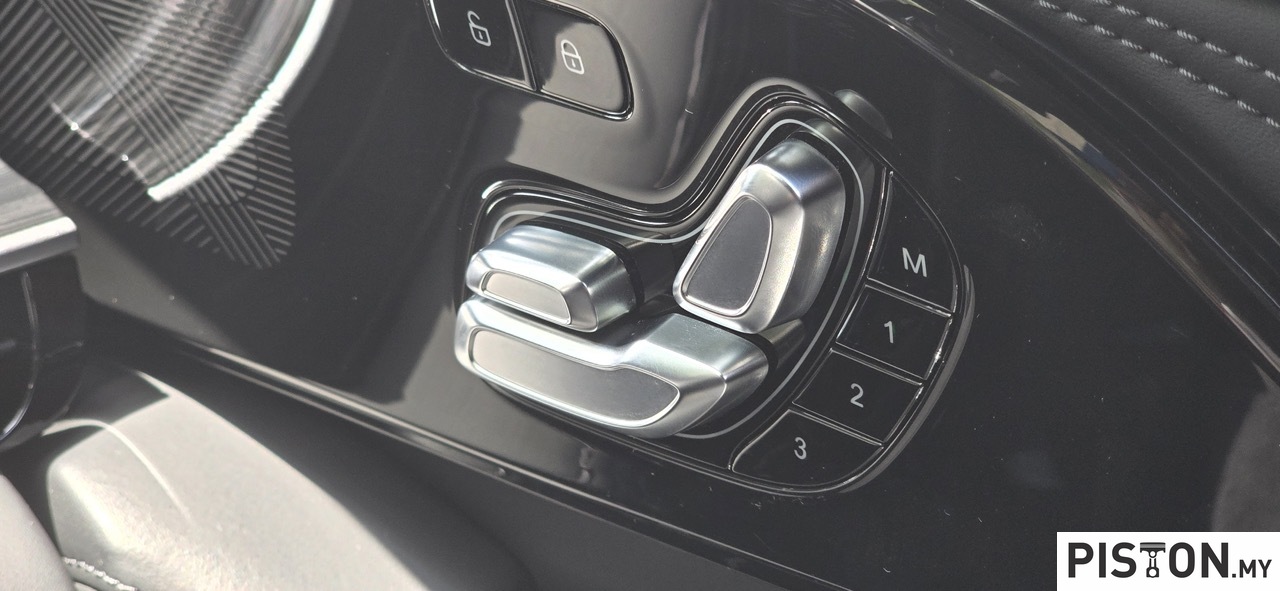
Topping that off is the Advanced Climate Control functions, 14-way comfort seats with memory function for both driver and front passenger, and a BOSE surround sound system.

And in case you are wondering, you must pay for these in some markets. The fact that these are offered as standard equipment in Malaysia is impressive.

The real star of the show for the Malaysian Taycan though is the suspension system as it now comes with the latest generation Porsche Active Suspension Management (PASM) system as standard.

The latest version of this system comes with a two-chamber air suspension and two-valve damper technology. This works to ensure that the car always remains glued to the road, providing the driver with remarkable precision by responding to steering input without lag or delay. All of this while maintaining comfort for all passengers.

What about power and performance?

There’s a hike of course. The base Taycan now produces 408PS on overboost and does the sprint to 100km/h in 4.8 seconds, 0.6 seconds faster than its predecessor.

On the other end of the spectrum lays the Taycan Turbo S, and it makes a stunning 952PS while the Taycan Turbo GT makes an almost unbelievable 1034PS. Zero to hundred you ask? A ballistic 2.2 seconds, which makes it one of the quickest cars on the planet when it comes to acceleration.

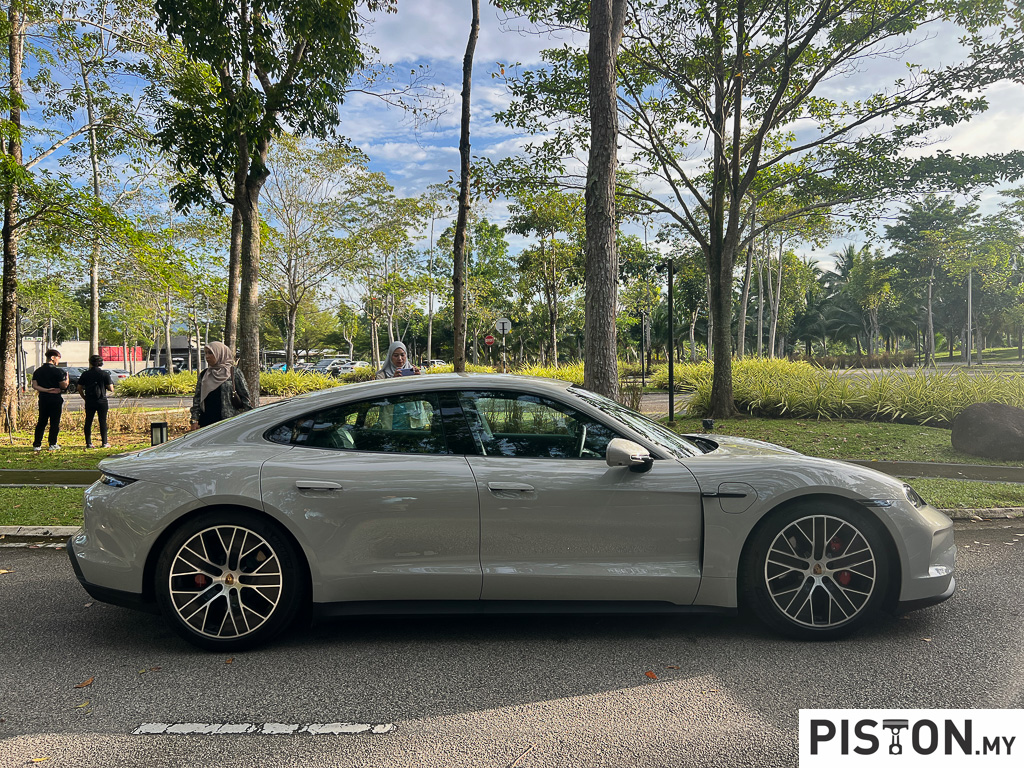
Other than the trick new suspension, the Taycan sits low and wide. This makes it one of the best-handling EV’s in the industry, with an ability to carve through corners with incredible ease and near zero body roll. The Taycan can make mediocre drivers feel like heroes.
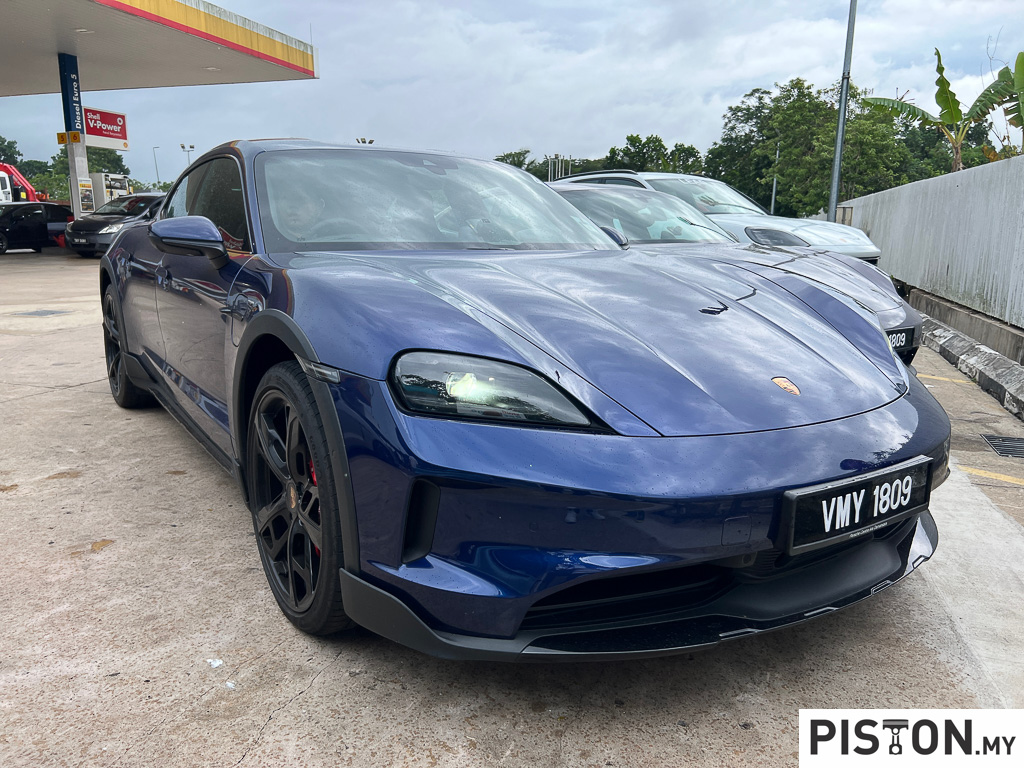
This is ultimately still a Porsche and that means performance. It switches directions on a dime. The sitting position for the driver is perfect, developed from decades of building race cars of course. The electronic steering rack is quick and surprisingly chatty. You feel everything the road throws up to the wheels through your palms. It may have four seats, but this is still a fun Porsche.

What about range and charging?

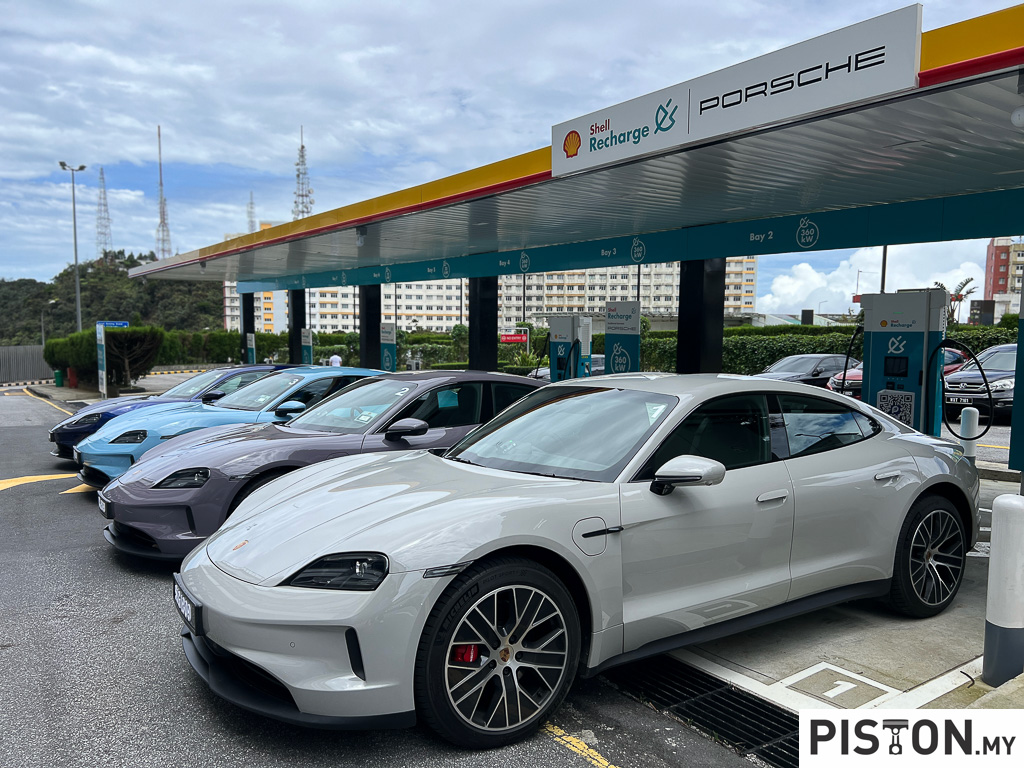
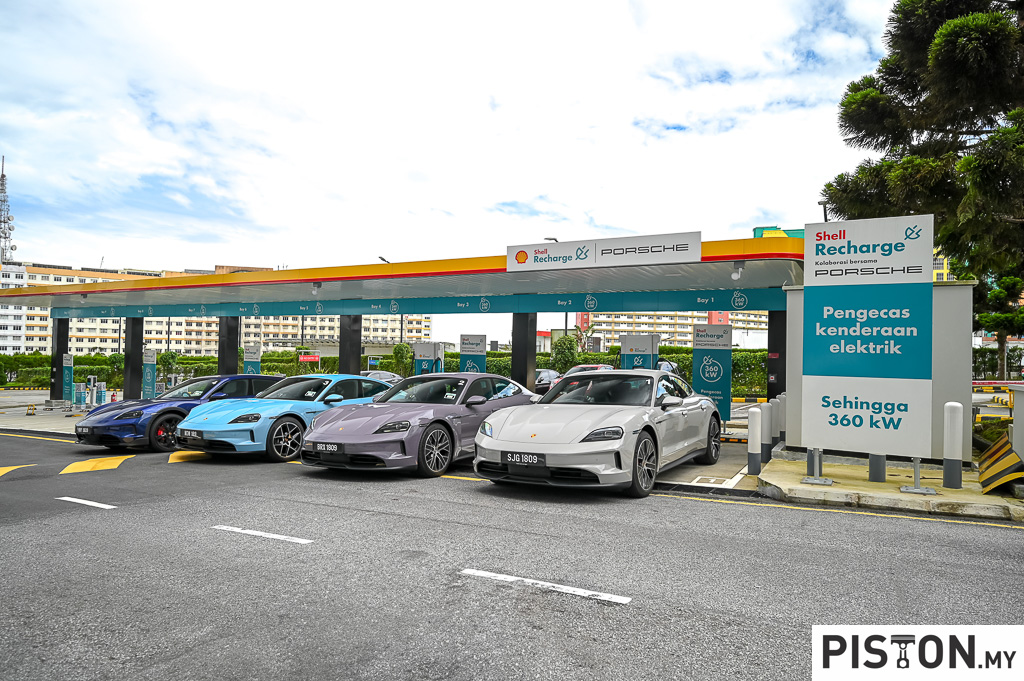
Improved as well. The Taycan is built on an 800-volt electrical architecture, which means that it can charge at fantastic speeds. DC charging capability has jumped from 270kW to 320kW, and it can sustain high power charging of 300kW for up to five minutes, which is quite significant.

This means that charging from 10% to 80% is now quicker, taking just 18 minutes despite the Taycan having a 12% bigger battery (a jump from 93kWh to 105kWh with the Performance Battery Plus).
Also significant is the improved regenerative braking, now 30% more powerful than before, and pulling 400kW of kinetic energy to provide better energy retardation and quicker battery charge when braking or decelerating.

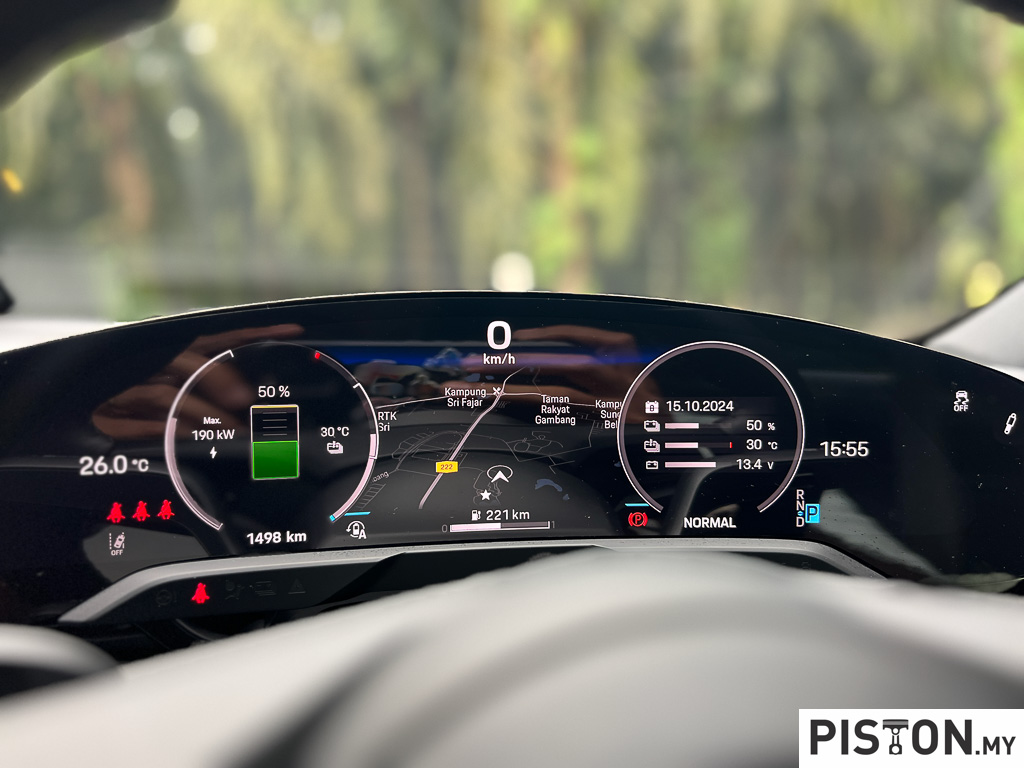
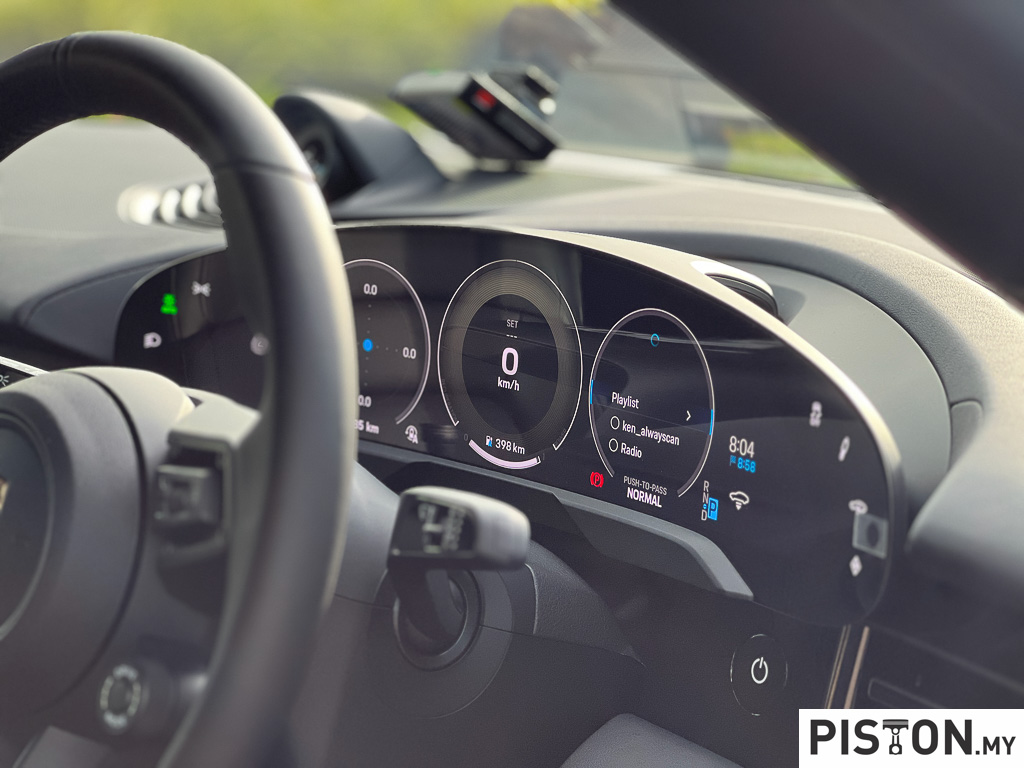
As for range, the new Taycan has a WLTP range of up to 678 kilometres, which meant that we reached Kuantan with more than enough battery state of charge to spare.

But it can’t be all that great

As a Porsche and an electric sports car, the Taycan is undoubtedly fun to drive. It ticks all the boxes in the sports category, but Porsche also wants us to believe that it is a great family car, one that is good for long distance journeys with fast charging capabilities that makes it more convenient to live with an EV.
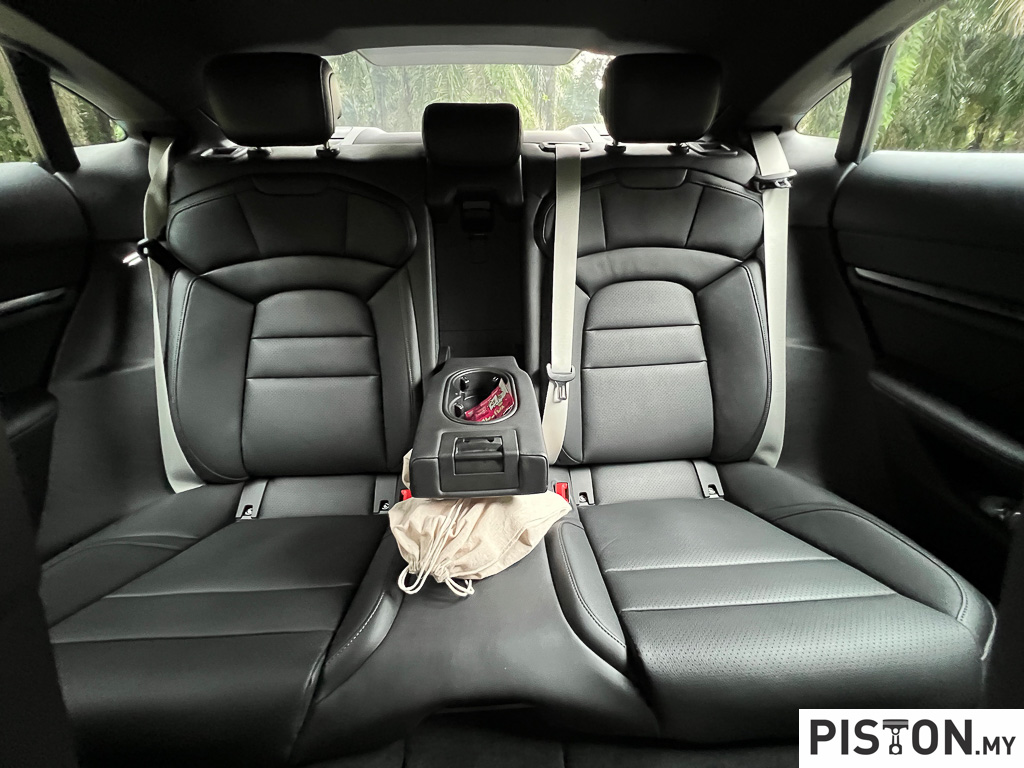
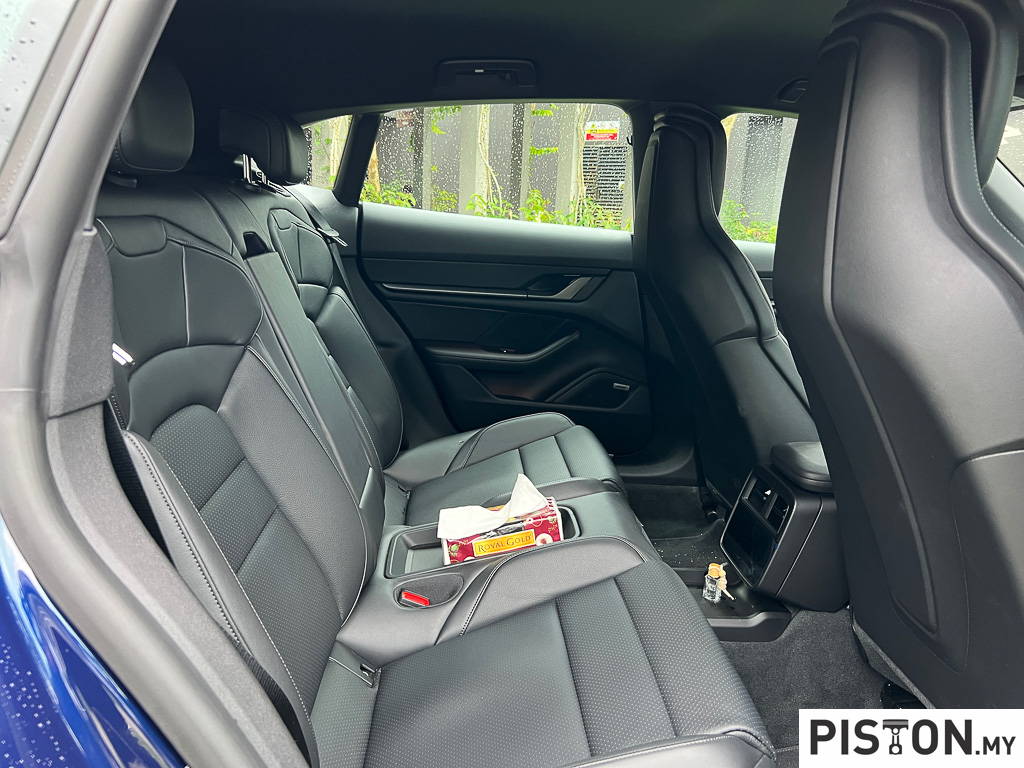
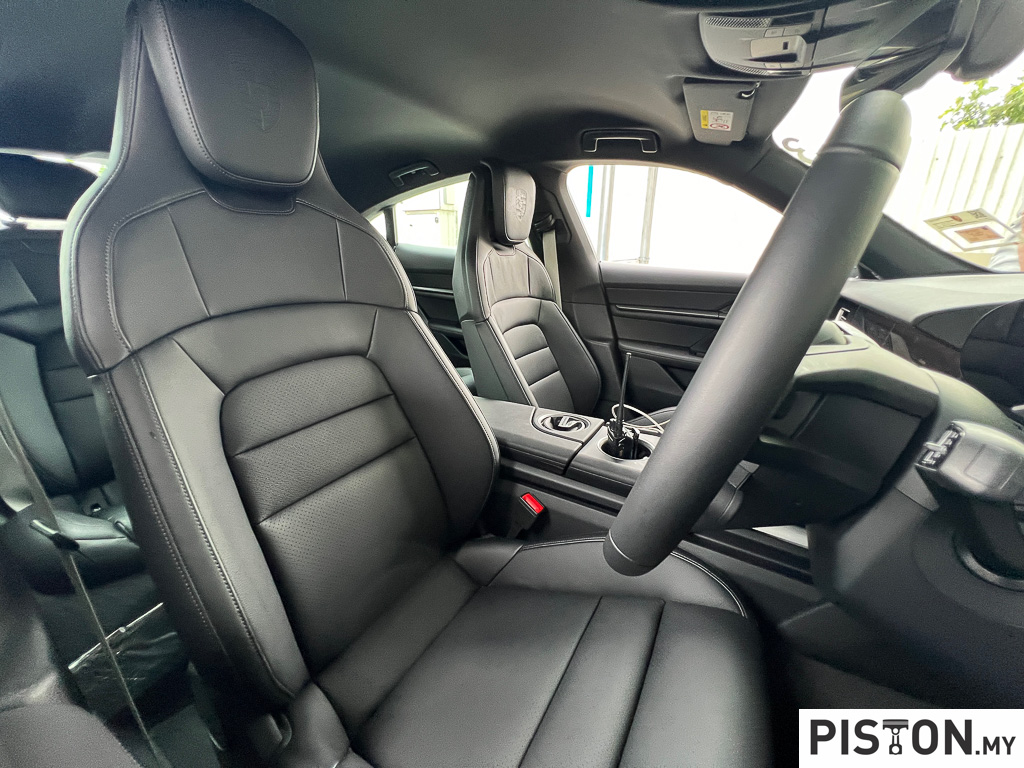
Though we agree that the Taycan is fun, fast and is convenient to recharge, but we found that the interior can be overly snug. There is enough space for four adults, but it can be tight. The backrests of the rear seats are too upright for this writer’s liking and there is no space under the front seats to tuck your feet into. Which means you sit almost upright in a knee in chest position, particularly if you are on the tall.
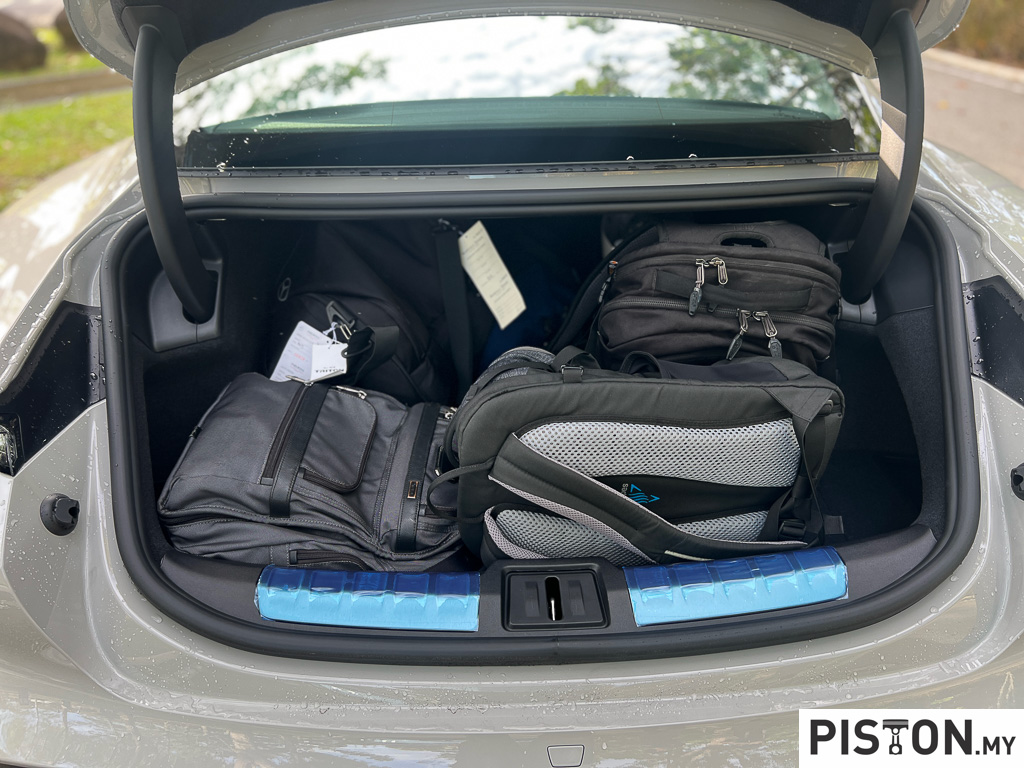
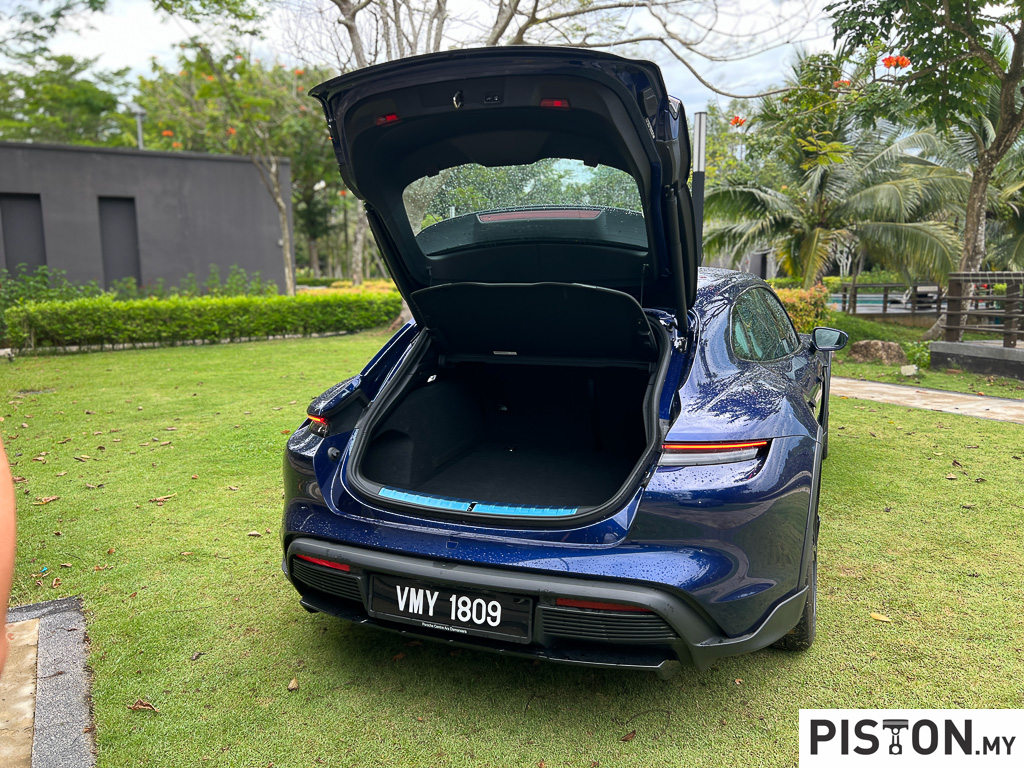
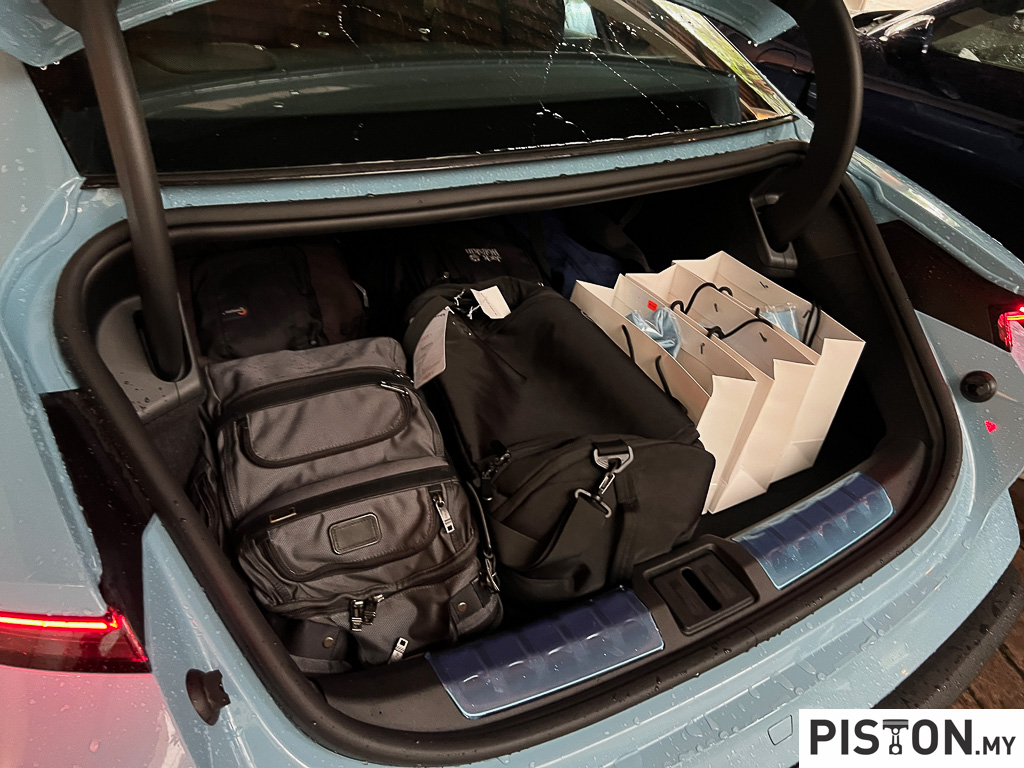
Boot space is just alright as well. Measuring in at just 407 litres, the boot was already packed to the brim with the bags of four adults who packed light for an overnight trip to Kuantan. Not exactly very compelling for a car Porsche wants us to believe is suitable for the family.

That aside, should you buy one?

When the Taycan was first introduced in 2019, it did not have a lot of competition, and it was well accepted. Partly because it is a Porsche, but also because it is very good at what it was built to do – go fast, go far, charge quick.

The automotive landscape has changed quite significantly in the five years since, and there are more competitors now which is partly why sales have slowed quite significantly for Porsche. Some reports say that sales of the Taycan have dropped by 51% in some markets.
Not in Malaysia though. We reached out to Porsche Malaysia to ask how well the Taycan is doing here, and a spokesperson described it as a “bread and butter model”.

That is not all that surprising considering the sheer number of Taycan’s on our roads. It is not surprising either because it is one of the best EV’s you can buy.
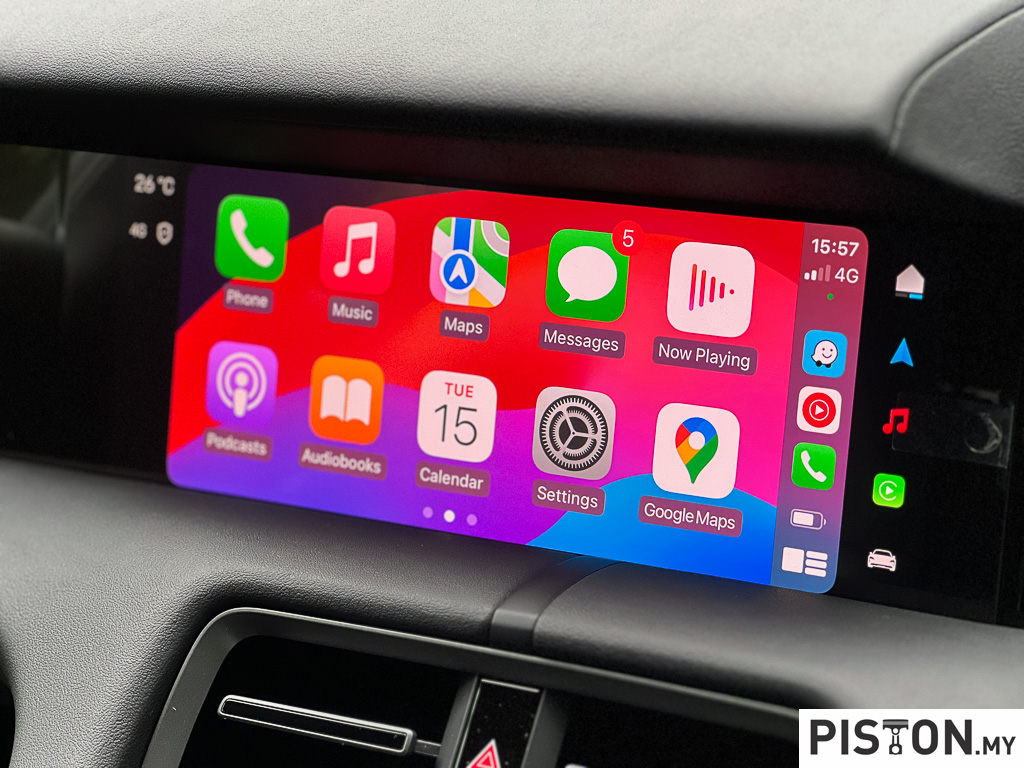
There might be others that offer more interior room, bigger boot’s, bigger infotainment screens and more comfort. But they lag far behind in two key areas – sheer driving pleasure and pure performance. And that is the essence of a Porsche, and for that reason alone, the new Taycan is worth every Ringgit.

Specifications (Porsche Taycan RWD)
Motor: Single, Rear-Mounted, Electric Motor
Transmission: Two-speed
Power: 408PS
Torque: 410Nm
Acceleration (0-100kmh): 4.8 seconds
Top speed: 230km/h
Range (WLTP): 678km
Base price (As tested): RM575,000

We like: Power, Handling, Good looks
We don’t like: Feels small for taller drivers

Electric SUVs have rapidly become a cornerstone of the automotive industry’s shift toward sustainable mobility. Combining the practicality and versatility of traditional SUVs with the eco-friendly benefits of electric powertrains, these vehicles offer a compelling option for modern drivers. 

With advancements in battery technology, enhanced driving ranges, and innovative features, electric SUVs blend performance, comfort, and environmental responsibility.

The EV market in Malaysia is mostly dominated by big and popular Chinese brands such as Chery, BYD, GWM and more. However, there are a few underrated brands that people seem not to notice. One of them is Leapmotor. 

Leapmotor, established in 2015 in Hangzhou, China, is a rapidly growing EV manufacturer focused on delivering innovative and accessible electric mobility solutions. The company was founded with a vision to create smart, high-quality, and affordable EVs that cater to diverse market needs. Leapmotor specialises in the design and production of electric cars and emphasises integrating cutting-edge technologies such as intelligent driving systems, advanced connectivity, and efficient powertrains.

The brand’s lineup includes a range of EVs from compact cars to SUVs, targeting urban commuters and families alike. Leapmotor’s proprietary technologies, such as in-house developed batteries and smart cockpit systems, position it as a serious contender in the competitive EV market. The company has also embraced sustainability, striving to reduce carbon emissions across its production and product lifecycles.

This writer is not particularly interested in EVs, but as the saying goes “you never know unless you try” has played a major role in my life. So I was given the opportunity by Stellantis, the parent company of Leapmotor, to try out their electric SUV, the Leapmotor C10.

Mature Looks

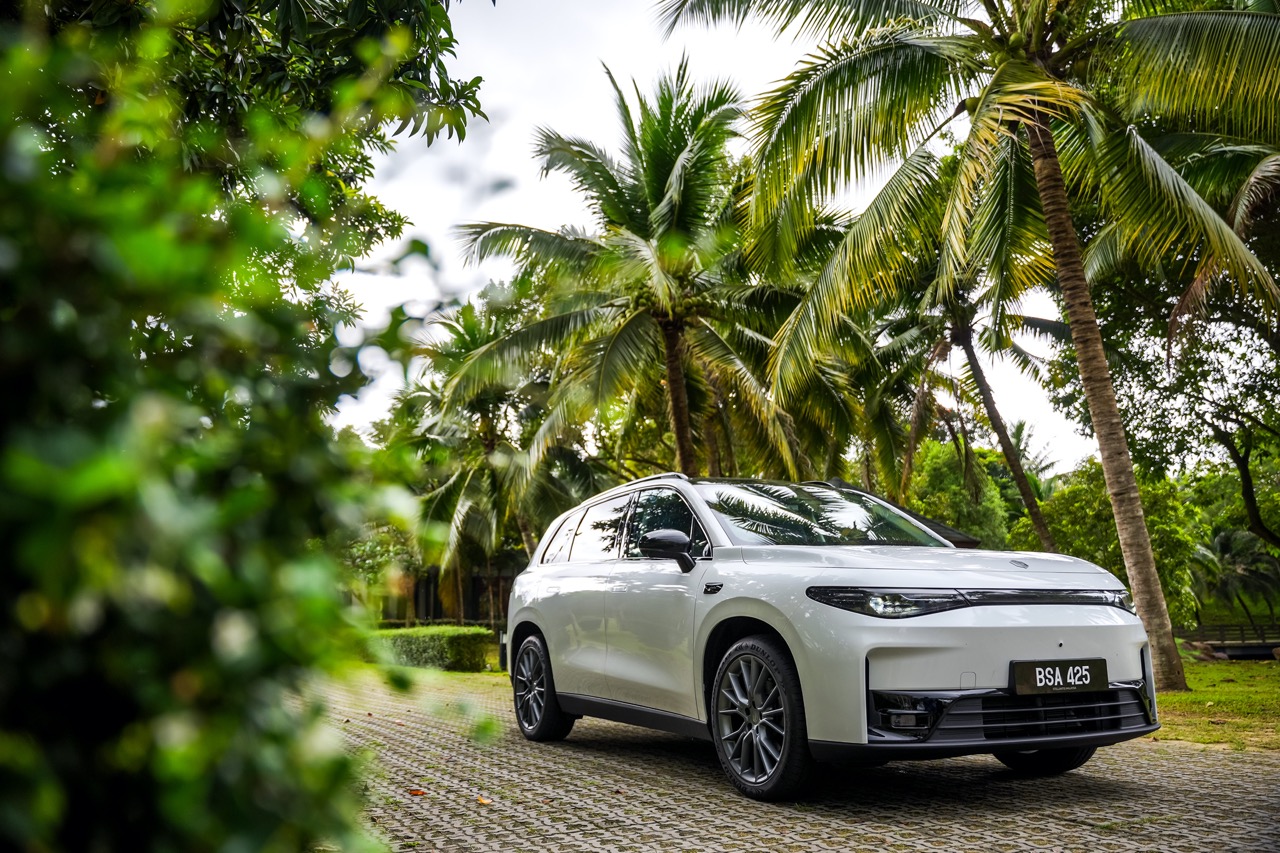
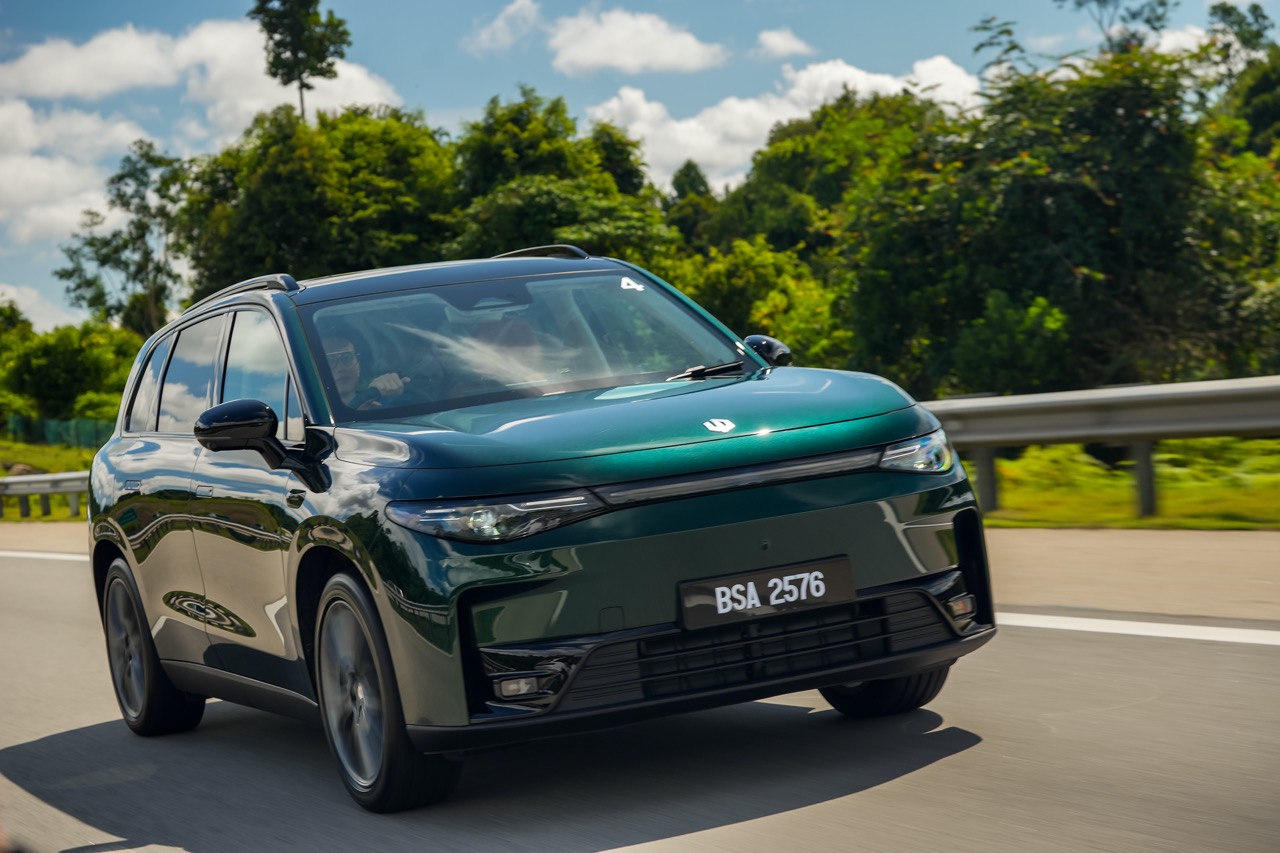
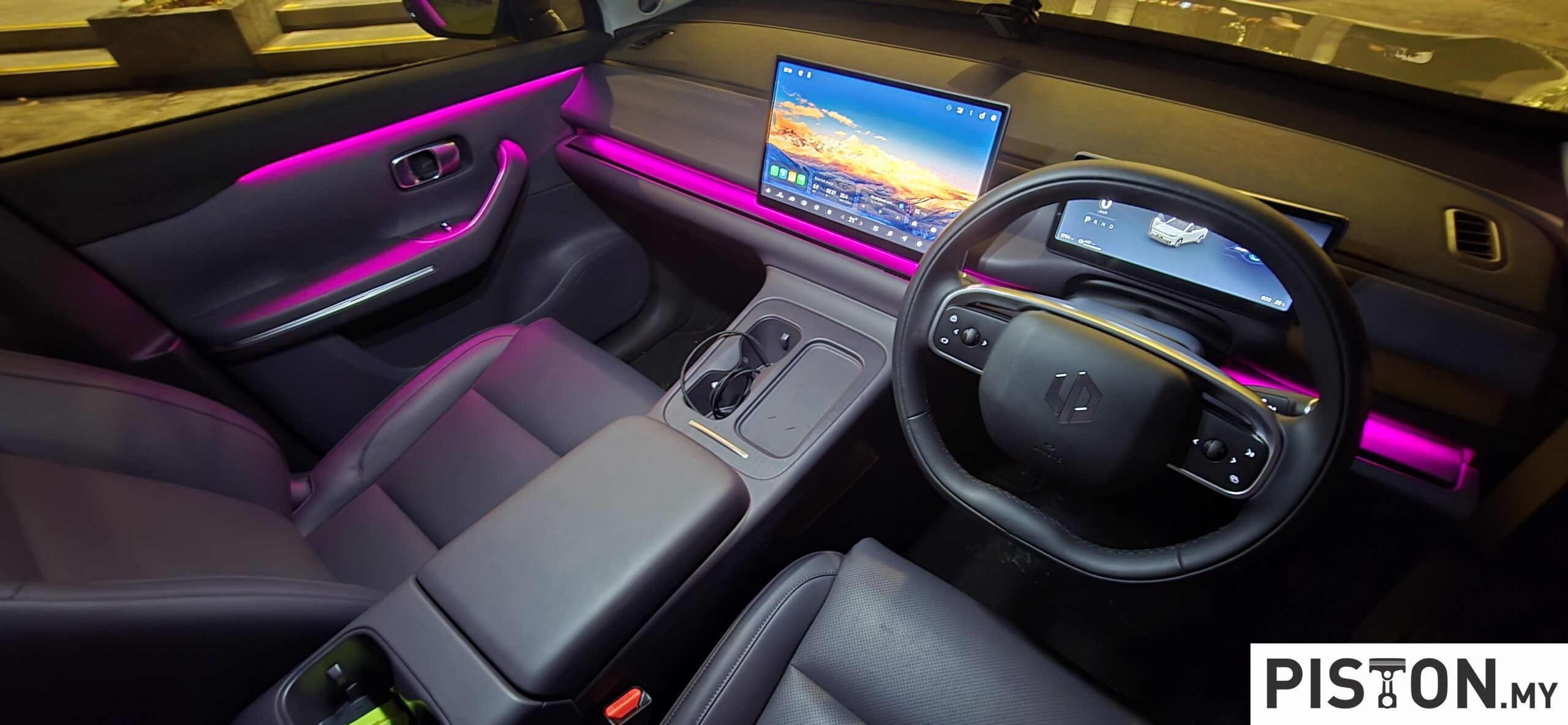
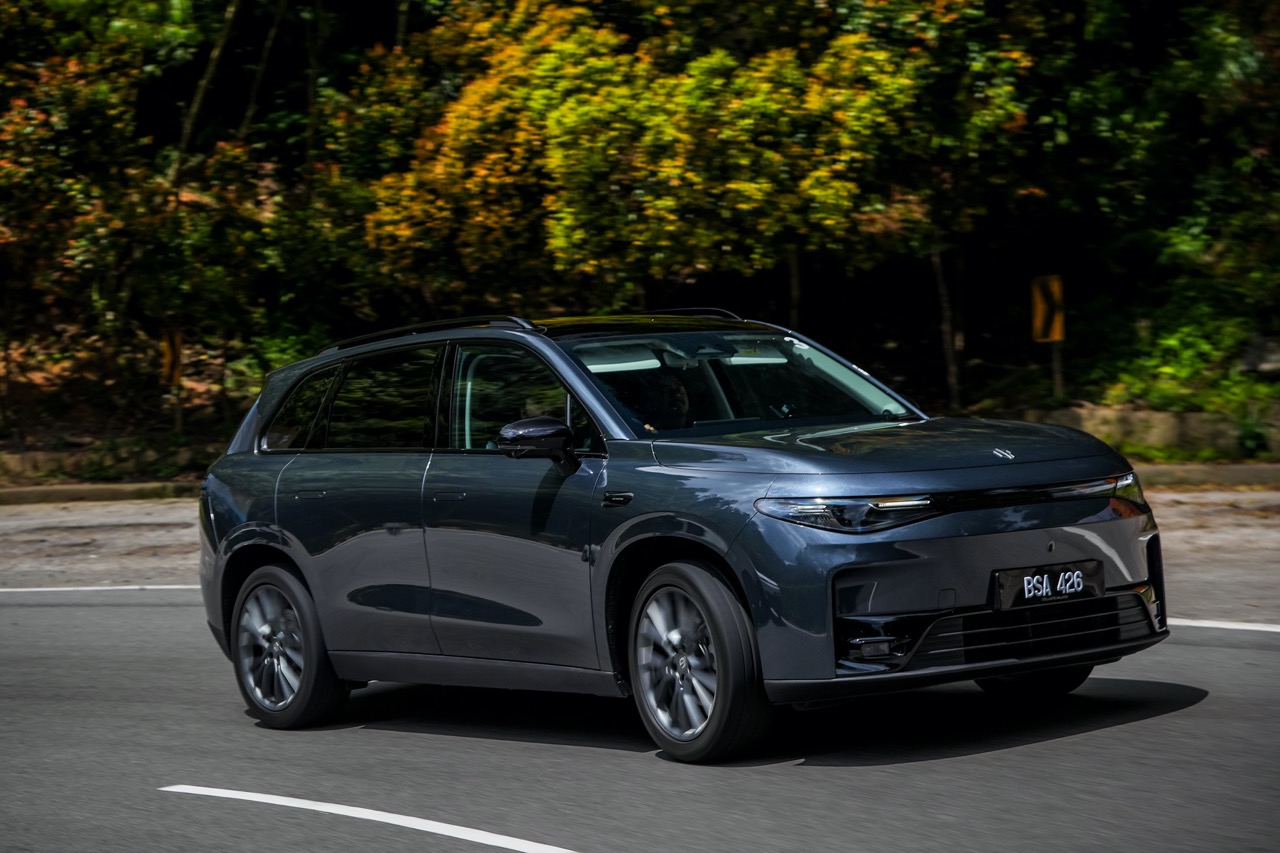
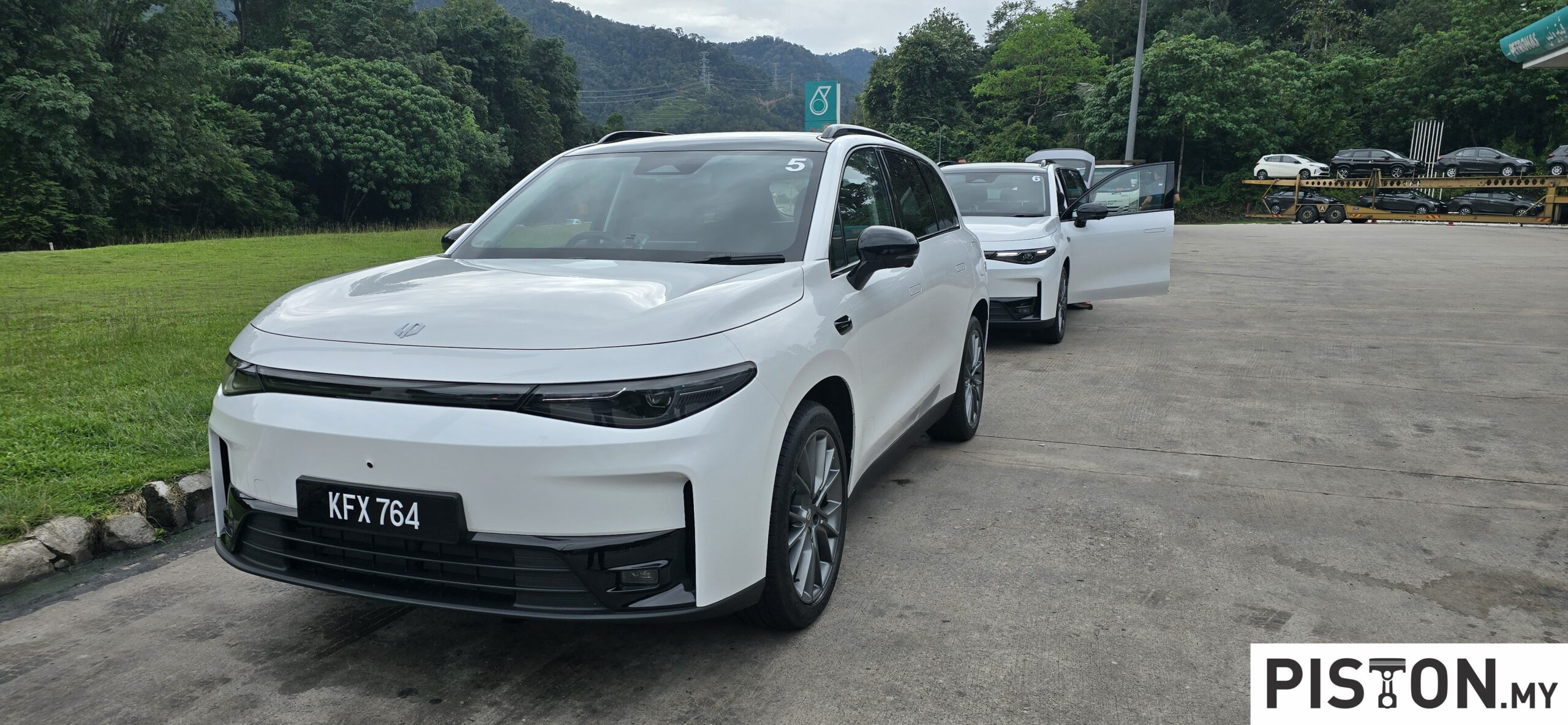
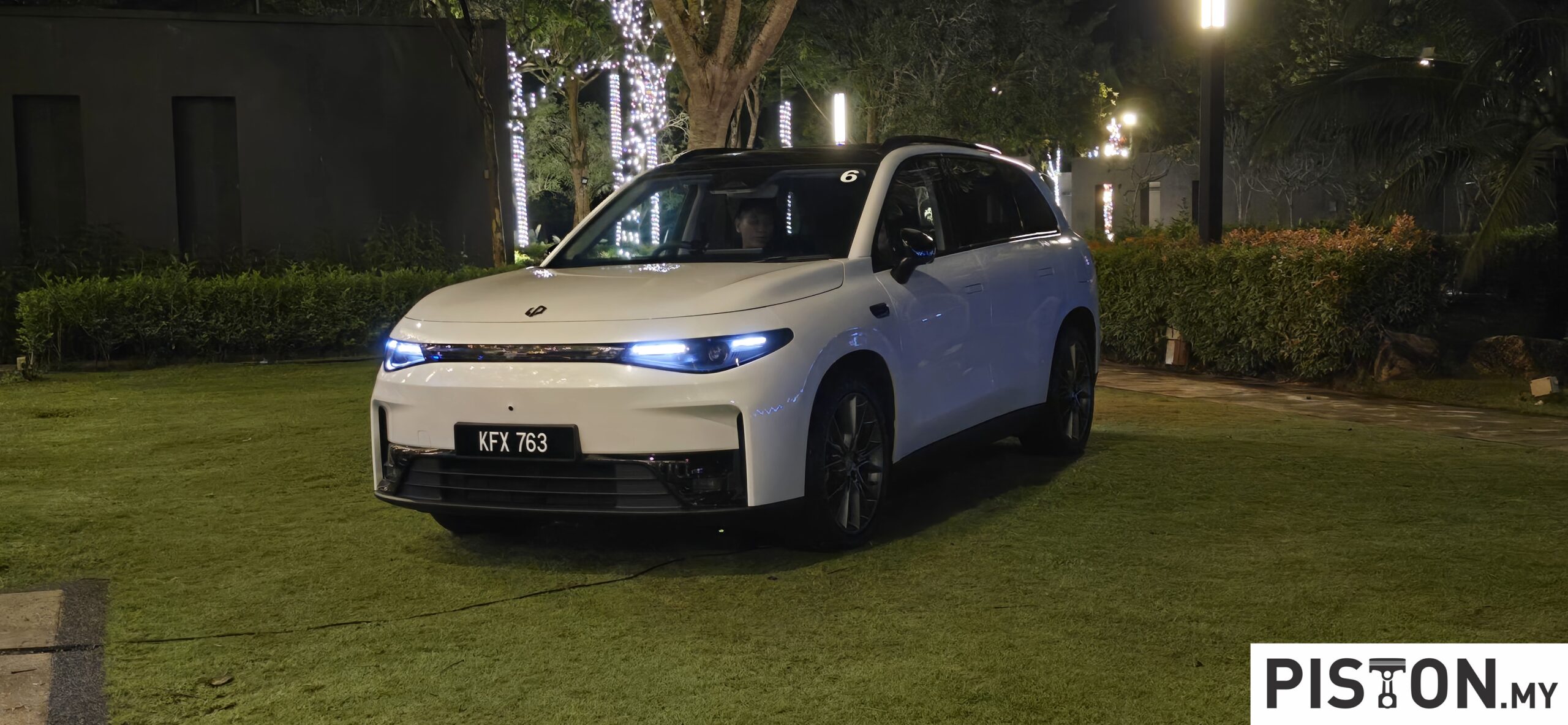
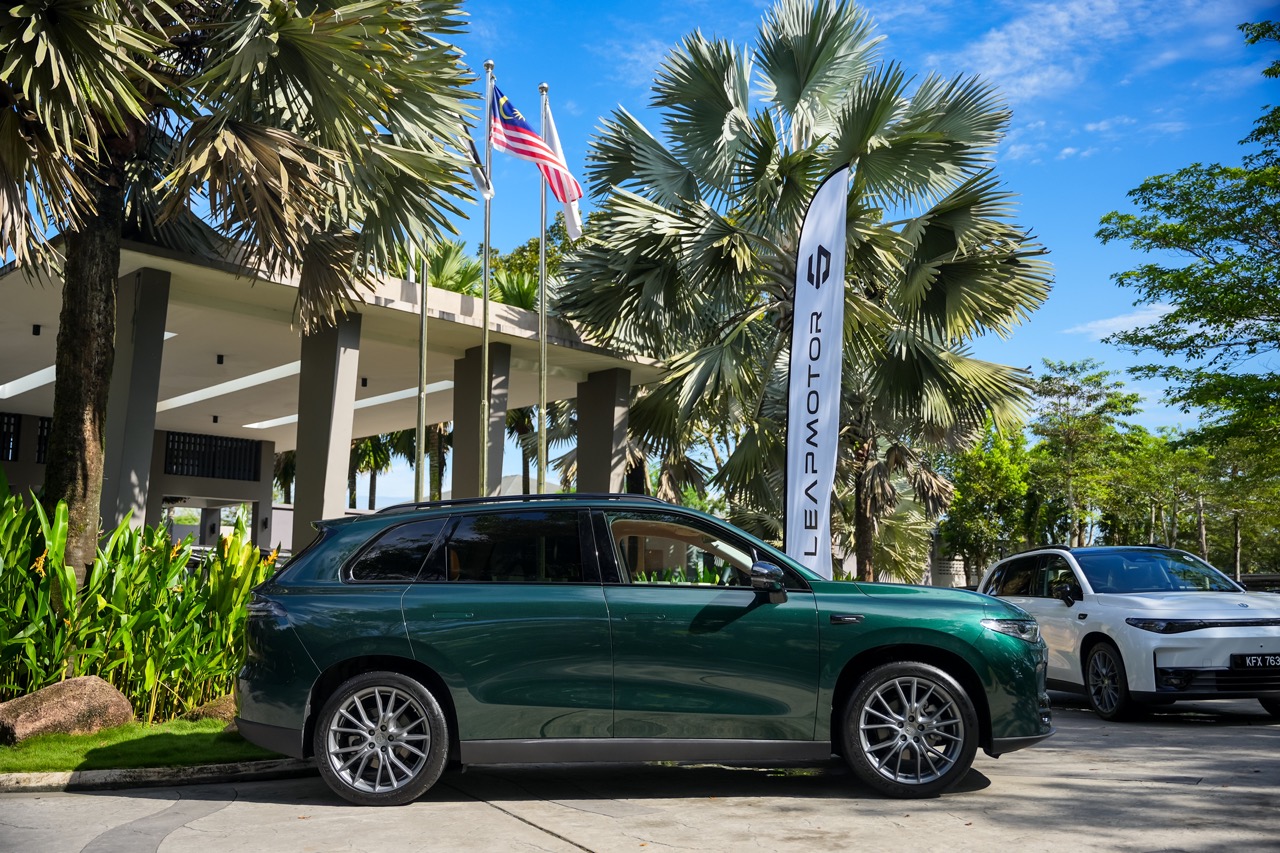
When you first look at the C10, you will notice that it does not look like any of the other Chinese brands. The C10 looks simple and mature. No sophisticated bumpers or weird designs, no unnecessary parts that make it look cheap, just simple and elegant. 

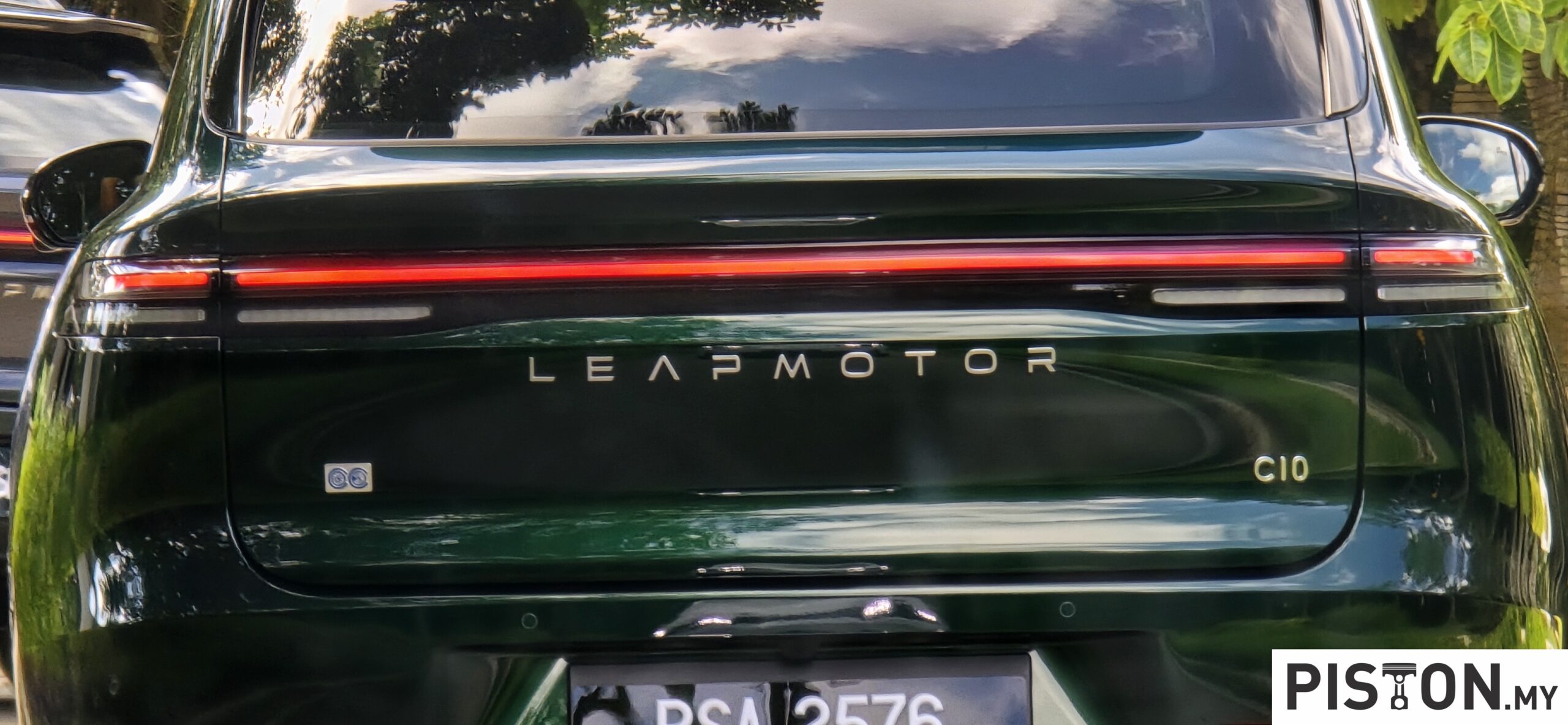
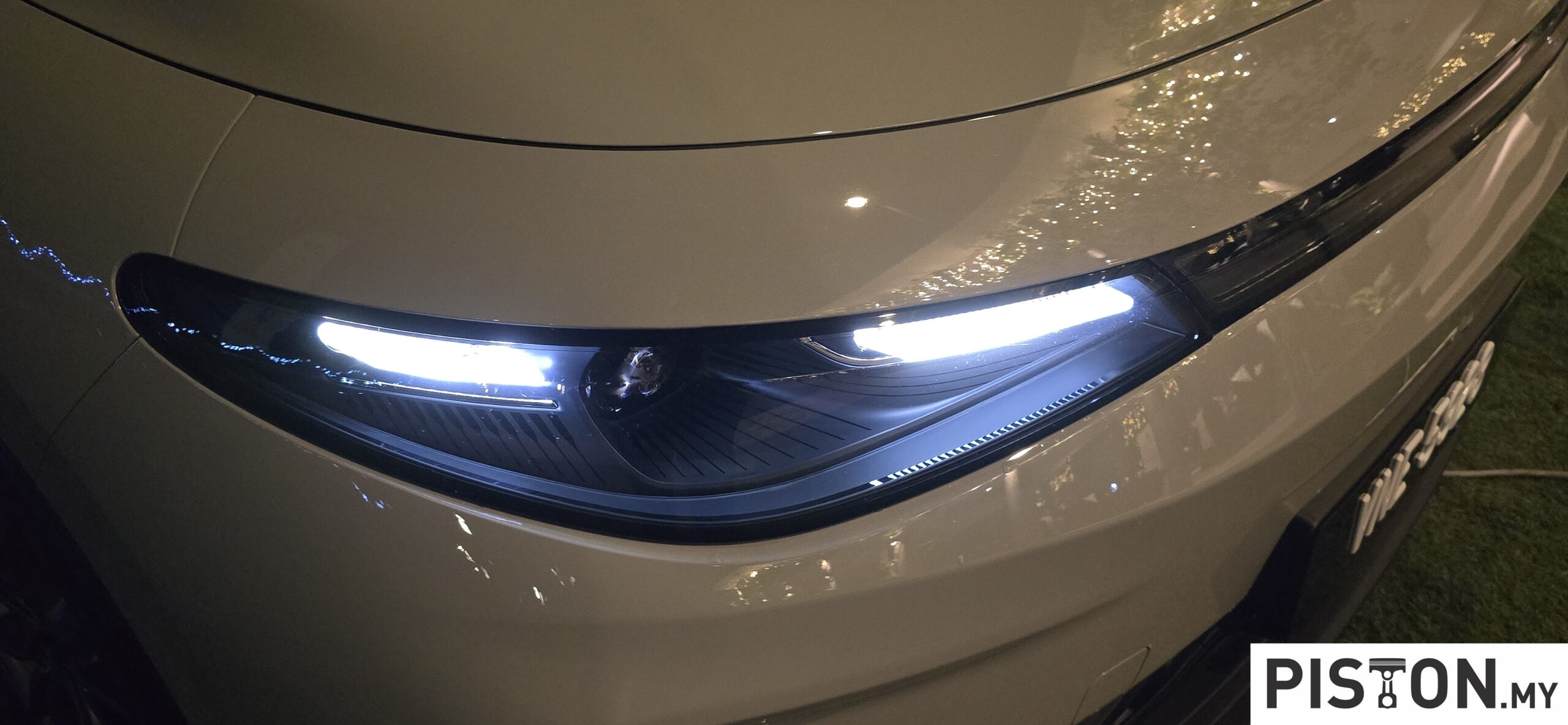
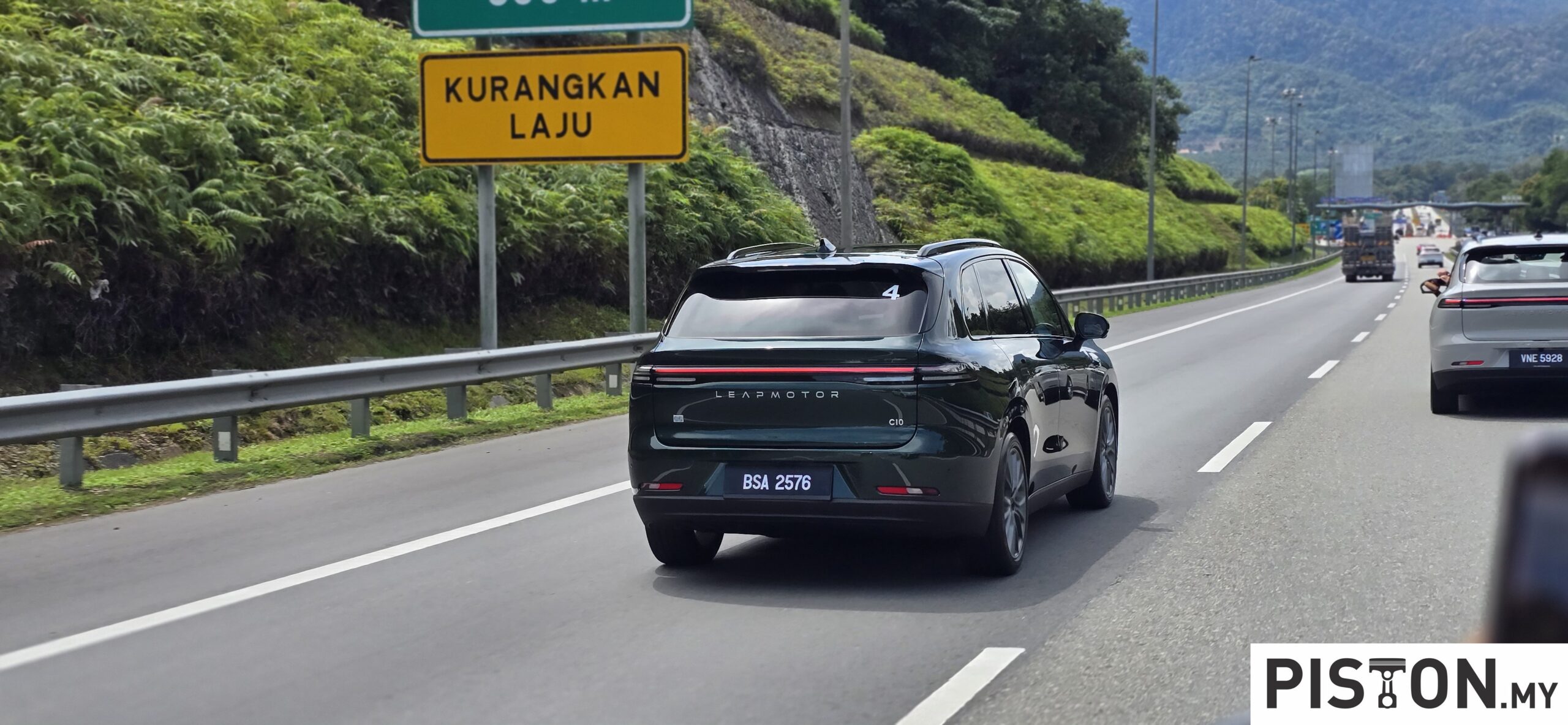
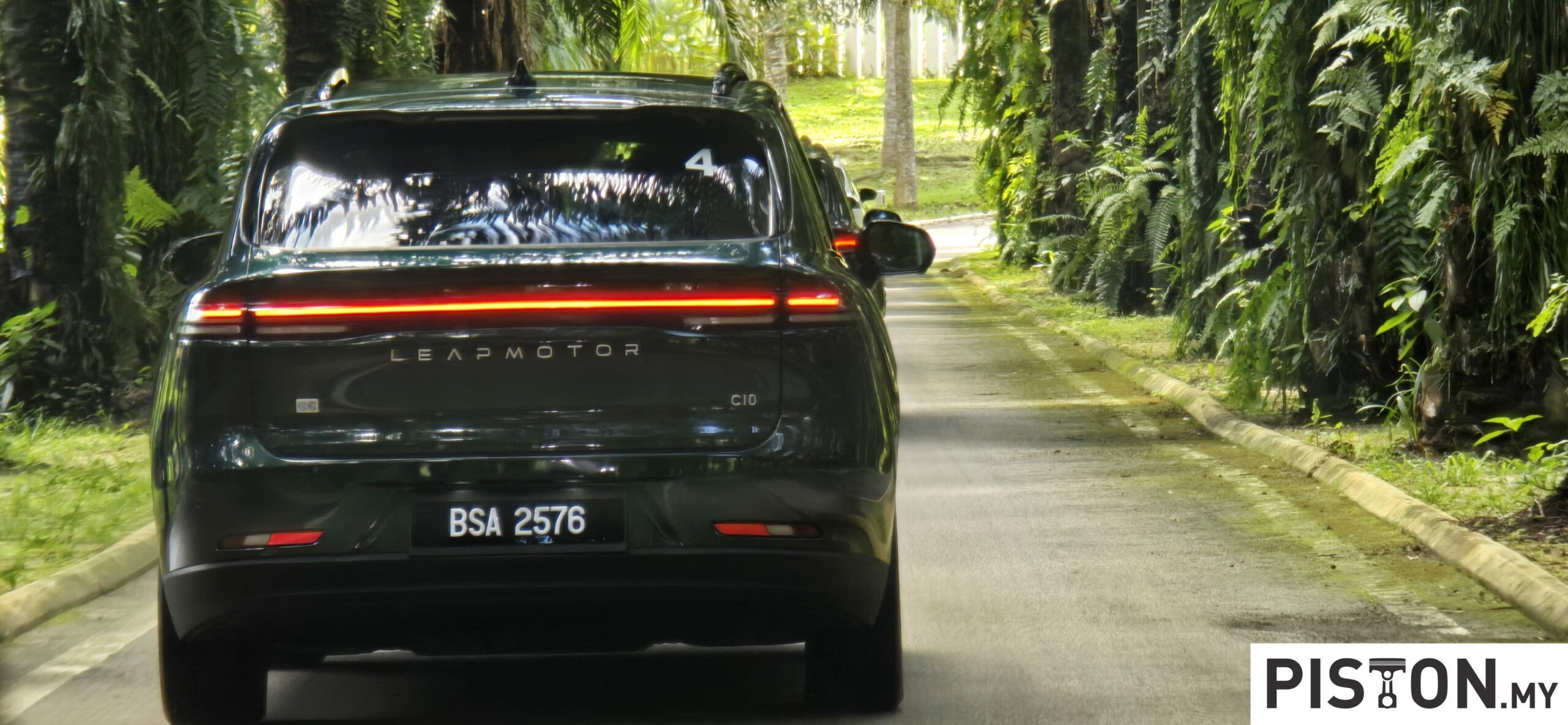
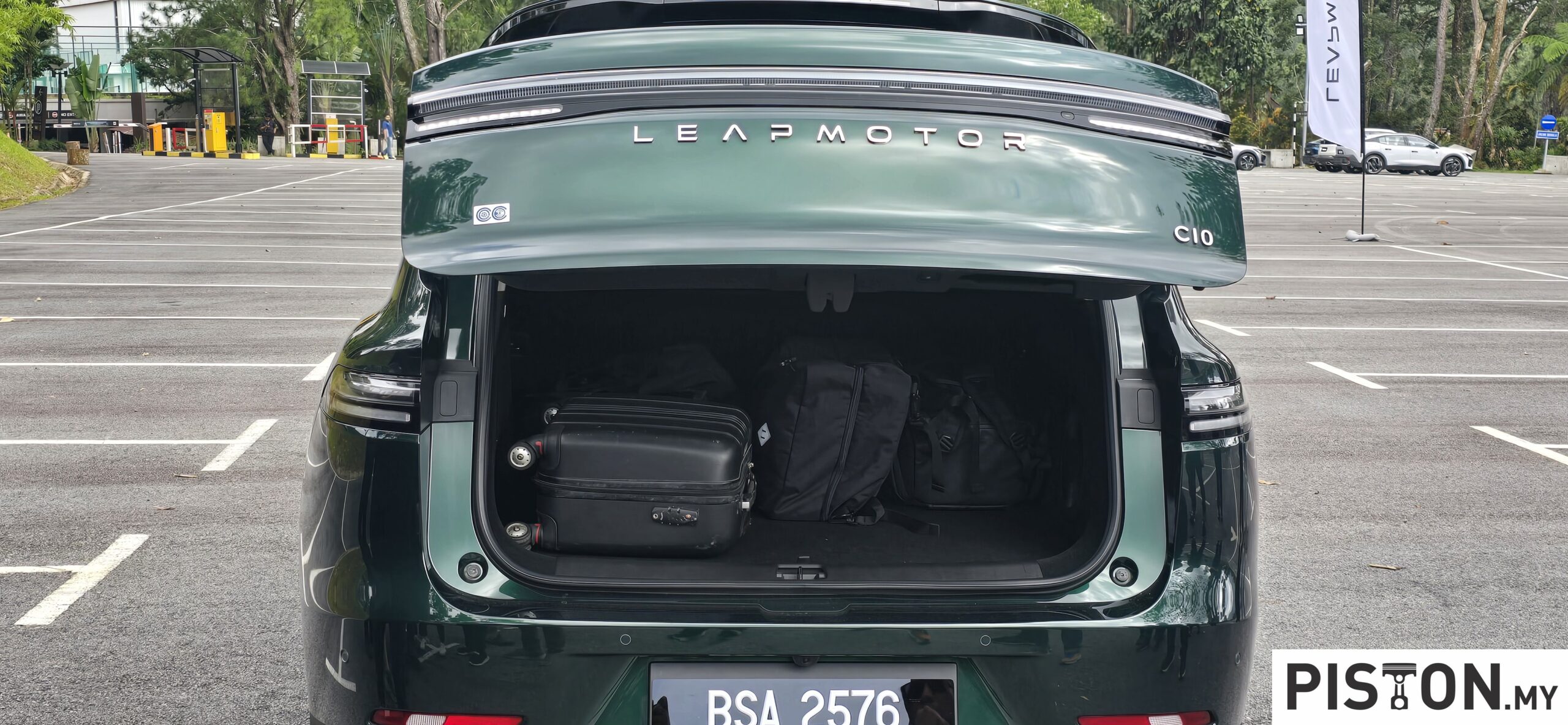
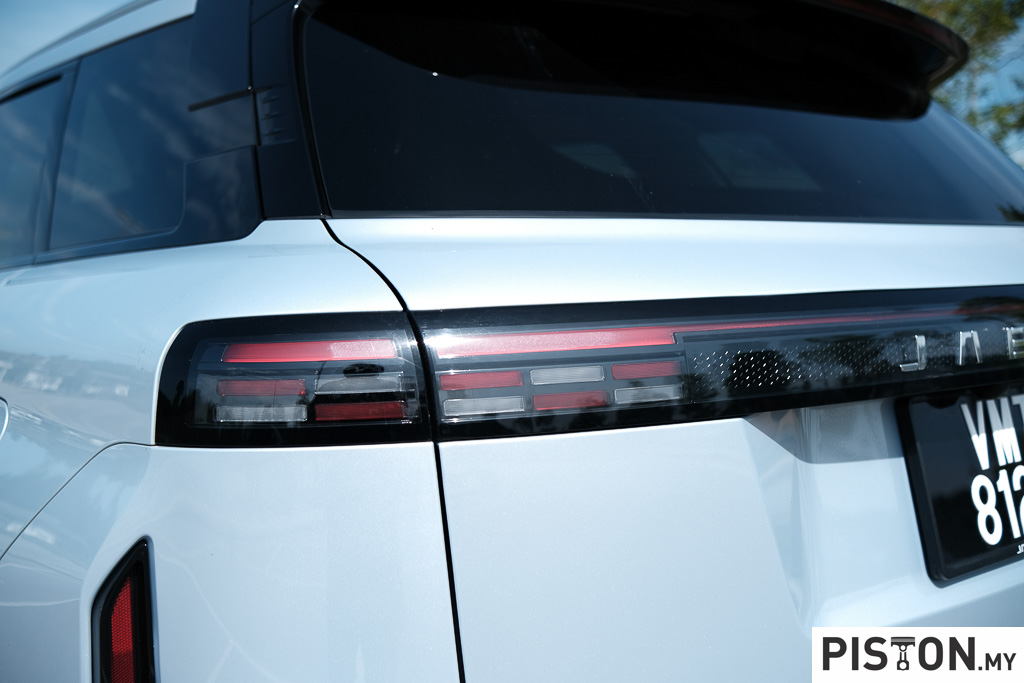
It features fog lamps, LED daytime running lights, dual rear fog lamps and not to mention the rear illuminating lightbar which I am a fan of. Some even say there are hints of a Porsche Macan around the rear.

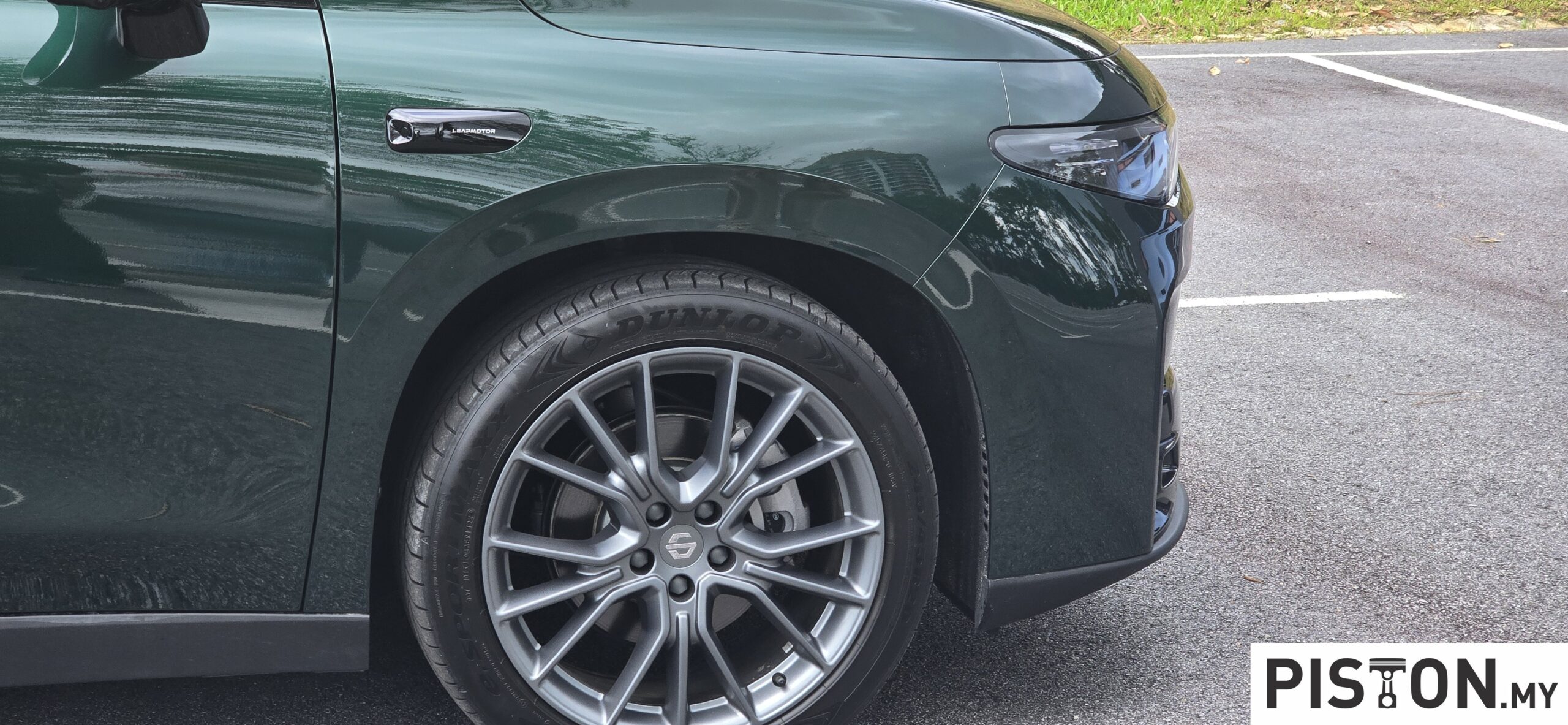
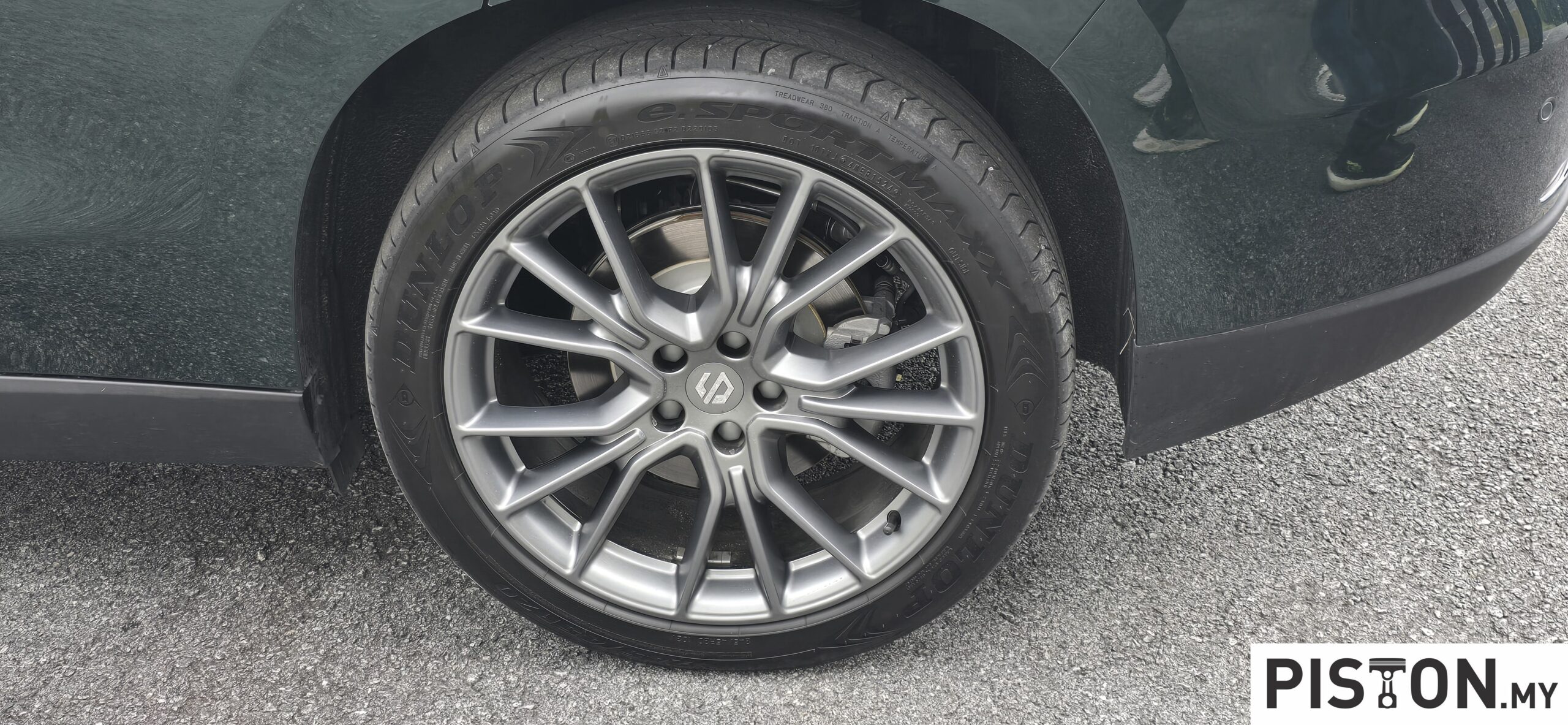
The C10 rides on 20-inch Trident aluminium wheels which suit the whole aesthetics of the car and give it a sportier look with 245/45 Dunlop e.Sport Maxx tyres.

Spacious and Comfortable Interior

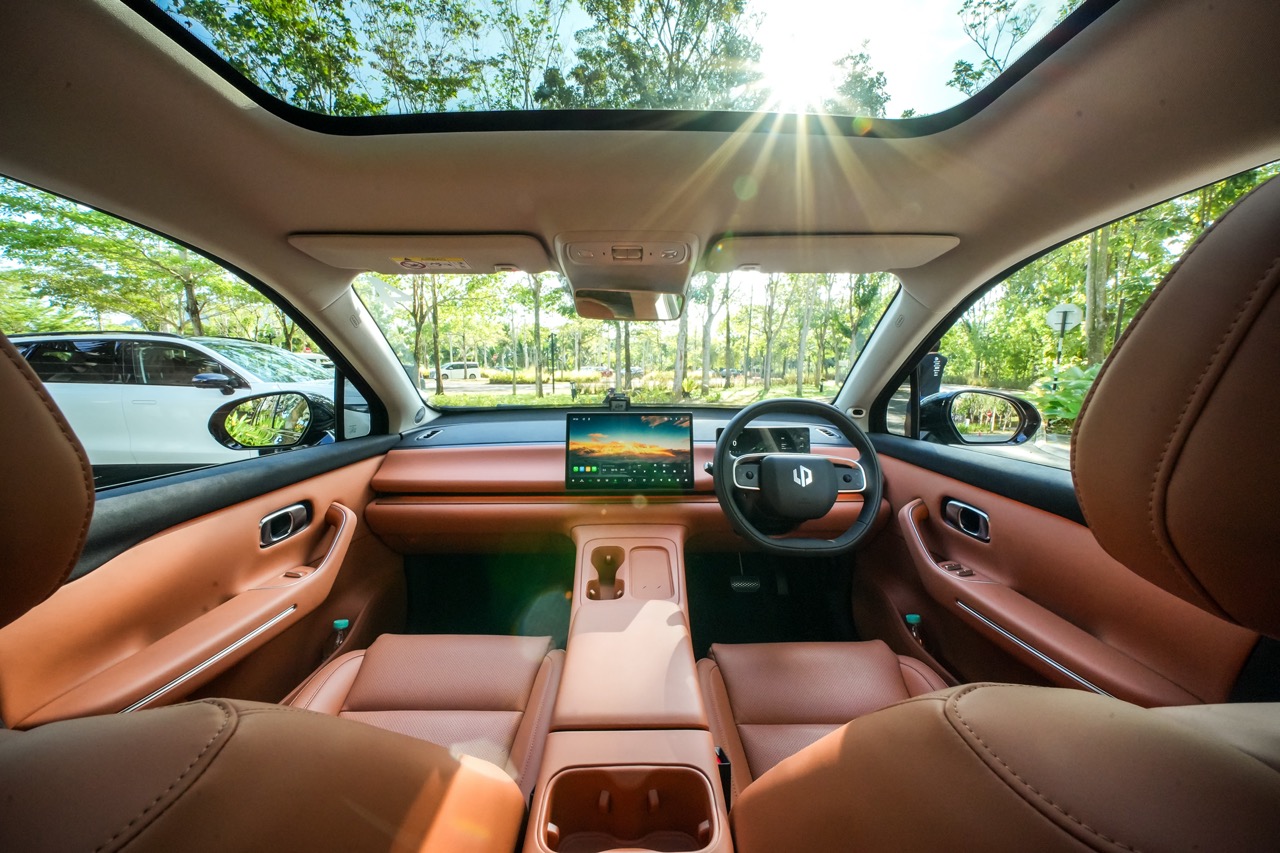
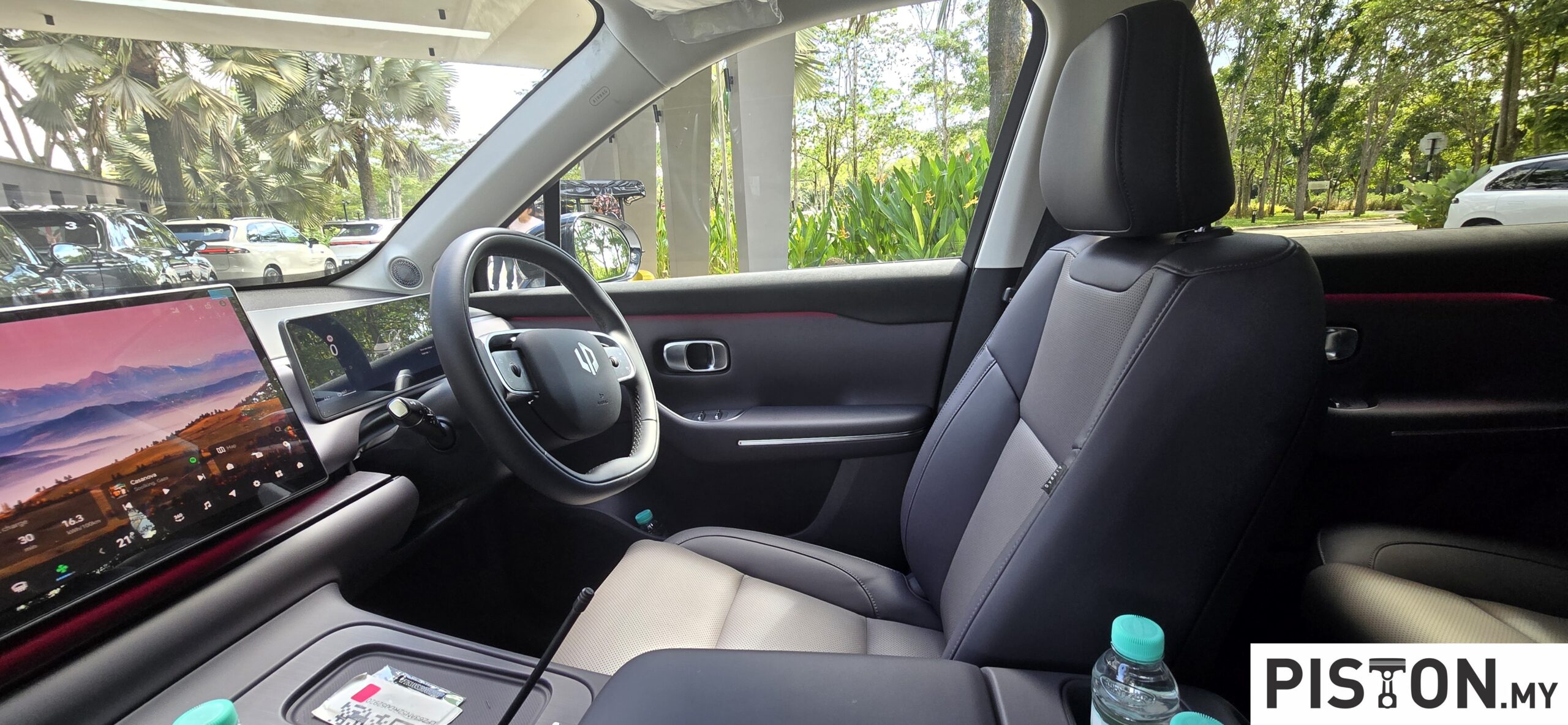
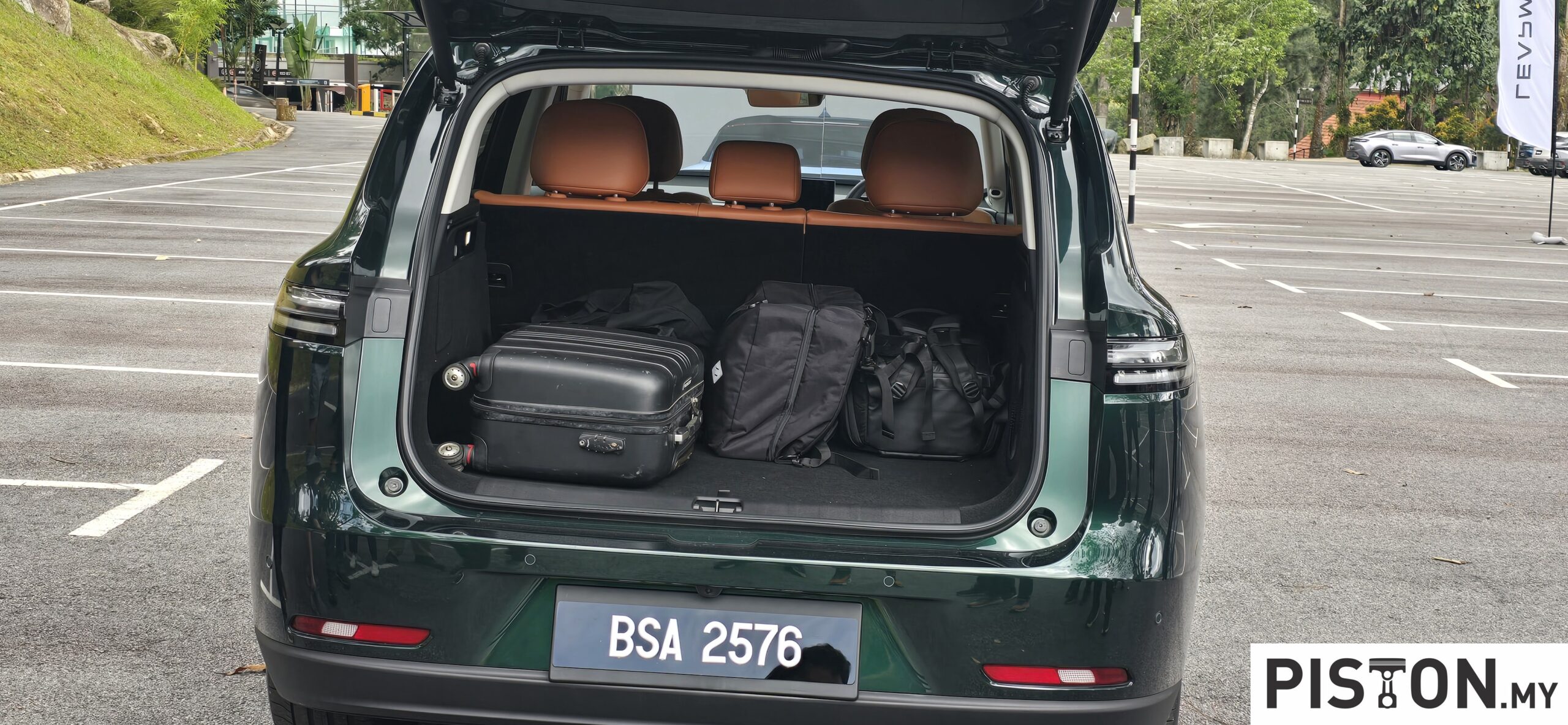
Step inside and you will see what we mean by comfort and space. This writer has a big build, so interior space is crucial when testing cars. Despite how big they look from the outside, we have sat in SUVs that are not that spacious. However, I can confidently say that the C10 is big people friendly. 

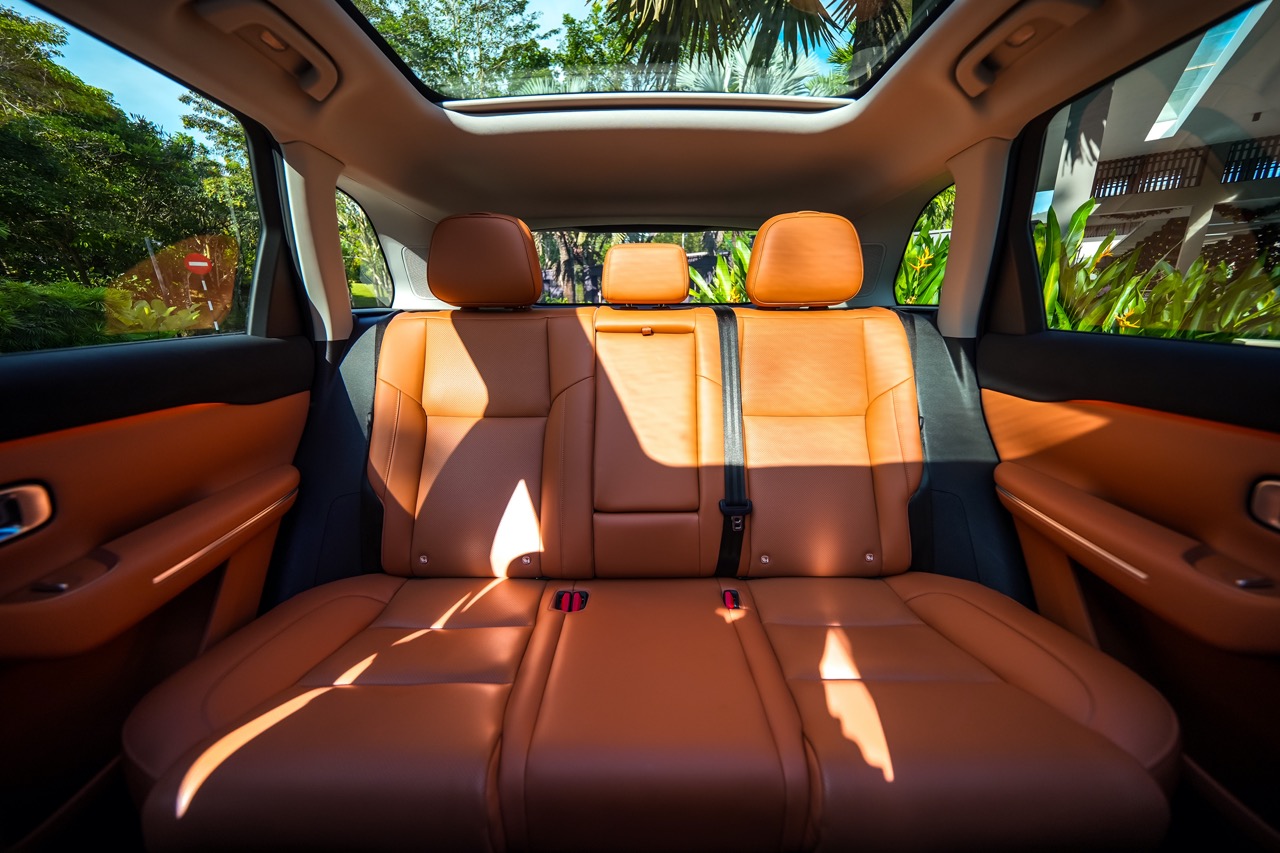
The driver’s and front passenger seating is spacious with ample amount of leg room and for the rear passengers, you could fit at least three regular “nasi kandar, tambah nasi” eaters.

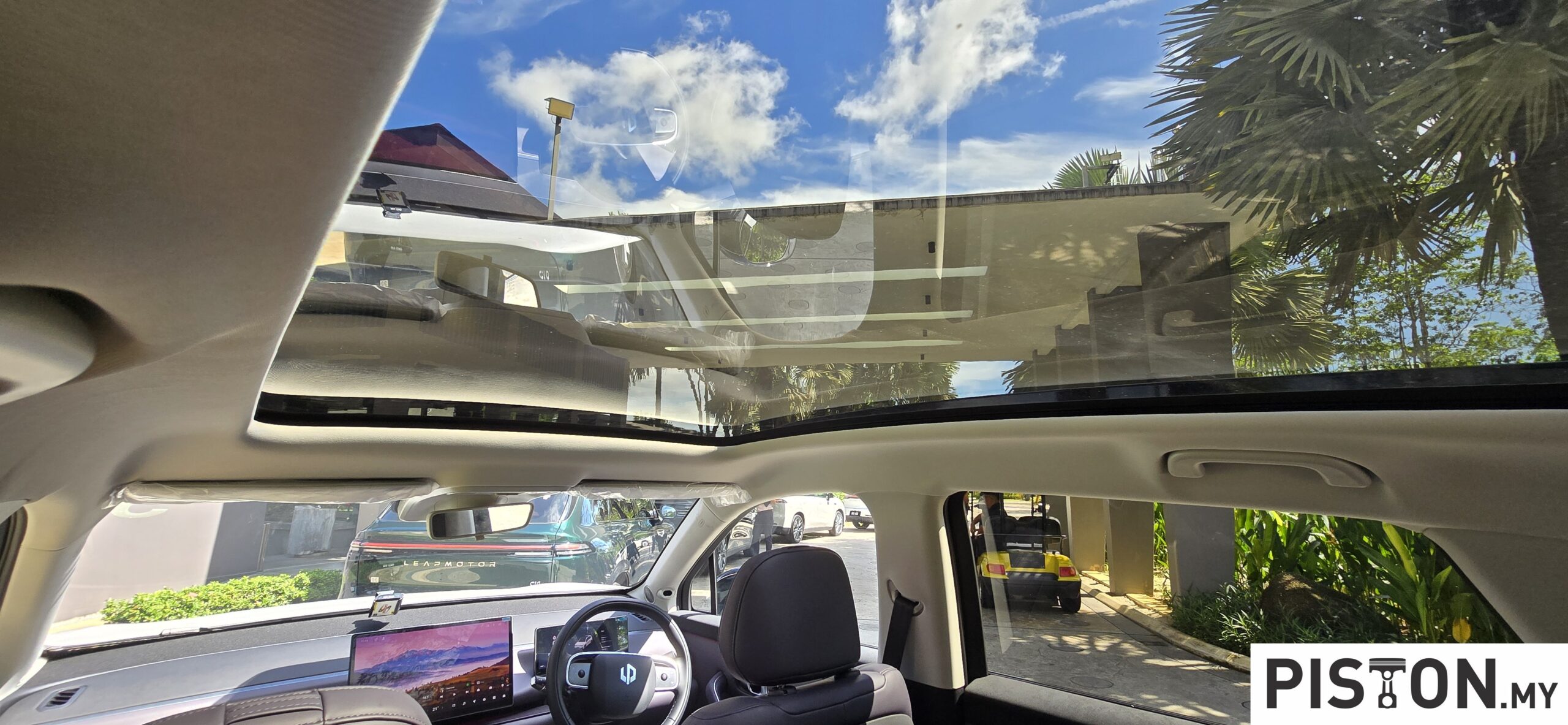
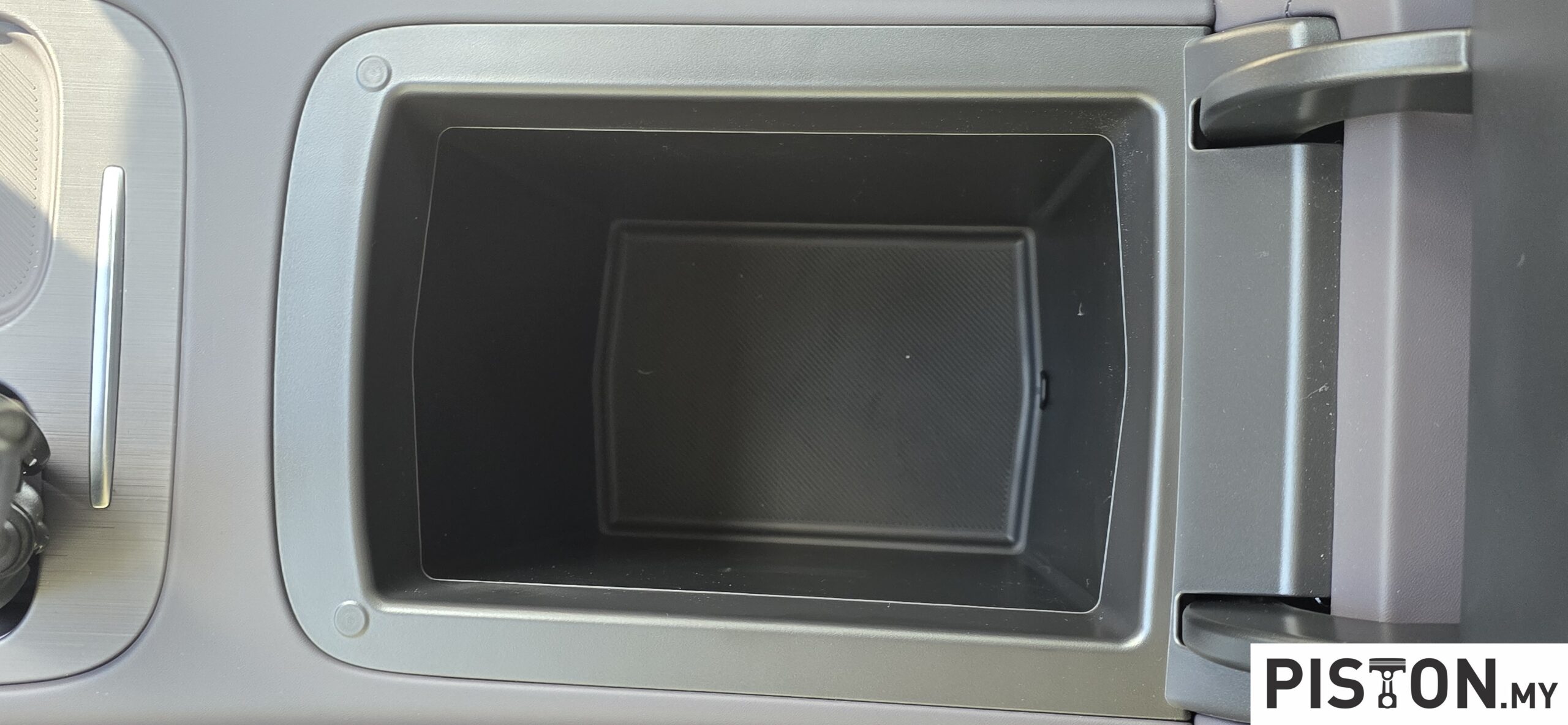
Comfort is omnipresent throughout the SUV from soft-touch instrument panels to leather front and rear armrests, heated and ventilated front seats and the rear seats can be adjusted, which is what allowed me to sleep like a baby during our long drive to Pahang. 

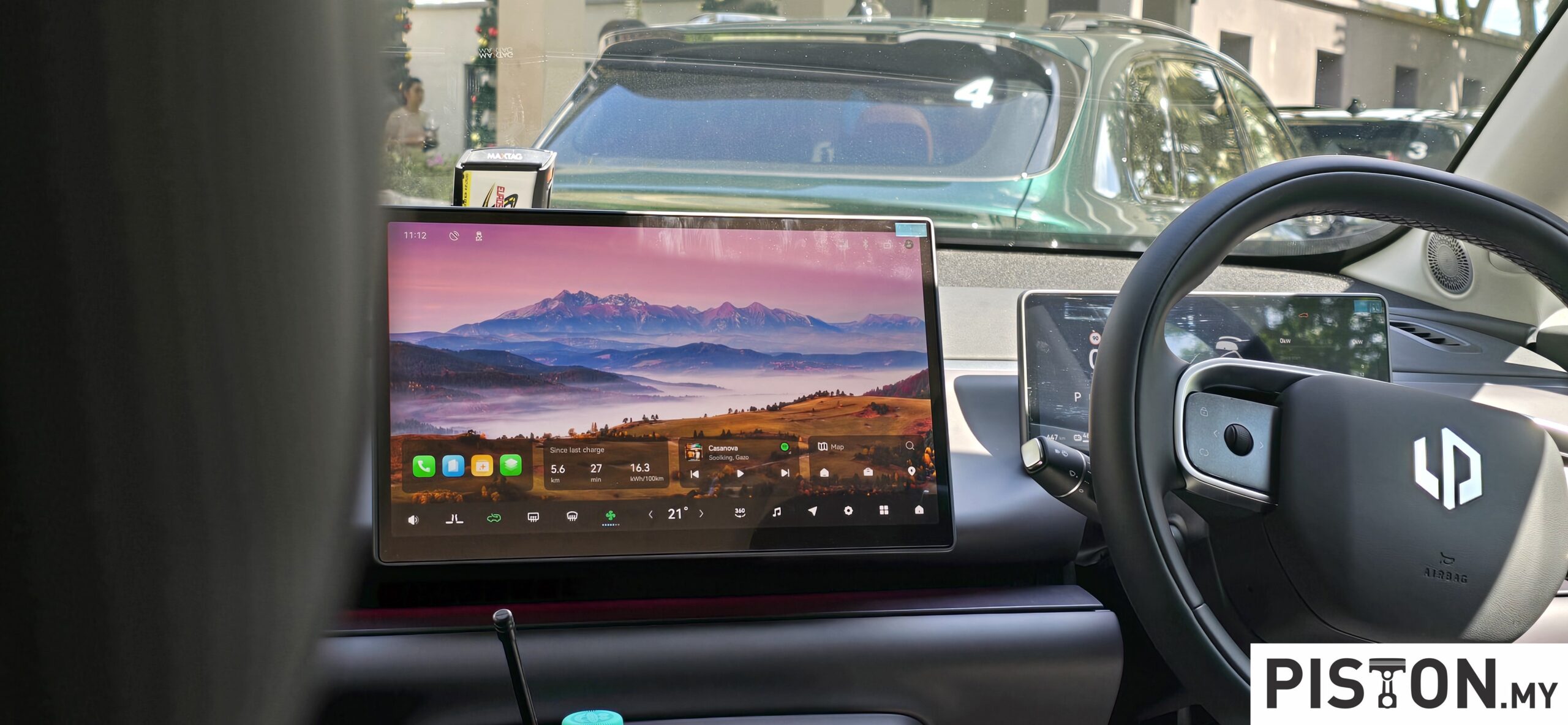
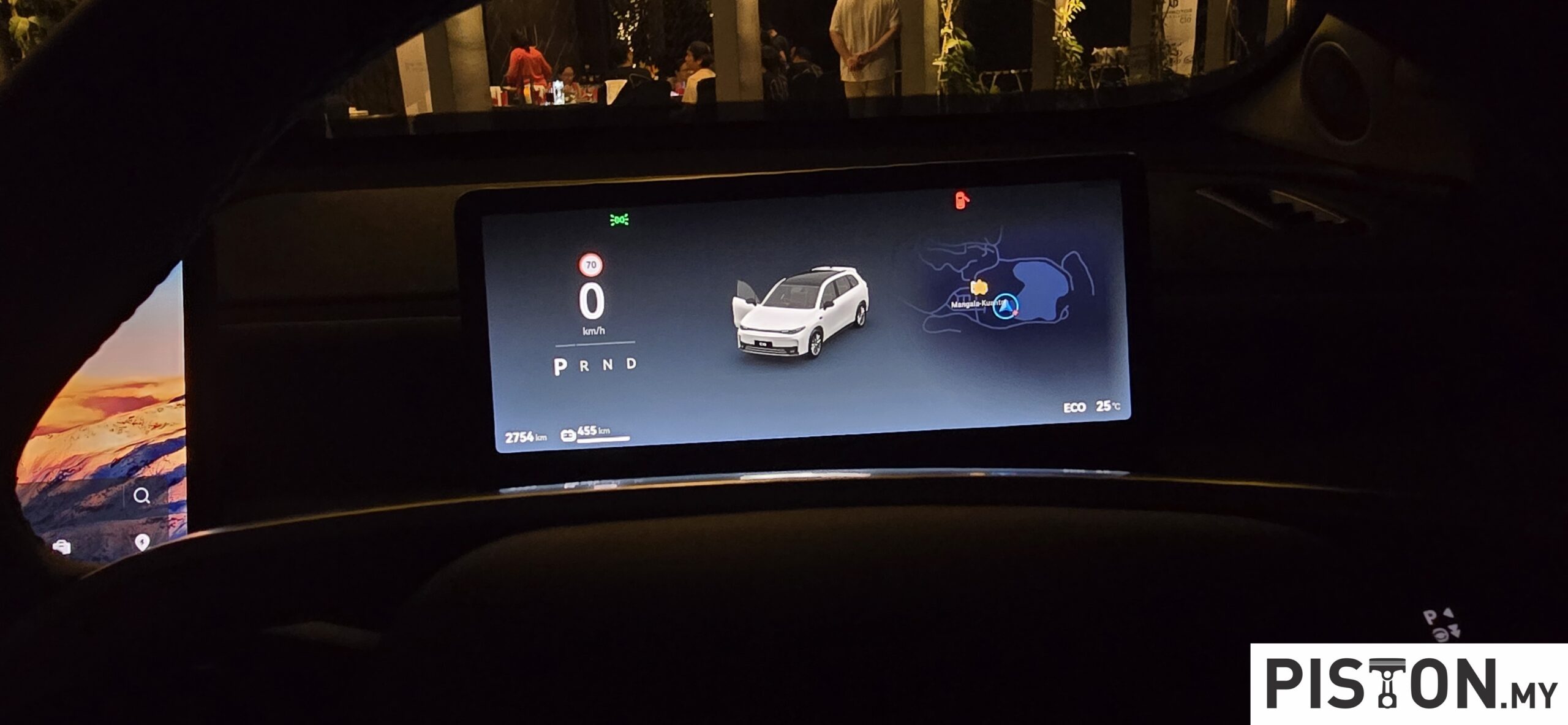
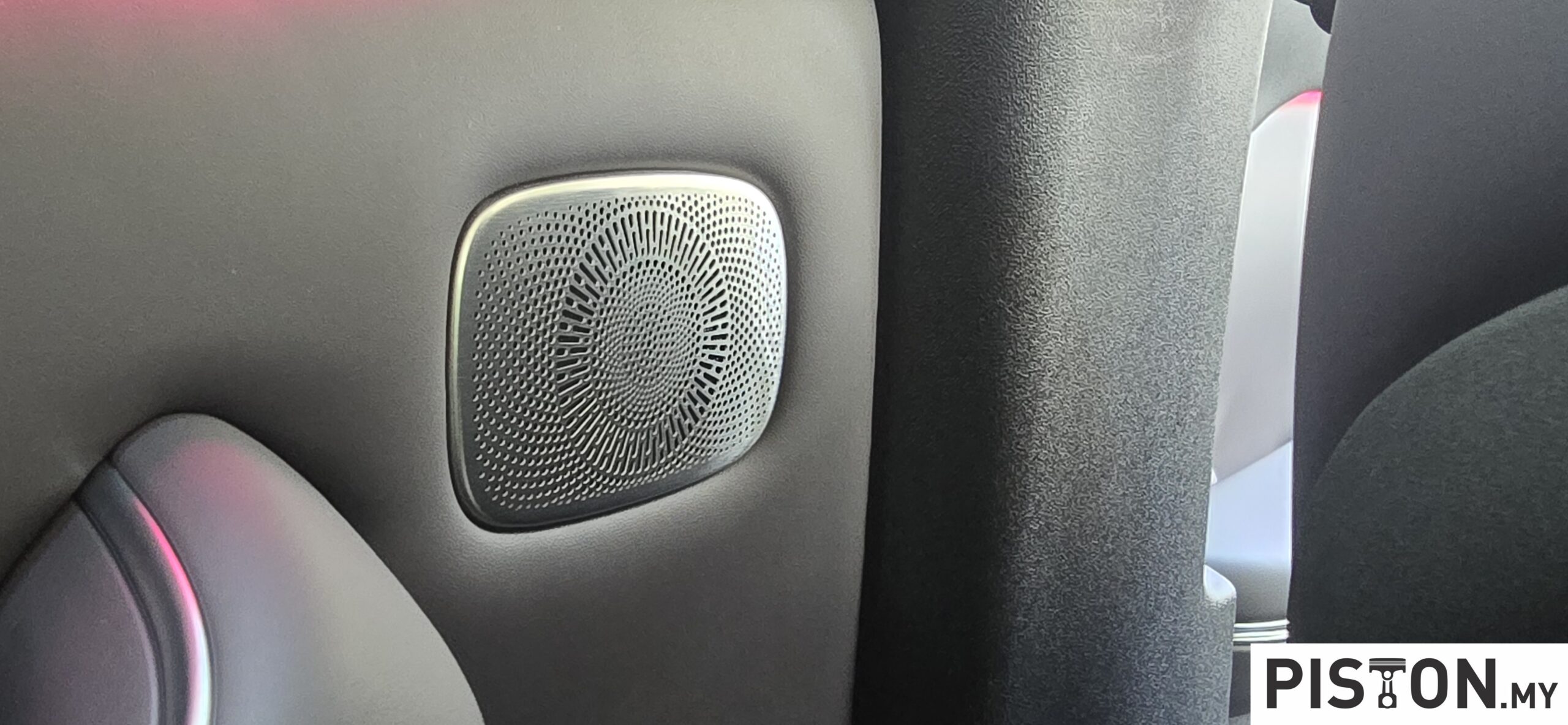
To enhance this in-car experience, the C10 comes equipped with rhythmic ambient lighting, wireless charging, 12 high-quality speakers and a 14.6-inch control touch screen. 

The Big Screen

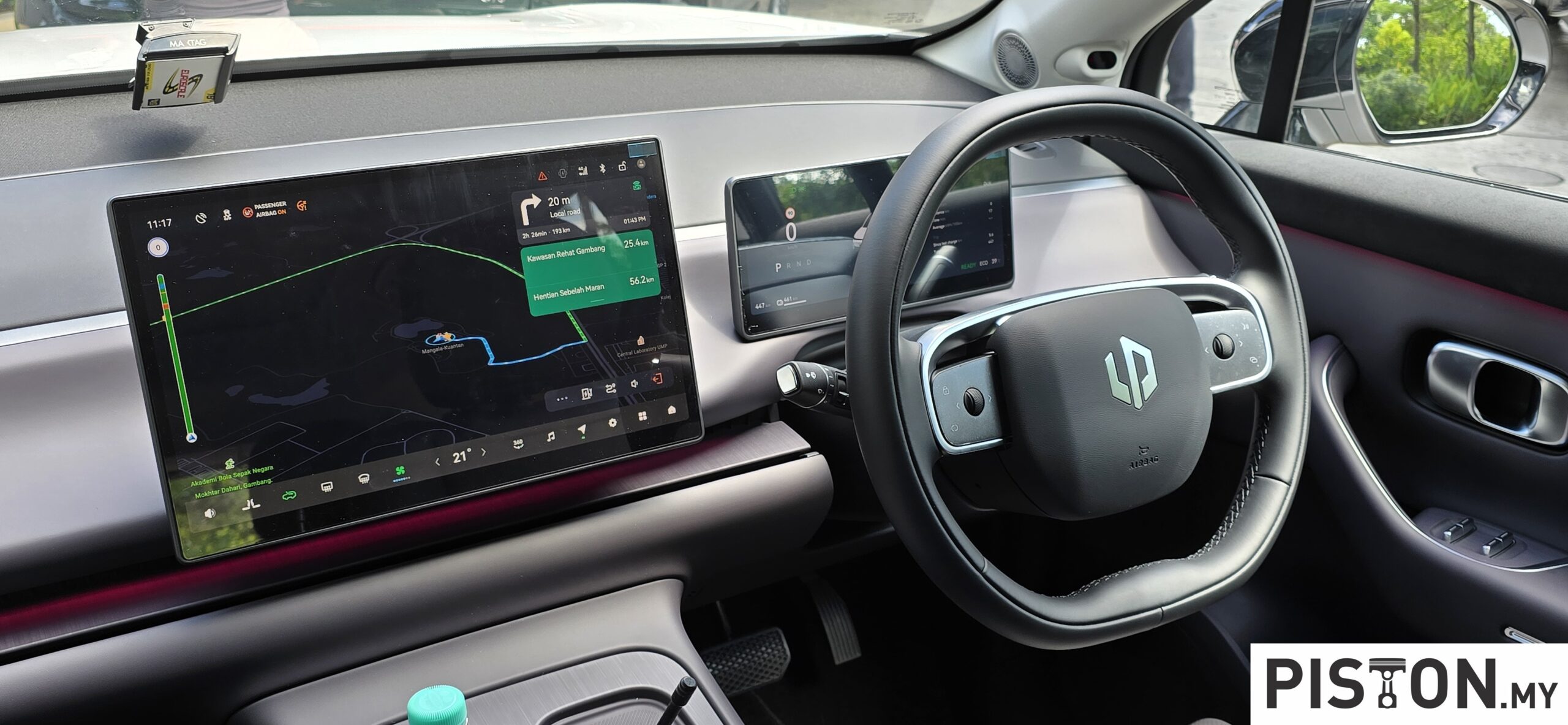
Now, every car has its flaws and one common flaw in most cars nowadays is the lack of physical buttons and controls for simple things such as adjusting the air-conditioning. Everything is controlled via the big infotainment screen that you get at the centre. Yes, it’s futuristic and very modern but it is also a hassle at the same time.

The C10 comes with concealed air vents, which means you will not be able to adjust the vents by adjusting them using a traditional knob. You will have to go through the centre screen to do so. This can be fairly frustrating for the driver because you have to take your eyes off the road.

Many other functions can be accessed through the screen as well, but we did not have enough time to learn the car and mess around with all the other settings. This is a learning curve and there are plenty of “oh it does that” moments, so be prepared to spend a couple of days, or weeks to get to know the intricacies of the car. 

Another flaw of the C10 is that it does not come equipped with Android Auto and Apple CarPlay. Yes, you read that right. So for navigation, you have to use the in-built one and it also comes with a Spotify application. To use this, you will need internet access which can be done if you purchase a sim card or use your mobile hotspot.

Maserati-Tuned

Tyres play a huge role when it comes to a vehicle’s handling performance but many people overlook the fact that the driving dynamics of the car play a major role too. So how did the C10 perform? We were actually surprised at how well the grip and handling were. We tackled the hills of Genting with no issues whatsoever. This is possible because the driving dynamics have been tuned and optimised by Maserati. 

It simply did not feel like we were in an SUV. It was agile and smooth, and we could barely feel the turns because of how well the SUV manoeuvred. Given the fact that this is a family SUV, it was not built for speed so this rear-wheel-drive SUV can do 0-100km/h in 7.5 seconds and the top speed is around 173km/h. The best part is that even at this speed, the cabin is quiet because of how good the NVH levels are. 

The 69.9kWh Lithium-Iron Phosphate (LFP) battery offers a range of up to 424km (WLTP), and the C10 can charge from 30% to 80% in just 30 minutes using a DC fast charging. The single motor configuration produces 218PS and 320Nm of torque which is more than enough to drive this 1,980kg SUV.

We found the power to weight to be balanced, because of how our fellow Malaysians drive and ride, we had to do some quick manoeuvres to avoid hitting them and the steering response was sharp enough to pull off these quick stunts without losing control. 

What is that beeping sound?

Safety systems are a crucial part of a vehicle and the question people ask nowadays is “Got ADAS ah?” 

Well, safety is paramount in the Leapmotor C10, which comes equipped with a comprehensive suite of seven airbags and Level 2 ADAS (Leap Pilot). This includes Adaptive Cruise Control, Lane Centering Control, Autonomous Emergency Braking, and many other advanced driver assistance features that are too long to be listed here. 

The thing is, there are too many functions for us to remember so we had to learn them on the go. Every now and then there will be a different beeping sound and we will be like “That one is new, what is that beeping sound?” So we experimented with most of the functions and decided to turn some off because of how sensitive they were. In order to turn certain safety features off, you will need to put the car in park, otherwise, the system will not allow you to do so. 

We were even shown a demonstration of how effective the Autonomous Emergency Braking is and we can safely say that it is one of the best ones out there. 

Is this the SUV for you?

If you are a fan of EVs then yes. With everything the car offers, it is only priced at RM159,000! That pricing and how much the SUV has to offer is considered a steal. Stellantis told us that they want to offer a D-segment SUV with a C-segment price so that people can afford luxury, comfort, space and performance all in one. We can say that the C10 delivered what it was designed for.

The Leapmotor C10 is available in four colours: Glazed Green, Pearly White, Canopy Grey, and Tundra Grey. Interior options include Criollo Brown (exclusive to Glazed Green) and Midnight Aurora.

It comes with a six-year or 150,000km warranty, and an eight-year or 160,00 km Battery warranty, whichever comes first. 

Specifications
Motor: Single-electric motor
Power: 218PS
Torque: 320Nm
Acceleration (0-100km/h): 7.5 seconds
Top speed: 173km/h
Price (As tested): RM159,000

We like: Mature looks, spacious interior and handling
We don’t like: No Android Auto and Apple CarPlay

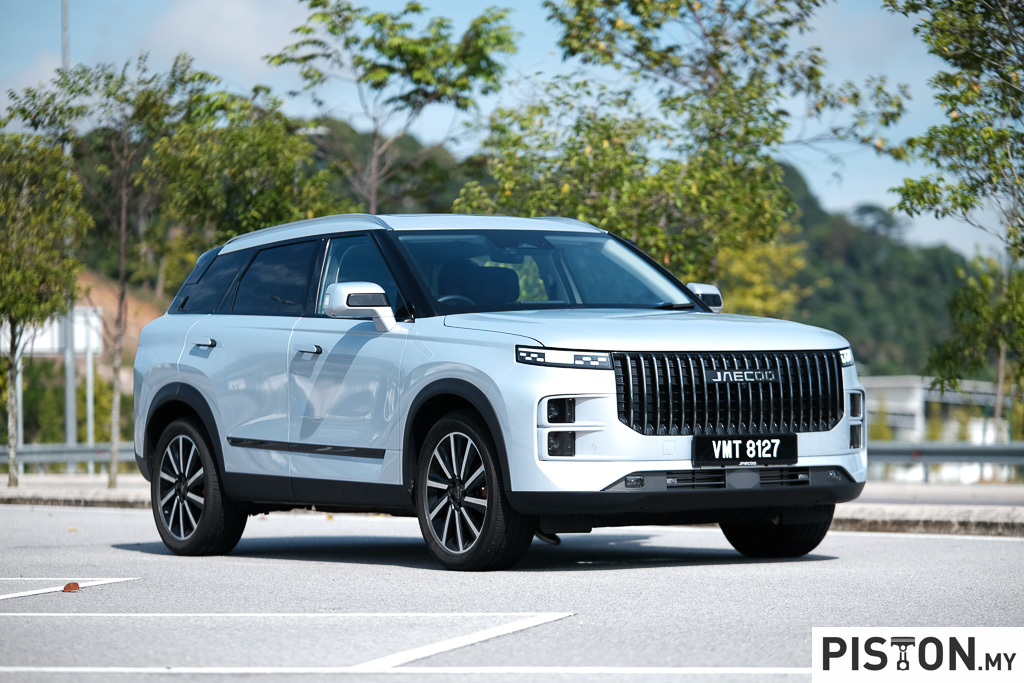
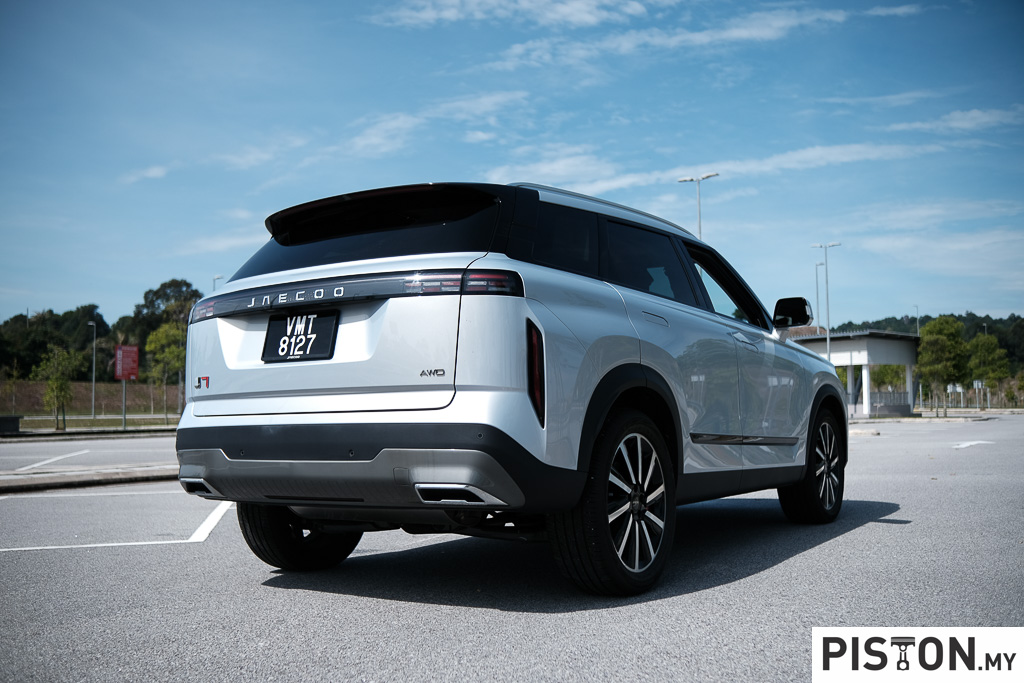
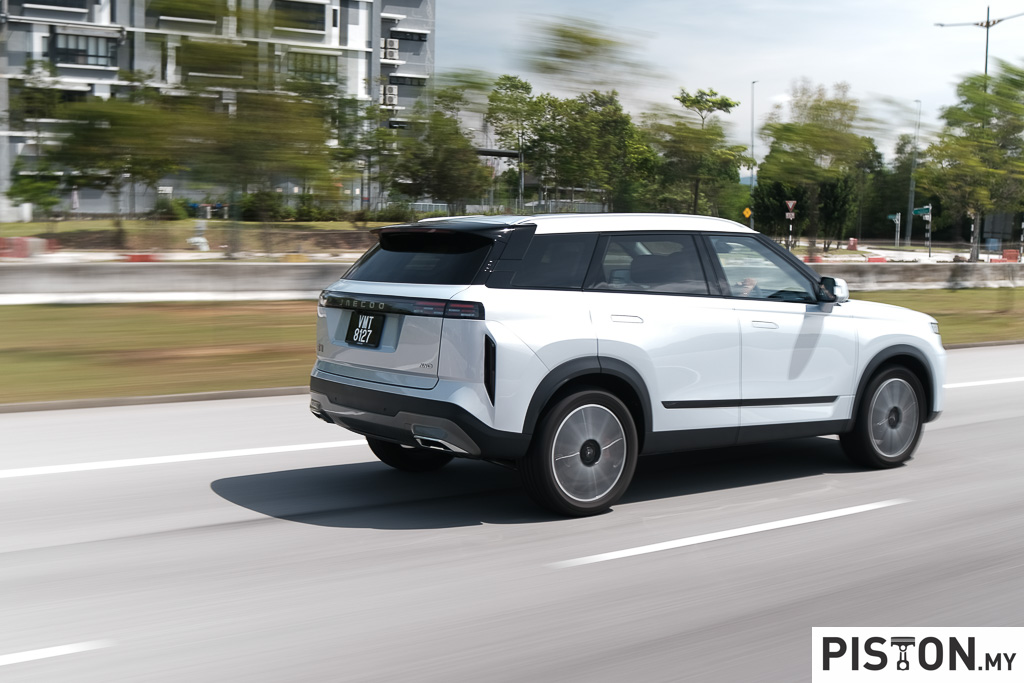
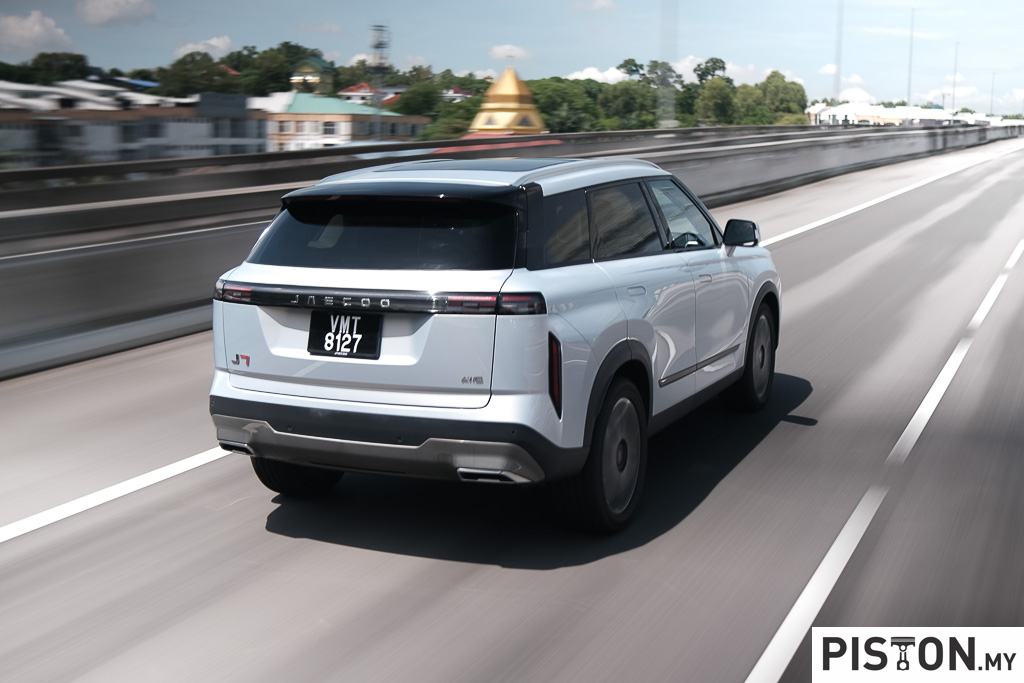
The JAECOO J7 was introduced to Malaysians in July and by the end of October of 2024, it was the best-selling non-national SUV. (more…)

It is said that there are over 150 car brands currently active in China. So, it should not come as a surprise that we are hearing of a new Chinese brand launched here on a near monthly basis. Some brands we are familiar with, and some we are not.

Take Jaecoo for example, just about a year ago, the Chinese brand was largely unheard of in Malaysia. But today, it is leading the charge to solidify the position of Chinese brands in Malaysia, particularly those under the Chery umbrella.

As far as brands go, Jaecoo is still in its infancy in the grand scale of global automotive brands. While some brands have been at it for over a century, Jaecoo was only established in 2023, together with Omoda

Both Jaecoo and Omoda, collectively known as the O&J, were established by the Chery Group in the early part of 2023 to cater for export markets, and as such are only available in markets outside of China.

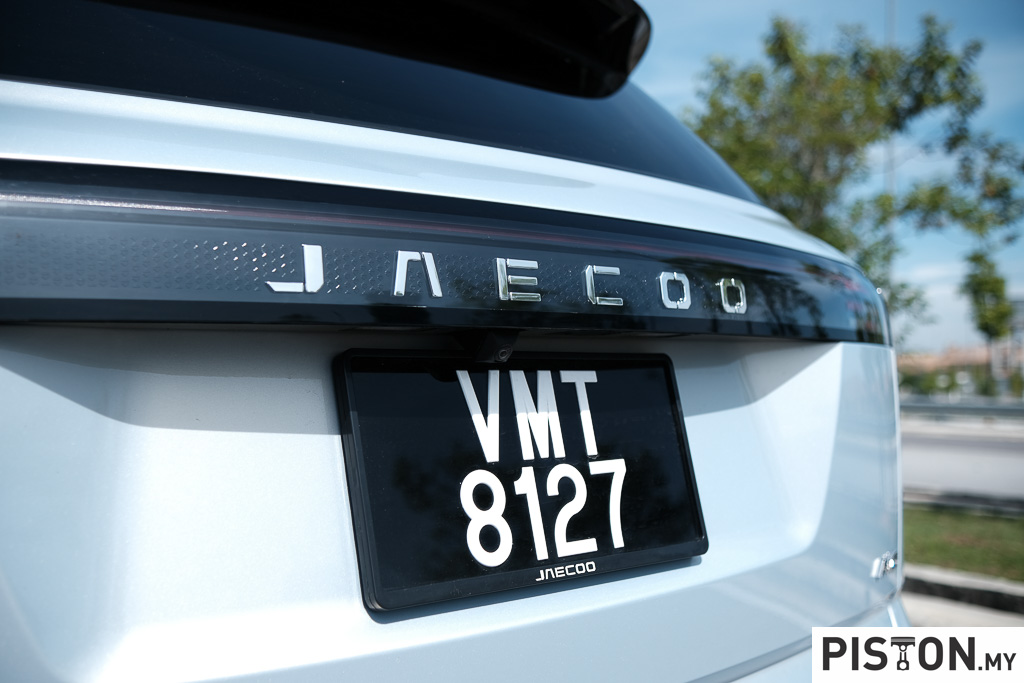
According to online literature, the Jaecoo name is based on the German word Jager which stands for hunter, and the English word – cool.

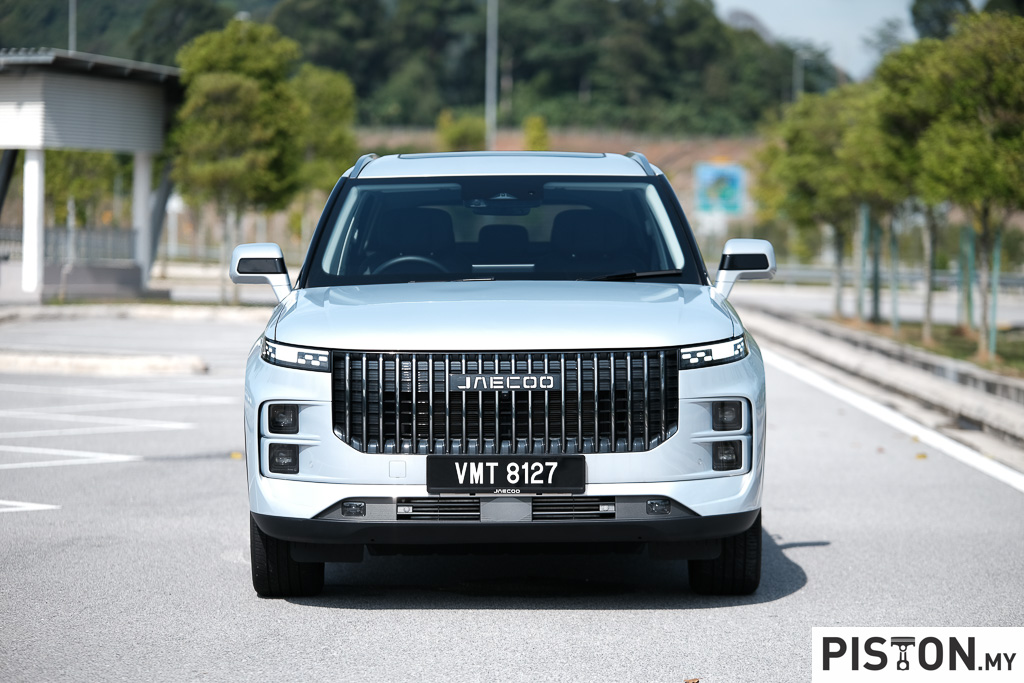
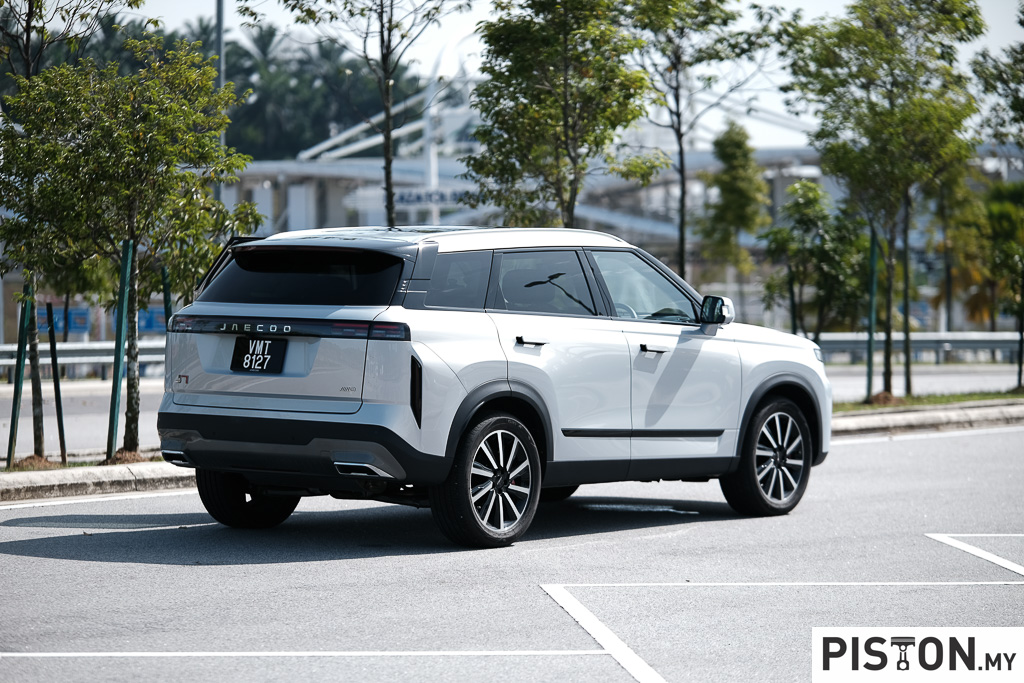
The brand was introduced to Malaysia earlier this year to much fanfare with the J7 being the first model to fly the Jaecoo flag. The J7 was an immediate hit and is loved for its good looks and features with some saying that it is the best value for money SUV currently in the Malaysian market.

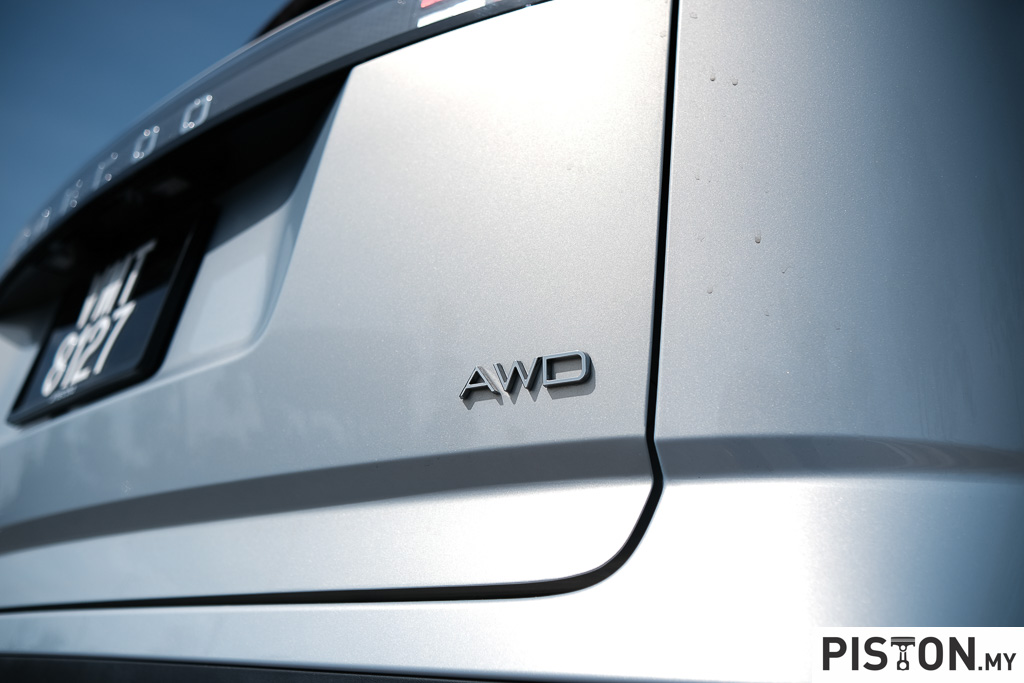
In fact, according to the official registration figures from JPJ, the Jaecoo J7 was the best-selling non-national SUV for the month of October. And after spending a few days with the J7 All-Wheel-Drive (AWD) variant, we understand what makes it so popular.

Dashing good looks

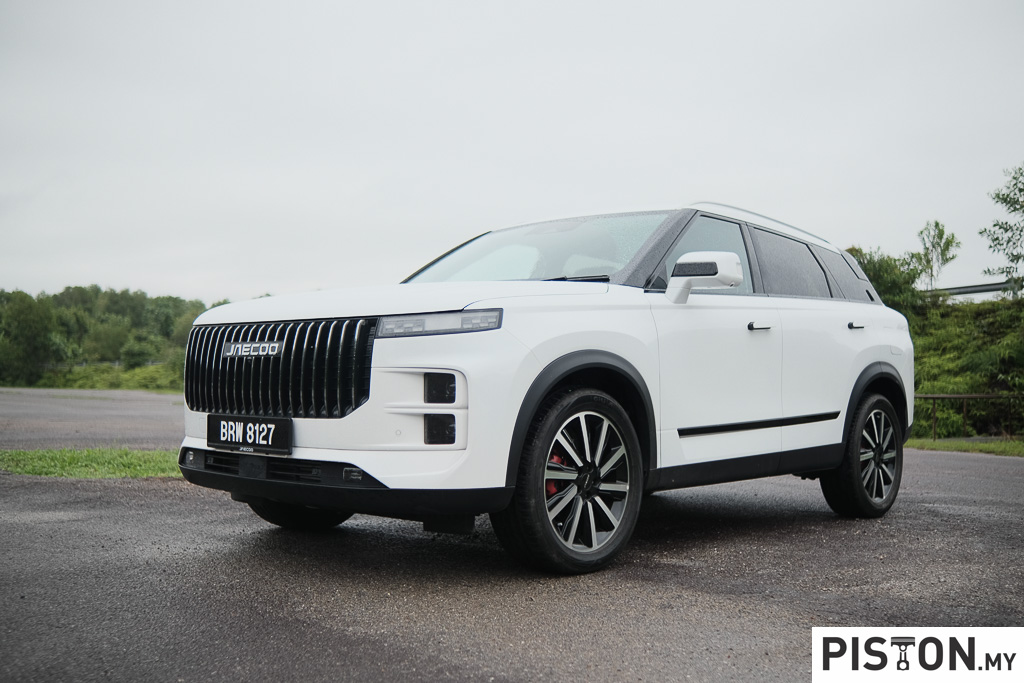
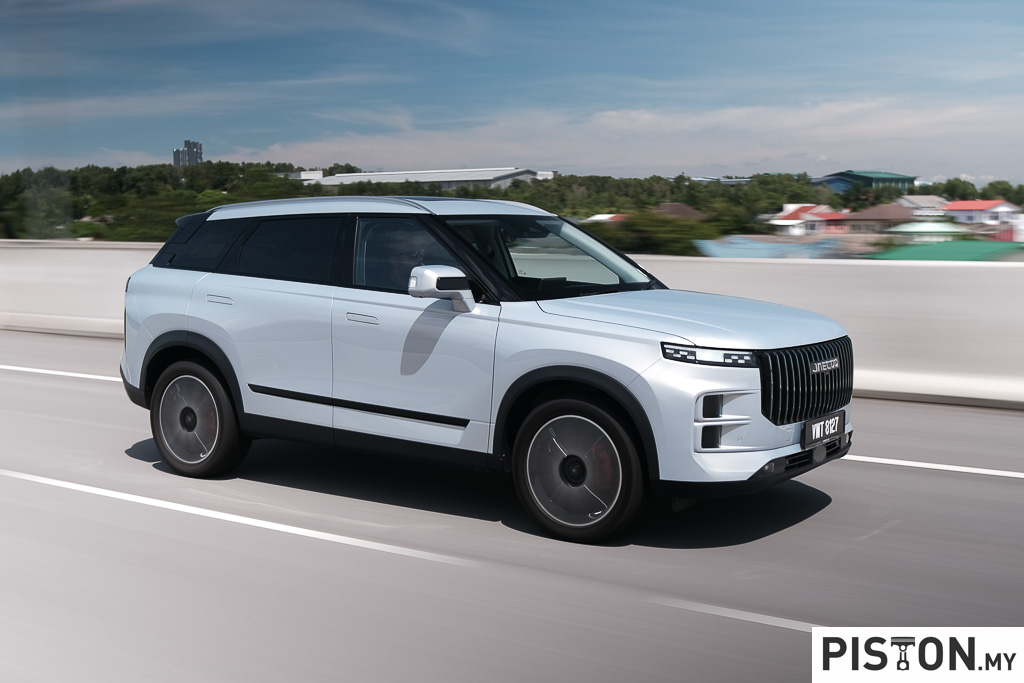
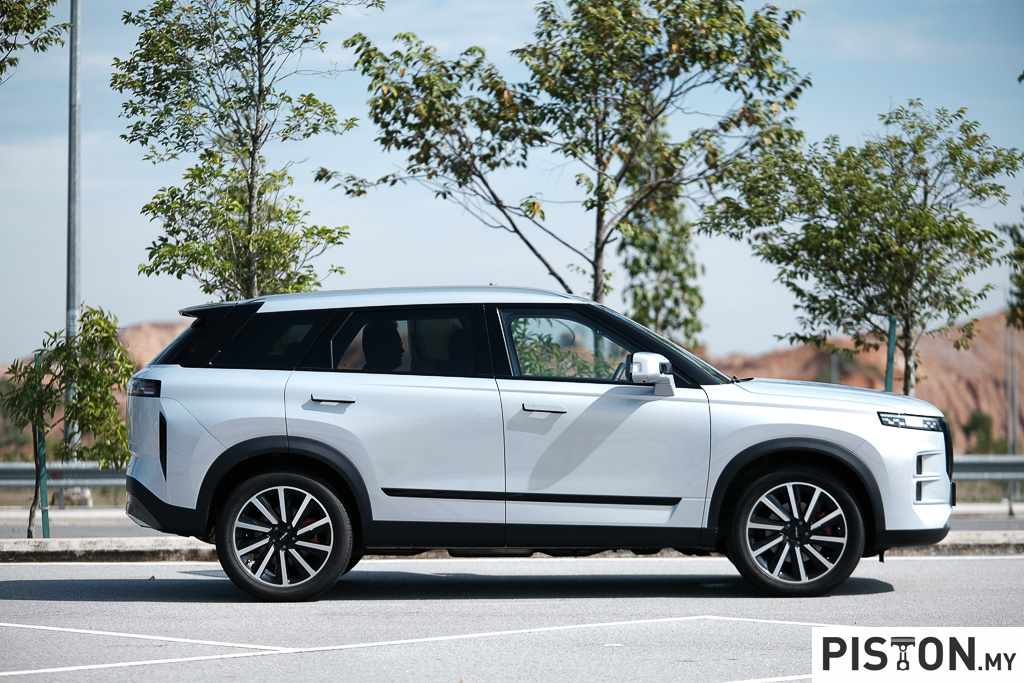
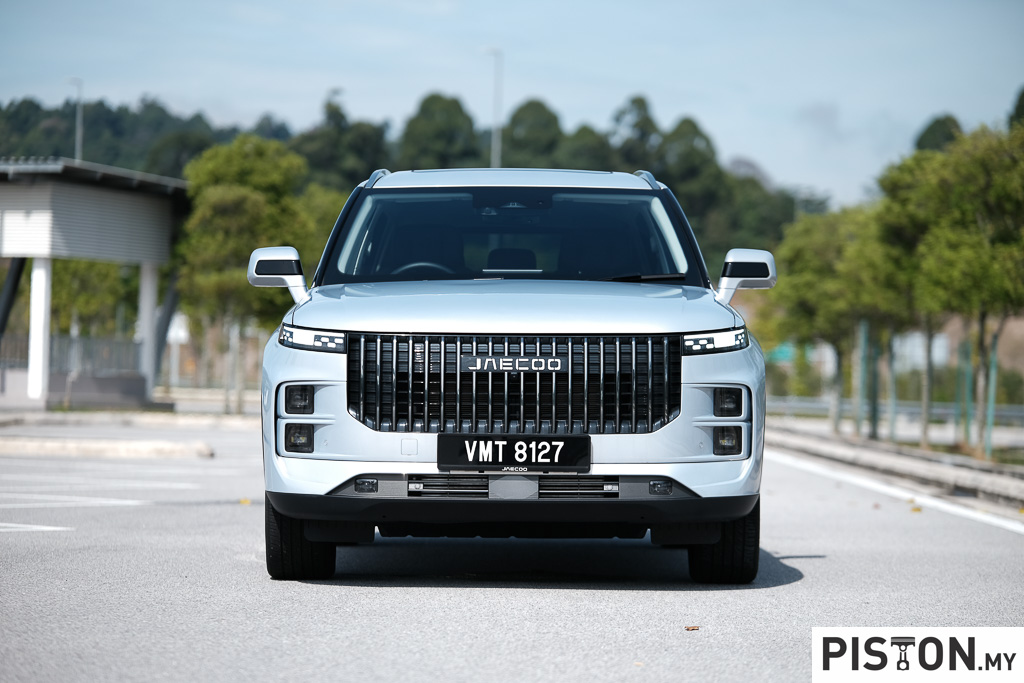
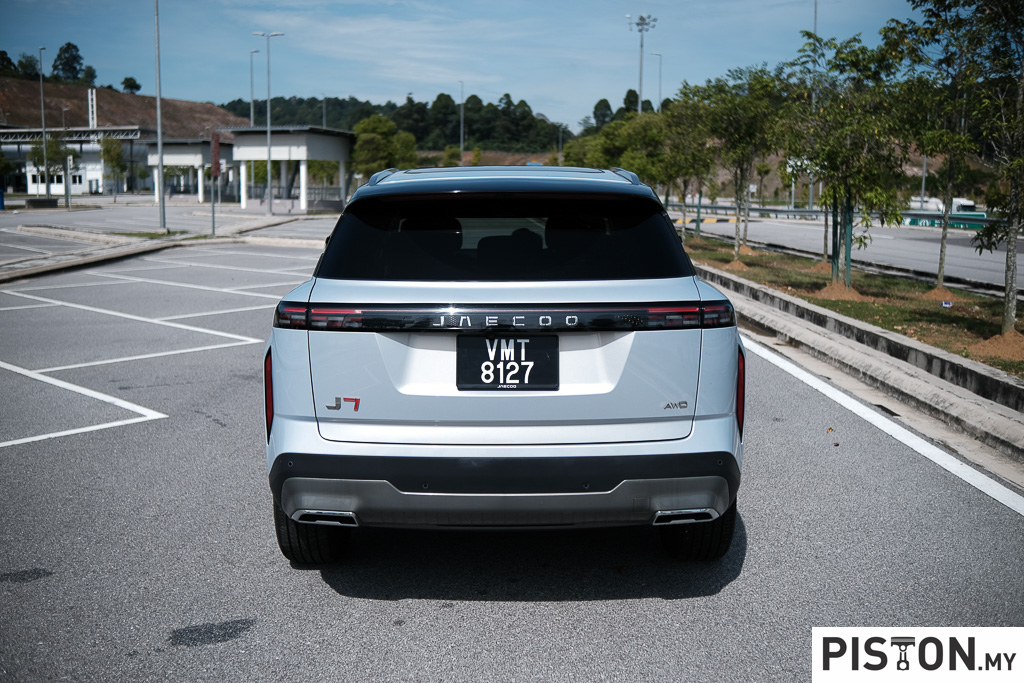
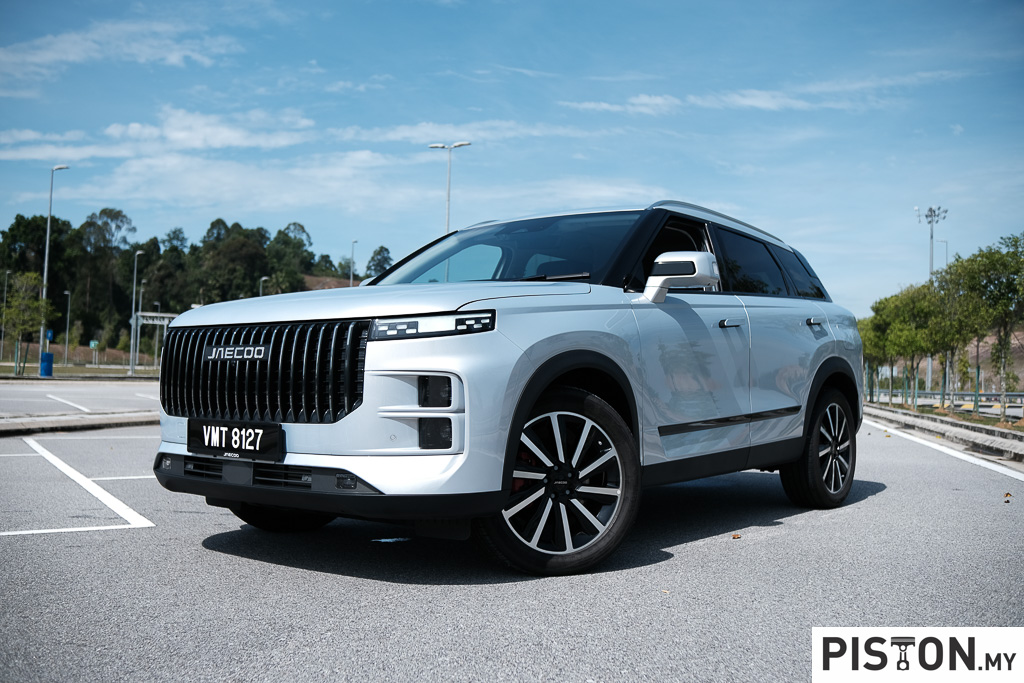
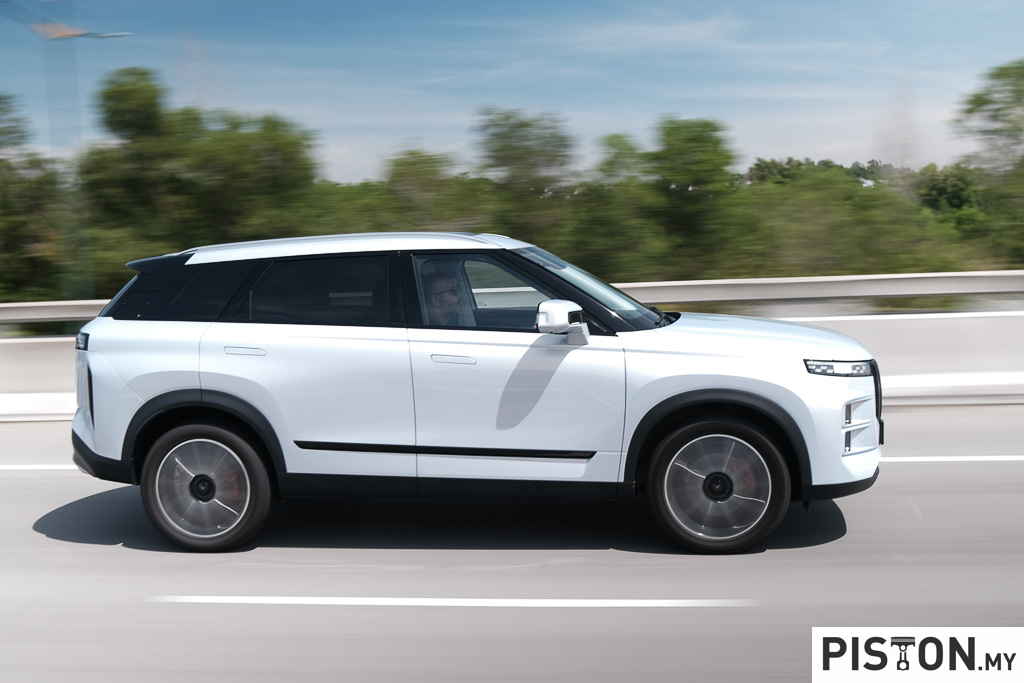
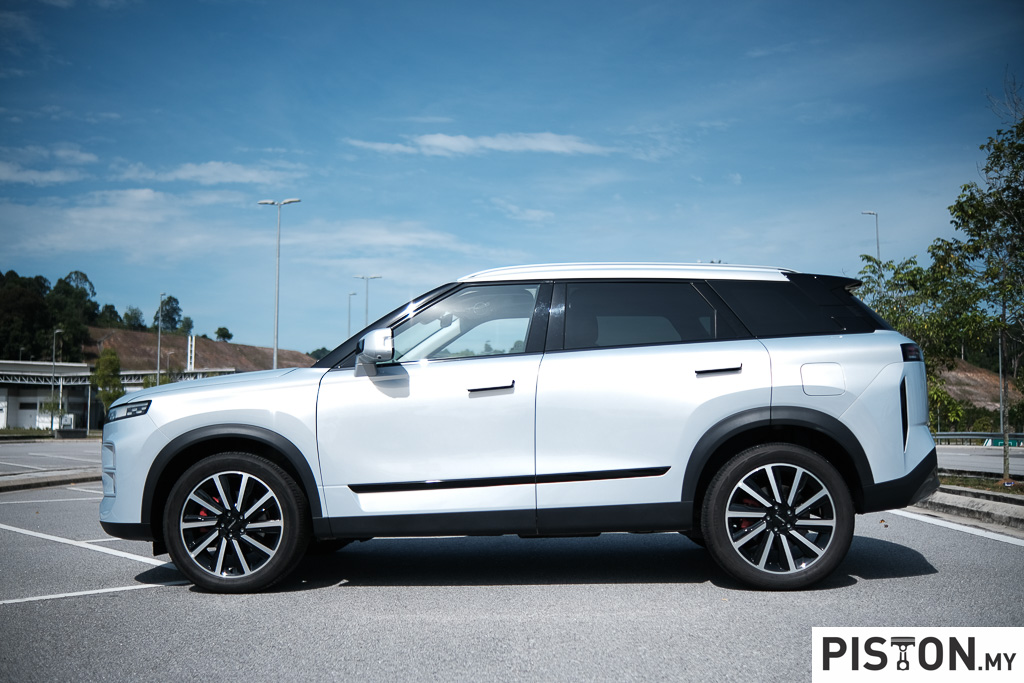
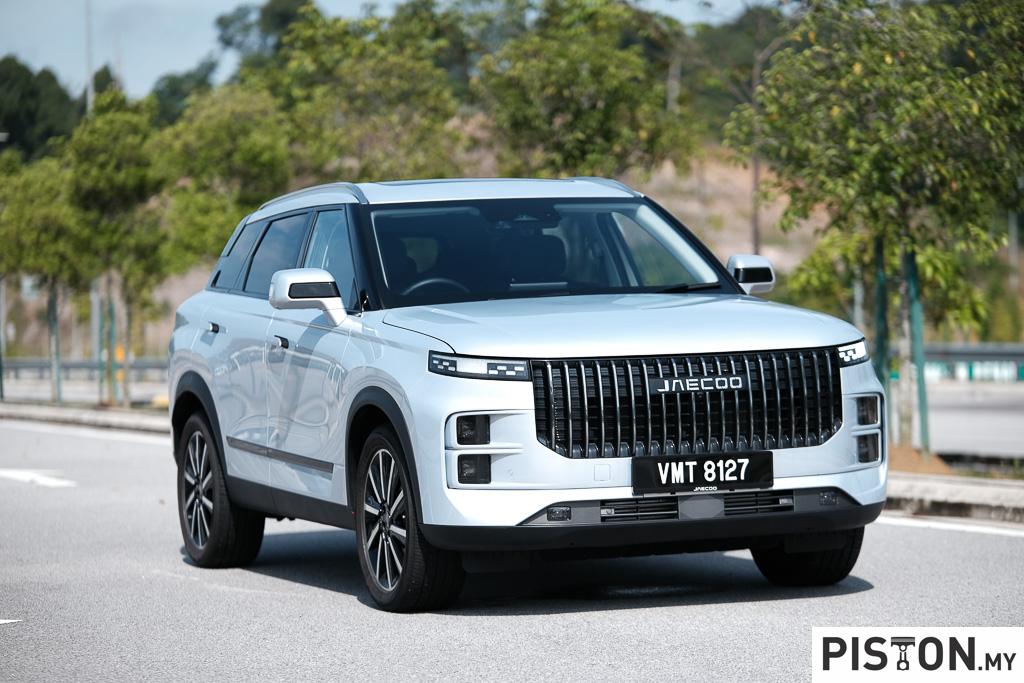
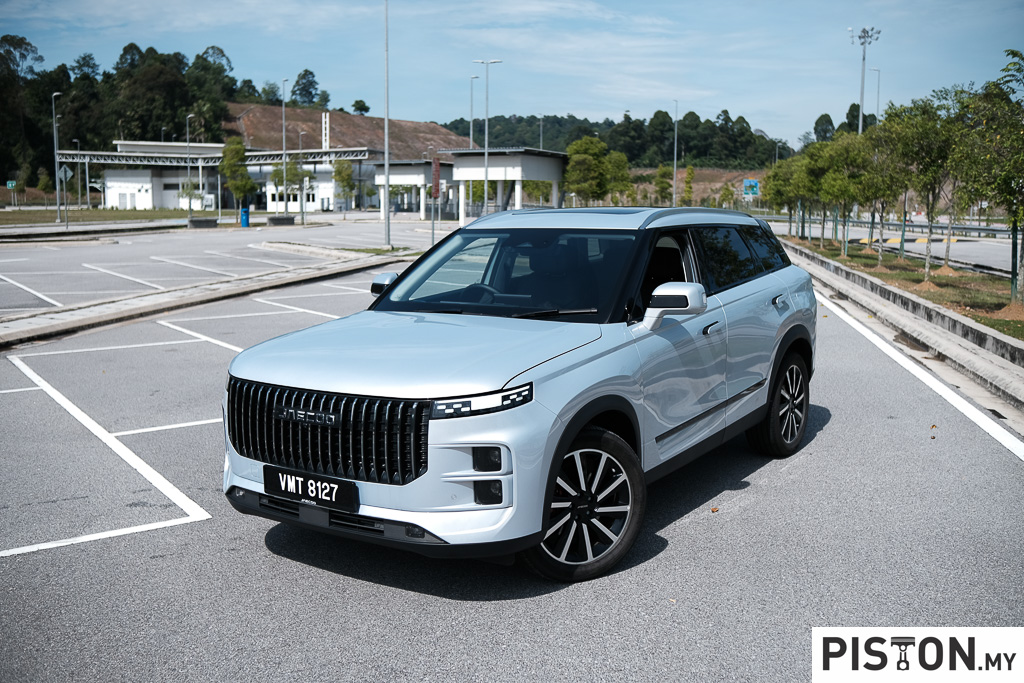
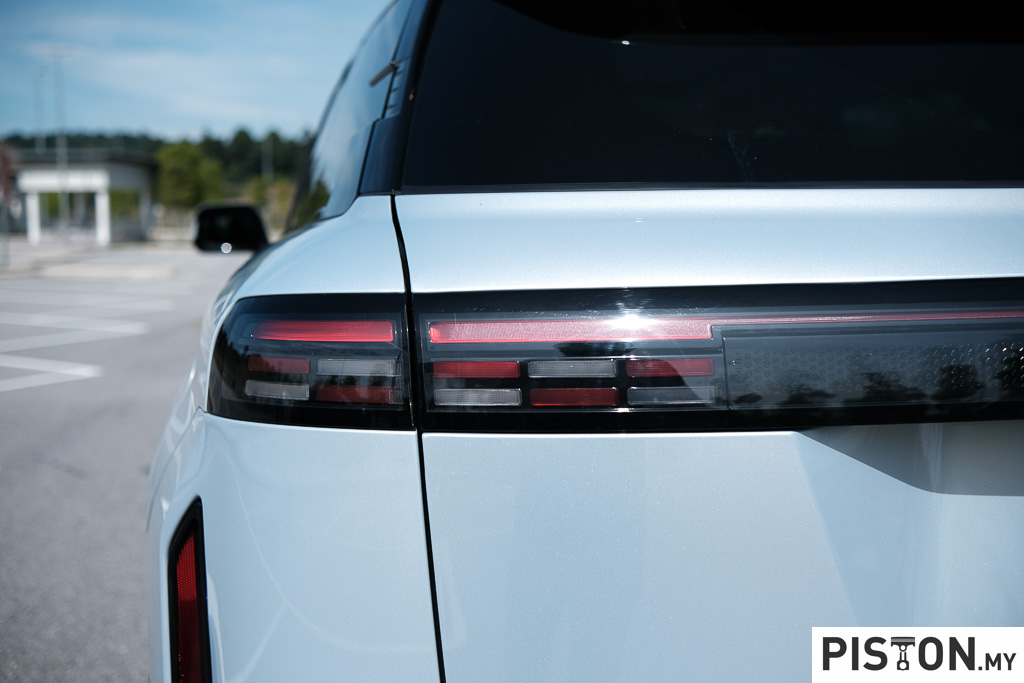
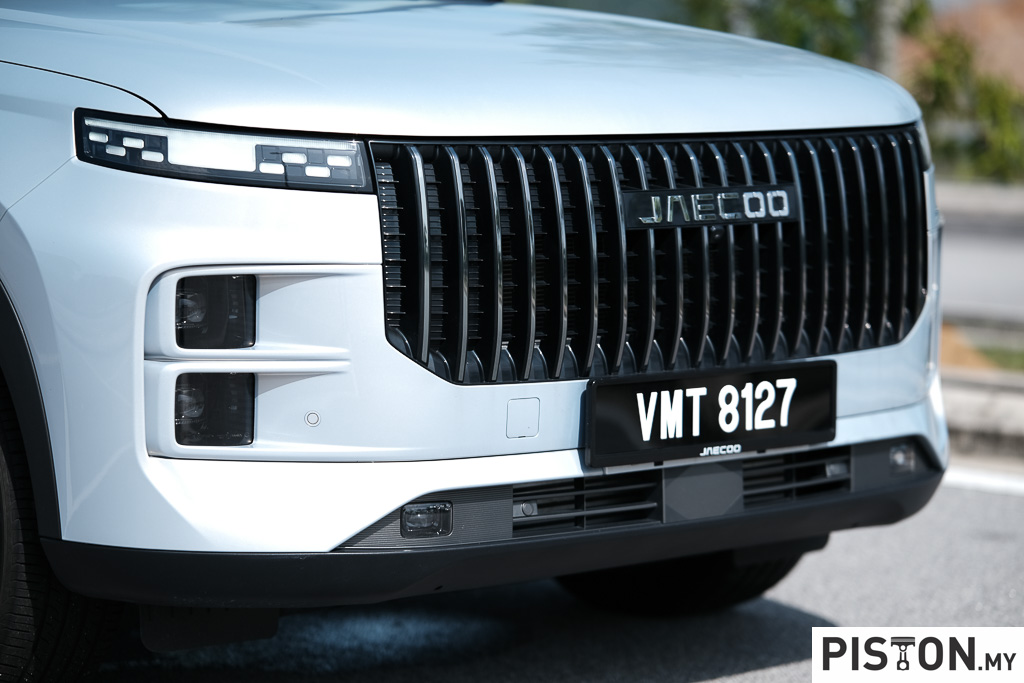
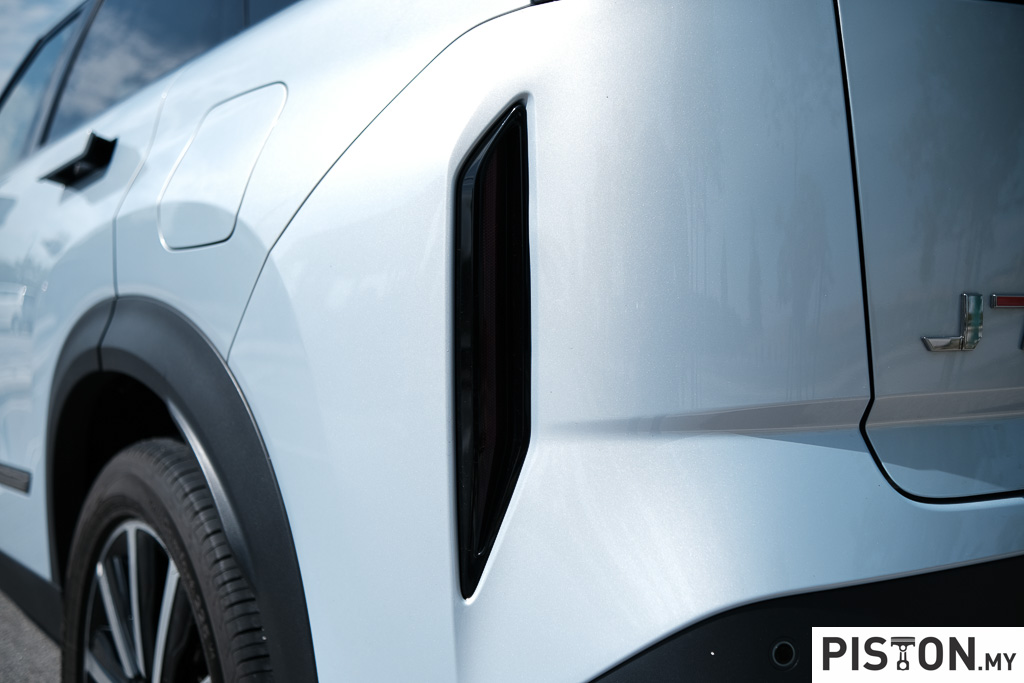
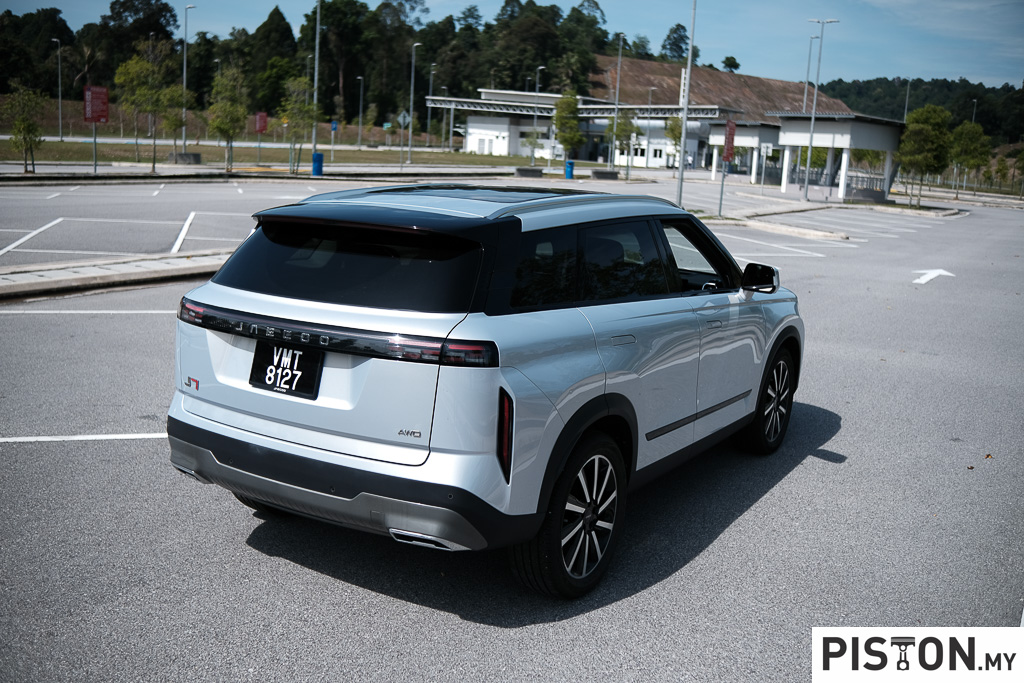
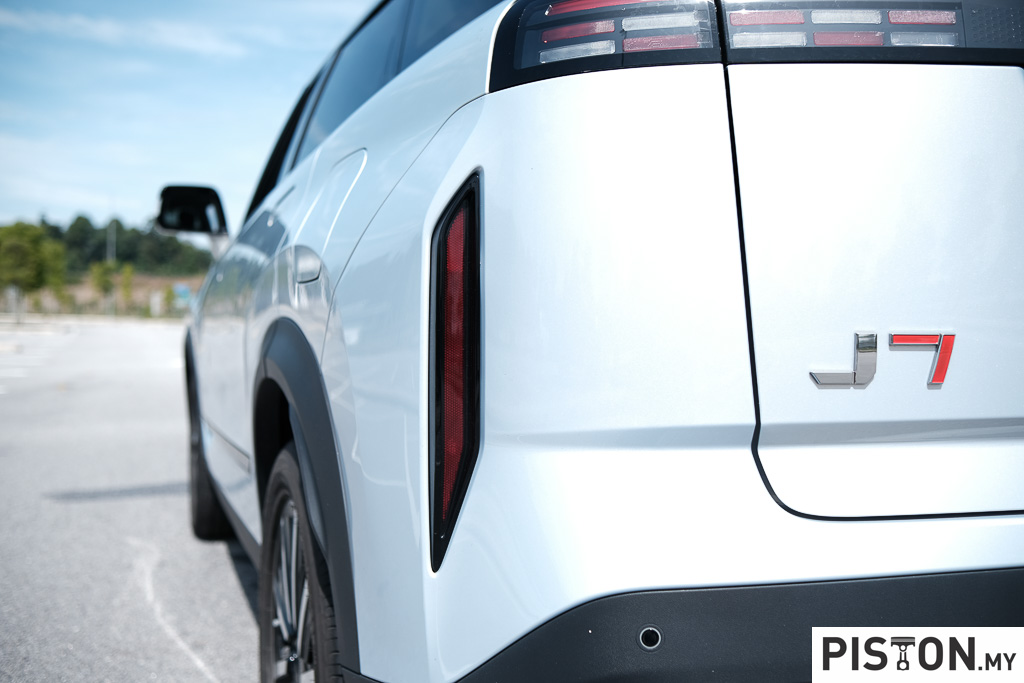
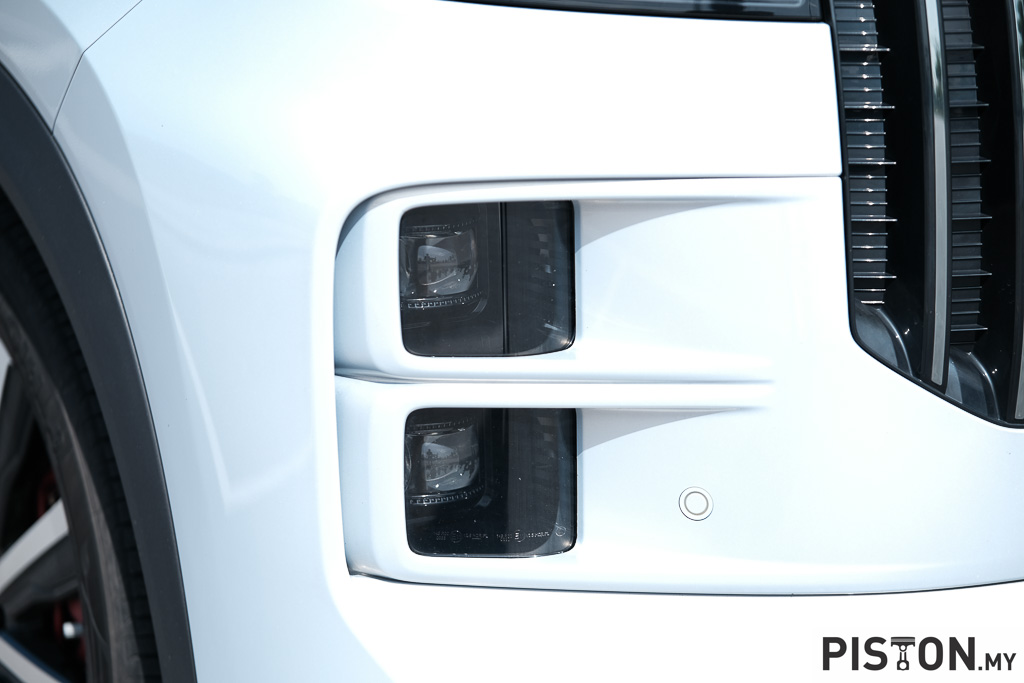
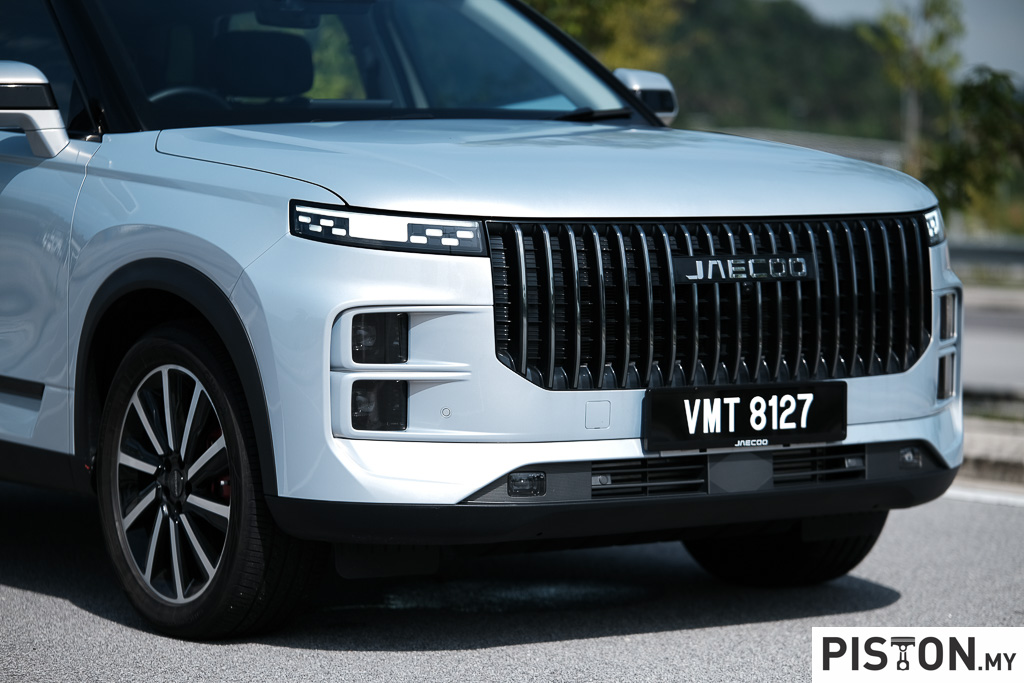
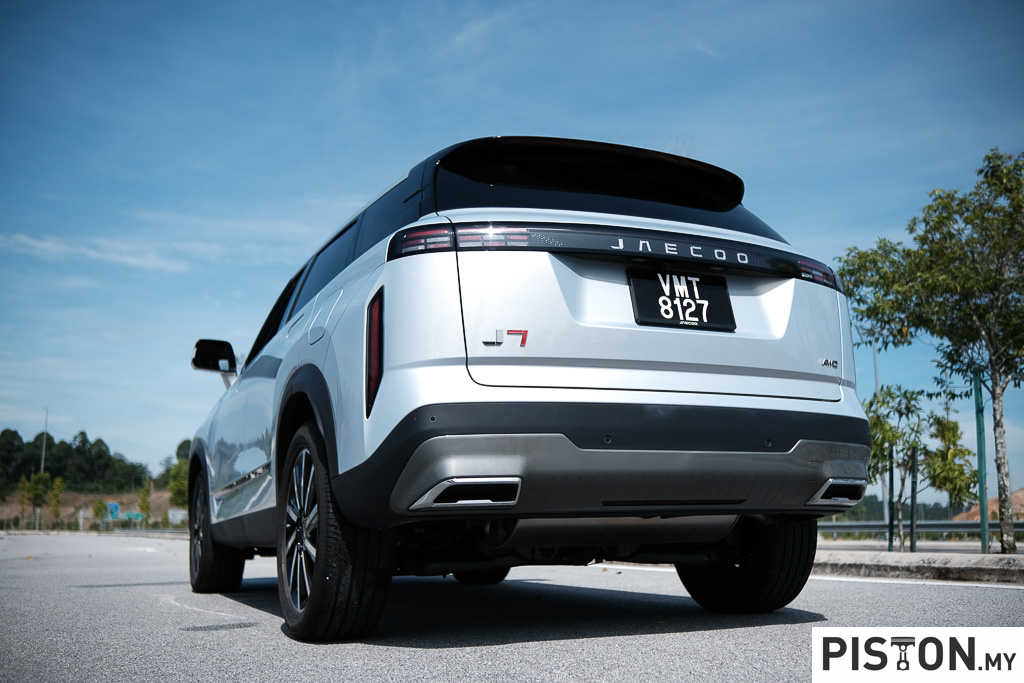
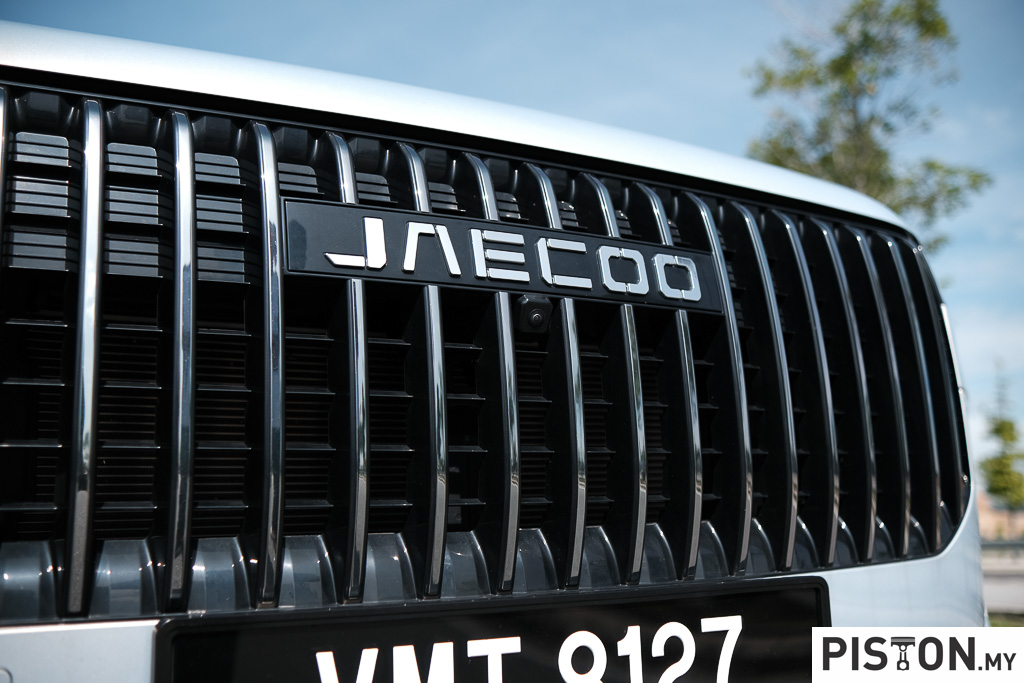
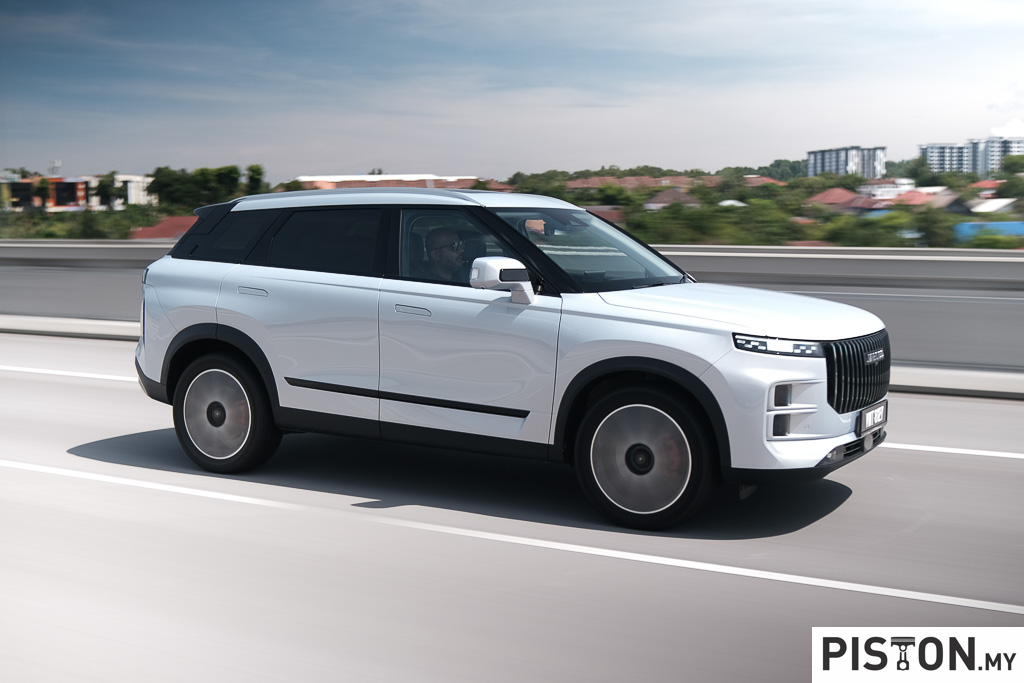
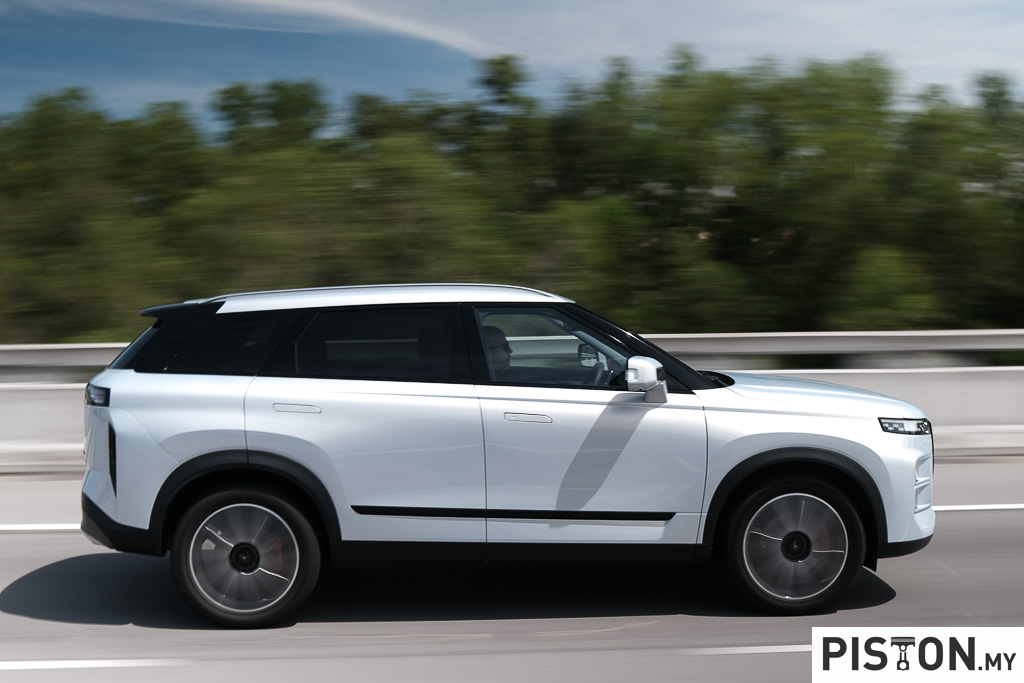
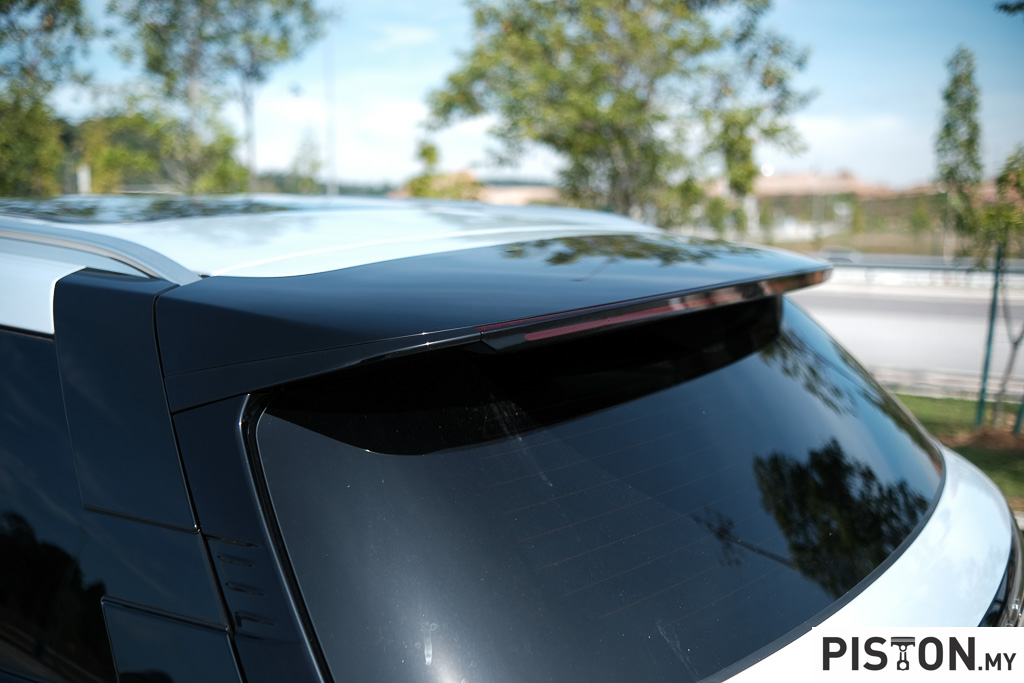
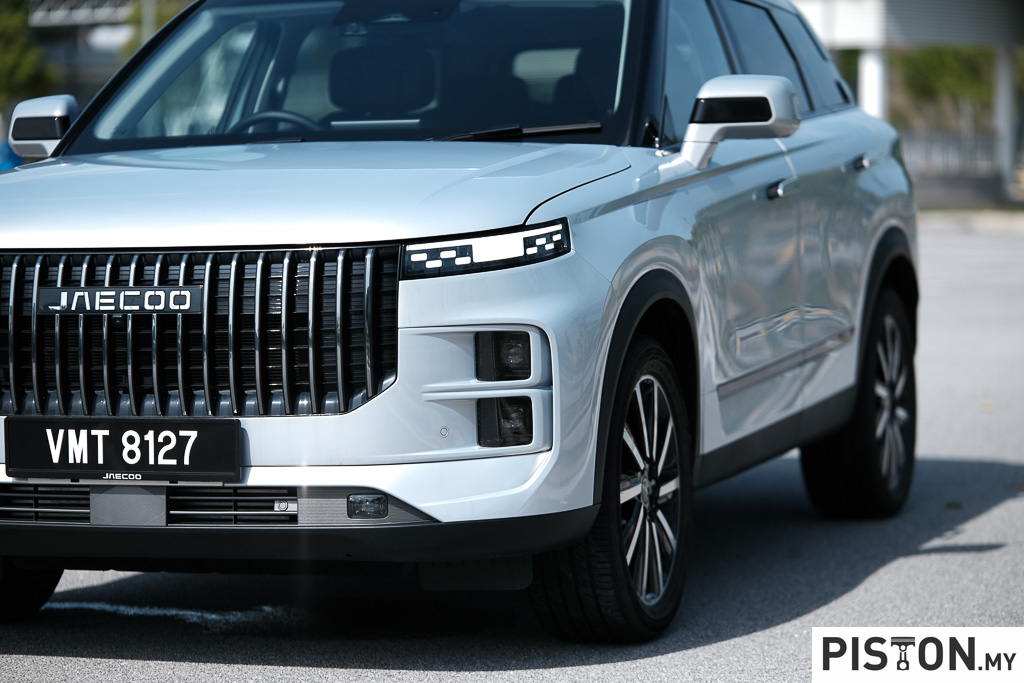
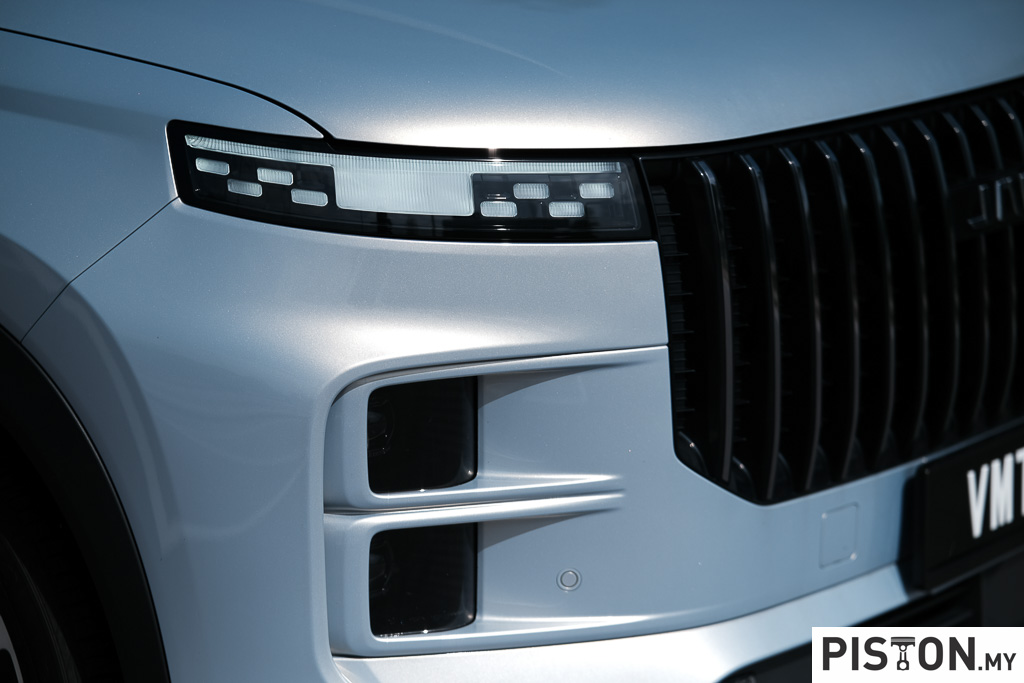
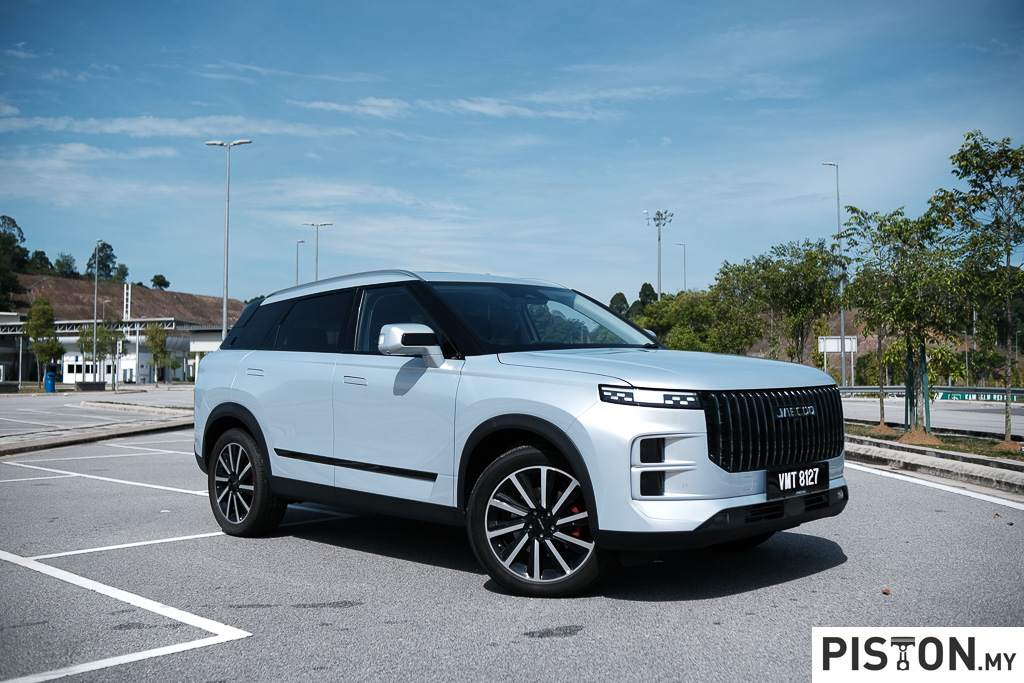
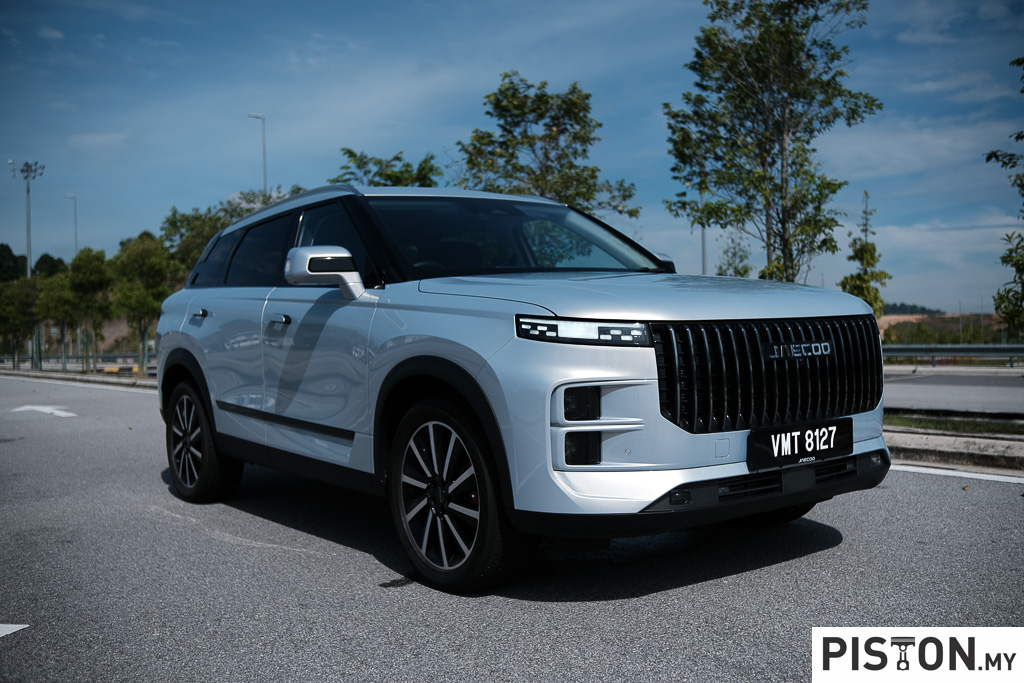
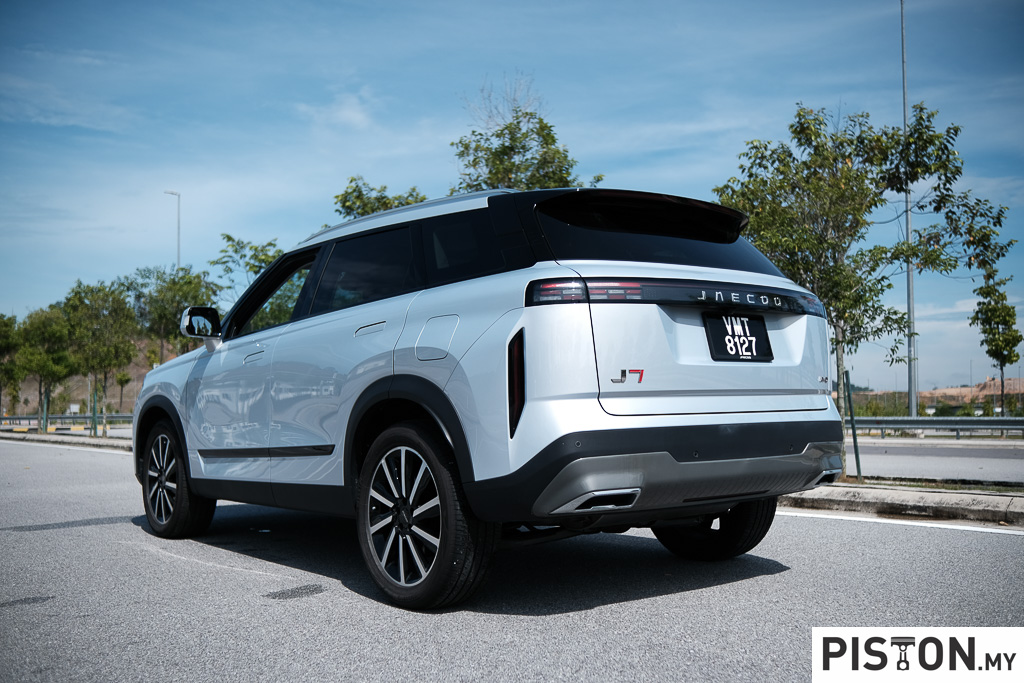
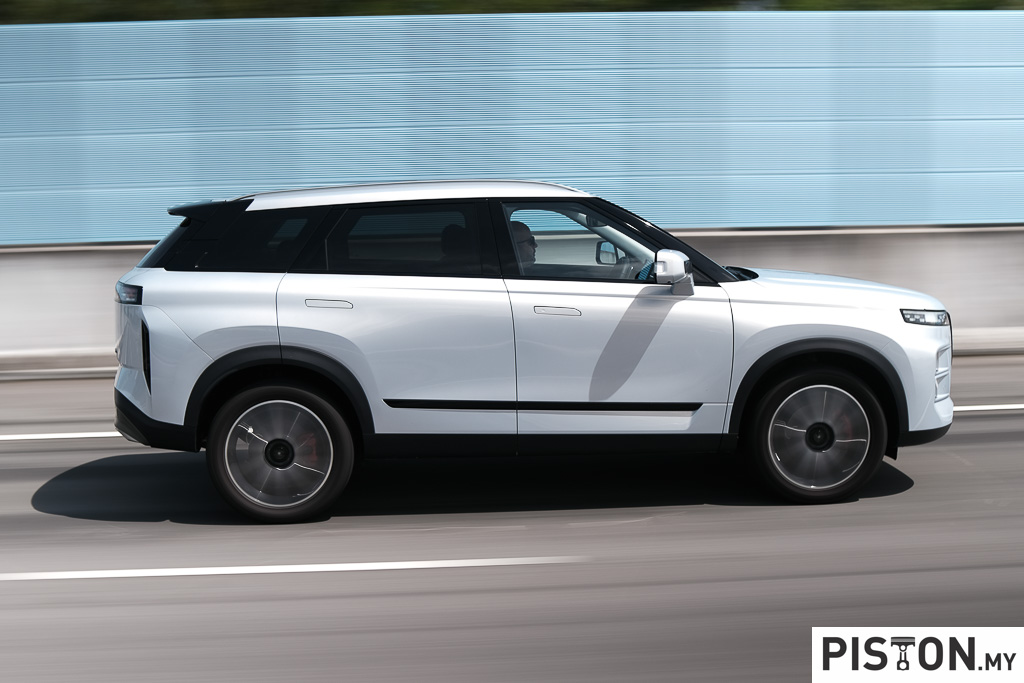
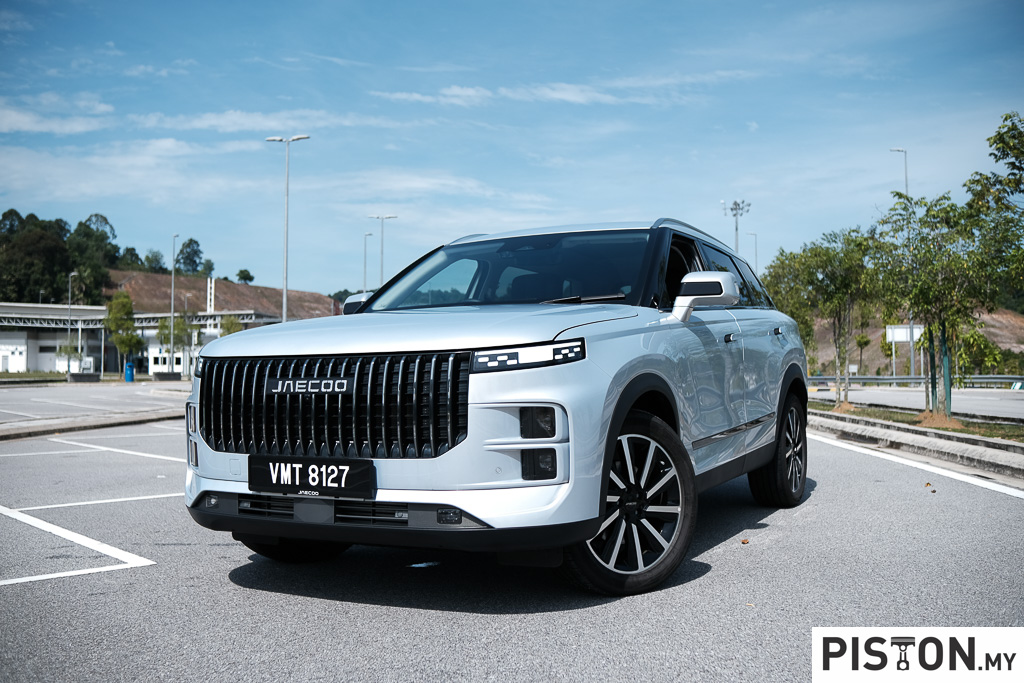
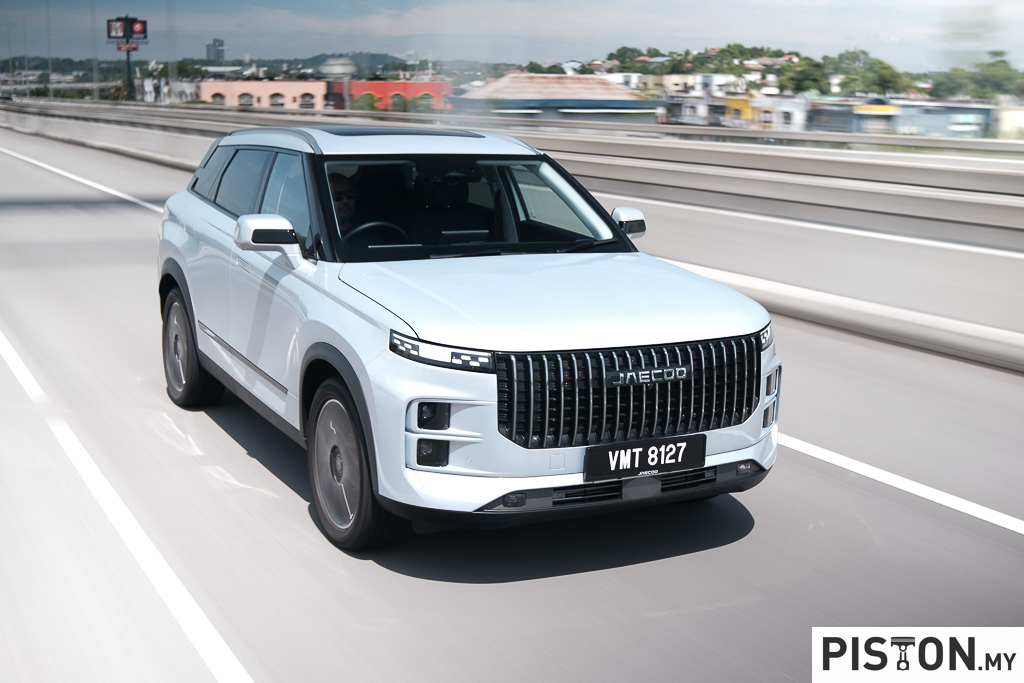
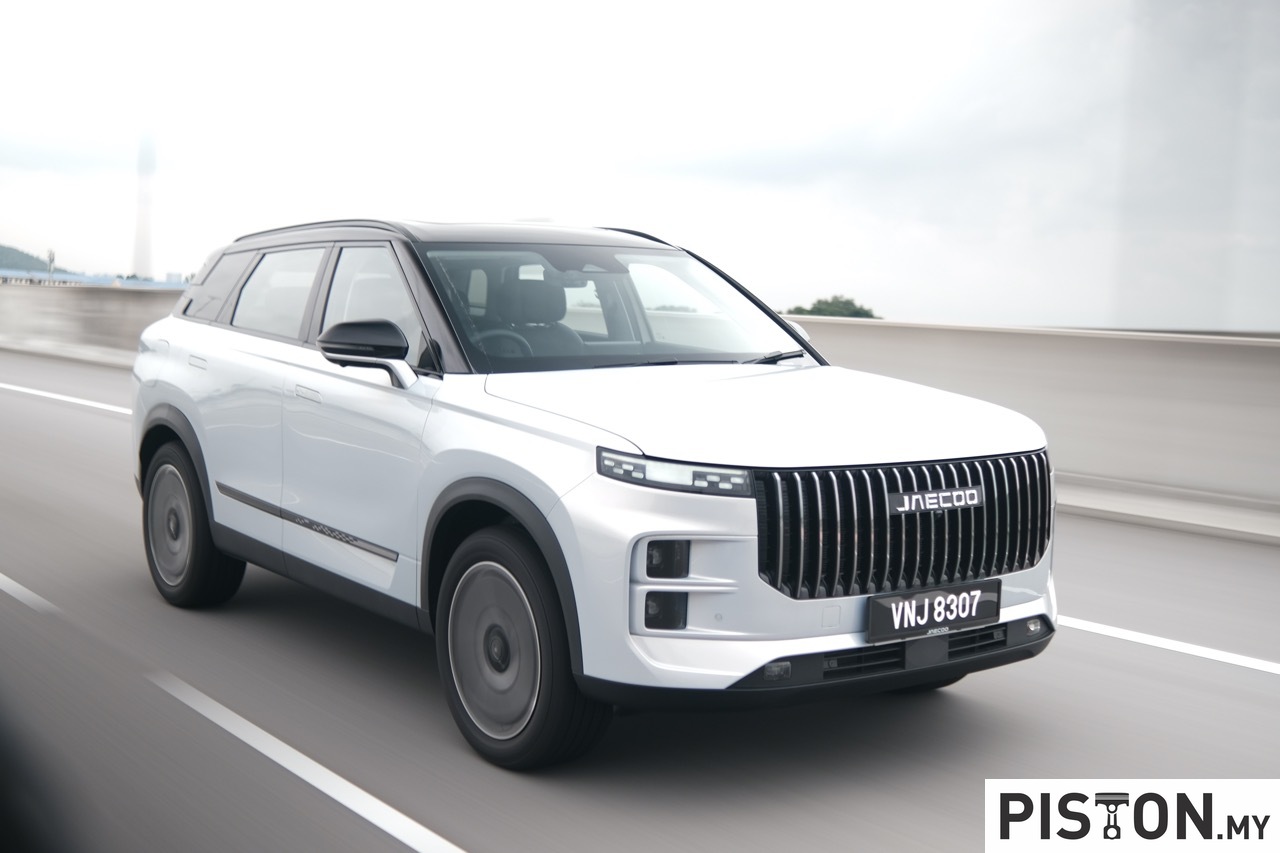
Simply put, the J7 does not have an ugly side to it. No matter which way you look at it, the J7 is a good-looking SUV. The vertical louvred front grille is quite imposing on the road and when paired with that pixelated daytime running light, it makes the front end of the car look quite unique and unlike any other car in the market.

Compare the design of the J7 to the usual suspects from Honda and Toyota, the J7 seems a lot more outlandish, and in this instance, that’s a good thing.

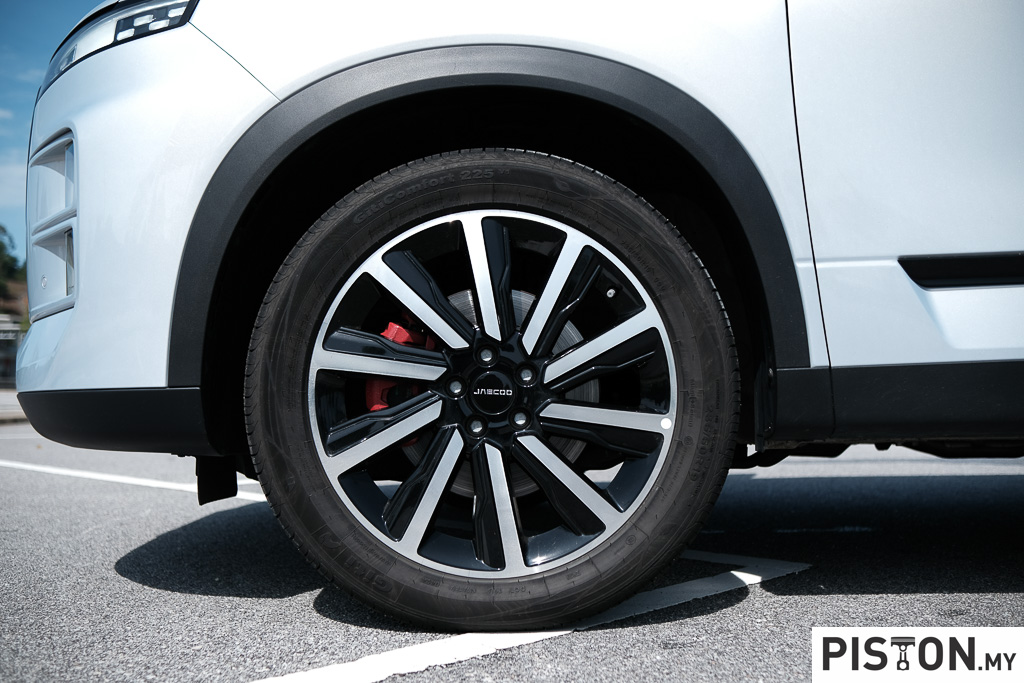
Even those 19-inch wheels that it rolls on look great out of the box.

Also, some say that the design of the J7 looks like it was inspired by Range Rover, but this writer struggled to find the similarity. I squinted, I bent down, I looked at it through my fingers and tried every angle to find an element from Range Rover but found none. I’ll say that it is good-looking and unique, but a Range Rover it is not.

But then I stepped inside and found what I was looking for.

Simplistic yet modern interior

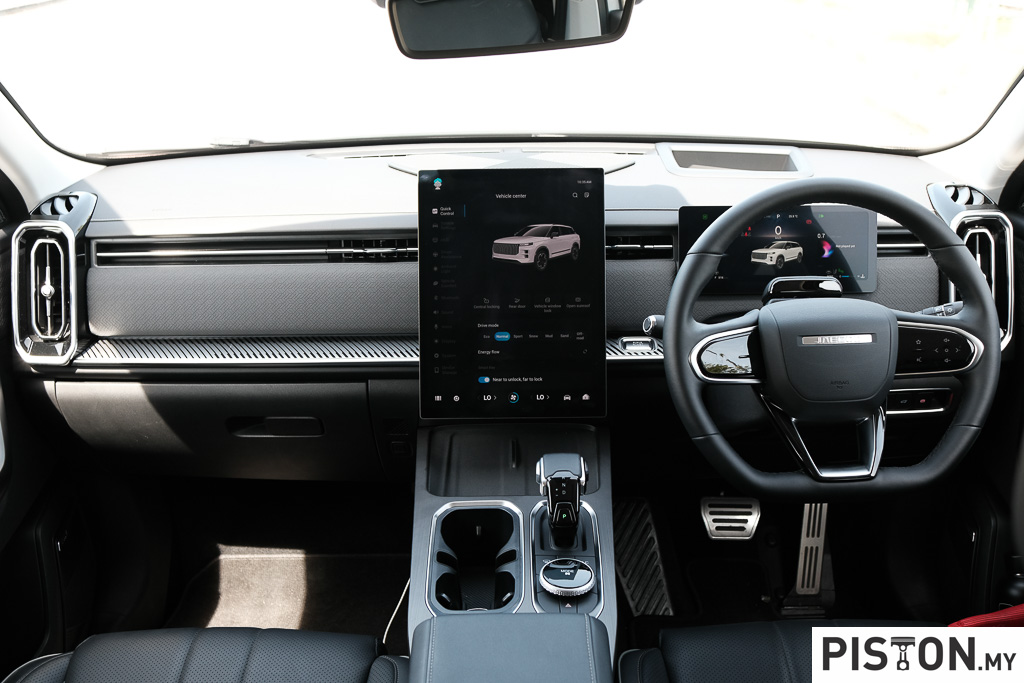
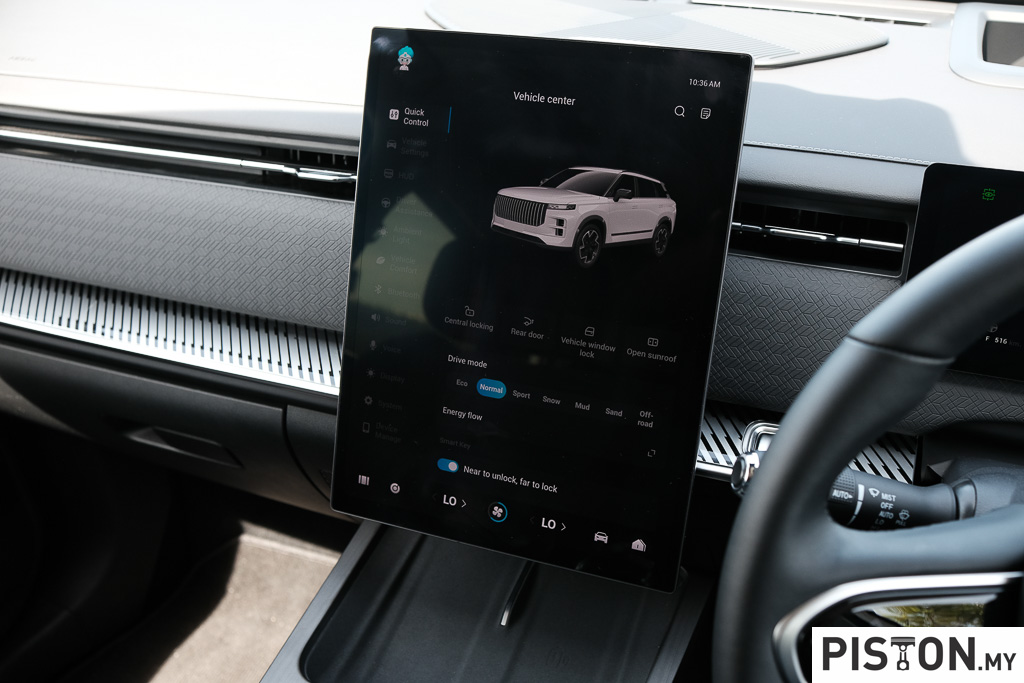
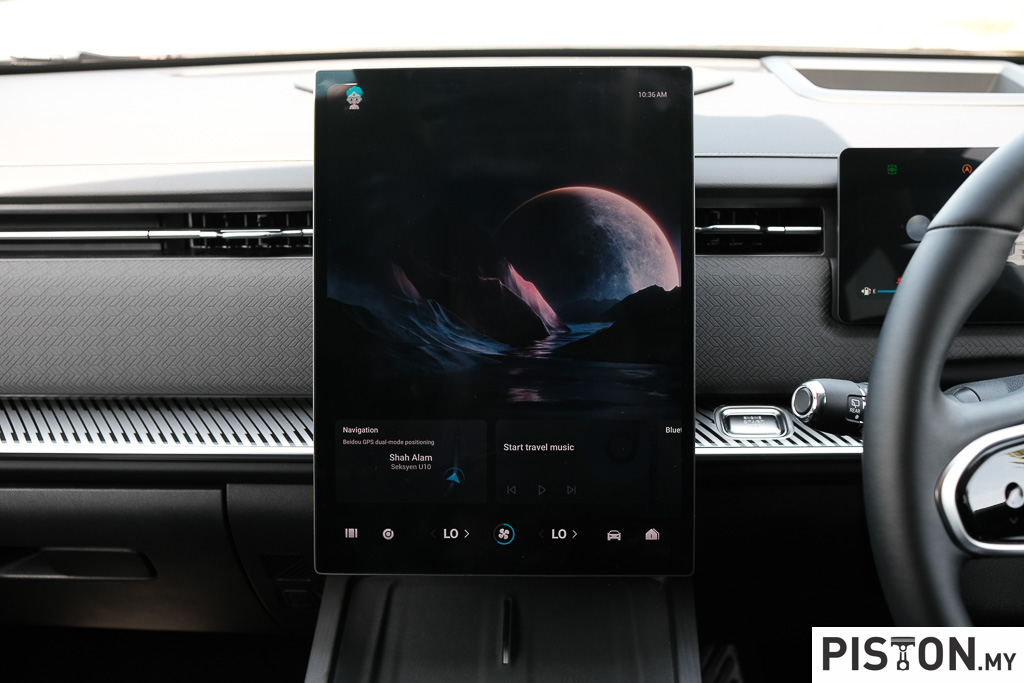
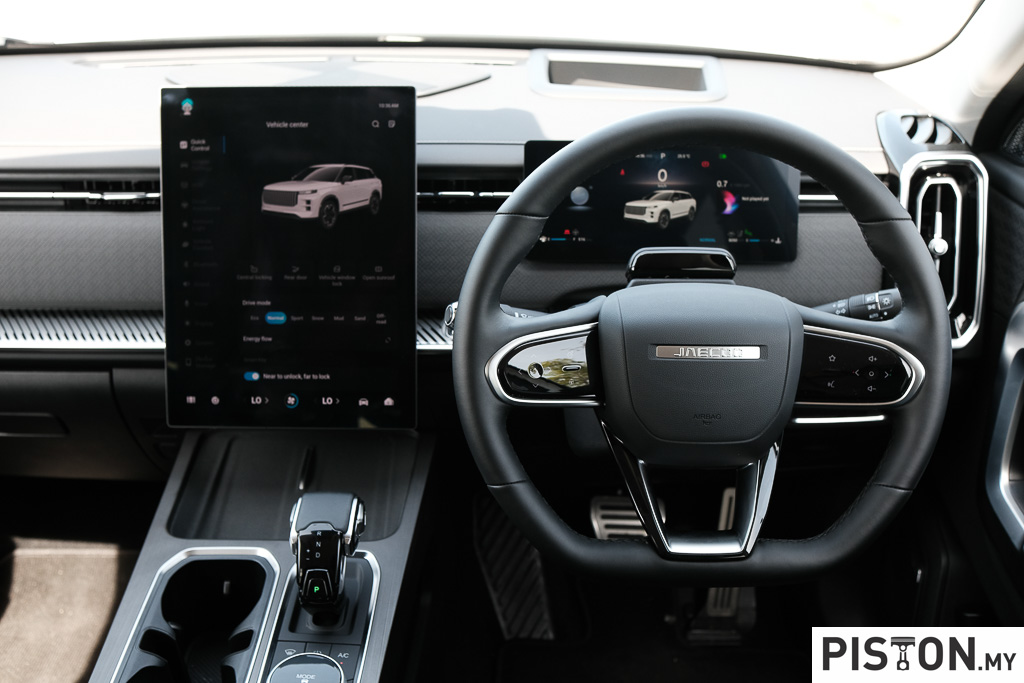
When you first step inside, the interior seems minimalistic yet futuristic. The dash is utterly dominated by that massive 14.8-inch infotainment screen that looks like it may rotate, but it does not.

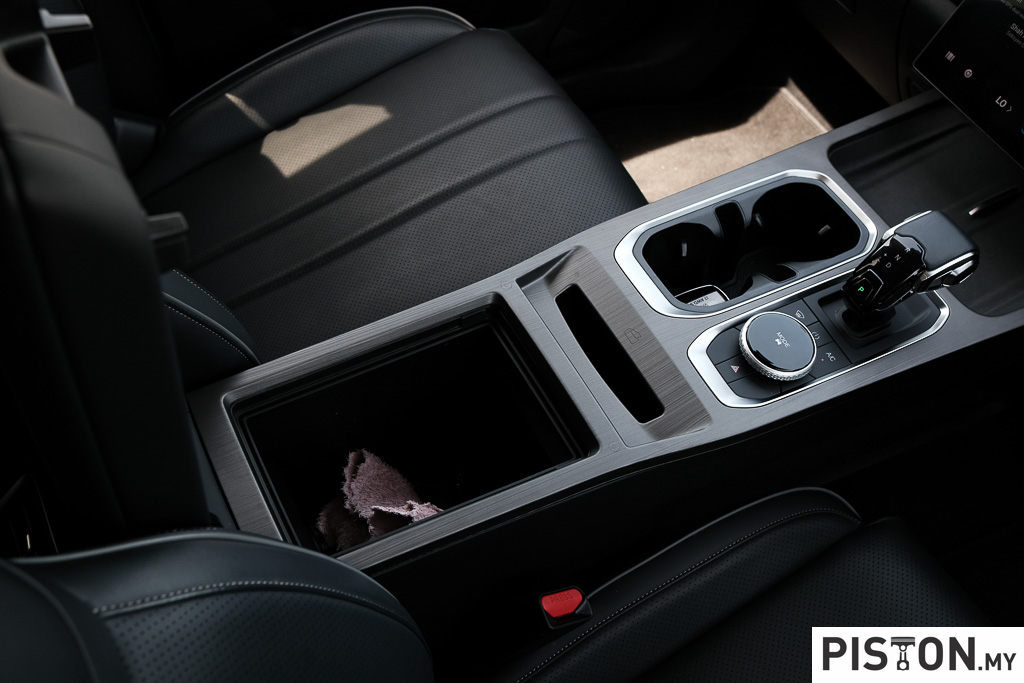
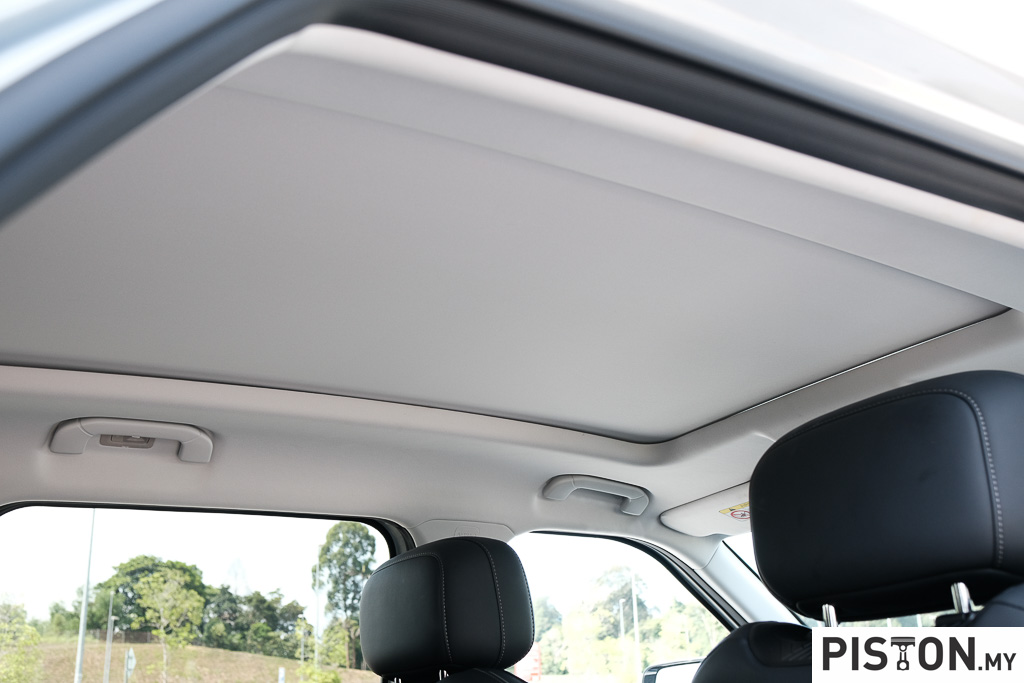
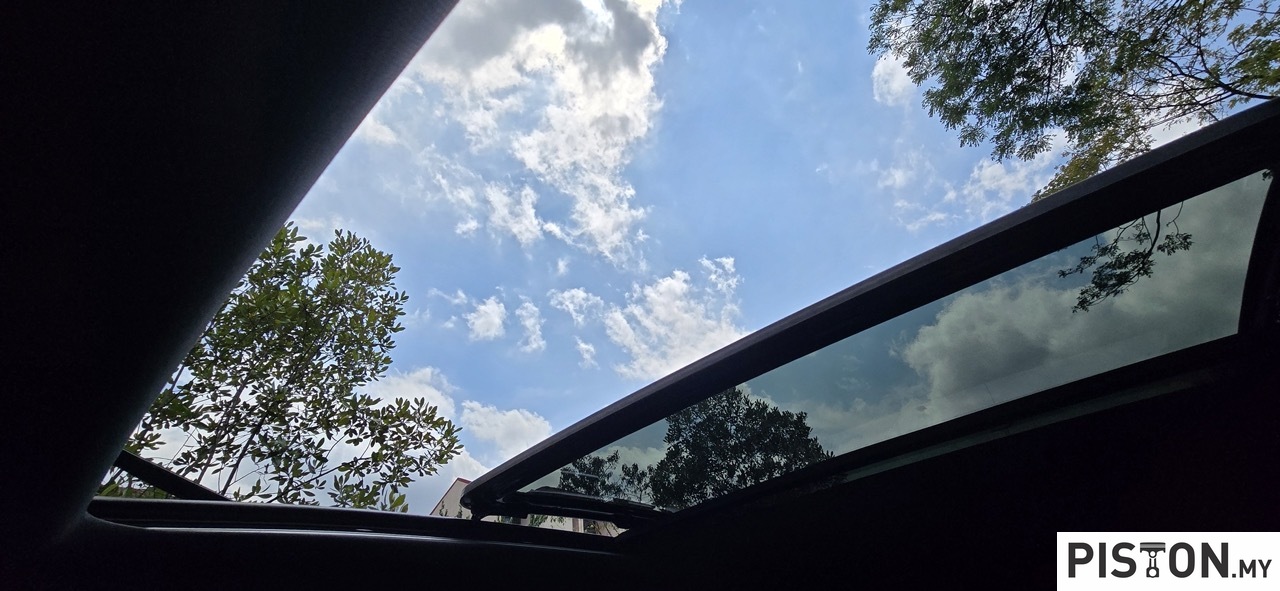
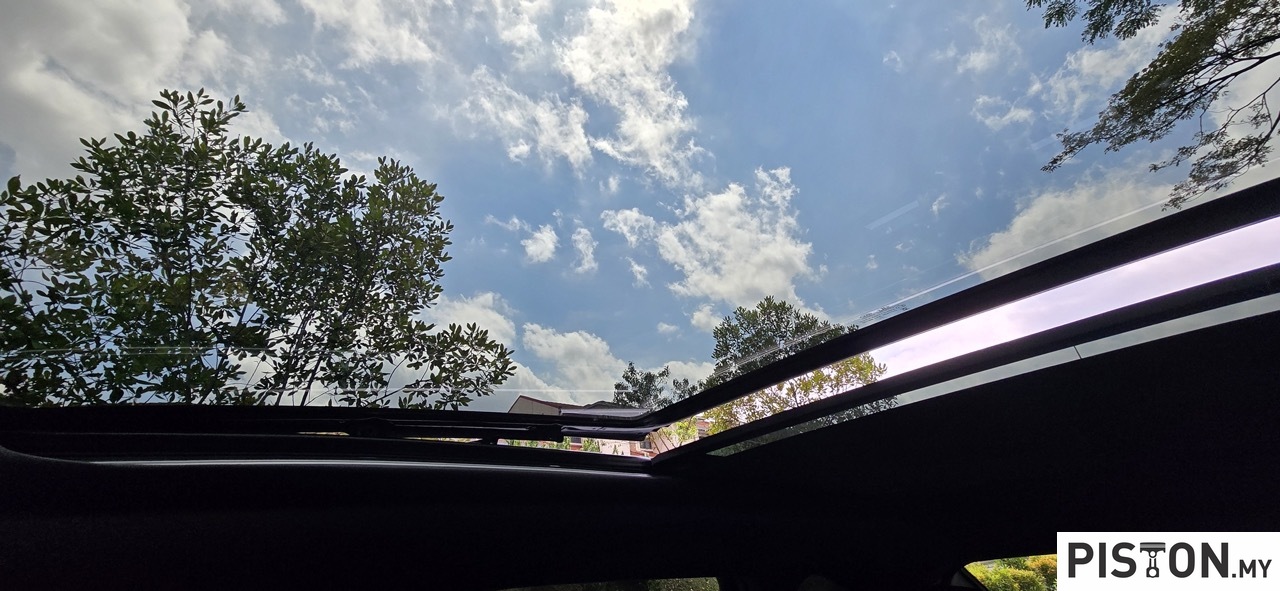
It is through that screen that you access all of the car’s controls, including air-conditioning, entertainment, select one of the seven drive modes and even access safety systems such as lane departure warning and window locks. You also must dive deep into the layers of menu to open or close the shade for the panoramic roof.

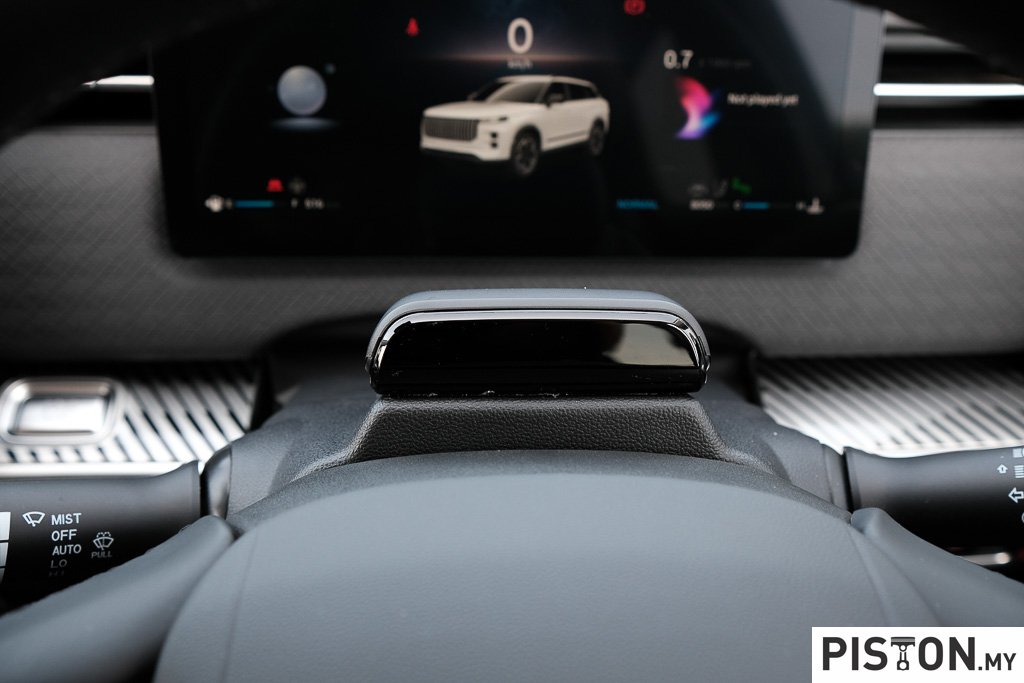
At first this may seem like an inconvenience because you constantly must take your eyes off the road, much to the detriment of the eye movement radar placed behind the steering wheel, that in turn scolds you for taking your eyes off the road by emitting constant pings.

But the good thing here is that because the screen is gigantic and you soon memorise where all the controls are, it becomes easier to navigate the controls hidden behind the layers of software.

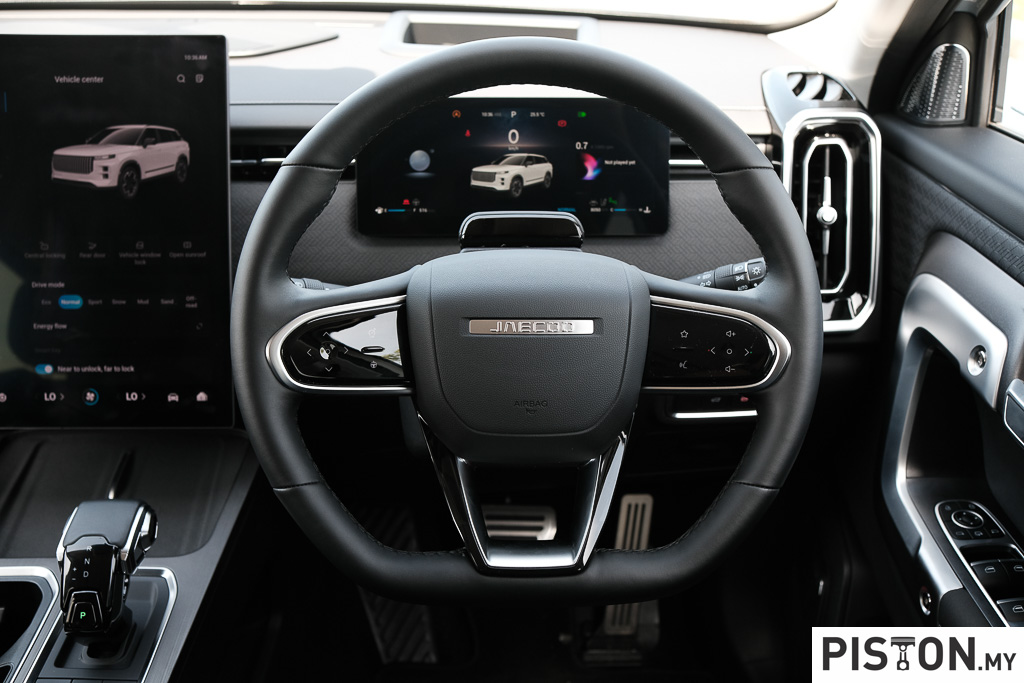
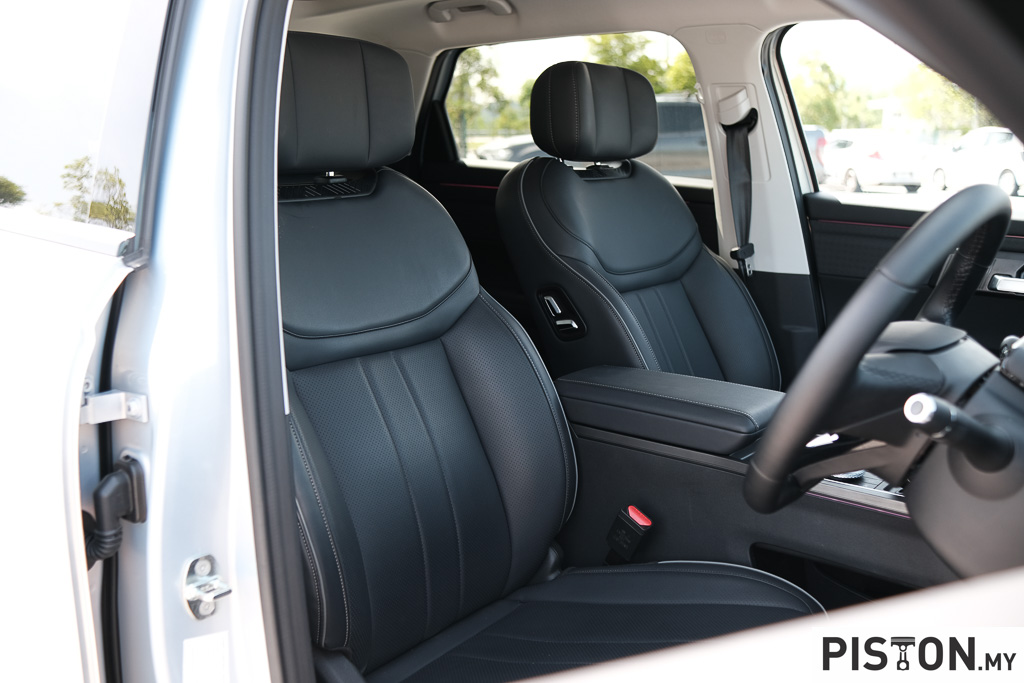
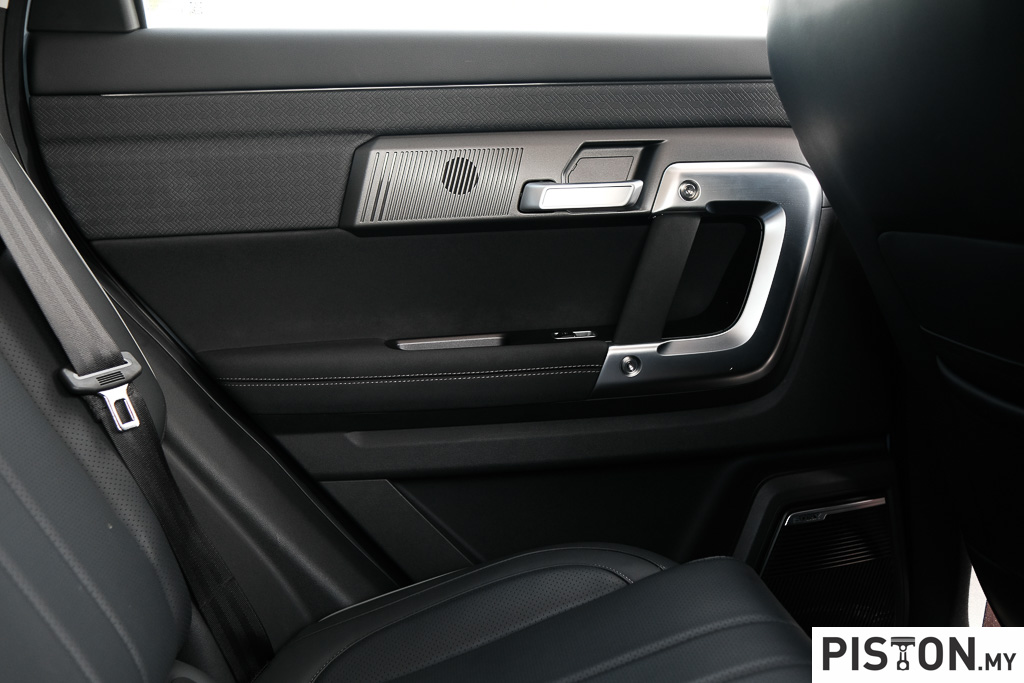
And then, there is the Range Rover inspiration, and that lays with the steering wheel as well as the seats. Now these do look like they came off the iconic British marque, but they don’t only look great but feel good too.

The steering wheel feels chunky though those haptic buttons require some getting used to and are not very friendly for sweaty palms. But they work better than those on a Mercedes-Benz or a Volkswagen.

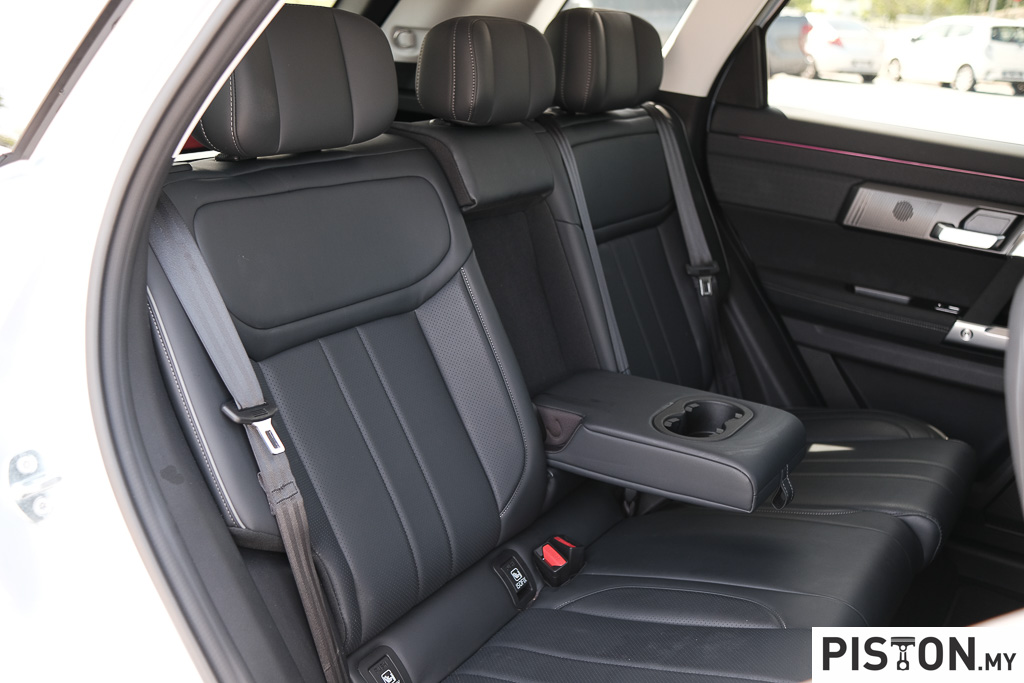
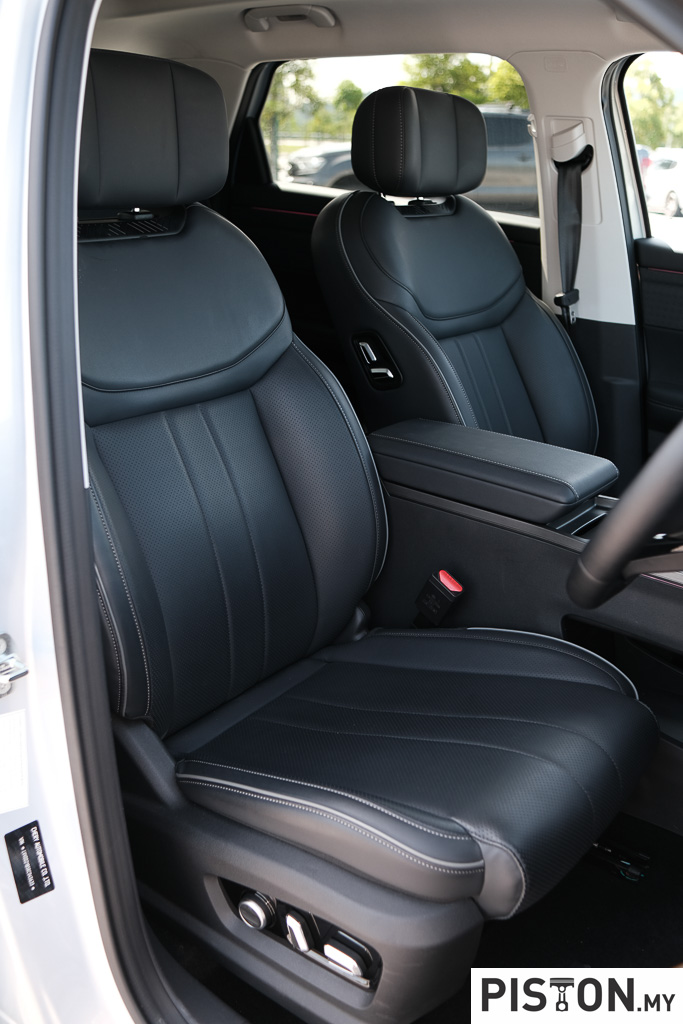
Then there are the seats – big, comfortable and ventilated as well. And that makes them perfect for daily life on Malaysian roads.

There is also some inspiration from Volvo as well, namely the vertical air-conditioning vents up front.

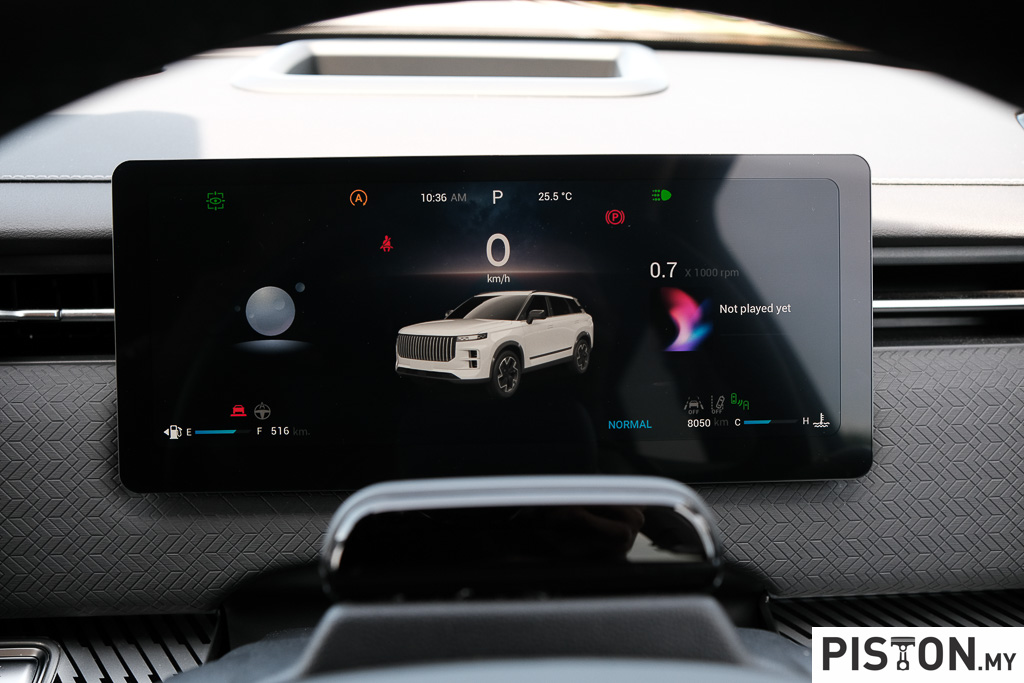
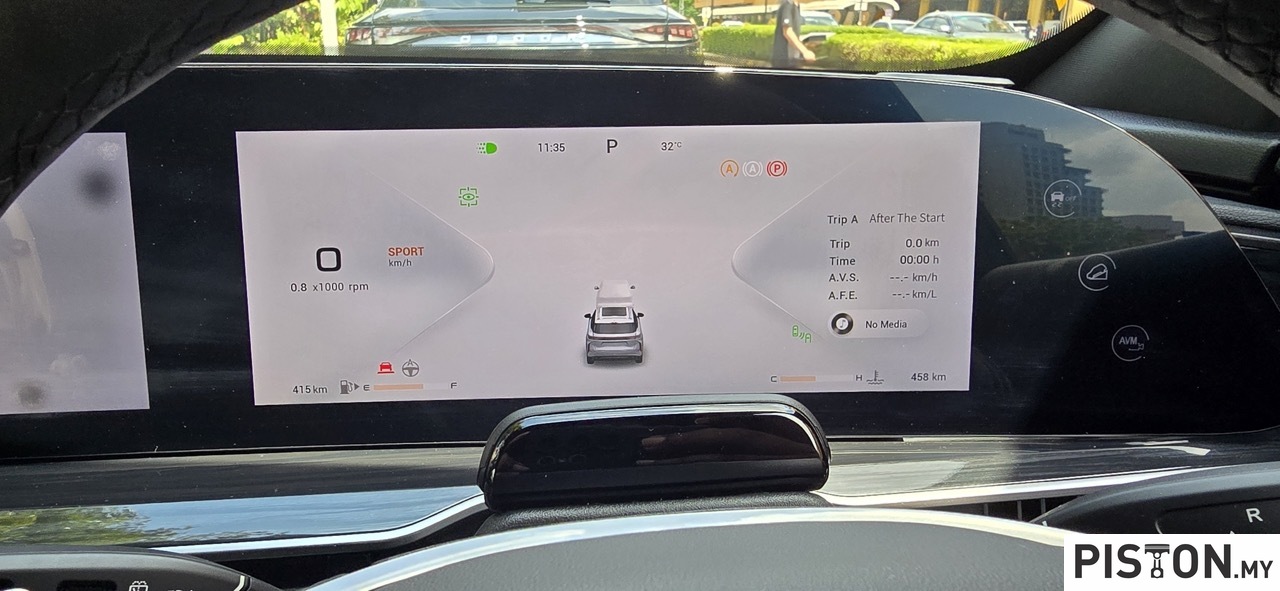
The instrument cluster on the other hand is also digital and measures in at 10.25-inches. And in typical Chinese fashion, it tries to feed you too much information than is necessary, and that makes it difficult to read sometimes. But just like the infotainment screen, you get used to it after you figure out where everything is.

Fantastic, but how does it drive?

Better than you would imagine, and when compared to its Japanese competitors, it has to be said that its refinement levels is quite impressive.

At highway speeds, the interior is hushed while the suspension does a stellar job at isolating the cabin from the road, absorbing dips, ruts and everything the road can throw at it.

Wind noise too is down to a level that is barely audible except at some seriously illegal speeds. And this is achieved through the use of double panel windows, which is not something you usually get at this price range.

Handling is impressive as well with the suspension working to minimise body roll when the roads get interesting. And the Jaecoo team deserves some credit for this because finding the sweet spot between comfort and control is something not all car makers are capable of. In fact, Chinese car makers are notorious for putting out overly soft suspension that sometimes nauseates passengers. So, we tip our hat to the team at Jaecoo for how the J7 handles and feels.

What about the powertrain?

Powering the J7 All-Wheel-Drive model is a 1.6-litre, four-cylinder, turbocharged engine putting out 194hp and 290Nm of torque. It is not exactly the final word in power for its segment and there are times when you wish there was more power on tap. This is further accentuated by the obvious turbo lag particularly in Normal drive mode.

To counter this, you are better off driving in Sport mode, but that makes the accelerator feel a little too choppy and difficult to modulate. Steering mounted pedal shifters would have been brilliant but you can also shift gears manually using the chunky gear lever. You must adjust your driving style to the J7 as there are things about it that takes some getting used to.

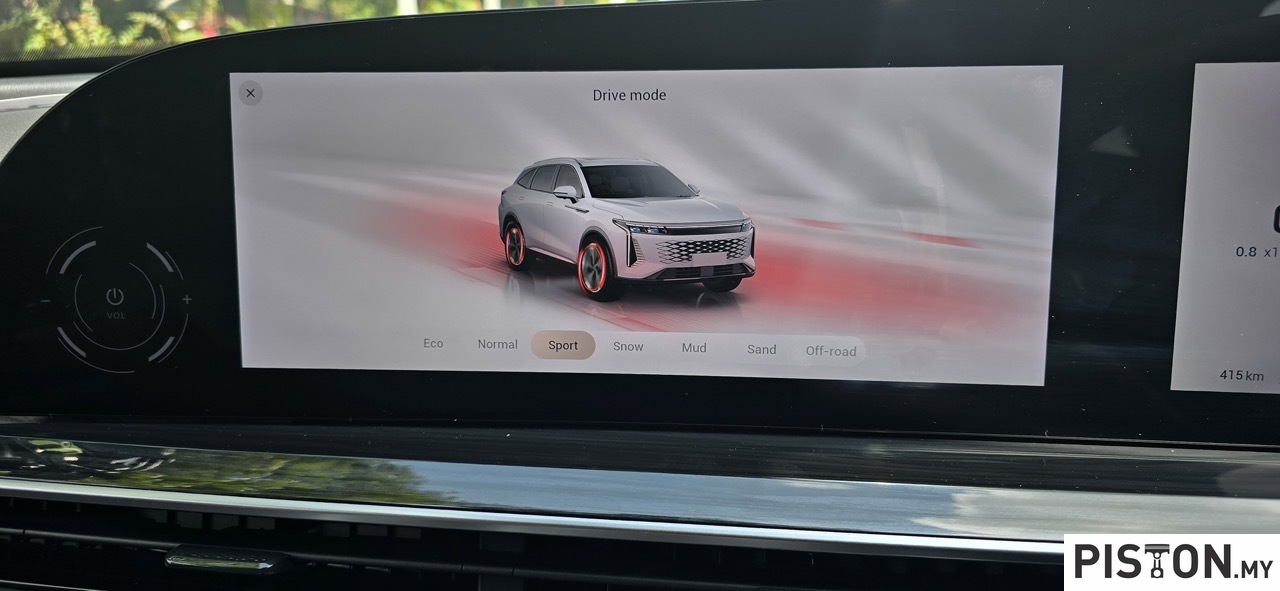
Speaking of drive modes, there are a total of seven different driving modes for this variant (the two-wheel-drive model gets three driving modes), and those are just way too many driving modes. Just to sate your curiosity, the seven modes are – Eco, Normal, Sport, Sand, Mud, Snowfield and Off Road.

Jaecoo markets the J7 as an urban off-roader and even when it was first launched, the Malaysian Jaecoo team was keen to show off its off-roading prowess by getting members of the Malaysian automotive media to drive the J7 on an off-road course in Semenyih.

The J7 handled the course like a champ, and it is comforting to know the SUV has a water wadding capability of 600mm with a ground clearance of 200mm. That is great to have particularly during the monsoon season, but we doubt many owners will be taking the J7 off-roading.

However, should you decide to visit a durian plantation, selecting one of those drive modes is just a turn of a knob away, making it incredibly easy to switch modes.

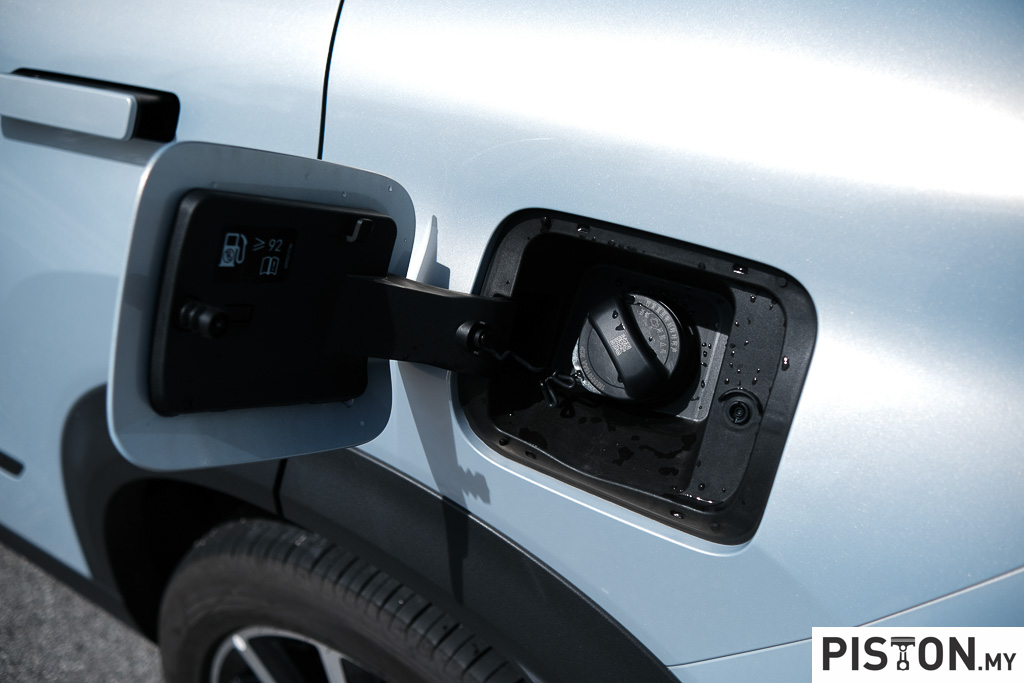
The one thing about the AWD variant is that it can be quite thirsty, with the official fuel consumption figure putting it at 7.7-litres per 100km, while we saw a real-world figure of 8.5-litres per 100km. But that is to be expected of an AWD car since all four wheels are constantly turning. Even this writer’s own Mazda CX-5 2.5T has an AWD powertrain, and the fuel needle drops like an anchor on highways.

So, what gives?

There is no such thing as perfection and there is bound to be something or other that has to be sacrificed. For the Jaecoo J7, the handling of the car is something to look out for. We felt a disconnection between the steering wheel and the wheels up ahead with dull spot in the middle where the steering simply did not respond.

Next is the spaciousness, taller drivers and passengers may find the seats up ahead to be a little cramped, but the rear seats are fine if you are about six foot tall. Any taller and you may find your knees rubbing against the front seats.
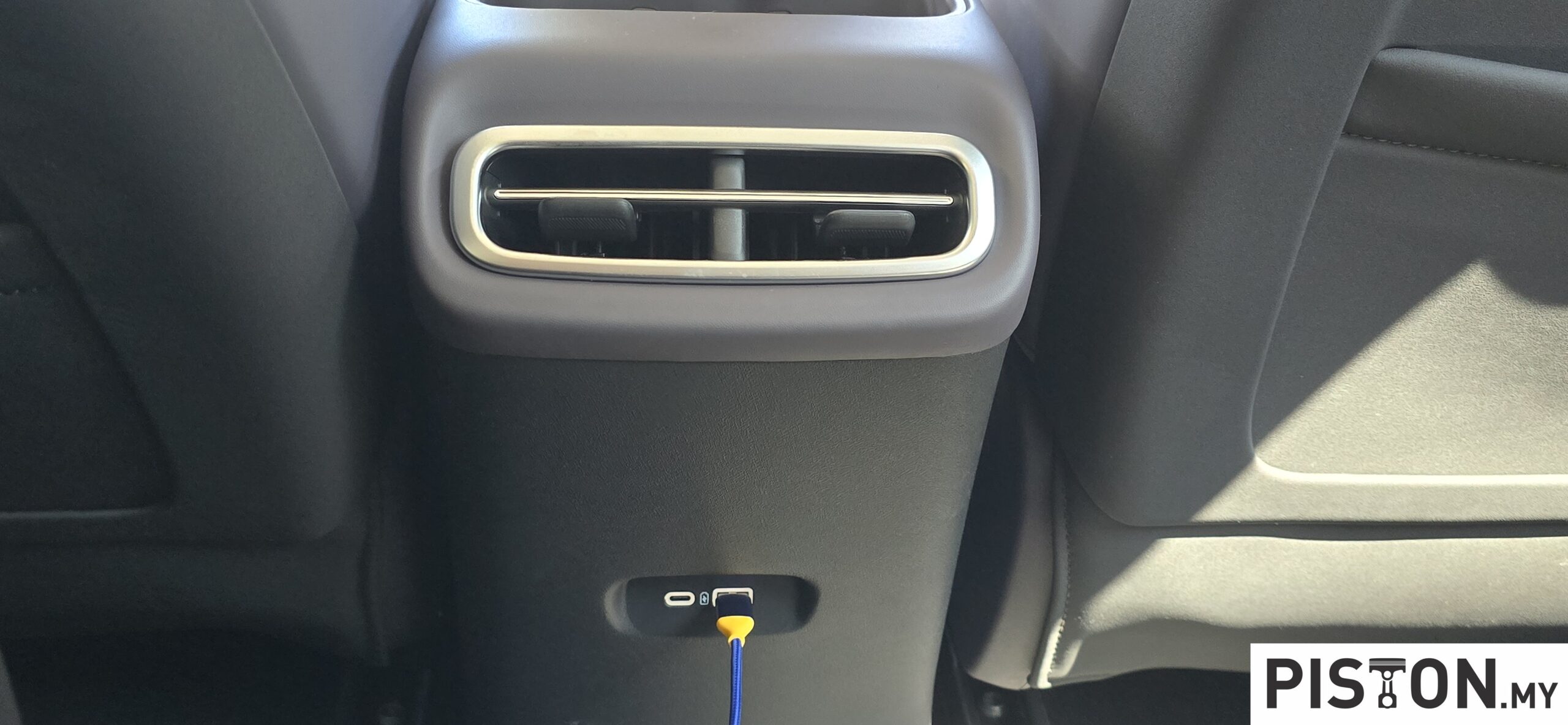
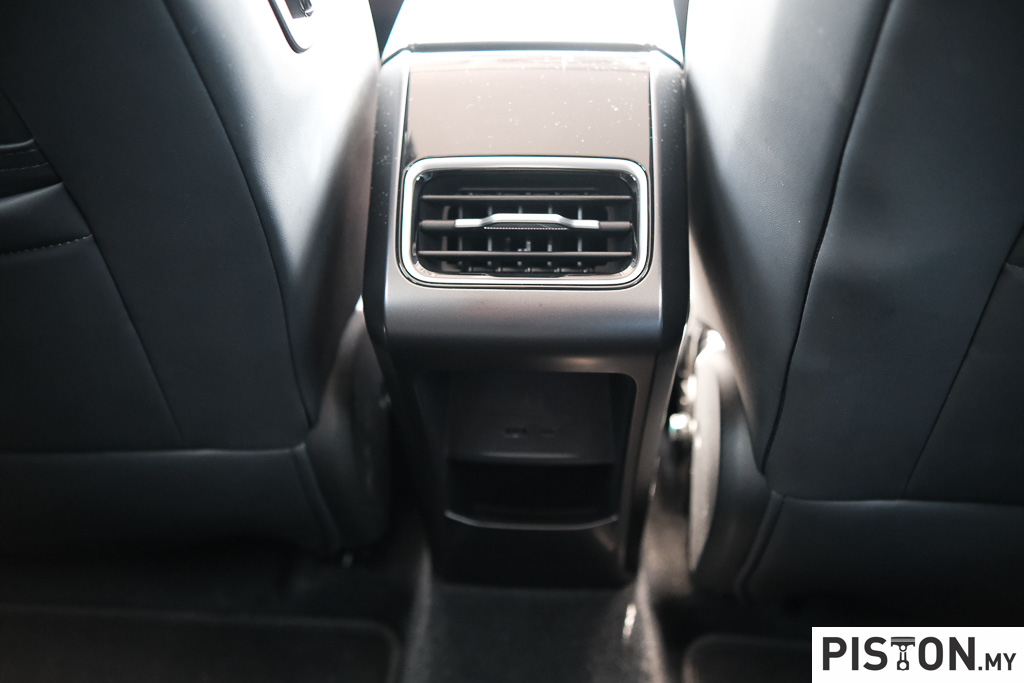
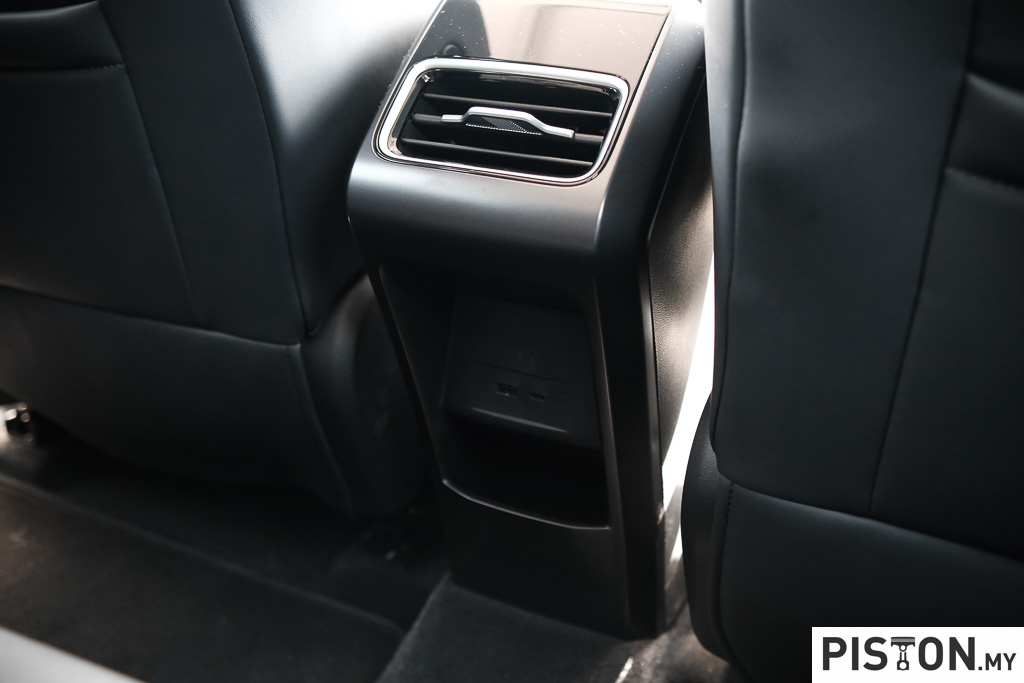
Then there is the single air-conditioning vent at the back, which is quite odd for a people-moving SUV. If you have kids, they are surely going to be arguing over who gets the A/C vent, but there are two USB ports at the back so they might be distracted with their noses in their devices.

Should you buy one then?

At RM148,000, the simple answer is yes, the Jaecoo J7 AWD variant is a nice SUV that seemingly checks all the boxes in our list. It is not a perfect package, but most cars fall short of that accolade as well.
It also comes with the best warranty package in its segment, with a seven-year or 150,000km warranty on the car, and a 10-year or one-million-kilometre warranty on the powertrain. And as we explained in our video review of the Jaecoo J7, that is the icing on a very nice cake and should put to rest any negative perceptions about Chinese brands.

Specifications
Engine: 1.6-litre, 4-cylinder, turbocharged
Power: 194hp
Torque: 290Nm
Acceleration (0-100kmh): 9.9 seconds
Top speed: 180kmh
Price (As tested): RM148,000

We like: Good looks, quality, refinement
We don’t like: Can sometimes feel underpowered

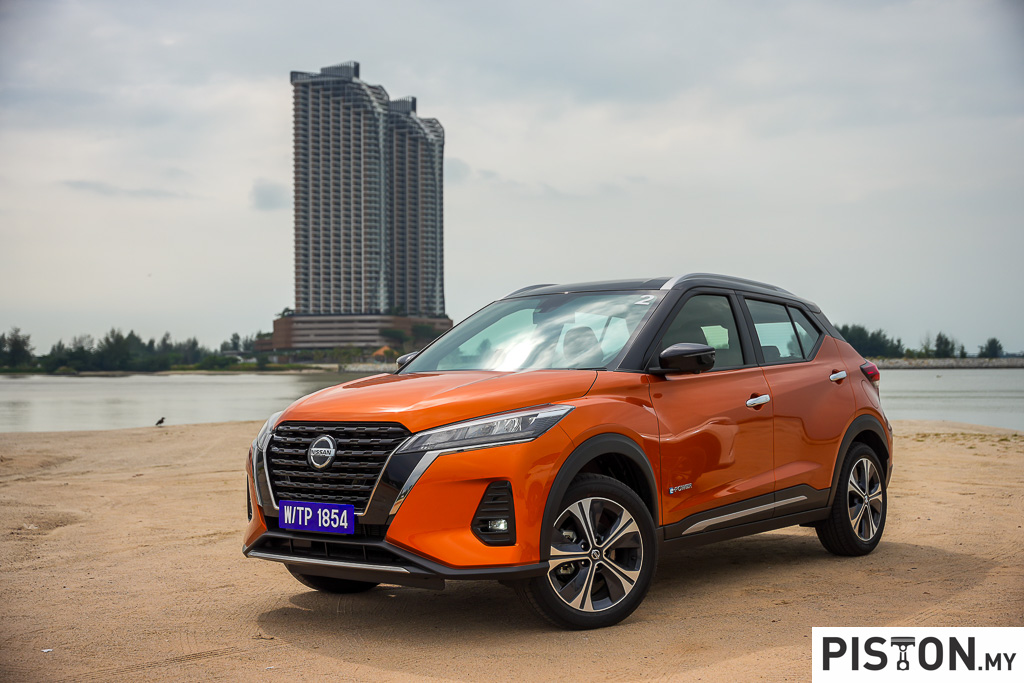
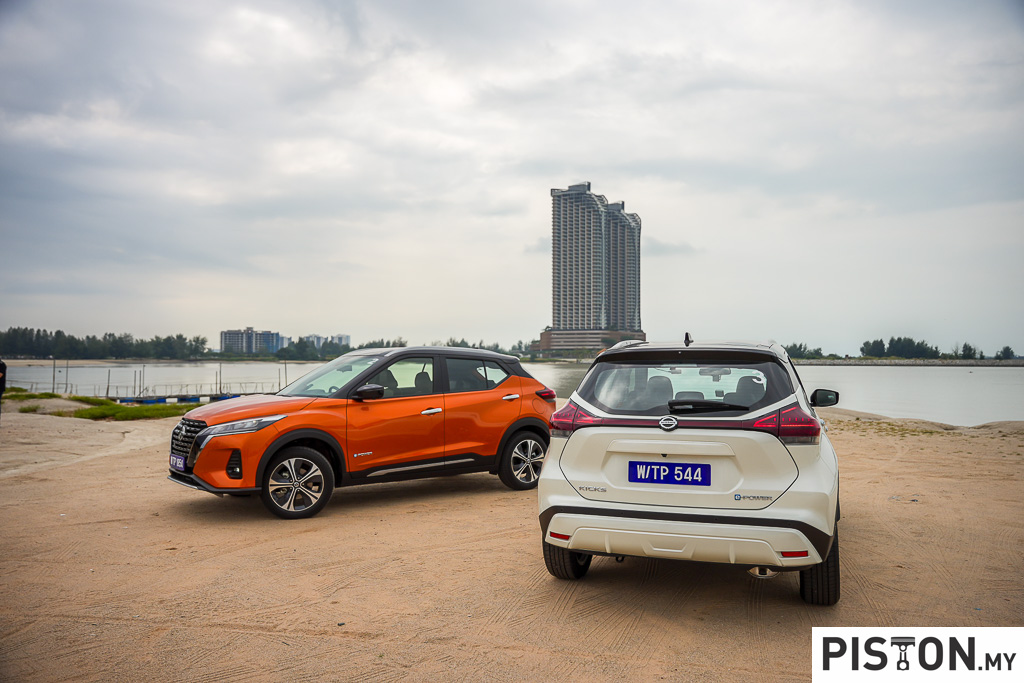
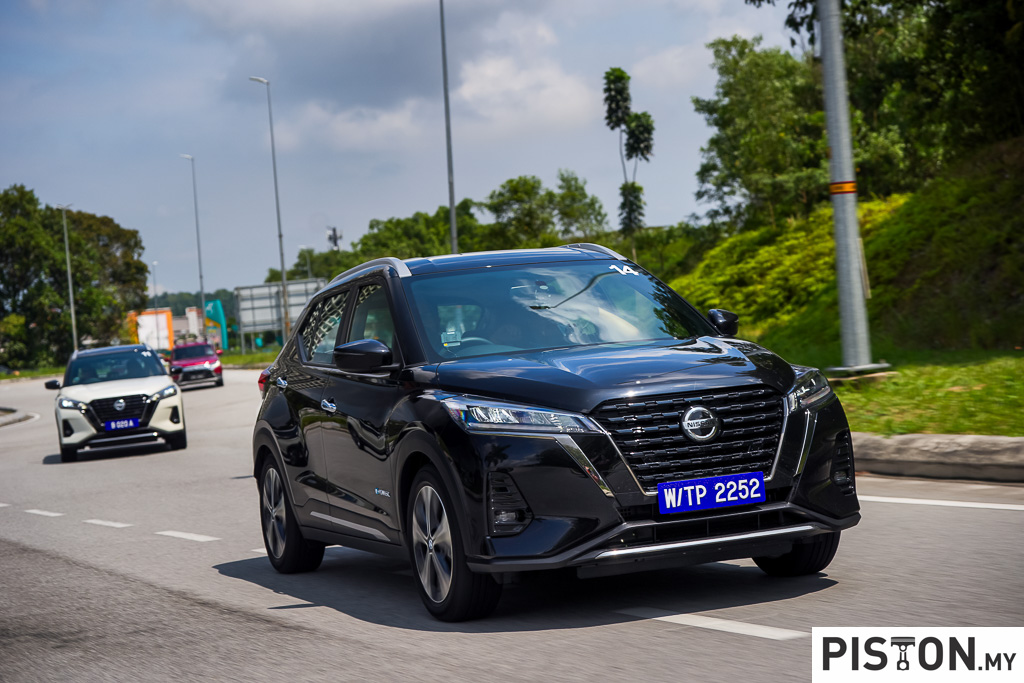
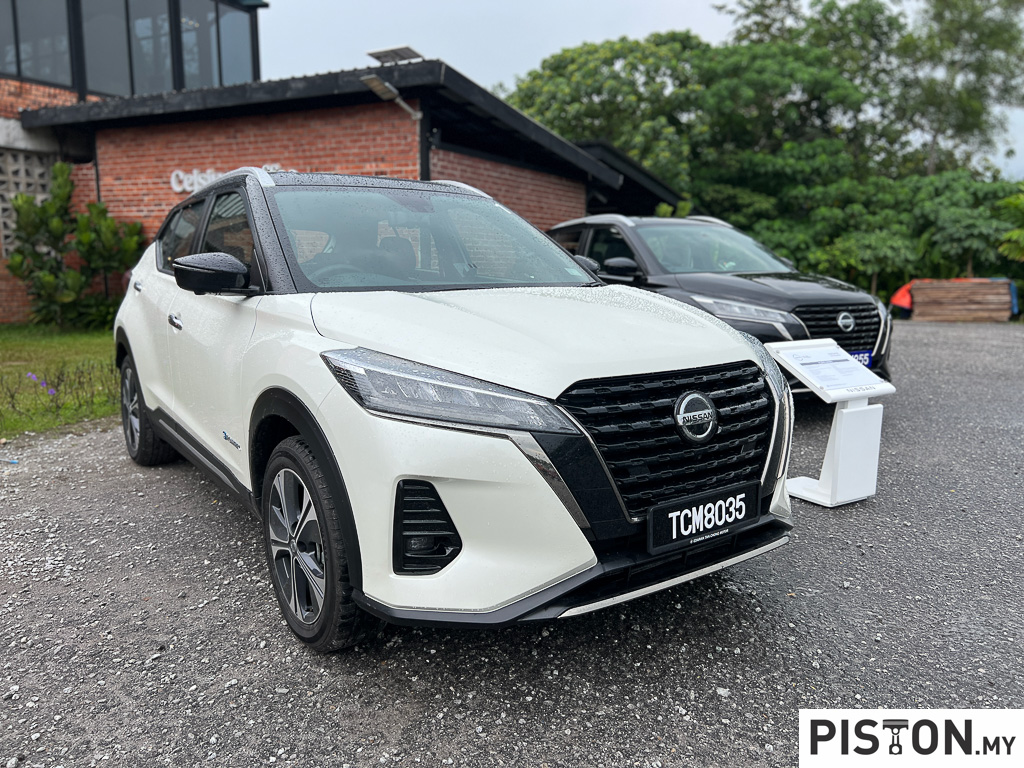
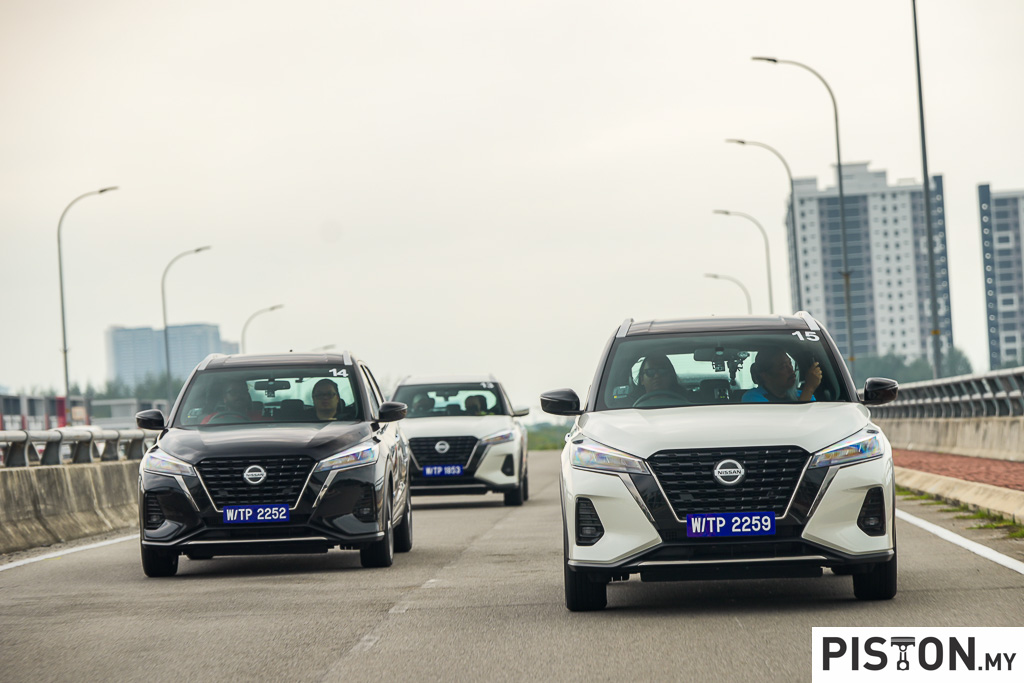
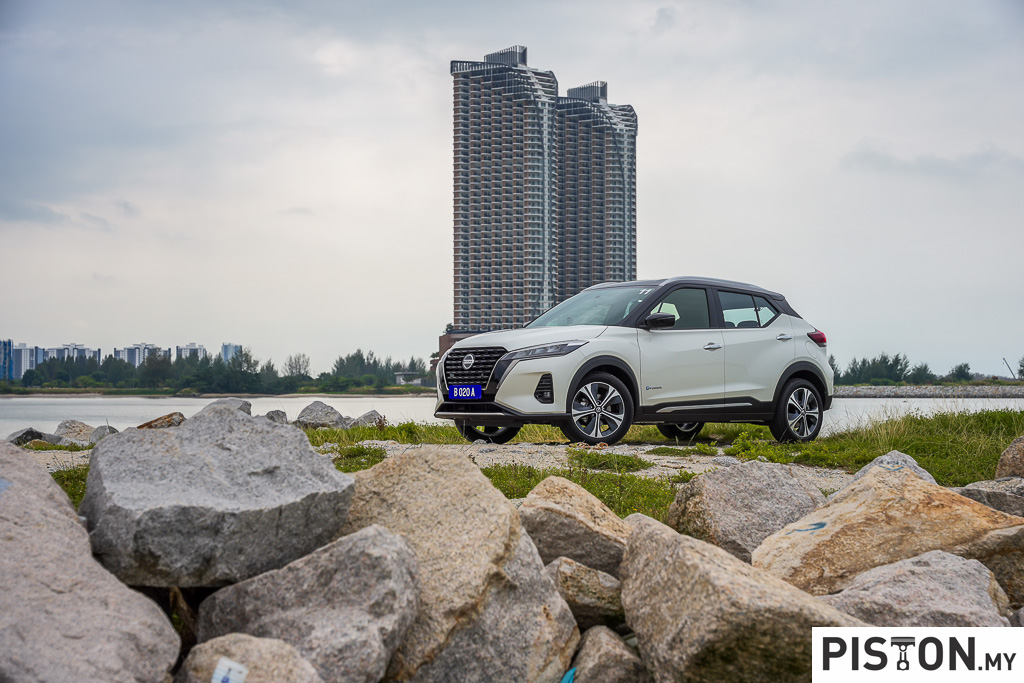
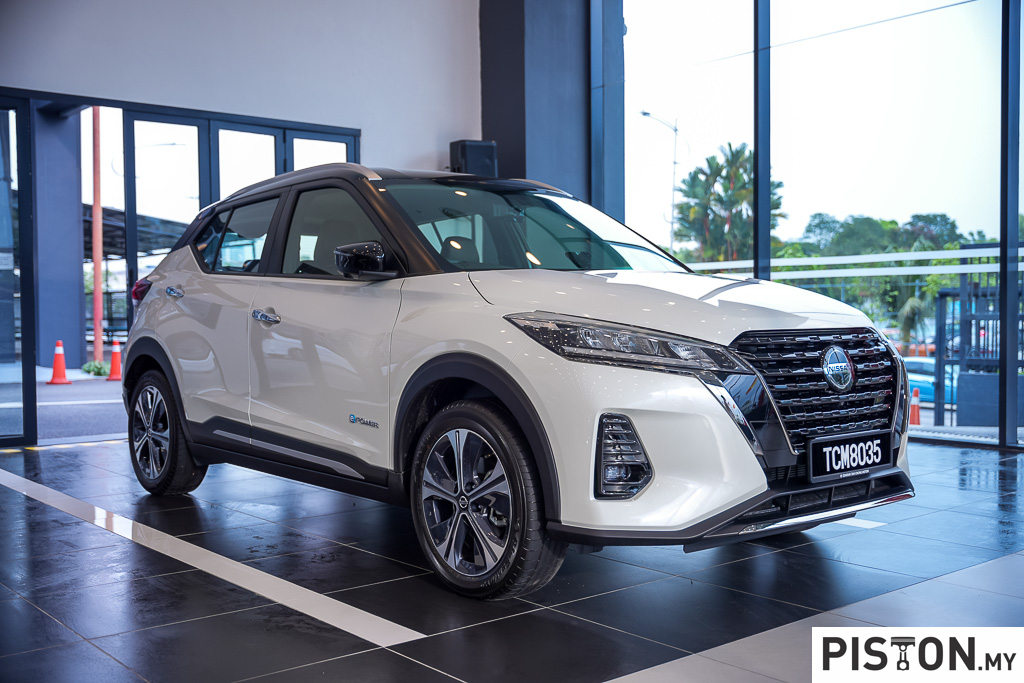
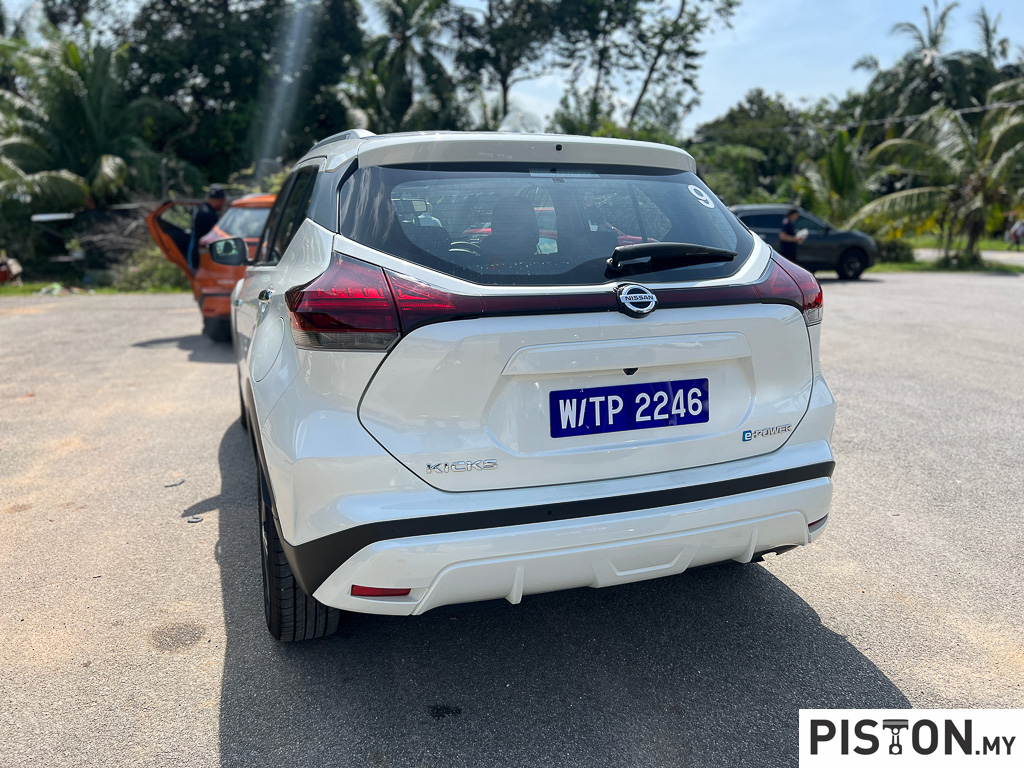
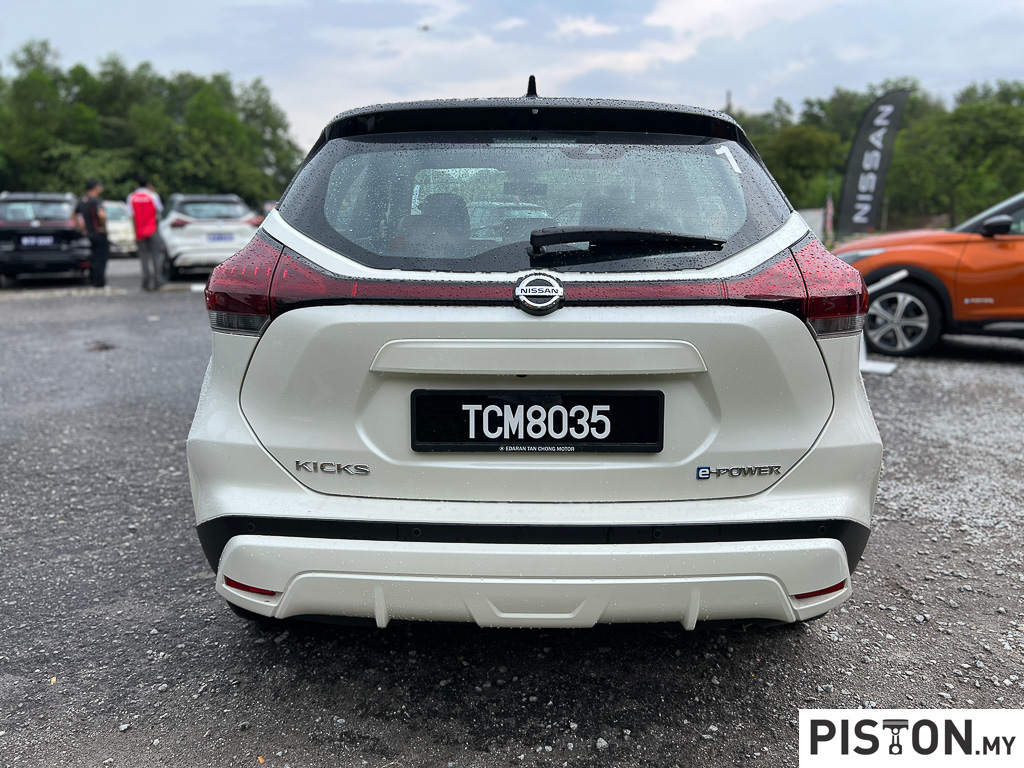
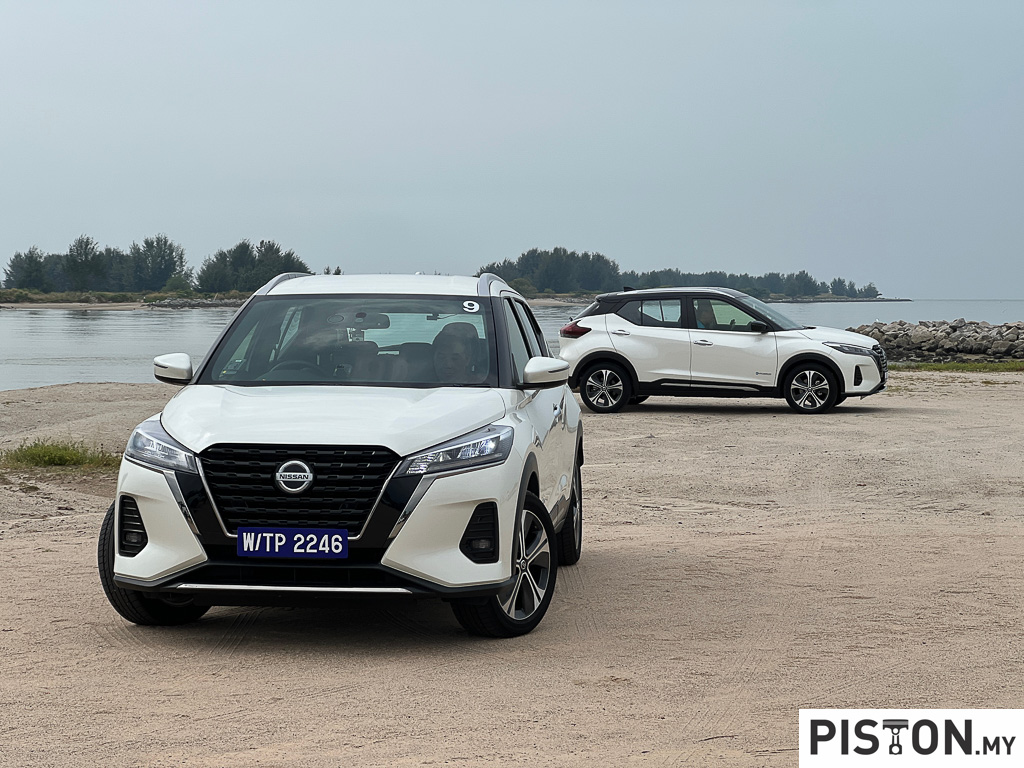
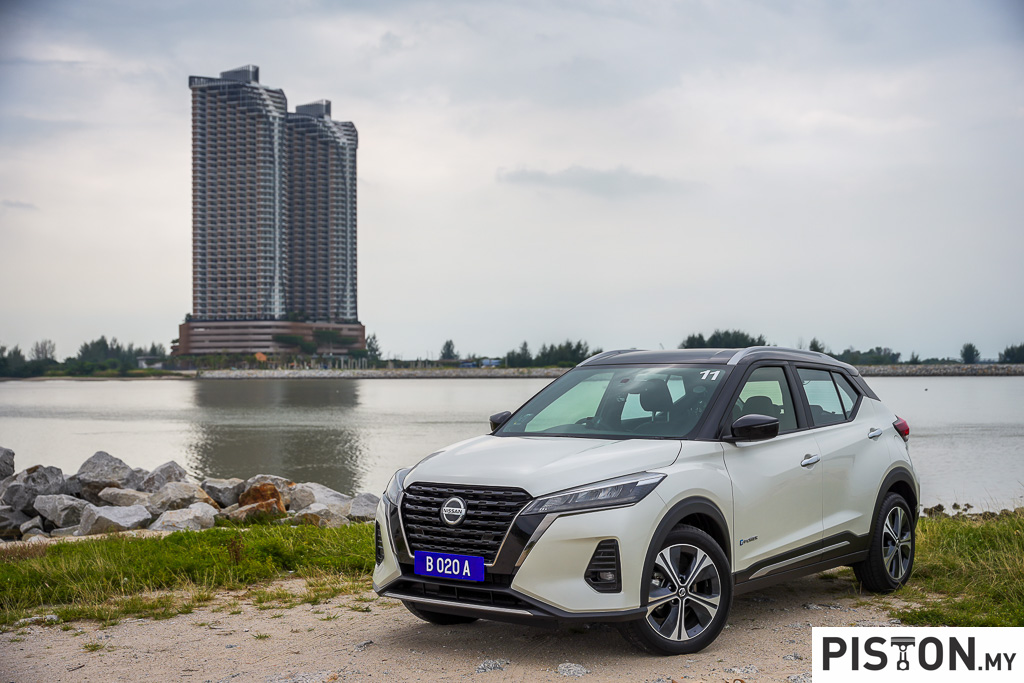
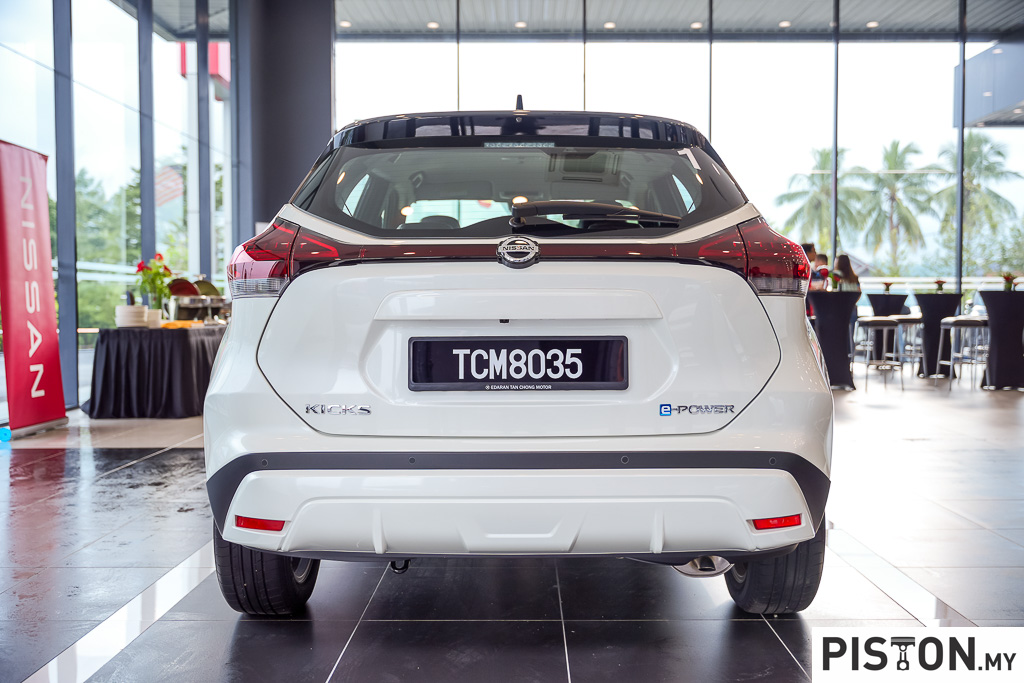
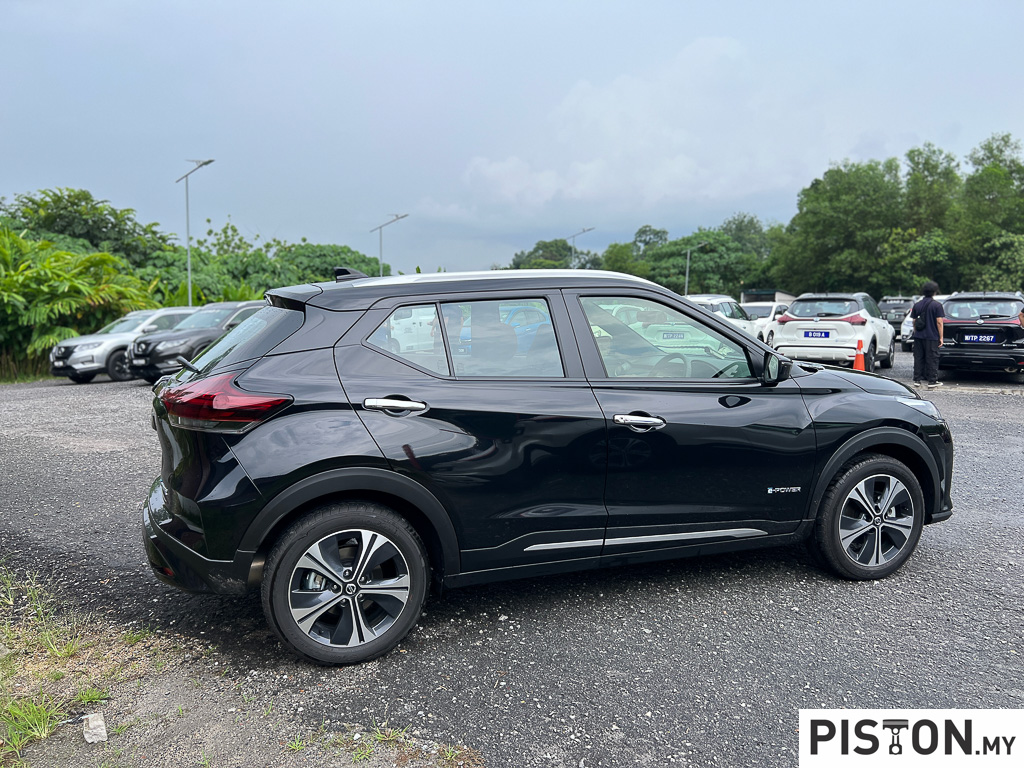
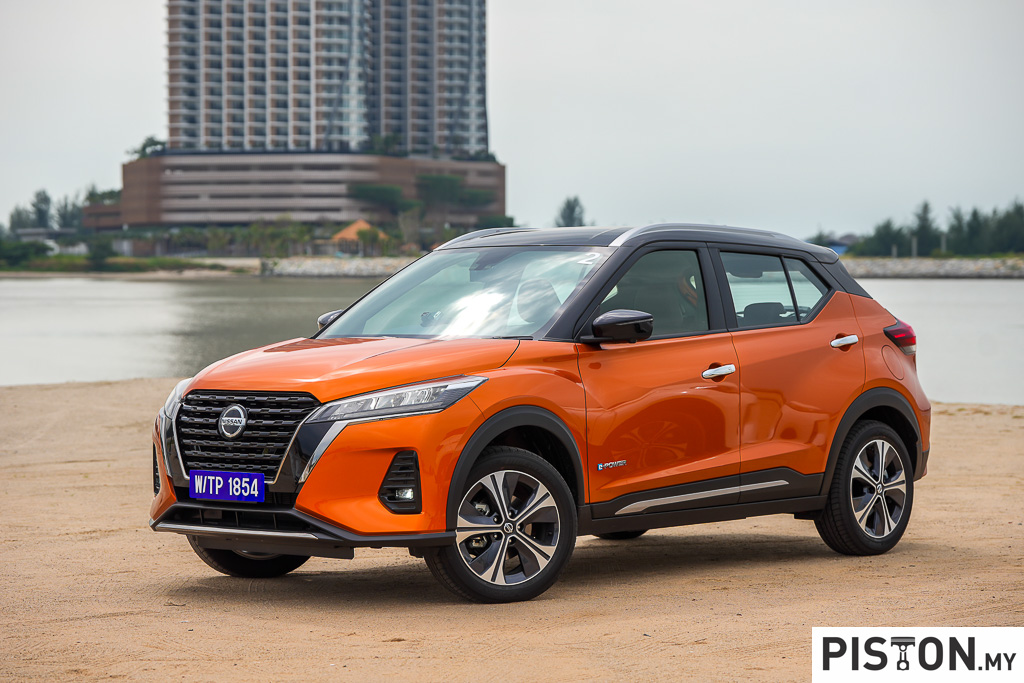
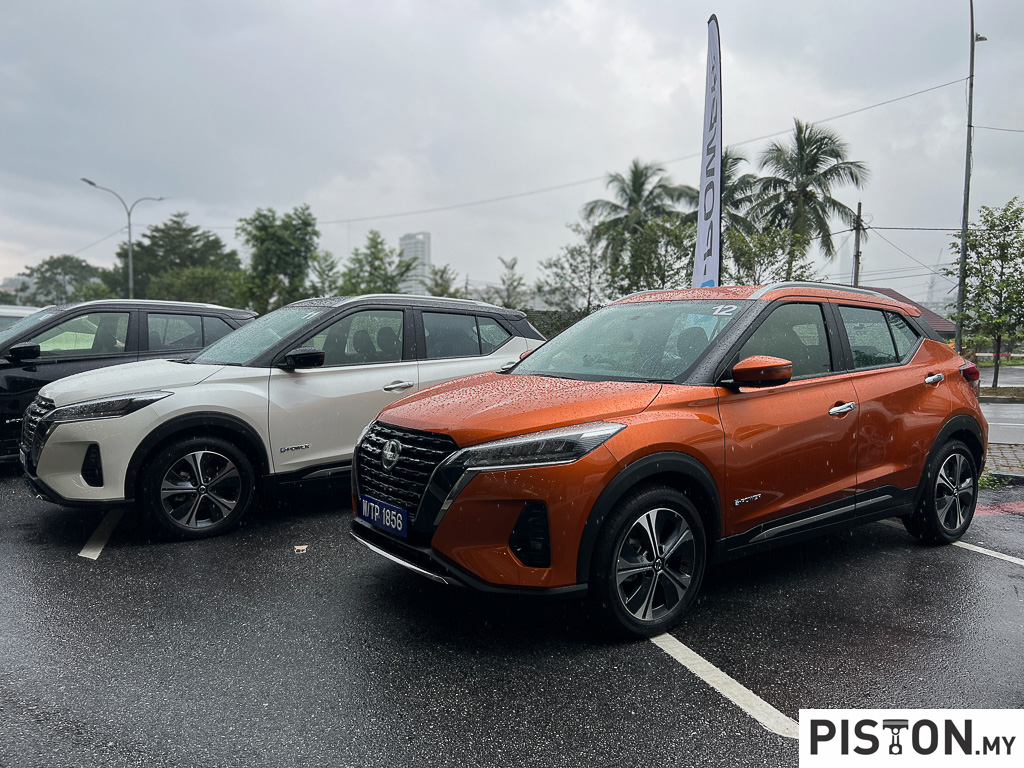
After what seemed like a never-ending hiatus, Edaran Tan Chong Motor (ETCM) is back launching new cars again. And it is not just introducing facelifts, it is shaking the market with a model we have never seen in Malaysia before – the Nissan Kicks.

Small yet spacious, refined yet fun, the Kicks is a gentle reminder of how cars used to be. In this day and age of massive infotainment screens that swivel unnecessarily, the Kicks is humble yet advanced at the same time.

What is it?

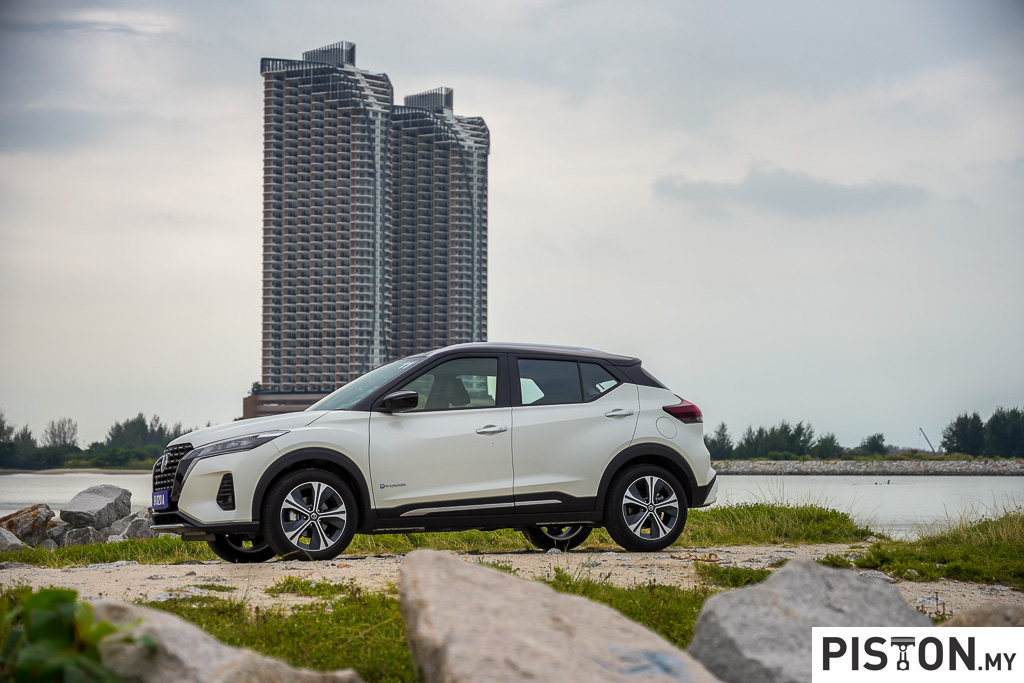
The Nissan Kicks is a B-Segment contender, that means it goes up against competition like the Honda HR-V and the Proton X50, among others.

Malaysians are only just getting the Kicks, which is quite surprising since rumours were abound that we would be getting it as far back as 2018. But ETCM is eager to put that past behind them and look forward to introducing the Kicks to Malaysian homes.

We are also getting the first-generation model, which some netizens have chastised because the second-generation model has already been introduced since early 2024. But the second-generation model is not yet available in right hand drive model.

Why is it a big deal?

While a number of Malaysians including governmental policies are looking at electric vehicles, the Kicks is a hybrid SUV. This is not at all surprising because Japanese car makers have maintained that they will continue to offer cars with an internal combustion engine alongside electrified models.
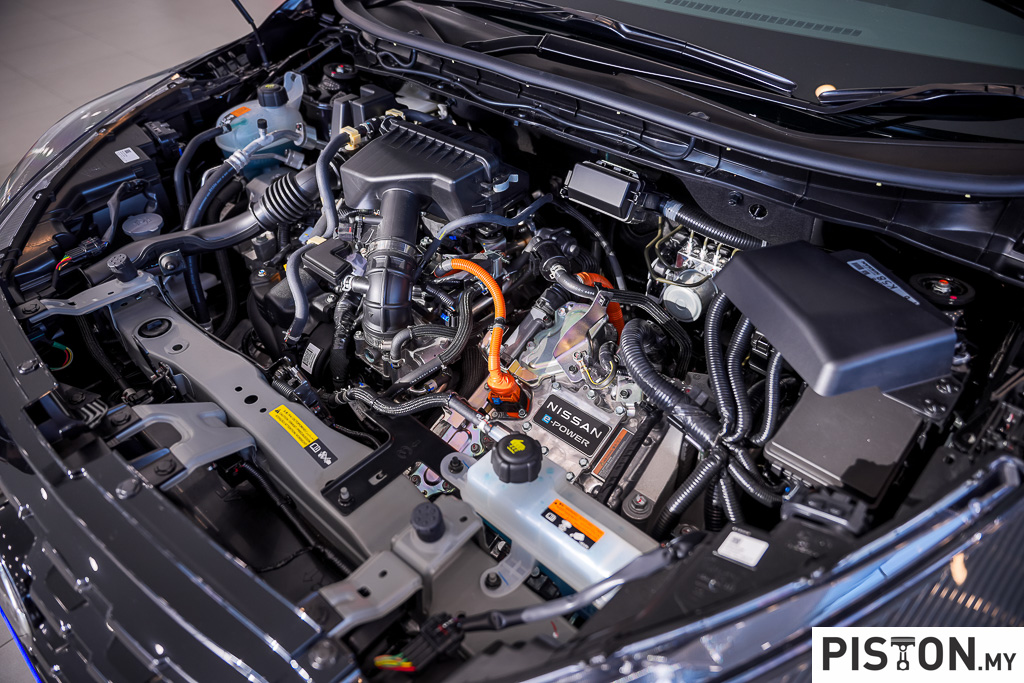
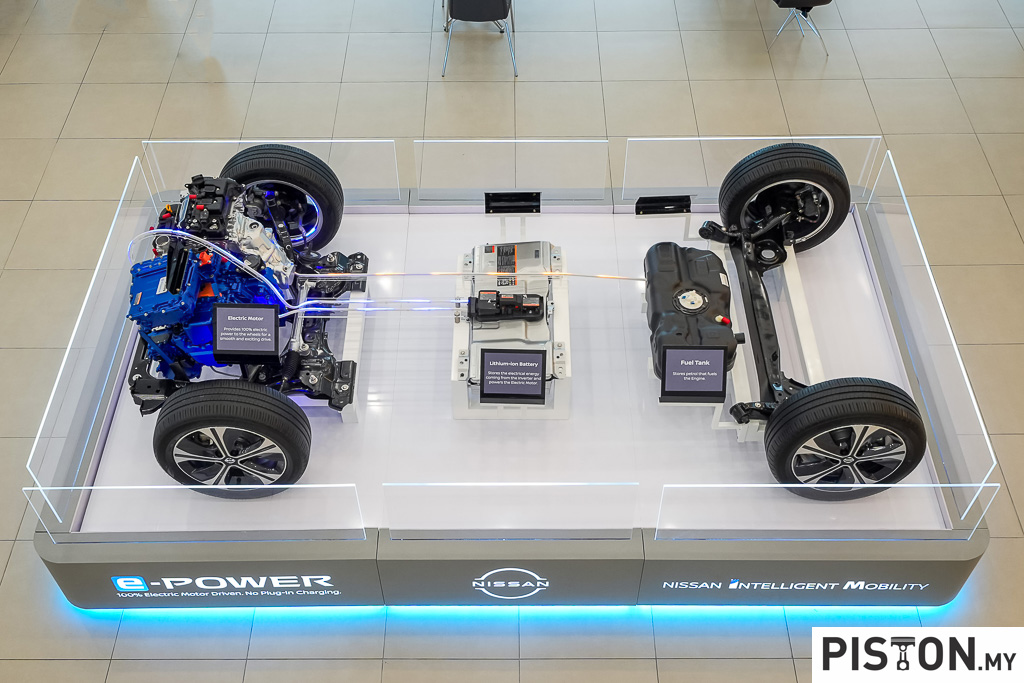
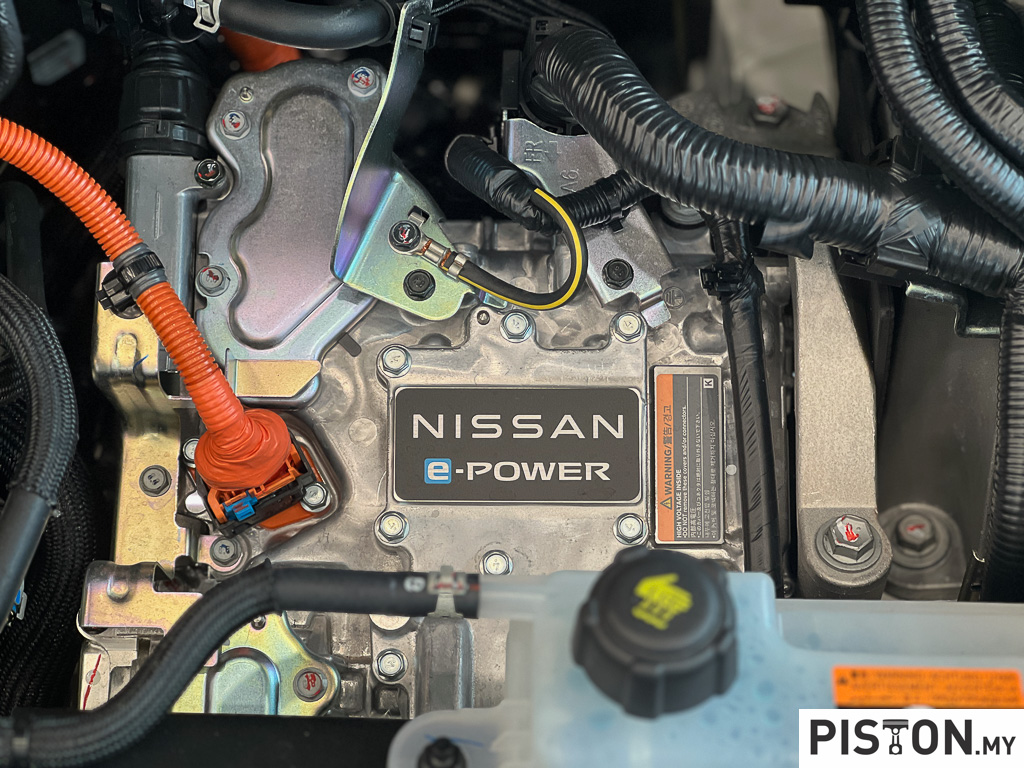
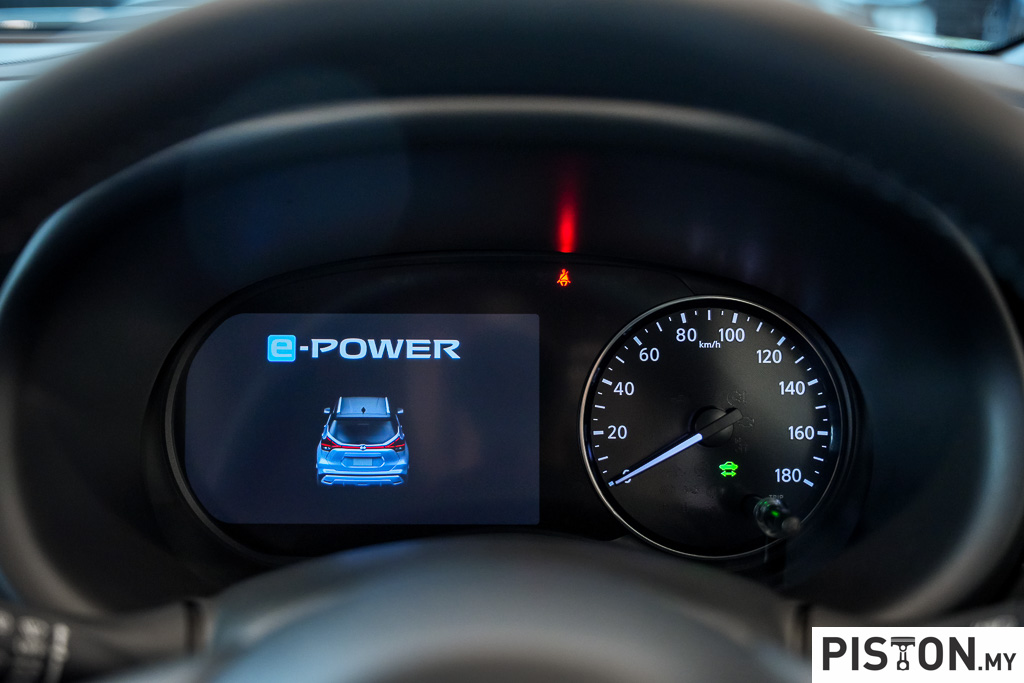
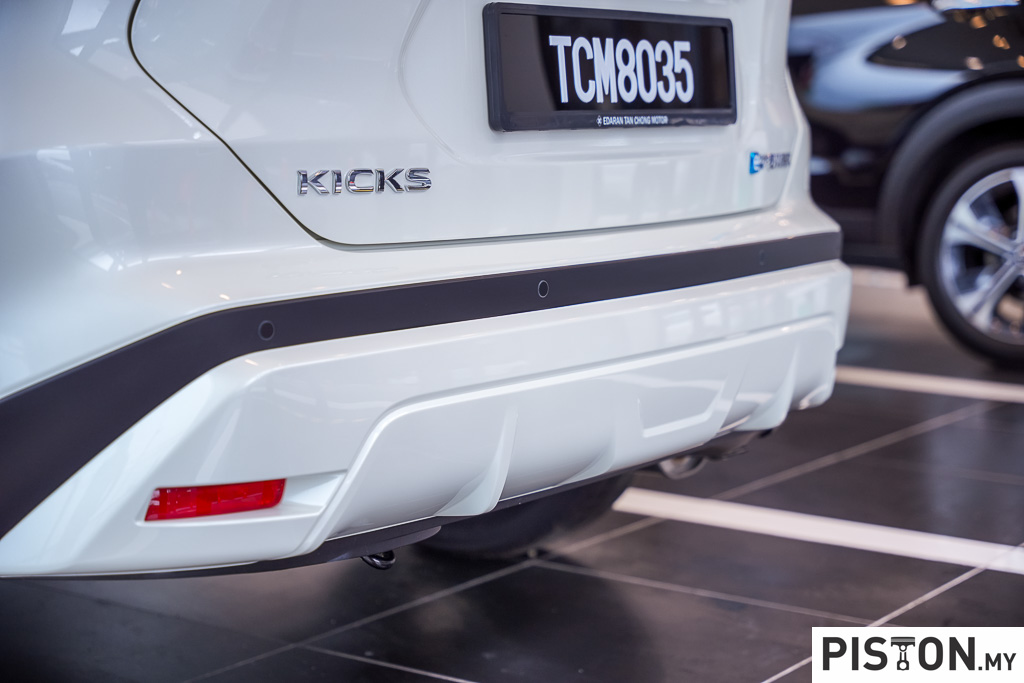
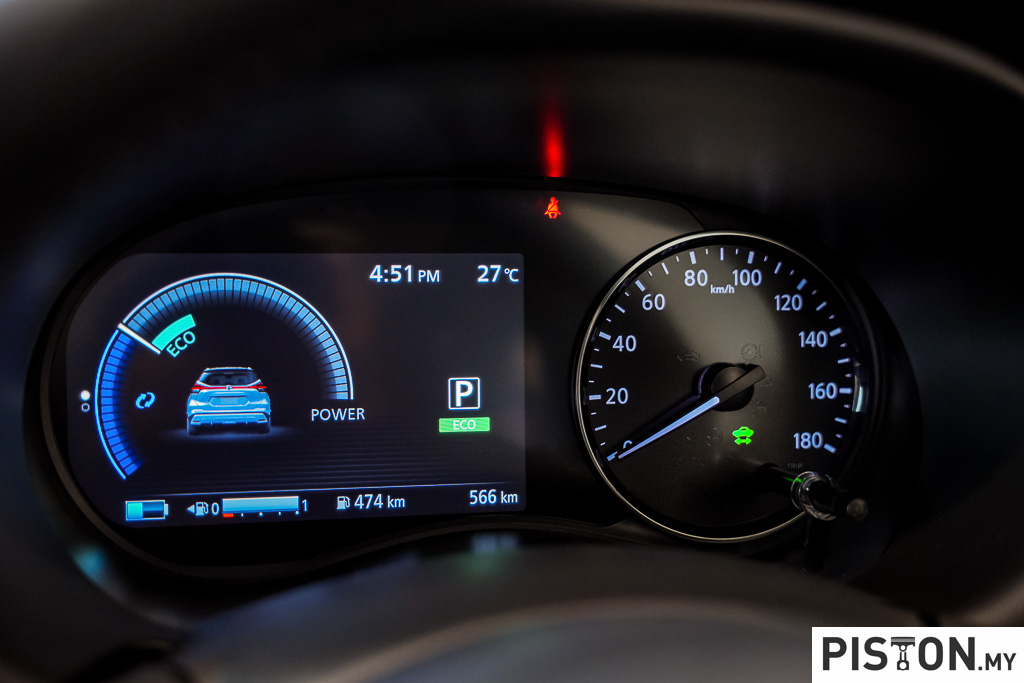
The Kicks uses a 1.2-litre, three-cylinder engine that acts as a generator that helps to charge a battery which in turn powers a motor which then turns the wheels. In our minds, that would make the Kicks a hybrid car. Except that it is not, at least that is what Nissan wants us to believe.
A hybrid car usually has a powertrain that includes an engine and a battery, both of which can power the wheels independently or work concurrently to turn the wheels.

The Kicks is very different in that sense. Though it may have an engine, it does not in any way turn the wheels. In fact, the engine’s sole function is to recharge the battery, even on the fly.

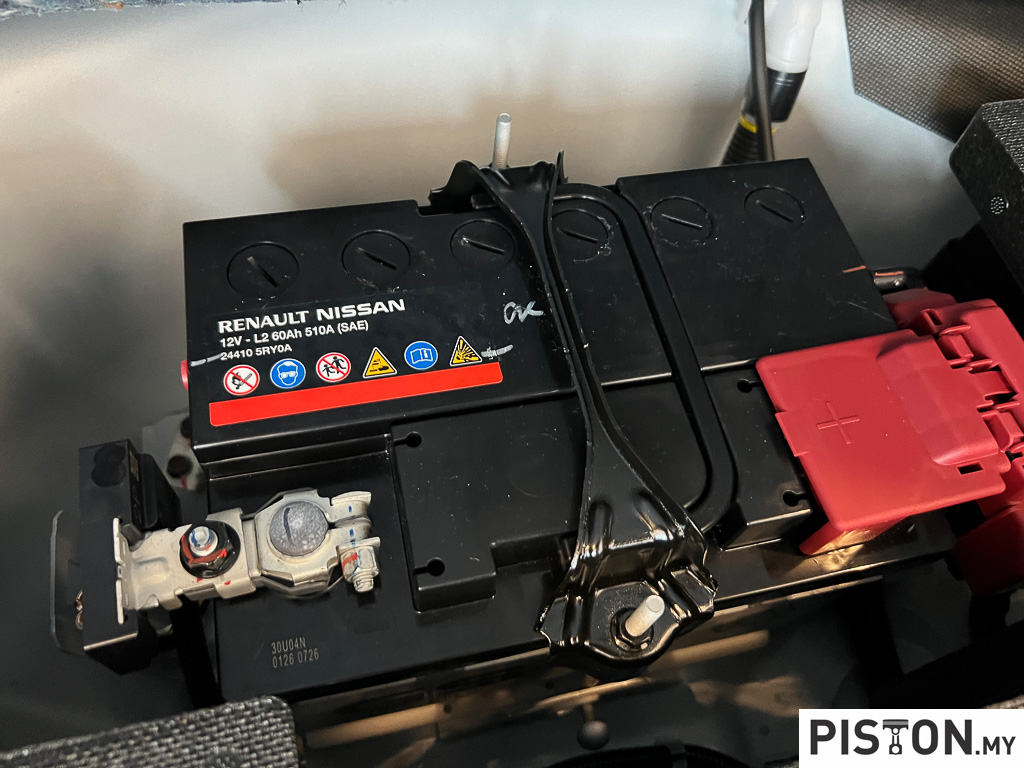
The battery, which has a capacity of 2.06kWh, then powers the motor. The motor is the only thing that does the heavy lifting and moves the car.

So, because it is only the motor that does the work, the hybrid term does not apply to the Kicks. According to Nissan at least.

But that aside, the Kicks is also a big deal because it drives fantastically well. The suspension and connection between man and machine that it offers is something that Chinese car makers are still struggling to match.

But that should not come as a surprise since Nissan has been making cars for the past 90 years and have brought the world such legends as the GT-R, the Z series, the Fairlady and plenty of other goliaths.

The powertrain is the real star of the show

Based on what we just described above, those in the know may think that the powertrain of the Nissan Kicks works in a similar fashion to Honda’s e:HEV series of hybrids. But the difference between the two is that the Honda’s engine can also power the wheels and recharge the battery at the same time. As what we have explained, Nissan’s engine does not do that.

So this means that the Nissan Kick works on electric power all of the time, except that it does not need to be recharged in the normal sense.

And this is where it stands out amongst the herds of hybrids. Where its competitors create cars that still rely on the internal combustion engine for propulsion, the Kicks does not. It only needs the engine for recharging purposes.

You may ask then if it defeats the purpose of driving an electric vehicle since one of the main objectives of an EV is to be environmentally friendly. Besides the fact that mining lithium needed to create batteries is harming the environment itself, the Kicks just needs very little petrol to recharge the battery.

The official fuel consumption figure for the Kicks stands at 21.7km per litre, or 4.61 litres per 100km. That is outstanding by itself already. And this has very minimal impact to the environment.

But how does it fare in the real world?

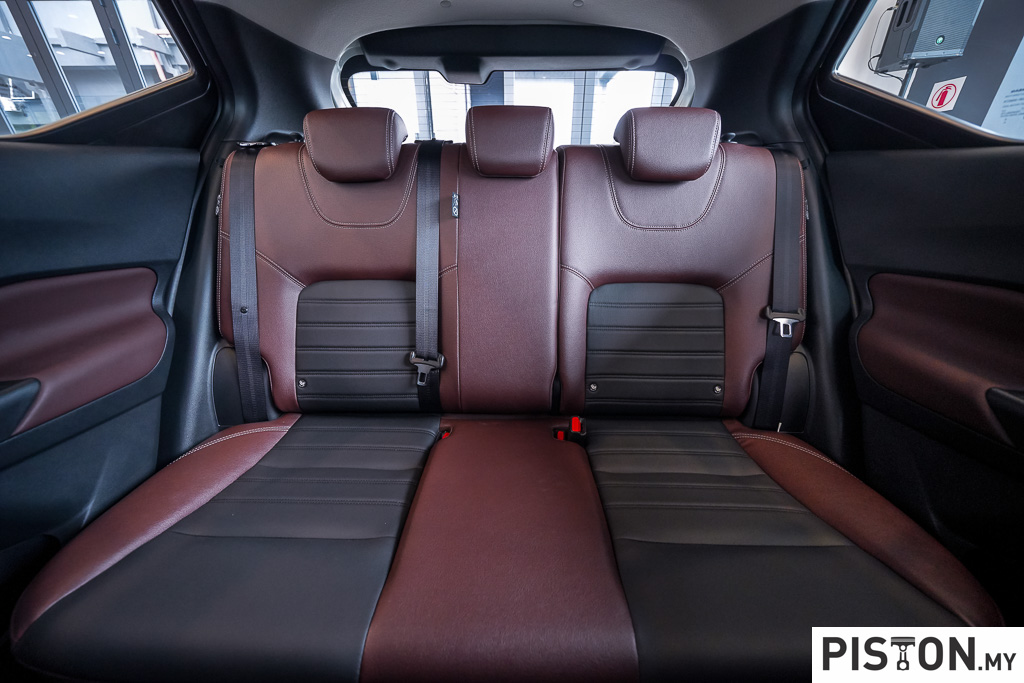
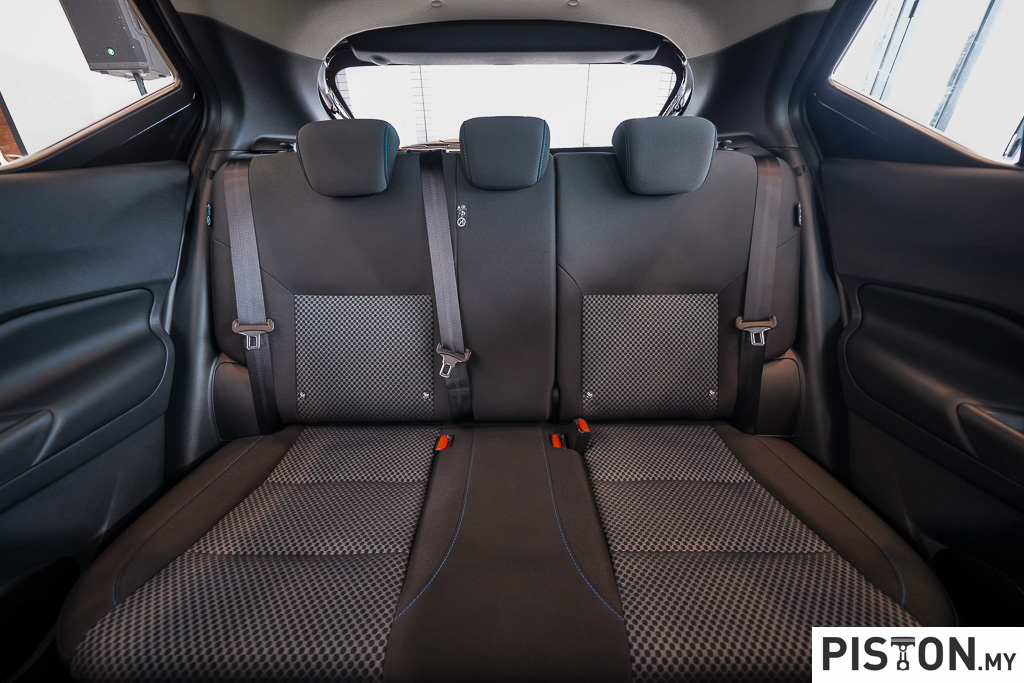
It is quite an impressive car. Despite its size, it is spacious inside, good enough for four tall adults to get comfortable, or a young family. Even the booth size is impressive, at 423 litres, it is just below on the Honda HRV’s 440 litres. Just to put it into perspective, two regular size golf bags can be fitted into the Nissan Kicks, plus some luggage.

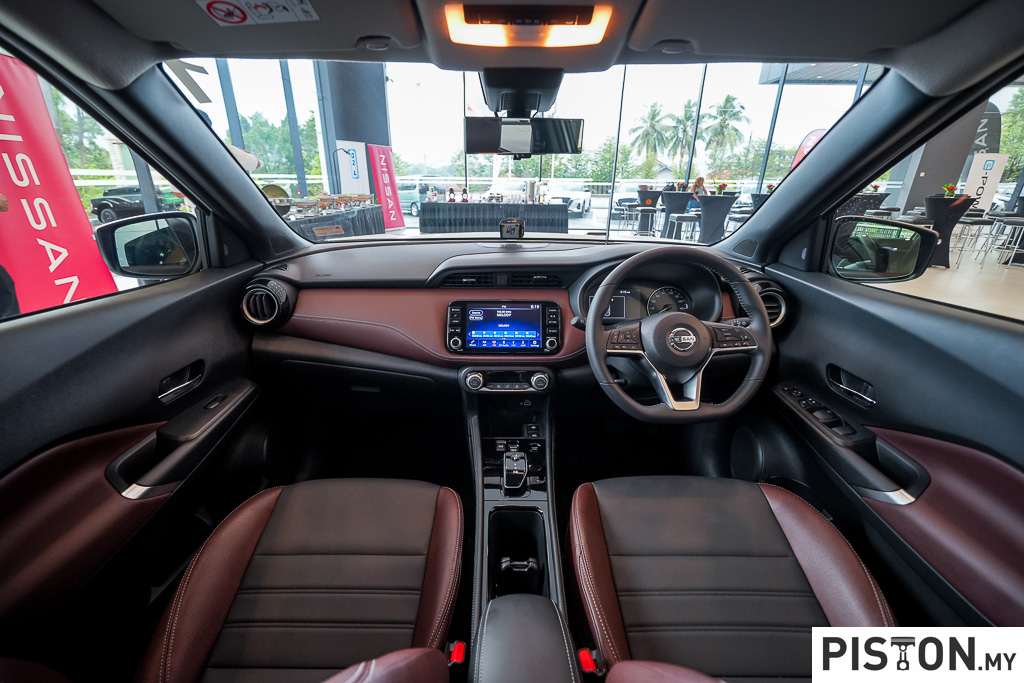
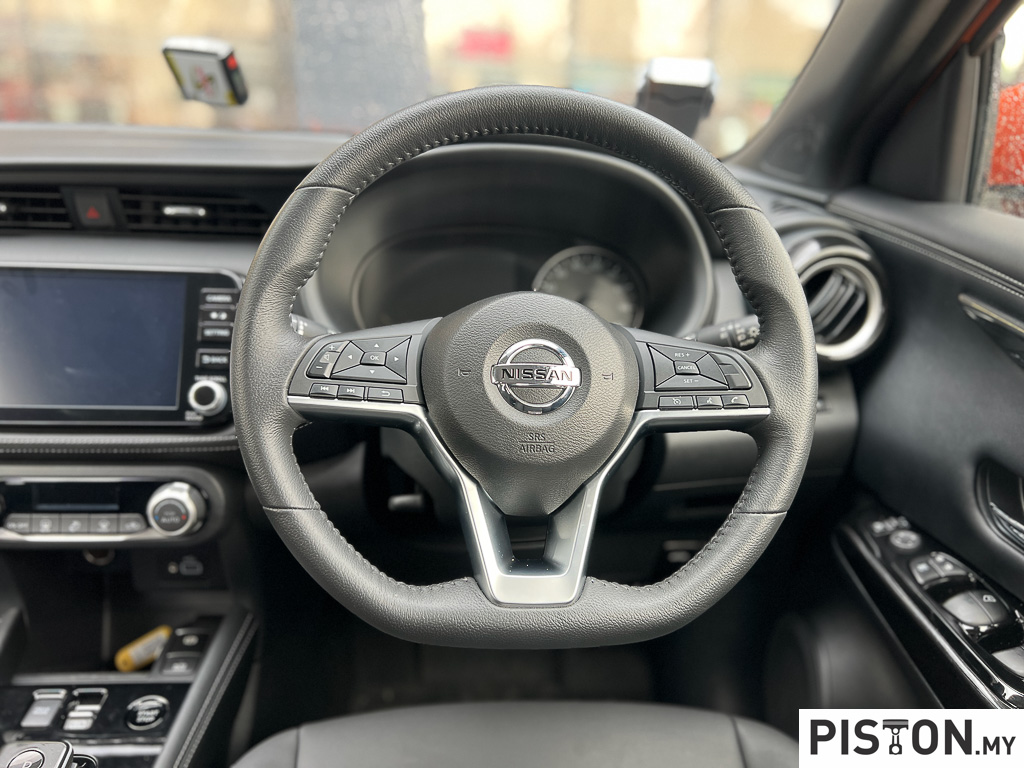
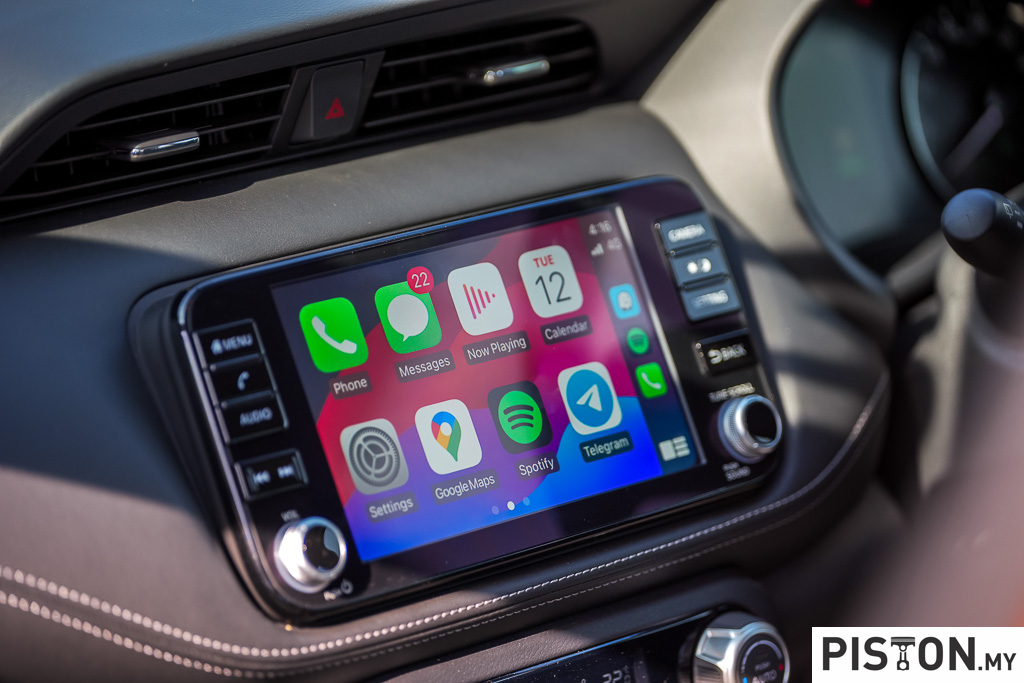
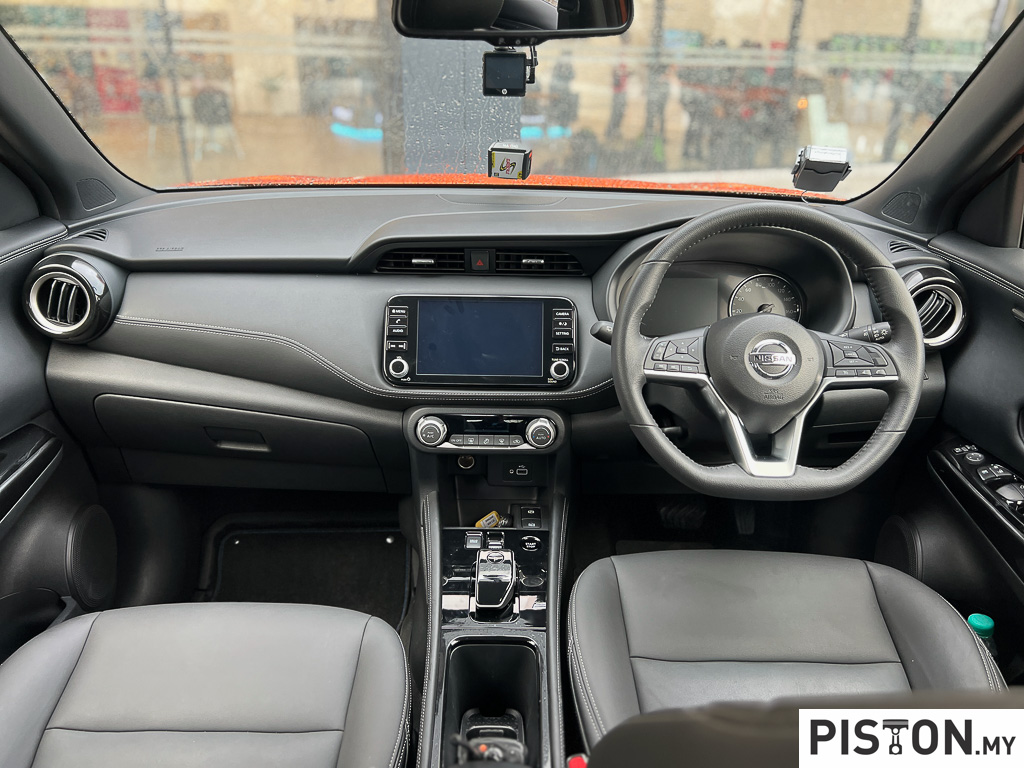
The interior may seem simplistic, especially to the newer generation. This is particularly so when compared to the competitors from China with their massive infotainment screens, futuristic designs and features.

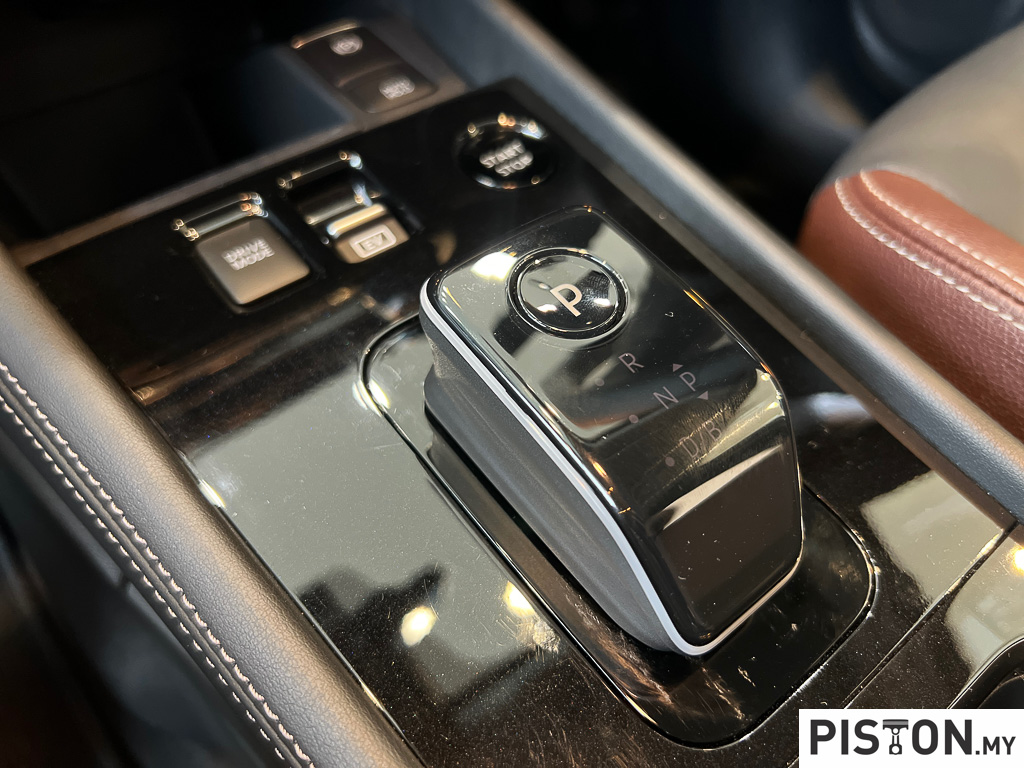
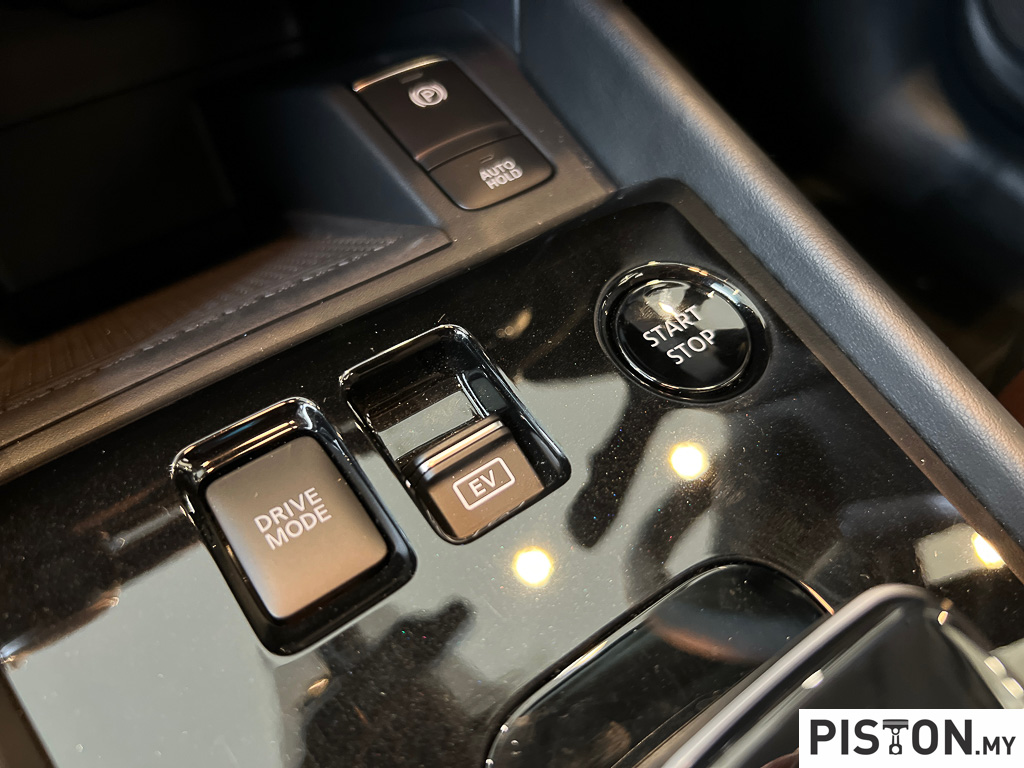
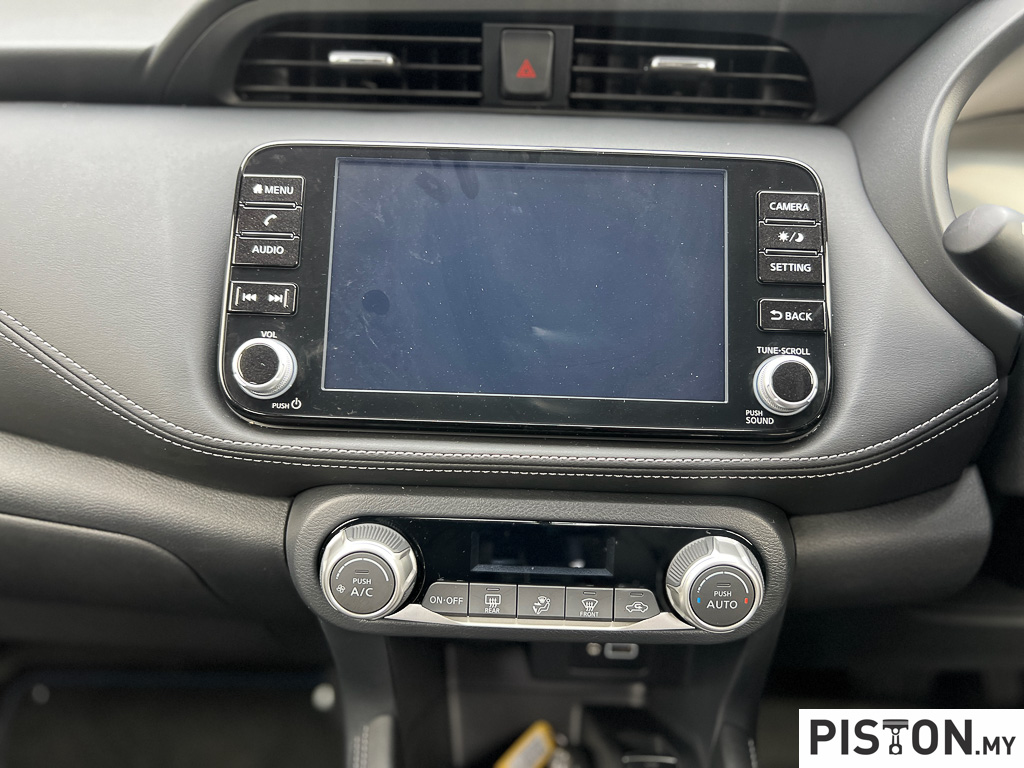
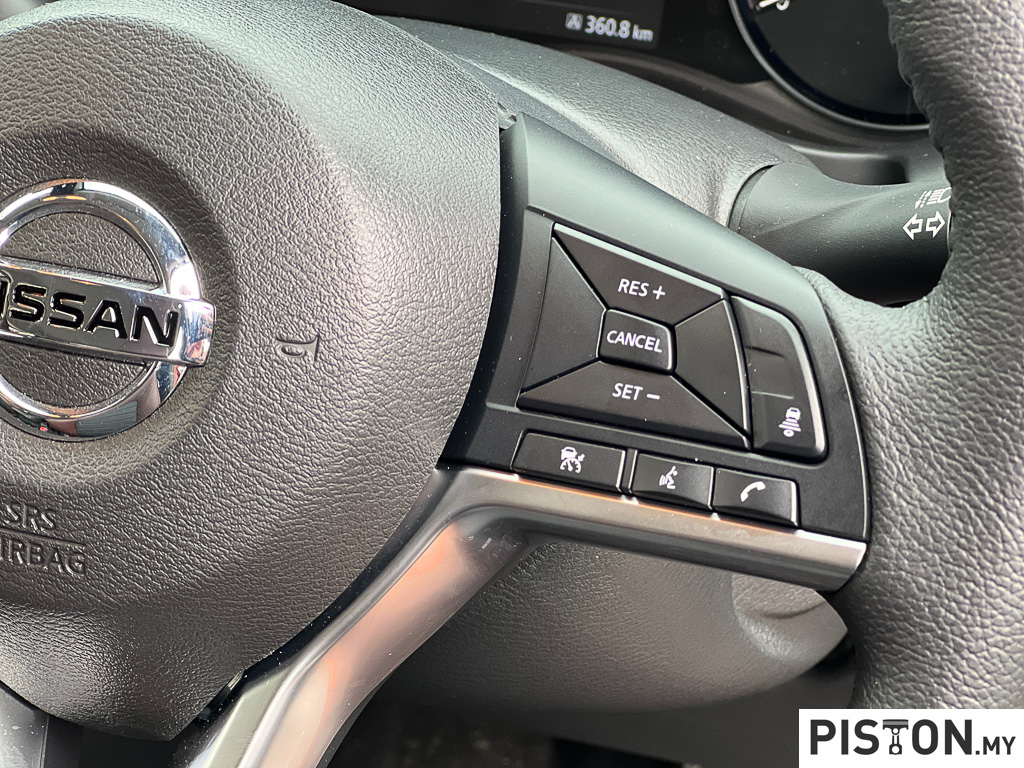
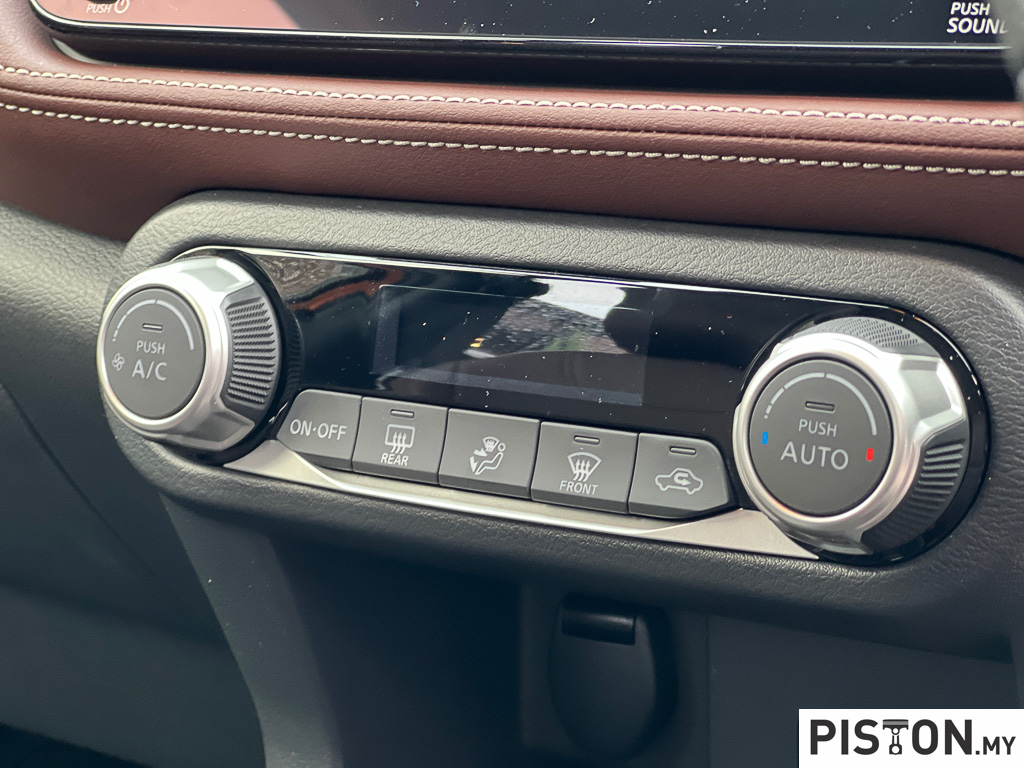
But for this writer, the interior of the Kicks is a refreshing departure from everything we are getting from China. It reminds me of cars of yesteryear with its physical buttons and dials for all of the essentials. There is even soft touch panels around the cabin and double-stitching for a premium touch.

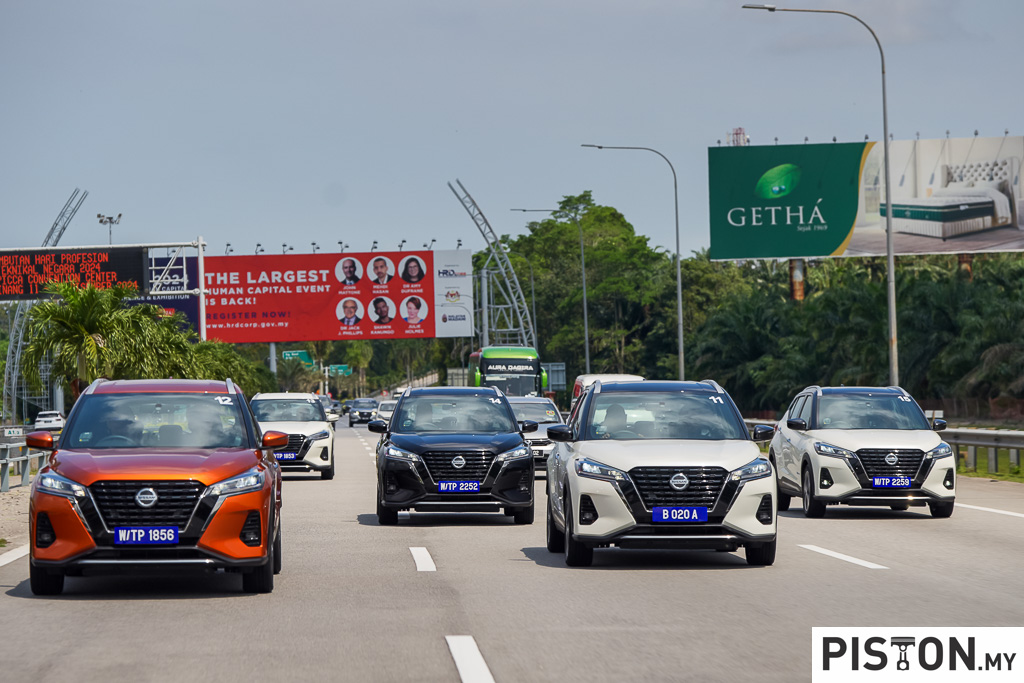
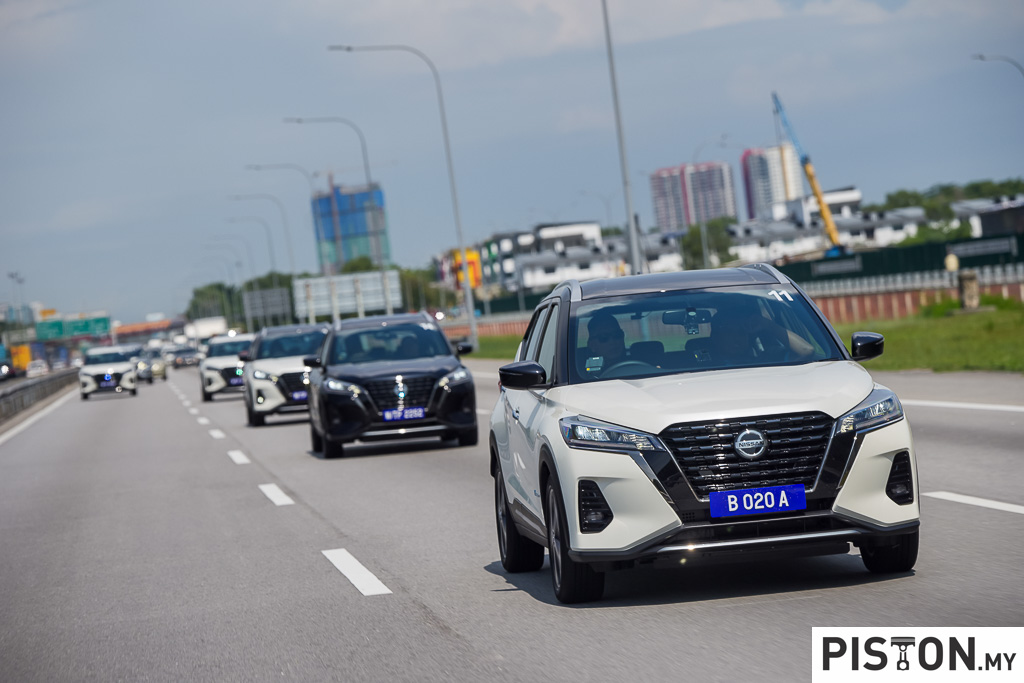
The one part about the interior that I truly like are the seats. During a recent media drive to Melaka and back, I was paired by an elderly gentleman who drove for all of 30 minutes and deemed that good enough for his review. So, I had to take on the Captain’s seat for two days, which was plenty of time to get properly acquainted with the seat.

Nissan is the company that introduced the zero gravity seats, and the Kicks offers them as well. This concept was inspired by the fatigue reduction and comfort enhancing, Nasa-measured “neutral posture”.

In a weightless scenario, human posture is said to be weakened and the burden on the body is at its least. According to Nissan, posture does not collapse even over long period and you are less likely to become tired. So by applying this neutral posture to a car seat, fatigue from long periods of time is minimized. And as I experienced, the seats in the Kicks really are good. Perhaps not as good as the ones in the Navara, but still good.

Is the powertrain as good as Nissan says?

Fuel efficiency is what the powertrain has been designed to do and that is what it does best. However, I did not see the claimed consumption of 21.7km per litre, the best I saw was 18.2km per litre, but perhaps that is because we spent a lot of time corner carving around the back roads from Port Dickson to Melaka.

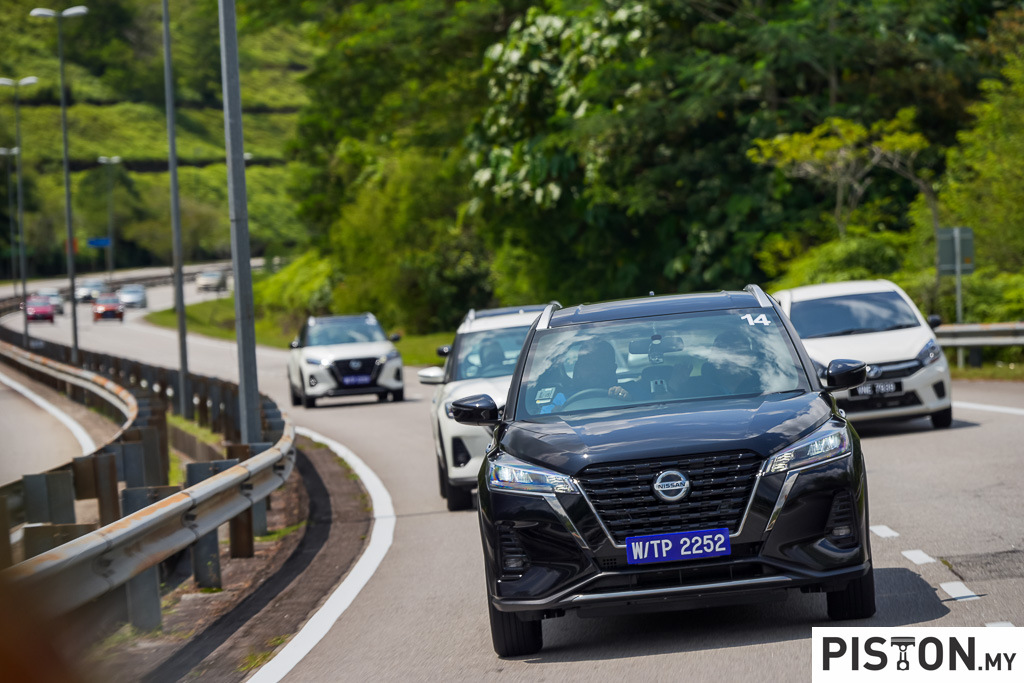
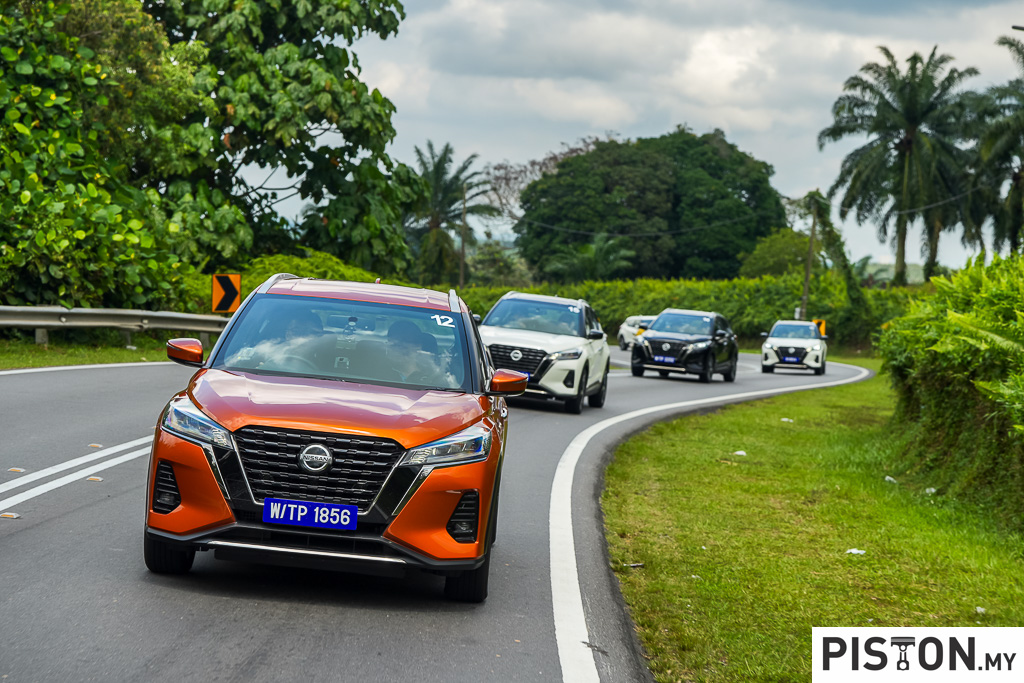
ETCM wanted us to experience the suspension setting of the car, and hence why that route was chosen. And the suspension is nearly perfect for a car of this segment, comfortable when you need it to be, and stiff when you hit the corners, so much so that you don’t really need to lift much for sweeping corners, which lets you adopt a smooth driving style, which thus improves efficiency.

Power delivery though is just decent. With 129PS and 280Nm of torque, the delivery is better lower down the rev band, at low speed. In traffic, the initial surge in power makes the Kicks feel like an EV, but it dissipates quickly as you keep your foot floored. Acceleration time is rated at 9.5 seconds to 100km/h, which says a lot about what the car is meant to do.

ETCM says that the natural habitat for the Kicks is in traffic, and we believe them. Because that is where the car felt its best. Along the narrow streets of traffic-light laden Melaka, it was easy to close the gap in between cars with just a little tap of the accelerator. The beauty of EV’s in traffic is the torque that is accessible from zero rpm, and that is what you get with the Kicks as well.

So, should you buy one?

It is difficult to answer this one without knowing the price of the car. But should it be priced in between RM120,000 to RM130,000, the Kicks would be in some very choppy waters.

There is no denying that brands from China have been shaking up the local market. The Haval H6 Hybrid is priced at just under RM140,000, and that is a car that is bigger, roomier, and is quite efficient as well.

But the Nissan has proper pedigree in its side. A well-established network of service centres and 70 years of experience operating in the domestic market means ETCM is a company that is far ahead of the competition in terms of after sales service.

And then there is the way the car drives and handles, which I can rave about but is something you need to experience to believe.

The Kicks may appeal to the traditionalists, and rightfully so as it is a delightful car to drive. Now it all comes down to the price. ETCM, the ball is in your court.

Specifications
Engine: 1.2-litre, 3-cylinder, petrol
Battery: 2.06kWh
Power: 129PS
Torque: 280Nm
Suspension: MacPherson Struts (Front) / Torsion Beam (Rear)
Price (As Tested): TBA

We like: Handling, Refinement, Efficiency
We don’t like: Interior might be too simplistic for some

When we think of car enthusiasts, we often think of those with a thirst for power, speed, grip and loud engines. But the reality is quite different than that, because car enthusiasts come in all shapes and forms. (more…)

The SUV market in Malaysia is currently being flooded by various brands, most of them from China, so we do not blame you for not knowing which one to choose. If you’re looking for an SUV, it means you probably want something that can carry your family, or you might just be an SUV enthusiast.

The price point is the main factor that plays a huge role in selecting one. Which one of these big boys is affordable and can still make you feel like a boss? You have options like the Toyota Harrier, the Proton X90, the Chery Tiggo 8, and so on. However, there is a brand that is currently growing here: Jaecoo. I’m pretty sure you have seen a few Jaecoo J7s on the road.

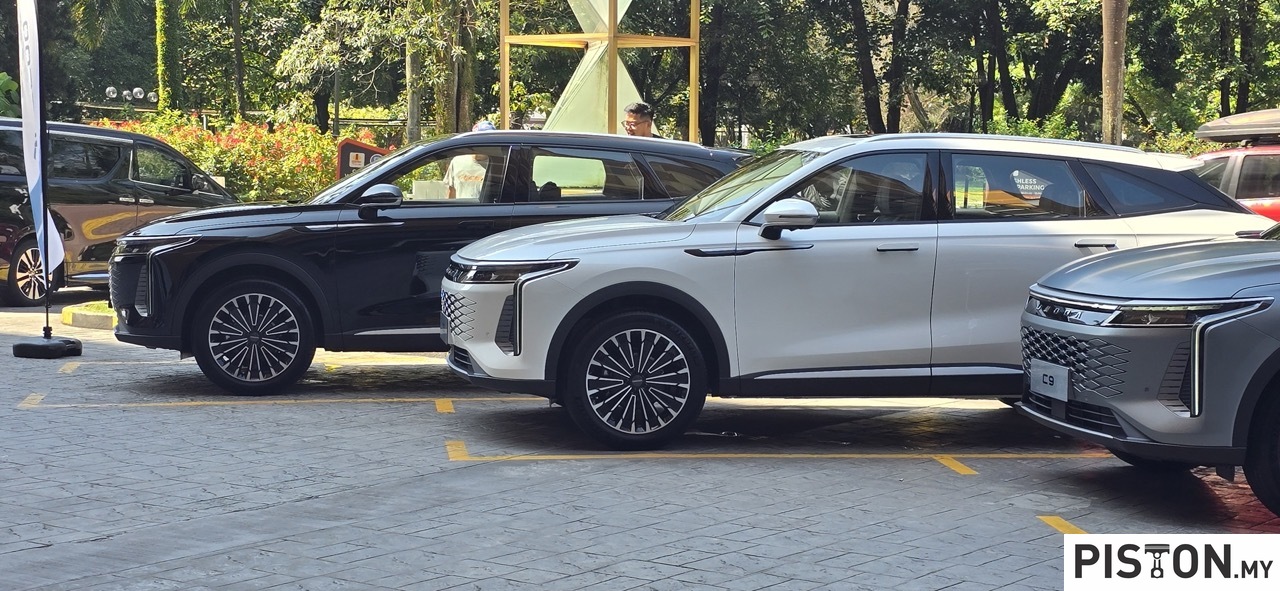
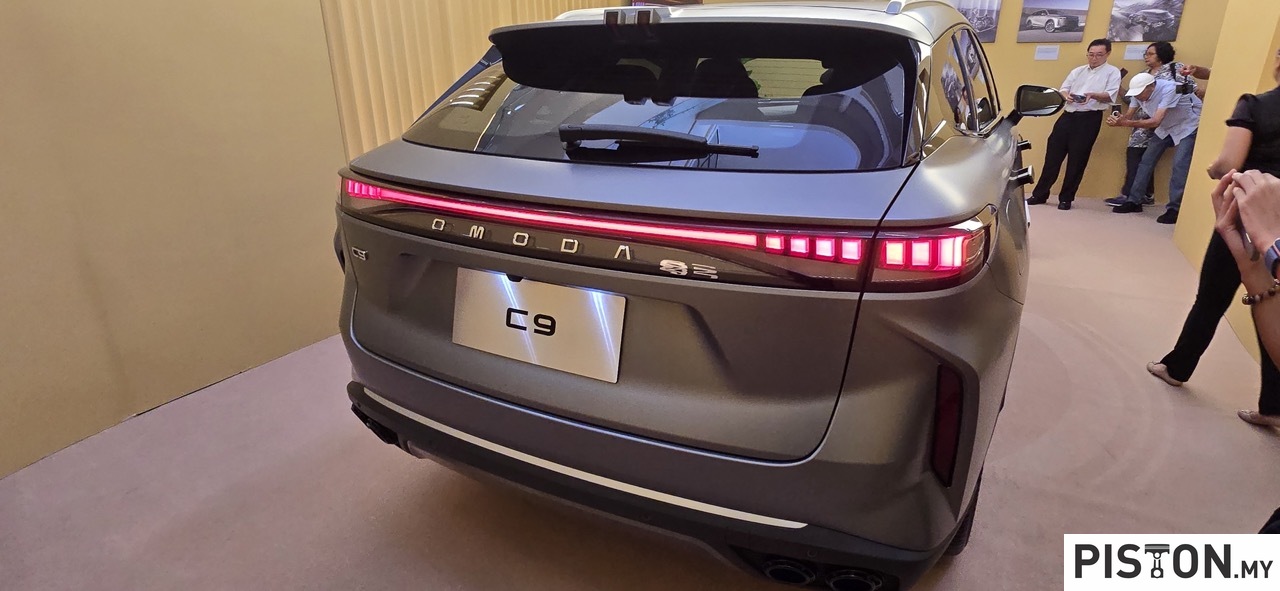
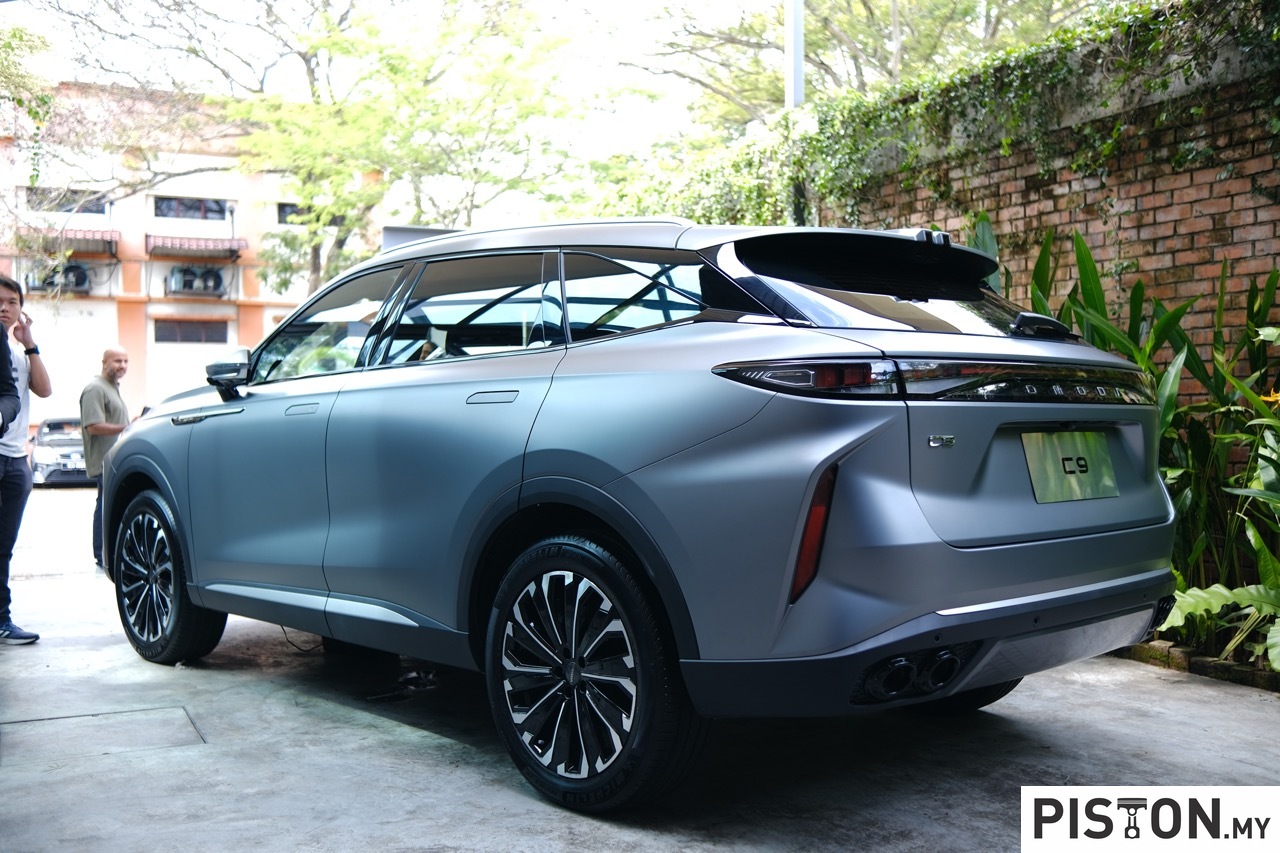
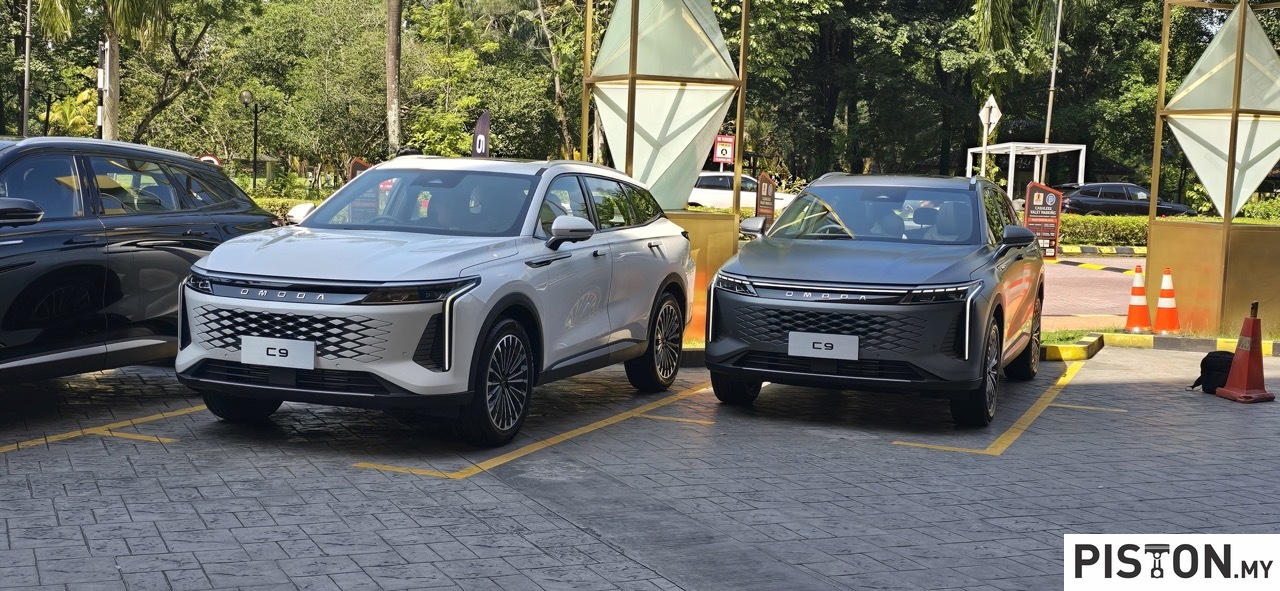
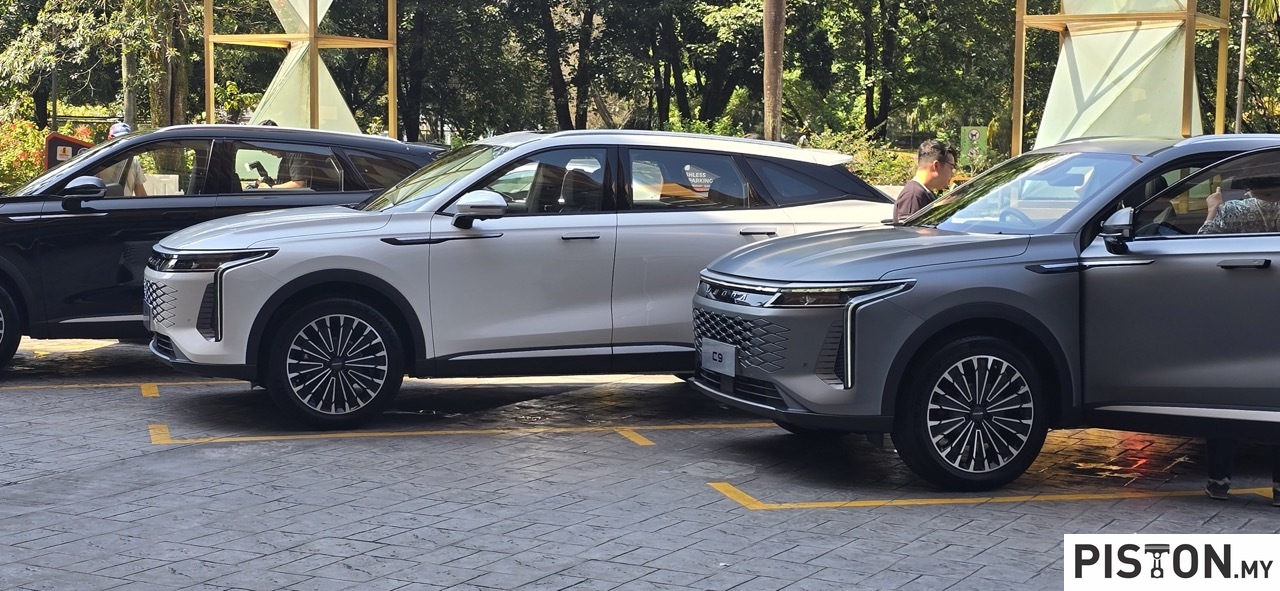
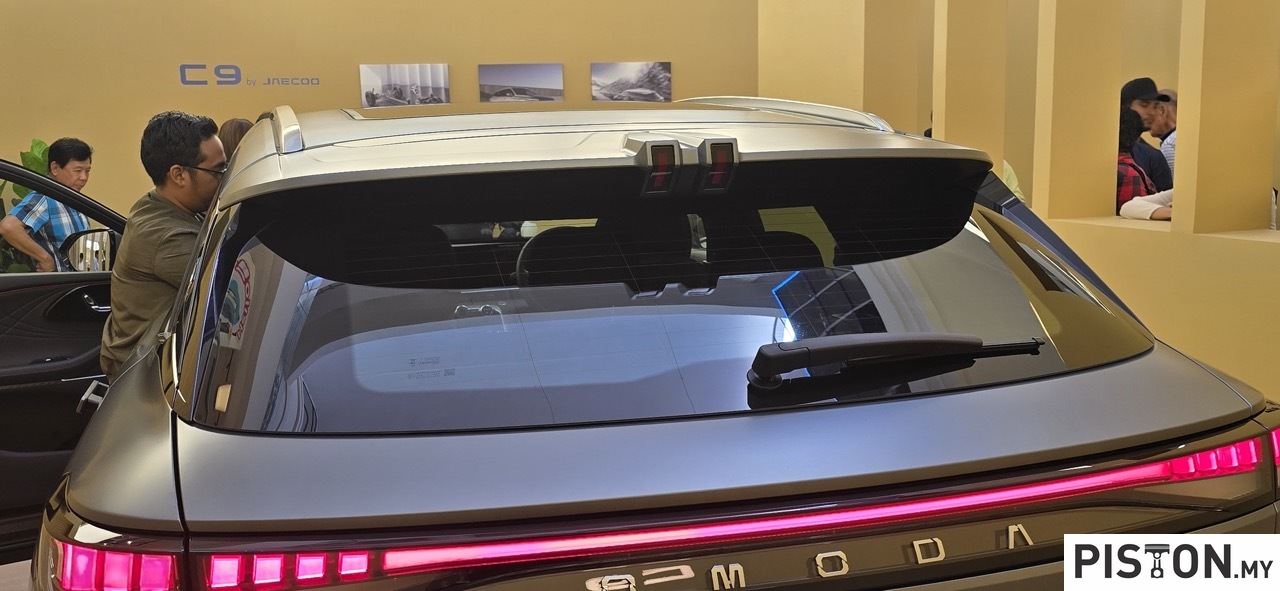
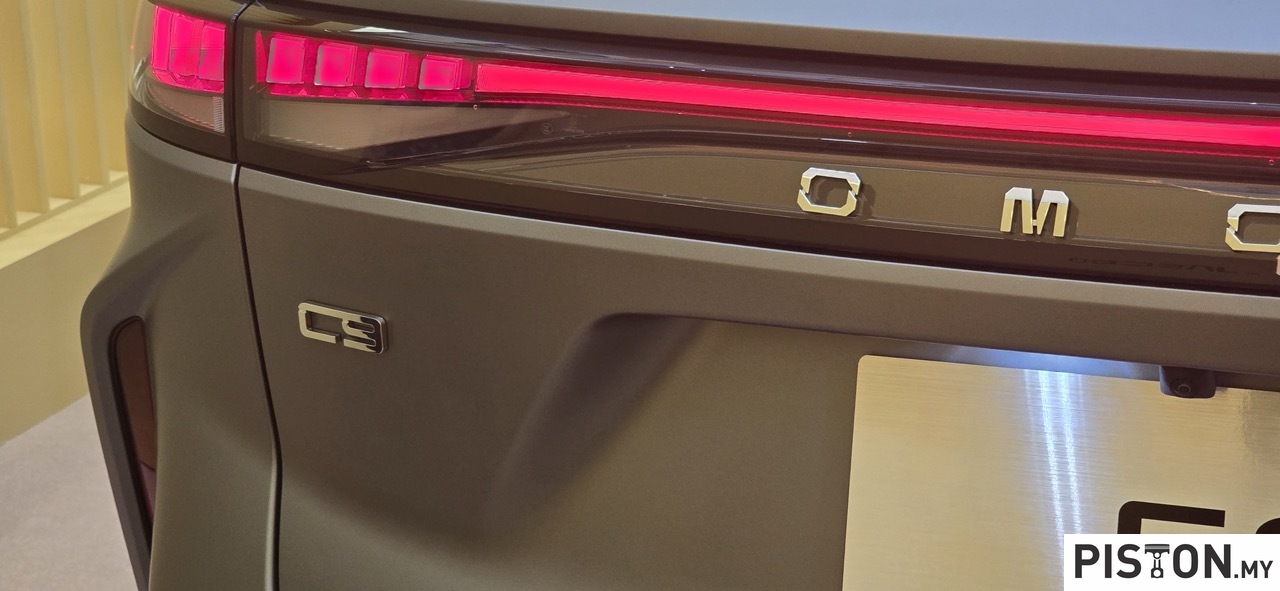
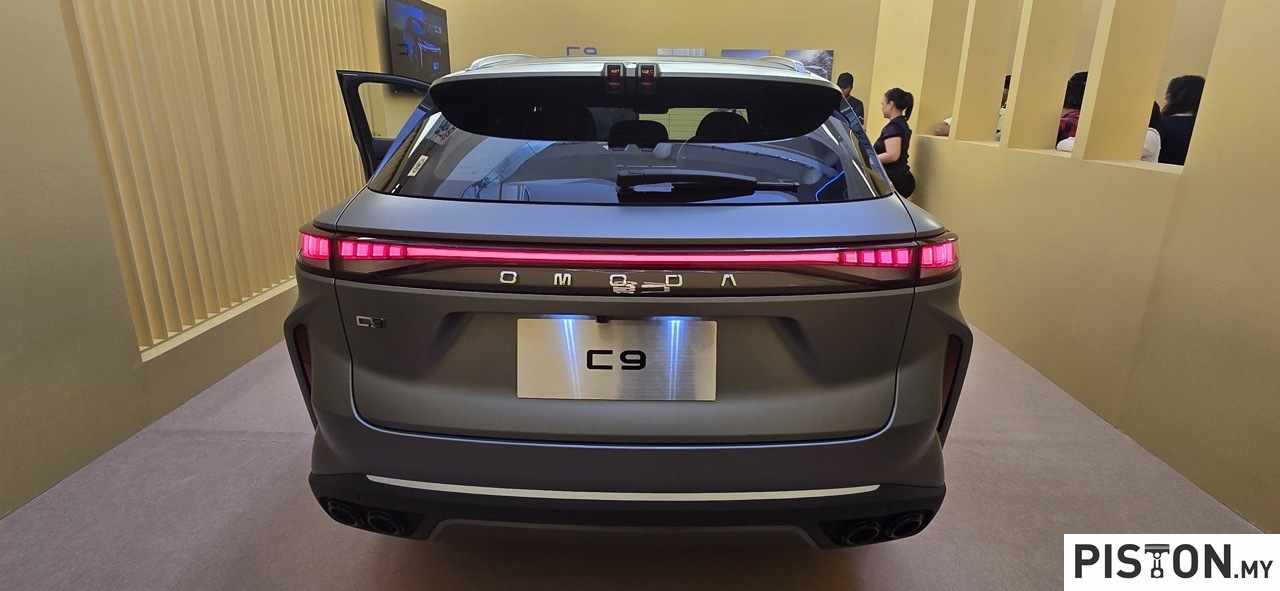
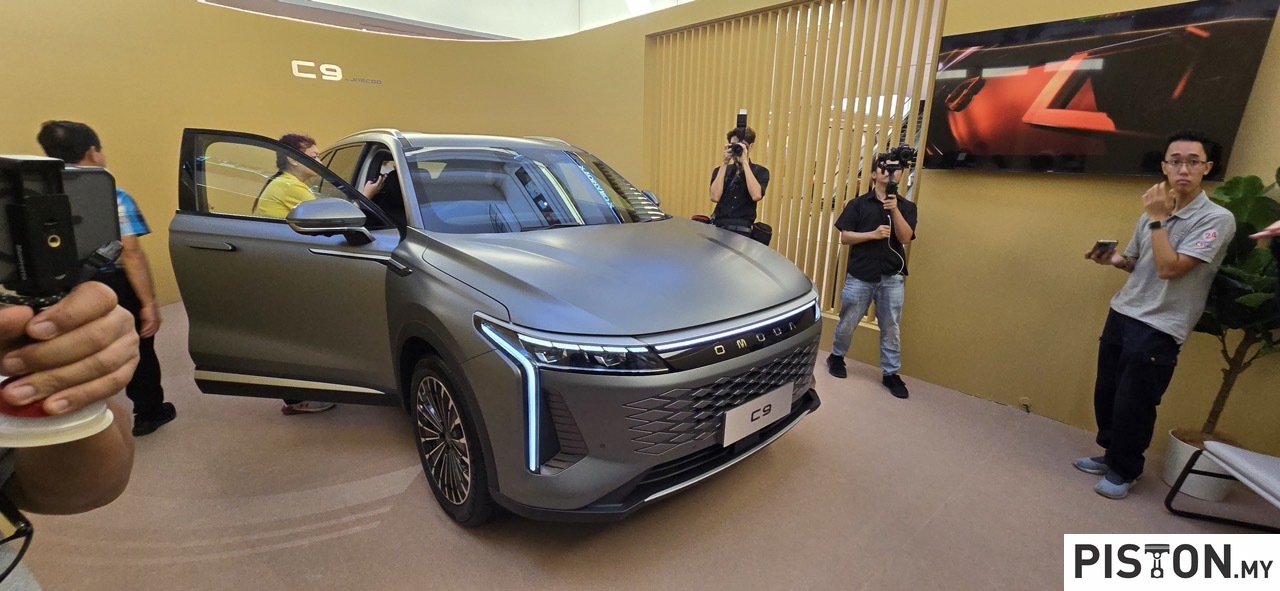
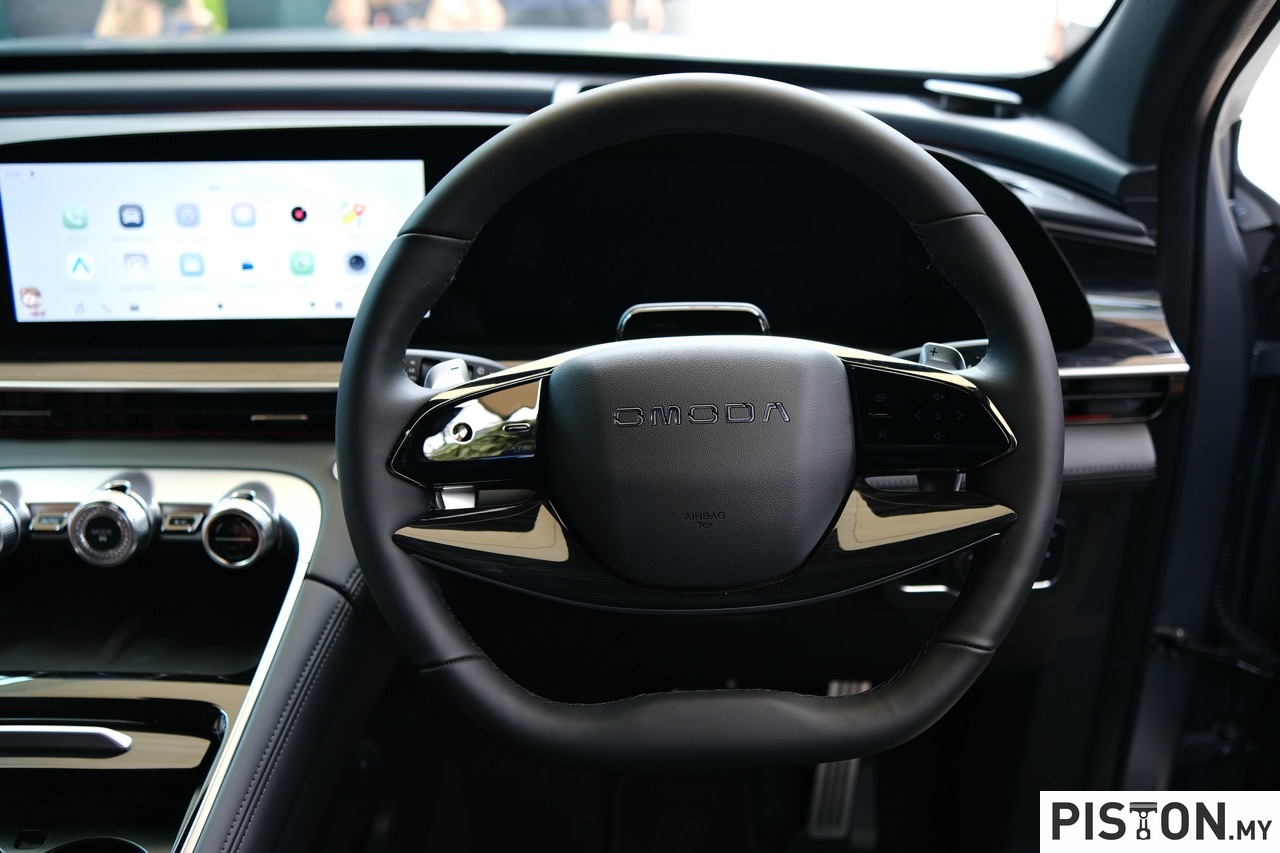
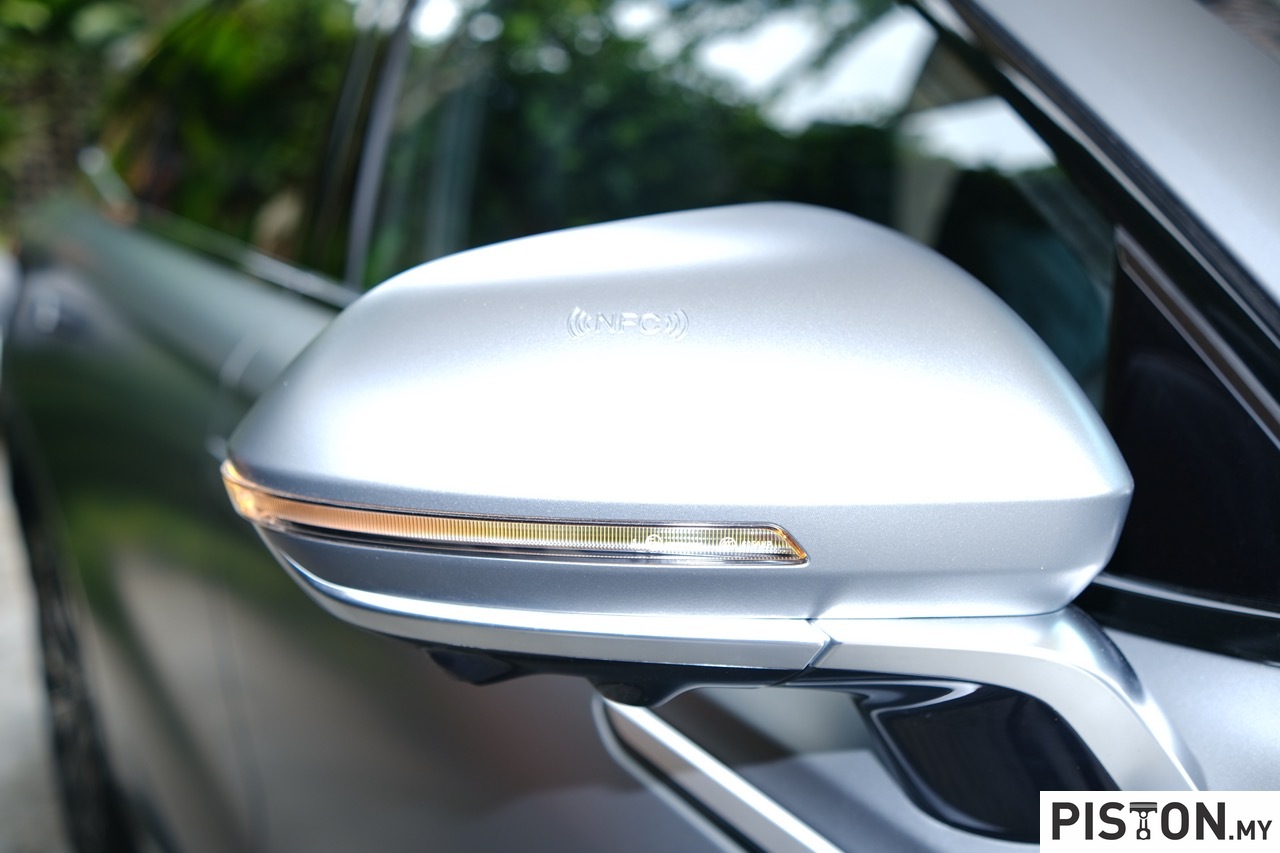
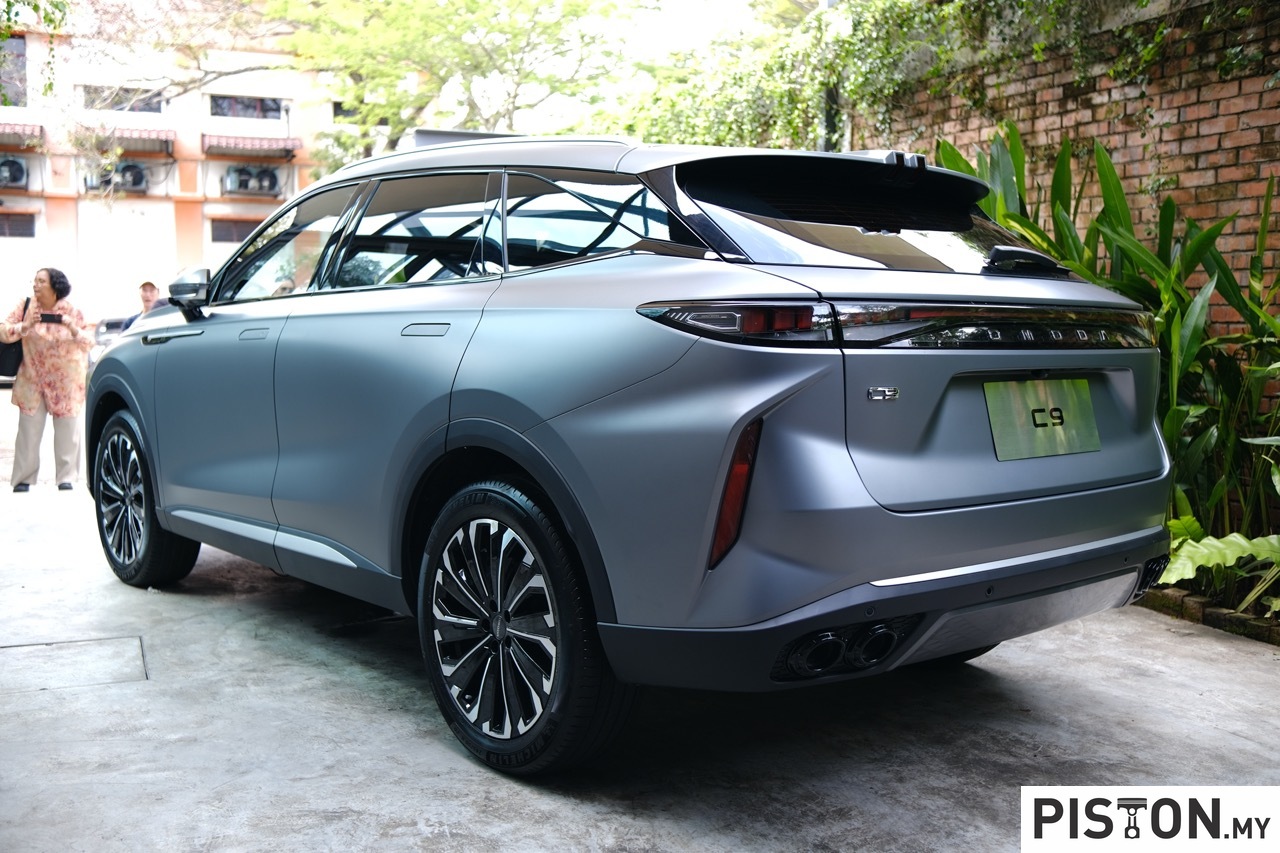
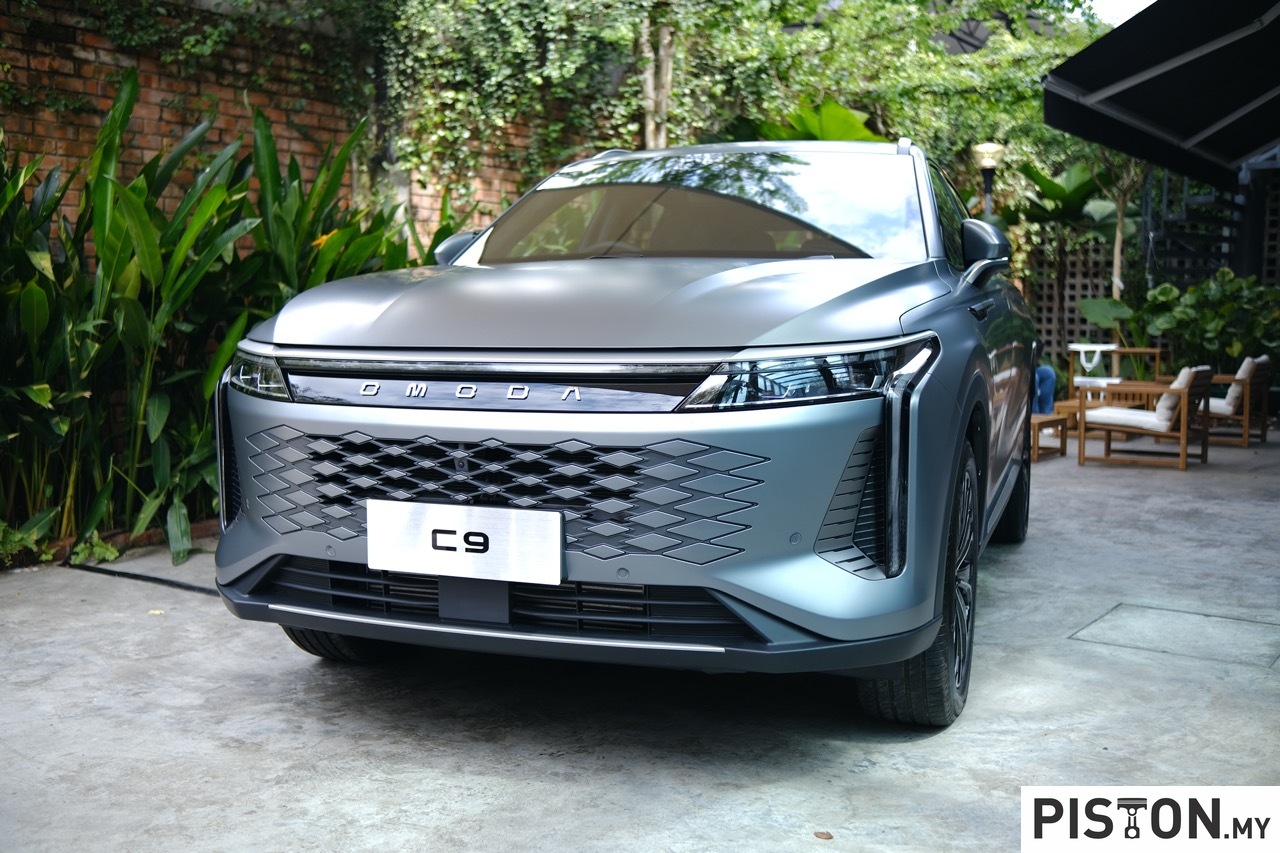
If you didn’t already know, Jaecoo is the luxury division of Chery. Now, the naming of these models might be confusing, as Omoda is associated with the Chery Omoda 5 and E5. But just recently, Jaecoo unveiled the Omoda C9, a coupé SUV under the Jaecoo name and not Chery. This is because the C9 is meant to be a luxurious model, which Jaecoo handles.

Futuristic Design
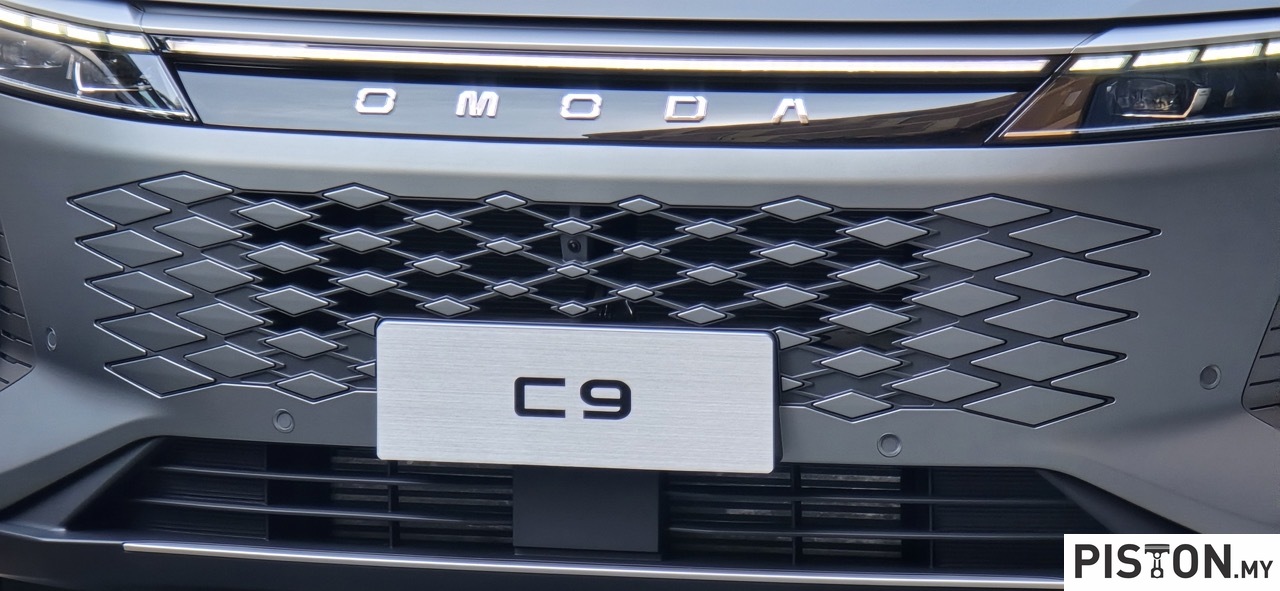
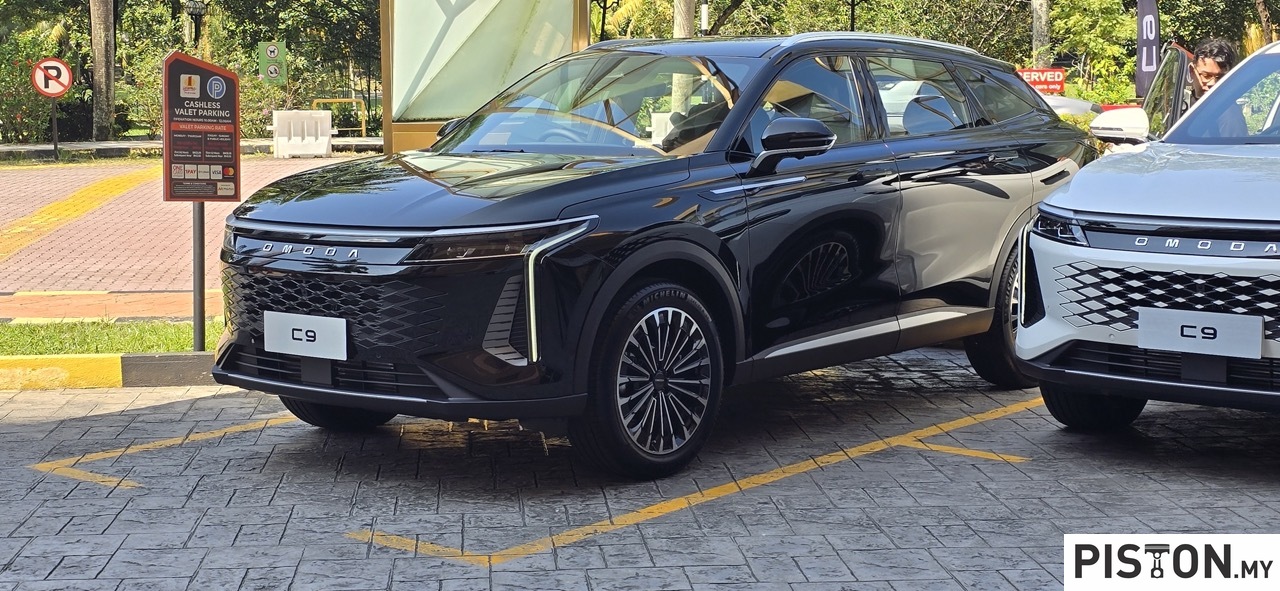
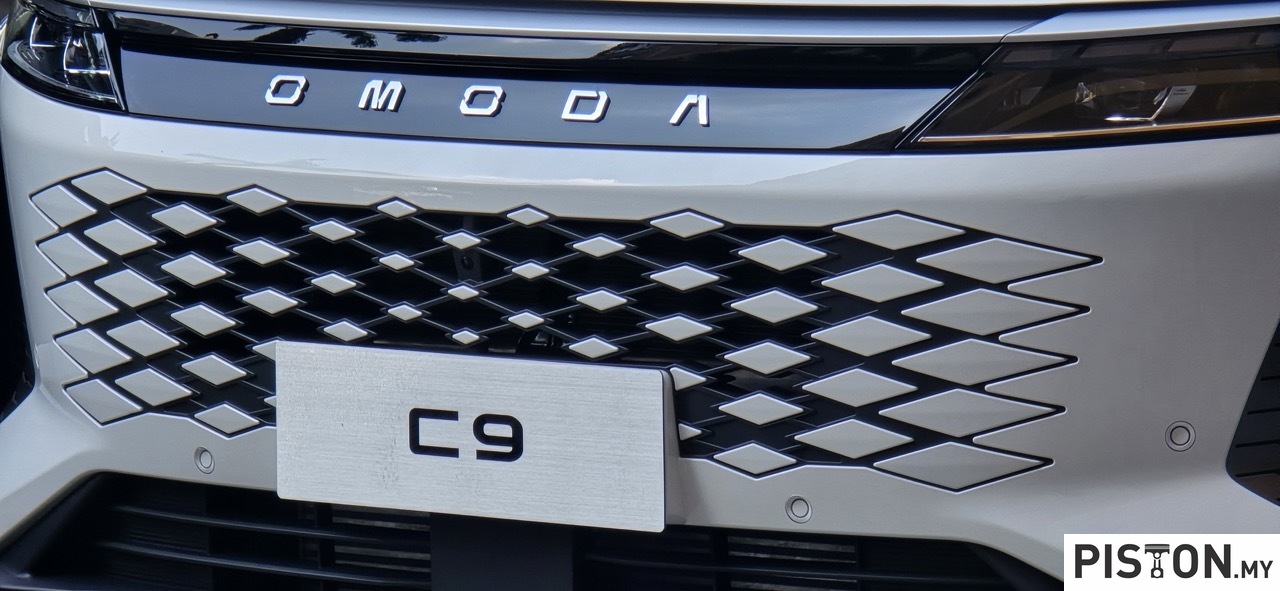
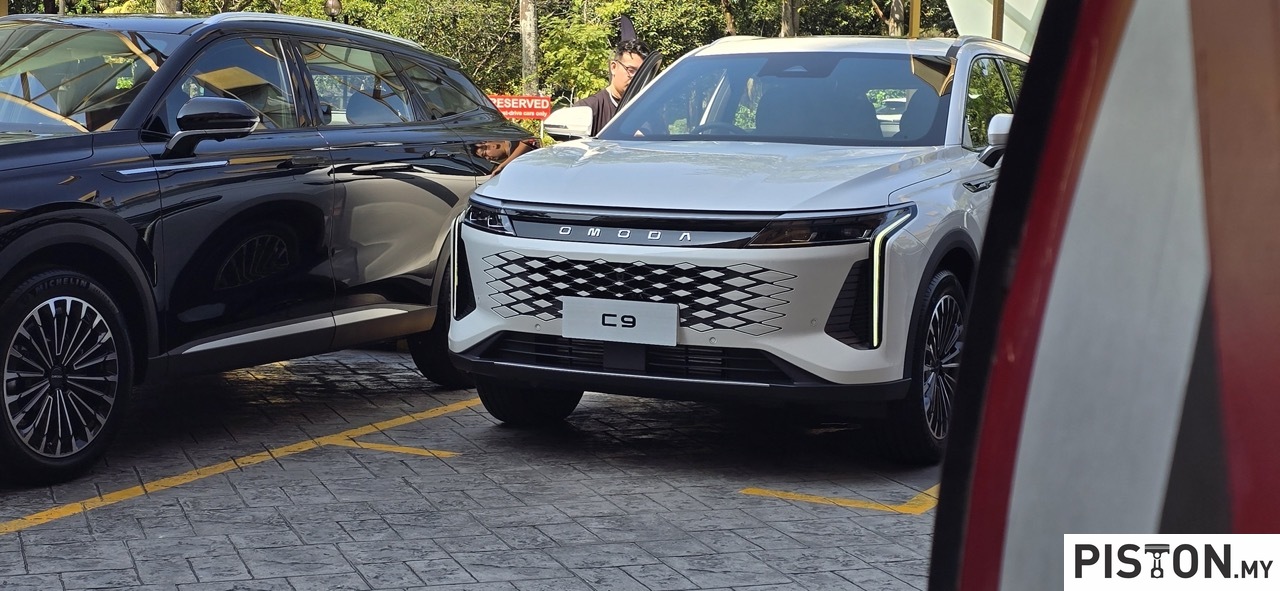
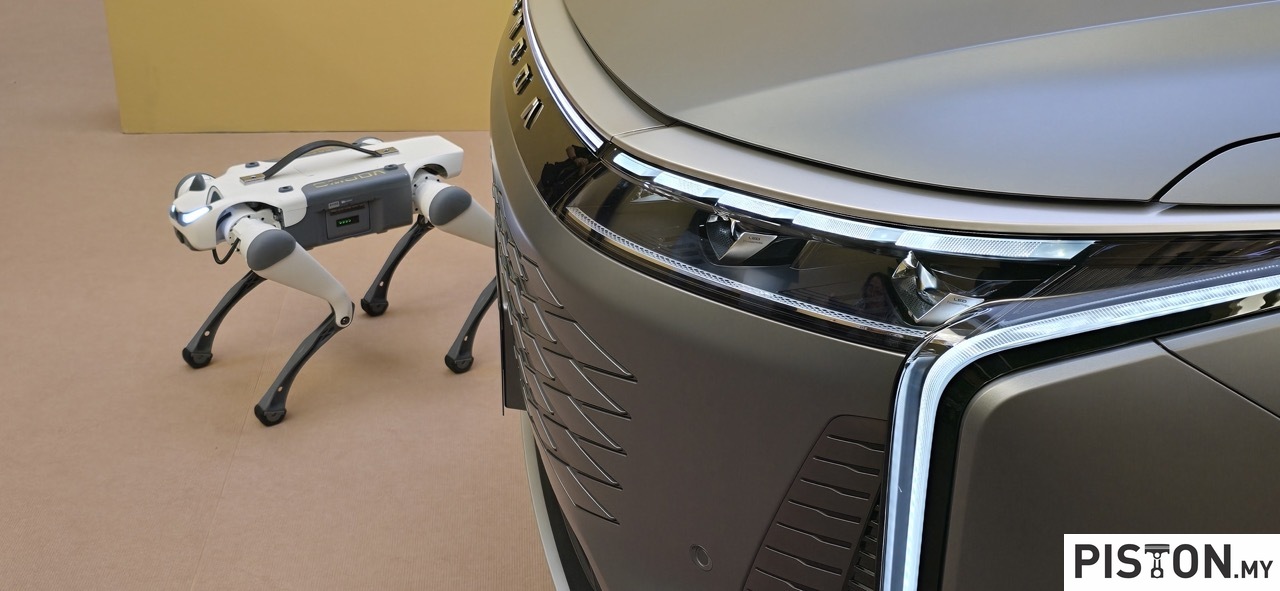
Taking cues from the Omoda 5, the C9 is a more refined and mature-looking SUV. It also displays a futuristic and luxurious look that would definitely turn heads. The section that attracted me was the front design. It has a mean and commanding look that would definitely scare me on highways at night. It features a unique diamond matrix grille, sigma-inspired daytime running lights, and adaptive LED headlights.

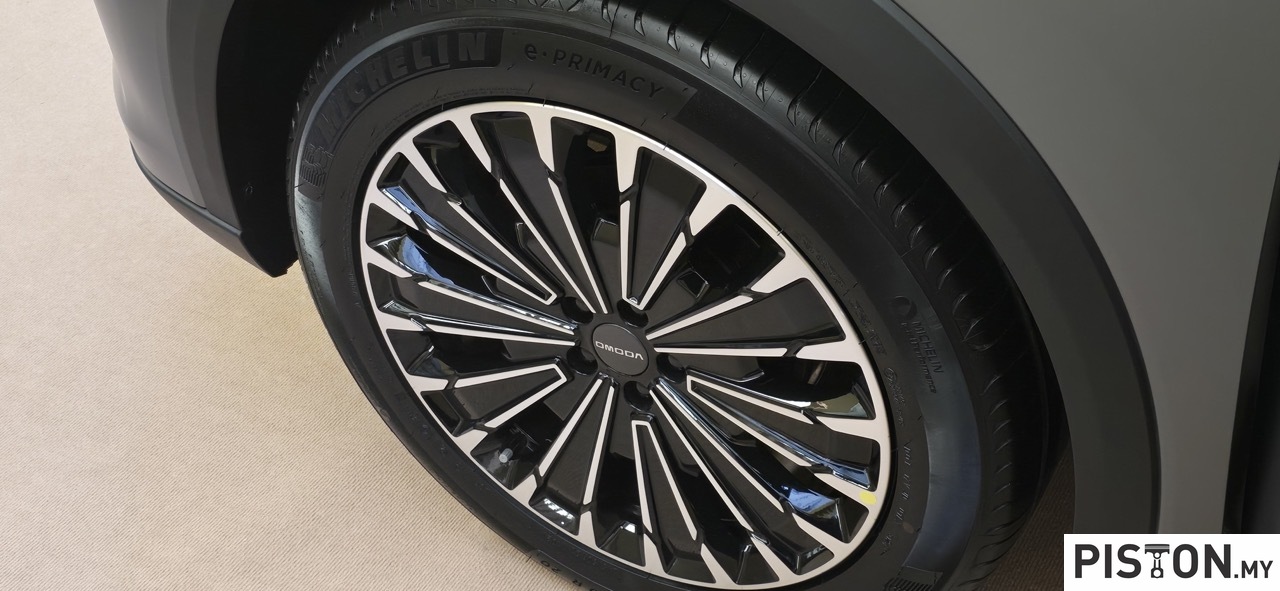
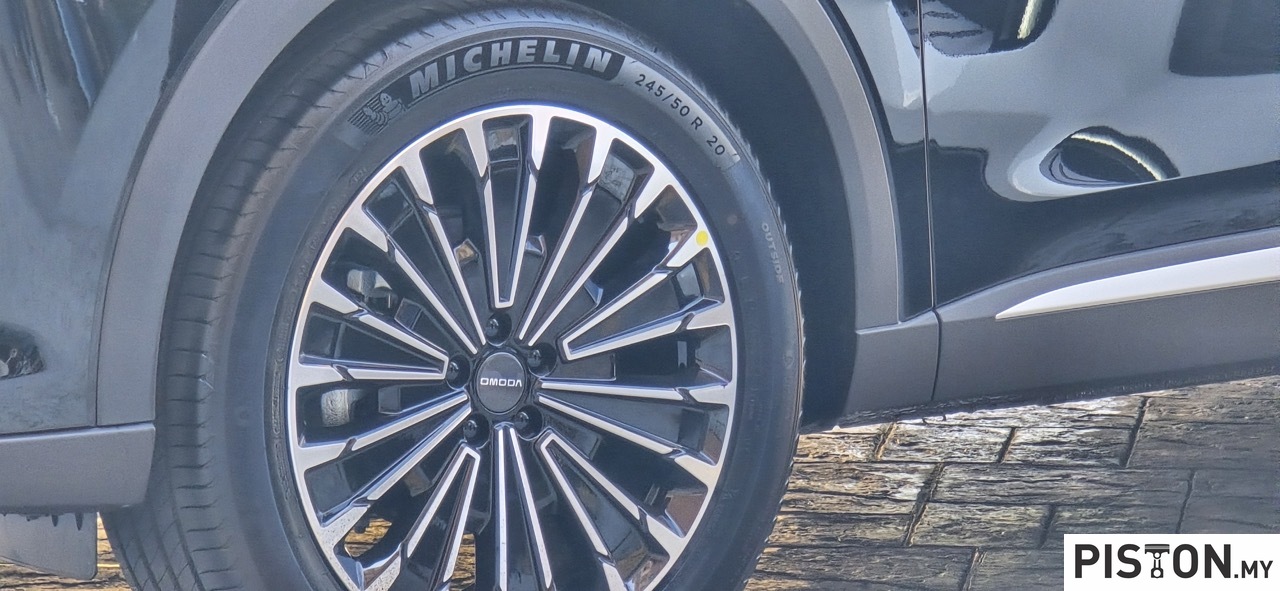
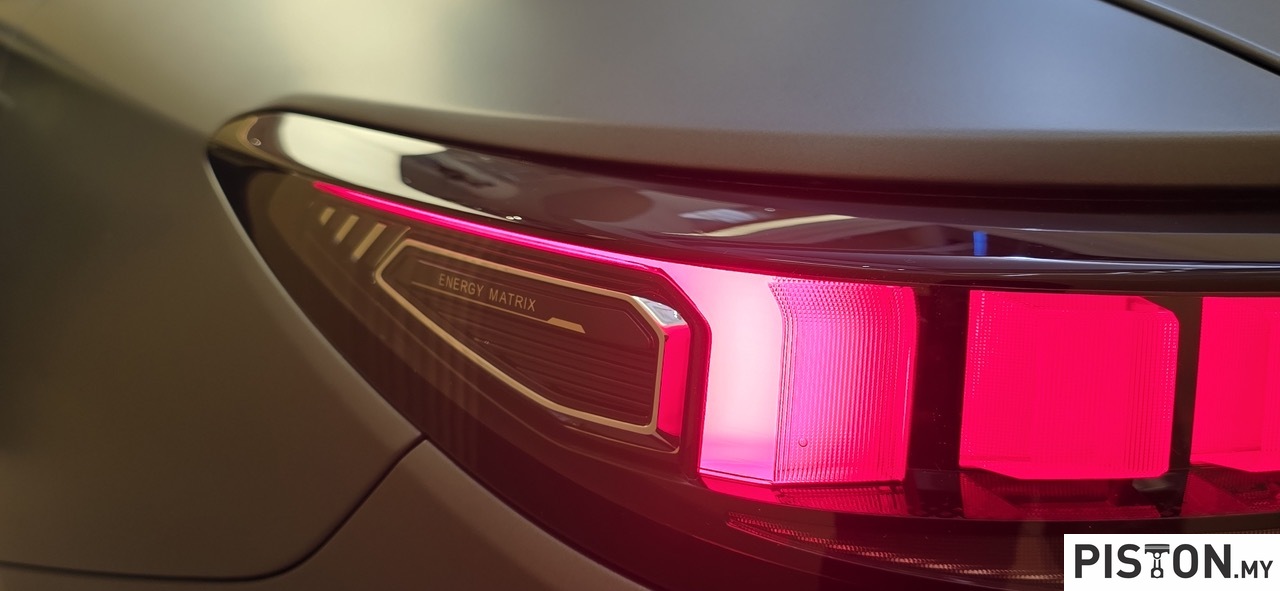
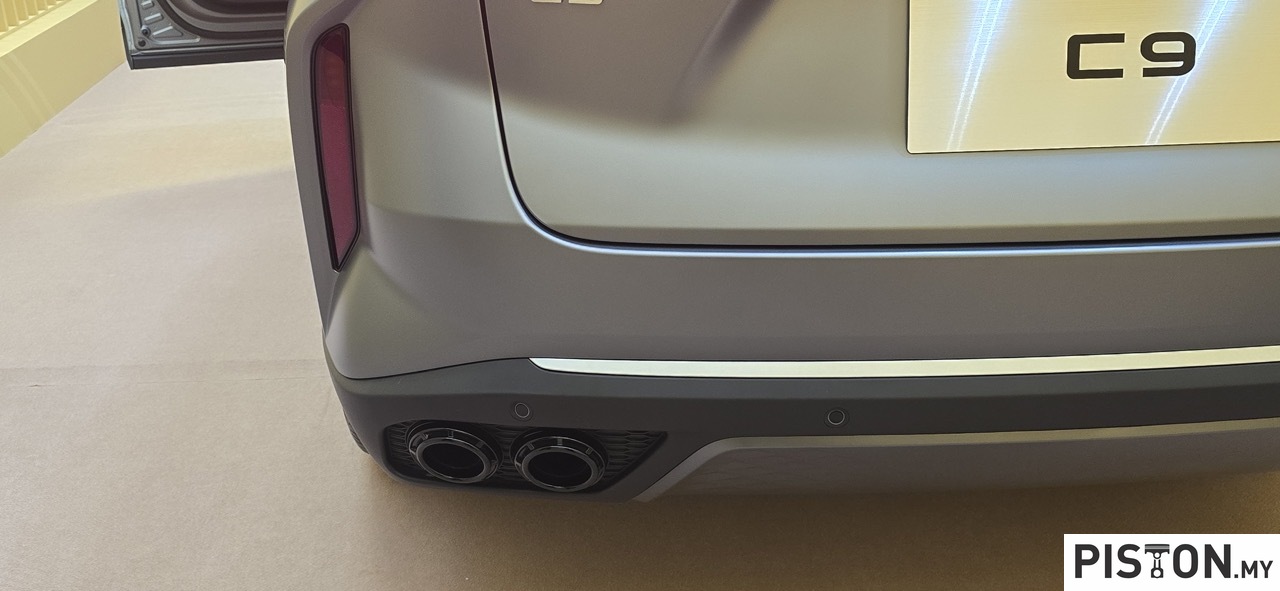
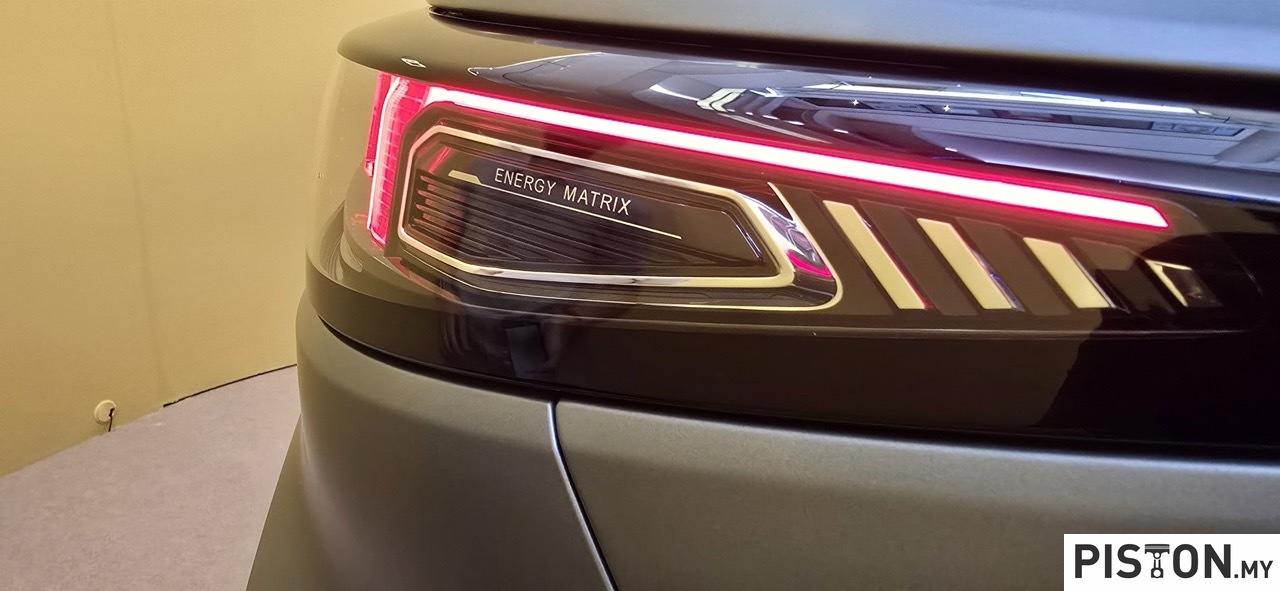
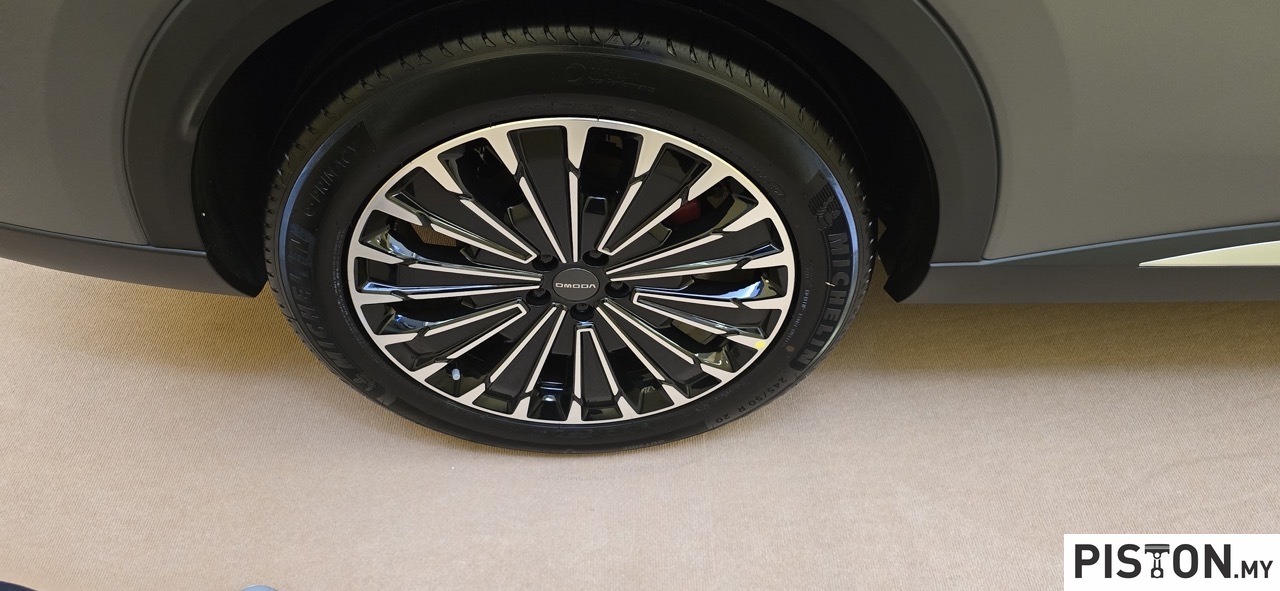
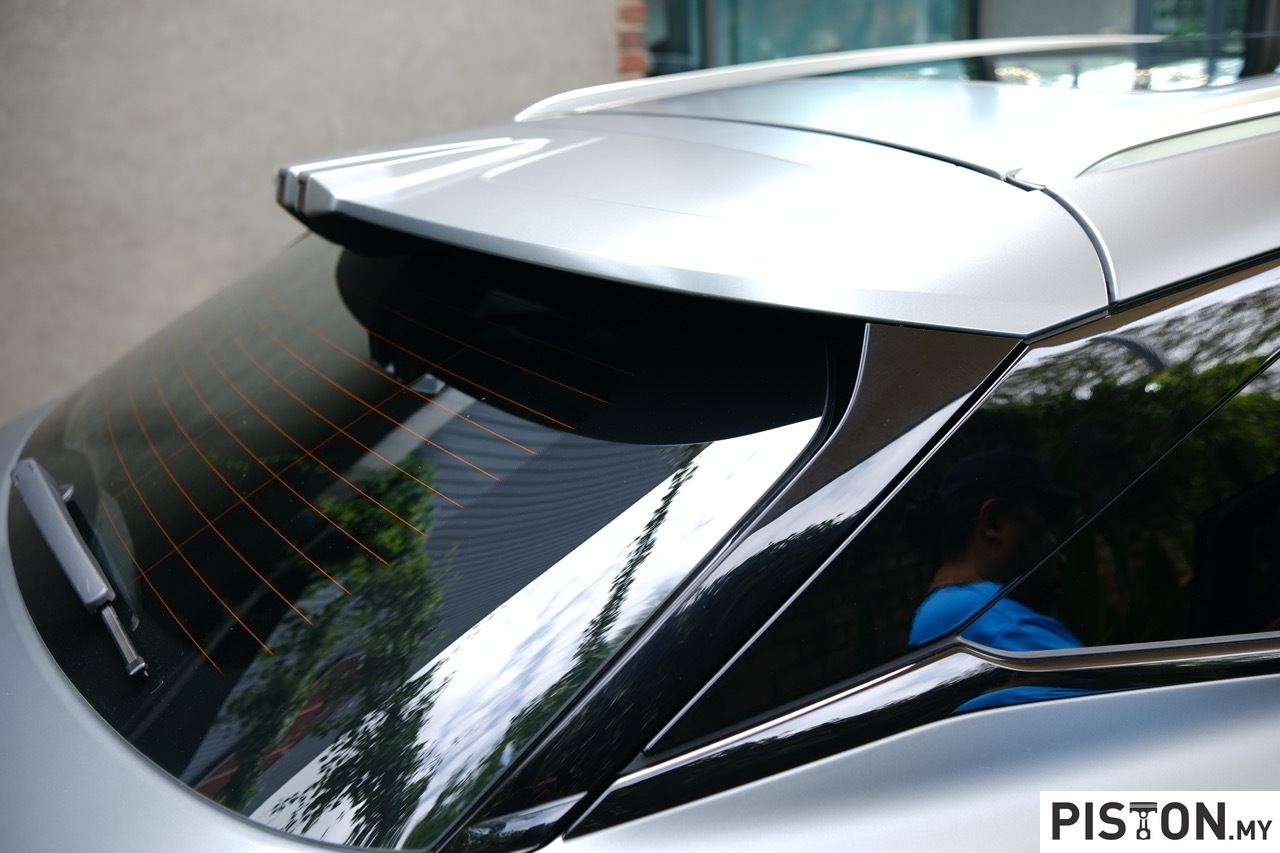
Moving along to the side, you’ll find a sleek, distinctive look with lines and curves that complement the overall futuristic appearance. You will also notice the 20-inch multi-blade alloy wheels and high-performance Michelin tires. The rear features LED tail lights and a tailgate with an auto-sensing function.

Comfortable and Luxurious Interior
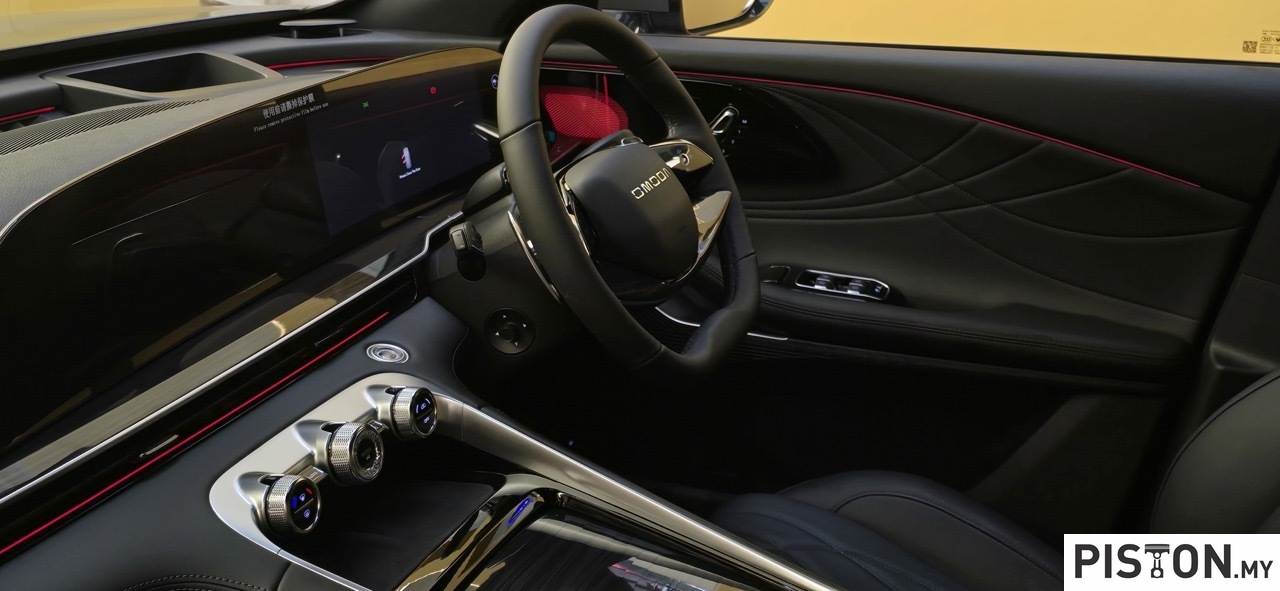
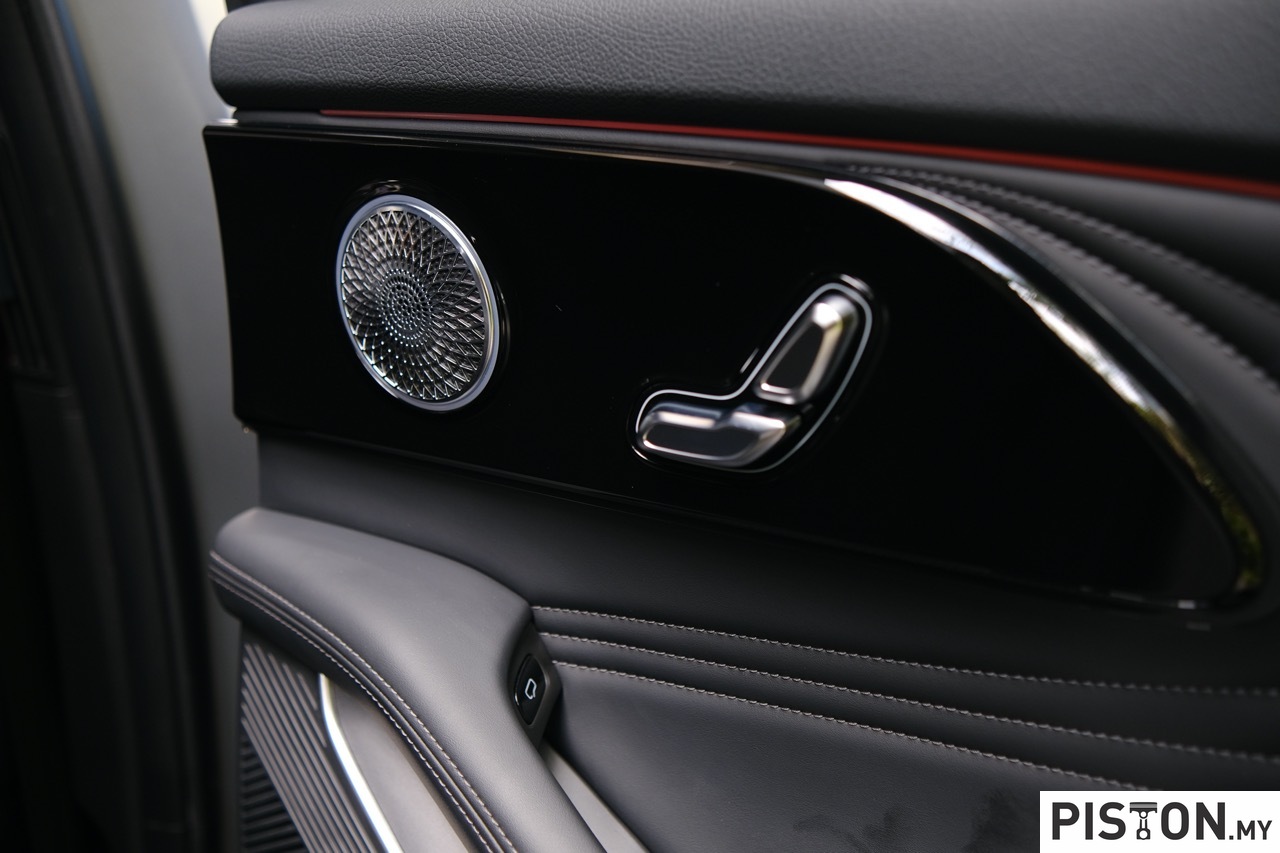
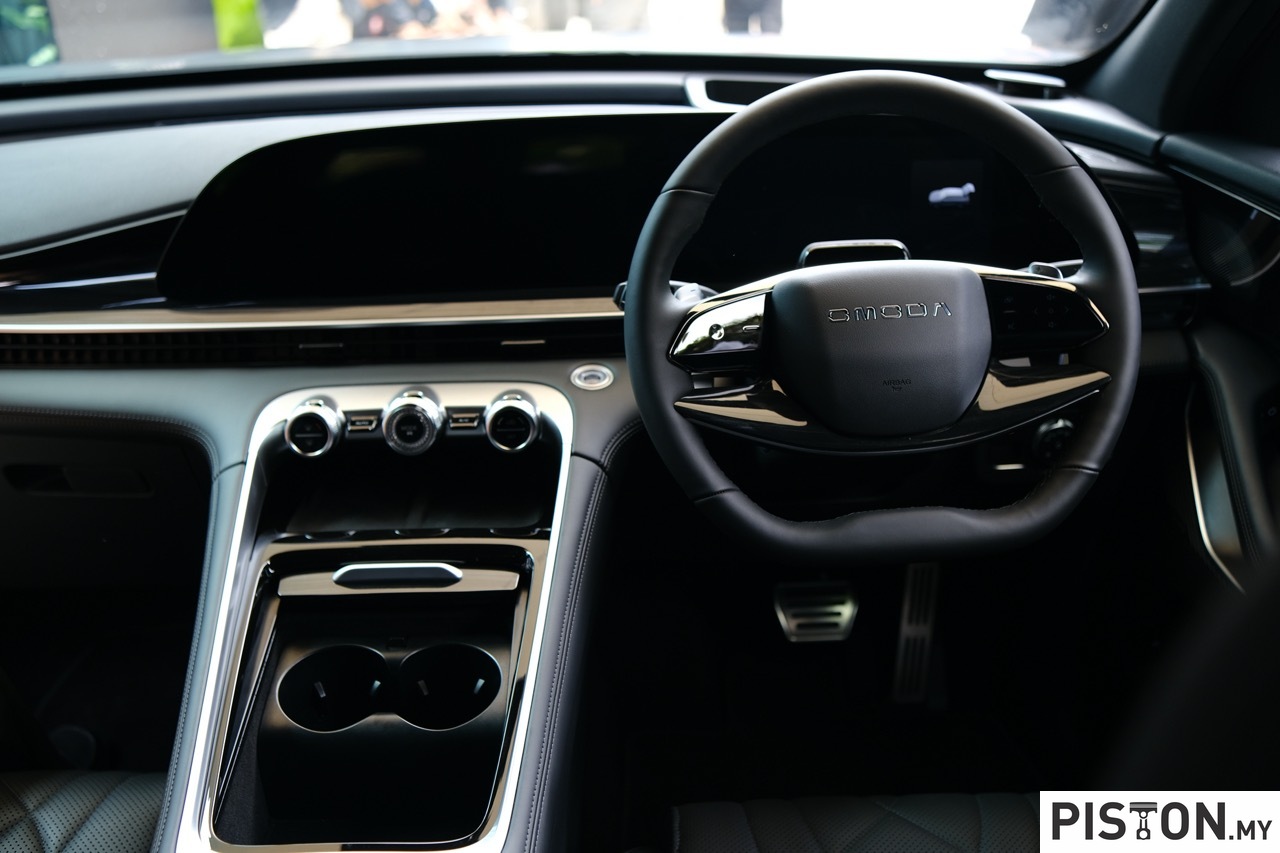
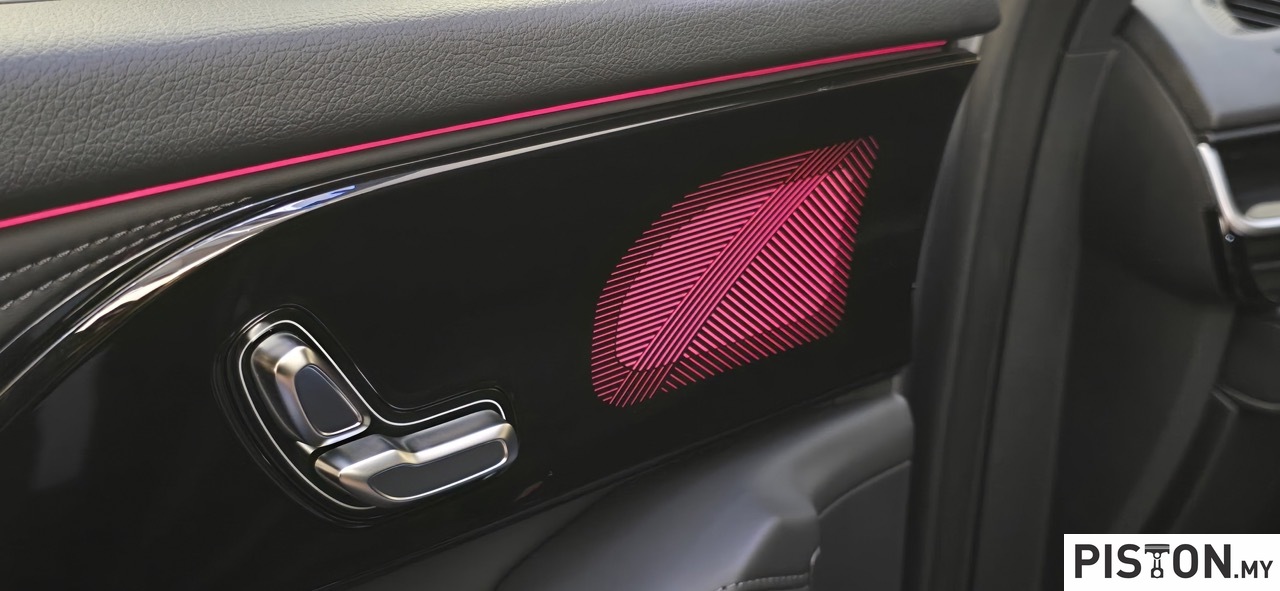
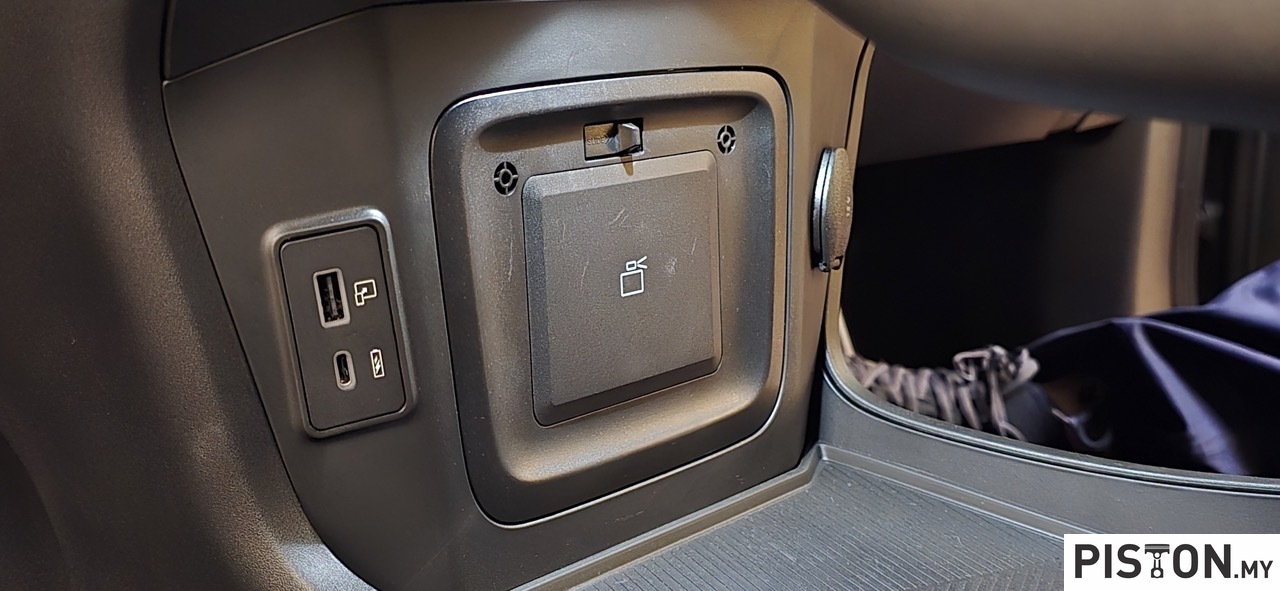
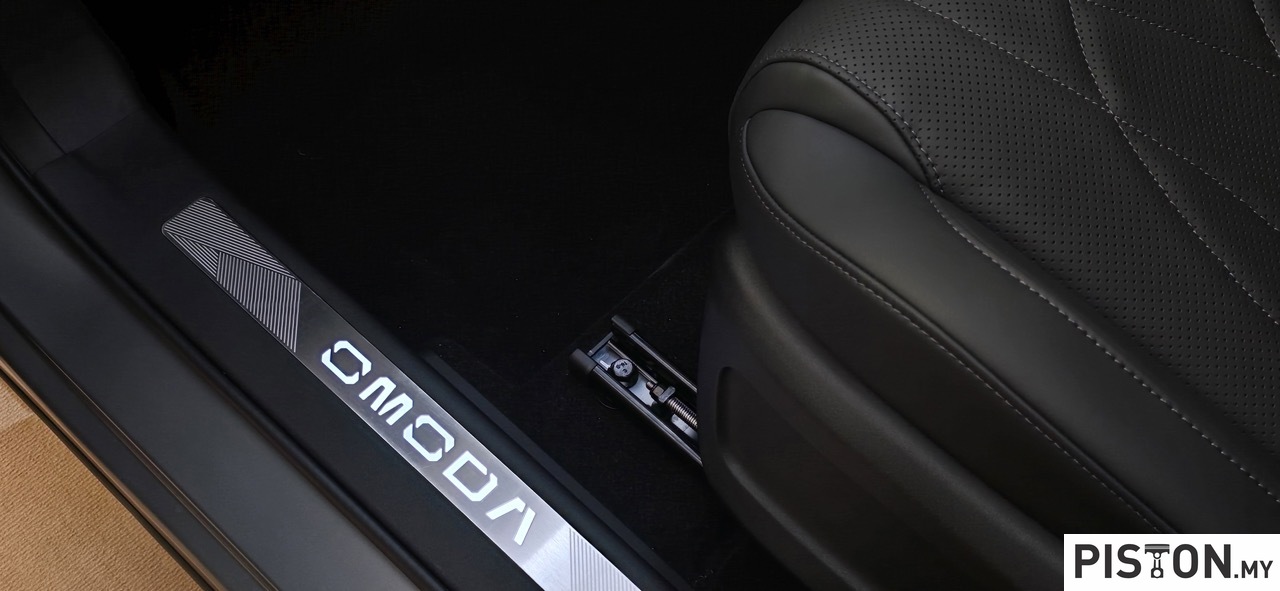
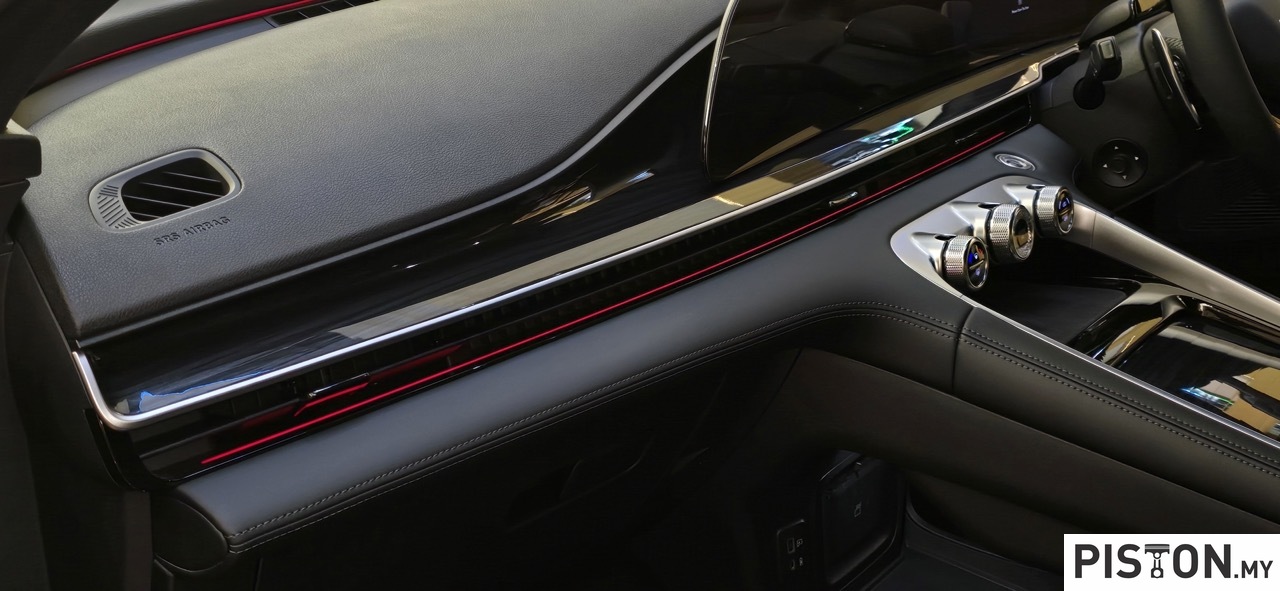
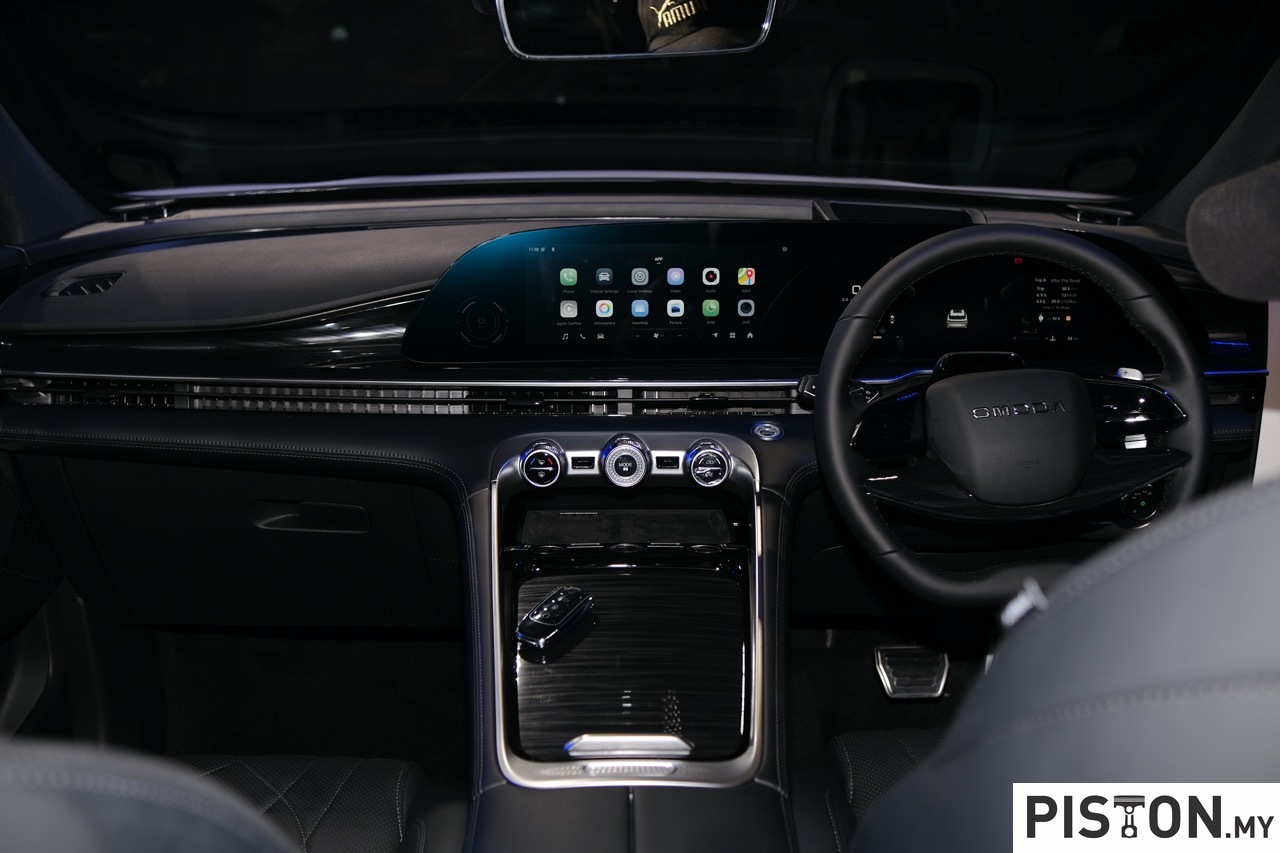
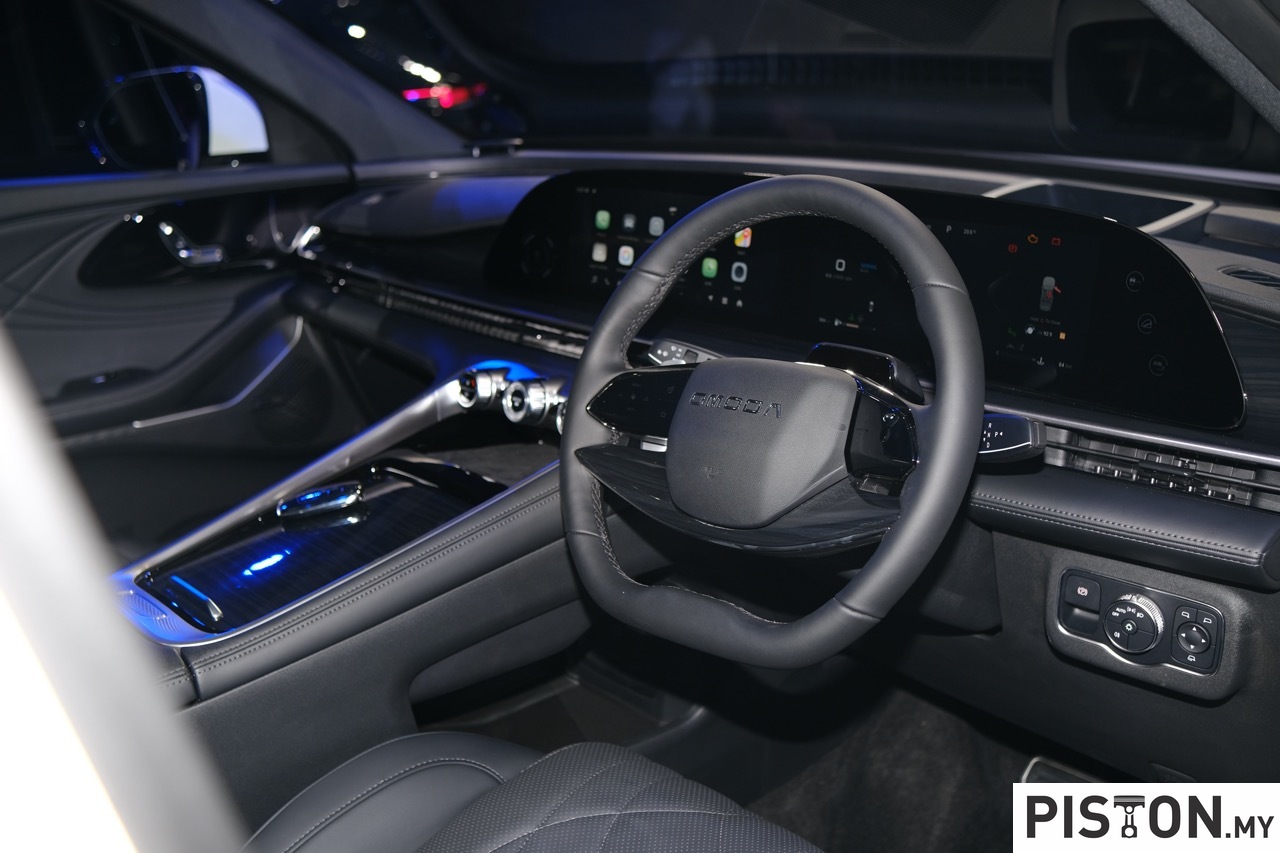
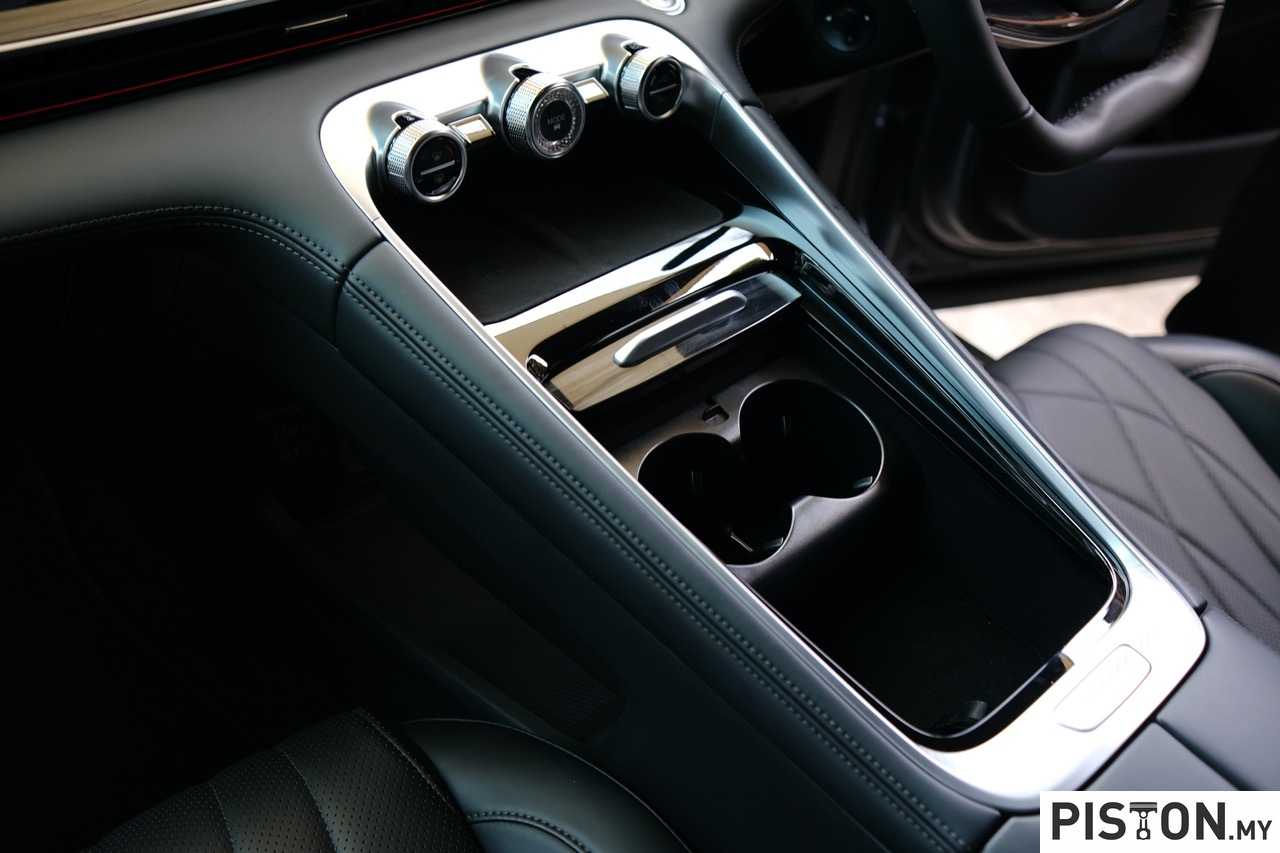
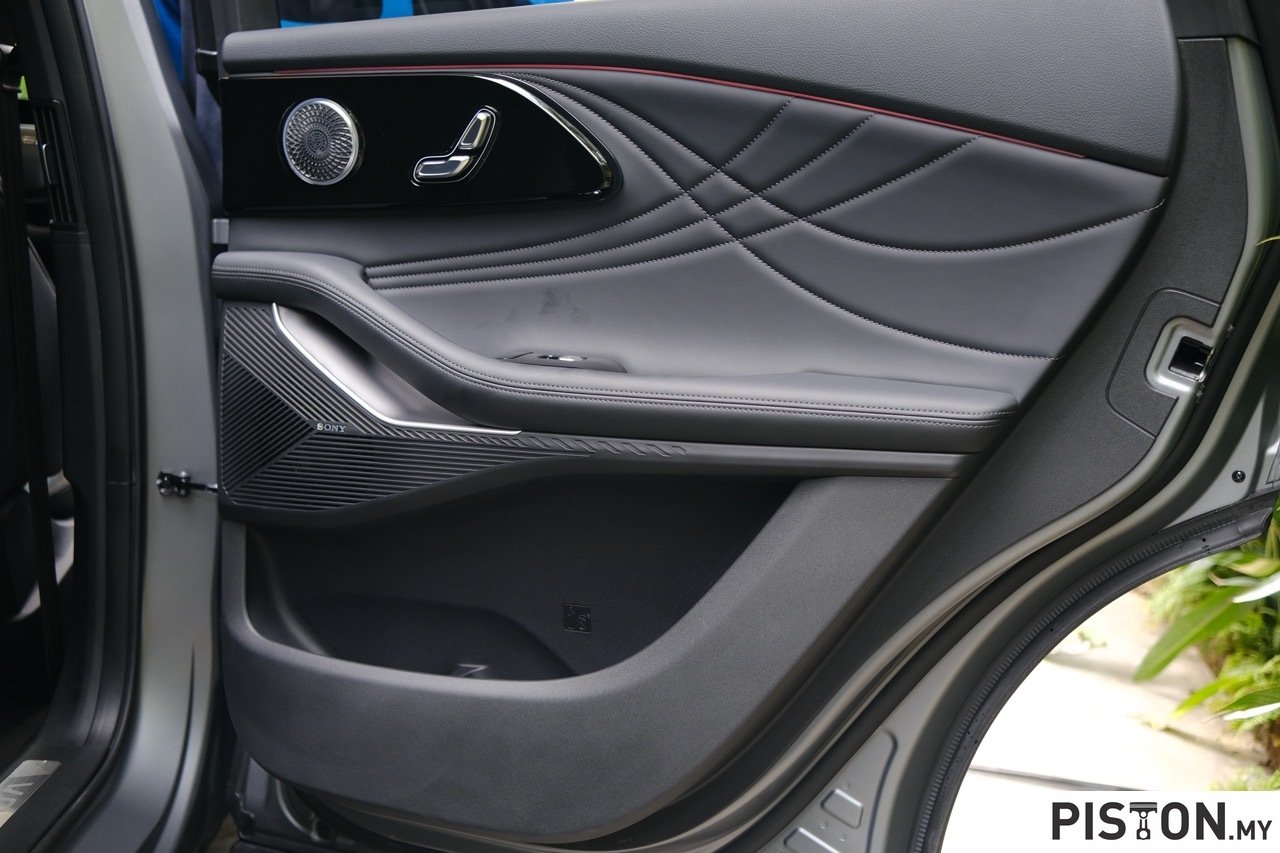
Step inside, and you’ll know why the C9 is under the Jaecoo brand. It features active ambient lighting, a 24.6-inch HD display, and a spacious centre console equipped with wireless mobile charging and air vents.

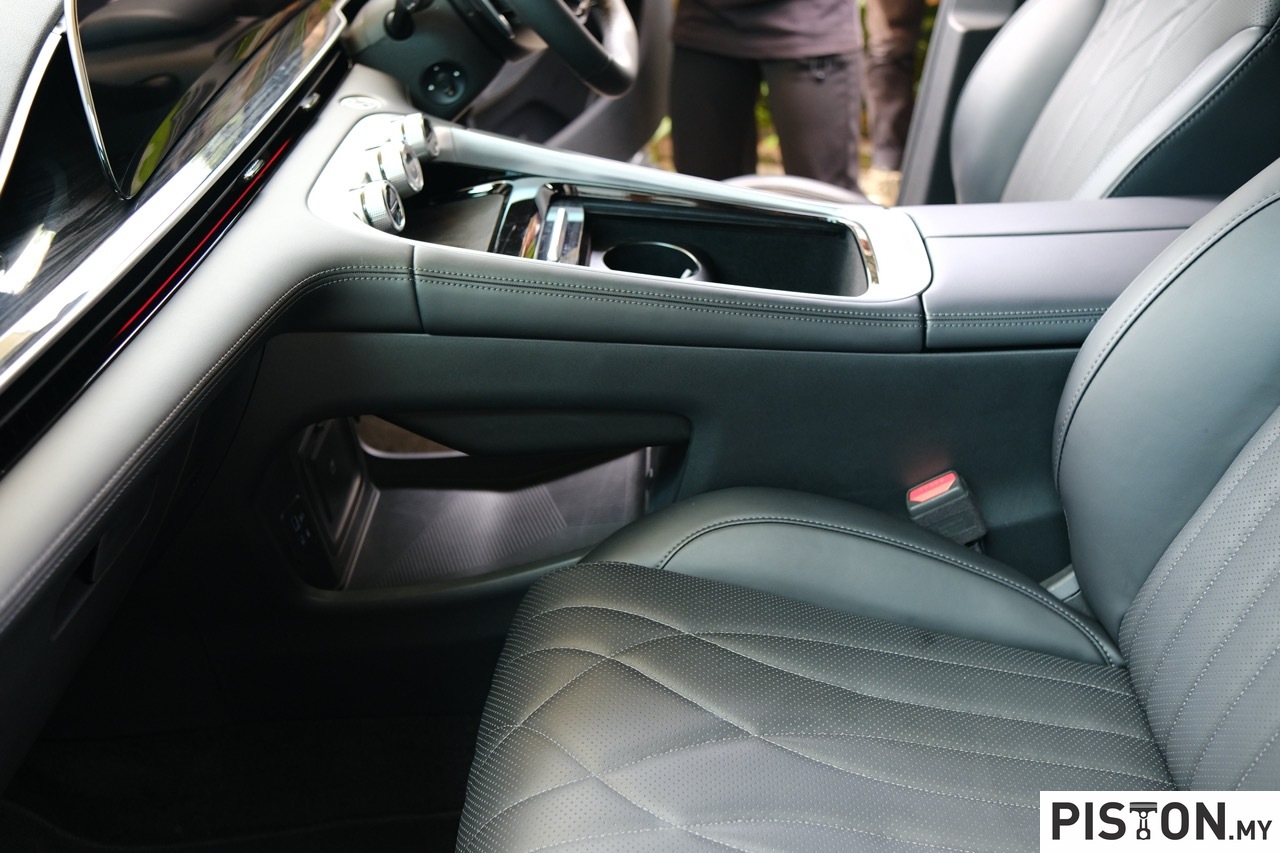
The cabin is enhanced with premium soft-touch leather finishes, three-zone air conditioning with an air quality system, and a fragrance dispenser for added comfort.

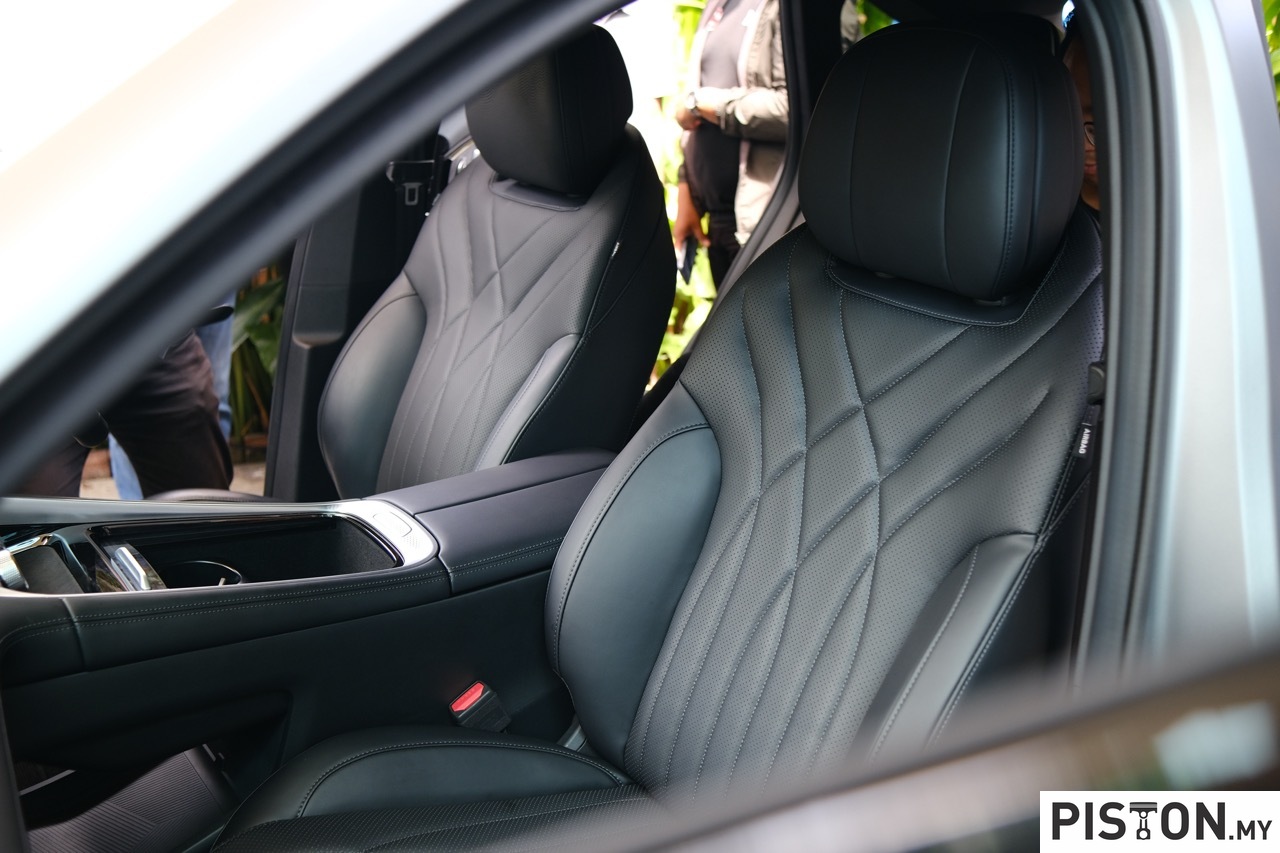
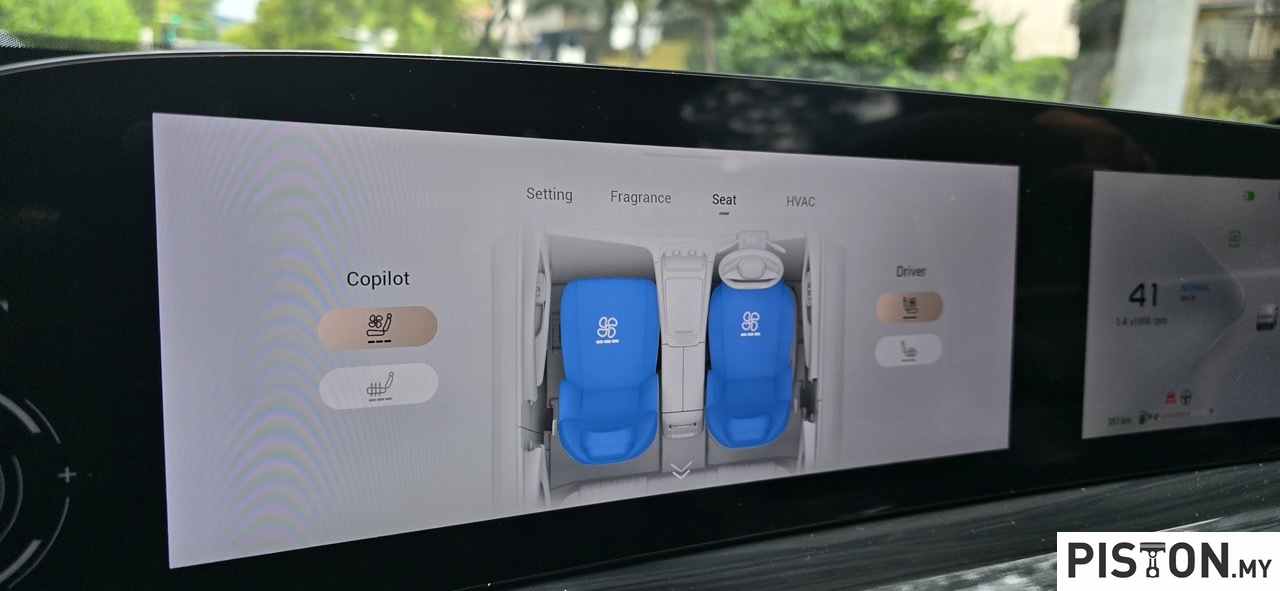
If you’re built slightly bigger than the average human, just like this writer, you won’t have to worry about space because, during our drive, I was as comfortable as ever. To enhance this comfort experience, both the driver and passenger seats are ventilated, allowing us to cool our bottom and back.

Powerful Petrol Engine
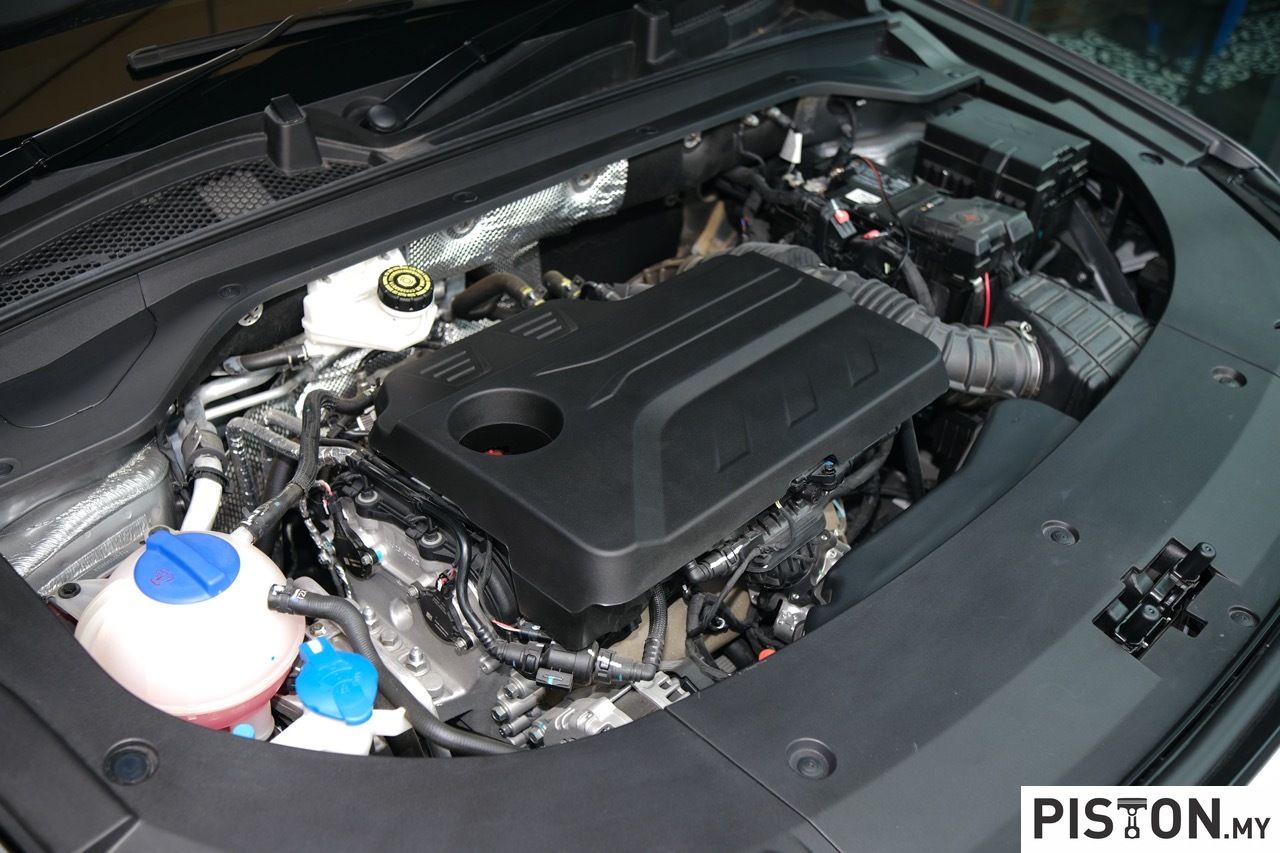
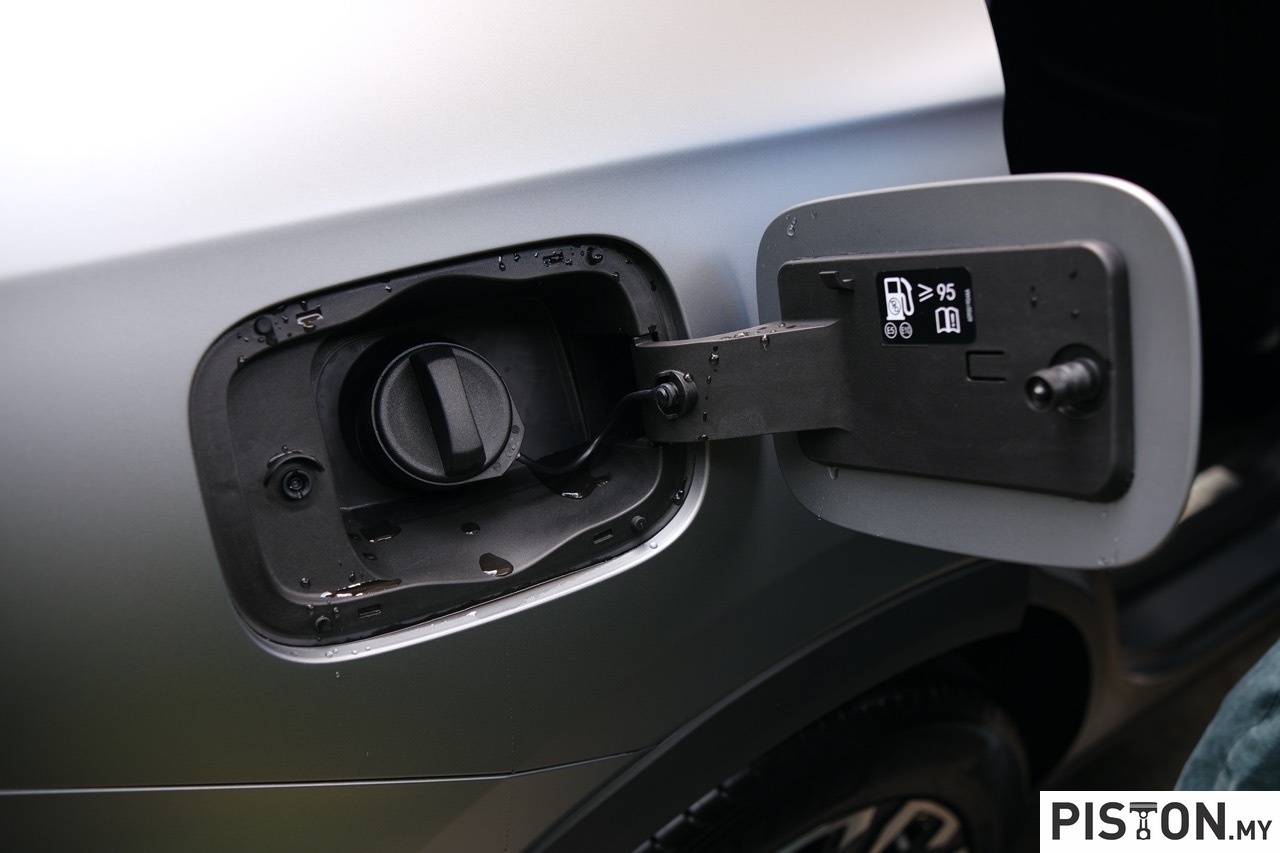
The C9 comes with the whole package, including power. It is powered by a 2.0 TGDI inline four-cylinder petrol engine, delivering 257hp and 400Nm of torque. Yes, that is a lot of power for an SUV coupé.

This amount of power can be put down on any terrain because the C9 comes with not only Eco, Normal, and Sport modes, but also Snow, Mud, Sand, and Off-road modes, which means you can probably get out of most unwanted situations.

Crazy Amount of Tech and Features
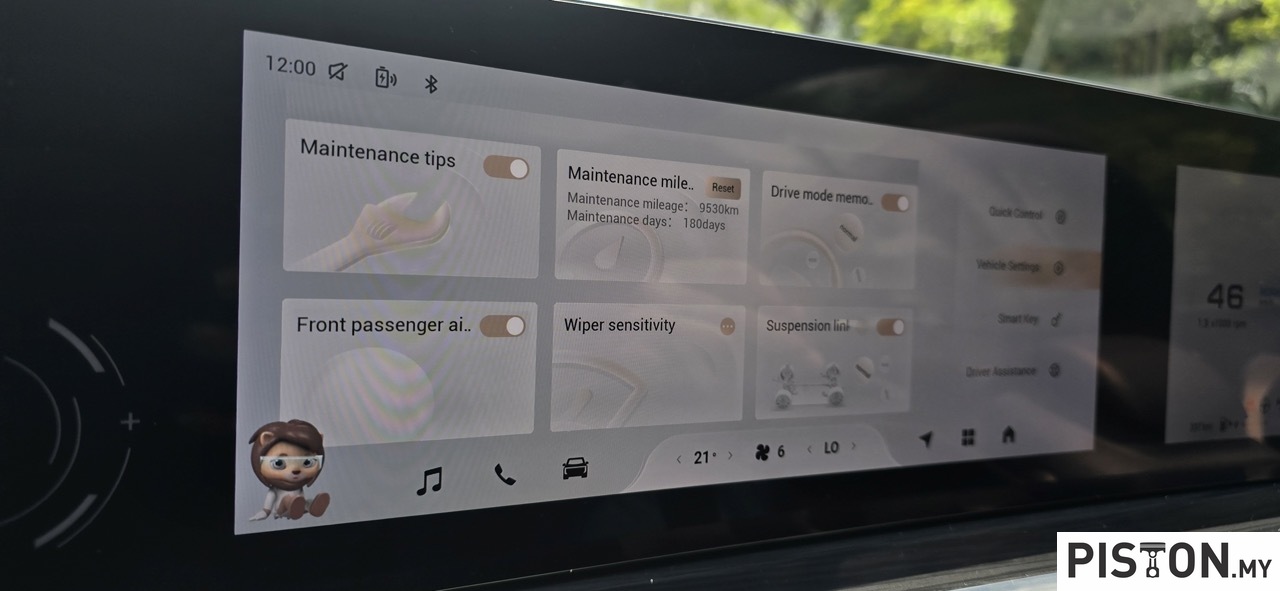
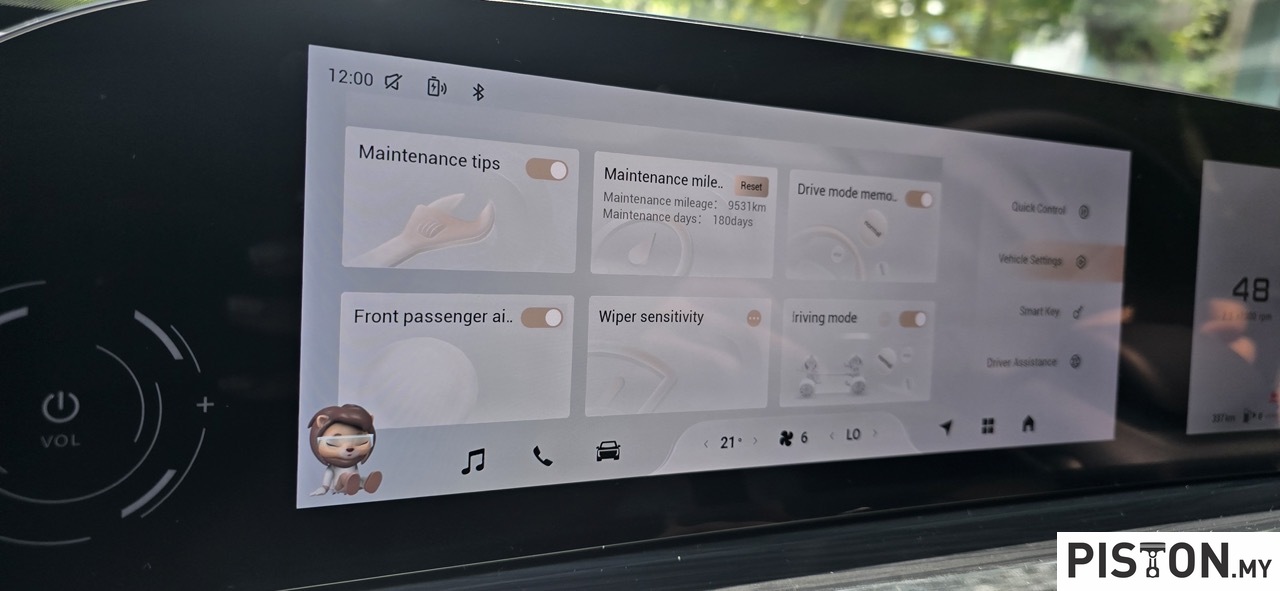
Once you start to mess around with all the options and features available on the 24.6-inch HD display, you’ll feel a little overwhelmed. Why? Because there are so many things to fiddle with. One of them is your different drive modes; then you have the HVAC, seat ventilation, fragrance drive mode memo, wiper sensitivity, maintenance tips, suspension linking to drive modes, and many more.


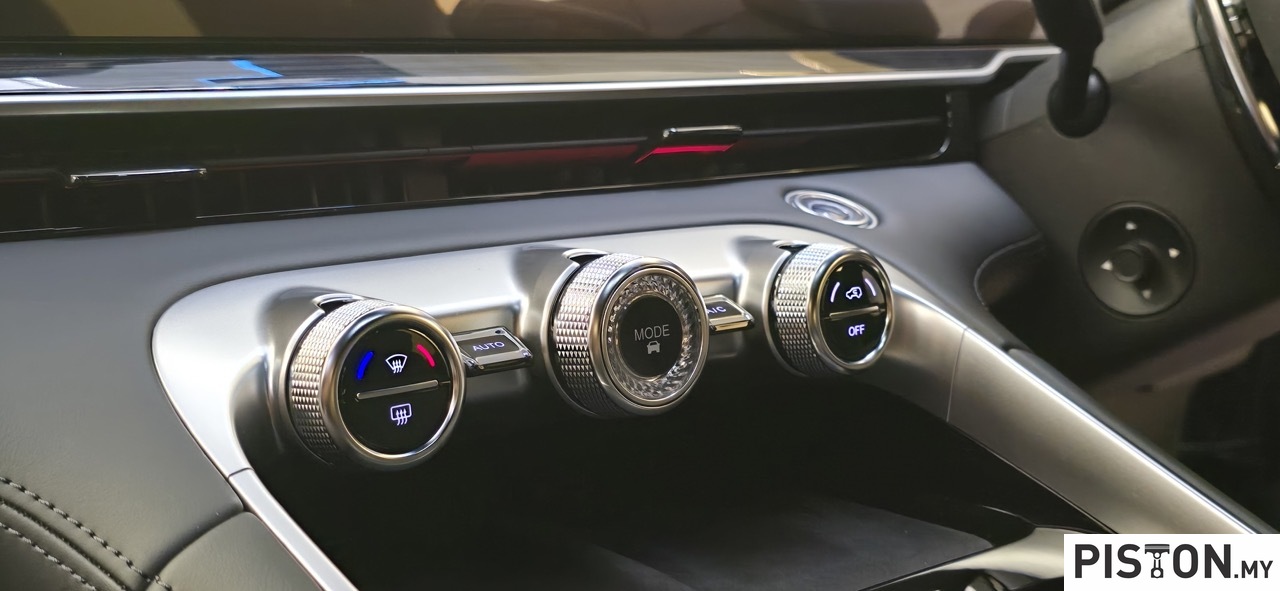
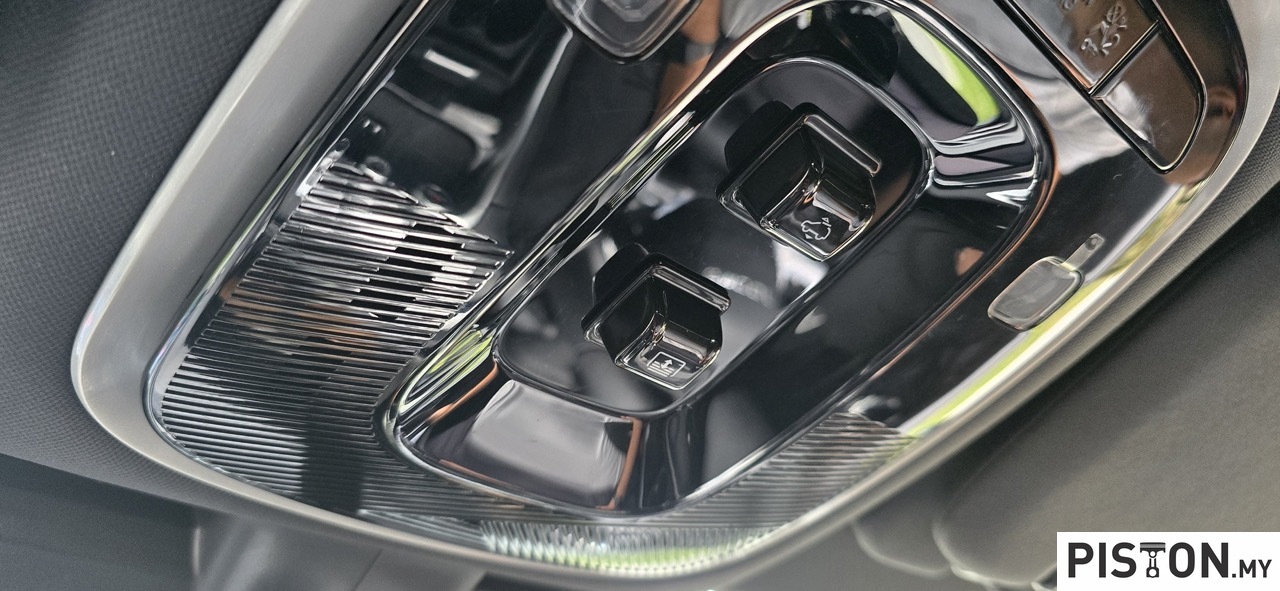
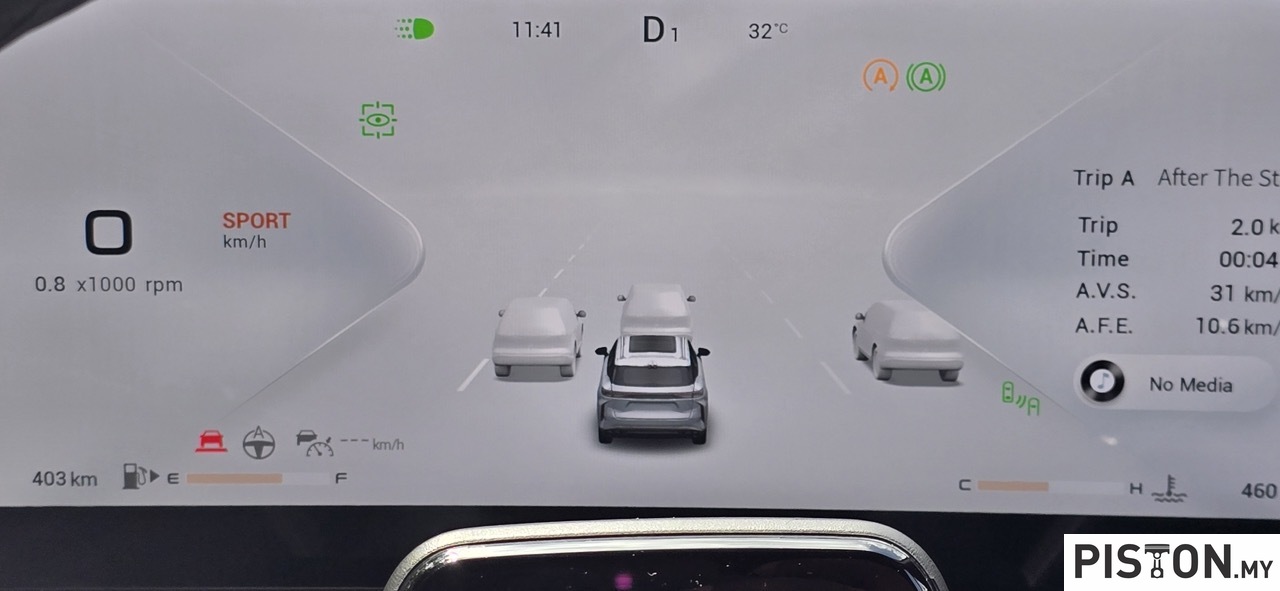
Thankfully, not everything is only accessible through the screen; you also get physical buttons. Yes, in a 2024 vehicle, there are buttons such as the air conditioning knobs, the sunroof controls, and the drive mode selection knob.


Gear changes can be done via a lever behind the steering wheel, similar to a German brand. You also get paddle shifters just for the fun of it and a push-to-start button.

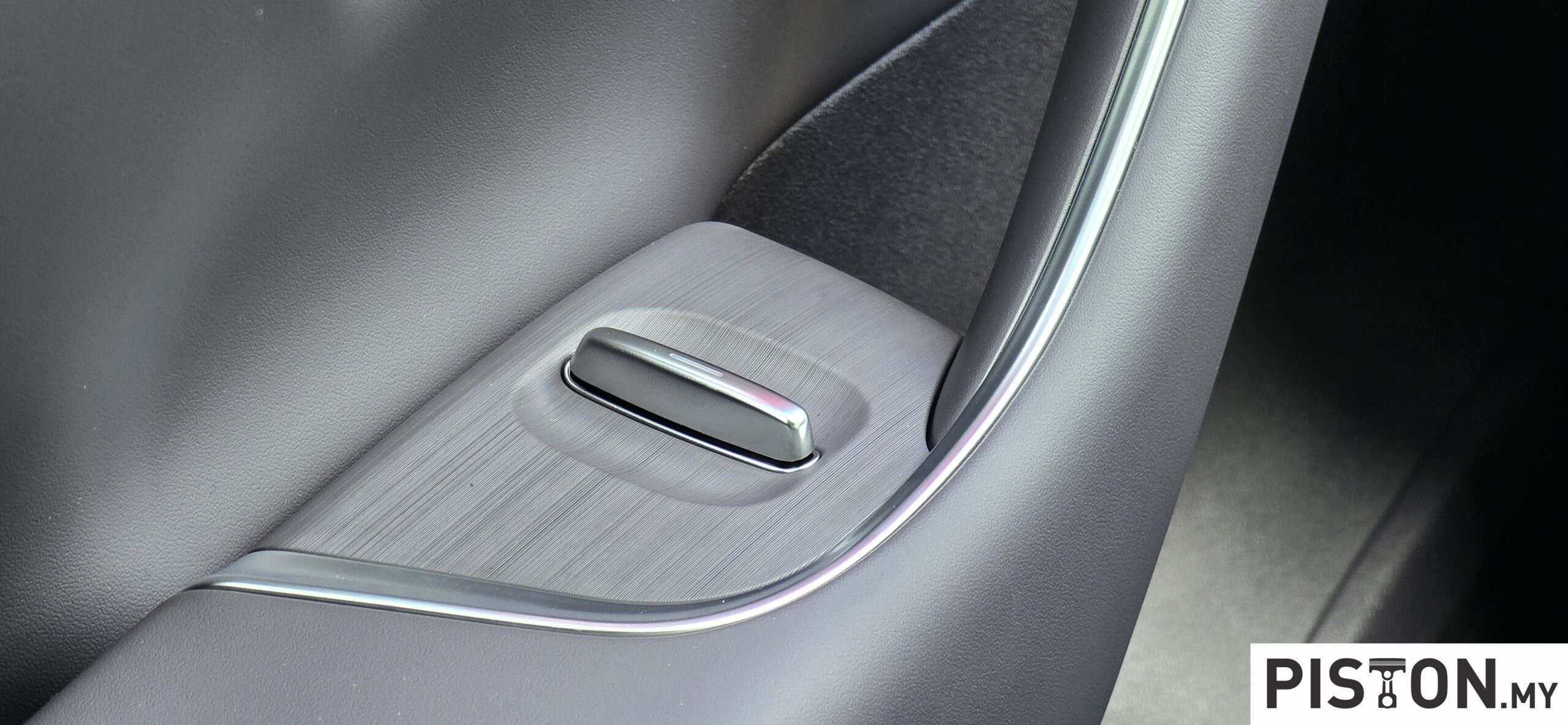
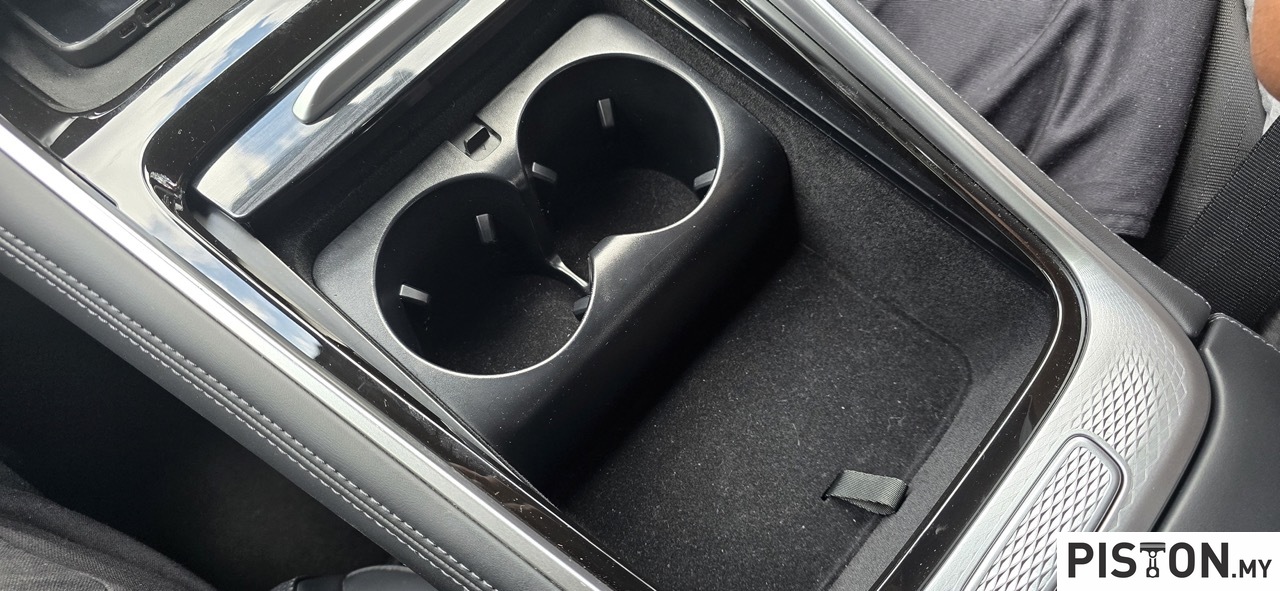
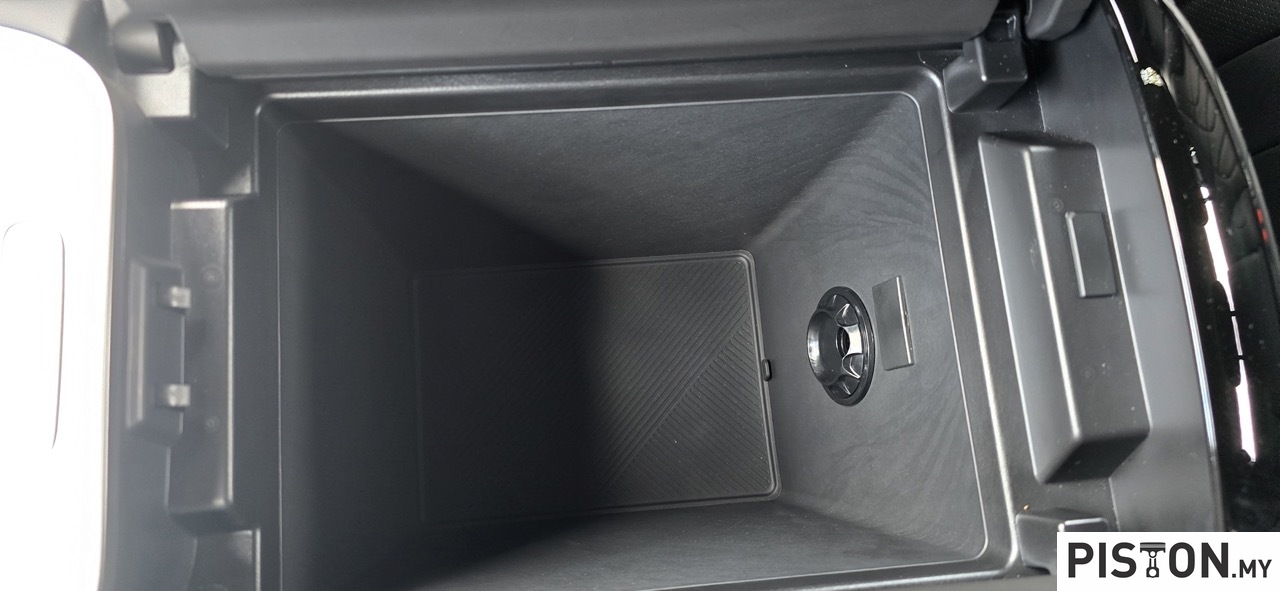
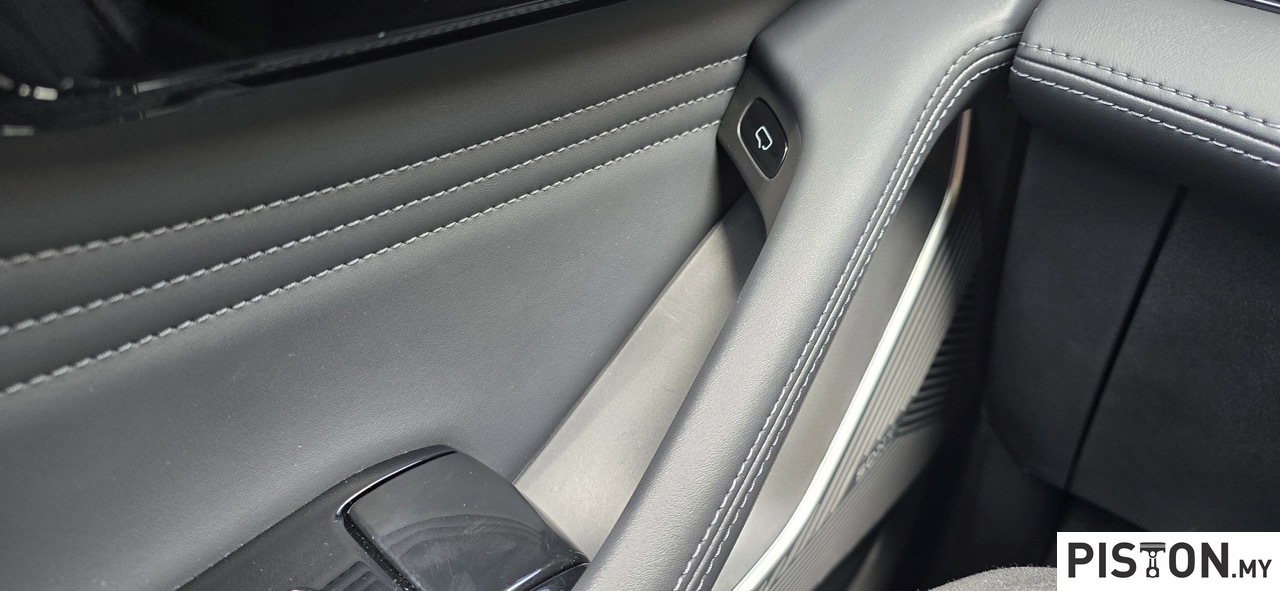
You also get a decent amount of storage space at the center console, and the armrest that houses a cooled compartment can be opened up to store your cold drinks. Another cool feature is the two options given to open the doors. You get the standard manual lever that you pull to release the door and a button that activates the electrical door release.

Safety at Its Finest
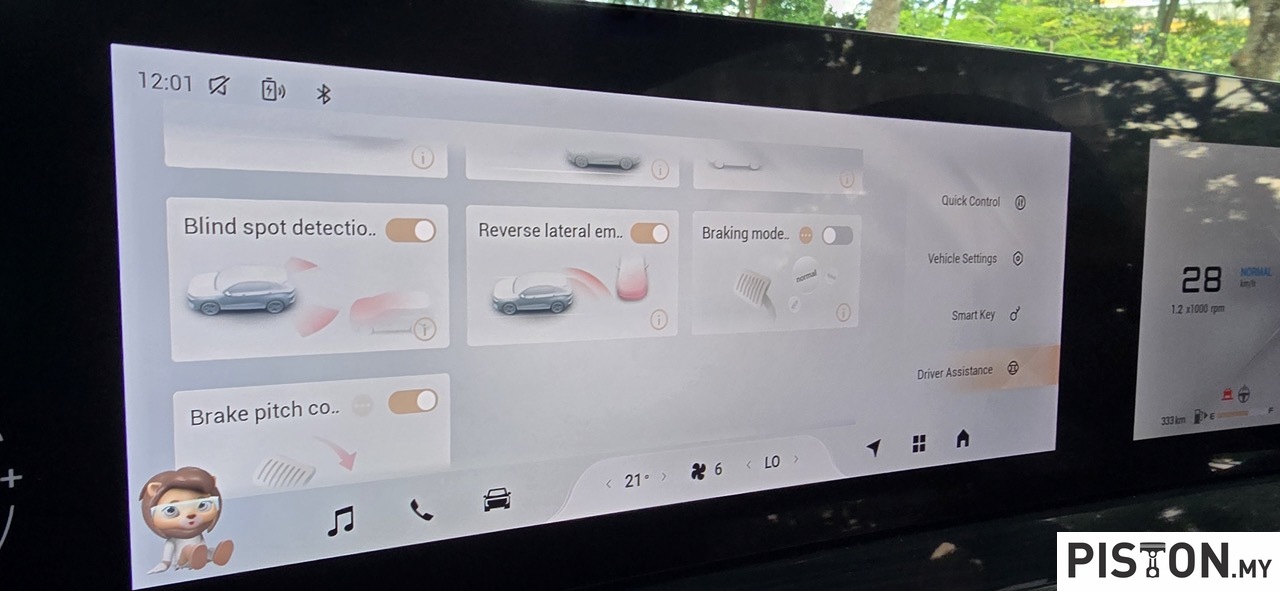
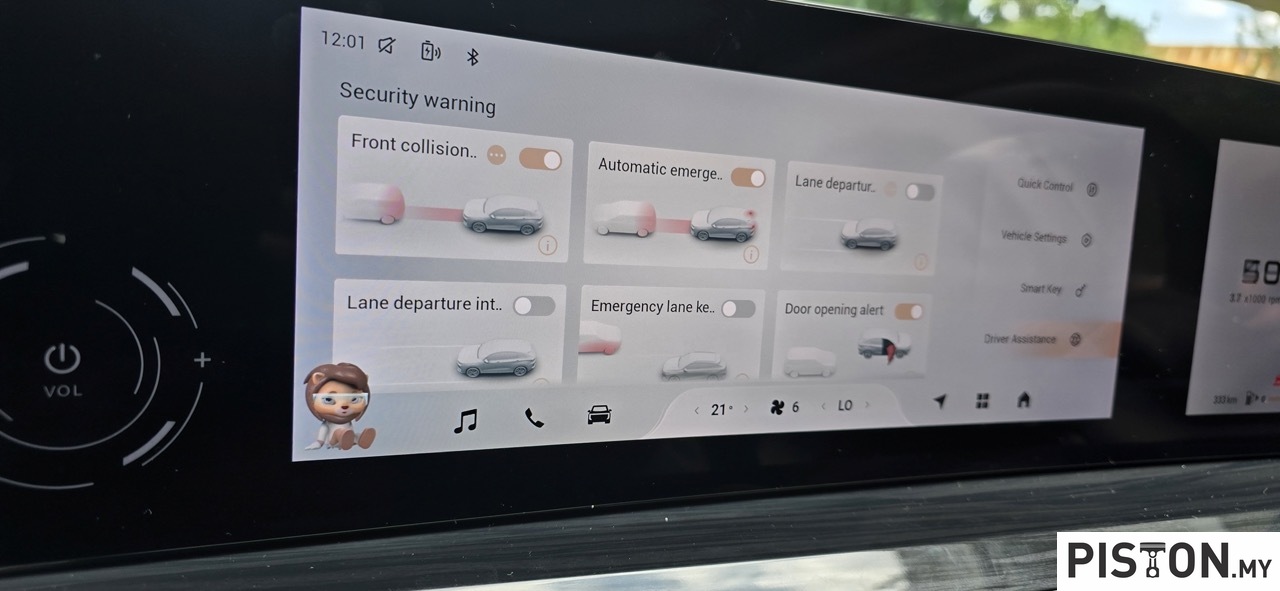
Safety is at the forefront of the C9’s design, with Continuous Damping Control (CDC) providing real-time adjustments based on road conditions to ensure a comfortable ride. The SUV is also equipped with level 2.5 Advanced Driver Assistance Systems (ADAS), including Blind Spot Detection (BSD), Lane Departure Prevention (LDP), and Emergency Lane Keep Assist (ELKA). All these can be accessed through the main screen. It’s a good thing that we can adjust and set them to the way we want because not all of us use certain features.

You can also adjust the braking modes that function depending on the drive mode the SUV is in. There is also a built-in 540-degree around-view monitor and digital video recorder (DVR) for enhanced visibility of obstacles and blind spots.

Is the Ride Comfortable?
Comfort-wise, we have nothing to complain about because the noise, vibration, and harshness (NVH) levels are decent. The C9’s adaptive suspension system, featuring MacPherson struts at the front and a multilink setup at the rear, enhances the comfort levels while driving. You don’t really feel all the bumps and imperfections that our Malaysian roads have to offer.

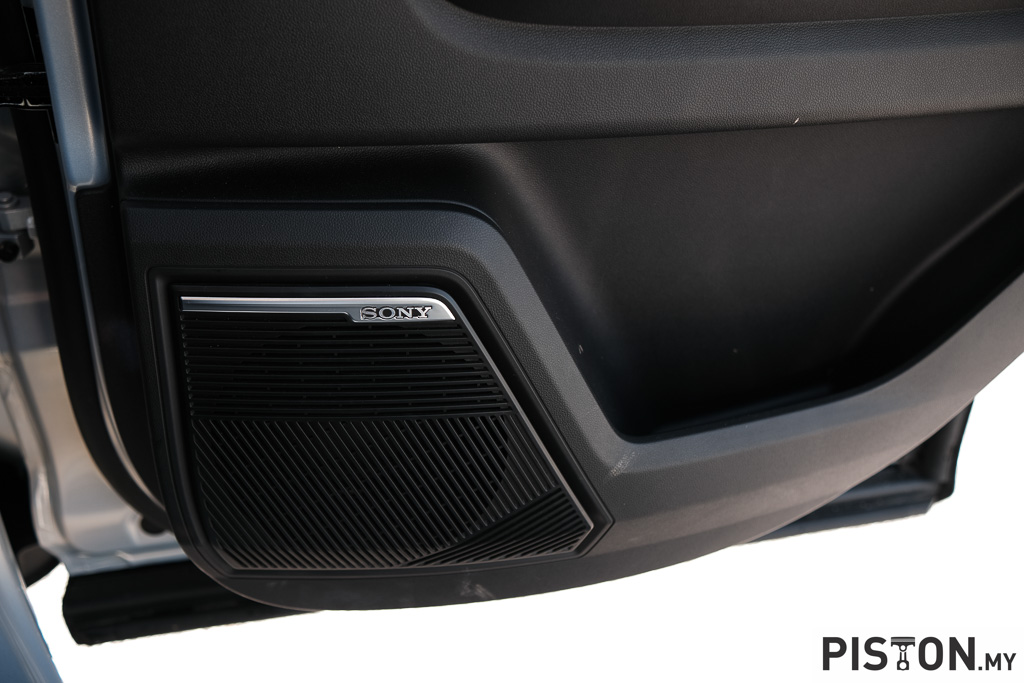
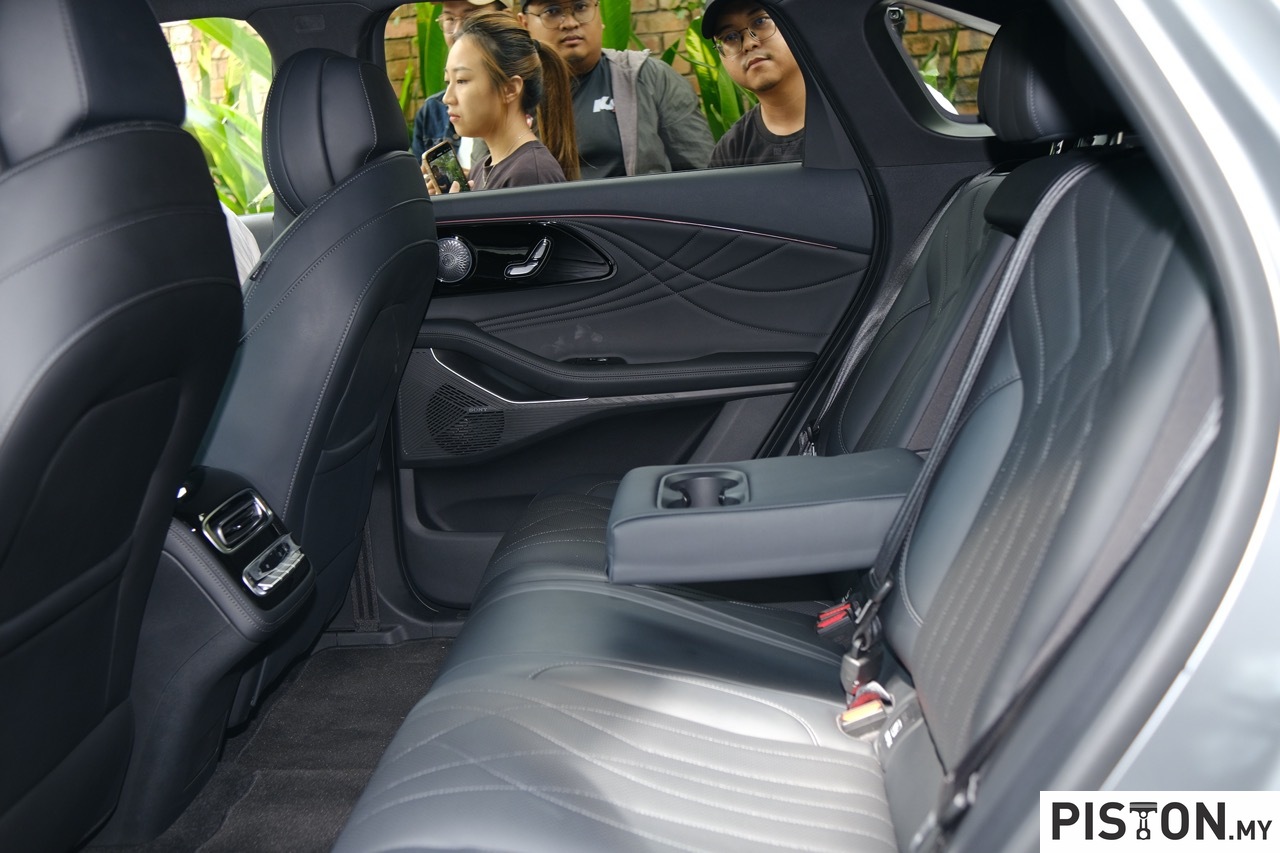
However, the only thing that was bugging us the entire time was the harshness of the engine sound. Each time you come to a stop and step on the gas again, the roaring sound of the engine is noticeable in the cabin. It’s a minor issue, and if you have songs blasting in the background through the Sony speakers, you probably won’t notice it.

The braking, however, could be improved. The gap between the brake lever and the biting point takes some time, as we tested a bit of hard braking and slow braking. So if there is a need for you to hit the brakes, you may need to do it faster.


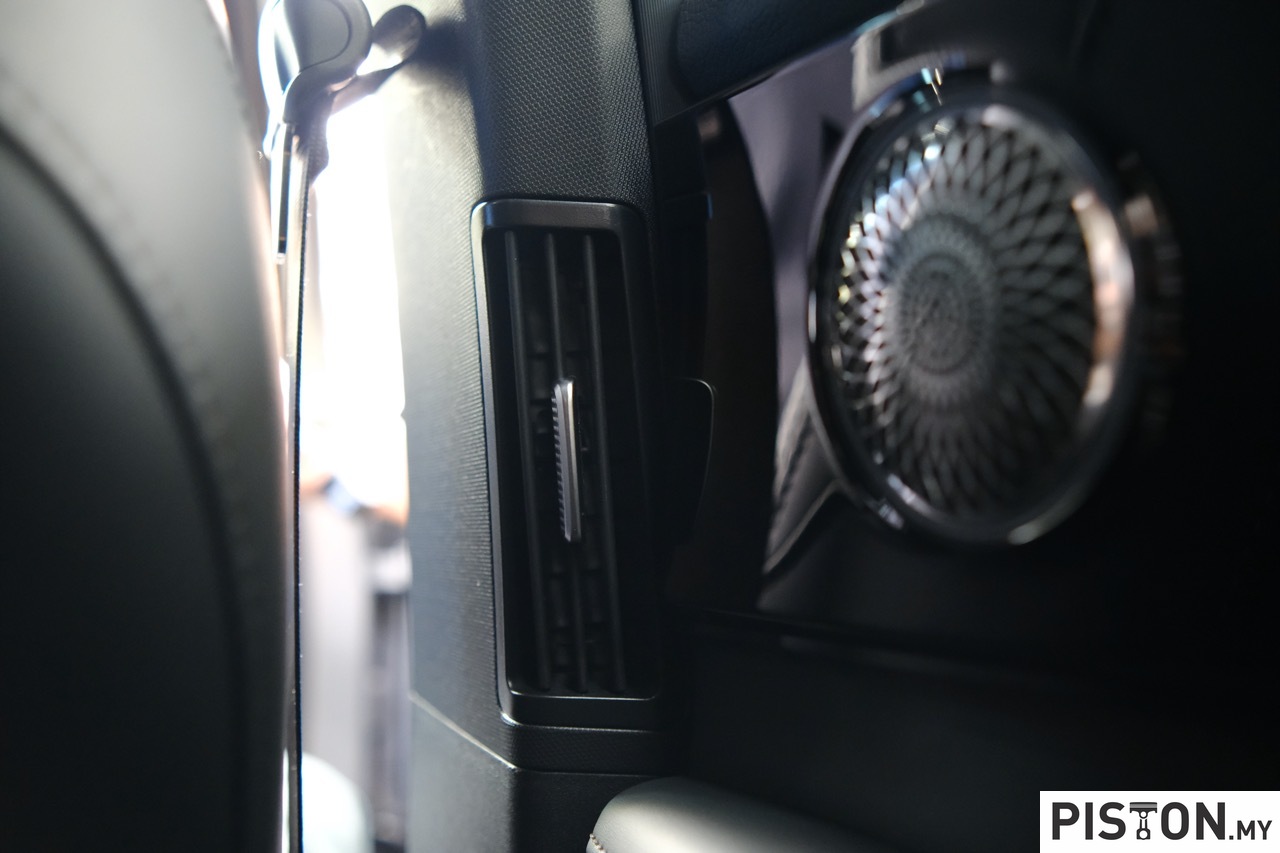
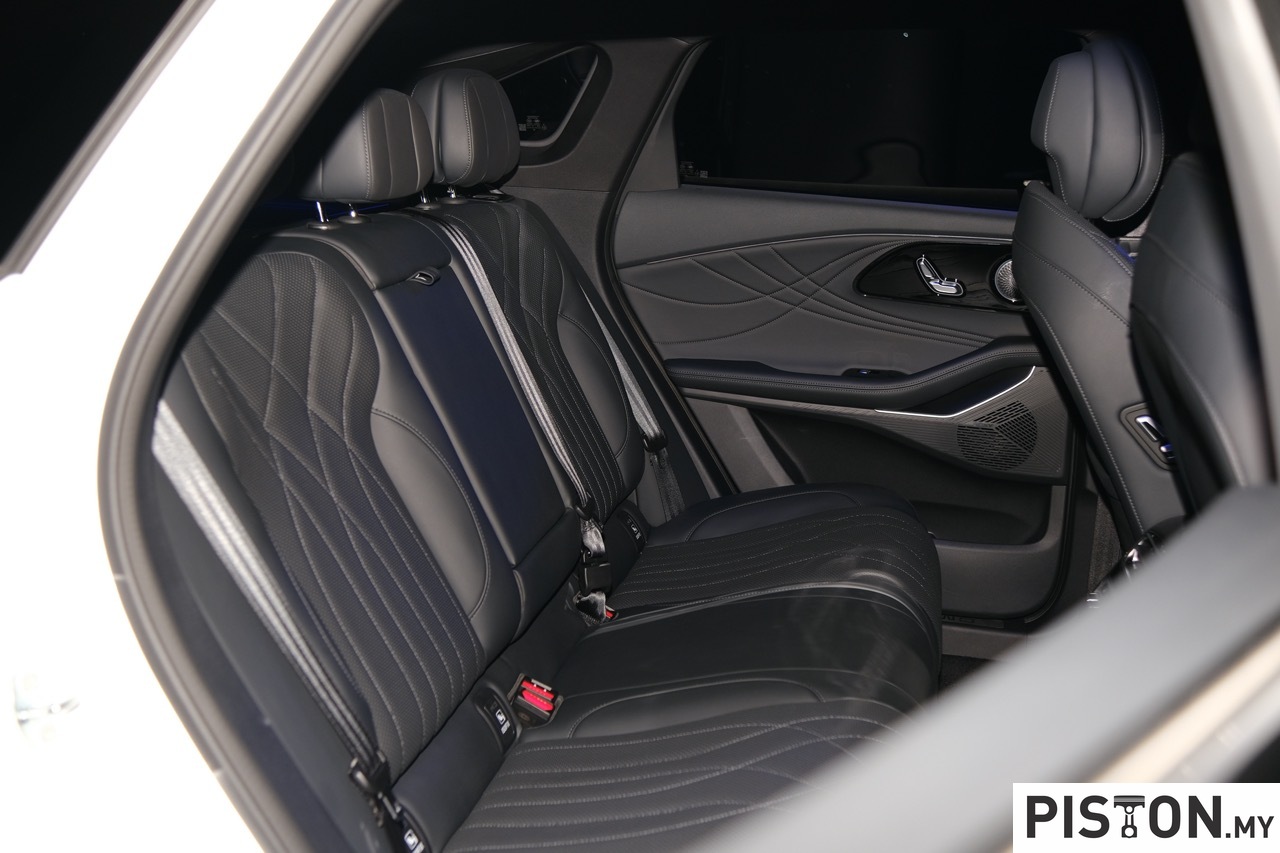
Rear seat passengers do not have to worry about comfort either; there is an ample amount of legroom and headroom available. You have air conditioning vents in the middle and at the side pillars. Because of how smooth the ride feels, you’ll be able to sleep like a baby during long drives.

How Affordable is Affordable?
The C9 has not been officially launched yet. According to Jaecoo, the official launch will take place by the end of this year. Compared to the C9’s competitors, in terms of features, technology, and pricing, there’s no question why you shouldn’t consider getting one. Jaecoo has opened registration of interest for the Omoda C9, with the 2WD variant priced at around RM185,000 and the AWD variant estimated at RM195,000.

In our books, that’s a really good price range for the package that the C9 offers.

Specifications:
Engine: 2.0-liter turbocharged petrol four-cylinder
Power: 257hp
Torque: 400Nm
Transmission: Eight-speed torque converter automatic
Suspension: MacPherson struts in front and multi-link setup at the back with Continuous Damping Control (CDC) adaptive suspension
Price (as tested): Estimated at RM195,000
We like: Futuristic look, spacious, luxurious, and comfortable interior
We don’t like: The braking system could be improved

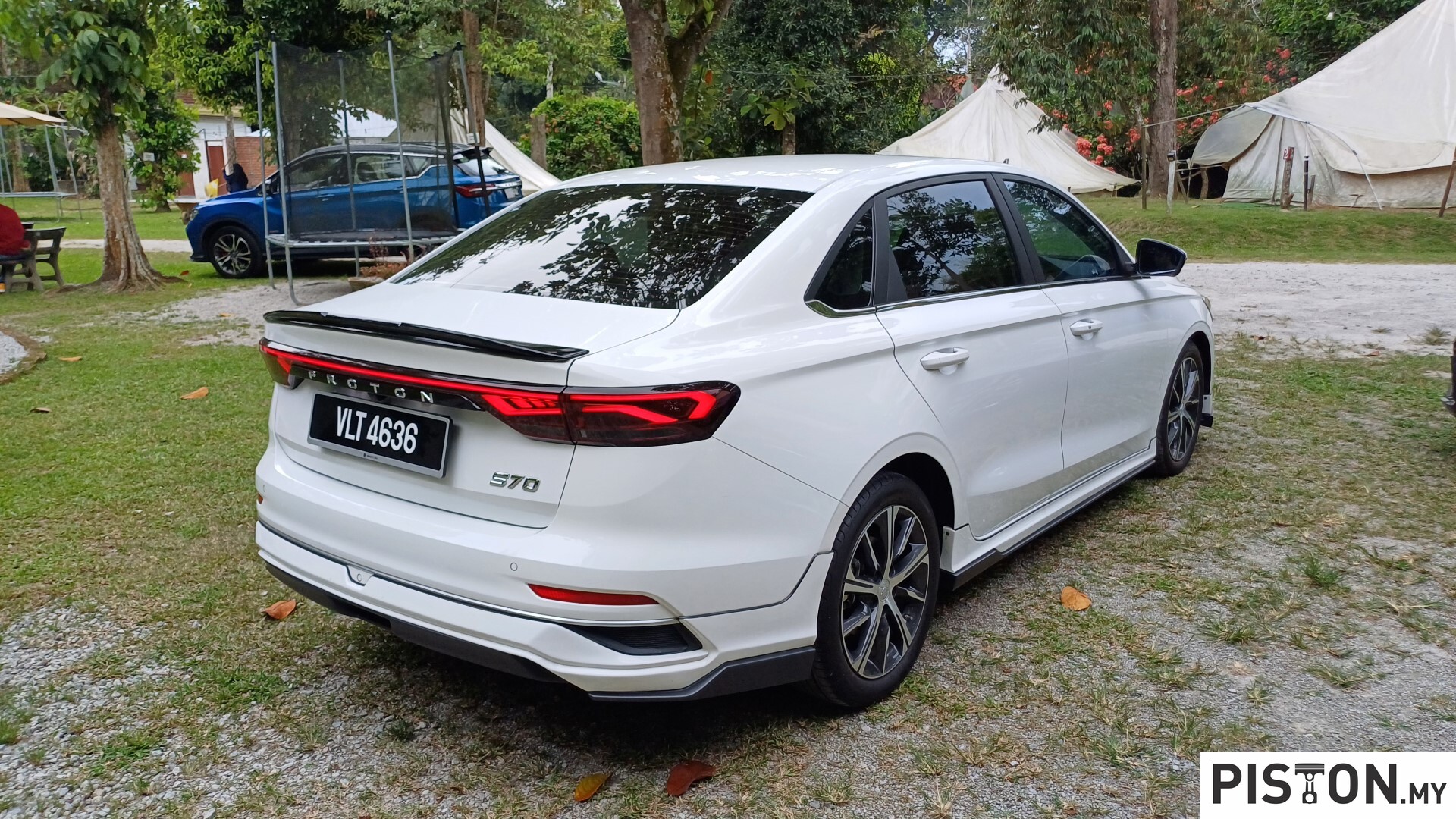
In case you didn’t know, cars are categorised into various segments based on their sizes. The list of segments begins with the A-segment which comprises the smallest cars in the market such as the Perodua Axia, Proton Saga, Perodua Bezza, and the Hyundai i10 just to name a few.

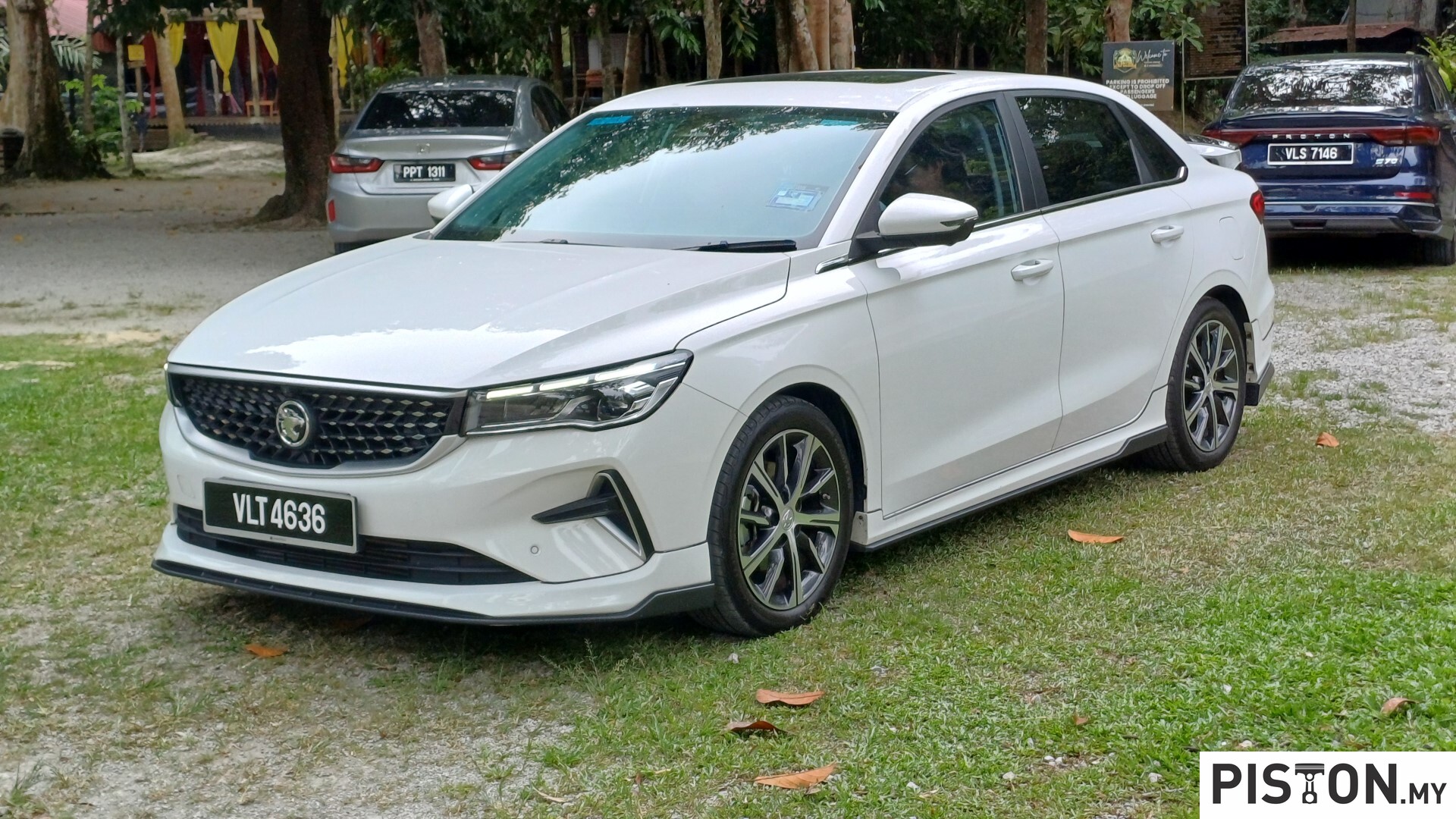
Moving up the ladder, we have the B-segment which comprises models like the Honda City, Toyota Vios, and the MG5, followed by the C-segment which the Proton S70 here is a part of, alongside models like the Honda Civic, Toyota Corolla Altis, and the Mazda3. 

If we keep going, there’s the D-segment with mid-sized executive sedans like the Honda Accord and Toyota Camry, the E-segment with cars like the Mercedes-Benz E Class, limousines such as the BMW 7-Series, sports cars, MPVs, and SUVs.

While most of these models compete with each other in the same segment, there are a few special models such as the Proton S70 here which also compete with cars in other segments. 

(more…)

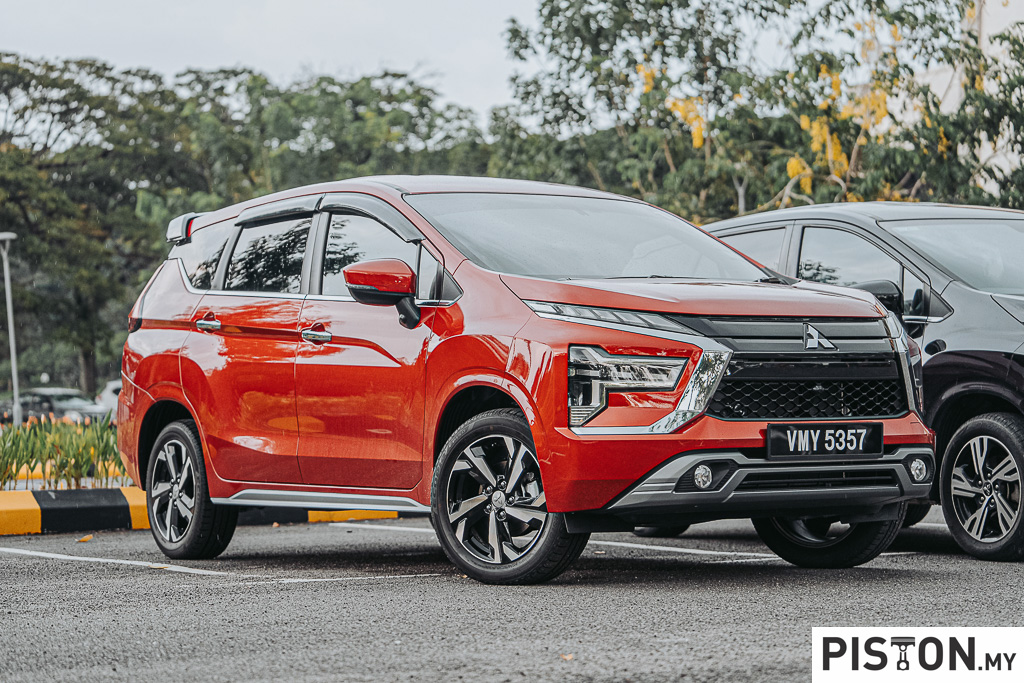
When it comes to people movers, there are a number of good choices for Malaysians. Our vibrant automotive market has solid foundations and a good part of that stems from our business-friendly environment that seems to attract new brands on a near monthly basis.

But there are brands that have been entrenched in the Malaysia for decades, and among those brands is Mitsubishi Motors Malaysia (MMM). Though it may have been operating in the background for the past couple of years, the Japanese brand has consistently been in the top five of the national sales charts, and that too with a two car portfolio. (more…)

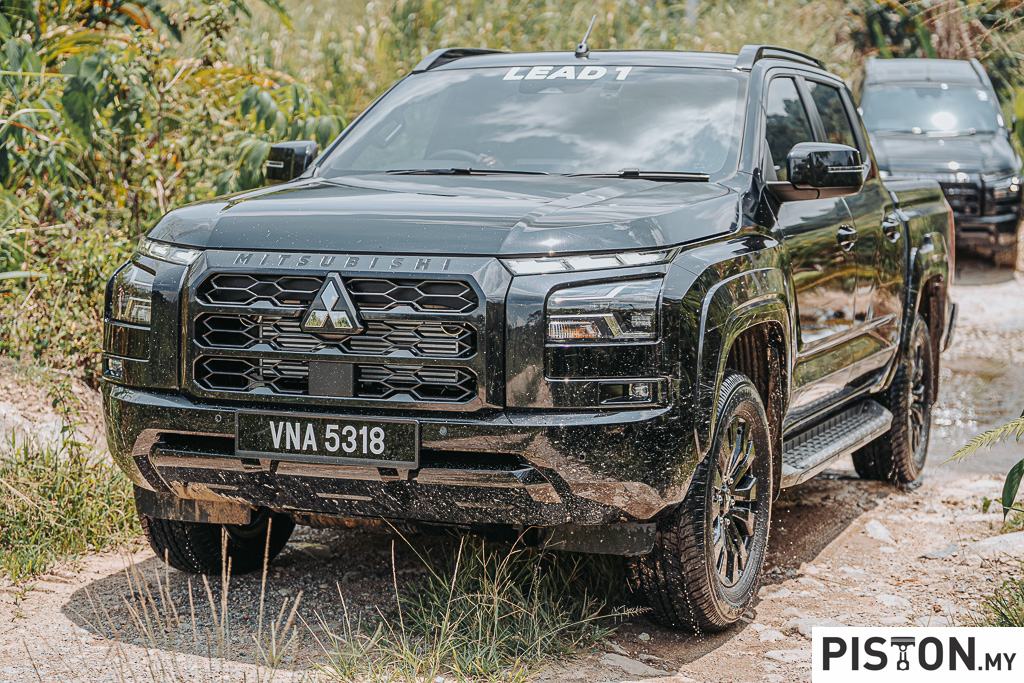
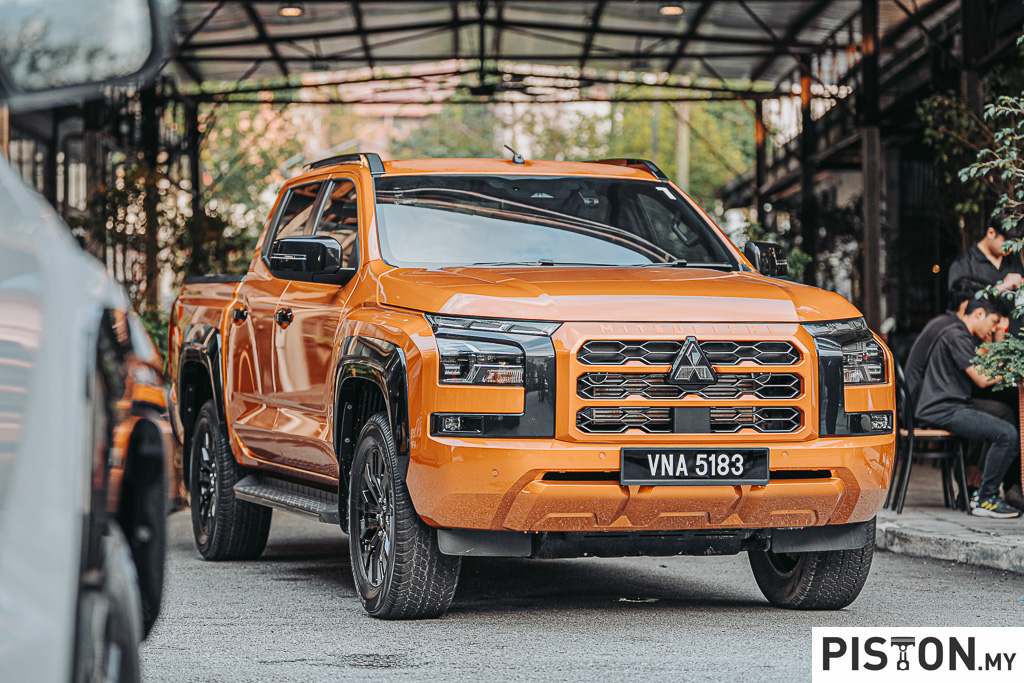
When the diesel subsidies were removed, everyone expected the pick-up truck segment to take a significant hit. While pick-up trucks are great workhorses for all industries, a significant slice of the segment bought pick-up trucks for lifestyle purposes. Whether it was for hiking, fishing or for general use, pick-up trucks are a great companion.

So, when the subsidies were removed, the sales of pick-up trucks were expected to slow. And while some did off-load their trucks or cancelled their planned purchase, the segment did not slow down as drastically as expected. In fact, the segment is still vibrant, just not as before. (more…)

Archive

Follow us on Facebook

Follow us on YouTube