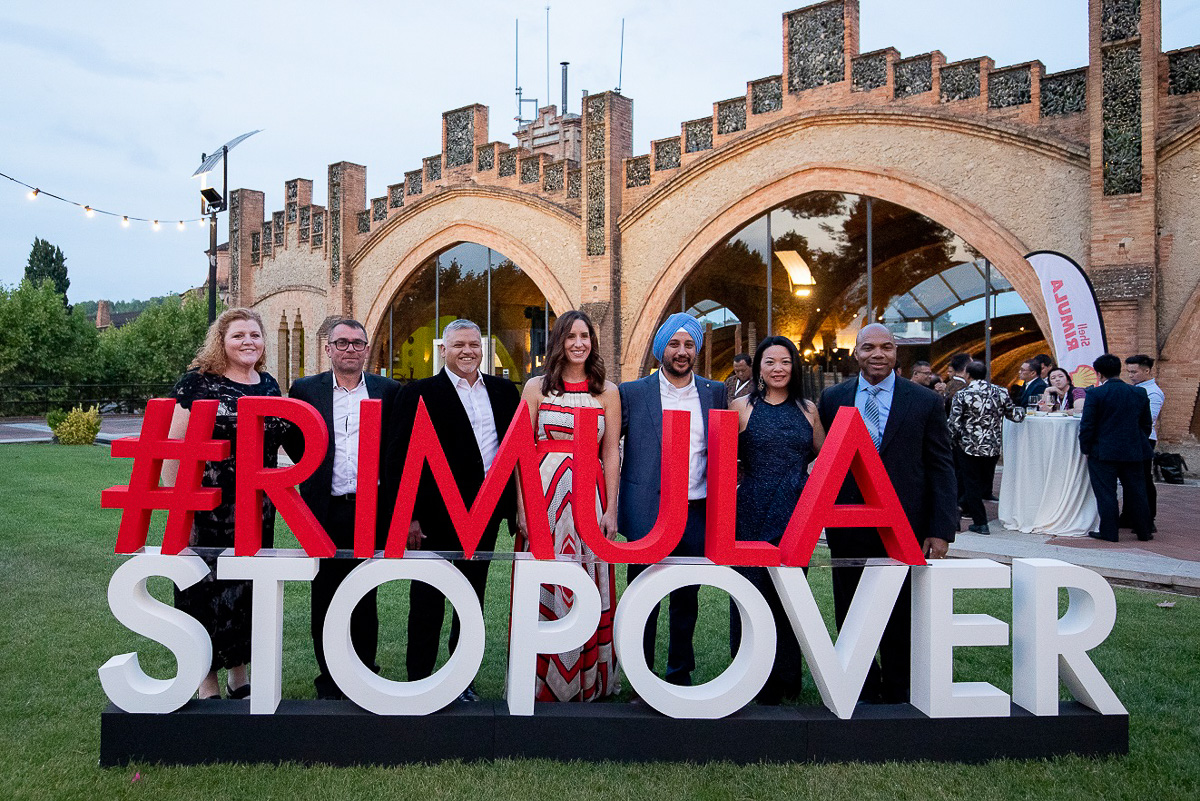
Shell is well-known to celebrate and rewards their loyal customers with some very nice treats. A group of 14 very lucky Shell Rimula customers from Malaysia might’ve topped the reward scale when they were sent to an all-expense-paid trip to Barcelona, Spain to join the 2019 Shell Rimula Ultimate Stopover. (more…)
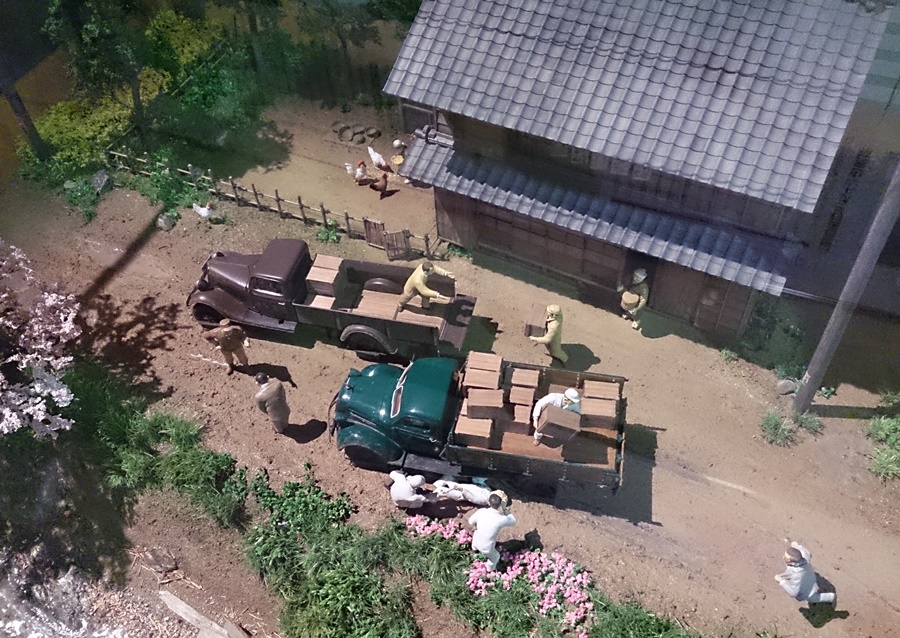
In the early years after Toyota Motor Corporation was established, there was an incident where a company using a Toyota G1 lorry contacted a dealer to get assistance because it broke down. It so happened that Kiichiro Toyoda, founder of Toyota, heard about the matter at the same time and personally led a team of engineers to where the dealer’s service staff were repairing the vehicle. Besides providing assistance, the engineers wanted to find out what has caused the breakdown. They had their answer and quickly relayed it back to the factory where alterations were made to prevent the same problem from occurring.
A re-enactment of the episode where Toyota engineers personally went to investigate a breakdown with one of their customer’s lorries.
In the years and decades to follow, this episode would serve to demonstrate the importance and value of ‘Genchi Genbutsu’, a Japanese phrase which is a way of thinking where information is gained and decisions made based on personal viewing of the problem, not just relying on reports by others. Seeing or experiencing the problem firsthand is deemed the best way to get to the source of what was wrong. “When a problem arises, the shortest route to final resolution is to return to the source and pinpoint what is truly wrong,” was the constant reminder from Toyoda.
‘Genchi Genbutsu’ is partly what the Toyota 5 Continents Drive Project is all about; as the name indicates, the drive goes through 5 continents of the world, enabling Toyota personnel to see and experience the different conditions and cultures where Toyota sells its vehicles. It’s not been a continuous drive since 2014 when it started in Australian but has been a yearly exercise, with Asia being the last continent.
Inspired by Akio Toyoda, President of Toyota Motor Corporation, the 5 Continents Drive Project aims to make product improvements with a more deeply informed approach, ultimately delivering ever-better cars to customers around the world.
The Toyota 5 Continents Drive has covered 4 continents – Australia, North America, Africa and South America – since starting in 2014.
The total distance travelled since 2014 has been approximately 103,000 kms. Data collected has already been flowing back to Toyota City, with improvements made in various areas as a result of the participants understanding issues. Toyota employees travelling in many different countries on 4 continents prior to Asia have had experiences and gained knowledge that cannot be gained simply from driving cars on test courses or simulated in climatic chambers.
There have not just been improvements for products but also in manufacturing and white-collar management areas such as logistics, costing, etc. Although the Toyota 5 Continents Drive Project will conclude next year, this is ongoing process and learnings will continue to be implemented into future models as well, thus promoting sustainable development.
Recently, the convoy of vehicles for the Asian leg travelled through Malaysia after having started in the Middle East in February this year and then passing through India. It is the first part of the Asian leg which will conclude next year when Japan hosts the 2020 Tokyo Olympic and Paralympic Games.
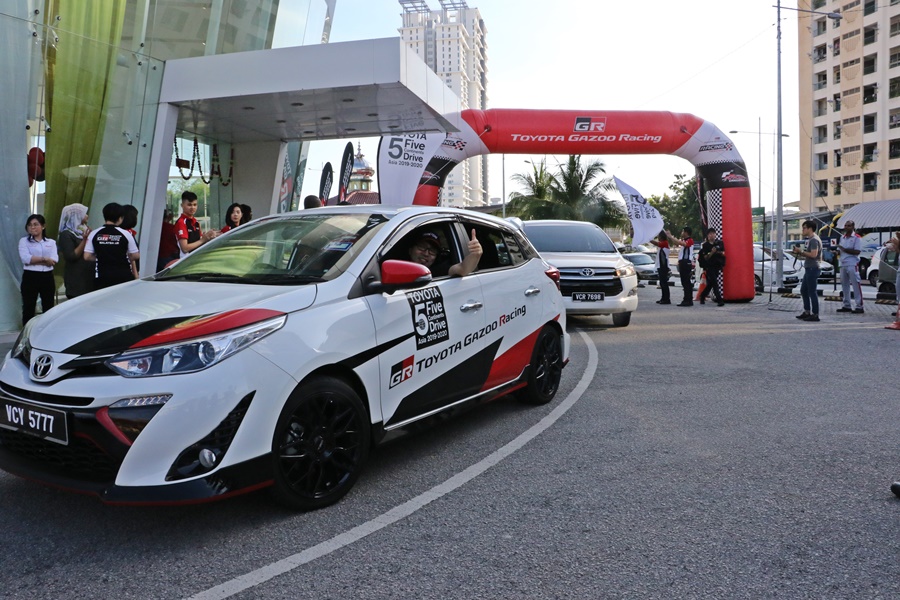
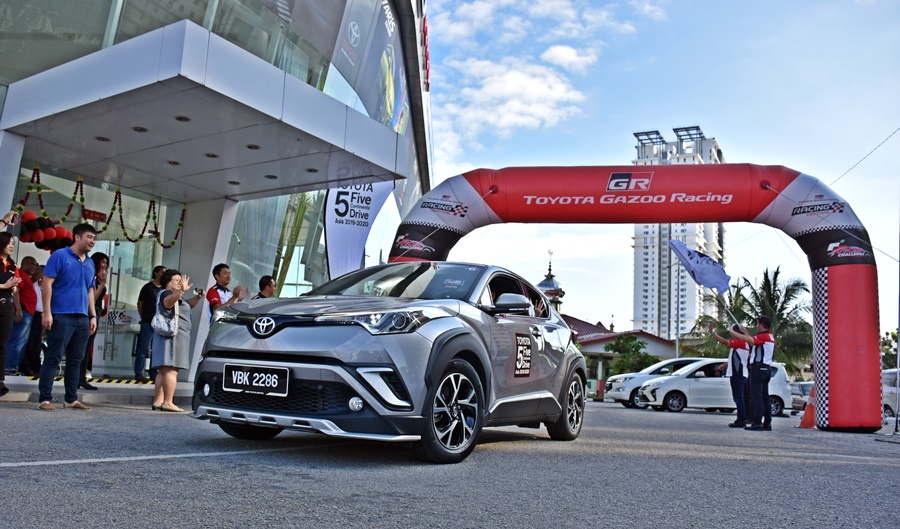
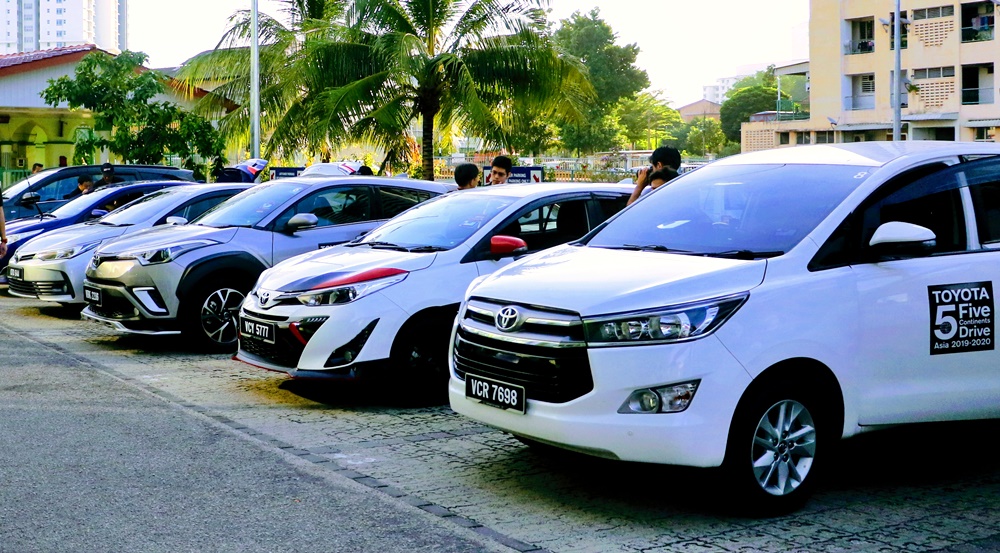
Akio Takeyama, Chief Motorsports Officer and also the Deputy Chairman of UMW Toyota Motor, flagged off the convoy from S&D Tama, an authorized Toyota dealership in Penang. There were 9 Toyota vehicles in this leg of the 5 Continents Drive Project – Hilux, Fortuner, Innova, Vios, Corolla, Rush, CH-R and Yaris.
The vehicles used for the Malaysian leg were those currently available in the market.
“We are delighted that Malaysia is included in the Toyota 5 Continents Drive Project, a project that is of high priority to Toyota Motor Corporation,” said Mr. Takeyama. “The varied conditions of roads and traffic should provide the participants with valuable insights that can help them develop ever-better cars for our customers.”
The route included a drive up the steep slopes of Cameron Highlands, providing an experience of the different humidity levels in the country as well as the road conditions. The convoy then continued south to Singapore with a stop at Shah Alam, Selangor, where UMW Toyota Motor’s head office is located. The participants were briefed on the company’s background, activities, customer profiles, local market conditions and GAZOO Racing (GR) initiatives in Malaysia. After the Malaysian leg ended, the convoy crossed over to Singapore. The remaining countries for the Asian leg are Indonesia, the Philippines and Vietnam.
“Toyota has always made reliable cars but today’s customers have more demands, so ‘good’ is no longer enough and we need to offer great cars,” said Ravindran K., President of UMW Toyota Motor. “The Toyota 5 Continents Drive Project should help towards developing ever-better cars.”
The 5 Continents Drive Project is carried out under the umbrella of TOYOTA GAZOO Racing initiatives. In Malaysia, the GR Brand is one of the key pillars for brand messaging which includes the Toyota GR Festival, GR Velocity Esports Championship and the recently-introduced GR Garage concept. Malaysia is the first country outside of Japan to adopt this concept for specifically showcasing GR models like the all-new Supra and related products.
To know more about Toyota vehicles available in Malaysia, visit www.toyota.com.my .
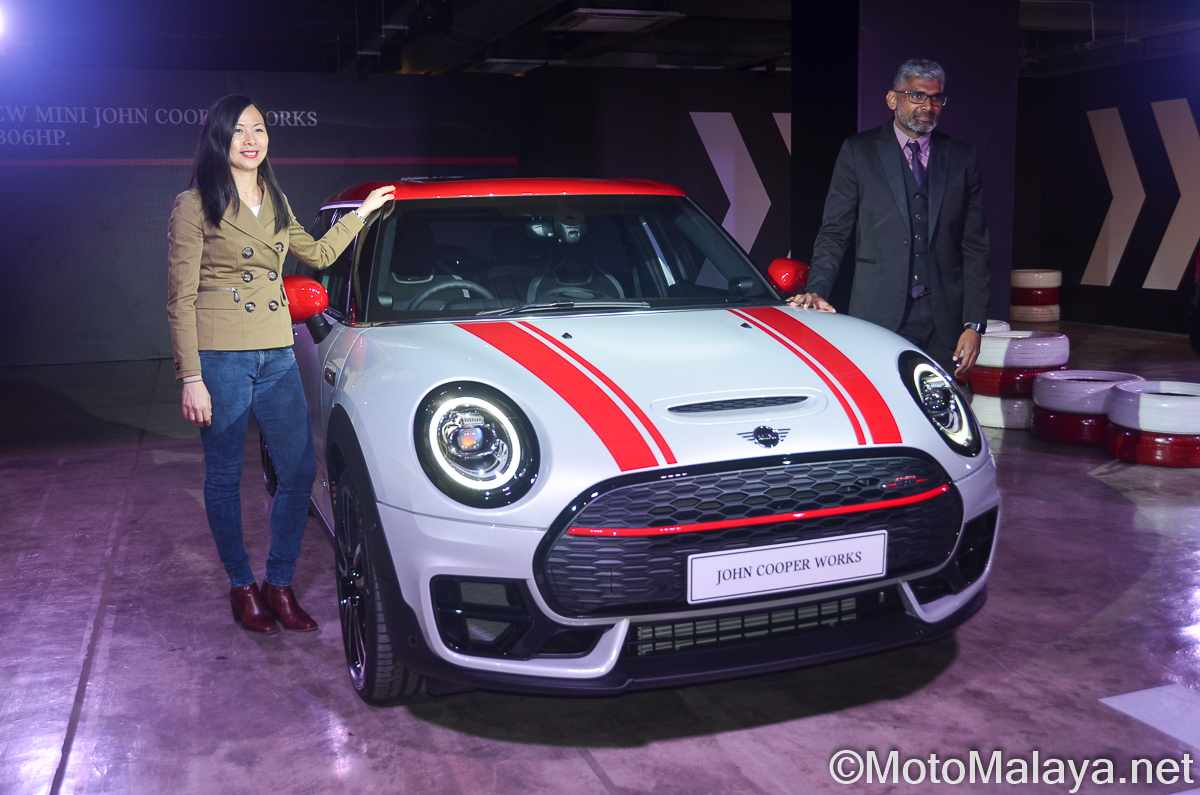
MINI Malaysia just unveiled their latest 2020 MINI Clubman earlier this morning and to make things even more special, they decided to launch TWO more new models in the form of the 2020 MINI John Cooper Works Countryman and Clubman. Its biggest updates? They now come with a whopping 306hp under the hood. (more…)
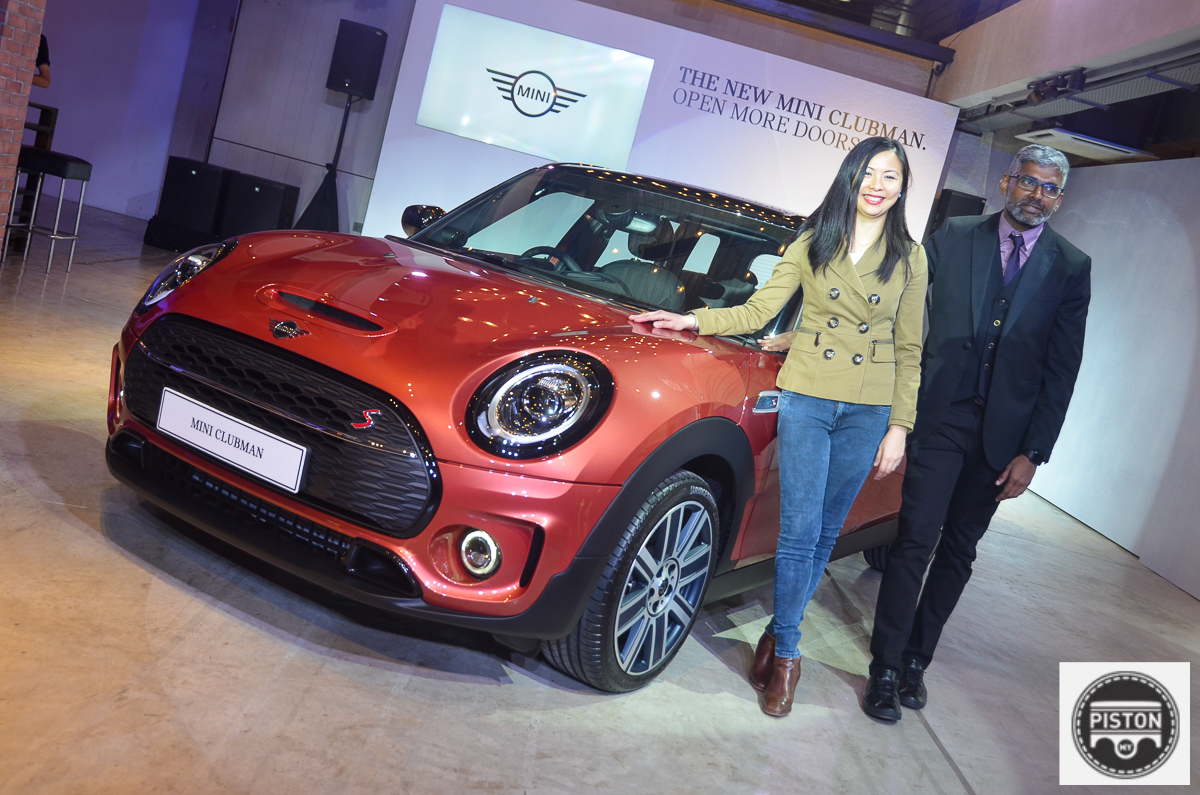
MINI Malaysia took to the stage today to unveil their latest 2020 MINI Clubman for the local market. Major updates on the new MINI Clubman can be seen inside and out that offers an elevated MINI experience for fellow fans and enthusiasts of this compact premium automotive brand. (more…)
It used to be when the talk was of electric vehicles, the perception was that such vehicles would be slow and boring to drive. Apart from some exotic prototypes, most were small and with battery technology being what it was, they couldn’t go very fast or very far. But that’s been changing quickly as carmakers realize that their survival requires ‘electrification’ of their vehicles to meet tighter emission and fuel consumption regulations.
In order to persuade motorists to switch over, they need to develop electric vehicles (EVs) which can offer comparable performance and space as today’s cars with internal combustion engines. Hybrids have been a good transition but ultimately, the aim is to go fully electric when costs can be lowered enough.
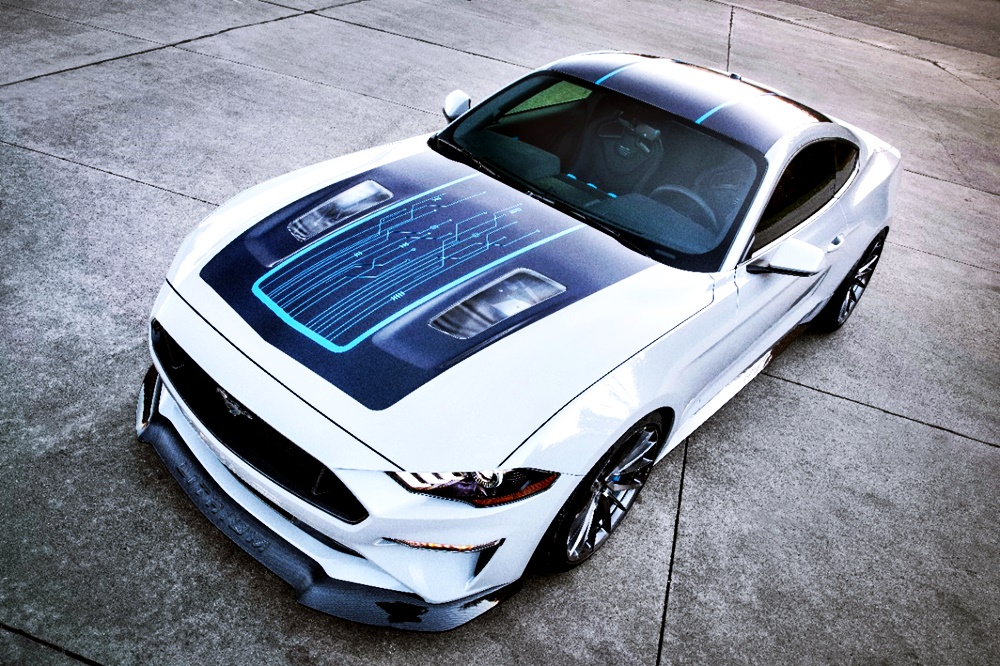
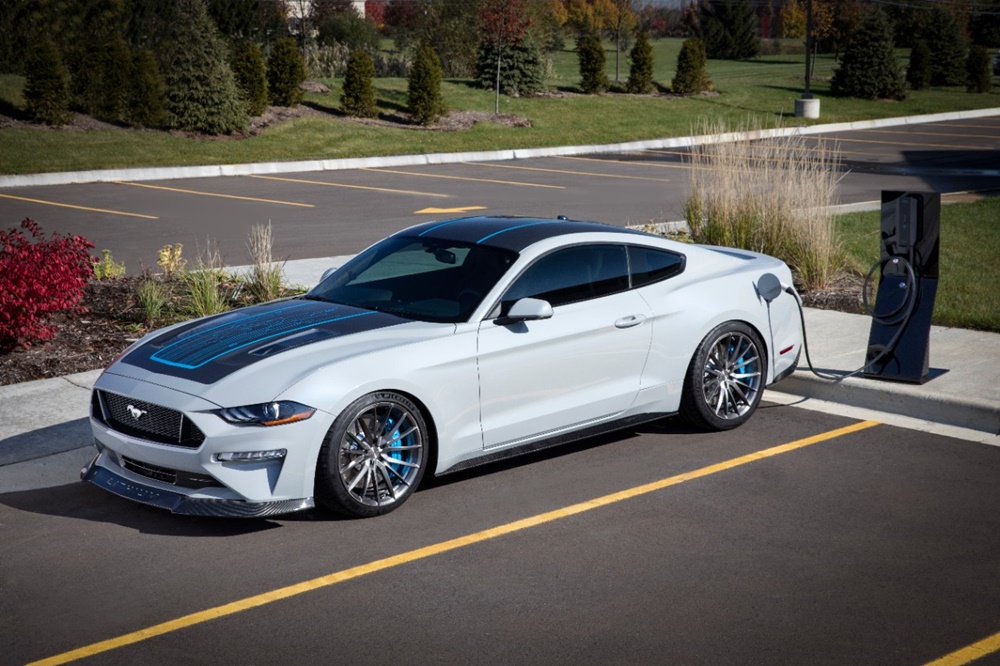
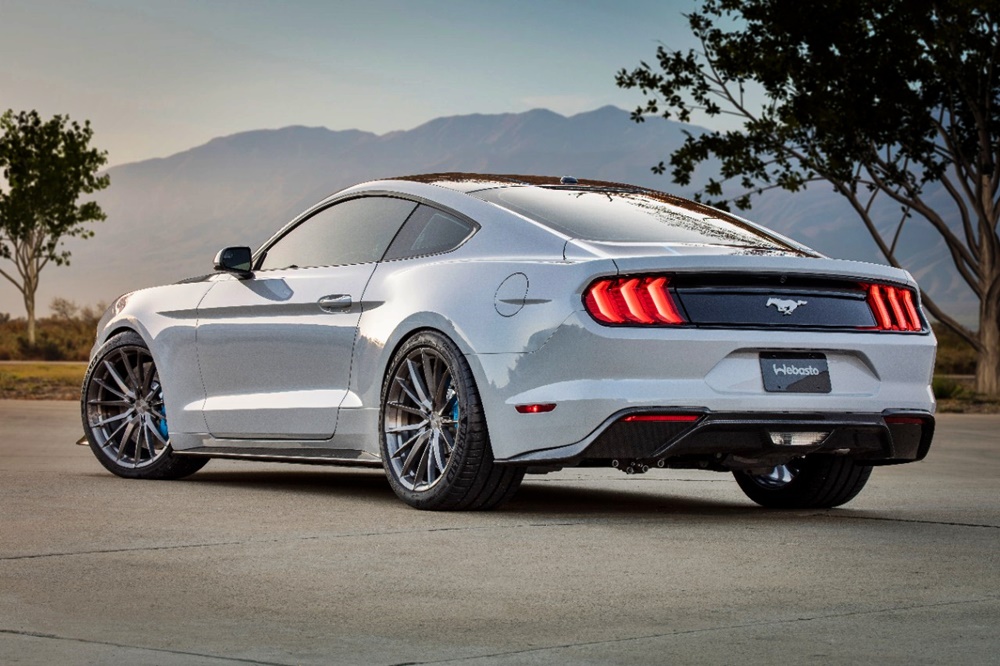
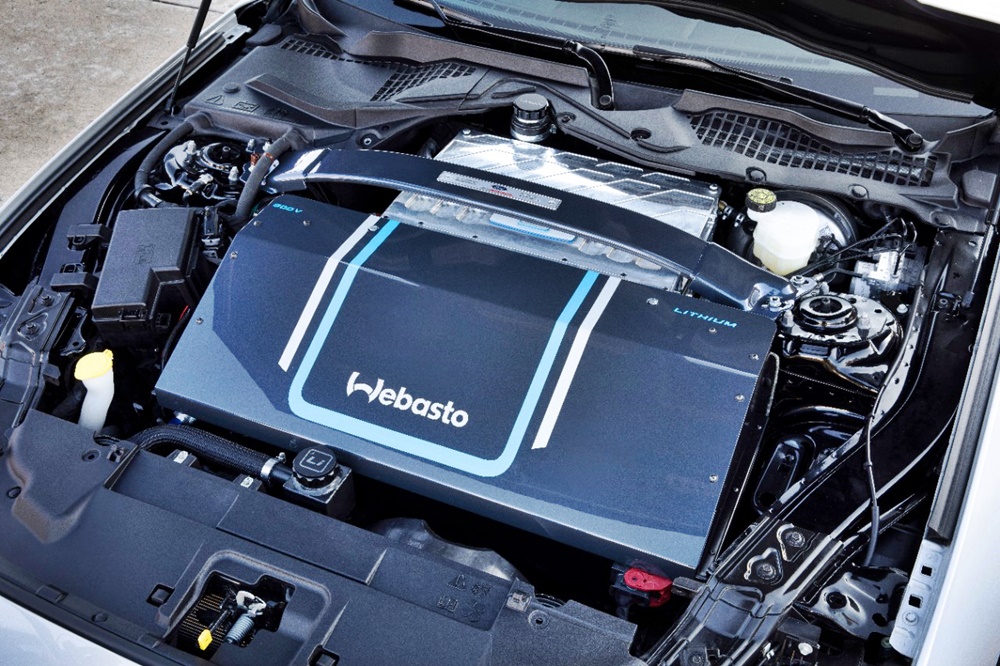
Meanwhile, for those who worry that high performance as we know it today will be gone, Ford and Webasto have revealed the Mustang Lithium, an ultra-high-performance battery electric Mustang fastback prototype. With more than 1,356 Nm of torque and more than 900 bhp instantaneously available, this Mustang ups musclecar performance to a new level.
The Mustang Lithium is not only a one-off prototype to showcase electrification on the world’s best-selling sportscar but also a testbed for battery and thermal management technologies Webasto and Ford are creating for the growing e-mobility automotive segment.
“Ford has made no secret of the fact that we are electrifying our most popular nameplates,” said Hau Thai-Tang, Ford’s Chief Product Development and Purchasing Officer. “This one-off Mustang prototype is a great opportunity for us, together with Webasto, to showcase to our customers what a new electrified powertrain can do for performance in a car they already know and love.”
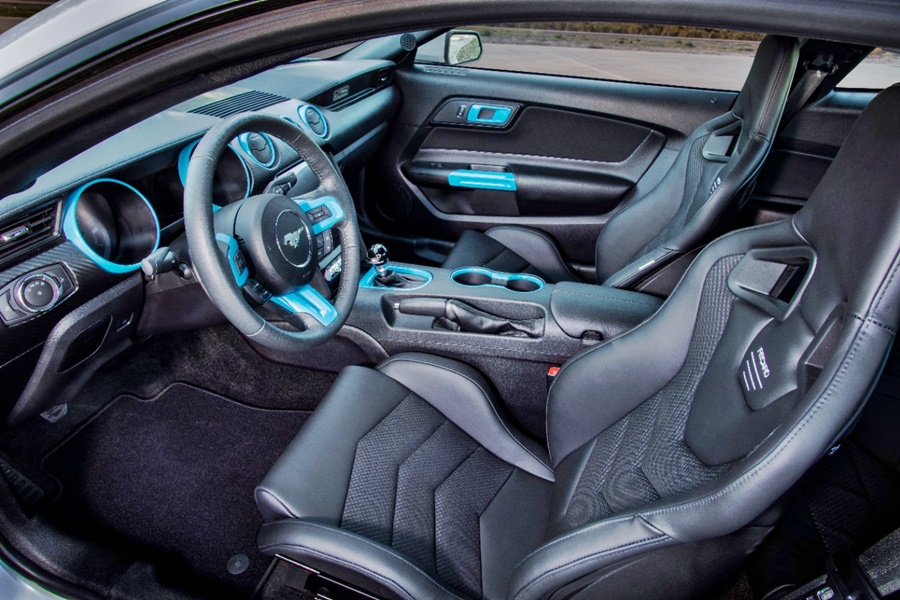
The low and sleek Mustang Lithium is not merely a production Mustang with the powertrain substituted by electric motors. It has custom carbonfibre body components, Brembo 6-piston front brakes from the Shelby GT350R, Sankuer Composite Technologies side splitters and rear diffuser, plus a Webasto bonnet with see-through polycarbonate windows. It is also fitted with Ford Performance’s Track Handling Pack and strut tower brace.
A Phi-Power dual-core electric motor and dual power inverters – all powered by an 800-volt Webasto battery system with EVDrive Technology – can discharge a mega-watt of electrical energy. At 800 volts, that’s twice the voltage of most electric cars on the road today. This allows the system to be lighter, more powerful and generate less heat, and more electric force than most battery-electric systems on the road today.
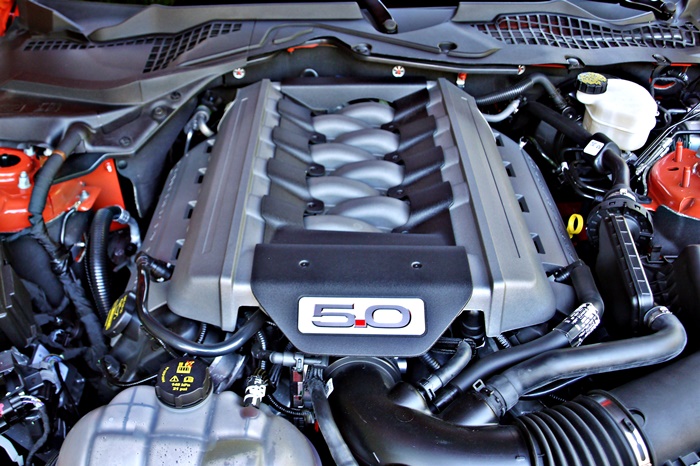
The 5-litre V8 that is under the bonnet of Mustangs which the public can buy. Certainly looks more interesting that the ‘box’ which houses the 900+ bhp electric powerplant (top)!
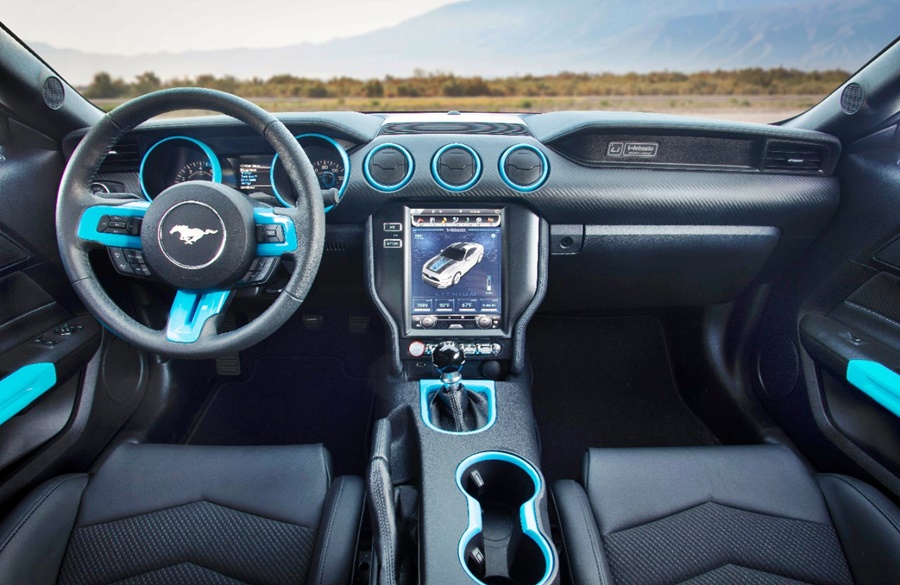
In a unique twist, the Mustang Lithium features a manual transmission and uses a dragstrip-proven Calimer-version of the Getrag MT82 6-speed transmission with billet internals to handle the huge amount of torque delivered along the driveline. To enable the driver to use all that torque optimally, there is a unique set of drive modes that apply a controlled amount of torque for different driving scenarios: Valet, Sport, Track and Beast.
Ford Performance half-shafts and a Super 8.8 Torsen differential help supply power to the road via lightweight Forgeline wheels wearing Michelin Pilot Sport 4S tyres.
“Very similar to Ford’s push for vehicle electrification, this is an innovative way to further the technologies we’re developing to enable vehicle electrification while creating a vision of how cool the future of electric performance will be,” said Mark Denny, Webasto Customized Solutions North America President and CEO.
Webasto, which has a 100-year history, is among the top 100 suppliers to the automotive worldwide. While its core business areas are sunroofs and panorama roofs, convertible roofs and parking heaters, they have also diversified into electric heating systems, charging solutions and battery systems we are also addressing the growth market of electromobility.
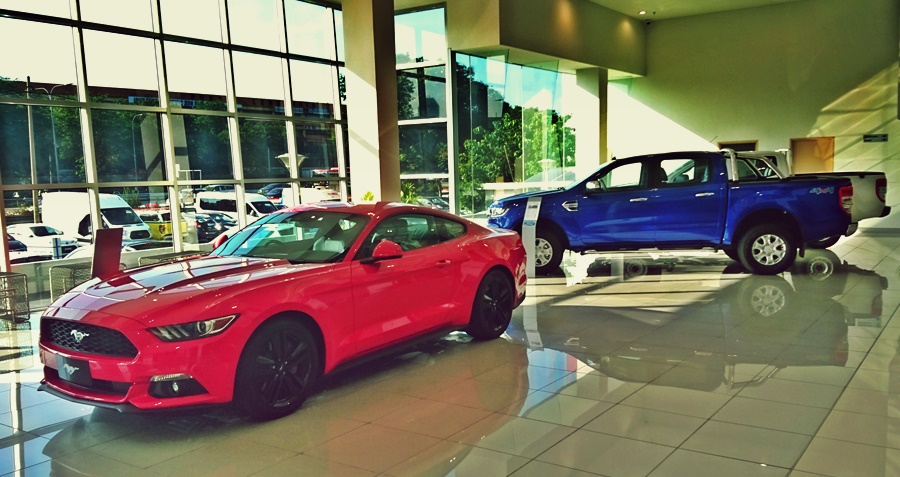
The latest Mustang is available in Malaysia from Sime Darby Auto ConneXion with full warranty and aftersales support. This is the first generation of the model which has a factory-built righthand drive variant.
Finally, the cost of parking at shopping centres and other commercial properties which accept the Touch ’n Go (TnG) card for payment will be cheaper as the 10% surcharge will be stopped. This was confirmed by the Domestic Trade and Consumer Affairs Deputy Minister Chong Chieng Jen in Parliament today.
However, the removal of the surcharge will not be immediate as there are existing agreements which need to be honoured. While those legacy agreements expire in future, new agreements will exclude the surcharge which has so far been paid by motorists.
In fact, there are already carparks in the Klang Valley where no surcharge is imposed. The operators have recognized that using the electronic payment card not only makes things convenient for motorists but also for themselves. Traffic flow can be faster and cashless transactions means additional security.
The 10% surcharge is not the only complaint TnG users have had. Ever since the TnG card was introduced in the late 1990s as an electronic payment card for tolls on highways, motorists have always been upset that even though they paid in advance for the card to have stored value for payment, they never received any discount (although rebates started being offered about 10 years ago). That was one complaint.
As the years went by and the TnG card could be reloaded at places other than toll plazas, a 50-sen surcharge was added for reloading. This is imposed by the places that offer reload services and the money collected is retained by them. However, some may not add the 50-sen surcharge as a benefit to their customers.
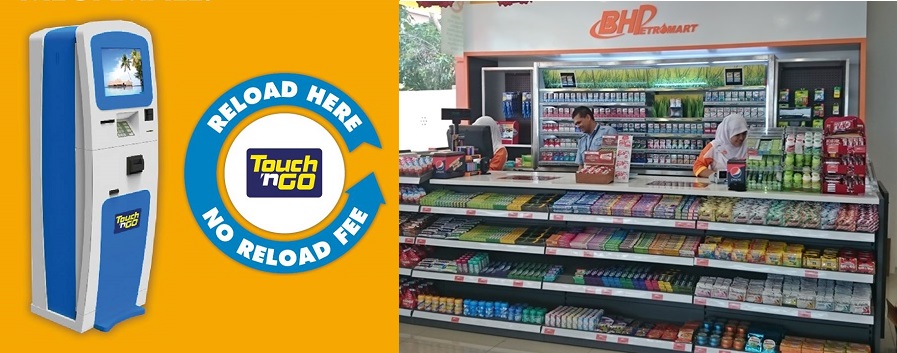
There are over 11,000 Touch ‘n Go reload points around the country, and over 2,800 do not charge a reload fee. If you use the self-service kiosk (left), there is no reload fee charged. You can also reload at virtually all petrol stations stations where there is easy parking. Shown above is a BHPetromart which offers the service.
Nevertheless, there are many places where motorists can reload without paying the extra 50 sen, like the self-service kiosks and TnG counters around the country. Currently, there are over 2,800 locations around the country where reloading can be done without any surcharge. For the latest list of locations with and without reload fees, click here.
TnG cards don’t last forever and after 10 years, you need to have them replaced. The expiry month and year are shown on the back of the card.
Another complaint which should be addressed is the dormant card issue (besides the lifespan of 10 years). If a TnG card is not used for any transaction (a reload also counts as a transaction) for a consecutive period of 12 months, it will be deactivated. TnG says the move is to prevent ‘unnecessary load that prevent the system from operating optimally’. According to TnG’s conditions last updated on November 15, 2018, an administration fee of RM5 will be imposed immediately and deducted from the deposit or unutilised card balance. If the card remains inactive, a maintenance fee of RM5 will be charged every 6 months!
The fee will be stopped when the card is reactivated, returned for refund or until the deposit and card balance are depleted, or up to 7 years (whichever comes first). This is something which surprised people who tried to reactivate their card, remembering that it had some balance and then found that some amount was deducted. TnG says the fees are to urge customers to claim the unutilised balance and allow them to terminate the card account in their system.
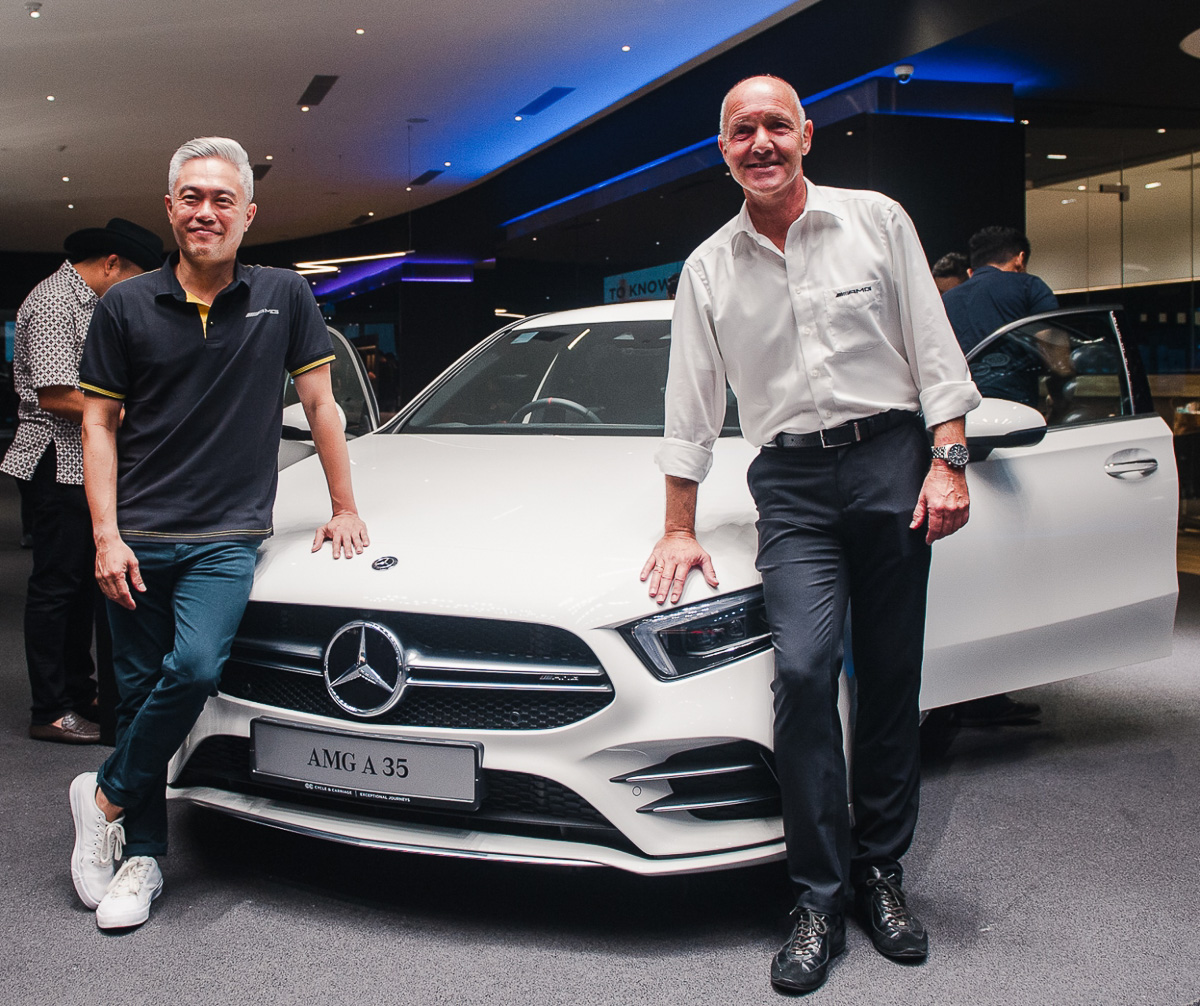
Cycle & Carriage Bintang Berhad (C&C) recently previewed the all-new Mercedes-AMG A35 4Matic Sedan to the AMG Owners Community Malaysia while hosting their intimate gathering to celebrate their first-ever anniversary of the club’s existence here in the country. (more…)
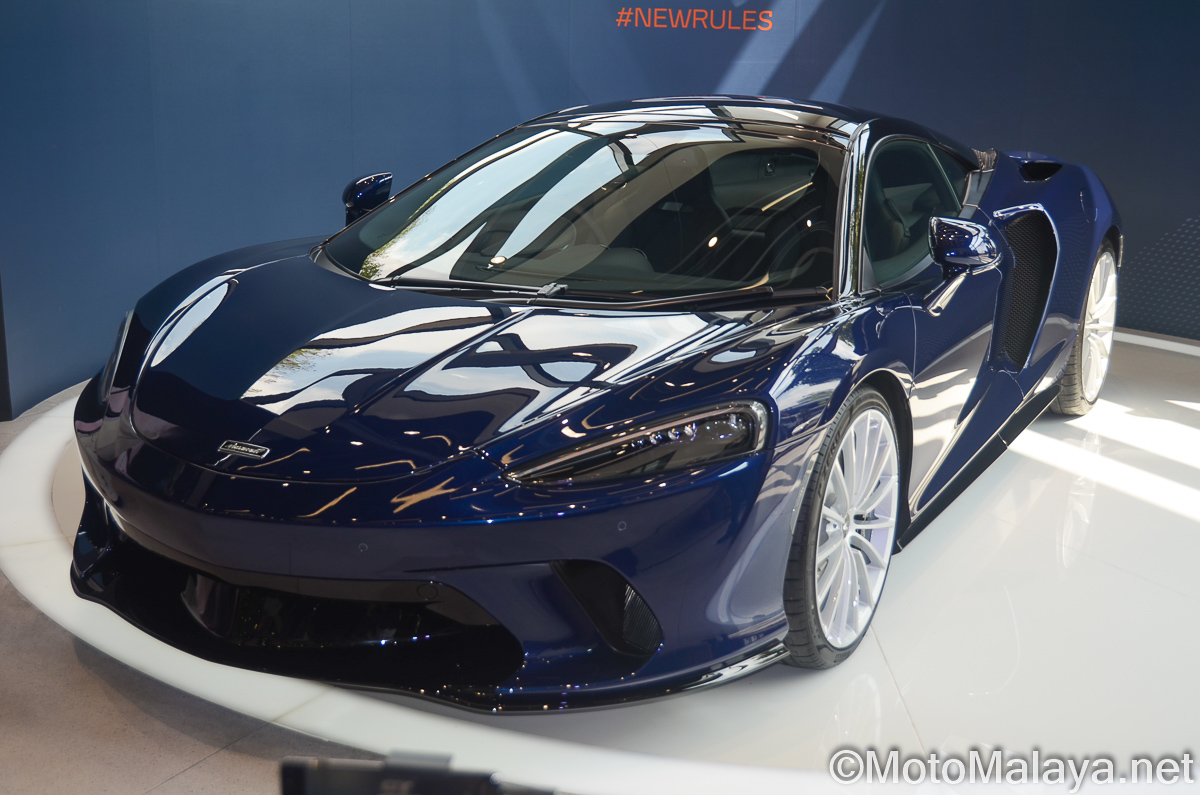
The newly designed McLaren Kuala Lumpur 3S showroom was just launched earlier today and to celebrate its new premise, Mc Farren Supercars (McLaren Kuala Lumpur) has unveiled the latest 2020 McLaren GT for the Malaysian market. (more…)
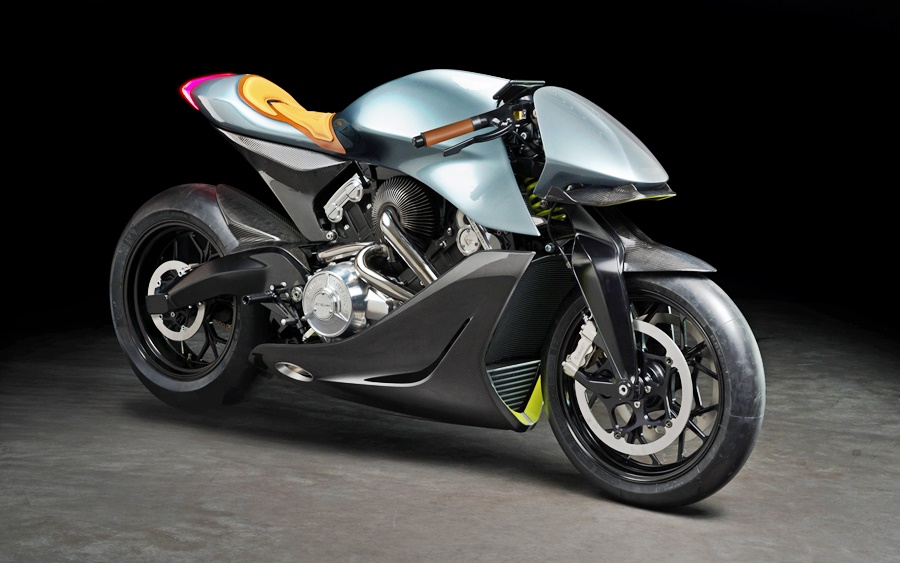
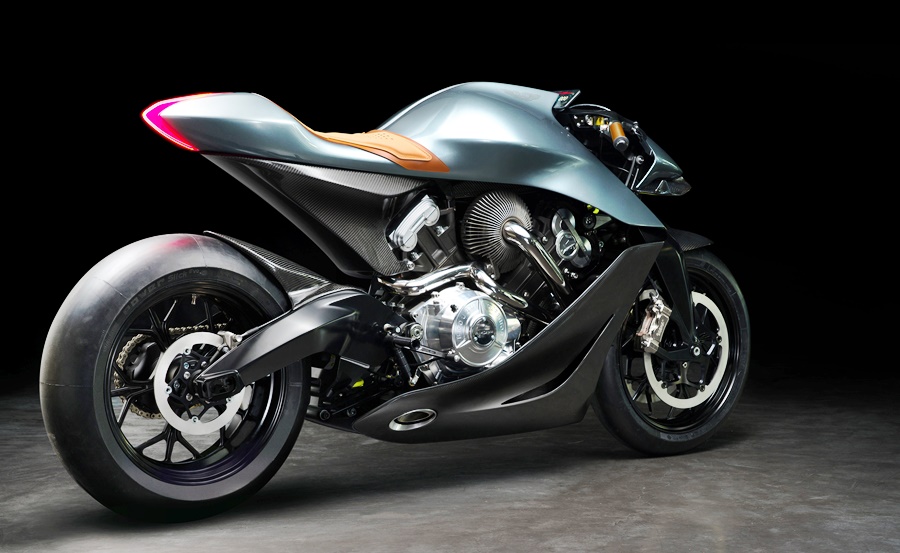
At the end of last month, we tipped you off on a new partnership between Aston Martin and Brough Superior, a motorcycle brand with a history going back to 1913. The two companies would collaborate on creating ‘a piece of automotive art for the motorbike connoisseur’. The first product has now been unveiled at EICMA, the Milan Motorcycle Show which is on this week.
First deliveries will begin during the fourth quarter of 2020 with each unit built and hand-assembled in the Brough Superior factory in France. Prices start from 108,000 euros (equivalent to RM494,000).
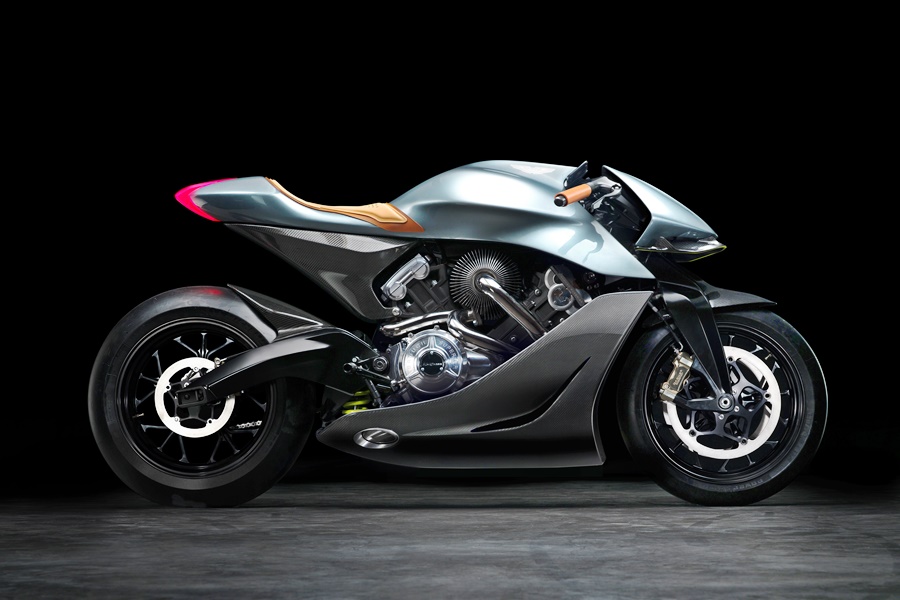
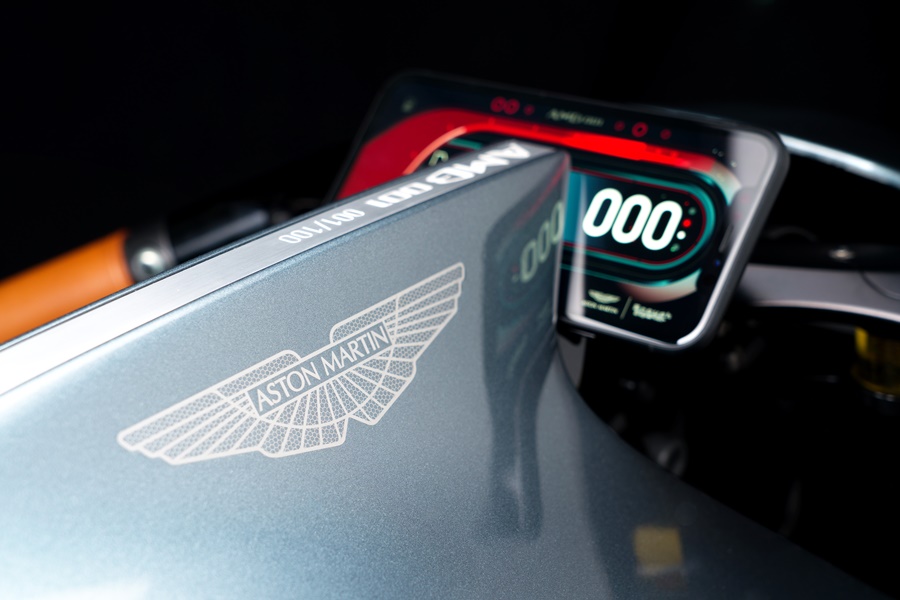
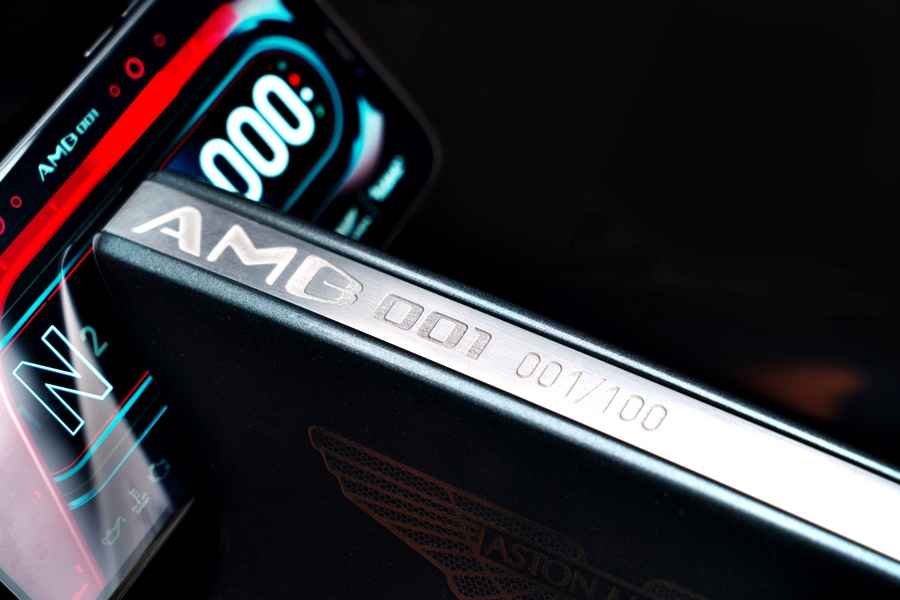
As the first chapter of the new partnership, the motorcycle known as the AMB 001 will be strictly limited to just 100 units and will be for track use only. The AMB 001 is a unique, modern, lightweight and powerful sports bike concept, boasting exclusive technical features, including a chassis configuration with a double wishbone front fork and structural carbonfibre body.
Taking their inspiration from the new series of mid-engined Aston Martin cars, the Aston Martin Design team worked on clear principles of form and function, where design and engineering had to work together, resulting in a motorcycle that is a high performance work of art.
In keeping with its track-inspired pedigree, the AMB 001 is presented with ultra-lightweight Aston Martin wings, which sit under the lacquer of the bodywork on the nose and the tank. These are the same 9-micron stainless steel wings that adorn the Aston Martin Valkyrie.
Presented in the traditional Aston Martin Racing colours of Stirling Green and Lime Essence with Matte Black wheels, forks and brake assemblies, the AMB 001 features a sublime combination of paint and bare carbon fibre that accentuates the lines of this collectors’ item. As befits the Aston Martin and Brough Superior brands, all of the components have been specially designed using the best processes and materials, including carbon fibre, titanium and billet aluminium.
The machine boasts a strong, sculptural body form, beautifully accented by a carbonfibre fin – the design of which is derived from the side strake on Aston Martin cars – that runs along the full length of the Stirling Green tank, passing under the saddle and out onto the rear, creating a flowing form along the top of the bike. As the fin passes under the saddle, it can be seen through breaks in the Oxford Tan leather pads of the hand-stitched saddle, which combines old techniques and modern technology in one swooping area that is a perfect fit for the human form.
The AMB 001 has been designed to display a level of elegance that isn’t normally found on racing bikes. Beauty and power are the order of the day for this track-only racer. Aerodynamic wings attached to the cowl on the front of the bike take their direction from the S-Curve on the front of an Aston Martin, providing aerodynamic downforce.
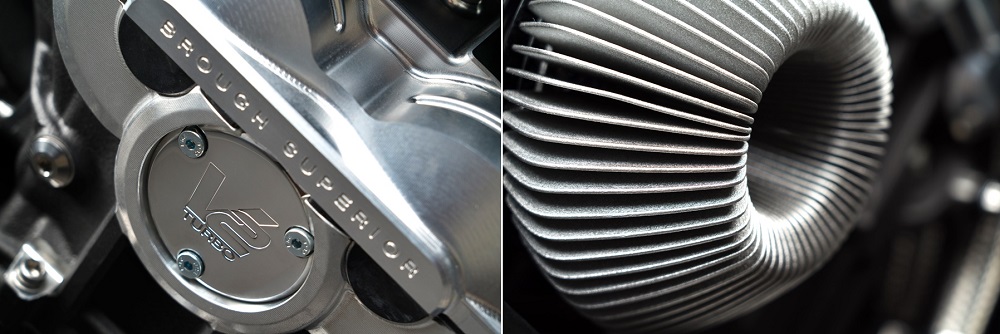
The turbocharged V-twin is an 8-valver with water and oil cooling. Its output is 108 bhp with huge torque (not specified) generated over a wide rpm range. Timing is driven by a short Morse chain and a geartrain, a compact conception for precision and reliability. The engine covers are machined from plain by aeronautical suppliers. The transmission includes an extractible 6-speed gearbox with APTC Clutch, and final drive is by chain. The exhaust manifold is made from Inconel, a superalloy chosen for its thermal and mechanical properties.
“This is what we believe a cutting-edge motorcycle should be and we are very proud to see the Aston Martin wings on a motorcycle for the first time. In addition to applying the skills we have developed for cars such as the ground-breaking Aston Martin Valkyrie, we have also been able to bring our special expertise in the traditional craft techniques to this project. The finished product is a truly beautiful motorcycle; a design and engineering work of art,” said Aston Martin Executive Vice-President and Chief Creative Officer, Marek Reichman.
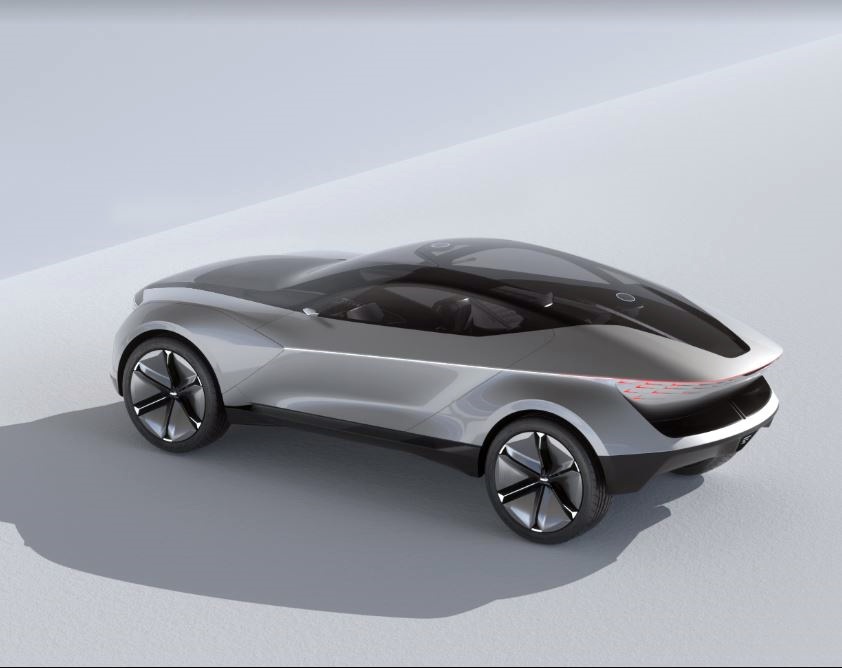
Given the pressure to reduce costs all the time, many carmakers now prefer to show off concept cars that are ‘near-production’, rather than futuristic showcars that cost a lot to build. But once in a while, we get some extreme designs intended to show what could come. Like the Futuron concept by Kia which the company says has some of its design elements inspired by UFOs and flying saucers!
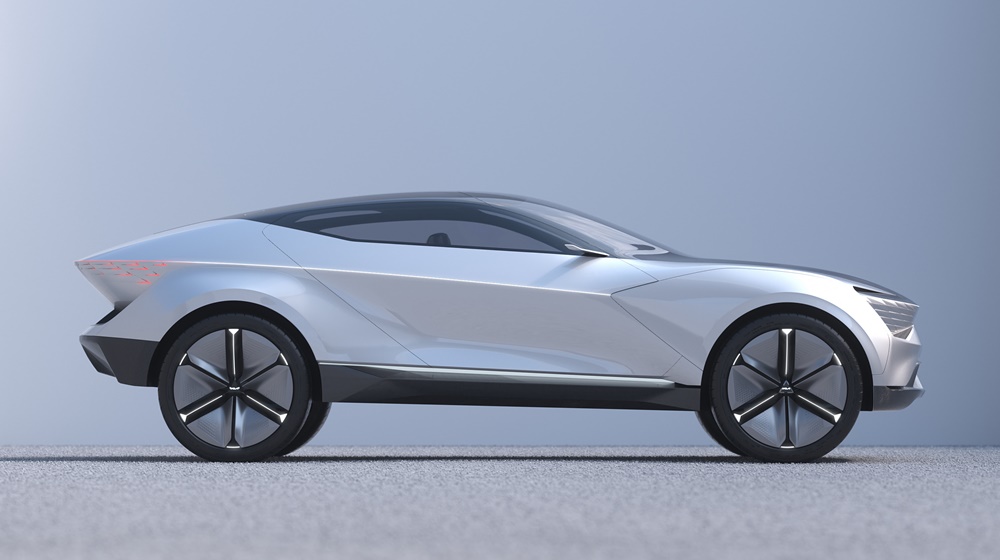
The Futuron Concept is an all-wheel drive SUV coupe which proposes new designs for future electric vehicles, specifically a SUV coupe. With a design based around the notion of dynamic purity, the Futuron Concept merges elegant proportions with pure shapes and surfaces.
‘360-degree core’
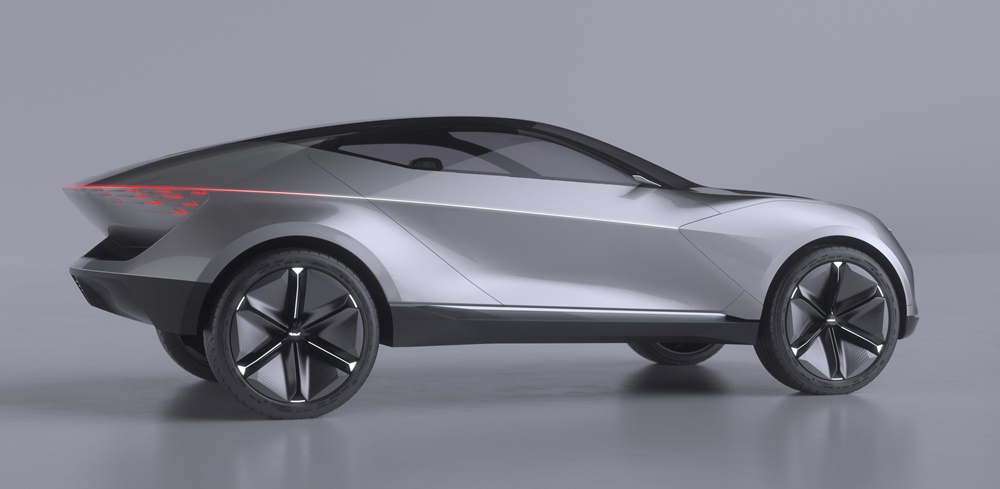
The Kia Futuron Concept is built around a single, strong ‘360-degree’ design notable for its pure, smooth form devoid of ornament. The delicate diffusion of the body’s surfaces creates a series of taut, flowing shapes which twist, expand and contract around the body. The result is a sleek and streamlined shape, creating an aero-efficient profile.
The novel proportions of the car are immediately striking. Its low-profile SUV coupe body is sporty and modern, yet also elegant. At 4850 mm in length, 1550 mm tall and with a 3000 mm-long wheelbase, the Futuron’s elevated ground clearance is matched with a low, lean body to create a dynamic, confident posture.
The fully-electric powertrain makes such a fluid shape possible. A high-capacity battery is mounted low in the vehicle’s body, beneath the cabin floor, providing electrical energy to 4 powerful in-wheel electric motors. The elevated stance of the car is therefore matched with a low centre of gravity and an e-AWD system which delivers lightning-fast responses to driver inputs.
Sportscar on an SUV platform
Combined with comfortable, lean-back seats, the Futuron offers drivers a new type of interactive driving experience suitable for urban city environments. Various elements of the vehicle’s structure and design foster the important connection and interaction between car and driver.
The front fender flows backwards from the front of the bonnet before plunging into the cabin itself, establishing a connection between the driving seat and the road ahead. The concept’s roof is a diamond-shaped panoramic glasshouse which sits atop the 360-degree core, in the best traditions of UFO and flying saucer design.
While flooding the cabin with natural light, it also extends down the bonnet to give drivers an unparalleled view ahead. The glasshouse also incorporates a network of LiDAR (light detection and ranging) sensors capable of providing Level 4 autonomous driving features, enabling hands-off and eyes-off driving in most conditions.
Furthermore, the 360-degree theme is evident in the lighting that illuminates a sharp character line encircling the Futuron’s body. A playful and interactive new feature, this lighting responds to physical gestures and movements made outside the car, eliciting a close connection between car and driver before they even set foot in the cabin.
The new Kia ‘tiger face’
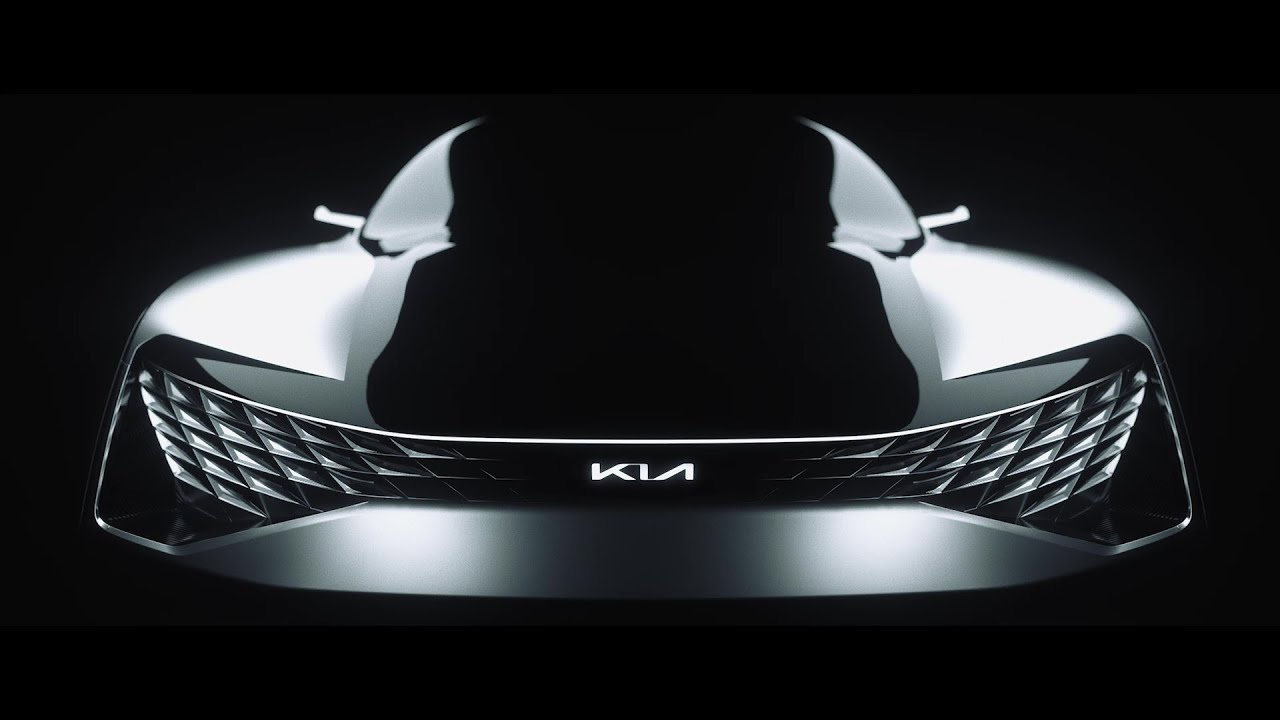
The front of the Futuron features a new reinterpretation of Kia’s ‘tiger nose’ grille, a signature for Kia design now for over a decade. While maintaining the basic principle of the design – a clear outline with tabs in the middle – Kia’s designers have expanded the boundaries, widening the shape across the front of the car to create a restrained, yet elegant ‘tiger face’.
With a wider ‘tiger face’ shape, the grille incorporates the Futuron’s headlamps, an innovative ‘Star Cloud’ design which gives the car a dazzling new night-time identity. The concept’s Star Cloud lighting not only highlights a new design form for the front of the car, but also embodies a new lighting concept for Kia, taking inspiration from nebulae in the night sky to create a geometric patchwork of matrix LED lighting. The Star Cloud is also incorporated into the rear of the car, displaying a distinct light signature to anyone following the Futuron.
Revealed for the first time in Shanghai, the Futuron also incorporates Chinese legend in the design and form of its new Star Cloud lighting. The Dragon Skin surface which covers the lighting area emulates the scaled armour that adorns Chinese dragons, both in mythology and modern-day cultural celebrations. The Star Cloud lighting incorporates a kinetic surface, enabling the car to alternate between daytime running lights and full-beam headlamps as the scales open and close.
Seamless interior
The Futuron’s seamless interior also reflects its autonomous driving nature, with surfaces flowing uninterrupted from the dashboard and through the door panels. The doors feature the same Star Cloud lighting and scaled Dragon Skin motif found on the outside of the car, creating a glittering interactive ambient lighting system. The ventilation system is also housed behind Dragon Skin scales, which open and close to allow fresh air to circulate throughout the cabin.
One of the most prominent features of the cabin is the ‘cockpit’ area surrounding the driver. The graphical user interface (GUI) of the cockpit flows out of the driver-side door and wraps around the steering wheel in a seamless arc. This merges the instrument cluster directly with the audio-visual display at the centre of the dashboard and is linked to the display integrated within the surface of the steering wheel itself.
The GUI is operated by artificial intelligence technologies, displaying useful information about the car various autonomous driving, powertrain and navigation features to create a unique user experience. The apex of the cockpit arc sees the GUI lunge forward towards the road, creating an interactive Star Cloud light display at the very front of the cabin.