The United Nations estimates that China currently has a population of 1.42 billion. As the economy grows and living standards improve, demand for cars is also ballooning. Even so, the Chinese registration-number system manages with just 7 characters, the same number, for instance, as the Czech Republic. How that’s possible? This is a little misleading because the first character is Chinese and may take any of more than 30 different forms. The main reason, however, lies elsewhere: the limit on the number of registration plates issued in the largest cities.
In 2004, approximately two million cars were registered in both Beijing and Shanghai. Yet by 2010, there were 4.8 million cars in Beijing and ‘just’ 3.1 million in Shanghai. This is because, ever since 1994, Shanghai – along the lines of Singapore – has been restricting the number of plates available and issues them through a bidding system.
Auction price averages RM58,000
With demand outstripping supply many times over, plate prices are spiralling. To give you some idea, at the beginning of 2018, the 11,000 plates on offer attracted more than 220,000 bids and the auction price averaged almost US$14,000 (about RM58,000), which is more than what some locally-made cars cost!
Beijing also caps the number of plates issued, but waited until 2011 to launch this policy. This restriction was primarily introduced in response to the overcrowded roads and the suffocating smog that, as late as 2013, was seriously affecting the city for more than half the days of the year. Unlike Shanghai, however, Beijing has opted to hold a public lottery every 2 months. Under this system, plates in Beijing are more affordable than in Shanghai. However, the likelihood of obtaining one is decreasing every year because rocketing numbers of applicants are chasing an available pool of plates that is diminishing as each year goes by.
While different sources cite different numbers, The Economist drew directly on government statistics to discover that, at the beginning of 2018, any private individual wanting to own a car with an internal combustion engine had a 0.2% probability of winning the numberplate lottery (in February, 6,460 plates were made available to approximately 2.8 million applicants, averaging one plate per almost 450 hopefuls).
Slightly better for electrified vehicles
The situation is slightly better for electrified cars (referred to as NEVs or new energy vehicles) which primarily include plug-in hybrids, battery electric vehicles and hydrogen fuel cell electric vehicles. Special plates are issued for NEVs, with 54,000 being made available for distribution among approximately 390,000 private applicants in 2019 (businesses are a separate group and have been allotted 6,000 plates).
Unlike the situation with ICE vehicles, these plates are issued on a first-come, first-served basis. There is currently a waiting time of about 8 years for those wanting a numberplate for an electrified car.
Some cities have gone down a third route that combines a lottery with an auction. In practice, this means that some plates are auctioned and the rest are put in a draw. Guangzhou pioneered this method, which has since spread to other cities.
In all of these cities, anyone wishing to buy a car must first be in possession of the plates. Since numberplates are transferable (and lifelong), this has combined with the circumstances above to create a black market in numberplates. Some people rent out their plates (illegally). Sham for-cash marriages are another phenomenon, as married couples are permitted to transfer numberplates between them.
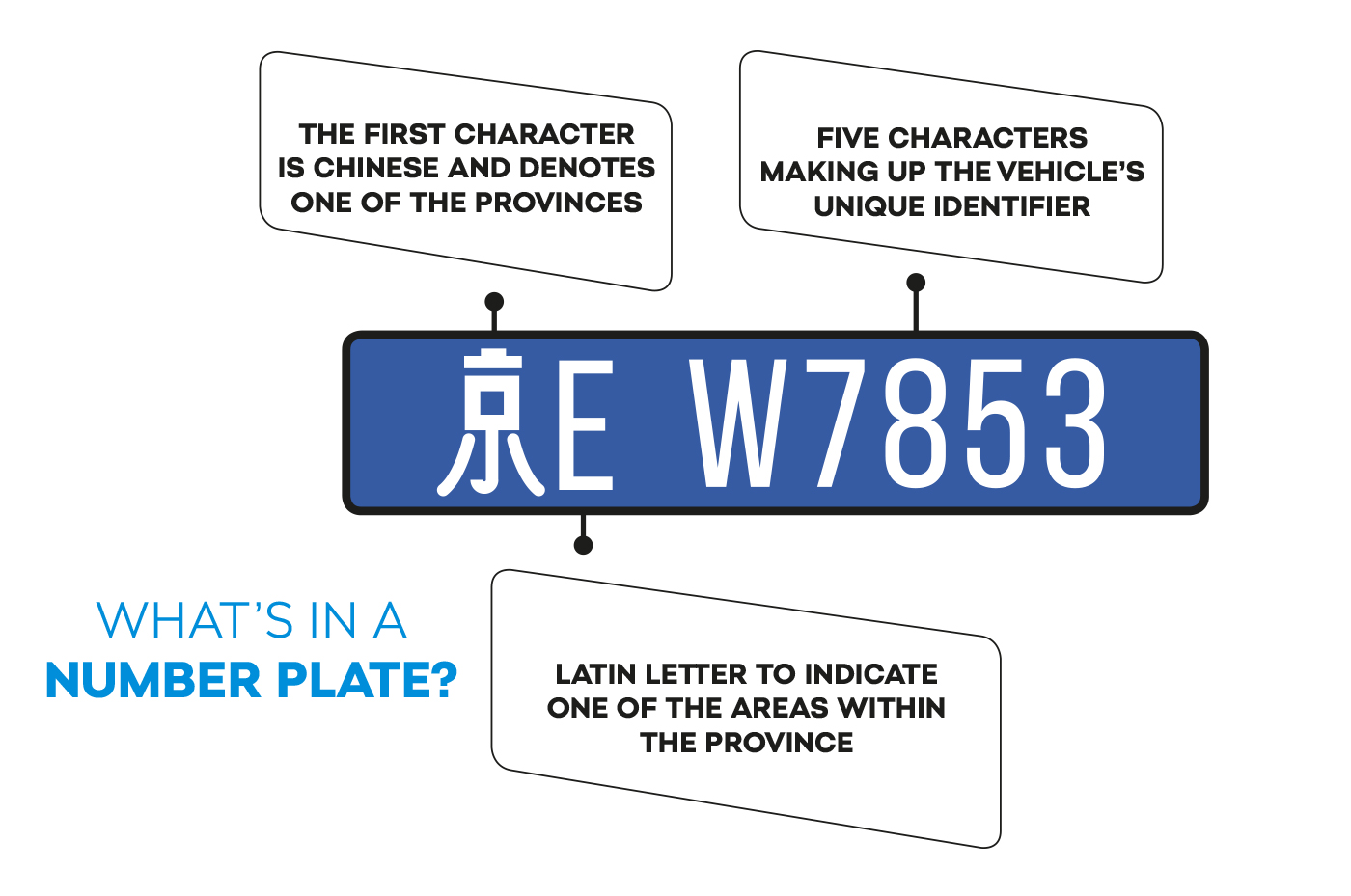
Format of the numberplate
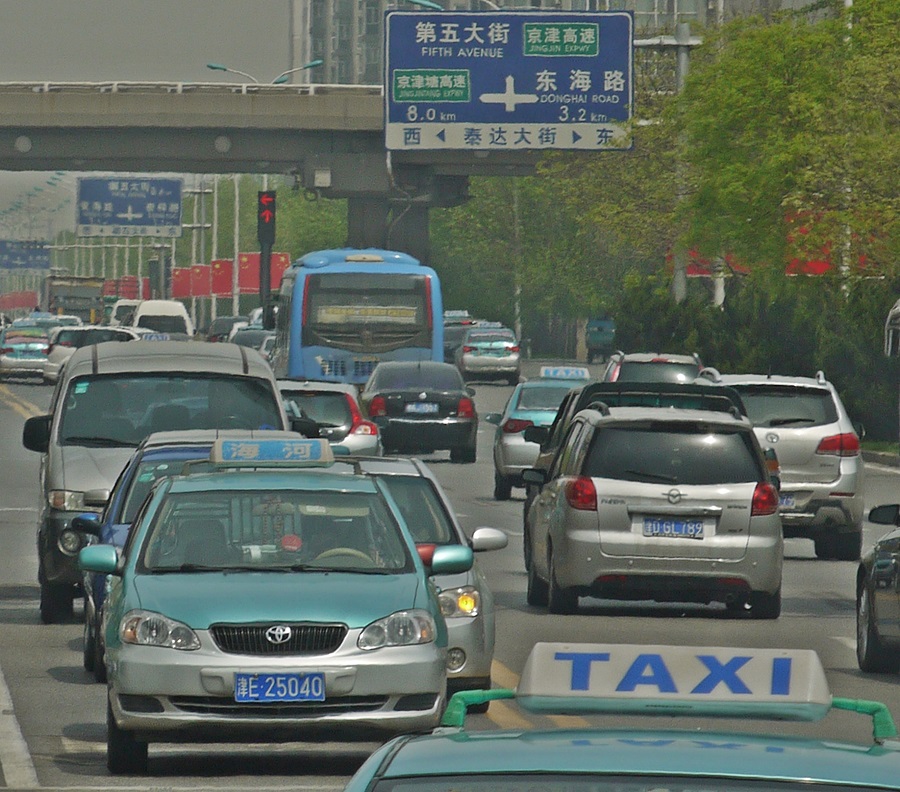
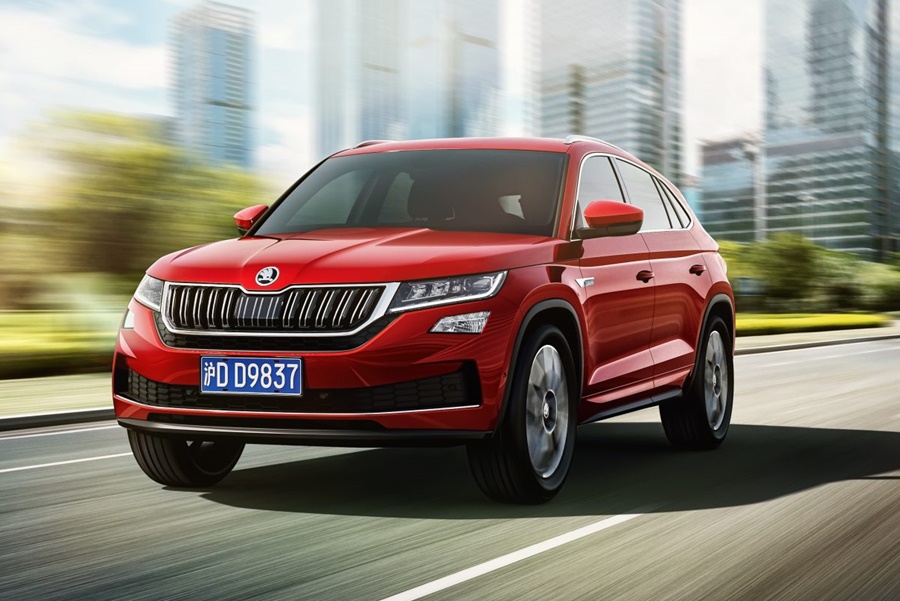
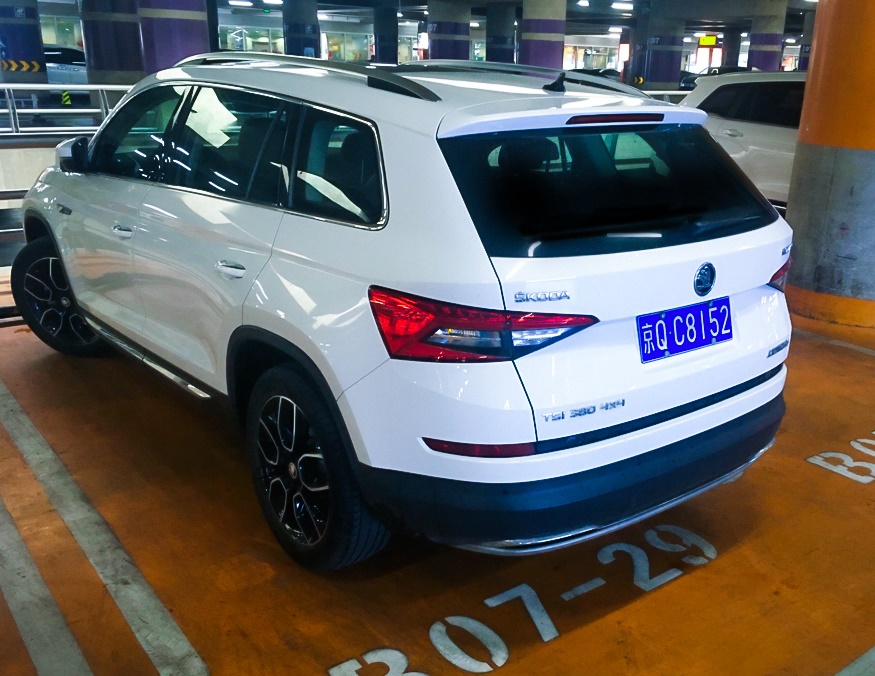
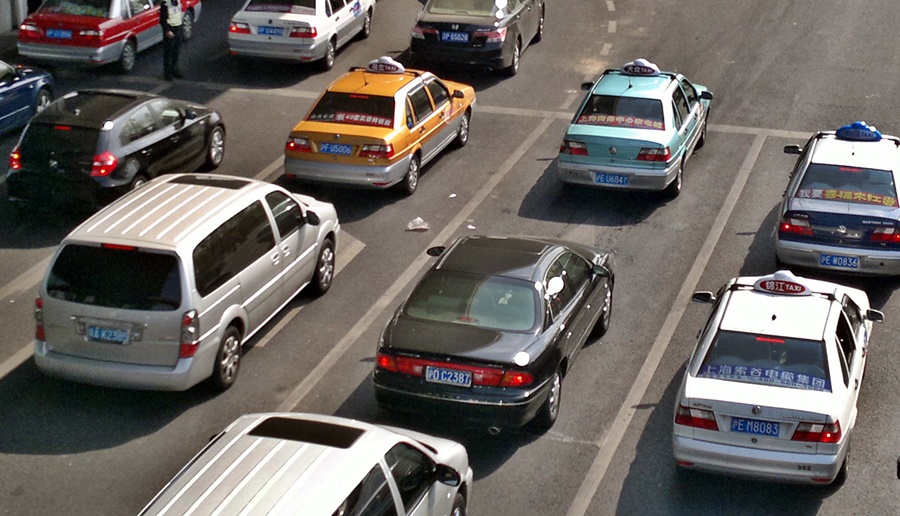
And what do Chinese plates actually look like? The current format was first introduced back in 1992 and was updated in 2007. Passenger-car plates comprise white lettering – usually 7 characters – on a light-blue background. As already noted, the first character is Chinese and denotes one of the provinces. It is followed by a Latin letter to indicate one of the areas within the province. Alternatively, some provinces (such as Beijing) use a special letter here to single out, for example, taxis, police cars, and the employees of certain state institutions.
There are then 5 characters making up the vehicle’s unique identifier. Initially, only numbers were used, but in some provinces, all of the numeric combinations were used up, so letters were introduced alongside numbers. The combination of characters is randomly generated by computer.
‘SEX’ was once allowed
In 2002, a new plate personalisation system was trialled in some cities, but it was very short-lived. Customised plates could have one of three forms for their unique vehicle identifier (the character for the province and the letter for the sub-region could not be changed): DDD-DDD, DDD-LLL or LLL-DDD (with D and L standing for digit and letter, respectively). Though some combinations were banned (e.g. “CHN” for China), many others – such as PRC, USA and, surprisingly, SEX – were permitted. Indeed, such combinations made their way on to the streets and some of them caused uproar among the authorities (for example, USA-911, which may well betray a love of America and the iconic Porsche model – but could just as well refer to the events of September 2001). This system was soon abolished and replaced by the original one from 1992.
As already mentioned, NEVs use a specially formatted numberplate featuring black lettering on a green background. The vehicle identifier is either D or F – the letter D denotes a battery electric vehicle, while the F symbolises other NEVs, especially plug-in hybrids and FCEVs.
Hong Kong and Macao, as special administrative regions, stand apart in the Chinese numberplate system. Both have their own system, reflecting their colonial past. The citizens of these regions who wish to drive their car to mainland China must apply for a Chinese plate. Likewise, when citizens of the Chinese mainland want to visit Hong Kong or Macao, they must apply for a local plate. The Chinese numberplates of cars from Hong Kong and Macao also have their own specific format – white lettering on a black background.
Information for this feature article was provided by SKODA.