

Piston.my

Peugeot 9X8

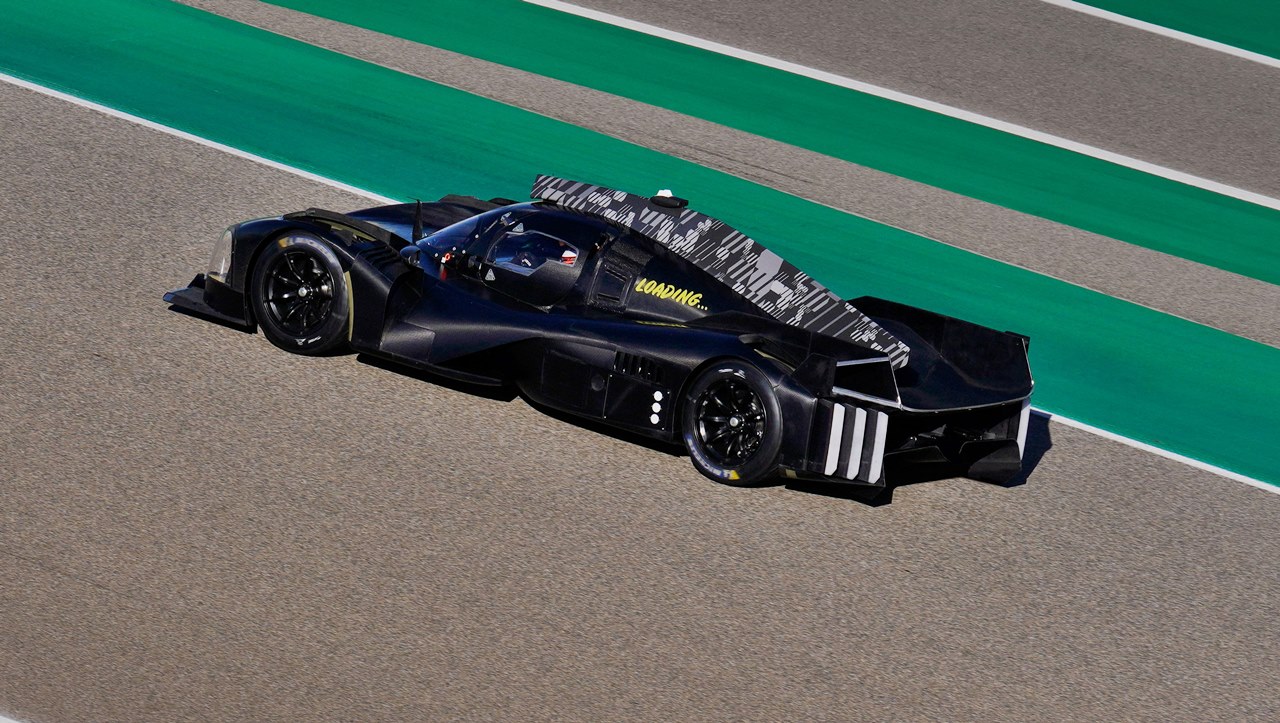
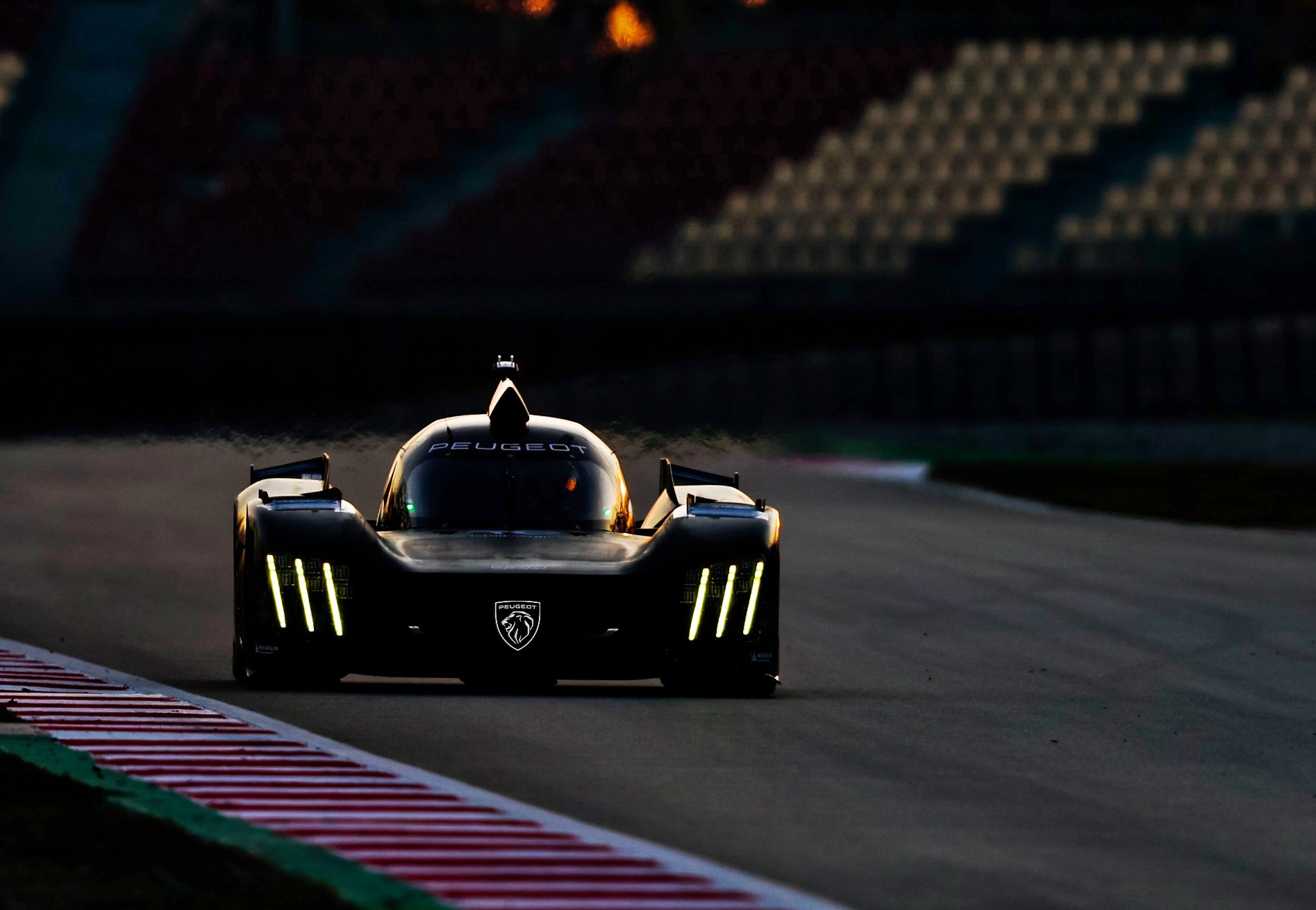
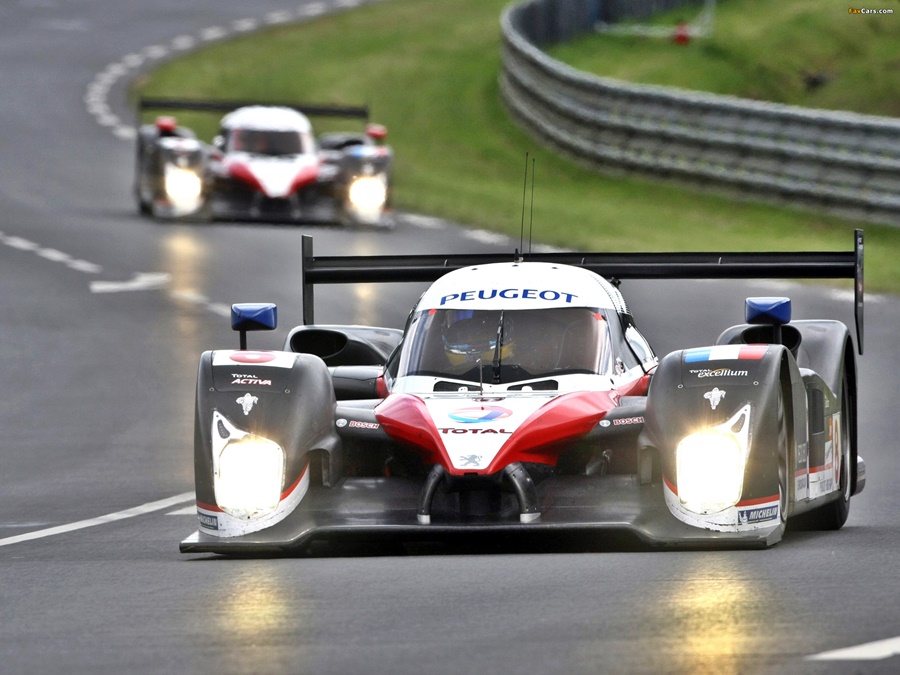
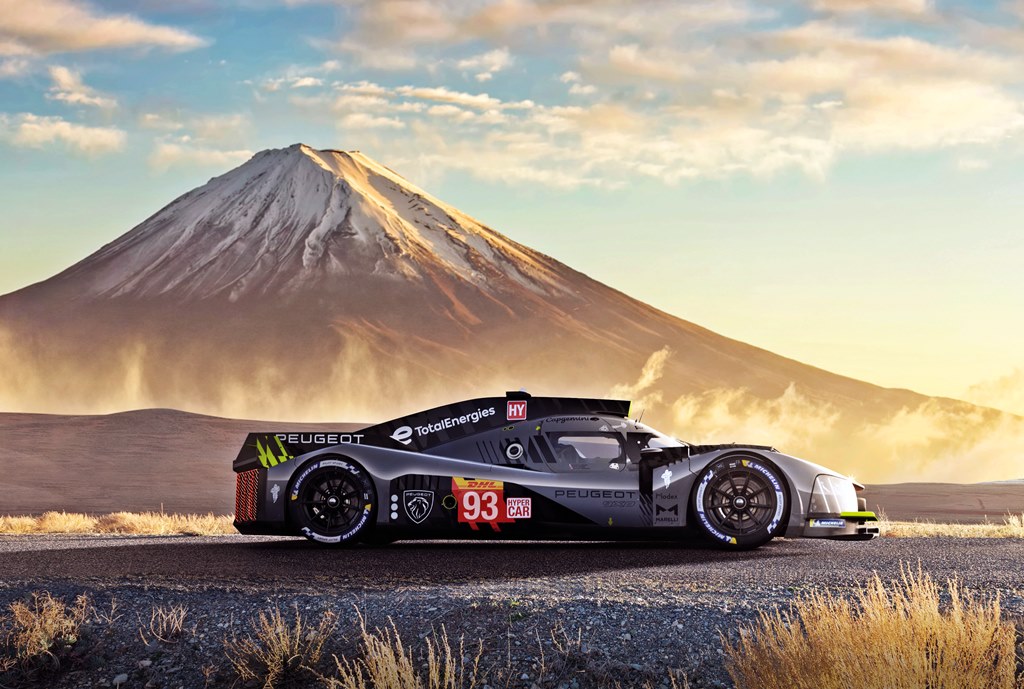
After making its competitive debut in the World Endurance Championship (WEC) with the new Peugeot 9X8 at the Monza round in Italy two months ago, the Team Peugeot TotalEnergies is in Japan this week for a second 6-hour showdown. Two units of the new Le Mans Hypercar (LMH) will race at the Fuji Speedway this weekend to collect more information in racing conditions.

Commenting on the first race in Italy, Peugeot Sport Technical Director Olivier Jansonnie, said: “We needed that first race. We had achieved as much as we could in testing so, in order to ramp up our preparations and development, it was time to pitch ourselves directly against our opposition in a true race-weekend environment.”
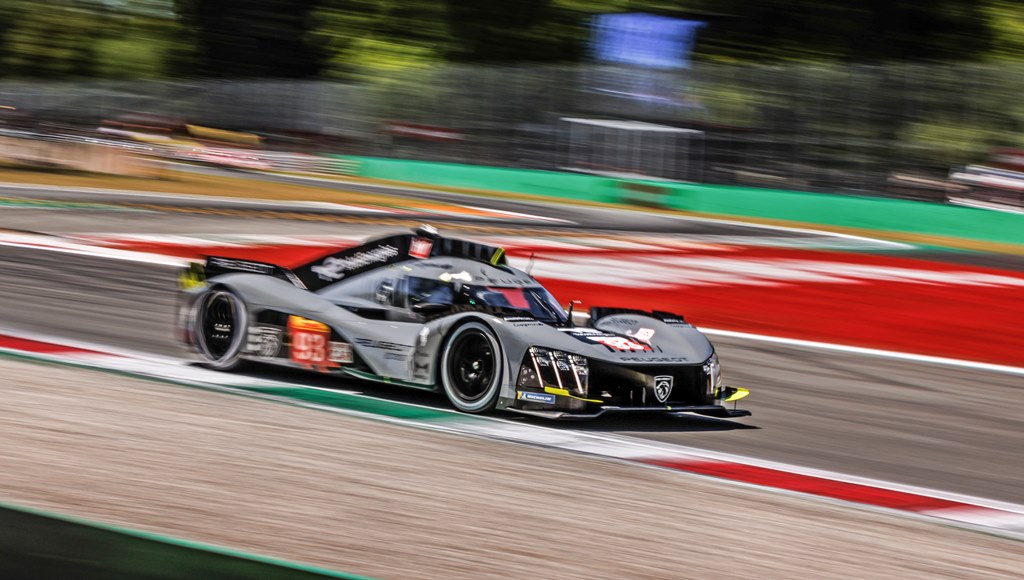
Encouraged by the potential of a car whose homologation is now fixed (meaning that any further modifications will be strictly limited and regulated), the two driving crews were able to acclimatise to racing in traffic and compare the 9X8 to the championship’s other hypercars.

“We collected a great deal of information about the car and team. We also ran into a few problems that we hadn’t previously encountered in testing, some of which we were able to rectify on-site, others that we have been continuing to work on since Monza. This is a tried-and-tested process in motorsport,” Jansonnie explained.

“At this early stage, it should be noted that we are concentrating more on reliability and performance than on refining race strategies. That is perfectly normal for such a new project, up against rivals with – in some cases – more than 10 years of experience in the sport. We are all fiercely competitive here at Team Peugeot TotalEnergies and we recognise that both the car and team have scope for significant improvement, but we have yet to come across any issues that we cannot resolve, so that’s very positive,” he said.
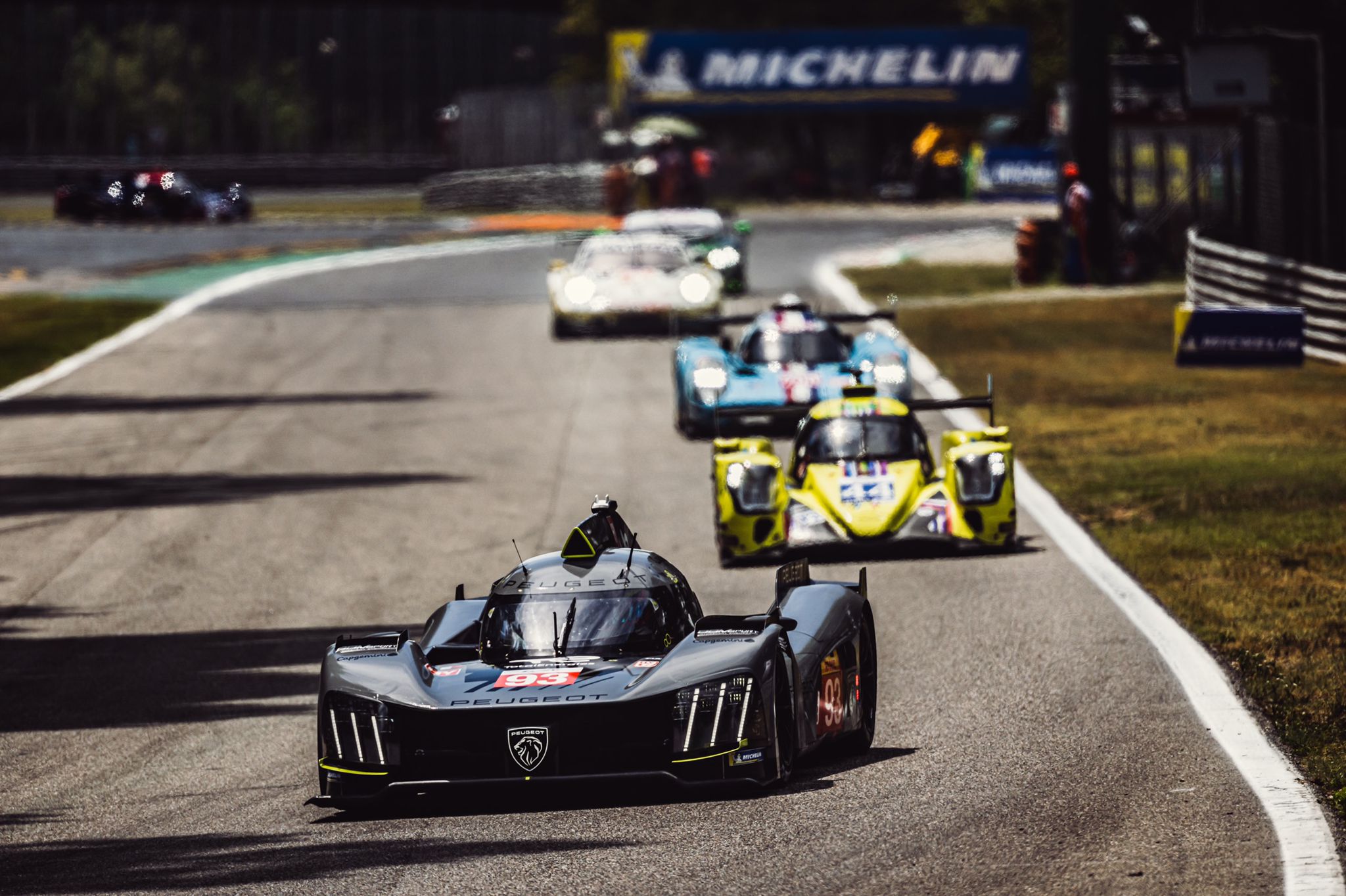
Disappointed that the team was not able to take full advantage of the 10-minute qualifying session in Italy to properly demonstrate the 9X8’s potential, Jansonnie has since gone into even greater detail with his team in order to optimise its work on the car with the clock ticking down. It focused particularly hard on this aspect during two private tests carried out between Monza and Fuji.

“In Japan, we will be discovering the circuit for the first time, so we need to make sure we maximise every on-track session from Friday morning through to Sunday afternoon,” he stressed.

Preparing for Fuji’s challenges
The 6 Hours of Fuji – Round 5 of the 2022 WEC – poses an altogether different challenge to Monza in a number of ways. Jansonnie and his team realise this, particularly as it is held halfway around the world. “For long-haul events like this, we need to adapt our procedures because we do not have the same regular facilities at our disposal – like motorhomes and trucks – as we do when we race in Europe,” he said.
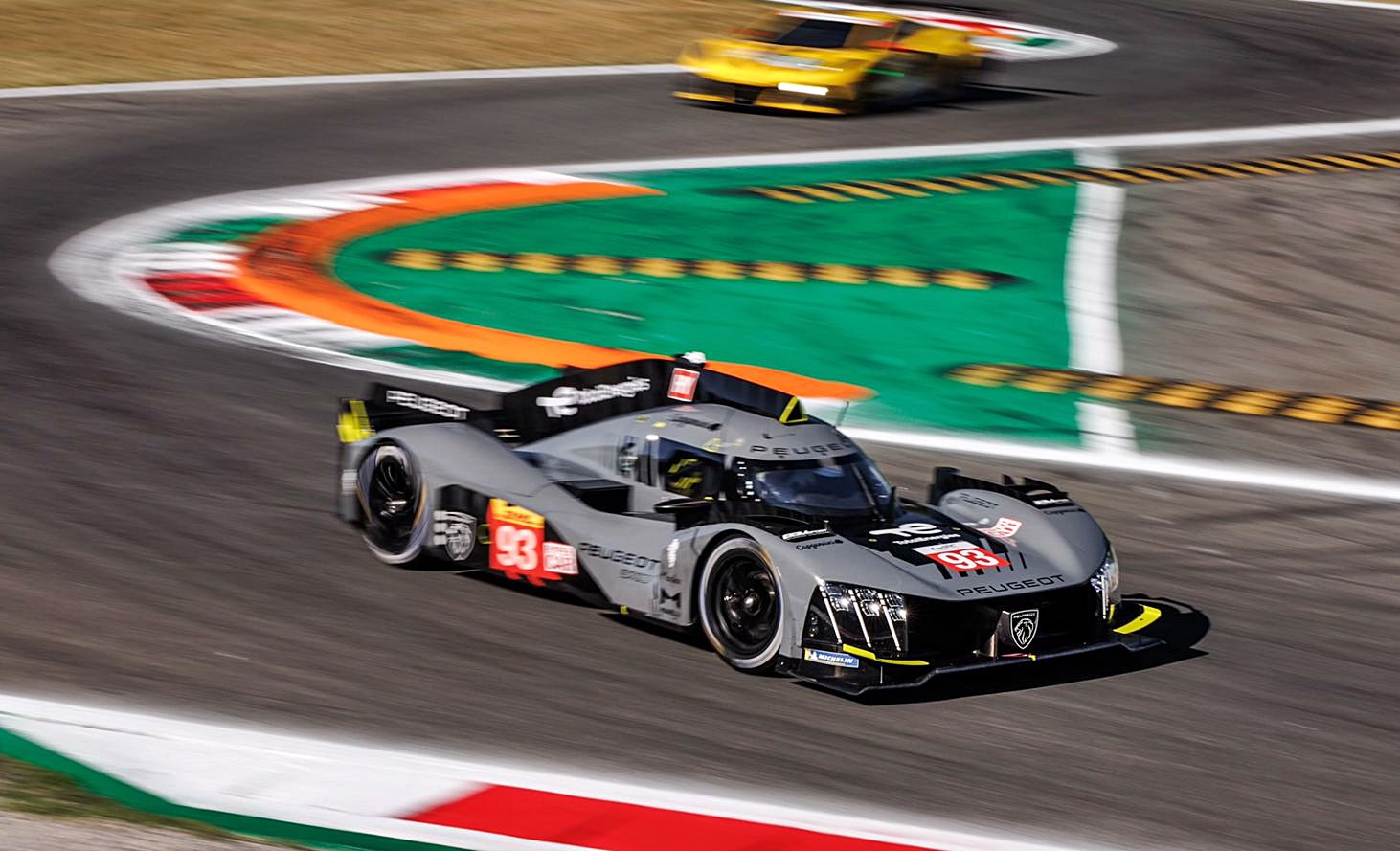
The circuit and region’s unpredictable weather – with heavy and prolonged downpours likely – represent further unknowns for the team, although not for the whole team. Its drivers like Jean-Eric Vergne and Gustavo Menezes have raced at Fuji in the past, while Loic Duval and James Rossiter spent a part of their career based in Japan. The benefits of that experience will complement the data already acquired by the crews and their engineers from their work in the 9X8 simulator as they endeavour to prepare as well as possible for the unique demands of this iconic Japanese track.
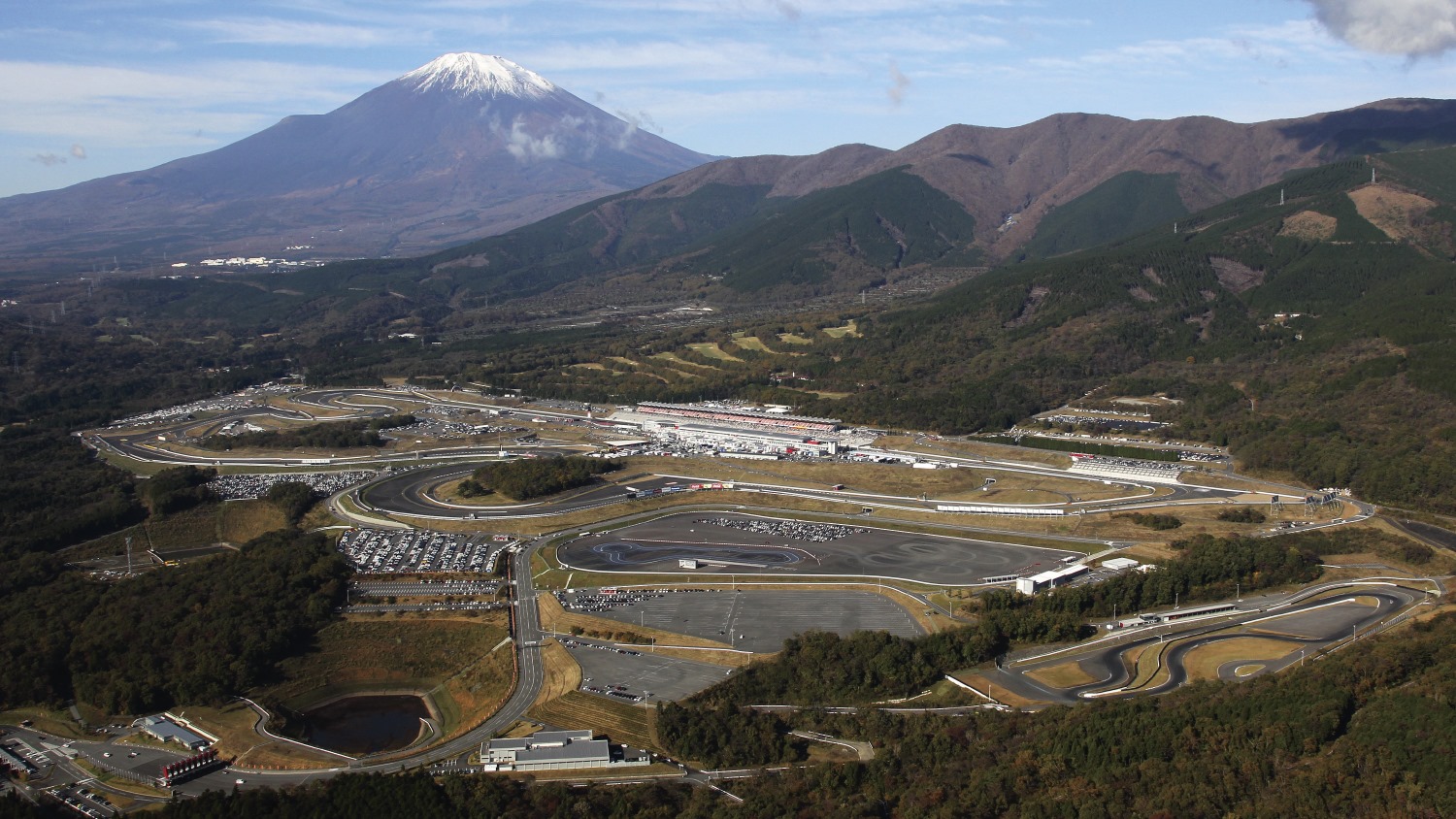
The 4.563-km Fuji Speedway where the fifth round of the 2022 World Endurance Championship will be held. It was opened in December 1965 and has been owned by Toyota Motor Corporation since 2000.

“Monza could have gone better for us, but that was entirely to be expected at such an early stage of an ambitious project like this. Our car [#93] ran into problems in the race that led to our retirement. During the run that I completed in free practice, though, we were close to the Toyota in terms of pure pace, which proves that we are in the right ballpark with this non-conventional car. I’m completely convinced about that. Our first race was another significant milestone on this exciting journey and now, for Fuji, the goalposts shift again. But that’s what keeps the adrenalin flowing!” said Vergne who will share the racing car with Paul di Resta and Mikkel Jensen.

New era in endurance racing
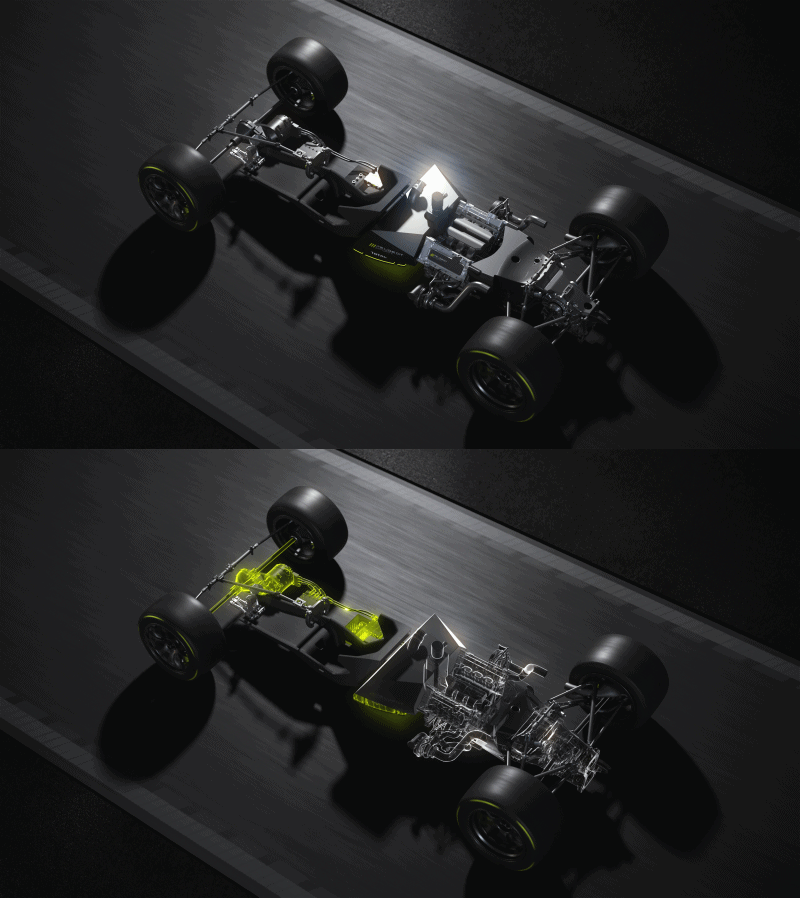
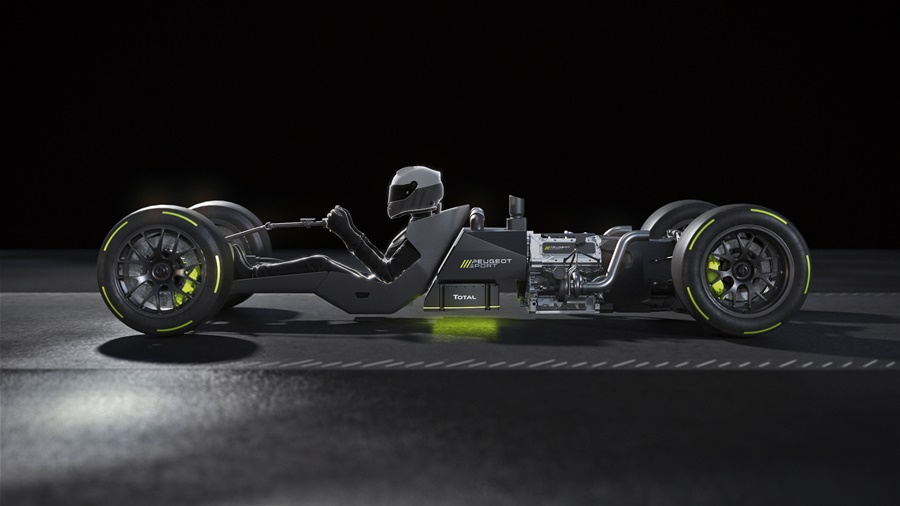
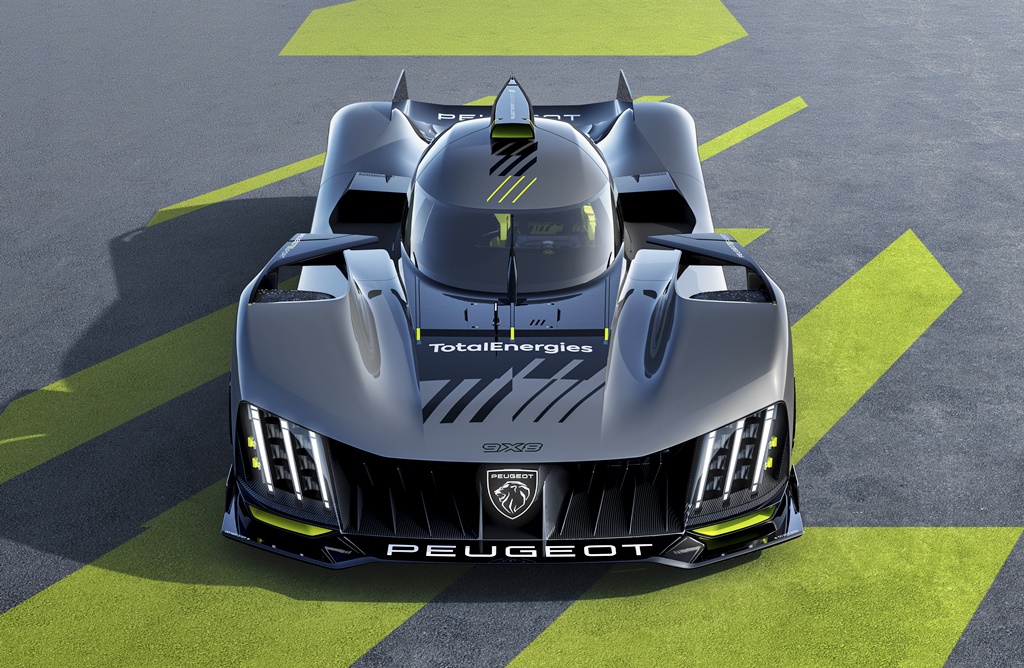
The 9X8 starts a new era for Peugeot in endurance racing, the motorsport category where it was previously victorious with the 905 and 908 in the 1990s and in 2009. Conforming to the regulations that govern the ACO and FIA’s new Le Mans Hypercar (LMH) category, the 4 wheel-drive racing prototype has a 2.6-litre bi-turbo V6 engine powering the rear wheels and a 200 kW electric motor driving the front wheels.
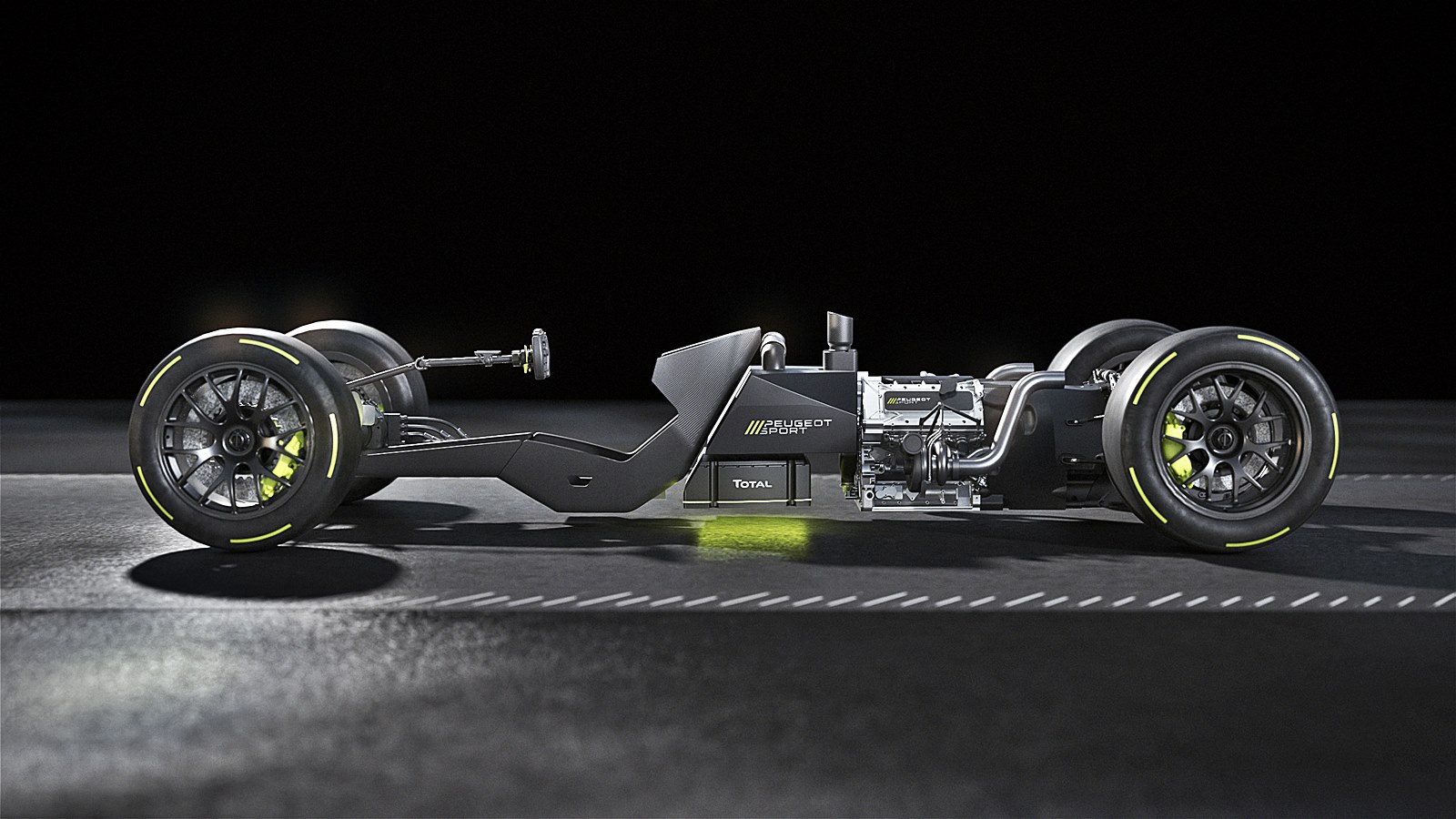
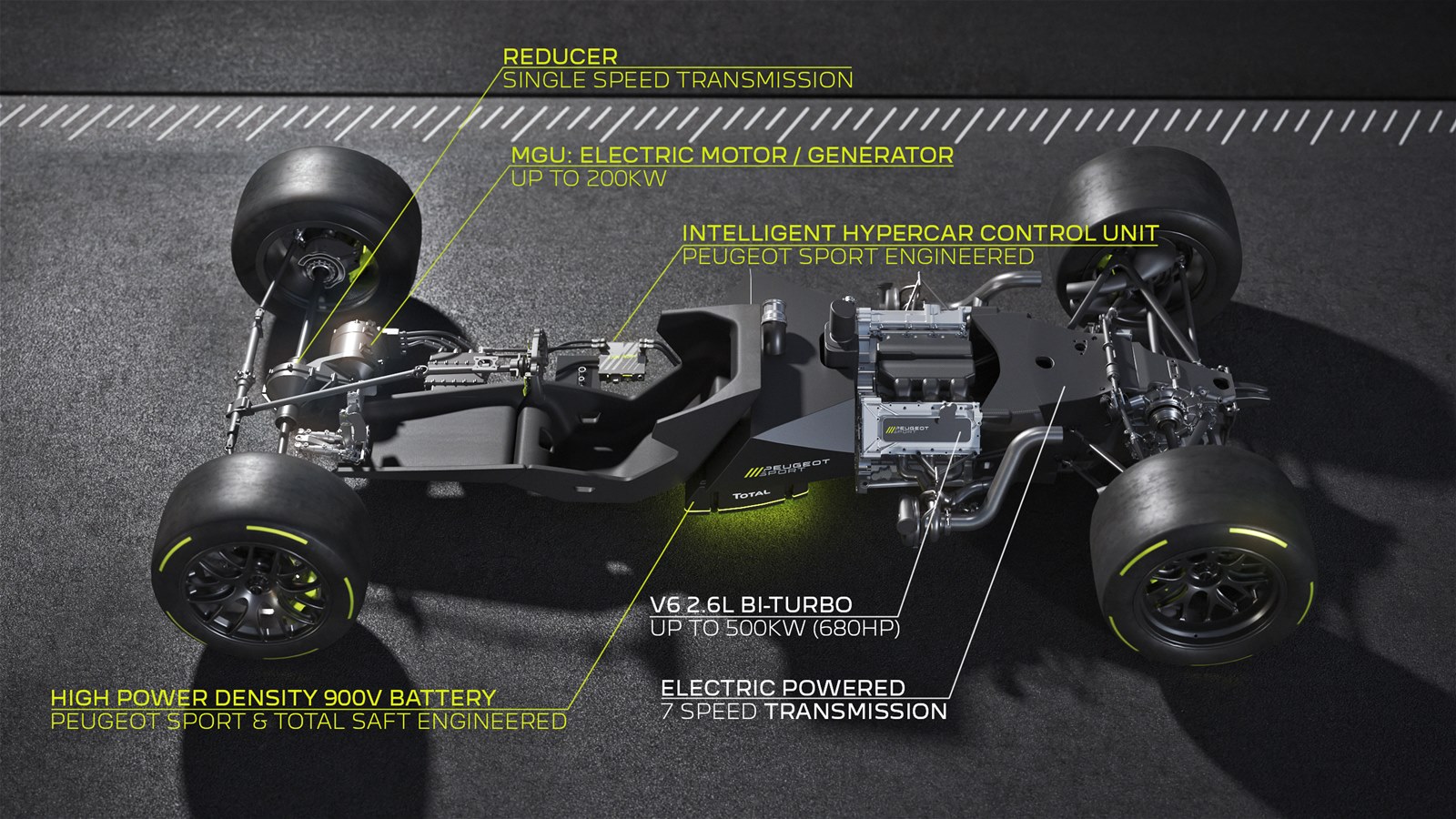
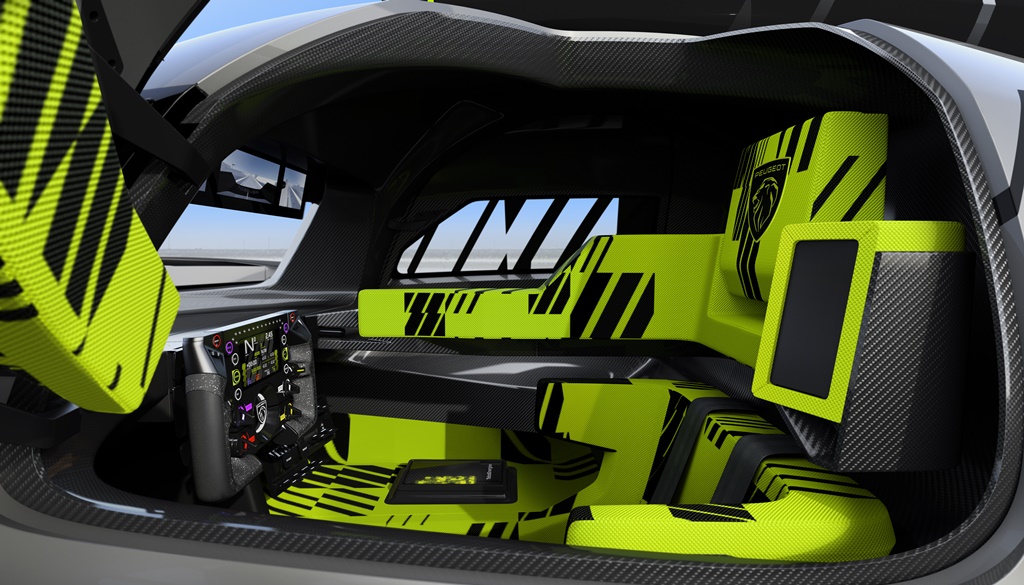
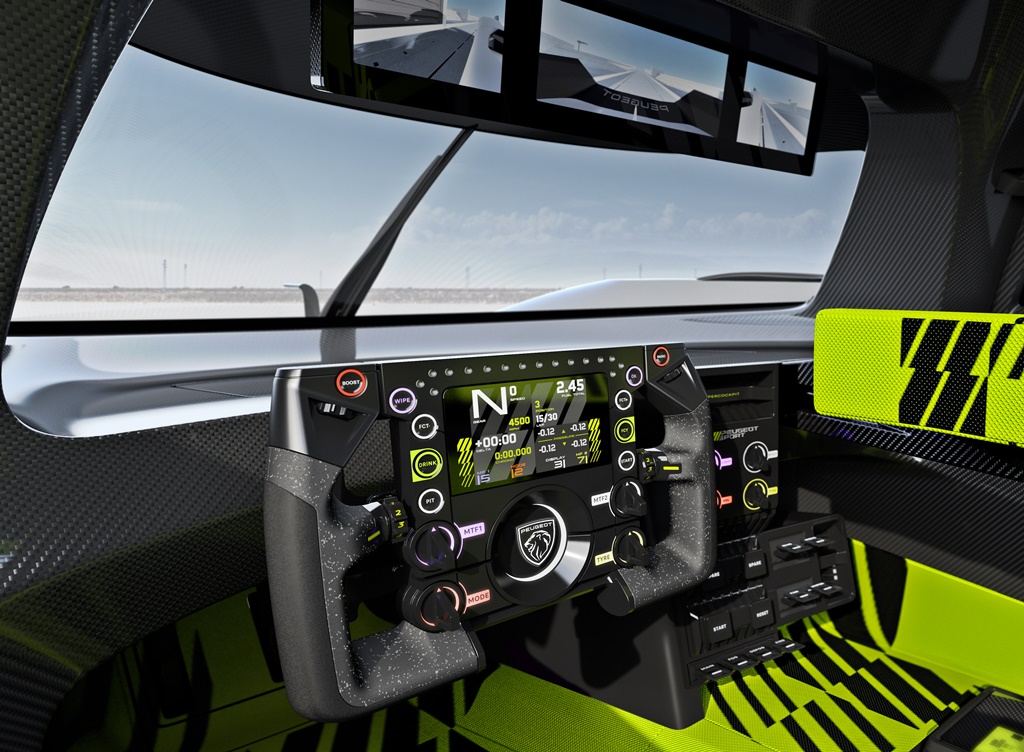
Inside the Peugeot 9X8.

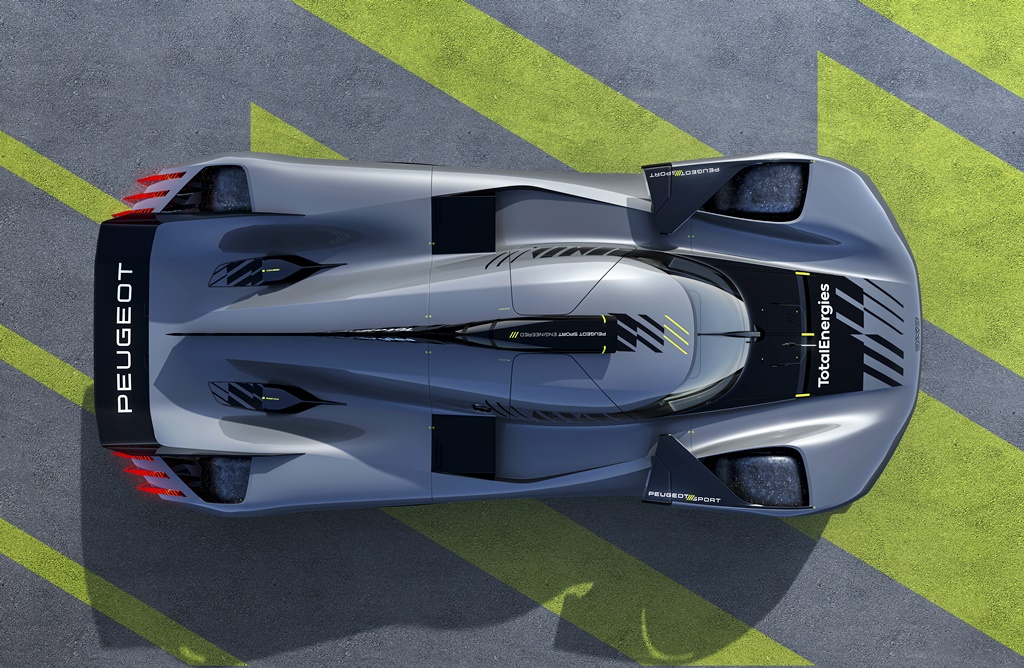
The racing car, without a rear wing, measures 4.995 metres in length, has a width of 2 metres and is just 1.145 metres tall. With lots of lightweight materials in its bodywork, it weighs 1,030 kgs and its tank holds up to 90 litres of TotalEnergies’ 100% renewable Excellium Racing 100 fuel.

The completion of vital development and testing phases, necessary to achieving reliability and performance for the 9X8, led to its competitive debut being delayed until after the 2022 Le Mans 24 Hours. Its first entry in the WEC was thus at the 6 Hours of Monza on July 10 and this weekend, it will be at the Fuji Speedway.
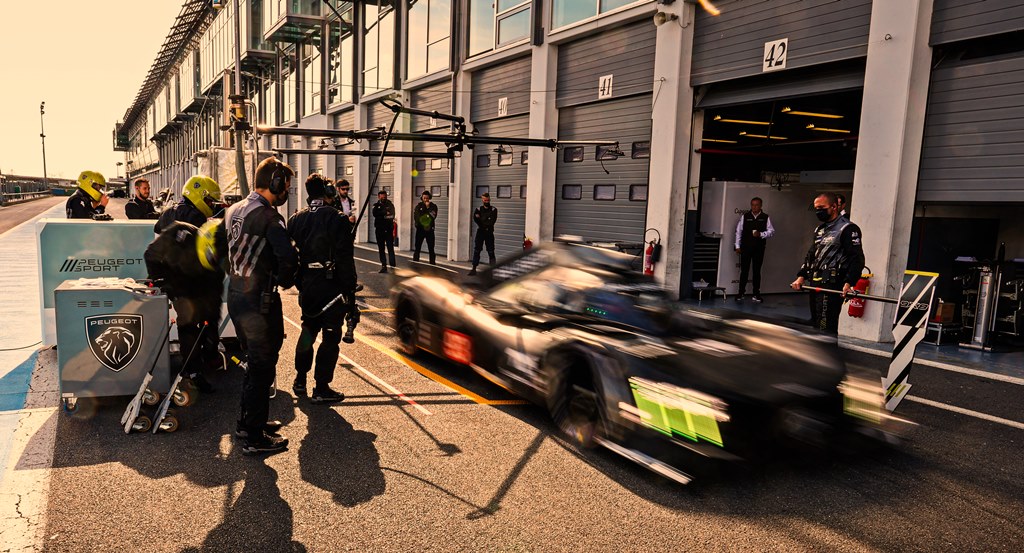

2022 Peugeot 9X8 Le Mans hypercar

Last year, when Peugeot Sport announced its new program to develop the 9X8 hypercar for endurance racing, it expected to join the World Endurance Championship in 2022. However, the team decided to forego the first two rounds, at Sebring and this weekend at Spa-Francorchamps, and was planning to debut at the classic Le Mans 24-Hour race in June. However, because it has not participated in the first two rounds, the organisers have said it cannot take part in Le Mans.

Accepting the ruling in a positive way, Peugeot Sport’s Technical Director of the WEC programme, Olivier Jansonnie, said that this would give them team additional time to achieve the necessary level of reliability. “Both operationally and from a reliability perspective, Le Mans is the most difficult race on the calendar. Our planning will enable us to put the full weight of our teams and resources behind our own test sessions, without the disruption of racing at Spa-Francorchamps and Le Mans. We will begin with some shorter races, which will allow us to progressively get up to speed in the championship. Like with our road-going cars when we have to choose between meeting a deadline or focussing on quality, we always prioritise quality,” he explained.

2022 Peugeot 9X8 Le Mans hypercar

The homologation process
Before a car can enter competition, it must be homologated by the racing authorities. In the case of the new hypercar class, once homologation has been done, the design cannot be modified further until 2025 (except in very particular circumstances governed by strict conditions). Any such modifications will be counted as ‘EVO jokers’, which are limited to just five between 2021 and 2025 – aside from specific force majeure situations such as, for example, when the car’s safety or reliability is compromised.

“Restricting development in this way is important, since it would not be possible to adjust the performance of a car that is subject to constant technical updates through ‘Balance Of Performance’ (BoP) tweaks,” said Jansonnie. ”The homologation process itself consists of a series of milestones. Its schedule and execution are very precisely defined. The process concludes with the submission of a homologation file – describing in minute detail all of the vehicle’s components (with photos and weight measurements) – as well as a wind tunnel test of its aerodynamics and an inspection of the vehicle by the FIA/ACO. After this, its development is ‘frozen’. Its performance parameters are subsequently assessed in order to be able to adjust its power, weight and minimum speed of hybrid energy deployment, which are the key factors in Balance Of Performance.”

2022 Peugeot 9X8 Le Mans hypercar

Peugeot Sport therefore has a little bit more time before it submits the 9X8 for homologation. A manufacturer judges that its car is ready to be homologated when it believes it has attained the required level of performance and reliability to be eligible for ‘Balance Of Performance’ evaluation. “That means it has the same theoretical chance of winning in the WEC and at the Le Mans 24 Hours as any of its competitors. It accepts from this point that its vehicle will not be able to undergo any further major technical changes until the end of the homologation cycle,” explained Jansonnie.

Initial existence in digital world
Prior to taking to the track for its pre-homologation test sessions, the 9X8 began life as a 51.1GB digital project, made up of 15,267 files stored on a hard drive. Digital advances have opened up a whole new realm of possibilities in motorsport, enabling Peugeot Sport’s engineers to visualise a truly disruptive concept for the new Hypercar – and validate it before manufacturing so much as a single physical component.

2022 Peugeot 9X8 Le Mans hypercar

The sophistication of modern-day digital software makes it possible to conduct in-depth technological studies while saving significant time, money and resources, and the 9X8 lived an entirely ‘virtual existence’ for some time before finally turning its first wheel on-track. Peugeot Sport’s teams spent two years modelling and simulating it, utilising both existing software – adapted where necessary to suit the project’s specific requirements – as well as computer programs developed entirely in-house from scratch.

“Thanks to all of our software, we can envisage a wide range of dimensions, shapes and materials, and work on the weight of the car in-line with the technical regulations,” said Francois Coudrain, Powertrain Director of the WEC programme. “As with the choice of base concept, being able to take a purely digital approach to trialling systems and components allows us to assess a large number of potential solutions, which would quite simply be impossible to achieve in the real world.”

Digital simulations also allow for customisation where necessary – for example, what material to use around the exhaust outlets. Here, the heat levels are very high, and simulations revealed that the carbon bodywork needed to be either protected or even replaced by aluminium or titanium. Initially highlighted for attention in the design brief, this was corroborated during the simulation phase and then again in the first real-life test session.

2022 Peugeot 9X8 Le Mans hypercar

From hard drive to racetrack
Following its digital development, the hard drive containing all the technical data of the Peugeot 9X8 provided the basis for the creation of an initial 1:1 scale model for wind tunnel use and, subsequently, a physical race car, whose ongoing development is taking place on the track.

‘9X8’, the designation, is derived from a combination of the brand’s motorsport heritage and vision for the future. The ‘9’ continues the series used by Peugeot on its previous endurance racing cars. The ‘X’ refers to the all-wheel drive technology and hybrid powertrain. The ‘8’ is common across all of Peugeot’s current models – from the 208 and 2008 to the 308, 3008, 508 and 5008.

No rear wing
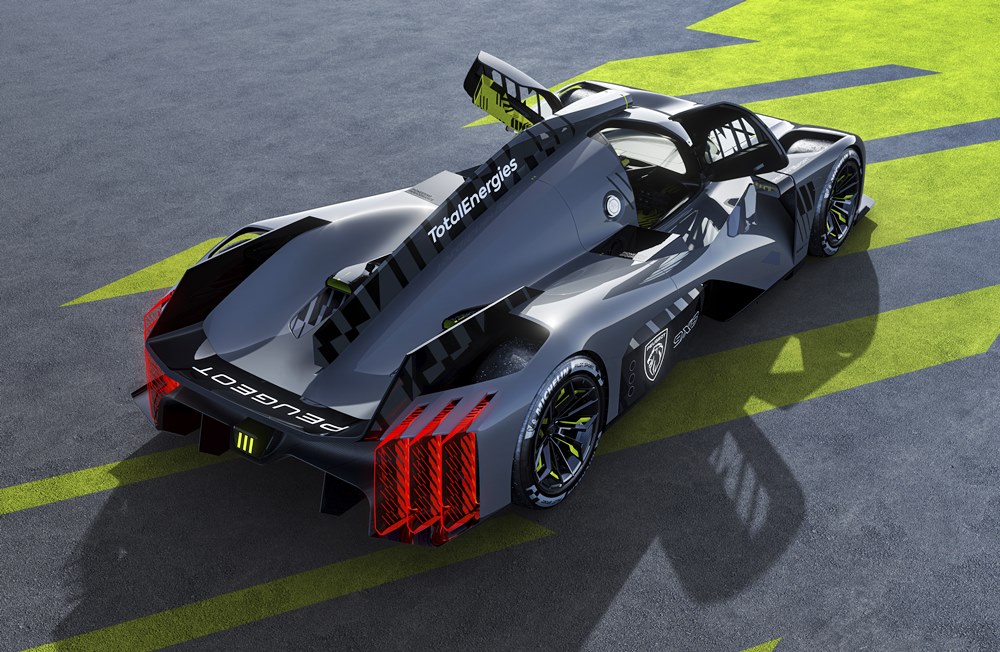
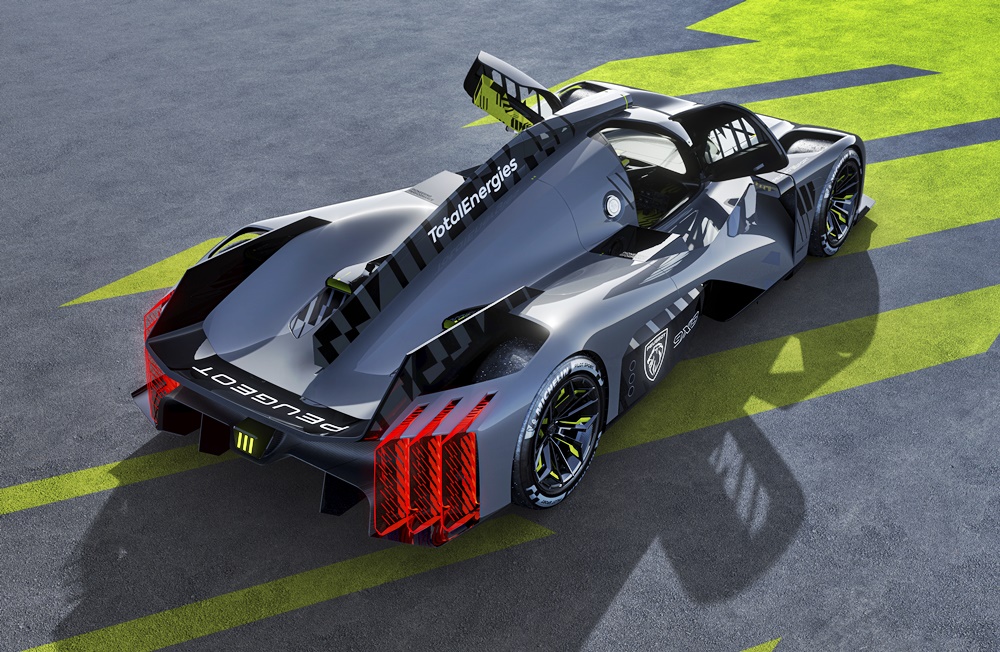
Unique to the hypercar’s design is the absence of a rear wing – an aerodynamic feature that has long been thought necessary for racing cars. Rear wings were first seen at the 1967 Le Mans 24 Hours on the Chaparral 2F but now, after half a century, the necessity is questioned and the 9X8 has been designed without a rear wing.

2022 Peugeot 9X8 Le Mans hypercar

“The absence of a rear wing on the Peugeot 9X8 is a major innovative step. We have achieved a degree of aerodynamic efficiency that allows us to do away with this feature. Don’t ask how, though! We have every intention of keeping that a secret as long as we possibly can!” said Jean-Marc Finot, Senior Vice-President of Stellantis Motorsport (Peugeot is part of the Stellantis Group).

Peugeot HYBRID4 powertrain
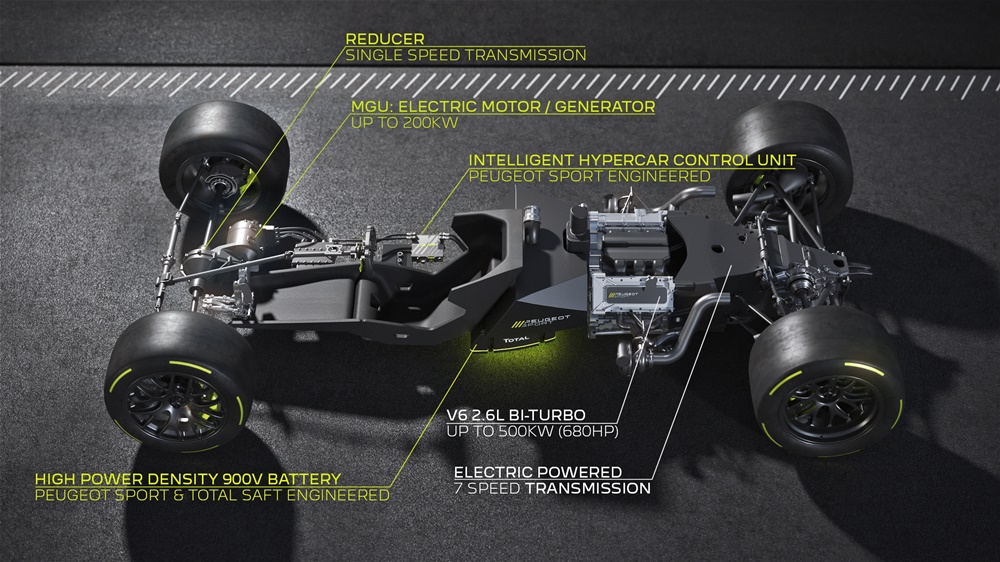
The 5-metre long racing car has a rear-mounted, 2.6-litre, bi-turbo, 680-bhp 90-degree V6 as part of the Peugeot HYBRID4 powertrain. The system output gets another 200 kW from the front-mounted 200kW motor-generator unit powered by a high-voltage 900V high-density battery pack.

The battery pack is located in a carbonfibre casing inside the car’s monocoque structure, behind the driver and underneath the fuel tank. It has been designed to combine durability with consistent performance during races of durations of up to 24 hours, and even beyond.

Although the system output is over 500 kW, the regulations set a maximum power output of just 500 kW during races. The regulations also forbid the use of electrical energy below 120 km/h, so the motor generator unit only engages once this speed has been reached. The car must pull away from standstill under the power of its internal combustion engine alone.

At full power, the power output is limited to 300 kW and adjusted as a function of the power delivered by the motor generator unit at 200 kW which is directly dependent on the battery level. When the motor generator unit comes into use, the car automatically switches to 4-wheel drive, thereby modifying its drivability.

When the battery pack is empty, the engine reverts to 500 kW power output and the drivetrain reverts to rear-wheel drive. During races, the battery will be fully charged prior to the start by means of a mains-connected plug-in hybrid charger. Once on the track, the battery will function completely independently and be charged only by the kinetic braking energy recovery system.

Porsche and Penske preparing new LMDh prototype for endurance races from 2023

Peugeot, which won the Le Mans 24 Hours in 1992 and 1993 as well as in 2009, will return next year to the World Endurance Championship (WEC) with its new-generation hypercar, the 9X8. Now under development, the 9X8 showcases Peugeot’s Neo-Performance strategy which combines technology and sportiness in both the carmaker’s road and racing cars.

A project between Peugeot Sport and Peugeot Design, the 9X8 is a direct successor of the Peugeot 905. The designers worked closely with engineers to explore new aerodynamic solutions and styling ideas. Greater flexibility, allowed by the WEC’s new technical rules regarding aerodynamics, permits new thinking that favours the emergence of innovative cars, allowing for new creative processes and a break away from established procedures to produce a hypercar for a completely new era.

2022 Peugeot 9X8 WEC hypercar

What ‘9X8’ means
‘9X8’, the designation, is derived from a combination of the brand’s motorsport heritage and vision for the future. The ‘9’ continues the series used by Peugeot on its previous endurance racing cars. The ‘X’ refers to the all-wheel drive technology and hybrid powertrain. The ‘8’ is common across all of Peugeot’s current models – from the 208 and 2008 to the 308, 3008, 508 and 5008.

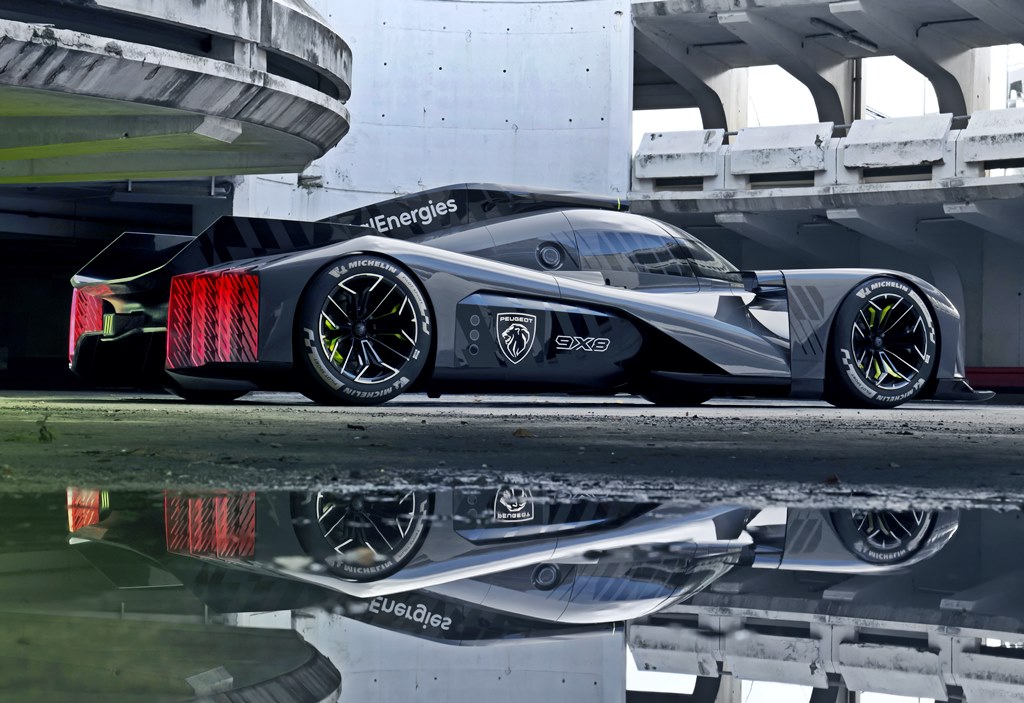
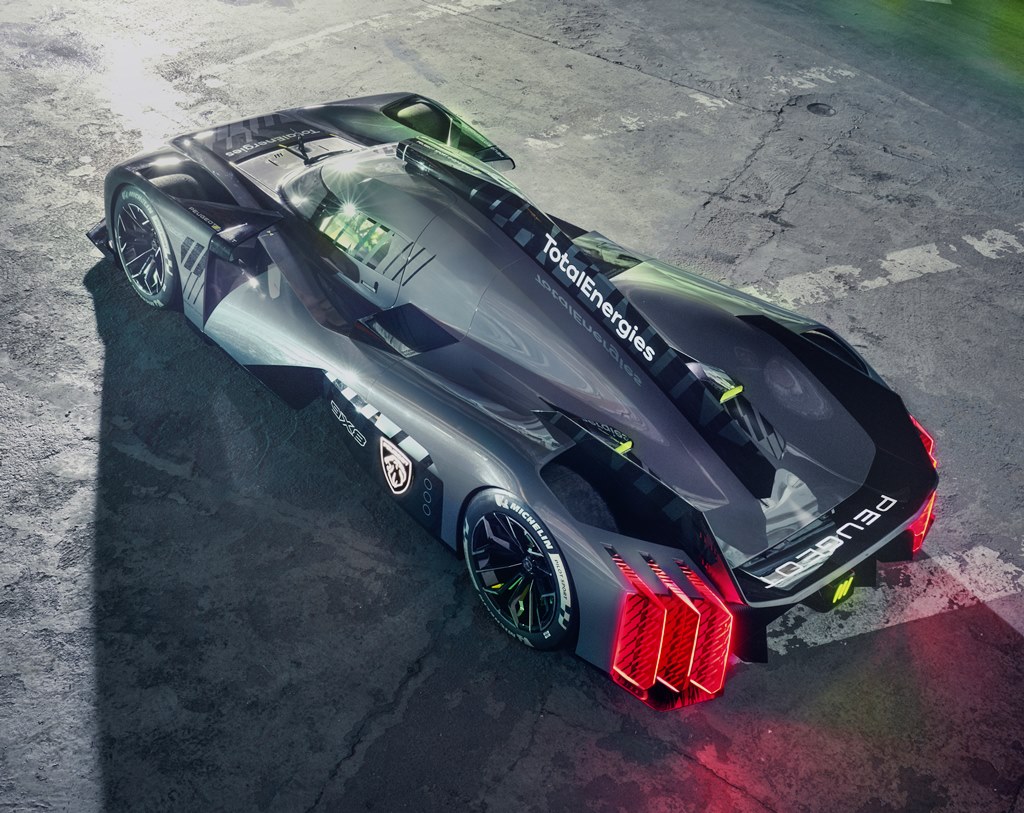
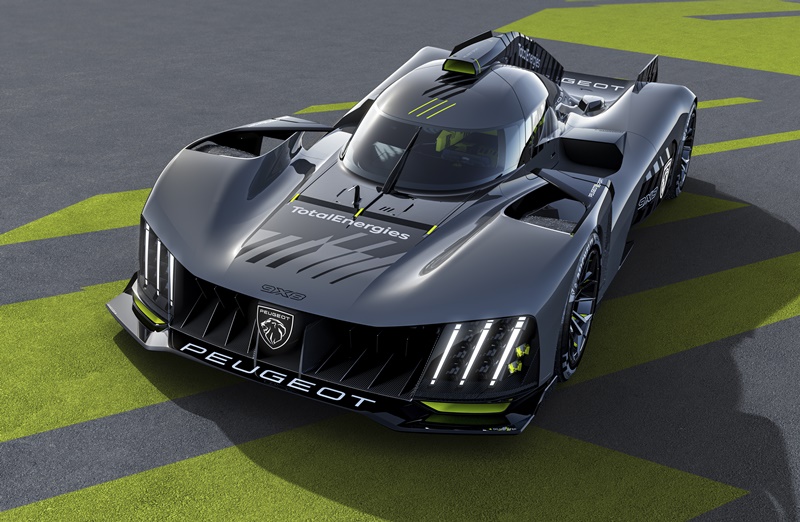
The 9X8’s front and rear lighting signatures, which take the form of three claw-like strokes, are familiar Peugeot trademarks, while the brand’s new lion’s head logo features at the front and on the sides of the car. “Since the 9X8 is a Peugeot, the original sketch that steered our work portrayed a big cat ready to pounce, a stance which we have suggested by the slightly forward-tilting cockpit. The overall lines of the Peugeot 9X8 express the brand’s styling cues, while its sleek, racy, elegant forms inspire emotion and dynamism,” explained Peugeot’s Design Director, Matthias Hossann.

2022 Peugeot 9X8 WEC hypercar

No rear wing necessary
The finely-chiselled details of the rear-end design includes the quip ‘We didn’t want a rear wing’ above a wide diffuser. Rear wings were first seen at the Le Mans 24 Hours on the Chaparral 2F which contested the race in 1967, meaning this is the first time their use has been questioned in more than half a century. The 9X8’s innovative rear stems from research carried out by Peugeot Sport’s engineering team as they worked to ensure the model was as aerodynamic as possible, whilst maintaining an eye-catching style.

“The absence of a rear wing on the Peugeot 9X8 is a major innovative step. We have achieved a degree of aerodynamic efficiency that allows us to do away with this feature. Don’t ask how, though! We have every intention of keeping that a secret as long as we possibly can!” said Jean-Marc Finot, Motorsport Director of Stellantis (Peugeot is part of the Stellantis Group).

2022 Peugeot 9X8 WEC hypercar

2022 Peugeot 9X8 WEC hypercar

Distinctive cockpit colour scheme
“Inside, we wanted to take a special approach to the cockpit which, until now, has tended to be a purely functional and indistinctive aspect of racing cars, with no brand identity whatsoever. The combination of our colour scheme and Peugeot’s i-Cockpit interior styling signature have provided the 9X8’s cockpit with a distinctive feel and make it immediately identifiable as a Peugeot.”

Peugeot HYBRID4 powertrain
The 5-metre long racing car has a rear-mounted, 2.6-litre, bi-turbo, 680-bhp 90-degree V6 as part of the Peugeot HYBRID4 powertrain. The system output gets another 200 kW from the front-mounted 200kW motor-generator unit powered by a high-voltage 900V high-density battery pack.

The battery pack is located in a carbonfibre casing inside the car’s monocoque structure, behind the driver and underneath the fuel tank. It has been designed to combine durability with consistent performance during races of durations of up to 24 hours, and even beyond.

Although the system output is over 500 kW, the regulations set a maximum power output of just 500 kW during races. The regulations also forbid the use of electrical energy below 120 km/h, so the motor generator unit only engages once this speed has been reached. The car must pull away from standstill under the power of its internal combustion engine alone.

At full power, the power output is limited to 300 kW and adjusted as a function of the power delivered by the motor generator unit at 200 kW which is directly dependent on the battery level. When the motor generator unit comes into use, the car automatically switches to 4-wheel drive, thereby modifying its drivability.

Peugeot Hybrid4 500KW

When the battery pack is empty, the engine reverts to 500 kW power output and the drivetrain reverts to rear-wheel drive. During races, the battery will be fully charged prior to the start by means of a mains-connected plug-in hybrid charger. Once on the track, the battery will function completely independently and be charged only by the kinetic braking energy recovery system.

2022 Peugeot 9X8 WEC hypercar

‘An extreme laboratory’
Peugeot’s CEO, Linda Jackson, says there’s more to the company’s involvement in endurance racing than the sporting aspect. “Endurance racing is a form of motorsport that provides us with an extreme laboratory, which explains why our association with Le Mans is so strong. More significant perhaps than the results we obtain on the racetrack are the opportunities it provides to prove our technology and the fruit of our research work in a race that throws extreme conditions at you for 24 hours,” she said.

“Le Mans gives us a competitive environment to validate the hybrid systems and technologies we are currently developing to reduce the fuel consumption – and therefore CO2 emissions – of our road cars. The teams at Peugeot Sport are proud when they see their research carried over to our production models,” she added.

Peugeot last raced and won at Le Mans in 2009 with the 908 HDi FAP which had a 5.5-litre V12 turbodiesel.

Ferrari to officially take part in Le Mans Hypercar class from 2023

StayAtHome

Archive

Follow us on Facebook

Follow us on YouTube