Piston.my

Latest News

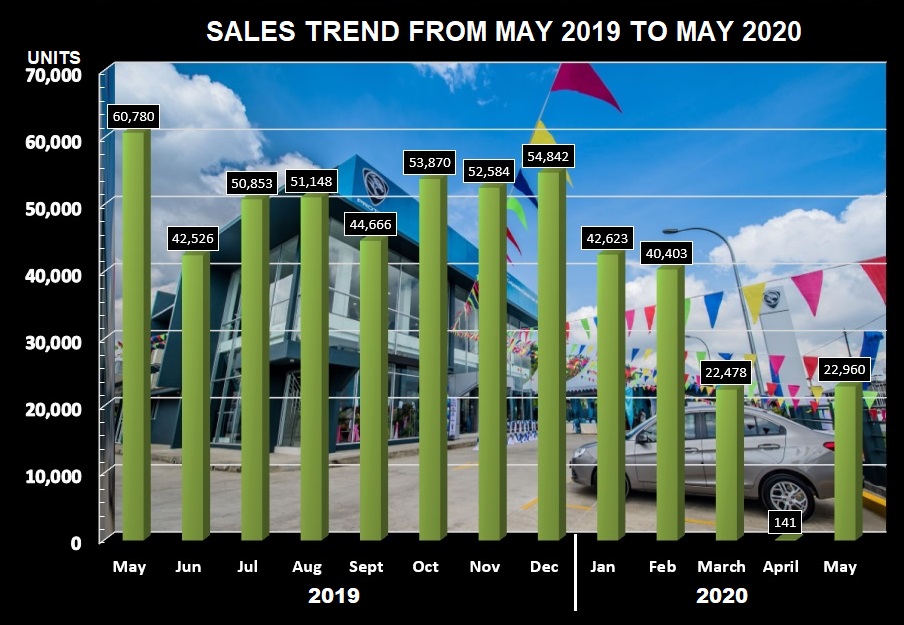
May 2020 sales

Note: Some companies are reporting on a quarterly basis so the Total volumes for April and May are not finalised.
Source: Malaysian Automotive Association.

♦ After the unprecedented fall in sales for April due to the shutdown of all operations, new vehicle sales rose as activities were allowed to resume in May. However, the JPJ only began registration processes from May 13.

♦ The Total Industry Volume (TIV) rose by 22,819 units, comprising 20,456 passenger vehicles, and 2,504 commercial vehicles (including pick-up trucks).

♦ Cumulative sales after 5 months reached 129,561 units, about half the volume for the same period in 2019.

♦ To achieve the MAA’s revised 400,000-unit forecast for 2019, the industry must sell 270,439 units in the remaining months, or an average of 38,634 units.

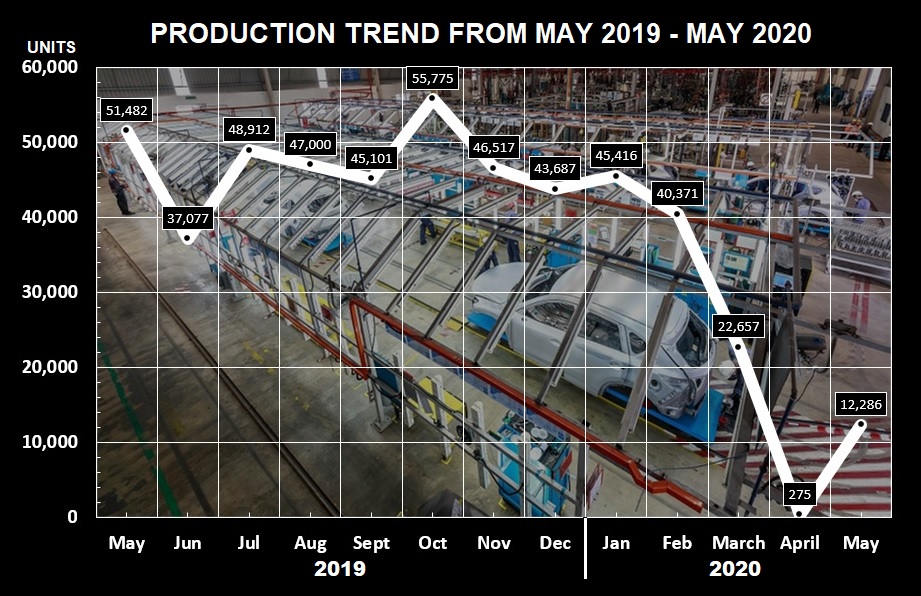
♦ Production also rose again but compared to the same month in 2019, the total output was 76% lower.

May 2020 Production
Source: Malaysian Automotive Association

COVID-19

PISTON.MY

BHPetrol RON95 Euro4M

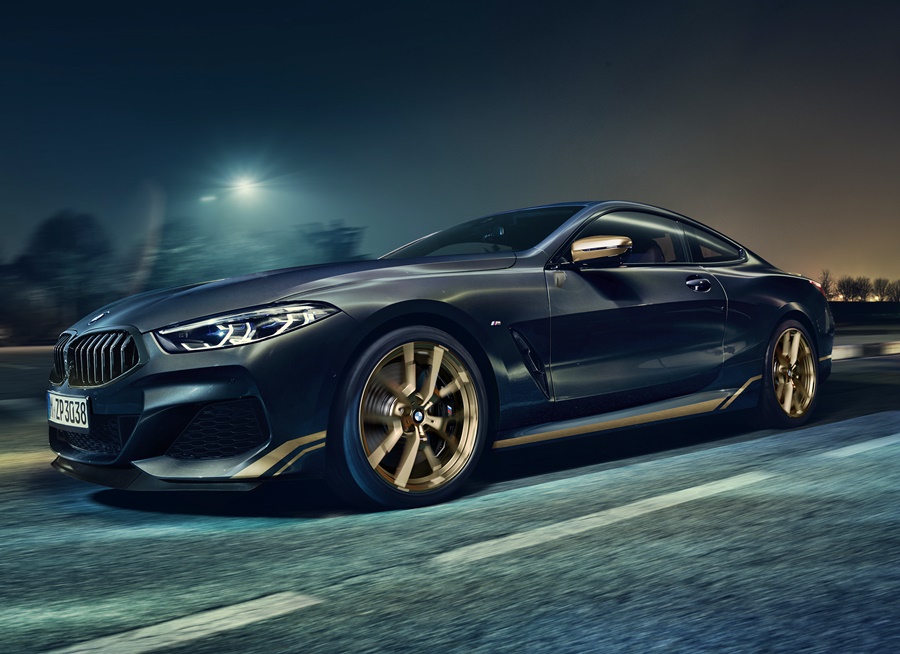
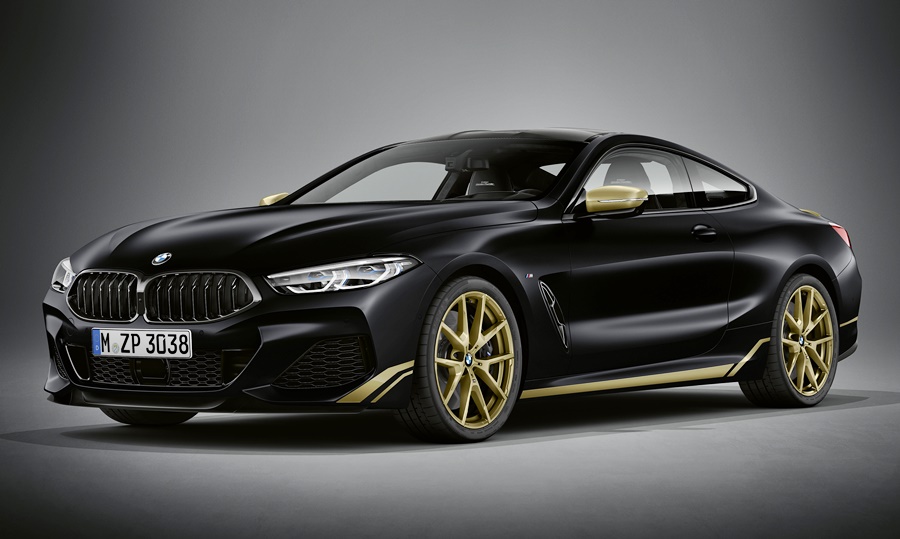
‘Golden Thunder’ is not the title of a new Chinese movie but the name of a special edition of the BMW 8-Series created by BMW Individual. Available for three body variants, its extravagant enhancement is in the form of specific design accentuations in gold along with high-end BMW Individual equipment features for both the exterior and interior.

The 8-Series Edition Golden Thunder is said to be for ‘customers with the very highest expectations in terms of style and quality’. The exclusive enhancements give the edition models the character of a custom-built vehicle.

2020 BMW 8-Series Edition Golden Thunder

Available for all model variants – coupe, convertible and Gran Coupe – the M sports package is also a standard feature in the range which covers the 840i and 840d xDrive through to the M850i xDrive.

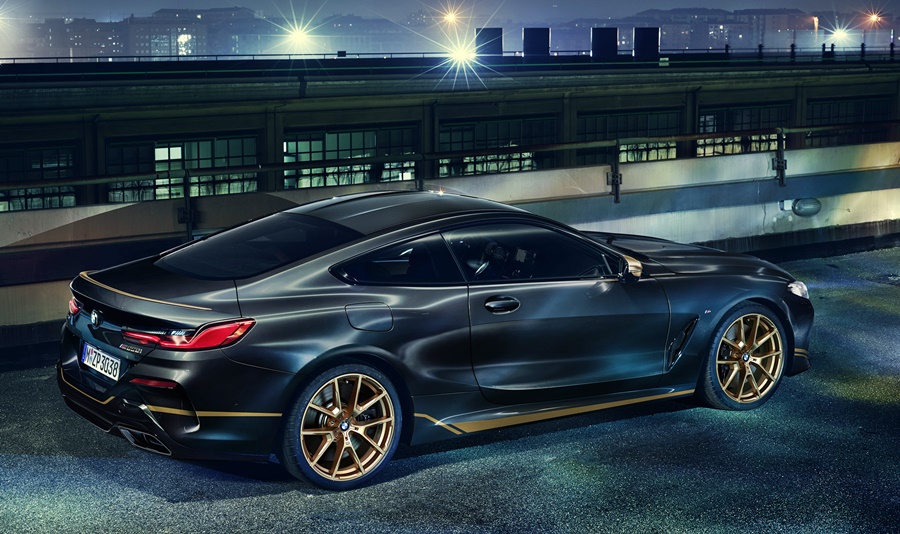
A body finish in Sapphire Black metallic or Frozen Black metallic and carefully selected colour accentuations in gold give a distinct appearance. The dark look is supplemented by BMW Individual High Gloss Shadow Line with extended features and black brake calipers for the M sports brake system.

A striking contrast is created by means of golden accentuation lines running from the front apron to the side skirts and on into the rear apron. Other features finished in gold are the exterior mirror caps, the M rear spoiler (exclusively available for the 8-Series Coupe) and the 20-inch M light alloy wheels in double-spoke design.

2020 BMW 8-Series Edition Golden Thunder

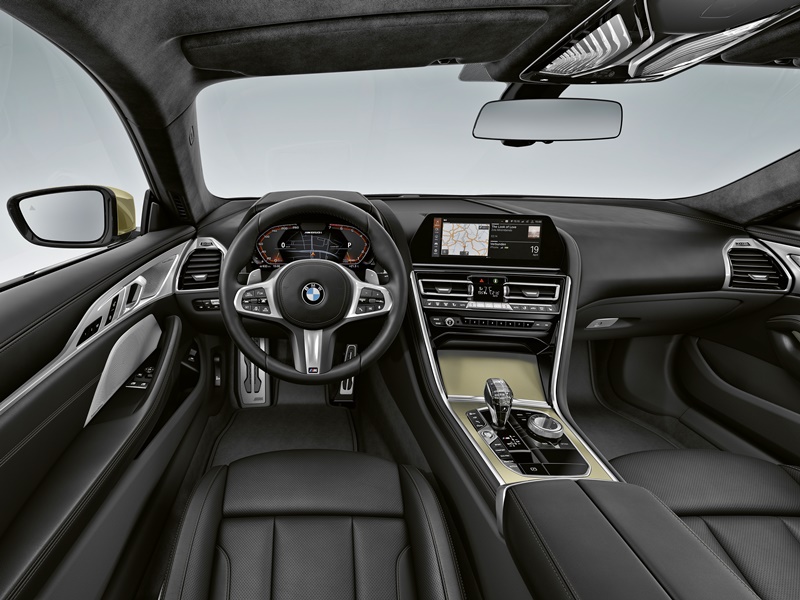
Sportscar flair and individual luxury are also combined in the interior of the edition models to create an extravagant ambience. This is created by the extended BMW Individual Merino leather trim in black with the ‘Edition Golden Thunder’ inscription embroidered on the front headrests and the BMW Individual Alcantara Anthracite roofliner for the Coup and Gran Coupe, but in particular by the interior trim finishers in Aluminium Mesh Effect Gold.

On the centre console, the finely structured and high-end shimmering surfaces are supplemented with an edition emblem. The edition models also feature CraftedClarity glass applications for selected controls and the Bowers & Wilkins Diamond Surround Sound System.

2020 BMW 8-Series Edition Golden Thunder

The Edition cars will be produced at the BMW plant in Dingolfing, Germany from September 2020.

‘The Boss’ gets electrified with the new BMW X5 xDrive45e M Sport

Social distancePISTON.MY

BHPetrol RON95 Euro4M

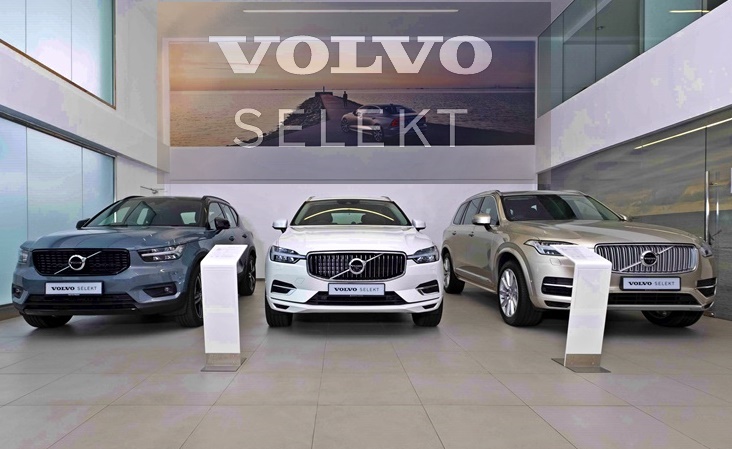
Volvo Car Malaysia (VCM) has joined other distributors of premium brands in offering pre-owned Volvo cars with its used car programme known as Volvo SELEKT. The sale of pre-owned Volvos by the Volvo distributor is not new as Federal Auto, which was the first distributor for the Swedish brand, set up its own used car subsidiary in the 1960s which was quite successful.

The new programme, also available in other countries, by promises a premium experience for customers through dedicated service and assurance of quality. Each pre-owned Volvo car offered under the Volvo SELEKT programme is guaranteed to be under 5 years old and has less than 100,000 kms cumulative mileage.

Volvo SELEKT

Once qualified for the programme, the car will receive a 125-point inspection and have its software upgraded to the latest versions so the engine will function optimally. Genuine Volvo parts will be used for any parts that need to be replaced. Most importantly, all the services and upgrades will be conducted by trained Volvo technicians who would know the cars best.

“Through Volvo SELEKT, we hope to give customers the choice of an alternative option while maintaining all the criteria of excellence, reliability and performance of a premium luxury car. Moreover, we are committed to ensuring that all of our customers experience a seamless and premium journey of acquiring and owning a Volvo car. Volvo SELEKT thereon guarantees that customers will receive the same level of quality and service as that of a new Volvo car, but at a package that fulfils their financing needs,” said Nalin Jain, MD Volvo Car Malaysia.

Volvo SELEKT
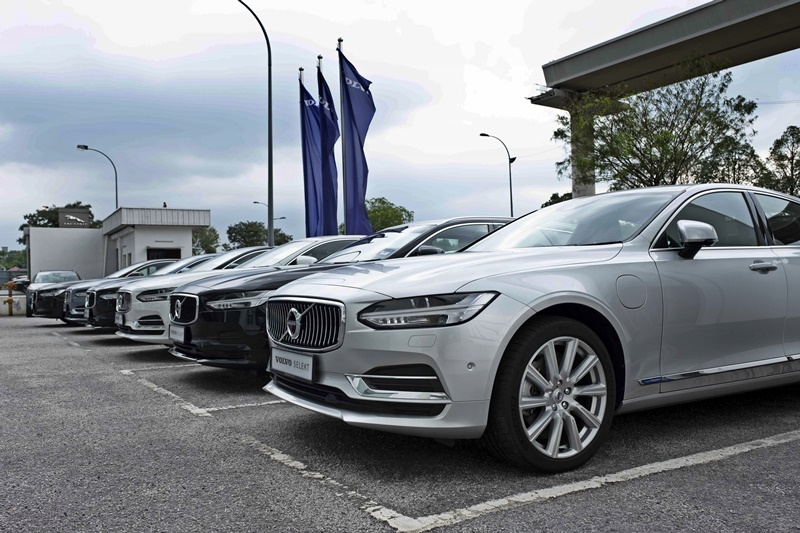
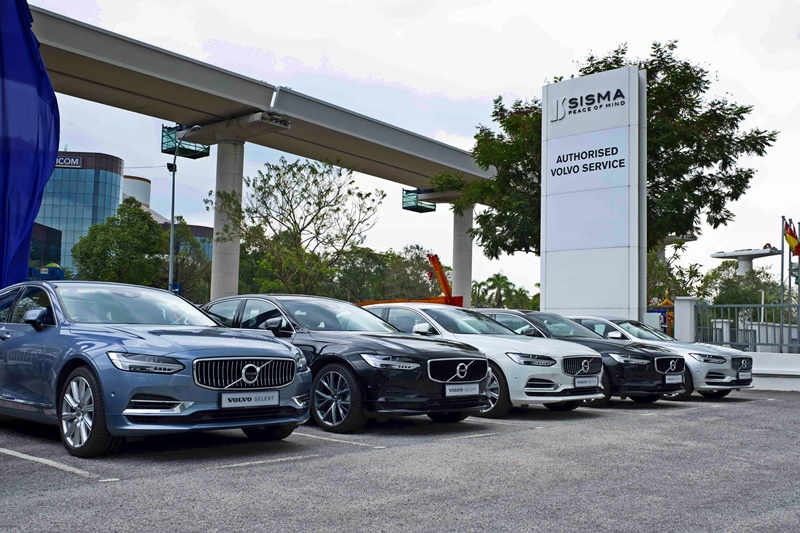
A selection of pre-owned Volvos at a dealership.

While Volvo SELEKT owners won’t get the 5-year warranty that comes with brand new cars, there is still a minimum of 12 months of warranty coverage as well as complimentary 12-month maintenance service package (VSA 1), and 12 months of Roadside Assistance.

There is also the option of including Volvo accessories, including a Polestar optimisation package as an optional add-on for selected models.

“At Volvo, we put our heart and soul into every car, devoting hours of expertise and attention to detail so that it leaves a lasting impression. Pre-owned Volvo cars under the Volvo SELEKT Programme bear the same markings of excellent Swedish craftsmanship, dedication to perfection and above all, our commitment to safety. We hope that through Volvo SELEKT, more Malaysians can experience first-hand our pioneering safety features and innovation that has been engineered into each of these cars, making them some of the safest options in the market,” Mr. Nalin said.

Full Volvo pricelist with Sales Tax exemption

PISTON.MY

PAYD (Pay-As-You-Drive) is an opt-in feature of Tune Protect Malaysia`s Motor Insurance plan which rewards car owners who have low mileage with a refund of the basic premium paid. It was introduced in August 2019 in support of a greener environment, helping reduce urban stress of commuting on roads, and to encourage the use of public transportation such as LRTs and MRTs in easing road congestions in the country.

Tune Protect Malaysia recently enhanced PAYD eligibility criteria as more Malaysians have embraced the work-from-home (WFH) practice, by extending the eligibility age of insured (vehicle owners) to 65 years and age of vehicles to 10 years.

More drivers can enjoy benefit
This enhancement is expected to benefit more drivers and enable a wider segment of vehicle owners to enjoy the benefits of PAYD.  Acknowledging the fact that more people are working from home, Tune Protect Malaysia believes that those who drive less should be aptly rewarded by paying less premiums than the frequent drivers.

LRT station carpark
Those who use public transport more and drive less can be rewarded with refunds on their insurance policy.

Private car owners who are between the ages of 28 and 65 years and who own vehicles aged between up to 10 years old with sum insureds ranging between RM40,000 to RM300,000 will be qualified to opt-in for the PAYD benefit when purchasing to Tune Protect Motor insurance.

Refunds based on mileage
Following a tier system, customers will get to enjoy a 20% refund on their basic motor insurance premiums if their mileage usage is between not more than 6,000 kms, with a 15% refund if it falls between 6,001kms and 8,000 kms at the expiry of the policy. The No Claim Discount (NCD) typically offered for not making any compensation claims during the year will still apply as PAYD is a complementary plan that is free of charge.

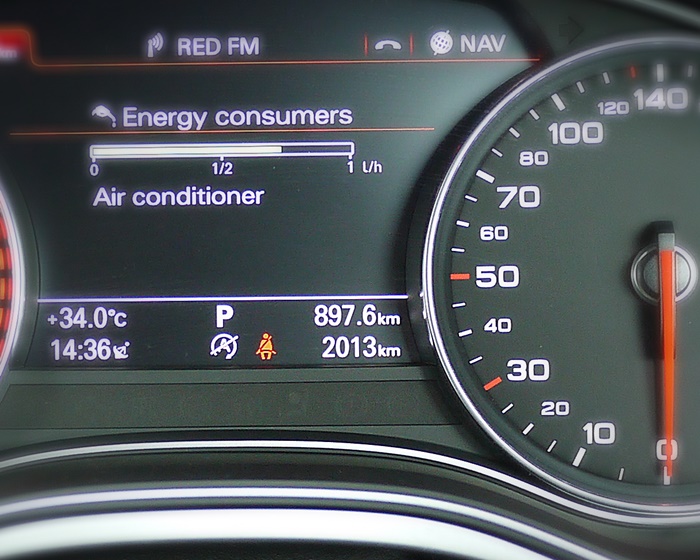
Odometer
Motorists must send in pictures of their vehicle’s mileage three times during the period of insurance coverage.

The plan operates by referring to the vehicle’s mileage data that is recorded from the odometer, stating the kilometres driven to-date. Customers who opt-in for PAYD will receive a personalised URL link via SMS and email to submit photographs of their vehicle’s odometer reading thrice during the duration of the year. These submission points are at the inception of the motor insurance policy, 180 days after inception, and at the point of expiry.

“We received a lot of positive feedback from vehicle owners when we first introduced PAYD including requests to expand its eligibility criteria so that more car owners can enrol and benefit from this feature,” said William Foo, CEO of Tune Protect Malaysia. “We are delighted to be able to fulfil these requests and quite timely in this new normal where more and more individuals have adopted to the WFH arrangement permanently. We want to offer the opportunity for people to enjoy the benefits earned from their everyday lifestyles.”

Covid-19
Fighting COVID-19 is our joint responsibility. Protect yourself and others: make these 6 simple precautions your new habits.

PISTON.MY

BHPetrol RON95 Euro4M

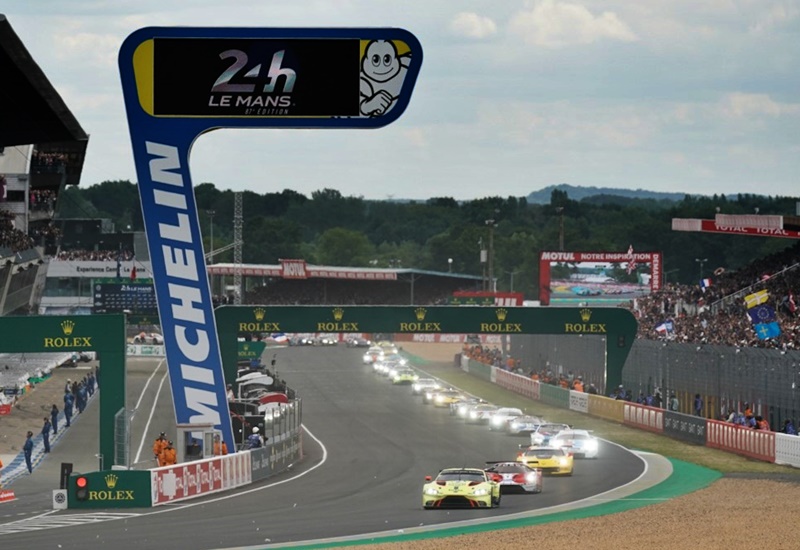
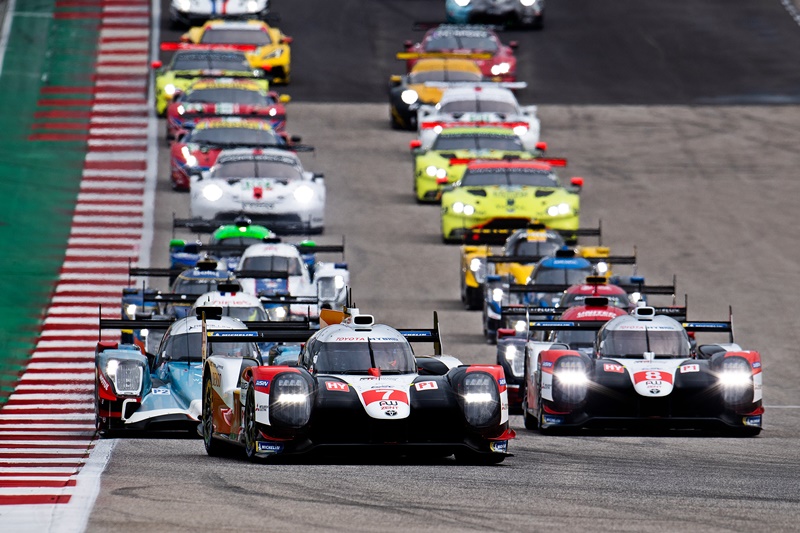
The 24 Hours of Le Mans race, typically held in June, had to be postponed to the 19/20 weekend of September due to the  COVID-19 pandemic. It’s the 88th edition this year, and well aware of the financial impact of the situation on racing teams, the Automobile Club de l’Ouest (ACO) was keen to ensure that their resources are not tied up over too long a period.

In agreement with the FIA and the main partners and stakeholders of the international event, the event will have a packed 4-day schedule for the 62 teams confirmed to be taking part. Between Thursday and Sunday, there will be 4 free practice sessions, qualifying, the Hyperpole session and a warm-up, culminating with the 24-hour endurance race itself.

WEC

Compact time-frame
The schedule of practice sessions – vital to good race preparation – has been rearranged, with qualifying, the warm-up and the race, packed into a 4-day time-frame. This is expected to maintain the requisite level of quality for such an iconic international event.

The traditional scrutineering procedures will take place at the Circuit on Wednesday before the 62 cars take to the track on Thursday for the free practice sessions, qualifying and night-time practice. Friday will see more practice sessions and the much-awaited new Hyperpole shoot-out where 24 competitors will battle it out on the 13.626-km circuit in a test of sheer speed, without the ‘heavy traffic’!

WEC

Hyperpole format
The Hyperpole qualifying format replaces the previous approach which involved 6 hours of qualifying in 3 two-hour sessions over Wednesday and Thursday. It was confirmed late last year to determine  the top positions on the grid. The top six cars in each of the four classes during a 45-minute qualifying period will go forward to the Hyperpole session.

The 24 cars that make it through to this shoot-out session will be allowed one run because they will not be permitted to return to their pit during the 30 minutes. Teams will have free choice of tyres within the existing allocation for qualifying and the race.

WEC

Pierre Fillon, President of the ACO, explained that the new format was aimed at ‘guaranteeing two exciting sessions for both drivers and spectators, where all the focus will be on sheer speed in a quest for the perfect lap’.

Last year, the starting time of the 2020 race was changed to 4 pm on Saturday, one hour later than usual. However, in replanning the whole event program this year, the race itself will start at 2:30 pm on Saturday.

WEC

The race at Le Mans will be the finale for the 2019/2020 World Endurance Championship (WEC). The season began with the 4 Hours of Silverstone in September 2019 and races were run in Japan, China, Bahrain, and the USA (Texas). There was also a second race to be held in the USA at Sebring but this was cancelled due to the pandemic. Before Le Mans, there will be a round at Spa-Francorchamps in Belgium in August.

Looking ahead
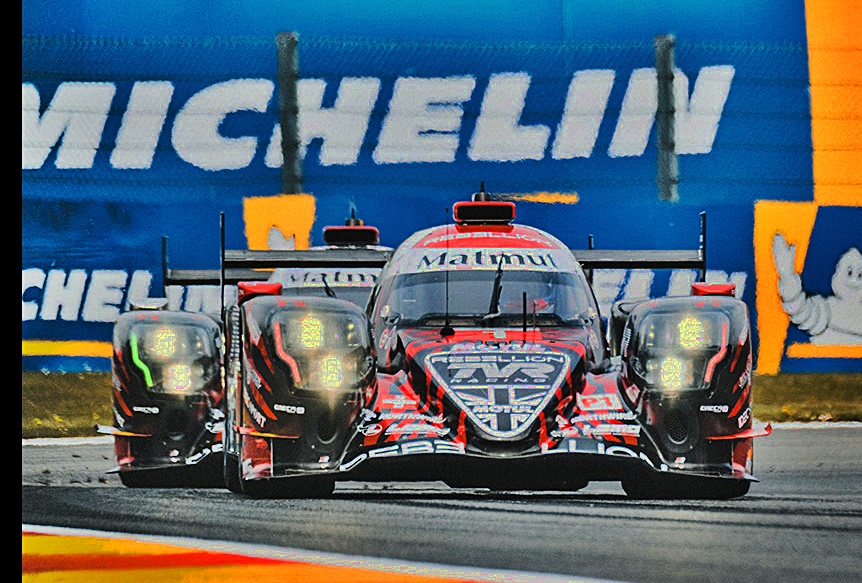
The 2020/2021 WEC season will see the brand new Le Mans Hypercar category in place of the LMP1 category. Assuming the pandemic diminishes and countries are less restrictive, there are 8 races (ranging from 6 hours to 24 hours) scheduled to be run in Europe, Asia, Middle East, Africa and the USA. Two new venues –  Monza in Italy and Kyalami in South Africa will be on the calendar.

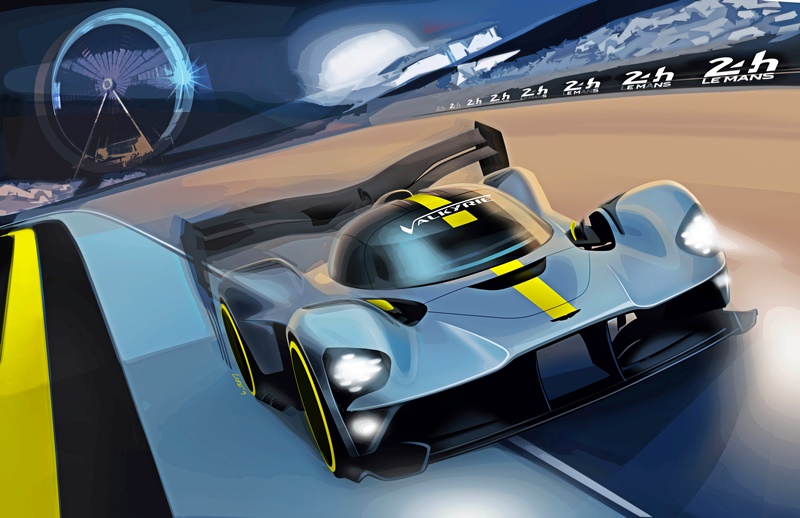
Aston Martin Valkyrie
Aston Martin was initially among the participants of the new Hypercar category with its Valkyrie but has put the racing project on hold. It will continue to race in the WEC with the Vantage GTE.

COVID-19

PISTON.MY

BHPetrol RON95 Euro4M

Launched at the International Motor Show (IAA) in Frankfurt in September 1975, the first Volkswagen Golf GTI was a fresh and wild newcomer. Going on sale the following year, it stormed into an automotive category that hadn’t actually existed until that moment – the sporty front-wheel drive compact car, or what would come to be called ‘hot hatches’. Until that time, hatchbacks had been just more utilitarian cars without a performance image.

Originally, Volkswagen expected to sell 5,000 units but the affordable Golf GTI, with driving dynamics previously relegated to the world of expensive sports cars brought to the masses, saw all the production gone from showrooms within a very short time.

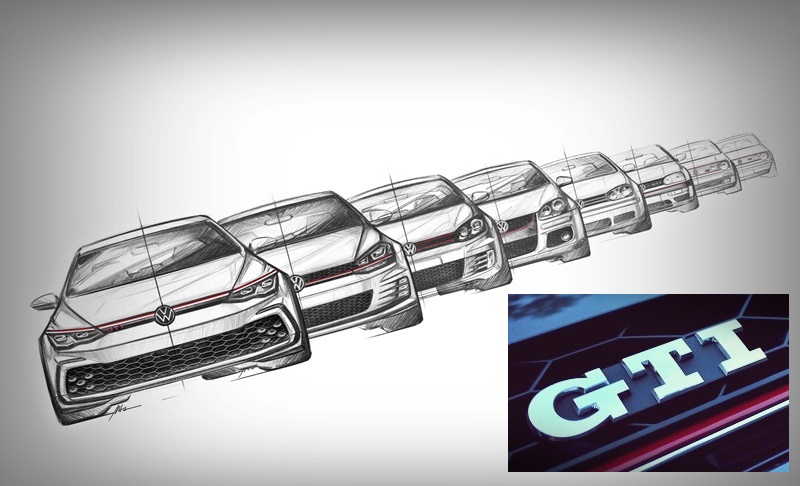
Consequently, the carmaker replanned for more and a total of 461,690 units of the Golf GTI of the first generation left the production lines at Wolfsburg. With seven generations to date, it has become the world’s most successful compact sportscar.

VW Golf GTI Mk 1

Mark 1 (1976 – 1983)
In 1974, half a dozen staff members at Volkswagen came up with a secret plan to develop a sporty version of the Golf. There was no official mandate to develop a ‘Sport Golf’, but Hermann Hablitzel, Board Member for Technology, was enthusiastic made sure the project kept going. Initial prototypes emerged and by early March 1975, the Sport Golf project was presented to Toni Schmucker, Chairman of the Board of Management, who gave it the green light.

As a result, the clandestine Sport Golf officially became development order ‘EA195’. It was paired with the right power unit – a fuel-injected engine generating 110 ps. However, the Sport Golf didn’t even have then. Suggestions included TS and GTS, but GTI got the most votes. At the same time, chief designer Herbert Schafer – a keen golfer – reinvented the shifter knob by simply attaching a golfball to the GTI’s selector rod!

The car was showcased in Frankfurt, receiving an enthusiastic media response. In June 1976, the Golf GTI Mk 1 was launched in Germany before going on to enjoy global success. The initial plan was to manufacture 5,000 units of this special product line to at least recoup the cost of development and the investment in production equipment.

However, things turned out rather differently as the GTI’s level of popularity was unexpected. The GTI had a top speed of 180 km/h, black wheelarch extensions, a black frame around the rear window, red edging around the radiator grille, plaid sport seats, that golfball shifter knob, and a sport steering wheel.

VW Golf GTI Mk 2

Mark 2 (1984 – 1992)
The second generation of the Golf GTI perpetuated the concept and design DNA of the first generation. The GTI’s insignia – in particular, the red strip in the radiator grille and the plaid sport seats – became classic design features and the newcomer ultimately also became an icon.

In 1984, its year of launch, the engine output briefly dropped to 107 ps as a result of the fitment of a catalytic converter. But 2 years later, Volkswagen engineers offset the loss of power with a new 16-valve unit generating 129 ps. By 1990, the G-Lader supercharged engine in the Golf GTI G60 boosted output to 160 ps, accelerating the performance increases for the model.
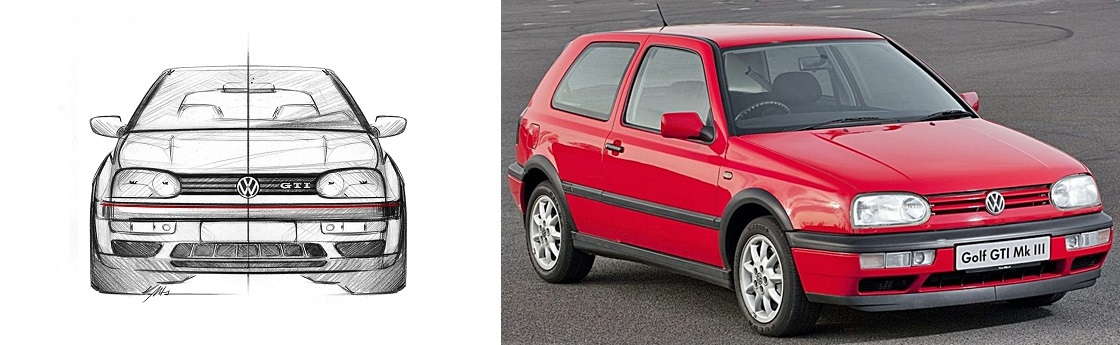
VW Golf GTI Mk 3

Mark 3 (1991 – 1998)
Restyled for the third generation, the dual headlights of the previous generation had now been concealed behind a shared lens and the engine output started from 115 ps. One year later, the number rose to 150 ps with a new 16-valve engine.

In 1996, a turbocharged diesel version (TDI) generating 110 ps enhanced the GTI concept. Years later, petrol and diesel engines would be divided once and for all into GTI and GTD.
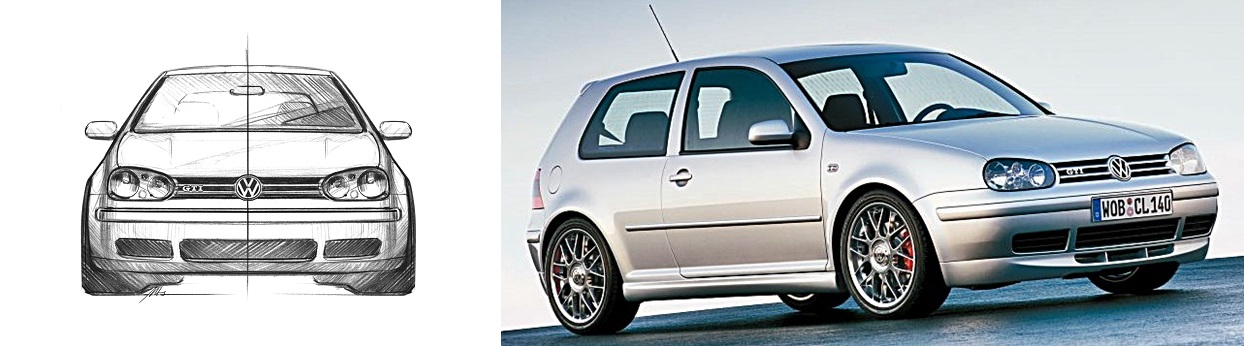
VW Golf GTI Mk 4

Mark 4 (1998 – 2005)
The fourth generation of the GTI, introduced in 1998, was modest in terms of GTI styling. It was the first and only GTI to do away with classic cues including the red strip in the radiator grille. Nevertheless, the hot hatch still became a design icon, celebrated today as the starting point of a new, cleaner era of vehicle design.

In terms of technology, the 150-ps Golf GTI Mk4 was a car that kept competitors at arm’s length with its agility and quality. The petrol engines—with 4 and 5 cylinders—generated up to 170 ps while turbodiesel engines delivered a maximum of 150 ps. In 2001, celebrating the icon’s first quarter century was a turbocharged ‘25 years of GTI’ special edition generating 180 ps.
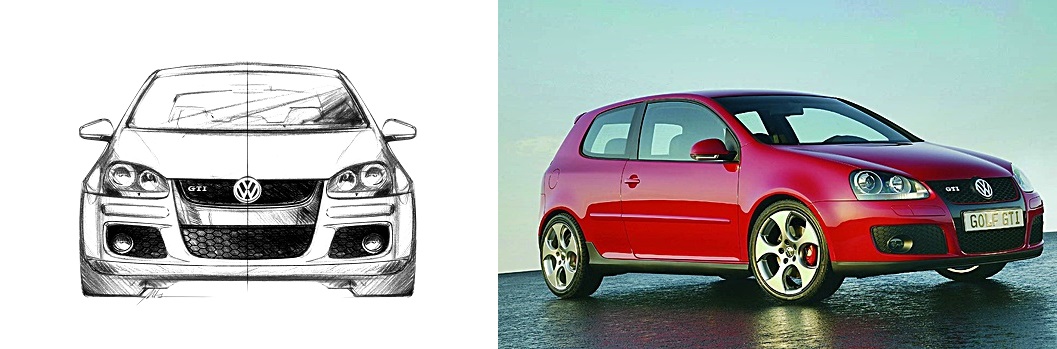
VW Golf GTI Mk 5

Mark 5 (2004 – 2009)
In September 2003, Volkswagen unveiled a prototype of the fifth-generation GTI in Frankfurt. More than ever before, GTI had become synonymous with outstanding compact-car handling. The production version appeared at the Paris Motor Show the following year, going on sale from November.

Its hallmarks were a significantly sharper look, a 200-ps turbocharged engine and of course, even better handling. The GTI concept was propelled into the future with this version. The new Denver design wheels and the black, V-shaped radiator grille were particularly striking features.

The new turbocharged engine also delivered plenty of power, rocketing the GTI (with a manual gearbox) from 0 to 100 km/h in 7.2 seconds. With the new dual-clutch automatic transmission (DSG), the time fell to 6.9 seconds. The top speed reached 235 km/h. On the 30th anniversary in 2006, the engineers delivered a special edition with an output of 230 ps.
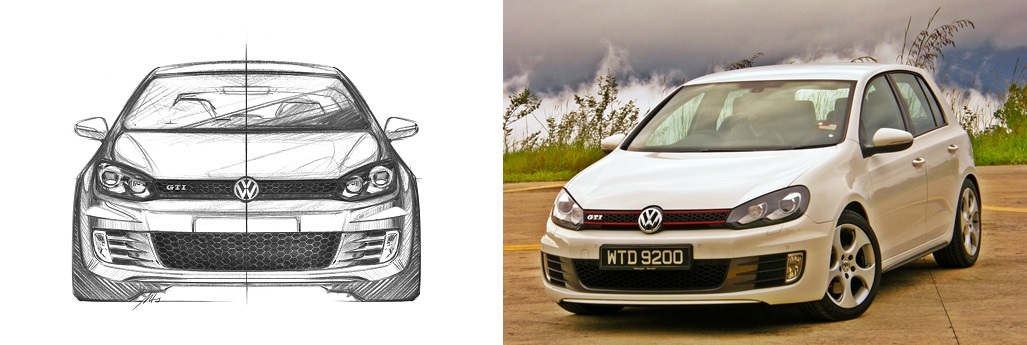
VW Golf GTI Mk 6

Mark 6 (2009 – 2012)
For the sixth generation, racing legend Hans-Joachim Stuck was brought in to help refine the car’s suspension and handling. It featured an electronic differential lock (XDS) for the first time. With a top speed of almost 240 km/h, this GTI had a turbocharged engine generating 210 ps as standard. A sound generator and a new exhaust system, with a tailpipe on either side, delivered sound to match the drive experience.

In 2011, the GTI was made available with a convertible variant for the first time. Again, the engineers produced a special anniversary version, the Golf GTI Edition 35, which had a 235 ps engine.

The  new GTI flagship was presented at the Nurburgring and it was the first to come very close to reaching 250 km/h. Thanks to a power-to-weight ratio of 5.9 kg/ps, the GTI had become faster than ever before, reaching 100 km/h from rest within 6.6 seconds.

VW Golf GTI Mk 7

Mark 7 (2013 – 2020)
The seventh generation of the GTI arrived with two engine outputs for the first time in early 2013. The basic version delivered 220 ps, while the Golf GTI Performance went up to 230 ps. The latter was the first Golf GTI to feature an electronically-controlled torque-sensing limited-slip differential and to be constructed on the modular transverse matrix (MQB).

This new platform cut the GTI’s weight by up to 42 kgs compared with its predecessor, allowing it to be even more agile. With a manual transmission, it was the first Golf GTI to reach 250 km/h.

It formed the basis for the Golf GTI Clubsport, introduced in November 2015, with an engine output of 290 ps, thanks to an overboost function. The 0 – 100 km/h time of 5.9 seconds was easily achieved.

A year later, the Golf GTI Clubsport S – with an output of 310 ps – smashed the previous record for front-wheel drive cars around the Nurburgring’s Nordschleife  in 7:49:21 minutes, during which time it reached a top speed of 264 km/h.

VW Golf GTI Mk 8

From mid-2020…
More than 2.3 million units of the Golf GTI were produced by the end of 2019. After 45 years, Volkswagen has again reinvented the icon for the latest generation. The 8th generation GTI has revolutionary ideas with evolutionary development to become a fully-fledged sportscar. It is the first Golf GTI of the digital age.

A new Vehicle Dynamics Manager control system controls the XDS electronic differential lock, front-axle locking differential functions, and also the lateral dynamics ratio of the controllable damping system (DCC) that forms part of the new GTI running gear set-up.

The 245 ps 2.0-litre turbocharged direct injection engine is now standard. It is coupled with a manual 6-speed gearbox, a firm favourite with sportscar purists. The quick-shifting 7-speed dual clutch gearbox (DSG) is also available as an alternative.

UX designers developed a new GTI graphic for the standard Digital Cockpit. It is made up of a combination of 3 round meters which can be individually assigned to show, for instance, the engine’s boost pressure or the current power output.
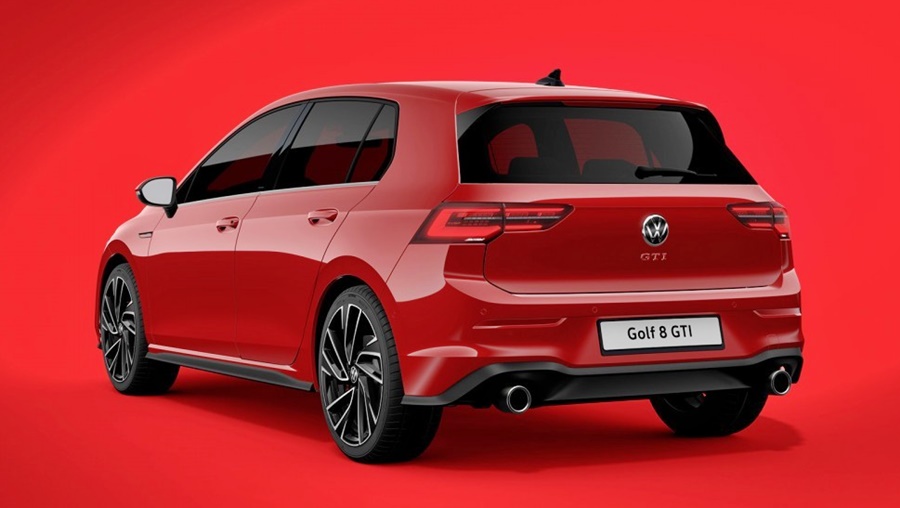
VW Golf GTI Mk 8

Visit www.volkswagen.com.my to know more about Volkswagen models in Malaysia.

Digital Cockpit of new VW Golf 8 brings revolutionary new features to the driver

PISTON.MY

Archive

Follow us on Facebook

Follow us on YouTube