
Piston.my

English

Red Bull, known for its prowess in Formula 1, is set to launch the RB17, a track-only hypercar designed by legendary engineer Adrian Newey. Following the success of the Aston Martin Valkyrie, the RB17 promises to be a formidable competitor with its in-house development by Red Bull Advanced Technologies (RBAT). New details about the project have been revealed on Red Bull’s ‘Talking Bull’ podcast.

Powerful Engine and Performance

The RB17 will feature a high-revving, naturally-aspirated V10 engine with an impressive 15,000rpm redline. Boasting 1000bhp from the V10 and an additional 200bhp from an electric motor, the hypercar is designed to match Formula 1 lap times. The electric motor will not only enhance power but also serve as a starter motor and enable reverse drive.

Aerodynamics and Downforce

The RB17’s aerodynamics will play a pivotal role in achieving its exceptional performance. Equipped with a blown diffuser and an active suspension system, the car will generate significant downforce. At 193km/h, it will generate its weight in downforce, peaking at 1700kg at 241km/h. The active suspension is calibrated to handle these dynamic load variations.

Adaptable for Different Skill Levels

To cater to a range of skill levels, the RB17’s active suspension system allows for setup flexibility. The car’s downforce can be adjusted, and its mechanical balance can be easily tuned to suit diverse driving styles. Red Bull will offer simulator training sessions to help drivers acclimate to the RB17’s capabilities.

Weight Target and Interior Design

With a weight target set below 900kg, the RB17 aims for an exceptional power-to-weight ratio. The closed cockpit design is intended to comfortably accommodate two occupants, particularly taller drivers, differentiating it from the Valkyrie.

(more…)

In a strategic shift, Volvo Cars has announced its decision to cease funding Polestar Automotive Holding, the luxury car brand jointly owned by Volvo and Geely Holding. Volvo, which owns approximately 48% of Polestar’s shares, saw its stock surge by more than 30% at the market open following the announcement. Analysts have criticised Volvo’s heavy involvement in Polestar, considering it a drain on resources for the Swedish automaker.

Challenges for Polestar in a Competitive EV Market

Polestar, like other new electric vehicle (EV) brands, has faced challenges, especially with the intensifying competition in the EV market, highlighted by Tesla’s price war. The brand recently fell short of its reduced delivery targets for 2023. Since going public in June 2022 via a merger with a special purpose acquisition company (SPAC), Polestar’s shares have declined by over 83%.

Geely Takes the Reins, Volvo Shares Soar

Volvo Cars’ decision to relinquish funding for Polestar has led to Geely Holding taking on the responsibility for the struggling luxury brand. This development has fuelled a significant surge in Volvo’s stock, rising over 30% at market open. While there were considerations of distributing Polestar shares to Volvo’s shareholders, Geely Holding has welcomed the decision, committing to providing operational and financial support to Polestar without reducing its shareholding in Volvo Cars.

(more…)

The post-pandemic automotive market has seen a significant stir in the electric vehicle (EV) industry with many automotive giants trying to make a mark in Malaysia. From affordable prices to eye-watering ones, but do any of them stand out from the crowd?

There are models from Europe and China, with the latter having made significant inroads with models that don’t only impress with their tech but also design. 

In fact, we have had some opportunities to test drive a specific model and jumped at every chance we had. The model in topic is none other than the smart #1 (hashtag one). A collaboration between Geely and Mercedes-Benz that was launched in Malaysia by Pro-Net, a subsidiary of Proton. 

We were in love from the moment we laid eyes on it. It has a funky-looking body that caters to every audience. No matter how old you may be, when you step inside it, you will feel a lot younger. Why do we say this? Because the smart #1 has many unique features and a very youthful personality. It has an amazing sound system with speakers by Beats, a grille that lights up which definitely stands out at night, a responsive voice command system and there is an array of body colours to choose from, including an outlandish yellow. 

Apart from that, the smart #1 is also offered in a Brabus trim. Yes, the German high-performance automotive aftermarket tuning company. Besides that trim, there is the Pro and Premium variants for those who prefer to take things slow with minimal charging times. Not to say that the 286hp, 343Nm of torque Premium variant is slow, but for a more thrilling drive and heart-stopping 0-100km/h time, the 422hp, 543Nm of torque Brabus is the way to go. 

Speaking of 0-100km/h time, we had the chance to test it out at the Pinnacle Kart USJ track. The Premium did it in 6.8 seconds but the Brabus on the other hand, did it in 3.9 seconds. The instant torque and launch are the best this writer has experienced in an EV (yet). We also got to test the handling, auto park feature, and evasive manoeuvre assist. 

The handling was exceptional for the Brabus, we felt confident when tackling corners and launching out of corners thanks to its sportier suspension setting. The Premium, however, has a little oversteer to it, making it feel a little hesitant to take corners at high speeds. 

The evasive manoeuvre assist on the other hand was responsive as it gave the driver an amplified push to the steering wheel when avoiding a collision.

The auto park feature, however, was a little challenging as it takes time for the car to detect an empty parking space, but we could speed this by manually choosing a spot by dragging a green box on the touchscreen. After this, the car attempts to park autonomously in that pre-specified green box, and we must say, is pretty impressive but can be time-consuming.


It would be faster to park the car on your own. However, we understand that this feature is still being improved and will take time to make it perfect. 

Now, with all that power, what is the driving range like? The Premium has a range of 440km while the Brabus has a range of 400km. So, to test if the smart #1 is “Long Drive” worthy, we were invited to do so during a media drive from Kuala Lumpur to Penang. 

After a short briefing, the smart team announced that there would be an optional challenge and the winner would get a prize. It was an energy efficiency challenge. The team that reaches Penang with the lowest battery consumption of kWh/100km will be crowned the winner. There were two categories, one for the Premium variant and one for the Brabus variant. 

To start the journey, we were all put in teams of three and our team was given the Brabus variant. This variant was not meant to be driven slowly. So, we decided to have our little challenge instead, to see who would reach Penang the fastest, just for giggles.

Some teams made only one stop to recharge but because we were flooring it half the time, following speed limits of course, we had to charge up twice. The smart app and integrated navigation system played a huge role in this journey. It was easy to use, and it assisted us in planning routes that had charging stations. 

We of course tried our best to choose the ones with a higher kW to reduce our charging time. We made our first stop at Behrang for a quick 25-minute charge with a 75kW which brought our car from 50% to 80%. 

During the drive, we were entertained by the sound system and enjoyed the instant torque. The Brabus trim allows the driver to turn on the virtual engine sound. It was fun for a while, but it is not recommended for long drives as it gets a little annoying due to the fact that it has a constant note playing on loop, unlike the sound of an ICE engine where it changes according to the flex of the right foot.

We were messing around with the infotainment system and voice commands and learnt that if you are not tech savvy, it might take some time to figure out how things work. The infotainment system is a learning curve and as the saying goes, you learn something new every day. 

Our second stop was at Sg Perak and we managed to charge the car from 14% to 80% in 30 minutes thanks to the 180kW charger. From there on, it was a straight road to Penang. 

Now, we have also heard many people say that the battery percentage decreases when an EV is stuck in traffic and that the range might drop. We are here to deny that because we were stuck in Penang traffic, Georgetown to be exact, and we managed to reach our destination at Hotel Angsana with a remaining travel range of 111km. While we were stuck in a standstill jam, we noticed that the battery percentage and range did not reduce. The range only reduces when the car is moving. 

We were the first ones to reach the destination with a 25kWh/100km energy usage. Not exactly energy efficient, but it managed to get us there just in time to take a quick nap and head down for dinner. The team with the lowest energy usage for the Brabus category had 16kWh/100km and for the Premium category, 14kWh/100km. They however, arrived just in time for dinner. 

Before we headed back to Kuala Lumpur, we made a stop at the smart Penang showroom for lunch and the prize-giving ceremony for the winners. 

We had the Brabus for the first day, and then hopped into the Premium for the drive back. We started off with only 127km of travel range because we were sightseeing and enjoying a drive around town with the car, which meant we had to make a stop at Gantang for a charge. 

It took 25 minutes for the 50kW charger to charge up from 40% to 80%. Since there was no challenge, we decided to indulge in the performance of the Premium variant as well. The instant torque in this was not disappointing and it has more than enough power to get you from point A to point B fast. Just that the Brabus does it faster. 

With all that fun we were having, the smart system actually notified us via a voice notification, that we had to charge up. Again, with the help of the Hello smart app, we were directed to the nearest charging station which was at Petronas Ulu Bernam which had a 150kW charger. In 25 minutes, we were at 80% and it was more than enough to bring us back to Kuala Lumpur with 110km remaining when we arrived at our final destination. 

We stopped to charge the cars four times and each charging session only cost us RM70 to RM80. So, is the smart #1 a worthy car for long travelling distances? Yes, it is. The car is fun to drive, it notifies you when it needs to be charged, and it detects if the driver is fatigued, which is helpful during long drives. The Hello smart app is extremely useful for route planning, which reduces range anxiety. 

The single-motor Premium variant goes for RM219,000 and the dual-motor Brabus variant goes for RM249,000. The pricing is decent when you consider everything that you get and we understand why it is as such. For a car that was styled by Mercedes and developed by Geely, and one that offers outstanding performance, we think the smart #1 is worth considering for those in the market for an EV. 

Premium Variant Specifications

Motor: Single motor

Power: 268hp

Torque: 343Nm

Range: 440km

AC Charging: 22kW; 10-80% in 3 hours

DC Charging: 150kW, 10-80% in 30 minutes


Brabus Variant Specifications

Motor: Dual motor

Power: 422hp

Torque: 543Nm

Range: 400km

AC Charging: 22kW; 10-80% in 3 hours

DC Charging: 150kW, 10-80% in 30 minutes


We like: Voice command, performance, looks and ventilated front seats

We don’t like: Steep learning curve for the infotainment system

WTC Automotif (M) Sdn Bhd (WTCA), a wholly-owned subsidiary of Warisan TC Holdings Bhd, formally opens bookings for the GAC GS3 Emzoom compact Sports Utility Vehicle (SUV) with a booking fee of RM1,000 and the first 100 bookings will be invited for a private event. The announcement was made at the Exclusive Preview event featuring upcoming GAC and GAC Aion models.

The GAC GS3 Emzoom is available in two variants, Exclusive and Premium-R. The GAC GS3 Emzoom is anticipated to be priced below RM130,000. It is available in four attractive limited-edition colour options – Ivory White, Starlight Silver, Lake Blue and Graphene Grey.

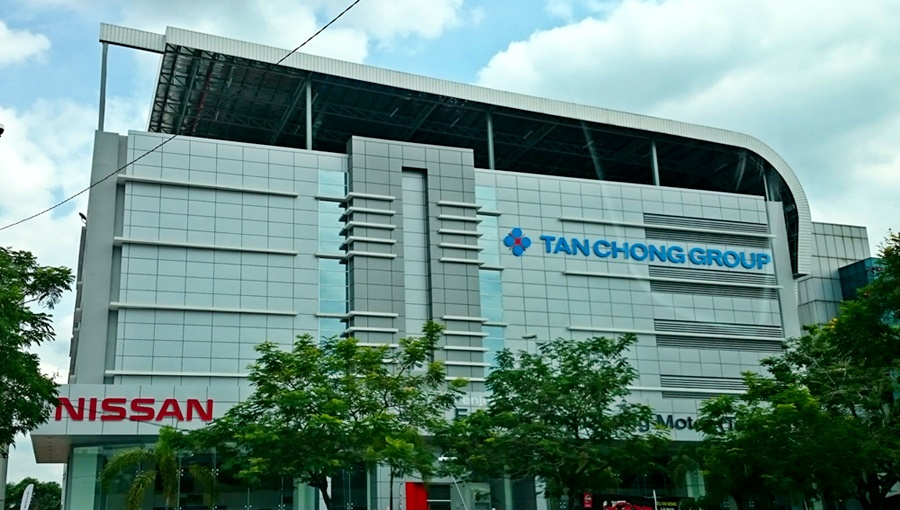
Customers can get an exclusive preview of the car at GAC’s upcoming roving activation event at Klang Valley from 2nd to 8th February 2024. Follow GAC Motor Malaysia’s social media pages for the latest updates. At the same time, WTCA also shared that the CKD version is expected to roll off the production line in Q2 2024 at the Tan Chong Motor Assemblies plant (TCMA) in Segambut, Kuala Lumpur.

The first showroom is set to open in Petaling Jaya by the end of February 2024, followed by five more strategic showrooms located in Glenmarie, Cyberjaya, Seremban, Johor Bahru and Penang by the first half of 2024.

The GAC GS Emzoom boasts distinctive design elements, including the iconic Mecha Wing Grille, Laser Eye Split LED lights, and Light Dart tail lights, creating a captivating and futuristic silhouette with high-visibility lighting. Adding to its allure is the Rear Spoiler, which emphasises its aggressive persona. Complementing this is a small ducktail-style spoiler seamlessly molded into the bodywork, a combination typically found in more luxurious and exotic cars. From the Electric Hidden Door Handles to the Crystal Shift Gear Selector, every detail exudes sophistication, enhancing the overall aesthetic appeal.

Beneath the hood, the 3rd Generation 1.5T GDI engine promises power and efficiency, while intelligent features like the mid-mounted exhaust and rear flat floor make this car stands out in style and performance. The engine produces 177PS at 5500rpm and 270Nm 1,400rpm. It has a fuel consumption rating of 5.91/100km.

Step inside, the GAC GS Emzoom continues to impress with its large and spacious interior, featuring a dual-tone interior that adds a youthful flair and enhances the overall ambience with its contemporary design. Its modern and spacious cabin provides an all-rounded, comfy space for both driver and passengers. The interior, a hallmark of premium and luxury, infuses a modern touch, offering advanced technology at your fingertips.

Upcoming Model – GAC Emkoo

At the Exclusive Preview event, WTCA proudly showcased the ultra-modern GAC Emkoo. The upcoming model spots a Borderless V-Shape Grille as the captivating centrepiece.

Complementing this are the pair of “Eyes of Revelation” LED Headlamps, offering both style and enhanced visibility. A uniquely designed rear tail lights add a futuristic touch, creating a luminous spectacle as the vehicle moves. The sharp body belt line, resembling an arrow ready to shoot, adds a dynamic and sporty flair, continuing through the skirt line.

The interior of the GAC Emkoo reveals a truly Digital Interior that elevates the driving experience. Featuring a fully digital instrument cluster with a semi-floating appearance, it embodies modernity and innovation.

A New Partnership Unveiled

WTCA also featured the new GAC Aion Y Plus during the GAC vehicles preview. The GAC Aion Y Plus is the first Electric Vehicle (EV) brand under its distribution. WTCA revealed that the GAC Aion Y Plus, a Battery Electric Vehicle (BEV) SUV is expected to be launched in the first half of 2024.

This EV beauty is powered by GAC Aion’s proprietary Magazine battery, the world’s first Magazine Battery Safety Technology with no incidents of ignition or explosion, making it the safest battery technology in the world right now, setting a new standard for safety performance.

The Magazine Battery has a capacity of 63.2KWH with a maximum output of 203hp, GAC Aion Y Plus is expected to have a travel range of 490km (NEDC) or 430km (WLTP).

On top of that, the GAC Aion Y Plus features a striking design highlighted by the unique Angel’s Wing headlights with 7 horizontal light bars, creating a distinctive and elegant appearance on the road. It also offers the broadest selection in its segment, with 7 trendy exterior colours from Glamour Black to Youthful Green, the GAC Aion Y Plus allows drivers to express their style.

Complemented by a customisable and vibrant interior, this electric vehicle is a harmonious blend of aesthetics and technology, redefining the experience of driving an electric car.

GAC Aion made a groundbreaking investment of RM2 billion and dedicated 30 months to developing the GAC Aion Electric Platform (AEP2.0), a cutting-edge system tailored exclusively for electric vehicles (EVs). This platform boasts an extended body, featuring the widest wheelbase in its segment at 2750mm, and a spacious full flat floor for rear passengers.

What sets the GAC Aion Y Plus apart is the front seats’ unique ability to recline fully, transforming into a generous
1.8-meter-wide double bed – a class-defining feature. Rear passengers are treated to unparalleled comfort with the industry’s most generous legroom, measuring up to 1,022mm. WTCA signed the GAC Aion Distribution Agreement in January 2024, officially designating WTCA as Malaysia’s sole and exclusive distributor of GAC Aion vehicles.

Malaysian drivers are in for a treat as Morris Garages (MG), the iconic British automotive brand, is set to make its debut on Malaysian roads through SAIC Motor Malaysia Sdn. Bhd. In celebration of its centenary, MG promises a unique automotive experience for Malaysian enthusiasts.

With the tagline ‘Passion Drives,’ MG is gearing up to mark its 100th year of automotive excellence in Malaysia. The brand, known for its British charm, aims to bring cutting-edge technology and a century of driving passion to Malaysian roads. SAIC Motor Malaysia Sdn. Bhd. is set to unveil the latest MG models in the country, promising an automotive experience like no other.

Since its establishment in 1924 in England, MG has been more than just an automotive brand; it has symbolised youthful excitement, blending tradition and innovation seamlessly. With a rich racing heritage embedded in its core, MG has not only represented British excellence globally but has also left an indelible mark in automotive history. From the iconic MG 14/28 Super Sports car to the revolutionary MGB in the 1960s and the embrace of high-performance electric models (EV) in the 21st century, MG has evolved while maintaining its racing DNA.

(more…)

The controversy surrounding police officers allegedly accepting RM100 fines from British tourists in Perak takes a new turn as a video emerges depicting a similar incident in Langkawi. The two-and-a-half-minute footage captures a couple, presumed to be European tourists, riding a motorcycle without helmets on the resort island.

In the video, the police apprehend the couple, citing the absence of helmets. However, the face of the officer involved is not visible as the recording discreetly captures the officer suggesting a monetary settlement to avoid a traffic ticket.

District Police Chief of Langkawi, Assistant Commissioner Shariman Ashari, confirmed that the video, uploaded to YouTube on November 10, is under investigation. Preliminary findings reveal that the foreign tourists opted to pay RM100 to evade a police station visit and subsequent fines for not wearing helmets.

(more…)

BMW introduces the Pure Impulse edition of the BMW Z4 M40i roadster for the 2024 model year, promising unadulterated open-top driving pleasure. A significant addition to the range-topping model is the availability of a six-speed manual gearbox, marking a thrilling shift towards a more engaging driving experience. This edition brings forth returned chassis technology, distinctive design elements, and a unique set of features, emphasising the Z4’s commitment to delivering an exhilarating driving encounter.

The BMW Z4 M40i Pure Impulse edition boasts muscular roadster proportions, M-specific design features, and a classic soft-top roof. With a free-revving six-cylinder in-line engine equipped with M TwinPower Turbo technology, the roadster remains a true embodiment of driving pleasure. Now, with the inclusion of a manual gearbox, it promises an even more engaging connection between the driver and the car.

The roadster’s chassis undergoes refinement, featuring a combination of variable sport steering, M Sport brakes, and an M Sport differential at the rear axle. The adaptive M suspension is meticulously fine-tuned for the Pure Impulse edition, delivering an optimal balance between dynamism and ride comfort. Additionally, mixed-size M light-alloy wheels, measuring 19 inches in diameter at the front and 20 inches at the rear, contribute to enhanced road performance.

The Pure Impulse edition adds individual design elements to the exterior, including M High-gloss Shadowline trim, Black high-gloss exterior mirror caps, and custom-designed streamlining flaps for the rear wheel arches. Red brake callipers and exclusive model badging further distinguish this special edition. New exterior paint options, such as Frozen Deep Green metallic and Sanremo Green metallic, add a refreshing touch to the Z4 lineup.

Inside, the Pure Impulse edition boasts M-specific design features, including an M gearshift lever with a model-specific sleeve. The Vernasca leather trim in Cognac with black M piping exudes a blend of elegance and sporting flair. Interior trim strips in Black high-gloss complete the exclusive appointments, creating a cockpit designed for the ultimate driving experience.

The six-speed manual gearbox, combined with the powerful 3.0-litre straight-six engine, propels the BMW Z4 M40i to 100km/h in just 4.6 seconds. This unique offering positions the Pure Impulse edition as a highly exclusive and performance-oriented model within the BMW lineup.

The BMW Z4 M40i Pure Impulse edition is set to launch with a production phase-in from March 2024 and will continue to be manufactured at the BMW Group’s partner facility, Magna Steyr Fahrzeugtechnik, in Graz, Austria.

The Z4 lineup, including the Pure Impulse edition, incorporates cutting-edge technology, including the BMW iDrive display, BMW Live Cockpit Professional, and a range of driver assistance systems. Front collision warning, Lane Departure Warning, and Speed Limit Info are standard, with additional features like Cruise Control with Stop&Go, Lane Change Warning, and Parking Assistant available as options.

In a groundbreaking move, BMW has revealed the highly-anticipated next-generation BMW M4 Coupé and Convertible, showcasing remarkable advancements in technology, design, and performance. The M4 series, known for its uncompromising dynamics, is set to maintain its dominance in the premium midsize segment with a range of enhancements.

BMW M4 Coupe

Engine Upgrades

The highlight of the new M4 series is the straight six-cylinder engine featuring M TwinPower Turbo Technology, now available in three performance levels. Notably, the 480hp variant is uniquely paired with a 6-speed manual transmission in the BMW M4 Coupé, setting it apart in the competitive landscape. Meanwhile, the BMW M4 Competition Coupé boasts a powerful 510hp engine, linked to an 8-speed M Steptronic transmission with Drivelogic.

For the ultimate driving experience, the M xDrive system is incorporated into the four-wheel drive variants, ensuring seamless power delivery. This enhances the power output to an impressive 530hp, setting a new standard for exhilarating driving dynamics.

Design and Aerodynamics

The M4 series continues to embody distinctive design elements, balancing aesthetics with aerodynamics. The large vertical BMW kidney grille, powerfully modelled wheel arches, and flared side sills create a visual impact. Notably, the M4 Competition Coupé is equipped with a standard carbon reinforced plastic (CRP) roof, while the M4 Competition Convertible with M xDrive introduces a sophisticated panel bow soft-top roof.

BMW M4 Convertible

Powerful Straight Six-Cylinder Engine

The heart of the M4 series lies in its straight six-cylinder power units, combining high-revving characteristics with M TwinPower Turbo Technology. Engineered with motor racing technology, the power units feature an extremely stiff crankcase, a weight-reduced forged crankshaft, and innovative cooling solutions.

The performance of the straight six-cylinder engine has been enhanced, with the M4 Competition Coupé with M xDrive and M4 Competition Convertible with M xDrive now delivering a maximum power output of 530hp and a torque of 650Nm within an extended engine speed range.

Advanced Transmission Options

Transmission options cater to diverse preferences, with the M4 Coupé offering a 6-speed manual transmission and the Competition models featuring an 8-speed M Steptronic transmission with Drivelogic. The M xDrive system, available in the four-wheel drive variants, ensures exceptional traction and dynamic cornering.

M Race Track Package

For enthusiasts seeking the ultimate performance package, the M Race Track package is available, reducing vehicle weight by up to 25kg. This package includes M Carbon ceramic brakes, M Carbon bucket seats, and interior trim strips in High Gloss Carbon Fibre.

Cutting-Edge Technology in the Cabin

Inside the cabin, the M4 series introduces the BMW Curved Display, providing M-specific information and enhancing the digital experience. The BMW Operating System 8.5 powers the display, incorporating the BMW Intelligent Personal Assistant and offering touch and voice control functionalities.

Customisation Options and Exclusive Packages

For drivers seeking personalisation, the M4 series offers a range of customisation options. The M Carbon exterior package enhances the racing character, featuring inserts, mirror caps, and a CFP rear spoiler. BMW Performance Parts provide additional retrofit options, including exterior CFP components, M Performance forged wheels, and interior trims.

The new BMW M4 Coupé and Convertible redefine the high-performance sports car segment, combining cutting-edge technology, distinctive design, and uncompromising performance. The worldwide market launch is eagerly anticipated, marking a new era for the iconic M4 series.

Global Popularity and Production Details

The high-performance BMW M4 Coupé has gained significant traction in the global market, with the USA leading in sales, followed closely by China, Germany, and the UK. The M4 Convertible, particularly popular in the USA, Germany, and the UK, has further solidified the series’ leading position in respective competitive environments.

Produced at the BMW Group Dingolfing plant, the new M4 Coupé and Convertible are set to make their worldwide debut with production scheduled to commence in March 2024.

Inching closer to its series production, the upcoming Mini Aceman is currently being subjected to gruelling tests, navigating sandy desert roads under scorching temperatures. Measuring 4,075mm in length, 1,754mm in width, and 1,495mm in height, the Aceman positions itself between the Mini Cooper and the Mini Countryman. Serving as the third stand-alone model in the all-new electric Mini lineup, the Aceman boasts four doors and a spacious tailgate, offering accommodation for up to five passengers.

The Mini Aceman, having already triumphed in tests at the Arctic Circle, is now undergoing final evaluations in the desert’s blistering heat and strong sunlight. Beyond evaluating standard features like driving dynamics and comfort, the test team places a significant focus on assessing the electric vehicle’s specific challenges. This involves rigorous testing of air conditioning, battery charging, and cooling mechanisms, as well as the performance of the drive and control components. All these tests are carried out in the demanding conditions of dusty desert sands, where temperatures can soar up to 50°C.

The forthcoming Aceman is set to be exclusively available as a fully electric vehicle, featuring a 54.2 kWh battery. Embracing the electric drive concept, this agile crossover manages to maximise comfort and versatility while minimising its road footprint. True to the brand’s fundamental principles, the design prioritises ample interior space within compact external dimensions, delivering agile driving characteristics and optimal efficiency. The functional two-box design, characterised by short overhangs, allows for a spacious interior that accommodates five passengers and luggage within a minimal footprint.

Audi has unveiled the second major facelift for its popular seven-seat SUV, the Q7, as the current model approaches a decade on the market. This update, set to hit showrooms in the second half of the year, comes as Audi prepares to roll out its final new petrol-powered vehicles.

Originally introduced in 2015 and last refreshed in 2020, the latest facelift promises not only revised styling but also incorporates cutting-edge technology, marking a significant leap forward for the venerable model.

While industry norms suggest a new generation after eight years, Audi’s commitment to launching its last all-new petrol or diesel-engined vehicle in 2025 raises questions about the Q7’s future. The facelift, it seems, is designed to keep the Q7 competitive until the company transitions to electric vehicles, anticipated to begin in 2026, with an ultimate goal of ceasing petrol and diesel sales in all markets, except China, by 2033.

Visually, the facelift brings a fresh look to the Q7, featuring reshaped LED headlights with HD matrix LED technology, boasting 24 LEDs and laser-light tech promising enhanced high-beam illumination. Optional OLED tail lights with customisable light signatures add a touch of sophistication, adjusting brightness when another vehicle approaches.

Exterior enhancements include a restyled front bumper, a revised grille, and distinct air intakes, especially notable in the sporty SQ7 variant. Additionally, visible exhaust tips, new wheel designs ranging from 20 to 22 inches, and three vibrant colours—Sakhir Gold, Ascari Blue, and Chili Red—complete the exterior makeover.

Inside the cabin, the Q7 maintains its three-screen layout for infotainment, instruments, and air-conditioning controls. However, three new dashboard inlay options—Natural Elm Burl Silver, Matte Carbon Twill, and Matte Brushed Aluminium—offer buyers more personalisation choices. European models now feature standard grey seat stitching, and the infotainment screen introduces support for Spotify and Apple Music.

Technological updates include a digital instrument cluster capable of displaying the surroundings, including lane-change warnings, other road users, distance alerts, and traffic light information.

The Q7’s engine lineup remains unchanged, with options ranging from a 227hp, 3.0-litre turbo-diesel V6 to the potent 500hp, 4.0-litre twin-turbo petrol V8 in the SQ7. All models come equipped with eight-speed automatic transmissions and all-wheel drive, ensuring a dynamic driving experience.

Options for the SQ7 include a sport rear differential, larger wheels, and red brake calipers, providing enthusiasts with additional customisation choices.

Pricing details for the revamped Q7 are set to be disclosed closer to its launch in the second half of this year.

Specifications for the Audi Q7 models:

  1. Audi Q7 45 TDI:
    • Engine: 3.0-liter turbo-diesel V6
    • Power: 227hp
    • Torque: 500Nm
    • Transmission: 8-speed automatic
    • Drive: All-wheel drive
  2. Audi Q7 50 TDI:
    • Engine: 3.0-liter turbo-diesel V6
    • Power: 281hp
    • Torque: 600Nm
    • Transmission: 8-speed automatic
    • Drive: All-wheel drive
  3. Audi Q7 55 TFSI:
    • Engine: 3.0-liter turbo-petrol V6
    • Power: 335hp
    • Torque: 500Nm
    • Transmission: 8-speed automatic
    • Drive: All-wheel drive
  4. Audi SQ7:
    • Engine: 4.0-liter twin-turbo petrol V8
    • Power: 500hp
    • Torque: 770Nm
    • Transmission: 8-speed automatic
    • Drive: All-wheel drive

Archive

Follow us on Facebook

Follow us on YouTube