

Piston.my

911

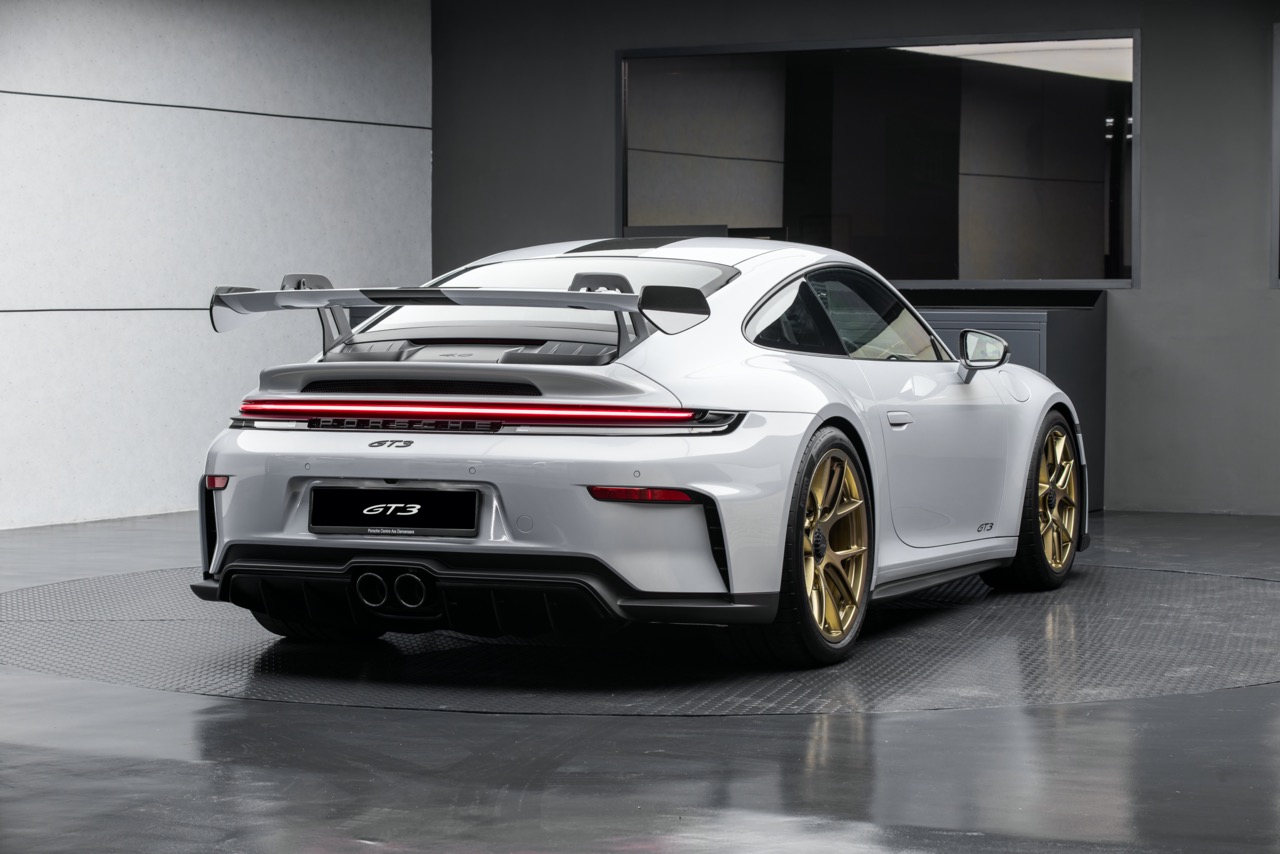
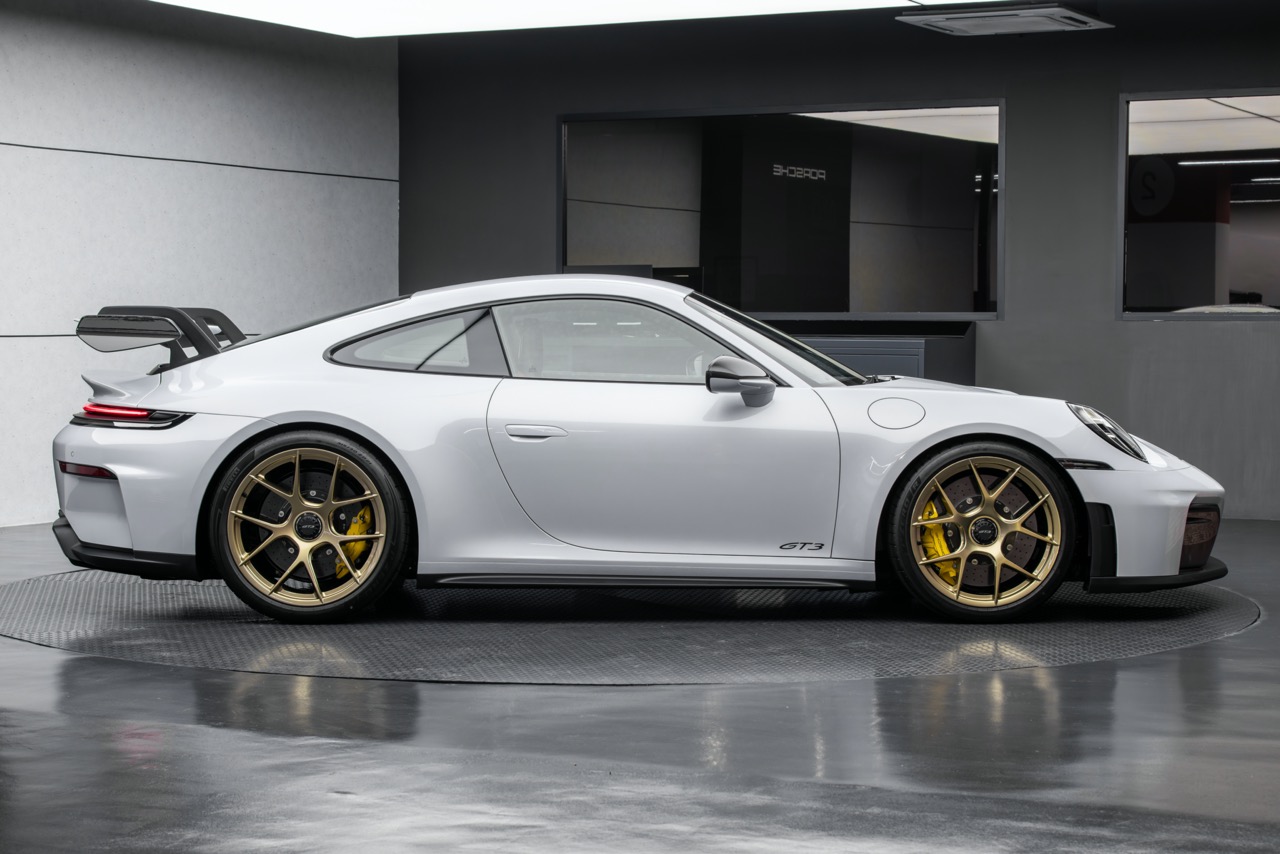
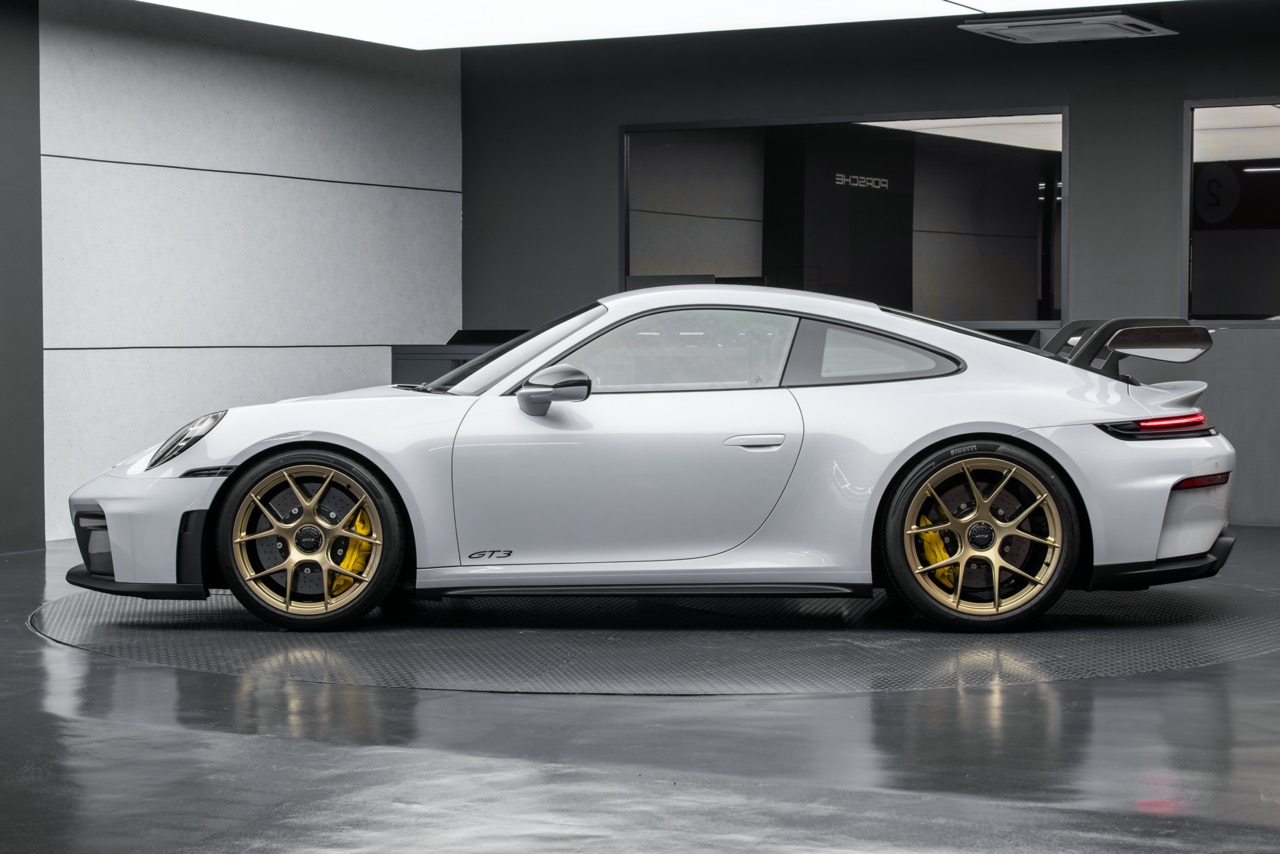
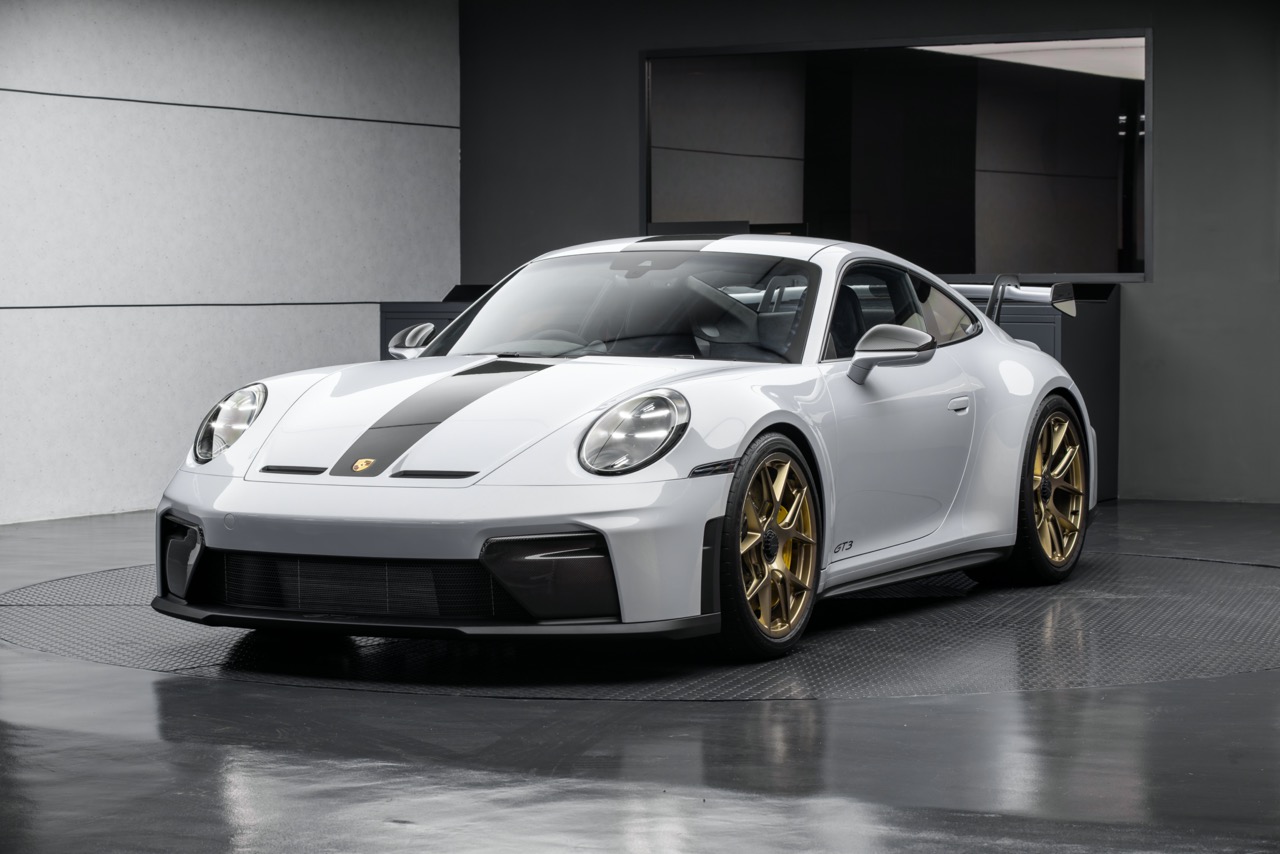
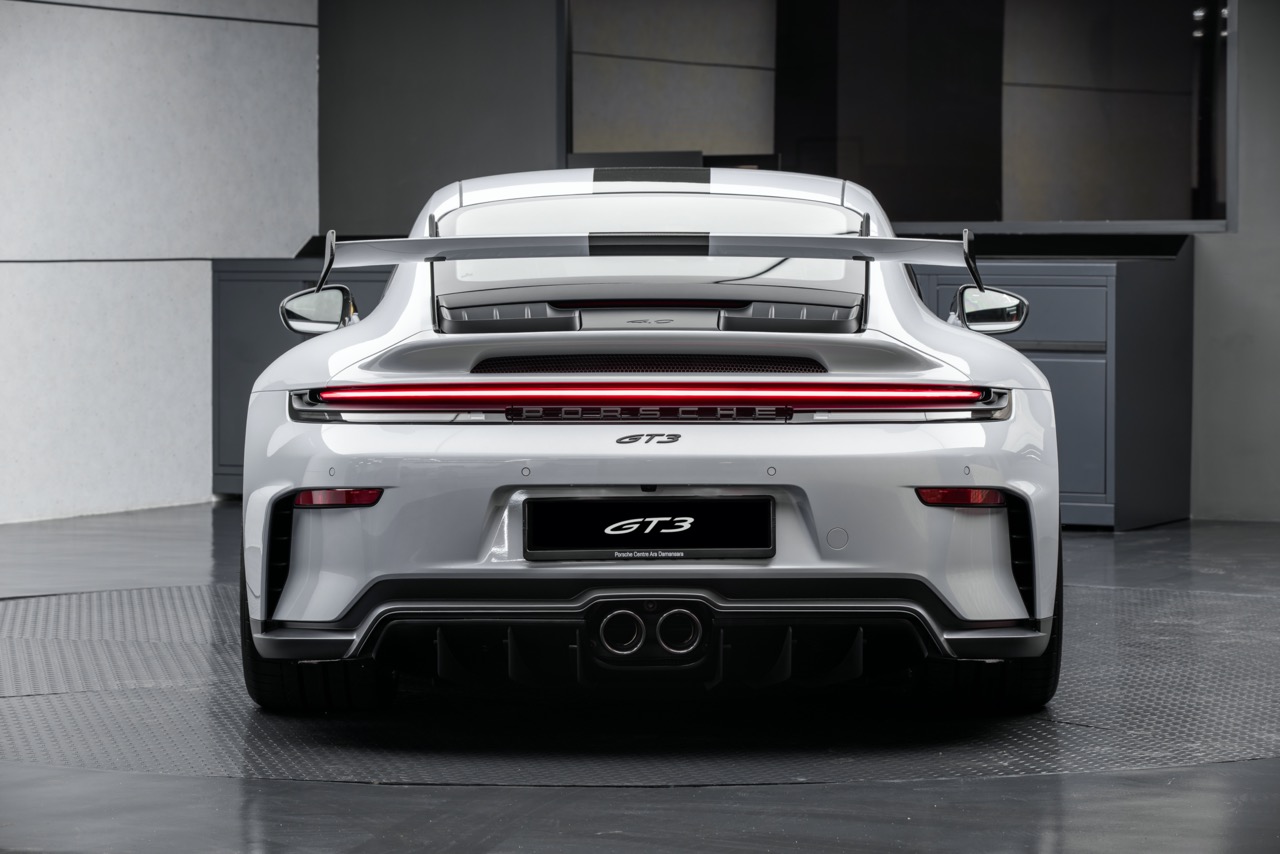
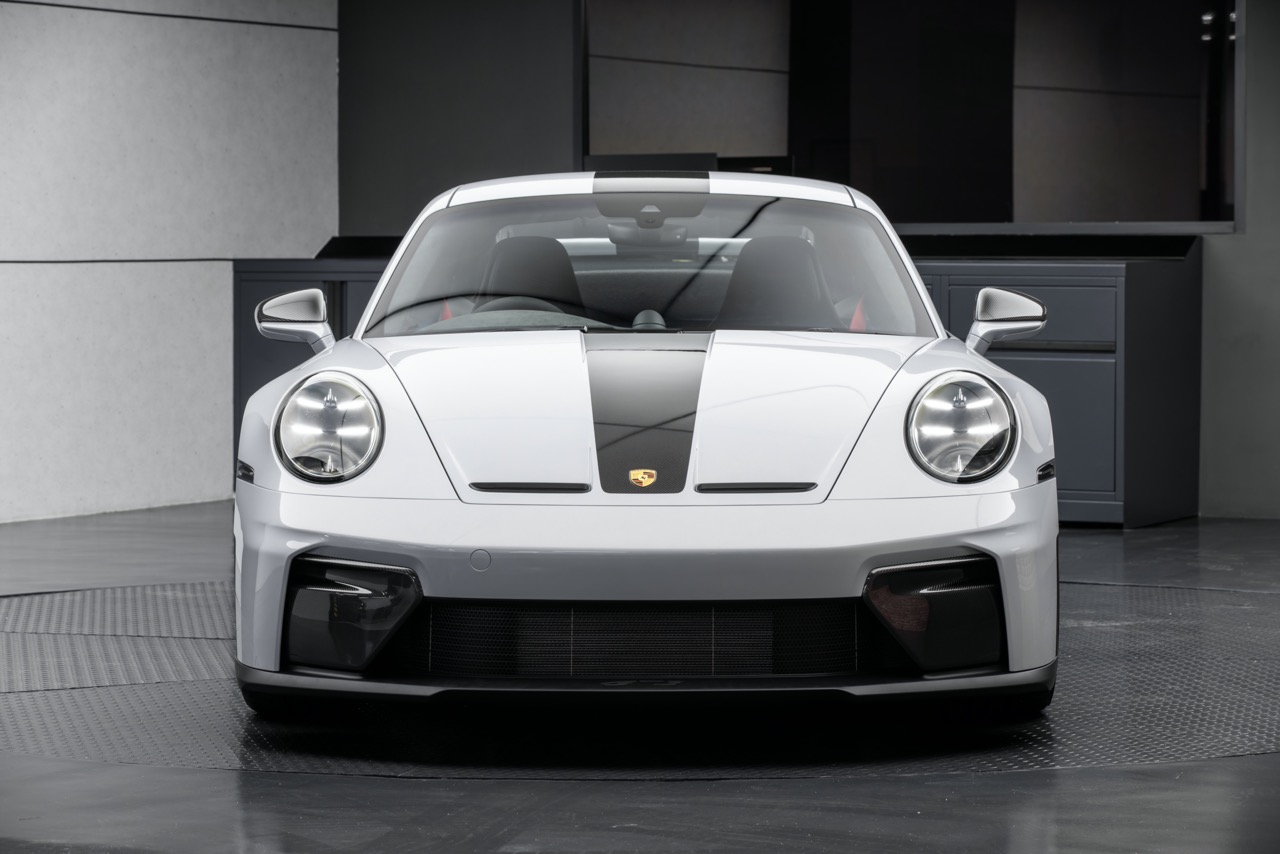
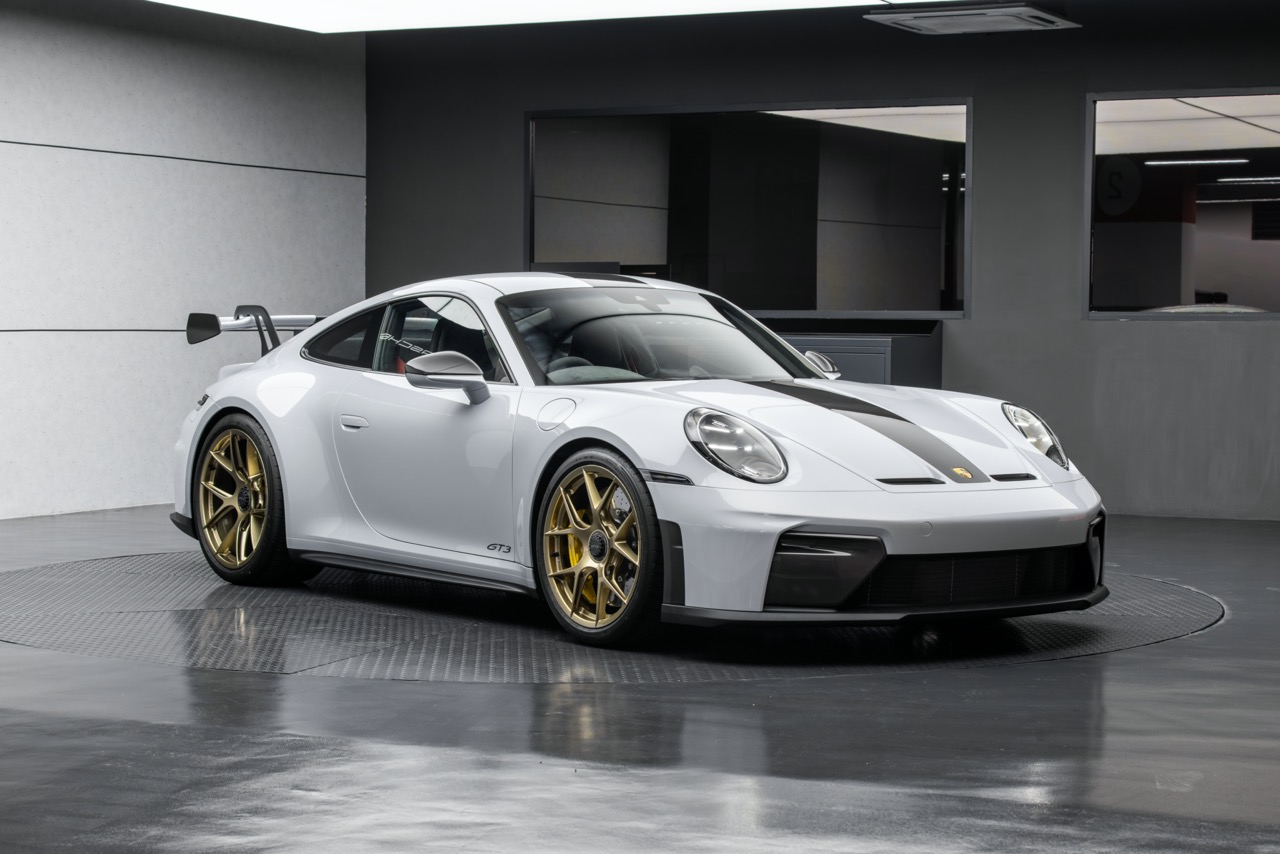
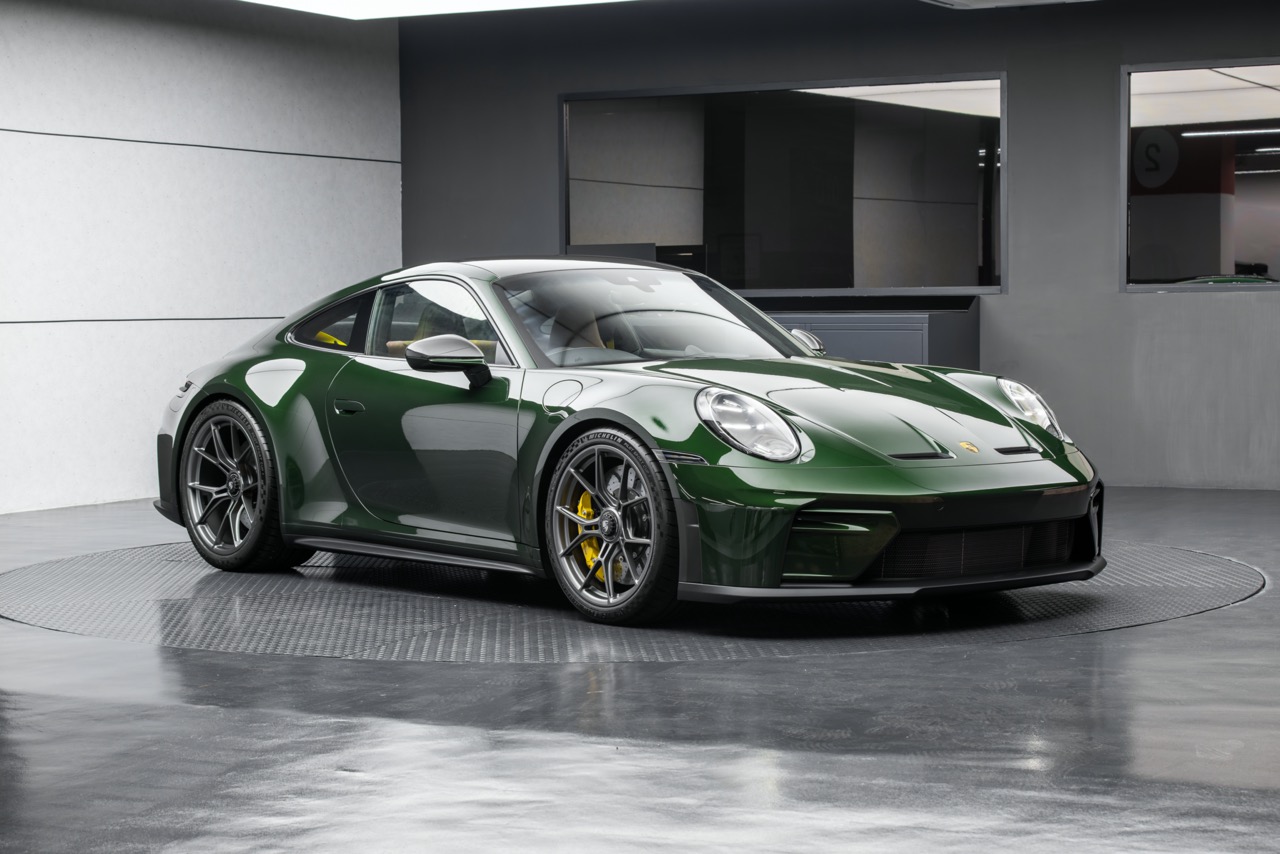
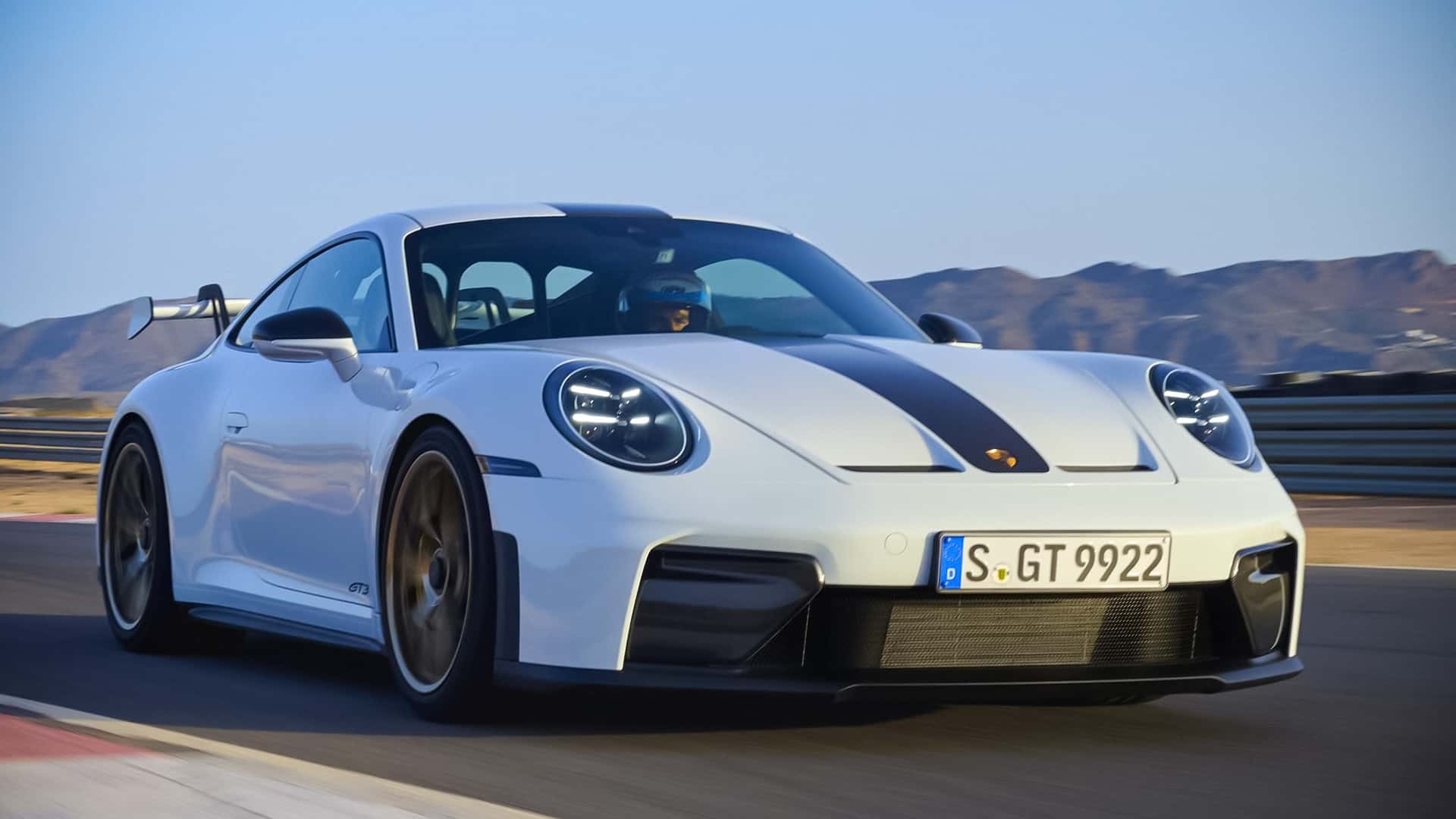
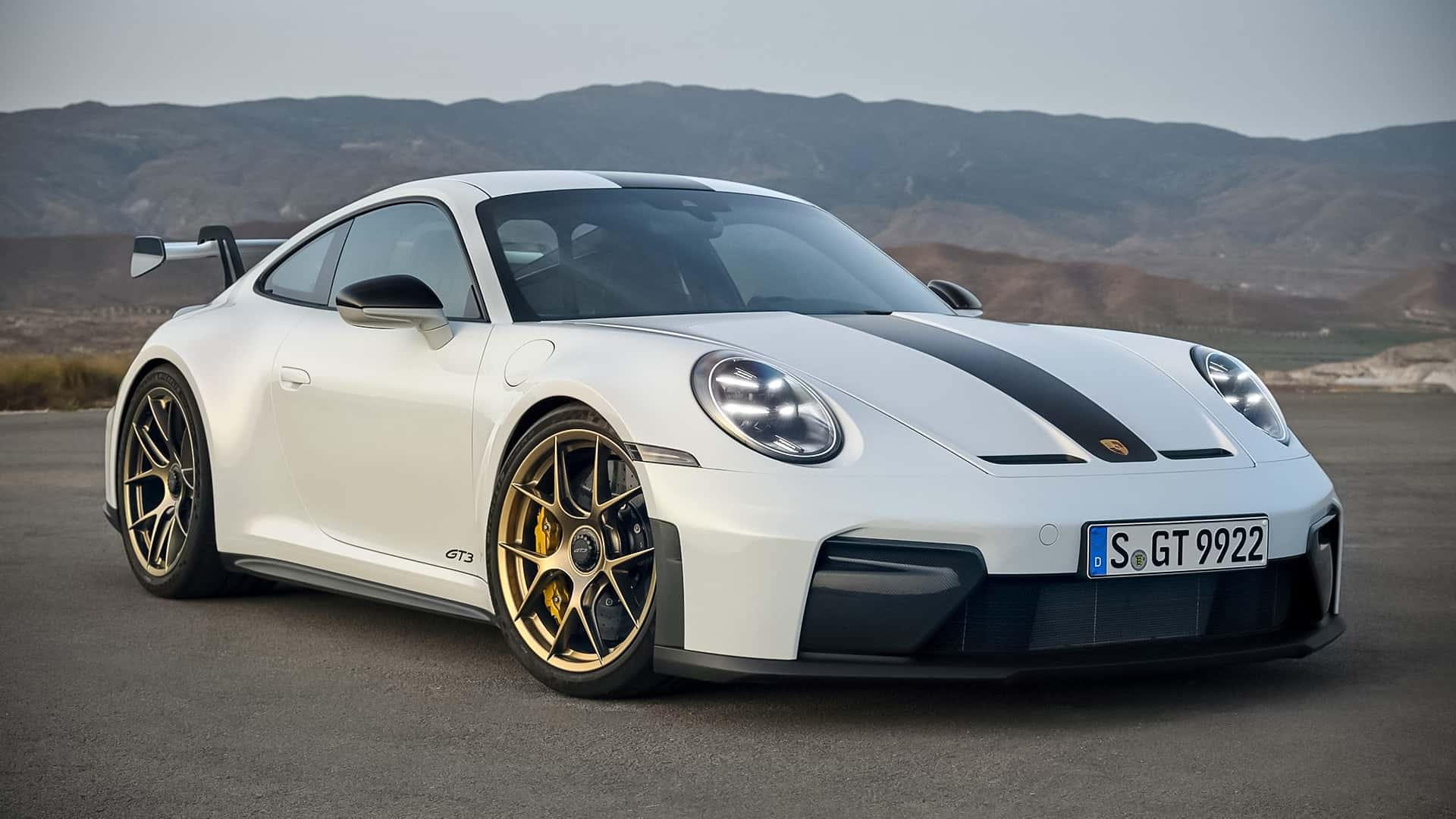
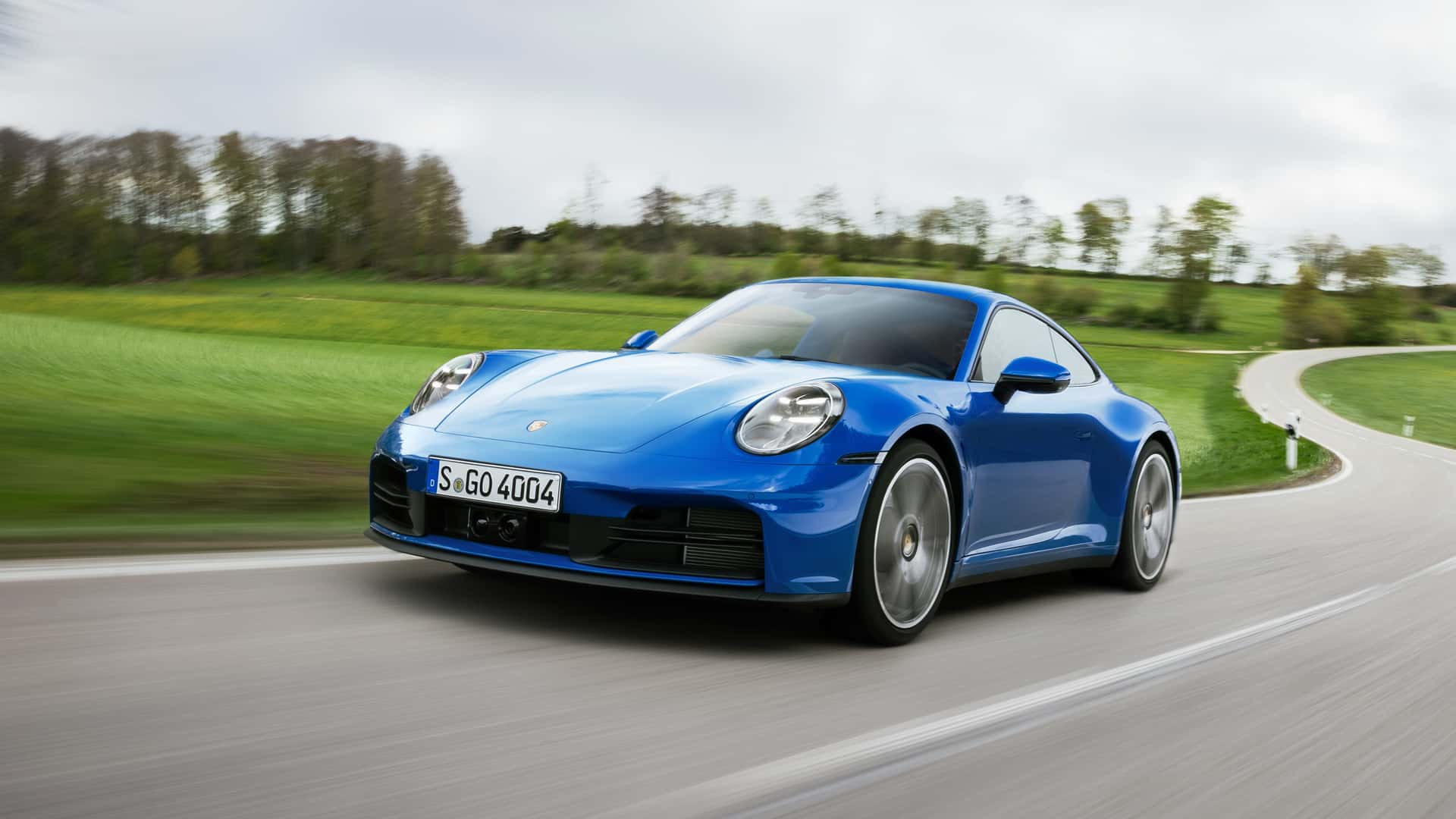
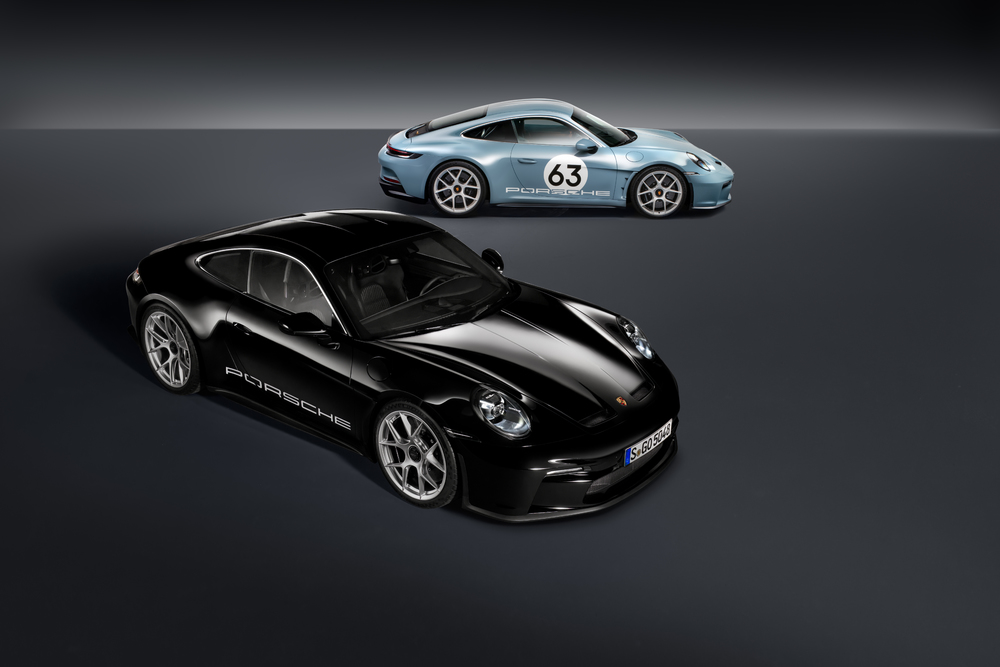
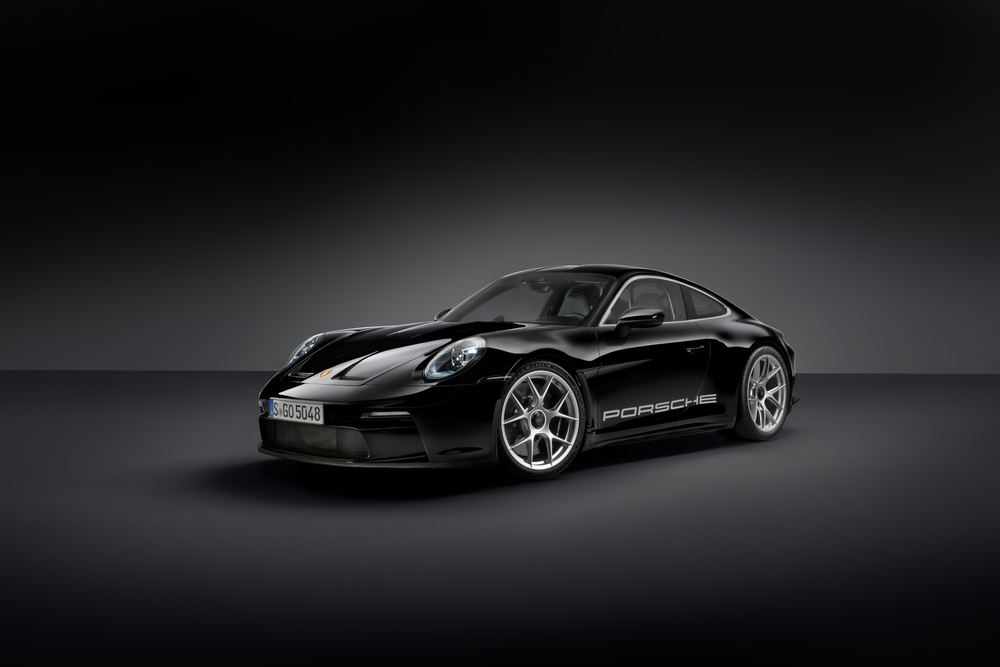
Porsche Malaysia, under Sime Darby Auto Performance, has introduced the new 911 GT3 at the PETRONAS Sepang International Circuit.

At the centre of the car is a naturally aspirated 4.0-litre flat-six engine producing 510PS and 450Nm. The engine has been revised with sharper camshafts, new cylinder heads, optimised throttle valves, and updated cooling. It meets stricter emissions standards with the addition of dual particulate filters and four catalytic converters, but still retains the high-revving character and distinctive sound expected from the GT3.
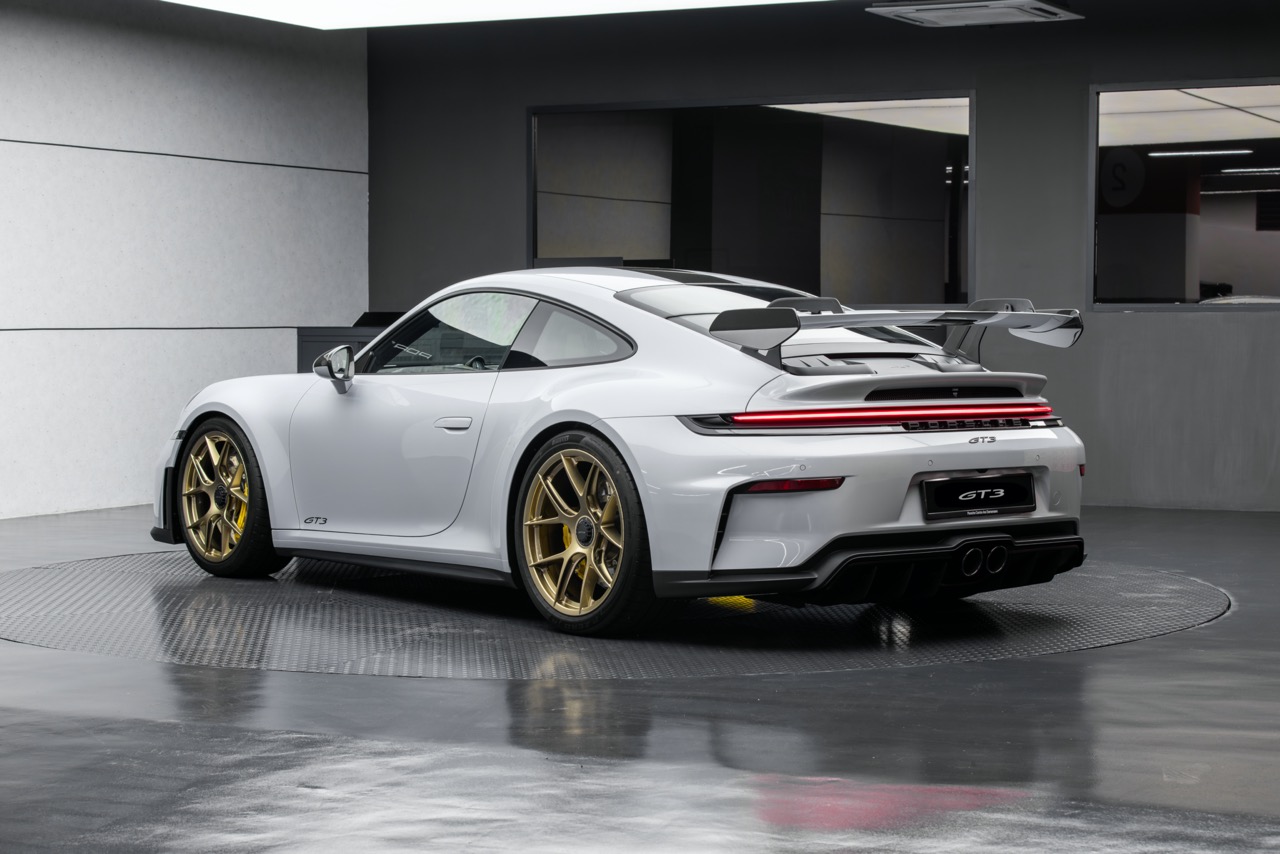
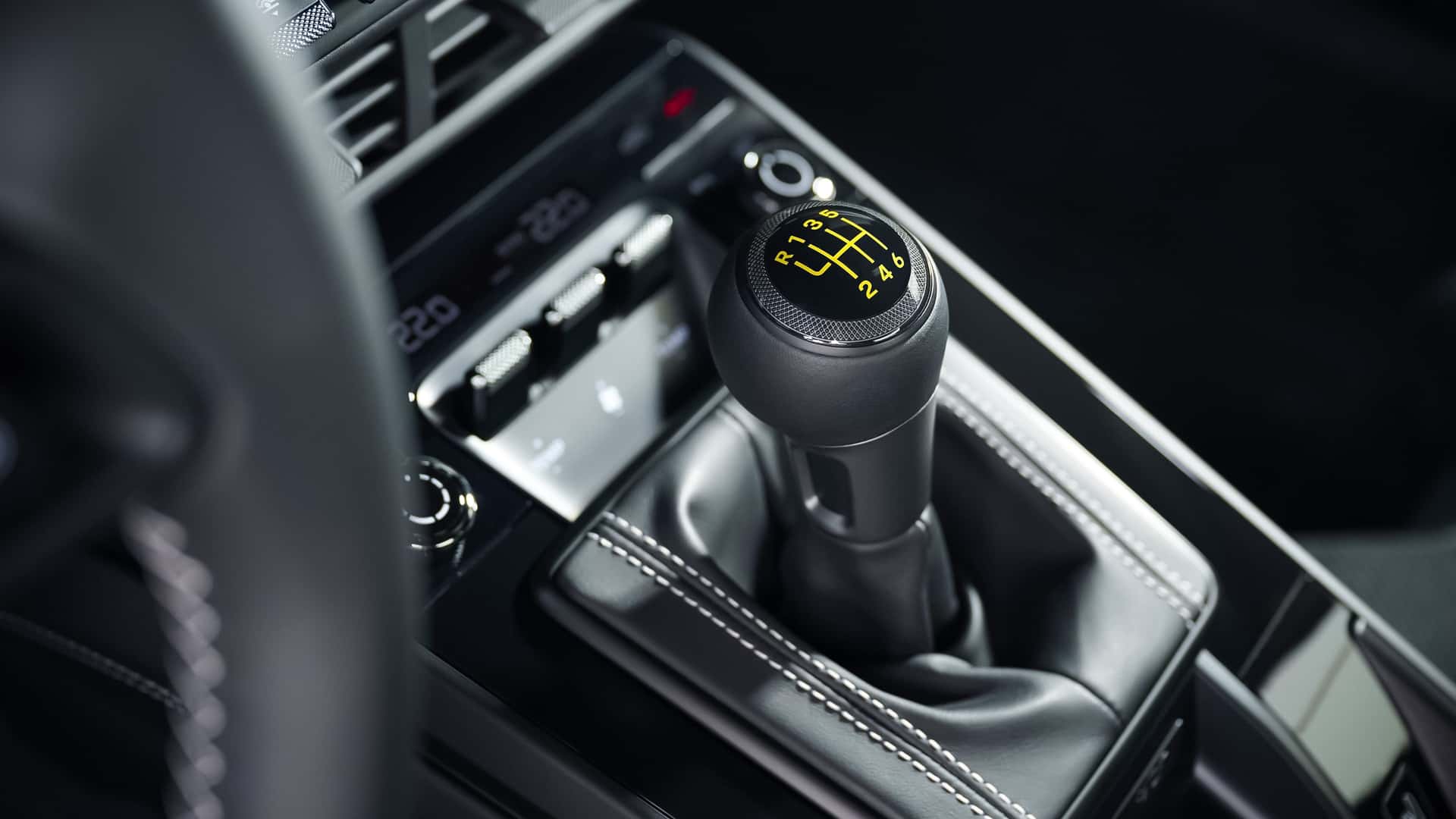
Acceleration to 100km/h takes 3.4 seconds with the 7-speed PDK gearbox, or 3.9 seconds with the 6-speed manual. Top speed is 311km/h with PDK, 313km/h with the manual.

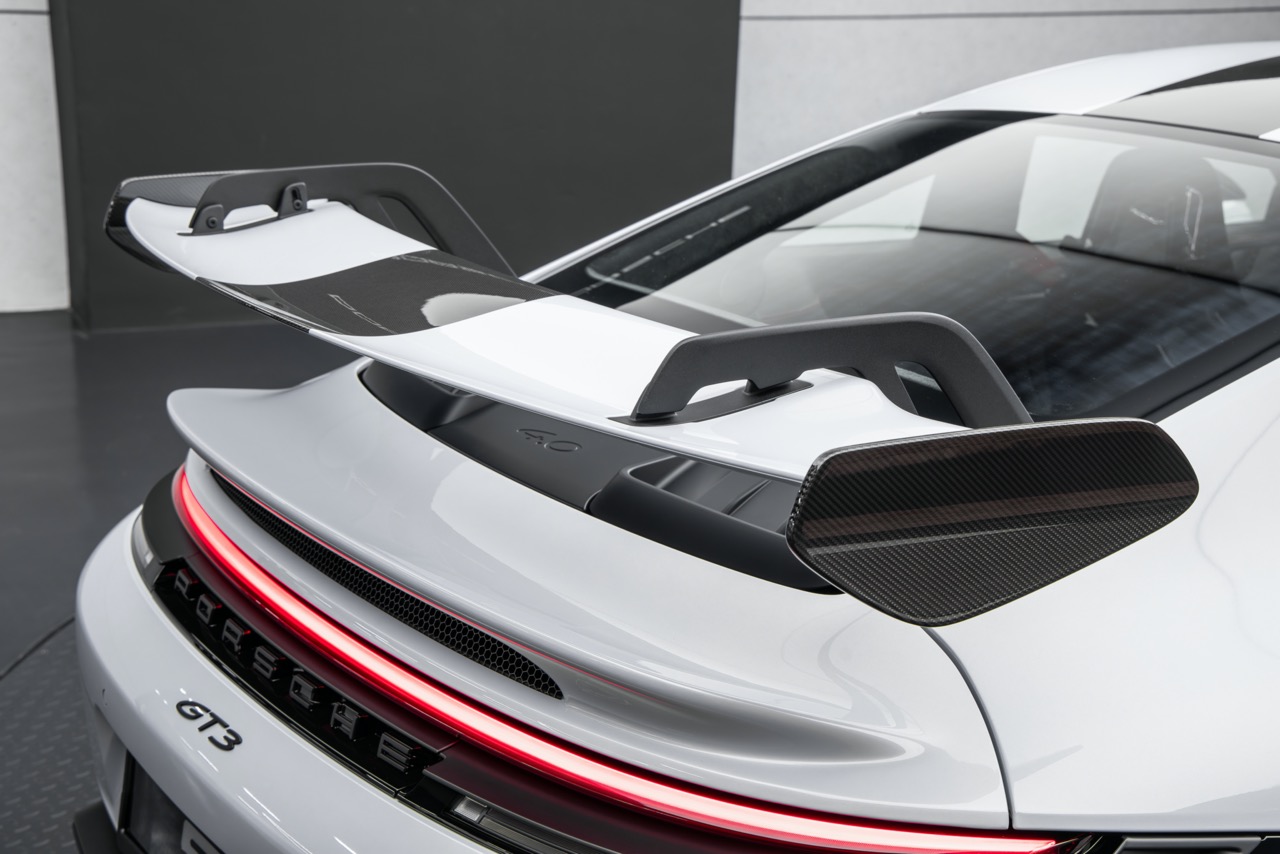
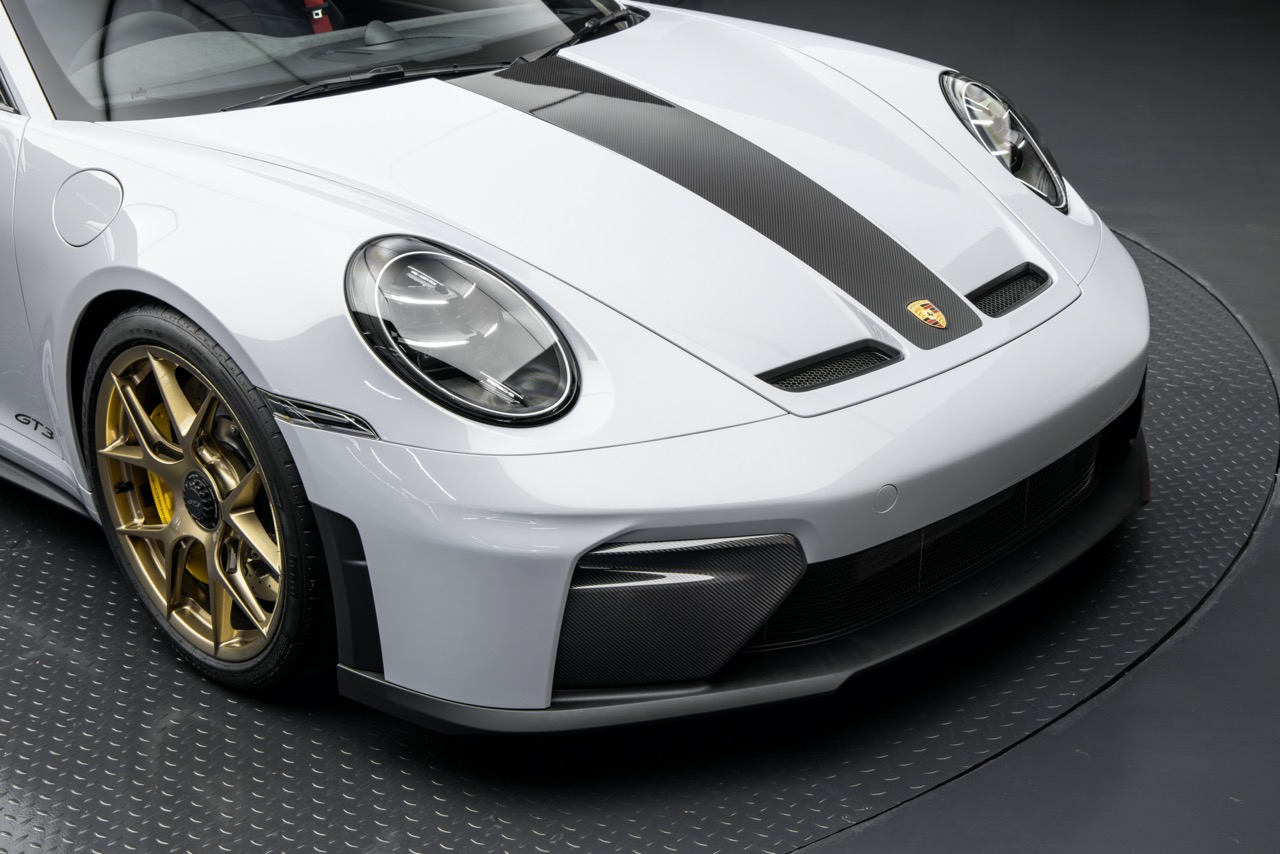
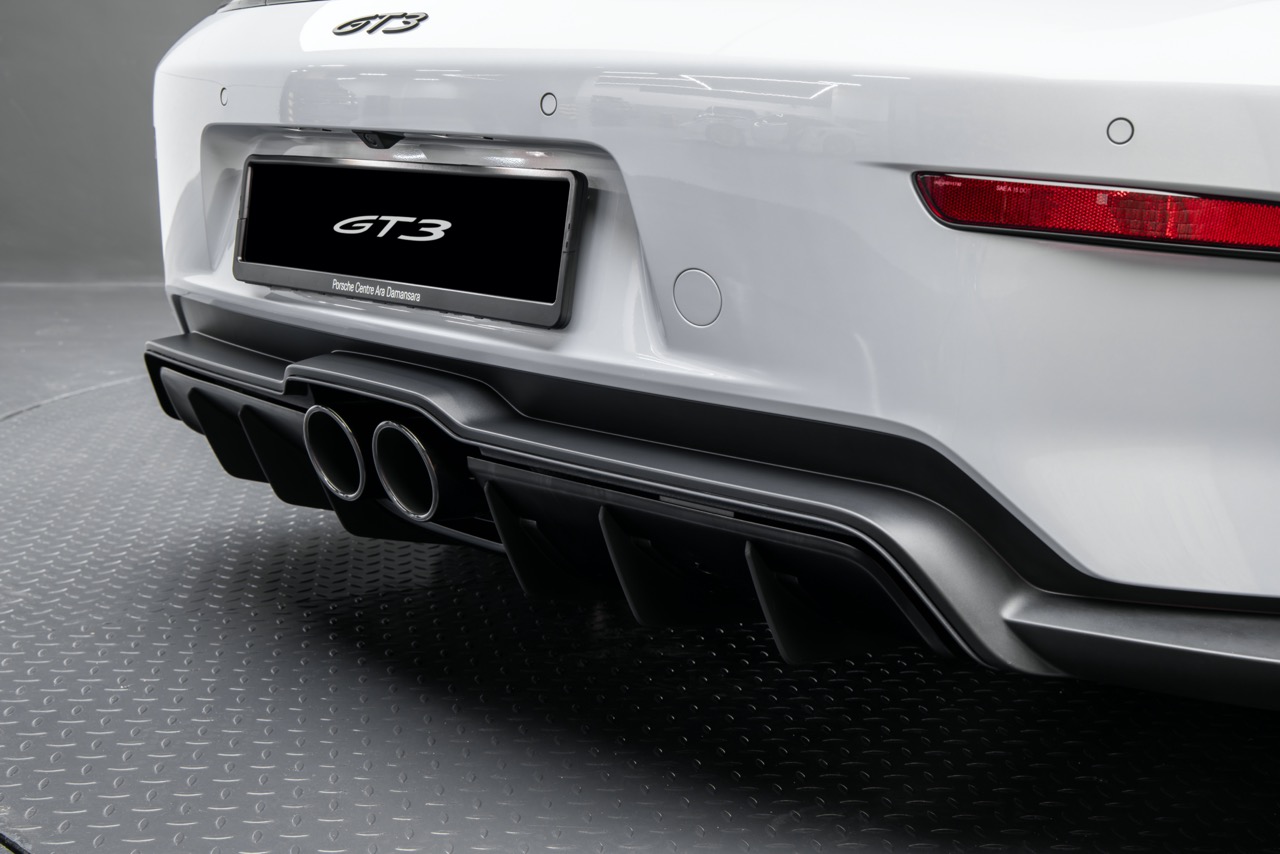
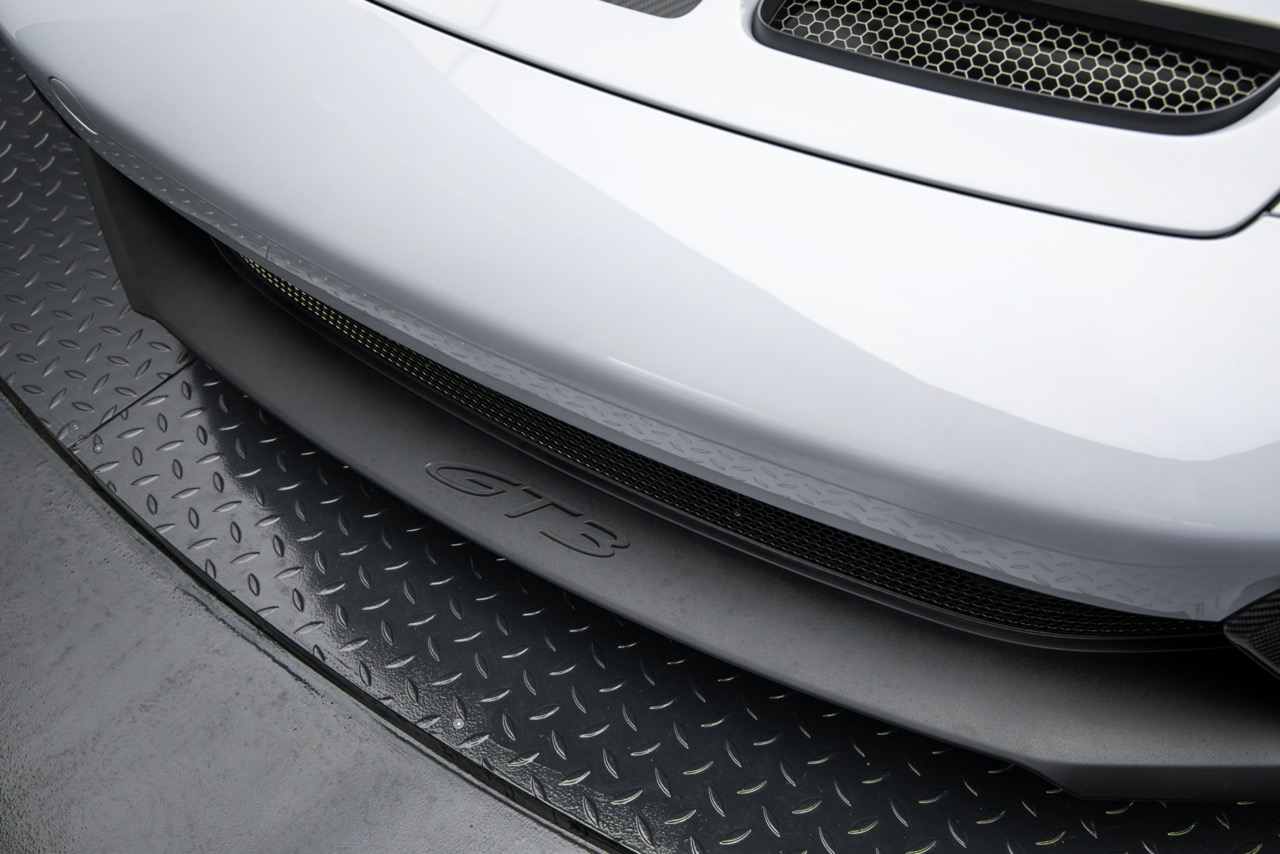
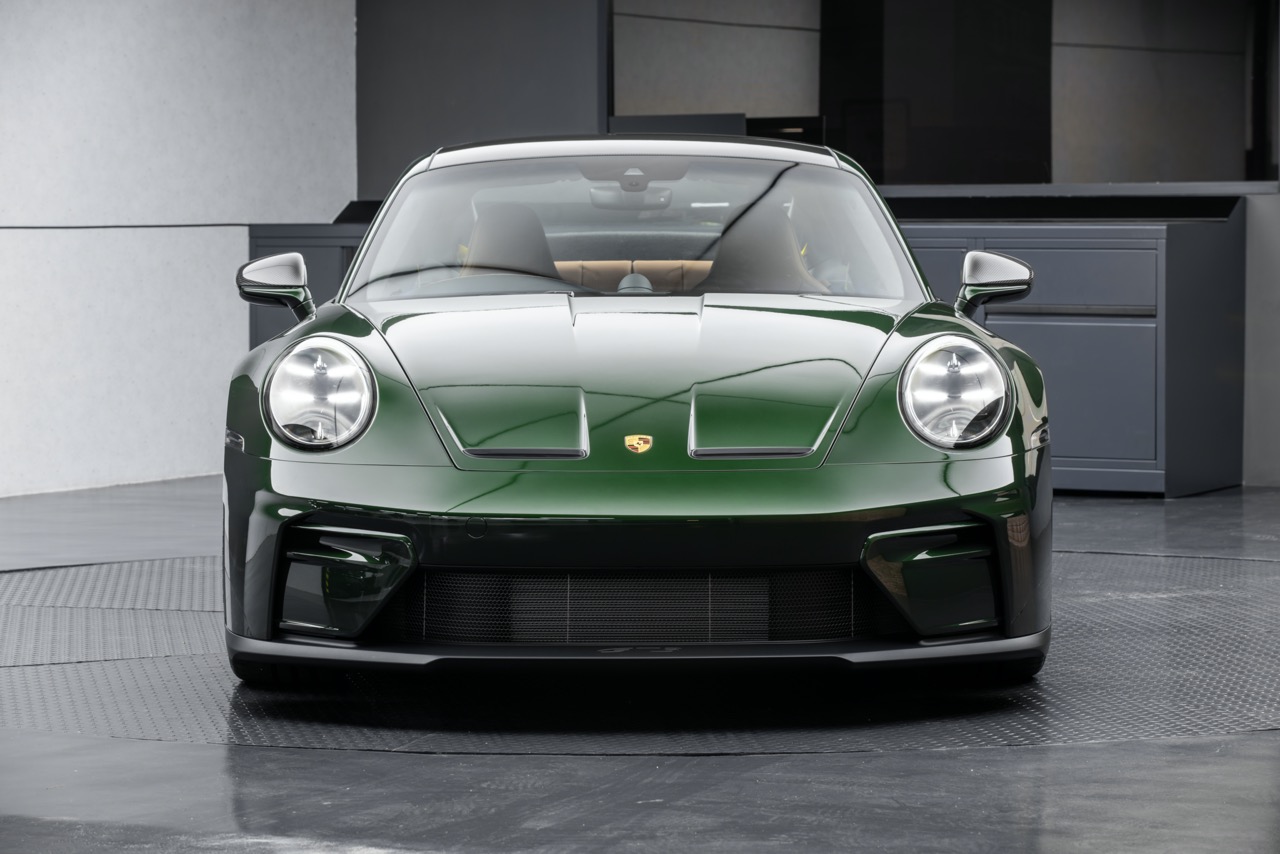
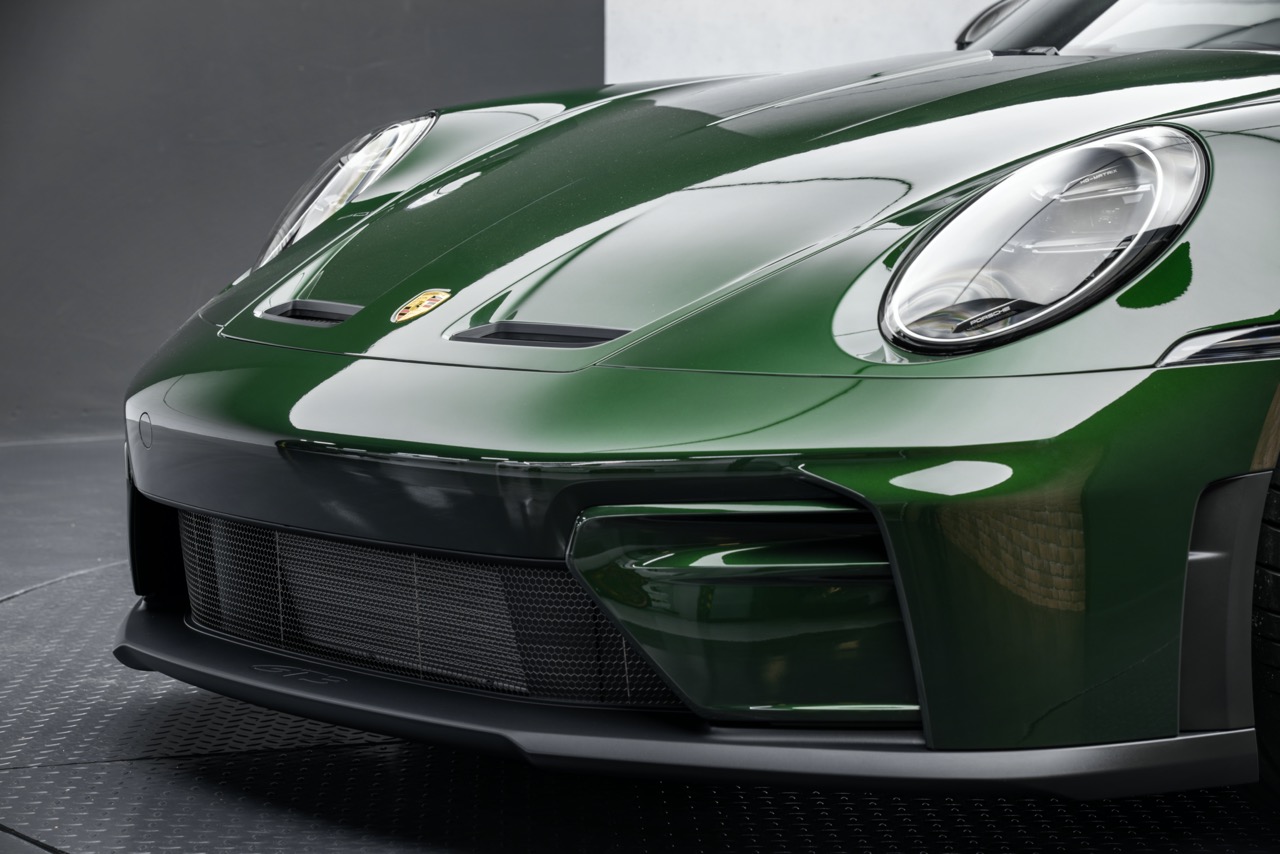
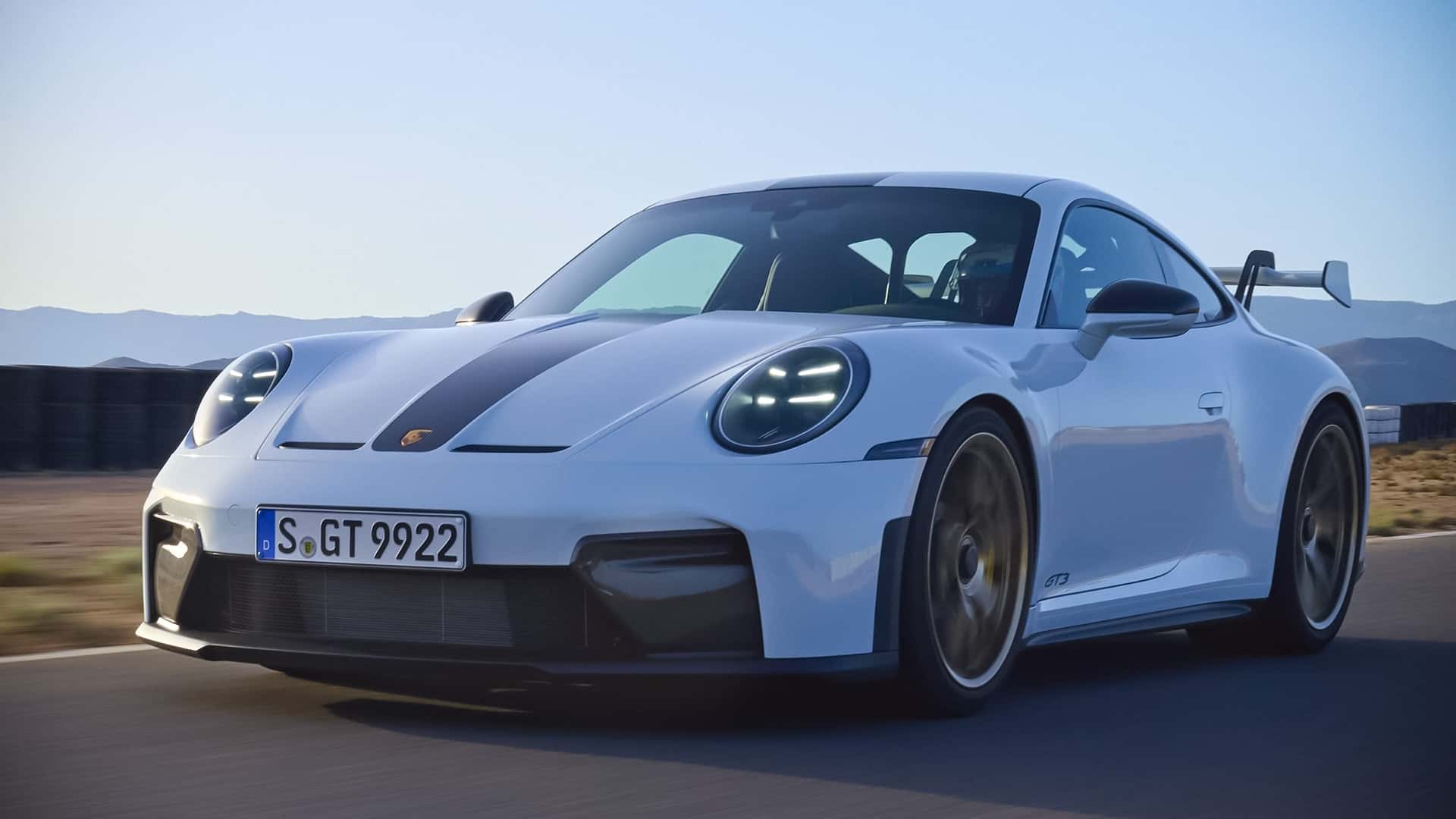
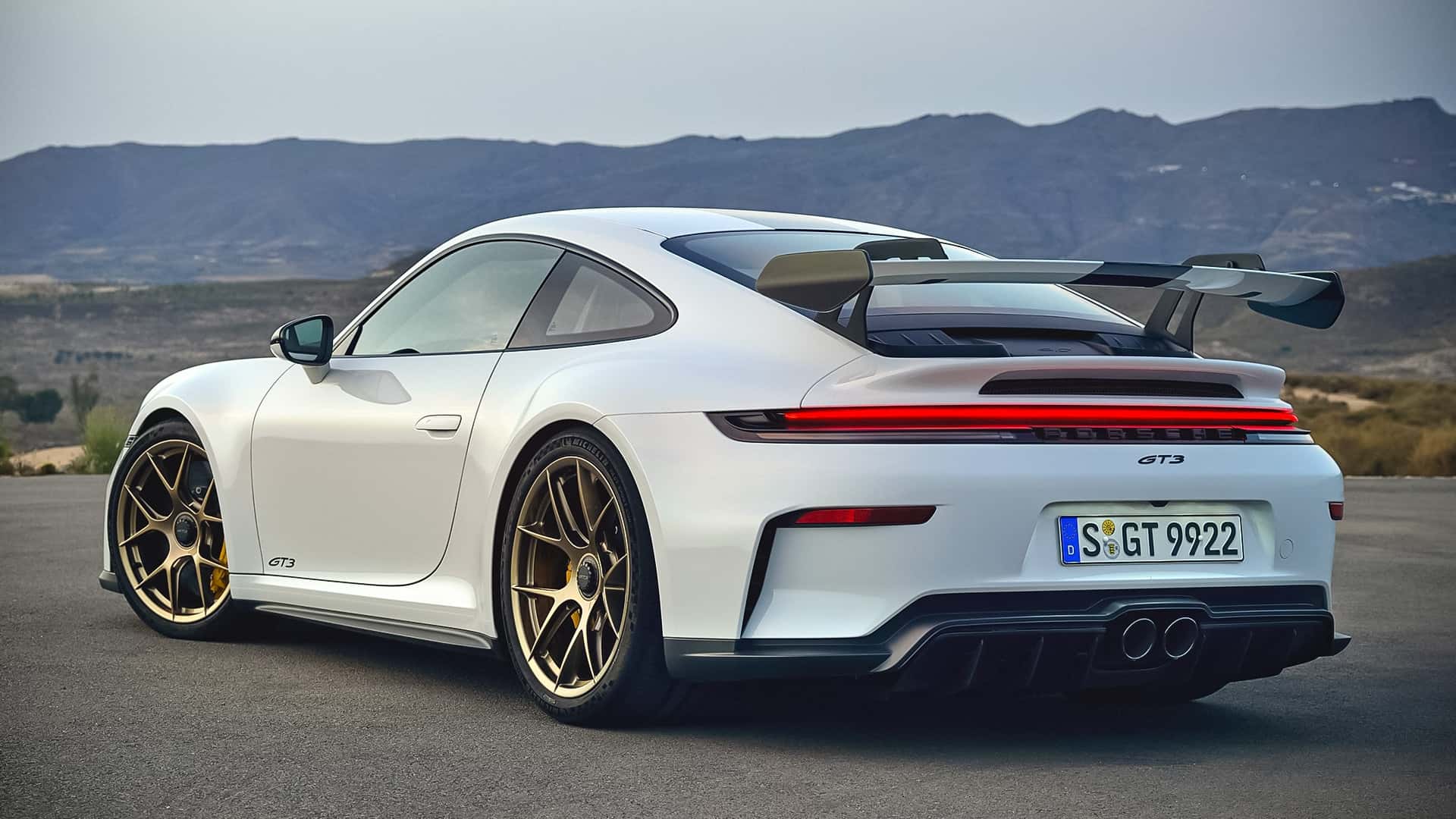
The 911 GT3 has undergone significant aerodynamic refinements. At the front, a new diffuser, spoiler lip, and underbody fins improve downforce. Matrix LED headlights with integrated light functions allow for larger air intakes. The rear wing has angled sideplates, and the rear diffuser and lid have been reshaped.
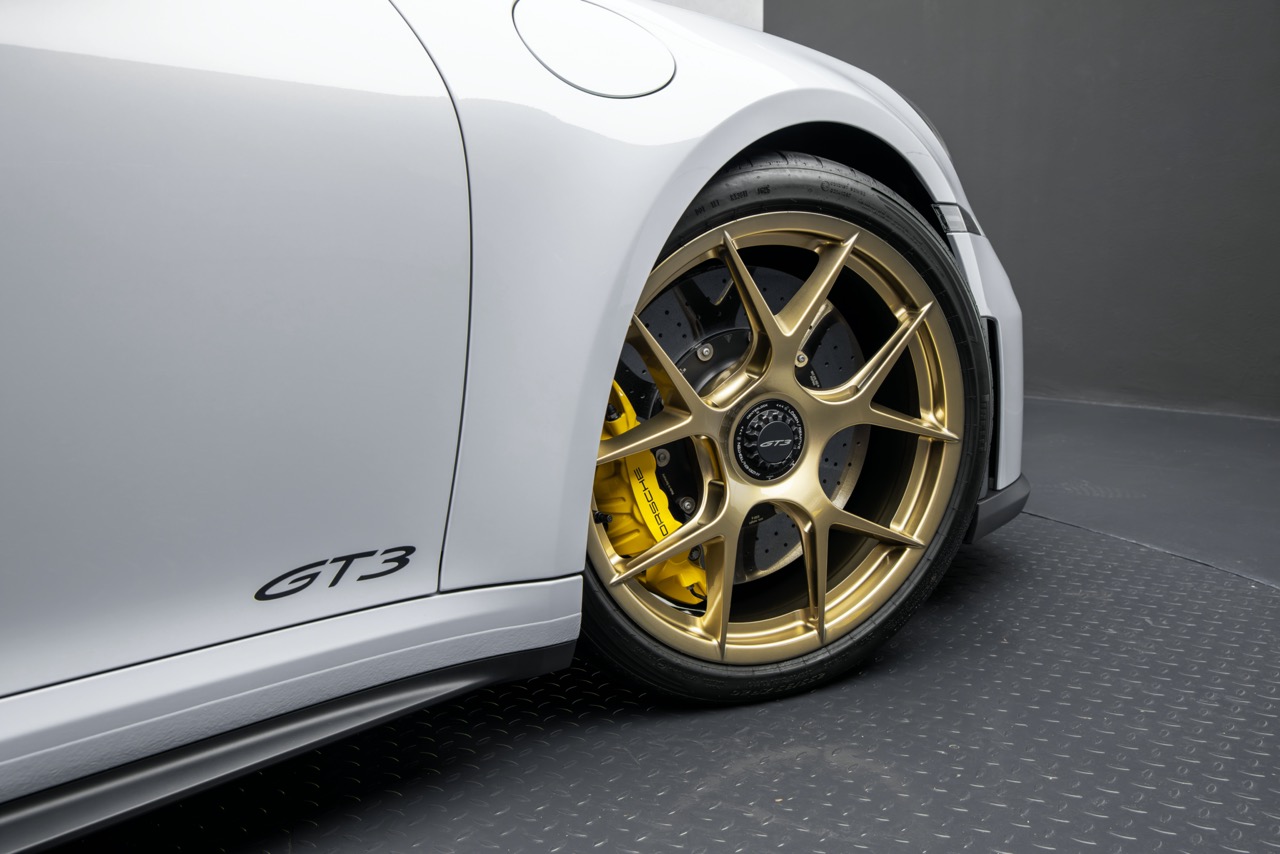
Porsche has carried over suspension technology from the GT3 RS, including double-wishbone front axles with teardrop trailing arms that generate downforce while cooling the brakes. An anti-dive system has been introduced to improve stability under hard braking.

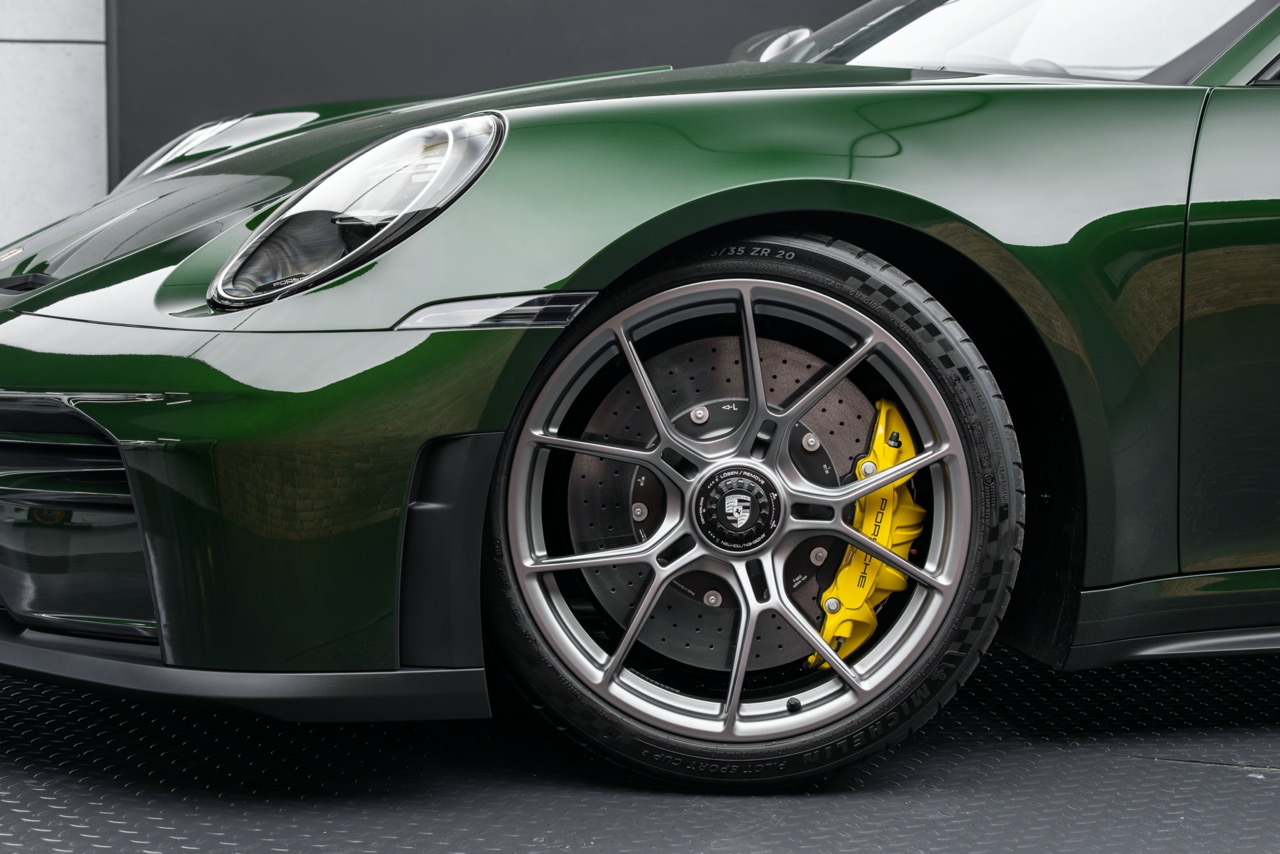
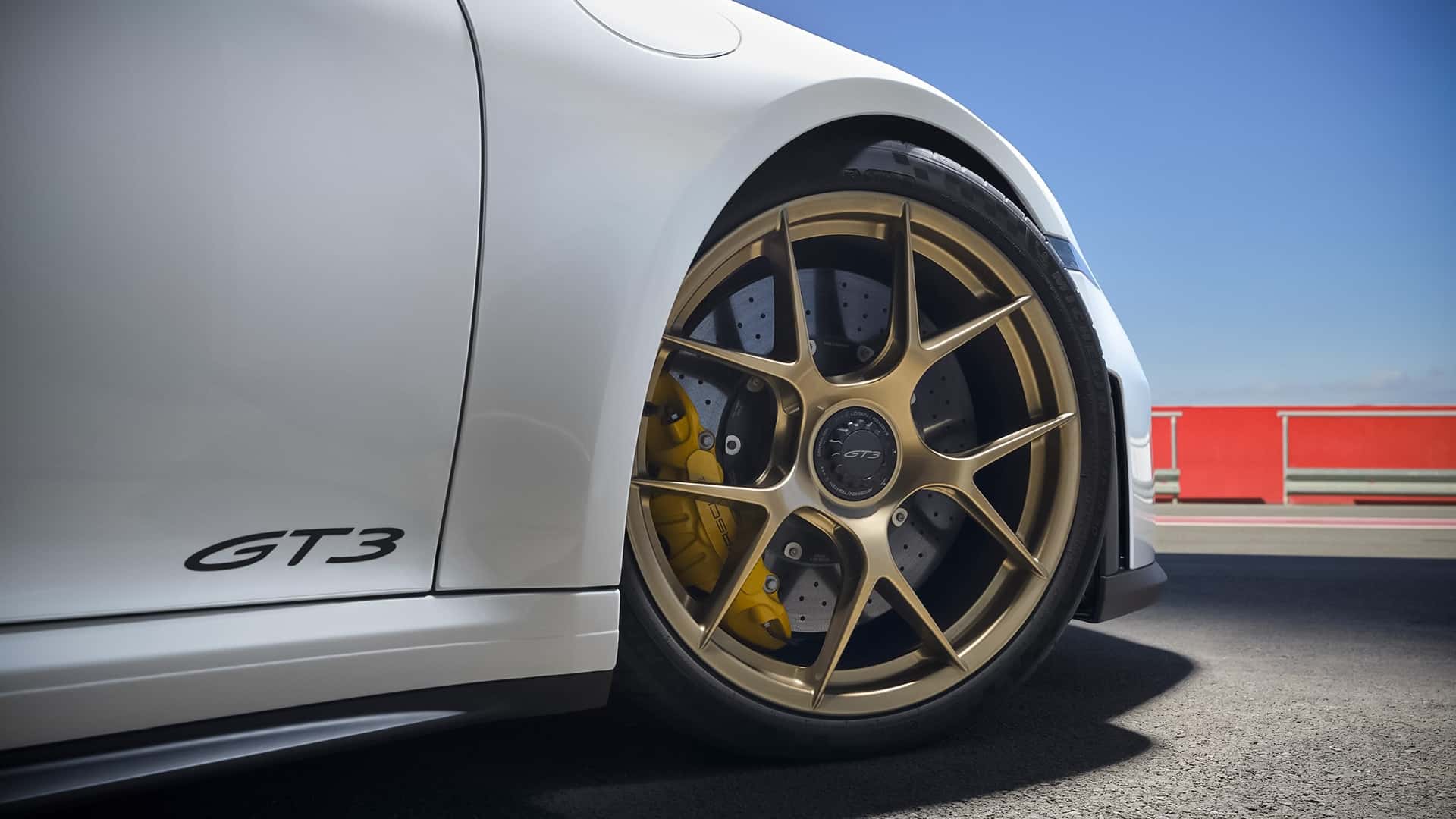
The car comes with 20-inch front and 21-inch rear tyres as standard, with optional road-legal track tyres available. Lightweight design remains a priority: the base car weighs 1,420 kg, with weight savings achieved through aluminium wheels, a lithium-ion battery, and optional magnesium wheels in the Weissach or Leichtbau packages.
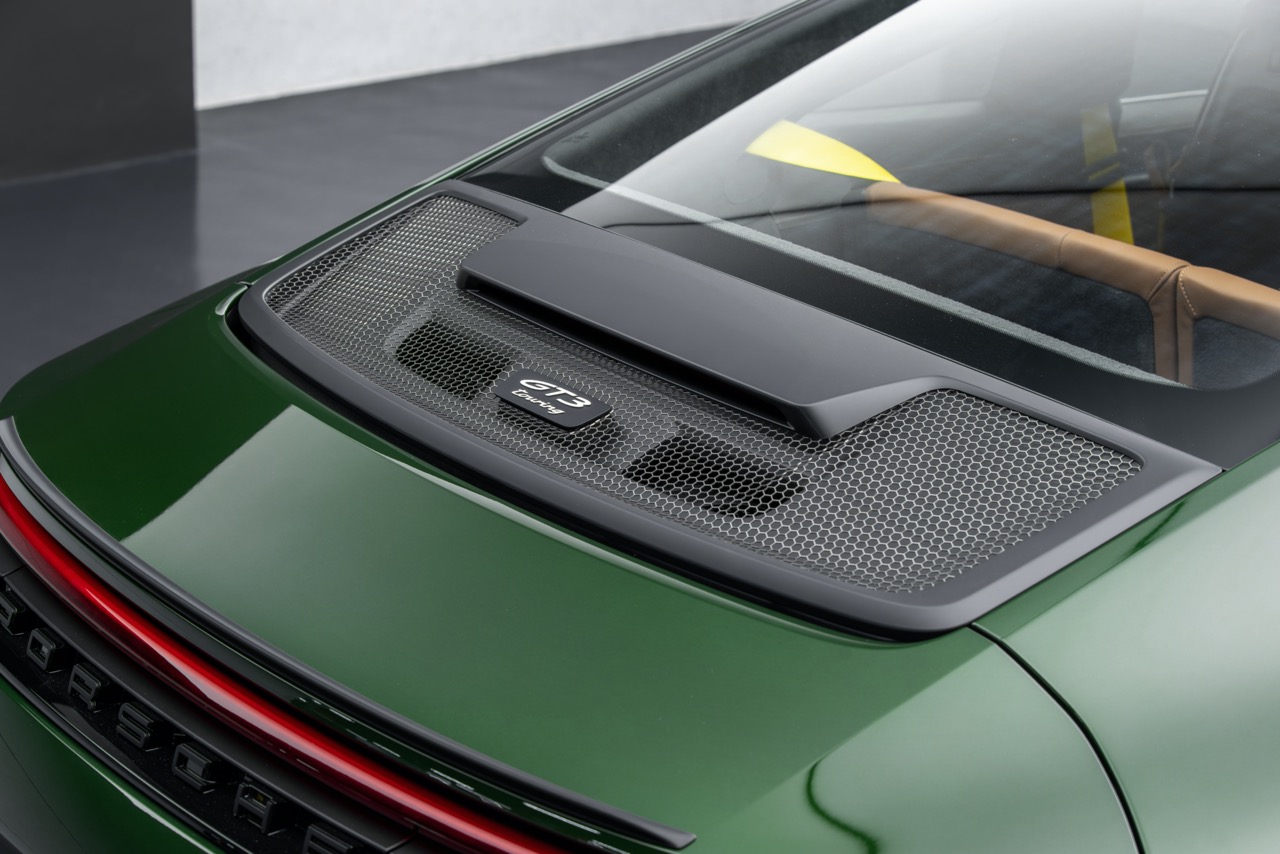
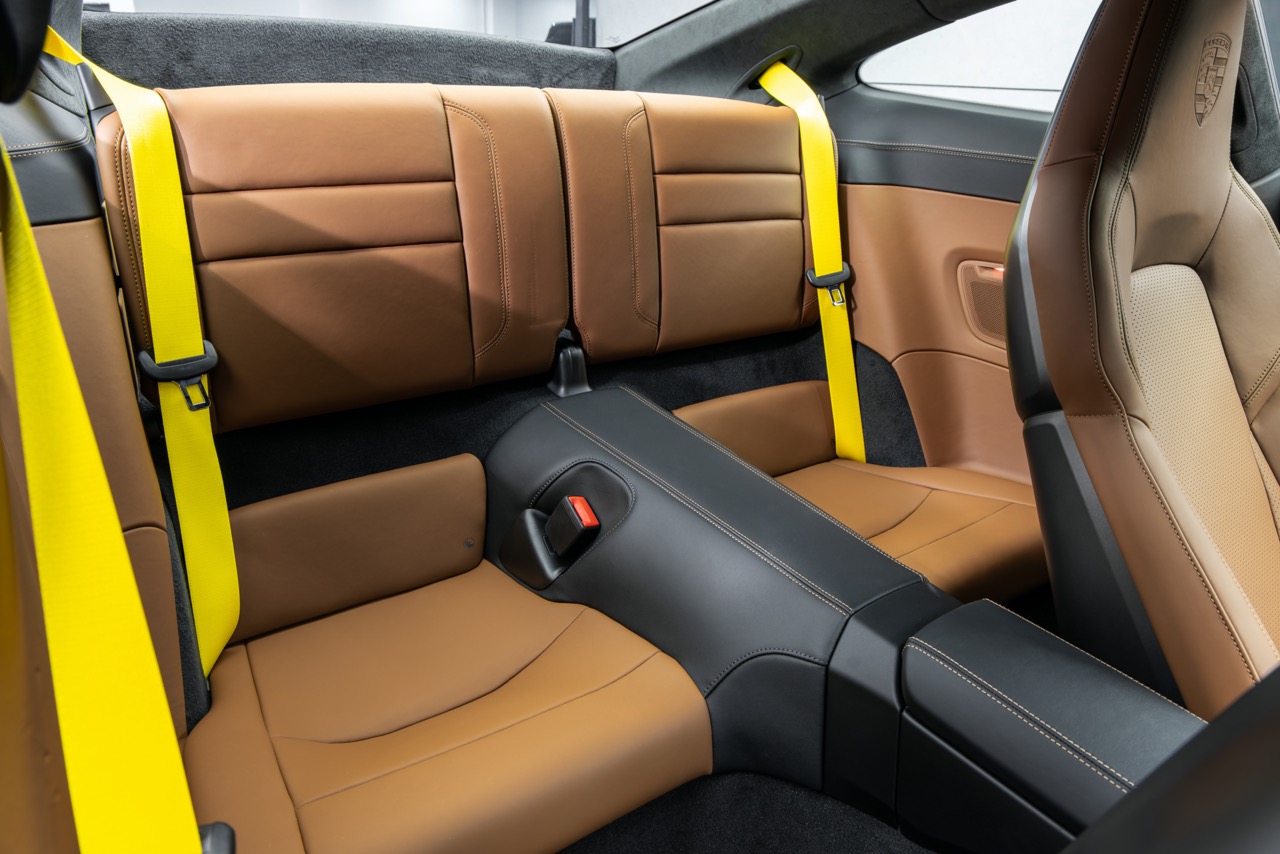
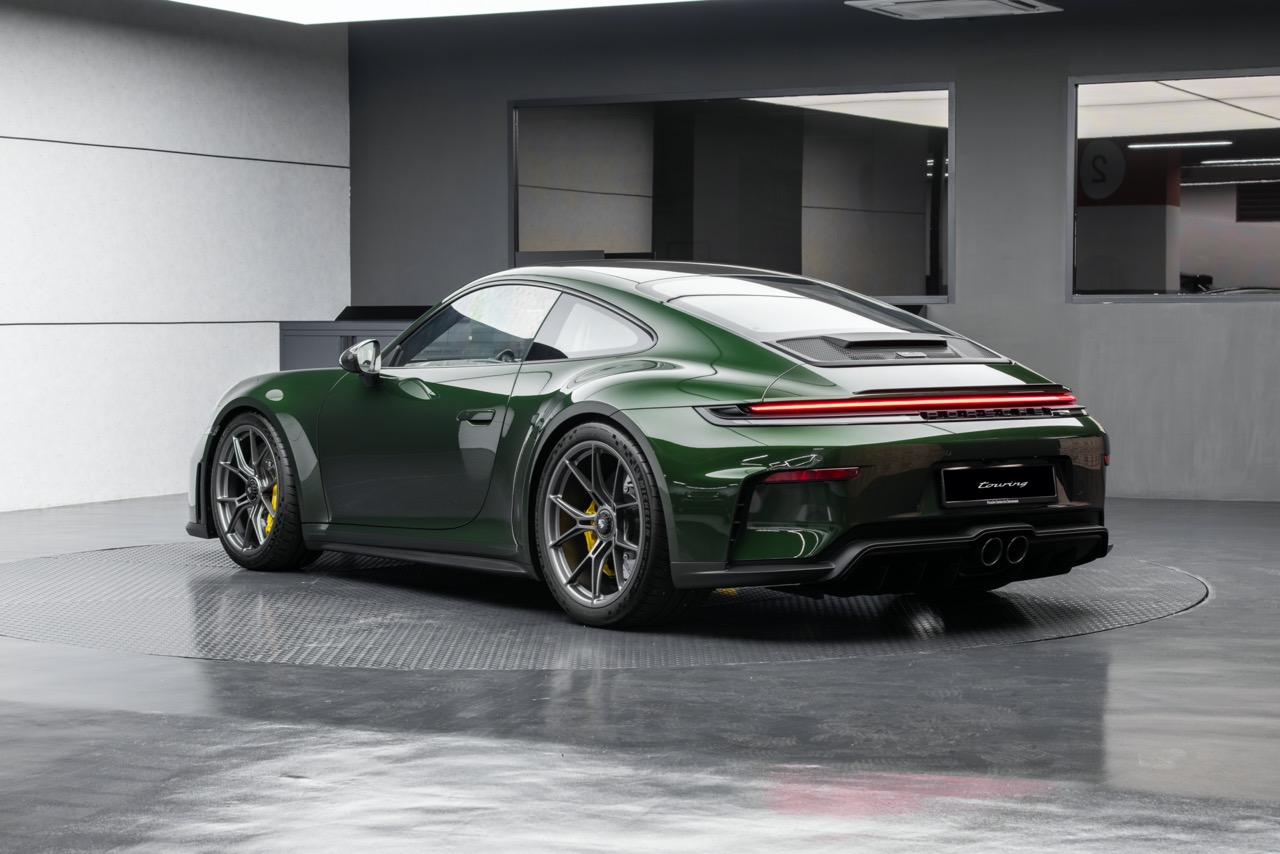
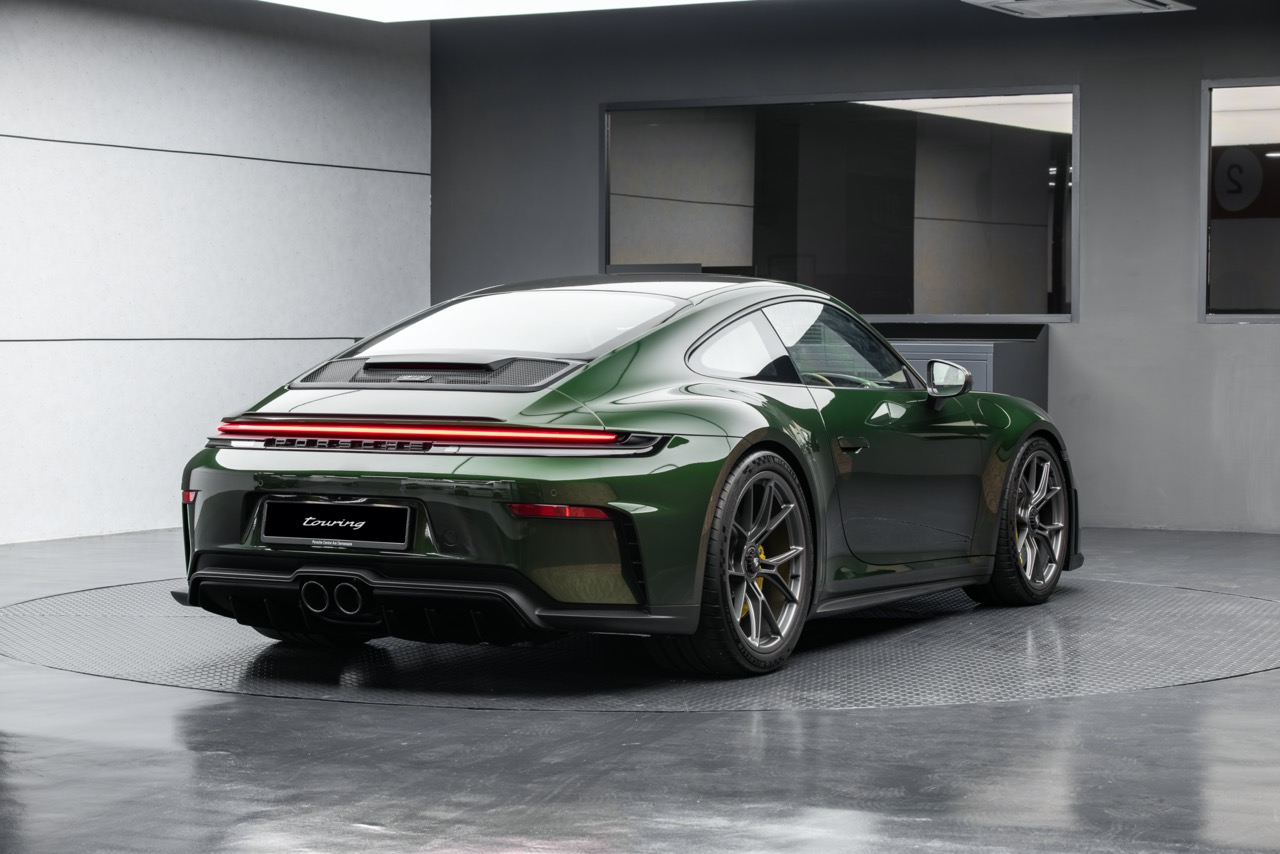
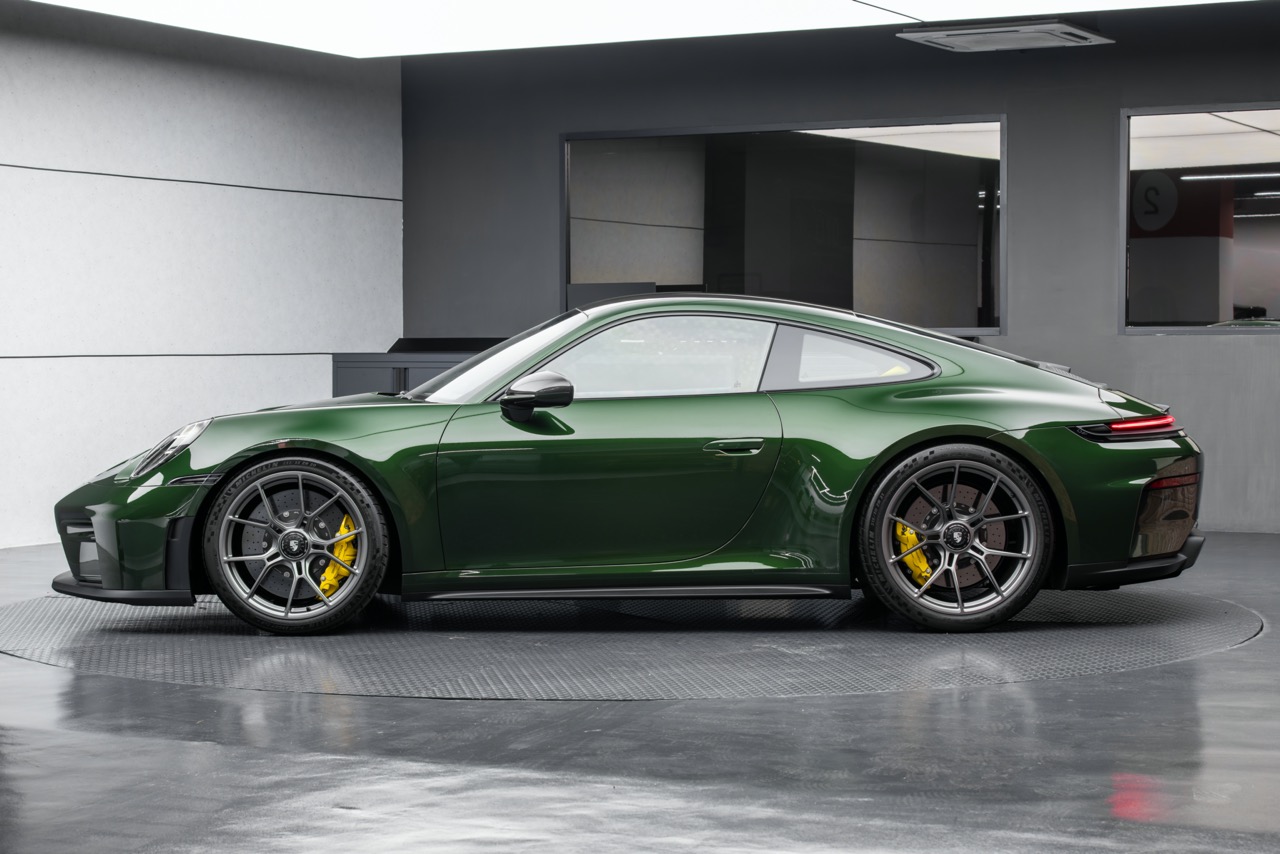
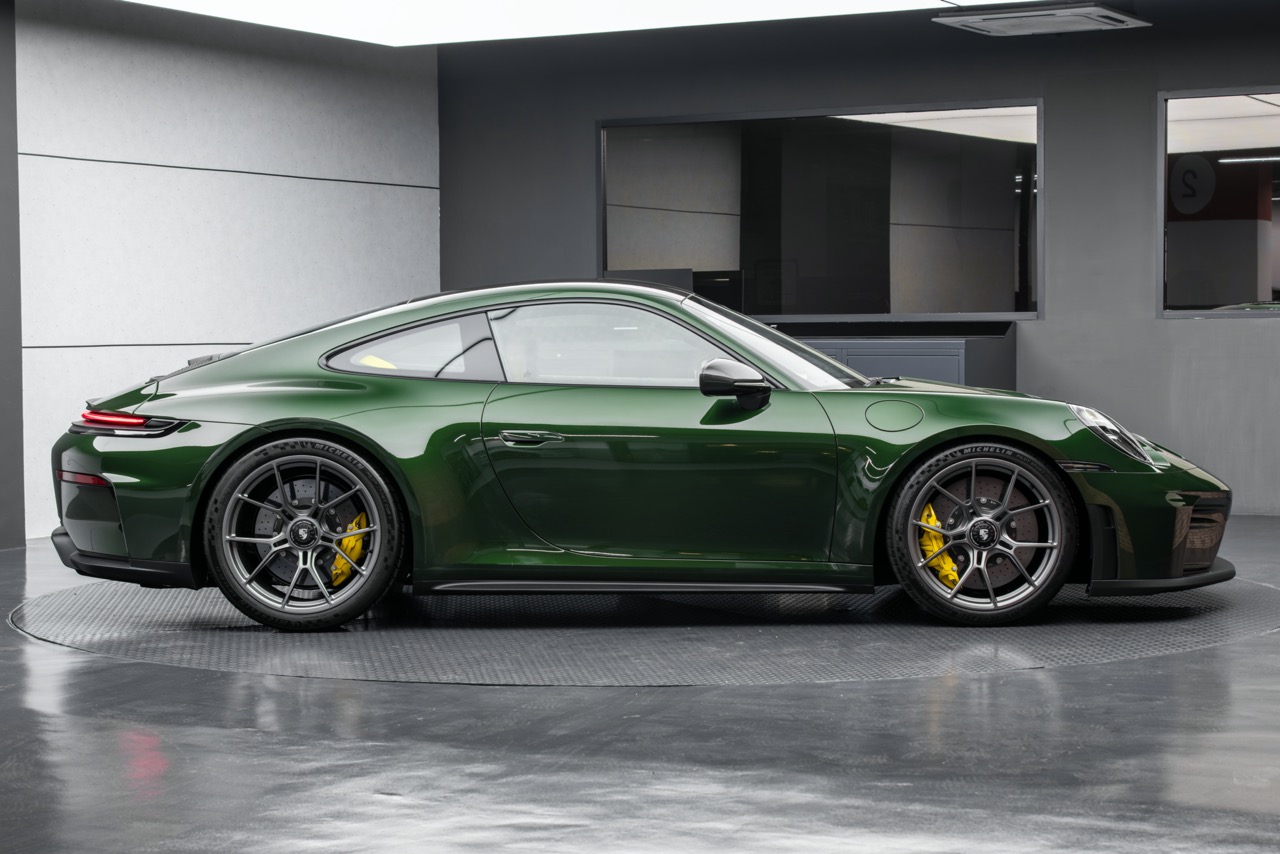
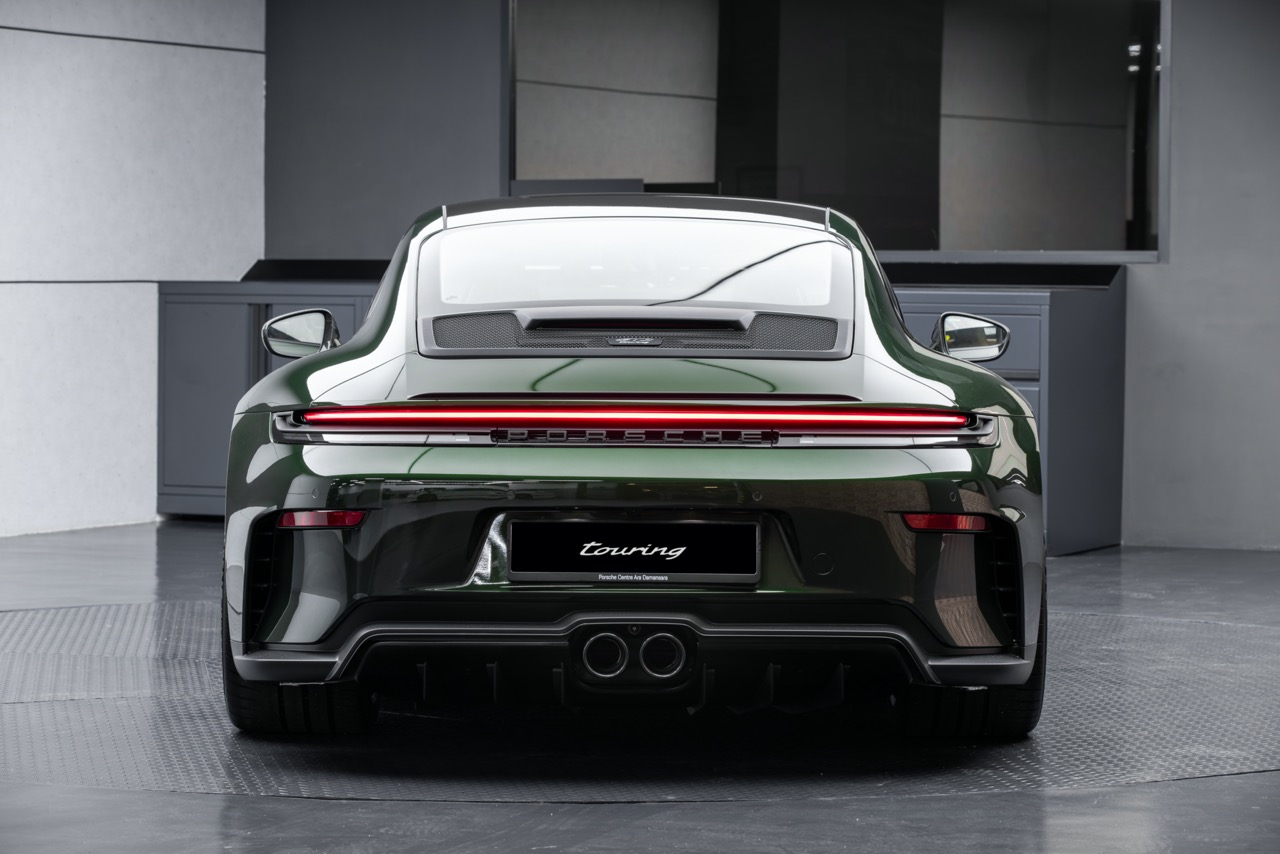
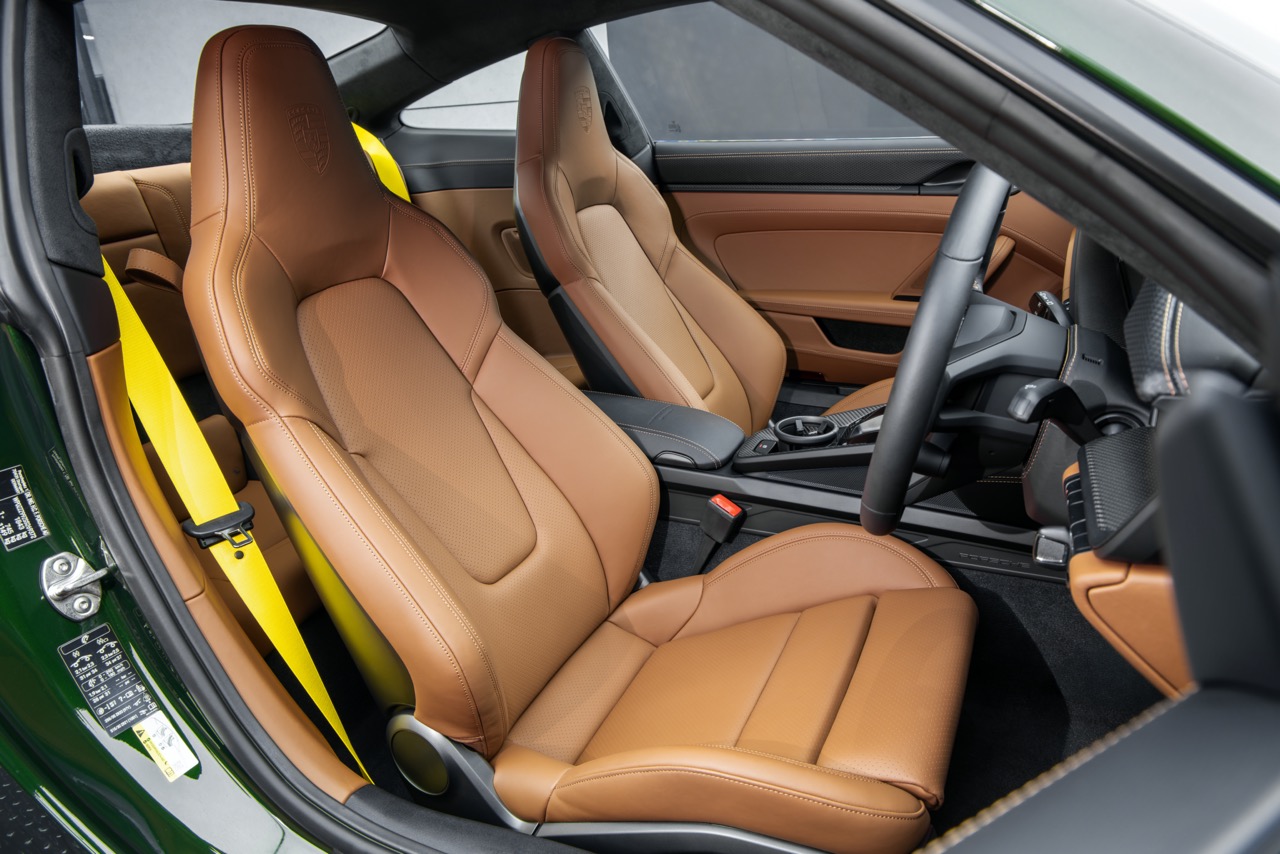
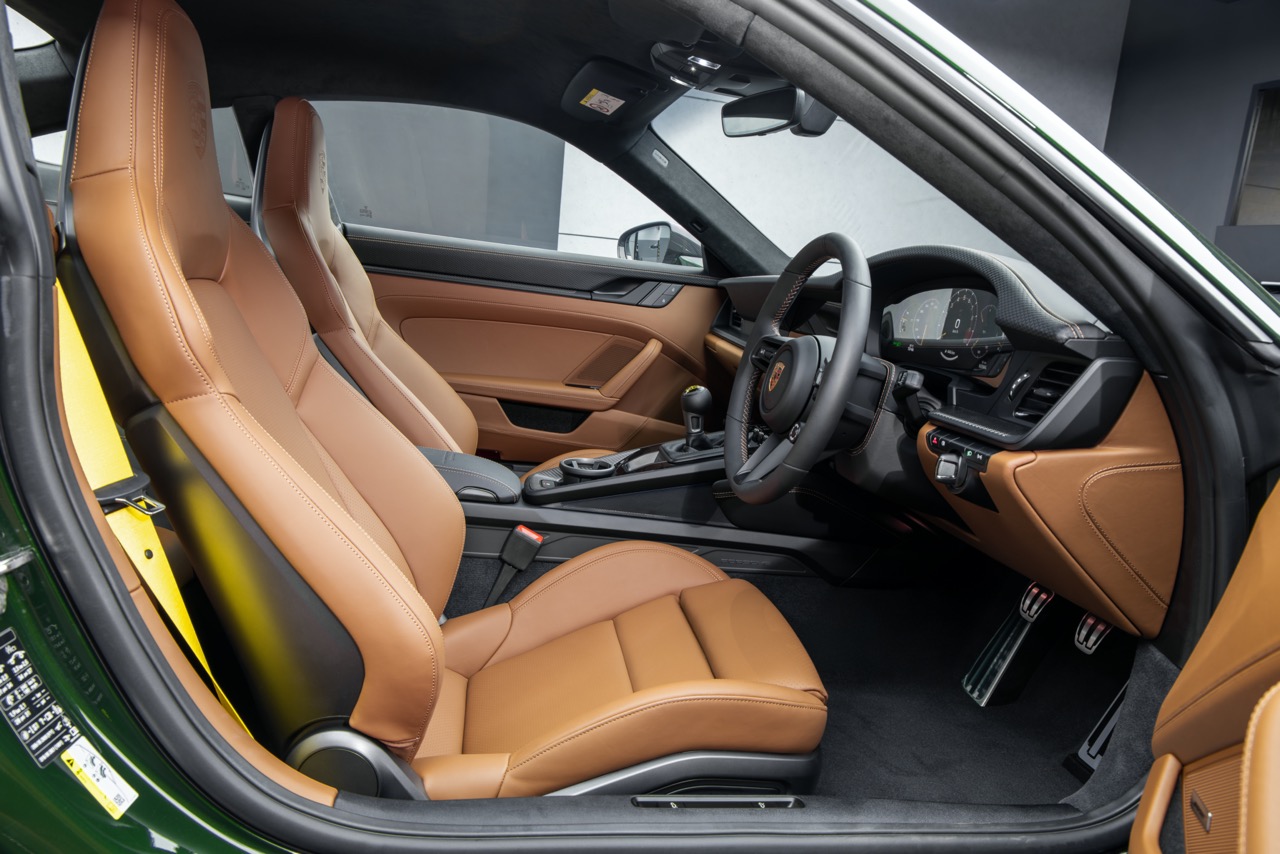
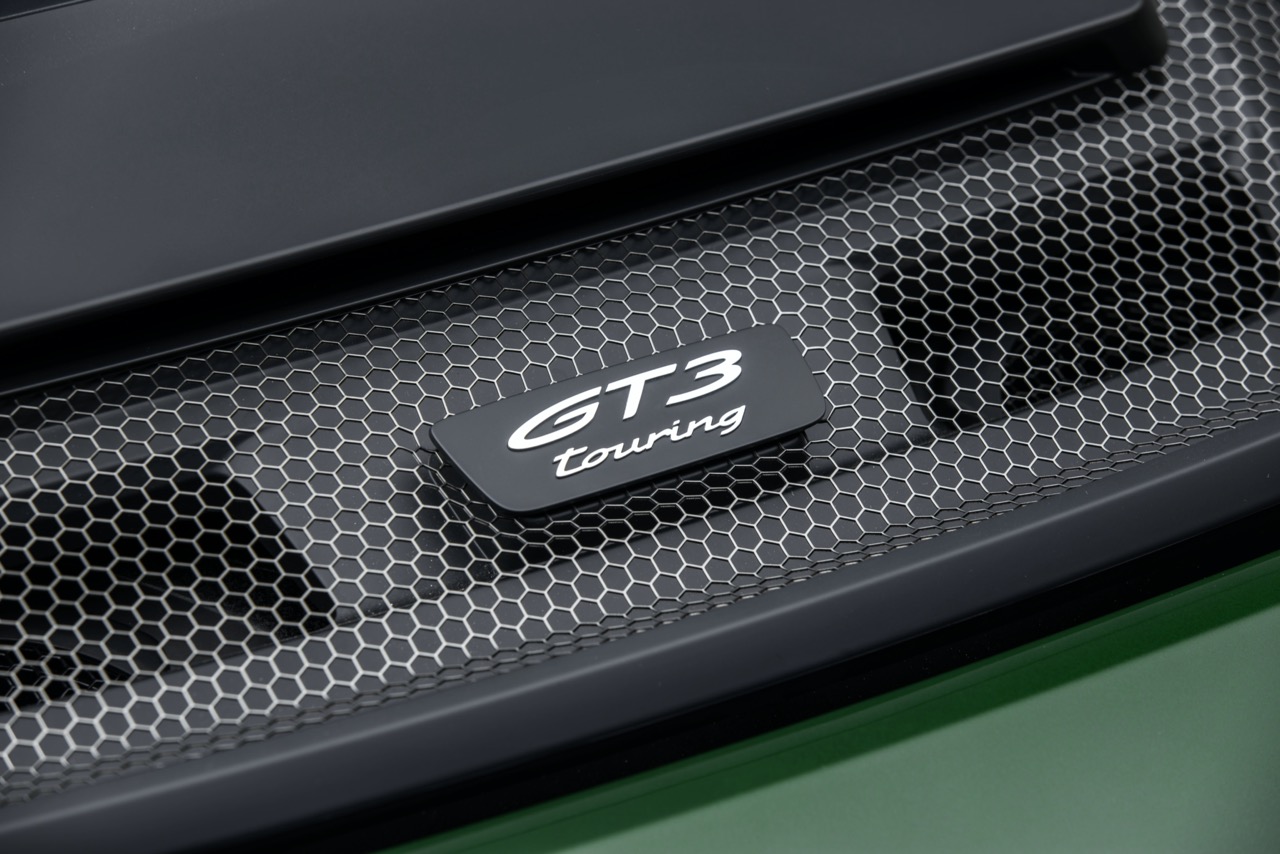
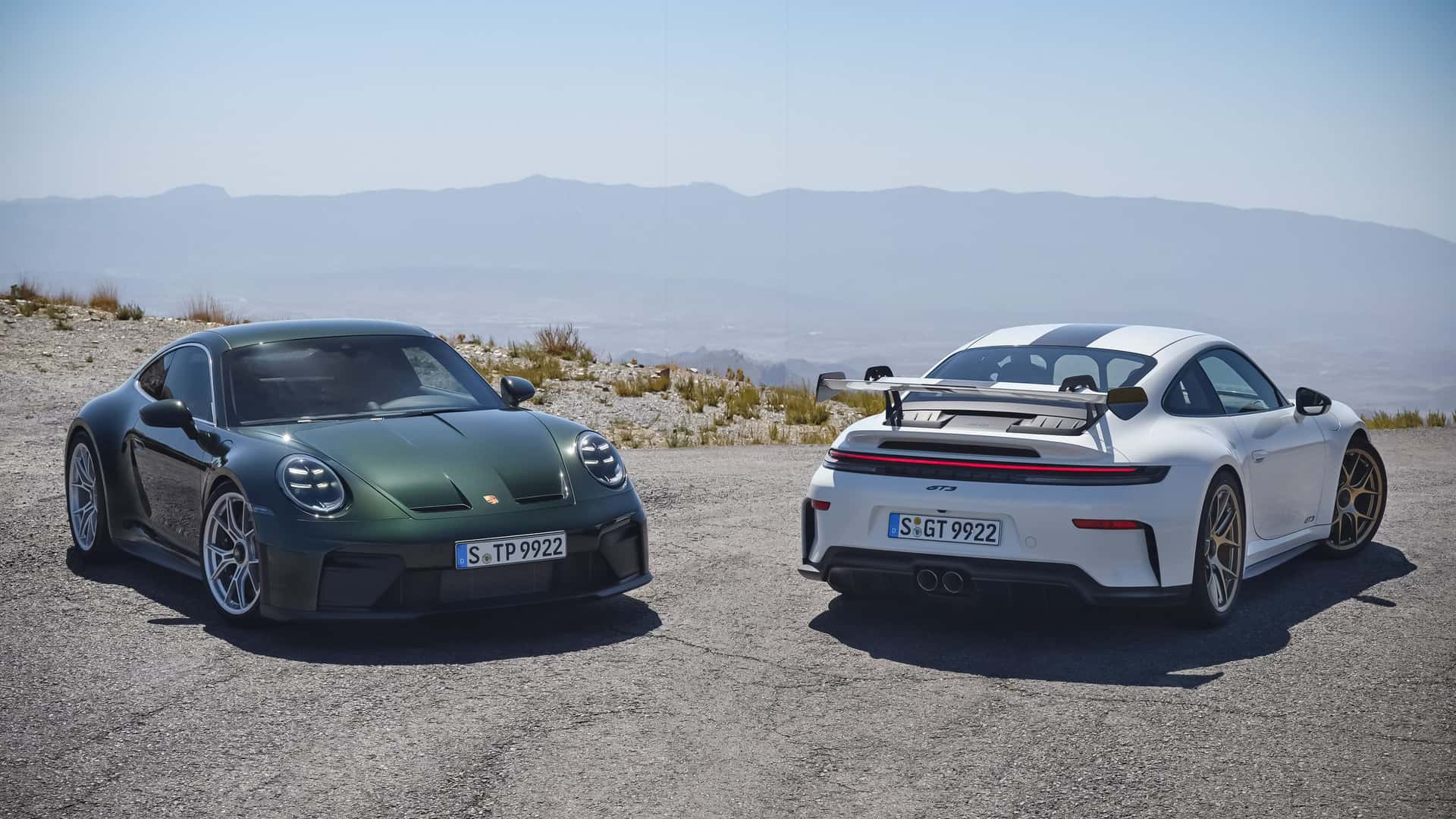
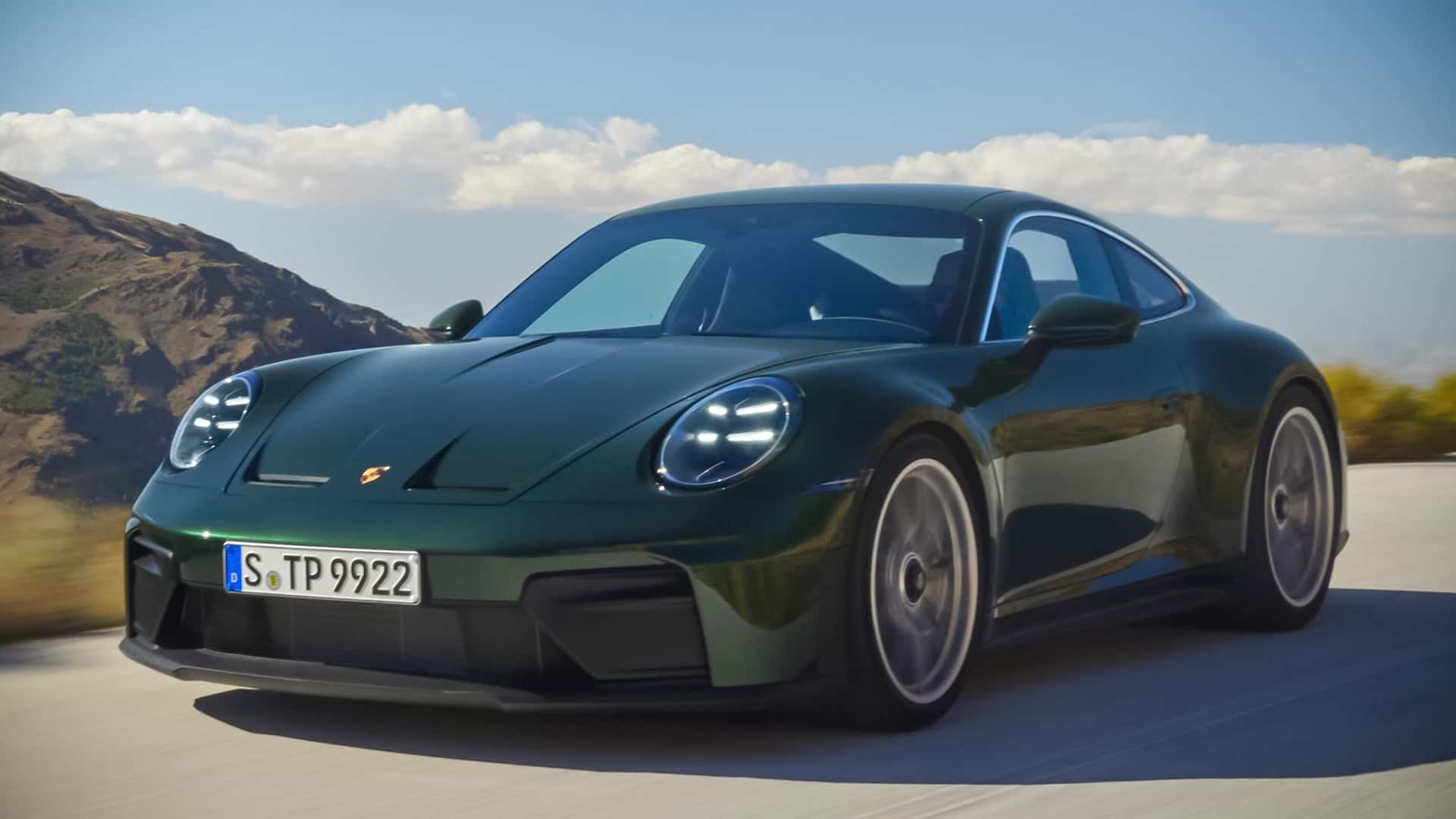
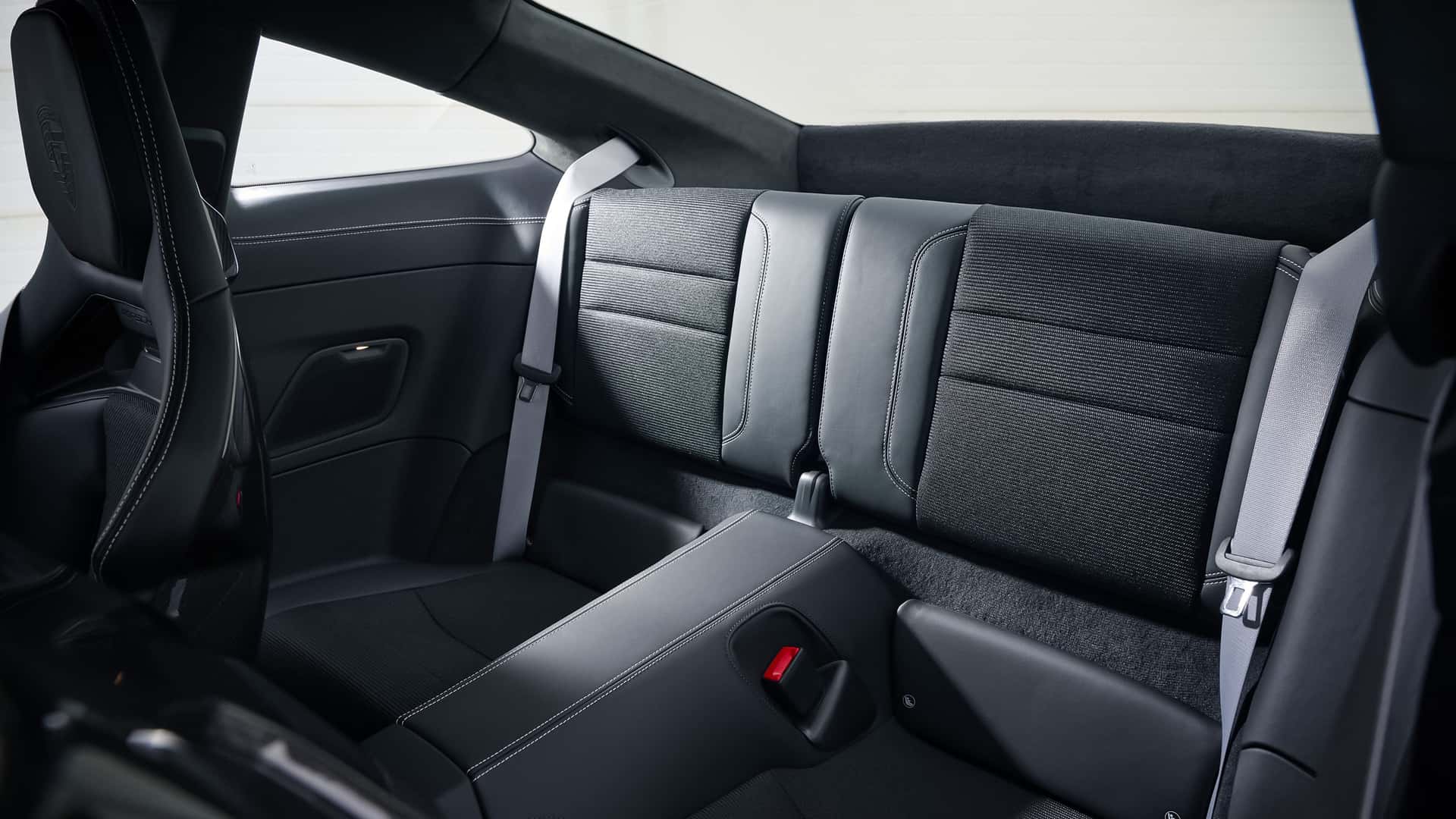
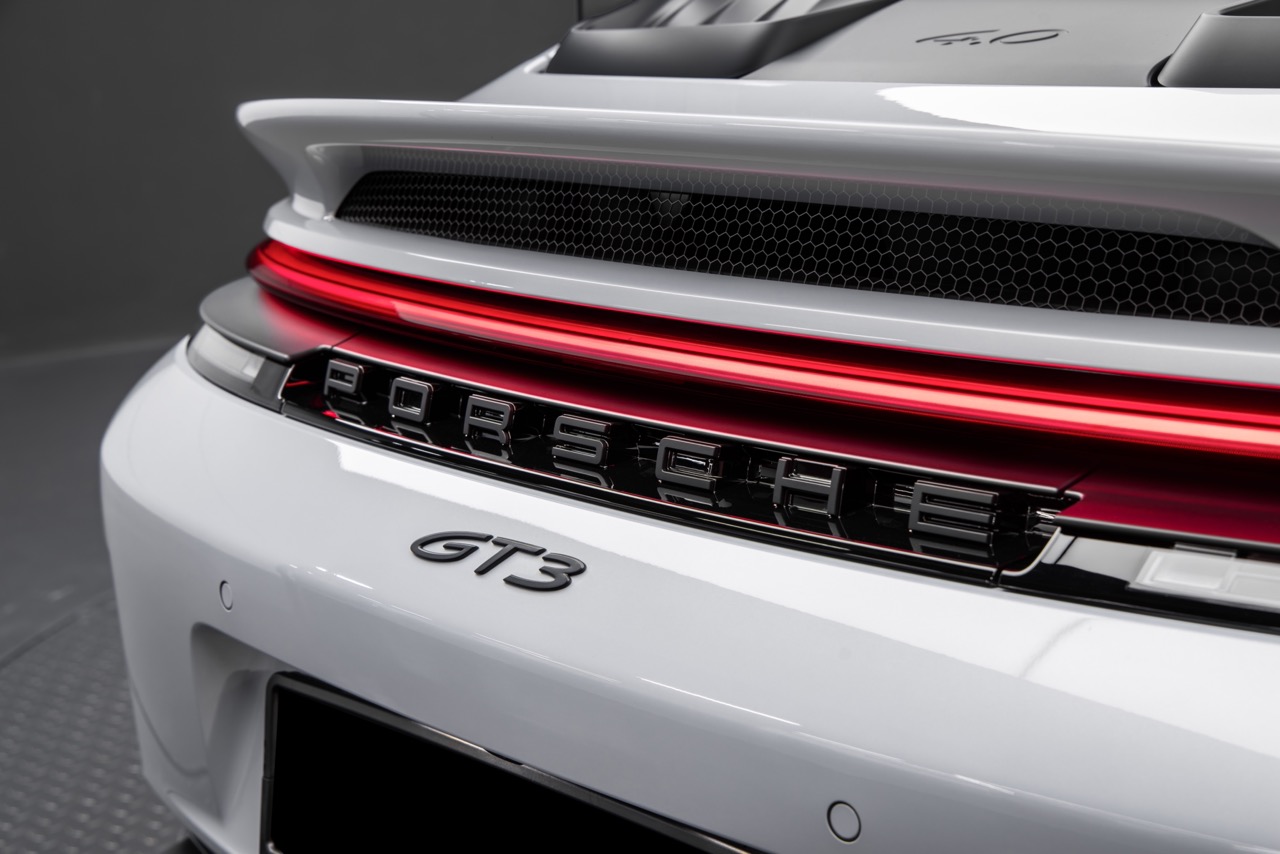
Two distinct versions are offered. The GT3 retains its fixed rear wing, while the GT3 with Touring package swaps it for a more understated extendable spoiler. The Touring model also gains a leather-trimmed interior and, for the first time, an optional rear seat system.
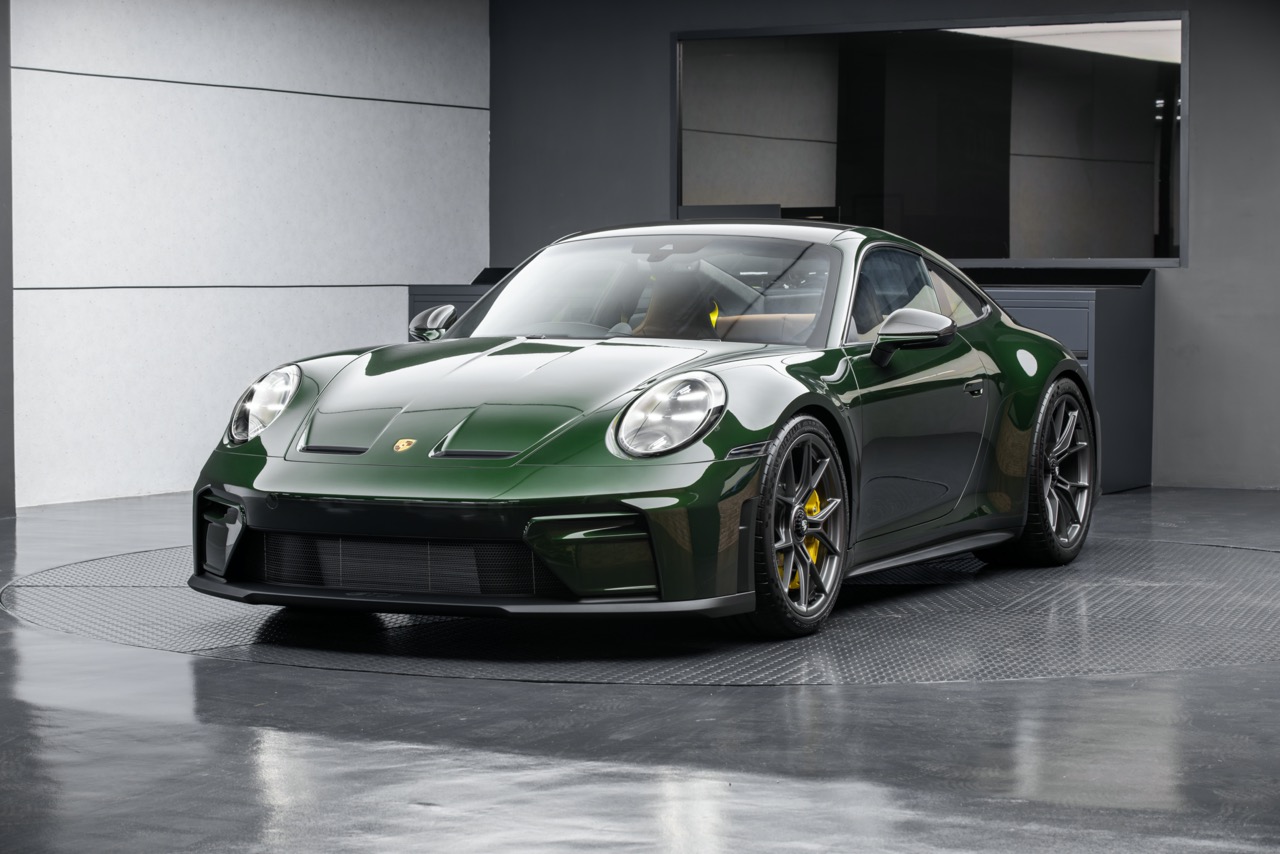
Both versions can be further customised with the Weissach package for track use, or the Lightweight package for the Touring, which includes CFRP components and magnesium wheels. The Clubsport package, with roll cage and harness, is offered at no extra cost for the winged GT3.

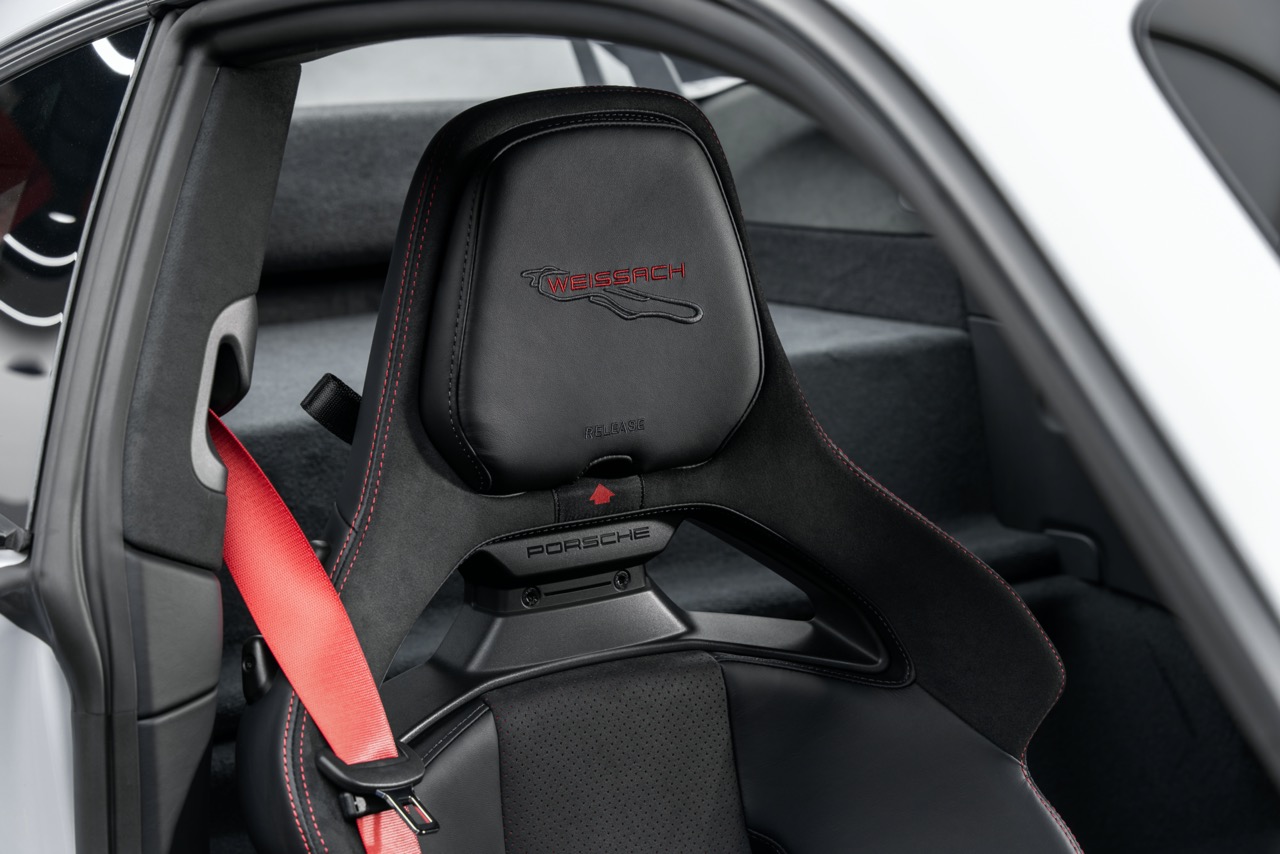
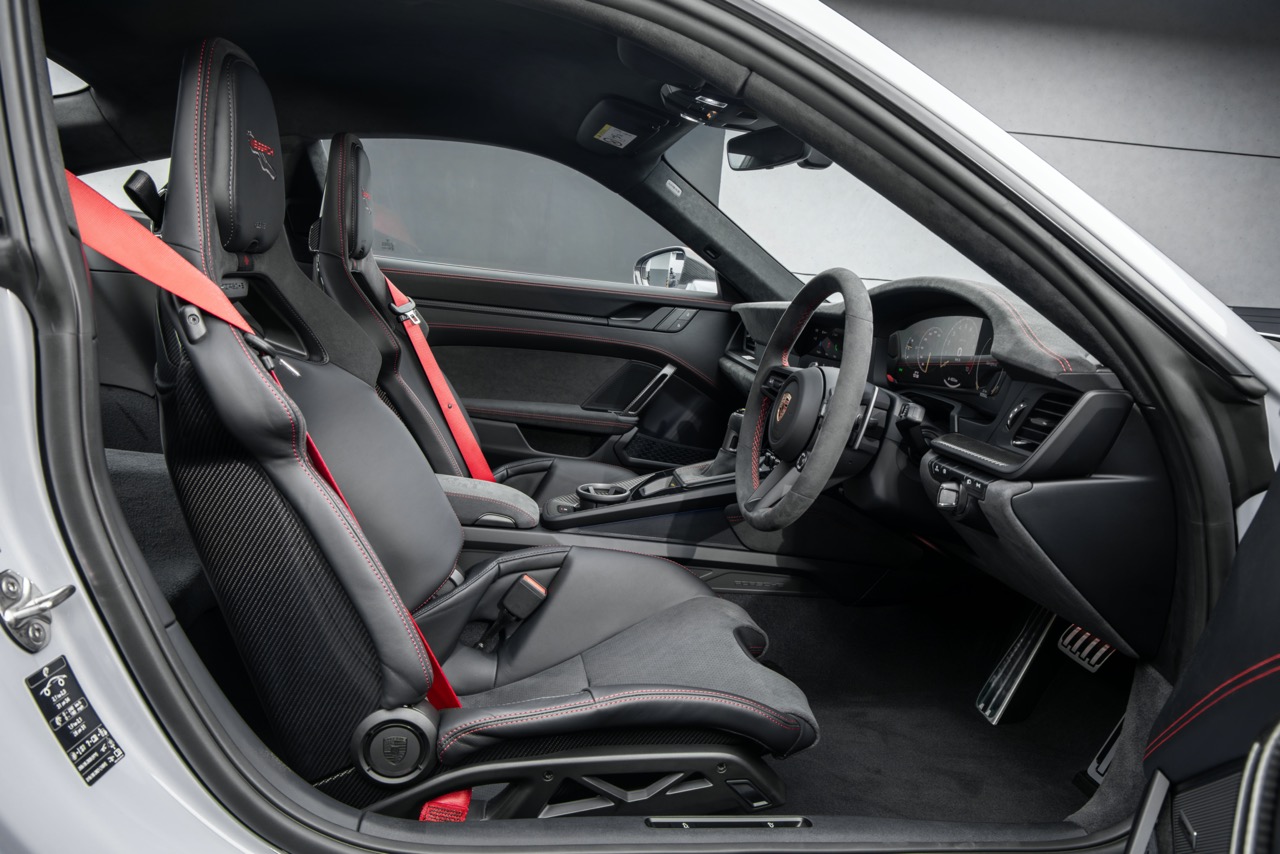
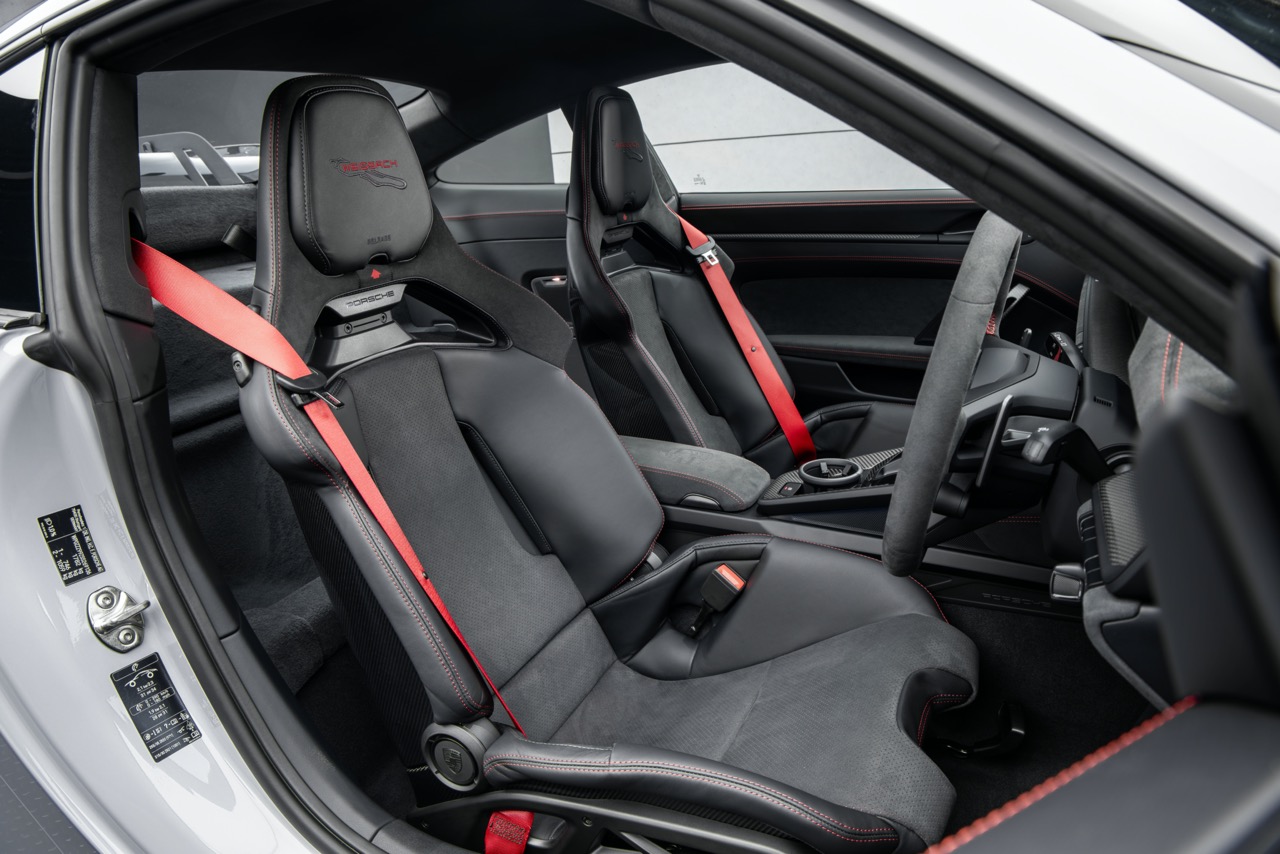
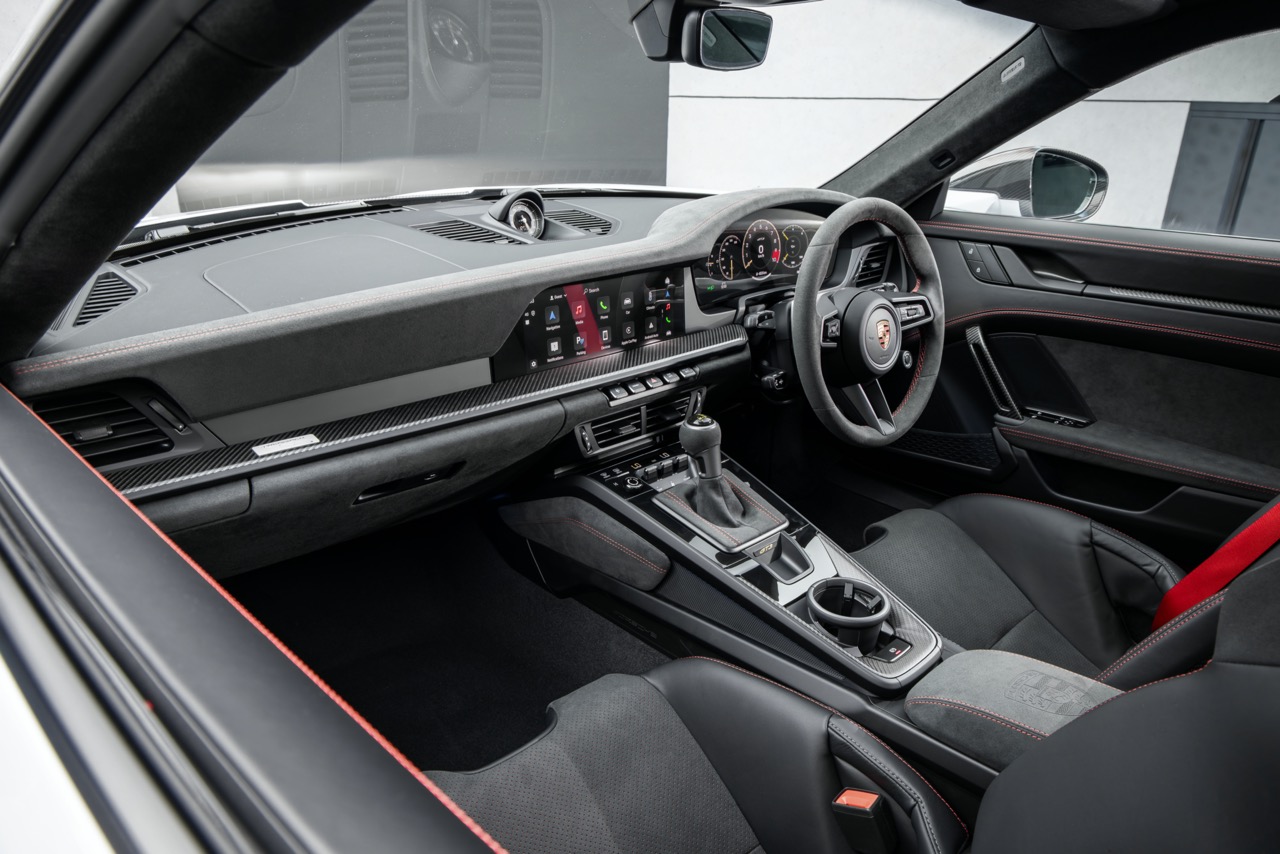
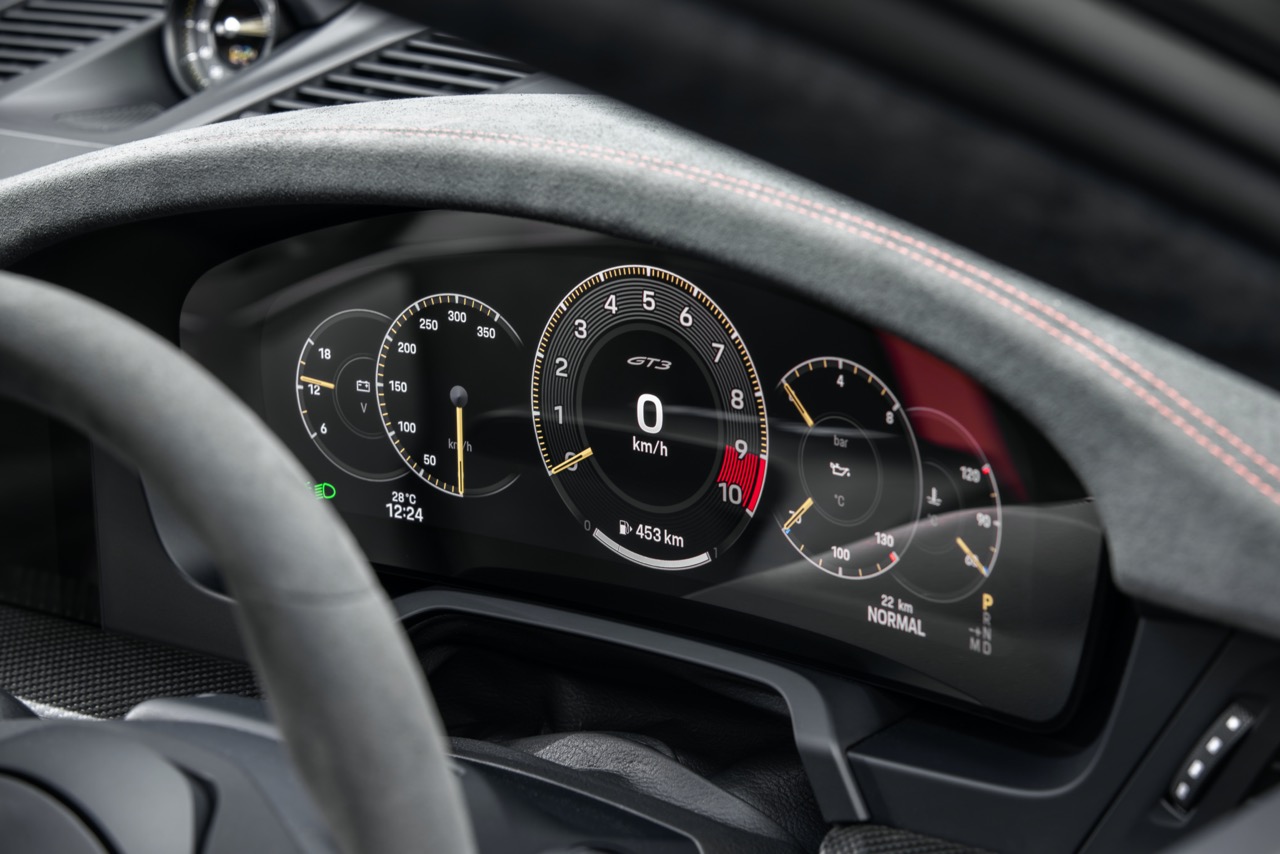
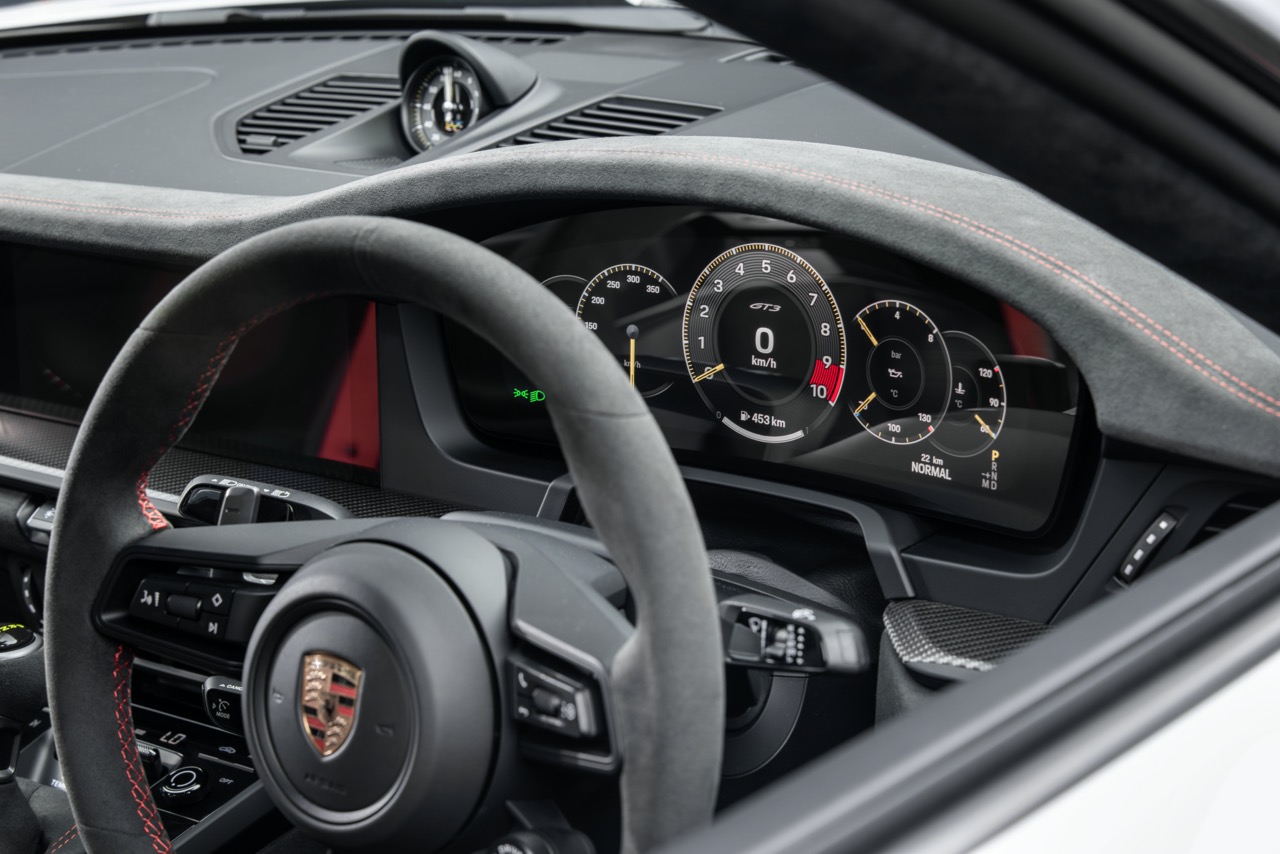
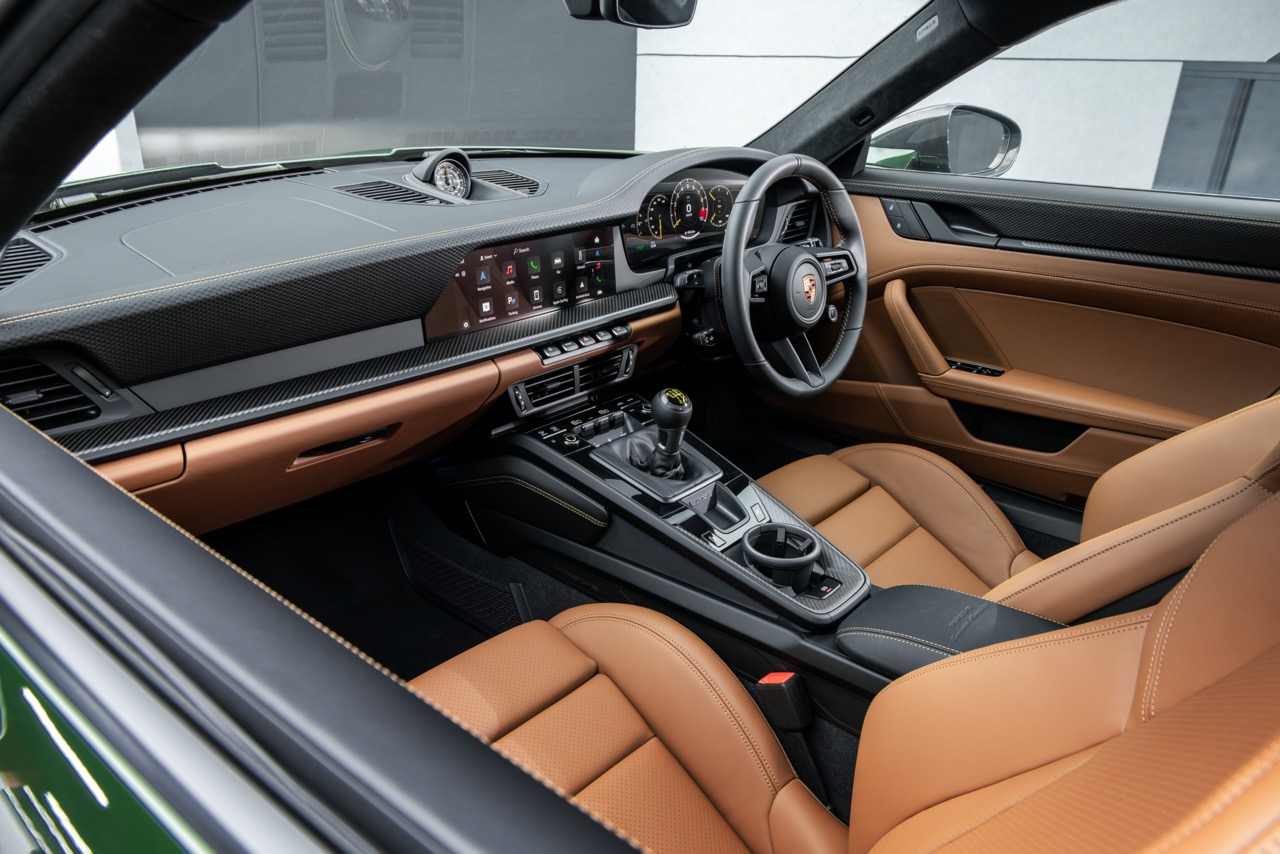
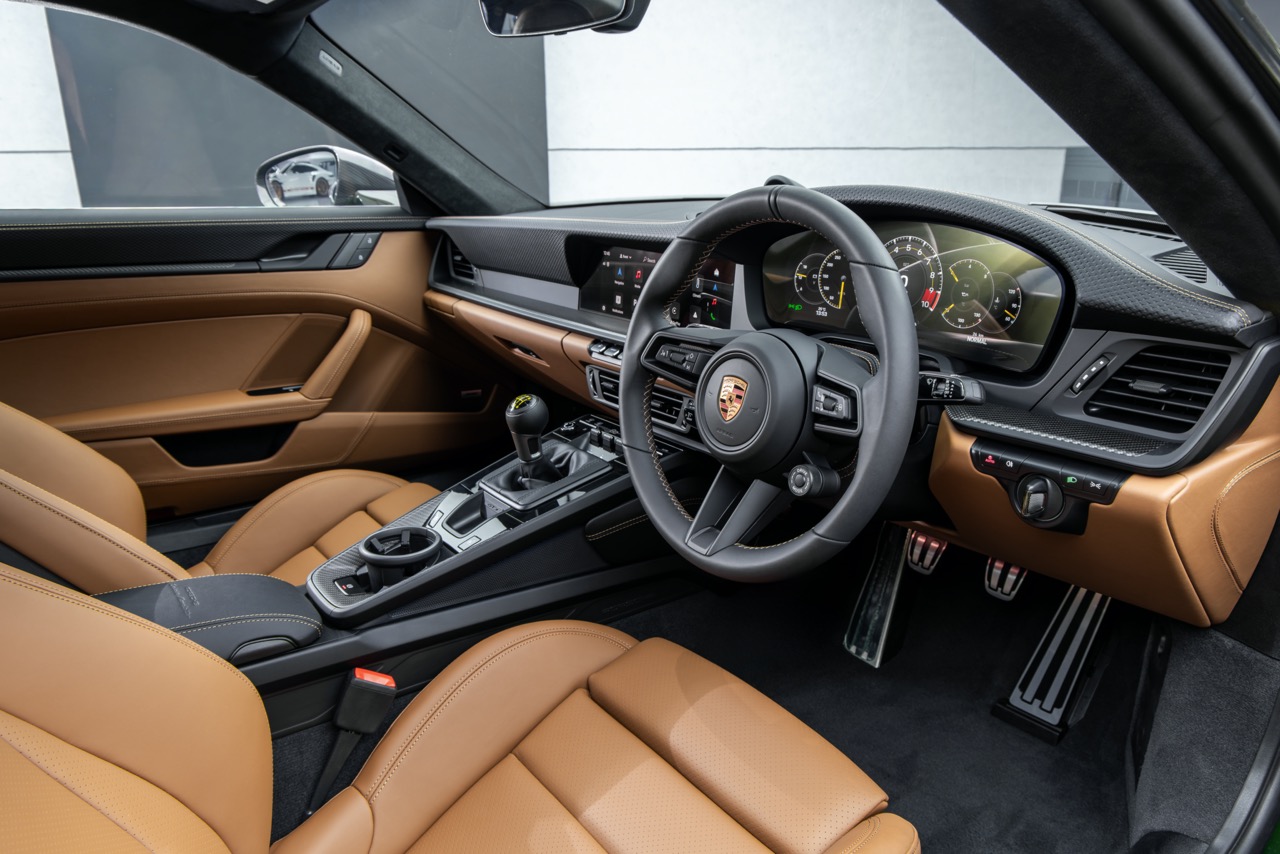
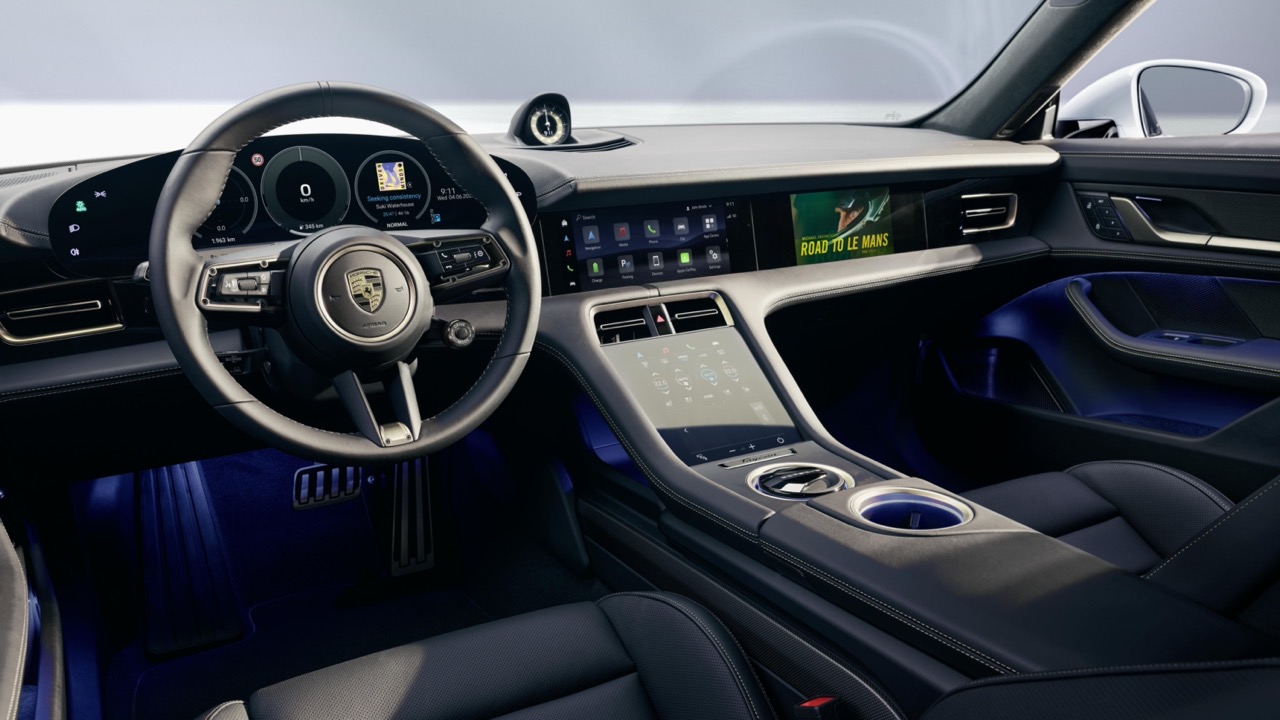
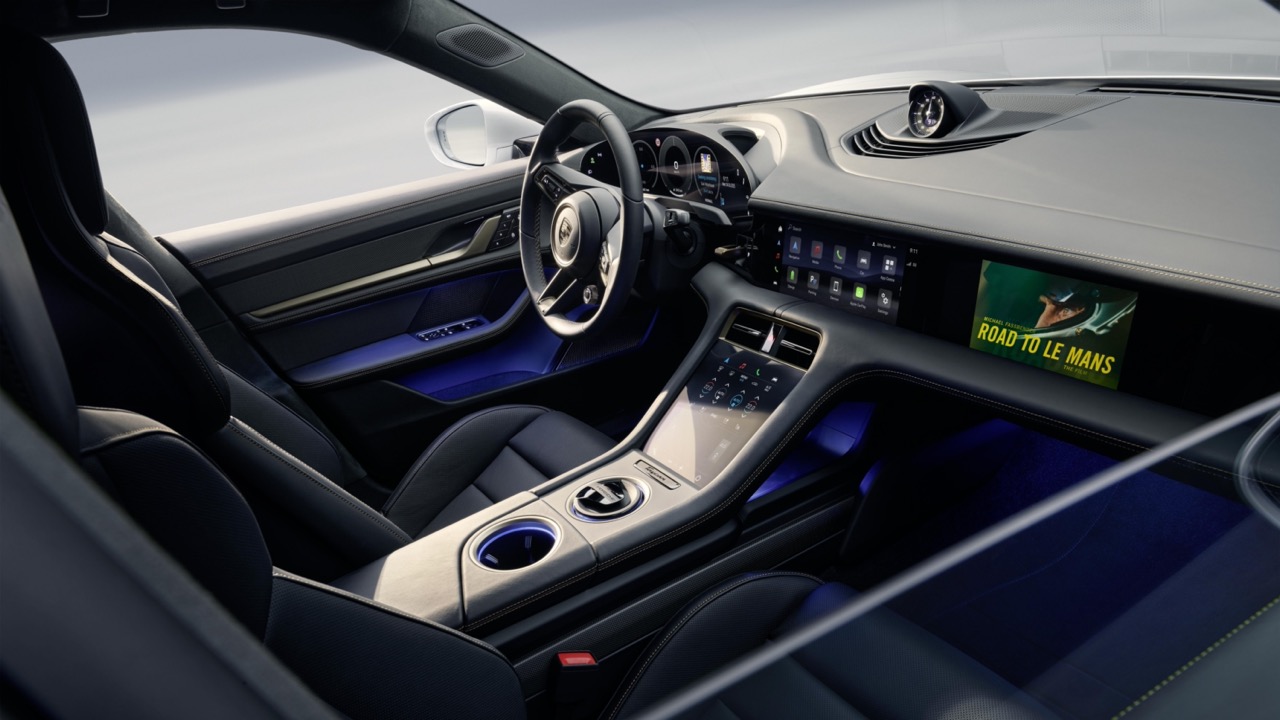
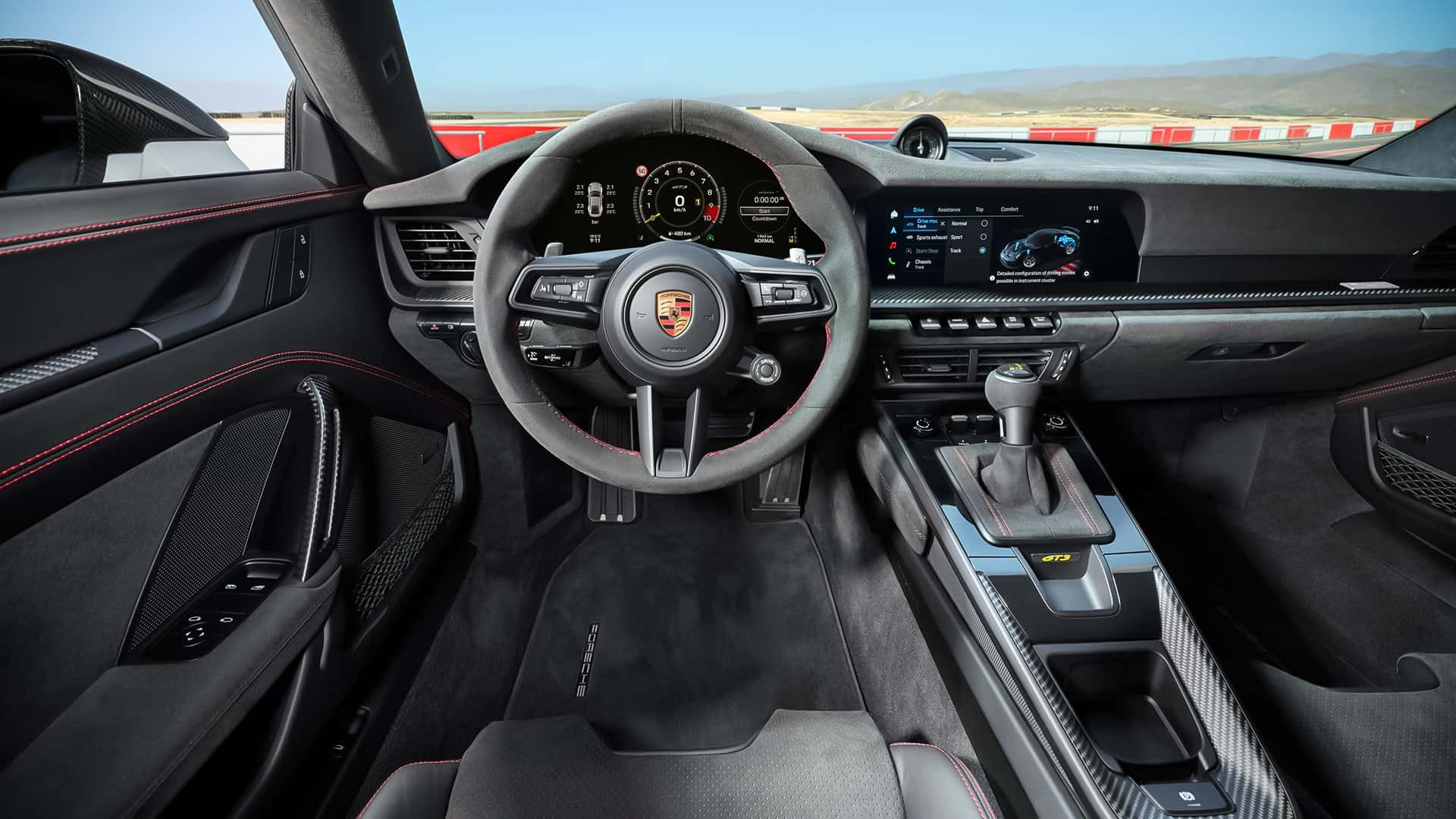
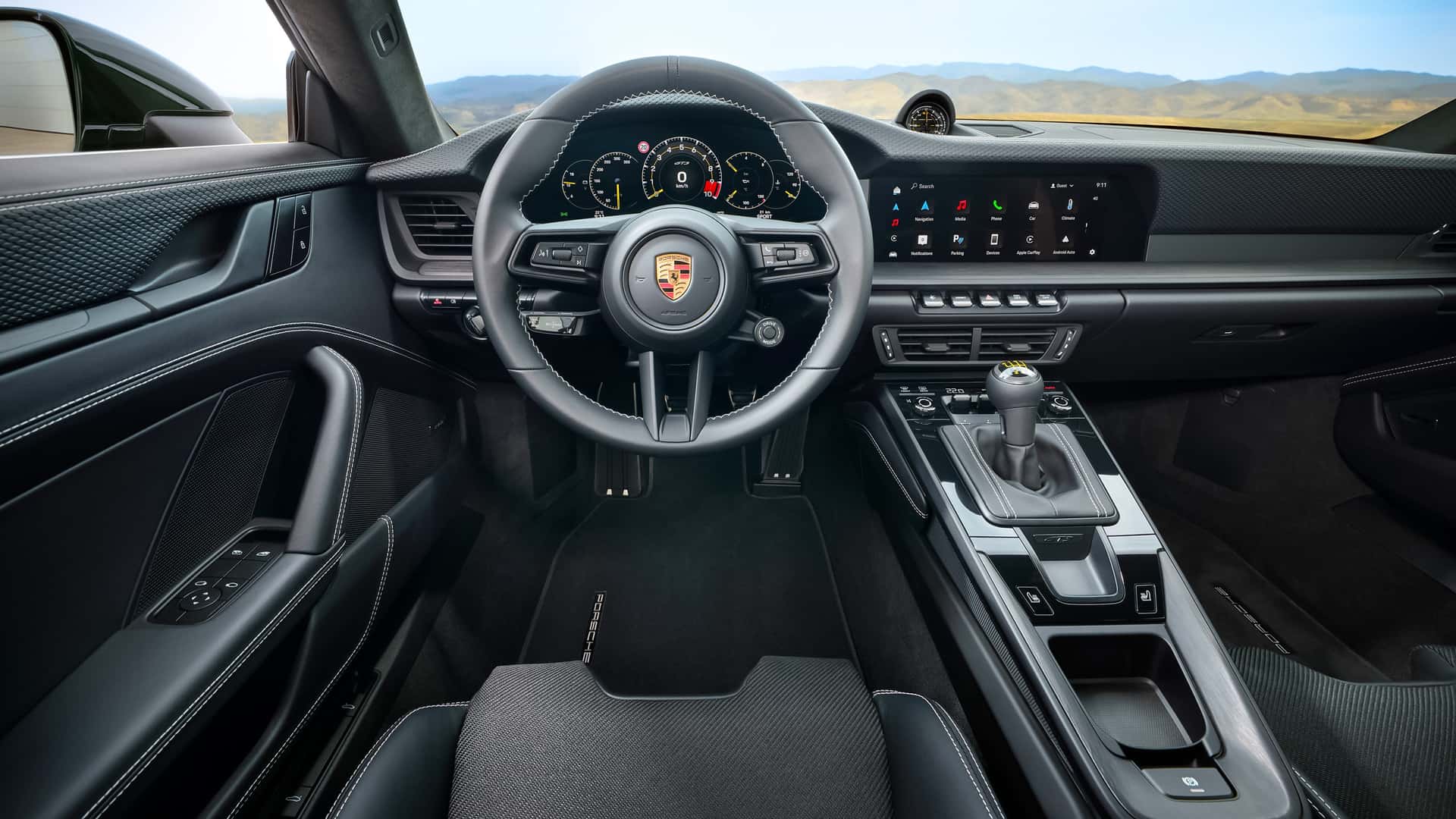
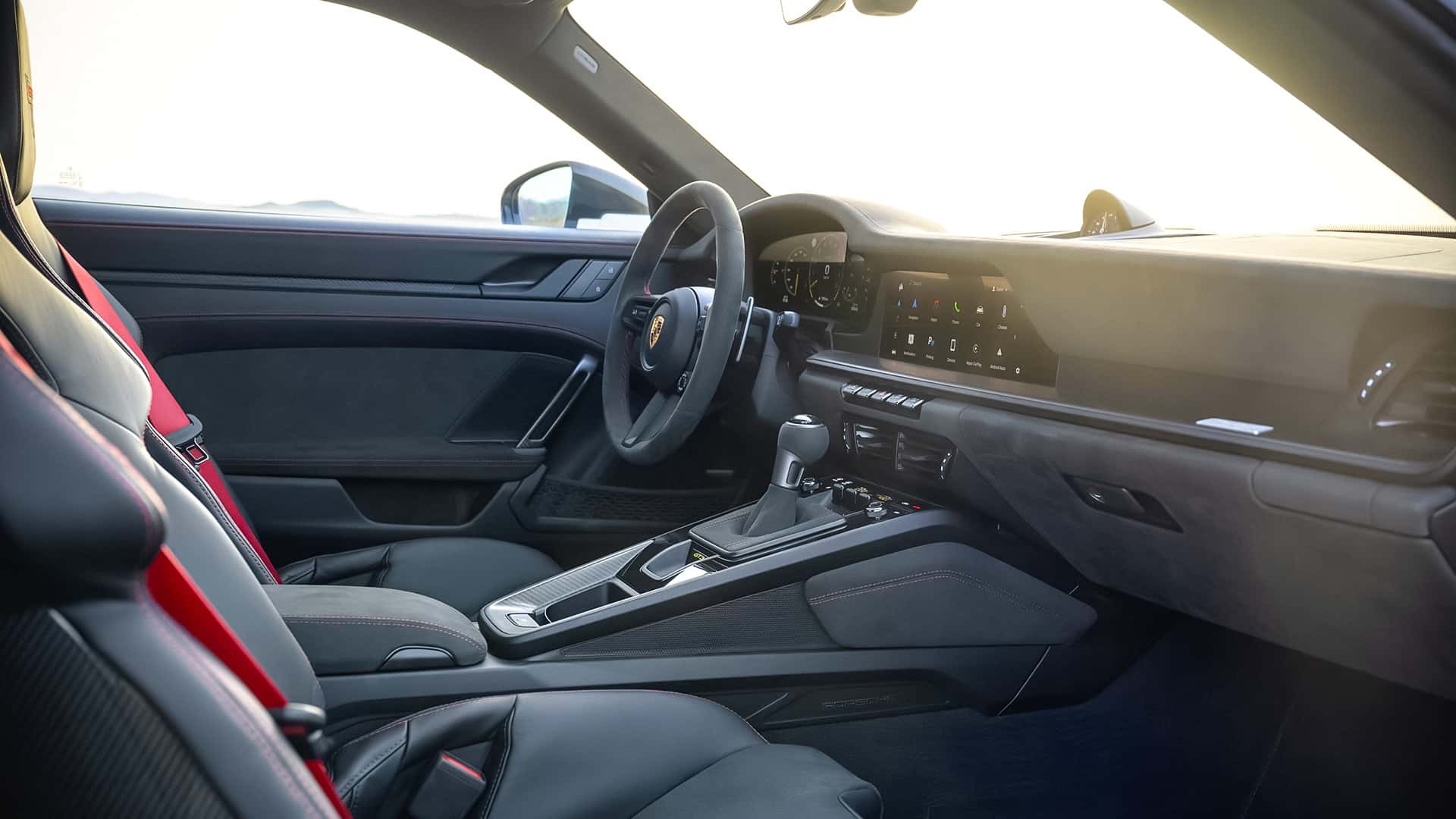
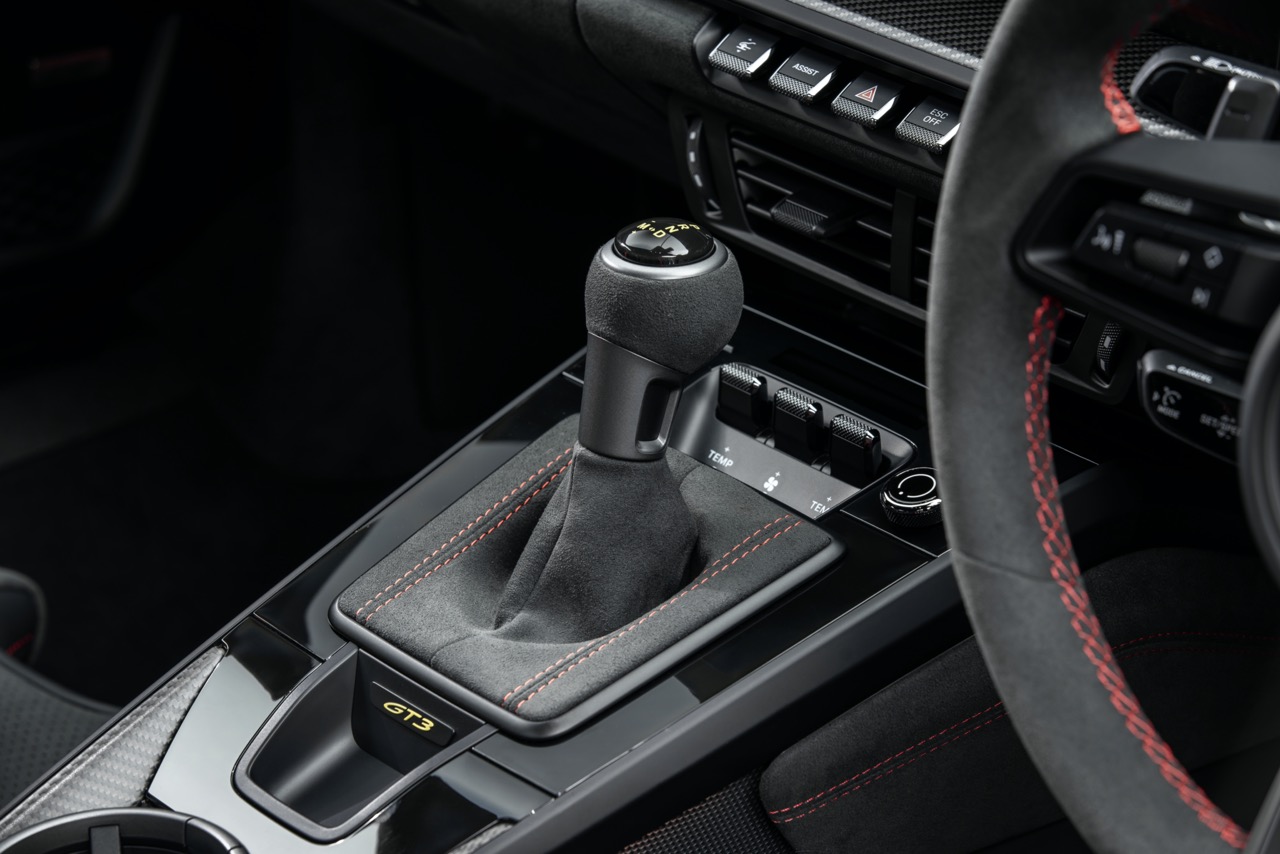
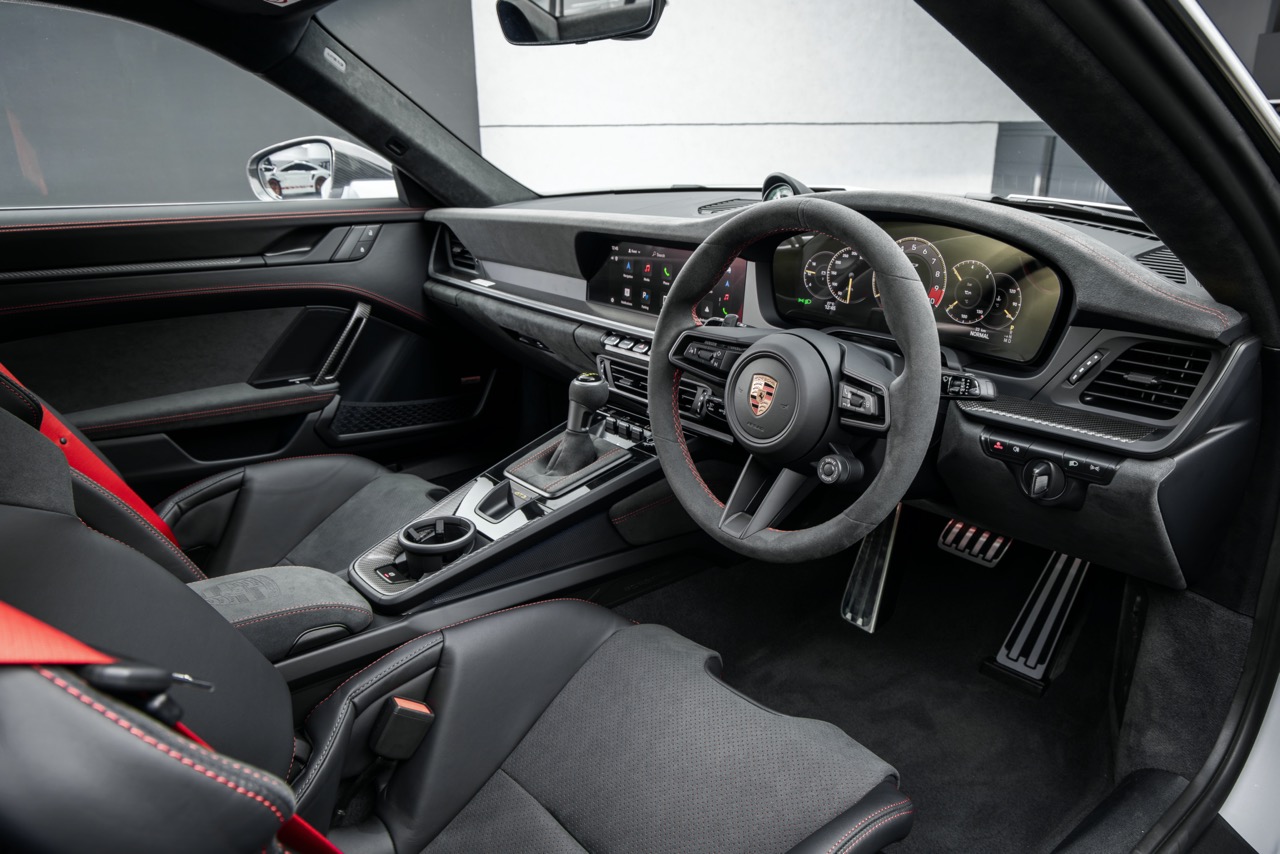
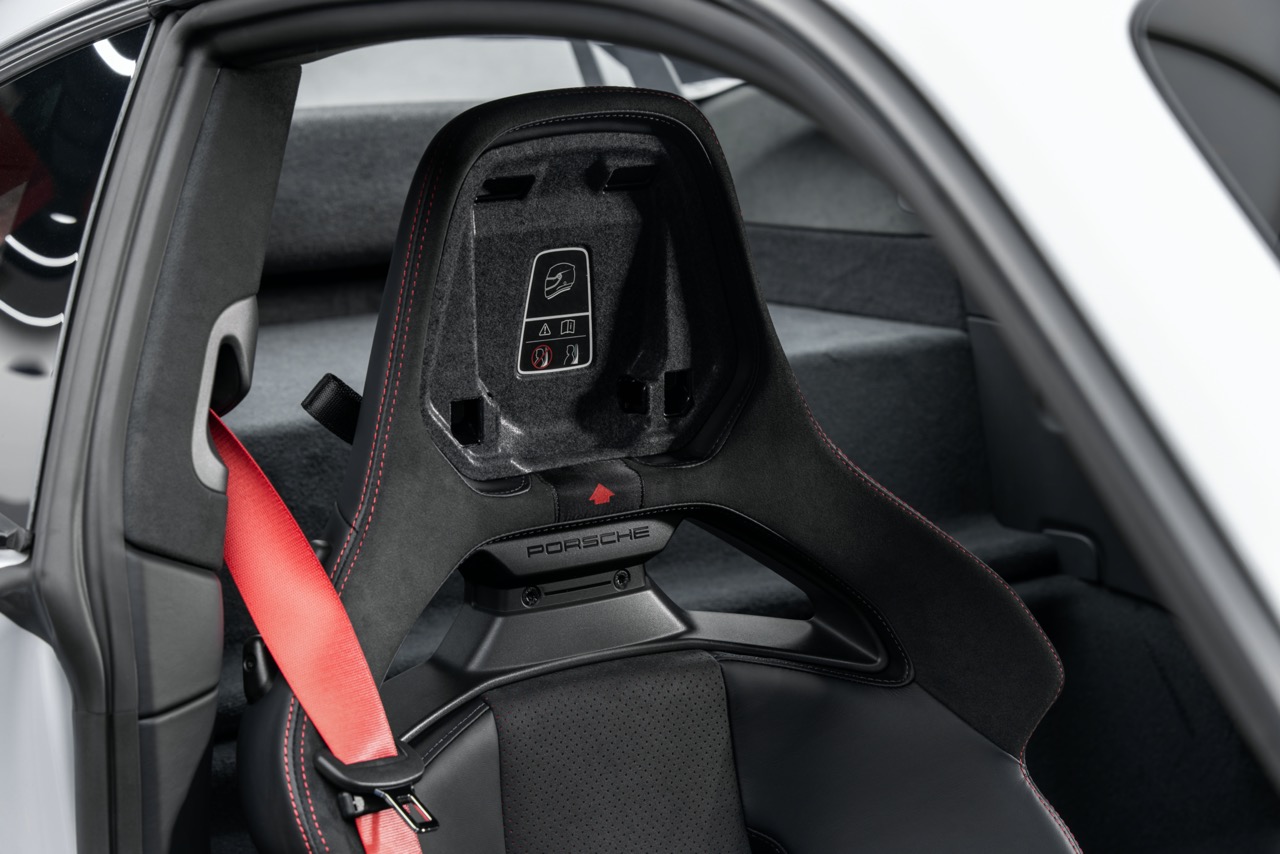
Inside, the GT3 adopts a two-seat layout with sports seats, though new lightweight CFRP bucket seats are available. The cockpit design is familiar from the 911 range but includes GT-specific details such as a rotary ignition switch, Track Screen display mode, and optional roll cage. For drivers planning frequent circuit use, Porsche has added details like removable headrest padding for helmet clearance.
Porsche Design has also created GT3-specific chronographs available exclusively to owners. These watches feature titanium cases, flyback chronograph movements, and design cues drawn directly from the cars, including dials and rotors styled after GT3 instruments and wheels.

The Porsche 911 GT3 and GT3 with Touring package are now available in Malaysia, with prices starting at RM2,290,000.
Touring Package
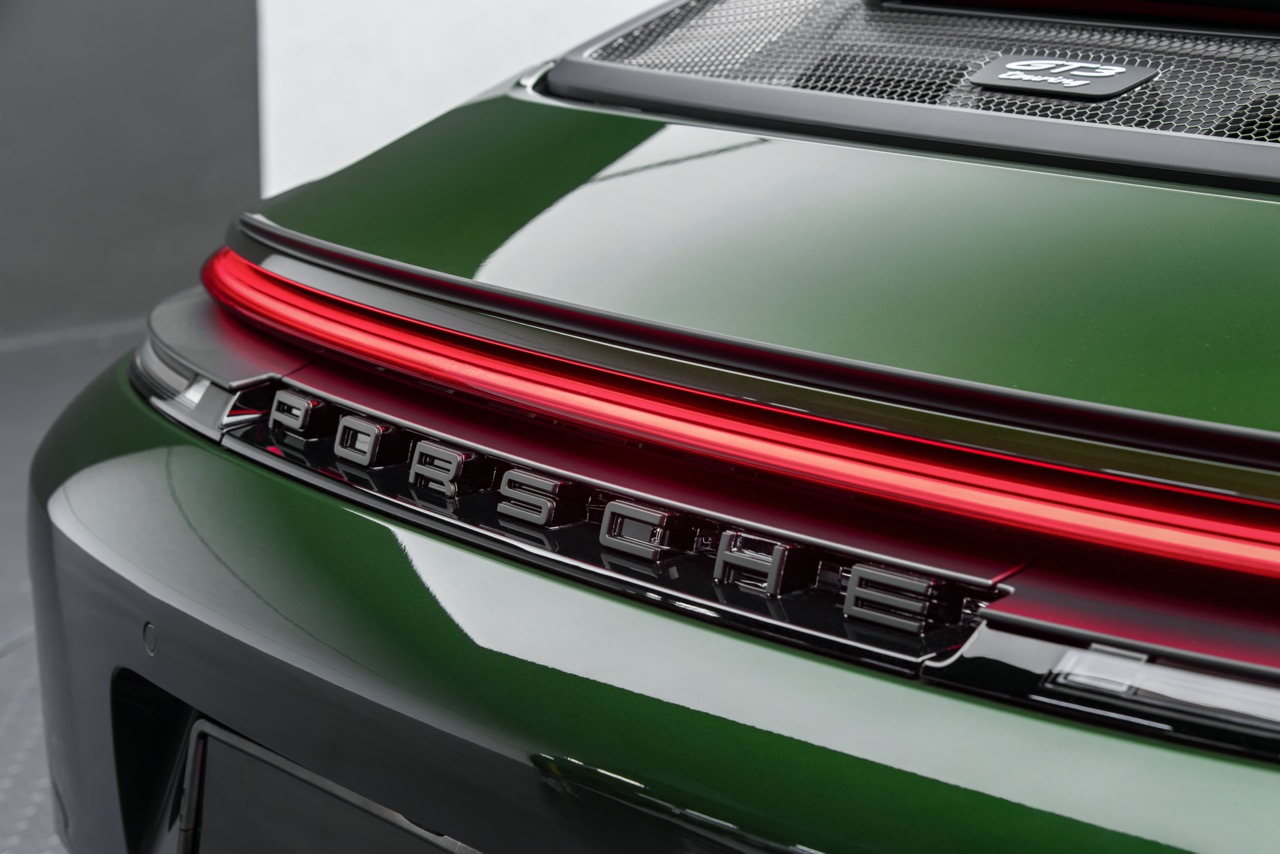
Porsche 911 Turbo S sejak sekian lama dikenali sebagai kereta sport serba lengkap. Ia pantas, selesa digunakan setiap hari, sesuai untuk perjalanan jauh, dan hadir dengan eksklusiviti istimewa jenama Porsche. Kini, model terbaharu ini melangkah lebih jauh dengan kuasa lebih besar, kawalan lebih tajam, aerodinamik pintar serta sentuhan kemewahan yang dipertingkatkan.

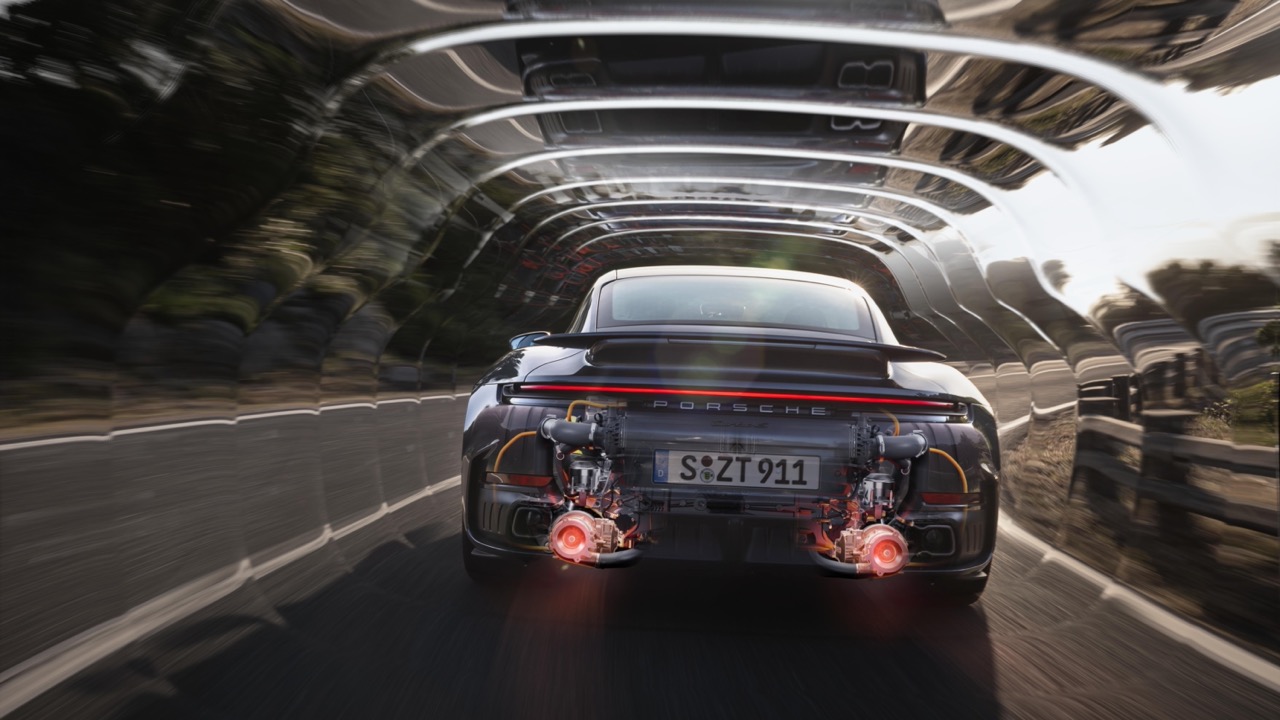
Di tengah segalanya ialah enjin T-Hybrid baharu yang menghasilkan 711PS dan 800Nm tork, menjadikannya 911 paling berkuasa pernah dihasilkan. Dengan sistem hibrid ringan Porsche dan dua pengecas turbo elektrik, kereta ini memberi tindak balas segera tanpa sebarang kelewatan turbo lag.

Angka prestasi memang luar biasa: 0-100km/j hanya dalam 2.5 saat, kelajuan maksimum mencecah 322km/j, serta catatan masa 7 minit 3.92 saat di Nürburgring – iaitu 14 saat lebih pantas berbanding model sebelumnya.

(more…)

Porsche is introducing significant upgrades to its Porsche Communication Management (PCM) system across the 911, Taycan, Panamera, and Cayenne models as part of its latest model year updates. The revised system boasts enhanced performance, expanded digital capabilities, and greater user convenience, reinforcing Porsche’s commitment to innovation beyond just powertrains and chassis technology.

The improvements include the introduction of the Porsche App Center, integration of Amazon Alexa as a digital assistant, and support for Dolby Atmos immersive audio technology. Additionally, Porsche Connect will now be included as standard for 10 years, ensuring a seamless and reliable digital experience for owners.

Faster and More Versatile PCM System

The latest PCM update features new hardware that enhances system responsiveness and computing power, allowing for quicker access to infotainment functions. A key addition is the Porsche App Center, which provides direct access to a wide range of third-party applications, similar to app stores on smartphones and tablets.

(more…)

Porsche telah melancarkan model baharu 911 Carrera T, disasarkan untuk pemandu tegar yang menghargai ketangkasan, pengurangan berat, dan pengalaman bunyi yang mendalam. Model ini menyempurnakan aspek penting dalam prestasi pemanduan, dengan pilihan transmisi manual enam kelajuan, serta boleh didapati dalam versi coupé dan cabriolet buat pertama kalinya.

Dikuasakan oleh enjin 3.0 liter enam silinder twin-turbo boxer, 911 Carrera T menghasilkan 394PS dan 450Nm tork. Dilengkapi dengan Pakej Sport Chrono sebagai ciri standard, ia mampu memecut dari 0-100 km/j dalam masa 4.5 saat (4.7 saat bagi cabriolet) dan mencapai kelajuan maksimum 295 km/j (293 km/j untuk cabriolet). Dengan pengurangan berat sebanyak 40 kg berbanding 911 Carrera standard, berat keseluruhan kini hanya 1,478kg, dibantu oleh penebat yang dikurangkan dan tempat duduk baldi penuh.

(more…)

Porsche is celebrating 25 years of the GT3 by unveiling the 2025 911 GT3, the latest iteration of its iconic sports car. This updated 992.2 model retains the hallmark features that have made the GT3 so revered, including its naturally aspirated 4.0-litre flat-six engine that produces 502hp and revs to 9,000 rpm. Remarkably, it remains purely powered by internal combustion despite stringent emissions regulations, incorporating two gas-particulate filters and four catalytic converters to meet modern standards.

To maintain its performance edge, the GT3 has received several mechanical upgrades, including hotter camshafts from the GT3 RS, new throttle bodies, revised cylinder heads, and new oil coolers. For those who enjoy the manual experience, the 6-speed manual transmission now has a shorter final drive, addressing complaints about the long gearing in previous manual 911s. The 7-speed dual-clutch automatic is also available.

Enhanced Aerodynamics and Suspension

Borrowing some aerodynamic lessons from the GT3 RS, the front suspension now features suspension links with an aerofoil shape, improving both downforce and brake cooling. The lower mounting point for the front wishbone helps reduce dive under braking, while the new headlight design allows for larger aerodynamic inlets. At the rear, updates to the diffuser and engine cover help balance the front downforce improvements.

Performance Tyres and Wheels

The 255/35ZR20 front tyres and 315/30ZR21 rear tires enhance performance, particularly in wet conditions, with a track-focused, stickier tire option available. The new standard wheels shave off 1.4kg of unsprung weight, contributing to overall performance gains.

Weissach and Touring Packages

The Weissach Package, previously exclusive to Porsche’s RS models, is now available for the GT3. This includes carbon-fibre components such as the roof, anti-roll bars, and mirror caps, as well as the option for lighter magnesium wheels.

Touring

Simultaneously, Porsche has also launched the GT3 Touring Package, which removes the rear wing for a more understated appearance. It includes a Leichtbau (lightweight) package, featuring carbon-fibre suspension components, a body-colour carbon-fibre roof, and magnesium wheels.

Interior and Features

Inside, the GT3 shares many updates with the new 911 Carrera but keeps its ignition switch instead of the newer push-button start. New carbon-fibre bucket seats with folding backrests and optional heating are available, and for the first time, the GT3 Touring can be equipped with rear seats.

Touring

At its lightest, the 2025 GT3 weighs 1,419kg, impressively lean for a modern performance car.

The new 911 GT3 continues Porsche’s legacy of building thrilling, track-focused sports cars, and while it’s an evolution rather than a revolution, it’s a fitting tribute to 25 years of one of the most desirable 911 models.

911 GT3

911 GT3 (Touring)

The Porsche 911, an icon of sports car design, has consistently evolved over the years, with each new generation growing in size. However, Michael Mauer, Porsche’s chief designer for the past two decades, envisions a future where the 911 becomes more compact rather than larger. Here’s why a smaller 911 could be the next logical step for the brand:

1. The Appeal of Compactness

Mauer’s aspiration to downsize the 911 aligns with the desire to explore new possibilities in vehicle packaging. A more compact design could enhance the driving experience, preserving the agile and engaging nature that the 911 is renowned for. By focusing on compactness, Porsche could offer a more agile and responsive sports car, true to the original spirit of the 911.

(more…)

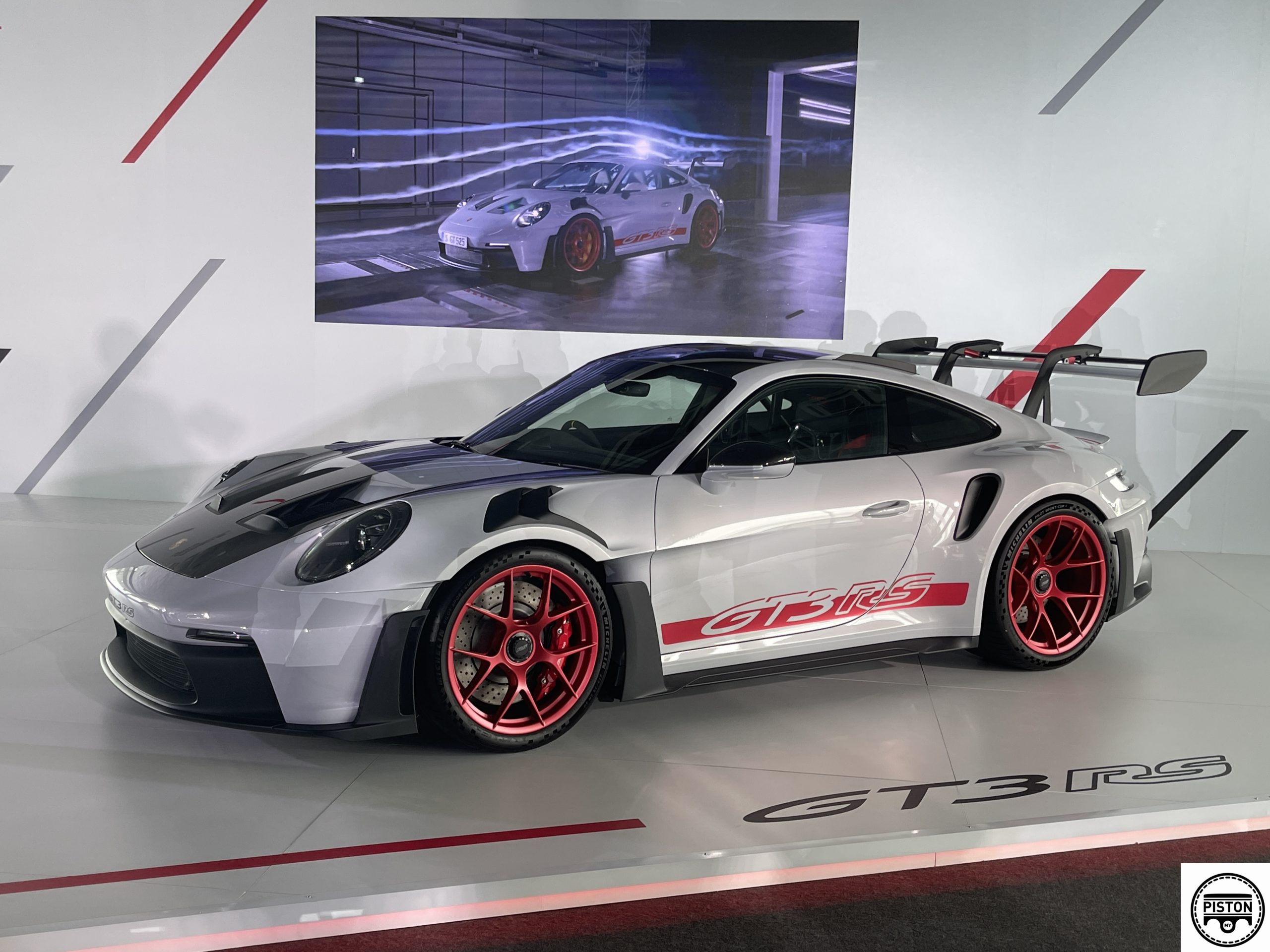
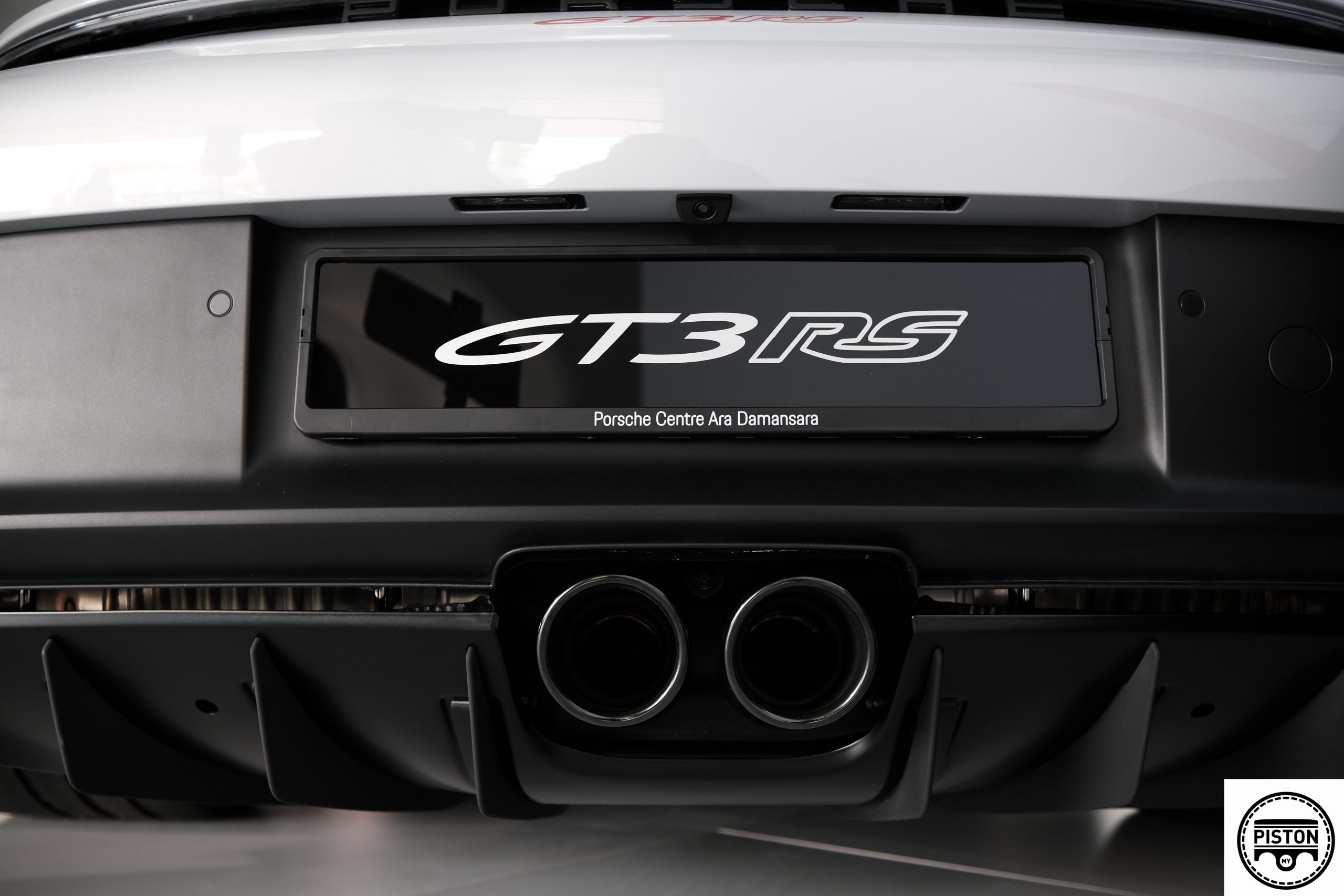
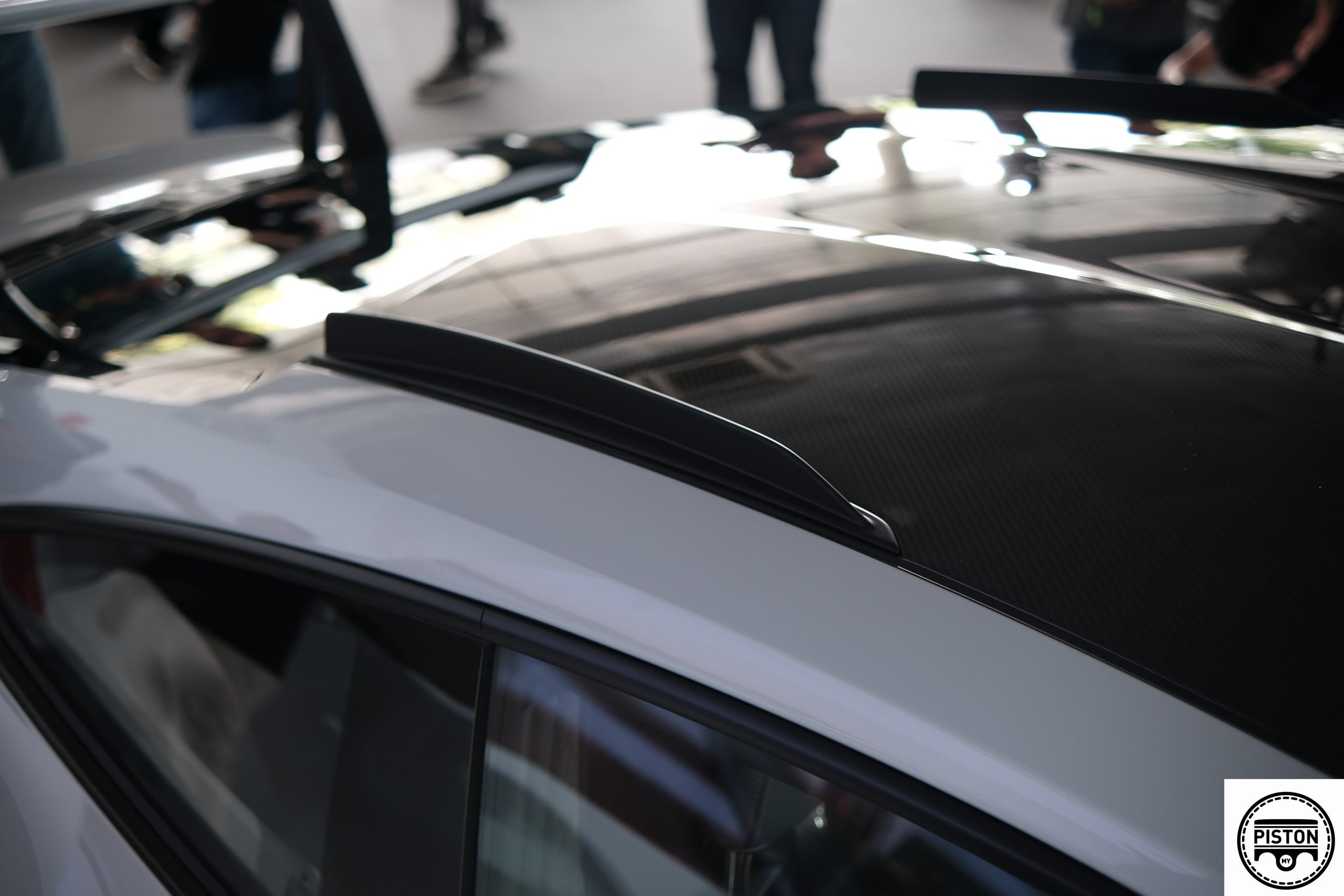
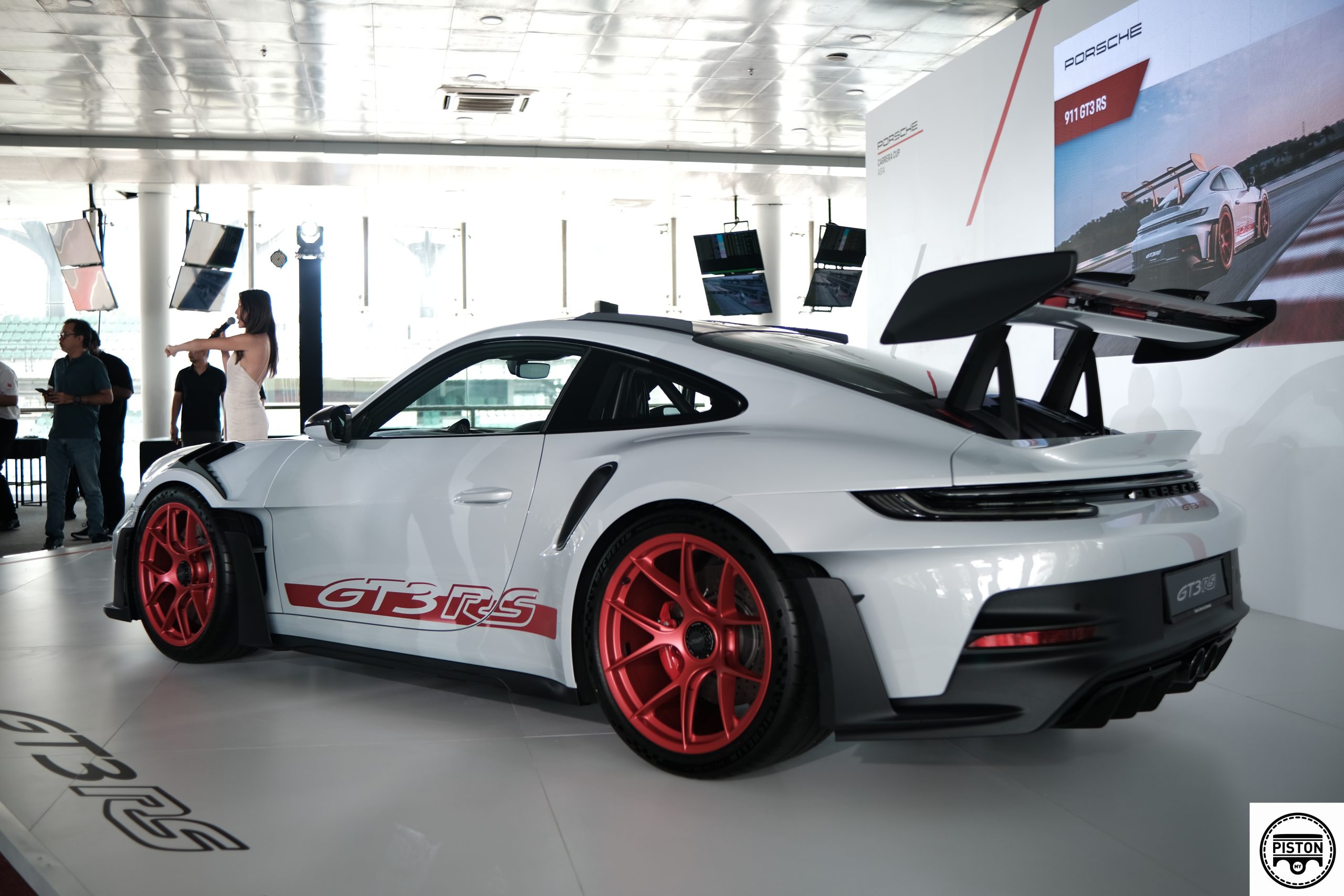
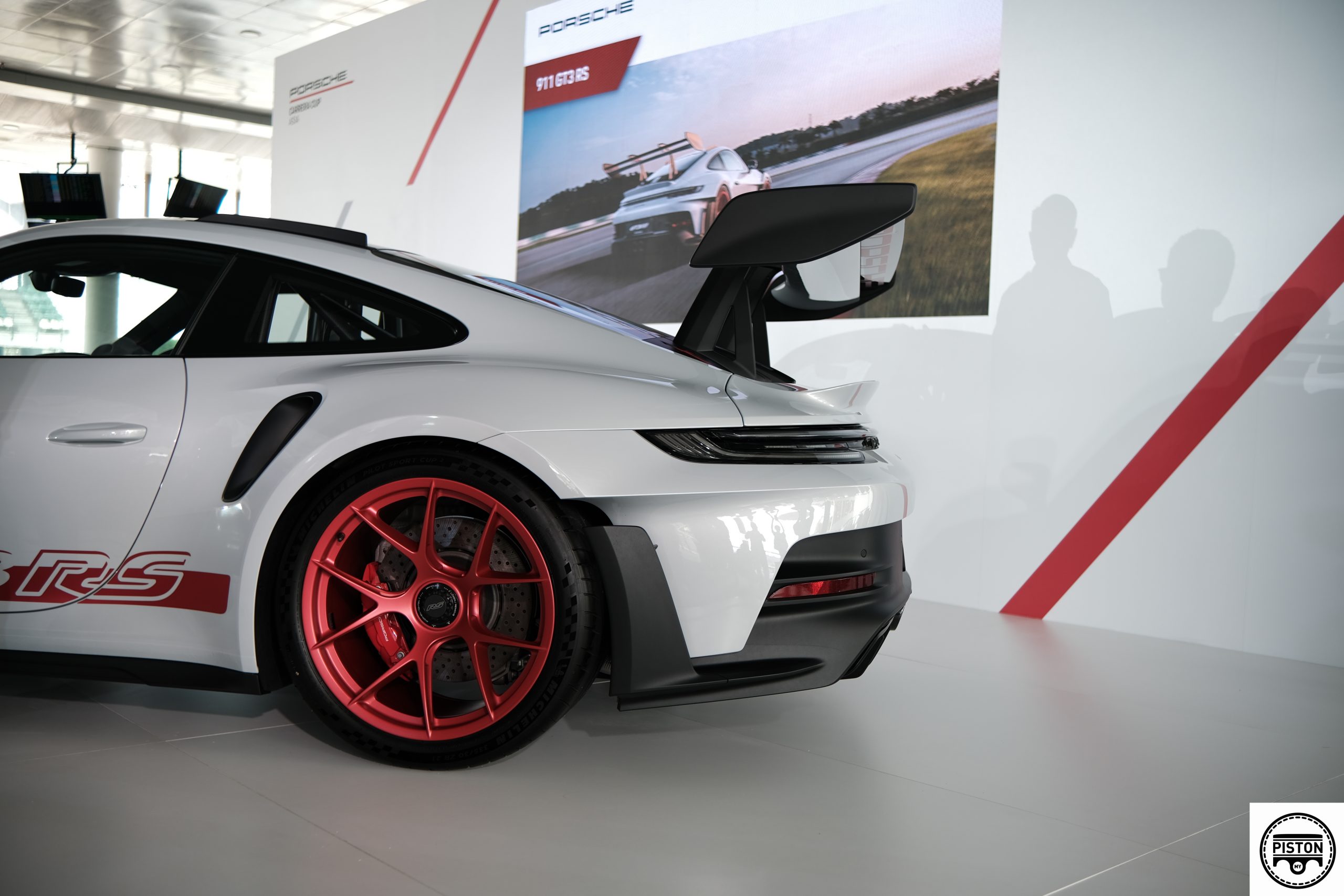
Porsche Malaysia introduces the new Porsche 911 GT3 RS: a true masterpiece of automotive engineering. With a sleek design, advanced racing technology, and unparalleled power, the Porsche 911 GT3 RS is a dominant force on the road and the track that joins the 911 lineup here in Malaysia.

The 2022 launch of the GT3 RS brought forth a marvel where the aerodynamics of this 911 street car surpasses even those of the GT3 R race car.

What’s more interesting is that at the heart of the substantial performance enhancement lies the innovative concept of a central radiator – a concept initially introduced in the Le Mans class-winning 911 RSR and later adopted by the 911 GT3 R. Departing from the conventional three-radiator setup of its predecessors, the latest 911 GT3 RS implements a sizeable, angled centre radiator situated in the front of the vehicle, occupying the space typically designated for luggage in other 911 models. This ingenious modification has not only liberated side space but has also facilitated the integration of dynamic aerodynamic components.

Aerodynamics

Speaking of aerodynamics, the new 911 GT3 RS showcases numerous functional aerodynamic components in its design. A notable highlight is the swan-neck-mounted rear wing, larger than before, consisting of a fixed main part and an adjustable upper element. Notably, the wing’s upper edge surpasses the car’s roof height for the first time in Porsche’s production vehicles. The car’s front no longer includes a traditional front spoiler, replaced by a dividing front splitter that manages airflow over and under the vehicle. Sideblades efficiently direct air outward, while front wheel arches are ventilated through louvered openings in the front wings.

(more…)

Porsche has created a sports car dedicated to purists to commemorate the special anniversary of the classic 911 sports car: The 911 S/T.

The moniker distinguishes the new 911 S/T as the offspring of a first-generation 911 model that was especially performance-focused. Porsche began offering a unique race-specific 911 S in 1969. These vehicles were referred to as 911 ST internally. Acceleration, braking, traction, and cornering grip were all greatly enhanced by changes to the chassis, wheels, engine, and body. These versions did not yet make use of large spoilers or other aerodynamic aids.

(more…)

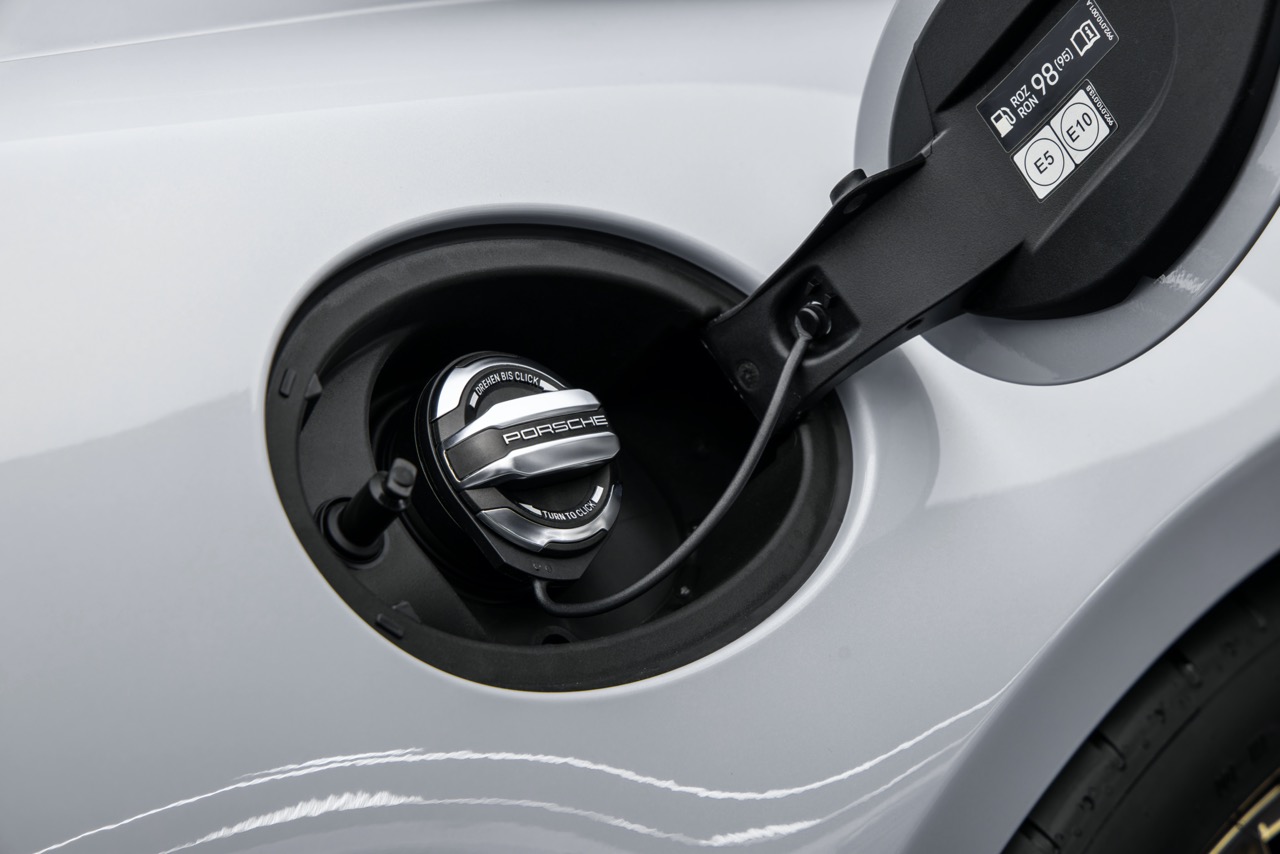
BHPetrol RON95 Euro4M

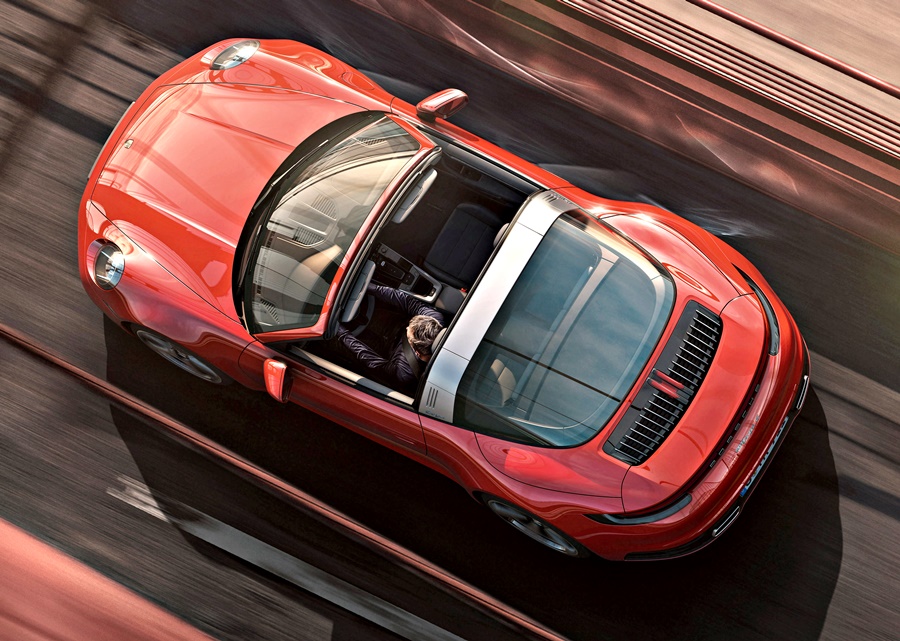
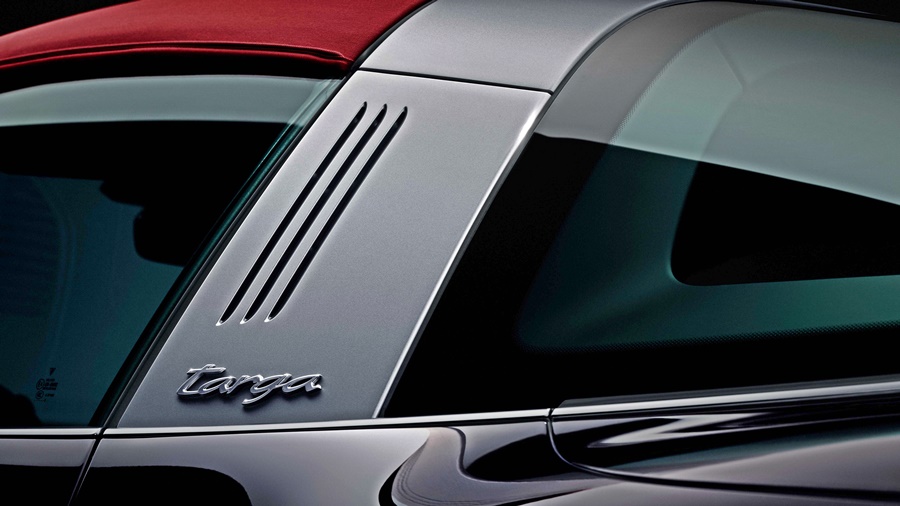
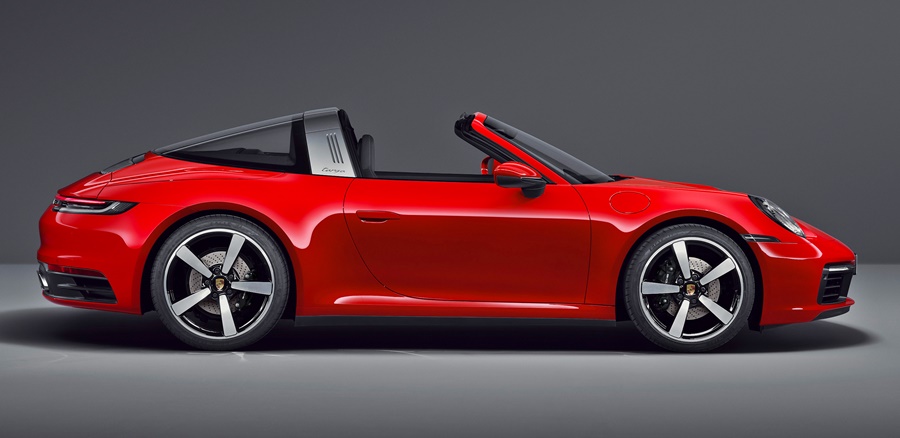
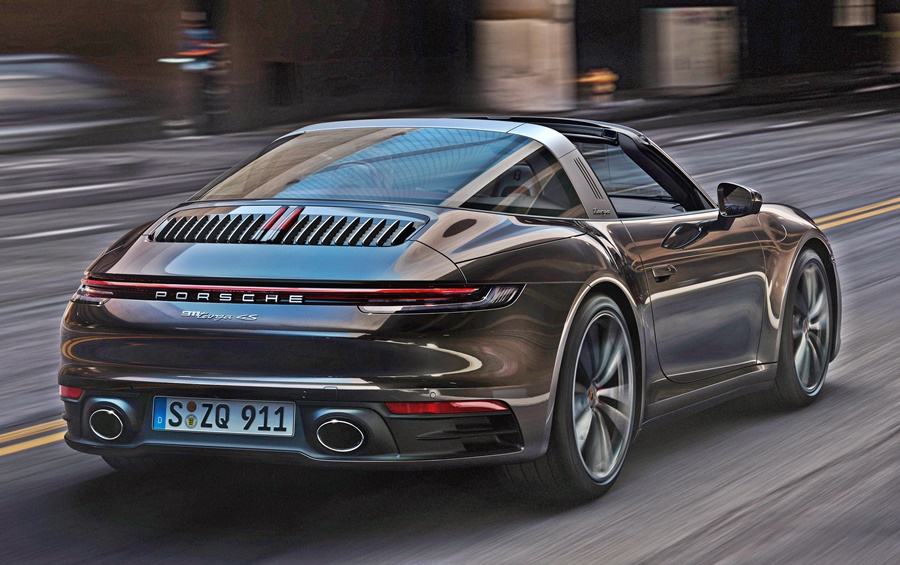
The Targa top is a feature of Porsche’s which goes back over 50 years and offers a semi-convertible design that has been available on the 911 model. Although the concept is used by some other carmakers, the ‘Targa’ name can only be used by Porsche which was clever enough to apply for trademark protection many decades ago.

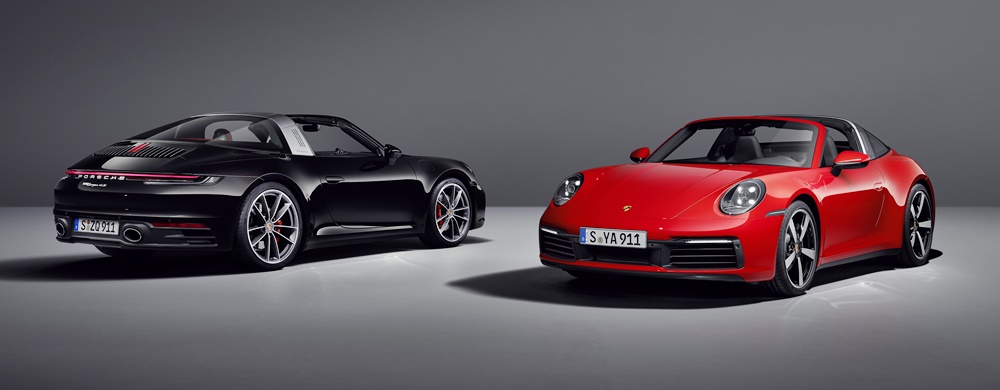
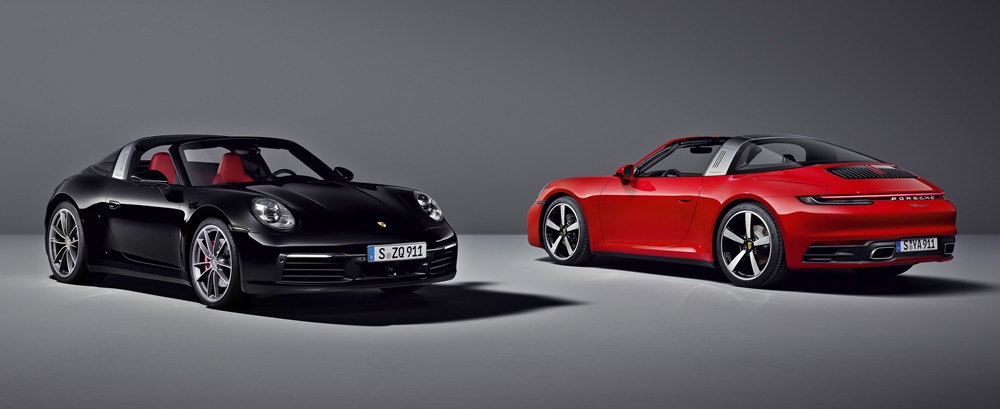
And through the different generations of the 911, a Targa variant has been offered alongside the Coupe and Cabriolet. The same applies to the latest generation and this third body variant is available as the all-wheel drive 911 Targa 4 and 911 Targa 4S models.

2020 Porsche 911 Targa

Fully automatic roof system
As with earlier Targa models, there is the innovative, fully automatic roof system. Just like the original Targa model from 1965, it consists of a characteristic wide roll hoop, a movable roof section above the front seats and a wraparound rear window. The roof can be opened and closed within 19 seconds.

The exterior of the 911 Targa is characterised by the design elements of its 992 model generation. Compared to its predecessors, the latest bodywork features significantly more pronounced wheel housings at the front and, between its LED headlights, its bonnet has a distinctive recess evoking the design of the first 911 generations.

2020 Porsche 911 Targa

2020 Porsche 911 Targa

2020 Porsche 911 Targa

The rear is dominated by a wider, variably extending rear spoiler and seamlessly integrated, elegant light bar. With the exception of the front and rear sections, the entire outer skin is made from aluminium.

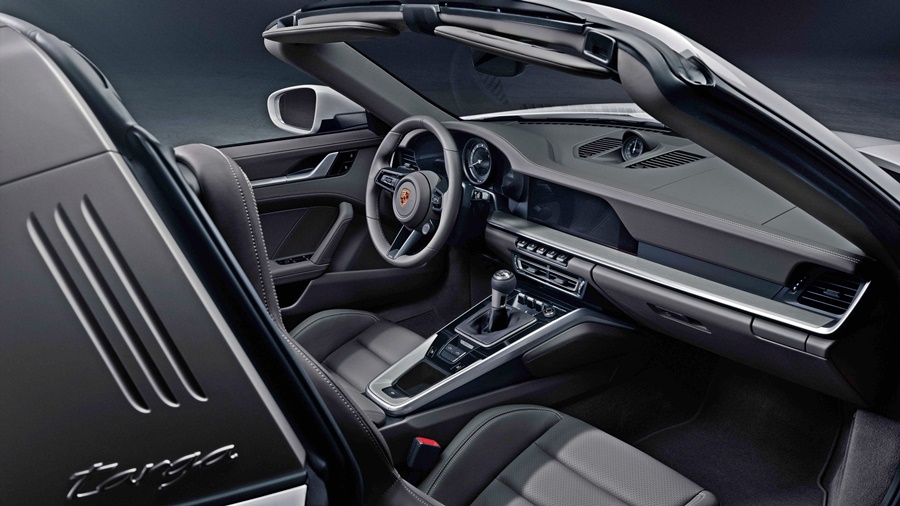
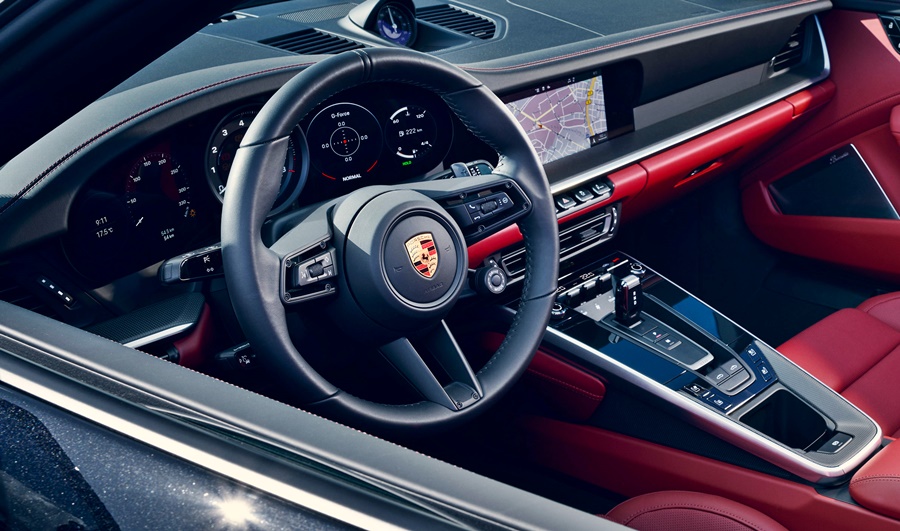
The interior echoes the 911 Carrera models and is characterised by the clear and straight lines of its dashboard and its recessed instruments. The 911 models from the 1970s provided the inspiration here. Alongside the centrally-positioned tachometer – very much a defining feature for Porsche – two thin, frameless freeform displays extend the information provided to the driver.

2020 Porsche 911 Targa

A compact switch unit with 5 buttons for direct access to important vehicle functions is located below the 10.9-inch centre screen of the Porsche Communication Management (PCM). Standard PCM features include online navigation based on swarm data as well as Connect Plus with Apple Car Play.

2020 Porsche 911 Targa

At the rear lives a 6-cylinder, 3-litre Boxer engine with twin turbochargers. Tuned for the 911 Targa 4, it produces 385 ps/450 Nm and, in combination with the optional Sport Chrono package, accelerates from 0 to 100 km/h in 4.2 seconds, it is claimed. For the 911 Targa 4S, the output is 450 ps/530 Nm, giving a claimed 0 to 100 km/h time of 3.6 seconds and a top speed said to be 304 km/h, 15 km/h faster than the 911 Targa 4.

Both cars use an 8-speed dual-clutch transmission (PDK) and intelligent all-wheel drive Porsche Traction Management (PTM) is standard. Alternatively, the 911 Targa 4S can be ordered with the newly developed 7-speed manual gearbox, with which the Sport Chrono package is included.

New technology has also been integrated to extend the range of features for both 911 models. For the first time, Porsche InnoDrive, which includes adaptive cruise control, is available. Thanks to the enhanced Smartlift function, ground clearance can be programmed so that it is raised for everyday use.


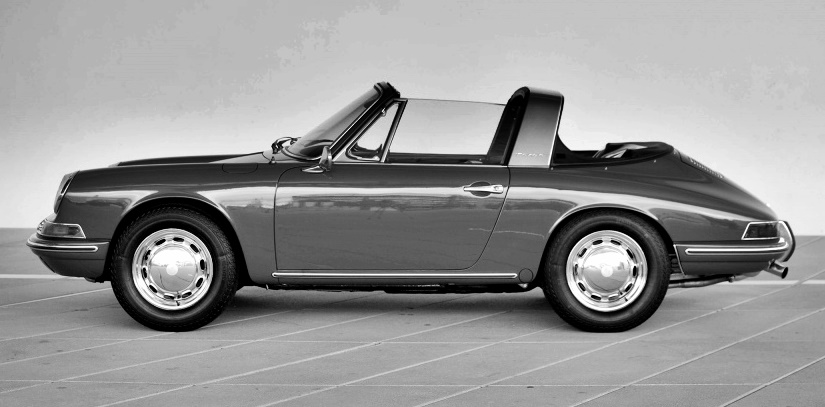
1965 Porsche 911 Targa

The original 911 Targa. It was presented in 1965 as ‘The first standard safety cabriolet in the world’. The fixed Targa bar, derived from the roll-over bar which had proven itself in racing events, guaranteed a high level of protection for the occupants. The hood concept, patented in August 1965, also had other advantages. It solved the problem of the fabric hood bulging unattractively at speed on motorways just as reliably as it did the issue of body distortion, which was common with convertibles at that time.


Further developed chassis
The electronically-controlled variable damping system PASM (Porsche Active Suspension Management) is part of the standard equipment on the new 911 Targa models. This system automatically adjusts the damping characteristics in terms of driving comfort and handling to each driving situation and has two manually adjustable maps, Normal and Sport.

2020 Porsche 911 Targa

On the Targa 4, deceleration is taken care of on both axles by 330-mm brake discs with black 4-piston monobloc fixed calipers. The red-painted brake callipers on the Targa 4S have 6 pistons at the front axle, 4 at the rear while its discs measure 350 mm front and rear. The Porsche Ceramic Composite Brake can be ordered as an option.

Visit www.porsche.com.my to know more about the new and pre-owned models available in Malaysia.

Bringing modern connectivity to old Porsche models

Stay in your state

PISTON.MY

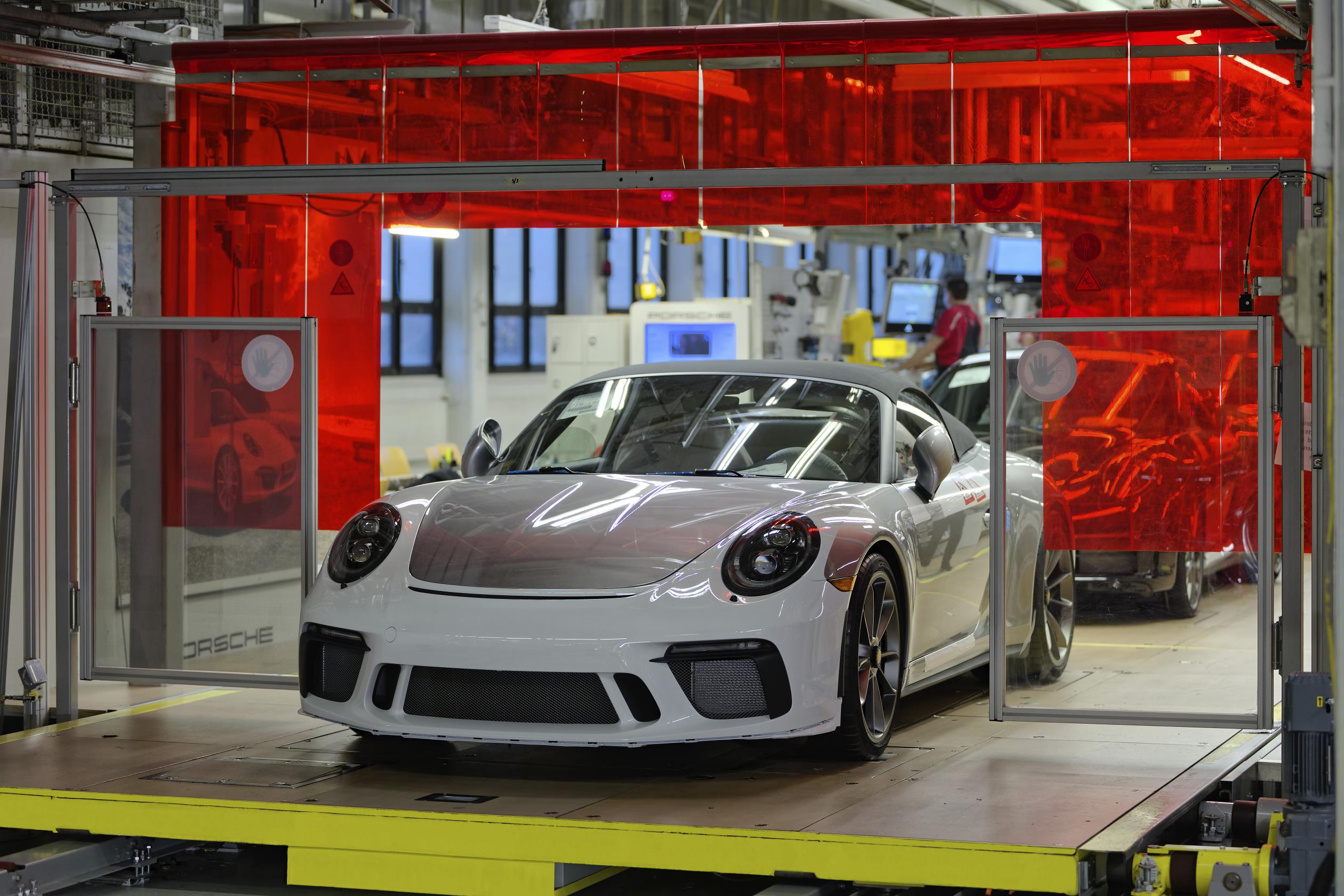
Without a doubt, Porsche’s 991 series has been the most comprehensively developed generation of the 911 to date – and the most successful too, with 233,540 units produced. And its production recently came to an end with the final unit – a 911 Speedster – prepared for the US market.

“The 911 – the core of the brand – replaced the 356 in 1963 and, in the decades that followed, our rear engine model grew into an unrivalled sportscar icon. The 991 generation in particular has set new standards in terms of performance, drivability and efficiency. It fills me with pride, as well as a touch of sadness, to have to send it off into retirement. For myself, I can say that the 991 has given me enormous pleasure,” said Michael Steiner, Chief Research & Development Officer at Porsche AG.

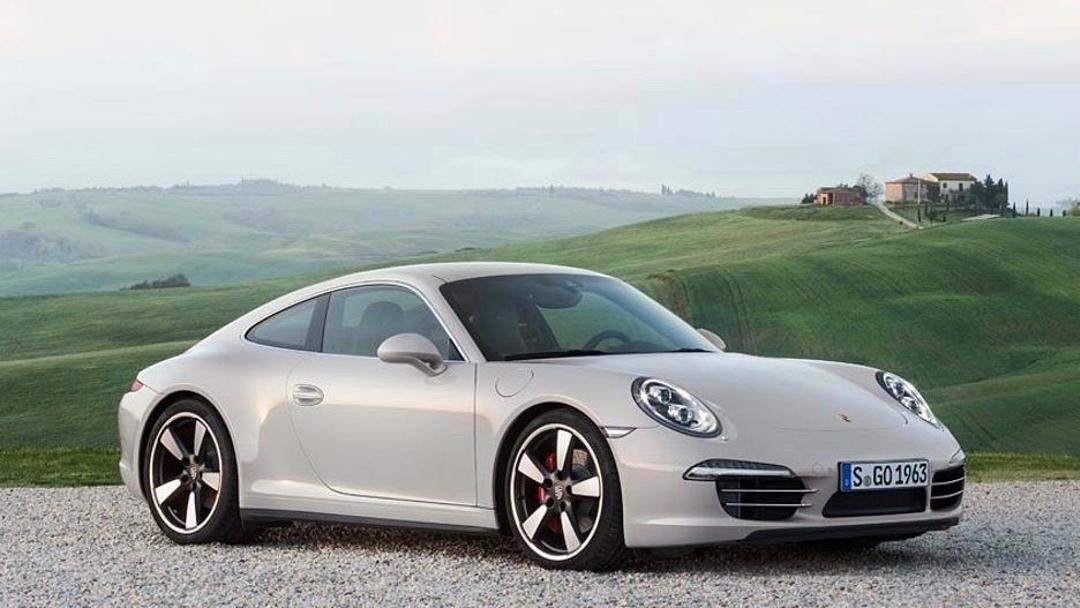
Porsche 911 50th anniversary edition

Review of the 991 series
The 991 generation was launched in 2011 as one of the biggest development steps in the history of the model line. Nearly 90% of all components were newly designed or had undergone substantial further development.

Thanks to a lightweight body made of an innovative aluminium-steel composite, it was the first time that a new 911 had weighed less than its predecessor. The chassis, which benefited from a 100 mm longer wheelbase than the model that it replaced, could be equipped with a new, optional roll stabilization system. This was the Porsche Dynamic Chassis Control (PDCC) and it set the benchmark in terms of driving dynamics.

The Cabriolet followed at the beginning of 2012 with another innovation. When closed, the lightweight magnesium bows made it possible to achieve a coupe-like curve of the roof that had never been seen before, and with a silhouette that was retained even at high speeds.

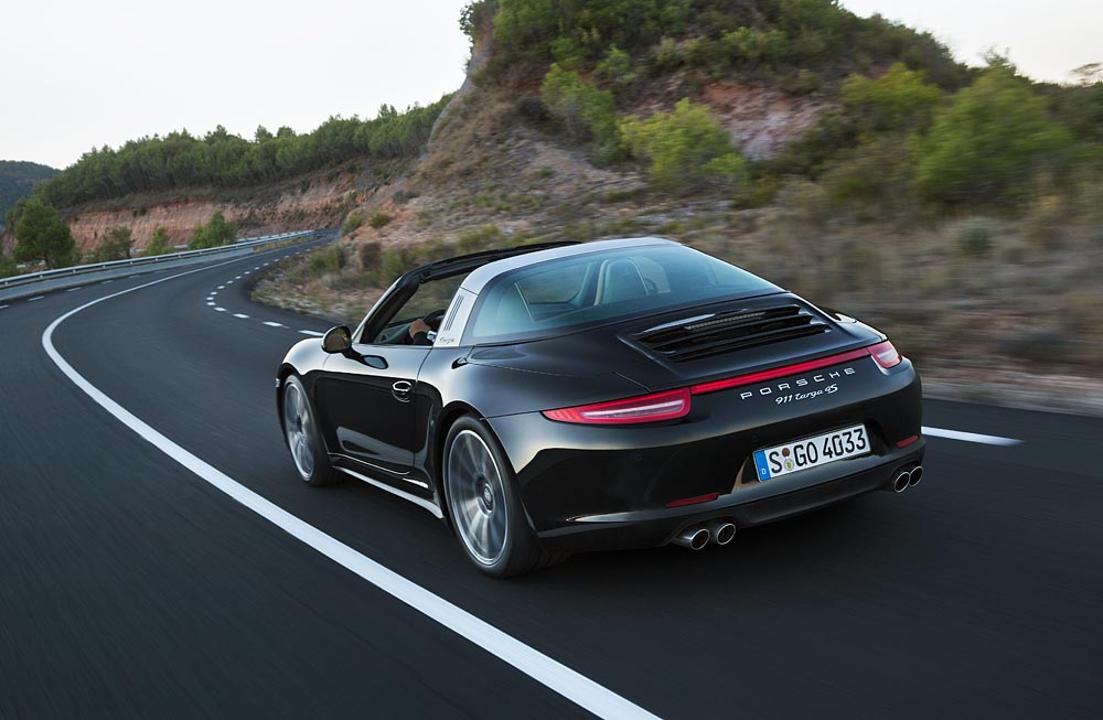
Porsche 911 Targa
Porsche 911 Targa

The new 911 Targa, which came out at the end of 2012, was equally spectacular. Like the legendary original Targa, the new model had the characteristic hoop running the width of the vehicle. At the push of a button, however, the top section of the roof could be moved automatically and stored in the rear of the vehicle.

The host of innovations continued in the 911 Turbo, which saw the first active aerodynamics and particulate filter-equipped turbo engines on any 911 Carrera model.

The 991 generation also proved the ideal basis for special models and radical sports cars. Porsche celebrated the 50th anniversary of its cult sportscar in 2013 with an exclusively equipped limited edition model, of which only 1,963 examples were built.

In 2016, the 500-bhp naturally-aspirated 911 R evoked memories of the road-approved 1967 racing sportscar that had the same badge. Two other purist sportscars with classic predecessors made their debut in 2017: the sporty 911 Carrera T and the 911 GT3 high-performance variant with Touring Package offer.
One millionth Porsche 911

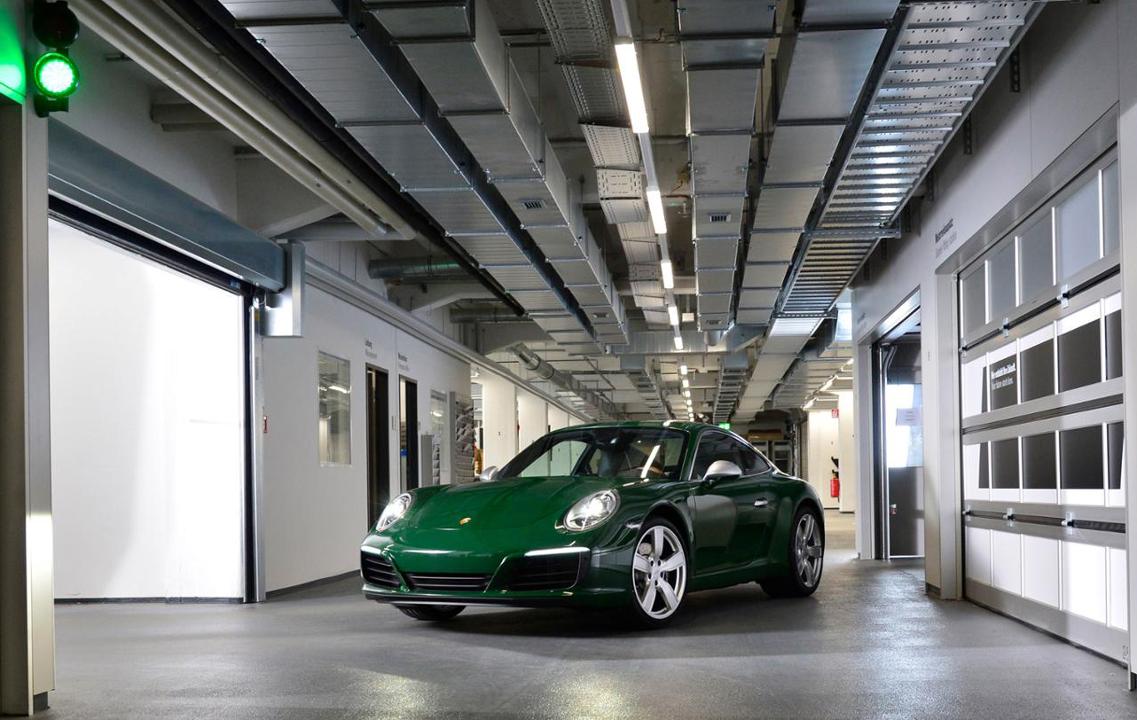
One-millionth 911
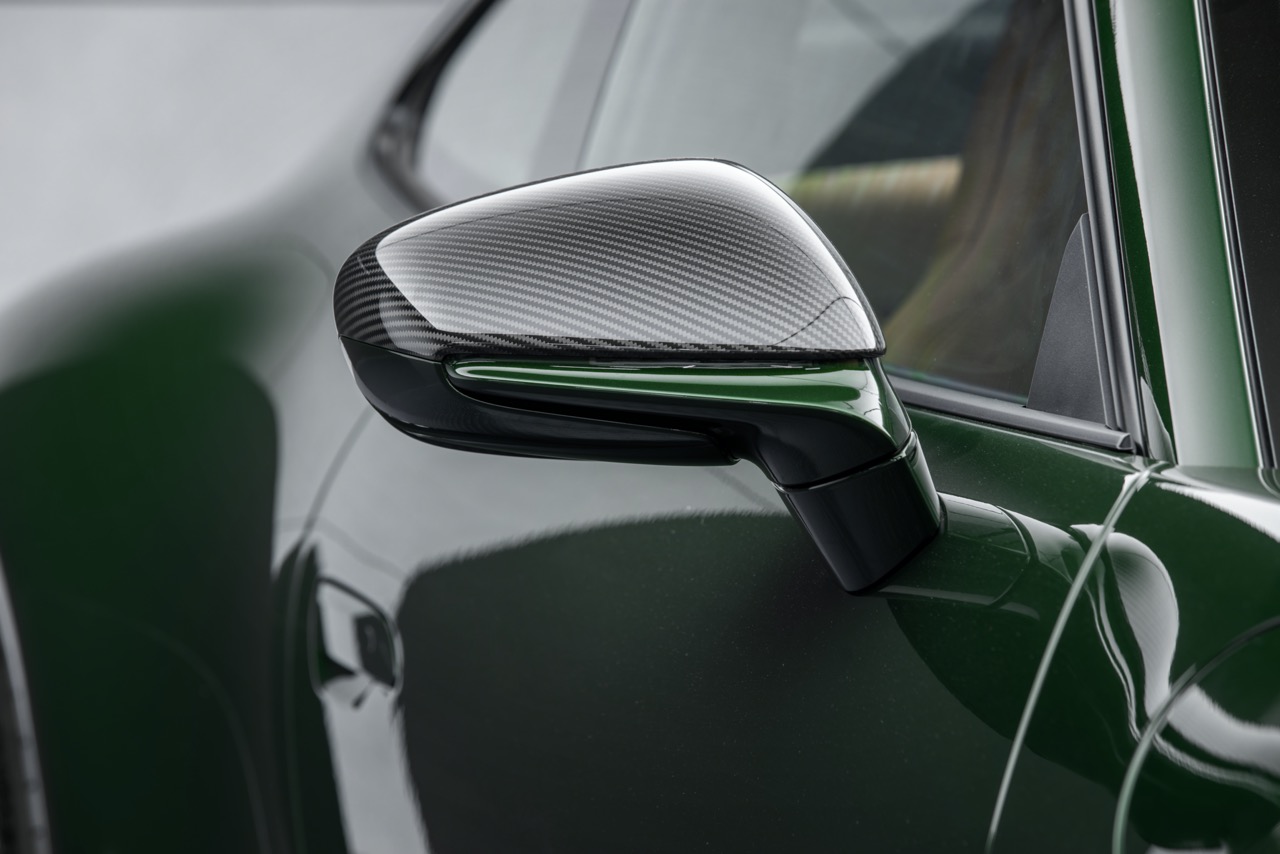
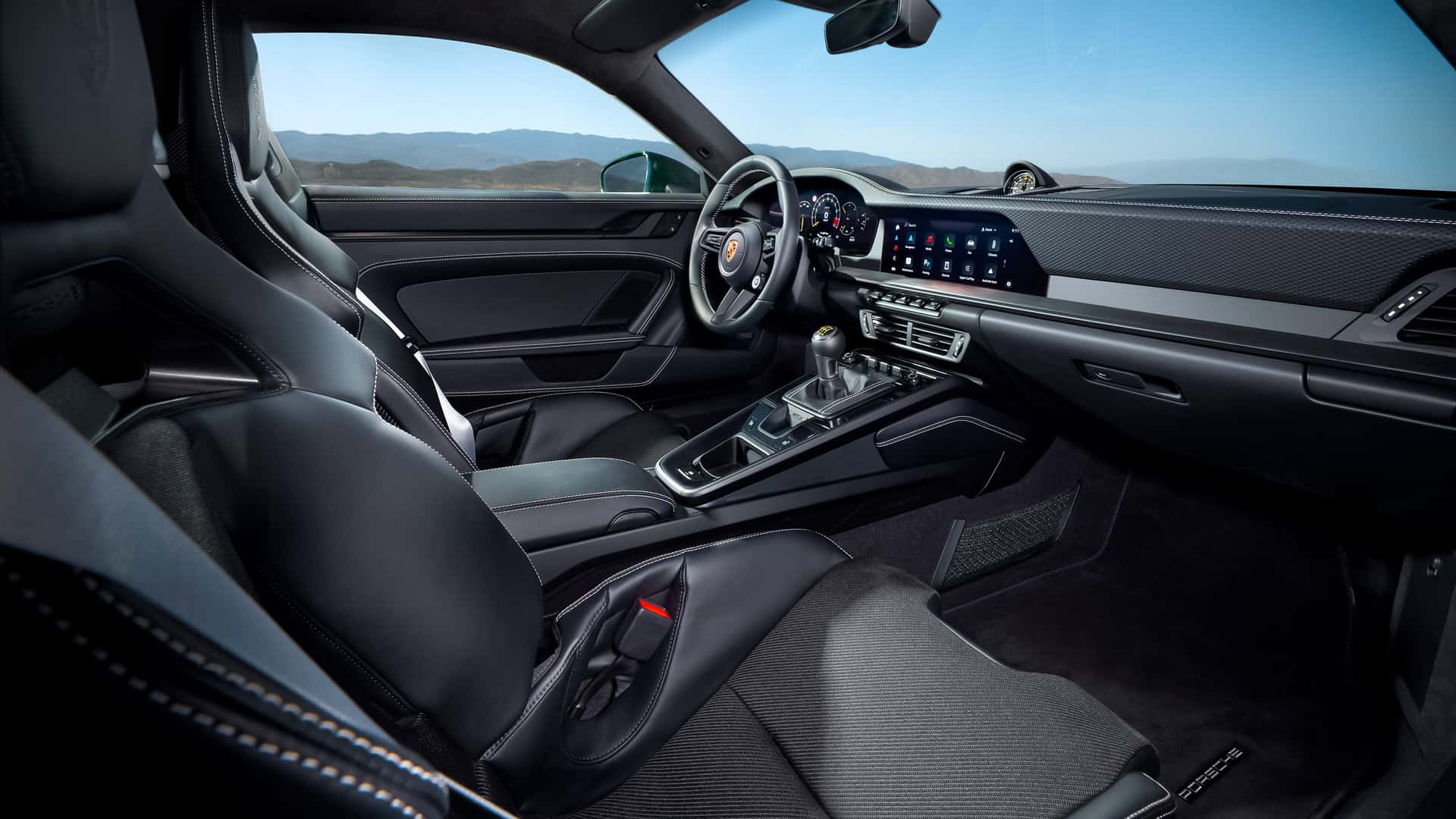
The one millionth 911 was also built during the 991 generation. As with Ferry Porsche’s first company 911, the not-for-sale commemorative model was painted in Irish Green and boasted leather and Pepita seats. In the same year, Porsche Exclusive Manufaktur presented the 911 Turbo S Exclusive Series with 607 bhp and spectacular Golden Yellow Metallic paintwork.

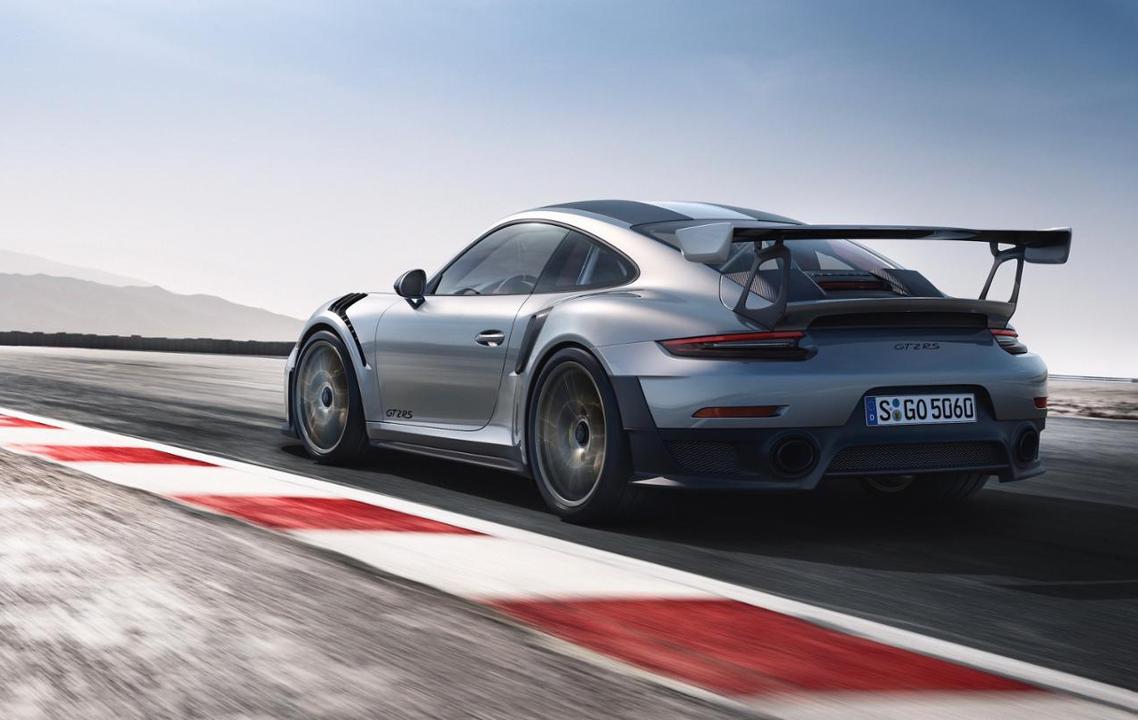
Porsche 911 GT2 RS
Porsche 911 GT2 RS

Other notable facts: The fastest and most powerful 911 racing technology ever seen in a production road-going 911 appeared in 2017 in the form of the 700-bhp 911 GT2 RS. Its naturally-aspirated sibling followed a few months later. The 911 GT3 RS had a racing chassis and a 520-bhp 4-litre naturally-aspirated engine, perfectly combining road and racetrack.

Porsche 911 Speedster

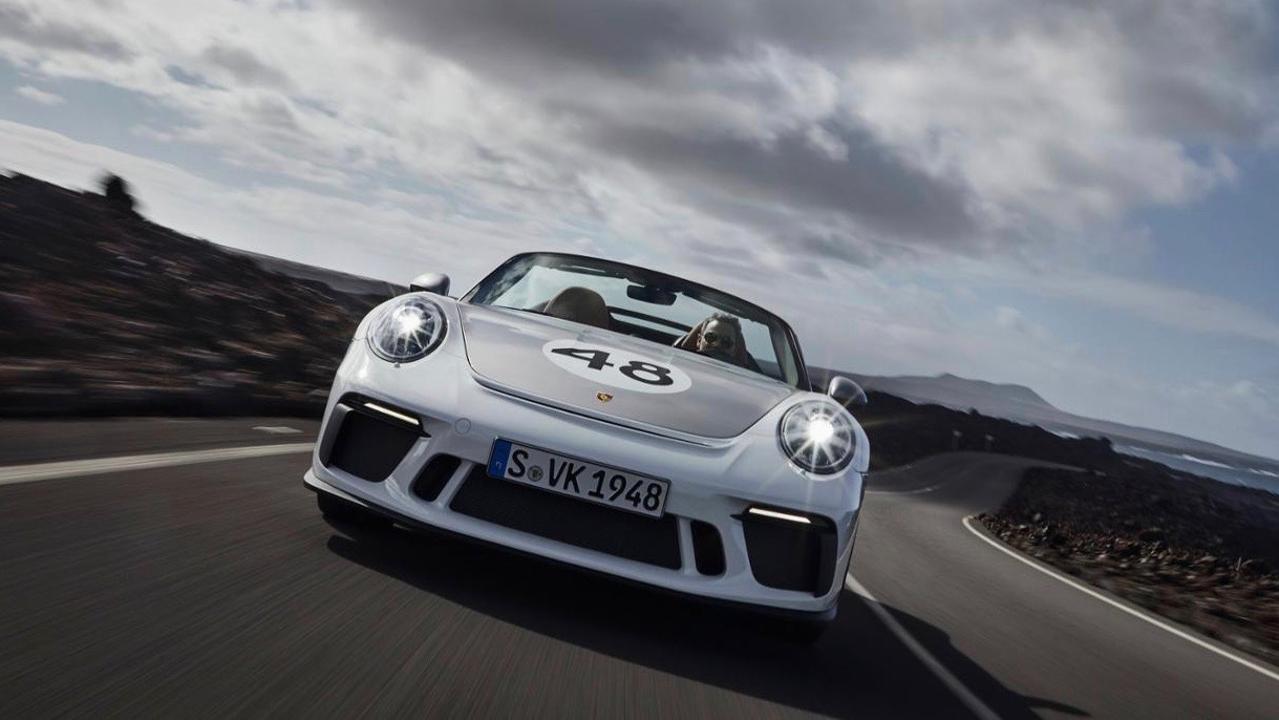
Right on time to mark the 70th anniversary of Porsche sportscars, the 911 Speedster embodied the original virtues of Porsche: lightweight construction, efficiency, purity and driving pleasure. It delivered 502 bhp from the 4-litre naturally-aspirated engine, had a manual 6-speed transmission and a high-performance sports chassis.

The two-seater was not just the last derivative of the 991 generation but has now also become the last model of the series to be manufactured. Like its ancestor and archetype, the 1948 Porsche 356 No. 1 Roadster, it will become an ambassador of the brand.

2020 Porsche 911 Carrera with manual transmission? Yes, please!

PISTON.MY

Archive

Follow us on Facebook

Follow us on YouTube