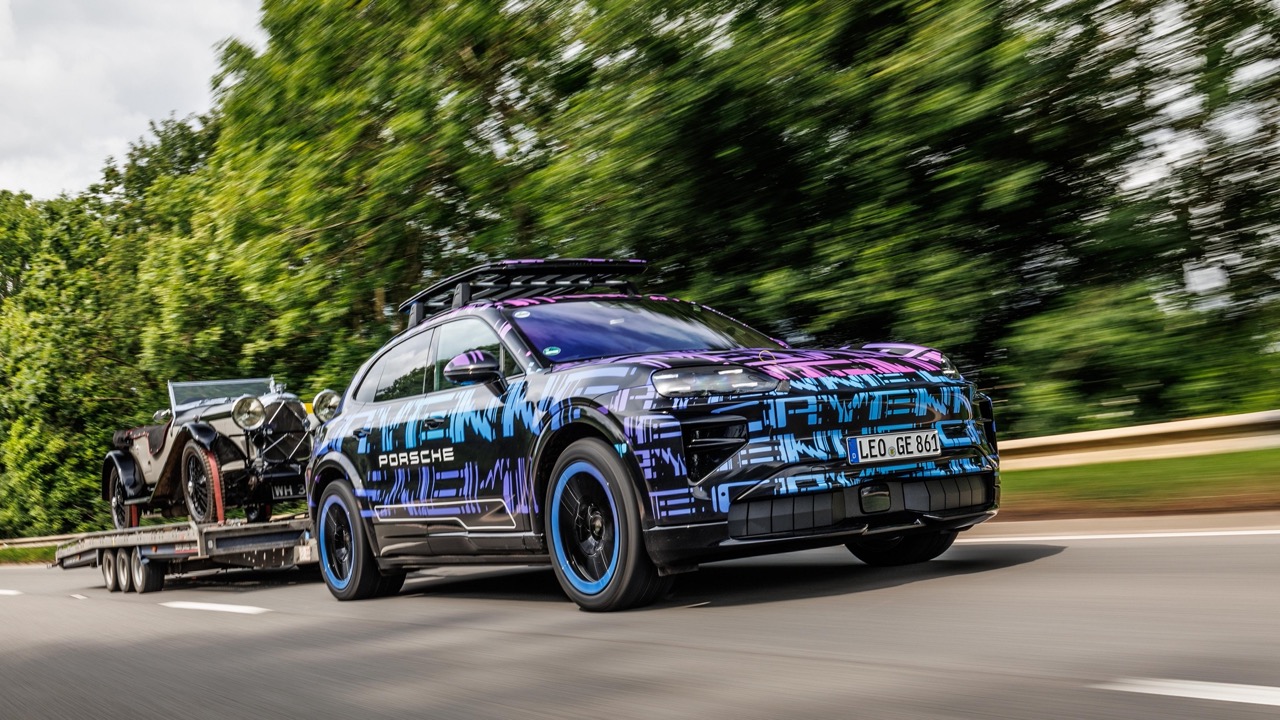
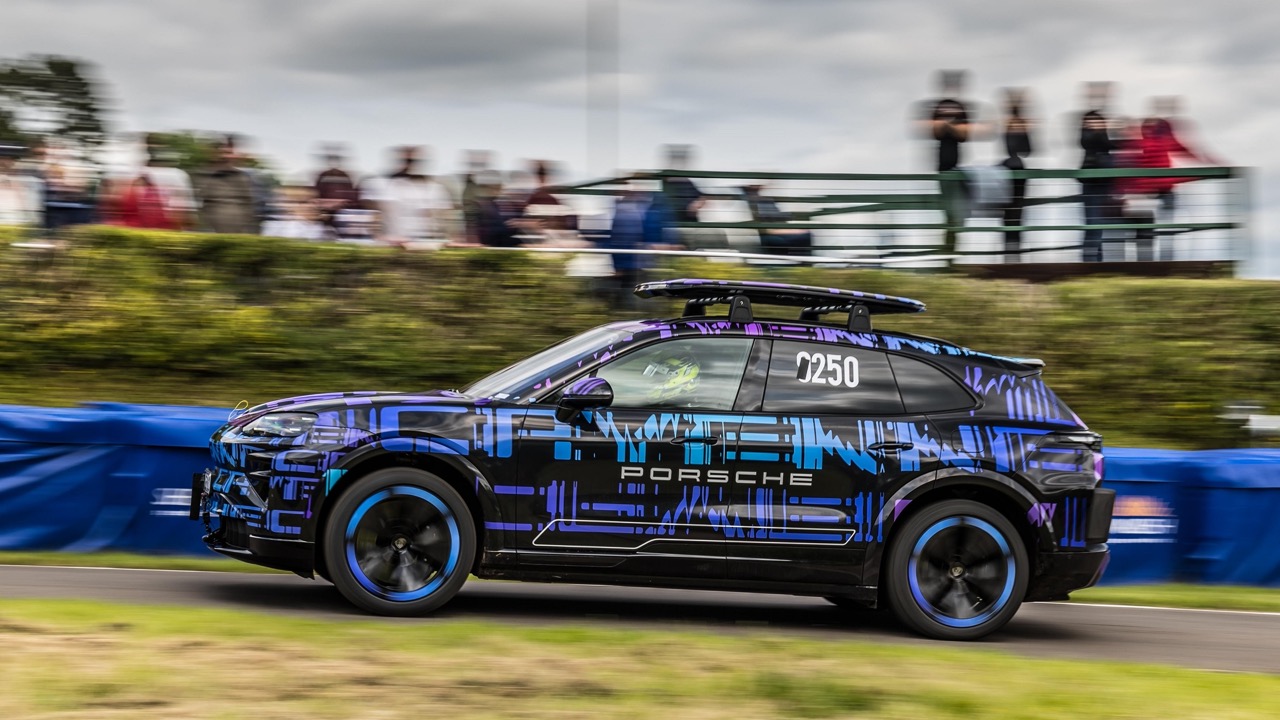
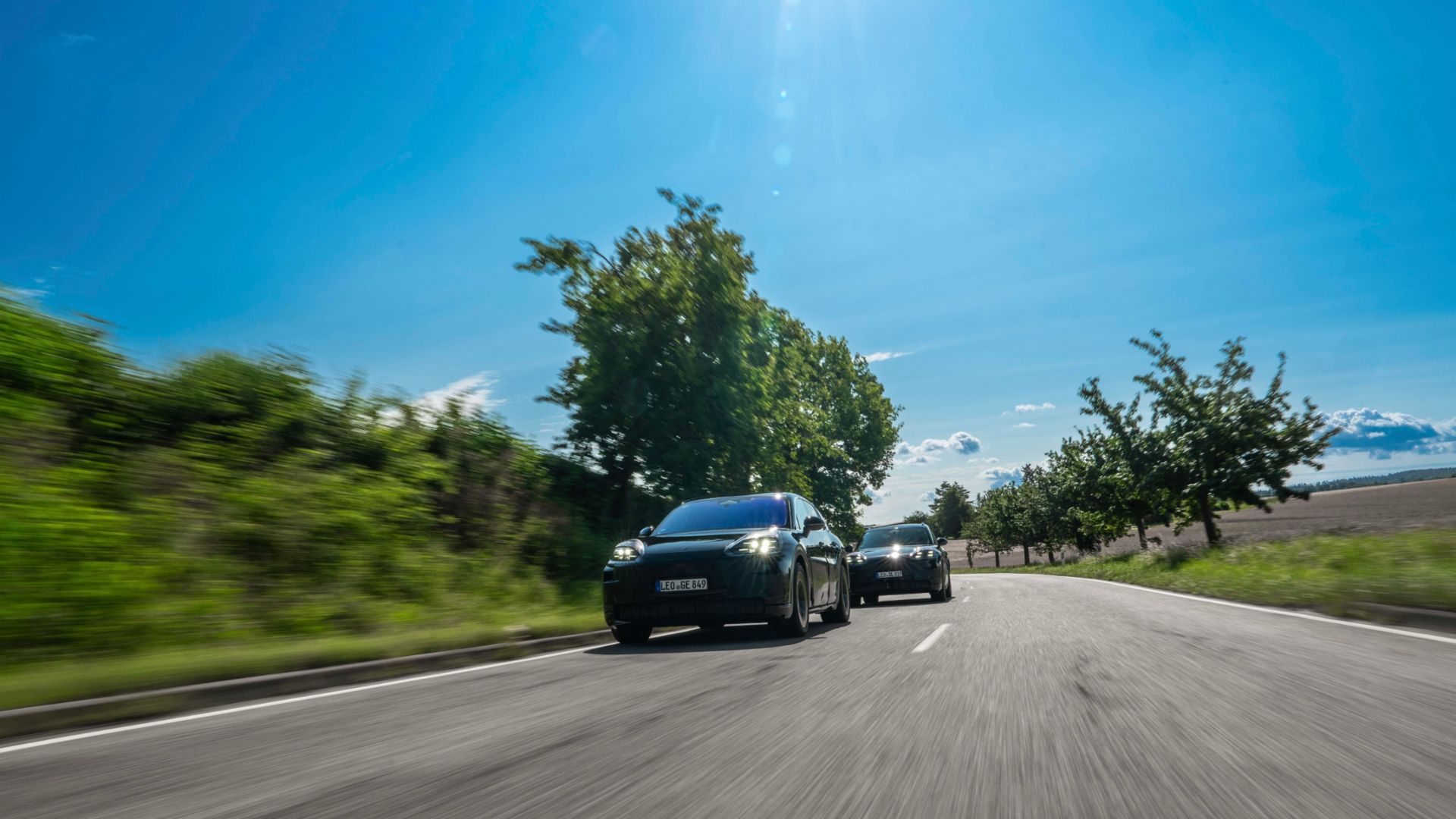
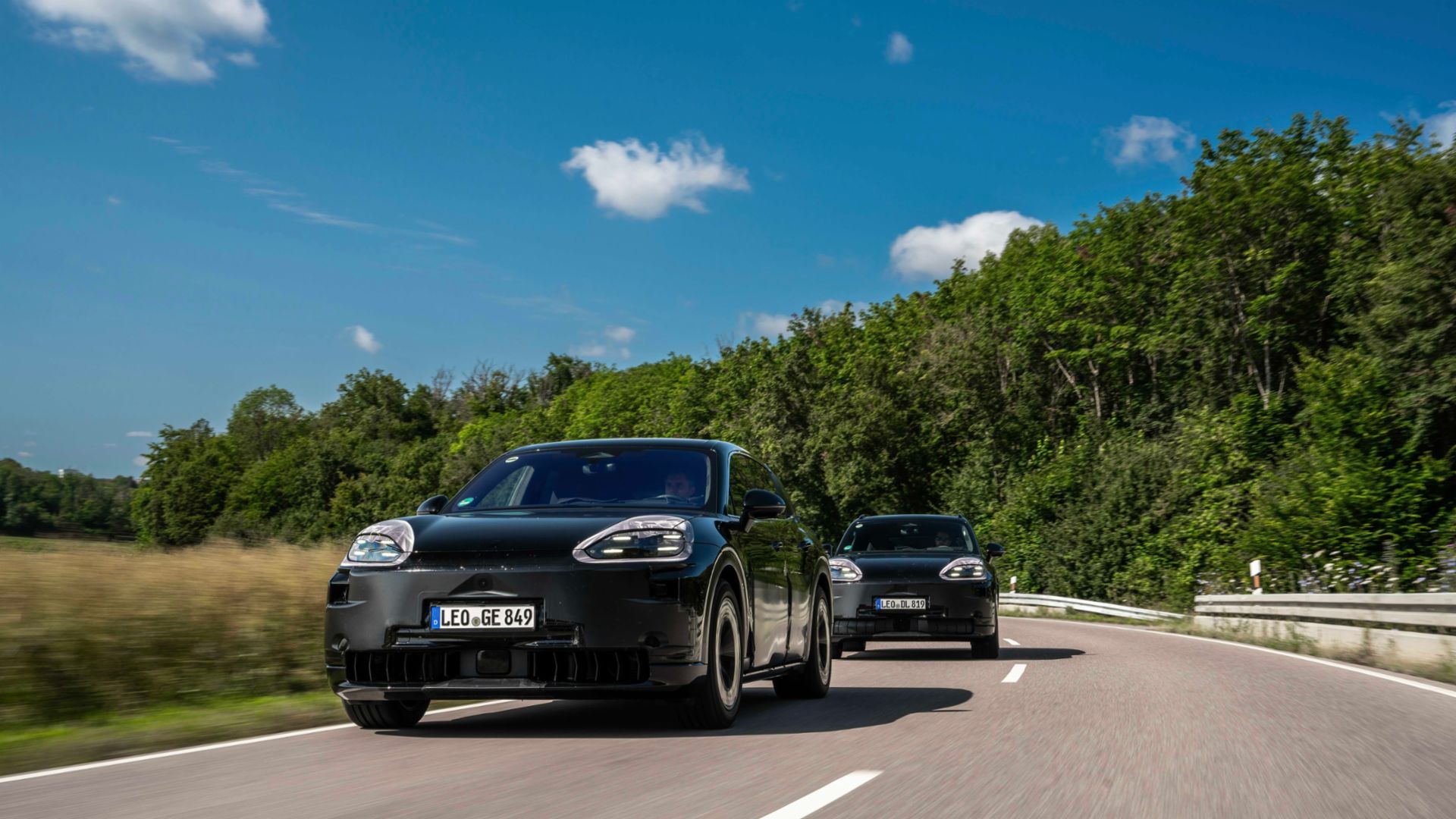
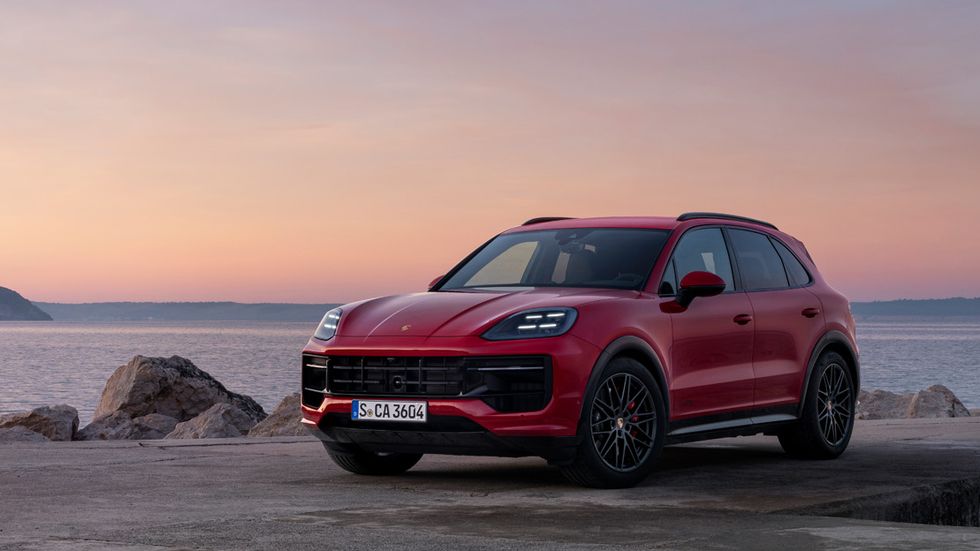
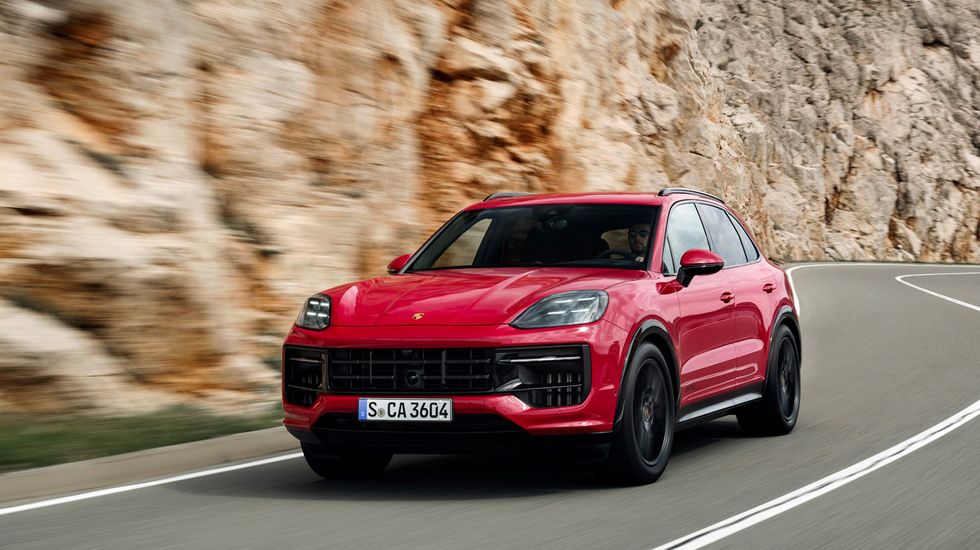
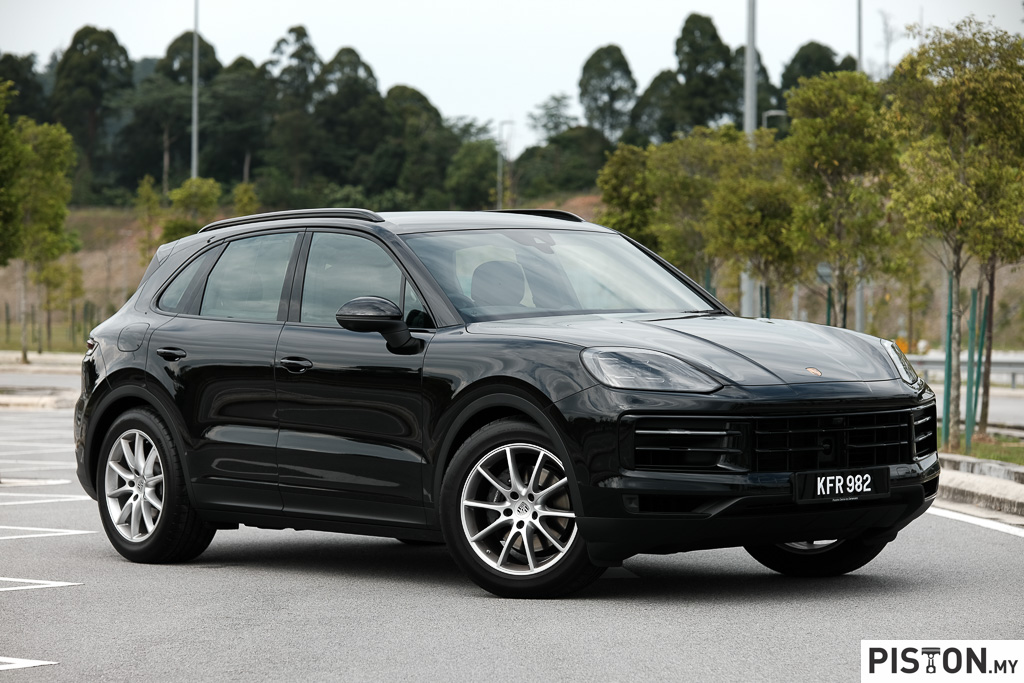
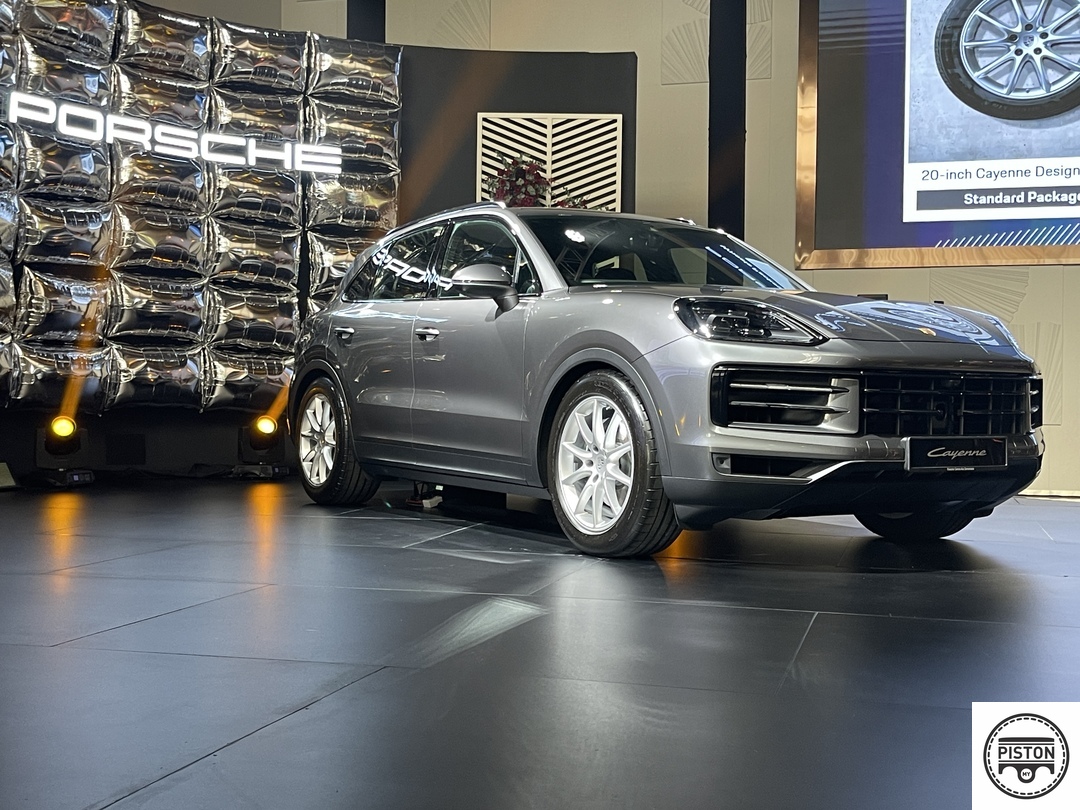
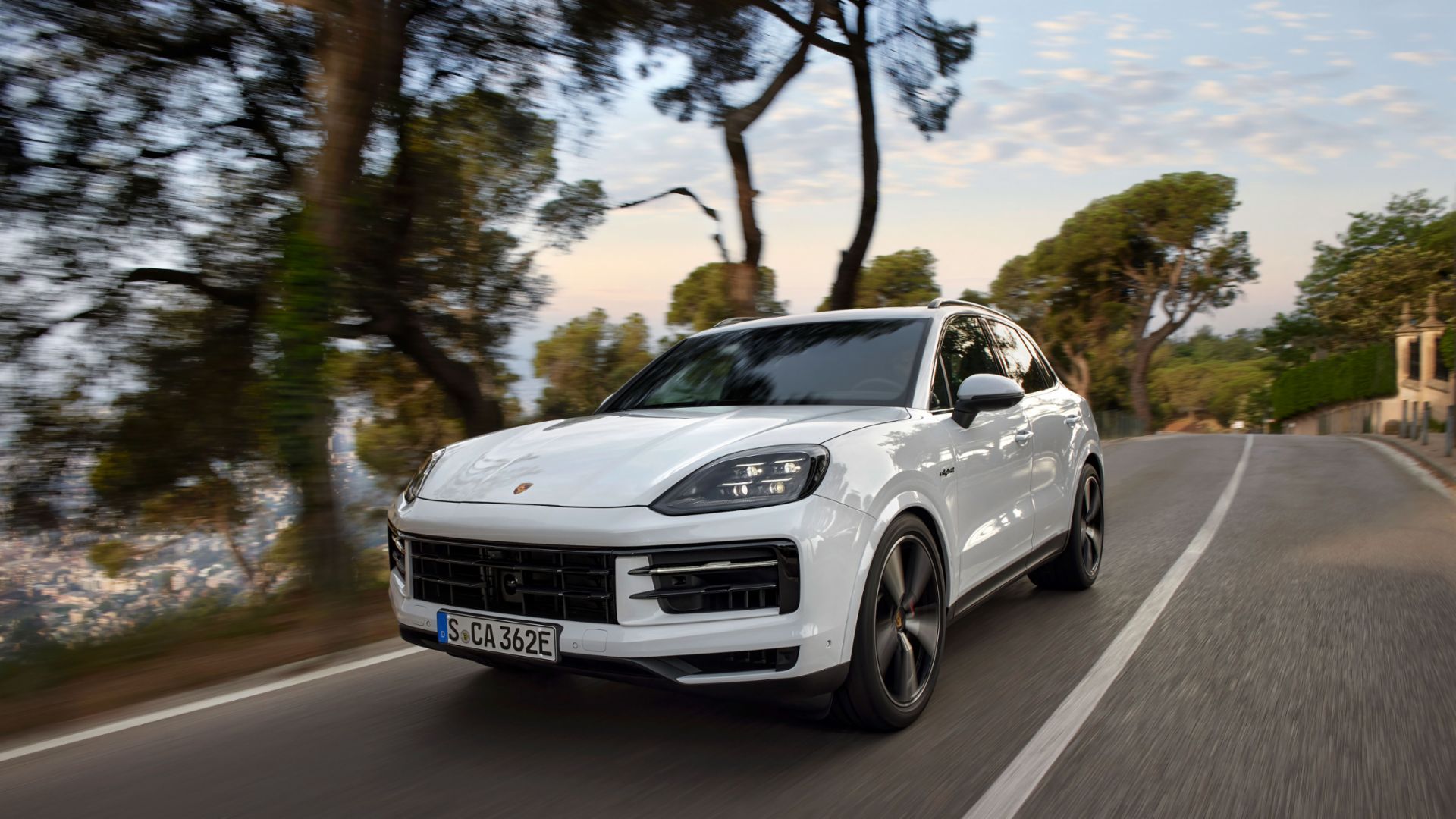
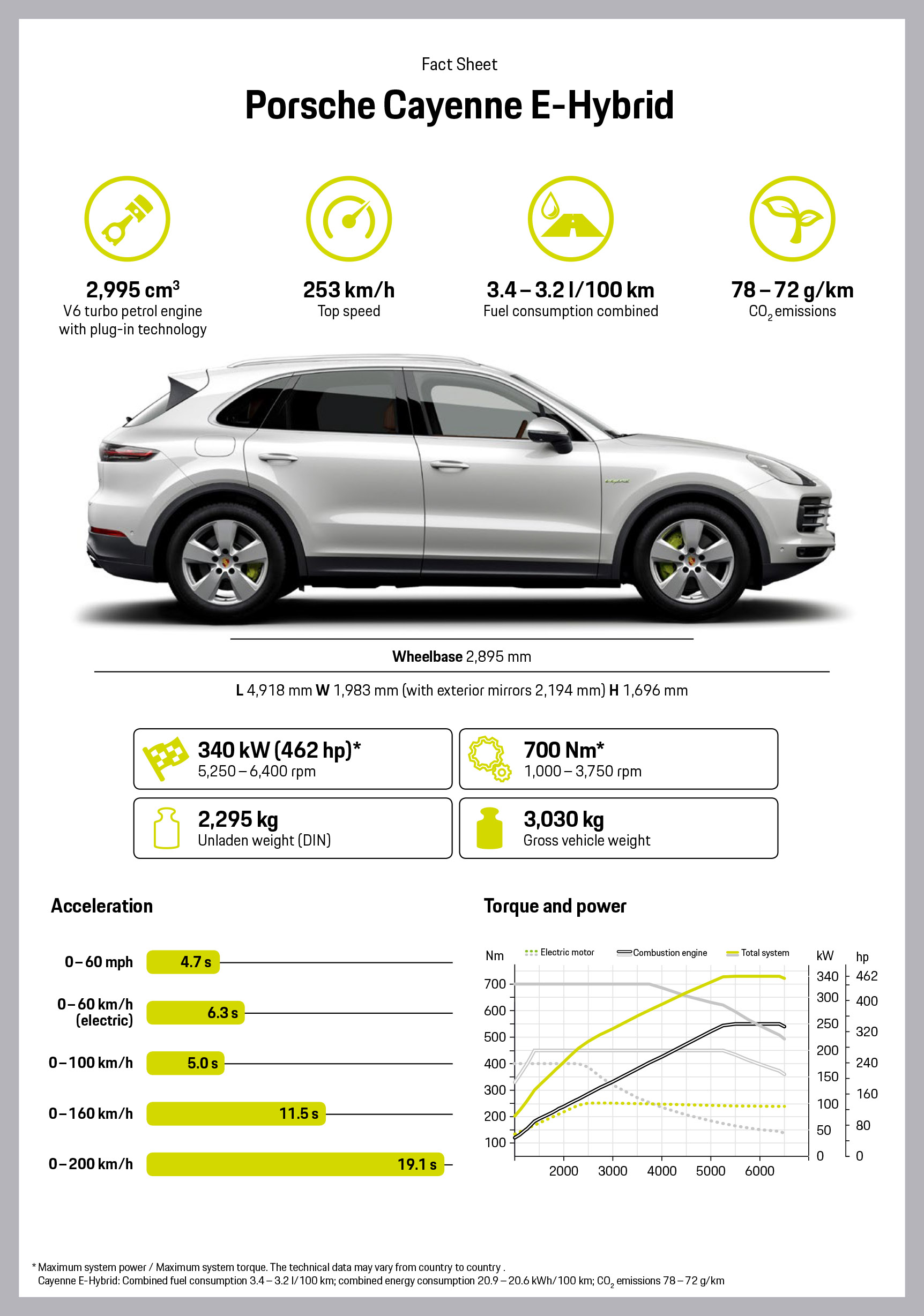
Looks like Porsche is expanding its range of hybrids even further: the new Cayenne E-Hybrid combines the best driving dynamics in its class with maximum efficiency. A three-litre V6 engine (250 kW/340 hp) combines with an electric engine (100 kW/136 hp) to generate system power of 340 kW (462 hp). The maximum torque of 700 Nm is already available just above idling speed; the boost strategy matches that of the 918 Spyder supercar.
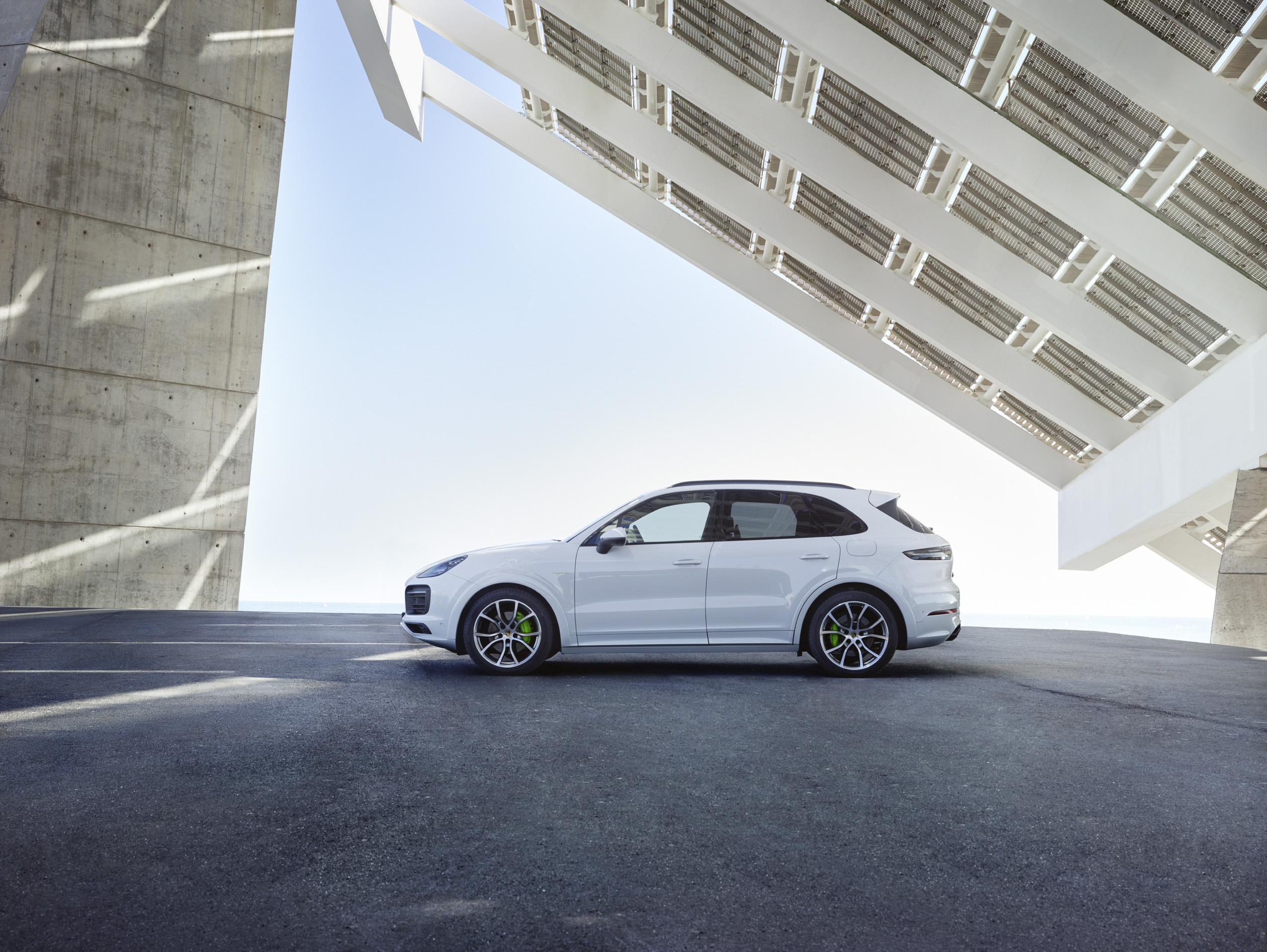
The Cayenne’s plug-in hybrid drive enables acceleration from 0 to 100kmh in 5.0 seconds and a maximum speed of 253kmh. The new Cayenne E-Hybrid can drive up to a distance of 44km and speed of 135kmh on electricity alone. The average consumption in the New European Drive Cycle (NEDC), depending on the set of tyres used, is 3.4 – 3.2 l/100 km of fuel and 20.9 – 20.6 kWh/100 km of electricity. Alongside the launch of the Cayenne E-Hybrid, Porsche is expanding its range of comfort and assistance systems for the entire Cayenne series with additional options such as the new head-up display, massage seats and 22-inch light metal wheels.
More on the Porsche Cayenne Plug-in Hybrid…

462 horsepower system power with 918 Spyder boost concept
The next stage in Porsche’s journey towards e-mobility is the Cayenne E-Hybrid. While the performance of the combustion engine moderately improves on its predecessor by five kW (Seven hp) to 250 kW (340 hp), the performance of the electric engine is now over 43 per cent higher at 100 kW (136 hp). Both combine for a total system power of 340 kW (462 hp).
The boost strategy derived from the 918 Spyder supercar is a new addition. It ensures that the electric engine can be used in all the standard Sport Chrono Package’s driving modes for an additional performance boost. This means the maximum system torque becomes available as you press the accelerator pedal.
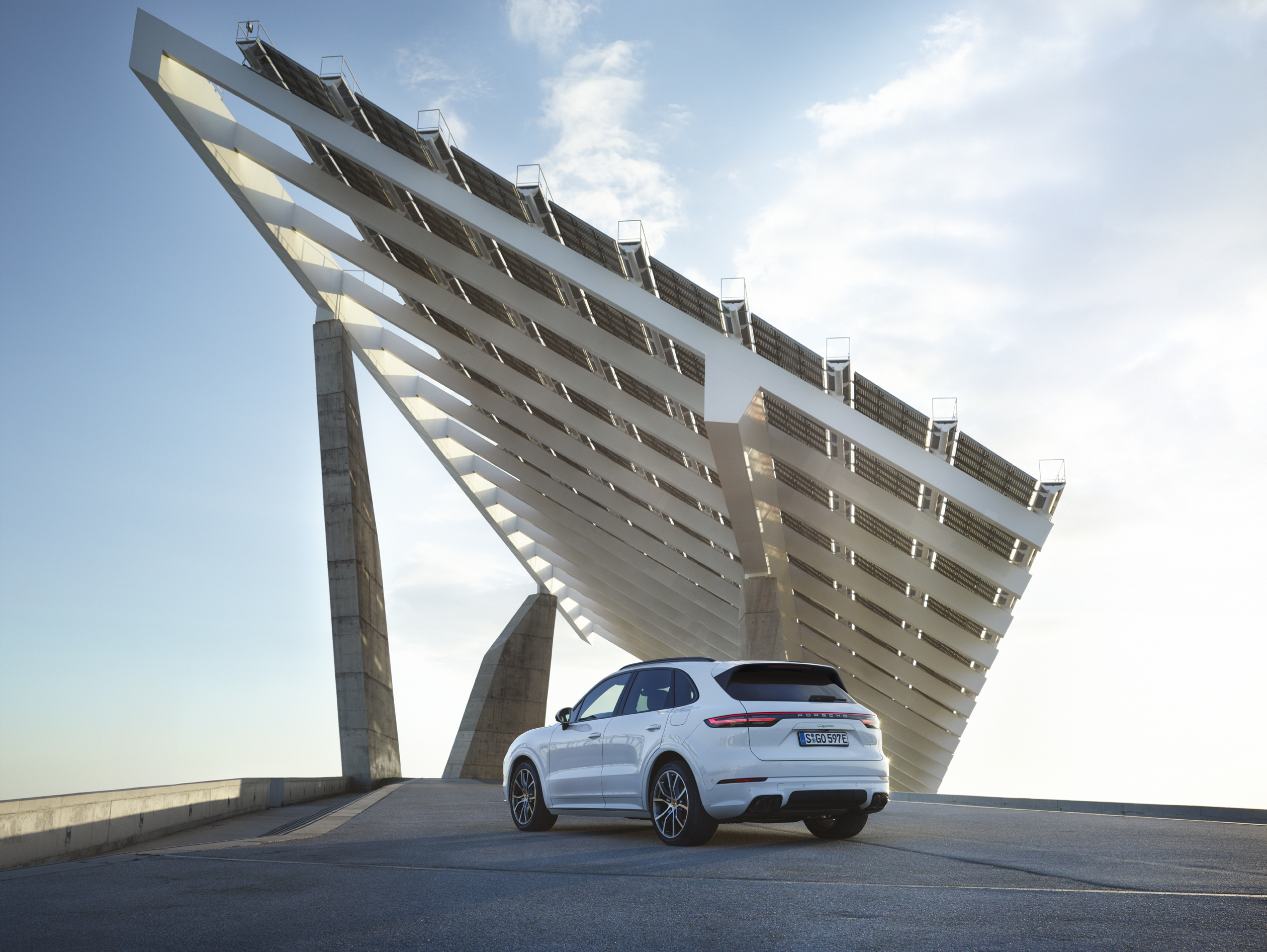
Depending on the driving situation and performance requirements, drivers can continue to draw on the boost torque across the entire range of speeds. This leads to a more agile and superior driving experience. The extent of the boost support and battery charging during the journey depend on the driving mode. In the performance-focused Sport and Sport Plus modes, virtually all of the battery’s energy can be used for a boost. In Sport mode, the battery is charged just as much as is required for a new boost. In Sport Plus mode, the battery is recharged as quickly as possible. The other modes support maximum driving efficiency.
Charging with the Porsche Connect app and Porsche Charging Service
Battery capacity has improved significantly in the Cayenne E-Hybrid, along with the distance on electricity and the boost reserves: in comparison to the previous model, capacity increased from 10.8 to 14.1 kWh. This is an increase of around 30 per cent. The fluid-cooled battery, stored beneath the loading floor in the rear of the car, consists of eight cell modules with 13 prismatic lithium ion cells each. Within 7.8 hours, the high-voltage battery is charged fully via a 230 volt connection with ten amps. if the optional 7.2 kilowatt on-board charger and a 230 volt connection with 32 amps are used as an alternative to the standard 3.6 kilowatt charger, the battery is ‘filled up’ again after only 2.3 hours.
The charging process can be managed and monitored via Porsche Communication Management (PCM) and remotely using the Porsche Connect app. The independent climate control, i.e. heating and air conditioning when the ignition is switched off, is available as standard and can also be individually controlled via smartphone. Porsche Connect can also be used to find and filter charging stations and set them as a navigation destination. The new Porsche Charging Service allows cross-provider access to public charging stations – without requiring additional registration with the relevant provider. This is billed directly via the Porsche ID account.
New hybrid module and rapid switching Tiptronic S
Porsche has redesigned the Cayenne E-Hybrid’s drive train. The hybrid module consists of a highly-integrated combination of electric engine and separating clutch. In contrast to the previous electro-hydraulic system with the spindle actuator, the separating clutch is operated electromechanically, which ensures even faster reaction times. The transmission acquires the new Tiptronic S, newly developed for the entire Cayenne range with eight speeds. The automatic gearbox not only offers even more comfortable and smoother starting but also significantly speeds up switching. Interruption of tractive force during switching processes has also been reduced further.
Active hang-on all-wheel drive and 3.5 ton trailer load
With Porsche Traction Management (PTM), the Cayenne E-Hybrid has an active hang-on all-wheel drive with an electronically regulated, map-controlled multiplate clutch. With its broad range of torque distribution, the system offers clear benefits in terms of driving dynamics, agility, traction control and offroad capabilities. Thanks to the brand new chassis, Cayenne E-Hybrid offers the same sports car driving dynamics as all models of the new Cayenne generation. Porsche Active Suspension Management (PASM) is available as standard. Optional features include the electric Porsche Dynamic Chassis Control (PDCC) roll stabilisation system and a trailer connection for loads up to 3.5 tonnes.
New options: head-up display and 22-inch light metal wheels
With the launch of the Cayenne E-Hybrid, Porsche is expanding its range of assistance systems and optional features for the entire series with a variety of innovations. For the first time, head-up display is available in a Porsche. It projects all the relevant driving information directly into the driver’s line of vision in a full-colour display. Other new features now available in the Cayenne are the smart digital copilot Porsche InnoDrive with adaptive cruise control, massage seats, a heated windscreen, independent heating with remote operation and 22-inch light metal wheels.
NB:
Fuel consumption and emissions 2)
Cayenne E-Hybrid: Fuel consumption combined 3.4 – 3.2 l/100 km; CO2emissions 78 – 72 g/km; energy consumption: 20.9 – 20.6 kWh/100 km
1) The maximum electric range fluctuates between 42 and 44 km depending on the set of tyres used.
2) Range depends on set of tyres used.