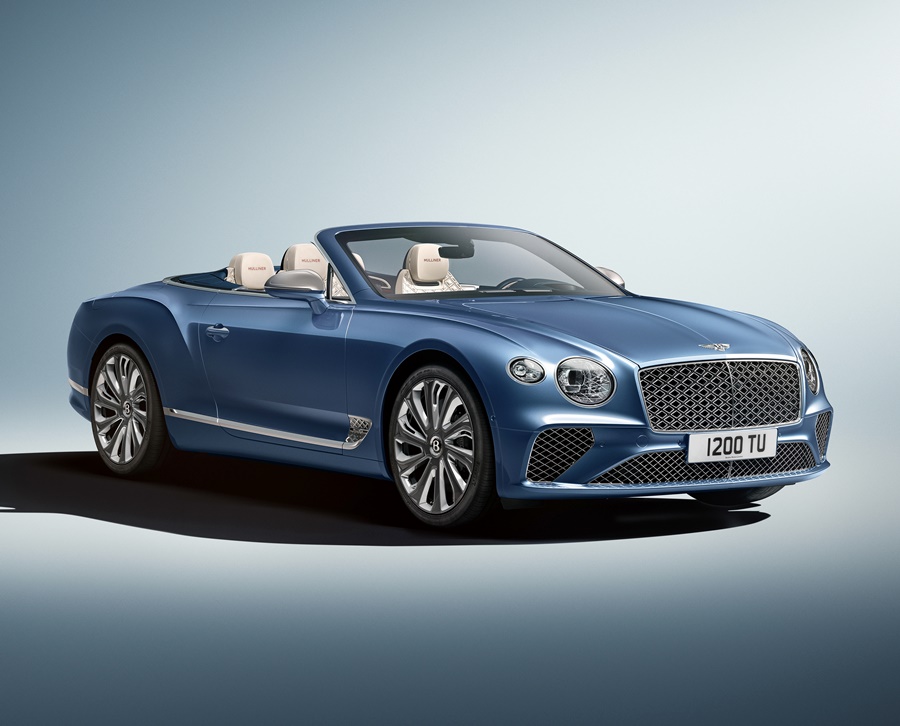
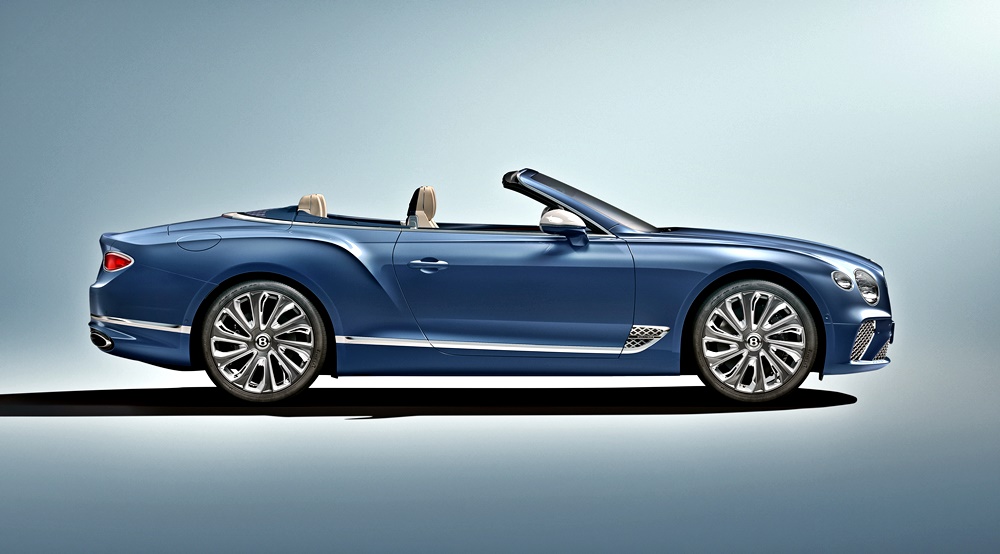
Mulliner, Bentley’s bespoke commissioning division that is synonymous with exclusivity of the highest order, has come out with the new Continental GT Mulliner Convertible. Said to ‘redefine the pinnacle of roof-down automotive luxury’, the model is available with Bentley’s V8 (4 litres) and W12 (6 litres) powertrains.
With the twin-turbocharged W12, the Continental GT Mulliner Convertible is claimed to be able to go from 0-100 km/h in 3.8 seconds, 3/10ths of a second quicker than the V8-powered version. Top speed is stated as 333 km/h for the V12 while the V8 can still cross 300 km/h (318 km/h).
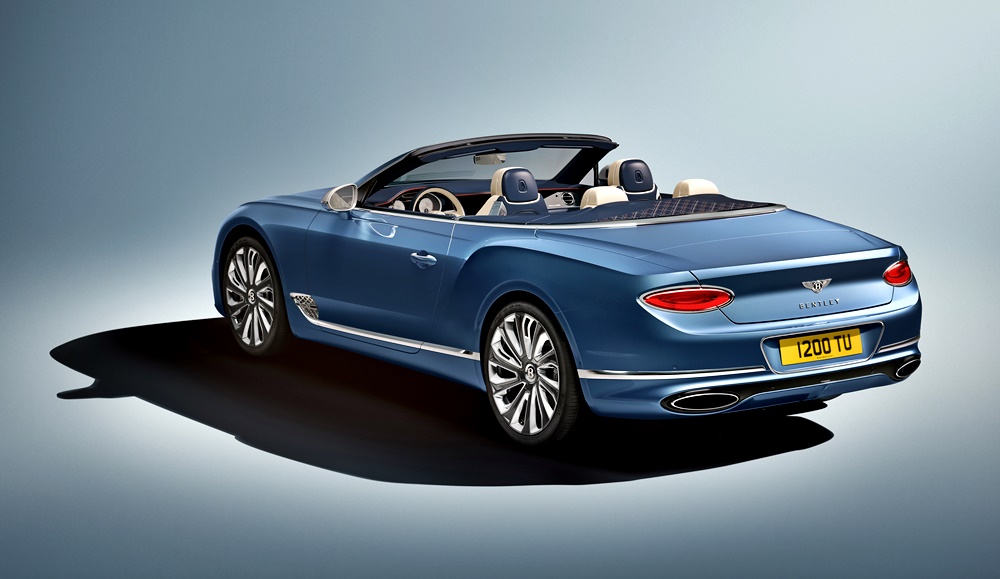
On each corner of the car are all-new 22-inch 10-spoke painted and polished wheels with floating, self-levelling wheel badges that remain upright as the wheel rotates.
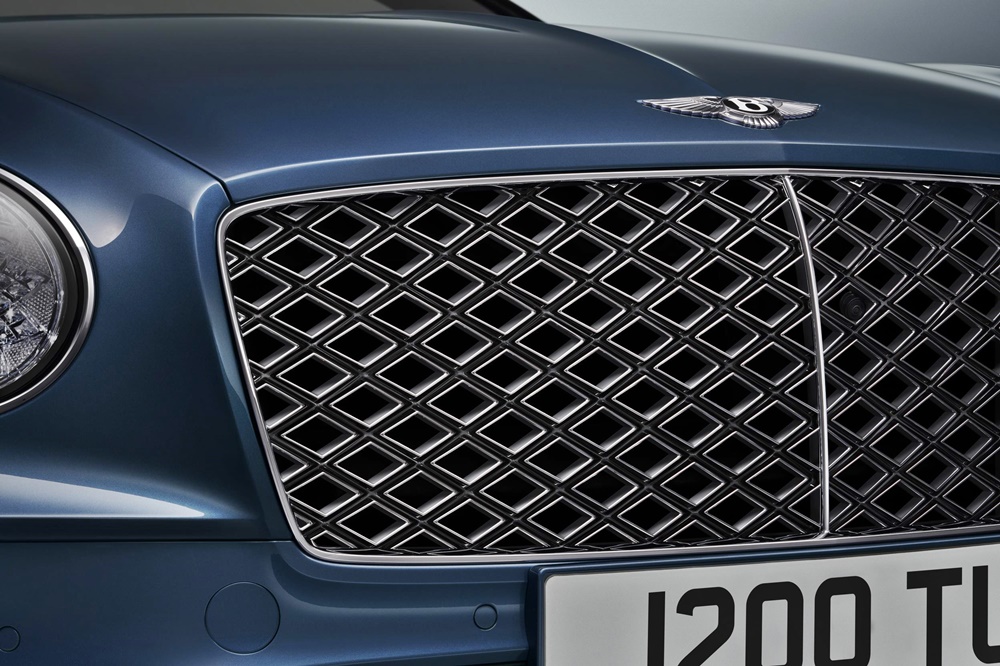
Taking pride of position between the cut-crystal inspired, precision-made headlamps, Bentley Mulliner introduces a bold new Double Diamond front grille which is further complemented by bespoke Mulliner branded side vents that continue the unique silver on black diamond theme.
Customers can choose from the extended Bentley Mulliner range of 61 exterior colours. or specify a personal shade which Bentley’s artisan paint specialists will colour-match to any item or sample.
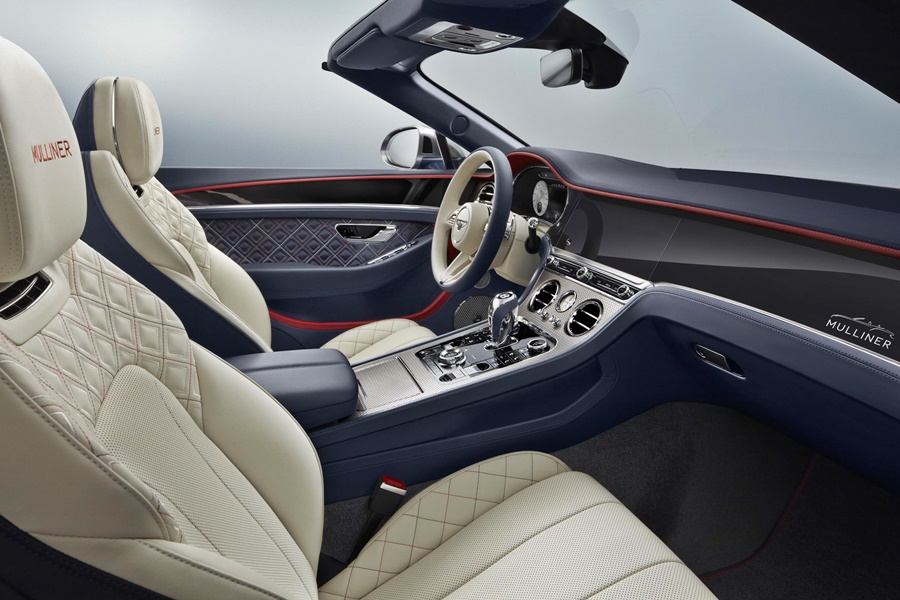
The new Double Diamond design has been inspired by Bentley’s exclusive Diamond-in-Diamond interior quilting design concept, which adorns all four seats, the door casings, rear quarters and now, for the first time, furnishes the tonneau cover.
The Diamond-in-Diamond interior quilting itself has been tailored to include contrast stitching in two complementary colours to accentuate the thread against the quilting. It takes almost 400,000 stitches to deliver this quilting across the cabin of the car, with each diamond containing exactly 712 individual stitches – each one precisely aligned to point to the centre of the diamond it creates. Developing the embroidery process to deliver this process alone took 18 months.
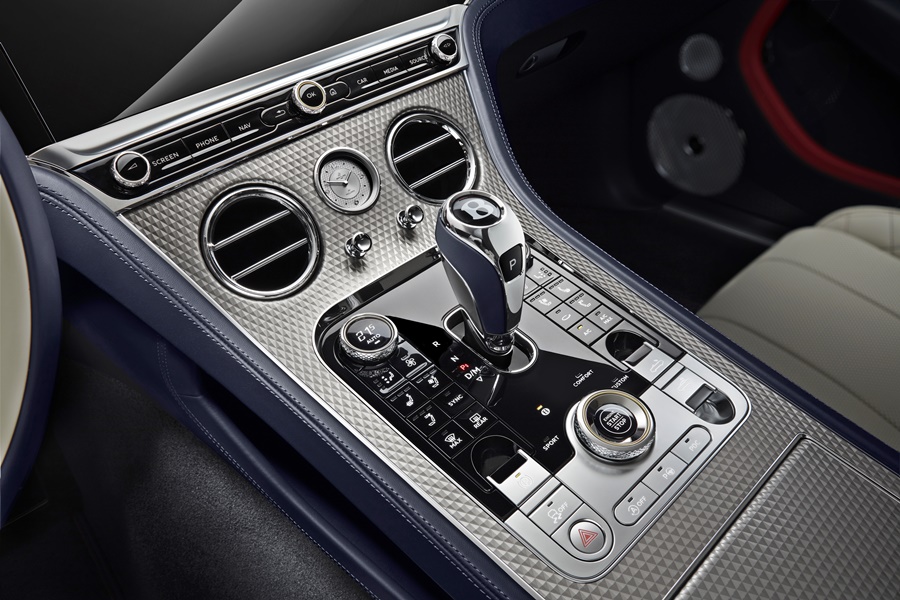
Bentley Mulliner has combined traditional and modern coachbuilding techniques to introduce new contemporary and bespoke features. A contrast diamond milled technical finish has been applied to the centre console, which is finished with a new and exclusive brushed silver Breitling timepiece set within a quartet of chrome bullseyes to provide stunning interior jewellery.
For entertainment, the top of the range Naim for Bentley audio system is available. The state-of-the-art system features 18 speakers and 2 Active Bass transducers driven by a 2,200-watt, 20-channel amplifier and 8 DSP sound modes with Active Bass.
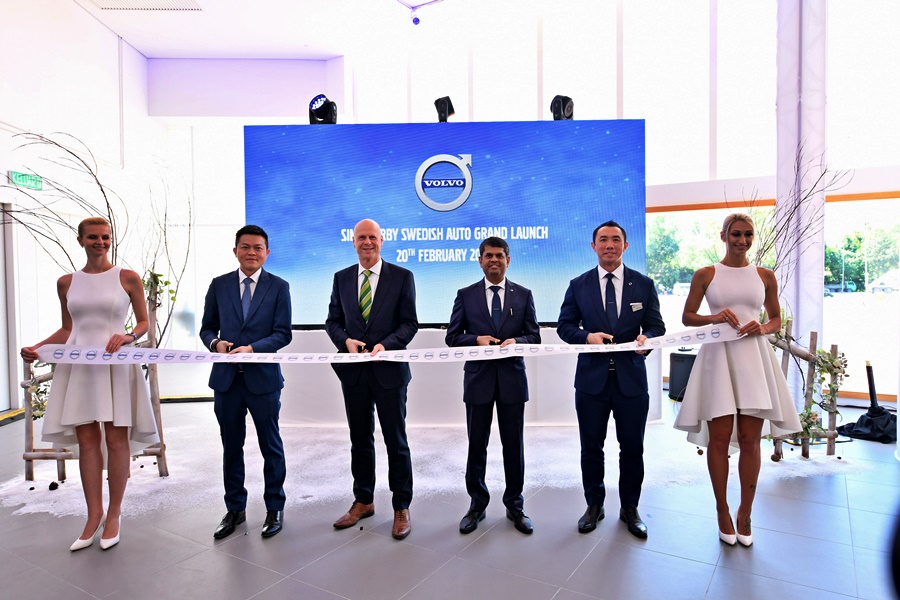
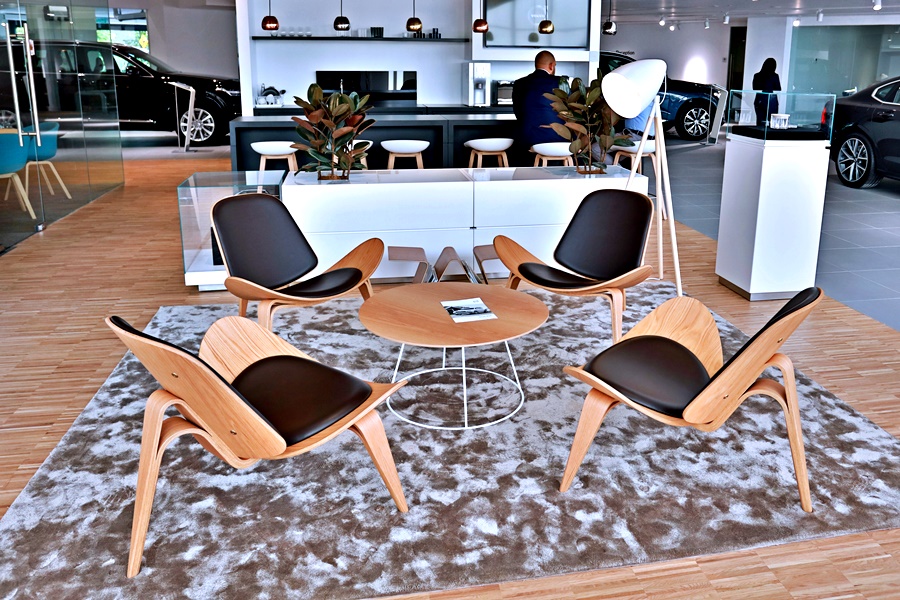
Sime Darby and Volvo have been part of the Malaysian landscape for a long time, with the latter having begun selling its cars in the 1960s. Both companies have now established a partnership with the establishment of Sime Darby Swedish Auto at Sime Darby Motors City in Ara Damansara, Selangor.
The new dealership officially opened its Volvo 3S (Sales, Services & Spare Parts) Centre today with the aim of delivering the brand’s vision to the market and bolster customer confidence. According to Nalin Jain, MD of Volvo Car Malaysia, the Swedish automaker has been continuously looking to expand its presence nationwide with a like-minded partner.
“Building off our accomplishments in 2018 and further growth in 2019, Volvo is set to have a great 2020. The partnership we have with premium dealers such as Sime Darby Swedish Auto is the key to expanding the Volvo brand’s Swedish-inspired ideals and heritage especially within regard to its retail experience, new car sales and customer service improvement. There is an amazing potential,” he said.
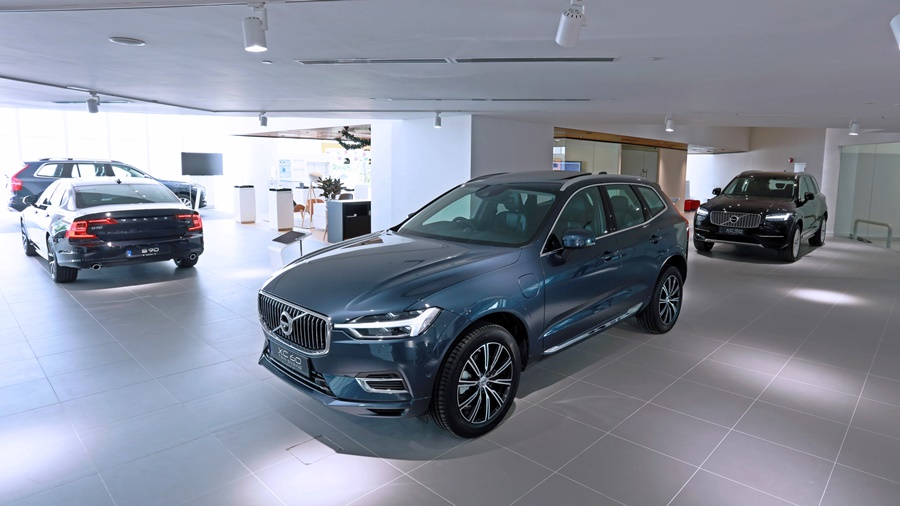
The new 4-storey state-of-the-art Volvo 3S Centre adheres to Volvo Car’s retail standard – the Volvo Retail Experience (VRE). It is also the first 3S Centre to be equipped with a VR Studio (Virtual Reality Studio) and a ‘Reception at the Counter’ bay.
The 3S Centre was designed to deliver a contemporary luxury experience featuring a showroom at the ground floor and a service centre (with car detailing area) spread across the second and third floors. There are 8 repair and service bays, with a wheel alignment and balancing zone located on the fourth floor.
All customer parking bays have a designated Electric Vehicle Charger which aligns with Volvo’s goals for environmental sustainability through the introduction and promotion of clean energy technologies.
Commenting on the new partnership, Andrew Basham, MD of Sime Darby Motors, the automotive division of Sime Darby Berhad, said: “From the start of our relationship with Volvo Cars Malaysia, it was imperative that we focus on delivering peak customer satisfaction and this is reflected in the many offerings at our 3S centre”.
Mr. Basham added that the partnership with Volvo is a meeting of minds, as the principles of sustainability of Volvo are perfectly aligned to that of Sime Darby Motors. “We are going digital and just one way this is expressed is through our Digital Silent Salesman (DSS) platform which means that even price lists will be shared digitally,” he said.
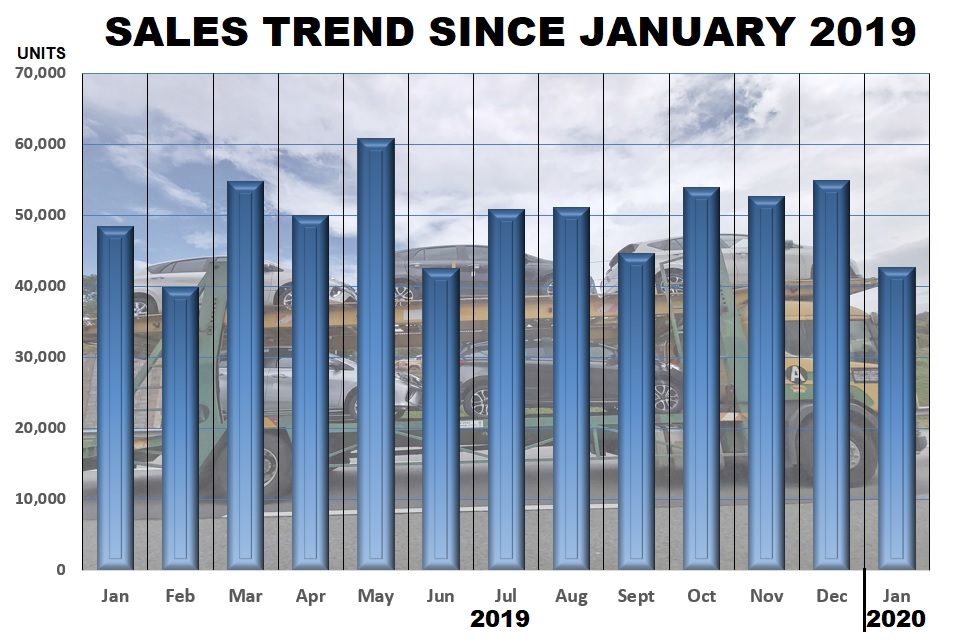
Source: Monthly reports of Malaysian Automotive Association (MAA)
KEY POINTS:
♦ The Total Industry Volume (TIV) for the month declined by 22% or 12,219 units month-on-month compared to the TIV for December 2019.
♦ The decline in sales was attributed to the short sales month with the Chinese New Year festive season holidays.
♦ Historically, January sales are also lower than December as the last month of the year sees a big push by companies to move stocks and end the year with a high number.
♦ Looking ahead, the MAA feels that February 2020 sales will show improvement since the uncertainties have been resolved.
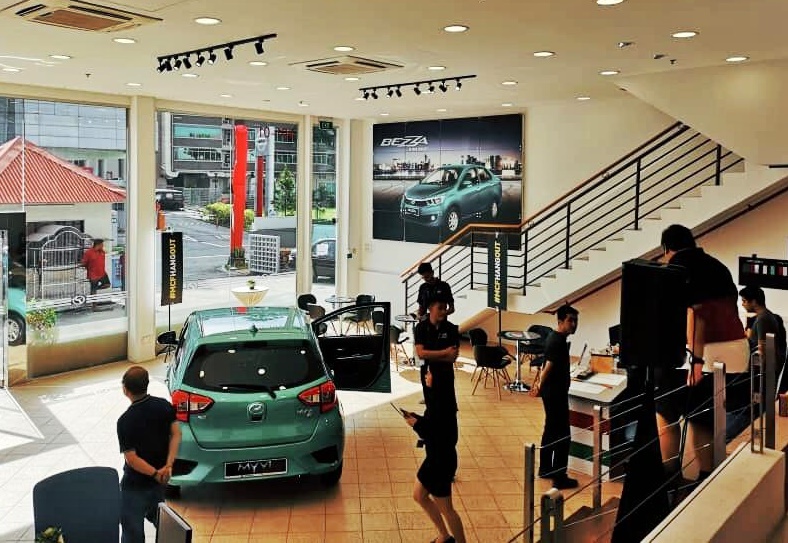
♦ As always, there are new models to come which will bring customers to the showrooms. An early newcomer is the locally-made Proton X70 while the new 10th generation of the Honda Accord will be launched during this quarter. Models like the Perodua Bezza also continue to have a backlog of orders.
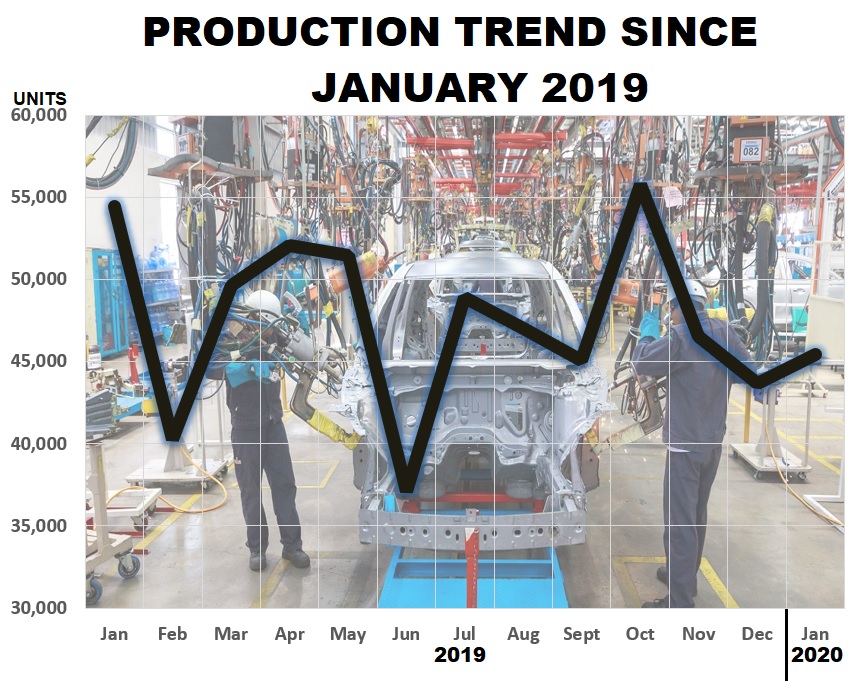
Source: Monthly reports of Malaysian Automotive Association (MAA)
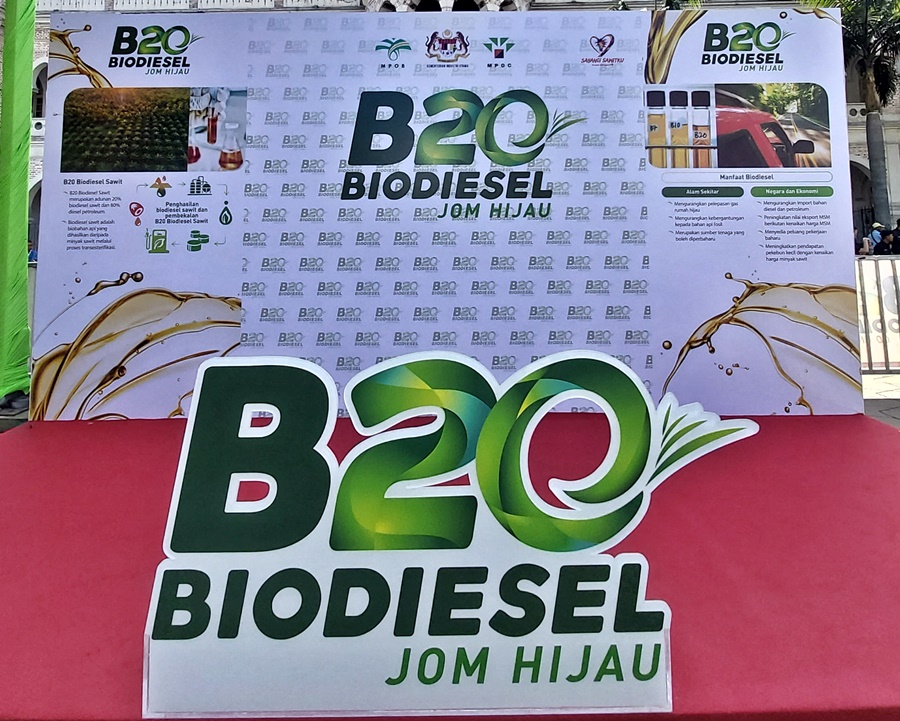
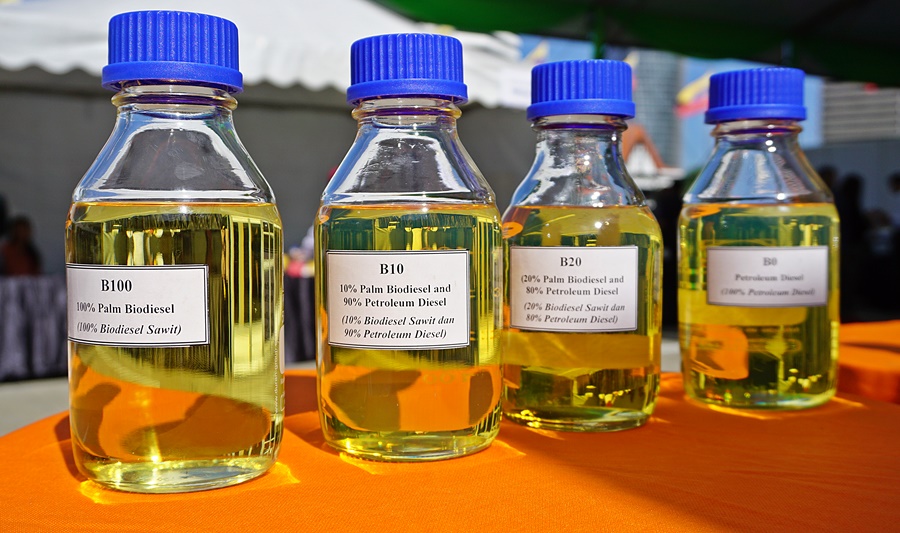
The government today moved to the next step in promoting the use of biodiesel which is a blend of diesel and palm oil (palm methyl ester). The new level will be B20 which means there is 20% of palm oil and diesel is reduced from 90% to 80%. B20 is intended for the transportation section and will be available at selected stations of the main petroleum brands (BHPetrol, Petronas, Shell, Caltex and Petron) in phases.
The conversion of stations to B20 will be done in phases with the aim of having over 3,400 stations by the middle of 2021. Incidentally, Indonesia, also a major palm oil producer, made B20 mandatory from January 2016.
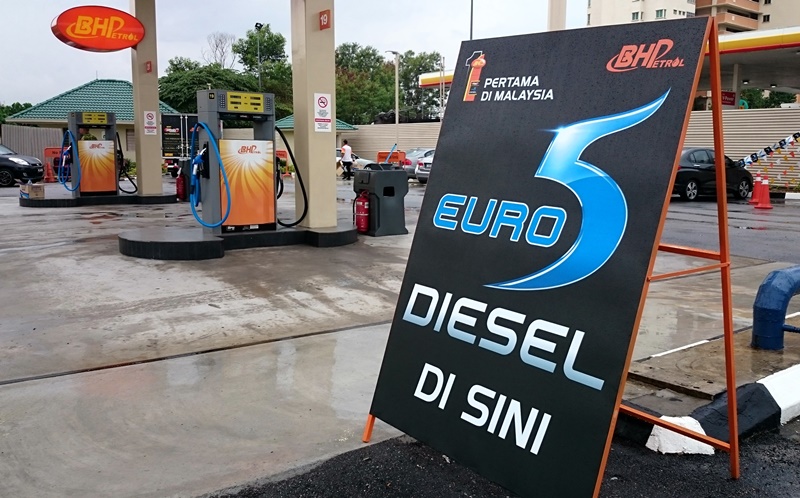
However, Euro5 diesel which has B7 formulation (7% palm oil) will continue to be available at stations that currently supply it. This is to cater to passenger vehicles with modern turbodiesel engines using advanced technologies that are more fuel-sensitive.
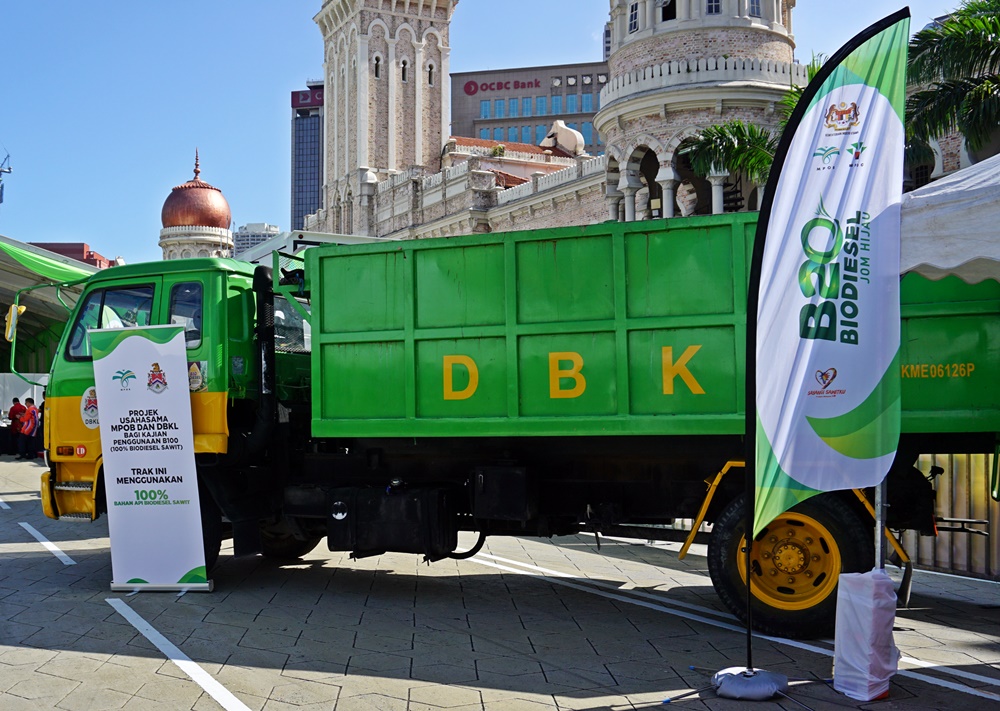
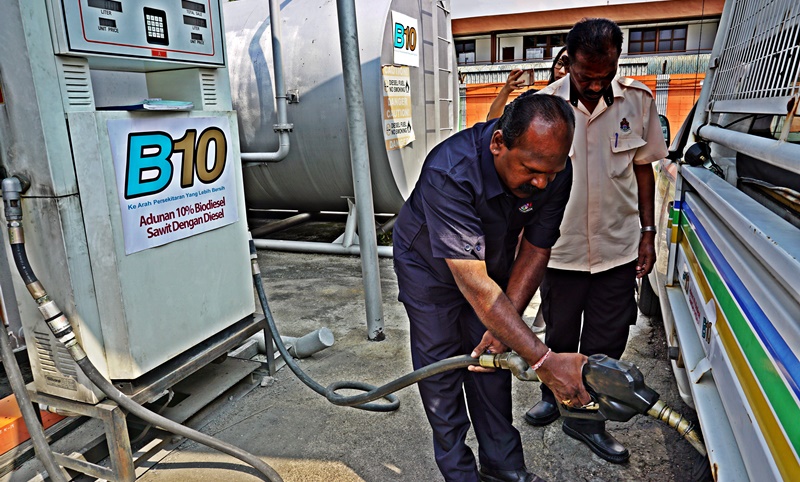
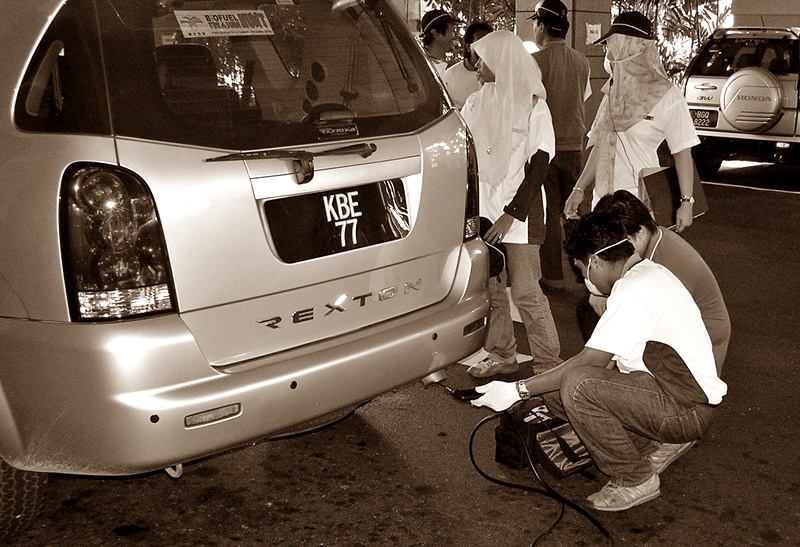
DBKL has assisted in testing B20 as well as B10 (below) to provide MPOB with technical data on the performance of the fuels in real-world conditions.
Prior to the launch of B20, the MPOB has carried out extensive test programs with companies like Mazda Malaysia and agencies like DBKL (Dewan Bandaraya Kuala Lumpur) which has been using it in its fleets.
To ensure consistent and high quality, SIRIM has formulated two new standards for biodiesel – MS123-4:2020 (High PME Diesel Fuel specification) for Euro2M fuel and MS123-5:2020 (High PME Diesel Fuel specification) for Euro5 fuel.
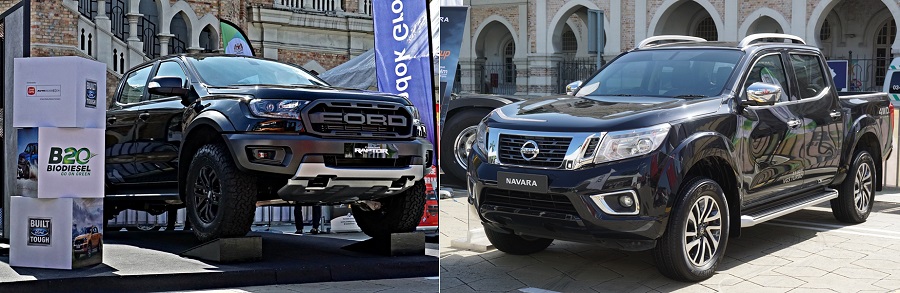
The turbodiesel engines of the mighty Ford Ranger Raptor (left) as well as the Nissan Navara are compatible with B20.
The biodiesel program began as far back as the early 2000s with the Malaysian Palm Oil Board (MPOB) taking a lead role in developing and testing formulations which could be commercialized. Being a leading producer of palm oil, it only made sense to maximise its utilisation by developing biofuel.
Actually, biodiesel is nothing new and there’s even an International Biodiesel day on August 10. The date commemorates the day in 1893 when Rudolf Diesel successfully started the engine he invented and it ran on peanut oil. In later years, various formulations blending vegetable and plant-based components would be developed.
The government announced its Biofuel Policy in 2006 but it was only in mid-2011 that commercial supply began, with PETRONAS being the first company to offer it at a station in Putrajaya. The program started with B5 (5% palm oil) and then moved to B7 in December 2014. Though biodiesel actually costs more to produce than normal diesel, the pump price was not increased as the government provided subsidies.
The Malaysian Palm Oil Board (MPOB) began its biodiesel program 17 years ago and has been constantly running a fleet of vehicles to gain technical data.
While commercial vehicle engines were not so fuel-sensitive, the increasingly sophisticated passenger vehicle engines require fuel of high quality and there was concern that biodiesel would cause problems. Nevertheless, the MPOB did extensive testing on a range of vehicles and also had JAMA (Japan Automobile Manufacturers Association) to evaluate and provide assistance.
After much testing, B5 was found to be okay as long as it met the MS2008:2008 Malaysian standard which is based on the international EN14214: 2003 for such fuels. The first company to confirm that its cars could use B5 was BMW Group Malaysia, assuring owners that use of Malaysian biodiesel in their cars would not void their warranties.
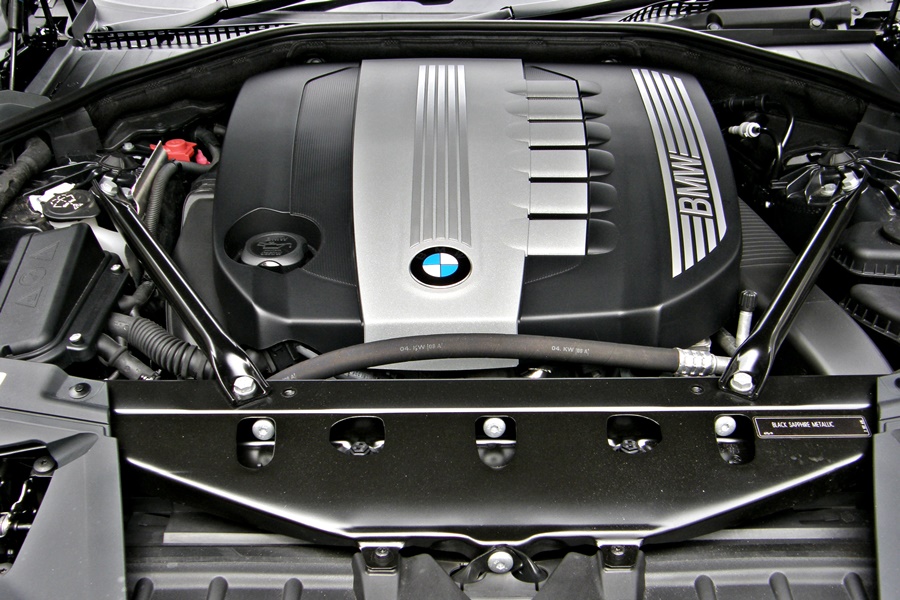
BMW Group Malaysia ran tests on biodiesel and had no concerns about damage to its engines up to B7.
As the government was planning on continuing to increase the palm oil content in biodiesel, there was concern among the car companies that going beyond 7% could cause issues with engines. The higher moisture content in the fuel from having 10% of palm oil (B10) could cause corrosion of the components which transport the fuel and promote oxidation in the tank which can cause a blocked fuel filter.
BMW Group Malaysia ran tests using B10 and found that damage could occur. According to the company, the engines ran fine with B7 which had been sold at the pumps since December 2014. Nevertheless, the government pressed ahead with moving to B10 in June 2016 and made it mandatory for the transport sector from last July.
Euro5 Diesel will still continue to be B7 (7% palm oil) to cater for passenger car engines.
The compromise was that B7 would still remain available – and this remains the case with B20 now being introduced – so that owners of passenger vehicles would not have problems. However, it will only be available for the Euro5 grade which costs 10 sen more a litre than regular diesel (which is subsidized to maintain the price at RM2.18).
There are plans to someday reach B100 – the fuel being having only palm oil – but the next step will likely be to B30. DBKL, which wants to create a Low Carbon City, will test a B30 blend in up to 50 vehicles in its fleet from June 2020. Technical data from using the fuel will be shared with MPOB.
Apart from helping the palm oil industry, increased use of biodiesel will also help in reducing air pollution and Malaysia’s carbon footprint. Air quality can be improved as biodiesel has almost no sulphur that gets into the air with exhaust emissions. It also benefits the smallholders who own 40% of the oil palm plantation areas in the country.
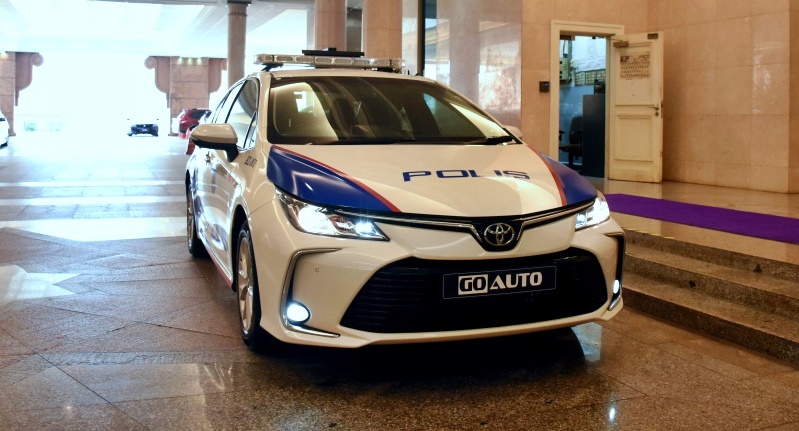
Motorists will soon see a new police patrol car on the roads which replaces the aging Proton Wira and Waja models. The new model to be used will be the Toyota Corolla Altis which has been accepted by the Home Ministry as a new Mobile Patrol Vehicle (MPV) for the PDRM.
425 units will be supplied by Go Auto Sales Sdn. Bhd., with the first 100 units being delivered in less than 2 months for use in the days leading up to the Asia-Pacific Economic Cooperation (APEC) 2020 which will be hosted in Kuala Lumpur. The remainder will be delivered 2 months later.
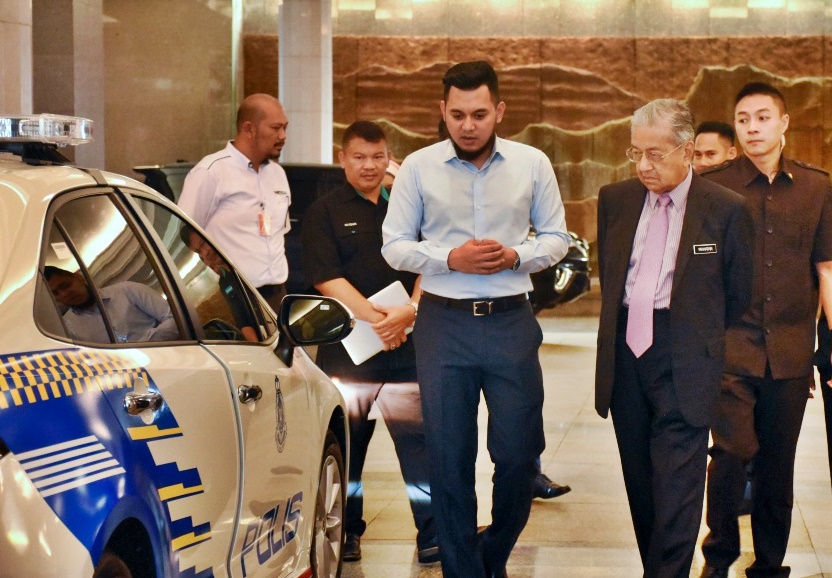
The PM viewing a prototype of the Toyota Corolla Altis patrolcar.
A prototype unit of the Corolla Altis was shown to Prime Minister Tun Dr Mahathir Mohamad in Putrajaya. The MPVs will come with 5 years of free scheduled service and each unit will be equipped with additional special accessories such as an Integrated Light Sound System and Fleet Management System, as well as a VHF communication radio set.
“This is the second time Go Auto has been awarded with a tender. Before this, we successfully delivered 200 units of 4WD vehicles to the PDRM last year, which was earlier than the expected time-frame,” said Go Auto Group Executive Director, Dato’ SM Azli SM Nasimuddin.
“Our main focus is Special Vehicles and we are actively bidding in open government and private tenders as it is part of our business diversification. The stiff competition in the automotive industry now has led to Go Auto being more aggressive and creative to remain competitive in the business,” he said.
Go Auto, incorporated in 2013, is the business partner of China’s Great Wall Motor (GWM) and manufactures and distributes Haval SUV and GWM vehicles in Malaysia and ASEAN market. The company was the first to be awarded with a car manufacturing license for Energy Efficient Vehicles (EEVs) by the International Trade and Industry Ministry (MITI) under the National Automotive Policy (NAP) 2014.
Want to know more about the Volkswagen range in Malaysia? There are 23 authorised dealerships around Malaysia where you can view the various models. Better still, because Volkswagen Passenger Cars Malaysia (VPCM) believes that Volkswagen products are Better Experience than Explained, you should also go for a test-drive.
Until February 23, there’s also a 24th location you can check out Volkswagen models if you’re in the Klang Valley. VPCM is having the first Volkswagen Tour of the year at the 1 Utama Shopping Centre. The display of vehicles is at the Ground Floor of the Centre Court in the old wing, from 10 am to 10 pm.
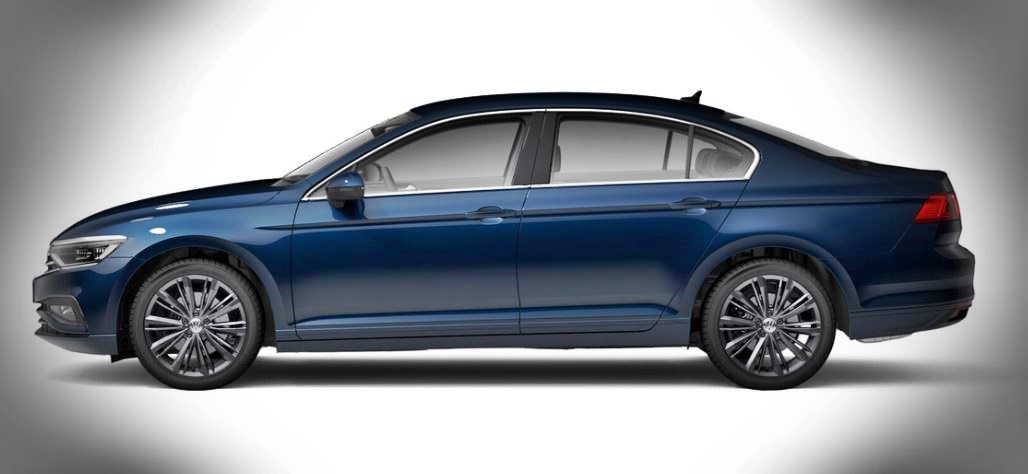
2020 Volkswagen Passat Elegance
Models that are on display are the iconic Beetle, Vento, Tiguan, Golf R-Line and GTI as well as the new Passat Elegance which was launched just last month. A benchmark within its class, the new Passat has an updated 2.0TSI petrol engine and is the first front-wheel drive Volkswagen model in Malaysia to come with a new 7-speed wet clutch dual-speed gearbox (DSG).
Test-drives are also available at the venue and if you are convinced that you want to buy a Volkswagen, you can place a booking there. Customers who make a booking at the event will receive an additional RM1,000 petrol cash voucher on top of existing rebates.
If you really can’t get to the event or any showroom, you can still find out more about Volkswagen vehicles, services and offers in Malaysia online at www.volkswagen.com.my.