


Piston.my

English

BHPetrol RON95 Euro4M

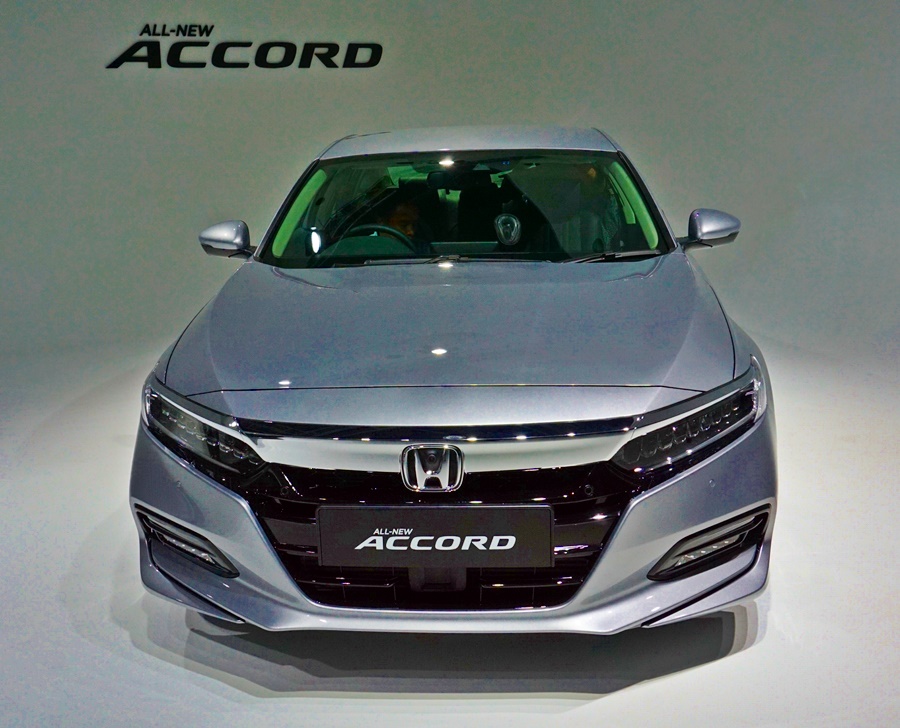
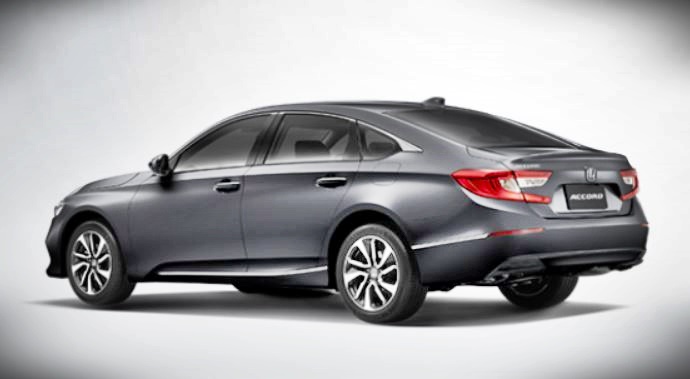
At long last, the 10th generation Honda Accord has arrived in Malaysian showrooms. Although the new generation first went on sale in October 2017 (in the US market), it was only in March last year that the ASEAN version was launched in Thailand, followed by Indonesia. Malaysia, in spite of the diminished D-segment market, still continues to assemble the flagship model, which has been the case since the first generation in the late 1970s.

With the D-segment smaller in size here (prompting Edaran Tan Chong Motor to stop selling its Nissan Teana), Honda Malaysia plans to sell only 200 units a month – and that too is felt to be on the high side. We don’t have the sales figures for last year (as the powerful Competition Commission won’t allow the public to know) but the production numbers totalled less than 1,000 units with an average of 77 units/month.

Nevertheless, the Accord is popular in markets like America (where it has been the overall bestselling passenger car) and so there is still enthusiasm in product development. And since the third (current) Jazz generation that appeared in 2014, Honda’s styling has become more and more aggressive and sporty, with the Accord now also following the same themes.
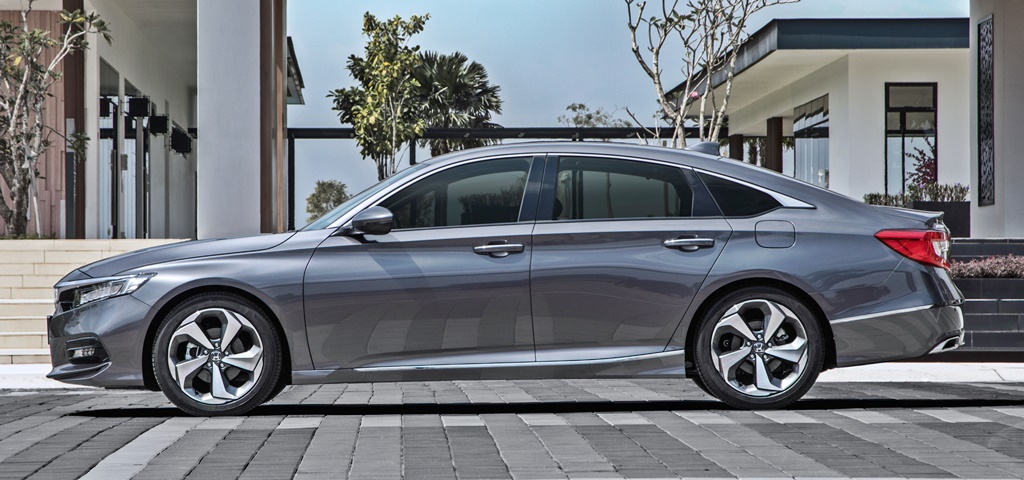
10th Generation Honda Accord

Some may regard the new styling, with a coupe-like rear end, as being too radical a change for a model in this upper segment. After all, cars like the Accord have usually been driven by older people with more senior positions in the corporate world. These are people who may have conservative tastes and the new looks might not go down well.

But Honda has always been a maverick in the car industry and daring enough to embark in new directions. The older management may have their conservative views but it appears that they are also open to evolving trends and willing to trust their younger designers to head in the right direction.
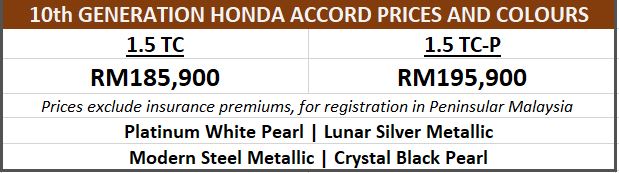
10th Generation Honda Accord Prices and Colours

Comparing the latest 10th generation to the first one that started off as a hatchback in 1976 is like comparing day and night. The differences are so great that it’s hard to believe they share the same nameplate. The first generation sedan was 4.45 metres long and today’s Accord is 500 mm longer, with a wheelbase that is almost similarly longer with the 55 mm increase for the 10th generation. It’s also heavier – that first Accord weighed just 965 kgs whereas the 2020 one is almost 1,500 kgs.
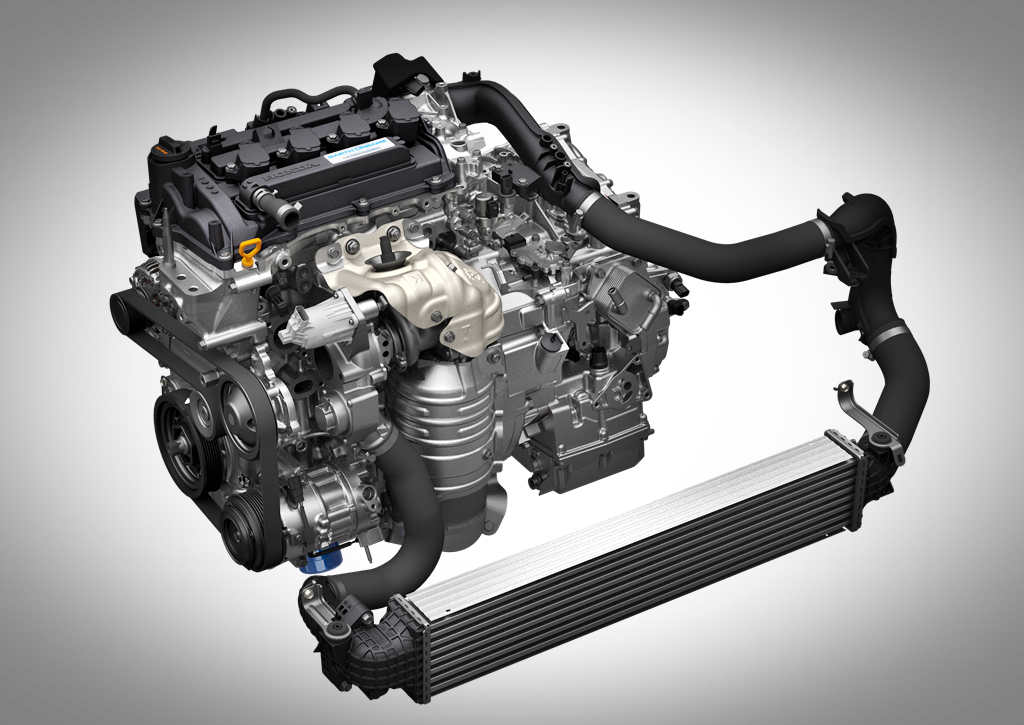
Honda 1,5-litre VTEC Turbo engine

Powertrains have greatly changed too. Until this generation, the smallest engine for the Accord was the 1.6-litre unit used in the early generations. But in this age of downsizing, small is better and so the new Accord gets its smallest engine ever – the 1.5-litre turbocharged Earth Dreams Technology engine.

It’s a bold move to have such a small displacement engine for such a big car although European motorists are fine with it. Malaysians still think of cc as being indicators of output and performance and we won’t be surprised if salesmen are asked ‘Can go up Genting Highlands or not?’, referring to the hill resort area with steep slopes. Younger customers may already accept and understand that with turbocharging, the output can be boosted and performance can be much higher.
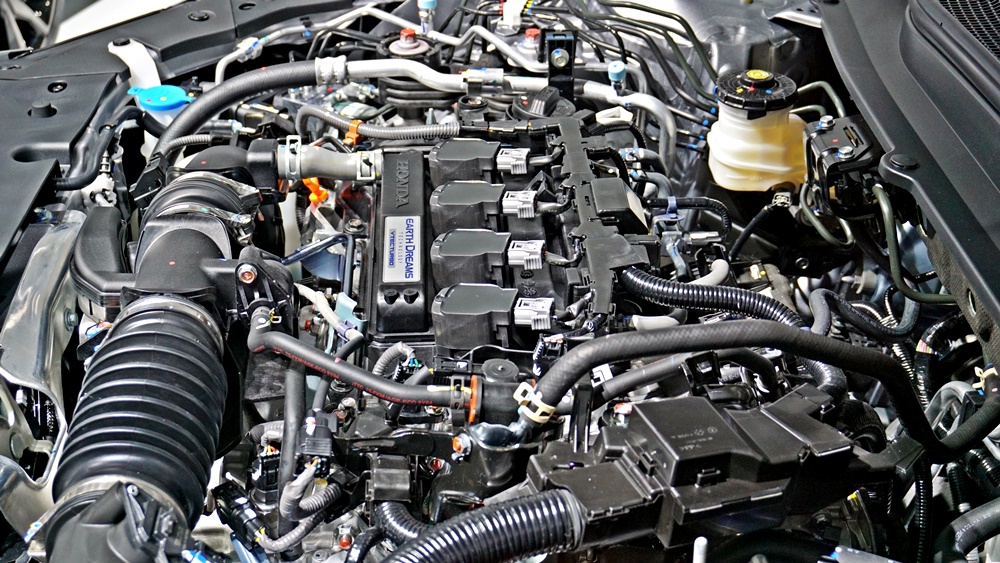
10th Generation Honda Accord

In fact, the new Accord’s engine (with VTEC) develops 201 ps/260 Nm, considerably more powerful than the 2.4-litre engine. And apart from all that extra output is the fact that, along with the assistance of the CVT, fuel consumption will be lower and you also pay much less roadtax.

The Accord range in America has the additional option of a bigger 2-litre (K20) engine as well as a hybrid variant (also available in Thailand) but for the Malaysian market, it is banking on the 1.5-litre turbo engine only. Understandably, with the low volumes, it would make no sense to assemble two different engine variants and in any case, the other variants would cost more.

As an all-new generation, the latest Accord is essentially a clean-sheet development meaning it started almost more scratch rather than having a structural carry-over. The platform is new to accommodate the largest bodyshell the model has ever had. It is now 4901 mm long (+39 mm), 1862 mm wide (+13 mm) and though it looks low-slung because of the sleek profile, the roof is actually 16 mm higher. A 54 mm increase in the wheelbase extends it to 2830 mm, with 48 mm more rear legroom as a result of that increase.
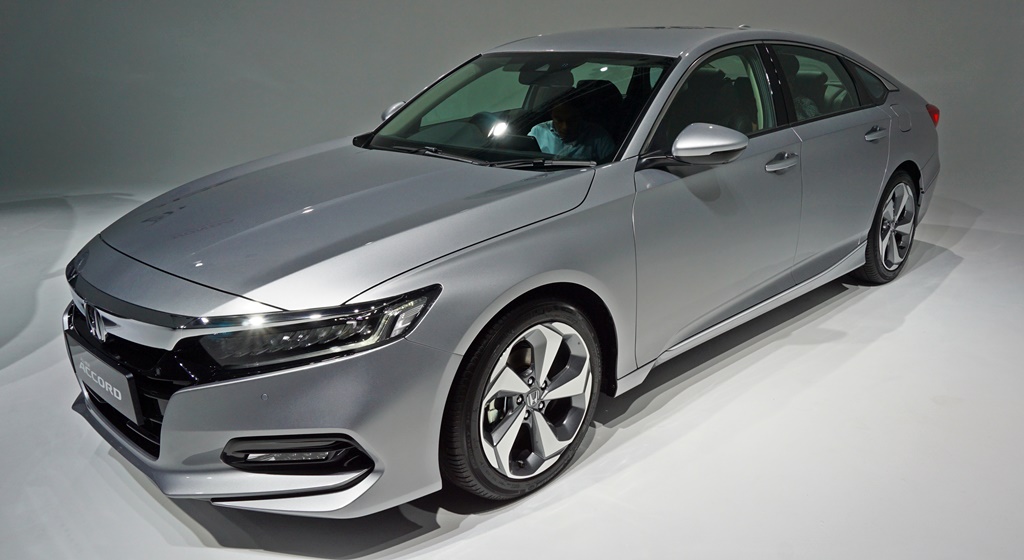
10th Generation Honda Accord

During the development of the new Accord, the engineers worked hard at bringing down NVH (noise, vibration and harshness) as this influences the perception of quality and refinement. Spray foam helps to lower noise while High-Performance Adhesive enhances rigidity which improves durability. Laser brazing is used to join the roof and body side panels, and Honda Malaysia’s factory in Melaka had to agree to make the necessary investment for equipment to do this process before Honda was willing to allow the model to continue to be assembled here.
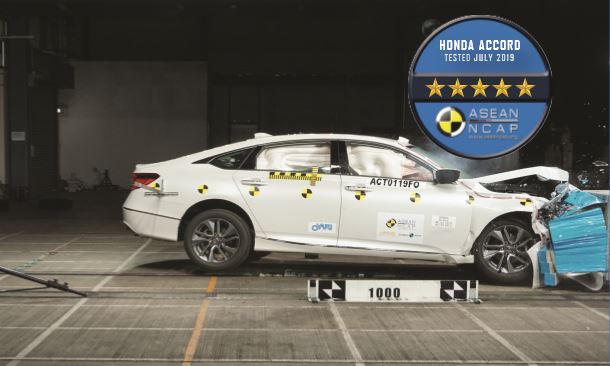
ASEAN NCAP

Having been launched almost a year ago in Thailand meant that ASEAN NCAP could evaluate the new Accord and not unexpectedly, it got the maximum 5-star rating. Passive safety apart, the new Accord also has an impressive list of active safety systems and features that will help the driver to avoid accidents or reduce the effects of accidents on the occupants.

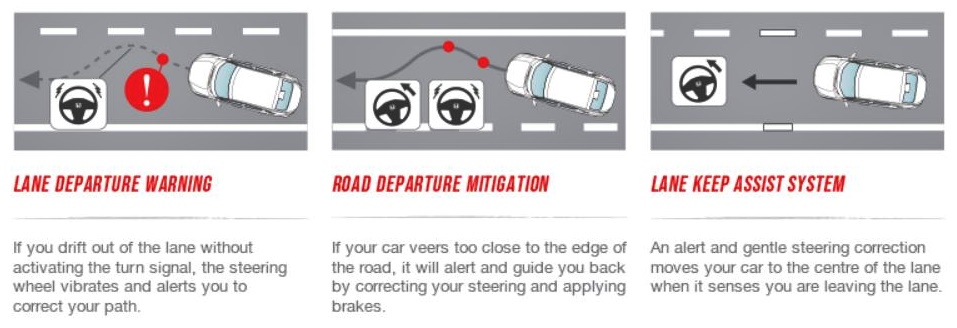
Much of this is provided by the Honda SENSING system, an integrated package of systems with 8 components. These are Low Speed Follow, Auto High-Beam, Adaptive Cruise Control, Collision Mitigation Braking System, Forward Collision Warning, Lane Keep Assist System, Road Departure Mitigation, and Lane Departure Warning. Most of the systems rely on information from a camera mounted at the top of the windscreen and a millimetre-wave radar in the grille.
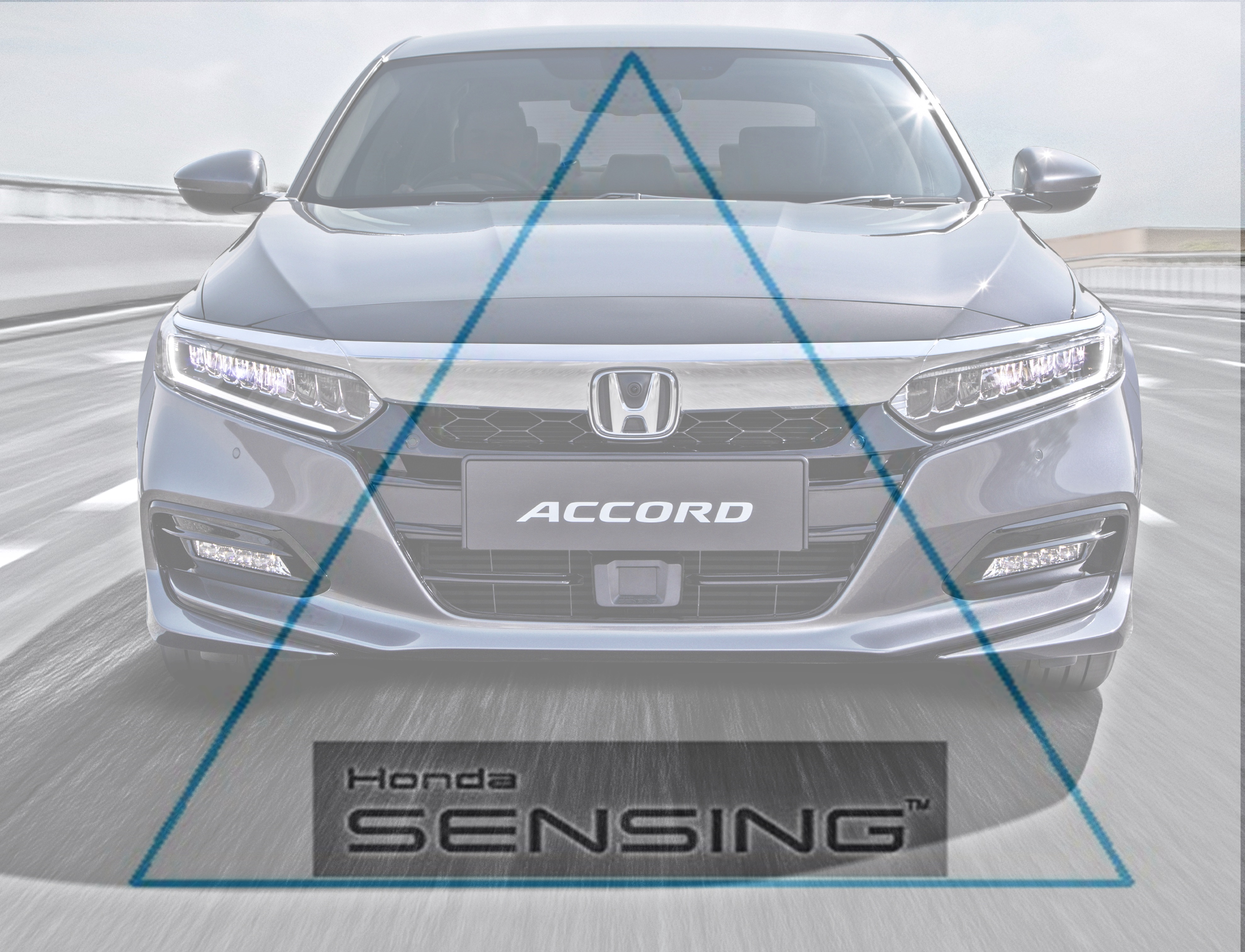
Honda SENSING

With Adaptive Cruise Control (which can operate down to 0 km/h) and the Collision Mitigation Braking System that will automatically apply the brakes, drivers can have an early experience of autonomous motoring as these systems are managed by a computer without involvement of a human.

Additionally, there’s the Honda LaneWatch system, an innovative idea which uses a small camera in the left door mirror to capture real-time images of that side of the car. The image is displayed on the screen in the middle of the dashboard, which the driver can see more easily than having to swivel the head to the left. Also providing additional visual coverage is a Multi-View Camera System.
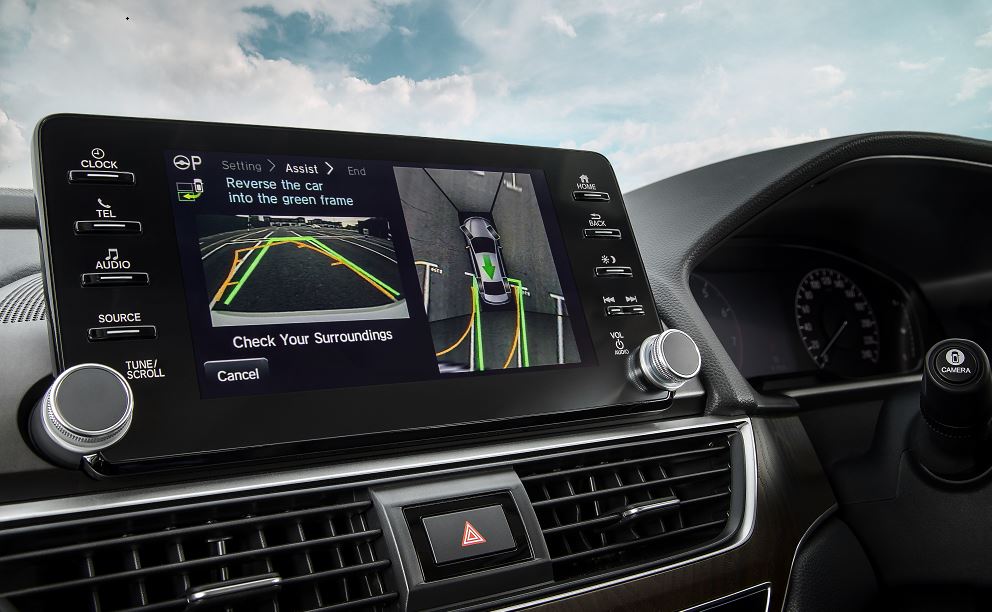
Honda Accord

Parking the car is made easier with Smart Parking Assist System with Brake Assist (Rear) that recognises the border line of the parking space and assists the driver with automatic steering assist, screen display, voice guidance and auto braking.

As with other Hondas currently in showrooms, the new Accord’s interior was packaged with the ‘Man-Maximum, Machine-Minimum’ approach. Being the flagship model, it comes with a comprehensive list of premium features that include 4-way Assistant Power Seat with Shoulder Switch, and Wireless Charging.
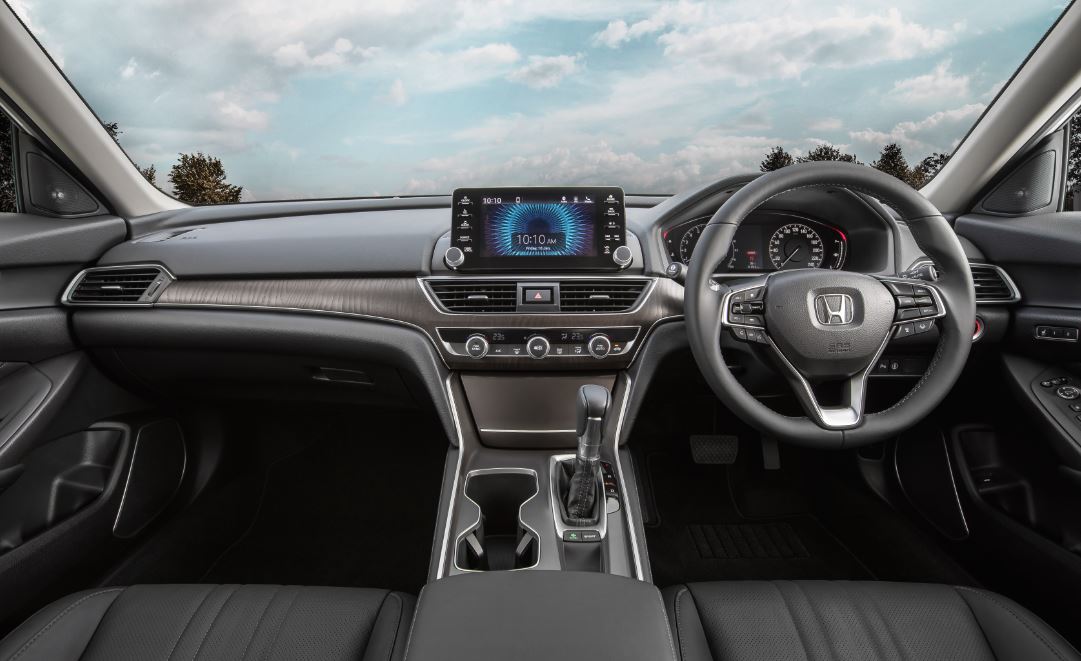
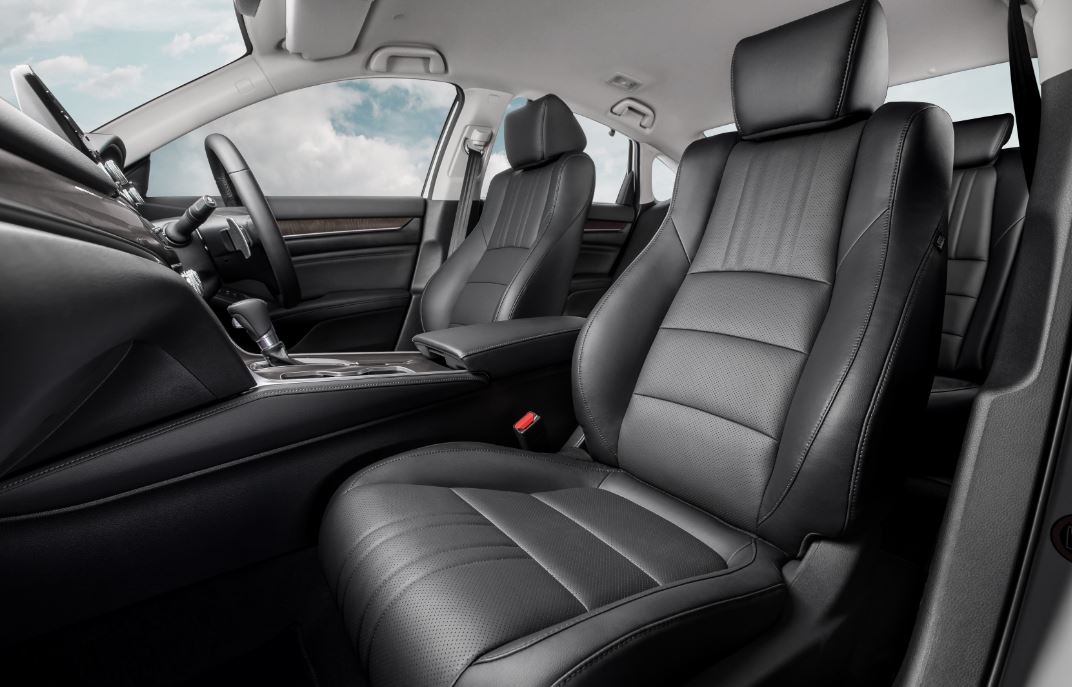
10th Generation Honda Accord

10th Generation Honda Accord

The instrument panel and dashboard have elements of the previous generation but enhanced with more premium and fresher looks. For example, there is a bright and clear 8-inch Advanced Display at the centre console and a 7-inch Interactive Thin Film Transistor (TFT) meter cluster.
10th Generation Honda Accord

As with the latest Civic, the new Accord also comes with a 5-year unlimited mileage warranty and free labour service (terms and conditions apply). It is now available for viewing and test-drives at authorised Honda dealerships nationwide. To locate a showroom near you, visit www.honda.com.my.

PISTON.MY

BHPetrol RON95 Euro4M

When it arrived in Malaysia 4 years ago, the 10th generation Honda Civic revived interest in the segment that was showing signs of contraction, especially with the shift towards SUVs. Not surprisingly, it dominated the C-segment with 48,000 units delivered and last year accounted for 72% of it.

The Civic may not have strong competition but as a senior Honda executive said, “We can’t take things for granted” so the model gets upgrades and enhancements to keep it on top. As in recent years, the focus is in advanced technology, especially in the area of safety.
2020 Honda Civic Prices and Colours

Minimal cosmetic changes
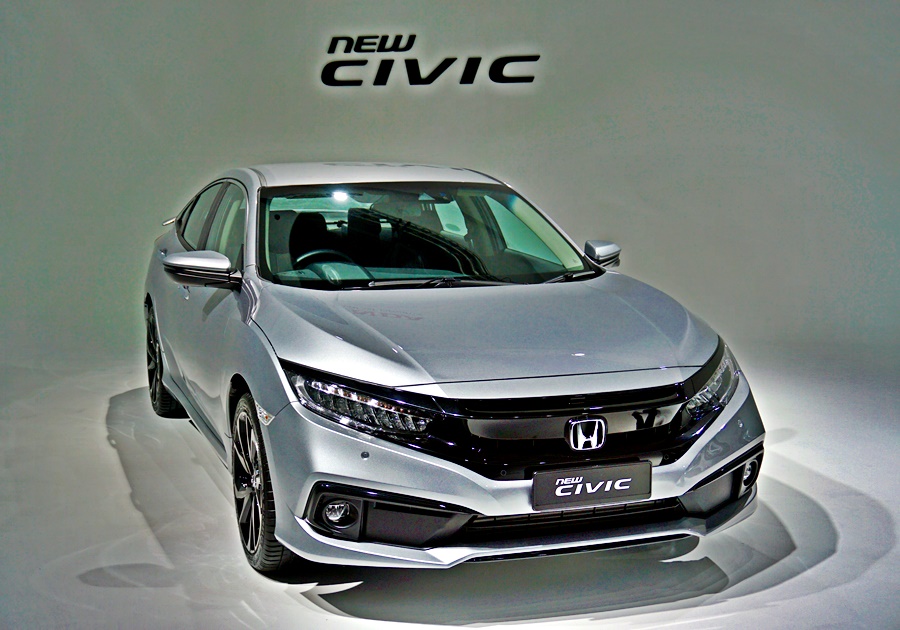
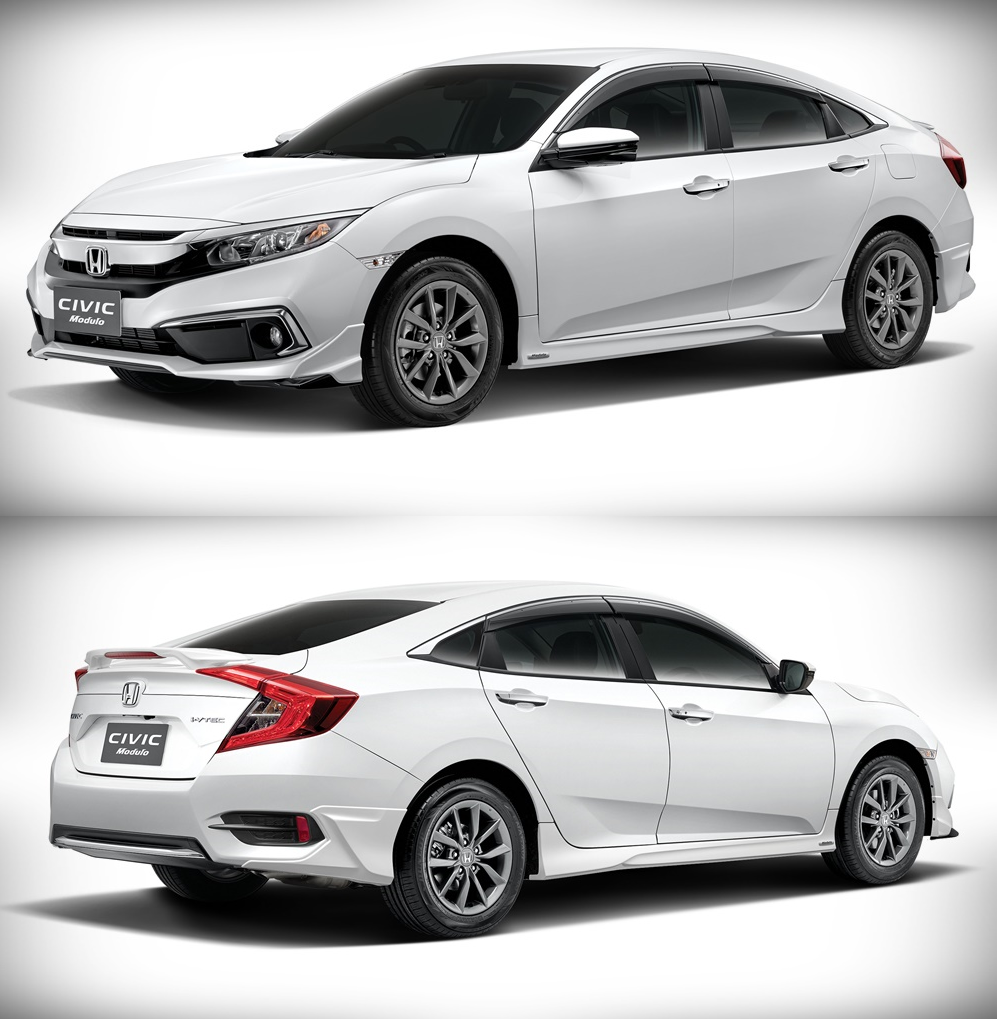
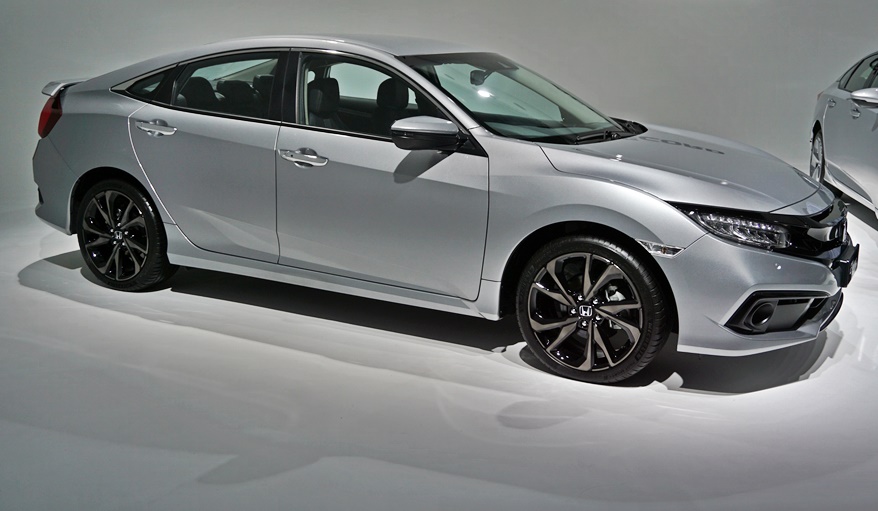
Of course, the 2020 model (available in 3 variants as before) also gets cosmetic changes although they are not so apparent at a glance. However, the front end, with its eye-catching LED headlights and DRLs, has a new bumper design which visually widens the car while the blackened grille puts a bold tone to the image.
2020 Honda Civic

2020 Honda Civic

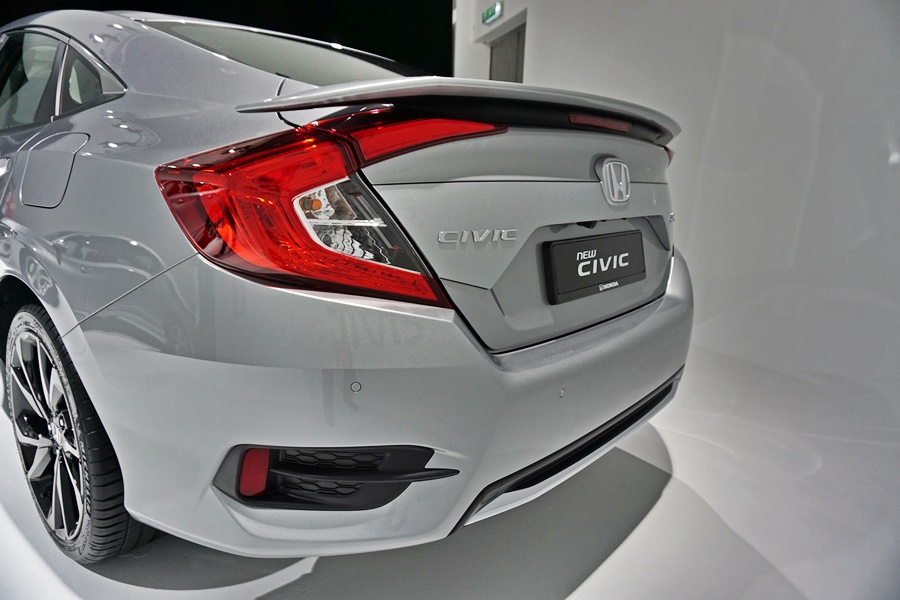
At the rear, the bootlid spoiler has also been shaped a bit though improvement in its effect on airflow would be negligible. The distinctive tail lights (Honda refers to them as ‘boomerang-shaped’ but many also see them as crab’s claws) are retained, providing a visual signature at night.

Each variant has a new wheel design, with the Civic 1.8S wheels having a 16-inch diameter while the Civic 1.5TC and TC-P have black wheels of 17 inches and 18 inches, respectively.

Two powertrain choices, as before
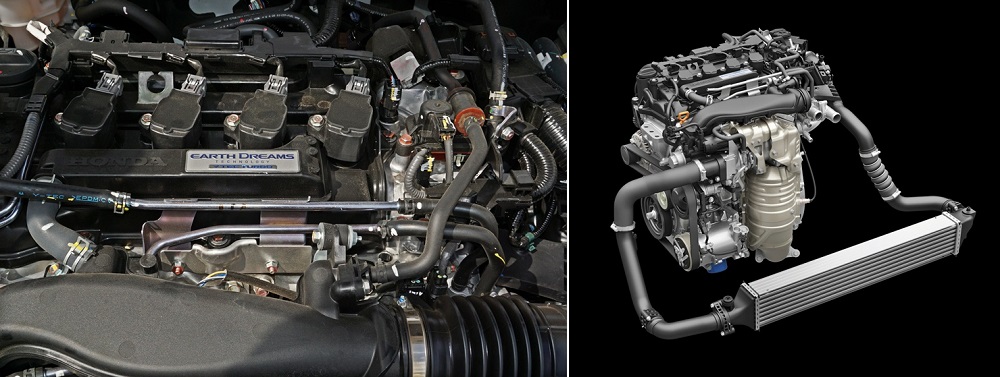
The two powertrains continue, with the 1.5-litre VTEC turbocharged engine still one of the current Civic’s strongest features. Such downsized engines have completely changed the displacement-output formula and today’s smaller engines are producing much more power and torque than the older bigger ones. The Civic 1.5 engine, with turbocharging, produces 173 ps with 220 Nm of torque – numbers that are comparable to a 2.4-litre engine.

Honda 1.5-litre turbocharged engine
Honda 1.5-litre turbocharged engine with Earth Dreams Technology
Honda Civic 1.8
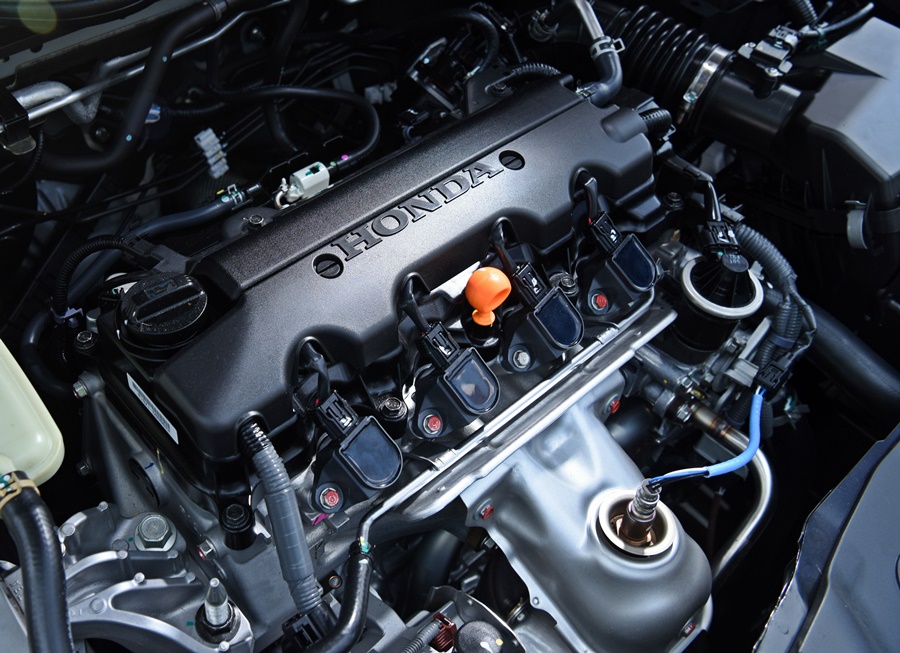
The 1.8-litre engine is still available in the updated range.

The 1.8-litre engine is older but its 141 ps/174 Nm output provides respectable performance for the 1,251-kg car (interestingly, the Civic 1.5 is around 69 kgs heavier). There are some buyers who will still insist that there’s no substitute for cubic centimetres so Honda Malaysia wants to ensure they don’t buy something else. A CVT is the only available transmission and the same applies to the 1.5-litre variants which also have paddle shifters.

Full Honda SENSING package
Where safety systems were individually identified as they operated independently, the approach taken today is to integrate them and have them work together for enhanced safety performance. After all, many share the same sensors and rely on the same imaging devices. Honda SENSING is the name for Honda’s suite of safety systems and the new Civic gets the full package which consists of 8 advanced features (but only for the Civic 1.5TC-P).

Honda SENSING

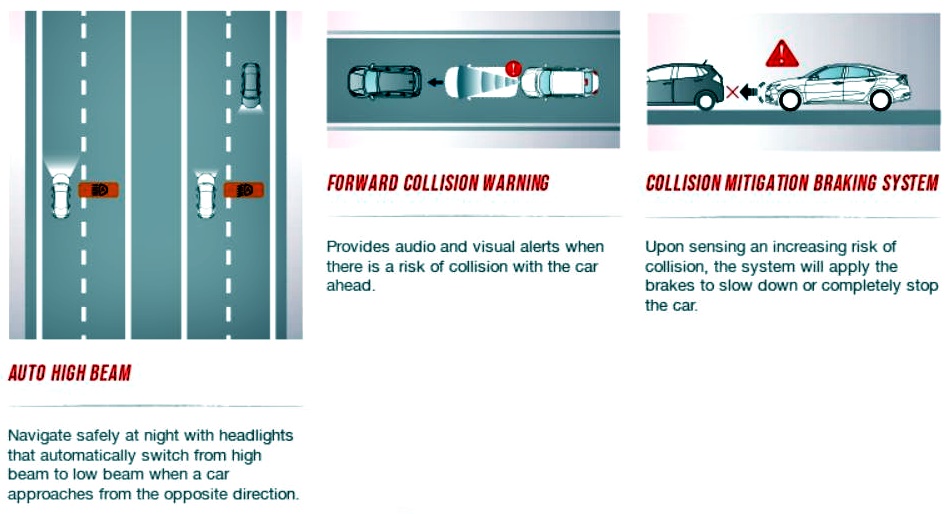
Honda SENSING provides assistance to the driver to avoid accidents and in most instances, alerts the driver to dangers. With the Collision Mitigating Braking System, the driver gets warnings of a possible collision first and if no positive action is taken, the brakes are applied automatically. Even if the car skids and still hits a car in front, the earlier activation of the brakes (at maximum force) could help to reduce the extent of damage as the car’s impact speed would have lower.

Honda SENSING

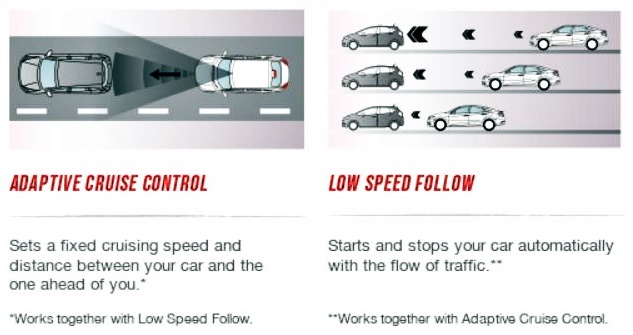
Another component of Honda SENSING, Adaptive Cruise Control (ACC) is also worth mentioning as it is a more advanced type of cruise control which make driving in jams less tiring. Where conventional cruise control systems maintain a constant set speed, adaptive cruise control can adjust the speed to reduce it when necessary. This would be in the case of another vehicle ahead which the system detects with a radar and a safe gap needs to be maintained. When there is no longer a vehicle in front, the speed will be allowed to increase to what was set. With conventional cruise control, the car would collide if nothing is done by the driver which is why pressing the brake pedal immediately disengages the system.

Honda SENSING

Honda’s system also has a more advanced feature called Low Speed Follow (LSF) which allows the speed to be reduced to zero. This is especially useful in stop/start traffic although you need to first be travelling at 40 km/h or more in order to activate the ACC. With LSF, the car can slow down until it comes to a stop but the ACC remains active and when the car ahead moves, the Civic will also start moving. It’s the next best thing to have before a self-driving autonomous car is available!

Honda SENSING

The previous Honda SENSING package had 7 components and the new addition to complete it is Auto High Beam. This makes driving at night safer for both the Civic driver as well as other drivers. When sensors detect the headlights of an oncoming vehicle, the Civic’s headlights will be automatically switched to low beam (if it is on high beam) so as not to dazzle the other driver. Once there is no vehicle coming, the high beams will come on again to provide stronger illumination of the road ahead.

Honda LaneWatch
Honda LaneWatch

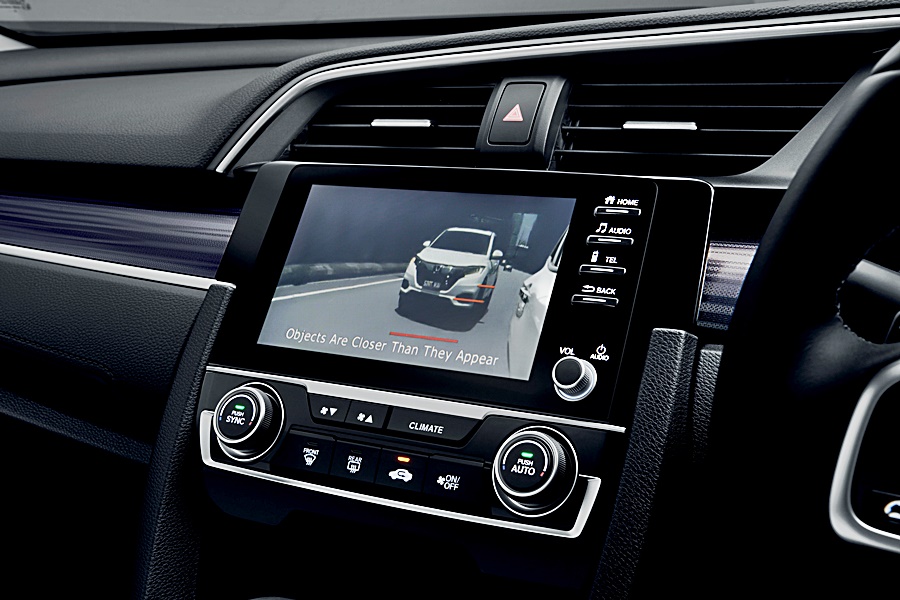
The new 1.5-litre variants also get Honda LaneWatch, a camera-based system which shows the drive what’s in the blind spot on the left side. No other car has such an innovative safety feature and it provides a view that is almost 4 times more than most side mirrors. It works only when the turn signal is activated and operates day and night, with clarity even in dim lighting. The LaneWatch display is in the middle of the dashboard and the advantage of this location is that the driver does not have to turn the head so much to the left to check the blind spot. There are also distance markers embedded in the display to provide an indication of how far away another vehicle or motorcyclist is.

2020 Honda Civic

2020 Honda Civic

2020 Honda Civic
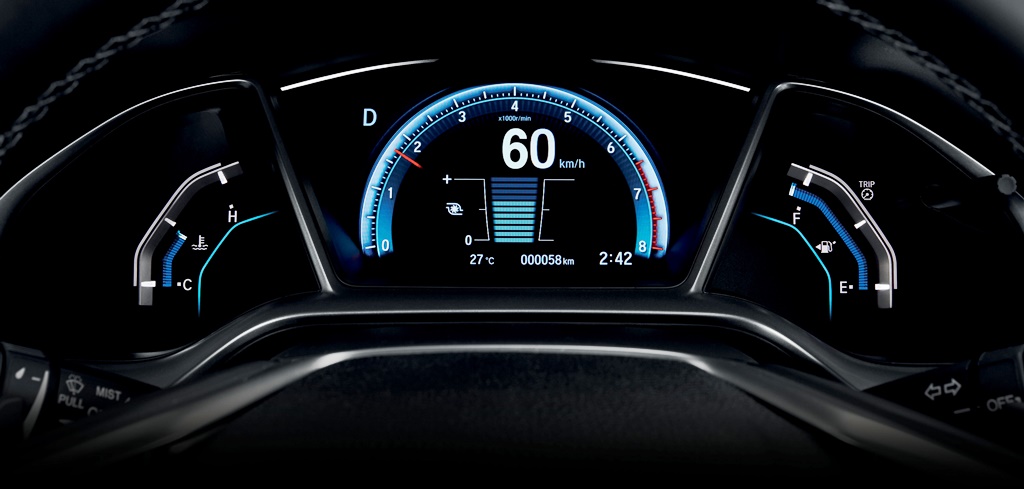
The instrument panel can have customised displays to emphasise different information. The one above shows the turbo boost level.

What else is new?
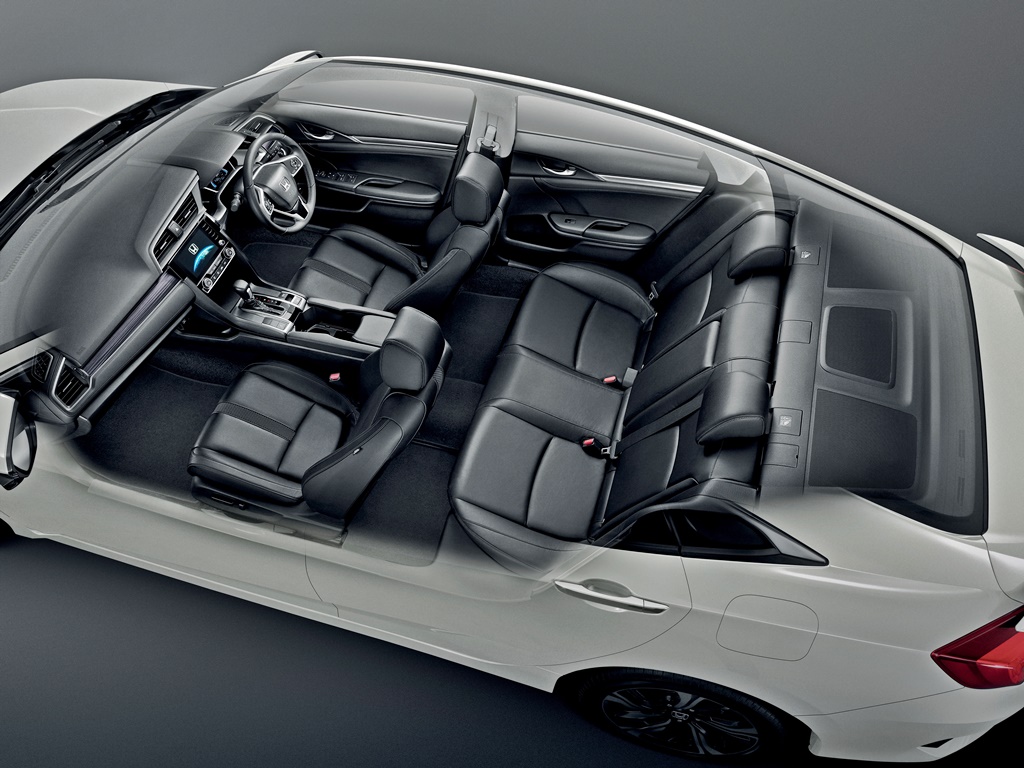
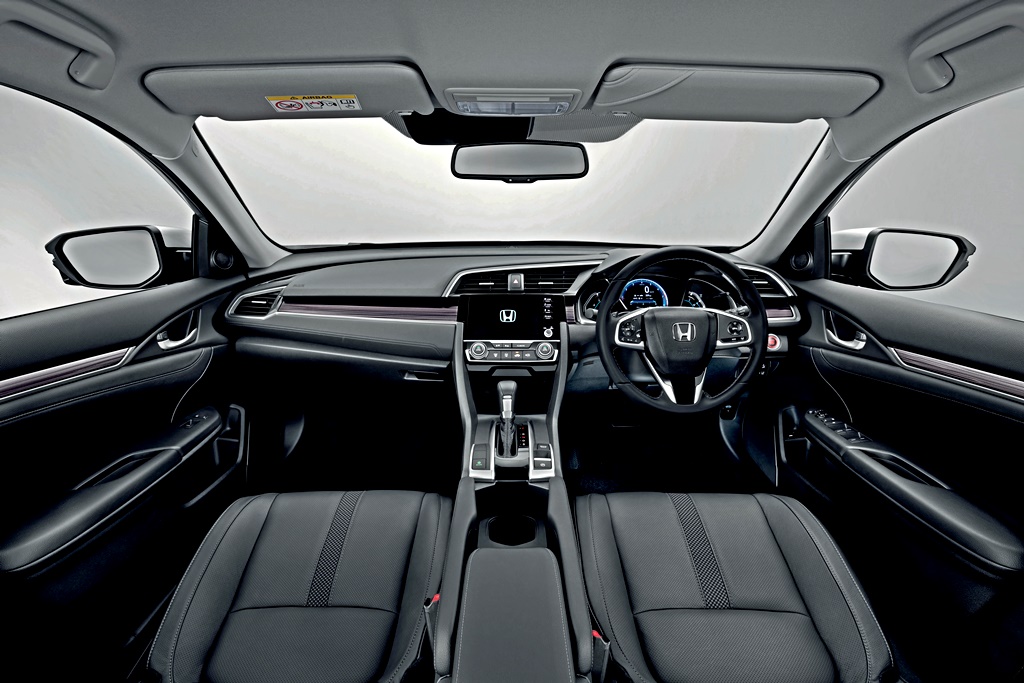
There’s no change to the interior for the 2020 model and certainly, when one compares today’s Civic to the original, spaciousness is a vast difference. Honda Malaysia has now included rear foldable 60:40 seats to make it possible to extend the 519-ltre boot space when needed. These days, with DIY furniture being popular, a longer boot floor is useful to carry the packages.

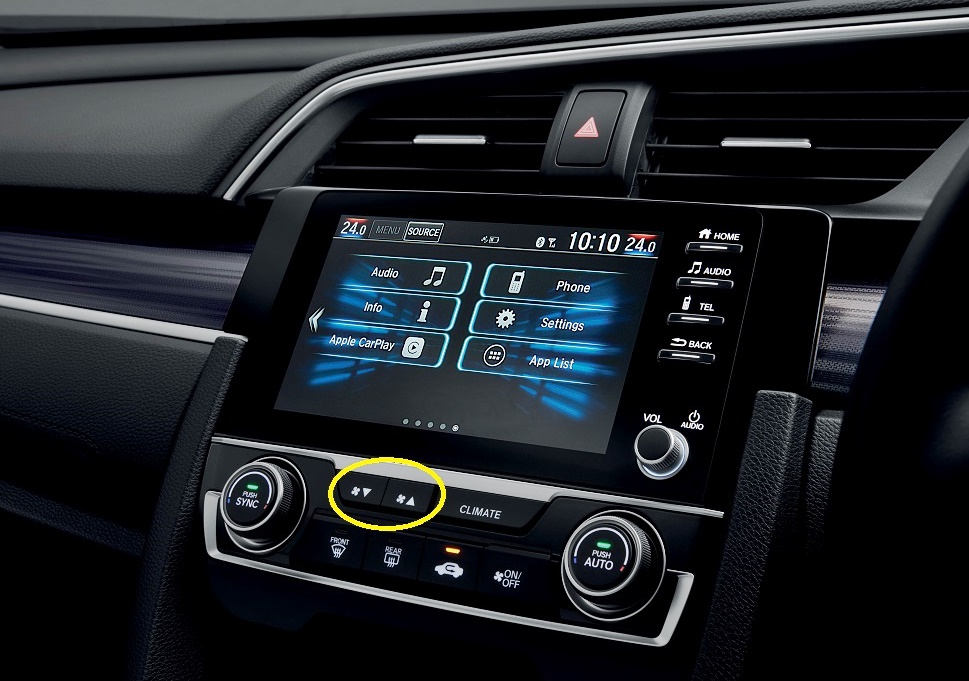
Being more expensive, the two 1.5-litre variants get a new leather upholstery with an Accent Design but all variants get an automatic front wiping system, 8-way power adjustment for the driver’s seat, remote engine start and walkaway auto-lock. There’s also a newly-added blower control switch for the air-conditioner (which includes rear vents) to make it easier for adjustments at the touch of a button.

2020 Honda Civic
A tiny new detail – switches to adjust the blower speed (circled in yellow)

In other areas, no change is evident although with the kaizen philosophy of constant improvement, there will be improvements that can’t be seen. It’s likely that the 2020 model will have as much as the 10th generation model is going to have in terms of features and equipment since it’s been in the market for 4 years now and model cycles have typically been 5 years. Of course, as launch timing in different regions differ, even if a new generation does appear in 2021, it might be another year more before it appears in Malaysia.

For those who do want to have more upgrades, you can ask for the Modulo packages which add functional accessories to the Civic. There are three packages, with prices ranging from RM865 to RM5,414. The good thing about taking these accessories at the time of purchasing the car is that their cost can be included in the total cost of the car so, in effect, you can pay for them over many years. No accessory shop can give you that kind of deal!

Honda Civic with Modulo package

As with other models sold in Malaysia, Honda Malaysia gives a 5-year warranty with no limit on mileage and owners don’t have to pay labour charges for scheduled servicing up to 5 times within 100,000 kms or a maximum of 5 years.

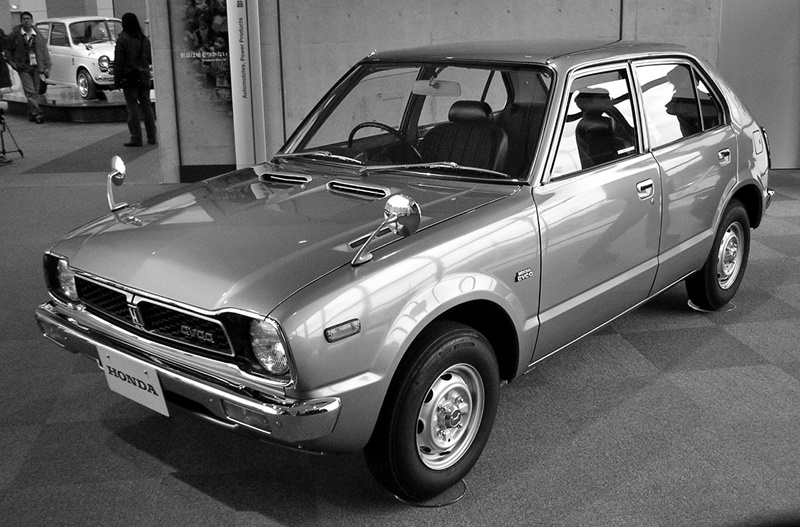
Honda Civic first generation
How different the 10th generation Civic is compared to the first generation which was introduced in the mid-1970s.

130,000th Honda Civic delivered to proud owner

PISTON.MY

BHPetrol RON95 Euro4M

Polestar began as a racing team in 1996 and after showing what it could do to Volvos, the Swedish carmaker decided to commission the company to develop performance variants. The potential of such enhanced models led Volvo to acquire the company in 2015 and have a sub-brand which focussed on performance.

Two years later, Polestar’s mission changed as it was tasked to focus on electric cars. Volvo and its owner, the Zhejiang Geely Holding Group, provided 640 million euros (about RM2.94 billion) to support the initial phase of product, brand and industrial development.

As a fully consolidated Volvo Cars subsidiary, it would become a stand-alone electrified performance car company. Since then, besides being an advanced technology affiliate for the Volvo Car Group, Polestar has also started to build cars at a new factory in China.

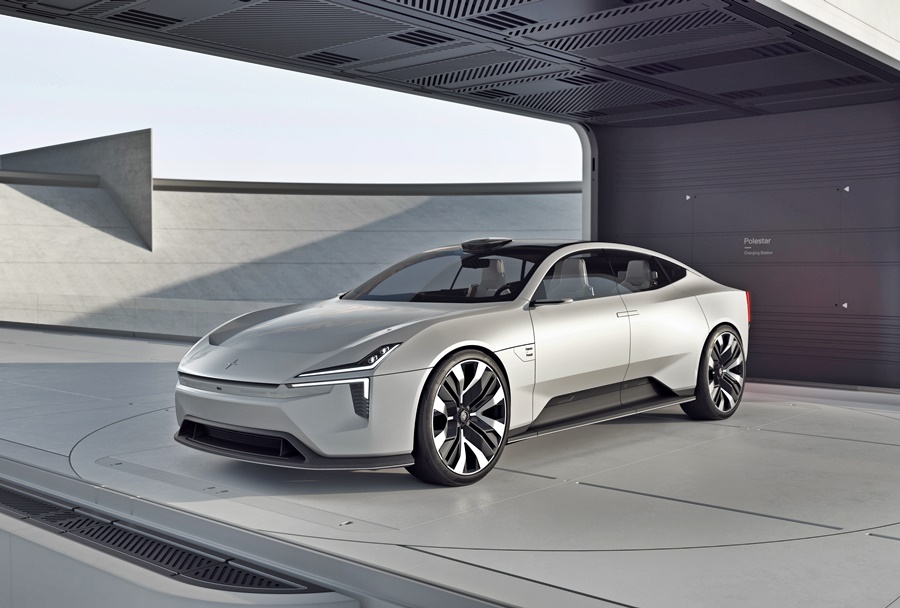
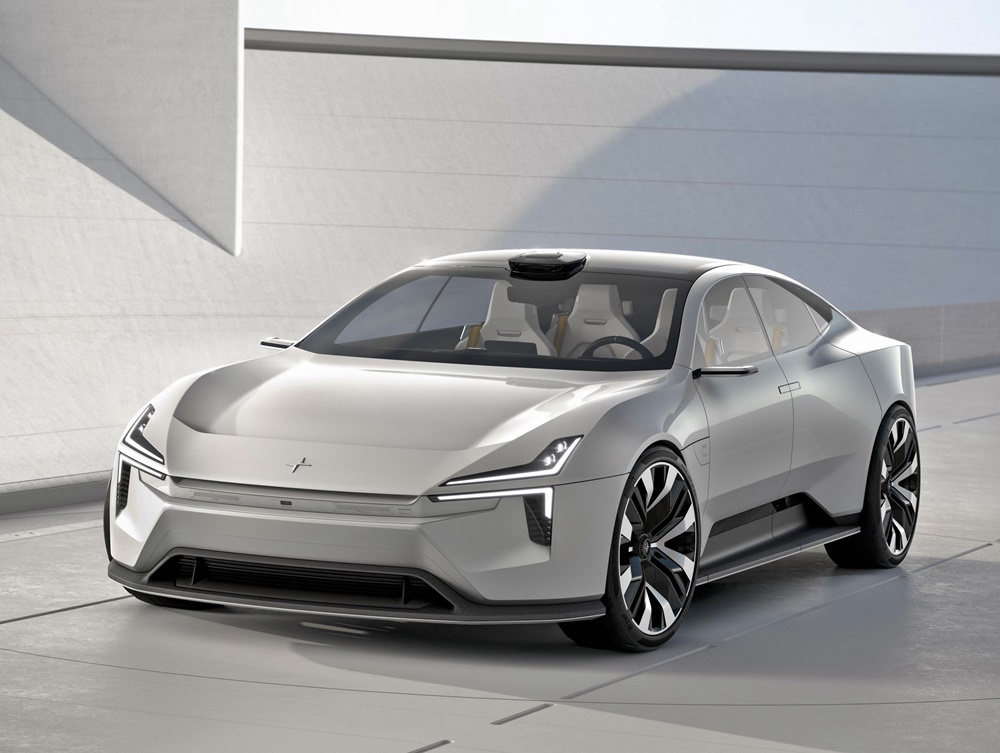
Polestar Precept Concept

Vision of future direction
Obviously a very forward-looking company, Polestar is looking ahead and its vision of the brand’s future direction is revealed in the Precept concept. A precept is a manifesto of things to come, a declaration. Hence the name chosen emphasises the car’s role in setting out Polestar’s intent as the contemporary electric performance brand.

“Precept is a declaration, a vision of what Polestar stands for and what makes the brand relevant,” said Thomas Ingenlath, CEO of Polestar. “The car is a response to the clear challenges our society and industry face. This is not a dream of a distant future; Polestar Precept previews future vehicles and shows how we will apply innovation to minimise our environmental impact.”

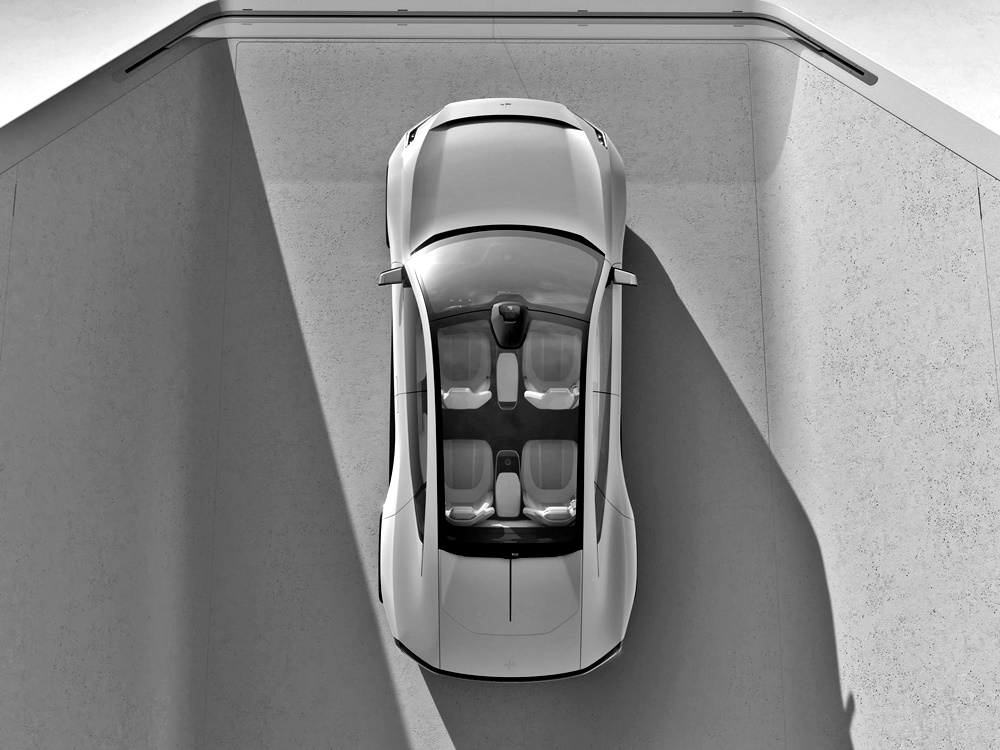
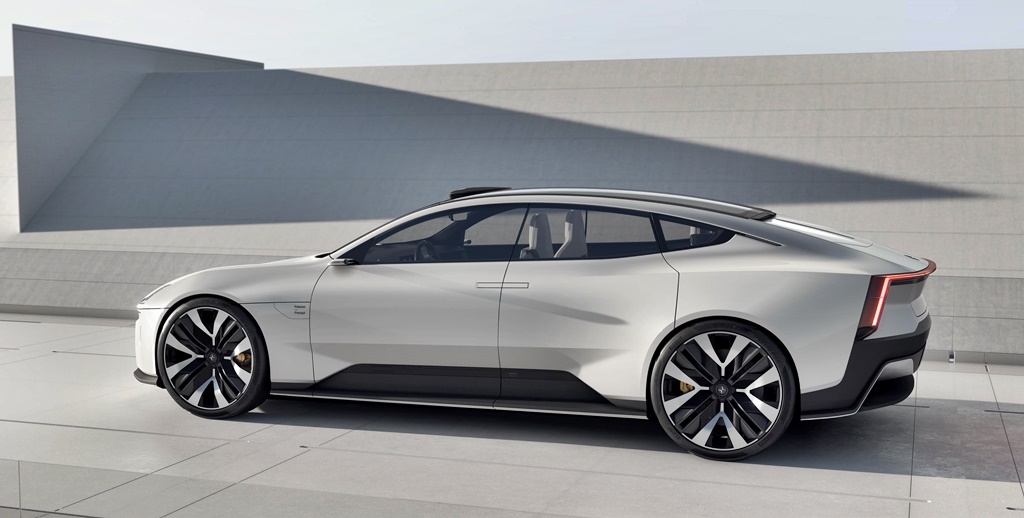
Minimalistic athleticism and restrained surfacing are evident in the aerodynamic sculpted form of the Precept with proportions that define its presence. A 3.1-metre wheelbase which accommodates a large battery pack gives the 4-door Grand Tourer a very low and sleek silhouette with an emphasis on legroom and headroom in the rear.

Polestar Precept Concept

No grille needed
Not requiring a grille for cooling, the front end incorporates the Polestar SmartZone, representing a shift from ‘breathing’ to ‘seeing’. The area which once channelled air to radiators and the internal combustion engine now houses technology for safety sensors and driver assistance functions.

Purposefully gathered behind a transparent panel dedicated to intelligent hardware are two radar sensors and a high definition camera. The LiDAR pod, mounted atop the glass roof, is given optimal visibility as a next step towards increased driving assistance. The Thor’s Hammer LED headlight signature evolves with separated elements, taking on a dynamic, more robotic and brand-defining interpretation.

The Precept features an integrated front wing above the SmartZone which accelerates airflow over the long bonnet. This allows air to attach itself to the surface earlier, which improves aerodynamic efficiency and thus improves the car’s range.

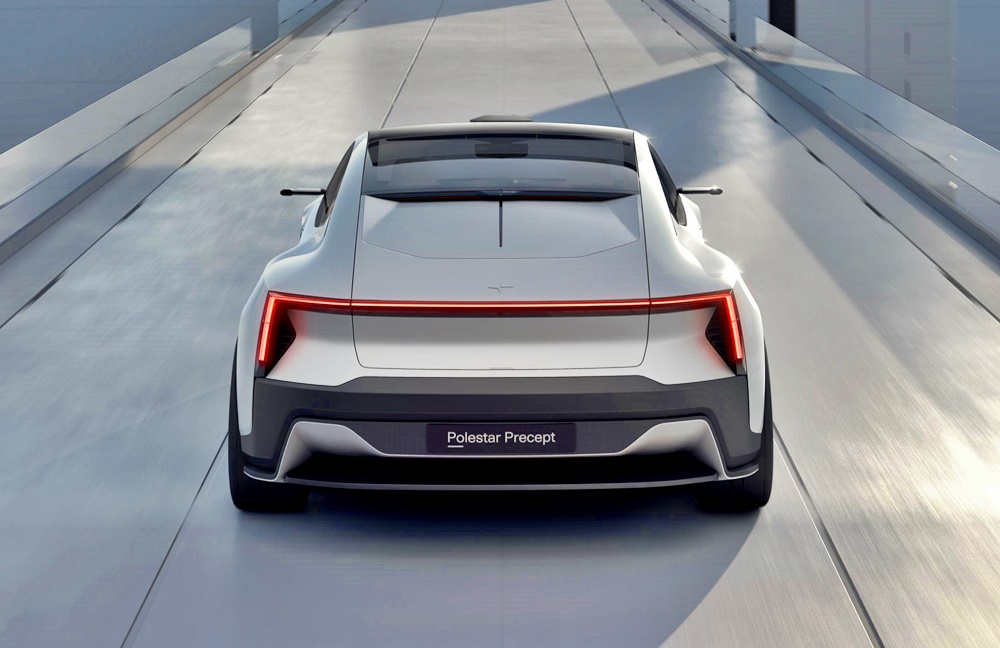
Polestar Precept Concept

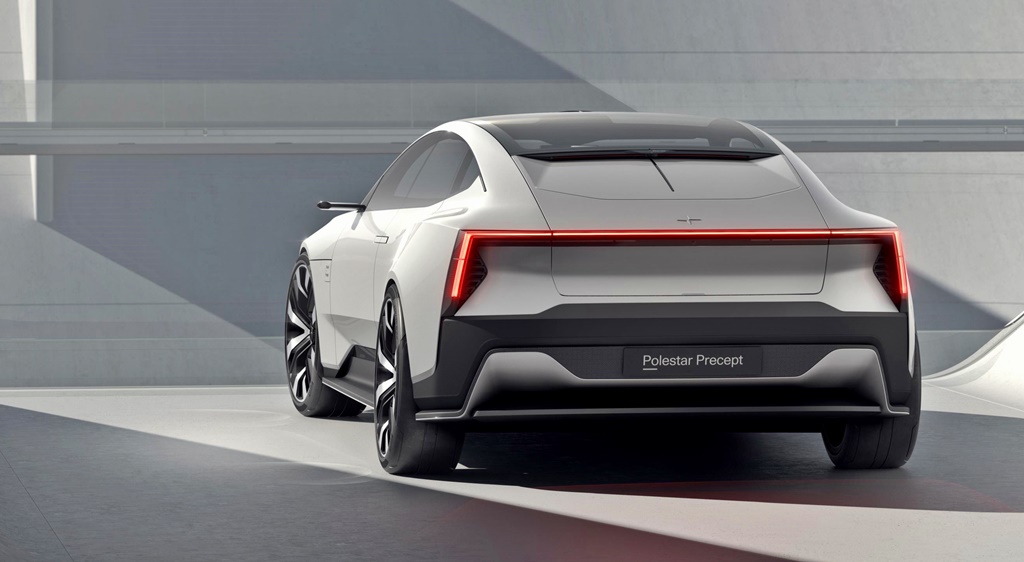
At the rear, the wide light-blade spans the entire width of the car, extending into vertical aero-wings – another aerodynamic feature and a nod to lightweight design.

Conventional side mirrors are replaced by camera-based units, each of which extends outwards on an aerodynamic arm. Inside, the traditional rear-view mirror is replaced with a digital screen, the image collected by a wide-angle camera mounted at the rear of the car.

Polestar Precept Concept

The absence of a conventional rear window means that the Precept’s single-volume glass roof extends behind the rear seats and the tailgate itself is designed with a larger opening and higher-mounted hinges improving access.

Best available technologies
Polestar continues to believe in collaborating with experts to accelerate development and provide customers with the best available technologies. The Precept’s interior is defined by sustainability and offered opportunity to work with new materials and processes. Similarly, the evolution of the HMI (Human-Machine Interface) builds on current partnerships which maximise the integration of expertise.

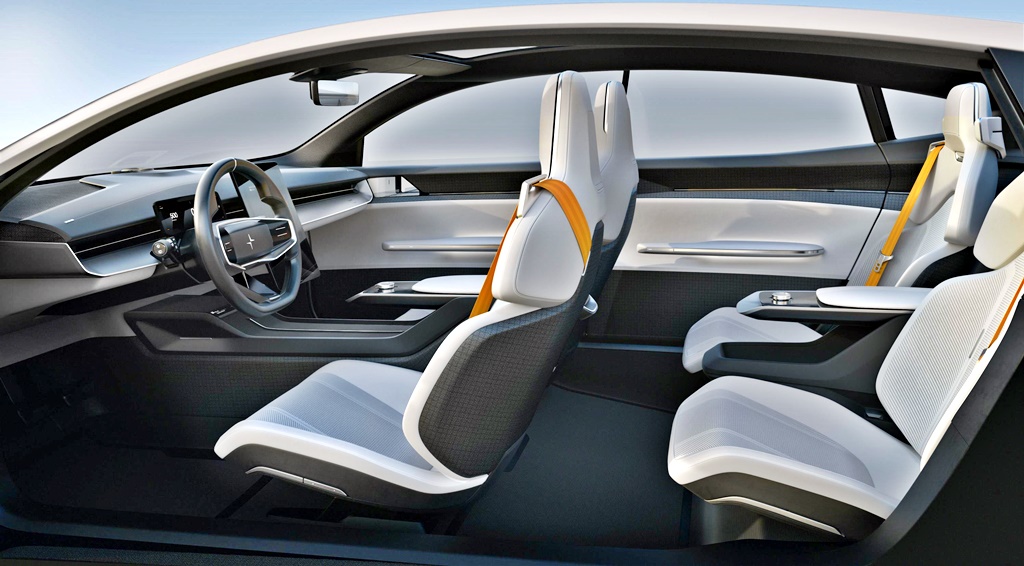
Polestar Precept Concept

Polestar Precept Concept

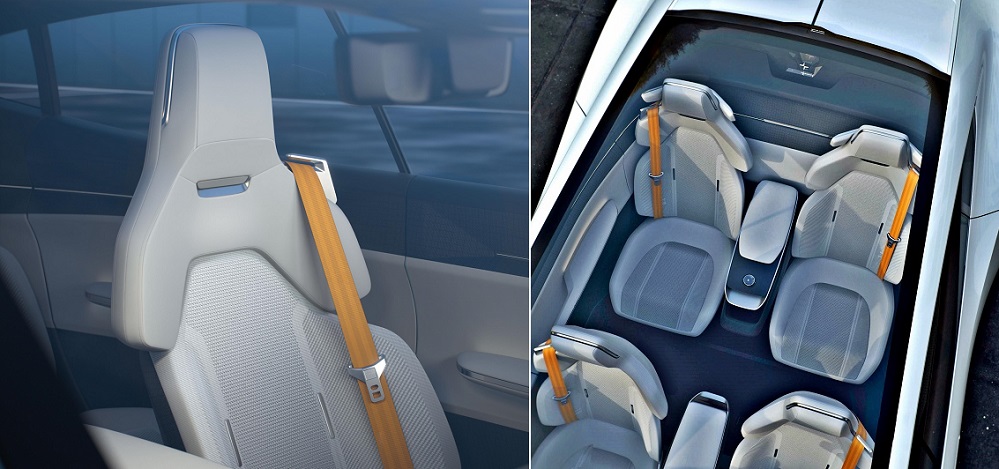
Sustainable new interior materials balance modern high-tech luxury with reduced environmental impact. For instance, flax-based composites for interior panels and seatbacks offer significant improvements over conventional materials, including up to 50% saving in weight and up to 80% reduction of plastic waste.

The seat surfaces are 3D-knitted from recycled PET bottles, while the bolsters and headrests are made from recycled cork vinyl and the carpets from reclaimed fishing nets. These elements, combined with digital artistry, define a new premium luxury that surpasses the conventions of leather, wood and chrome.

Android-powered connectivity
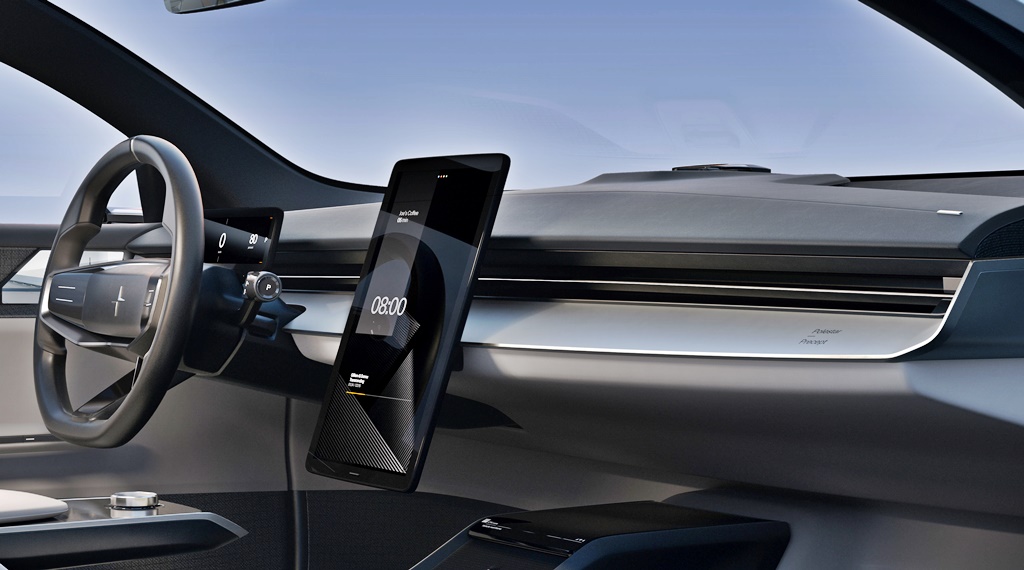
The next generation HMI, powered by Android, builds on Polestar’s close collaboration with Google. An enlarged, portrait-oriented 15-inch centre touch screen complements a 12.5-inch driver display, and the two are linked by an illuminated blade that encompasses the entire interior. In this execution, the unique Polestar emblem floats holographically inside a solid piece of Swedish crystal between the rear seat headrests.

Polestar Precept Concept

Supporting the advancement of a personalised and dynamic digital interface, the instrument panel also hosts an array of smart sensors. Eye tracking will allow the car to monitor the driver’s gaze and adjust the content of the various screens accordingly. Proximity sensors also enhance the usability of the centre display when driving.

Polestar Precept Concept

Polestar 1 production underway in Chengdu, China

PISTON.MY

BHPetrol RON95 Euro4M

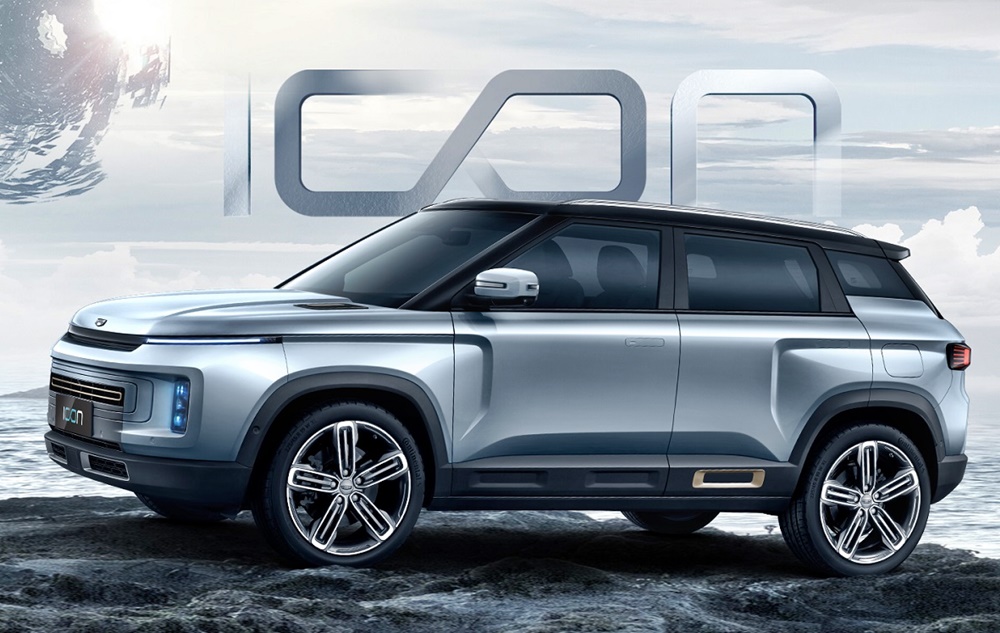
As some carmakers have done in recent years, Geely Auto used online media to launch the ICON, its latest compact SUV, to an audience across China. Just like its online vehicle purchasing service that was launched earlier this month, this online event was appropriate given the restricted movements in many areas due to the COVID-19 epidemic.

Geely Auto received over 30,000 orders in the hours leading up to its launch through online pre-ordering.

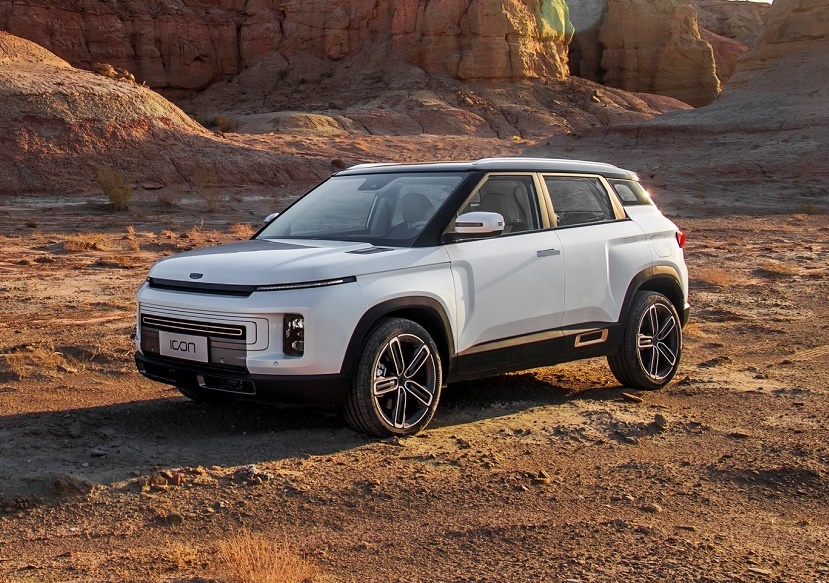
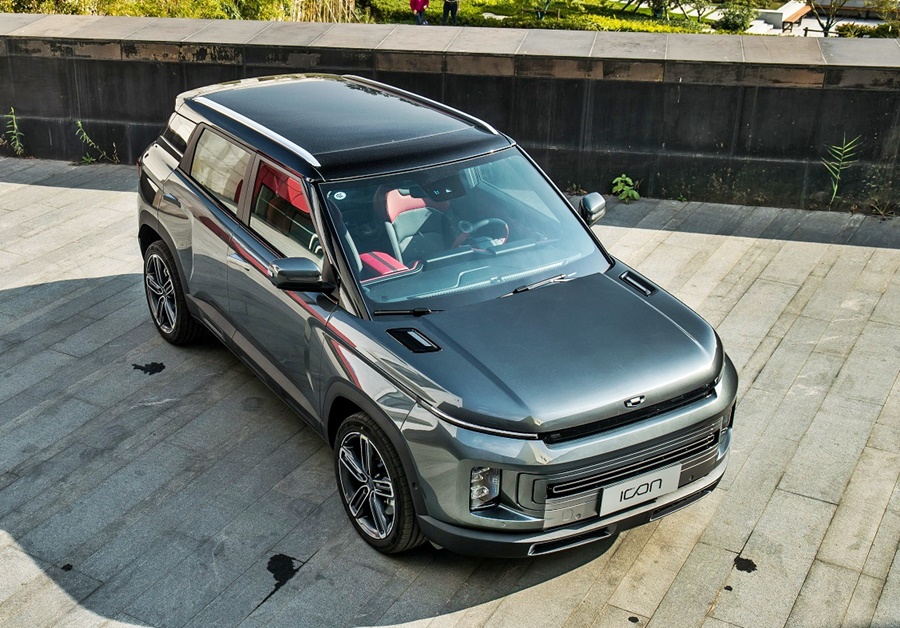
The ICON’s design began life with a concept model of the same name which was shown at the 2018 Beijing Auto Show with a style described as ‘avant-garde minimalistic analogue-inspired’. Breaking from the traditional SUV design trend, Geely designers used a ‘less is better’ design ethos to move towards a purer ‘more 8-bit analogue’ form.

2020 Geely ICON

Global collaboration in design
The ICON is the result of global collaboration with input from Geely’s five global design centres. In particular, the exterior that was developed at its California design studio while the interior was conceived in the Barcelona studio with both being revised and brought to completion at the Shanghai studio.

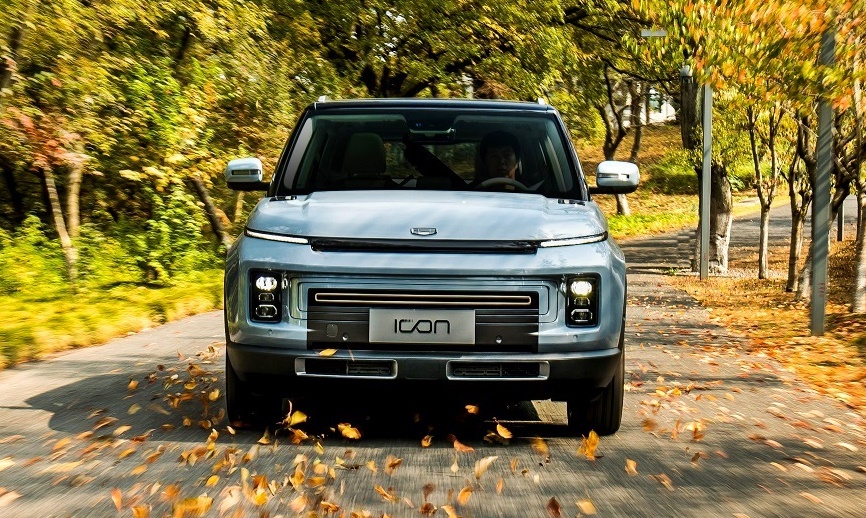
2020 Geely ICON

On the exterior, the arrangements of the headlamps has been patterned after an infinity loop, a symbol of time, creating a unique split design. The arrangement is not only visually appealing but also improves lighting efficiency by 30% and extends road visibility to 165 metres.

Visually minimalistic with focus on technology
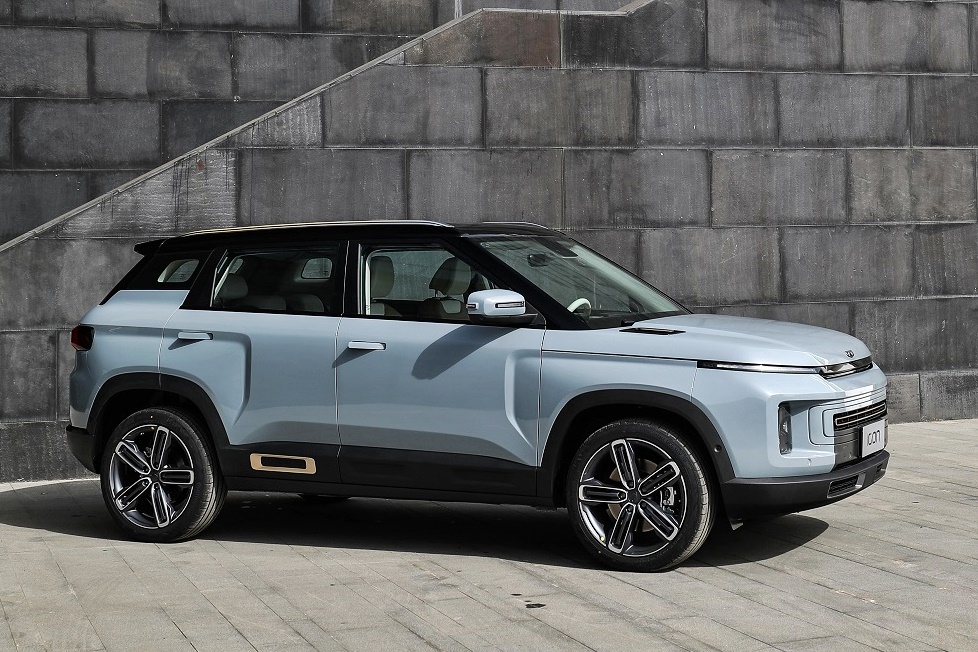
While being visually minimalistic, the ICON has put a focus on technology. One example: intelligent flushed door handles pop out when users approach and retract when they leave, giving the ICON a clean visual image while in motion or parked.

2020 Geely ICON

2020 Geely ICON

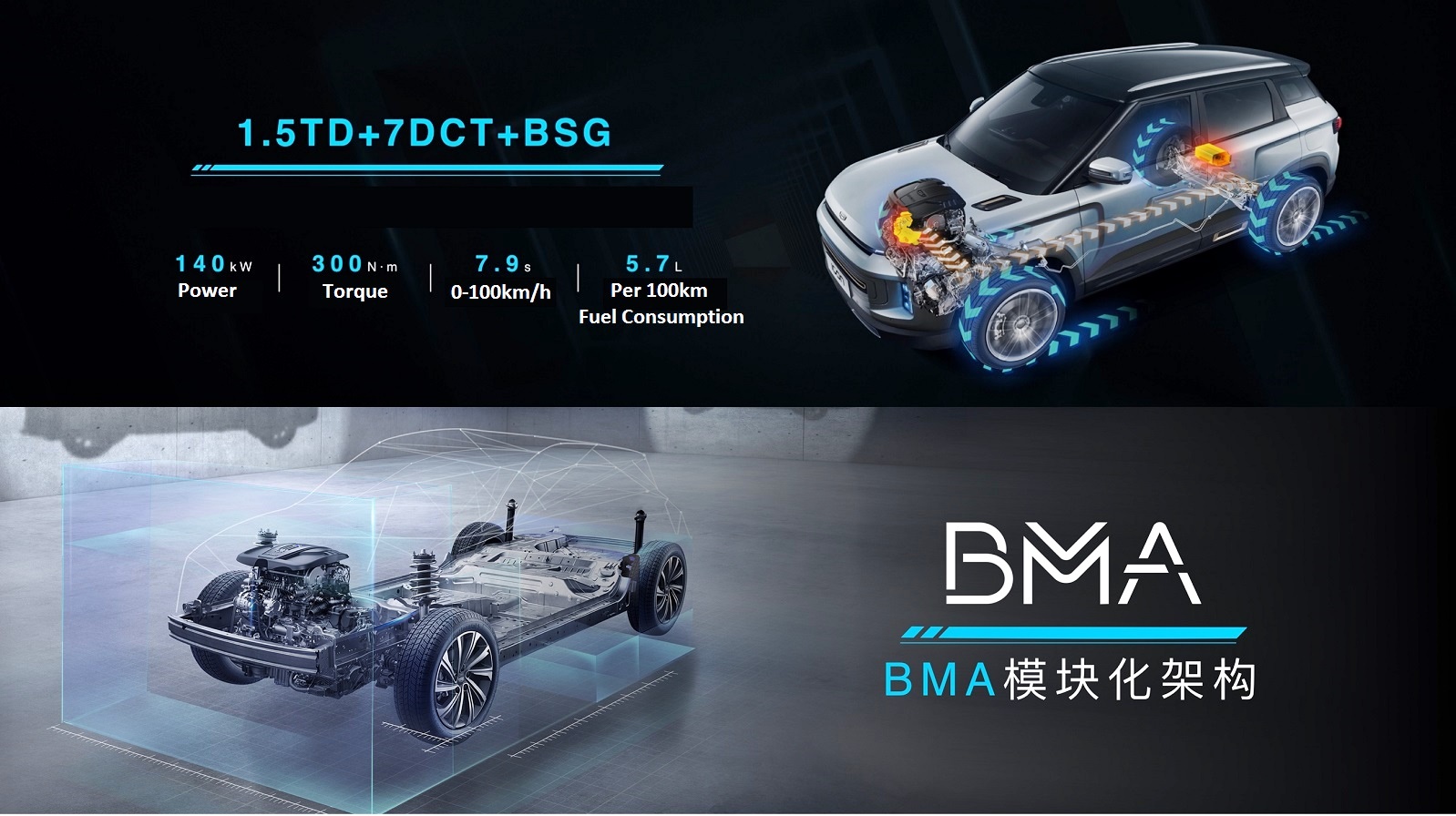
This new Geely model is the first in its segment to make use of 48V mild hybrid technologies that help extend fuel consumption to 17.5 kms/litre. The 48V system boosts the powerplant with a further 10 kW of power and 45 Nm of torque giving a total of 140 kW and 300 Nm. With a 7-speed Dual Clutch Transmission, the claimed 0 – 100 km/h acceleration time is 7.9 seconds.

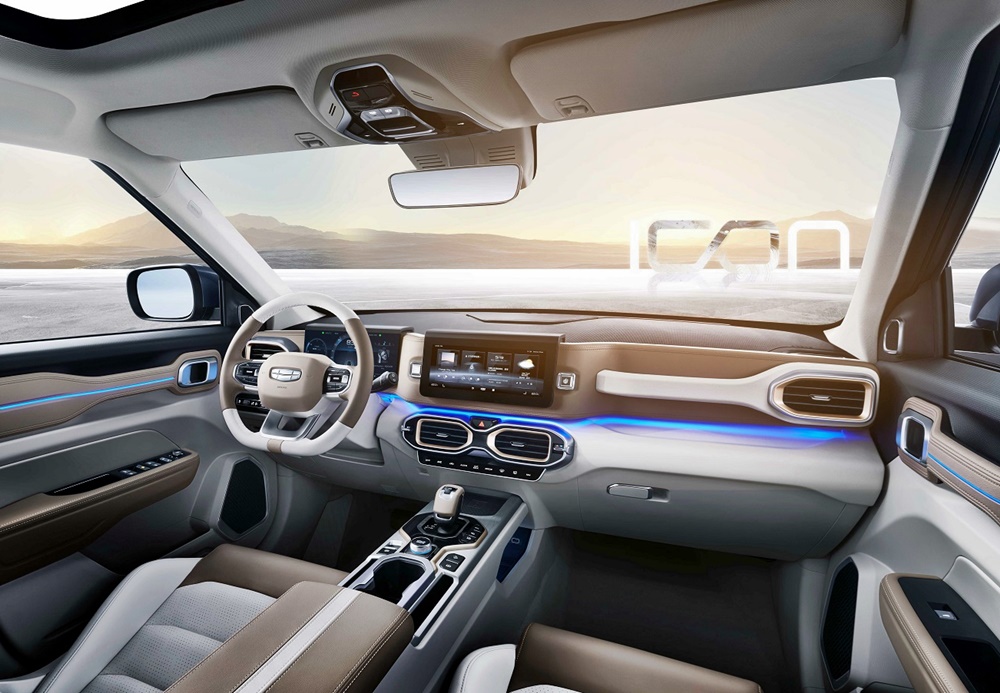
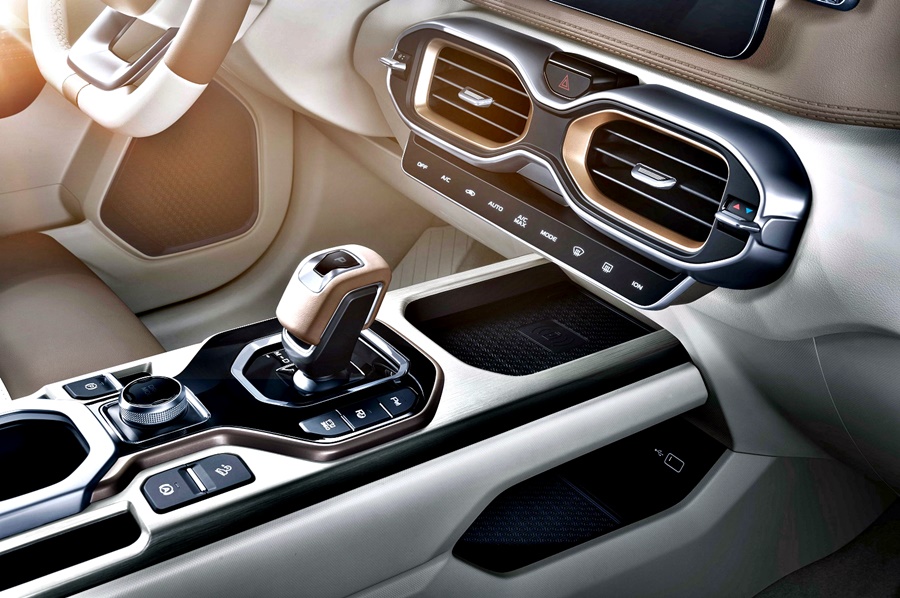
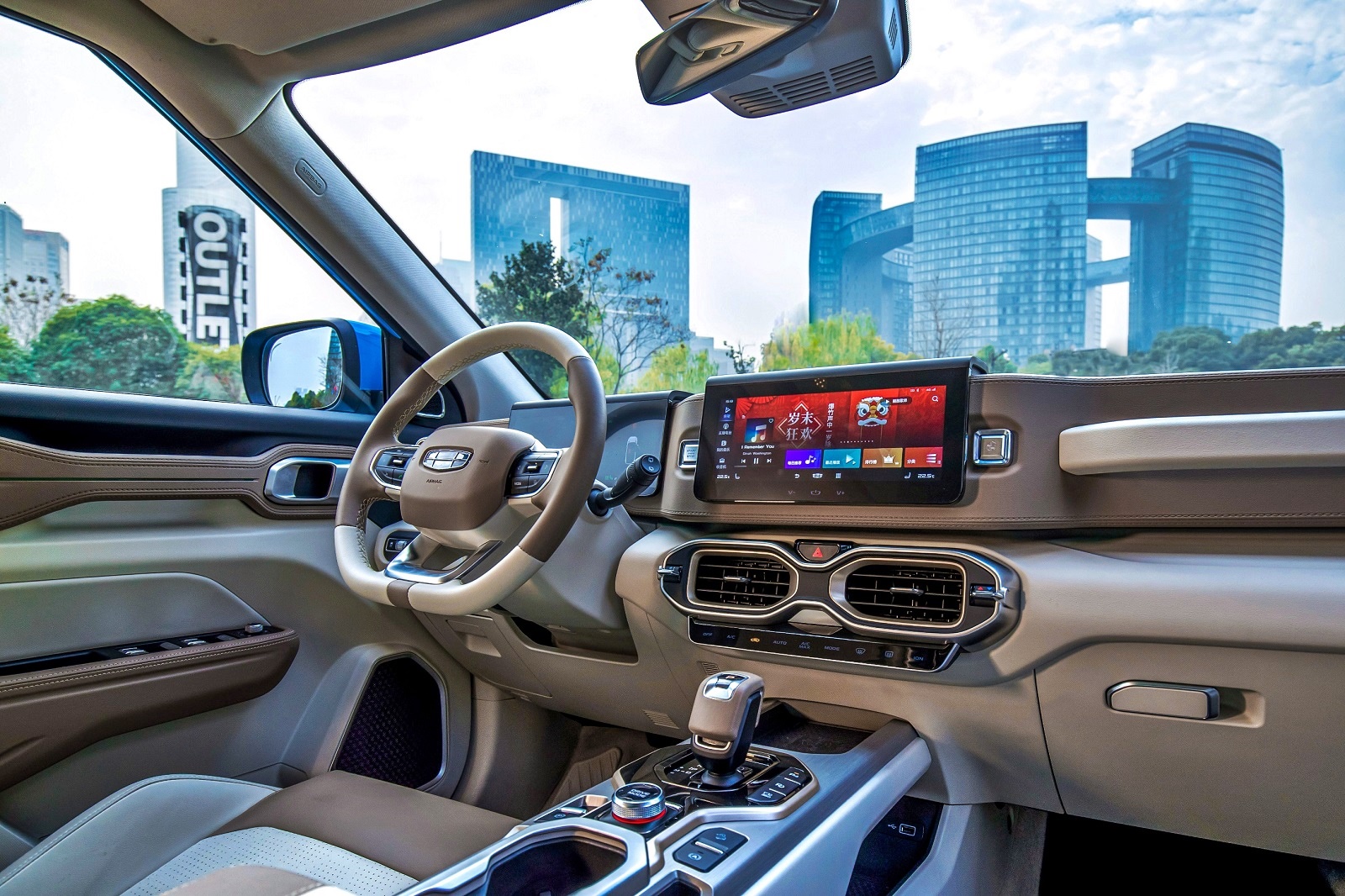
Inside the ICON, the same design philosophy as used for the exterior helps give the cabin a futuristic sci-fi feel. The symbol of time is once again visually present in the design form of the air vents and central console.

2020 Geely ICON

2020 Geely ICON

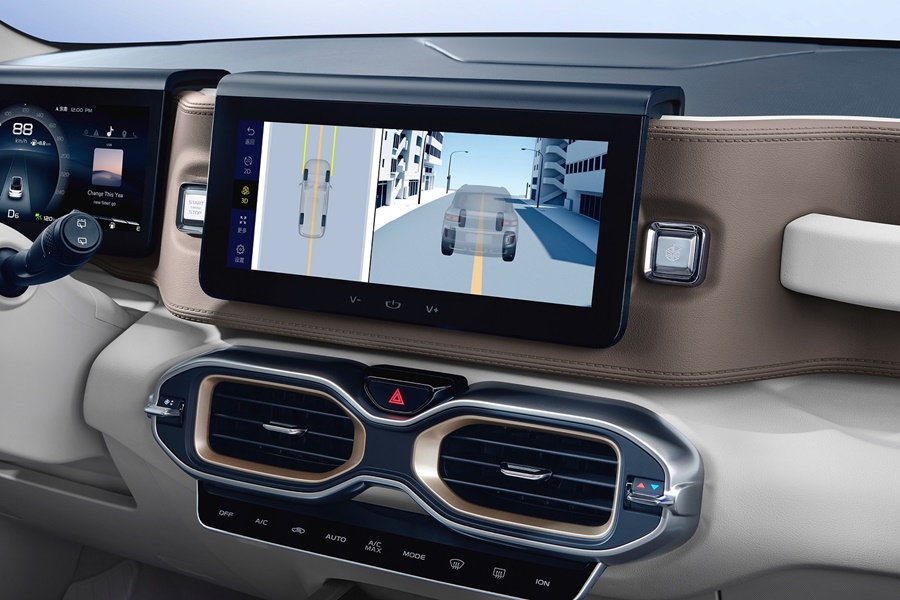
Large dual interactive 10.25-inch screens, an information panel and central infotainment console dominate the dashboard. From the two interior screens and mobile devices, users can interact with ICON and connect to the world through the GKUI Geely Smart Ecosystem.

2020 Geely ICON

2020 Geely ICON

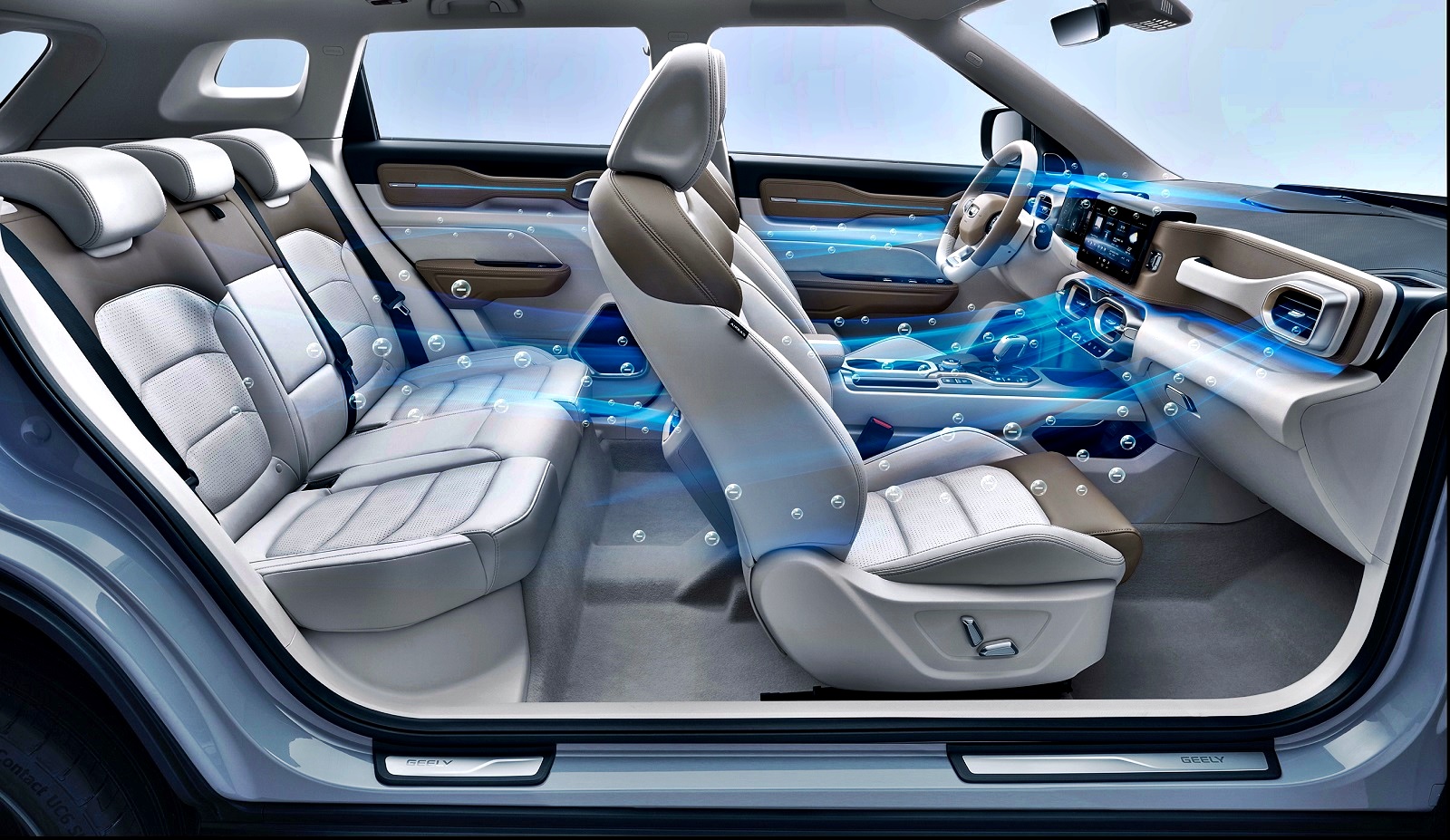
The ICON will have, as standard, a new Intelligent Air Purification System (IAPS) that is N95 certified. This system, developed in record time as an immediate response to the ongoing epidemic, is a works together with the air conditioner to isolate and eliminate harmful elements in the cabin air including bacteria and viruses.

2020 Geely ICON

Smart technologies for safety
The ICON comes with benchmark-setting smart technologies. Its Level 2+ intelligent driving technologies are supported by 12 ultrasonic radars, millimetre-wave radar, and 5 high-definition cameras. Other driver-assist features include intelligent cruise control, lane-keep assistance, automatic emergency braking and pedestrian recognition, and one-button automatic parking.

Geely’s 360 ° Safety Identification Circle is enhanced by an additional 180°. On top of being able to see a 360° panoramic image of the vehicle on the interior screens, there is also a 180° view from the side, front, or rear of the car, effectively eliminating all blind spots from the driver’s seat.

2020 Geely ICON

Addressing millions of viewers online, Geely Auto Group President & CEO, An Conghui said: “Geely ICON’s launch not only showcases the core strength of Geely’s global development network, it also shows our forward thinking and demonstrates the high-tech digital future we are all moving toward. It represents Geely’s leap from merely meeting user demands to creating leading trends. Just as the Geely ICON will become a new icon for global SUVs, Geely Auto will also become an icon in terms of automotive technologies and global auto brands.”

Will Proton get the ICON?
Every time Geely launches a new model, there seems to be the expectation that it will also carry a Proton badge in due course. While Geely would be contributing some models and certainly sharing platforms, it doesn’t mean that it will let Proton have every model. There will be marketing considerations, R&D costs (since a righthand drive version would have to be developed) and also positioning of the product against other brands in the group.

Having said that, the ICON looks like a good candidate as a global model and we would not be surprised if Azlan Othman and his Proton Design team are already coming up with Malaysianised proposals.

Geely Auto develops cabin virus-filtering system within 20 days, to go into all its cars from next month

PISTON.MY

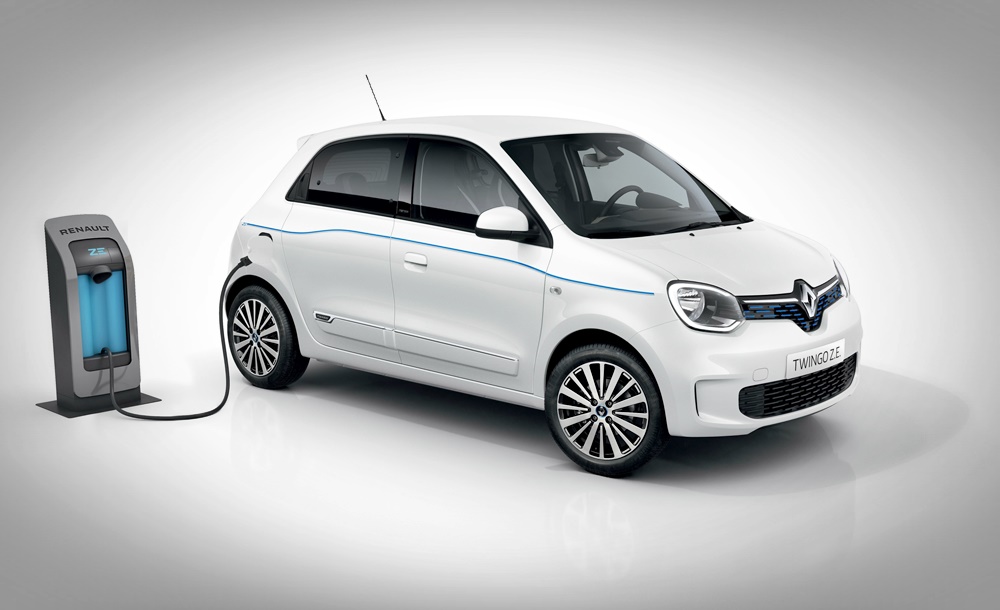
Given its compact size, the Renault Twingo was destined to one day become an electric vehicle (EV). But 28 years ago, when it was introduced, EV technology was still not advanced and didn’t offer the efficiency and performance that would attract consumers, apart from the fact that the technology was expensive.

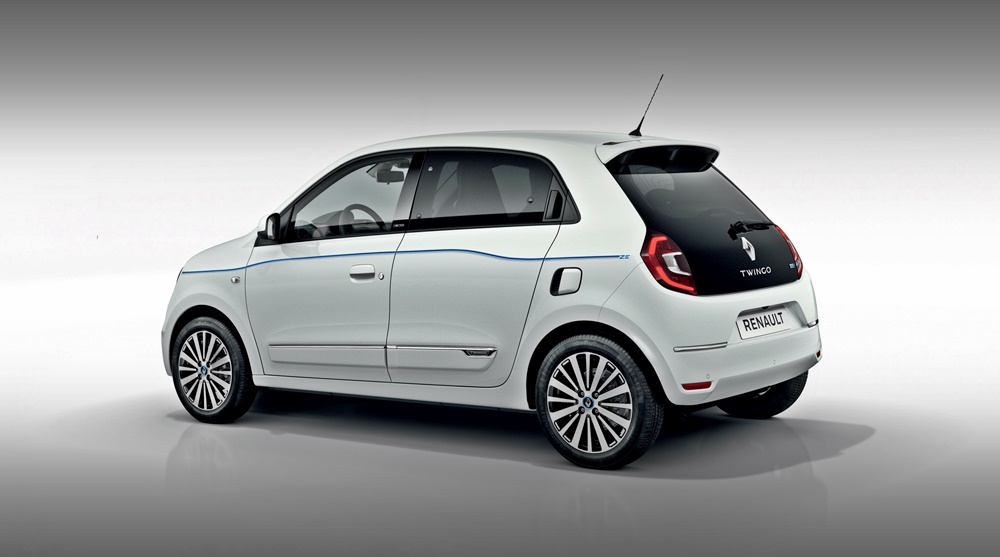
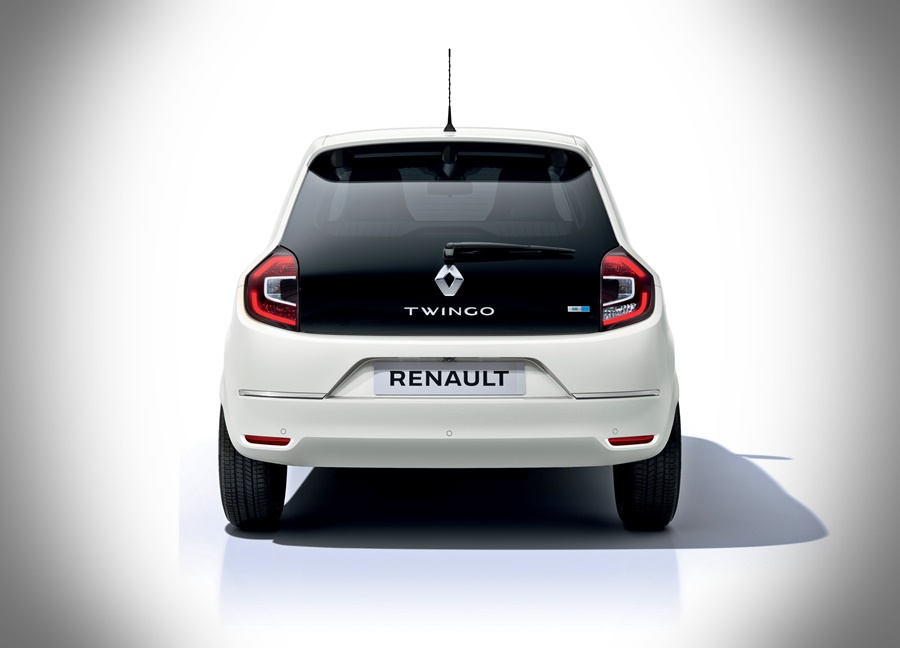
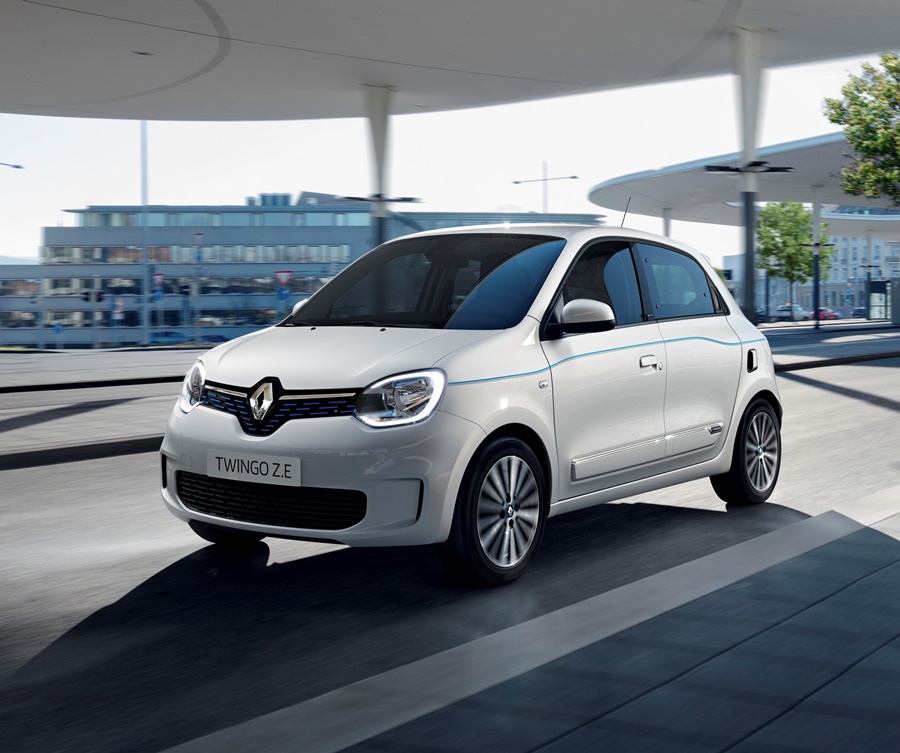
After three generations and almost 4 million cars sold in 25 countries, the Twingo now goes fully electric with its latest version – the Twingo Z.E. which will be launched at the Geneva Motorshow next month.

2020 Renault TWINGO Z.E.

Seventh EV developed by Renault
This is the seventh all-electric vehicle developed by Renault, joining the ZOE, Twizy quadricycle, Kangoo Z.E., Master Z.E., as well as the RSM SM3 Z.E. saloon (sold in South Korea), and the City K-ZE small SUV (sold in China).

Continuing with the 3.61-metre long model’s fun design, attractive personality and exclusive customisation possibilities, the addition of an electric powertrain offers personal mobility with zero emissions. Its electric rear-wheel drive and different driving modes make it fun and enjoyable to drive.

2020 Renault TWINGO Z.E.

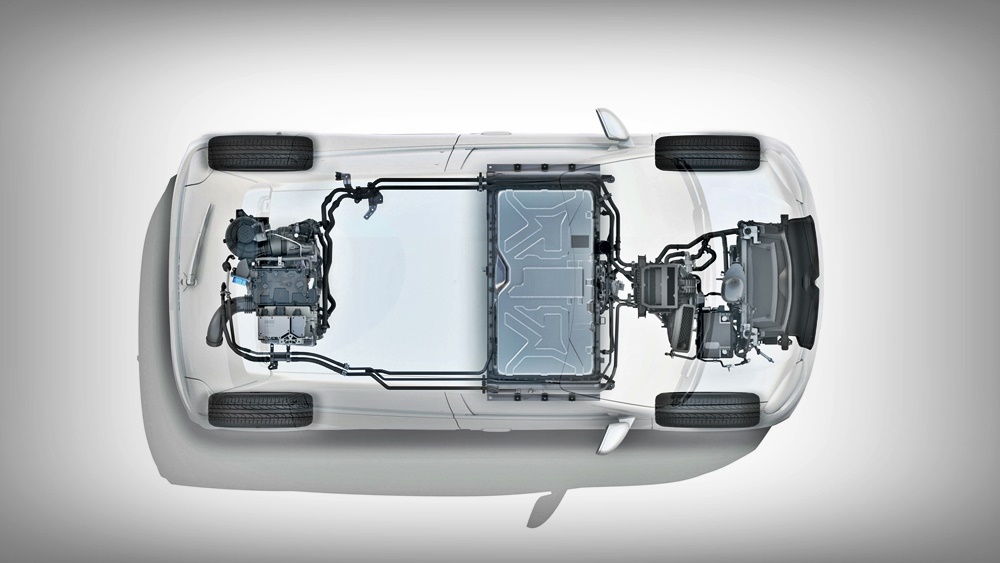
The Twingo Z.E., which weighs 1,112 kgs, has a 60-kW powertrain which generates maximum torque of 160 Nm. This enables a claimed top speed of 135 km/h (0 to 100 km/h in 12.6 seconds) which is sufficient for motorway driving.

A ‘B mode’ gives drivers a choice of three levels for the regenerative braking function as soon as they release the accelerator pedal. In the most advanced configuration, the car decelerates significantly, which quickly regenerates the battery, reduces the need for braking and makes city driving easier. Thermal management is provided by a water-cooling system, a first in the Renault Z.E. range.

2020 Renault TWINGO Z.E.

Up to 215 kms range
Sitting on a platform engineered for EVs, the 22 kWh battery packs has the latest-generation lithium-ion cells developed in partnership with LG Chem. Depending on the cycle used, the range can be from 180 kms to 250 kms, and Renault believes that this means an owner can have a week of city driving without recharging.

An ‘Eco’ mode, activated by pushing a button on the centre console, extends operating range to around 215 kms on mixed journeys by limiting acceleration and top speed on motorways.

Flexible charging system
With its smart Cameloon charger (patented by Renault), the Twingo Z.E. can be charged at home, at work or using the AC power infrastructure up to 22 kW. The technology enables it to adapt to the power available at each charging station and make full use of existing facilities, especially in cities. As a result, Twingo Z.E. benefits from optimum charging time whatever the charging station.

2020 Renault TWINGO Z.E.

It is claimed to recharge up to 4 times faster than its competitors at stations most commonly found in public areas. Connection to a 22-kW charging station for just thirty minutes increases operating range by around 80 kms. However, from a home 2.3-kW outlet, a fully empty battery back would take at least 13.5 hours to ‘refill’ to 100%.

Compact but spacious within
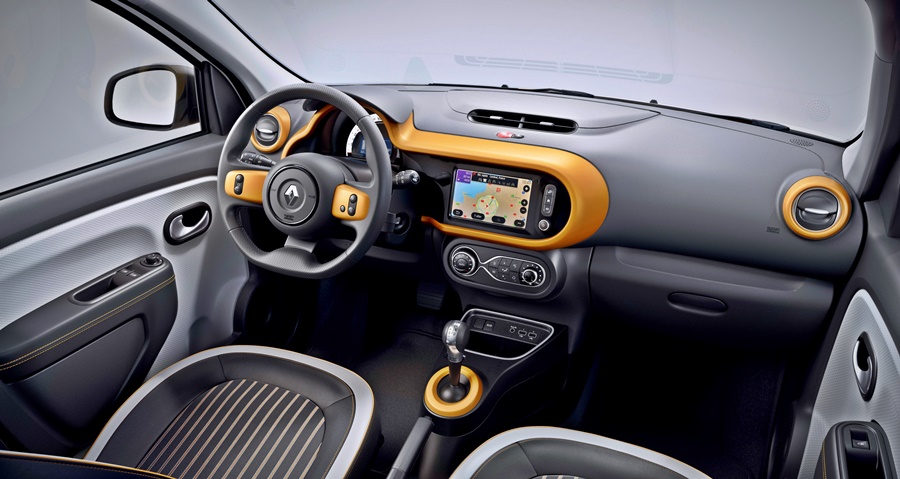
Roomy and functional as ever, the passenger compartment retains all the customisation options offered on the range with the Z.E. logo identifying the all-electric aspect of Twingo Z.E. The 7-inch colour touchscreen, unique in the segment, offers access to Twingo’s new connectivity features.

2020 Renault TWINGO Z.E.

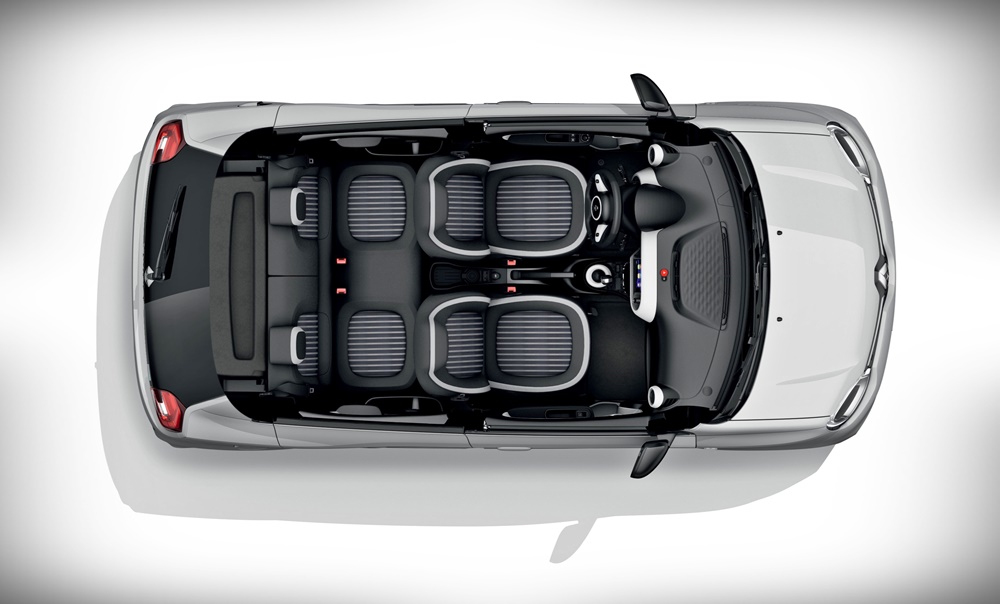
With 5 doors, a flat floor and a fully foldable passenger seat, the Twingo Z.E. provides a 2.31-metre loading length. With optimised placement of the battery pack, the size of the boot, closed by a handled tailgate, also remains the same.

2020 Renault TWINGO Z.E.

With the EASY LINK onboard system, charging time can be scheduled in order to take advantage of off-peak hours. Once on the road, the system displays the car’s range on a map in real time, adds the nearest charging stations on request and updates their availability in real time.

Outside the car, drivers can check the battery level during charging from their MY Renault app and remotely control air conditioning and heating to adjust the temperature of the passenger compartment during charging, without affecting the vehicle’s range. Drivers can also use the EV Route Planner feature to simulate a planned route and identify the necessary charging stations on the way.

BHPetrol RON95 Euro4M

TC Euro Cars offers full online purchasing process for Renault vehicles

PISTON.MY

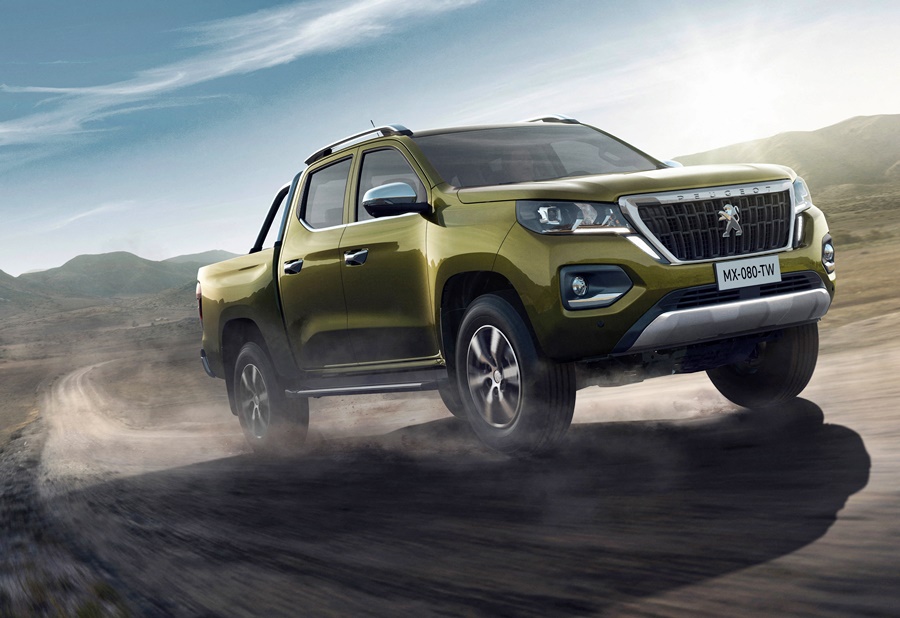
Pick-up trucks have not been entirely unknown in Peugeot’s range, although they have been rare. Mainly seen in Africa markets, Peugeot has had pick-up variants of the 403, 404 and 504 in the past, Now, as part of the brand’s international expansion, it is aiming for a slice of the 2.4-million 1-ton pick-up segment, albeit in Africa and Latin America. Europe and other markets are not in the marketing plan.

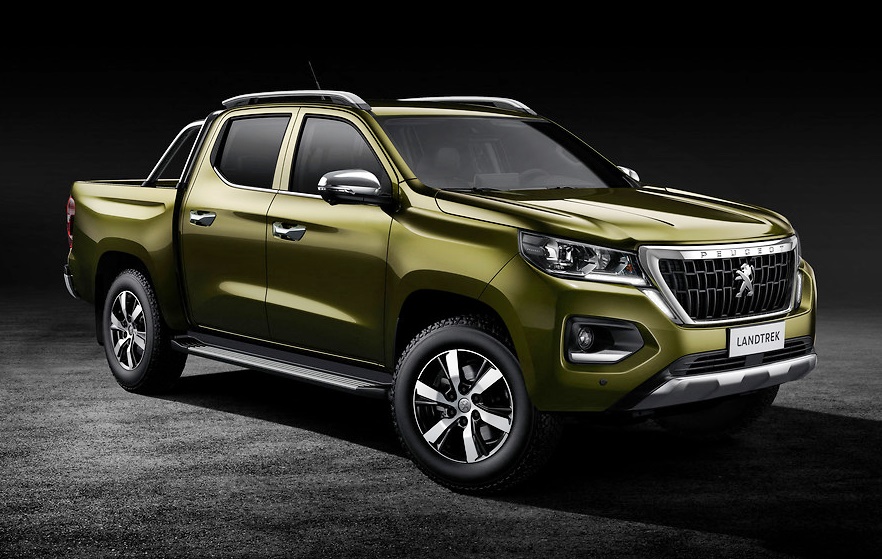
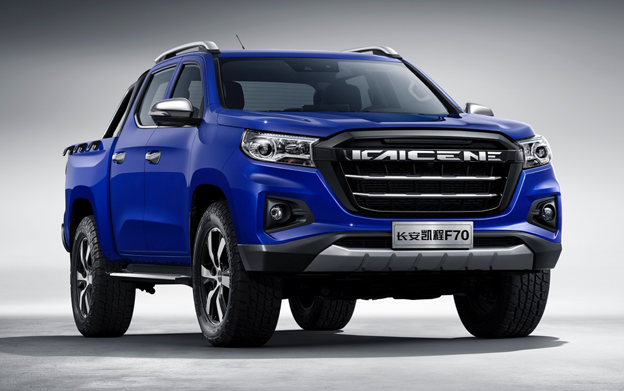
Its new entry is the Landtrek and while Peugeot doesn’t mention the background of this new model, it is known to have been jointly developed by the French carmaker and Changan, the latter selling its version as the Kaicene F70 in China since last October. Changan and Peugeot have had a joint-venture company for some time but early this year, it was sold off to the Baoneng Investment Group.

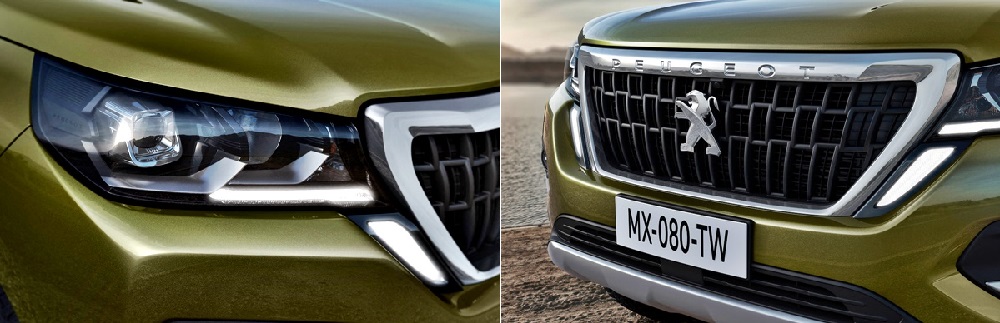
2020 Peugeot Landtrek
The Peugeot Landtrek was jointly developed with Changan which sells its version as the Kaicene F70 in China (below).

Changan Kaicene F70

The Landtrek follows the typical pick-up fundamentals and is engineered with high priority given to durability and payload capacity. Before being confirmed for production, prototypes covered 2 million kms of testing on all kinds of terrain and in different weather conditions.

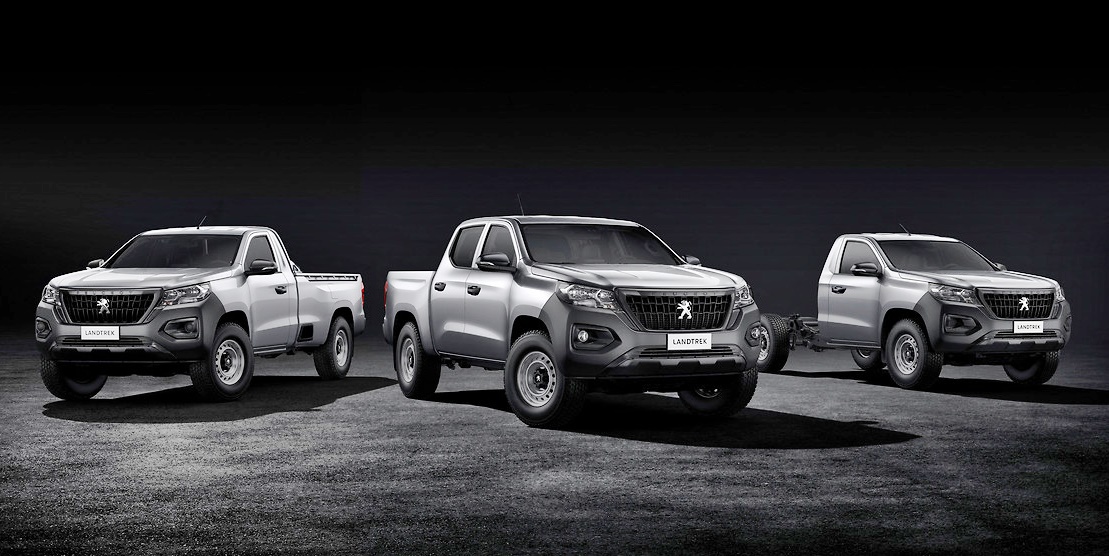
Dimensionally, the Landtrek is of the same size as other pick-ups in the market. It measures 5.33 metres in length for the double cab version and 5.39 metres for the single cab versions, all with a width of 1.92 metres.

2020 Peugeot Landtrek

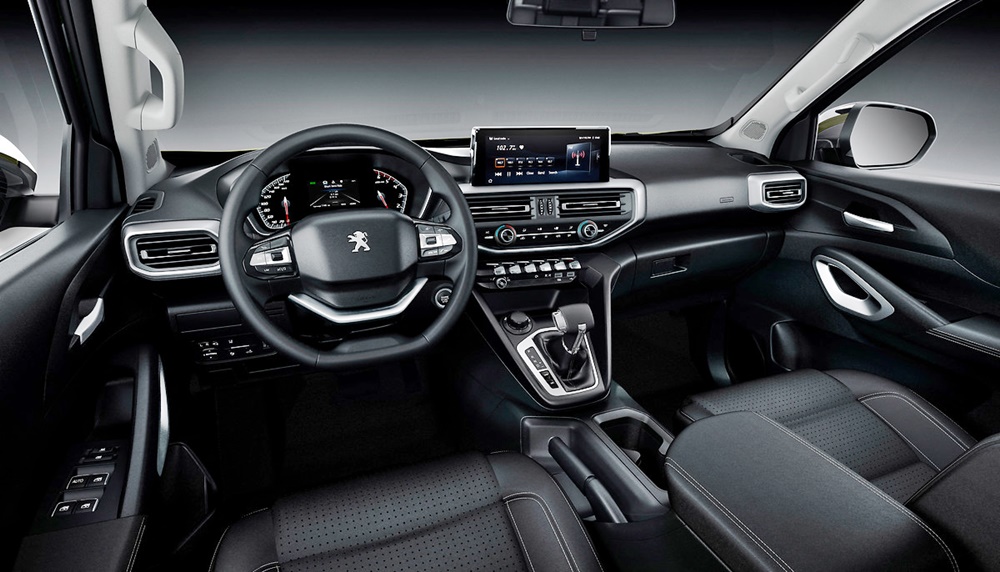
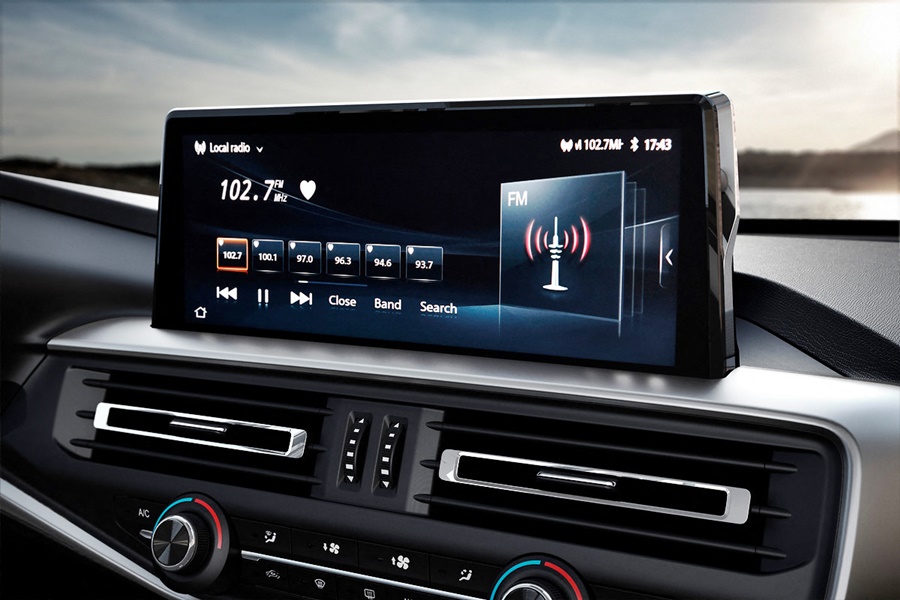
The interior design draws some of its elements from 3008 and 508 models, notably the 3008’s 2-spoke steering wheel and the 10-inch HD screen at the top of the dashboard inspired by the 508. The aim has been to provide a passenger car-like cabin (for up to 6 persons) for maximum comfort on any terrain.

2020 Peugeot Landtrek

2020 Peugeot Landtrek

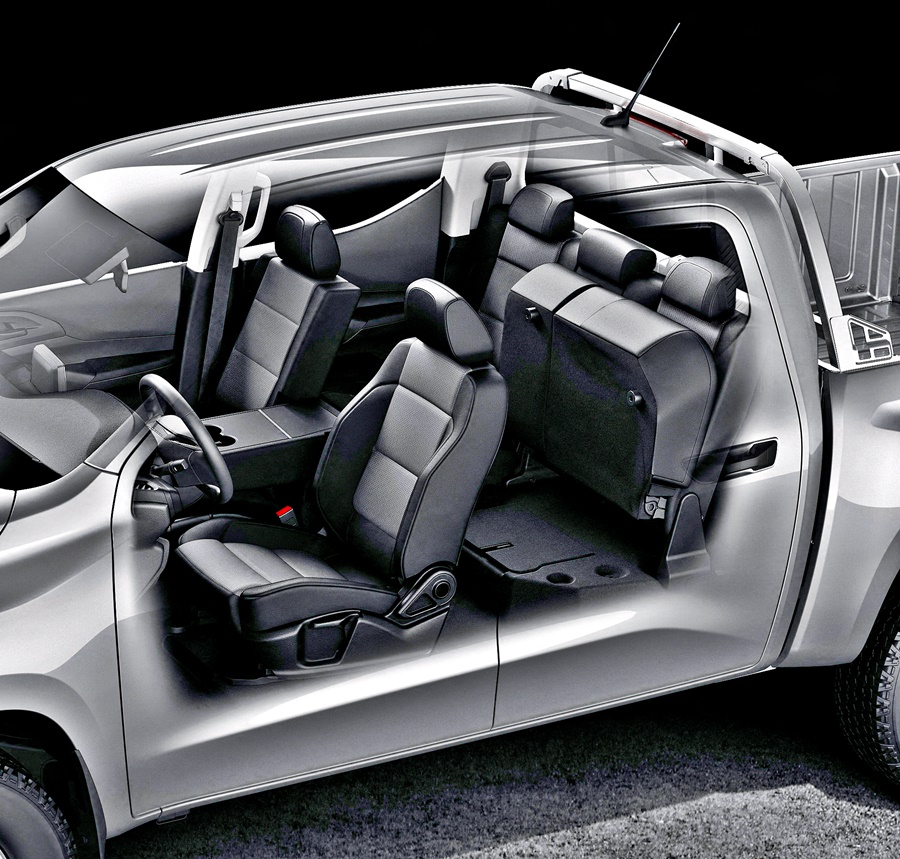
The modularity of the rear bench seat is unique in the 1-ton pick-up segment and its backrest can be folded 60/40 or 100%. When folded down, the backrests can support a load of up to 100 kgs. At the front, there is a choice between 2 independent seats with central armrest or a 3-seater Multiflex bench seat. With the latter, there is the possibility of folding down the central backrest to make room for an armrest/work table or to load bulky objects weighing up to 75 kgs.

2020 Peugeot Landtrek

Besides 6 airbags and Electronic Stability Control, there’s also Hill Descent Control, Anti-Skid control and Trailer Swing Control. The Lane Departure Warning system will alert the driver if the truck wanders off the lane while 1 to 4 cameras can be installed to facilitate manoeuvring by providing a 360° view.

Claimed to have ‘the most accommodating cargo box in the segment’, it can take in 2 Euro-pallets in the Double Cab versions and 3 Euro-pallets in Single Cab versions. The payload can be up to 1.2 tons in some versions and the towing capacity is 3 tons.

2020 Peugeot Landtrek

The turbodiesel engine, likely to be the more popular of two powertrain options, has a 1.9-litre displacement and produces 150 ps/350 Nm. The petrol option is a turbocharged 2.4-litre unit which generates 210 ps/320 Nm. Both engines can be ordered with a 6-speed Getrag manual gearbox and the petrol version can also be specified with a 6-speed Punch automatic gearbox with sequential operation, Sport or Eco modes.

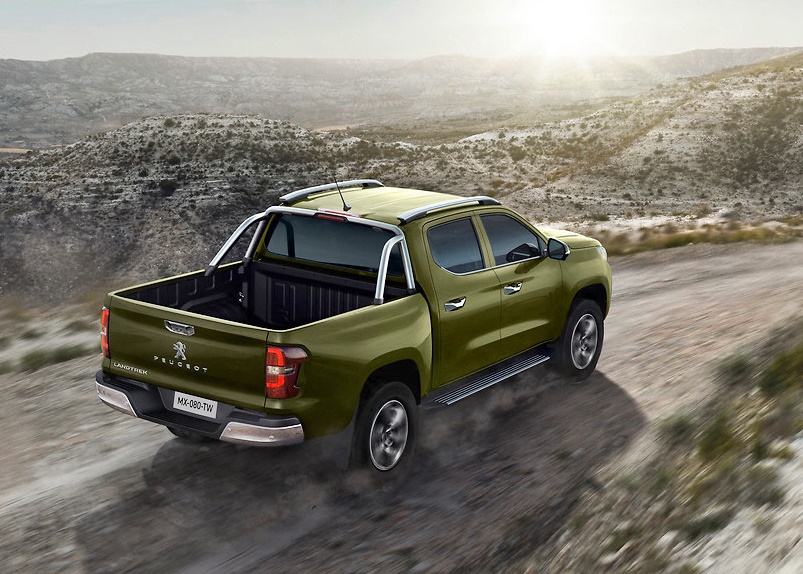
Like most pick-up trucks, the Landtrek has a transfer case with High and Low ranges to provide maximum capability in the toughest conditions. The rear differential is equipped with the eLocker system with automatic disengagement and provides extra traction when one wheel spins. It can travel across water that is 600 mm deep and clear rough terrain with 235 mm of ground clearance.

2020 Peugeot Landtrek

Groupe PSA starts Peugeot vehicle exports from Naza Automotive Manufacturing, its production hub for ASEAN

PISTON.MY

BHPetrol RON95 Euro4M

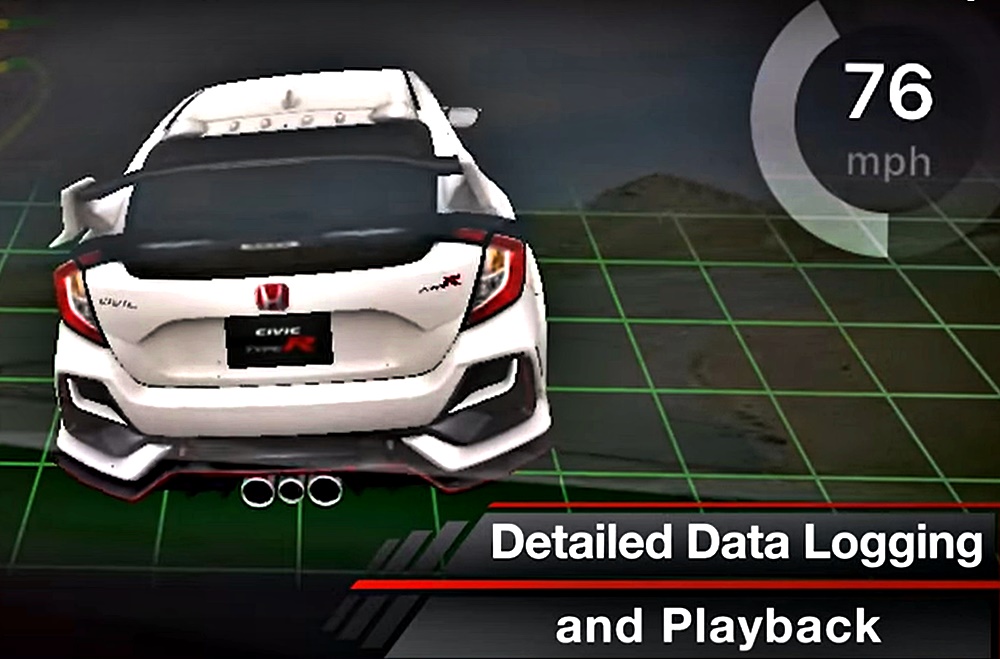
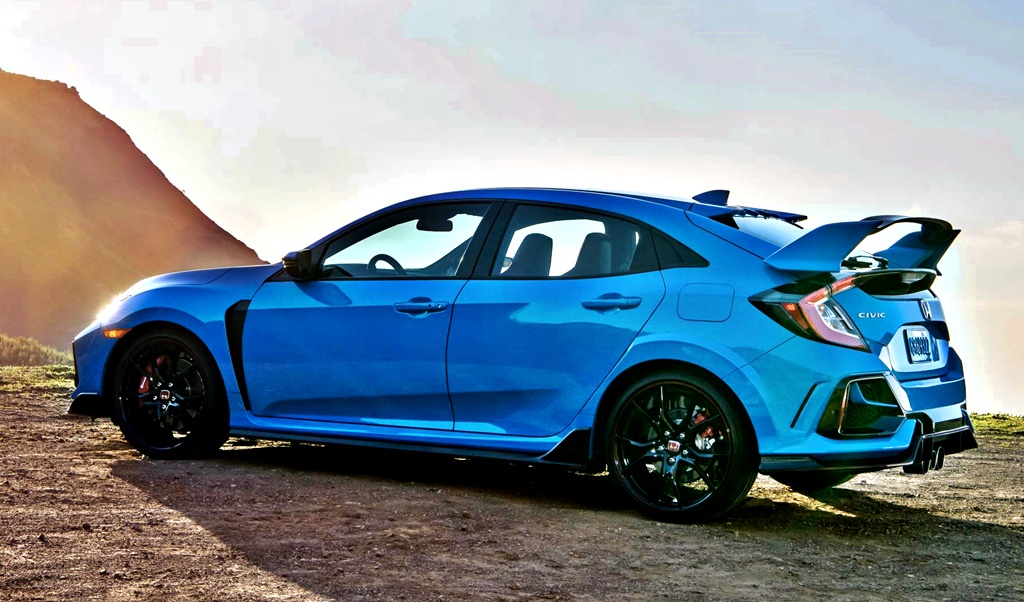
Today’s sophisticated electronic systems and connectivity are making it possible to a driver to access and view a considerable amount of information about a car’s performance. The latest example is an all-new datalogging app for the updated 2020 Honda Civic Type R. With the data and scoring information available, Honda says that a driver can improve his or her skills when racing around a track.

First of its kind from Honda, the new LogR app, as it is known, is designed for both iPhone and Android devices and will be available for download sometime during this quarter.

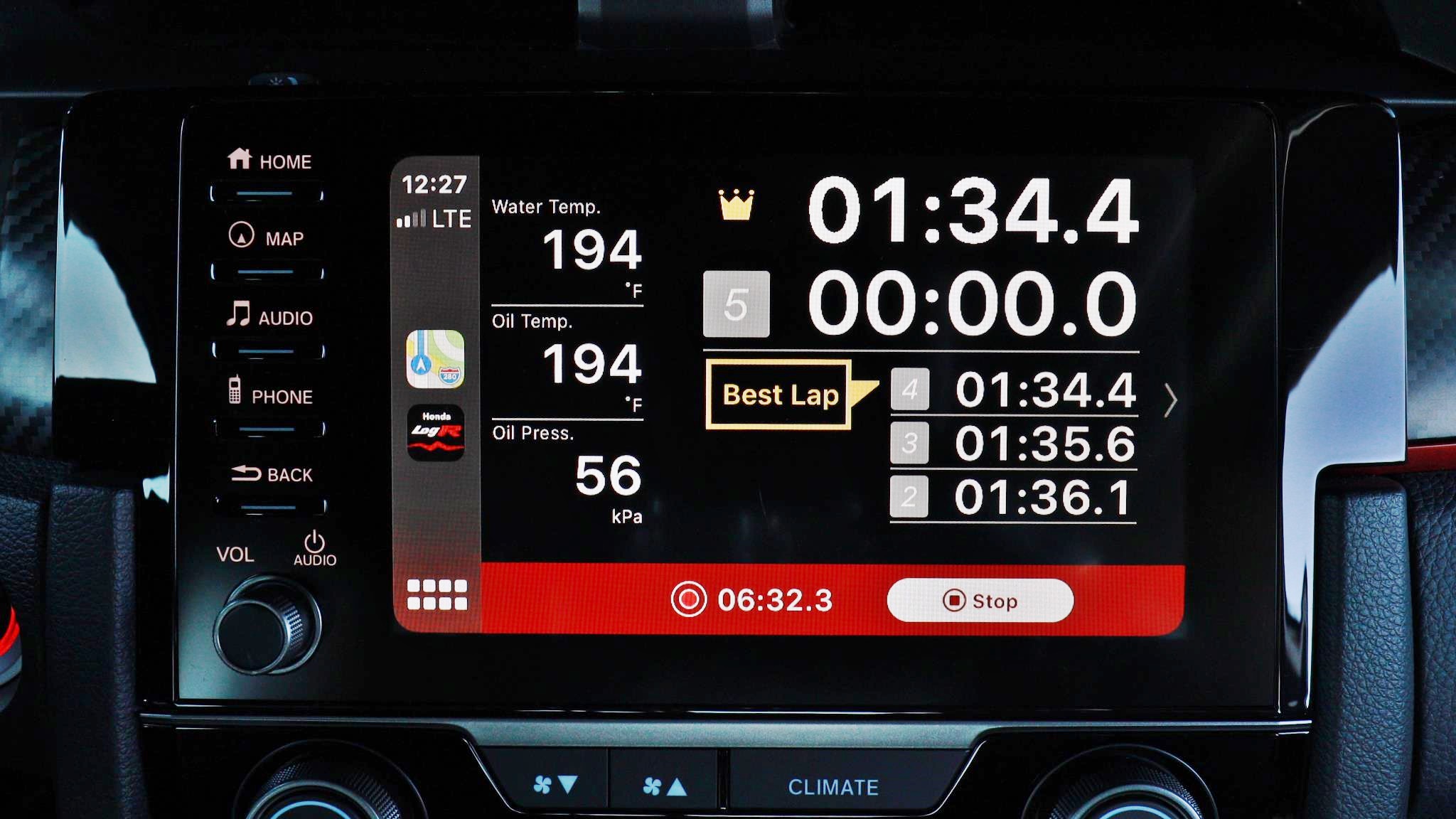
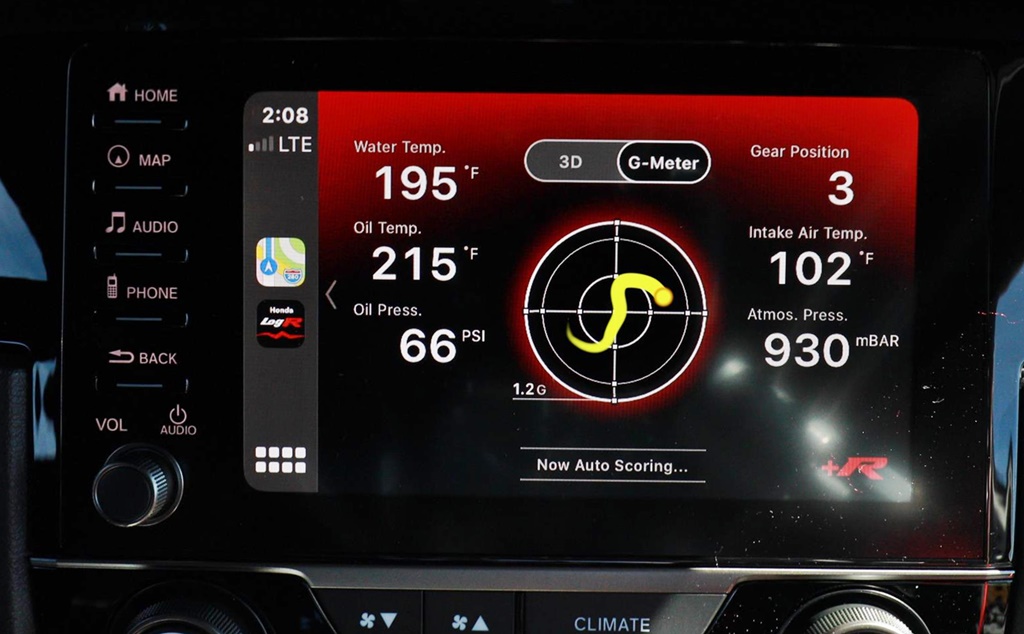
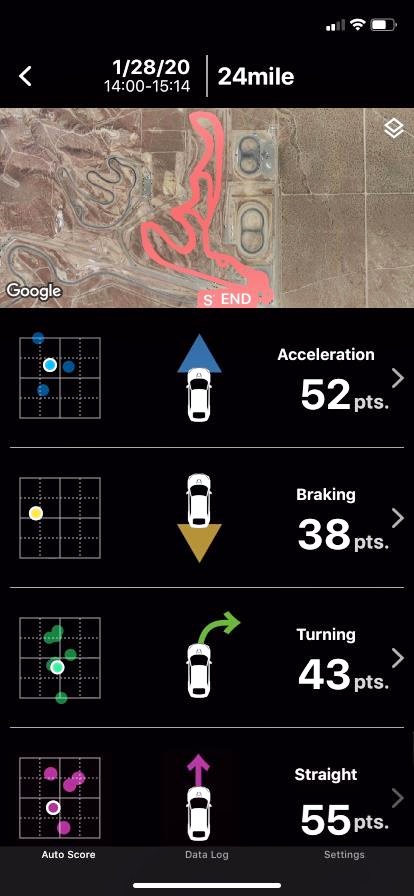
Drivers interact with Honda LogR, as the app is known, through three main functions: A Performance Monitor provides vehicle information to the driver on the Display Audio screen, while Log Mode records lap times on the track. Finally, the Auto Score function encourages smooth driving by monitoring braking, acceleration and steering, and generating a ‘driving smoothness’ score using proprietary algorithms developed by Honda with the help of professional Honda drivers.

2020 Honda Civic Type R LogR Performance App

2020 Honda Civic Type R LogR Performance App

While driving, all interaction with Honda LogR is through the car’s Display Audio screen. Both Log Mode and Auto Score also offer more in-depth analysis when the phone is unplugged from the car, including previous drives, performance traces and replays using GPS mapping and detailed vehicle information.

Unlike third-party datalogging apps, LogR features exclusive access to the Type R’s onboard computer, delivering more in-depth detail on the vehicle’s performance than aftermarket systems that’s only available through the factory onboard computer.

2020 Honda Civic Type R LogR Performance App

What’s new in 2020 Civic Type R
The 2020 Civic Type R has improvements that include new 2-piece brake rotors and brake pads which are designed to reduce fade and improve high-speed braking efficiency; suspension revisions with updated dampers for improved ride comfort; stiffer rear bushings for better grip, and revisions to the front suspension and steering for even better steering feel.

Additionally, the grille has been redesigned to allow better engine cooling under high demand. New for 2020 is Active Sound Control, which modifies interior sound in concert with the chosen drive mode while safety is taken to a higher level with standard Honda Sensing safety and driver-assist technologies.

2020 Honda Civic Type R

2020 Honda Civic Type R debuts at Tokyo Auto Salon, sales to start mid-2020

PISTON.MY

BHPetrol RON95 Euro4M

These are very tough times for the auto industry in China with the current COVID-19 crisis and cities in lock-down and people leaving them homes less. Understandably with uncertainties about the future, visiting a car showroom is less likely let alone buying a new car.

Finding out about the latest models without going to the showroom is easy enough as all companies have websites with lots of information. But to actually purchase a car or have a test-drive usually means having to go to the showroom to sign documents and of course get a unit to try. Some companies have introduced online ordering services but many still require physical presence at the showroom.

Geely sales in China
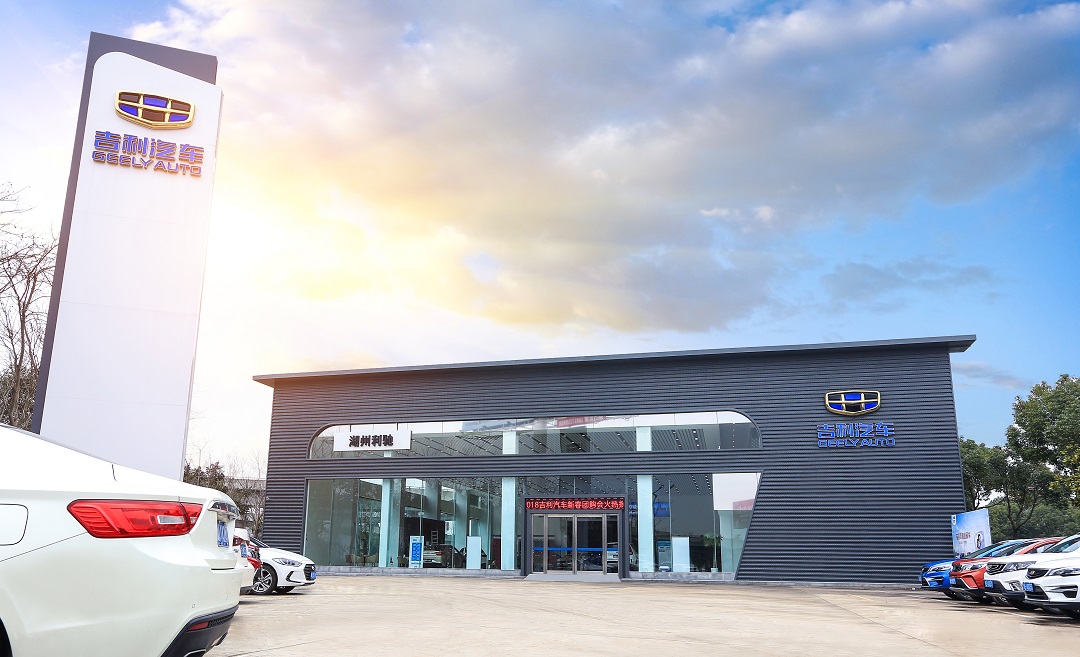
A Geely dealership in China

Proprietary full ‘contactless’ vehicle purchasing service
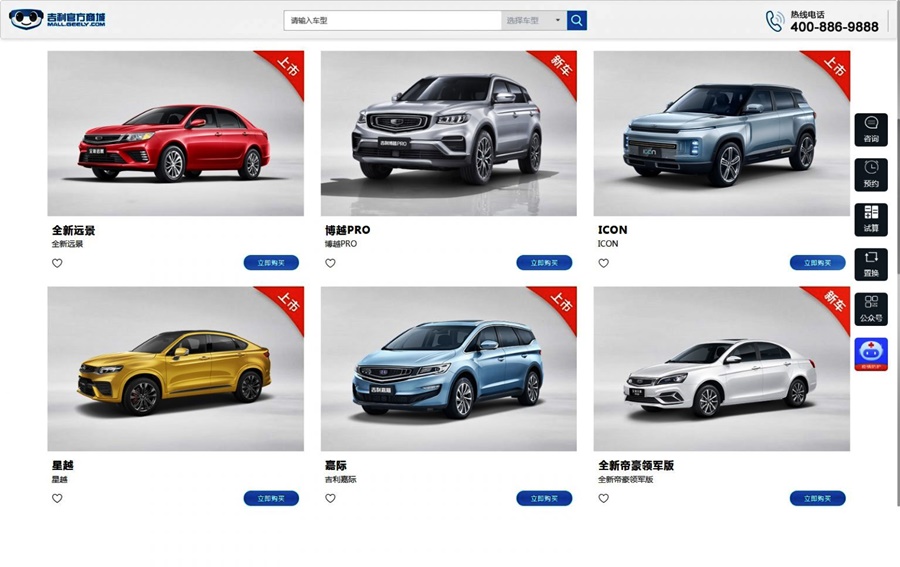
Now Geely Auto, China’s largest privately-owned automotive brand, has introduced its own proprietary online ordering and it is one of the first brands in China to offer a full ‘contactless’ vehicle purchasing service.

Starting this month, Geely Auto began to operate its full online ordering and home delivery system that allows users to customize and pay for their Geely Auto vehicles with the option of home delivery of vehicles direct to the customers door. At the same time, Geely Auto will also offer test drives where potential consumers will be able to request a test drive starting from their home and the closest dealership will bring a vehicle over.

Geely Auto previously partnered with third-party online sales platforms that have moved to raise the brands profile online. However, the addition of Geely Auto’s own proprietary online system located on the brand’s official website has led to unprecedented growth since its introduction.

In the first week of online operation, Geely Auto’s online sales orders increased more than five-fold compared to the same period last year, indicating a positive response. At the same time, sales leads from Geely website increased more than 75 times.

Geely sales in China
In future, showrooms may be unnecessary and even interaction with sales staff would not be required.

Geely Auto will also provide additional services such as licensing and insurance in the purchasing process, creating a one-stop online purchase experience. In addition, users will be able to choose from a multitude of different financing and insurance providers through Geely’s online platforms.

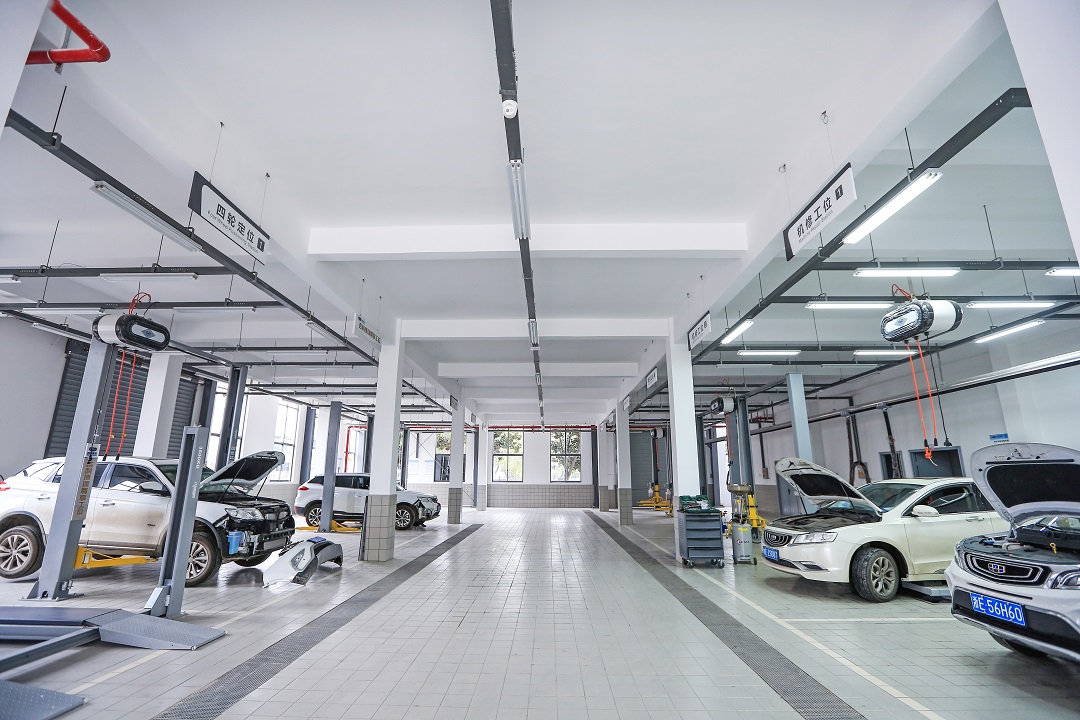
In the near future, the carmaker aims to expand this service to include home servicing where representatives will collect vehicles for servicing and return them to owners’ home.

Geely sales in China
Servicing needs can also be handled online and the owner would no longer have to personally bring the car to the service centre.

“The addition of our online sales platform has proven to be a value addition to our sales network in terms of adding new sales and new sales leads to our nationwide dealership network. We have always aimed to bring greater levels of convenience to our consumers and our initial results prove that,” said Victor Yang, Vice President of Public Relations at Geely Auto Group.

Given the current situation in China, selling and buying cars may well change in future as new conditions occur. Geely Auto’s latest move is therefore timely as it could well be the way people shop for cars and buy them in future and the showroom is no longer necessary.

Proton
Proton is one of the companies in Malaysia that has been offering online ordering though on a limited basis.

Online sales in Malaysia
Using online platforms for ordering cars in Malaysia only started in recent years and the process has only been for ordering (with a deposit to be paid). Due to various requirements, the customer still needs to sign documents although these can probably be delivered to his or her home or office. A totally ‘contactless’ process is therefore not a reality yet but could be before long.

However, with regards to test-drives and servicing needs, these are already available from some companies. Customers can send and email or call them and representatives will bring over a car to test, pick up a car and send it back after servicing. This depends on the company and how much it wants to add value to the brand it represents to be different from others.

Proton to explore e-commerce platforms to expand reach

PISTON.MY

BHPetrol RON95 Euro4M

The two carmakers in the Hyundai Motor Group – Hyundai Motor Company and Kia Motors Corporation – have jointly developed the world’s first predictive Information and Communication Technology (ICT) Connected Shift System to enhance motoring. The system is also in line with autonomous technology, which is developing day by day.

The system enables the vehicle to automatically shift to the optimal gear after identifying the road and traffic conditions ahead. While the technologies used to automatically shift depend on drivers’ preferences, such as Smart Drive Mode – available on most current Hyundai and Kia models – ICT Connected Shift System is the first ICT to automatically shift the gear according to road and traffic conditions.

Hyundai Motor Company and Kia Motors Corporation

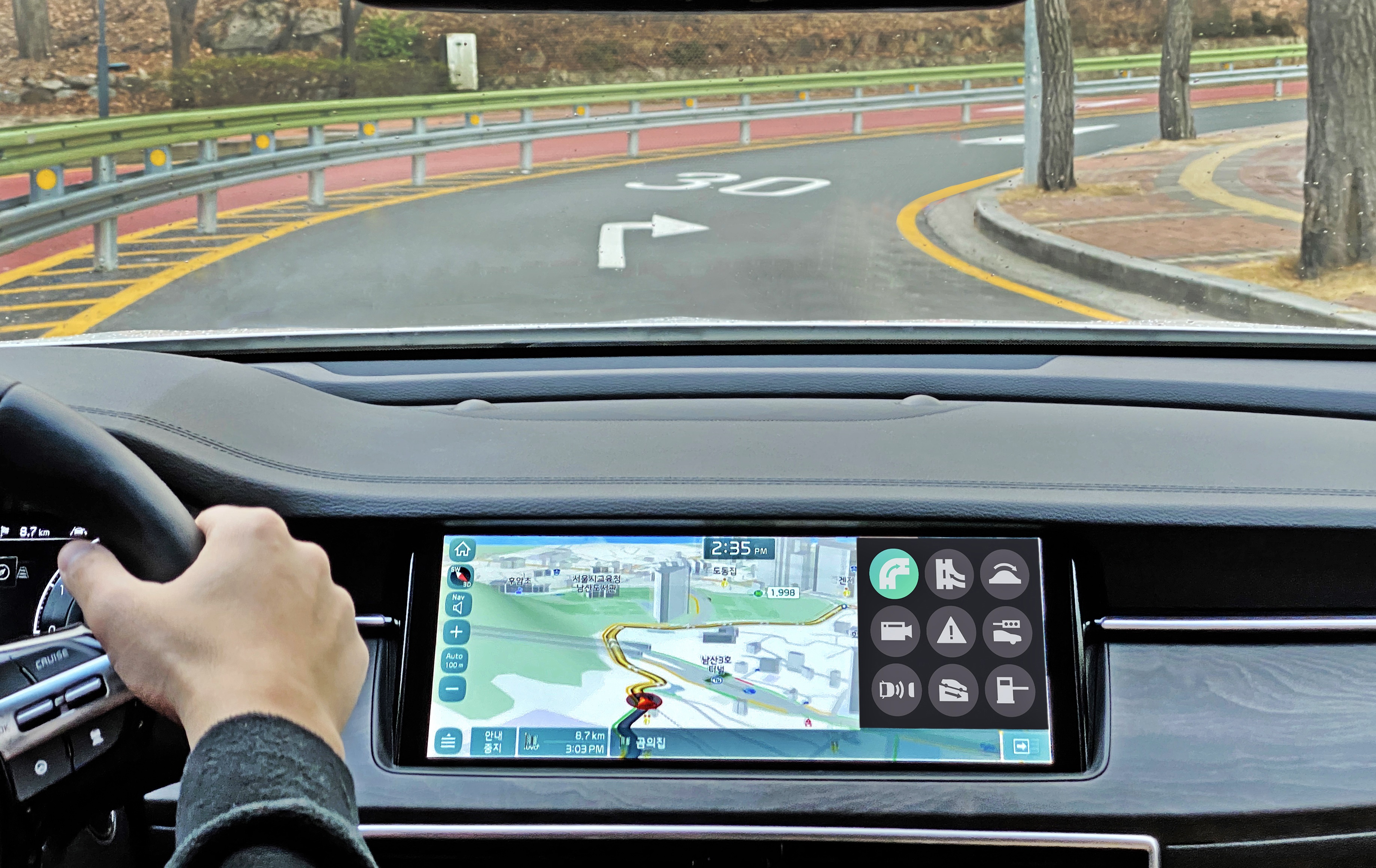
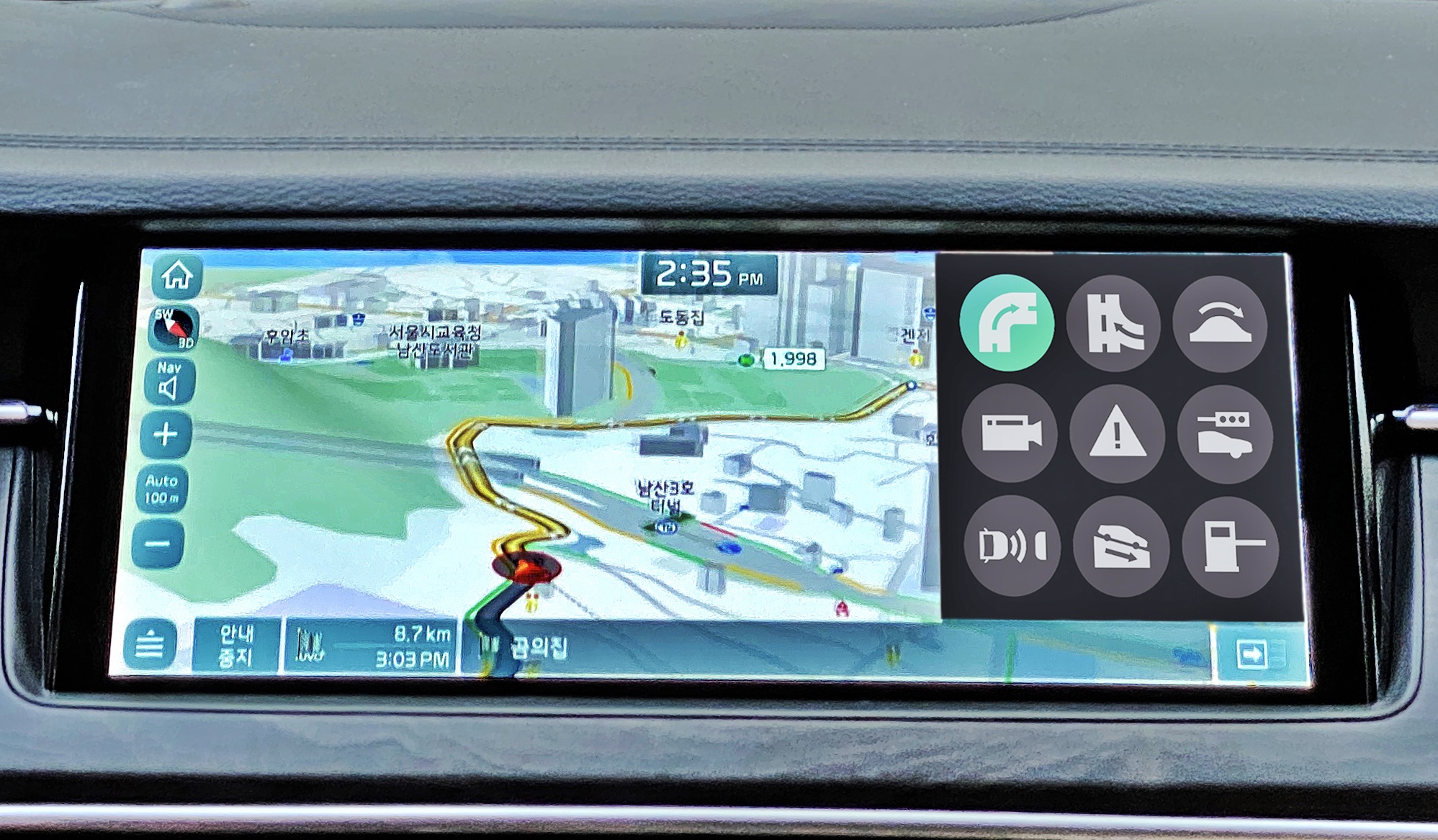
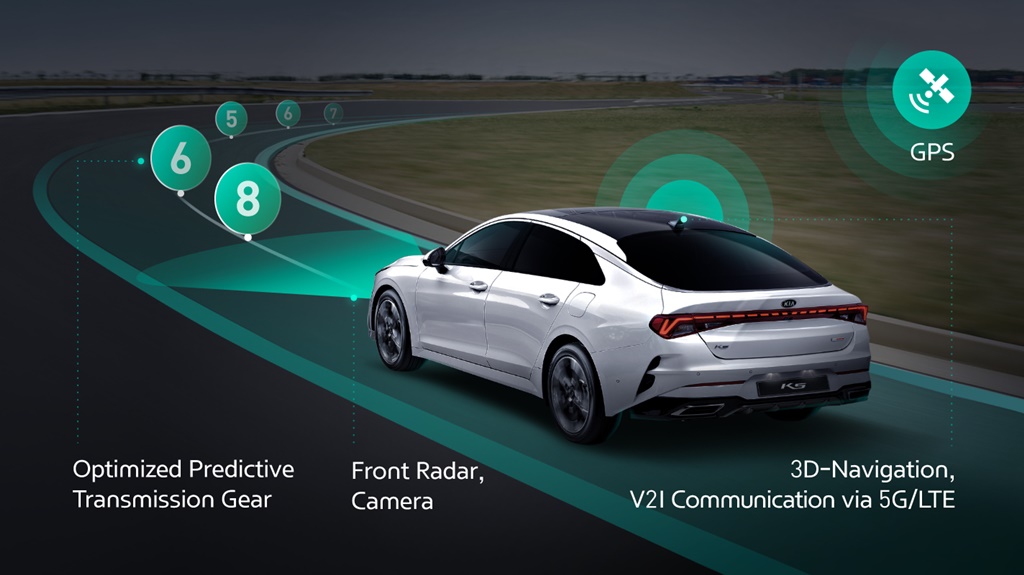
The ICT Connected Shift System uses intelligent software in the Transmission Control Unit (TCU) that collects and interprets real-time input from underlying technologies, including 3D navigation equipped with a precise map of the road as well as cameras and radar for smart cruise control. The 3D navigation input includes elevation, gradient, curvature and a variety of road events as well as current traffic conditions. Radar detects the speed and distance between the vehicle and others, and a forward-looking camera provides lane information.

Using all of these inputs, the TCU predicts the optimal shift scenario for real-time driving situations through an artificial intelligence algorithm and shifts the gears accordingly. For example, when a relatively long slow-down is expected and the radar detects no speed irregularities with the car ahead, the transmission clutch temporarily switches to neutral mode to improve fuel efficiency.

Hyundai Motor Company and Kia Motors Corporation

During testing on a road with many curves, the frequency of shifts in cornering was reduced by approximately 43% compared to vehicles without the system. Accordingly, the system also reduced the frequency of brake operation by approximately 11%, minimizing driving fatigue and brake wear.

When rapid acceleration was required to enter a highway, the driving mode automatically switched to Sport Mode at the merge, making it easier to join the traffic flow. After merging with traffic, the vehicle automatically returned to its original driving mode, enabling safe and efficient driving.

In addition, engine braking automatically occurred upon release of the accelerator pedal by determining speed bumps, downhill slopes and location of the speed limit change on the road. The changes in distance from the front car were detected by the front radar to adjust appropriate transmission gear automatically improved driving quality.

The ICT Connected Shift System will deliver both improved fuel efficiency and a stable driving experience in the era of autonomous vehicles by providing improved performance in response to real-time road and traffic conditions.

Hyundai Motor Company and Kia Motors Corporation

Some 40 major patents in South Korea and abroad for the system which both companies plan to offer on their future models.

Details of the all-new Kia Sorento’s platform and powertrain revealed!

PISTON.MY


BHPetrol RON95 Euro4M

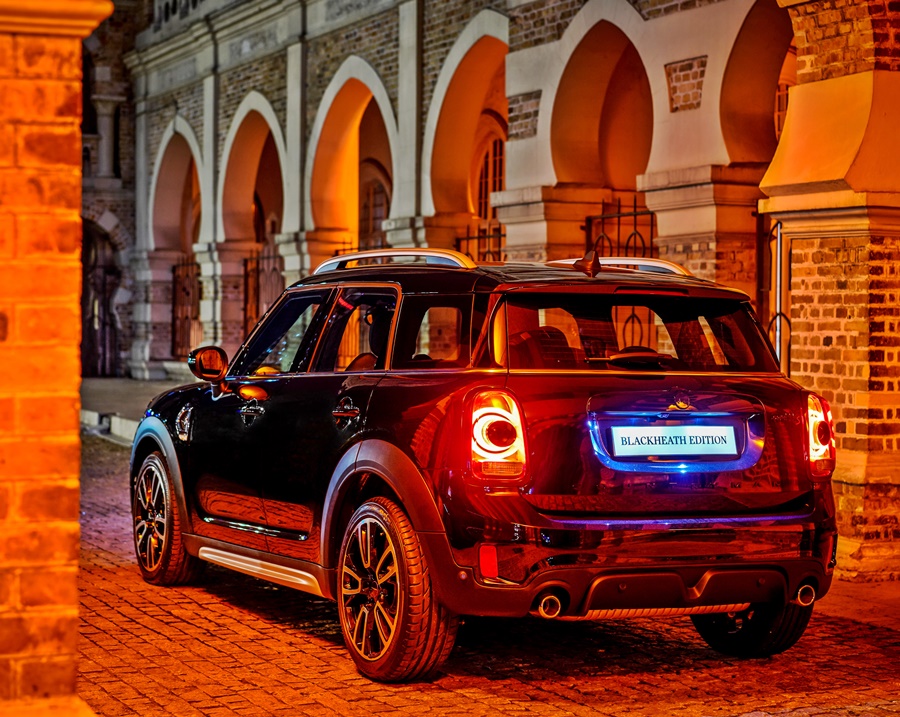
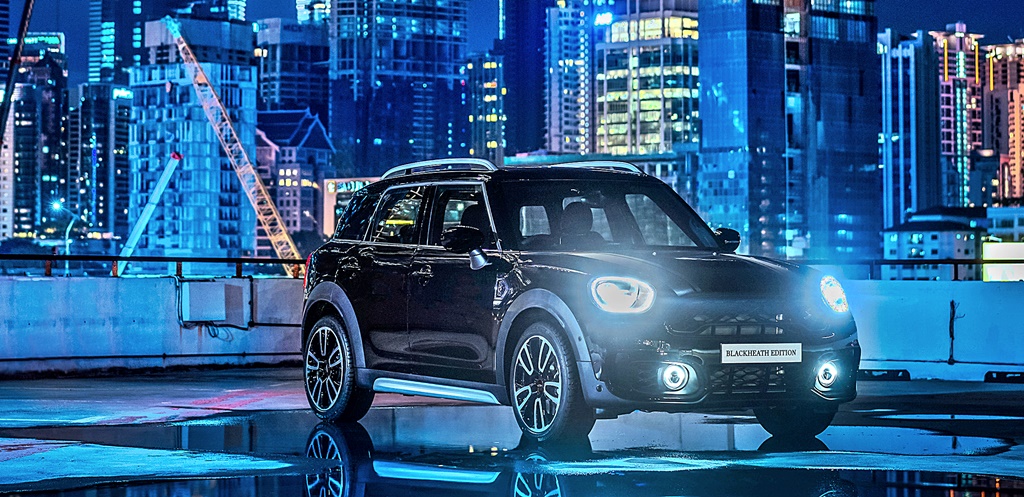
The first special edition of the new MINI Countryman generation – the Blackheath Edition – is now available in Malaysia. This limited edition model features a dramatic all-black design, reminiscent of the stunningly dark shrub land of Blackheath in southeast London in the UK.

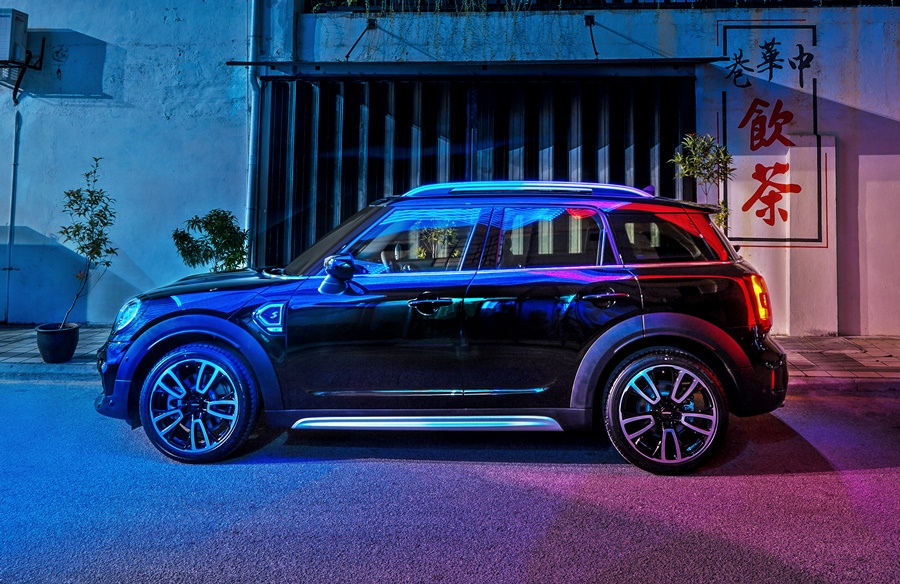
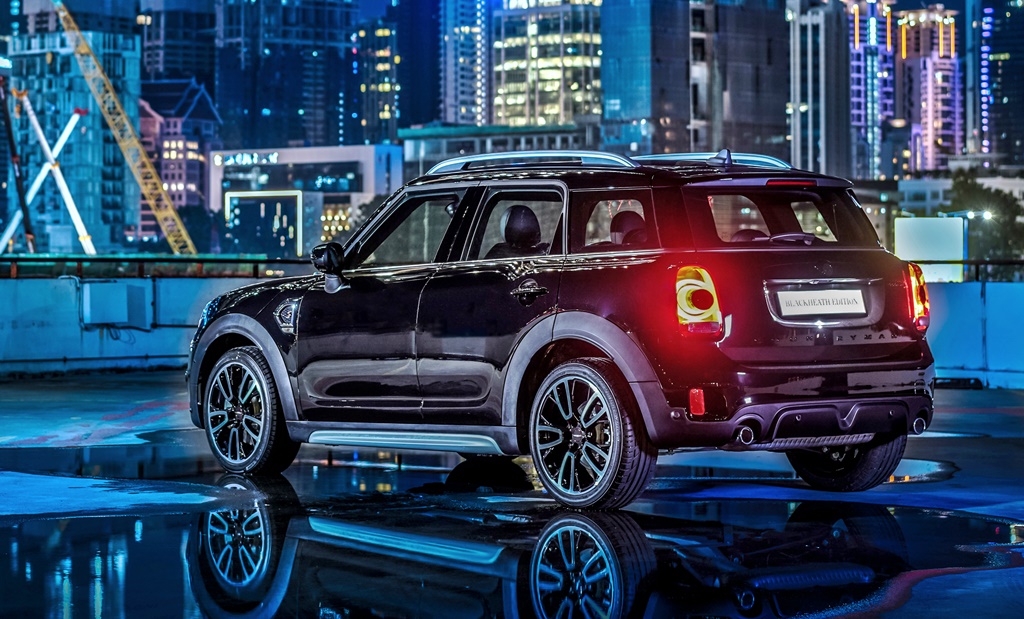
The Countryman Blackheath Edition, which is also making its debut in ASEAN, has blacked-out design features – the highly-coveted stylistic choice for timeless elegance. It is available only in Midnight Black, the first time this exterior shade is offered on this generation of the Countryman.

MINI Countryman Blackheath Edition

What it comes with
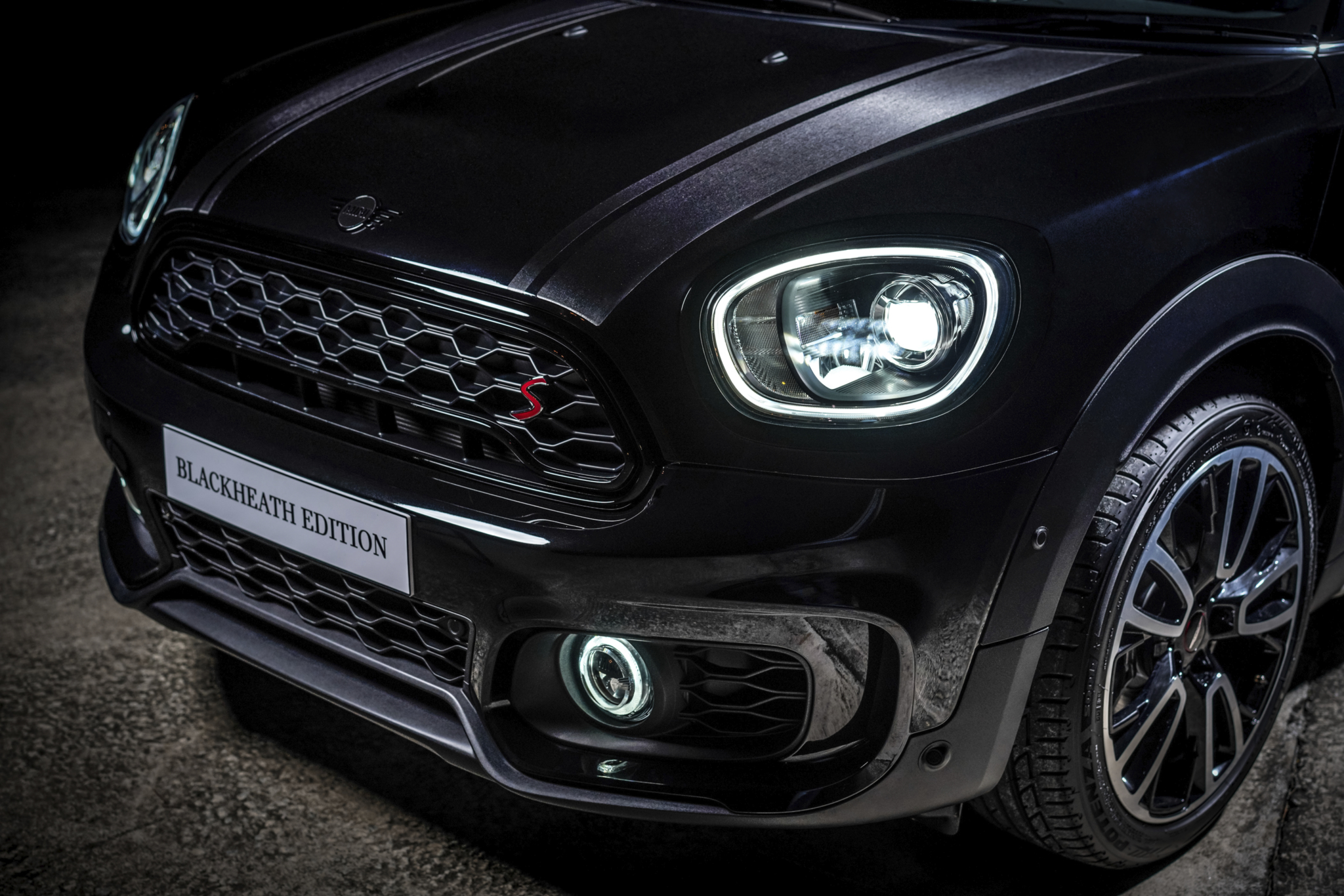
The limited edition comes with matte tone Bonnet Stripes in Brushed Aluminium as well as original MINI accessories. Piano Black Trims stylishly enhance the headlights and taillights, front grille, door handles, front and rear emblems and the COUNTRYMAN badge on the tailgate.

The Blackheath Edition also has newly designed LED foglights and aerodynamic mirror caps which were first seen on the MINI John Cooper Works Countryman 306HP that debuted last year. 19-inch John Cooper Works Circuit spoked wheels are fitted with run-flat tyres, along with the John Cooper Works Aerodynamic kit.

MINI Countryman Blackheath Edition

MINI Countryman Blackheath Edition

MINI Countryman Blackheath Edition

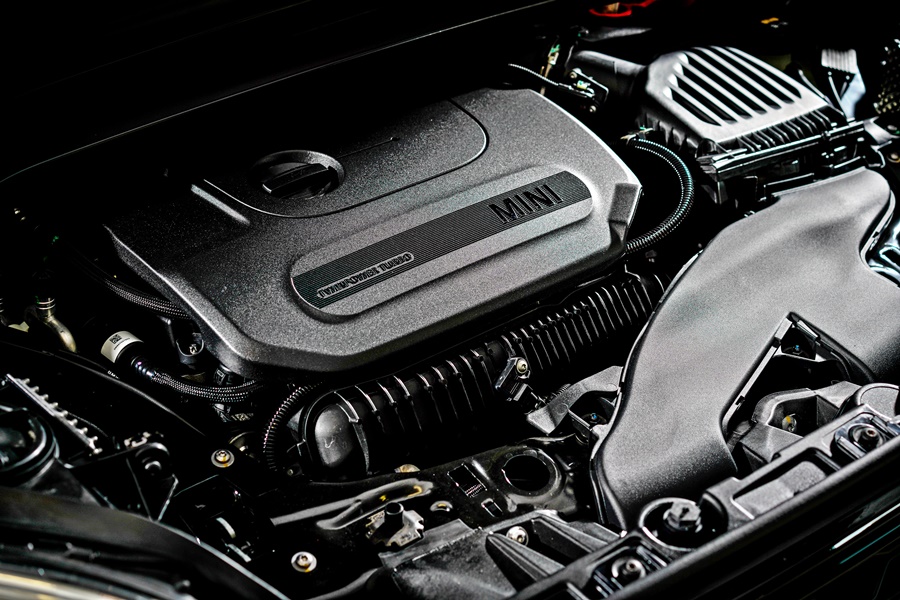
The Blackheath Edition is the first MINI Countryman to be powered by the newly updated MINI TwinPower Turbo engine (192 bhp/280 Nm), paired with the 7-Speed Sport Dual Clutch Transmission. Claimed 0 to 100 km/h time is 7.5 seconds with a top speed of 225 km/h, while consumption is said to be up to 15.1 kms/litre.

Sophistication within
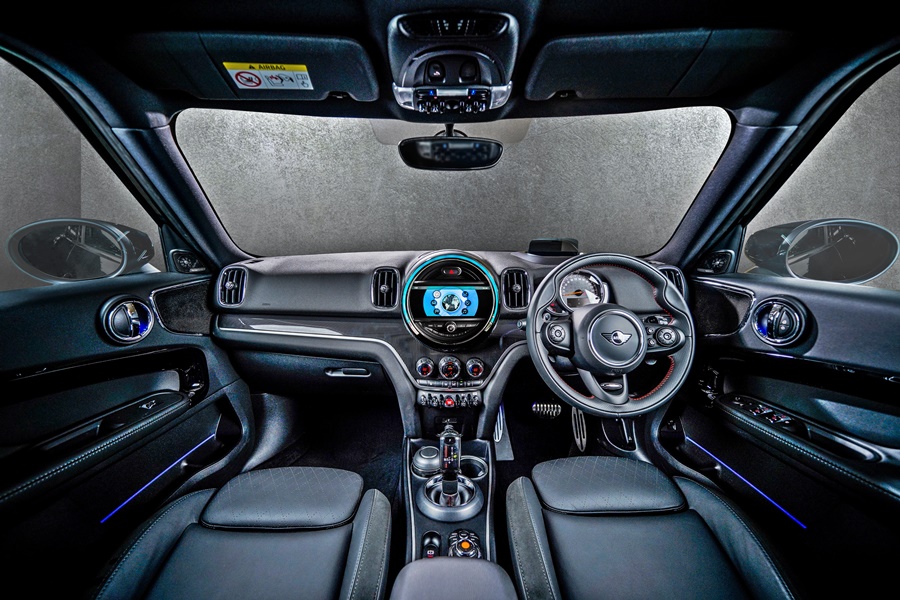
Giving the cabin a touch of sophistication is the sleek Anthracite headliner complemented with sports seats in Leather Cross Punch in Carbon Black. The interior is further accentuated with the MINI Yours Illuminated Interior Trim in Piano Black, allowing the driver full personalisation from 12 ambient colours via a single toggle. Music is delivered by 12-speaker Harman Kardon Sound System with DSP Amplifier and Class-D technology with a 360-watt output.

MINI Countryman Blackheath Edition

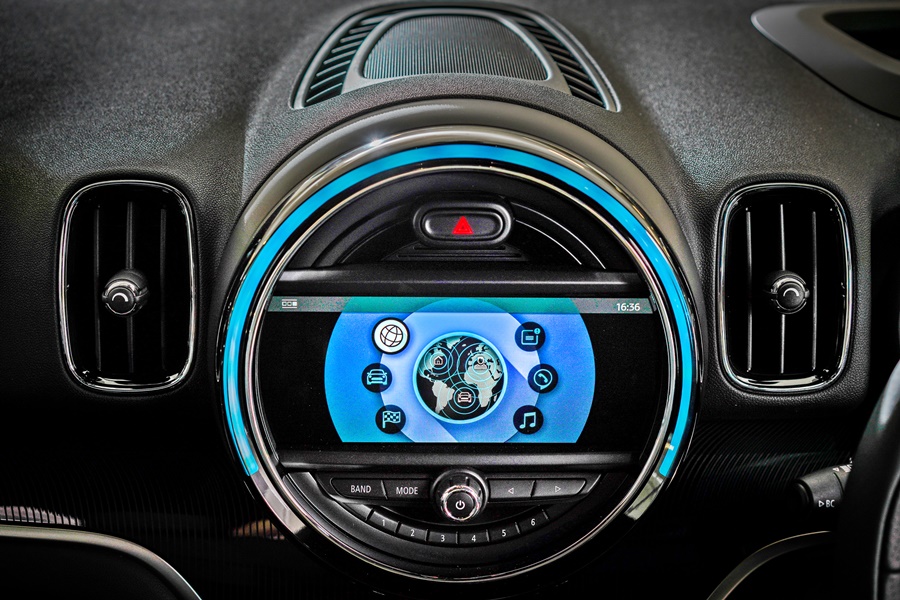
The 8.8-inch MINI Navigation System can be operated via the touchscreen, centre console or voice control. Also included is the advanced MINI Connected with built-in 4G SIM technology that is permanently present in the car and meets the 4G mobilephone standard, along with the Intelligent Emergency Call and MINI TeleServices.

MINI Countryman Blackheath Edition

The current update of the MINI Connected App links the driver to an exceptionally wide range of digital services such as Concierge Service, Apple Carplay and MINI Online that allow mobility planning to be integrated seamlessly in day-to-day digital routines.

MINI Countryman Blackheath Edition

Priced from RM253,888 (without insurance), the Blackheath Edition is covered by a 4-year unlimited mileage warranty. Owners also enjoy free scheduled service during that period as well as access to a Roadside Assistance programme for the first 5 years of ownership.

MINI Malaysia Welcomes The New MINI Countryman Plug-In Hybrid! [+Video]

PISTON.MY

Archive

Follow us on Facebook

Follow us on YouTube