Piston.my

English

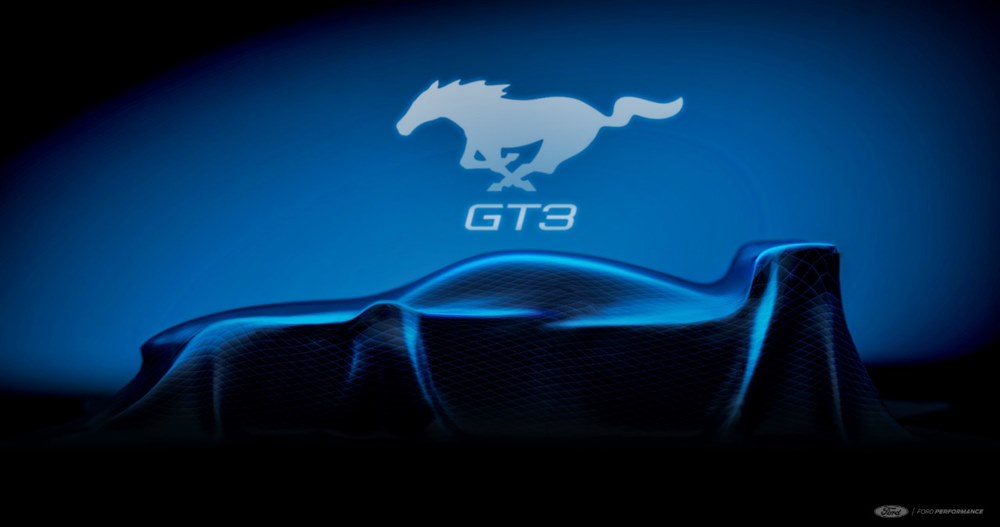
Right from its earliest years, the Ford Mustang has made a name for itself in motorsports, not just in America but also in other parts of the world. In fact, one of its earliest victories was class wins in the Tour de France in 1964, the same year it was born. In 2024, the iconic sportscar will lead Ford’s return to global sportscar racing as Ford Performance prepares a new GT3 race car for competition.

The all-new Mustang GT3 racing car will compete in the International Motor Sports Association (IMSA) 2024 race season, including the 24 Hours of Daytona. It is being developed under a joint program between Ford Performance and long-time racing collaborator Multimatic Motorsports.
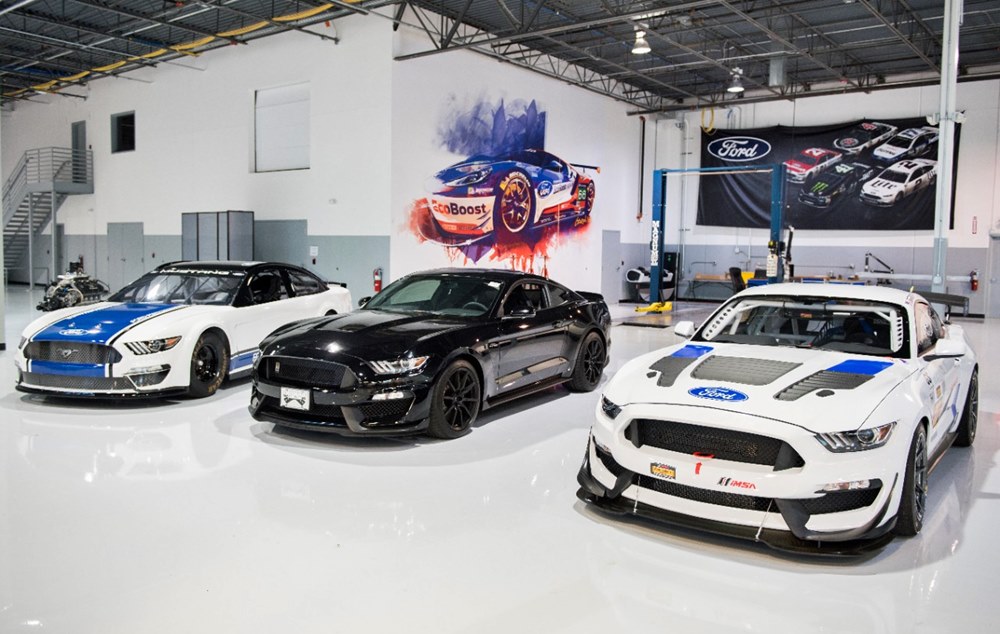
The Mustang has a long history in motorsports going back to its earliest years and today, Ford Performance develops race-ready cars for sale.

“Mustang was born to race from the start and we’re thrilled to introduce the GT3 version to compete head-to-head against some of the greatest manufacturers in the world,” said Mark Rushbrook, Ford Performance Motorsports Global Director. “With 58 years of global endurance racing heritage, including NASCAR and Australian Supercars today, we are ready to take Mustang to the next level of global performance.

“Multimatic Motorsports is the perfect partner on this project for us,” he added. “Not only have they worked with us to develop numerous customer Mustang programs in the past, but its work on the Ford GT program and the new Bronco DR customer race programs has shown together we can provide championship-level race programs for Ford and its customers.”
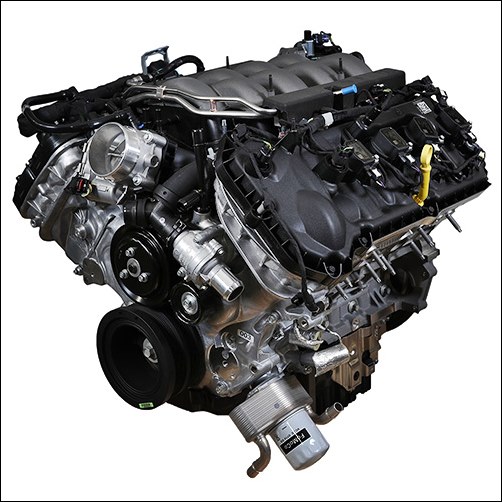
One of the many versions of the Ford Coyote 5-litre engine which Ford Performance makes and sells to racing teams.

Coyote-based V8
The Mustang GT3 will be powered by a Ford 5-litre Coyote-based V8 engine developed by Ford Performance and built by long-time racing collaborator and world championship winning team, M-Sport in England. M-Sport developed and prepared the Ford Puma Hybrid Rally1 which finished 1-3-5 in its debut race at the 2022 Monte Carlo Rally recently.

“We are delighted to be broadening our relationship with Ford and extending it into the racing world after a very successful 25 years together in the World Rally Championship, which is once again delivering stunning results with the Puma Hybrid Rally1,” said Malcom Wilson, owner of M-Sport. “M-Sport has a wealth and depth of circuit racing knowledge and expertise, particularly from our GT3 programme that used an M-Sport developed V8 engine for GT3 that powered us to victory in the 2020 Bathurst 12-hour race and 2019 1000km of Paul Ricard.
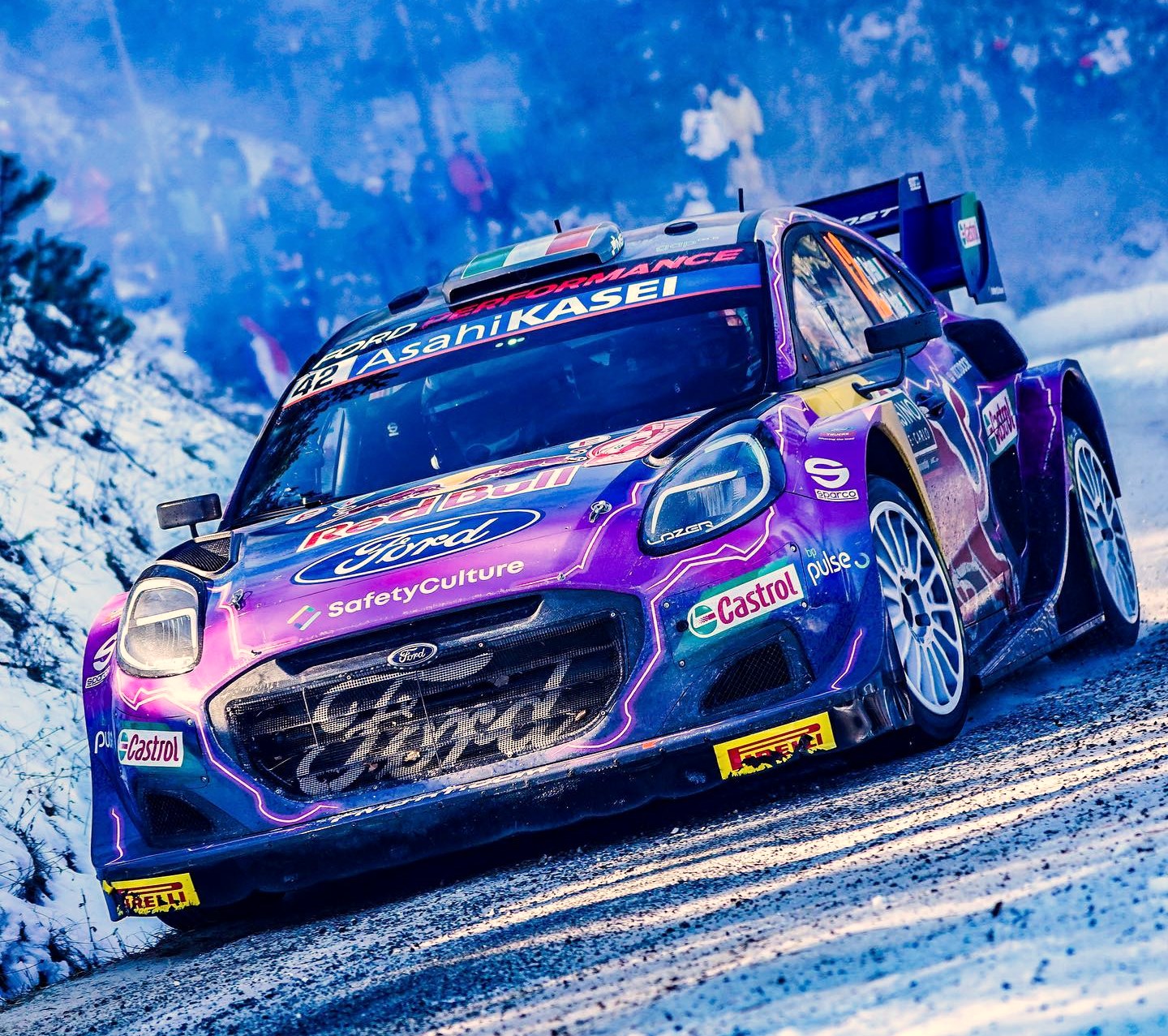
Ford Puma Rally1 with a hybrid powertrain which won the 2022 Monte Carlo Rally recently was developed and prepared by M-Sport Ford in England.

The race-specific powerplant will continue the heritage of high performance naturally-aspirated V8s on the Mustang platform. The Coyote engine, which was introduced in 2011, will have performance and packaging modifications to make it championship-ready for international GT3 endurance racing.

It will feature bespoke Short-Long Arm suspension front and rear, rear-mounted transaxle gearbox, carbonfibre body panels, as well as a unique aero package developed to meet GT3 targets.

Ford and Multimatic will make both factory-backed and customer-ready GT3 Mustangs available to teams from the start of the 2024 season.
New Mustang GT4 too
Although the Mustang GT3 for IMSA is new, Ford and Multimatic confirmed that the successful Mustang GT4 customer race program will continue into the future, with a new Mustang GT4 expected to debut in the 2023 season.

“It’s important to us to continue to support the Mustang GT4 effort as well,” said Rushbrook.  “We’ve had a lot of success both here and in Europe with the current Mustang GT4, and we look forward to being able to provide our customers with a brand new car for competition in the GT4 category starting next season.  We’ll have more to say on that in the near future.”
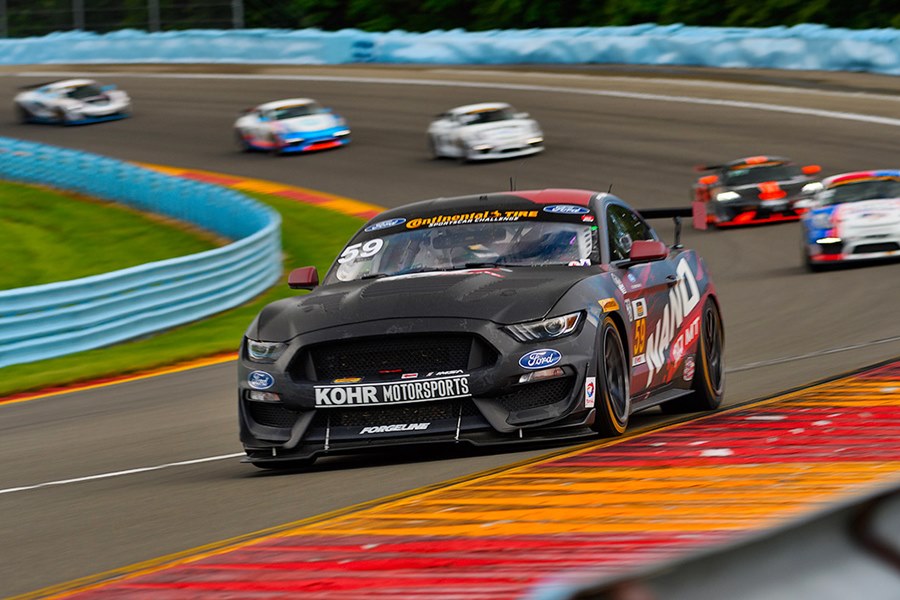
Inspired by the Ford Shelby GT350R-C, the current Mustang GT4 has been designed and engineered jointly by Ford Performance and Multimatic Motorsports to compete in sportscar championship racing series globally.

The new Mustang announcements for sportscar racing adds to a series of new racing Mustangs coming in the near future for Ford Performance. The 2022 Next Gen Ford Mustang will debut in the NASCAR Cup series at two races next month. Ford Performance is also developing its new Gen 3 Mustang for the Supercars Series that will debut at the start of 2023.

Ford GT Heritage Edition pays homage to 1964 prototype of Le Mans winners

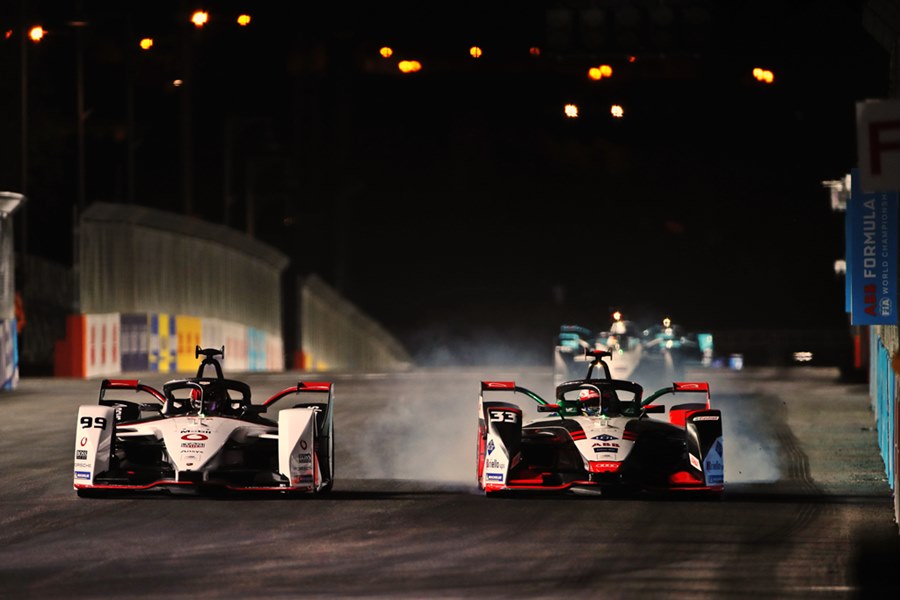
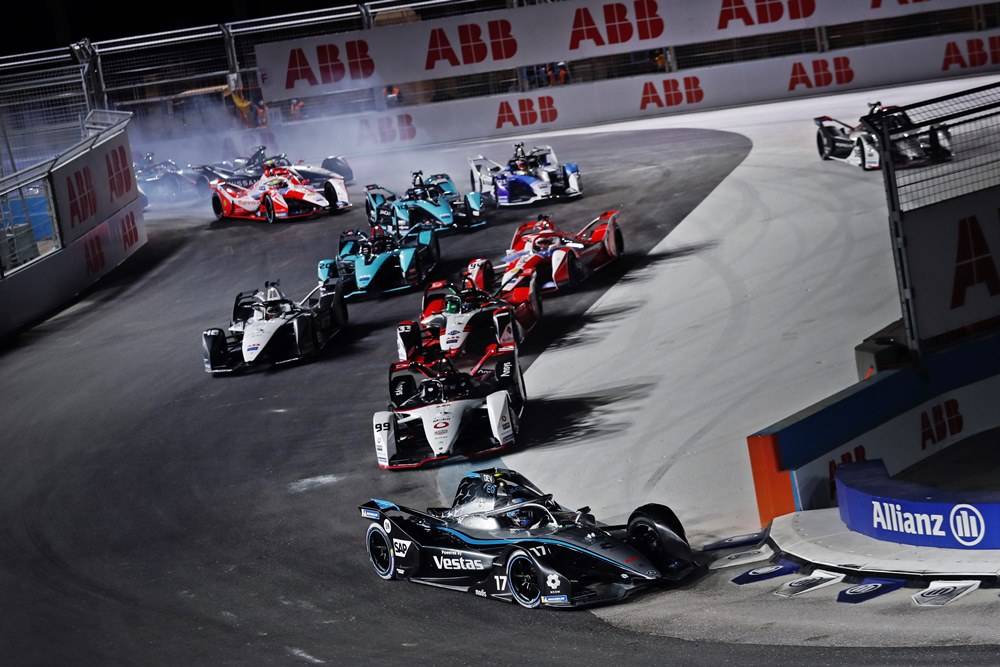
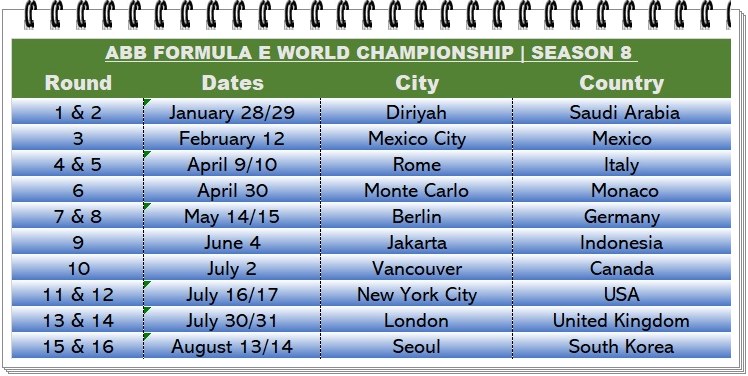
A new season of the ABB FIA Formula E World Championship starts today in Saudi Arabia, at the UNESCO World Heritage Site in Diriyah. Today and tomorrow, 22 drivers will race their electrically-powered single-seaters around one of the most technically challenging tracks of the series – under lights as the race will be run after sunset.

The 11 teams will be participating in the first of 16 races on the 2022 and reigning World Champions Nyck de Vries and Mercedes-EQ are looking to defend their Drivers’ and Teams’ World Championship titles the team leaves the series. The Mercedes-EQ team will not continue into the Gen3 era, a move which was announced after the final race of Season 7.

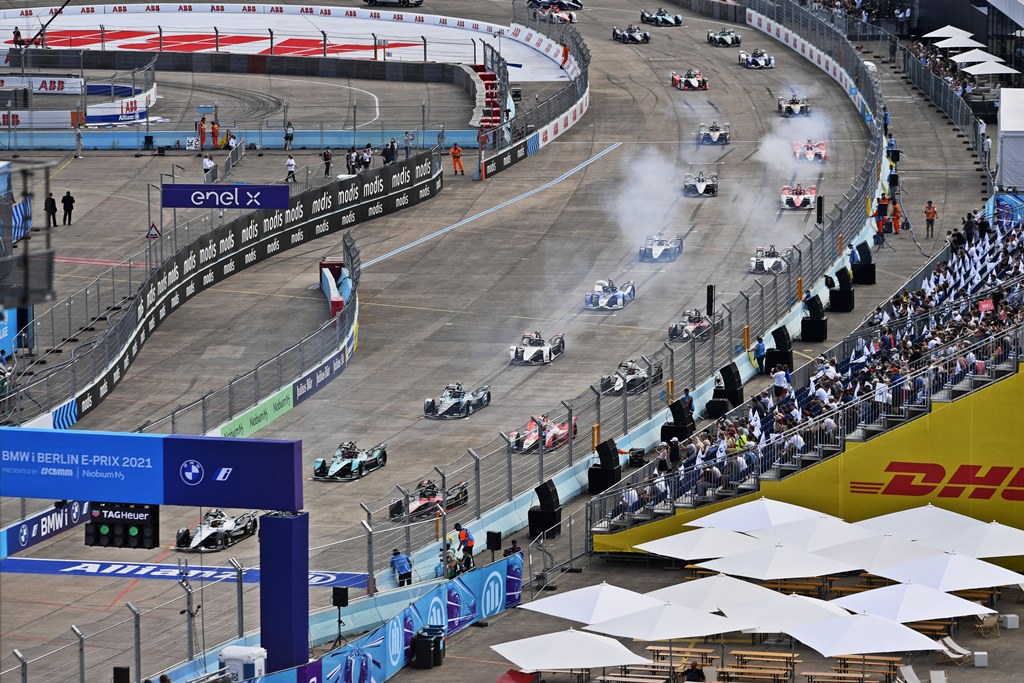
Final round of Season 7 in Berlin last year.

Three new drivers
While their closest rivals from last season field unchanged line-ups, this season sees three new drivers take a seat in the most competitive Formula E grid to date, including new addition and ex-Formula 1 racer, Antonio Giovinazzi. Mitch Evans and Sam Bird are back with Jaguar TCS Racing while DS TECHEETAH confirmed that double champion Jean-Eric Vergne once again lines up with Season 6 title-winner Antonio Felix da Costa.

Envision Racing will seek to build on a positive Season 7, with Robin Frijns impressing on the way to fifth in the standings last time out, and Nick Cassidy is no longer just the head-turning rookie but a serious contender. After a storming maiden campaign, Avalanche Andretti’s Jake Dennis is back and is joined by the only American driver on the grid, 2019 Indy Lights champ Oliver Askew.

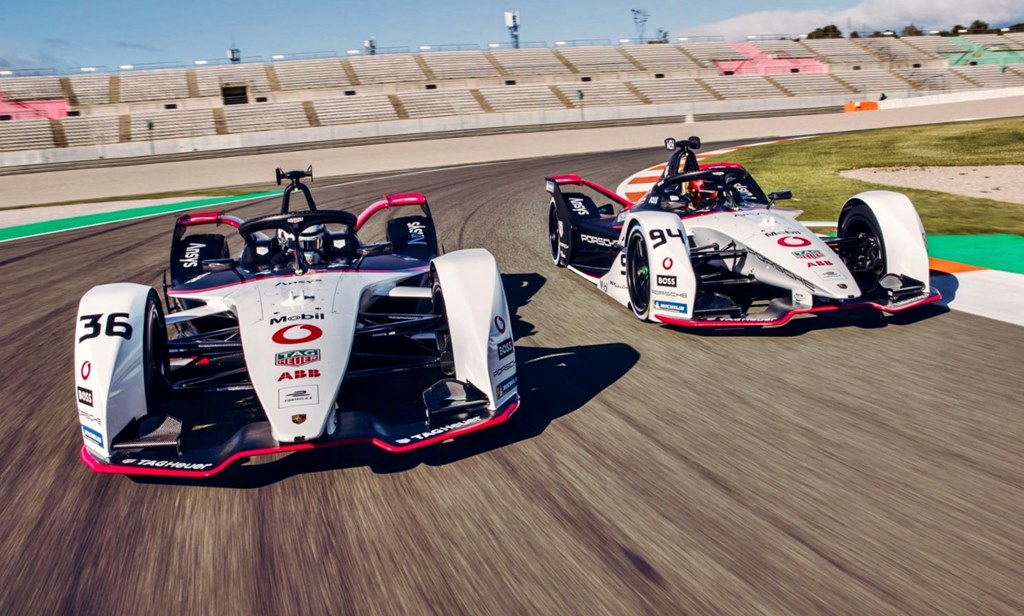
ROKiT Venturi Racing head into a new campaign full of optimism with last year’s runner up Edoardo Mortara joined by 2016/17 champion Lucas di Grassi at the Monegasque team this season. TAG Heuer Porsche Formula E Team’s all-German line-up remains where Pascal Wehrlein and Andre Lotterer go again in search of Porsche’s maiden race win in all-electric motorsport as Oliver Rowland joins countryman Alexander Sims at Mahindra Racing.

Maximilian Guenther makes the switch to Nissan e.dams, alongside 2015/16 champion Sebastien Buemi, while DRAGON / PENSKE AUTOSPORT snapped up Antonio Giovinazzi fresh from Formula 1, with the Italian joining Sergio Sette Camara. At NIO 333, Oliver Turvey is joined by multiple Macau Grand Prix winner and current FIA Formula 2 Championship front-runner Dan Ticktum.

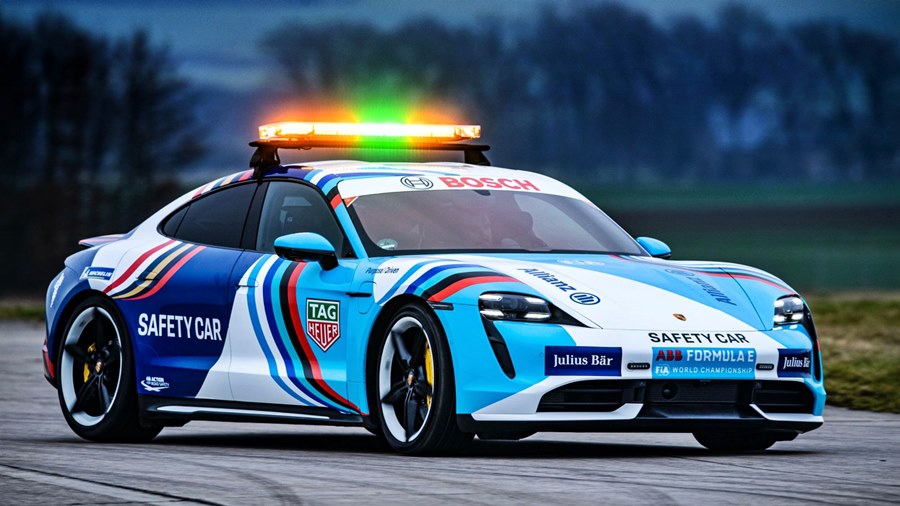
New Safety Car for Formula E – the Porsche Taycan.

Revised regulations
From Season 8, Formula E races can now have additional race time of up to 10 minutes added when incidents cause Safety Car or Full Course Yellow neutralisations during the 45-minute plus one lap race.

This being the final season for the Gen2 racing cars, they will be pushed to the max. During races, the drivers will be able to tap into 220 kW of power, which is 200 kW more than the last season. When available, power generation during ATTACK MODE will also increase to 250 kW from 235 kW.

There’s a new qualifying format for this season featuring Groups and knockout Duels. It’s a first in world motorsport and will debut in Diriyah to provide a completely new challenge for drivers and teams to tackle.

Double-header after sunset
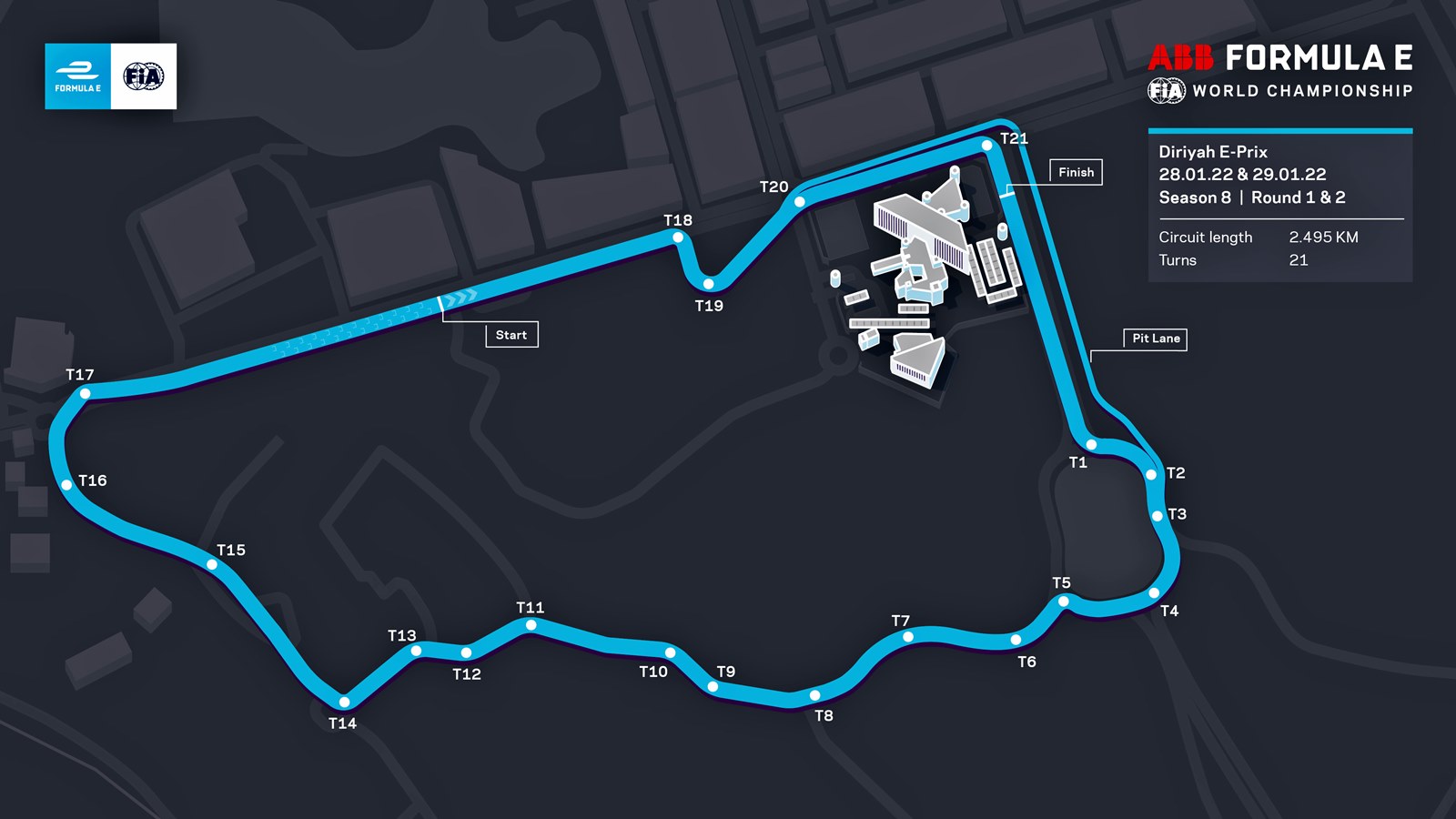
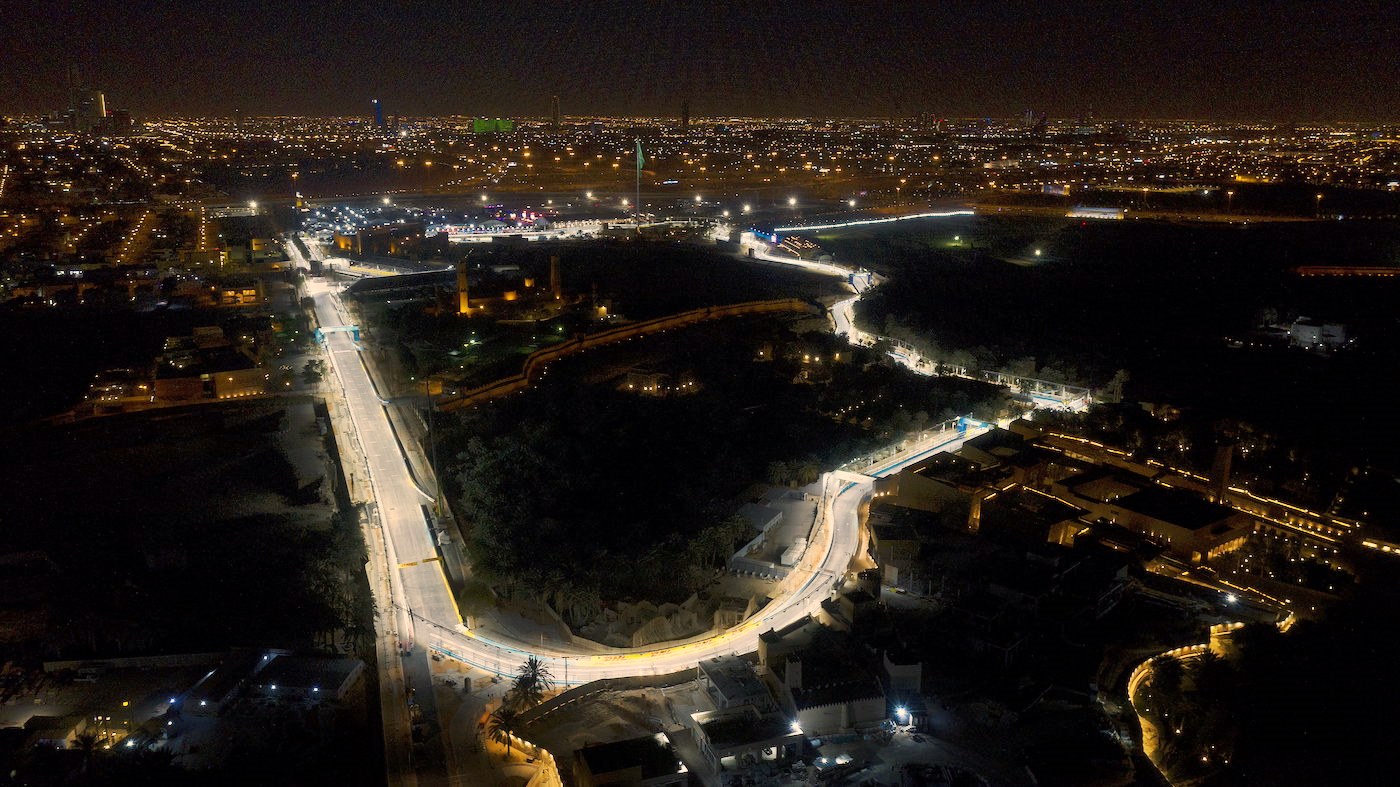
Formula E broke new ground with its first night races, working closely with Saudi Arabia’s Ministry of Sport to turn the dream of a sustainable night race into reality at an adapted Riyadh Street Circuit. The fast and flowing 21-turn 2.49-km circuit, flanking the At-Turaif UNESCO World Heritage Site, will once again be lit up by the latest low-power LED technology. These reduce energy consumption by up to 50% compared to non-LED units, and are powered by sustainably-sourced biofuel generators.

Formula E manufacturers are set to take delivery of Gen3 cars in coming months for further intensive development testing on and off the track. These new racing cars are said to be the world’s most efficient racing cars with a series of design, performance and sustainability innovations. The Gen3 car will be the first formula car with both front and rear powertrains: a new front powertrain adds 250 kW to the 350 kW at the rear, more than doubling the regenerative capability of the current Gen2 car to a total of 600 kW.

Maserati to officially return to racing in 2023 with a team in Formula E

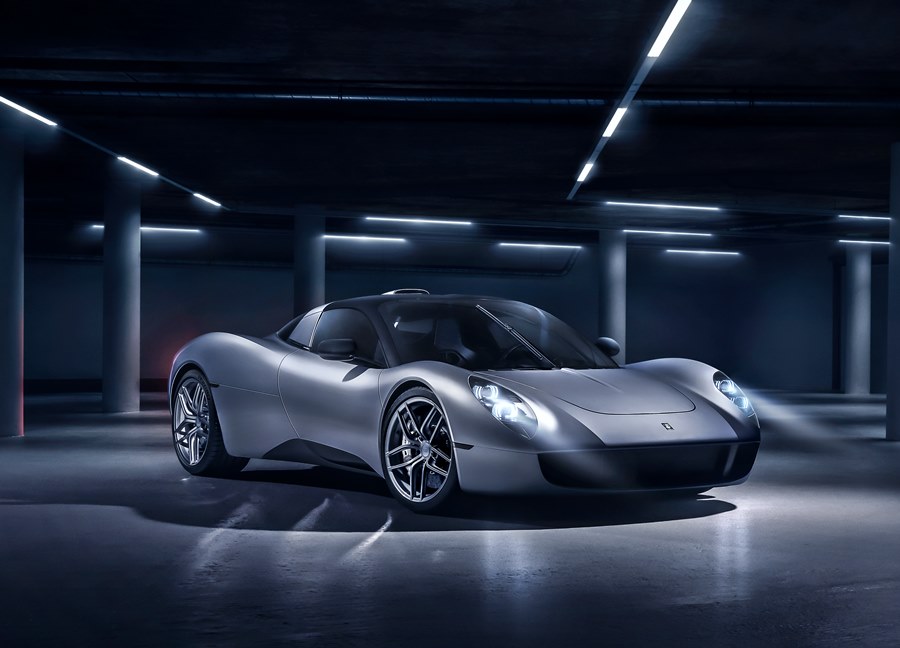
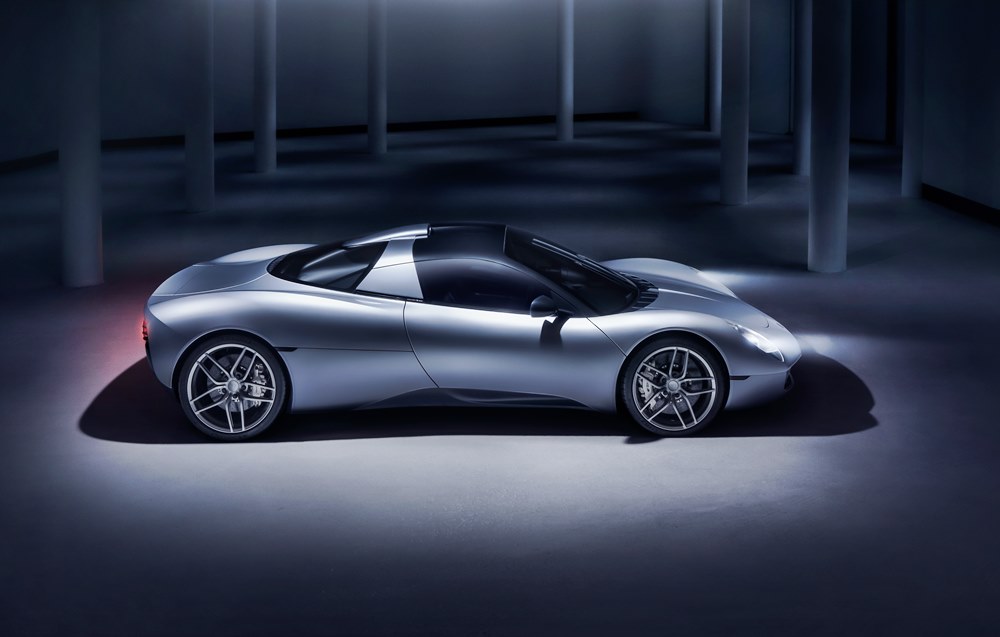
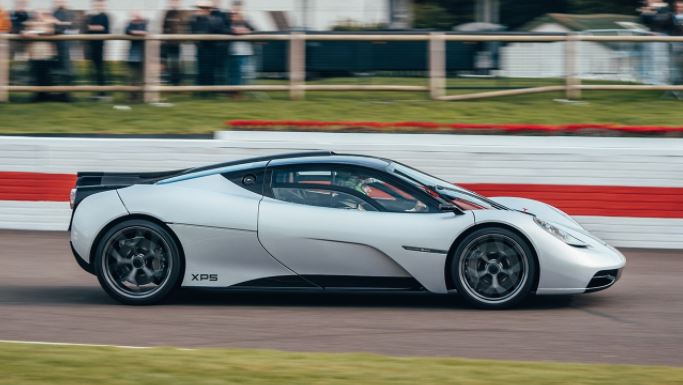
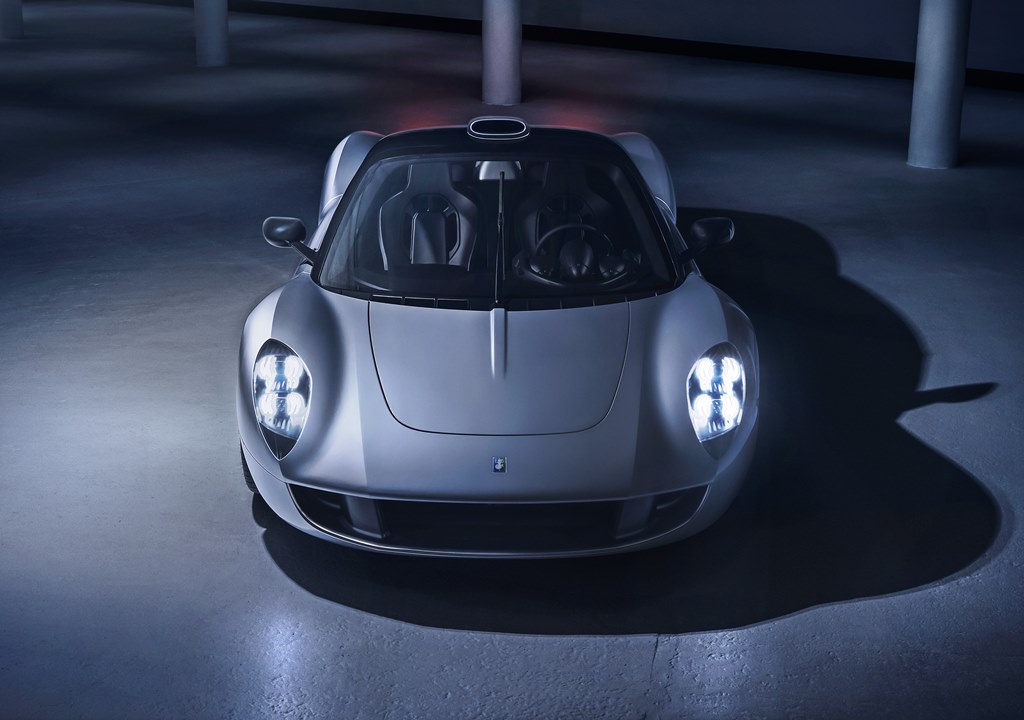
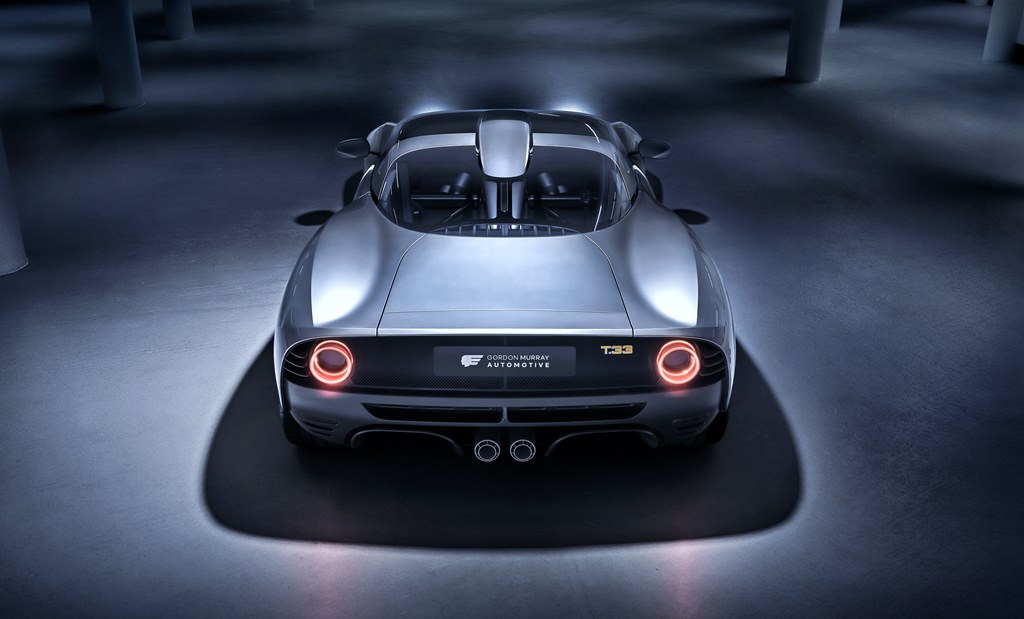
Gordon Murray Automotive (GMA) has unveiled the much-awaited T.33, the second newly developed model from the company which joins the T.50 and T.50s Niki Lauda in the line-up. As with the T.50, the aim with the T.33 has been to provide a supercar with a timeless design that has similar driver focus, performance, and light weight but which is also a different sort of machine.

The T.33 has been designed by Gordon Murray and his team with strict adherence to the company’s guiding principles. It has an entirely new carbonfibre/aluminium superlight architecture with a carbonfibre bodyshell that is a perfectly proportioned and balanced form.

GMA T.33

GMA T.50

Engineering art
“The beauty of simplicity is the key to the design of every GMA model, and the new T.33 is no exception. As with the T.50 and T.50s, each component and every curve and radius is a bespoke design on the T.33 and is there because it has a function to perform. Our slavish adherence to the concept of engineering art extends far beneath the surface of the T.33’s body. Every part, no matter how small and no matter that the owner may never see it, is designed to the same exacting standards as the body,” said Professor Murray who was Technical Director for two successful F1 team (Brabham and McLaren).

When it was launched in 2020, the GMA T.50 rewrote the supercar rulebook with the most advanced and effective aerodynamics ever seen on a roadcar, enabled by its unique rear-mounted fan. Now, the equally innovative T.33 creates a new era of roadcar ground effect aerodynamics. This time there is no use of a rear fan as in the T.50. Instead, the engineers have used numerous lessons learnt with the T.50 project to create a Passive Boundary Layer Control (PBLC) system.

At the front of the car, a ground effect inlet channels air underneath the floor. A diffuser with a boundary layer removal duct activated by the base suction behind the car enables a level of aerodynamic efficiency that is 30% more effective than the conventional ground effect supercar.

The ground effect dynamics provided by the PBLC system freed the team from the need to equip the T.33 with the wings, skirts and vents that adorn most modern-day supercars. The only concession is the active rear spoiler, which deploys automatically, but can also be activated by the driver. The rear spoiler also provides a high downforce mode, increasing downforce and an aero enhanced braking function.

GMA-Cosworth V12 engine
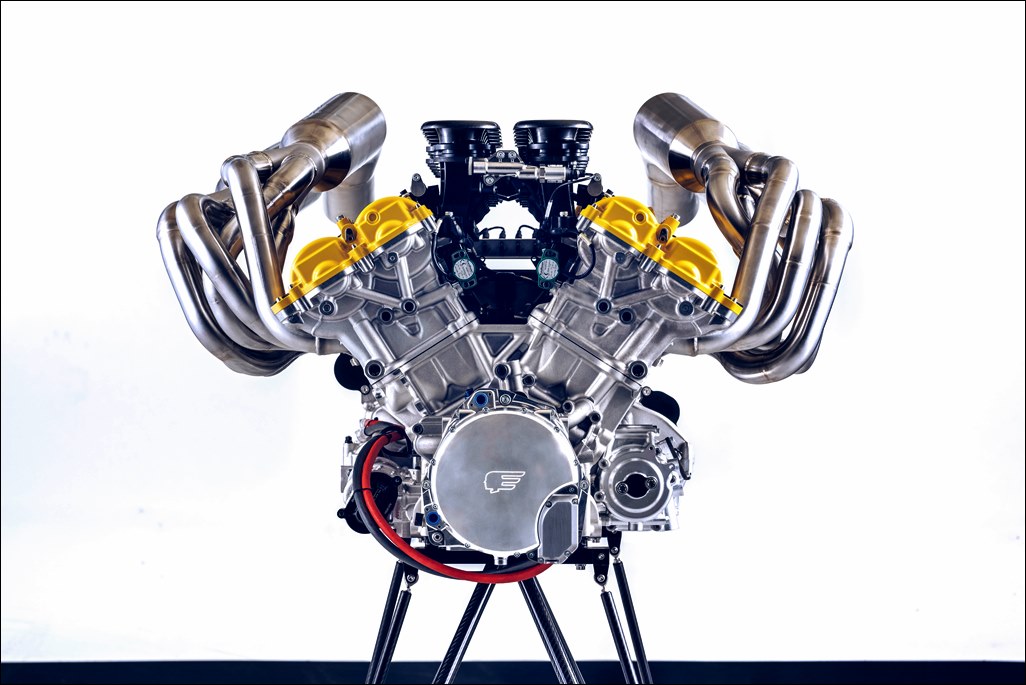
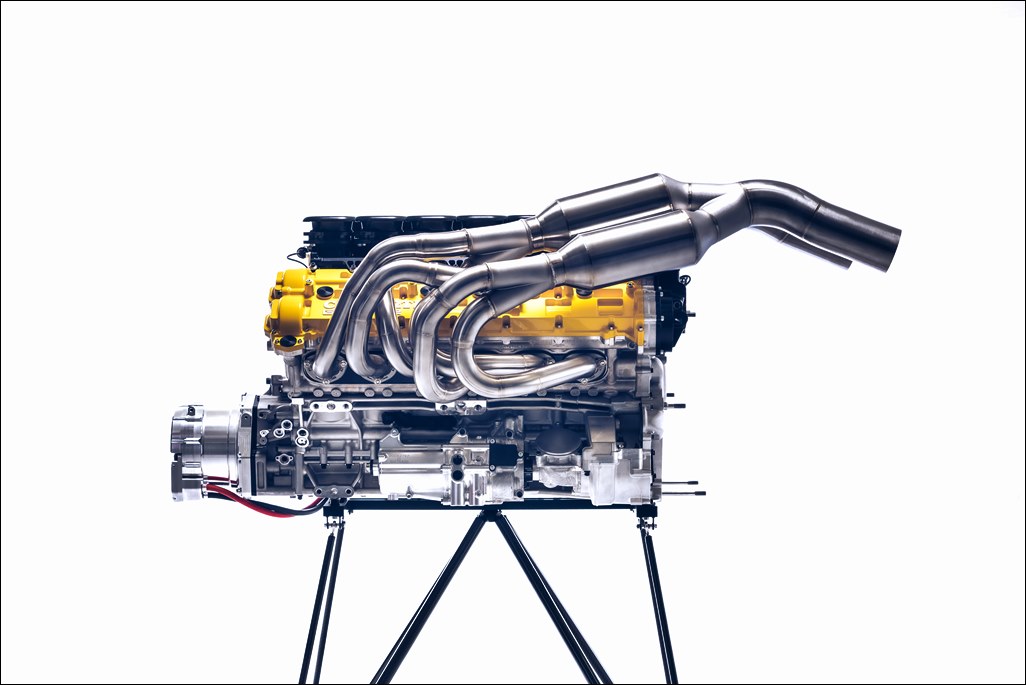
The T.33’s GMA.2 V12 3.9-litre engine, developed with Technical Partner Cosworth, is an all-aluminium unit weighing 178 kgs. It can spin to a redline of 11,100 rpm, with peak power of 615 ps at 10,500 rpm and maximum torque of 451 Nm at 9,000rpm. 75% of the available torque is generated at 2,500rpm and from 4,500 rpm to 10,500 rpm, the driver has 90% of maximum torque.

GMA T.33

While GMA and Cosworth chose to retain the V12 cylinder heads, albeit in modified form, completely new camshafts, variable valve timing, and engine mapping have been introduced to ensure perfection in response and power delivery. Along with a new ram induction intake system, a new exhaust system has been developed which delivers a signature sound. The engine mountings, water cooling, and oil cooling systems are also entirely new and were developed specifically for the T.33’s engine.

To efficiently deliver all that power to the wheels, Xtrac created a totally bespoke 6-speed transmission. Customers will be able to order either a manual gearchange or an Instantaneous Gearchange System (IGS) paddle shift actuation. The transmission is combined with a low inertia clutch and a Limited-Slip Differential (LSD).

GMA T.33

“Nothing was taken for granted, and no part was automatically carried over without due diligence and consideration. Numerous systems and components were re-engineered and re-designed to pursue excellence, and we are 100% confident that the GMA.2 V12 provides the perfect match for the T.33’s driving characteristics,” Professor Murray said.

The extremely light supercar is fitted with an entirely new suspension package. Lightweight double wishbones are deployed front and rear in conjunction with coil springs over aluminium alloy dampers. The front suspension configuration features an anti-roll bar and aluminium alloy uprights. At the rear of the chassis, aluminium alloy uprights and toe control links are deployed, along with an Inclined Axis Shear Mounting (IASM) system. The IASM system has the rear suspension mounted directly to the transmission casing with the torsional loads supported by the chassis and the entire powertrain mounted on anti-vibration bushes.

Purely functional interior
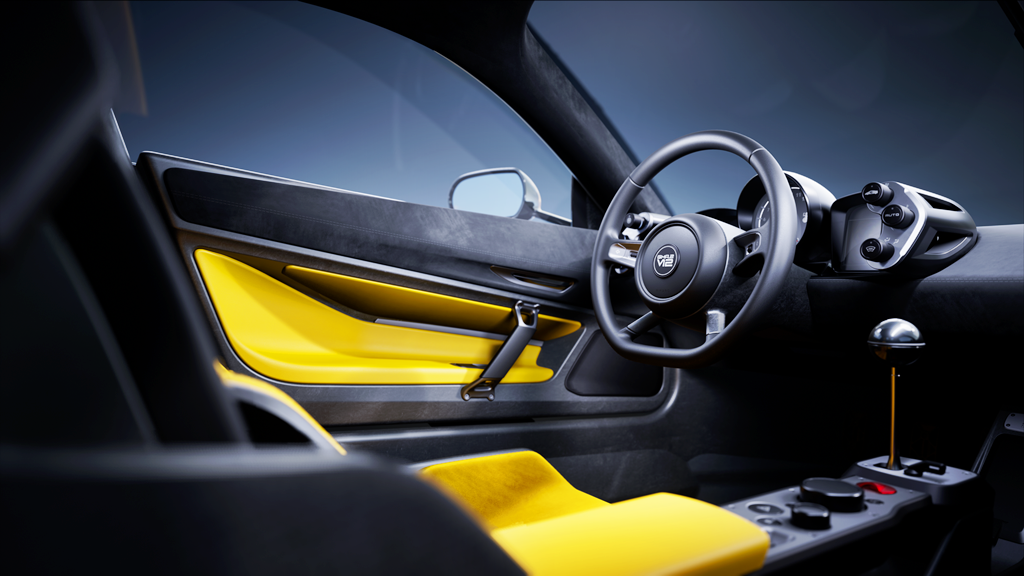
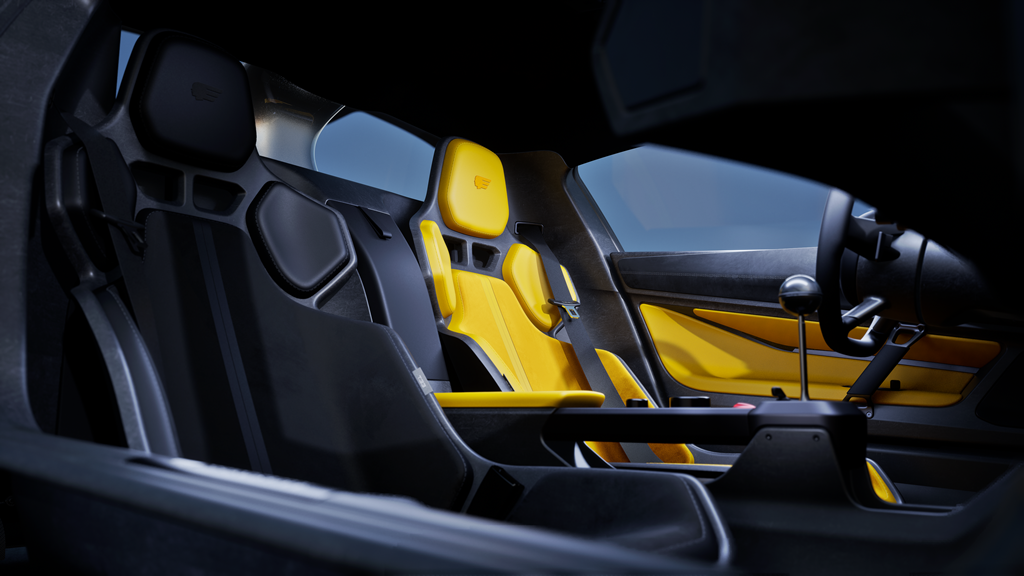
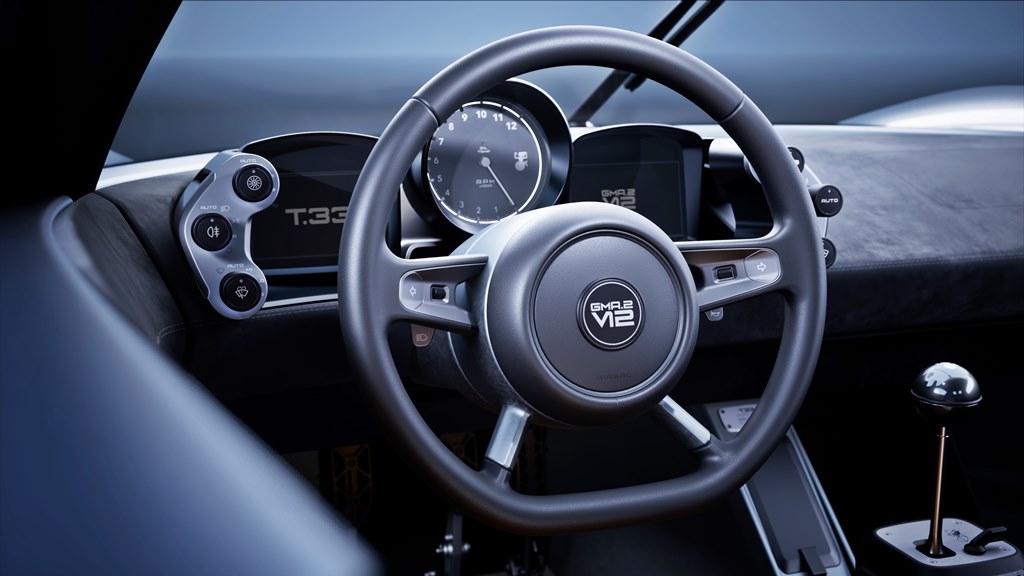
To enter the cabin of many modern-day supercars is to enter a world of large touchscreens and endless sub-menus that cause confusion and distraction. No touchscreens are found within the simple 2-person cabin of the T.33. As with the exterior, nothing is included unless it serves a purpose and if there was a danger it would dilute the driving experience, then it was simply deleted from the development programme. The car is even devoid of column stalks; instead, the indicators are operated by thumb-buttons on the carbonfibre steering wheel’s horizontal spokes.

GMA T.33

GMA T.33

GMA T.33

The T.33 is intended for sale globally so regulations for virtually every country, including the USA, will be considered so it can be homologated worldwide. Customers can choose between right-hand or left-hand drive and then personalise the car. However, only 100 people will be able to buy one which will have an estimated price of £1.37 million (around RM7.7 million) ex-factory.

Gordon Murray’s T.50 supercar revealed in full

In the late 1990s, the ‘merger of equals’ between Chrysler and Daimler led to the start of the mega corporations in the auto industry. The new company was the result of the largest industrial merger ever, worth US$130 billion in 1998. While DaimlerChrysler lasted less than 10 years, it set in motion a rush of mergers in the industry and the next group to come together was Renault and Nissan, forming an alliance in 1999. The Alliance helped to save Nissan from financial collapse which went on to become a successful partnership with shared resources during the 2000s.

Renault-Nissan-Mitsubishi Alliance

In 2016, it was Nissan’s turn to help save another manufacturer – Mitsubishi Motors (MMC) – which lacked scale to progress healthily. With Nissan acquiring a 34% controlling stake in MMC, the smaller company was able to become a ‘junior partner’ in the Alliance.

One of the Alliance’s most competitive advantages is its ability to strengthen its members by sharing what each one is best at. This approach has allowed each company acquire and use new technologies while reducing costs, lowering prices and thus increasing business performance. For example, shared resources (60% of its models use common platforms) have helped the company focus on other areas of innovation.

Renault-Nissan-Mitsubishi Alliance
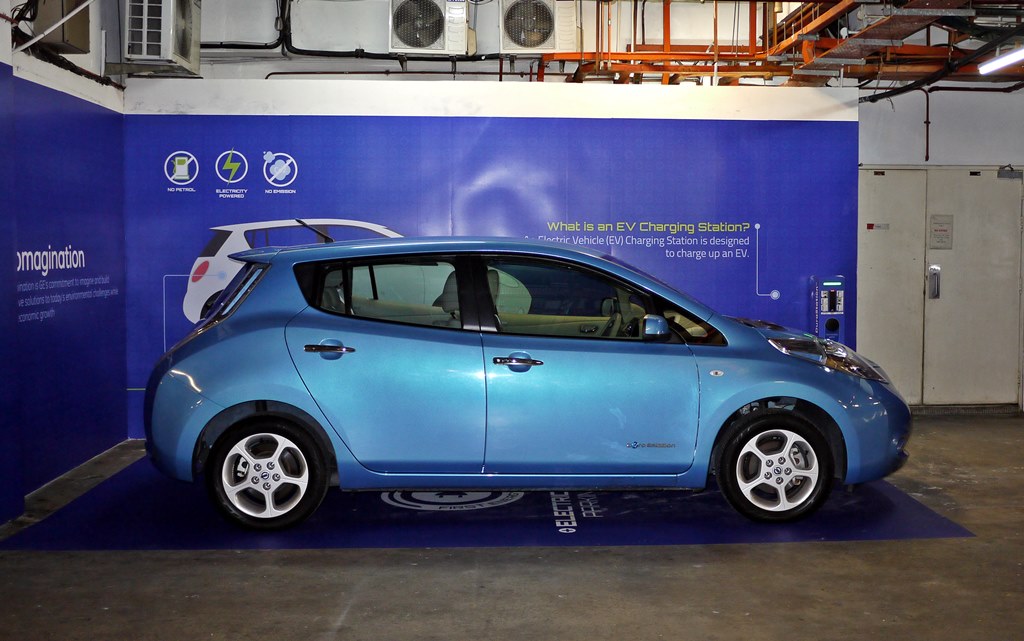
Nissan has had over 10 years of experience in developing and mass-producing electric vehicles. It started with sales of the LEAF in 2010 in many countries, including Malaysia, where Edaran Tan Chong Motor used its own funds to introduce the public to zero emission motoring.

The sharing will continue in a bigger way as the Alliance has announced more common projects and actions to accelerate and to shape their shared future towards 2030, focusing on the mobility value chain. The trio will use a common roadmap to 2030 on pure-EV and Intelligent & Connected mobility, with massive investments that none could make alone.

“Among the world’s automotive leaders, the Renault-Nissan-Mitsubishi Alliance is a proven, unique model. For 22 years, we have been building on our respective cultures and strengths for our common benefit,” said Jean-Dominique Senard, Chairman of the Alliance. “Today, the Alliance is accelerating to lead the mobility revolution and deliver more value to customers, our people, our shareholders and all our stakeholders. The three member-companies have defined a common roadmap towards 2030, sharing investments in future electrification and connectivity projects.

Renault-Nissan-Mitsubishi Alliance

Moving forward together
The Alliance members have developed a ‘smart differentiation’ methodology that defines the desired level of commonality for each vehicle, integrating several parameters of possible pooling, such as platforms, production plants, powertrains or vehicle segment. This is supplemented and enhanced by a stricter approach to design and upper-body differentiation. For example, the common platform for the C and D segment will carry 5 models from the 3 brands of the Alliance (Nissan Qashqai and X-Trail, Mitsubishi Outlander, Renault Austral and an upcoming 7-seater SUV).

Strengthening this process, the Alliance members will enhance usage of common platforms in the coming years from 60% today to more than 80% of its combined 90 models during the next 4 years. As part of this, MMC will reinforce its presence in Europe with two new models, among them the new ASX based on Renault models.

Renault-Nissan-Mitsubishi Alliance

5 common EV platforms
Renault, Nissan and Mitsubishi have been pioneers in the EV market, having begun offering products even before the acceleration began in recent years. Nissan, for example, began selling the fully electric LEAF in 2010 which has today become the volume leader globally. In the main markets (Europe, Japan, the US, China), 15 Alliance plants already produce parts, motors, batteries for 10 EV models, with more than 1 million EV cars sold so far and 30 billion e-kilometres driven. To date, the Alliance has invested more than 10 billion euros in the field of electrification.

Building on this long expertise, the Alliance will accelerate its EV business by adding a total of 23 billion euros during the next 5 years on electrification. This investment will see 35 new EV models by 2030. 90% of these models will be based on 5 common platforms, covering most markets, in all major regions

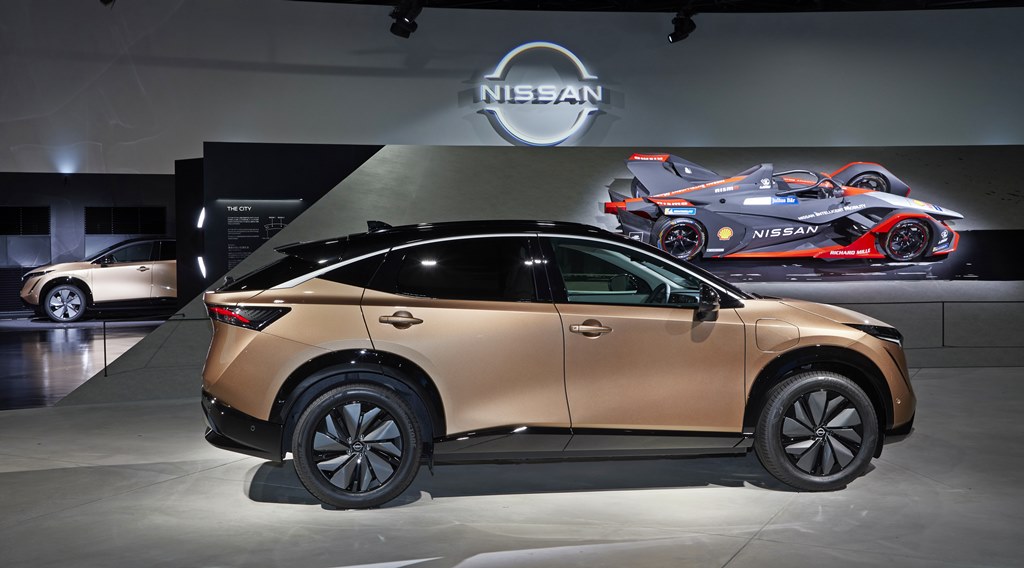
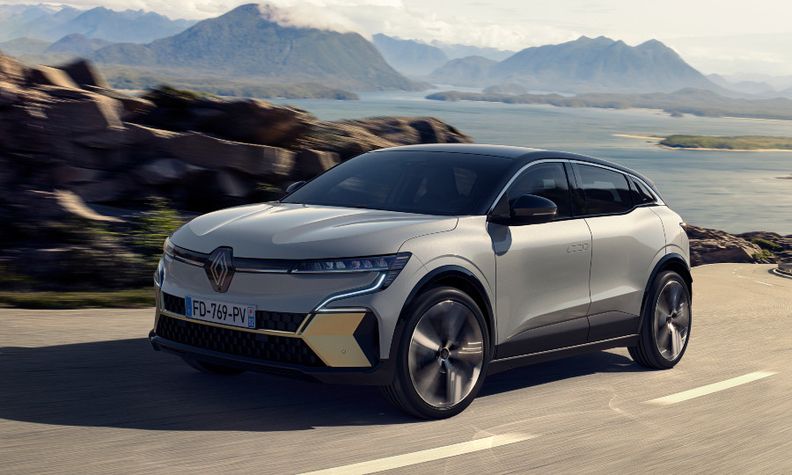
The first models to use the CMF-EV platform are the Nissan Ariya (above) and Renault Megane E-TECH to go on sale this year.

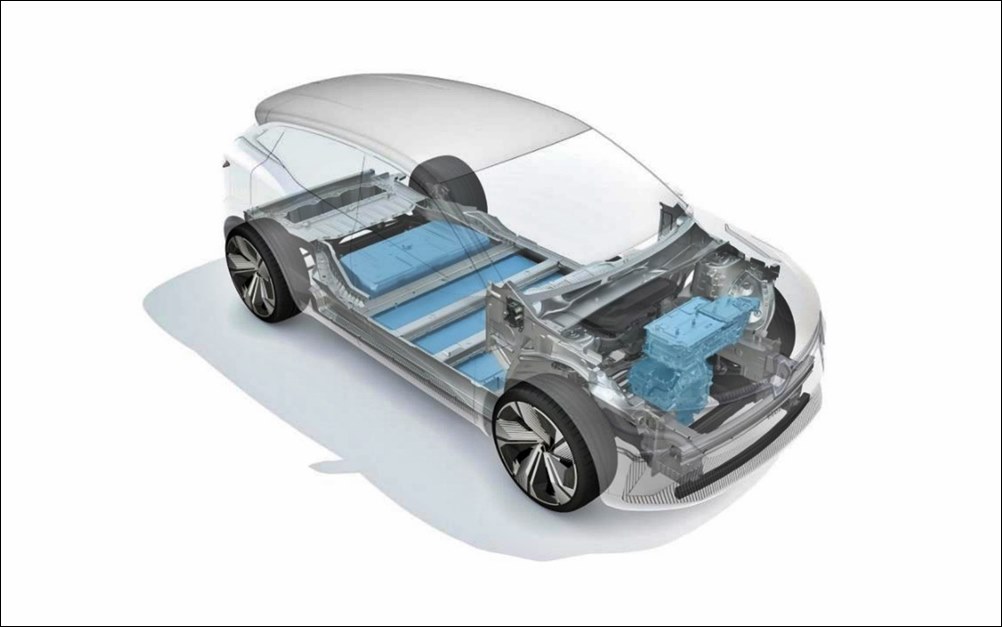
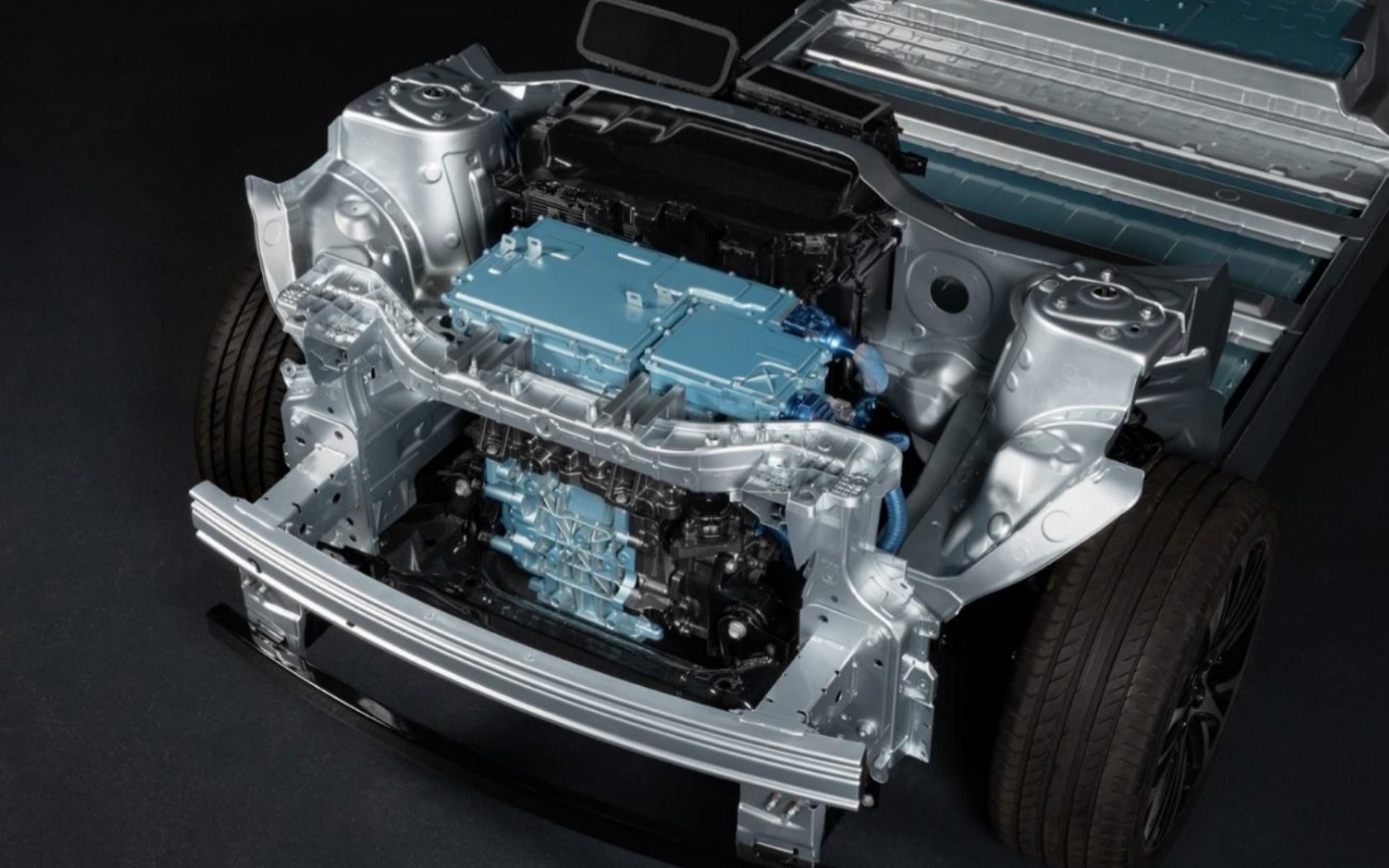
There will be platforms for small models as well as large light commercial vehicles, with the CMF-EV being  the global and flexible platform fully engineered for EVs. It is already being used as the base for the Nissan Ariya EV crossover and Renault Megane E-Tech Electric, and its modularity allows the Alliance partners to develop for a new generation of EVs.
The platform has been created to integrate and optimize all the elements specific to a 100% electric powertrain, hosting a new, high-performance motor and an ultra-thin battery. By 2030, more than 15 models will be based on the CMF-EV platform, with up to 1.5 million vehicles produced on this platform each year.

The CMFB-EV,  to be launched in 2024, will be the most competitive compact electric platform in the world, it is claimed. It will be able to provide up to 400 kms range from a fully-charged battery pack, thanks for efficient aerodynamic performance. Power consumption will also be more than 10% lower than the current Renault ZOE, while the cost will be lower by 33%.

Renault-Nissan-Mitsubishi Alliance
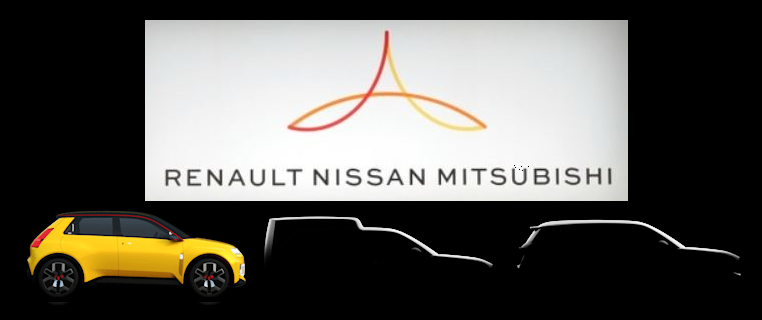
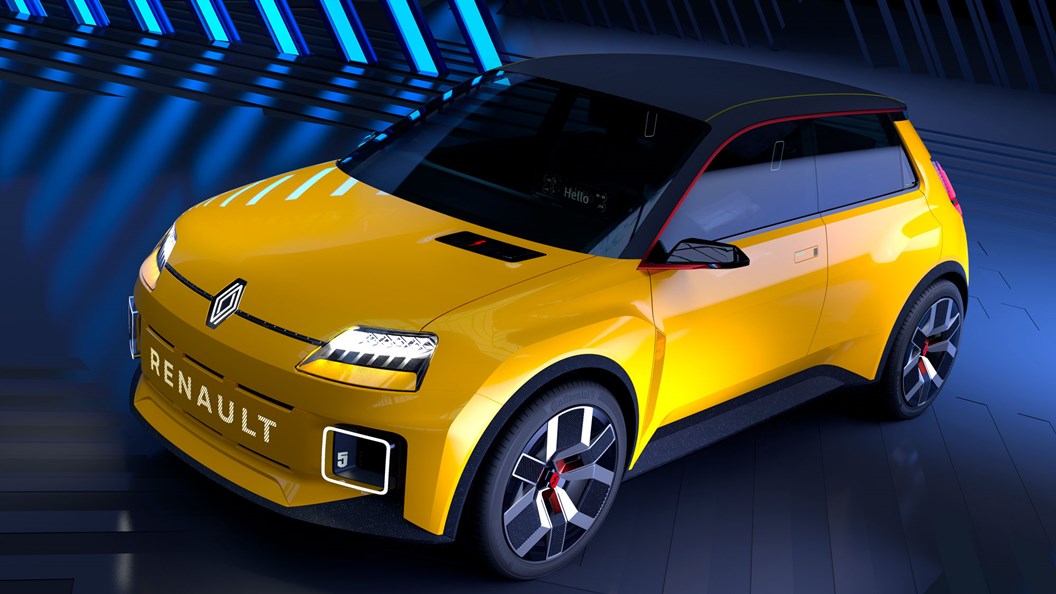
Concept model of the reborn Renault 5 that will be electrically powered.
Renault-Nissan-Mitsubishi Alliance
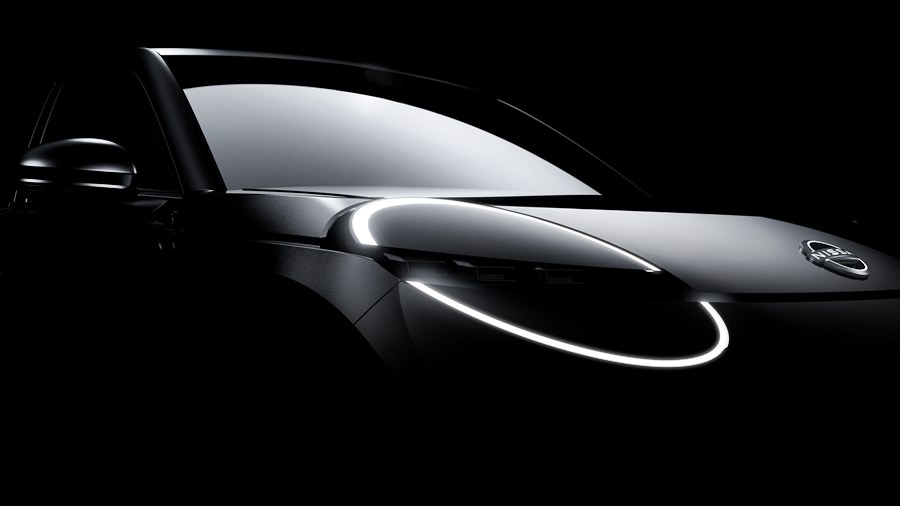
The next Nissan Micra will also use the compact CMFB-EV platform that the Renault 5 rides on.

This platform will be the base for 250,000 vehicles a year under the Renault, Alpine and Nissan brands. Among the new models will be the Renault R5 and a new compact EV that will replace the Nissan Micra. Designed by Nissan and engineered by Renault, the new model is planned to be manufactured at Renault ElectriCity, and electric industrial centre in northern France.

Common battery strategy
Battery technology and production are key elements in electrification strategies and with breakthrough battery innovations and a planned 220 GWh production capacity, the Alliance expects to bring a highly competitive and attractive offer to all customers. Competitiveness is key, and that can be achieved with a common battery strategy which will see (in core markets), Renault and Nissan using a common battery supplier so volumes will be higher for better economies of scale. The aim, with common partners, will be to reduce battery costs by 50% in 2026 and 65% by 2028.

Beyond that, the Alliance shares a common vision for all-solid-state battery technology (ASSB). Based on its deep expertise and unique experience as a pioneer in battery technology, Nissan will lead innovations in this area that will benefit all Alliance members. ASSB will have double the energy density versus current liquid lithium-ion batteries, while recharging time could be be greatly reduced to one-third of today’s time.

The Rolls-Royce Bespoke Collective – an elite team of engineers, designers and craftspeople based at the Home of Rolls-Royce in England – provides Rolls-Royce customers with the ultimate in personalisation of their cars. Almost every Rolls-Royce sold nowadays has some involvement from the Bespoke Collective – after all, when you pay over a million ringgit, why not spend a bit more to make your car truly unique.

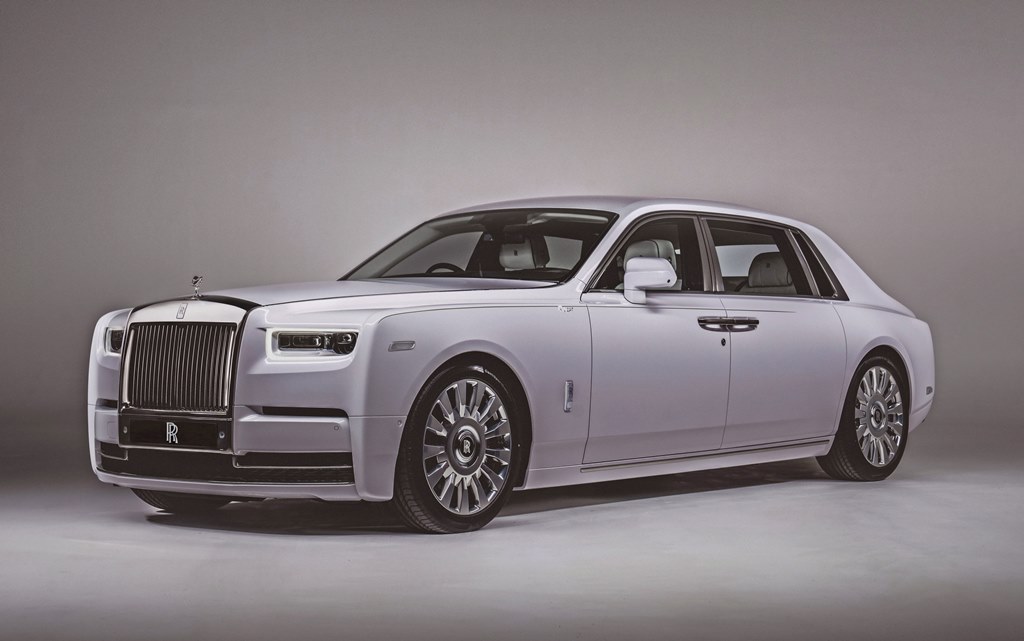
2022 Rolls-Royce Phantom Orchid

Most of the cars created by the Bespoke Collective are not publicised as their owners may prefer not to do so but some allow Rolls-Royce to show them to the world. The latest one is for a customer in Singapore, and appropriately, this customer wanted the orchid as the theme. The beautiful flower is especially close to the hearts of Singaporean as it is their country’s national flower.

Pioneering Bespoke work
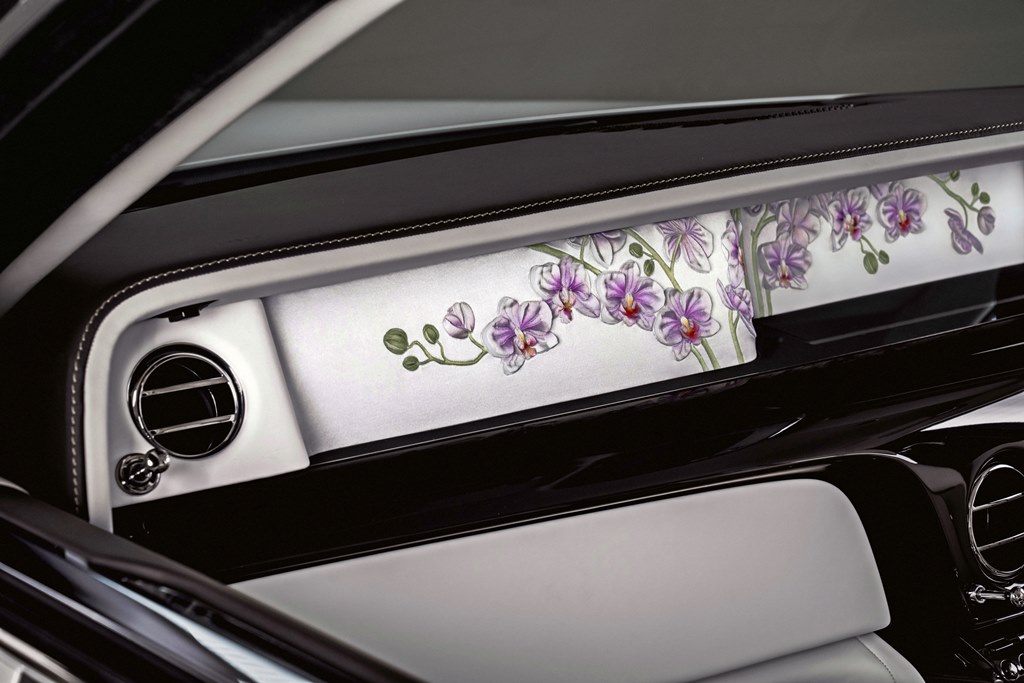
Designers, craftspeople and artisans collaborated with artist Helen Murray over a period of 2 years to create this ‘one of one’ Rolls-Royce known as the Phantom Orchid. Helen and her team have undertaken pioneering bespoke work with Phantom’s Gallery – a wholly contemporary and luxury reinterpretation of a motor car’s fascia and instrument panel area.

2022 Rolls-Royce Phantom Orchid

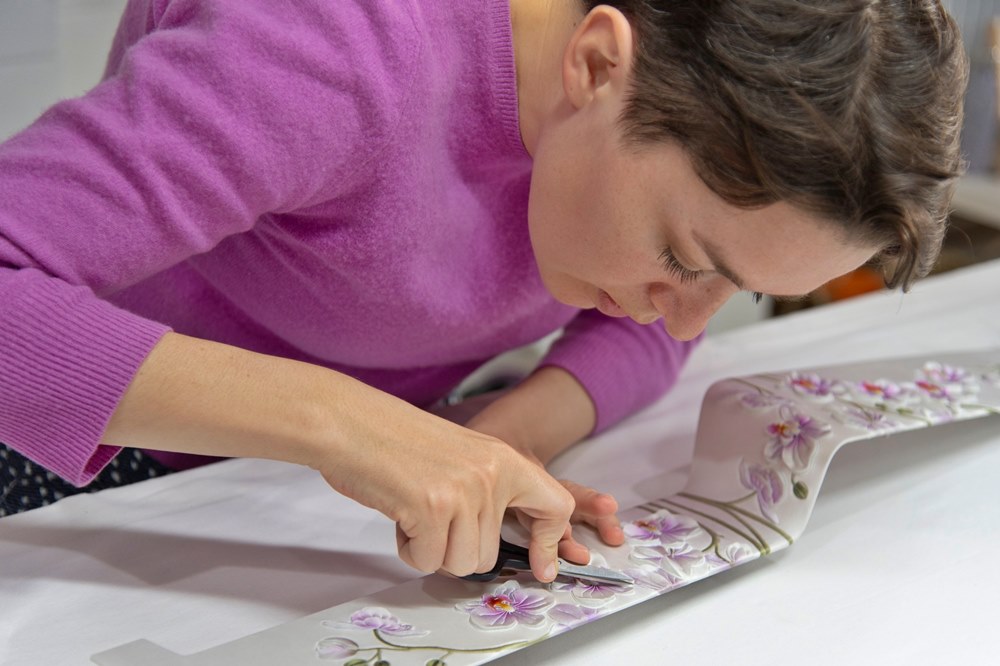
She was inspired by several kinds of orchids, including the Singapore Orchid, spending over 200 hours relentlessly refining her design and artwork with her team. “I started by focusing on the actual orchids, which promptly led me to realise that colour was key to capturing the essence of the species. I have created artworks featuring orchids in the past, but my idea for the Gallery was to create something in realistic full colour, which pushed us to refine our digital printing skills,” explained the UK-based artist and textile designer.

Murray started by illustrating the design by hand before creating a digital version that she could print directly onto the silk crepe satin. The final part of the process involved a meticulous hand-sculpting of the flowers, releasing layers of fabric to create a 3D effect.

2022 Rolls-Royce Phantom Orchid

Orchid Sanctuary
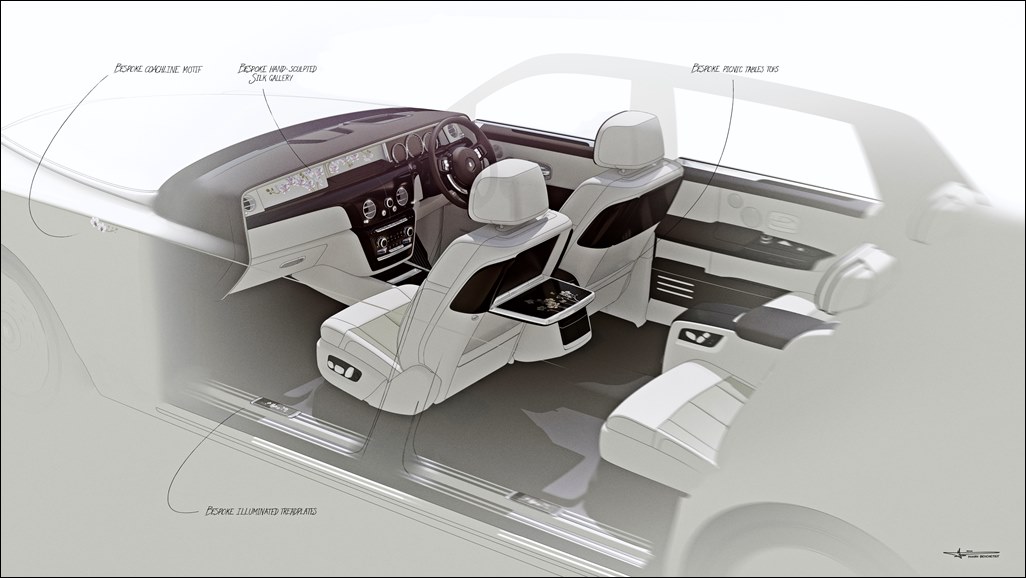
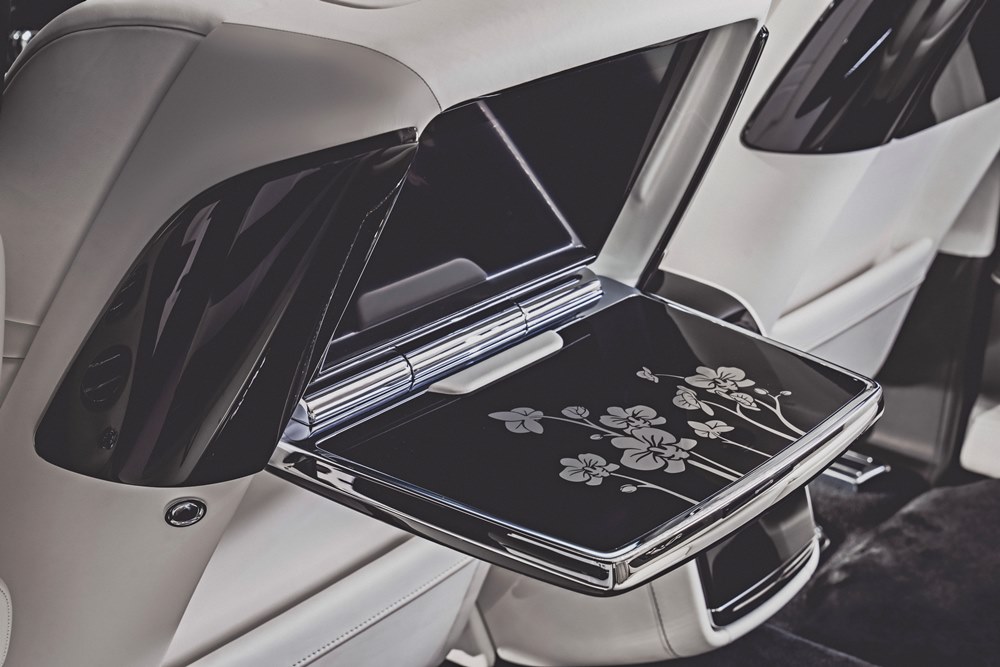
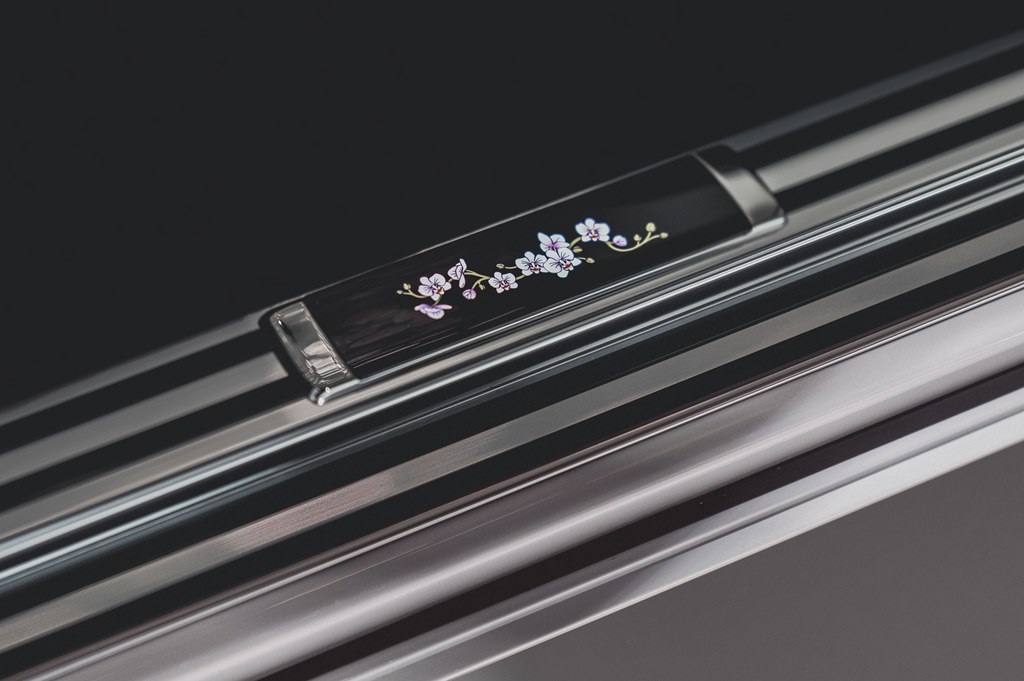
Within the interior, Rolls-Royce Bespoke Designer Yohan Benchetrit applied his talent to the Bespoke orchid-inspired Picnic Table inlays in the rear of the suite which, when opened, gracefully reveal a beautiful layer of orchids set into Piano Black veneer. He added Bespoke treadplates emanating a similar theme sans text to welcome the owner and passengers into the motor car. The interior suite meanwhile was furnished with elegant, natural colours which provide a soothing ambience akin to an Orchid Sanctuary.

2022 Rolls-Royce Phantom Orchid

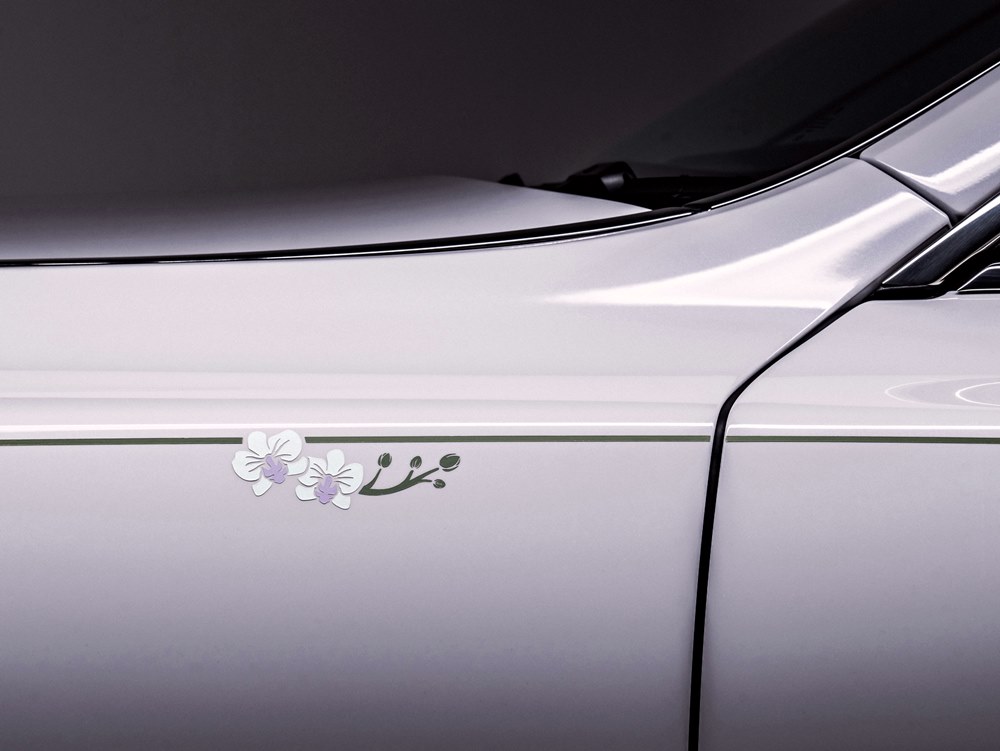
To complete this special Phantom, a unique paint was specially created  using the latest paint technology. Arctic White was chosen as the base colour, while a tint of violet was added, inspired by orchids. Combined with fine glass particles through a special process, the result is a stunning pearlescent appearance. Under bright light, the paint technology creates a shimmering effect like no other, changing as an observer views the motor car from different angles. An eye-catching single coachline on either side of Phantom incorporates a Bespoke motif, inspired by an orchid, completing the theme.

2022 Rolls-Royce Phantom Orchid

Parallels with the Garden City
“It draws parallels with the Singapore I know; a thoroughly modern garden city merging nature and technology effortlessly in its make-up,” said Michael Bryden, Lead Designer, Rolls-Royce Bespoke, who has not only spent time in Singapore but designed the now famous, ‘one of one’ ‘SG50 Bespoke Ghost’, created to celebrate the country’s 50th Anniversary.

“It was the first time we had produced a motorcar to celebrate such an occasion, so I am again delighted to have participated with Yohan and the Bespoke Collective to create another masterpiece for Singapore,” he said.

He explained that the concept envisaged a balanced yet progressive design which echoes the values of the Singapore region. “The orchid is seen in many facets of Asian life, a reminder that the resilient adapt and thrive regardless of the evolving environment. Phantom is the only motorcar in the world to feature the Gallery, a space that enables one to exhibit art, sculptures, or objects of self-expression in the sanctuary of Phantom’s interior,” said Bryden.

2022 Rolls-Royce Phantom Orchid

Rolls-Royce re-establishes its Coachbuild department to go beyond Bespoke

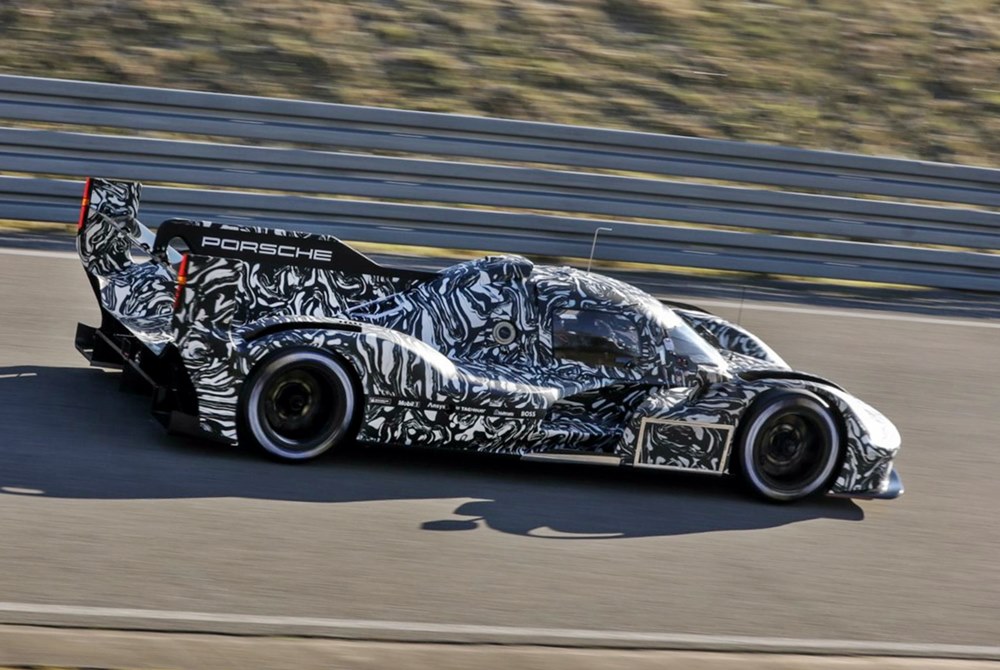
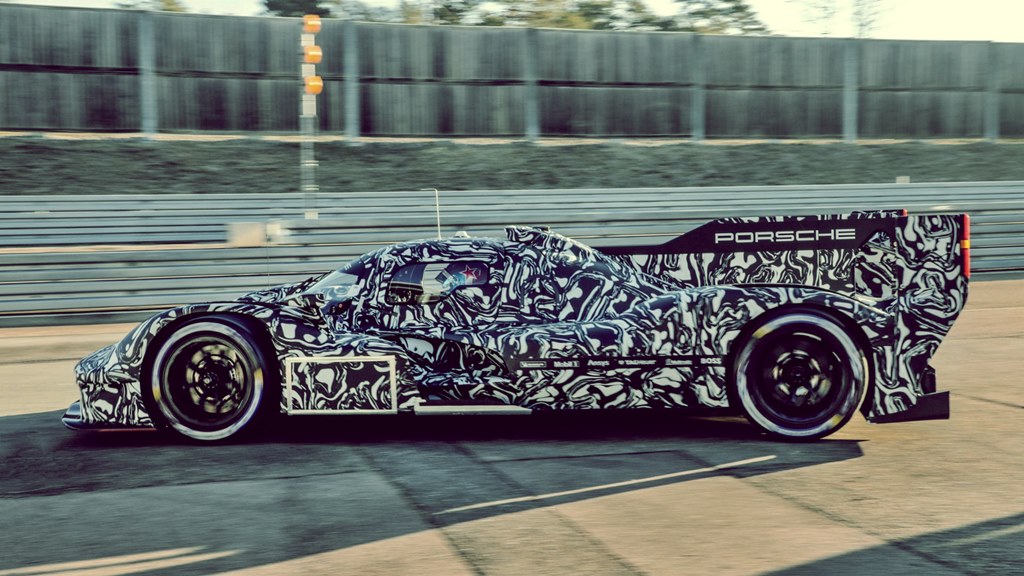
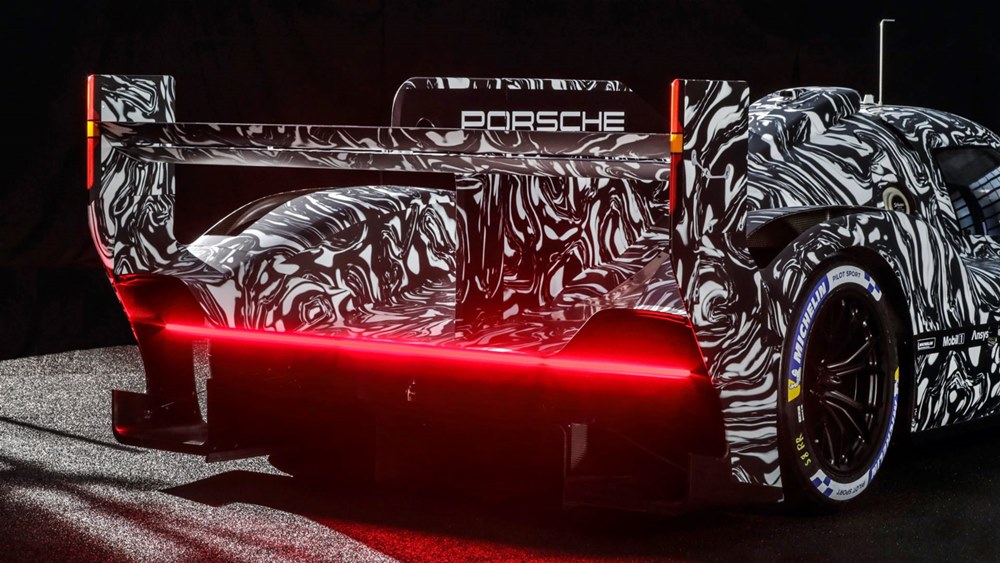
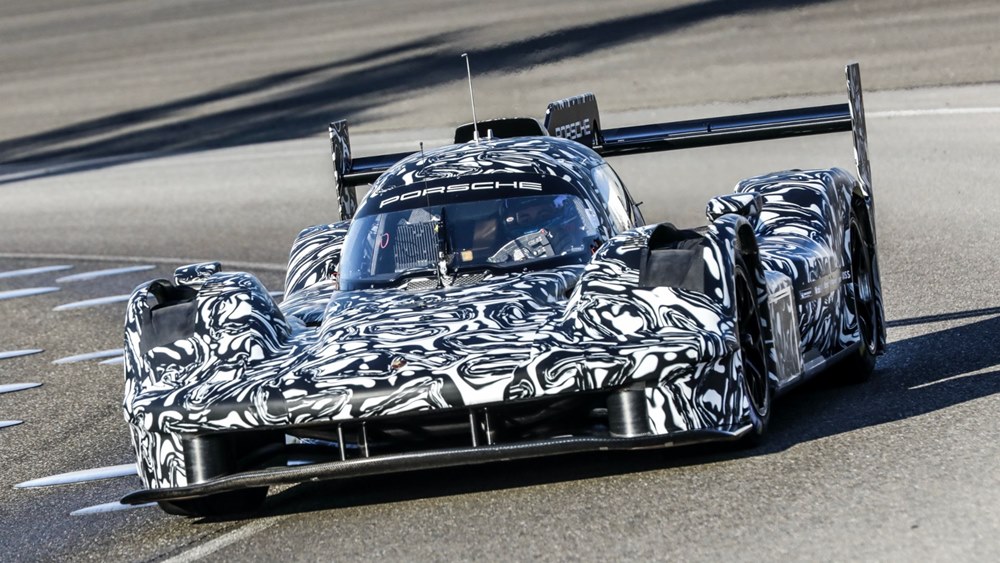
Porsche has been a strong name in endurance races in past years and starting with the 2023 season, the German sportscar maker will enter a new LMDh prototype to again fight for overall victory in the world’s greatest endurance races – Le Mans, Daytona and Sebring.

The racing car to be fielded in the FIA World Endurance Championship (WEC) and the North American IMSA WeatherTech SportsCar Championship will be entered as the Porsche Penske Motorsport team. With a year to go before the first race at the 24 Hours of Daytona, an intensive test programme is now underway.

Porsche LMdh prototype WEC 2023

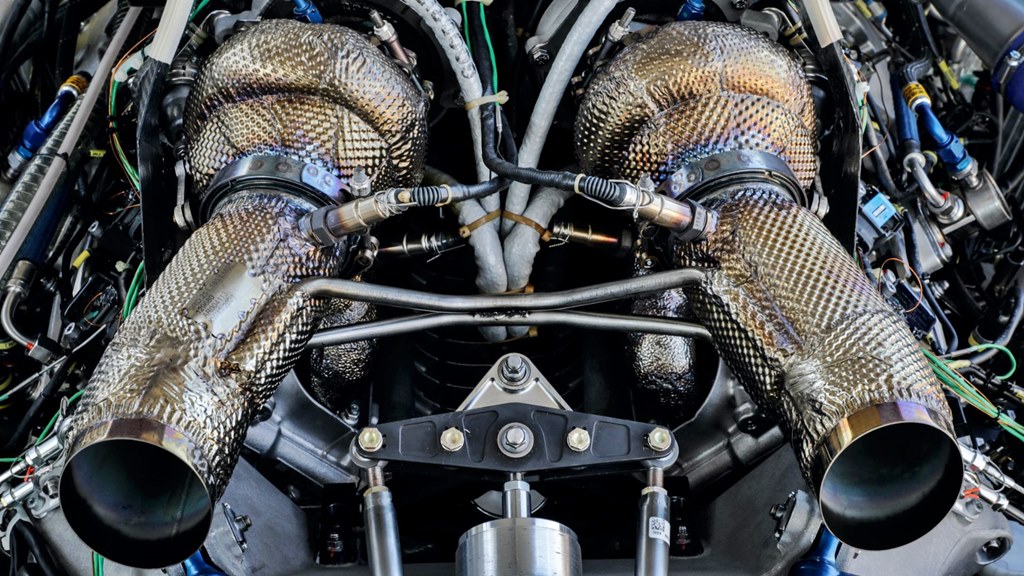
In selecting the combustion engine to complement the standard hybrid elements, as stipulated by the regulations, Porsche opted for a large-capacity twin-turbo V8 unit. The powerful engine is designed to run on renewable fuels(also a regulatory requirement), which means a significant reduction in CO2 in the exhaust emissions. During the race, the system output of the hybrid drive will be able to reach around 500 kW (680 ps).

“We were spoiled for choice with the engine for our LMDh prototype, because the product range offers several promising baseline units,” explained Thomas Laudenbach, Vice-President Porsche Motorsport. “We decided on the V8-biturbo, which we feel offers the best combination of performance characteristics, weight and costs. The kick-off to the active test programme was an important step for the project.”

Porsche LMdh prototype WEC 2023

Added Urs Kuratle, Overall Project Manager LMDh at Porsche Motorsport: “The rollout of the LMDh racing car was also the first track outing for Porsche Penske Motorsport. The squad worked well together right from the start. This shows a high level of professionalism in all areas. After all, the operational requirements for the safe running of a hybrid vehicle are very high. In the next outings, we will focus on going deeper into the required processes and procedures. During these first test days at Weissach, the V8-biturbo impressed us in every respect. We’re convinced that we’ve chosen precisely the right unit.”

The engine regulations for the LMDh vehicle class allow a great deal of freedom in terms of displacement, design and number of cylinders. Maximum engine speed is 10,000 rpm, with the pass-by noise measurement capped at 110 decibels. The engine must weigh a minimum of 180 kgs, including the air supply and exhaust system as well as the peripheral cooling components. If used, this weight also incorporates the turbocharger/s including the charge air cooling.

In line with the regulations, the maximum output lies between 480 and 520 kW (653 to 707 ps). This range also allows adjustments to be made within the Balance of Performance (BoP) parameters, which are intended to ensure parity between all competing LMDh racing cars. The torque curve is also clearly defined; under racing conditions, the combined power output of the combustion engine and hybrid drive totals 500 kW (680 ps) at the half-shafts.

Porsche LMdh prototype WEC 2023

The standard components for the recuperation, storage and delivery of electrical energy are supplied by Williams Advanced Engineering (battery), Bosch (motor-generator unit and control electronics) and Xtrac (transmission).

Porsche and Penske are old partners in motorsport, with a proven track record of success. This partnership had a lasting impact from 2006 to 2008 on what was then the American Le Mans Series. Team Penske has made a name for itself with an almost unparalleled success story in motorsport. In the long list of victories to-date, however, the name Le Mans has been missing.

“I hope that we will finally be able to chalk up this success as of 2023 with Porsche Penske Motorsport. This would then mark Porsche’s 20th overall victory at La Sarthe – a dream come true,” said Fritz Enzinger, Head of Porsche Motorsport. The contract between Porsche and the American racing team, which was founded in 1966, will run for a number of years.

Porsche LMdh prototype WEC 2023

The prototypes will also be entered by Porsche customer teams in both championships as early as 2023. The partner teams will be given full support from the factory and whatever insights gained from efforts of the works team will also be shared with them.

“In the medium term, Porsche focuses on three different drive concepts: fully electric vehicles, efficient plug-in hybrids and emotional combustion engines. We want to represent this trilogy in both the development of our cutting-edge road cars and in motorsport. We use the all-electric drive to contest the FIA Formula E as part of our works commitment, and the highly efficient and emotional combustion unit in GT racing. Now, the LMDh class closes the gap for us. There, powerful hybrid drives – like the ones that are mounted in many of our brand’s models – go up against each other. If the regulations eventually allowed the use of synthetic fuels, then that would be an even greater incentive for me in terms of sustainability,” said Michael Steiner, Board Member for Research & Development at Porsche.

Porsche has also been participating in the fully electric single-seater Formula E World Championship which will have its opening round in Saudi Arabia this weekend.

Porsche Mission R is ‘just a vision’ – but it is ready to race too

Every sector of the auto industry has to meet carbon-neutrality targets during this target and even the brands in the uppermost segments are not exempted although their volumes may be relatively lower. While all will eventually offer models powered only by electricity (battery electric vehicles or BEVs), the transition period will see hybrid powertrains being used for electrification. It is anticipated that more than 20% of sales this year will come from the brand’s hybrid models.

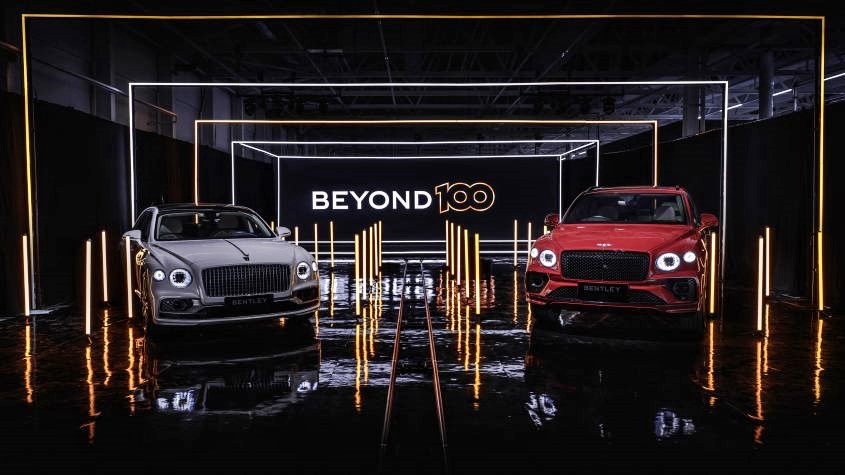
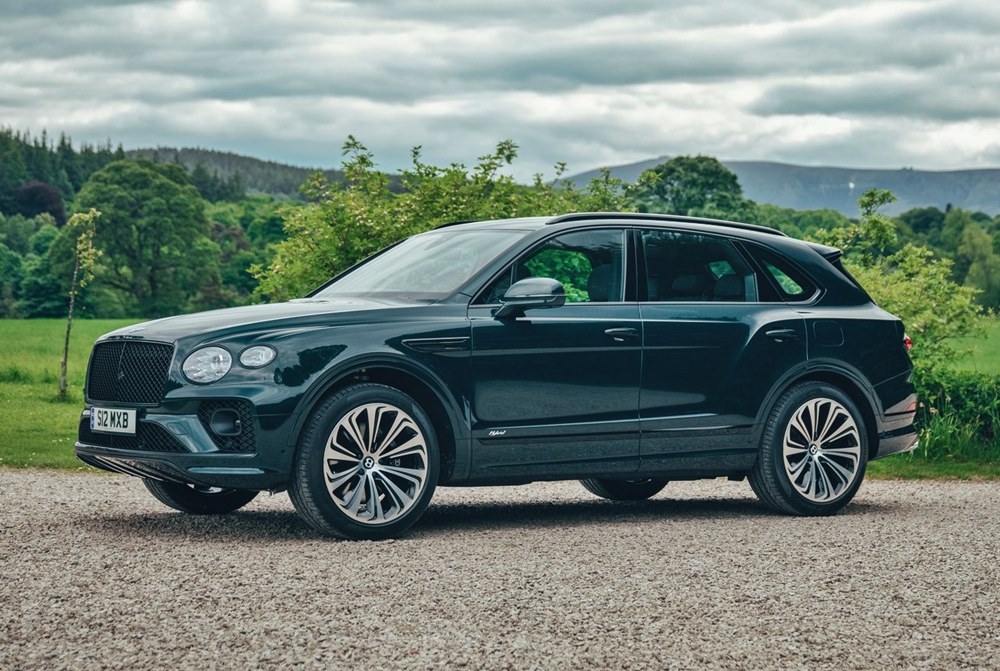
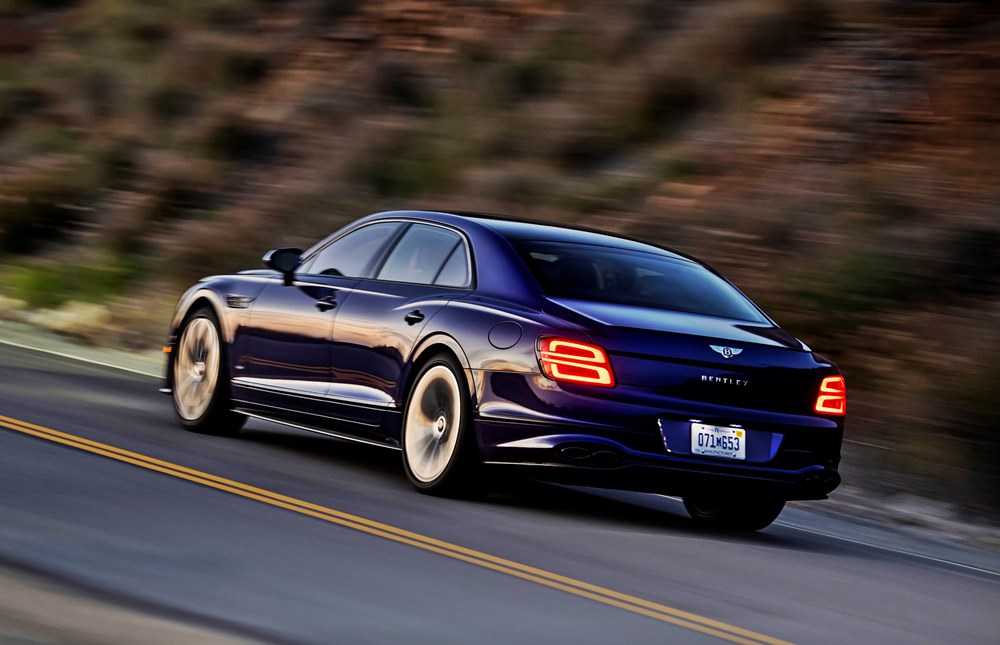
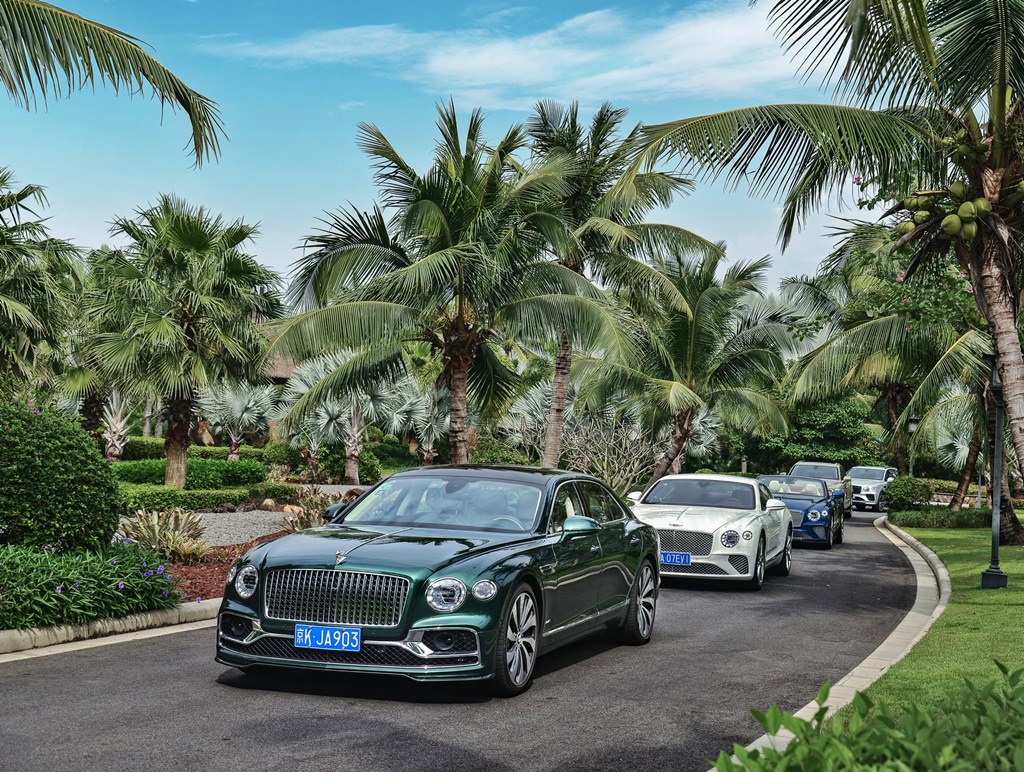
Bentley already started this transition a few years ago with the Bentayga Hybrid and has followed up with the Flying Spur Hybrid. It is continuing with development of hybrid electric vehicles (HEVs) and has announced that 5 new models will be launched this year. As Bentley has only 5 model lines (including the Flying Spur and Bentayga), these new cars HEVs will likely be variants of the models, one of which will be the Continental GT.

The Bentayga Hybrid (above) and Flying Spur Hybrid (below) will be joined by 5 more hybrid models in 2022.

From 2025, the carmaker plans to launch one new BEV every year under its ‘Five-in-Five’ plan that is part of its Beyond100 strategy to reduce the brand’s environmental impact. Innovative steps will be taken to neutralise Bentley’s carbon footprint even further towards its aim of becoming carbon neutral by 2030. These include a commitment that all its global retailers will be carbon-neutral by 2025 (or sooner), with production zero impact by 2030.

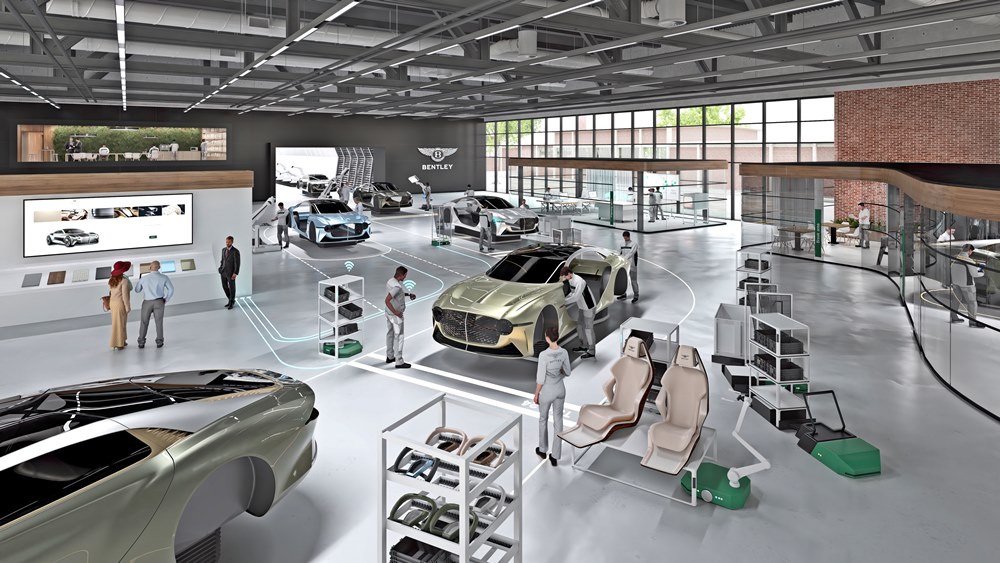
To realise this strategy, Bentley has committed a sustainable investment of £2.5 billion for product development as well as transforming the factory in Crewe, England, to become a ‘Dream Factory’ – a digital, zero environmental impact, flexible and  high-value manufacturing facility.

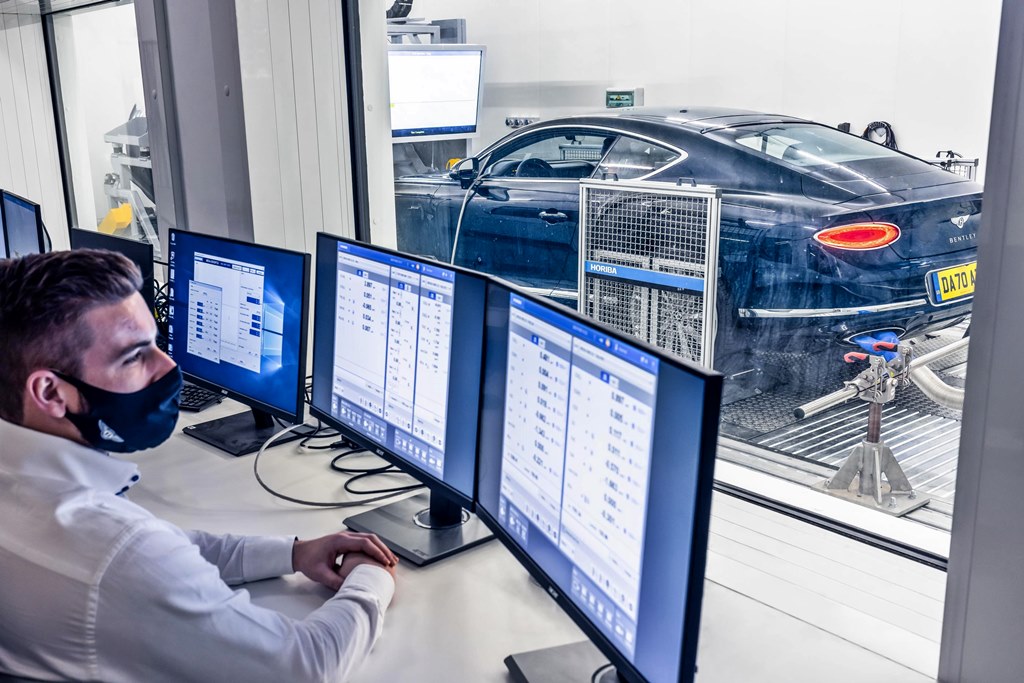
The Crewe site is already a certified carbon neutral facility, and the next initiatives will be an extension of on-site energy production with solar power. Moreover, Bentley is investigating using sustainable biofuel in fleet cars, including its Heritage Collection.

Beyond100 is the boldest plan in Bentley’s illustrious history, and in the luxury segment. It’s an ambitious and credible roadmap to carbon neutrality of our total business system, including the shift to 100% BEV in just 8 years,” said Adrian Hallmark, Chairman and CEO of Bentley Motors, which is part of the Volkswagen Group. “Our aim is to become the benchmark not just for luxury cars or sustainable credentials but the entire scope of our operations. Securing production of our first BEV in Crewe is a milestone moment for Bentley, and the UK, as we plan for a long-term sustainable future in Crewe.”

Bentley’s sales have continued to climb and the total of 14,659 vehicles delivered in 2021 exceeded by 31% the record volume set the year before. This achievement was driven by new model introductions, a fresh product portfolio and increasing demand for the hybrid models.

While the Americas region took the most vehicles (4,212 units), it was China where Bentley saw the biggest growth of 40% to 4,033 units. The Asia Pacific region posted an increase of 37% which was also said to be a record performance as 1,651 vehicles were delivered, against 1,203 sold in 2020.

Click here for other new and articles about Bentley

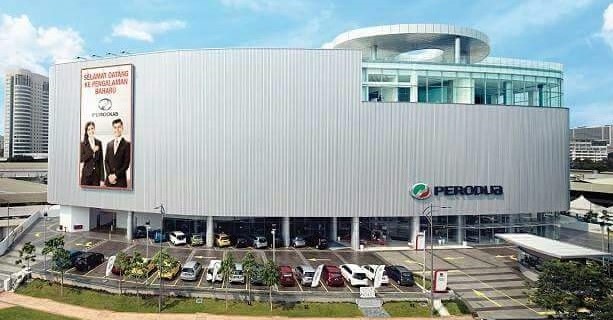
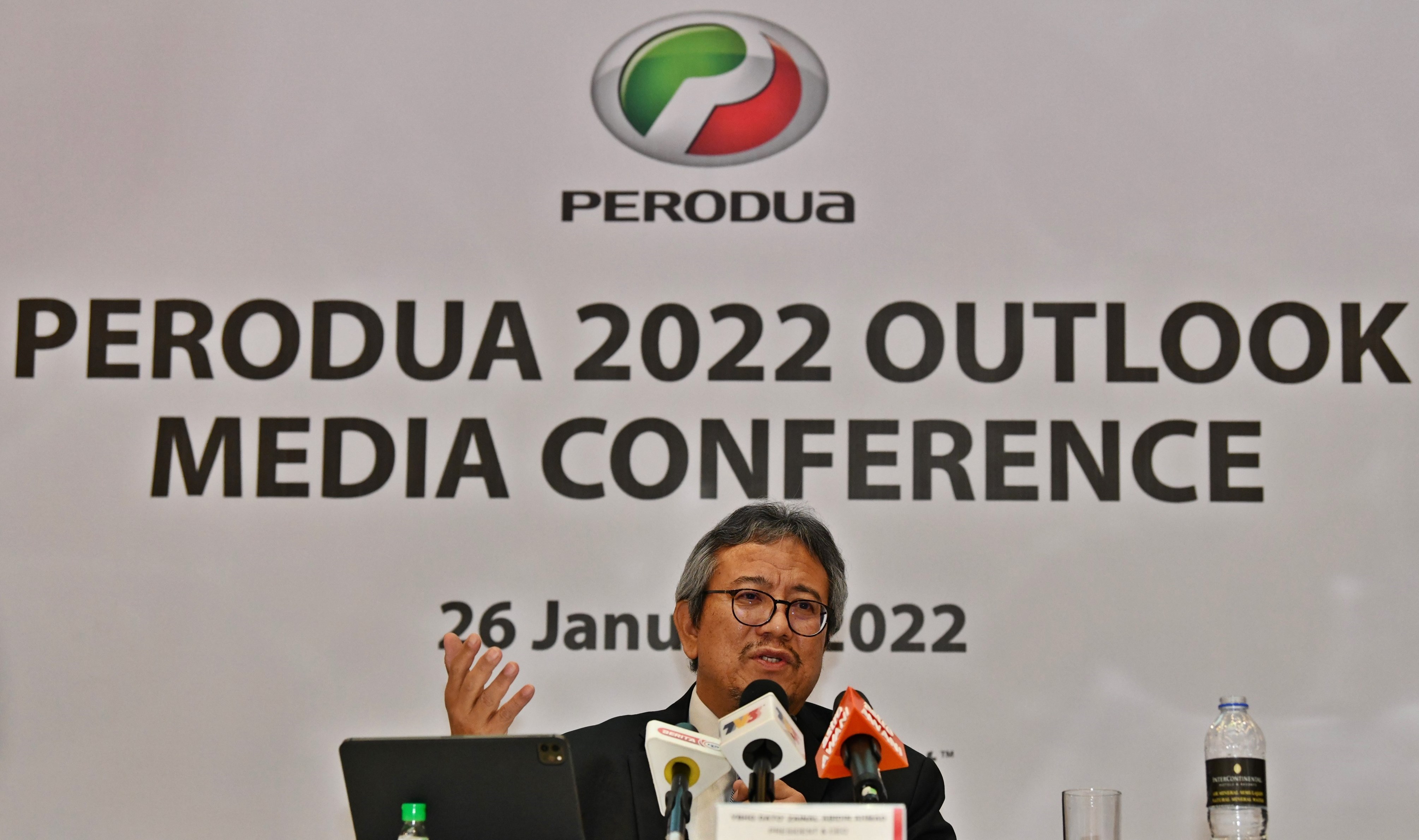
After two difficult years with disruptions caused by the COVID-19 pandemic, and then the global semiconductor shortage which started last year, Perodua is looking towards a stronger recovery in 2022. The Malaysian carmaker delivered 190,291 vehicles in 2021 – 13.6% lower than the volume reported in 2020 – but has set a target of 247,800 units for this year.

Speaking to the media during the annual press conference today, Perodua’s President & CEO, Dato’ Zainal Abidin Ahmad, said that this volume would amount to around 40.6% market share, based on Perodua’s own forecast of 610,000 units which is a bit higher than the 600,000 units forecast for 2022 by the Malaysian Automotive Association (MAA) recently. In 2021, Perodua, as market leader again, had a 37.4% market share.

Perodua President & CEO, Dato’ Zainal Abidin Ahmad.

Production target of 265,900 vehicles
With the target set at 247,800 units, Perodua plans to produce 265,900 vehicles during the year, which is 37.5% higher compared to 193,400 vehicles produced in 2021. The number is higher as the company produces extra as ‘buffer stock’ in case there are disruptions in production. The increase in production would also result in an increase in locally-sourced automotive parts by 41.5% to RM7.5 billion as compared with the RM5.3 billion purchased in 2021.

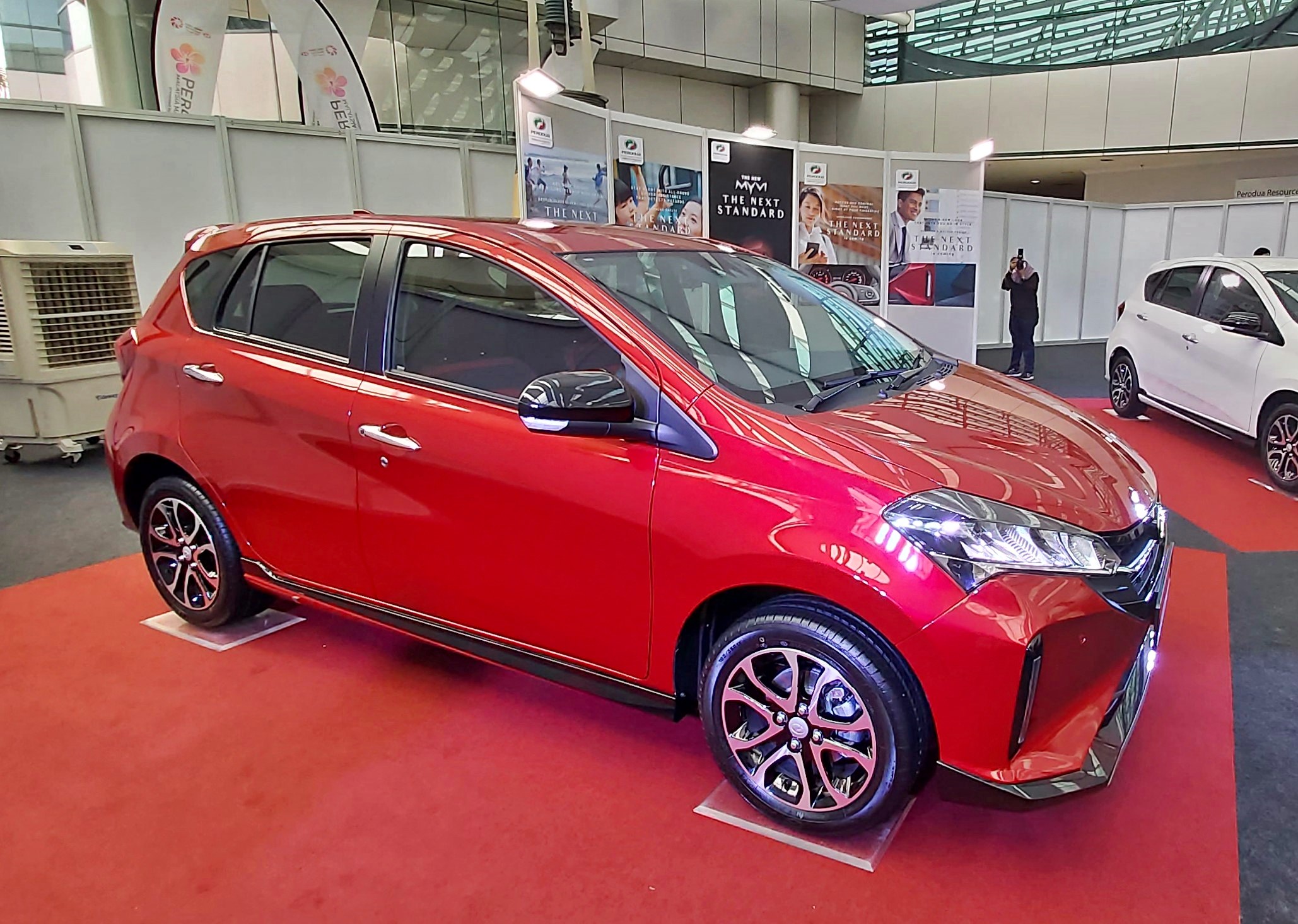
Commenting on the performance of 2021, Dato’ Zainal said the year was challenging as the country and its main industries had to cope with various crises throughout the year. “Demand remained strong for all our models with the Myvi leading the list with 47,525 units, followed by the Axia with 43,080 units, Bezza with 42,698 units, Ativa with 26,847 units, Aruz with 15,313 units and the Alza with 14,828 units,” he said.

The Myvi continued to be the bestselling model for Perodua and also the bestselling car in Malaysia in 2021.

Dato’ Zainal explained that the sales tax exemption initiative introduced by the government is still an excellent incentive for the consumer to purchase new cars. It was extended until June 30, 2022 and Perodua is hopeful that it might be extended again, which would have a positive effect on sales.

“Our order book for new vehicles is still quite healthy with the guarantee that the production will go uninterrupted will mean that we could fulfil the outstanding orders in a timely manner,” he said, adding that assurances by the government that the measures of containing the pandemic is showing success that another lockdown would not happen.

“With that being said, we have learnt a lot from this situation and have incorporated effective counter-measures to ensure that we will be able to face them better if they re-occur,” he said.

Over RM1 billion investment
During 2022, Perodua’s investments will go pass the 1 billion ringgit mark to RM1.326 billion. The development of a new model will take the biggest chunk of RM529.1 million, with improvements to manufacturing facilities and processes taking RM321.3 million.

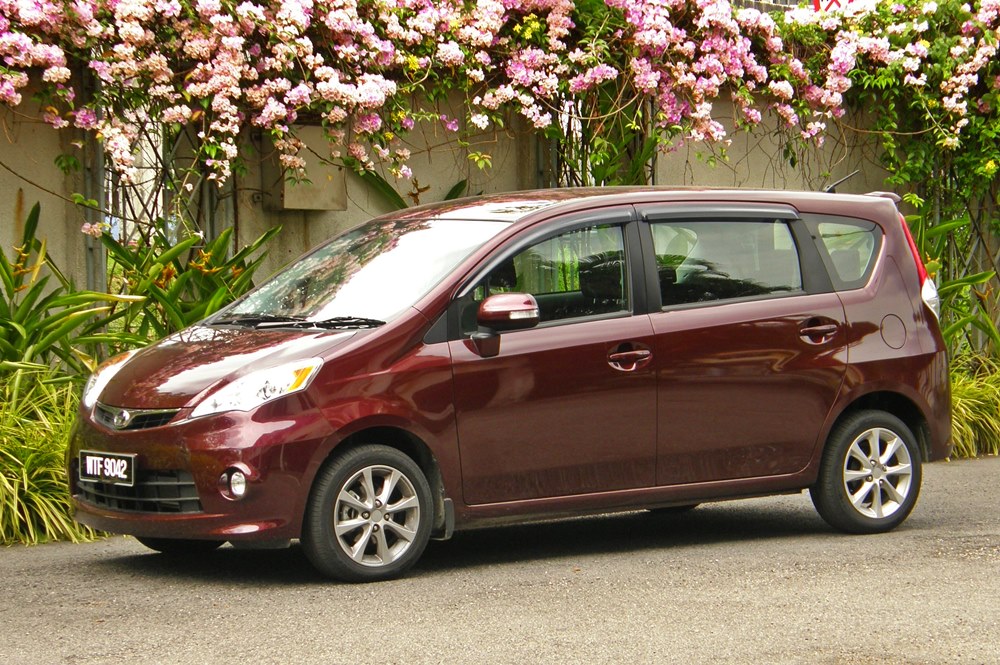
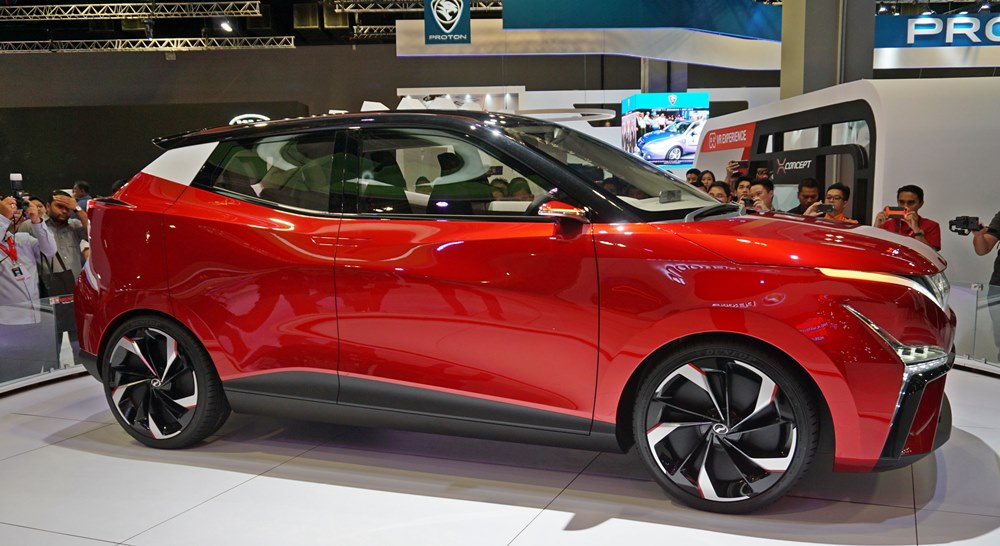
It’s almost certain that much of the RM529.1 million allocated for new model development will be for the next generation of the Alza which has been around since 2009. It’s still a popular MPV, with almost 15,000 units sold last year.

Perodua will also spend RM46.6 million on digitalization which it sees as being very important in view of trends that show consumers making more use of online and digital services. This will encompass the entire company as well as its dealers and vendors and for customers, the initiative will be seen in the development of a Connected Vehicle as well as e-Manuals and more extensive use of online communications.

The digitalization move will also see the retail network being changed. Just as the banking industry has seen a steady reduction in branches over the past 10 years, Perodua’s outlets will also be adjusted accordingly. Nevertheless, physical showrooms will still exist even though online channels have been made available for communications and sales enquiries.

Upgrading dealerships
Additionally, the existing 1S/2S outlets will be upgraded to 3S outlets that provide a full range of sales and aftersales services to customers. Perodua is encouraging the small dealers to have a more entrepreneurial attitude and develop their businesses further so they can enjoy greater success. In fact, there is a special programme for this which 56 dealers are participating in to learn entrepreneurial skills, knowledge and business survival.

Exports over the past two years have been minimal due to the pandemic and as some of the overseas markets remain closed, no vehicles have been sent. However, some shipments have been made to Singapore, Brunei and Indonesia though they have been small in number. The company is interested in exports but not as a primary business. It also wants to ensure that wherever it exports to, it will have a proper understanding of market conditions and customer requirements to ensure that the products are right and can be well accepted.

Perodua hopes to eventually be given the role of a regional hub for Daihatsu’s R&D activities for the ASEAN region. Since the 2000s, it has built up its capabilities and can now handle full upper body development on its own.

Aiming to be regional production hub
While Proton has stated its aim to be a strong regional player in time to come, Perodua is aiming to become a regional hub, not in vehicle sales but in R&D. Since it started in 1993, it has been steadily building up its R&D capability which accelerated when the 2000s began. Its involvement in the development of the first Myvi, which was jointly developed with Daihatsu and Toyota, was a great opportunity to learn and today, Perodua has full capability for upper body development.

It has been given increasing responsibilities by Daihatsu in development work for ASEAN products and Perodua personnel have even been assisting Daihatsu in Indonesia in some product development work. Dato’ Zainal said that it is possible Perodua could eventually become the R&D hub in ASEAN for Daihatsu. This would be something like Toyota having moved its R&D activities for the Hilux out of Japan to Thailand (although in that move, it was to its own subsidiary).

If Perodua offers electric vehicles, it will make sure they are affordable as its mission has always been to provide Malaysians with affordable mobility.

Perodua EVs?
On the move towards electric vehicles, Dato’ Zainal sounded positive towards the aims of the government to shift towards electrified vehicles in the effort to address climate change. However, Perodua is still studying the matter to determine what approach to take and is having discussions with Daihatsu as well. “What is important is that if we offer electric vehicles, they must be affordable for Malaysians as that is what Perodua has always strived to do,” he said.

Perodua offers assistance to flood-affected customers with 50% discount on selected parts

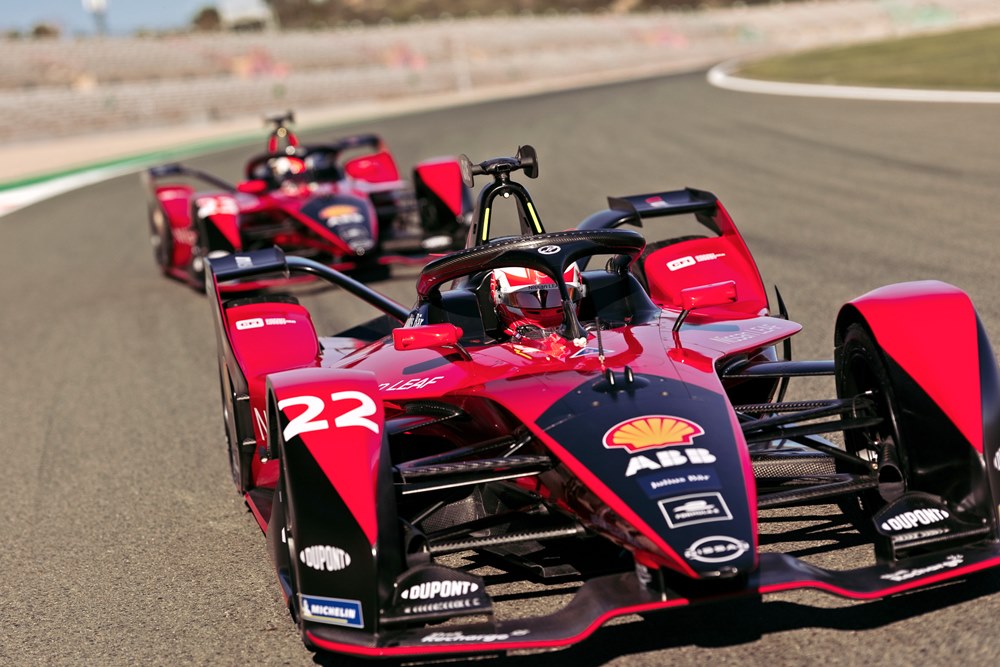
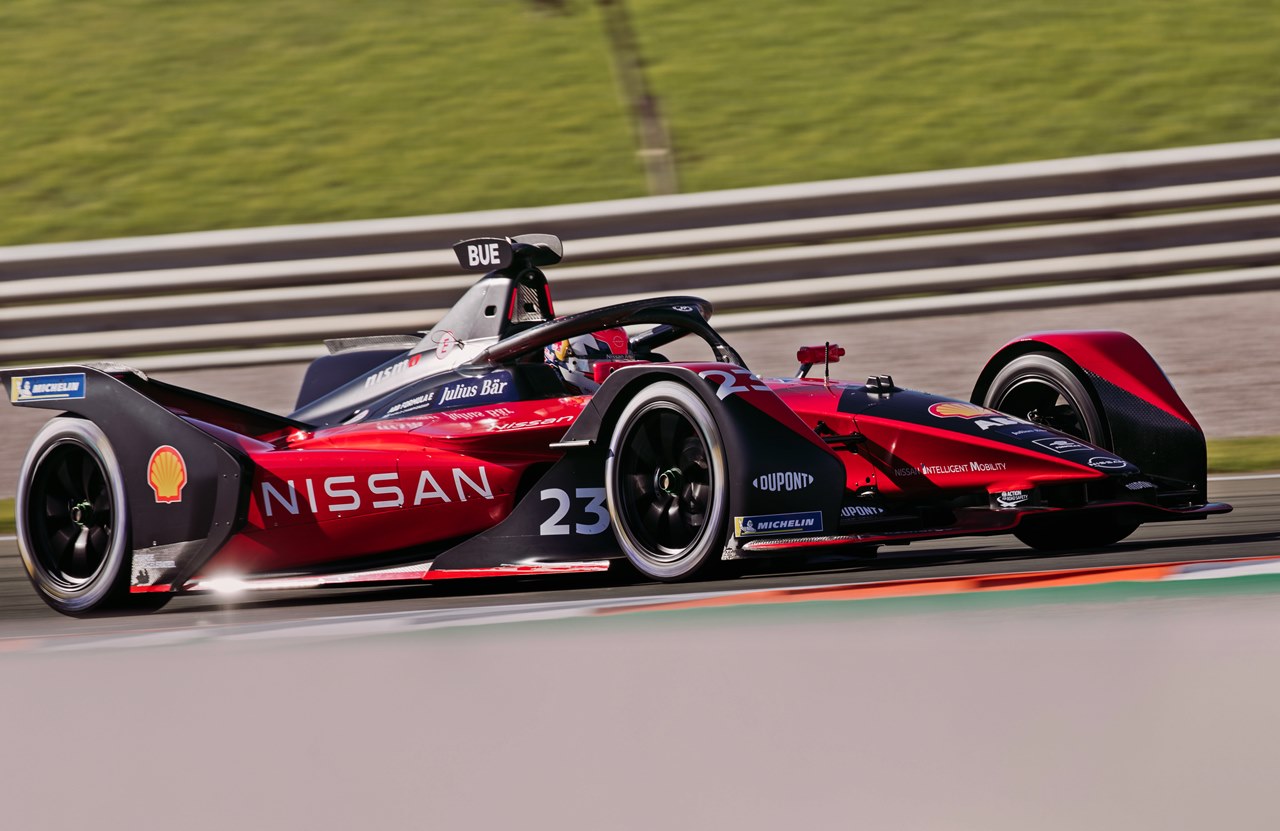
Nissan, the first Japanese carmaker to participate in the Formula E single-seater electric championship, will enter its fourth consecutive season which starts in Saudi Arabia this week. Collaborating with e.dams (Driot Associes Motor Sport), the Nissan e.dams team again has the services of Sebastien Buemi and rising star Maximilian Gunther.

Buemi and Guenther completed more than 350 laps between them and gathered significant amounts of data to further develop the fully electric racing cars. Running different simulations and exploring all new opportunities across the 5 test sessions in Spain, the team is preparing for the opening round at the Diriyah World UNESCO Heritage Site. During the two days, the cars will be racing on a tight and twisting street circuit with the added challenge of running after sunset.

Season 8, which will run until mid-August, will be the last of the current Formula E regulations, with the Gen2 cars unleashing more performance than ever before. The power allowance has been increased by 20 kW to 220 kW in Race Mode, and by 15 kW to 250 kW in Attack Mode. There will also be a new qualifying format featuring head-to-head runs and shorter free practice sessions will make life harder for drivers and teams – but will add even more excitement for the fans.

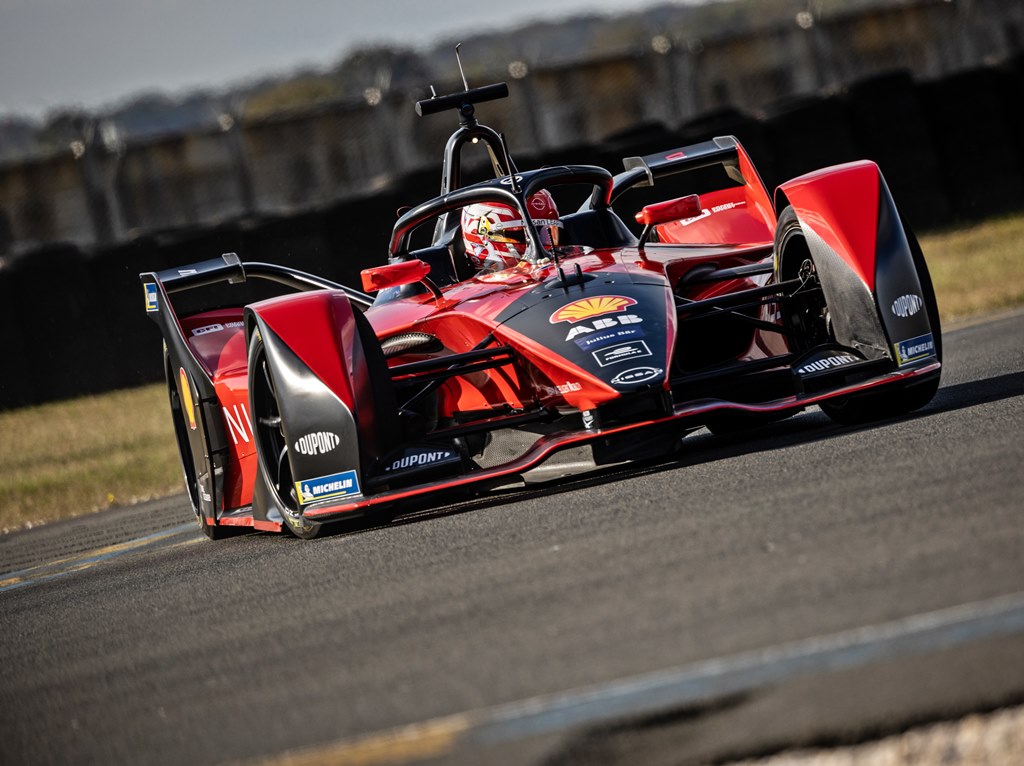
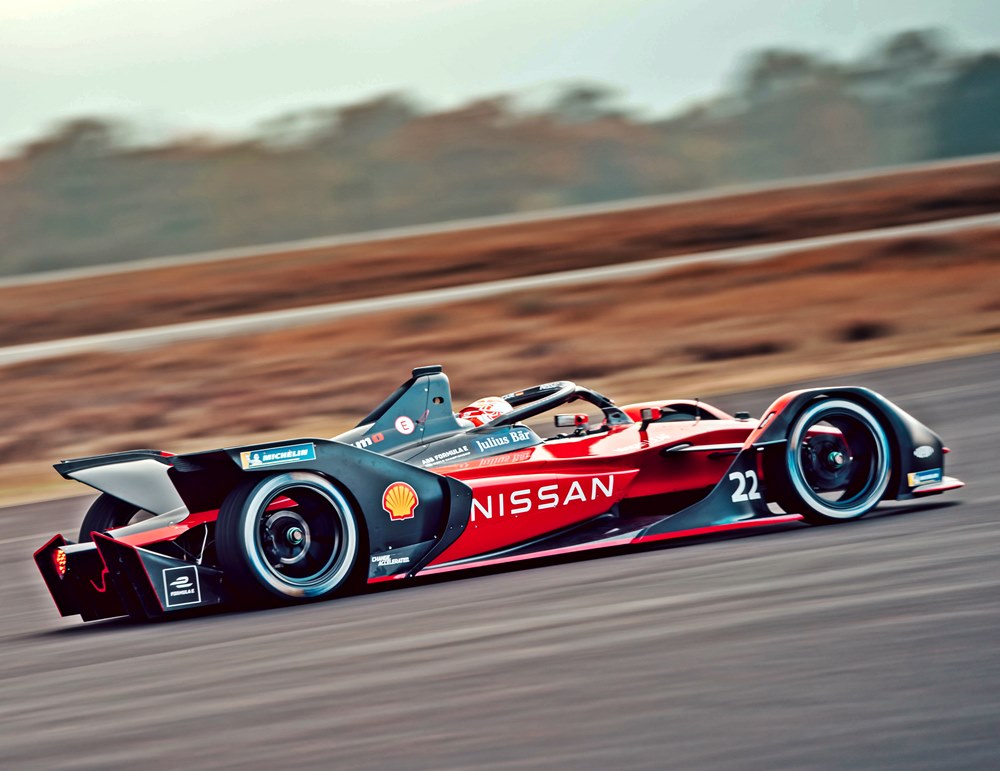
This season, the team will continue to link its presence in the championship to Nissan’s road EVs. In Diriyah, the drivers will race for the first time with a striking new livery specially designed for the new season. The design is an evolution of the team’s recognisable kimono-theme, with prominent bright red highlights that further assert Nissan’s mission to demonstrate the excitement and performance of its EV technology.

“After the pre-season test in Valencia, we are ready and excited to go racing again in Diriyah,” said Tommaso Volpe, Nissan’s Global Motorsports Director. “The cars get a power boost this season, adding yet more speed and spectacle to the competition. This is great for the fans but, of course, it also means that we will need to adapt the car setup to a higher power output while keeping a close eye on battery temperatures. In fact, one of the main challenges that we will encounter in Diriyah will be to accommodate to the track conditions, which can vary from very hot during the day to quite cool in the evening, adding another layer of complexity to the race.”

While some carmaker’s teams have left Formula E, Nissan has made a long-term commitment to the championship. It will be participating till the end of Season 12 which will take place in 2025/2026. The Gen3 era of the championship begins in Season 9 next year and will feature even more powerful and faster cars.

Formula E’s Gen2 EVO racing cars will run for the last time in Season 8 in 2022, with Gen3 being used in 2023

Archive

Follow us on Facebook

Follow us on YouTube