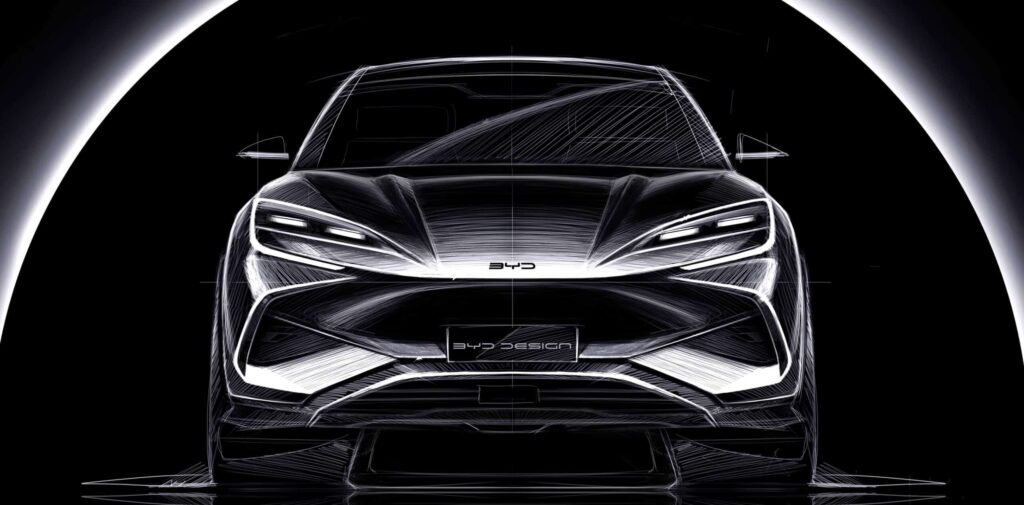
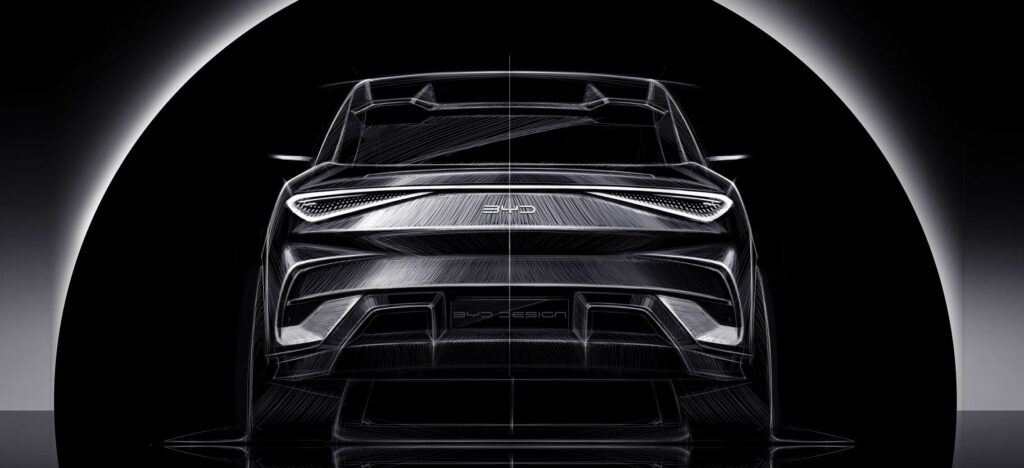
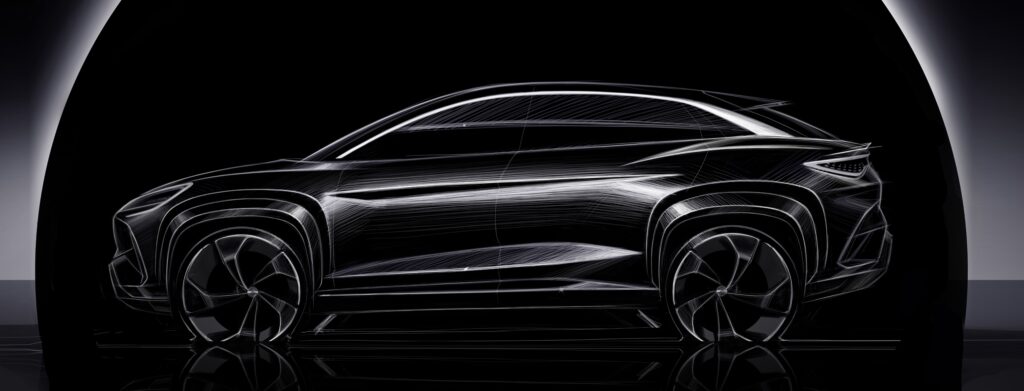
BYD is gearing up to reveal its latest addition to the family of battery-electric vehicles, the Sea Lion 07. The unveiling is scheduled for November 17 at the Guangzhou Auto Show in China. Teasers in the form of sketches suggest that the Sea Lion 07 will join BYD’s ‘Ocean’ series, which already features models like the Seal, Dolphin, and Seagull.
Design cues for the Sea Lion 07 seem to draw inspiration from BYD’s Ocean-X sedan concept. Led by former Audi and Lamborghini designer Wolfgang Egger, the Sea Lion exhibits a compact SUV design, distinguishing itself from its predecessors like the Seal SUV. The front showcases sharp LED headlights and daytime running lights, contributing to a more aggressive look with angular air intakes.
A side sketch of the Sea Lion 07 reveals a coupe SUV silhouette, marked by dramatic curves and creases along the doors. While reminiscent of the Cupra Formentor, the BYD model positions its cabin farther forward. The rear design features aggressive elements with sharp edges and angular LED taillights, akin to the Atto 3.
Technical specifications are yet to be disclosed, leaving enthusiasts curious about its capabilities. However, early estimations suggest a starting price of around 190,000 yuan (RM122k). Closer to home, from the ‘Ocean’ lineup, we have the BYD Dolphin from RM99,900. Click here to find out why it should be your first EV.
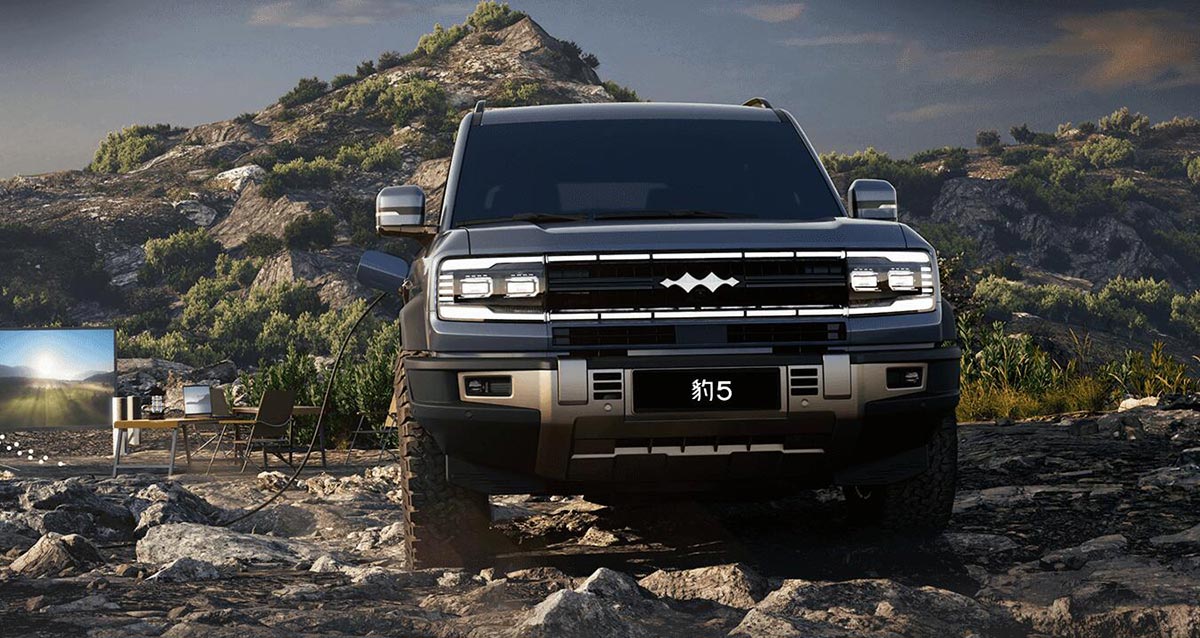
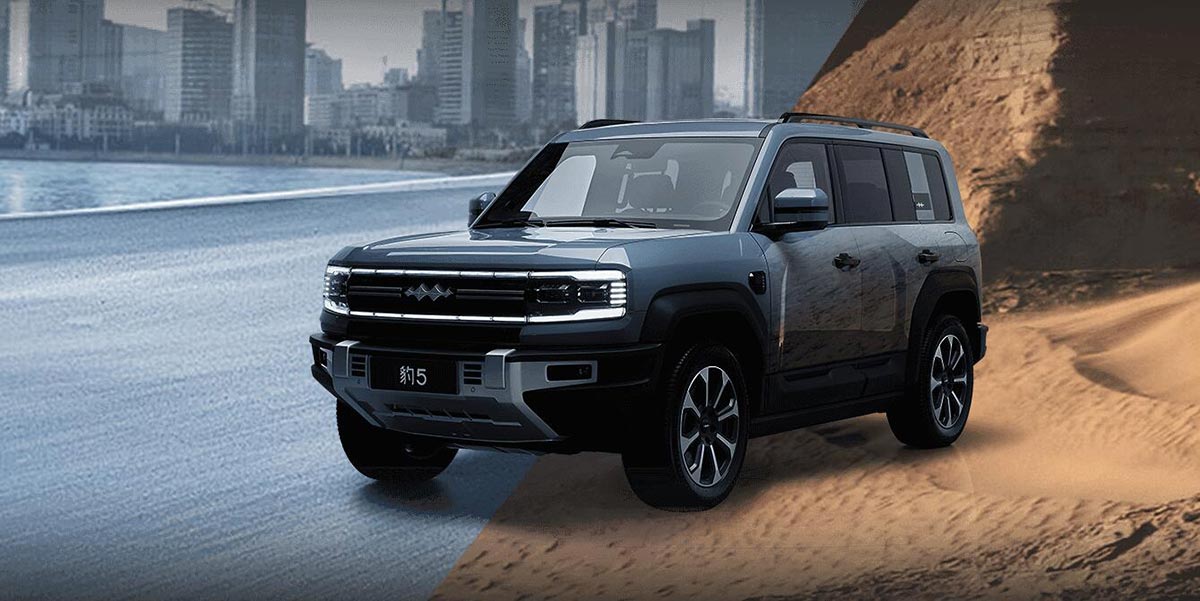
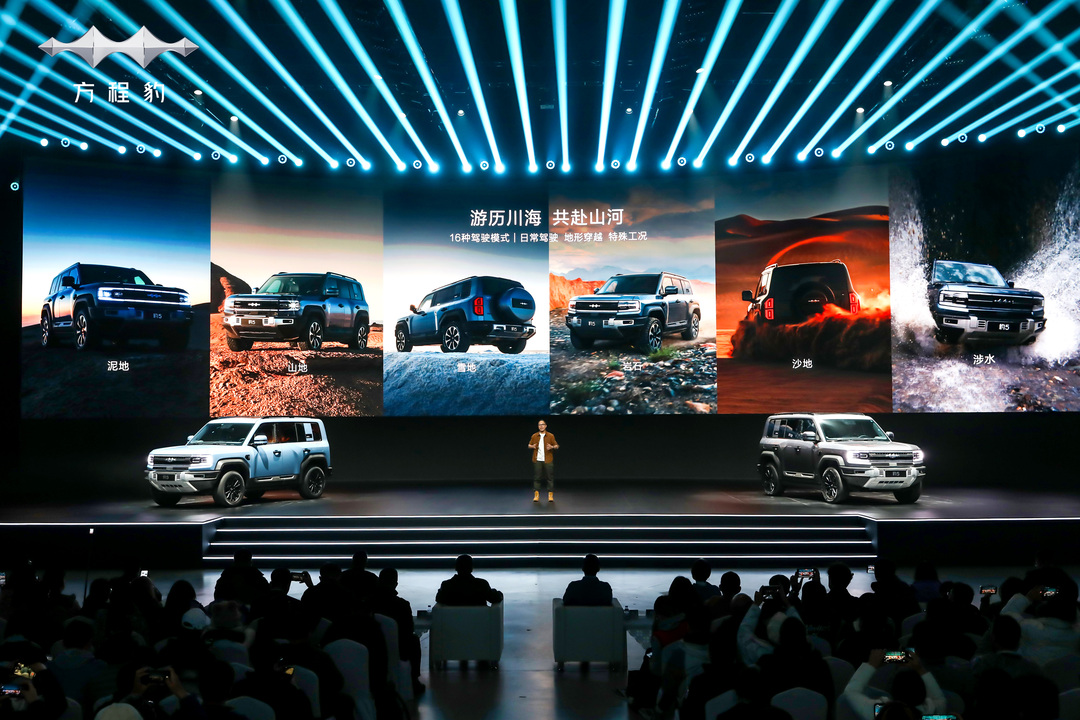
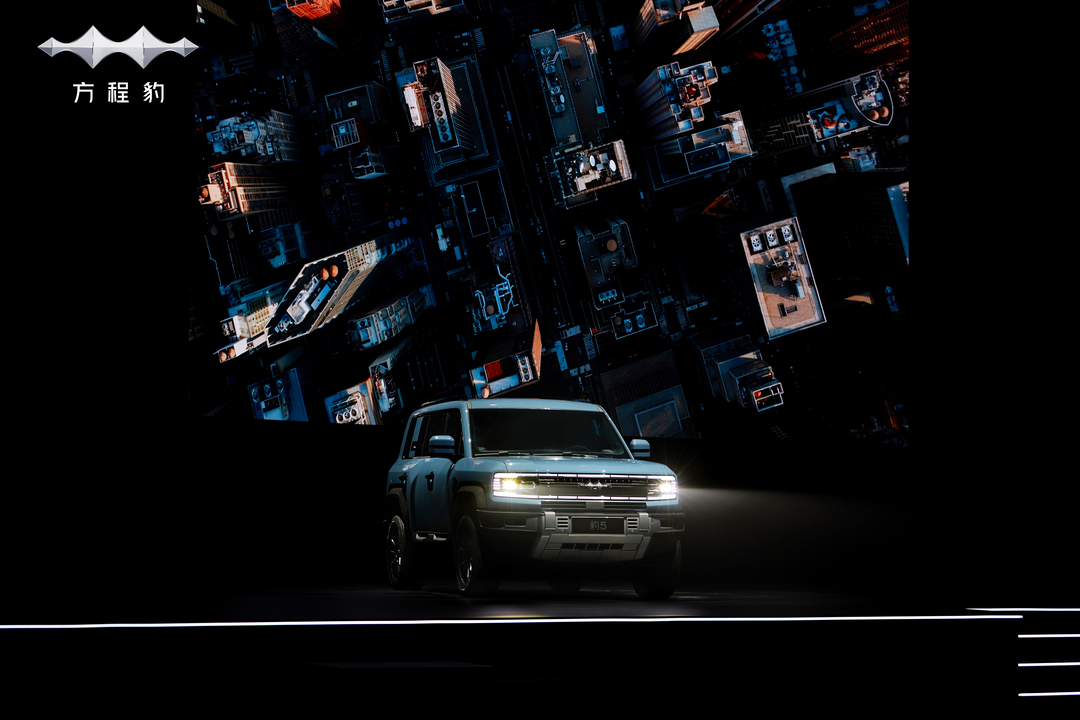
BYD officially launched its latest offering, the BAO 5, under the specialised sub-brand FANGCHENGBAO. Positioned as a “Super Hybrid Hardcore SUV,” the BAO 5 stands out with cutting-edge technology, off-road prowess, and a commitment to energy efficiency.
The BAO 5 introduces the Dual Mode Off-road (DMO) Super Hybrid Platform, a revolutionary predominantly electric-driven, professional-grade off-road system. With an unparalleled combination of power sources, it features the world’s first longitudinal EHS electric hybrid system, an off-road rear-drive powertrain, and a potent longitudinal 1.5T high-performance engine. This configuration delivers an impressive 677hp of power and 760Nm of combined torque, enabling the BAO 5 to accelerate from 0 to 100km in just four seconds.
Designed for off-road enthusiasts, the BAO 5 showcases exceptional off-road capabilities with a millisecond-response electric four-wheel drive system offering 16 driving modes. This allows effortless navigation across diverse terrains, from rugged mountains to swampy landscapes, while maintaining an impressive minimum turning radius of 3.4 meters.
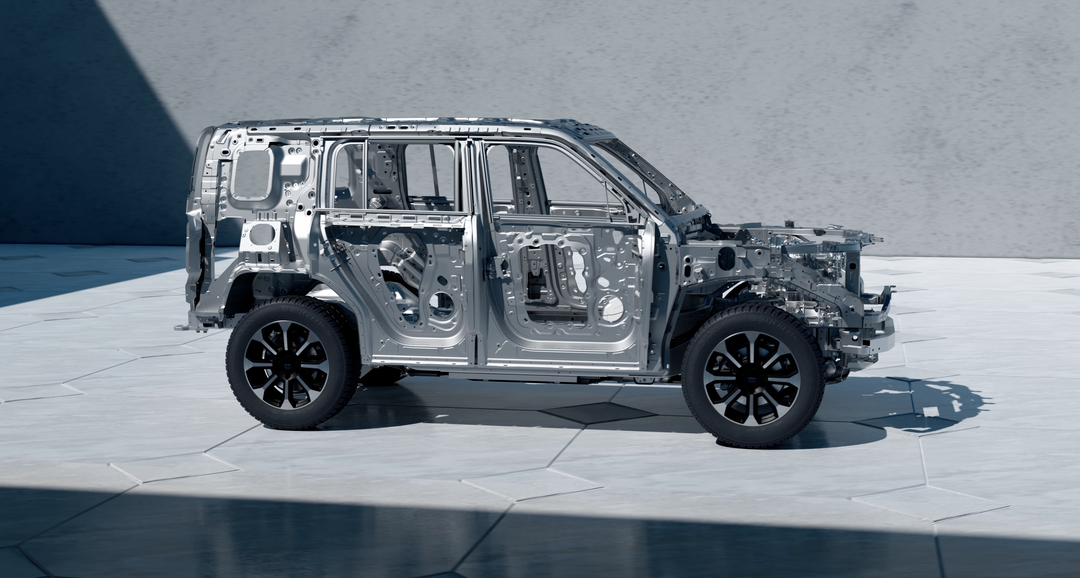
Ensuring robustness and safety, the BAO 5 features a Non-Load-Bearing Frame with Cell To Chassis (CTC) technology, providing a lower center of mass and a balanced 50:50 axle load ratio. The chassis is reinforced with 96% high-strength steel to prioritize user safety. The vehicle incorporates the ultra-safe blade battery and is equipped with an L2+ Advanced Driver Assistance System (ADAS) for enhanced safety.
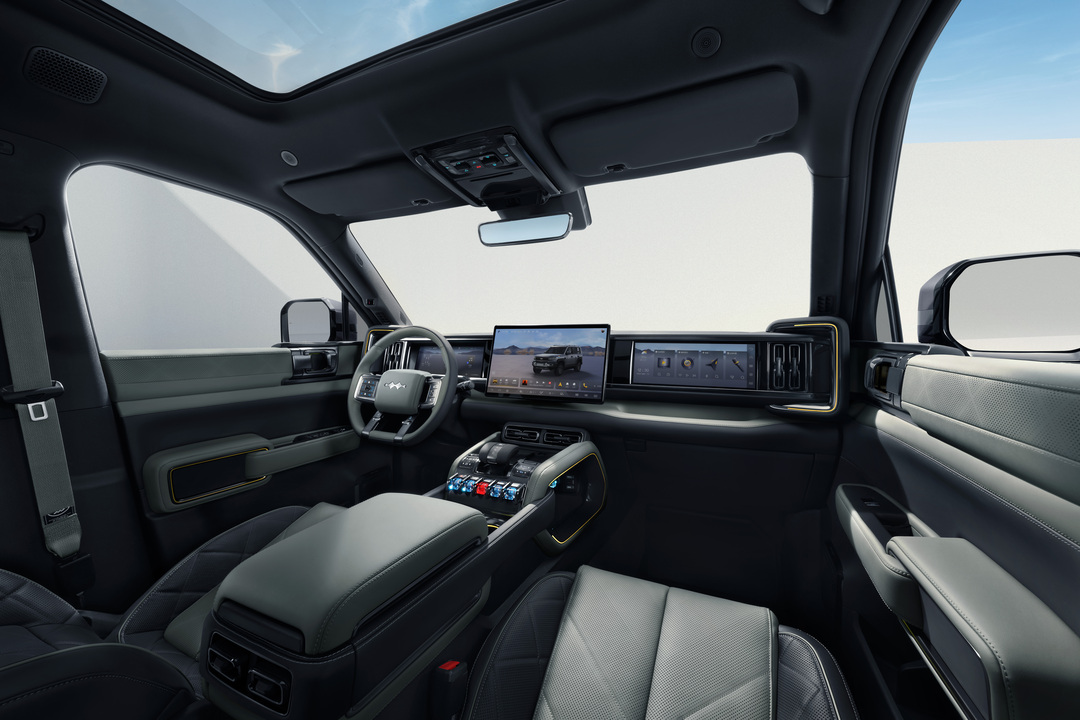
Inside the smart cockpit, the BAO 5 offers a luxurious driving experience with the exclusive FiLink UI, supporting multi-screen interconnection and gesture operation. Users can personalise their experience with various customisation options, including paint colours, interior schemes, wheel hub sizes, and pedal choices. Nappa leather seats and an 18-speaker Devialet audio system further elevate the driving experience.
Leveraging the advantages of the DMO platform, the BAO 5 achieves a Comprehensive Long Trip Capability (CLTC) range of up to 1,200km. This, combined with a 6kW vehicle-to-load (VTL) discharge capability and an optional 2.5-ton trailer hitch, enhances the vehicle’s suitability for extended outdoor activities.
FANGCHENGBAO’s strategic focus on professionalism and individuality is evident with the BAO 5 launch. The brand operates various store types, including sales service centres, MINI centres, and retail centres, catering to diverse consumer needs. The BAO 5 joins FANGCHENGBAO’s product lineup, alongside the previously unveiled BAO 8 and BAO 3 models.
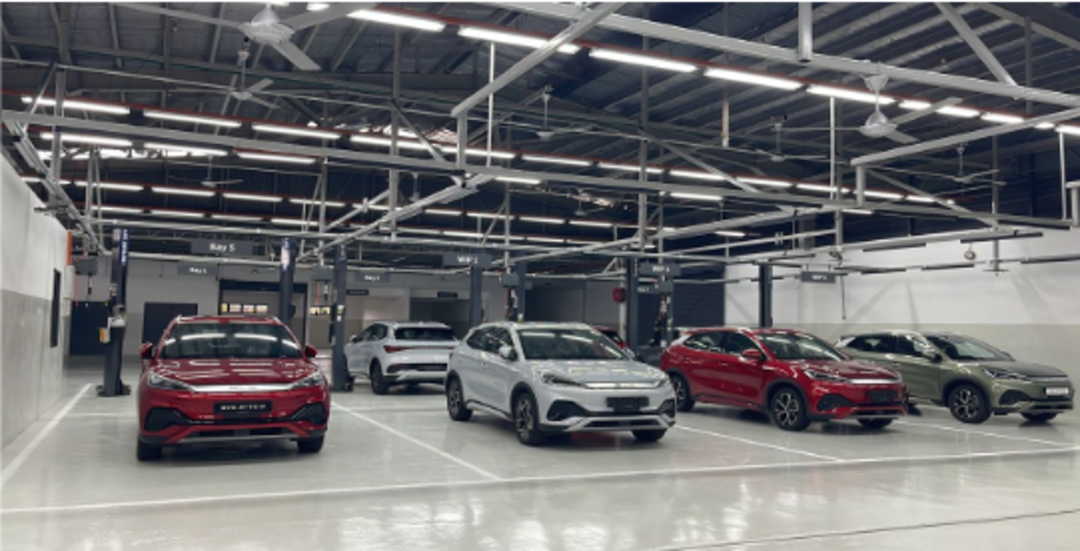
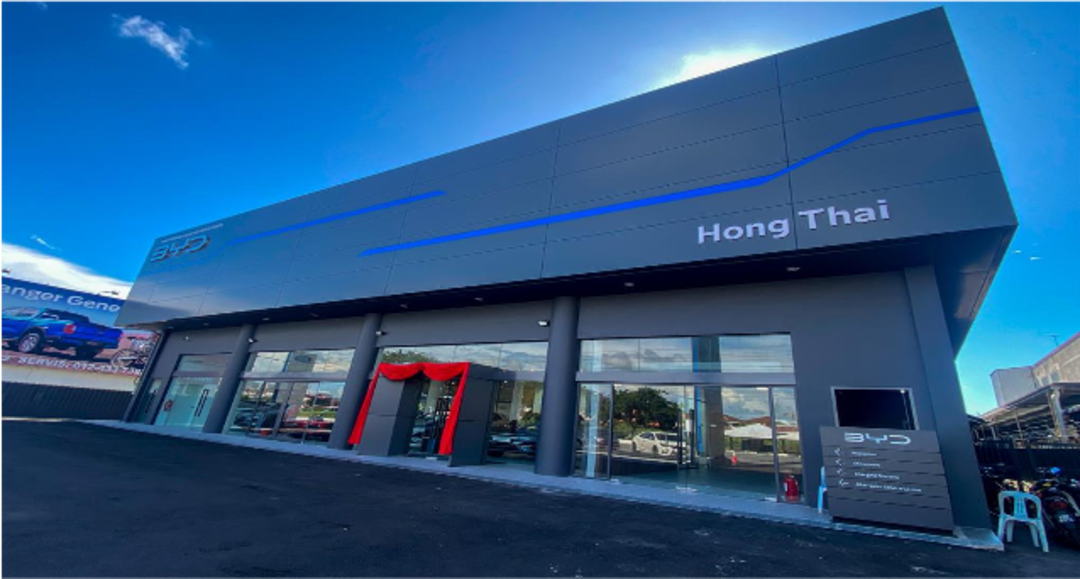
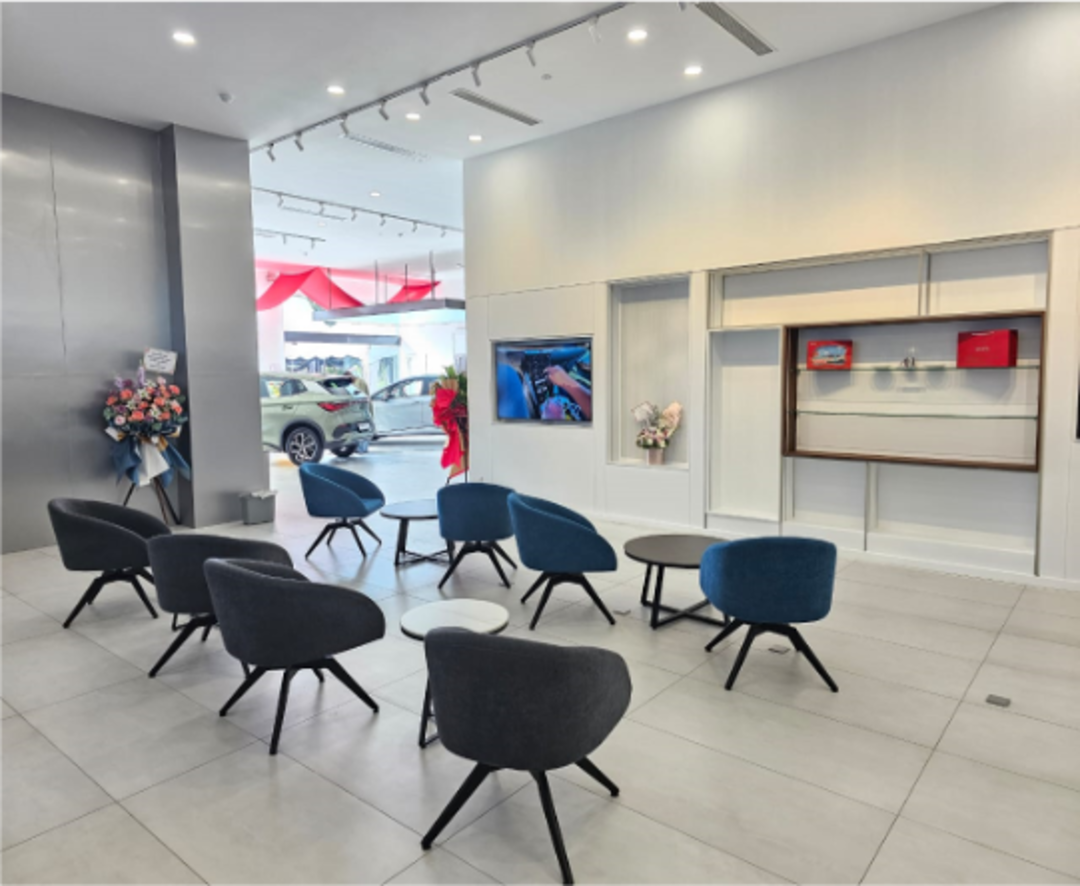
BYD, a leading manufacturer of new energy vehicles, has unveiled a new showroom in Malaysia through its local dealer, Hong Thai Motor Trading Sdn. Bhd. This showroom, situated in Alor Setar, Kedah, is aimed at increasing accessibility to BYD electric vehicles (EVs) for local residents.
The newly established showroom operates as a comprehensive 3S service centre, offering sales, service, and spare parts assistance to customers. It’s equipped with five service bays and three dedicated customer service officers, enhancing convenience for both prospective and existing BYD EV owners by providing a one-stop destination for vehicle experiences, as well as service and maintenance.
On September 22, BYD, a global leader in new energy vehicles, marked a significant milestone with the production of its 500,000th BYD Dolphin, solidifying its position as the top-selling A0-level hatchback in China for 19 consecutive months since its debut in August 2021.
The BYD Dolphin’s impact extends globally, providing green mobility to customers worldwide. After its successful launch in Brazil in June 2023, it quickly became the best-selling EV in August, setting a new record for electric vehicle sales in the country. In Thailand, it achieved fifth place in EV sales within its first month on the market, selling 481 units. The Dolphin also completed a successful test drive event in the UK, receiving acclaim from the media.
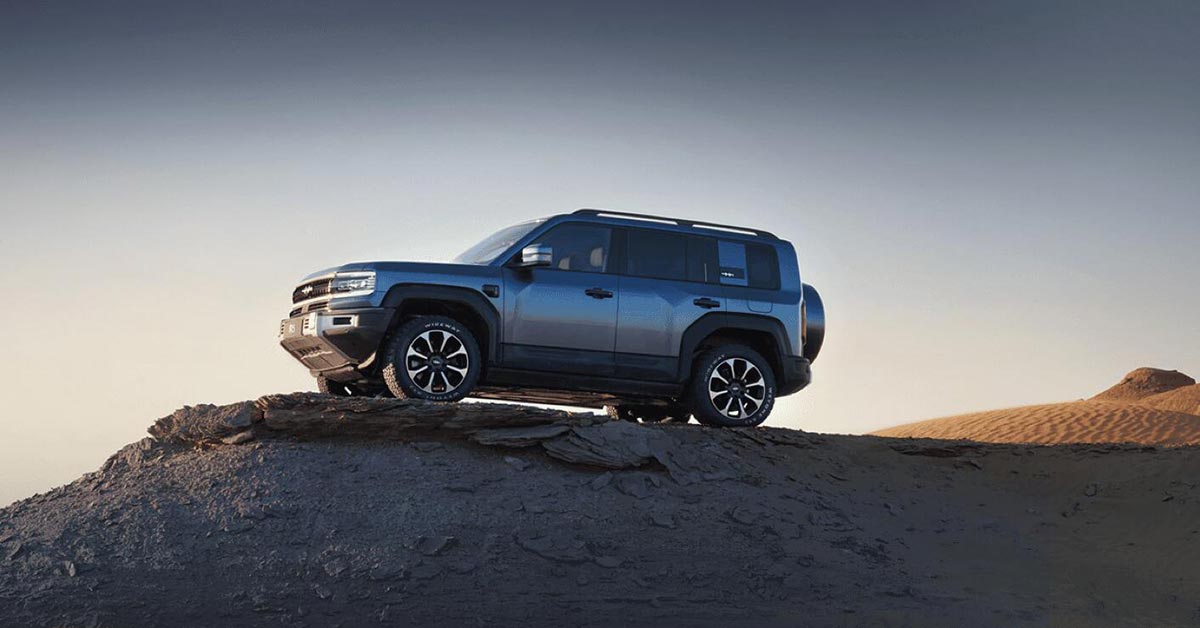
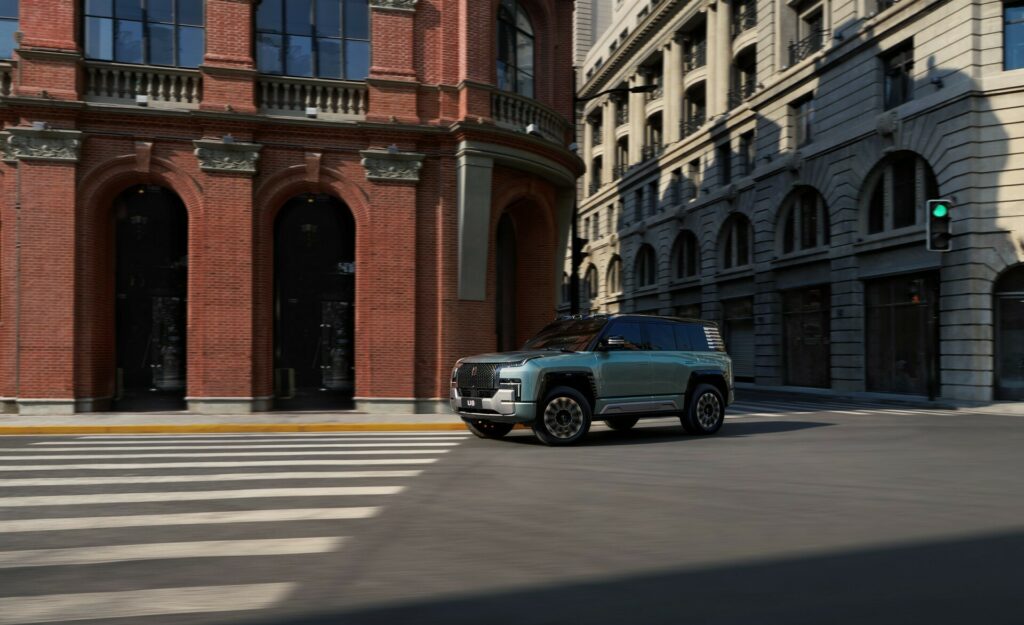
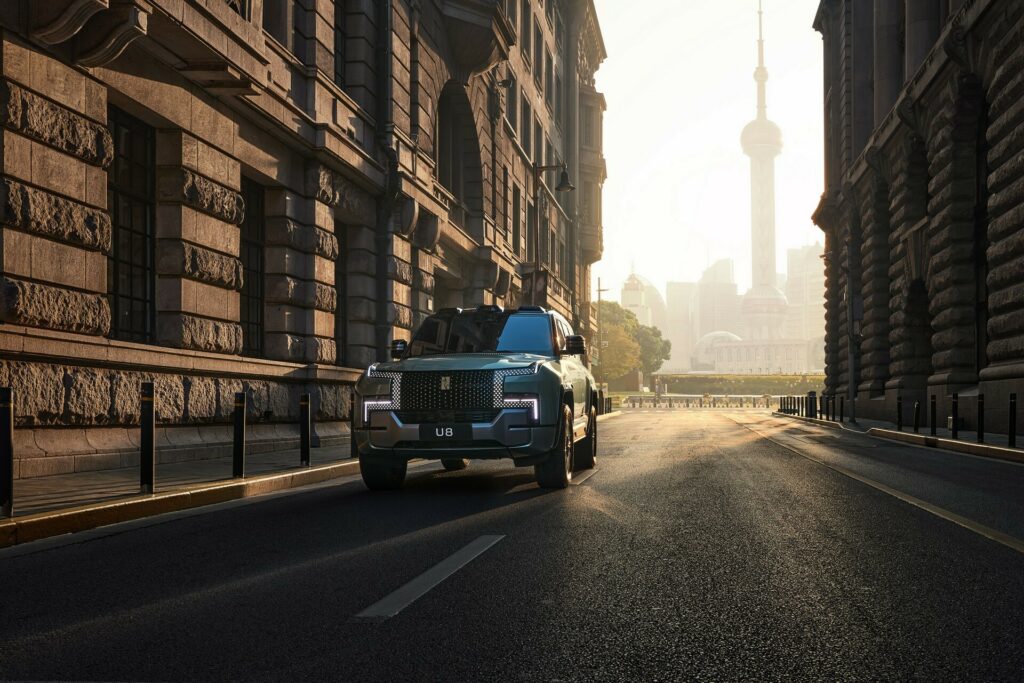
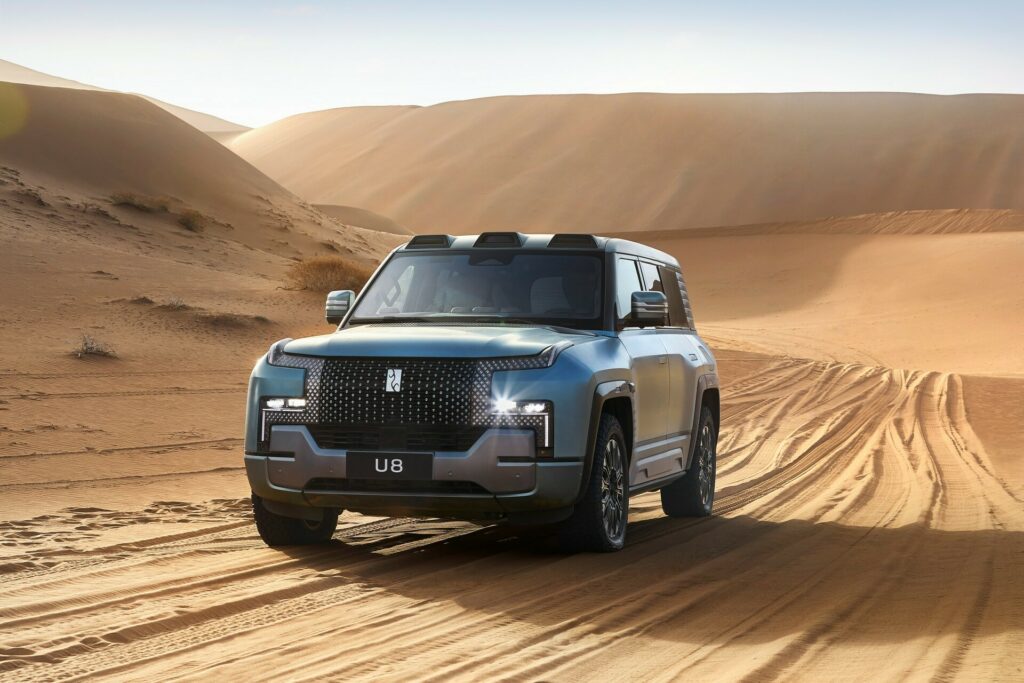
The new U8 Premium Edition from BYD’s Yangwang division is making its mark in the Chinese market, showcasing a luxurious SUV with a body-on-frame design.
Drawing inspiration from the standard U8, this edition embraces an exterior reminiscent of the Land Rover Defender, highlighted by 20- or 22-inch wheels, a ‘floating’ roof, flush-mounted door handles, and an octagonal spare tire cover.
Inside, it boasts advanced technology, including 23.6-inch displays for both the driver and front passenger. The cabin is also equipped with a prominent 12.8-inch infotainment system in a portrait orientation. Furthermore, a dual-screen rear entertainment system and a display integrated into the second-row armrest contribute to the overall immersive experience for passengers.
While BYD is already a dominant force in the electric vehicle market in China, its expansion into Western markets, particularly Europe, positions it in direct competition with established giants like Mercedes, BMW, and Volkswagen.
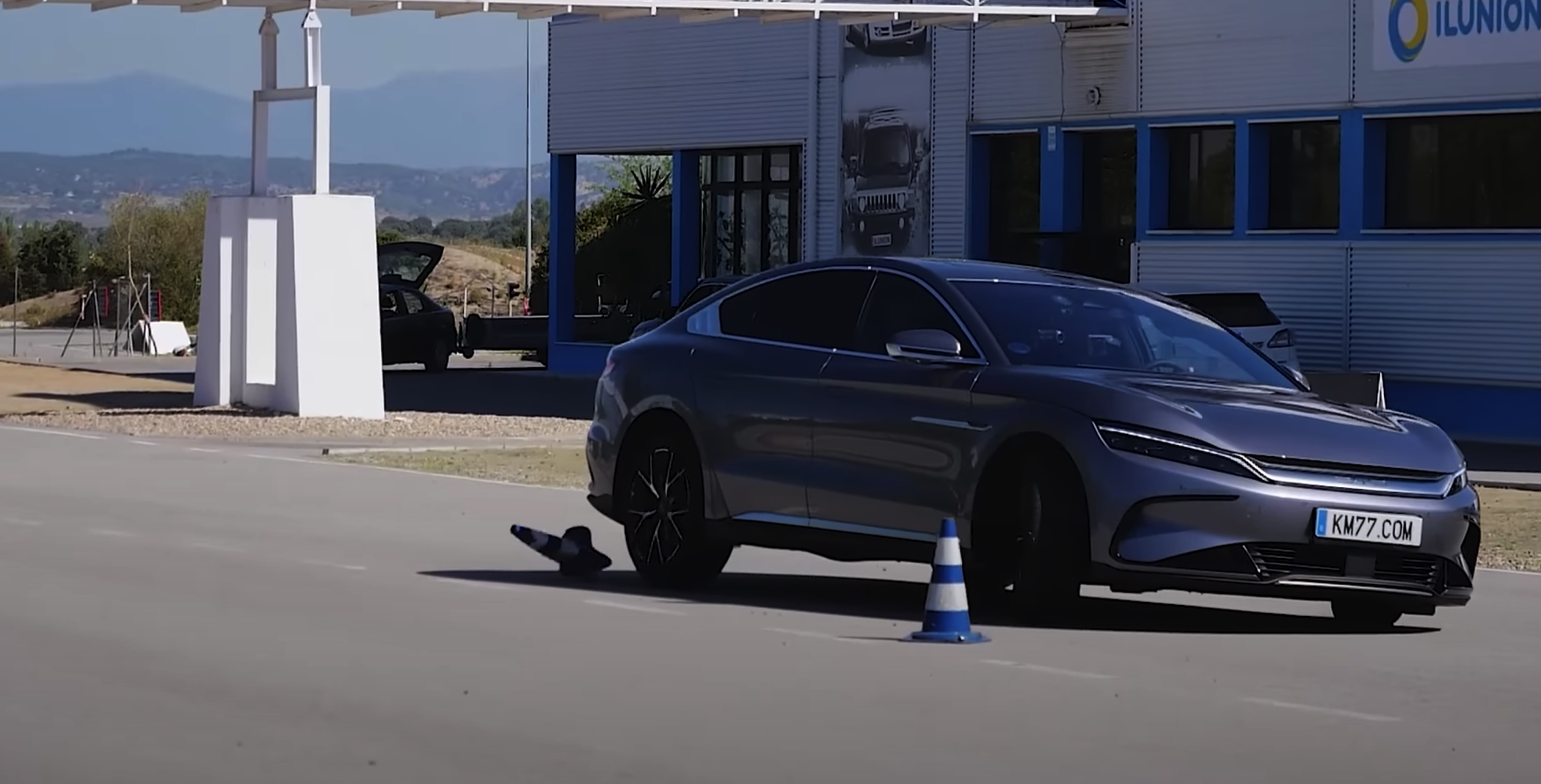
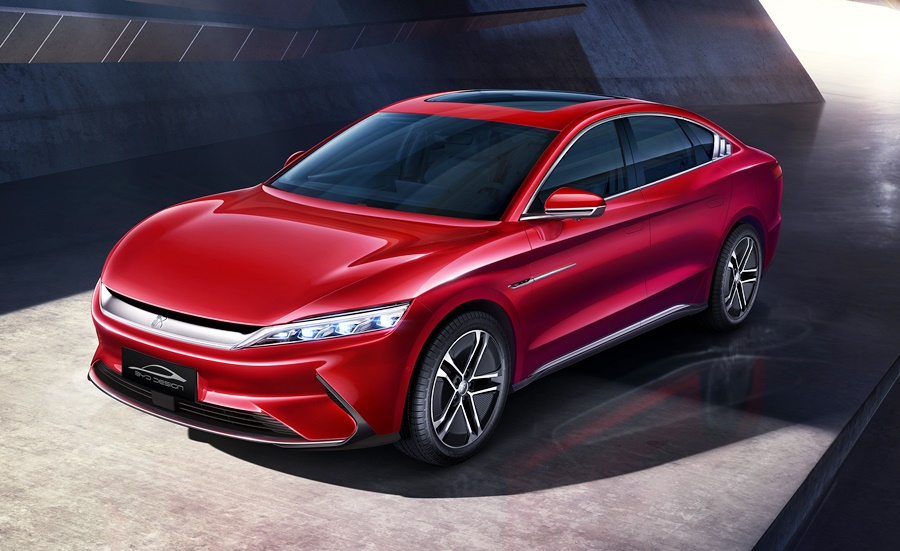
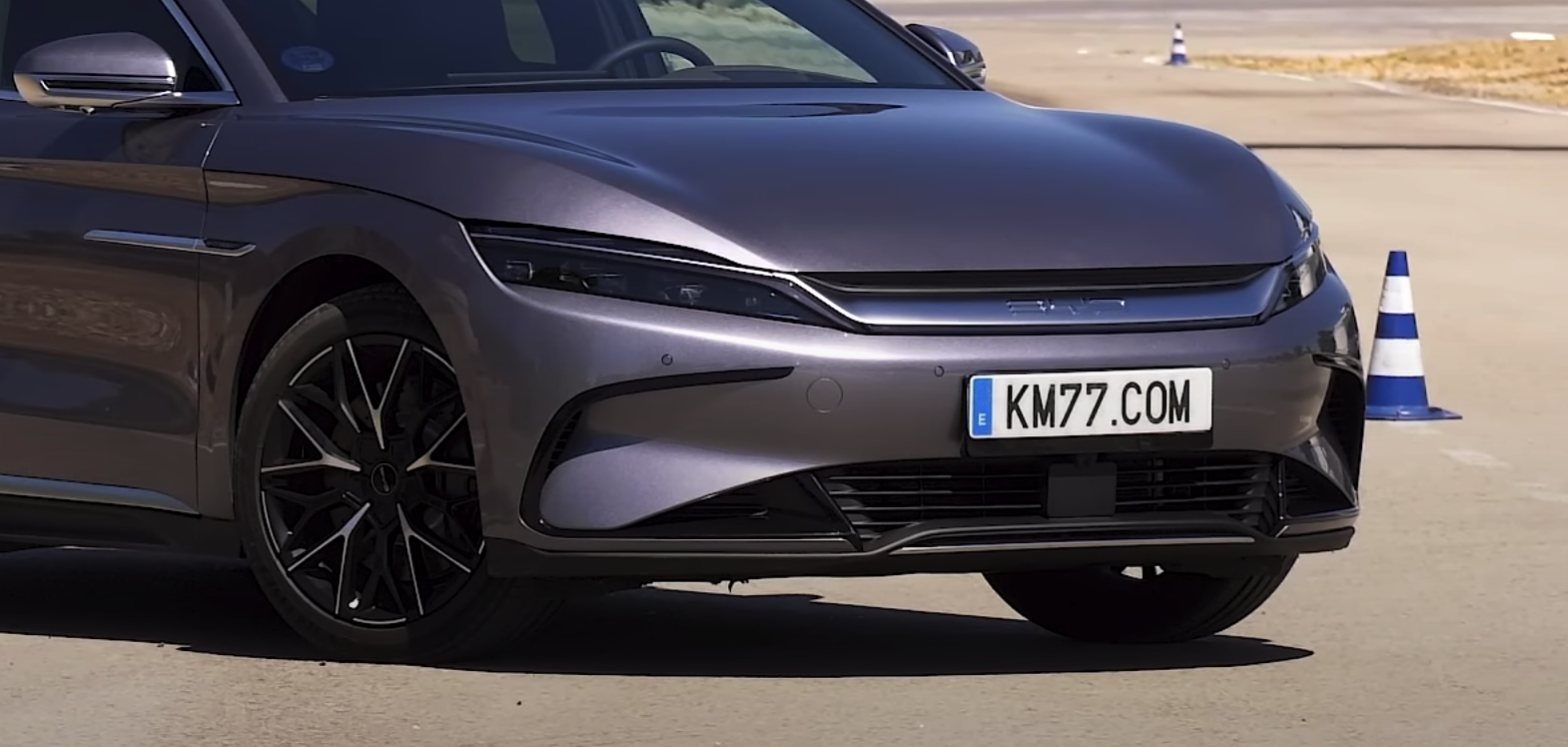
The BYD Han, in particular, stands as a significant model in this expansion, directly competing with renowned vehicles like the Mercedes-Benz EQE sedan and the BMW i5. The Han boasts an impressive set of features on paper, offering all-wheel drive, an extensive electric range of 521km on the WLTP cycle, and a competitive pricing strategy that positions it favorably against its rivals. This move by BYD signifies a strategic push to establish a strong presence and gain a significant market share in Europe’s rapidly evolving automotive landscape.
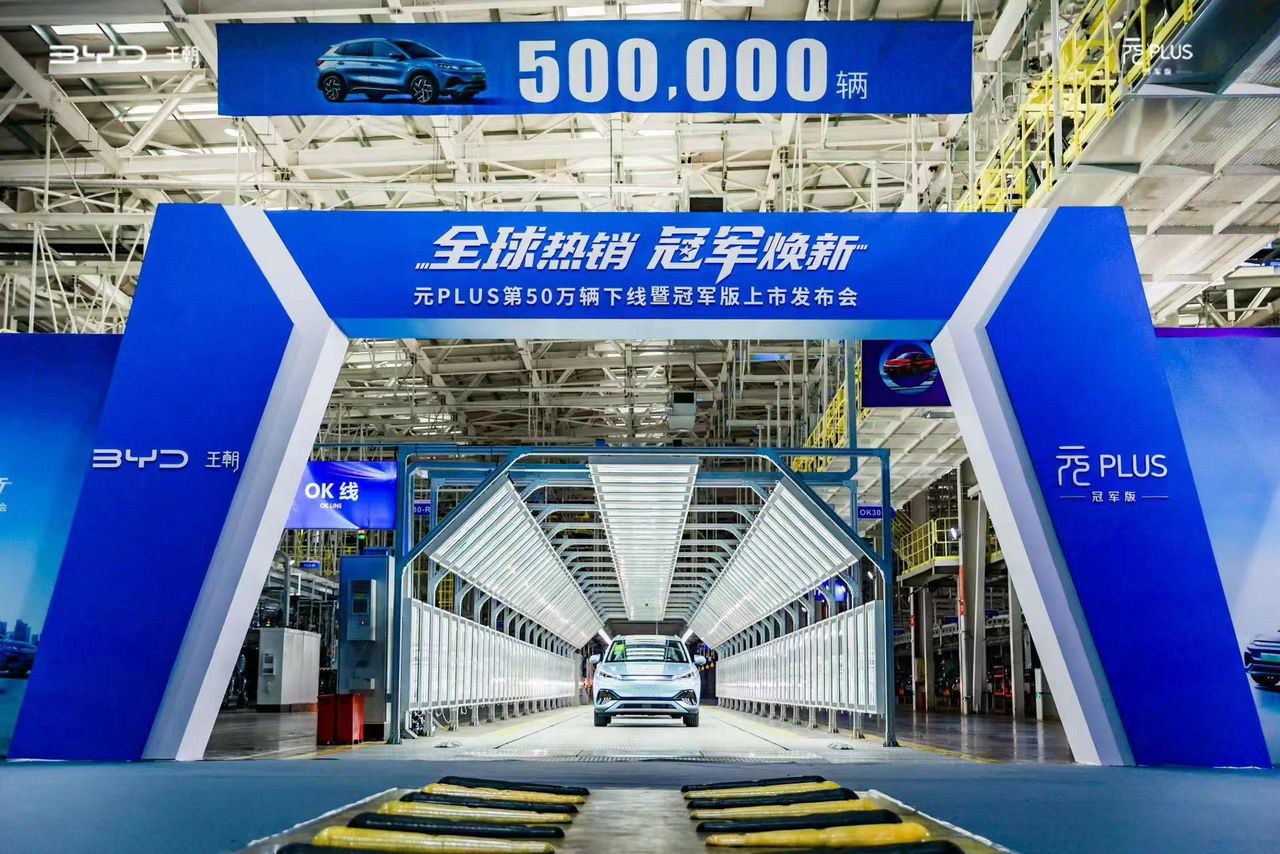
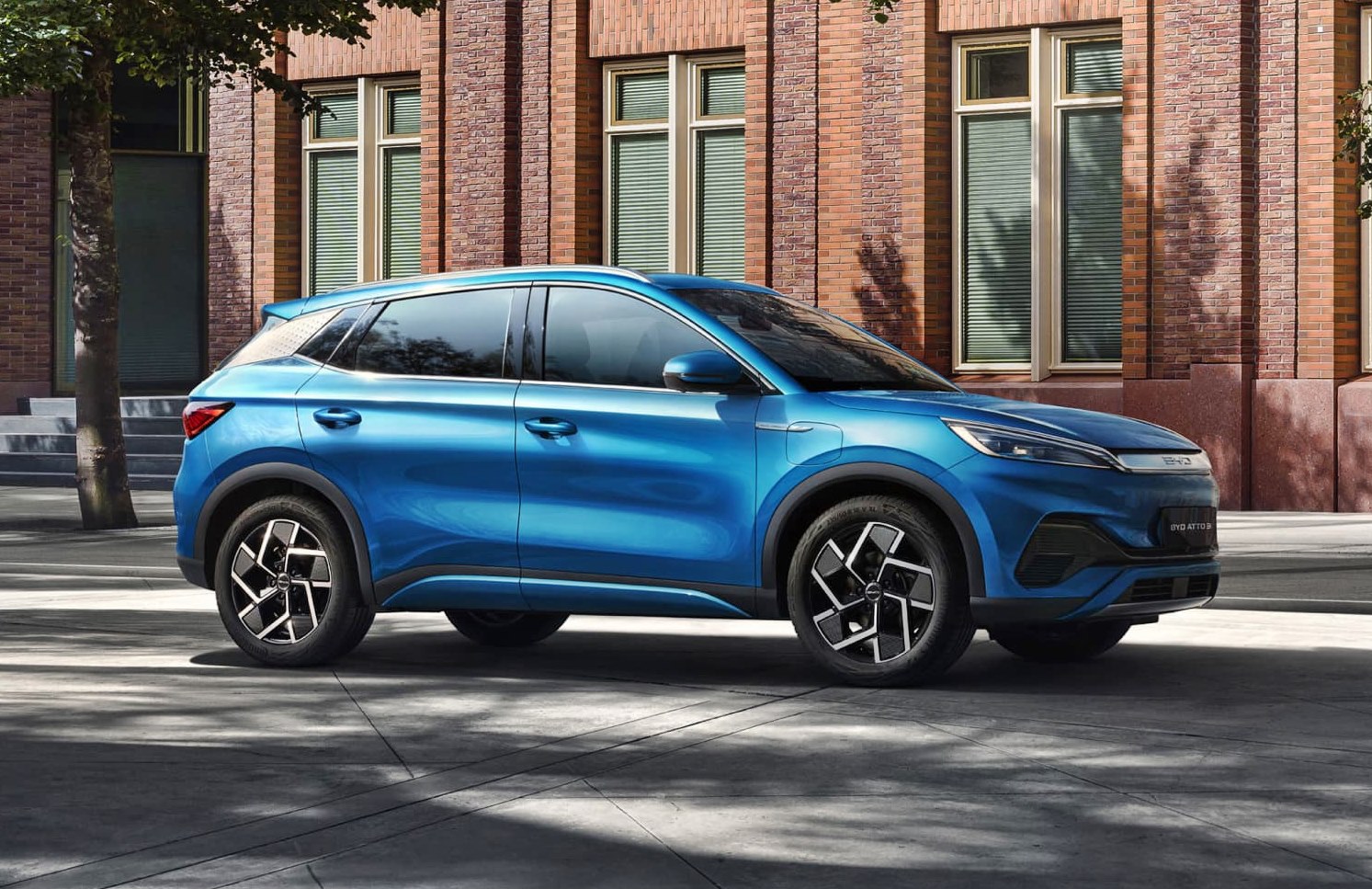
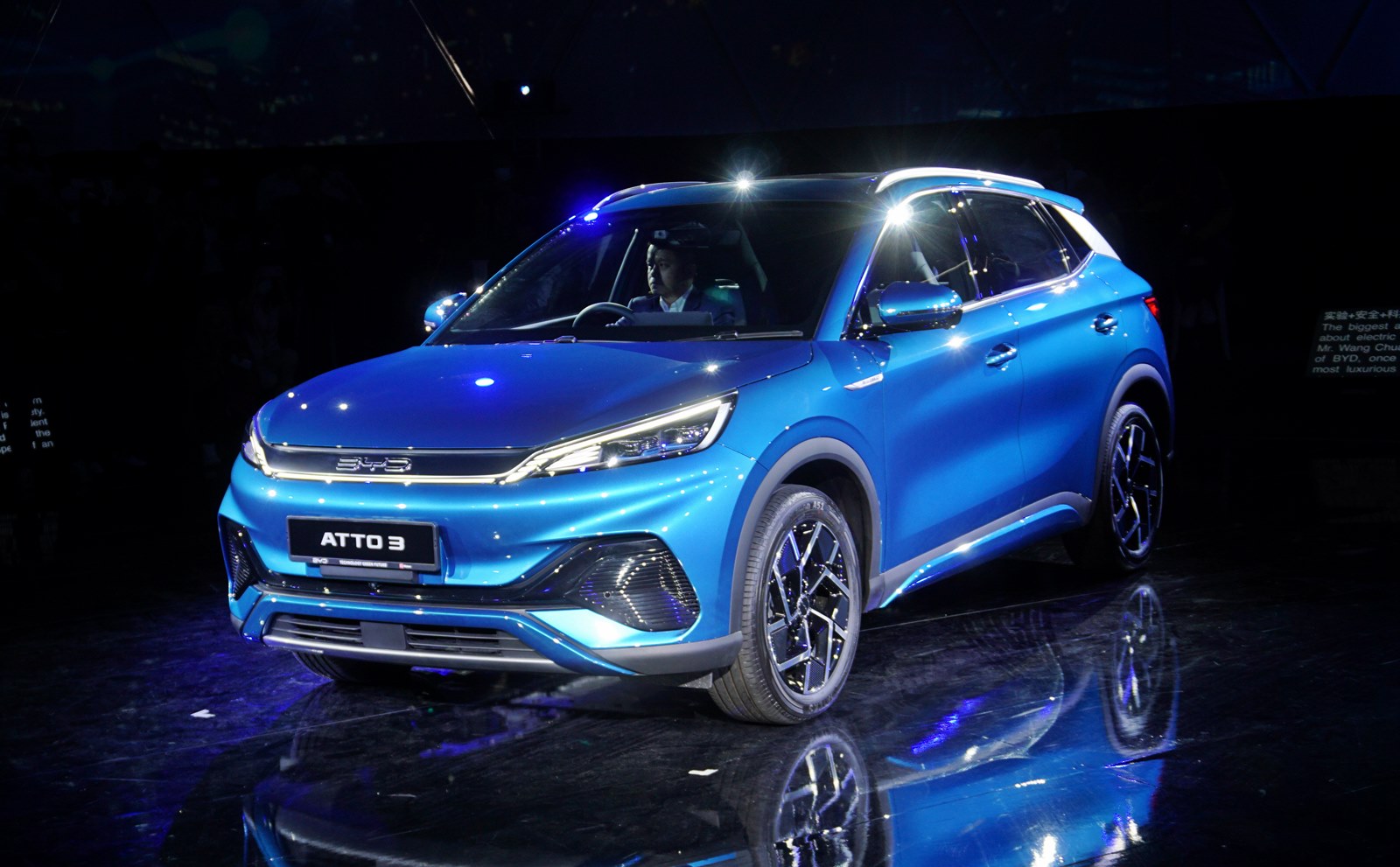
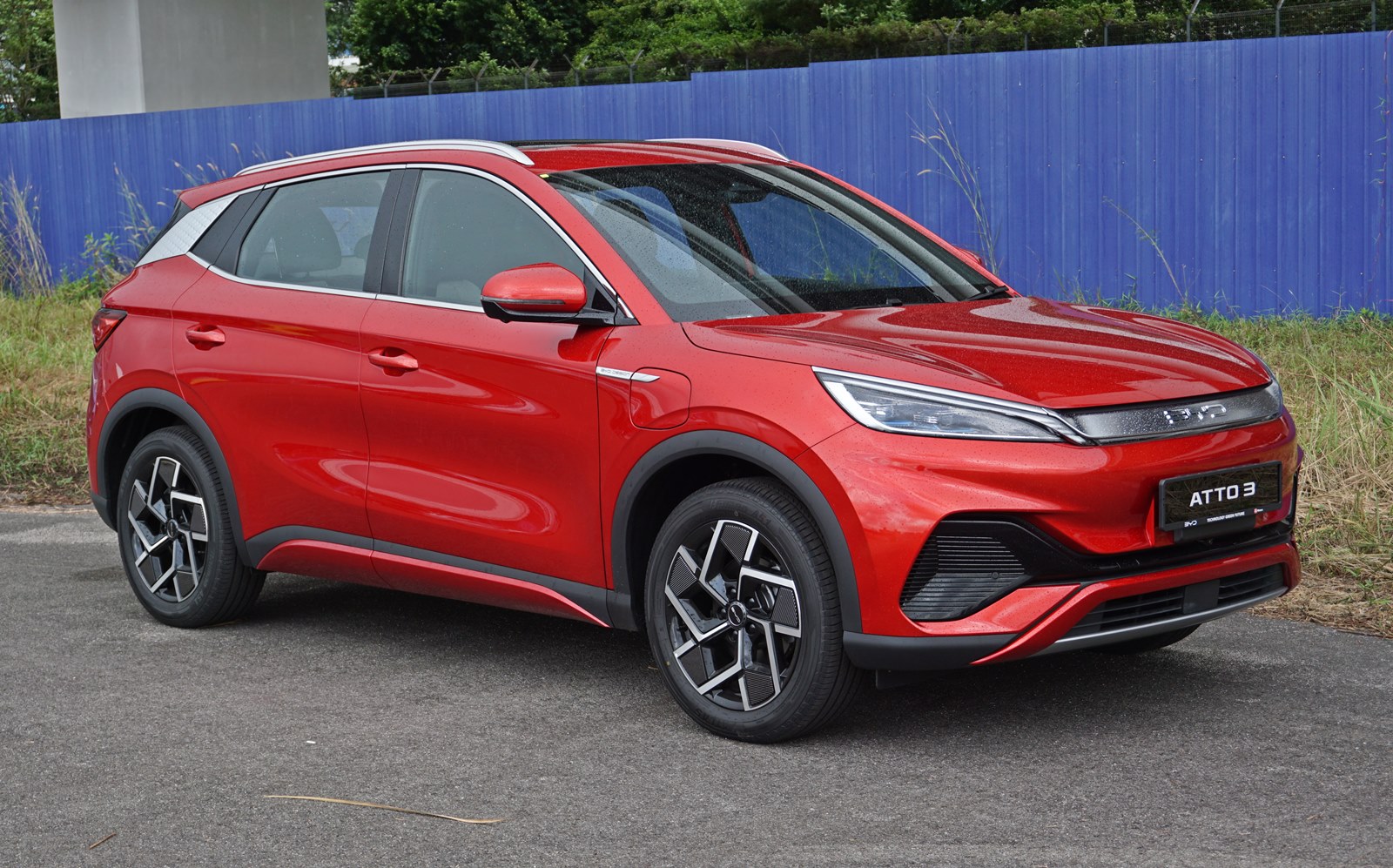
BYD, a global leader in new energy vehicles (NEVs), is celebrating a major achievement with the production of its 500,000th BYD Atto 3 at its Hefei industrial plant. Remarkably, this milestone was reached in just 19 months since the Atto 3’s launch.
The BYD Atto 3, positioned as the first model for the global market, has swiftly become the top-selling NEV in various countries, including Singapore, New Zealand, Thailand, Israel, and Sweden. By now, BYD’s passenger vehicles are present and successful in over 50 countries and regions. Particularly noteworthy is the Atto 3’s dominance in Israel’s NEV sales for nine consecutive months and its current standing as Thailand’s best-selling pure electric vehicle as of August 2023. These accomplishments underscore BYD’s growing influence and triumph in the global automotive market.
We recently got to take a second test drive in the Dolphin but from the perspective of someone who has only driven a handful of EVs. This time the drive was from Desa Park City to Elmina, roughly around 30km and with clear roads. However, our drive began at 3:30pm on a Friday, so there was no such thing as clear roads.
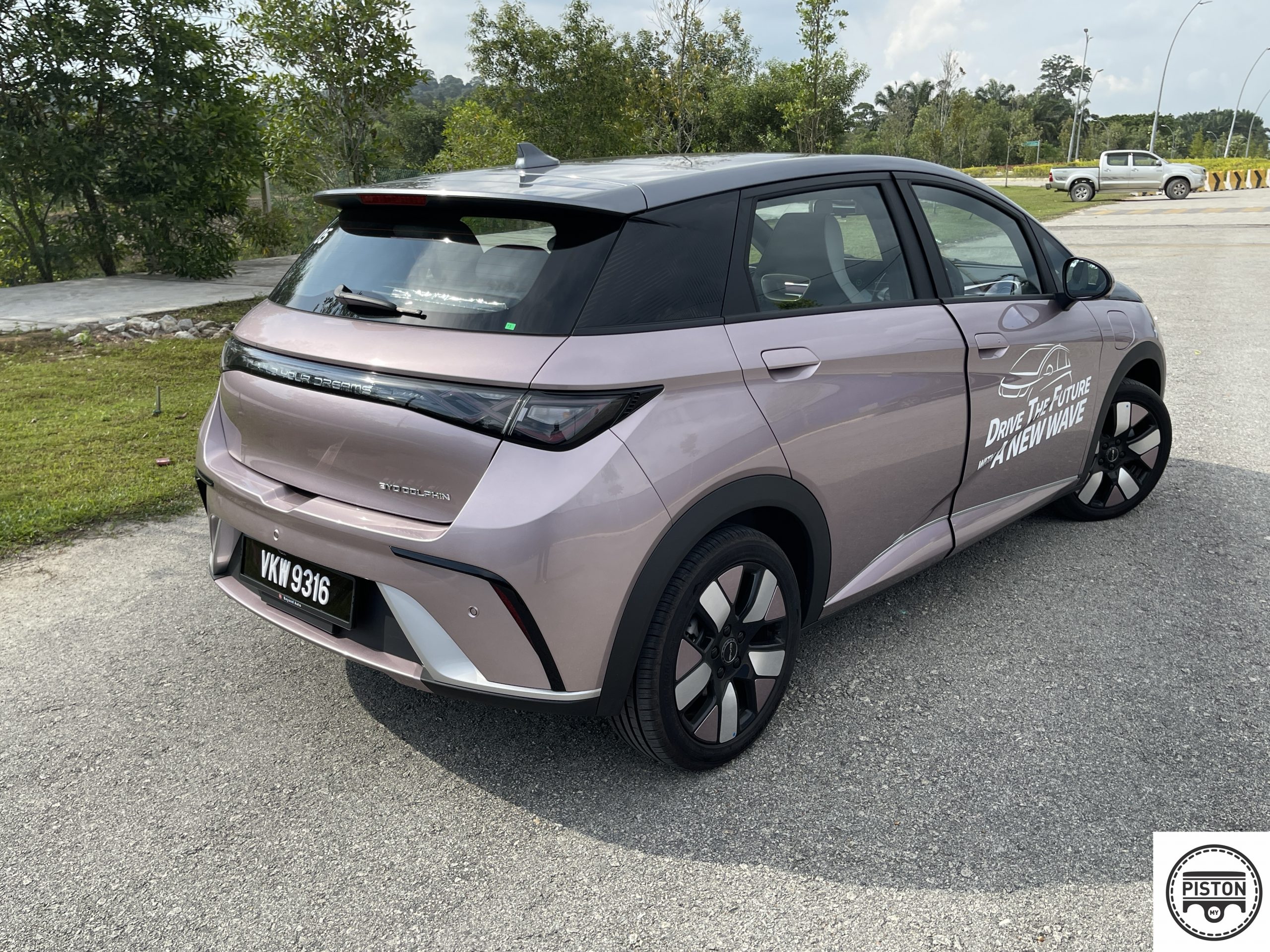
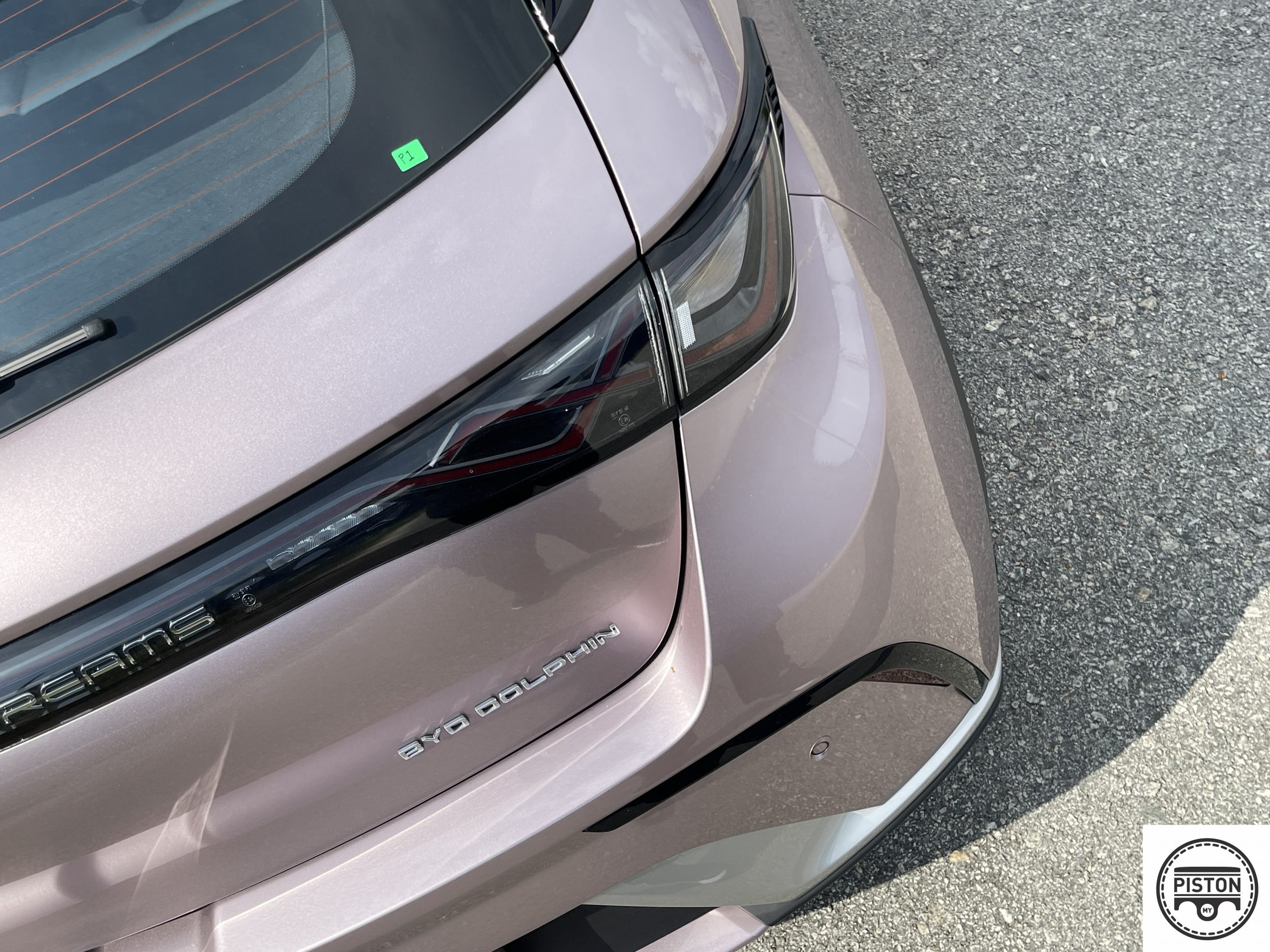
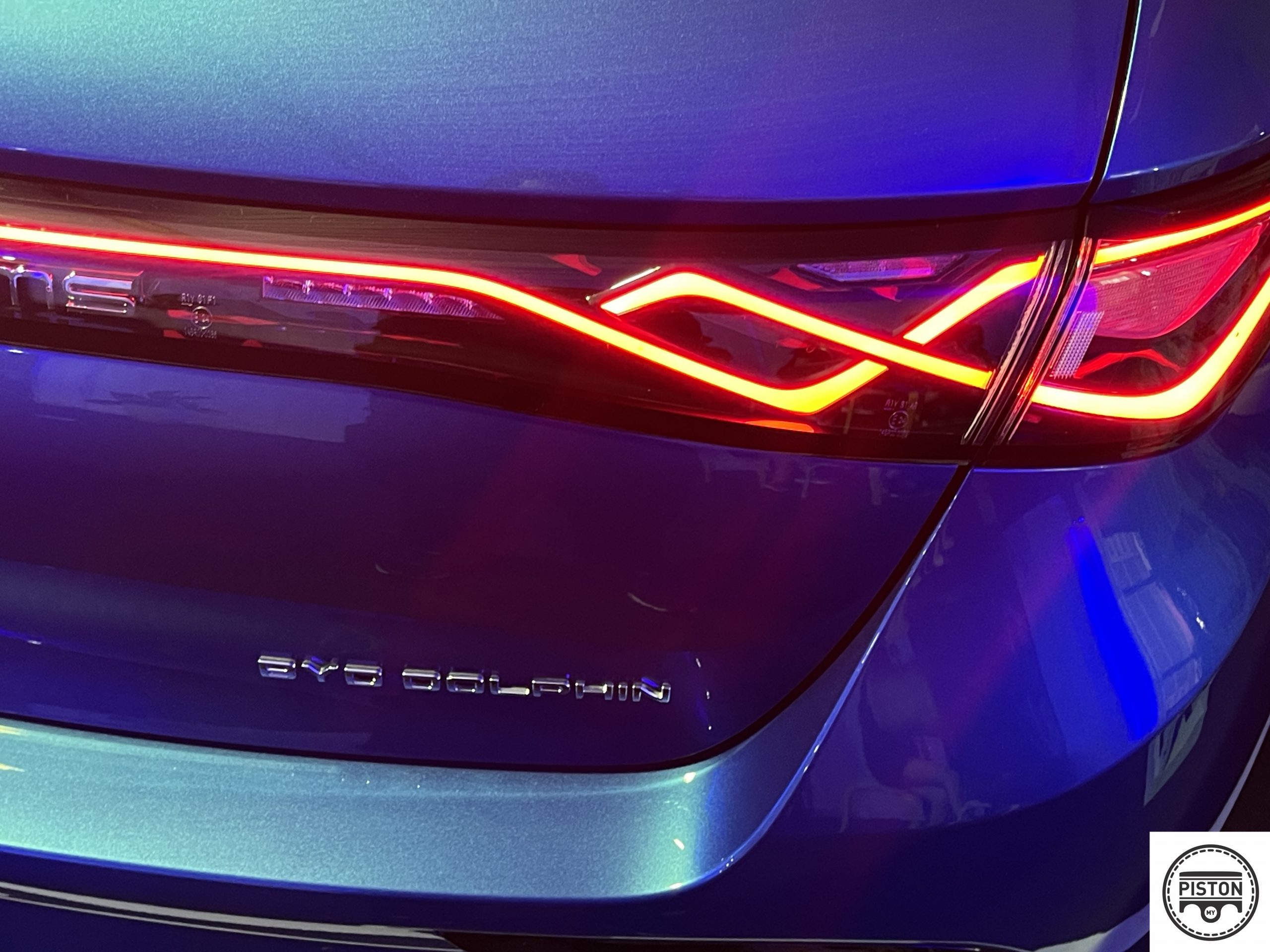
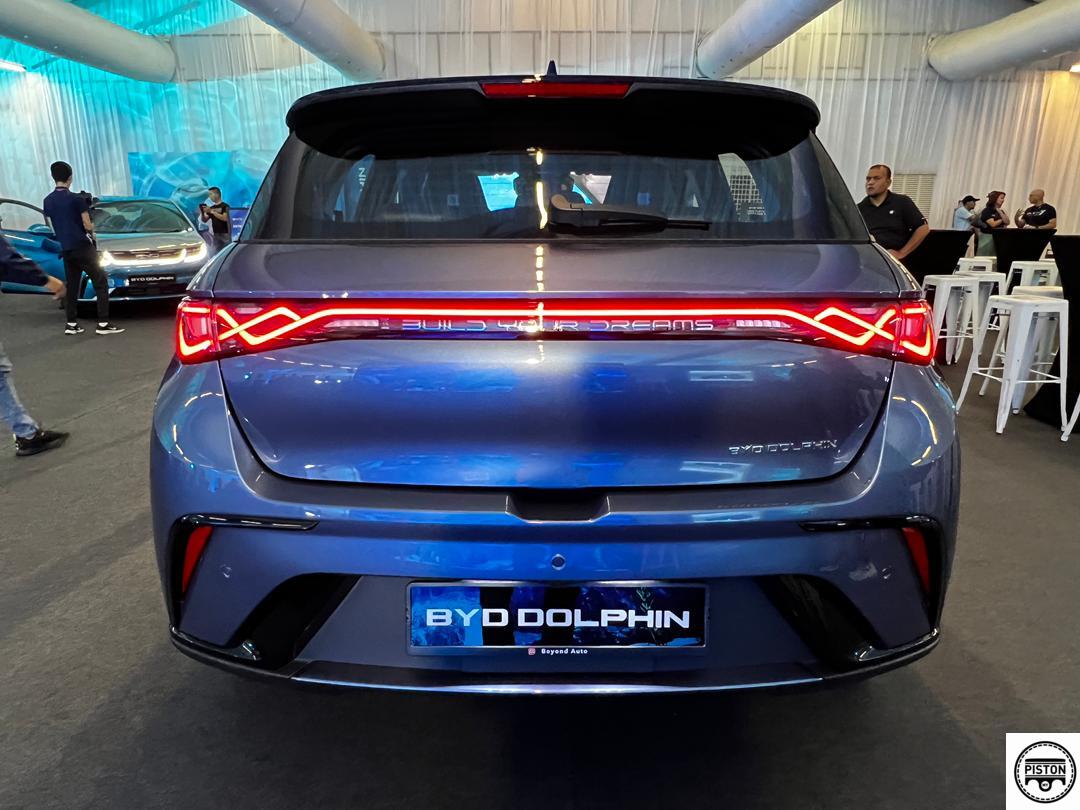
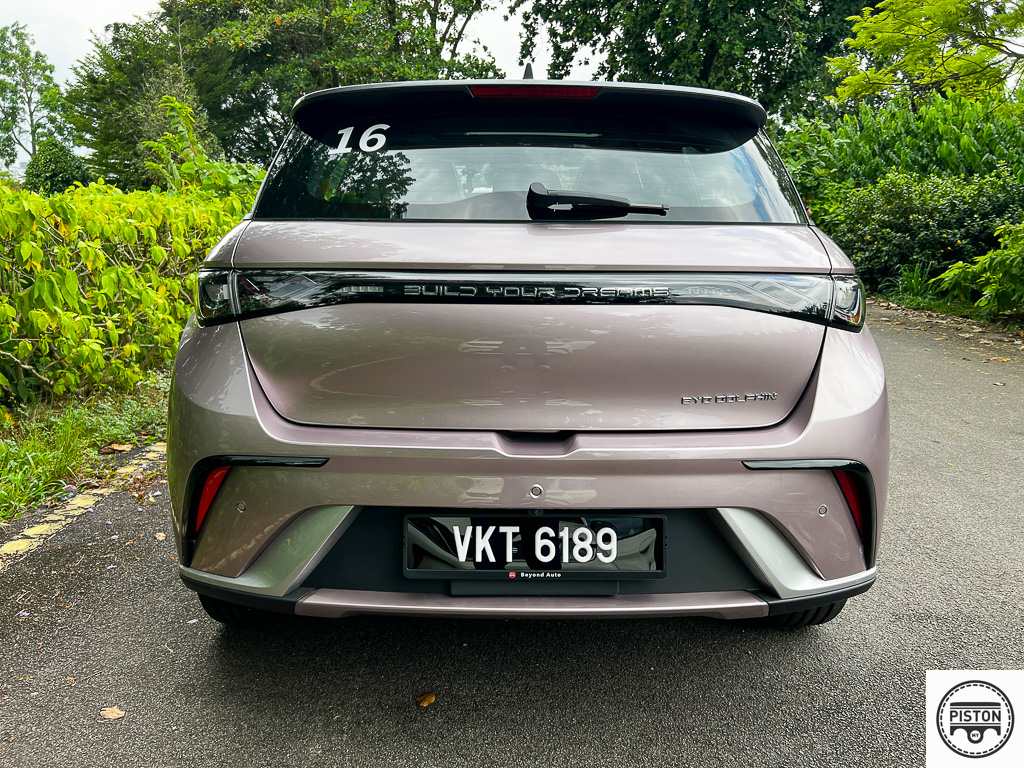
The one exterior feature that caught my eye is the design of the taillights. According to BYD, the inspiration for the design was taken from a Chinese lantern that has similar twirling lines.
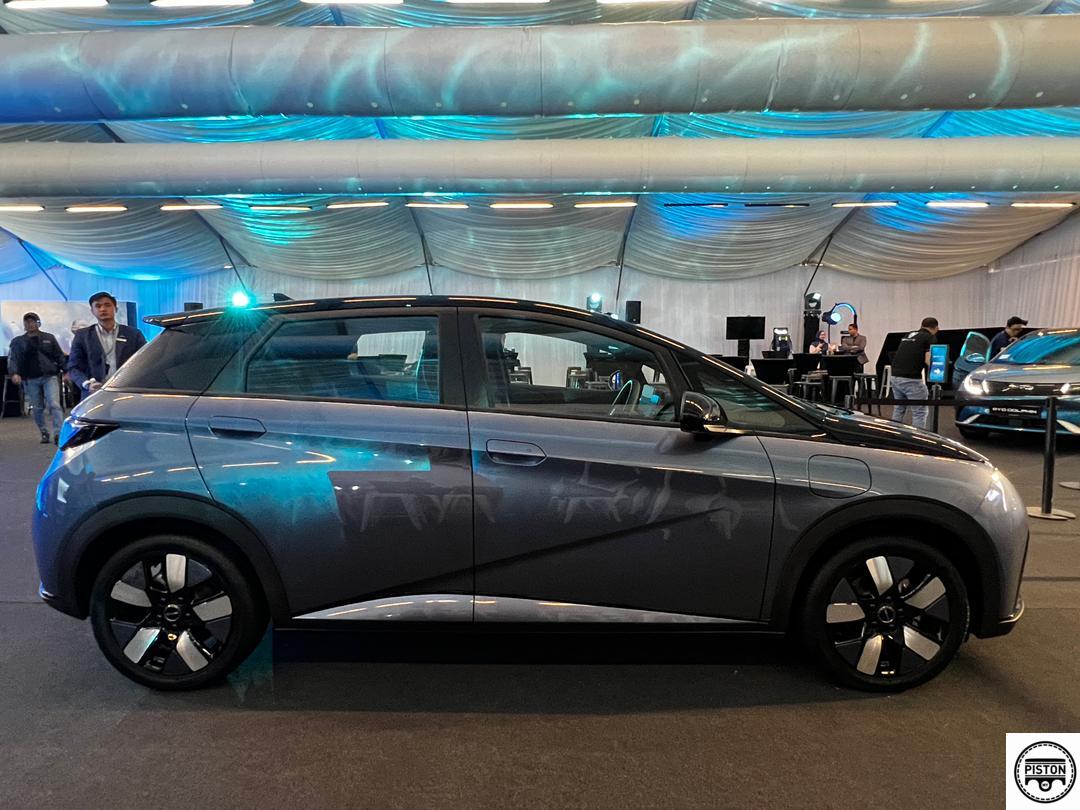
Another interesting feature is that, on the premium extended range, the rims come in three colours. You have your standard dual-tone silver and black, but in addition to that, a third colour (depending on the body colour of the car you choose) is applied. But on the standard range, you only get the dual-tone rims.
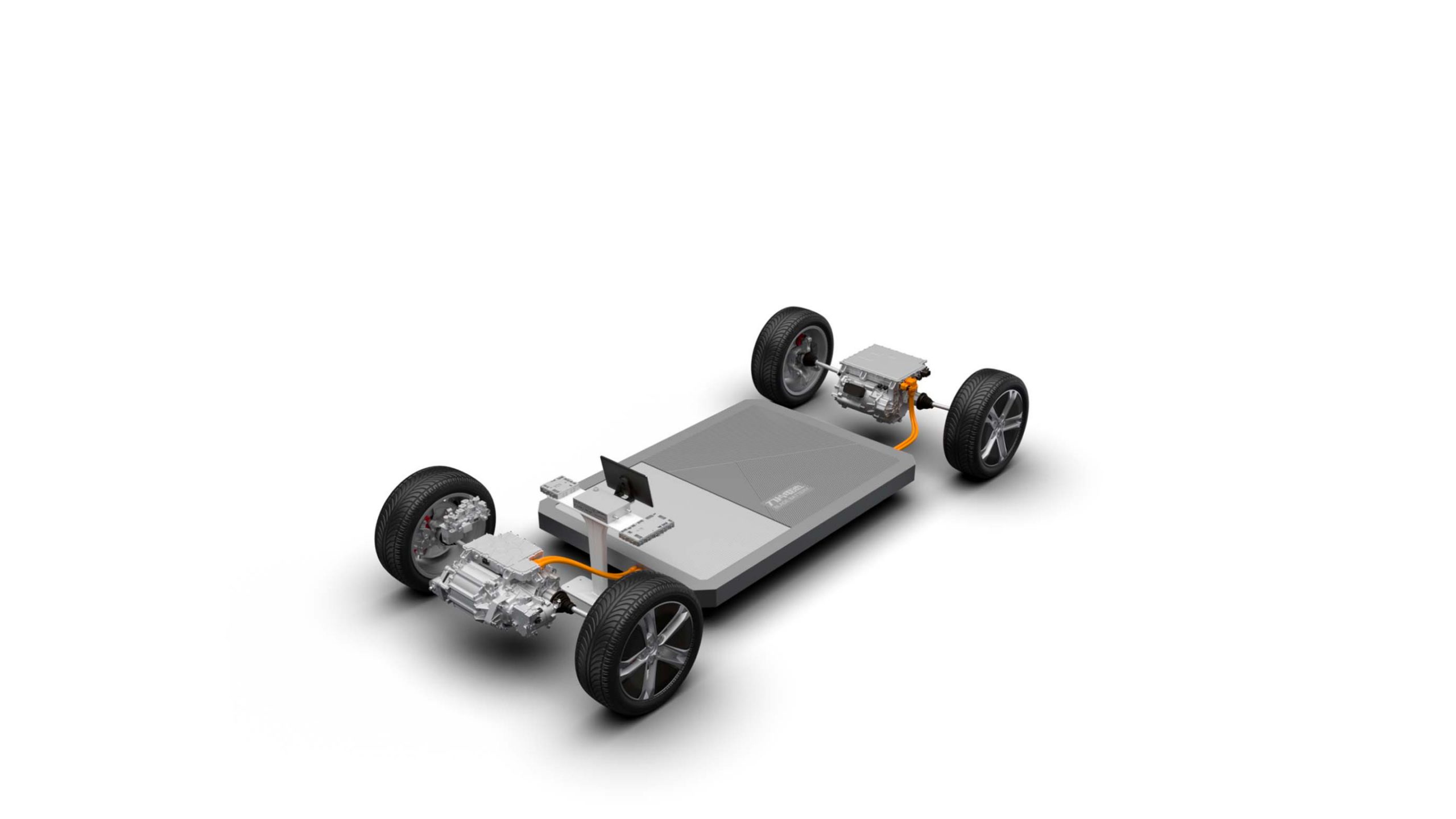
BYD is no stranger to the electric vehicle (EV) game. It has continually been at the forefront of technical developments since its founding in 1995. BYD’s status as a market pioneer for electric vehicles has been cemented by innovations including the Blade Battery, DM-i Super Hybrid System, e-Platform 3.0, CTB Technology, e4 Platform, and the DiSus Intelligent Body Control System, which have raised the bar for the sector.
BYD has enjoyed enviable success in Malaysia. Rarely does a non-national car receive 1,000 booking in just 10 days after launch. But that is exactly what the BYD Atto 3 achieved just earlier this year.
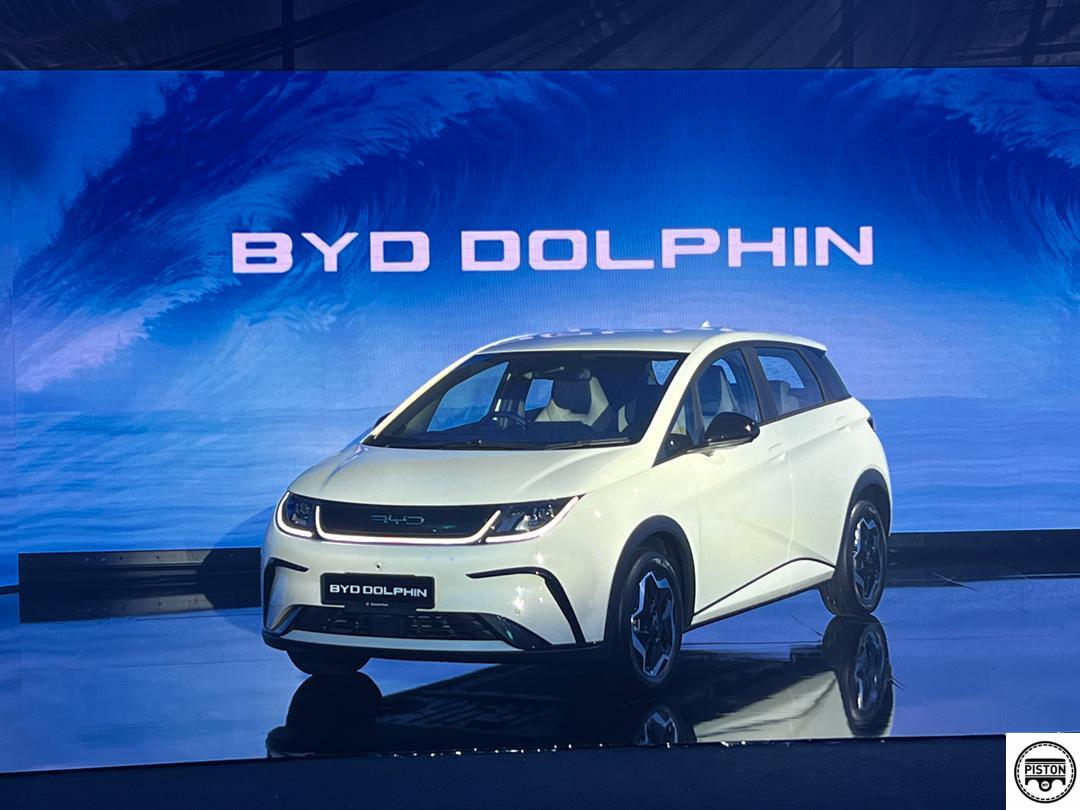
And now, hot on the heels of the undeniable success of the Atto 3, BYD Malaysia is at it again with the launch of the BYD Dolphin.
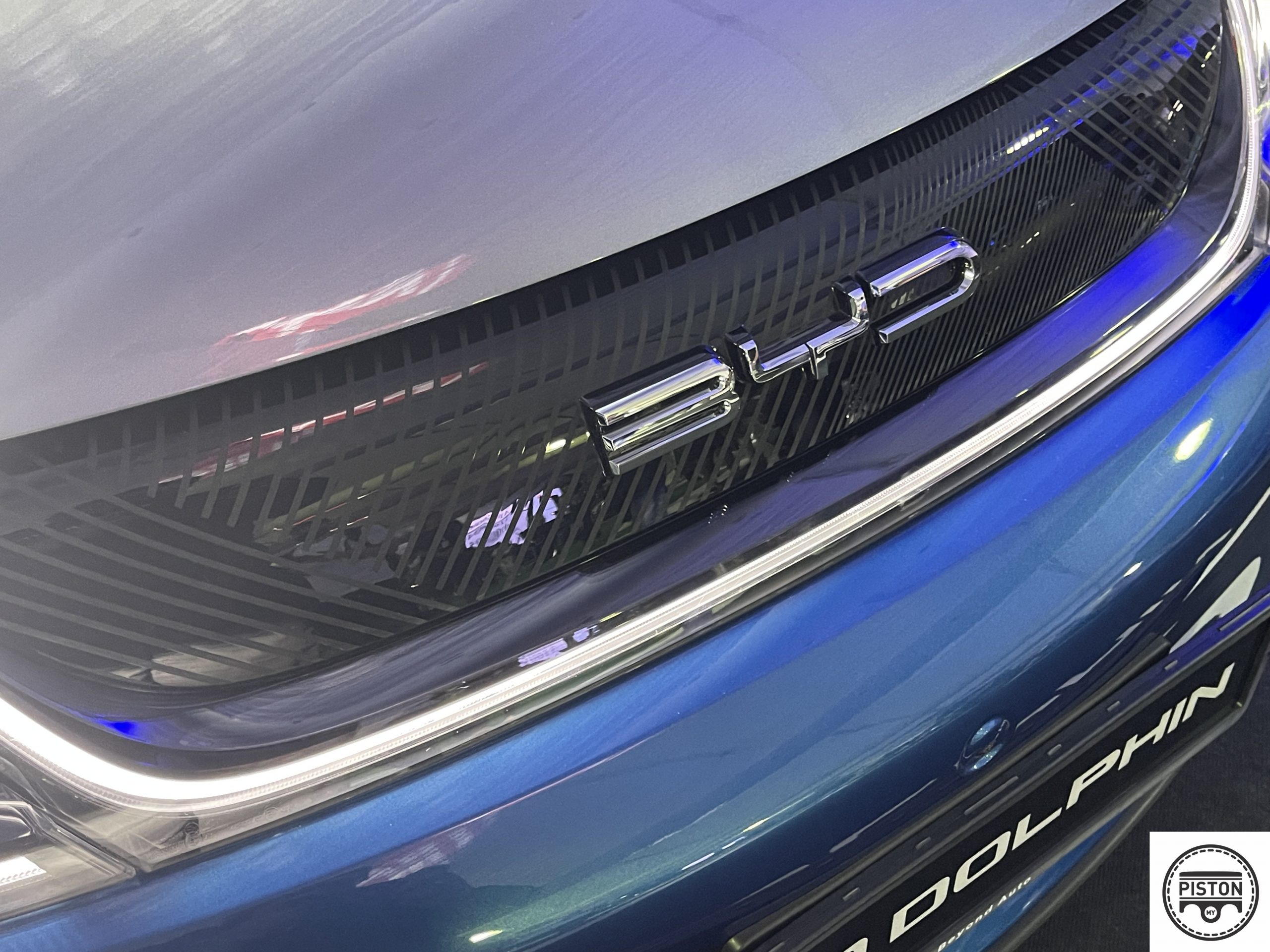
The Dolphin is part of BYD’s Ocean series which also includes the soon to be introduced Seal as well. The Ocean series models are underpinned by the e-Platform 3.0, which BYD is particularly proud of as it integrates BYD’s propriety blade batteries – now widely regarded as the best batteries for EV’s in terms of safety and range. New Tesla cars too run on BYD’s blade batteries.
But the Dolphin is not just a game changer for its platform, its pricing is what makes it a big deal. The entry level Standard range model retails for just RM99,900 and the top-of-the-line model retails at RM124,900.
The cheapest EV in the country is the Neta V which at RM99,800, is just RM100 cheaper than the Dolphin. And considering the brand value, interior features, overall design and quality, the Dolphin is the better buy by any measure.
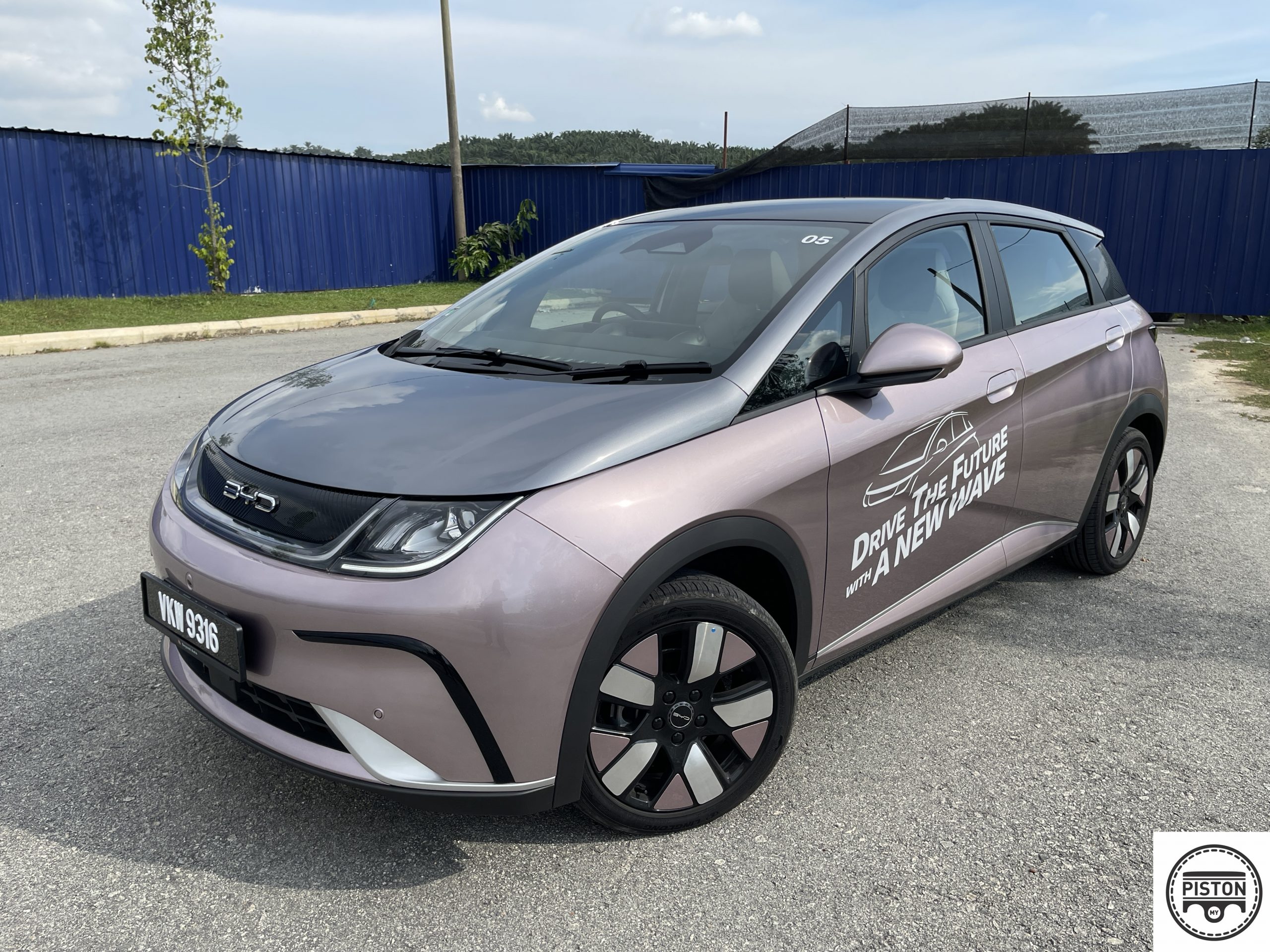
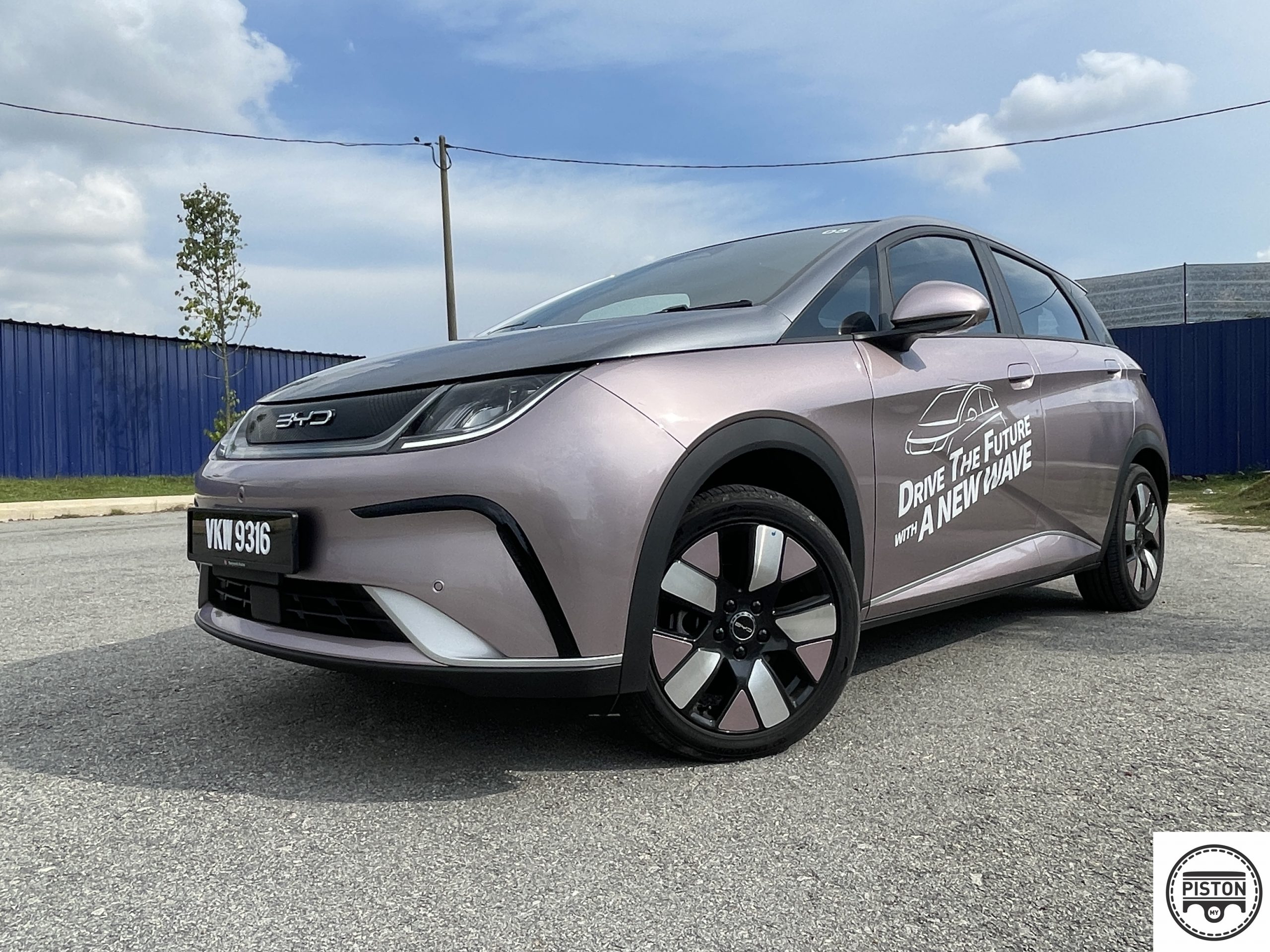
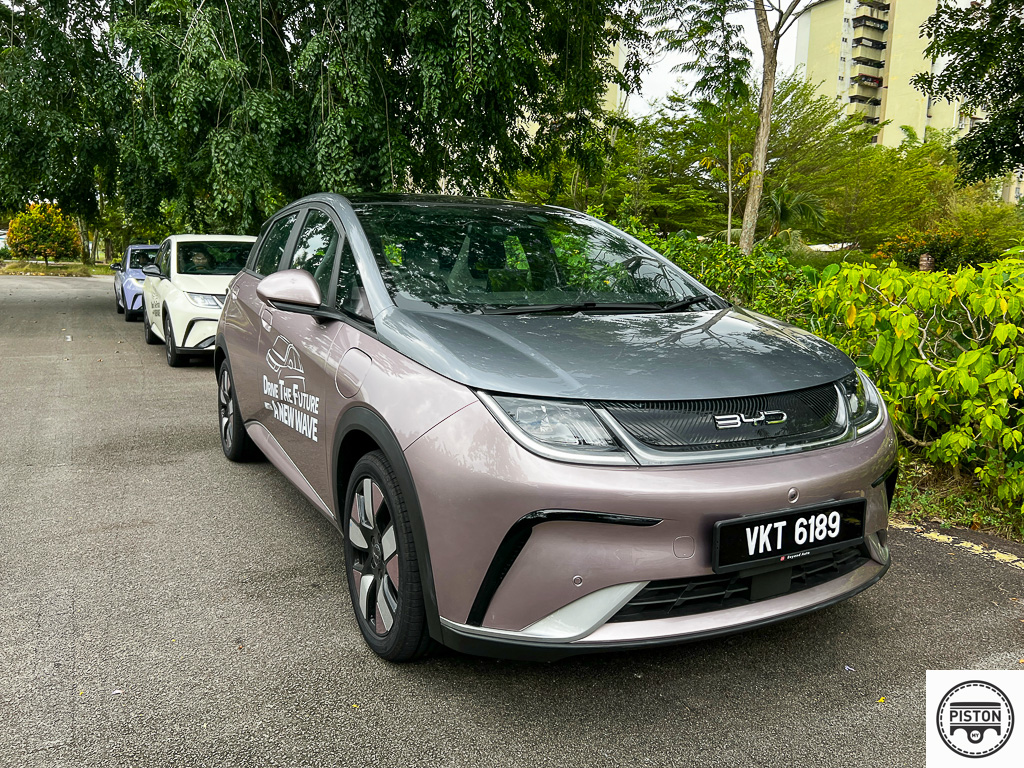
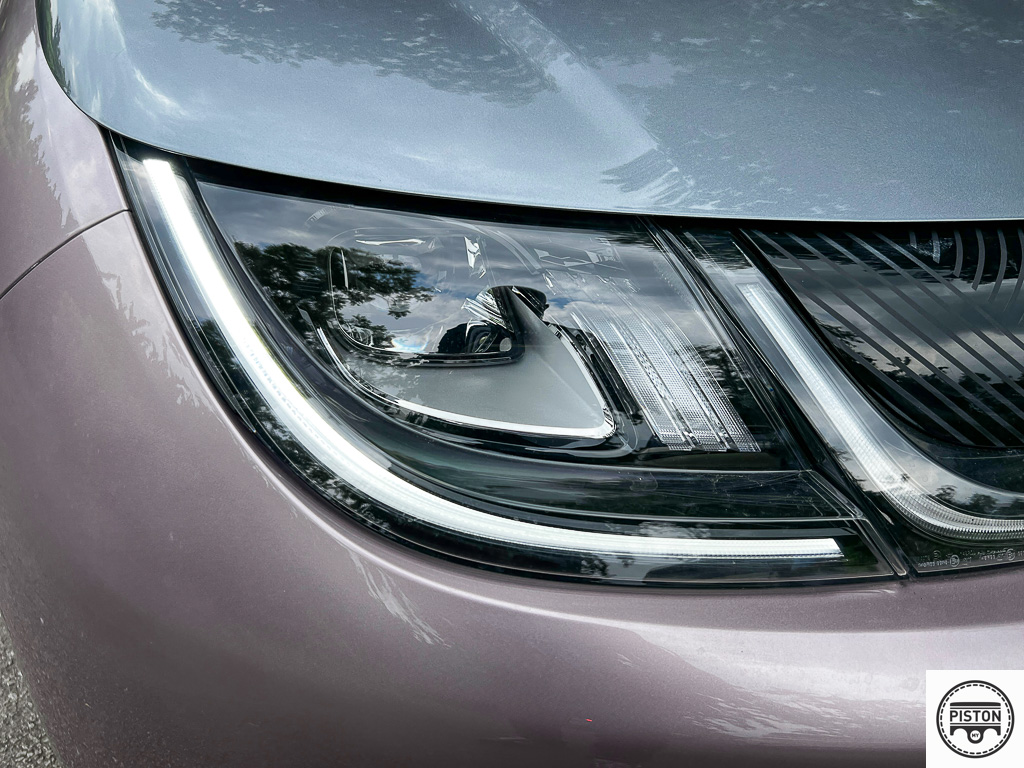
At first glance there is nothing about the Dolphin that will put you off – it is roughly about the size of a Volkswagen Golf or a Toyota Corolla Yaris. At the back, the taillights and its weave like pattern is bound to impress. The wheels are designed to match the body colour, and the top of the line Extended Range model rolls on 17-inch wheels while the Standard range offers 16s.
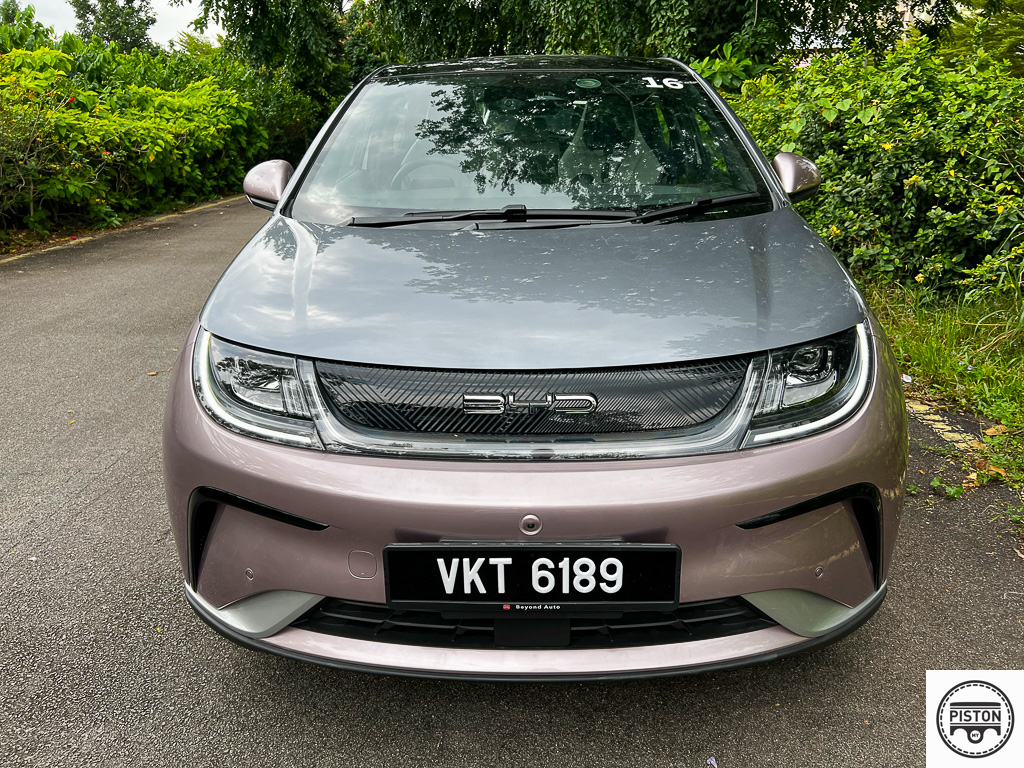
Some have said that the front looks too simple and uninspiring; design is always subjective and others have called the Dolphin a good looking car.
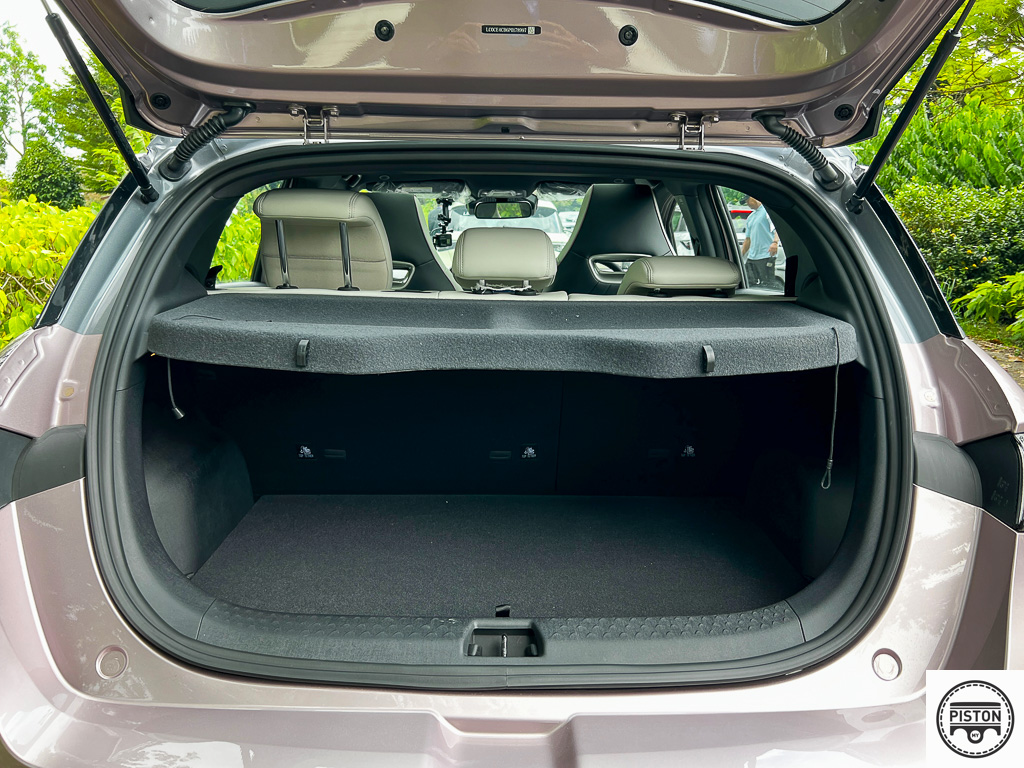
At the rear, the tailgate is not powered but has an electronic latch. Booth space is a little larger than that of a Myvi, and is double stacked for more storage space.
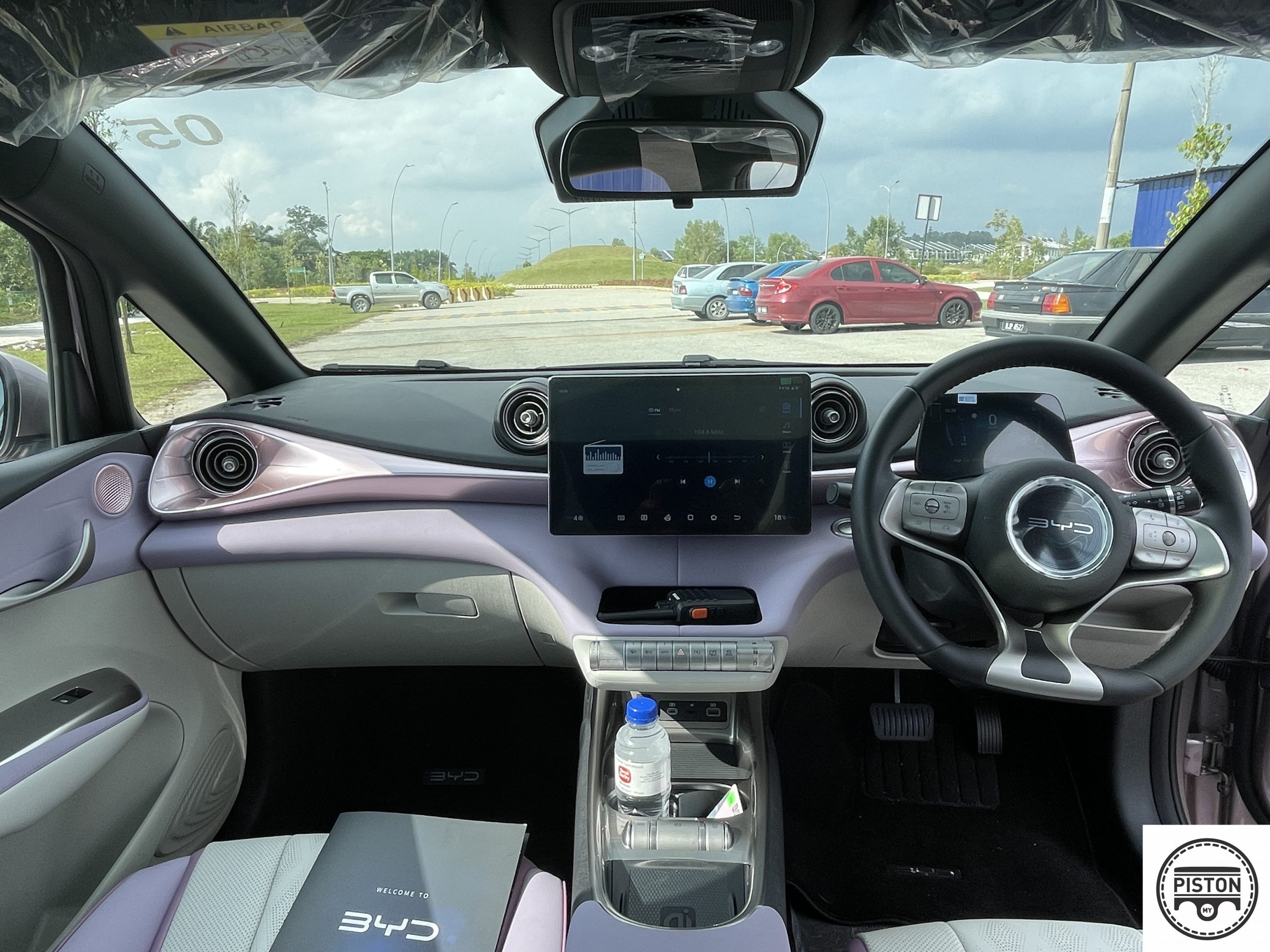
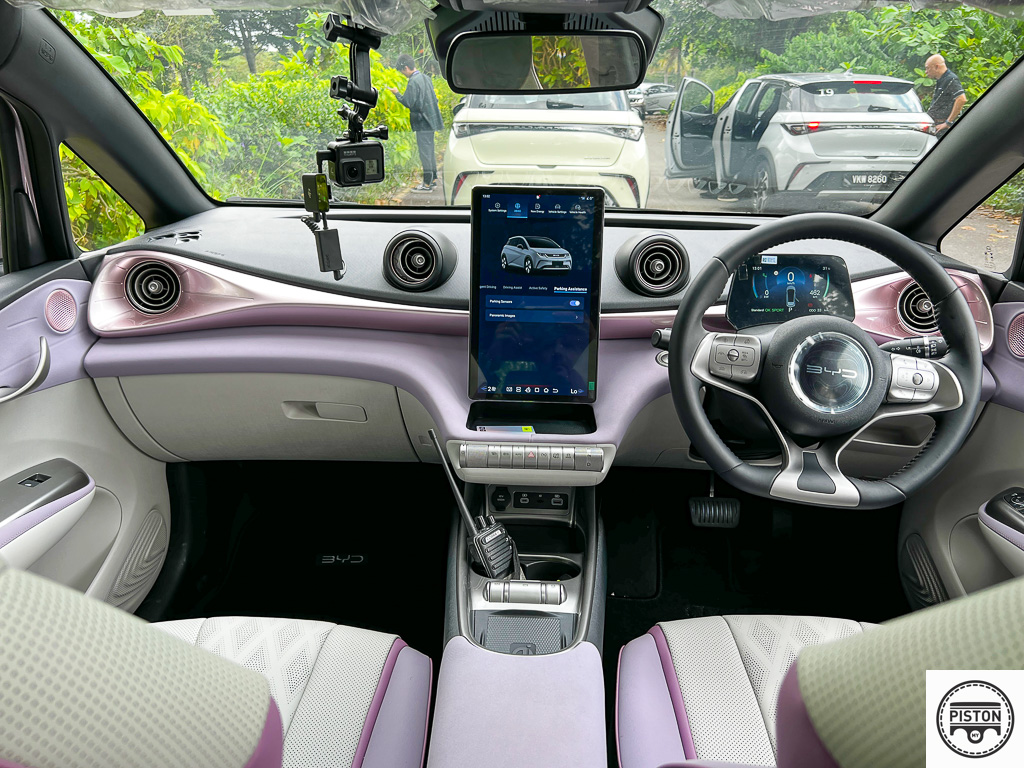
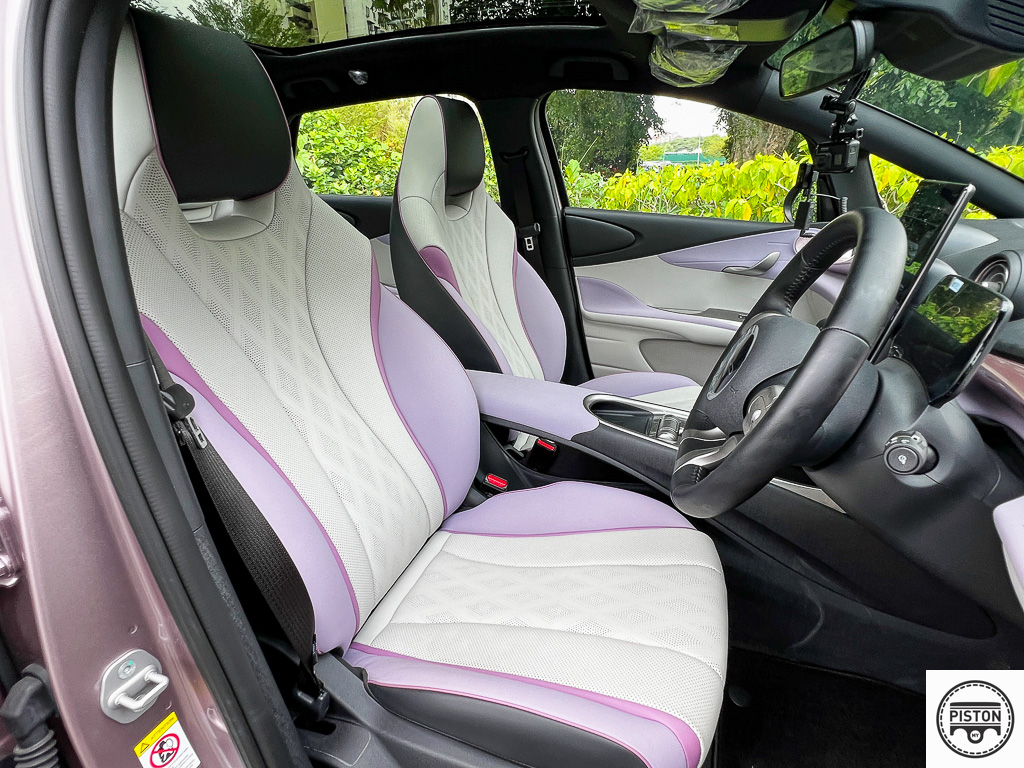
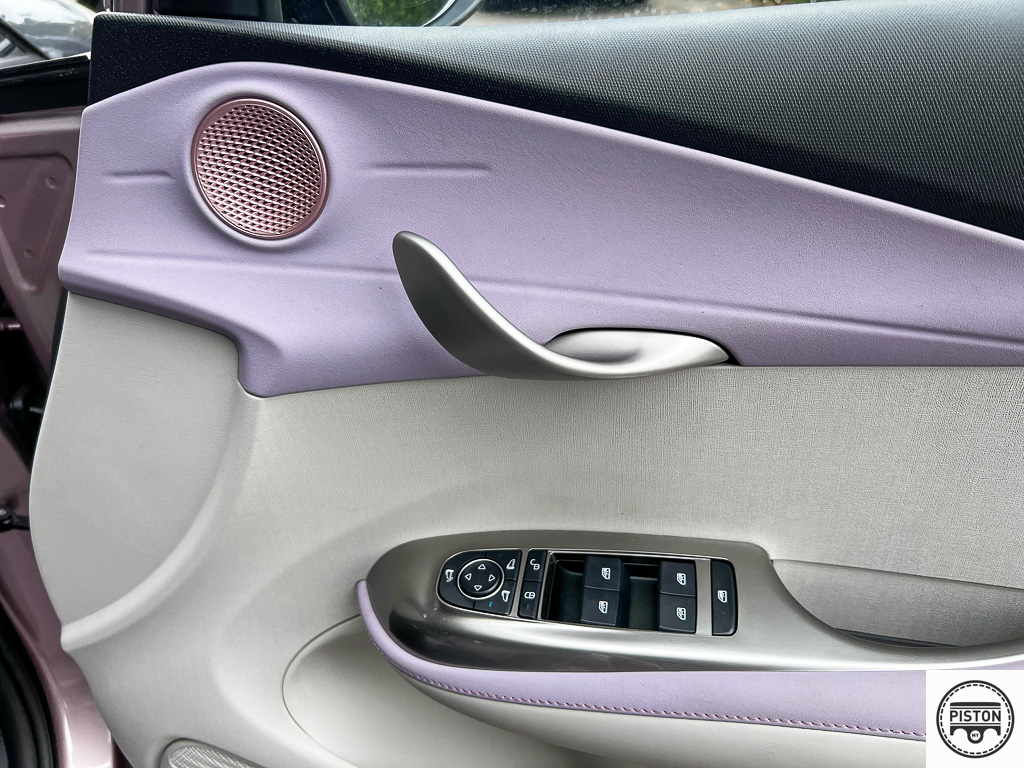
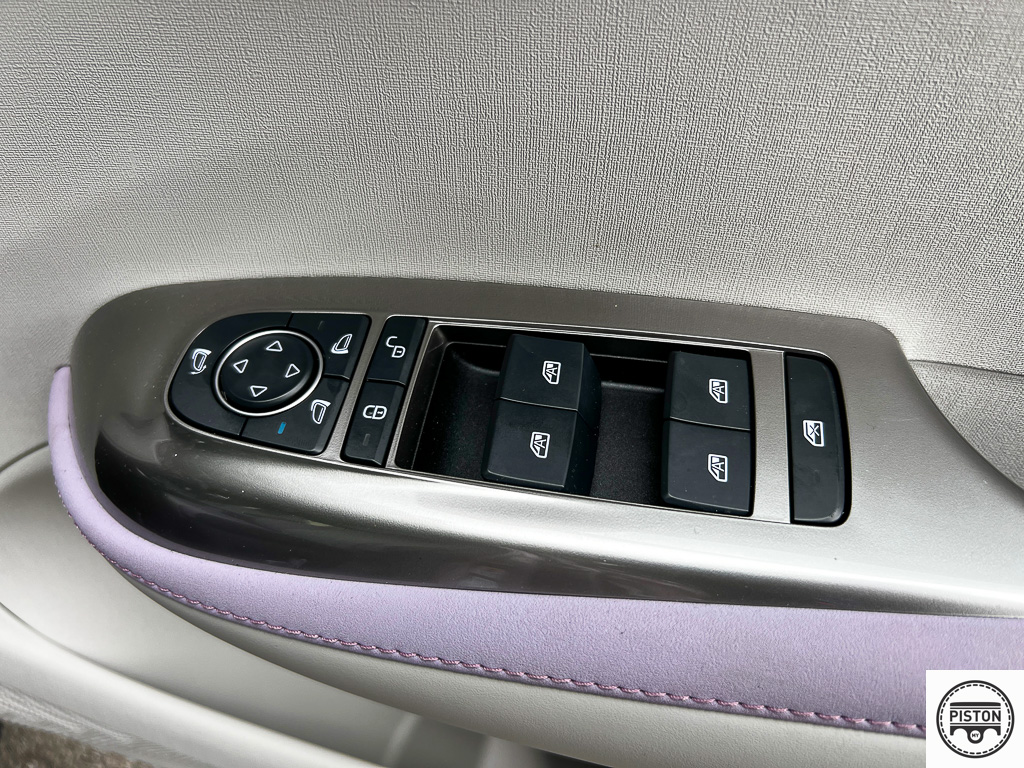
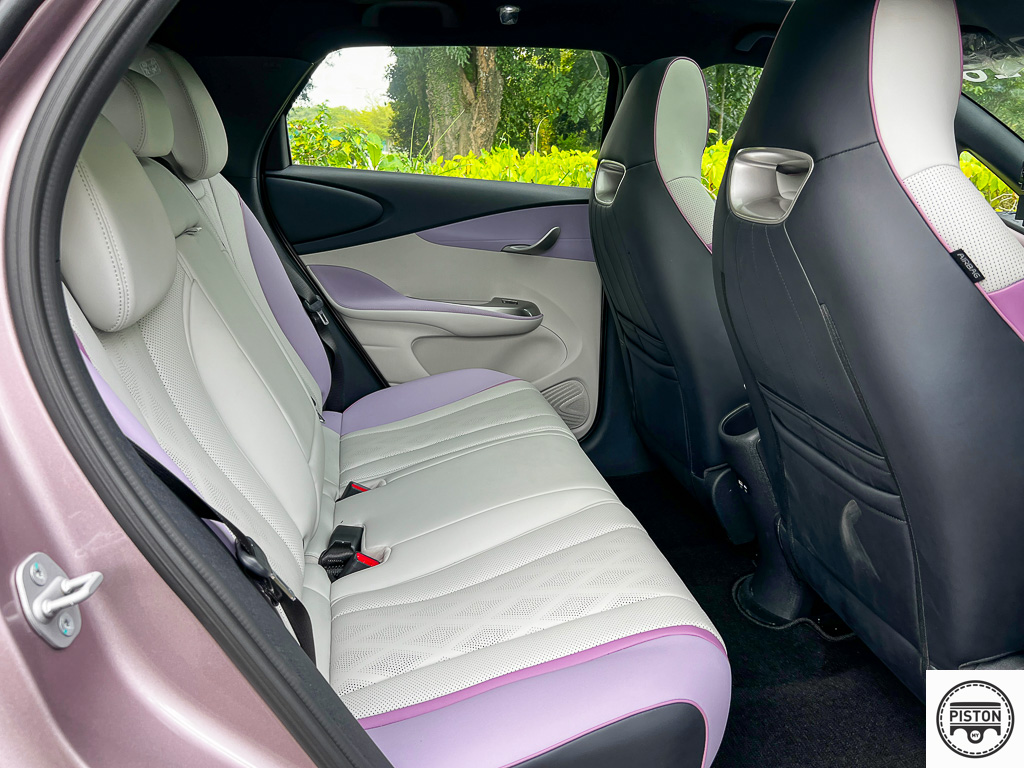
The interior though is bound to impress. While overall space and quality is decent, the colour of the interior mirrors the exterior. So as what you can see in the images here, if the exterior is pink, the interior will be pink (and purple). That may not be to everyone’s taste, but some may appreciate it.
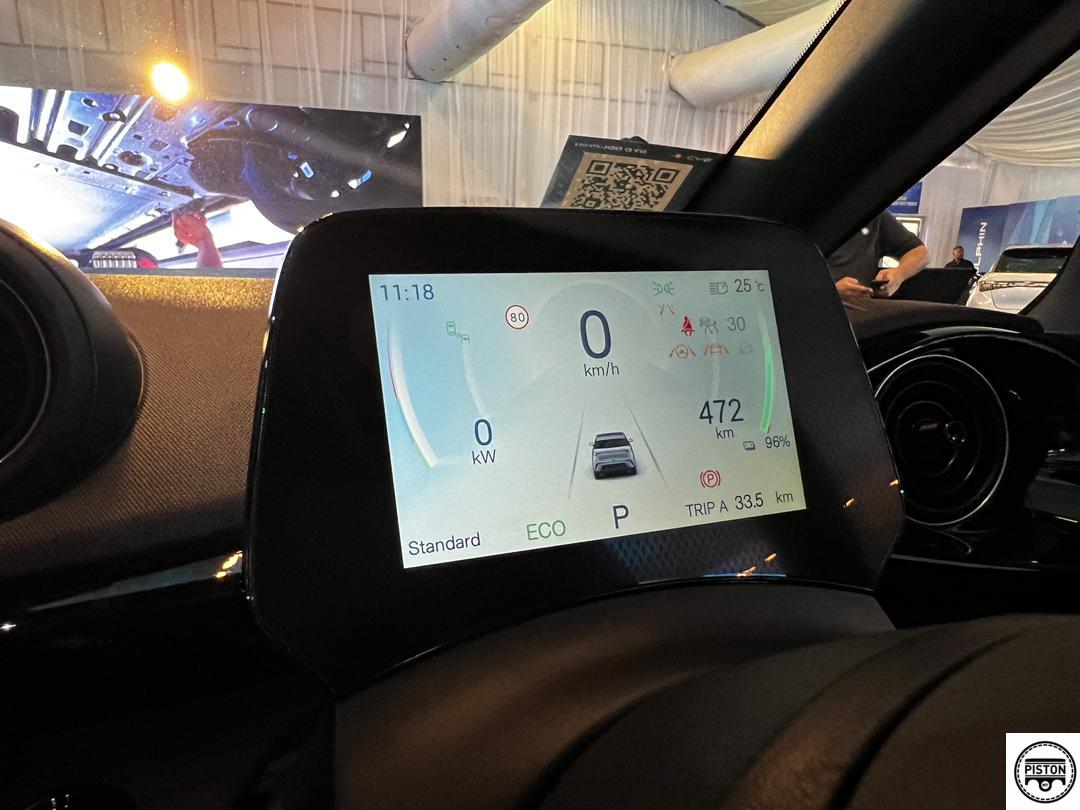
If there is one thing we were asked to complain about, it would have to be the rather miniscule 5-inch digital meter panel which may make it difficult for those with an eye sight problem to see the speedometer and other important readouts such as the range.
In terms of driving comfort, the Dolphin drives like a typical EV – it is quiet, response is instantaneous, and the interior is generally noise free as well. Except for some bells and whistles that can be heard as you drive.
As you probably already know, EV cars are incredibly quiet, and this can be dangerous to pedestrians and other road users who may not hear an EV approaching.
So, to ensure pedestrians can hear them coming, some EV’s emit a chime which can be quite annoying after some time, especially from the interior.
It also comes with the complete ADAS safety system that always tried to pull you into your lane, brake the car for you and generally try to overrule you as a driver.
Now there was not much in terms of briefing when we went for the drive, so there is no confirming whether certain features like the annoying background music can be turned off. There was also little to no time given to explore the features of the car, just a “get in and drive” operation from the drive organizer. Which is a pity.
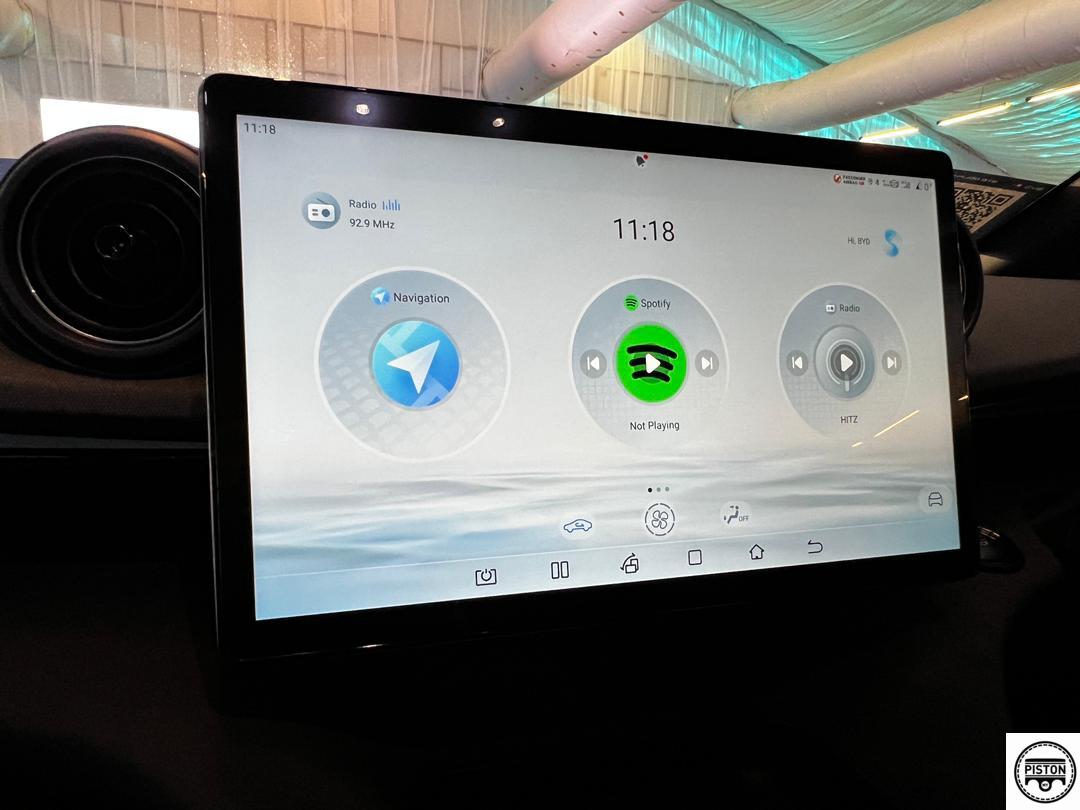
But there is a 12.8-inch swiveling screen similar to the Atto 3 that houses all of the onboard functions, and judging by the functions available in the Atto 3, we are assuming that certain functions can be turned off.
Now onto the important bit – the power and range of the Dolphin.
As already mentioned, the Dolphin is available in two variants. The Standard range model is powered by a 44.9kWh battery with a single motor. The total system output is 94hp and 180Nm of torque. Performance is definitely now what this car is made for, and that is reflected in the 12.3 seconds it needs to get from zero to hundred km/h.
However, it does have a range of 340km/h on the WLTP cycle, which is decent considering the price. And it accepts a max DC charging of 60kW, so that would take about 45 minutes to charge it from zero to 100%.
The Extended range model is the one that comes with all the fats. Packing a 60.48kWh battery and a 150kW motor, this model offers a range of 427km on the WLTP cycle. It also packs 201hp and 310Nm of torque, which is good for a 0-100kmh sprint of just seven seconds.
We drove the Extended range model from One Utama to Kampung Semarak and back, a distance of roughly about 40km’s. The great thing is that we had a range of about 475km when the drive began, and 460km at the end. And we were driving at “test drive speed”, so the range is quite definitely impressive.
What was quite annoying though is that there were some minute buzzing sounds coming out of the door panels.
But besides that, there truly is nothing much to complain about the Dolphin, especially in the Extended Range guise. It may be about RM25,000 dearer than the Standard range model, but it comes with features such as ventilated seats which is great to have in our Malaysian weather as it blows cool air to your back and bottom.
One of the most significant difference between the two models besides range and performance though is that the Extended Range model comes with a multi-link rear suspension while the Standard model comes with a classic torsion beam set up.
A multi-link suspension system is always more comfortable than a torsion beam, and also offers better corner control. This is great for passenger comfort. As for the front suspension, both cars share a McPherson strut system.
The BYD Dolphin is undeniably a game changer in the Malaysian EV segment, making electric cars more accessible to more people rather than a rich man’s toy as it has been perceived for a while.
There has been some unfair criticism levelled at BYD and its battery technologies by certain segments of the Malaysian automotive media, but all of those are based on incidents that have happened outside Malaysia. It is worth noting that there have been zero battery related incidents in Malaysia.
The BYD Dolphin is exactly what Malaysians need, an EV that is more people can buy. Of course it may still be out of reach for a large chunk of the population, but it marks a step in the right direction for EV adoption in Malaysia.
And so to answer the question of this article, should this be your first EV? Yes, but it is worth spending a little more for the Extended Range model.
BYD Dolphin Standard Range Motor: 70kW Power: 94hp Torque: 180Nm Battery: 44.9kWh Charging: 60kW Max DC Charging Suspension: McPherson Strut (Front) Torsion Beam (Rear) Price: RM99,900
BYD Dolphin Extended Range Motor: 150kW Single Motor Power: 201hp Torque: 310Nm Battery: 60.48kWh Charging: 80kW Max DC Charging Suspension: McPherson Strut (Front) Multi-link (Rear) Price: RM124,900