Piston.my

Scuderia Ferrari

Race starts at 4 pm in Azerbaijan/8 pm in Malaysia
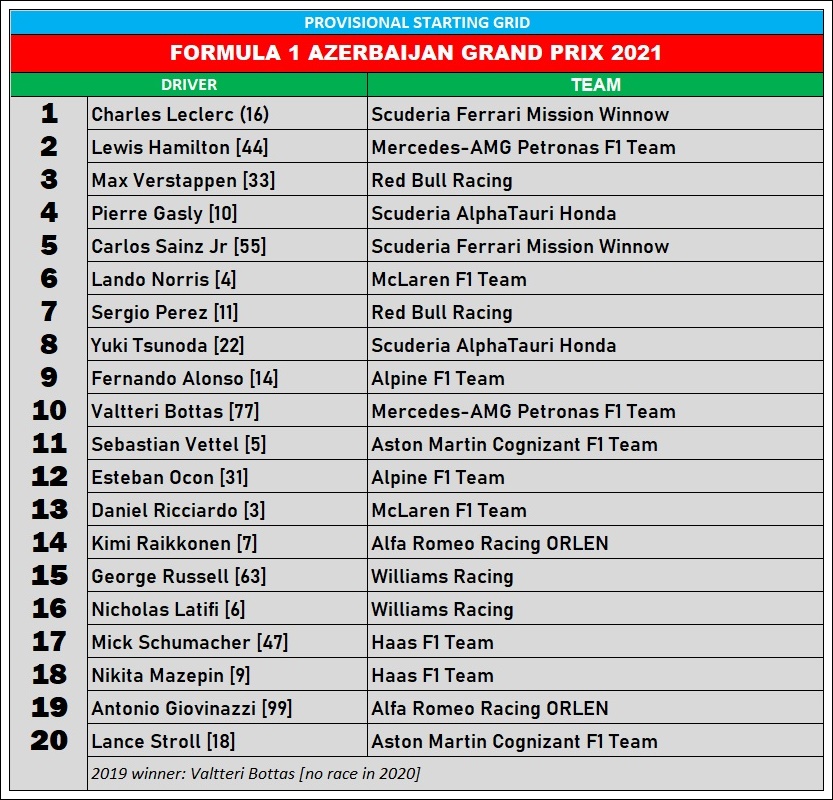
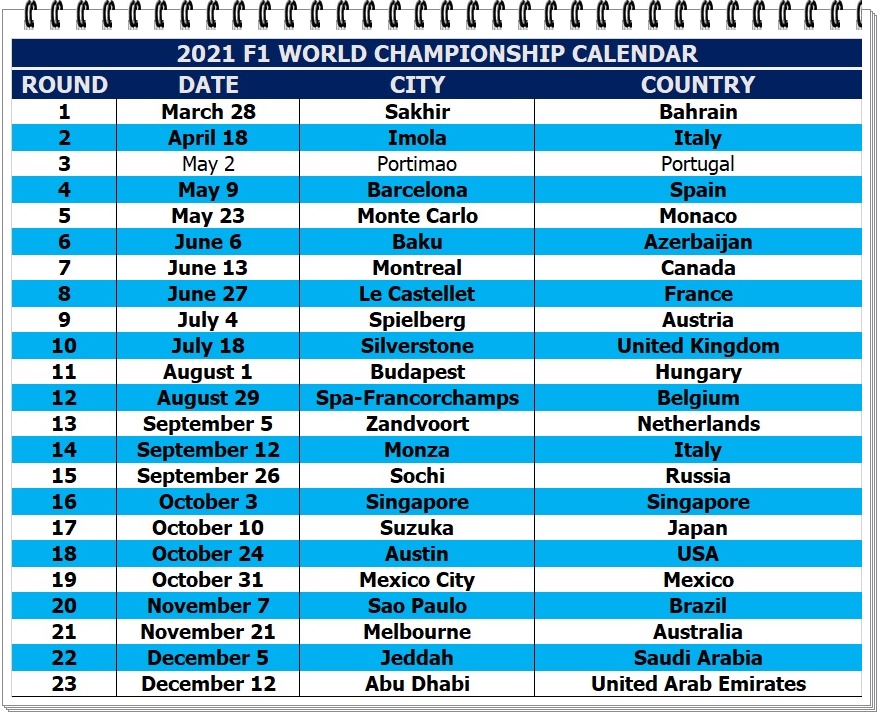
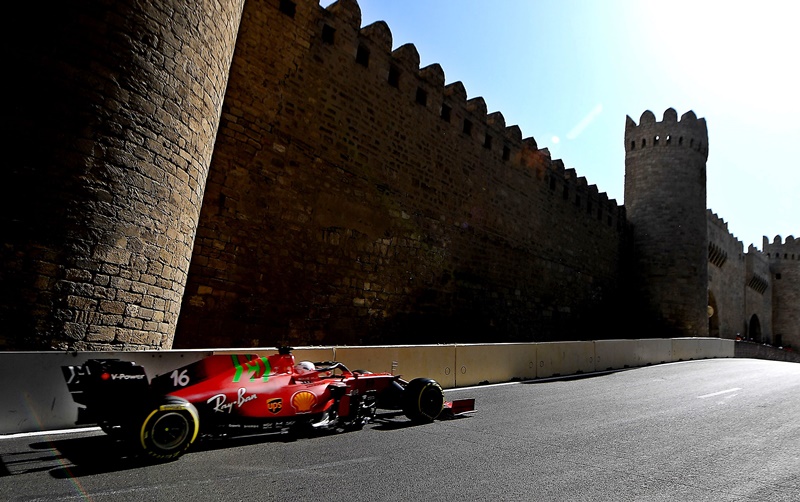
With the COVID-19 pandemic sweeping across Europe this time last year, the 2021 Formula 1 World Championship had to be suspended. Many venues could not be used due to health restrictions and Baku in Azerbaijan was one of them, so there was no Azerbaijan Grand Prix for the first time since 2017 when the city was included as a venue for one of the rounds.

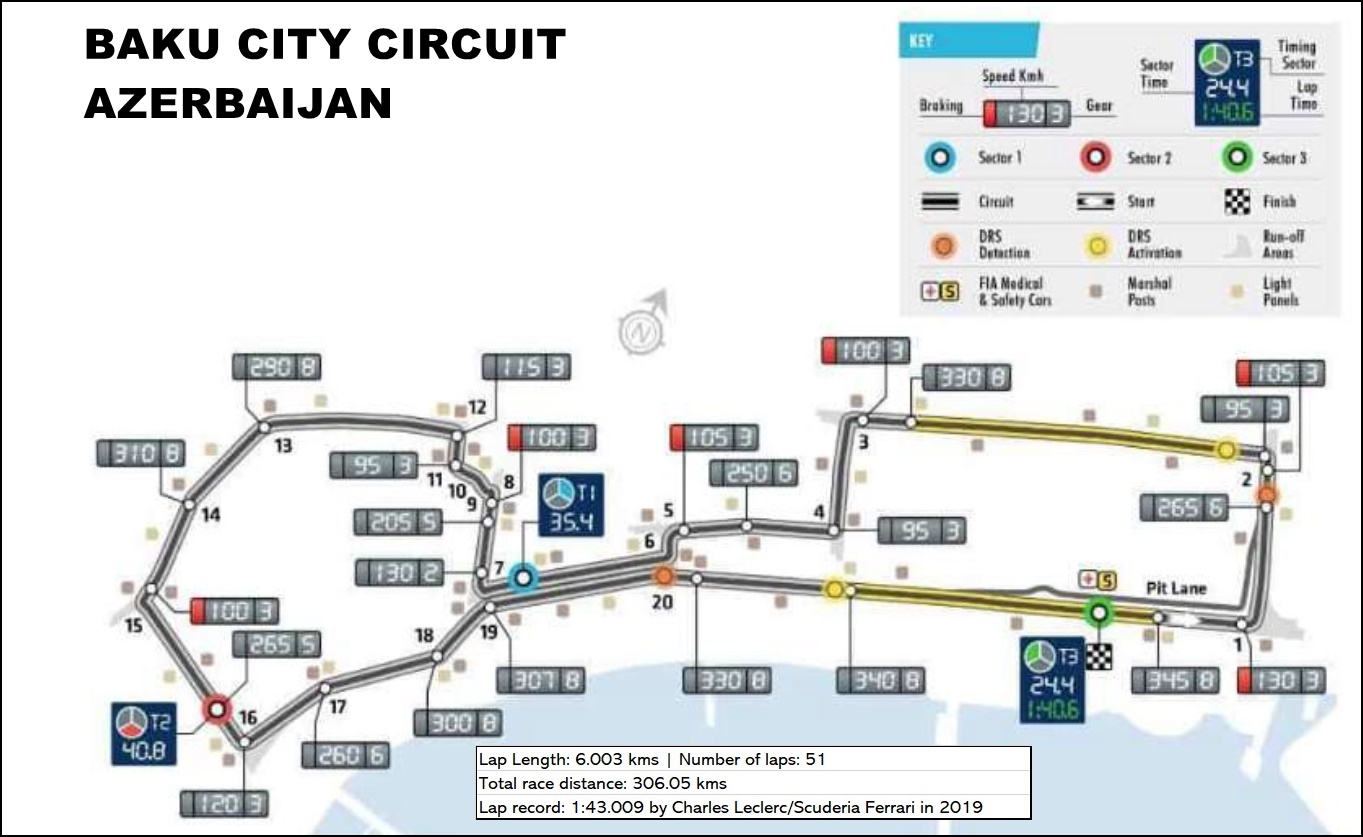
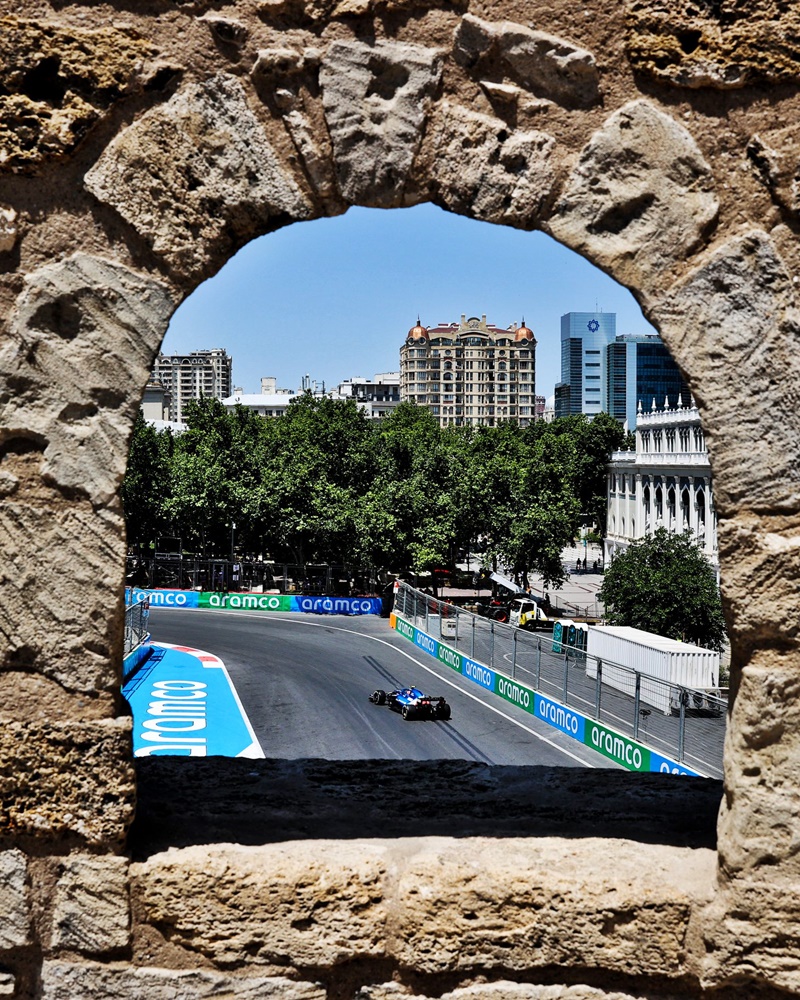
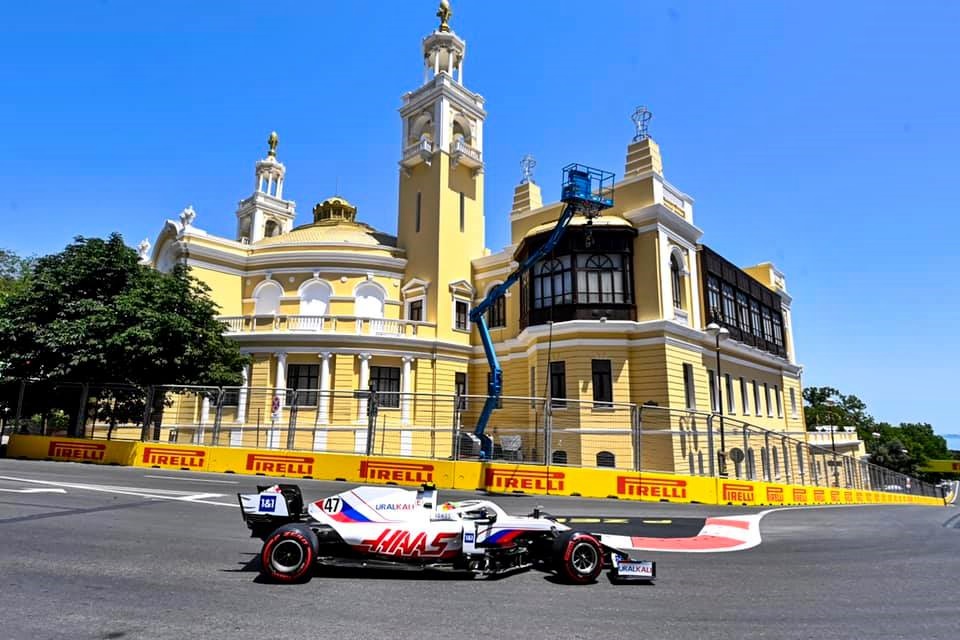
Baku, like Monaco, is also on a coast, in this case that of the Caspian Sea. Its City Circuit, however, could not present a more different street race challenge compared to Monaco. With a long, high-speed section parallel to the seafront, it is one of the easiest street circuits for overtaking.
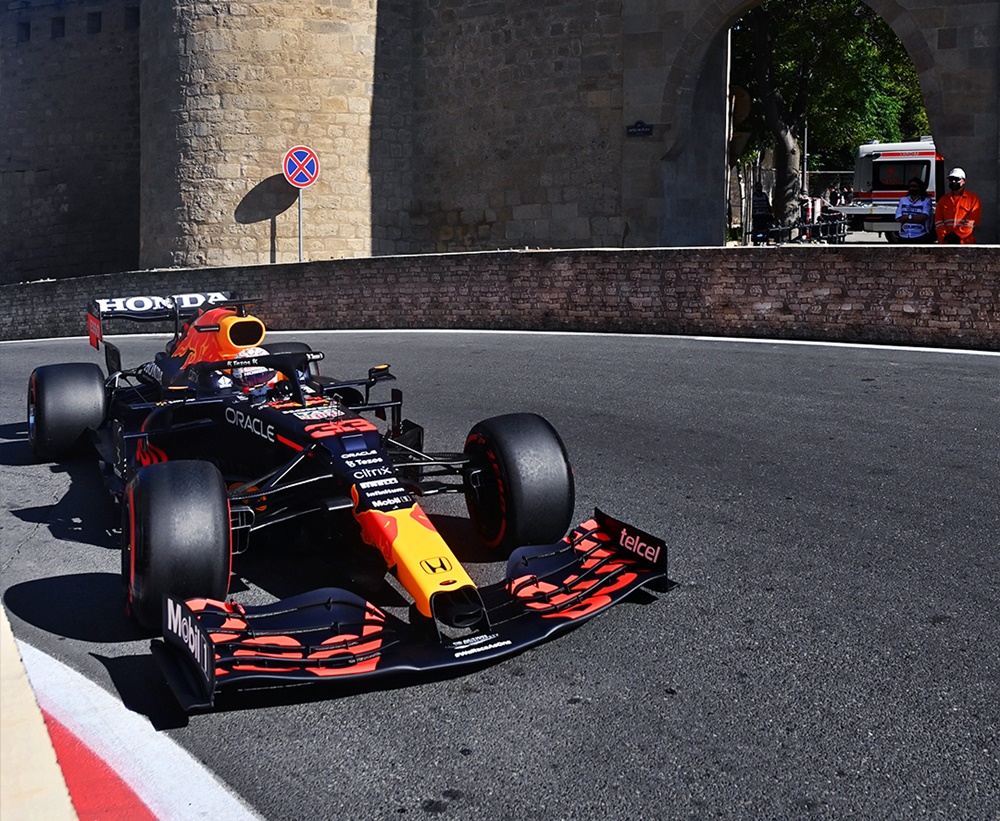

Two tracks in one
One of the best ways to describe the layout of the Baku City Circuit is that it’s two tracks in one: half Monaco, half Monza. The twisty Old City section has a similar vibe to the streets of Monte Carlo, while the long straights and big braking zones are a characteristic it shares with the Italian Grand Prix venue.

Most street circuits don’t tend to register the same level of maximum g-forces as traditional tracks and Baku is no different. Because of these lower forces, it isn’t a demanding race physically for the drivers, as there is less strain on their neck. There are also more straights for them to do switch changes and there is a bit more margin for error with the barriers, so it is less mentally demanding too.
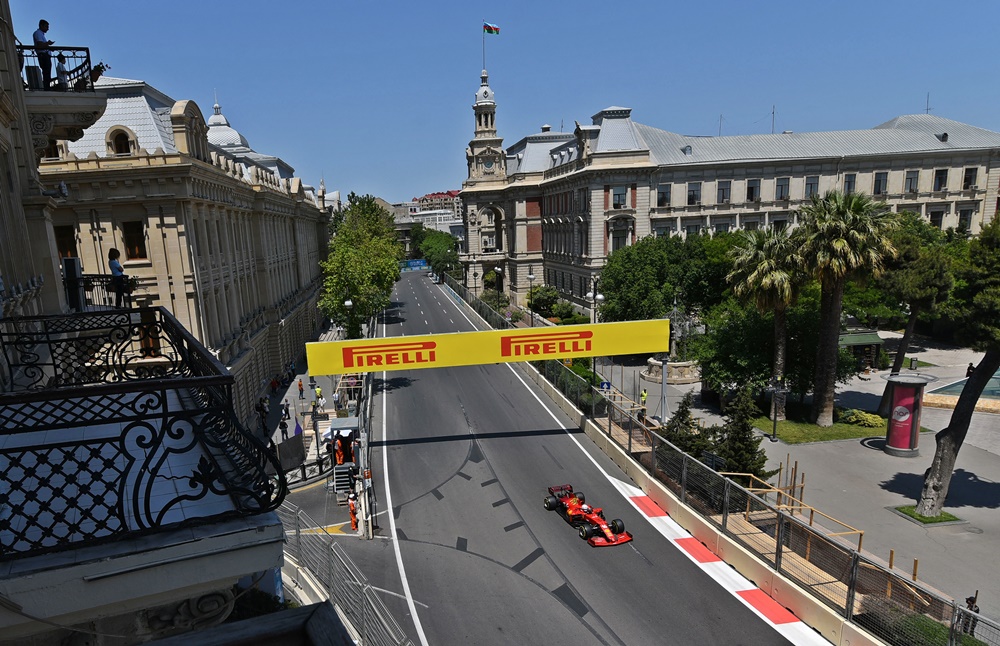
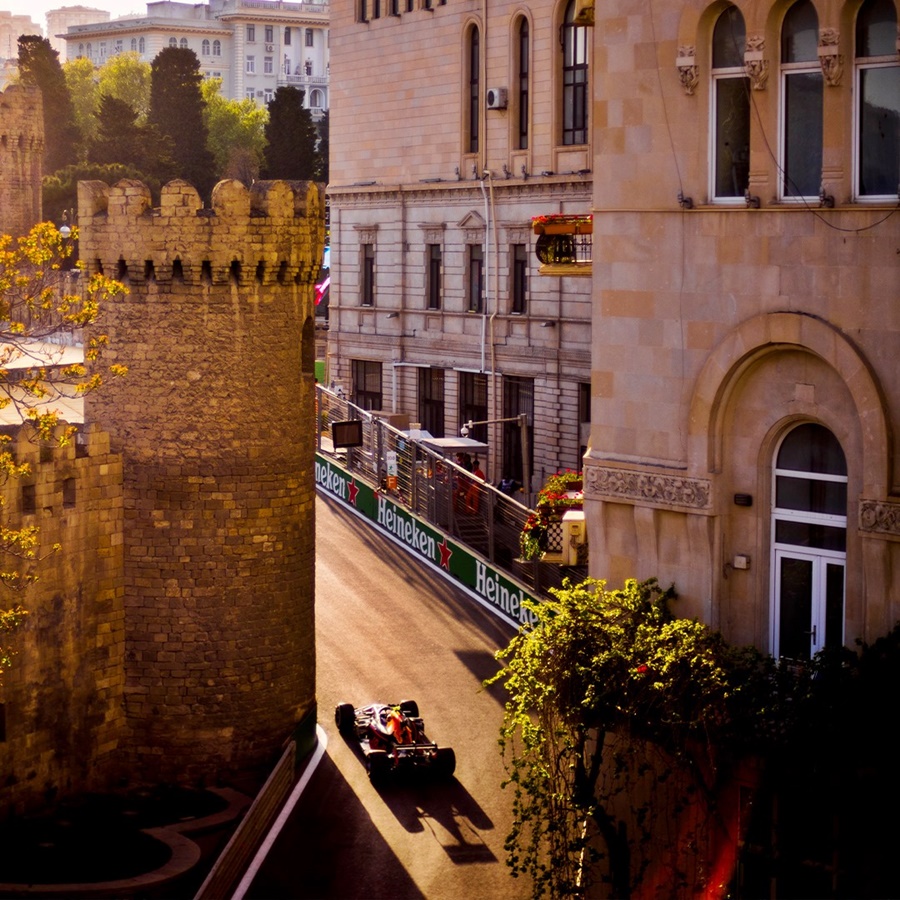
Baku City Circuit F1

But like street circuits, especially those in old cities like Baku, there are unforgiving walls of the old buildings and the surface has low grip. Unlike in 2019, Pirelli has made a decision to go one step softer on the compound range, providing the softest combination of tyres for this weekend. In 2019, the top three teams ran near-identical one-stop races, and no one used that season’s Hard compound in the race.
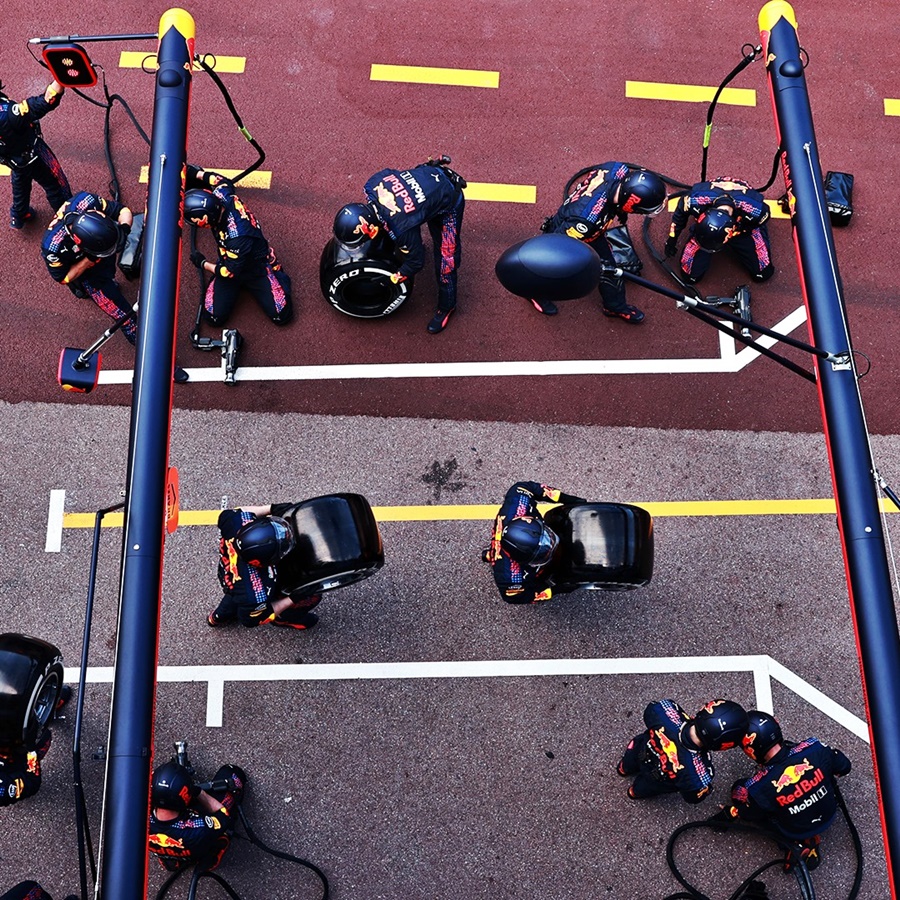
Because the corners don’t generate as much energy as other tracks, the drivers are more dependent on brake heat to keep the tyres warm. However, because of this, the softer tyre compounds are more sensitive to overheating and breaking apart, so it’s a tough balance to find between keeping the tyres warm and not overheating them.
Related: Brembo talks about braking at Baku

The championship so far
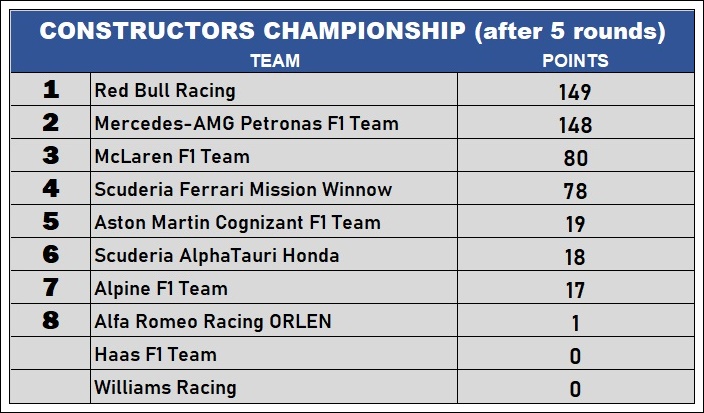
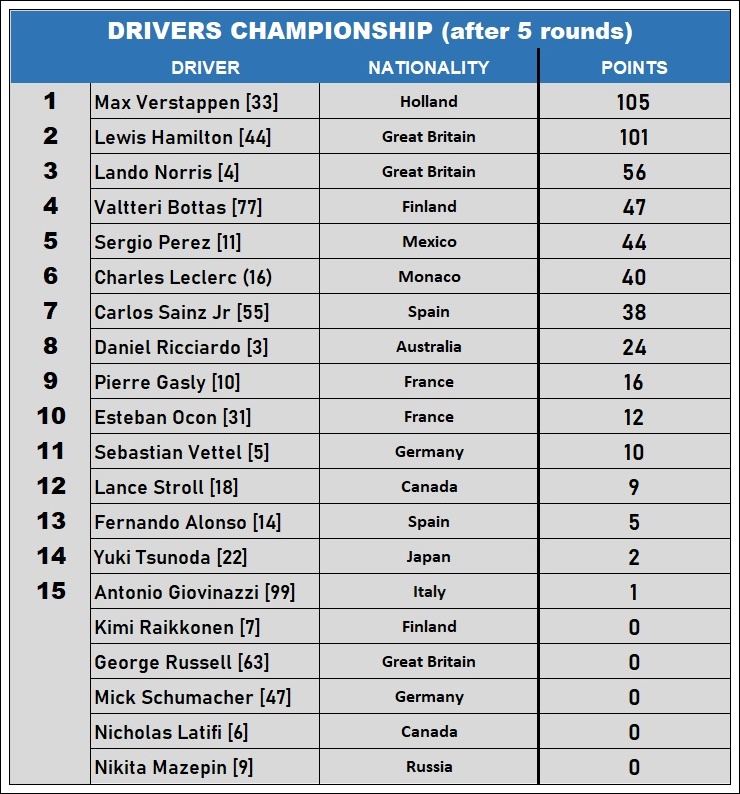
After a forgettable time at Monaco, Lewis Hamilton has been overtaken by Max Verstappen who is now 4 points in the lead after 5 rounds. The two drivers each have almost double the points of Lando Norris, who is in third position. As for the Constructors Championship, the Monaco win also moved the Red Bull Racing team to the top but with just 1 point difference. 60 points further back from Mercedes-AMG is the McLaren F1 team.
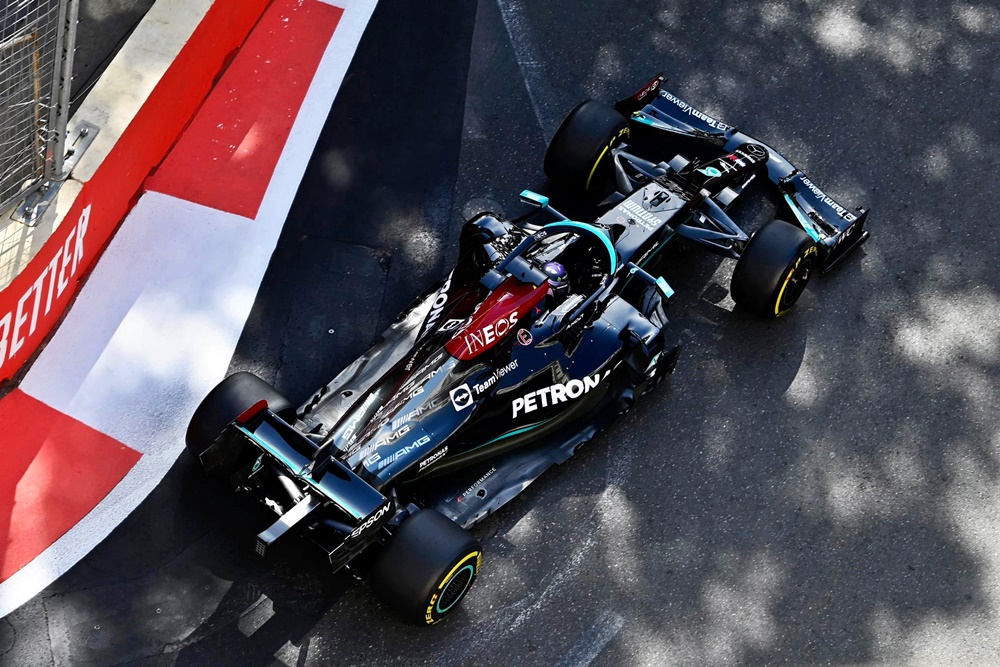
Behind the wheels at the 2021 Azerbaijan Grand Prix


StayAtHome

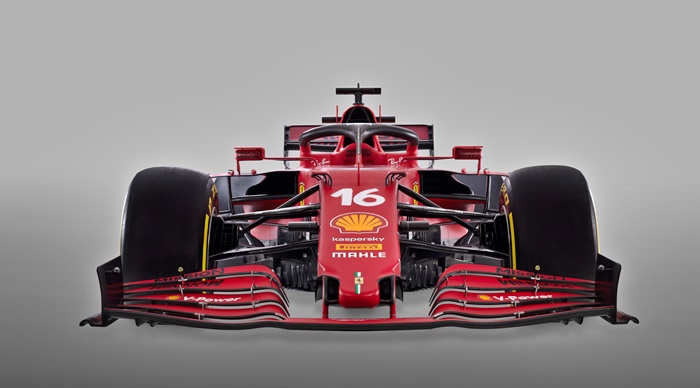
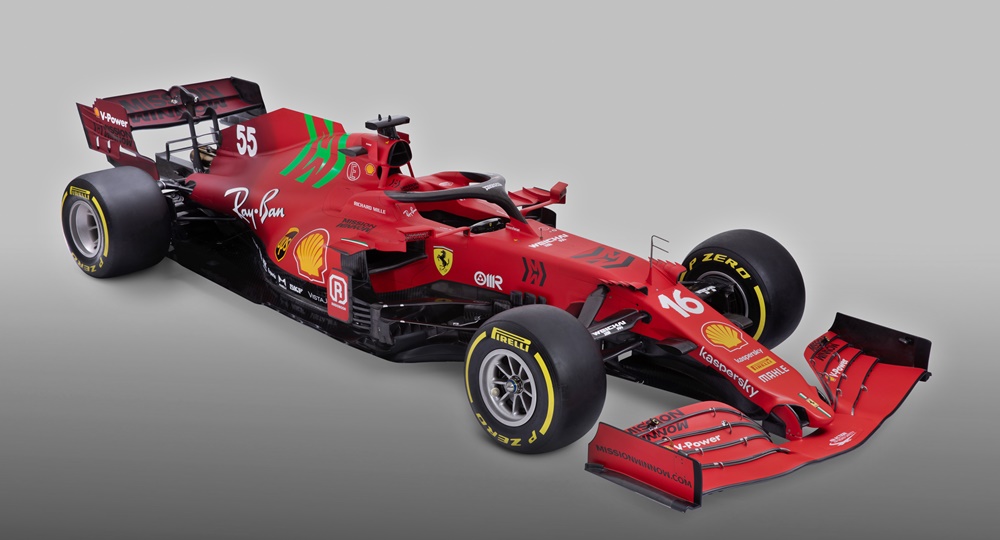
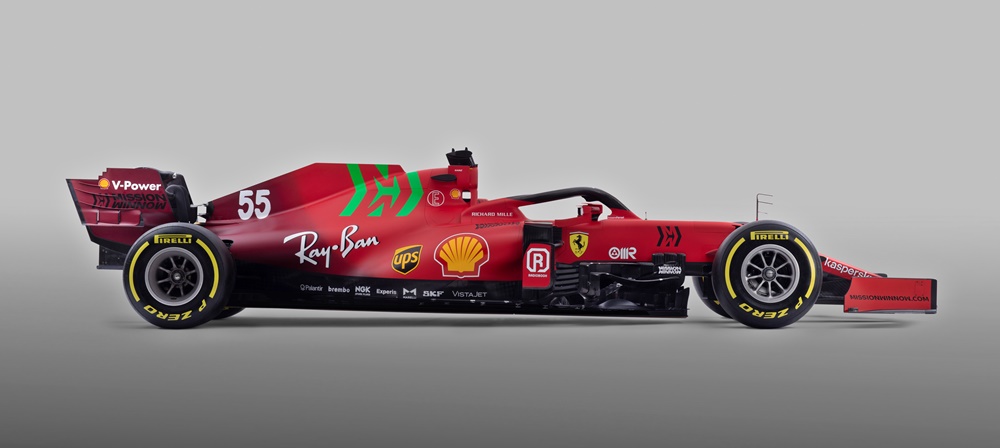
Scuderia Ferrari Mission Winnow’s SF21 racing car for this season of the Formula 1 World Championship has been revealed. It is the 67th to be built in Maranello to compete in the championship. An evolution of last year’s SF1000, as dictated by the regulations which require the use of the same chassis as in 2020, opportunities for change in many areas have been limited.

Some of the permitted areas where change has been made include the engine, which is completely new, and aerodynamic features as well as at the rear end, which is where the two development tokens allowed in the regulations have been used.

Scuderia Ferrari F1 SF21 2021

The new car features a subtle livery that is said to ‘look to the challenges of the future without forgetting the team’s roots and history’. “The rear end is reminiscent of the burgundy red of the very first Ferrari, the 125 S,” explained Team Principal Mattia Binotto. “But as it moves gradually towards the cockpit area, it transforms into the modern red that we have used in most recent years. This season presents us with many challenges and through this livery, visually, we reboot from our past and head into the future.”

Joint effort by all departments
Development of the new 065/6 power unit for the 2021 season saw a systematic approach adopted by all departments, which worked together to find every opportunity for improvement. “Along with our colleagues on the chassis side, we worked a lot on the layout of the power unit, to make the overall design of the car as efficient as possible. With the internal combustion engine, we focused on increasing its level of thermal efficiency, in conjunction with our partner Shell and this has produced an improvement in lap time that we estimate at over one tenth of a second,” said Enrico Gualtieri Head of the Power Unit department.

“We are also carrying out further development on the hybrid system and the electronics, in order to revise and optimise all components. All this in a season in which power unit test bench time has been reduced still further,” he added.

Head of the Chassis department, Enrico Cardile, said that when the SF21 project began, their first task was really to identify which area of the car to focus on in order to achieve a radical change. “We opted for the rear end, designing a new gearbox and new suspension system. This, in addition to the efforts of our power unit colleagues has led to a much tighter rear end,” he explained.

F1
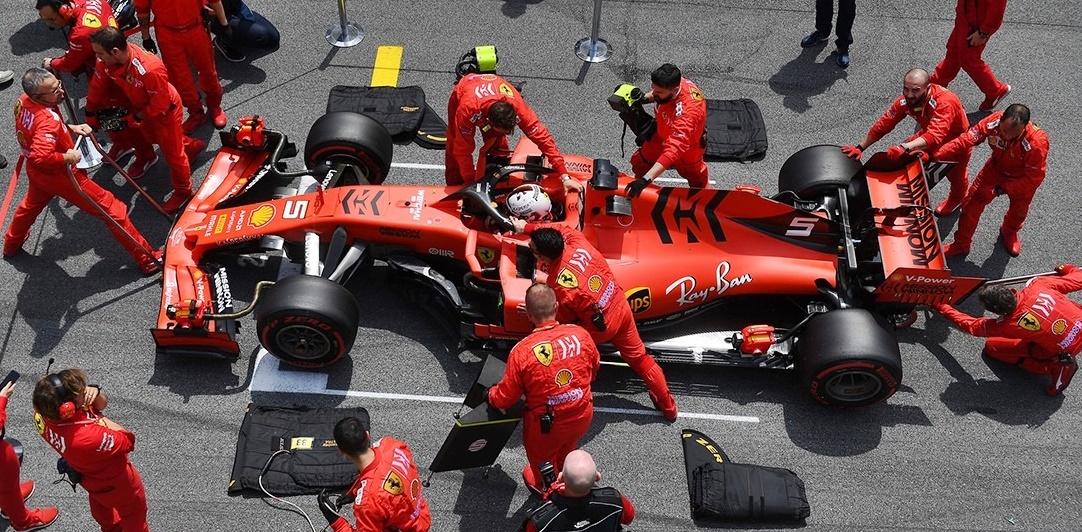
The Ferrari team readying the SF1000 at a race in 2020.

Pursuit of better aerodynamics
The engineers also looked at the cooling system, increasing the effectiveness of the central radiator and designed the body with more ‘downwashing’. Aerodynamics was one of the areas affected by the regulation changes aimed at reducing the ability to generate vertical load, in order not to put too great a strain on the tyres. “That’s why, as we began developing the car’s aerodynamics, we set ourselves two goals: recovering more aerodynamic downforce than was lost through the regulations and reducing drag,” Cardile revealed.

“Because of the regulations, less drastic changes were possible at the front end of the car. So, we developed a new front wing which works in conjunction with a new concept nose, but the chassis itself and the suspension is off last year’s SF1000,” he added.

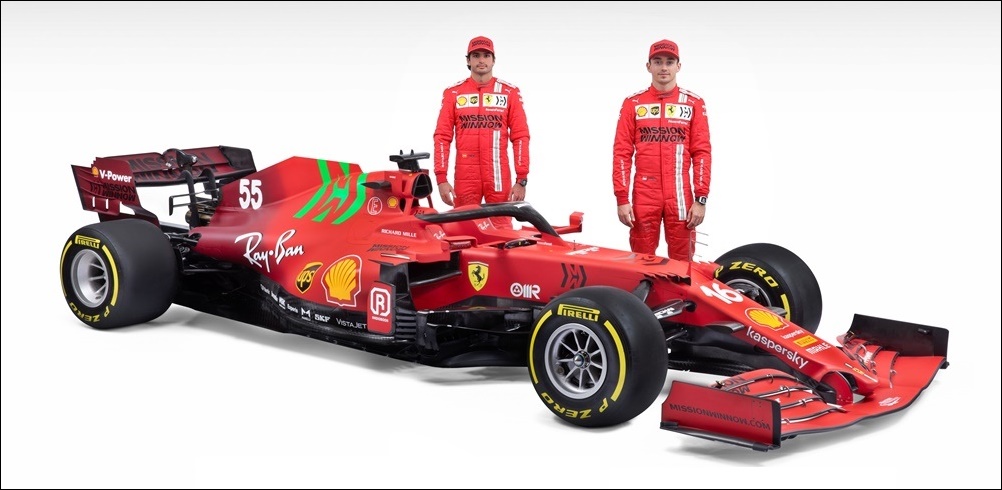
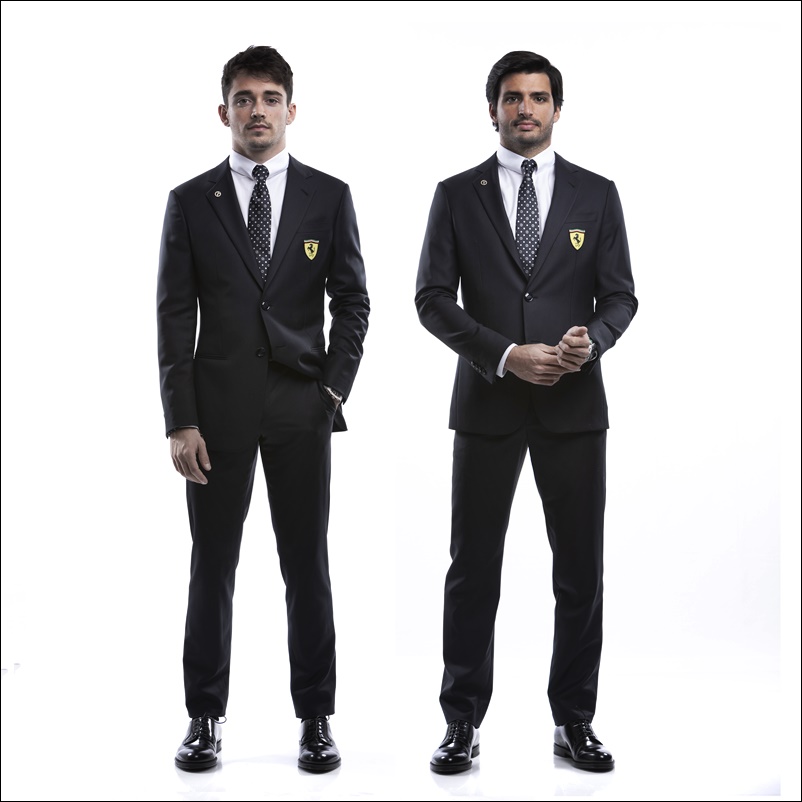
The team will have its youngest driver line-up since 1968 with Charles Leclerc (below right) and Carlos Sainz, Jr. When the first race of the season takes place on March 28 in Bahrain, the pair’s average age will be 25 years and 3 days.

Scuderia Ferrari F1 SF21 2021

The drivers
Commenting on the drivers, Laurent Mekies, Racing Director, said: “There’s plenty of positive energy coming from our two drivers. Carlos has spent a lot of time in the factory and has integrated with the team very quickly. As for Charles, he is already perfectly at home with the team: he knows what he wants and is also very aware of the role he has in the team, both in and out of the car. Over the winter, we have witnessed the two guys getting on very well together and this can only be a good thing for the whole team.”

At official events, drivers Charles Leclerc and Carlos Sainz Jr., along with Scuderia management, will wear a range of Giorgio Armani navy blue garments and accessories as the team has signed a multi-year partnership with Giorgio Armani S.p.A.

Visit www.bhpetrol.com.my to know more about promotions at BHPetromart.

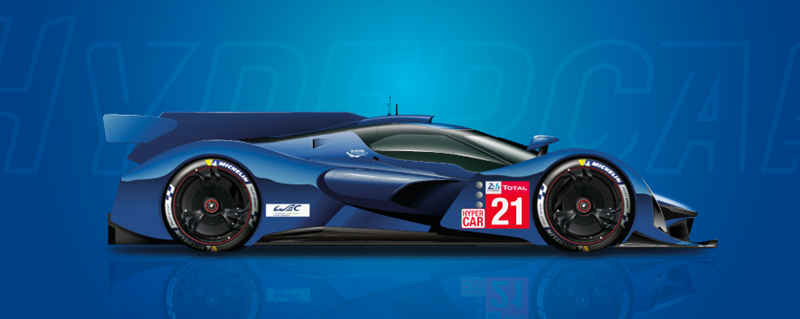
Ferrari will join the Le Mans Hypercar (LMH) class from 2023. This is a new class which has attracted the interest of manufacturers and it will be the top class of the FIA World Endurance Championship (WEC). Companies that have announced vehicle development programmes include Porsche, Peugeot, Audi, and Toyota – all veterans of the WEC with championship victories at different periods in time.

Following a period of study and analysis, Ferrari confirmed its participation and has started a development programme for an all-new LMH car. It is known that there is already a design and simulations have been run in  recent weeks.

The time-frame for building running prototypes has not been mentioned, nor the name of the car and the drivers who will make up the official crews.

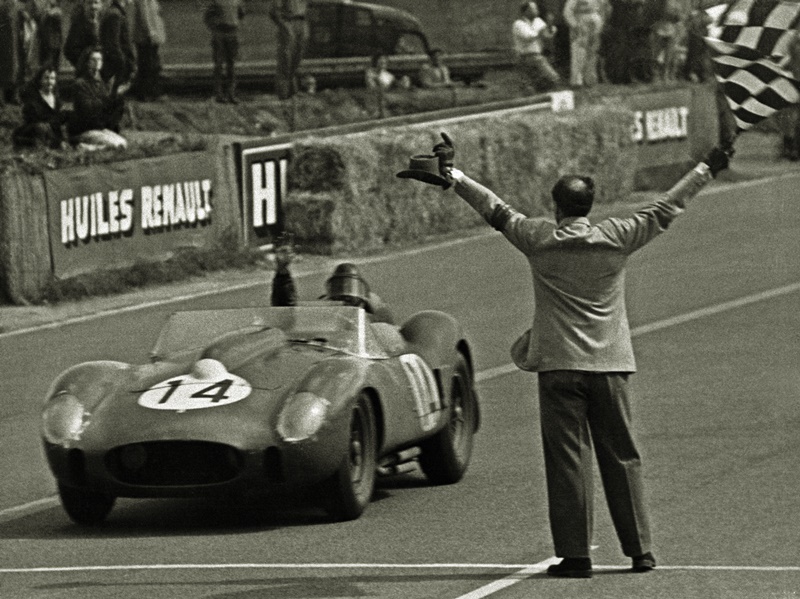
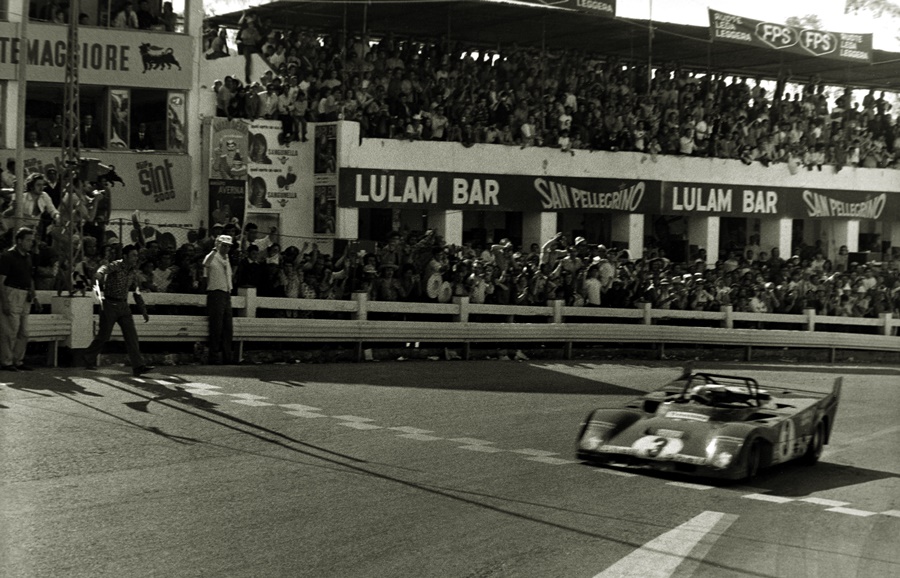
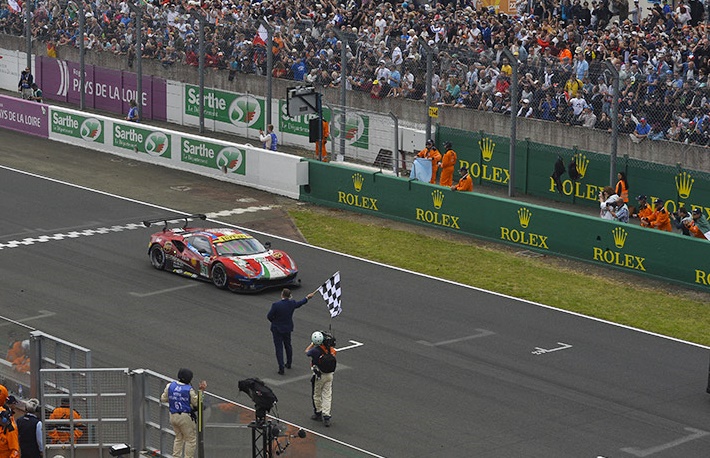
While Ferraris are regularly seen racing at Le Mans, it has been almost 50 years since the factory’s last official participation in the premier class of the World Sports Car Championship. It has a respectable record in closed-wheel competition with 24 world titles (most recently in 2017) and 36 victories in the 24 Hours of Le Mans.

“In over 70 years of racing, on tracks all over the world, we led our closed-wheel cars to victory by exploring cutting-edge technological solutions: innovations that arise from the track and make every road car produced in Maranello extraordinary. With the new Le Mans Hypercar programme, Ferrari once again asserts its sporting commitment and determination to be a protagonist in the major global motorsport events,” said Ferrari President, John Elkann.

Overview of the Le Mans Hypercar class
The LMH ruleset represents a major shift in philosophy compared with the LMP1 class it is replacing. It allows for a greater variety both in terms of technical approaches as well as the aesthetics of the cars, at the same time ensuring sporting equality and preventing cost escalation through the concept of ‘performance windows’.

Technical Regulations are focused on controlling performance outcome, instead of setting design or geometrical restrictions, allowing manufacturers to choose cost-effective solutions as significant expenditures will not bring performance gains.

The autonomy also allows them not only to replicate brand identity and genuine architecture, maintaining the spirit of the brand and remaining relevant to their road car philosophy, but also to express true potential in terms of creativity and innovation. Less rigid aerodynamic constraints established for the cars give them the option to incorporate styling elements to the design.

Similarly to the LMP1 class, both hybrid or non-hybrid power units with transmission to either rear or both axles are allowed.

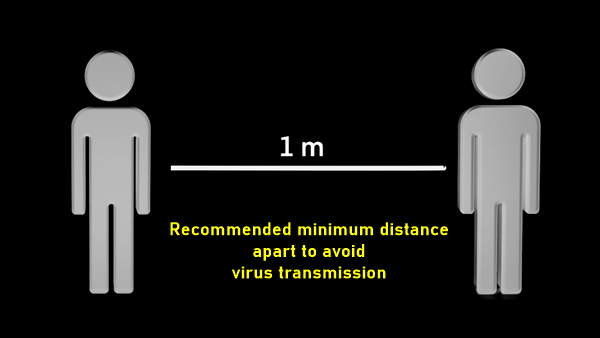
Social distance

As avoiding cost escalation is one of the key targets behind the LMH concept, several other cost-saving measures have been undertaken. With the 2021 season being the first one in the LMH homologation cycle, testing is supervised. The use of expensive materials and technology is greatly limited. The minimum weight for gearbox is set at 75 kgs, with the use of magnesium or aluminium casing and bellhousing mandatory.

The suspension is also simplified, with a double-wishbone design compulsory and aids such as active systems and mass dampers forbidden. There is also a single aero kit permitted, without the distinction for Le Mans and the other races.

In order to avoid development costs, the tyres are exclusively supplied by Michelin with different dimensions dedicated to rear and 4-wheel-drive cars. Furthermore, lower power output results in lower power unit development costs.

“Le Mans Hypercar should please both manufactures and fans, resulting in spectacular cars and high level of competition. We’ll see greater variety across the competitors while the more cost-effective regulatory approach is something much needed in the current economic climate,” said Richard Mille, FIA Endurance Commission President.

Peugeot Hybrid4 500KW to power Peugeot hypercar for endurance racing in 2022

BHPetrol RON95 Euro4M

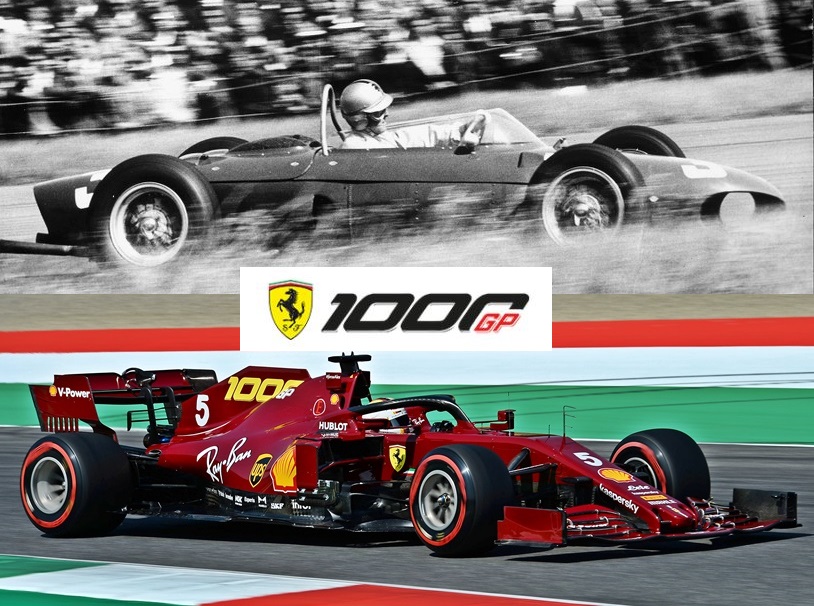
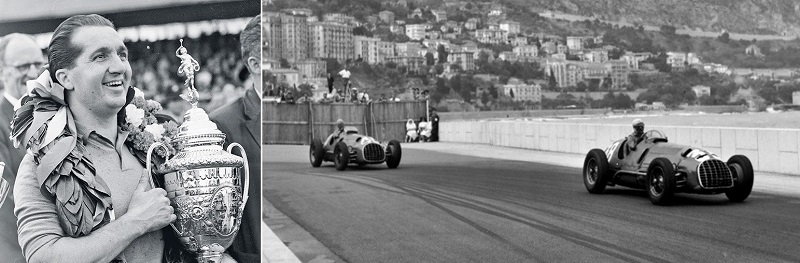
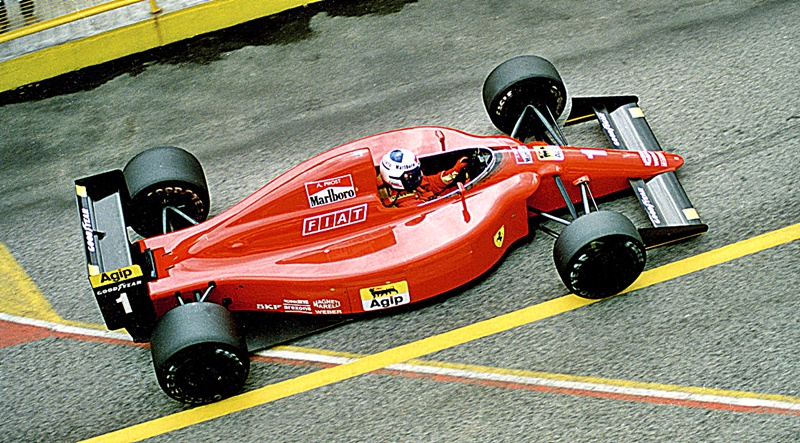
Today, at the 2020 Tuscan Grand Prix, Scuderia Ferrari will start their 1,000th race in the Formula 1 World Championship. The team made their debut at the Monaco Grand Prix in 1950, the second race on the inaugural F1 calendar. In that race, the team’s Alberto Ascari finished second, a lap down on Juan Manuel Fangio, who won for Alfa Romeo. A second Ferrari driver, Raymond Sommer, finished fourth.

Alberto Ascari Ferrari 1950 Monaco F1 Grand Prix.
Scuderia Ferrari entered its first F1 race at the 1950 Monaco Grand Prix, with Alberto Ascari finishing second overall.

First victory in 1951
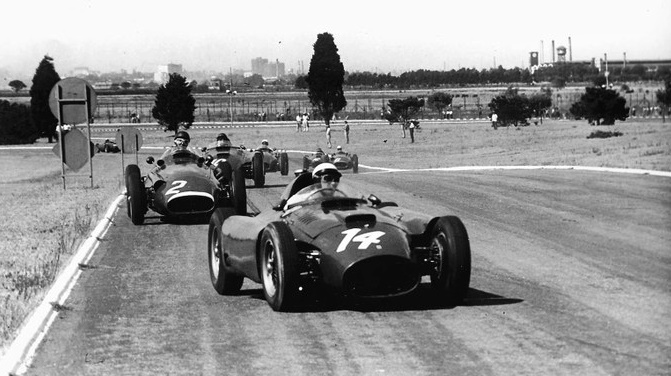
Scuderia Ferrari, also known as ‘The Prancing Horse’, holds a record 237 victories (plus a win for a privately-entered car at the 1961 French Grand Prix). Their first victory was at the 1951 British Grand Prix, which was won by Jose Froilan Gonzalez, while the most recent win was scored by Sebastian Vettel at the 2019 Singapore Grand Prix.

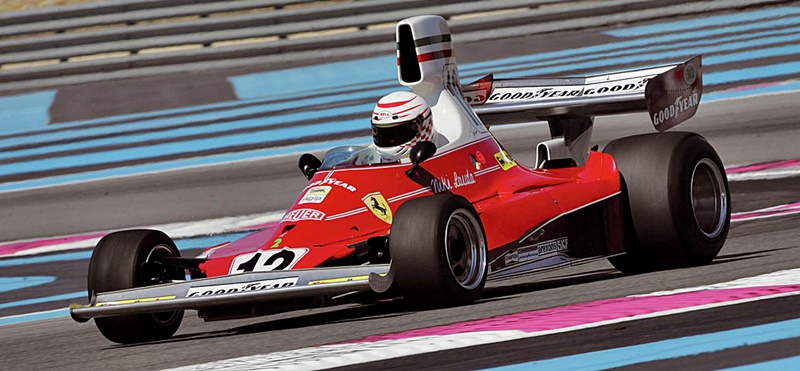
Besides 16 Constructors’ Championships since the inception of that competition in 1958, the team hold numerous other F1 records. They have made 655 consecutive starts, in a string stretching back to the 1982 Italian GP, have 84 1-2 finishes and hold the record for consecutive appearances on the podium with 53 between the 1999 Malaysian Grand Prix and the 2002 Japanese Grand Prix.

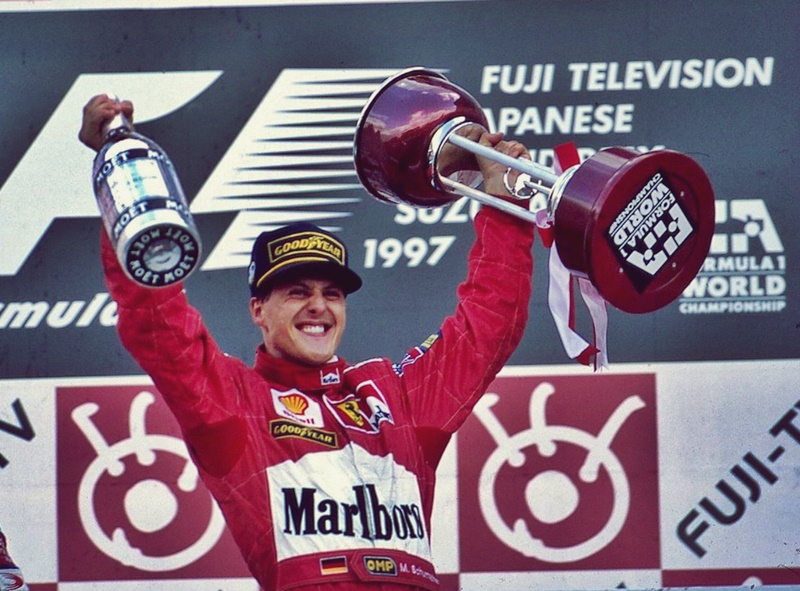
Michael Schumacher, one of the greatest racing drivers, won 5 titles with Ferrari.

F1 record books also show that Ferrari have had 254 fastest laps and scored 8,318.5 Constructors’ Championship points, while their drivers have cumulatively collected 9,220.27 points in the Drivers’ Championship. They hold the record for victories at a single grand prix, winning the German Grand Prix 21 times and have a record 228 pole positions from the 1,001 Grands Prix entered.

As an engine supplier, Ferrari has 239 victories. This includes the 237 wins for the works team, Giancarlo Baghetti’s victory at the 1961 French Grand Prix in a privately-entered car, and Sebastian Vettel’s win for Toro Rosso at the 2008 Italian Grand Prix.

Celebrating the 1000th race
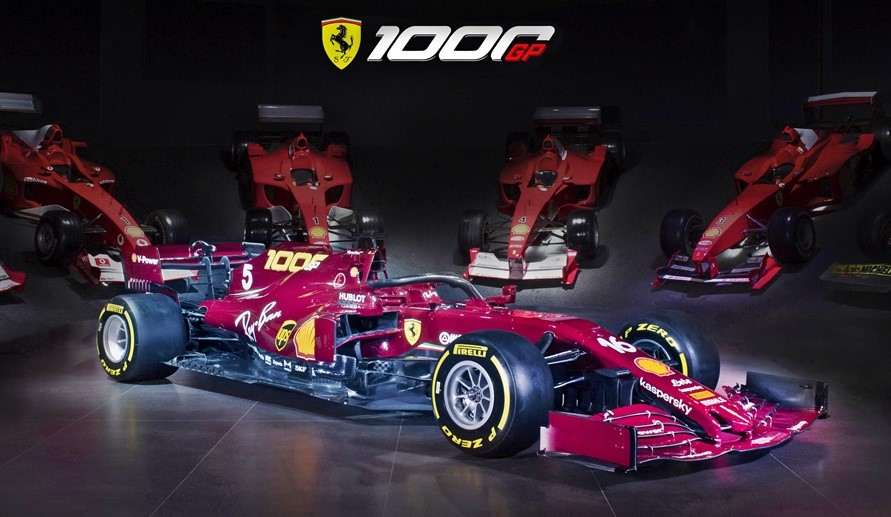
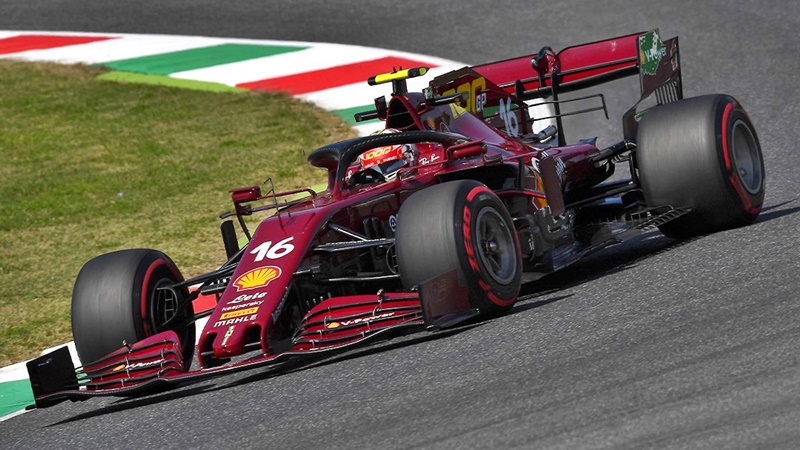
“Scuderia Ferrari’s 1000th Grand Prix is a very important milestone, therefore it had to be marked in a special way. That’s why we decided to run a unique livery on the cars for this event, with the SF1000s taking to the track at the Mugello Circuit in the Burgundy colour first seen on the 125 S, the first racing car to carry the Ferrari name,” said Piero Ferrari, Vice Chairman of the company.

“Only a few months ago, no one could have imagined that our thousandth race could take place at our own Mugello circuit. I am pleased that in the Grand Prix official name, Formula 1 chose to pay tribute to Ferrari, the only team that has always been present in the sport’s 71-year history,” he said.

Click here for news and articles about Formula 1.

PISTON.MY


Race starts at 3:10 pm in Italy/9:10 pm in Malaysia

COVID-19 has caused loss of lives, hardship, disrupted life and businesses and impacted economies. It has also disrupted motorsports all over the world and as conditions eased, the Formula 1 organisers have rushed to try to run as many rounds as possible before the end of the year. And COVID-19 can also be ‘blamed’ for bringing the 9th round of the 2020 championship to a completely new venue – Mugello.

First new circuit for F1 since 2016
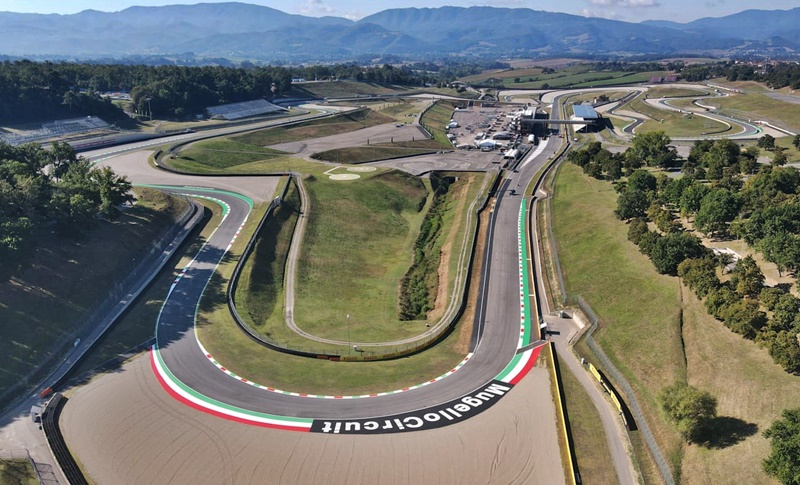
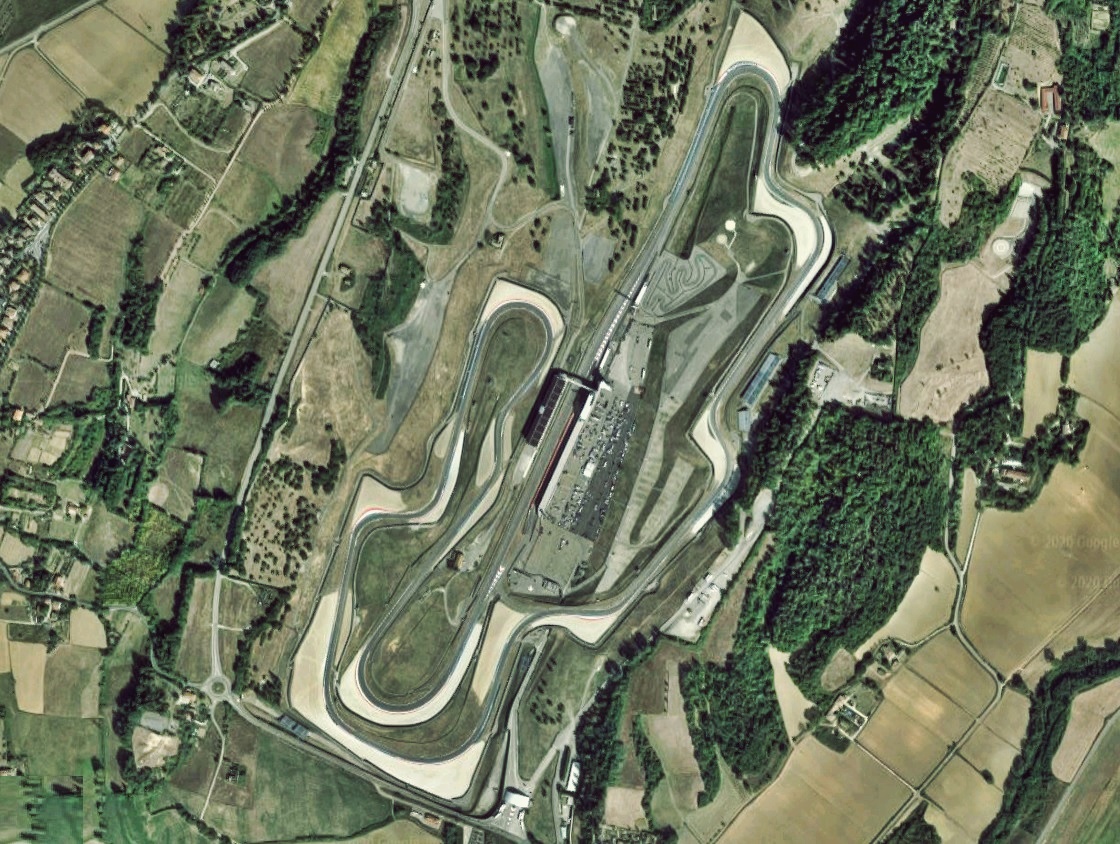
Located near the city of Florence in Italy’s Tuscan countryside, the Mugello circuit was opened in 1974 and while it has never had a F1 race, it has had at least 30 rounds of the Italian Motorcycle Grand Prix. It is the 72nd venue to host a F1 round and the first new one in four years, the last being the Baku City Circuit in Azerbaijan.

Mugello is not entirely new to F1 veterans though, as it was a testing venue until 2012, used mostly by Ferrari which also owns it (since 1988). However, where actual racing is concerned, it will be new to every driver and the teams have had only since last Sunday’s race at Monza to get to know and understand the circuit.

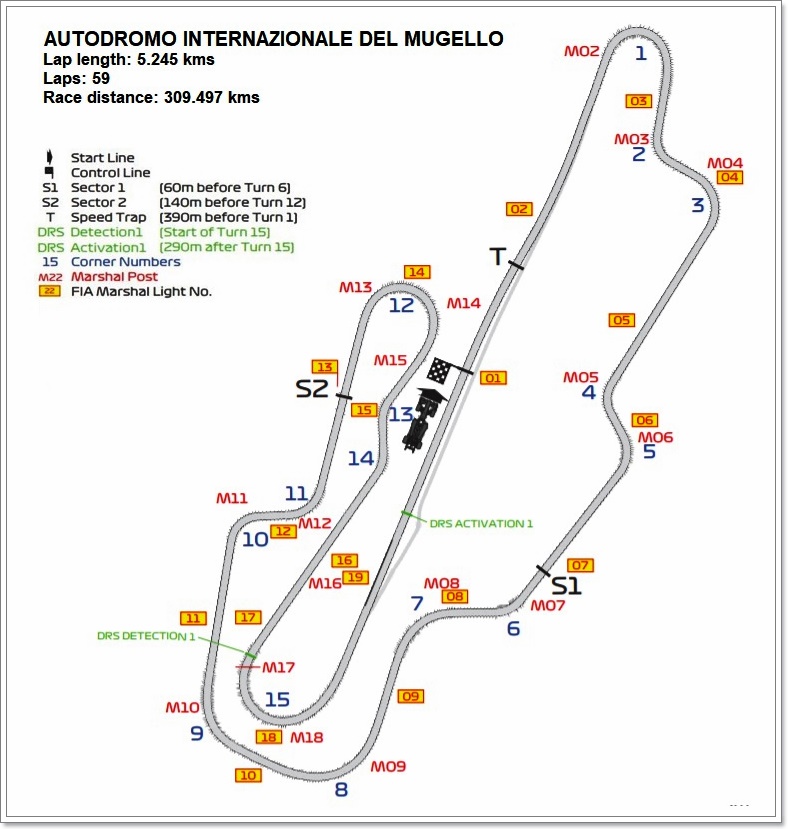
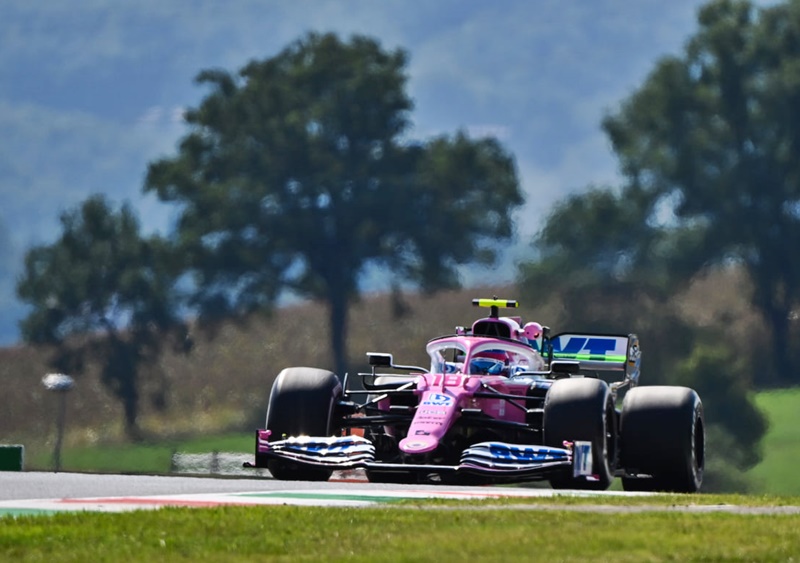
The circuit has a number of steep ascents and descents, long full-throttle sections and some extremely fast corners. Situated in a valley, it subjects drivers to quite a rollercoaster ride, especially at the start of the second sector. There are absolutely no slow corners (even the slowest can be taken in 4th gear at 140 km/h), and the cornering speeds will subject the drivers to higher g-forces than usual.

Needless to say, the cars and the tyres will also be under tremendous stress but comments from the drivers after practices has been enthusiastic as they welcome the challenges of a new circuit.

“Driving an F1 car around this circuit is unbelievable. In all the fast sections, it’s pretty impressive. I think it’s going to be quite a tough race, physically, as already in the long run we’ve done in FP2 the neck starts to feel it! The lack of run-off areas will also make it difficult, but I guess this is what we like as well,” said Ferrari’s Charles Leclerc.

Unusual layout and abrasive surface
Mugello’s unusual track layout has fairly old, abrasive tarmac and bears some resemblance to Suzuka in Japan. The engineers at the Mercedes-AMG team will therefore use the venue of the Japanese Grand Prix as a reference point for their predictions about tyre life and degradation. Both tracks generate a very high sliding energy and put a lot of stress on the tyres.

To cope with a combination of fast corners and abrasive asphalt, Pirelli is sending their hardest compounds to Mugello, with the C1, C2 and C3 on offer. This is also to shield against the potential for thermal degradation exacerbated by very hot weather. The narrowness of the track and the technical nature of the layout are likely to make overtaking difficult, putting an extra onus on strategy decisions.

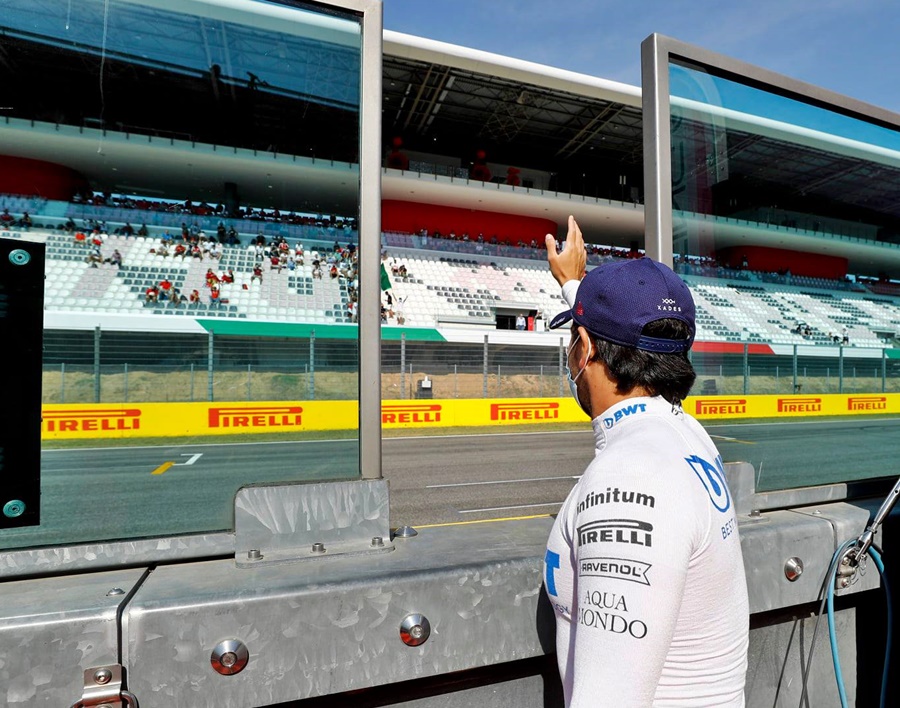
Some spectators allowed in for a change!

The Formula 1 Pirelli Gran Premio Della Toscana Ferrari 1000 2020 – which most will refer to as just the Tuscan Grand Prix – will be the 1000th F1 race for Scuderia Ferrari. Last weekend was a blot in the marque’s history book but that’s past and to celebrate this milestone, the two SF1000s took to the track in their special Burgundy livery, the deep red originally seen on the 125 S, the very first Ferrari ever built.

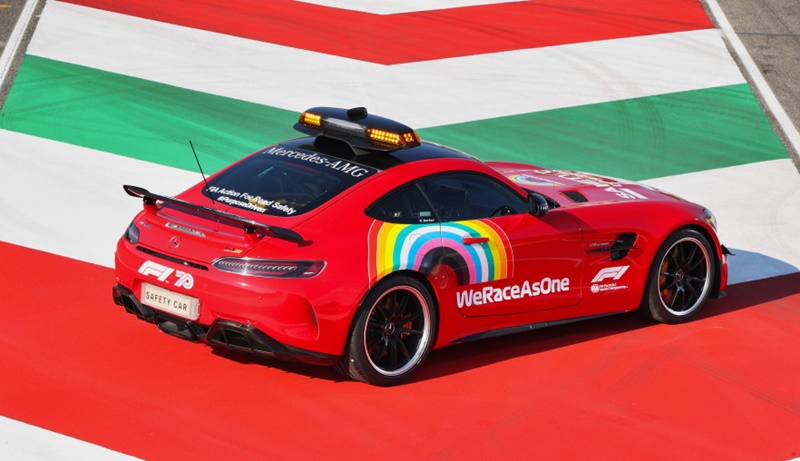
The F1 Safety Car painted in Ferrari Red as a tribute to Scuderia Ferrari’s 1000th race achievement this weekend.

“We will honour the achievement with the Mercedes-AMG Safety Car in Ferrari red – our nod to a racing history that brought us some of the greatest moments in Formula One. The men and women of Maranello have a proud history to celebrate and we’re paying respect to those celebrations this weekend,” said Toto Wolff, CEO and Team Principal of the Mercedes-AMG Petronas F1 Team.
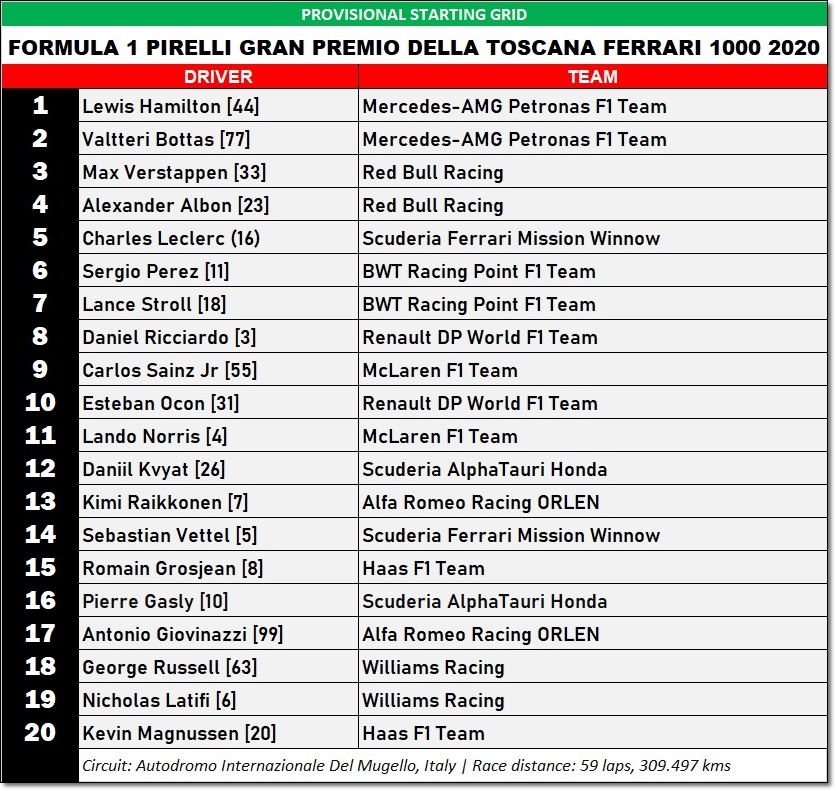
Championship positions after Monza
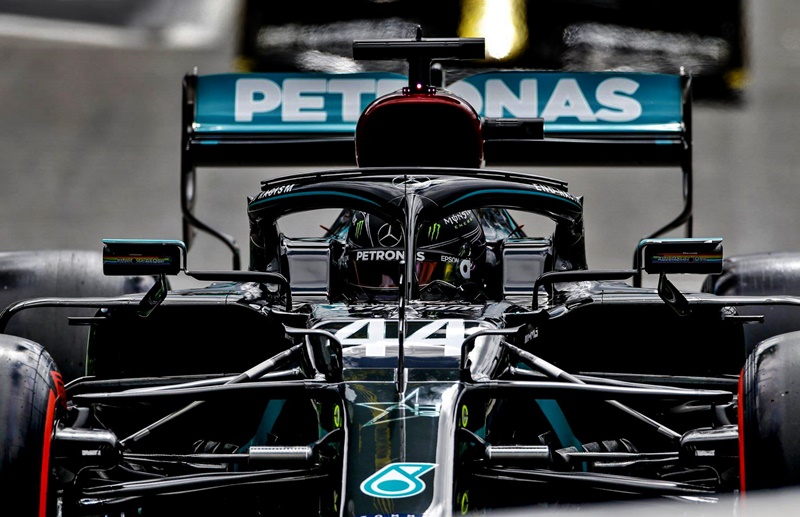
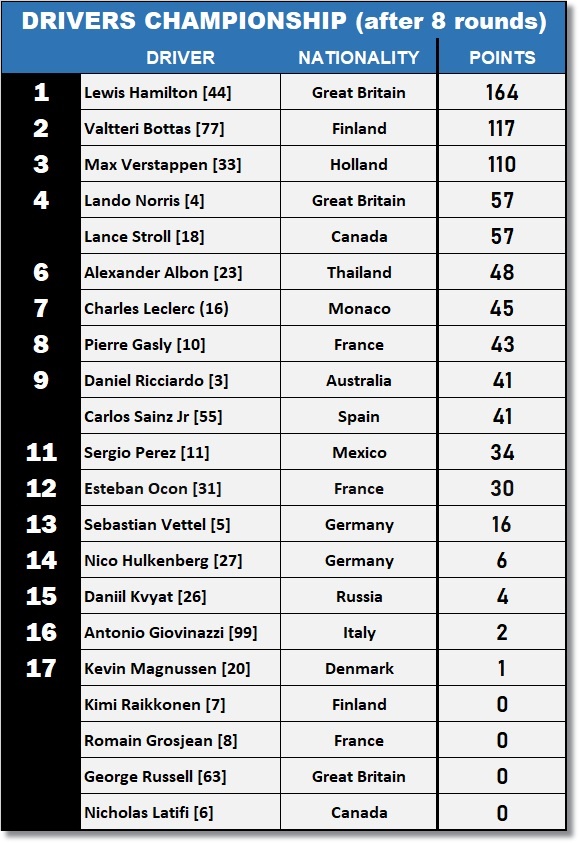
Despite registering his worst result of the season at Monza last Sunday, Lewis Hamilton’s lead in the Drivers’ Championship holds steady at 47 points, with team-mate Valtteri Bottas moving into second position after Max Verstappen recorded his second DNF of the season.
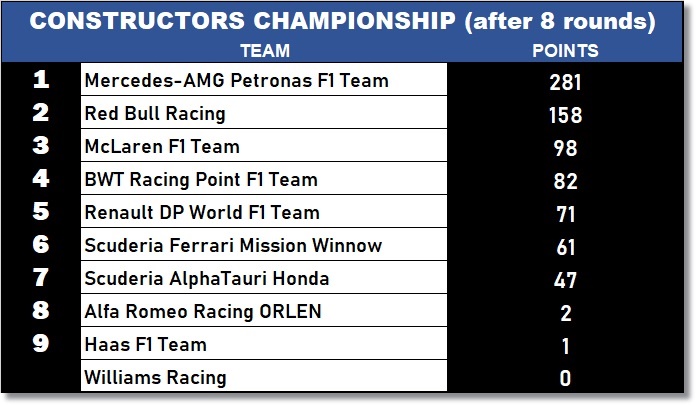
Mercedes-AMG, meanwhile, expanded their lead at the top of the Constructors’ Championship as Red Bull Racing’s failed to score. Their lead is now up to 123 points. Behind them, the battle is rather more intense: McLaren’s best result since 2014 saw them extend their lead in the race for third place, pulling out a gap of 16 points ahead of Racing Point, who in turn have an 11-point advantage over Renault.

PISTON.MY

Race starts at 1:10 pm in Mexico Sunday/3:10 am on Monday in Malaysia

Ferrari
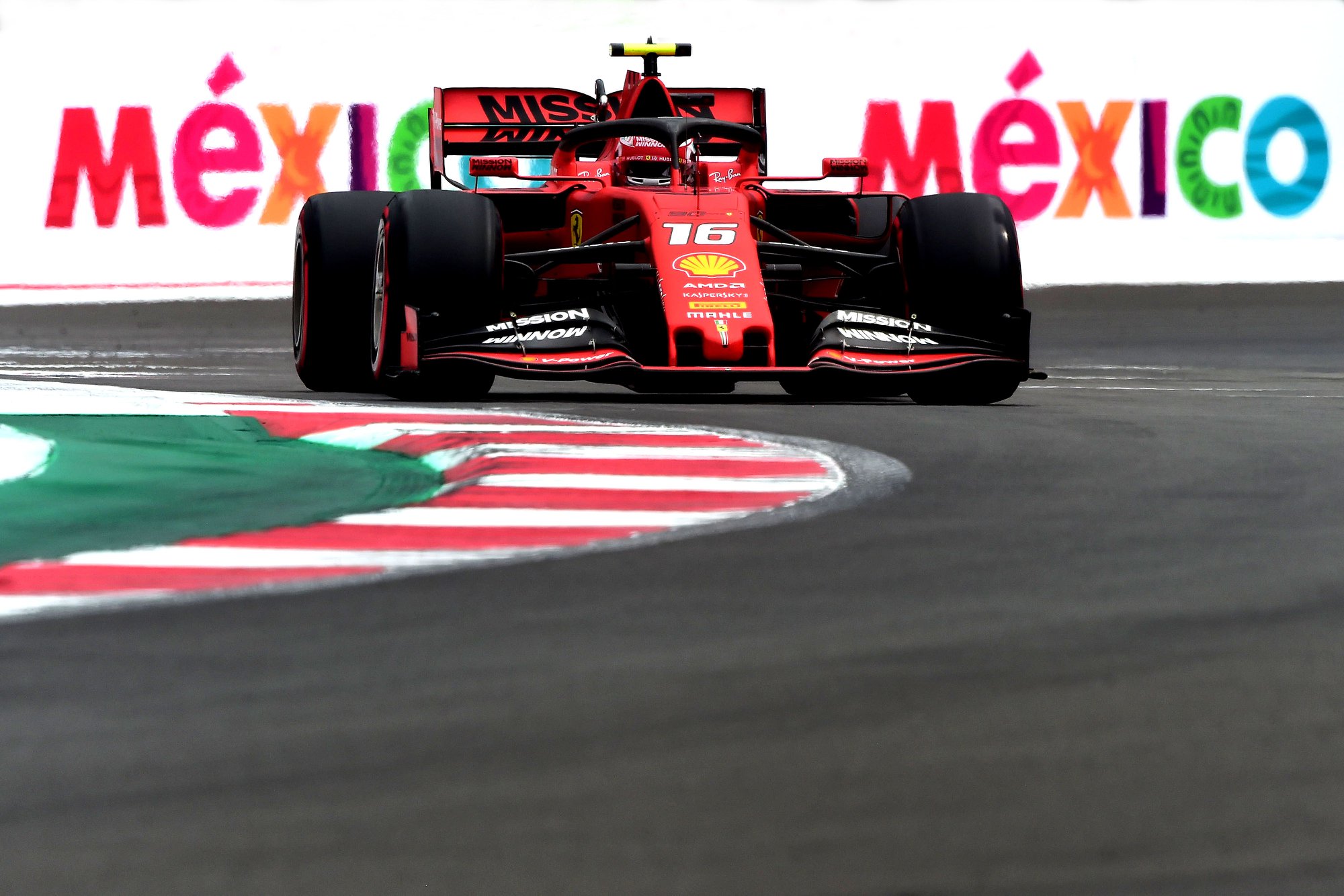
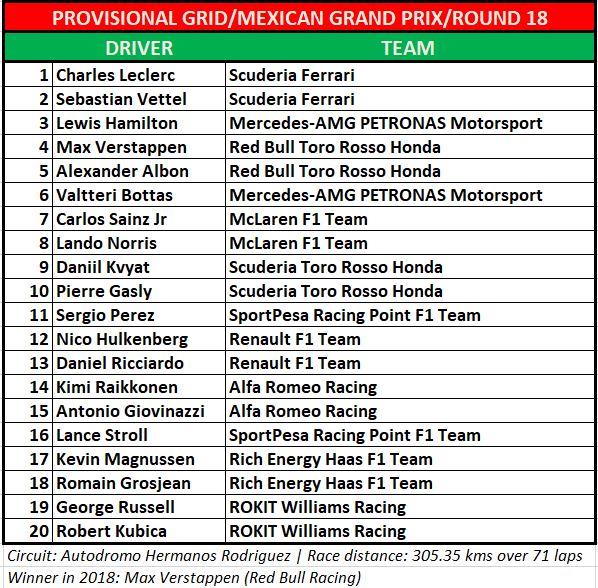
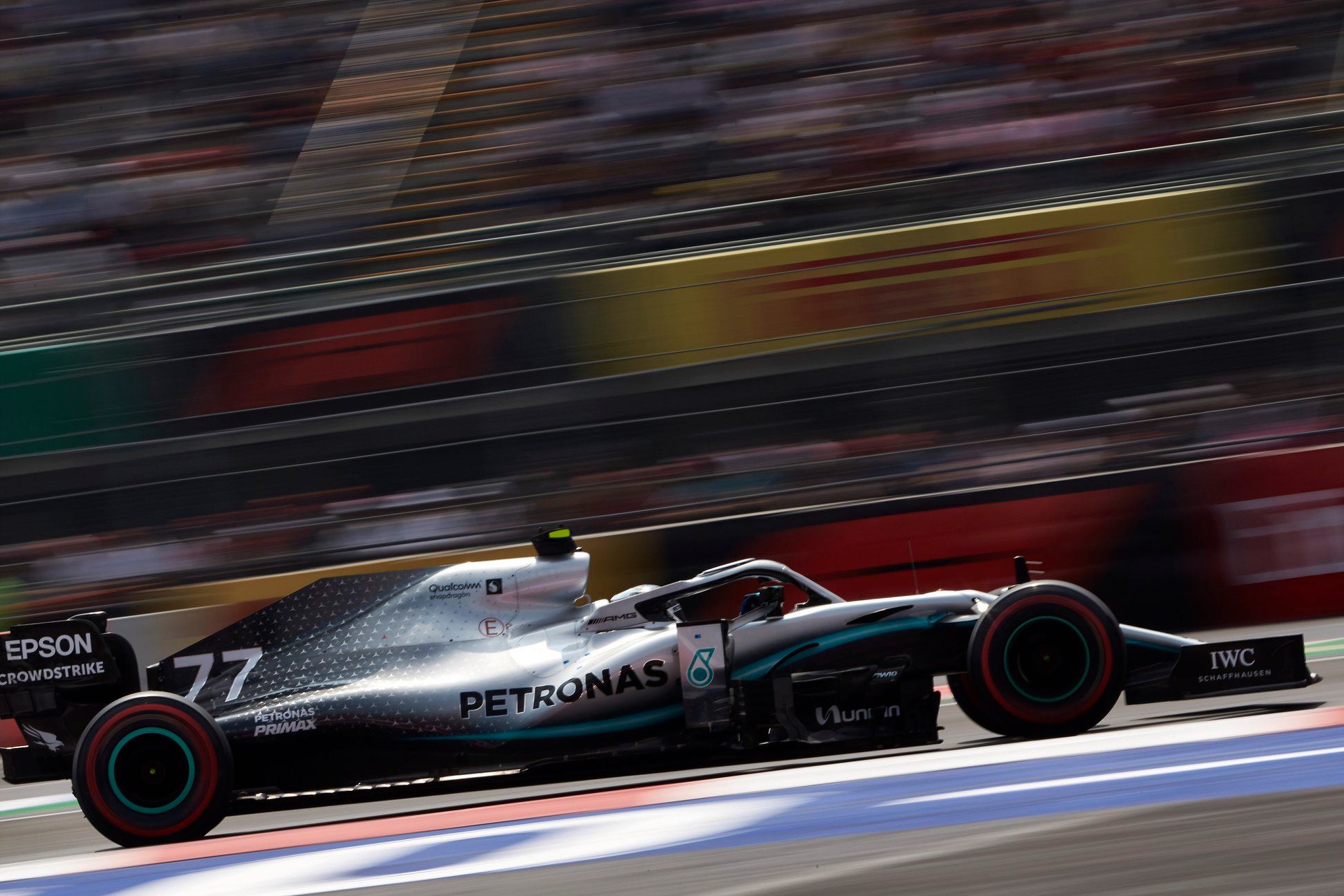
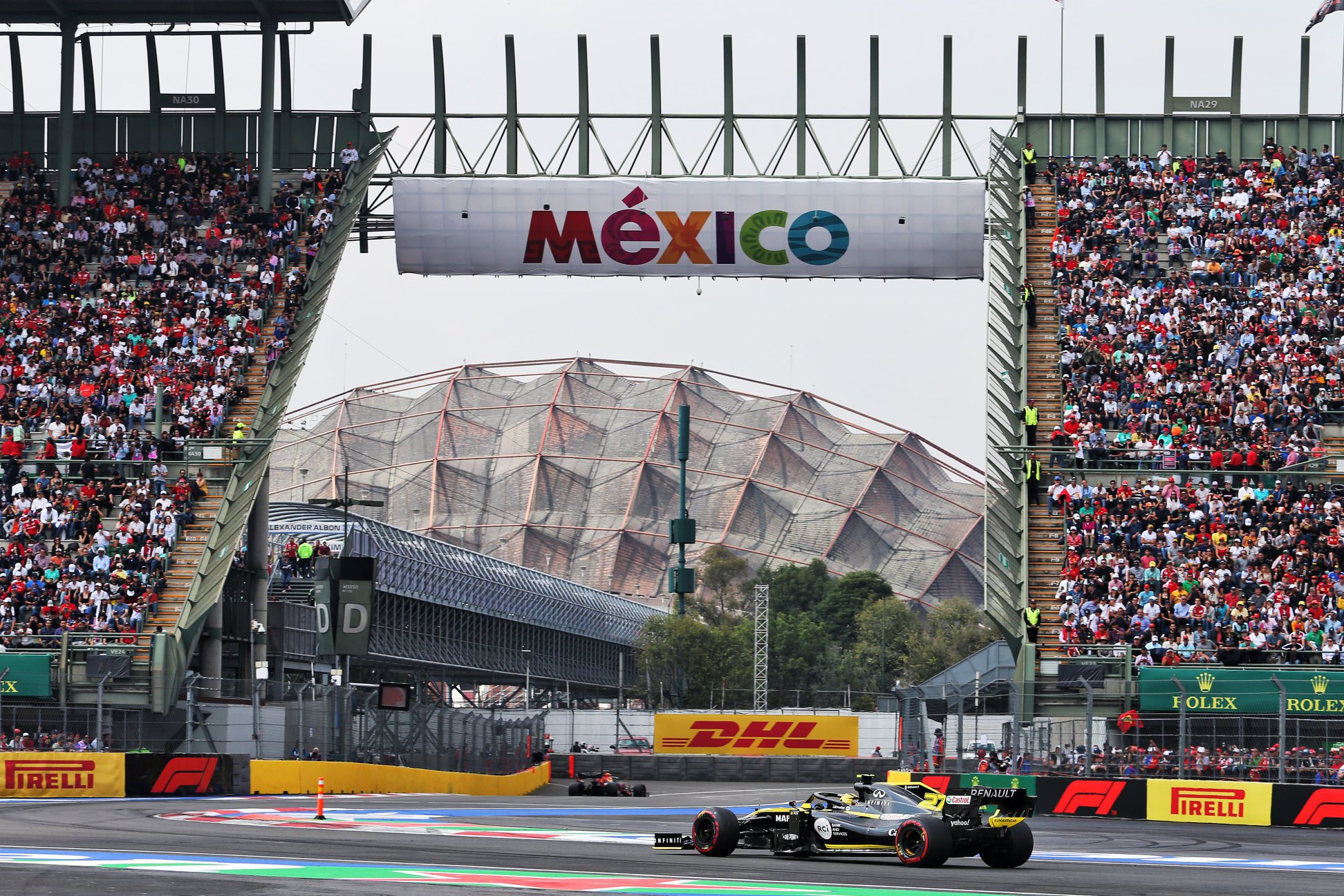
With Max Verstappen demoted 3 positions, Ferrari’s Charles Leclerc takes pole position for the Mexican Grand Prix.

Mexicos GP Grid

Mexican GP
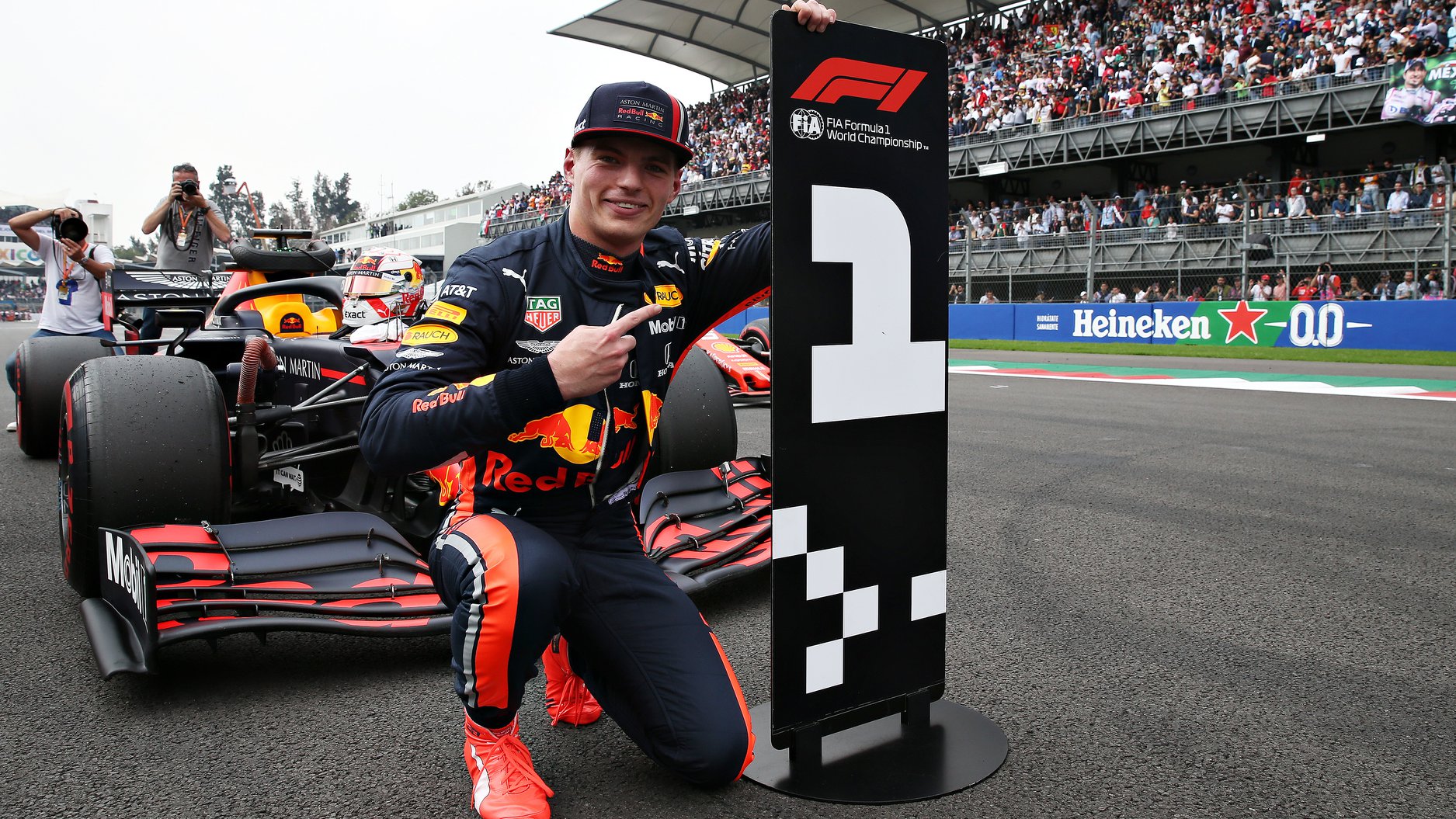
Red Bull Racing’s Max Verstappen qualified for pole position but his joy was short-lived. He was penalised 3 places for ignoring warning flags after Valtteri Bottas had crashed.

Mexican GP

Mexican GP

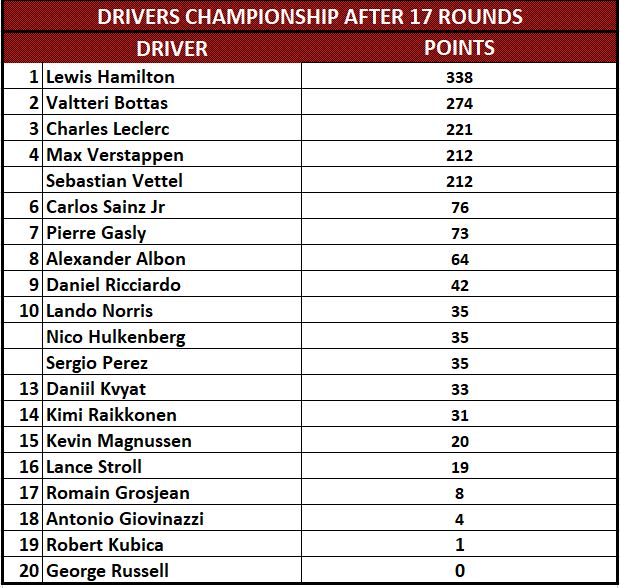
DRIVERS 17

Mexican GP

CONSTRUCTORS 17

PISTON.MY

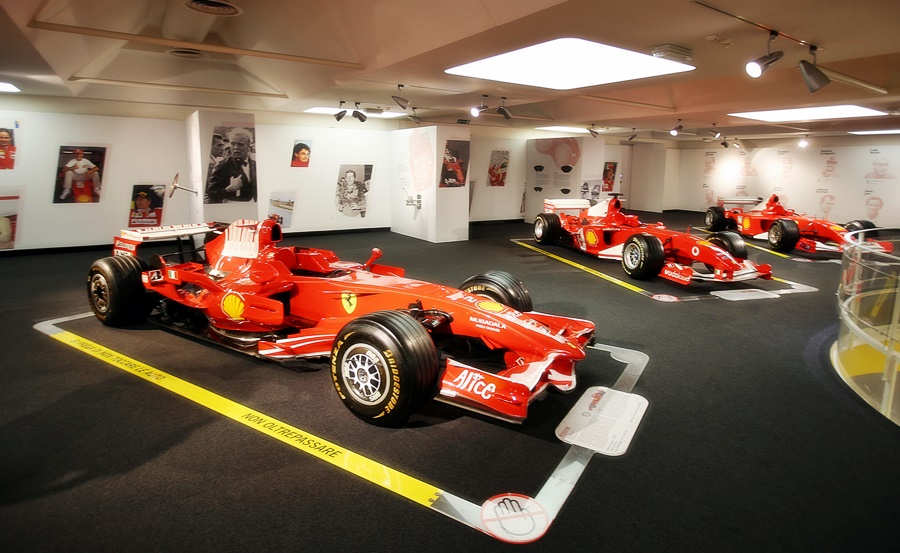
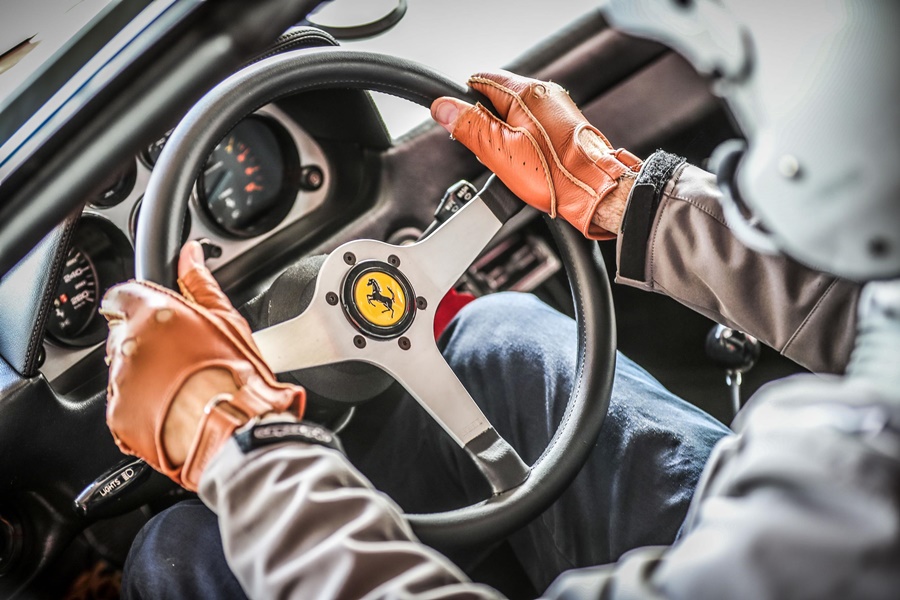
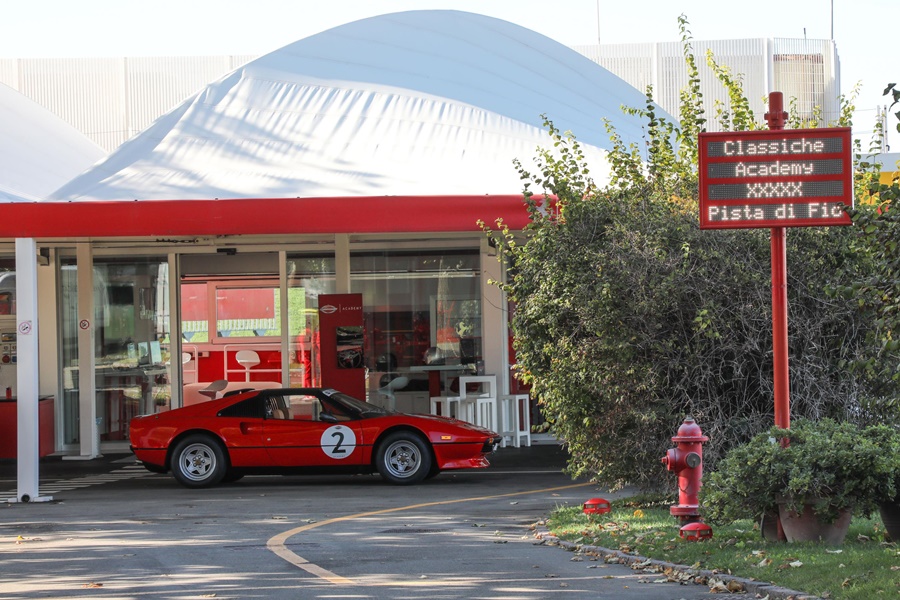
Most people would go to Ferrari to collect their new cars or visit the museum and view the history of the famous Italian carmaker. Now Ferrari also offers another reason to visit the factory at Maranello in Italy: the Ferrari Classiche Academy. This is a new activity with driving courses that focuses on various classic cars that helped to create the legend of the Prancing Horse and write the history of their era.

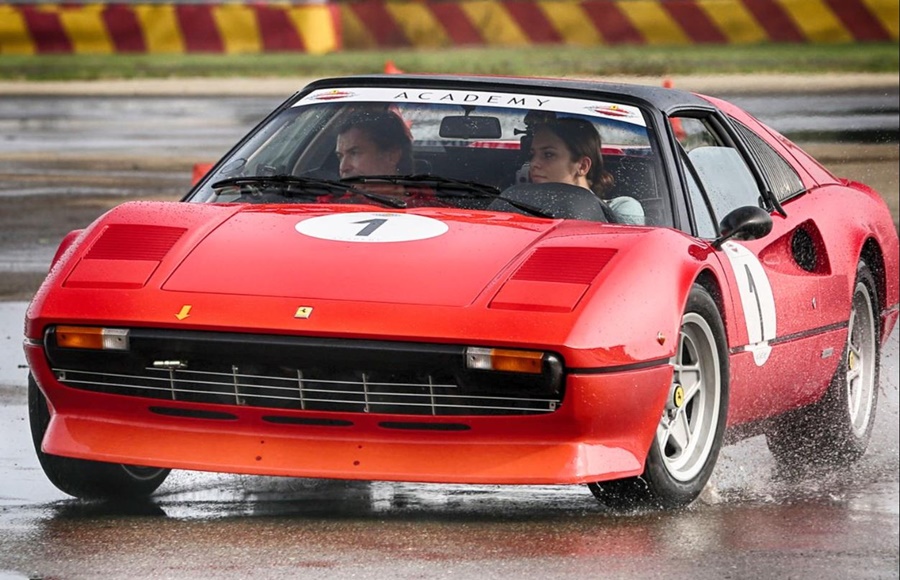
There are different track driving modules for each course which is held over 2 days at the Fiorano Circuit. These modules give everyone, including people new to historic cars, the chance to familiarise themselves with the vehicle dynamics, the gearbox, corner management and many other aspects of driving the cars. There are also sessions which enable participants to learn the techniques used to drive cars produced before electronics and driver aids entered the automotive world.

Ferrari Classiche Academy

Four classic models
The programme typically begins with a practical introduction to the cars covered by the course (four 308 GTS and GTBi models, all with various mechanical developments from the base models, and a Mondial 3.2). The cars are raised on a lift and examined to give an idea of the components used and their technical characteristics.

The participants then go on a guided tour of the Officine Classiche Ferrari and the company’s technical archive. Here they can view technical drawings, engineers’ notebooks and race reports for GT and racing cars produced from 1947 onwards.

Ferrari Classiche Academy

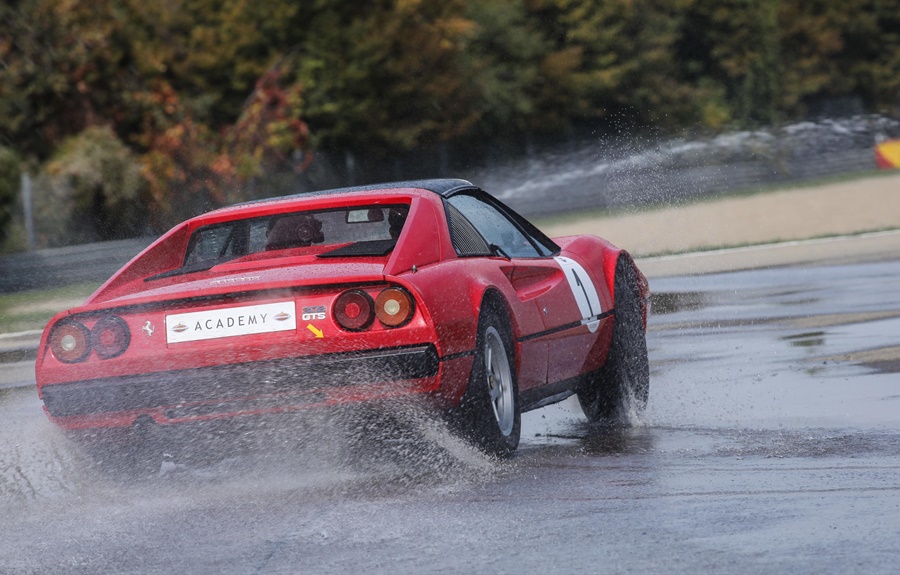
The subsequent track sessions consist of a series of technical briefings by the instructors on driving techniques for cars with manual gearbox without electronic assistance, including ‘heel and toe’, ‘double de-clutching’ and others.

Once behind the wheel of a historic car, the participants (always accompanied by their instructors) perform a series of driving sessions of increasing difficulty. These take place in a wide range of conditions, including driving in the wet, counter-steering at speed and managing vehicle dynamics.

Ferrari Classiche Academy

Driving a powerful supercar like a Ferrari back in the days when there were no electronic systems to prevent you from getting into ‘trouble’ required skill and muscles since there was no power steering. And you had to learn to shift precisely without a computer doing rev-matching too. If you want to know what it was like, book a session at the Ferrari Classiche Academy.

(more…)

BHPetrol

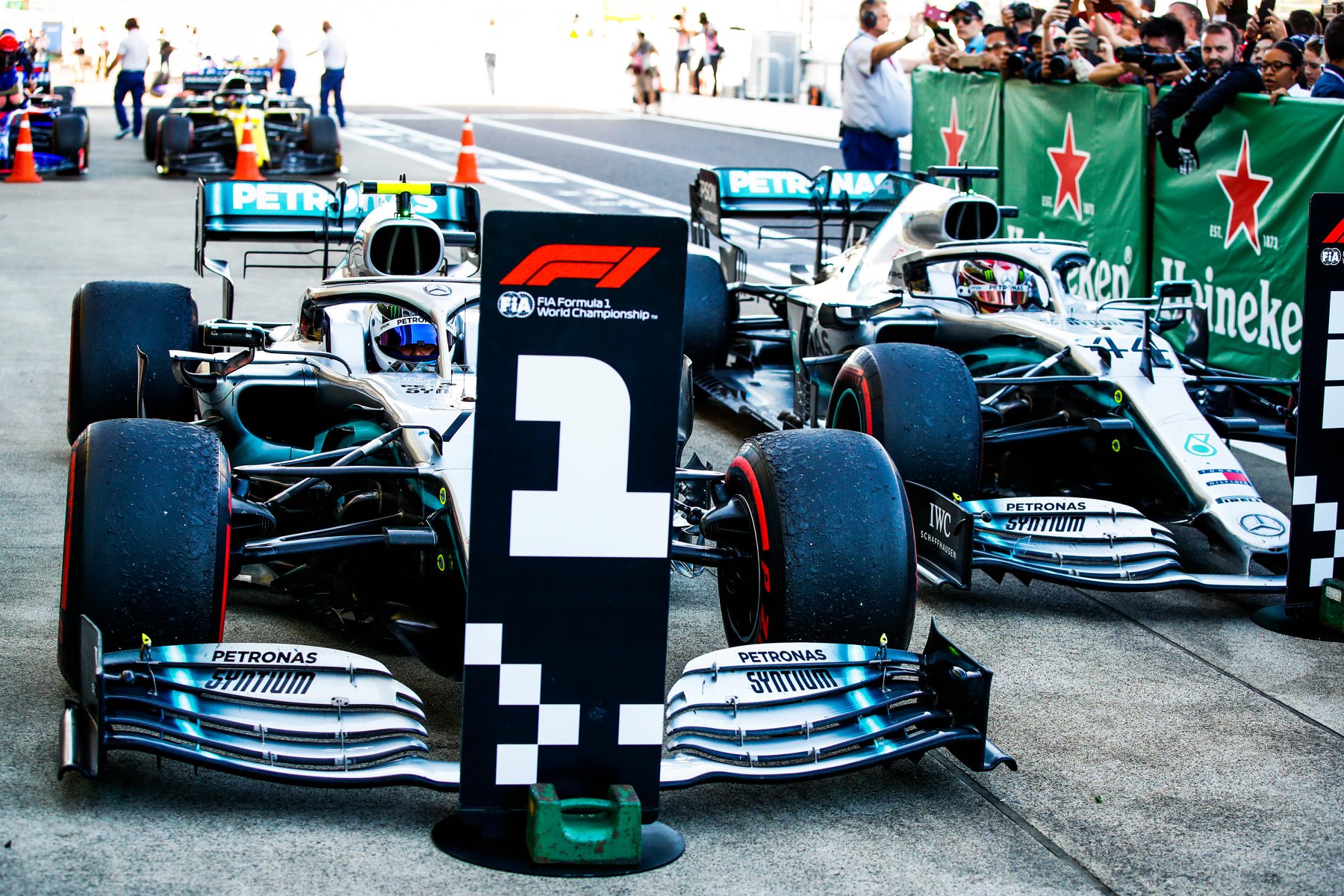
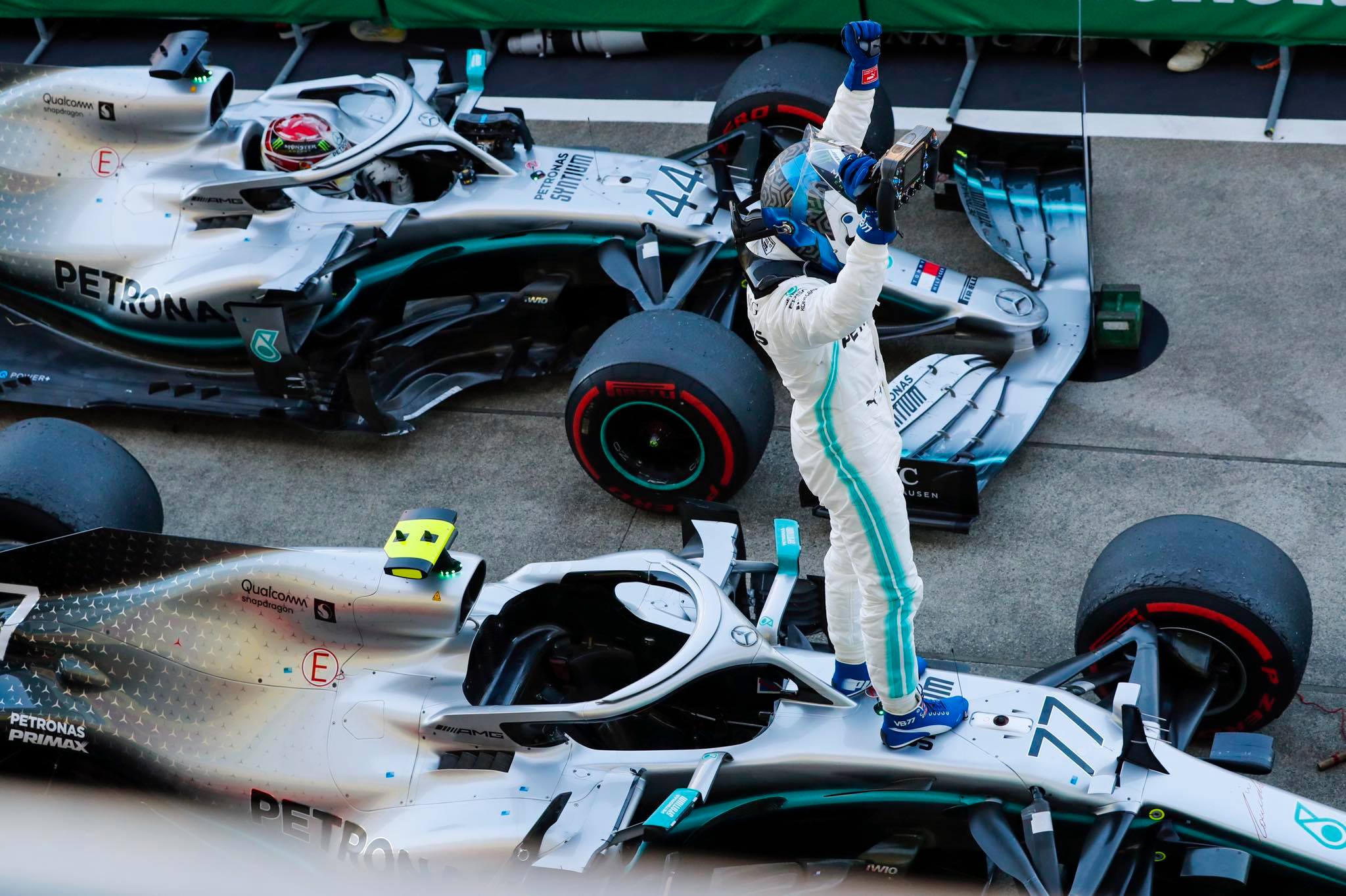
The finishing positions of the 2019 Japanese Grand Prix yesterday were taken on the 52nd lap rather than the 53rd lap. This means that the race distance was one lap short and the error is believed to be due to the chequered flag having been shown on the display panel one lap early.

Teams and drivers, upon seeing the chequered flag flash, assumed the race to be over as the regulations state. The FIA’s Article 43.2 says: “Should for any reason the end‐of‐race signal be given before the leading car completes the scheduled number of laps, or the prescribed time has been completed, the race will be deemed to have finished when the leading car last crossed the line before the signal was given.”

2019 Japanese GP

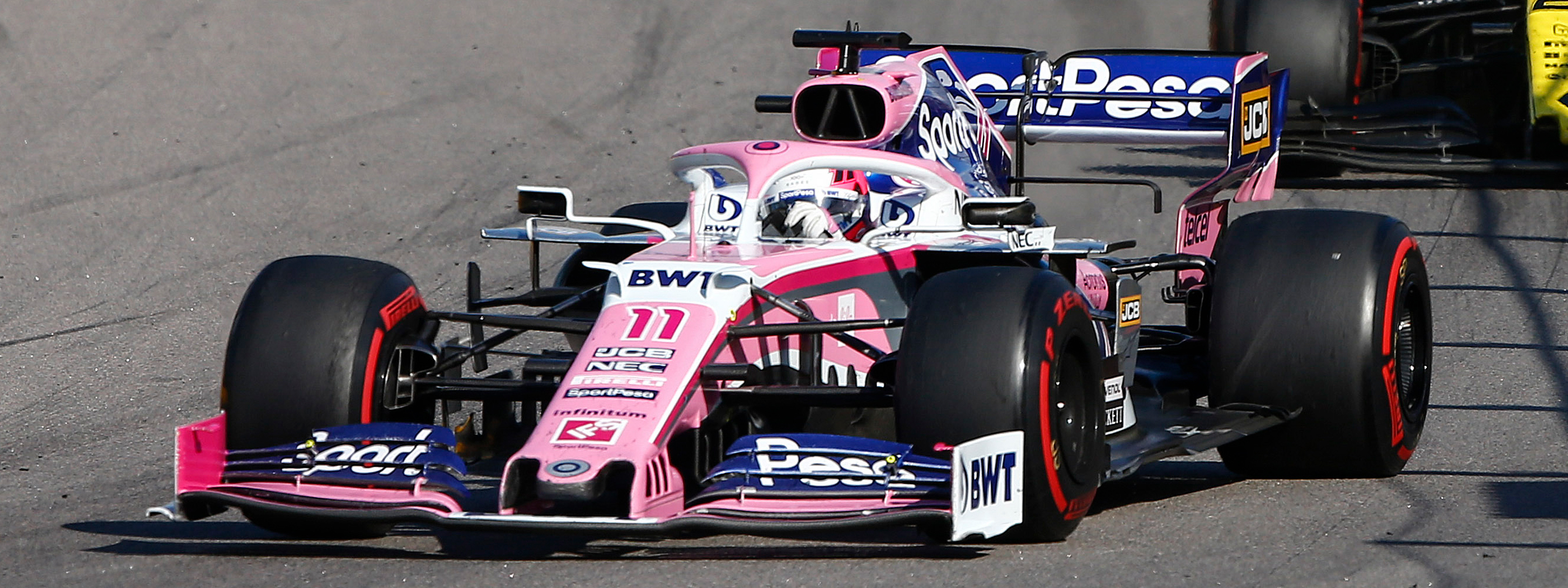
The officials don’t know how it occurred and blame it on a system fault. However, even with one lap short, the overall results are unchanged – with one exception. Although SportPesa Racing Point’s Sergio Perez (pictured below) had crashed out in what was to have been the final lap, the error instead positioned him as ninth-placed finisher. This meant he picked 2 valuable points for the team which is still going after Scuderia Toro Rosso Honda. Meanwhile, Nico Hulkenberg, having been pushed down one position to tenth place, lost a point.

Racing Point

Heavy penalties for Leclerc and Ferrari
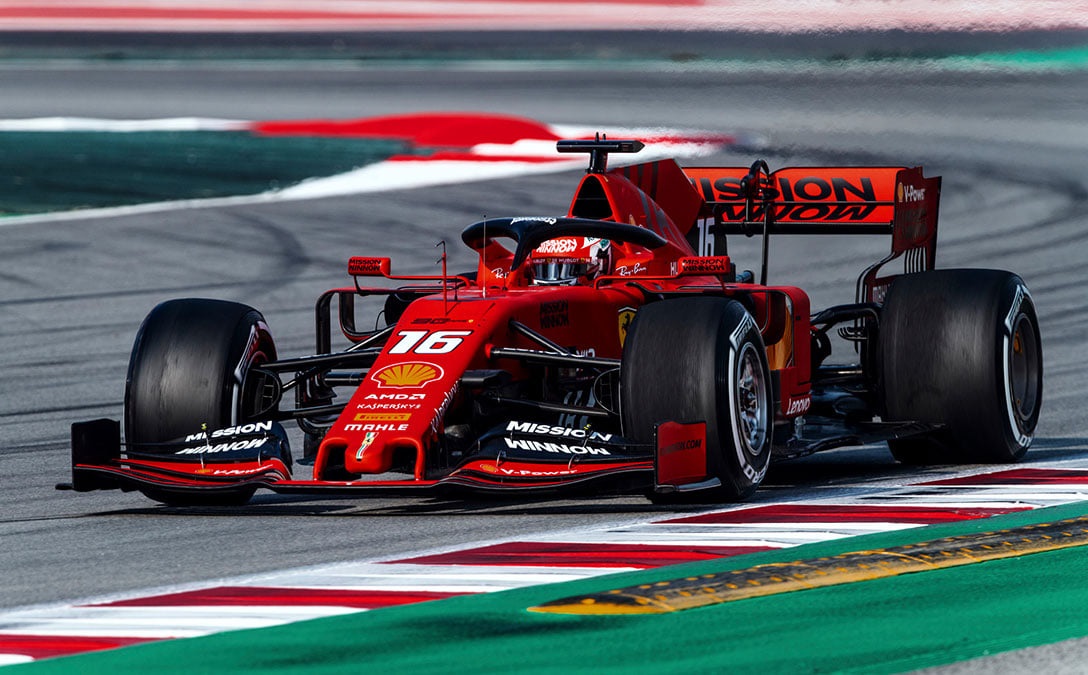
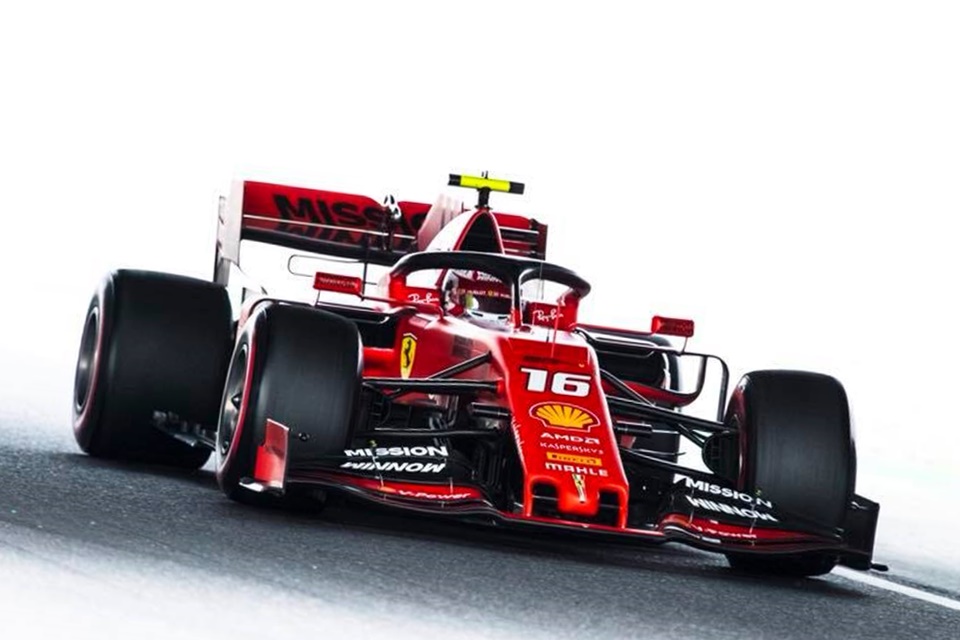
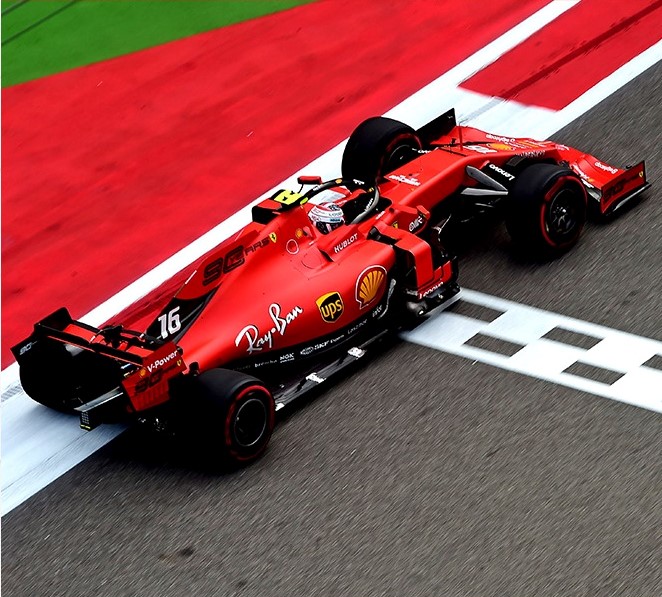
Ferrari’s Charles Leclerc was also penalized for his collision with Max Verstappen on the first lap, resulting in the Red Bull Racing driver having to retire. The Stewards imposed a 5-second time penalty which was added to the elapsed race time.

Additionally, he got another 10-second penalty for continuing to drive the car in an unsafe condition after the incident on Lap 1. He drove until the third lap and then the damaged wing disintegrated and some broken parts caused damage to the mirror on Lewis Hamilton’s car.

Charles Leclerc

This all means Leclerc’s finishing position is one step down, from sixth to seventh. He received 2 penalty points on his racing licence (total of 2 in the 12-month period), while the Ferrari team was fined 25,000 euros (about RM115,254).

PISTON.MY


BHPetrol

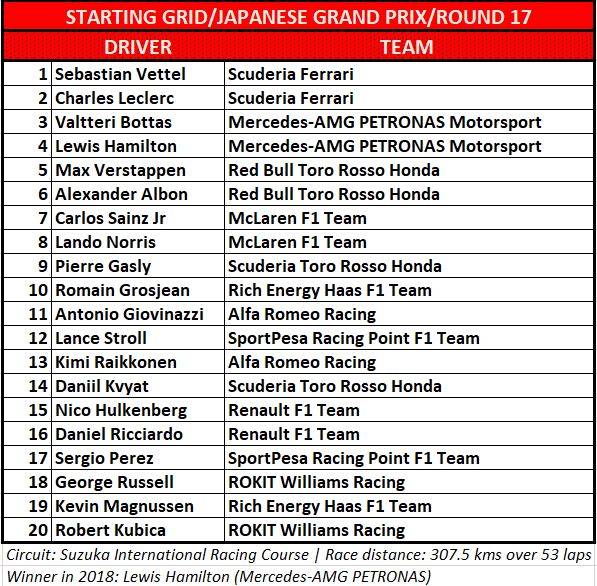
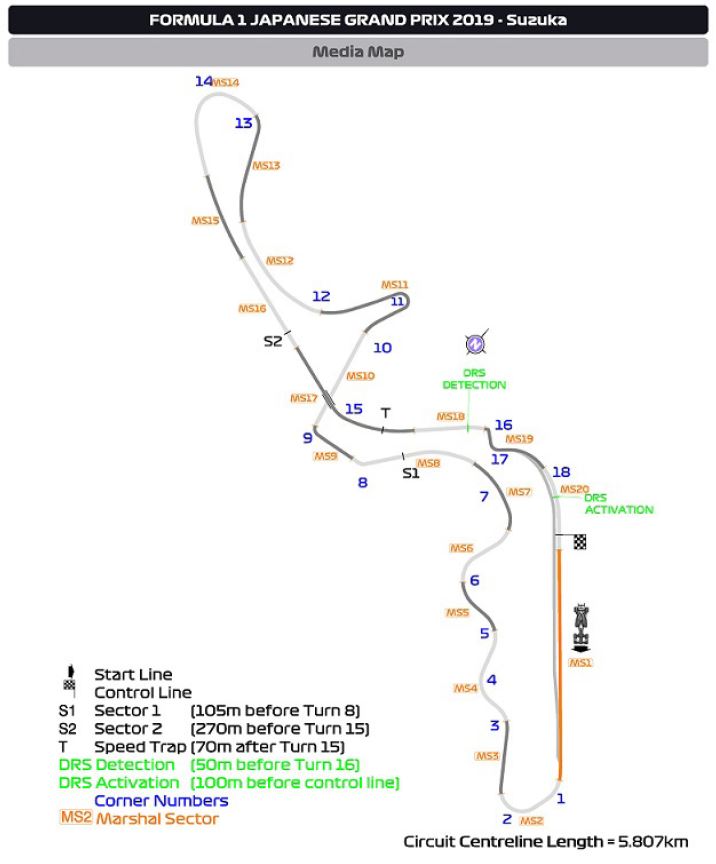
Race starts at 2:10 pm in Japan/1:10 pm in Malaysia

GRID

Suzuka

Ferrari

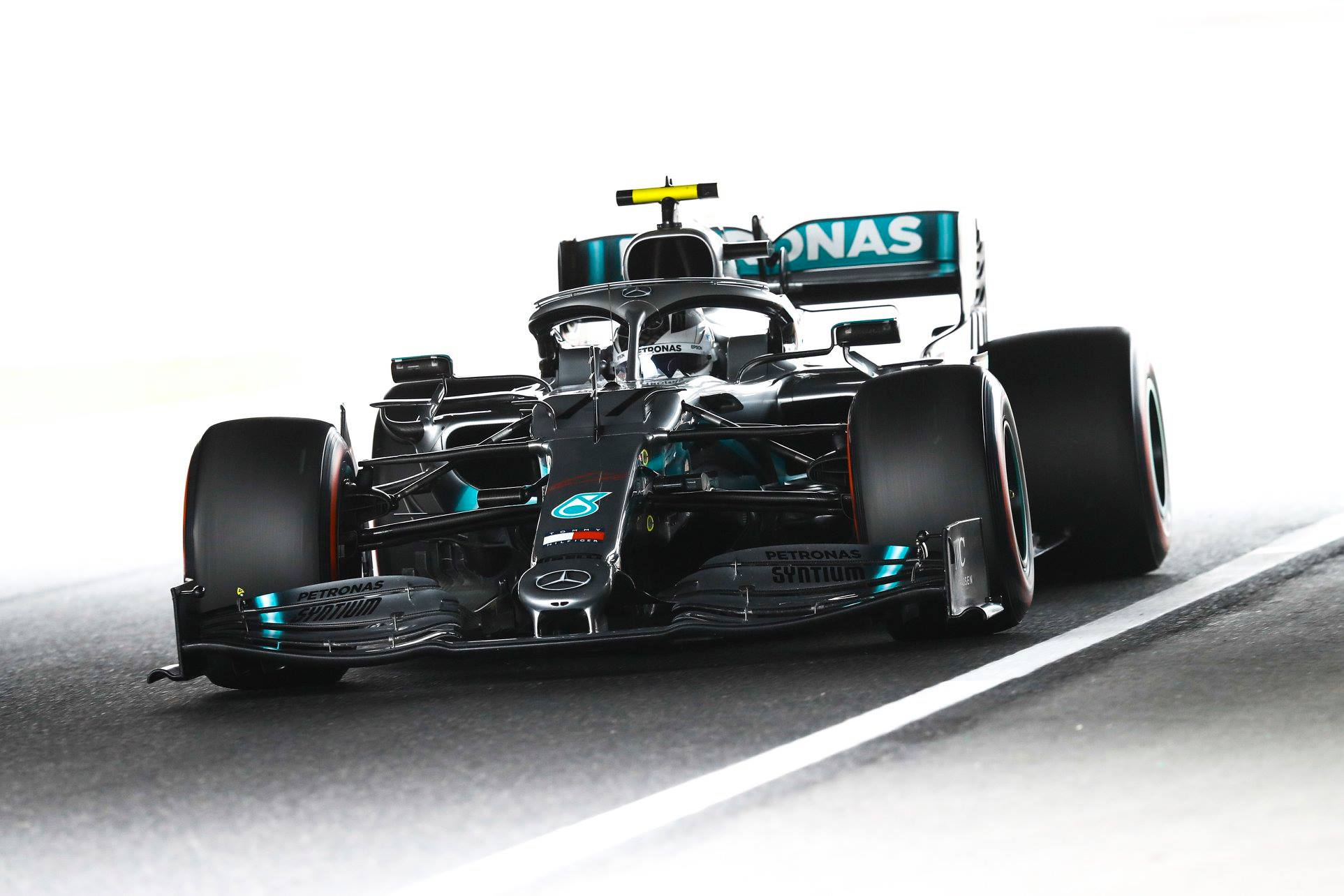
Mercedes-AMG

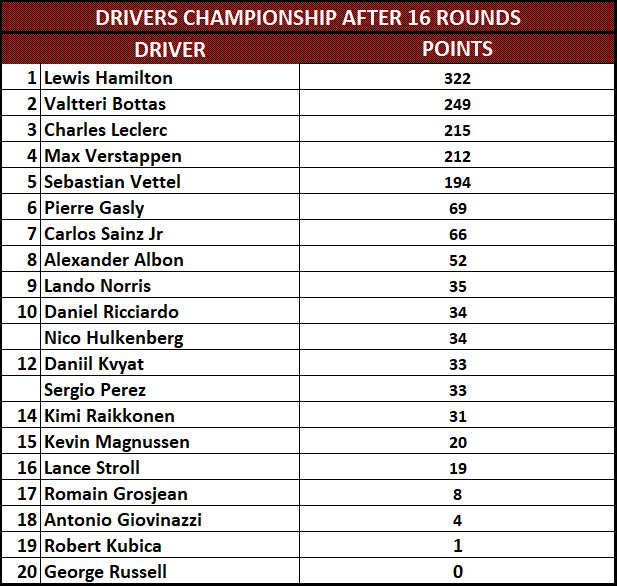
DRIVERS 16 JAPAN

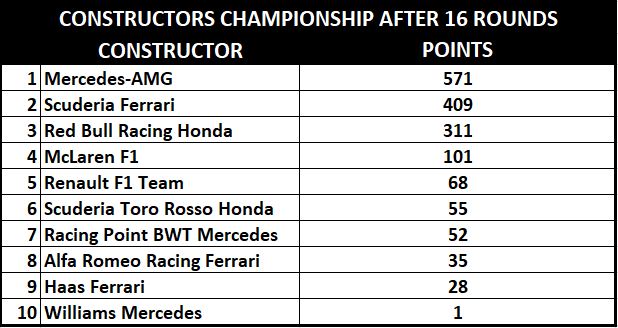
CONSTRUCTORS

Red Bull

PISTON.MY

BHPetrol

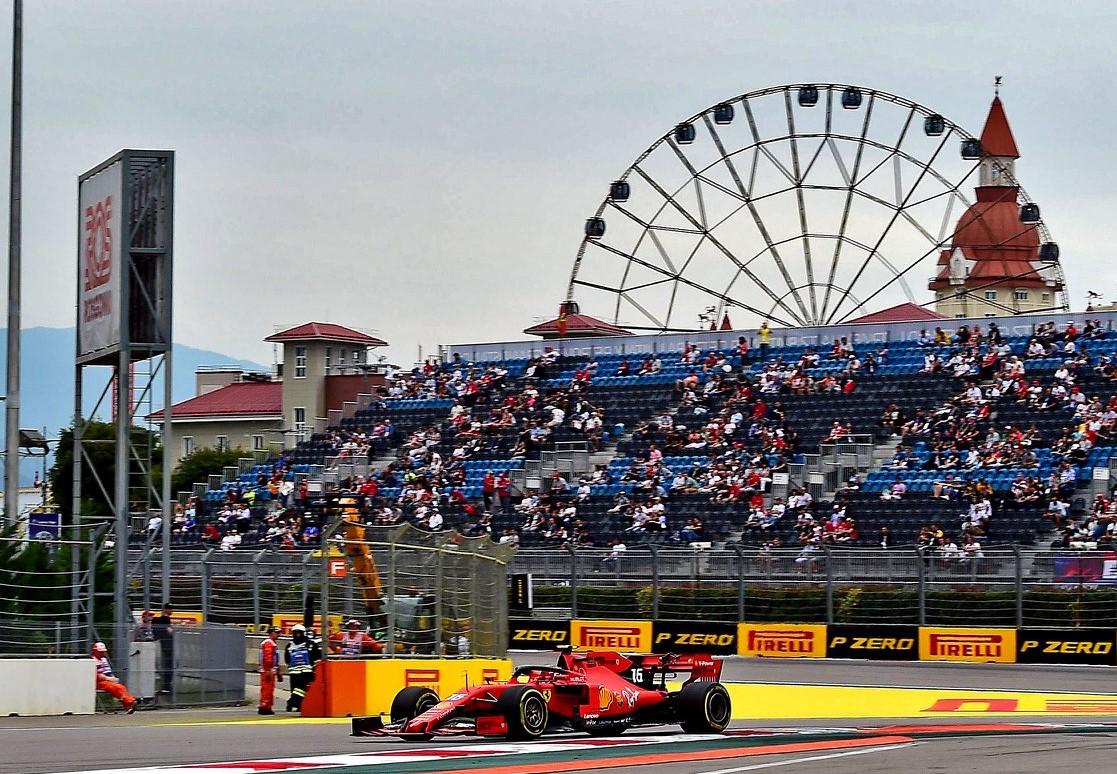
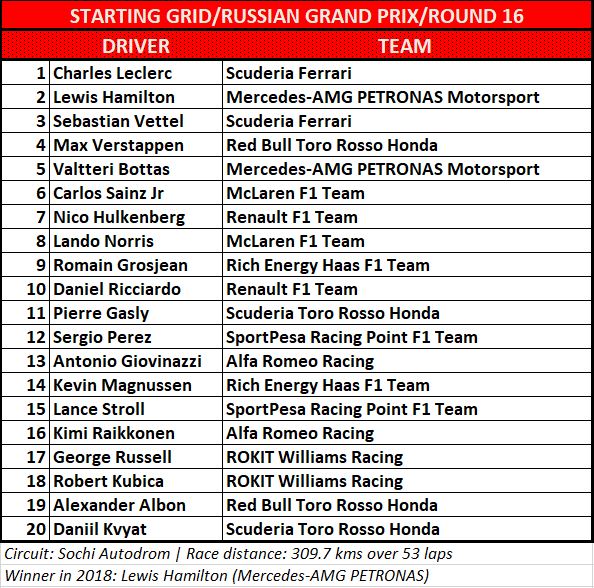
Race starts at 2:10 pm in Russia/7:10 pm in Malaysia

Ferrari F1

GRID

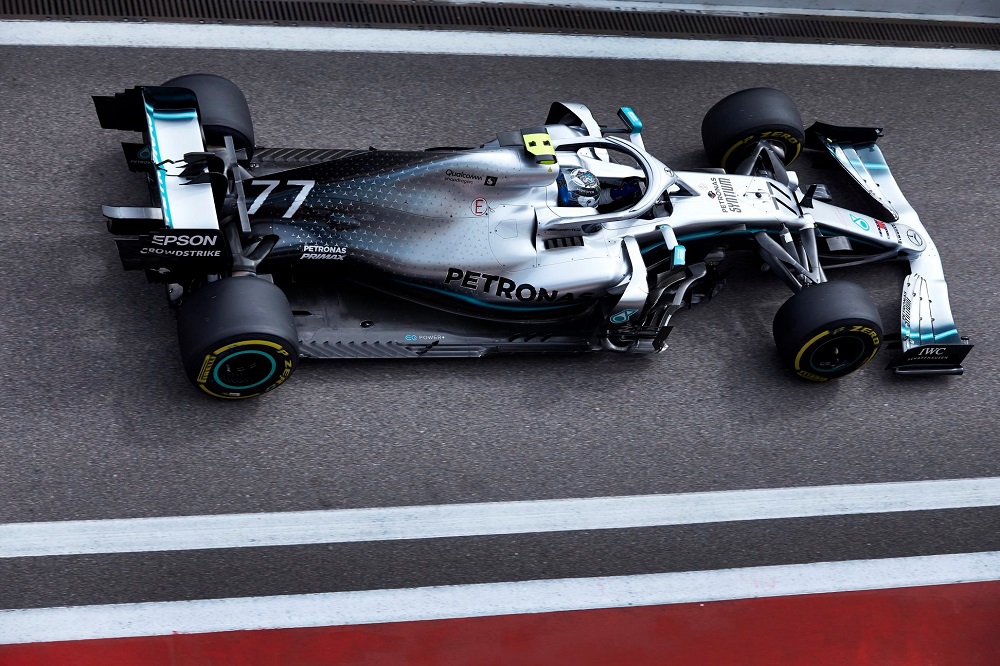
Mercedes-AMG

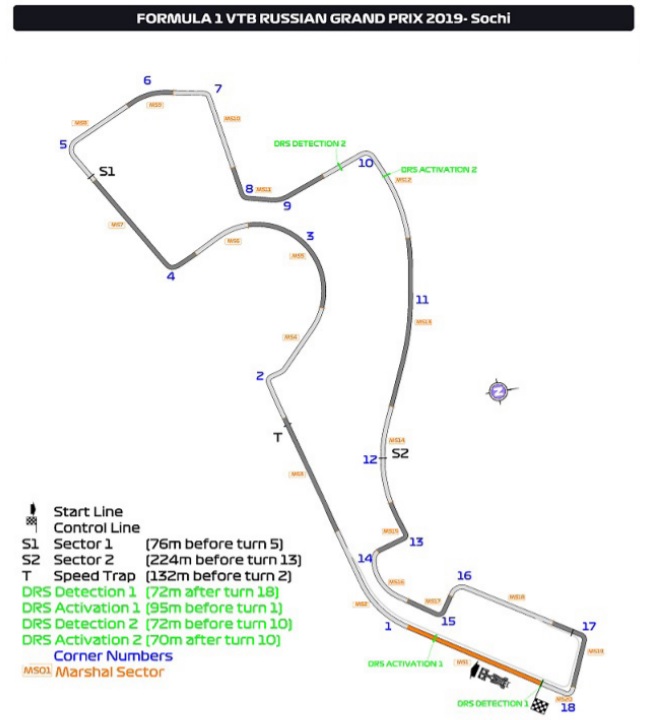
SOCHI AUTODROM

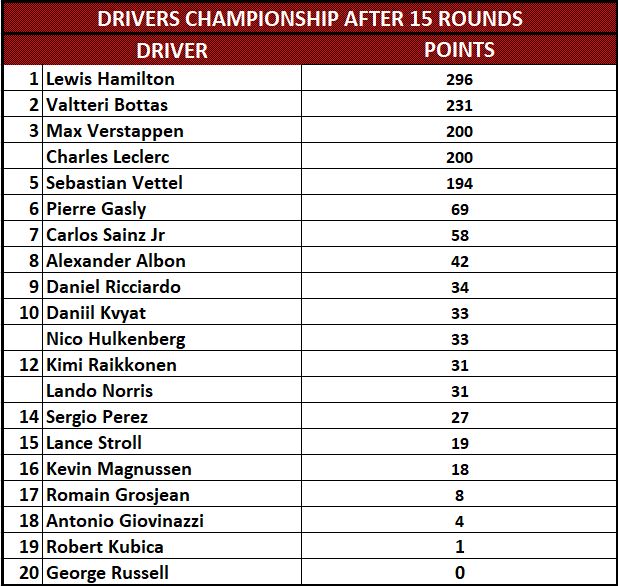
DRIVERS 15

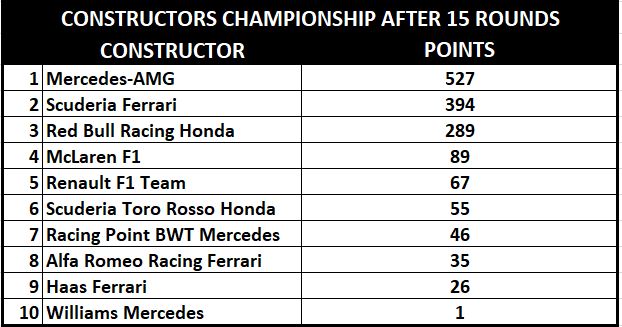
CONSTRUCTORS 15

PISTON.MY

Archive

Follow us on Facebook

Follow us on YouTube