

Toyota has introduced the IMV 0 concept, a vehicle designed to serve as a versatile and adaptable platform for customers to customise according to their specific needs. While detailed information about the IMV 0’s powertrain remains undisclosed, Toyota has provided insights into its dimensions and showcased various renderings of potential configurations.
The IMV 0 concept, at its base form, measures 208.7 inches in length, 70.3 inches in width, and 68.5 inches in height. It boasts a wheelbase of 121.5 inches, approximately the same as the full-size Toyota Sequoia SUV.
Toyota is set to present the IMV 0 concept at the Tokyo auto show, although it remains uncertain whether only the base truck or physical versions of the various renderings will be exhibited.
The renderings depict a wide range of potential configurations for the IMV 0 concept. One representation showcases the vehicle transformed into a Red Cross rescue vehicle, equipped with an ambulance-like rear section. Other renderings depict the IMV 0 configured as a delivery vehicle carrying packages, a sport truck with vibrant accents, and a futuristic camper.
The IMV 0 concept also appears as a miniature food truck, likely appealing to small businesses seeking alternatives to refurbished school buses and similar options. One of the most striking renderings envisions the IMV 0 as a compact off-roader, complete with oversized tires, a robust front bumper featuring auxiliary lighting, a bed-mounted roof rack, and an additional cabin section, potentially for extra seating.
Toyota’s IMV 0 concept aims to provide a blank canvas for creative customisation and transformation, catering to diverse customer needs and applications. While specific powertrain details remain undisclosed, the vehicle’s adaptable design allows it to take on various roles, making it an intriguing platform for a wide range of purposes.
The Pasir Gudang City Council (MBPG) is set to enforce a ban on parking vehicles in front of houses starting from January 1, 2024. The decision, based on the Street, Drainage and Building Act 1974 of the MBPG, was reached during a special meeting of the local authority (PBT) held last Wednesday.
According to Berita Harian, Mayor Datuk Asman Shah Abd Rahman confirmed that the decision received unanimous support from all MBPG council members. To ensure awareness and education among the public, a period of notice issuance to those affected will be observed from now until December 31.
In early October, a notice from MBPG outlining the prohibition of parking vehicles in front of houses, specifically outside fences that obstruct public thoroughfares, gained widespread attention. On October 10, after a special meeting, Mayor Asman announced that enforcement would be carried out in phases to maintain public harmony.
Complaints related to vehicles parked in front of houses obstructing passageways prompted this decision, with MBPG receiving 349 such complaints from the beginning of the year until last month. To address this issue, MBPG will conduct an investigation by engaging with complainants and vehicle owners.
Vehicle owners will be issued notices, providing up to 21 days for corrective action. If no action is taken, fines ranging from RM100 to a maximum of RM2,000 will be imposed for repeat offences, though no immediate fines will be issued.
Mercedes-Benz has introduced the latest-generation E-Class Long Wheelbase (LWB) in China, delivering increased legroom and enhanced luxury in this popular premium sedan. The 2024 E-Class LWB will be available for purchase in China in the coming months and is scheduled to join the Mercedes-Benz India lineup in late 2024.
The 2024 Mercedes-Benz E-Class LWB measures 5,092mm in length, 1,880mm in width, and 1,493mm in height, with a generous wheelbase of 3,094mm. It is 18mm longer and 20mm wider than its predecessor, with the most significant portion of the 18mm length increase attributable to the 15mm larger wheelbase.
The LWB body type, similar to the one unveiled in China, will also be made available to the Indian market, as it was with the previous-generation E-Class LWB. The extended wheelbase enhances rear legroom and knee space, while the cabin retains the same interior design and equipment as the standard model.
It also features air suspension and a rear-wheel steering system capable of turning the rear wheels up to 4.5 degrees.
Inside, the E-Class LWB closely mirrors the regular E-Class. The car showcased in China is offered in various configurations, each with unique feature sets, including power-reclining rear seats with an ottoman function. Some configurations come equipped with the “Superscreen,” a standard feature.
The Mercedes Superscreen configuration combines three integrated displays behind a single glass panel on the dashboard. The driver is presented with instrumentation on a 12.2-inch screen, while a 14.4-inch central infotainment display serves as the primary unit. A third screen is visible to the front passenger.
The Mercedes-Benz E-Class L is reported to be available with a 4-cylinder powertrain in two variations: the E270L with 201hp and the more potent E300L with 255hp. The lineup is expected to expand with additional options in the future.
Sales of the Mercedes-Benz E-Class LWB are set to commence in China in the coming months. Closer to home, Mercedes-Benz Malaysia has just unveiled the all-new Mercedes-Benz EQS SUV, which is the latest addition to Mercedes-Benz Malaysia’s luxury all-electric EQ portfolio.
Let’s not forget that BMW Malaysia took the leap and introduced the G28 BMW 330Li M Sport for the Malaysian market. Would Mercedes-Benz Malaysia take a card out of BMW’s strategy and offer something similar in Malaysia?
Porsche enthusiasts eagerly awaiting the electrification of the iconic 911 may need to exercise some patience. Despite years of speculation and anticipation, the hybrid version of Porsche’s beloved sports car will not make its debut until sometime in the mid-2020s.
Frank Moser, Vice President Model Lines 911 and 718, confirmed that Porsche is actively developing the next generation of the 911, known as the 992.2, and that it will include a “performance hybrid” variant. However, this electrified 911, eagerly awaited by fans, is not scheduled to launch before the middle of the decade.
The hybrid system for the 992.2 911 will not follow a plug-in design, instead relying on the engine to charge the battery and recuperating energy during braking. It is said to draw inspiration from Porsche’s 919 hybrid Le Mans race car.
Although it remains unclear whether all 992.2-generation 911 models will embrace hybrid technology, industry observers speculate that it will likely debut on a high-performance variant, such as the GT2 RS or Turbo S. In addition, reports suggest that a turbo-hybrid GT2 RS could potentially join the lineup in 2026.
There have also been unverified reports from Europe indicating that hybrid technology might be incorporated into a mid-range model, such as the GTS.
As Porsche’s last model to receive any form of electrification, the 911 is set to follow the brand’s lineup, where other models already offer hybrid or electric power. Porsche is focused on ensuring that the 911 hybrid doesn’t add excessive weight from its electrical components, according to Michael Steiner, Porsche’s board member for development.
The Malaysian Road Transport Department (JPJ) has issued a stern warning to drivers who violate window tinting regulations, emphasising that offenders will face fines and the possibility of imprisonment.
JPJ has cited the Motor Vehicles (Prohibition of Certain Types of Glass) Rules 1991, which underwent an amendment four years ago. These updated rules now dictate that the visible light transmittance (VLT) of a vehicle’s front windscreen should be no less than 70%, and at least 50% for the front side windows.
As reported by FMT, motorists who contravene these regulations could be slapped with fines of up to RM2,000 or face imprisonment for up to six months for a first offence. Subsequent convictions may lead to heftier penalties, with fines of up to RM4,000 and imprisonment for up to 12 months.
It’s important to note that the regulations do not impose a limit on the VLT of a vehicle’s rear side windows and rear windscreen, as clarified by JPJ.
The window tinting restrictions serve the purpose of maintaining unobstructed driver visibility and ensuring road safety, according to Wong Shaw Voon, Chairman of the Malaysian Institute of Road Safety Research (Miros).
Mini is paving the way for a new era in eco-friendly exploration with the introduction of the all-electric Mini Countryman SE ALL4, a reliable companion that opens doors to adventure. This versatile crossover offers emissions-free mobility on diverse terrains, bolstered by its potent ALL4 all-wheel drive, advanced driving assistance features, partially automated Level 2 driving, and an impressive electric range of up to 433km according to the rigorous WLTP test cycle.
The modern, minimalistic design of the SE ALL4 accentuates its distinct personality with clean lines and broader wheel arches. In addition to its aesthetic appeal, this all-rounder has grown significantly, now measuring 4,433mm in length, 1,843mm in width, and 1,656mm in height. Just for comparison’s sake, the smart #1 has a length of 4207mm, a width of 1822mm and a height of 1636mm. This expansion results in increased interior space, offering up to 1,450 litres of cargo capacity when the rear bench is folded down.
Under the hood, two powerful electric motors deliver a combined output of 313hp and a torque of 494Nm, propelling the SE ALL4 through any terrain. This dynamic duo accelerates it from 0 to 100km/h in a mere 5.6 seconds and reaches a top speed of 180km/h. The robust battery boasts an energy capacity of 66.45 kWh.
Rapid charging with DC, peaking at 130kW, takes just under 30 minutes to charge the battery from 10 percent to 80 percent. Customers can optimise the charging process through user-friendly settings accessible via the Mini app. The introduction of the Plug & Charge system allows the vehicle to automatically initiate the charging process at compatible public charging stations, eliminating the need for additional authorisation.
The Mini Countryman SE ALL4, equipped with the Driving Assistant Professional, now enables partially automated Level 2 driving on motorway-like routes, allowing drivers to momentarily remove their hands from the wheel at speeds up to 60km/h, provided they remain attentive and prepared to intervene. The system can also identify suitable gaps in traffic for lane changes and adjust the speed accordingly.
The design underscores its rugged character with vertical body elements. Its striking front grille, distinctive headlights, and sculpted bonnet create an imposing presence. Short overhangs and sleek contours lend elegance to the vehicle’s silhouette.
Aerodynamically optimised light-alloy wheels, some measuring up to 20 inches, along with a sleek body design, contribute to a low drag coefficient of 0.26, enhancing efficiency and extending the range. The C-pillar design, with the model-specific ALL4 logo, supports the extended roofline while visually shortening the rear of the vehicle. The rear features a unified appearance with smooth surfaces and flush rear lights. The vertical orientation emphasises its wide stance, with distinctive Mini LED headlights and taillights adding to its unique appeal.
Four trim variants allow for individual customisation, enhancing different aspects of it with a stylish exterior and interior features. The range now includes the new Vibrant Silver roof colour for the first time, a characteristic Mini contrasting roof option.
The interior combines advanced technology and premium materials. The focal point is a round OLED display, controlling infotainment and assistance systems. The Mini Operating System 9 offers intuitive control via touch or voice assistant.
Mini Experience Modes offer immersive driving experiences with unique lighting graphics in various colours and patterns on the OLED display. Mini Driving Sounds create a distinctive ambience.
Passenger comfort has been elevated, with increased shoulder and elbow space for the driver and front passenger, and additional shoulder width for rear seat passengers. The cockpit boasts a modern, clear look with a two-tone textile-designed dashboard, further enhanced by the panoramic glass roof, infusing the interior with brightness. Redesigned trims offer a range of modern interior concepts.
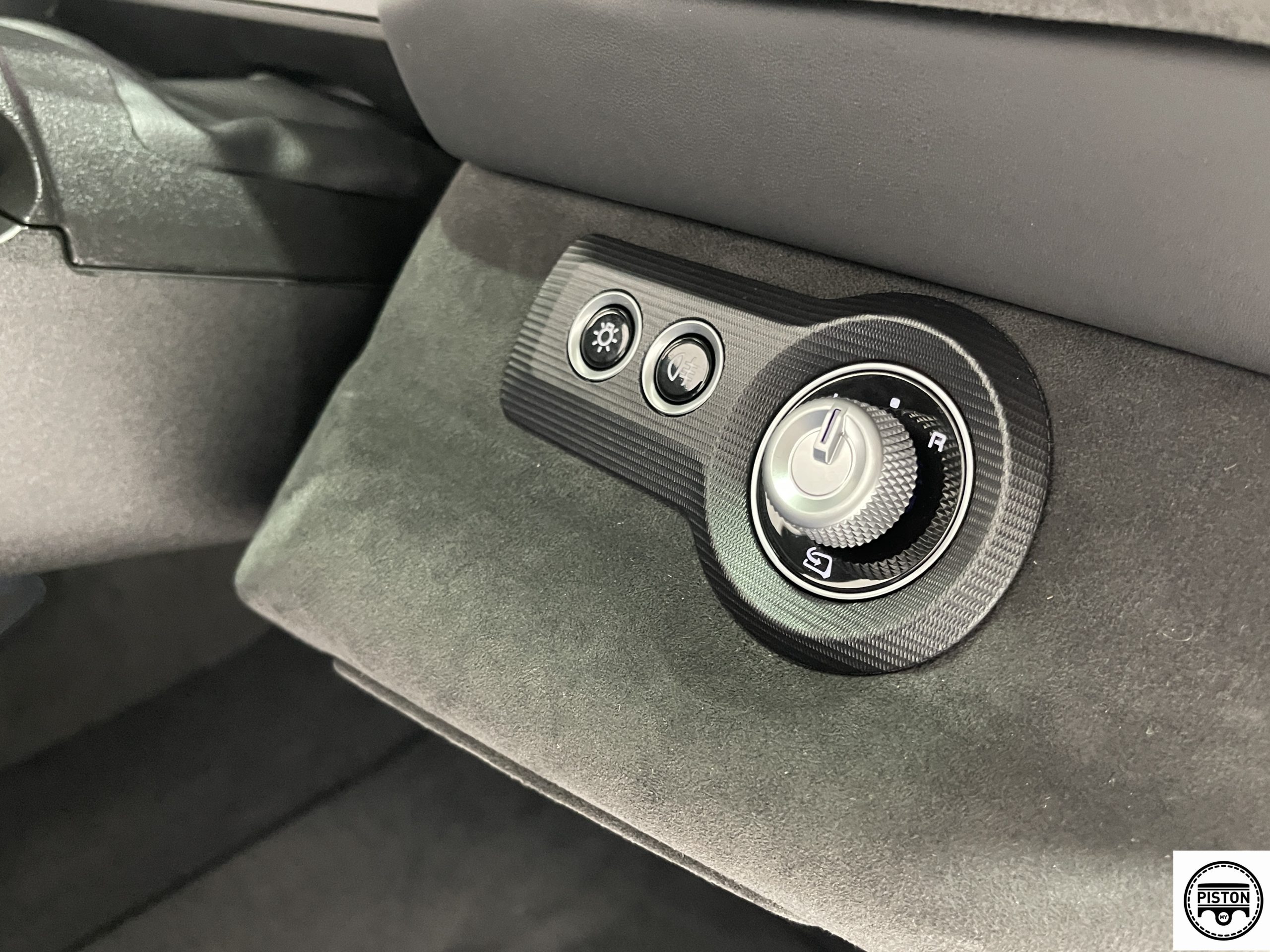
The central console features a redesigned toggle bar for easy access to vital driving functions, eliminating the need for a gear selector and providing practical storage options. Smartphone storage and wireless charging are readily available, ensuring devices stay connected and powered.
UMW Toyota Motor (UMWT) has officially unveiled the much-anticipated all-new Toyota Alphard and Vellfire models, setting a new benchmark for advanced features and providing a sophisticated and technologically advanced travel experience.
The Toyota Alphard and Vellfire have raised the bar in the competitive MPV segment by offering a plethora of cutting-edge features that distinguish them from the competition. From seamlessly integrated state-of-the-art technology to spacious and versatile interiors, these models redefine the driving experience. The introduction of turbocharging paired with a new gearbox has resulted in a significant boost in torque and power, promising an exhilarating and engaging performance for drivers.
Both models strike a perfect balance between efficiency and elegance. Advanced engineering, including the all-new 2.4L 16-valve DOHC with turbocharger and intercooler, ensures top-notch performance without compromising on luxury for the Alphard and makes 274hp and 430Nm of torque. The Toyota Vellfire, in particular, boasts enhanced performance output with the Front Performance Brace, improved handling, and impeccable stability. An existing 2.5-litre, four-cylinder 2AR-FE engine with 179hp and 235Nm of torque powers the Vellfire.
Stepping into the interior cabin of the Alphard and Vellfire is akin to experiencing a private jet. The combination of leather and woodgrain finishes, along with two fixed Panoramic Glass Roofs that flood the cabin with natural light, creates an atmosphere of opulence. The driver’s cockpit is thoughtfully designed for easy access to mechanical switches and controls. First-row passengers, both front and rear, can indulge in the comfort of Seat Heater and Ventilation features. The Alphard Executive Lounge takes luxury a step further, featuring an exclusive massage function in the rear first-row seats.
Equipped with advanced Toyota Safety Sense 3.0 technology, which includes enhanced Dynamic Radar Cruise Control, Lane Departure Alert, Road Sign Assist, and Adaptive High-beam System, safety remains a top priority without compromising the luxurious experience.
Both models are available in four exquisite colors: Platinum White Pearl, Precious Metal, Precious Leo-Blond (exclusive to the Alphard), and Black. To ensure peace of mind and freedom of mobility, the All-New Alphard and Vellfire come with a full 5-year warranty. UMWT serves as the exclusive distributor with official sales and service, offering trusted service and parts guarantees.
With over 74 Sales Service dealers nationwide, premium end-to-end servicing is assured, with dedicated body and paint centres also available. The Toyota Alphard 2.4T Executive Lounge is priced at RM 538,000 without insurance, while the Toyota Vellfire 2.5 is available at RM 438,000 without insurance.
Toyota recently revealed the Land Cruiser 250, but now, they have given it an electrifying twist with the unveiling of the Land Cruiser Se concept. This concept offers a tantalising peek into what the first electric model of this iconic off-roader could look like.
Concept vehicles typically leave us hungry for details, but Toyota has generously shared some intriguing information alongside a set of digital renderings. Notably, the Land Cruiser Se stretches 5,151mm in length, spans 1,988mm in width, and stands at 1,704mm in height. Its wheelbase extends to 3,050mm, offering nearly 203mm extra between the axles compared to the upcoming production model. For comparison sake, the Land Cruiser 250 measures 4,925mm long, 1,980mm wide, 1,870mm tall and with a wheelbase of 2,850mm.
Toyota reveals that the unibody Land Cruiser Se features three rows of seats, providing space for up to seven passengers. While powertrain specifics remain undisclosed, the concept promises a “high-torque driving experience.” It’s a safe bet that the theoretical powertrain incorporates dual electric motors, delivering all-wheel drive – a fitting choice for a Land Cruiser. The press release hints at its off-road prowess, stating “confidence in tackling tough terrain.”
Beyond these details, there’s little additional information available about the Toyota Land Cruiser Se concept. However, its distinctive boxy design is undeniably captivating. Interestingly, it bears little resemblance to its current production counterparts. Were it not for the “Toyota” emblem adorning its front and the slim taillight band above, one might not even associate it with the automaker.
When it comes to buying a luxury car, most Malaysians would pick the one that has the most brand recognition. Case in point – it is not uncommon for buyers to pick a Mercedes-Benz or a BMW over a Lexus even though the latter offers a better-appointed interior, greater quality and impressive refinement.
That Lexus does not have the perceived brand value over its continental counterparts is sad. Take the Lexus RX350 for example, its direct competitors would be the Mercedes-Benz GLE which is considerably more expensive and the BMW X5. Yet we arguably see more of the Germans on our roads than the RX.
The Lexus RX350 has always been an impressive SUV. One that offers space and comfort in a package that exudes understated luxury. RX models from 15 years ago are still running strong on our roads, and a lot of them are quite well kept. In fact, step inside a well maintained one and you will notice that the seats are still comfortable, the wood trimming is generous and most offer a refinement level that will match many modern cars.
The newer RX models just take it all a couple of notches higher and the latest RX, the one you see here is just in a class of its own.
Depending on how you define that class, this writer feels the new Lexus RX350 may just be a better buy than some of its rivals. Namely the aforementioned Mercedes-Benz GLE which costs upwards of RM515,000, and the BMW X5 with a half a million Ringgit price tag and a plug-in hybrid system that is yet to prove that it will stand the test of time.
And then there are others like the Volvo XC90 which is another plug-in hybrid but one that is in urgent need of an update. But with Volvo swearing off internal combustion engines the next generation XC90 could just be an electric vehicle, so that is the end of that chapter.
Also in the competitor bracket is the Audi Q5. It may be smaller and of a different segment altogether, but at RM480,000 it is very well in the same price segment as all the big names mentioned here. So, despite being smaller in size, the Audi Q5 is very much in contention.
So, what makes the Lexus RX350 a better buy then? The powertrain for one is one of the most reliable in the industry. There is none of that hybrid systems (though you can now buy a hybrid RX model) to deal with. The most basic mantra of a long-lasting car should be – the fewer parts there are in a powertrain, the less chances of anything breaking down.
Powering the RX350 is a 2.4-litre turbocharged, four-cylinder engine producing 275hp and 430Nm of torque. Those figures are enough to propel the two-ton SUV from zero to 100km/h in 7.6 seconds and onto a top speed of 200km/h. That may not sound very exciting and in all honesty, performance is not what the RX350 does best.
Power delivery is far from explosive, and you will likely want to stay out of any conversation about performance with Mercedes, BMW or Volvo owners. But that is not why you buy a Lexus RX; you buy a RX for the way the interior was crafted around the driver and passengers and the way the car isolates its occupants from the drama of the world outside.
While the interiors of its competitors feel like they were manufactured and assembled, the interior of the Lexus feels like it was specially crafted by the decades of experience of a Lexus Takumi.
Takumi is the word given to the master craftsmen who work on designing and developing a Lexus. Each Takumi is a master of a particular element of the car-making process and hones his craft over decades of continuous improvement. And of the 7,700 workers at the Miyata Lexus Plant in Kyushi, there are just 19 Takumis.
Each Takumi has at least a quarter of a century of experience in their field and are positioned as team leaders within Lexus. One interesting point about becoming a Takumi is that any aspiring Takumi must pass a very special challenge – he must fold a simple origami cat. But they must do it with a single hand – their non-dominant hand – and they must complete the challenge in under 90 seconds.
While all this may sound like marketing lingo, you do feel the words come alive around the interior of the Lexus RX. And while the RX350 may be down on power figures, it is up there when it comes to the way the interior oozes quality and craftsmanship, it is also up there when the car is on the move, and you barely hear anything of the world outside. Or feel anything as the suspension soaks up everything before it reaches the cabin.
The suede and leather trimming of the interior looks elegant but in an understated way. In fact, at first glance the interior of the new RX looks underwhelming and dark. Perhaps it is the black ash wood trimming that blends in with the black leather and suede. You will be hard done to notice the wood trim at all.
But look past that and the first thing that will capture you is the massive 14-inch infotainment screen. This is a much-welcomed addition to new Lexus models as it marks the death of the much-hated Remote Touch Interface (RTI).
The RTI was a horrible piece of tech. Imagine using a mouse pad when a car is moving and trying to select a radio station or input a destination to the navigation. It was plain horrid, but Lexus has perfected its interior by opting to ditch the RTI in favour of large touch screens.
But the touch screen system is not perfect either. Some of its menus cannot be accessed while the car is in motion, which is fine in the name of safety, but irritating because while it may be distracting for the driver the passenger can still work the system without distracting the driver. Perhaps Lexus has pushed the safety envelope too far, but other car makers like Mazda are also guilty of such an oversight.
On the move, the RX350 is perhaps at its finest. The interior remains serene thanks to the active noise cancellation system keeps the interior quiet and devoid of any intrusive sounds. The suspension offers a magic carpet like ride quality that only the Volvo XC90 and its air suspension can match.
The passengers will enjoy the electronically reclinable seats (front and rear) all around which also offer ventilation with cool air gently blowing to their backs.
All this while the driver engages the car knowing that the engine may not be very powerful, but because the new RX has a lighter and stiffer body than before, it will oblige every steering input almost immediately.
However, the one thing about the new Lexus RX350 that needs to be acknowledged is its design. It is obviously an evolution of the previous generation model, but the new spindle grille has now evolved into a spindle body where the grille merges into the front of the car. This is a definite head turner and makes the current design of the RX the best ever.
At the rear, the LED light strip runs across the width of the car and connect both taillights, very much like that of the smaller sibling of the RX – the NX. At the side of the car, the rear door looks like it molded by the rush of the wind, and it is particularly visible in the colour seen here which Lexus calls Sonic Copper, a unique colour that matches the design of the RX.
The Lexus RX350 is in a class of its own in a segment shared with the Europeans. Some may argue that if you are going to spend so much money, then you should at least be able to show it off. That is ultimately the Malaysian way. But if showing off is not your style, then the Lexus RX350 and its understated simplicity and elegance may be the ultimate car for you.
Ferrari has unveiled the 296 Challenge on the eve of the highly anticipated Finali Mondiali event, scheduled to take place at the Mugello Circuit from October 24th to 30th. This marks the ninth model in the prestigious history of the Ferrari Challenge Trofeo Pirelli.
Set to make its debut in the 2024 season of the Europe and North America series, the 296 Challenge introduces a host of groundbreaking features, setting it apart from its predecessor, the Ferrari 488 Challenge Evo. In many aspects, this new model represents a revolutionary design.
The 296 Challenge embodies an innovative philosophy that involves extensive modifications to the road car, tailoring it for optimal track performance. From performance to race-long consistency, this remarkable vehicle redefines the standards of Ferrari’s single-make racing series, closely mirroring the specifications of the 296 GT3, which made its debut this season.
Derived from the 296 GTB, the 296 Challenge showcases substantial enhancements in the power unit, aerodynamics, and vehicle dynamics, all designed to deliver peak performance on the track. Notably, it’s the first car in the championship’s history to feature a 120-degree V6 engine. This model is equipped with the 2992cc twin-turbo engine, excluding the hybrid component, a decision also reflected in the 296 GT3. The engine delivers a remarkable 690hp and a maximum torque of 740Nm, setting a new power record for the segment.
The 296 Challenge boasts an aero package that shatters downforce records within the single-make series. This ensures optimal efficiency under all conditions, producing over 870kg of downforce at 250km/h when the spoiler is set at its maximum angle of attack.
A standout feature in this model is the introduction of ABS EVO Track, a specialised adaptation of the innovative system initially introduced in the 296 GTB. Combined with new CCM-R PLUS brake discs, this enhances both braking performance and consistency. Additionally, the vehicle’s handling and performance benefit significantly from specially developed Pirelli 19″ tyres.
Ferrari’s unveiling of the 296 Challenge marks a significant milestone in the evolution of their Challenge Trofeo Pirelli series, setting the stage for an exhilarating 2024 season and beyond. The Mugello Circuit during the Finali Mondiali is the ideal platform to witness the debut of this groundbreaking racing machine.