

Piston.my

Latest News

Yamaha is a well known name in the motorcycle world, especially in motorsports. And while most people know the Japanese manufacturer for its motorcycles, it actually has a history of making high-performance engines for other manufacturers. In fact, as far back as 1959, Yamaha engineers carried out basic research in automobile engine development and produced a 1.6-litre DOHC unit of exceptional power output.

It collaborated closely with Toyota on the 2000 GT supercar as well as the development of Toyota’s engines such as the 2T-G, 3S-GTE, 1Z-GTE and many others. One of the notable features of its engines was multivalve technology which Yamaha engineers contended offered the highest potential. This is because of the increased effective intake valve surface area, the possibility of a higher compression ratio due to more compact combustion chambers, and lighter valve mass.

Yamaha

In the late 1980s, Yamaha was also involved in Formula 1, after having established a strong track record in Formula 2 and F3000. In 1988, it teamed up with Zakspeed Formula Racing, to form a Formula One racing team known as the West Zakspeed Yamaha Team. The team entered F1 events with a new car using a Yamaha-developed engine, the OX88. The engine was a 5-valve DOHC V8 that had a displacement of 3489 cc and produced over 600 bhp.

Yamaha in F1
One of the teams which Yamaha provided its engines to in the 1990s.

Aguri Suzuki, who had already made the step up to Formula 1, joined the team and faced high expectations as the second ever Japanese Formula One driver following Satoru Nakajima. The team had a somewhat difficult time at first but in 1990, a compact, lightweight engine to succeed the OX88 was announced: the OX99. It was a 5-valve V-12 with a 3498 cc displacement, and its output was also over 600 bhp.

The OX99 proved to be a more competitive engine and Yamaha provided it to the Brabham, Jordan, Arrows and Tyrrell teams until 1997 when the company stopped its involvement in F1. The best result during the 8 years of taking part in F1 was a second place by Damon Hill, driving for the Arrows, at the 1997 Hungarian GP.

#StayAtHome

1992 Yamaha OX99-11

F1 car for road use
Using its experience in F1, Yamaha then started to develop a F1 car for the road which, in concept form, was known as the OX99-11. It had a seating position like a racing car – including a central steering position – but was configured to comply with legal requirements for road use. This meant having wheels enclosed within a wheel well, proper lighting units, reasonable ground clearance, and of course, low noise and emissions. The result was a car that looked like a scaled-down Group C racer.

Just as Honda (coincidentally another top motorcycle maker) made a strong technological statement with its NS-X, so too did Yamaha using the OX99-11 to demonstrate the company’s advanced capabilities in the field of automotive engineering. Yamaha planned to make up to 100 units for sale, with a launch date set in 1994.

Yamaha in F1

At that time, T. Hasegawa, who was a senior Managing Director of Yamaha in 1992 and the man behind the company’s collaboration with Toyota for the 2000 GT  said: “This project is part of Yamaha’s ongoing efforts to use its experience and technology to make exciting and meaningful contributions to the great tradition of motor culture. It represents our attempt to build the ultimate sportscar.”

The idea to make the car had started sometime in 1982 and a prototype was built using a 4-cylinder 2-litre engine for the Japanese F2 series. In order to make it practical for road use, the mid-mounted engine was detuned by changing the cam profiles, putting in a new engine management programme, and using a slightly heavier flywheel. However, the 10-litre dry sump lubrication system was retained to avoid fuel surge problems and it also lowered centre of gravity. Intake air was drawn through a port on the roof.

1992 Yamaha OX99-11

But in spite of being detuned, the 3.5-litre engine could still deliver 400 bhp and spin up to 10,000 rpm. Yamaha claimed that it had superior driveability and plenty of usable power from 1,200 rpm, fully exploited by the 6-speed transmission.

Underneath the aluminium bodyshell, the structure was the same as a F1 car with the engine and transmission bolted to the rear wall of the monocoque made of carbonfibre reinforced plastic (CFRP) and sandwiched aluminium honeycomb material. A roll-cage of CFRP was also installed around and over the cabin for extra protection. The driver sat in a safety tub with a small ‘passenger space’ behind, offset to the left. Entry was by raising the glass canopy hinged on the right side.

1992 Yamaha OX99-11

In the cockpit
Jet pilots would have felt right at home in the OX99-11 with the way the canopy wrapping around the cockpit. The shift lever was placed on the right panel adjacent to the starter button. But back then, electrical systems were simpler and though there was the button to start the engine, a key had still to be inserted to connect the electrical circuit! Because of the compactness, the steering wheel had to be removed to get out of the car.

Although the cockpit was longer than a F1 car, its width was limited because a large portion of the 120 litres of fuel carried was stored in the box sections on either side of the driver. This further enhanced weight distribution as the main mass was kept in the middle area of the car.

F1 suspension
Much of the suspension design and materials came straight off the F1 shelf; at the front and rear were double wishbones with inboard spring/adjustable damper units operated by pushrods. The suspension arms were long and thin with an aerofoil cross-section. Ground clearance could be varied using the body height mechanism.

Yamaha in F1

The tyres for the OX99-11 were from Goodyear which worked with Yamaha on the project. Specially developed unidirectional Eagle 17-inch Z-rated tyres with an asymmetric pattern were installed, the front ones having a 245/40 and the back ones 315/35. The wheels were made of magnesium alloy and were 9 inches wide in front, 12 inches at the rear.

Super downforce
As to be expected, aerodynamic efficiency was top priority and the designers applied the ‘upside-down aerofoil’ idea exploited by Colin Chapman in his Lotus F1 cars. Thus, the OX99-11 was essentially profiled like an inverted wing, the entire shape generating downforce instead of lift.

The claimed overall coefficient of lift of -63 was believed to be the lowest ever attained for any road-legal car. While not as good as a full-fledged racing car, it was still impressive considering the height of the car which allowed air to ‘leak’ under it.

Yamaha in F1

Each OX99-11 was to be hand-built at Ypsilon Technology, a Yamaha subsidiary established in England in 1990 which was responsible for maintaining and supplying Yamaha racing engines. Unfortunately, Japan’s ‘economic bubble’ burst in the early 1990s and Yamaha did not think that anyone would be interested in a supercar (which might cost as much as US$800,000). In the end, only three prototypes were built before the project was terminated.

DIMENSIONS
Length: 4400 mm
Width: 2000 mm
Height: 1220 mm
Wheelbase: 2650 mm
Tracks: 1615 mm (F) | 1633 mm (R)
Min. ground clearance: 100 mm

PISTON.MY


Land Rover has always been a pioneer and leader in the 4×4 segment, offering vehicles tough enough for military use and for civilians to go almost anywhere on the planet (except over the oceans). In 1970, the company decided to develop a new model which today can be considered the first premium luxury SUV – the Range Rover.

The first Range Rover, a 2-door model, had all the robust qualities of the utilitarian models and was just as capable on any terrain with its 4×4 system. “The idea was to combine the comfort and on-road ability of a Rover saloon with the off-road ability of a Land Rover. Nobody was doing it at the time. It seemed worth a try and Land Rover needed a new product,” said Spen King, who is regarded as the Father of the Range Rover. He was the company’s engineering chief in 1970 and his uncles were the Wilks brothers – Spencer and Maurice – who jointly founded Land Rover in 1948.

1970 Range Rover

Range Rover Generations

2020 Range Rover

In the years that followed, it would become a technology leader among what came to be called SUVs or Sport Utility Vehicles. It introduced ABS, Electronic Traction Control and Automatic Electronic Air Suspension to the SUV world and, with the 2012 Range Rover, pioneered aluminium body architecture in large SUVs. In 2015, the Range Rover was the first vehicle to be fitted with Land Rover’s innovative All-Terrain Progress Control which optimises performance on all kinds of surfaces.

Previously a flagship model of the Land Rover range, the Range Rover evolved into a brand of its own and has a range which currently comprises the Range Rover Sport, Range Rover Evoque and Range Rover Velar, as well as the Range Rover.

2020 Range Rover line-up
The Range Rover line-up in the model’s 50th year.

“Over five decades, the Range Rover has evolved into the most desirable luxury SUV in the world. Its peerless combination of sophisticated design, refinement and capability has struck an emotional chord with customers all over the globe,” said Prof. Gerry McGovern, Chief Creative Officer at Land Rover.

To celebrate the Range Rover’s Golden Jubilee, Land Rover created a giant piece of sub-zero art at its cold weather test facility in Arjeplog, close to the Arctic circle in Sweden. The 260-metre wide artwork filled the centre of the steering pad at the test track where all future Land Rover models are put through their paces during development.

Range Rover 50

Land Rover’s Arjeplog facility uses a frozen lake to provide the perfect conditions for engineers to test and assess the latest models. Arjeplog is also home to the Jaguar Land Rover Ice Academy, where customers experience the thrill of dynamic ice driving, under careful instruction from world-class driving experts.

Renowned snow artist Simon Beck created the 53,092 sq. metre anniversary logo by walking more than 45,000 steps across the powdery surface inside the steering pad, accompanied by a quartet of the latest Range Rover SV models.

Range Rover 50th anniversary
Renowned snow artist Simon Beck walked more than 45,000 steps over the snow to create the anniversary logo.

Since 2014 the expert engineers, craftsmen and women at Special Vehicle Operations have been responsible for designing and producing the fastest, most luxurious and most exclusive Range Rover models in model’s 50-year history.

The biggest selling SV model to date and the fastest and most dynamic Range Rover ever produced is the Range Rover Sport SVR. It has a 575 ps engine which can rocket it from standstill to 100 km/h in 4.5 seconds and top out at 283 km/h.

Range Rover Sport SVR

PISTON.MY

Although the Movement Control Order (MCO) has provisions to allow the Road Transport Department (JPJ) to continue operating, the department has today announced that it will not be open for operations from March 20. The closure covers all JPJ offices nationwide and the date when operations will resume has not been announced at this time. The MCO, which came into effect yesterday, will last until March 31, 2020.

JPJ

It is understood that the decision to close was prompted by the large number of people being at the JPJ counters to obtain the various services available. The gathering of people, especially large numbers, is what the MCO aims to prevent as a measure to slow down or stop the spread of the COVID-19 coronavirus. Close proximity among people can lead to transmission of the disease, it has been found, apart from picking up the virus from surfaces such as tabletops, door handles, etc.

PUSPAKOM
PUSPAKOM’s mobile inspection services will not be available until further notice.

PUSPAKOM, the vehicle inspection company, which is also allowed to operate during the period of the MCO, has also announced today that it will close all its branches and offices nationwide. Mobile services will also be suspended until further notice.

PUSPAKOM says that  vehicle owners who have made appointments for inspections will receive refunds. For information or assistance, call 1-800-88-6927 or visit www.puspakom.com.my. Announcements will also be made on their pages at Facebook and Instagram.

#StayAtHome

Service centres closed but assistance still available from some car companies

PISTON.MY


The COVID-19 pandemic may have disrupted the auto industry in many ways but some activities have been planned months in advance and cannot be cancelled unless forced to. In the case of the all-new Hyundai Elantra, the carmaker used The Lot Studios in West Hollywood, California for its global debut online and broadcast worldwide. Given the current situation in America, this approach was probably the best.

This is the seventh generation of the Elantra and the 4-door sedan as the pictures show, the new  Elantra has a sportier coupe look. It is longer, lower, and wider compared to the sixth-generation model with the front cowl point moved back around 50 mm. These minor changes dramatically changed the shape of the car but had limited impact on cabin space. In fact, most key interior dimensions increased.

2021 Hyundai Elantra

Parametric Dynamics Design
‘Parametric Dynamics’ is the phrase Hyundai designers use to describe the dramatic look of the new Elantra. Like the first generation, the seventh-generation Elantra/Avante has a bold character,” said Luc Donckerwolke, Executive Vice-President and Chief Design Officer, Hyundai Motor Group. “The fresh aesthetic was completed through unconventional lines and a face that broke a taboo in automotive design. The new Elantra is highlighted by its stance that looks like geometric crystals and divided body surfaces to get a strong emotional response from the customers.”

2021 Hyundai Elantra

The new Elantra sit on Hyundai’s third-generation vehicle platform and besides weighing less, this new platform also allowed the engineers to lower car’s centre of gravity for more agile handling. The multi-load path structure also improves occupant safety during a collision.

‘Immersive cocoon’ cabin
The cabin has been packaged like an ‘immersive cocoon’ which envelopes the driver like an airplane cockpit. Low, wide structures go from the door all the way to the centre console. The low, wide structure also provides ample interior room. A large interface consisting of two connected expansive 10.25-inch touchscreen displays enhances the futuristic feeling.

2021 Hyundai Elantra

2021 Hyundai Elantra

A coupe-like profile typically compromises headroom but not so with this new model. With 1031 mm of front headroom and 947 mm of rear headroom, the latest Elantra actually has more front headroom and no less rear headroom than its predecessor. The longer wheelbase also provides best-in-class rear legroom and the wider track width means improved shoulder room in the front and rear.

2021 Hyundai Elantra

2021 Hyundai Elantra

Besides having Apple CarPlay and Android Auto to put smartphone apps on the dashboard, dual Bluetooth support is also available, so two devices can be paired at the same time – one for phone calls and one for streaming audio.

Digital Key and Voice Recognition System
Depending on the market, customers can also include an optional smartphone-based Hyundai Digital Key. This uses a dedicated mobile app, Near Field Communication (NFC) and Bluetooth Low Energy (BLE) technology to allow the car to be unlocked, started and driven without a physical key via applicable Android smartphones.

2021 Hyundai Elantra

The enhanced natural language voice recognition system has more and better feature control. This system includes Speech-to-Meaning and Deep Meaning Understanding technologies, delivering speed and accuracy in voice recognition and responses, and an ability to understand context, such as the user’s location to support natural interactions.

Hybrid powertrain for the first time
A hybrid powertrain is now available in the Elantra line-up. This powertrain uses a 1.6-litre GDI Atkinson-cycle 4-cylinder petrol engine that works with a 32-kW electric motor. Total system output is 139 bhp with up to 264 Nm of torque. Powered by a 1.32 kWh lithium-ion polymer battery pack, the high-efficiency electric motor has an electric-only driving mode that delivers instantaneous torque at low speeds, with available power-assist at higher vehicle speeds.

The powertrain is mated to Hyundai’s quick-shifting, 6-speed, dual-clutch transmission, said to be a differentiating point between the Elantra Hybrid from its key competitors. Hyundai claims that the estimated fuel economy will be over 21 kms/litre.

2021 Hyundai Elantra

As for the petrol version, this uses a 2-litre MPI unit that produces147 bhp/179 Nm. Hyundai says that a best-in-class consumption figure will be achieved, due in part to an Intelligent Variable Transmission (IVT). This transmission, developed in-house, has superior efficiency and replicates gearshifts like those in the automatic transmissions that customers are used to.

The transmission performs continuous shifts by the modulating pressure of the transmission’s pulley, depending on driving conditions and driver inputs. It uses a wide-ratio pulley system, which provides a broader ratio of operation compared with its competitors. This allows for improved fuel economy at higher gear ratios and improved performance at lower ratios.

Hyundai’s new Shift Control Strategy used by the IVT improves linearity between driver inputs, vehicle behaviour and acceleration. Shift response closely replicates automatic transmission step shifts.

2021 Hyundai Elantra

SmartSense Safety
Hyundai’s safety suite is known as ‘SmartSense’ and comprises a new array of standard advanced safety technologies such as Forward Collision-Avoidance Assist with Pedestrian Detection; Lane Keeping Assist; Lane Following Assist; High Beam Assist; and Drive Attention Warning.
A more advanced package (at extra cost) Blind-Spot Collision Avoidance Assist; Rear Cross-Traffic Collision-Avoidance Assist; Smart Cruise Control; Highway Driving Assist; Safe Exit Warning; and Reverse Parking Collision Avoidance Assist.

2021 Hyundai Elantra

2021 Hyundai Elantra

Production of the new Elantra begins in Korea and America in the second half of the year with shipments starting in the fourth quarter. It’s not known when the new model will be available in Malaysia though it would almost certainly be in 2021 if it continues to be assembled locally at the plant in Kedah.

#StayAtHome

The Story of N – Hyundai N (w/VIDEO)

PISTON.MY

Two years ago, Porsche Design debuted the 1919 Chronotimer Flyback Brown & Leather, a genuine chronograph that set new standards in the world of luxury wristwatches. Equipped with a complex flyback function with chronometer-certified precision, the Porsche Design movement Werk 01.200 represents state of the art.

In addition to its innovative inner workings, the timepiece, like its legendary role model, the Porsche 911, unites uncompromising functionality, thoroughly designed in all details, with an expressive sporty appearance.

Now, Porsche Design launches this chronograph classic in a new edition with a bold colour combination. The dial and strap, made from Porsche interior leather, radiate a subtle blue hue.

Porsche 911

Fascinating shape
The Porsche 911 is an icon that has sparked enthusiasm for decades. Since its launch in 1963, the sportscar has been a synonym for the perfect combination of design and performance. Its secret of success is surprisingly simple: Professor Ferdinand Alexander Porsche consistently focused on form and function so that the legendary minimalist design was a natural consequence. “Design must be honest,” emphasized the founder of the Porsche Design company.

This maxim also applies to Porsche Design’s timepieces that translate the DNA code of the sports car into the design of a wristwatch. The 1919 Chronotimer Flyback Blue & Leather continues the tradition of the company’s first timepiece, the Chronograph I, which Prof. F. A. Porsche introduced in 1972. The large-scale, high-contrast dial is all about legibility, so that the attention is automatically directed to the essentials, namely the time display and the measurement functions.

Clean Arabic numerals and bold markers combined with intense use of Super-Luminova increase the readability under difficult lighting conditions and at night. Sevenfold and hard coated on both sides, the sapphire crystal prevents all light reflections, thus guaranteeing optimum readability at all times.

Porsche Design

Lightweight and powerful
All timepieces of the 1919 Collection – including the 1919 Chronotimer Flyback collection – are entirely made of titanium. Despite its low weight, this high-tech material derived from the world of motorsport is extremely resilient and resistant. With the same volume, it is 46% lighter than stainless steel, but significantly stronger and also non-magnetic, anti-allergic as well as saltwater and heat resistant.

The signature trademark of the 1919 Collection are the characteristic openings on the lugs and their form-fitting transition into the bracelet. These features not only eliminate the design-related disadvantage of classic horns – the connection via a spring bar – but also lend a unique lightness to the collection’s puristic aesthetics. The owner can literally feel the connection to the sports car on his wrist: the strap is made of original Porsche interior calf leather.

Porsche Design

Maximum performance, like the 911
The 1919 Chronotimer Flyback Blue & Leather is powered by Werk 01.200. This chronograph calibre offers a flyback mechanism that allows the measurement of successive intervals, eg lap times on the racetrack. It uses a single process for starting, stopping and resetting. Paced at 4 hertz, the automatic movement represents the culmination of engineering and watchmaking combined with its vehicle manufacturing expertise. The bridges are load/stress optimised. The special architecture allows the unobstructed view of the fascinating mechanism of the flyback function through the sapphire crystal caseback and is a further proof of the implementation of the lightweight principle.

The 1919 Chronotimer Flyback Blue & Leather goes on sale from this month, priced in Europe from 5,950 euros (about RM28,400).

Porsche unveils the Belgian Legend Edition

PISTON.MY

BHPetrol RON95 Euro4M

With the Movement Control Order (MCO) in effect for 2 weeks, most industries are required to suspend their operations and activities unless they are designated as essential services or industries. Where the auto industry is concerned, this means not just closing the head office and branches but also showrooms, service centres and assembly plants. No new vehicles will be produced and deliveries will not be carried out. This situation will last till March 31, 2020.

Nevertheless, many car companies are maintaining support for their customers who may have problems with their vehicles. At this time, the MCO does not stop travel on public roads so the vehicles may still be used for essential journeys, ie to replenish supplies or buy medicine. You can also go to restaurants that are allowed to operate but you must take the food home, not dine on their premises which would be an offence.

PLUS
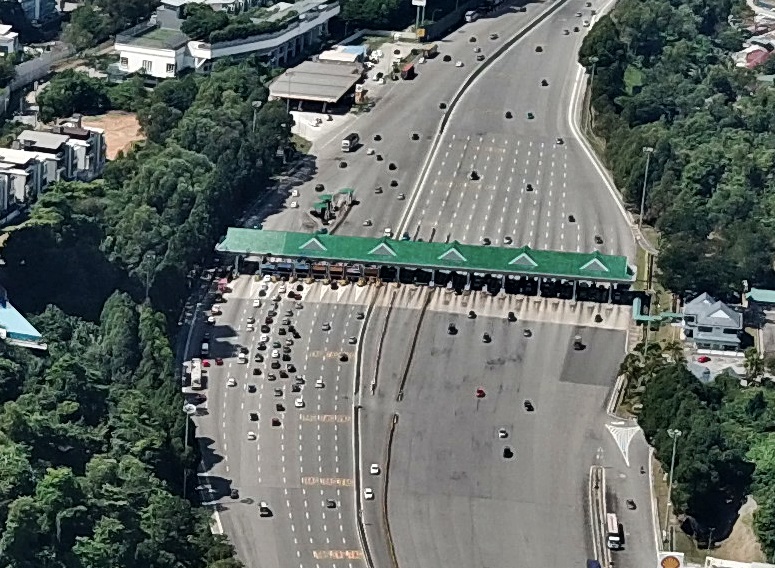
If you are travelling on PLUS expressways and have a breakdown, there are telephones every 2 kms to call for help.

Should you have problems with your vehicle at such times, it will still be possible to get assistance. Towing services are allowed to operate and virtually all car companies and insurance companies offer such assistance if you contact their Call Centre, most of which operate 24 hours every day. The following companies have informed us of the numbers that their customers can call if help is needed:

Daihatsu: 1-300-88-3667

Ford: 1-300-38-3181

Perodua: 1-800-88-5555

Proton: 1-800-888-398

Lexus: 1-800-88-LEXUS (53987)

Mazda: 1-800-22-8080 or 1-800-18-8011

Mercedes-Benz: 1-800-88-1133

PLUS: 1-800-88-0000 (emergency telephones also available every 2 kms on PLUS expressways)

Renault: 1-800-18-8663

Toyota: 1-800-99 TOYOTA (869682)

Volkswagen: 1-800-18-8947 (Customer Care) | 1-800-88-2389 (Roadside Assistance

Vehicle repair

The latest information provided by the National Security Council concerning the MCO is that, besides towing services, mechanics are permitted to operate during the 2-week period and workshops may also carry out vehicle repairs (but probably not normal servicing).

PISTON.MY

Archive

Follow us on Facebook

Follow us on YouTube