
Piston.my

Latest News

Infiniti, Nissan’s luxury brand, presented its all-new QX60 crossover SUV via a short, branded-film entitled “INFINITI Presents: Conquer Life in Style with All-New QX60“, starring Kate Hudson, Golden Globe-winner and Academy Award-nominated actress, producer, entrepreneur, and mother. The association with the filmstar was said to be a ‘natural fit to bring to life the qualities of the target customer for QX60’, according to Infiniti.

The QX60, originally badged as ‘JX’, has been around for 9 years and has been made in the USA, available only in LHD form. However, the new generation will also be produced in China, only for that market.

2021 Infiniti QX60

Previewed by Monograph concept last year
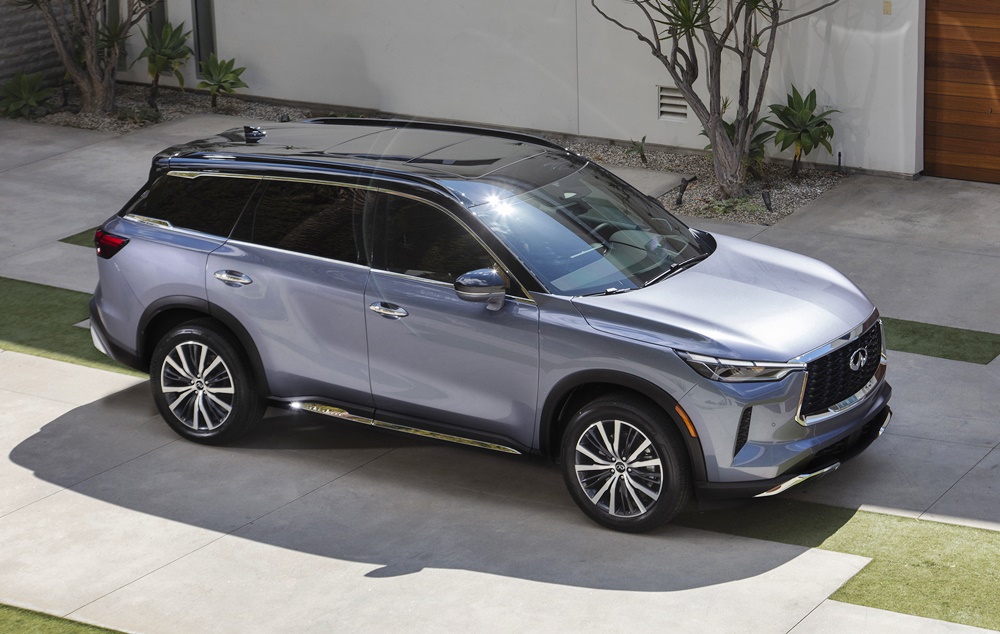
The revised styling follows that seen in the Monograph concept shown last year with a more muscular appearance than before. Fine details have embedded and unique, yet subtle, Japanese essence: kimono folds in the headlamps, with the intricate folds of traditional Japanese origami. Chrome frames the signature grille and reaches up toward the corners into the signature piano key LED headlights.

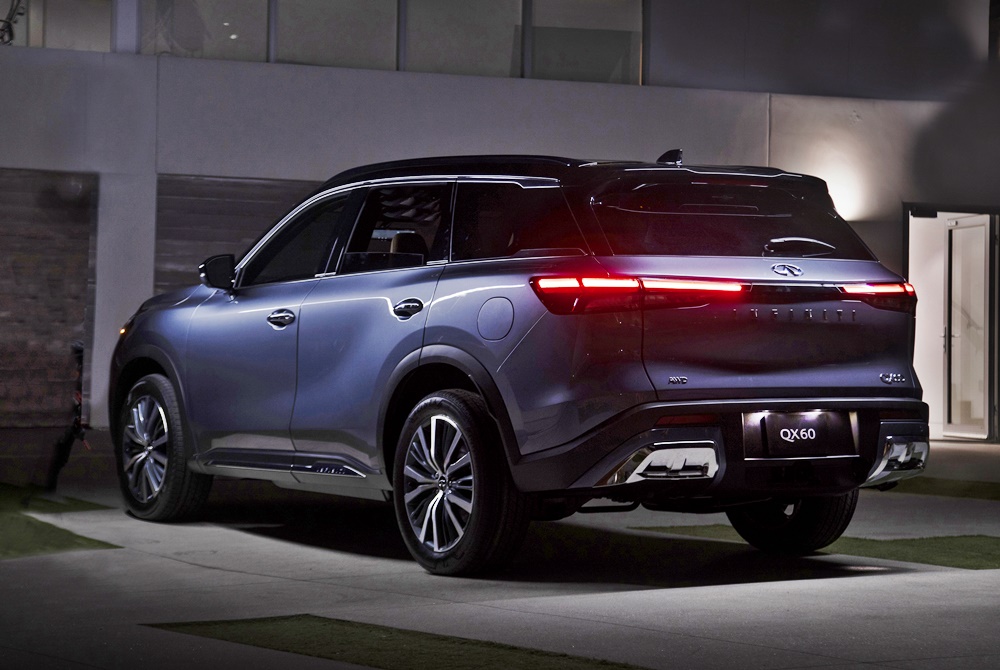
An understated character line runs the length of the QX60, bisecting its two-tone roof from its lower body. The black roof — a first for the brand — visually reaches toward the rear wheels and is emphasized with chrome accents that frame the expansive greenhouse.
2021 Infiniti QX60

At the rear, digital piano key lighting — also previewed on the Monograph design study — creates an   unmistakable look at night to identify the QX60. The rear taillight signature echoes the distinctive front LED headlamp display, combining powerful athleticism with harmony and simplicity, a new hallmark in Infiniti’s design language.
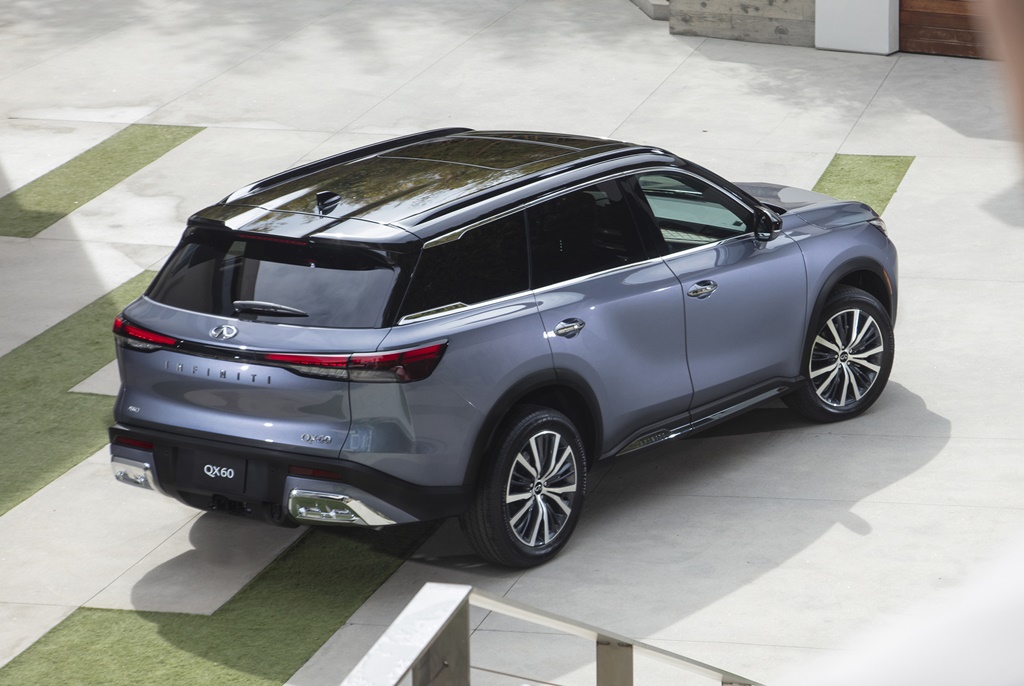
2021 Infiniti QX60

One engine choice only
The powertrain has a 3.5-litre V6 engine with new 9-speed automatic transmission. The Intelligent All-Wheel Drive system is significantly enhanced with an all-new direct coupling which almost instantly engages when it detects wheelslip. In some cases, it can proactively engage for better grip in slippery conditions and up to 50% of the available power can be sent to the rear wheels for increased grip. Active Brake Limited Slip functionality can brake individual wheels to redirect torque to the wheels with grip almost instantly.
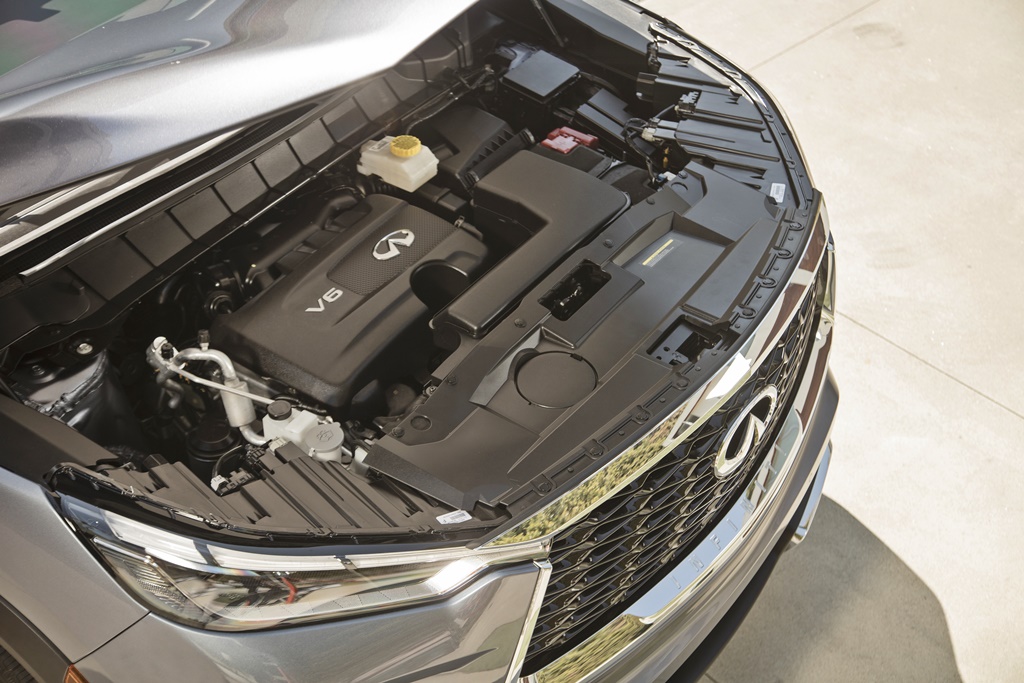
2021 Infiniti QX60

Active safety features include Rear Automatic Braking, Predictive Forward Collision Warning, and Forward Emergency Braking with Pedestrian Detection as well as Adaptive Front Lighting and Auto-Levelling Headlights.

An enhanced ProPILOT Assist system also debuts in the QX60 and draws information from the onboard navigation system to assist the driver. The ProPILOT Assist with Navi Link system can proactively slow the car for sharp bends or off-ramps and can automatically adjust the vehicle’s  speed when engaged. In stop-and-go traffic, the system can slow the QX60 to a stop and restart travel after up to 30 seconds stationary.
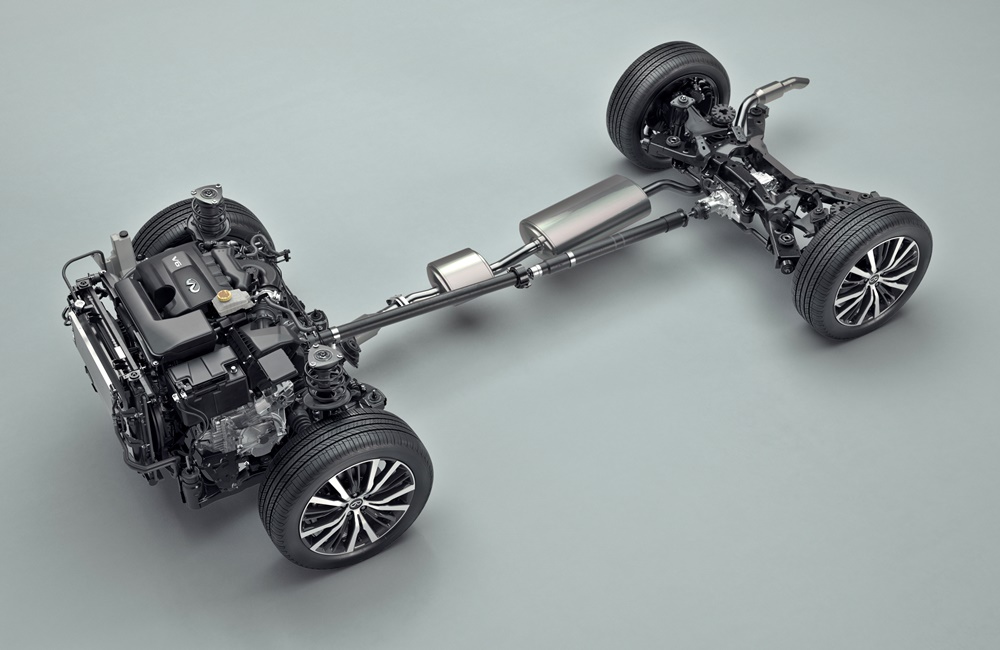
2021 Infiniti QX60

The new QX60 shares the same platform as the latest Nissan Pathfinder with no change in wheelbase and a slightly shorter body. Its 3-row cabin has helped make it a popular choice in markets like North America, where it has one of the brand’s bestsellers.
2021 Infiniti QX60

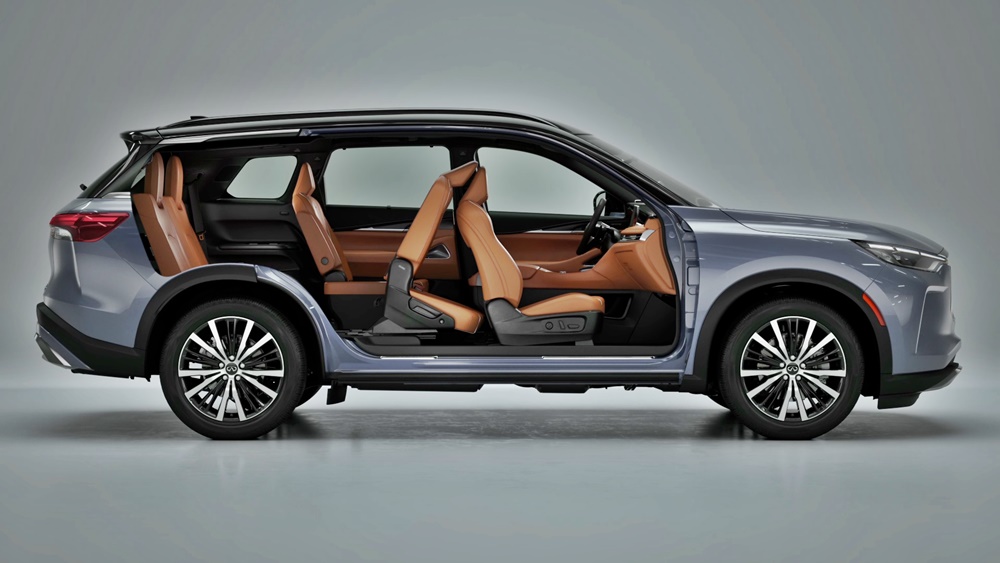
Cabin with theatre-style seating 
The spacious cabin has premium soft-touch materials throughout with ambient interior lighting bathes the cabin with soft but expressive illumination on entry and exit. The standard panoramic moonroof opens up the airy cabin further to let in natural light.

The front seats are Nissan’s well known, ergonomically designed ‘Zero Gravity’ seats  with a structure that attempts to replicate the experience felt by astronauts in zero-gravity conditions.  Developed in a joint study with Yamazaki Laboratory at Keio University, the seats more closely follow the natural curvatures of the human spine and reduce pressure on the hips, so driver and passengers arrive at their destinations feeling refreshed.
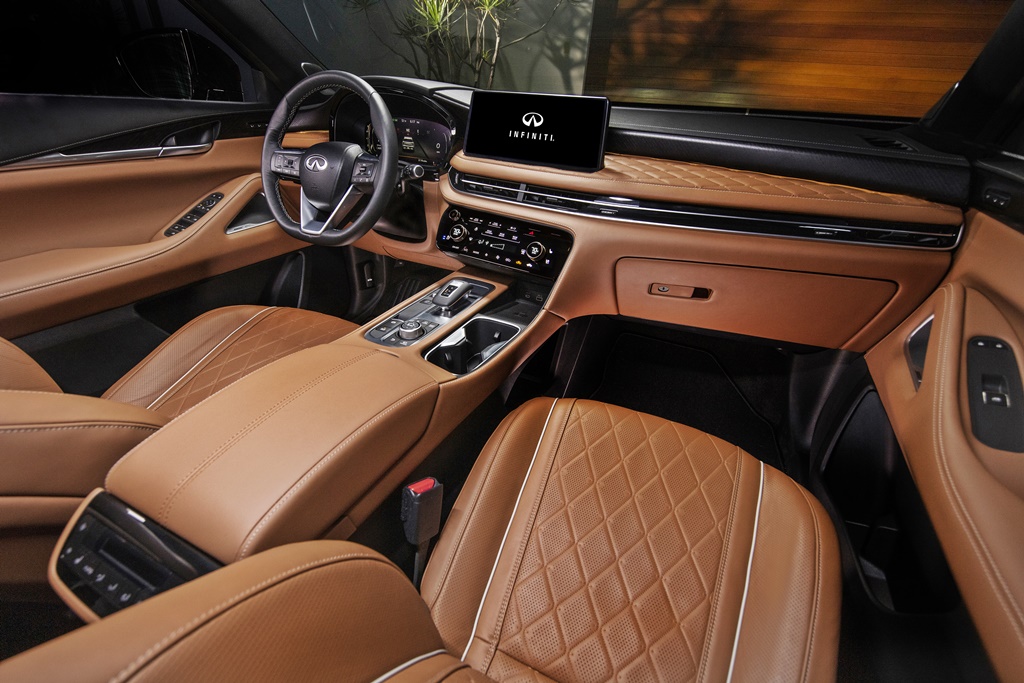
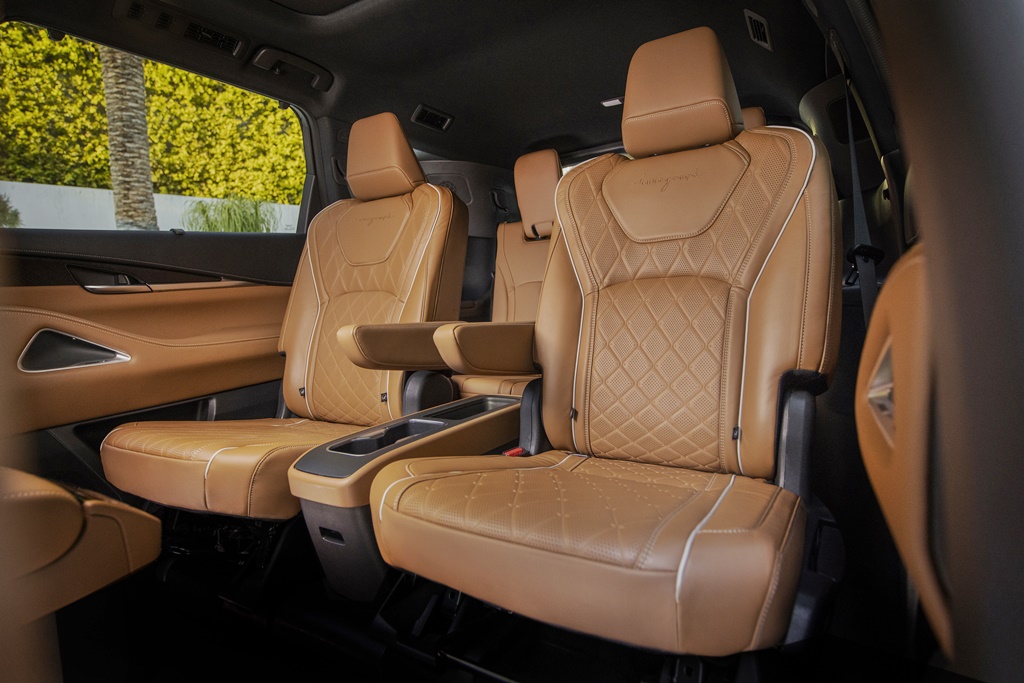
2021 Infiniti QX60

2021 Infiniti QX60

2021 Infiniti QX60

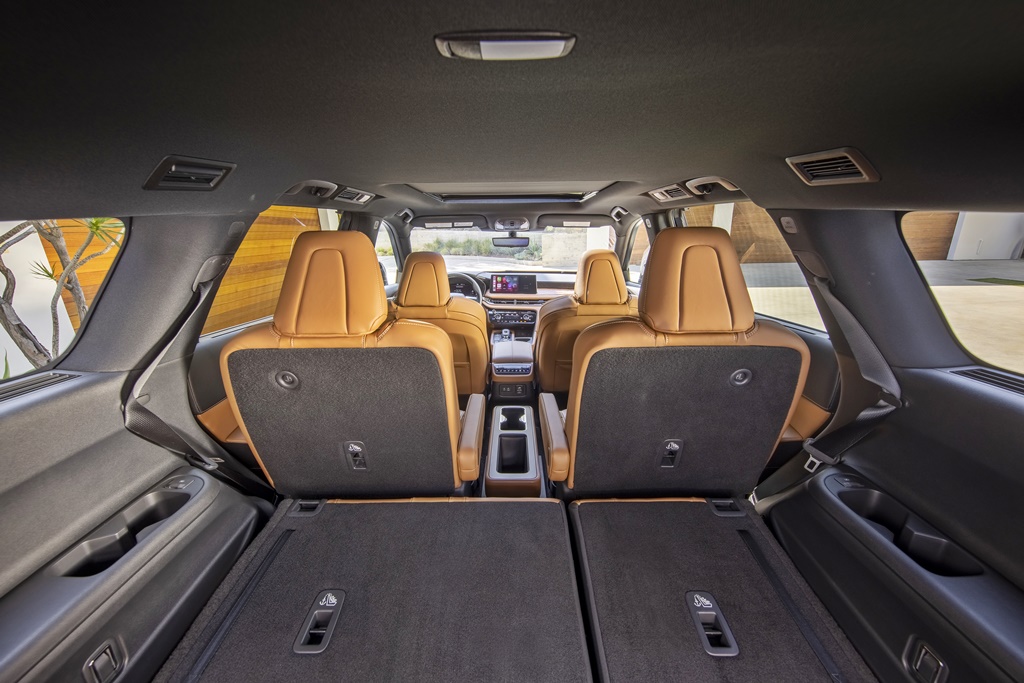
For additional comfort, seat massagers are available along with the front seats having their own climate control. Customers can choose Captain’s Chairs for the second row with theatre-style seating from front to rear. In such a seating layout, each row behind the driver and front passenger rises in without significantly impacting headroom.
2021 Infiniti QX60

Latest Infiniti InTouch system
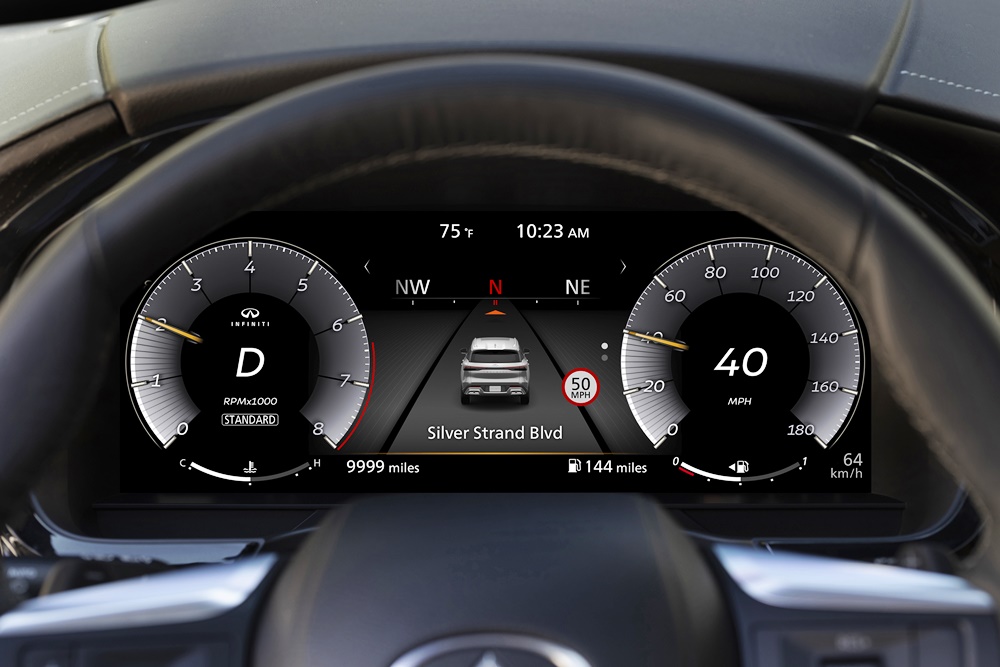
A new Infiniti InTouch 12.3-inch Interactive Display touchscreen for infotainment is standard and comes with wireless Apple CarPlay and USB-based Android Auto compatibility software. A 12.3-inch Dynamic Meter Display in front of the driver presents information such as speed, navigation information and more, and can be paired with a sharp 10.8-inch Head-Up Display (HUD). The sharp HUD is significantly enhanced from earlier displays with a dual free-form mirror that provides a crisp readout from more viewing angles than before.

2021 Infiniti QX60

Infiniti QX60 Monograph concept

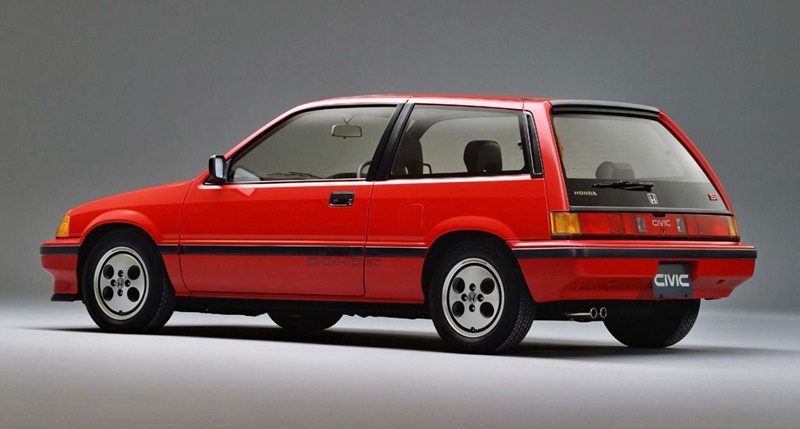
Almost 50 years ago, when the Honda Civic was born, it was only a hatchback, the sedan coming from the beginning of the 1980s. In Asian markets, the hatchback had a subordinate position to the more popular sedan and due to limited numbers being sold, it disappeared from Malaysia (officially) after a few generations.

In markets like North America, the hatchback was more appreciated and has been accounting for about 20% of Civic sales in the USA. Like the sedan, it evolved through the generations, gaining in size and performance. The 11th generation hatchback variant has now been revealed, joining the new Civic Sedan which was launched some months back, also in the USA.

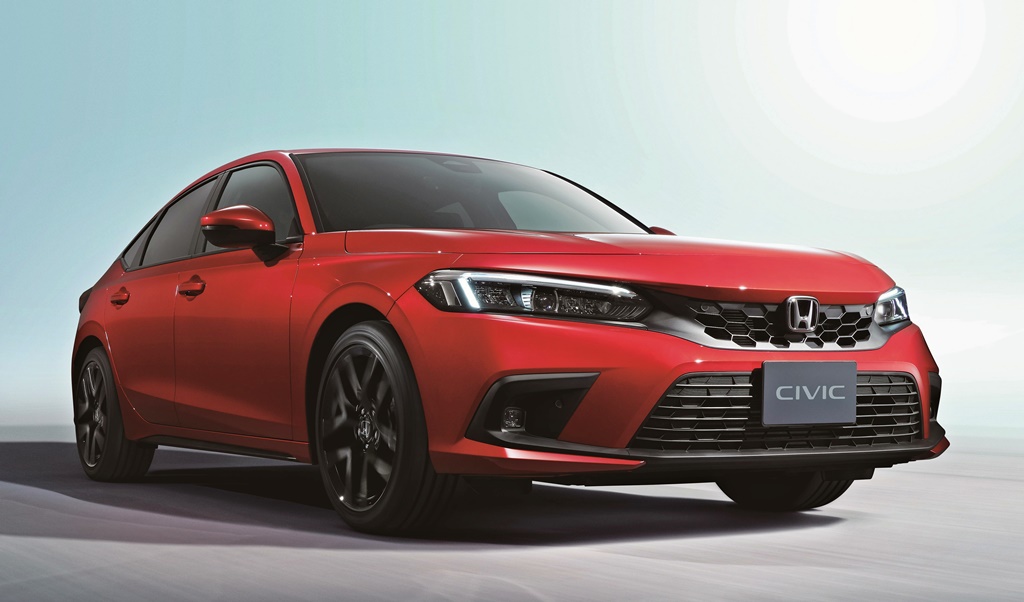
2021 Honda Civic Hatchback Gen 11

2021 Honda Civic Hatchback Gen 11
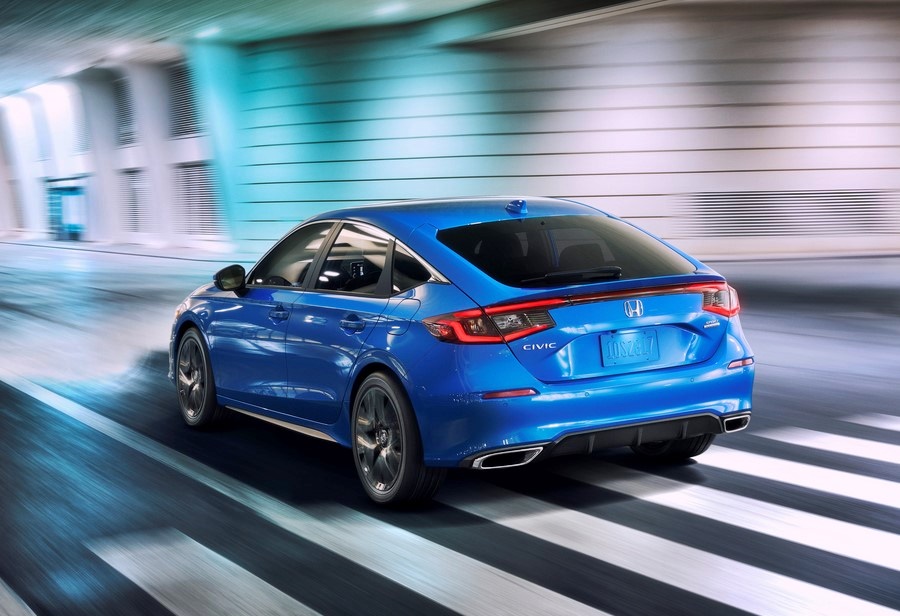
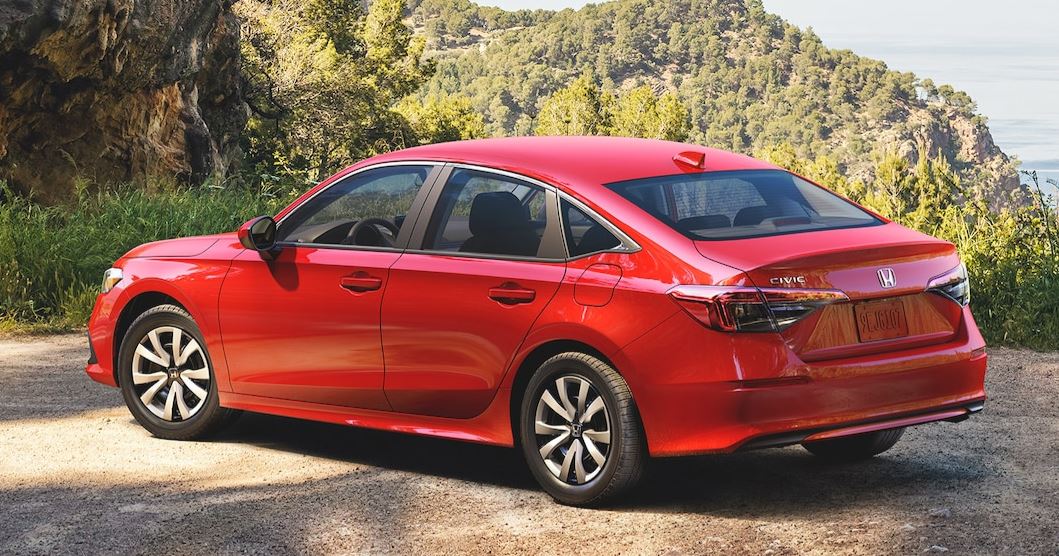
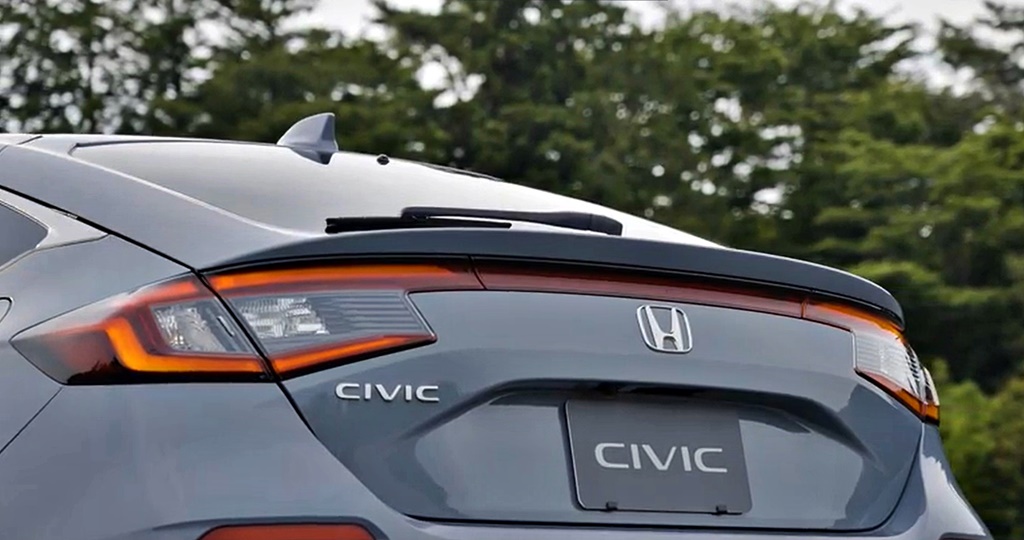
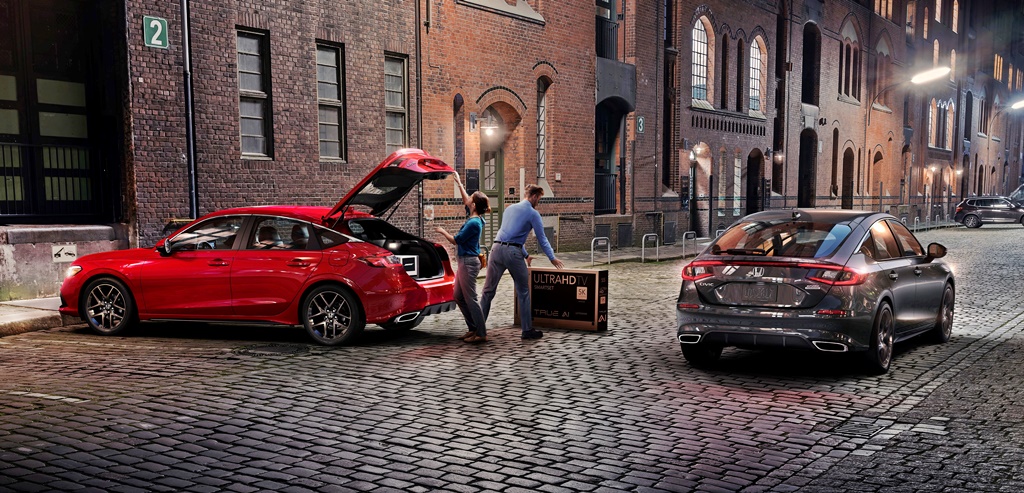
Comparison between rear ends of the new Civic Hatchback (above) and the Sedan (below).

Same styling elements as latest Sedan
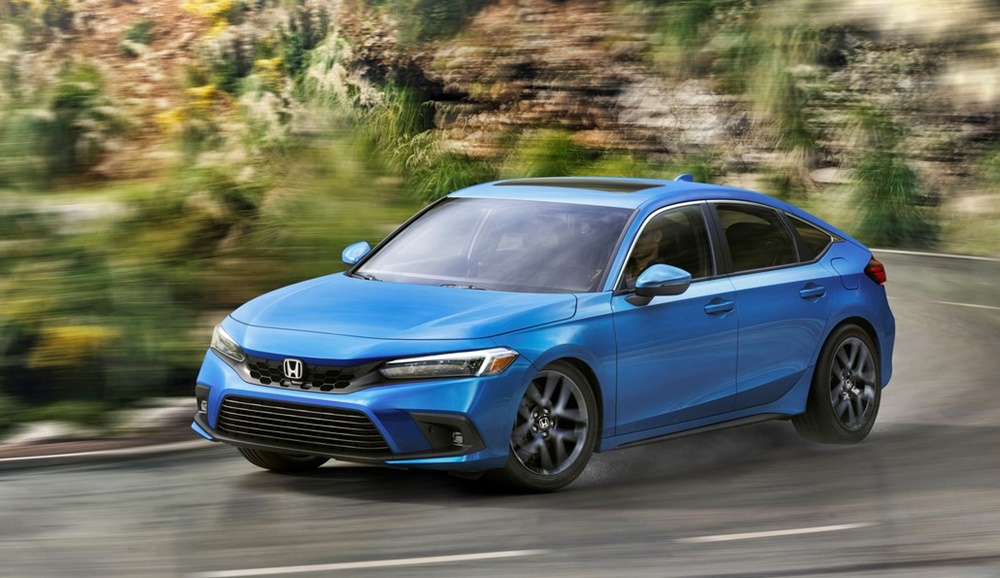
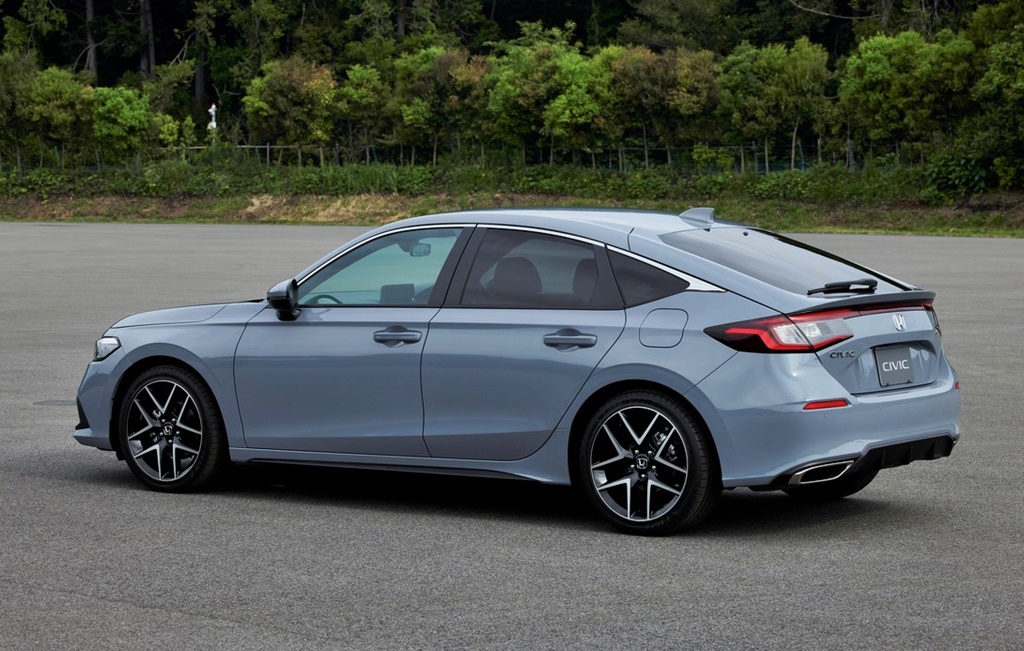
The overall styling follows that of the latest generation with a more dramatic roofline that gives a sleek coupe-like profile. While the front end has a similar form but a different grille (mesh with a slight concave shape) from the sedan, it is at the rear where the big differences are. There are larger side windows and a new small corner window in the C-pillar to enhance rearward visibility,

The roof line flows downwards to a lightweight composite hatch and the overall height of the car has been reduced by 50 mm by moving the hinge mechanism outwards. The design of the rear lights is different from the sedan’s and the third brake light lens spans nearly the entire width of its hatch, visually emphasizing the Hatchback’s wider rear track.

2021 Honda Civic Hatchback Gen 11

Longer wheelbase but shorter body
Compared to the 10th-generation Civic Hatchback, the windscreen pillars have been moved back by around 50 mm while the wheelbase is 35 mm longer and the rear track is 13 mm wider. However, the rear overhang is less which reduces the overall length by 124 mm but Honda says rear legroom is better in this new variant.

With the large opening at the back, additional attention was given to body rigidity. The Civic Hatchback’s structure has 19% better torsional rigidity versus the previous generation. The stiffer structure, with an aluminium front subframe, benefits ride, handling and refinement, with reductions in noise, vibration and harshness augmented with the extensive use of structural adhesives, spray-in foam in the pillars, and additional sound deadening in the firewall and under the floor.

The suspension is shared with the Sedan but Honda mentions chassis updates such as new low-drag front brake calipers, and low-friction front and rear wheel bearings to reduce rolling resistance.
2021 Honda Civic Hatchback Gen 11

Naturally-aspirated, turbo and hybrid powertrains
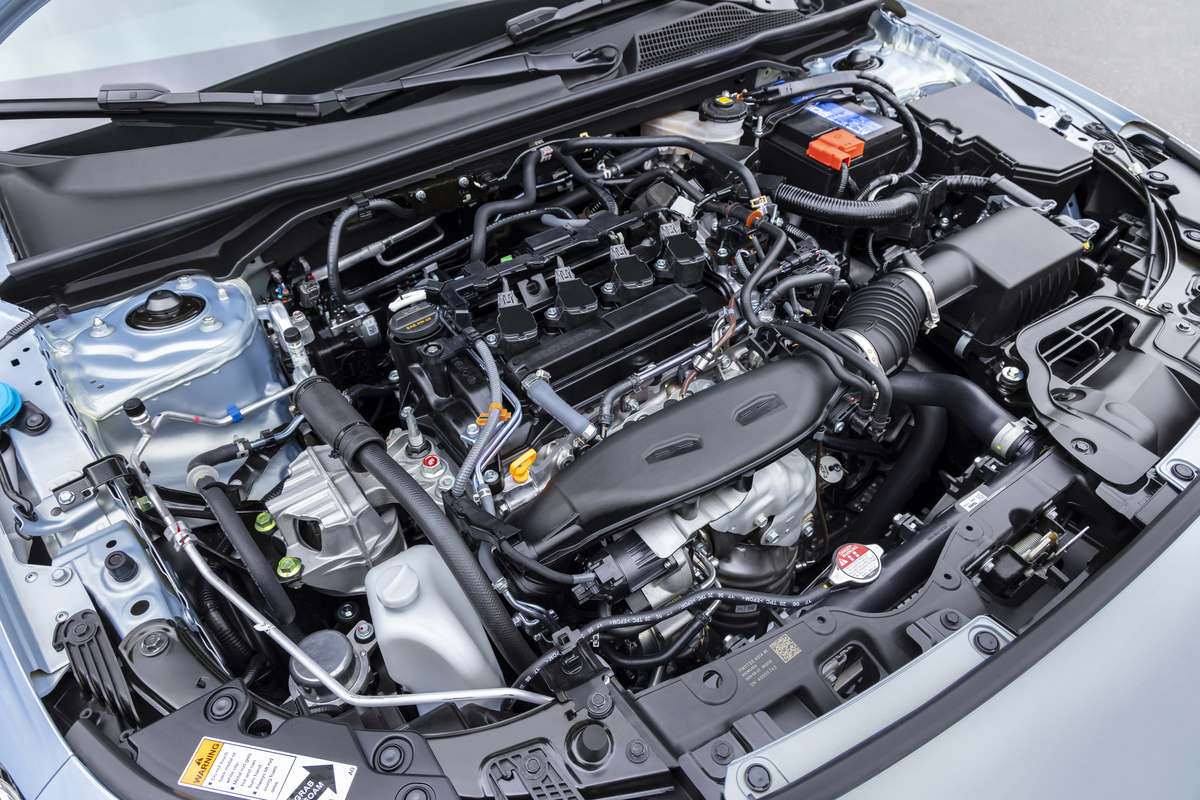
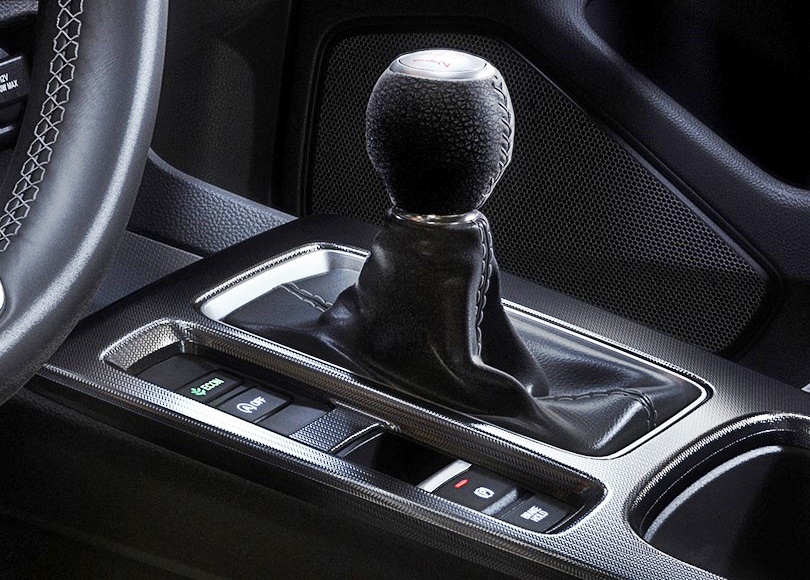
As with the current generation in many markets, there will be a choice of naturally aspirated and turbocharged engines, including the 1.5-litre turbo unit Malaysians are familiar with. A 6-speed manual transmission will be available and for the US market, the naturally aspirated engine has a 2-litre displacement.  It’s coupled with a revised CVT that has a more robust electric hydraulic pump to reduce the load on the mechanical pump, and a ball-bearing secondary shaft to reduce friction.
The European market will get the Civic Hatchback with an e:HEV hybrid powertrain.

For the European and probably Japanese market, Honda will also put a e:HEV powertrain in the Civic Hatchback, the hybrid powertrain meeting the objective for all European mainstream models to have electrified powertrains by 2022.

Sedan functionality with hatchback versatility
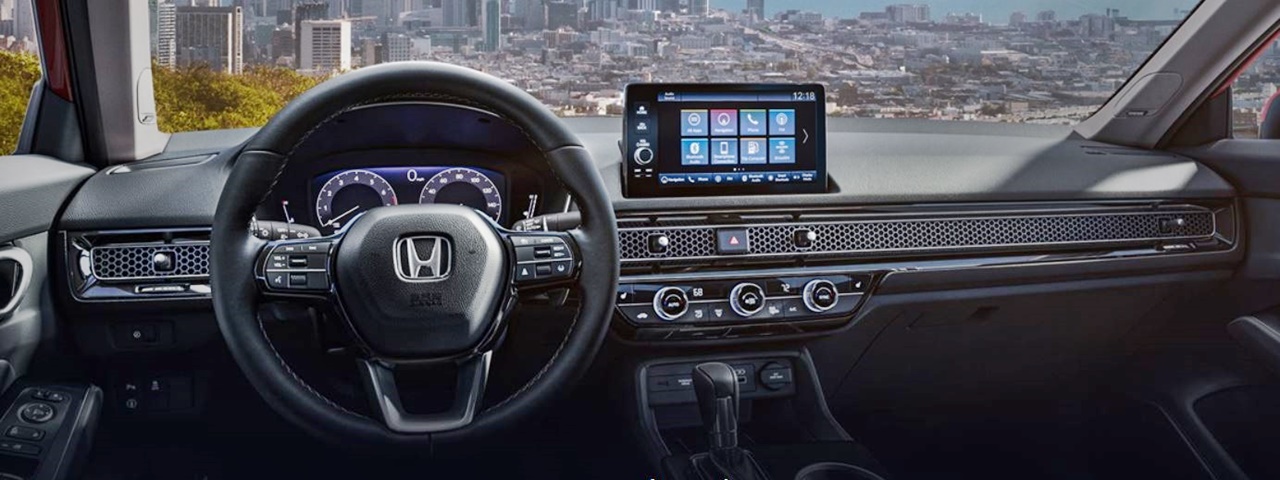
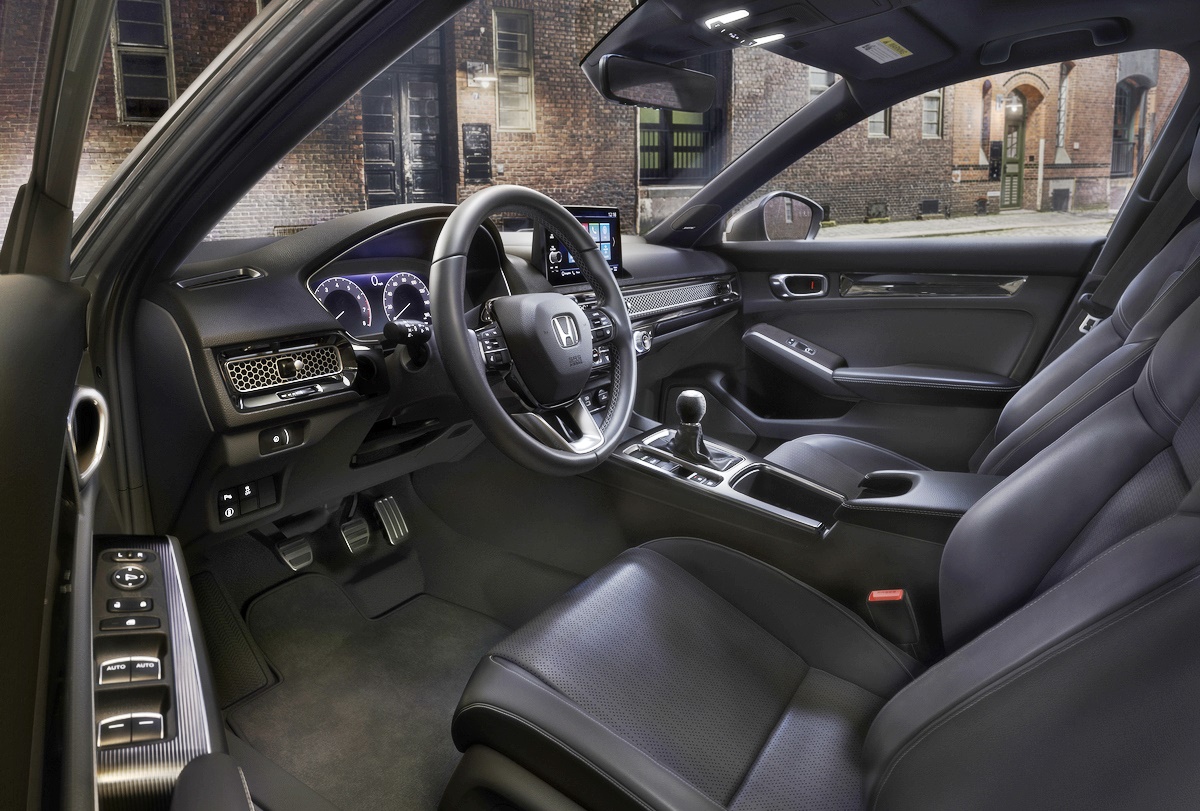
Much of the interior is the same as the Sedan with the added layout versatility of a Hatchback adding 65% more cargo space. The standard 60:40 split backrests can be quickly folded for expanded capacity and the side-pull cargo cover provides concealment of items in the boot.

2021 Honda Civic Hatchback Gen 11

2021 Honda Civic Hatchback Gen 11

Up front, outward visibility is enhanced by the repositioned A-pillars, low bonnet, flat dashboard, low cowl and outside mirrors which are now mounted on the doors. The instrument panel is designed with a minimum of cutlines to reduce windscreen reflections and visual distractions, while the new metal honeycomb instrument panel accent hides the air vents.

Like all Hondas sold today, there is the Honda Sensing suite of active safety and driver-assistance technologies. The latest version installed in the Civic Hatchback uses a new single-camera system providing a longer, wider field of view than the previous radar-and-camera based system. Combined with software advances and a new, more powerful processor, the system is capable of more quickly and accurately identifying pedestrians, bicyclists and other vehicles, along with road lines and road signs.

2021 Honda Civic Hatchback Gen 11

Honda Sensing also includes Traffic Jam Assist, and the new camera-based system improves on existing functionality, such as more natural brake application and quicker reactions when using Adaptive Cruise Control (ACC). It also has more linear and natural steering action when using the Lane Keeping Assist System (LKAS). Low-Speed Braking Control is supported by and front and rear false-start prevention with the addition of eight sonar sensors.

Unlikely for Malaysia
Malaysia has long been a sedan market and while there were hatchbacks too, most faded away after the 1980s. Today, the lines are blurred between sedans and hatchbacks, the latter once defined by having a blunt rear end. But while Malaysian buyers may appreciate the extra versatility a hatchback offers, many will probably get a SUV instead as it may be perceived to be more suitable in different roles.

Early generations of the Civic Hatchback were sold in Malaysia but it was dropped from the locally-assembled range after the 1990s.

But beyond that point, there is also the question of potential volume and as Honda Malaysia is committed to assembling products locally with high localization of parts as well, the Civic Hatchback may not have the sort of numbers for a business case. It’s not only that the Malaysian market is not as large as Thailand and Indonesia but also that a huge chunk of the market is occupied by just two brands with strong advantages. The remaining part of the market has to be shared by around 20 makes and the ‘slices of the pie’ for each is therefore small and a variant like the Civic Hatchback won’t generate enough volume.

Visit www.honda.com.my to know more about the models available in Malaysia.

StayAtHome

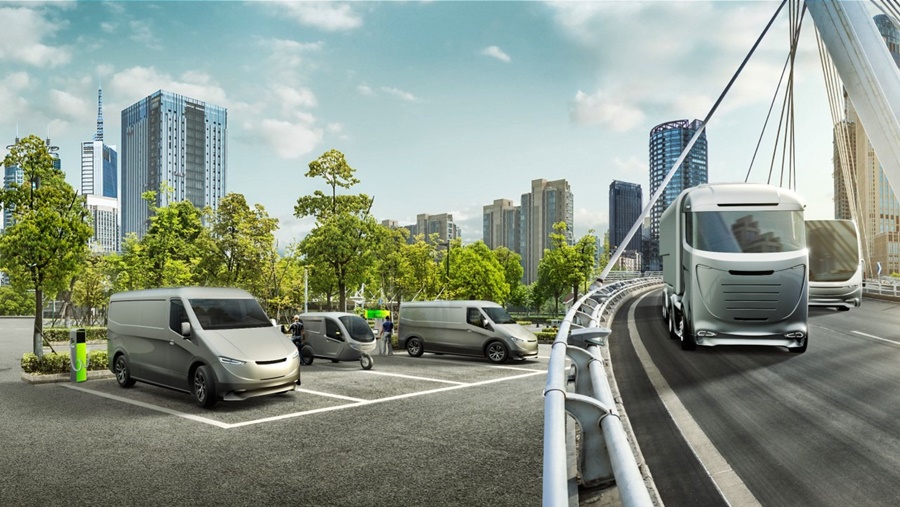
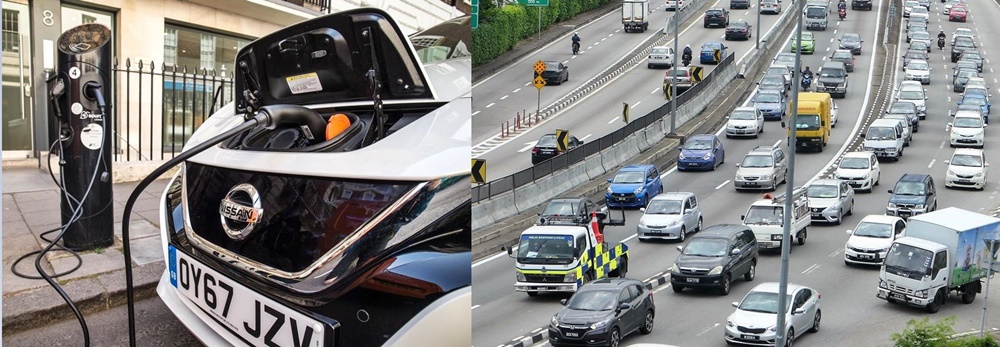
Almost every day, there’s news about the electrification in the auto industry, if not the introduction of a new electric vehicle (EV). The industry, especially in Europe, has fast-tracked plans to move existing model fleets from using internal combustion engines to either hybrid or fully electric powertrains. Some companies even plan to stop selling vehicles with combustion engines before the end of this decade.

But there are also some companies that will look for a balance in the rush to electrification, focussing more on overall carbon neutrality (which can address climate change) for their entire operations, rather than just the products alone. Akio Toyoda, President of Toyota Motor Corporation, is one of those who feels that the rush to switch to zero emission vehicles is too excessive, demands massive investments and will damage the industry in some ways.

Whole world won’t ‘electrify’ at the same time
While governments are forcing the corporate hands of the carmakers to make the changes and cut emissions from vehicles, there will still be models with combustion engines on sale for a while. We don’t know yet how fast the infrastructure to support EVs can be developed and grow because, in some places, it doesn’t even exist yet. In Malaysia, for example, the number of recharging stations already set up is really just ‘a handful’ and an absence of a coherent policy to encourage sales and use of EVs has yet to be formulated.

While motorists in regions like Europe are steadily switching to electric vehicles, there are many millions elsewhere in the world who will continue to use vehicles running on fluid fuels for many more years.

So while some carmakers may feel that they can get by (in future) selling just EVs, there will be some who will still be developing models with combustion engines for the rest of this decade at least. Engineers can still push emissions down further to meet stricter regulations and a new generation of fuels will also help in this respect.

Renewable low-carbon fuels
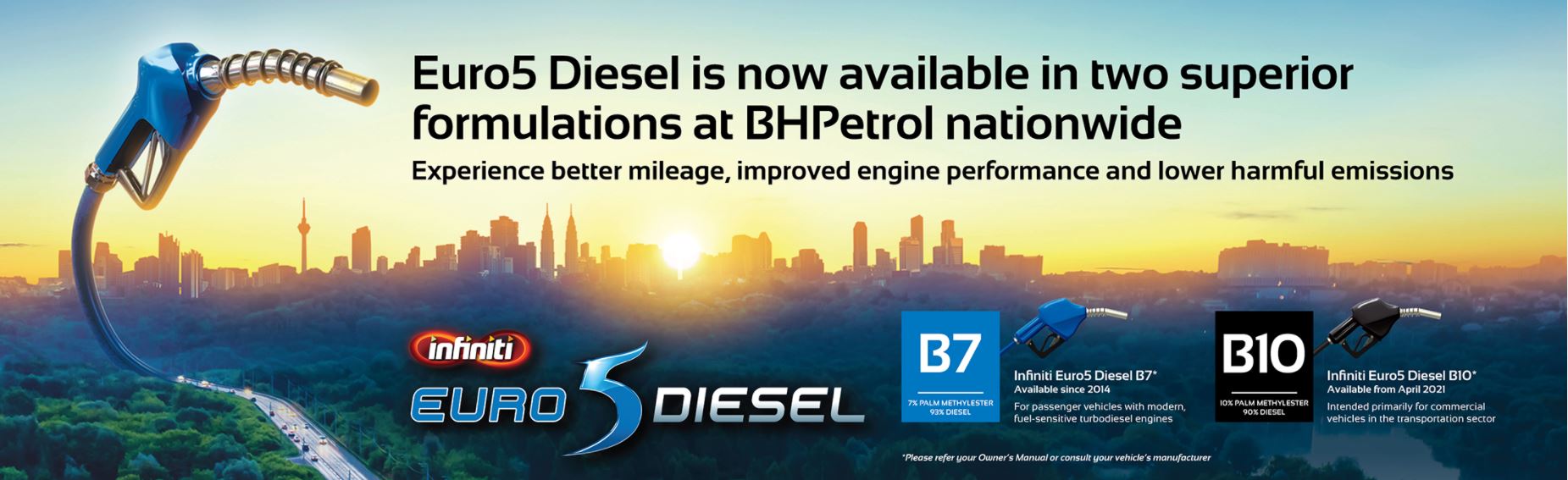
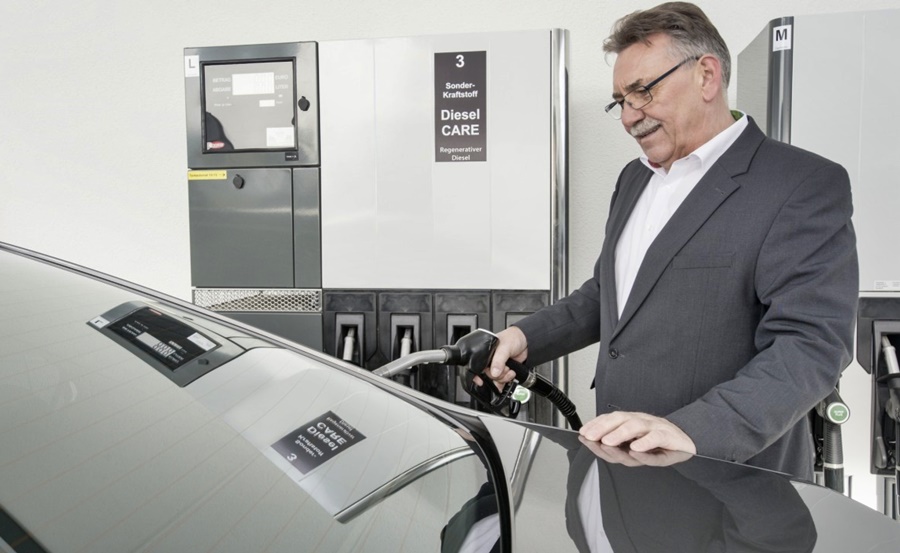
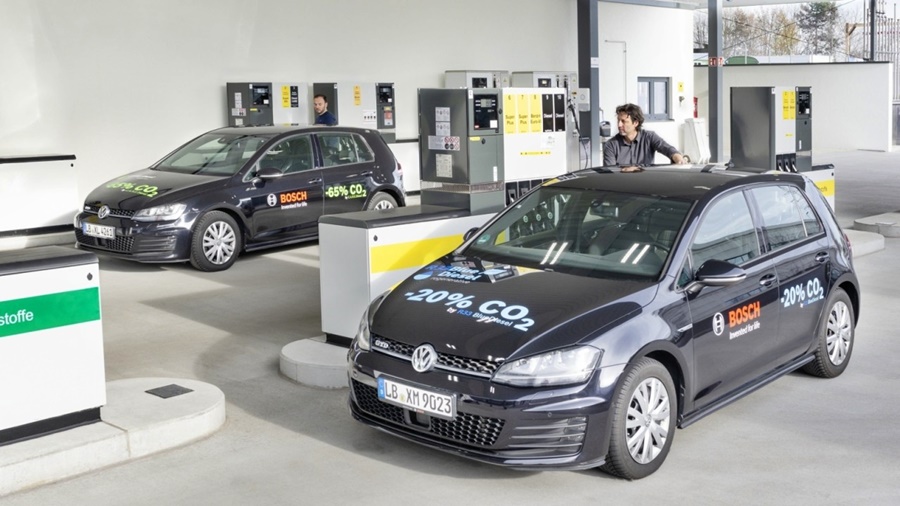
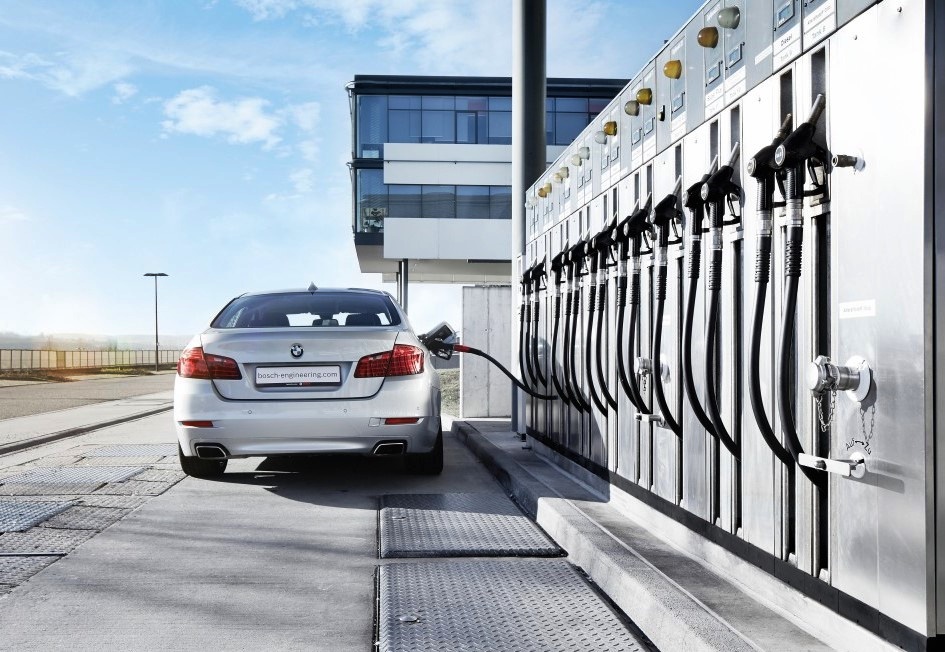
These are renewable low-carbon fuels and following on from R33 Blue Diesel which has been around since 2018, Bosch, Shell, and Volkswagen have now come up with low-carbon petrol. Their new fuel, called Blue Gasoline, similarly contains up to 33% renewables, ensuring a well-to-wheel reduction in carbon emissions of at least 20% per kilometre driven. This means a fleet of 1,000 VW Golf Mk.8 1.5 TSIs alone could save more than 230 metric tons of CO₂ per year, assuming an annual mileage of 10,000 kms each.

Shell will offset the remaining carbon emissions from the use of Blue Gasoline through certified offset arrangements. The initial plan is to make the fuel available at regular filling stations over the course of the year, starting in Germany.

“On the road to climate-friendly mobility, we must ensure we don’t leave any technical opportunities untapped, starting with electromobility and ending with renewable fuels. Every bit of CO₂ we save can help us achieve our climate targets,” said Dr. Uwe Gackstatter, President of the Bosch Powertrain Solutions division.

“Blue Gasoline is another building block in the effective reduction of CO₂ emissions from the vehicle fleet. Blue Gasoline’s high storage stability makes the fuel particularly suitable for use in plug-in hybrid vehicles. In the future, the expansion of the charging infrastructure and larger batteries will mean that these vehicles predominantly run on electrical power, and thus that fuel may remain in the fuel tank for longer periods of time,” explained Sebastian Willmann, Head of Internal Combustion Engine Development at Volkswagen

Highest standards set for fuel quality and sustainability
Blue Gasoline fuel complies with the EN 228/E10 standard and even exceeds it in key parameters such as storage stability and boiling behaviour. High-quality additives also keep the engine extremely clean and protect it against corrosion. This means not only that the fuel can be distributed via the existing filling station network, but also that it can be used in all new and existing vehicles for which Super 95 E10 petrol has been approved.

The proportion of up to 33% renewables is made up of biomass-based naphtha or ethanol certified by the International Sustainability and Carbon Certification (ISCC) system. One source of such naphtha is what is known as tall oil, a by-product in the production of pulp for paper. But naphtha can also be obtained from other residual and waste materials.

Low-carbon fuels at Bosch company stations
In the Blue Gasoline project, the three partners jointly defined the fuel specification to be achieved, taking into account engine requirements and sustainability. They put the product they developed through intensive testing on engine test benches and in trial vehicles – with consistently positive results. Bosch has begun supplying Blue Gasoline at its company filling stations for the past month, with other stations scheduled during for rest of 2021.

The supply of conventional Super 95 E10 petrol will then be gradually phased out. Since the end of 2018, R33 Blue Diesel has been the only diesel fuel that Bosch company filling stations offer for company cars and internal delivery vehicles. R33 Blue Diesel is also becoming available at more and more regular filling stations in Germany. At present, it is offered at 8 filling stations belonging to different brands nationwide, with more set to follow.

Not a substitute for electromobility
For Bosch, renewable low-carbon and carbon-neutral fuels will not replace electromobility but complement it. In principle, the use of these fuels makes sense in all modes of transport, but especially in those for which there is as yet no clear and economical path to electrification. In addition to ships and aircraft, this applies primarily to heavy goods vehicles and existing vehicles, but also to the millions of vehicles with internal combustion engines or hybrid powertrains that are on the world’s roads today or will be built in the coming decades.

To promote rapid market uptake for these fuels, the focus is on renewable biomass and synthetic fuel components that can be blended into regular fuel in high proportions in line with existing fuel standards.

StayAtHome

All-wheel drive (AWD) is available in all types of vehicles today but until 50 years ago, they were not typically found in roadgoing passenger cars and only in off-road dual-purpose vehicles (which are today called SUVs or crossovers). While Audi could be said to have started the trend by coming out with AWD system for roadgoing models in the early 1980s, it was Subaru (then known as Fuji Heavy Industries) which can lay claim to offering the first 4-wheel drive car in 1972.

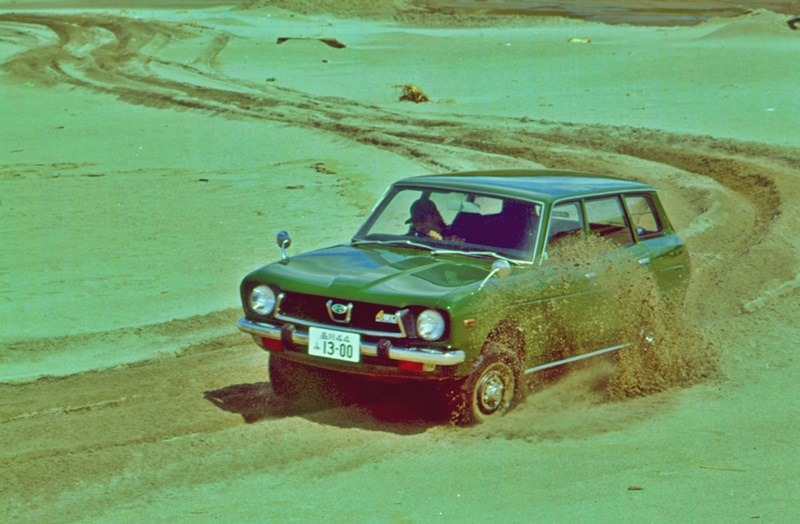
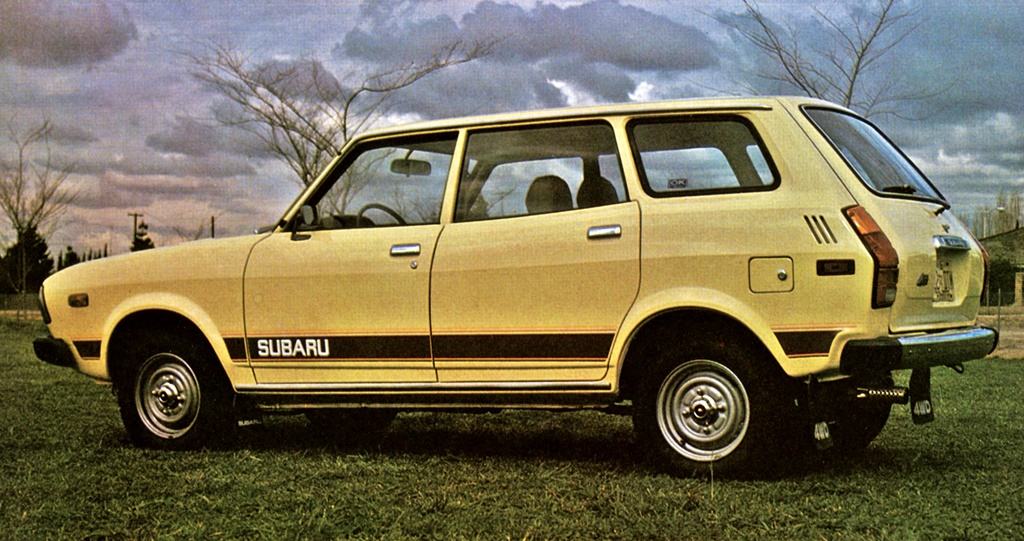
Although British carmaker Jensen did have a sportscar called the FF which had AWD, only 320 units were ever produced; Subaru made it available in a mass-produced model. The model was the Leone which had been introduced in 1971, and a 4-wheel drive system was incorporated in the stationwagon version that was launched in Japan in September 1972. The timing was just right as the Winter Olympics were held in Sapporo that year and having a car with all four wheels powered was advantageous in the snow and ice.

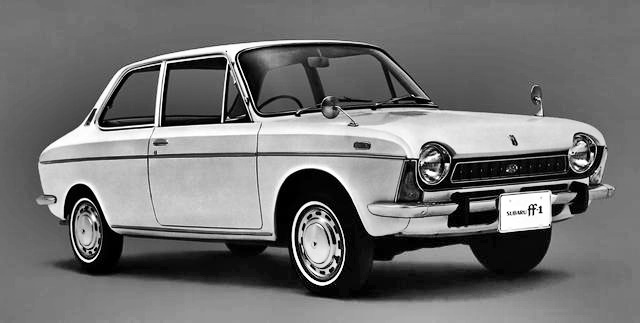
FF-1 was the first Subaru to have the 4WD system but only limited numbers were produced. It was the Leone Stationwagon (below) which began Subaru’s mass production of cars with 4WD.

4WD and AWD
Before going further, a bit of explanation about 4WD, which was installed in the early Subaru models, and AWD which is more commonly used today. 4WD (or 4×4) has power and torque going to all four wheels constantly which is useful in rough terrain and lower speeds, but not so good on roads. With AWD, all four wheels are also powered but there is ‘intelligent’ variation between the front and rear wheels according to grip conditions.

The first Subaru 4WD system was initially fitted to prototype vehicles as early in 1969 and by 1971, in a small number of FF-1 sedans. The engineers used feedback from those vehicles to improve and make the system more reliable and durable for wider application. The company was encouraged to finalise the 4WD project when the Tohoku Electric Supply Company, which supplied the mountainous and snowy Tohoku Prefecture in the north of the Japanese main island of Honshu with electricity, invited Subaru to tender for vehicle supply. The energy supplier was looking for a safe and reliable vehicle for its employees to use in all weather conditions and Subaru was ready with its 4WD Leone Stationwagon.

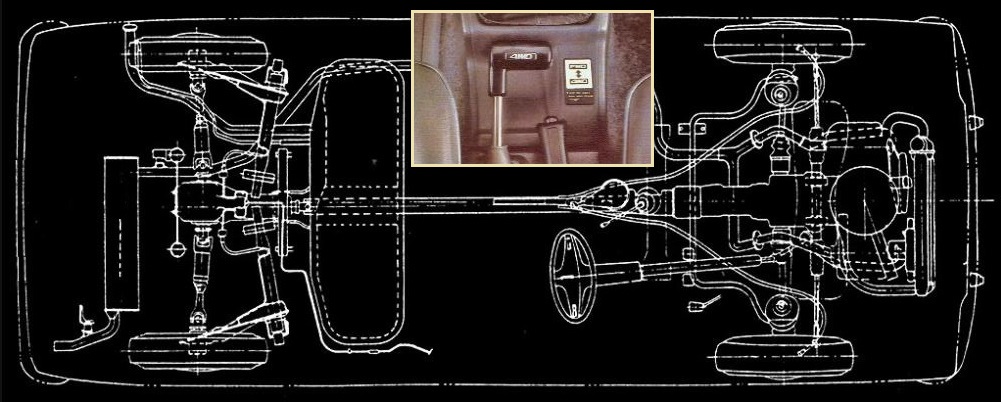
The 4WD SYSTEM was a simple one compared to today’s ‘intelligent’ systems like Subaru’s own Symmetrical AWD. It was mechanically activated via a dog clutch and power from the 1.4-litre boxer 4-cylinder engine was transmitted to all four wheels proportionately. The durability of the system was proven not just by owners who used the Leone in challenging conditions but also in 1977 at the marathon rally from London to Sydney. A Leone completed the 30,000-km drive, finishing fourth place in the AWD class.

Key selling feature
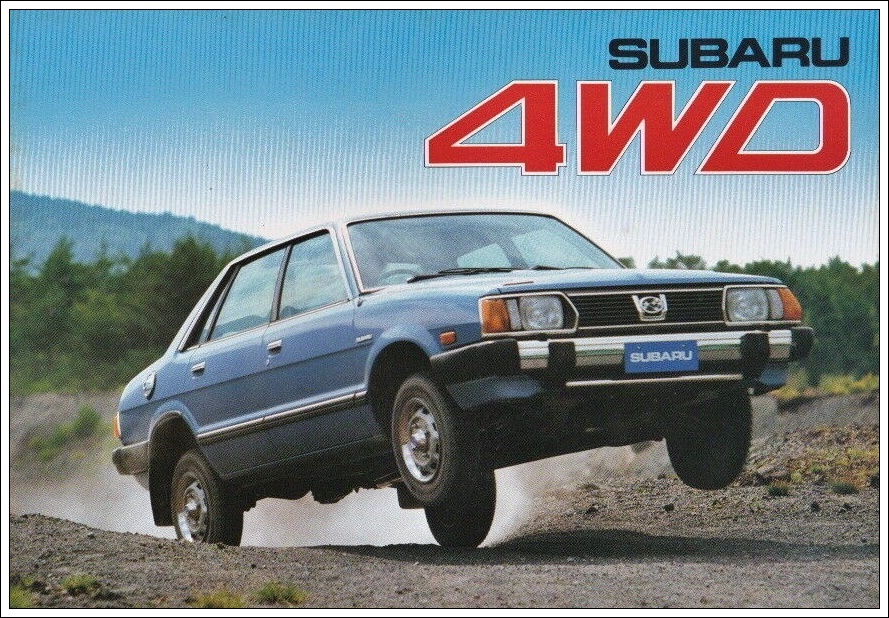
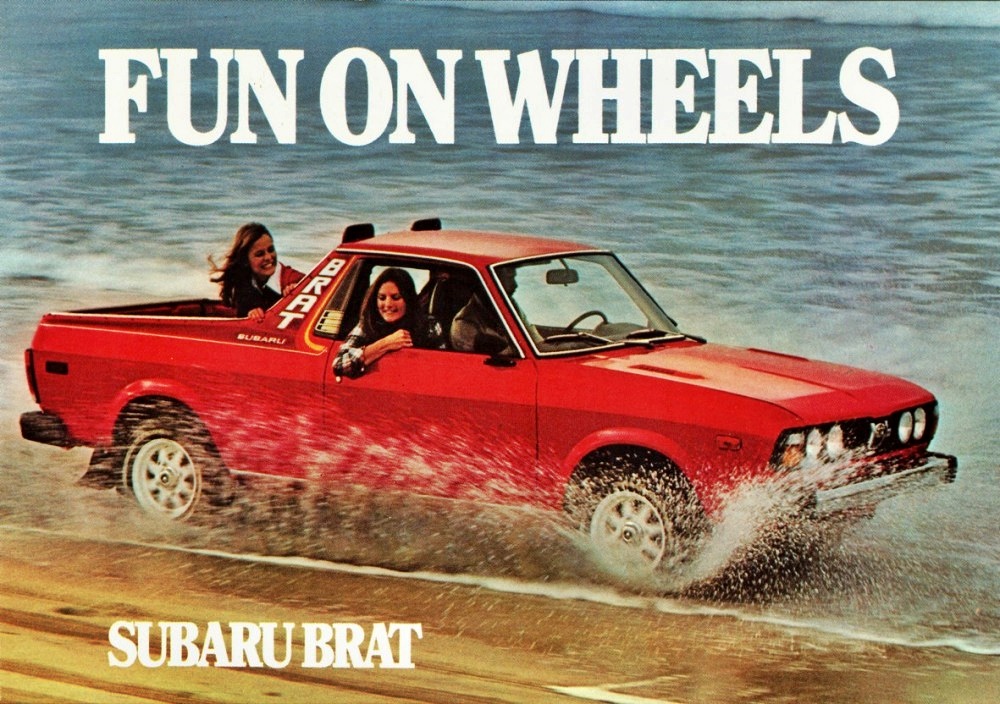
It would become a key selling feature of the Japanese brand and popularise its vehicles in markets, with more than 20 million AWD vehicles produced to date. In the USA, the Leone gained a sort of cult status and Subaru of America proposed the development of a compact lifestyle pick-up truck based on the Leone. The model the engineers in Japan came up with was described as a ‘Bi-drive Recreational All-terrain Transporter’ and the American marketing people immediately decided that it could be called ‘Brat’ when it was launched in 1978.

The Brat (also called Brumby in Australia) was a hit as well, especially with the beach communities on the West Coast. Even former President Ronald Reagan got one for himself, using it on his ranch. The Brat had the 4WD system, of course, and two engine choices were available – 1.6 litres and 1.8 litres.  Some variants had a transfer case with High and Low ranges as well and 4WD could be selected at the touch of a button.

Subaru Brat – the name actually stood for ‘Bi-drive Recreational All-terrain Transporter’.

From 4WD TO Symmetrical AWD
As a pioneer in putting 4WD in passenger cars, it was not surprising that Subaru continued to develop more advanced drivetrains as the years went by. With more electronic technology available, it was possible to precisely control the amount of power flowing to the wheels for better vehicle stability and control.

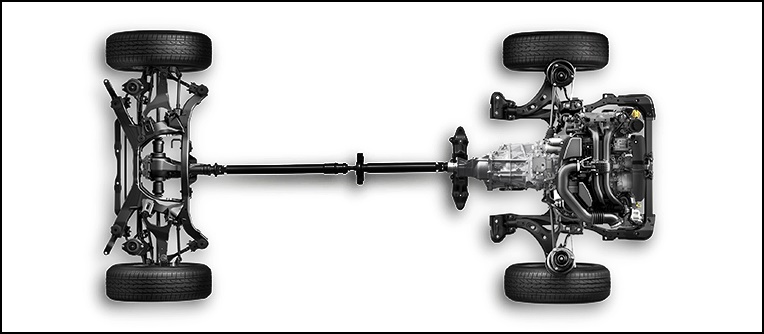
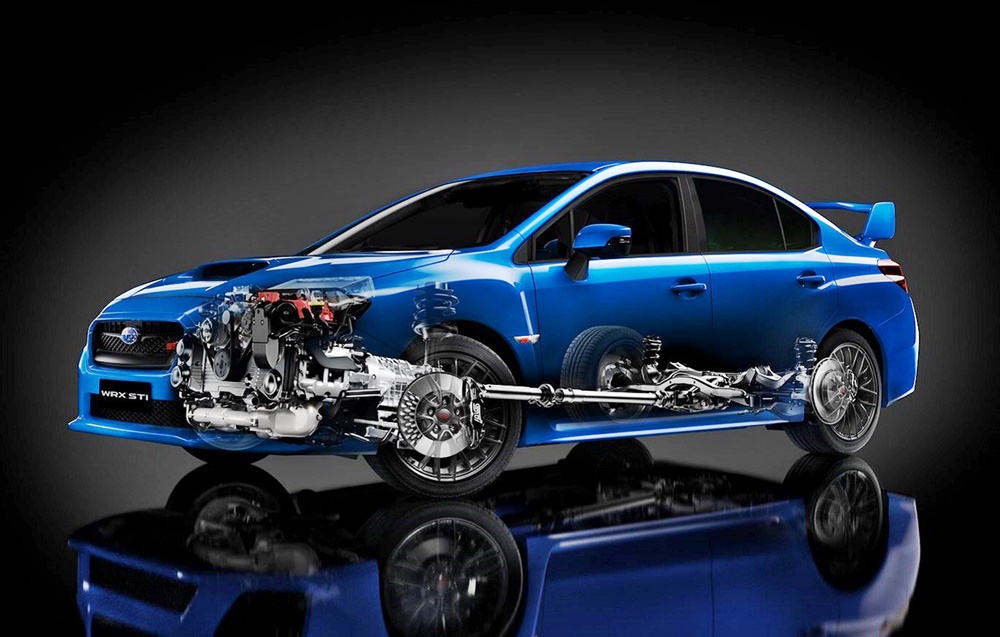
The led to the permanent symmetrical AWD system that is available in virtually all Subaru models, except the rear-wheel drive BRZ. With Symmetrical AWD, the entire drive system, from the longitudinally-mounted engine to the rear differential, is mounted in a straight, symmetrical line. This precise orientation means each side of the system weighs the same, offering superior balance which benefits driving dynamics.

Active torque-split in the system distributes torque 60:40 front and rear, based on information from sensors constantly monitoring tyre grip, vehicle speed, steering angle, etc. The electronically controlled Multi Plate Transfer adjusts torque distribution to the front and rear tyres in real-time to suit driving conditions, as well as the transmission and driver inputs. The system is so advanced it can detect a loss of traction, or slip, of a wheel in less than one revolution of the wheel.

Another available feature is variable torque distribution which provides aggressive, sporty driving with increased turning abilities while retaining the fundamental driving stability offered by the Symmetrical AWD. An uneven 45:55 front and rear torque distribution is used for the front and rear ratio. Sending more torque to the rear wheels can reduce understeer, a trait that plagues 4WD vehicles. Torque distribution is controlled automatically up to an equal 50:50 front and rear.

Subaru to introduce first all-electric model in Europe by June this year

StayAtHome

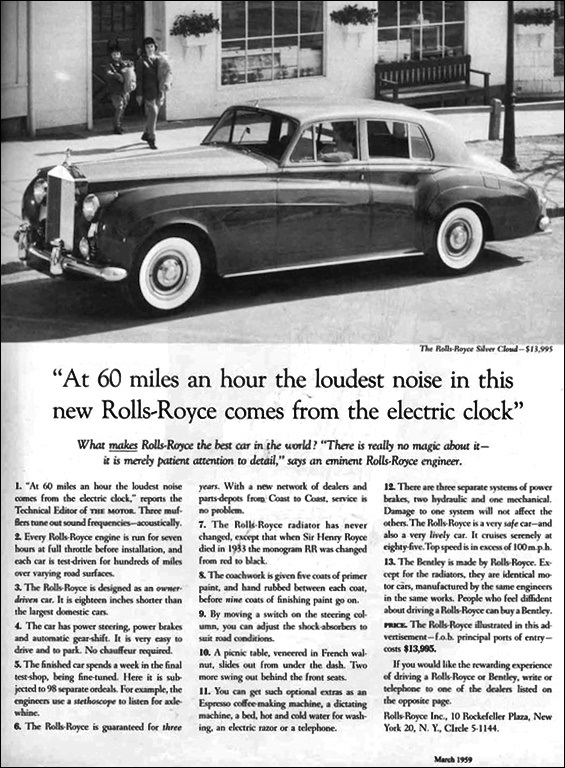
When there is mention of clocks in cars, one famous advertisement will often be remembered. It is the one where David Ogilvy (regarded as the ‘Father of Advertising’) used the comment of the Technical Editor from The Motor magazine to create a memorable headline. It said: “At 60 miles an hour, the loudest noise in this new Rolls-Royce comes from its electric clock.”

In the years that followed 1958, the year that advertisement came out, the clocks in Rolls-Royce cars have remained one of the notable elegant features. And with Bespoke commissioning, many clocks have been uniquely designed to their owners’ specifications and with modern technology, they no longer click.

The famous Rolls-Royce adbvertisement.

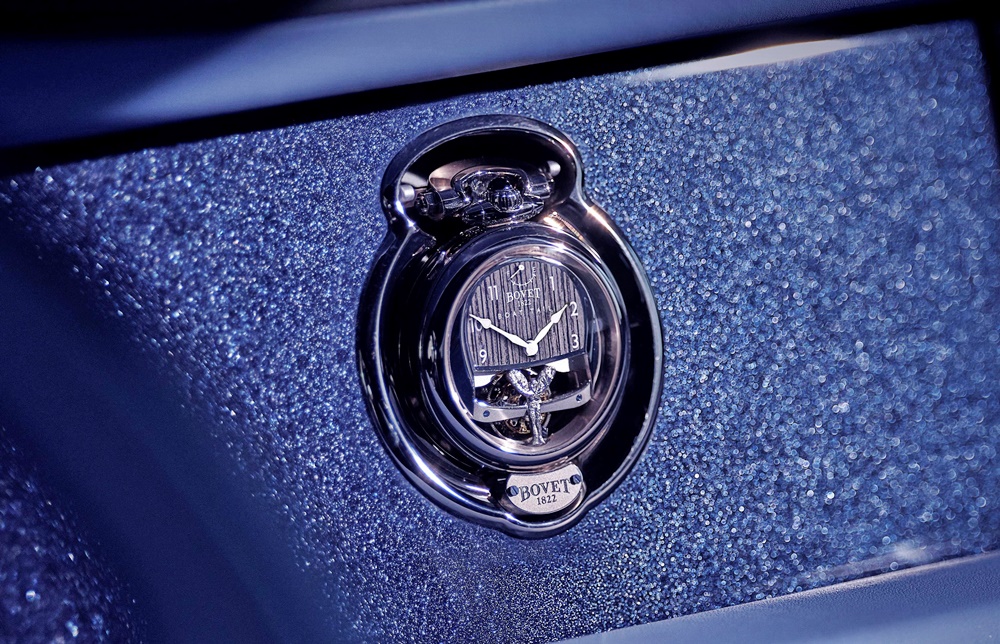
Rolls-Royce Boat Tail Coachbuilt BOVET 1822 clock

New technical and aesthetic heights
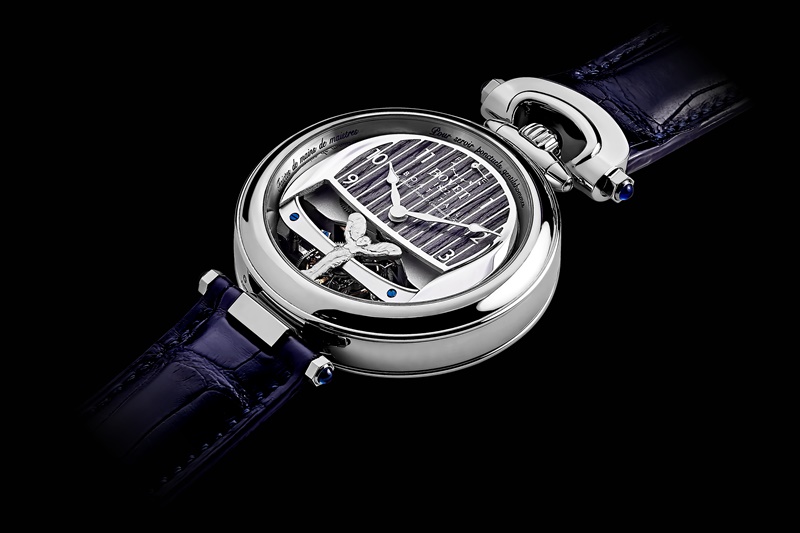
Epitomising this significant item of detail, precision, and beauty is the pair of timepieces for first Boat Tail coachbuilt commission done by Rolls-Royce. They have been created with BOVET 1822, a Swiss specialist in tourbillion timepieces, to be iconic centrepieces elevated to new technical and aesthetic heights.

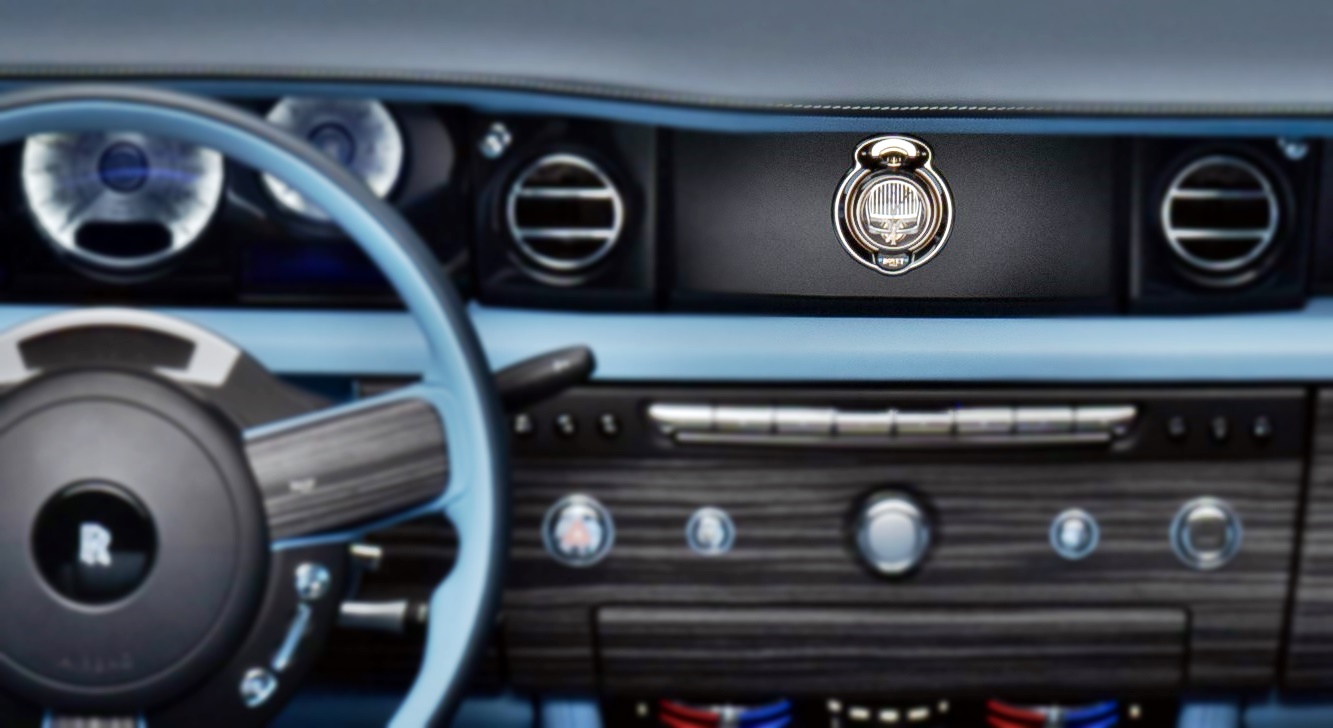
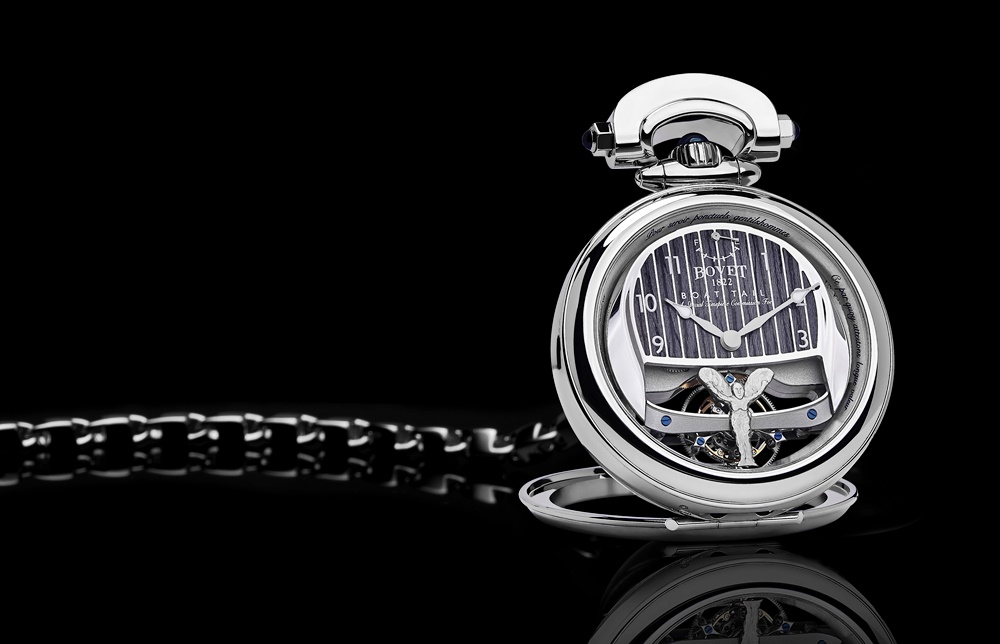
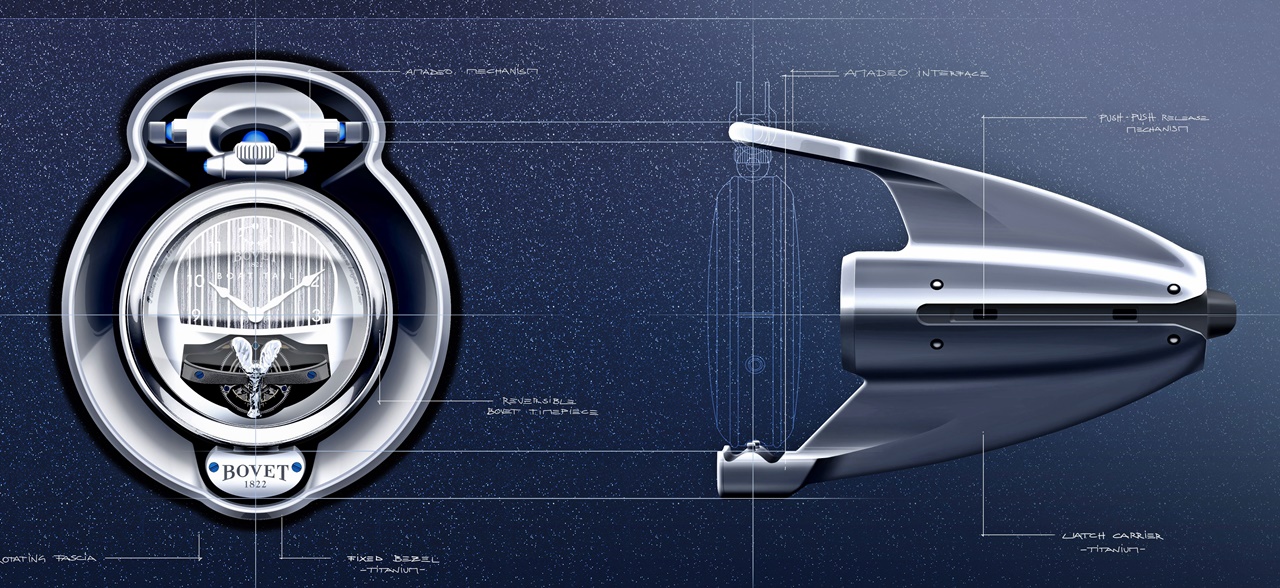
The timepieces are unique to both the horological and automotive worlds. Made as a pair – in lady’s and gentleman’s versions – they are reversible, and housed in BOVET 1822’s patented Amadeo case, which allows them to be worn on the wrist, or used as a table clock, pendant or pocket-watch, as well as being placed front and centre in Boat Tail’s fascia as the car’s own timepiece. Both are fitted with tourbillon mechanisms to ensure perfect accuracy.

Rolls-Royce Boat Tail Coachbuilt BOVET 1822 clock

His and hers, and the car’s
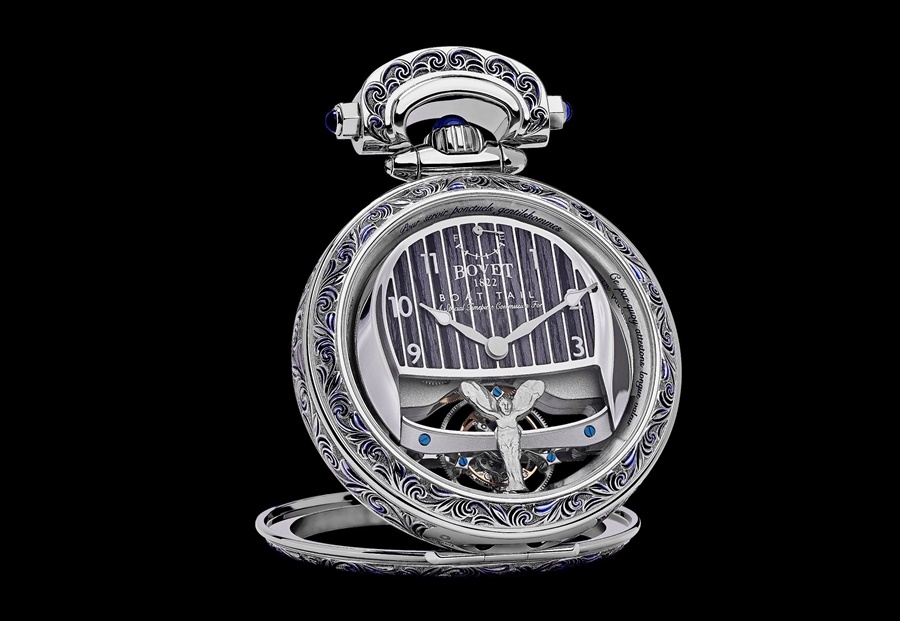
The timepieces have specially designed 18K white gold cases and feature matching front dials with the same Caleidolegno veneer found on the aft deck of Boat Tail itself, and are finished with the owner-couples’ names. The gentleman’s timepiece is highly polished; the lady’s is ornately engraved then filled with blue lacquer.

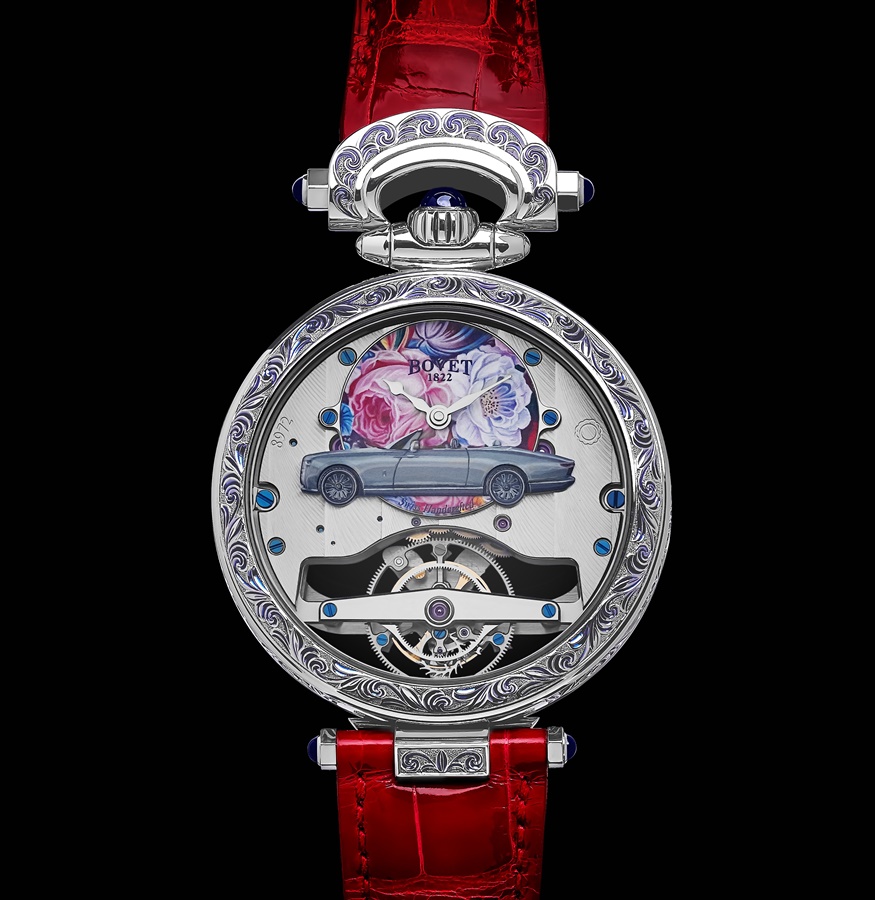
On the reverse side, the dials are more individual. The gentleman’s features an aventurine dial with the celestial arrangement of the night sky over the place of his birth on his birthdate; the lady’s is decorated with an ornate miniature painting of a flower bouquet on a mother-of-pearl dial. This design is a traditional BOVET 1822 motif, chosen by and personalised for the owner.

Both reverse dials have hand-engraved Bespoke sculptures of Boat Tail, complete with wheels, door handle, mirrors and other fine details. By working closely together, the teams at Rolls-Royce and BOVET 1822 were able to achieve a precise colour match between the lacquer on this tiny work of art and the very exclusive car.

Rolls-Royce Boat Tail Coachbuilt BOVET 1822 clock

Rolls-Royce Boat Tail Coachbuilt BOVET 1822 clock

Tested to auto industry standards
Further close cooperation was required to ensure the timepieces conformed to the demands of their unique role as clocks for use in a car. In watchmaking, weight is rarely an issue for a complex timepiece but in this instance, there was a limit on the combined permissible weight of the timepieces and their holders.

BOVET 1822 met this requirement by creating an entirely new 44 mm white gold case. In addition, the timepieces and holders also had to be tested to automotive industry standards for vibration and crash safety – something never previously undertaken on mechanisms of this kind.

Rolls-Royce Boat Tail Coachbuilt BOVET 1822 clock

At a conservative estimate, the timepieces’ design, engineering, sculptures, miniature painting, marquetry, bespoke movements and cases took a total of 3,000 hours to complete.

BOVET 1822 holds a number of patents and has received many industry awards, and is also one of the only companies in the watch industry to manufacture its own spirals and regulating organs. To reduce potential impact from the vibration from the car, the tourbillon has pivots rather than the traditional ball bearings; a heavier balance wheel and an increased oscillation rate to aid precision. Finally, the tourbillon bridge is finished with a miniaturised Spirit of Ecstasy handcrafted in gold. The timepieces have an astonishing 5-day power reserve, rather than the 42 – 48 hours of a ‘standard’ watch, to allow for their role as car clocks.

Rolls-Royce Boat Tail Coachbuilt BOVET 1822 clock

The holder mechanism is unique to Rolls-Royce Boat Tail and was designed by BOVET 1822 engineers and the Rolls-Royce Coachbuild design team from a blank sheet of paper. Although in a Rolls-Royce, vibration is naturally reduced to an absolute minimum, undetectable vibrations are inevitably still present. This highly complex mounting assembly serves to isolate the timepieces from these micro-vibrations. It also ensures they operate silently, are easy to mount and remove from the dashboard and, above all, remain safe and secure.

These challenges were unlike any normally encountered in watchmaking and car manufacture. From the start, BOVET 1822 was determined to follow a purely mechanical approach in keeping with its tradition of Swiss handcrafted production. The engineers’ innovative solution was to keep all the system’s moving parts external, with the dashboard providing a solid setting for the aluminium and titanium holder.

2021 Rolls-Royce Boat Tail
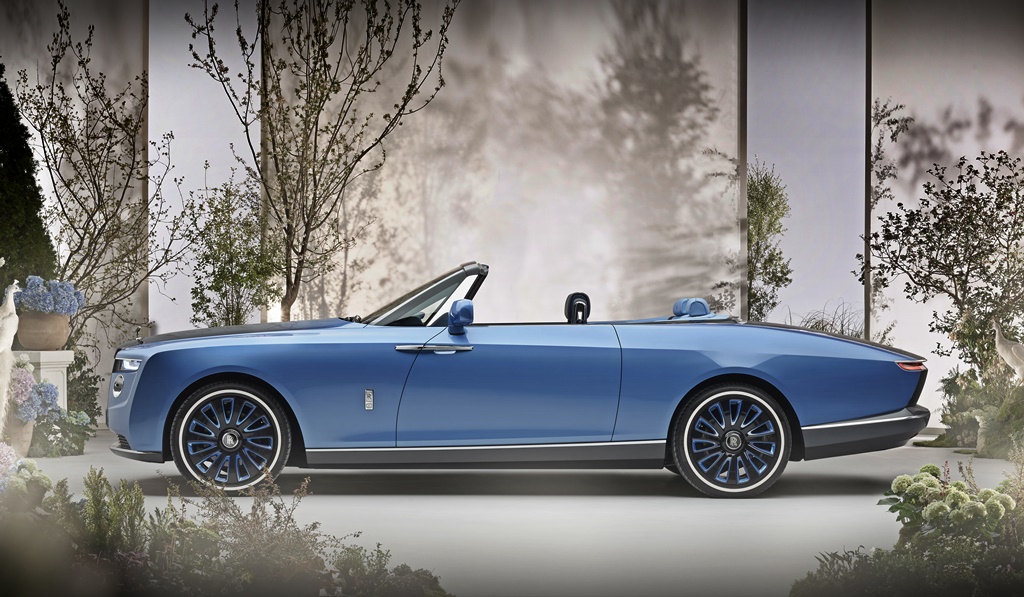
The Coachbuilt 2021 Rolls-Royce Boat Tail

Finally, Rolls-Royce ensured that when the holder is not housing one of the timepieces, it can be covered with a beautiful engraved and lacquered display plaque.  Below the clock, the dashboard is fitted with a special drawer, lined with the same leather as Boat Tail’s seats, which serves as a safekeeping receptacle to house the timepieces, straps, chain and pendant when not in use.

Archive

Follow us on Facebook

Follow us on YouTube