Piston.my

Bespoke

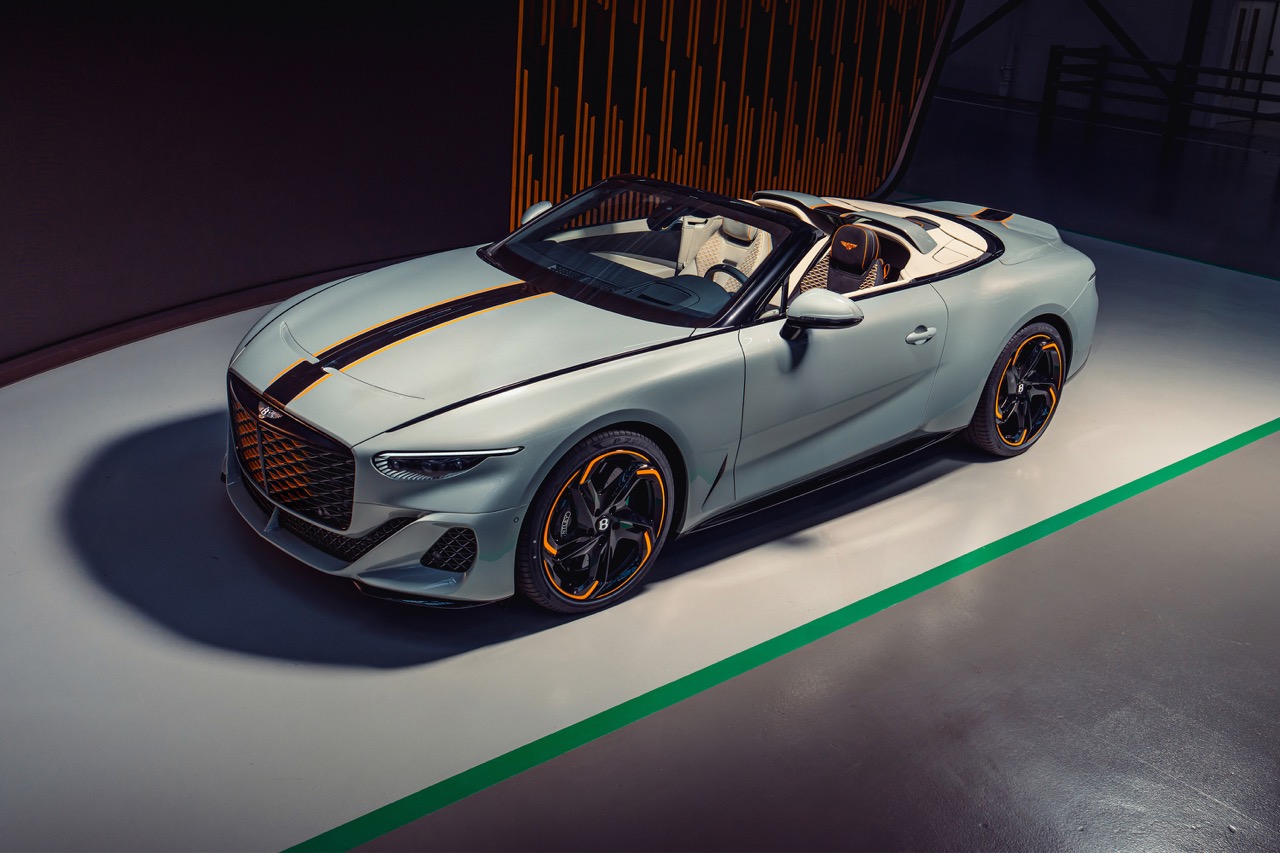
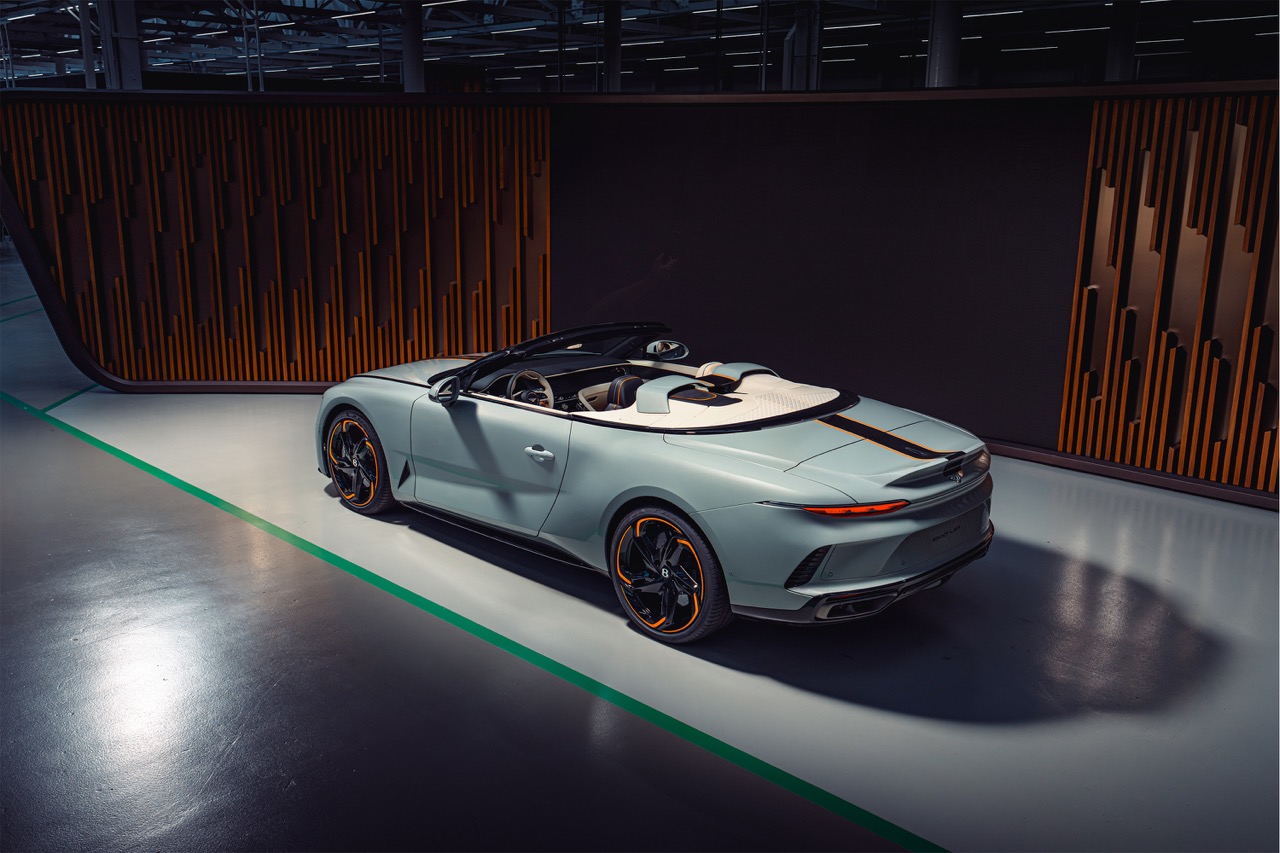
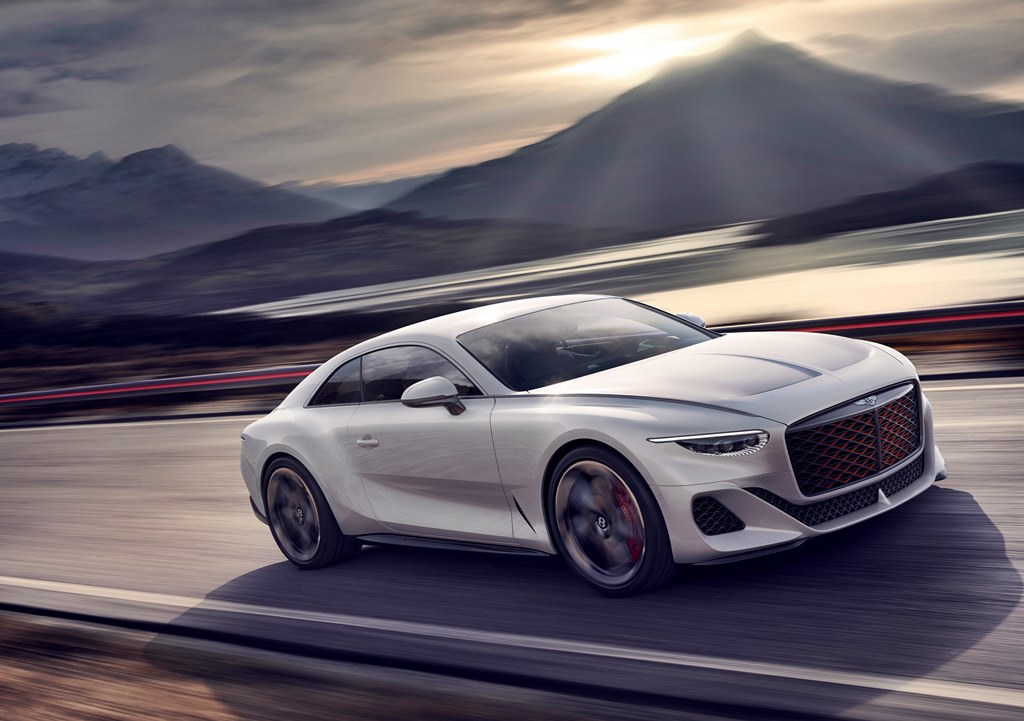
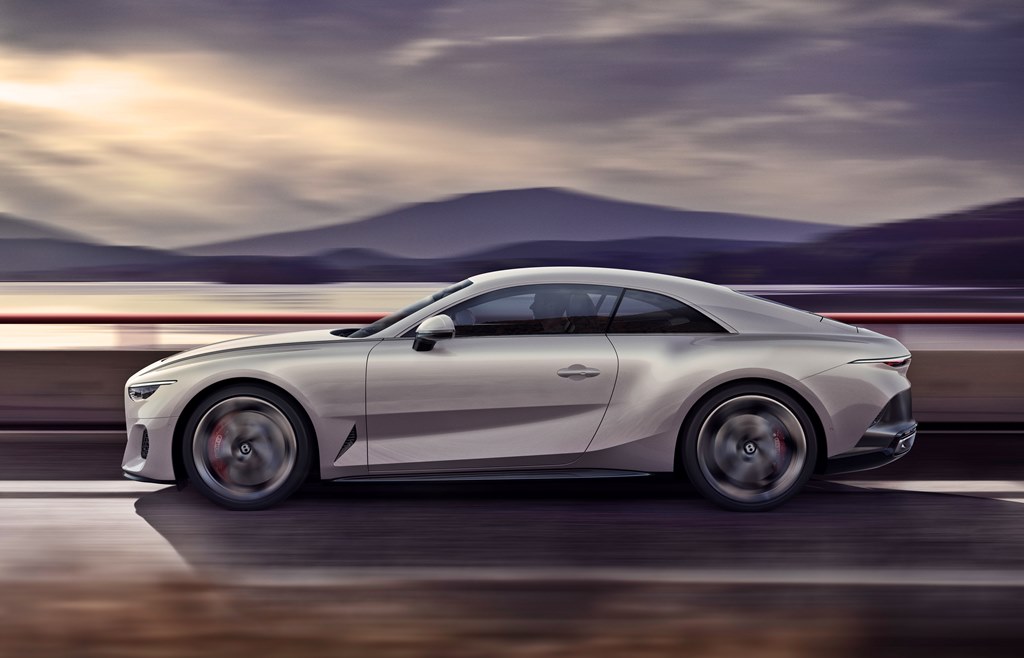
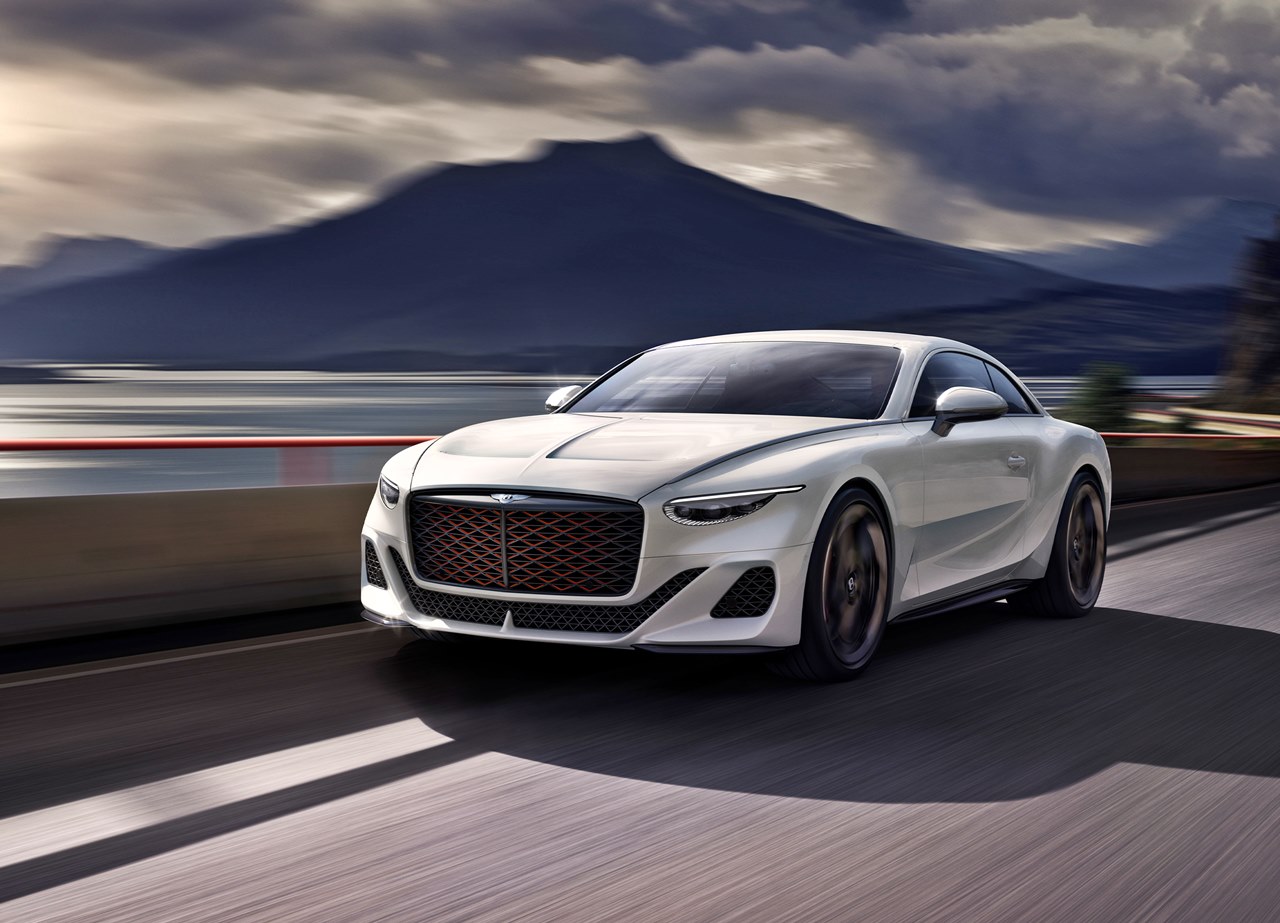
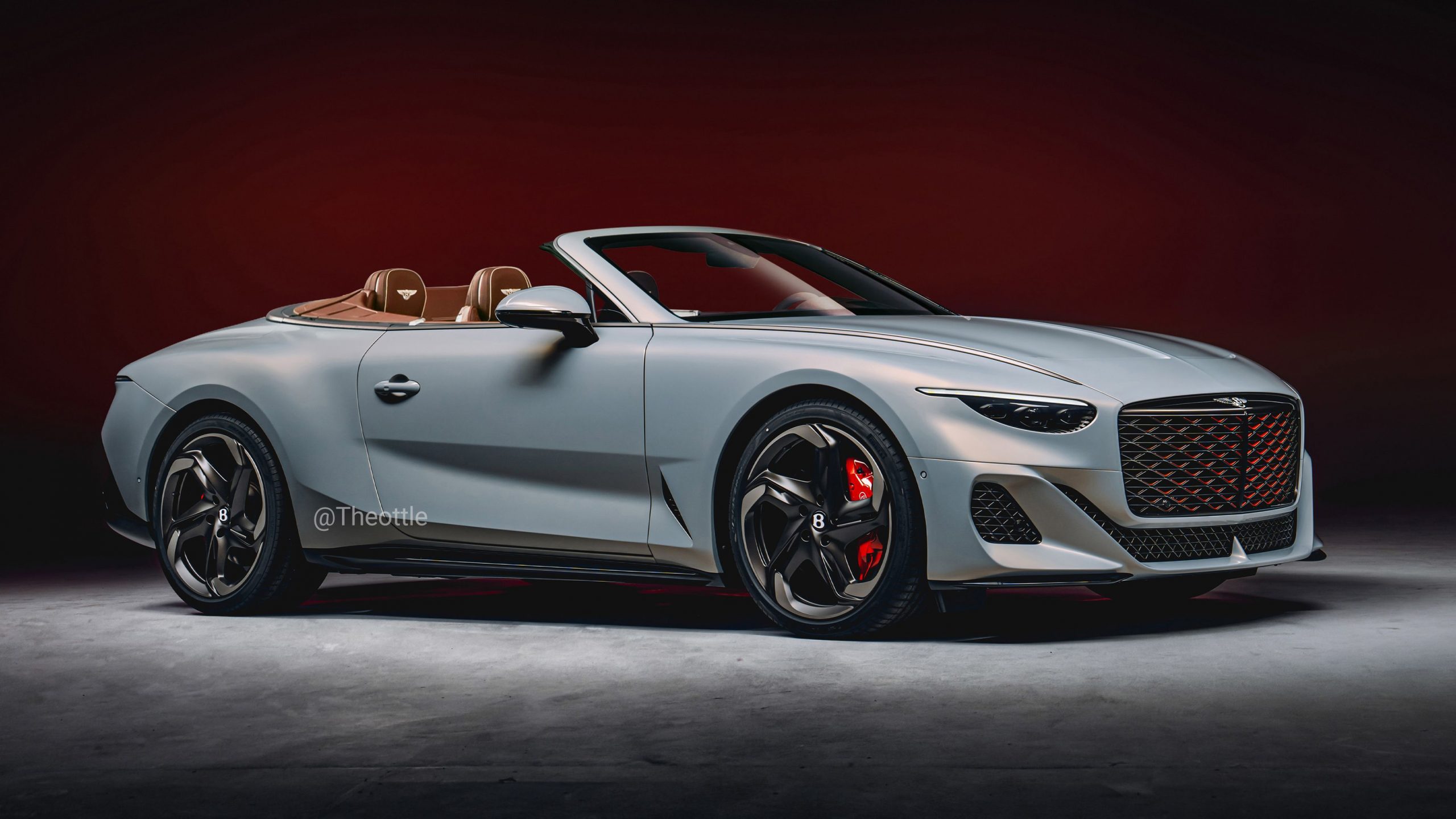
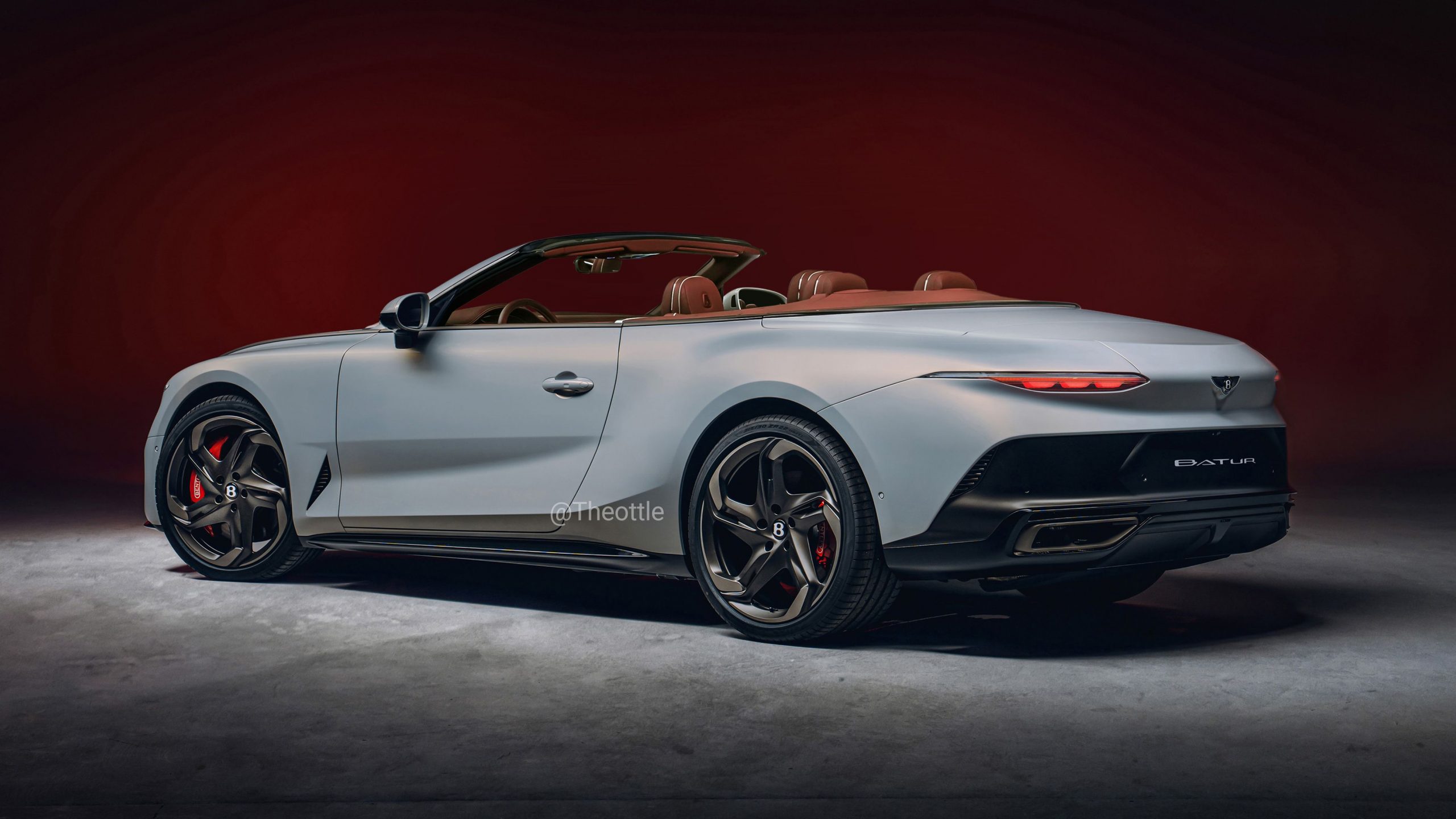
Bentley’s in-house bespoke and special projects division, Mulliner, has completed the first example of the Batur Convertible. This one-off creation combines the marque’s most powerful W12 engine with an intricate, highly personalised design. Finished in a striking Opalite exterior with Beluga and Mandarin accents, this debut model reflects the client’s detailed vision and Mulliner’s craftsmanship, resulting in a car that is as unique as it is technically accomplished.

The Batur Convertible’s exterior design accentuates the performance of its 740bhp, 6.0-litre twin-turbocharged W12 engine. The shimmering silver tone of the Opalite bodywork is bisected by a gloss black racing stripe, flanked by Mandarin pinstripes, which flows from the front grille over the bonnet, through the cockpit ‘airbridge’, and along the rear deck to meet the Bentley wings badge.

This stripe is seamlessly painted into the bodywork, with the design echoed in bespoke embroidery on the rear Tonneau. The distinctive matrix grille is finished in gloss Beluga with Mandarin highlights, complemented by five-spoke alloy wheels in matching tones.

(more…)

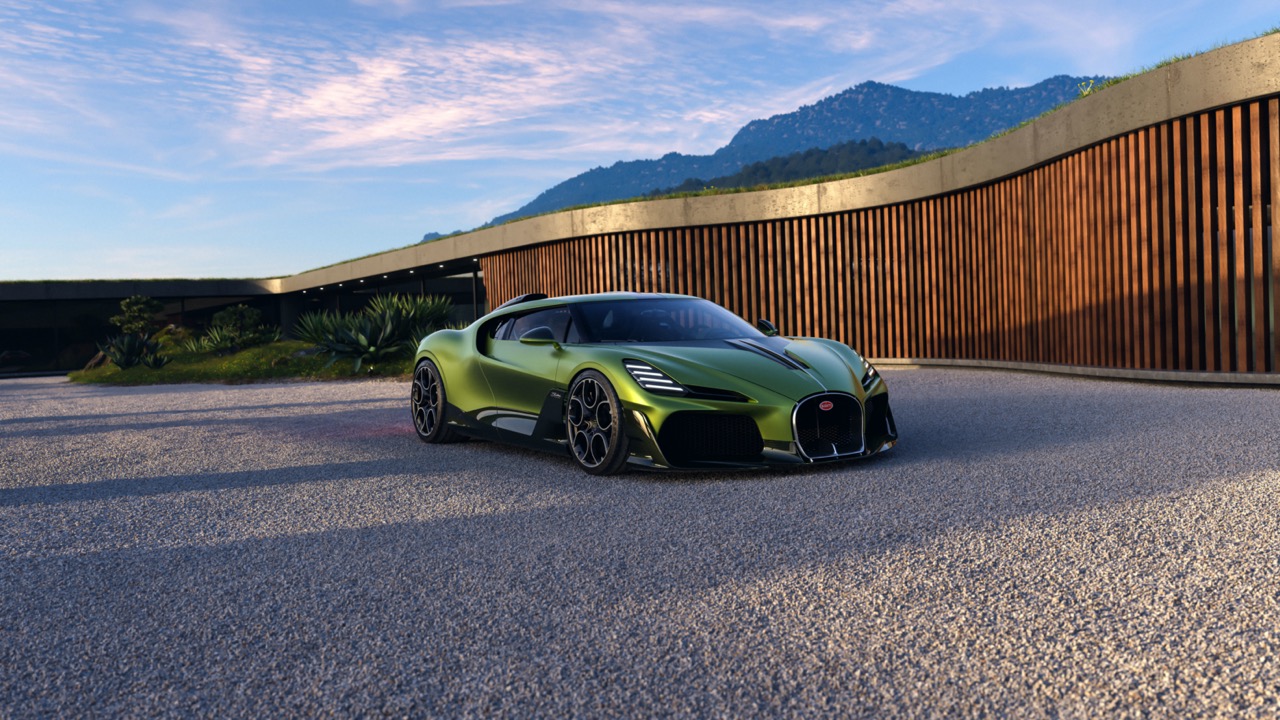
Bugatti has taken another bold step in its century-long pursuit of artistic automotive excellence with the unveiling of Programme Solitaire, a new initiative devoted entirely to the creation of truly bespoke, one-of-one vehicles. Introduced during Monterey Car Week, the programme’s inaugural commission, Brouillard, is a coachbuilt coupé that not only celebrates the marque’s rich heritage but also elevates craftsmanship and personalisation to an unprecedented level.

Rooted in the spirit of early coachbuilding and inspired by the profound artistry that has defined Bugatti since its earliest days, Programme Solitaire goes beyond the brand’s already highly tailored Sur Mesure offering. It draws inspiration from the early 20th-century tradition of creating unique automotive bodies through close collaboration between car manufacturers and coachbuilders. In Bugatti’s case, Jean Bugatti famously brought that expertise in-house, producing legendary designs such as the Type 57 SC Atlantic and its siblings—the Galibier, Stelvio, Ventoux, and Atalante—built on the Type 57 chassis.

The Brouillard represents the modern evolution of that legacy, built upon Bugatti’s most advanced engineering: the final and most potent version of the marque’s W16-powered platform. With a staggering output of 1,600PS from its quad-turbocharged engine, this creation embodies two decades of refined engineering excellence and signals the zenith of the W16 era.

(more…)

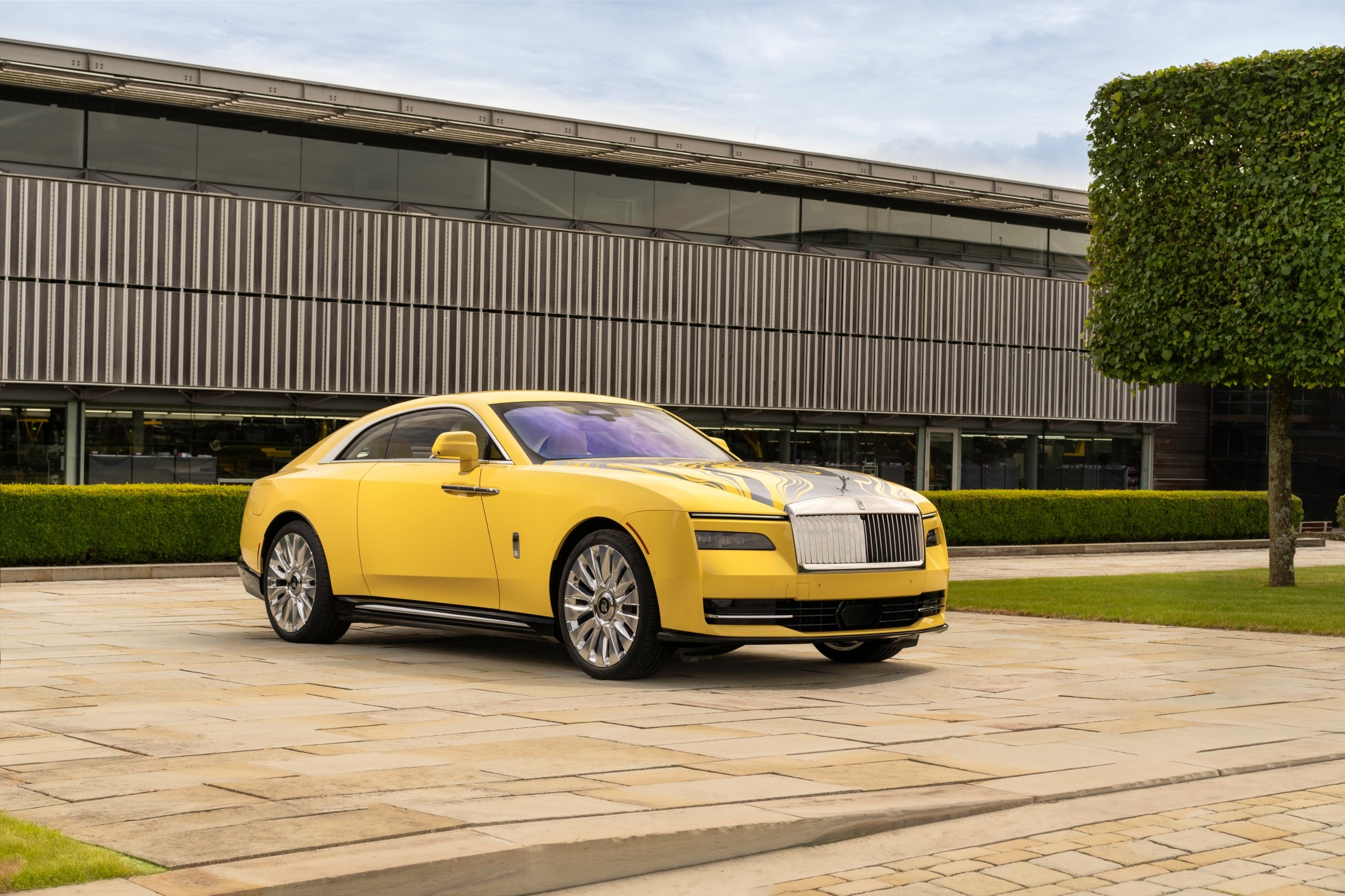
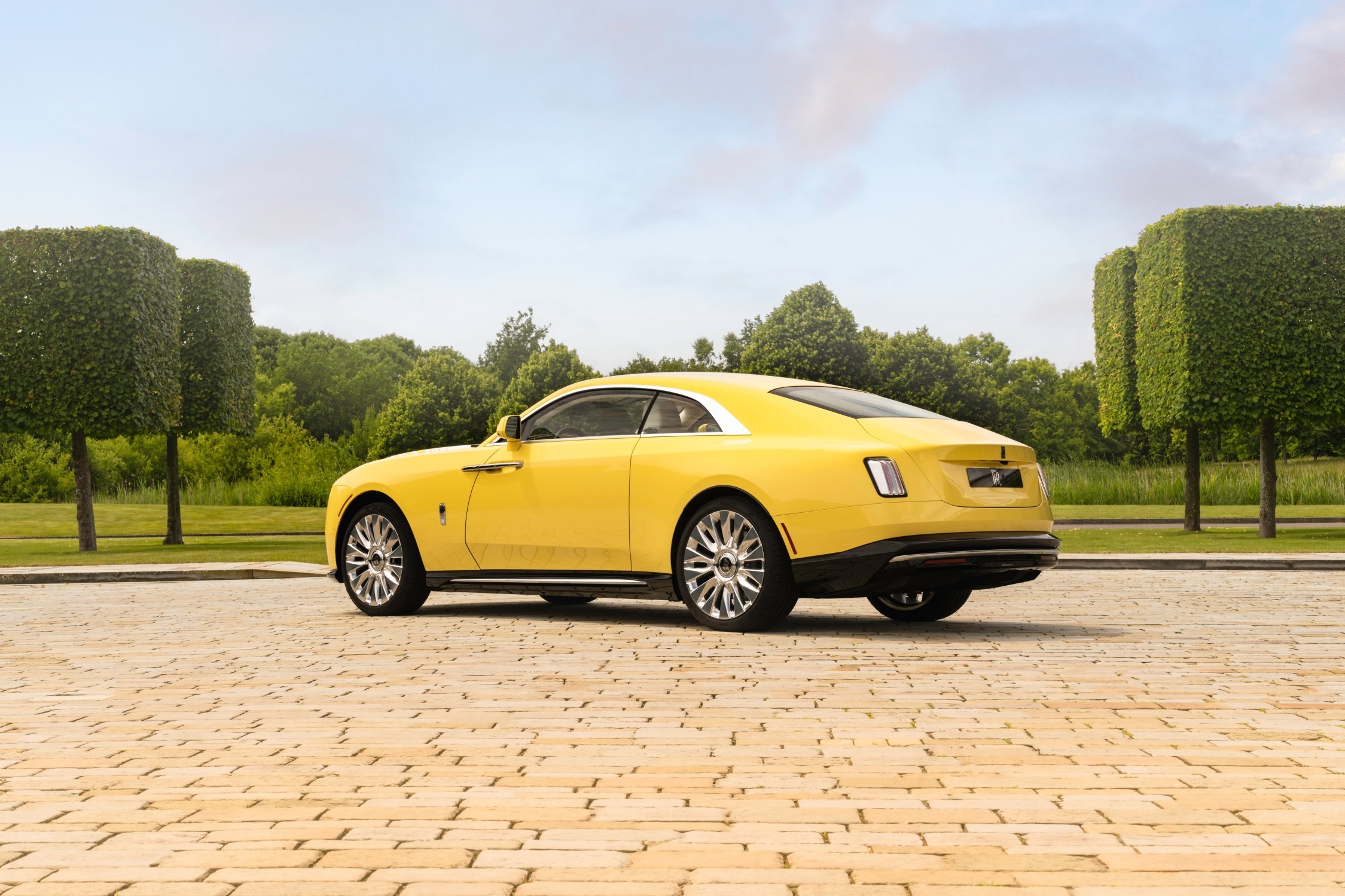
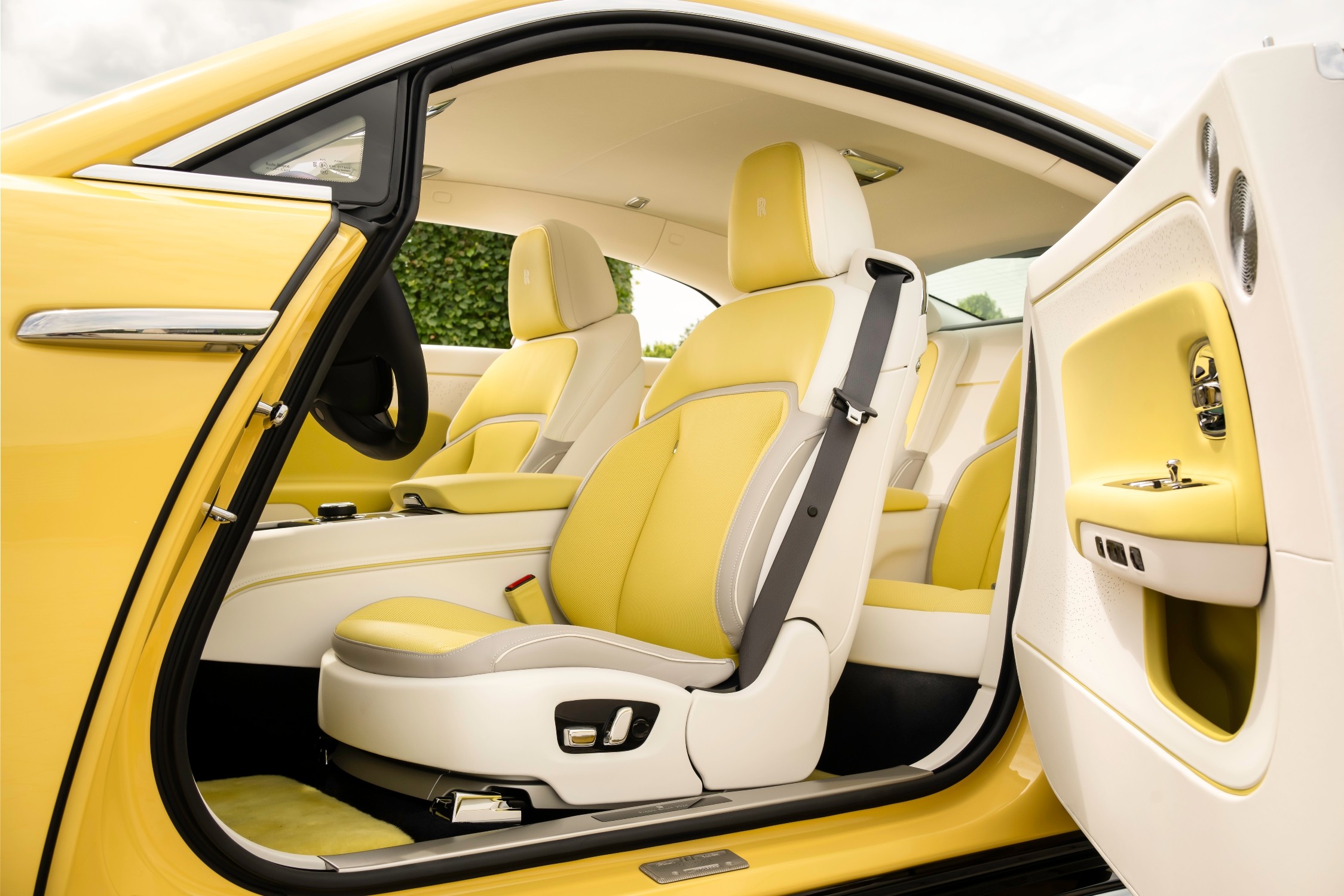
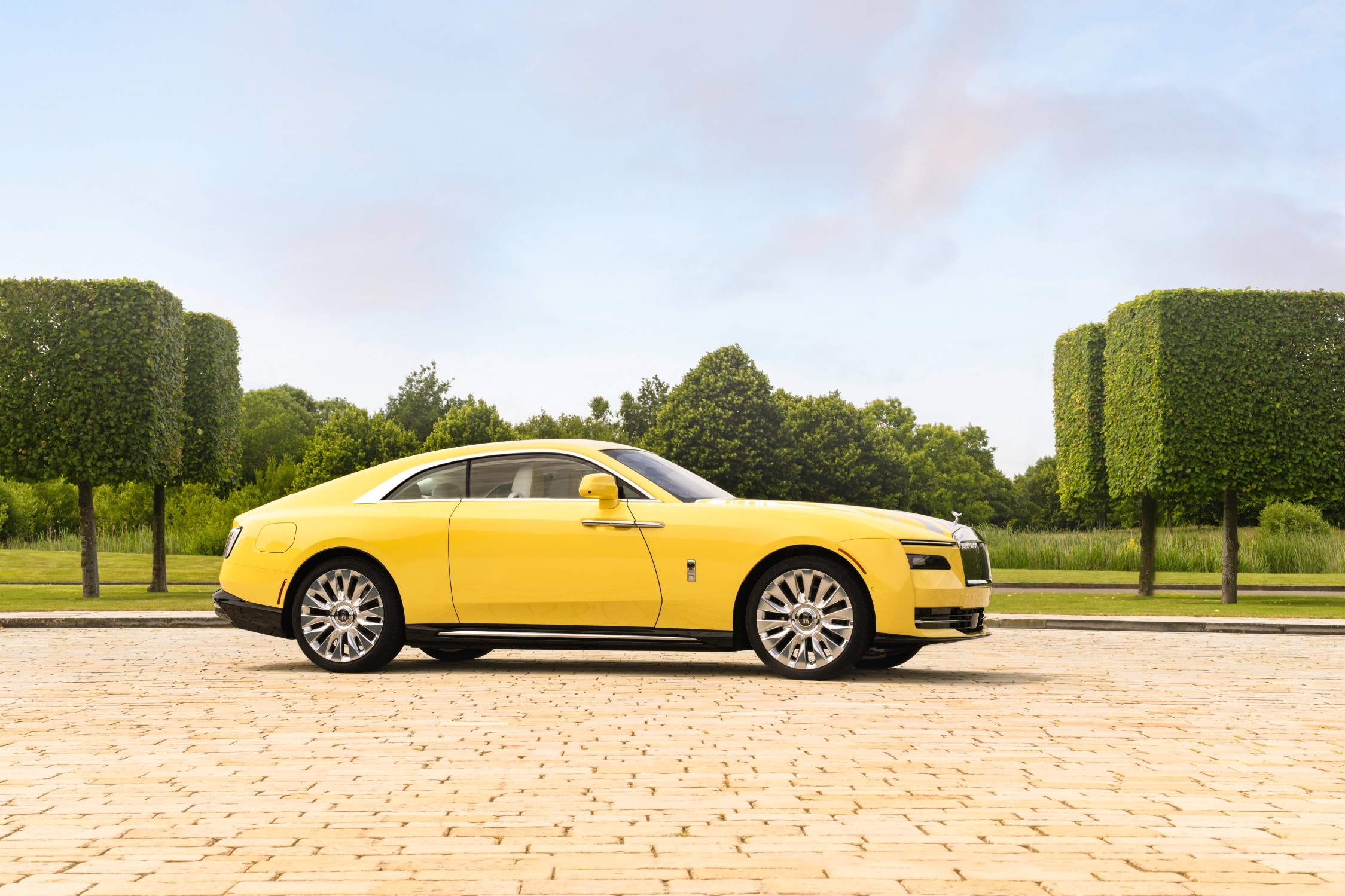
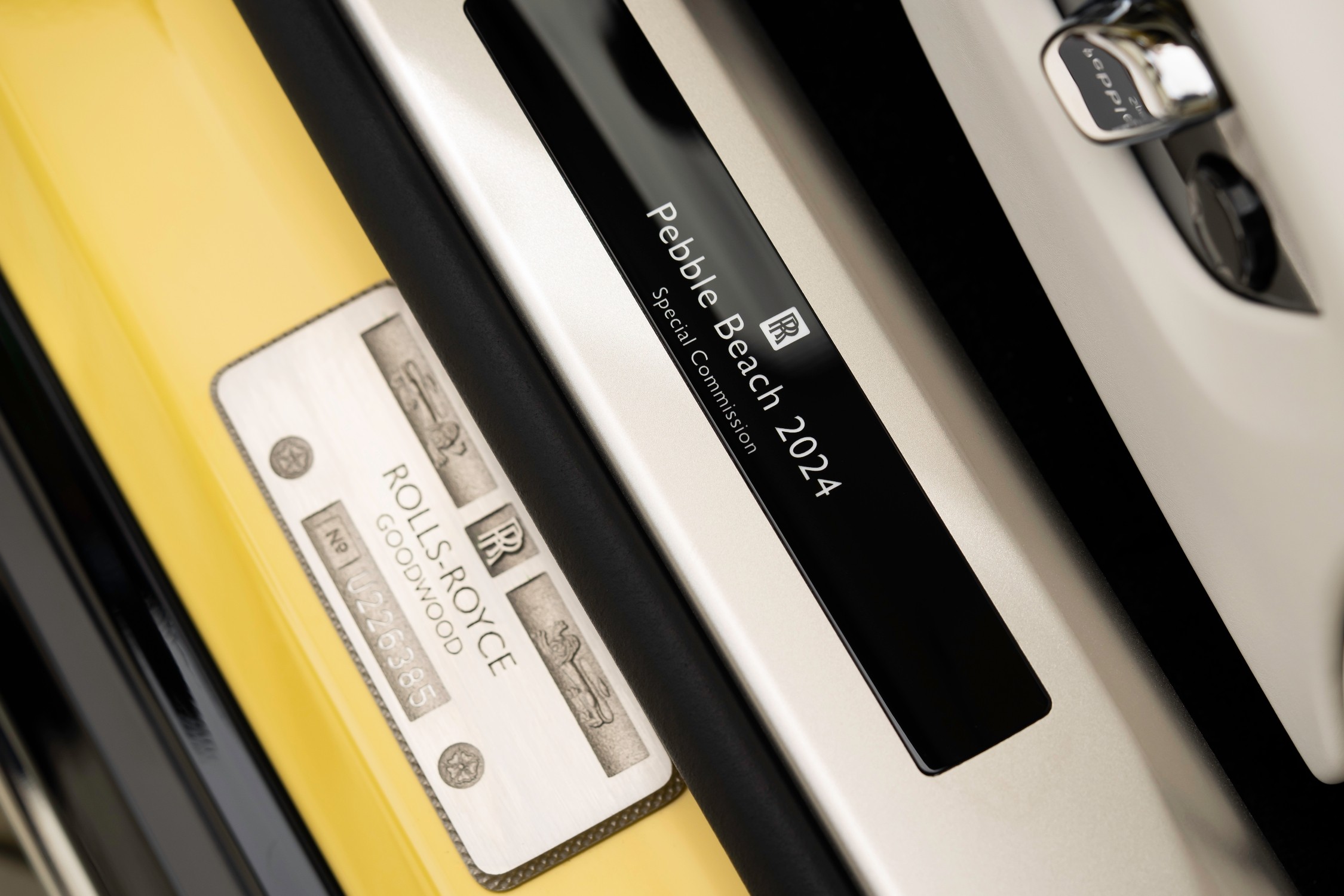
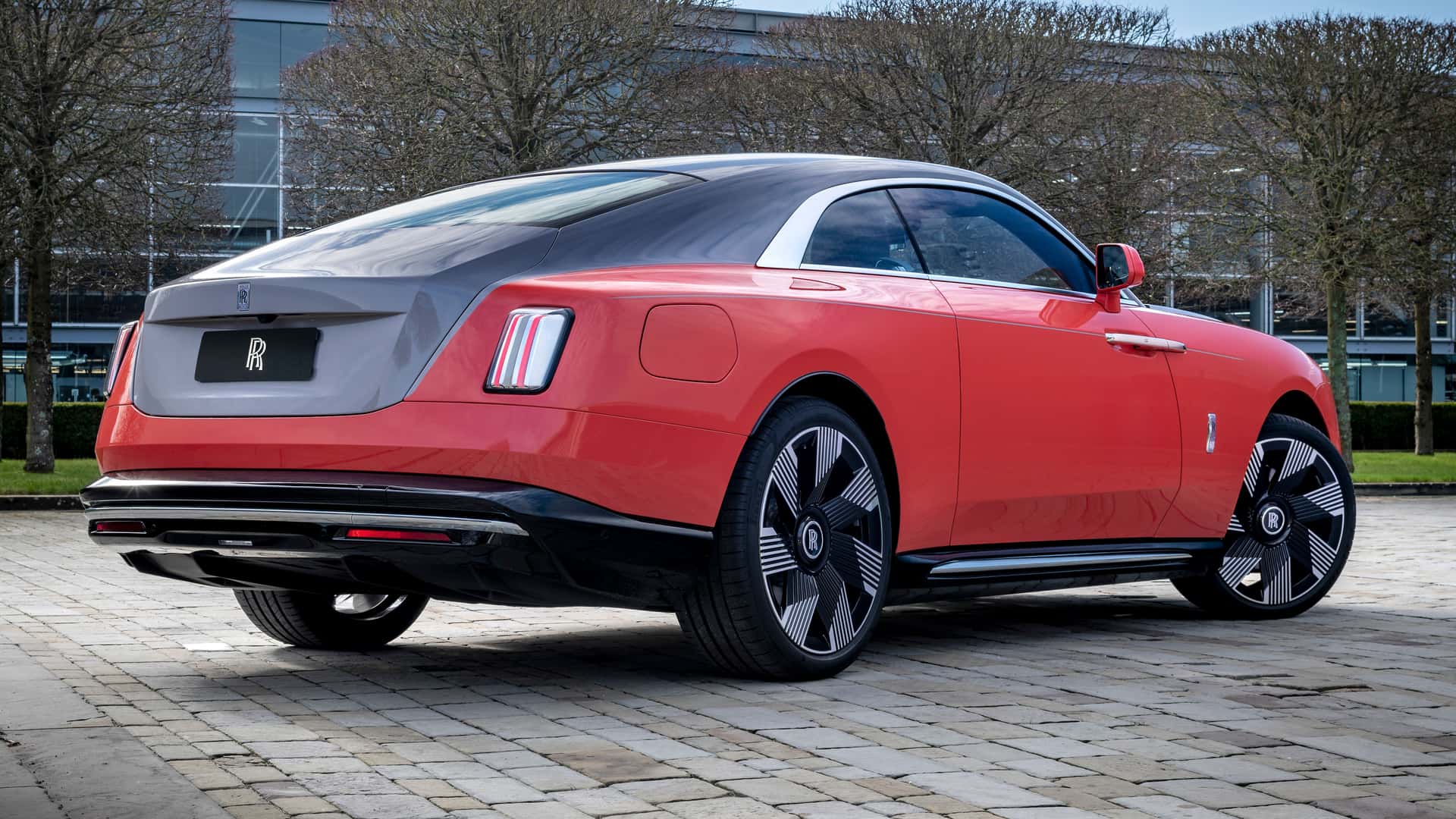
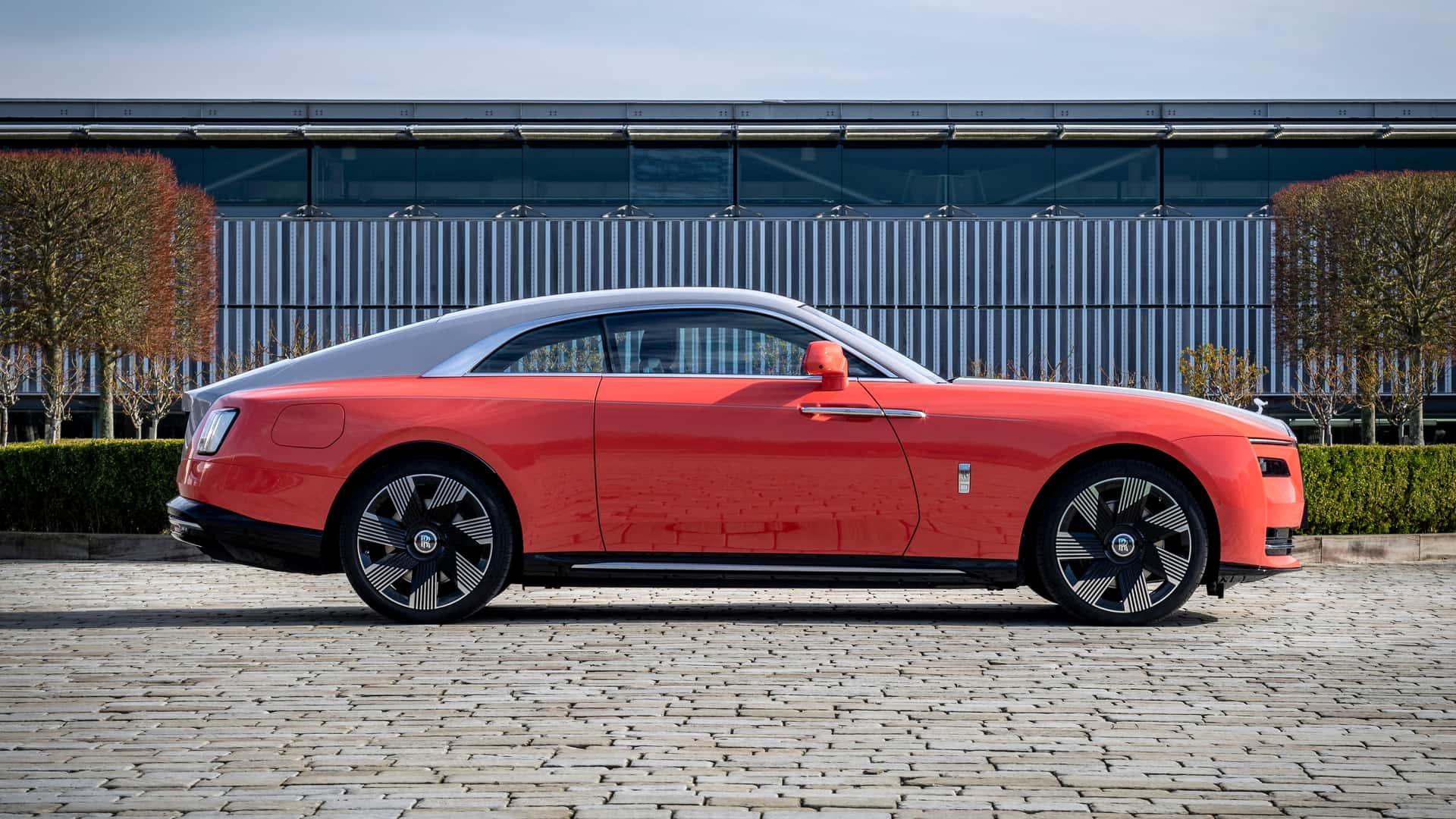
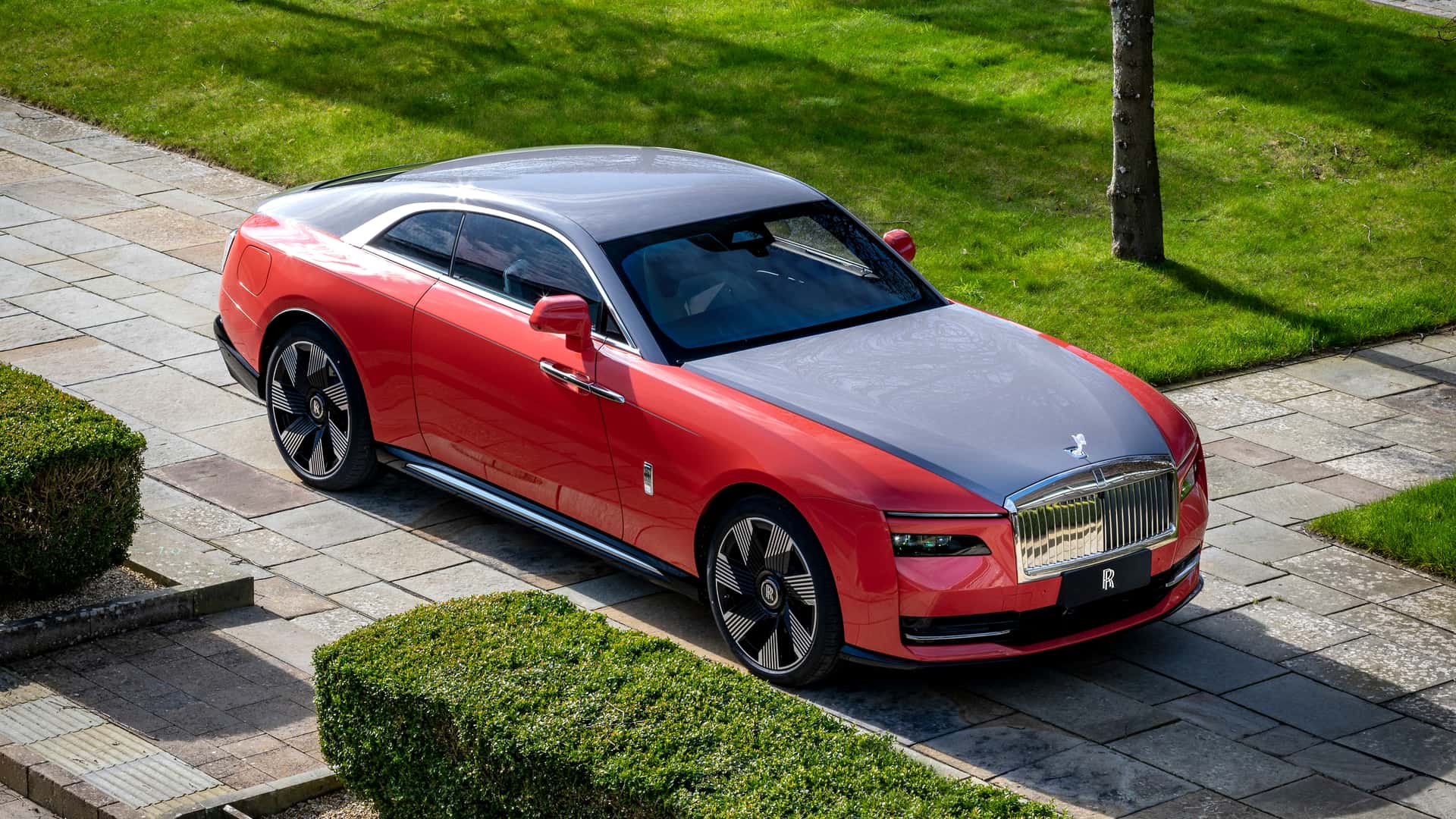
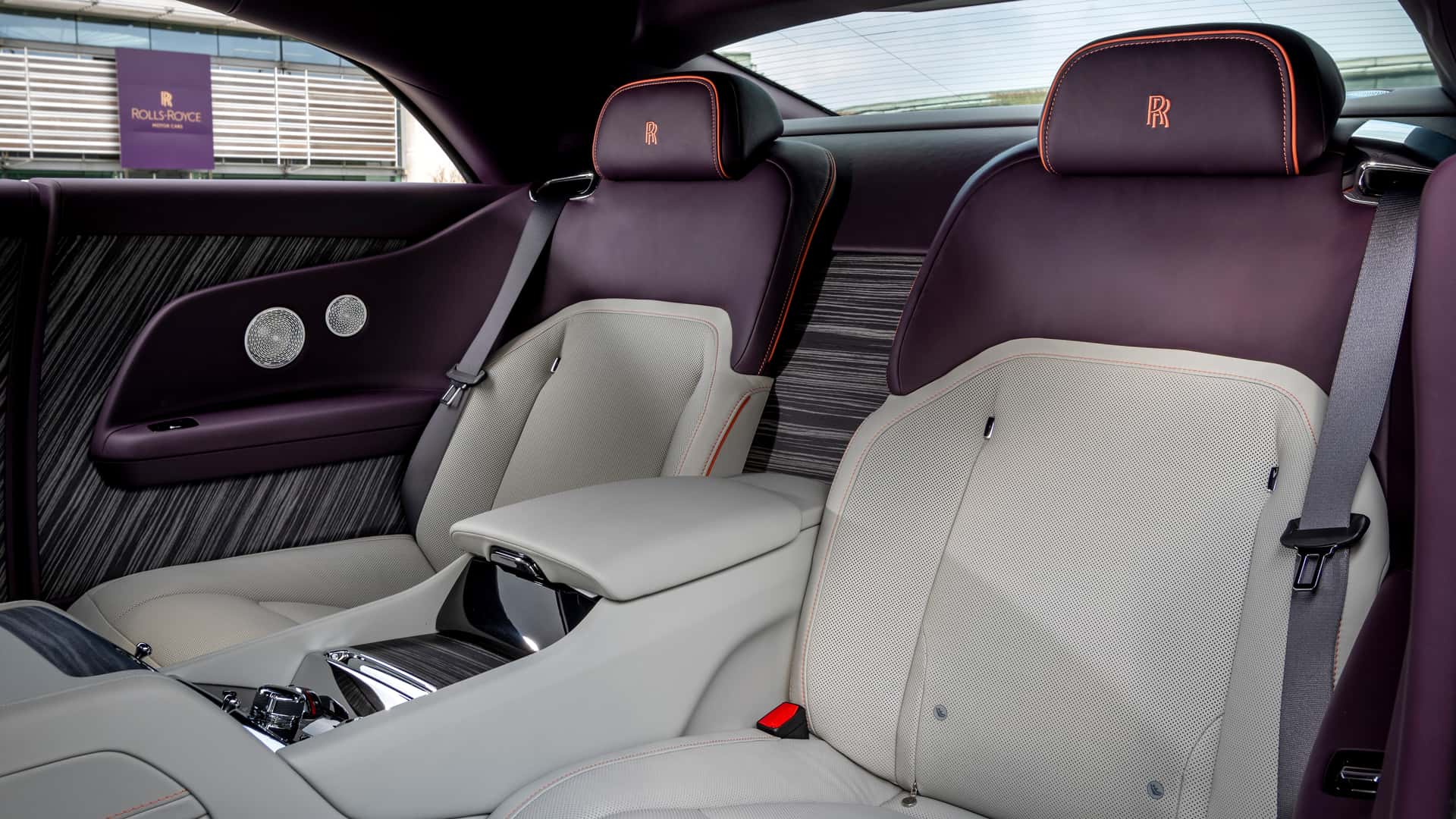
Rolls-Royce Motor Cars has unveiled a truly unique creation, the Spectre Semaphore, a one-of-a-kind bespoke commission set to make its global debut in the US at The Quail, A Motorsports Gathering, on August 16, 2024, during Monterey Car Week. This exceptional edition of the Rolls-Royce Spectre epitomises the brand’s evolving luxury standards, tailored for its discerning and youthful clientele.

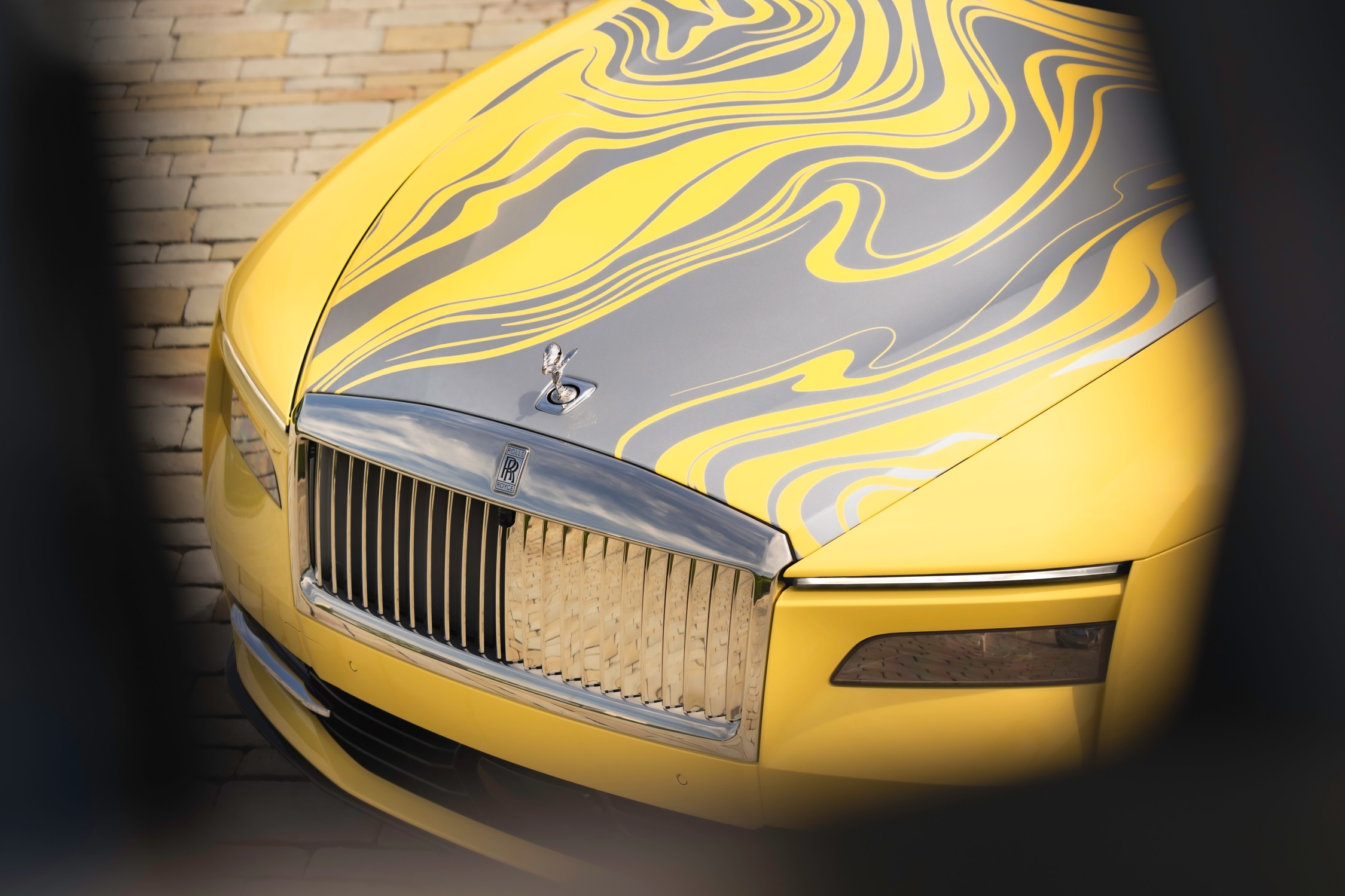
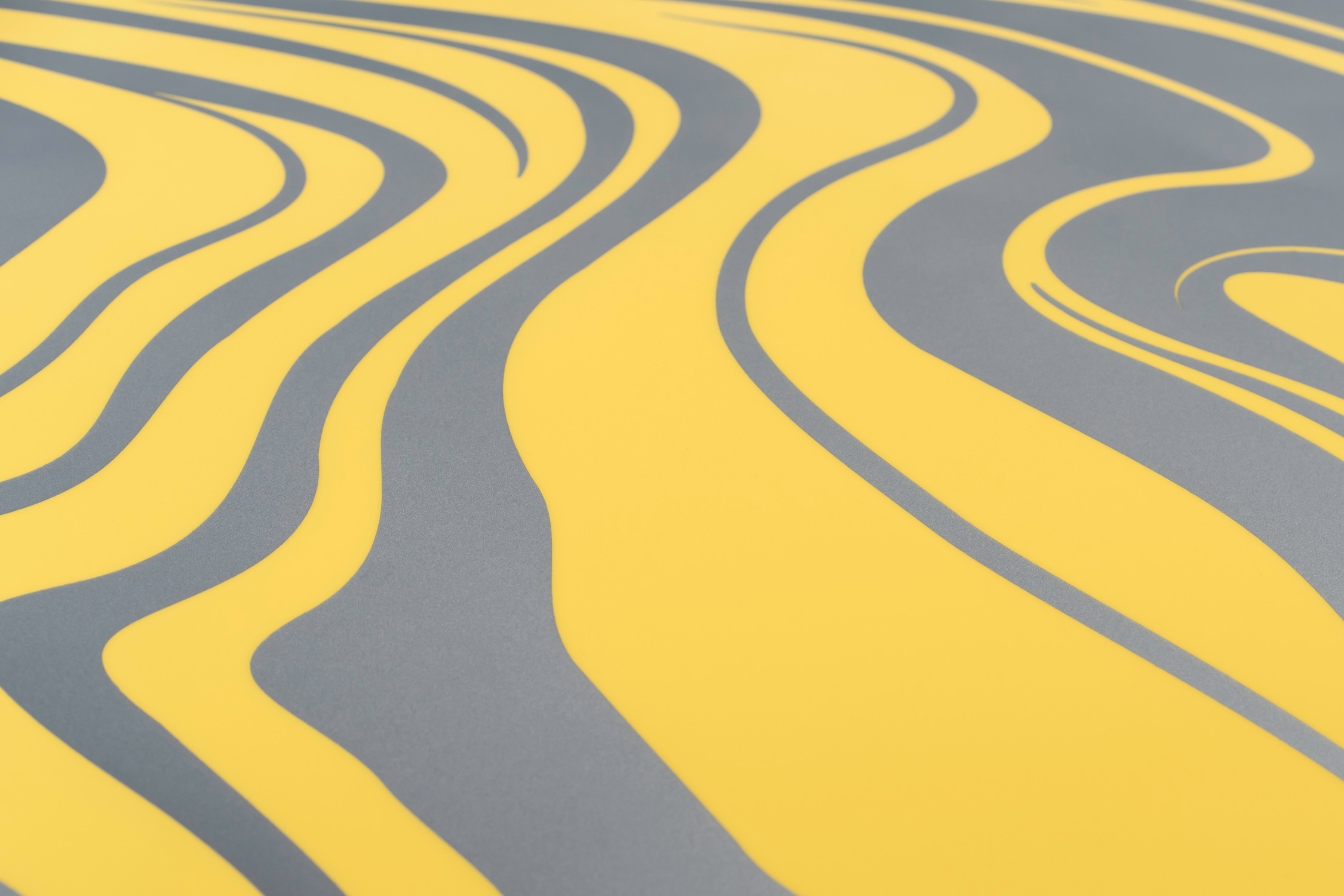
The Spectre Semaphore stands out with its striking exterior, finished in a custom Bespoke Semaphore Yellow. This vibrant solid colour, which lends its name to the commission, is further enhanced by an exclusive bonnet artwork titled ‘Marbled Paint Spill’. This intricate design pays homage to the diverse beauty of California, capturing elements from the sunlit Southern coast to the silver-topped eastern mountains.

Rolls-Royce’s skilled artisans dedicated over 160 hours to perfecting this unique graphic, applying silver lacquer and multiple layers of clear coat to achieve a flawless finish.

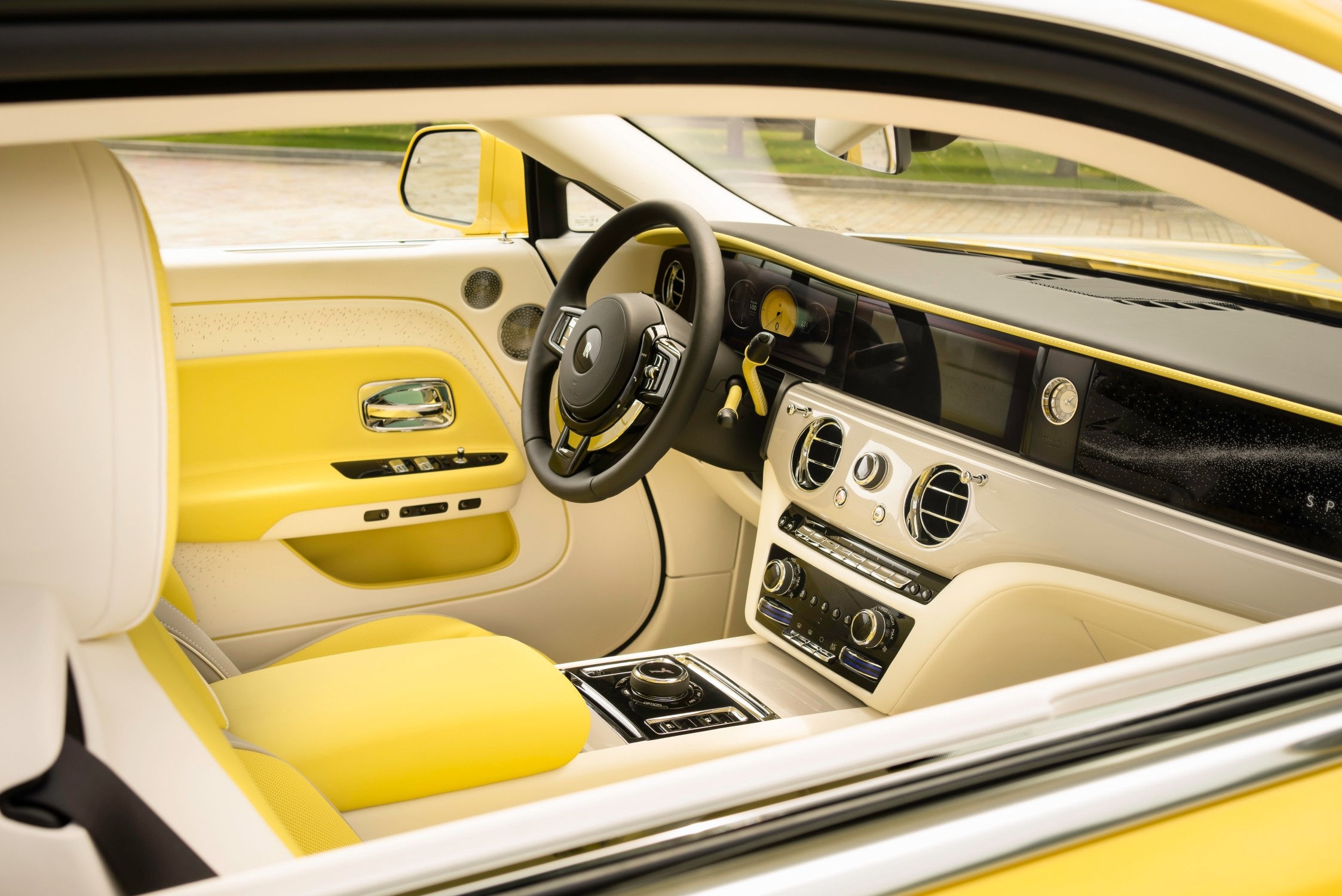
The bold yellow theme continues inside the Spectre Semaphore. The cabin features a blend of Bespoke Lemon Yellow and Citrine Yellow, complemented by Grace White and Slate Grey hues. This vivid colour scheme is highlighted by Lemon Yellow stitching throughout the interior, including the seats, Starlight doors, and instrument panel.

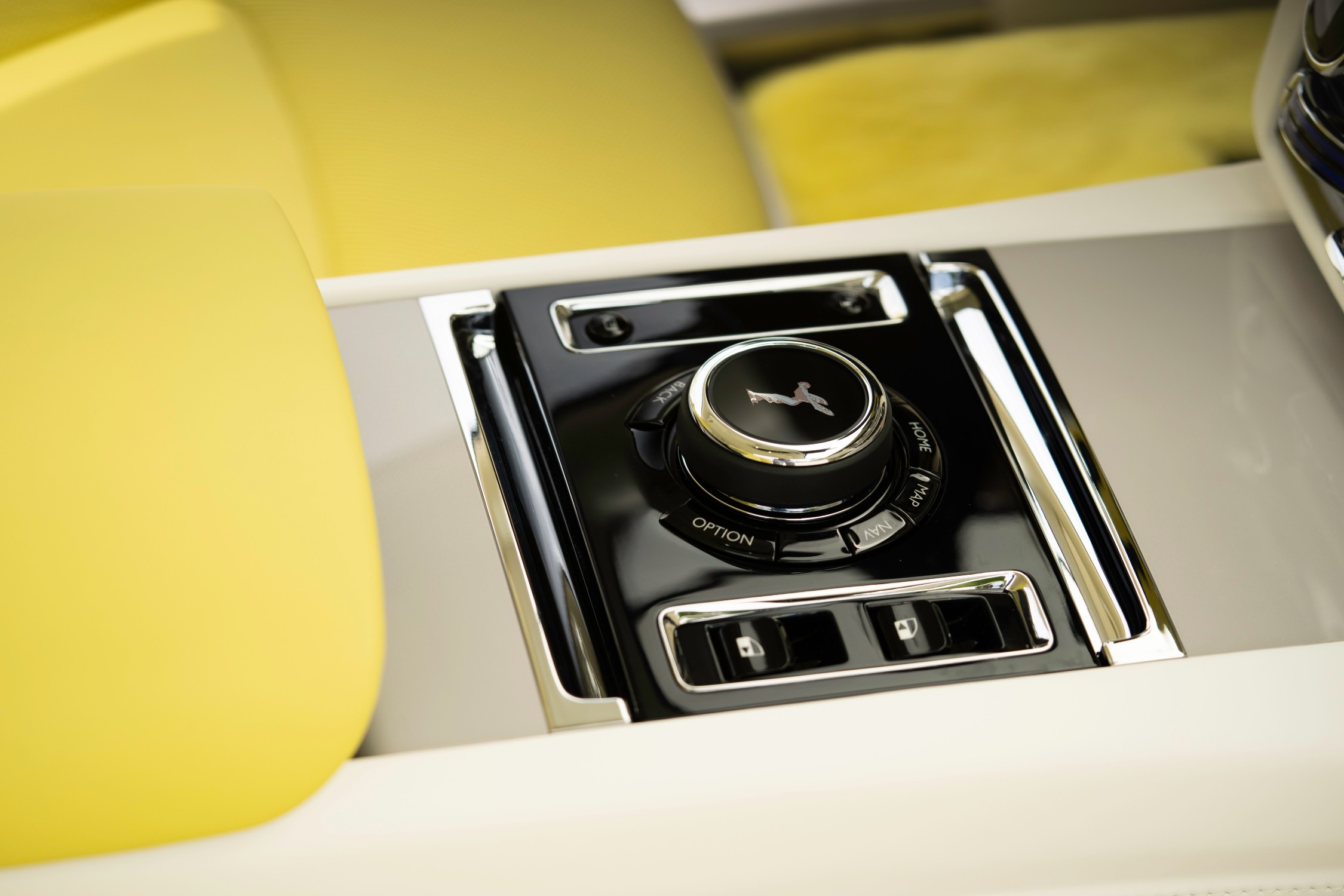
Incorporating the latest in digital Bespoke technology, the SPIRIT operating system’s dials have been customised to match the vehicle’s color palette, showcasing Rolls-Royce’s commitment to personalised luxury.

The interior also features a high-polish Bespoke painted wood set in Cashmere Grey, imbued with silver mica flakes that sparkle under direct light, enhancing the car’s contemporary design.

Only one Rolls-Royce Spectre Semaphore will be produced, underscoring its exclusivity. It will be showcased at The Quail, A Motorsports Gathering, marking a highlight of Rolls-Royce Motor Cars’ participation in Monterey Car Week 2024.

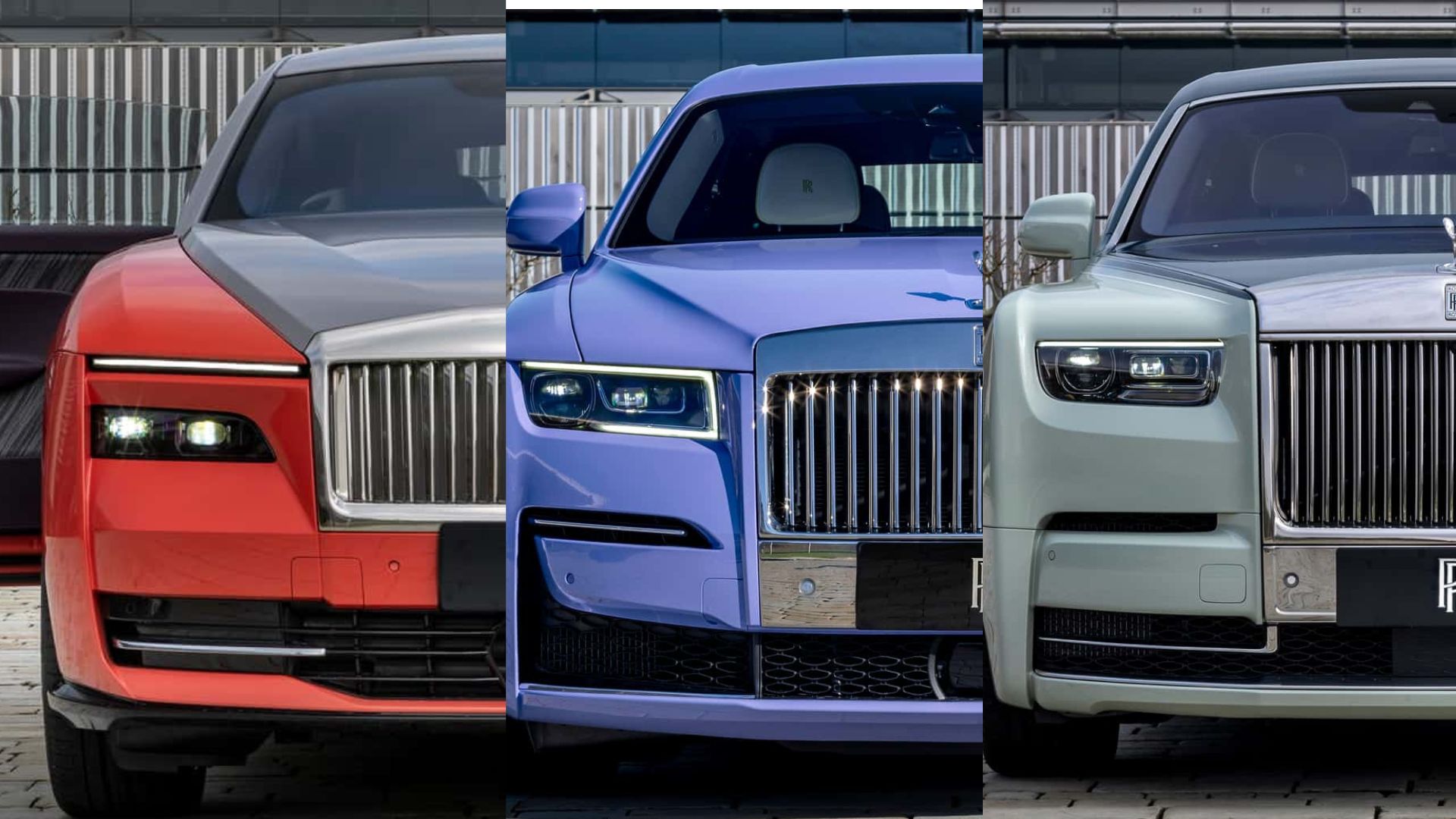
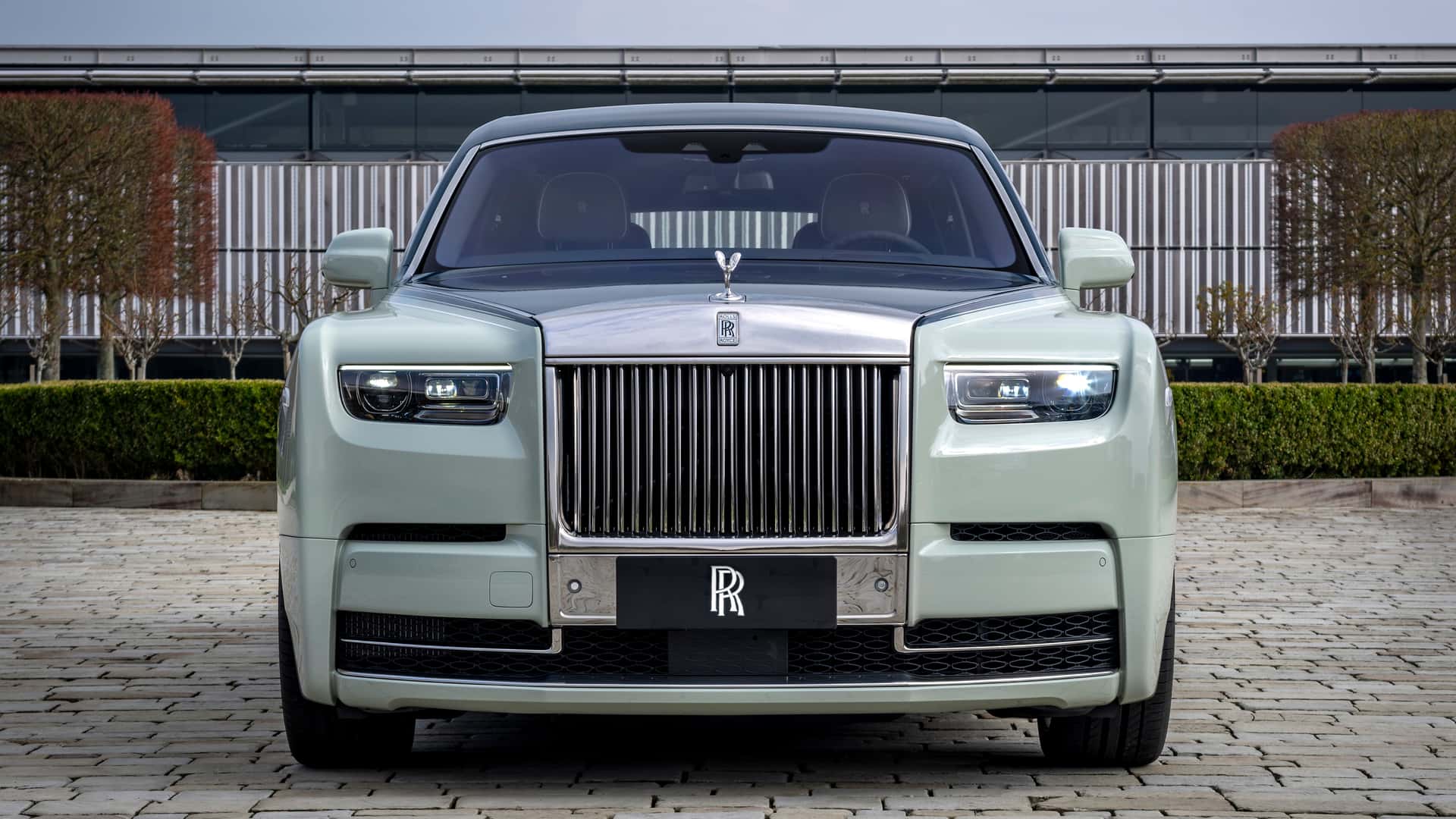
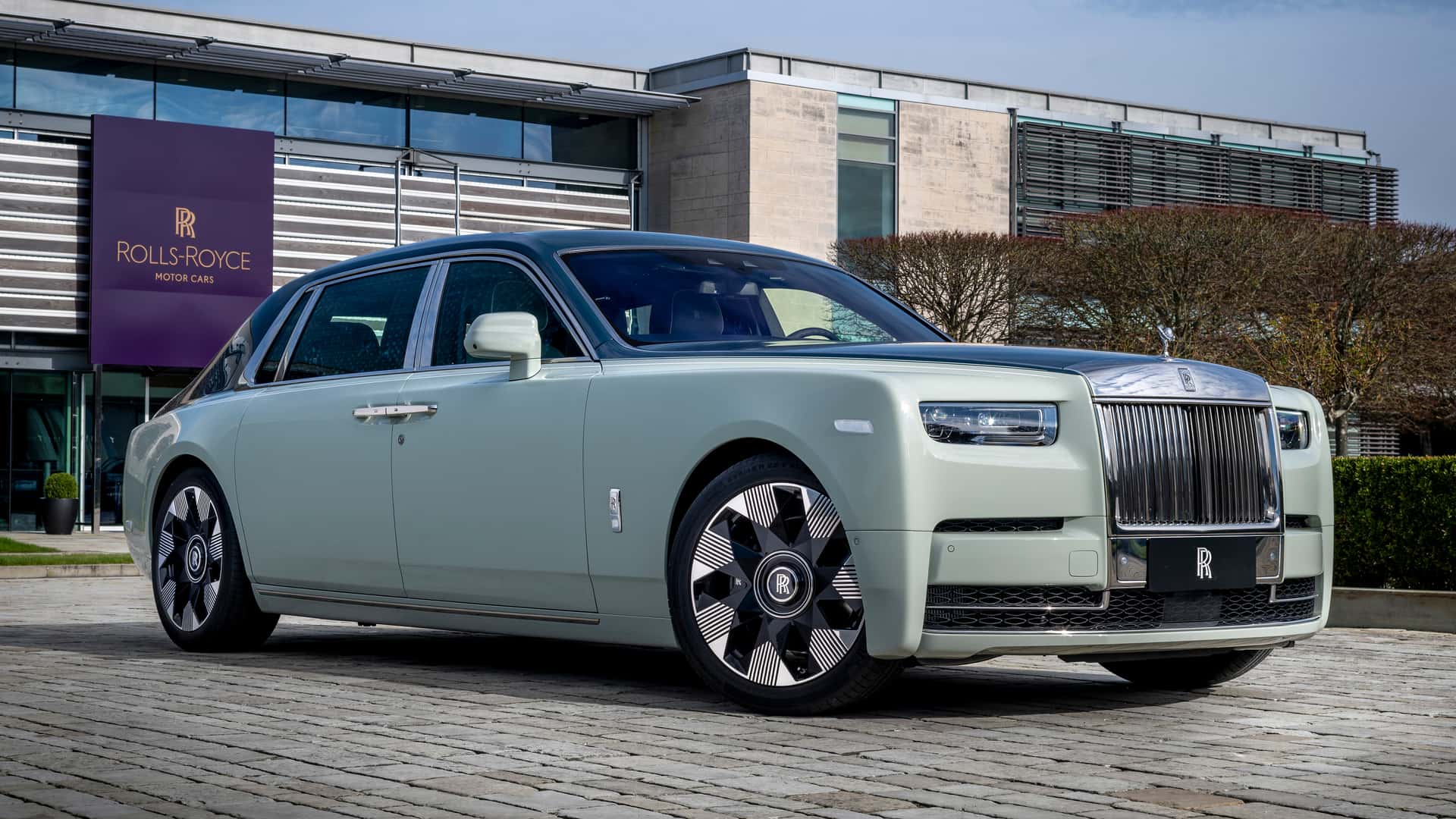
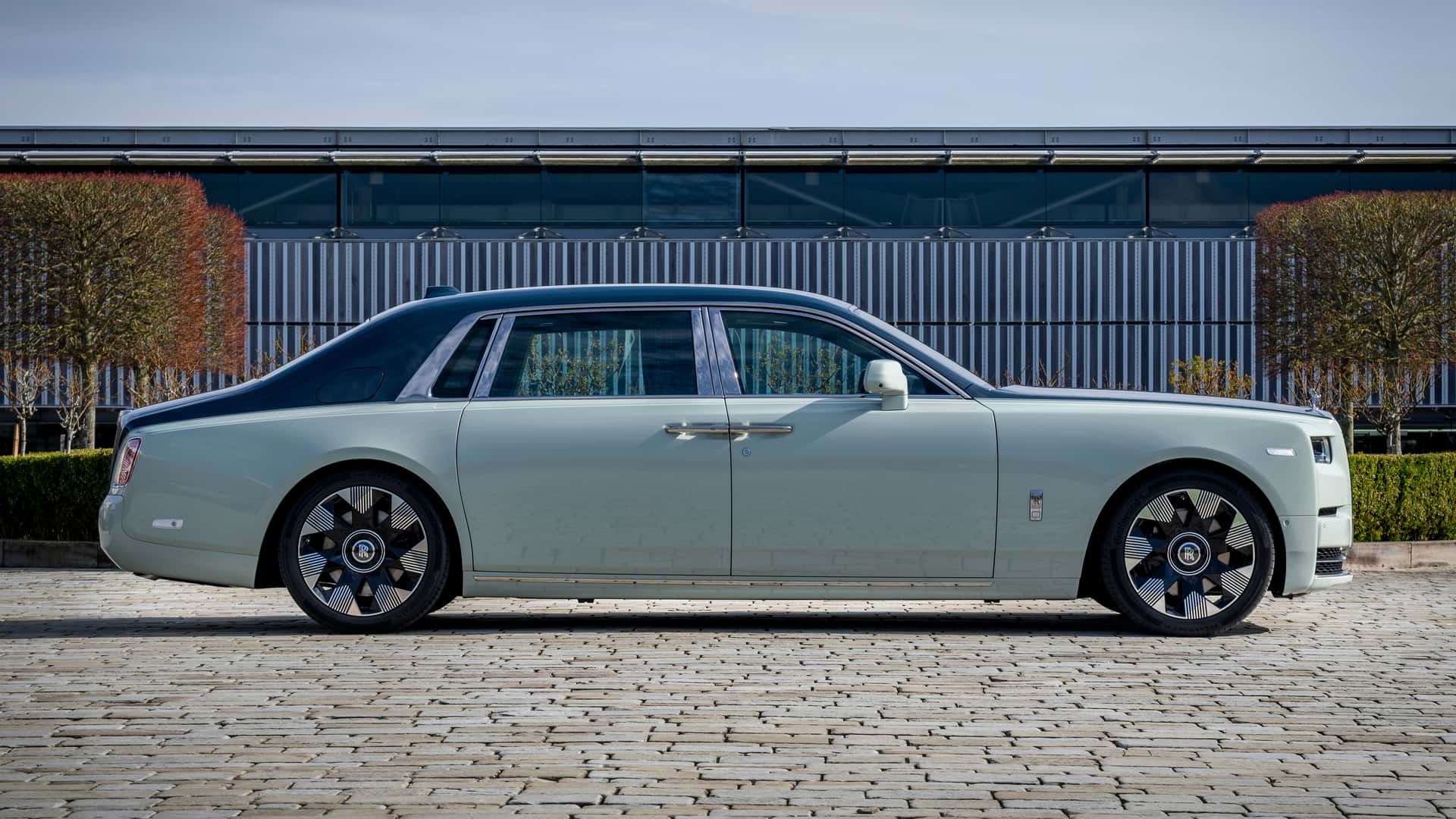
Rolls-Royce Motor Cars has unveiled ‘Spirit of Expression’ – three unique Bespoke commissions featuring Ghost Extended, Phantom Extended, and Spectre. These cars will debut at the 18th Beijing International Automotive Exhibition (Auto China 2024) on April 25.

The ‘Spirit of Expression’ commissions are tailored to the preferences of young Chinese clients who seek luxury products personalised to their tastes. Each car’s exterior colour reflects a moment from various destinations worldwide, while a celestial motif inside symbolises the night sky above these locations.

Created through collaboration between Rolls-Royce’s designers in Goodwood and the Bespoke designer at the Rolls-Royce Private Office Shanghai, these commissions reflect a global approach. Rolls-Royce aims to enhance its Bespoke offering by engaging with clients worldwide and bringing regional insights back to its headquarters in Goodwood.

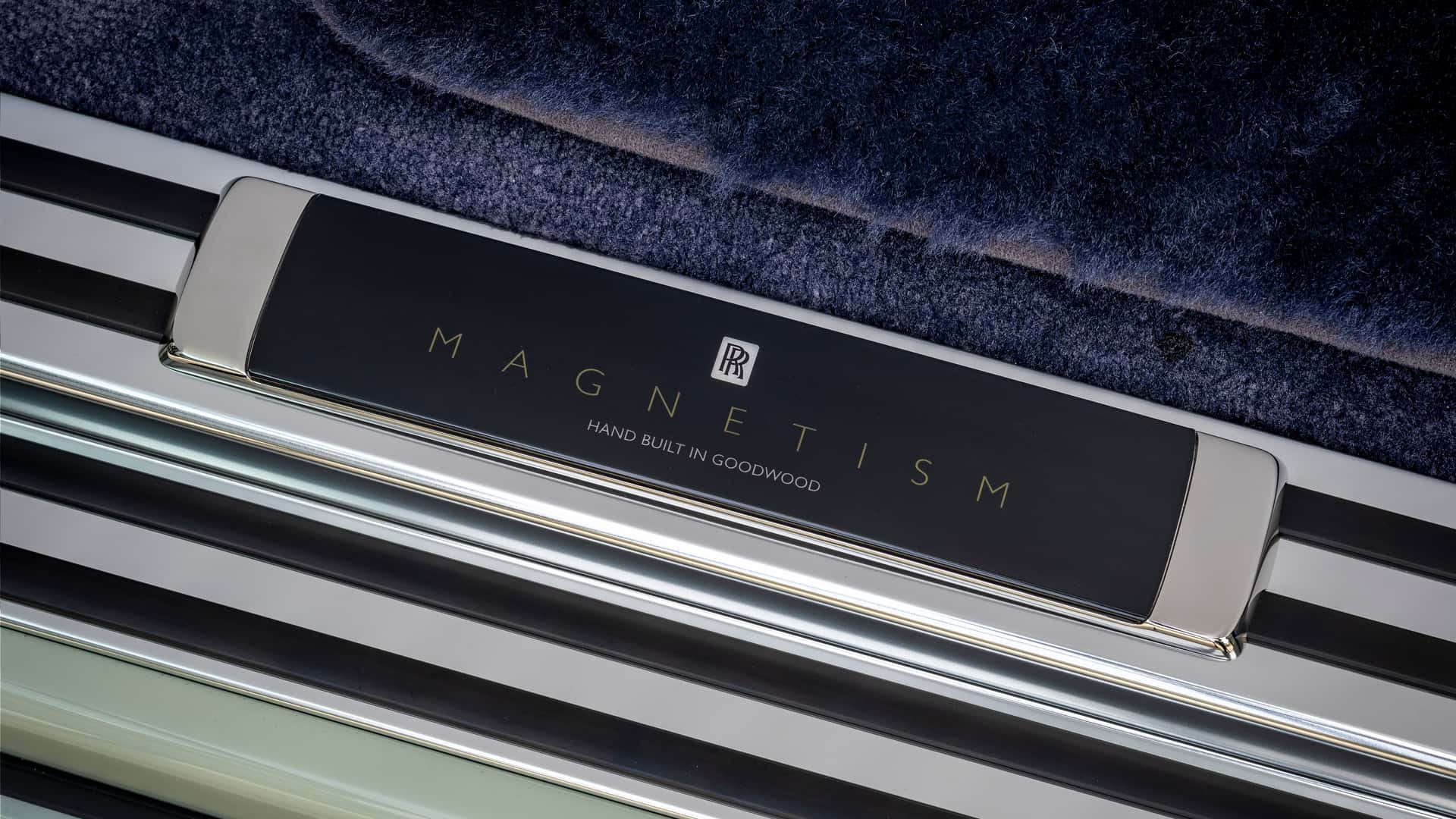
Rolls-Royce Phantom Extended ‘Magnetism’

The Rolls-Royce Phantom Extended ‘Magnetism’ is a modern take on the brand’s flagship model, capturing the magnetic allure of a beach bay at night. The two-tone exterior features Cala Luna Sand and Kabira Blue, reminiscent of moonlit beach sands and the intense horizon. A double coachline in Arctic White and Cala Luna Sand adds to the exterior’s elegance.

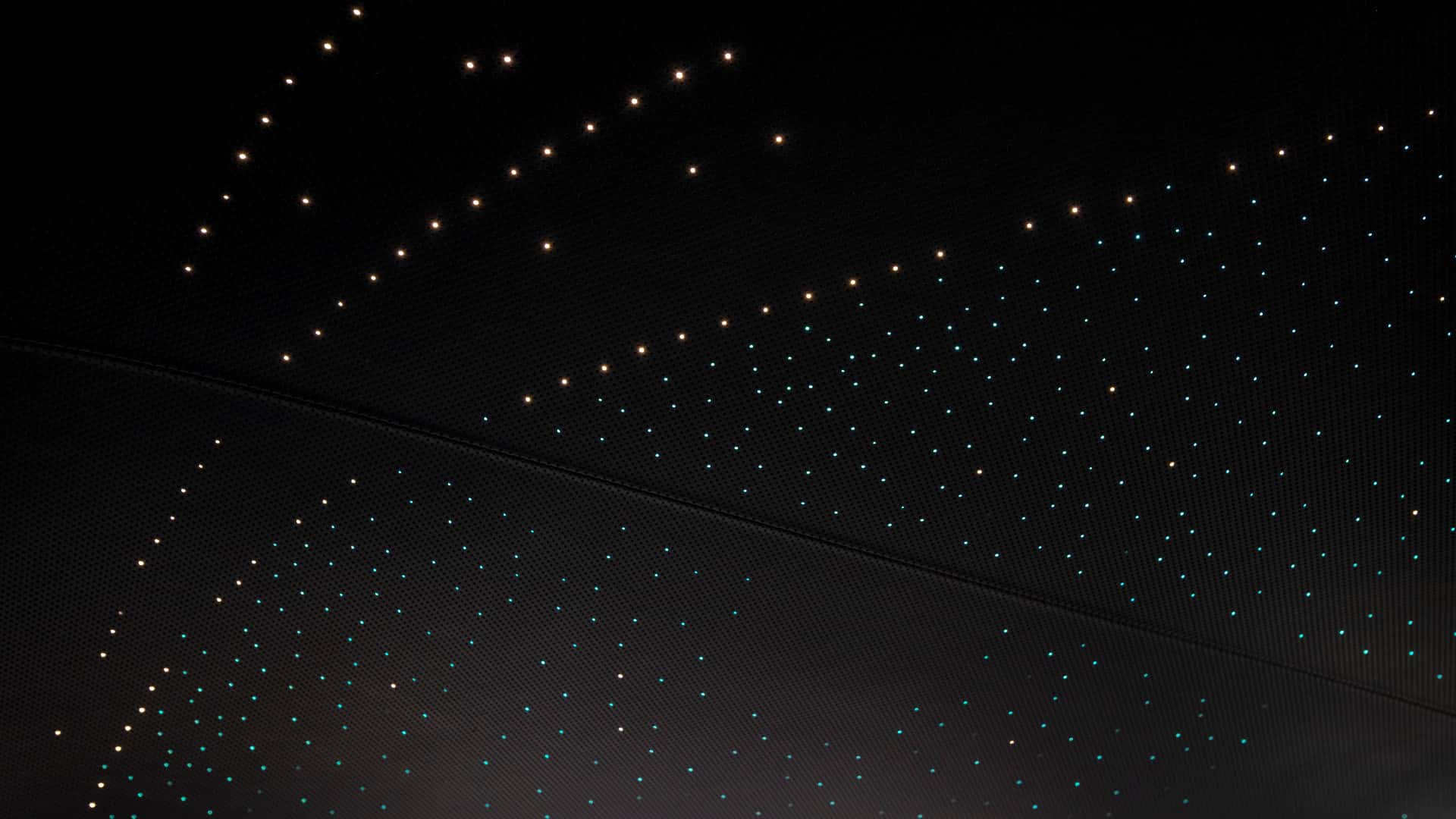
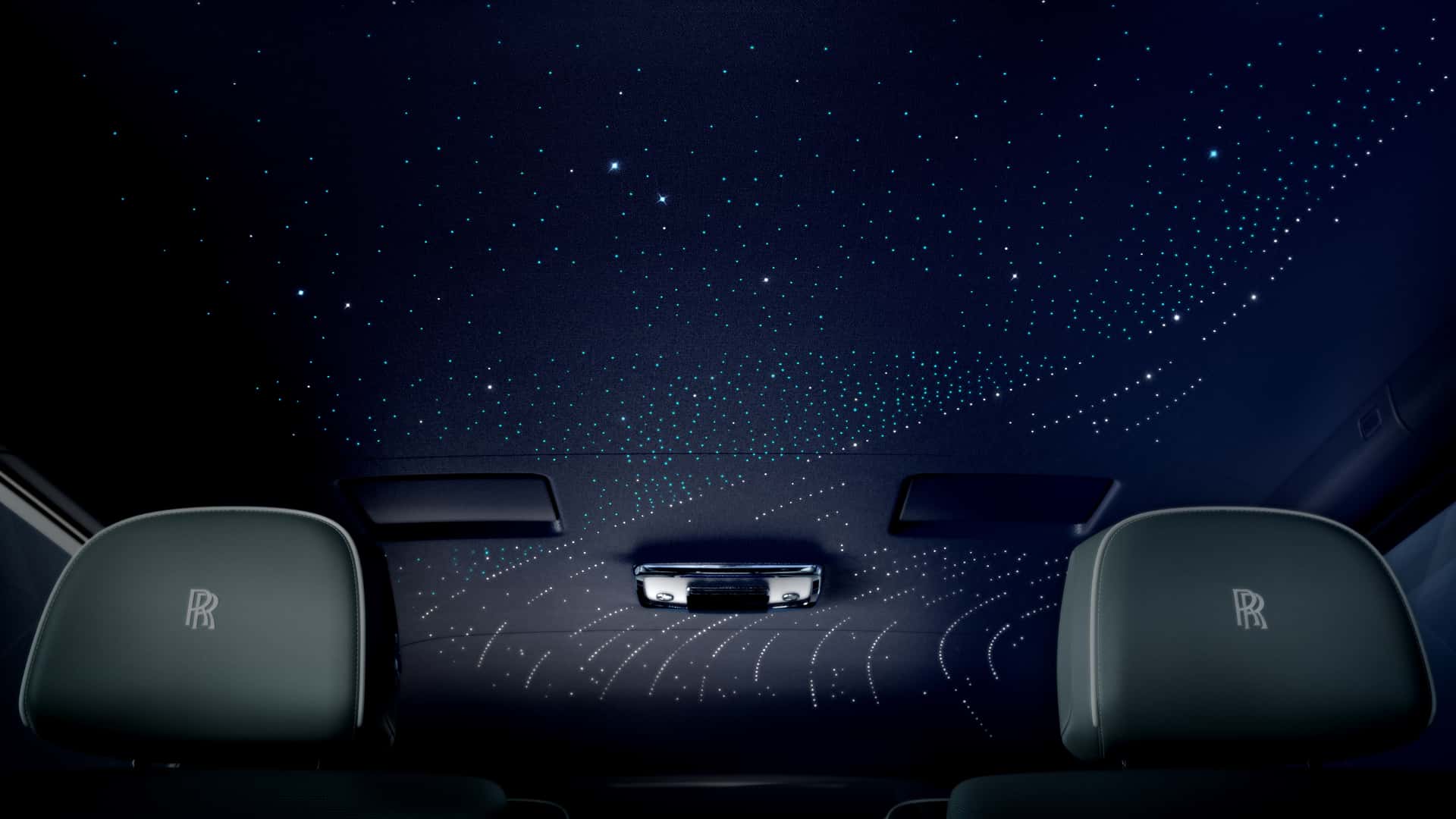
Inside, the celestial theme continues with a Starlight Headliner featuring 768 Galileo Blue and 576 White ‘stars’, complemented by eight ‘shooting stars’. The rear waterfall and Gallery artwork showcase intricate stainless steel inlays and embroidery in Arctic White thread on Navy Blue canvas. The Gallery piece boasts 43,096 stitches, enhancing the interplay of light and shadow.

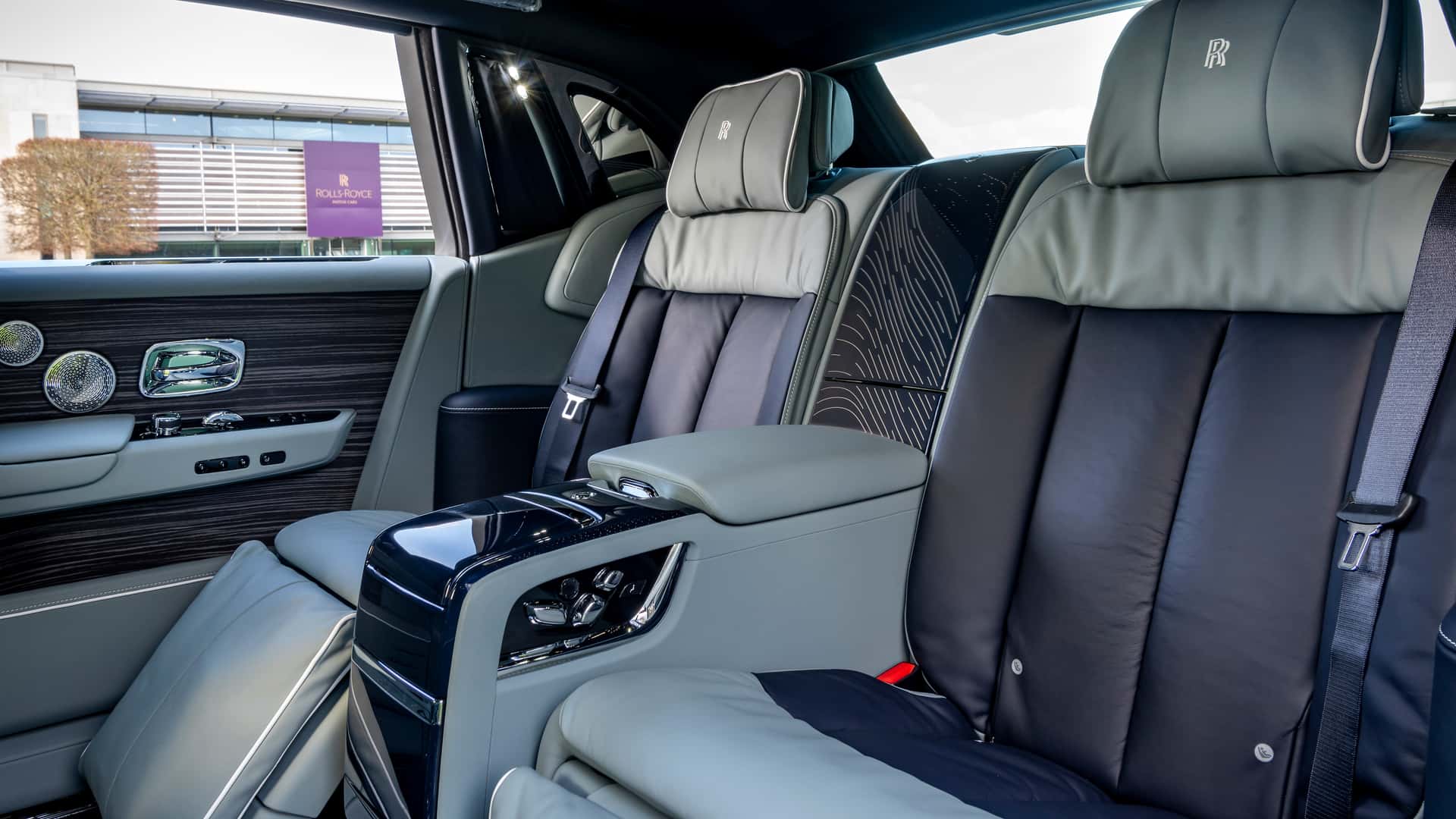
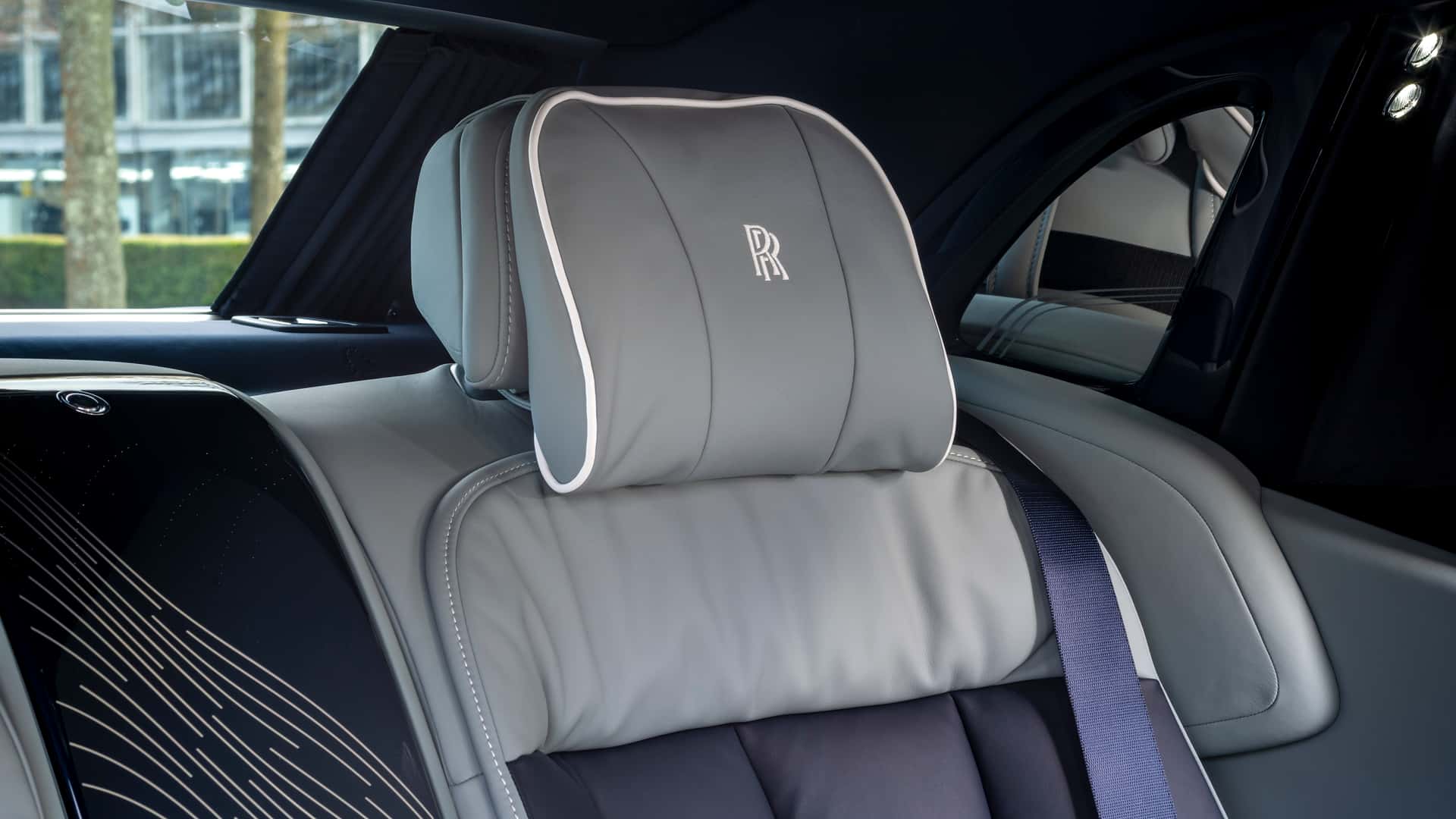
The front and rear seats are upholstered in Blue Grey, Navy Blue, and Arctic White leather with Arctic White stitching, piping, and headrest monograms. The door veneer features open-pore Obsidian Ayous, offering a contemporary tactile finish that highlights the wood’s natural grain.

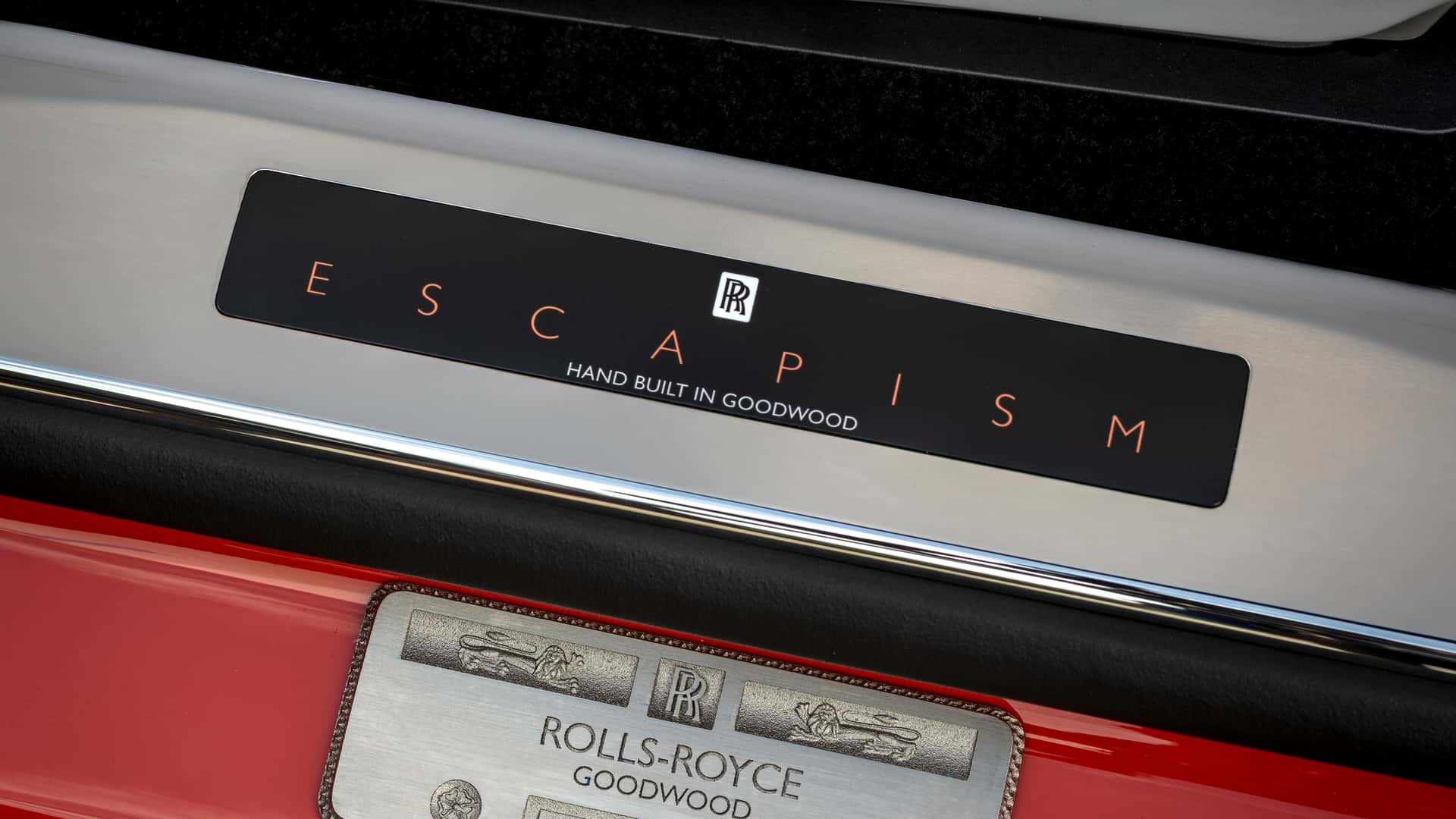
Rolls-Royce Spectre ‘Escapism’

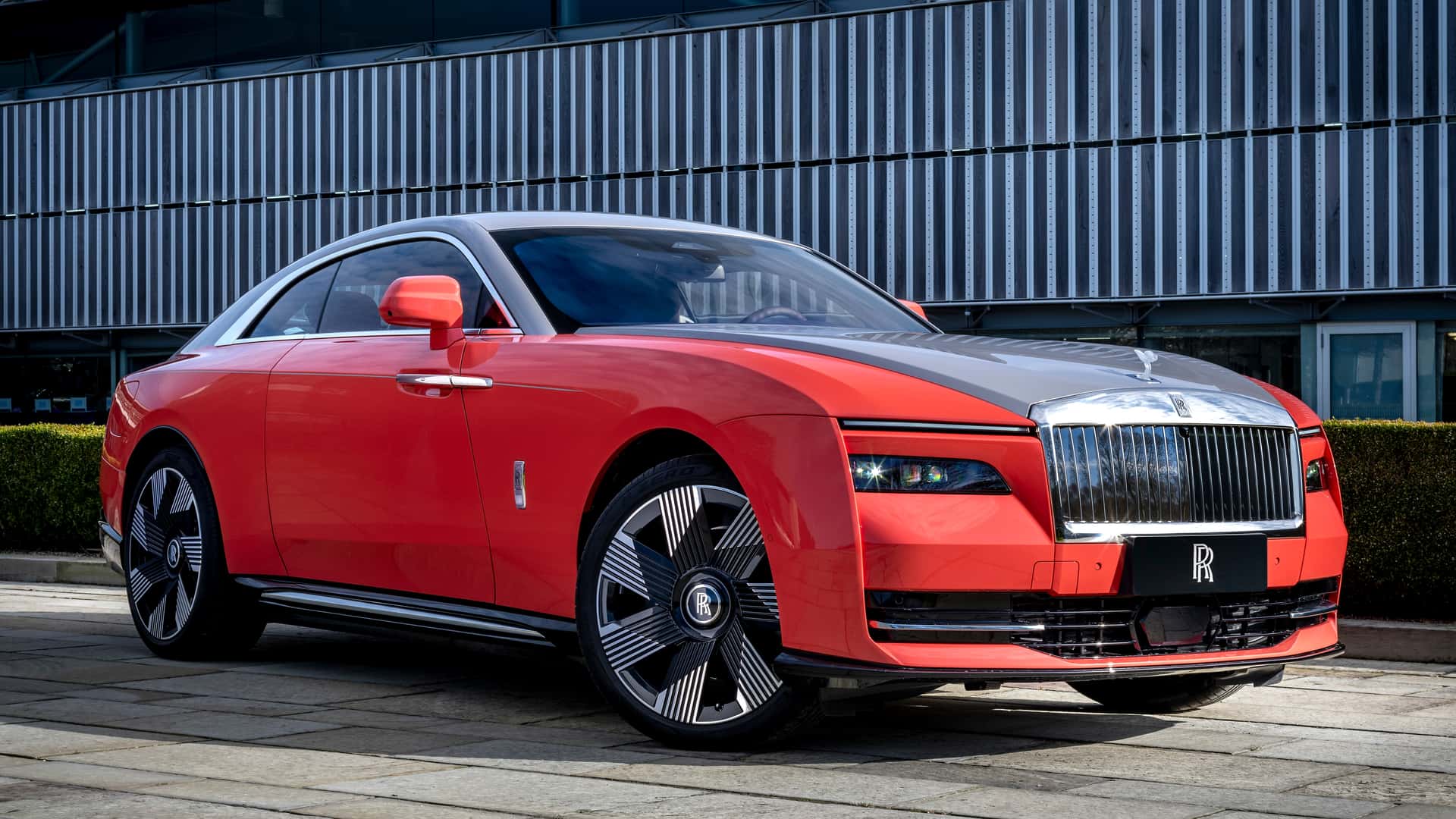
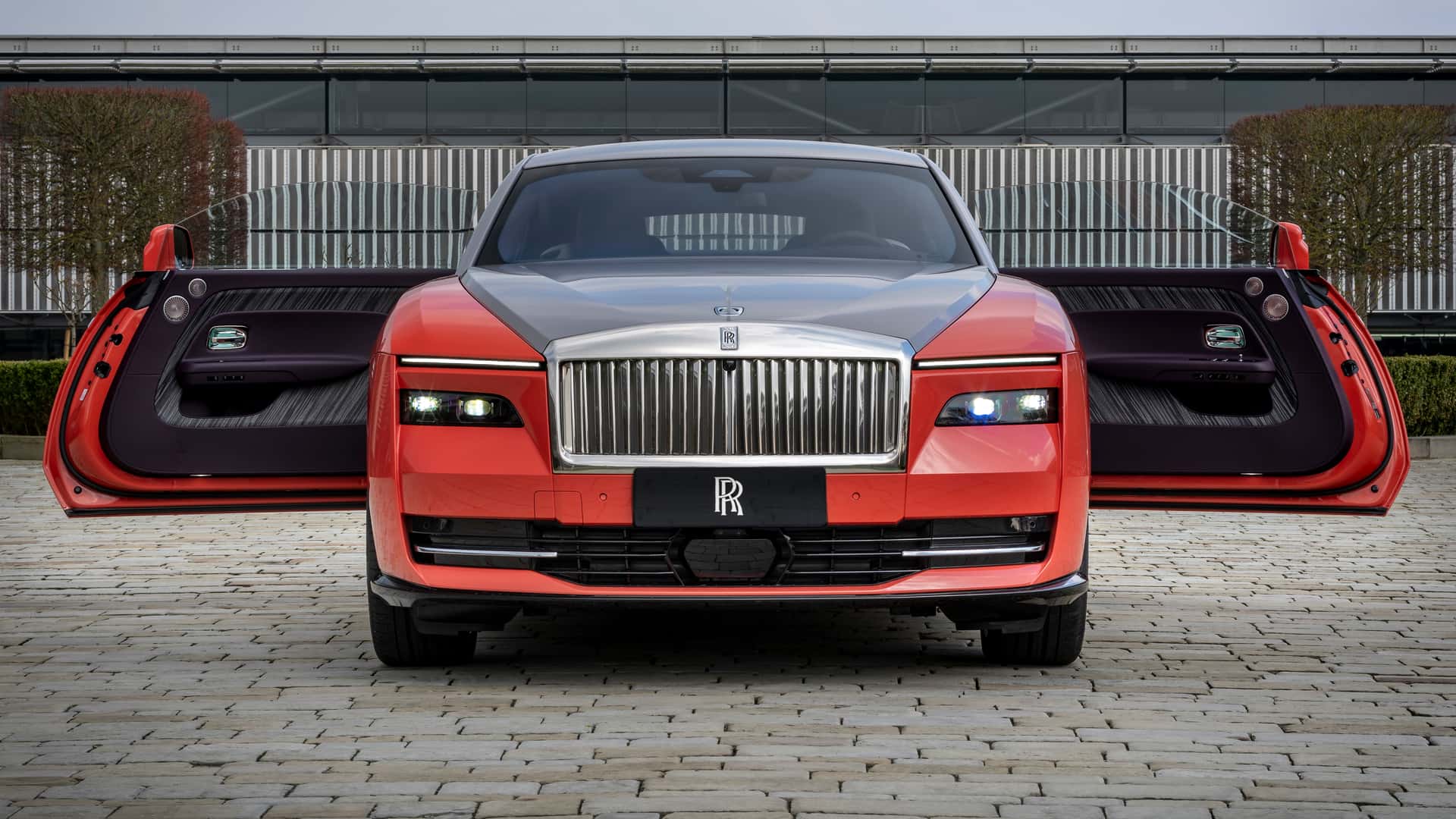
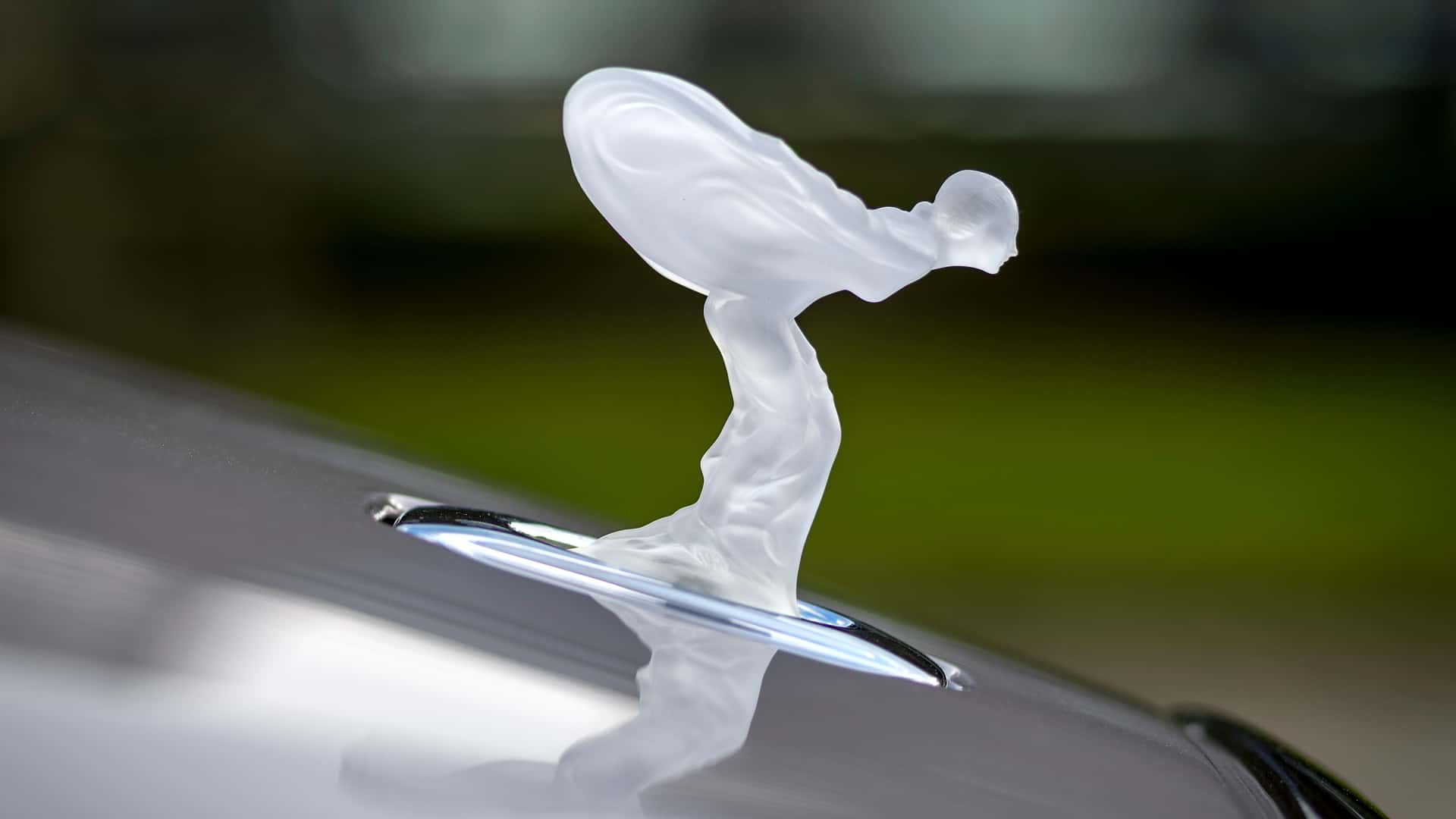
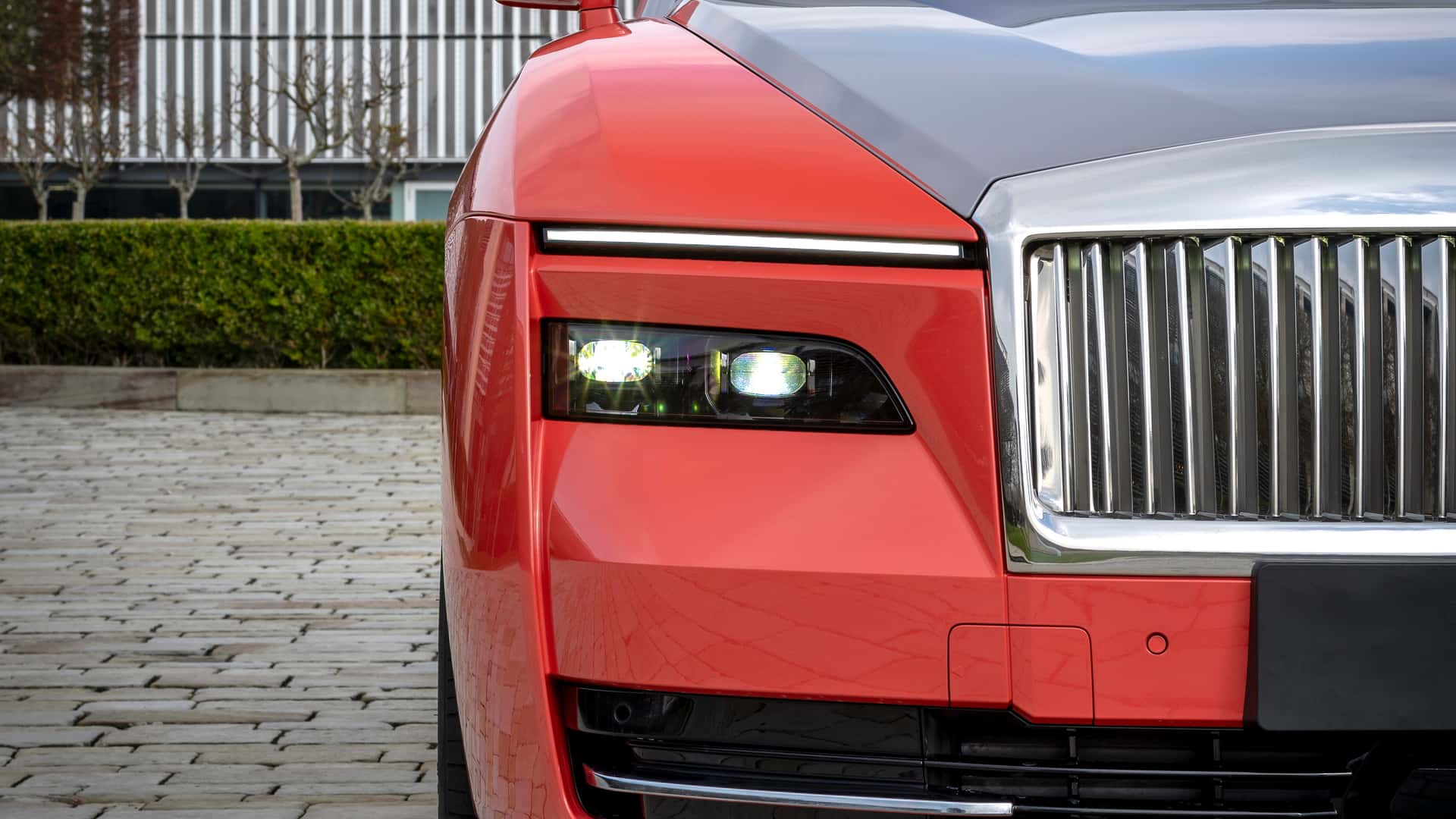
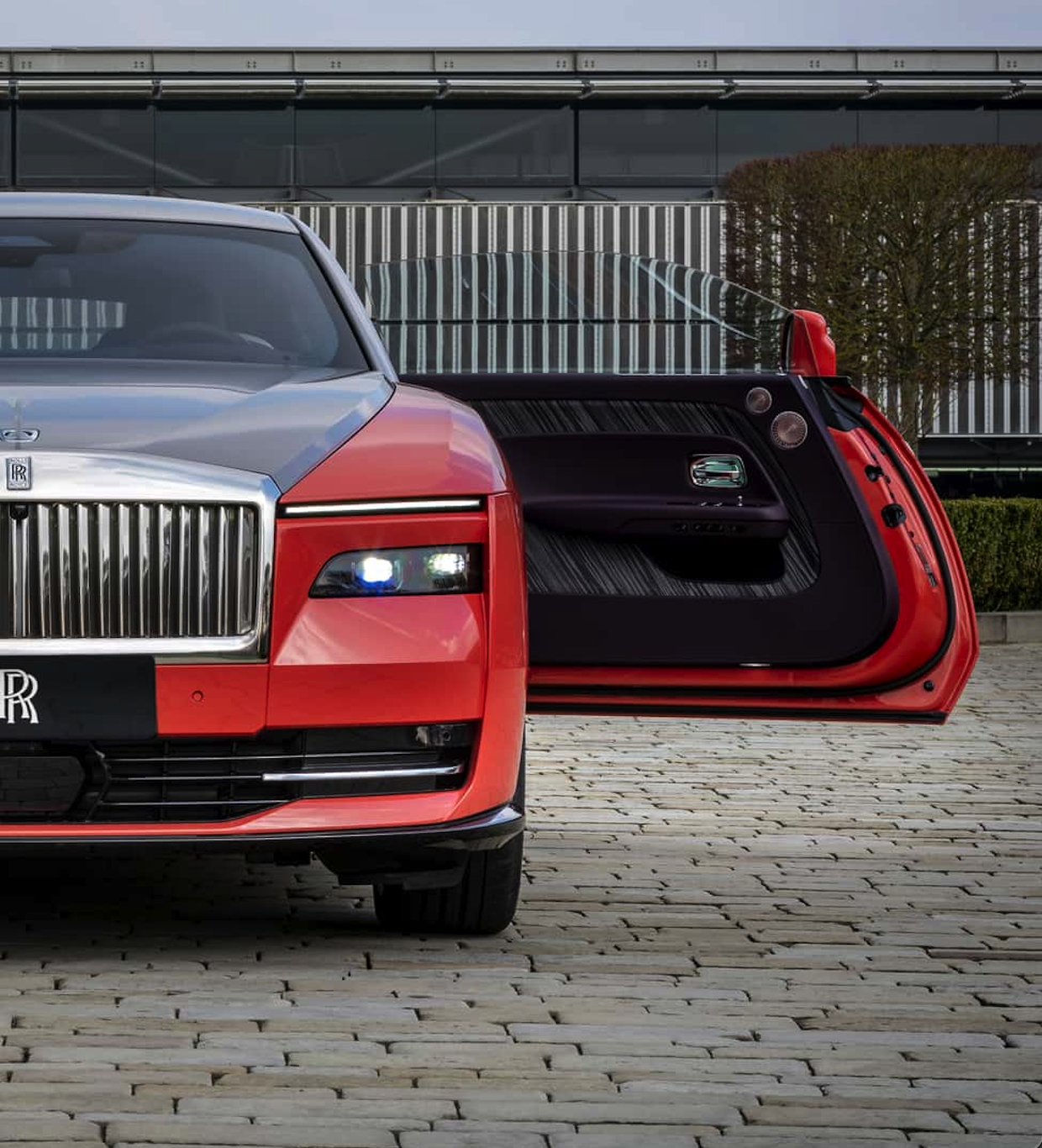
The Rolls-Royce Spectre ‘Escapism’ draws inspiration from the vibrant tropics of South America. Its bold color scheme features a two-tone exterior with Lantana Red, inspired by the hues of the Lantana Flower symbolizing good luck, and Tempest Grey. The 23″ wheels have centers painted in Lantana Red to match the upper surface, and the exterior is adorned with a softly illuminated Spirit of Ecstasy figurine.

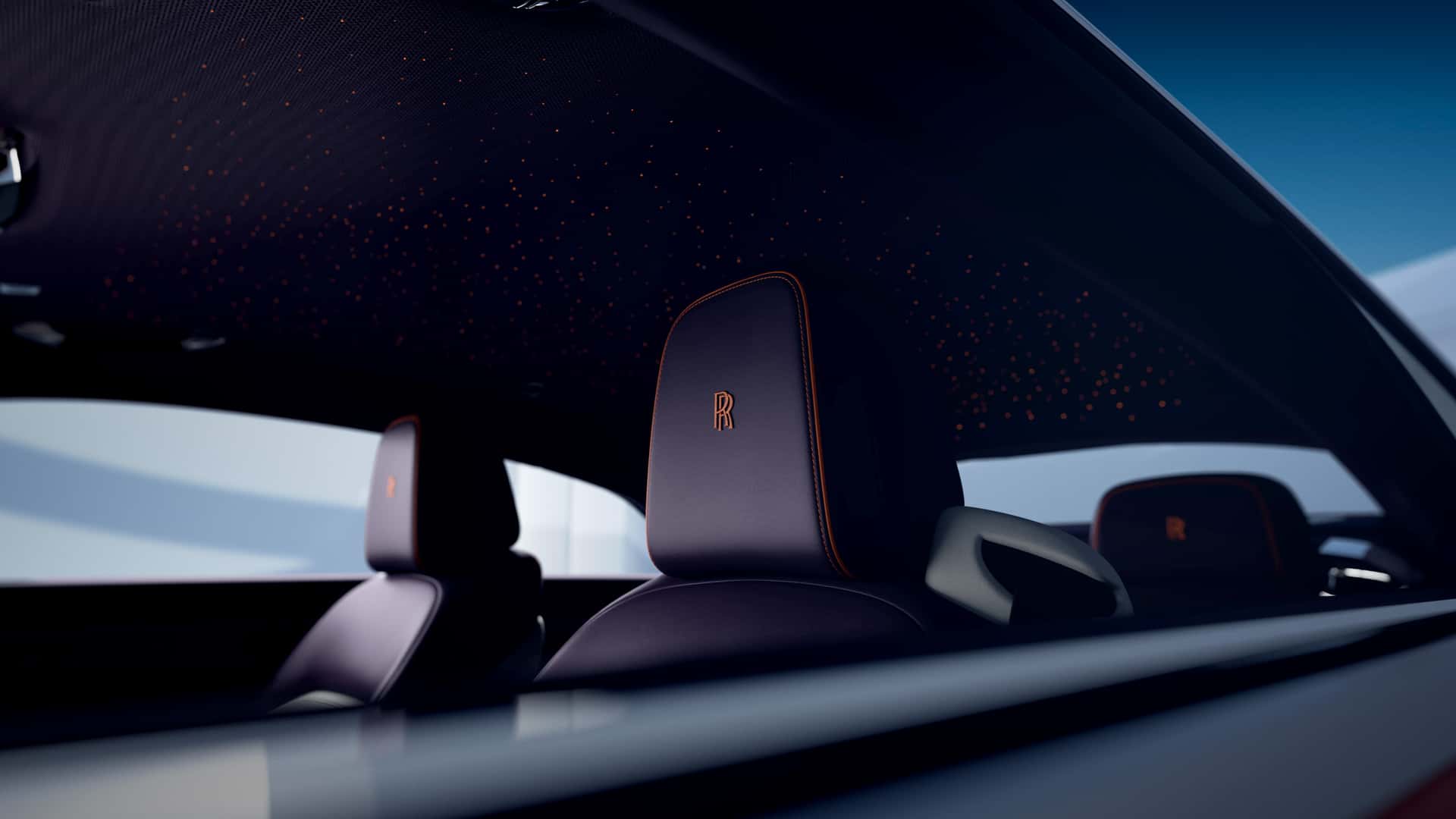
Inside, the interior boasts Selby Grey, Purple Silk, and Sunset leathers, with Sunset accents for seat piping, contrast stitching, and headrest monograms. The Starlight Headliner features 960 Sunset-coloured fibre-optic ‘stars’ and eight white ‘shooting stars’, while the Obsidian Ayous veneer extends to the spokes of the Purple Silk steering-wheel, complemented by purple instrument dials.

Rolls-Royce Ghost Extended ‘Expressionism’

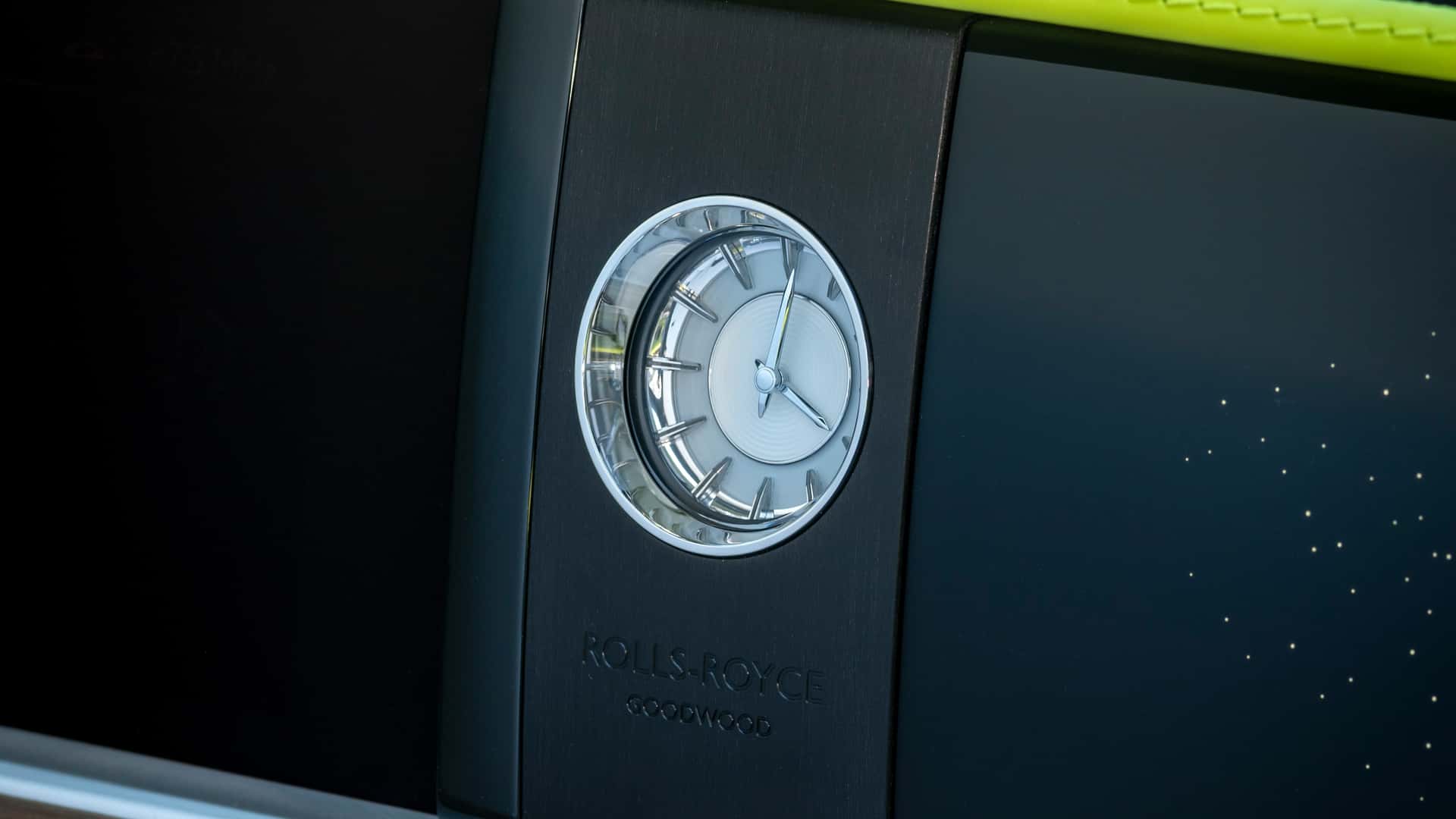
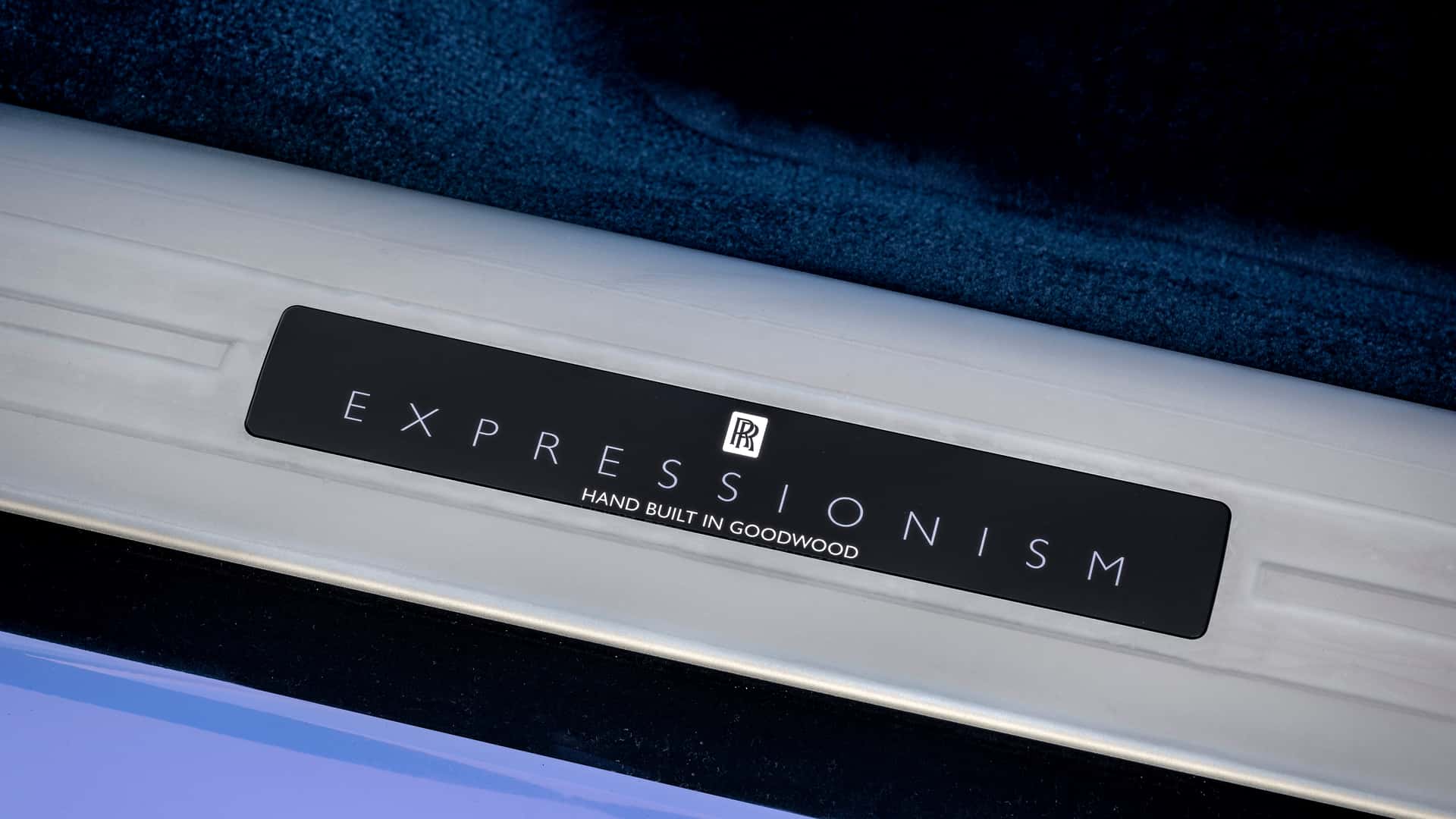
The Rolls-Royce Ghost Extended ‘Expressionism’ showcases the vehicle’s versatility for Bespoke customization. Inspired by the sunsets of Boracay Island, the exterior boasts a vibrant ‘Boracay Blue’ hue, capturing the unique colors of dusk blending into twilight over the Sulu Sea. A Lime Green Coachline adds a subtle nod to the island’s tropical flora and fauna. Completing the look are part-polished 21-inch alloy wheels with Orbit Grey centers and Lime Green pinstripes, paired with White pinstripe tires.

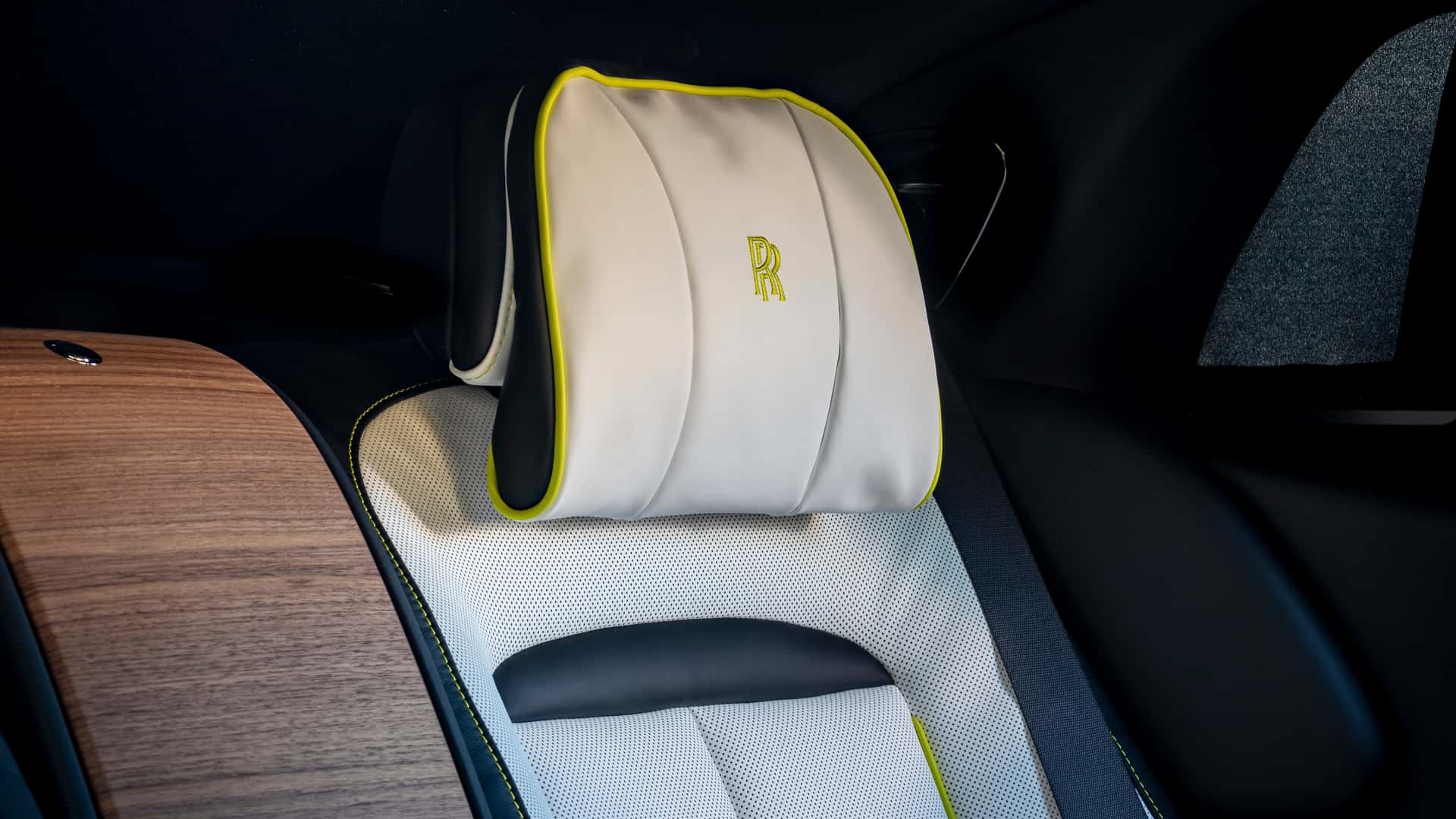
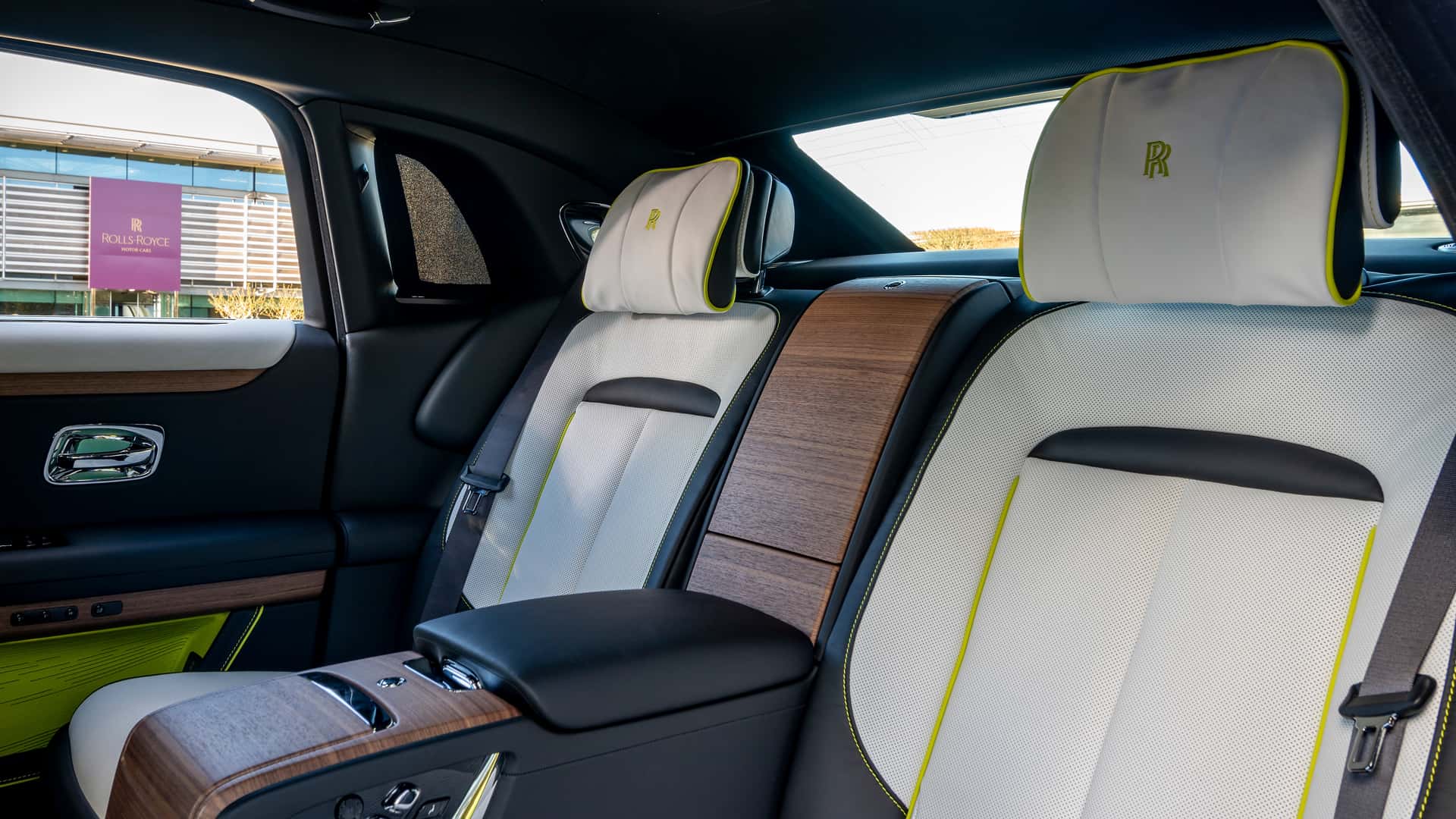
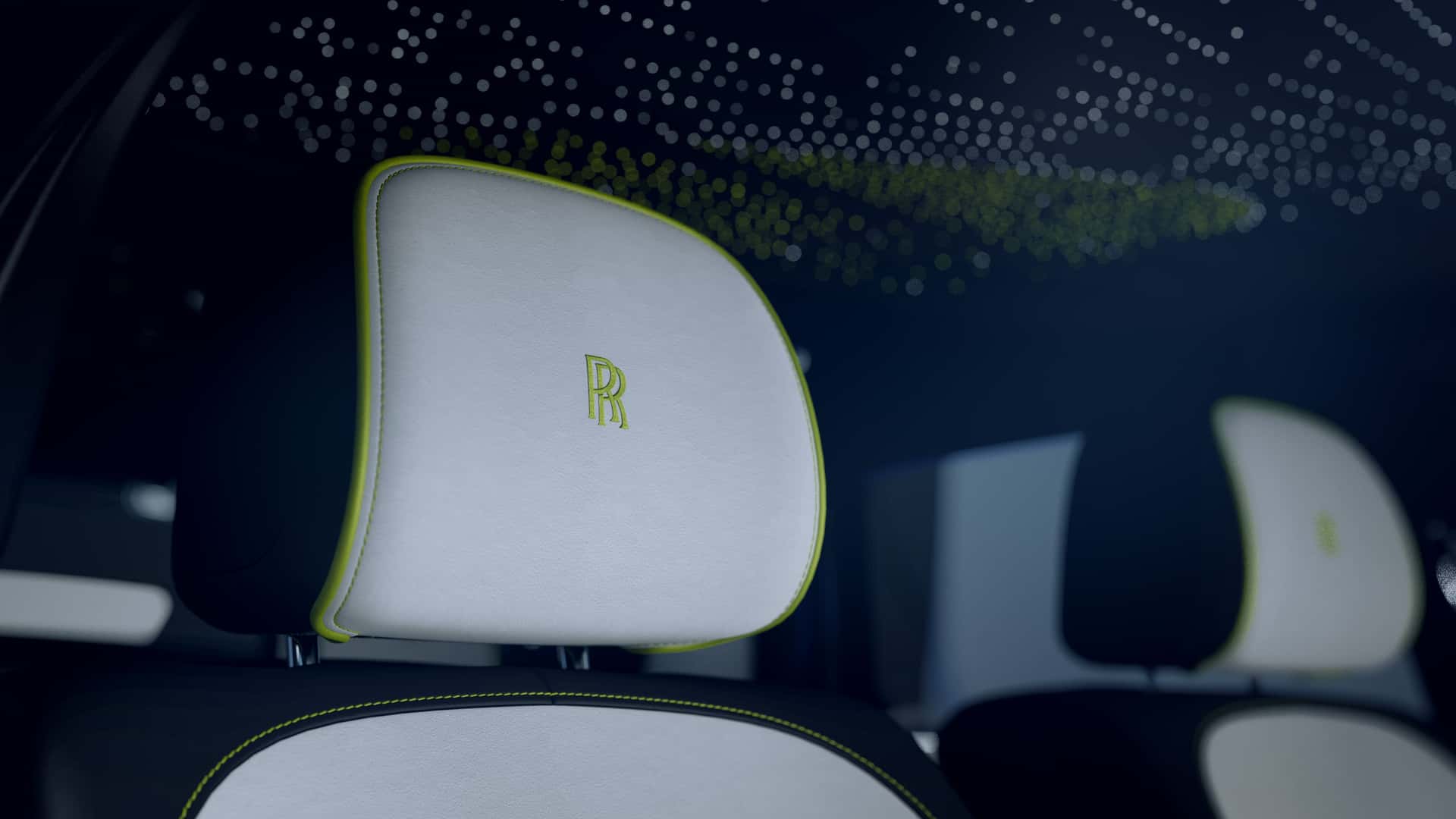
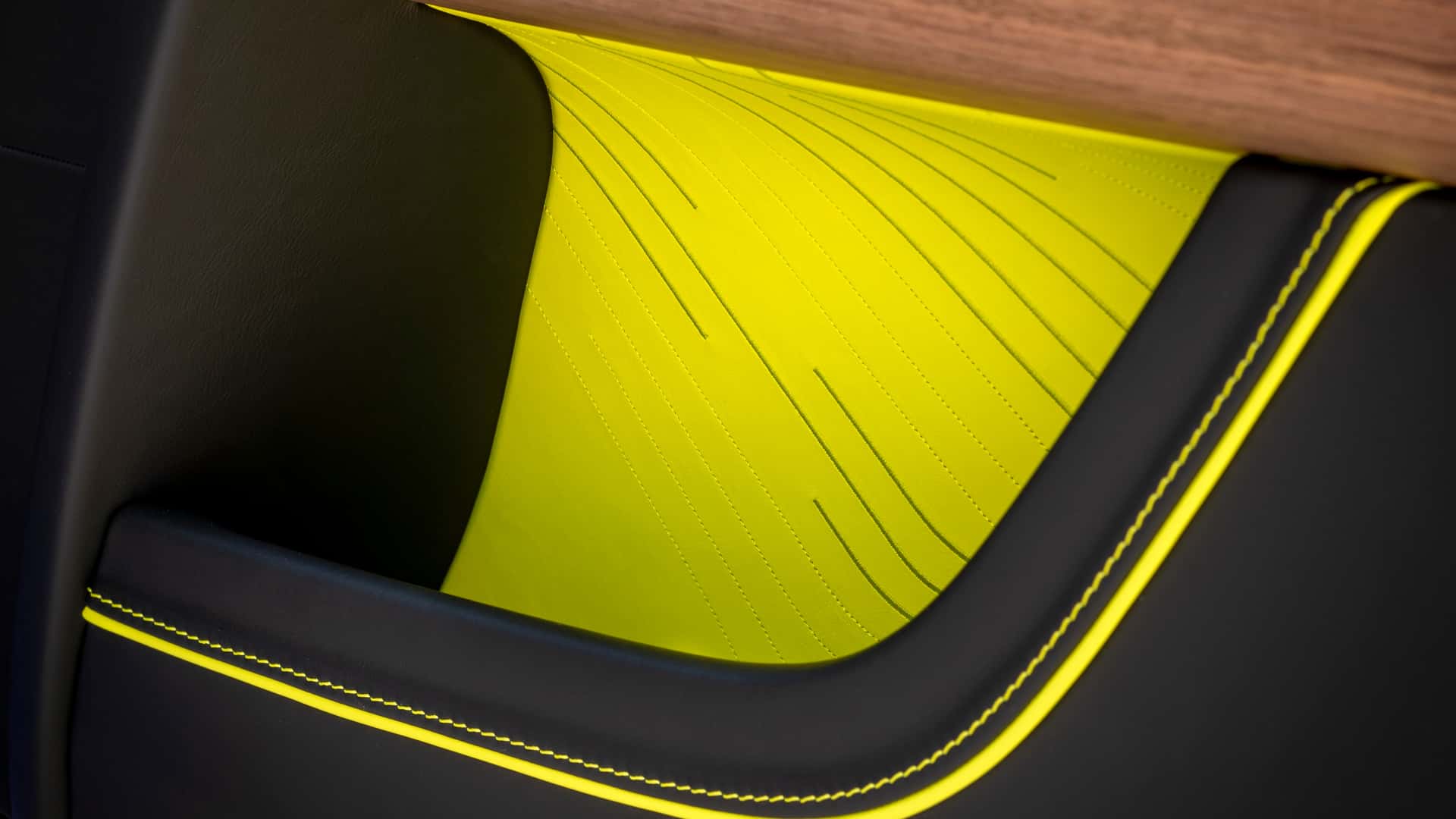
Inside, the seats feature Black and Arctic White leather with Lime Green accents, echoed in the seat and door piping, contrast stitching, and headrest monograms. The inner door pockets showcase Lime Green embroidered celestial motifs, crafted with meticulous stitching techniques to create a subtle three-dimensional effect.

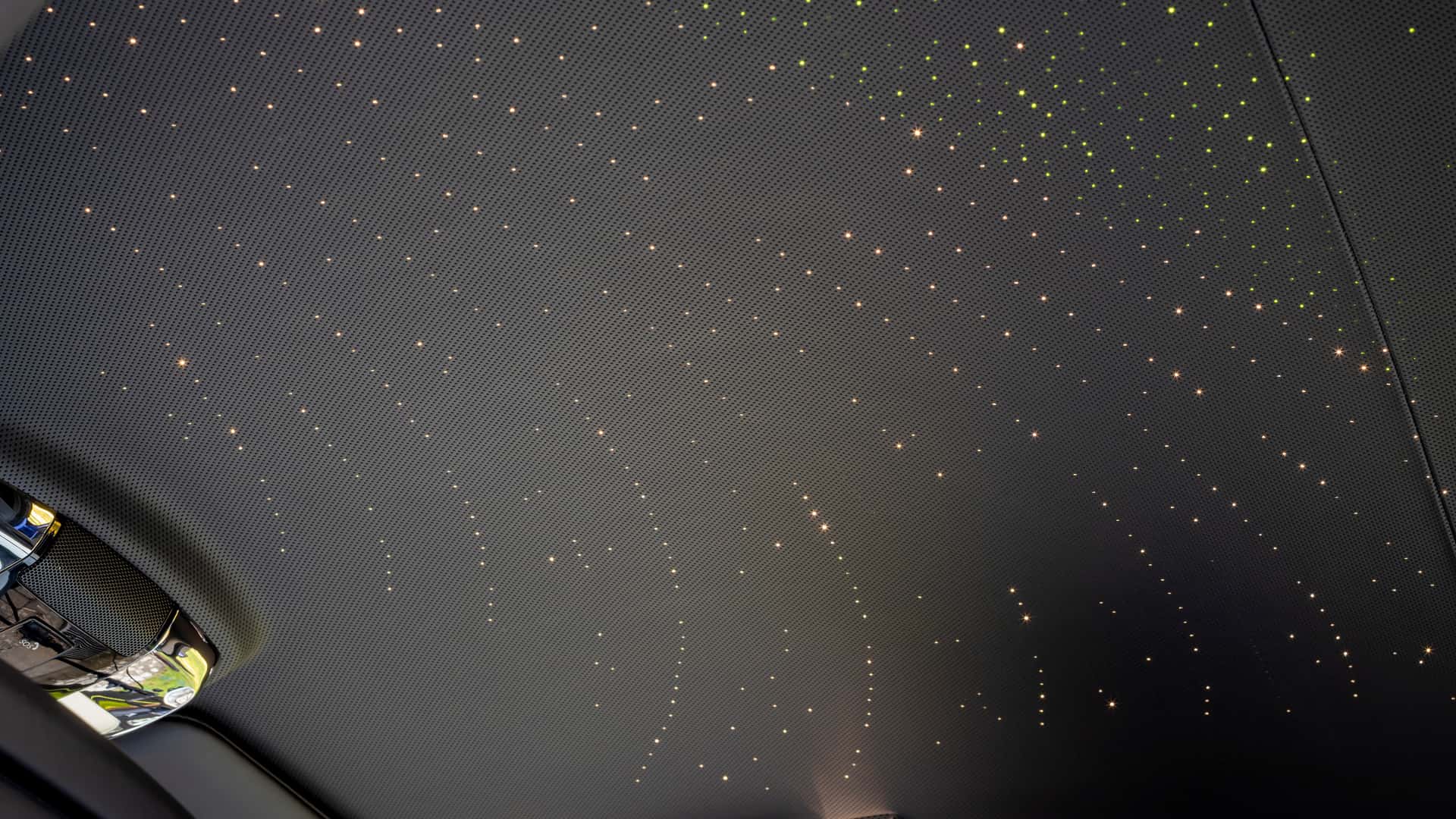
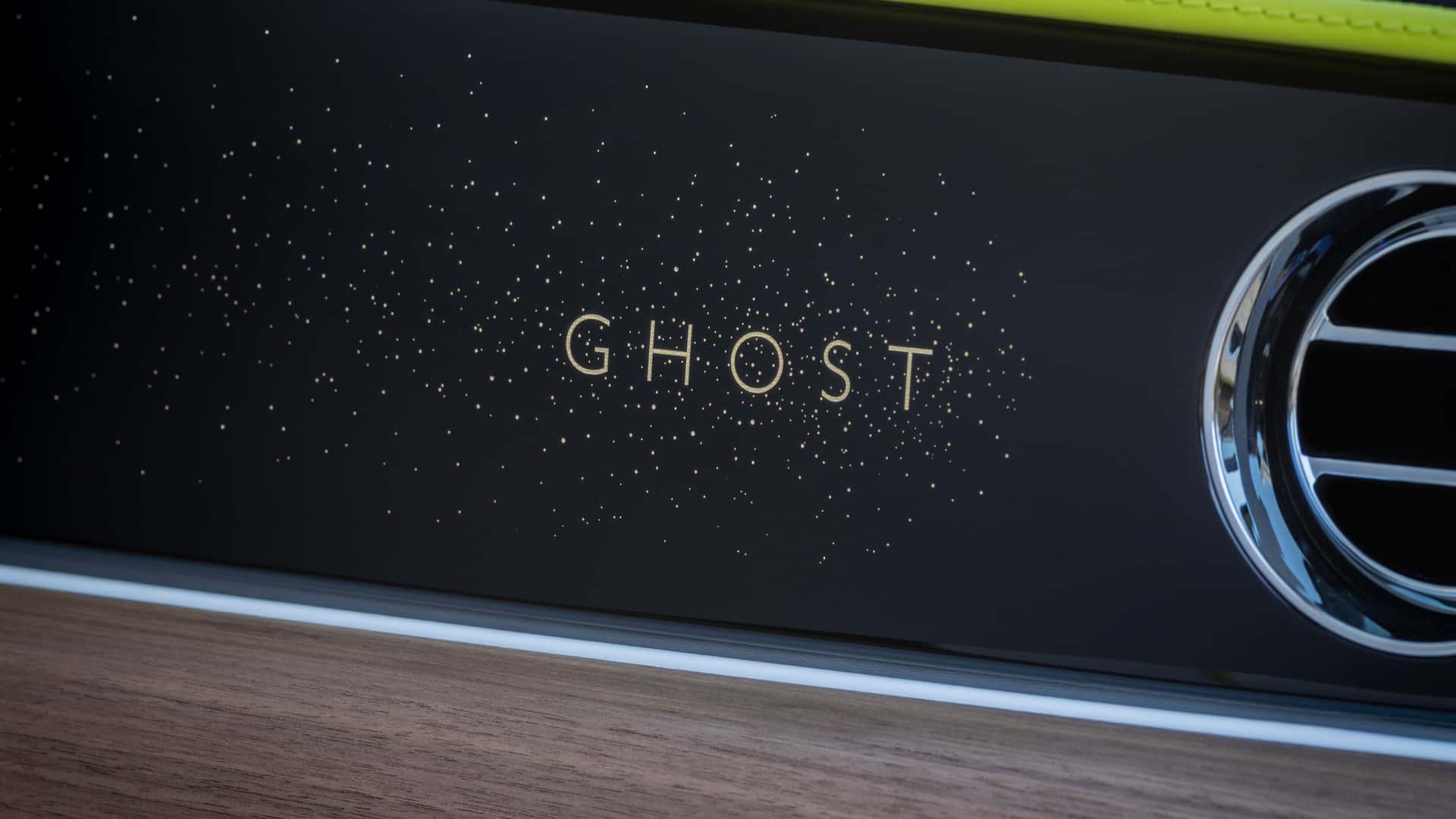
The Starlight Headliner presents a vivid, abstract wave pattern mirroring the door embroidery, with Lime Green and White ‘stars’ and White ‘shooting stars’ following the design’s curvature.

These ‘Spirit of Expression’ Bespoke commissions will be showcased at the Beijing International Automotive Exhibition (Auto China 2024) from April 25 to May 4, 2024, at the China International Exhibition Centre (CIEC).

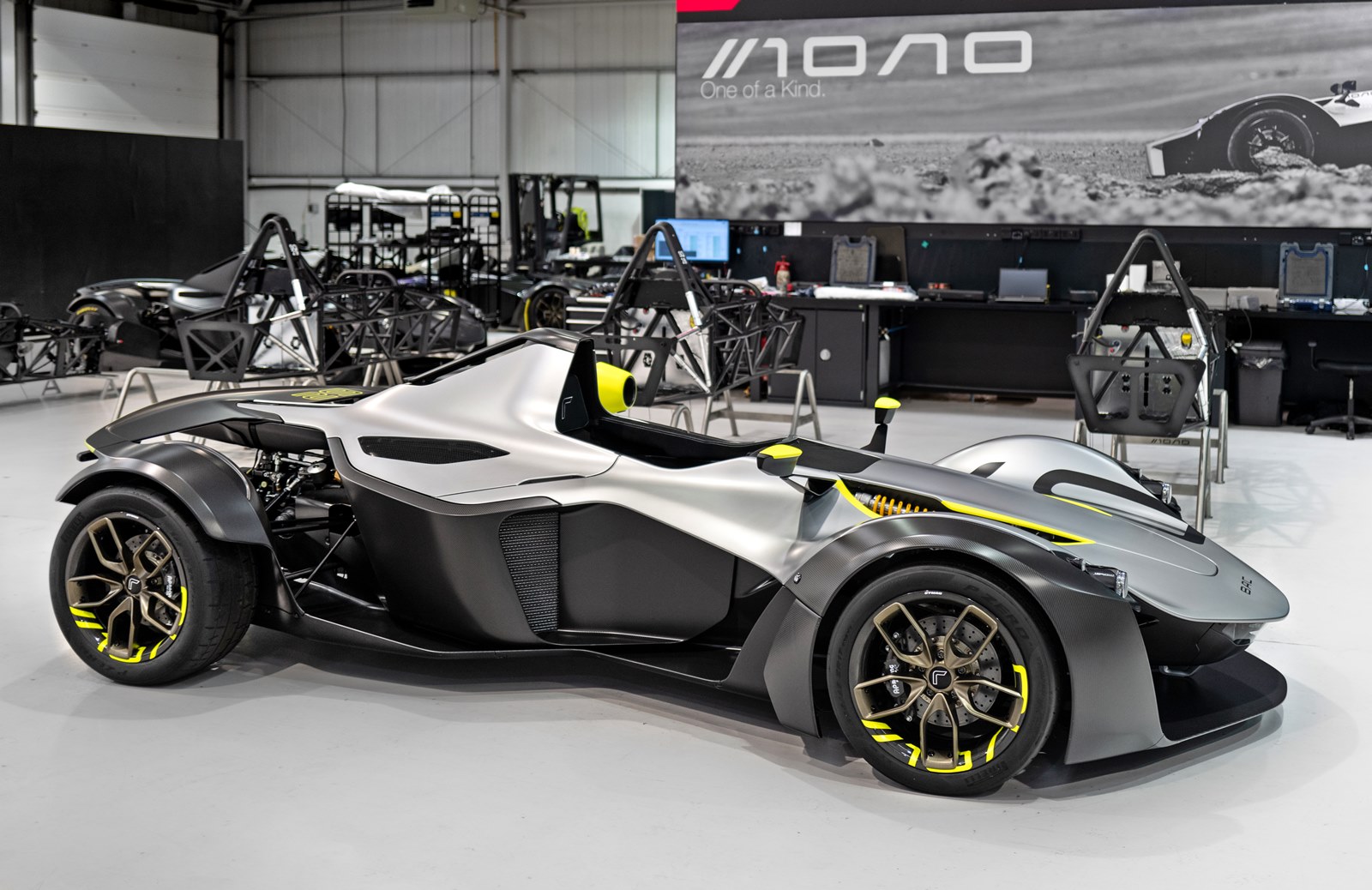
Briggs Automotive Company (BAC), a specialist carmaker, has delivered its 150th vehicle, a Mono R model which was commissioned by Hong Kong-based financier Julien Begasse de Dhaem. It is the 29th elite Mono R model that the British company has hand-built at its factory in Liverpool, England.

BAC exports 80% of the cars it produces to over 45 different countries across 5 different continents. With the recent expansion of the company’s retail network to incorporate Germany, Singapore and Malaysia, BAC has rapidly scaled its global footprint and presence worldwide.

“We remain proudly British while embracing our transition to a truly global enterprise and family. Mono #150 stands testament to our passionate global customers, loyal workforce, world-leading suppliers and dedicated global retail network,” said BAC Co-Founder and Director of Product Development Neill Briggs.

(more…)

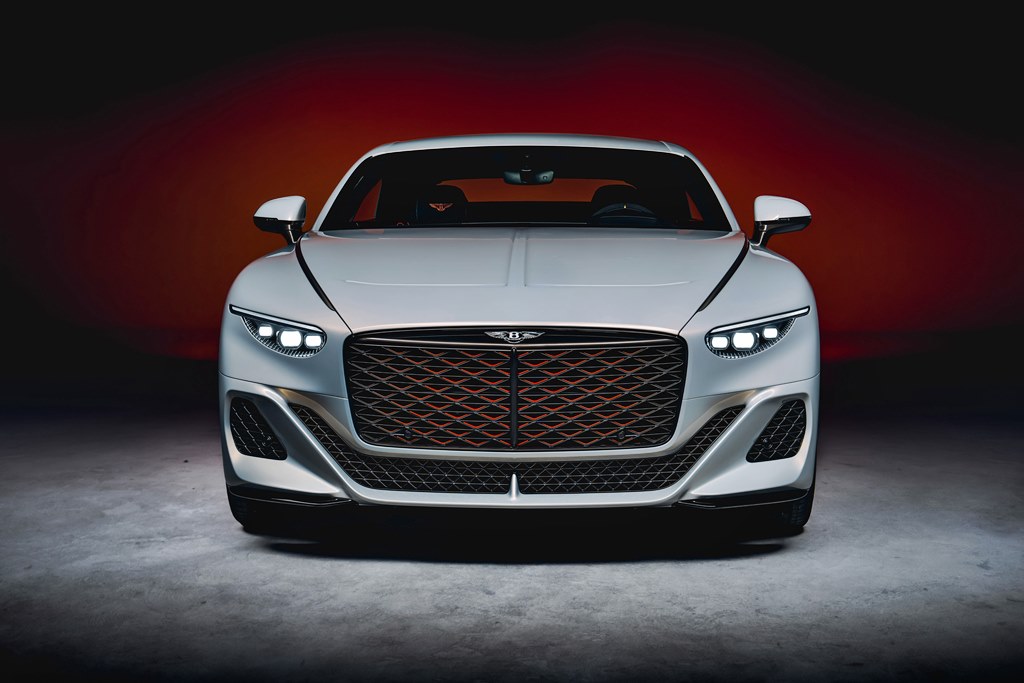
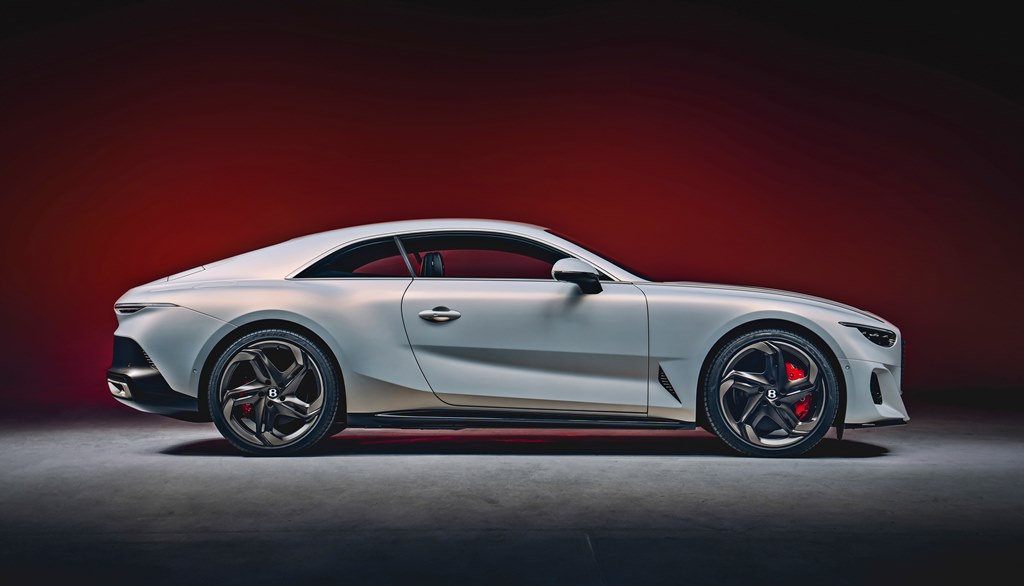
The Bentley Batur coupe represents the end of one era, as well as the beginning of another. While giving a glimpse of the new design language for the British luxury brand, it also marks the end of the iconic W12 engine which has evolved to become the most powerful powertrain in its history.

The Batur, named after a beautiful lake in Bali, is the second bespoke project by Bentley Mulliner after the Bacalar and only 18 units will be produced, priced from £1.65 million each ex-factory. (about RM8.74 million). The 18 customers who have already reserved a unit will receive their cars within 11 months.

Final version of the mighty W12
Although riding on a similar chassis as the Continental GT, the Batur has a more powerful 6-litre twin-turbo W12 engine, producing 740+ ps and 1,000 Nm. This final version is the most powerful of the mightY W12 engines that first appeared in the Continental GT in 2002. Although its power output is risen nearly 40% in 20 years, fuel economy has improved by 25%.

For the Batur’s W12 engine, a new intake system, upgraded turbochargers, new intercoolers and extensive recalibration was done to deliver exceptional. It is paired with Bentley’s 8-speed double-clutch transmission, and a sports exhaust to provide a soundtrack in keeping with the level of performance. The entire exhaust system is in titanium, while the finishers are 3D-printed in titanium in a first for Bentley.

As well as being the most power and most exclusive Bentley coupe to date, the Batur will also be the most dynamic with Speed-tuned air suspension, it is claimed. Adaptive 3-chamber air springs each have 3 switchable chambers, changing the volume of the air spring and varying effective stiffness. The driver can select the balance between ride comfort and body control using the 4-mode Drive Dynamics, choosing between Sport, Bentley, Comfort and Custom.

The Drive Dynamics Control also changes the behaviour of the 48V electric active anti-roll control system, which can provide up to 1,300 Nm of anti-roll torque in just 3/10ths of a second or completely decouple the wheels at either end of each axle. The anti-roll control system can also be used to adjust the roll stiffness front-to-rear, giving the Batur sharper turn-in and greater ability to balance the car on the throttle when in Sport mode.

Overall traction and cornering grip is maximised through the use of an electronic Limited Slip Differential that actively vectors drive torque across the chassis. This is complemented by torque vectoring by brake, whereby the car can lightly brake the inside rear wheel on turn-in for greater front-axle response, and also lightly brake both inside wheels on corner exit to move power across to the outside, loaded wheels for better traction.

New chapter in Bentley design
The Bentley design DNA that has driven the creation of the Continental GT, Flying Spur and Bentayga families has been revolutionised for the Batur, introducing new themes, approaches and details. The new form language defines a new chapter for Bentley design, as part of Bentley’s Beyond100 transformational journey.

“For any design team, the chance to redefine our own rules is the most exciting challenge. We have reimagined the Bentley design language, keeping some continuity to the past and present while also drastically changing key elements,” said Bentley’s Director of Design, Andreas Mindt.

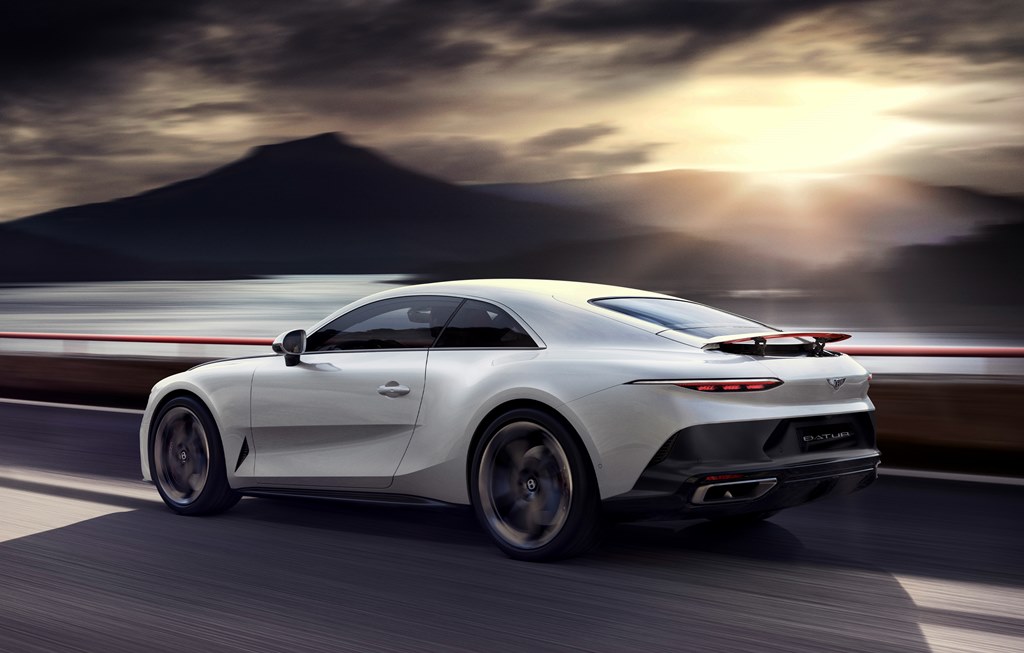
“A mark of power and prestige has always been a long bonnet. Our new design cues include a line that stretches from the bonnet along the whole length of the car, connecting the bonnet into the body, making the car long and lean and giving an elongated proportion to the front end. We call this feature the ‘endless bonnet’, and it’s the only accent highlight to the cleaner shape,” he said.

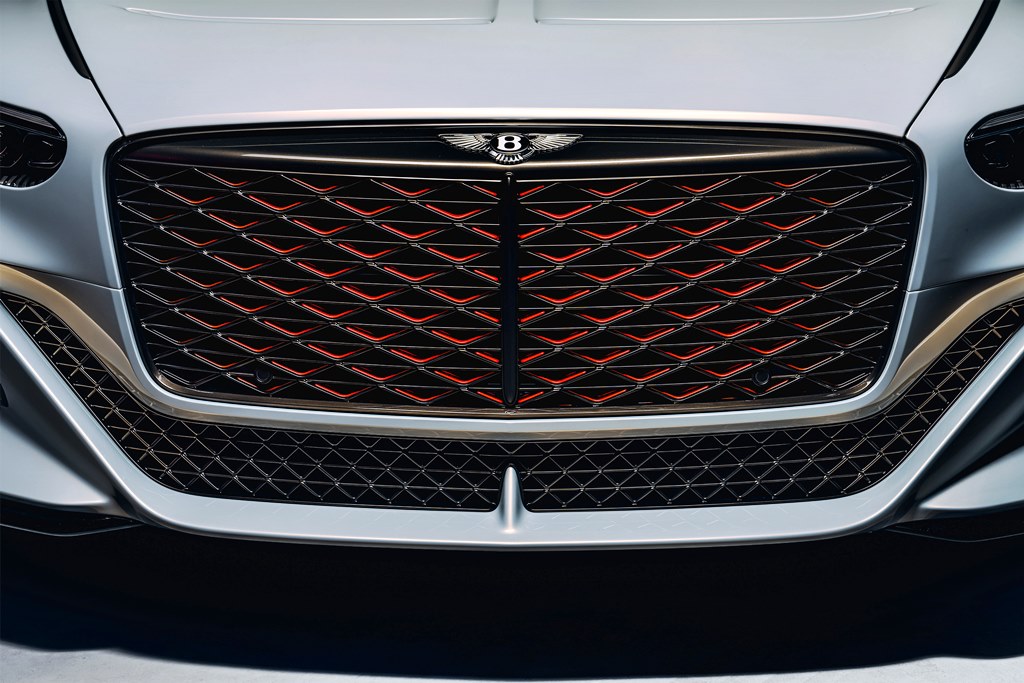
“At the very front of the car, we’ve modernised the famous Bentley grille and made it lower and more upright, to give a stronger face and a more dominant stance. This upright elegance brings self-confidence with a luxury stance. The grille is flanked by a new headlight shape and design, an evolution of the design used on Bacalar and maintaining the single large headlight either side. These are matched with all-new tail-lamps at the rear, that sit either side of a deployable spoiler,” explained Mindt.

Meanwhile, the visual mass of the car is moved rearwards, giving the impression that the car is sat on the rear axle, which adds further depth to the haunches. Overall, the form is cleaner and simplified, relying more on curvaceous surfaces bisected in the right places to reflect light and dark and bring more muscle to the design.

Ultimate personalisation
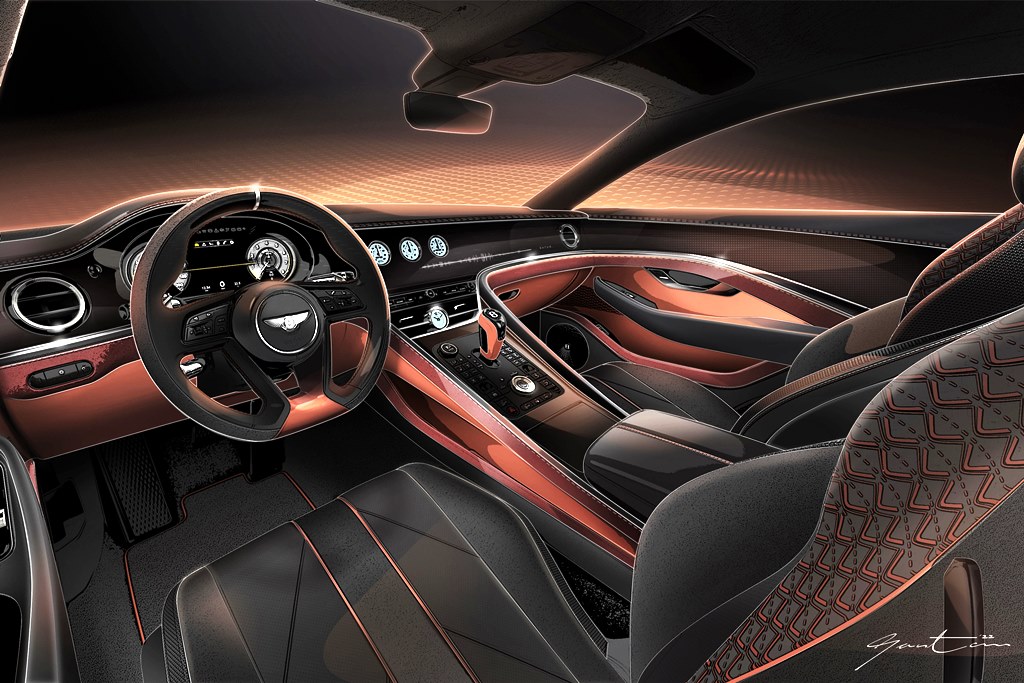
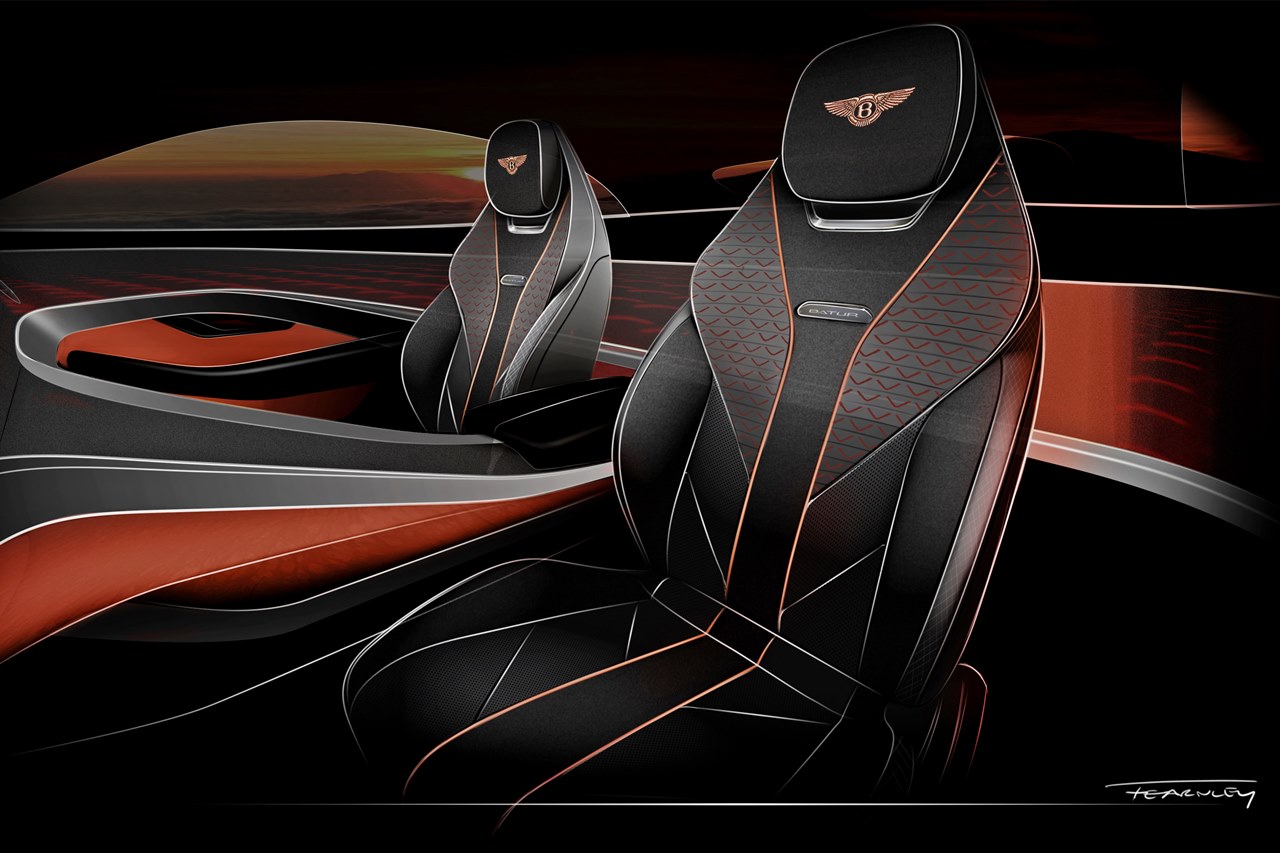
The interior space of the Batur for two persons is designed for ultimate personalisation and long-distance grand touring. Inspired by the interior design of the Bacalar, the Batur builds on the core elements of the Bacalar’s cabin design and adds new sustainable luxury features.

Every element of the cabin is tailored to the customer’s specifications. Each car will be unique, designed collaboratively with the customer with guidance from Mulliner’s in-house design team. Customers will be able to specify the colour and finish of practically every surface of the Batur, to create a car as individual as they are.

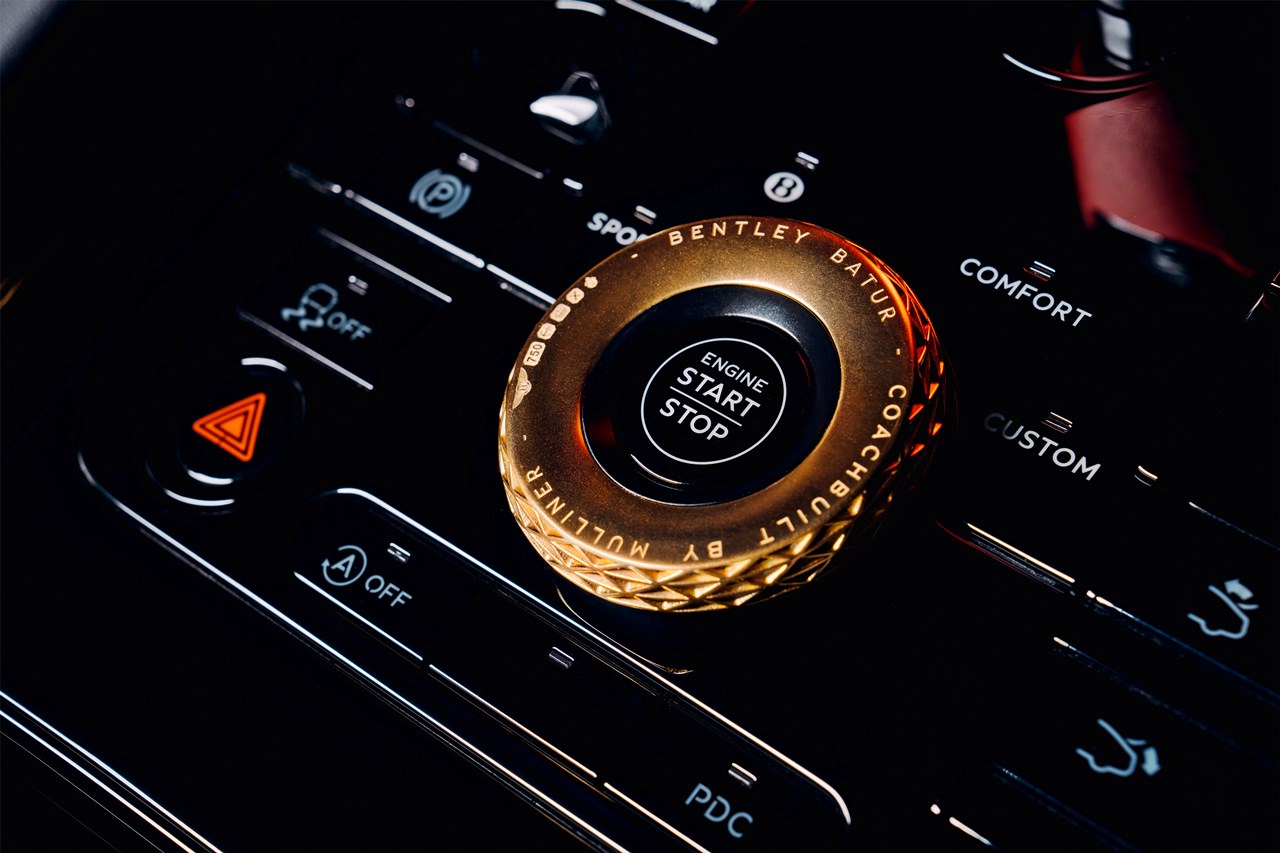
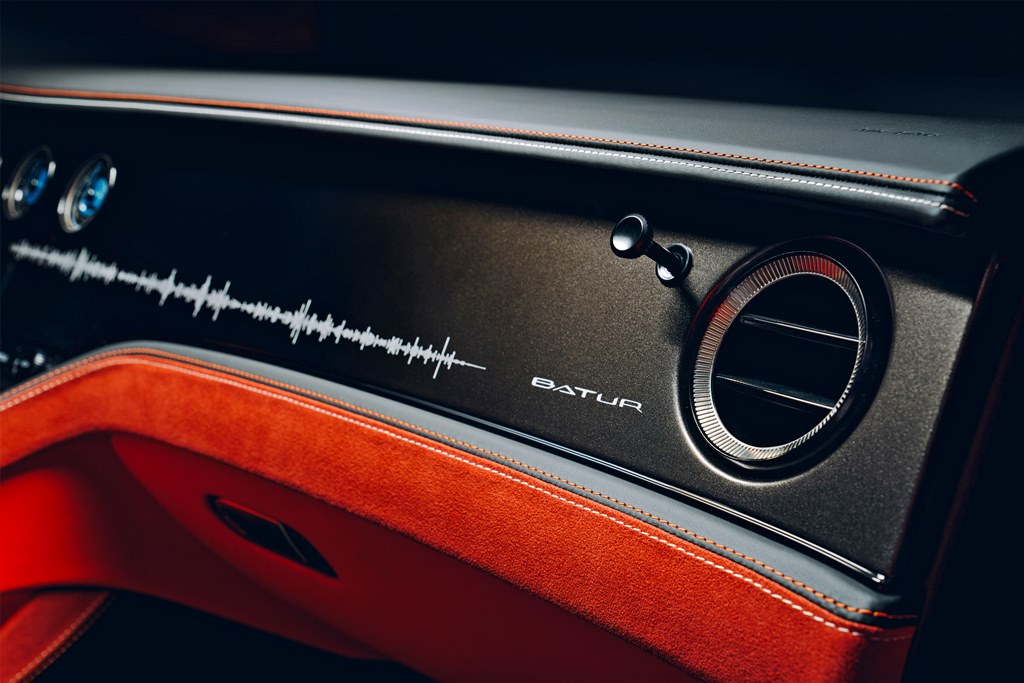
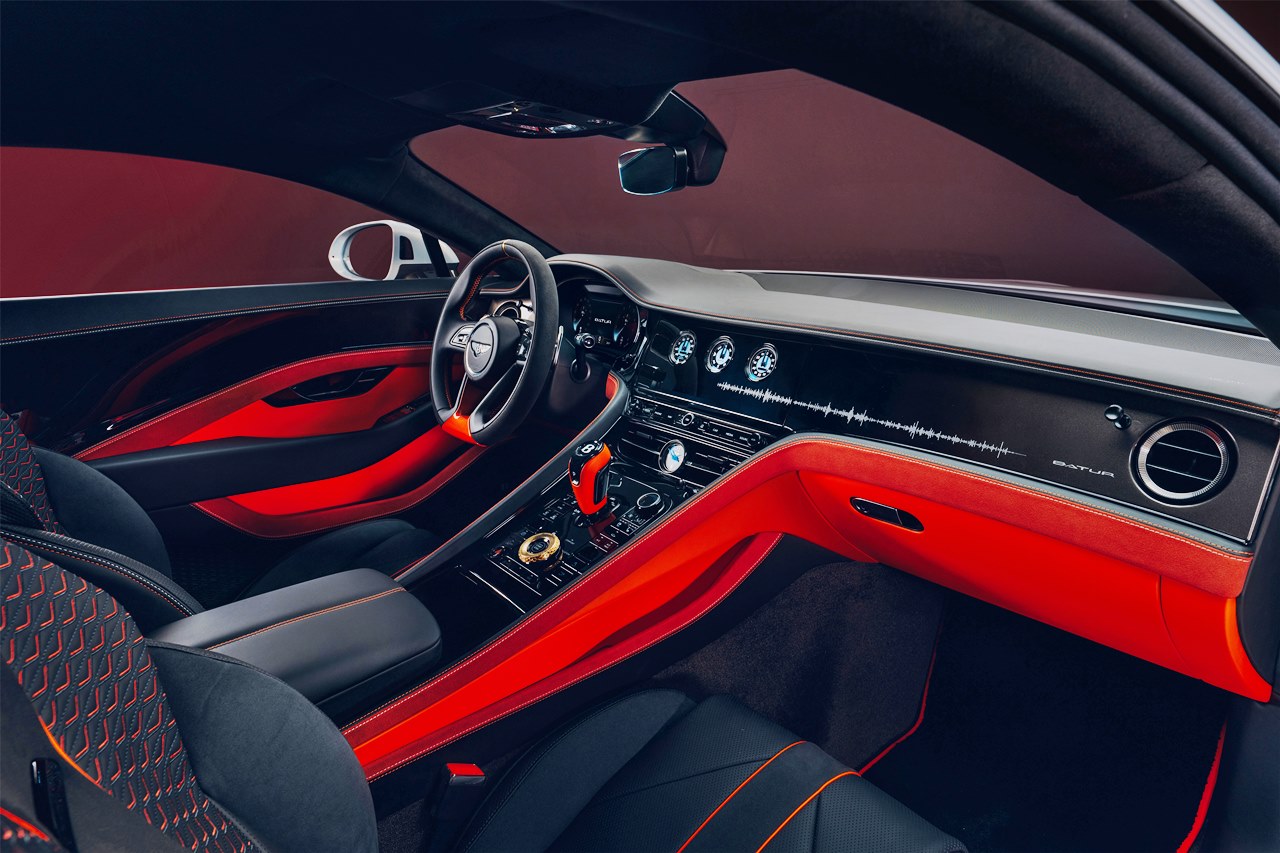
There’s variety of sustainable interior materials to choose from, while the passenger fascia panel is finished with a unique etching of the audio signature of the W12 engine (but bespoke etching is also available). Bright or dark treatments to the interior brightware and titanium options are also available. Certain controls – like the organ stops for ventilation – can be in 3D-printed 18K gold, if desired.

“With Bacalar, we proved the appetite of our clients for truly bespoke and individual Bentleys. We’re building on that story with the Batur, and the fact that all 18 cars are already reserved is testament to the fact that our design team is creating cars that our clients want to buy. Batur is not only a beautiful handcrafted Bentley – it is the next member of a distinguished line of cars coachbuilt by Mulliner, which include the W.O. Bentley’s favourite car in the 8 Litre and the now truly-iconic R-Type Continental,” said Paul Williams Director of Bentley Mulliner.

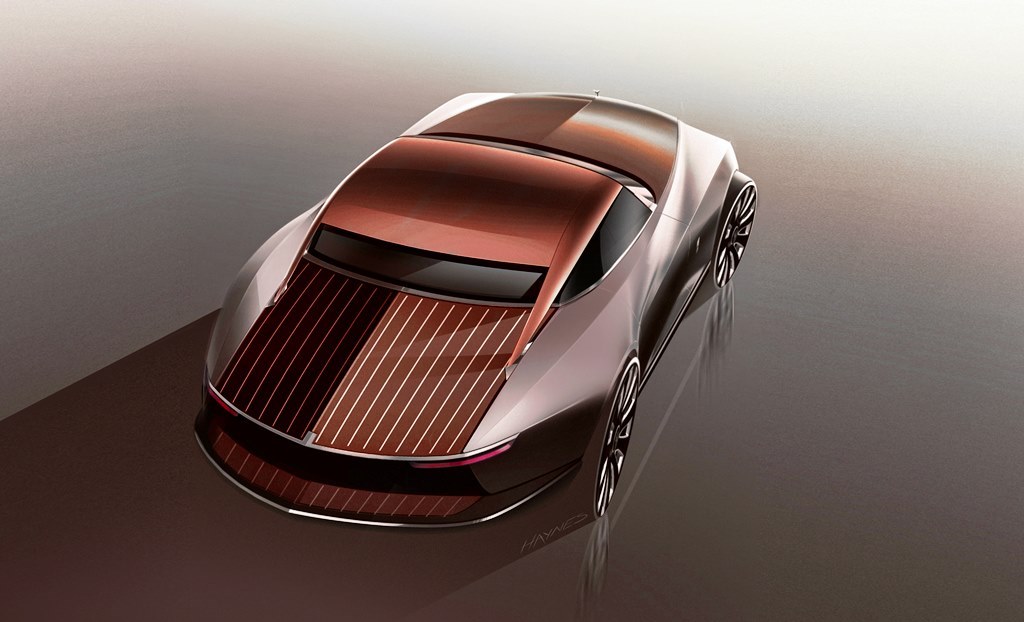
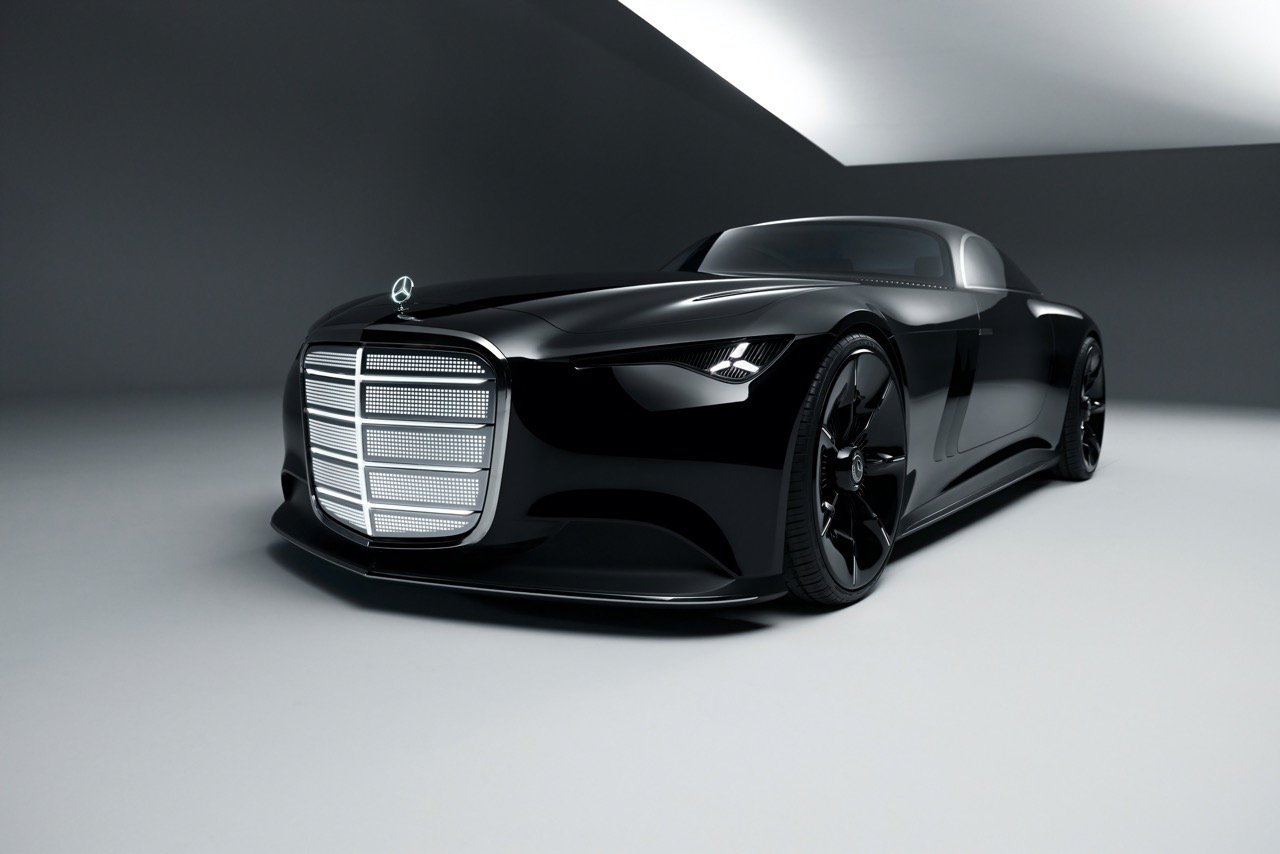
What if the Batur became a convertible? Here’s what our friend Theottle, the master at reimagining car designs, has come up with today.

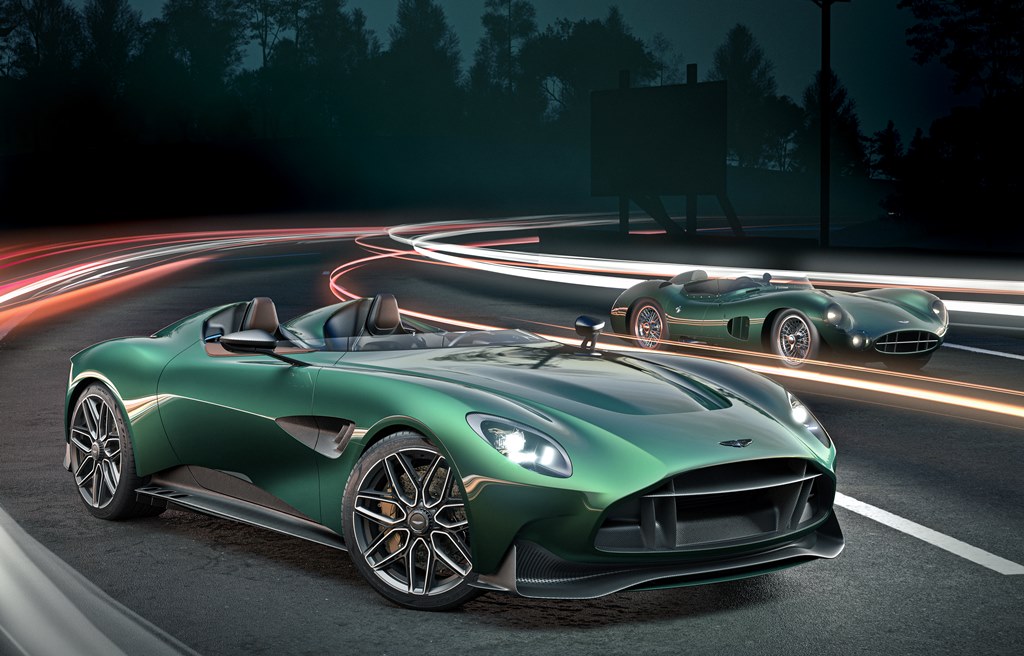
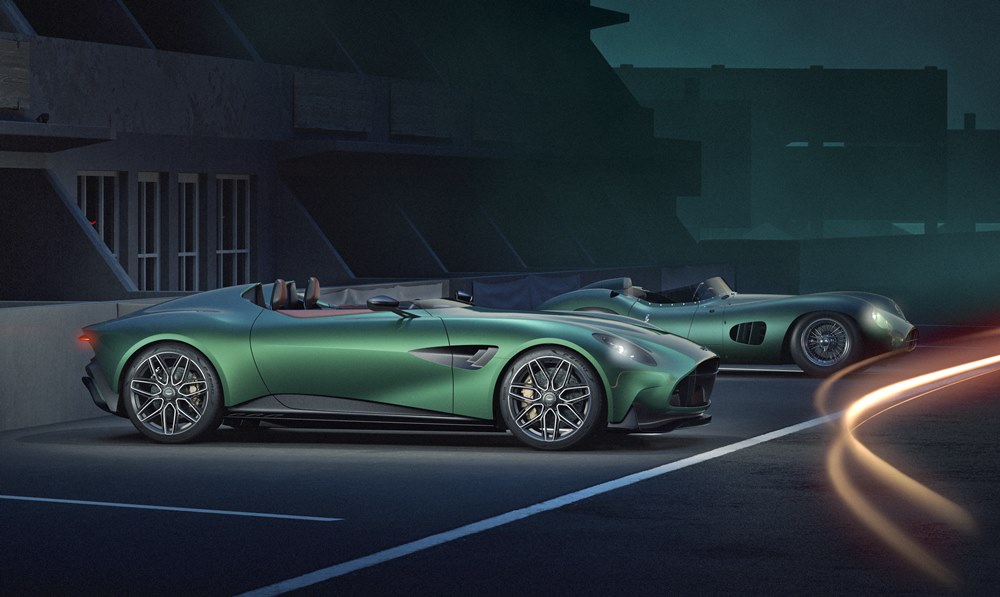
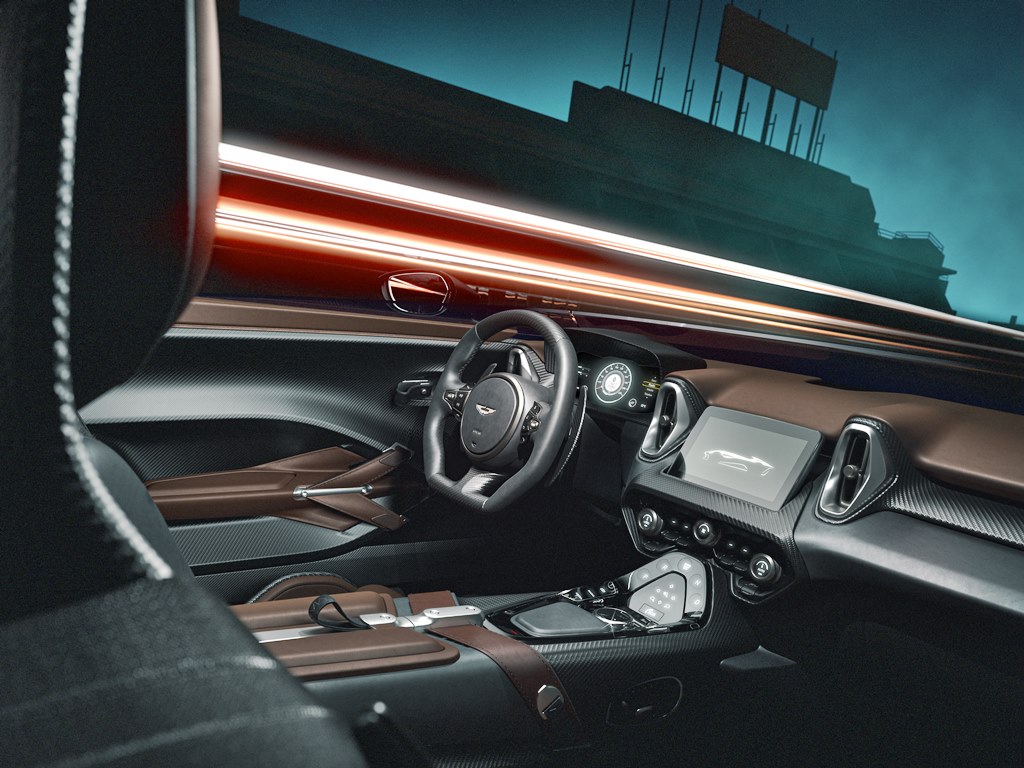
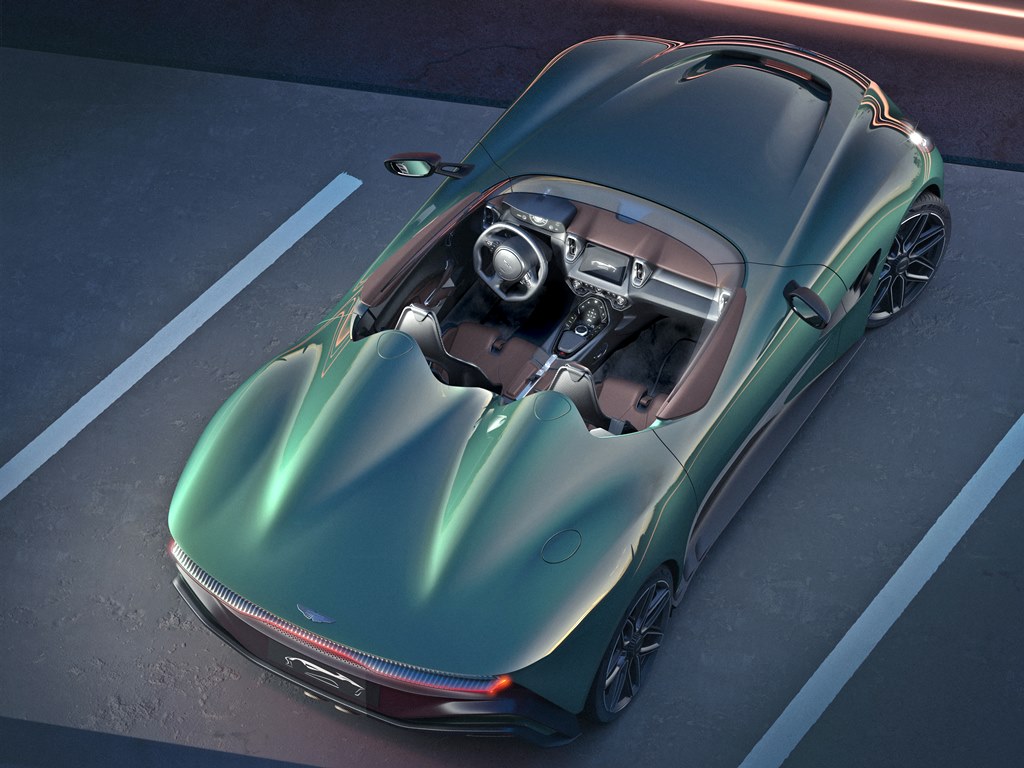
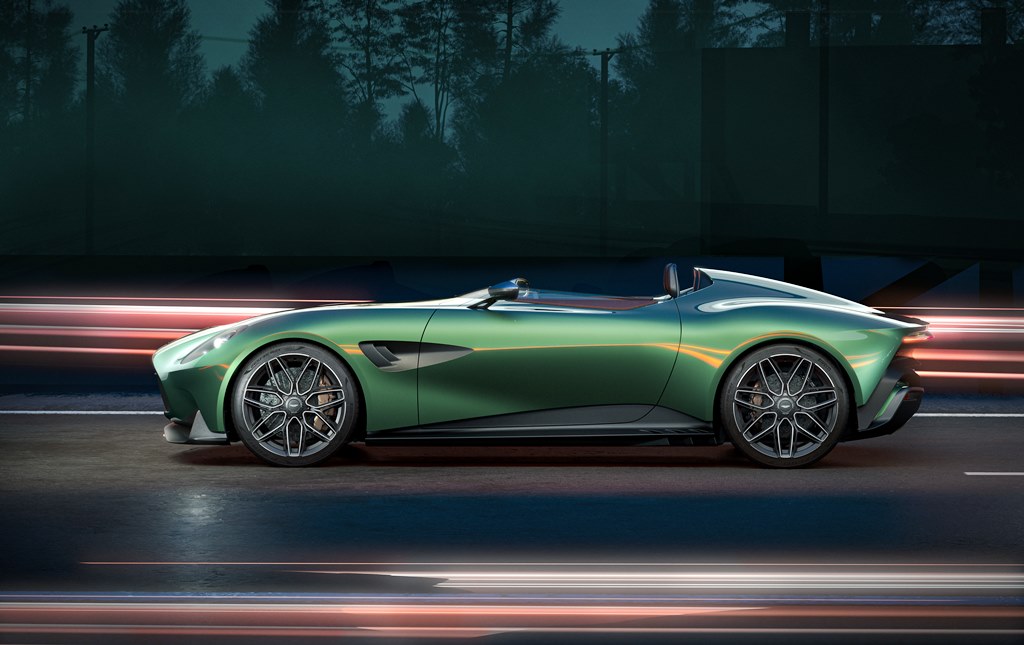
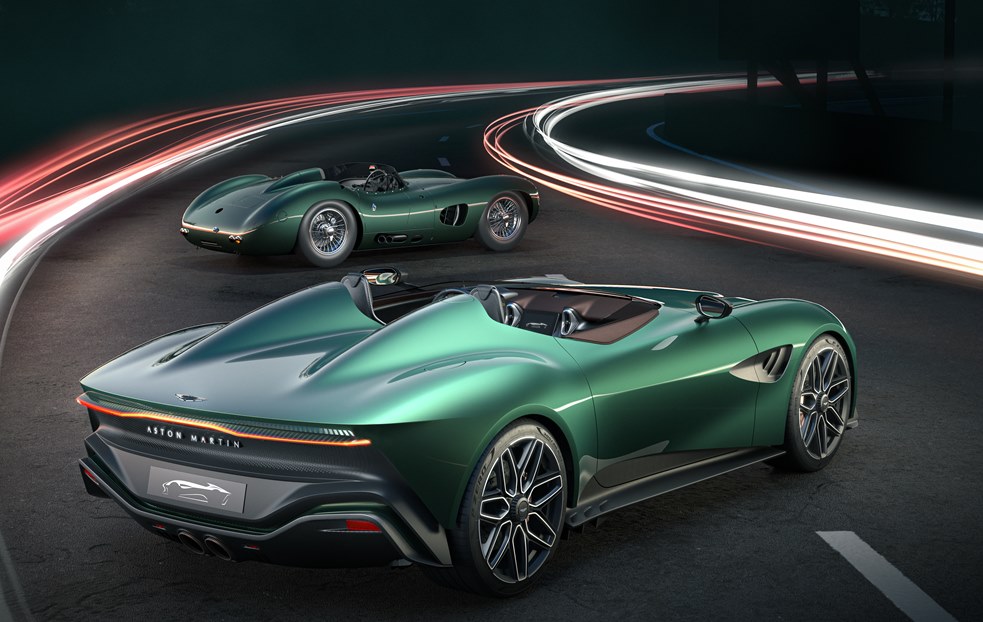
At the 2022 Monterey Car Week this weekend, Aston Martin will present the DBR22, a V12-engined 2-seater coachbuilt design concept. The creation of the DBR22, which celebrates the marque’s bloodline of open-cockpit sports racers, is the latest in a long line of projects handled by its in-house bespoke division, Q by Aston Martin.

With classic proportions and immaculate, muscular curves, the DBR22 follows Aston Martin’s lifelong lineage of world-beating 2-seater open-cockpit sportscars such as the DBR1 and DB3S. And by mating the classic art of coachbuilding with advanced materials and cutting-edge manufacturing technologies, the design concept perfectly blends design purity, engineering precision, heart-pounding performance and true passion.

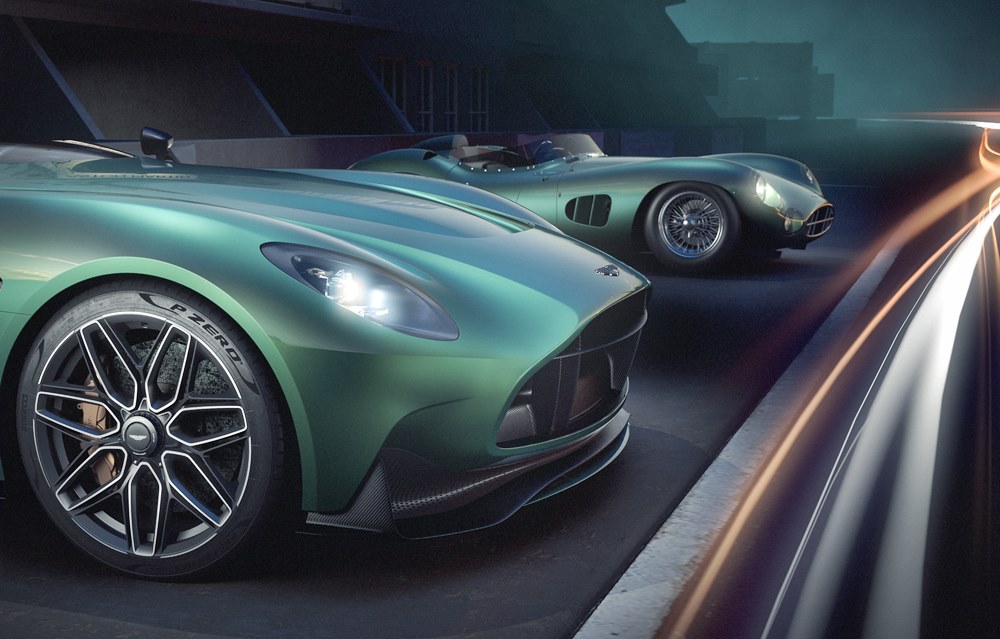
The DBR22 showcases a completely new body from Aston Martin’s designers. Its form is created from a minimal number of body panels to create a more sculpted, muscular presence. A particularly noteworthy feature is the entirely new front grille which incorporates a unique carbonfibre design in place of the usual veins seen on series production Aston Martins.

This design takes inspiration directly from the DBR1 and DB3S, giving a unique identity; one which clearly draws from Aston Martin’s heritage but uses this inspiration to create a truly contemporary design.

The bonnet features a dramatic horseshoe vent, recessed to aid airflow from the 5.2-litre V12 Twin-Turbo engine (715 ps/753 Nm) that sits beneath it. This long, unbroken bonnet line draws the eye back towards the cockpit, over the lowline wind deflector and delicate mirrors, which are mounted to the tops of the doors on slender, wind-cheating carbonfibre arms.

Sitting perfectly within the wheelarches is a set of all-new 21-inch alloy wheels featuring a unique 14-spoke design created especially for the car. There is a motorsport-derived centre-lock hub which is also available to spec from an extensive colour pallet.

The DBR22 also showcases an entirely bespoke paint colour, developed specifically for the occasion using ‘Paint to Sample’ – an exclusive option available through Q by Aston Martin, demonstrating again the vast design possibilities attainable through the bespoke service.

The cockpit continues the fusion of classic and contemporary approaches with many unique components and an extensive use of both leather and exposed carbonfibre. With architecture defined by the all-new dashboard and sleek infotainment displays, it sets the tone for a clean, uncluttered environment.

Though taking inspiration from Aston Martin’s competition cars, the DBR22 is no bare-bones racer inside. Supple aromatic hides swathe the contemporary dashboard, the carbonfibre performance seats and extend over the tops of the doors to create an inviting hint of the interior.

Rising from behind the seats are twin nacelles which smooth the airflow behind the driver and passenger’s heads. At the rear is an unmistakable horizontal light graphic courtesy of the slim, full-width light bar made specially for this application. Beneath it sits a perforated panel to allow hot air to exit the tail.

This beautifully sculptural piece is yet another unique highlight of the DBR22 intriguing design. Together with the smoothly integrated diffuser and pair of large diameter exhaust tailpipes, the DBR22 has incredible road presence, perfectly capturing the raw emotion of the driving experience.

Unique calibration of the engine and 8-speed paddle-shift automatic transmission uses torque shaping to give the DBR22 a manner and delivery said to be unlike any other model. A pinned steering column brings greater accuracy but also provides more detailed feedback so the driver can build a more accurate picture of available grip.

Attention has also been paid to the DBR22’s chassis structure. Unique front and rear shear panels further increase tortional rigidity, with a bespoke calibration for the adaptive dampers providing precision and pliancy for a blend of body control and ride.

The DBR22 also features a 3D-printed rear subframe – the first time Aston Martin has introduced such a method. The component is made from multiple 3D-printed parts printed from aluminium, which are then bonded to form the finished subframe. The advantages are clear, with a significant weight-saving and no reduction in stiffness, plus the ability to make special parts for ultra-low volume models, where required.

“We set our design systems to ‘hyper-drive’, pushing the exploration of formalism further and endeavouring to express a future in the here today. Where could we go with the surfaces, proportion and form. Combining this approach with advanced process, technology, and materials, we’ve effectively modernised our racing bloodline and created a new pedigree. DBR22 is a hot-blooded, purebred Aston Martin sportscar full of speed, agility and spirit, and a machine that we think will be the basis of many of tomorrow’s icons,” said Marek Reichman, Aston Martin’s Chief Creative Officer.

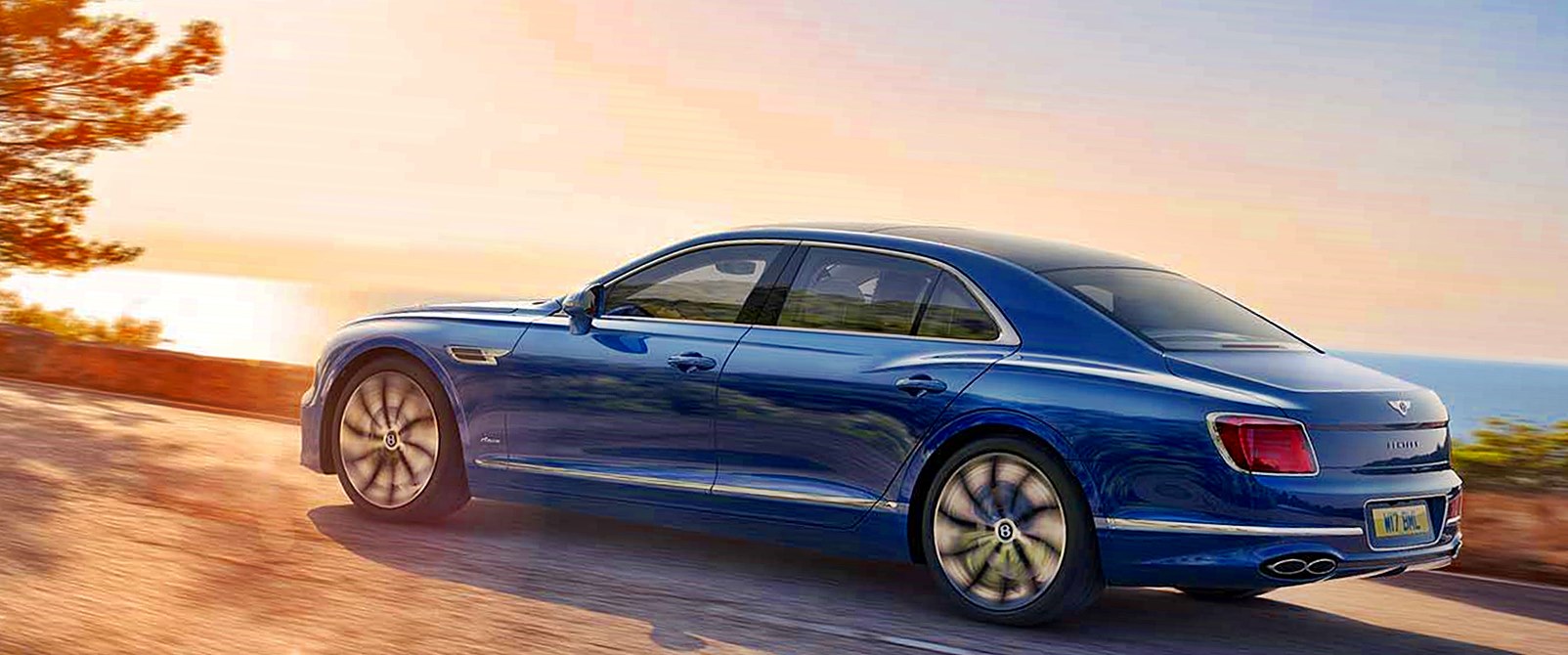
At the very top end of the car market, the luxury models have long been known for their comfort, usually described in superlative terms. For limousines that cost over a million ringgit, the comfort experienced by the occupants must be nothing less than the best and engineers as well as interior designers work very hard to ensure this.

Now, besides comfort, the wellbeing of the occupants is also given a greater deal of attention. Certainly, when one travels in a Bentley, the experience will also provide a heightened sense of wellbeing, but the company now wants  to deliver driver and passengers to their destination more relaxed than when they set off.

With the new Azure range that will be available across the full Bentley model line-up, the occupants will have a curated selection of features designed to enhance wellbeing and comfort. The aim is that at journey’s end, they will step out feeling refreshed, alert and ready to resume their busy lives.
The science of wellbeing
But what actually promotes wellbeing? To analyse and develop Bentley’s new concept of ‘wellbeing behind the wheel’, the Azure development team engaged a creative neuroscientist to work with them. Considering everything from light, to the patterns we see around us, to the impact of in-car posture and the importance and thermal comfort, the neuroscientist’s research paired with Bentley’s own measurements to give science-based analysis to the relaxing experience of travelling in a Bentley, as a driver or a passenger.

The two most crucial influences over onboard relaxation are ride comfort and NVH (Noise, Vibration and Harshness). Research that tracked thousands of people over a 4-year period found that those exposed to traffic noise over 70 dB were 65% more at risk of depression.

Taking the new Bentayga EWB as an example, measurements showed it to be quieter inside than its competitors, by between 4% and 26%, depending on frequency and position inside the car. Secondary ride comfort is another key variable that affects onboard wellness – obviously, the smoother the ride, the more calming the journey. At typical road speeds and in the crucial frequency range of 5 Hz to 20 Hz, the Bentayga EWB has up to 27% lower secondary ride vibration than its competitors.
Science-Informed Design approach

Facts like these inspired Bentley’s team to adopt a Science-Informed Design approach, using a variety of interdisciplinary methods to create the most positive sensation of wellness and comfort for drivers and their passengers. And because a car is a multisensory environment, this approach involved designing not simply for the senses of vision, hearing, touch and smell but also for the position of our bodies (proprioception), gravity and acceleration (vestibular), temperature and even the body’s internal sensation (interoception).

Escaping the outside world into a personalised environment, with less outside noise, that could otherwise reduce attention, impact memory and increase stress response. Where once a vehicle acoustic engineer would have focused on the suppression of NVH as much as possible to create the quietest possible cabin environment, the focus is now is also on the quality of sound.
“We have to understand how we all detect and respond to sounds and then work out how to engineer those sounds into the components that make a Bentley,” explained Bentley Acoustics Engineer Andy Jackson. “We balance the sound from the vehicle and cocoon the occupants from outside world by minimizing sound penetration. We harmonise the acoustics with the other sensory inputs in the vehicle. The sound is literally in the vehicle’s DNA; it’s authentic and crafted.”

Most advanced seat design
Seating is one of the important elements too. It is important to keep the body in the right posture because when we slump, our bodies can take in as much as 30% less oxygen, affecting our ability to think and placing additional stress on the body.
2022 Bentley Bentayga EWB

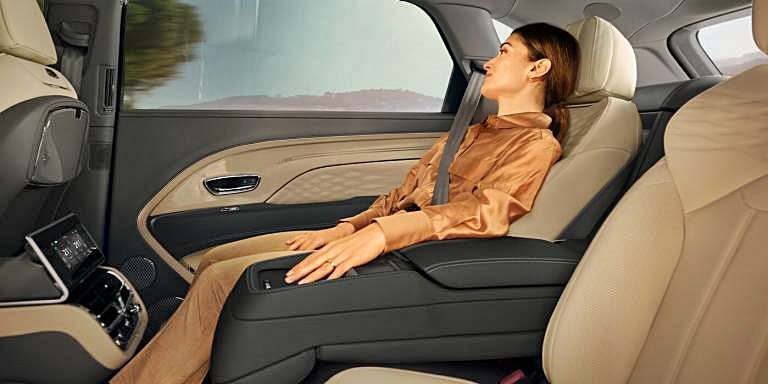
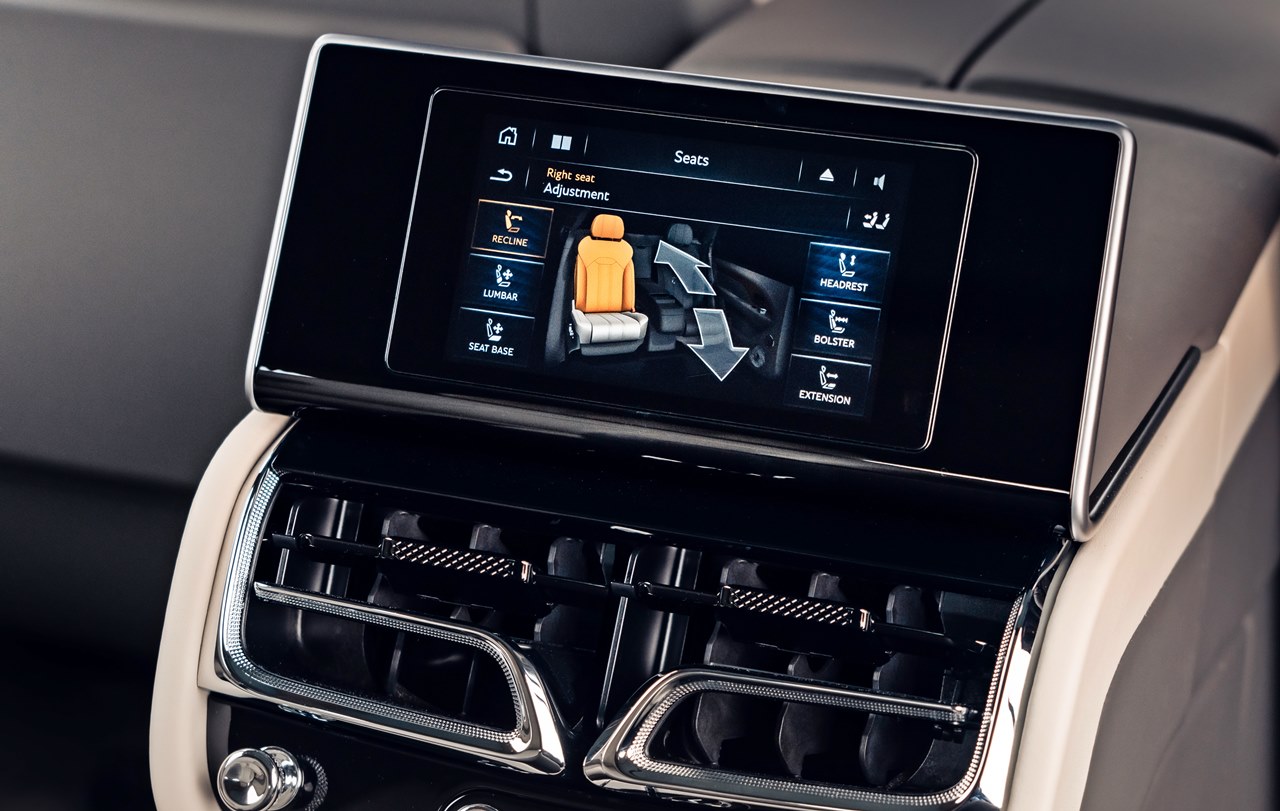
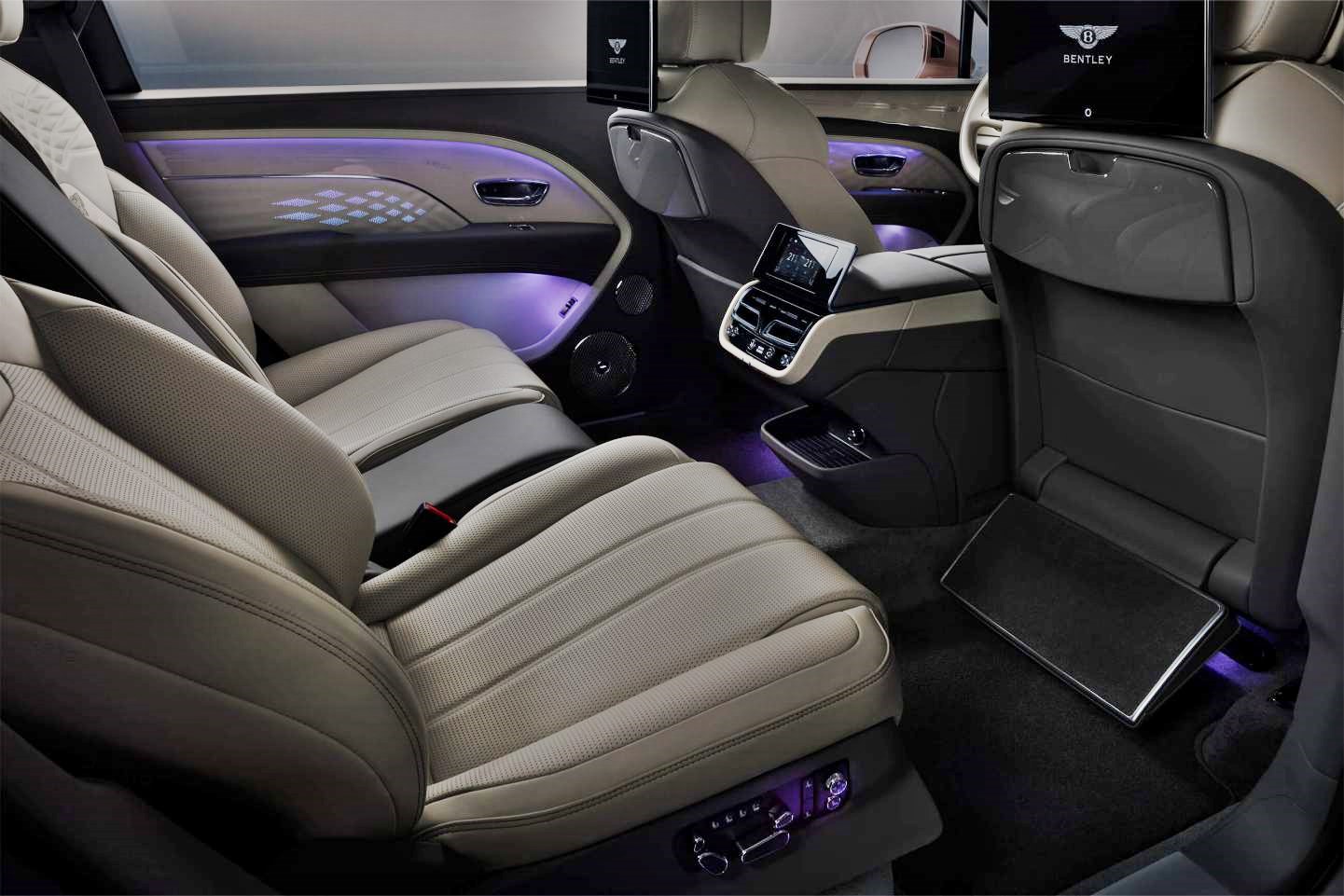
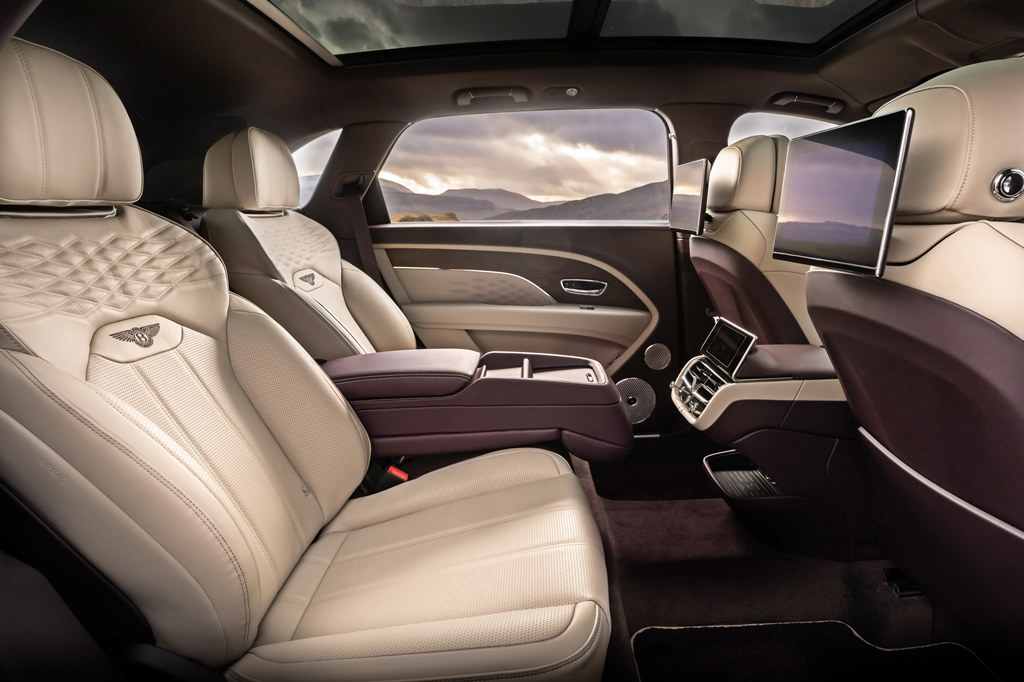
This led to the most advanced seat ever fitted to the car – Bentley’s Airline Seat Specification. Available in the rear cabin, the seat has 22 ways of adjustment and world-firsts in a new auto climate sensing system and postural adjustment technology.

In Relax mode, the seat can recline to 40 degrees, whilst the passenger seat is motored forward and a footrest deploys from the back of the front passenger seat. In Business Mode, the seat moves into its most upright position to make working on the move more comfortable.

The Postural Adjustment function uses new thigh and shoulder pockets, plus additional lumbar massage pockets, to subtly yet continuously change the shape of the seat to ease pressure points around the body, preventing ‘dead spots’ and fatigue build-up. The use of air pockets enables more continuous and complex movements to be made – which are virtually imperceptible to the passenger – rather than the linear movements resulting from the use of seat motors.
The system goes beyond the 2D motions typical of adjustable seats, able to employ a 3-dimensional twist to relieve pressure points. Six independent pressure zones can provide 177 adjustments every 3 hours to ensure consistent seat comfort, regardless of the length of the journey. Studies have shown that actively supporting body weight in a dynamic way relieves strain, which can bring on mental stress and cause lack of focus. Natural supported postures have been shown to alleviate stress from tensed muscles.
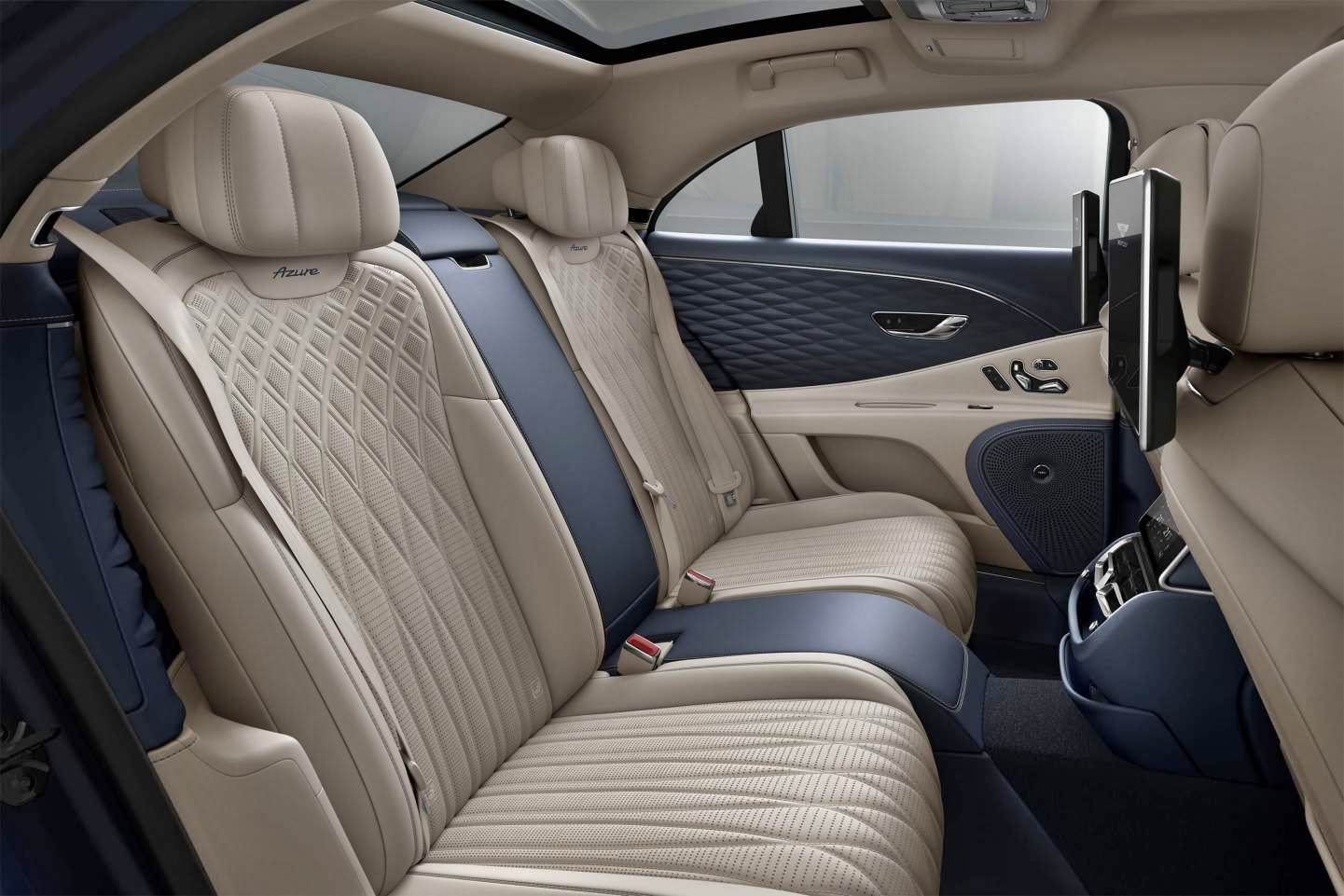
Besides the heating and ventilation function in the seats which help to maintain the body’s optimum temperature for comfort and alertness, there is also a massage function with 6 programmable settings. This massage function promotes the constant micro-adjustments in muscle and posture that are so vital in preventing fatigue.

Even scent is important
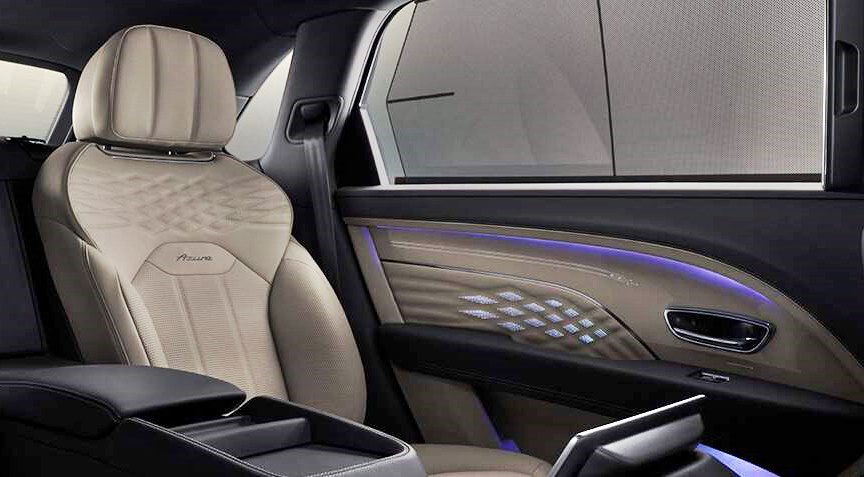
When we see pleasing forms, shapes and colours, our brains release chemicals such as dopamine that not only make us feel good but are good for our body and sense of wellbeing. This led the Azure team to consult with neuroscientists to understand the interrelationship of colour, texture, tactility and even scent to create an atmosphere of relaxed serenity.

“Sensory receptors convert physical stimuli in neural activity, creating changes in our brain and nervous system. Every fabric, sound, motion, colour and touch continuously impacts our nervous system and the Azure cabin has been finessed accordingly,” said Maria Mulder, Head of Colour & Trim at Bentley Motors.
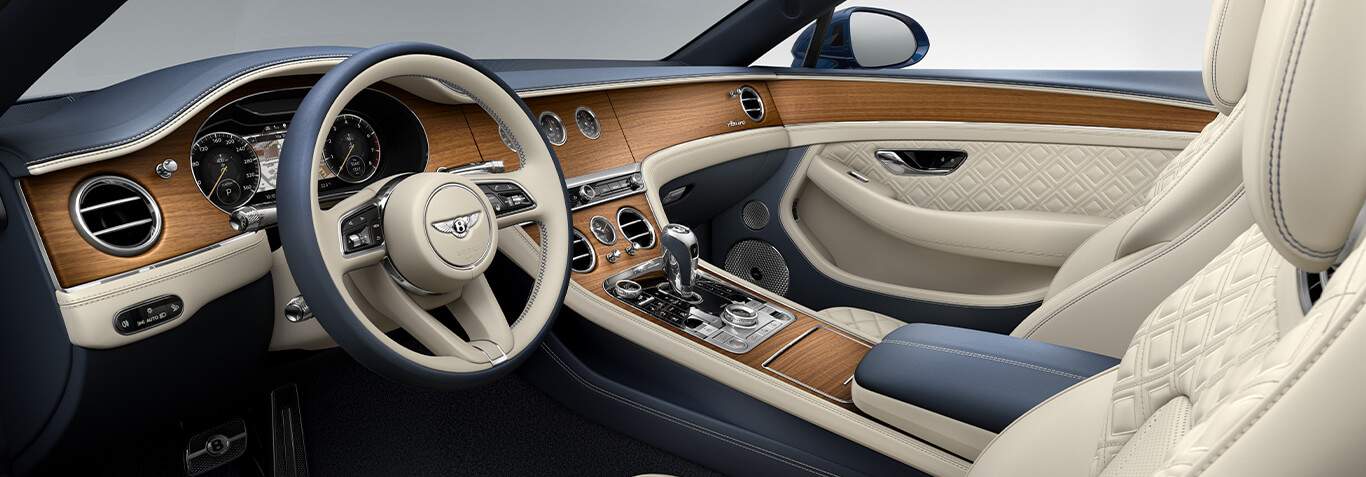
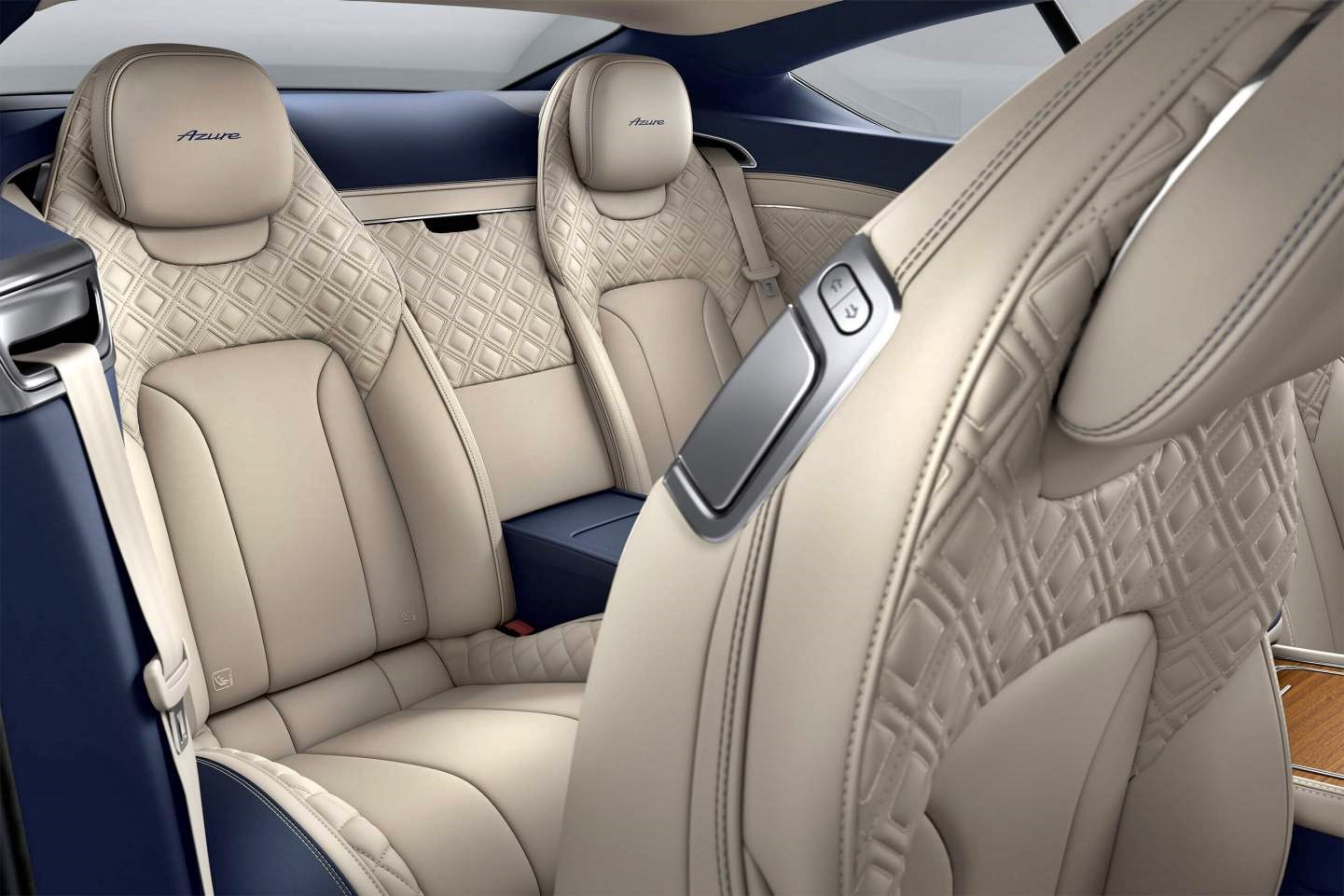
To that end, the Azure interior design specification includes ‘wellness quilting’ which has fractal patterns of precisely crafted diamond quilted upholstery creating an eye-pleasing interplay of light and shade. And while Bentley customers will always have access to the full range of wood veneers, the Azure range includes 3 open pore veneers with a softer, satin, reflective quality that can bring on a calm mood.

A personalised climate within
For most passengers, just having an environment with a comfortable temperature would be pleasant enough on any journey. But in a Bentley, there is Seat Auto Climate where each passenger can  select their desired temperature. The contact temperature and surface humidity are then directly measured (cushion and backrest independently) and the heating and ventilation are adjusted to achieve the required temperature.
2022 Bentley Bentayga EWB

This is continuously monitored to ensure it remains constant as optimised body temperature is vital when the focus is on individual wellbeing. In studies that have manipulated body temperature via external means, it has generally been reported that cognitive function is reduced by decreasing body temperature below normal. A comfortable thermal environment can also alleviate fatigue, reduce irritability, and improve driving safety.

Bentley stretches the Bentayga to create a new flagship model

The Bespoke department of Rolls-Royce already offers the ultimate in personalisation of the brand’s limousines and Cullinan SUV. Virtually every customer today uses the services of the Bespoke team in some way to add or create something special for their Rolls-Royce. But there is yet another level beyond Bespoke and that is Coachbuild. The department, re-established in 2021, brings back a lost art and science of making cars which goes back to the earliest years of the motorcar, before mass production began in factories.

“Our Coachbuild department is for those patrons who wish to go beyond the existing restraints, and explore the almost limitless possibilities this opens up for them. We are able to offer our customers the opportunity to create a motor car in which every single element is hand-built to their precise individual requirements, as befits our status as a true luxury house,” said Torsten Muller-Otvos, CEO of Rolls-Royce Motor Cars.

Rolls-Royce Boat Tail Coachbuilt No. 2 2022

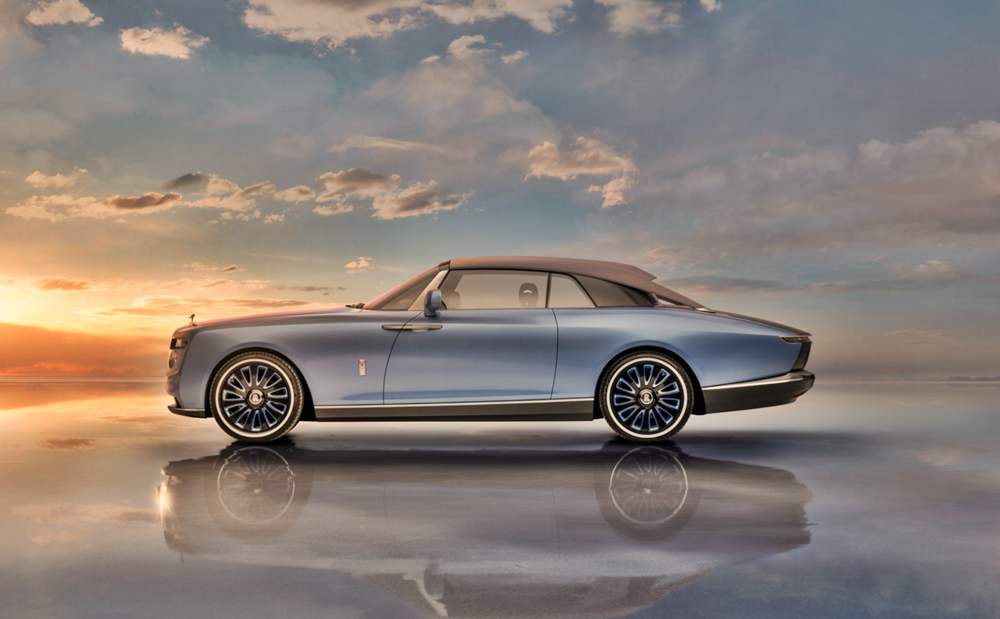
The Sweptail, presented in 2017 as a demonstration of the coachbuilding expertise of Rolls-Royce attracted the attention of a number of customers. Within this group, it emerged that three potential customers shared a deep appreciation of contemporary nautical design. In consultation with the customers concerned, an agreement was reached whereby three cars –  to be known as Boat Tail – would share a common body, but each would then be individually, highly personalised, reflecting the confluence between vision, capability and ambition of the marque and each of the individual commissioning patrons.

Rolls-Royce Boat Tail Coachbuilt No. 2 2022
The second (of only three) Boat Tail comes one year after the first one which was unveiled in May last year (below).

2021 Rolls-Royce Boat Tail

The first Rolls-Royce Boat Tail was completed a year ago and the commissioning customers, who are a globally successful couple, were willing to let the world see their ultra-exclusive car. Their fascination of the Boat Tail form was furthered by a car in their private collection – a 1932 Rolls-Royce Boat Tail, lovingly restored by them, in time for their modern Boat Tail’s completion.

Now comes the next chapter of its Boat Tail coachbuilt commission and as will be the case with all  three cars, each will have a story entirely unique and personal to its owner, reflecting their own history, tastes and sensibilities. With this in mind, the latest Boat Tail, to be revealed at Concorso d’Eleganza, Villa d’Este 2022 on the shores of Lake Como in northern Italy, is a masterwork of restraint, sophistication, elegance and attention to detail.

Rolls-Royce Boat Tail Coachbuilt No. 2 2022

It was commissioned by a customer whose family business has grown from his father’s origins in the pearling industry. Widely travelled, internationally educated and cosmopolitan in his tastes and influences, the customer is an established patron of the arts, who additionally owns a sizeable collection of classic and modern cars, housed in a dedicated private museum.

A level of sophistication, garnered from the client’s extensive knowledge of luxury, is clearly. The overall design aesthetic is restrained; a study in carefully considered materials and precise details that together create a highly personal and emotionally resonant homage to the customer’s father.

Rolls-Royce Boat Tail Coachbuilt No. 2 2022

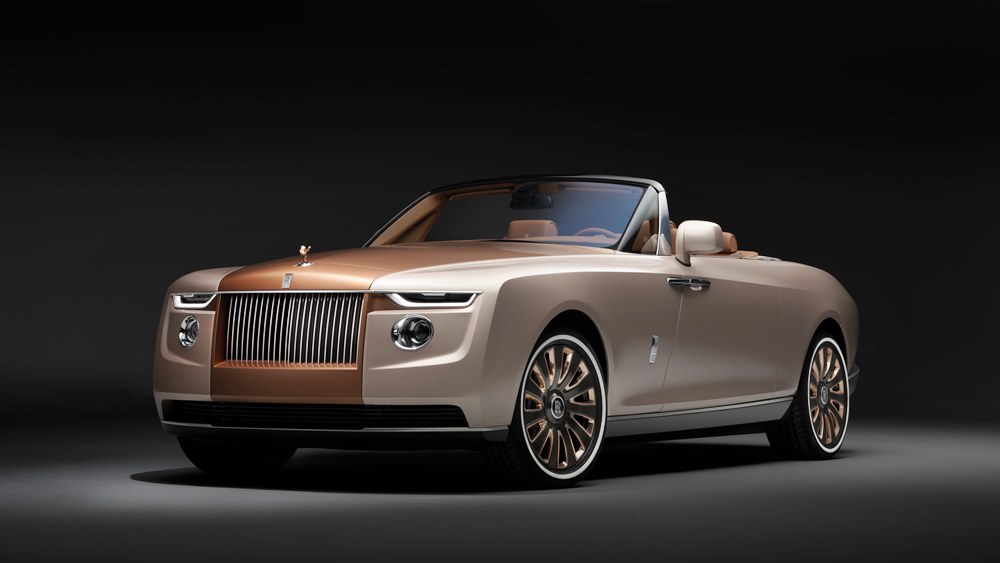
At the onset of the commissioning process, the customer presented Rolls-Royce Coachbuild designers with a selection of 4 pearl shells, personally chosen from his private collection for their unique colour and complexity. The shells provided inspiration for the exterior colour, which is one of the most complex Bespoke finishes ever created by Rolls-Royce.

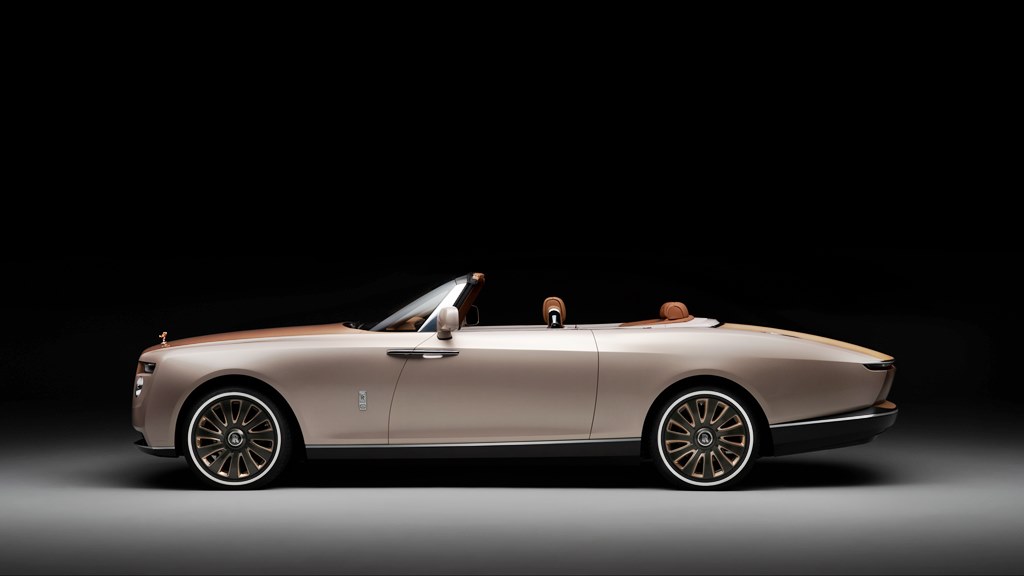
The foundation of the colour is a shimmering blend of oyster and soft rose, with large white and bronze mica flakes adding a unique pearlescent quality that changes subtly under different light conditions. The contrasting cognac-coloured bonnet, created specifically for this Boat Tail, contains fine bronze and gold coloured aluminium mica flakes complete with a layer of crystal and iced matt clear coat, adding significant warmth and depth to the car’s appearance. The technical fibre lower sills of Boat Tail incorporate a rose gold woven thread.

Rolls-Royce Boat Tail Coachbuilt No. 2 2022

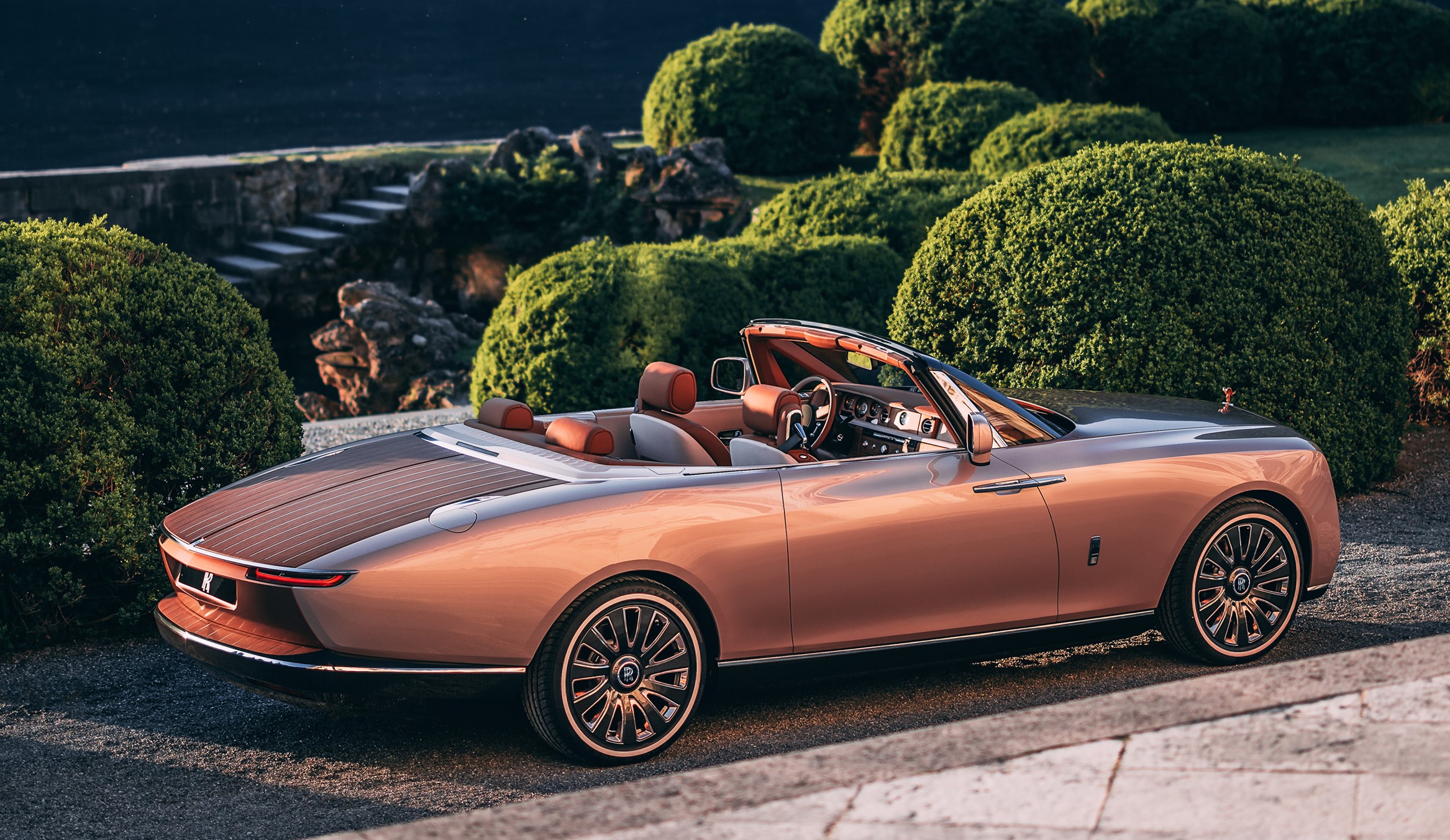
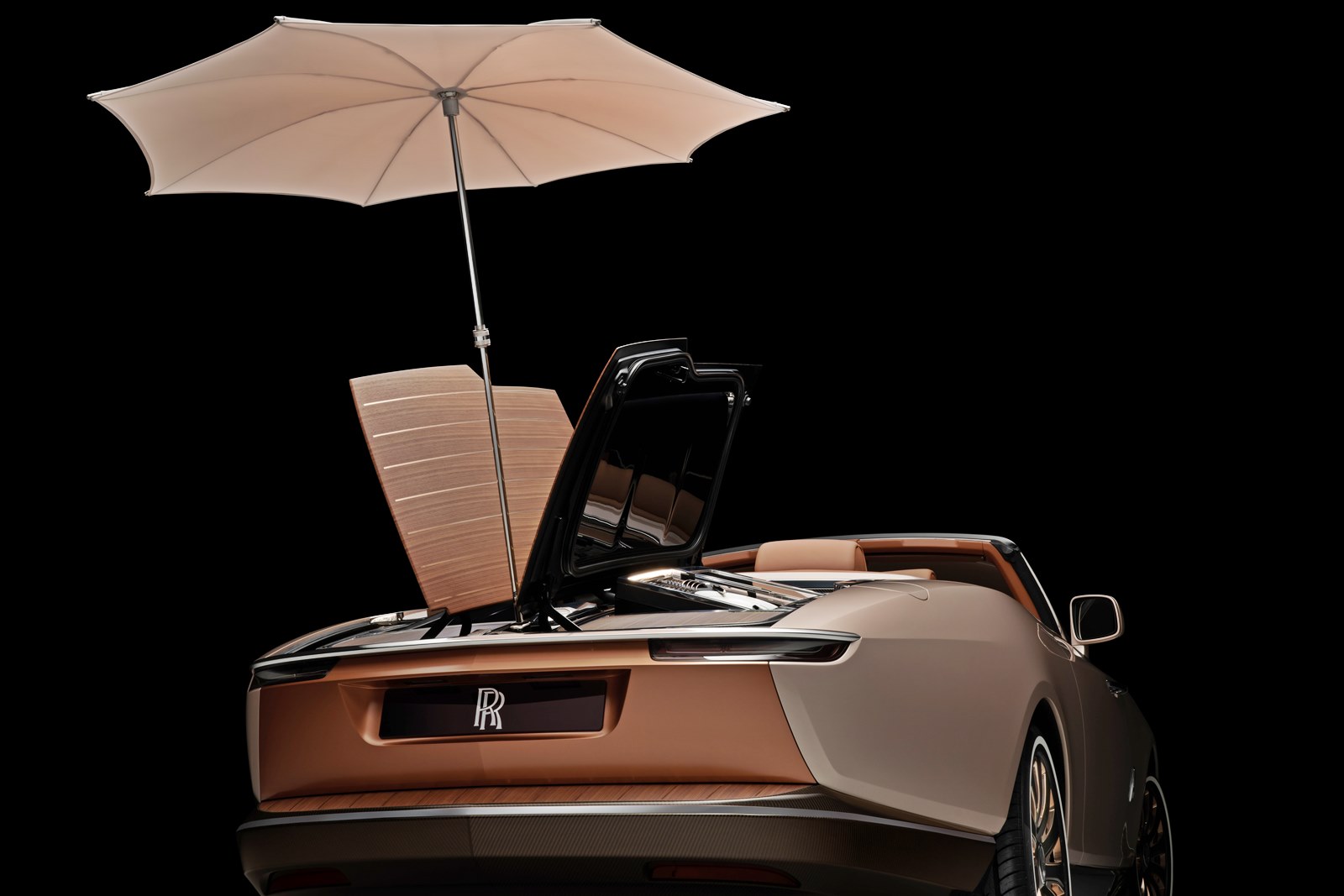
The rear deck, which houses Boat Tail’s unique ‘butterfly-design’ hosting suite, is swathed in Royal Walnut veneer, inlaid with rose gold-plated pinstripes with a satin-brushed finish to ensure a sensitive and sophisticated appearance. The Royal Walnut was specifically selected by the customer  for its beautiful properties as it matures over time, a material that will gradually transition to the tonal properties of the cognac colour. From above, one observes a harmonious balance and satin effect of the iced bonnet and tactile wooden rear deck, in contrast with the high-gloss front and side perspectives.

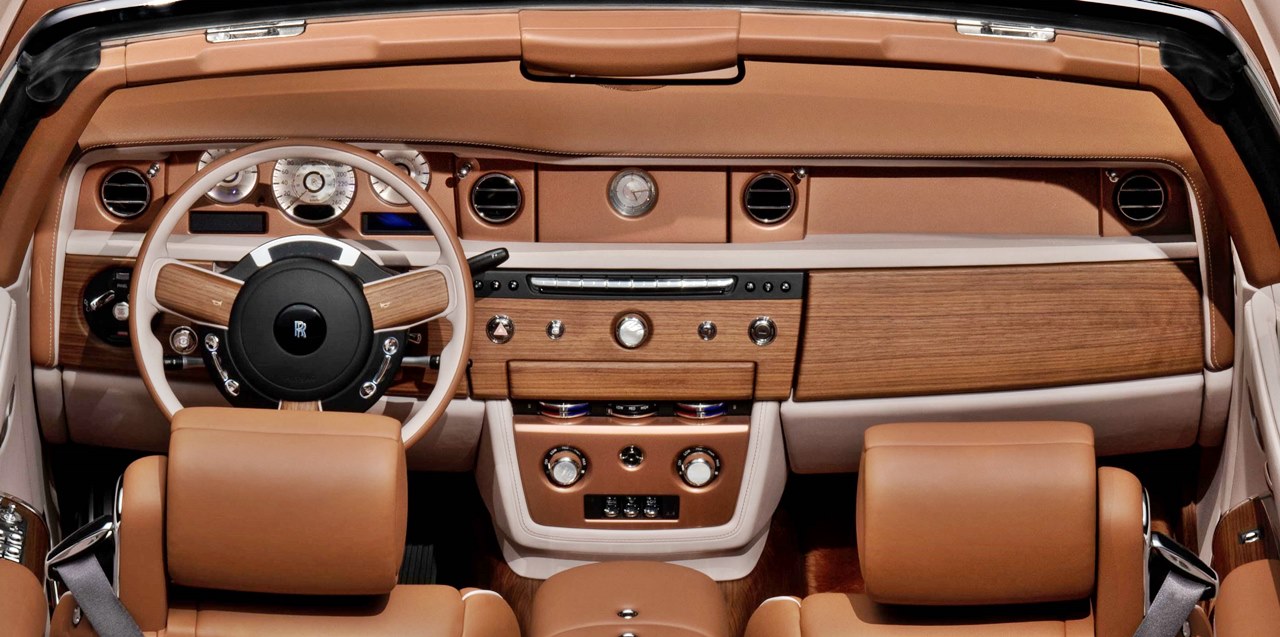
The interior is a beautifully curated combination of perfectly matched cognac and oyster-coloured leathers and Royal Walnut veneer, with rose gold and mother-of-pearl accents throughout. The leathers, complete with a pearlescent finish, accentuate the surfaces and forms of Boat Tail’s seats and interior design. The transmission tunnel is formed from Royal Walnut veneer with rose gold pinstripes, drawing a direct visual reference to the rear deck and adding a glowing warmth to Boat Tail’s interior.

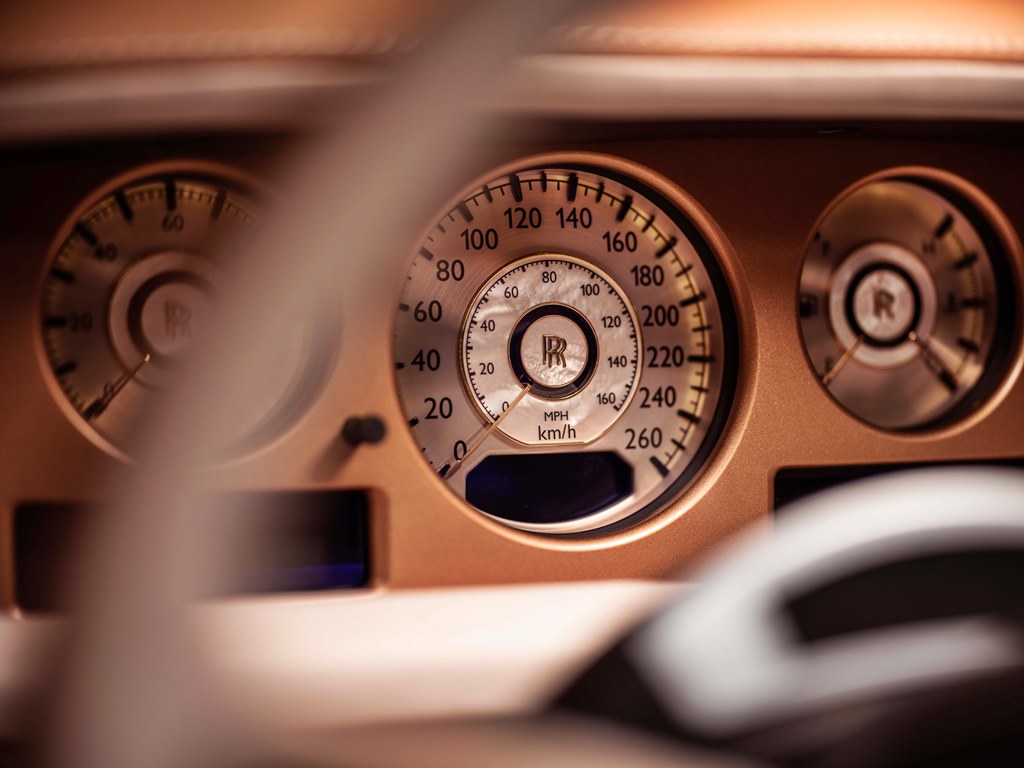
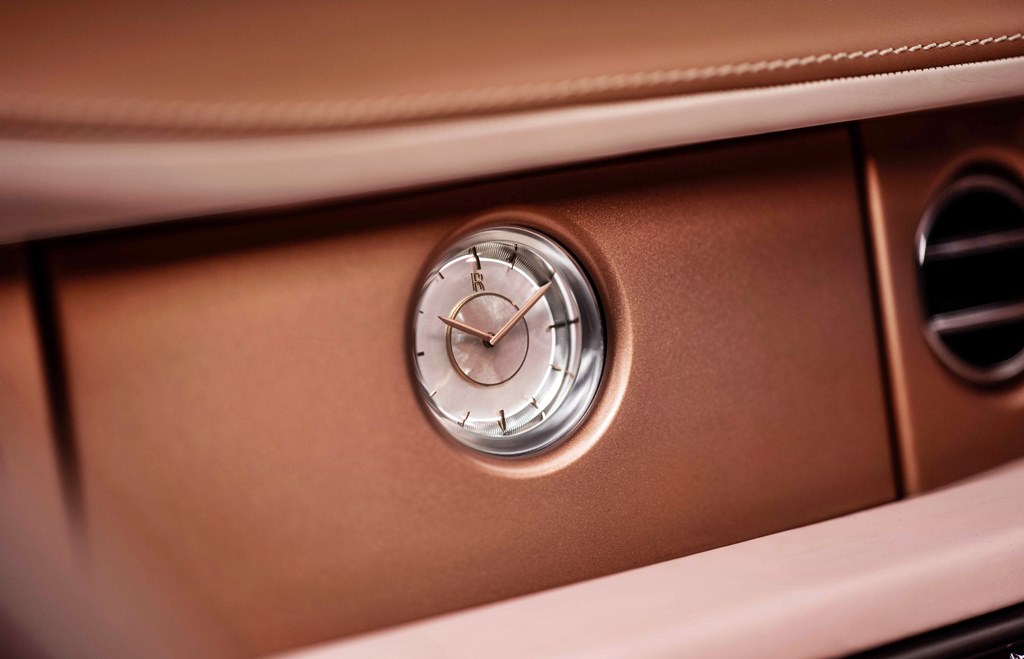
The centrepiece of the dashboard is a timepiece made from mother-of-pearl, chosen and supplied by the client from his own collection. The fascia is pure and minimal in its appearance so as not to detract from the precious material. The same prised substance graces the control switches and instrument dials, creating a strong visual and material connection between the car, the owner, and his family heritage.

Rolls-Royce Boat Tail Coachbuilt No. 2 2022

Rolls-Royce Boat Tail Coachbuilt No. 2 2022

The Boat Tail is entirely hand-built, with the body panels fashioned from vast, single sheets of aluminium to create the distinctive outline inspired by the racing yachts of the early 20th century. From the front, the Pantheon Grille, milled from a single, solid billet of aluminium, is graced with a Spirit of Ecstasy fashioned in rose gold.

With the Architecture of Luxury – which includes a proprietary all-aluminium spaceframe chassis – the marque has ushered in a new coachbuilding movement that encompasses both highly sophisticated 21st Century technology and materials, and a tradition extending back more than 100 years.

Rolls-Royce re-establishes its Coachbuild department to go beyond Bespoke

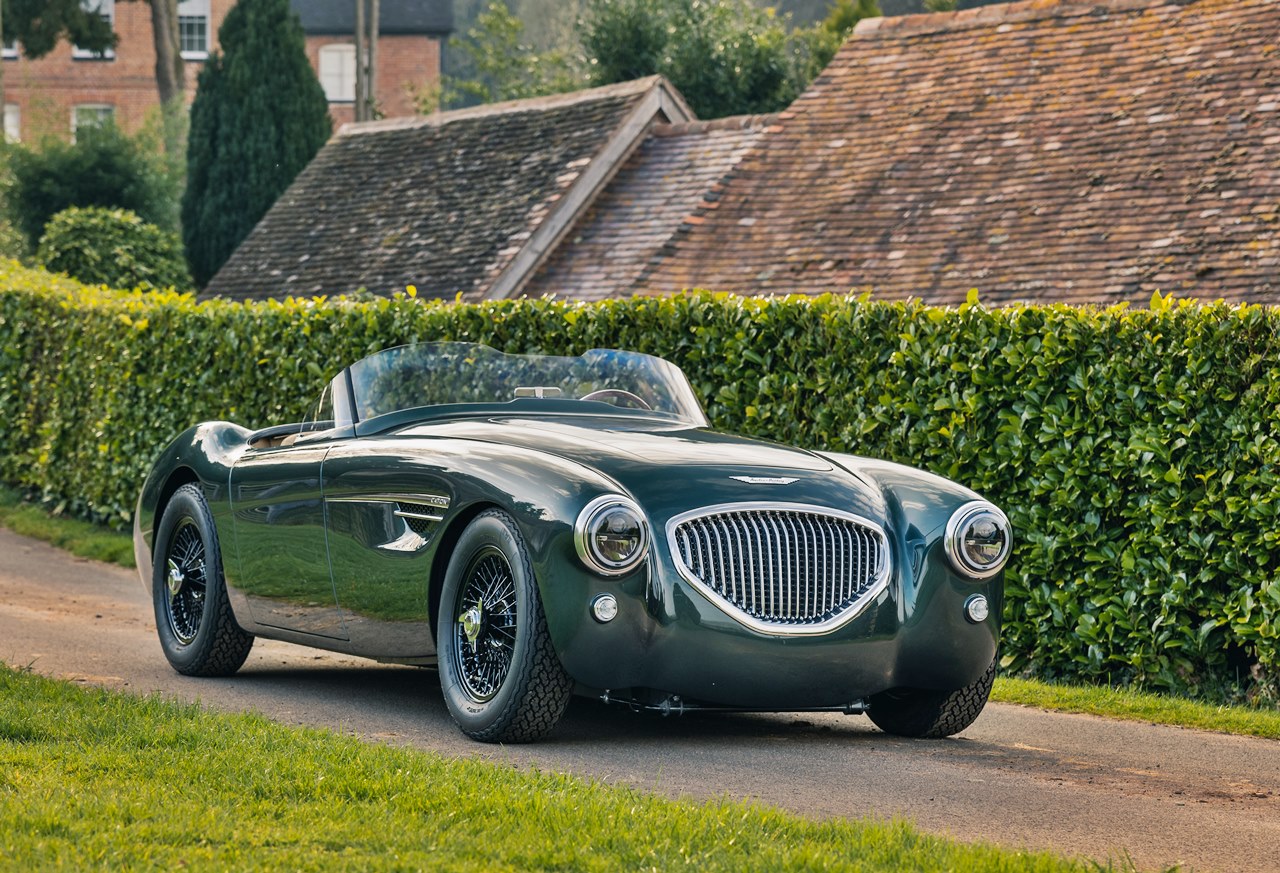
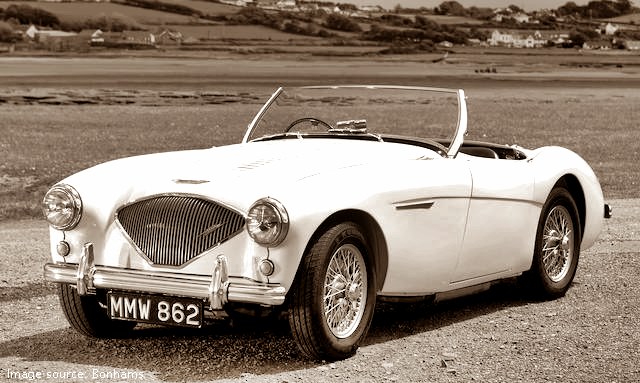
Like many British sportscars of the 1950s, the Austin-Healey 100 has become an iconic model because of its historical significance. Built between 1953 and 1956, it was the first model of the association between Austin and Donald Healey which would last for 20 years. Over 14,600 cars were built and those that are still in existence today are valuable collectors items.
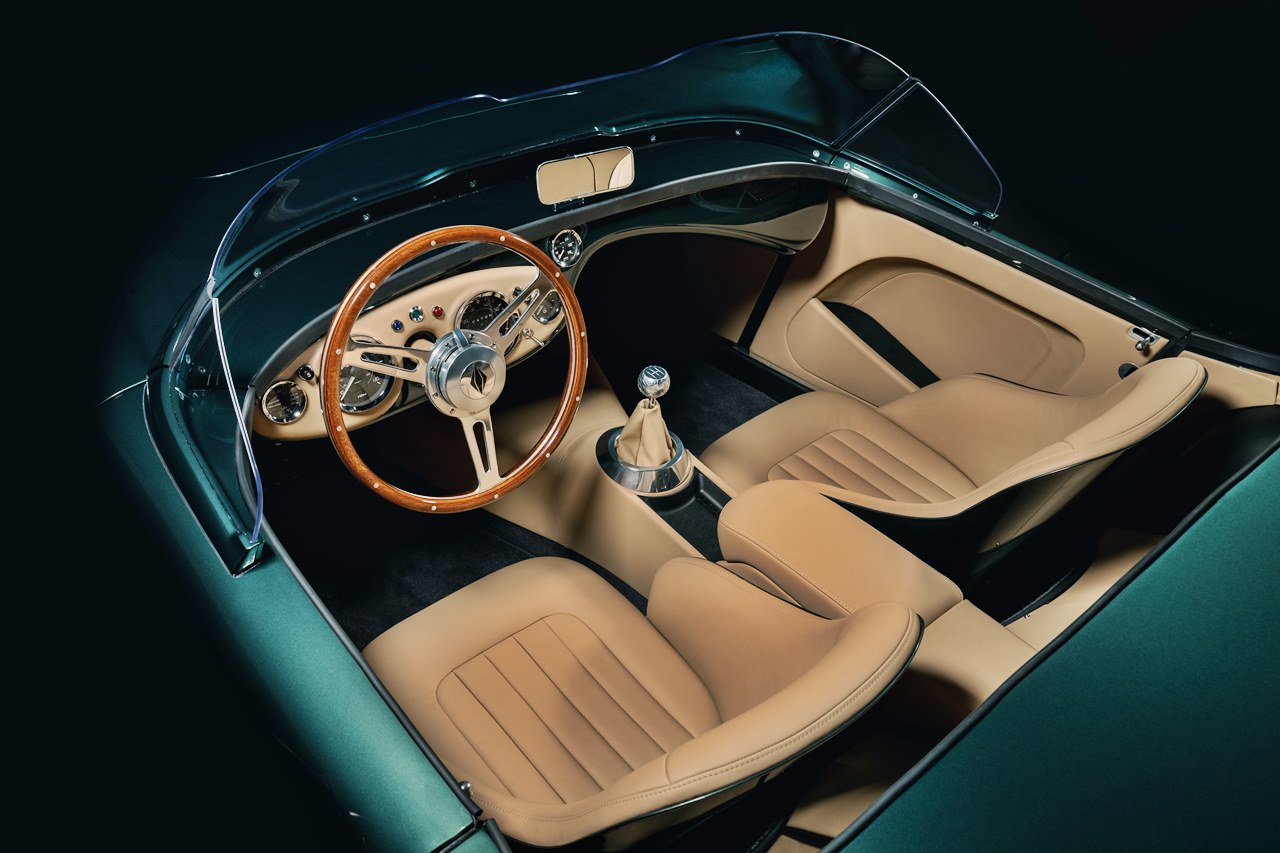
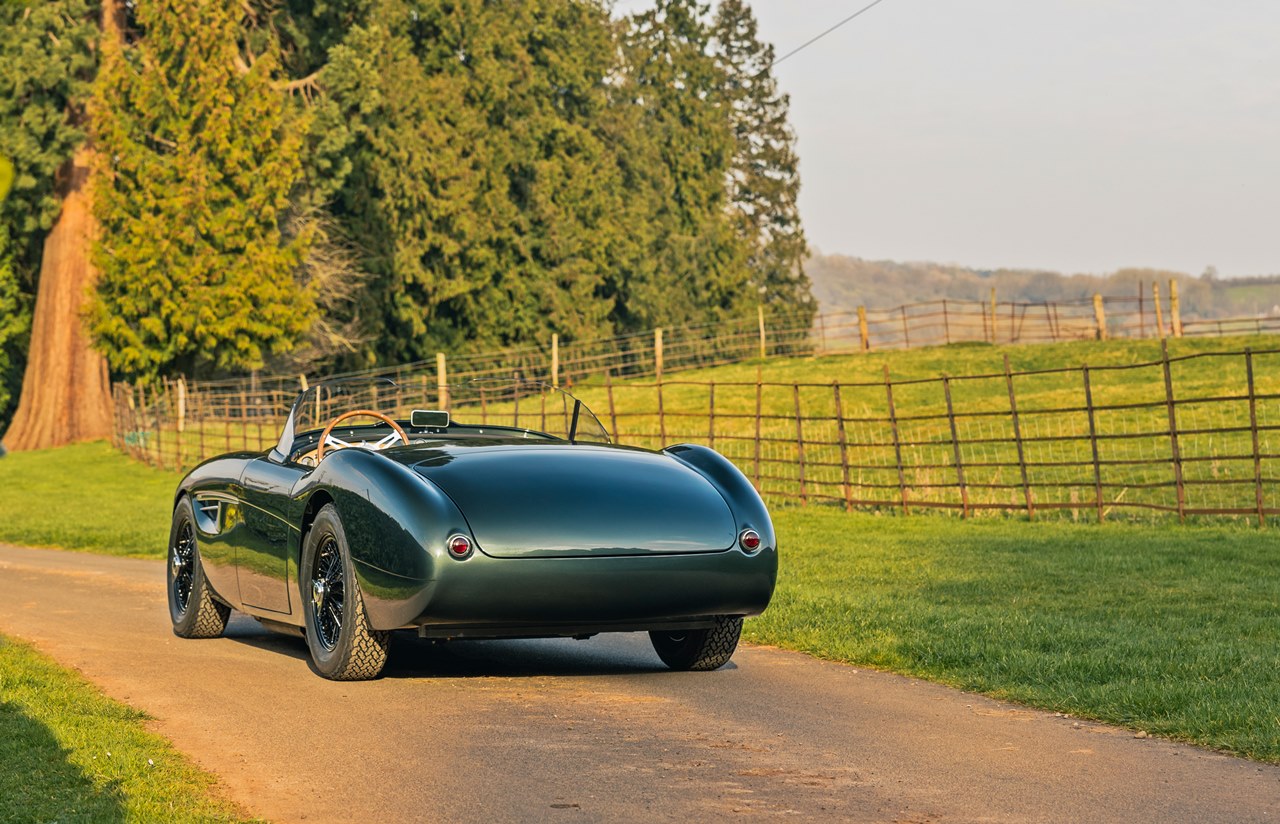
For those who want this piece of British motoring history but cannot acquire one, Caton, a new company specialising in design and creation of ultra-exclusive, highly aspirational luxury products will restore and modernise the model – known as Healey by Caton – as its first creation.
The original Austin-Healey 100 built between 1953 and 1956.

Only 25 units to be hand-built
It will be extremely rare too, with a limited run of 25 hand-built restored cars at the factory in England. Each car will have a unique combination of design and engineering comparable to established carmakers, with traditional craftsmanship techniques.

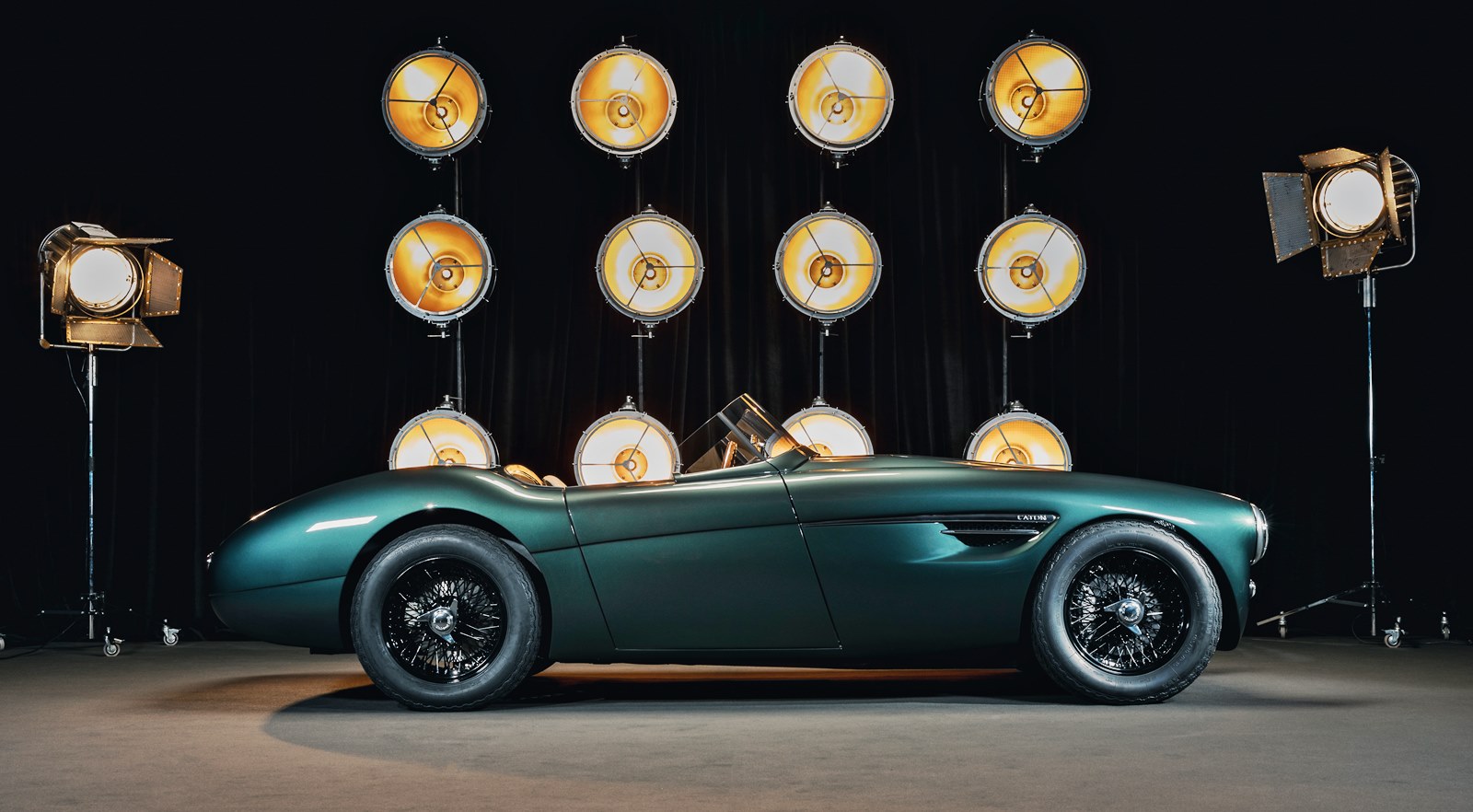
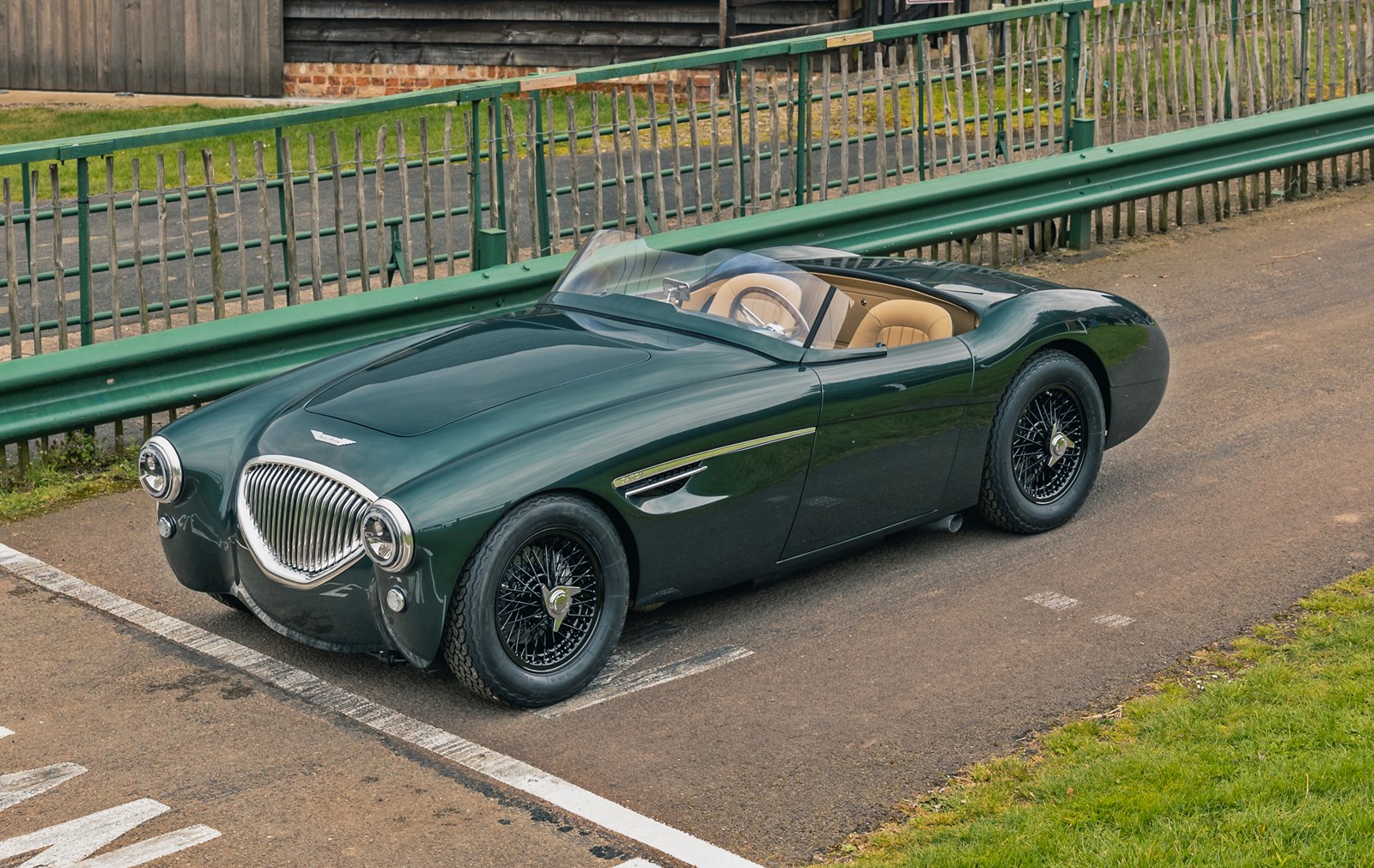
Taking a forensic yet sympathetic approach, Caton’s designers have introduced a subtle smoothness to the Healey’s instantly recognisable lines, gently amplifying the visual dynamism while fully respecting the engineering and design principles of the original car’s creator.

2022 Healey by Caton

The execution of the cleaner, smoother look has been applied across the entire body, with all seams and beading removed. This is evident in the new front aluminium fenders, which feature a more clamshell-like construction. Despite being built on an English Wheel, using traditional methods, they are entirely free of the beading that ran through the centre of the original items. A new air vent and a finisher have been integrated into the flanks, visually amplifying the diving line that runs along the side of the car.

Refining the design
For the most part, though, Caton has refined, rather than added to the Healey’s body. The rear bumpers are gone, as are the external boot hinges, replaced with new internal hinges running on modern gas struts. The boot handle is deleted too, and the lid is now opened by an internal release mechanism, run by a new, modern Caton key.

“To remain true to the car’s DNA, we asked ourselves: ‘What would Healey have done when building a car in the Fifties if they had the tools and manufacturing techniques that we are in the unique position to have at our disposal today?’” said Darryl Scriven, who directed the design work.

Scriven refers to technology that enables a complete 3D scan of each donor car. A Computer Numerical Control (CNC) machine enabled the fabricators to work to tolerances of just 0.2 mm, creating ultra-perfect panel gaps that add to the beautification of the bodyshell. Yet the team also deployed technology that would have been entirely familiar to those building the car in period, such as an English Wheel, which was used to hand-roll the aluminium panels.
2954 cc 4-cylinder engine
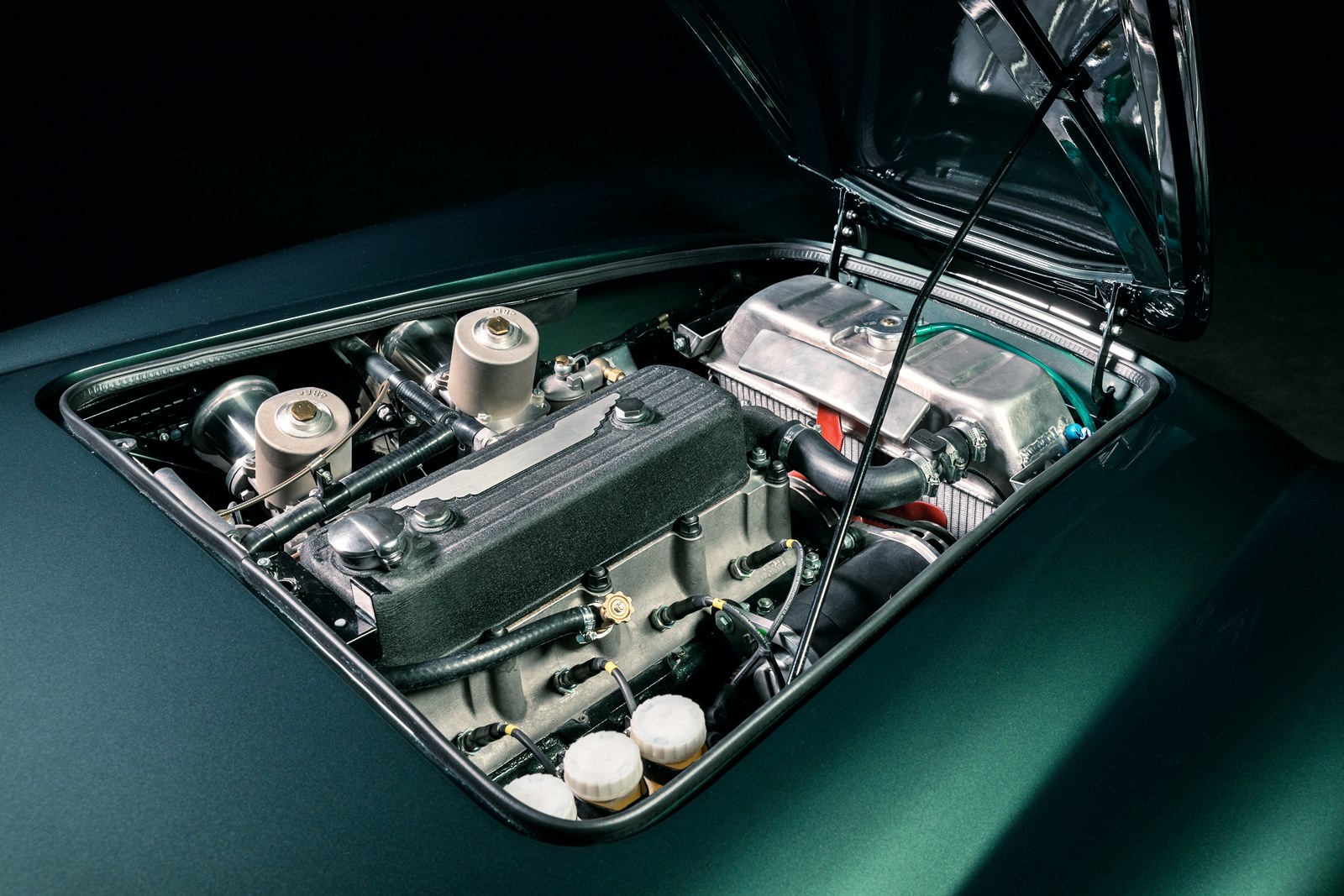
The car is powered by a 185 bhp/264 Nm 2954 cc 4-cylinder engine, not far different from the 2660 cc displacement of the original’s powerplant. Based on an original Austin-Healey block, the engine is completely stripped down, fully lightened, balanced, and then refurbished to zero kilometres. It is further enhanced with a full steel crankshaft, upgraded bearing shells, high compression pistons, a race camshaft with more aggressive lobes and roller rockers. Larger Twin H8 carburettors (yes, carburettors!)and gas flow inlets provide enhance throttle response, while a race side-exit exhaust system adds further to aural appeal.
2022 Healey by Caton

The engine, and most of the car’s mechanical components, are the work of the world’s leading Healey specialists J.M.E. Healeys, who have strong historical links with the original Healey company. Jonathan Everard, who founded J.M.E., and his father Harold, actually worked for the Donald Healey Motor Company in earlier years. Today, the company is run by Jonathan’s sons and it is based in Warwick, which was the original home of the Healey company.

The car benefits from a new chassis, strengthened and modified at known weak points – including the addition of new front and rear bulkheads – identified from J.M.E.’s decades of experience in restoring, servicing, and rallying Healeys. Strengthened driveshafts transfer the performance to the road but there are no electronic traction or stability controls to dilute the driving experience. Nor is there ABS, in keeping with the purist driving feel, but all four wheels have disc brakes.

2022 Healey by Caton

Interior modernised with focus on comfort
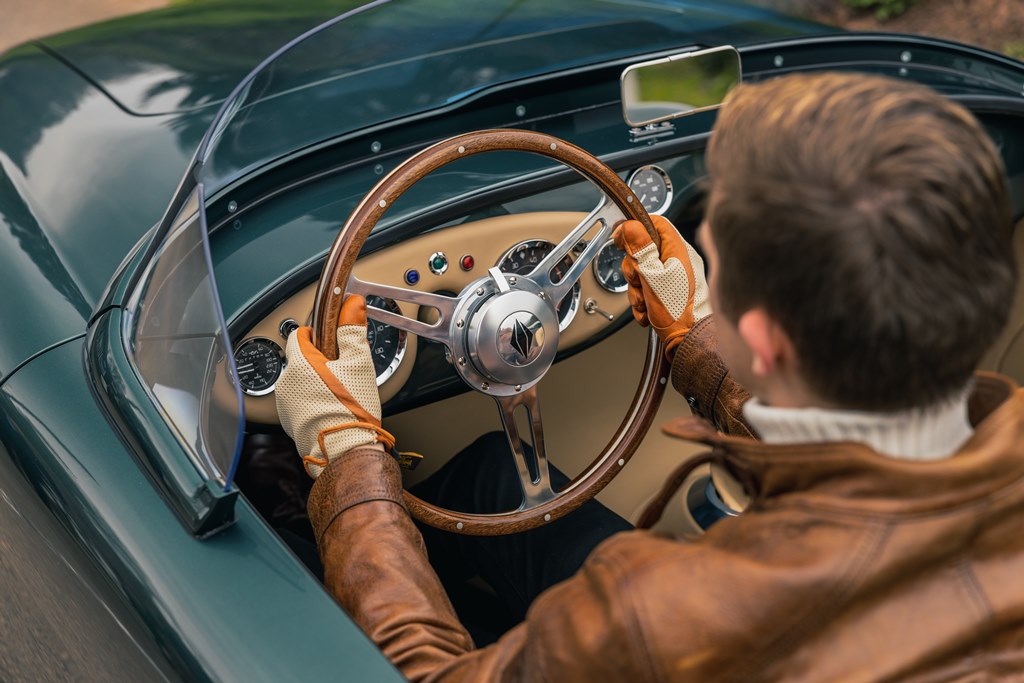
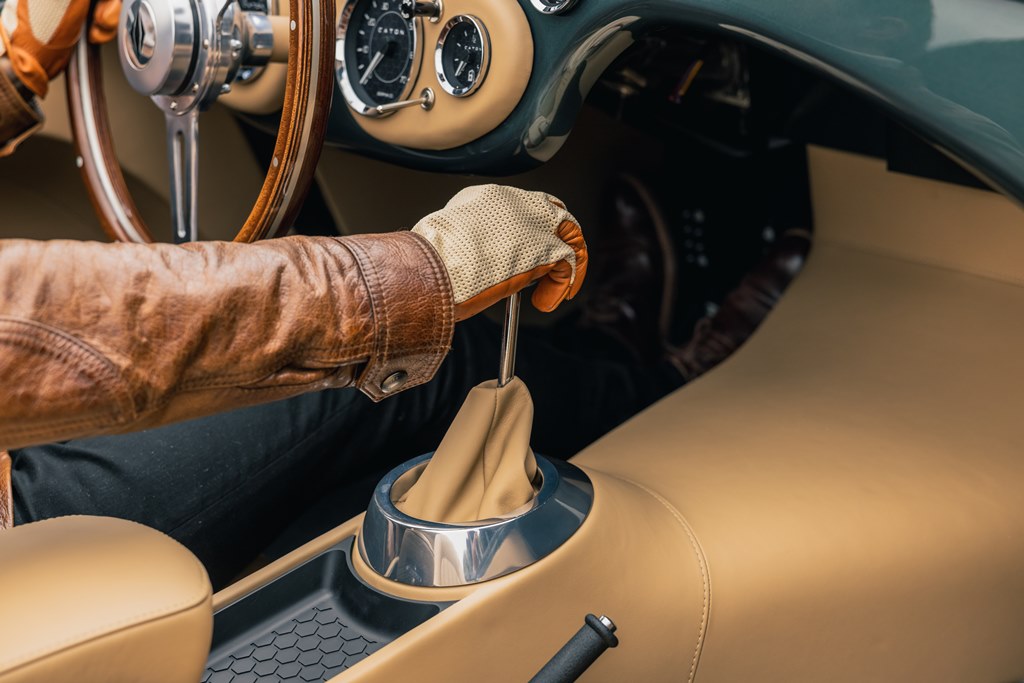
Inside, the cockpit is totally modernised with a focus on the very best in contemporary and period materials. Interestingly, the original Healey 100s were designed and built for people who were shorter back then and many of today’s drivers may be somewhat cramped. Thanks to a redesign of the transmission tunnel and new 5-speed manual gearbox, there has been a transformation in cabin space. As a result, the Healey by Caton is a highly practical sportscar, offering today’s drivers the feeling of a classic but with comfort as well.

2022 Healey by Caton

2022 Healey by Caton

With production of the Healey by Caton limited to 25 units, the company will be able to liaise with each customer on a highly personal, one-to-one basis. The future owners can visit the factory on a regular basis and besides touring the facilities, they can also watch every stage of their car being built.

Caton will offer the ability to add completely bespoke and personal touches, whether for the car’s paint finish (in any colour imaginable) or choosing from the extensive array of materials and trim suite available for the car’s interior.

2022 Healey by Caton

“No two examples of the Healey by Caton will be the same, but each will be of exceptional beauty and built to the highest possible OEM levels of quality. Each will represent a true reincarnation of the iconic Austin-Healey 100 sportscar utterly fitting for the modern age. Our aim is to deliver an unrivalled, immersive, intoxicating and highly emotional driving experience,” said Tim Strafford, CEO of Caton’s strategic vehicle building partner, Envisage Group.

The pricing with a car included is likely to be in the region of £395,000 (about RM2.2 million) but the official announcement will be made at Salon Prive London on April 21. Production will commence during this quarter of the year.

2022 Healey by Caton

Yokohama revives production of classic tyres for old car models

Archive

Follow us on Facebook

Follow us on YouTube