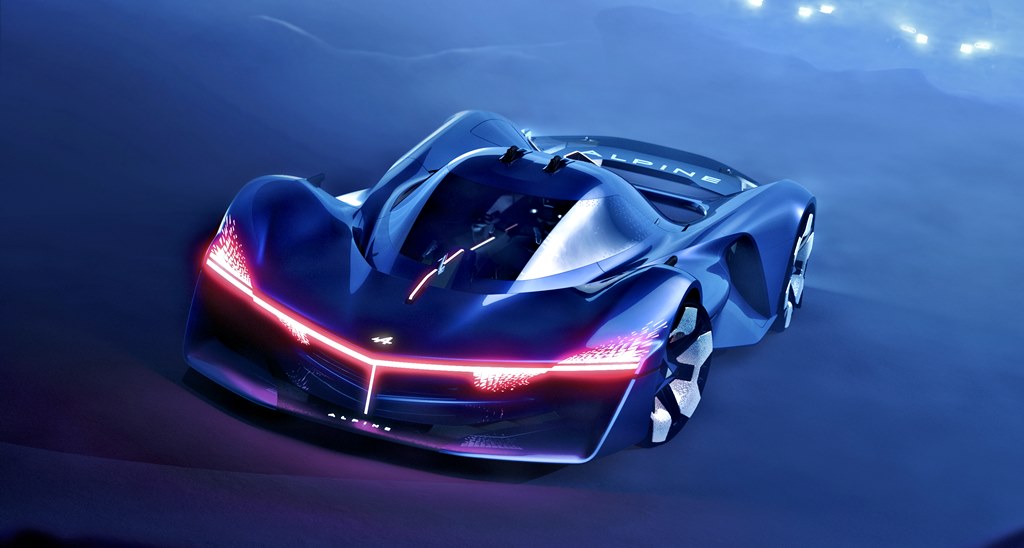
Alpine, the French company founded in 1955, has always been associated with sportscars. That part of its DNA remains intact up till today and will also be found in its roadgoing and racetrack models of tomorrow. The vision and roadmap moving forward is now encapsulated in the Alpenglow concept which will be displayed at the Paris Motorshow this month.
The Alpenglow presents the brand’s forward-looking technological direction as well as the design language that will be adopted. Like its parent company, Renault, Alpine is also heading towards full electrification and will explore the approach of using hydrogen. ‘Green’ hydrogen sustainable mobility as hydrogen is available ‘everywhere’. A hydrogen-fuelled engine releases practically nothing but steam during combustion so it is very clean.
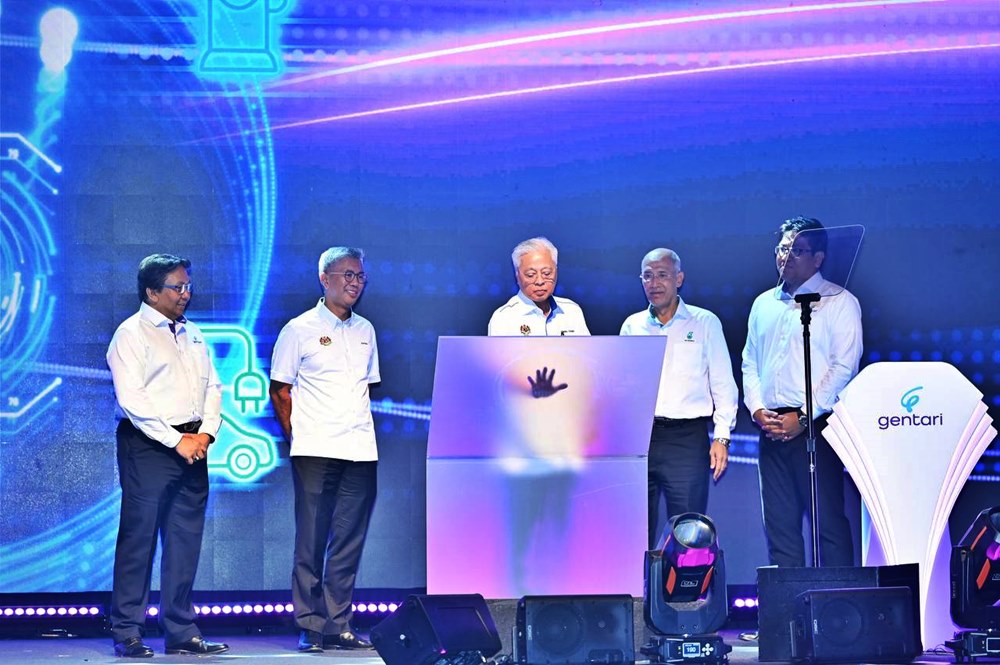
GENTARI Sdn Bhd, which was established in June this year, had its official launch by the Prime Minister recently, raising its presence among Malaysians. The company, formerly known as PETRONAS Gas & New Energy Sdn Bhd, aims to become a one-stop integrated clean energy solutions provider, beginning with a suite of renewable energy, hydrogen and green mobility solutions for commercial, industrial, and retail applications.
Having begun operations earlier under its old name, GENTARI has already embarked upon a series of initiatives and collaborations in its mission to rank amongst the world’s leading clean energy companies. Guided by the Net Zero Carbon Emission 2050 goals of PETRONAS, it has set a course to ensure that PETRONAS continues to evolve as a cleaner and renewable energy provider, while supporting the energy transition.
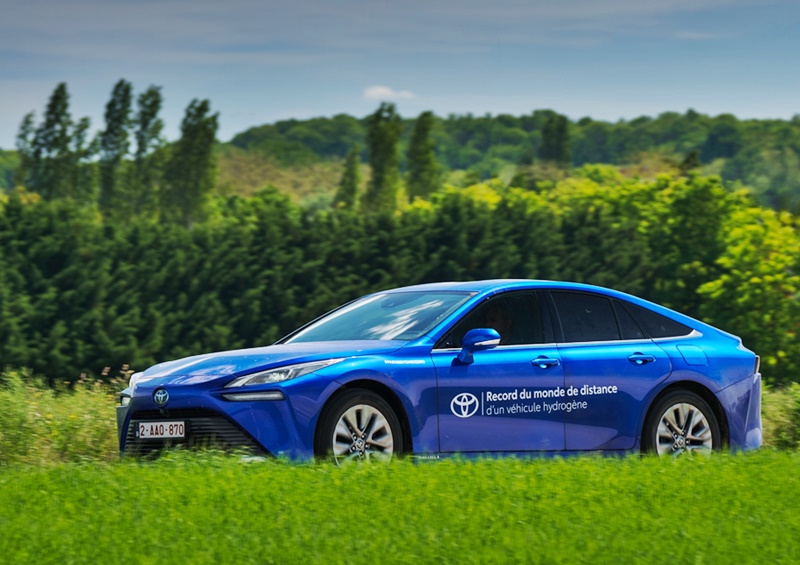
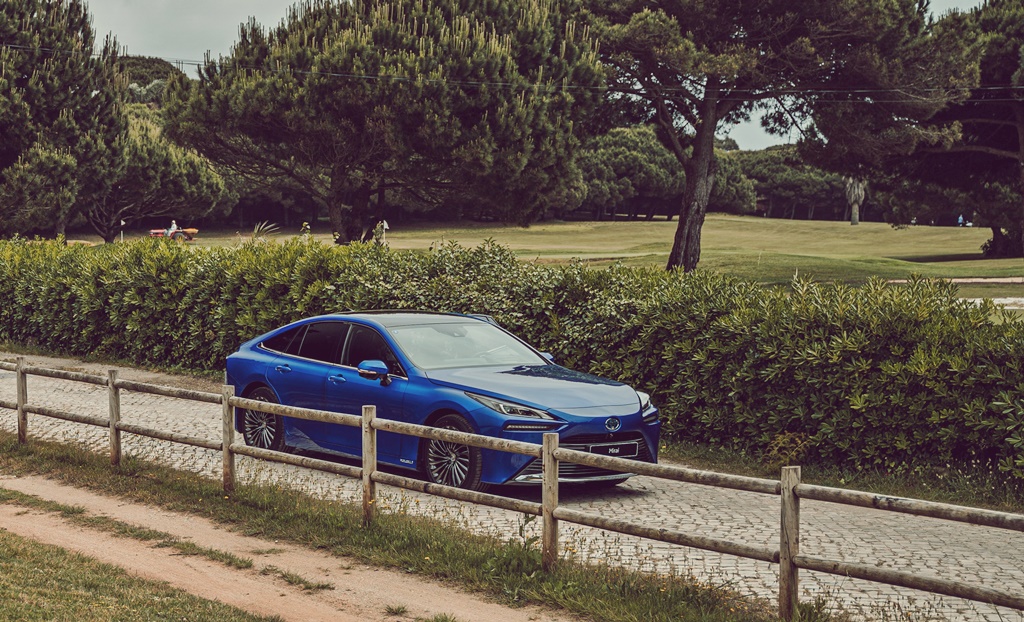
Fuel cell technology for use in cars is still something in its infancy and only a few manufacturers have started to offer them commercially and even then, in limited numbers and markets. The Toyota Mirai is one of the fuel cell electric vehicles (FCEV) already in production, its first generation having been launched in 2014.
The second generation of the Mirai went on sale late last year and is currently available in Japan, North America and some European markets. As would be expected, has more advanced fuel cell technology that improves performance in many areas.
The compact, high-output Fuel Cell stack has smaller and lighter parts, and it has been specially designed for use with the TNGA GA-L platform. The FC stack sets a new record for specific power density at 5.4 kW/litre as maximum power has risen from 114 kW to 128 kW.
More fuel capacity
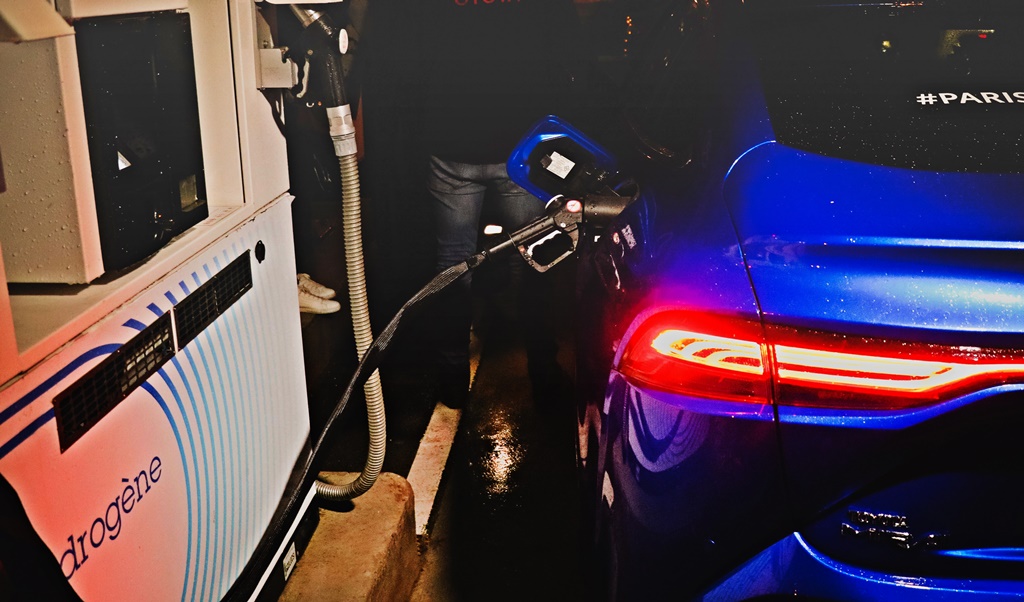
The new Mirai also has increased fuel capacity (approximately 20%) which extends range. Hydrogen can be pumped in much faster than the fastest recharging time for an electric vehicle which can be up to 25 minutes. Its refuelling time is less than 5 minutes at a 700-bar refuelling station.
Over 1,000 kms travelled
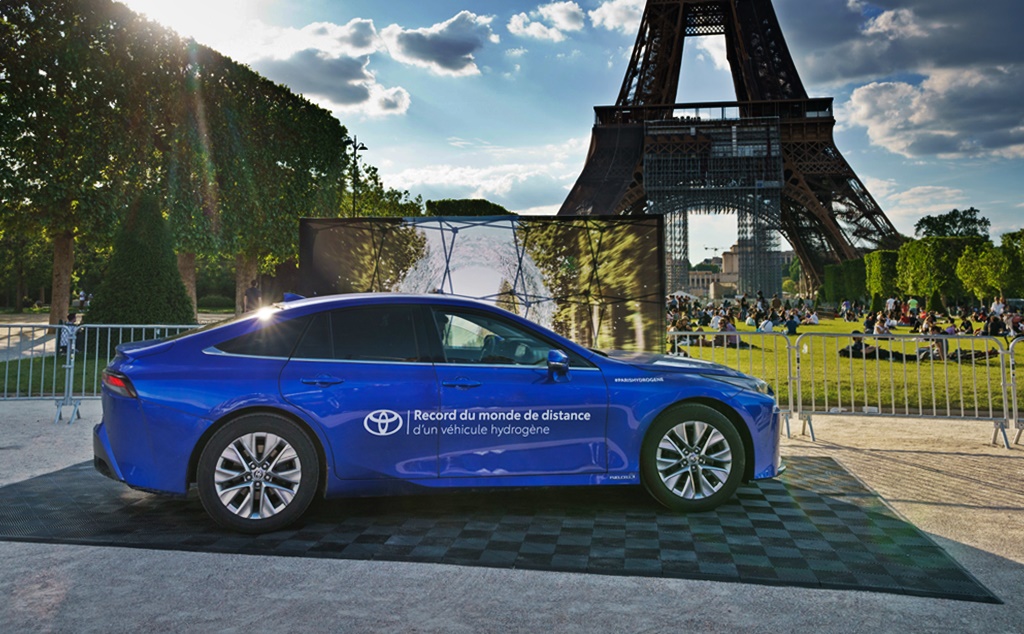
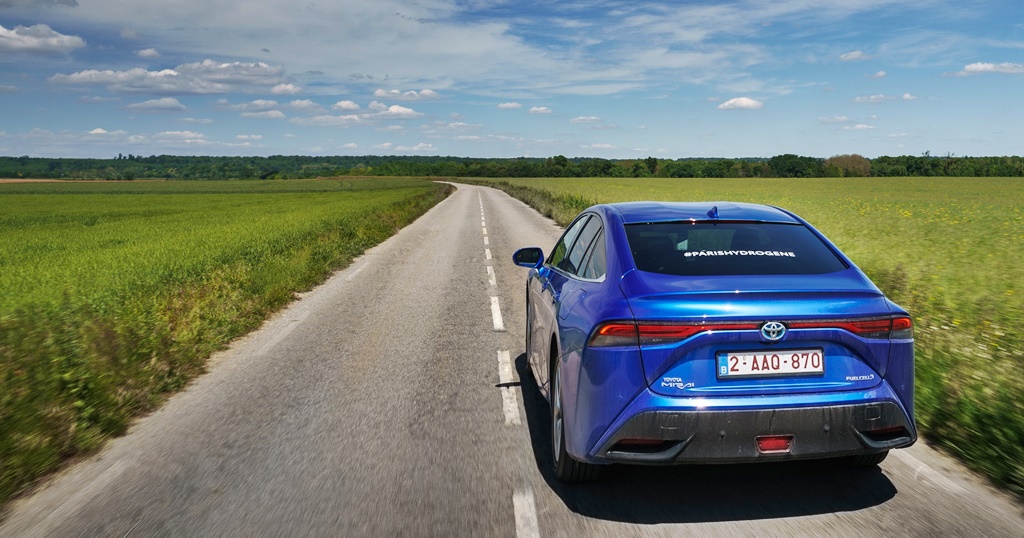
This increased range has enabled the Mirai to break the world record for the distance driven with one fill of hydrogen – over 1,000 kms. The record-breaking run was done in France last month and the car was driven on public roads.
The Mirai can store a total volume of 5.6 kgs of green hydrogen. During the run, the average fuel consumption was 0.55 kg/100 kms, the distance and consumption being certified by an independent authority.
‘Eco-driving’ style used
Toyota does mention that, to achieve the 1,003-km driving distance record, the 4 drivers adopted an ‘eco-driving’ style. However, they did not use any special techniques and everyday drivers can also apply a similar driving style if they want to achieve good fuel economy. Under normal driving conditions, the Mirai has a claimed range of 650 kms with all tanks full.
“It’s an amazing challenge that we achieved with the new Mirai. Internally, it is the mindset of ‘Start your Impossible’, going beyond our own limits, that drives us, and we proved it again,” said Frank Marotte, CEO of Toyota France.
Even after you recover from COVID-19 infection, your quality of life may be affected and you will still suffer for a long period after that. So avoid being infected by taking the necessary measures to protect yourself as well as others – and also get your vaccination.
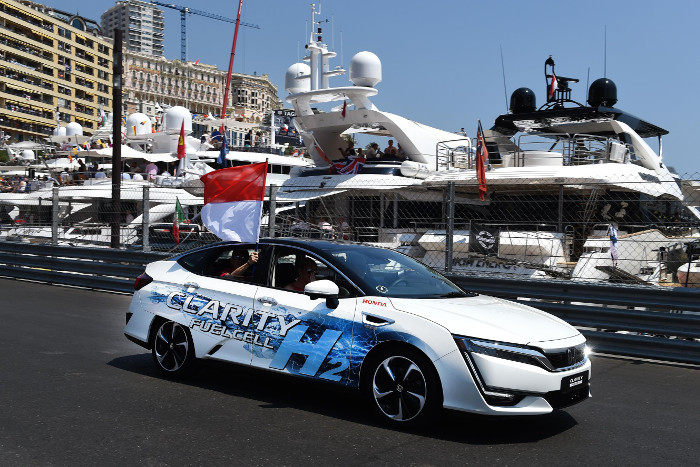
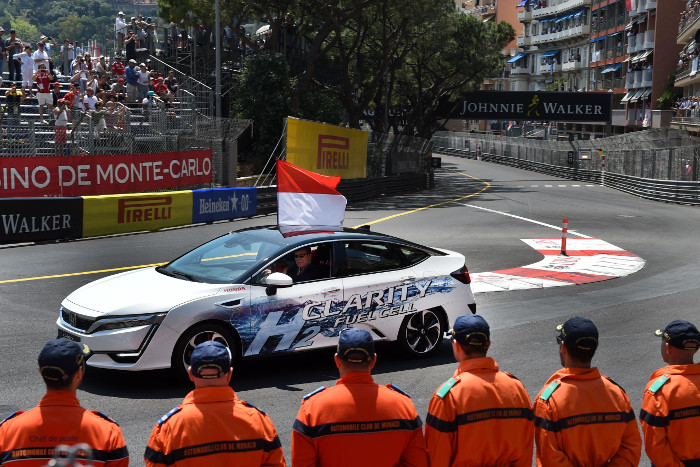
During the recent race weekend, Prince Albert II of Monaco chose to drive a Honda Clarity Fuel Cell for the lap of honour for the Formula 1 Monaco Grand Prix, which served as the official opening of the prestigious race.
Prince Albert II, accompanied by Princess Charlene and a representative from the Federation Internationale de l’Automobile (FIA), piloted the Clarity Fuel Cell around the 3.337km circuit.
It’s no surprise that this particular car was chosen for the opening ceremony. Prince Albert II has been an advocate for the environment and its sustainability. One of the key aims of the Prince Albert II of Monaco Foundation is to limit the effects of climate change and promote renewable energies.
Though not popular in Asia, the Clarity Fuel Cell is a technological marvel. It features state of the art fuel cell technology that allow it to generate electricity to drive its motor, by combining hydrogen and oxygen. Unlike the harmful gases that are produced during combustion in a petrol engine, the only byproduct of a Fuel Cell reaction is water. In the Clarity Fuel Cell, the 103kW fuel cell stack is placed in the engine/motor bay instead of under the passenger seats like conventional electric cars. This allows for better cabin space and legroom for occupants.
The car looks and feels like any conventional Honda despite being anything but that. It is a Fuel Cell sedan that can seat five comfortably, and when fully filled with hydrogen, can cover a distance of 650km without needing to stop for a refill.
In the long term, cars like this will be a common sight in Honda dealerships because the automaker plans on offering some form of electrified powertrains in two thirds of its cars sold in Europe by 2025.