


Piston.my

Mercedes-Benz

Although most people only came to know about the rotary engine in the 1970s, Felix Wankel, who developed it, had received a patent in Germany as far back as 1929 and produced a working prototype at NSU (which would later become part of Audi) in 1957. The rotary engine was uniquely different from the reciprocating internal combustion engine and had besides its compactness and low weight, it also generated a high power output from a smaller displacement.

The engine was of great interest to many carmakers and at least 12 – including even Rolls-Royce – took licences to develop their own versions. However, apart from Mazda, which persevered to make it commercially viable and produced a number of models with rotary engines, the other companies eventually gave up work on it as they could not find solutions to its drawbacks.
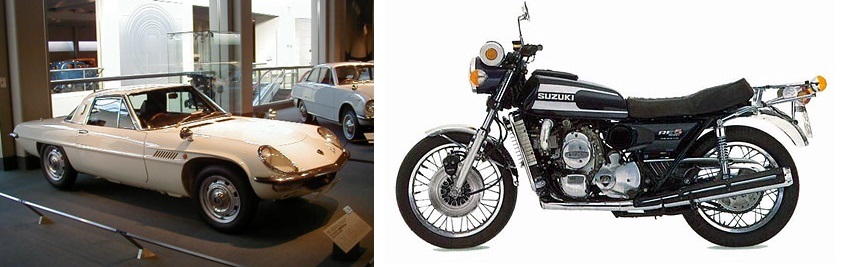
Mazda Cosmo-Suzuki RE5
Mazda and Suzuki were two of the few companies that managed to commercialise the rotary engine in production models.

Mercedes-Benz was interested
At Mercedes-Benz, the rotary engine certainly generated much interest. The company’s R&D department worked on it during the early 1960s, with a prototype SLX sportscar proposed using the engine. Even though the power and smoothness were attractions, fuel consumption and emissions were high and by 1976, Mercedes-Benz decided to end its rotary engine work.
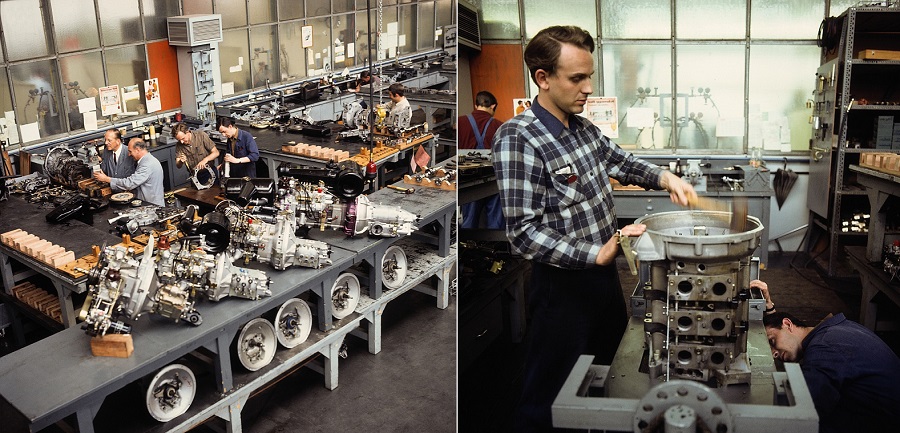
Mercedes-Benz rotary engines
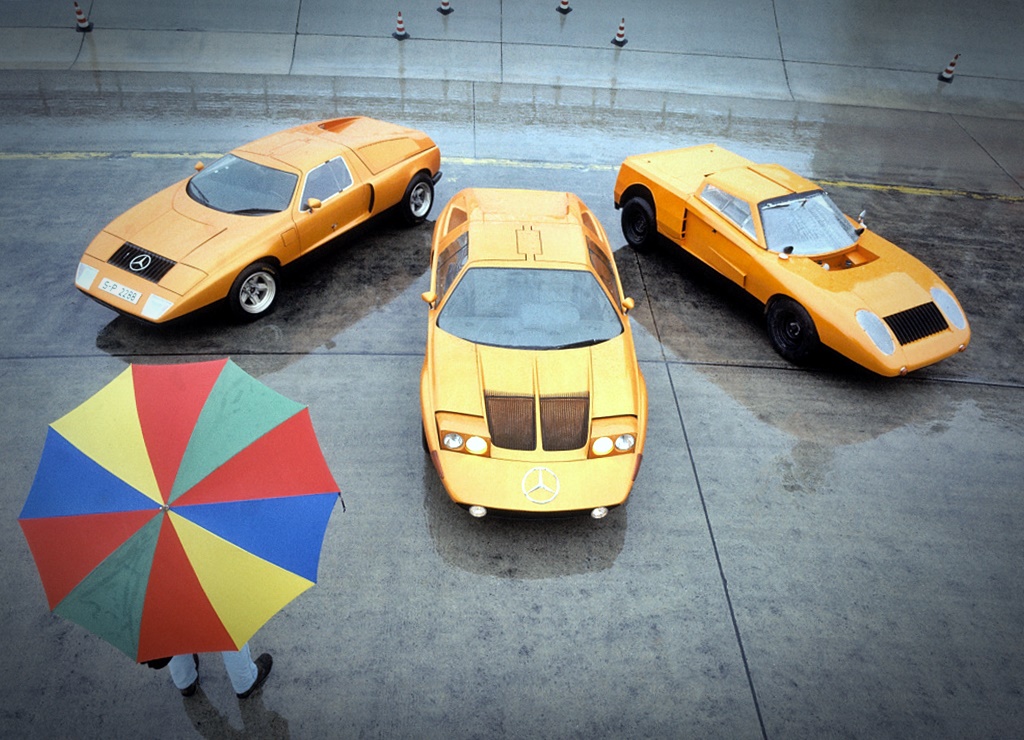
Mercedes-Benz rotary engines being produced for the C 111 in the early 1970s.

However, during the development period, the company decided to use the rotary engine as a highlight of a futuristic super sportscar – the C 111. The designation had started off as ‘C 101’ but Peugeot was known to be very protective of its model numbering system which had a ‘0’ in the middle of the 3 digits (eg 304, 505, etc) and Mercedes-Benz decided to avoid any issues with the French carmaker by changing to ‘C-111’. In fact, it is believed that Peugeot had even approached Mazda to get it to change the designation of its 808 model in the 1970s but the request was probably not entertained.

Debut of the C 111
It was displayed at the 1969 Frankfurt Motor Show as an experimental vehicle with only 12 units produced. Wealthy customers imagined the C 111 to be a successor to the legendary 300 SL ‘Gullwing’ of 1954 and even sent blank cheques to factory to try to get one!
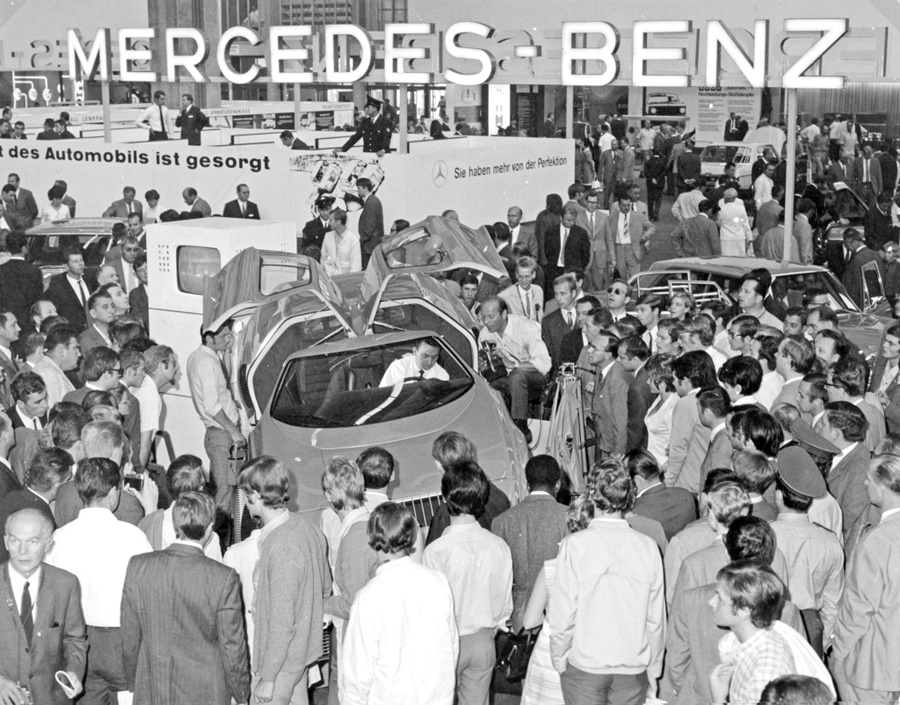
Mercedes-Benz C111
Debut of the C 111 at the Frankfurt Motor Show in 1969.

The C 111 was a fascinating mid-engine sportscar which allowed the engineers to explore the performance of the rotary engine. The first one used in 1969 had a 3-rotor design with a chamber volume of 3 times 600 cc which could produce 280 bhp. After further development, the second version of the C 111 presented at the Geneva Motor Show in 1970 featured a 4-rotor engine with 4 times 600 cc and 350 bhp.
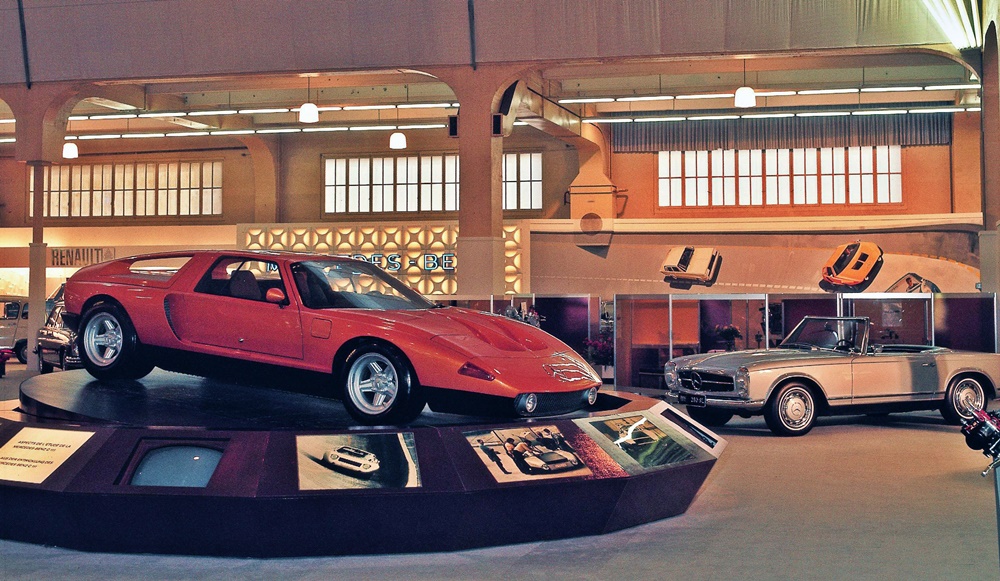
Mercedes-Benz C 111
The second version of the C 111 on display at the 1970 Geneva Motor Show.

Running technology platform
Alongside the rotary engine, other technologies were tested in the C 111 like bodywork made of glass-fibre reinforced plastic and joining techniques such as adhesive bonding and riveting. This technological look into the future was underlined by the visionary design of the wedge-shaped super sportscar.
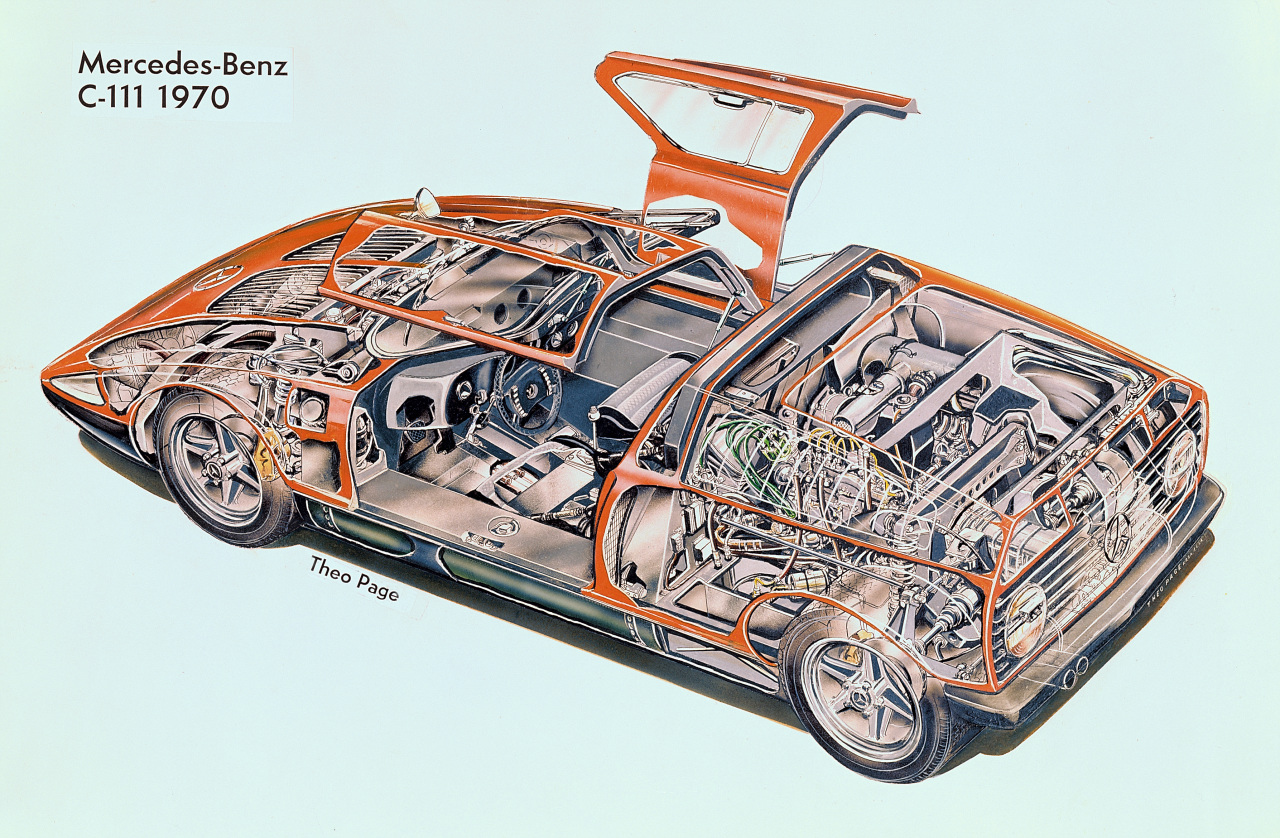
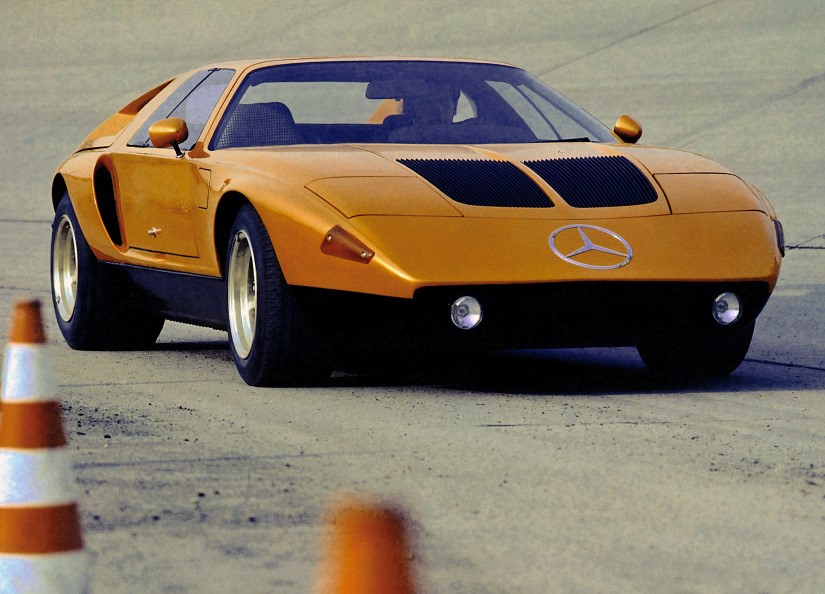
Mercedes-Benz C 111

Mercedes-Benz C 111

The iconic character of the C 111 was also reinforced by the unusual paint finish in metallic orange. The designation ‘Weissherbst’ derived from wine-making referred to the glowing orange/rosé colour of these popular wines. The vehicle displayed in Frankfurt was the first C 111 in this spectacular paint finish. The other vehicles in the first series, which were used as demonstration vehicles during the show, were still in a white paint finish, but were later likewise repainted in ‘Weissherbst’.
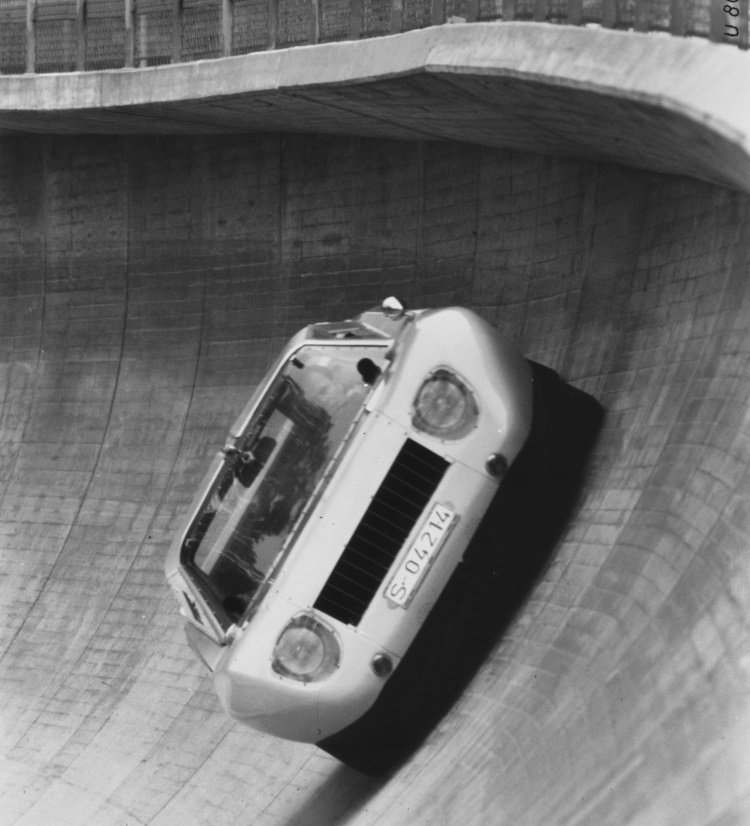
Mercedes-Benz C 111

The rotary engine was not only visionary in concept but also delivered performance that was outstanding in its time. The first version of the C 111 reached a top speed of 260 km/h, and the second one even managed 300 km/h.

‘Second career’ as a record-breaker
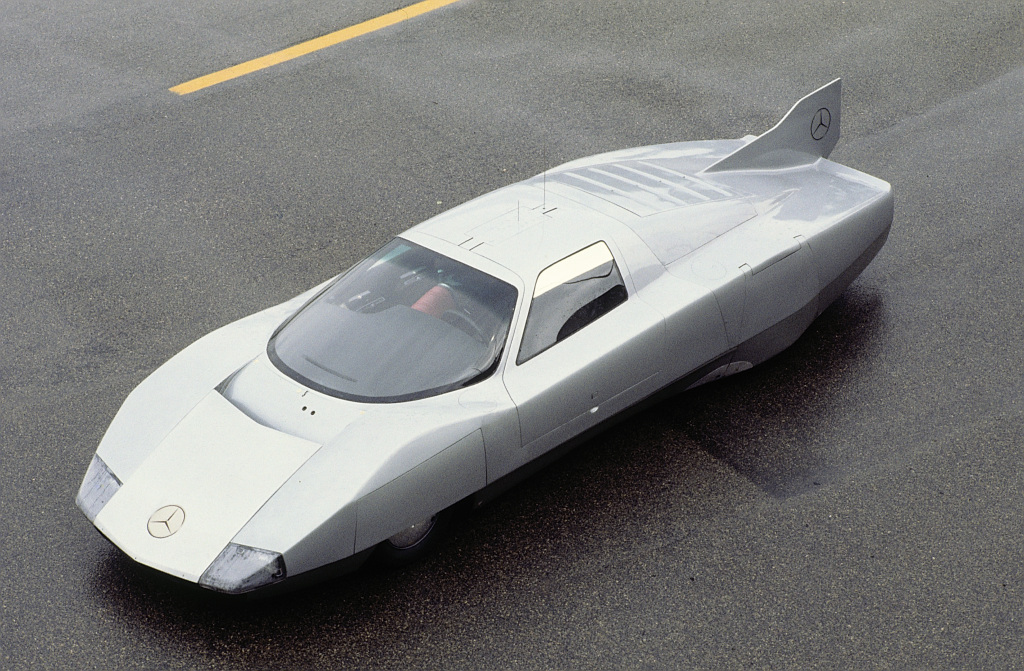
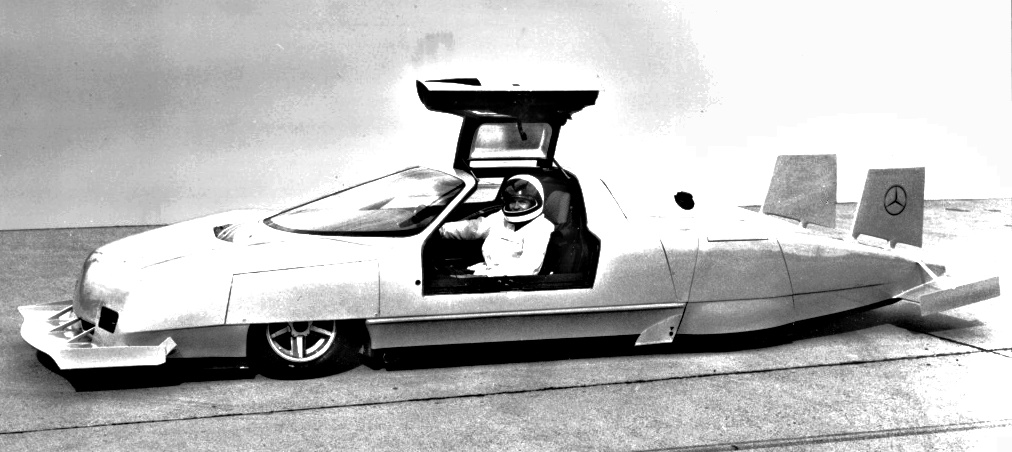
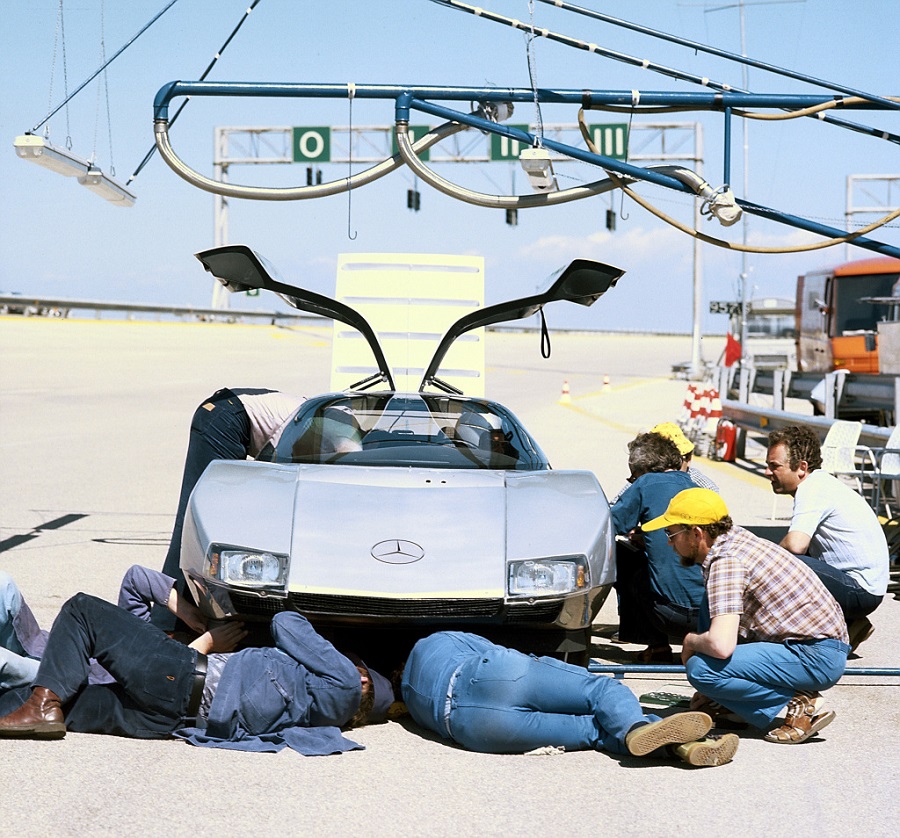
In 1976, the C 111 appeared again as a record-breaking car with conventional reciprocating engines. Two versions with 5-cylinder turbodiesel engines were built, as well as the C 111-IV with a V8 petrol engine in 1979. On the high-speed track in Nardo, Italy, the C 111s established numerous new records, one of them the circuit world record with 403.978 km/h by the C 111-IV on May 5, 1979.
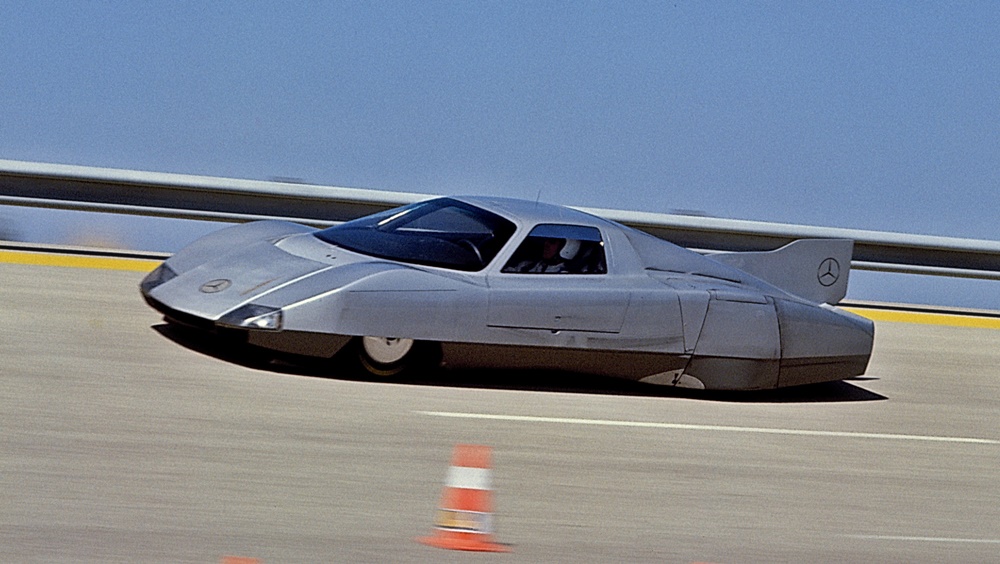
Mercedes-Benz C 111

Mercedes-Benz C 111
Preparing the C 111 at the Nardo circuit in Italy
Mercedes-Benz C 111
The C 111-III of 1978 was one of the record-breakers in Italy.
Mercedes-Benz C 111
One of the final versions of the C 111 which ran in 1979.

In 2014, the specialists at Mercedes-Benz Classic restored one of these dream sportscars from their collection to drivable condition. To preserve the few still available rotary engines for the future, they installed an M 116 3.5-litre V8 engine. This engine had already been installed in a C 111 for comparative and test purposes in 1970.

Click here for other news and articles about Mercedes-Benz.

PISTON.MY

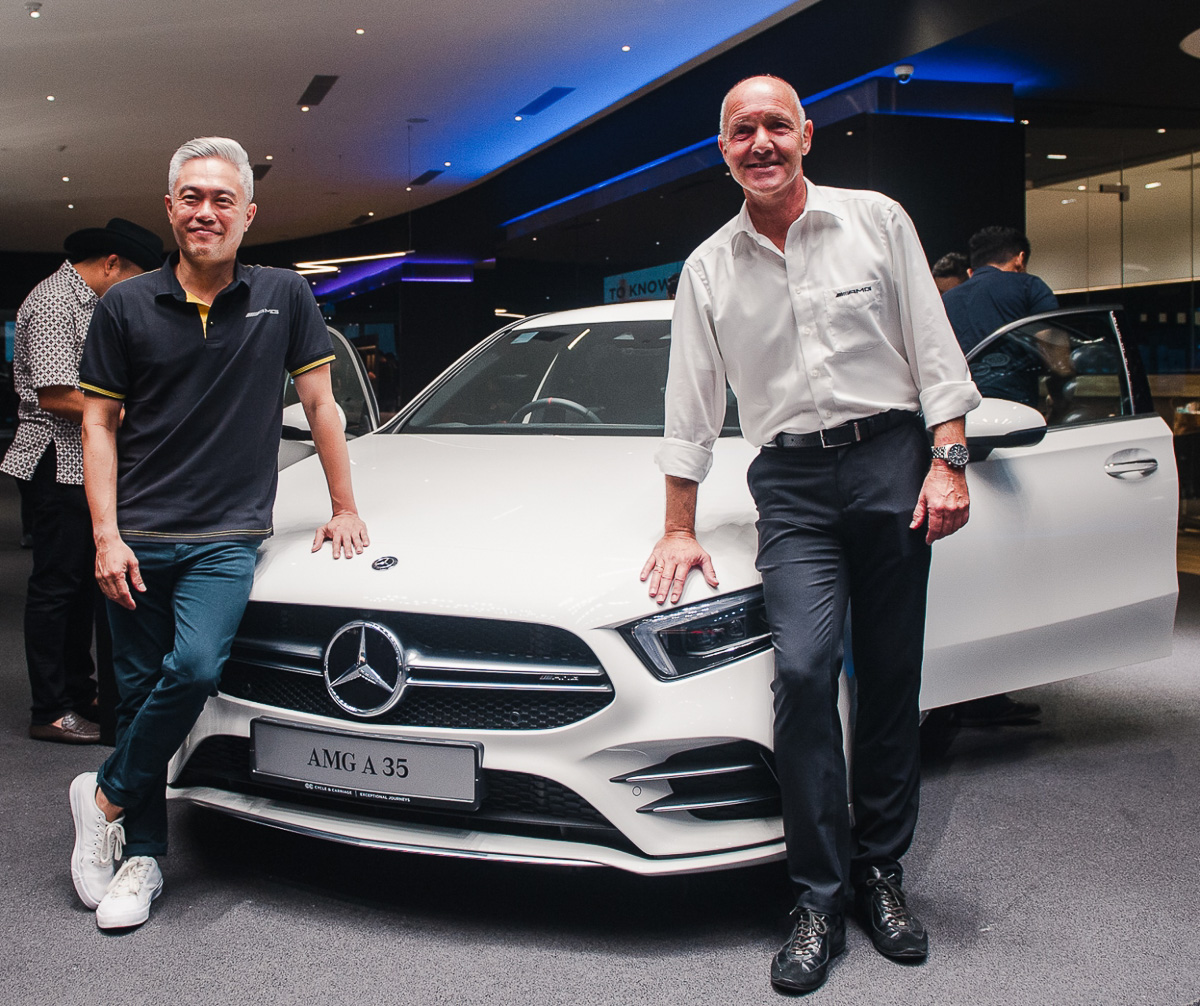
Cycle & Carriage Bintang Berhad (C&C) recently previewed the all-new Mercedes-AMG A35 4Matic Sedan to the AMG Owners Community Malaysia while hosting their intimate gathering to celebrate their first-ever anniversary of the club’s existence here in the country. (more…)

The Best Global Brands 2019 has just concluded and the folks from Mercedes-Benz definitely has something to shout about as they took eighth place yet again in the list of the best brands in the world. According to the list, they’re the only European car manufacturer to be included in the top 10 list and just one step behind Toyota, the only other car brand in the top 10. (more…)

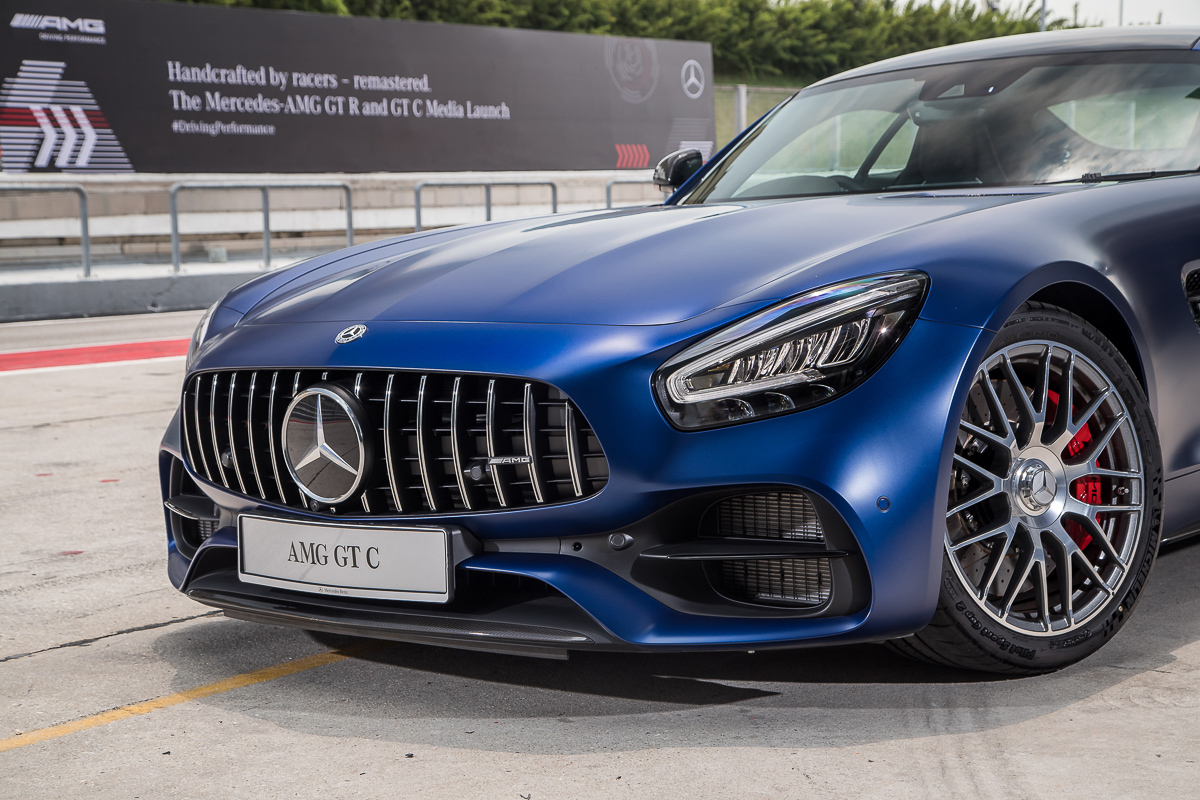
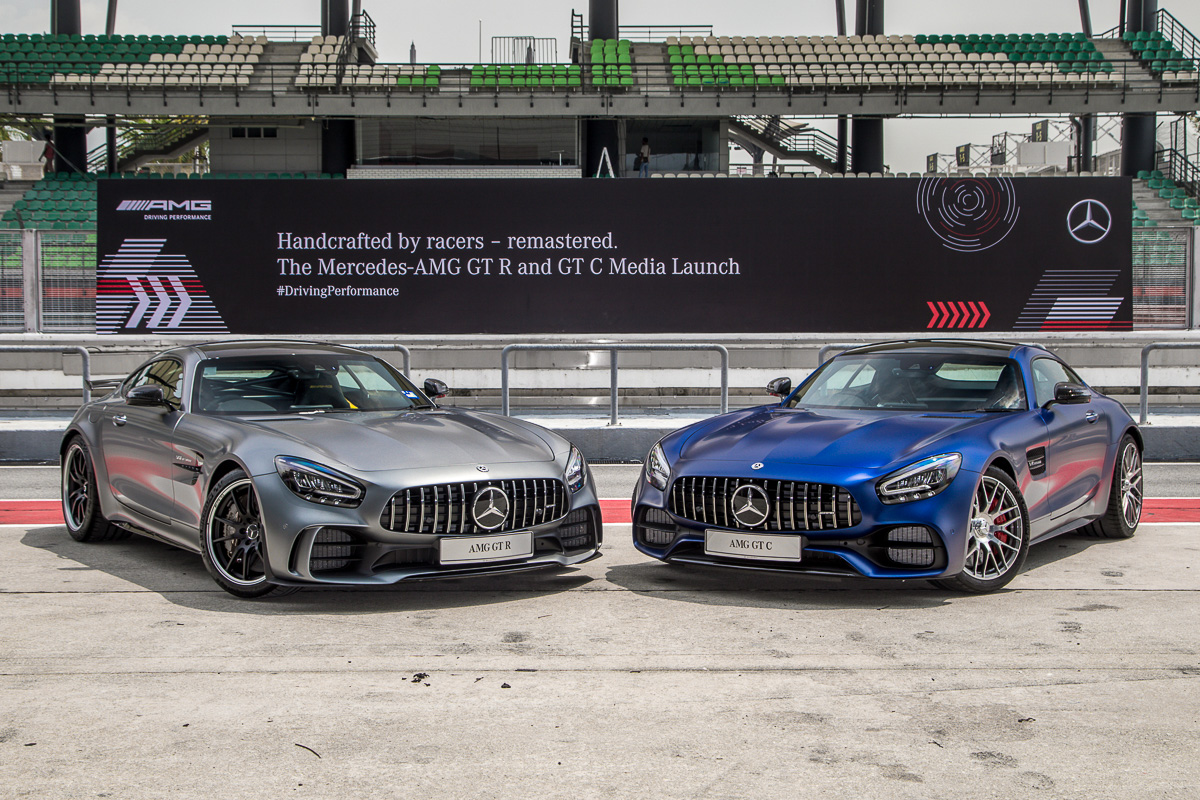
Mercedes-Benz Malaysia has unveiled their latest-generation Mercedes-AMG GT R and GT C earlier today. The expansion of their top range offering come with some very awesome technical marvel that promise greater speeds, agility, and all-round driving nirvana on and off the tracks. (more…)

BHPetrol

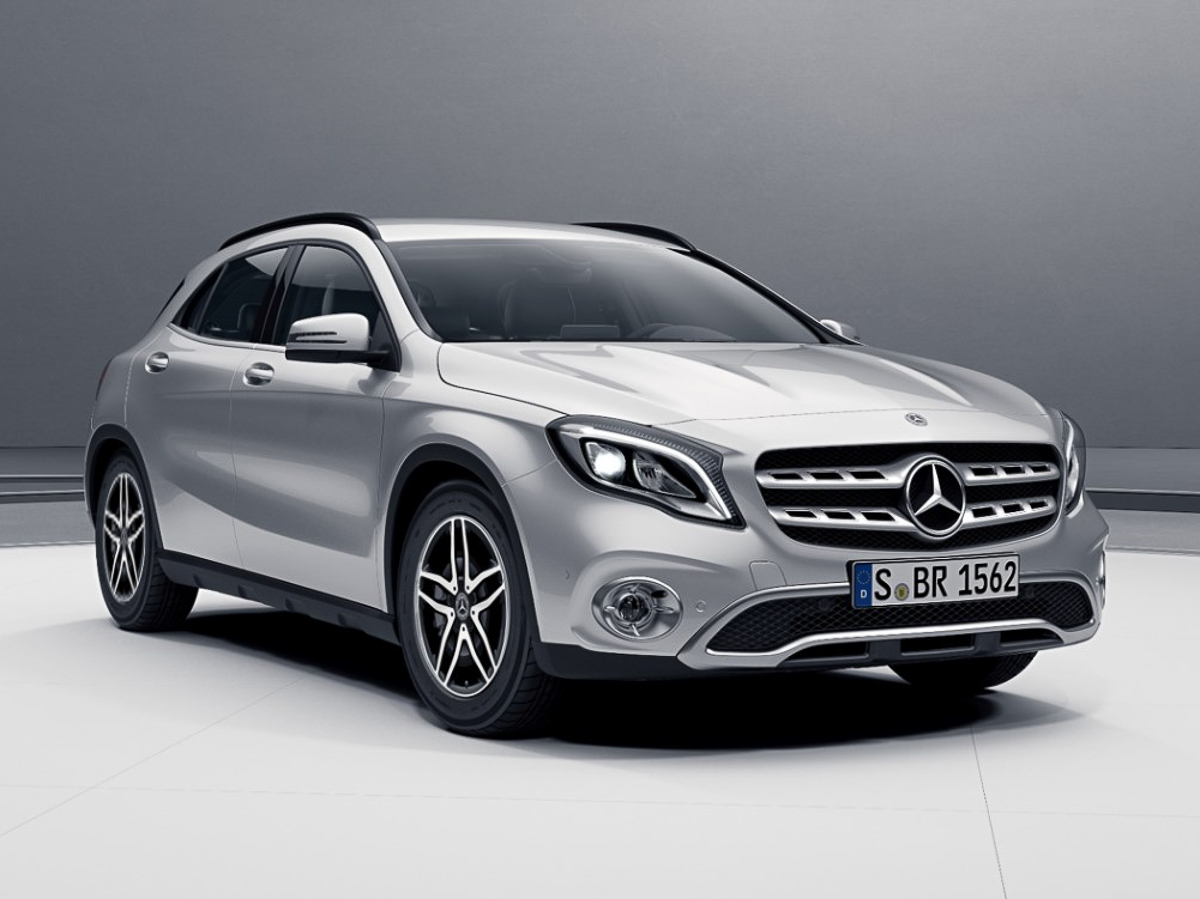
Mercedes-Benz Malaysia has unveiled two new models to further diversify its latest-generation compact car offering here in Malaysia in the form of the new 2019 Mercedes-Benz B 200 Progressive Line and Mercedes-Benz GLA 200 Style. (more…)

BHPetrol

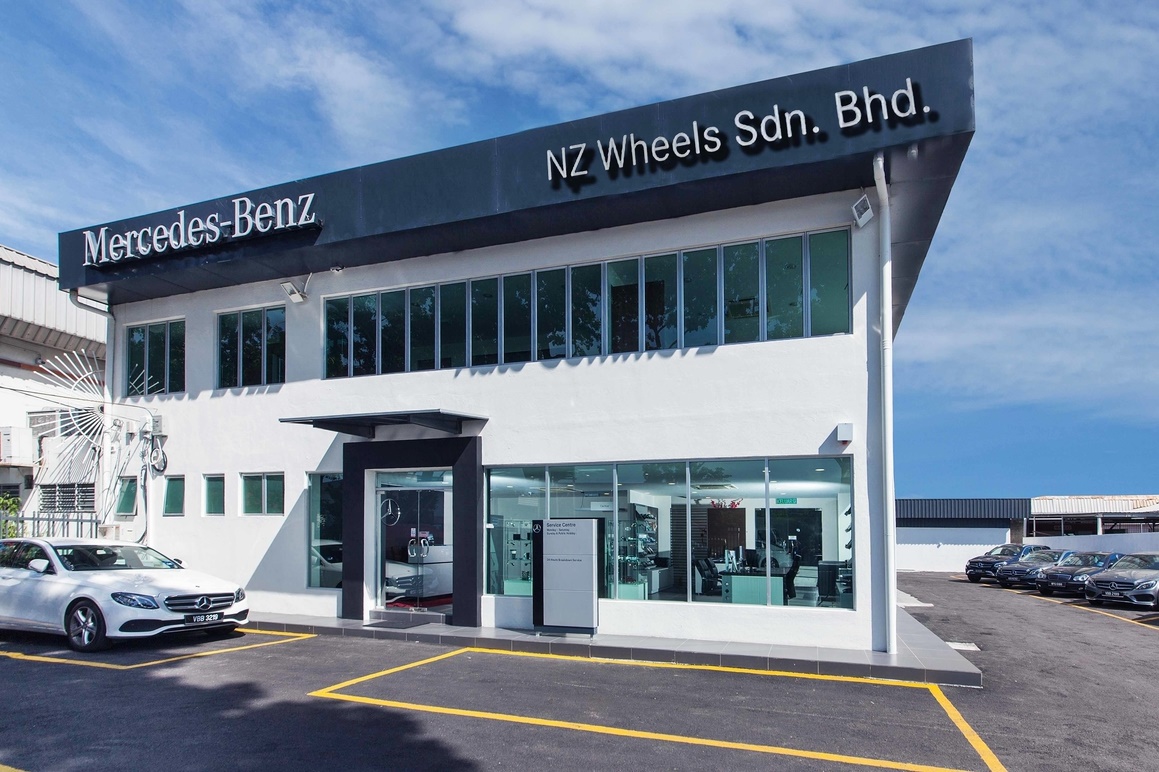
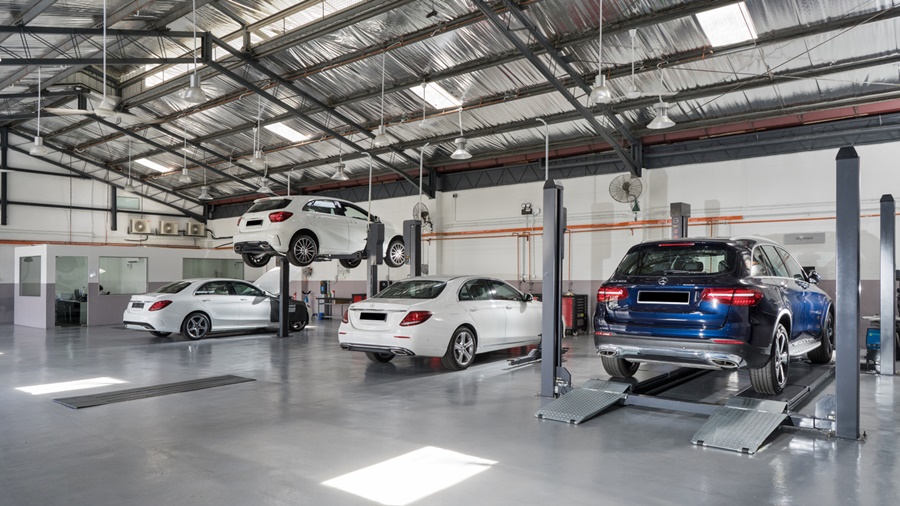
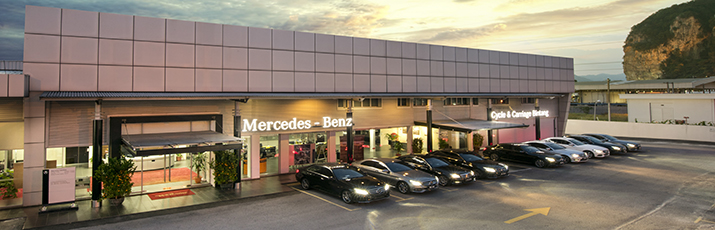
NZ Wheels Sdn Bhd, an authorised dealer for Mercedes-Benz in Malaysia, has added another outlet to its network of Mercedes-Benz Autohauses in the Klang Valley. The Autohaus, acquired from another party, is a 2S (service and spare parts) facility which sits on 13,866 sq ft of land and has a built-up area of 9,200 sq ft.

NZ Wheels

Commenting on the new outlet, SM Nasarudin SM Nasimuddin, Group Executive Chairman & CEO, Naza Corporation Holdings Sdn Bhd said: “At NZ Wheels, we are committed to giving our customers peace of mind through high quality products and exceptional customer experience. Therefore, we are beyond excited to introduce the NZ Wheels Setapak Autohaus as our fourth outlet and given its strategic location in north-east Kuala Lumpur, the new 2S facility will complement our existing NZ Wheels Bangsar Autohaus 1S facility to offer unparalleled service excellence expected from the 3-pointed star marque.”

“Moreover, we are confident the Setapak outlet will appeal to the most discerning Mercedes-Benz customers as it is fully equipped with state-of-the-art Mercedes-Benz approved diagnostic tools and equipment and staffed by professionally-trained Mercedes-Benz Certified Service Specialists,” he added.

NZ Wheels Autohaus Setapak

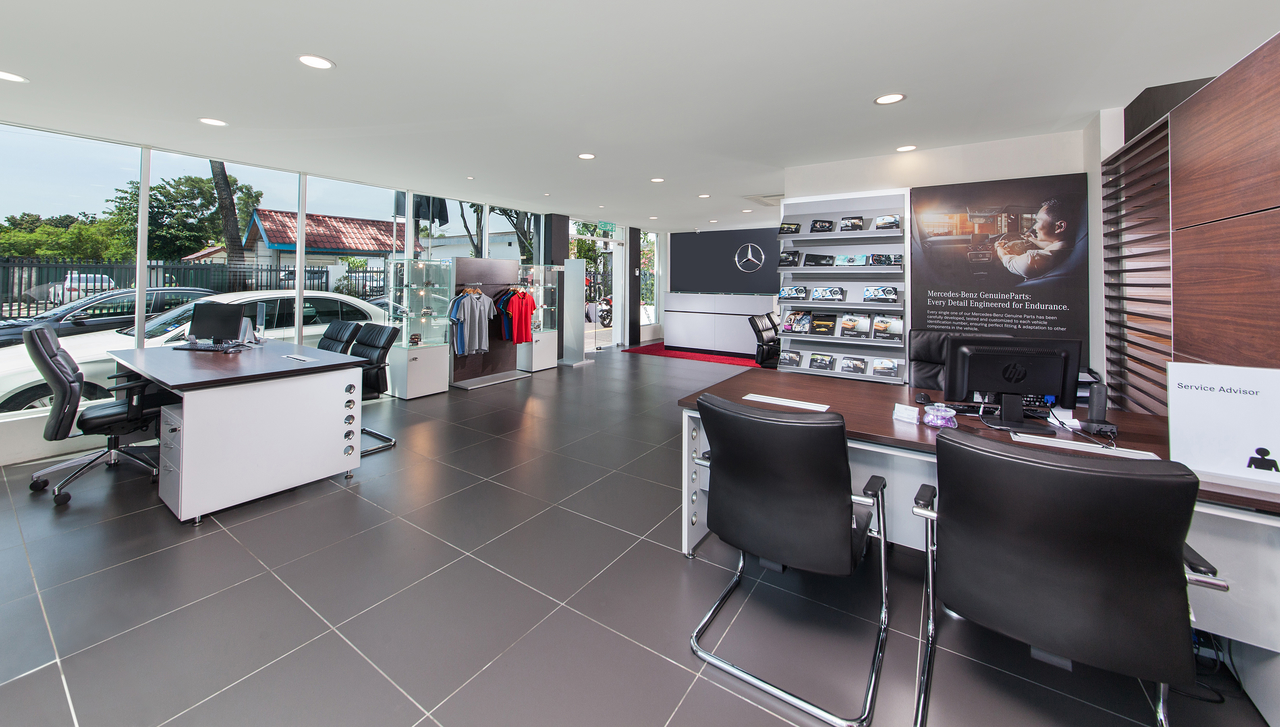
The Autohaus conforms to the Mercedes-Benz Presentation System II (MPS II) concept in line with the German luxury marque’s global customer experience concept and corporate identity. Its service centre, which has 5 work bays and 1 bay for wheel alignment, can handle up to 250 vehicles a month for both general and specialized repairs. At present, there are 10 highly-trained personnel experienced in technical, service and parts.

(more…)

BHPetrol

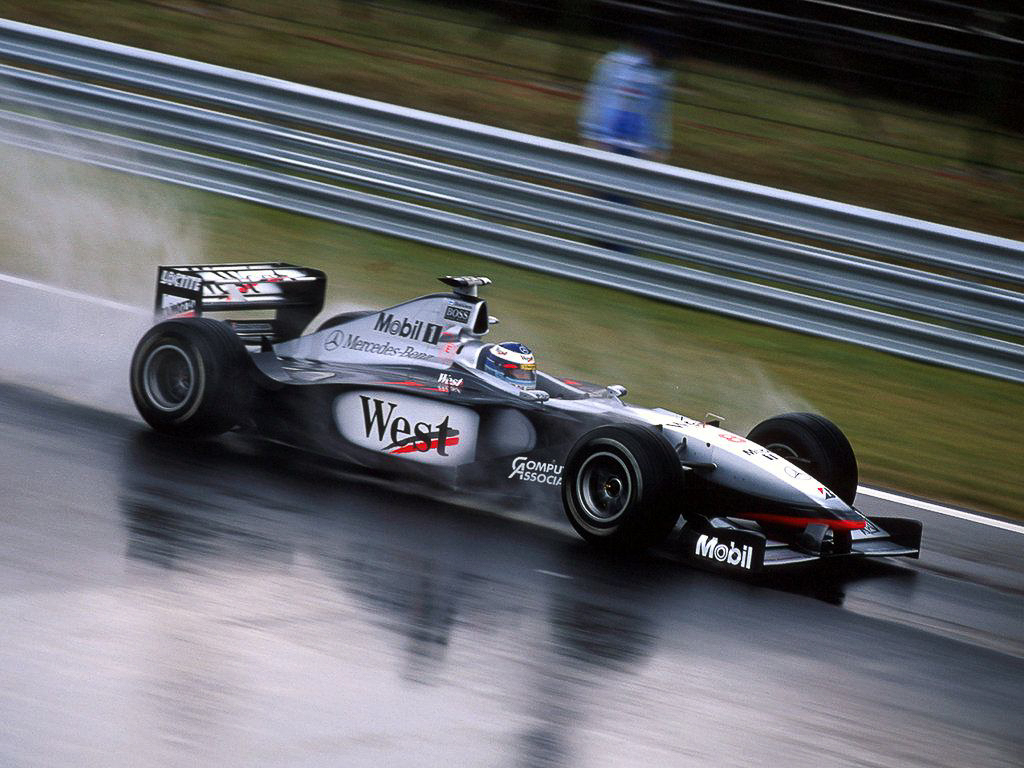
The super successful McLaren Mercedes titan duo is coming back to the world of Formula 1 and we can’t be more excited about the legendary prospect. McLaren Racing together with Mercedes-Benz announced that the McLaren F1 team will be powered by Mercedes starting in the 2021 season. (more…)

For a brand with a history of over 130 years, the transition to a new era of design and technology has to be managed carefully. There is the legacy and the birth of the brand to keep in mind while at the same time, the future must be shown as well.

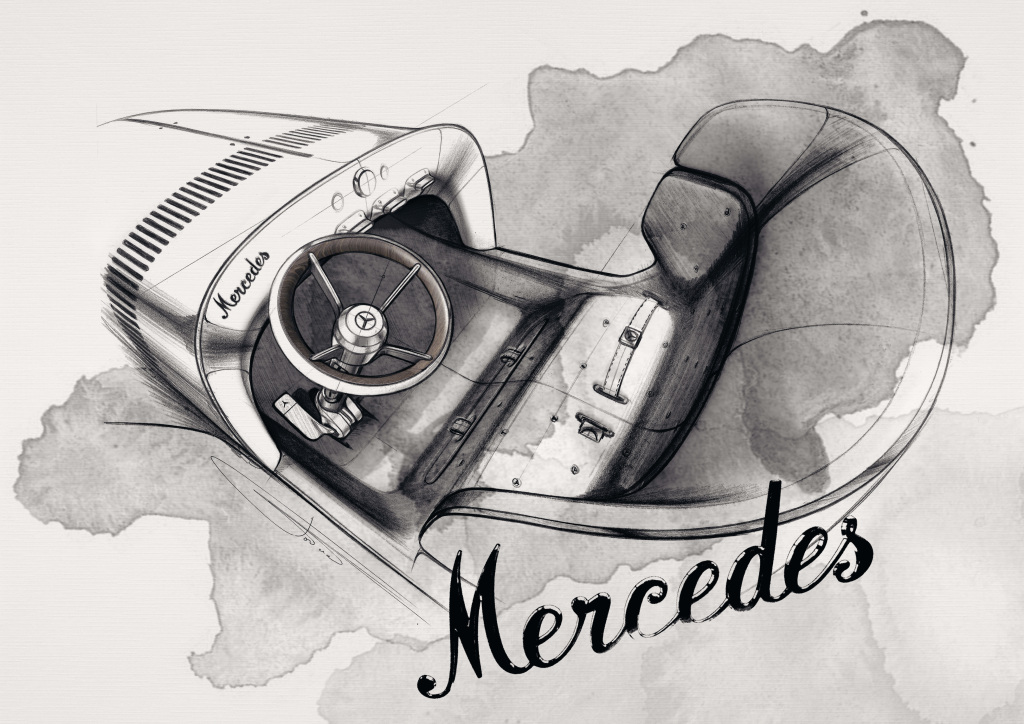
At Design Essentials 2019 in Nice, France, Mercedes-Benz Design is presenting the Vision Mercedes Simplex, a sculpture embodying the heritage and future of the luxury brand. “Only a brand that is as strong as Mercedes-Benz is capable of the physical symbiosis of history and future. The Vision Mercedes Simplex symbolises the transformation of the brand-specific luxury of Mercedes-Benz,” said Chief Design Officer Gorden Wagener.

Vision Mercedes Simplex

The inspiration for the Vision Mercedes Simplex goes back to 1901, when the history of mobility changed radically. At Race Week in Nice, a car the world had never seen before appeared on the starting line: a high-performance car which Daimler-Motoren-Gesellschaft had developed at the suggestion of the visionary Emil Jellinek.

The designs which were the norm back then were still closely related to motorised carriages. The Mercedes 35 PS, named after Jellinek’s daughter Mercedes, appeared with a completely new vehicle architecture and dominated the competitions in Race Week, which took place on the famous racetrack from Nice to La Turbie, right at the heart of what is now the Mercedes-Benz International Design Centre Europe.

BHPetrol

Vision Mercedes Simplex

The design is acknowledged as the first modern car and it heralded in a new era. Nearly 120 years ago, the transformation, away from a high motorised carriage to a flat vehicle design with a light high-performance engine installed low down in the frame and a honeycomb radiator organically integrated into the front, was the pioneer of success and role model for all the cars that were to follow, whatever the brand. The vehicle layout presented for the first time over a century ago remains to this day the technical basis of all cars.

The Vision Mercedes Simplex recalls this historic event and carries the pioneering spirit and the styling characteristics of those days far into the 21st century. Its message? The passion for luxury and innovation is part of the Mercedes-Benz brand DNA. This brand DNA gives Mercedes-Benz the strength to set new standards in mobility over again, yesterday, today and tomorrow.

Two-seater with forward-looking digital luxury
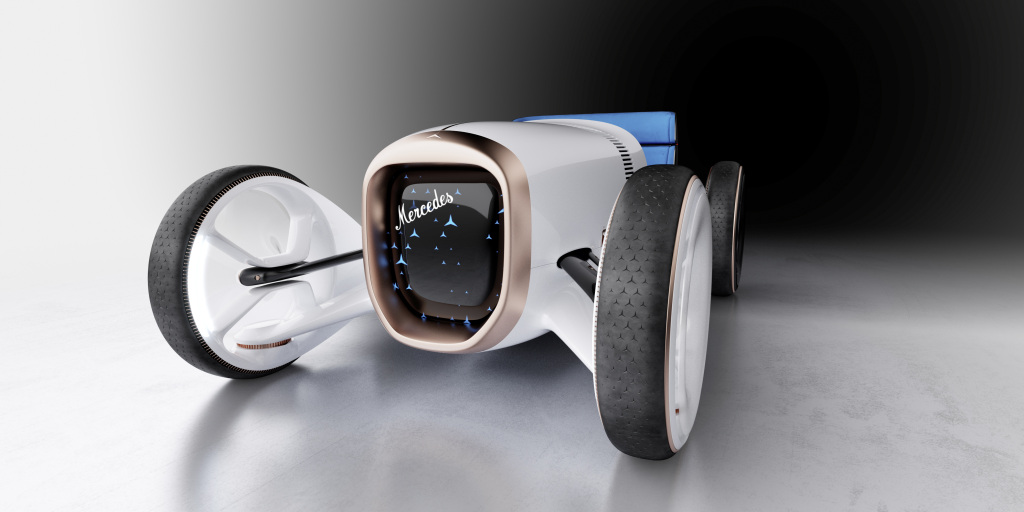
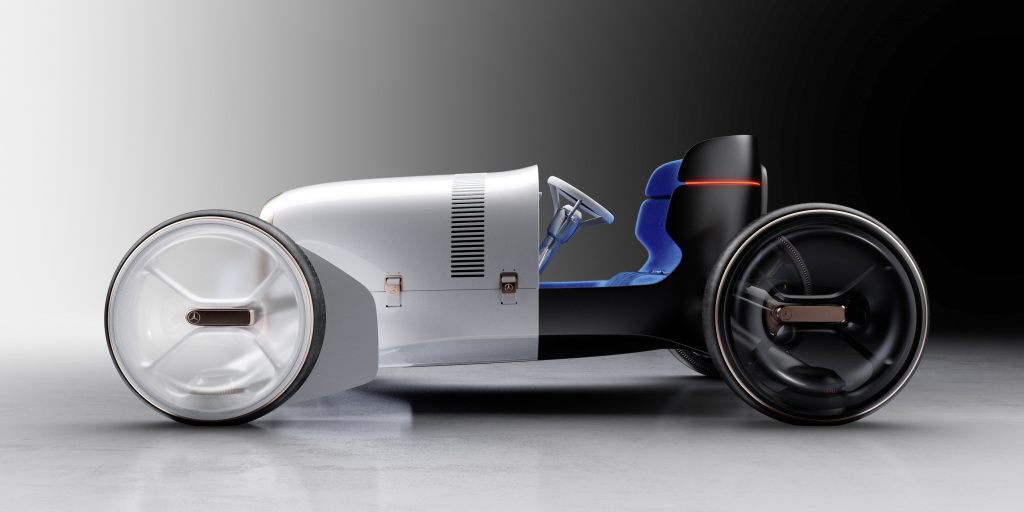
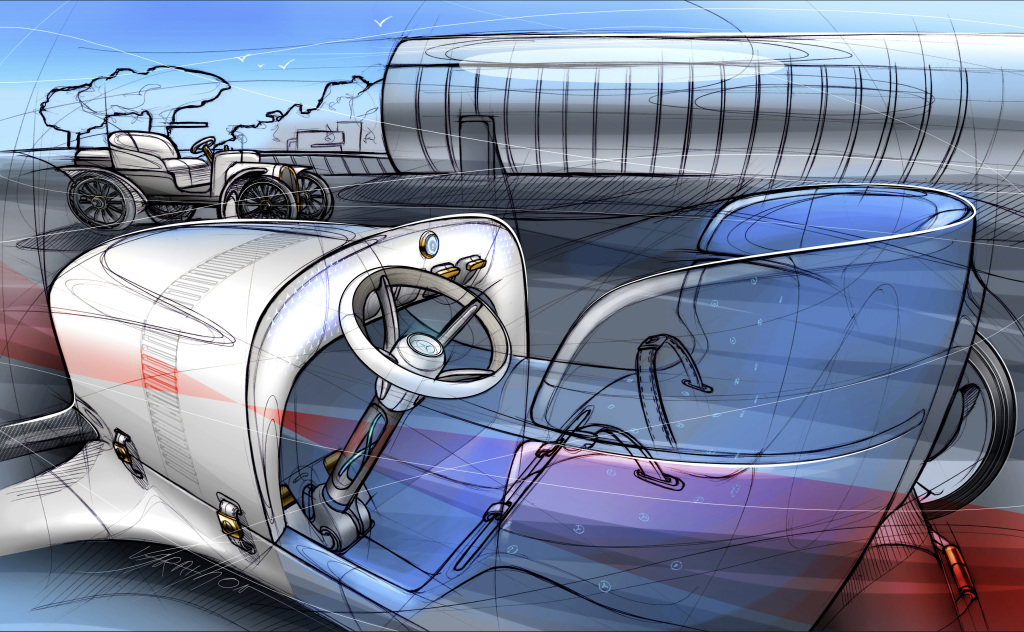
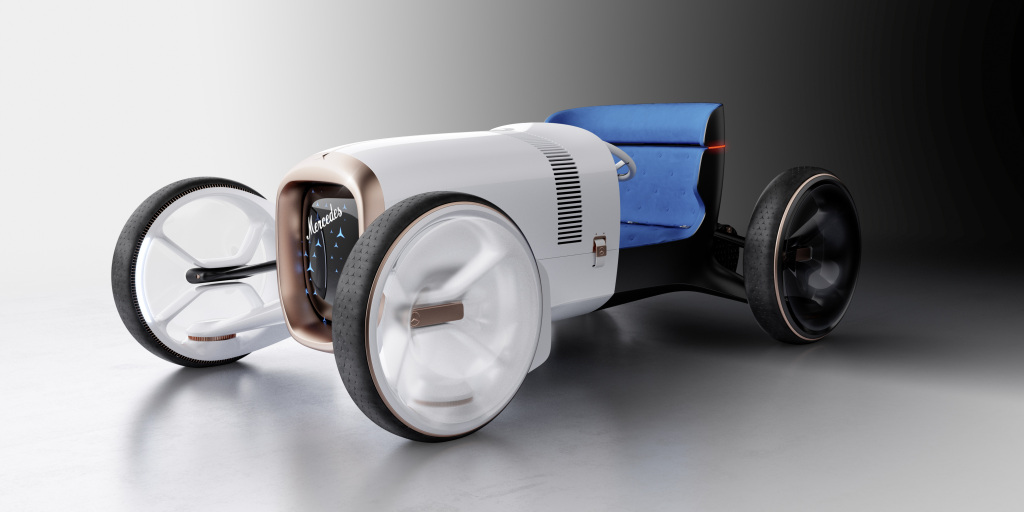
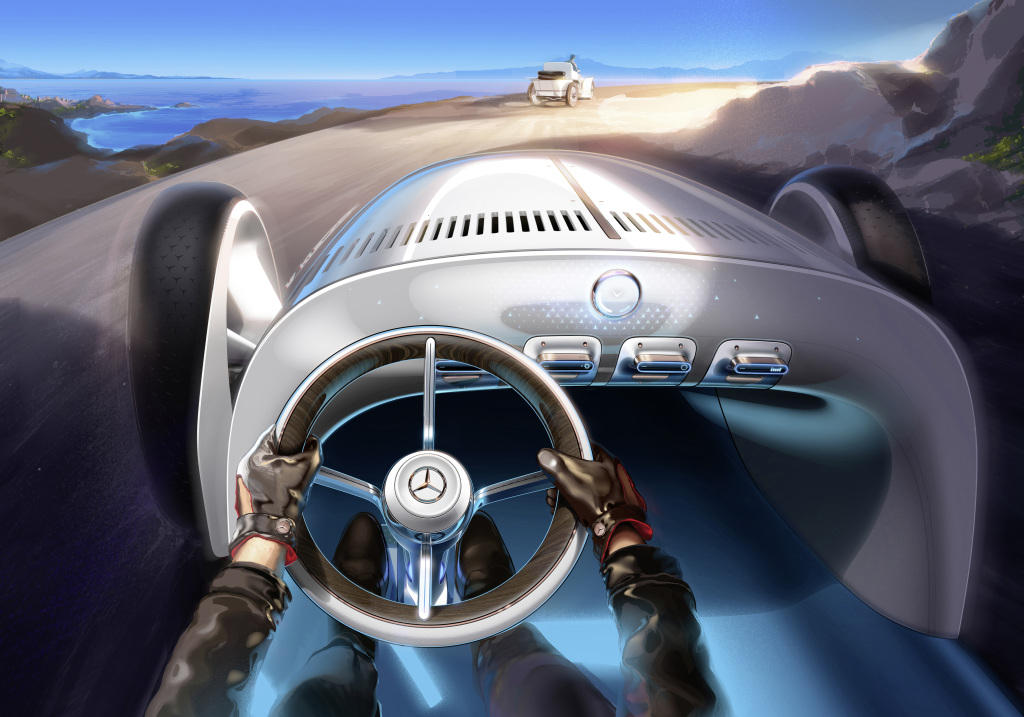
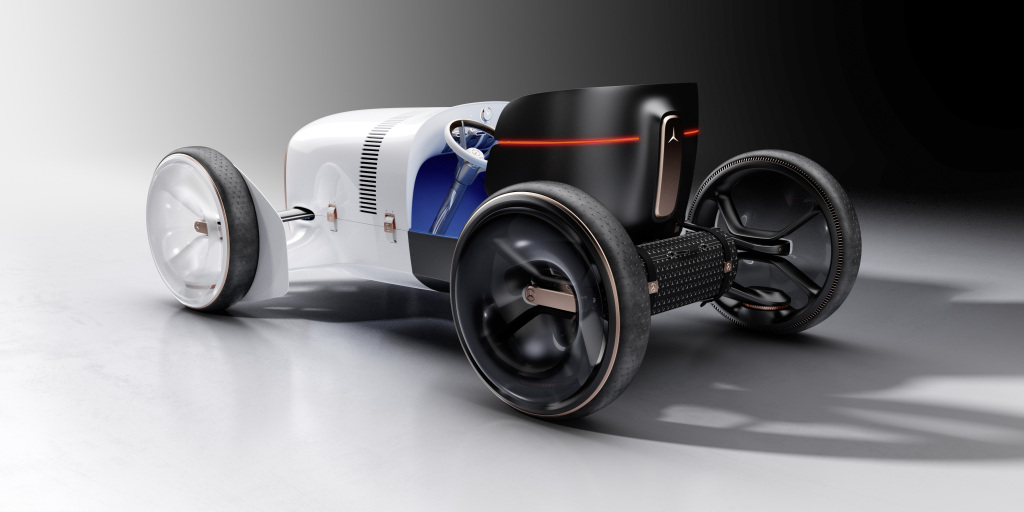
The Vision Mercedes Simplex reinterprets the historic Simplex as a two-seater with freestanding wheels, an alternative drive, User Interface and a thrilling design. Its body with the dominant horizontal alignment sits as a monocoque amid the 4 large wheels, which form the outer points of the vehicle.

Vision Mercedes Simplex

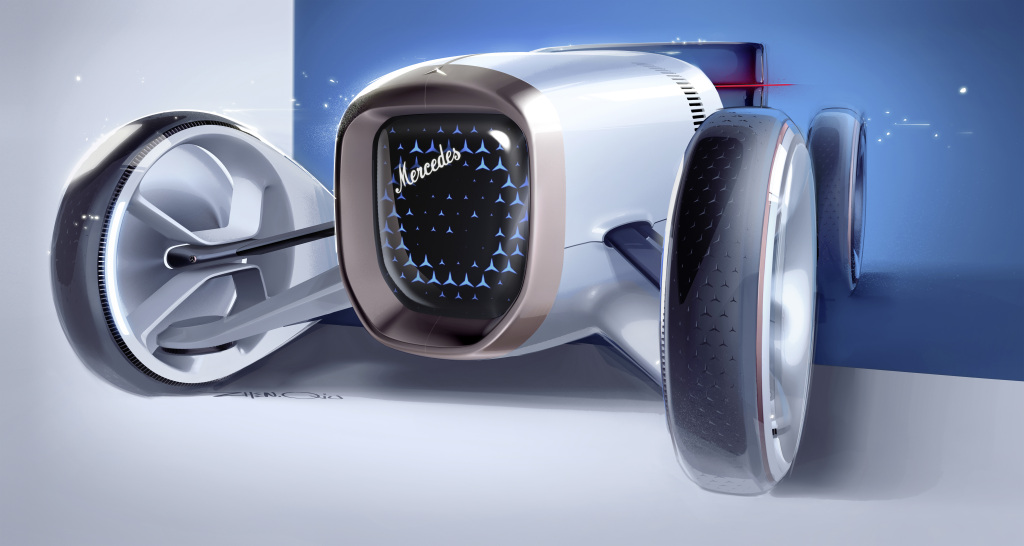
The resolutely vertical colour separation into a white front section and a black rear section follows the historic example. The transparent trims on the wheels reflect lightness and efficiency, as do the aerodynamic surface areas between the front wheels and the vehicle body. The entire sculpture lives from the interplay between clearly and powerfully drawn surfaces and precise technical details.

Vision Mercedes Simplex

Radiator grille a symbol of digital transformation
The radiator blends a dominant frame in rose gold – reminiscent of the bronze radiator grille of the historic example – with an opening in the form of a large lens-shaped Black Panel/3D display. This is where the famous MERCEDES lettering is digitally superimposed, as are animations which provide information on the vehicle status. This detail, too, is a symbol of the transformation of the luxury brand Mercedes-Benz into the digital world.

Vision Mercedes Simplex

The decentralised wheel location components unite aesthetics and engineering artistry in a unique way. The omission of a windscreen – as on the historic role model – reinforces the uncompromisingly sporty character and allows a seamless transition from the front-end flap to the instrument panel. The slim reversing lamps which are horizontally integrated into the rear section separate the upper section from the lower section of the exterior shell, which envelopes the occupants like a protective cocoon.

Perfect handcraftsmanship is also evident on the leather bag which rounds off the tail end of the vehicle body and – with its contemporary interpretation – is also themed around the historic vehicle.

Vision Mercedes Simplex

Homage to history
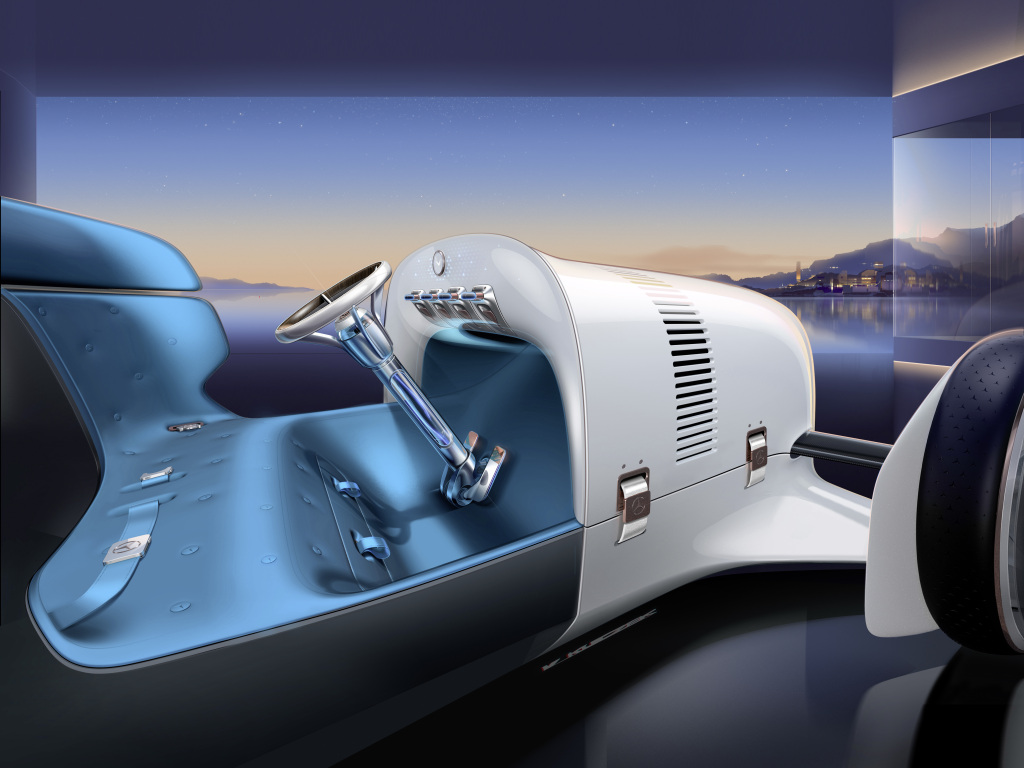
The entire interior pay homage to the successful history of Mercedes-Benz and the DNA of the Simplex racing car – systematically reduced and nevertheless highly emotively appealing. A seamless transition between the exterior, interior and User Experience reflects the holistic approach of the Mercedes-Benz design philosophy. This is particularly evident in the flowing, flute-like transition between the bonnet and instrument panel with its reduced interface which works with projections. The seamless look continues into the footwell.

Vision Mercedes Simplex

The fashion world is reflected in the interior with exclusive accessories like the high-quality openers for the stowage compartments. The bench seat is inspired by stylish furniture, the hand-made Chesterfield quilting denotes a contemporary interpretation of classically luxurious handcraftsmanship. The colour-and-trim concept, including the azure blue upholstery cover which transitions seamlessly into the footwell, is inspired by the colours of the Cote d’Azur.

UI/UX design: digital luxury
The UI/UX design demonstrates a Mercedes-Benz vision of digital luxury. The driver is only shown precisely the information they actually require in the specific driving situation. The heart of the instrument panel is a physical rose-gold-coloured instrument on which dynamic digital content is projected.

Vision Mercedes Simplex

This combination of mechanical beauty and intelligent digital content is described by the Mercedes-Benz designers as ‘hyper analogue’. The right information is shown on the display at the right time, eg speed, navigation instructions or vehicle information. Other information is displayed on the instrument panel depending on the situation.

A star pattern fused with the material of the instrument panel creates a large surface onto which information can be projected for a certain amount of time. Thanks to the simple presentation and the size of the display the driver can take in relevant information and yet still concentrate fully on the road at all times.

Click here for other news and articles about Mercedes-Benz in PISTON.MY

PISTON.MY


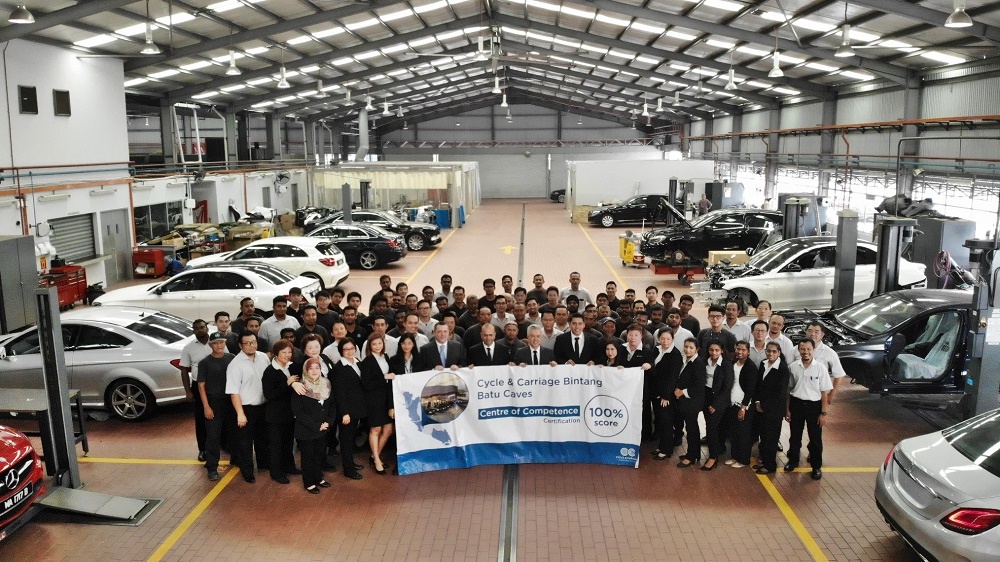
Cycle & Carriage Bintang Berhad has achieved a remarkable feat, scoring a perfect score of 100% for the second time, in Daimler AG’s stringent ‘Centre of Competence’ certification for its Batu Caves Body & Paint (B&P) Facility in Kuala Lumpur. The company, which has been associated with Mercedes-Benz since 1951, also achieved 98% and 96% for its Johor Bahru and Bukit Tengah facilities, respectively.

“Our network of Body & Paint repair facilities scoring above the global median is the result of Cycle & Carriage’s investment into our people, sites, and systems. With Daimler AG’s stringent evaluation criteria, the excellent performance that our facilities continue to demonstrate is a testament that we are moving in the right direction in support of Mercedes Benz customers in this country. We are honoured to receive this certification from Daimler AG, and we intend to continue excelling in the delivery of premium automotive experiences to our customers,” said Cycle & Carriage CEO, Wilfrid Foo.

Cycle & Carriage Batu Caves is an authorised B&P Repair Facility with the expertise to conduct structural repairs on Mercedes-Benz vehicles while upholding global safety standards to provide customers peace of mind.

C&C B&P Centre Batu Caves

Handling up to 130 vehicles monthly
Covering over 45,000 sq ft with 22 body and paint work bays, the facility has the capacity to service up to 130 vehicles every month. Meanwhile, the Johor Bahru and Bukit Tengah facilities collectively have 20 body and paint work bays and the capacity to service 120 vehicles every month. Cycle & Carriage currently has the largest network of Daimler AG certified B&P Repair Facilities in Malaysia.

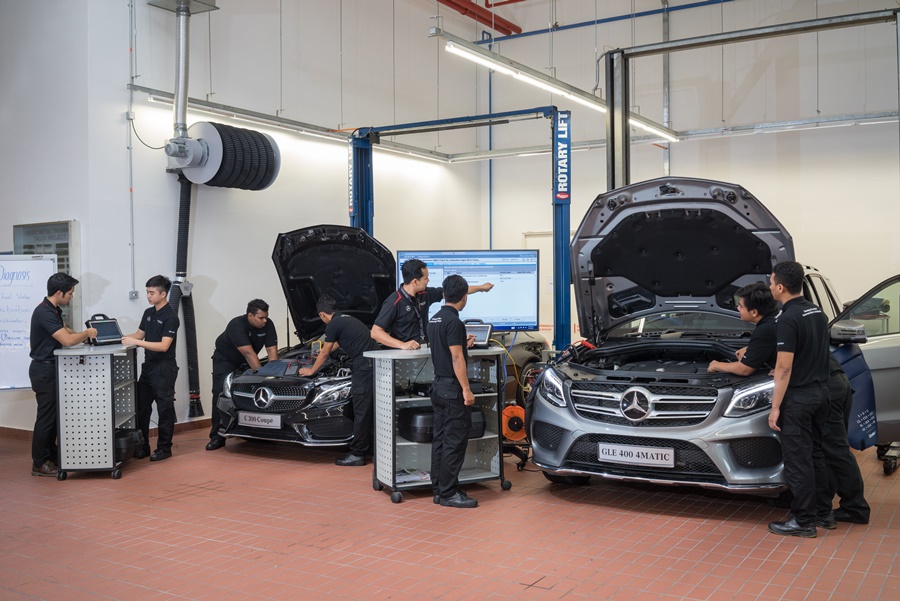
Obtaining the ‘Centre of Competence’ certification involved an evaluation on Cycle & Carriage’s workshop equipment for both, body repair and paint areas, auxiliary material, repair processes and administration practices. To remain up-to-date with the latest automotive innovations and technologies, Cycle & Carriage employees undergo regular up-skilling training at the Mercedes-Benz Malaysia Training Academy.

M-B Training Academy
Mercedes-Benz Malaysia has a Training Academy in Glenmarie, Selangor which provides regular up-skilling training so technicians stay abreast of latest technologies.

Globally certified technicians
“Representing a marque brand that is a beacon of automotive excellence, we are proud to match this with exceptional after care service and expertise. Our facilities are home to state-of-the-art tools, globally certified and skilled technicians equipped to restore and care for an extensive range of Mercedes-Benz vehicles in Malaysia. This reflects Cycle & Carriage’s complete ecosystem that takes care of our customers every step of the way,” said Mr. Foo.

“Congratulations to the dynamic team at Cycle & Carriage Batu Caves, Johor Bahru and Bukit Tengah for constantly raising the benchmark of retail and service, going the extra mile to understand and meet our customers’ needs. This is the backbone of ‘Exceptional Journeys’ we promise customers,” he added.

BHPetrol

Another high point in 120th year
This certification is another feather in the cap for Cycle & Carriage as it continues its year-long 120th anniversary celebration. The celebration kicked into high gear recently, with the premium automotive retail and aftersales leader taking time to record its appreciation for the years of loyalty and dedication from employees at a special townhall session and simultaneous movie screenings at locations in the Klang Valley, Ipoh, Penang and Johor.

C&C
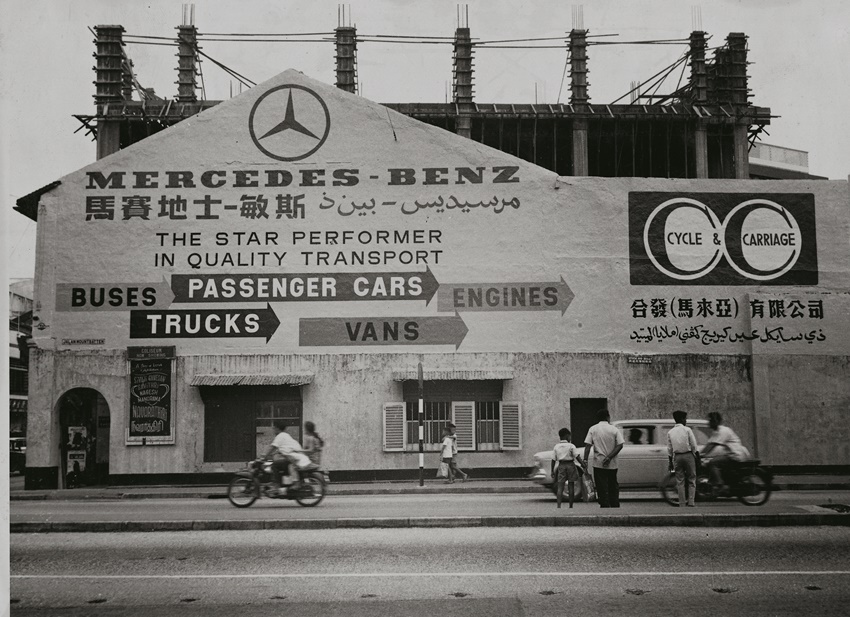
Cycle & Carriage has been in business for 120 years and brought the Mercedes-Benz brand to Malaysia in 1951. It also began local assembly of the German cars in 1965.

“Our people have laid a solid foundation over the years, forming the bedrock of the Cycle & Carriage heritage. We continue to empower our people to experience growth and fulfillment both professionally and personally. Empowered employees go on to deliver the genuinely Exceptional Journeys our customers experience and associate with our Cycle & Carriage identity,” explained Mr. Foo.

The company’s passion in empowering people extends into uplifting marginalised youth by promoting the Technical and Vocational Education and Training agenda. Cycle & Carriage announced its inaugural Cycle & Carriage Study Grant Programme this year, a grant to help youth from low income Malaysian families gain access to quality technical and vocational education. Furthermore, Cycle & Carriage also donated computer equipment for the benefit of vocational institute, Montfort Boys Town’s Computer Maintenance Programme trainees earlier this year. Cycle & Carriage’s involvement in the social development of the local community is an indicator of its commitment to the community in Malaysia.

Commemorating its 120-year legacy in premium automotive excellence, Cycle & Carriage also launched a regional campaign to give away 120 exceptional journeys of specially curated trips to three enticing destinations: Mongolia, Nepal and Korea. The campaign embodies the brand’s commitment to deliver exceptional people-focused experiences.

Click here for other news and articles about Mercedes-Benz in PISTON.MY

PISTON.MY


BHPetrol

Even though the new Mercedes-Benz EQ brand is in its infancy and the first models are just making their appearance, the carmaker is already showing what’s ahead in mobility, progress and sustainable luxury. This is because Mercedes-Benz understands that two things are timeless: the need for transport and the desire for the very special. In a sustainable future too, customers will want a saloon that meets their wishes in terms of comfort, design and technology.

Mercedes-Benz VISION EQS,

Future design for EQ models
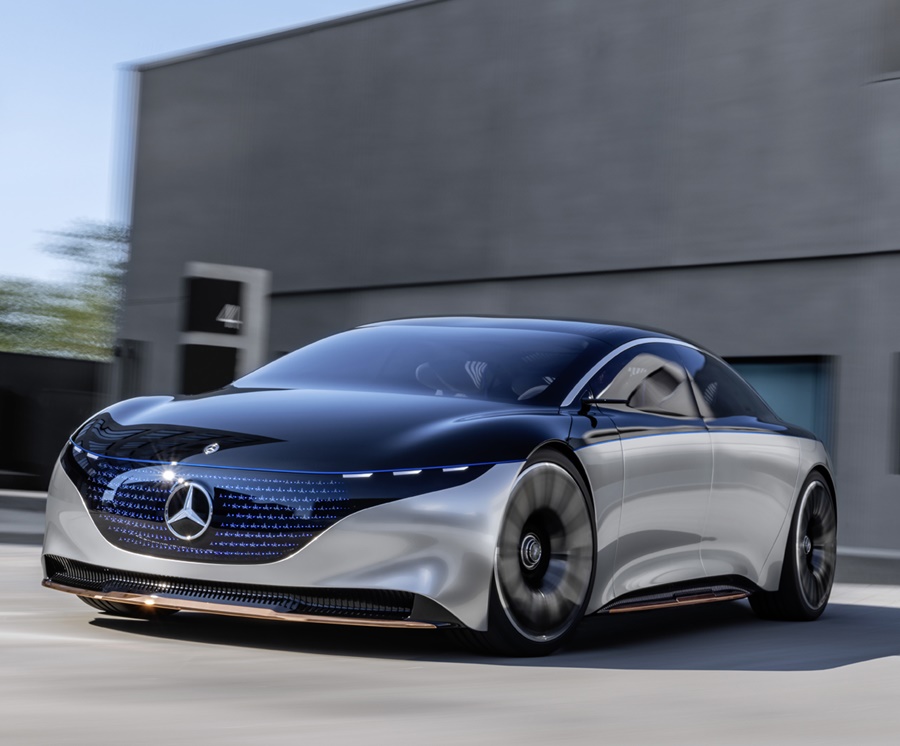
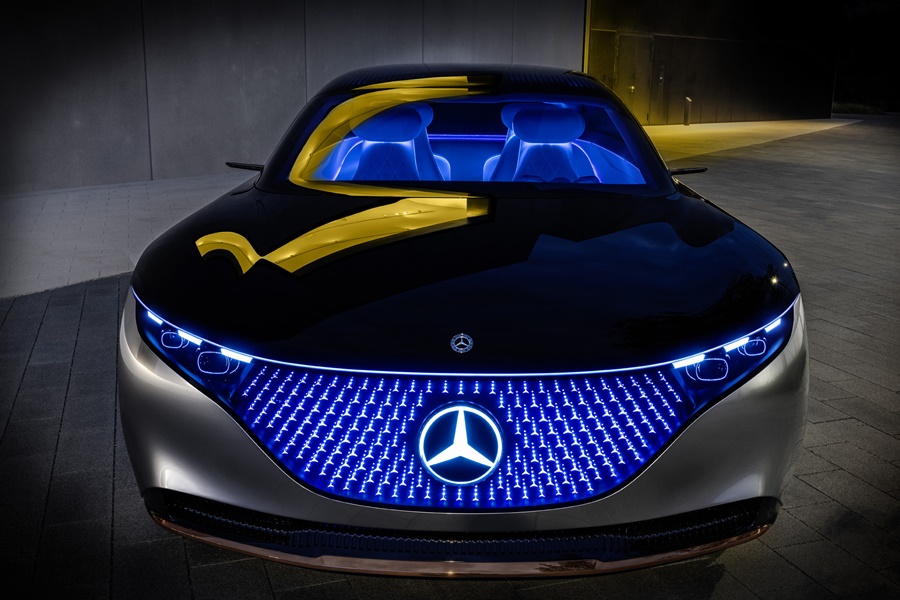
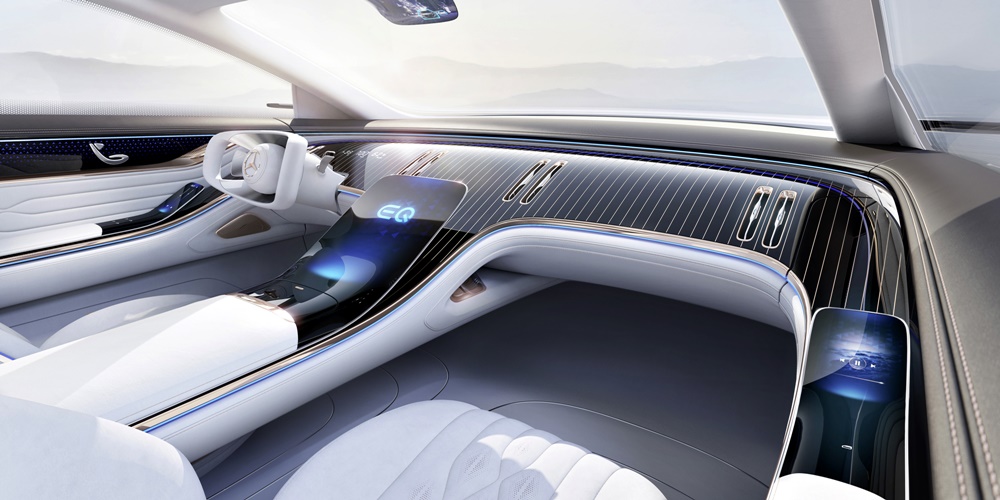
The VISION EQS shows how future EQ models will be shaped. The generous spaciousness and new control concept of this showcar provide a physical preview of the intuitive and digital interior and Advanced MBUX of future luxury saloons. A clear, flowing design idiom makes the individual parts of the entire dashboard blend into an integrated interior sculpture.

The showcar already meets these aspirations today and provides an outlook on future large, electric luxury saloons. At the same time, it illustrates a vision of purpose-built electro-design. With the VISION EQS, Mercedes-Benz is making a clear statement for the continued future of high-quality vehicles and self-determined driving. Supreme craftsmanship, emotive design, luxurious materials and individual driving pleasure will continue to be desirable in the future.

Mercedes-Benz VISION EQS,

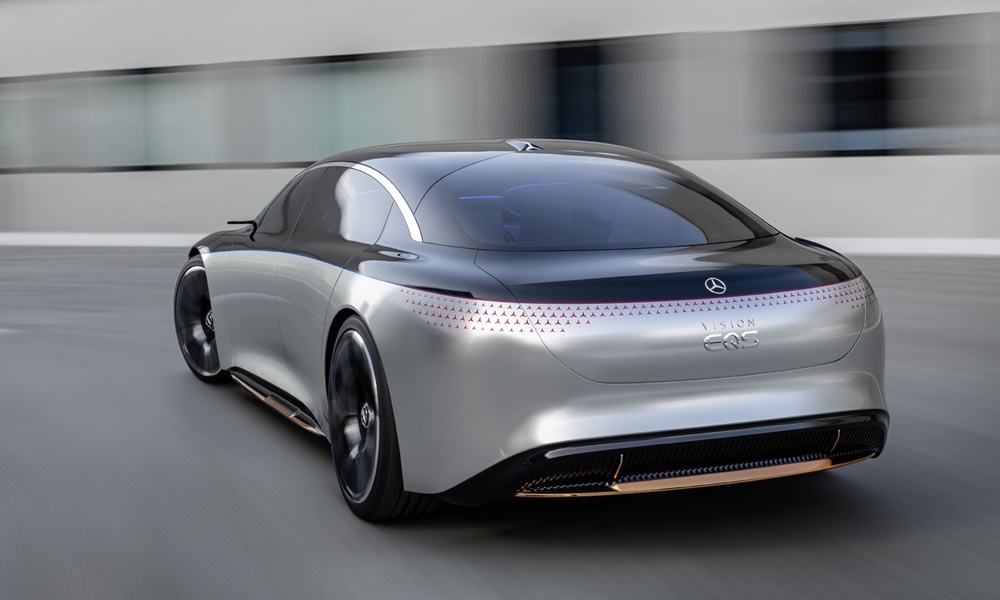
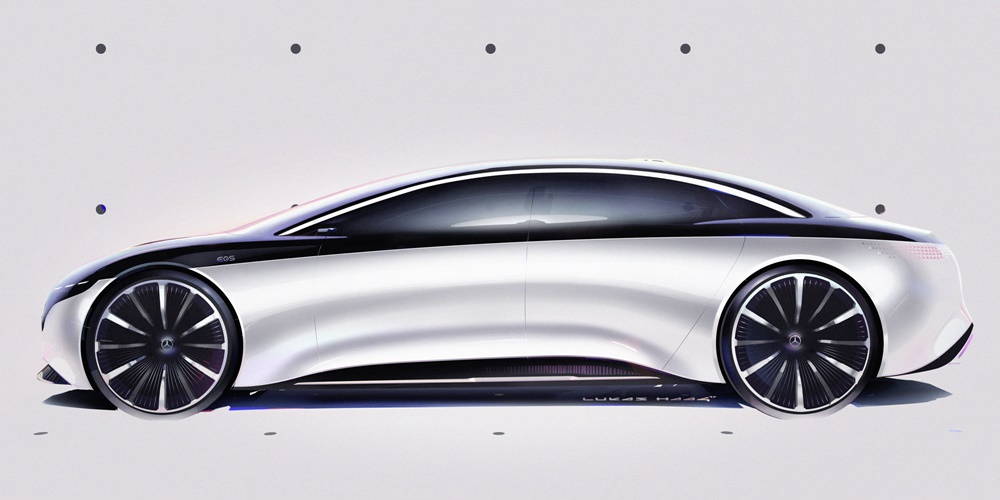
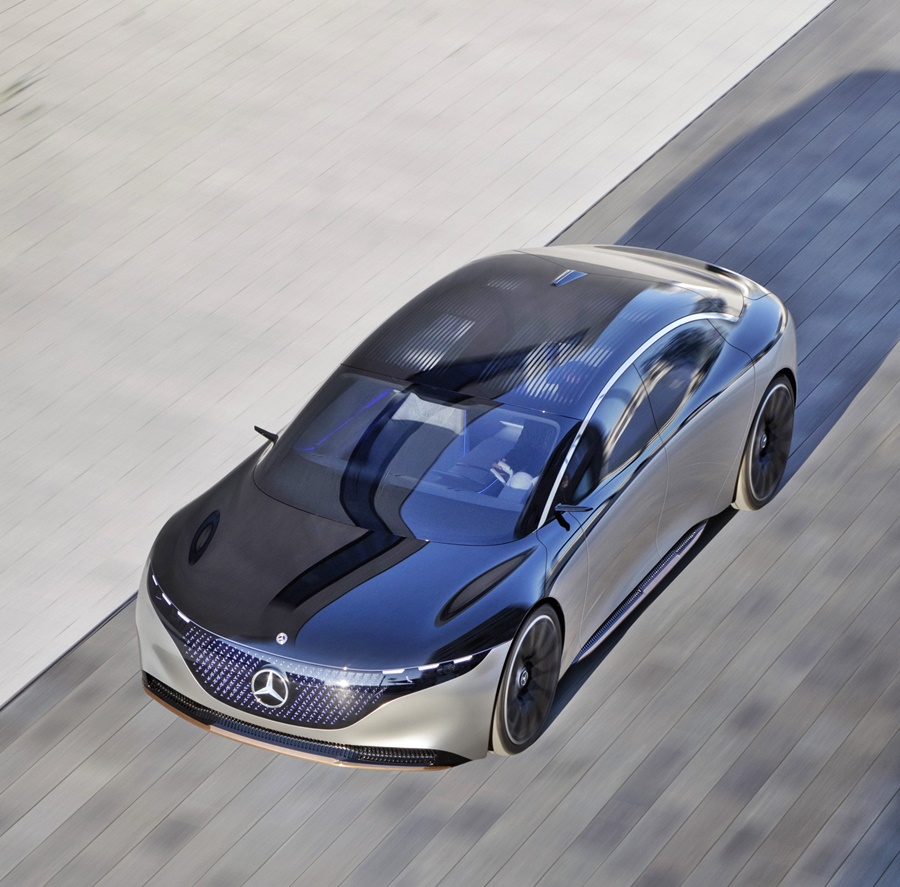
With its innovative, stretched ‘one bow’ proportion, the VISION EQS takes the Progressive Luxury design philosophy of the EQ models into a new dimension. The flowing yet powerful sculptured effect of the exterior design gives the showcar its majestic appearance – luxurious generosity and aerodynamic elegance in ideal harmony.

The prominent, continuous ‘lightbelt’ structures the exterior in a new way. The resulting colour division at shoulder level creates the impression of a ‘black panel’ glass landscape floating on the silver vehicle body – a seamlessly connected vehicle surface from the striking EQ front grille to the rear.

Mercedes-Benz VISION EQS,

Precision in detail
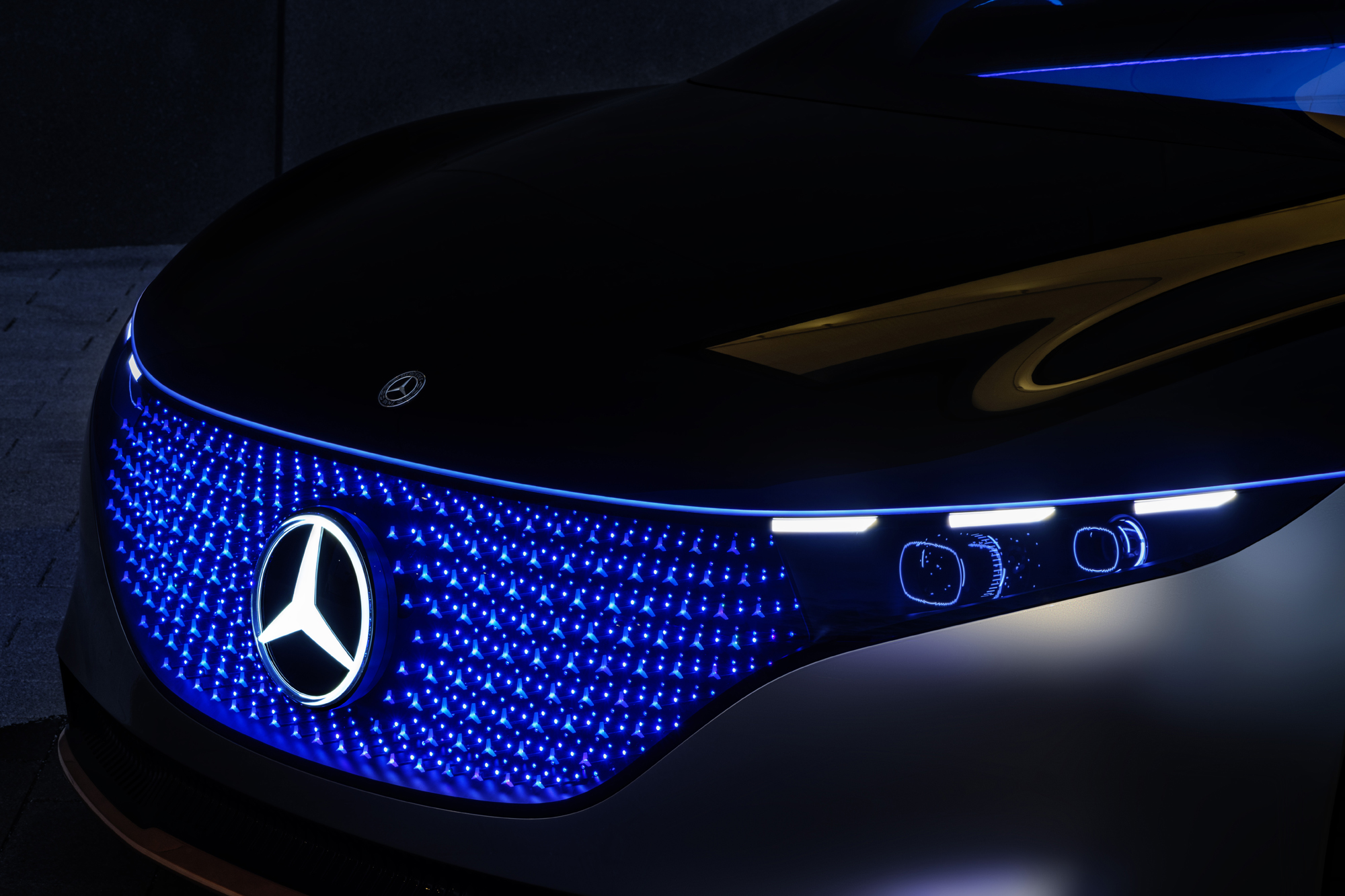
Technologically futuristic features include the DIGITAL LIGHT headlamps, each with two holographic lens modules, integrated into the continuous 360-degree exterior lightbelt. These allow an almost unlimited number of light variations that provide an outlook on future light configurations for future models.

Mercedes-Benz VISION EQS,

The brand logo also has new tasks: 229 illuminated, individual stars form the seamlessly integrated lightbelt at the rear, causing the brand’s trademark to shine out in a previously unknown way. Interaction between the vehicle and its environment is not just limited to the lights in the VISION EQS. The digital front grille, which realises a light matrix consisting of 188 individual LEDs as a world first, provides a new level in precise signalling. Once the black panel comes to life, the seemingly free-floating stars and pixels create a fascinating, three-dimensional effect.

Atmospheric generosity within
Inside, the VISION EQS takes its inspiration from the world of luxury yachts. The clear, flowing design idiom creates a new level of serenity – and with it the vision of modern luxury interpreted into the future. For the first time, the entire dashboard blends with the body of the front trim section to form an interior sculpture. With its deep and open spatial architecture, the cockpit of the VISION EQS envelops the occupants like the deck of a boat. The fully integrated, embracing overall sculpture consisting of the combined dashboard, centre console and armrests floats above the generous interior and, for the first time, gives an outlook on the interiors of future luxury saloons by the brand.

Mercedes-Benz VISION EQS,

Mercedes-Benz VISION EQS,

The choice of materials for the interior of the showcar also ensures a special ambience. Mercedes-Benz has systematically developed the use of sustainable materials further and uses both traditional and technologically advanced materials. High-quality DINAMICA microfibre in crystal white is used alongside native figured maple trim. This is made from recycled PET bottles.

Also used is artificial leather, with a finely structured surface similar to nappa leather. The material used for the roofliner comes from a special project: a high-quality textile was created by adding a quantity of recycled ‘ocean waste’ plastic, putting the use of sustainable materials on a wholly new level.

Advanced MBUX
The VISION EQS presents a large interior sculpture as a stage for the future: digital content can be experienced by immersion over the entire surface, creating an all-embracing atmosphere. The blending of materials and information illustrates a possible intuitive interaction in the future.

Mercedes-Benz VISION EQS,

The organically emerging displays and projection surfaces provide display space, as does the intelligent CONNECTED LIGHT that surrounds the occupants. Haptic highlights such as the air vents integrated into the trim element like inlays, the sophisticated speaker covers in rose gold and the fragrance flask encased in a decorative holder like a jewel round off the trendsetting interior of the VISION EQS and show exquisite craftsmanship.

A fully-electric future
With electric motors at the front and rear axles and the battery integrated into the floor, the VISION EQS represents a very well-balanced vehicle concept. The basis for dynamic high-level performance and safety comes courtesy of the electric all-wheel drive with axle-variable torque distribution and a battery installed deep in the vehicle floor between the axles. Thanks to more than 350 kW of output and immediately available torque of around 760 Nm, the VISION EQS has a projected acceleration time from 0 – 100 km/h of under 4.5 seconds.

Mercedes-Benz VISION EQS,

As a result of an intelligent operating strategy, the prototype can have a comfortable operating range of up to 700 kms. Assuming a charging performance of 350 kW, recharging the battery to 80% capacity should take less than 20 minutes.

The VISION EQS also makes a clear statement for the continuation of driver-controlled vehicles. To this end, the showcar demonstrates the bandwidth of the platform with its clear focus on the driver. Mercedes-Benz will also be in a position to fulfil the desire for individual mobility and thrilling handling characteristics in the future. At the same time the Vision EQS showcar supports the driver with highly-automated driving at Level 3, eg on longer motorway journeys. Thanks to the modular sensor systems, the level of autonomy can be extended up to fully-automated driving in the future.

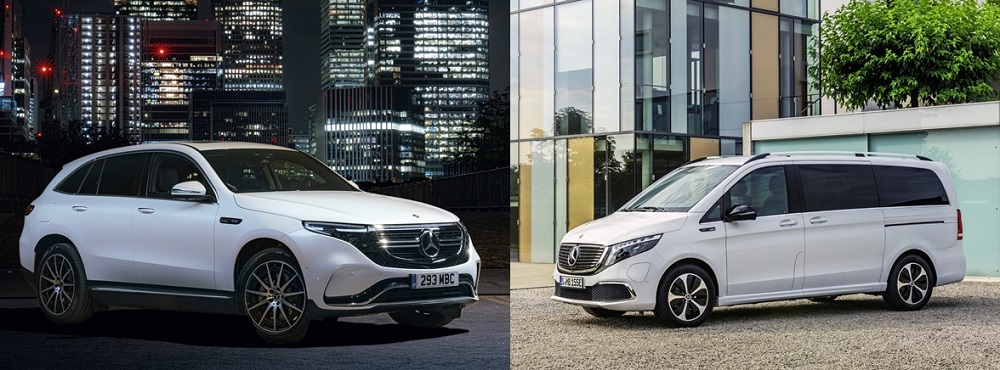
Mercedes EQC and EQV
First two models of the all-electric EQ brand – the EQC SUV and EQV MPV

Click here for other news and articles about Mercedes-Benz in PISTON.MY

PISTON.MY


Archive

Follow us on Facebook

Follow us on YouTube