


Piston.my

Mercedes-Benz

To this day, Mercedes-Benz is the only automotive brand that bears a female name. The female was Mercedes, an 11-year old girl who was the daughter of Emil Jellinek, an Austrian businessman who lived in Nice, France.

Besides selling cars, Jellinek also registered them for racing events. The first car with this melodious Spanish name – the Mercedes 35 PS – caused a sensation at the Nice race week. This was not only because of its highly advanced technology – allowing it to win several races there – but also because of its exceptionally elegant design.

The success of the Mercedes cars at the event inspired Daimler-Motoren-Gesellschaft to call its automobiles ‘Mercedes’. From then on, the curved ‘Mercedes’ lettering adorned the radiators of Daimler passenger cars. The name was registered as a trademark on June 23, 1902 and legally protected on September 26, 1902.

Emil Jellinek and Mercedes
Emil Jellinek and his daughter, Mercedes.

Since then, the brand name – which was changed to Mercedes-Benz after the merger of the Daimler and Benz companies in June 1926 – has been both an expression of and a commitment to luxury and innovation.

Birth of the Mercedes 35 PS
Emil Jellinek was well aware of the importance of a brand name that was easy to remember. From 1899 onwards, he had competed in car races in high-performance Daimler cars under the pseudonym ‘Monsieur Mercedes’, already using the name of his daughter.

At the beginning of April 1900, he concluded an agreement with Daimler-Motoren-Gesellschaft (DMG) for the distribution of Daimler cars and engines. Jellinek insisted on greater performance and more innovative technology from DMG in the closing years of the 19th century, which resulted in the development of the modern motorcar and a new engine.

The new engine from DMG
The new 4-cylinder in-line engine had a displacement of 5913 cc and an output of 35 hp at 1,000 rpm. It was lighter than an earlier engine DMG produced and had a short stroke to achieve higher engine speeds. The intake valves were actuated by their own camshafts for the first time, meaning that the engine had two camshafts. This marked a substantial advance over the previously employed ‘sniffing valves’, which were actuated by the vacuum created by the downward-moving piston.
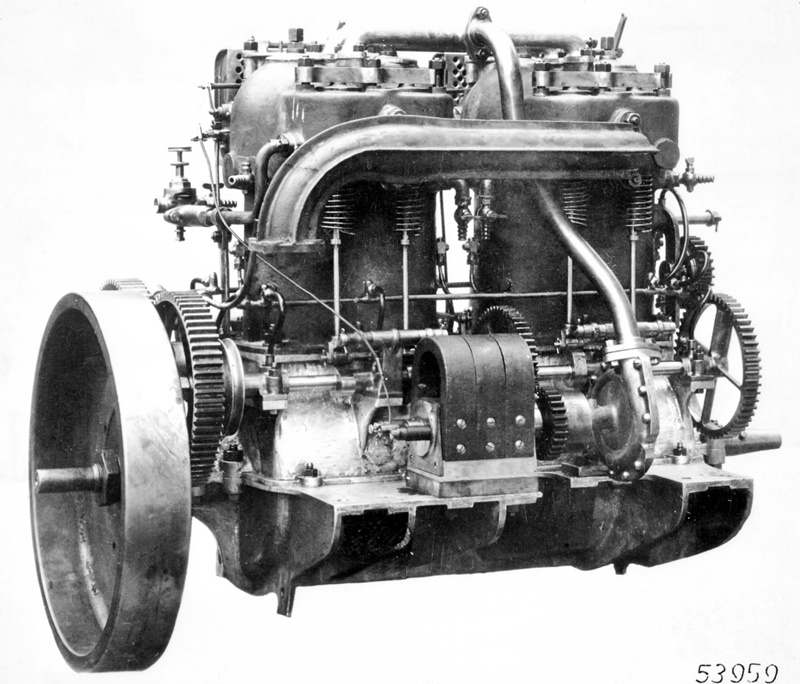
DMG 35 HP

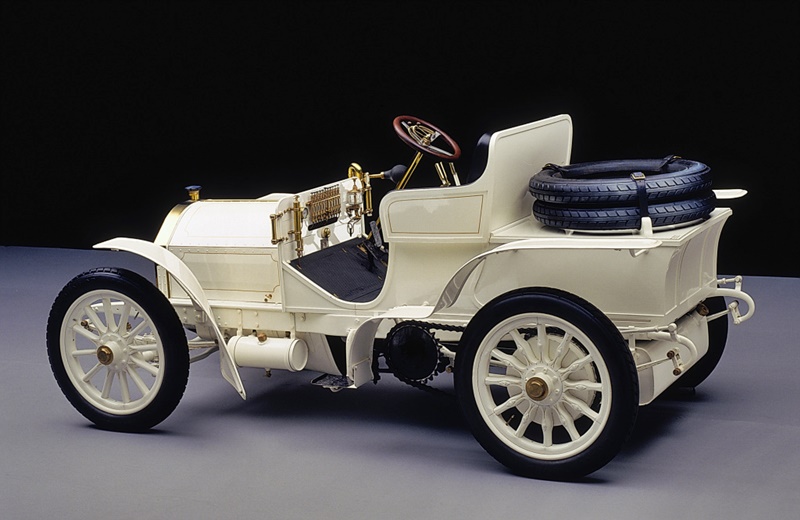
On December 22 1900, DMG delivered the first car equipped with a new engine, a 35 PS racing car. The car was not only the newest and most powerful model produced by DMG but has since come to be recognised as the very first modern motorcar.

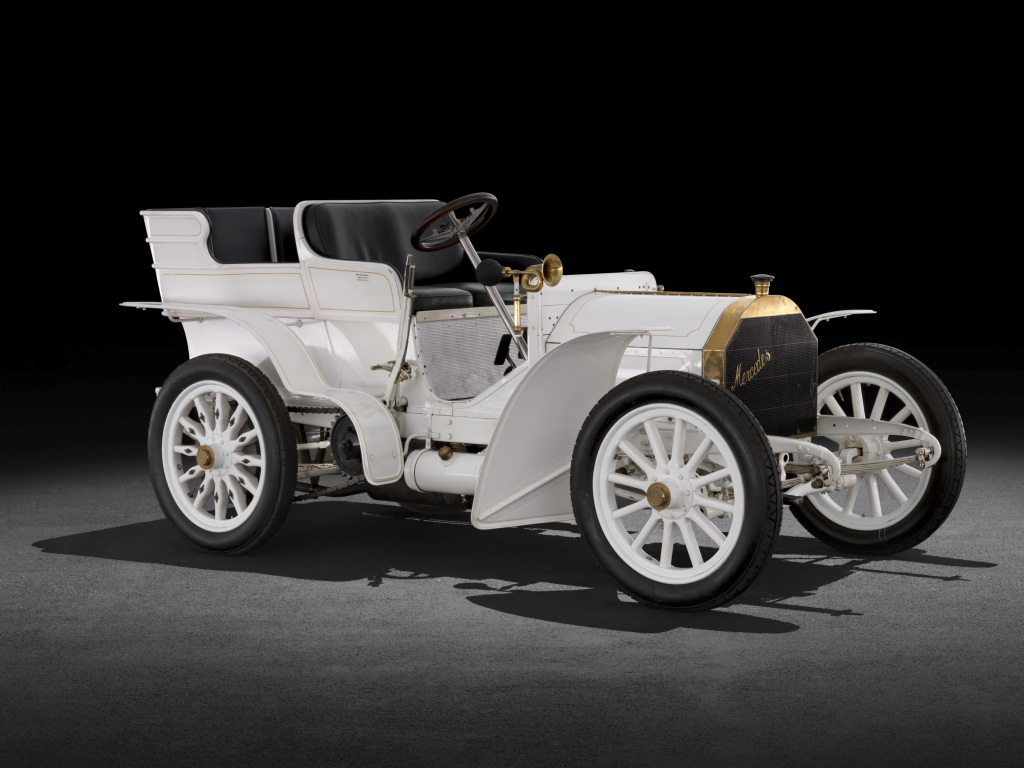
The Mercedes 35 PS was systematically designed for performance, weight savings and safety, its key features including a lightweight high-performance engine, a long wheelbase and a low centre of gravity.
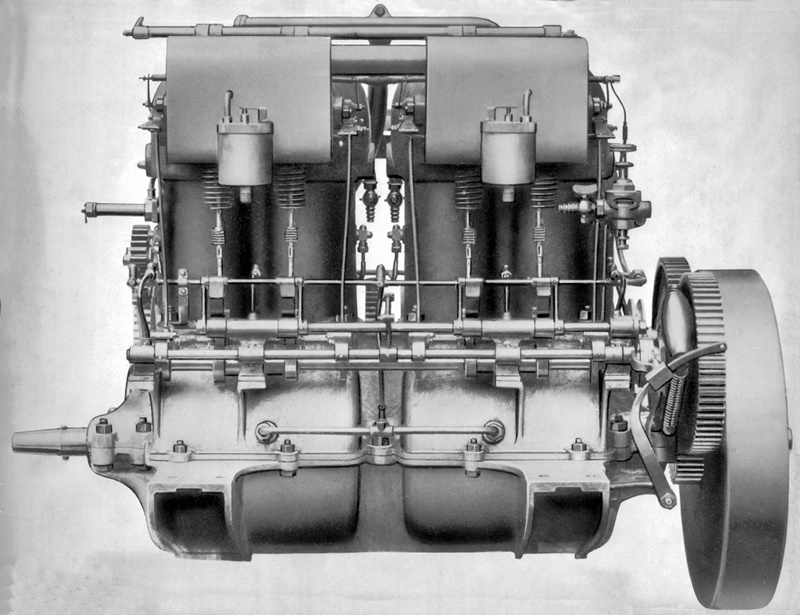
DMG 35 HP

With these attributes and the honeycomb radiator organically integrated into the front, it gave the motorcar its own distinct form. The first Mercedes was no longer reminiscent of a carriage pulled along by a combustion engine instead of horses. Rather, it was a new construction which had been systematically designed from scratch for the innovative new type of drive.

Unbeatable Mercedes
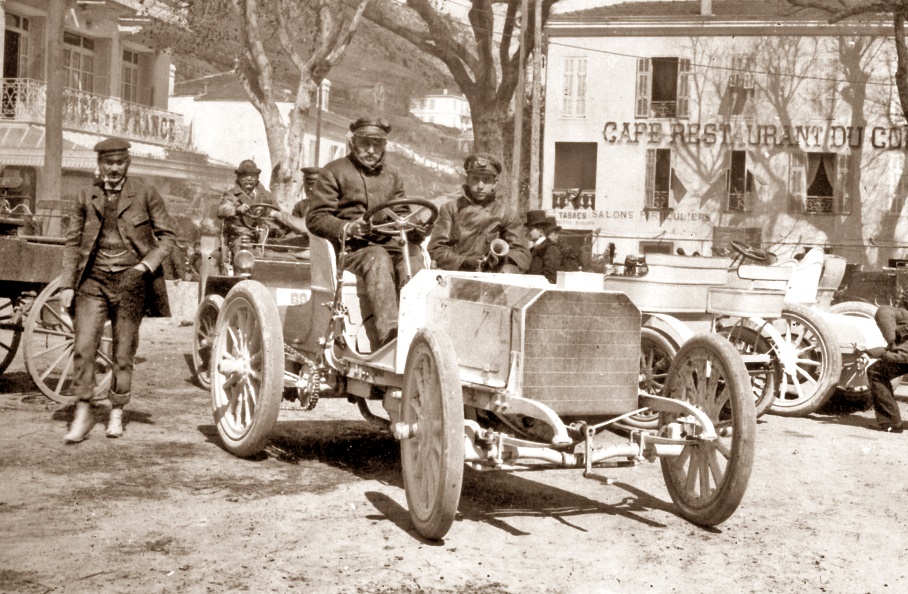
During Nice Week in March 1901, at that time perhaps the most important international motorsport event, the Mercedes cars entered were unbeatable in practically every class. This helped Jellinek and Mercedes to achieve exceptional publicity. In March and August 1901, the sister models, the 12/16 PS and 8/11 PS, were launched and Jellinek’s business was booming. In society’s most exclusive circles, it became the trend to drive a Mercedes or, even better, to be driven in one.
Mercedes
One of the Mercedes 35 racing cars in the Nice Week in 1901.
Mercedes
From the Mercedes 35 HP came the  Mercedes-Simplex 40 PS which was a luxury motorcar in the early 1900s.

Interestingly, Jellinek went a step further in June 1903: he received permission to change his name to Jellinek-Mercedes. He explained the decision thus: “This must in all probability be the first time that a father has borne the name of his daughter.”

And what about The Star?
The Mercedes Star today immediately identifies the brand and its history goes back to 1909 when DMG registered it as a trademark by DMG in June 1909 (there was also a 4-pointed star). From 1910, it would be a common sight on the radiators of Mercedes vehicles.
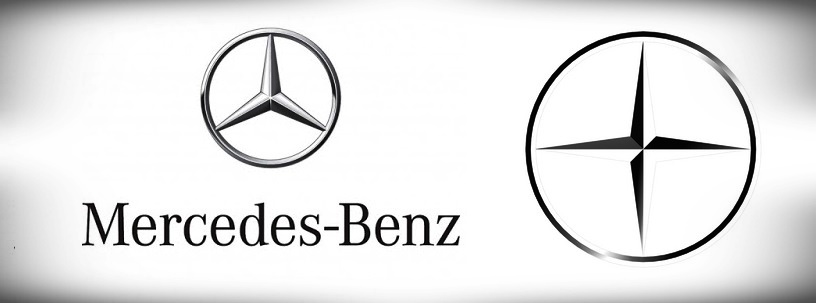
Mercedes Star
While the 3-pointed star is well known as the symbol of Mercedes-Benz, the company also registered a 4-pointed star in 1909. It was not used for the passenger vehicles but was adopted by a Daimler-Benz affiliate, DASA. The 4-pointed star today features in the logo of the European Aeronautic Defence and Space Company (EADS).

The three tips of the star were also regarded as a symbol of Gottlieb Daimler’s efforts to achieve universal motorisation ‘on land, at sea and in the air’ – a vision he consistently pursued from the very beginning.

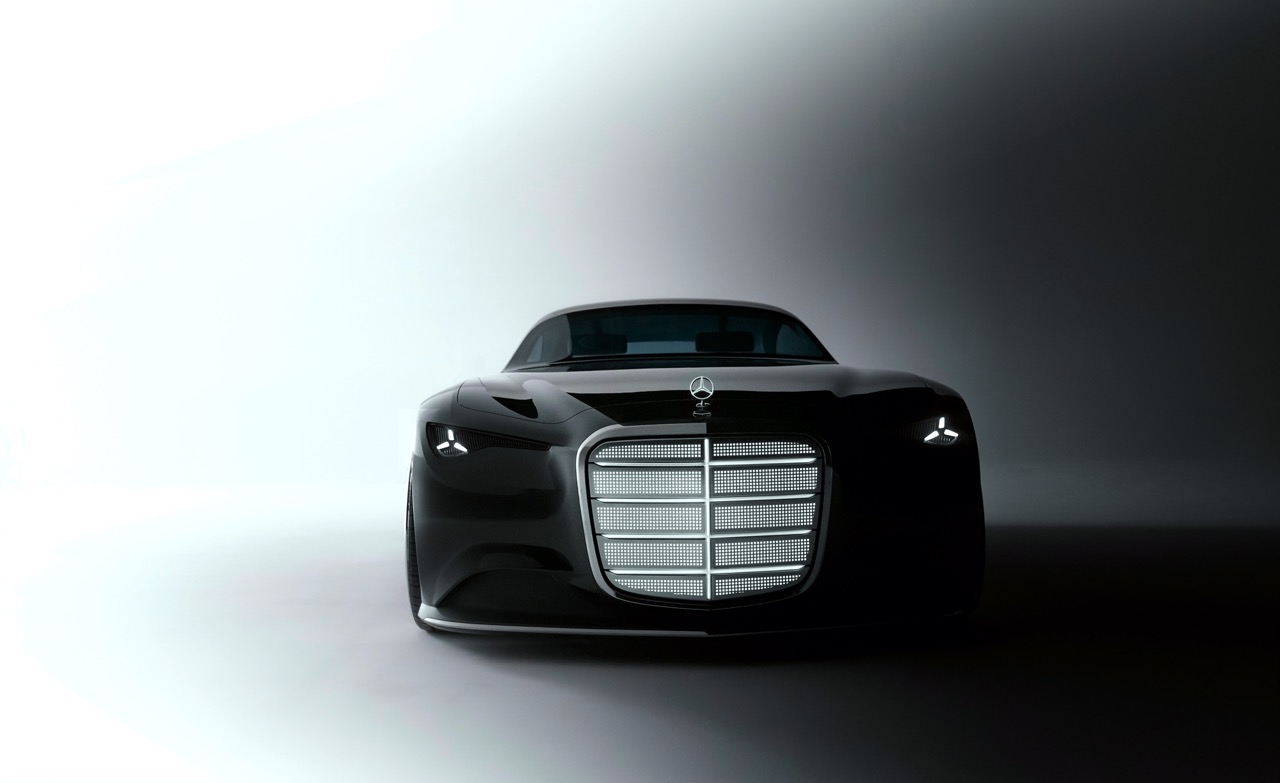
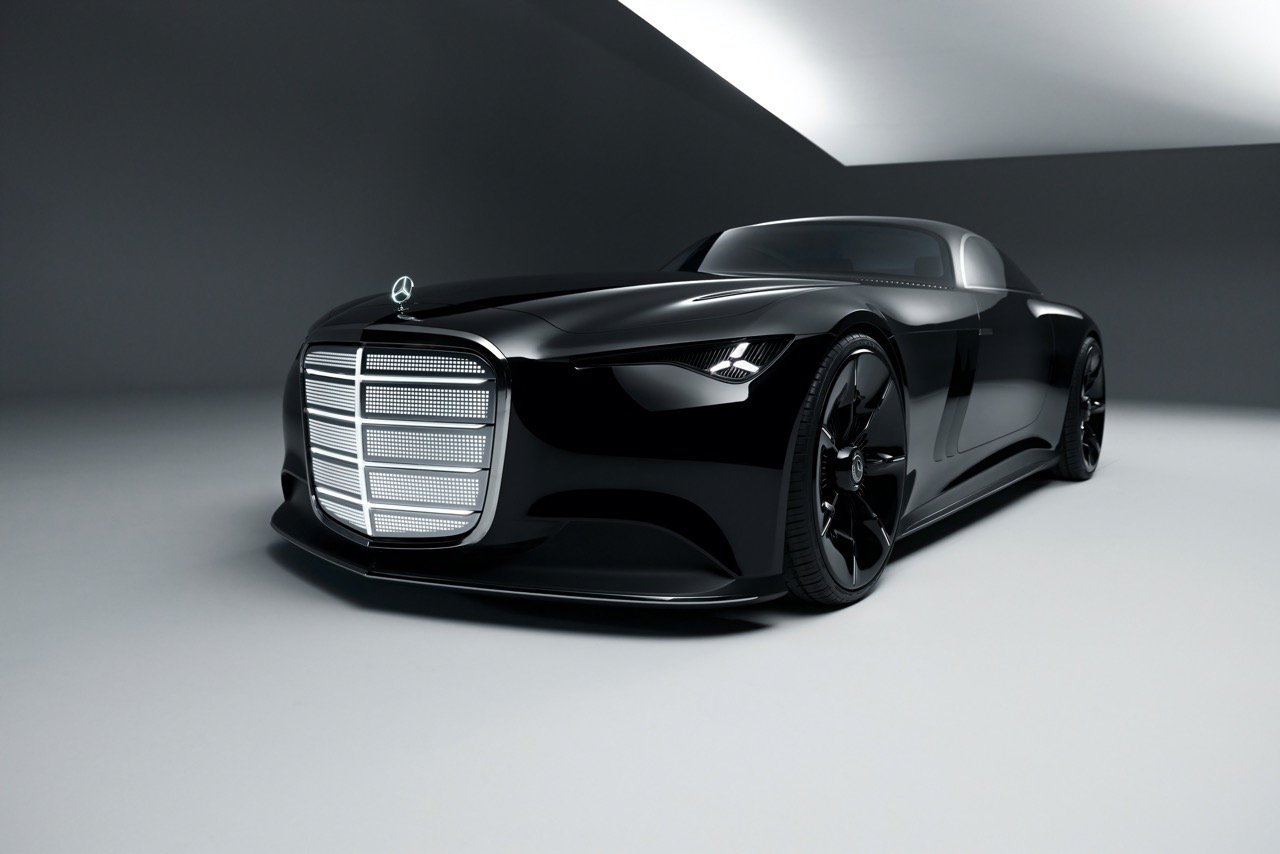
Vision Mercedes Simplex sculpture embodies heritage and future of luxury brand

Covid-19

Fighting COVID-19 is our joint responsibility. Protect yourself and others: make these 6 simple precautions your new habits.
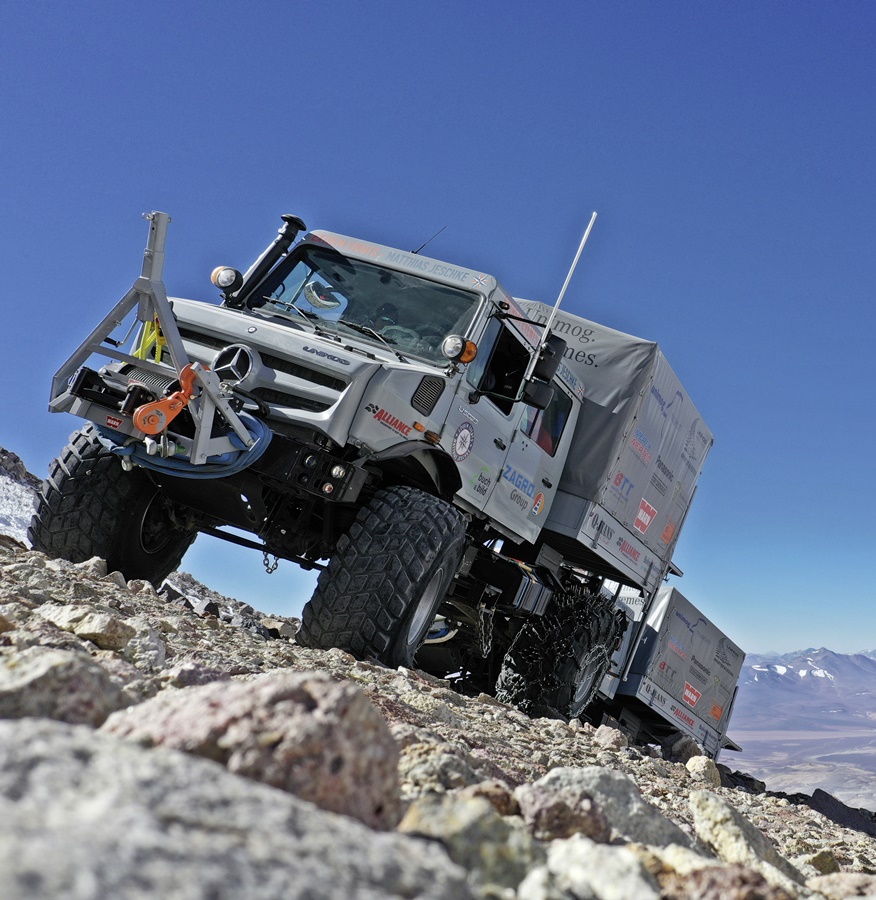
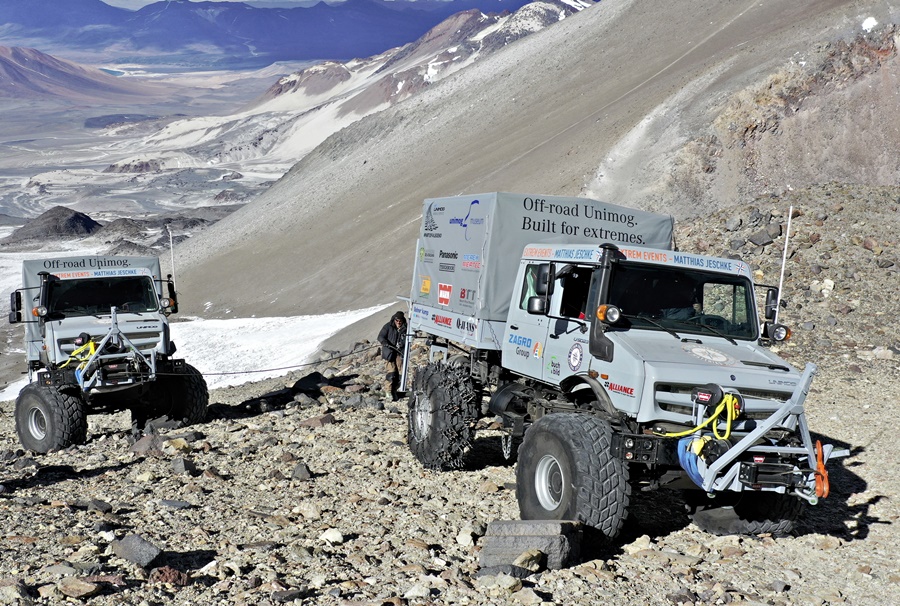
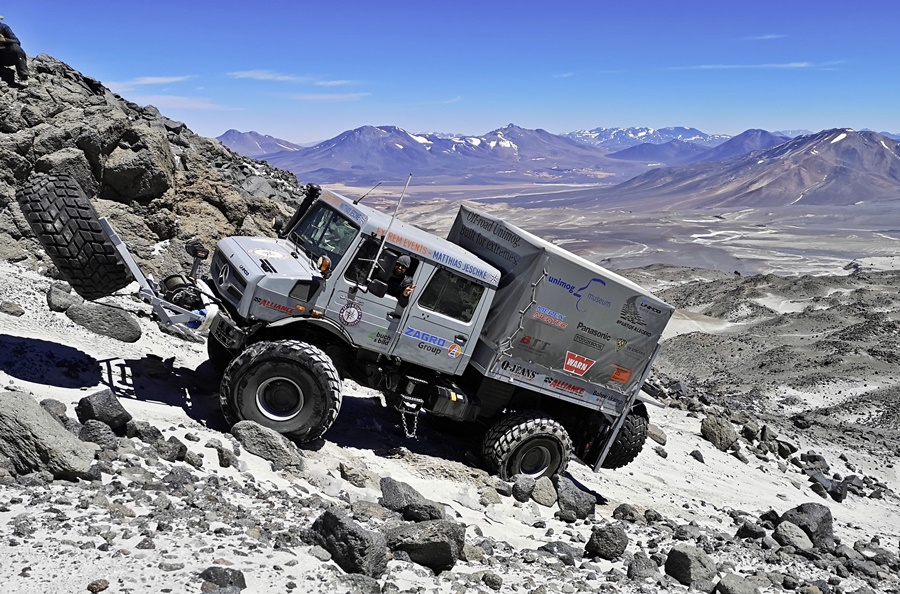
The Unimog by Mercedes-Benz is a true go-anywhere all-terrain vehicle, born over 70 years ago and sold in 30 countries. At least 400,000 units have been sold to date, used for all sorts of transportation in extreme conditions.

When it comes to scientific expeditions in all places and climates around our planet, the Unimog would be ideal, as an expedition team believed. The 10-strong team had a task to install 4 emergency radio units at various high-altitude camps at a volcano known as Ojos del Salado in Chile. In an emergency, each of the units can be used to create a radio connection with the 3 other base camps of the Ojos del Salado. This system will improve the safety both for mountaineers and scientific researchers.

Mercedes-Benz Unimog

Ojos del Salado in Chile

The volcanic mountain measures 6893 metres and is thus the tallest active volcano on earth. It is within the Atacama Desert – one of the driest places on earth and part of the Pacific ‘Ring of Fire’ which has many active volcanos and earth movements.
Customised for the extreme conditions
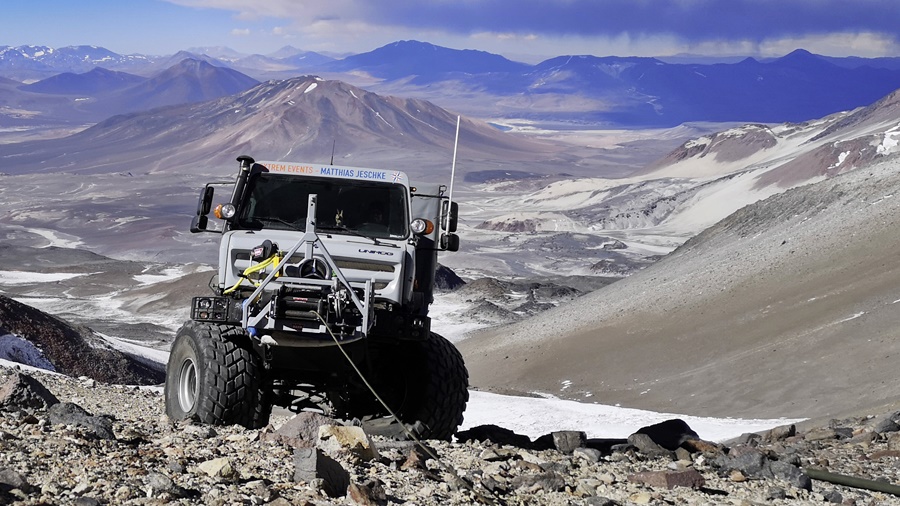
The team was supported by Mercedes-Benz Special Trucks which provided two Unimog U 5023 vehicles of the latest generation. These were configured to carry the expedition team and all of their equipment required to the extreme altitudes. To ensure that the vehicles were ready to tackle any challenges, both trucks were equipped with special tyres, strong winches and special bodies with variable centre of gravity balancing developed by the specialists at the Unimog Museum, Unimog bodybuilder AS Soder, and engineers from the Unimog development team.
Mercedes-Benz Unimog

Mercedes-Benz Unimog

Absolute world record set
After the team made it to the high-altitude camp at 6,100 metres and had completed the installation of the fourth emergency radio unit there, they set about achieving another milestone: breaking the altitude record for wheeled vehicles. This was with one of the two trucks which reached an altitude of 6,694 metres – no vehicle has climbed to such heights before anywhere around the world.

The team didn’t just beat the record set with a Mercedes-Benz Zetros in 2014 but they also set the absolute world record for a wheeled vehicle driving at altitude. According to the head of the expedition, both vehicles ‘mastered the extremely steep and rocky passages, thanks to a combination of the best, reliable technology, a balanced centre of gravity and amazing tyre technology to bring the materials and equipment to these enormous heights. At no point in time around the world have motorised altitude expeditions taken two trucks simultaneously to such an altitude’.

PISTON.MY

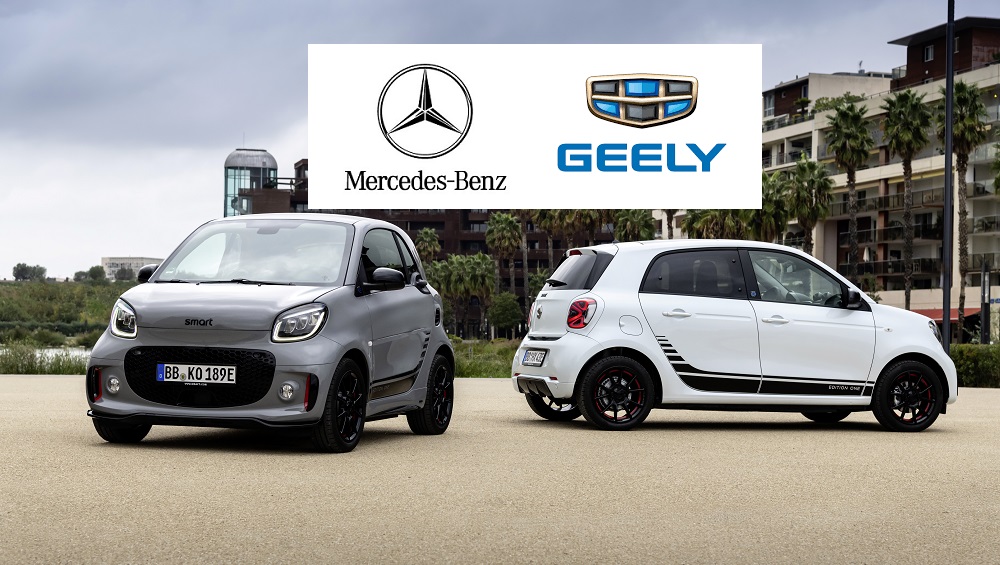
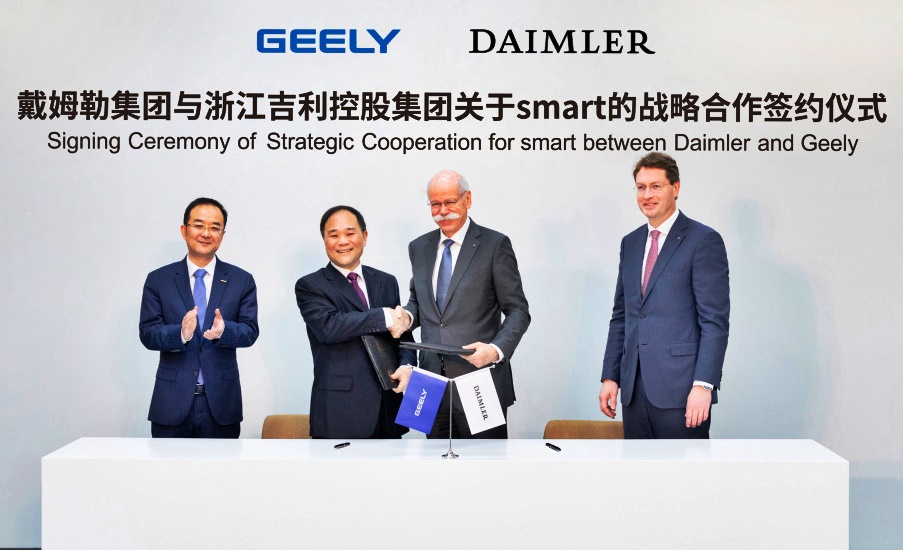
Mercedes-Benz AG and China’s Zhejiang Geely Holding Group have formally established a global joint venture company to handle the German carmaker’s smart brand. Pending regulatory approvals, the company will have its global headquarters in Hangzhou Bay, Ningbo with operational sales functions in both China and Germany.

The total registered capital of the joint venture will be 5.4 billion RMB (about RM3.18 billion) to transform smart into a leading player in premium-and intelligent electrified vehicles. Both parties will equally contribute equally, with the share of Mercedes-Benz mainly covered by the contribution of the smart brand.

Mercedes-Benz and Geely Holding gründen ein globales Joint Venture zur Weiterentwicklung von smart Daimler and Geely Holding form global joint venture to develop smart
A signing ceremony in March 2019 marked the beginning of establishing the joint venture to produce and market smart cars.

New EV model to be produced in China
A new generation of smart electric models will be assembled at a new purpose-built factory in China with global sales due to begin in 2022. The new generation will be designed by the worldwide Mercedes-Benz Design network and developed by the Geely global engineering network. As part of the vehicle-development program, the smart product portfolio will be extended into the fast-growing B-segment that are in line with smart’s brand positioning with a focus on pure premium electric and connected vehicles.

“The joint venture will bring the next generation of zero-emission smart electric cars to the Chinese and global markets. We look forward to continue our collaboration to bring desirable products and services to customers around the world,” said Ola Kallenius, Chairman of the Board of Management of Daimler AG and Mercedes-Benz AG.

smart

Boardroom composition
The board of directors of the new joint venture will be made up of 6 executives with equal representation from both parties. On the German side, representatives will be from Daimler AG and Mercedes-Benz AG. Geely board representatives will include Geely Holding Chairman Li Shufu, Geely Holding President, Geely Auto Group President & CEO An Conghui, Geely Holding Executive Vice President & CFO Daniel Donghui Li.

Tong Xiangbei has been appointed the new global CEO of the smart joint venture and will oversee all operations relating to the brand including sales, marketing, R&D, production and after sales. Tong has more than 2 decades of experience in the automotive industry. Before joining the smart joint venture, he has worked for global automotive companies in the USA and in China.

smart
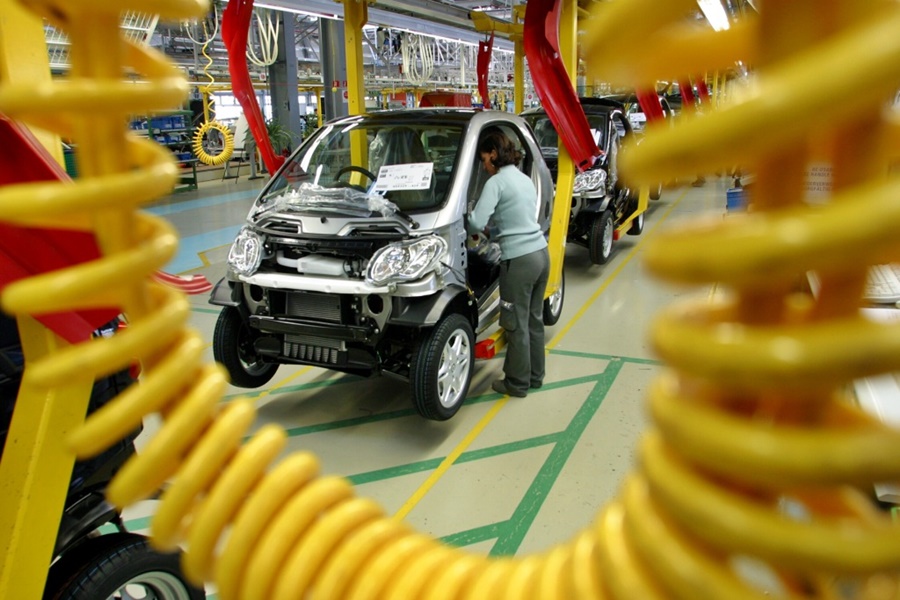
Production line at the smart factory in France.

“The smart brand has a unique value and global influence; it has grown to be a leader in urban mobility. Geely Holding will fully support the smart brand with its full advantages in R&D, manufacturing, supply chain and other fields into the joint venture and support its development in China and globally. We will work together with Mercedes-Benz to transform the smart brand into a leading player in urban premium, electric and connected vehicles to successfully develop the brand’s global potential,” said Li Shufu.

History of smart
The story of smart cars goes back to the early 1980s when Nicolas Hayek, the CEO of the company making Swatch watches, had an idea to apply the same concept of personalisation to making and retailing cars as what was done for the watches. Initially, Volkswagen was involved in the project but Hayek later tied up with Mercedes-Benz. By 1996, the German carmaker took control of the company making smart cars and embarked on a more aggressive growth plan.

smart

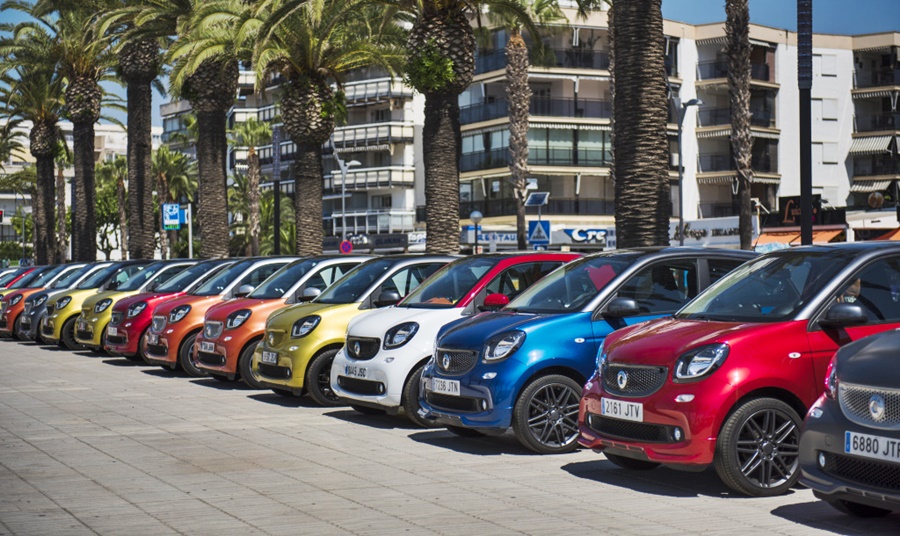
smart cars

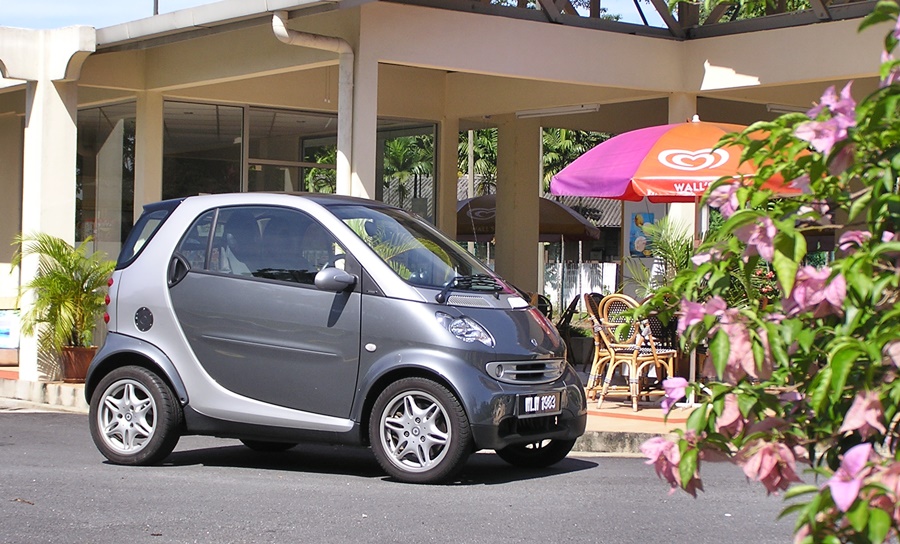
2005 smart fortwo
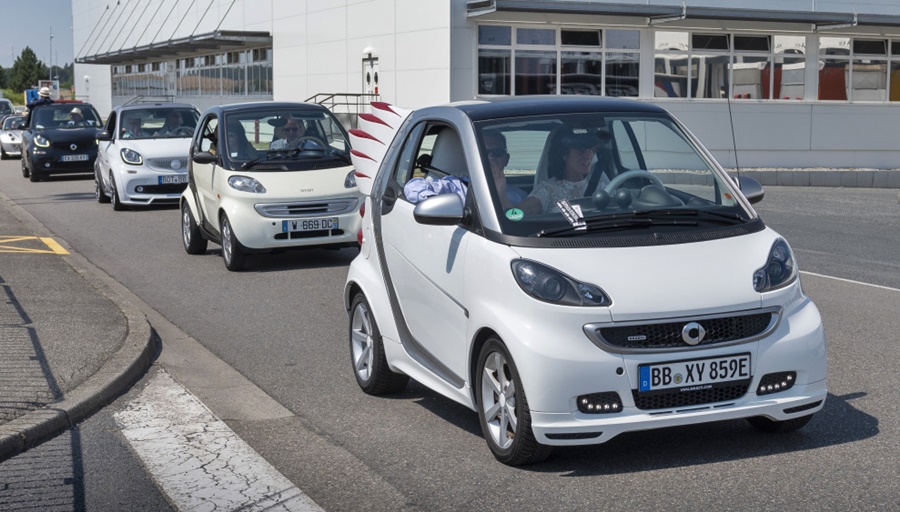
First generation of the smart fortwo was sold in Malaysia for a while.

The little smart cars found a niche as city cars but due to having to meet the demanding and high standards of Mercedes-Benz in the safety, they were not cheap. The brand also did not contribute profits and in fact, lost a huge amount of money.

However, Mercedes-Benz didn’t give up and modernised the factory in France to be more productive and cost-efficient. The third generation started rolling out in 2015 and is sold in over 40 markets worldwide. To date, 2.2 million cars have been sold since 1998.

Geely Auto retains No.1 Chinese brand position for third consecutive year

PISTON.MY

Mercedes-Benz customers cover a broad spectrum of society and there’s no denying that a large number are the rich and famous in the upper strata as well as corporate and government leaders. While government leaders and heads of state can have the protection of the police or army when they travel in their cars, other customers would not have such privileges.

As the German carmaker has always strived to meet the needs of its customers, it has also offered specialised vehicles with protective measures and features. This part of the business – known as Mercedes-Benz Guard or M-B Guard – has been going on for more than 90 years, starting the Model Nurburg 460 of 1928.

Mercedes-Benz Guard
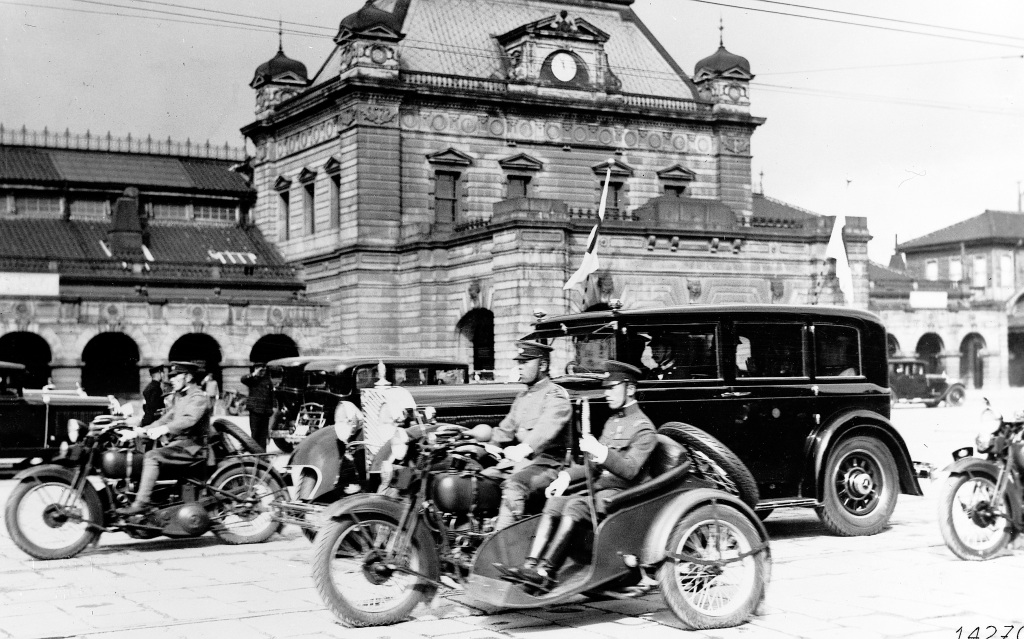
In 1935, Emperor Hirohito of Japan was one of the first heads of state to use a Mercedes Pullman Saloon which was specially armoured by the carmaker.

It was the first company to start equipping its saloons with special protection ex-factory, so as to effectively protect the occupants from attacks using firearms and explosive devices. Emperor Hirohito of Japan chose an armoured Grand Mercedes as a personal car befitting his status (the Pullman Saloon, delivered in 1935, is now displayed at the Mercedes-Benz Museum in Stuttgart). Many heads of state and government leaders followed the emperor’s example in using cars with additional protection and they entrusted their safety and security to M-B Guard.

The production of M-B Guard’s special protection vehicles has a unique history of innovations. This is because the protective features are always developed for specific models (unlike independent companies which can also ‘fortify’ a car with basic measures). The engineers also keep pace with technical advances to provide the best possible protection.

In September 1963, for example, after the legendary Model 600 was launched, the German government approached the company with a request for an armoured version. When a large demand for special protection vehicles arose in Latin America in 1970, the armoured 280 SEL 3.5 became a popular choice. Mercedes-Benz also produced special protection versions of the 8-cylinder W 116-series models and delivered them to selected customers in Europe and overseas.

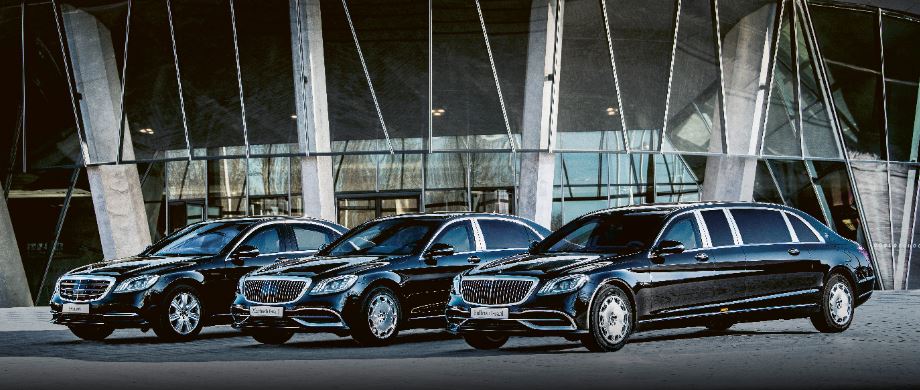
Since 1980 and without exception, all generations of the S-Class (W126, 140, 220, 221) and the current model (W222 series) have always also been available in special protection versions. The current M-B Guard models provide maximum protection up to Class VR10, and are highly sophisticated products at the highest technical level.

Mercedes-Benz Guard
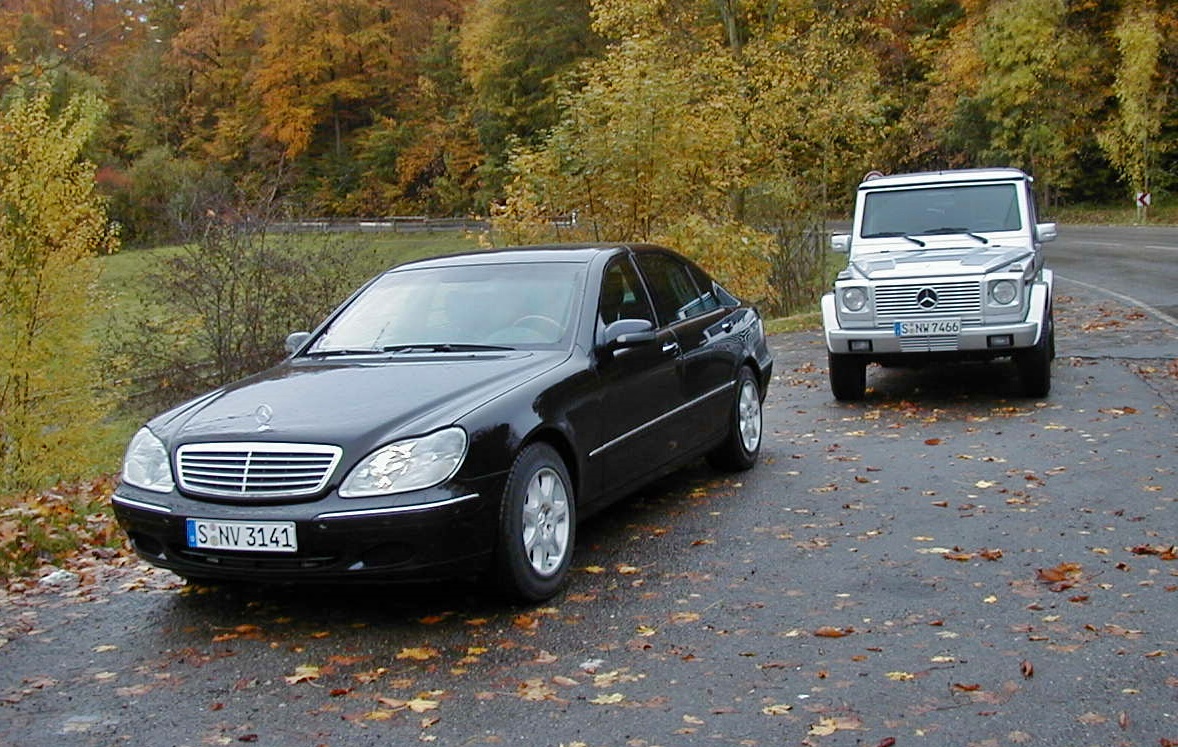
M-B Guard has offered armoured versions of most models, including SUVs like the G-Wagen and also the M-Class. From the outside, you would not be able to tell the difference from a non-armoured model.
Mercedes-Benz Guard
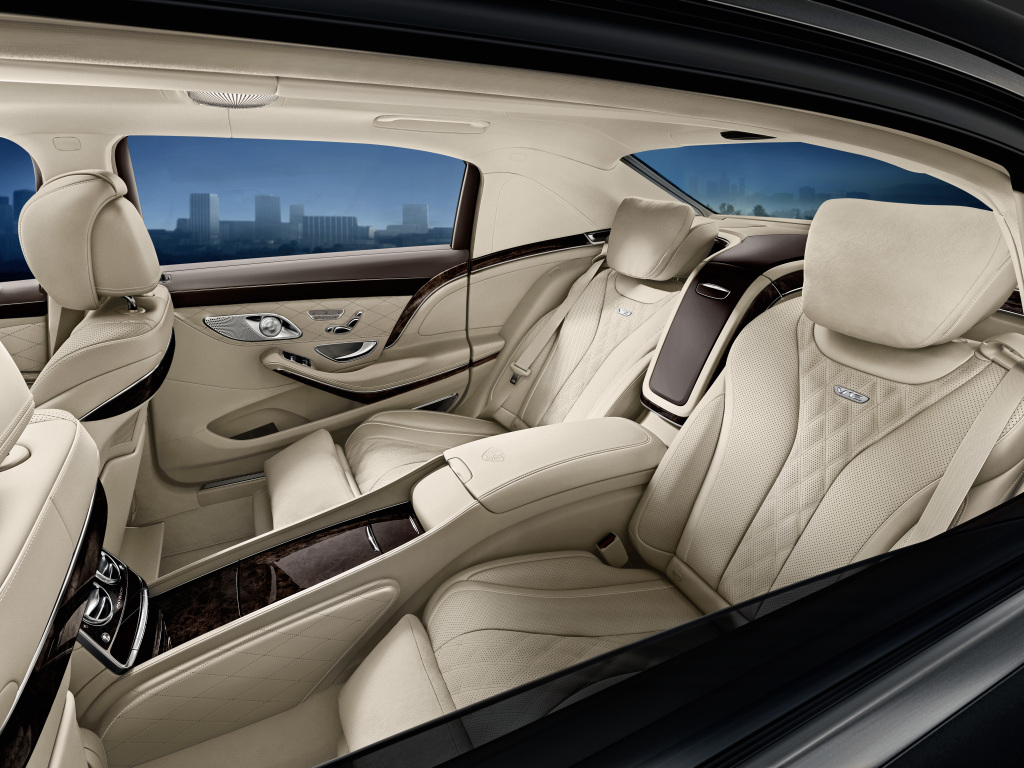
Occupants in armoured M-B Guard vehicles do not have to feel like they are in a tank. They enjoy the same luxury and comfort as the unprotected models.

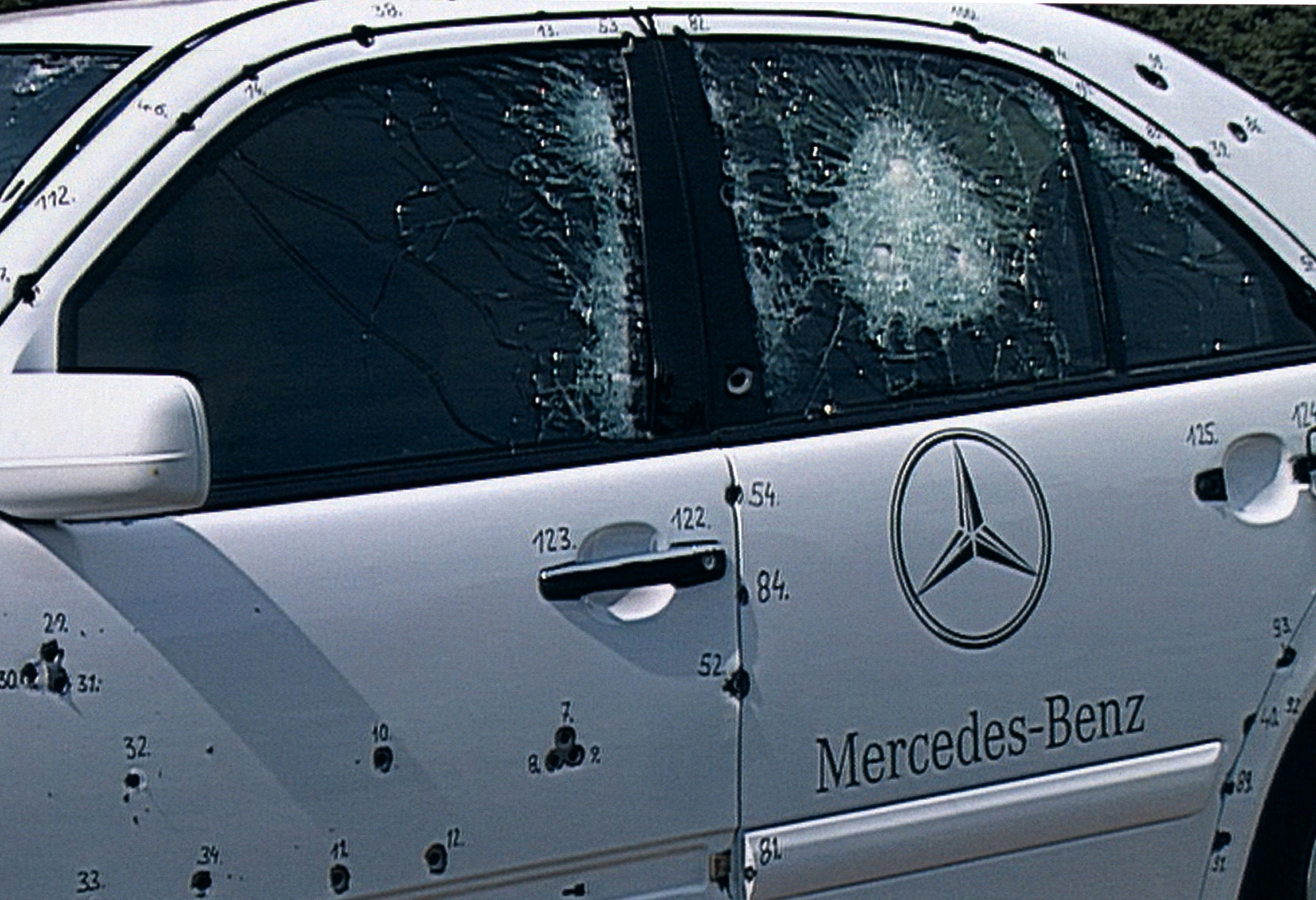
Fortifying a car to resist bullets and explosives can be easily done by just using thicker metal panels and glass but this would turn it into a ‘tank’ and it would feel like one on the move too. The M-B Guard models are engineered to the highest protection standards available for civilian vehicles but also offer the same levels of luxury and comfort for the occupants as the standard models sold

Integrated special protection makes this possible. For example, all the protective elements for the doors, rear wall, side components, roof and firewall are not subsequently installed in an already finished vehicle but are integrated into the bodyshell in a separate production process right from the start. This means the models in the Guard family are conceived and developed together with the unprotected variants from the time a new model is developed. Potential weaknesses are identified by extensive tests during the development process and verified by the specialists.

Mercedes-Benz Guard
Many Mercedes-Benz models are engineered to include special protective equipment and panels from the time the model is being developed. All the necessary mounting points and reinforcements are already integrated in the bodywork, to be used if needed by M-B Guard. Production is done in a separate and secure area for obvious reasons.

Mercedes-Benz Guard

All the measures are based on the many years of experience of Mercedes-Benz in the engineering of special protection vehicles. All reinforcing elements made of special steel alloys and other high-strength materials are already integrated in cavities between the bodyshell and exterior skin during the body production phase, specifically reinforcing the basic structure. Joints and material transitions feature intelligently designed material overlaps. Relevant areas of the underbody are protected by armour specially developed for these vehicles.

Mercedes-Benz Guard

Mercedes-Benz Guard

Mercedes-Benz Guard

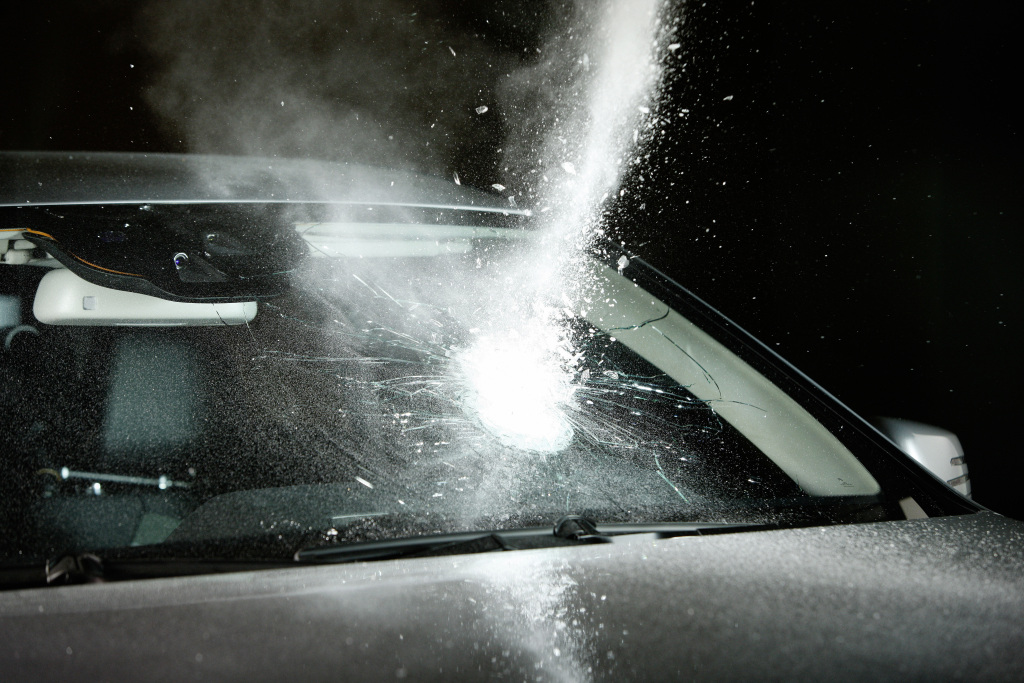
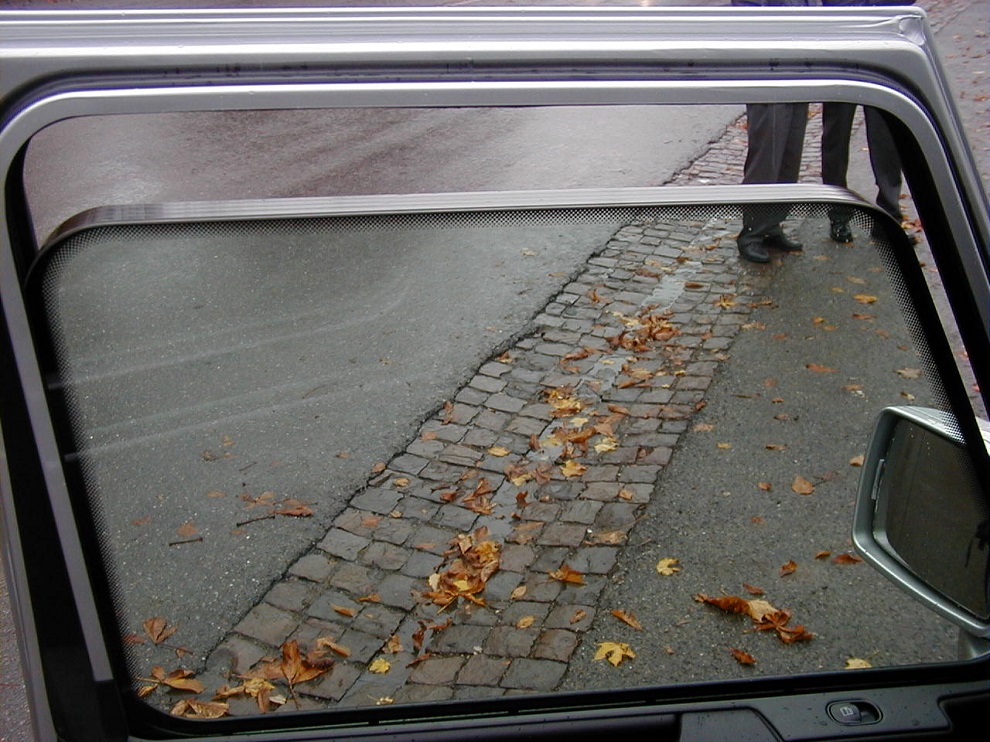
The glazing is a fixed and very important part of the protective measures. Here too, the material and thickness meet the high requirements of the protection category concerned, from bullets to explosive projectiles. The inner surfaces of the glass are coated with polycarbonate for splinter protection. Despite their comprehensive protective effect, they offer very good visibility.

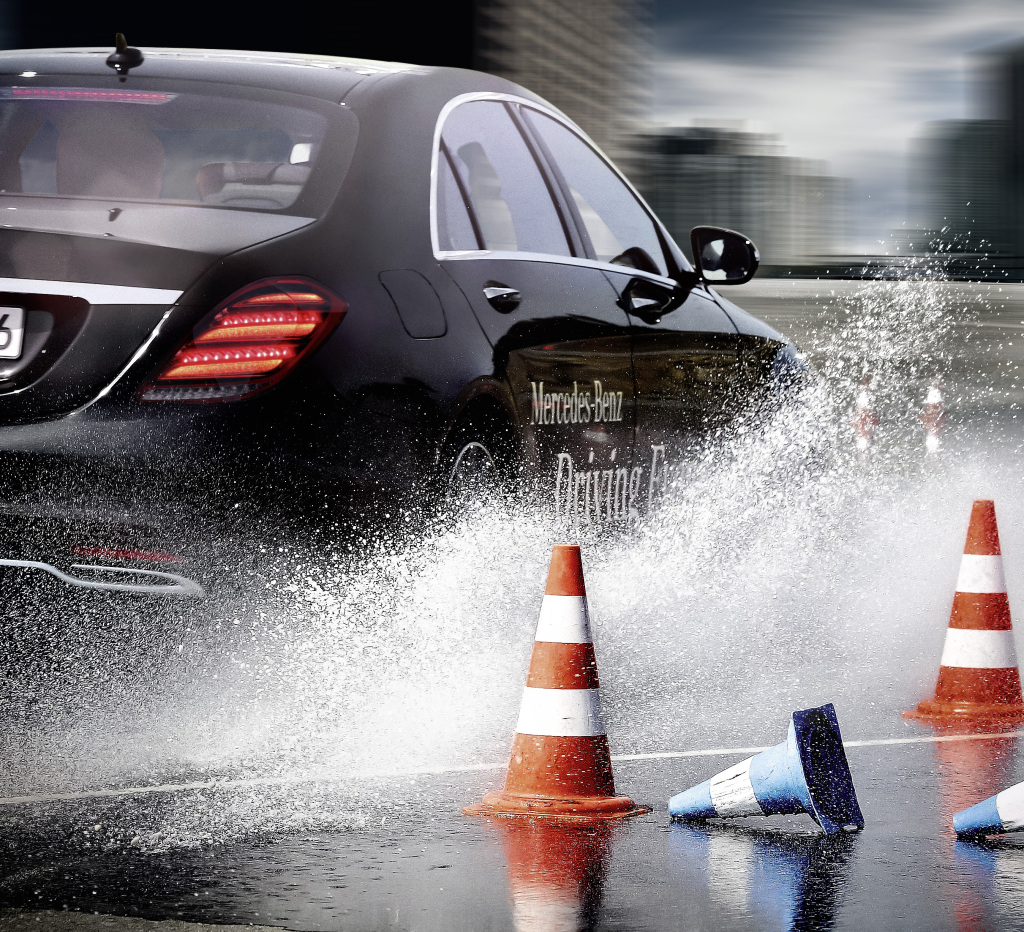
Naturally the suspension, brakes, springs and assistance systems are adapted for the additional weight to ensure near-standard handling characteristics with the comfort occupants in every Mercedes-Benz expect.

Mercedes-Benz Guard
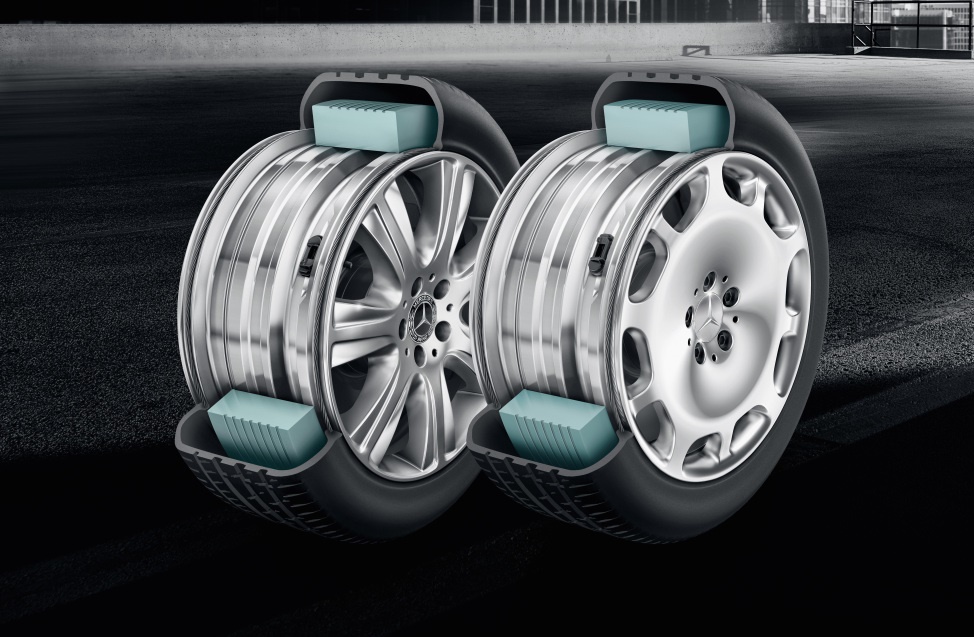
Run-flat wheels enable the car to continue moving even if the tyres are deflated.
Mercedes-Benz Guard
Even with all the extra weight (which can be as much as a C-Class sedan), M-B Guard vehicles must still handle well. Drivers are also given special training if required.

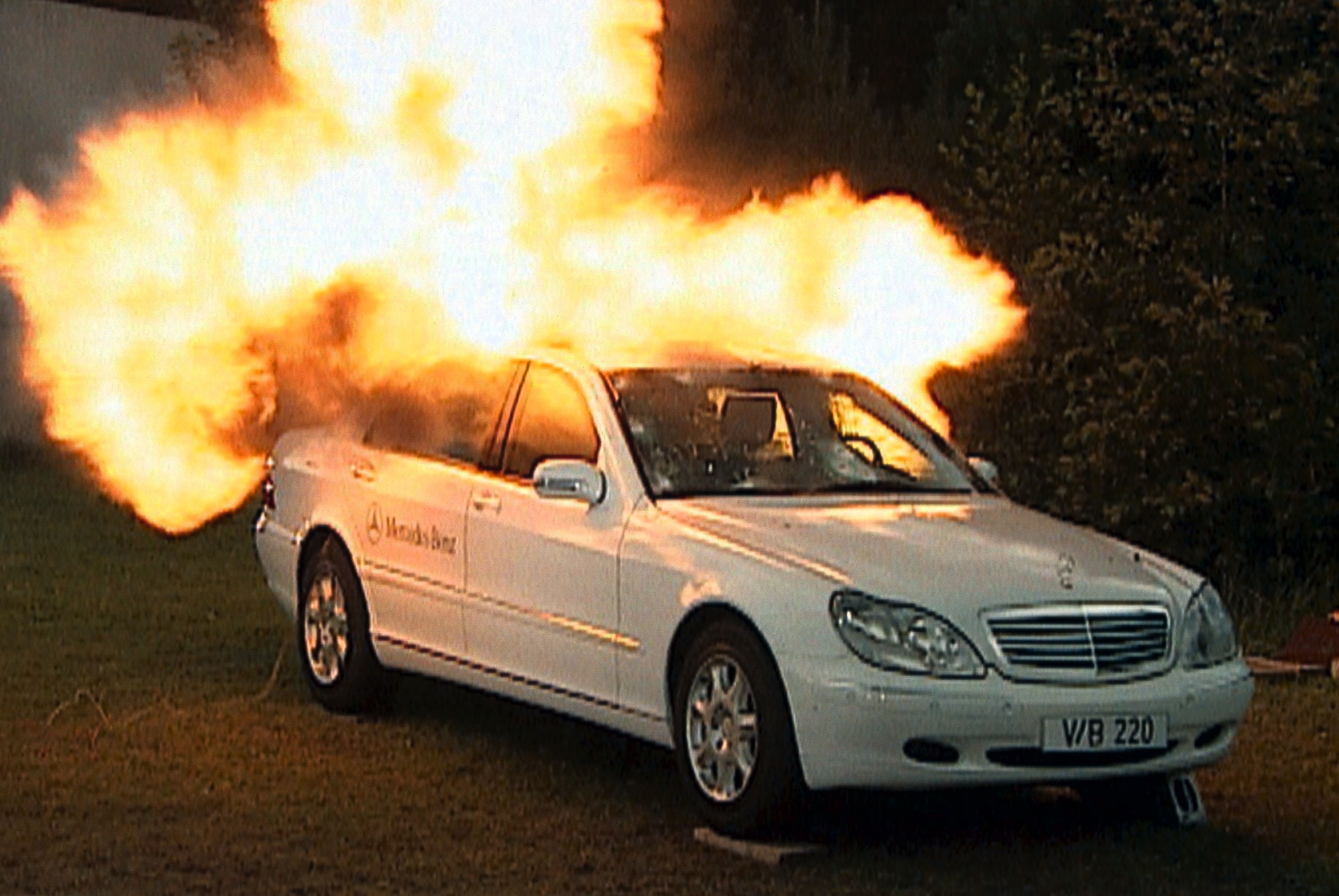
Additional equipment to protect the occupants inside the cabin can also be specified, such as an emergency fresh air system and self-activating fire extinguisher system. This is in the event the car is unable to move away and had to withstand attacks for some time before rescue teams can arrive.

It is part of the protective concept that models with special protection are only distinguishable from their standard production counterparts on very close scrutiny. A number of special technical features also ensure that they remain mobile during and after an attack, and can leave the danger area as rapidly as possible. The powerful, high-torque V12 engine with 530 bhp/830 Nm is one advantage.

Mercedes-Benz Guard

Each M-B Guard vehicle (SUVs are also available) obviously costs a great deal more than the standard model. The vehicles are, like any Mercedes-Benz, engineered to be long lasting but there may be cases where the owners no longer require them. In such cases, the company will try its best to buy back the vehicles so that they do not get into the open market. According to a former executive in the company, this is to avoid such vehicles getting into the hands of the ‘wrong type of customers’.

It’s not known how many, if any, M-B Guard vehicles are in Malaysia and it would be hard to identify them as they appear like standard models unless you look closely. There may be some units but in any case, a former senior executive at the Malaysian subsidiary said that there is no real need to publicise M-B Guard products which would send a ‘wrong message’ about the countryas it is generally safe and peaceful.

Mercedes-Benz is the world’s most valuable luxury car brand of 2019

PISTON.MY

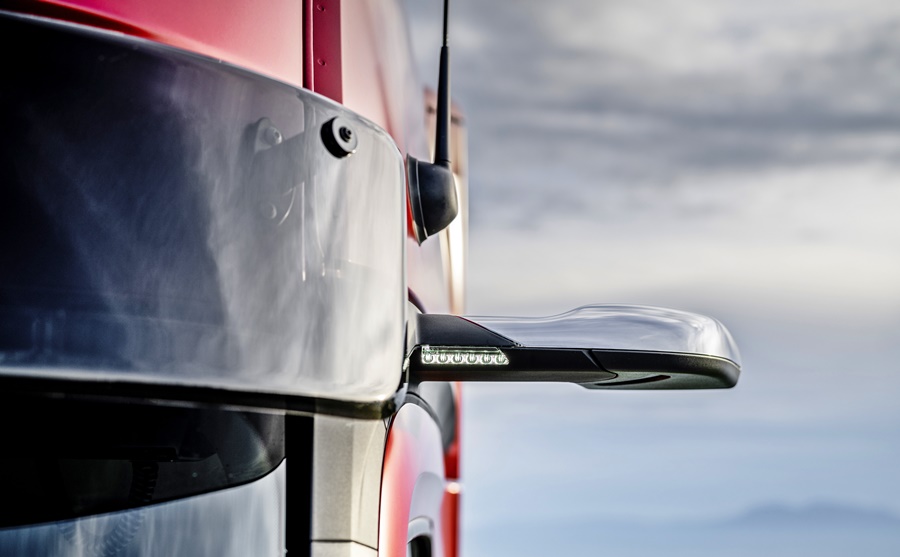
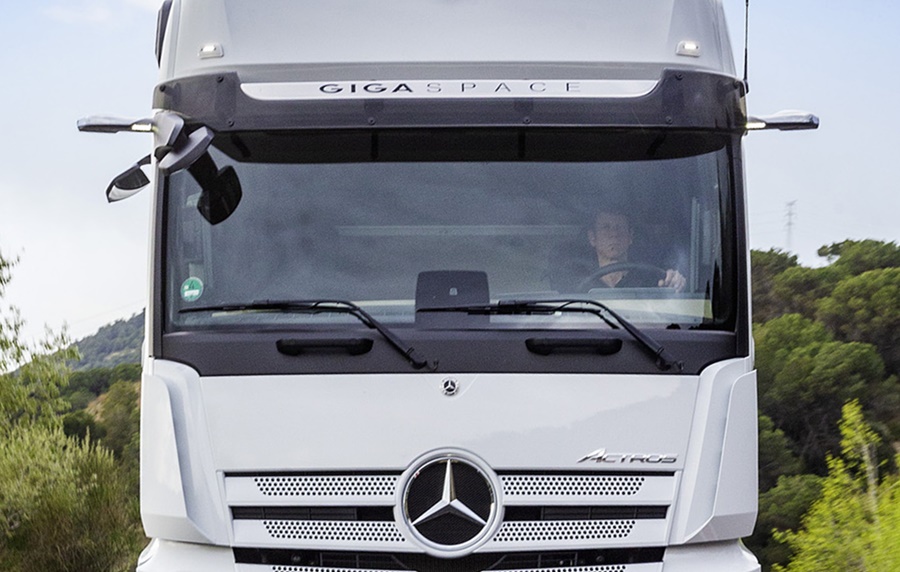
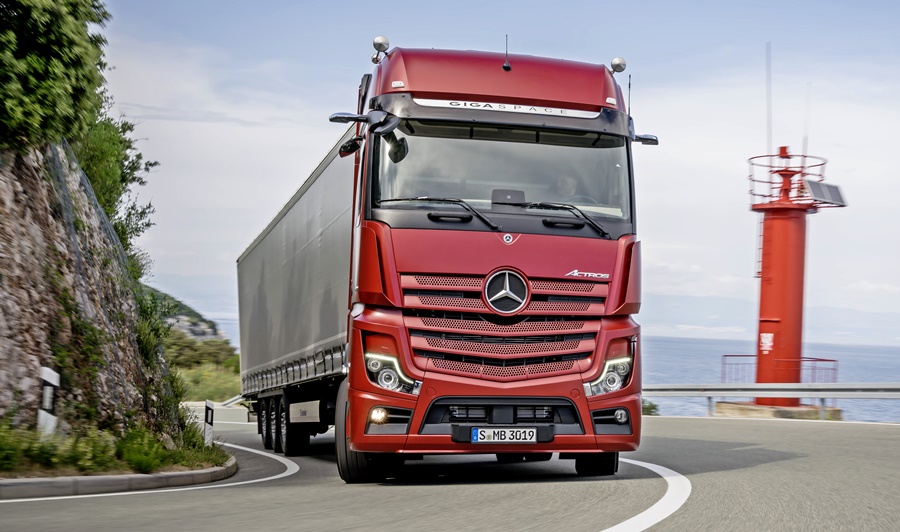
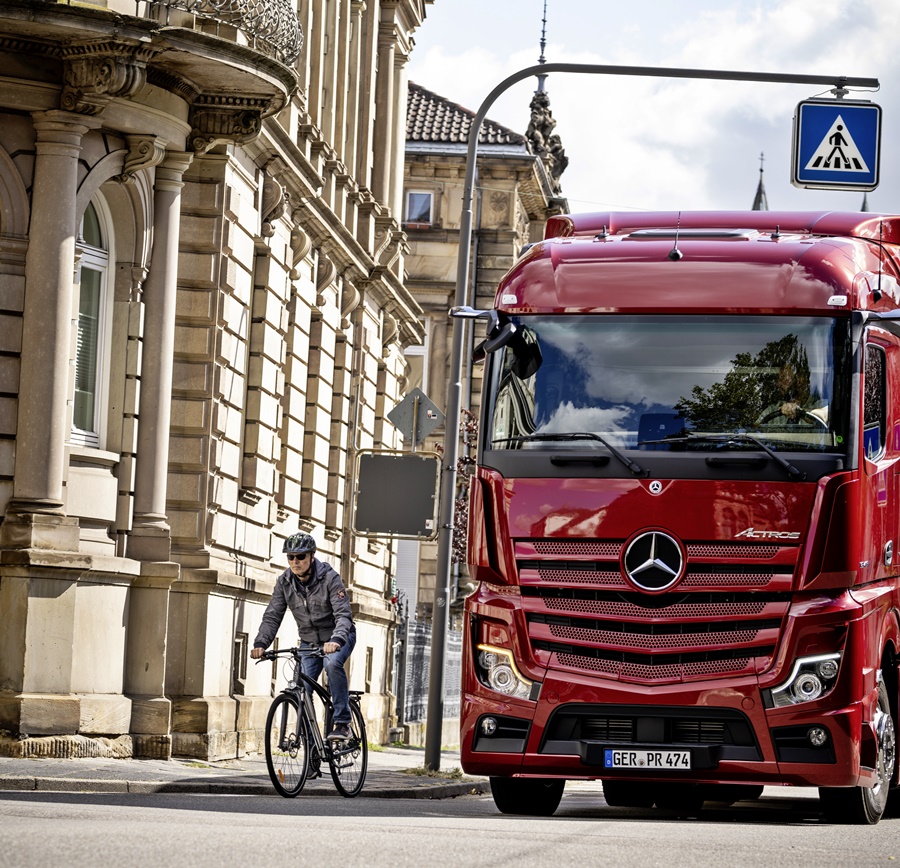
Since the middle of this year, an increasing number of large Mercedes-Benz trucks in Europe have been seen on the roads without the typical large exterior mirrors. Instead, small streamlined camera arms are mounted on the roof frame. They are a new standard feature called MirrorCam which Mercedes-Benz Trucks has fitted to the new Actros.

At this time, Mercedes-Benz is the only manufacturer in the industry to commercialise the MirrorCam concept. The digital rear-view mirror not only looks futuristic but the system can also do much more than conventional main and wide-angle mirrors and its performance far exceeds the legal requirements.

“After a short familiarisation period, drivers experience the advantages of the MirrorCam in many different situations for themselves. Overtaking, manoeuvring, driving in poor visibility and darkness, cornering and bottleneck situations – the MirrorCam makes all this safer and less stressful,” said Patrick Hirth, a cab development mechanic at Mercedes-Benz Trucks who has already driven more than 200,000 kms with the new MirrorCam.

Mercedes-Benz MirrorCam

Two cameras, two screens and more
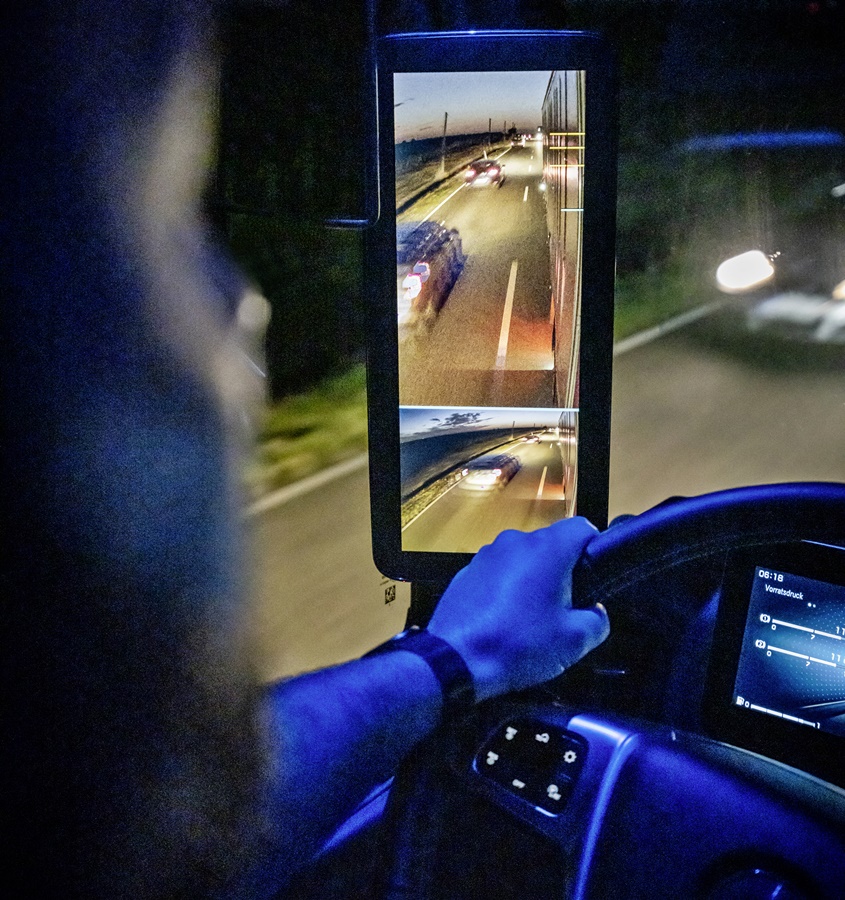
The MirrorCam consists of two cameras mounted on the left and right of the roof frame, two upright monitors mounted on the A-pillars in the driver’s cab and control elements in the door module and in the secondary display. There are also buttons on the passenger side and by the bed to switch on the MirrorCam when the engine is switched off.

The images transmitted by the cameras are transferred to the two 15.2-inch monitors with a resolution of 720 x 1920 pixels. Like the conventional mirror system, the monitor image is divided into a main and wide-angle field of vision. As the MirrorCam cameras are attached to the roof frame and the monitors are located inside the cab, the driver has a much better direct view through the side windows.

Mercedes-Benz MirrorCam

The view diagonally ahead, which was previously obstructed by the large exterior mirrors of a conventional mirror system in many situations, is now clear. This is particularly advantageous when approaching junctions and roundabouts, when manoeuvring and in tight bends.

The MirrorCam also assists the driver when reversing and the display then changes to a special manoeuvring view. In particular, reversing around corners is made easier as areas further away from the vehicle are also displayed in the usual size. This view is automatically activated when reverse gear is engaged and is still displayed when driving forwards up to a speed of 10 km/h or until it is deactivated with a button.

Better assessment of traffic behind
The distance lines in the display of the MirrorCam are also useful: they help the driver to better gauge the distance to objects behind the vehicle according to the driving situation. In addition, before moving off, the driver can use the door control panel to position one of the lines to symbolise the end of the vehicle in the display.

To this end, the driver places an object that is well visible, such as a fluorescent jacket, on the ground next to the end of the trailer and aligns the line accordingly. If the system detects a change in the towed unit such as a trailer or semi-trailer, the driver is alerted by a flashing line that the length of the truck may have changed. However, the system only needs to be realigned if this is actually the case. Later on, when overtaking, MirrorCam displays red, orange and yellow markings to show the driver if they can safely move back to the right lane or if a few metres are still needed for the necessary safe distance.

Mercedes-Benz MirrorCam

Swivelling camera image for safer cornering
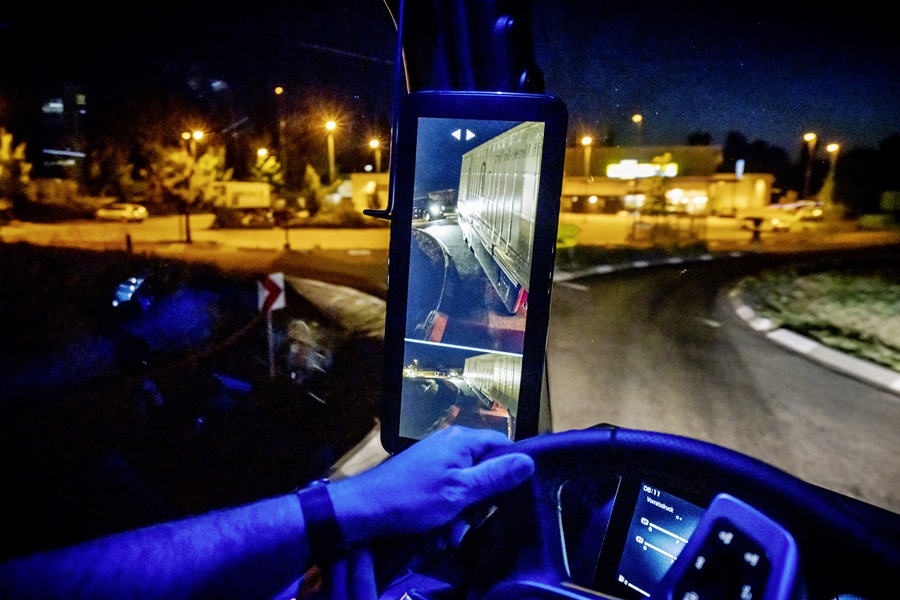
A special highlight of the MirrorCam is demonstrated when cornering with a semitrailer truck. The image on the display on the inside of the corner also swivels, so the driver always has a perfect view of the end of the trailer when cornering. In contrast, with a conventional mirror system, the mirror on the inside of the corner often only shows the side wall of the trailer due to the articulation angle of the semitrailer/tractor combination. Here the driver has a much higher risk of cutting the corner and colliding with an obstacle than when using the MirrorCam – a situation which was captured on video recently when it happened on Malaysian roads.

Works well in rain and darkness
The high mounting position of the camera arms not only ensures excellent visibility, it also gets much less dirty in this position than the lower glass mirror. The water-repellent coating of the camera lenses also means less dirt. Furthermore, the view of the screens is free of reflections and dirt on the side windows of the cab.

Mercedes-Benz MirrorCam

At dawn, dusk and at night, the cameras with their powerful light have advantages over a conventional rearview mirror as the system continuously adjusts to the changing light conditions. The same applies to areas with artificial lighting such as a tunnel.

Perfect interaction with Sideguard Assist
MirrorCam and Sideguard Assist work hand-in-hand in the new Actros and the new Arocs. Sideguard Assist is a warning system that helps the driver prevent dangerous accidents during turns (right turns for lefthand drive vehicles). The system gives a visual and an acoustic warning in good time if there is a risk of collision with a stationary or moving object in the warning area on the side of the truck. The driver can then usually brake in time if they have overlooked something on the passenger’s side when turning.

Mercedes-Benz MirrorCam

This is particularly important in busy city traffic with lots of cyclists, pedestrians and parked cars. What’s more, Sideguard Assist also functions as a Lane Change Assist for the right side and warns the driver with a yellow or red triangle in the MirrorCam monitor if another road-user is next to the truck in the adjacent lane.

Minimal damage likely
It should also be mentioned that the camera arms of the MirrorCam can be folded in the direction of travel and against the direction of travel. This minimises damage in the event of a collision. Due to the smaller size and the high mounting of the MirrorCam system alone, there is much less risk of it catching on something.

PISTON.MY

Some years back, when Mercedes-Benz Malaysia (MBM) made the decision to invest in local assembly of SUVs, it was certainly a good move. The SUV segment was booming and even customers in the premium luxury segment were gravitating towards SUVs. The model chosen was the GLC and being assembled locally (at the plant in Pekan, Pahang), it could have an attractive pricetag.

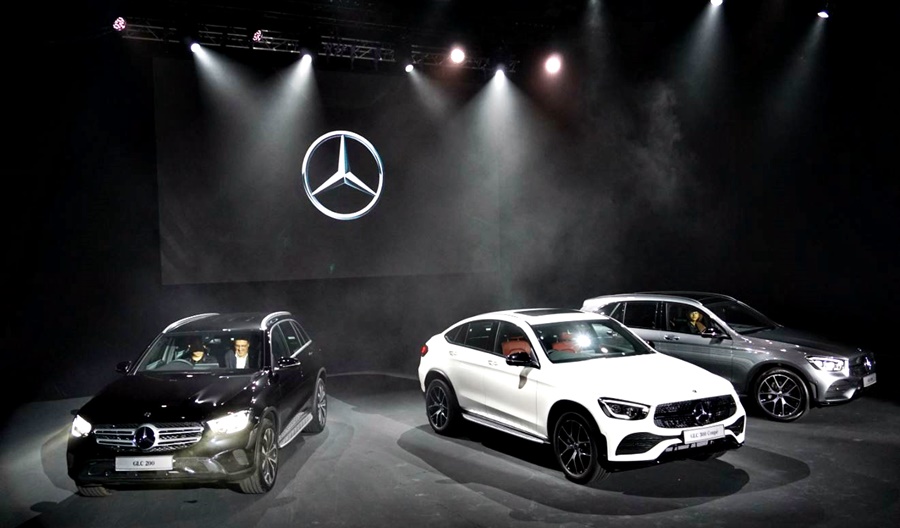
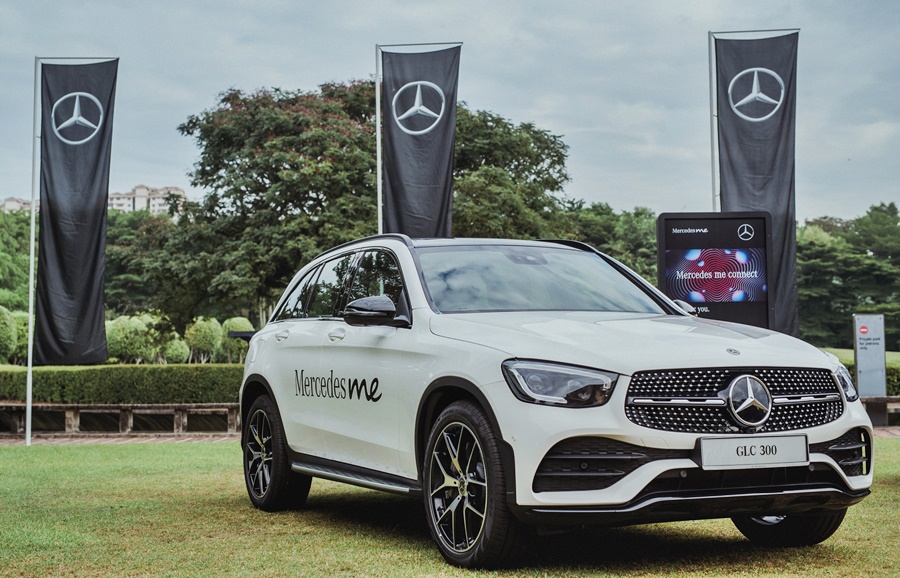
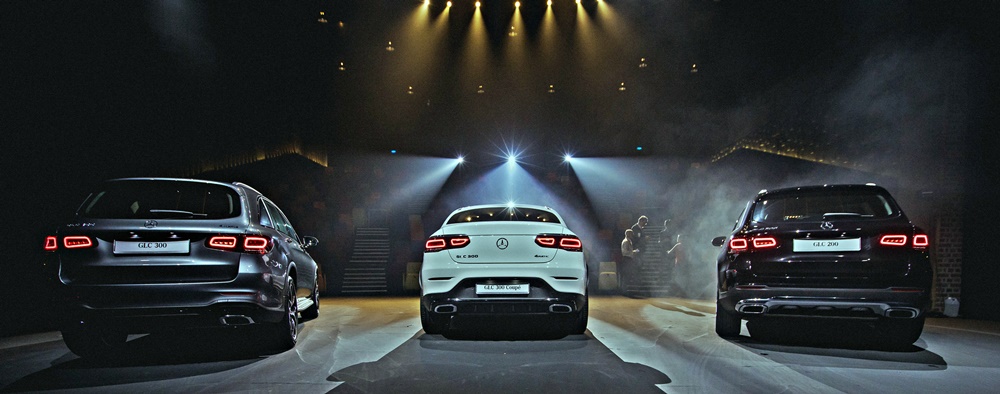
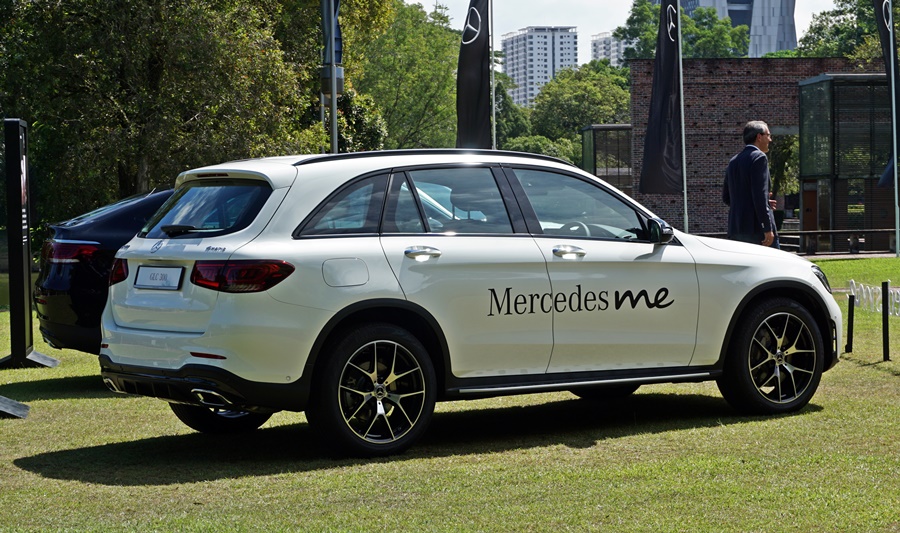
This year, over the period from January to October, almost 1,900 units of the GLC have been assembled and in recent months, the units assembled have been the updated versions which were launched today. The line-up consists of the GLC 200, GLC 300 4MATIC as well as the GLC 300 4MATIC Coupe.

“With the new generation Mercedes-Benz SUV line-up, we are redefining the standards of luxury SUV segment in Malaysia by combining a different level of mobility and innovation. As part of our product offensive strategy, the line-up offers our customers comfort and luxury beyond what you would expect from an SUV, in addition to the spaciousness, practicality as well as the performance,” said Michael Jopp, Vice-President, Sales & Marketing Passenger Cars, Mercedes-Benz Malaysia.

Mercedes-Benz GLC 2020

GLC 200 & GLC 300 4MATIC (RM299,888 & RM350,000 est)
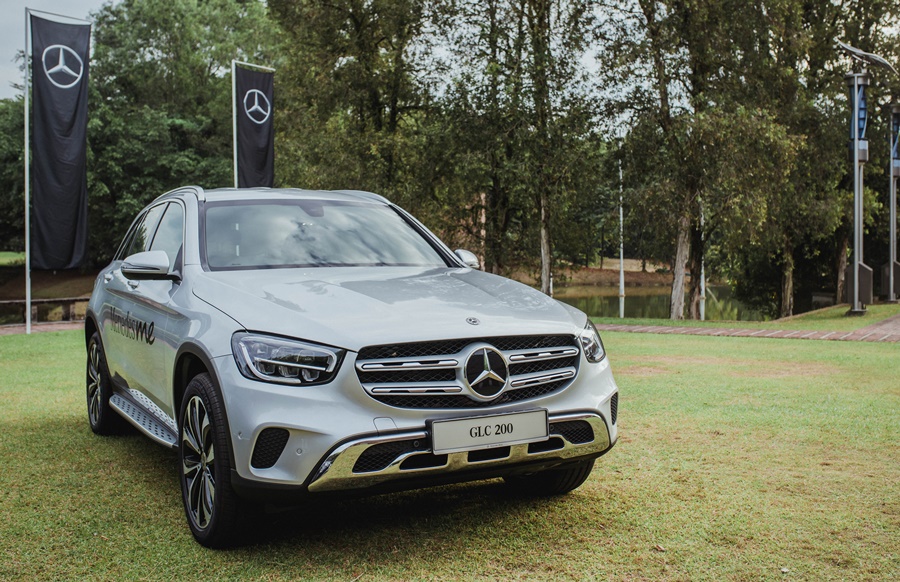
Powered by the 2-litre 4-cylinder turbocharged M264 petrol engine, the GLC 200 and GLC 300 4MATIC have outputs of 197 bhp/320 Nm of torque and 258 bhp/370 Nm, respectively. Both SUVs have the 9-stage 9G-TRONIC automatic transmission as standard, with the GLC 300 having 4MATIC which delivers power to all four wheels.

Mercedes-Benz GLC 2020

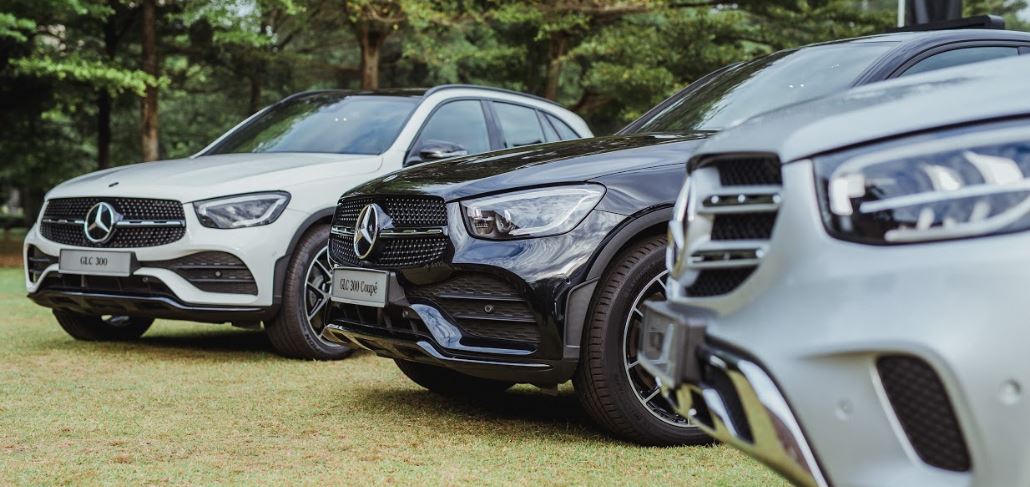
The frontal appearance of the GLC 200 continues with muscularly sculpted surfaces and distinctive details with a heavily contoured grille. The chrome elements now run from the front to the rear end while the bright LED headlamps have been restyled. These are included in the Optical Off-road package, along with the 20-inch 5-twin-spoke light-alloy wheels.

The GLC 300 4MATIC comes equipped with the Night Package based on the AMG Line exterior that features striking, black design elements to give a sporty and expressive character while enhancing the exclusivity and high-quality details of the exterior.

Mercedes-Benz GLC 2020

It comes with the 20-inch AMG 5-twin-spoke light-alloy wheels and the MULTIBEAM LED headlamps which respond to traffic situations with individually controllable LEDs. There is always optimum illumination of the road ahead without dazzling oncoming drivers.

A further highlight is the panoramic sliding sunroof which lets plenty of light into the cabin with its large glass area. Of course, in our strong tropical sunshine, having too much light coming in may not necessarily be good for comfort and the sunroof can be closed off at the touch of a button.

Mercedes-Benz GLC 2020

Mercedes-Benz GLC 2020

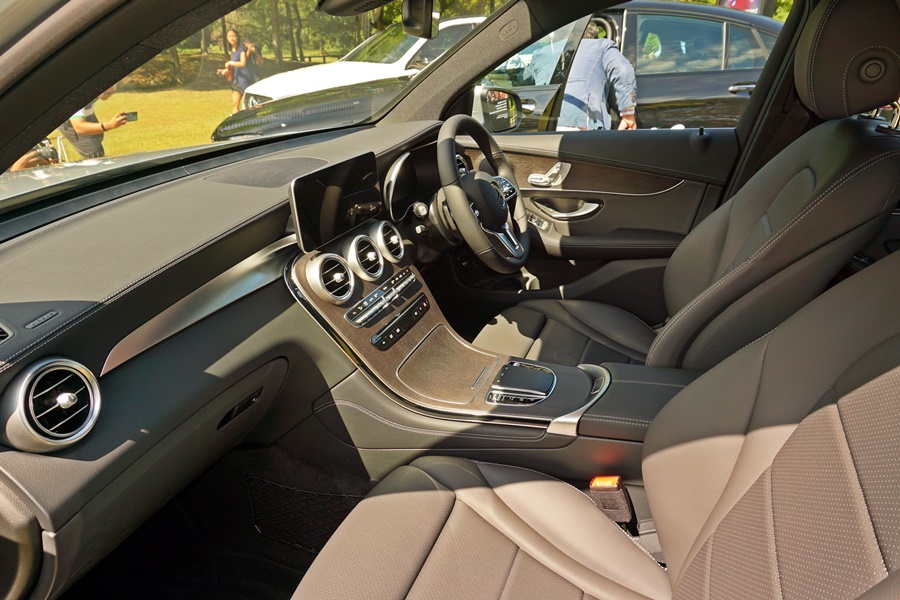
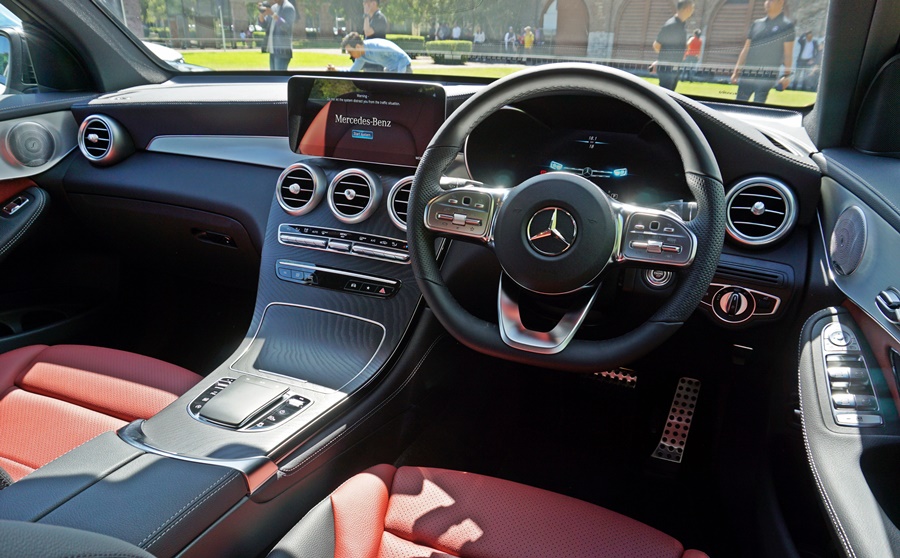
On the inside, the GLC 200 and GLC 300 4MATIC have the Exclusive Line and AMG Line packages, respectively. Both SUVs come with the illuminated door sills with the brand name illuminated in brilliant white and set in an elegantly machined stainless steel panel on the door sill. ARTICO Leather upholstery is standard in both the SUVs.

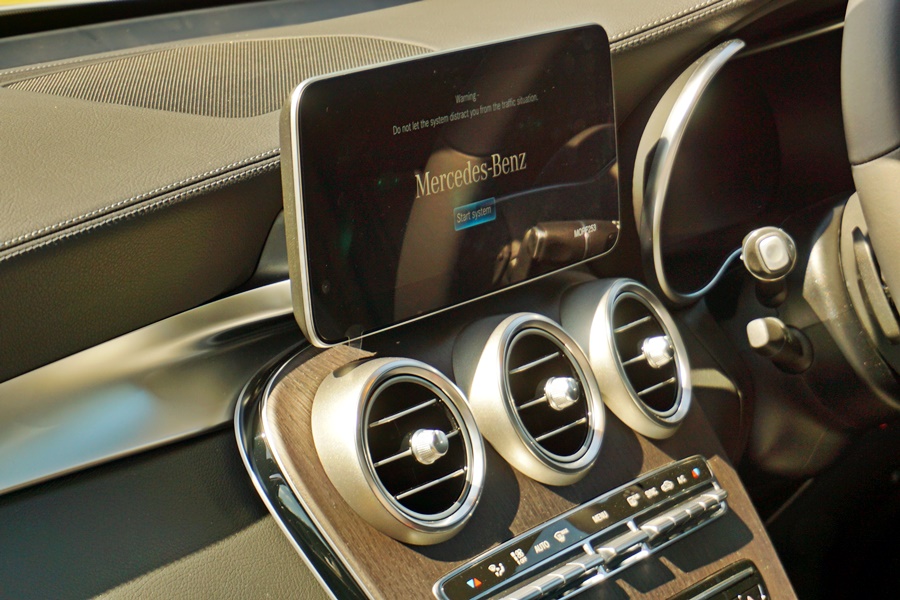
The MBUX (the interface known as the Mercedes-Benz User Experience) is complemented by a fully-digital 12.3-inch instrument cluster with Classic, Progressive and Sporty display styles. The touch-operated media display is 10.25-inches in size, with the resolution of 1920 x 720 pixels.

Mercedes-Benz GLC 2020

The GLC 200’s suspension has generous ground clearance with damping controlled individually for each wheel according to the driving situation, vehicle speed and the condition of the surface. The more advanced AGILITY CONTROL suspension with selective damping system in the GLC 300 4MATIC combines balanced ride comfort and high driving stability. Thanks to the passive damping system, the driver will benefit from superior ride comfort on every road surface. Ride characteristics, damping effects and stabilisation are continuously and automatically adapted to the condition of the road surface.

GLC 300 4MATIC Coupe (RM419,888)
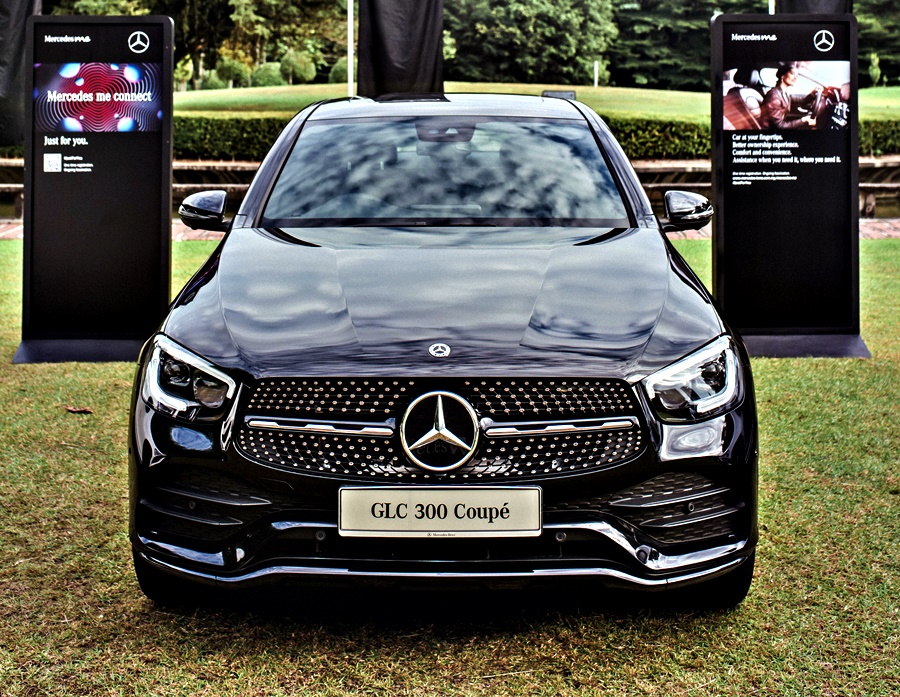
For those who want the advantages of a SUV but still can’t give up sportiness, Mercedes-Benz offers the GLC 300 4MATIC Coupe as the best of both worlds. This model is powered by the 2-litre 4-cylinder turbocharged M264 petrol engine (258 bhp/370 Nm) that enables a claimed 0 – 100 km/h time of 6.3 seconds.

Like the GLC 300, the Coupe is also equipped with a Night Package based on the AMG Line exterior. The AMG Line includes sport aprons and 20-inch AMG 5 twin-spoke light-alloy wheels. It also comes with the MULTIBEAM LED headlamps.

Mercedes-Benz GLC 2020

The exterior has an even sportier look with the imposing diamond radiator grille that catches the eyes, just like the striking air intakes in the bumper. At the back, the GLC 300 Coup has an intriguing tailpipe trim integrated into the bumper and the streamlined LED rear tail lamps with their contemporary lighting design.

Inside, there are intelligent comfort functions, a new operating system and digital displays. With MBUX and Mercedes me connect, the driver of the GLC 300 Coupe now has a new and intuitive form of control – using either the intuitive touch control buttons or simple voice output.

Mercedes-Benz GLC 2020

The fully-digital cockpit with two displays makes it possible to provide more information to the driver. There is a 10.25-inch media display with touch functionality and a 12.3-inch instrument cluster which includes navigation display. The inside is now more contemporary than ever, with leather upholstery and the light longitudinal-grain aluminium trim.

With the latest update, the GLC 300 Coupe has a Sports suspension package which delivers a firmer set-up for the damper characteristics. It also comes with the PRE-SAFE system – a system that works to prepare and protect the passengers in an accident, before it even happens. The system is able to sense when a collision is unavoidable, thanks for the sensors placed throughout the vehicle, which function with multiple safety systems. Once a collision is detected, the system prepares the passengers by tightening the front seatbelts, adjusting front head restraints and will even close the windows and sunroof.

Mercedes-Benz GLC 2020

Mercedes-Benz owners in Malaysia can now enjoy Mercedes me connect

PISTON.MY

Connectivity has been the buzzword in the auto industry in recent years, having started with just the ability to connect portable devices to play music through the car’s audio system. Then motorists could connect their smartphones as well and utilize apps, greatly expanding functionality, as well as connect to the outside world.

As would be expected, advances in connectivity and other new technologies have usually started at the upper end of the market with owners of premium brands getting to enjoy them first. With the power and capabilities of smartphones and the dependence many have on these devices,

Mercedes-Benz realized that it could include connectivity to smartphones in a way that added more convenience for the driver. This led to the development of Mercedes me connect which has been progressively introduced since 2016 and will be available in Malaysia in 2020, starting with the updated Mercedes-Benz GLC range launched today.

Mercedes me connect

Newest generation of connectivity
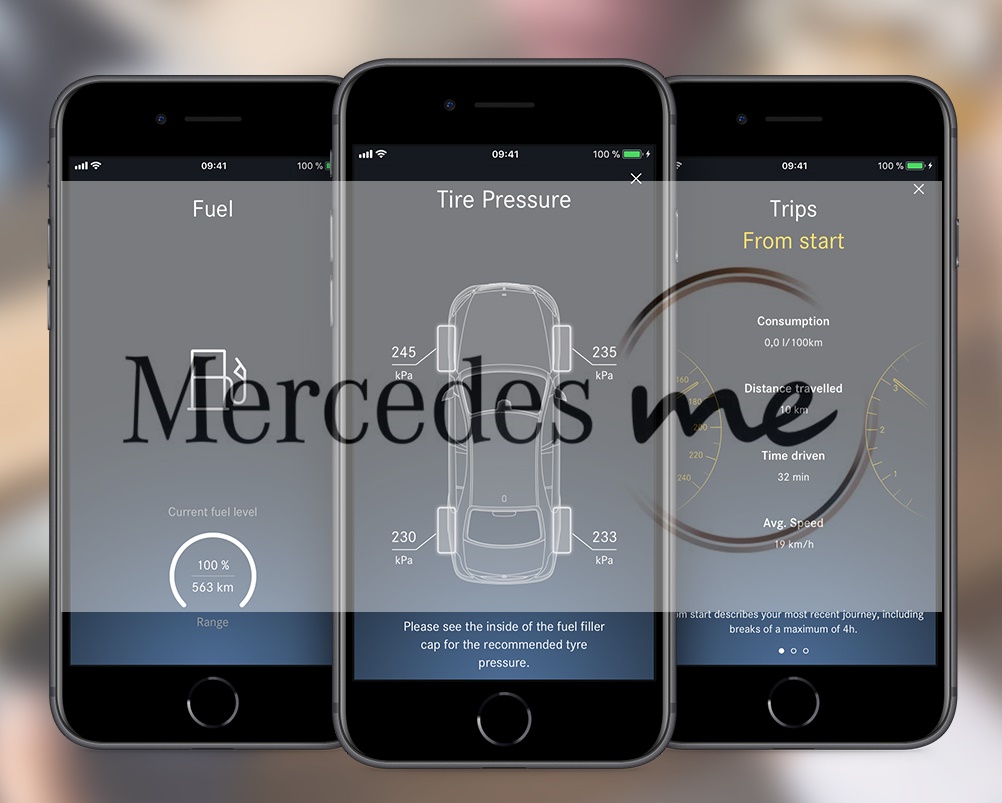
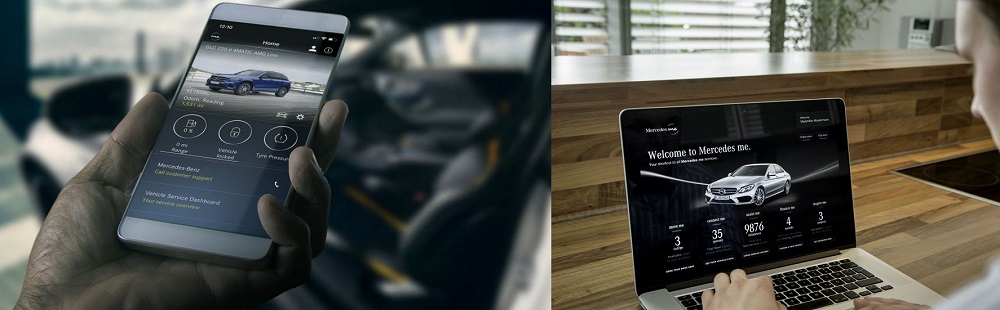
Mercedes me connect (mmc) is newest generation of connectivity and, using their smartphone or compatible mobile device, drivers are able to access a full suite of connected services to easily manage their vehicles.

“We leap ahead with our digital initiatives to revolutionize customer experiences with the showcase of the Mercedes me connect. This platform allows our customers to become part of an intelligently connect world with direct access to their vehicles at the tip of their fingers. Mercedes me connect enhances the ownership experience with comfort and convenience that gives our customers more reasons to love their car. With this, the future really is here,” said Michael Jopp, Vice President, Sales & Marketing, Mercedes-Benz Malaysia.

Mercedes me connect
The Mercedes me connect app can be used with iOS and Android smartphones and devices.

Use of mmc requires owners to first define and activate their vehicle on the Mercedes me portal where they will be conveniently guided through all the necessary steps. The mmc application can be downloaded from the Apple App Store as well as the Google Play Store, so it is available to virtually everyone who has a smartphone. The application is also designed to work with Android and Apple devices, including the Apple Watch.

What owners will like is the remote start/stop and Pre-Entry Climate Control functions. Over time, there should be more services added but owners may have to pay to have them. The current plan is to offer a free subscription for the first 3 years when a customer buys a new Mercedes-Benz vehicle.

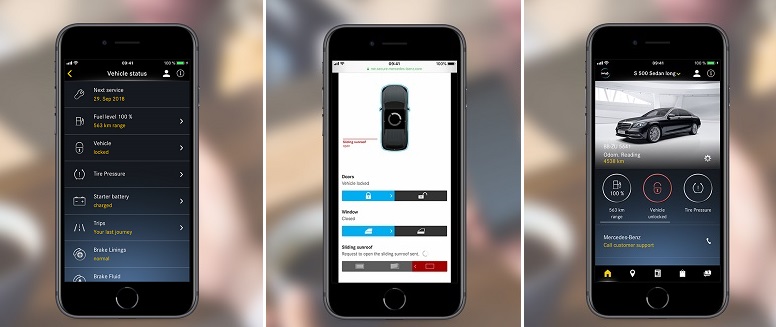
mmc displays

Even 17-year old models can have mmc
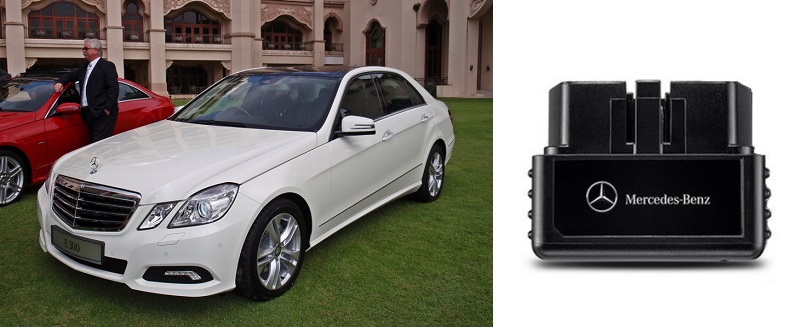
It’s often the case that new features are only available for new models and if you have an older model, you can’t have them. But the good news is that those who have a Mercedes-Benz vehicle built after 2002 can enjoy a degree of mmc functionality. Mercedes-Benz offers an adapter (inserted into the OBD2 diagnostics port) which serves as a retrofit telematics solution and makes the vehicle part of the intelligently networked world using a dedicated application.

Mercedes me Adapter
Older models like this 2009 E-Class have a retrofit telematics solution using the Mercedes me adapter (right).

The adapter, priced at RM250, will be available from authorized Mercedes-Benz dealers during the first quarter of 2020. To check if your Mercedes-Benz can use the mmc adapter, click here for a list of compatible models.

Features with the mmc adapter
Besides showing information (on the smartphone) about the current vehicle status – fuel level, mileage, parking location and time – there’s also a ‘Cockpit Mode with live vehicle data, eg engine load, oil temperature and average speed. A Car Health Monitor gives fast support in case of warning lights from the vehicle.

Additionally, it can help the driver locate parking garages with prices, opening times and occupancy. When going on a journey, a trip list and refueling list can be created with export and editing function. Should it be necessary to locate and book appointments for service at authorized Mercedes-Benz dealerships throughout Malaysia, it will be possible to do so via the app. Reminders will be shown for due dates such as main inspection.

Mercedes-Benz is the world’s most valuable luxury car brand of 2019

PISTON.MY


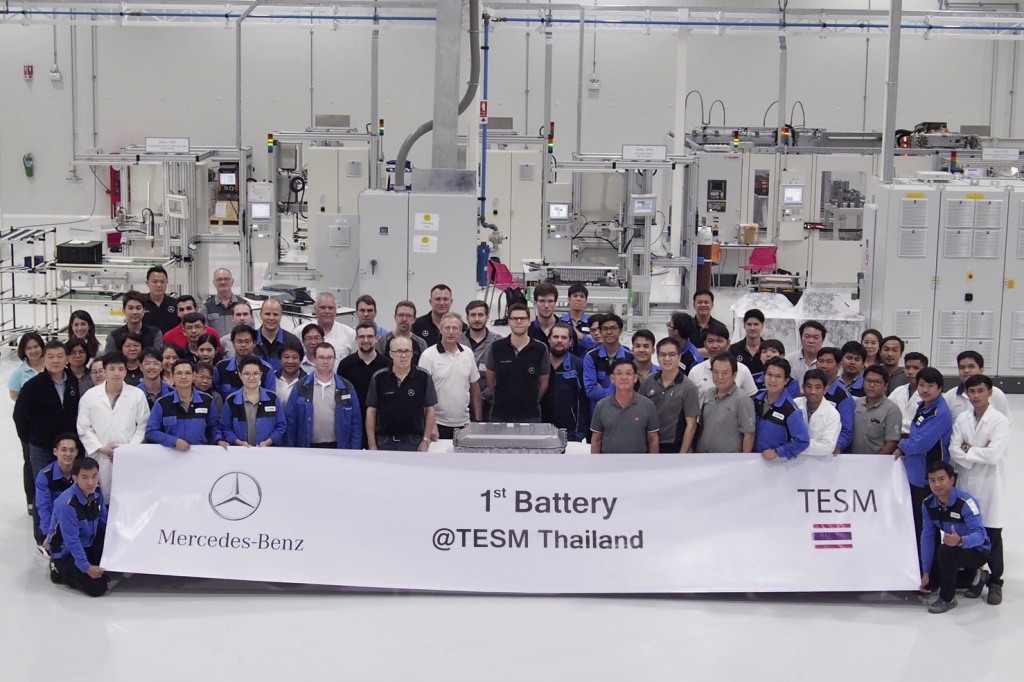
With increasing emphasis on electrification of vehicles in the industry, demand for battery packs has also been accelerating. It is crucial that higher volumes be achieved in order to get economies of scale and push production costs down. Different manufacturers have different strategies to address this demand and for Mercedes-Benz, the approach taken is to establish a global battery production network.

Daimler is investing more than one billion euros in this global battery production network which will consist of 9 factories at 7 locations on 3 continents. Four factories have already started operations, with the most recent one being in Thailand.

100 million euros invested
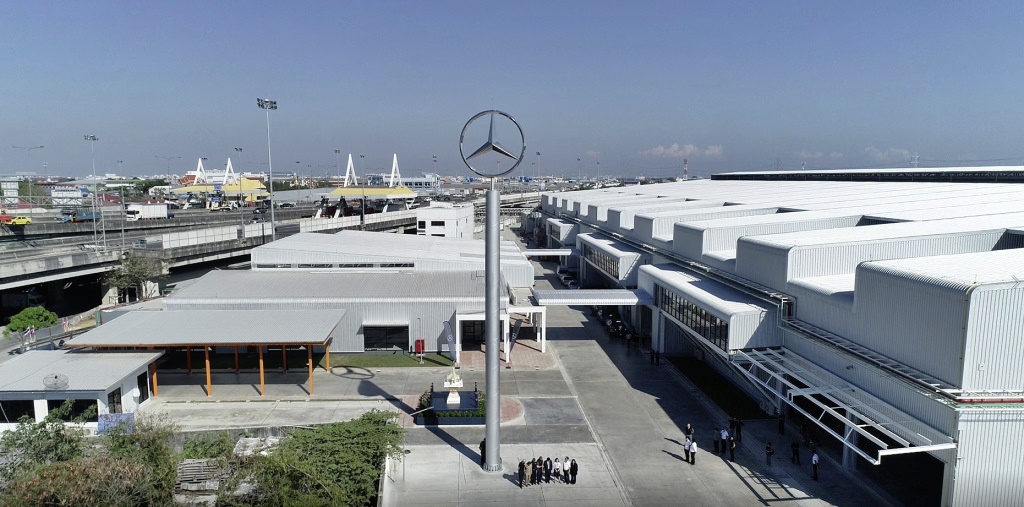
The Thai production facility in the Bangkok region is a joint effort with local partners Thonburi Automotive Assembly Plant (TAAP) and Thonburi Energy Storage Systems (TESM). Mercedes-Benz AG has invested a total of more than 100 million euros in the battery production and a plant expansion of the existing vehicle production plant. In doing so, the partners are responding to the high demand for electric mobility and, in particular, for plug-in hybrid vehicles in Thailand. At the same time, they are driving the shift towards sustainable mobility as well as a carbon neutral and resource-efficient production.

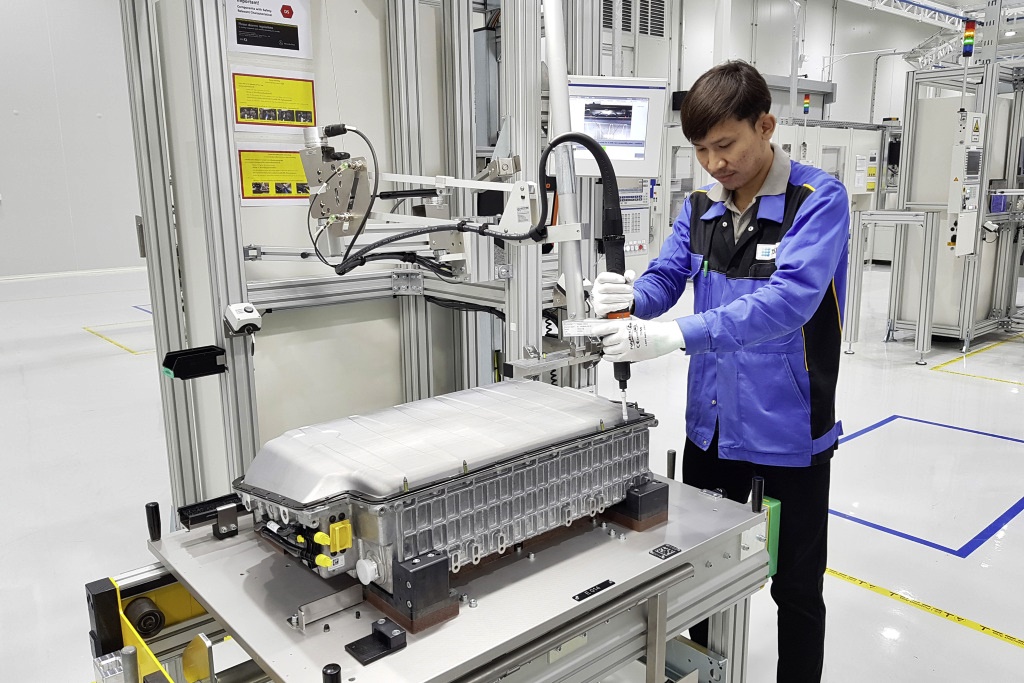
Mercedes-Benz battery pack production in Thailand

The production facilities for plug-in hybrid battery packs are highly standardised and flexible. As a result, they can be adapted to local market conditions in a short time. “We have been successfully producing Mercedes-Benz vehicles for the local market at our Thai plant for more than 40 years. With the start of production of our battery factory in Bangkok, we are taking another important step in the expansion of our global battery production network at Mercedes-Benz Cars with nine factories worldwide. The local production of batteries enables us to make the best possible use of the potential for e-mobility in Thailand. As in the case of vehicle manufacturing, we have optimized all processes in terms of efficiency, flexibility and sustainability in the battery factory. We show how sustainable products can be produced sustainably,” said Jorg Burzer, Member of the Board of Management of Mercedes-Benz AG, Production and Supply Chain Management.

The battery packs are used for plug-in hybrid variants for the current Mercedes-Benz C-Class, E-Class, S-Class as well as for the Mercedes-Benz GLC and GLC Coupe. The high variety of product variants of the local market require very flexible and efficient production and facility concepts. Central assembly stations were set up in the same way as in the battery factory in Germany and were further developed for site-specific requirements. In this way, all battery types can be manufactured in the new line for all current and future plug-in hybrids.

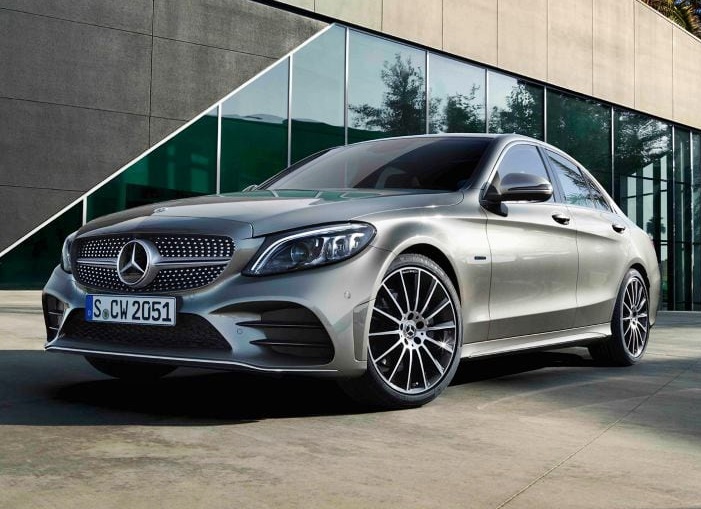
Mercedes-Benz C300e
Mercedes-Benz C300e – one of the models which will use Thai-made battery packs

Decision to locate in Thailand
The decision for a local battery production in Thailand supports Mercedes-Benz’s overall sustainability goals under the heading ‘Ambition2039’ as well. The aim is a carbon neutral new car fleet until 2039. By 2030, at least every second vehicle sold should have an electric drive – this includes full-electric vehicles and Plug-In hybrids.

Mercedes-Benz battery pack production in Thailand

On the way to sustainable mobility, apart from products production plays a central role: All European Mercedes-Benz plants are to produce completely carbon neutral from 2022. The battery factory in Bangkok will meet this requirement by using large solar systems on the roofs of the production buildings. Excess solar power, for example, is temporarily stored in so-called 2nd-life battery storage systems from recycled electric vehicle batteries. The plant works closely with the Mercedes-Benz Energy GmbH. The stationary storage systems, which can compensate for local energy fluctuations and contribute significantly to grid stabilization, enable economical and resource-saving reuse for disused batteries of electric and hybrid vehicles. This is an important contribution to the economic efficiency and environmental balance of electric vehicles.

Besides Mercedes-Benz, the BMW Group has also chosen Thailand to produce battery packs. Its facility is a joint investment with the DRAXLMAIER Group worth 500 million baht (about RM69 million).

Mercedes-Benz is the world’s most valuable luxury car brand of 2019

PISTON.MY

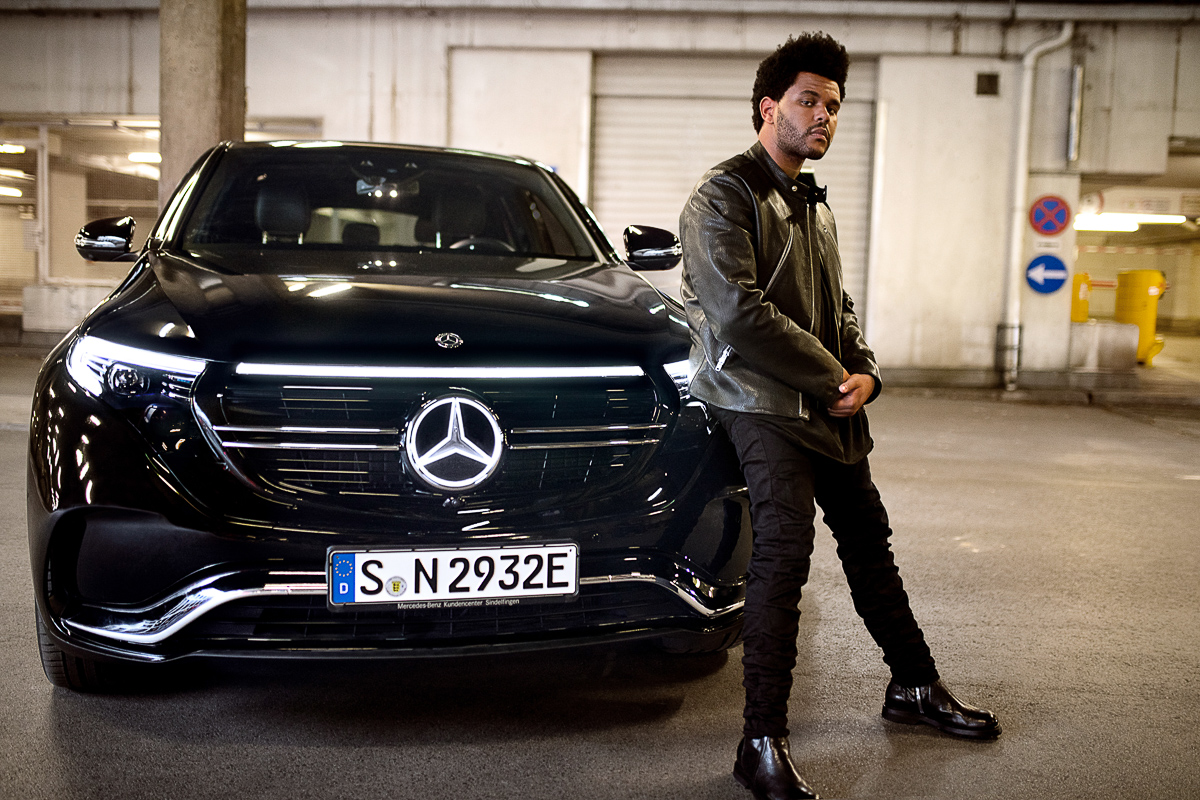
There’s a new marketing campaign for the all-electric Mercedes-Benz EQC and what a way to kick things off than by doing a collaboration with one of the hottest music acts today, The Weeknd. The teaser video was released a few days back gives us a taste of their full campaign which will start today on their website, www.mercedes-benz.com. (more…)

The Maybach brand is 110 years old and although acquired by Mercedes-Benz in 1960, it remained dormant till the late 1990s when the carmaker decided to use it for an ultra luxury brand in its portfolio. It was an attempt to offer something comparable at the Rolls-Royce level but somehow, the strategy didn’t work and after poor response, Mercedes-Benz removed Maybach as a standalone brand after 2012.

Then in 2014, the company took a new approach, still aiming at the Bentley and Rolls-Royce, and created the Mercedes-Maybach sub-brand. It enlarged the S-Class (W222) considerably and gave it all the luxury that its rivals could offer. Interestingly, besides Germany, Mercedes-Benz has also been assembling Mercedes-Maybach models in India since 2015. To date, more than 45,000 units have been sold worldwide.

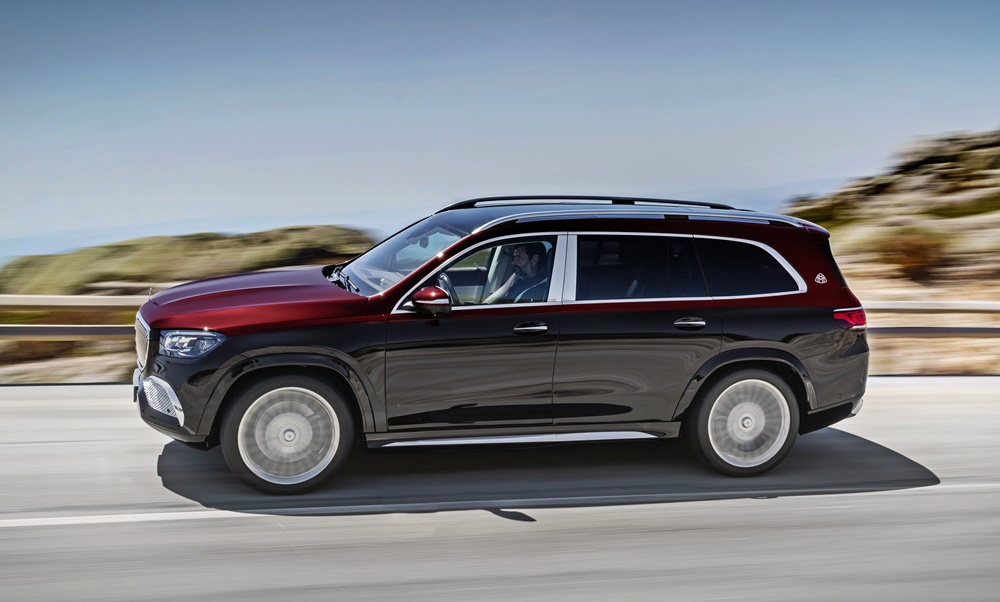
Mercedes-Maybach GLS 600 4MATIC

Why Mercedes-Maybach chose China for the launch
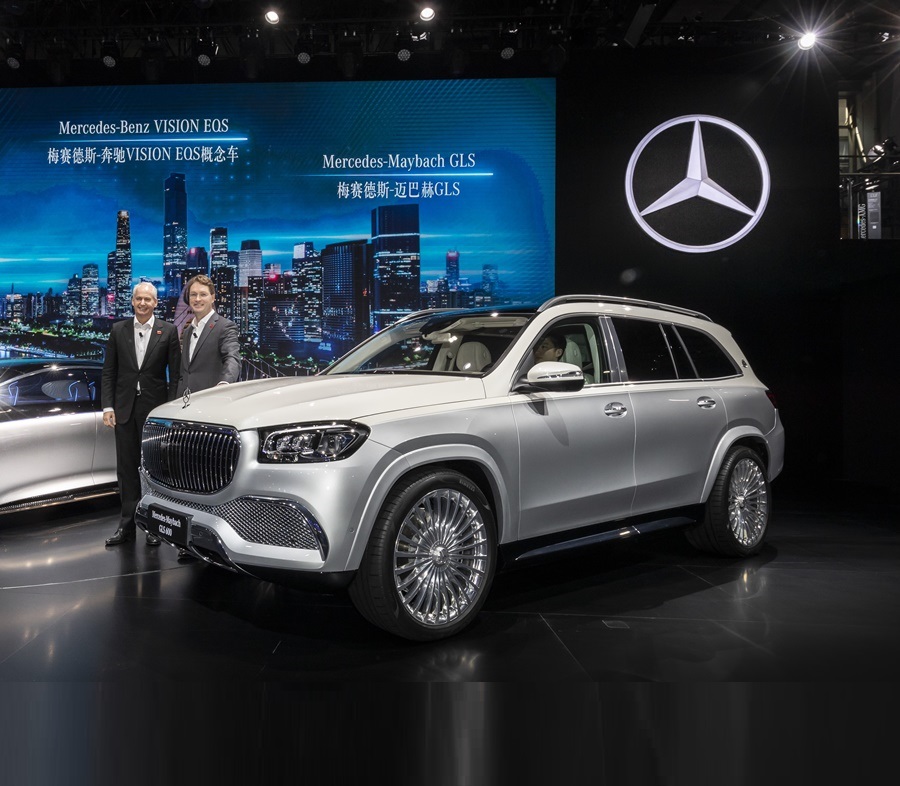
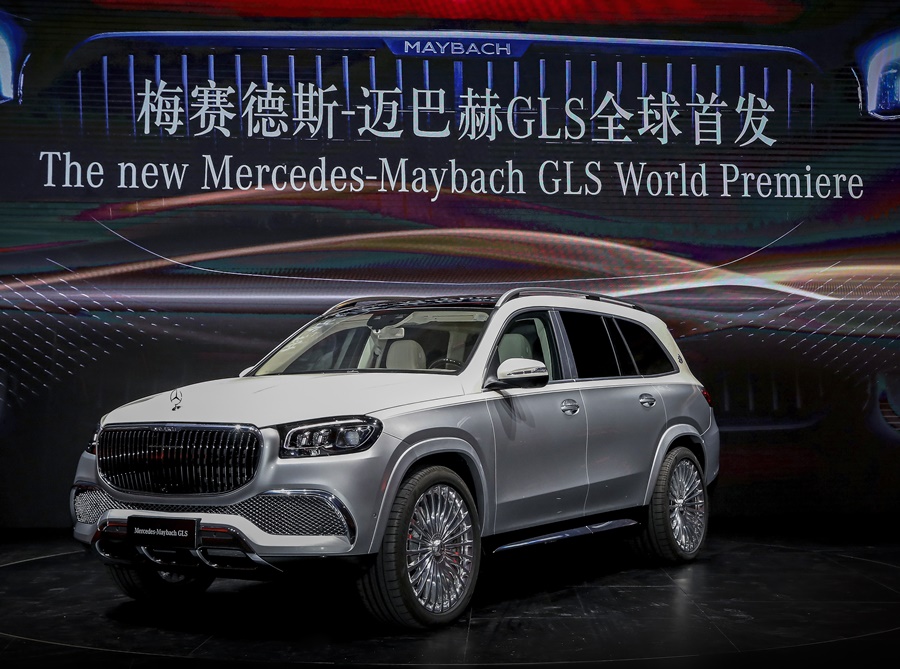
New SUV models have usually made their global debut at American motorshows since the SUV market is huge. However, Mercedes-Benz did not do so this time. Why? In 2018, more Mercedes-Maybach saloons were sold than in any previous year (+21.8%) and more than two-thirds of these cars are travelling on roads in China. This year, demand for the cars in the world’s largest car market has been averaging 600 units a month. So it’s not surprising that the company chose the Guangzhou International Automobile Exhibition on this week to introduce its first SUV model – the GLS 600 4MATIC.

With the exception of Land Rover and its Range Rover which was in a different era, Mercedes-Benz was the second carmaker to introduce a premium SUV with the M-Class in 1997 and has been selling lots of such vehicles since then. It has built up a lot of experience in developing SUVs which would have gone into the GLS 600 to offer ‘a new form of luxury in the SUV segment’. Pricing has not been revealed but the new model will appear in some markets during the second half of 2020.

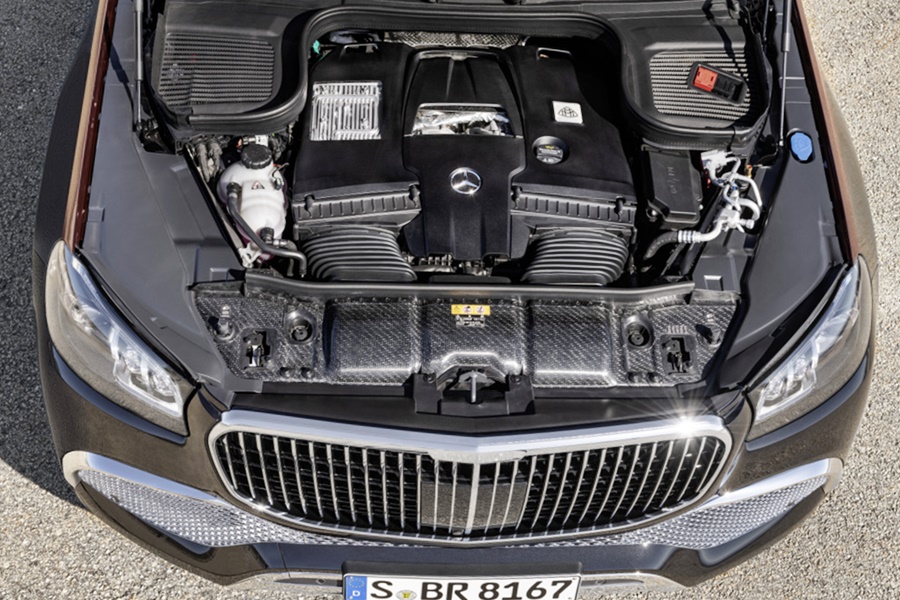
It extends the portfolio of the Mercedes-Maybach brand by combining the body design and technical basis of the GLS with the luxury of a top-class saloon. Power comes from a V8 engine with a displacement of 4 litres which can develop 558 bhp/730 Nm and has been specially tuned for the Mercedes-Maybach. It is combined with the EQ Boost 48V system that contributes up to 22 bhp and 260 Nm.

Mercedes-Maybach GLS 600 4MATIC

Dignity and elegance
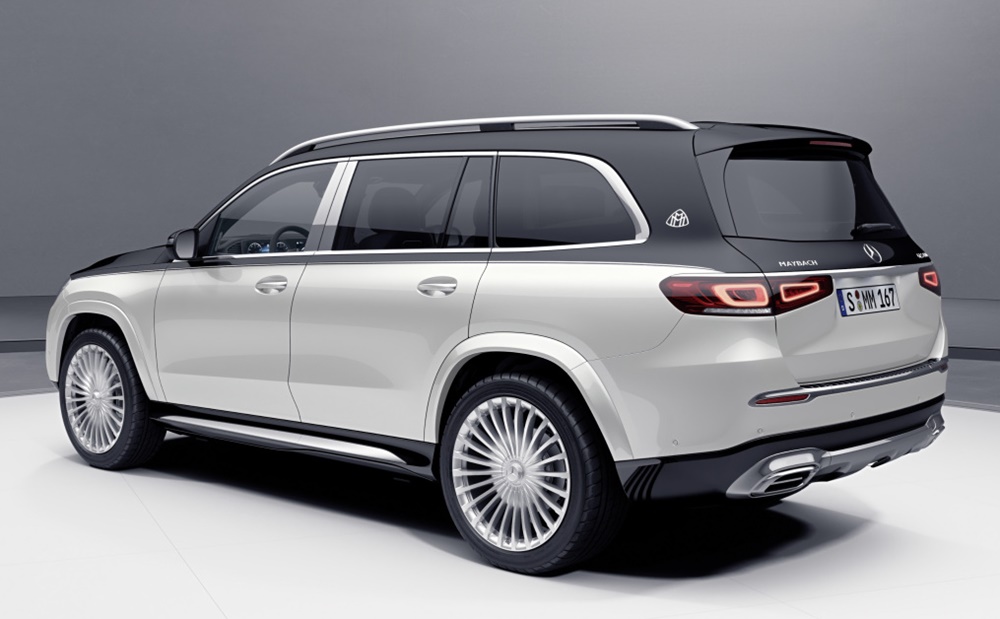
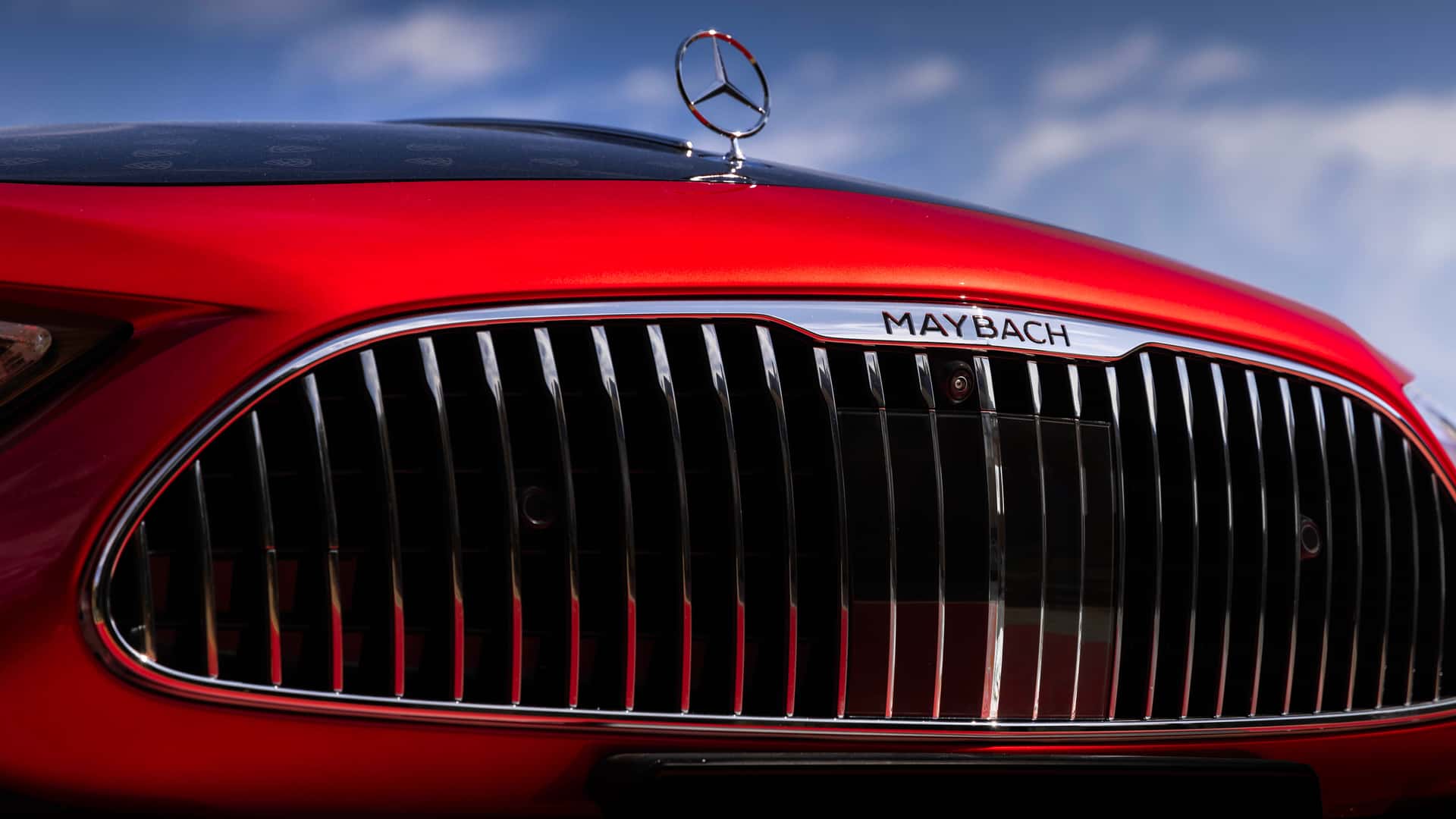
The Mercedes-Benz star sits on the bonnet in the classic way with fine, vertical chrome struts of the Maybach radiator grille creating a pinstripe effect. Effective chrome highlights around the side windows, and the chrome inserts in the side sill panels, lend dignity and elegance to the profile.

Mercedes-Maybach GLS 600 4MATIC

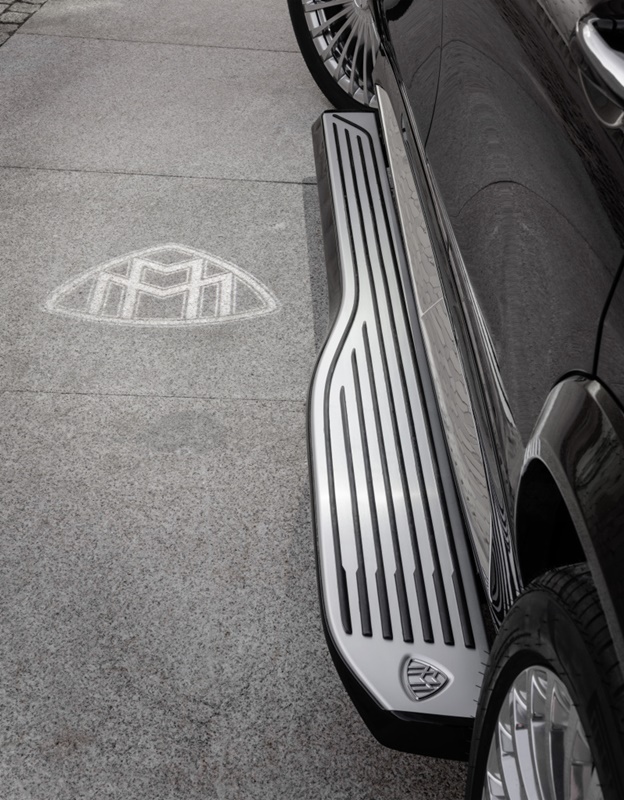
The 22-inch or 23-inch wheels were developed exclusively for this model, with the 23-inch version echoing the pinstripe theme. The tailpipe trim elements with a small cross rib emphasise the model’s identity as a Mercedes-Maybach. The same applies to the brand emblem, which is positioned at various points such as on the D-pillar. As a special, Maybach-specific feature, two-tone paintwork is available in 8 different, elegant colour combinations.

Retractable side steps
An interesting and classy feature which is not commonplace in SUVs are the electrically extending running boards (you would know them as side steps). They make accessing and leaving the higher seating position both convenient and safe. With surfaces of anodised aluminium laced with black rubber strips, illuminated in the dark and particularly wide in the area of the rear doors, they ensure a very special visual appeal. When in their retracted state, the running boards are concealed behind the side sill panels. If a rear door is opened, the running board on the side concerned automatically swings into position in around one second.

Mercedes-Maybach GLS 600 4MATIC

Getting in and out are made more convenient: when the doors are opened, the vehicle is lowered slightly. Not that this is unique as the Range Rover had it back in the mid-1990s and air suspension has made it easy to incorporate. The AIRMATIC suspension is standard and there is also an optional, fully-active suspension with E-ACTIVE BODY CONTROL that effectively keep the road bumps at bay. There is a dedicated drive program for the suspension and powertrain with settings that can prioritise rear seat passengers’ comfort.

The best available for occupants
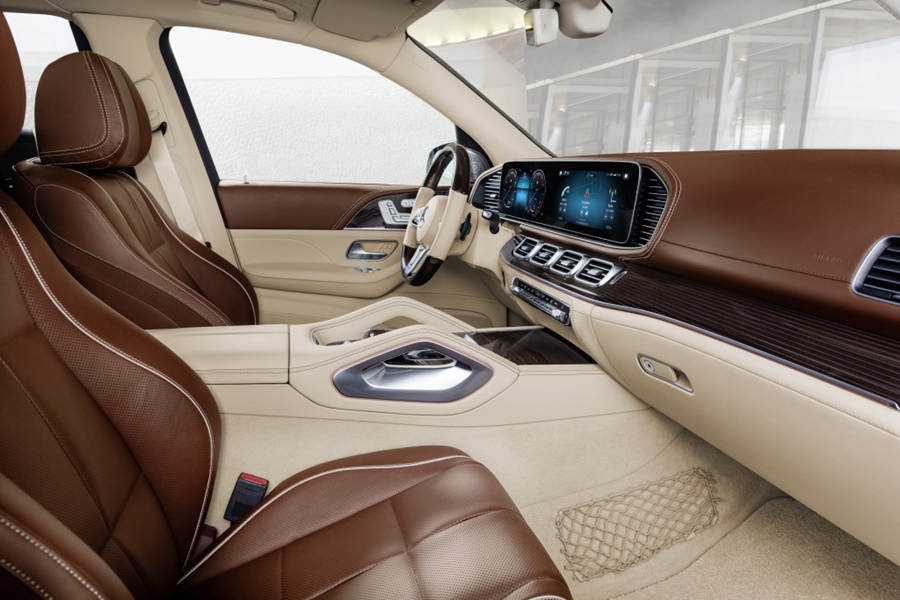
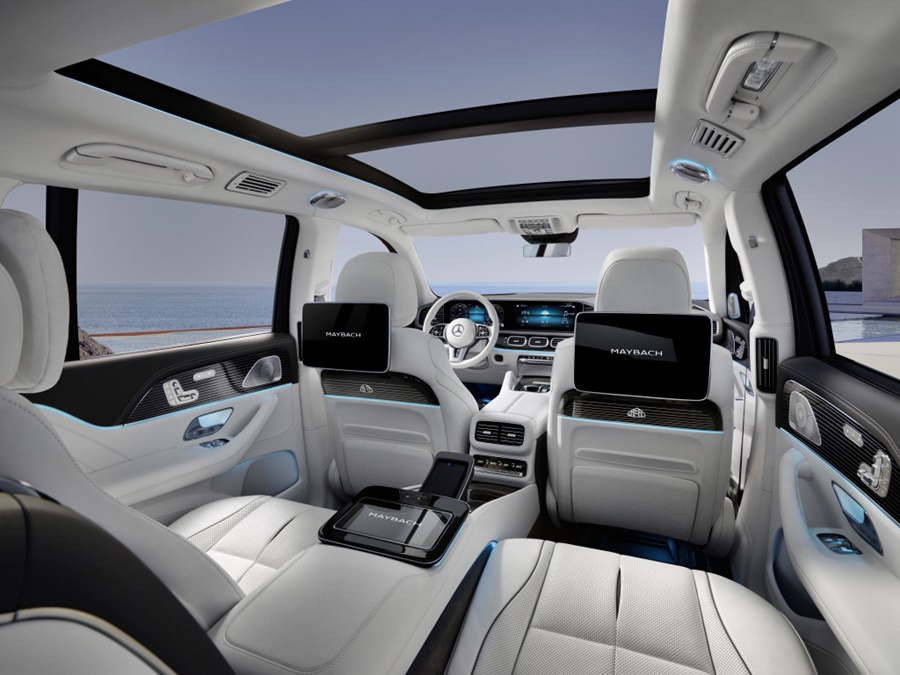
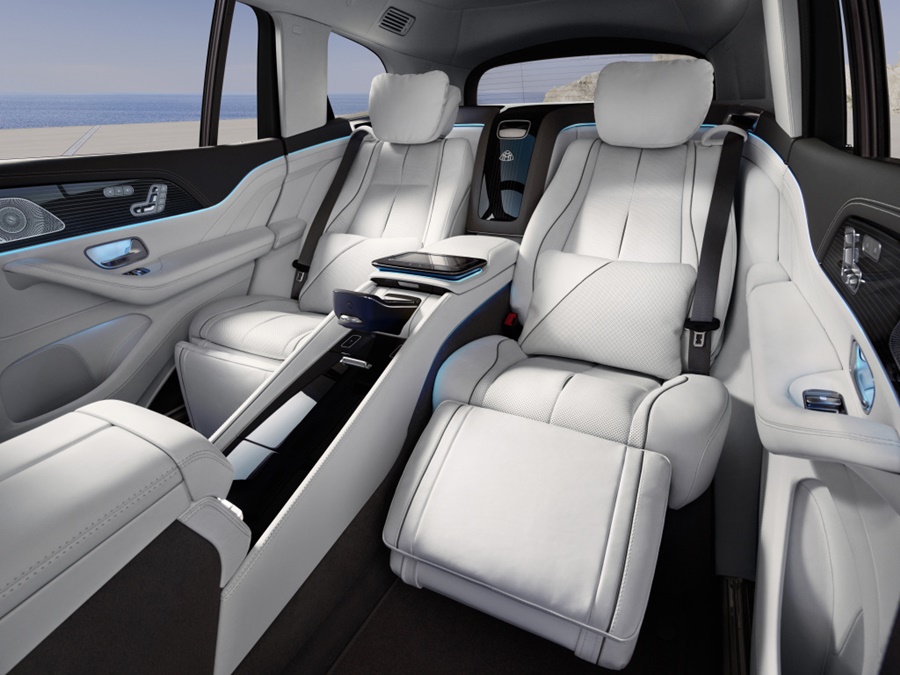
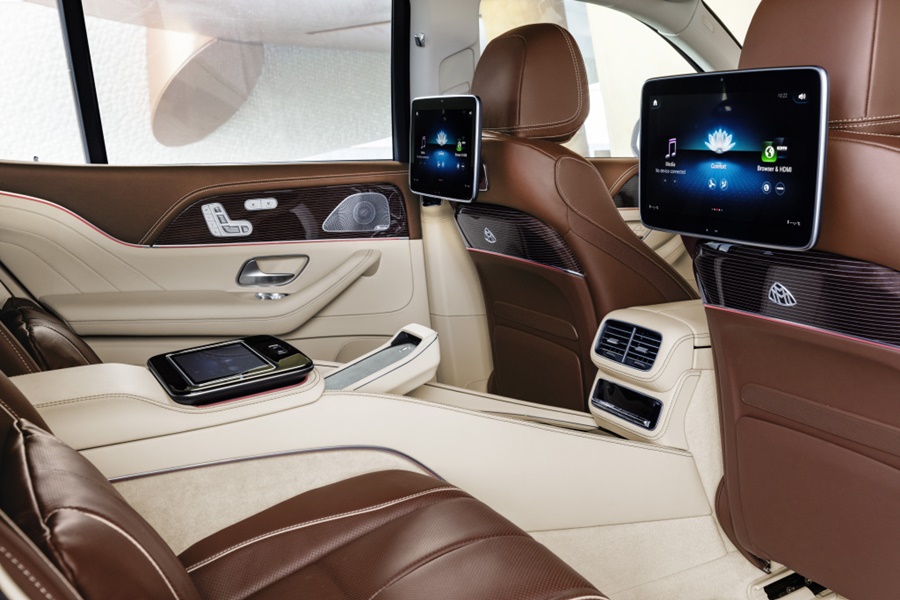
Technical information on the GLS 600 is limited at this time but there is a lot of emphasis on interior comfort and appointments. As would be expected, the highest-grade materials are used and the extremely effective noise insulation creates a stylish, cocoon-like feel-good atmosphere. With the standard MBUX Rear Tablet in the centre console or the armrest between the rear seats, the extensive comfort and entertainment functions can also be intuitively controlled from the rear seats.

Mercedes-Maybach GLS 600 4MATIC

Mercedes-Maybach GLS 600 4MATIC

Mercedes-Maybach GLS 600 4MATIC

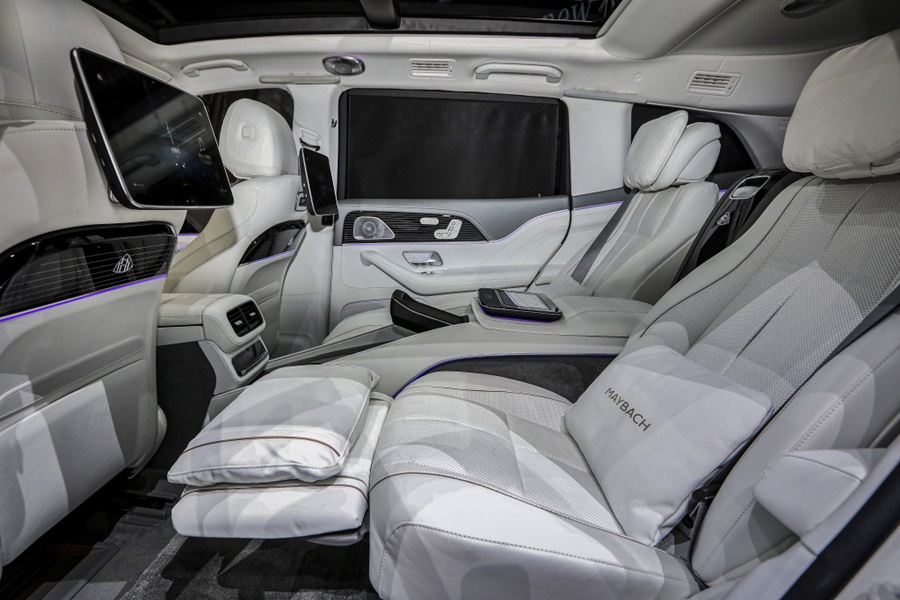
From their elevated seating position, thanks to electrically operated roller sun blinds on the two rear side windows, the passengers can decide for themselves how much of their surroundings they want to see. Overhead is an electrically opening panoramic sliding/tilting sunroof with an opaque roller blind as standard equipment.

Mercedes-Maybach GLS 600 4MATIC

Rear passengers’ comfort prioritised
The two outer rear seats can be electrically converted into reclining seats. Padded areas and the dashboard are finished in fine nappa leather as standard, with a range of further cushions and leather interior linings available on request., as are climatised massage seats. Obtainable on special request, the fixed centre console transforms the car into a spacious 4-seater whose rear is just as suitable for working as for relaxing. This console is available with extending, folding tables, even a refrigerator with space for champagne bottles. Suitable silver champagne flutes for this are available from the accessories range.

Mercedes-Maybach GLS 600 4MATIC

A dedicated fragrance was developed for the GLS for active fragrancing as part of the optional AIR BALANCE package: a white osmanthus blossom, floral and light, is rounded off by a gentle leather note and spicy tea. A separate air conditioner for the rear seats is standard and features additional outlets and heater boosters with which temperature control is even faster and draught-free.

Mercedes-Maybach GLS 600 4MATIC

PISTON.MY

Archive

Follow us on Facebook

Follow us on YouTube