It’s often the case that when a model is in great demand, there will be people trying to use scams to mislead people who are eager to get the new vehicle quickly. According to Perodua, two scams have been detected since the launch of its new Ativa SUV on March 3.
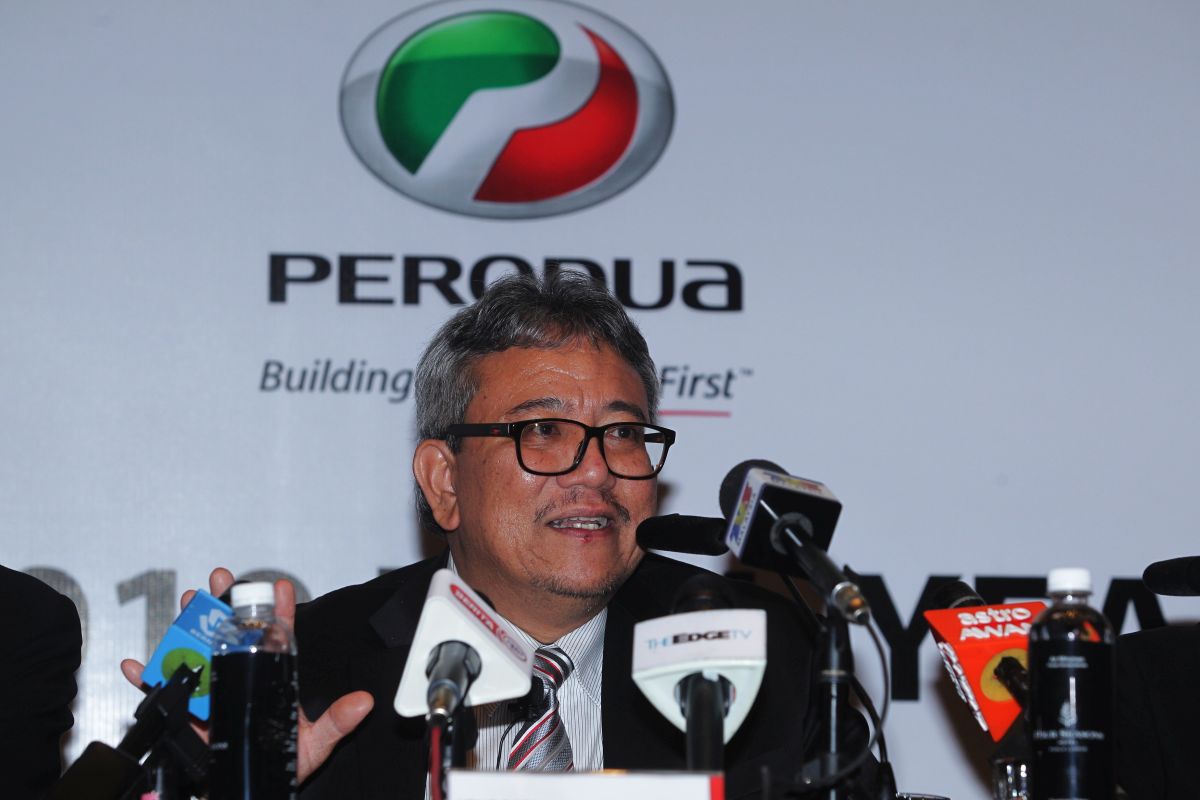
“We have discovered at least two fraudulent rebate offers online for the newly-launched Perodua Ativa,” said Perodua President and CEO, Dato’ Zainal Abidin Ahmad, confirming that the promotions did not originate from Perodua or any of its outlets or authorised dealers nationwide.
According to Dato’ Zainal, some scammers have posed as Perodua sales advisors before and lured potential victims into placing their new car purchase deposits into personal bank accounts. Obviously, when making any payments, you should never pay to an individual’s account and always make payment to a company account. If you are suspicious, it is worth calling up the company to confirm the bank account details.
Perodua urges both existing and potential customers to only deal with its authorised sales advisors to avoid being deceived by scams. The company offers this list of Do’s and Don’ts for customers:
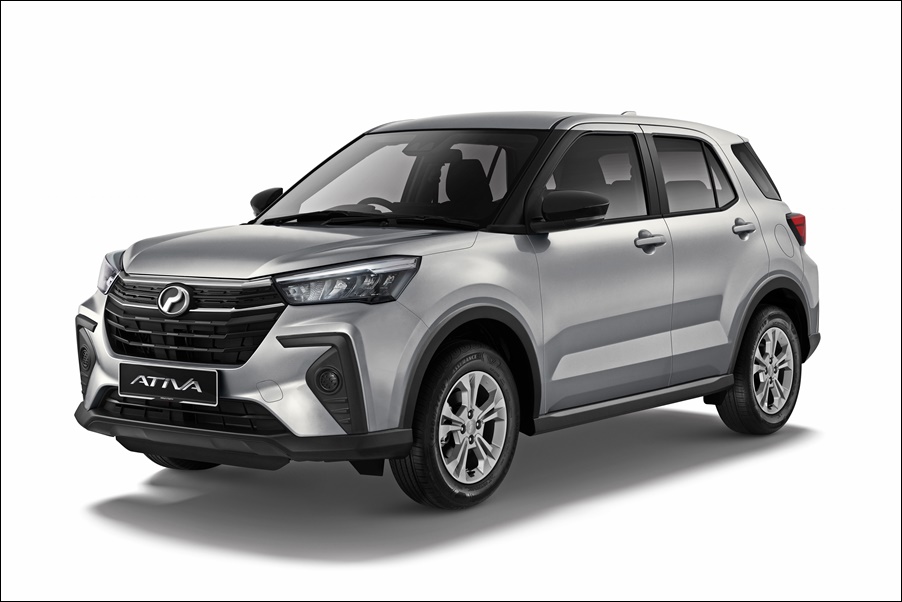
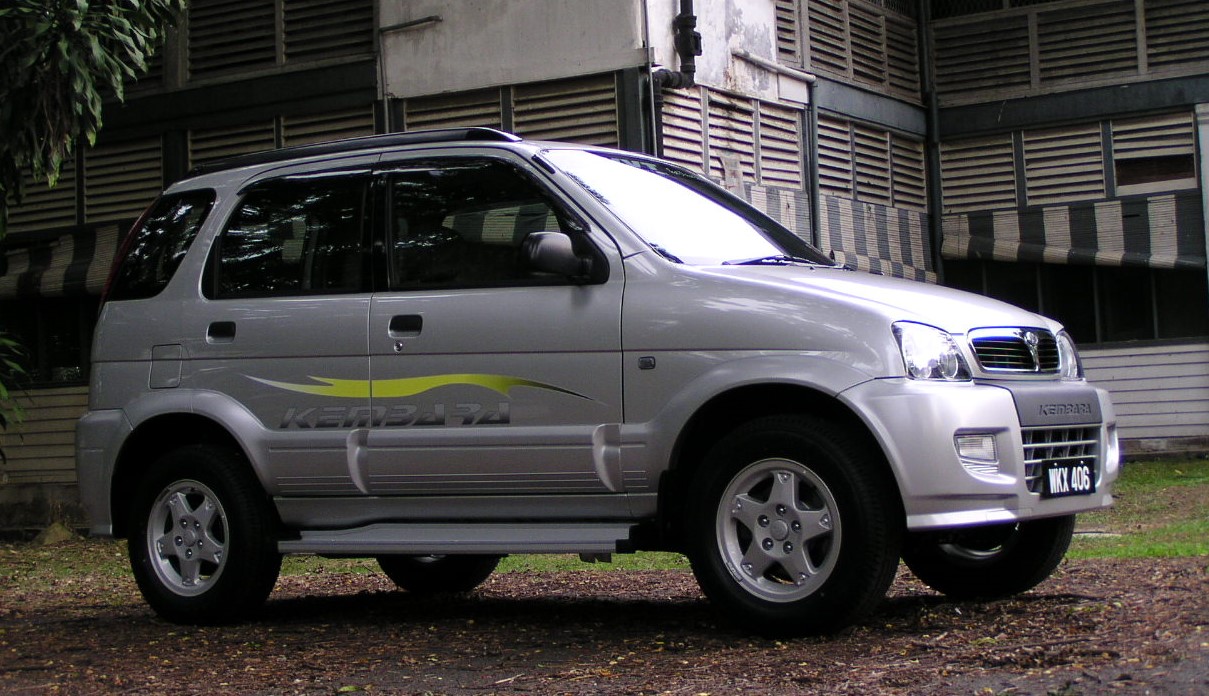
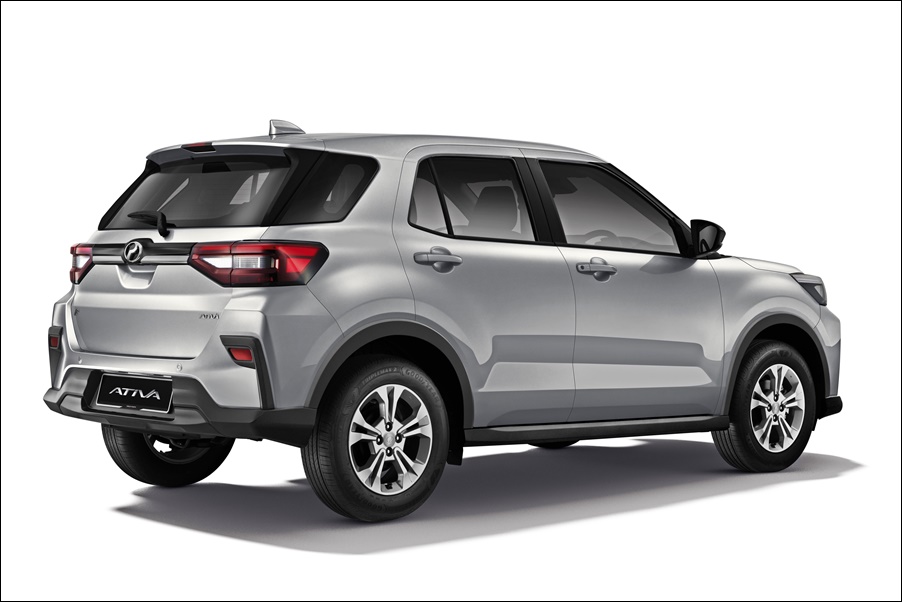
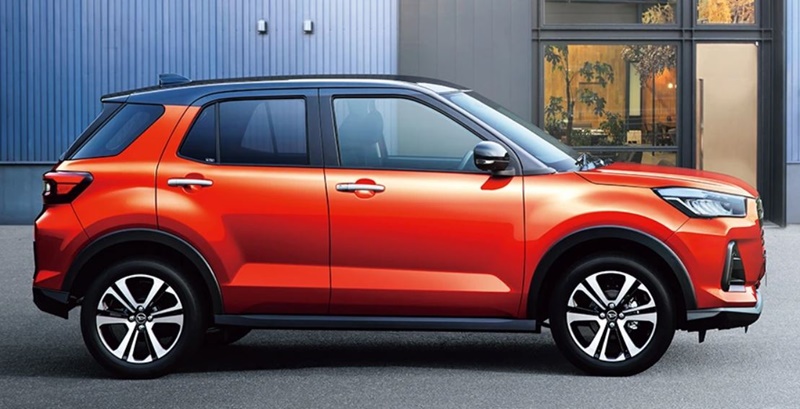
Perodua tonight launched the all-new Ativa compact SUV which can be regarded as the spiritual successor of the Kembara, its first SUV sold from the late 1990s till the mid-2000s. While the Ativa (taken from the Portuguese word for ‘active’) is adapted from a Daihatsu model, as the Kembara was, the involvement of Perodua in the development of this new model was far greater. In fact, a team of 54 Malaysian engineers went to Japan in 2018 to be part of the development team for the new model being developed by Daihatsu which would also be shared with Toyota.
The Kembara – Perodua’s first SUV which was sold between 1998 and 2006.
This is significant because it meant that the requirements of Malaysian customers would also be considered in the overall design, whereas for the Kembara before, the model was already completed and then Perodua only adapted it cosmetically. The Ativa is the result of the first truly smart partnership between Perodua and its technical and technology partner and shareholder, Daihatsu.
Another difference is that the Ativa has a higher level of localisation than the Kembara, which has helped bring costs down. In fact, at 95%, it has the highest local content rate for any Perodua model right at the time of launch.
Prices shown exclude insurance and 10% sales tax (until June 30, 2021).
“The Perodua Ativa’s competitive pricing was made possible by its 95% localisation rate. Even the engine and transmission are locally manufactured,” Perodua President & CEO, Dato’ Zainal Abidin Ahmad said, adding that it is also the first model under the Perodua Smart Build blueprint.
According to Dato’ Zainal, the Ativa brings Perodua’s collaboration with Daihatsu to a new level and allows Perodua and its suppliers to commonise components and processes for maximum cost efficiency. “This close collaboration allowed us to include the Malaysian automotive ecosystem in the development of this model, and the suppliers rose to the challenge and were able to reduce their costs,” he added.
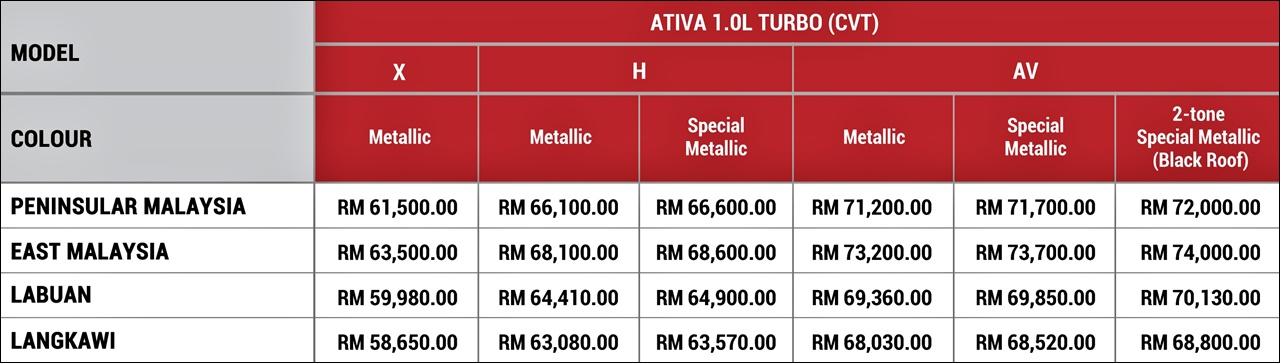
As a result, Perodua has been able to push the prices down a bit more and the actual retail prices are lower than the estimated range of RM62,500 to RM73,400 announced earlier. The three variants will be priced between RM61,500 to RM72,000 (excluding insurance premiums in Peninsular Malaysia, with full exemption of sales tax until June 30, 2021).
“We have so far received some 5,000 bookings for the Perodua Ativa since we began collecting orders on February 19. We thank the public very much for their support. Deliveries will begin tomorrow (March 4), and we aim to deliver an average of 3,000 units a month,” said Dato’ Zainal.
HIGHLIGHTS OF THE NEW PERODUA ATIVA
First turbocharged model
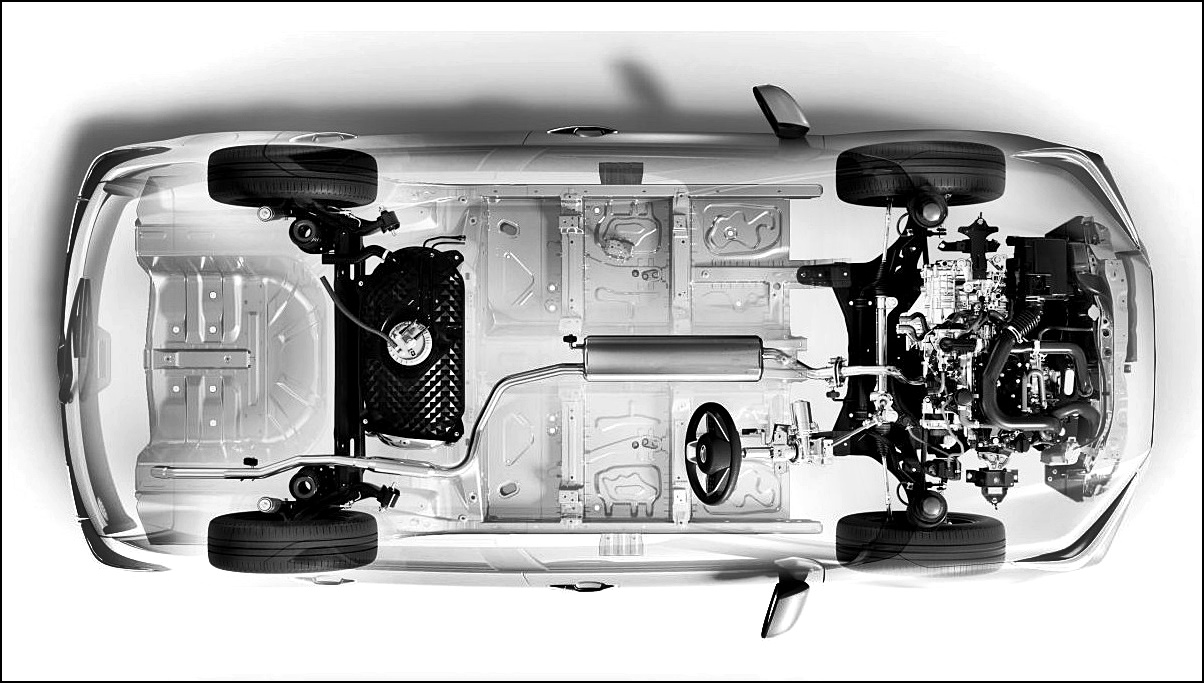
The Ativa’s powertrain has a number of firsts for the brand. One is the 1-litre 3-cylinder engine (1KR-VE) has turbocharging and direct fuel injection, delivering a maximum output of 98 ps/140 Nm, with strong torque coming in at the lower range. Considering that the kerb weight is 1,035 kgs, thanks to weight-saving measures, the performance should be zippy even with a full load.
The Ativa is also the first model to use a Continuously Variable Transmission (D-CVT) which has 7 ‘virtual speeds’ (manual transmission is not available). With the efficient engine and CVT, the claimed fuel consumption is 18.9 kms/litre, which qualifies the model as an Energy Efficient Vehicle (EEV) in Malaysia.
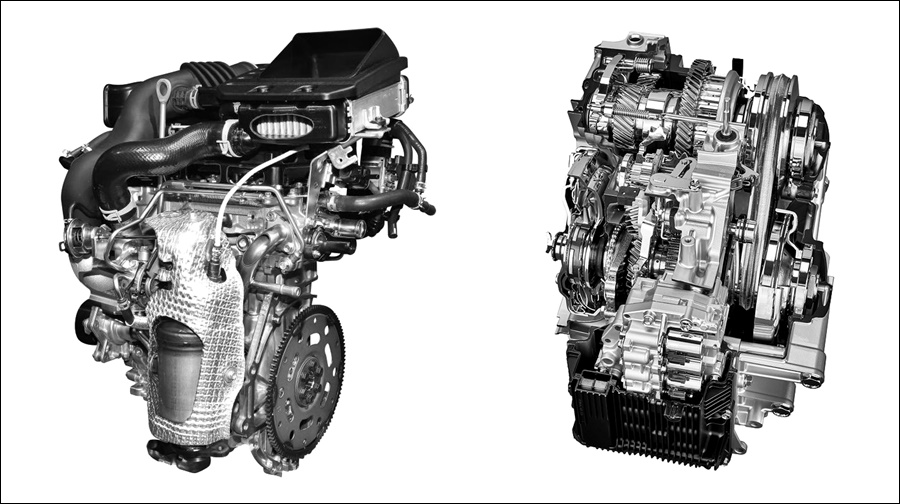
The Ativa’s 1-litre turbocharged engine and 7-speed D-CVT (right).
DNGA Platform
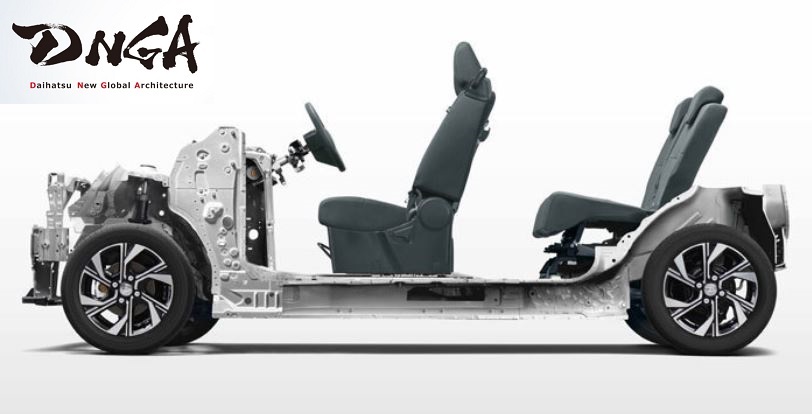
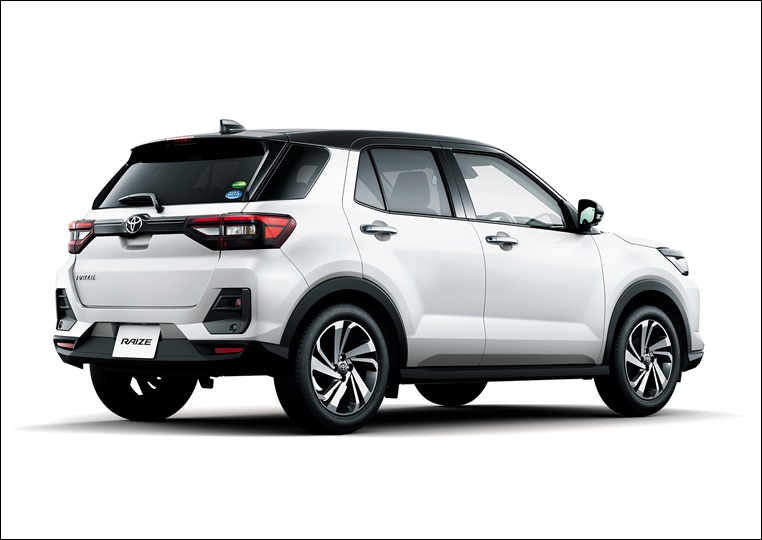
The Ativa shares the same platform used for the Daihatsu Rocky and Toyota Raize, the models from the same joint development program that Perodua participated in. This platform is referred to as DNGA or Daihatsu New Global Architecture (DNGA) that encompasses not just the platform but also many other structural aspects of the vehicle. It is a highly rigid platform for enhanced handling, stability and comfort. With DNGA, the structure is optimized and high tensile steel is used in many areas to save weight without losing strength.
Dimensions of the Ativa
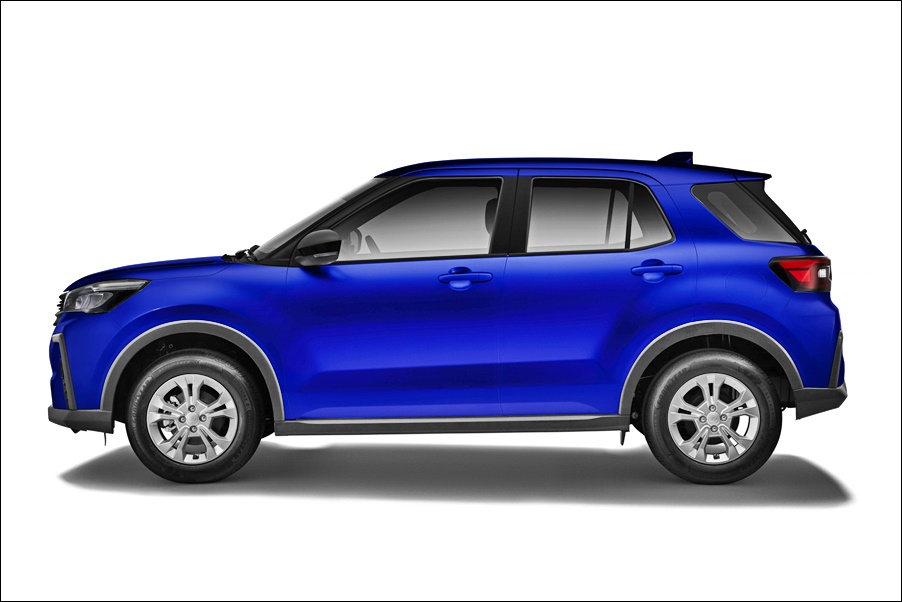
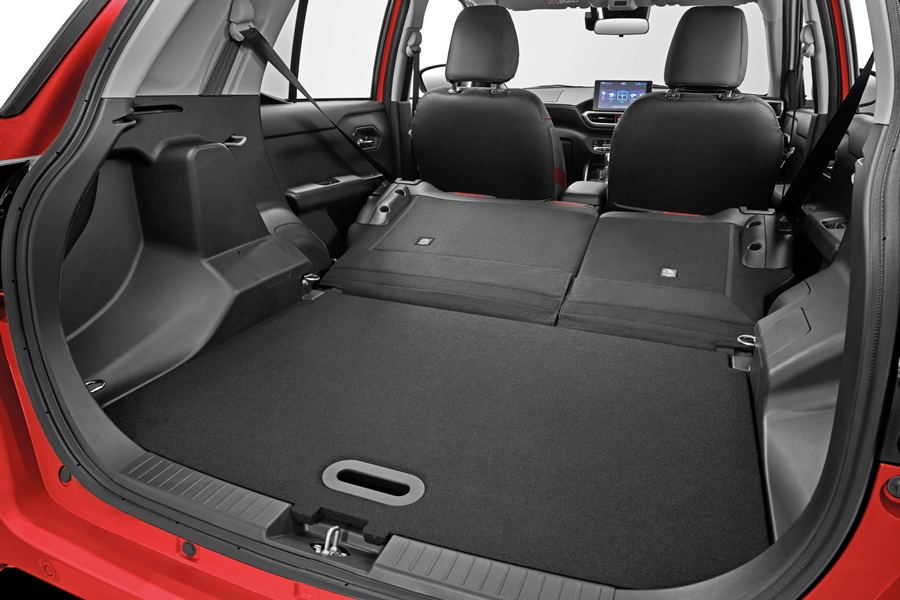
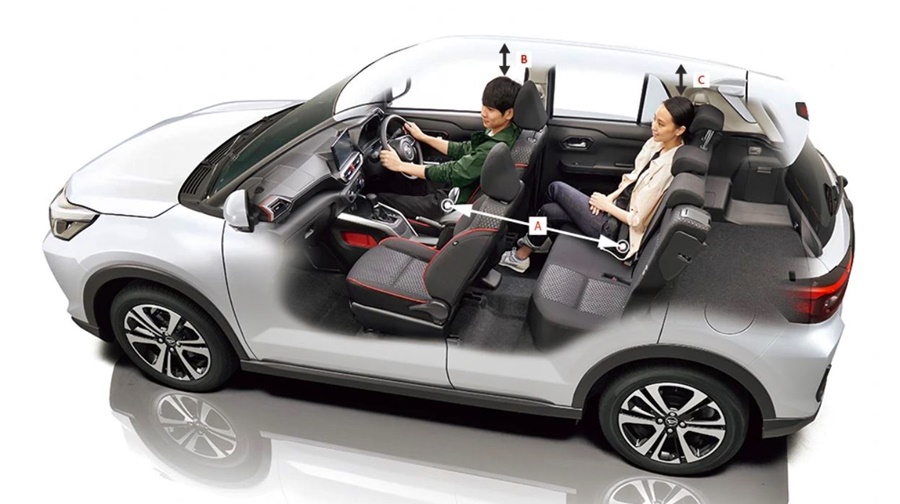
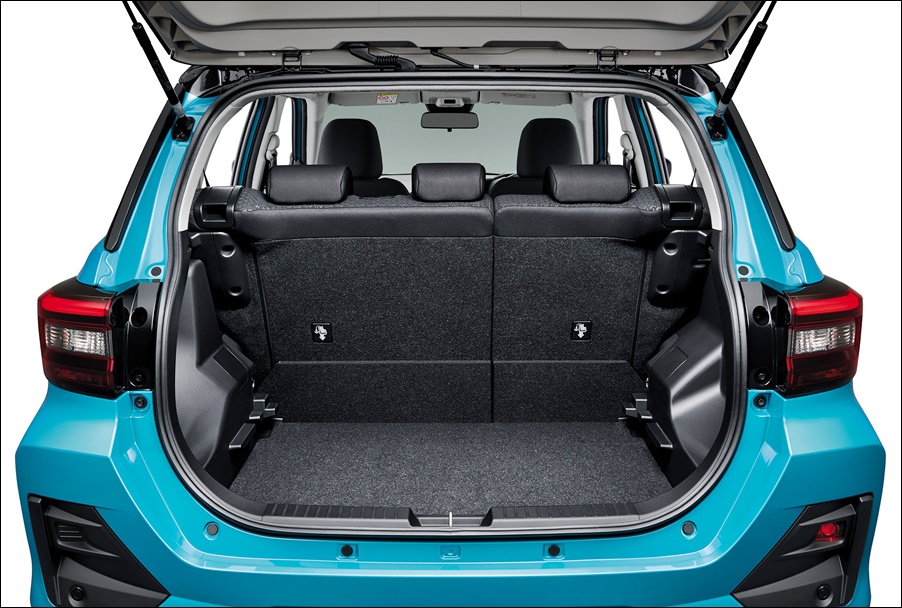
The Ativa has compact dimensions that position it below the Aruz. Its overall length is 4065 mm while the overall width is 1710 mm and it stands 1635 mm tall. The wheelbase is 2525 mm and unlike the Aruz, there are only two rows of seats in the cabin. There are two storage modes for the cargo area which give 303 or 369 litres of space and as with most SUVs, the rear backrests can be folded down individually to expand the floor length for longer items.
Advanced safety features
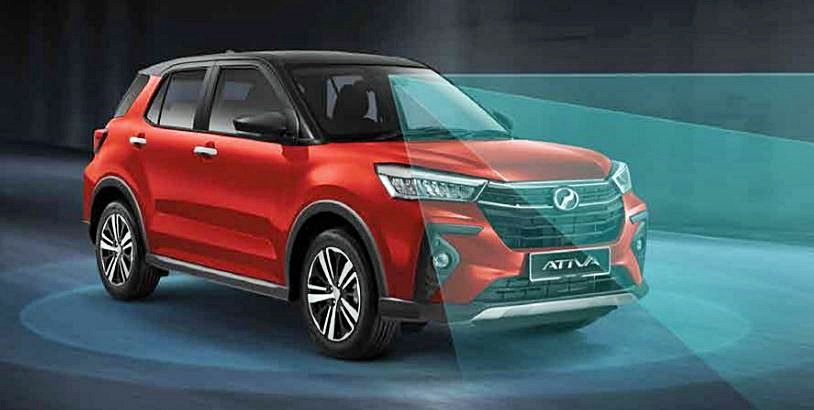
Since the 3rd generation of the Myvi, Perodua has been introducing progressively more advanced safety systems in its models. Many of these are integrated as the Advanced Safety Assist (ASA) system which helps the driver avoid accidents. For the Ativa, the system has reached the third generation which works at higher speeds (up to 120 km/h for vehicles, up to 60 km/h for pedestrians), and can now detect 2-wheeled vehicles as well as function at night.
ASA 3.0 consists of Pre-Collision Warning and Automatic Braking, Front Departure Alert, and Pedal Misoperation Control. ASA uses a camera at the top of the windscreen to monitor the road ahead and assess conditions. In the event of a collision, the driver will first be warned and if no action is taken to reduced speed or brake, the brakes will activate automatically. This would certainly avoid an expensive repair job or even if the collision cannot be avoided (due to the road surface conditions), the pro-active braking would have reduced the speed and effects of the impact.
Front Departure Alert will remind the driver that the car in front has moved off, while the Pedal Misoperation Control can prevent the car from accidentally being driven into a wall due to pressing on the accelerator pedal inadvertently (it does happen). Additionally, complementing ASA are Lane Departure Warning and Prevention.
The top AV variant gets additional systems which give semi-autonomous (Level 2) capabilities to the Ativa while driving. These are Adaptive Cruise Control, Lane Keep Control and Blind Spot Warning. You would have heard of these systems which are found in cars costing more than the Ativa, and it’s impressive that Perodua can offer them as well – even if in the most expensive variant only.
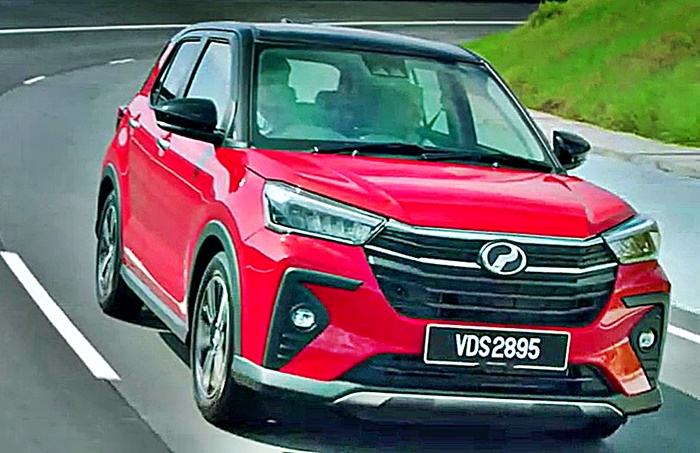
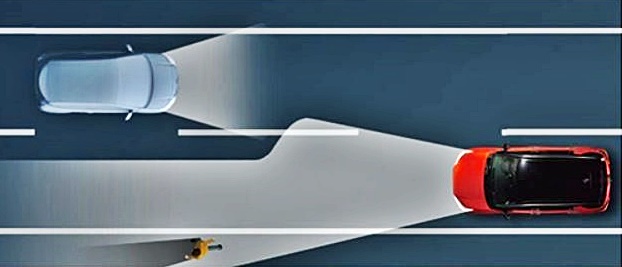
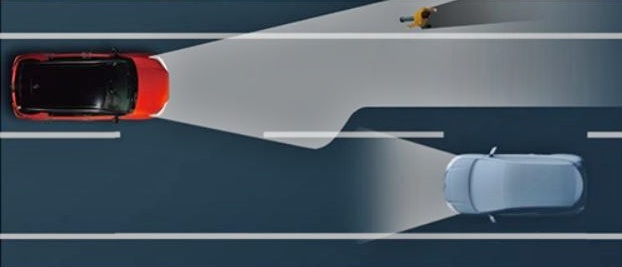
The Adaptive High Beam (red car) can adjust the areas of illumination to avoid blinding oncoming drivers while still maximising coverage.
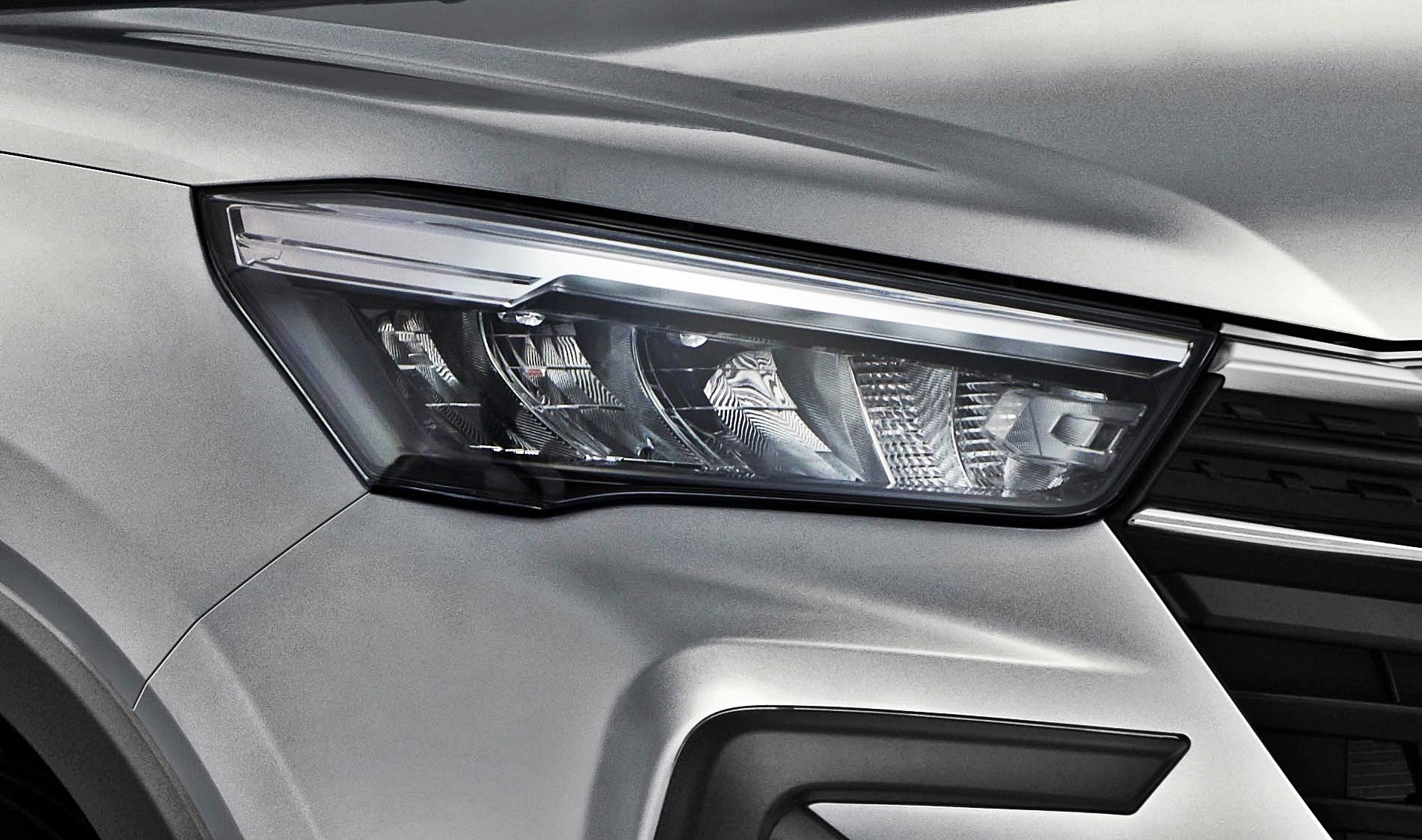
Even more amazing is the standard provision of an Adaptive Driving Beam (ADB) system for the upper two variants. ADB allows better illumination of the road ahead but can also selectively dim certain areas where there are oncoming cars so as not to dazzle the drivers. It’s intelligent technology and even cars a few price classes higher do not have such technology.
For the lowest-priced variant, there is still the convenience of an Auto High Beam which means that the driver does not have to keep switching between high and low beams. Whenever the headlights of a vehicle are detected, the high beams will automatically be switched to low beams, reverting when there is no longer a vehicle approaching. Imagine if all companies in Malaysia were like Perodua and provided this as standard, night driving would be less tiring without the glare of strong headlights.
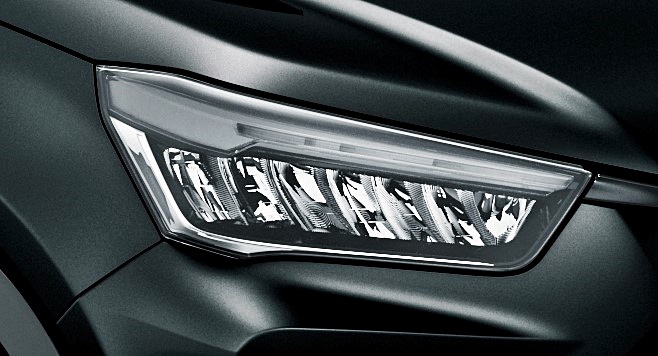
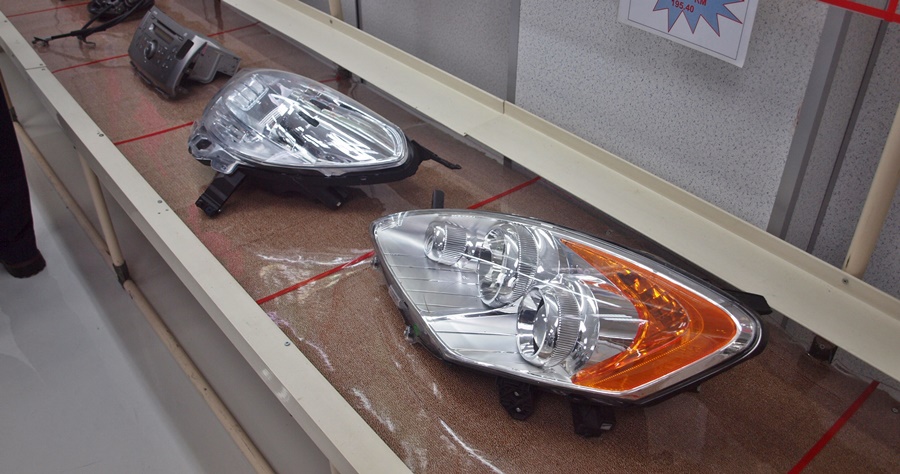
Incidentally, all variants have LED headlights which usually have a longer service life. They are also equipped with a follow-me-home function that keeps them on for a while after the car is locked. This provides illumination of the ground ahead for peace of mind.
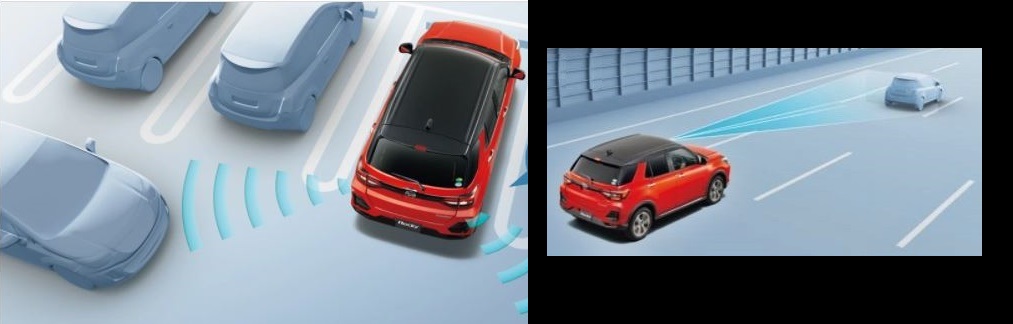
The top two variants also get a reverse camera but the Ativa AV gets Rear Cross Traffic Alert (RCTA) as well. Again, this is a feature that has yet to be found in models of this price class. RCTA uses the rear sensors to monitor the situation on either side as the vehicle is reversing out of a parking bay. The driver might not be able to see due to adjacent cars blocking the view, but if the sensors pick up approaching vehicles, an alert will be sounded so that an accident can be avoided.
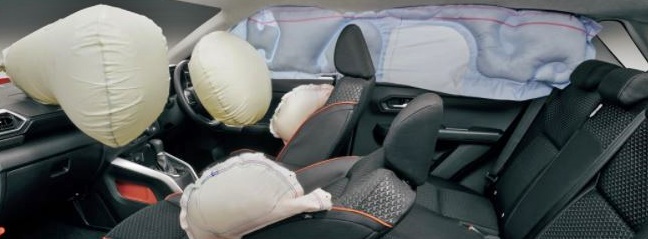
Besides the A.S.A. and active safety systems, the Ativa also comes with a very comprehensive list of other safety items – standard for all variants. These include 6 airbags (4 at the sides), Vehicle Stability Control, ABS, Electronic Brakeforce Distribution, Brake Assist and Hillhold Assist. ISOFIX points are, of course, provided since parents must now have put small children in childseats. ISOFIX-compatible childseats are convenient to install and stay securely in place.
Infotainment and connectivity
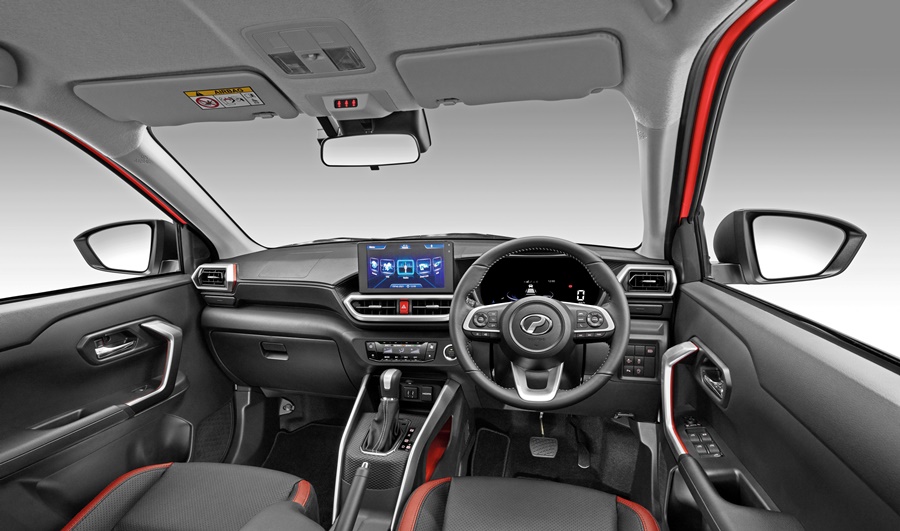
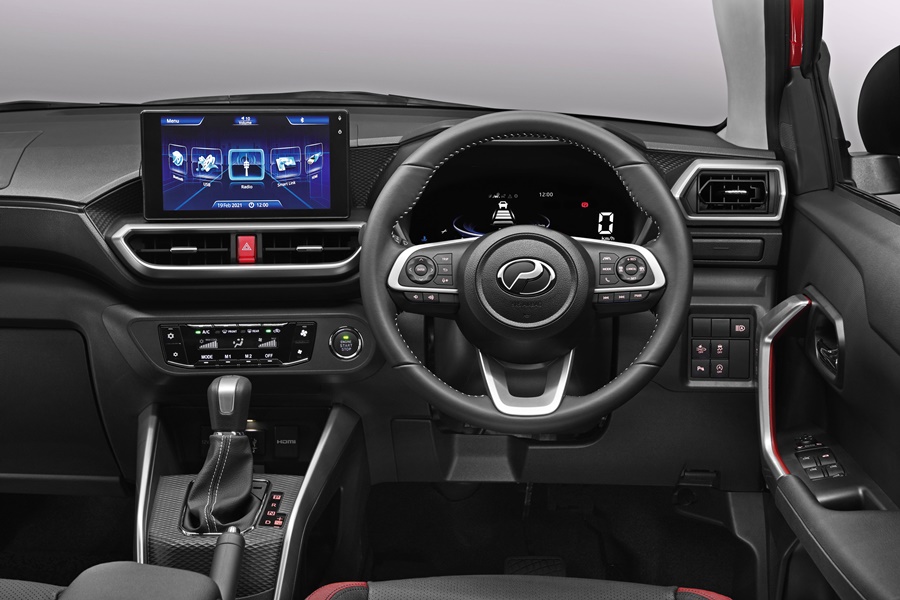
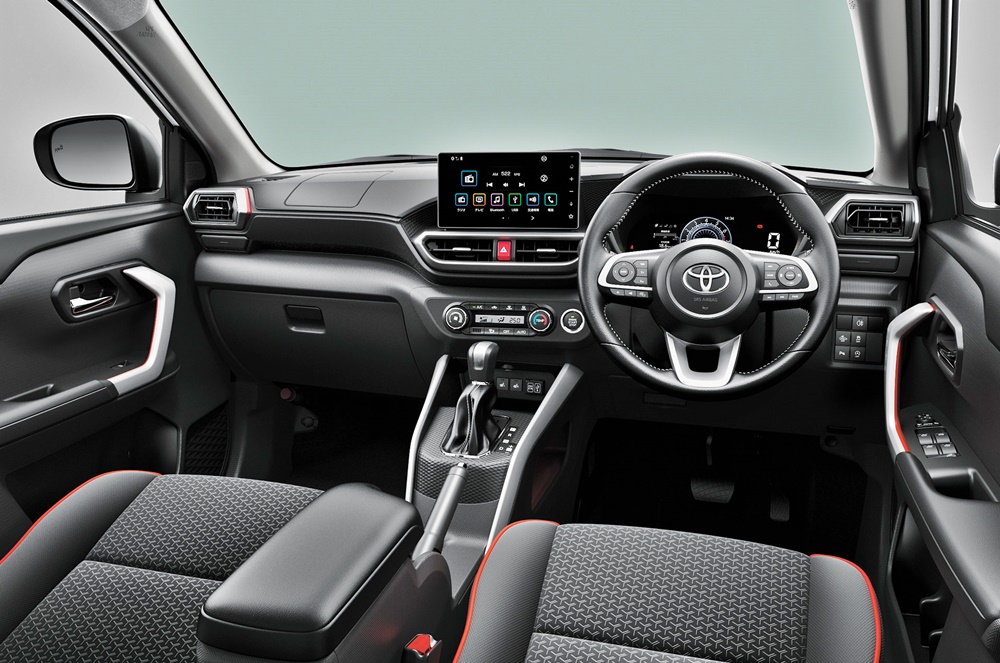
These days, every model has to have a capable infotainment system with good connectivity to provide the driver with more useful features as well as connect to smartphones. The top two variants come with a 9-inch LCD touchscreen with a bright and spacious display. There is also Smart Link (for Android devices) and Voice Recognition that allows active voice commands for certain functions.
Storage and convenience features
The interior designers have made sure that everyone in the cabin has spaces to keep their stuff and there are also USB ports that can provide power to recharge devices. Some clever ideas for storage spaces – a slot by the side of the gearlever housing, and slide-out cupholders in front of the vents on either side of the dashboard (good for keeping drinks cool!).
All variants have Smart Entry and Start/Stop System which does not require using a key or even pressing on the remote (but it has to be in the pocket or handbag). The doors can be unlocked by touching an electrostatic button on the door handle, and the engine can be started or stopped with the press of a button.
Instrumentation
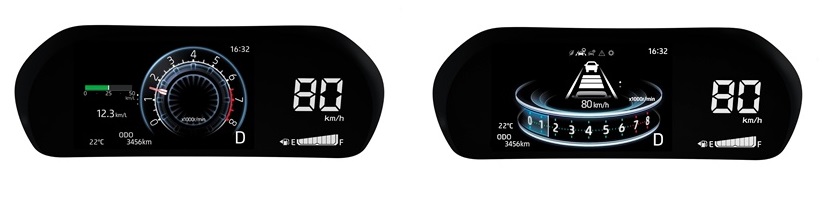
While the Ativa X comes with a conventional instrument panel, the Ativa H and AV have a customisable display to change how the information is presented to the driver. The speed is always shown as a digital display while the fuel level is a bar graph. However, the tachometer can be configured in one of four graphic styles. Additionally, there is also a Reminder Display which will flash reminders on special days.
GearUp accessories
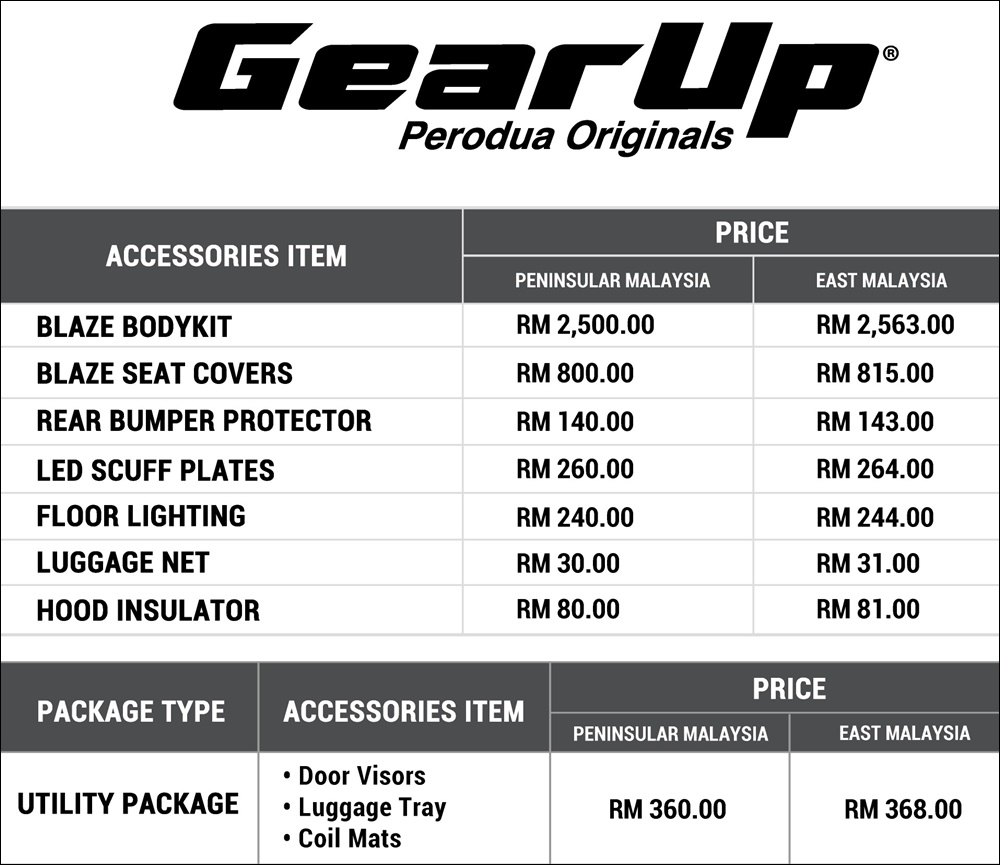
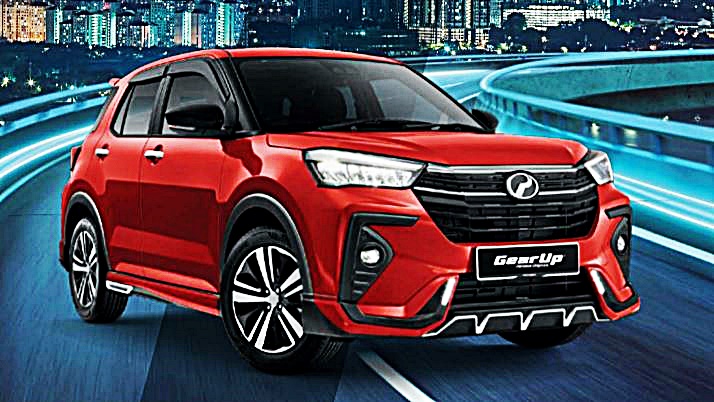
As with every Perodua model currently on sale, there is also a range of specially developed accessories to go with the adventurous looks. The items include a bodykit, front and rear seat upholstery, luggage tray, bumper protectors, luggage net, high quality coil mats and even an insulation kit for the bonnet. Prices range from RM80 to RM2,500 (in Peninsular Malaysia).
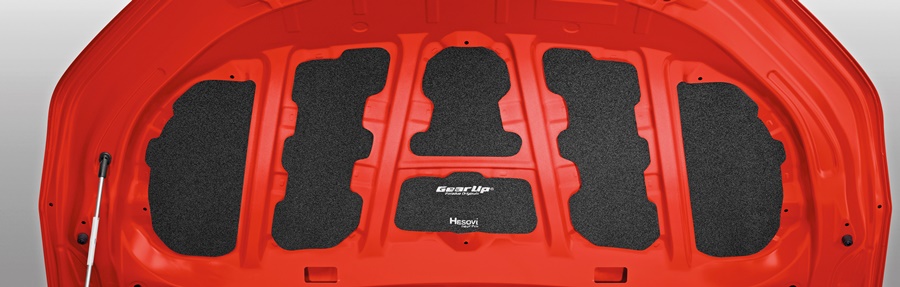
The GearUp accessories include a bonnet insulator kit which has pads that can be inserted in cavities in the bonnet panel. These pads can absorb engine noises to give a quieter ride.
There are also many other general accessories, all of which have been evaluated by Perodua so you can be sure they are of high quality, Furthermore, for the GearUp accessories that have to be installed, these are by Perodua’s own installers so the job will be professionally done. And the cost of all the extras can be included in the total loan for the vehicle if you specify them at the time of the purchase. That means the extra cost is also repaid over a number of years… something which no accessory shop would be give you.
To locate a showroom to view, test-drive or buy the new Perodua Ativa, visit www.perodua.com.my.
Perodua will launch its all-new SUV a week from today, on March 3. Unlike all is other launches, this one will not be done in a public setting with lots of people. Due to the ongoing restrictions of the Movement Control Order (MCO), the Malaysian carmaker will launch the new model online, just as many other companies have done. It is very conscious of its responsibility to help prevent the spread of the coronavirus and even today’s media preview was conducted with very strict conditions.
While we still cannot show any pictures of the actual vehicle, we have additional information which can give you a better idea, and which may even persuade you to quickly place a booking for the D55L, as it is being referred to, although it is already known that the model will be called the Ativa.
Perodua is presenting the Ativa as its most advanced model to date, and it certainly does seem that way where technology and safety are concerned, with the typical excellent value-for-money proposition that the brand has always given customers. The actual prices are still not released but will be between RM62,500 and RM73,400 (excluding insurance), with a choice of three variants – X, H and AV.
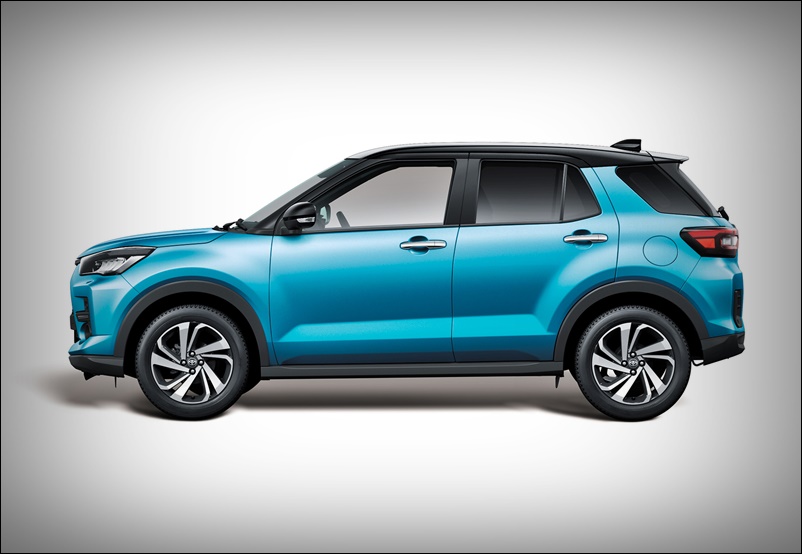
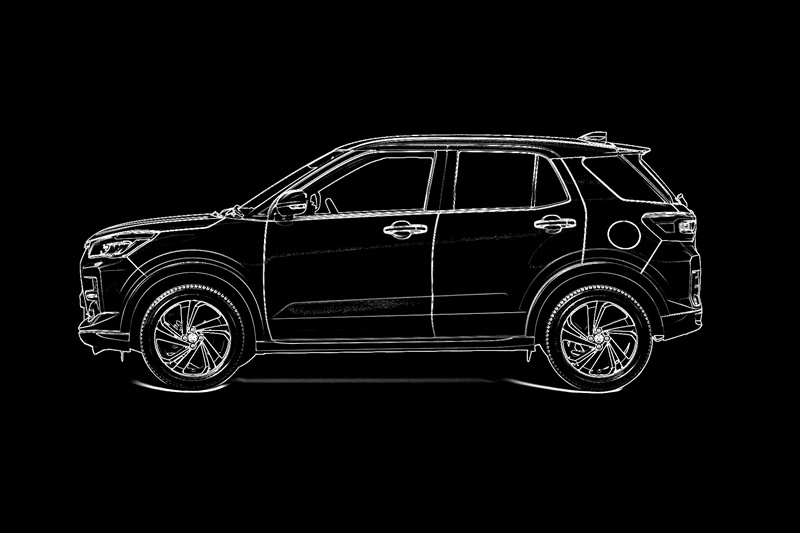
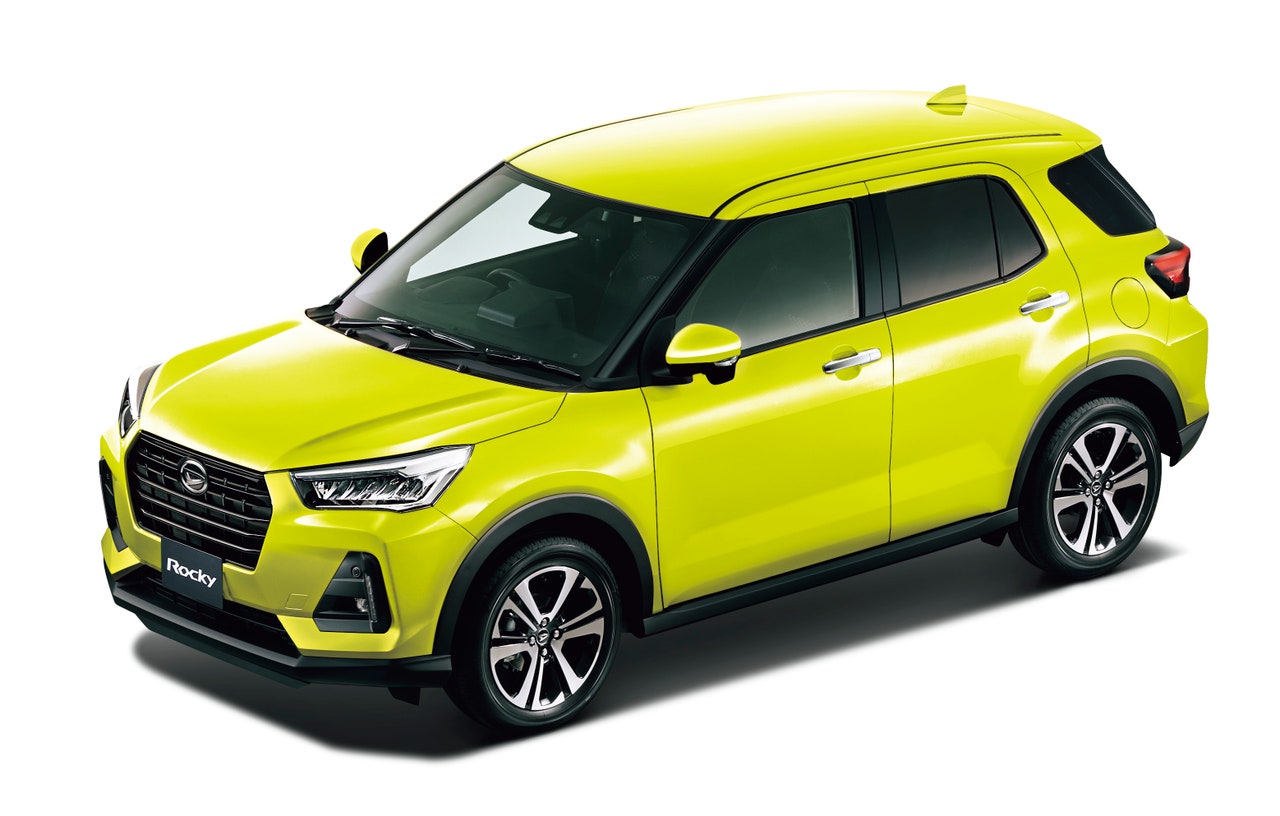
So here’s a quick overview of what to expect in the new Ativa. Please note that all images are of the Daihatsu Rocky or Toyota Raize, and the Perodua Ativa will have differences in some areas as well as trim colours and materials.
DNGA
We already know that the Ativa is adapted from the Daihatsu Rocky/Toyota Raize models sold in Japan (which went on sale at the end of 2019). This means that the Ativa will also have the newly developed Daihatsu New Global Architecture (DNGA) that encompasses not just the platform but also many other structural aspects of the vehicle.
It is unlikely that Perodua will alter it to be Perodua New Global Architecture; after all, even Toyota makes reference to DNGA for its model. The fact that Perodua is getting DNGA reflects the closer cooperation that exists between the carmaker and its technical partner and shareholder, Daihatsu Motor. DNGA is fairly new technology and in the past, Perodua didn’t have access to the very latest technologies. But then again, it was still a ‘student’, diligently learning to be a carmaker, and it has graduated and can now be provided with more advanced products.
DNGA, like TNGA – Toyota’s New Global Architecture – used for many of Daihatsu’s latest models, provides flexibility for the designers and engineers to optimize designs for different types of compact vehicles. It starts with a highly rigid platform for enhanced handling, stability and comfort.
The optimized structure is constructed with reinforced underfloor tunnel parts and crossmembers. Besides resin for certain panels, high tensile steel is used in many areas to save weight without losing strength. Comprehensive development of the powertrain and suspension provide optimum balance and efficient space utilisation of the enlarged footprint.
Turbocharged engine with CVT
Compact cars with small engines have been Daihatsu’s speciality which it has shared with Perodua. In fact, back in the 1970s, Daihatsu came out with a 1-litre 3-cylinder engine in its Charade which was innovative. Now, for the Ativa, the 1-litre 1KR-VET 3-cylinder engine is being used with a turbocharger, which is in keeping with global downsizing trends. And in case you are not aware, the annual roadtax is just RM20.
This is Perodua’s first turbocharged engine and the output figures revealed are 98 ps/140 Nm, which is plenty for a vehicle that won’t be too heavy. So expect zippy performance – which you don’t always get with a SUV.
The Ativa’s 1-litre turbocharged engine and Direct-Shift CVT (right)
The engine will be coupled to a CVT (Continuously Variable Transmission), also a first for Perodua. CVTs help to achieve better fuel economy. The one for the Ativa – called a Direct-Shift CVT – is a fairly new development with reduced mechanical loss, a wider gear range, and improved shift tracking.
There are 7 virtual ratios which will be selected smoothly and fuel consumption is claimed to be 18.9 kms/litre with the higher transmission efficiency. The good fuel efficiency means the fuel tank can be smaller and its volume is 36 litres.
How big?
We don’t have the dimensions of the Ativa but those of the Daihatsu Rocky should be close enough. The overall length of 3995 mm means it is 440 mm shorter than the Aruz, and it is also shorter than the popular Honda HR-V. The wheelbase is 2525 mm, also less than the Aruz. The 1695 mm overall width is the same as the Aruz. With 17-inch wheels, the overall height should be around 1620 mm or 85 mm lower than the Aruz.
The boot space will be variable, of course, with 369 litres at least. The Aruz would offer more but it depends on whether the third row is used, in which case it would be less.
Advanced Safety Assist (ASA) 3.0
Within just a few years, the ASA system has gone from first generation to third generation, which will be offered with the top variant of the Ativa. All variants, however, get the basic ASA suite with Pre-Collision Warning and Automatic Emergency Braking (with detection of bicycles and motorcycles), Departure Alert (to let the driver know when the car ahead has moved off), Pedal Misoperation Control (preventing accident application of excessive power when starting off), and Lane Departure Warning and Prevention.
The top variant has ASA 3.0 which includes additional driver assistance systems that complement the ASA system. The Lane Departure Warning will include a Lane Keep Control function, while a Blind Spot Monitor (BSM) will alert the driver if there is another vehicle in the blind spot behind. Reversing out of a parking bay will also be safer with Rear Cross Traffic Alert (RCTA) which detects vehicles coming from either side.
Rear Cross Traffic Alert (left) and Adaptive Cruise Control (right).
Finally, there’s Adaptive Cruise Control (ACC) which adjust the cruising speed to maintain a safe gap. This gives the Ativa a semi-autonomous capability as the driver need not constantly monitor the distance and adjust the speed manually (although attention is still needed. It will certainly help to reduce fatigue on long journeys along the highway.
Higher safety standards
All variants will have 6 airbags, the additional ones (besides the two at the front) covering the side windows when there is an impact from the side. The side curtain airbags can also help to prevent ejection of occupants during violent accidents.
While it is nice to have all-wheel drive for better stability and grip, Vehicle Stability Control (available in all variants) can also provide the same thing in most situations. It doesn’t mean you can go faster around corners but it will prove valuable if there is a skid which can cause a dangerous spin as the system will react with corrective measures.
The Ativa also comes with intelligent LED headlamp systems. For the lowest-priced variant, there is an Auto High Beam function which will automatically switch to low beam if an oncoming vehicle is detected. The driver doesn’t have to do anything and can give full attention to looking ahead.
For the middle and top variable, there are adaptive headlamps and this is rare even in more expensive cars. We don’t know how Perodua has been able to offer this so soon as such advanced technology usually takes a while to trickle down. The adaptive headlamps can provide optimised illumination without causing glare. The lighting areas are intelligently spread (as shown in the graphic above) so that they will not shine into the eyes of an oncoming driver, even while on high beam.
With the strong structure and such an extensive list of standard safety equipment, we would not be surprised if the Ativa easily scores the maximum of 5 stars in ASEAN NCAP’s evaluations.
“True to our aim to continually bring more and more advanced technology to the masses, the Perodua D55L AV is Malaysia’s most affordable Level 2 Autonomous vehicle, bringing state-of-the-art safety and convenience to a wider audience,” said Perodua’s President & CEO, Dato’ Zainal Abidin Ahmad.
“This is the first model under the Perodua Smart Build blueprint, spearheading breakthroughs for Perodua in style, safety, technology, equipment levels and value,” he added.
If you want to be among the first to own an Ativa, you can make a booking at any Perodua showroom nationwide. The locations can be found at www.perodua.com.my.
Visit www.bhpetrol.com.my to find out more about other promotions at BHPetromart.
The Perodua D55L SUV (likely to be just the codename for now) was ready for launch earlier but due to the COVID-19 pandemic, the Malaysian carmaker delayed its launch. Now the time is right for it to enter the market and bookings are accepted from today at all authorised Perodua showrooms nationwide.
Spiritual successor of Kembara
Adapted from the latest Daihatsu Rocky/Toyota Raize, the spiritual successor of the Kembara is said to be the most advanced Perodua yet. It will be available in three variants – X, H and AV – at prices estimated to range from RM62,500 and RM73,400 (excluding insurance). As the model should be in the market before June 30, 2021 when the sales tax exemption is set to expire, customers will also get the money-saving benefit.
“The Perodua D55L is the first model under the Perodua Smart Build blueprint, spearheading breakthroughs for Perodua in style, safety, technology, equipment levels and value,” Perodua’s President & CEO, Dato’ Zainal Abidin Ahmad said.
The new Perodua D55L is known to be adapted from the latest Daihatsu Rocky/Toyota Raize.
Autonomous motoring for all variants
The claim of being the most advanced Perodua comes from being the model of the brand’s model to offer Level 2 Autonomous motoring. The second of 5 levels in the industry-accepted standards established by the SAE (the American Society of Automotive Engineers), Level 2 allows automatic operation of certain driving functions. These can be related to cruising, steering and braking, but the driver must still monitor the road ahead and take action if necessary.
In the D55L, Perodua’s Advanced Safety Assist (ASA) – standard in all variants – will allow higher operating speeds than the current version and is capable of detecting 2-wheeled vehicles. Also available will be Lane Departure Warning and Prevention, while the top AV variant has Lane Keep Control, Blind Spot Monitor, Rear Cross Traffic Alert and Adaptive Cruise Control.
That’s certainly a lot of advanced technology which would never have been expected from an entry-level brand like Perodua. “True to our aim to continually bring more and more advanced technology to the masses, the Perodua D55L AV is Malaysia’s most affordable Level 2 Autonomous vehicle, bringing state-of-the-art safety and convenience to a wider audience,” said Dato’ Zainal.
First Perodua with turbo engine and CVT
The D55L will also be Perodua’s first turbocharged vehicle, in line with the global trend of using forced induction while downsizing engine displacements. Perodua has not mentioned the engine size although it is likely to be a 1-litre 3-cylinder unit similar to that of the latest Rocky. Additionally, it will be the first Perodua to use a Continuously Variable Transmission (CVT) which will help it achieve fuel consumption claimed to be up to 18.9 kms/litre.
Other features include LED headlamps (standard across the range), while H and AV variants get Adaptive Driving Beams, a 7-inch TFT multi-info display and a 9-inch touchscreen infotainment system with voice command capability.
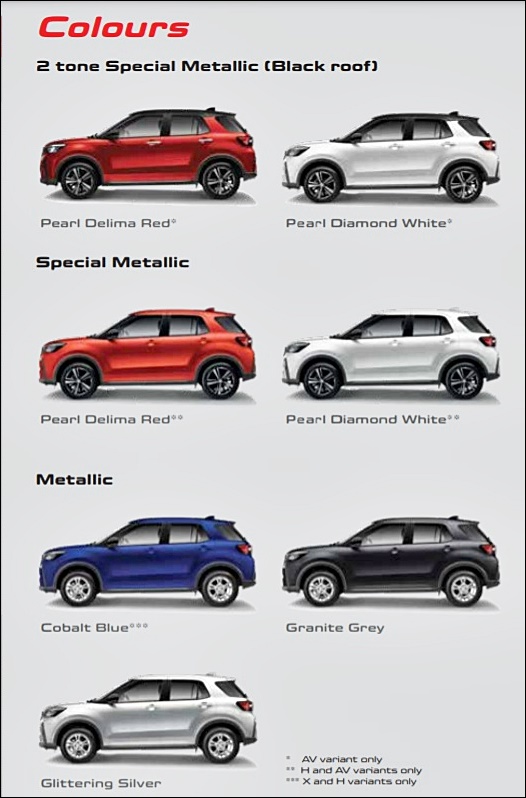
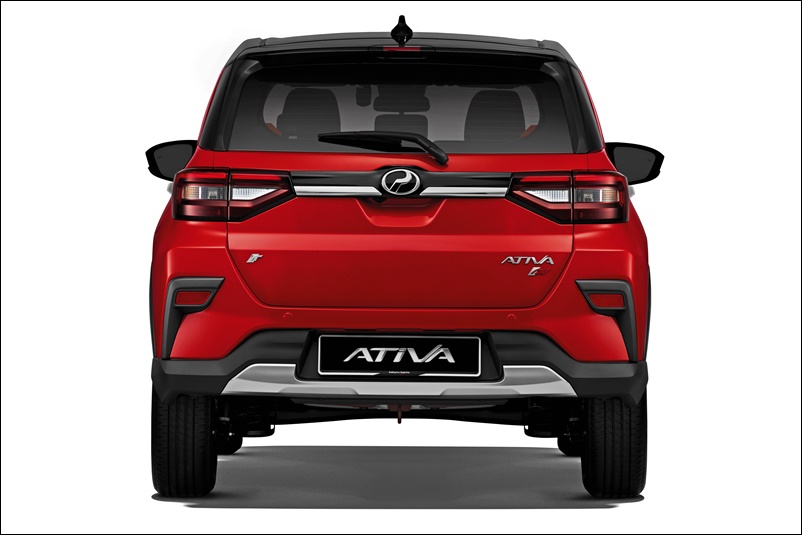
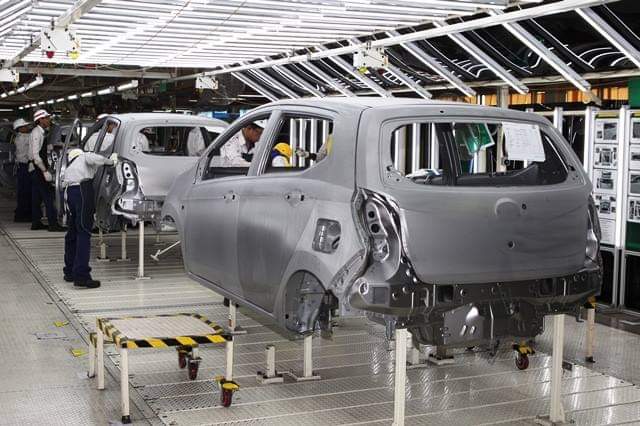
Built and painted at Perodua’s factory, the X and H variants are available in Glittering Silver, Granite Grey and Cobalt Blue, with the H variant also available in Pearl Diamond White and Pearl Delima Red. The last three colours are new for Perodua. The top AV can be had in Glittering Silver, Granite Grey, Pearl Diamond White, Pearl Delima Red, or the last two colours with a black roof. A 5-year or maximum of 150,000 kms warranty is offered with every new vehicle.
‘Perodua Smart Build’ is officially launched today as the Malaysian carmaker’s first sustainable blueprint. It encompasses nearly the entire Malaysian automotive supplier and dealer ecosystem, with the aim of moving the industry towards greater globalisation in the future.
Explaining the blueprint, Perodua President & CEO, Dato’ Zainal Abidin, said, “Perodua Smart Build is an evolution of what Perodua and the Malaysian automotive industry were originally set up to do: to create a sustainable and robust automotive ecosystem.”
He said that Perodua Smart Build is also Perodua’s ‘Transformation 3.0’. It builds upon its previous milestones which began with the first transformation phase in 2011. At that time, the company worked towards building the Energy-Efficient Vehicle (EEV) ecosystem, stop defect outflow, set up Perodua Global Manufacturing Sdn Bhd, and change Perodua’s mindset to be quality conscious.
Transformation 2.0, which followed, was focussed on customer satisfaction, organisational development and the fostering of unity within the entire Perodua Group of Companies.
“Now, we are at the third phase of transformation to ‘build’ a sustainable future for both Perodua and its partners to a point where we will be able to find our own niche in the automotive industry,” Dato’ Zainal said.
He said that under ‘Transformation 3.0’, Perodua is working together with its business partners to rationalise the gap in quality, cost and delivery within the automotive ecosystem and get the industry to be in ‘the right size’.
Dato’ Zainal also said that Perodua is also working with all its partners to see where existing expertise can be utilised beyond Malaysia. He gave the example of how Perodua staff are now working to design Daihatsu models in Japan as part of Perodua’s effort to export local expertise abroad.
Malaysian designers from Perodua are working with Daihatsu on the designs of future models.
Dato’ Zainal said Perodua will continue to leverage on its close partnership with Daihatsu to realise Perodua Smart Build’s objective. “Perodua Smart Build will be accomplished with the help of our shareholder, technology and technical partner Daihatsu Motor Company of Japan; and the Malaysian government who had the foresight to create this ecosystem for the benefit of the country,” he said.
According to Dato’ Zainal, Perodua Smart Build is designed to help Perodua and the automotive ecosystem reap the benefits of the National Automotive Policy by making the industry more competitive and progressive.
Chief among the components of Perodua Smart Build are full product development by Perodua and its suppliers, the establishment of a first-class working culture and first-class thinking that will be able to contribute to the nation.
“Perodua Smart Build’s launch does not mean that we have reached the full potential of these components; rather, it marks the start of Perodua and its partners’ journey towards a higher level of competitiveness. We are grateful to Daihatsu for this opportunity and for their continuous support of Perodua since the very beginning. It is now time for us to fully extend this cooperation to our Malaysian business partners,” Dato’ Zainal said.
Perodua has been committed to supporting Malaysian suppliers and keeps increasing the value of local sourcing each year.
He added that a number of Malaysian suppliers are already part of Daihatsu’s global supply chain, and Perodua is working with the Ministry of International Trade and Industry to prepare more local suppliers to follow suit. “We are also focusing more on developing our dealers, including strengthening their operations and guiding them towards the adoption of global best practices to further improve customer satisfaction,” he added.
He explained that Perodua’s goal is to ensure its dealers’ business sustainability by providing guidance of best practices and the latest technology for growth. “We consider our dealers business partners in the same way Daihatsu is our business partner, and we are committed towards their prosperity as long as they, too, are committed to our goals.”
“Where products are concerned, our future offerings will better reflect contemporary trends without compromising our fundamentals – space, practicality, quality, dependability, fuel efficiency and unparalleled value,” said Dato’ Zainal.
To know more about other promotions at BHPetromart, visit www.bhpetrol.com.my.
Cautiously optimistic about the future, Perodua has set a target of delivering 240,000 vehicles in 2021 – a 9% increase from the 220,163 units sold in 2020 which got it a 41.6% market share and continued market leadership The 2021 target is close to the volume achieved in 2019 which was 240,131 units.
For 2021, the Malaysian Automotive Association has forecast a Total Industry Volume of 570,000 units. This is 8% higher than the 529,434 units achieved in 2020.
The Malaysian carmaker continues to see strong demand for its existing models, with help from the sales tax exemption being extended until June 30 this year. “With the extension of the sales tax exemption to end-June 2021, recent COVID-19 vaccine developments and all our models continuing to be in demand, we believe 2021 will be the year of recovery,” said Perodua President & CEO, Dato’ Zainal Abidin Ahmad.
He added that Perodua, and the Malaysian automotive ecosystem, appreciates the support for the industry and will extend its full cooperation to the government in ensuring that all standard operating procedures are followed in regard to COVID-19.
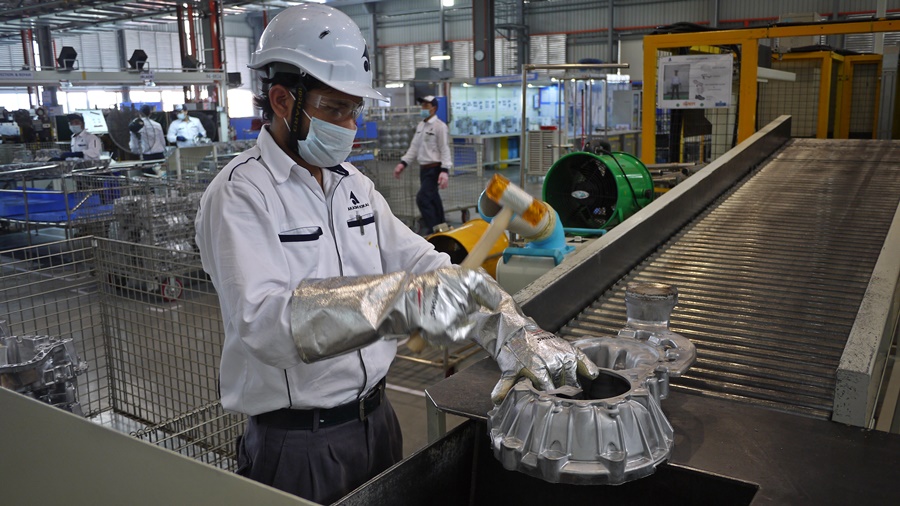
Transmissions for Perodua vehicles are produced locally at a factory in Negeri Sembilan.
Purchasing more from local suppliers
Dato’ Zainal said that with the estimated recovery of Perodua’s sales volume, the carmaker is expected to purchase a record RM6.5 billion worth of locally-sourced components in 2021. “In addition, with 2020 ending better than previously expected for both Perodua and the industry, we are looking to increase our stock by boosting our production target to 272,000 vehicles this year – the highest in our history. This increase will replenish our stock to ensure brisk delivery this year,” Dato’ Zainal added.
Perodua’s 2021 production target represents a 23% increase over the 220,968 units manufactured in 2020, and with all its models having over 90% local parts content, the carmaker remains the biggest buyer of automotive components in Malaysia.
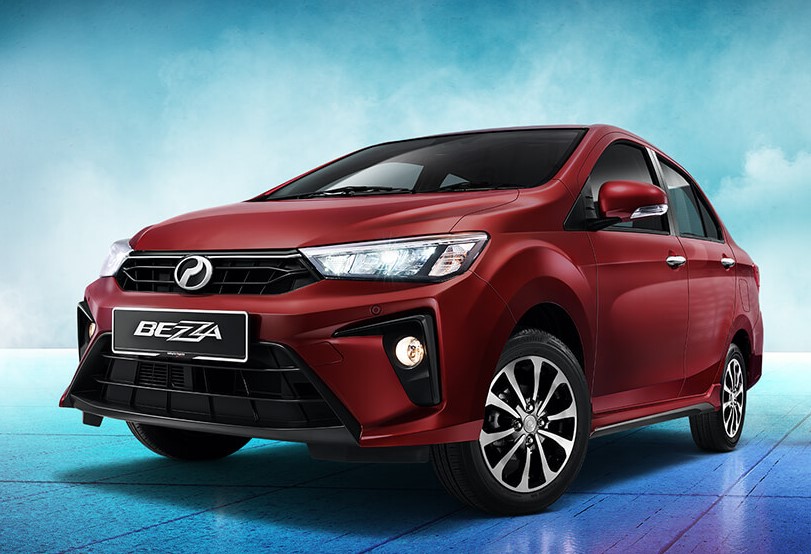
Myvi was most popular again: Of the 220,163 units sold in 2020, Perodua registered 66,330 Myvis (30.1%), 59,651 Axias, 56,996 Bezzas, 22,494 Aruz, 14,691 Alzas and one other model.
Transforming for customers’ benefit
“In our efforts to further win our customers’ support, Perodua will transform our approach in every aspect, be it in customer engagement, values or even our operations – especially in our sales arm, Perodua Sales Sdn Bhd,” Dato’ Zainal said.
He explained that this approach, called ‘Perodua Smart Build’, will revolutionise Perodua’s offerings while further improving the compact car company’s operational capabilities. “More information and impact of the Perodua Smart Build initiative on Perodua, our partners, the automotive ecosystem and our valued customers will be announced in the near future,” he said.
Perodua is also expecting its service intakes to grow 20% from 2 million units in 2020 to 2.4 million units in 2021, comprising both current and new customers. With the huge volume of its vehicles on the road all around the country, the aftersales side of the business obviously generates a lot of income.
The Total Industry Volume (TIV) for 2020 was expected to be lower than the 604,281 units recorded in 2019 and in the first half of the year, many would have expected it to be significantly lower. However, with the consistently high numbers in the second half of the year, the TIV closed at 529,434 units, 12% lower than 2019 but well past the forecast of 470,000 made by the Malaysian Automotive Association (MAA).
When the year had started, the MAA had actually forecast 607,000 units for the year, but revised it substantially downwards by 23% as the seriousness of the pandemic and its impact on the industry became clear. The nationwide shutdown naturally resulted in lost sales, with April seeing the most dramatic drop to virtually zero as no business could be conducted.
Proton sales rose in 2020 and its overall market share went above 20% for the first time since 2013.
When the commercial sector was progressively allowed to resume, there was some consumer hesitance but then the government came out with its PENJANA program to help the economy recover and for the auto industry, the help was in the form of sales tax exemption for 6 months (extended a further 6 months until June 2021). This would lower retail prices and Malaysians always love it when they can escape paying tax, of course. The exemption applied to both locally-assembled and CBU models, except that the exemption for the latter was half and not the full 10%. Still, it made a difference, especially for the expensive models that are mostly CBU anyway.
Proton sales increased
It was expected that the sales volumes would be lower in 2020 but Proton didn’t suffer such a decline. The carmaker already had a healthy order bank and during the year, total vehicle deliveries were 8,524 units higher than in 2019, finishing off at 108,524 units. The volume was an increase of 8.8% over the 100,821 units sold in 2019.
Perodua, in spite of a big backlog of orders, still saw a reduction in volume of 20,178 units, 8.4% lower than the 240,341 units delivered in 2019. But it still retained the No. 1 position which it has had since 2006.
Among the non-national brands, Honda was in the lead but sold almost 25,000 fewer vehicles. Next was Toyota which sold 58,501 vehicles, while Nissan reported 14,160 vehicles. For the rest of the brands, the reduction in sales volume amounted to 20,451 units.
Malaysian makes gain in market share
In terms of market share, both Malaysian makes gained at the expense of the main rivals. Reflecting its higher sales, Proton’s share rose to 20.5%, an increase of 3.9%. The last time the carmaker had a share of 20% or more was in 2013 and the years before. Perodua, in spite of less deliveries, saw a 1.8% increase in its share to just above 41%. In most years, its share has been around 30%+.
Optimistic forecast for 2021
For 2021, the MAA is forecasting 570,000 units – an increase of 100,000 units from its 2020 forecast, which is 8% higher than the actual TIV achieved. Strong growth (18%) is expected in the commercial vehicle segment which will continue to require vehicles for the various projects underway around the country. If the pandemic doesn’t worsen, the association and its members expect the high demand to continue into 2022 before settling down to a 3% rate of increase annually.
In spite of many weeks of forced shutdown during the first half of 2020, Perodua bounced back in the second half to not only make up for the lost period of sales but even managed to exceed its forecast of 210,000 units by 10,154 units for a total of 220,154 vehicles (registered nationwide).
The achievement was helped by the government’s PENJANA stimulus program which gave exemption of sales tax to the auto industry, and for Perodua customers, that meant saving the 10% normally imposed. As reported recently, the sales tax exemption has been extended and will be allowed up till the end of June 2021.
“We thank all Malaysians for choosing Perodua and the government for extending the sales tax exemption under PENJANA to sustain the sales momentum which the automotive industry is now enjoying,” said Perodua President & CEO, Dato’ Zainal Abidin Ahmad.
Measures to protect customers and employees are in place at all Perodua outlets in accordance with Standard Operating Procedures specified by the Health Ministry.
He added that Perodua manufactured 220,968 vehicles in 2020 despite temporarily halting production between March and May 2020 due to the Movement Control Order (MCO). “Despite this, the tax exemption introduced in June 2020 succeeded in spurring car buyers’ interest that was able to sustain the players as well as the local automotive ecosystem,” he said.
One million EEVs
“Perodua also hit the one million Energy-Efficient Vehicle (EEV) milestone in November 2020 – exactly two years after achieving the first half-million. This further solidifies our position as Malaysia’s largest EEV manufacturer,” said Dato’ Zainal.
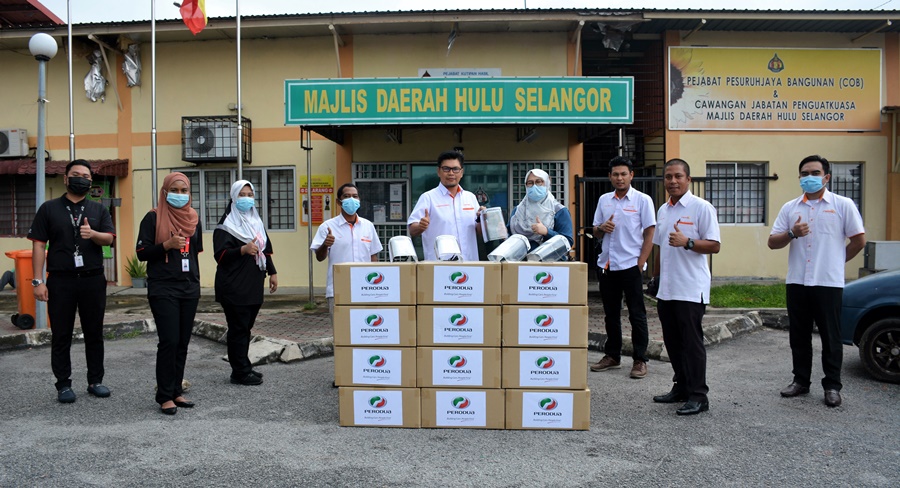
Besides being busy selling and delivering new vehicles, Perodua also upheld its role as a good corporate citizen by providing protective equipment and other necessities to hospitals, schools and government agencies during the year in support of the fight against COVID-19.
The better-than-expected sales achievement had a direct positive impact on the Malaysian automotive ecosystem, helping both independent parts suppliers and dealers weather the challenges in 2020. Perodua has always been mindful of the need to help its suppliers and dealers to maintain a healthy business position.
Dato’ Zainal said that for now, Perodua will continue to fulfil outstanding orders and push for higher sales in 2021. The target for the year will be announced later on.
To locate a showroom to view, test or buy a Perodua vehicle, visit www.perodua.com.my.
In spite of the severe downturn that the car industry suffered earlier in the year due to suspension of business activities nationwide, it seems that sales are presently pretty good. In fact, up till November, Perodua has already delivered over195,000 vehicles and expects to meet its 210,000-unit registration target by the last day of 2020.
The strong momentum continued to be evident in November as the Malaysian carmaker reported sales of 23,119 units. On Monday, the last day of the month, its outlets registered a combined total of 5,027 units – the most ever in a single day.
“Our November sales represents a slight normalising from the previous two record months we had – 25,035 units in September and 26,852 units in October,” explained Dato’ Zainal Abidin Ahmad, Perodua’s President & CEO.
“Yet the accomplishment is impressive, given the challenging economic climate and ‘new normal’ operating procedures brought about by COVID-19. And our 5,027-unit one-day record shows what resilience, persistence and adaptability can bring,” he added.
Top three models – Axia, Myvi and Bezza
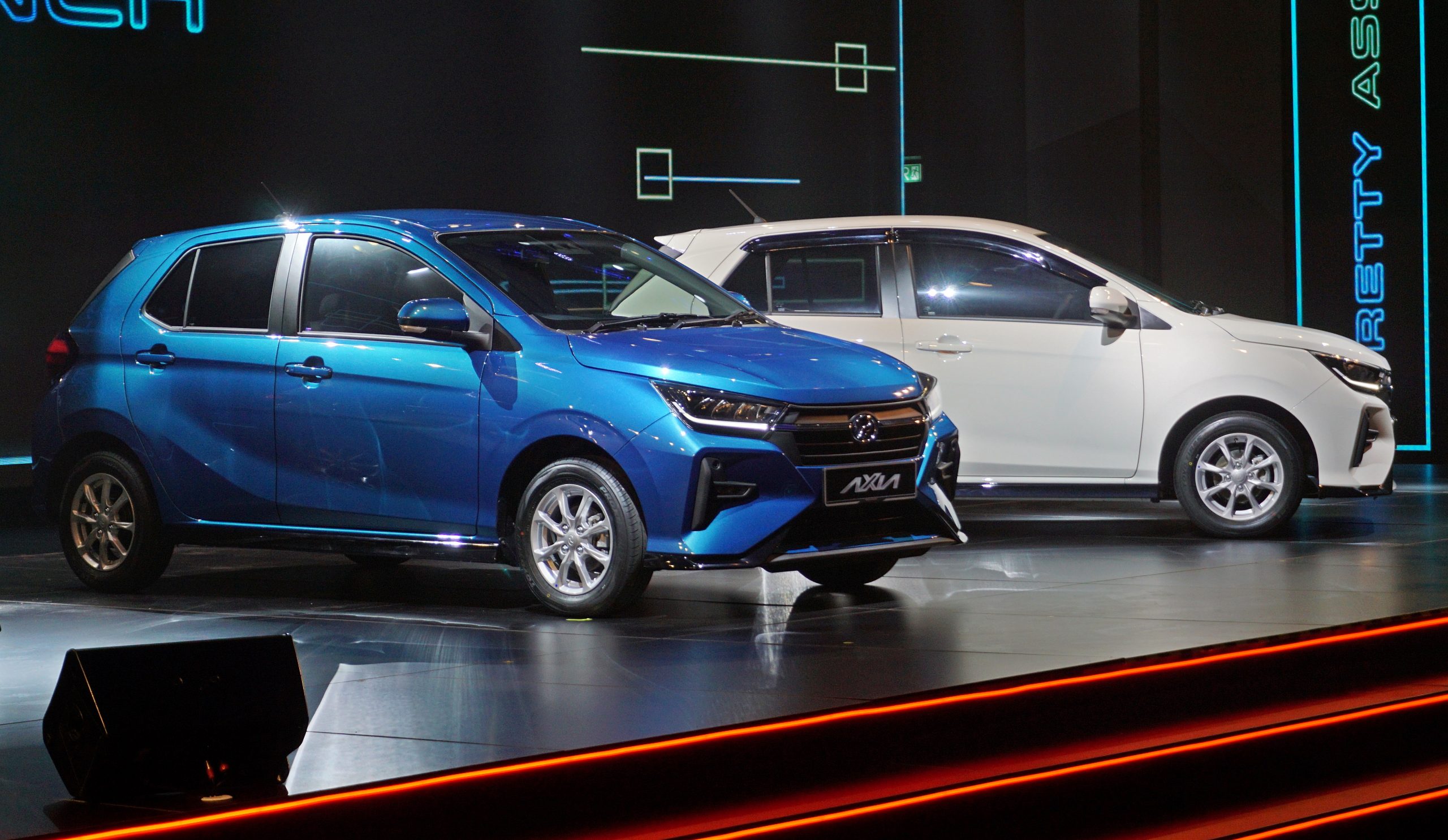
Axia deliveries, totalling 6,318 units were the highest among the five Perodua models, followed by the Myvi with 6,295 units and the Bezza with 6,224 units. Deliveries of the Aruz and Alza totalled 2,617 units and 1,665 units, respectively.
In November, the model with the highest number of deliveries was the Axia.
“Perodua’s two main priorities at present are to ensure as many of our valued customers as possible can get their cars before year-end to enjoy the sales tax-exempt prices; and to further bolster the Malaysian automotive ecosystem with our economies of scale in these hard times,” Dato’ Zainal said.
Supporting the ecosystem
“Over 90% of our components are locally-sourced, and coupled with our sales volume, this generates significant business for Malaysian component suppliers and helps them sustain jobs,” he added. “The completed cars are then distributed through Malaysia’s largest car sales network, the majority of which constitute independent dealers that benefit greatly from the business, and even more if they do servicing and repairs as well.”
Dato’ Zainal said Perodua is proud of its national duty and will continue to serve all Malaysians’ mobility needs with quality vehicles that are safe, practical, efficient and offer the best value, while pushing the boundaries of technology for the masses in the future.
In spite of what is a very bad year for virtually all industries, Perodua reported that its total vehicles sales last month were its highest-ever. 26,852 vehicles were delivered in October 2020, and this came after the all-time monthly sales record of 25,035 units just a month earlier.
“In September, we sold more vehicles in a month than in our entire 27-year history and now, we have gone even further,” said a delighted Perodua President & CEO, Dato’ Zainal Abidin Ahmad.
“This milestone is important to us in many ways; it underscores our commitment towards delivering our vehicles to their rightful owners as fast as possible while at the same time doing our part to rejuvenate the automotive eco-system,” he added.
Supporting automotive eco-system
He also mentioned that, in October alone, the carmaker purchased some RM600 million worth of parts from local suppliers, creating an enormous economic multiplier effect on the local auto eco-system which has been impacted by the COVID-19 pandemic.
The automotive eco-system includes direct and indirect sectors, such as automotive component suppliers, authorised dealers, stockists, agencies and contractors. Indirect, yet crucial partners include financial institutions such as banks and insurance companies.
“In terms of production capacity, we are on average at 98% in October 2020 with 26,362 vehicles – which is also our highest-ever monthly production figure,” Dato’ Zainal revealed. “These achievements were accomplished under the new standard operating procedures (SOPs) followed by Perodua and our partners. These include working from home and mandatory testing for those in red zones – on top of the original SOPs introduced in May.
“With the commitment of the suppliers, our authorised dealers were able to sell more vehicles and more importantly, ensure our customers’ happiness as their Perodua vehicles were delivered in the best possible time,” he added.
The Myvi is still the most popular car in the country.
Three bestsellers
During October, Perodua sold 8,052 Myvis, 6,738 Axias, 6,895 Bezzas, 3,193 Aruz and 1,974 Alzas. The top three models remain Malaysia’s best-selling cars so far this year, according to Perodua.
Dato’ Zainal also gave assurance to owners that they need not worry about replacement parts for their vehicles. “We have sufficient parts to every need as most of them were made locally,” he said.
Perodua Aruz
November promotions
For this month, Perodua has a promotion whereby customers can receive a cash redemption of up to RM1,500 for the Aruz on top of the current tax exemption amount (terms and conditions apply). In addition, Perodua is also offering cash rebates of up to RM2,000 for its pre-owned vehicles until 31 December 2020 (only available at the Perodua KL sales outlet located on Jalan Pahang in Kuala Lumpur).
Perodua Pre Owned Vehicle (POV) outlet in KL
Visit www.perodua.com.my to know more about the models available and ongoing promotions as well as the locations of showrooms nationwide.