
Piston.my

Latest News

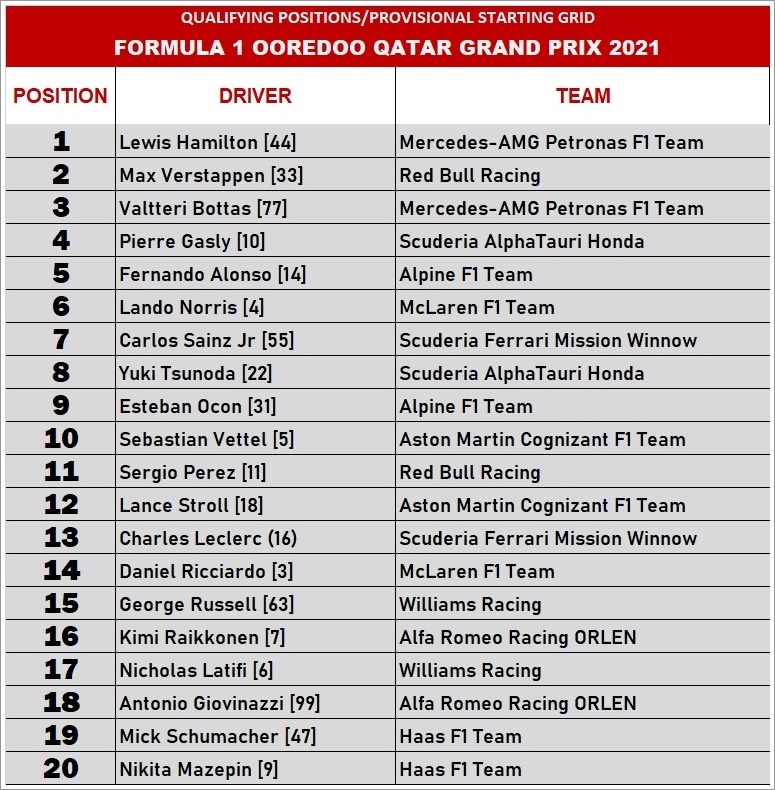
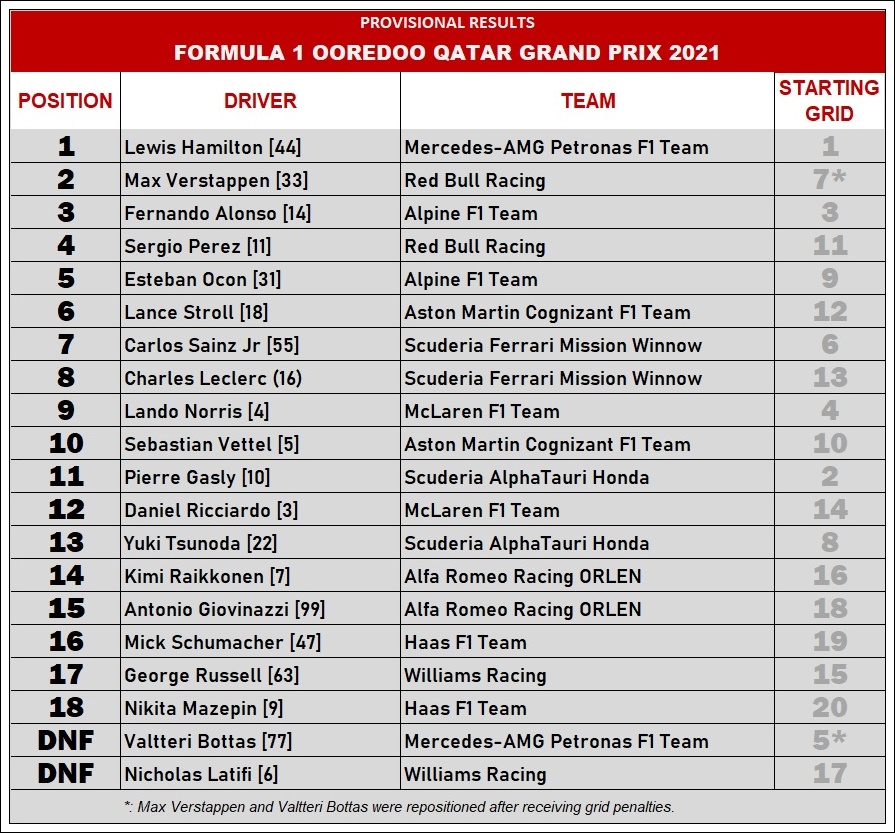
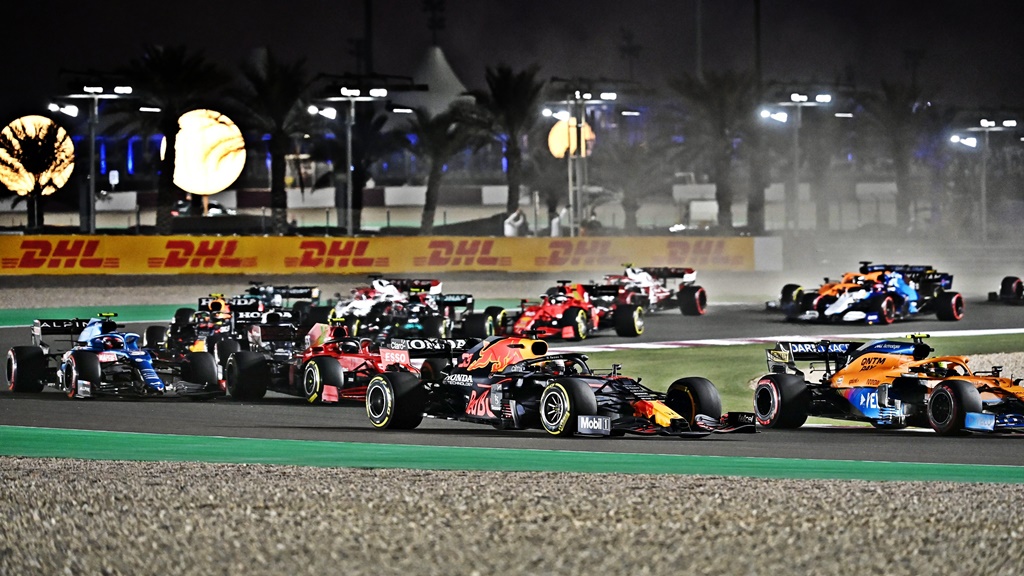
Max Verstappen and Valtteri Bottas received grid penalties and were repositioned them at the start, moving the Red Bull driver to 7th and Bottas to 5th, But the moment the race started, Verstappen was ready to remove the disadvantage of starting further back and was up 3 places by Turn 3. However, Bottas got caught in traffic and feel to 11th instead,

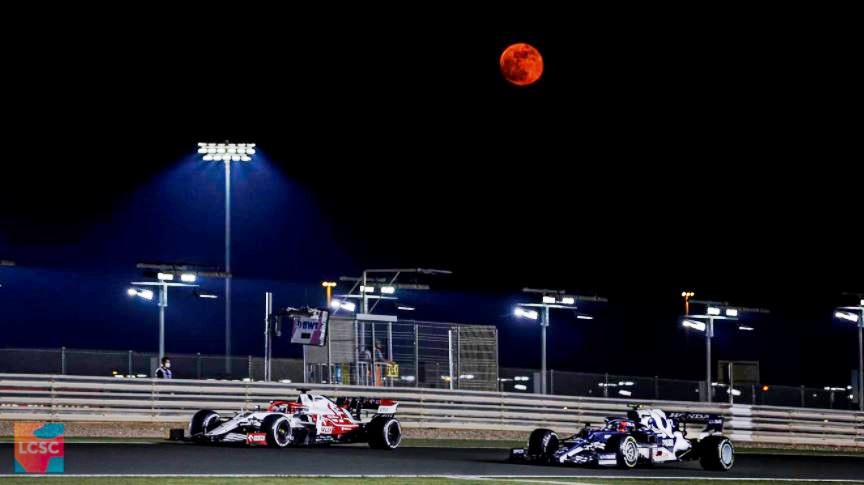
Scuderia AlphaTauri’s Pierre Gasly had been promoted to 2nd on the grid but it was short-lived. From the start through the first few corners, Alpine’s Fernando Alonso dueled with him and eventually took over second spot behind a quickening Lewis Hamilton. Knowing that the Dutchman was working very hard to reach him, he had to open up the gap as wide as possible while Verstappen had to get through traffic.
By lap 4, about 9 minutes after the start, Verstappen was past Gasly and then Alonso and 4 seconds behind Hamilton. Sergio Perez, the other Red Bull driver, was also making progress up the field, having moved up to 8th after passing Scuderia AlphaTauri’s Yuki Tsunoda. Next target – the Red Ferrari of Carlos Sainz, Jr.

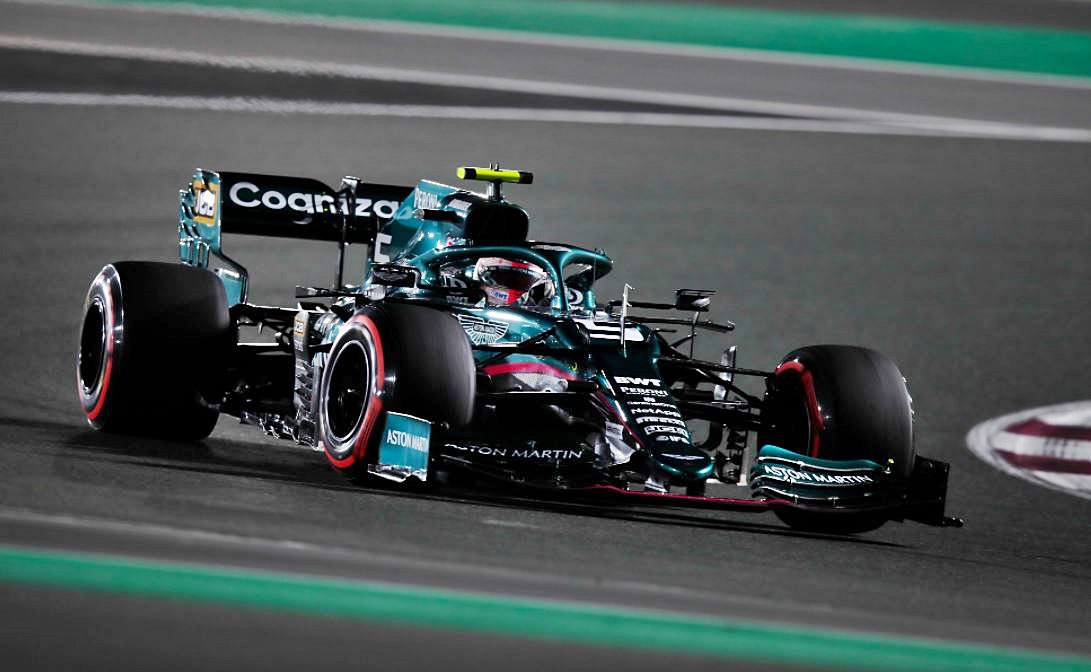
Aston Martin’s Lance Stroll and Bottas both managed to pass a seemingly weakened Tsunoda who eventually came into the pits on lap 10, the first driver to do so in the inaugural Qatar GP. Bottas moved ahead to 9th while Stroll took over Tsunoda’s 10th place. As for Sebastian Vettel, the other Aston Martin driver, from 10th place on the starting grid, he had dropped back to 15th.
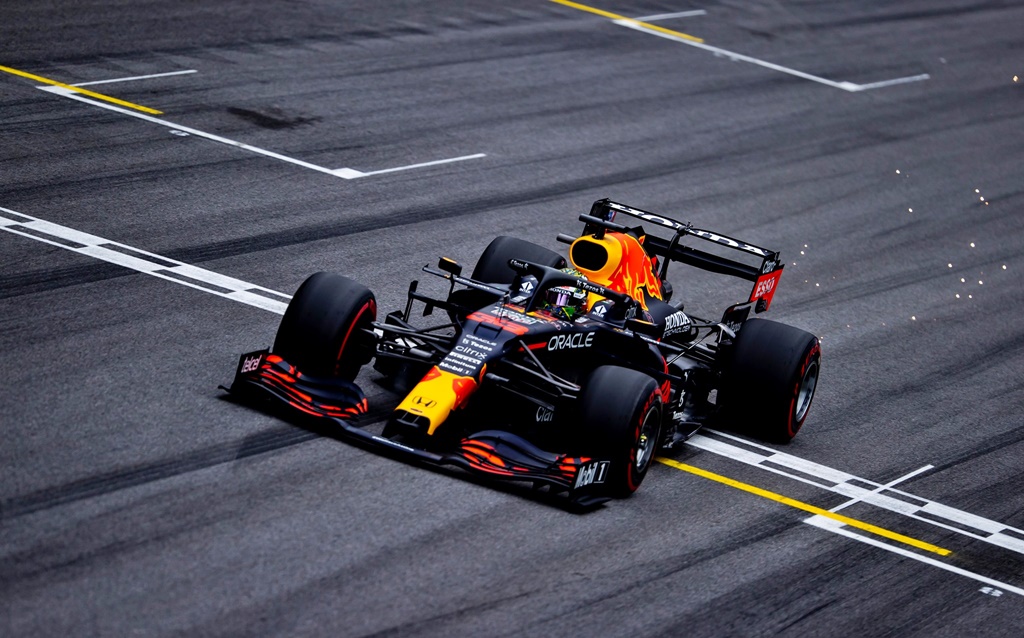
Alfa Romeo ORLEN’s Kimi Raikkonen also came in shortly after Tsunoda and like the Japanese driver, Raikkonen also switched from the soft tyres that had been on at the start to mediums.

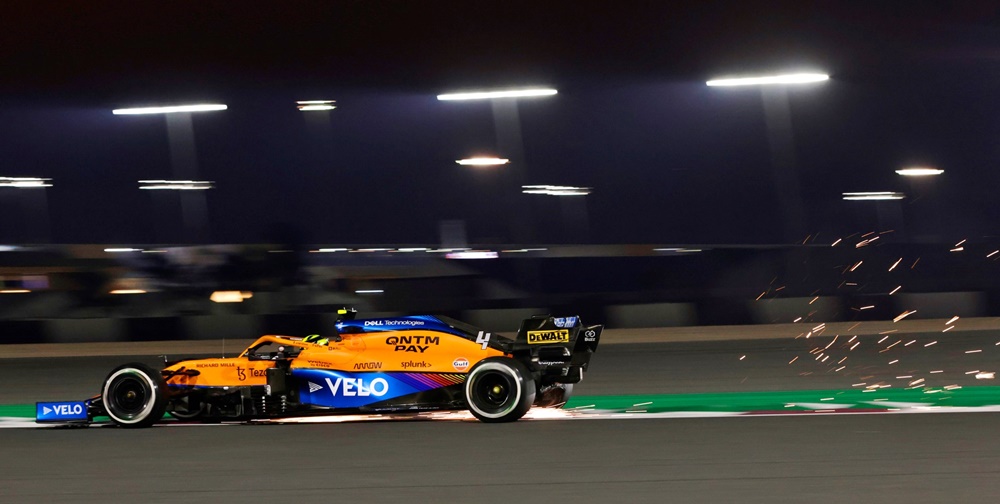
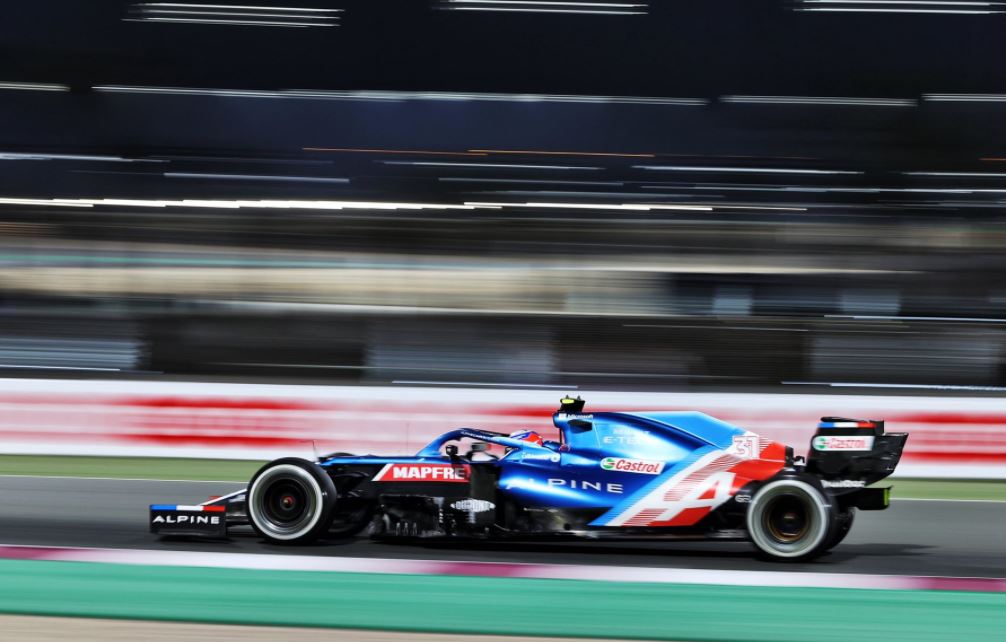
With a quarter of the race done, McLaren’s Lando Norris was up to 4th and had Alonso in his sights. The Alpine driver did not need to work any harder to move forward since he was 30 seconds behind Verstappen, so he would be focussed on defending his position and at least get to the podium for a change. But for Norris, trying to stop a hard-charging Perez from passing was occupying him and eventually, he lost his place.
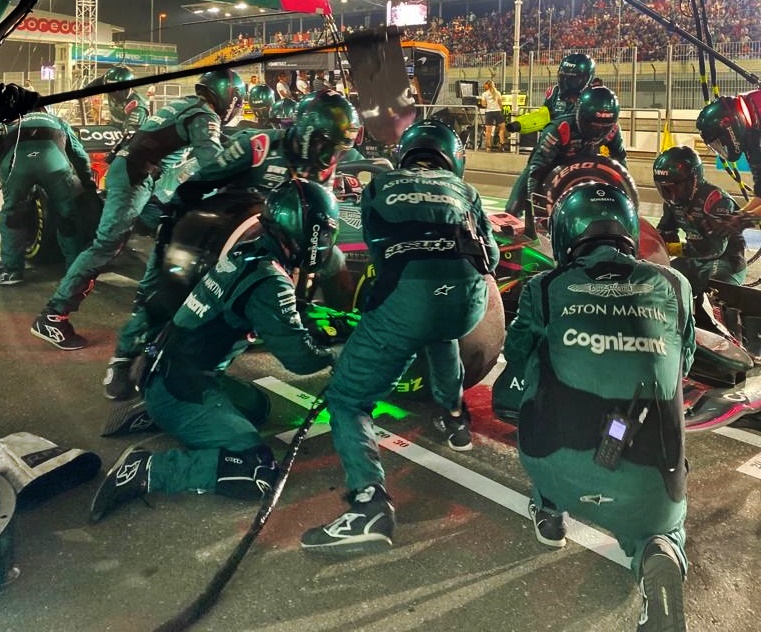
On lap 18, Verstappen came into the pits and left with hard tyres within 2.2 seconds. As expected, Hamilton came in next and took just a tenth of a second longer to depart, also with hard tyres. Neither driver lost their positions. Apparently, Hamilton had been reluctant to come in so early as he felt his tyres were fine but he was obeyed orders – this time.

Other teams did not have the super-quick put stops like the Mercedes-AMG and Red Bull Racing teams, so as their drivers came in, they returned to lower positions from which they had to work their way up again. Alonso, for example, was running in third and after coming in and then rejoining the race, he was done at 8th, his place taken over by Bottas (who had still not pitted).
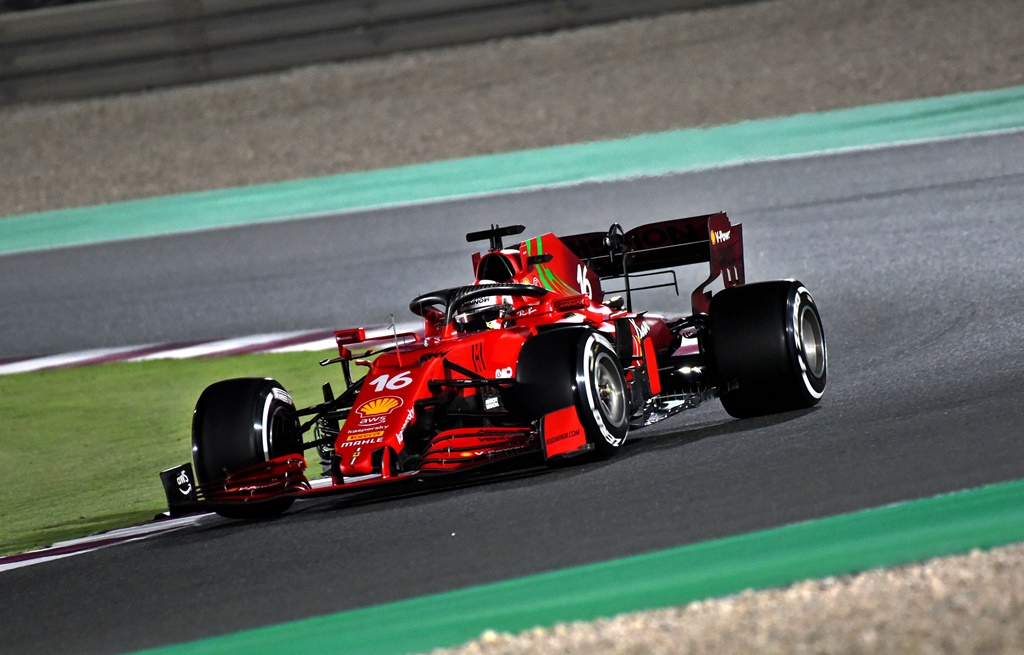
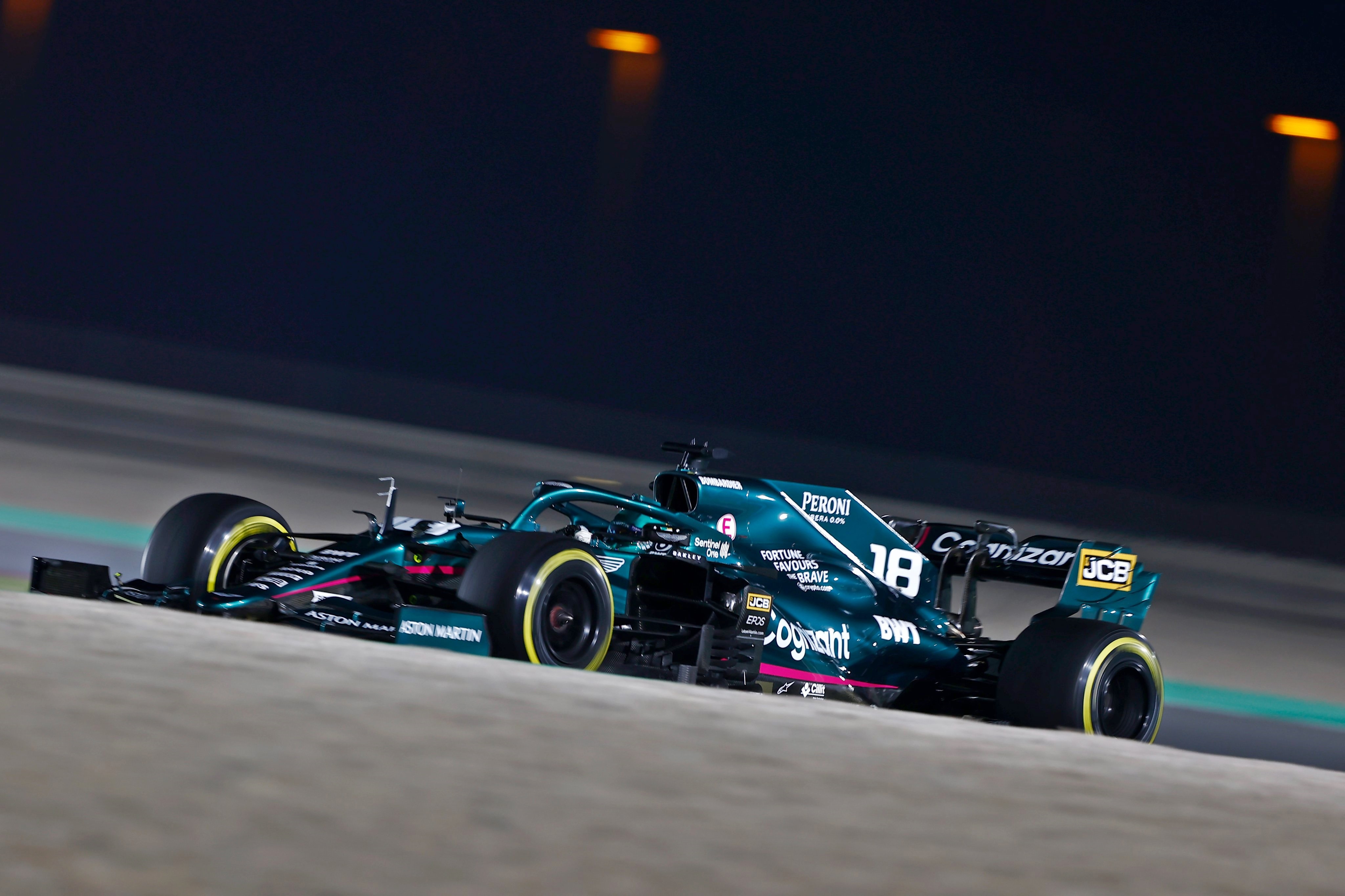
Tyre wear, as expected, was quite high and teams were bringing in their cars for new tyres regularly. Sainz missed coming in as he seemed to miss his call, and continued past the pits to circulate another round before pitting.

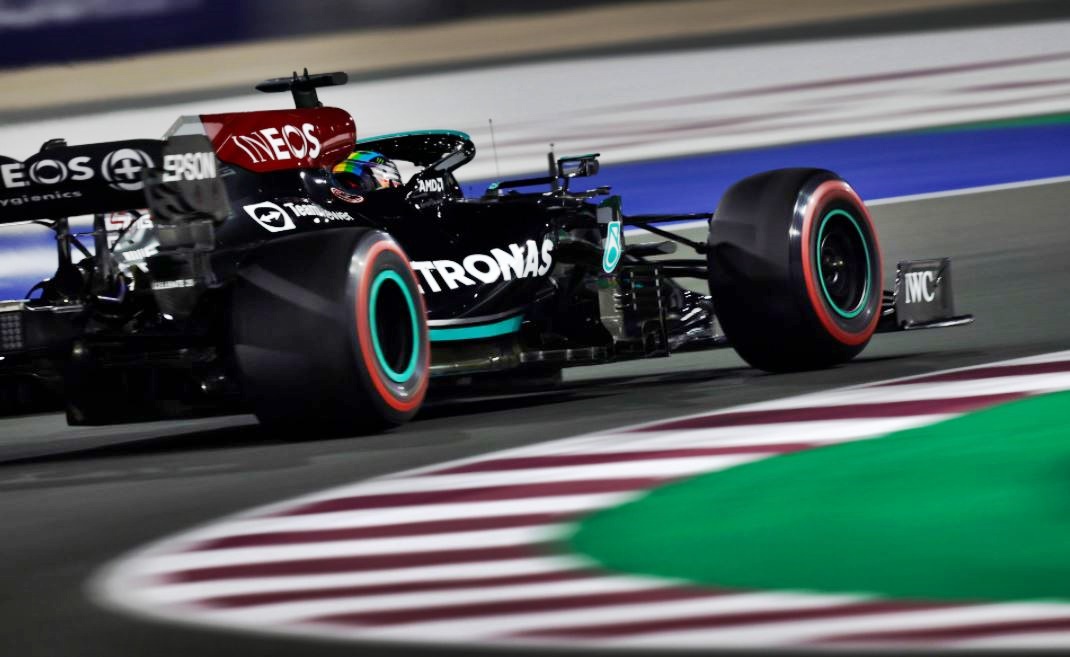
On lap 31. it was Verstappen chasing Hamilton and about half a minute behind, Bottas watching out for Perez as he kept closing in. But for the Mercedes-AMG driver, the risks were increasing as he still had not changed his tyres. And it happened on lap 34 – a puncture on the front left wheel. He slid into the gravel and managed to get back onto the track but had about 2.5 kms to reach the pits. After getting new tyres, he rejoined in 14th place.
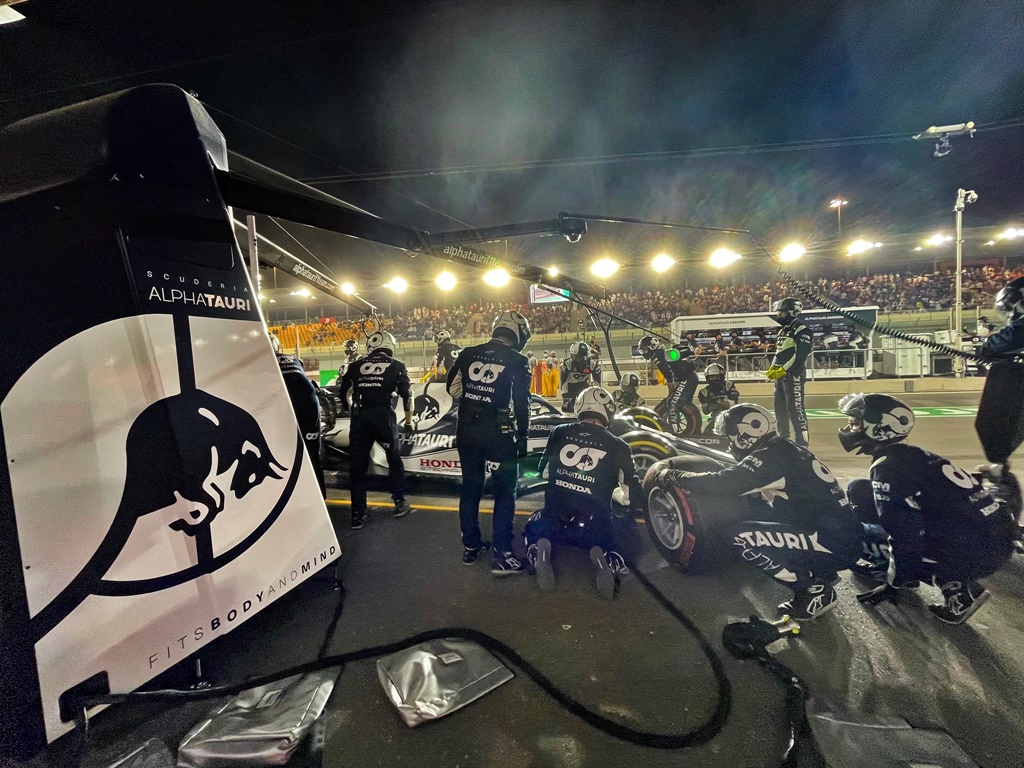
With 15 laps remaining, Verstappen slipped back into the pits for another set of tyres and the Mercedes-AMG team brought Hamilton in right after that. The British driver had maintained a lead of about 8 seconds for many laps, while Verstappen had a huge gaps behind him so there was no distraction from aiming to beat his rival this time.

On lap 47, as a precaution, Red Bull brought Perez in for a new set of tyres, losing him his third place and he fell to seventh. Alonso was thus back in third and had a good chance at the podium with 10 laps remaining. However, Perez was determined to regain his positions and within 3 laps, he was just a corner behind the Alpine driver. Bottas, meanwhile, couldn’t complete his 51st lap and had to retire as the damage sustained earlier was too problematic.
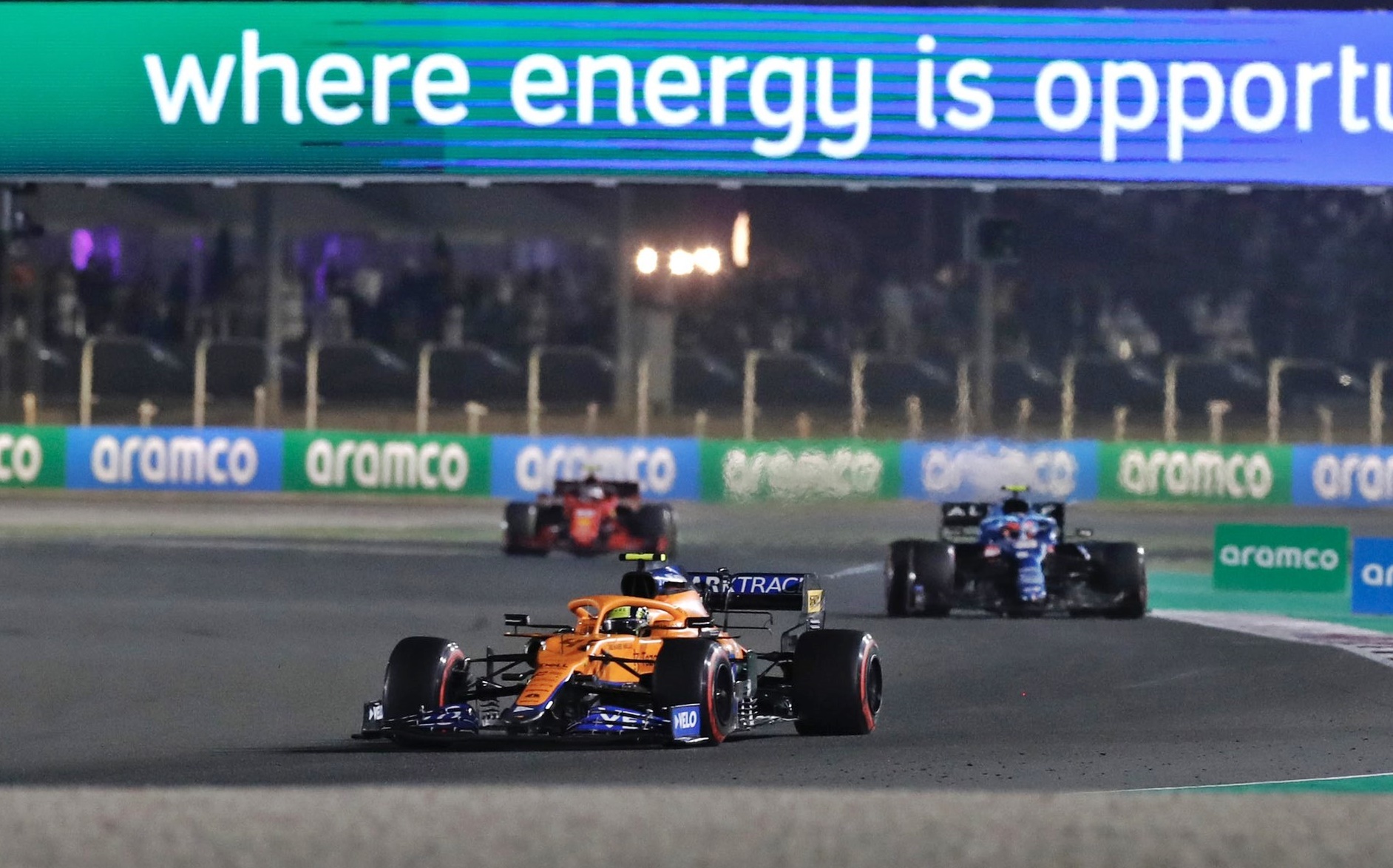
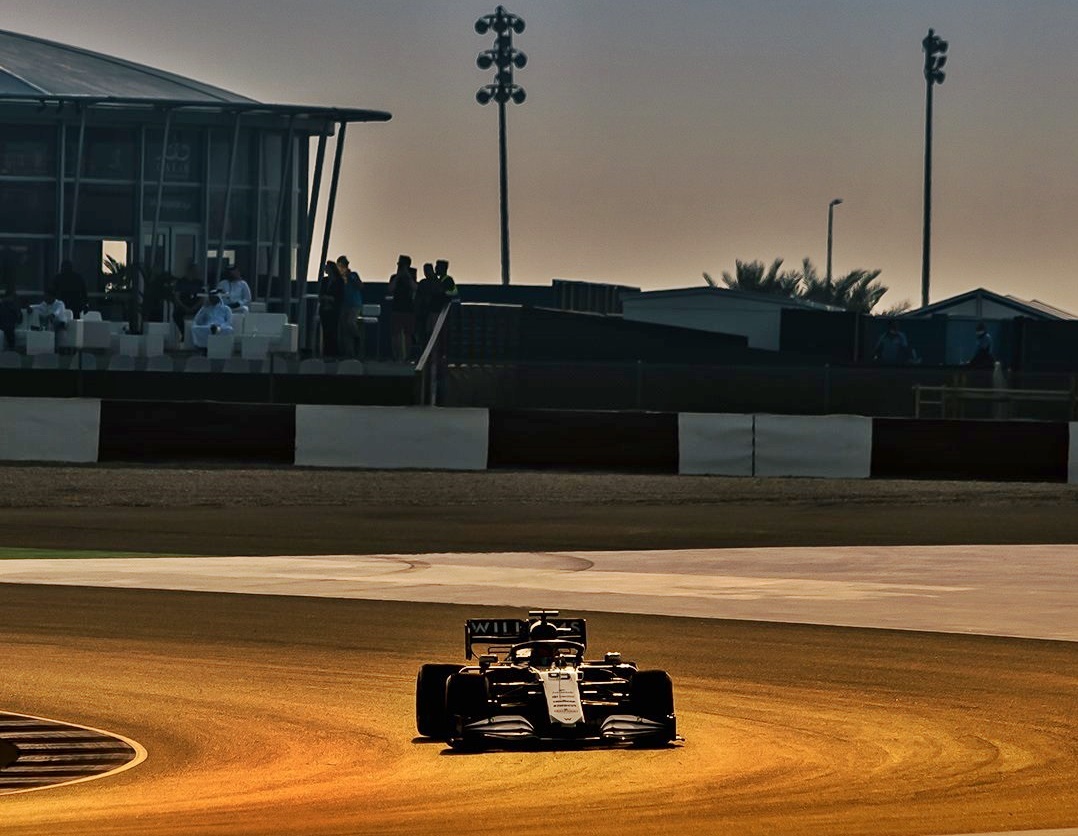
Lap 55 saw the Virtual Safety Car (VSC) activated as Nicholas Latifi’s Williams pulled over to the side and had to be moved by marshalls. Verstappen shot into the pits for a precautionary change and maintained his positions, while Alonso looked like he was on his way to the  podium for the first time in 7 years.

As Hamilton crossed the finish line to win the race, the VSC was still active and then it went off, so Verstappen had a chance to go for the fastest lap and get a 1 more precious point – which he succeeded in getting.

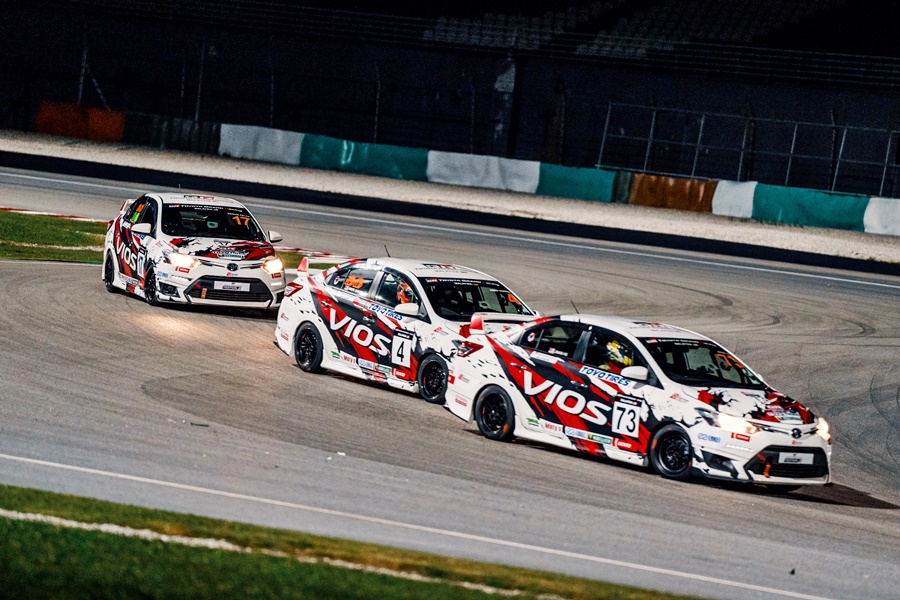
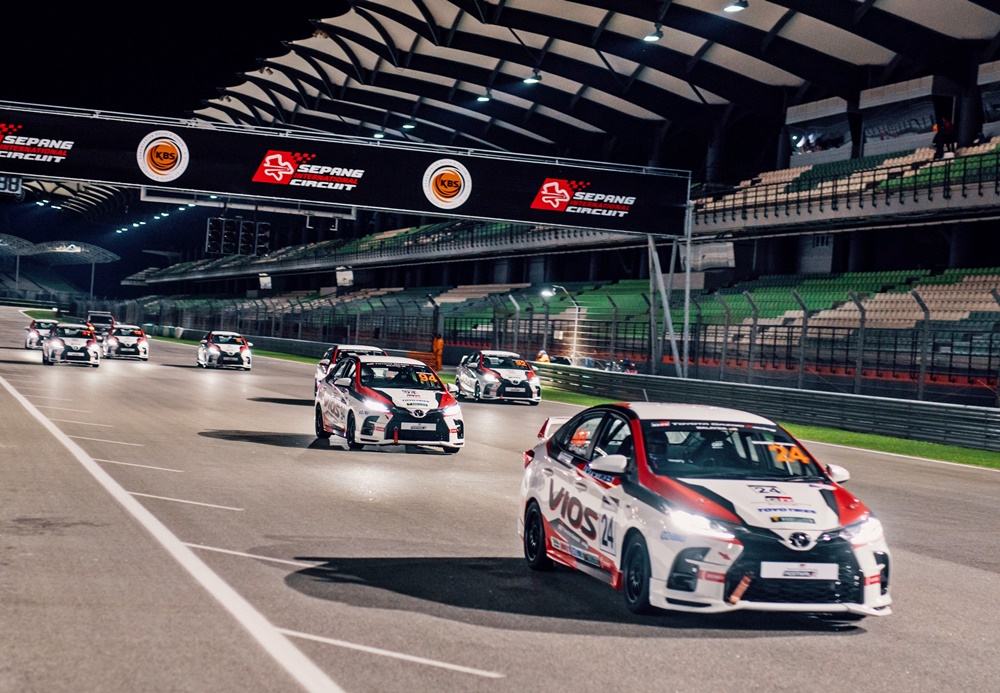
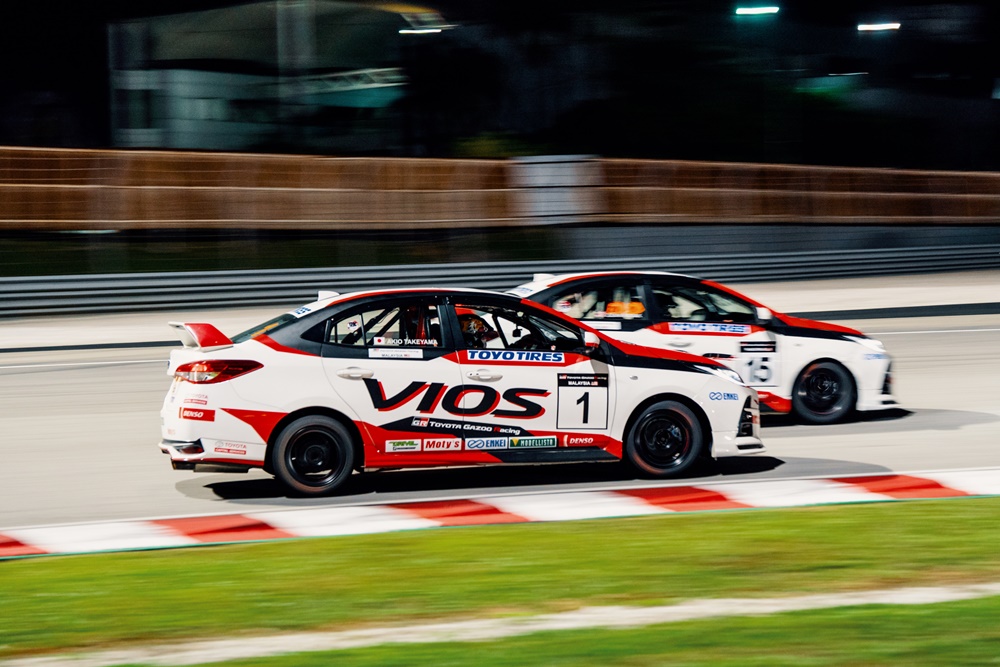
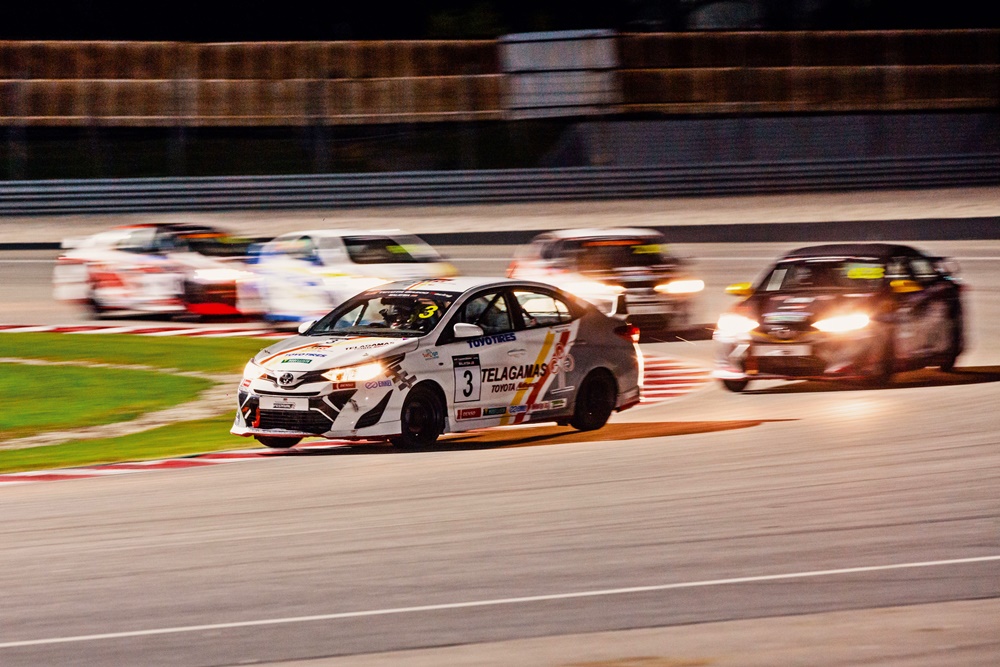
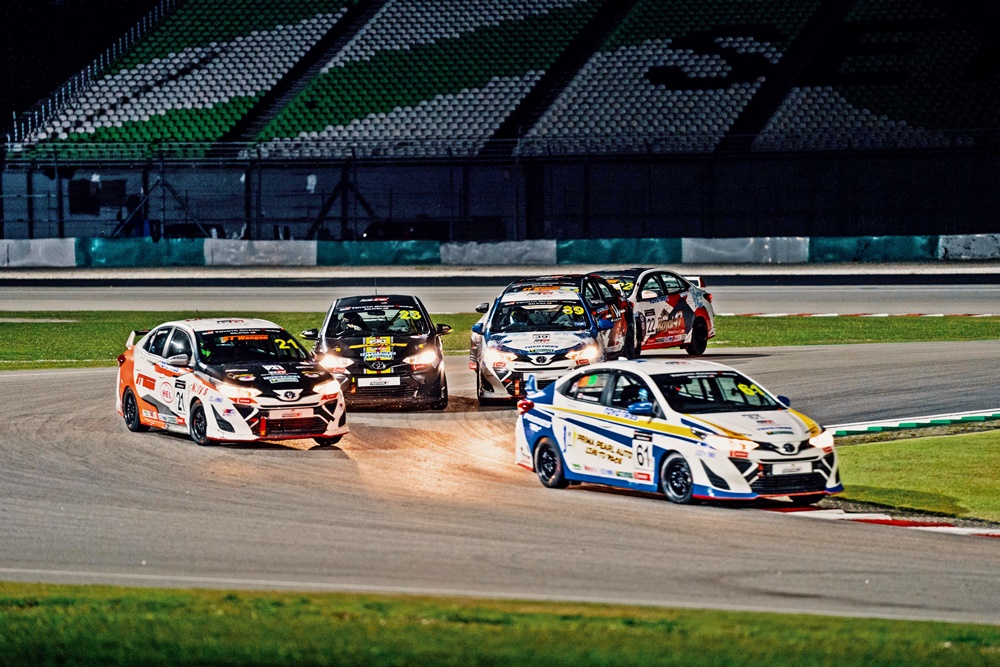
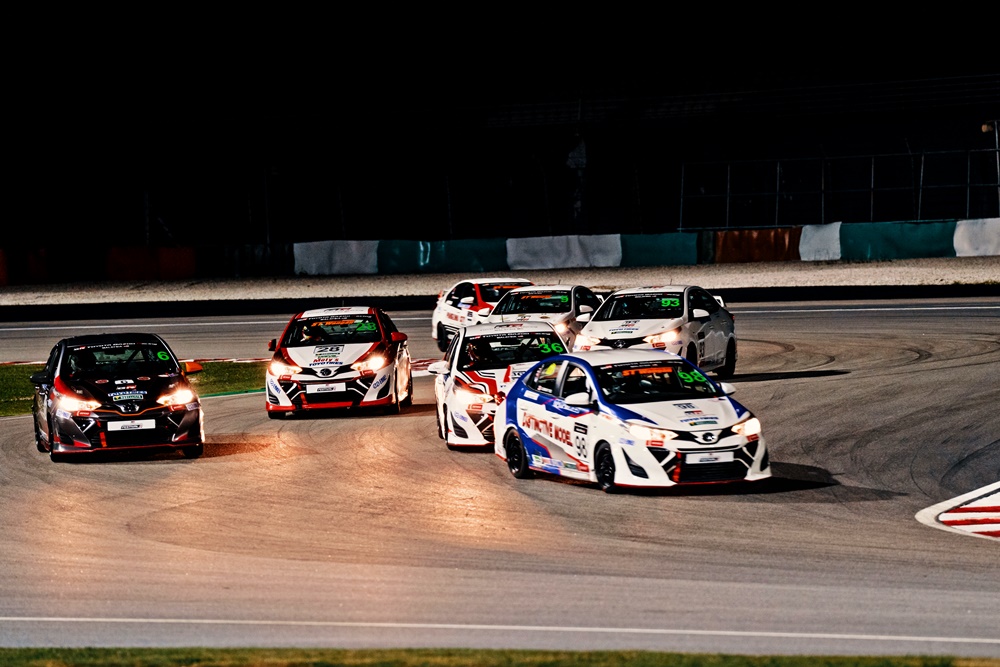
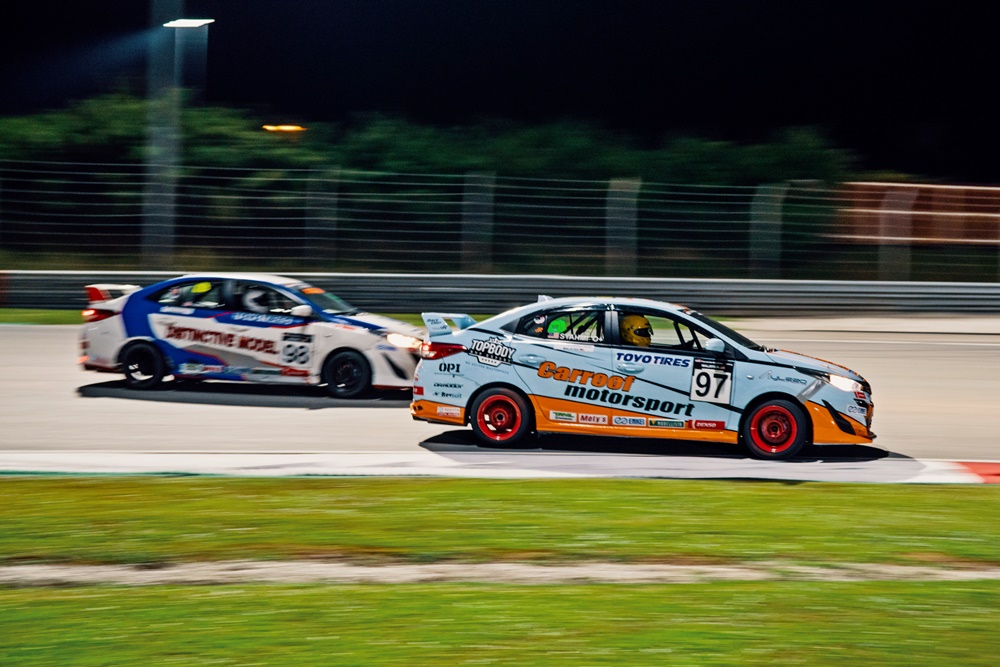
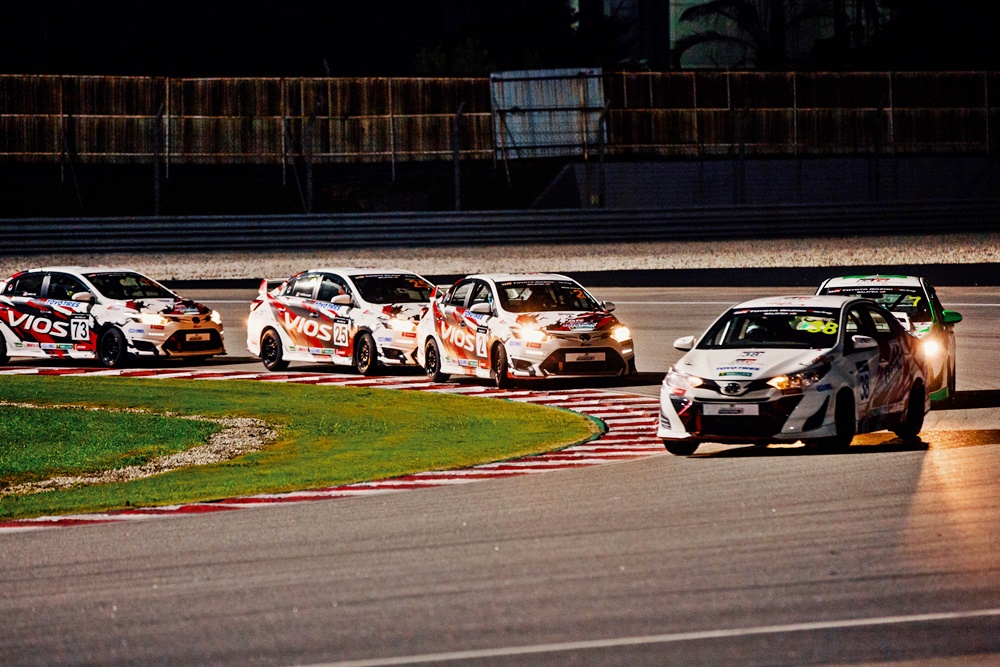
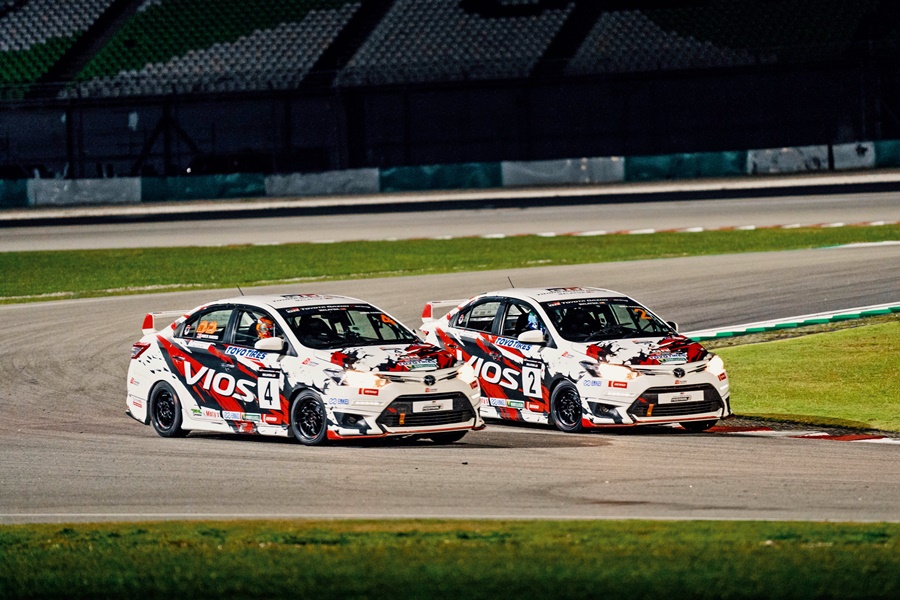
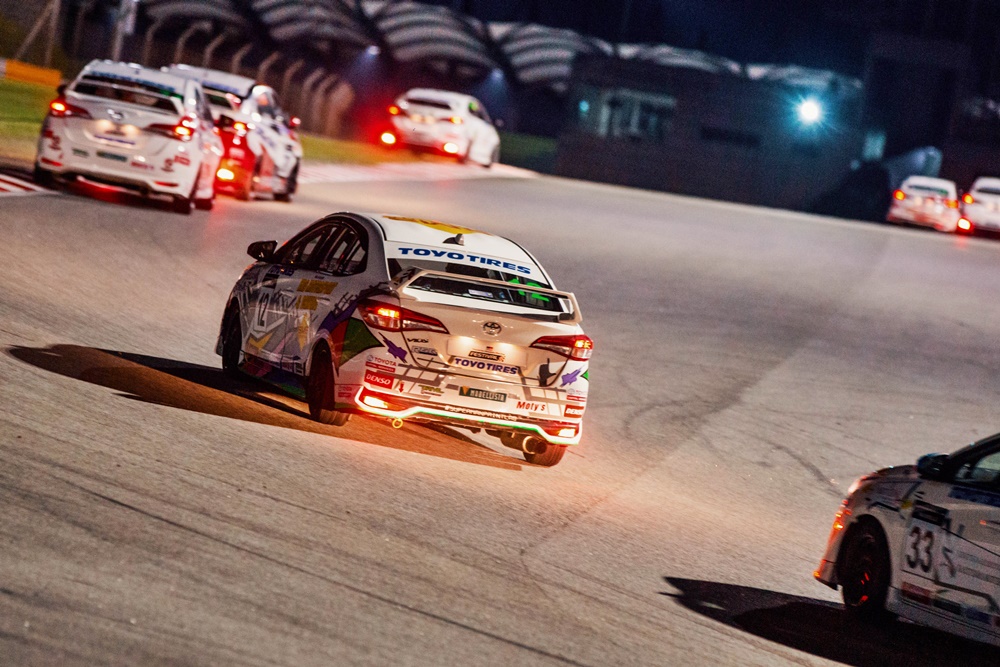
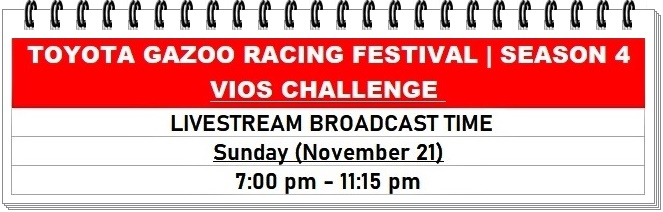
This weekend sees the conclusion of Season 4 of the successful Vios Challenge, a one-make series which was part of the TOYOTA GAZOO Racing Festival. After the first round was held, there was a long period of lockdown which prevented subsequent rounds (and other motorsports) from being run. When the restrictions were lifted, UMW Toyota Motor wasted no time in getting the series going again, with a night race – the first ever for the series – planned for this finale round of 2 races.

After the second round, there was no clear favourites to take the titles in each of the four classes. No less than 5 contenders had a shot of becoming the overall champion in the Super Sporting Class, Sporting Class, and Promotional Class. The same applied to the Rookie Class which is for a young group of new racers from TOYOTA GAZOO Racing Malaysia’s Young Talent Development Program.

PROMOTIONAL CLASS
The most dramatic action this time round came from the Promotional Class. Shukri Yahaya pushed hard from pole position to lead the race from start to finish, as championship contender Zizan Razak struggled to hang on to second spot after having to face increasing pressure from Khai Bahar and Akio Takeyama.

The battle was clearly between Shukri, Zizan and Takeyama, and even with 2 laps remaining, the race was far from over. It seemed like Shukri’s race but Zizan suddenly shot forward to stage a last-minute challenge and overtook Shukri 3 corners from chequered flag to win!

The victory was, however, short-lived when the officials penalized the actor for exceeding track limits during overtaking. This got him a 5-second penalty, effectively relegating him back to second place with Takeyama rounding up the top three.
“I did my best to get away from Zizan as the battle behind me took place but, in the later part of the race, I did notice him coming on even stronger. It was a good fight to the finish and it was unfortunate that there was a penalty involved, but that’s racing,” said Shukri.

Of the five women taking part in this class, Talitha Tan (in her first year with the series) was the highest place, finishing fifth, followed by Janna Nick and Wany Hasrita.

SUPER SPORTING CLASS
In the battle of the veteran drivers, Telagamas Toyota’s Freddie Ang made the most of pole position to stay ahead from the start of the race. He was followed across the finish line by Laser Motor Racing’s Mark Darwin in second spot, and Prime Pearl Auto’s Tengku Djan Ley in third.

The biggest gainer in the race was Tengku Djan who jumped from 10th on the starting grid to finish third. Despite being second quickest in qualifying, Tengku Djan was penalized and repositioned to the back of the grid due to an incident in the previous round.

“The car was fantastic at night. When we race in the afternoon, the high temperatures cause a lot of inconsistencies due to the heat and you find yourself having to manage the tyres and brakes after 10 laps. At night, the car was just perfect and I could post a lot of fast and more consistent times throughout the race,” said Ang.
For Tengku Djan, the third-place finish puts him back into contention for the overall championship after a disastrous Round 2 where he failed to finish on the podium. “We had a good car throughout the weekend and I needed to drive a clever race. I have to drive smart for the final race as I am back to 40-kg ballast which is a huge disadvantage. It’s a question of trying to make up for all the missed points in Round 2,” said Tengku Djan, also known as Malaysia’s ‘Prince of Drift’.

SPORTING CLASS
Late night drama also unfolded in the Sporting Class where 23 Motors’ Ady Rahimy who had run away with the race from pole position, finishing 12.3 seconds ahead of Dream Chaser’s Bradley Benedict Anthony and Dannies Ng in third position, was later handed a one-position penalty. That promoted Bradley as race winner and Ady had to settle for second.

“I want to thank my team for giving me the opportunity to race for them. I’m quite certain that fitness played a big part in tonight’s race; secondly, I did a lot of simulator training to prepare myself for the race. The team also put in tremendous effort to set-up the car but it was unfortunate that the contact resulted in a penalty. We will definitely try for another podium in the final race,” said 22-year old Ady.

The battle for third had no less than 5 contenders battling for a podium finish. Mirza Syahmi Mahzan of Aylezo Motorsports held on to third for the first 12 of the 20-lap race but came under tremendous pressure from Clement Yeo. Yeo did eventually overtook him but went wide on the exit of the last corner which saw him losing not only third place but dropping to fifth position.

“Racing at night is more chilly with lower temperatures and I tend to be a lot more patient and comfortable,” remarked Ng, who started from 12th position to run a calm and collected race into third position.

ROOKIE CLASS
The battle of the young blood saw 14-year old Putera Adam win the 20-lap race with a 1.3-second lead from Jwan Hii and championship contender Naquib Azlan. Driving a calm and composed race, Putera raced ahead of the pack from pole position, followed closely by Hii and Naquib as Mika Hakimi relinquished his position to enter the pit to fix a technical issue. That stop dropped him to fifth position behind Amer Harris.

“The conditions were fine at night; it was drizzling towards the end of the race and everything worked in my favour. Jwan was right behind me, but he had made a slight mistake shifting gears and that that allowed me to pull ahead,” said Putera.

With the overall season class champions still to be decided, it will all come down to the final and second race tonight. There are no clear favourites with no less than 5 contenders still with a shot of becoming the overall champion in each of the 4 classes of racing being contested.

Besides the strict health measures that are followed at the circuit, UMW Toyota Motor has also implemented additional safety measures which include allowing only critical personnel and guests to be at the event. As before, the racing will be broadcast live online for race fans in Malaysia and the rest of the world. The broadcast will be on the UMW Toyota Motor and TOYOTA GAZOO Racing Malaysia websites at toyota.com.my/tgrmalaysia/, and also on the Toyota Malaysia and TOYOTA GAZOO Racing Malaysia Facebook pages.

Race starts at 5 pm in Qatar | 10 pm in Malaysia

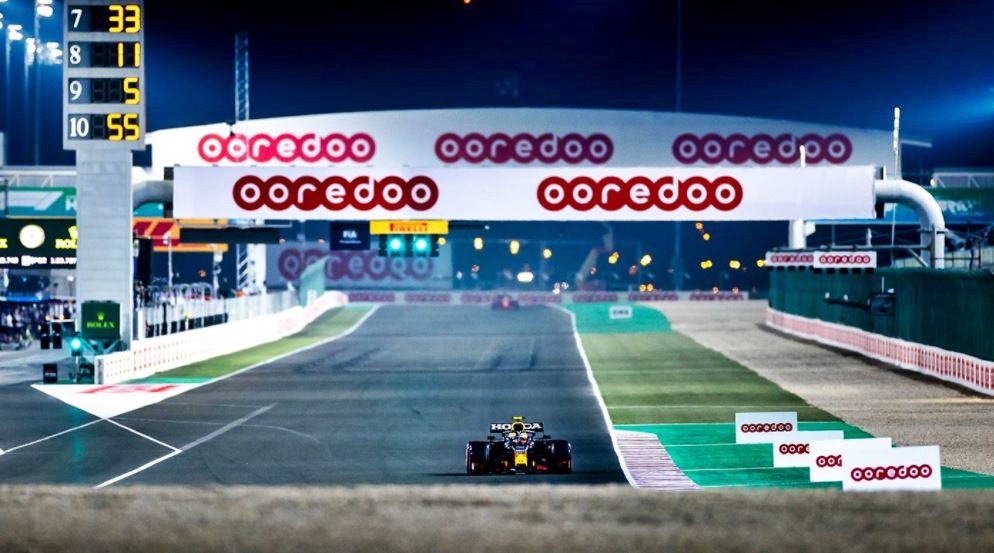
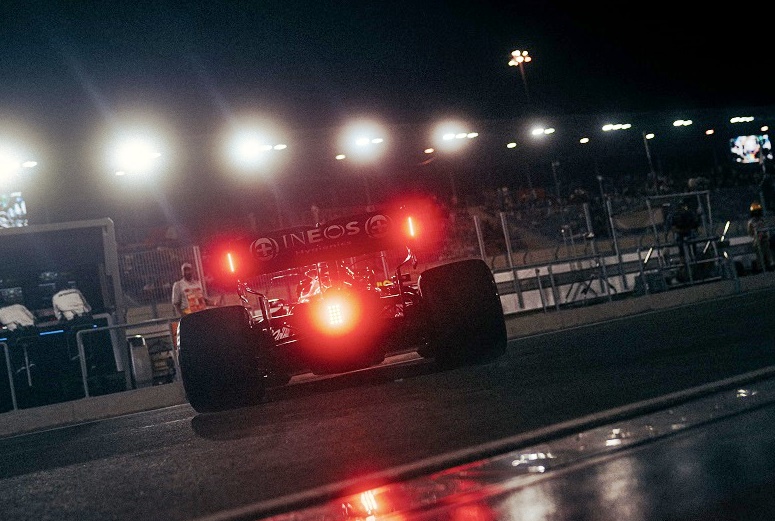
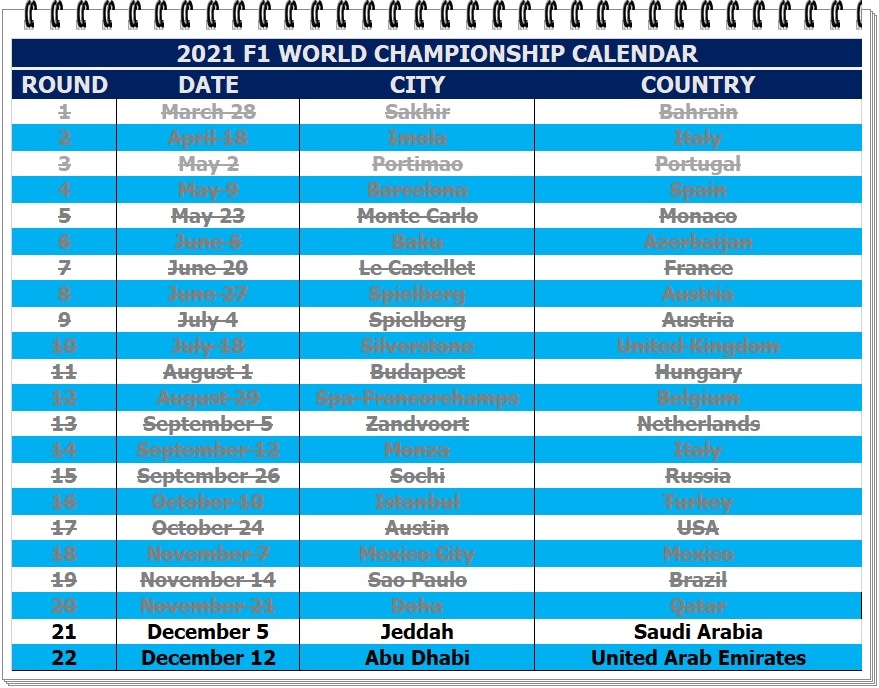
With the 3 events in the western hemisphere completed, the final leg of the 2011 Formula 1 World Championship takes place in the Middle East this month and next month. This weekend will be the Ooredoo Qatar Grand Prix in Qatar, a small country in the Persian Gulf. This race, which is Round 20, will be special as it is the first F1 race held in Qatar, and it is held at night. Each year until 2032 (except for 2022 as it coincides with Qatar’s hosting of the 2022 FIFA World Cup), the country will be one of the venues.

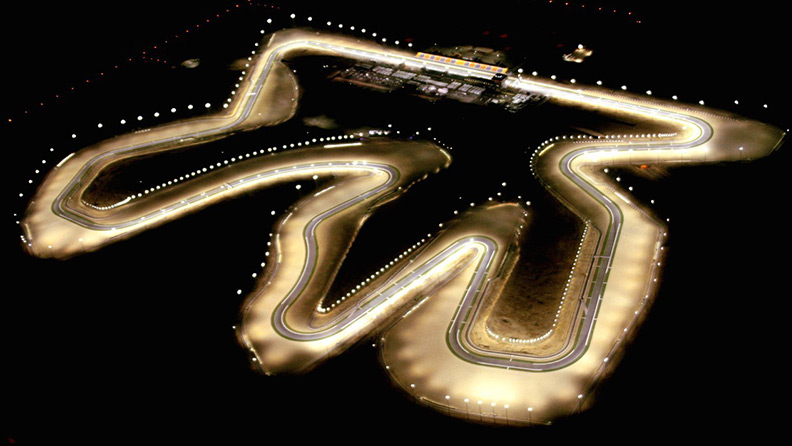
The Losail International Circuit for the race is not unknown in the motorsport world. It is FIA-certified as it has been a MotoGP venue since 2004, so some technical data is available although it would be related to motorcycle racing. It has also hosted car races, such as the GP2 Asia Series and WTCC, but clearly no car has reached the speeds that the Formula 1 cars will hit, both on straights and in turns.
Sergio Perez is the only current F1 driver to have raced at Losail. The Mexican driving for Red Bull Racing contested 2 rounds of the 2008 – 2009 GP2 Asia series at this circuit. Nico Hulkenberg won that year so if he was also racing in F1 today, he would be the other driver with experience on the circuit.

“This is the first time Formula One has raced in Qatar, so it’s a step into the unknown for everyone. We have no historical data of the Losail International Circuit, so much more focus in the build-up to the event is in the virtual world, working on the computer simulations and driver-in-loop simulator running with the limited information we do have for the track,” said Mercedes-AMG’s Toto Wolff.

“The workload around the simulations is obviously higher, because we’re more dependent on them, and the simulator program will be hard at work all through the week, including running on Friday to maximize the fresh learnings we receive from practice,” he explained.

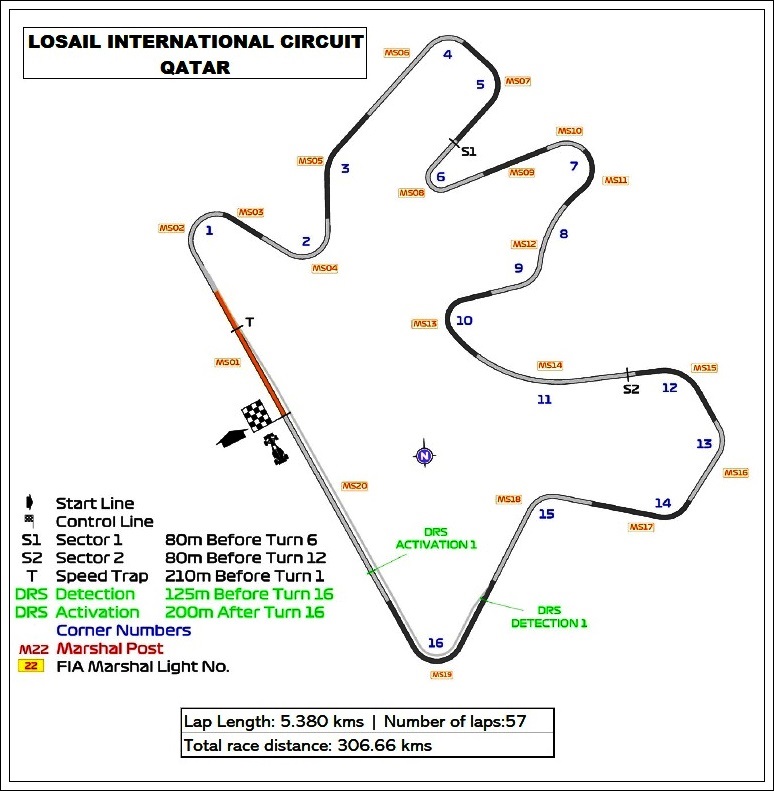
The 5.38-km track still has its original surface from 2004, which offers high grip and has become quite abrasive over time, accentuating wear and degradation. Despite the presence of strategically-placed artificial grass around the circuit to keep away the sand from the desert, the surfaces could still become very dusty thus affecting grip. Pirelli classifies the circuit as high severity, and have chosen their 3 hardest compounds for this race.

The dominant characteristic of the circuit is the close sequence of 16 corners, many of them taken at high speeds. Downforce levels will be high, but whether or not they are at maximum will depend on how many of those corners are power rather than grip-limited.

“I really like the track here at Loisail, it is great. It’s always interesting to mix things up and see a new venue on the calendar. What will be key is balancing the first and last sectors, due to tyre overheating that is caused by the high temperatures here,” said Scuderia Ferrari’s Charles Leclerc.

“Qatar is just one of four races held in the evening under floodlights this year. This means that the evolution of track temperature over the course of the race should be quite different compared to a standard afternoon race, with the potential for a big drop-off as the race goes on. In the desert, there’s a big difference in temperature between day and night,” explained Pirelli’s Mario Isola.

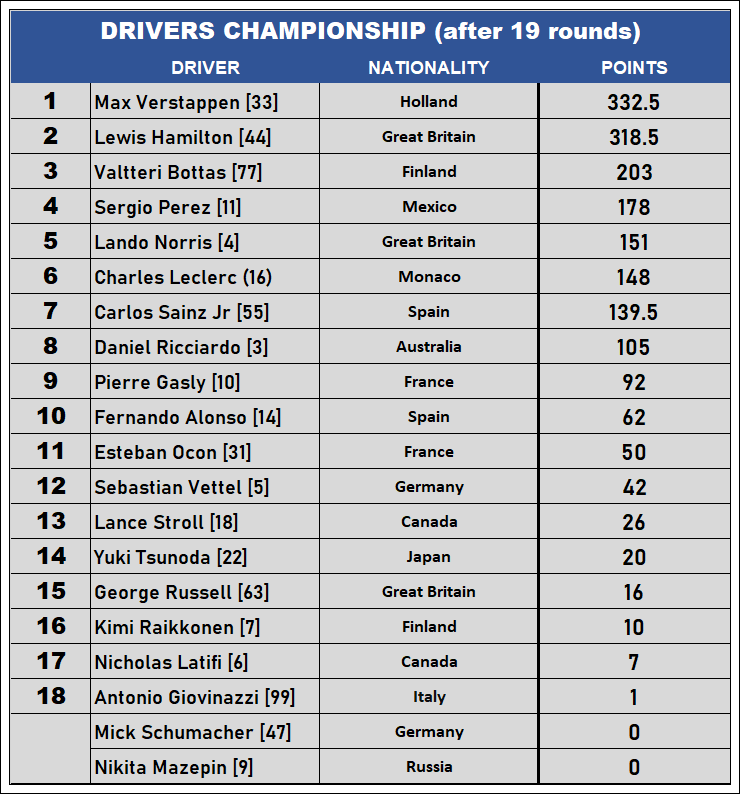
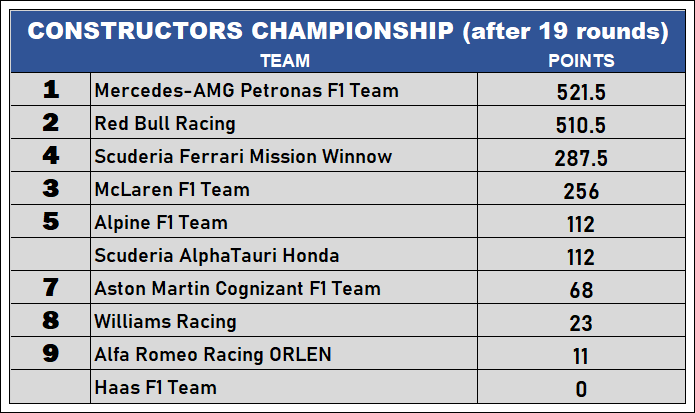
The championship titles are still not confirmed. Victory for Lewis Hamilton in the previous round in Brazil saw the Mercedes-AMG PETRONAS team extend their lead over Red Bull Racing to 11 points. In the Drivers Championship, Max Verstappen still has the lead but with the 25 points he collected, Hamilton cut that lead to 14 points.

During this decade, Kia will be electrifying its whole line-up as it aims to achieve carbon neutrality throughout the company’s value chain by 2045. Its popular SUV range is already partially electrified with some models having hybrid powertrains, and in due course, fully electric powertrains will be used.

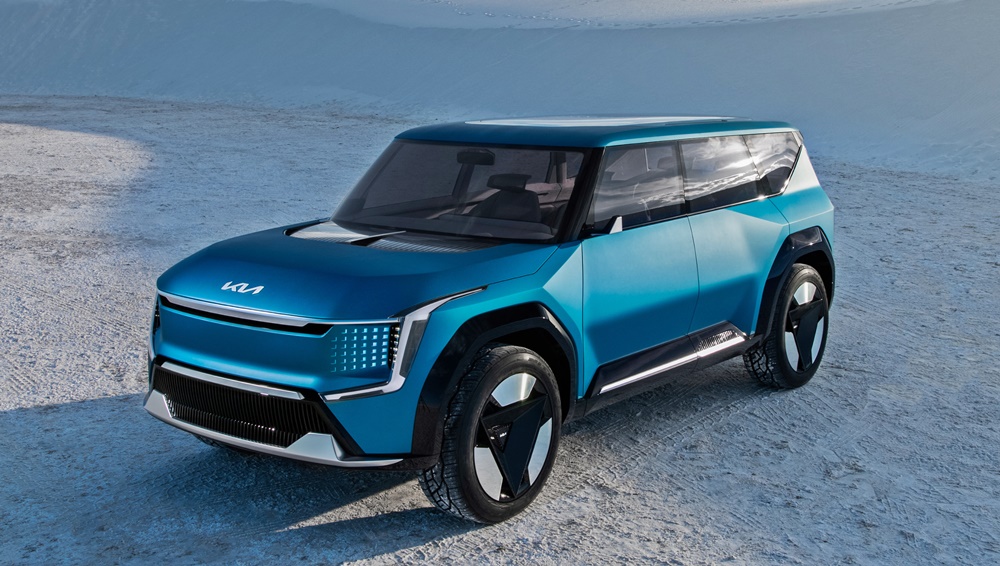
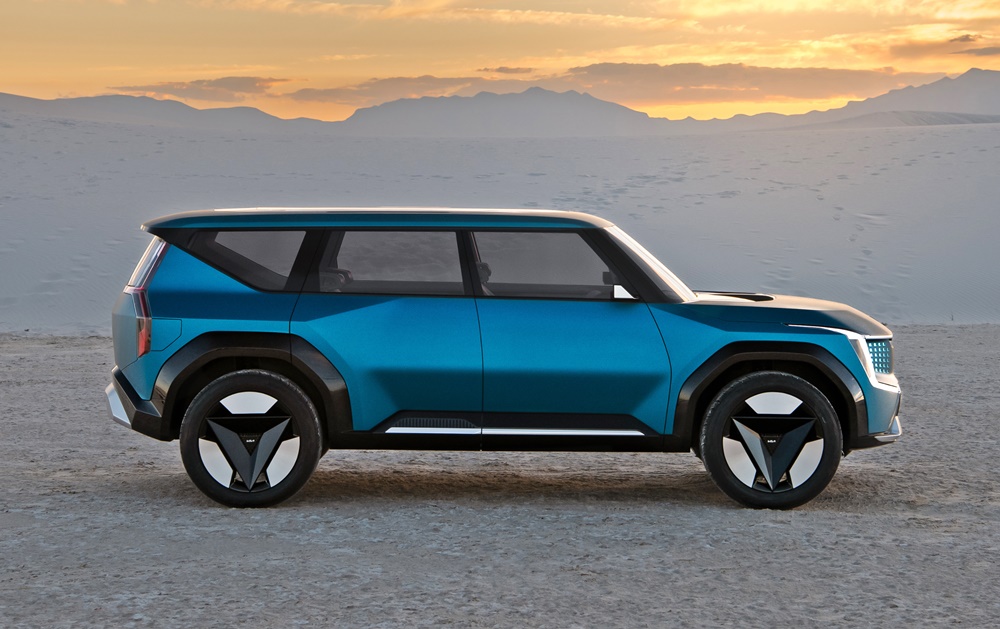
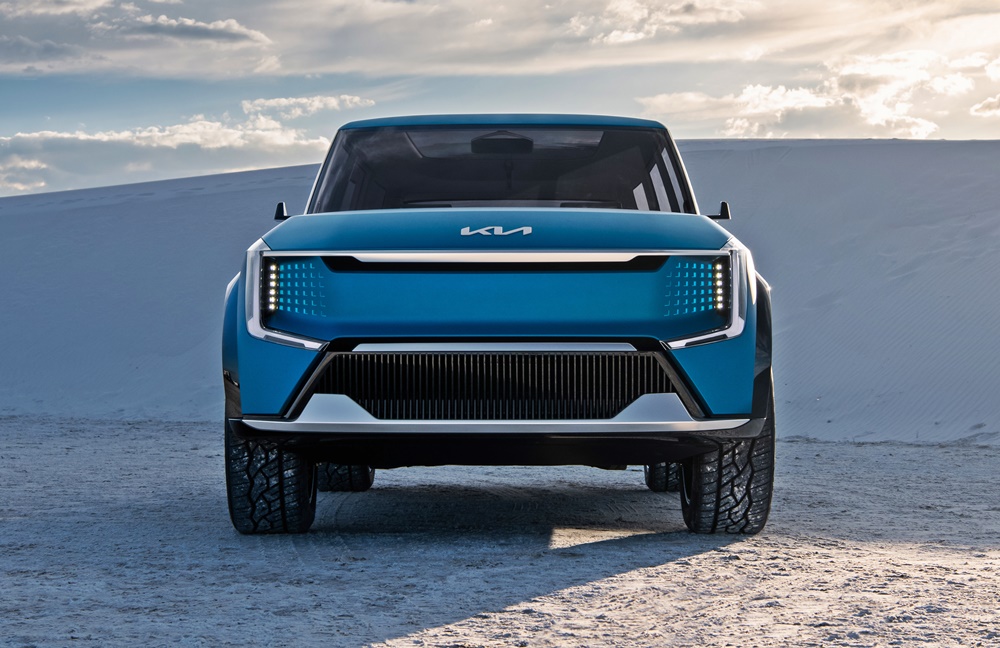
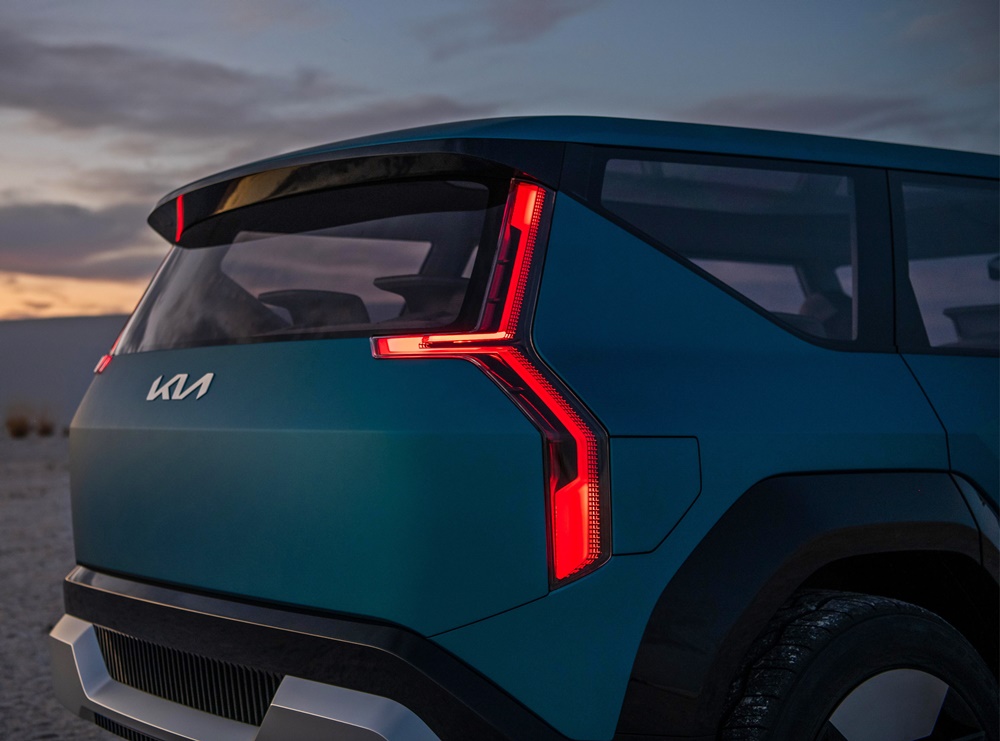
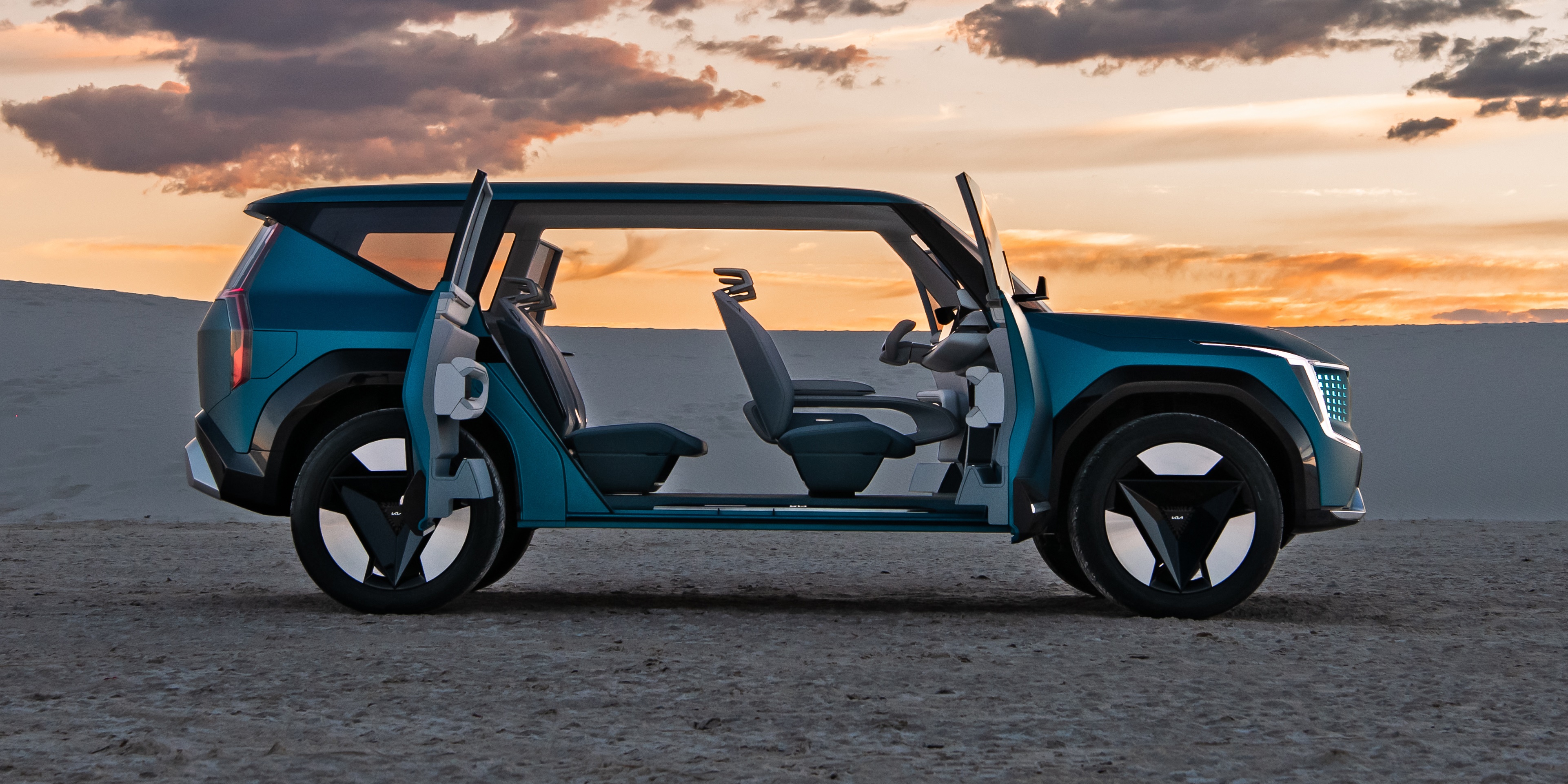
Today, the Telluride is the biggest SUV that the Korean carmaker offers and the fully electric successor could look like the Concept EV9 which is on display at the Automobility LA motorshow in Los Angeles this weekend. The Concept EV9 follows the EV6 in Kia’s BEV (battery electric vehicle) range that will continue to grow with one new model each year.

2021 Kia Concept EV9
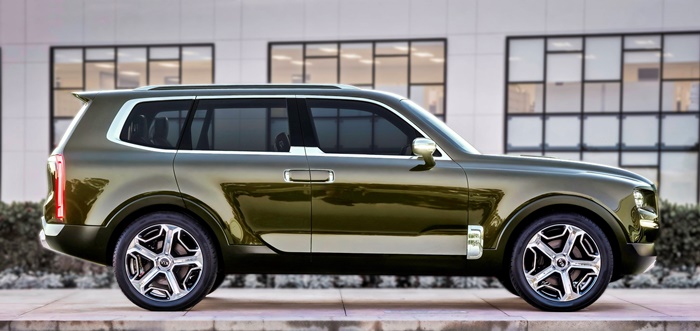
The Concept EV9 has similar proportions to the Telluride (below) which is Kia’s 3-row flagship SUV currently on sale. Could the Concept EV9 be the successor?

Platform optimised for EVs
Like the EV6, the Concept EV9 uses the Hyundai Motor Group’s Electric Global Modular Platform (E-GMP) which is developed and optimised for BEVs. This means that the advantages of an electric powertrain can be fully utilised, compared to other platforms which have been designed for conventional combustion engine powertrains as well.

The design of the vehicle was inspired by nature with striking visual aesthetics derived from Kia’s ‘Opposites United’ design philosophy. The design team was especially influenced by the ‘Bold for Nature’ pillar of ‘Opposites United’, hence the bold form meshing logical and emotional qualities with informal, rugged features and styling cues.

2021 Kia Concept EV9

Tiger Face goes digital
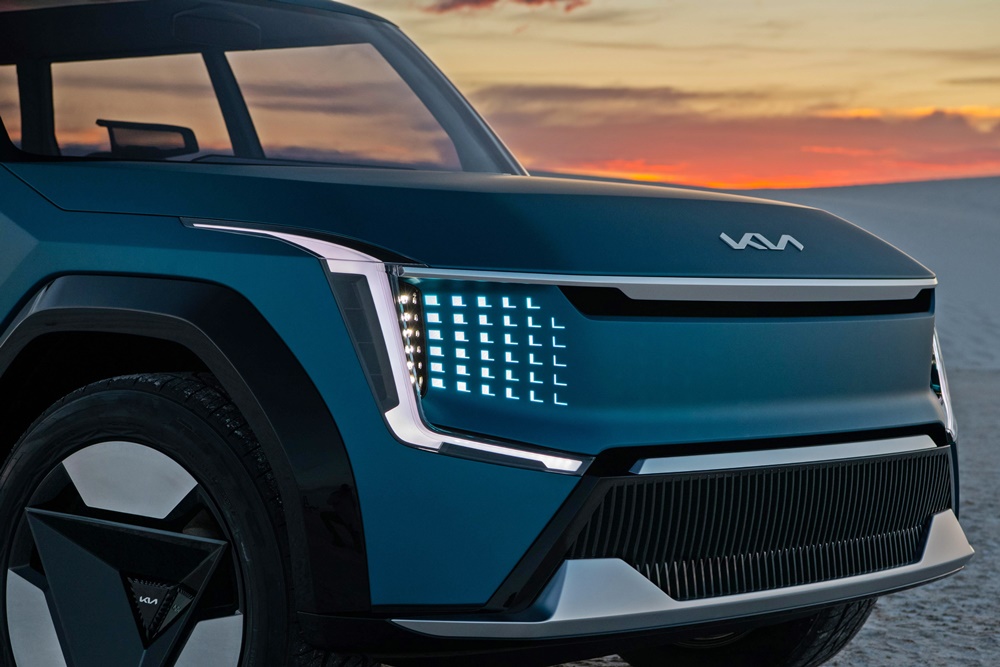
The ‘Tiger Face’ has been used in every Kia model since 2007 and has constantly evolved. This iconic feature will continue into the BEV era and is reinterpreted appropriately on the Concept EV9. With no need for a traditional grille to let air flow in, the space houses an intricate star cloud pattern display that is completely hidden behind the body when not in use. Sequential patterns create a ‘welcome light’ for the driver and also function to appropriately position lights during driving.

2021 Kia Concept EV9

2021 Kia Concept EV9

The opportunities afforded with a re-styled grille and the Digital Tiger Face have resulted in a new air vent design that reduces the frontal mass of the vehicle and greatly improves aerodynamics.

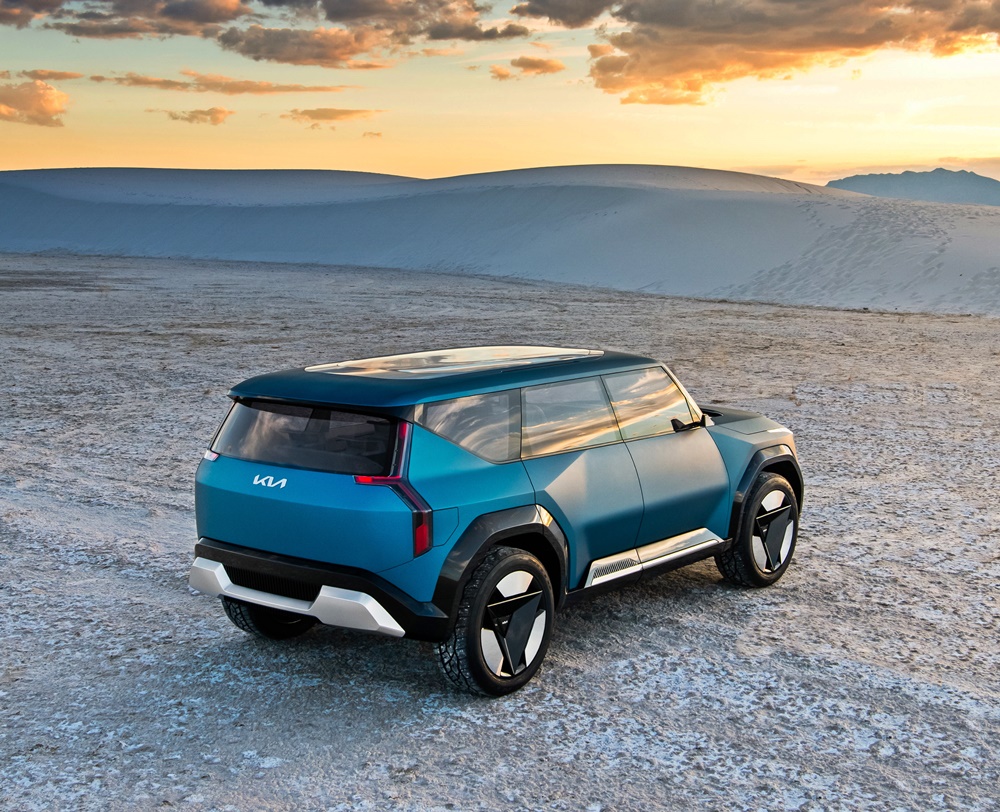
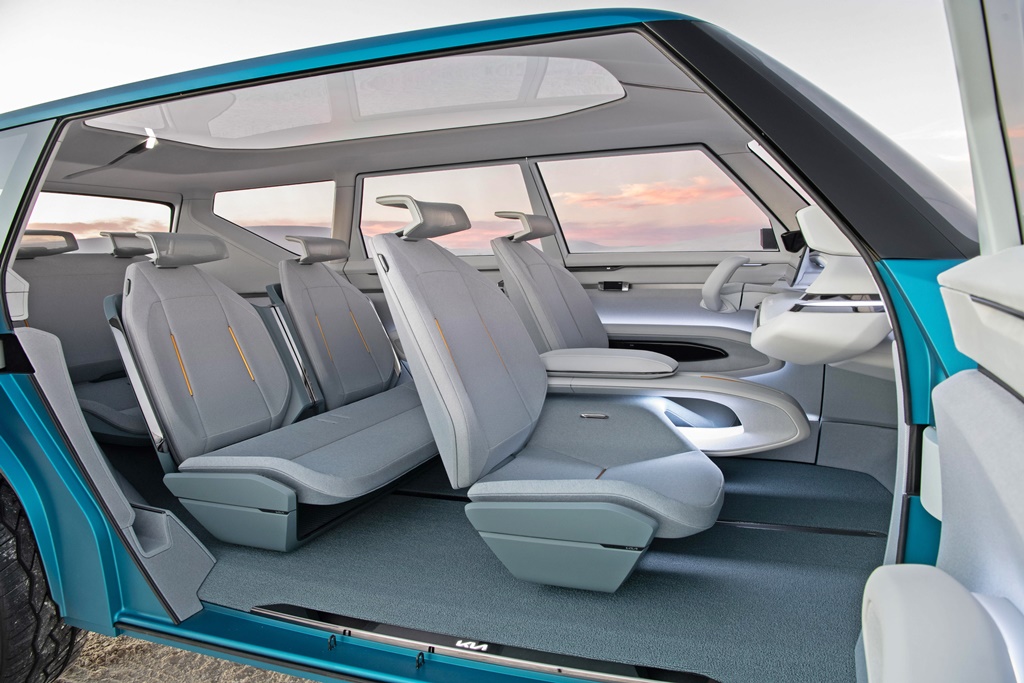
Measuring 4930 mm in length, 2055 mm in width and 1790 mm height, the proportions of the vehicle outline a 3-row SUV interior. Mirroring the exterior design, the interior of the Concept EV9 offers the driver and passengers a transformative interior space. It is a comparable to a first-class lounge with a panoramic roof complementing the large glazing to give a sense of lightness and being in contact with the environment.

2021 Kia Concept EV9

Three interior modes
With a spacious 3.1-metre long wheelbase, the interior can be configured in 3 modes that capture different journey situations and requirements. Active Mode is when the Concept EV9 is on the move, making sure the driver and passengers have an optimal driving experience from within the all-electric SUV. The two other modes relate to when the Concept EV9 is not moving.

2021 Kia Concept EV9

Pause Mode modifies the interior space to be more akin to a first-class lounge, giving occupants the opportunity to directly interact with each other while benefiting from the light streaming in from above. In this mode, the seats switch around to enable occupants seated in the first row and third row to face each other. The second-row seats fold down and become a table, completing the lounge arrangement.

The second stationary mode is Enjoy Mode, which opens the interior into a downtime breakout space by turning around the 3-row seat configuration. In this mode, the tailgate opens, giving all occupants the opportunity to connect with the outside environment and gaze ahead and beyond the vehicle while sitting comfortable inside.

2021 Kia Concept EV9

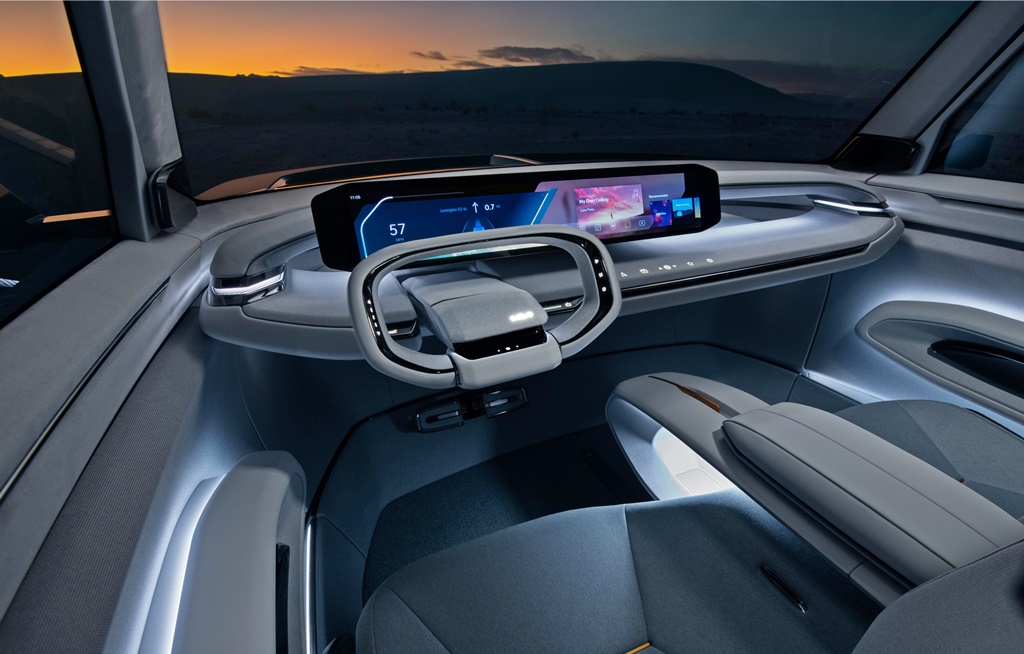
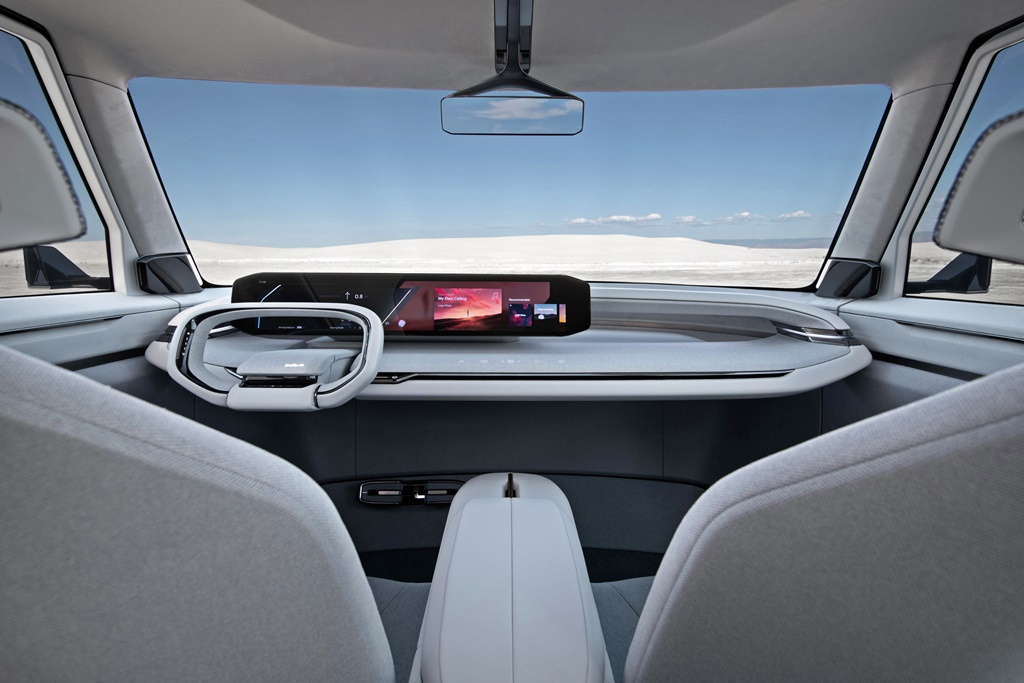
A sense of ‘tomorrow’ can be seen in the steering wheel. The automotive industry today treats the steering wheel like a separate product, like a total standalone subsystem. In the  the Concept EV9, however, this element takes a radically different approach in which the pop-up steering pad is an extension of – and integrated and harmonized within – the interior space.

An interactive 27-inch ultra-wide display connects the Concept EV9 from the real-world to the virtual one, while serving as the nerve centre for all driver and passenger requirements, including media, climate control and comfort functionality features.

2021 Kia Concept EV9

480-km range
Details of the powertrain are not extensive and Kia says that it has a range of up to 480 kms. It is fitted with next-generation ultra-fast charging technology that uses a 350-kW charger for ‘refuelling’ the battery pack from 10% to 80% in 20 – 30 minutes.

The bonnet vent duct area is utilized as a solar panel that helps recuperate some of the electric energy for the vehicle. This gives owners an alternative source of energy when they are not close to a charging station.

2021 Kia Concept EV9

Bermaz Auto takes over Kia business in Malaysia, with local assembly to commence in 2022.

Ghostbusters, the 1984 movie, became a cultural phenomenon with its ground-breaking blend of comedy, science fiction, horror and action. The second biggest film of 1984, it grossed US$295 million during its first run and is often considered one of the first movie blockbusters. There was a sequel in 1989, a reboot in 2016 and now, nearly 30 years after the original, Ghostbusters: Afterlife has just been released.

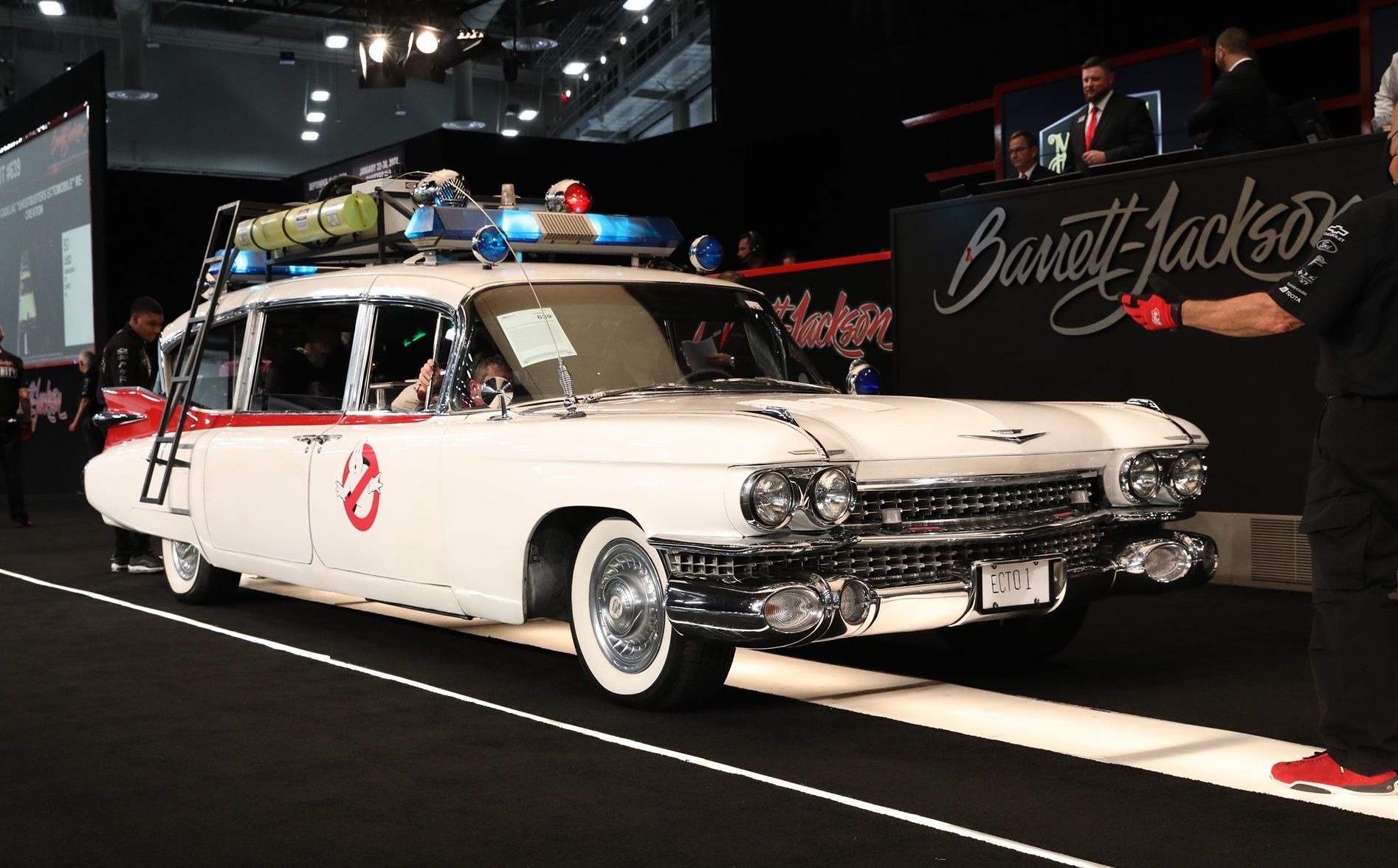
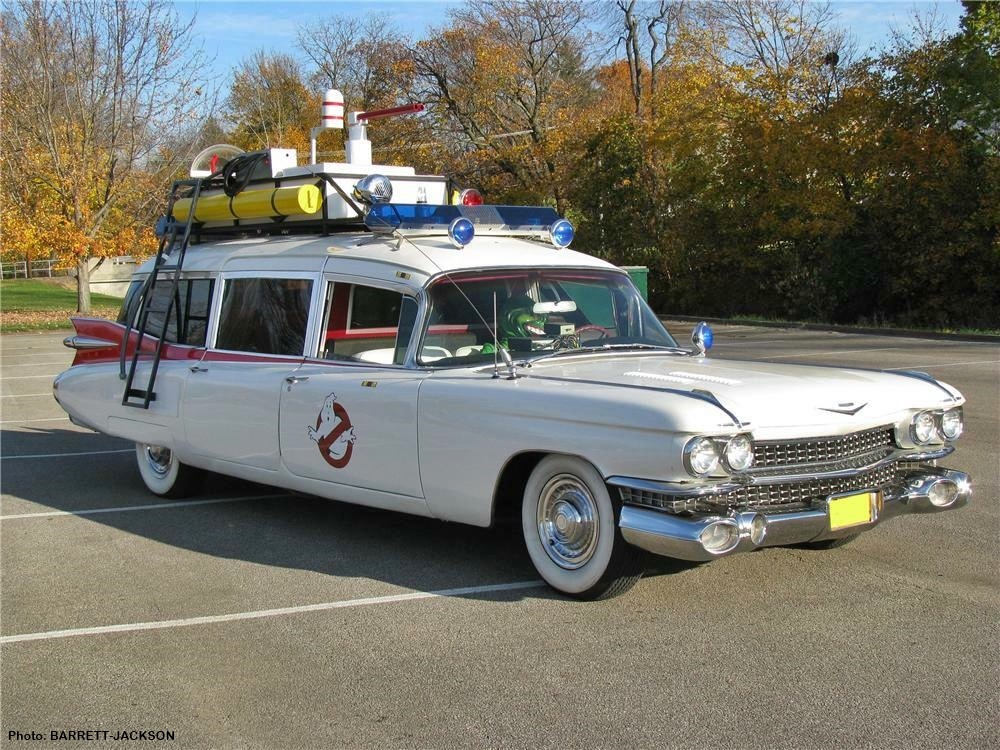
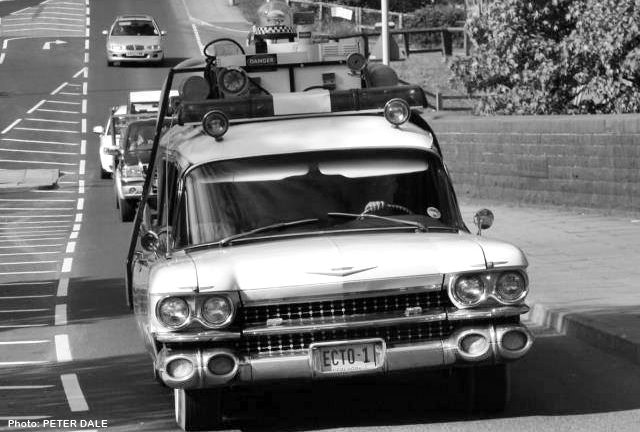
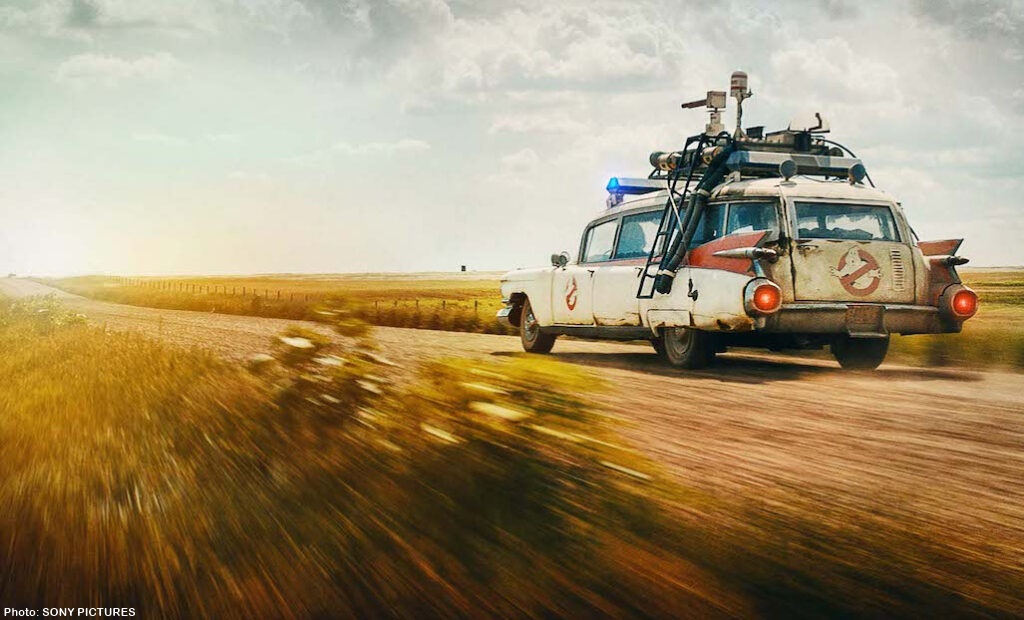
As with so many great films, one of the stars of Ghostbusters was a car – a 1959 Cadillac  which was better known as ‘Ecto-1’. Over time, the car attained cult status, which means that the original prop cars used in the production of the movie have become highly prized, and valuable too. At the same time, a thriving market in replica Ectomobiles has sprung up.

Ghostbusters Ecto-1 Cadillac

What was the Ecto-1?
One of the tools used to promote Ghostbusters was the car Murray and Aykroyd use to transport their ghostbusting kit around New York, as they saved the city from supernatural beings. It’s based on a 1959 Cadillac Series 75 Commercial Chassis that coachbuilder Miller-Meteor turned into ambulances and hearses – some cars have even been known to be used as both.

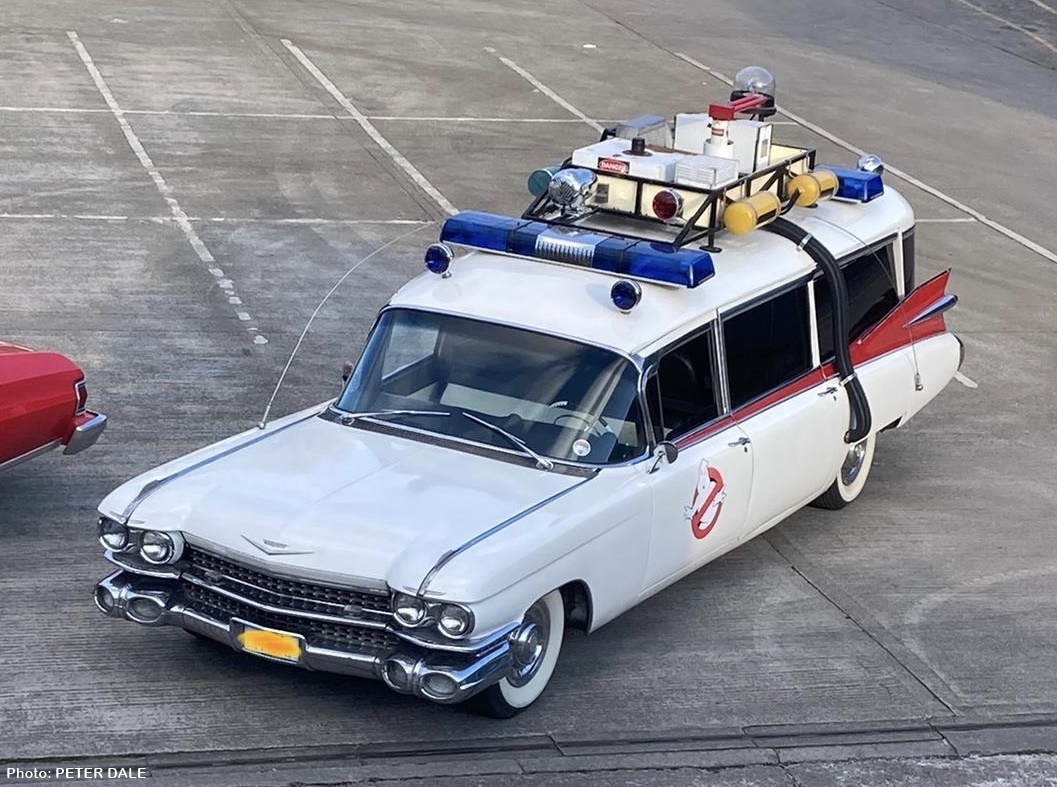
The 6.4-metre long Ectomobile ‑ Ecto-1 ‑ is based around a Miller-Meteor Futura model which had ‘resting passengers’ loaded through its tailgate. With its big fins, long creased bonnet and spats covering the rear wheels, it borrows many of the design features from famous Caddies of the time such as the Eldorado. Under the long bonnet, there’s a monster 6.4-litre V8 engine, typically American. performance. And at 21 feet (6.4m) long there’s plenty of room for ghoul-zapping kit inside.

Ghostbusters Ecto-1 Cadillac

Very rare, with rising values
Only around 25 Miller-Meteor Futuras were ever built and at least 2 of those were owned by Sony and used in the Ghostbusters films. A third was bought for promotional purposes. The value of the 1959 Cadillac Series 75 Commercial Chassis is not available but the average insured value for one now is US$52,000.

According to the valuations department of Hagerty (a specialty insurance provider), one of the cars from the film was offered for US$149,998 in 2007. One year later, another of the cars, apparently made for the Universal Studios theme park in Florida, was offered on eBay for US$45,000. Just 2 years after that, possibly one of those same cars sold at a Barrett-Jackson auction for US$88,000.

Prices were clearly on the uptrend more than a decade ago. In the intervening years, they’ve rocketed. For a genuine movie car, with a certified history, Hagerty now estimates the value to be in excess of US$500,000.

Ghostbusters Ecto-1 Cadillac

Replicas are very valuable too
In 2020, a fan-created replica Ecto-1 sold at Barrett-Jackson US$220,000. The car was built from a 1959 Cadillac Superior hearse and was fully drivable with its engine rebuilt in 2012.

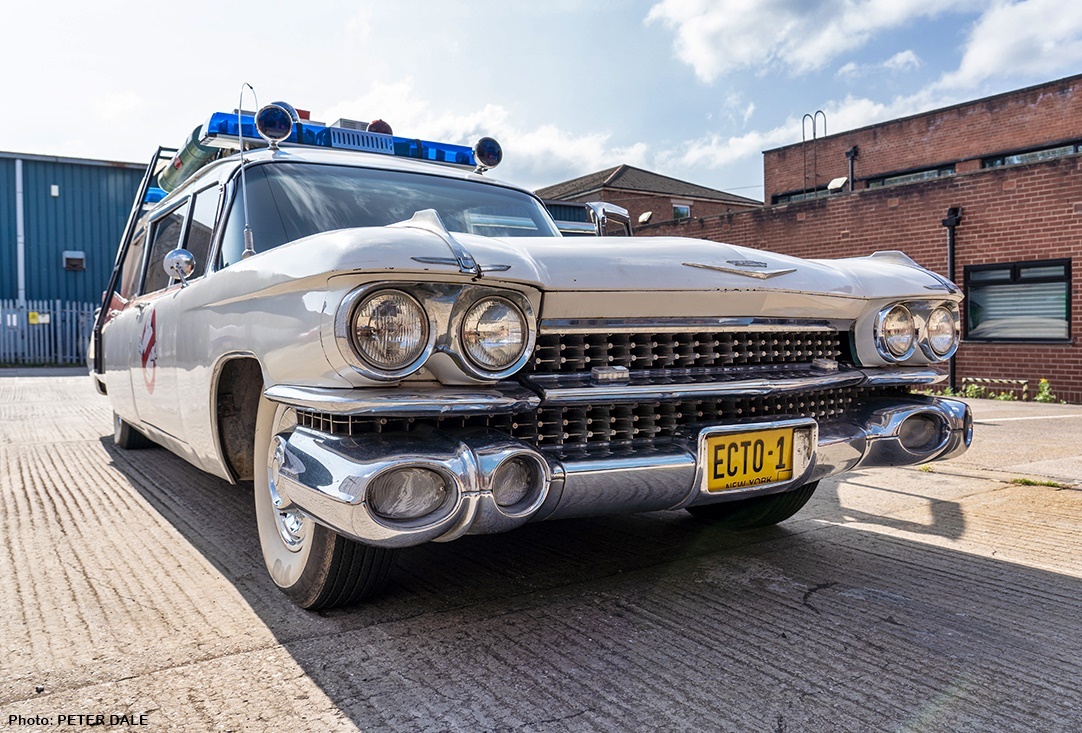
In the UK in 2014, a replica Ecto-1 was offered on eBay for £175,000. However, the owner of another replica, Peter Dale, tracked his tatty Ecto-1 down for £70,000. “I bought it within 2 hours of hearing it was coming up for sale,” he told Hagerty. Looking distinctly unloved, Dale has since spent around £80,000 restoring the car to its former glory. “It had already been converted to Ecto-1 but had then been left to sit for a few years. The engine wasn’t running, and it needed to be totally recommissioned,” he said.

Ghostbusters Ecto-1 Cadillac

What’s it like to drive?
Dale said: “Although it’s a very big car, it’s easy to drive. Visibility is great through all the glass, and it’s got power steering and assisted brakes. Surprisingly for something so long, the turning circle is quite good. The biggest problem is that it attracts so much attention. You go to change lanes and there’s someone alongside filming on a smartphone, so you have to have your wits about you.”

“It’s spooky just how well-known Ecto-1 is. Ghostbusters made it one of the most famous movie cars ever to emerge from a props department. Despite its place in pop culture, few film fans will be aware of the values of an Ectomobile; the real-deal could be worth up to half a million dollars, and even replica examples are valuable. Owners should make sure they’re insured for the correct sum, or they could be in for a nasty fright,” advised Hagerty Editor, James Mills.

Lamborghini Countach in ‘The Cannonball Run’ listed in US National Historic Vehicle Register

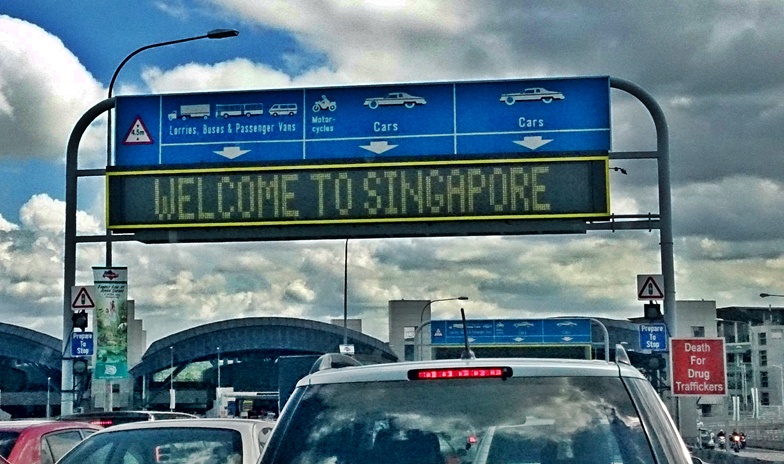
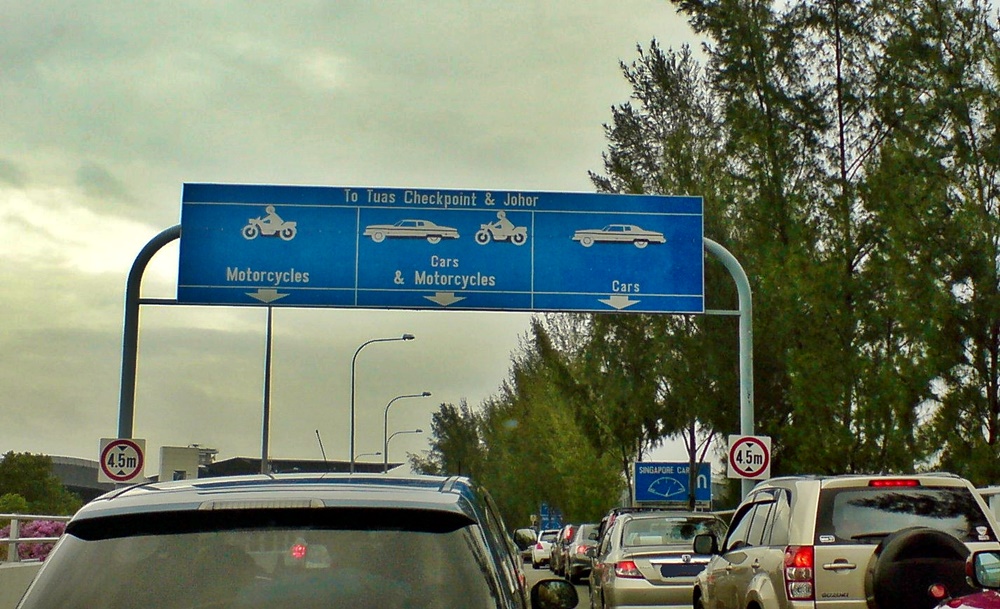
At long last, the land border between Malaysia and Singapore at the Causeway and the Second Link will now be open for travellers between the two countries. This will take place on Monday, November 29, 2021, the same date that the Vaccinated Travel Lane (VTL) will be open at KLIA and Changi Airport for travellers between the two countries.

However, those who can cross over for now will only be holders of long-term passes and those working in Johor or Malaysia. Under the VTL, only fully-vaccinated travellers can travel between both countries, and they must take a COVID-19 test and obtain a negative result. They will not be subjected to a quarantine or Stay-Home Notice. Hopefully, all other travellers will also be allowed to cross before long.

Entering Singapore
All VTL travellers must have been fully vaccinated and present a digital proof of vaccination that is recognised by the Singapore authorities. Short-term visitors must purchase travel insurance, with a minimum coverage of S$30,000 for COVID-19-related medical treatment and hospitalisation costs, prior to travel to Singapore. These visitors must also use the TraceTogether app in Singapore to facilitate contact tracing.

Children aged 12 years and below who are not vaccinated will be allowed to travel under the VTL into Singapore if they are accompanied by a VTL traveller who meets all VTL requirements. VTL travellers must have remained only in one or more of the VTL countries, or a country/region in Category I of Singapore Ministry of Health’s Country/Region Classification for Border Measures in the last 14 consecutive days prior to departure to Singapore.

Visitors from Singapore
Travellers from Singapore do not need to apply to travel to Malaysia under the VTL since the entry facilities would be processed upon arrival and they are also not required to apply for a MyTravel Pass from the Malaysian Immigration authorities.

Short-term visitors, including business and official travellers, must obtain a valid visa for visa-required visitors and they must also possess a return ticket (if traveling by air) and travel insurance with a minimum coverage of RM100,000 for Covid-19-related medical treatment and hospitalisation costs.

Click here for the latest information on entry requirements into Singapore.

Archive

Follow us on Facebook

Follow us on YouTube