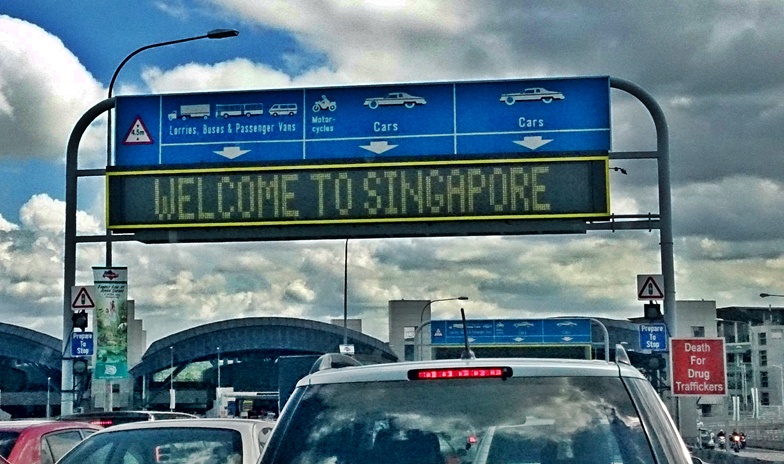
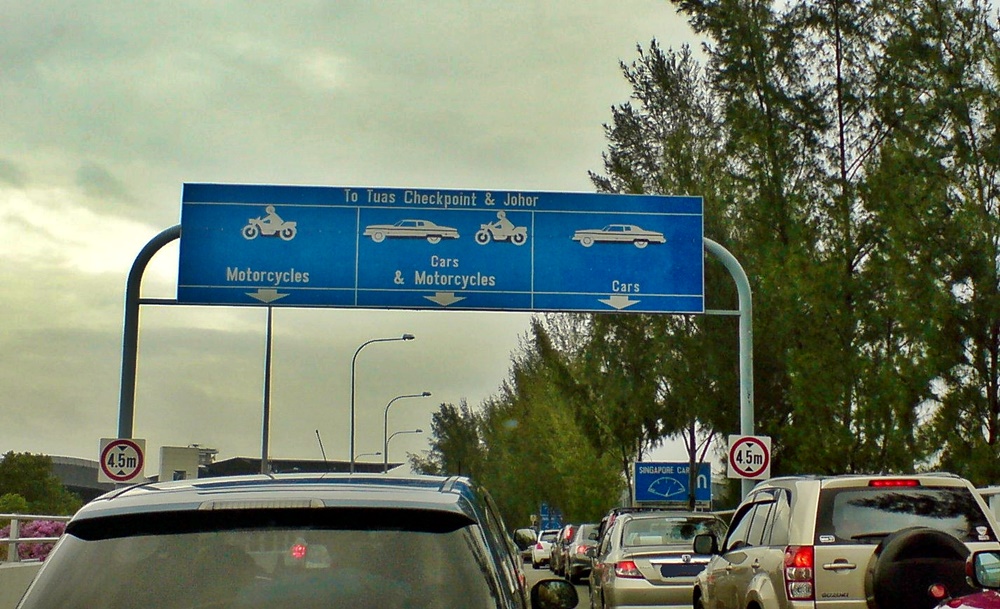
At long last, the land border between Malaysia and Singapore at the Causeway and the Second Link will now be open for travellers between the two countries. This will take place on Monday, November 29, 2021, the same date that the Vaccinated Travel Lane (VTL) will be open at KLIA and Changi Airport for travellers between the two countries.
However, those who can cross over for now will only be holders of long-term passes and those working in Johor or Malaysia. Under the VTL, only fully-vaccinated travellers can travel between both countries, and they must take a COVID-19 test and obtain a negative result. They will not be subjected to a quarantine or Stay-Home Notice. Hopefully, all other travellers will also be allowed to cross before long.
Entering Singapore
All VTL travellers must have been fully vaccinated and present a digital proof of vaccination that is recognised by the Singapore authorities. Short-term visitors must purchase travel insurance, with a minimum coverage of S$30,000 for COVID-19-related medical treatment and hospitalisation costs, prior to travel to Singapore. These visitors must also use the TraceTogether app in Singapore to facilitate contact tracing.
Children aged 12 years and below who are not vaccinated will be allowed to travel under the VTL into Singapore if they are accompanied by a VTL traveller who meets all VTL requirements. VTL travellers must have remained only in one or more of the VTL countries, or a country/region in Category I of Singapore Ministry of Health’s Country/Region Classification for Border Measures in the last 14 consecutive days prior to departure to Singapore.
Visitors from Singapore
Travellers from Singapore do not need to apply to travel to Malaysia under the VTL since the entry facilities would be processed upon arrival and they are also not required to apply for a MyTravel Pass from the Malaysian Immigration authorities.
Short-term visitors, including business and official travellers, must obtain a valid visa for visa-required visitors and they must also possess a return ticket (if traveling by air) and travel insurance with a minimum coverage of RM100,000 for Covid-19-related medical treatment and hospitalisation costs.
Click here for the latest information on entry requirements into Singapore.
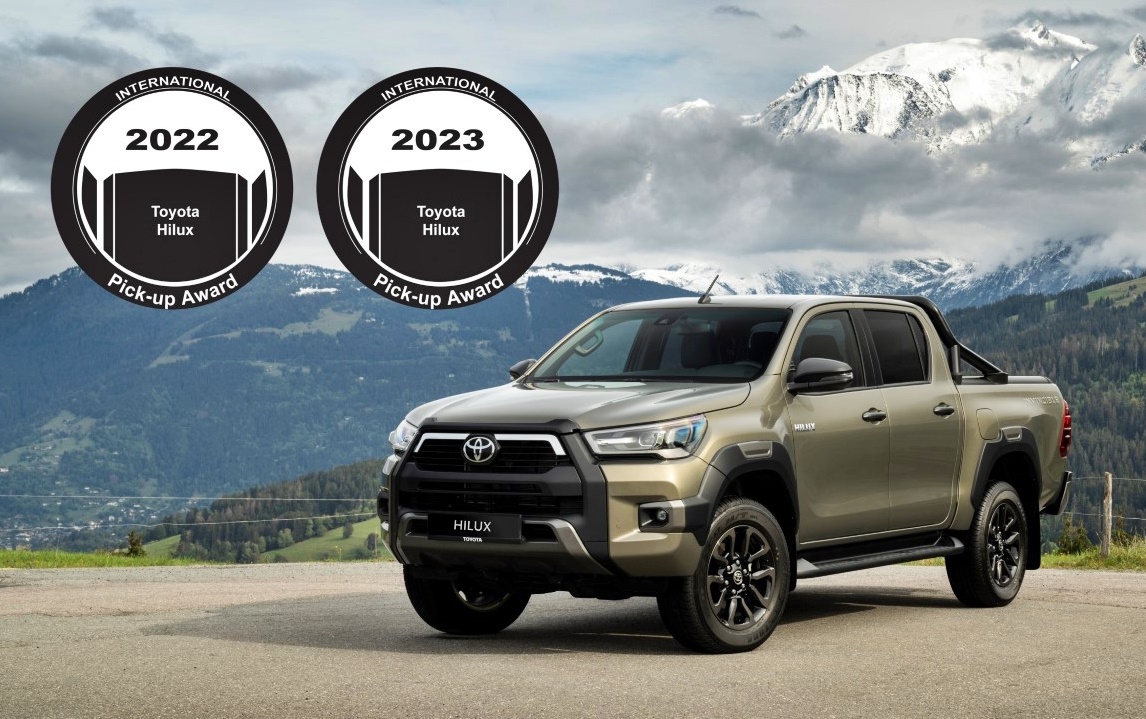
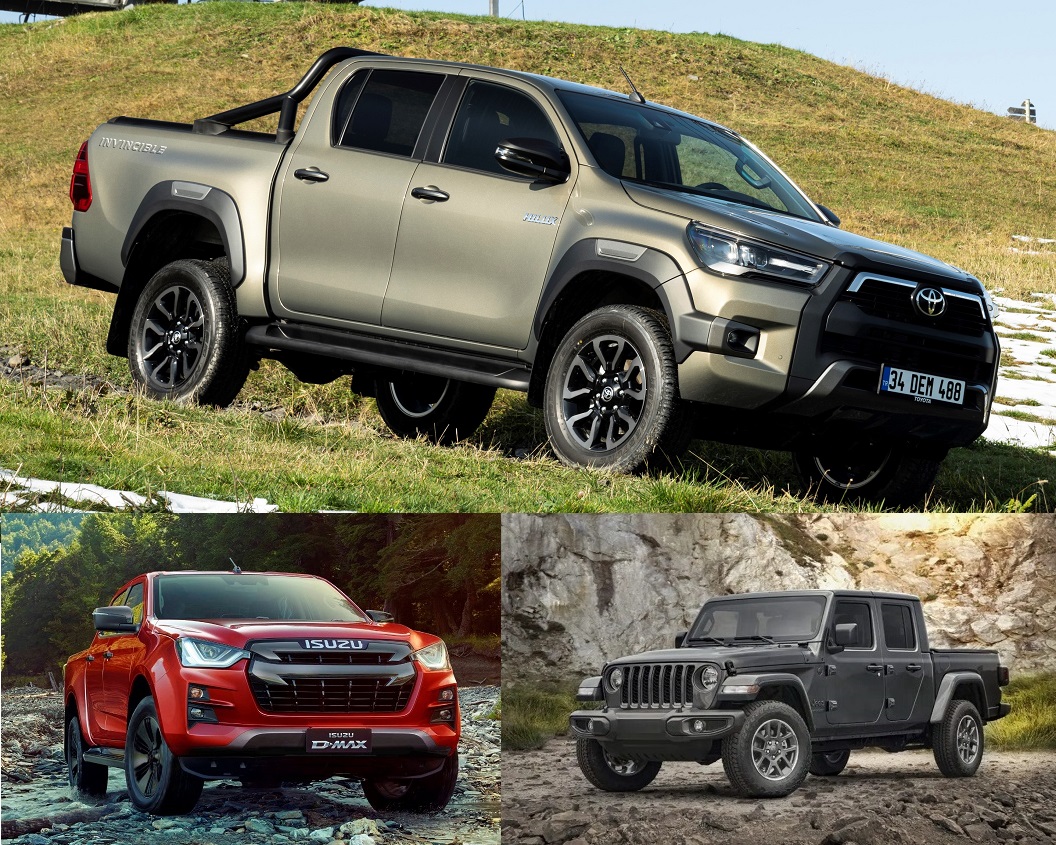
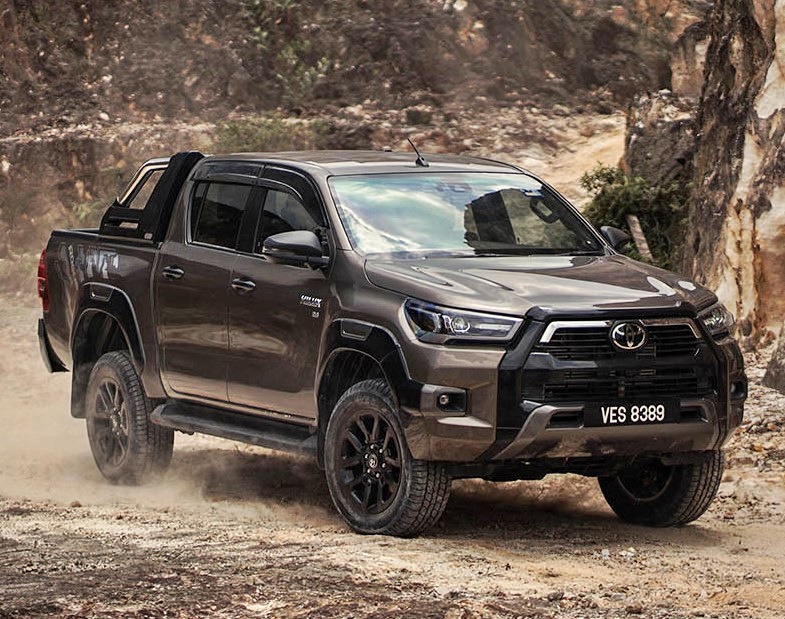
The Toyota Hilux has been picked for the 2022/2023 International Pick-Up Award, joining the previous winners which were the Volkswagen Amarok and Ford Ranger (both winning on two occasions), and the Nissan Navara. The award was given by the same organisation that picks the International Van of the Year (since 1992). Every other year since 2009, it has also been picking the International Pick-Up as these vehicles are also used for business purposes like vans.
“As a multi-functional vehicle produced and sold globally, both the product and marketplace continue to evolve with many brands setting high standards in performance, safety, driver and passenger comfort,” explained Jarlath Sweeney, Chairman of the International Van of the Year Award jury which has representatives from 25 European countries.
The three contenders for the 2022/2023 International Pick-Up award.
As with the nominated vans, eligible trucks were nominated and then assessed by the expert panel at a specially organised group test. For the latest award, the event was held in Croatia in early October. The performances of the vehicles were closely matched, and it was the Toyota Hilux that finally emerged victorious just ahead of the Isuzu D-Max, with the Jeep Gladiator third.
Commenting on the Hilux winning the 2022/2023 award, Didier Gambart, Vice-President of Toyota Motor Europe Sales, Marketing & Customer Experience, said: “With more than 50 years heritage, the Hilux has always stood for outstanding Quality, Durability and Reliability as well as very capable off-road performance. Now with the new Hilux, we have expanded the engine line-up with a new 2.8 D that offers even more refinement and power capability, allowing us to meet the needs of customers willing not only a workhorse, but also a leisure vehicle. So this award is for us a recognition of all the inherent qualities of Hilux, with even more capabilities.”
First generation of the Hilux introduced in 1968.
Sold all over the world
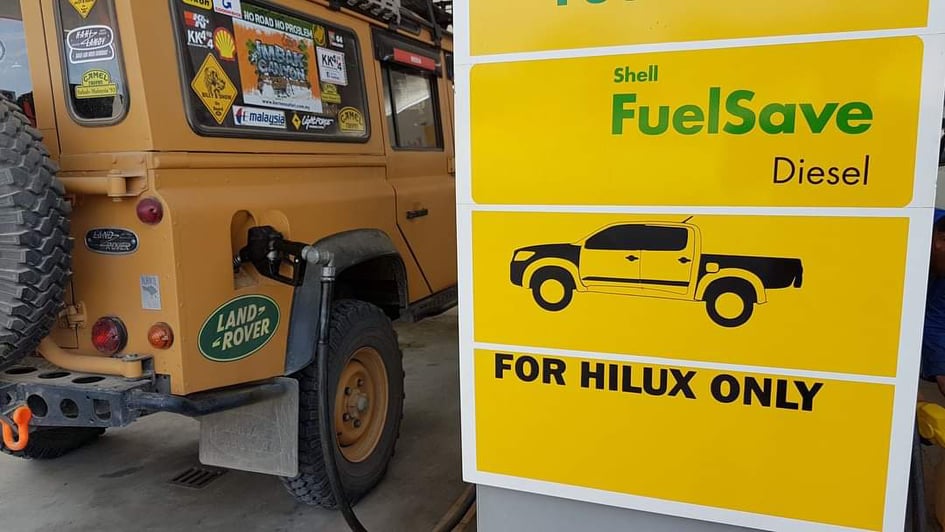
The Hilux is sold in almost every country on the planet and being the bestselling model in its segment in many countries. It has been assembled and sold in Malaysia since the first generation which was introduced in 1968. With its proven durability and reliability, the model has been very popular in East Malaysia, especially with those in the logging industry who venture deep into the jungles. In fact, it is so popular that its name is used to refer to any pick-up truck!
In East Malaysia, the Hilux is so well known that it is even used to refer to any pick-up truck! This sign was seen at a Shell station near Bintulu but we understand that the suggestion of ‘preferential service’ for Hilux trucks was removed later. Picture courtesy of Paul Si.Before the late 1990s, pick-up trucks like the Hilux could be registered only for commercial purposes in Malaysia.
When the regulations changed in Malaysia in the late 1990s to allow private use of pick-up trucks (they could only be registered for commercial use before), the Hilux also underwent a change in image to become more ‘lifestyle-oriented’. The interior was more comfortable and equipped like a passenger car with many convenience features – and even air-conditioning. Safety levels were also improved as the vehicle was being driven more on roads than off-road by many owners, and cruising speeds were higher.
The IMV project
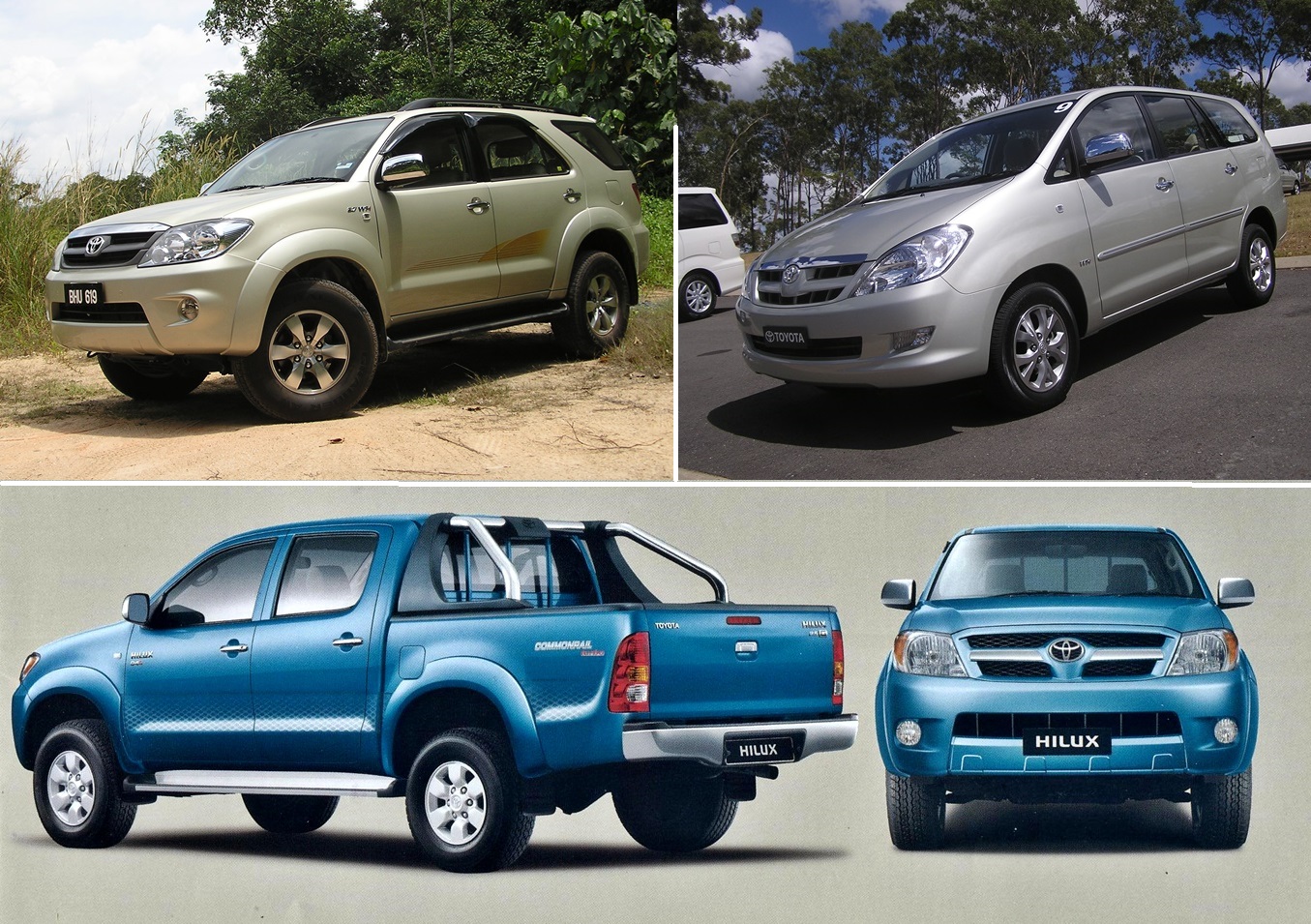
In 2004, the Hilux had its most significant change as the new 7th generation was the outcome of the Innovative International Multi-purpose Vehicle (IMV) project. It was developed as one of the 3 different model lines – with the Fortuner SUV and Innova MPV being new – on a single platform and for the first time, production and almost all development was done outside Japan.
The massive IMV project produced two new model lines as well as the 7th generation of the Hilux.
Toyota developed optimal production and supply systems on a global scale, with production at three production hubs – in Thailand, South Africa and Argentina. The vehicles from these hubs were exported to other markets in completed form (CBU) or as completely knocked-down (CKD) units for local assembly in countries like Malaysia.
Bestselling pick-up in Malaysia
The 7th generation was introduced in Malaysia in 2005 and has been the bestselling pick-up truck in the market for over 15 years. The current range is available in 5 variants with a choice of turbodiesel 4-cylinder engines with 2.4-litre and 2.8- litre displacements, and 6-speed automatic or manual transmissions.
To know more about the Hilux and other Toyota models in Malaysia, visit www.toyota.com.my.
Vaccination does not make you immune to COVID-19 infection. You can still get infected and although you may not show symptoms, you could spread the coronavirus to others. Do not stop taking protective measures such as wearing a facemask, washing hands frequently and social distancing.
If there is one thing that this writer missed during the lockdown, it was the drives organised by automotive manufacturers.
These drives are usually well planned, coordinated, offers stops at places we never heard of and at restaurants we never ate at. Media drives as we motoring scribes call it, is the highlight of this career.
But they can be annoying as well. Planned convoys can be dull, with the lead car constantly conveying orders over a walkie-talkie.
And other members of the motoring journalism fraternity constantly complaining about getting lost, or their tyres lacking pressure. It can all be quite annoying.
But the one I recently attended which was also the first after the lock down ended, was a refreshing welcome into a stale ‘modus operandi’.
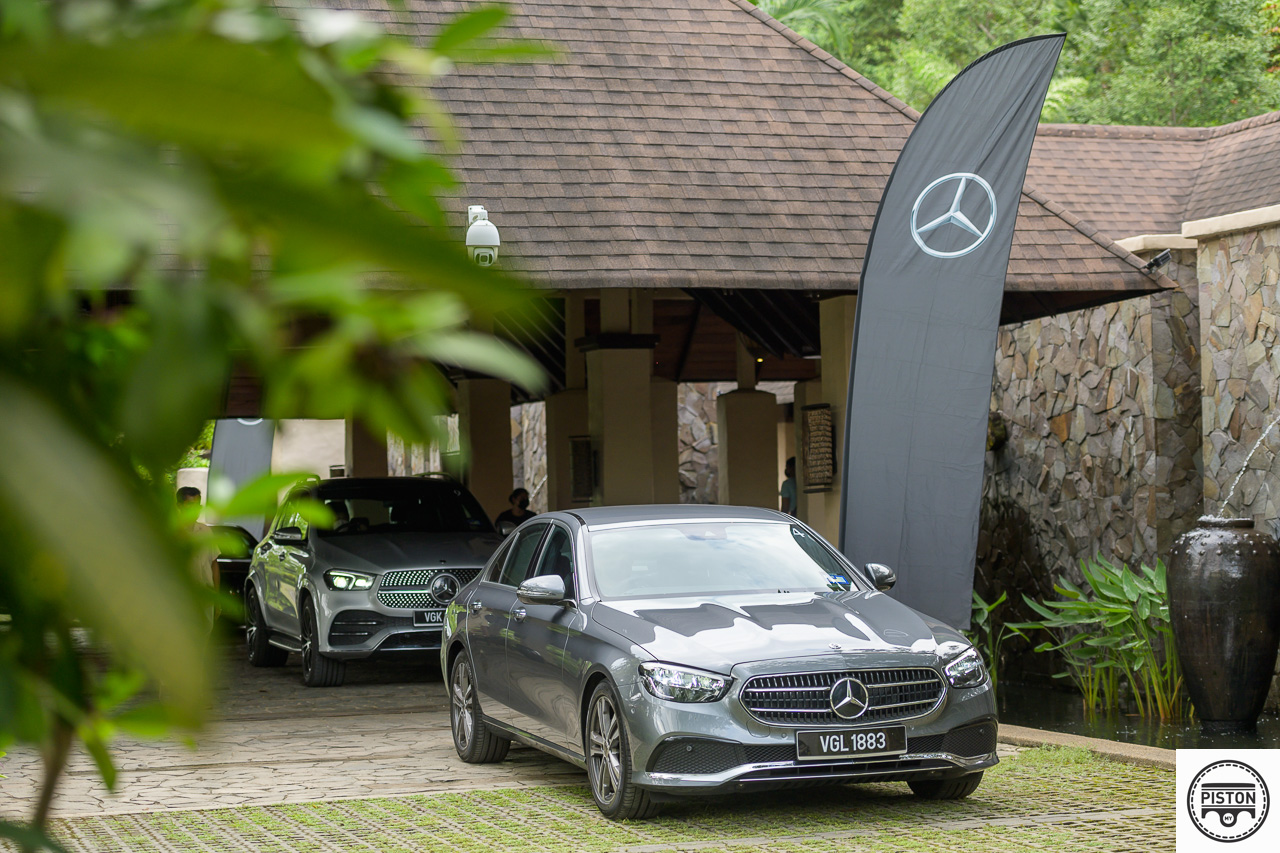
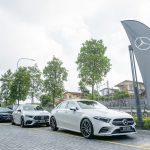
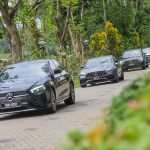
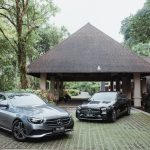
Organised by Mercedes-Benz Malaysia, the drive was as simple as passing us the keys, telling us where to meet, and a simple “see you there”.
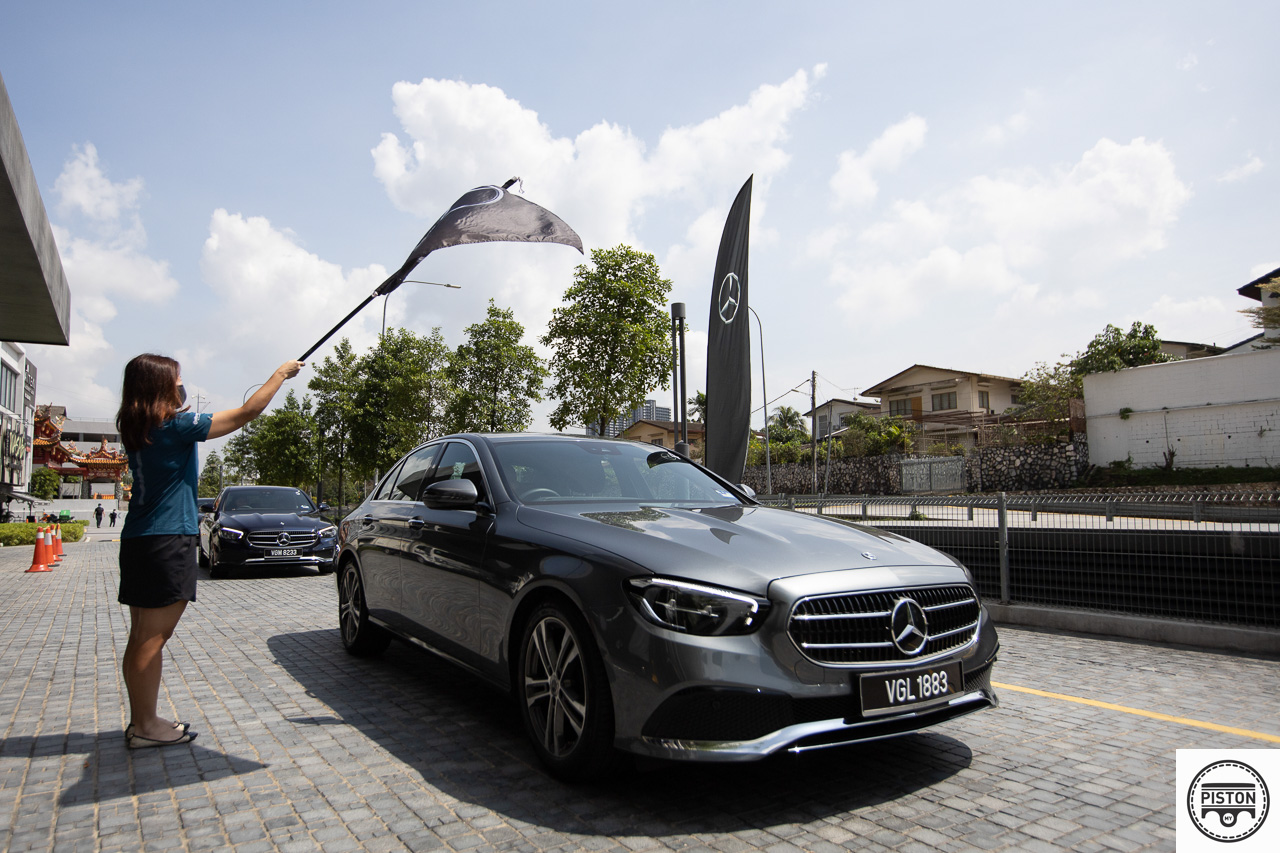
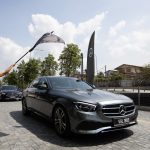
Of course there was the classic flag-off for photos sake but that’s as close as it got to being ‘just another media drive’.
And there was the timing as well, a very humanly possible 10am meet up time rather than the usual 8am. Every manufacturer should take a cue from MBM on how to organise a media drive.
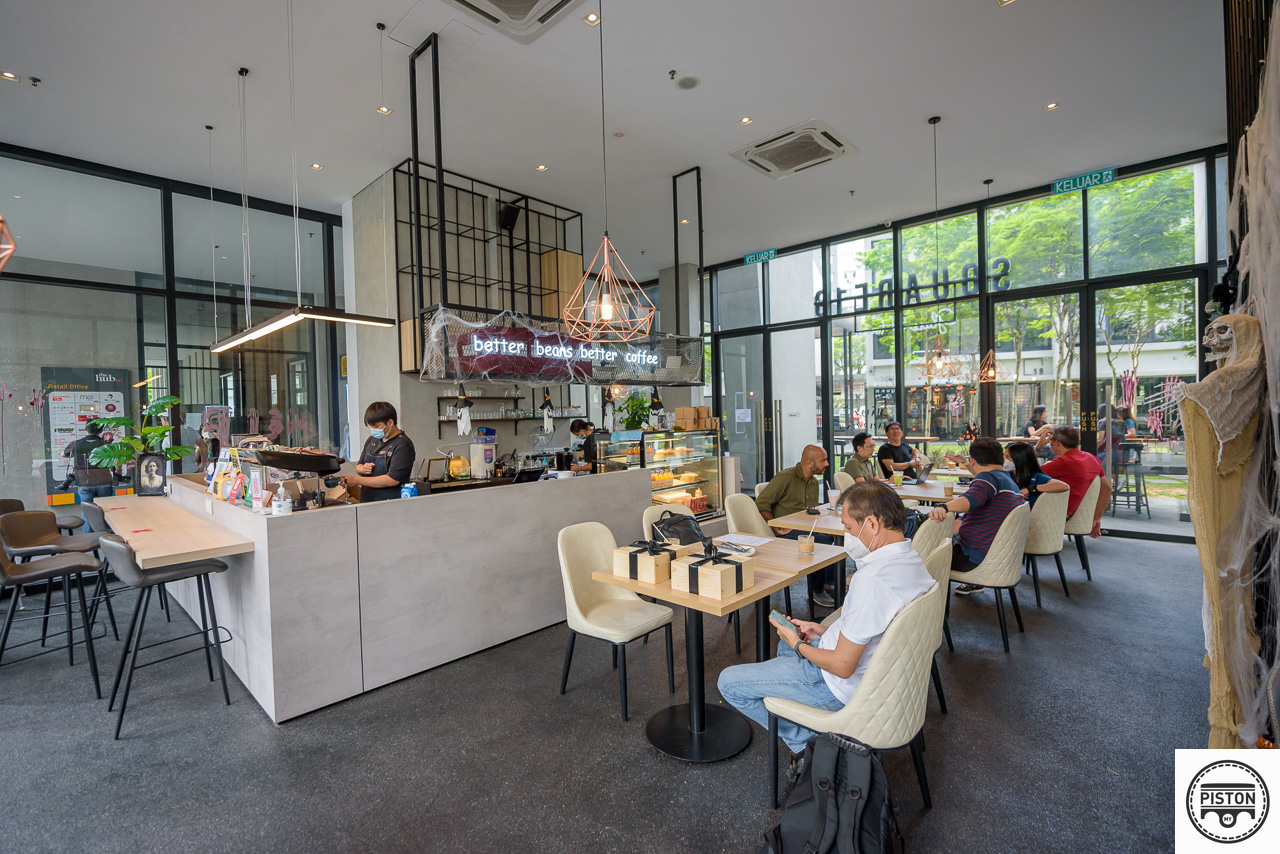
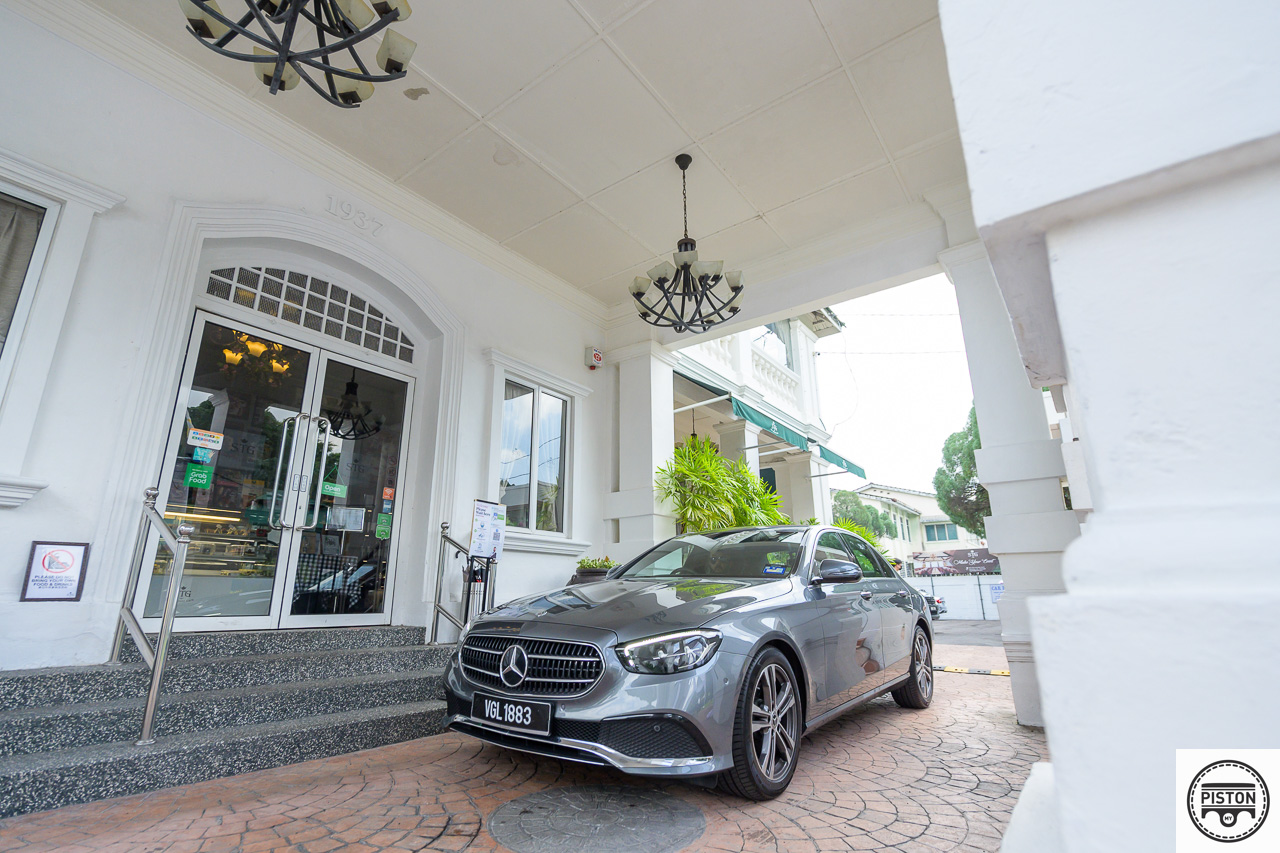
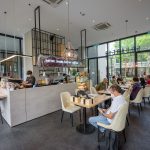
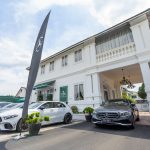
So I showed up at 10 at a cafe in PJ, did the Covid test, presented my result, had a simple breakfast since I already had one at home since the generous start time gave me time to have breakfast with my wife and kid before starting my work day.
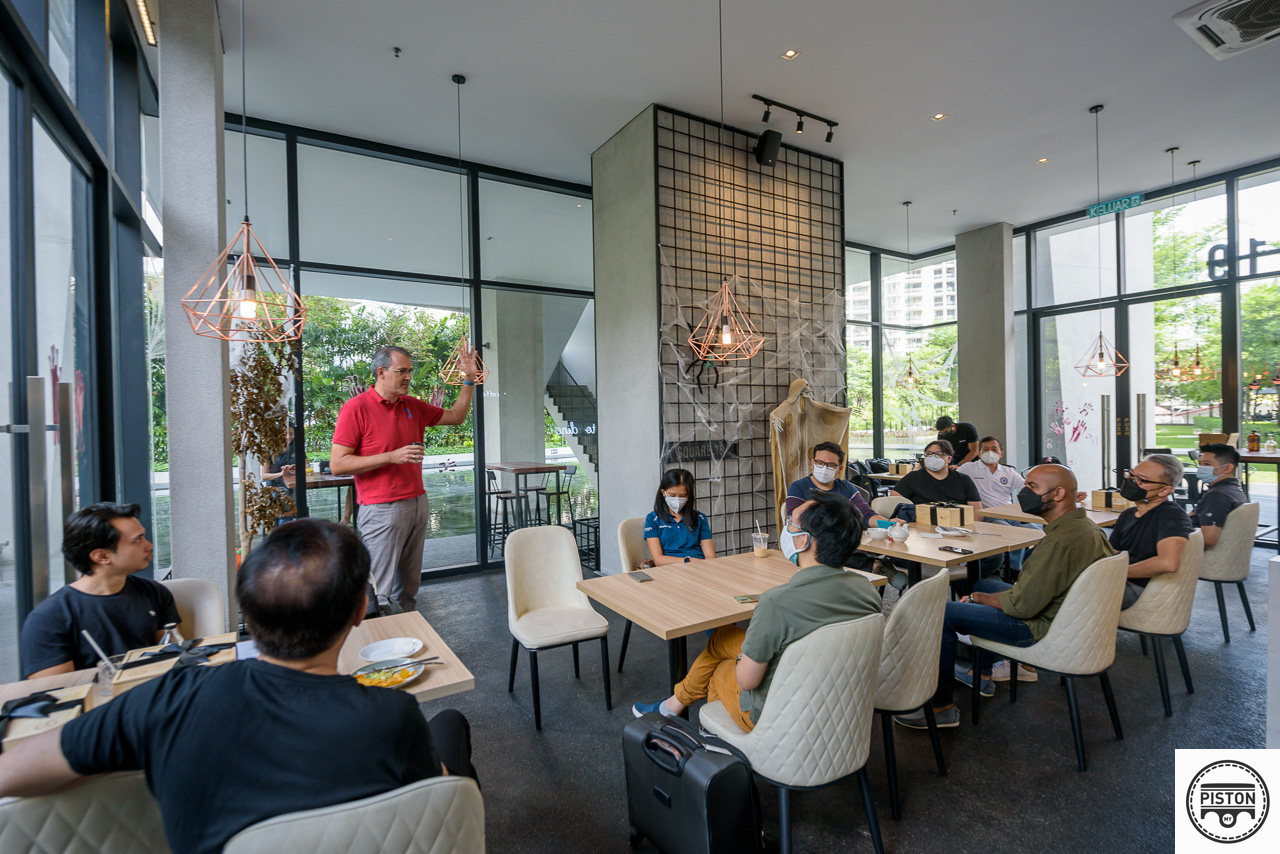
Then there was a 2 minute speech by the Vice President of Sales and Marketing of MBM, Michael Jopp, telling us about our day, and after that we were told which car we would be driving.
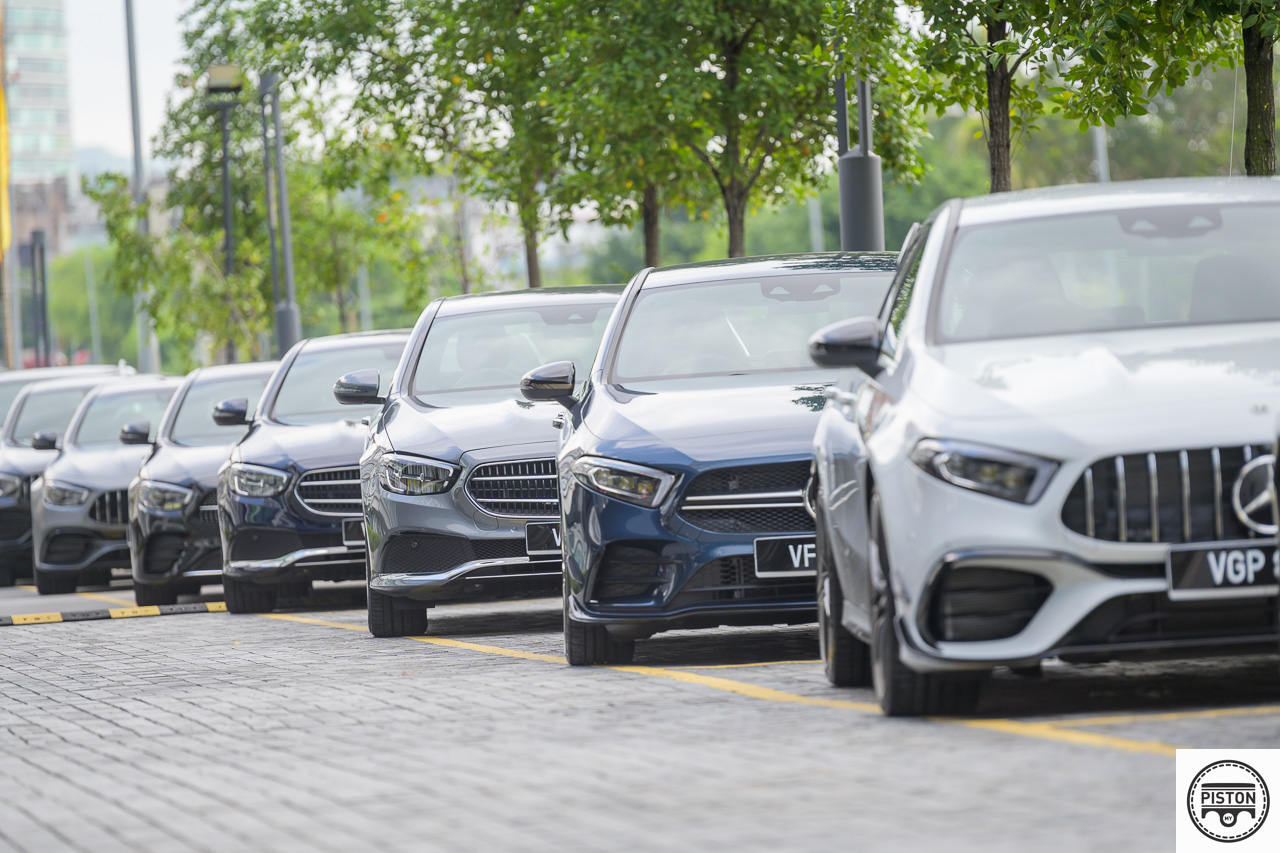
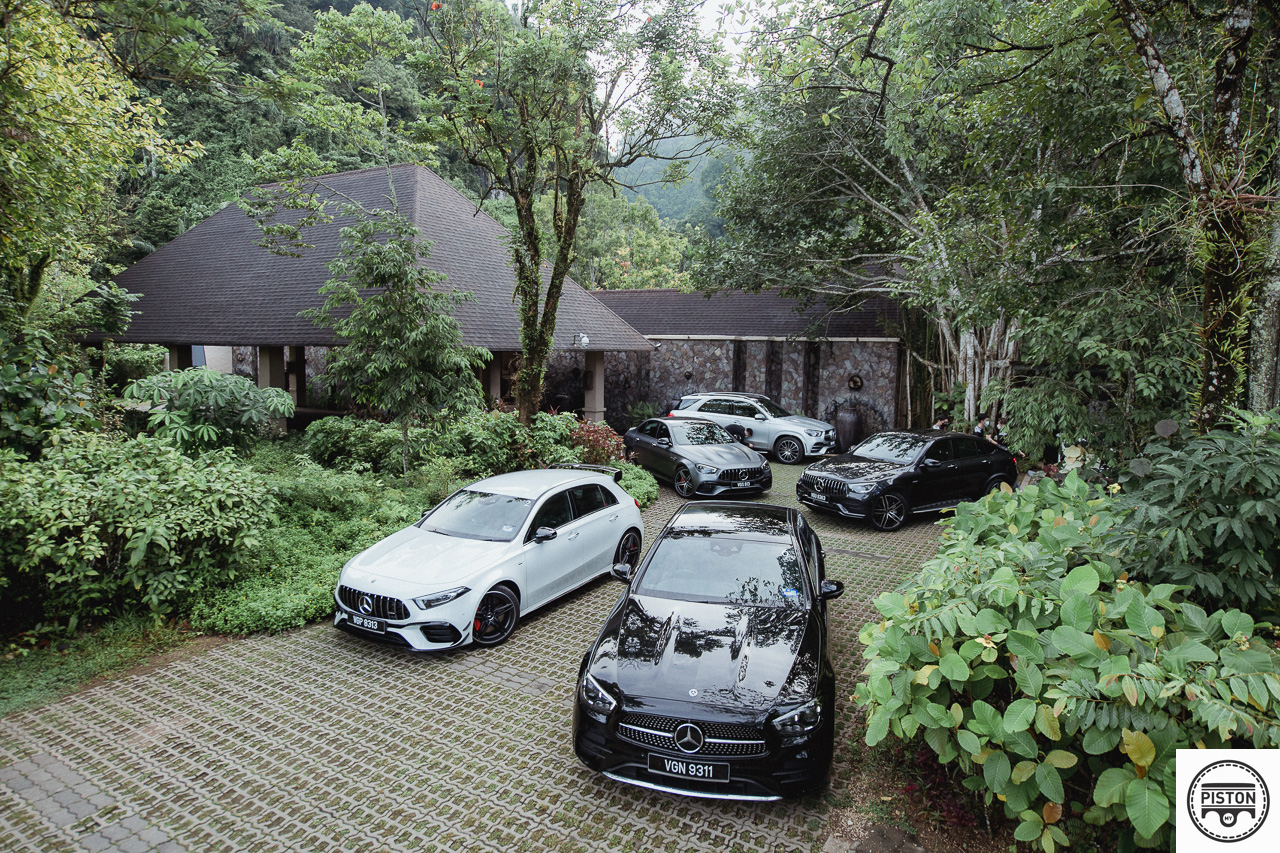
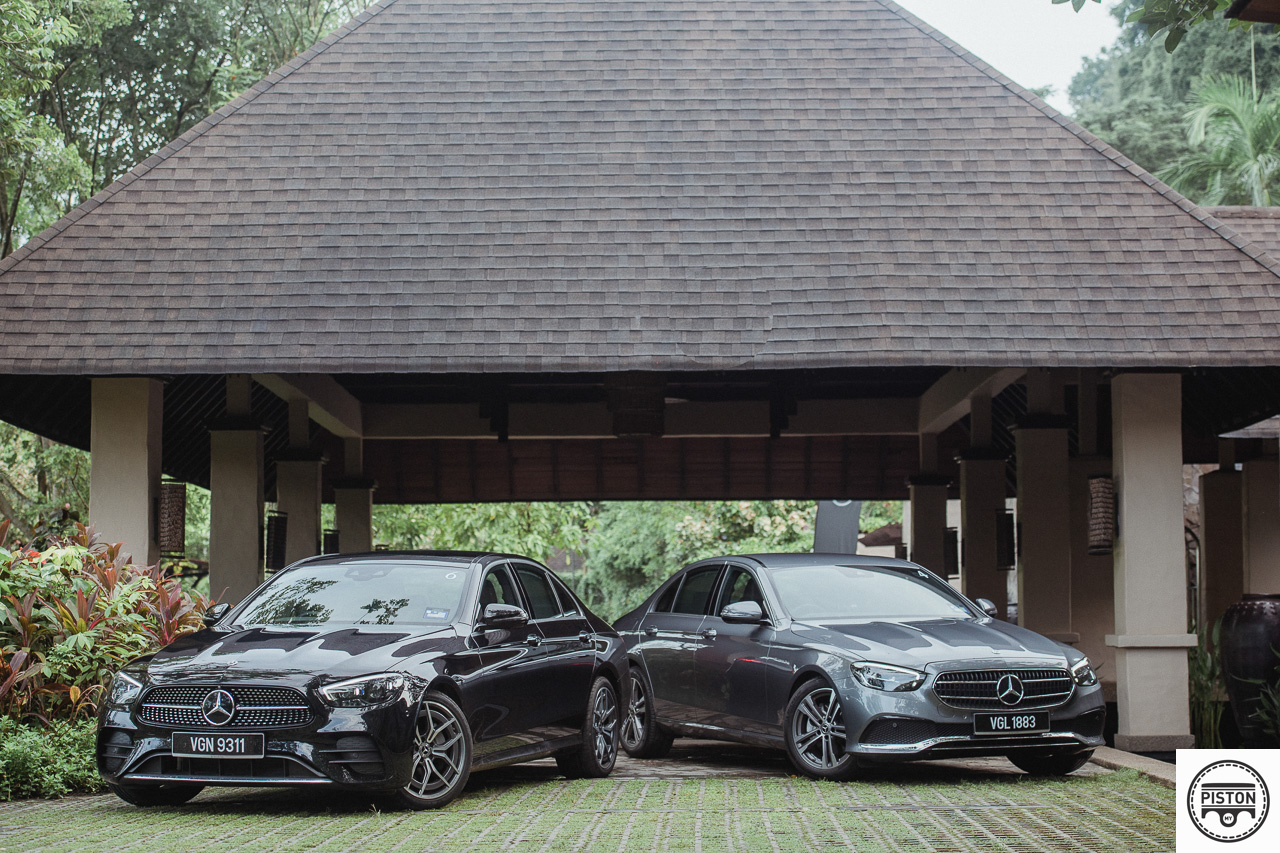
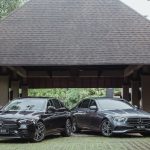
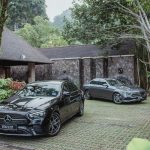
The cars available included the Mercedes-Benz E63 AMG, A45S AMG, A35 AMG, E300, GLE 450 and others.
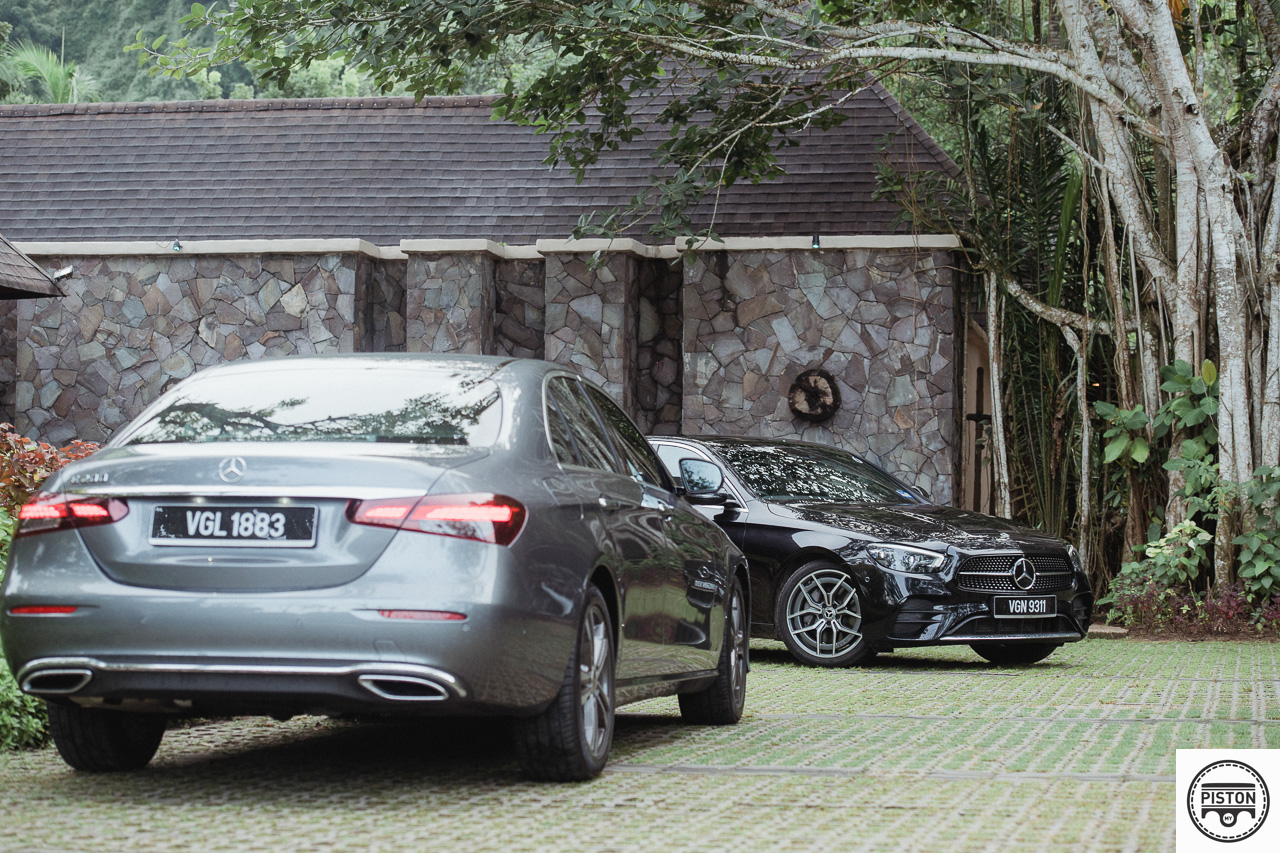
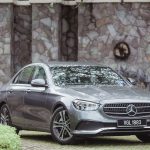
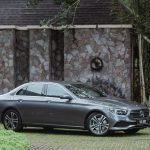
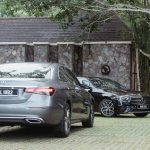
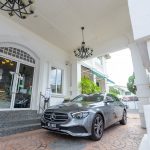
I got the E200 which may seem like the short end of the stick considering what was on offer, but I didn’t mind since the car had just been launched in Malaysia, and I was quite curious to know how it was like.
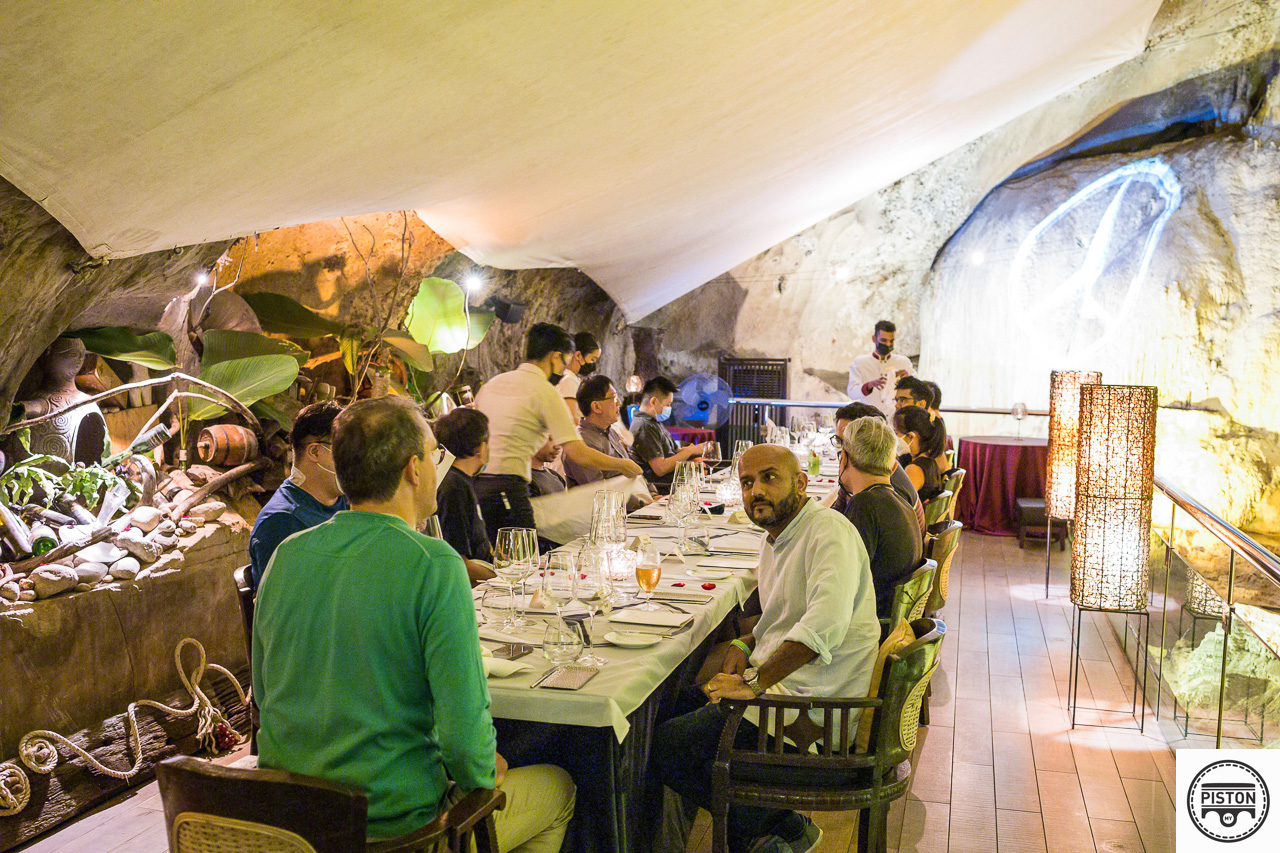
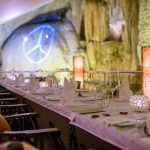
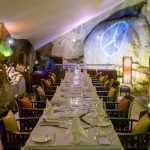
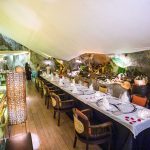
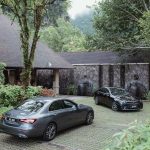
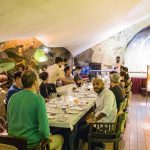
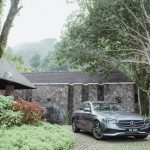
Our final destination was Ipoh where we would be staying the night at The Banjaran – a resort that is famous for its hot springs, it being situated among mountains that are a couple million years old, and a one of a kind, possibly the only one of its kind, bar and restaurant in a 250 million year old cave. Talk about dining like cave men.
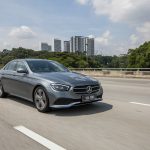
Though we weren’t required to travel in a convoy, most of us somehow found ourselves travelling together on the highway. Each to his own car. No sharing during the pandemic. Which was excellent.
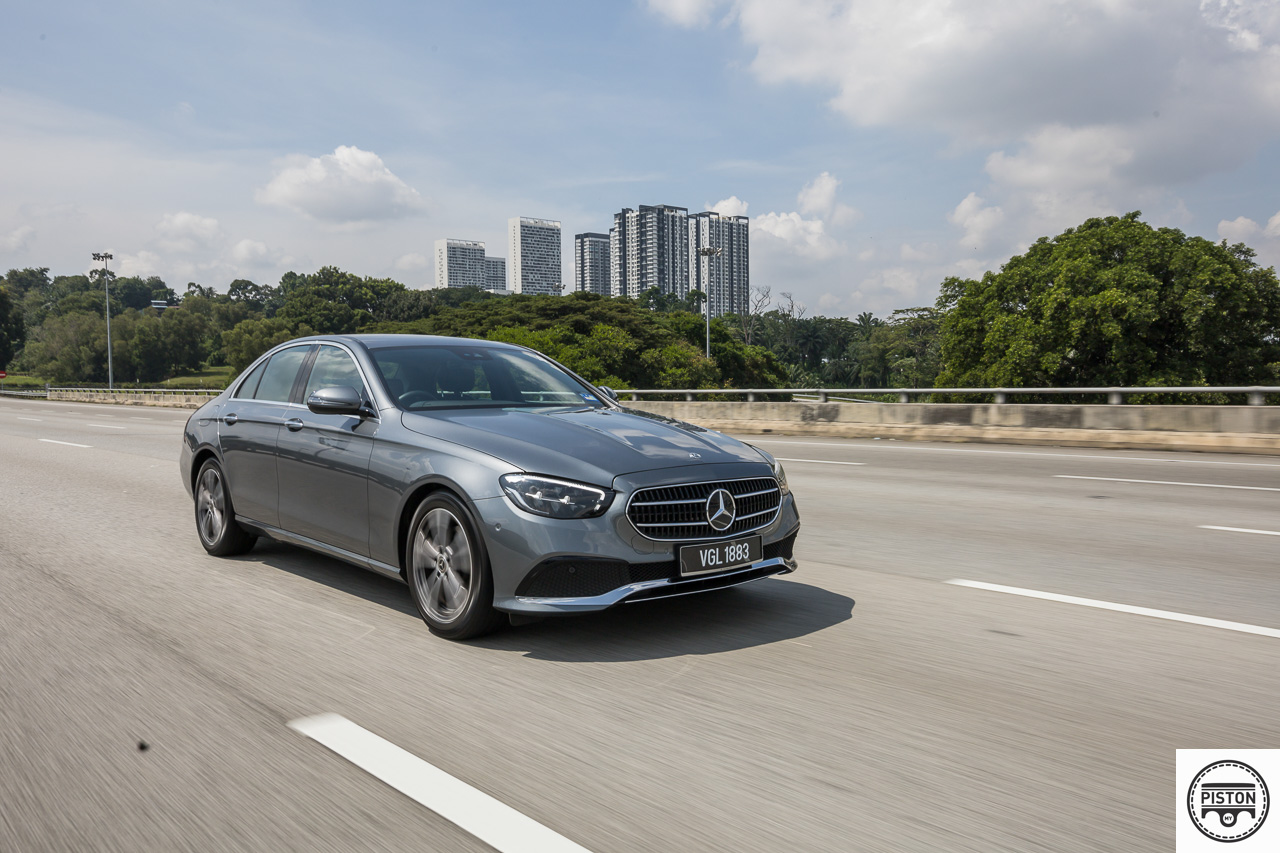
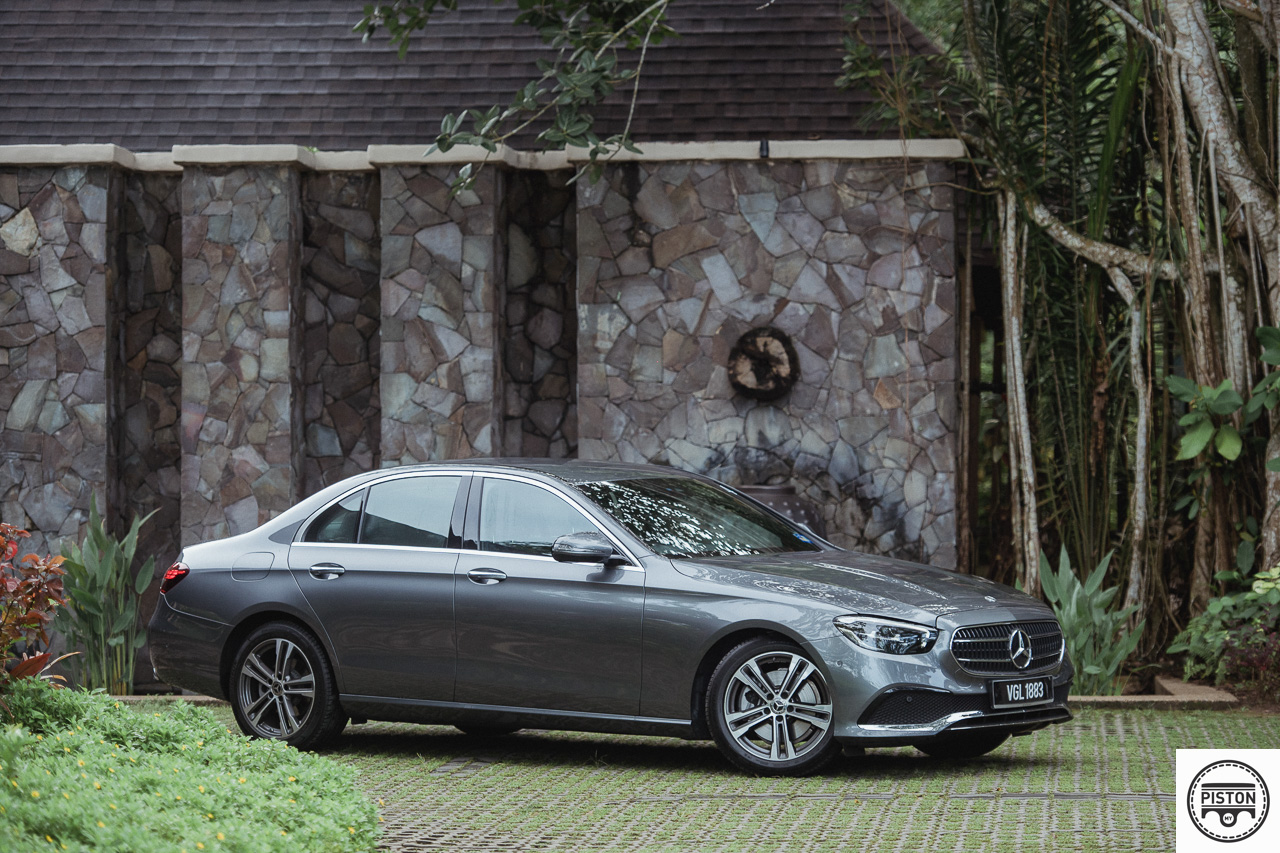
The new Mercedes-Benz E200 may be the entry level model to the E-Class world, but it certainly doesn’t feel that way.
The refinement is typically Mercedes-Benz, though I did think the run-flat tyres were noisy at highway speed; a typical character of run flat tyres since it is made of a stronger and harder thus noisier compound.
I was also rather surprised by how well power was laid down by the E200 on the highway. But in hindsight, it shouldn’t have been surprising at all.
The E200 is powered by a 2.0-litre turbocharged petrol engine producing 194hp and 320Nm of torque.
That is quite decent for an entry level E-Class.
And then you consider that the suspension has been tuned for comfort and the interior offers exemplary refinement.
As an entry-level model, the interior of the E200 offers only the most basic of things. But don’t get this statement wrong, I mean the most basic of things at a Mercedes-Benz level.
So you get the usual electronic seats with memory function though this do not come with adjustable thigh support.
The new generation steering wheel in the E200 looks and feels great, but I am not a fan of the touch pads on the steering as that can be tricky to operate when the car is moving. I guess this takes time to get used to.
I did think the seats were quite comfortable and the interior was spacious, which is ultimately what an executive car like the E-Class is all about.
I am not a fan of the aluminium inserts that run along the dash and onto the doors and neither am I impressed by the black open-pored ash wood that is situated on the centre console.
I found myself thinking that a lighter choice of wood finishing instead of aluminium would have been nice. But then again, I was driving the sportier Avantgarde model. So that was to be expected.
I prefer an E-Class to be more luxurious than sporty this side of an AMG. But that’s just me.
What I really liked about the new E200 though was that massive MBUX screen, which stands for Mercedes-Benz User Experience.
Now this is a display screen that is 24.6 inches long and is divided into two parts. Each part measures 12.3-inches.
The screen on the left is touch-enabled and lets you access the usual stuff like radio, GPS, seat and air-conditioning settings and general settings to do with the driver and passenger.
The one on the right however is not touch enabled and this is where you get the usual speedometer, rpm dial, and other information to do with the internals of the car.
The display settings on the right can be adjusted according to your mood – Sporty, Classic and even Basic which throws everything away and just gives you the speedometer and clock and just a little bit more such as which gear position you are in.
This makes the E200 feel high-tech and the power makes it feel sporty. You also get drive modes but that only adjusts the sensitivity of the accelerator, the heft of the steering wheel, and the speed at which the gears shift. It doesn’t do anything to the suspension so that is one constant in this car.
Driving it is generally comfortable and the power is decent while the engine makes a nice throaty sound during acceleration. But it is ultimately an E200 and I did found myself wondering how the E300 would feel like.
The following day, after spending some time with the wonderful Mercedes-Benz team over lunch and dinner, I was asked which car I would like to take home.
Not just home, Mercedes-Benz Malaysia told us to keep the car till the end of the week. Didn’t I say this drive was one of a kind?
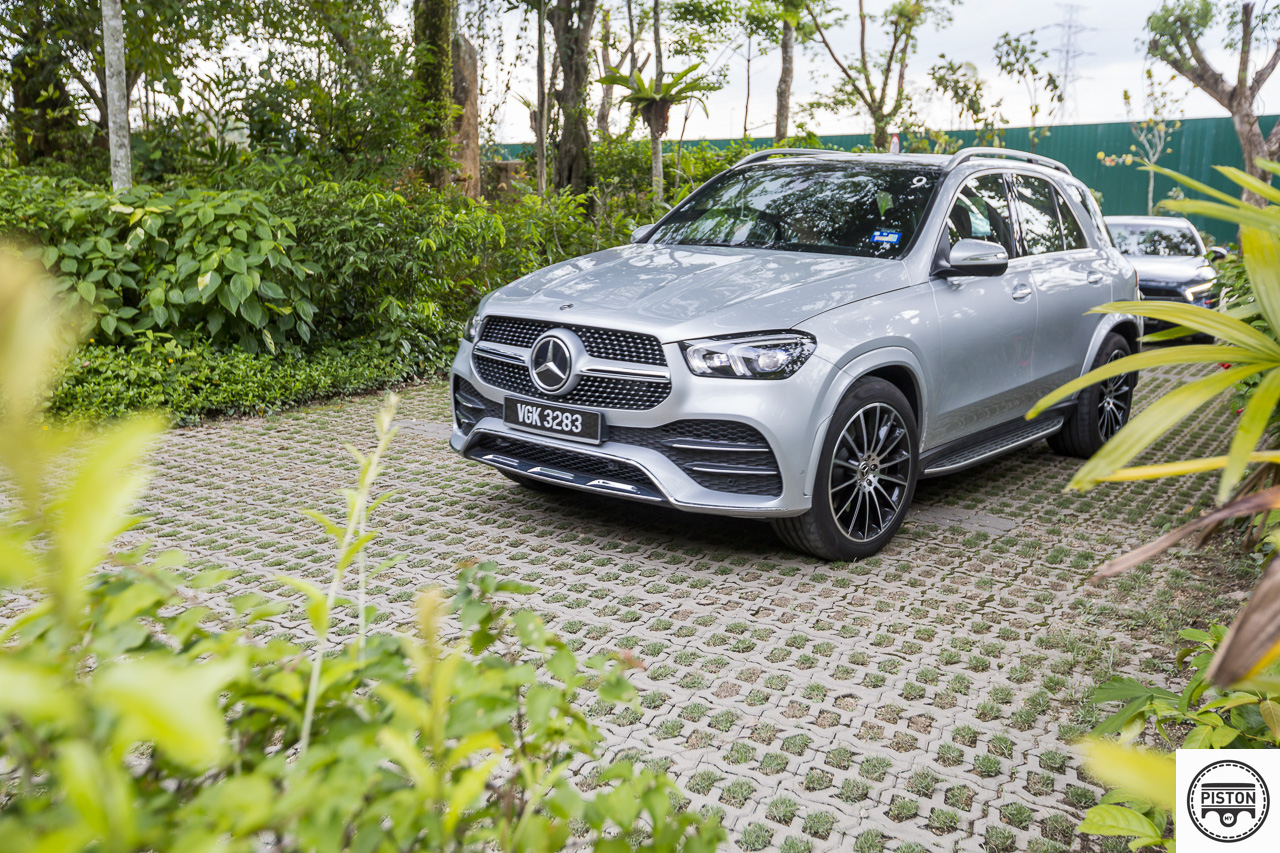
I chose to drive the GLE 450 – an SUV that I had been hugely curious about because I think it looks great and is one of those cars that doesn’t know how to put a wheel wrong.
And as expected, the Mercedes-Benz GLE 450 was so impressive that it deserves an article and a video review of its own. So I will put down my thoughts on that in a separate article, but let me just tell you this – the GLE 450 is one of the most complete car/SUV that I have driven in recent times.
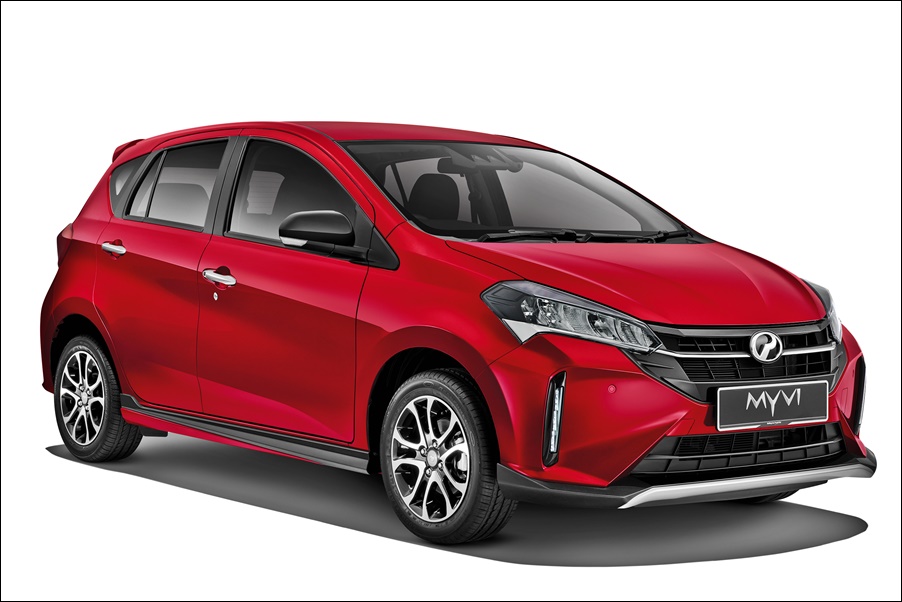
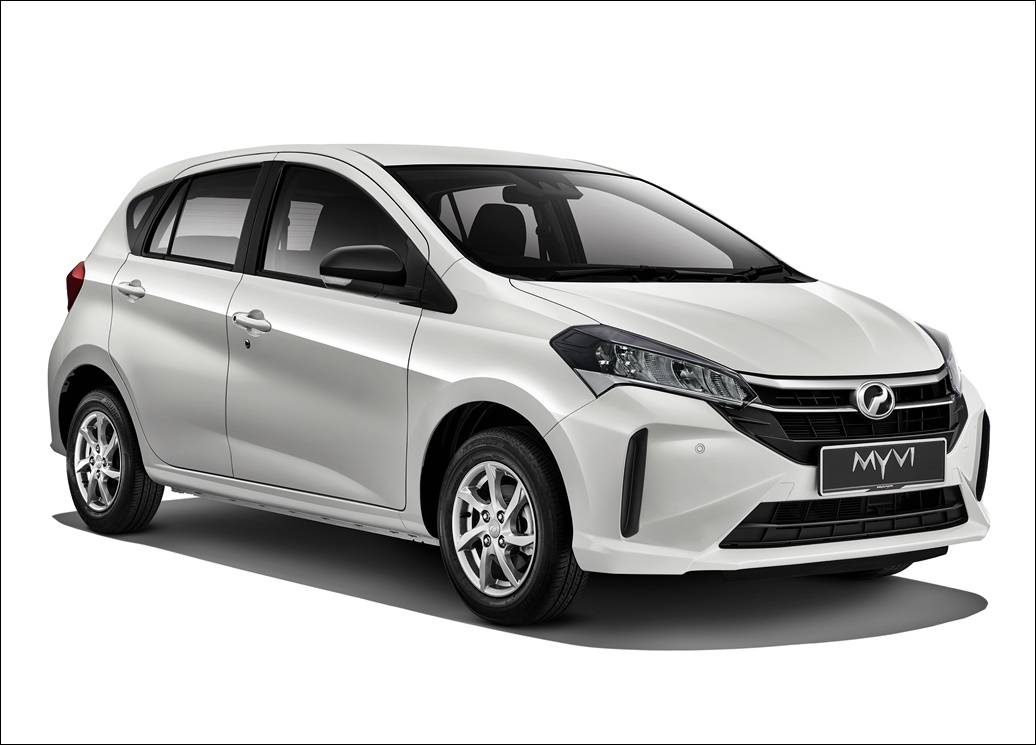
Four years ago, Perodua launched the third generation of the Myvi, a model which had propelled the brand to the No. 1 position in the Malaysian market when it was introduced in 2005. And every year after that, sales kept growing and helped Perodua to maintain its dominance in the home market. So well built was the Myvi at Perodua’s factory that Daihatsu, its partner, has even been taking Malaysian-made cars for sale in Indonesia under its own brand.
With such a successful background, it must be challenging for the team when it comes round to updating the model, especially if it is to be a full model change. But this time around, the full model change is not yet due and as would be typical in a product cycle, updates are done to refresh the appearance as well as add some new features and technologies.
Prices shown exclude insurance premium and sales tax.
Switch to CVT, no more manual transmission
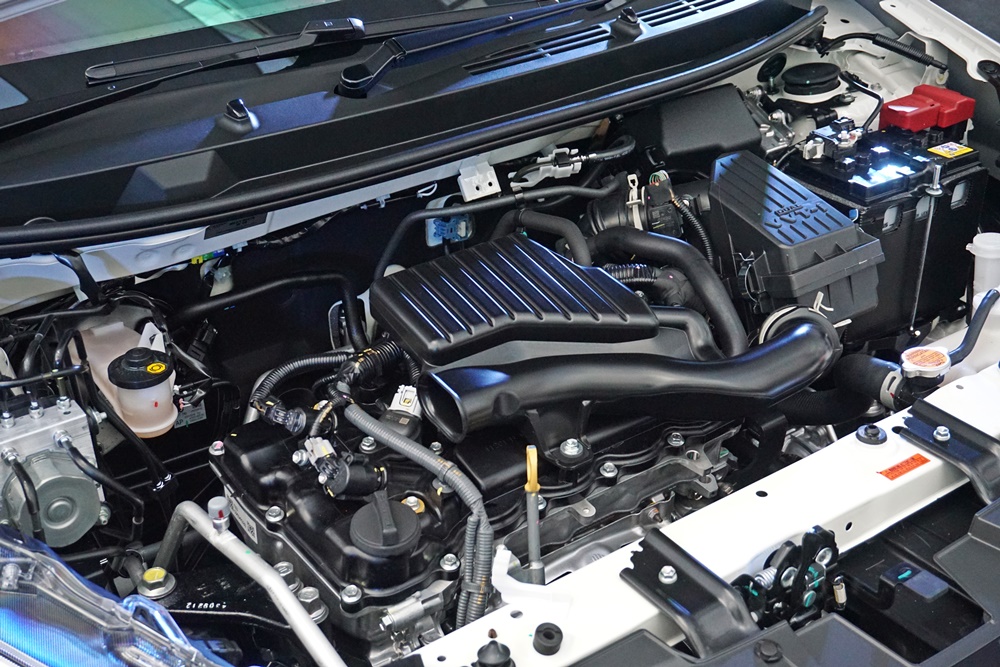
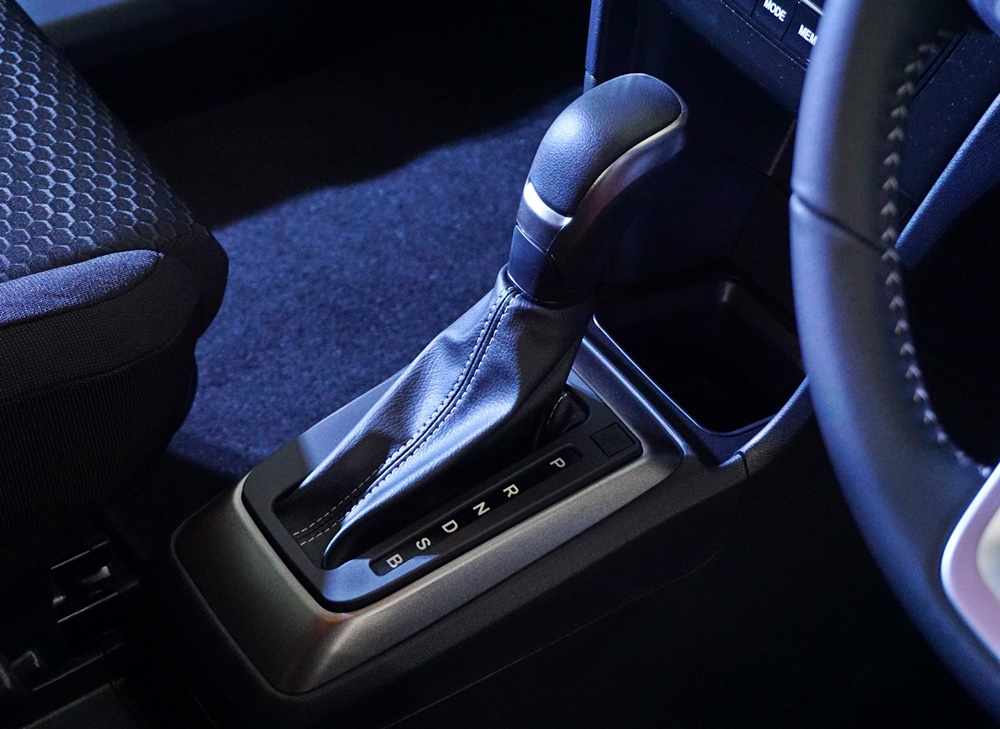
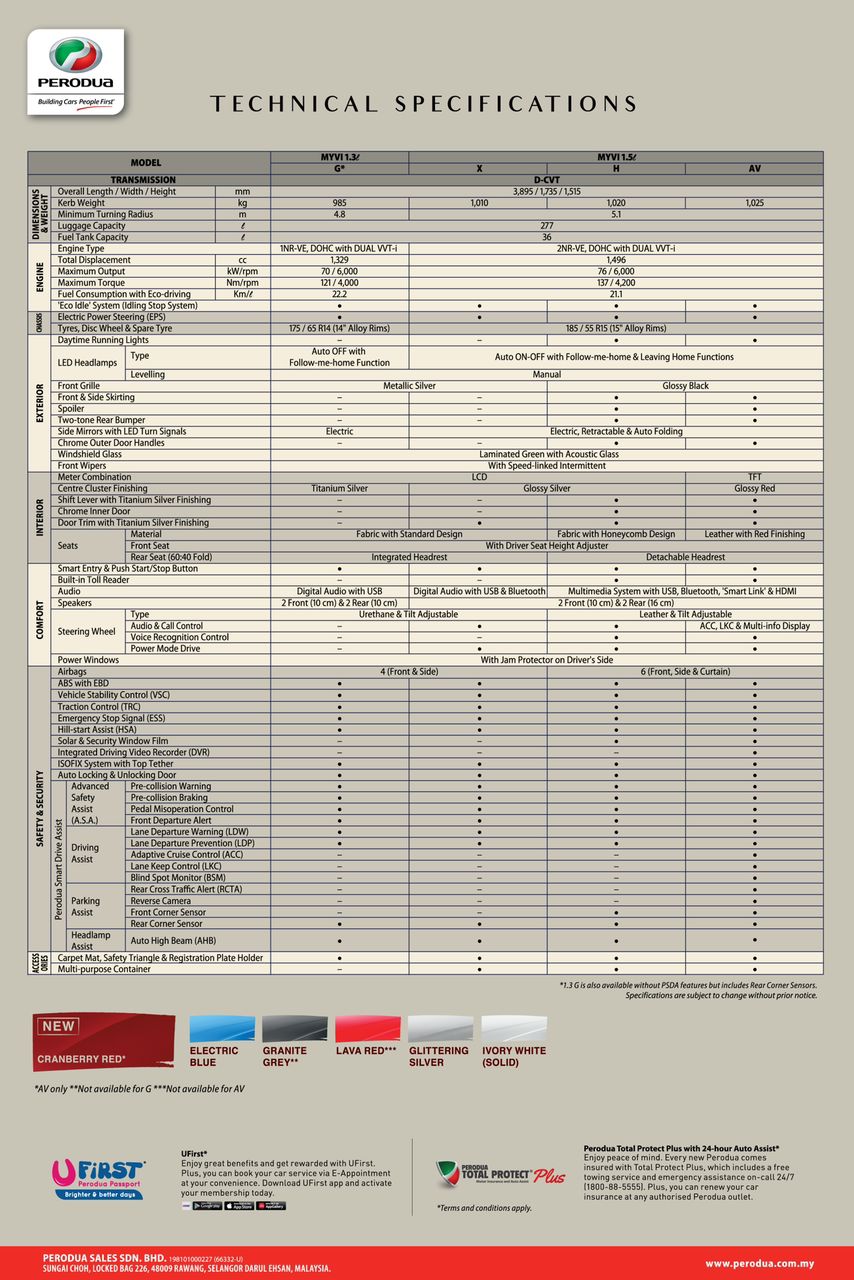
The New Myvi range consists of the 3 variants with 1.5-litre engines – AV (Advance Variant), H and X, and a G variant with a 1.3-litre engine. While the engines are the same as before, the automatic transmission has been completely changed to a CVT (Continuously Variable Transmission). Factory tests show that this new transmission can improve fuel consumption by up to 5% as well as quicken acceleration by 20%. The CVT is made in Malaysia at a Perodua-owned factory in Negeri Sembilan which is next to the factory making the engines.
For those who prefer manual transmissions, this option won’t be available any longer. Over the years, demand for the Myvi with manual transmission has been decreasing. Perhaps it’s the congestion in many places or people simply appreciate the convenience of auto-shifting more. As the demand for manual transmissions has dropped to a level where it does not make business sense for Perodua, they have decided to stop offering it although they will consider it if demand is higher.
So if you want them to produce a manual Myvi, then you need to help get more customers who want it – not just your own circle of friends but hundreds more… every month. That is the sort of challenge for a manufacturer when it has started to hit very high volumes. Smaller volumes of a variant can become less cost-effective with the extra work or different parts.
For Perodua, which is at the entry level end of the market, costs are crucial (not that they are not for any other carmaker) and adding anything new needs to be justified with continued growth. The new product has to be improved in a way that attracts more customers, not just sustain sales.
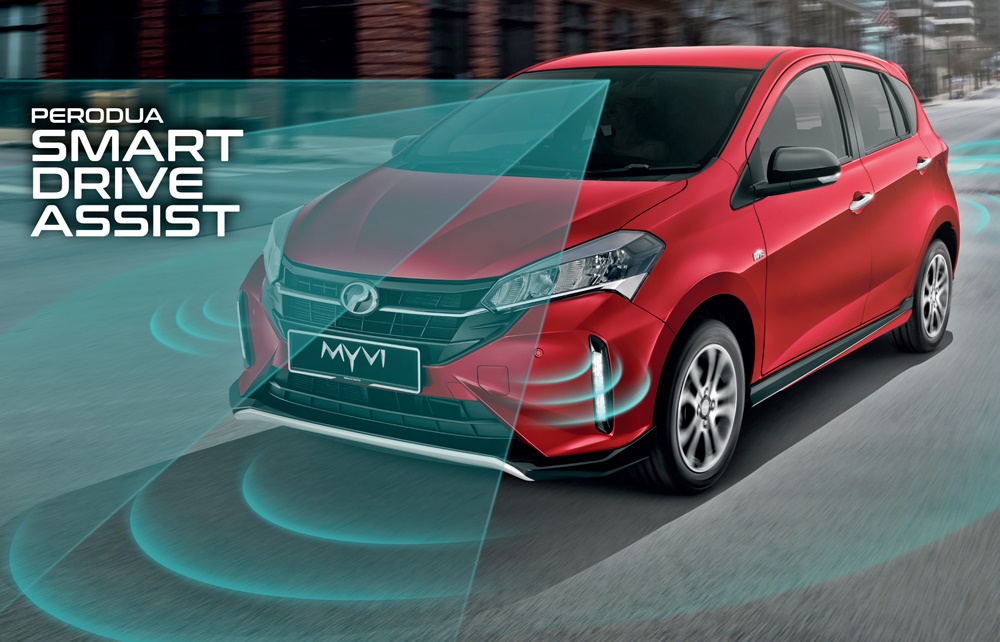
Perodua Smart Drive Assist +ASA
Fortunately, being affiliated with the Toyota Group (which Daihatsu is part of), Perodua can enjoy lower costs on some shared components. They have used this advantage by upgrading the safety system in the new Myvi to what is now called the Perodua Smart Drive Assist (PSDA) system. Available in the top variant (Myvi 1.5 AV), PSDA is an expanded package of active safety systems which originally started with the Advanced Safety Assist (ASA) system. ASA has four systems which essentially relate to Autonomous Emergency Braking.
With PSDA, drivers also have Driving Assist, Parking Assist and Headlamp Assist, and when combined, the Myvi has Level 2 autonomous driving capability (as per the American SAE classification). This allows the driver a degree of reduced involvement while driving but he must still have control and take action if necessary in emergencies. However, if he does not respond, then some of the systems will activate automatically to prevent an accident.
Level 2 autonomy
Perodua says that this is the first time a car company in Malaysia is offering a model with Level 2 autonomy for under RM60,000. For those who want to save a bit more money and feel they can do without the PSDA, Perodua offers an alternative G version without PSDA for RM2,000 less. They are probably doing this to gauge customer response and quite likely, most people will still pay the RM2,000 as it does not bump up the monthly instalment by much anyway.
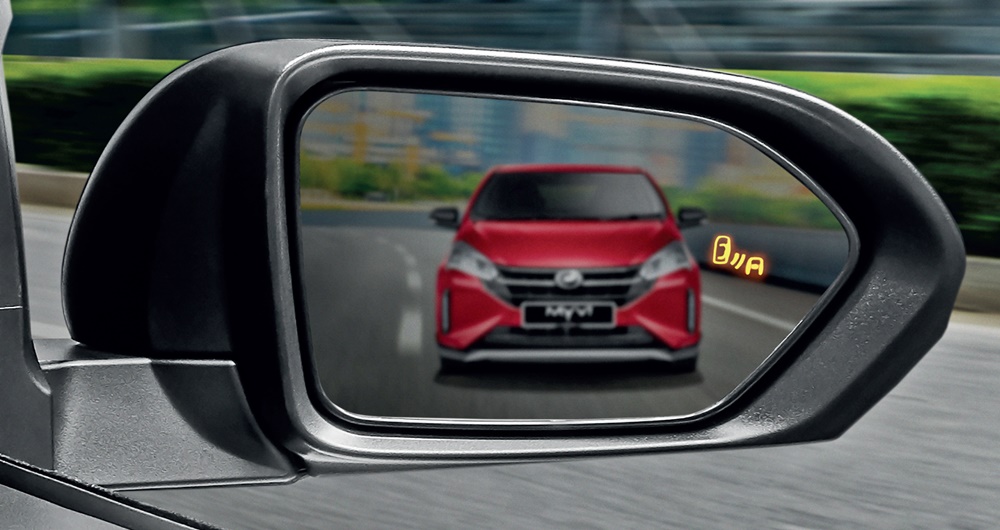
Driving Assist has systems which provide Adaptive Cruise Control as well as keep the car within its lane. These mean the driver can be less fatigued on long journeys and in the event of reduce concentration, safety can still be maintained (although there will be warnings to alert the driver who should then stop and rest). A Blindspot monitor is also present, ensuring that the driver has situational awareness whenever making lane changes.
Parking Assist will help the driver park properly and safely. While there isn’t the overhead view that more expensive models have nowadays, there is a reverse camera and sensors front and rear to alert the driver of distances from obstacles or walls.
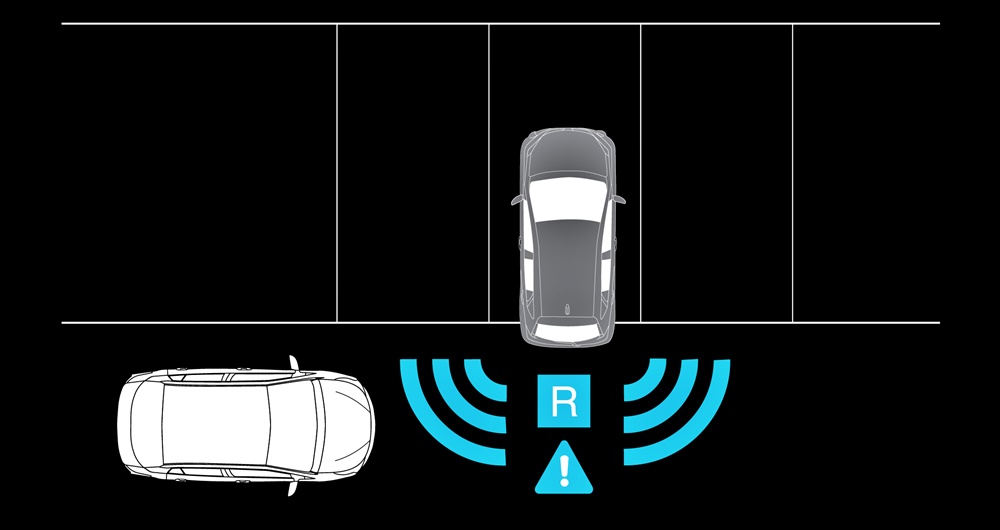
A significant new safety feature is Rear Cross Traffic Alert which, not so long ago, was only available on premium models. This system sends out radar signals to either side of the car as it is reversing out of a parking bay. The driver’s view may be blocked so the system is valuable in detecting approaching vehicles and alerting the driver so he can stop reversing, avoiding a possible accident.
As for Headlamp Assist, this is a system that automatically switches the headlamp from high to low beam. The driver can have maximum illumination when there is no approaching vehicle but when there is, the headlamps automatically switch to low beam, thereby avoiding blinding the other driver. Once there is no other vehicle, the high beams will be activated again. Of course, as has been the case for a long time, the rearview mirror has an anti-glare feature so that the driver is not disturbed by the lights of vehicles behind.
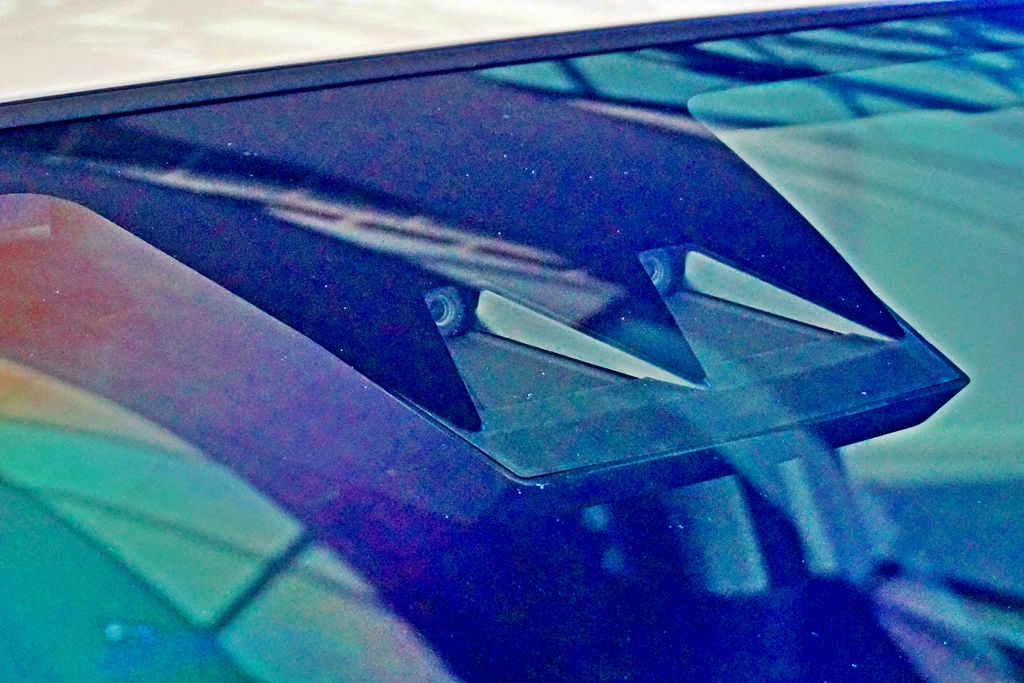
Perodua’s ASA makes use of a new stereo camera system mounted at the top of the windscreen. These are very sophisticated ‘eyes’ that scan the road ahead and the imagery is sent to a computer for analysis and where potential dangers are determined, warnings will alert the driver and if action is not taken, automatic braking will take place, or the system will guide the car to stay in its lane.
Stereo cameras mounted at the top of the windscreen are the ‘eyes’ of the PSDA system.
Driver attention still necessary
It should be noted that PSDA is for assistance and cannot fully replace the driver’s decision-making and attention. The ASA is in its 3rd generation and more advanced, able to recognize cyclists and pedestrians. However, in some conditions like very heavy rain, the ability of the camera to detect may be reduced and therefore the driver needs to be more attentive in such situations.
Auto Door Locking is now standard and while it is not a new feature for cars, it is good that Perodua is now providing it. The system not only automatically locks all doors when the car’s speed exceeds 20 km/h but also locks if the brake pedal is depressed. Keeping the doors locked these days is better for personal safety so that passersby cannot just open the door and snatch belongings out.
Functional changes within
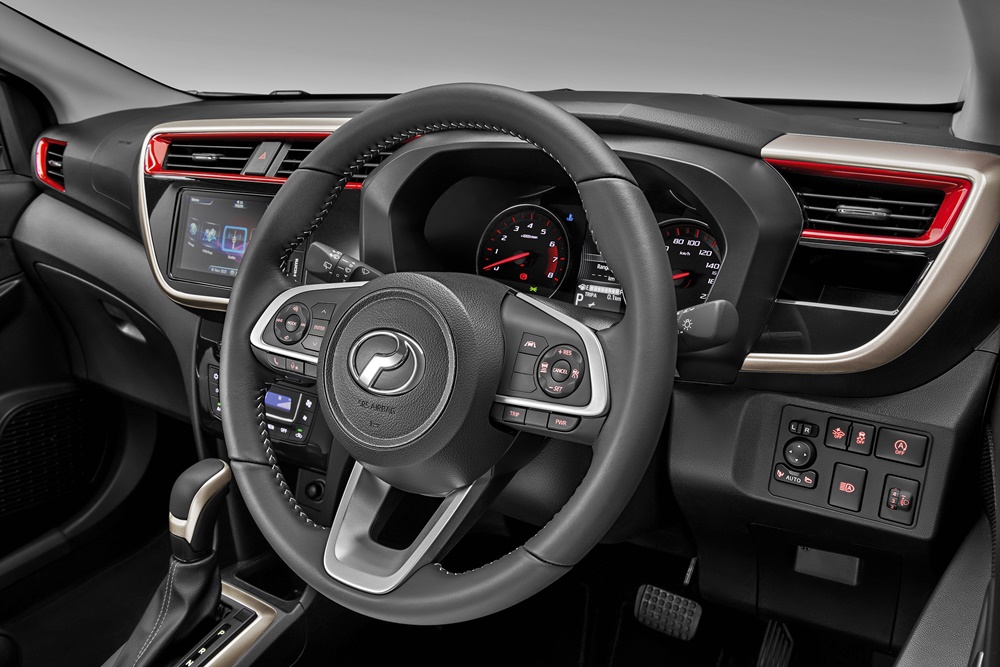
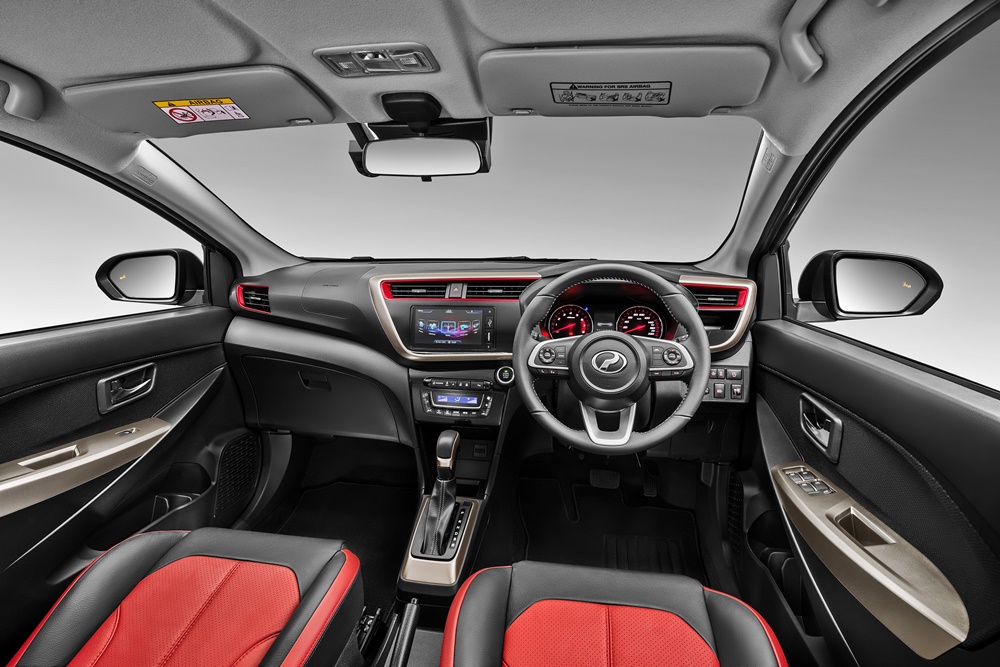
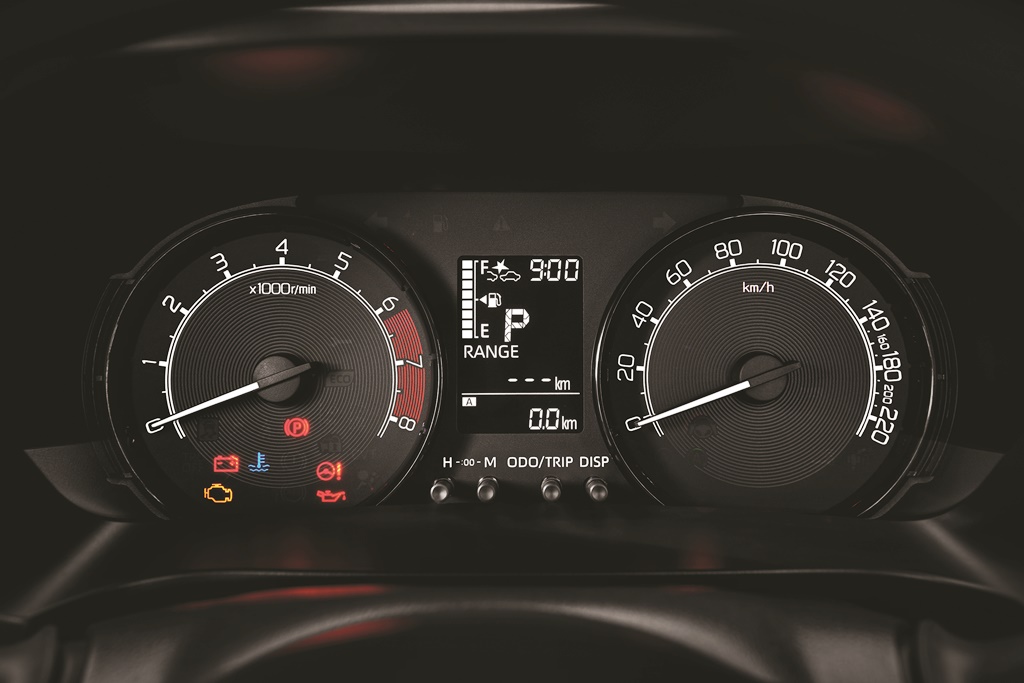
Inside the new Myvi, the changes are more functional rather than visual. The centre touchscreen is now slightly larger, going from 6.2 inches to 6.9 inches. It also uses the same interface as the Ativa which has improved user-friendliness.
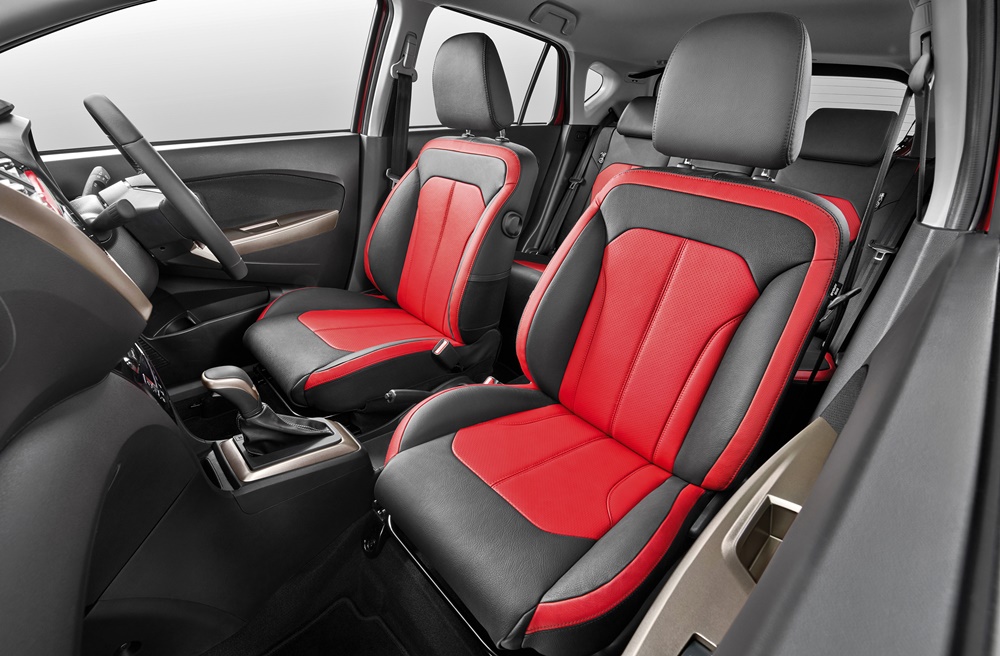
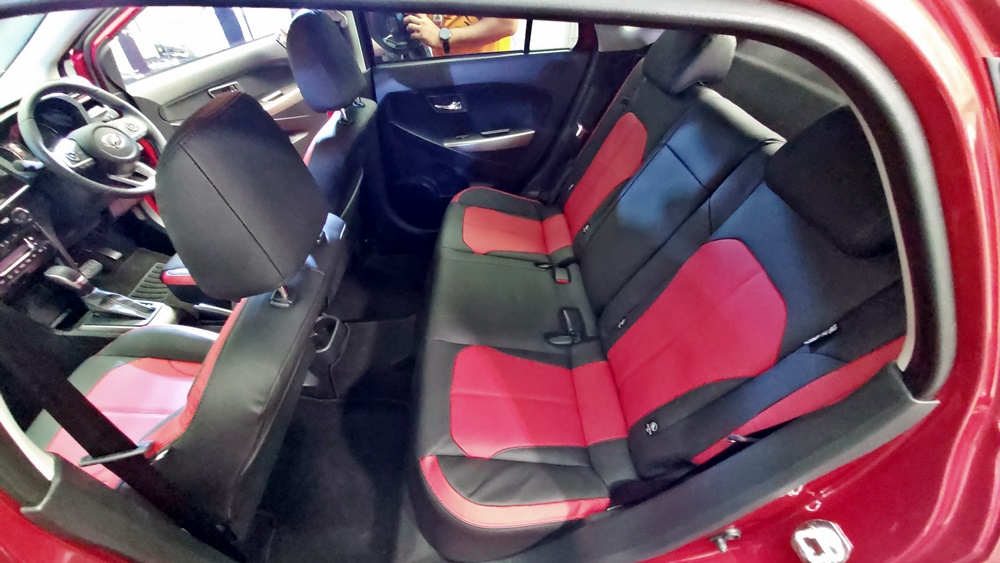
The leather upholstery for the Myvi AV is new and so is the fabric for the Myvi G, which is at the other end of the range. Sharp-eyed Myvi owners may notice that the air-conditioner ring is now painted instead of chrome and for the Myvi AV, the centre cluster is now finished in a sporty red colour instead of being silver.
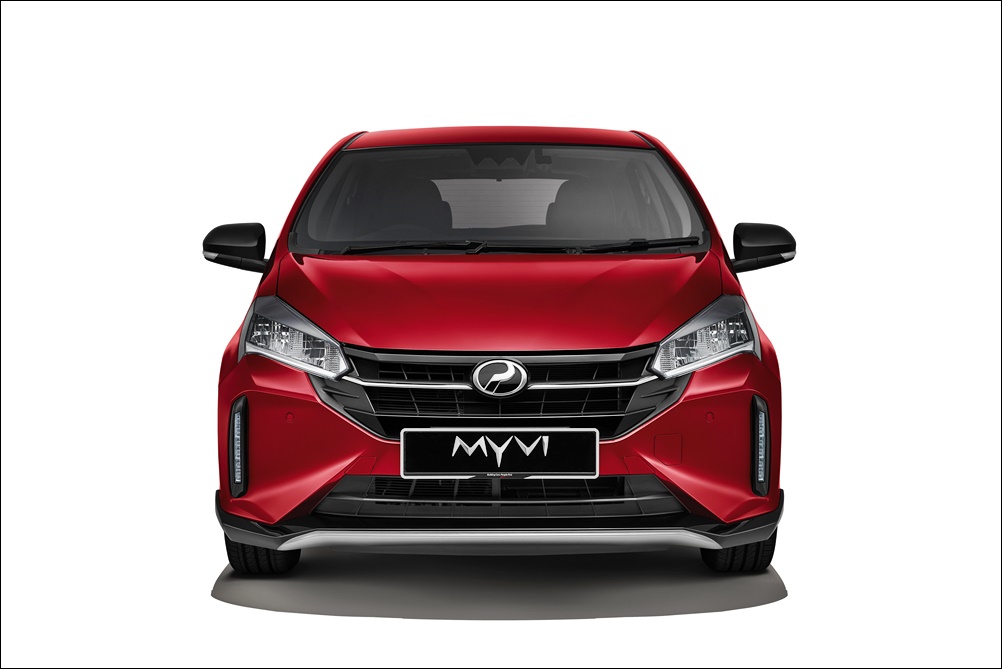
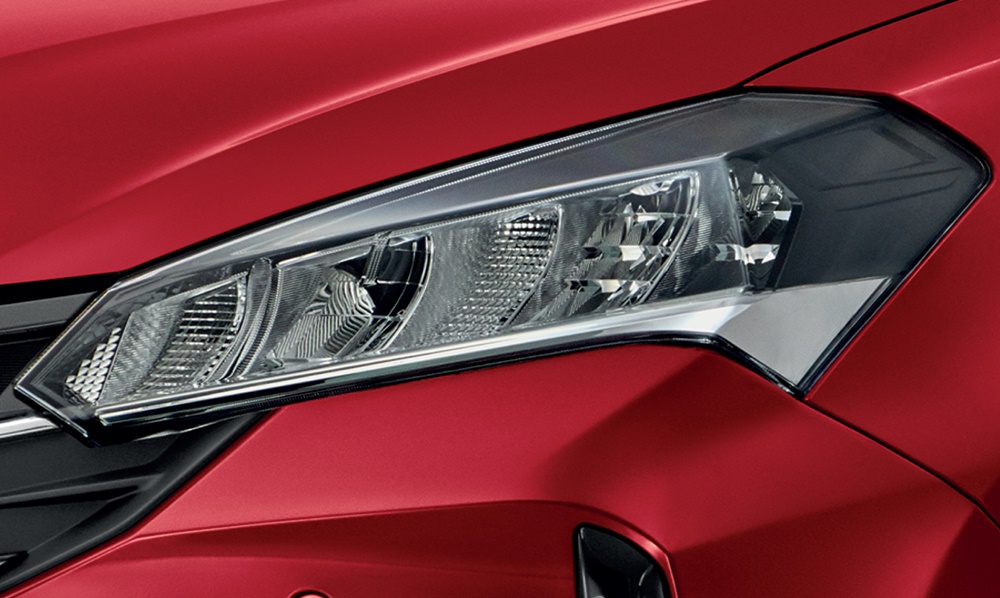
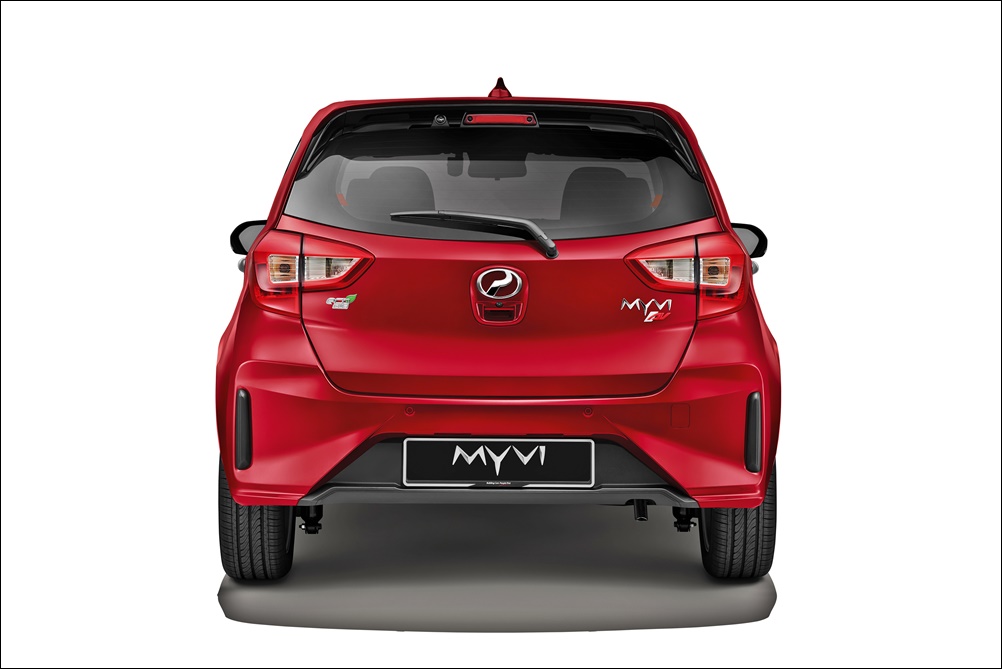
The exterior of the new Myvi has not been altered radically, which is the case when a model is midpoint through its generation. But there are the usual changes in the bumper design and grille design as these can be made easily without new metal body panels. They are mostly plastic which is easily reshaped. The door mirrors are now also finished in black instead of the body colour.
As for colours, there’s a choice of 5 colours, with Cranberry Red being new and only available for the Myvi AV. Other colour choices are Ivory White, Glittering Silver, Lava Red (not available for the AV), Granite Grey, and Electric Blue.
Will the Myvi be electrified?
Will the next Myvi be electrified? Before, Perodua used to respond by explaining that with its small engines and light weight, the fuel efficiency levels were already quite high, so switching to hybrid powertrains was unnecessary. However, in recent times, things have changed as carbon neutrality has become important, meaning emissions of carbon dioxide need to be cut down as a measure to stop climate change.
This has led Perodua to reconsider its powertrains for the future and it appears that the carmaker is aligned with the position taken by its affiliate, UMW Toyota Motor, which is that hybrid electric vehicles are better suited for Malaysia than battery electric vehicles – at this time. Perodua looks at the bigger picture of ‘well-to-wheel’ and given the current infrastructure and power generation in Malaysia, fully electric vehicles may not be the best approach.
The company is already running at least one hybrid model on Malaysian roads, partly to test the system in local conditions and also to get public feedback. The technology is already available and Daihatsu has powertrains which can be provided, if required. In fact, Daihatsu was already investigating hybrid powertrains as far back as 1981 and had a running prototype which is showed at the Tokyo Motorshow that year.
But unless the government introduces some drastically different policies in coming years, the Myvi is likely to still have combustion engines for some time to come. In the meantime, if you are shopping for a new car in this price range, check out the new Myvi which certainly offers good value for money as always.
To locate a showroom to test-drive or view the new Myvi, visit www.perodua.com.my.
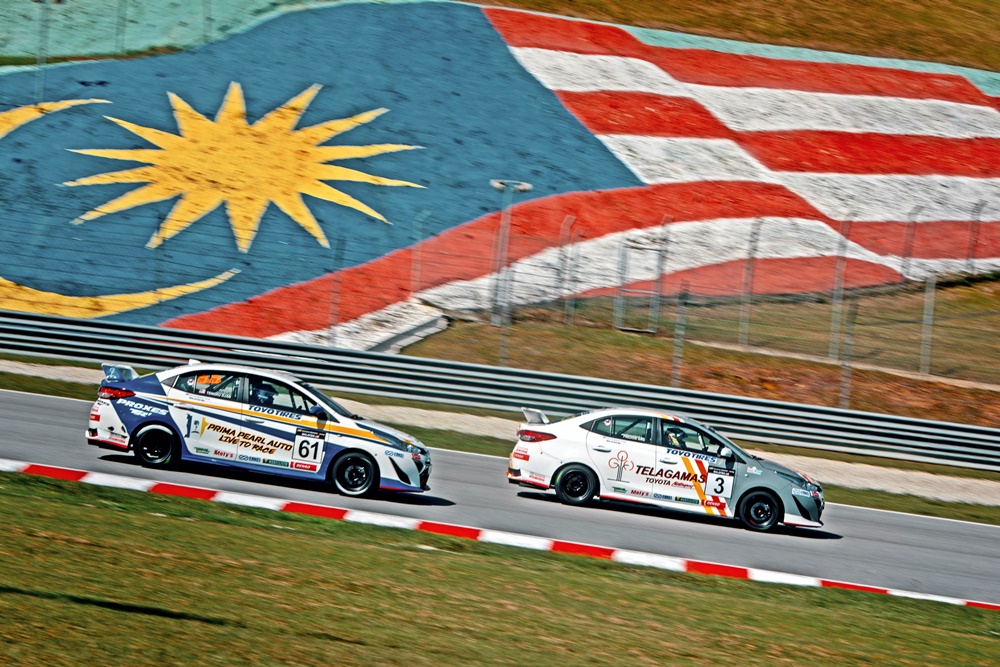
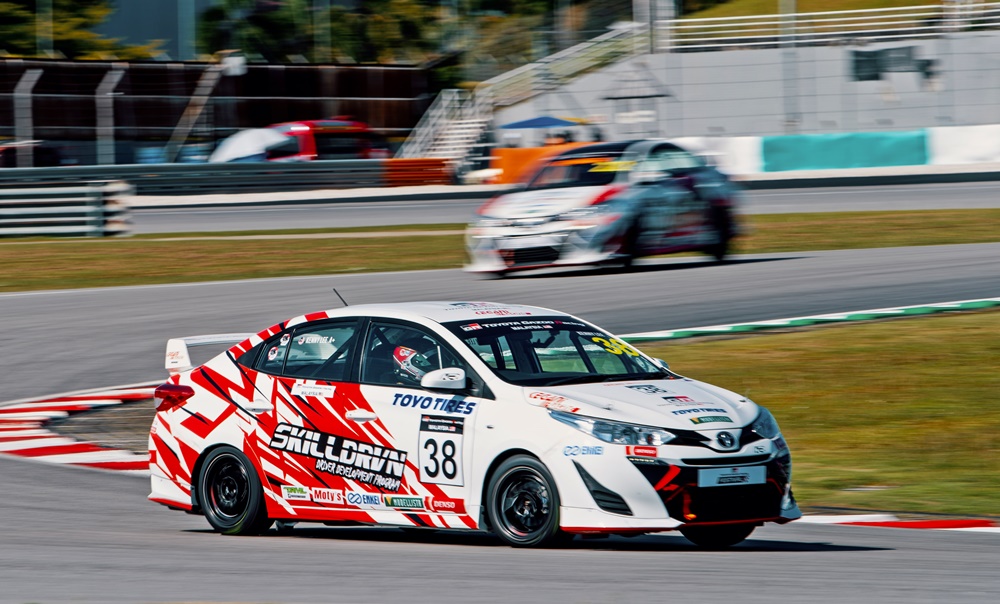
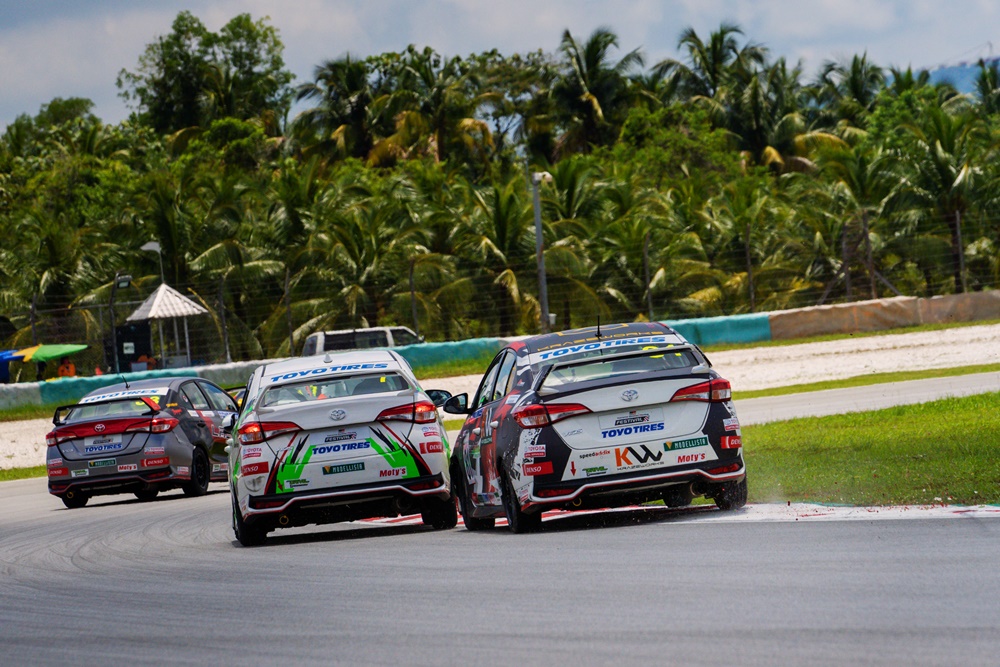
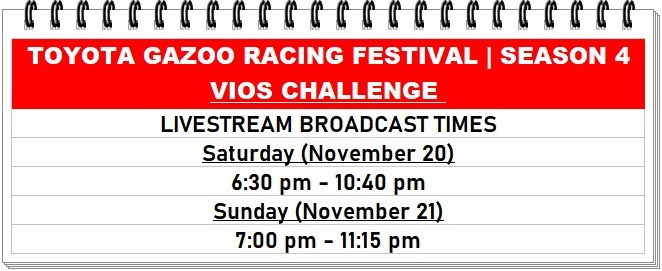
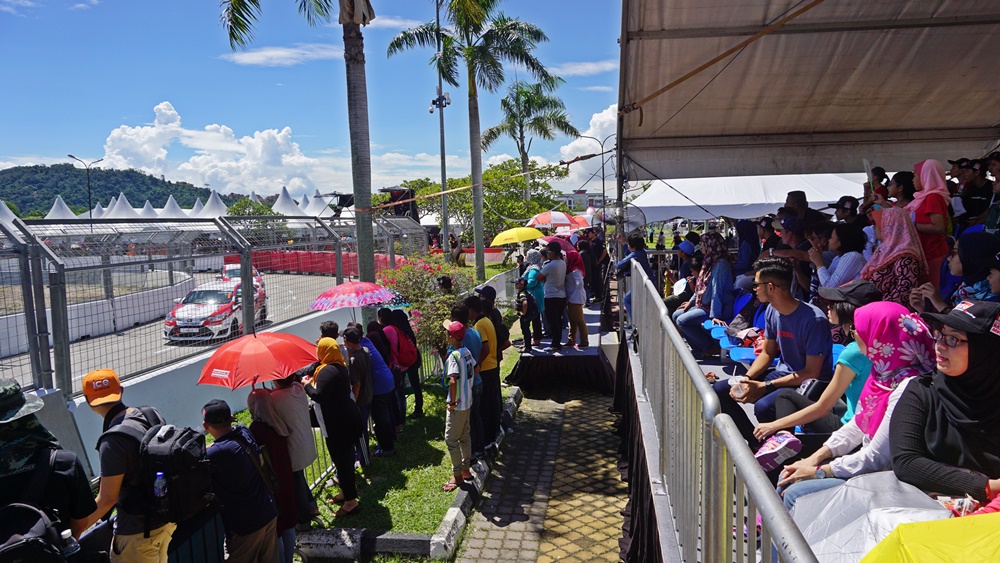
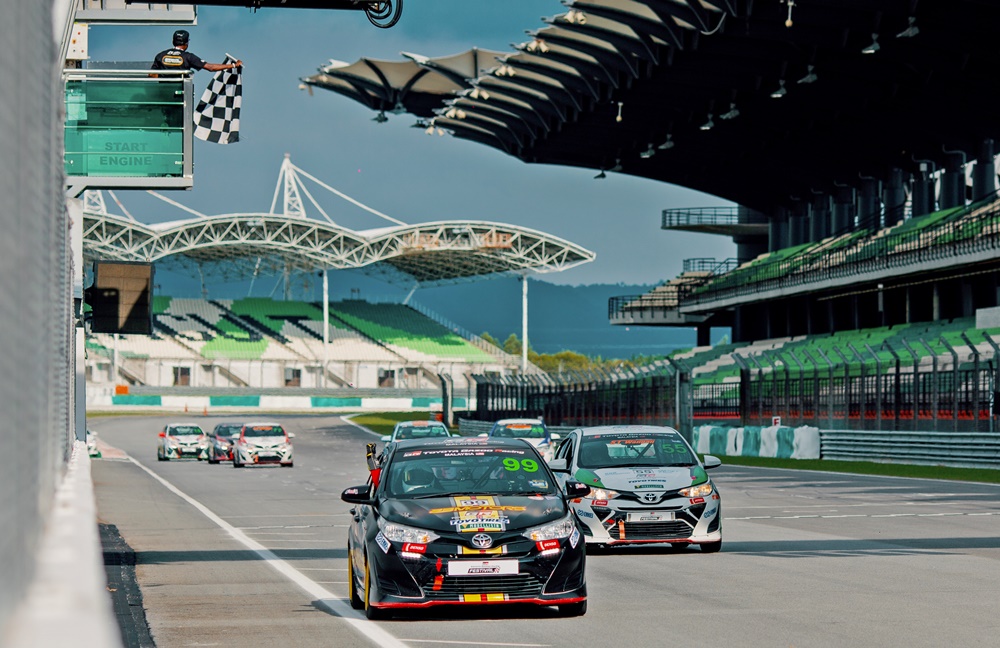
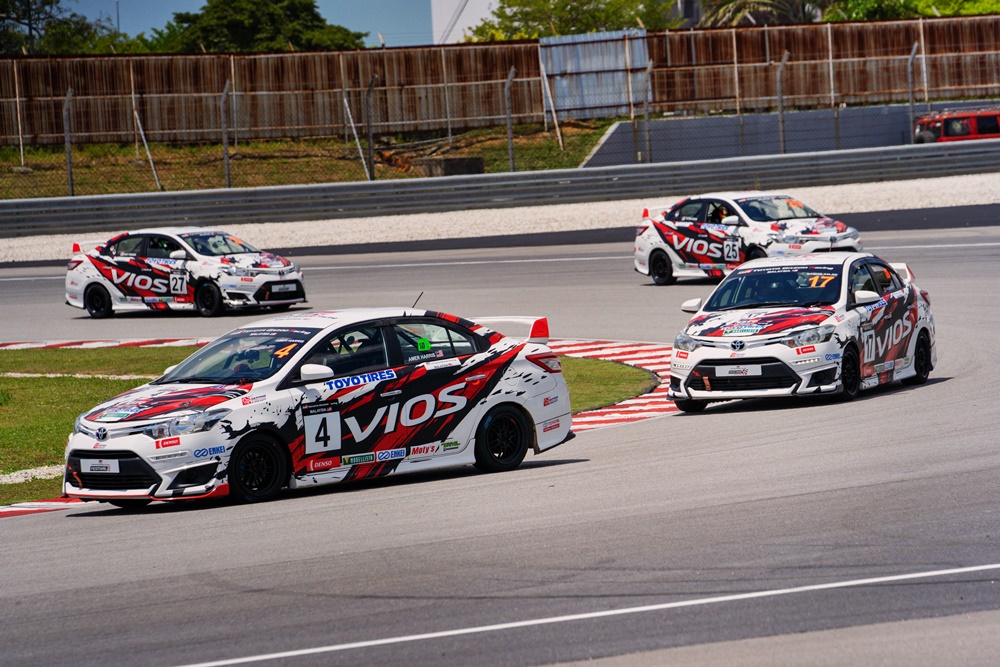
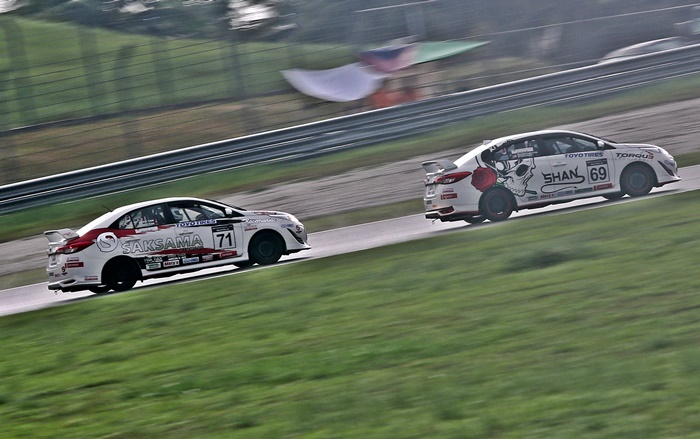
The TOYOTA GAZOO Racing Festival (TGR) and Vios Challenge return to the Sepang International Circuit for the finale of the fourth season this weekend (November 20/21). And adding to the excitement will be all the races being run at night – the first time for the one-make series.
After the first two round (each comprising two races), there are no clear favourites to take the titles in each of the four classes. No less than 5 contenders have a shot of becoming the overall champion in the Super Sporting Class, Sporting Class, and Promotional Class. The same applies to the Rookie Class which is for a young group of new racers from TOYOTA GAZOO Racing Malaysia’s Young Talent Development Program.
“Season 4 will be remembered as one of the most challenging due to the pandemic and this may, to some extent, have had an impact on the performances of teams and drivers. Immediately after Round 1 in February, the country was forced into a Movement Control Order (MCO) again which lasted for 8 months. This resulted in Round 2 only being able to resume last month (October) and now the finale is this weekend,” said UMW Toyota Motor President, Ravindran K.
“At the other end of the spectrum, it has also paved the way for even closer competition. No single driver has an unassailable advantage and the champions will have to be decided in the final round. This is a task made even more challenging for the drivers it is the first-ever night race for the Vios Challenge!” he added.
“UMW Toyota Motor is committed to the series and we are extremely pleased to be able to conclude the season amidst these challenging times. The success of the Vios Challenge has largely been fuelled by the support of the participating teams and drivers as well as all race fans, and I would like to convey our utmost appreciation for making it the best and most well accepted racing series in Malaysia,” Mr. Ravindran said.
Besides the strict health measures that will be followed at the circuit, UMW Toyota Motor has also implemented additional safety measures which include continuing to restrict the race to only critical personnel and guests. As before, the weekend’s activities will be broadcast live online for race fans in Malaysia and the rest of the world. The broadcasts will be on the UMW Toyota Motor and TOYOTA GAZOO Racing Malaysia websites at toyota.com.my/tgrmalaysia/, and also on the Toyota Malaysia and TOYOTA GAZOO Racing Malaysia Facebook pages.
The first season of the Vios Challenge, part of the TOYOTA GAZOO Racing Festival, started off in Penang in August 2017.
SUPER SPORTING CLASS
With 55 points to his tally, M7 Japan Project Team’s Syafiq Ali finds himself in the best possible position to win this season’s overall Super Sporting Class championship. “Four points is never a comfortable margin to lead a championship, especially when it will all be decided in the last two races of the season. Anyone in the top five is more than capable of winning the overall championship – that’s just how close it is this season!” said Syafiq who, despite having only one race win to his credit this season, has been the more consistent driver with 3 podium finishes in 4 races.
He will be challenged for the title by 2-time Super Sporting Class champion and race favourite Tengku Djan Ley as well as Laser Motor Racing’s Mark Darwin and teenager Hayden Haikal representing SpeedAddix. The dark horse is 23 Motors driver Mitchell Cheah; despite being a newcomer to the series, he drove to a dominant debut in Round 2 with a race victory and a second-place finish in the two races.
SPORTING CLASS
In the Sporting Class, Crestmax Motorsport’s Adam Khalid leads the overall championship with 53 points, 10 points ahead of privateer Eric Yong. In third is Clement Yeo with 36 points, followed closely by Haji Sutan Mustaffa Salihin with 33 points, and Aylezo Motorsport’s Mirza Syahmi Mahzan just 1 point behind.
Mathematically, the other 4 drivers still have shot at becoming Season 4’s Sporting Class champion so Adam is not taking anything for granted. “While it is great to be leading the championship, it will be a mistake to take things for granted when you’re in the company of the most determined racers on the grid. Qualifying well will be critical to give me a great boost in confidence leading up to the race,” he said.
PROMOTIONAL CLASS
Always the crowd-puller with its celebrities, the Promotional Class can be expected to see close fight between actors Zizan Razak and Shukri Yahaya who are separated by a single point going into the final 2 races of the season.
Zizan had taken the first two race victories in Round 1 while Shukri fought back valiantly to win the following two races in Round 2. “I have to go for the championship win this time. I need to prove to myself that I can do it,” said Shukri, who has been racing in the Vios Challenge since the first season. He has finishing second in the Promotional Class twice so he will be aiming to finally take the crown this year.
In third with 41 points is singer Khai Bahar, followed by TOYOTA GAZOO Racing Malaysia’s Chief Motorsports Officer Akio Takeyama (39 points), and television host Nabil Ahmad in fifth a further 1 point behind.
ROOKIE CLASS
The battle of the Rookies has so far been dominated by simulator racer Naquib Azlan who has amassed 3 race victories from the 4 races to build a commanding lead with 74 points in the overall championship. Second with 59 points is 17-year-old Amer Harris, followed closely by another simulator racer Mika Hakimi on 54 points, while in fourth and fifth are Jwan Hii and Putera Adam with 35 and 20 points, respectively.
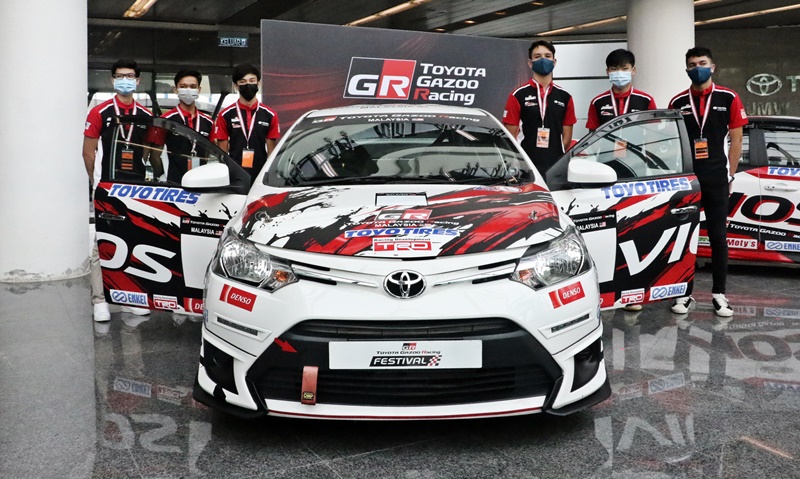
The GAZOO Racing Young Talent Development Program helps to bring newcomers to the sport and trains them with the necessary skills for racing.
“The Rookie Class has been the most highly anticipated this season given their reputation as newcomers in racing but all 5 drivers have produced some surprising results which underlines the credibility and success of the GAZOO Racing Young Talent Development Program,” said Mr. Takeyama.
TGR in Sepang 1000KM Race (S1K)
Within days of this weekend’s Vios Challenge finale, Toyota GAZOO Racing Malaysia will also be joining the annual Sepang 1000KM race. The 1000-km race is expected to take 9 hours and cover 181 laps of the Sepang International Circuit.
The entries will include two cars in the MTC Production Class and SP2 production class, in addition to concurrently running the very first Vios Enduro Cup for privateers and dealer teams competing in the SP2 Production Class.
Fighting for outright victory in the MTC Production class will be the trio of Tengku Djan Ley who is also TOYOTA GAZOO Racing Malaysia’s Ambassador, Rookie Class driver Naquib and Mr. Takeyama. The SP2 Production Class will see Rookie Class drivers Jwan and Mika partnering our very own Promotional Class driver and actor Zizan Razak.
“This will be a great way of completing this year’s racing calendar. Of course, winning the MTC Production Class will certainly be the icing on the cake! We will certainly be gunning for overall victory but we will be equally happy to finish competitively at the very top,” said Mr. Takeyama. “Joining a prestigious national series event like the S1K is also the start of extending TOYOTA GAZOO Racing Malaysia’s presence in Malaysian motorsports.”
In the 11 years that the S1K race has been held since 2009 to 2019, Toyota has won the race twice with private entries, both of whom used the Corolla model.
Are you one of those who prefers to be alone at the wheel when test-driving a vehicle? Some people are like that and dislike having a salesman accompany them, sometimes being distracting as they keep talking about the features of the model. But for virtually all companies, that would be an understandable policy – after all, a stranger is taking their property out for a drive and all they have are some of his personal details.
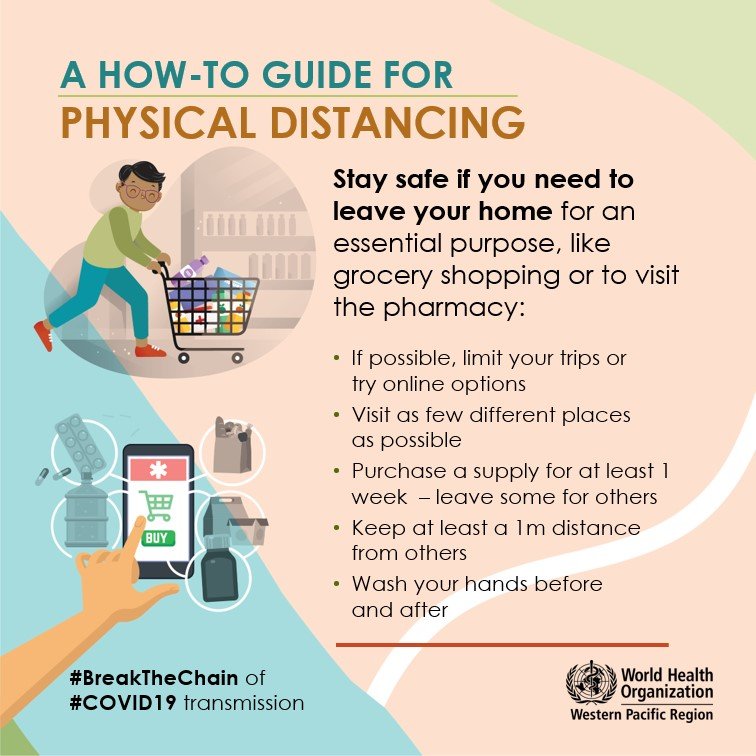
Furthermore, in these pandemic times, customers may also be uncomfortable having a stranger in the vehicle with them, even if everyone follows SOPs.
For Klang Valley customers
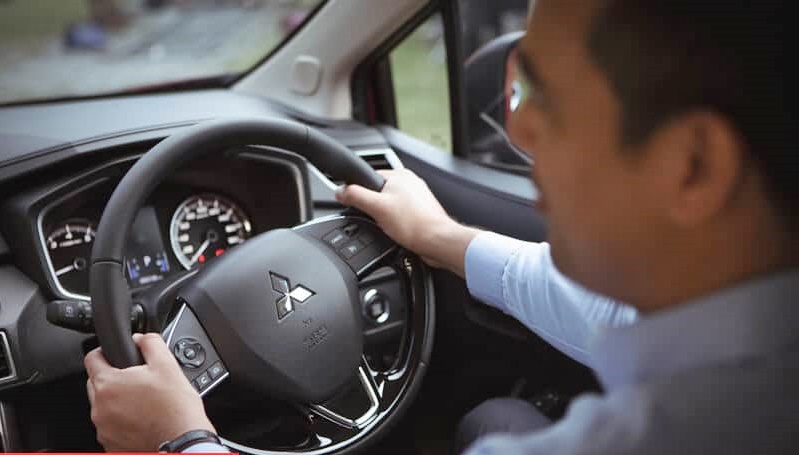
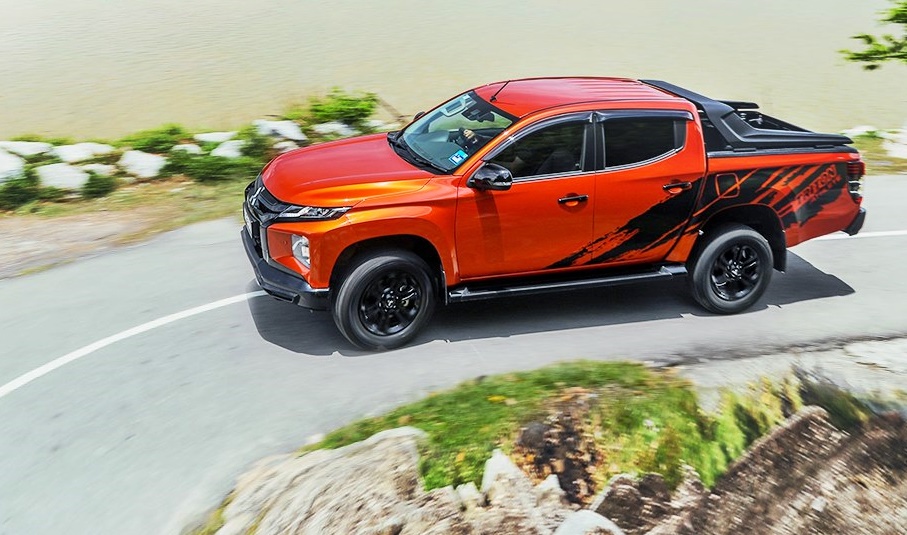
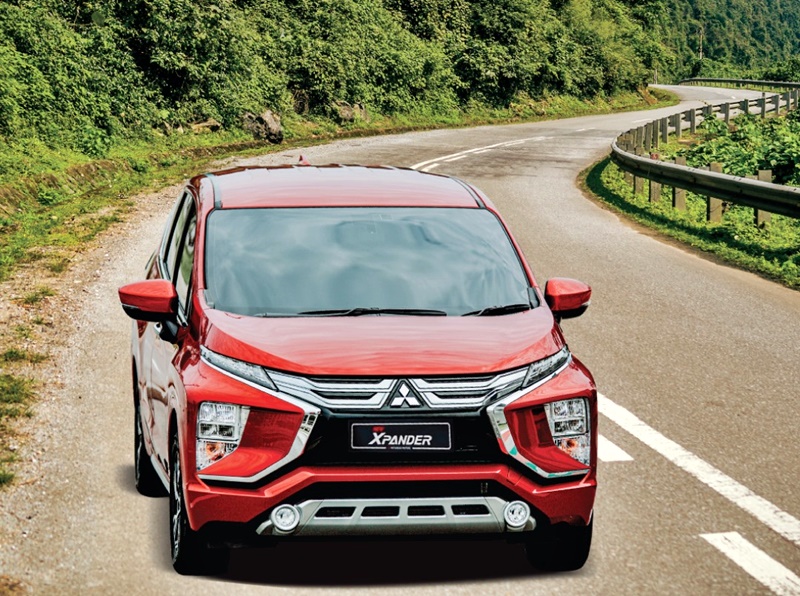
Mitsubishi Motors Malaysia (MMM) understands such feelings and now offers the option of an unaccompanied test-drive for customers in the Klang Valley. This option is for the popular Triton Athlete pick-up truck and the XPANDER 7-seater MPV. Of course, if they wish, the salesman can also be present and explain the many features in the vehicles so they can enjoy it more on their drive.
To request for a test-drive, customers should visit MMM’s official website at www.mitsubishi-motors.com.my/testdrive2u/ and fill out the form online. Upon receiving the request, an authorized Mitsubishi Motors dealer nearest to them will make contact to verify and confirm the appointment. Arrangements will then be made to deliver the test-drive vehicle to the customer’s preferred location for the test-drive which can be up to an hour long.
Fully sanitized vehicles for peace of mind
MMM assures customers that every test-drive is properly sanitized, especially at all touchpoints, for their safety and peace of mind. Product information will also be provided to ensure that the customer can operate the various systems, especially those which enhance comfort or add convenience. Needless to say, the customer should have a valid driving licence to drive on public roads.
For example, in both models, there’s seamless connectivity for compatible smartphones with Apple CarPlay and Android Auto to put favourite apps in the infotainment system. This means the driver can use those apps right from the dashboard and in some cases, voice commands also provide handsfree operation.
“As the nation moves towards the endemic era, living with COVID-19 and SOPs are the New Normal challenges that we need to adapt to. As a company, we adapt our business primarily to keep our customers safe. Hence we offer the unaccompanied test-drive option for a peace-of-mind shopping experience. This option will allow our customers to experience the Mitsubishi cars on their terms with limited contact,” said Shinya Ikeda, CEO of Mitsubishi Motors Malaysia.
“Shopping for a new vehicle present day is different than it was before the pandemic. At Mitsubishi Motors, we saw this as an opportunity to improve our customer’s experience and convenience. Through our Mitsubishi Online Showroom, customers can now learn about Mitsubishi vehicles, and they only need to fill up a form to schedule an appointment with our authorized dealers. We will then take care of the rest of the process right to delivering the Mitsubishi vehicle to customer’s doorstep,” Mr. Ikeda added.
For those who already own a Mitsubishi vehicle, using the MITSUBISHI CONNECT MY mobile app makes it easy to schedule a service appointment. They can also obtain assistance by calling MMM’s Customer Careline at 1800 18 8161.