

Piston.my

English

The Malaysian b-segment market is never short of drama. Manufacturers are consistently trying to outdo each other, but amidst all of that outdoing, it is the consumer that always wins. The segment consists of big names like the Honda City, Toyota Vios, Nissan Almera and even the Proton Persona.

But it is fair to say that the most popular are the City and the Vios. While Honda and Toyota are always outdoing each other, we are getting ever better cars.

The Vios is currently in its fourth-generation while the City has been around since the early 80s and is currently in its seventh generation. Over all that time, both have evolved to be mighty fine cars.

UMW Toyota Motors introduced the new Vios earlier this year to much fanfare. Sales have been brisk, but that’s unsurprising considering its popularity.

The City too is the other de facto go to model for those who want practicality and reliability. It is now bigger than ever, and with a recently introduced facelift, it may not be an all-new model like the Vios, but it has everything the Vios has and is arguably better to drive.

In terms of pricing, the Honda City RS petrol costs RM99,900 while the Toyota Vios is priced at RM95,500. However, Honda provides free labour up to five times within 100,00km or five years[NTSF(1] , while Toyota charges an additional RM3,220 for a five-year or 100,000km free service package. If you opt for the service package, that would bring the price of the Toyota close to the City.

So, which should you spend your money on? We dissect the two cars and bring you our opinion on which would be worth your money:

Engine:

Beginning with what matters most, both cars are powered by a 1.5-litre naturally-aspirated engine. The Honda has offers its i-VTEC technology to make accessible power, while Toyota has its D-VVTi.

However, the Vios is down on power as compared to the City. The Vios produces 106PS and 138Nm, while the City offers 121PS and 145Nm. The difference may not seem that much but this is felt the most during acceleration where the City feels more eager to get up to speed.

As far as efficiency goes, both cars have 40-litre fuel tanks and are capable of providing about 500km of range on a full tank.

Drive:

Again, both cars ride on identical suspension set ups, MacPherson struts up front and a torsion beam at the rear.

Both do excellent jobs at keeping occupants detached from the horrors of the roads underneath them. However, in terms of handling, the City feels more alive and is quicker to oblige every turn of the steering wheel. The steering feel of the Vios feels more muted and heavy. If you are into keen on more agile and responsive handling, you will appreciate the City.

In terms of braking, both also have the same set up – solid discs all around.

Design:

This is always subjective, but it is the Vios that has the freshest design between the two. The City has gone through several facelifts and now offers a bolder grille and sportier bumpers. However, the overall silhouette remains the same.

Toyota was keen to talk about the sportback design of the Vios when it was launched early this year. It adds character to the Toyota whose designs have always been safe and unadventurous (remember the dugong?).

But the sportback design comes at a price. Because the rear of the roofline drops dramatically into the a-pillar, this ultimately sacrifices headroom for rear passengers. Anyone above 180cm will be scrapping the top of his head against the roof liner. This ultimately results in the City having a more spacious interior.

Interior:

Building on the topic of interior spaciousness, the City does it better again. This time, the culprit is the centre console, where the gear lever and handbrake are placed.

The centre console of the Vios is simply too high as compared to the City. This results in narrower foot wells for the driver and front passenger, so you sit with your legs closer together than you would in the City. This may not affect shorter people, but if you’re tall, you may find that this limits legroom.

The taller shoulder line of the Vios also makes the windows smaller, especially at the rear. This means that there is not as much light that is fed back into the cabin, making it seem as if it were smaller than the City.

Both cars offer leather clad interiors while the seats in the Honda offer better padding, making them more comfortable, especially over longer distances.

There are no complaints about quality though as both have impressive interior builds.

Rear passengers will appreciate the fact that they have their own air-conditioning vents, as well as two USB ports.

Tech:

Both cars are also almost identical in terms of the tech and features they have to offer.

Inside, both come with wireless Apple CarPlay and Android Auto. For audiophiles, there are six speakers in the Vios and eight in the Honda. However, it is the Vios that has a bigger infotainment system, but at nine inches, it is only an inch bigger and not quite a deal breaker.

As for booth space, the Vios has a surprisingly smaller booth. At 470-litres, it is down on the Honda’s 519-litres. Before you begin to think that the difference is minuscule, that 49 litres makes the difference between space for a backpack or none.

Onto the safety front, where both cars are once again nearly identical. The City comes packed with Honda’s SENSING while the Vios features Toyota’s Safety Suite.

Building on that is the fact that both cars are also evenly matched when it comes to active safety systems as both have six airbags, vehicle stability assist, ABS, electronic brakeforce distribution, brake assist and more.

Conclusion:

The fact that both cars are so evenly matched makes it difficult to choose one or another. At this point, it is just a matter of branding, which brand are you fonder of? But if there is one thing that truly makes a difference, it is interior space.

Hoping from the Vios into the City, the difference is jarring. The interior of the City feels a lot more bigger than the Vios and the seats are more comfortable as well. That point alone would have done it for us, but the City also runs on smaller 16-inch wheels as compared to the 17-inch wheels on the Vios.

A quick check online revealed that cheapest 16-inch tyre from Goodyear costs RM262 per piece, while 17-inch tyres cost RM351. Assuming you will need to change all four tyres, the tyres for the Honda will cost you RM1,048 while the Vios will set you back RM1,404. The savings of RM356 will give you about four full tanks of petrol.

But that aside, the interior spaciousness, comfort, and the fact that it has a bigger booth makes the Honda City our choice between the two.

Honda Specifications:

Engine: 1.5-litre, 4-cylinder, 16-valve, DOHC, i-VTEC

Power: 121PS@6600rpm

Torque: 145Nm @ 4300rpm

Gearbox: CVT

Suspension: MacPherson strut (Front), Torsion Beam (Rear)

We like: Interior spaciousness and comfort

We don’t like: Hard to fault

Toyota Specifications:

Engine: 1.5-litre, 4-cylinder, 1r6-valve, DOHC, VVT-i

Power: 106PS@6000rpm

Torque: 138Nm@4200rpm

Gearbox: CVT

Suspension: MacPherson strut (Front) Torsion Beam (Rear)

We like: Fresh new design

We don’t like: Interior can be cramped

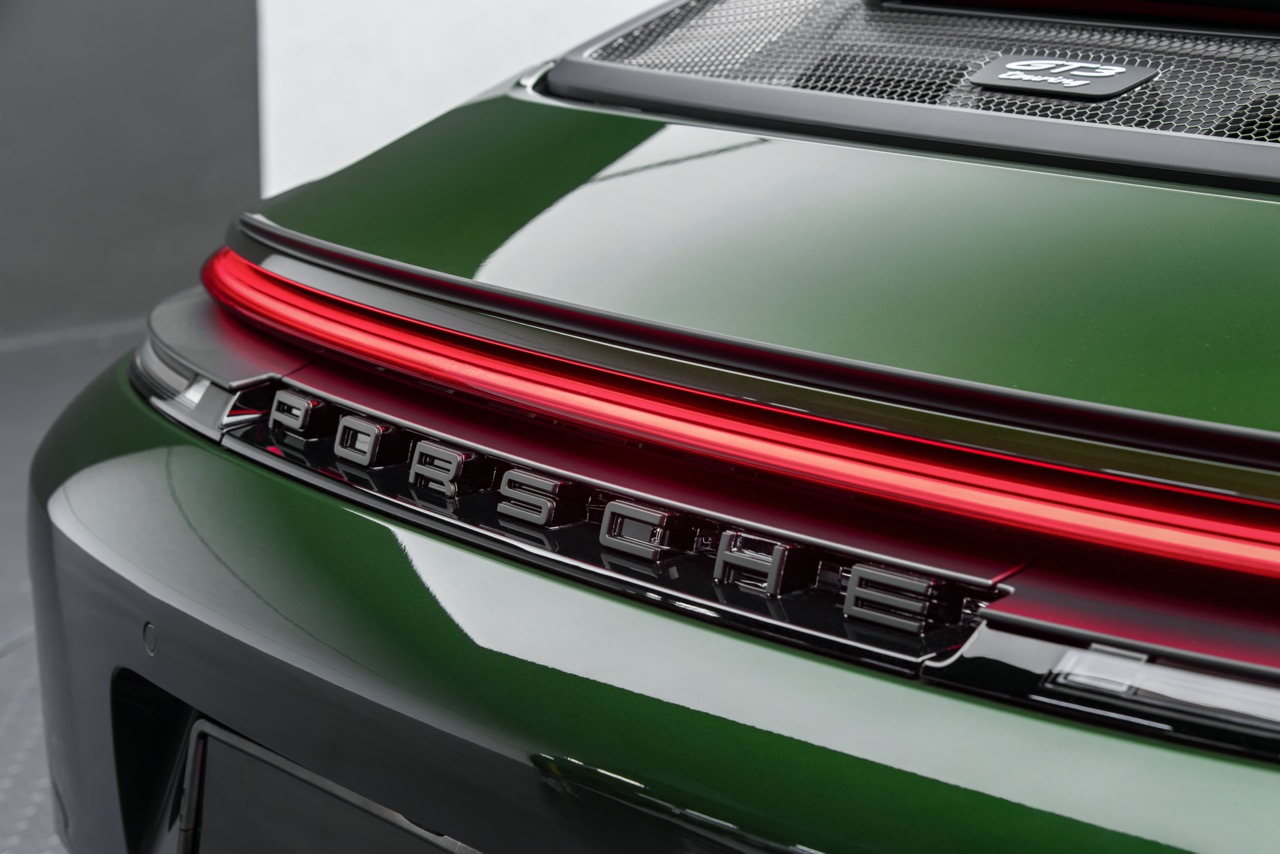
Porsche has made the strategic decision to discontinue the Sport Turismo wagon variant in the Panamera lineup, unveiling the third generation of the luxury sedan with a renewed focus on a sedan-only range. The move follows the debut of the latest Panamera model, which showcased the absence of the Sport Turismo option.

The decision to drop the Sport Turismo comes as a response to the model’s slow sales, which did not justify the development of a successor. Porsche acknowledges that the Sport Turismo has played a minor role in key markets, especially in China and the United States. The statement from Porsche highlights the specific market dynamics, stating, “In China and the US – our main markets in the D-Segment – the Sport Turismo plays only a minor role. For this reason, we have decided to discontinue this model variant with the launch of the new generation.”

(more…)

In the recently concluded nationwide Ops Patuh Bersepadu 2023, more than 23,000 motorists were apprehended for driving without a valid license. The 14-day operation, which concluded on Friday (Nov 24), targeted various traffic violations and aimed to enhance road safety.

According to TheStar, during the operation, JPJ officials inspected a total of 554,372 vehicles, resulting in the issuance of 23,748 notices for driving without a license. The majority of offenders fell within the age group of 15 to 35. In addition to unlicensed driving, JPJ also issued 17,447 notices for expired road taxes, 13,857 notices for vehicles lacking insurance coverage, and 12,191 notices for technical offenses. Other notable violations included 4,902 cases of driving without vocational licenses and 2,329 cases of overloaded vehicles.

(more…)

Touch ‘n Go, a key player in RFID technology in Malaysia, is addressing a recent misconception about RFID tags having an expiry date. While debunking this misconception, the company emphasised a different aspect—RFID tags, unlike traditional smart tags, may experience wear and tear over time.

Contrary to the false information suggesting an expiry date, Touch ‘n Go clarified that RFID tags issued by the company do not have a predetermined expiration. Instead, the focus was on a recent campaign aimed at pilot users, participants in the initial RFID pilot program launched in 2018. This campaign offered these users the opportunity to refresh their RFID tags, particularly if wear and tear had occurred, through a special promotion.

(more…)

Chinese electronics giant Skywell has lifted the curtain on its revolutionary electric sedan, the Skyhome, set to hit production lines next year. Amidst the growing influx of electric vehicles from China, Skywell’s creation stands out with innovative features, promising a blend of sleek design and cutting-edge technology.

The Skyhome, produced under Skywell’s automotive division Skyworth, boasts a remarkably curvy exterior, breaking away from the sharp edges dominating modern car design. With a flowing front fascia, LED headlights, a panoramic glass roof, and digital wing mirrors, the car exudes a sleek and distinctive aesthetic. Notably, the cabin features a massive curved screen on the dashboard, housing the gauge cluster, infotainment display, and a passenger-centric screen. The yoke-style steering wheel, ambient lighting, and a variety of materials contribute to the futuristic interior.

(more…)

In a strategic move to solidify its presence in the rapidly growing Chinese electric vehicle (EV) market, Volkswagen has unveiled plans for a new platform tailored for affordable electric cars. The announcement was made by Ralf Brandstaetter, Chief of Volkswagen China, during the inauguration of the Volkswagen Group China Technology Company (VCTC) in Hefei, where an investment of approximately $1.1 billion is set to generate over 2,000 jobs.

The newly revealed platform, tentatively named the “A Main Platform,” is designed specifically for the Chinese market. Volkswagen aims to enhance cost efficiency by incorporating a higher percentage of locally sourced components compared to their existing Modular Electric Drive Toolkit (MEB)-based models in China, such as the ID.3, ID.4, ID.6, and ID.7.

The platform, derived from the MEB, is anticipated to be operational by 2026—around a third earlier than initially projected—thanks to the capabilities of the VCTC.

Brandstaetter highlighted the “price-sensitive” nature of the Chinese electric vehicle market, necessitating a focus on cost optimisation. The move comes as Volkswagen faces increased competition, with BYD surpassing the brand in sales in 2022. The decline in gasoline car sales further emphasizes the importance of affordability, and Volkswagen’s ID.3 model experienced a surge in sales after price cuts.

The new platform targets the entry-level segment, with a price range of 140,000 CNY (RM92,483) to 170,000 CNY (RM112,301). Volkswagen plans to introduce four models based on this platform, collaborating with existing joint ventures with SAIC and FAW, the manufacturers of the MEB-based models.

Additionally, Volkswagen aims to launch two all-electric models, in collaboration with Chinese EV manufacturer XPeng, starting in 2026. This aligns with the automaker’s broader goal of introducing a total of 10 new all-electric cars globally by 2026, marking a significant acceleration in their electrification strategy.

Volkswagen’s commitment to the Chinese market involves not only addressing the immediate demand for affordable electric vehicles but also fostering partnerships and expanding its electric vehicle lineup, contributing to the global shift towards sustainable mobility.

In a departure from its iconic blue halo within the T badge, Toyota has unveiled a symbolic blue dot on the trunk of its latest Camry hybrid, signaling a shift in its visual representation of electrified vehicles. Since 2009, the blue halo had been a distinctive feature on Toyota’s hybrid powertrain-equipped vehicles, but the new Camry takes a different approach to convey the brand’s commitment to sustainability.

The Shift to Symbolic Significance

The absence of the familiar blue halo on the new Camry is deliberate, as Toyota aims to emphasize its dedication to environmental stewardship with a fresh visual element. Instead of incorporating blue highlights within the Toyota badge, the Camry now proudly displays a blue dot next to the letters ‘HEV’ on the trunk, denoting its status as a hybrid electric vehicle.

A Symbol of Commitment to Sustainability

In a social media post from September, Toyota shared that the blue circle represents the company’s commitment to “the happiness of people living on earth and [its desire] to pass it on to the next generation.” This emblematic change extends beyond the Camry, with upcoming models like the Crown and the renowned Prius adopting the new visual cue.

Comprehensive Electrification Strategy

This symbolic shift isn’t exclusive to hybrids; Toyota plans to implement the blue dot on its new hybrids, plug-in hybrids, battery electric vehicles (BEVs), and fuel-cell electric vehicles (FCEVs). While models like the RAV4, Venza, and Corolla still bear the traditional blue Ts, the impending updates to these vehicles will incorporate the blue dot, aligning with Toyota’s overarching electrification strategy.

Beyond Zero Campaign: A Vision for a Greener Future

The introduction of the blue dot aligns with Toyota’s “Beyond Zero” marketing campaign, signaling a commitment to reach beyond carbon neutrality and make a positive impact on the planet and society. The company emphasises a diverse range of new energy vehicles, not limited to electric vehicles (EVs), and aims to underscore this strategy by incorporating the symbolic blue dot across multiple electrified models.

bZ3X

Future Teasers and Beyond

Teaser shots of the upcoming bZ3X, a battery electric vehicle, already showcase the blue circle alongside the letters “BEV” on the rear end. This sneak peek gives enthusiasts a glimpse into Toyota’s vision for a greener automotive future.

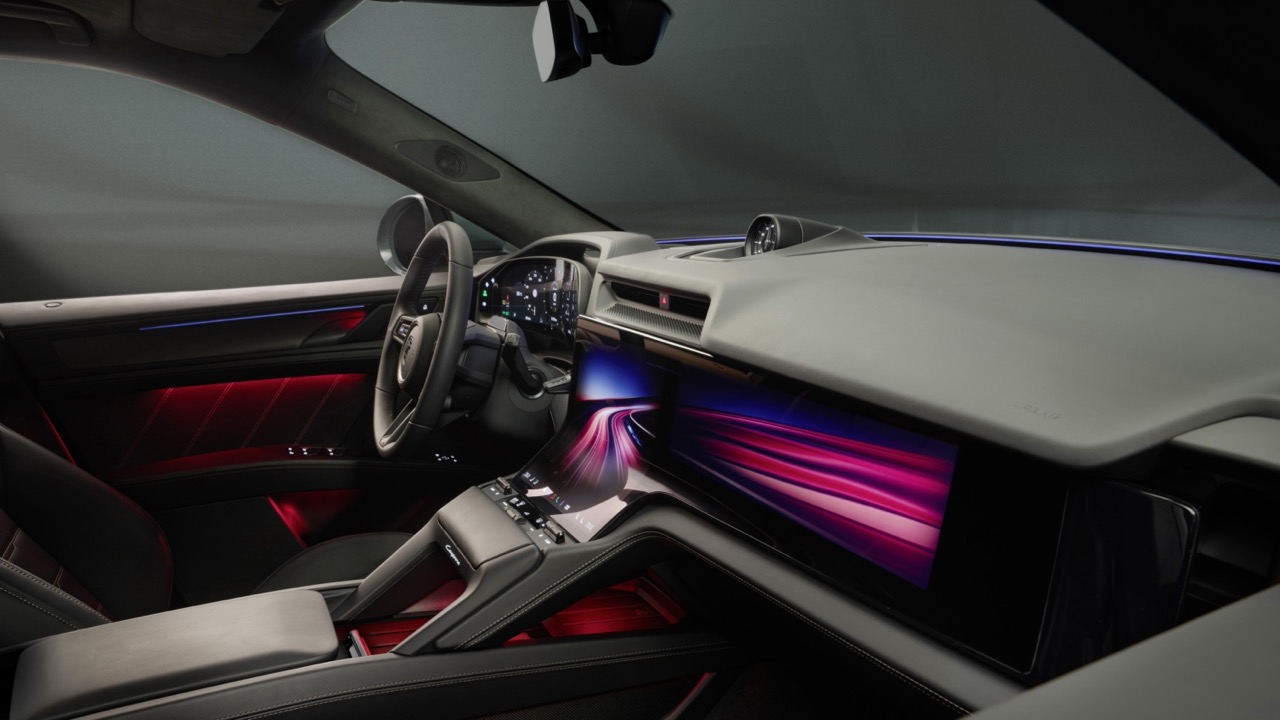
Porsche has rolled out the third iteration of its iconic Panamera luxury sedan. This latest model is not just a visual revamp but a technological leap forward, featuring an array of digital enhancements, a contemporary design overhaul, and an expanded spectrum of dynamic performance and driving comfort.

The Panamera enters the digital age with a bang, boasting an enriched suite of digital features that redefine the luxury sedan experience. The Porsche Communication Management (PCM) takes centre stage, seamlessly integrating the user’s digital ecosystem for an unprecedented level of interaction with the car. The introduction of the Porsche Active Ride suspension system sets a new benchmark, harmonising heightened comfort with the sporty DNA Porsche is renowned for.

The Panamera doesn’t just look good; it promises an unparalleled driving experience with its standard dual-chamber two-valve air suspension. For those seeking an extra layer of performance, the optional Porsche Active Ride active suspension system, available for E-Hybrid models, introduces active shock absorbers, ensuring an unparalleled balance between driving comfort and dynamics.

Porsche offers a total of four efficient E-Hybrid powertrains for the new Panamera, in response to the high demand for this type of drive system. All E-Hybrid variants benefit from greater performance, range and efficiency. The Panamera Turbo E-Hybrid is ready at market launch. The heart of its powertrain is a fundamentally revised four-litre V8 turbo engine. The output of the newly developed electric motor is 190PS. Together, they create a system output of 680PS. The system torque reaches an impressive 930Nm.

Porsche integrates the electric motor into the housing of the comprehensively redesigned eight-speed PDK dual-clutch transmission. Dispensing with a separate E-motor housing saves around five kilograms. The integration of the unit into the oil circuit of the transmission also optimises the heat balance of the electric drive unit and allows higher continuous output from the electric motor.

The Panamera Turbo E-Hybrid sprints to 100km/h in 3.2 seconds and boasts a top speed of 315km/h. Its battery capacity is now 25.9 kWh. This enables an equivalent electric range of up to 91km in the combined WLTP cycle or 83–93km in the city cycle. A new 11 kW on-board AC charger shortens the charging time at suitable charging points to two hours and 39 minutes.

The Panamera’s exterior retains its iconic lines but receives a comprehensive facelift, exuding a more expressive and sporty aura. The interior, a driver-centric haven, introduces the Porsche Driver Experience cockpit concept, skillfully balancing digital and analog controls. The Turbo E-Hybrid model takes luxury up a notch with exclusive design elements, both inside and out.

Standard Matrix LED headlights and a suite of advanced assistance systems, including traffic sign recognition and a swerve assistant, contribute to a safer and more connected driving experience.

Keeping pace with the digital era, the Panamera integrates into the driver’s digital life, supporting both Apple CarPlay and Android Auto. An optional passenger display closely integrates the passenger into the driving experience. The 10.9-inch screen displays vehicle performance data on request. It also allows operation of the infotainment system and supports video streaming while the car is in motion. In order to avoid distracting whomever is behind the wheel, the passenger display cannot be seen from the driver’s seat.

Enthusiasts can now place their orders for the new Panamera, with European deliveries set to kick off in March 2024. The starting price in Germany is a competitive €107,800 (RM551,218), inclusive of VAT and country-specific equipment. The Panamera Turbo E-Hybrid starts from €192,500 (RM984,318).

Pagani has revealed its latest creation, the Imola Roadster, a convertible version of the Imola hypercar, and it’s set to be an exclusive production with only eight units. Building upon the track performance of the Imola coupe and incorporating the open-air experience and advanced technology of the Huayra Roadster BC, this roadster is poised to be a show-stopper.

Under the hood, the Imola Roadster boasts a potent 6.0-litre V12 engine sourced from Mercedes-AMG. This powerplant has been tuned to deliver an impressive 838hp and 1099Nm of torque. Paired with a Pagani-tuned 7-speed Xtrac sequential transmission, the roadster can achieve a top speed of 350km/h.

(more…)

What do you get when you cross the comfort and spaciousness of a KIA Sorento with the athleticism of a Mazda CX-5? If you guessed the Honda CRV, you would have guessed right.

Honda’s C-Segment SUV contender has always been the go-to model that offered all the right things at the right price.

The CRV has been locally-assembled in Melaka since 2003 and it has been one of Honda Malaysia’s most successful model with close to 130,000 units sold.

But while the fifth-generation model was big and spacious and had all the right reasons to continue attracting buyers, it was becoming dated with an interior design that was getting tired and in need of an urgent update.

The fifth-generation CRV was so complete as a family focused CRV, that Honda could have simply given it a new body, a refreshed interior and called it a day. But no, Honda went to town with it and came up with a new model that will give the competitors a proper headache for years to come.

The new CRV is the biggest (in size) there has ever been, and it has all the right moves when the roads demand it. For a lack of a better word, the new CRV has evolved into the perfect package.

In terms of sizing, the new body is 10mm wider, 80mm longer with a 40mm longer wheelbase. It is difficult to explain how big it is here, but you will notice the sheer size of the new CRV as soon as you see it. Honda did not try very hard to hide the bulk of the car but has embraced it instead.

The size is most apparent from the side of the car where the shoulder line stretches across the length of the car. This immediately catches your eye and accentuates the length of the car.

The front quarter of the car also seems longer, achieved by moving the A-pillar slightly back and giving it a steeper rake. This makes the bonnet look longer where else the previous fifth-generation CRV had a short bonnet and an A-pillar that raised dramatically to meet the roof of the car.

The front fascia mimics the new Honda Accord, which has sadly been discontinued in the Malaysian market, effectively making the CRV the new flagship Honda for the Malaysian market.

The rear of the car is all new but there are hints of other marques. Some say that the vertical light panel looks like it came off a Volvo, perhaps they are forgetting that it has always been there, starting from the first generation CRV.

The way the rear lights edge towards the centre though, now that looks like it has been inspired by BMW. But design is always subjective, though we all can agree that the new CRV does not have an ugly panel to it.

Step inside and this is where the sheer size of the car is most apparent. The interior acreage has increased, and it is not just on paper, you feel it as soon as you step inside. Whether you are seated at the front or at the back, the new CRV offers plenty of room, once again making it ideal for families.

Just like before though, Malaysia is getting the five-seater variant rather than the seven-seater which is for the Thai and Indonesian markets. This is fine though because the third-row seats substantially sacrifice boot space, which is a pity because at 589 litres, it is a full 67 litres bigger than before.

And if you are keen on an SUV, then boot space is important. And just for reference’s sake, the Mazda CX-5 has 445-litres of storage space while the Proton X70 has 512 litres. So it does not make sense to lose out on all that space.

The second-row passengers will appreciate the additional leg and shoulder space. They also get two USB Type-C ports and their own air-conditioning vents. On the topic of the vents, we feel that Honda missed an opportunity to also add vents onto the B-Pillars. This vent placement makes the most sense since it blows cool air directly to a passenger’s face rather than to the knees. But it is not a deal breaker.

The real action though is up front where the new dashboard is entirely new, and a mirror image of that in the Civic. Though a little elongated in the CRV since it is 64mm wider than the Civic.

It is important to note that the CRV we drove recently was the Thai spec, so it may be a little different than the Malaysian models.

The trimming for one may be different. The Turbo and Hybrid variants we drove both had wood-grain trimming which looked expensive and felt more authentic than the interior trimming of some of the continental cars.

Malaysian’s will be getting two models – the 2.0 e:HEV, which is basically a hybrid variant, and a 1.5 Turbo. Both these powertrains are already in the Malaysian market, the hybrid made its debut in the Civic while the 1.5 Turbo has been around for a while and was even powering the fifth generation CRV. So both powertrains have been tried and tested for a while already.

In usual Honda Malaysia fashion, each of these will have their own sub-variants, perhaps three variants for the 1.5 Turbo including one with all-wheel-drive, and one flagship hybrid variant with power sent to the front wheels exclusively.

This article though will focus on the Hybrid variant and with a separate review of the Turbo variant to follow.

During the drive in Thailand, there was little that distinguished both models from the outside. Both cars had the same body kit and had the same 18-inch wheels.

You can also expect some other features to distinguish the flagship model from the others, but there is no telling what that will be, and we are not about to speculate.

Having driven both the Hybrid and the Turbo models back-to-back, the former feels more polished and better to drive for several reasons.

The Hybrid model utilizes Honda’s e:HEV technology which includes twin motors up front – one to drive the wheels, and another that acts as a generator to power all of the onboard systems.

Power is sent directly from the engine to the electric motor through Honda’s e-CVT transmission, which basically means the CRV makes do without a gearbox. So that means there are fewer moving parts in this model and there is no propellor shaft either to send power to the rear wheels.

This then means there are fewer vibrations and random noises that intrude back into the cabin, making the car feel incredibly smooth, quiet and serene even.

Power for Hybrid variant is rated at 184PS and 335Nm of torque. This may seem quite decent, but the car does not seem to want to go anywhere in a hurry when you floor the accelerator pedal.

At 1,743kg, the CRV e:HEV is not exactly light, but the powertrain is more than up to propelling the car up to speed. It just does not feel very urgent. But that should not be too surprising though since the hybrid model is designed for efficiency, and with an official fuel consumption rating of an impressive 20.8-km per litre, efficiency is quite surely the name of the game for this model.

It achieves its impressive efficiency through a combination of technologies that go past the slick powertrain. The new Civic also has something called an Active Shutter Grille located at the bottom of the front bumper. This works by opening to let in air to cool the engine, and it shuts again so that air can flow around the car rather than through it, all in the name of aerodynamics and thus improved efficiency.  

There is much to like about the new Honda CRV, and we ended up preferring it over the Turbo model due to its smoothness and better noise and vibration levels. But it also has new and improved seats for the front passengers which is a much welcomed addition.

The Malaysian model will also come with a 12-speaker Bose sound system, making it the first time that Honda Malaysia will offer a premium sound system for its locally-assembled model.

Buyers will also appreciate that the new CRV also comes with a new 360-degree camera that makes driving the big SUV a simpler task. Then there is also the new Honda Sensing suite that includes a new wide-angle radar, camera and a sonar sensor for low speed braking control.

The new Honda CRV is going to be another sales success especially among those looking for something big and spacious. But don’t expect it to be cheap though, with price of goods increasing globally and the value of the Ringgit dropping drastically for the past couple of years, the price of raw materials is surely going to increase production cost.

But with top notch quality and comfort and safety levels that can match some of its European counterparts, the Honda CRV will find its way into the hearts of plenty. That is for sure.

Specifications:

Engine: 2.0-litre, 4-cylinder, DOHC

Power: 184PS @ 5,000rpm

Torque: 335Nm @ 2000rpm

Gearbox: e-CVT

Battery: Lithium-ion

Suspension: Independent MacPherson Strut with Stabiliser Bar (Front) / Independent Multi-Link with Stabiliser Bar (Rear)

We like: Interior space, good looks, efficiency

We don’t like: Hard to fault, we love it!

Archive

Follow us on Facebook

Follow us on YouTube