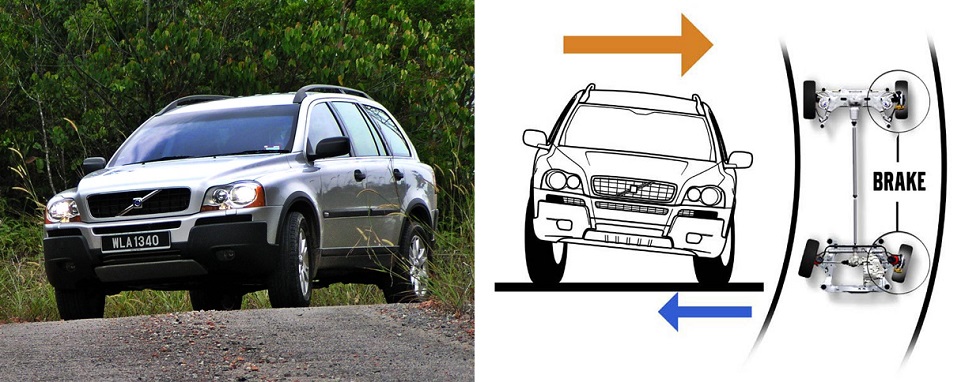
Volvo Cars was rather late in adding a SUV to its range, with its first model – the XC90 – launched only in 2002. The reason given for the delay was that it wanted to offer a SUV only when it could address known safety issues (like the effect on a tall body on handling) and resolve them. It had a strong reputation for safety, on which the brand’s strength grew, and it was not going to lose that. The XC90 certainly proved to be a SUV with innovative safety features like Roll-Over Protection which worked to counteract the risk of tipping over during hard cornering.
Volvo’s first SUV – the XC90 – was launched in 2002 after the carmaker addressed safety issues with innovations like Roll-Over Protection that reduced the risk of the tall SUV tipping over during hard cornering.
Like the other carmakers, Volvo Cars gave increasing attention to SUVs, expanding its range as the segment grew. 17 years later, its SUVs have helped the company gain market share in China, the USA and Europe amid stagnating car markets.
More significantly, in 2019, the Swedish carmaker set a new, sixth consecutive global sales record, breaking the 700,000-unit level for the first time in its 93-year history. 705,452 Volvo vehicles were delivered worldwide last year, an increase of 9.8% compared to 2018, solidly outgrowing the overall market across all regions.
During the past few years, Volvo has also been moving towards electrification of its range. It aims for plug-in hybrid models to make up 20% of total sales this year. Overall, Volvo sold 45,933 plug-in hybrid vehicles in 2019, an increase of 22.9% compared to 2018 and more than double the number in 2017.
Illustrating the strength of its portfolio and its sales performance in 2019, Volvo surpassed the previous full-year sales record of 642,253 cars, set in 2018, nearly a full month before the end of the year. December was the company’s best ever sales month, with a 23.4% year-on-year increase to 74,239 cars sold.
Sales by markets
In China, home of Volvo’s parent company, the brand sold 154,961 cars in 2019, an increase of 18.7% compared to 2018 and comfortably outperforming the overall market. The result was an all-time record for Volvo in China and the highest sales number it has ever reached in a single market.
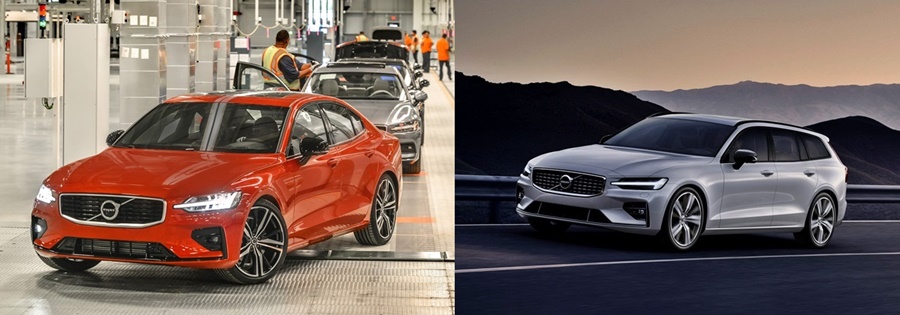
Volvo Cars manufacturing plant in China
In the USA, a market that has usually been Volvo’s strongest customer, the 100,000-unit threshold was crossed for the first time since 2007 when 108,234 vehicles were registered by December 31. Compared to 2018, the sales increase was 10.1%.
European sales were particularly strong in Germany, where the company sold more than 50,000 vehicles for the first time in its history, while it achieved its best sales result since 1990 in the UK. Other markets that recorded their best ever sales performance in the company’s history included Australia, Belgium, Brazil, the Czech Republic, Hungary, Korea, Poland and Portugal.
Sales by models
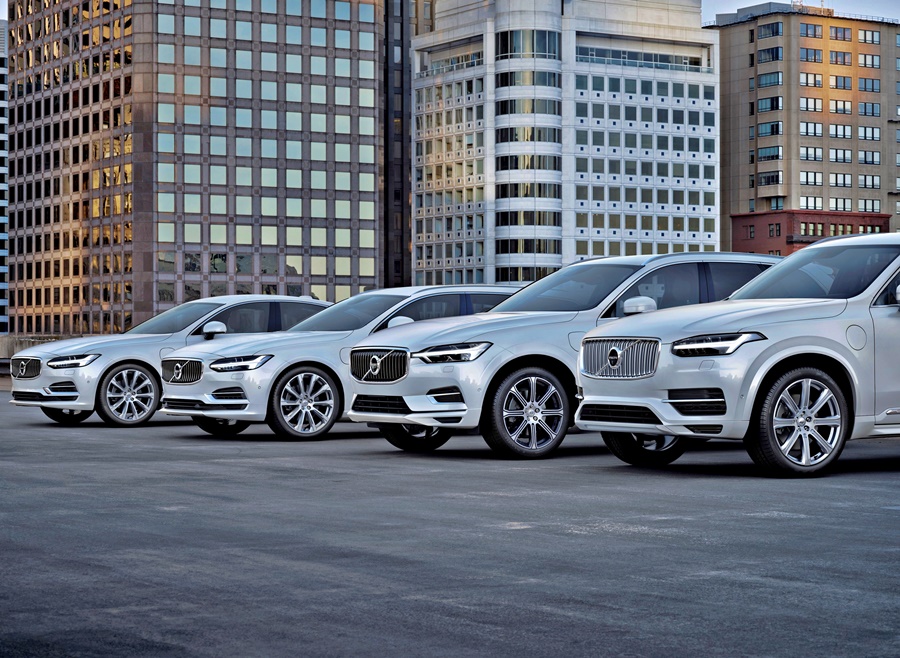
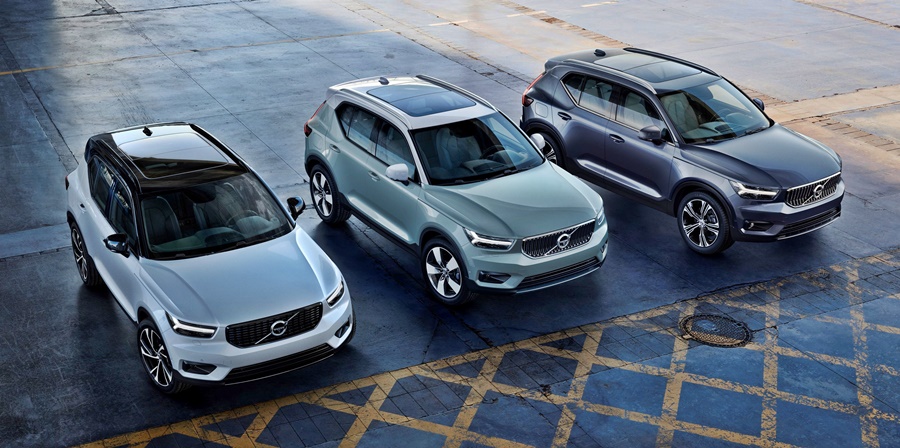
The XC60 SUV continued to be the best-selling model for the company globally, followed by the XC40 and XC90 SUVs. Sedans and stationwagons remained popular, adding to volume growth in China and Europe, respectively.
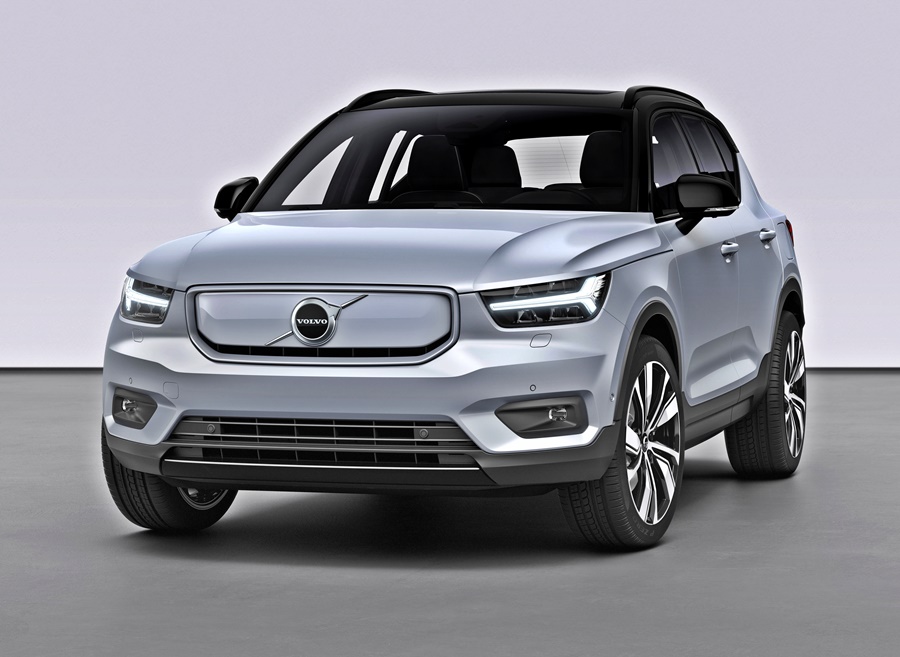
The first Recharge model shares styling with the XC40 but is powered only by an electric motor.
The company will introduce its Recharge line-up in markets around the globe. Recharge will be the umbrella name for all chargeable Volvos with a fully electric and plug-in hybrid powertrain. The Recharge car line aims to further boost sales of Volvo Cars’ chargeable cars and encourage plug-in hybrid drivers via incentives to use Pure mode as much as possible.
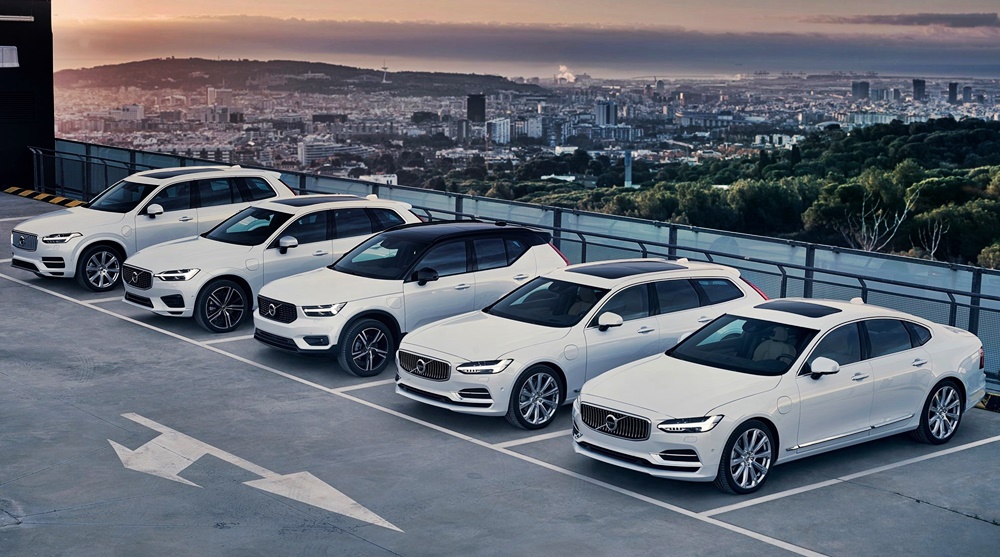
Every Volvo model already includes a Recharge option, from the XC40 SUV via the 60-Series cars to the large XC90 SUV flagship. Volvo is the only carmaker to offer a plug-in variant on every model in its line-up, with a fully-electric model – the XC40 Recharge P8 – to appear in showrooms in due course.
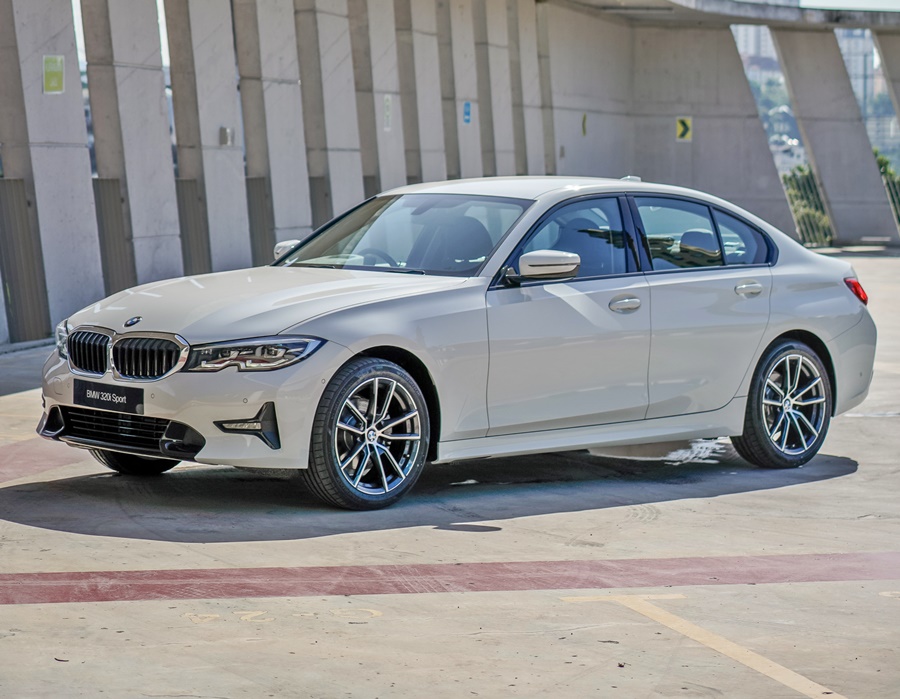
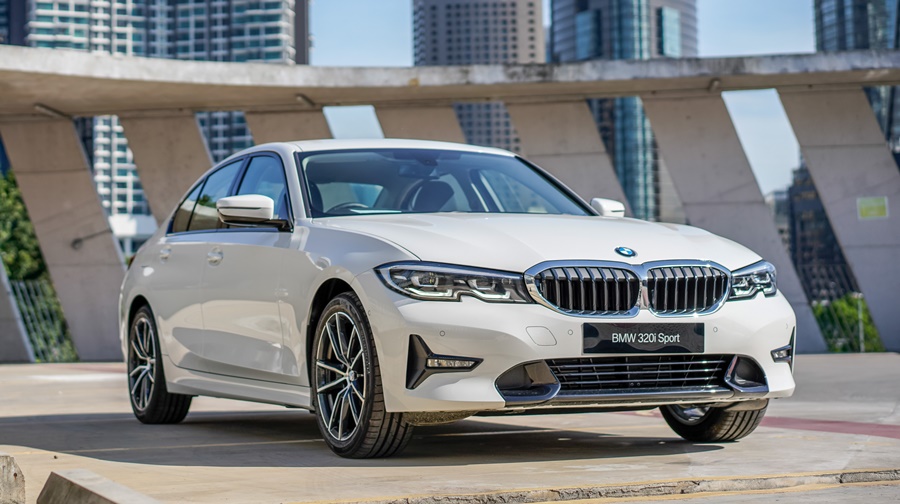
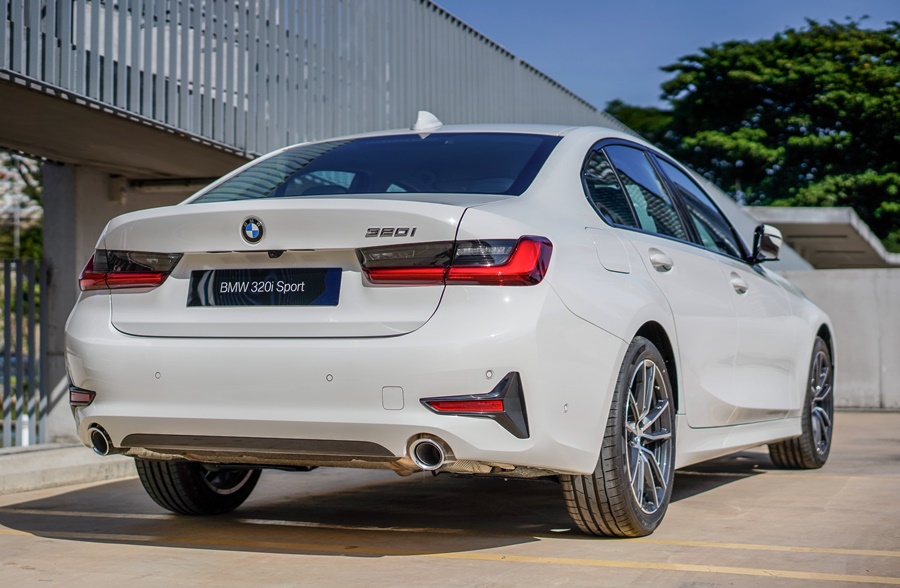
The 2020 BMW 320i Sport has arrived in Malaysian showrooms this weekend, bringing refreshed looks to the G20 generation of the popular German sports sedan. As it has been since the early 1980s, the 3-Series is assembled locally and priced from RM243,800 (excluding insurance).
“In 2019, over 2,500 units of BMW 3 Series models were delivered. This success continues to underline our lead in the premium sports sedan segment of Malaysia, bolstering our expansions into adding more locally-assembled BMW vehicles in our Kulim facility. With these strong figures, we are confident that 2020 will present more opportunities for our segment-leading models to rise with the local automotive industry,” said Harald Hoelzl, MD of BMW Group Malaysia.
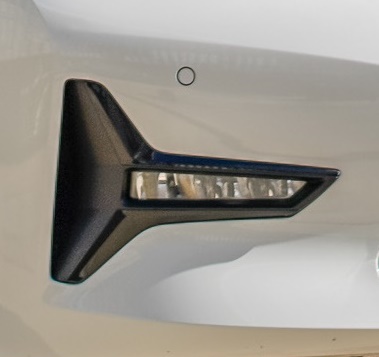
NACA duct concept for reduced drag
The front end of the latest 320i Sport has both the front LED foglights and the Air Curtains integrated into the outer air intakes (NACA duct), inserted into the front apron in a horizontal T. This duct concept was originally developed by the US National Advisory Committee for aircraft and reduces drag and turbulence at the inlet. Its benefits were also found to be applicable on cars so designers added the NACA ducts on racing cars.
The variant now comes with sporty 18-inch alloy wheels in V-Spoke Style 780 Bicolour. The lightweight wheels contribute to the car’s reduction in weight by 30 kgs (to 1,460 kgs at the kerb), besides the lightweight construction. However, body rigidity has been improved, which should benefit handling.
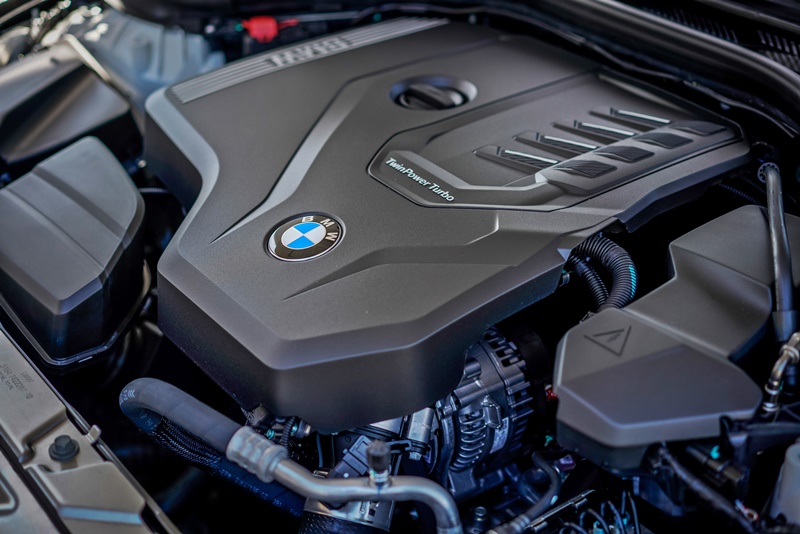
The proven 2.0-litre TwinPower Turbo petrol engine resides in the engine bay, generating 184 bhp/300 Nm which goes to the rear wheels through an 8-speed Steptronic Sport transmission. BMW claims a top speed of 235 km/h, with 0 to 100 km/h acceleration said to be within 7.1 seconds.
BMW Live Cockpit Plus
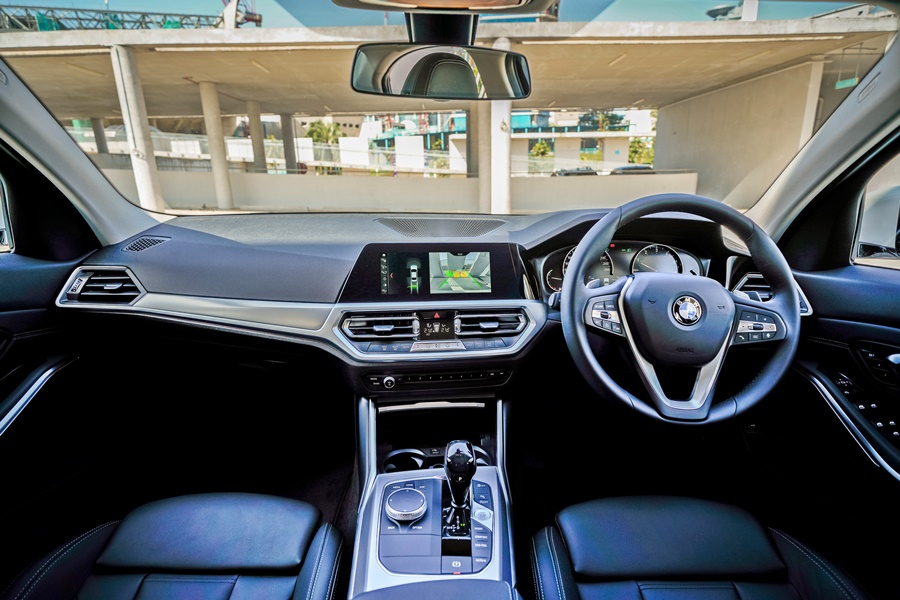
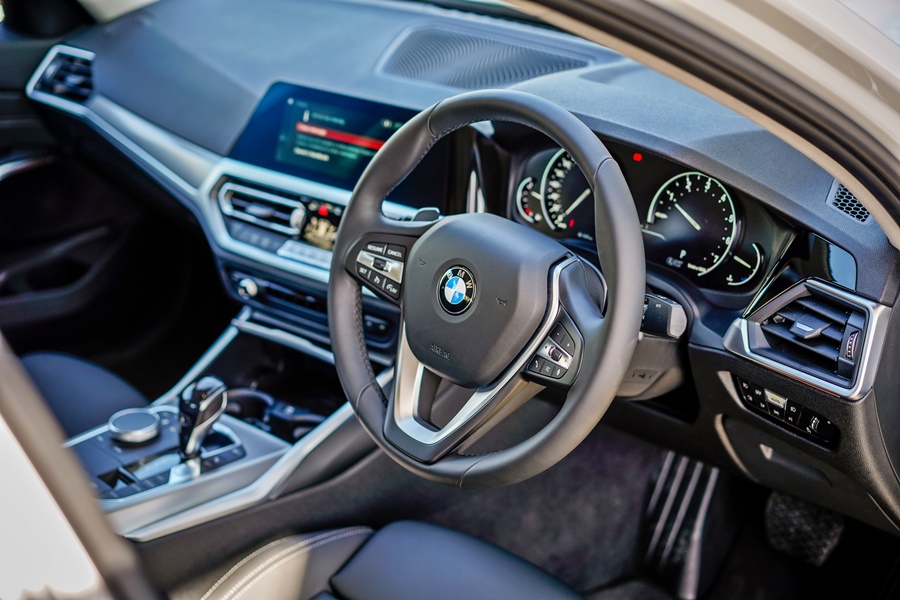
The cabin of is equipped with the BMW Live Cockpit Plus – an analogue instrument cluster with a 5.7-inch display and 8.8-inch touch-sensitive control display. There’s also 3-zone automatic climate control, interior trim finishers in Aluminium ‘Mesheffect’, and an exclusive Sport leather-wrapped steering wheel.
A first in its segment is the Reversing Assistant for hands-free, semi-autonomous convenience when reversing in narrow streets, along with the Rear View Camera that is fitted as standard. These features are powered by the BMW Operating System 6 which also powers the BMW Digital Key for next level vehicle security and management. BMW ConnectedDrive equips owners with Intelligent Emergency Call and Teleservices which reacts automatically if an accident occurs, quickly bringing help.
The BMW Digital Key employs Near Field Communication (NFC) technology that enables locking and unlocking as well as starting the engine with the compatible smartphones. A physical key is not needed, a first-in-class technology offered by BMW.
Own one for RM2,788 a month
BMW Group Financial Services Malaysia has financing plans that offer ownership of the new 320i Sport with monthly instalment plans starting from RM2,788.00 (based on estimates of an 80% loan on a 5-year tenure, subject to terms and conditions).
Every new unit comes with a 5-Year Unlimited Mileage Warranty with Free Scheduled Service Programme, 24-Month Tyre Warranty Programme for the Run Flat Tyres, BMW Roadside Assistance and Accident Hotline, BMW Group Loyalty+ Mobile App – BMW White Card and BMW Service Online.
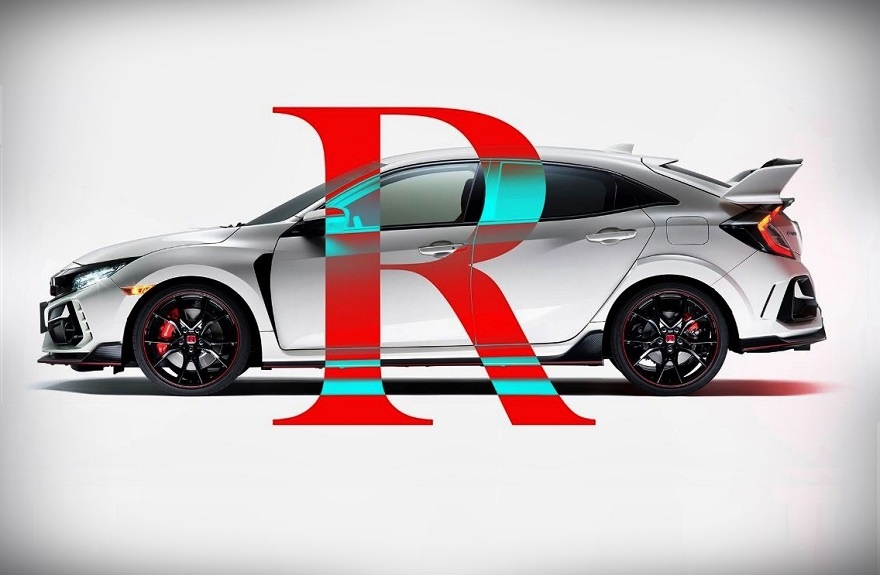
The Honda Civic Type R started off in 1997 as a Japan-only model in 1997, offering drivers a Civic with greatly enhanced performance. By the next generation, which debuted in 2001, Honda decided to offer it in the European market where it found a strong following. The third generation got more international and by the current fifth generation, it has been engineered as a global model with even the US market in mind.
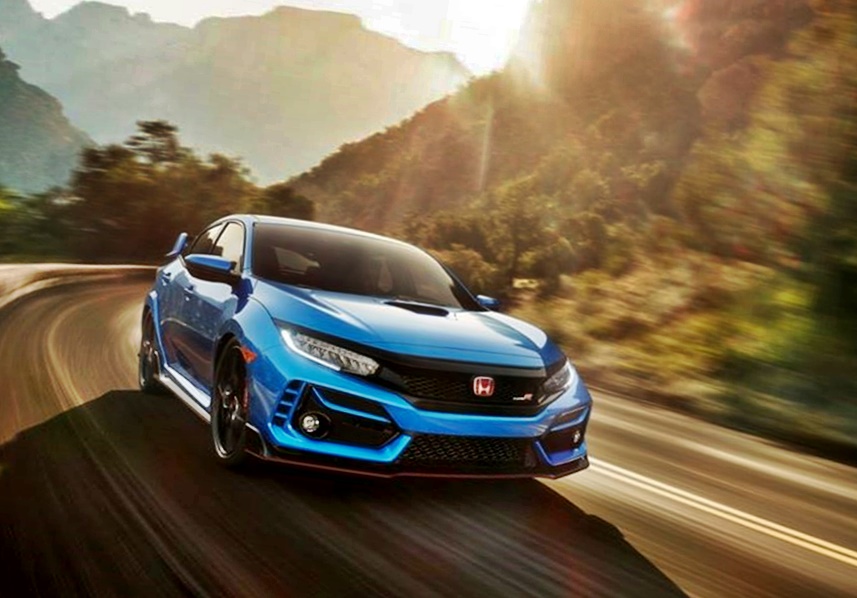
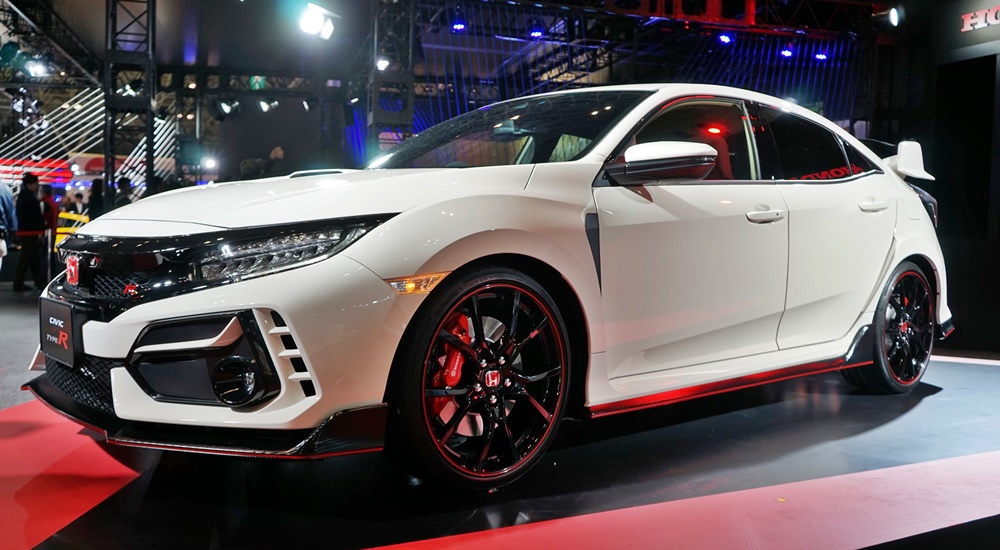
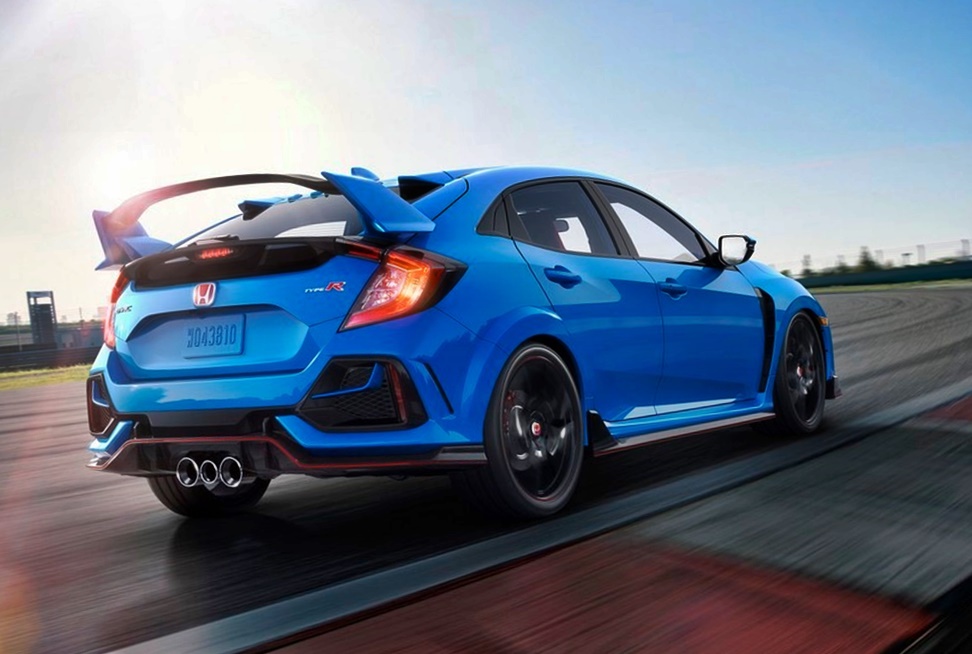
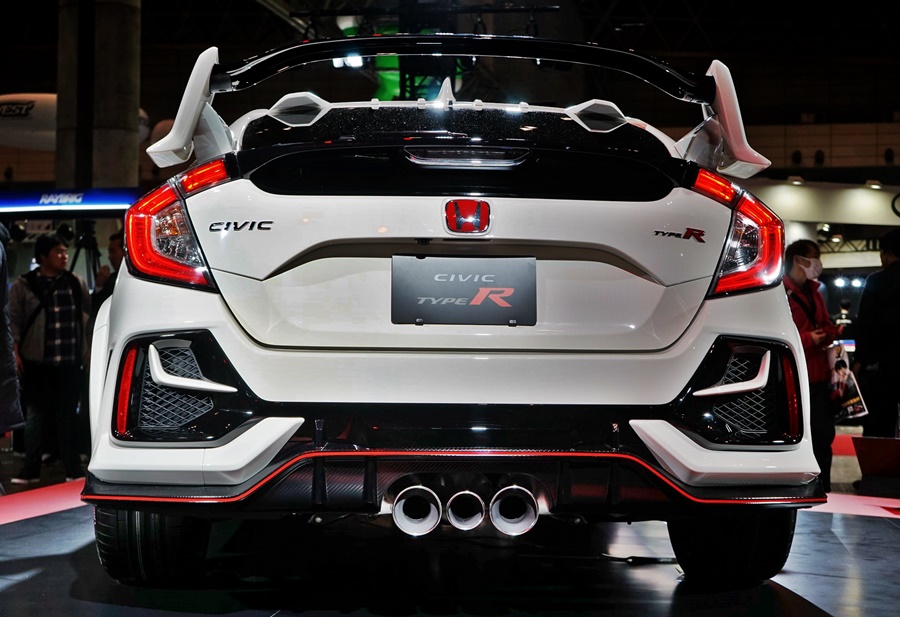
The current generation of the Civic Type R went on sale in 2017 in many markets and after 2 years, the 2020 model has been revealed at this year’s Tokyo Auto Salon. The latest model has a number of changes and improvements that include revised styling, improved aerodynamic performance, and the addition of Honda Sensing safety and driver-assistive technology as standard.
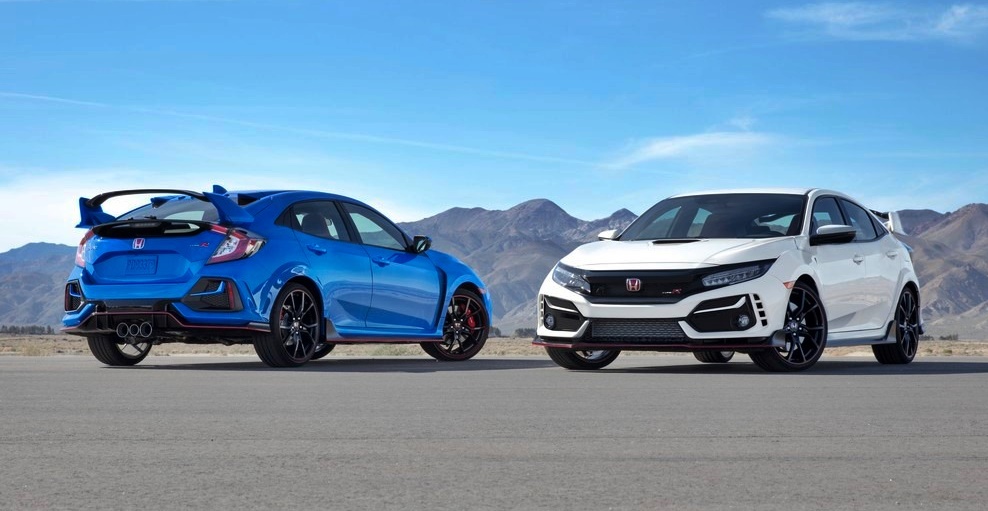
Exterior design changes are a new larger front grille opening for improved engine cooling and the availability of a new, Type R-exclusive Boost Blue.
The 2020 Civic Type R continues to be powered by a race-bred 2.0-litre direct-injected and turbocharged 4-cylinder VTEC engine which develops 306 ps/400 Nm. That’s a big leap from the first generation which used a B16B engine (that boasted one of the highest power outputs per litre of all time for a naturally aspirated engine) with 185 ps/160 Nm.
The power reaches the front wheels through a close-ratio 6-speed manual transmission and limited-slip differential. As before, drivers can choose between 3 driving modes – Comfort, Sport and +R – that vary suspension firmness, steering and throttle response. The selectable drive modes enhance driving on twisty roads while enabling the driver to optimise performance for the race track.
The Comfort mode makes the car ‘civilized’ for daily driving, something which could not be said about earlier Type R models which were focussed on track use. Also new for 2020 is Active Sound Control, which modifies interior sound in concert with chosen drive mode.
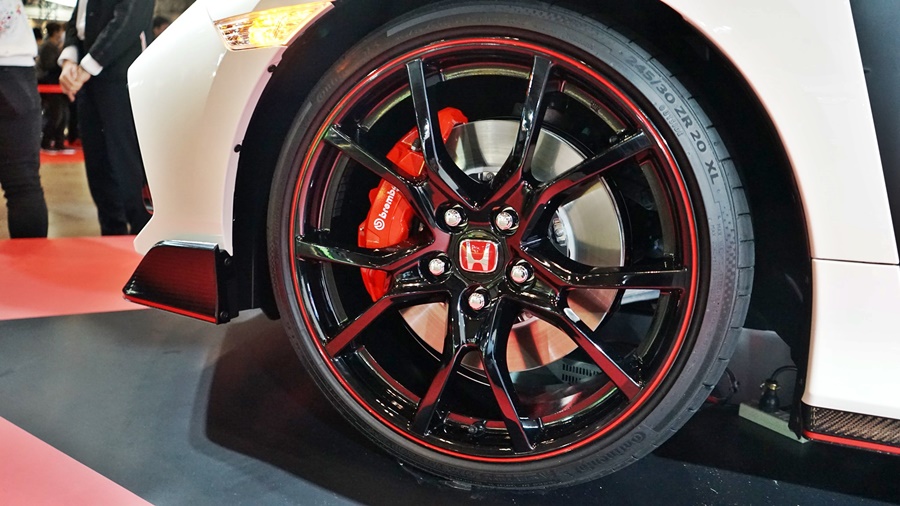
Other changes improve its already stellar driving dynamics, including new 2-piece brake rotors and new brake pads designed to reduce fade and improve high-speed braking efficiency. Suspension revisions for 2020 include updated dampers for better ride comfort, stiffer rear bushings for better grip, and modifications to the front suspension to reduce friction and improve steering feel.
For the 2020 model year, drivers get extra cabin refinement with a new Alcantara-wrapped steering wheel and a new shifter with a restyled knob and shorter shift throws.
The global production hub for the Civic Type R is in England but the engine comes from a Honda factory in the USA. The price is not known but deliveries will start only from mid-2020.
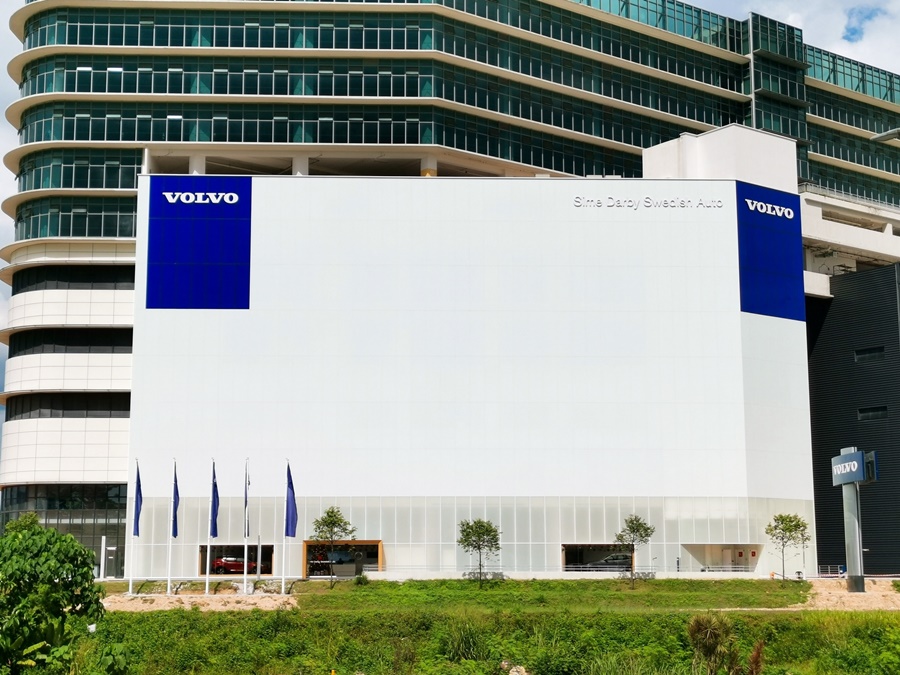
Sime Darby Swedish Auto Sdn Bhd, which was appointed Volvo Car Malaysia’s dealer-partner in October last year, has completed its new 3S (Sales, Service & Spare Parts) Centre for Volvo customers. To be officially opened on February 20, 2020, the brand new facility is located at Sime Darby Motors City in Ara Damansara, Selangor.
Besides drawing inspiration from the brand’s Scandinavian-inspired ideals and heritage, the 3S Centre also adheres to Volvo Car’s global retail standard – the Volvo Retail Experience (VRE). It is the first 3S Centre to be equipped with a VR Studio (Virtual Reality Studio) and a Reception at The Counter (RATC) Bay. The 4-storey centre also boasts of being the first fully air-conditioned workshop in Malaysia.
While the showroom is situated on the ground floor, the layout differs from traditional retail facilities in that the service centre is on the upper floors. The service centre, which has a car detailing area, is spread across the second and third floors, while a wheel alignment and balancing zone is located on the fourth floor.
There are 14 repair and service bays, of which two are specifically RATC Bays. All customer parking bays will also be equipped with an Electric Vehicle Charger.
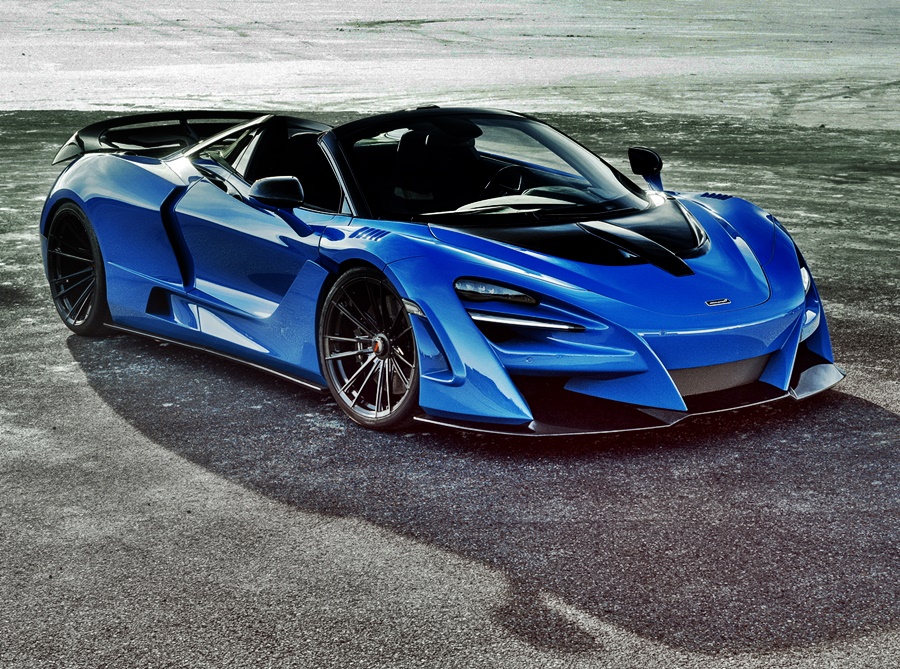
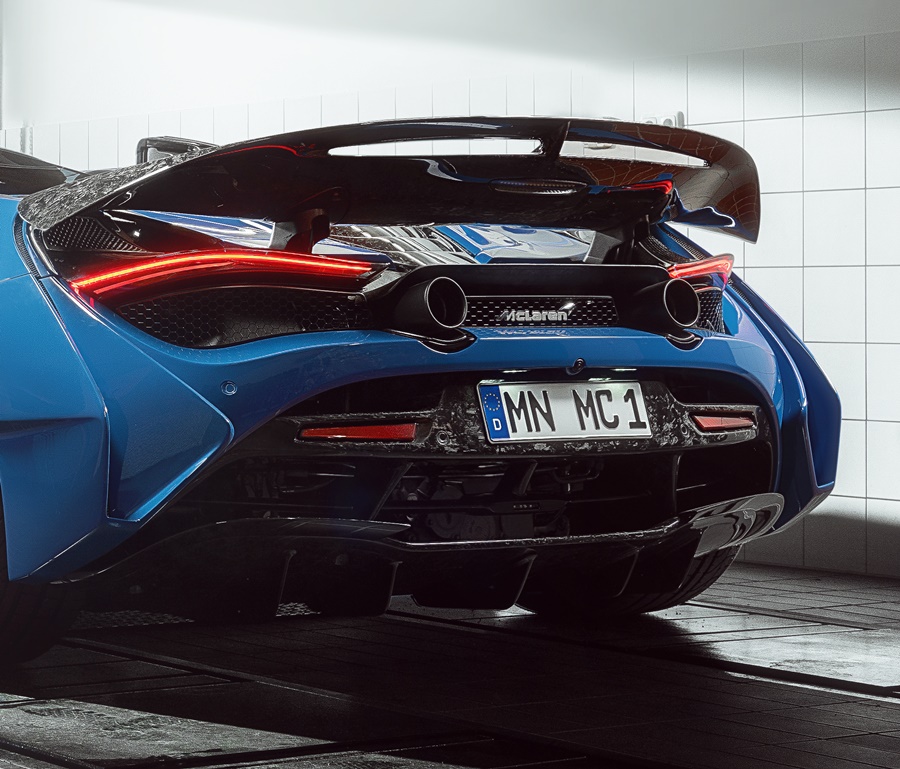
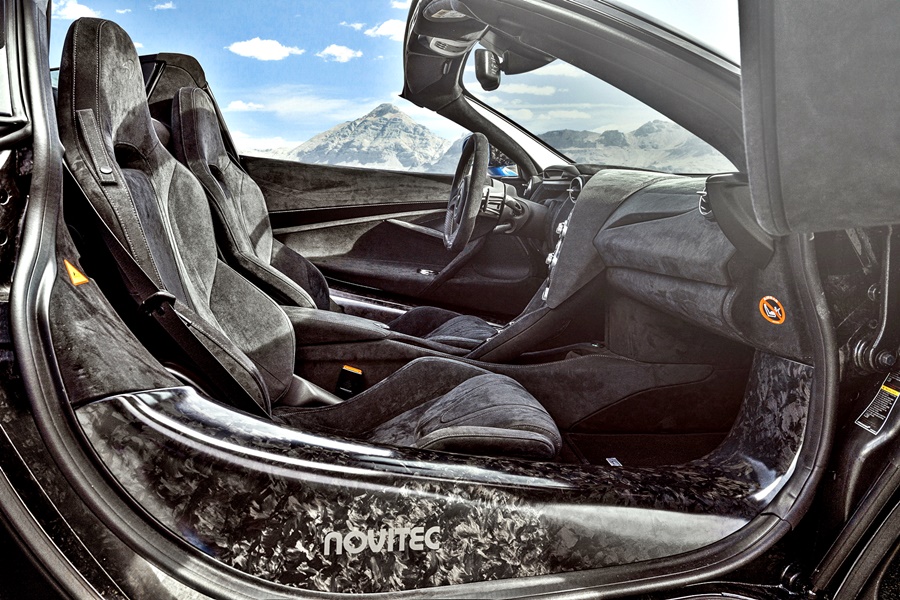
NOVITEC, the German tuning and customising company, is well known for its widebody conversions apart from enhancements to many different models. Its latest offering is the N-LARGO, adapted from the McLaren 720S Spider and limited to just 15 units worldwide.
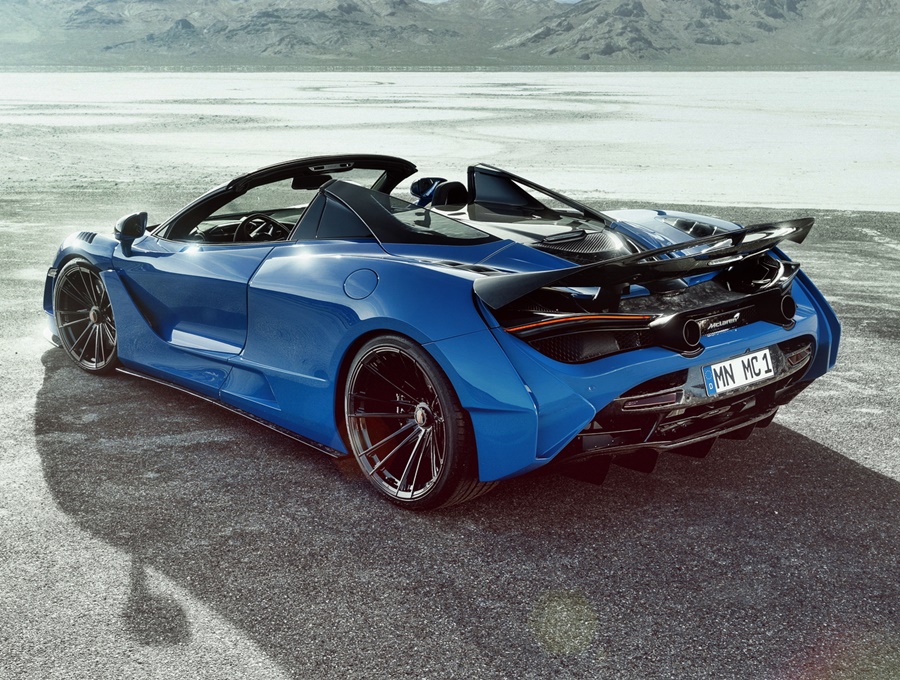
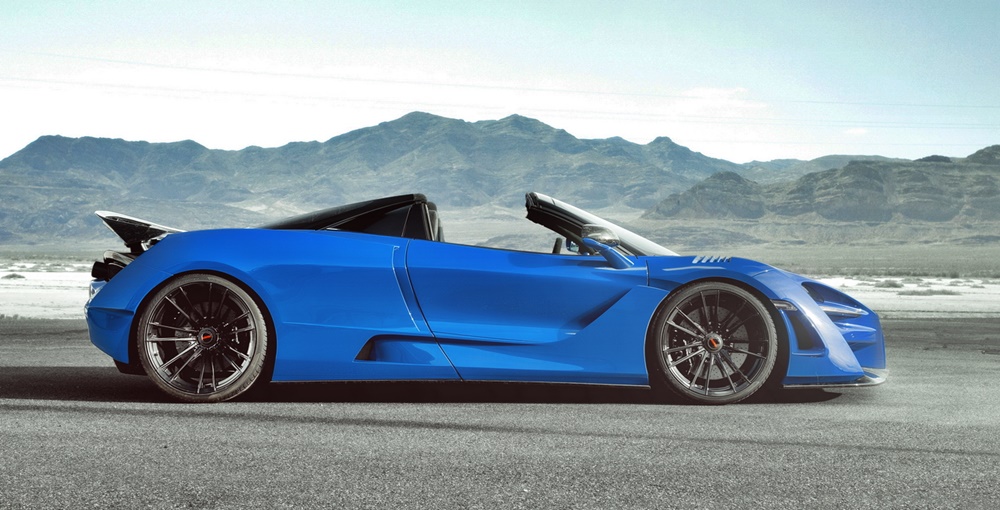
This widebody version, which is particularly light, makes generous use of carbonfibre with forged elements that give the open-top two-seater a particularly custom appearance. The company also developed tailor-made high-tech forged rims specifically for the enlarged wheel arches in cooperation with American wheel manufacturer Vossen. The staggered combination of 20-inch and 21-inch wheels on front and rear axles puts even more emphasis on the wedge shape of the sportscar.
Emotive design shaped in wind tunnel
The emotive design, shaped in the wind tunnel, was conceived in cooperation with German designer Vittorio Strosek. Its width has increased by 6 cm at the front and by 13 cm at the rear. Together with the special rocker panels, the wider N-LARGO fenders at the front and rear give the supercar an hourglass shape.
The N-LARGO side components create a perfect transition between the wider fenders and route the airflow to the rear brake discs and calipers through their integrated air intakes. The NOVITEC air intakes behind the doors supply the engine bay with breathing and cooling air.
However, the conversion of the bodywork not only focused on an extravagant appearance but also on the optimization of the driving dynamics by means of efficient modifications to the aerodynamics. This includes, among other things, the redesigned bootlid with forged carbon insert at the front, the covers for the side mirrors, the lower strips on the rocker panels, the N-LARGO rear wing attachment for the stock retractable spoiler, and the air intakes in the rear end.
Upgraded McLaren engine
The McLaren twin-turbo 4-litre 8-cylinder engine has been tuned by NOVITEC to offer customers a choice of 3 different output levels. The most powerful level includes a NOVITEC RACE high-performance exhaust system and has modifications which add 86 bhp/108 Nm. This boosts maximum output to 806 bhp at a low 6700 rpm, while peak torque is bumped up to 878 Nm.
As a result, the N-LARGO rockets from standstill to 100 km/h in a claimed 2.7 seconds and reaches a speed of 200 km/h after just 7.5 seconds; with top speed increased to 346 km/h.
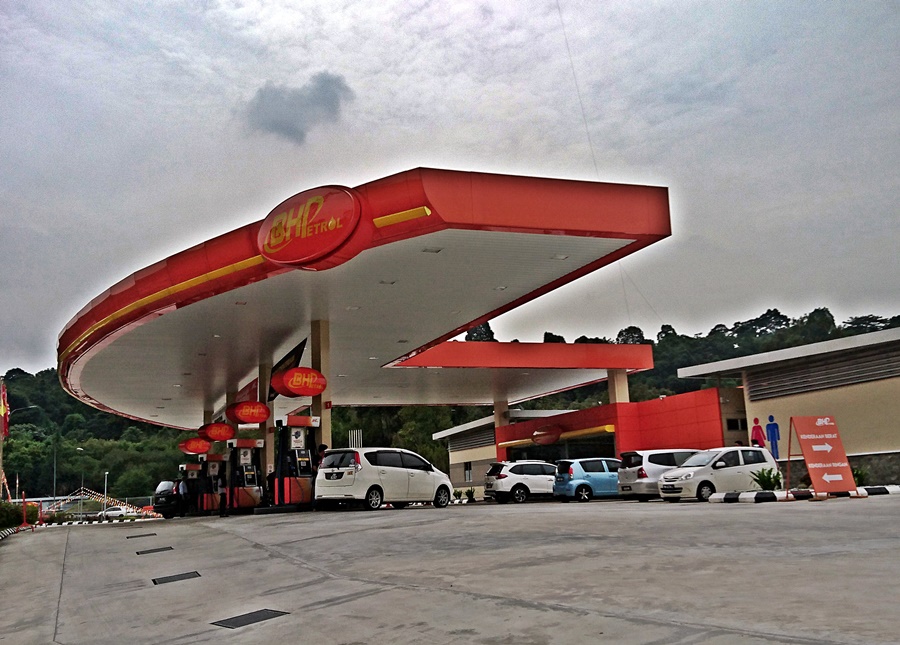
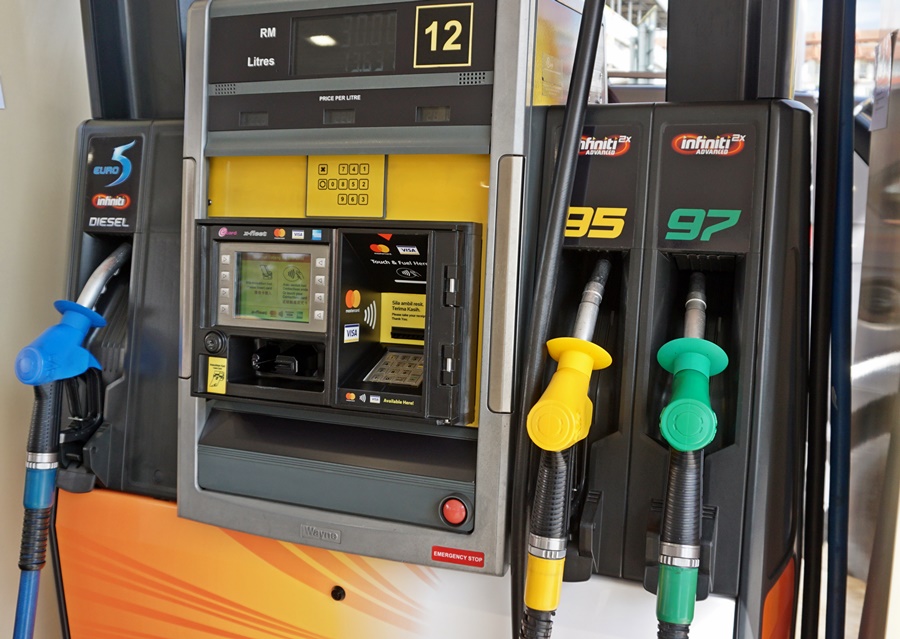
In accordance with the government’s directive for all petroleum companies to supply RON95 petrol formulated to meet the Euro4M standard from January 1, 2020, Boustead Petroleum Marketing Sdn Bhd – the company marketing BHPetrol – confirms that all its stations nationwide are supplying the upgraded fuel.
“Our tankers have been delivering the upgraded BHPetrol Infiniti RON95 Euro4M to stations nationwide since the final week of 2019. We are proud to confirm that all our BHPetrol stations nationwide now supply only Infiniti RON95 petrol with the Euro4M standard,” said Ir. Azizul Azily Ahmad, Acting CEO of Boustead Petroleum Marketing.
BHPetrol Infiniti RON95 petrol is now formulated to the Euro4M standard, like the RON97 grade, while BHPetrol Infiniti Diesel is available with Euro5 formulation.
Better for the environment
The Euro4M standard replaces the Euro2M standard for RON95 petrol (RON97 petrol was upgraded to Euro4M earlier). With the higher standard, the sulphur content has been significantly reduced to 50 parts per million (ppm) from 500 ppm that was allowed for the Euro2M standard. The reduction of sulphur means that exhaust emissions will be cleaner, a benefit to the environment.
Less sulphur will also decrease the engine’s acid levels, extending the life of the engine and there will also be less clogging in the fuel delivery system. BHPetrol Infiniti RON95 Euro4M will therefore keep the engine operating efficiently, ultimately giving the best fuel economy and performance.
High-performance additives
Like BHPetrol Infiniti RON97 Euro4M, the new Infiniti RON95 Euro4M also has a package of high-performance additives from a global specialist supplier of fuel additives. These additives have various functions such as cleaning and preventing deposit formation as well as reducing internal friction. The additive package is included at maximum strength (800 ppm) for the best performance.
“Our imported BHPetrol Infiniti fuels are now cleaner and of a higher grade. We include the exclusive additive package in the advanced formulation at no extra cost to customers to give them the best performance. This is another extraordinary result of our commitment to better meet customer needs,” said Ir. Azizul.
400 stations and expanding
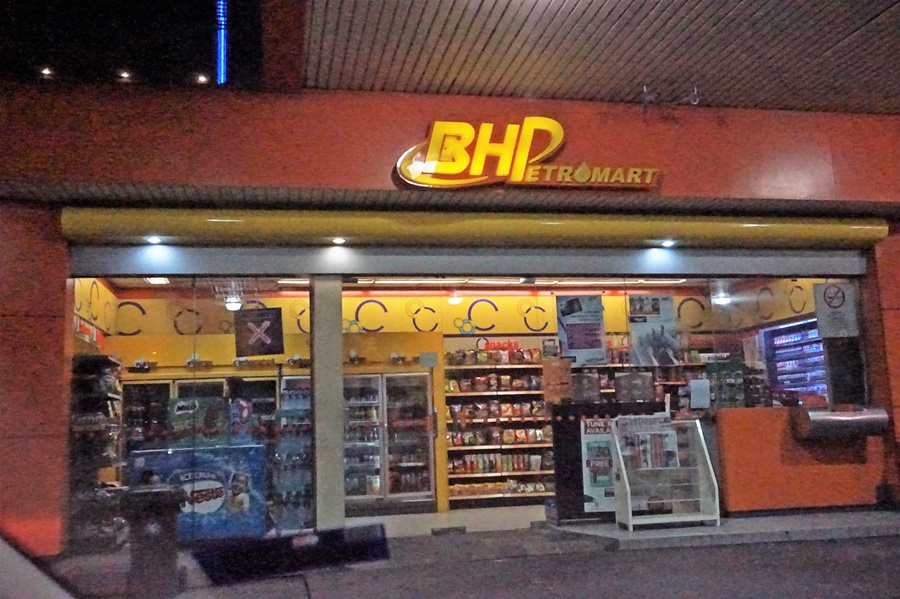
At present, there are about 400 BHPetrol stations around the country. 290 of these include a BHPetromart convenience store offering services that include Touch ‘n Go reloads, E-Pay, ATM and of course, the sale of food and drinks. Certain stations also have car-wash services as well as charging stations for electric vehicles.
“We will continue expanding our station network this year in order to make BHPetrol fuels and other services easy to obtain. Even if you don’t need to refuel, do drop by for a break, especially when you are on a long journey,” Ir. Azizul said.
Customers and the public wishing to know more about BHPetrol Infiniti fuels and other BHPetrol products and services as well as the locations of stations can visit www.bhpetrol.com.my.
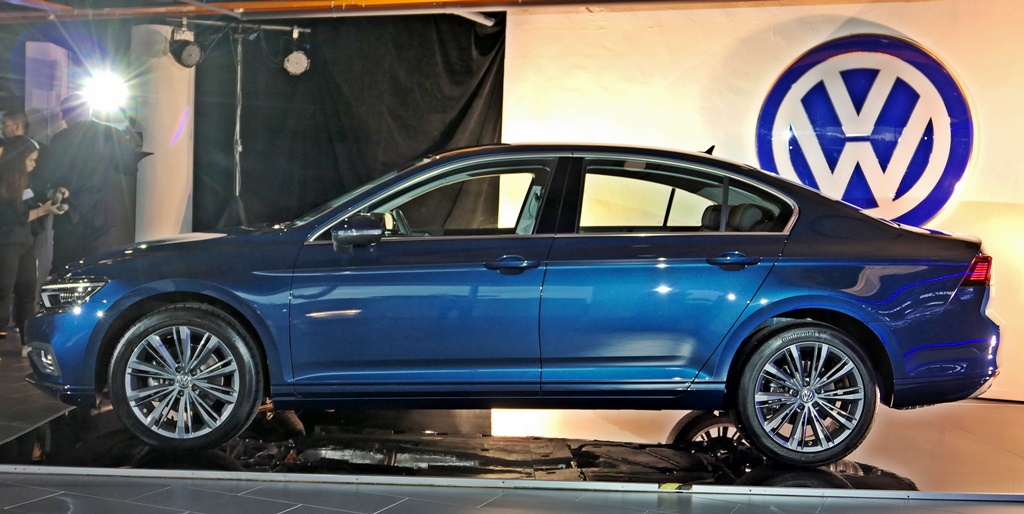
With more than 30 million units sold to date, the Volkswagen Passat ranks second to the Golf as one of Volkswagen’s most successful models. More significantly, this model (along with the Golf) has also been among the Top 10 bestselling cars of all time. That’s an achievement which makes it the most successful mid-size sedan worldwide.
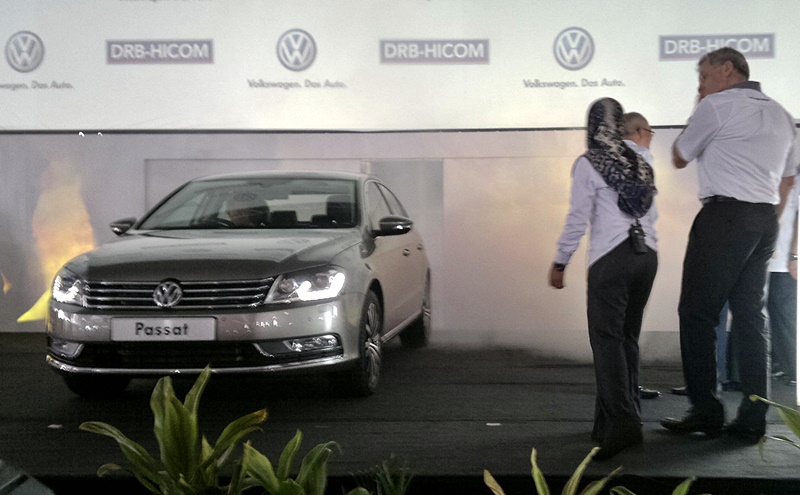
Its widespread popularity could be one of the reasons why Volkswagen chose the model to be the first one to be assembled locally in Malaysia. That was in 2011 and since then, it has been a strong seller in the range.
Launch of the first locally-assembled Passat in 2011 at the DRB-HICOM complex in Pekan, Pahang.
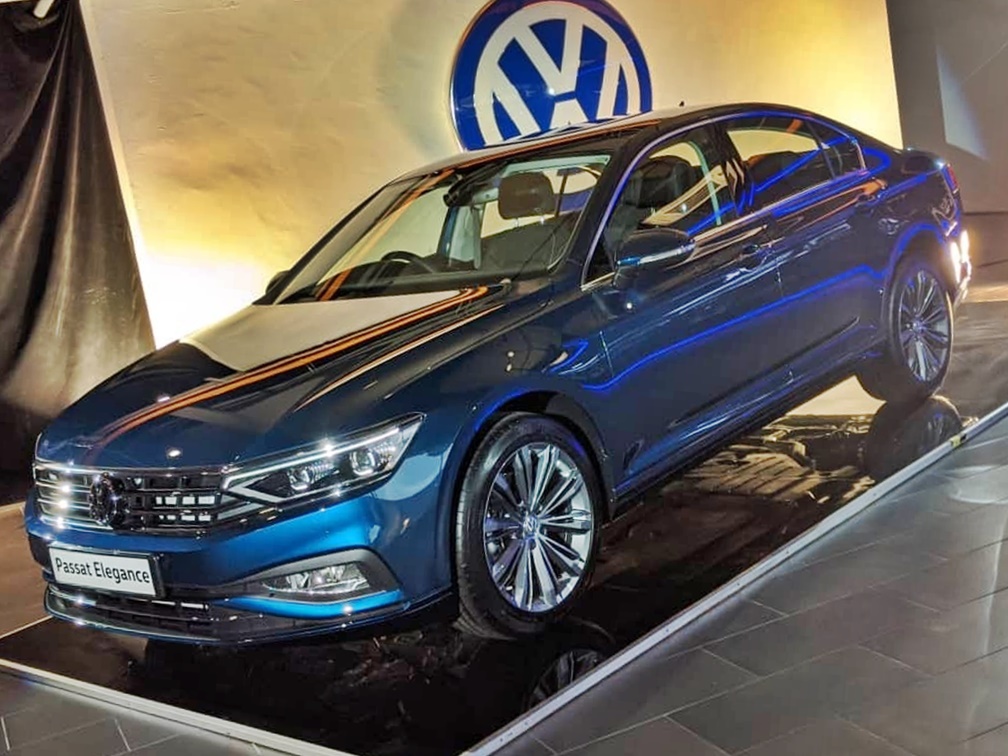
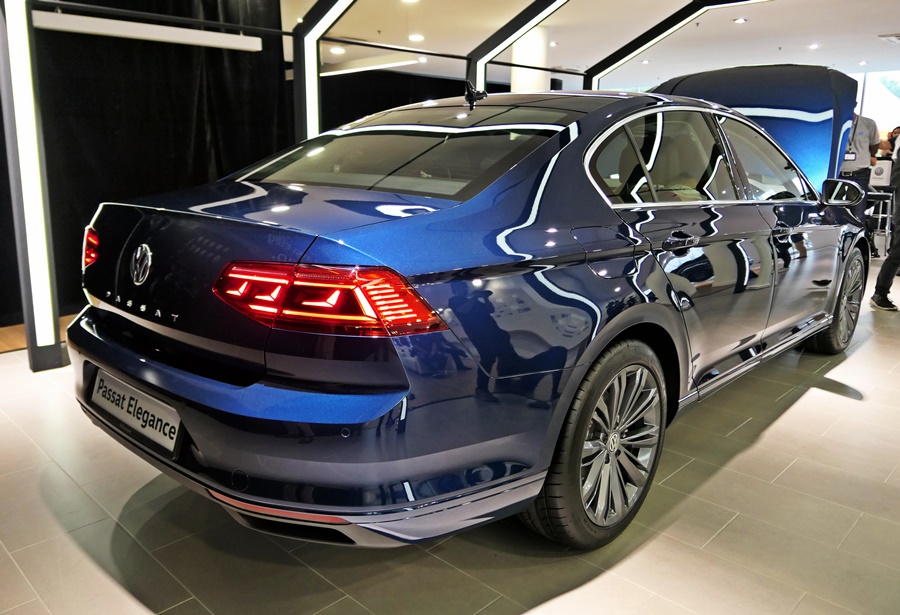
It’s still in its eighth generation and in March last year, an updated version was unveiled but the German market launch only began in September. It’s clear now that planning to assemble the new version, which is in the form of the Passat 2.0TSI Elegance, must have begun some time back because just 4 months after going on sale in Germany, it is now launched in Malaysia.
That’s quite a quick development for a model that’s assembled locally as it normally takes 9 months or so (unless there has been advance planning) because of localisation of parts. In this case, Volkswagen must have worked closely with the local suppliers earlier so the model can be launched today.
Targeted enhancements for a proven design
At a glance, the new Passat seems to retain the familiar formal profile that is appropriate for an executive sedan as well as a family car. However, look longer and you will notice the subtle changes that give a sharper and more dynamic appearance. The enhancements have been targeted because the design concept is a sound one which won’t age quickly.
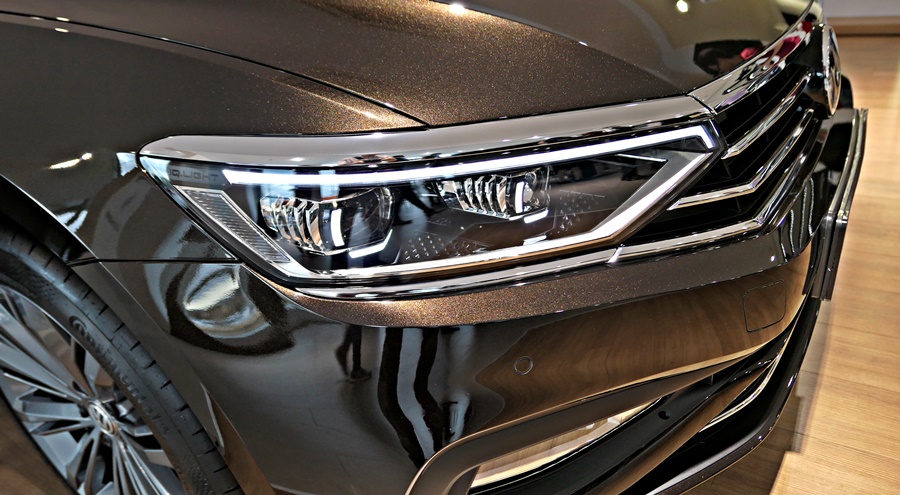
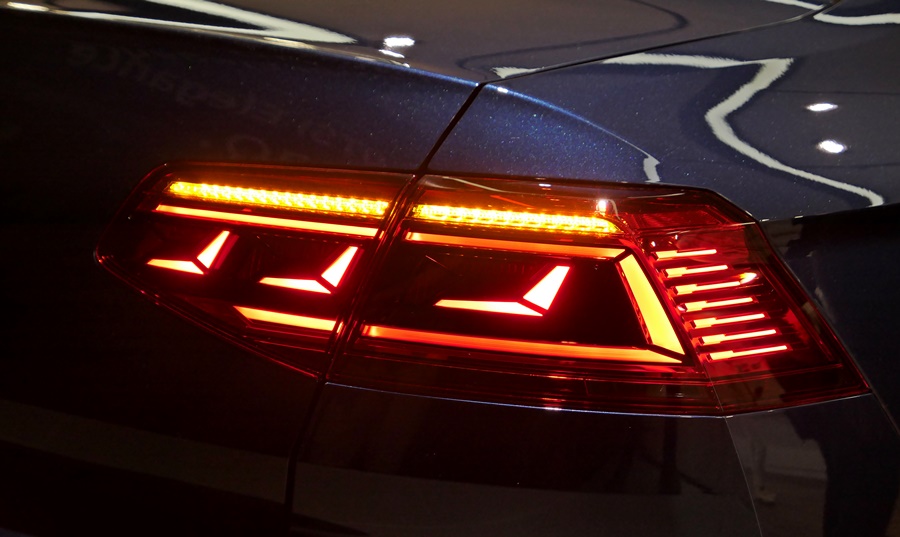
The IQ Light Matrix LED headlights present a new lighting ‘signature’, complemented by front and rear sequential turn signals and a three-wing tail light design. An identifier of the 2020 version is the ‘PASSAT’ lettering that is now stretched across the rear end while at each corner are bold 18-inch ‘Liverpool’ alloy wheels.
New powertrain with 7-speed DSG
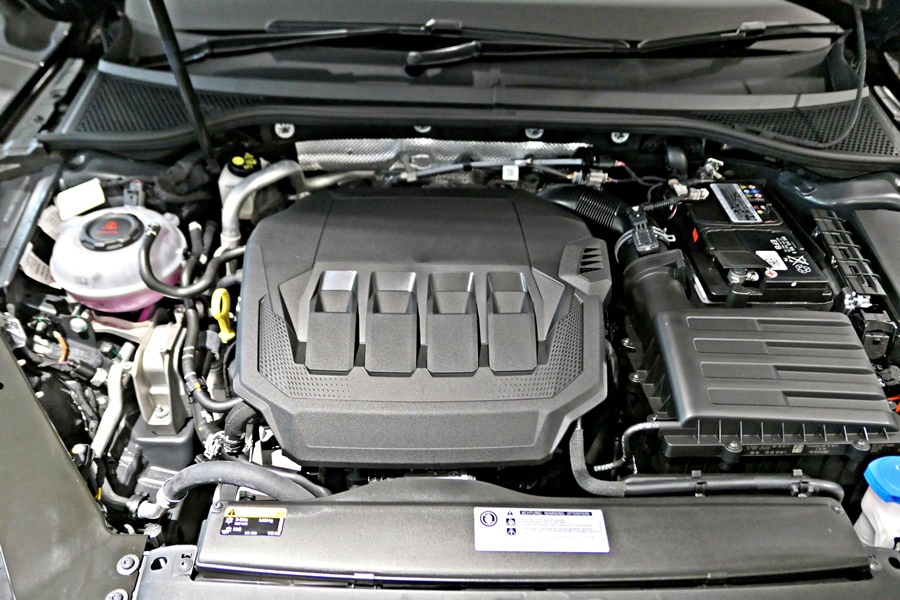
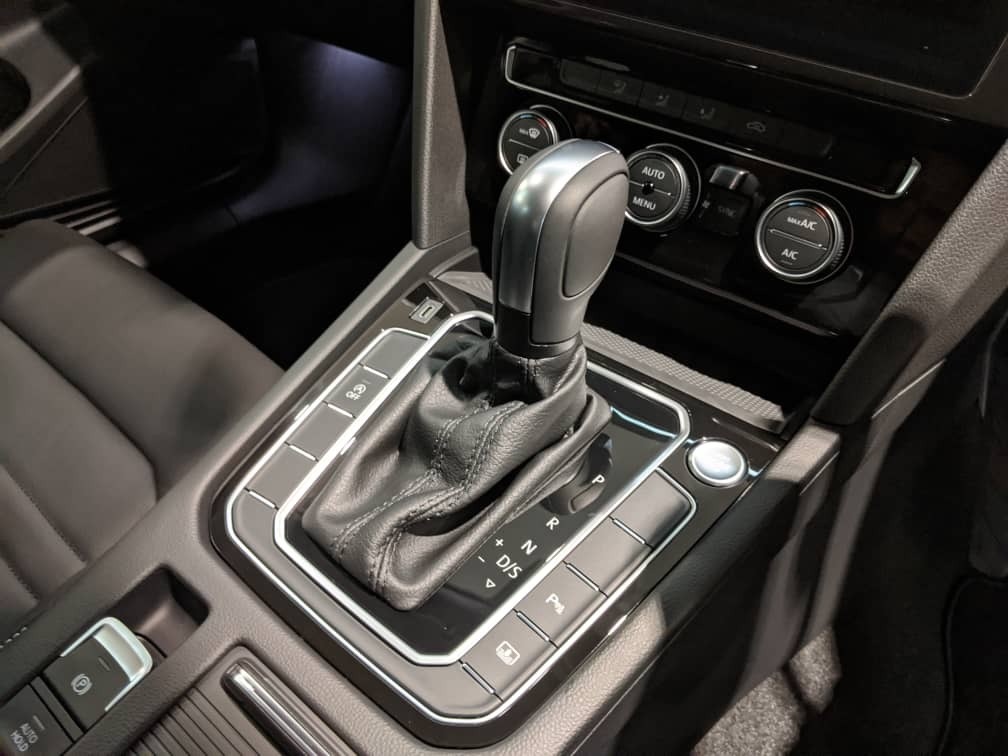
Under the bonnet, the new Passat is powered by a new 2.0TSI turbocharged petrol engine with an output of 190 ps/320 Nm. This goes to the front wheel through a new and improved wet clutch direct shift gearbox (DSG) which has quick shifting between 7 ratios. This is the first FWD Volkswagen model in Malaysia to come with a new 7-speed wet clutch DSG. The output may be high but the performance is balanced by efficiency that is reflected in the claimed 15.4 kms/litre fuel consumption, based on real-life driving data as defined by the WLTP (Worldwide Harmonised Light Vehicle Test Procedure).
Functional but luxurious too
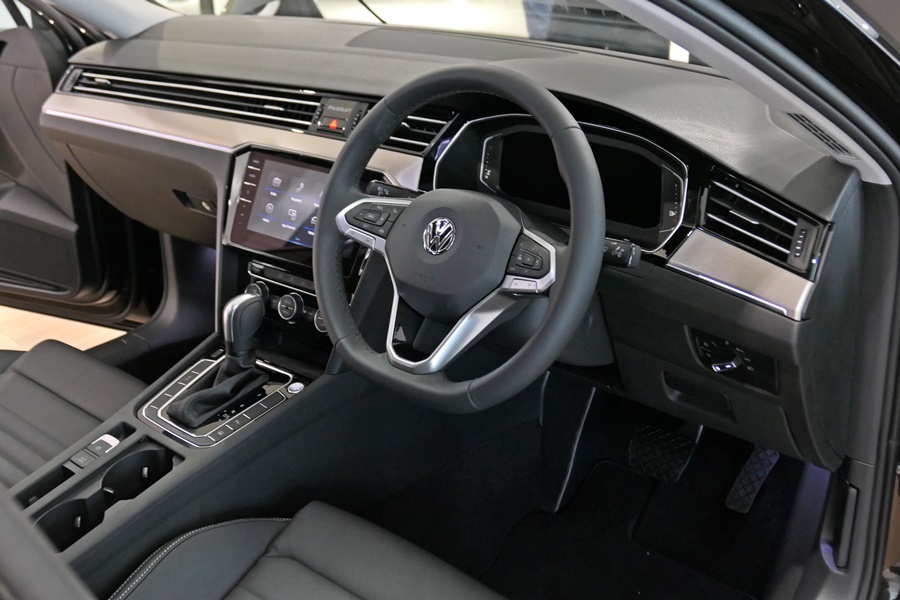
Being a German product, there is the emphasis on functionality but a luxurious and stylish ambience is also created with an assortment of new materials and decorative design elements around the cabin. Updates include newly-designed door trims, a 30-colour (yes – thirty colours!) ambient lighting system, and a new leather multi-function steering wheel with a new ergonomic multifunction button pad for convenience and connectivity.
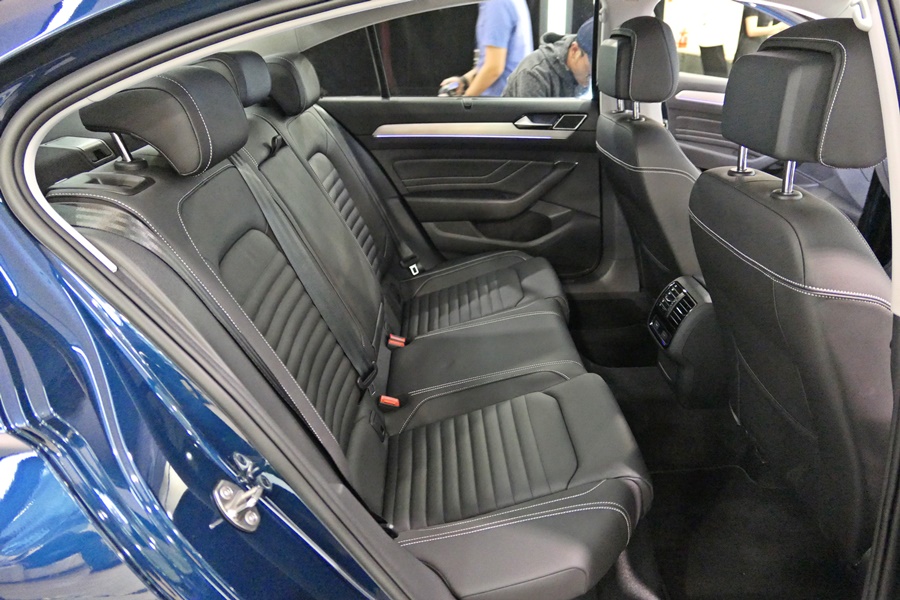
The Passat is well known for its comfort and with the new one, there’s supple leather upholstery and 12-way adjustment for the driver’s seat. Coolness throughout the cabin on the hottest days is ensured by the 3-zone Climatronic air-conditioning system and if the sunshine is too strong, there’s now a power-operated roll-up rear sunshade.
Better connectivity
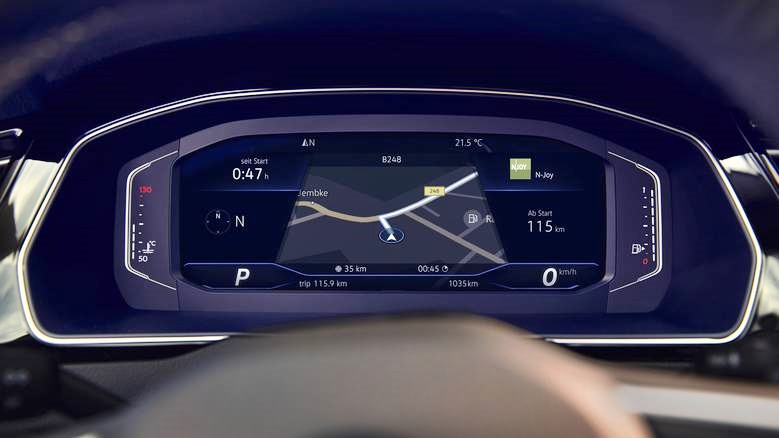
‘Connectivity’ is commonly used nowadays and each carmaker tries to provide connectivity that is as advanced as can be. For the new Passat, there’s a new and improved 11.7-inch Digital Cockpit with its high-resolution display colour thin-film transistor (TFT) similar to that of a premium smartphone. Under any lighting condition, there’s absolute clarity for the 2D and 3D graphic display. A 6-view customizable screen offers a new level of personalization with over 30 variations.
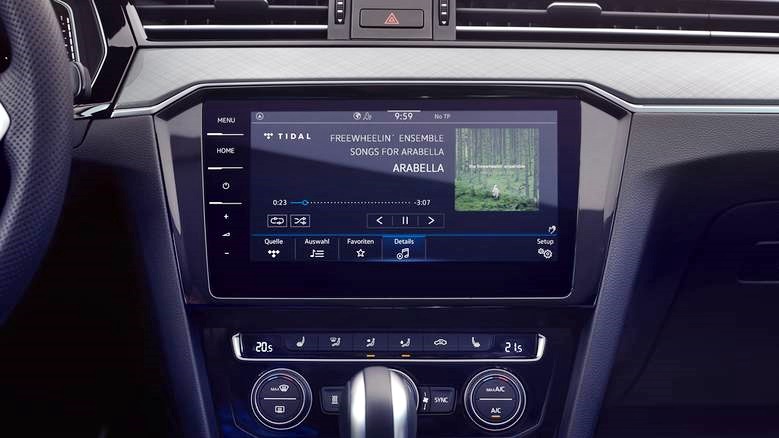
The infotainment system has a 9.2-inch touchscreen and management can be by voice or gestures. The 3-view split screen is customisable to suit personal preference on what information is to be shown.
Android Auto is not mentioned by the wireless AppConnect with Apple Car Play is available in the new Passat for the very first time in Malaysia. Other connectivity options for mobile and audio streaming are Bluetooth and 3 illuminated USB ports. The USB ports are the new Type-C version which do not require a specific orientation for insertion of cables.
Enhanced safety
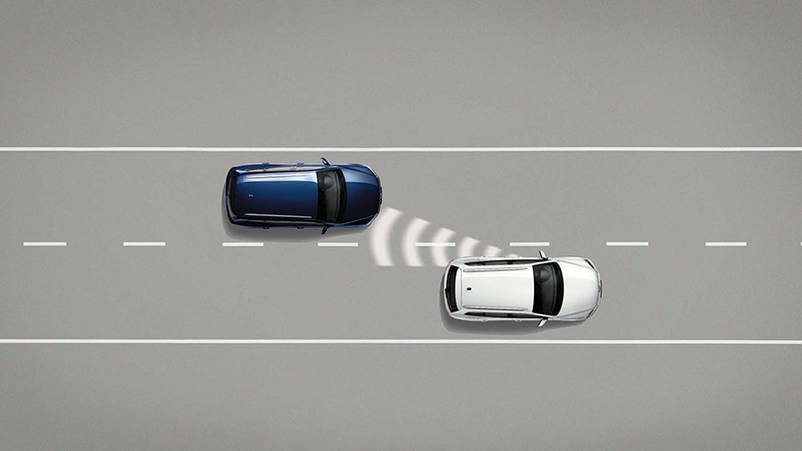
New for 2020 is Side Assist with Rear Cross Traffic Alert, complete with 180-degree detection range of up to 50 metres. This is specially useful when reversing out of a parking bay and the view is blocked by other cars. On the move, the Blind Spot Monitoring System constantly scans the area along both sides of the car up to 70 metres. If another vehicle or motorcyclist is detected but the driver might not be aware, warnings will alert him or her.
Blind Spot Warning System
An added convenience is the new Tyre Pressure Monitoring System, with integrated sensors on all four tyres to monitor individual pressure readings based on user preference. This not only means your hands don’t have to get dirty checking tyre pressures but you also have peace of mind. In the case of a slow leak, you will be aware so you can check before the tyre gets damaged due to under-inflation.
“The new Passat features not only a technical update but a complete redesign of the exterior and interior, improved connectivity and updated lighting signatures. These advanced enhancements are executed, without any compromise on performance. This is what we believe today’s discerning customers are looking for,” said Erik Winter, MD of Volkswagen Passenger Cars Malaysia.
Priced from RM187,990, The new Passat Elegance is available in 6 colours and 2 pearl finishes. The metallic colours are Aquamarine Blue, Manganese Grey, Reflex Silver and Tamarind Brown, while pearl-effect colours are Deep Black and a new Oryx White. Pearl-effect colours are available without any additional surcharge.
Visit www.volkswagen.com.my to know more about the new Passat and locate a showroom where you can test one.
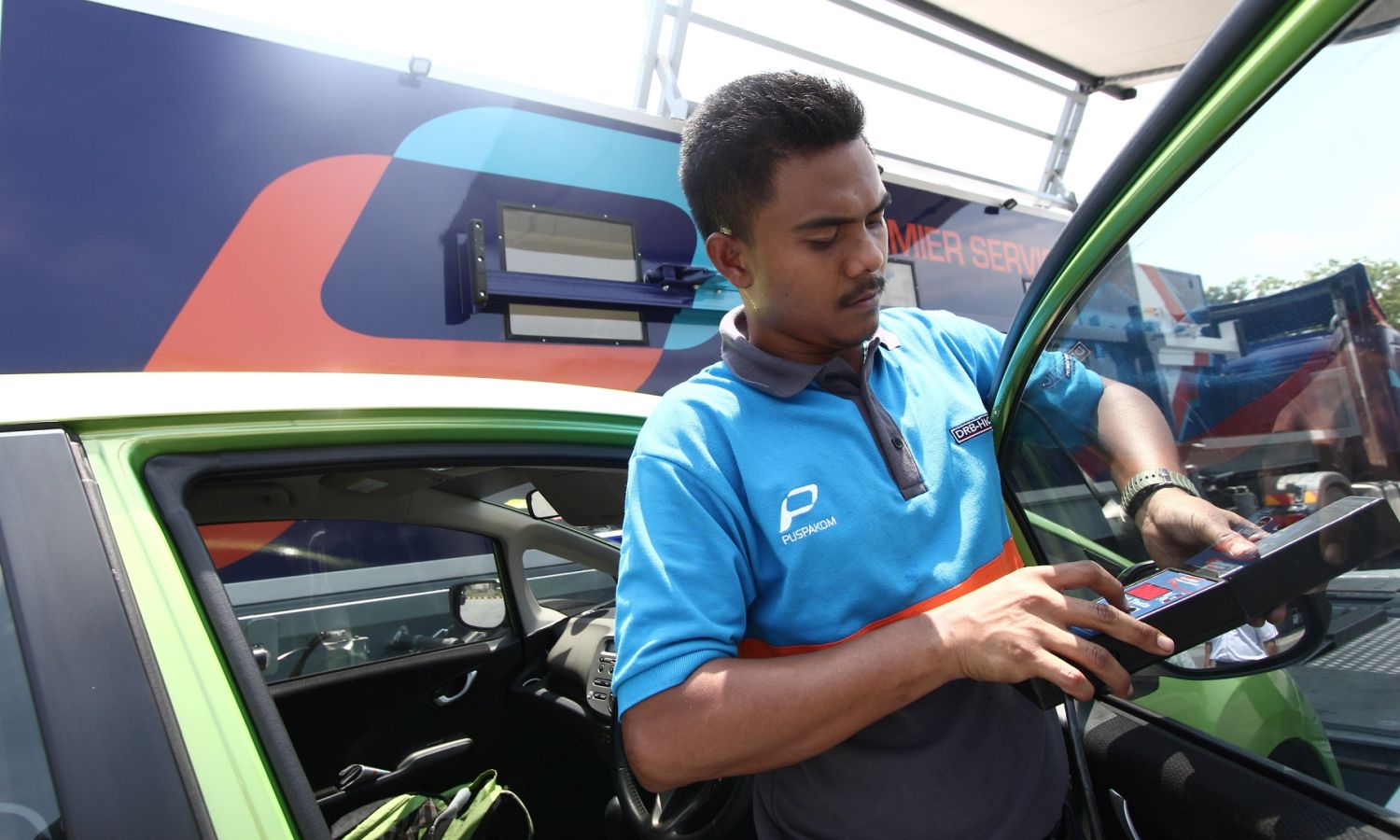
During the 25 years that PUSPAKOM Sdn Bhd has been operating its vehicle inspection services, the company has frequently upheld its corporate social responsibility by helping vehicle owners and drivers ensure their vehicles are safely on the road. This year, it is again having its #drivesafenoregrets Voluntary Vehicle Inspection campaign for all private vehicle owners.
This campaign is in conjunction with the coming Chinese New Year and the inspection will be conducted at no charge. It will run for 11 days from January 11 to January 21, 2020 at all PUSPAKOM Vehicle Inspection Centres (except in Shah Alam and Pasir Gudang which are exclusively for heavy vehicles) during operating hours.
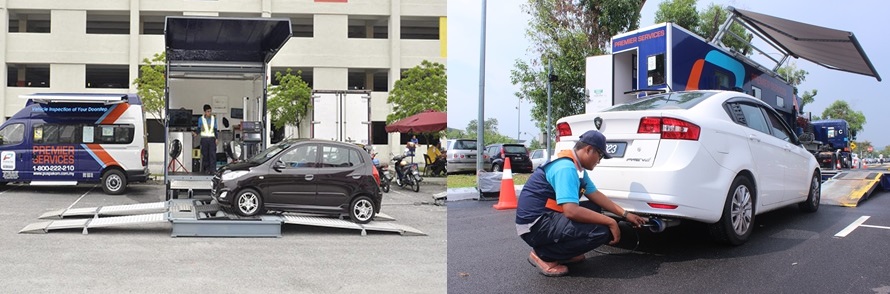
In addition to the services available at its centres nationwide, PUSPAKOM will also deploy its mobile units to selected locations where vehicle inspections can be done on the spot. The locations are as follow:
Ulu Pudu Park, Kuala Lumpur – January 11
Dewan Gemilang Square, UKM Bangi – January 14
Tesco Extra Ampang (parking block B), KL – January 18
Insa Dunia Food Court Carpark, Bukit Mertajam, Penang – January 22
JPJ (Road Transport Department) Alor Setar, Kedah – January 23
“We at PUSPAKOM have always been concerned about the safety of vehicles and road-users in Malaysia. Every time around the festive periods, responsible vehicle owners and drivers will think about maintaining their vehicles before returning home. We encourage them to use the Free Voluntary Vehicle Inspection service offered by PUSPAKOM. The normal fee for the inspection is RM50 per vehicle but during the campaign period, there will be no charge,” said PUSPAKOM’s CEO, Shukor Ismail.
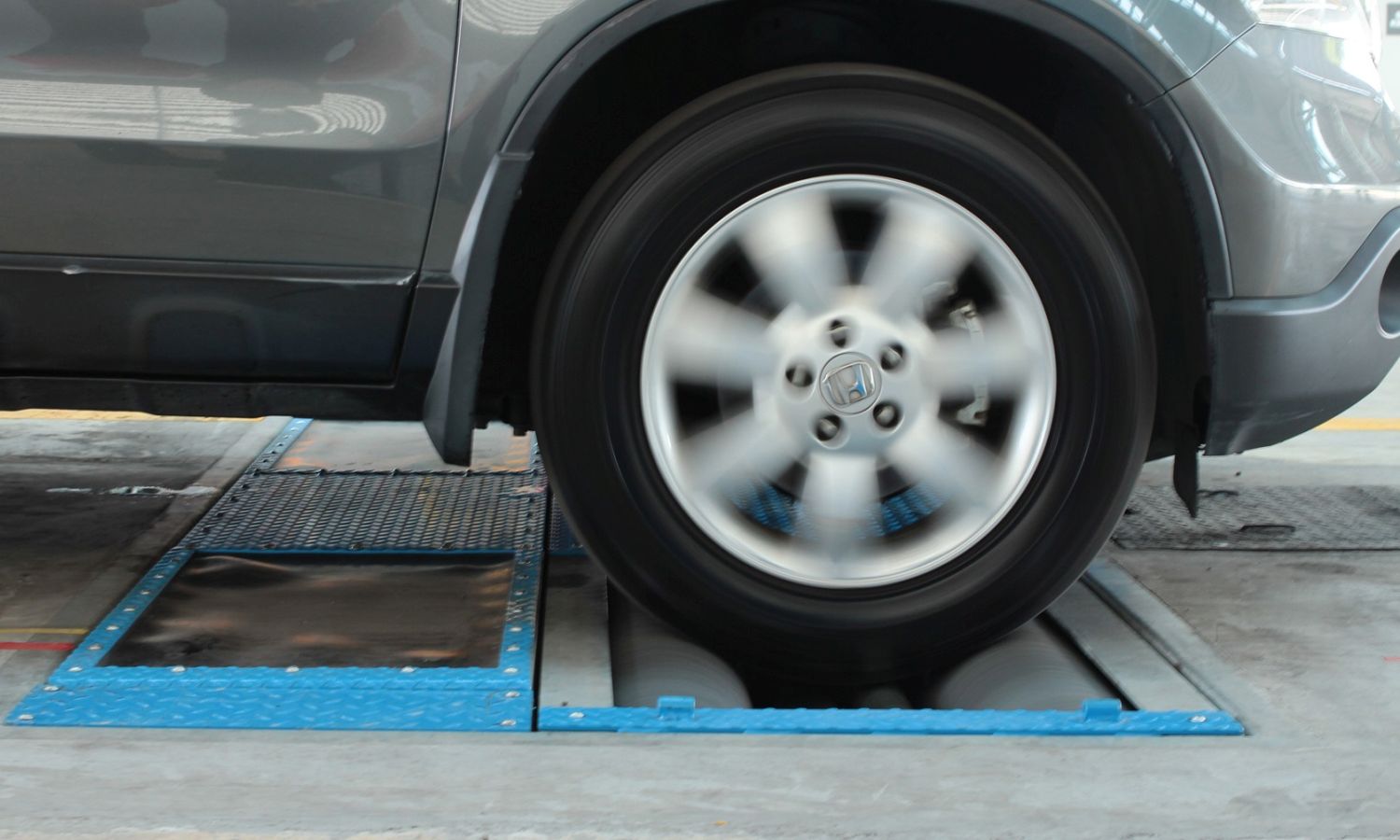
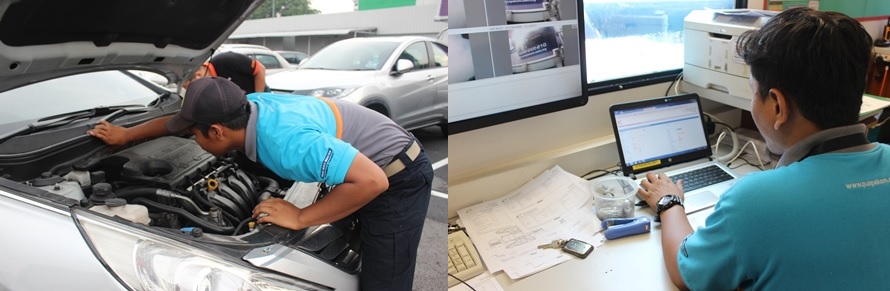
He said that every inspection will cover 25 points such as tyre condition, suspension, exhaust emissions, and tinted glass verification. The vehicle owner will receive a report on the findings which can be used as reference if any rectification work is needed at a workshop.
To locate a PUSPAKOM inspection centre in Malaysia, visit www.puspakom.com.my or call 1-800-88-6927.
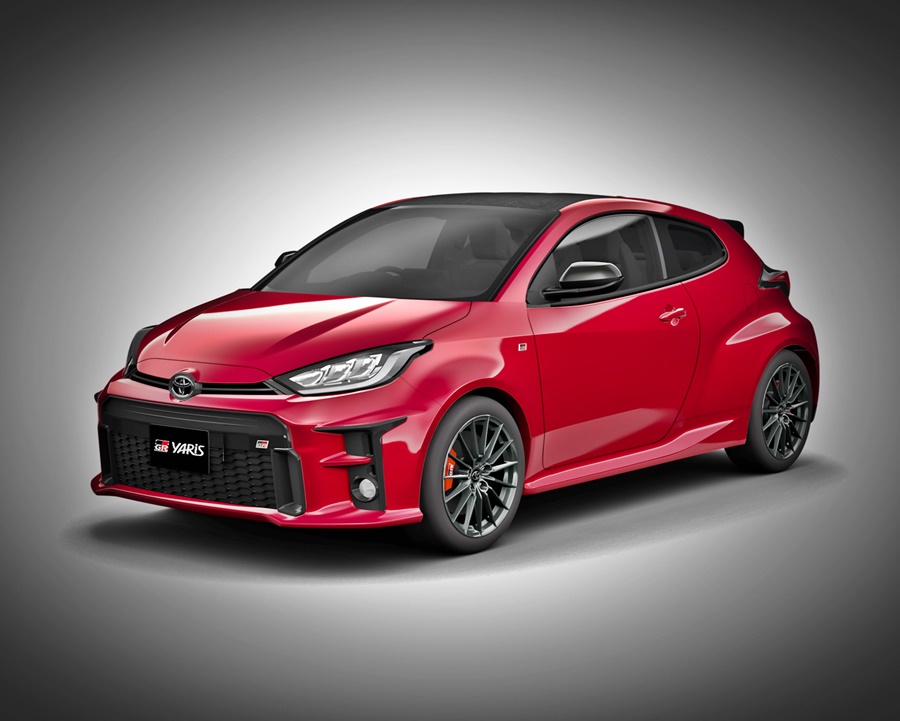
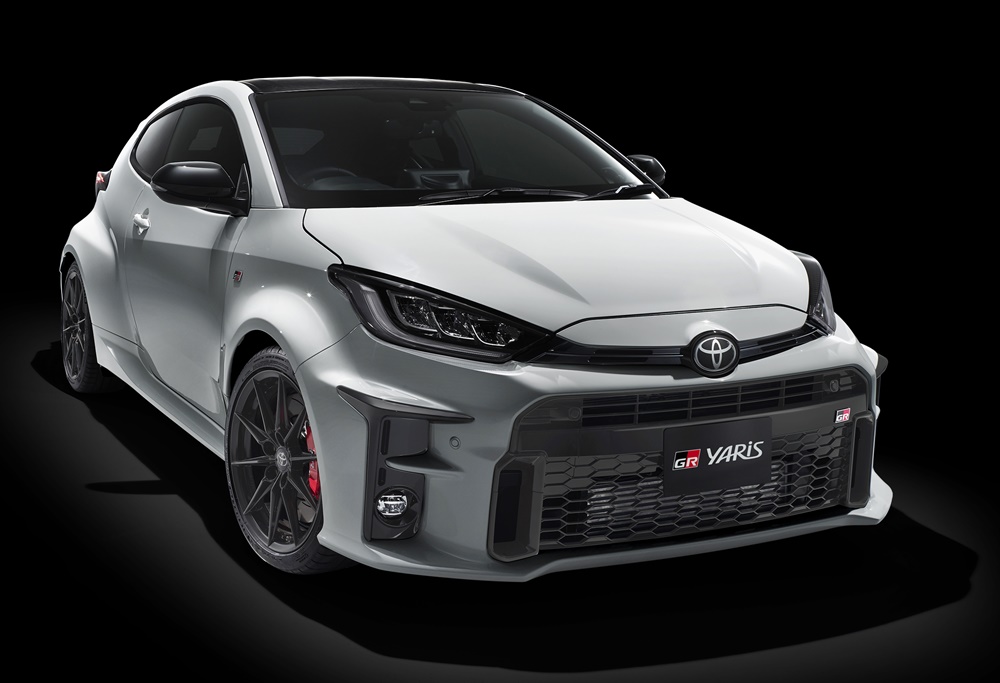
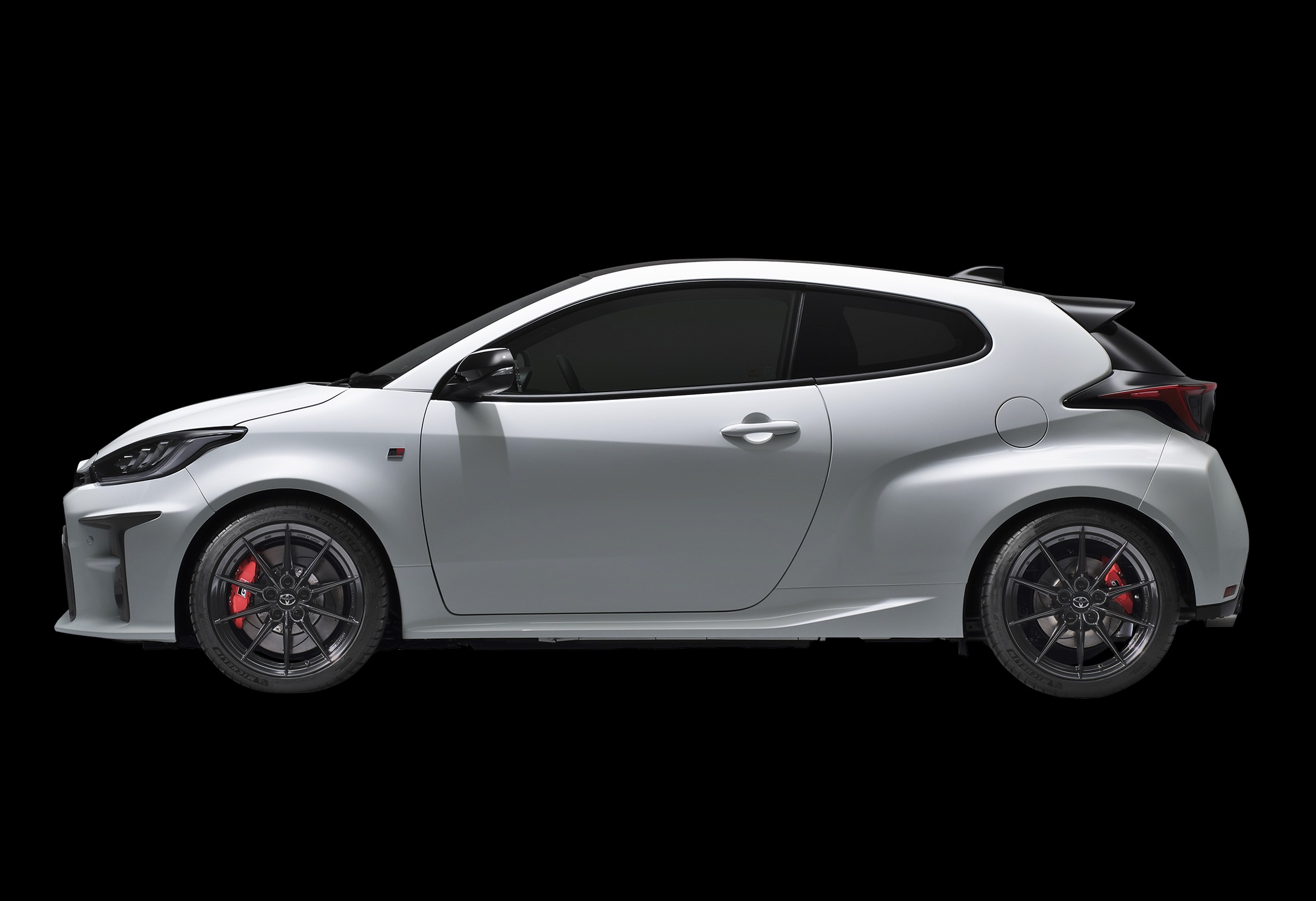
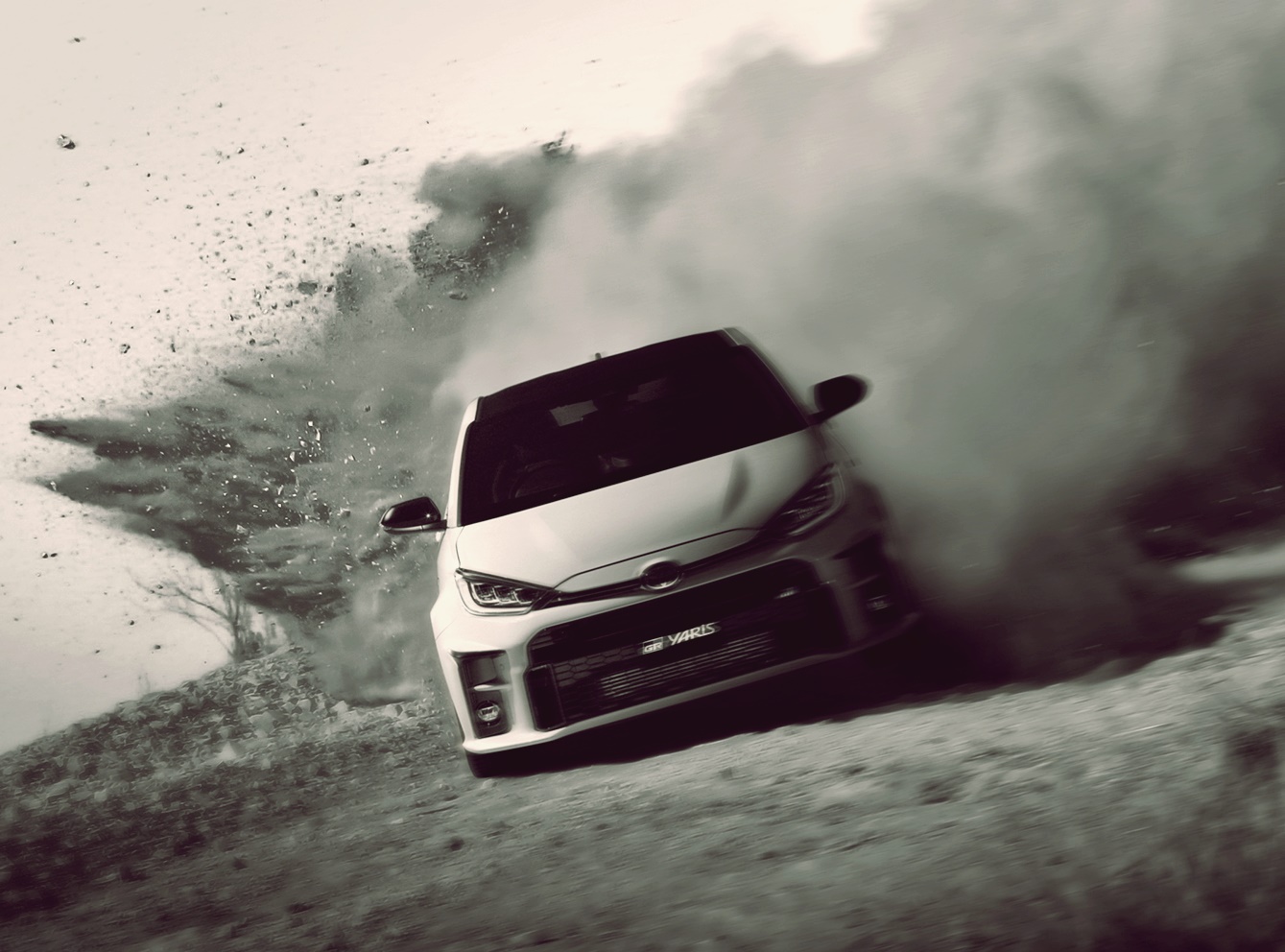
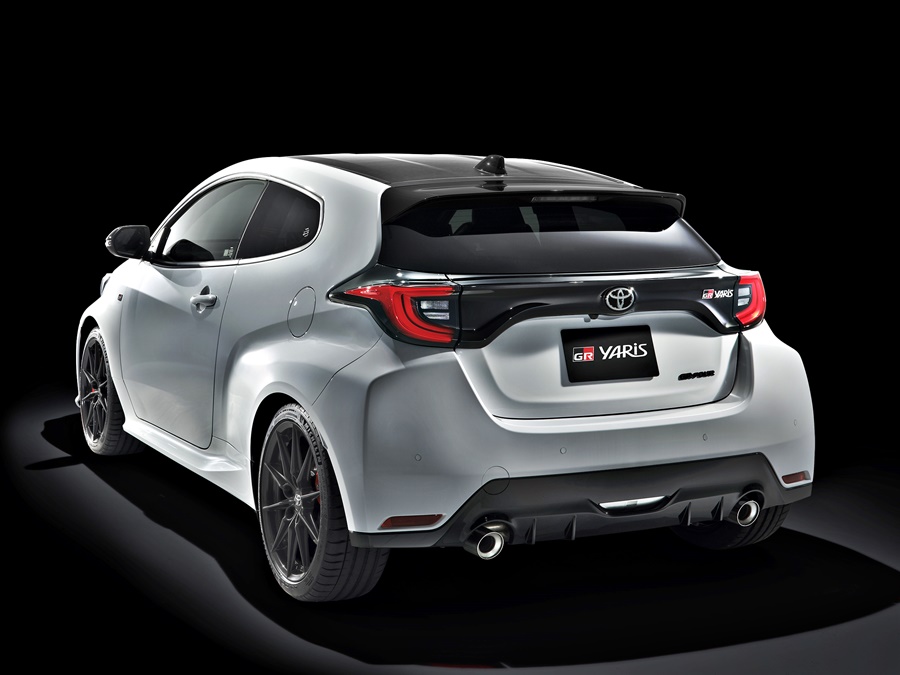
Continuing to build up its high-performance GR range, Toyota GAZOO Racing (TGR) today unveiled the rally-inspired GR Yaris at the 2019 Tokyo Auto Salon. It is the second pure sportscar model to be launched for global markets by TGR, following last year’s return of the legendary Toyota GR Supra.
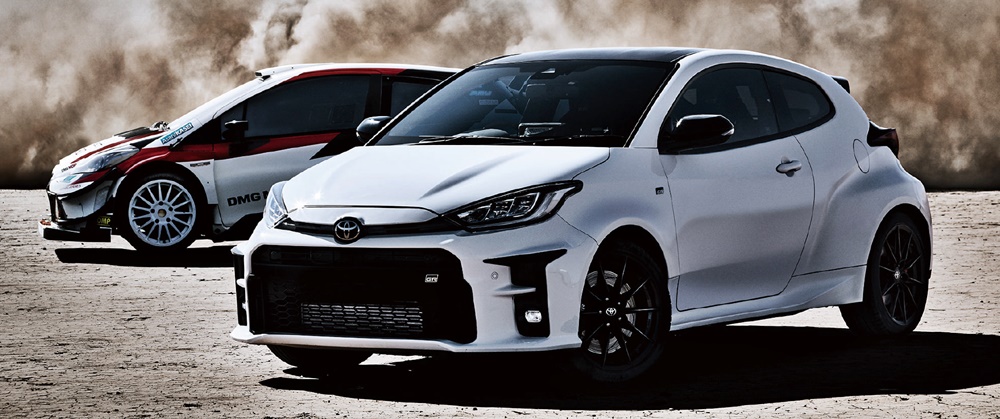
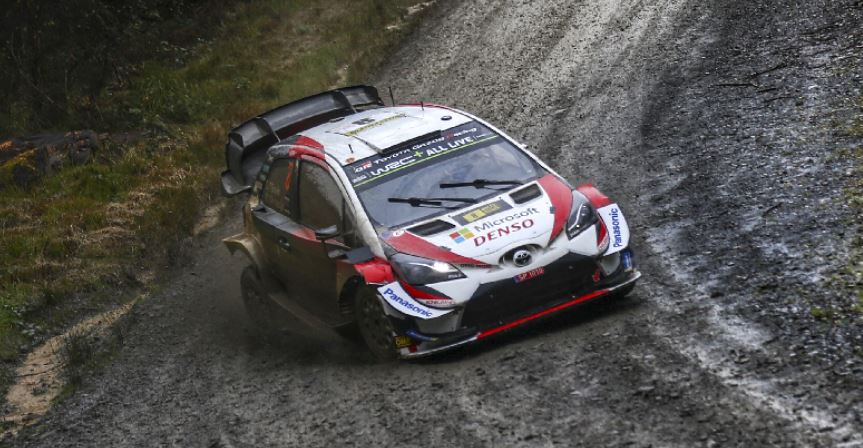
As well as serving as the official homologation model for development of the next Yaris WRC rallycar which will be entered in the World Rally Championship (WC), the GR Yaris is also available to customers for local rally events.
Sales of the GR Yaris start around mid-2020, and Toyota is now accepting online-only pre-orders (in Japan) for two special editions of the new model—the RZ First Edition and the RZ High-performance First Edition. Pre-orders will be accepted until June 30, 2020 (or for approximately 6 months). The price of the RZ First Edition is to be 3.96 million yen (equivalent to RM148,000) while the price of the RZ High-performance First Edition is to be 4.56 million yen (about RM170,000).
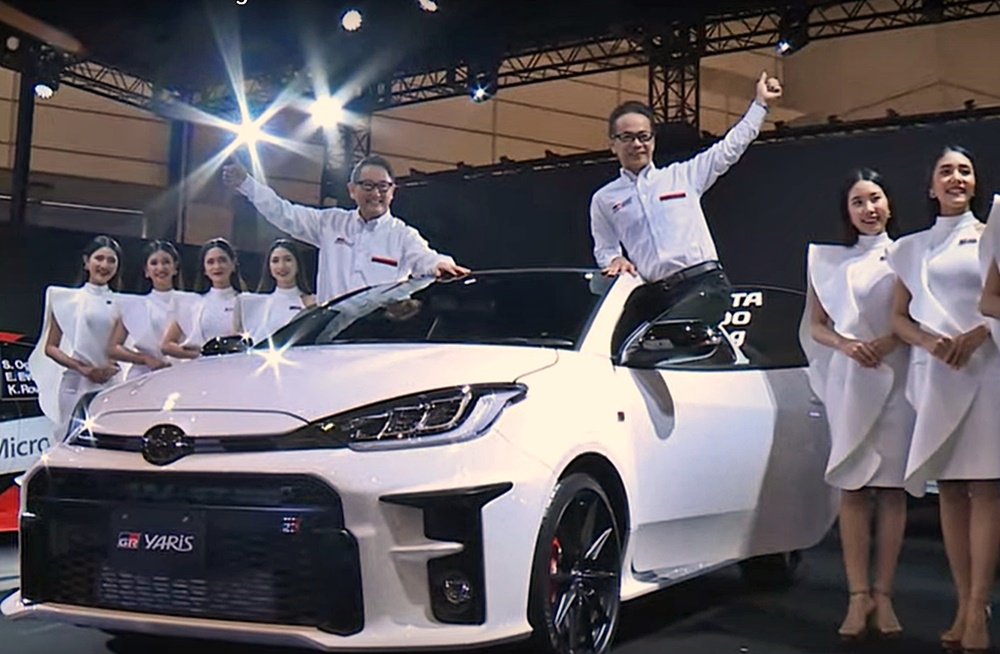
Presenting the GR Yaris at the 2020 Tokyo Auto Salon, GAZOO Racing President Shigeki Tomoyama said TGR is committed to using motorsport to refine its know-how and its personnel, with the aim of launching world-class production sportscars. “While the new GR Supra is a sportscar developed through track racing, the GR Yaris has been devised through our participation in rallies – something that many of our fans have been waiting for,” he said.
Akio Toyoda, President of Toyota Motor Corporation and Master Driver, added his personal view as well: “Toyota needs to get back a sportscar. I’ve always thought so.The 86 is my precious partner during rallies and races; Supra made a successful come back… but still, I have always wanted a sportscar purely made by Toyota. The reason we decided to come back to WRC was to build a sportscar by utilizing skills and technologies obtained through WRC. When we won the WRC Manufacturer’s title last year, I felt Toyota became recognized all over Europe, and that made me think that we must have a winning car to gain worldwide recognition as a true car manufacturer. This GR Yaris is the sportscar we made from scratch to win at world level,” said Akio Toyoda, President of Toyota Motor Corporation and Master Driver, at this morning’s launch.
A delighted Akio Toyoda (left) at the launch of the Toyota GR yaris this morning)
Heritage
Since rejoining the championship in 2017, Toyota won the Manufacturers’ Championship in 2018 and, with Ott Tanak, the Drivers’ Championship in 2019.
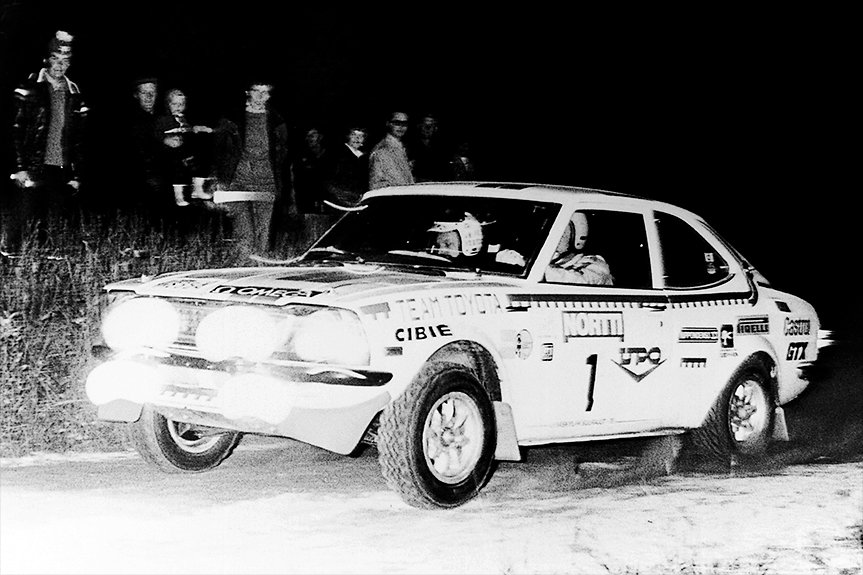
Toyota’s heritage in the WRC can be traced back to the 1970s when Toyota Team Europe entered the Corolla, scoring its first WRC win at the 1975 1000 Lakes Rally in Finland. Toyota was the first Japanese manufacturer to win the event.
The new GR Yaris is Toyota’s first genuine AWD sportscar and its first homologation model for WRC competition since the Celica GT-FOUR in 1999. Across two generations and three models, the Celica GT-FOUR featured in Toyota’s most successful WRC campaigns, a golden age of rallying that brought the company 30 rally victories, 4 Drivers’ Championship titles and one Manufacturers’ Championship. In a reference to its illustrious predecessor and its AWD technology, the GR Yaris features a GR-FOUR logo on its tailgate.
To acquire WRC homologation, the base model of a vehicle to be entered in FIA events must have a continuous 12-month production volume of 25,000 units or more. As a homologation model, the GR Yaris will support the development of a new competition car for the TGR World Rally Team’s ongoing participation in the WRC.
Development Priorities
The WRC-skilled team of designers and engineers at Tommi Makinen Racing focused on perfecting the aerodynamics, weight distribution and light weight of the new car – the three qualities essential to achieving the best performance and drivability.
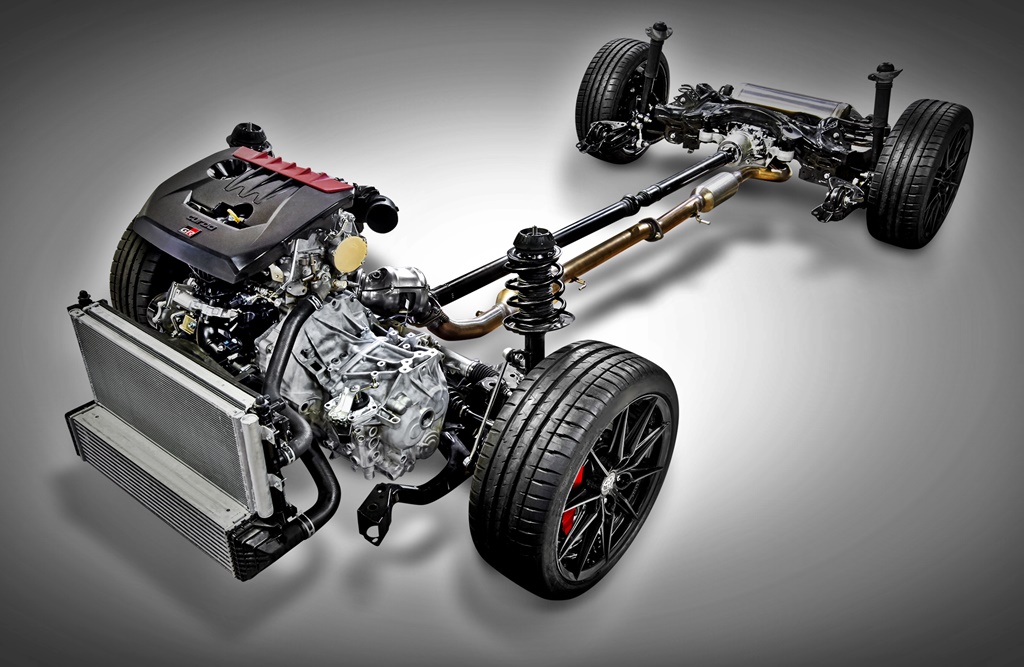
A lower roofline improves the car’s ability to cut through the air, while positioning the new engine further back towards the centre of the car and locating the battery in the boot helped produce a better chassis balance for improved handling, stability and responsiveness. The new platform allows for a wider rear track with reinforcements beneath the side members to ensure the suspension’s performance potential can be realised.
The bodyshell is made from lightweight materials including carbonfibre polymer and aluminium for an impressive power-to-weight ratio. As a result, the GR Yaris has the power of a C-segment performance hatch but the weight of a B-segment machine (kerb weight 1,280 kgs). Its power-to-weight ratio of only 6.7 kgs per kilowatt helps deliver 0-100 km/h acceleration said to be less than 5.5 seconds and an electronically limited top speed of 230 km/h.
The all-new 1.6-litre engine
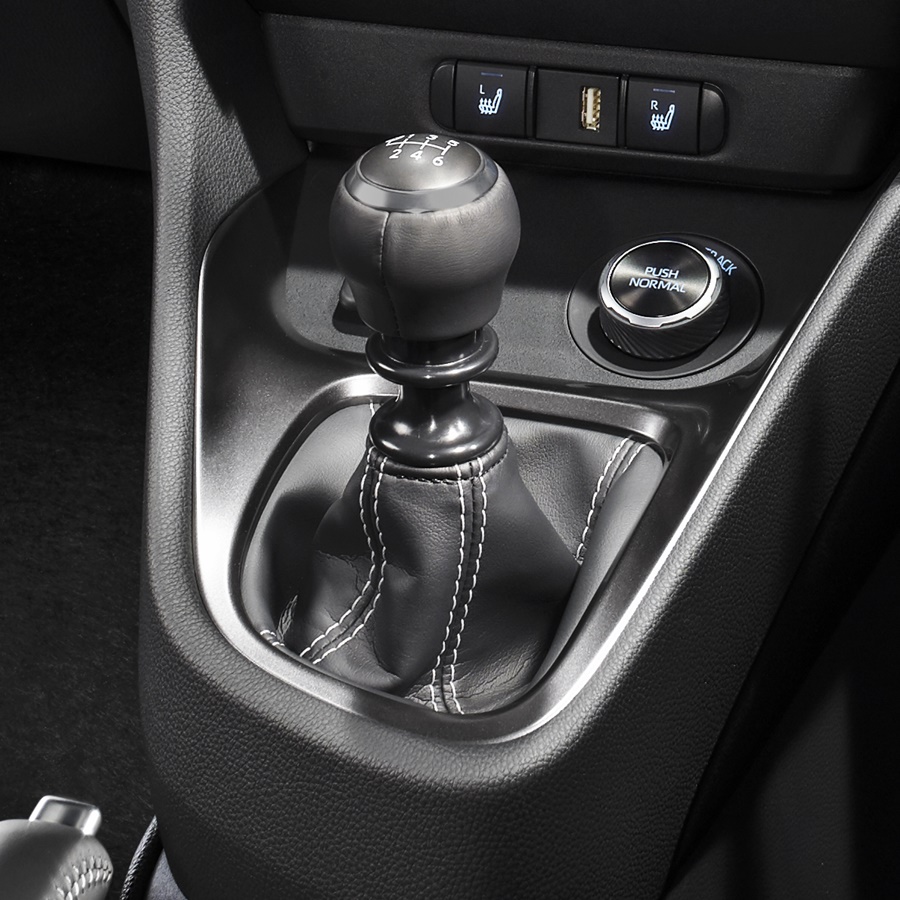
The GR Yaris engine is an all-new, 3-cylinder turbocharged unit with a displacement of 1618 cc. Drawing on motorsport technologies to maximise performance, it has multi-oil jet piston cooling, large-diameter exhaust valves and a part-machined intake port. It also features a single-scroll ball-bearing turbo and is mated to a 6-speed manual transmission, engineered to accommodate high torque levels.
The compact lightweight DOHC 12-valve engine produces a maximum 272 ps/370 Nm to achieving a strong power-to-weight ratio which was a key objective to help meet the GR Yaris’ performance targets.
GR-FOUR All-Wheel Drive System
The new GR-FOUR AWD system optimises drive power to each wheel while also being simple and lightweight. The distribution of torque between the front and rear axles is governed by a high-response coupling. The ingenious system uses slightly different gear ratios for the front and rear axles and allows for a theoretical range of front/rear torque balance from 100:0 (full front-wheel drive) to 0:100 (full rear-wheel drive).
This flexibility gives a performance advantage over AWD on-demand systems that use twin-coupling or permanent AWD systems with a centre differential. The GR FOUR system is also considerably lighter in weight.
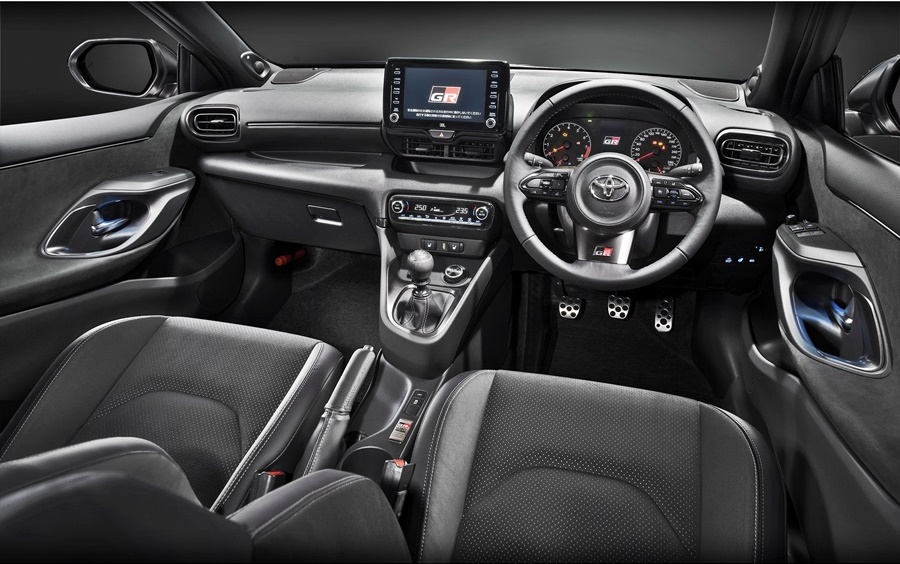
The driver can adjust the system’s performance to suit their preference or the driving situation using an AWD mode dial switch. In each of the 3 modes available, the torque balance will automatically adjust in response to the driver’s inputs, vehicle behaviour and road or track conditions.
Dedicated Platform and Suspension
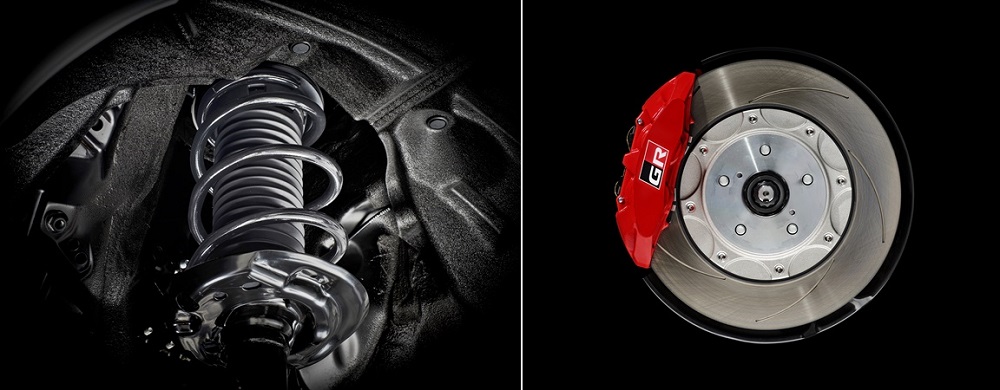
The GR Yaris has a new, dedicated platform that combines the front end of Toyota’s GA-B platform – debuting in the all-new Yaris in 2020 – with the rear of the GA-C platform. This allows for a new suspension design and accommodation of the AWD system. Where the standard new Yaris uses a torsion beam rear suspension, the GR Yaris has a double wishbone set-up, with every element optimised for performance. A MacPherson strut system is used at the front.
The First Editions
The RZ First Edition, based on the GR Yaris RZ grade, will have a customized front grille, front side diffusers, rear spoiler, and rear bumper all finished in matte black. The RZ High-performance First Edition, gets high-performance equipment to extend performance levels and included in the customized specifications are BBS forged aluminium wheels in matte black.
New GR Production Centre at Motomachi
Toyota has established a new production facility at its Motomachi factory with a line dedicated to manufacturing GR sportscars. As the volume of cars will not be as high as other Toyota models, the line employs new manufacturing methods to handle multi-type, small-volume production.
Instead of the traditional conveyor system, the body and assembly lines comprise several different cells connected by automatic guided vehicles. Production of each vehicle calls for a large number of manual processes, for which Toyota utilises a specialist team of skilled workers. The factory design and the talents of the workforce allow for high-precision assembly of highly rigid vehicle bodies to levels that are hard to achieve on standard production lines.