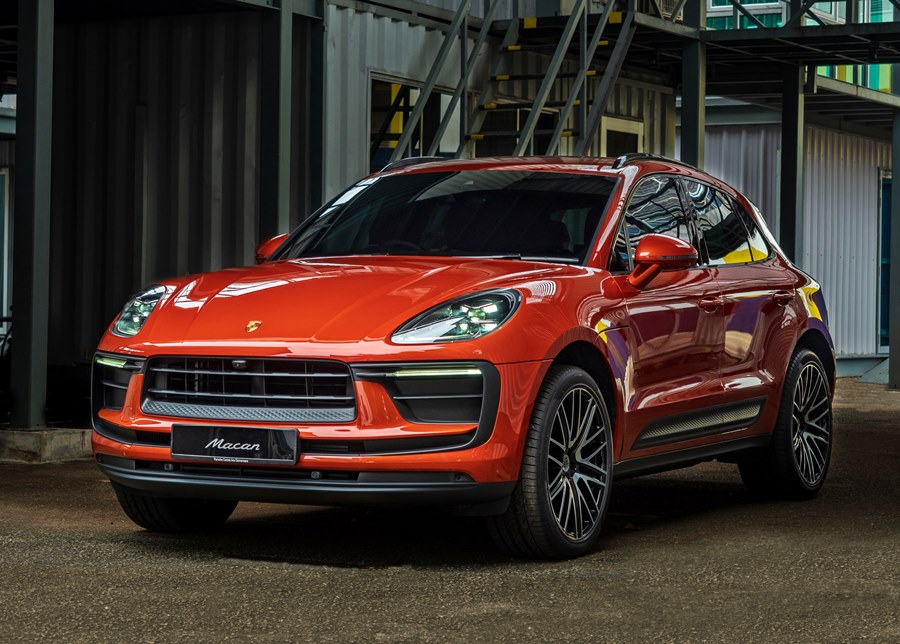
Sime Darby Auto Performance (SDAP) has begun selling the updated Porsche Macan with cosmetic changes on the outside, enhancements within and improved powertrains. Prices (excluding insurance) start from RM433,154 for the Macan, RM623,593 for the Macan S, and RM786,232 for the Macan GTS with 2 years warranty coverage and 2 years free scheduled maintenance. The Premium Package is included as standard for the Macan and Macan S.
Redesigned front end
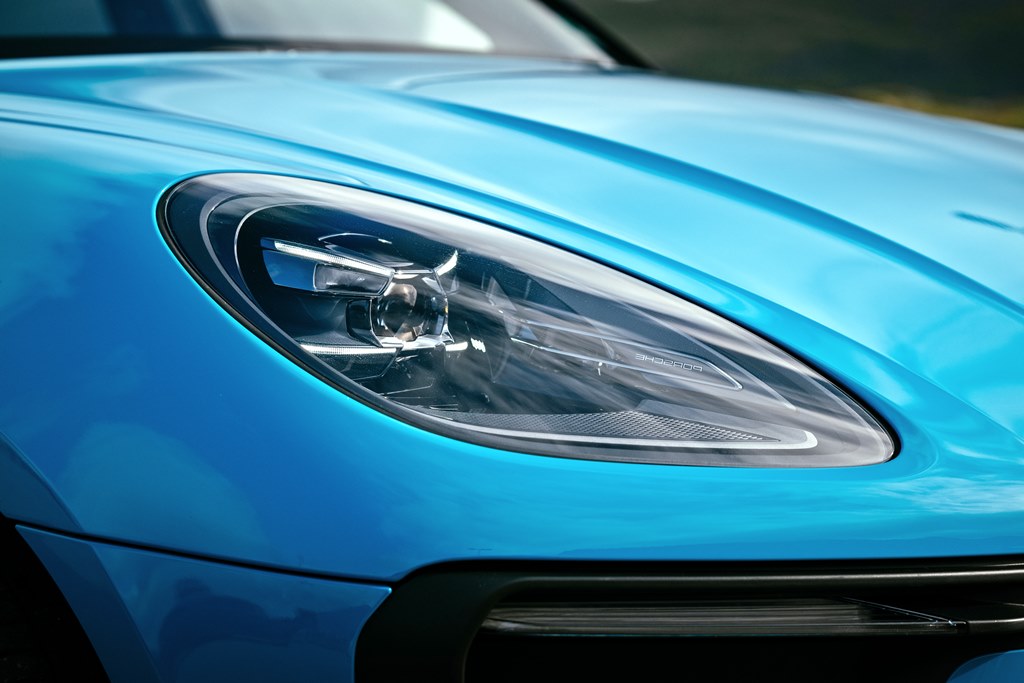
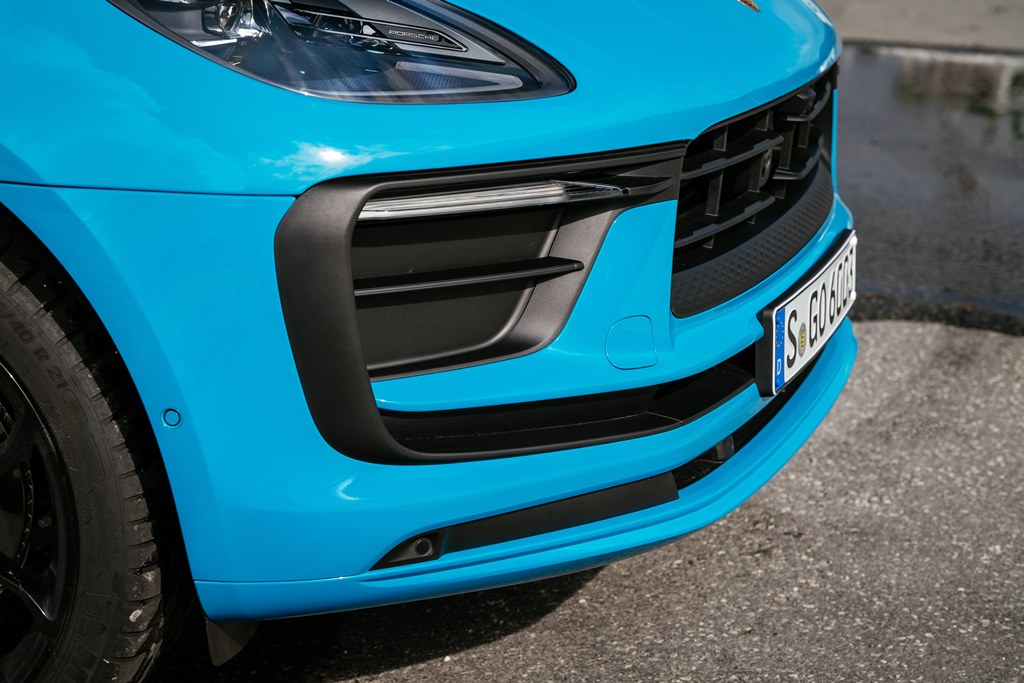
The compact SUV, still in its first generation after 7 years, has a redesigned front end with an inlay in the exterior colour, visually emphasizing the vehicle’s width. New 3D structural elements and dynamic side blades enhance the sporty look. LED headlights with the Porsche Dynamic Light System and Sport Design exterior mirrors are now standard on all models. At the back is a striking diffuser with a particularly technical design.
Customers can choose from no less than 14 exterior colours, including the new colours Papaya Metallic and Gentian Blue Metallic; Python Green is exclusively for the Macan GTS. With its Individual Colour and Paint To Sample options, Porsche Exclusive Manufaktur can further personalise the Macan.
Futuristic centre console
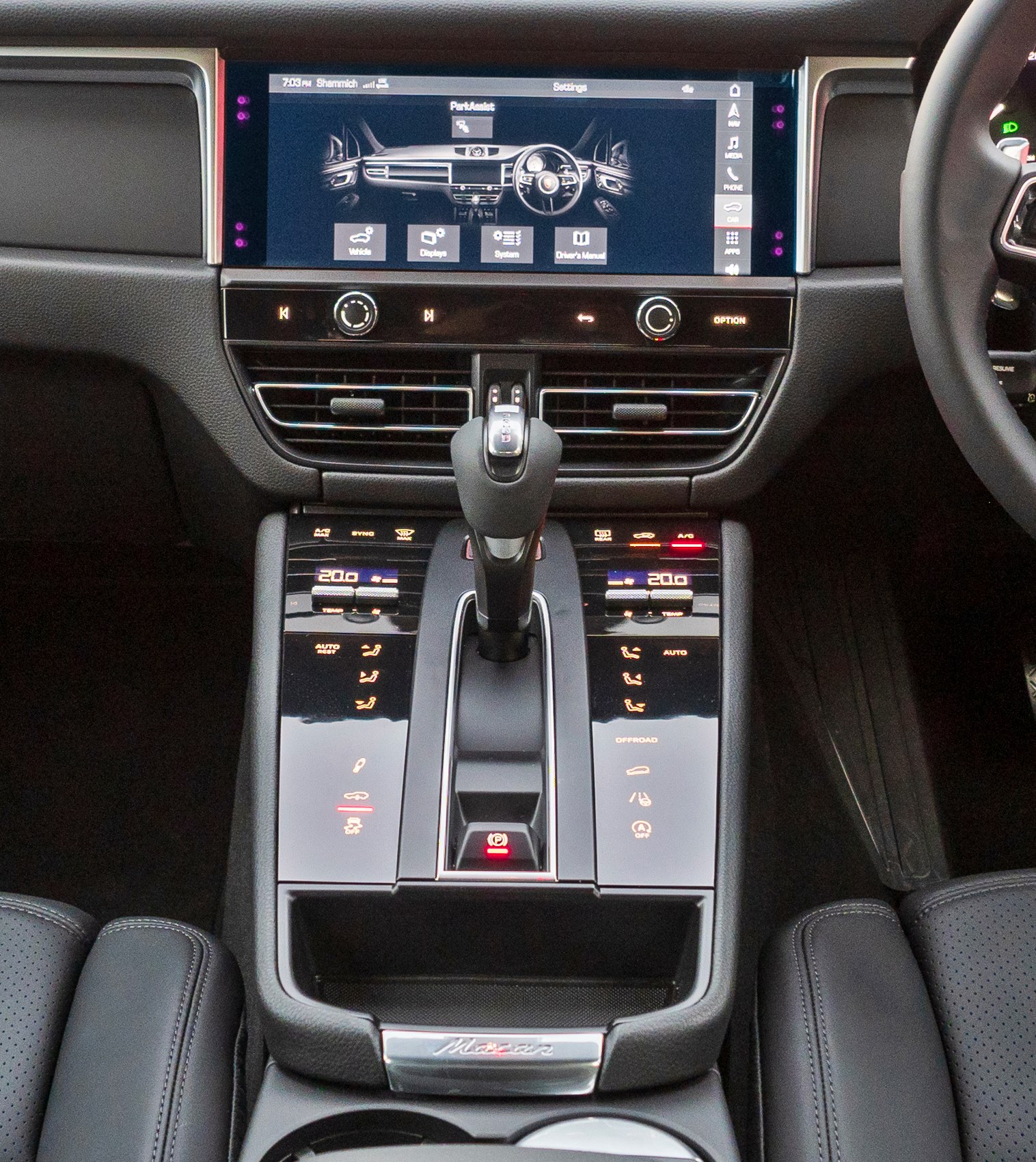
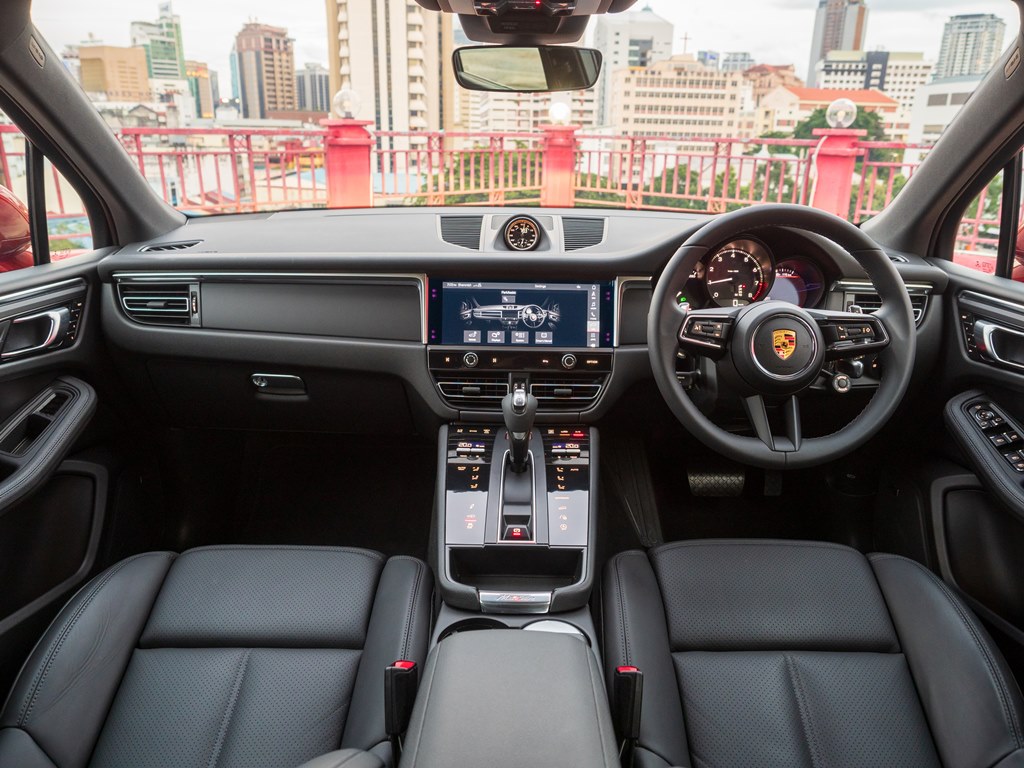
Inside the latest Macan, there is selected equipment from the 911 Carrera, as well as a futuristic centre console with a high-quality glass look. Intuitive touch-sensitive surfaces, instead of tactile buttons, provide a cleaner appearance while the new operating concept brings a clear and futuristic structure to the cockpit.
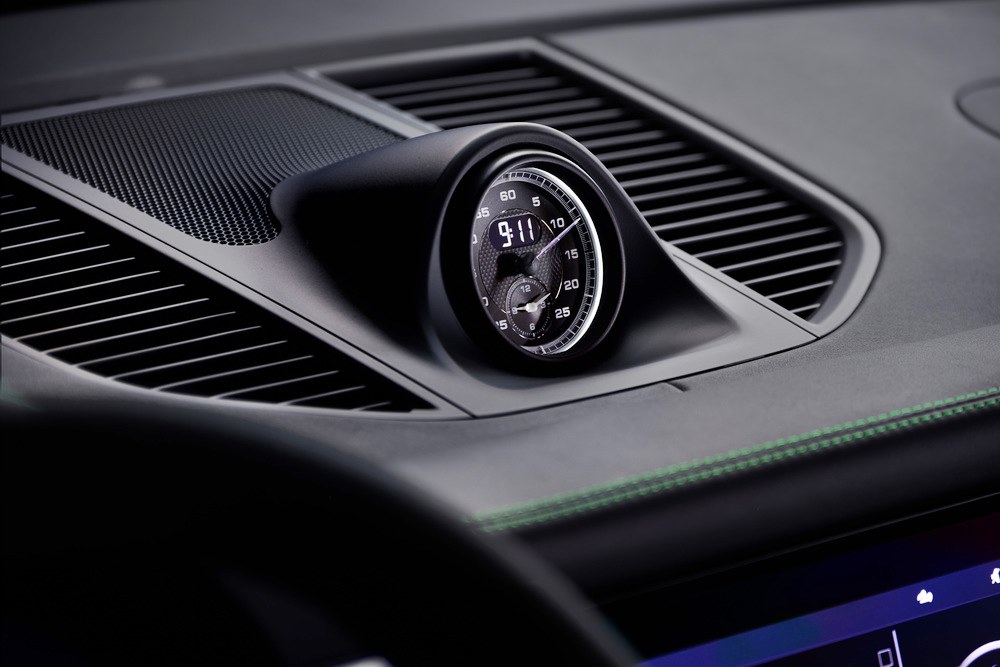
A new, shorter selector lever sits in the centre of the functionally organized control module. The analogue clock at the top of the dashboard is now also standard equipment, while many online functions and services are offered as standard. These can be controlled via the 10.9-inch full HD touch display of the Porsche Communication Management or by means of voice commands. The latest Macan also inherits the new multifunction and GT Sport steering wheels from the 911.
The Macan and Macan S with a Premium Package as standard get additional comfort and luxury features such as 14-way electric comfort seats with memory package, Power Steering Plus, Park Assist including reversing camera and surround view, automatic dimming interior and exterior mirrors, and BOSE Surround Sound System.
Redeveloped engine, increased performance
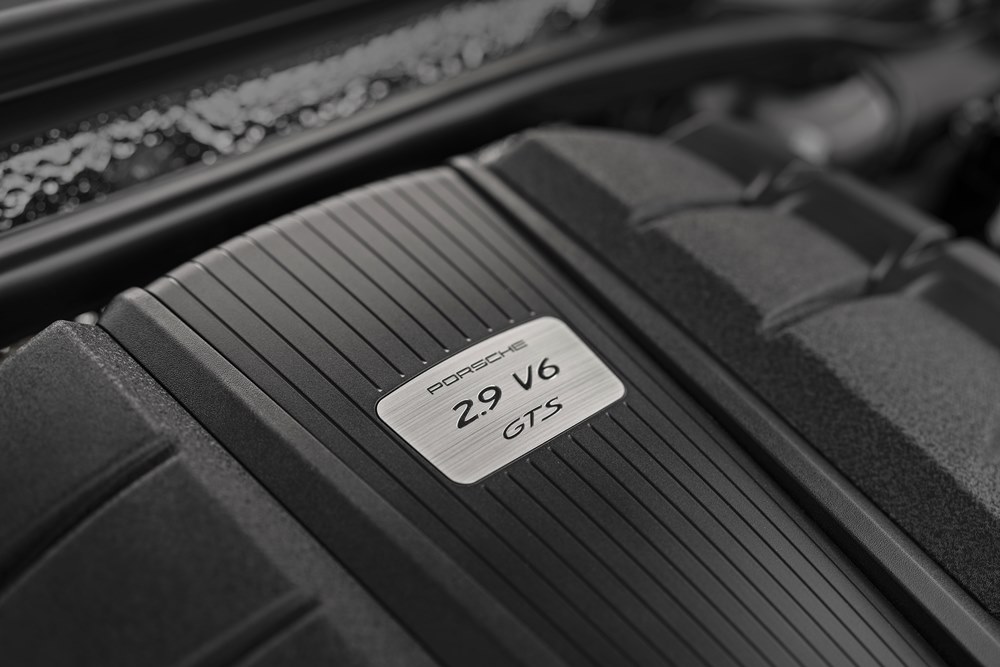
The redeveloped 2.9-litre V6 biturbo engine now produces 380 ps, 26 ps more than before. Torque has gone up to 520 Nm, 40 Nm higher than before. The new powerplant improves acceleration to for the 0 to 100 km/h to a claimed 4.6 seconds, with a top speed of up to 259 km/h.
For the flagship Macan GTS, the engine now delivers 440 ps, an increase of 60 ps, while 30 Nm more torque takes the peak figure up to 550 Nm. When fitted with the Sport Chrono package, the claimed 0 to 100 km/h time is 4.3 seconds and the top speed is 272 km/h.
At the entry-level, the 2-litre inline 4-cylinder turbocharged engine delivers 265 ps/400 Nm; compared to the engine used before, the difference is 13 ps/30 Nm. The higher output improves acceleration time marginally to take the Macan from standstill to 100 km/h in a claimed 6.2 seconds and on top a sop speed of 232 km/h.
All the engines have the same 7-speed Porsche dual-clutch transmission (PDK), with Porsche Traction Management (PTM) delivering power to all four wheels. Specifically tuned to the Macan it is equipped in, PTM enhances driving dynamics, improves driving safety and maximise grip and stability.
A key benefit of PTM is that it works efficiently with all driving dynamics systems and these systems complement each other. The most significant partner system is Porsche Stability Management, which controls power distribution to all four wheels on an even more individual basis using anti-slip regulation and automatic brake differential functions.
Optimised chassis and brakes
The wide suspension bandwidth balances maximum suspension comfort and dynamic sportscar performance. The chassis has been optimized further to allow the Macan to now respond with even more sensitivity and more directly to the driving situation and road conditions, giving the driver even better feedback via the steering wheel.
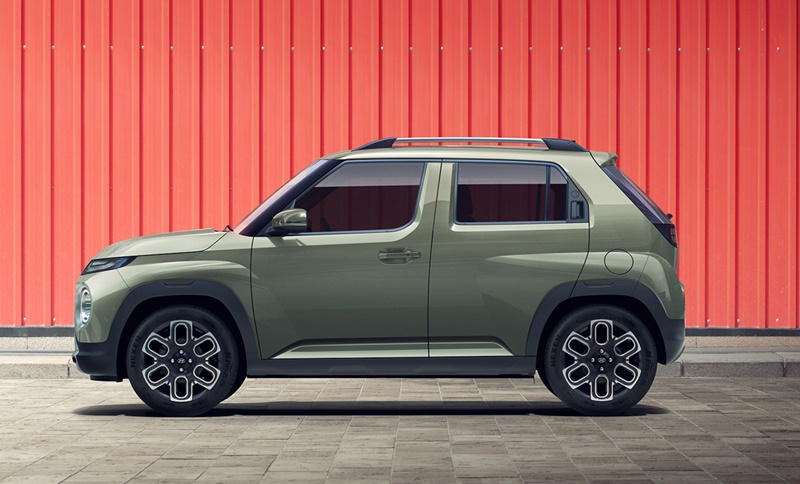
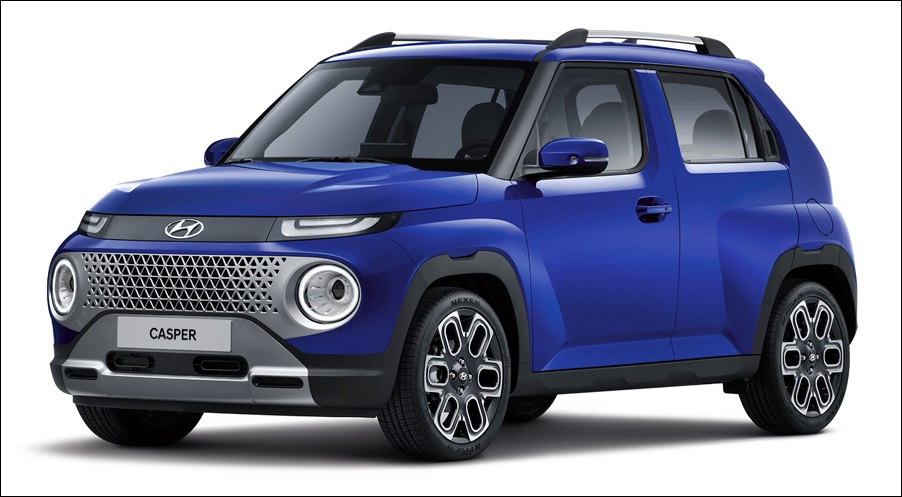
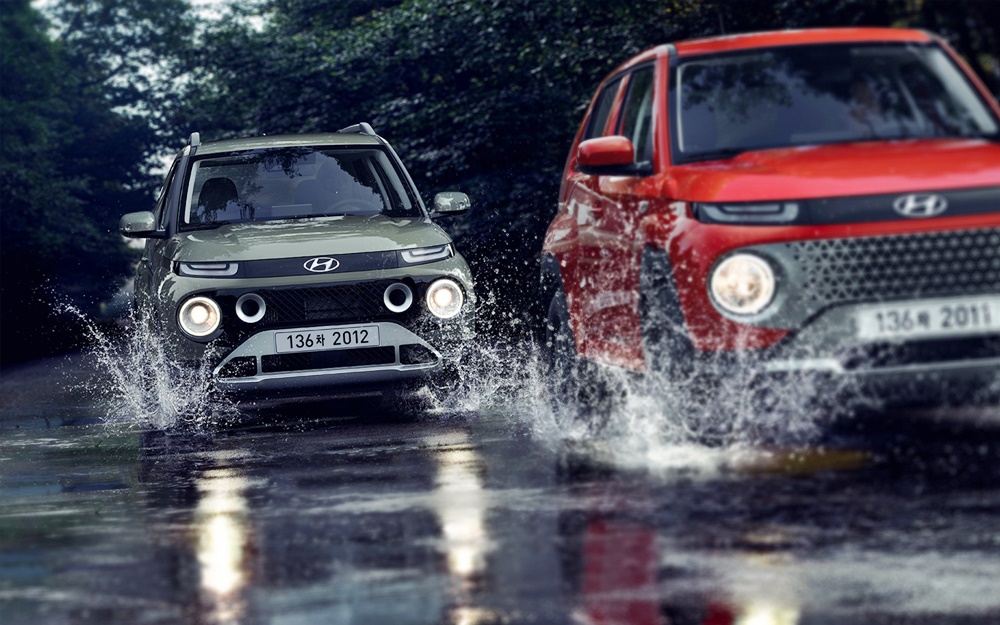
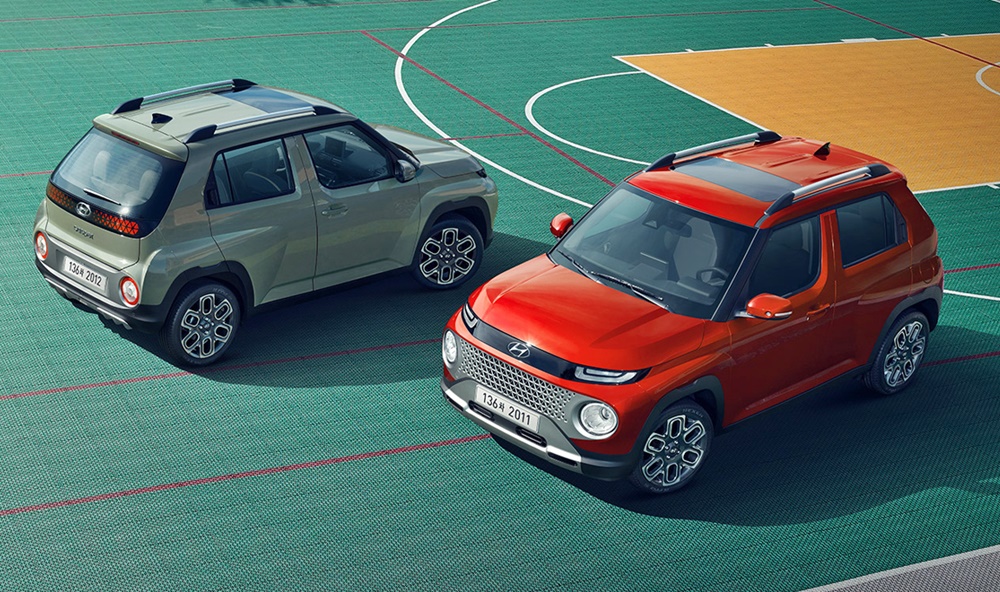
Casper, the friendly ghost in an animated cartoon series, is the name that Hyundai will use for a new ultra compact SUV that it will introduce during the fourth quarter of this year, starting with the Korean market.
Smallest Hyundai SUV model
The new model will be the carmaker’s smallest SUV, measuring 3595 mm long, 1595 mm wide and 1575 mm tall, with a 2400 mm wheelbase. That makes it even shorter than the old Perodua Kembara and about as large as the old Hyundai i10. The wheelbase is fairly generous though, which should provide maximum interior space.
Creating a new class?
Hyundai describes the Casper as being in ‘an all-new car class that never existed before’ and it will probably be presented as a vehicle for the urban jungle. Details are limited for now but it is expected to have a 1-litre 3-cylinder petrol engine and the ones Hyundai currently offers produce either 66 bhp with natural aspiration or up to 98 bhp with turbocharging. Under consideration is an electric version which could come later on.
While the Casper would be a nice little city car for Europe, it might also be offered as a trendy crossover for emerging markets as it will probably have an affordable pricetag with minimal high-tech. Hopefully, Hyundai Sime Darby Motors will be able to get their principal to consider it for the Malaysian market.
In its domestic market, Hyundai is taking bookings for the model this month and ‘early bird’ customers can get priority delivery, Starbucks gift cards as well as car-sharing test-drives for 8 hours.
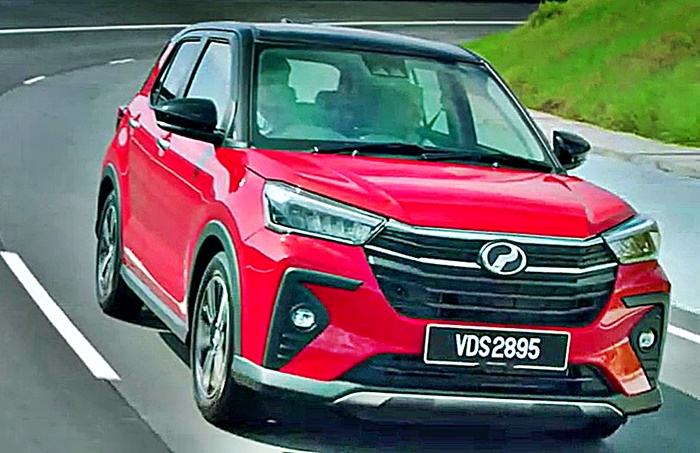
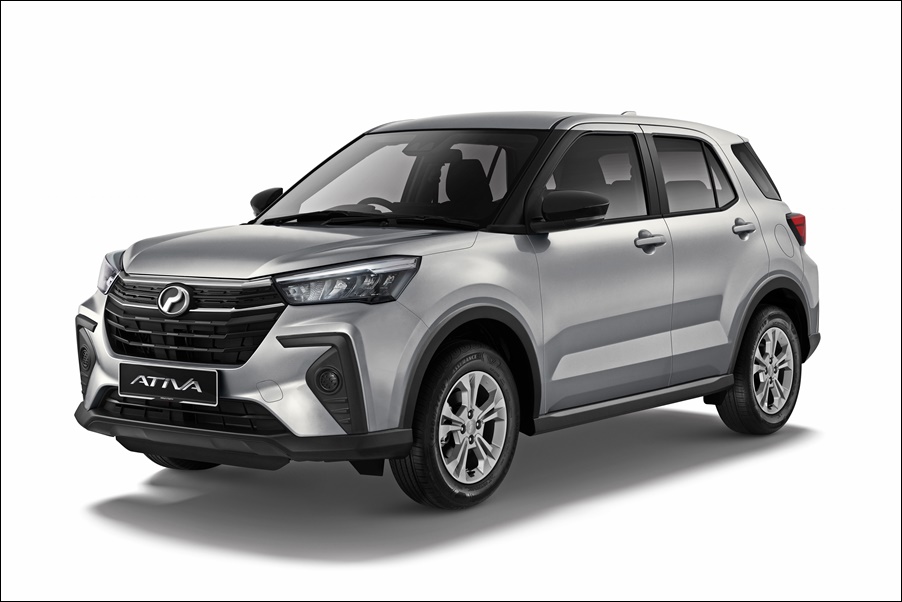
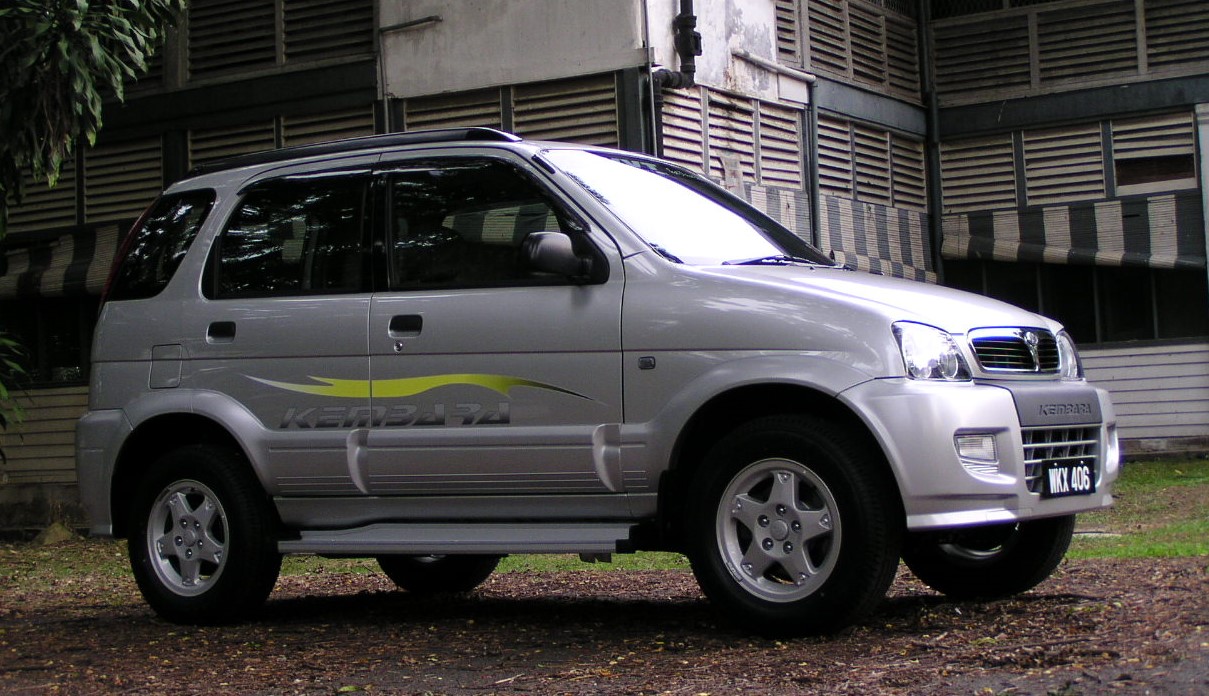
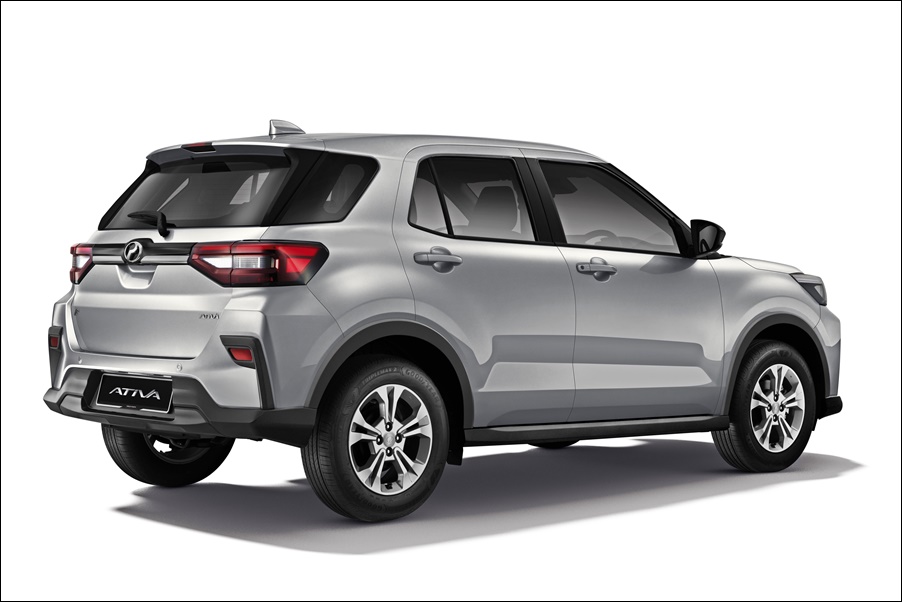
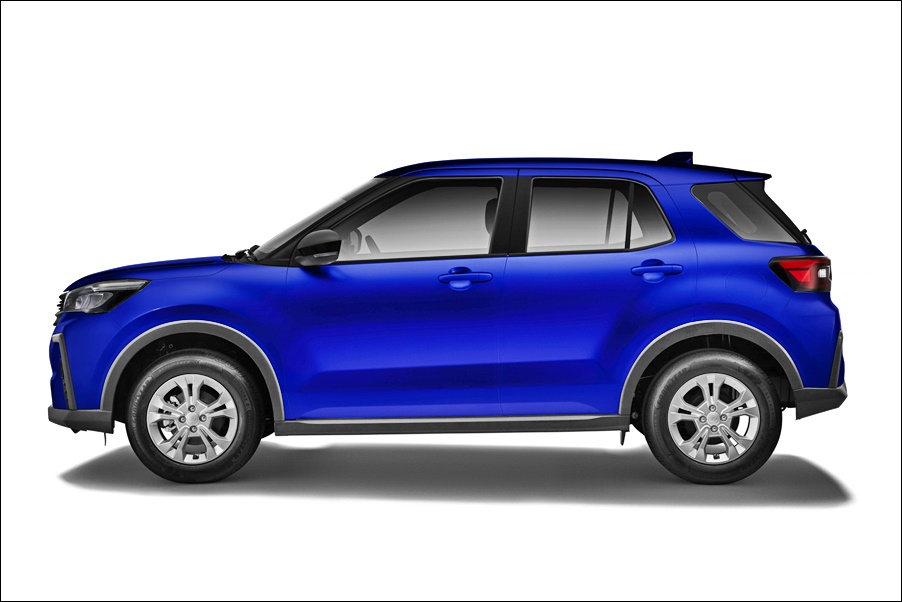
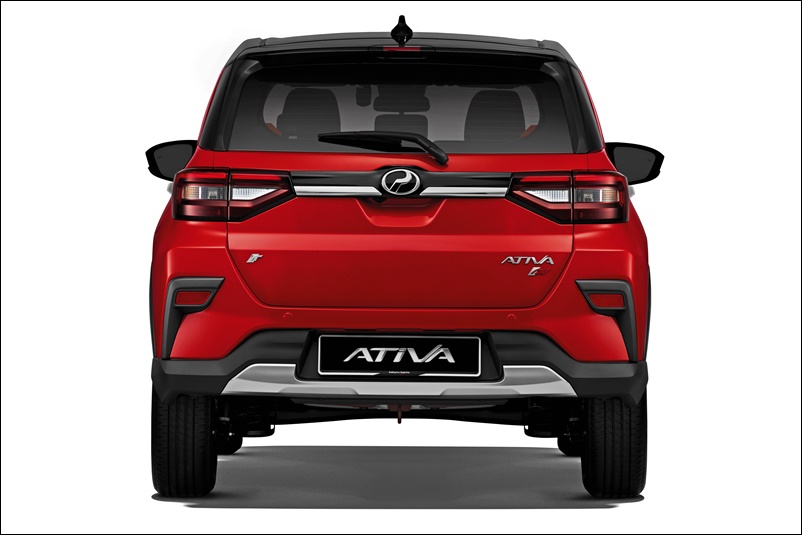
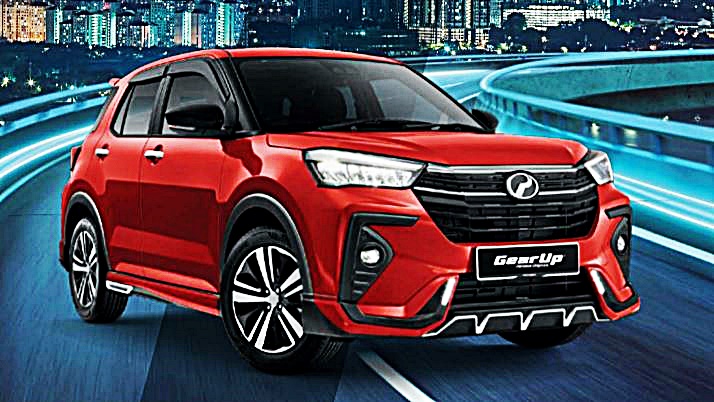
Perodua tonight launched the all-new Ativa compact SUV which can be regarded as the spiritual successor of the Kembara, its first SUV sold from the late 1990s till the mid-2000s. While the Ativa (taken from the Portuguese word for ‘active’) is adapted from a Daihatsu model, as the Kembara was, the involvement of Perodua in the development of this new model was far greater. In fact, a team of 54 Malaysian engineers went to Japan in 2018 to be part of the development team for the new model being developed by Daihatsu which would also be shared with Toyota.
The Kembara – Perodua’s first SUV which was sold between 1998 and 2006.
This is significant because it meant that the requirements of Malaysian customers would also be considered in the overall design, whereas for the Kembara before, the model was already completed and then Perodua only adapted it cosmetically. The Ativa is the result of the first truly smart partnership between Perodua and its technical and technology partner and shareholder, Daihatsu.
Another difference is that the Ativa has a higher level of localisation than the Kembara, which has helped bring costs down. In fact, at 95%, it has the highest local content rate for any Perodua model right at the time of launch.
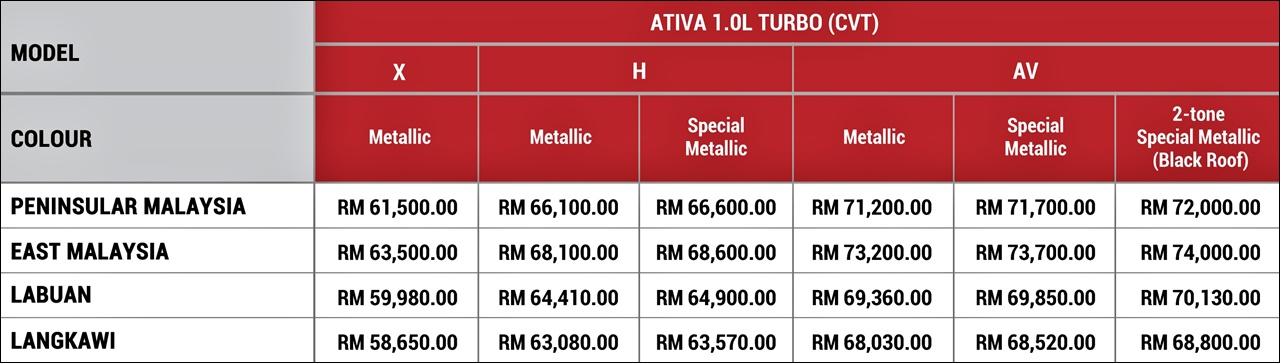
Prices shown exclude insurance and 10% sales tax (until June 30, 2021).
“The Perodua Ativa’s competitive pricing was made possible by its 95% localisation rate. Even the engine and transmission are locally manufactured,” Perodua President & CEO, Dato’ Zainal Abidin Ahmad said, adding that it is also the first model under the Perodua Smart Build blueprint.
According to Dato’ Zainal, the Ativa brings Perodua’s collaboration with Daihatsu to a new level and allows Perodua and its suppliers to commonise components and processes for maximum cost efficiency. “This close collaboration allowed us to include the Malaysian automotive ecosystem in the development of this model, and the suppliers rose to the challenge and were able to reduce their costs,” he added.
As a result, Perodua has been able to push the prices down a bit more and the actual retail prices are lower than the estimated range of RM62,500 to RM73,400 announced earlier. The three variants will be priced between RM61,500 to RM72,000 (excluding insurance premiums in Peninsular Malaysia, with full exemption of sales tax until June 30, 2021).
“We have so far received some 5,000 bookings for the Perodua Ativa since we began collecting orders on February 19. We thank the public very much for their support. Deliveries will begin tomorrow (March 4), and we aim to deliver an average of 3,000 units a month,” said Dato’ Zainal.
HIGHLIGHTS OF THE NEW PERODUA ATIVA
First turbocharged model
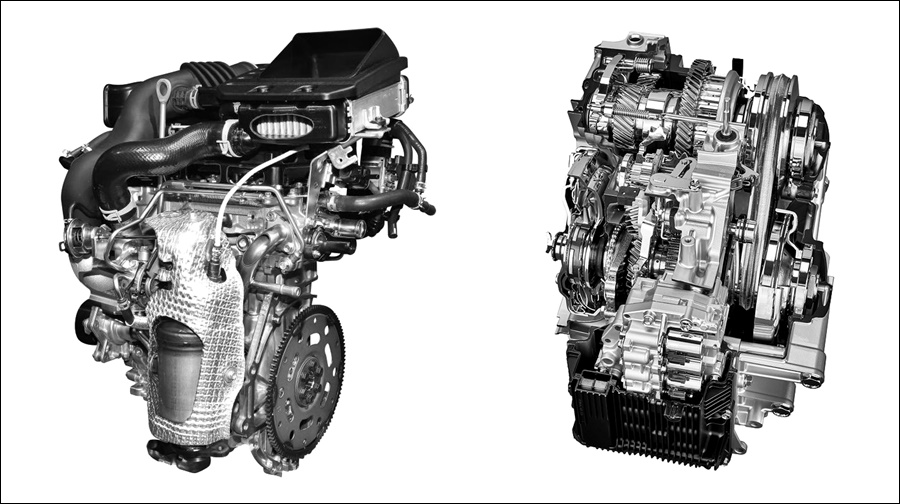
The Ativa’s powertrain has a number of firsts for the brand. One is the 1-litre 3-cylinder engine (1KR-VE) has turbocharging and direct fuel injection, delivering a maximum output of 98 ps/140 Nm, with strong torque coming in at the lower range. Considering that the kerb weight is 1,035 kgs, thanks to weight-saving measures, the performance should be zippy even with a full load.
The Ativa is also the first model to use a Continuously Variable Transmission (D-CVT) which has 7 ‘virtual speeds’ (manual transmission is not available). With the efficient engine and CVT, the claimed fuel consumption is 18.9 kms/litre, which qualifies the model as an Energy Efficient Vehicle (EEV) in Malaysia.
The Ativa’s 1-litre turbocharged engine and 7-speed D-CVT (right).
DNGA Platform
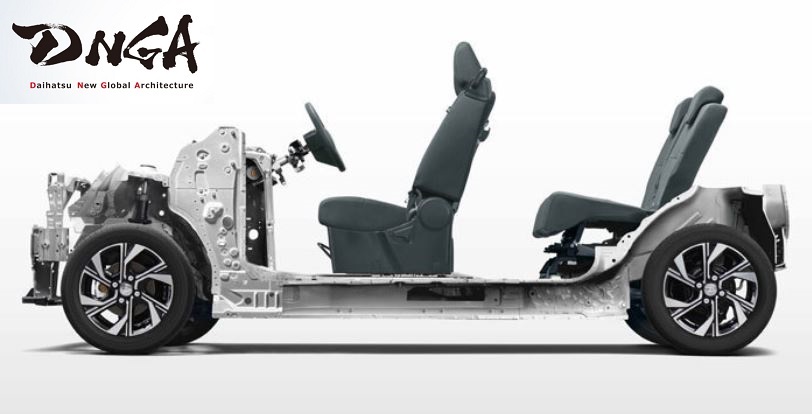
The Ativa shares the same platform used for the Daihatsu Rocky and Toyota Raize, the models from the same joint development program that Perodua participated in. This platform is referred to as DNGA or Daihatsu New Global Architecture (DNGA) that encompasses not just the platform but also many other structural aspects of the vehicle. It is a highly rigid platform for enhanced handling, stability and comfort. With DNGA, the structure is optimized and high tensile steel is used in many areas to save weight without losing strength.
Dimensions of the Ativa
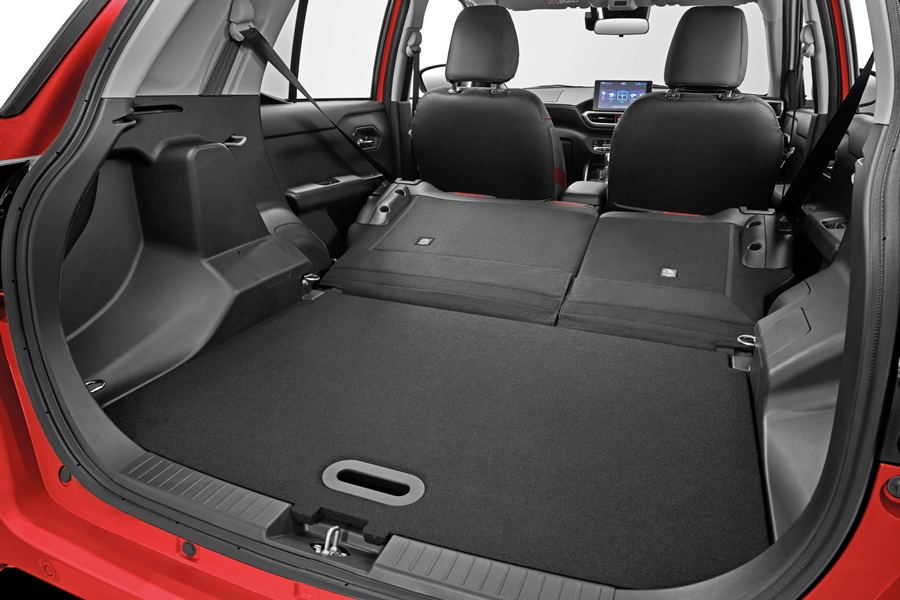
The Ativa has compact dimensions that position it below the Aruz. Its overall length is 4065 mm while the overall width is 1710 mm and it stands 1635 mm tall. The wheelbase is 2525 mm and unlike the Aruz, there are only two rows of seats in the cabin. There are two storage modes for the cargo area which give 303 or 369 litres of space and as with most SUVs, the rear backrests can be folded down individually to expand the floor length for longer items.
Advanced safety features
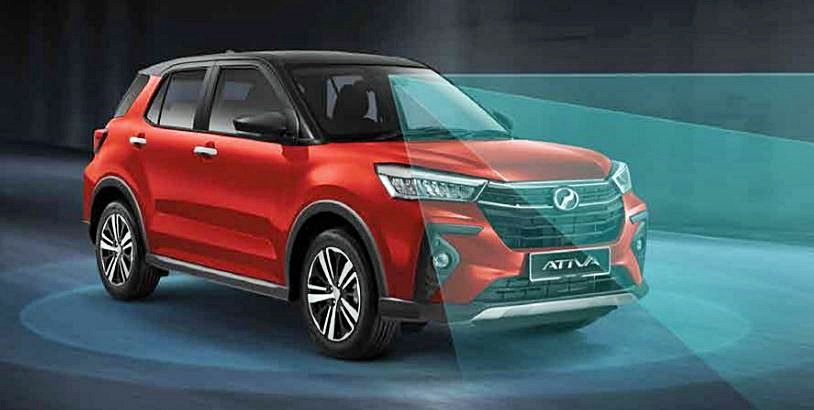
Since the 3rd generation of the Myvi, Perodua has been introducing progressively more advanced safety systems in its models. Many of these are integrated as the Advanced Safety Assist (ASA) system which helps the driver avoid accidents. For the Ativa, the system has reached the third generation which works at higher speeds (up to 120 km/h for vehicles, up to 60 km/h for pedestrians), and can now detect 2-wheeled vehicles as well as function at night.
ASA 3.0 consists of Pre-Collision Warning and Automatic Braking, Front Departure Alert, and Pedal Misoperation Control. ASA uses a camera at the top of the windscreen to monitor the road ahead and assess conditions. In the event of a collision, the driver will first be warned and if no action is taken to reduced speed or brake, the brakes will activate automatically. This would certainly avoid an expensive repair job or even if the collision cannot be avoided (due to the road surface conditions), the pro-active braking would have reduced the speed and effects of the impact.
Front Departure Alert will remind the driver that the car in front has moved off, while the Pedal Misoperation Control can prevent the car from accidentally being driven into a wall due to pressing on the accelerator pedal inadvertently (it does happen). Additionally, complementing ASA are Lane Departure Warning and Prevention.
The top AV variant gets additional systems which give semi-autonomous (Level 2) capabilities to the Ativa while driving. These are Adaptive Cruise Control, Lane Keep Control and Blind Spot Warning. You would have heard of these systems which are found in cars costing more than the Ativa, and it’s impressive that Perodua can offer them as well – even if in the most expensive variant only.
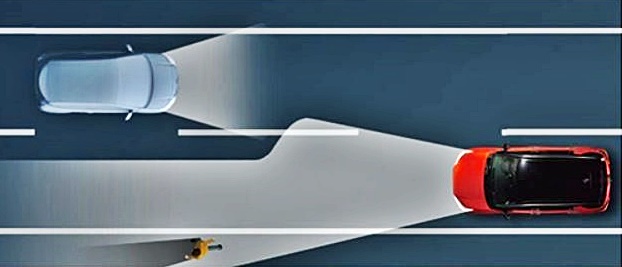
The Adaptive High Beam (red car) can adjust the areas of illumination to avoid blinding oncoming drivers while still maximising coverage.
Even more amazing is the standard provision of an Adaptive Driving Beam (ADB) system for the upper two variants. ADB allows better illumination of the road ahead but can also selectively dim certain areas where there are oncoming cars so as not to dazzle the drivers. It’s intelligent technology and even cars a few price classes higher do not have such technology.
For the lowest-priced variant, there is still the convenience of an Auto High Beam which means that the driver does not have to keep switching between high and low beams. Whenever the headlights of a vehicle are detected, the high beams will automatically be switched to low beams, reverting when there is no longer a vehicle approaching. Imagine if all companies in Malaysia were like Perodua and provided this as standard, night driving would be less tiring without the glare of strong headlights.
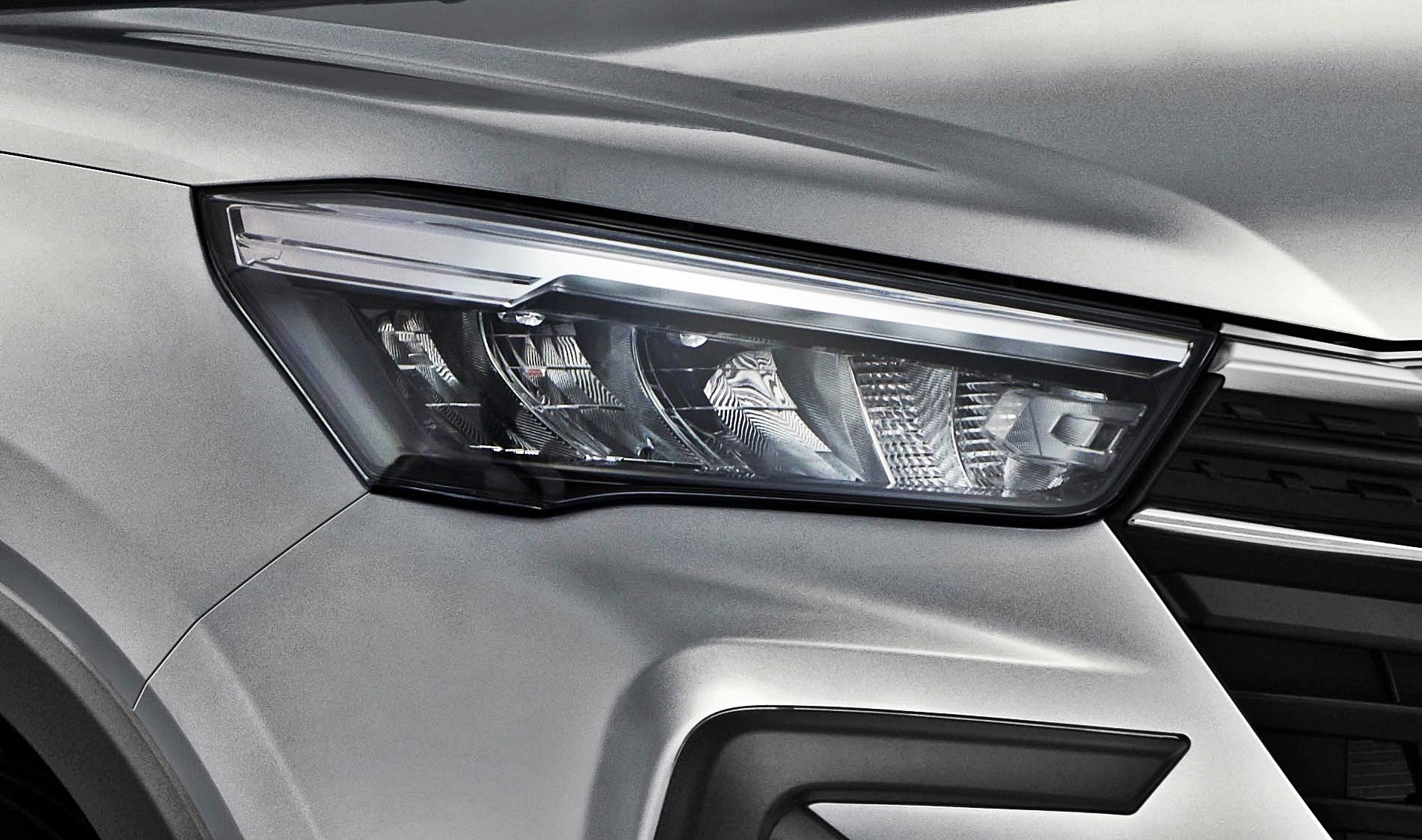
Incidentally, all variants have LED headlights which usually have a longer service life. They are also equipped with a follow-me-home function that keeps them on for a while after the car is locked. This provides illumination of the ground ahead for peace of mind.
The top two variants also get a reverse camera but the Ativa AV gets Rear Cross Traffic Alert (RCTA) as well. Again, this is a feature that has yet to be found in models of this price class. RCTA uses the rear sensors to monitor the situation on either side as the vehicle is reversing out of a parking bay. The driver might not be able to see due to adjacent cars blocking the view, but if the sensors pick up approaching vehicles, an alert will be sounded so that an accident can be avoided.
Besides the A.S.A. and active safety systems, the Ativa also comes with a very comprehensive list of other safety items – standard for all variants. These include 6 airbags (4 at the sides), Vehicle Stability Control, ABS, Electronic Brakeforce Distribution, Brake Assist and Hillhold Assist. ISOFIX points are, of course, provided since parents must now have put small children in childseats. ISOFIX-compatible childseats are convenient to install and stay securely in place.
Infotainment and connectivity
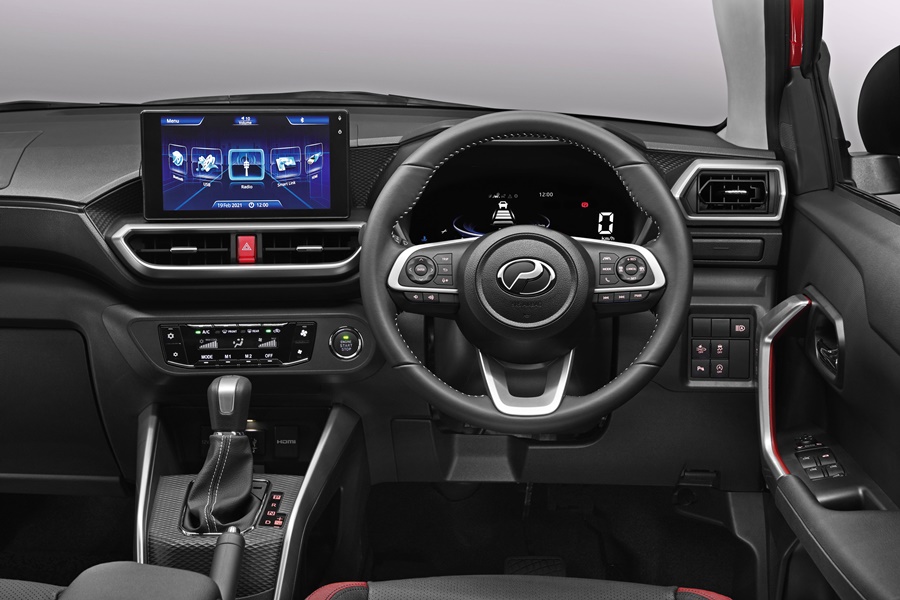
These days, every model has to have a capable infotainment system with good connectivity to provide the driver with more useful features as well as connect to smartphones. The top two variants come with a 9-inch LCD touchscreen with a bright and spacious display. There is also Smart Link (for Android devices) and Voice Recognition that allows active voice commands for certain functions.
Storage and convenience features
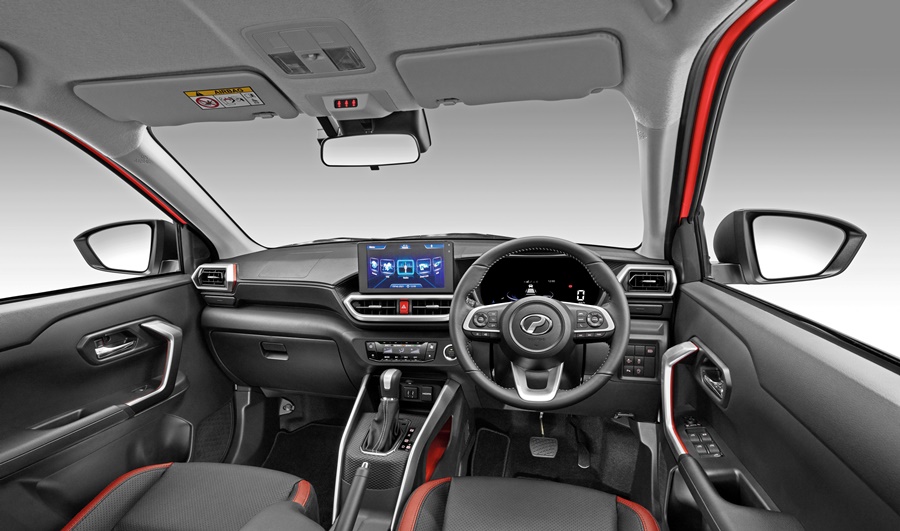
The interior designers have made sure that everyone in the cabin has spaces to keep their stuff and there are also USB ports that can provide power to recharge devices. Some clever ideas for storage spaces – a slot by the side of the gearlever housing, and slide-out cupholders in front of the vents on either side of the dashboard (good for keeping drinks cool!).
All variants have Smart Entry and Start/Stop System which does not require using a key or even pressing on the remote (but it has to be in the pocket or handbag). The doors can be unlocked by touching an electrostatic button on the door handle, and the engine can be started or stopped with the press of a button.
Instrumentation
While the Ativa X comes with a conventional instrument panel, the Ativa H and AV have a customisable display to change how the information is presented to the driver. The speed is always shown as a digital display while the fuel level is a bar graph. However, the tachometer can be configured in one of four graphic styles. Additionally, there is also a Reminder Display which will flash reminders on special days.
GearUp accessories
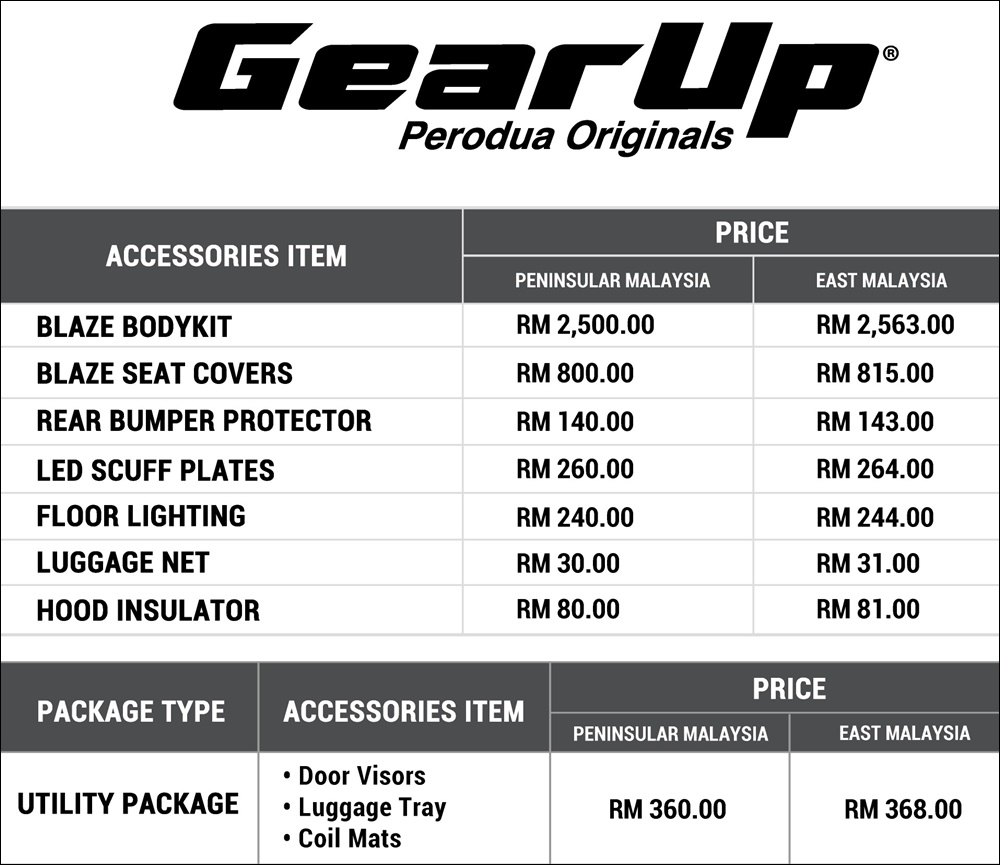
As with every Perodua model currently on sale, there is also a range of specially developed accessories to go with the adventurous looks. The items include a bodykit, front and rear seat upholstery, luggage tray, bumper protectors, luggage net, high quality coil mats and even an insulation kit for the bonnet. Prices range from RM80 to RM2,500 (in Peninsular Malaysia).
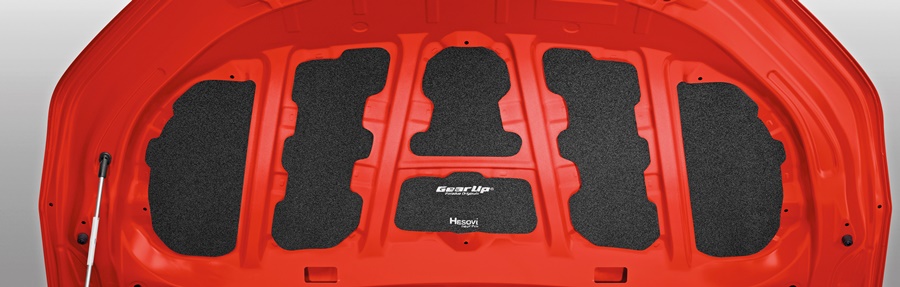
The GearUp accessories include a bonnet insulator kit which has pads that can be inserted in cavities in the bonnet panel. These pads can absorb engine noises to give a quieter ride.
There are also many other general accessories, all of which have been evaluated by Perodua so you can be sure they are of high quality, Furthermore, for the GearUp accessories that have to be installed, these are by Perodua’s own installers so the job will be professionally done. And the cost of all the extras can be included in the total loan for the vehicle if you specify them at the time of the purchase. That means the extra cost is also repaid over a number of years… something which no accessory shop would be give you.
To locate a showroom to view, test-drive or buy the new Perodua Ativa, visit www.perodua.com.my.
The Indian auto industry produces about 3.5 million to 4 million passenger vehicles (4-wheelers) a year, of which around 20% is exported. The number looks set to increase to 40% with the ‘Make in India, make for the world’ agenda that is a key element in the country’s Automotive Mission Plan 2026.
As always, global automakers will look for regions where they can make their products at low cost and export from there. India has much potential with its mature industry and over the years, some automakers have steadily increased their use of the country as a production hub.
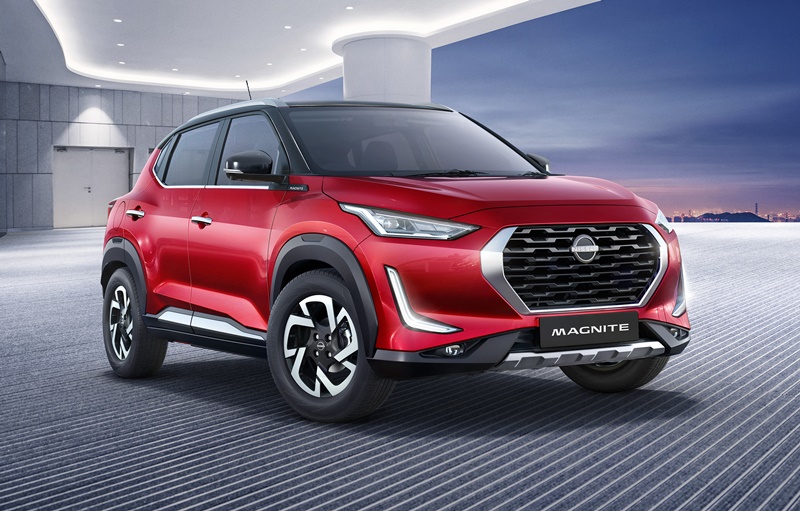
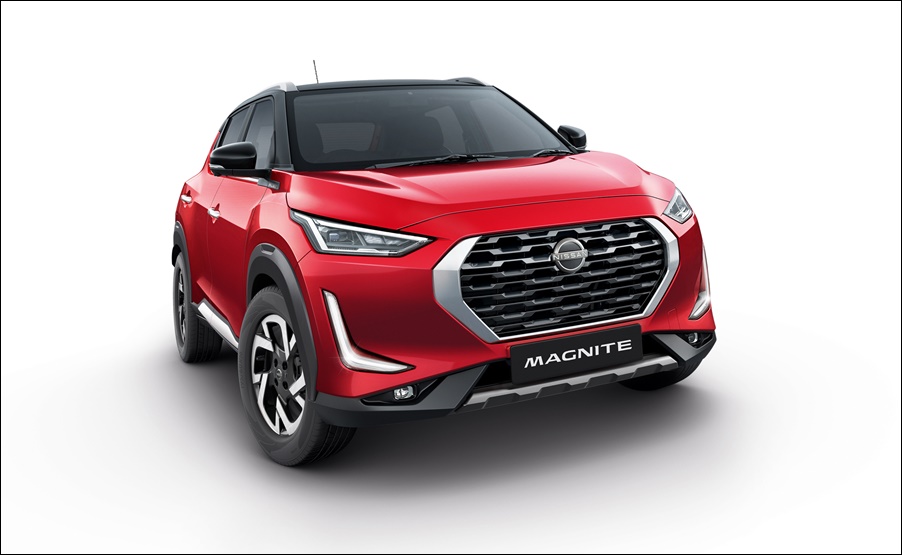
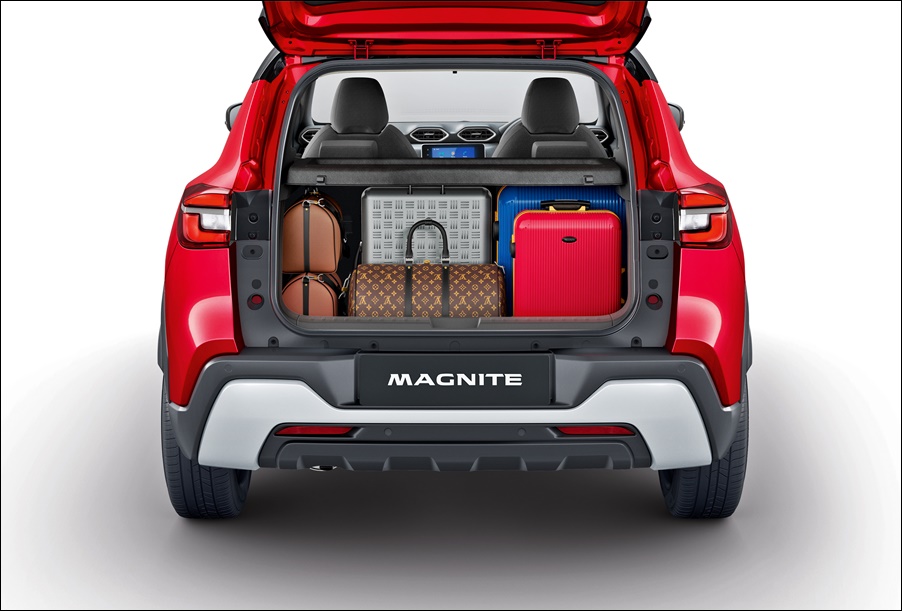
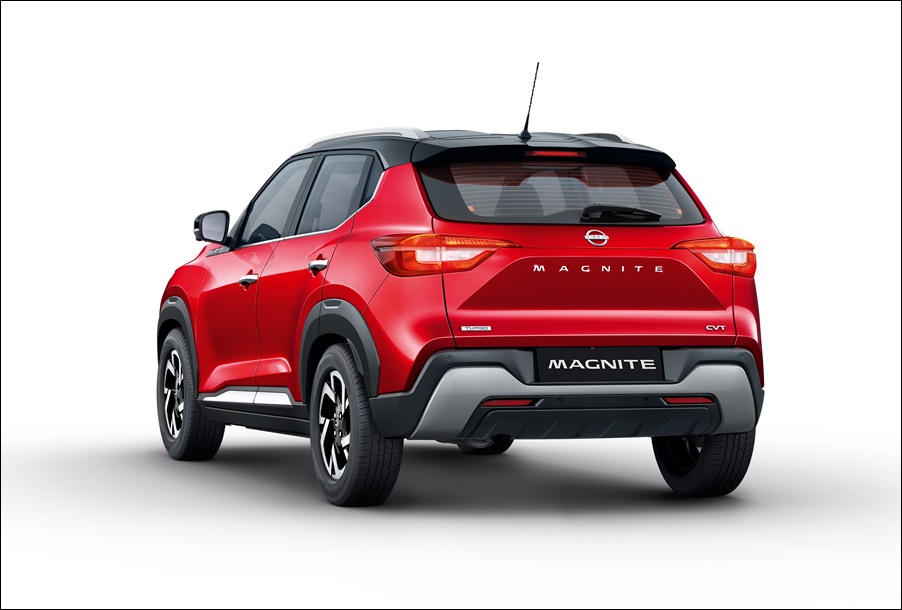
Nissan will also use India as a production hub for its all-new Nissan Magnite SUV, launched recently, that is aimed at the Indian, Middle East and African markets. Designed in Japan, the Magnite is Nissan’s first SUV in the sub-4-metre Indian market category and one of the 12 new models the automaker will introduce before the end of 2021.
Datsun styling elements
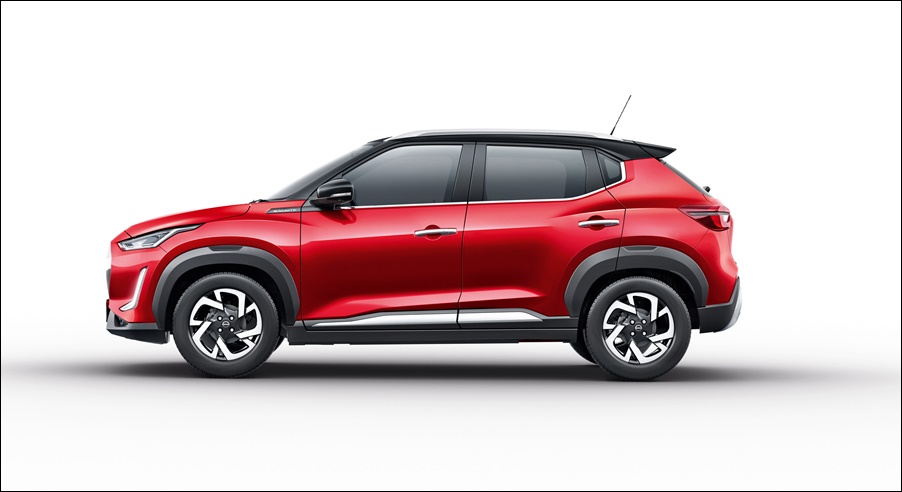
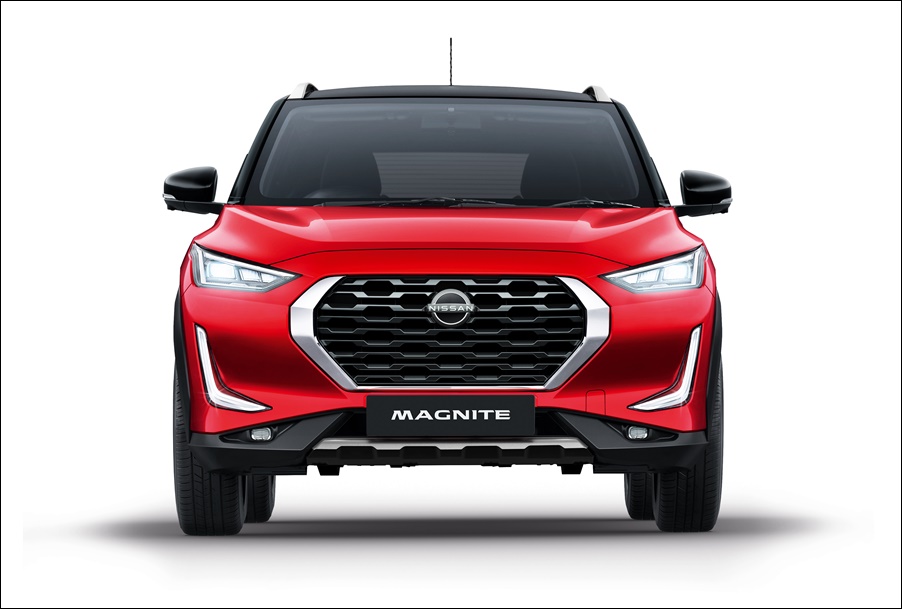
The Magnite’s exterior follows the same styling ideas as found in Nissan’s recent SUVs. The grille, however, does not follow the ‘V-motion’ front design signature on many of today’s Nissan products. It adopts the design that was used by the short-lived Datsun brand and the reason is probably because this model was originally developed for sales as a Datsun.
As Nissan decided to terminate the brand (again) last year, the time may have been too short to redesign the front end, so it has remained. This could make the facelift a rather radical change if there is a move to unify the Magnite with the rest of the Nissan family by changing to the V-motion grille. For now, the Magnite has the new brand logo.
The slim front lights are LEDs, with L-shaped daytime running lights that sit at the lower section of the headlamp housings. Skid plates under the front and rear provide protection to the underbody while 205 mm of ground clearance will enable to Magnite to traverse flooded roads and rough tracks.
Compact outside, spacious inside
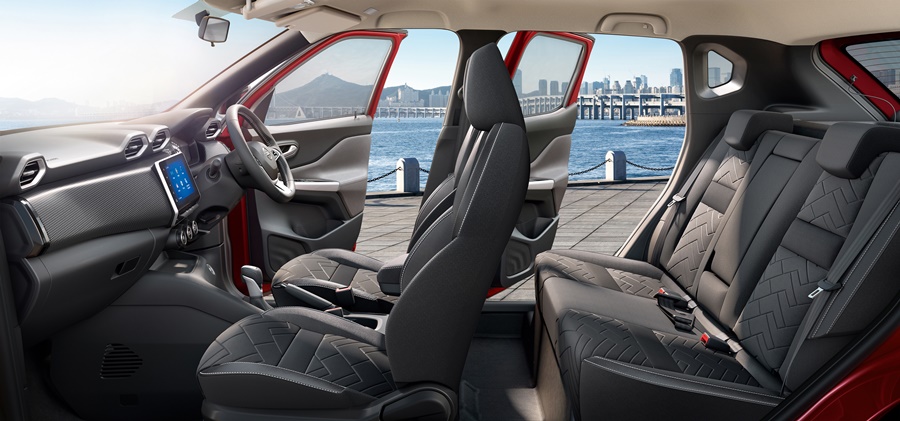
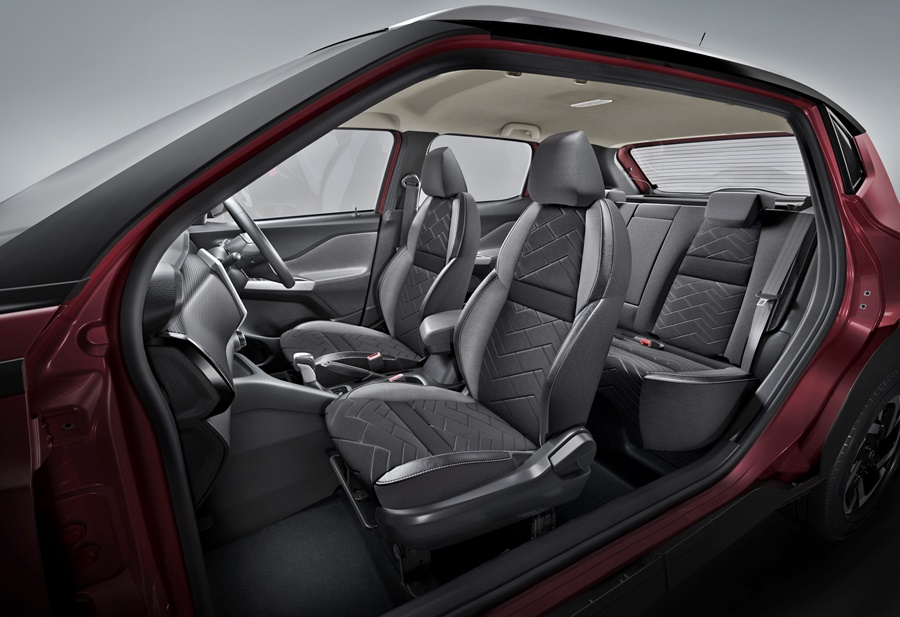
On the inside, the cabin appears pretty spacious in spite of the compact exterior dimensions. Typical of SUVs, there is a high seating position and maximum use has been made of the available width to provide as much shoulder space as possible between the occupants. Nissan says that rear passengers will enjoy a level of knee room usually found in vehicles one class above.
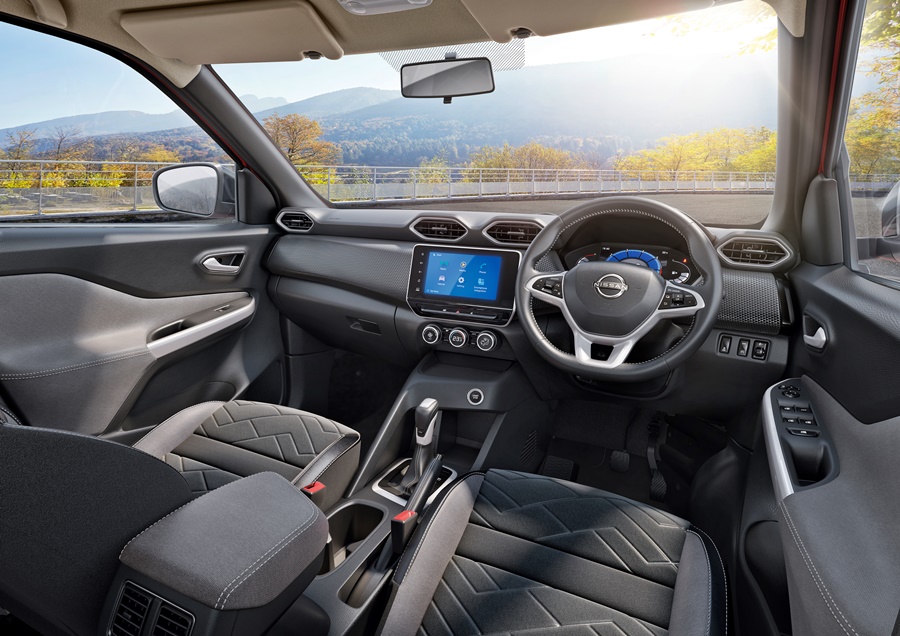
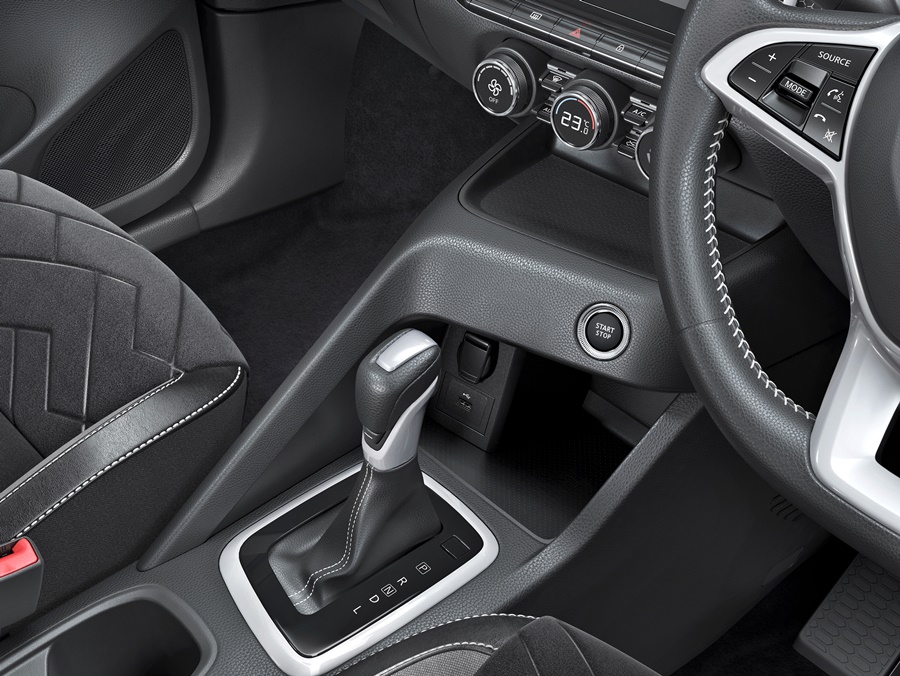
The dashboard design has some interesting new ideas, with a slightly ‘advanced’ look. The infotainment system has an 8-inch display and is equipped with Apple CarPlay and Android Auto. It is also the first-in-class with a 7-inch TFT (thin-film-transistor) display for the instrument screen to provide clearer and sharper images.
Nissan has also made sure that the driver gets assistance for motoring safety. The Magnite comes with safety features such as Hill Start Assist and a 360-degree monitor, along with stability control, ABS, EBD, etc. ISOFIX mounts are also provided for parents to install compatible childseats at the back.
1-litre turbo engine
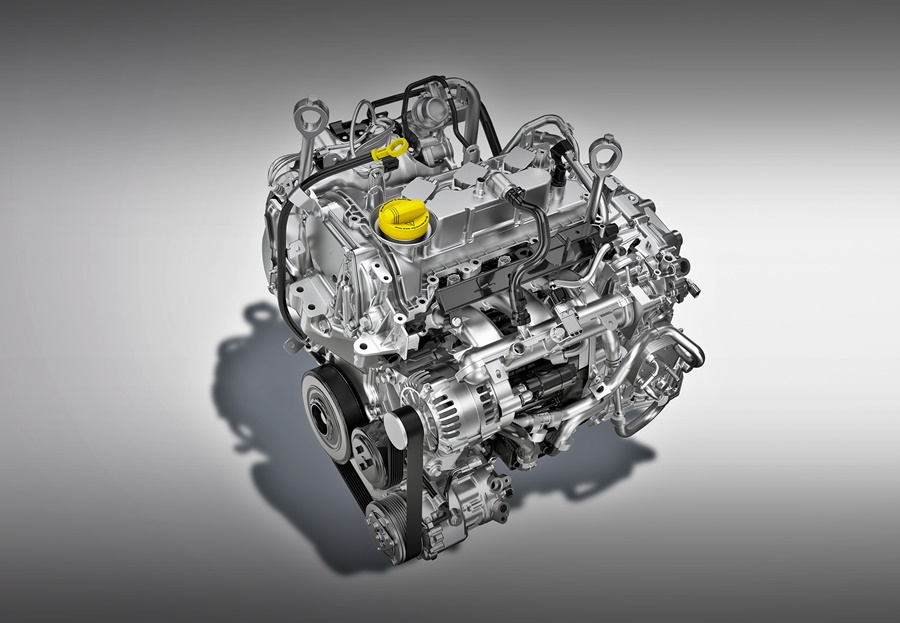
For the Indian market, Nissan is providing a 1.0-litre turbocharged engine in two outputs, paired with a manual gearbox or CVT. This is the HR10DET which is found in the latest Almera for the Malaysian market. Given the size of the Magnite, it should provide more than enough power for spirited performance.
The prices are not available yet as the model will only go on sale in early 2021. But it will have to be attractive in a segment that is already crowded with models like the Ford Ecosport, Toyota Urban Cruiser, Kia Sonet, Maruti Suzuki Brezza, Tata Nexon, Mahindra XUV and Hyundai Venue.
Whether it comes to Malaysia remains to be seen although pitching a compact model like this means going against the two Malaysian brands and that makes pricing very challenging. Edaran Tan Chong Motor would probably prefer to focus on pushing its new Almera Turbo as its entry-level offering. Anyway, whatever Malaysia gets usually follows the Thai market and if you don’t see the Magnite there, chances are we won’t get it either.
UPDATE (30/8/20): The price has been announced as starting from RM115,000.
With Malaysia being a righthand drive (RHD) market and this market segment having lower volumes than lefthand drive (LHD) markets globally, manufacturers tend to be reluctant to provide their full model range as the cost of developing and making RHD models may not be justified. This is the frustration that some companies, including Hyundai Sime-Darby Motors (HSDM), have faced over the years, more so in recent times.
You can book now
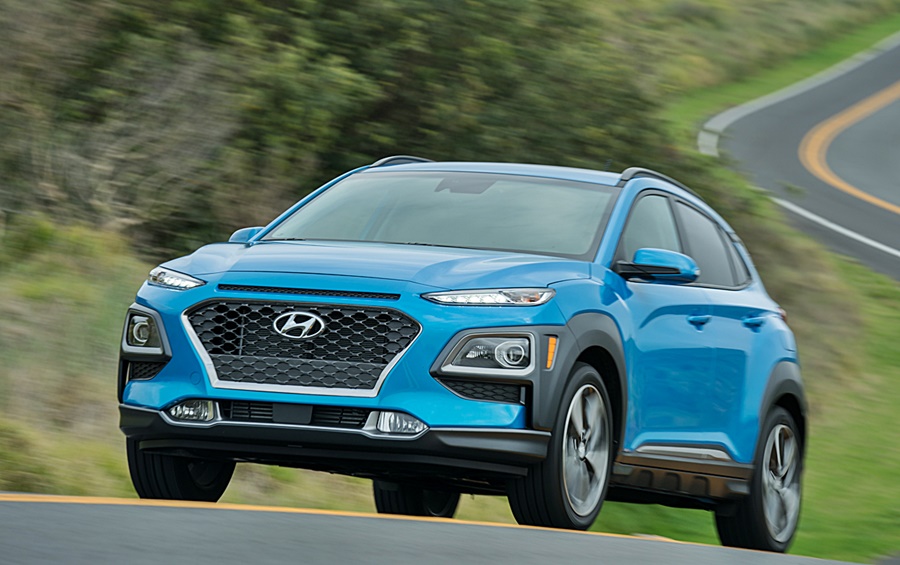
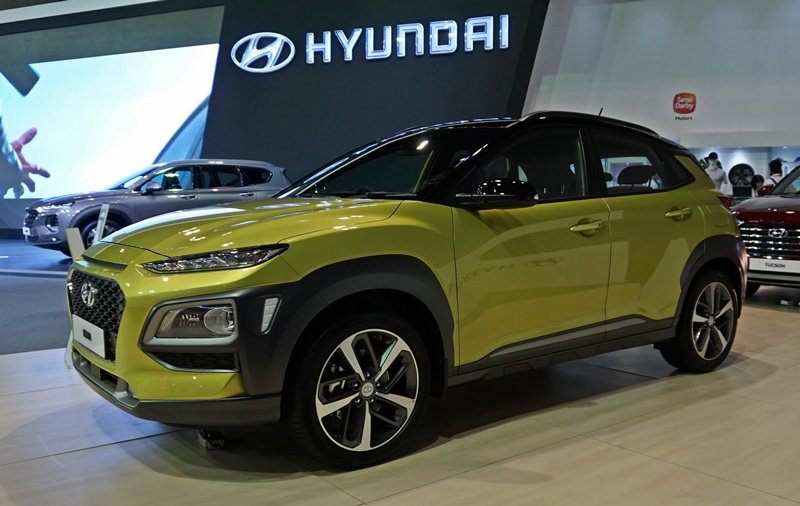
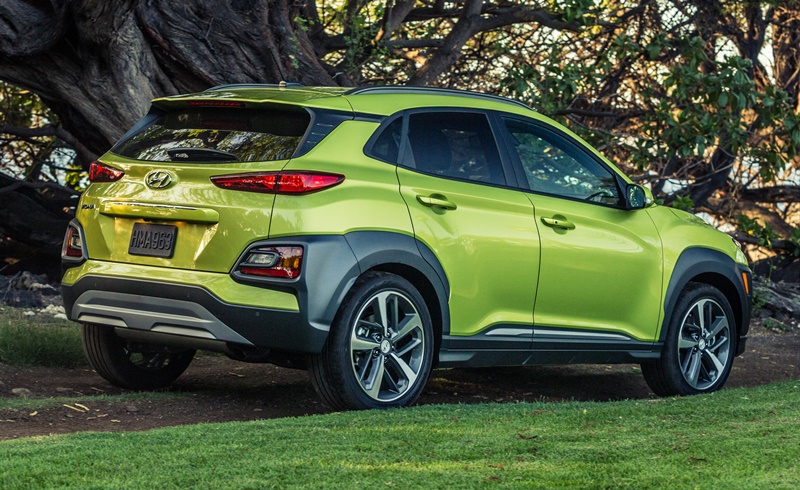
Nevertheless, HSDM will be getting the new Hyundai Kona, a compact SUV that has been making waves in other markets, with over 600,000 units sold worldwide since being launched in 2017. It will be available by the next quarter of this year and those who want to be early owners can place bookings at authorized Hyundai dealerships around the country.
A Kona was among the Hyundai displays at the last KL International Motor Show.
The Kona will be imported from Korea as a Completely Built-Up (CBU) model from Korea so it will incur higher duties and it will also be given a sales tax exemption of 5% until the end of 2020. Pricing is not revealed other than that it will be ‘RM11X, XXX’ (on the website) but the booking fee is RM288 and you get an invitation to the launch event if you book early.
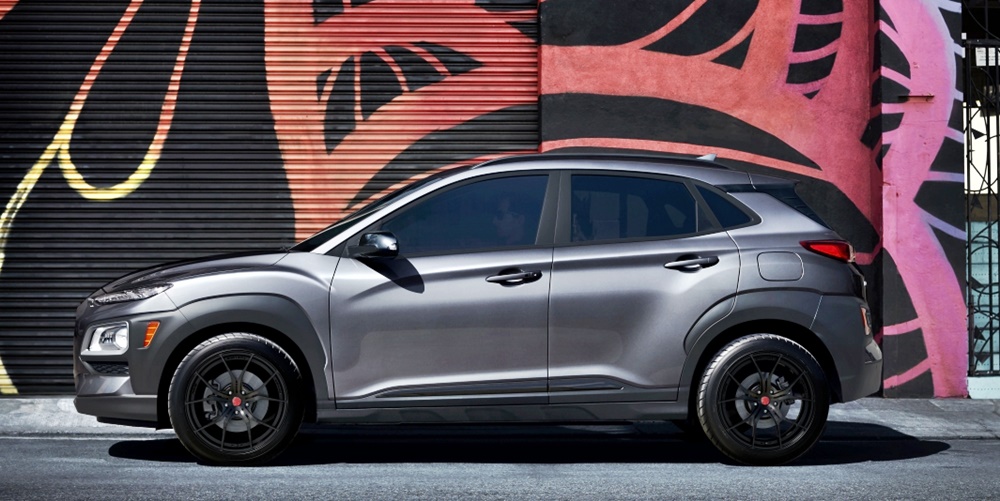
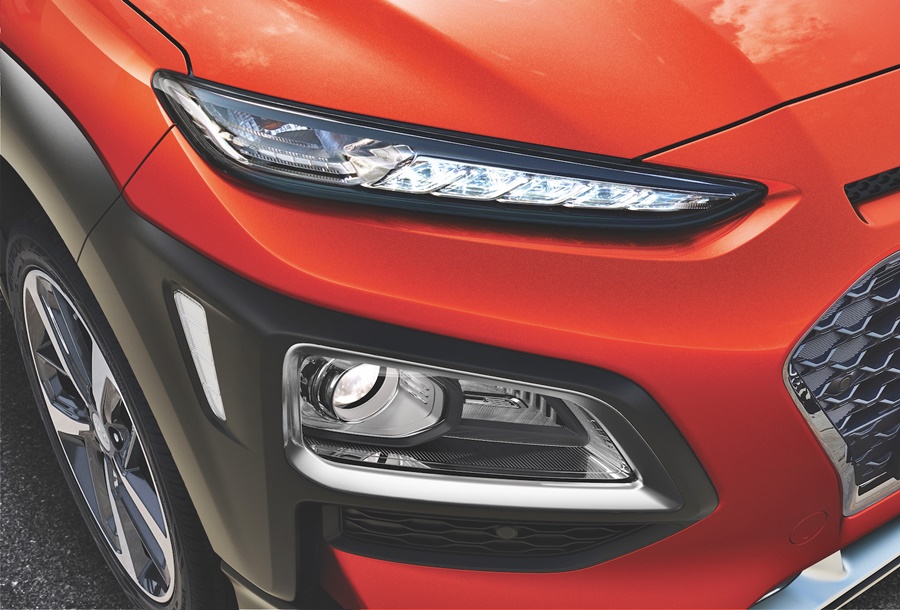
The Kona rides on an all-new platform and it is also HSDM’s first B-segment SUV. It incorporates the Korean carmaker’s new design language with an expressive and powerful front dominated by the cascading grille, a signature feature. Its ‘urban smart armour’ exterior styling feature a voluminous, aggressive body complemented by a low and wide stance which will look appropriate in urban as well as adventure-oriented environments.
1.6 or 2.0, or both?
The powertrain for the Malaysian model is not revealed yet although the 1-litre T-GDI engine is unlikely as companies (other than Perodua) face a challenge selling 1-litre cars to Malaysians. While there is a 2-litre unit, HSDM might not choose this as it will bump up the price so our best guess would be the 1.6-litre engine which is already used in other Hyundai models sold locally. However, the company is known to have different engines for different variants and might also do so for the Kona.
The Kona is available with either front-wheel drive or all-wheel drive but to keep the price attractive, HSDM is likely to opt for the FWD variant.
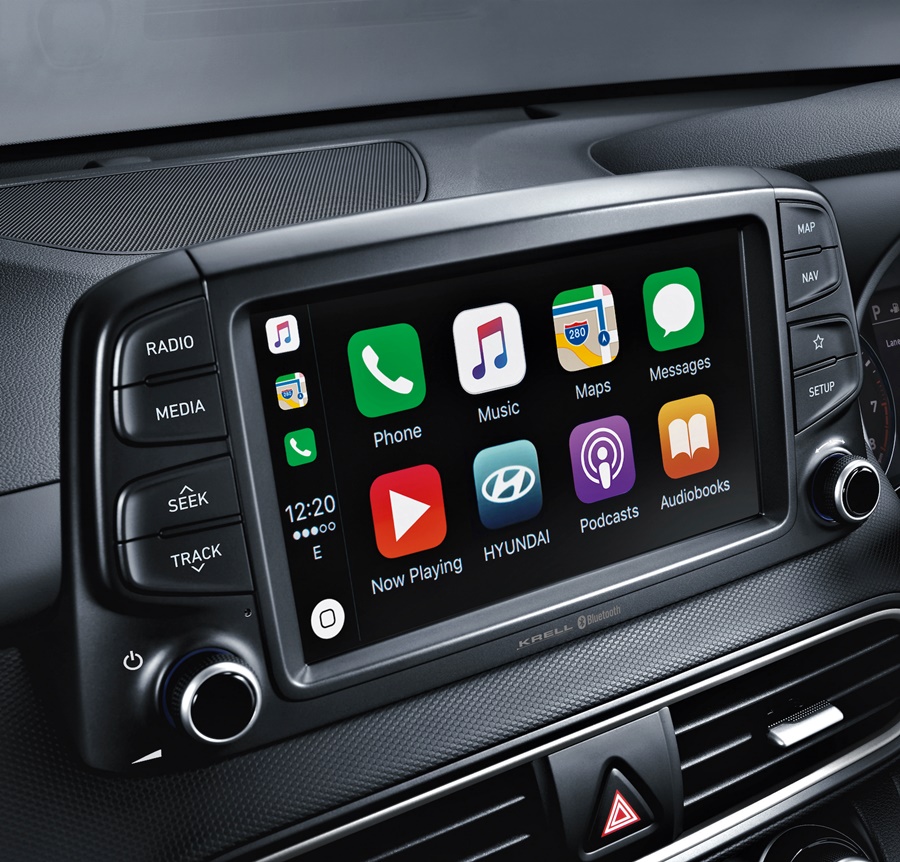
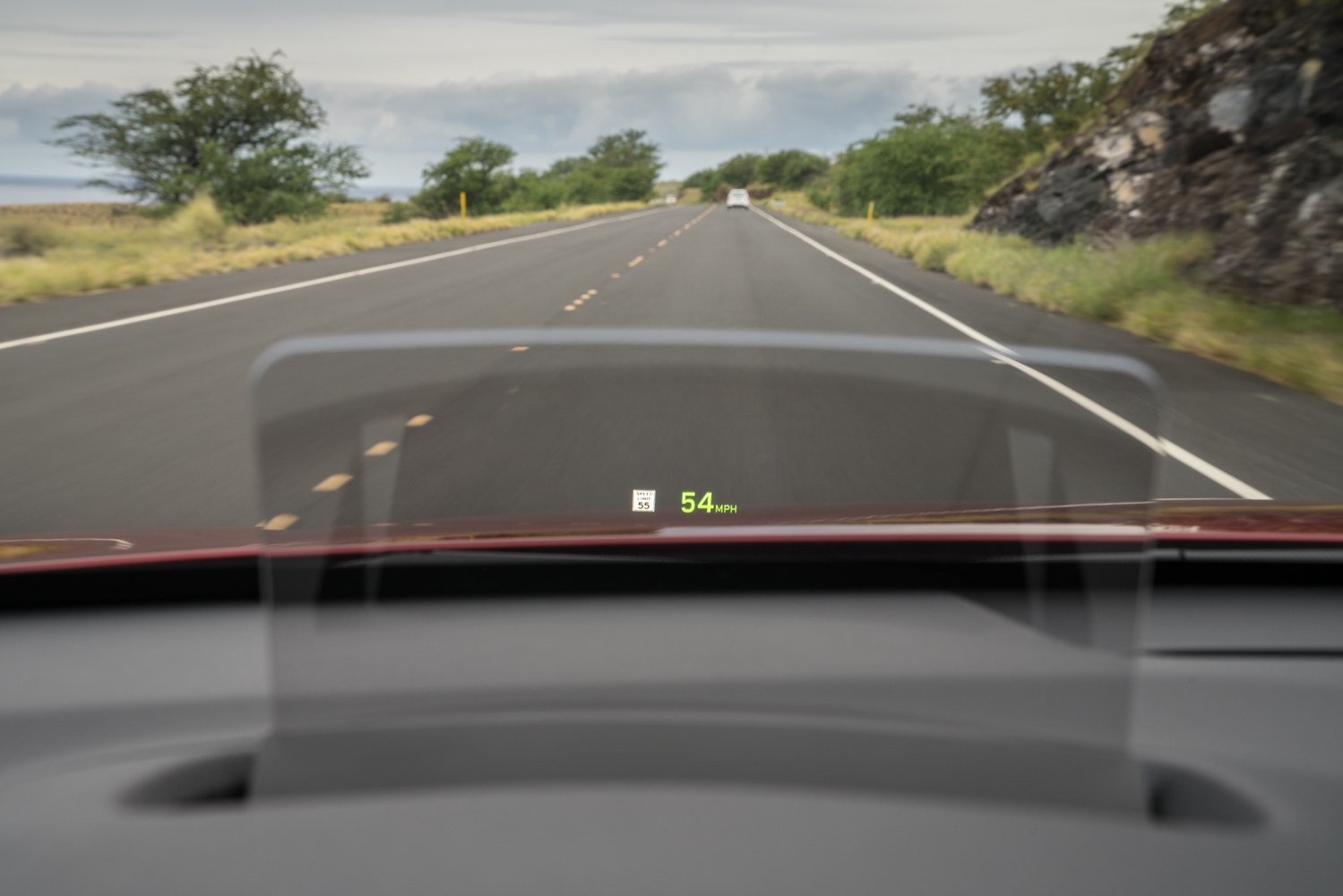
HSDM has, however, given an indication of the equipment list which looks pretty good. LED headlights and Daytime Running Lights will be standard and there will be a 7-inch infotainment touchscreen with Apple CarPlay/Android Auto capability. A wireless charging pad will be provided for compatible mobilephones and Hyundai’s Smart Sense driver assistance system will be complemented by a Head-up Display (using a lower-cost active pop-up display screen).
“We are excited about the launch of the Kona as it’s an entirely new product for us in this segment and we are reassured of a good response for the Kona. The Compact SUV is in great demand not only in Malaysia but globally as well,” said Low Yuan Lung, Managing Director of HSDM. “The SUV and Compact SUV market is growing exponentially so we see a great market potential for all our SUVs, which include the 7-seater Santa Fe, and 5-seater Tucson as well as this upcoming new model – Kona which is targeted at the younger generation.”
In the 54-year history of the Toyota Corolla, there have been different bodystyle variants which, in a way, reflected consumer tastes and requirements of the difference periods. The model started off with a 2-door and 4-door sedan and a stationwagon, the 4-door variant being the most popular by far.
Then there was the Liftback, which offered hatchback versatility in a sleeker shape and for the younger enthusiasts, a coupe and a hardtop were also offered, available with the powerful 2T-G twincam engines. In fact, one generation of the coupe – the fifth generation of the Corolla with the code AE86 and the domestic name of ‘Levin’ – would become legendary and much sought after even up till today. A MPV-like variant called the Corolla Spacio was also developed towards the end of the 1990s and it was manufactured by Toyota Auto Body.
Responding to the SUV boom
Today, most of the variants are no longer available as Toyota streamlined the model range to focus only on the high-volume sedan. However, with the continuing growth of the SUV market, it has decided that the Corolla should also have a bodystyle to cater to this booming segment.
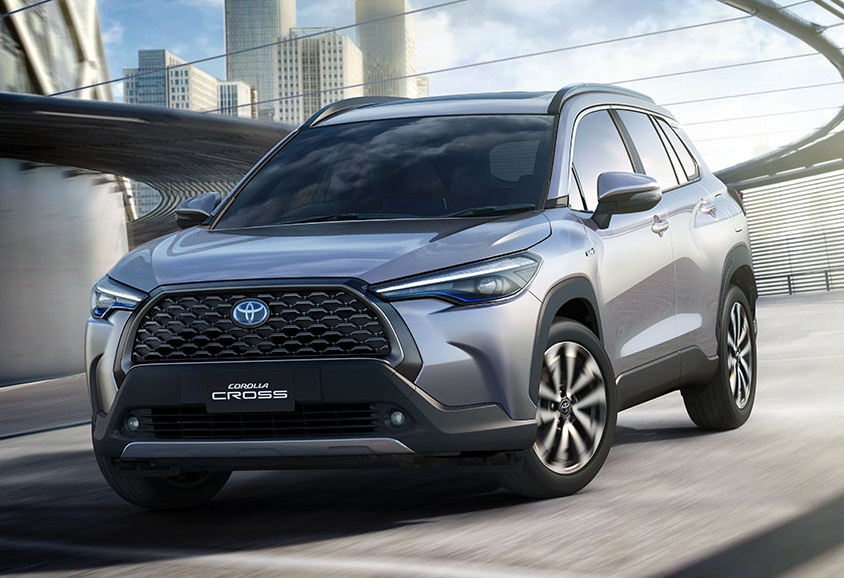
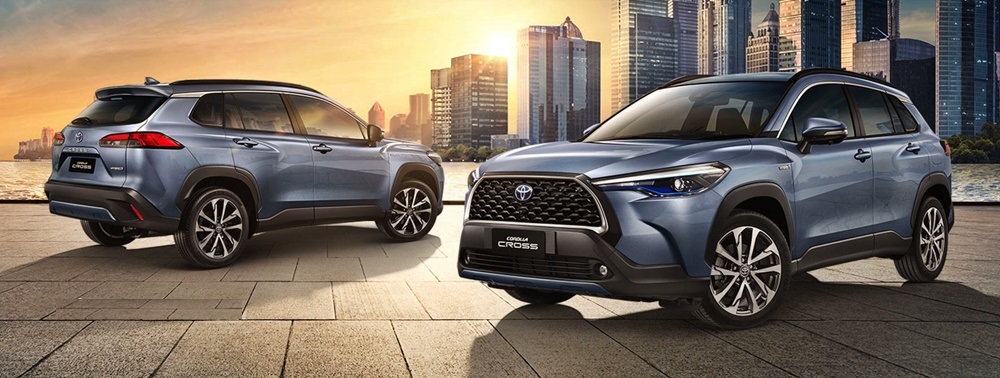
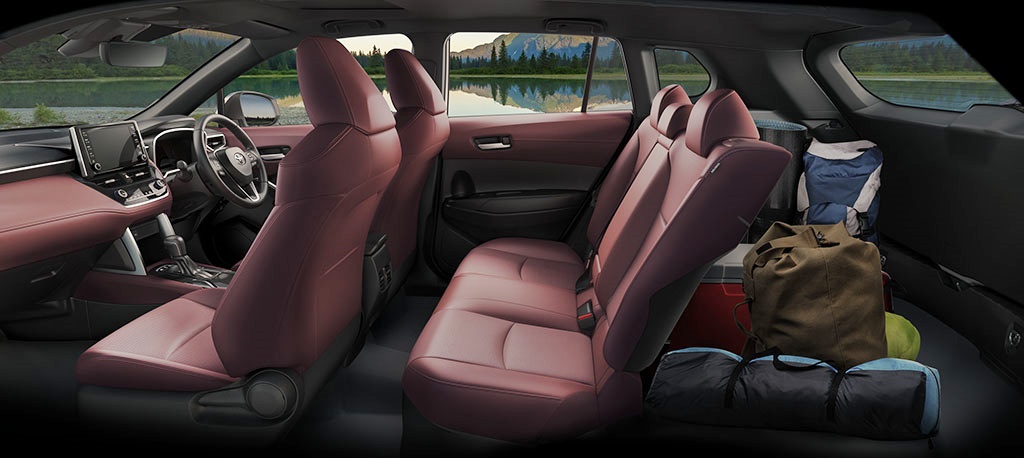
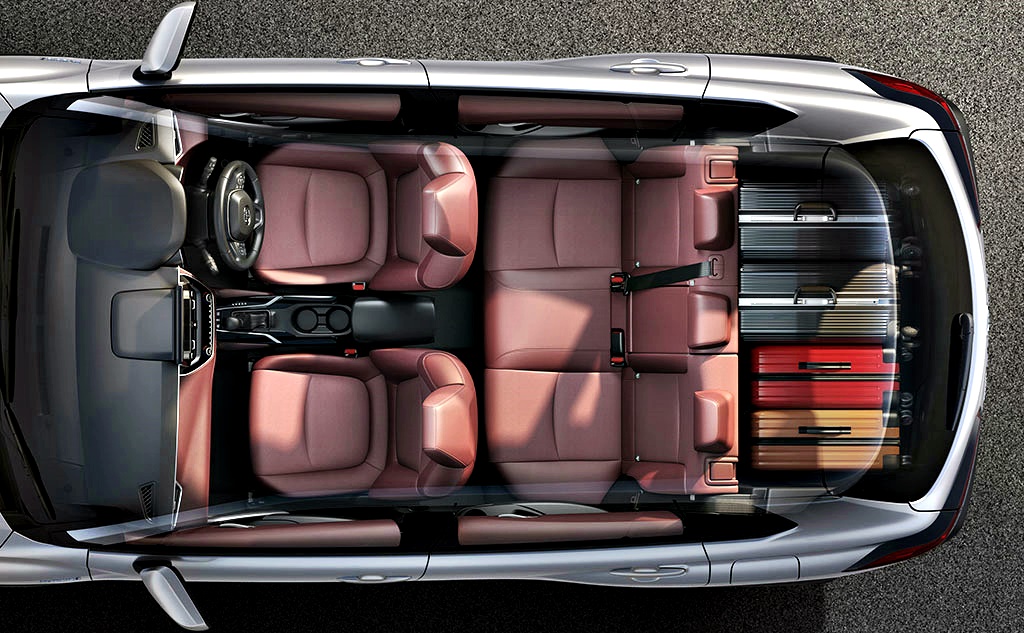
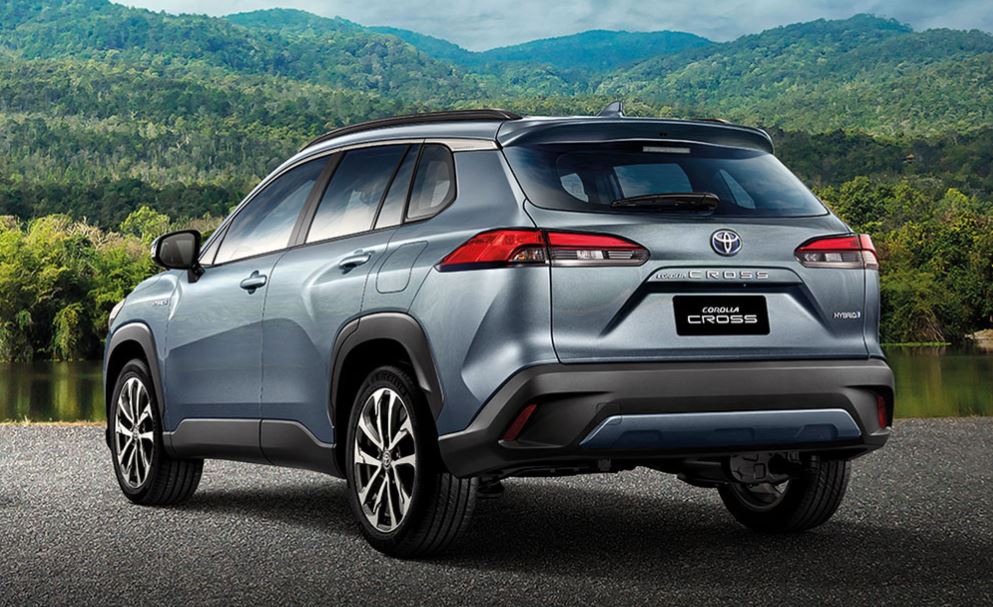
This is the new Corolla Cross which had its global debut today in Thailand where it is made. With ‘Corolla Meets SUV’ being the key phrase for the development of the Corolla Cross, the model was designed with a sturdy image combined with the utility typical of such vehicles.
TNGA platform with hybird powertrain available
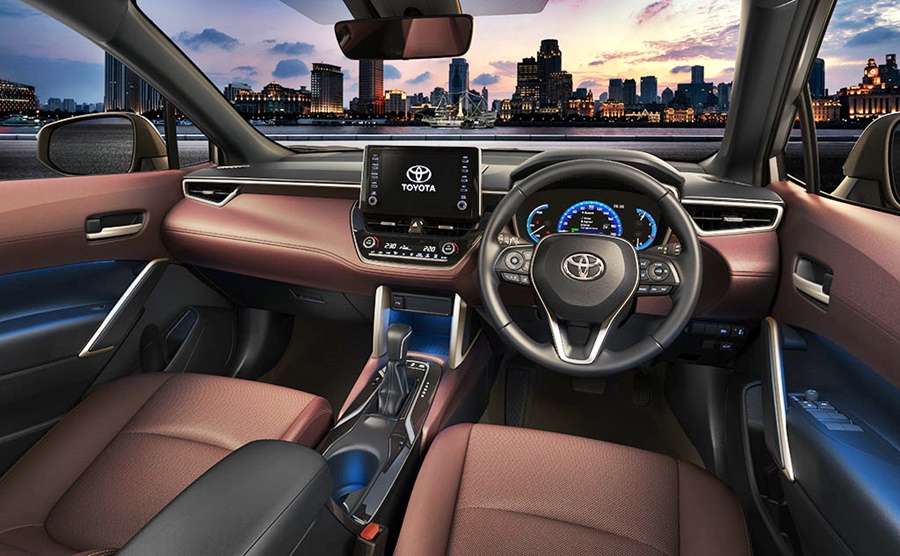
It sits on the TNGA platform (GA-C) that is used for recent and future models and has a rear torsion beam suspension. The spacious cabin includes luggage space of up to 587 litres which is claimed to be class-leading. Safety-wise, it is engineered and equipped at a similar level as the Corolla Sedan and should therefore be able to rate the maximum of 5 stars when ASEAN NCAP assesses it.
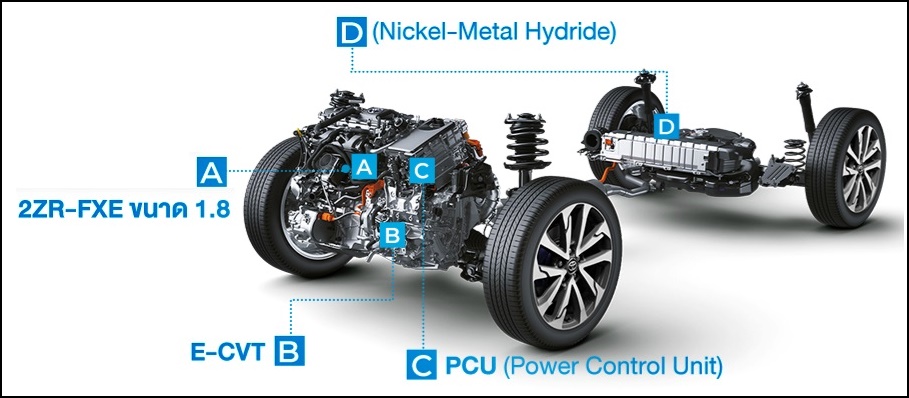
Depending on the market, customers will have a choice of either a hybrid powertrain or just a petrol engine, both using a 1.8-litre engine. The engine, when used in the hybrid powertrain, produces 98 ps/142 Nm, with the electric motor adding 72 ps/163 Nm, but the total system power output available is 122 ps. The petrol engine alone is rated at 140 ps/177 Nm.
Introducing the Corolla Cross, Daizo Kameyama, Chief Engineer in charge of development, said: “Now that the Corolla Cross has newly joined the Corolla family, we sincerely hope that our customers will warmly welcome the vehicle to become part of their families: just like their partners, siblings or even friends. We wish that the Corolla Cross could assist customers in creating a new story by loading on their vehicle the people who are important to them, the luggage, and their dreams for the future.”
Will we get it in Malaysia?
As the Corolla is imported in CBU (completely built-up) form from Thailand, there’s no reason why the Corolla Cross cannot also be imported. It would certainly give UMW Toyota Motor an extra model offering, which car-buyers like. It would most likely not be the hybrid since that would cost more and as the government is not providing any incentives to help lower the retail price, it would be better to just sell the petrol engine variant.
Long before the appearance of the small SUVs that are so popular today, Ford was selling a 4×4 vehicle that would have been called a compact SUV had the term been in use then. It was known as the Bronco and sold during the 1960s and 1970s as a rival to the Jeep. The model line went through a few generations until the mid-1990s when its engineering was dated compared to the new generation of SUVs coming into the market.
The Bronco name is still fondly remembered by many (in America) and Ford has said that it is working on bringing back the model in 2020. Although there were rumours it would be a rebadged Everest, Ford has said that it will not be done that way and will have a new design using the platform of the current T6 Ranger (previous generations of the Bronco sat on the F-Series chassis).
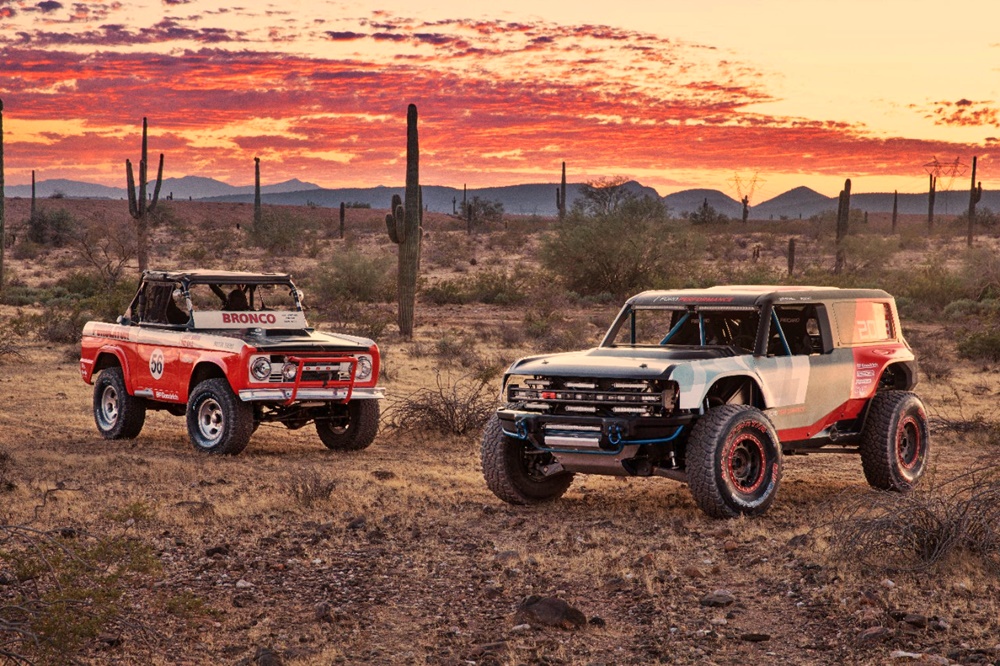
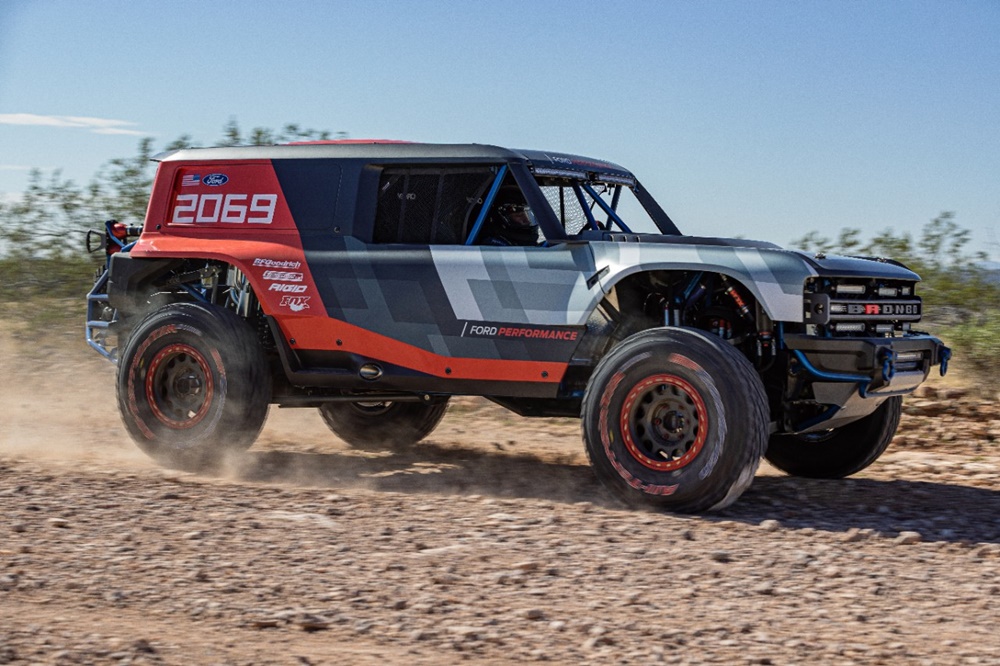
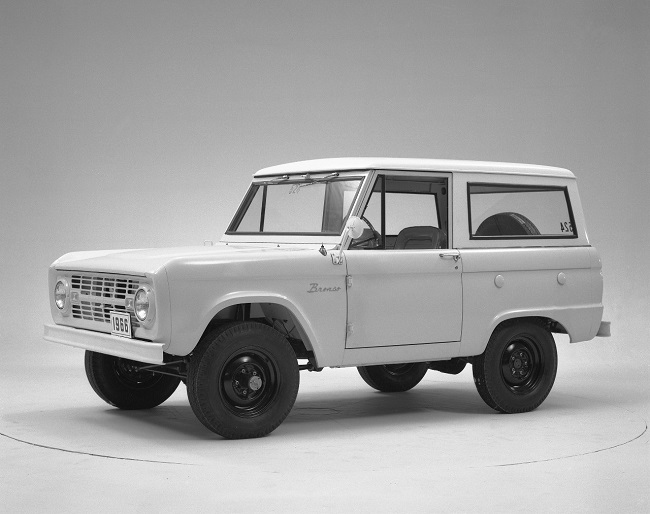
The Ford Bronco R race prototype with the original first generation model (left).
Celebrating a historic win 50 years ago
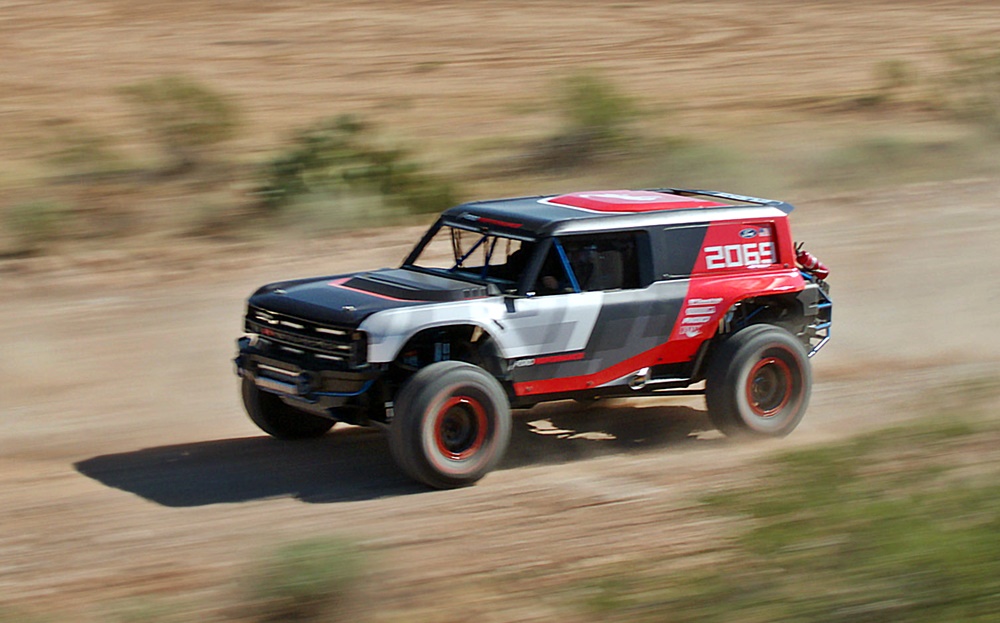
While we’re waiting for the new Bronco to be unveiled (possibly in Detroit in January?), the Bronco R race prototype shows some clues as to what it will look like. It debuts in the desert to celebrate the 50th anniversary of Rod Hall’s historic Baja 1000 win, an overall victory in a 4×4 that’s never been duplicated in 50 years. As a test, the Bronco R will head back to the Baja Peninsula later this month to take on the near 1,600-km gruelling off-road course and challenge the production Bronco’s powertrain and architecture.
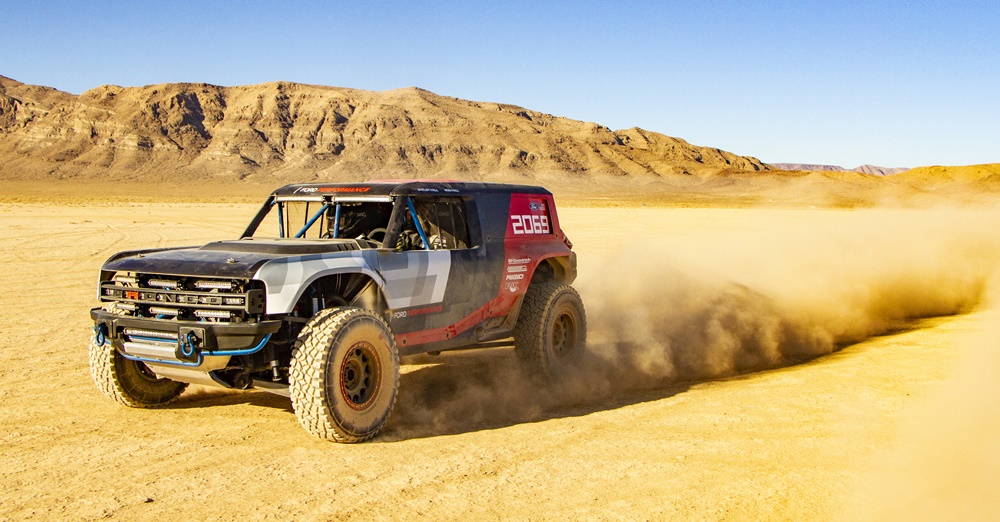
Ford’s Bronco R race prototype debuts in the desert to celebrate the 50th anniversary of a historic Baja 1000 win, an overall victory in a 4×4 that’s never been duplicated in 50 years.
And as a tease, the Bronco R – developed by Ford Performance in collaboration with builder Geiser Bros Design and Development and Baja 1000 Trophy Truck champion Cameron Steele – drops heritage-inspired design and proportion hints of what enthusiasts can expect to see when the future Bronco makes its world premiere.
Iconic Bronco design
Hidden behind an innocuous security door in a Ford studio basement, a small team led by Paul Wraith, Bronco chief designer, worked since July to make the race prototype unmistakably Bronco at first sight. The team worked in secret to create a one-off build that hints at the all-new Bronco to come, while paying homage to the first-generation styling and proportions.
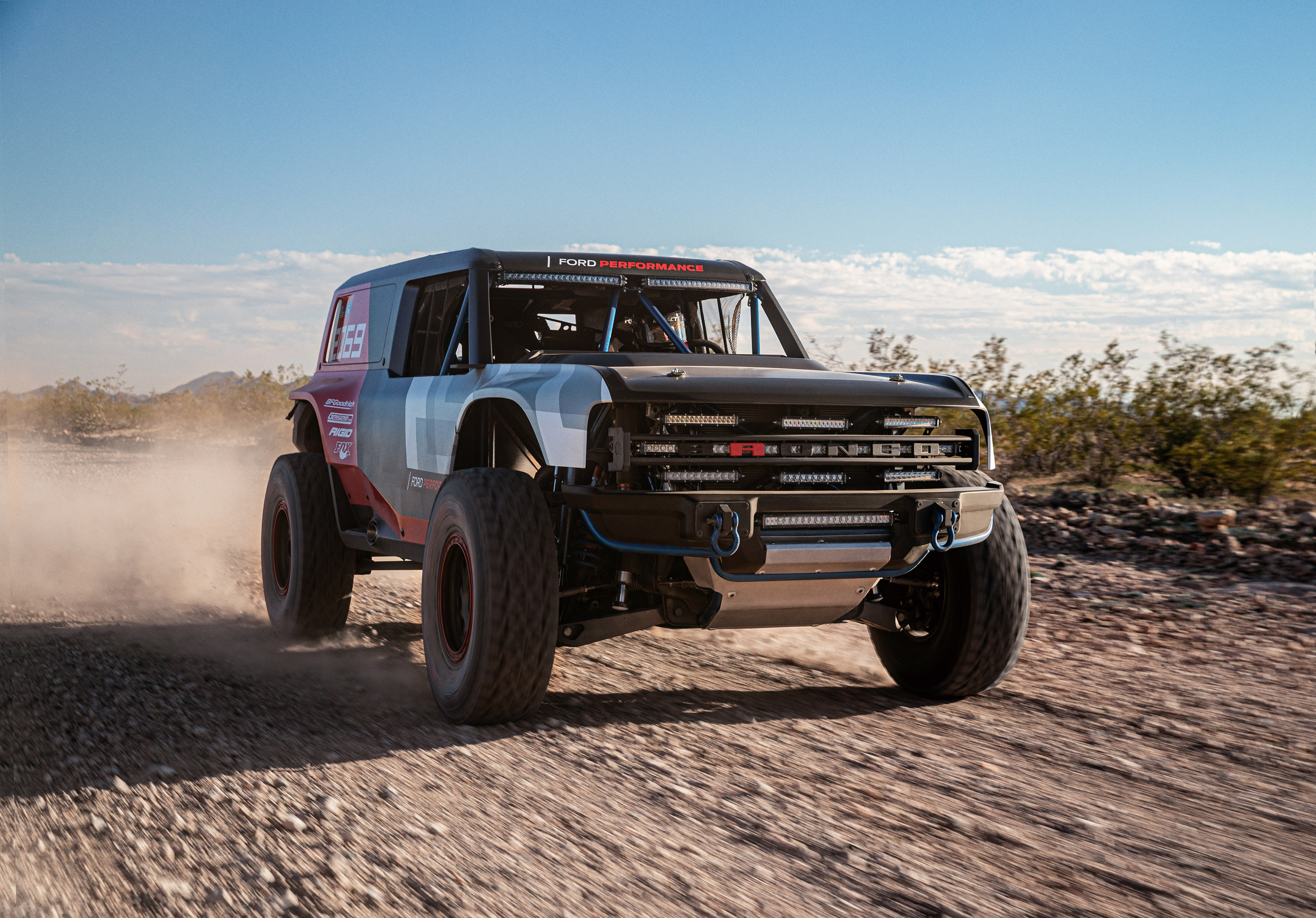
The team focused on creating a race-ready look with an overall heritage-inspired design language. With its compressed body height and long-travel suspension, the Bronco R features an ultra-wide stance, while a variety of aero components reinforce its performance intent.
The prototype’s lightweight composite body includes a clamshell bonnet and roof, as well as clean body panels that are reminiscent of the first-generation Bronco. A cut-roof design allows rear seat passengers to use a second-row hatch for access.
The first generation of the Bronco.
Race-focussed exterior
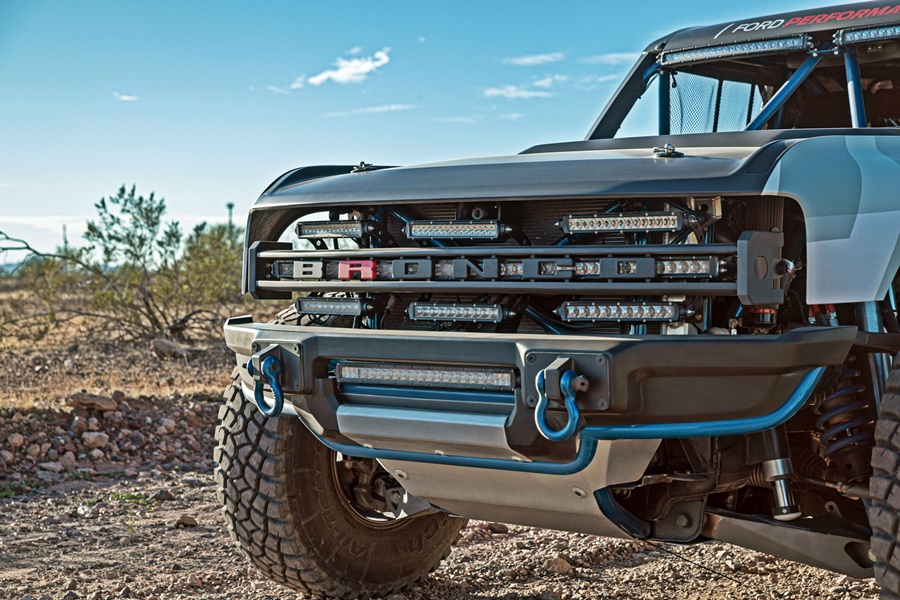
The exterior incorporates 15 LED lightbars, including a grille sequence framing the new BRONCO brand lettering boldly. To underscore that this is a one-of-a-kind racing prototype, the ‘R’ is given a sharp graphic treatment. Washers inscribed with the Bronco name are visible at various points around the exterior and secure the composite skin to the roll cage beneath it.
A unique race-focused interior features lightweight off-road racing shells from Recaro for all three seating positions. Simple surfaces of the instrument panel nod to the first-generation, and the integration of a MoTeC data acquisition system enables real-time monitoring and measurement of the prototype’s performance attributes.
The Bronco R race prototype is designed with the production model’s body-on-frame architecture to test its capability and durability. It is modified from the Ranger’s chassis which will be the base for the production model. Beefed up for Baja, it has independent front suspension with 355 mm of travel and a production-based 5-link rear suspension with almost 500 mm of travel, plus custom Fox shocks, 17-inch beadlock-capable aluminim wheels and 37-inch BFGoodrich tyres.
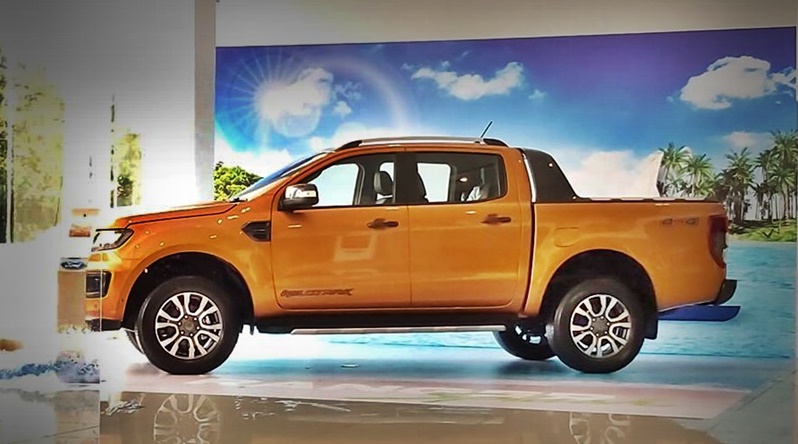
The production Bronco will use the same platform as the current global Ranger pick-up available from Sime Darby Auto ConneXion.
“Like the original Bronco, we kept Bronco R’s design authentic and simple, with a roll cage on a production-style frame, and a 5-piece lightweight body on top,” said Brian Novak, Ford Performance off-road racing supervisor. “For the endurance needs of Baja’s 1,600 gruelling kms, we built in a limited number of race-focused parts. But even the twin turbos of the EcoBoost engine are representative of what the production Bronco will offer.”
The new Bronco is unlikely to be sold in Malaysia but if you are interested in the Ranger, which has the same rugged platform, visit a Sime Darby Auto ConneXion showroom for a test-drive.
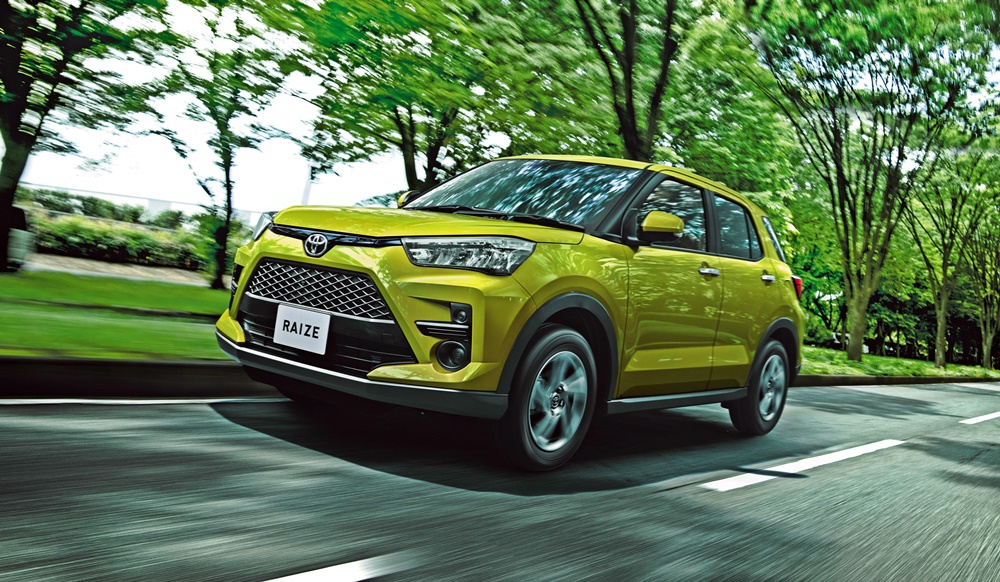
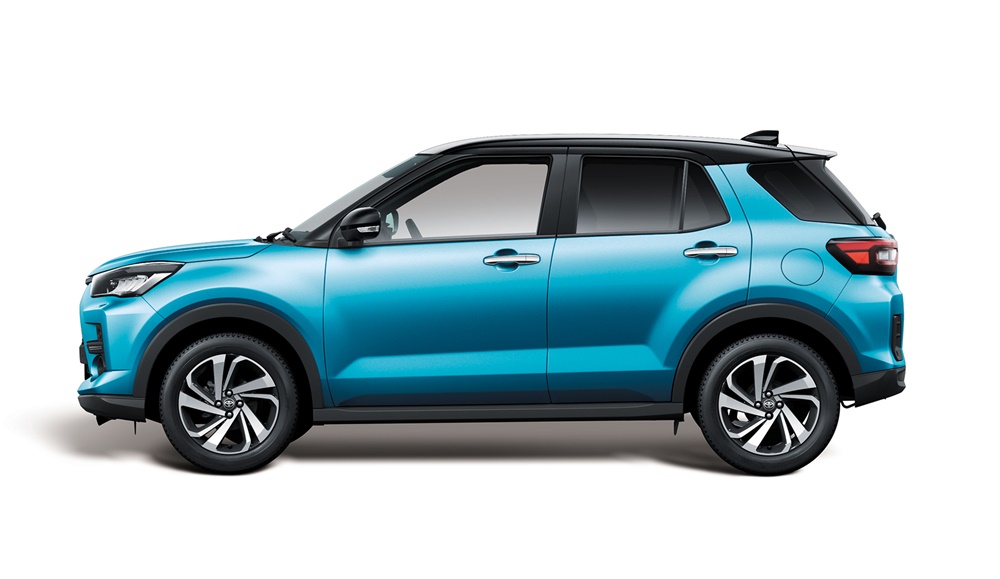
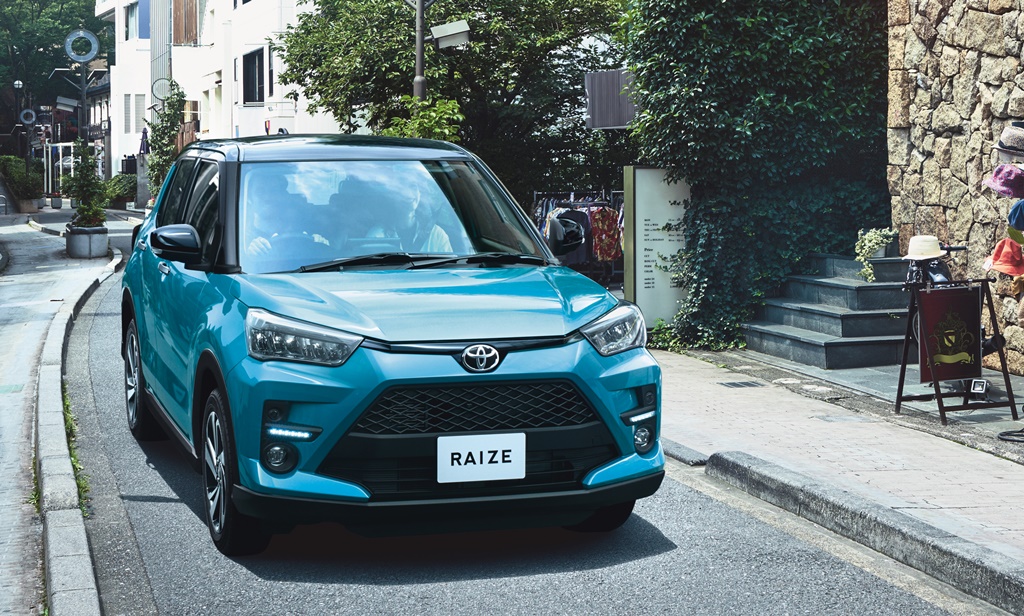
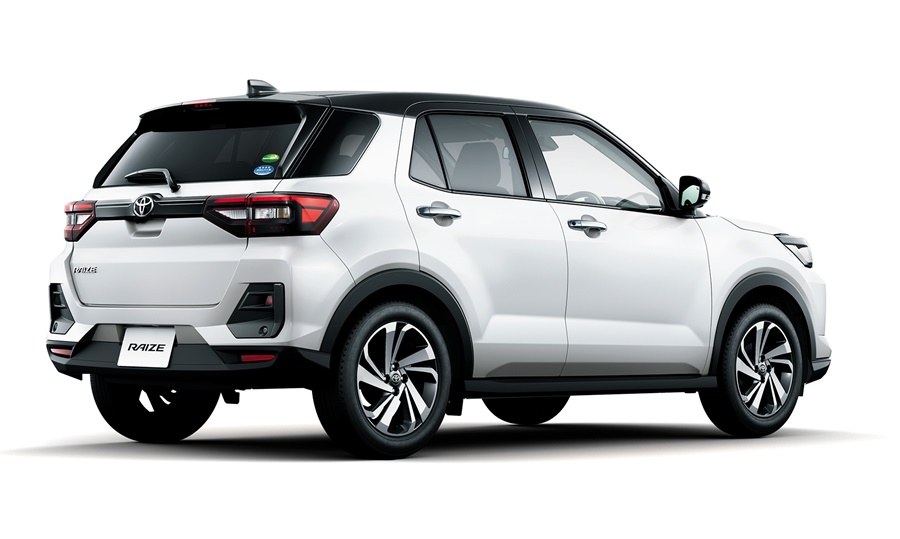
Displayed at the recent Tokyo Motor Show, the Toyota Raize SUV has now gone on sale in Japan with prices starting from 1,679,000 yen (equivalent to RM64,000). A product jointly developed by Toyota and Daihatsu (which is part of the Toyota Group), the compact Raize measures 3995 mm long and 1695 mm wide which makes it about 100 mm longer than a Perodua Myvi.
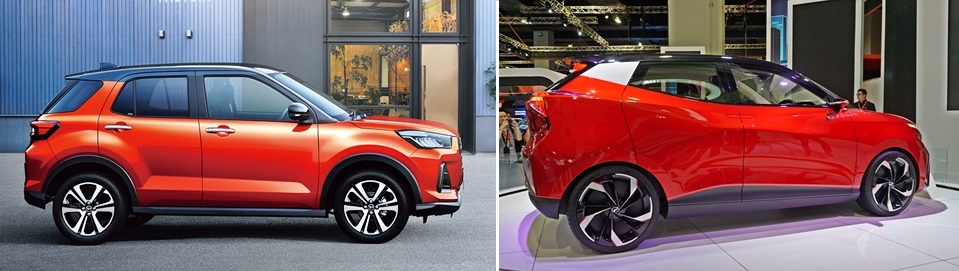
It would appear that the Raize is largely a Daihatsu product (which is sold as a Rocky under the Daihatsu brand) as it is not only using the new Daihatsu New Global Architecture (DNGA) but is also manufactured for Toyota by Daihatsu. It is speculated that this new model will also be the basis for a new compact SUV from Perodua although with its own upperbody design capabilities, Perodua’s version is likely to have a different appearance. The X-Concept which the Malaysian carmaker displayed at the KL International Motor Show last year could offer clues to its looks.
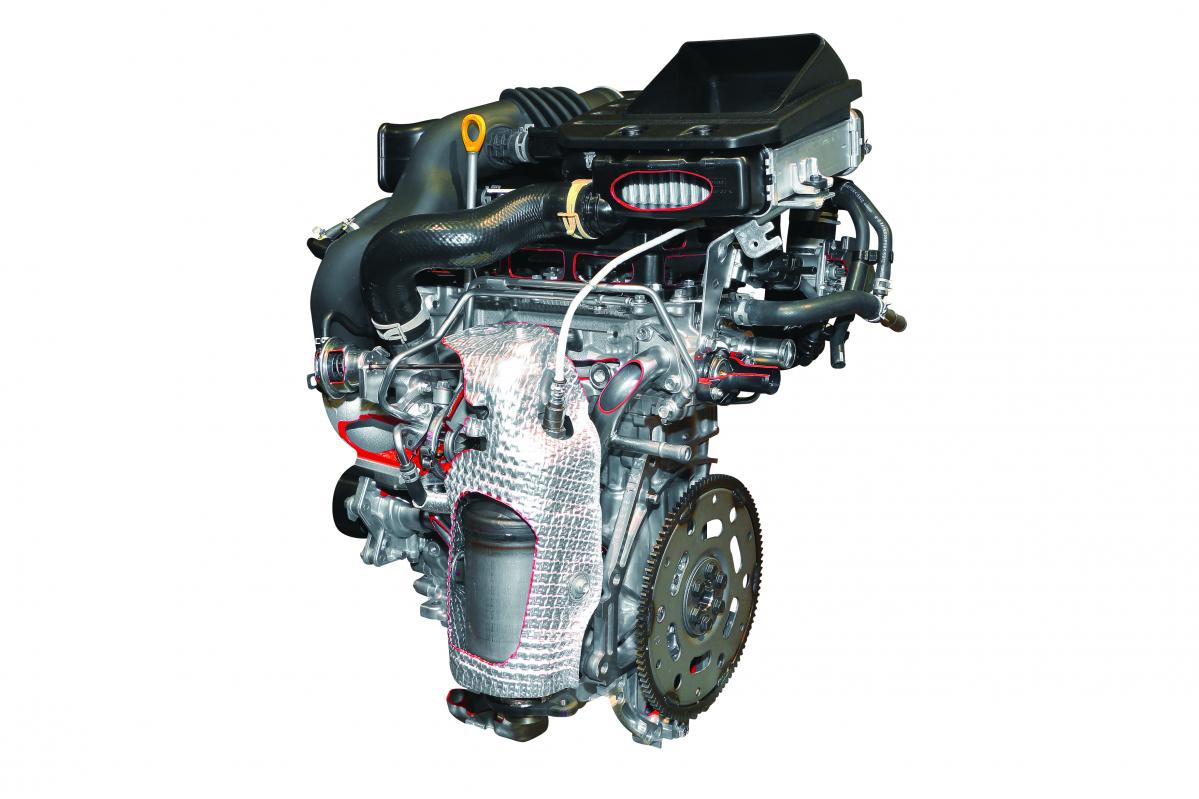
The Raize comes with only one powertrain but either front-wheel drive or all-wheel drive. It is powered by a 1.0-litre turbocharged engine (1KR-VET VVT-i shown above) which develops 98 ps/140 Nm, figures comparable to a 1.5-litre engine. Power delivery goes through a D-CVT which has innovations to increase performance as well as fuel efficient.
Depending on the testing cycle used, claimed fuel consumption of the Raize can be as high as 23.4 kms/litre, using the Japanese JC-08 test cycle. However, using the internationally recognised WLTC (World Harmonized Light Vehicles Test Cycle), the figure is 18.6 kms/litre.
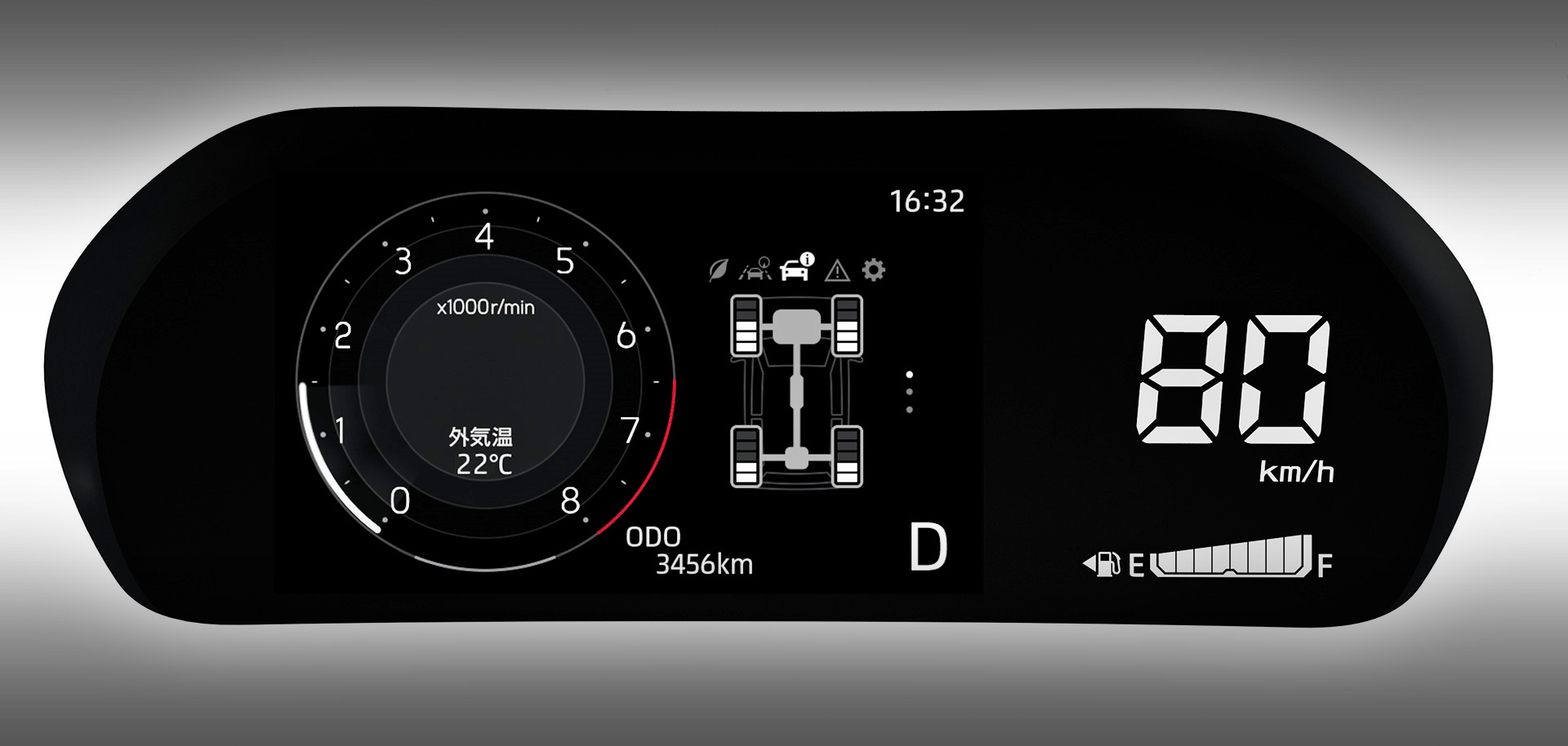
4WD variants have Dynamic Torque Control 4WD, mainly intended for vehicles operating in conditions where there is frequent ice and snow. When accelerating from a start or when driving on slippery road surfaces, this system distributes torque in an optimal manner to the rear wheels to enhance grip and stability. On certain variants, there is a display which shows the distribution of torque to each wheel in real-time for the driver’s awareness.
The suspension is quite straightforward since it has to also be low-cost for an entry-level model. There are MacPherson struts up front with a torsion beam for the rear. Part shapes have been optimised for reduced weight and the tuning has been focussed on giving a stable ride with minimal roll.
Besides having adaptive cruise control, the Raize also comes with the latest Smart Assist safety features, including the Crash Avoidance Braking Function, which is capable of detecting both vehicles and pedestrians, and the Erroneous Start Prevention Function with braking control (forward and backward). A Smart Panorama Parking Assist system provides voice and image guidance as well as steering assistance when parking.
Generous space for occupants within 6.77 square metres
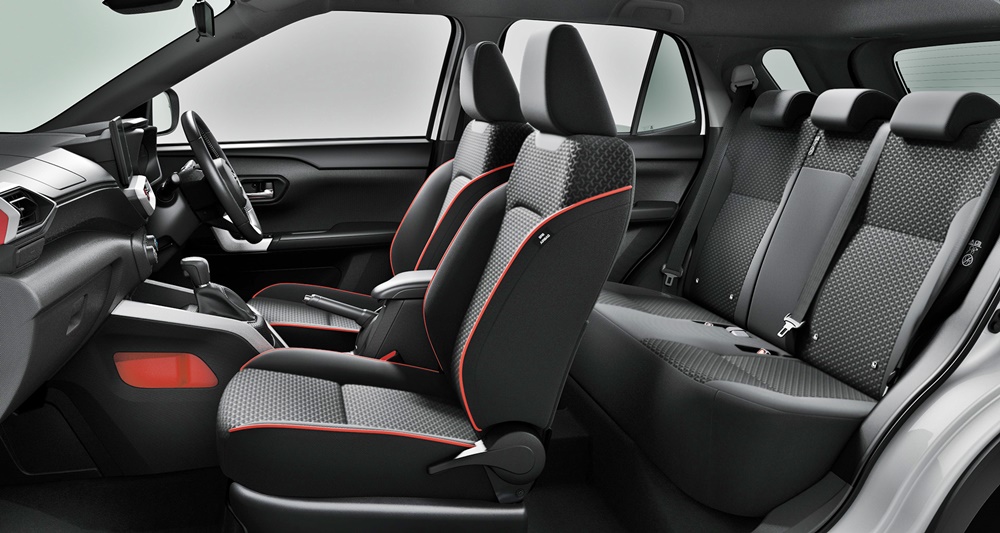
Within a footprint of 6.77 square metres and a length of 3.995 metres, the interior designers have managed to provide a cabin with generous space for the occupants. Not only that, the compact SUV boasts a class-leading 369-litres of luggage capacity. The rear seats can also be folded to further increase cargo volume while a two-level deck board structure allows for maximum use of all the volume.
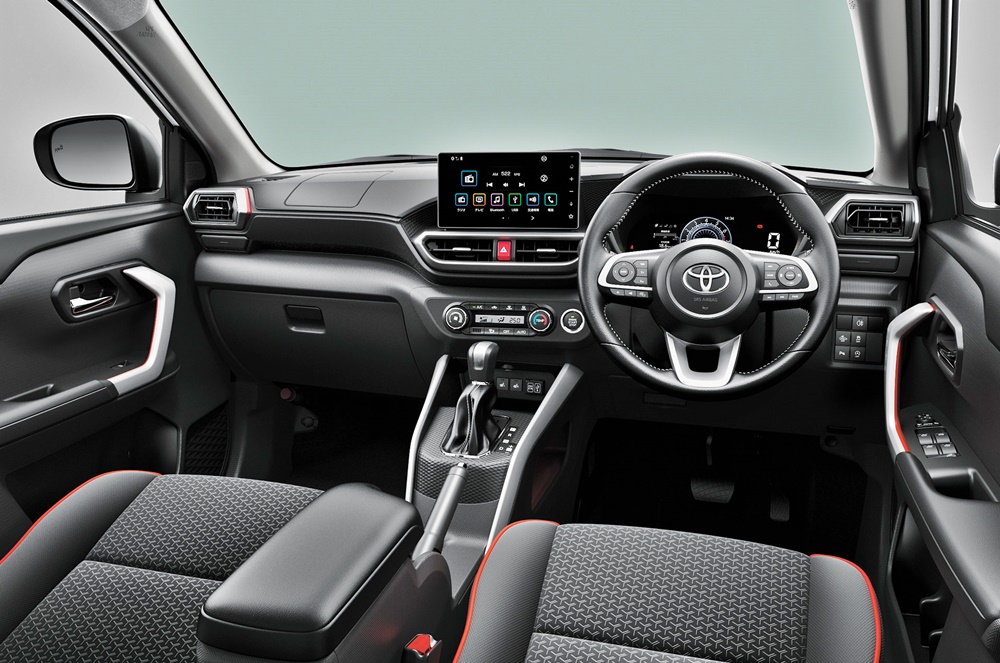
The dashboard appears quite crowded but has been carefully planned so that the driver can have a good view of the road ahead. This is helped by the high hip point (665 mm in the Raize) which raises the body. It is typical of SUVs and one reason why women, in particular, like SUVs. The higher hip point is also helpful for getting in and out, especially for older people.
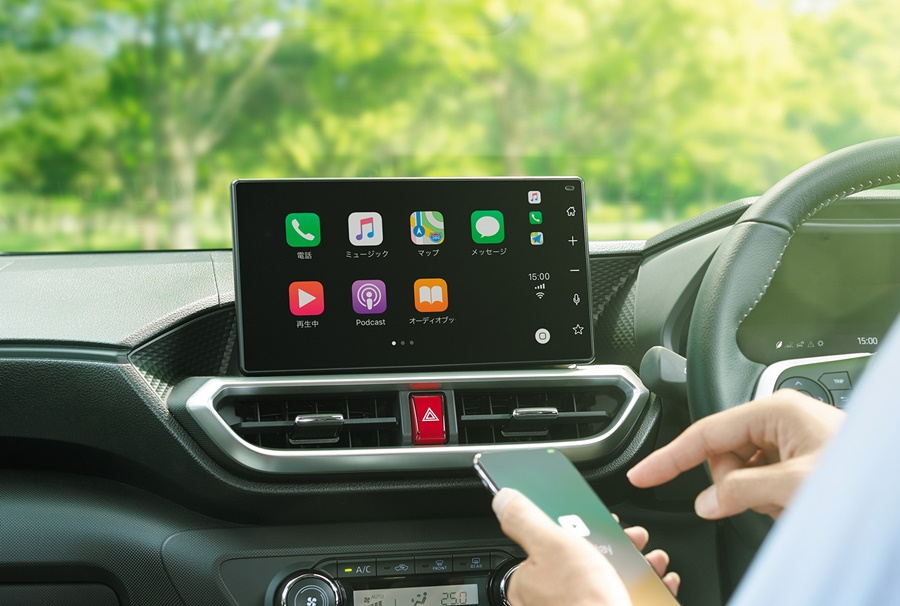
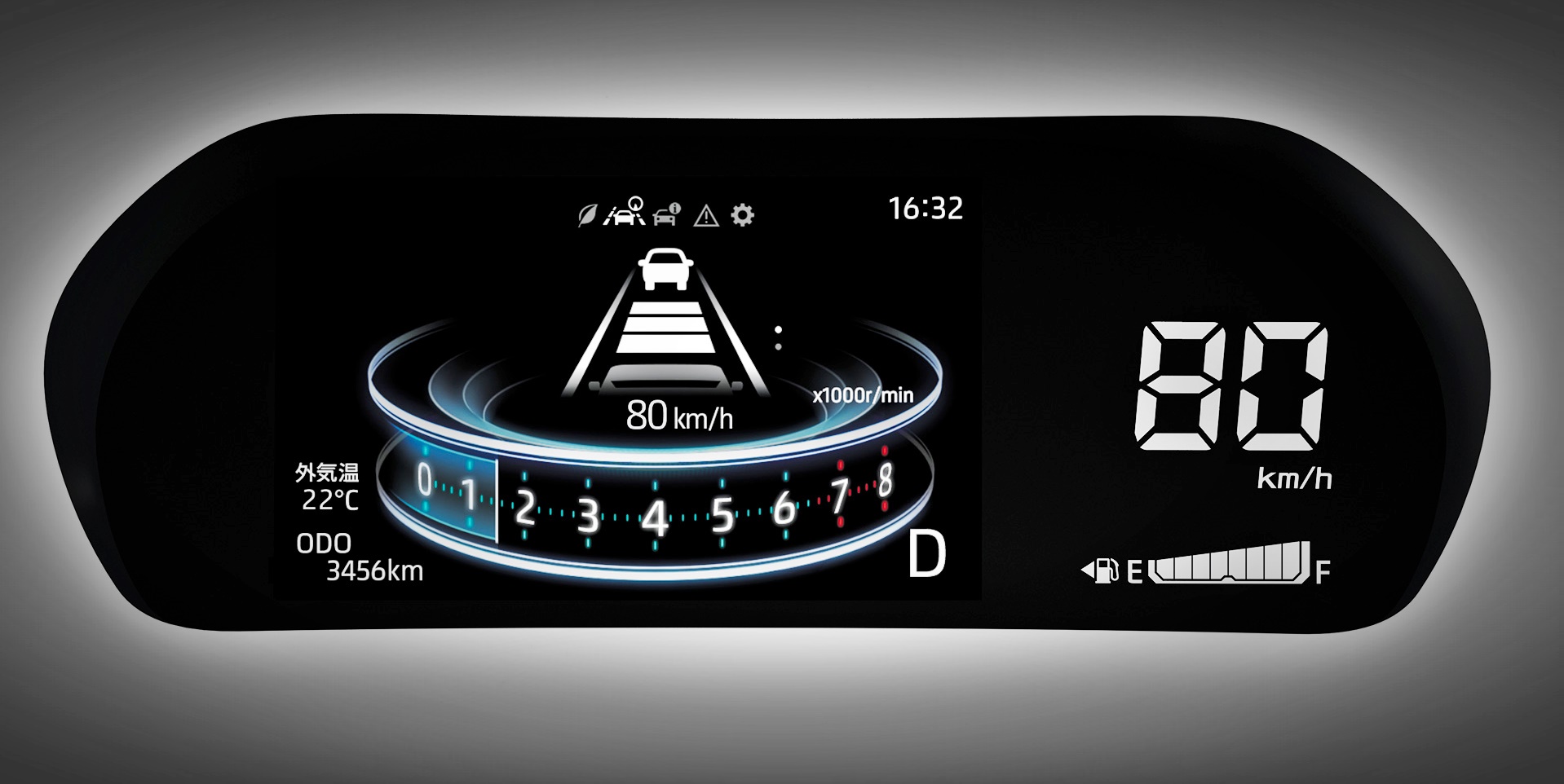
The LED digital speedometer and 7-inch TFT colour LCD display are seamlessly integrated, appearing to create a single screen. The driver can choose between 4 display styles: Advanced, Exciting, Simple, and Analogue. Over at the middle of the dashboard, in keeping with current interior design trends, there’s a 9-inch display panel. This shows the apps on a smartphone using SmartDeviceLink and Apple CarPlay, expanding the range of choices available to the occupants.
Raize for Malaysia?
As sales numbers determine whether a model will be in showrooms in Malaysia, it’s hard to say if UMW Toyota Motor (UMWT) will offer the Raize. It could be a good complement to the Vios and Yaris at the lower end, adding a SUV choice for entry-level customers. But the price would also have to be low enough to get the numbers and that will be dependent on the potential volume. It is likely that if UMWT wants the product, it would be made by Perodua, just like the Rush, as that makes sense. However, if Perodua’s model is significantly different from the Daihatsu Rocky, then UMWT may have to import it from Indonesia where it could also be made.
New Daihatsu Rocky which has also gone on sale in Japan today (left) and the Perodua X Concept displayed last year at the KL International Motor Show. Perodua now has its own capability to design the upperbody so it could have a significantly different looking model which shares the Daihatsu New Global Architecture (DNGA).
Mitsubishi Motors Corporation (MMC) has a long history of developing SUVs. In fact, together with Isuzu, it could be said that the company was the pioneer in the modern SUV which in the early 1980s was referred to as a ‘dual-purpose vehicle’. The vehicle was the Pajero and along with the Isuzu Trooper which appeared almost at the same time, consumer perception of such vehicles changed from being mere workhorses to alternatives to passenger cars.
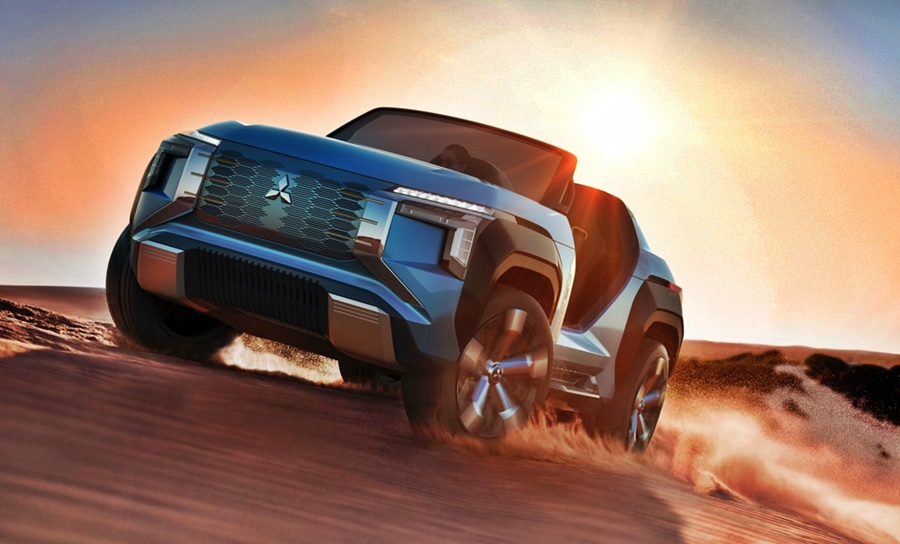
With almost 4 decades of experience in producing SUVs, it would only be expected that MMC is now developing such vehicles which will run with electric motors, in line with industry trends for the coming decade. At the Tokyo Motor Show this year, it displayed the MI-TECH concept to give an idea of what a small-sized electrified SUV could be like.
Compact buggy-type vehicle
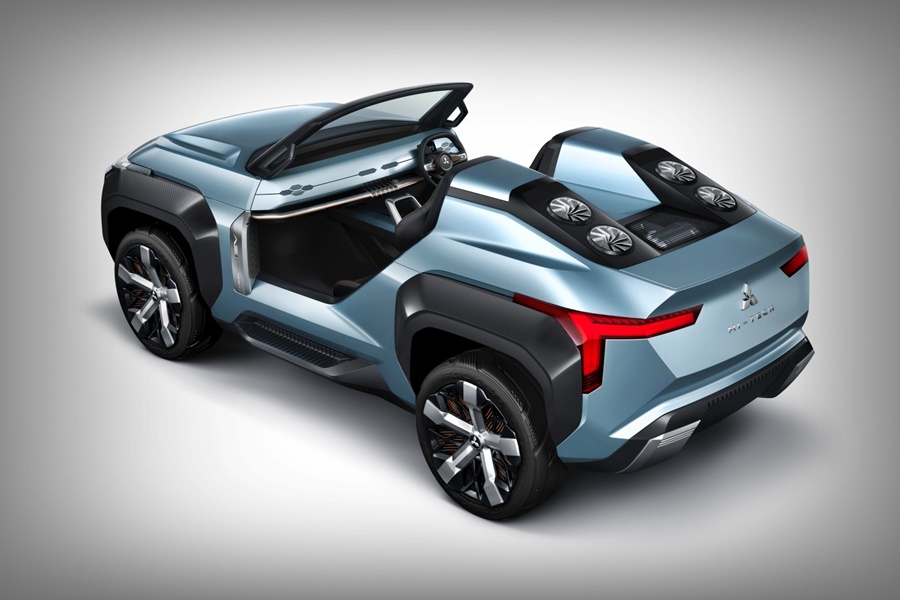
The design is that of a dynamic buggy-type vehicle with the familiar signature Dynamic Shield that is used for the front of the latest Triton. The new front design concept (which may be how the ‘face’ evolves) uses a satin-plated colour in the centre of the grille, with copper as a secondary colour to accentuate its expressiveness as an electrified vehicle.
T-shaped headlights are embedded in the front end to emphasize a distinguishing outward appearance. On the lower bumper, an aluminium skidplate is placed on both sides to protect the body while the centre section has an air intake.
On the sides, the highly raised over-fenders and large diameter tyres project a high level of mobility, SUV power, as well as the stability to thoroughly grip the terrain. The body radiates grandeur and sharpness with a design reminiscent of a machined metal ingot, while the use of side-steps on the carved sides balances utility with design.
The rear end design is dominated by a large and bold hexagon shape, again exuding the impression of being machined from solid metal ingot to emphasize robustness and strength. The T-shaped tail lamp shared the same design pattern used on the front end, as do the rear bumpers.
Functional cockpit with infographics
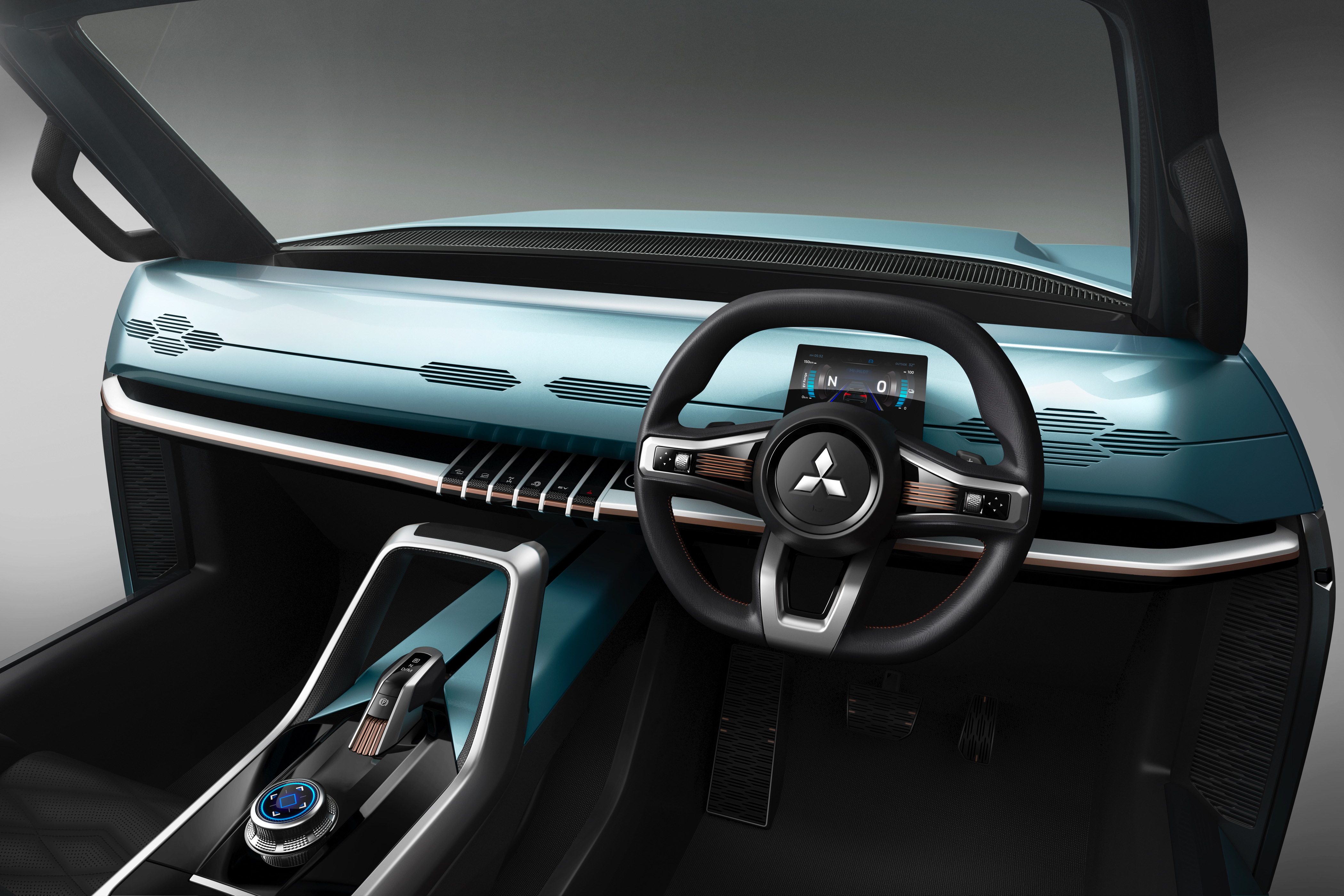
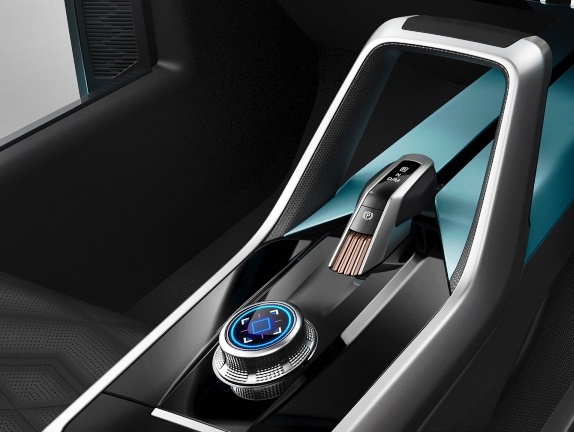
Inside, a horizontal instrument panel and clean, functional design make operating the MI-TECH easier. Keyboard-shaped switches are positioned on a centre console, and the front handgrip also functions as a hand pad to make the switches easy to operate. Functions are presented in a straightforward manner, easy to understand just by seeing them and with a reassuring feel when pressed.
The horizontal theme is further accentuated by copper lines added on the instrument panel and steering wheel. For extra peace of mind, the front windscreen presents all the relevant information in graphics such as vehicle behaviour, terrain recognition and optimal route guidance.
PHEV powertrain of the future
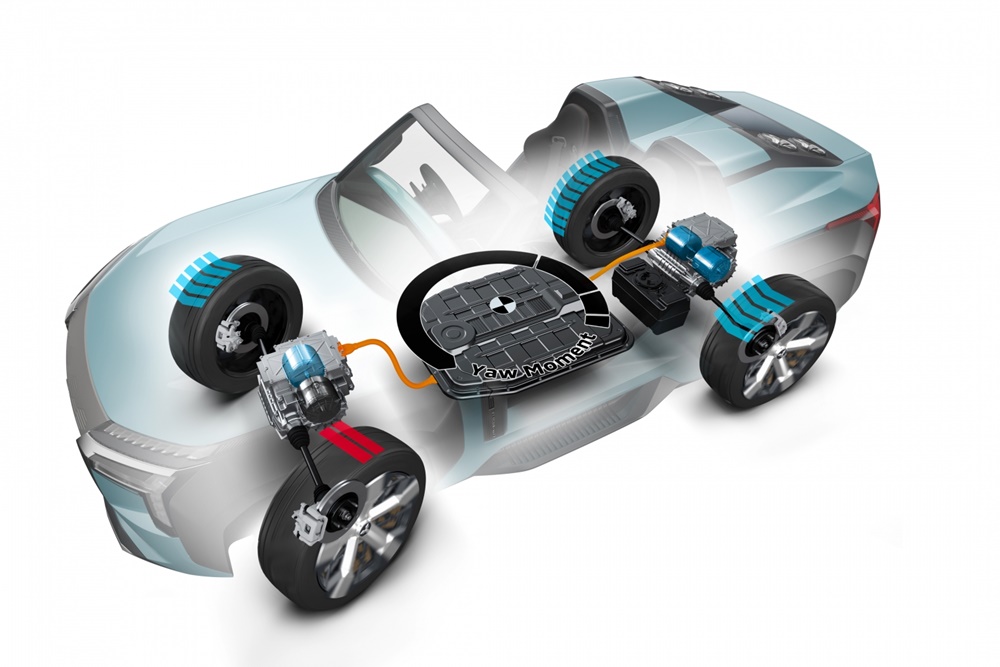
The power generator in the new PHEV drivetrain is a lightweight, compact gas turbine engine-generator in place of the traditional petrol engine. The gas turbine engine-generator has a powerful output for its size and weight with the added benefit of flexibility to run on a variety of fuels such as diesel, kerosene and alcohol which can be selected depending on the regions.
Building on its PHEV powertrain experience, MMC has evolved its Super All Wheel Control (S-AWC) integrated vehicle dynamics control system to operate with a Quad Motor 4WD System with front and rear Dual-Motor Active Yaw Control (AYC) units. Making the brake calipers electric has also allows for high response, high accuracy control of drive and braking force of the 4 wheels while delivering a drastic improvement in turning and traction performance.
When driving off-road and 2 of the wheels lose traction, the ability to transmit the optimal driving force to all 4 wheels makes it possible to transmit force to the 2 wheels still on the ground and keep driving. It is possible to execute 180-degree spins by counter-rotating the left and right wheels.
The MI-TECH also comes equipped with a Human Machine Interface (HMI) which displays varying information detected through sensing technology including advanced optical sensors on an augmented reality (AR) windscreen. With vehicle, road, and surrounding traffic conditions shown on the AR glass, the driver can make accurate decisions even in poor visibility without taking his eyes away from the view ahead.
MG, will be launching its new compact SUV soon, which the automaker says will mark an exciting new era of design for the company. The Chinese owned British automaker is looking to dip its toes into the hotly contested waters of the compact SUV segment with the MG XS.
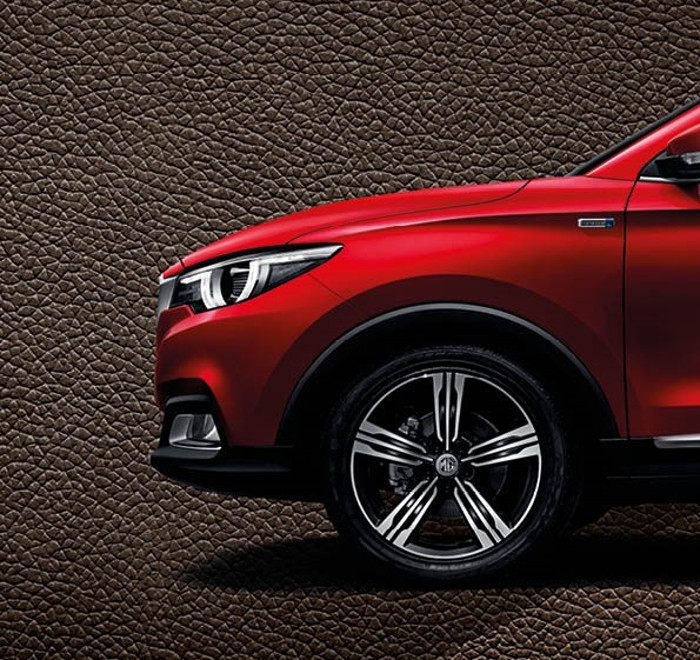
The new vehicle will join the automaker’s MG3 and MG GS to offer UK customers a home grown alternative to the Japanese and Korean offerings. Sporting an angular look, the new design philosophy is based on what the automaker calls, ‘Emotional Dynamism’.
It has been said the new vehicle has been designed in a way that best expresses the company’s new design language that emphasizes the premium nature of the XS. Though not groundbreaking, the the curved lines and creases of the frontend do give the vehicle an interesting look.
The new face features an enlarged grill design that was inspired by the automaker’s older vehicles but modernized to have a more contemporary look. MG says that the larger grille is able to accommodate a bigger badge, which, for vanity purposes, helps show off the brand’s heritage that can be traced to the early days of the automobile.
Carl Gotham, Design Director of SAIC European Design Centre, said, “It’s a really exciting time for MG as it starts to roll out its new brand identity. Emotional Dynamism brings to the fore a premium feel to the new Compact-SUV with exceptional attention to detail throughout, such as the distinctive detailing on the ‘eye’ headlights and signature tail lights.”
“It has a level of detailing and range of impressive features you would not expect to find on a car of this size or price,” he later added.
MG is expected to divulge more details regarding the brand’s new design direction closer to the launch date of the new vehicle. The automaker has stated that it is confident that latest addition will be able to bolster its sales figures that are already up by nearly 83% year-on-year.
The British automaker can trace its roots back to 1924 and has produced some of the most stunning vehicles from the golden area of the automobile. Stay tuned and we will let you know more when further details are released regarding the MG’s design direction.