
Piston.my

EV

Nissan, which can claim leadership in mass-produced electric vehicles (EVs) with its bestselling LEAF, has long experience with EVs. Though we only read about its advances in recent times, it had a running electric car called the Tama in the late 1940s which was used as a taxi. But EVs in those days had poor performance and as the technology for such vehicles was hard to develop, the manufacturers focused on internal combustion engines which became dominant up till today.

But with pressure to cut exhaust emissions drastically and reduce fuel consumption, the industry began to get serious about EVs again as the new century began. While some companies focused on hybrids, Nissan chose to focus on a pure EV and by December 2010, it launched the LEAF.

As battery and EV technology kept advancing, the performance of the LEAF kept improving and the second generation offers higher performance plus greater range. But just as with internal combustion engine cars, there is a quest to keep pushing the envelope where performance is concerned and Nissan has revealed some of the technologies that will take its next generation of EVs to a new level.
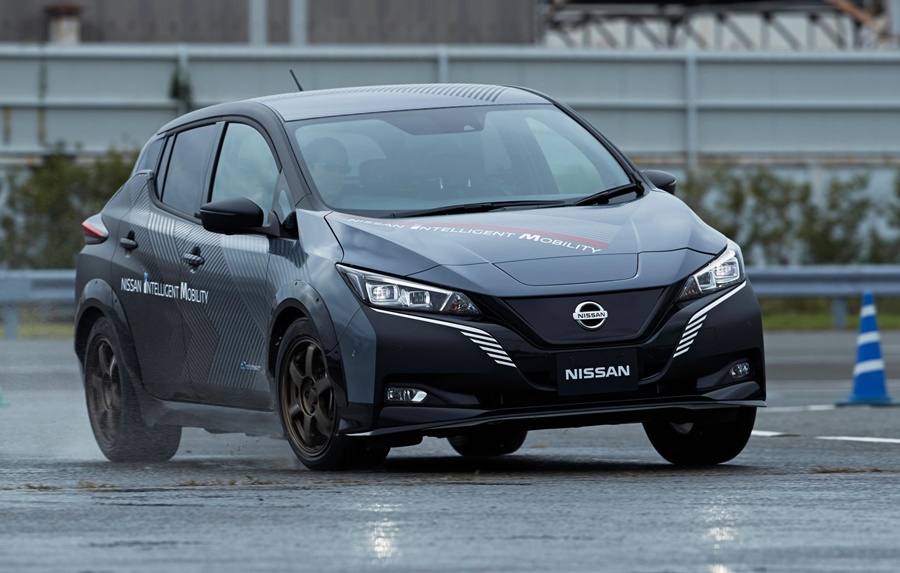
Nissan prototype EV 2019

Enhanced all-wheel drive system
Recently, it showed the media a prototype based on the LEAF with an enhanced all-wheel drive system powered by front and rear high-power motors integrated. Nissan developed the chassis control technology in-house for the electric-drive all-wheel-control system. It’s a development that brings to mind the time when Nissan introduced its advanced ATTESA all-wheel drive technology in the 1980s.

“Soon, Nissan will launch a next-generation EV that will be a true breakthrough,” said Takao Asami, Senior Vice-President for Research and Advanced Engineering at Nissan. “The new electric-drive 4-wheel-control technology now being developed integrates Nissan’s electric propulsion and 4WD control technologies with our chassis control technology to achieve a huge leap in acceleration, cornering and braking performance, on par with the latest sportscars.”
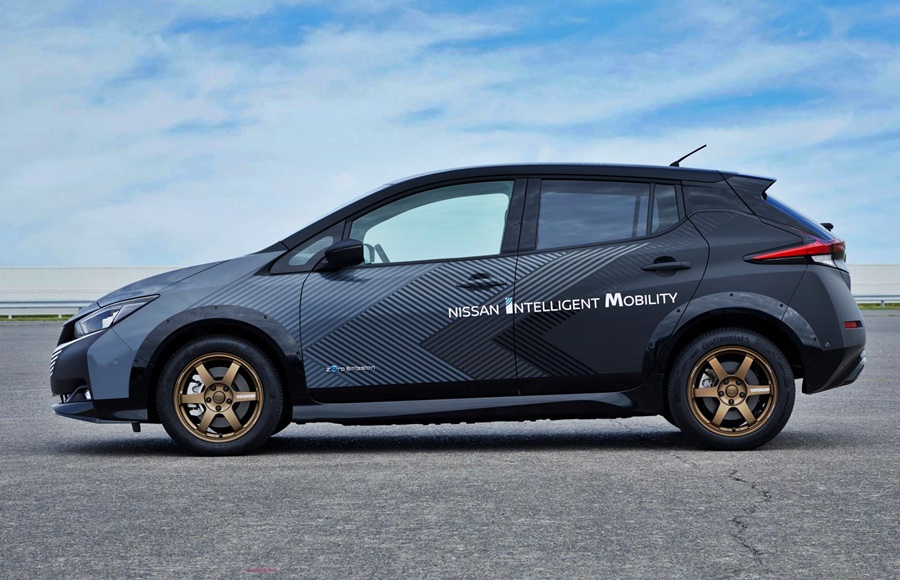
Nissan prototype EV 2019

High-output twin-motor drive
Using separate front and rear electric motors, the powertrain generates 227 kW of maximum output and 680 Nm of maximum torque. This output is complemented by the ultra-high-precision motor control which offers highly responsive, yet uncommonly smooth, acceleration. Drivers can benefit from the all-wheel-control system on nearly any road condition, heightening driving performance and confidence.

The prototype’s precision control of both motors provides unparalleled ride comfort. Pitch and dive are minimized by adding regenerative rear motor braking to the usual front motor regenerative braking. When slowing down on city streets, for example, this helps keep passengers from being shaken back and forth. This reduces the potential for motion sickness and related discomfort. Similarly, on rough, bumpy roads and when accelerating, motor control is optimized to maintain ride comfort by minimizing irregular movement.
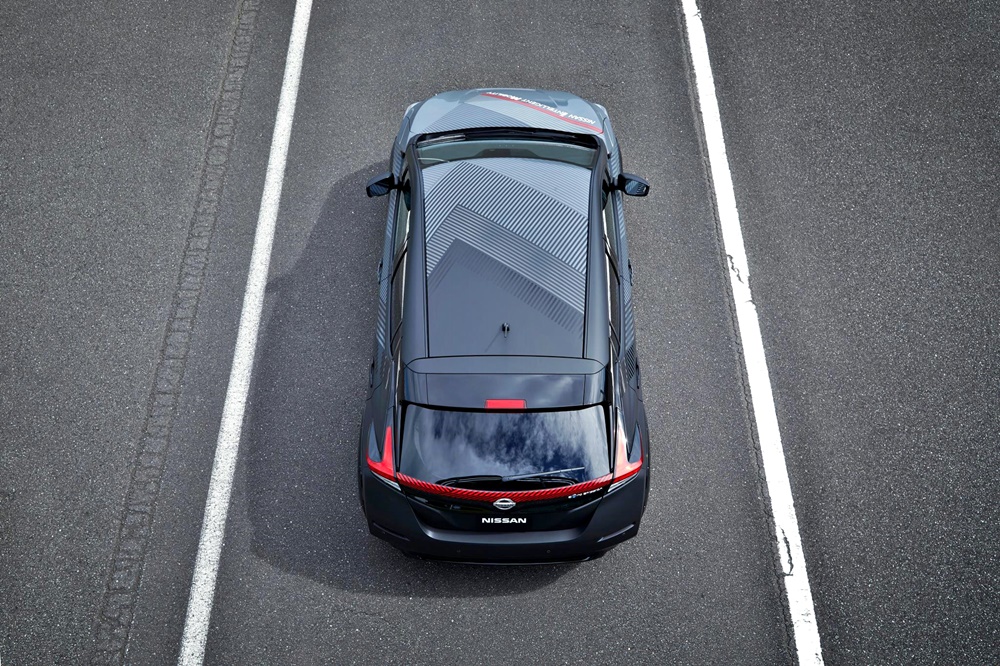
Nissan prototype EV 2019

Independent brake control
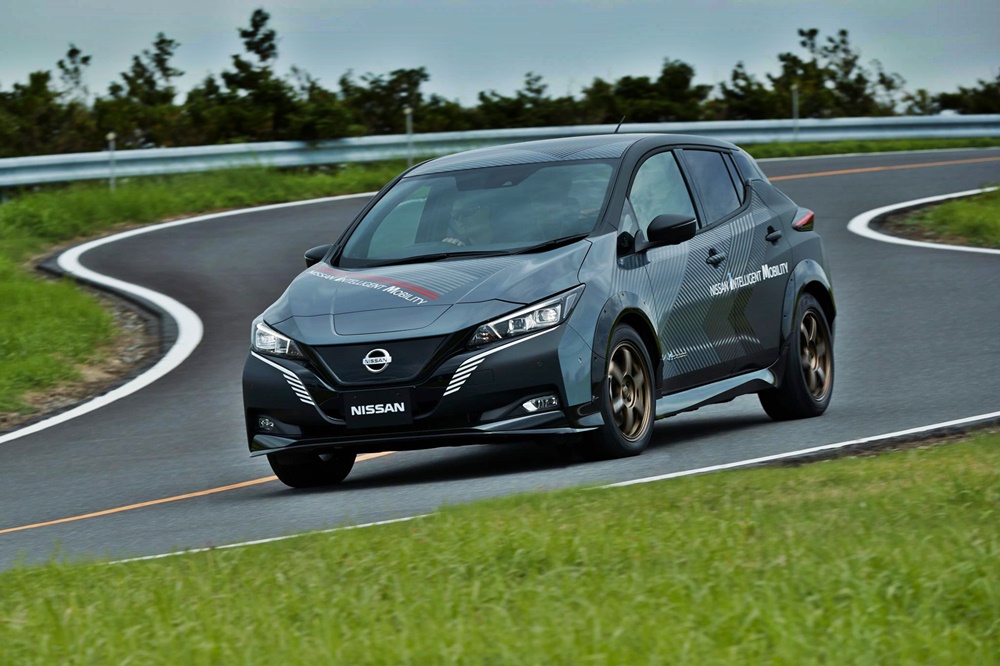
In addition to optimizing front and rear torque allocation, the system applies independent brake control at each of the four wheels to maximize the cornering force generated by each tyre. This lets drivers enjoy cornering that faithfully follows their intentions with minimal steering.

Inside, a 12.3-inch display mounted in the centre of the instrument panel reports, in real-time, information on the vehicle control technology via a polished graphic interface. With the custom display, the test driver can better understand car’s movements and judge the all-wheel-control technology’s performance at a glance.
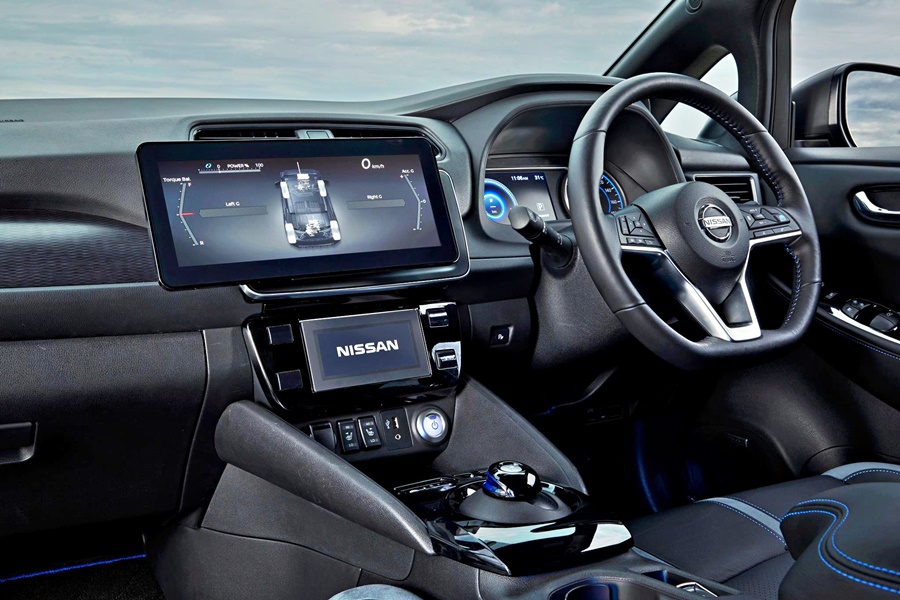
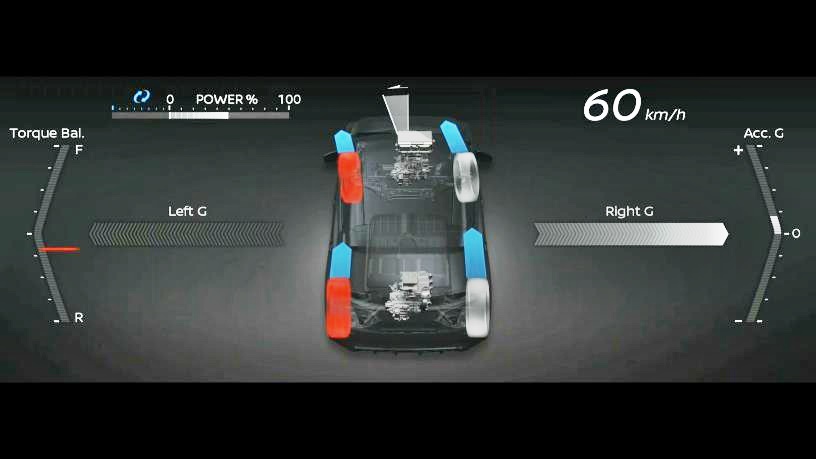
Nissan prototype EV 2019

Nissan prototype EV 2019

Better tracking and control
Electric 4-wheel-control technology can increase driver confidence across a broad range of road conditions. When cornering on snow-covered roads, for example, the car can faithfully trace the driver’s intended line, thanks to ultra-high-precision motor and brake control. This would greatly enhance safety for the driver as well as other road-users.

Nissan has not said when this new technology will be installed in its models but with the pace of development being so brisk, it should be within the next few years. The thing about the Japanese is that they want to make sure their whatever systems they introduce are thoroughly tested and once in the market, customers will not be inconvenienced by flaws that were not resolved before production.

Visit www.nissan.com.my to know more about the latest LEAF EV which is available in Malaysia and where to test it.
(more…)

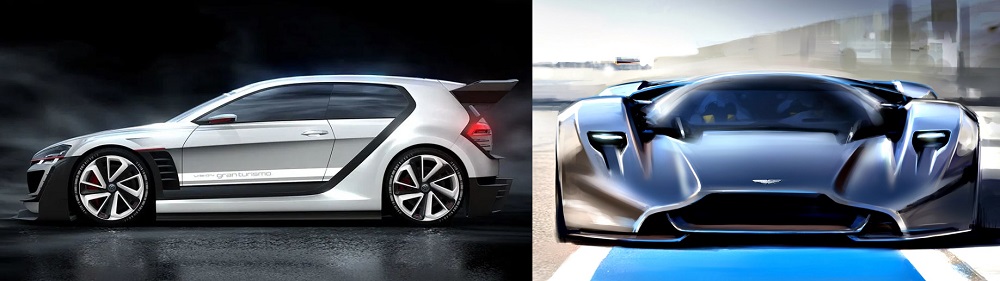
In 2013, to commemorate the 15th anniversary of the popular Gran Turismo racing simulator, Polyphony Digital invited a number of top carmakers to develop virtual racing cars that could be included in the series. Many companies responded positively and came up with some extraordinary sportscars which were a combination of what’s possible today and what could be possible in future. There were no limitations to the technology and engineering so it was a unique opportunity to go to extremes.

Since 2013 and the launch of the sixth Gran Turismo simulator, over 30 sportscars have appeared from carmakers like Mercedes-Benz, BMW, Toyota, Mitsubishi Motors, Mazda, Hyundai and others. All of them have been known as the Vision Gran Turismo cars.

PS4 Vision Gran Turismo cars
Vision Gran Turismo sportscars from Volkswagen (left) and Aston Martin

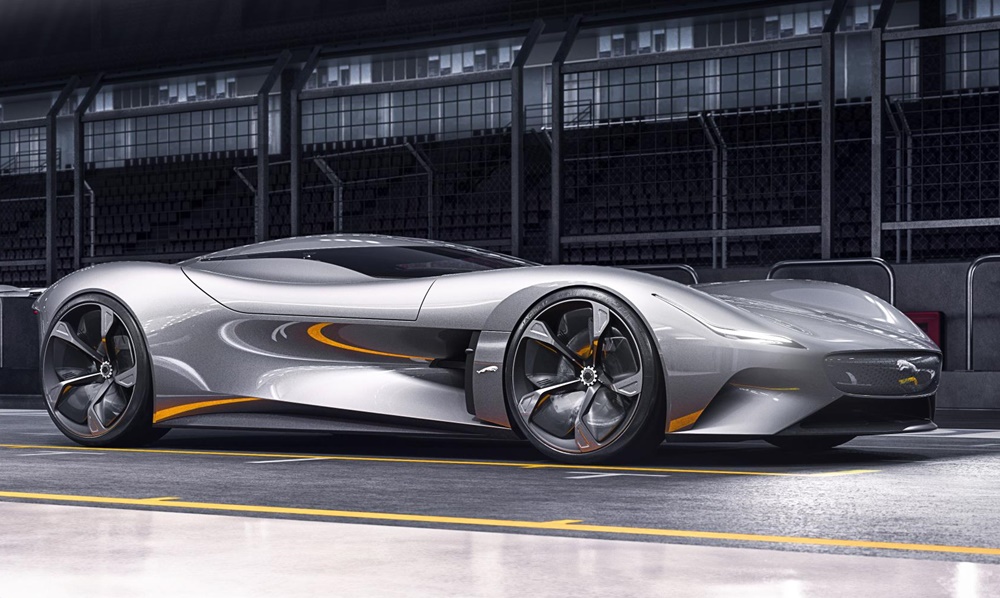
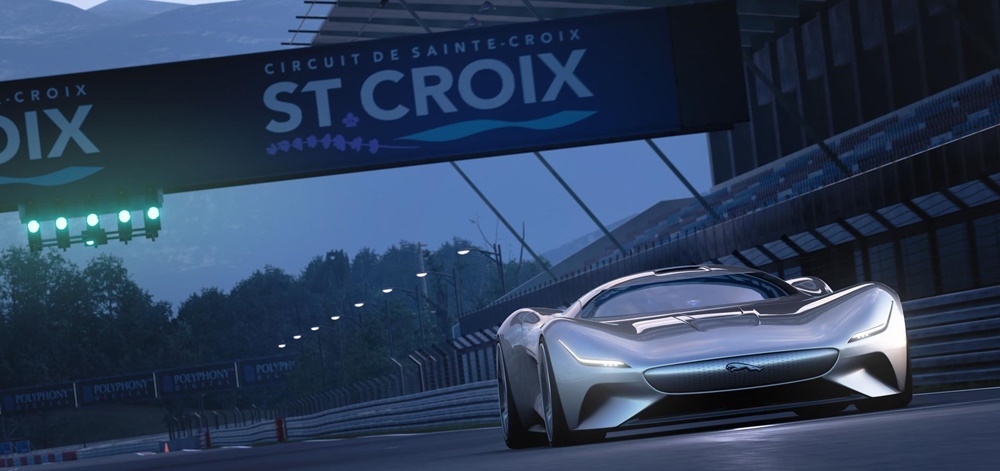
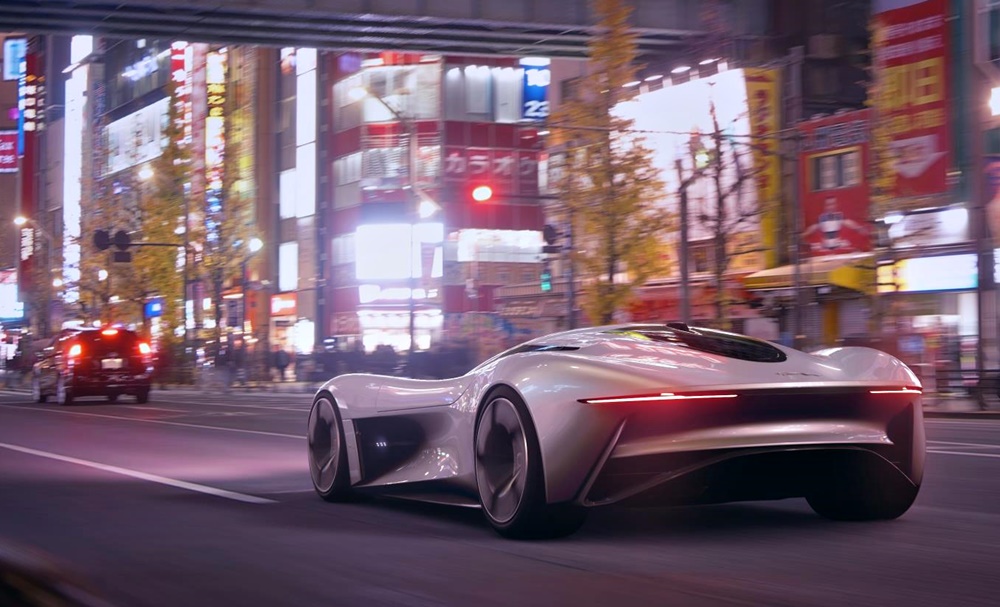
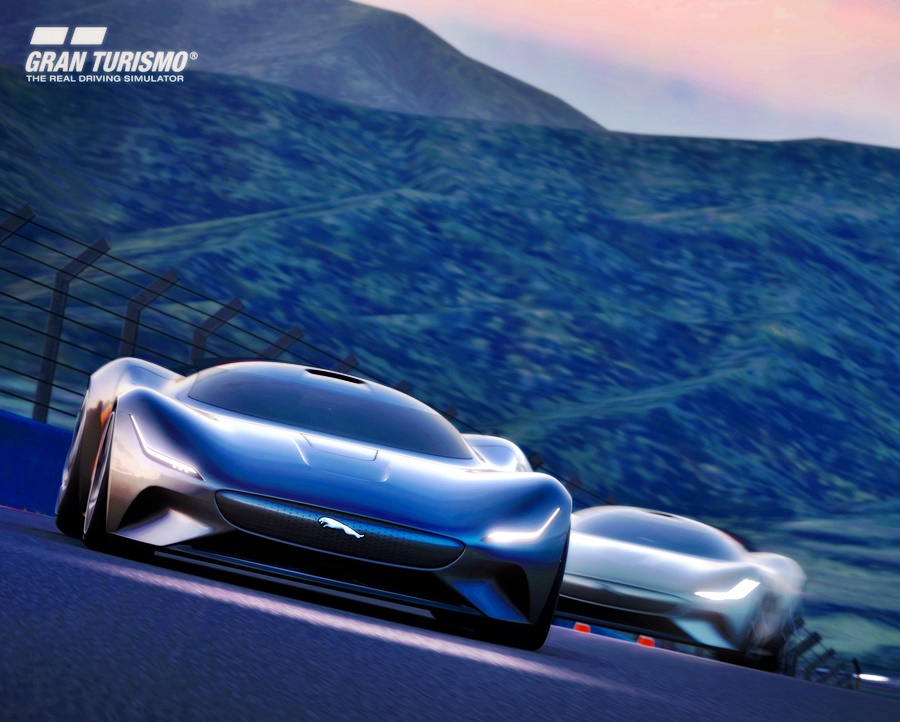
This month, Jaguar has also joined the program with its first all-electric virtual sportscar – the Jaguar Vision Gran Turismo Coupe. The futuristic EV will be available for players to download in Gran Turismo Sport for the Sony PlayStation 4 from the end of November. Before then, it will first be driven by competitors in the latest round of Sony’s Gran Turismo World Tour event at the 2019 Tokyo Motor Show this weekend.

2019 Jaguar Vision Gran Turismo Coupe

Inspired by brand’s racing lineage
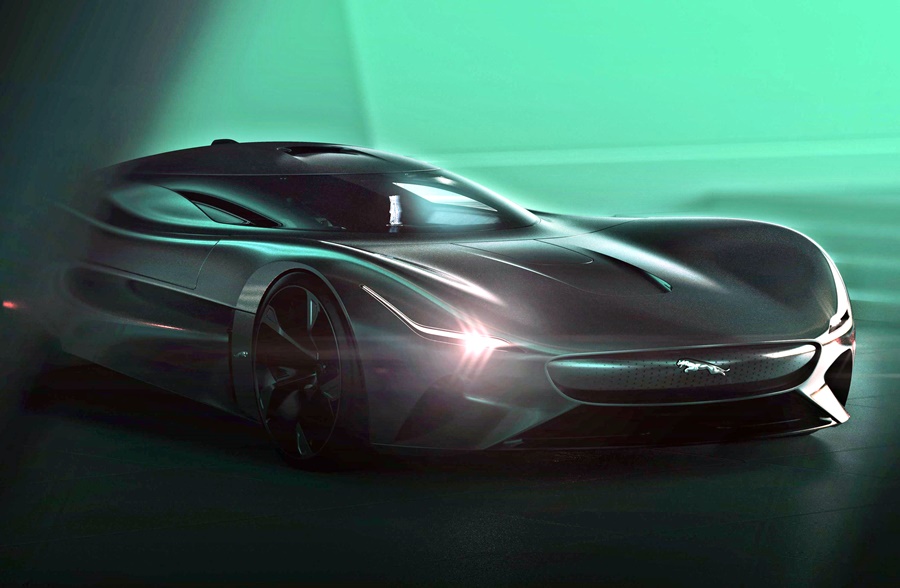
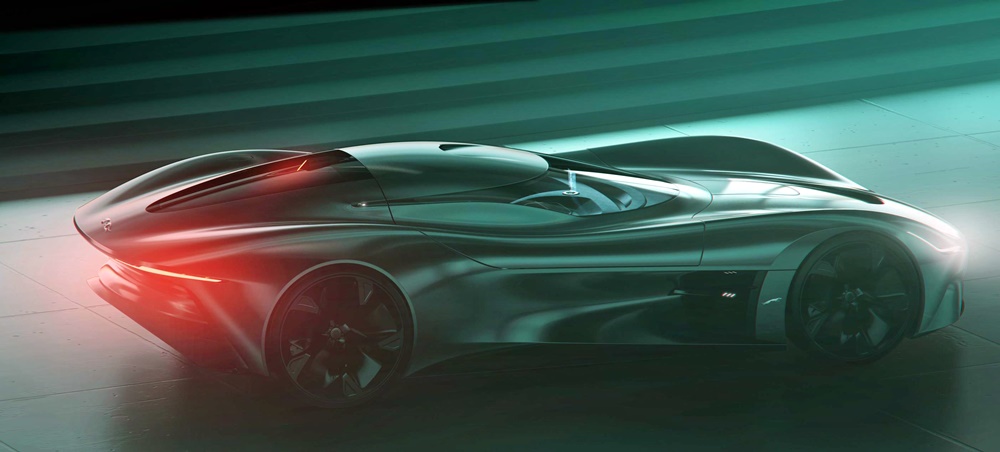
Jaguar’s Vision GT Coupe has been designed and developed from the ground up taking inspiration from the brand’s racing lineage. The iconic C-type and D-type influence its fearless futuristic design, while Jaguar’s I-TYPE 4 Formula E and I-PACE eTROPHY racing cars provide the technical foundations for its uncompromising racing performance. Jaguar’s team of designers had complete creative freedom to develop the perfect proportions and beautiful surfaces of this virtual Jaguar of the future.

“This project has been completely led by our young designers and represents a once-in-a-lifetime opportunity for them to create a vehicle steeped in our incredible heritage but pushing the boundaries of future design. The team have done an incredible job in creating something which is clearly identifiable as a Jaguar, inspired – but not constrained – by our iconic past,” said Julian Thomson, Jaguar Design Director.

2019 Jaguar Vision Gran Turismo Coupe

The Vision GT Coupe is crafted from experimental lightweight materials, with the light and stiff monocoque made from carbonfibre composites and advanced aluminium alloys. This focused lightweight construction keeps its weight to just 1,400 kgs with near 50:50 weight distribution. Gamers will have 1,020 ps of power and 1,200 Nm of torque, a 0 – 100 km/h time of less than 2 seconds and perfectly balanced handling,

Dream project for designers
Beautiful shapes and purposeful proportions from three key cars in Jaguar’s racing heritage, the C-type, D-type and E-type, have influenced the form and graphics of the Vision GT Coupe. Radical front fenders are reminiscent of the C-type, the epic plan shape is inspired by the ‘Long Nose’ D-type, and the fast and elegant cabin hints at the Lightweight E-type.

The Vision GT Coupe is the first Jaguar to feature the iconic Leaper on the front grille. Elsewhere, the historic references continue with the twin-charging sockets flanking the rear haunches, inspired by Jaguar’s revolutionary 1968 XJ saloon.

2019 Jaguar Vision Gran Turismo Coupe

“This was the dream project for a car designer, creating a futuristic sports car for Gran Turismo means our designs and ideas could be truly limitless. It has to excite future generations and most importantly, look and feel unmistakably Jaguar,” explained Oliver Cattell-Ford, Exterior Designer, Jaguar Advanced Design, said.

Immersive interior design
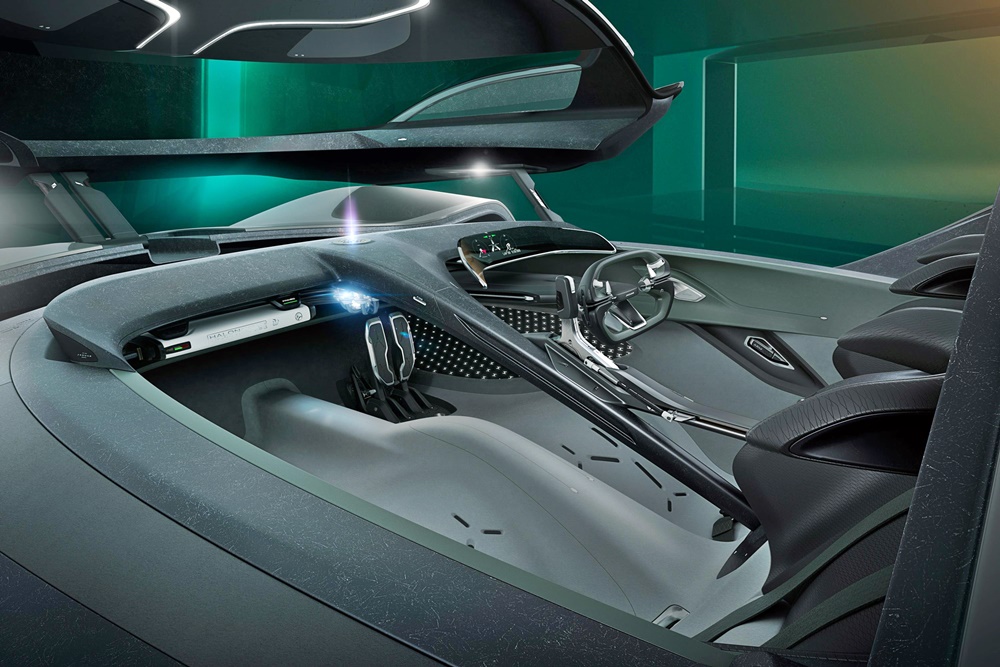
The interior has been designed to fuse Jaguar’s heritage with its contemporary interior philosophy of progressive luxury, purity, driver focus, and stunningly intricate details, all of which are allowed to breathe through the simplicity of the car’s design.

“We’ve really pushed the limit to imagine how a future Jaguar sports car interior could look. The architecture is visually lightweight, simple, and dramatic; featuring advanced and experimental materials and finishes. Sitting in the stunningly considered cockpit and looking out onto the gracefully long bonnet of the Jaguar Vision GT Coupe – a view that is unmistakably Jaguar – the player will be fully immersed in the action,” said Chris Shaw, Interior Designer, Jaguar Advanced Design.

2019 Jaguar Vision Gran Turismo Coupe

This selection of inspired details and inventive, innovative flourishes include hologram technology. The car features an on-board artificial intelligence system affectionately named “KITT-E” – a companion that would operate systems, and interface between the driver and machine to enhance the ‘emotional connection’ with the car. This technology can also display other useful information to the driver in a variety of formats, including three dimensional maps, and essential vehicle data.

The cockpit has been crafted to envelope the driver, creating a racing experience reminiscent of Jaguar’s Le Mans-winning D-types. It also features augmented reality digital side glass for enhanced vision either side of the car; the glass being able to highlight danger and obstacles, therefore increasing driver perception. Complementing this, ahead of the driver is a transparent information cluster, displaying three-dimensional information inspired by iconic Smiths gauges, with rearward vision integrated either side in the screen’s simple wrapped design – all in perfect eye-line of the road ahead.

2019 Jaguar Vision Gran Turismo Coupe

Pure Jaguar racing experience
A unique soundscape has also been created to immerse the driver in a pure Jaguar racing experience. Led by the team responsible for the Jaguar I-PACE’s soundtrack, the Vision GT Coupe’s distinctive sound was created using brand new recordings of the 1957 Le Mans podium-finishing ‘603’ Long Nose D-type. Its race-spec 3.8 litre XK engine provides a unique layer, manipulated and woven into a futuristic and distinctive electric soundtrack.

2019 Jaguar Vision Gran Turismo Coupe

To offer uncompromising racing performance, albeit virtually, the team called on the same Panasonic Jaguar Racing engineers who lead the design and development of the brand’s I-TYPE 4 Formula E and I-PACE eTROPHY race cars. The car is powered by three powerful, compact motors – one driving both front wheels, the other two driving a rear wheel each – which together produce a combined 1,020 ps and 1,200 Nm. Players will be able to hit a maximum speed of more than 320 km/h but should something go wrong at that extreme speed, well, it’s just a simulation…

(more…)

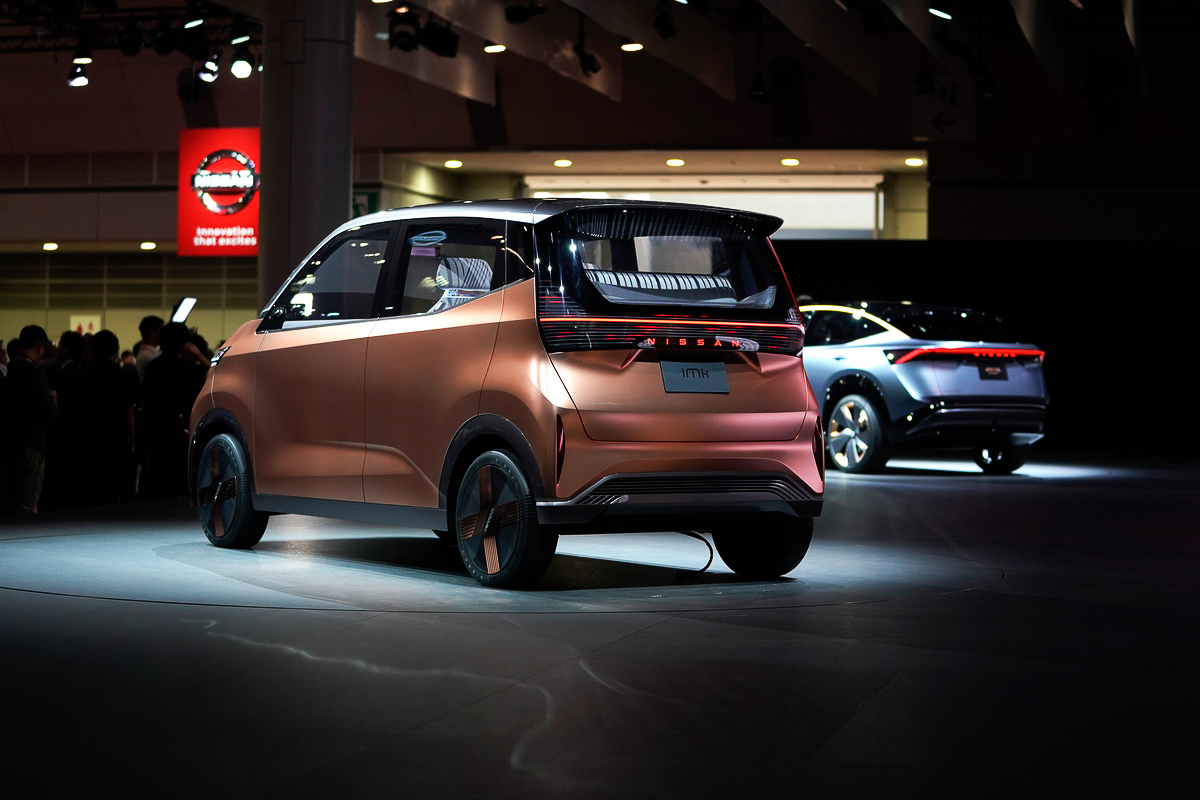
The Tokyo Motor Show 2019 saw not only one Nissan EV concept, but two beautiful specimens. The Nissan Ariya Concept was showcased side by side with another EV concept that’s meant for chic urban commuters in the form of the Nissan IMk. Just like the Ariya, the IMk concept brings all the elements of high-tech and high-performance EV into a very modern and stylish package. (more…)

The history of Mazda has some dark periods, times when the company was on the brink of bankruptcy. Of course, nothing can ever compare to that dark period in 1945 when an atomic bomb destroyed its home city of Hiroshima and an estimated 140,000 people lost their lives. At that time, Mazda was already making motorized vehicles although it had started 25 years earlier in the cork business before moving on to machine tools.

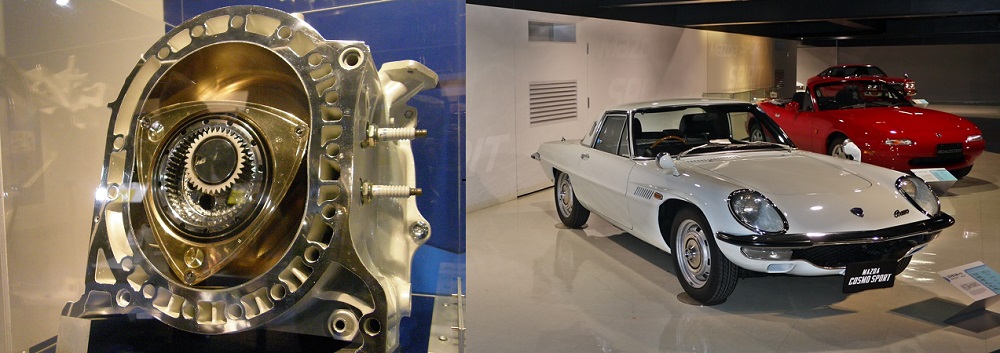
Mazda recovered after the war and began to focus on making cars. It had talented engineers but it was a small company. To differentiate itself, Mazda decided to invest in commercializing the Wankel rotary engine. While a few other companies also showed interest in the engine, none took it as far as Mazda which used it in a range of models from 1967. The unique characteristics of the rotary engine enabled it to produce high output without having a large displacement. A 1.2-litre rotary engine in the Mazda RE was powerful enough to challenge the 2-litre Alfa Romeos at the Batu Tiga track in the 1970s.
Mazda rotary
In the 1960s, Mazda stood out by being the only carmaker to sucessfully commercialise the rotary engine, with its first model being the Cosmo Sport.

By the early 1970s, Mazda achieved its differentiation and stood out, especially in North America where the rotary models sold well. But then came the first oil crisis in 1973 and a second one in 1979, during which time prices of fuel shot up as supply was limited. The major drawback of the rotary engine was its consumption (and later emissions) and sales slowed down as consumers turned to more economical models. Mazda had also relied a lot on sales in North America and it was in big trouble.

Fortunately, it didn’t have to close down and was able to continue its business after restructuring and reorganization with banks. Its engineering talent was still there and it came out with some well engineered models like the first front-wheel drive Mazda 323/Familia in 1980. Thereafter, it continued to grow and while affiliated with Ford until 2015, it also improved its production processes.

Mazda SKYACTIV

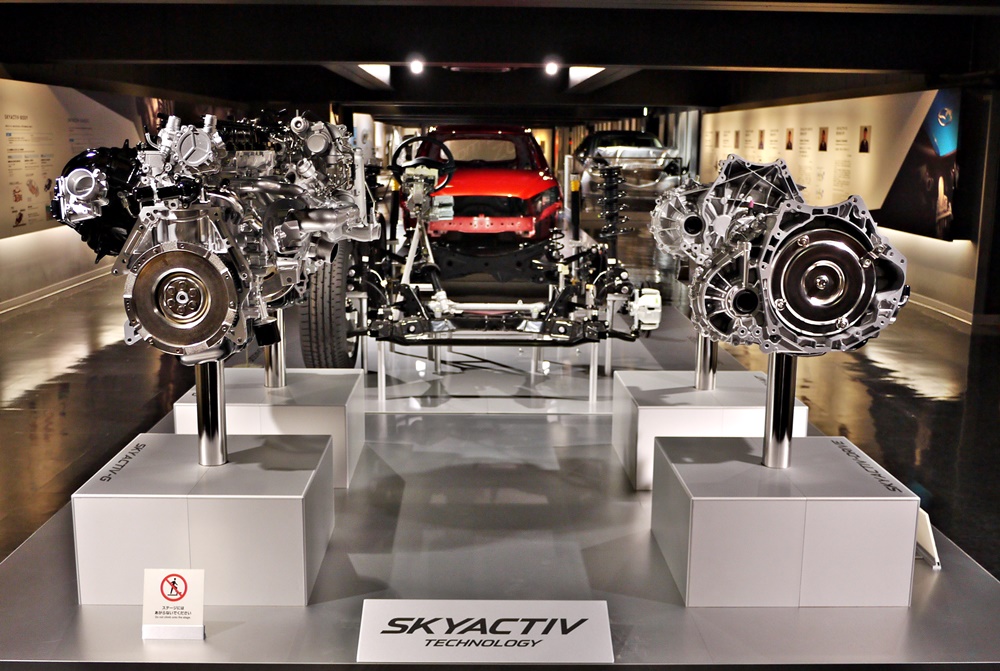
That dark period when sales collapsed in North America and took the company to the brink of closing down must be embedded in the Mazda’s corporate memory. It showed that reliance on a single powerplant without taking into account social and industrial changes was risky. Thus far, Mazda has been focused on the internal combustion engine (ICE), pushing development much further than anyone else and still able to keep the powerplant viable. It didn’t go into hybrids because it believed its SKYACTIV engines could do just as well and only develop a Mazda3 Hybrid for the domestic market to meet demands by some customers.

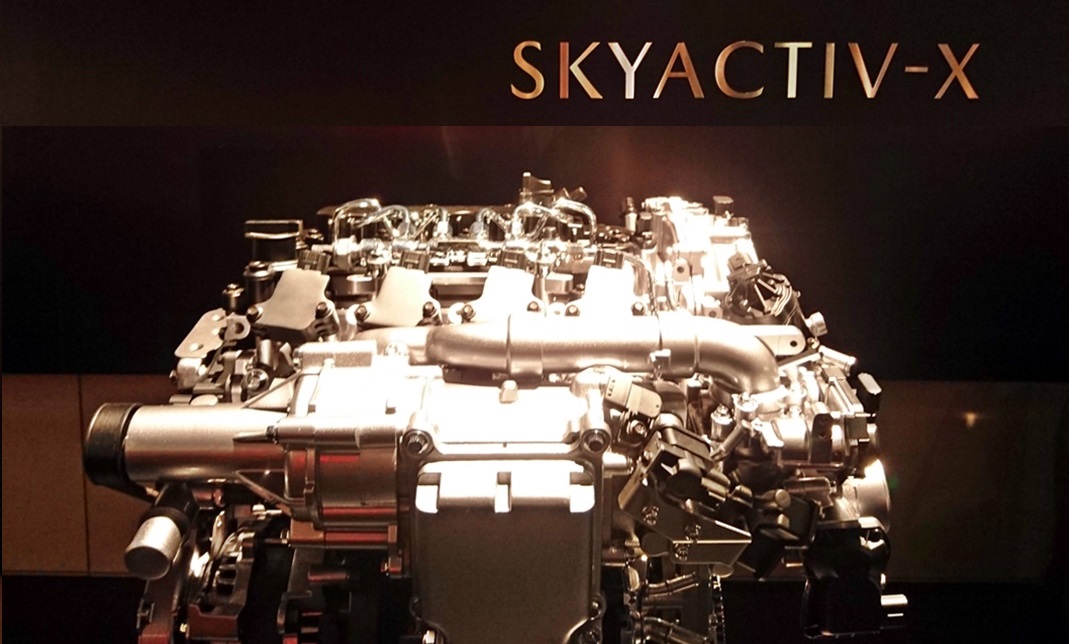
SKYACTIV-X

SKYACTIV-X is probably the peak of ICE development for Mazda and it must be realizing that loyalty to the engine can be dangerous. Even Honda, which was an ‘ICE loyalist’, has gone into electrification of its model lines, especially for Europe. If Mazda does not ‘go electric’, it can be the 1970s all over again and they certainly do not want to allow another dark episode to happen.

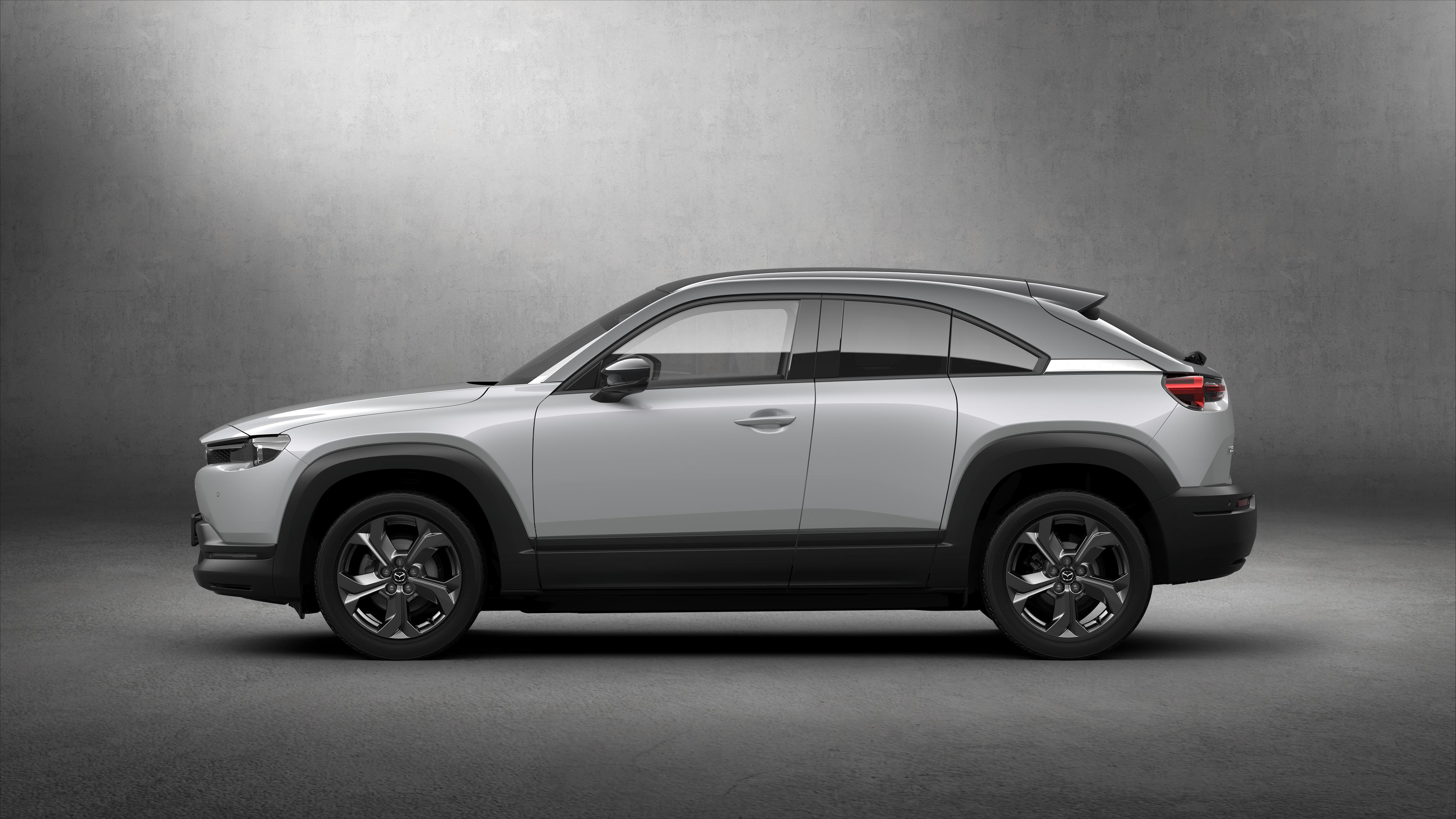
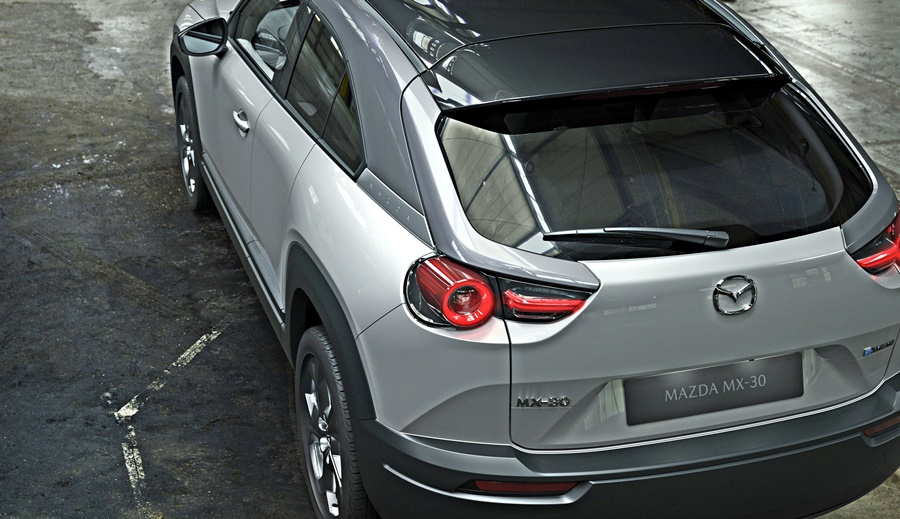
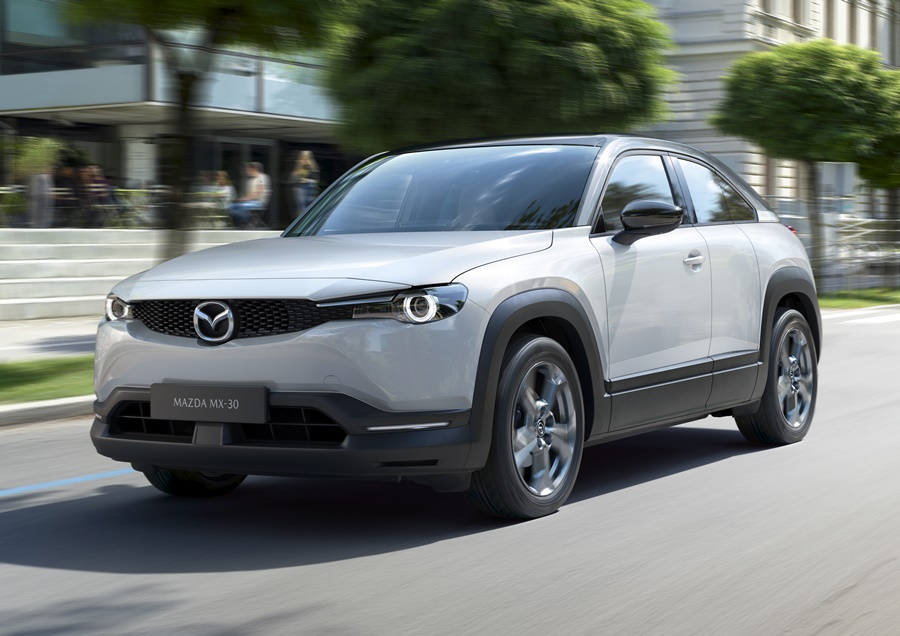
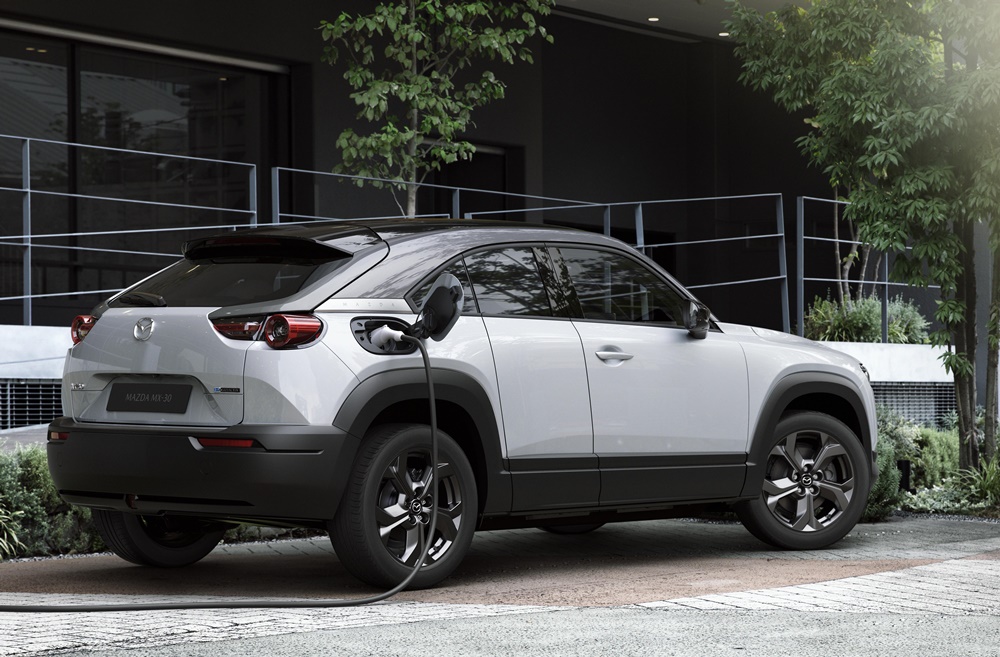
MAZDA MX-30

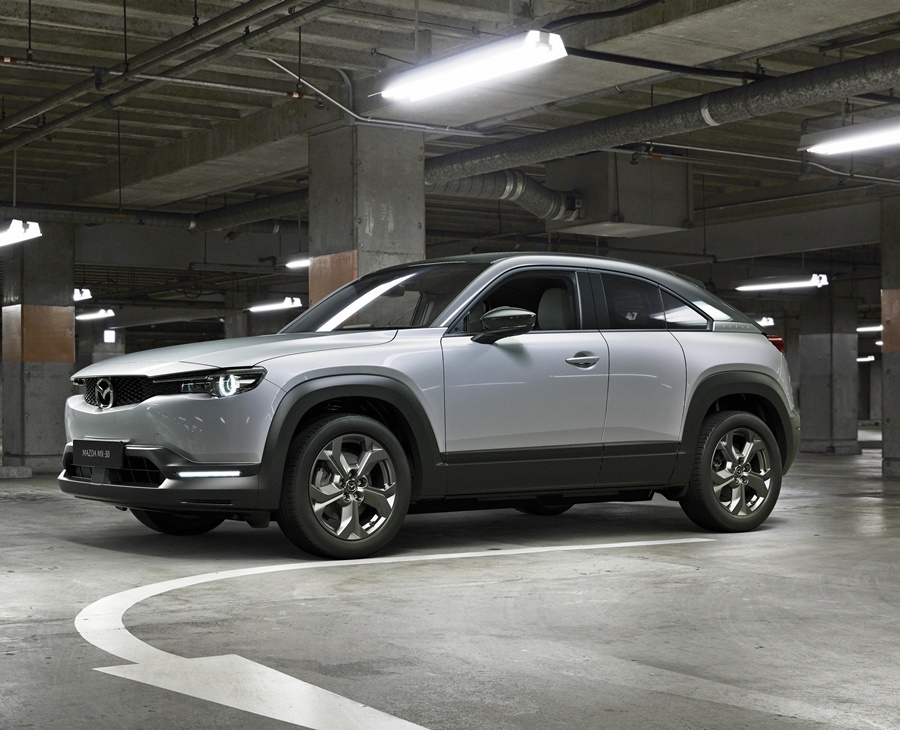
Which is probably why the unveiling of its first all-electric model – the MX-30 – today at the 2019 Tokyo Motor Show is quite a surprise. All these years, the company has never talked much about EV development although it was looking at a range-extender with a rotary engine. Of course, there would have been some R&D in the field but it seemed that everything was about SKYACTIV engines.

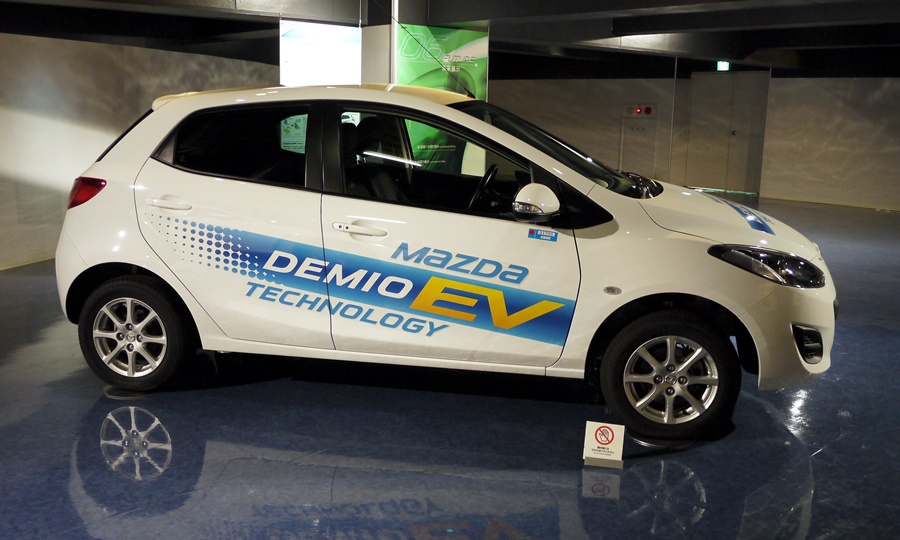
An early generation Mazda2 prototype with an electric powertrain.

Why ‘MX’?
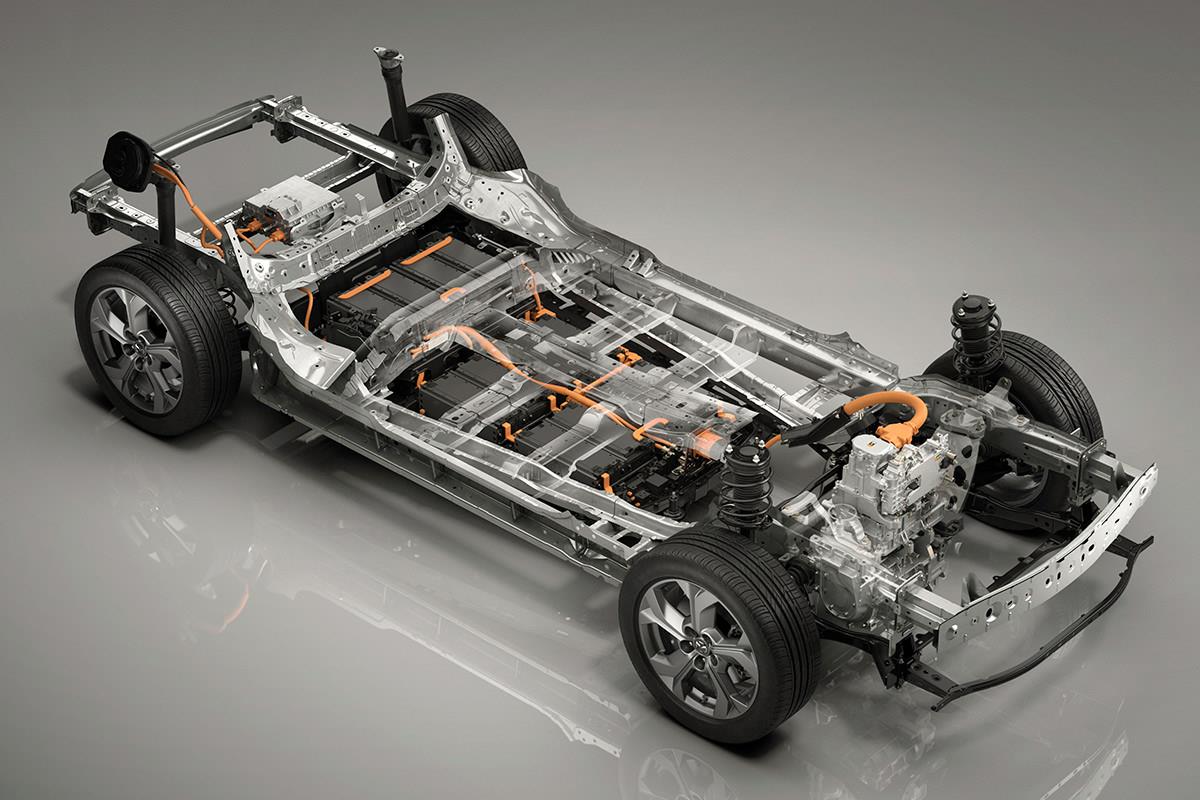
Badging it with ‘MX’ has caused puzzlement since it’s a very different type of car from the MX-5. Or are we seeing the start of a new product categorization strategy with ‘MX’ representing sport variants since there is also the new CX-30 that is similarly sized. In fact, the structure is similar to the SKYACTIV-Vehicle Architecture used for the latest Mazda3 and now, the CX-30 as well, but adapted to take a battery pack.

MAZDA MX-30

The MX-30 is therefore a relatively small car – 4395 mm long, 1795 mm wide, 1570 mm tall, with a wheelbase of 2655 mm. But this is probably advantageous for an EV that needs to keep weight down. Ring structures around the battery pack and in the floorpan are also necessary for extra rigidity which is enhanced by having the battery pack joined to the body.

e-SKYACTIV electric-drive technology
Mazda continues to use the SKYACTIV branding with the MX-30 having e-SKYACTIV electric-drive technology. For now, technical details are limited and the spec sheet shows the lithium-ion battery pack to have total voltage of 355V and a capacity of 35.5kWh. Recharging can be by AC or DC with the former able to go up to 6.6kW. DC charging can be up to 50kW with either the CHAdeMO or CCS standard. The powertrain has a 105 kW (142 ps) output with 264 Nm of torque. The range for the European model is stated as 210 kms.

MAZDA MX-30

We’ve found that whatever type of model Mazda makes, it will always ensure that the jinba-ittai and Zoom-Zoom elements are present. So we can expect that the MX-30 will also be tuned (or programmed) to offer the zesty experience that has won many customers for the brand.

The MX-30 also has a more advanced G-Vectoring Control system known as e-GVC Plus which has been programmed to work more effectively with an electric powertrain. It varies engine torque to optimize the weight transfer front and rear for smoother cornering.

KODO design with a difference
We’ve been exposed to the KODO Design language for many years now and 2 years ago, Mazda’s design chief, Ikuo Maeda, said that KODO Design will continue for some time. The MX-30 is said to adopt KODO Design although it is somewhat different from the other current models. There is a hint of the pentagon-shaped grille which flows into the headlights.

MAZDA MX-30

MAZDA MX-30

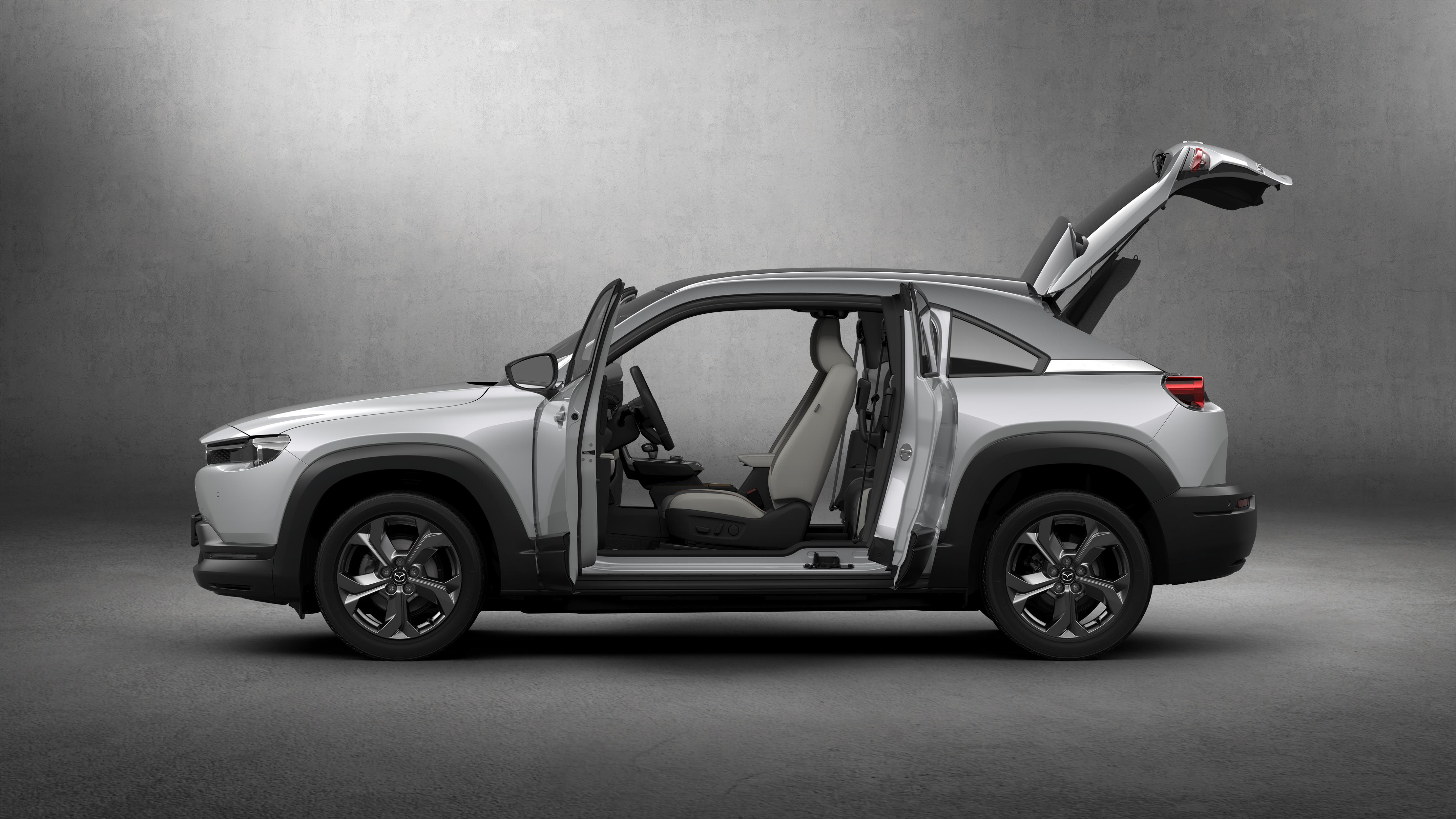
It’s a crossover coupe with the sportiness that justifies having a ‘MX’ badge in a small way. For some reason, Mazda designers have a fondness for what are referred to as ‘suicide doors’ – which are hinged at the back rather than at the centre pillar. They put these on the RX-8 and on the MX-30, they’re known as ‘Freestyle Doors’.

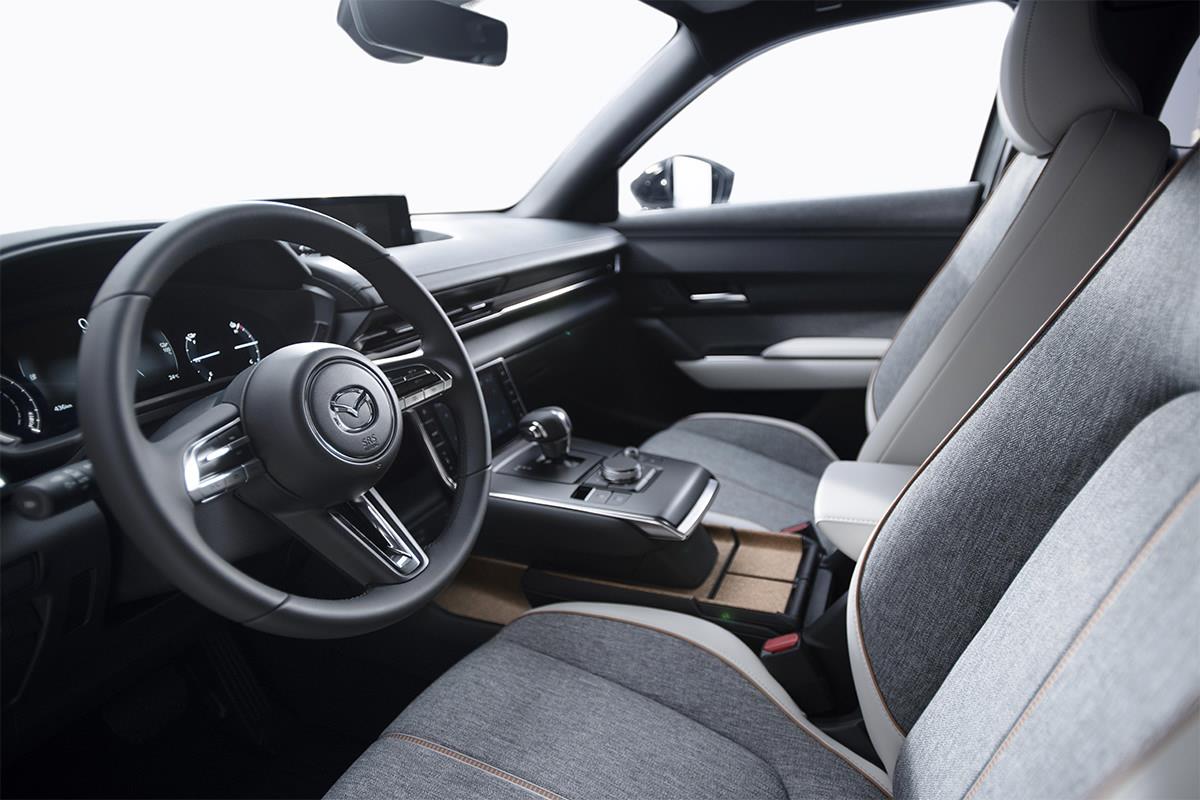
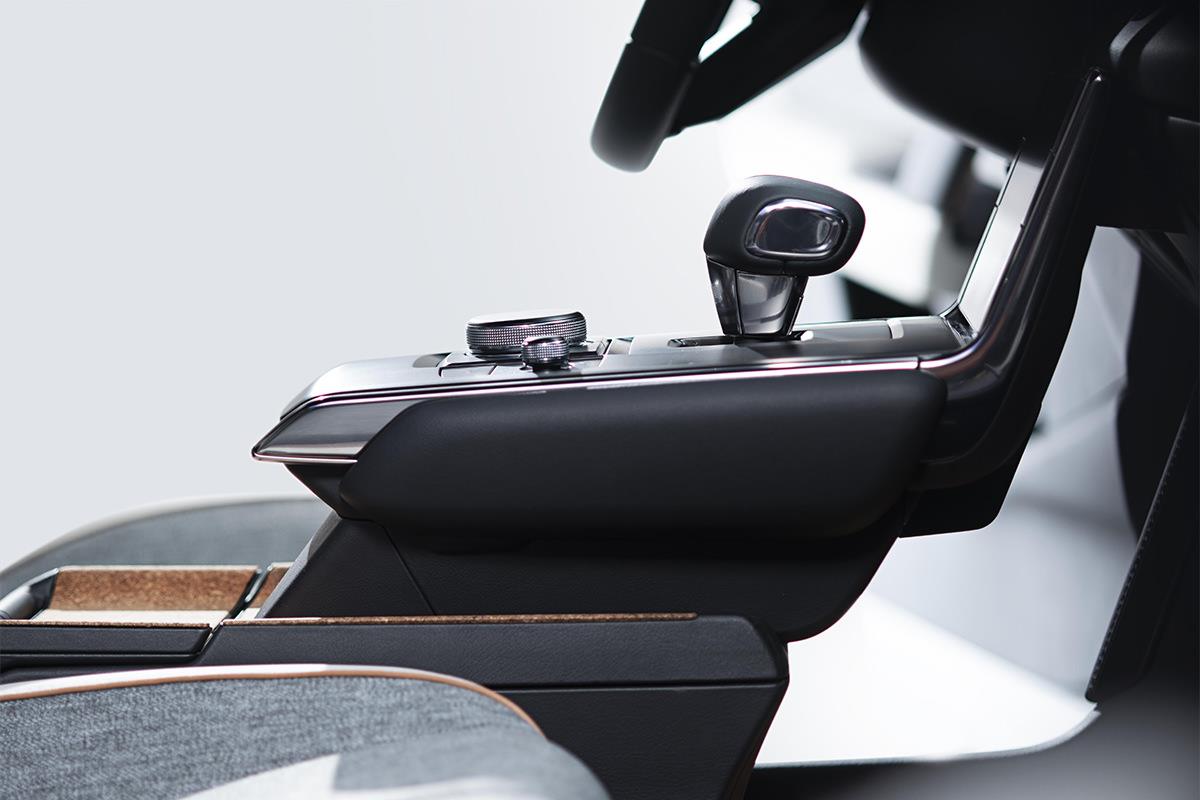
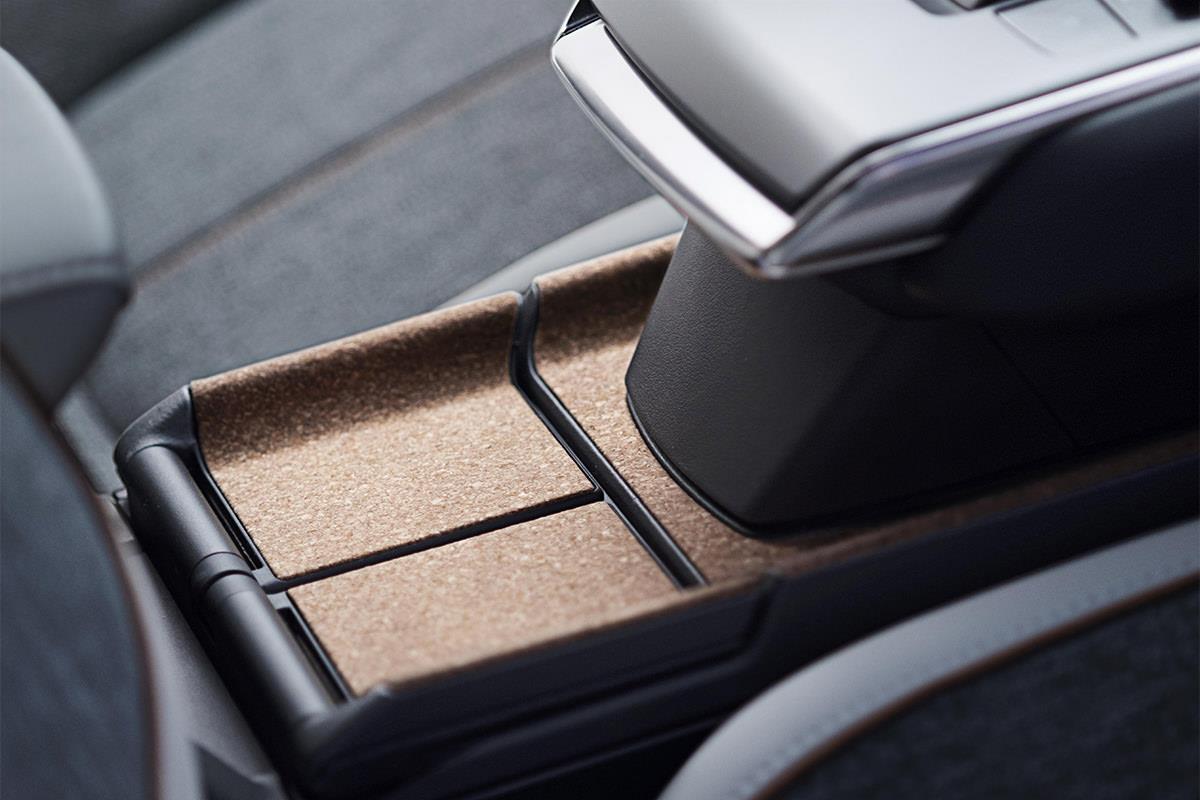
For the interior, openness was a strong objective. The interior space with a floating theme gives a sense of unity, and the design team created an open-feeling cabin interior and paid particular attention to the selecting the right materials and showing them in ways that bring out their best. Heritage Cork used in the console tray is designed to emphasize the texture and visual warmth of the material – and cork is historically associated with the company.

MAZDA MX-30

MAZDA MX-30

MAZDA MX-30

The door trim features a fibrous material with a texture that seems to contain air, creating a material-based sense of openness within the cabin. Both of these materials are designed to be low-impact and sustainable. The door trim uses fibres made from recycled plastic bottles and the cork is harvested from the bark of trees without felling.

MAZDA MX-30

So far, marketing plans for the MX-30 are sketchy. The first units will roll out early next year and the domestic market will certainly get them. Orders from European importers and distributors are also accepted from today but for other markets, no information is available yet. But the MX-30 is just the start for Mazda’s electrification and a senior executive has said that every model line will have an electrified variant by the 2030. As for the Malaysian market, ot is unlikely that we’ll have the MX-30 or any other EV Mazda introduces for a while unless there is a major shift in government policies which must be accompanied by a recharging infrastructure.

PISTON.MY

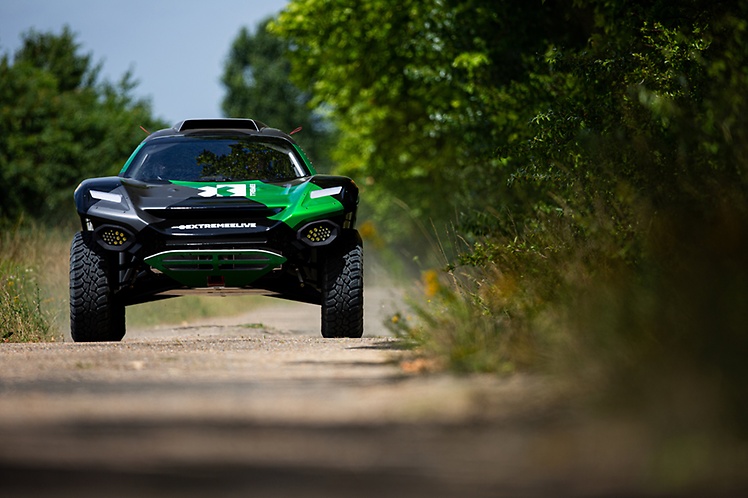
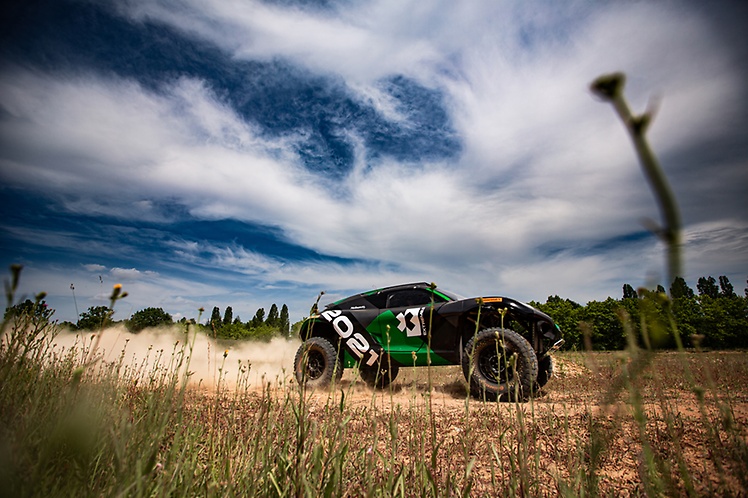
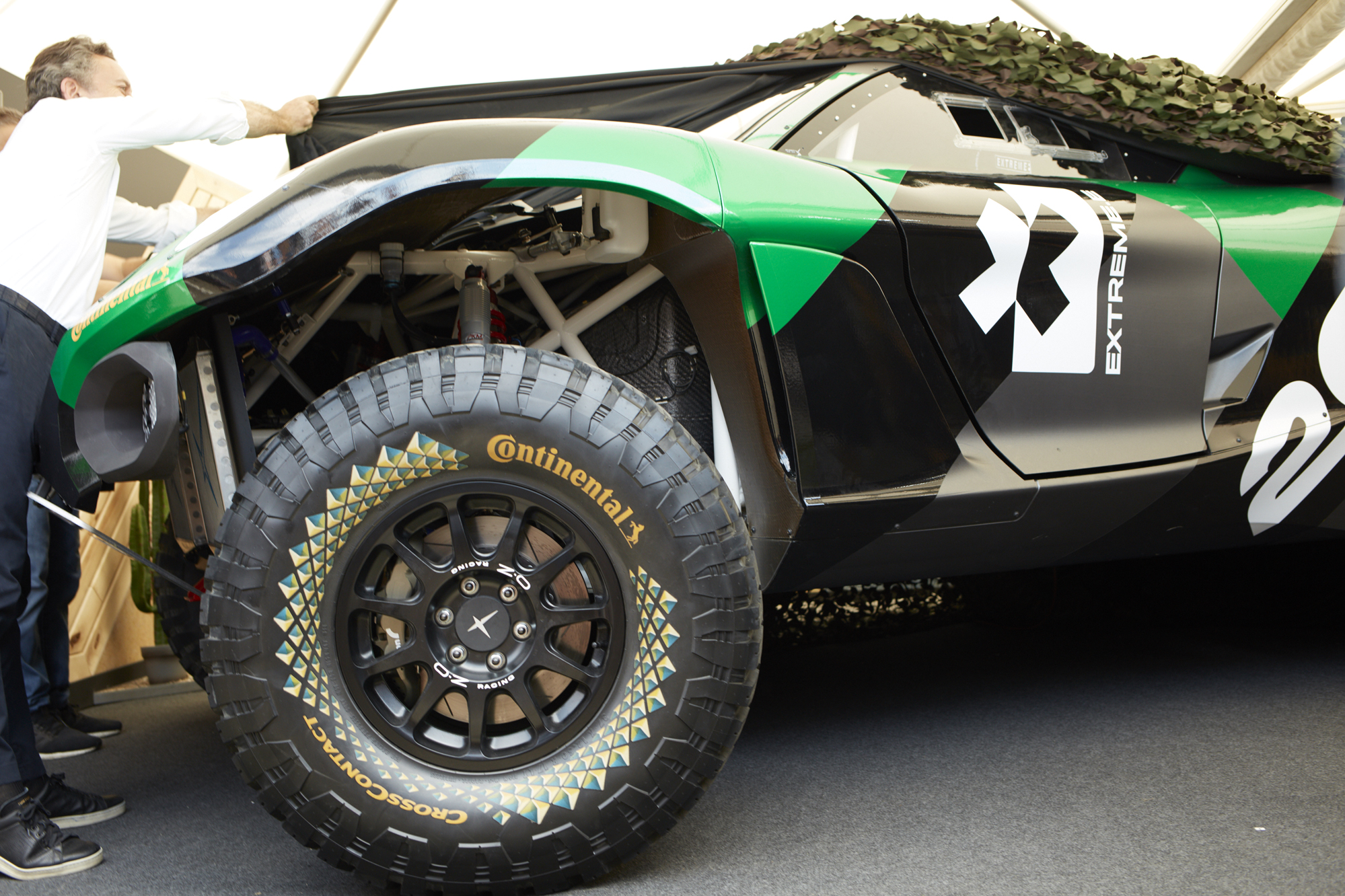
Following the success of the Formula E all-electric single-seater championship that began in 2014, plans are underway for another all-electric racing series and this one will be off-road. To be called ‘Extreme E’, testing began earlier this month at the Chateau de Lastours off-road proving grounds in the south of France.

How well the car and tyres are working together was one of the questions looked into during the test runs but the testers were also looking for any potential weaknesses in the electric race car’s physical and technical design, and not least in its motor. The tests lasted several days and were run by Continental tyres and Spark Racing Technology.

Extreme E

“The off-road conditions here are perfect and the entire team can’t wait to get out there and finally put the cars through their paces,” said Mikaela Ahlin-Kottulinsky, who had a very specific role in the initial test phase in this remote corner of southern France. The Swede comes from a family of successful racing drivers and is the only woman to have won a race in the Scandinavian Touring Car Championship.

At the proving ground, her role was to test Continental’s new high-performance tyres. “The tests will show how close we are to achieving our vision of an off-road electric racing series in some of the remotest locations in the world,” she said. “Overall, I’m pretty confident that the results will be positive.”

Extreme E

Locations around the planet
Continental became an Official Partner of the Extreme E off-road electric racing series in January 2019. The races will take place all over the world in locations – rainforest, desert, the freezing Arctic, high altitude and ocean islands – that have been chosen to raise awareness of the environmental issues facing humanity. Promoters Formula E Holdings Ltd. expects 10 teams to take part in the first season, which is scheduled to begin in December 2020. The first two locations have been confirmed as Greenland and Brazil.

Continental is already a Founding Partner of the series and will become a Premium Partner in 2021. The technology company will also be equipping all the vehicles involved in the races with tyres for the diverse and extremely demanding conditions that they will encounter.

Extreme E

Raising awareness of climate change
One of the main goals shared by Extreme E’s founders, partners and participants is to raise awareness among spectators of the challenges facing society as a whole, such as climate change, humankind’s interaction with the environment and the protection of threatened animal and plant species.

According to Continental’s Extreme E project leader, Sandra Roslan, “This new racing format is an opportunity for us to show that our high-performance tyres keep delivering even under extreme conditions. But Extreme E is also a radical new initiative for raising awareness of the challenges facing the modern world. It is this unconventional mix of adrenaline, entertainment and sustainability that makes this series so exciting. That is why we became Founding Partners and sponsors of the series in January and why we are really looking forward to the test phase.”

(more…)

Following a 4,100-km drive through the world’s most developed electrified car markets, Kia Motors collected data that provides insights into the major trends for electrification in Europe. Referred to as the ‘Electric Mission’, the project was carried out in partnership with automotive research consultancy World Shopper.

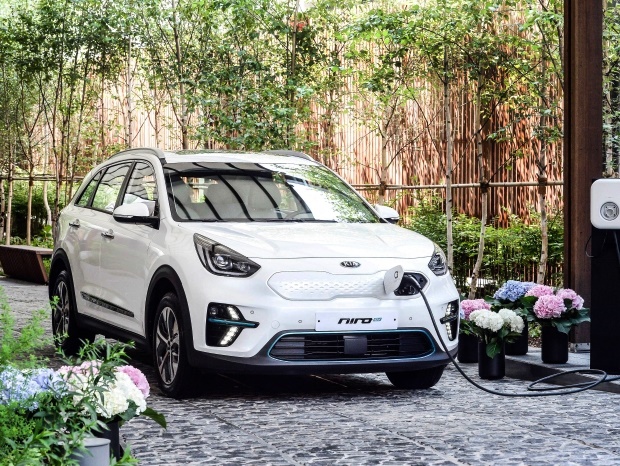
The Electric Mission lasted 10 days, with a team of researchers visiting towns and cities across Northern Europe that are shaping the future of electric mobility. The team completed the journey in a Kia e-Niro all-electric crossover, passing through Germany, the Netherlands, Denmark, Sweden and Norway.

During the road trip, World Shopper’s industry analysts met with more than a hundred decision-makers and stakeholders in the world of vehicle electrification, gathering data and first-hand insights for the Electric Mission report. The researchers also met with consumers, exploring attitudes towards electric vehicles, charging infrastructure, trends for electric vehicle adoption, and how they integrate electric vehicles into their daily lives.

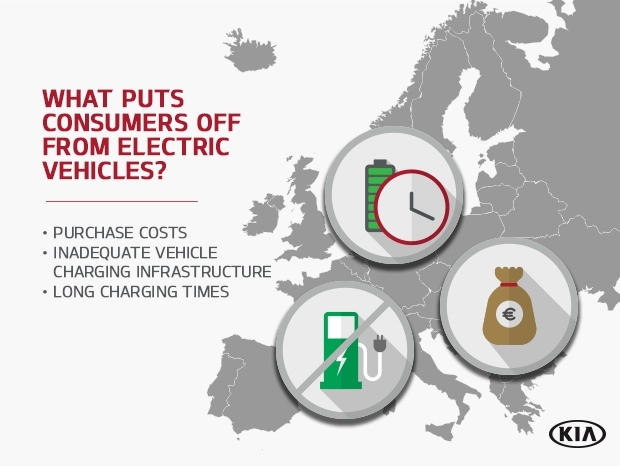
The report suggests that consumers are still put off by the perception of high electric vehicle purchase costs, inadequate vehicle charging infrastructure, and long charging times. Crucially, the report also shows how drivers have successfully switched from petrol and diesel vehicles and incorporated electric vehicles into their lifestyle.

Kia

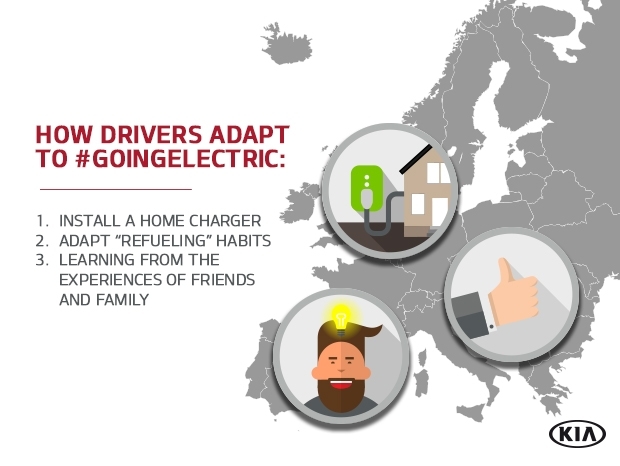
Home charger makes a difference
The report found that consumers can more easily make the transition from fossil fuels to electric power by installing a home charging point. Often subsidised, or offered with the purchase of the electric car, home chargers enable drivers to leave home every morning with a full battery – not a luxury enjoyed by drivers of conventional vehicles.

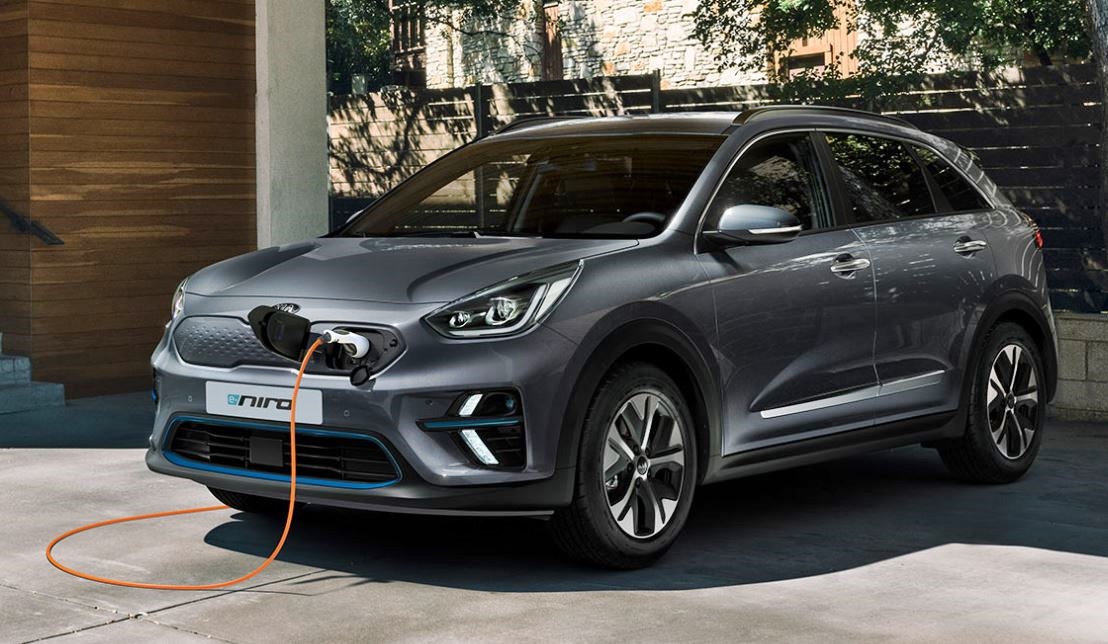
Owners of the e-Niro, for example, can set off every day with the maximum 455-km range when the battery pack is fully charged – a range significantly further than most drivers cover in a single day. The report found that the average single drive would only require around 4kW of the e-Niro’s 64 kWh battery capacity.

Kia e-Niro

Adapting ‘refuelling’ habits
While the research from Kia and World Shopper highlighted a shift towards charging vehicles at home or at the office, many people have also fit electric vehicles into their lives by adapting their day-to-day charging habits. In Norway, for example, many drivers use vehicle recharging time to have something to eat, have a coffee, or catch up on their email.

The proliferation of fast chargers at service stops on major roads enables drivers to quickly recharge their vehicles sufficiently for a week of commuter driving in the space just 30 minutes. For example, charging a vehicle with a battery pack of 50kWh using a 175 kW fast charger, a driver can recover an 80% battery charge in between 15 and 30 minutes.

Kia

Sharing the experiences of others
Kia found during its research that one of the easiest ways for buyers of fossil fuel vehicles to overcome any concerns around electric vehicles was hearing about positive experiences of their friends and family. With vehicles such as the e-Niro making long-distance, zero-emissions transport possible, many drivers just need to hear about the added benefit of lower running costs, maintenance costs and lower vehicle taxes to be convinced. Word-of-mouth remains the number one reason why many people have switched to electric power in certain markets, and the longer driving range of the new generation of electric vehicles is now making them a truly viable choice for the majority of drivers.

(more…)

Mazda has announced that they’ll be introducing their very first production EV (electric vehicle) on 23 October 2019. This means that two days from now, the electrified Mazda will make its official debut at the 2019 Tokyo Motor Show and judging by the teaser photo they posted, it might just be an SUV of some sort. (more…)

After its pioneering role in mass producing hybrid vehicles in the late 1990s and then taking on a leadership position in the segment, it looks like Toyota plans to do the same for battery electric vehicles or BEVs. With hybrids, Toyota successfully brought the more environment-friendly powertrain into the mainstream, enabling volumes to become larger. This, in turn, allowed economies of scale to kick in and lower production and technology costs, making hybrids more affordable.

Toyota BEV

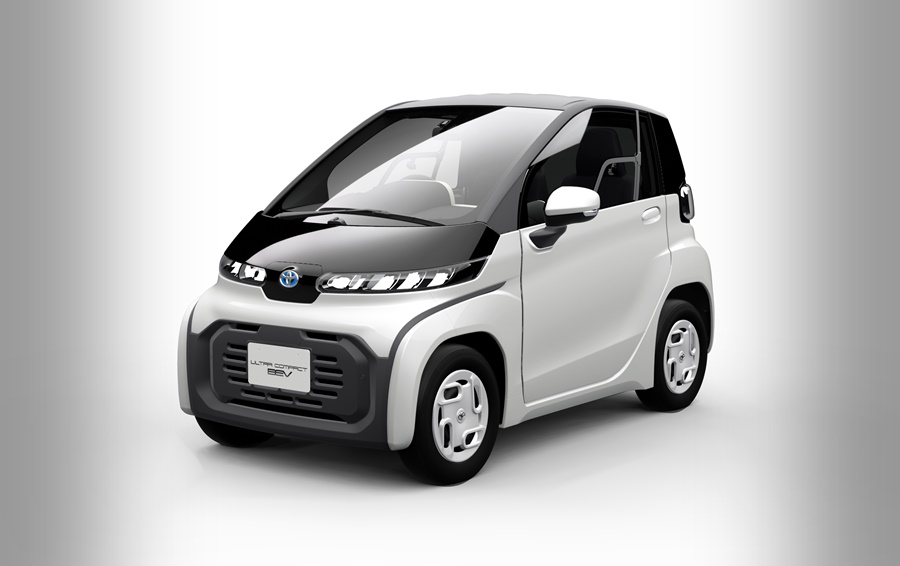
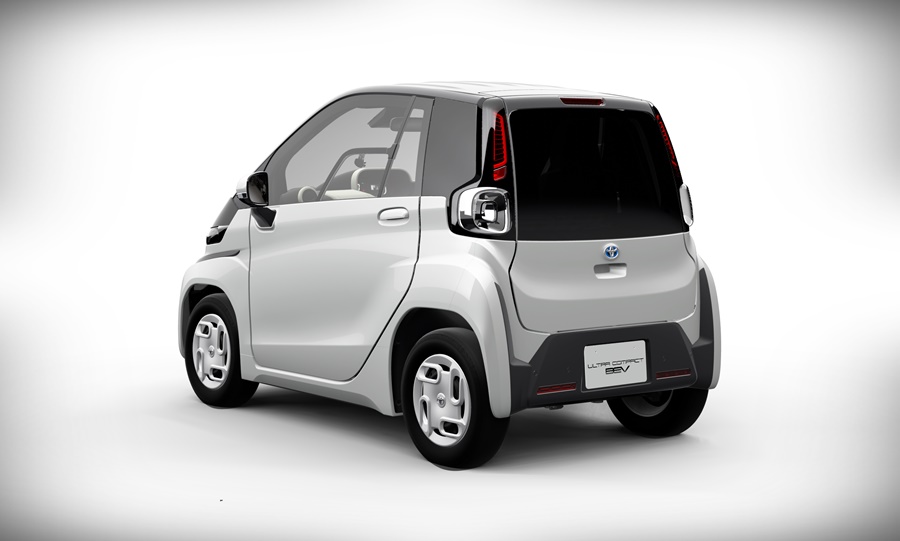
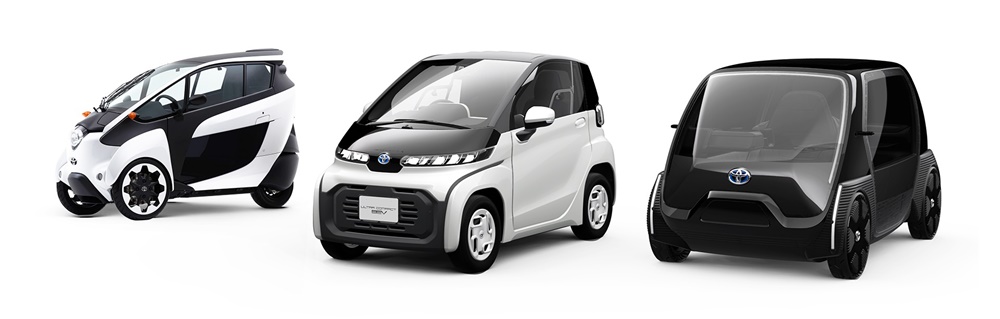
At the Tokyo Motor Show this month, the carmaker will display a new, production-ready ultra-compact BEV which it plans to start selling in Japan late next year. The ultra-compact 2-seater is specifically designed to meet the daily mobility needs of customers who make regular short-distance trips, such as the elderly, newly licenced drivers or businesspeople visiting local customers.

The next-generation mobility solution is designed to provide short-distance mobility while limiting impact on the environment. It has a range of approximately 100 kms on a single charge, can reache a maximum speed of 60 km/h and features an extremely tight turning radius.

Development chief Akihiro Yanaka said the BEV, which is less than 2.5 metres long and 1.3 metres wide, can be considered a mobility solution that can support Japan’s ageing society and provide freedom of movement to people at all stages of life.

Toyota
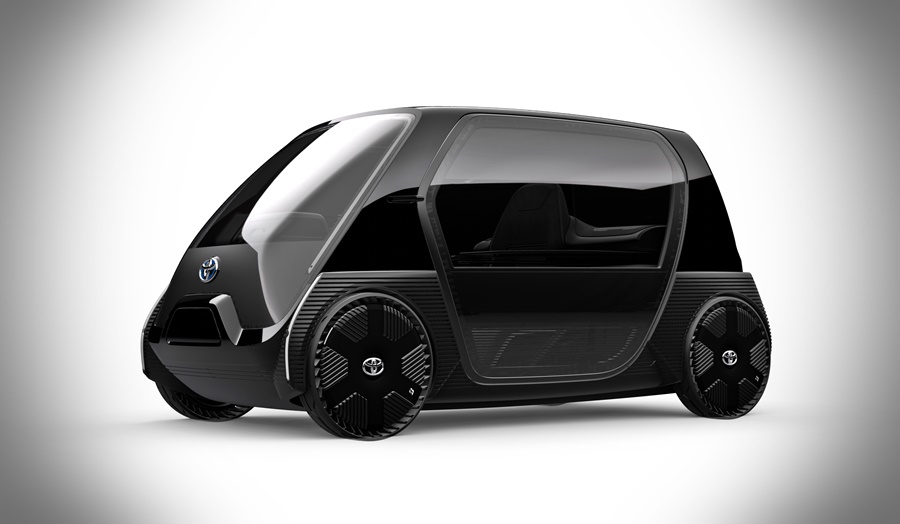
There will also be a variant for business although it is currently in concept stage and plans for sale have not been announced.

New business model to popularise BEVs
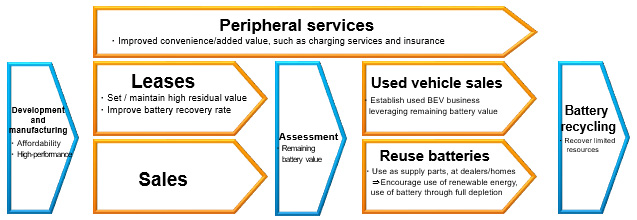
Toyota is also pairing its planned launch next year with a new business model that aims to promote the wider adoption of BEVS in general. This includes examining every step of the battery pack’s life, from manufacture through sale, resale or re-use, and recycling to maximise its value.

Toyota

In the near term, Toyota will focus on expanded leasing initiatives designed to recapture used batteries for evaluation and re-use as appropriate in pre-owned vehicles, as service parts, or even in non-automobile applications. Toyota is also developing peripheral services for BEVs such as recharging stations and insurance.

Toyota
The first of BEV models from Toyota which will appear in Japanese cities from next year,

(more…)

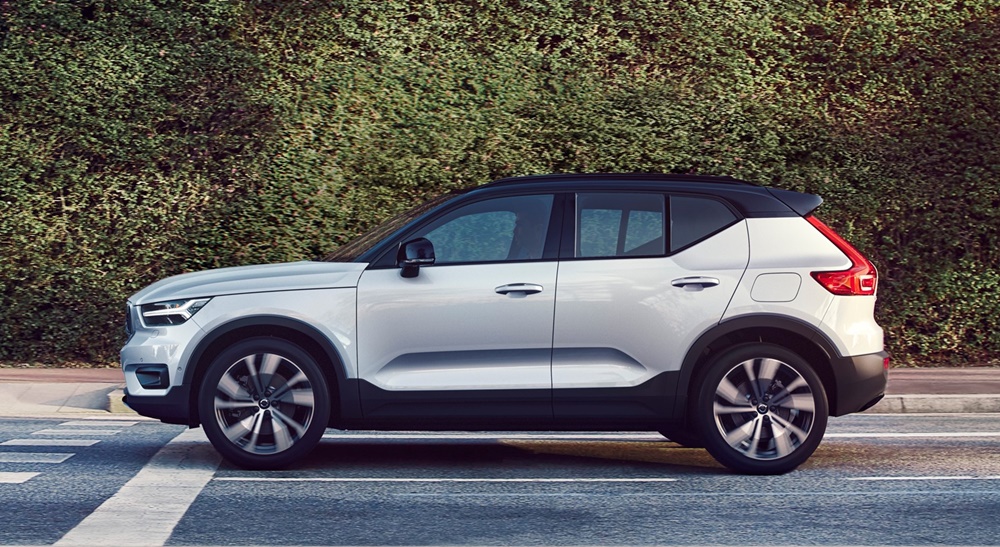
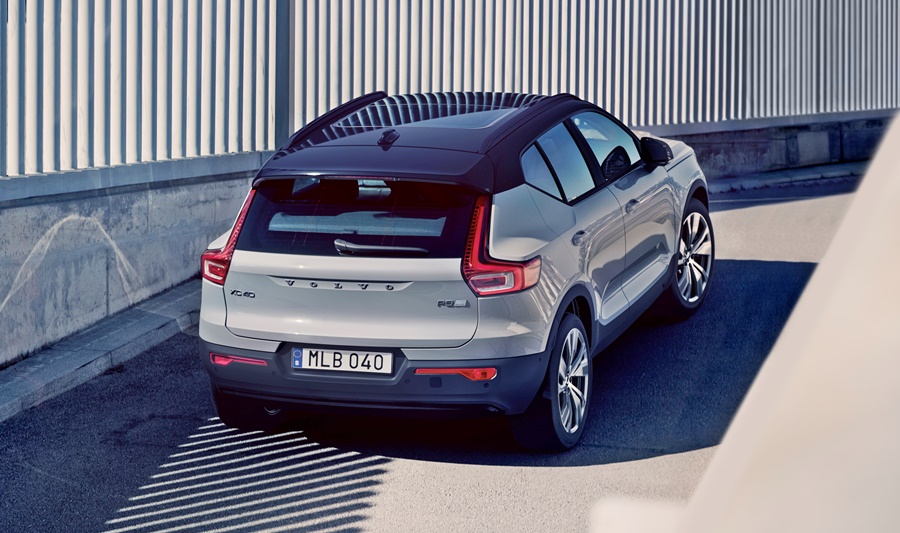
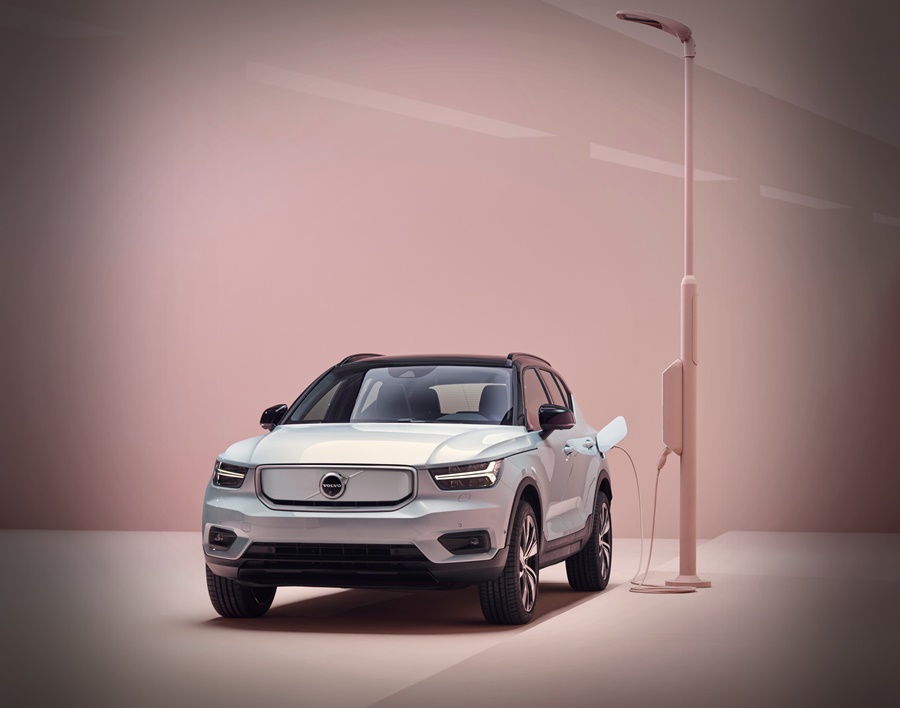
Some years back, Hakan Samuelsson, President & CEO of Volvo Cars declared that the company is determined to be the first premium carmaker to move its entire portfolio of vehicles into electrification. After starting with hybrids, the plan was to have fully electric models by the end of this decade and with three months remaining, the company has rolled out the XC40 Recharge, its first ever fully electric car and the first model to appear in its brand-new Recharge car line concept.

Volvo XC40 Recharge

First in the fully electric Volvo family
The XC40 Recharge, based on the XC40 SUV, is the first of a family of fully electric Volvos. Over the next 5 years, the Swedish carmaker (part of China’s Zhejiang Geely Holding Group since 2010) will launch a fully electric car every year. This will enable it to make all-electric models account for 50% of global sales by 2025, with the rest being hybrids. Recharge will be the umbrella  name for all Volvos with a fully electric and plug-in hybrid powertrain.

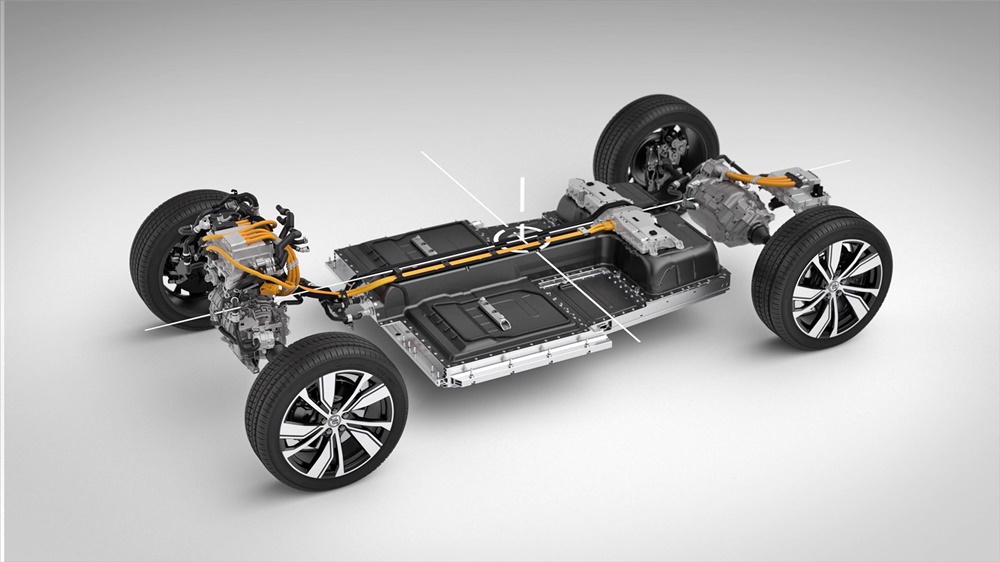
The new XC40 Recharge, with all-wheel drive and 408 ps, has a claimed range of over 400 kms on a fully charged battery pack. The battery pack can be recharged to 80% of its capacity within 40 minutes but only if a fast-charger system is used.

Volvo XC40 Recharge

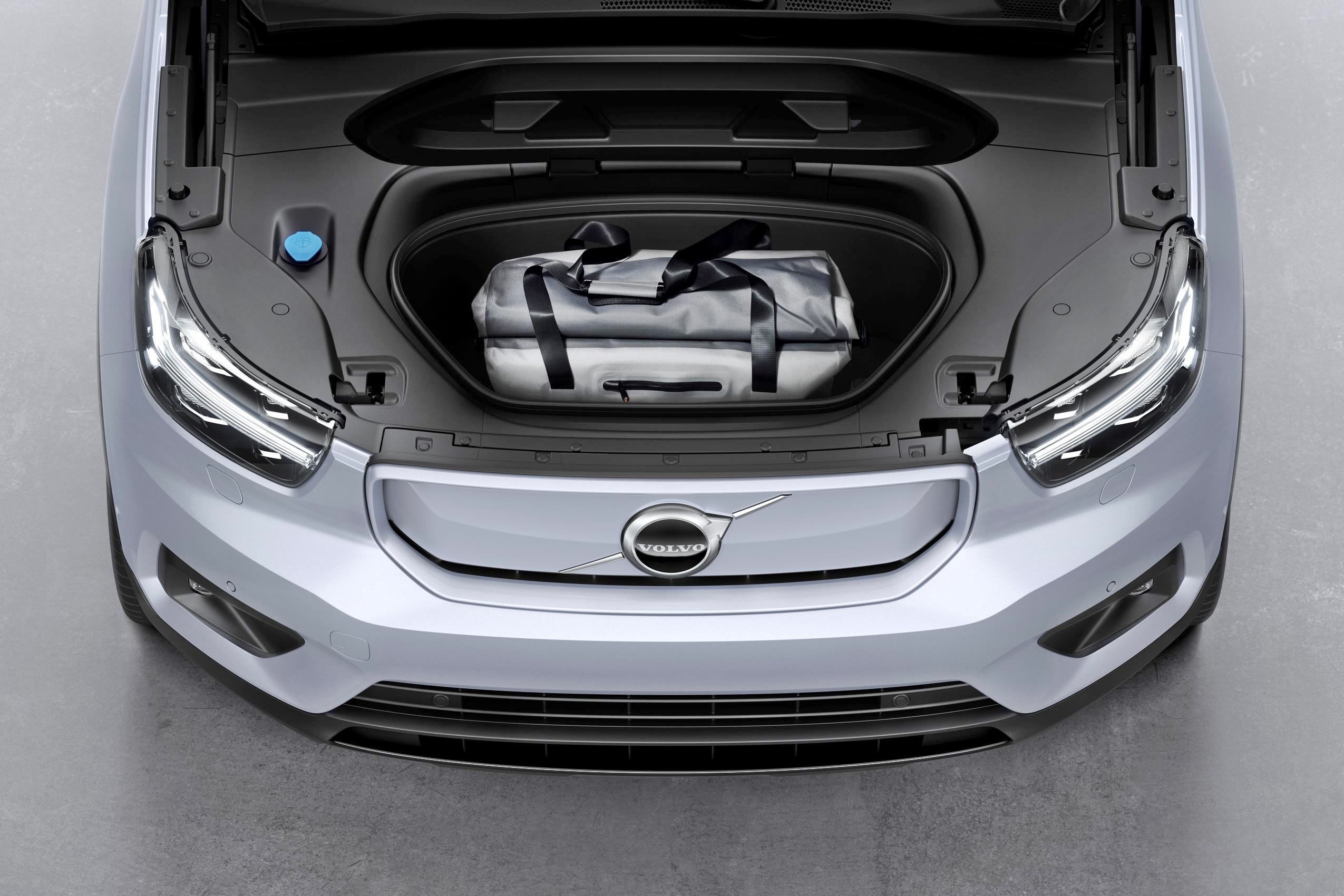
Volvo XC40 Recharge

Fully powered by Android
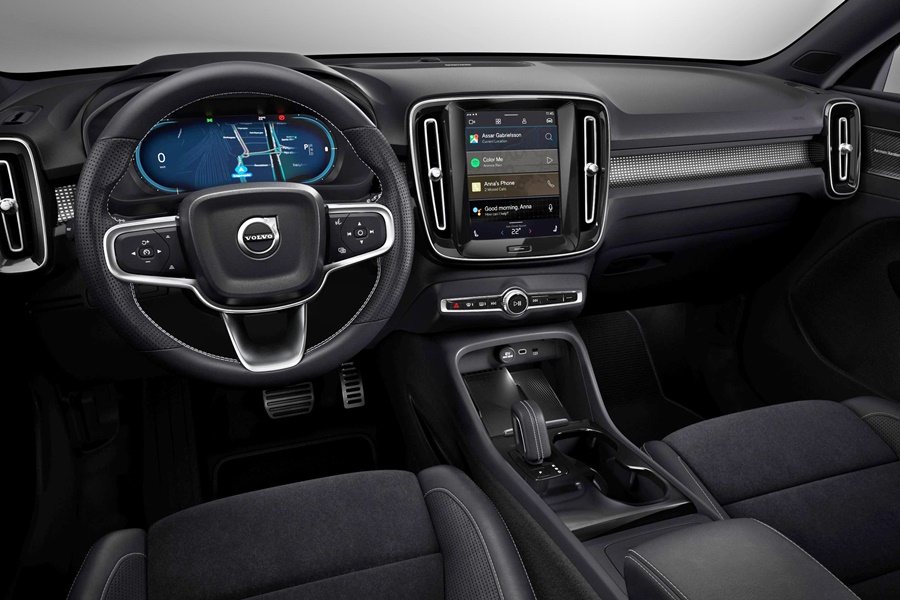
An Android-powered infotainment system is fully integrated with Volvo On Call, the company’s digital connected services platform. The Volvo Car Group is the first company to team up with Google on integrating an infotainment system powered by Android, with the Google Assistant, Google Maps and the Google Play Store built-in. The new system offers full integration of Android Automotive OS, Google’s open-source Android platform, with real-time updates to services and automotive apps created by the global developer community.

Volvo XC40 Recharge

“We are finally giving you the same experience in your car that you’re used to on your phone, but adapted for safe interaction while driving,” said Henrik Green, Chief Technology Officer at Volvo Cars. “And by introducing over-the-air updates for everything from maintenance to completely new features, the car can stay as fresh as your other digital products, always with the latest and greatest features.”

Volvo XC40 Recharge

To meet the anticipated growth in demand for its Recharge models, Volvo Cars will triple production capacity for electrified cars and will, as of next year, prepare a Designer’s Choice selection of popular Recharge models, offering the potential for radically reduced delivery times.

(more…)

For many driving enthusiasts, a lap of the legendary Nurburgring Nordschleife circuit in Germany is something they must do at least once in their life. Opened in 1927, the engineers designed a 28.3-km Nurburgring circuit with various route variants, including the then 22.8-km Nordschleife. It is estimated to have cost 27 million euros converted to today’s monetary value.

Nicknamed ‘The Green Hell’ by 3-times F1 champion Jackie Stewart, the Nurburgring Nordschleife circuit is used for certain world championship events, especially endurance races. On days when there are no races, the circuit is open to the public who, after paying a fee, of can drive their own cars around during the ‘tourist sessions’. There are all sorts of cars – as well as vans and even buses!

For those who want an extreme experience but don’t have the necessary skills for high-speed driving, there are also ‘taxi rides’ available. Professional drivers will be at the wheel and there’s a range of supercars to choose from.

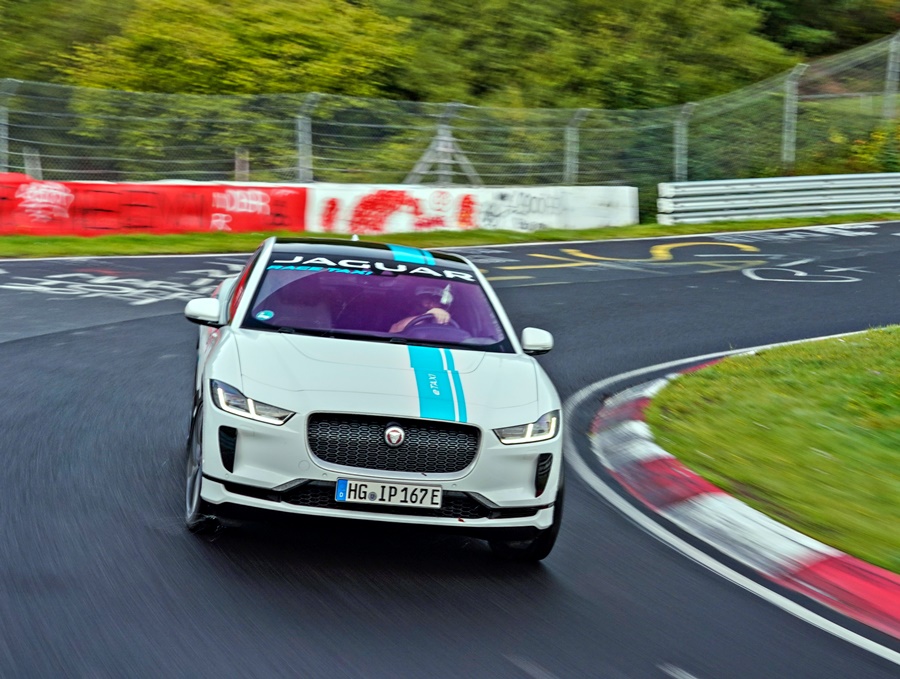
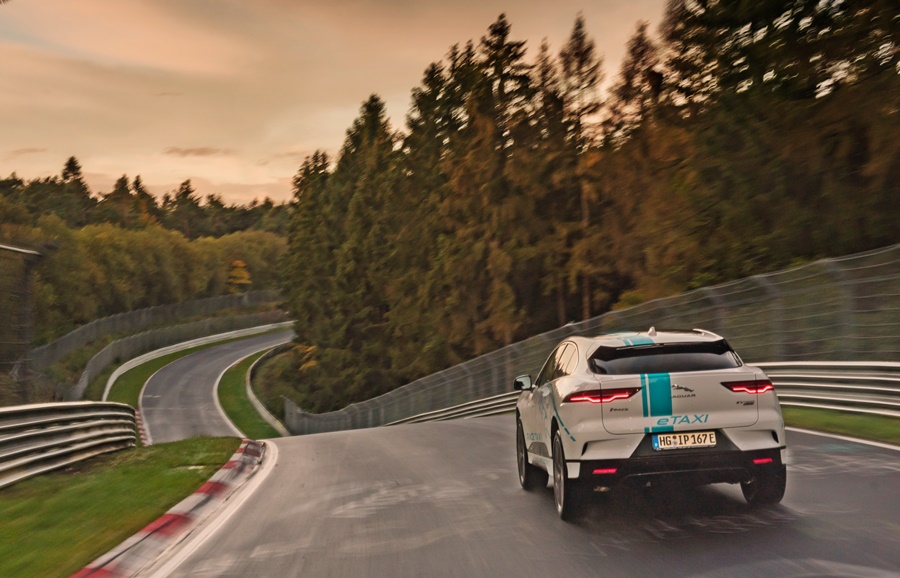
Jaguar I-PACE RACE eTAXI

First zero-emissions performance SUV for taxi rides
But until now, there has never been a fully-electric taxi at Nurburgring and Jaguar’s RACE eTAXI service with the I-PACE performance SUV is the first. The public can now experience the sportscar performance of the all-wheel drive I-PACE around the 20.8-km, 73-corner track. The zero-emissions SUV has a claimed acceleration time from 0 – 100 km/h in 4.8 seconds with its 400 ps/696 Nm powertrain that is fed energy from a 90-kWh lithium-ion battery pack.

Jaguar I-PACE RACE eTAXI

One lap as a co-driver in the I-PACE will cost €149 (about RM690) and you are provided with a helmet and drinks. The introduction of the first all-electric RACE eTAXI is another step in Jaguar’s electrification strategy as it enables more people to experience Jaguar’s I-PACE first-hand.

(more…)

Archive

Follow us on Facebook

Follow us on YouTube