Electric powertrains used to have a poor image, considered suitable only for buggies around golf courses. That was when the technology was still in its infancy (though electrically-powered cars were already on roads in the 1930s) and performance as well as range were poor.
But since the beginning of the 21st century, R&D for electric vehicles (EVs) has accelerated, partly prompted by increasingly strict emission regulations that make it very hard for the internal combustion engine (ICE) to meet. Many of today’s EVs operate with performance levels that are comparable to ICE cars and will continue to advance as they enter the mainstream.
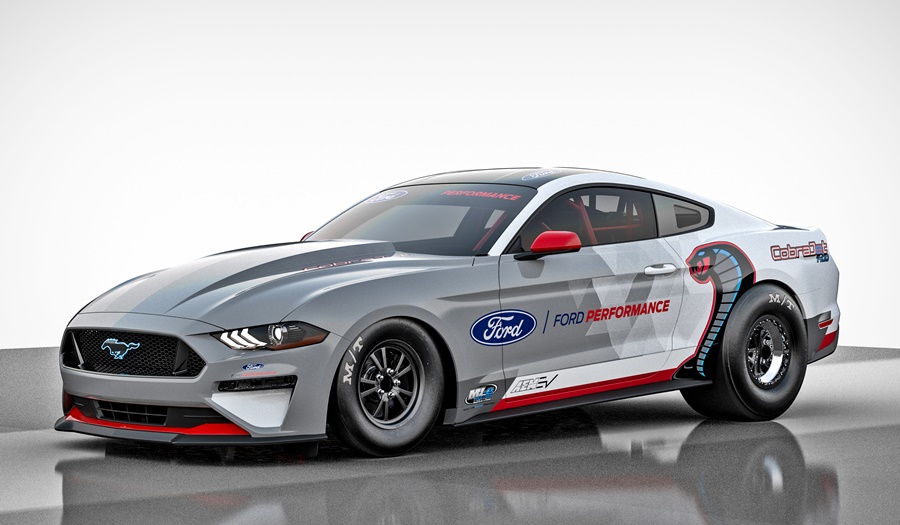
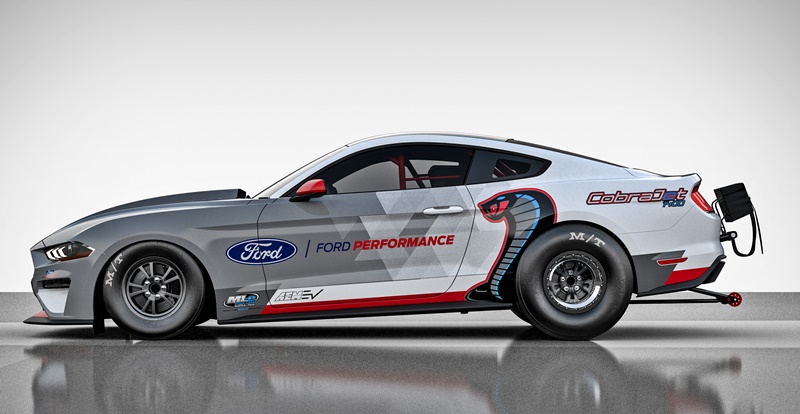
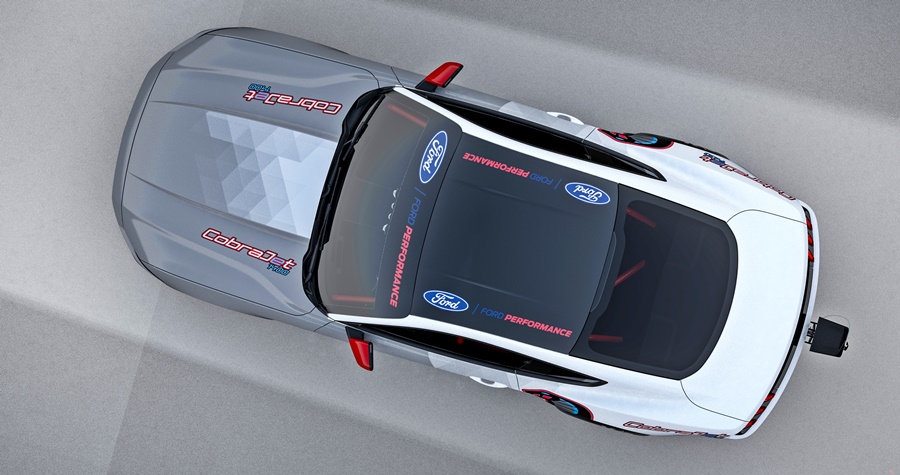
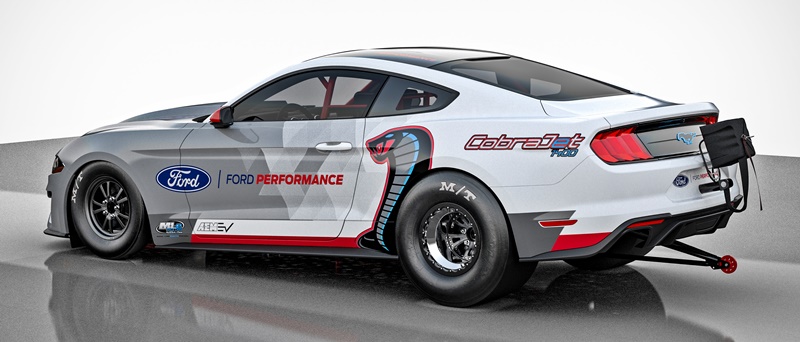
As has happened almost since the beginning of the automobile, extending performance is a challenge for the engineers and the same is happening in the EV field. Here’s the latest example: the Mustang Cobra Jet 1400 by Ford Performance.
This is a one-off project to create a factory drag racer with all-electric propulsion. It’s projected to cross the quarter-mile (about 400 metres) in the low 8 second range at more than 270 km/h.
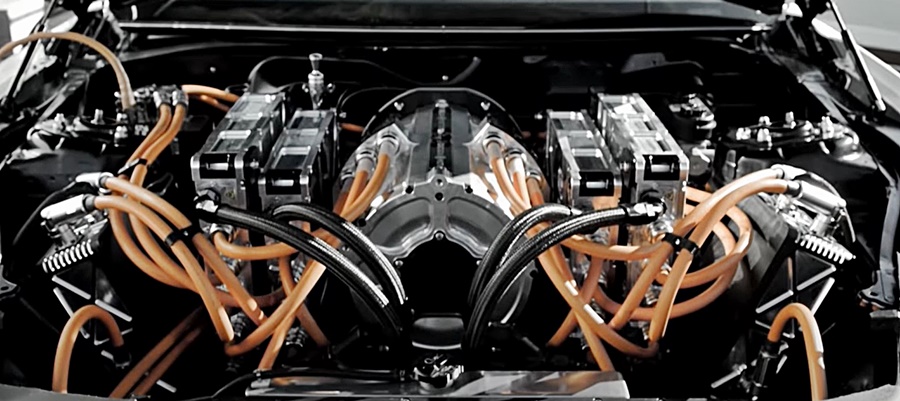
The powertrain is a prototype purpose-built and projected to deliver over 1,400 ps, with over 1,491 Nm of instant torque to demonstrate the capabilities of an electric powertrain in one of the most demanding race environments.
“Ford has always used motorsport to demonstrate innovation,” said Dave Pericak, Global Director, Ford Icons. “Electric powertrains give us a completely new kind of performance and the all-electric Cobra Jet 1400 is one example of pushing new technology to the absolute limit. We’re excited to showcase what’s possible in an exciting year when we also have the all-electric Mustang Mach-E joining the Mustang family.”
Uner the bonnet
Following the debut of the all-electric Ford Mustang Mach-E SUV – the first-ever, all-electric Mustang – the Mustang Cobra Jet 1400 prototype represents another opportunity to advance the Mustang’s heritage and performance while simultaneously incorporating some of the most advanced technology coming to Ford’s future powertrains.
The name used for the prototype also honours the original Cobra Jet that first dominated dragstrips in the late 1960s and still is a major force in sportsman drag racing today. Ford Performance continues to test the Cobra Jet 1400 ahead of its world debut later this year at a drag racing event.
“This project was a challenge for all of us at Ford Performance, but a challenge we loved jumping into,” said Mark Rushbrook, Global Director, Ford Performance Motorsports. “We saw the Cobra Jet 1400 project as an opportunity to start developing electric powertrains in a race car package that we already had a lot of experience with, so we had performance benchmarks we wanted to match and beat right now. This has been a fantastic project to work on, and we hope the first of many coming from our team at Ford Performance Motorsports.”
The lead-acid batteries in motor vehicles have been around for many decades and because they are made from elements that can be recycled, there is an established ‘business’ in collecting and recycling batteries. Even the guy who collects old newspapers will take them as the lead, plastics and even the sulphuric acid can also be recycled.
Lead-acid batteries are therefore considered as ‘closed-loop’ products which means that when their ‘first life’ is over, they can be recycled into other products. It is estimated that globally, 98% of such batteries are being recycled.
With the advent of hybrid and electric vehicles since the late 1990s, more powerful battery packs have appeared. These are needed to store electricity in large amounts and to power the electric motors. These have not continued with the lead-acid approach which would make the battery packs very heavy as they would have to be very big to store sufficient electricity.
Instead, the battery packs for battery-powered electric and hybrid vehicles use nickel-cadmium (NiCd), nickel–metal hydride (Ni-Mh), and more recently, lithium-ion or lithium-ion polymer. The technology is constantly advancing, and the battery packs are getting more compact while their storage capacity keeps growing, making possible longer travel ranges.
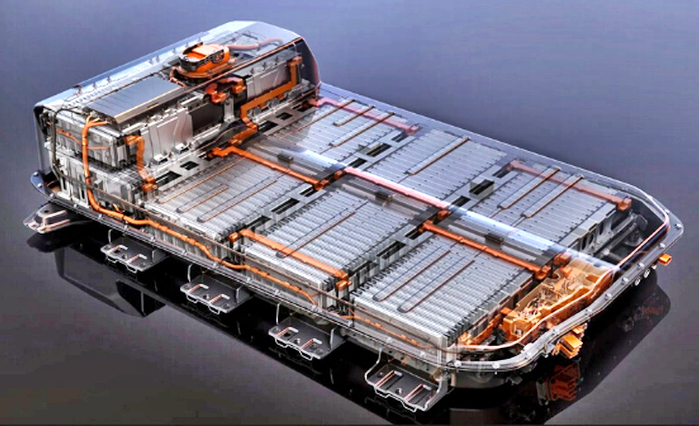
Battery pack used in an Accord Hybrid.
End-of-life disposal
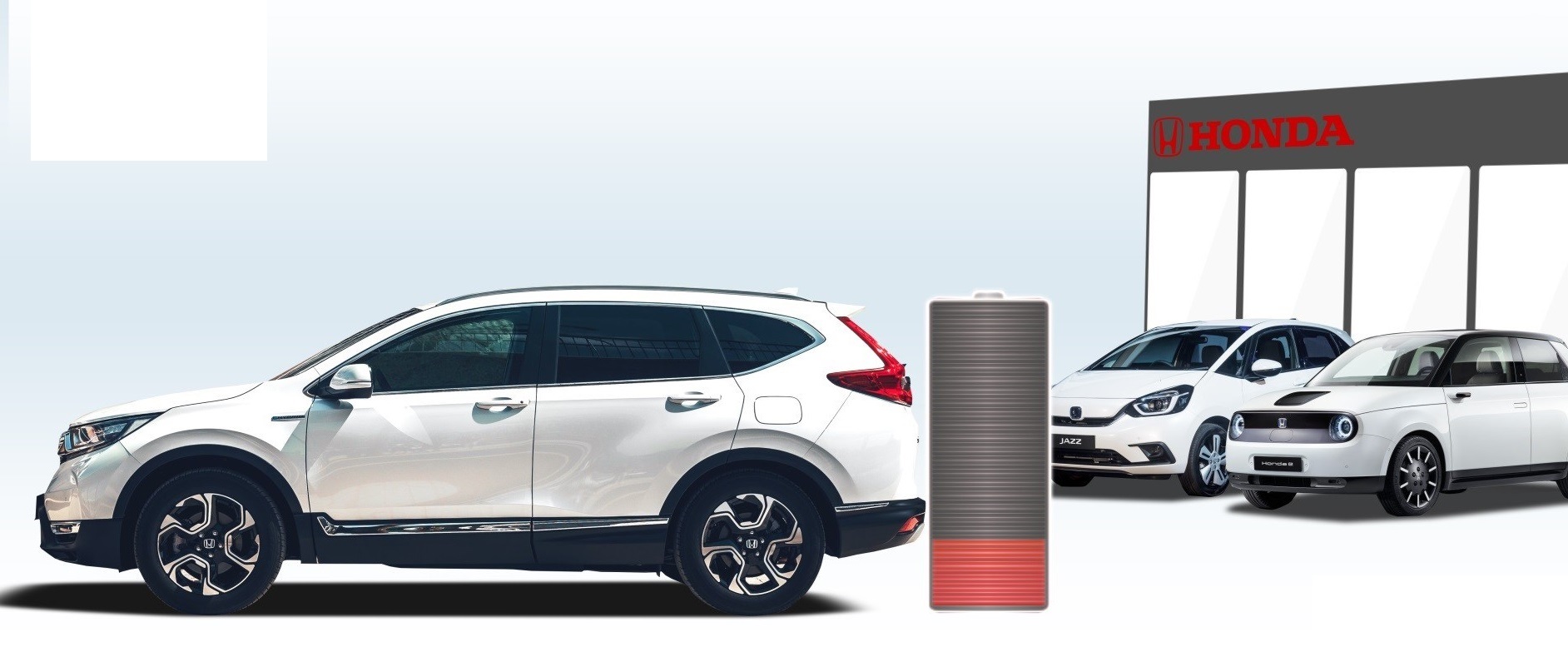
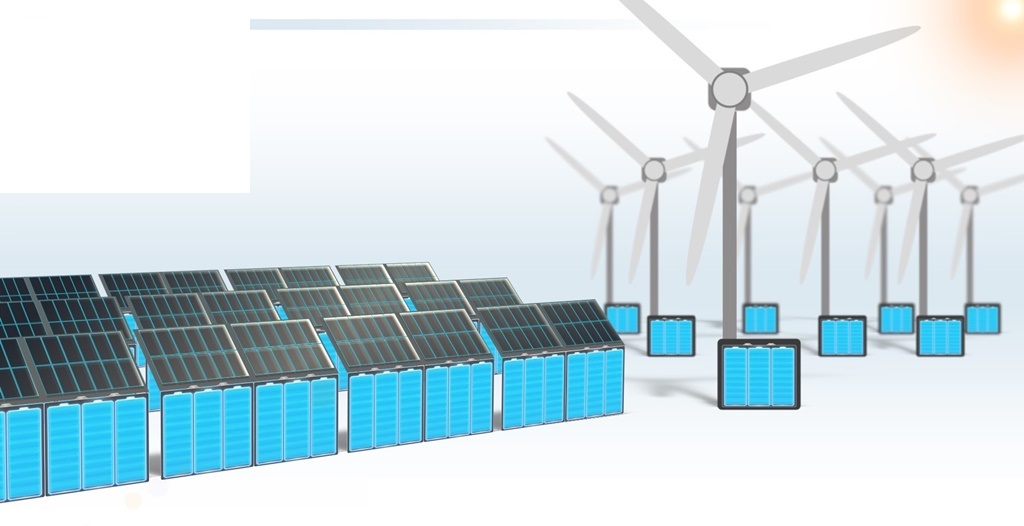
The manufacturers have been mindful of the fact that the battery packs have an end-of-life and unlike lead-acid batteries, their disposal is not so straightforward. Various solutions have been explored to keep them in service and Honda Motor Europe, together with SNAM (Societe Nouvelle d’Affinage des Metaux), is investigating the possibility of using batteries in a ’second life’ for the storage of renewable energy in industrial applications.
SNAM is a battery recycling company and is increasing its role in partnership with the carmaker to advance the sustainable usability of its end-of-life battery packs. The pan-European arrangement will see SNAM collect and recycle batteries from Honda’s increasing number of hybrid and electric vehicles and either potentially prepare them for ‘second-life’ renewable energy storage uses or extract valuable materials for recycling if they are not suitable for that purpose.
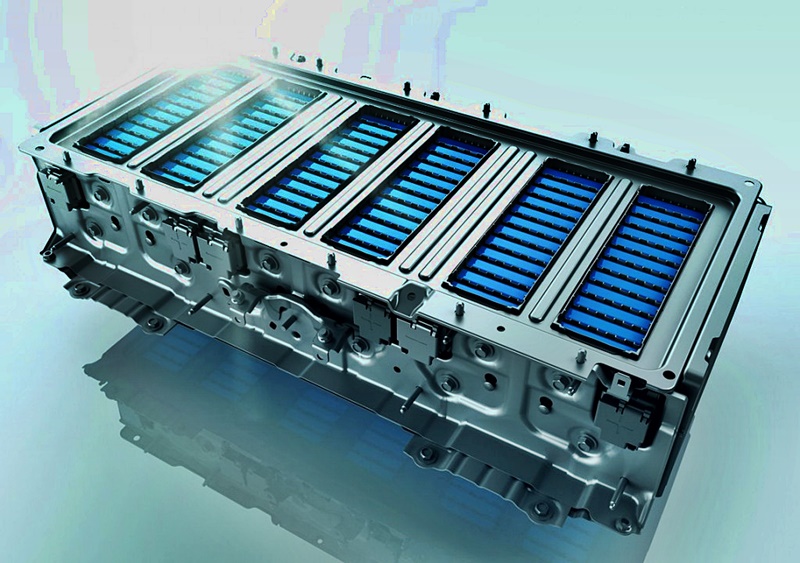
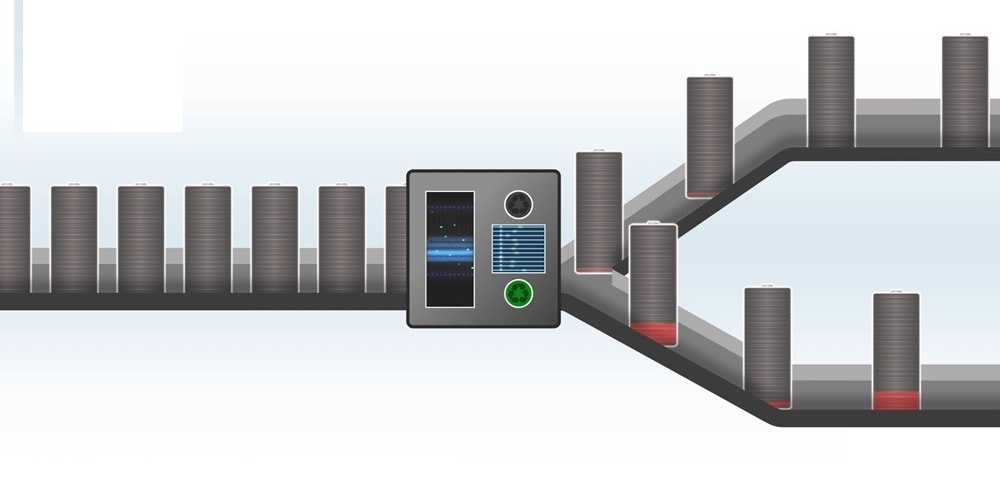
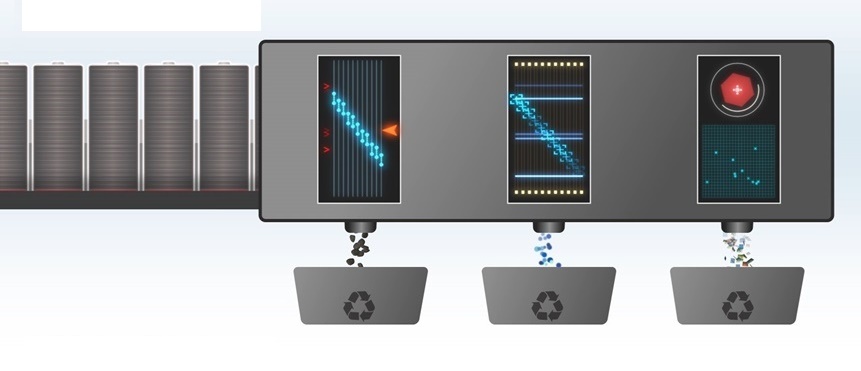
End-of-life battery packs can be divided in two types – those that can be reconditioned and continue to function as energy storage units or broken apart and their materials recycled (below).
Honda and SNAM have worked together since 2013 to ensure the traceability of end-of-life batterie packs and dispose of them in accordance with European Union environmental standards. The expansion of this agreement will see SNAM collect lithium-ion and NiMH batteries from Honda’s dealer network and Authorised Treatment Facilities in 22 countries, before analysing how suitable they are for recycling and processing them accordingly.
Second life applications
“As demand for Honda’s expanding range of hybrid and electric cars continues to grow, so does the requirement to manage batteries in the most environmentally-friendly way possible. Recent market developments may allow us to make use of these batteries in a second life application for powering businesses or by using recent improved recycling techniques to recover useful raw materials which can be used as feedstock into the production of new batteries,” said Tom Gardner, Senior Vice-President at Honda Motor Europe.
Safe and low carbon transport is utilised for the collection of used batterie packs. On arrival, SNAM assesses which battery packs are valid for inclusion in a new energy storage device. These are then repurposed and made available by SNAM for domestic and industrial applications.
One application for recycled battery packs.
When battery cells are damaged and unsuitable for ‘second life’ applications, materials such as cobalt and lithium can be extracted using hydrometallurgy techniques involving the use of aqueous chemistry. These can be reused in the production of new batteries, colour pigments or as useful additives for mortar. Other commonly used materials including copper, metal and plastics are recycled and offered to the market for use in the production of a variety of applications.
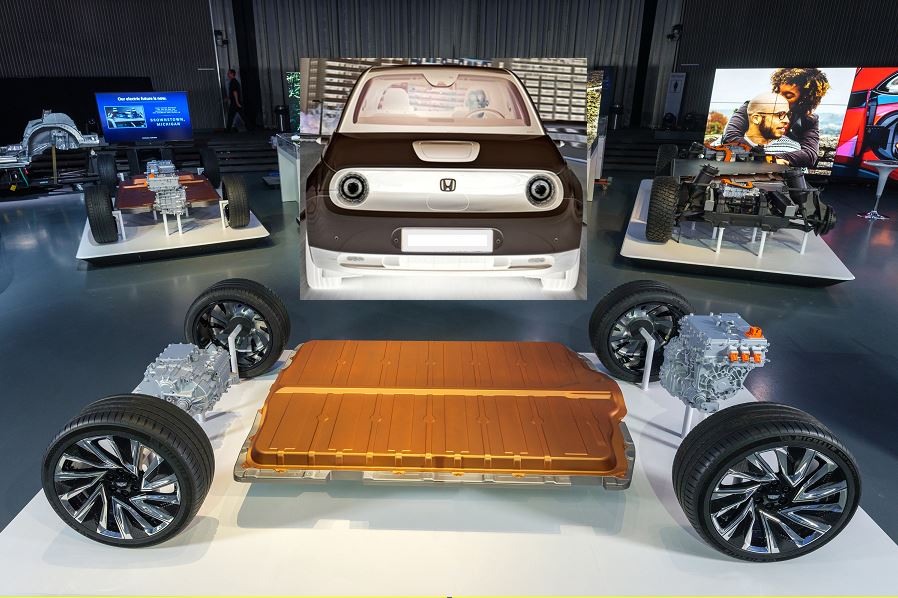
General Motors and Honda have agreed to jointly develop two all-new electric vehicles for Honda, based on GM’s highly flexible global EV platform powered by proprietary Ultium batteries. The EVs will be manufactured at GM plants in North America with sales expected to begin in the 2024 model year in North America.
Production of these Honda electric vehicles will combine the development expertise of both companies. The exteriors and interiors of the new EVs will be exclusively designed by Honda, and the platform will be engineered to support Honda’s driving character.
Joint pursuit of electrification
GM and Honda already have an ongoing relationship around electrification, which both companies are pursuing in this decade. This includes work on fuel cells and the Cruise Origin, an electric, self-driving and shared vehicle, which was revealed in San Francisco earlier this year. Honda also joined GM’s battery module development efforts in 2018.
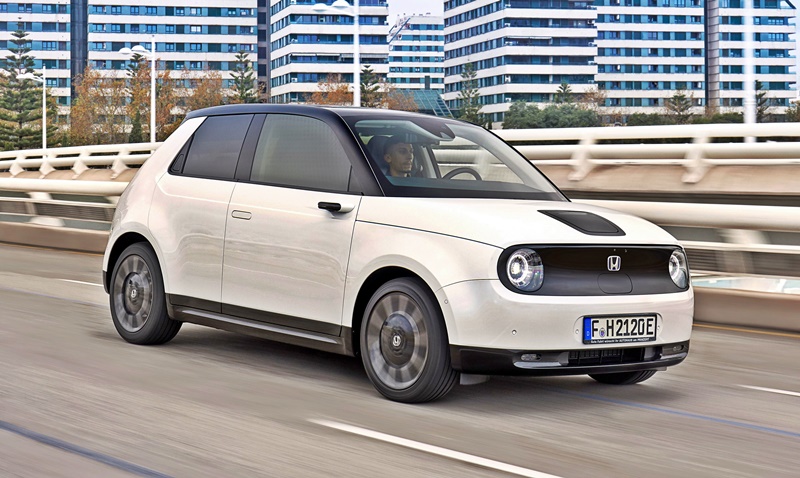
Honda e is a new EV which the company developed primarily for the European market.
“This collaboration will put together the strength of both companies, while combined scale and manufacturing efficiencies will ultimately provide greater value to customers,” said Rick Schostek, Executive Vice-President of American Honda Motor Co. “This expanded partnership will unlock economies of scale to accelerate our electrification roadmap and advance our industry-leading efforts to reduce greenhouse gas emissions.”
According to Doug Parks, GM Executive Vice-President of Global Product Development, Purchasing and Supply Chain, the agreement builds on a proven relationship with Honda, and further validates the technical advancements and capabilities of our Ultium batteries and our all-new EV platform.
“Importantly, it is another step on our journey to an all-electric future and delivering a profitable EV business through increased scale and capacity utilization. We have a terrific history of working closely with Honda, and this new collaboration builds on our relationship and like-minded objectives,” he said.
As part of the agreement to jointly develop electric vehicles, Honda will incorporate GM’s OnStar safety and security services into the two EVs, seamlessly integrating them with HondaLink. Additionally, Honda plans to make GM’s hands-free advanced driver-assist technology available.
The ‘Red Dot’ Award, which originated in Germany, has become established internationally as one of the most sought-after seals of quality for good design. Initiated in 1955, it is one of the world’s largest design competitions.
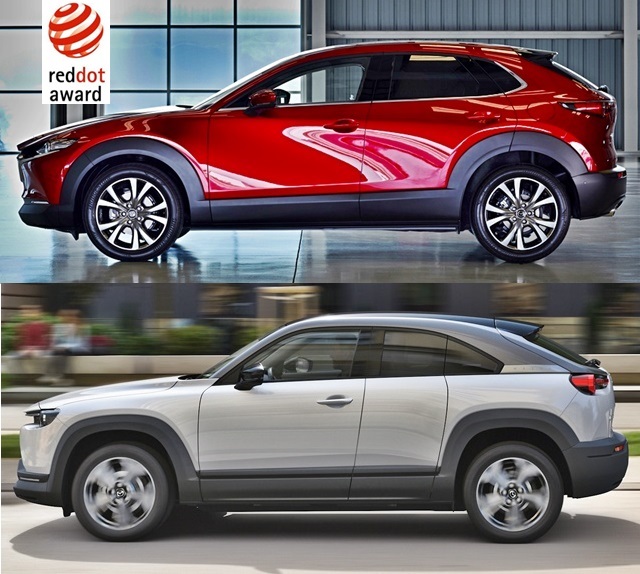
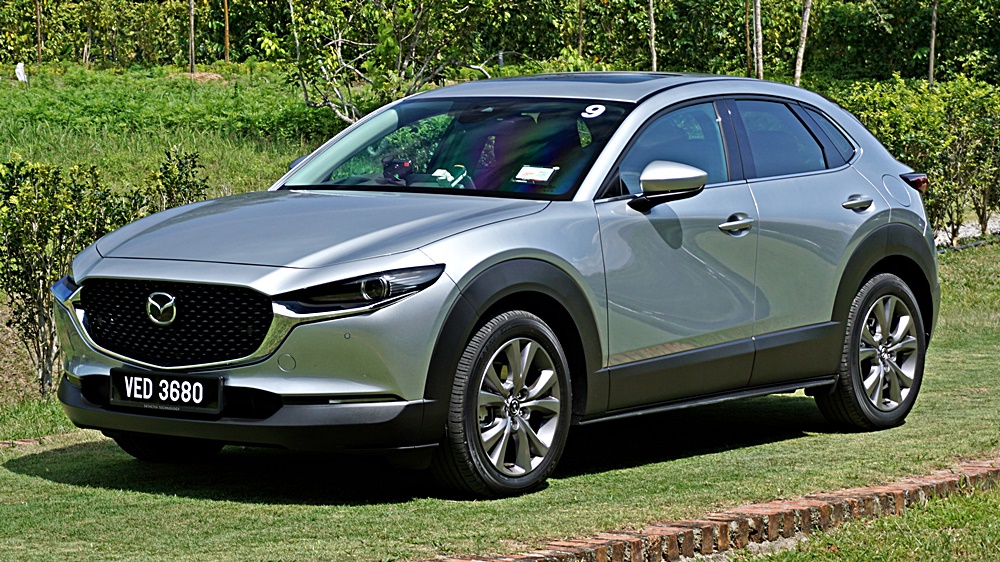
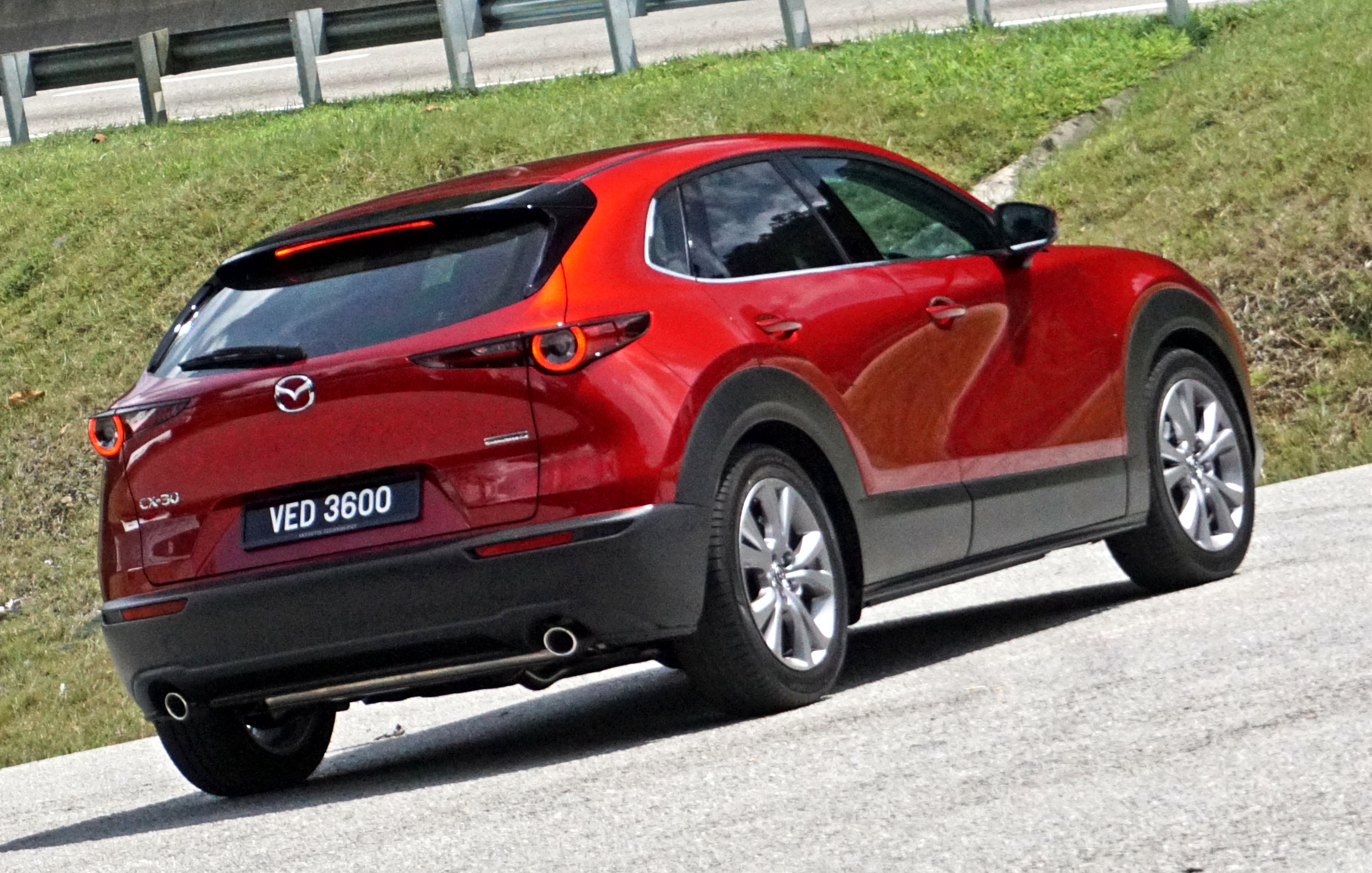
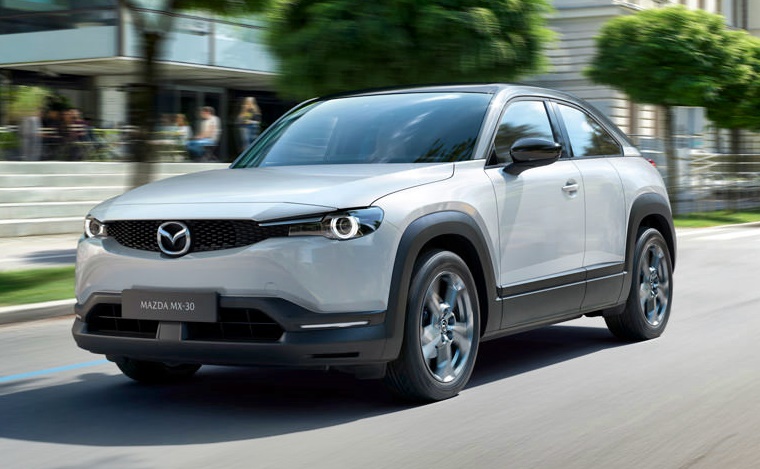
This year, two Mazda models received Red Dot: Product Design 2020 awards – the CX-30 and MX-30. Reflecting Mazda’s excellence in vehicle design, these are the eighth and ninth Red Dot awards won by Mazda’s models incorporating KODO design to date. Prior to this were the Mazda3 (2019), MX-5 RF (2017), MX-5 soft top, CX-3 and Mazda2 (all 2015), Mazda3 (2014) and Mazda6 (2013).
Mazda CX-30
The CX-30 is the second production model created with the latest evolution of the KODO design philosophy – artful design, rooted in traditional Japanese aesthetics. The honing of every element according to the ‘less is more’ principle has resulted in clean, beautiful surfaces on the CX-30 and brought an entirely original look to the compact crossover SUV segment.
“The Japanese master craftsmen have always prized simplicity of form, of being beautifully pure,” said Jo Stenuit, Mazda’s European Design Director. “This inspired our designers to trim back elements and create something dynamic yet elegant, restrained yet vital. This is how we perceive Japanese aesthetics – a sensibility that has created emotionally moving cars.”
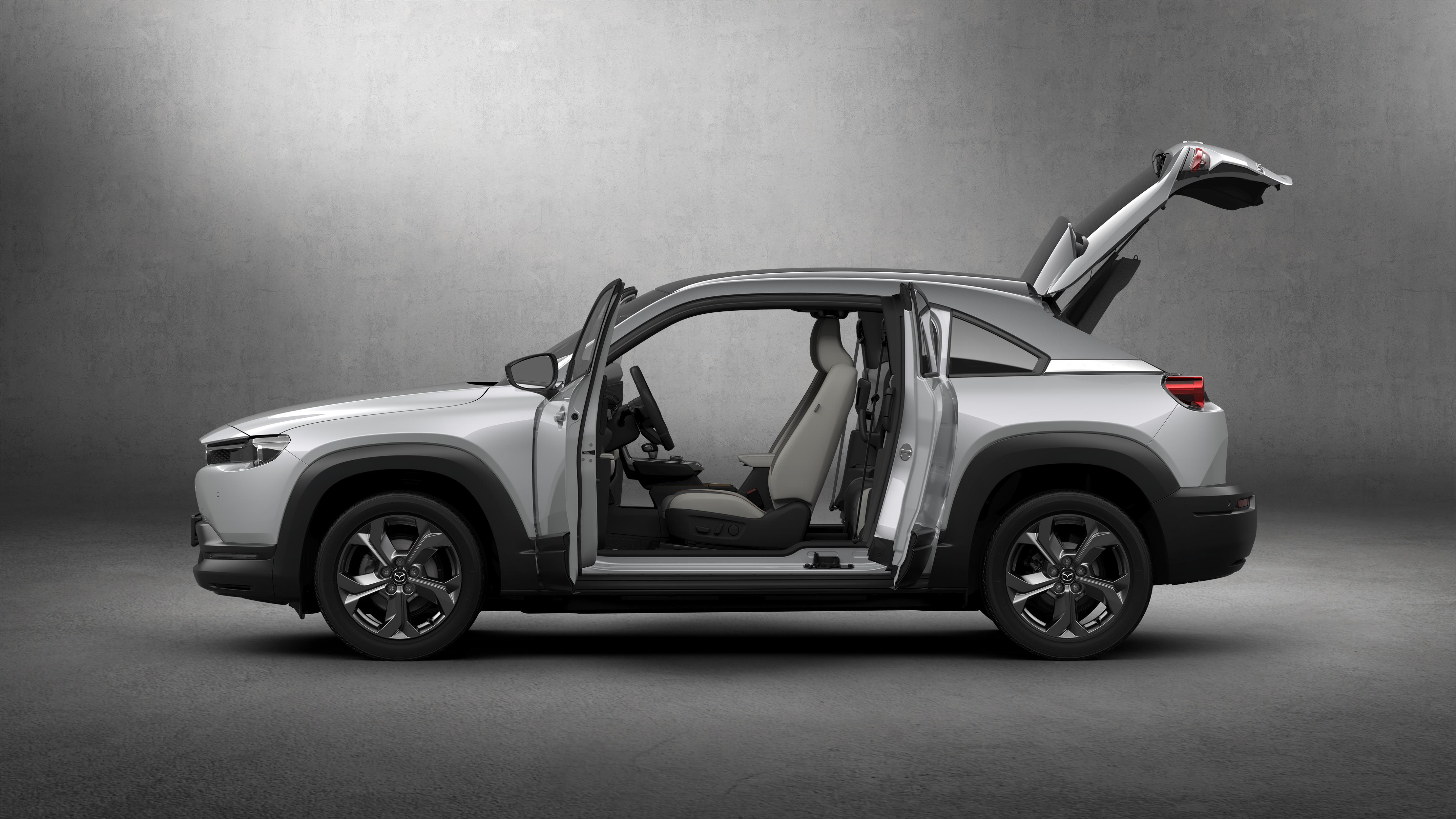
Mazda MX-30
Though retaining the beautiful, handcrafted forms of KODO design, the styling of the Mazda MX-30 represents an exploration of a more modern aesthetic which focuses on the futuristic values and lifestyles that are beginning to emerge.
“This new approach has resulted in an original design that embodies the expansion of KODO’s expressive range,” explained MX-30 Chief Designer, Youichi Matsuda. “The exterior is uncompromisingly simple to emphasise its beauty as a solid mass, and the cabin design – with its framed top and freestyle doors – embodies an image of lightness while proactively incorporating sustainability as an element for the interior materials. As we begin an era of great change, we want the Mazda MX-30 to show people that our cars can still deliver pure joy of driving.”
The MX-30 is currently only available for the European market. It is equipped with e-SKACTIV, Mazda’s new electric drive technology, which uses a 35.5 kWh lithium-ion battery pack that gives a claimed range of approximately 200 kms. The driving range far exceeds the 48-km average daily drive of European customers, Mazda believes.
The Mazda CX-30 is available in Malaysia and to find out more about it, visit www.mazda.com.my.
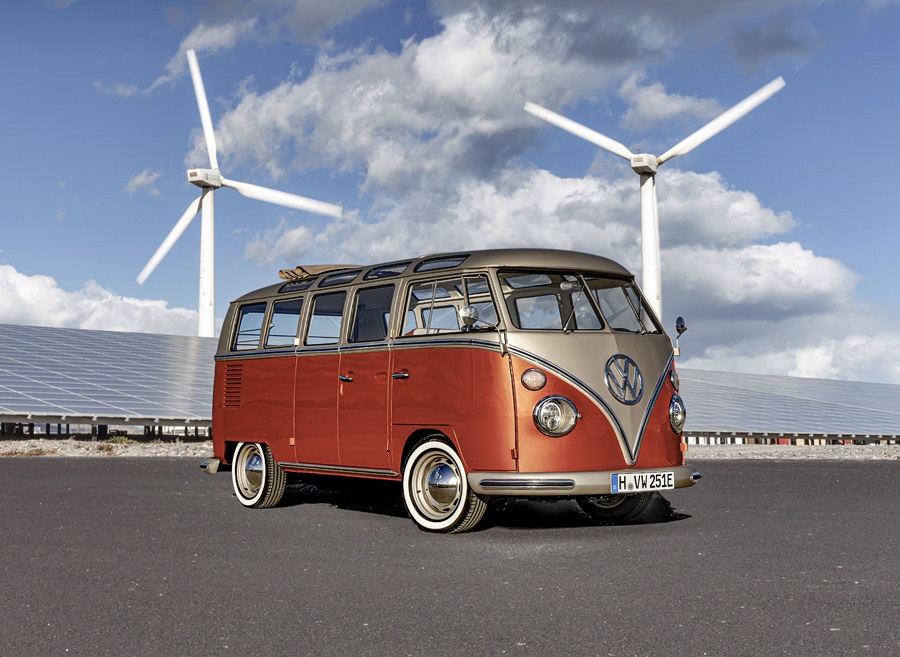
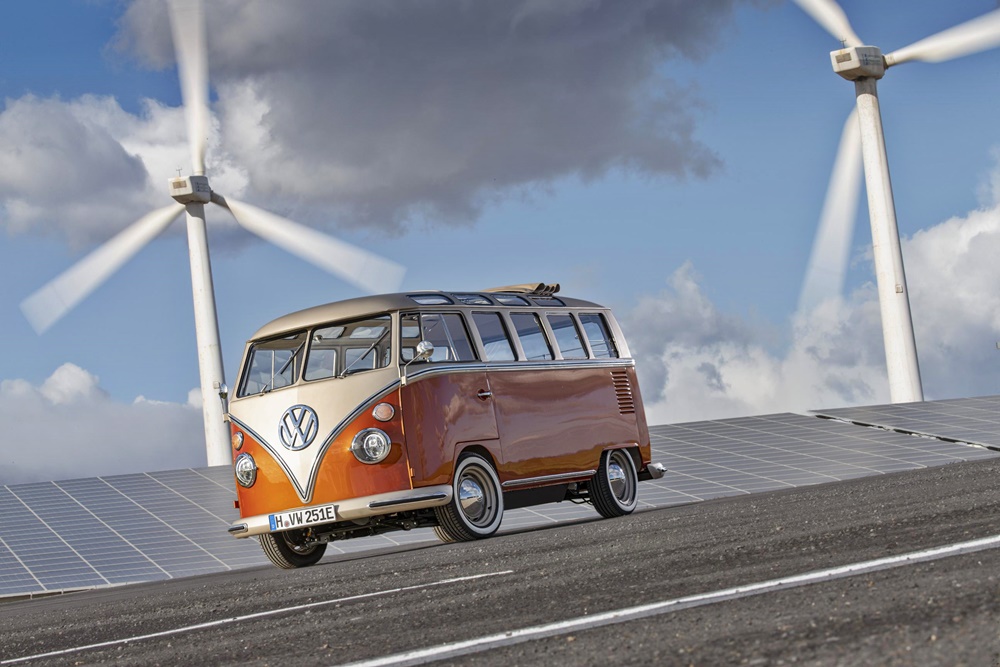
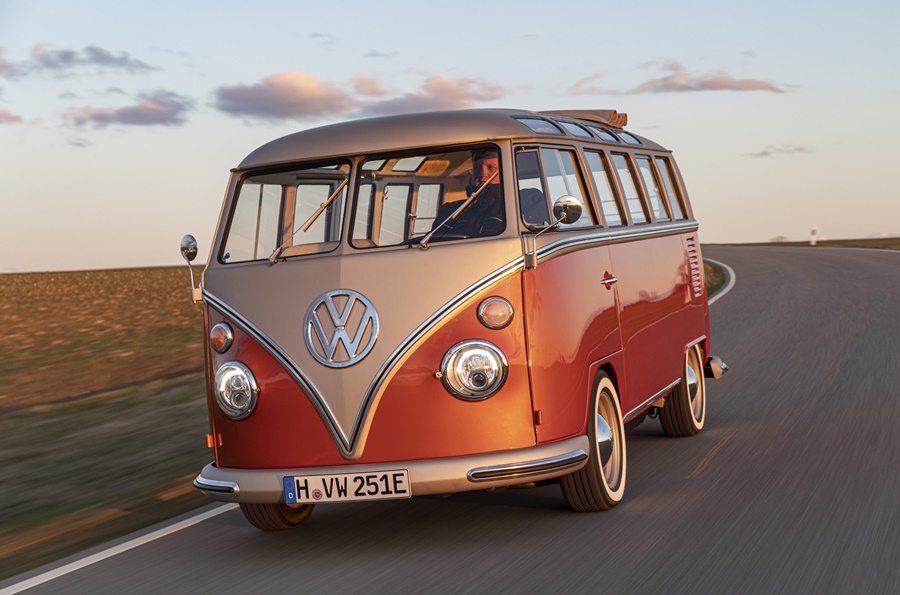
In due course, it will be possible for owners of the original Volkswagen T1 to make a conversion of the powertrain to a zero emissions electric drive system. Volkswagen Commercia Vehicles (VWCV), collaborating with eClassics, has developed a conversion package which is demonstrated in the e-BULLI all-electric concept vehicle.
VWCV engineers and designers formed a team along with drive system experts from Volkswagen Group Components and eClassics (a company which specialises in electric car conversions) to develop the e-BULLI. For the concept model, they chose a T1 Samba Bus produced in 1966 which, prior to its conversion, spent half a century on the roads of California.
New electric drive system components
The original 44 ps 4-cylinder boxer engine is replaced by a silent Volkswagen electric motor generating 61 kW (83 ps) and 212 Nm, the torque being more than double that from the engine before. The comparison of the engines’ power output alone makes it very evident that the concept vehicle will have completely new drive characteristics with performance unattainable using the original combustion engine.
Power transmission is by means of a 1-speed gearbox. The automatic transmission has 5 positions (P, R, N, D, B) and in position B, the driver can vary the degree of recuperation, ie of energy recovery when braking. The e-BULLI is claimed to have top speed of 130 km/h (electronically limited), 25 km/h more than the original T1.
The original T1 Samba Bus
Just like the powertrain of the 1966 T1, the combination of gearbox and electric motor integrated in the back of the 2020 e-BULLI drives the rear axle. A 45 kWh lithium-ion battery pack provides energy for the electric motor while a DC/DC converter provides 12V power for on-board electronics.
As in the new ID.3 and future ID.BUZZ, the battery pack is housed centrally in the vehicle floor. This layout lowers the e-BULLI’s centre of gravity and thus improves its driving characteristics.
80% recharge in 40 minutes
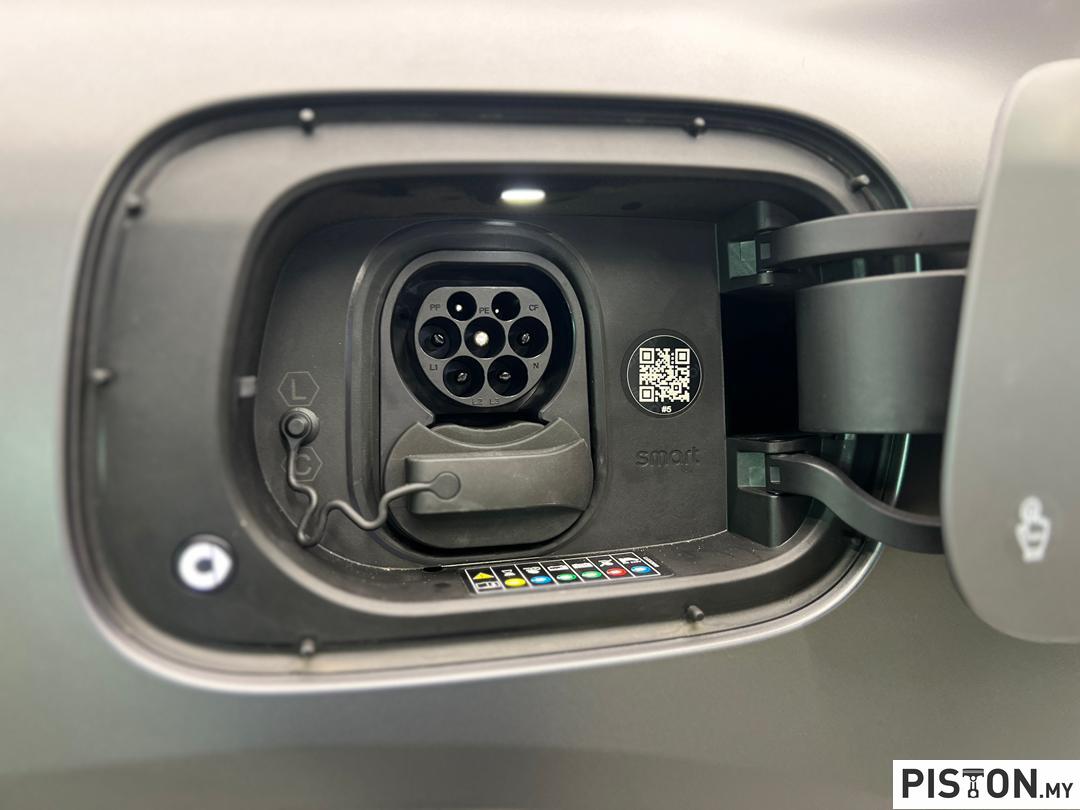
The battery pack is charged via a combined charging system (CCS) socket. It enables charging with AC or DC electrical supply. Thanks to the CCS charging socket, the battery pack can also be charged at DC fast-charging points with up to 50 kW of charging power. In this case, recharging up to 80% energy levels can be done within 40 minutes. The range with a fully charged battery packs is claimed to be more than 200 kms.
Redesigned chassis
Compared to the T1, riding in the e-BULLI will feel completely different. This is due to the redesigned chassis which consists of multi-link front and rear axles with adjustable shock absorbers and coil-over struts. There is also a new rack-and-pinion steering system and 4 internally-ventilated disc brakes.
New looks
In parallel with the new electric drive system, an interior concept has been created for the e-BULLI that is both stylish and avant-garde. The new look and corresponding technical solutions were developed by the VCVW design centre together with a team from VWCV Vintage Vehicles and the Communications department.
The designers modernised the exterior of the iconic vehicle with great sensitivity and finesse, including giving it a two-tone paintwork finish in Energetic Orange Metallic and Golden Sand Metallic MATTE.
Details such as the new round LED headlamps with daytime running lights modernise the looks. On the outside at the rear, there are also LED charge indicators. They signal to a driver walking up to the e-BULLI how much charge the lithium-ion battery still has.
Original interior concept modernised
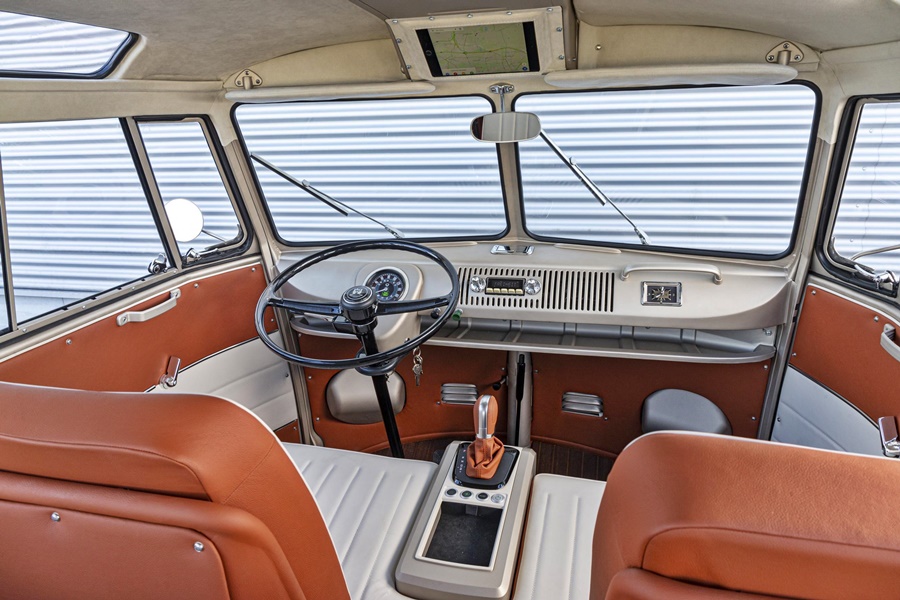
The 8-seat interior has a few things not expected to be in a T1. While the designers have re-imagined a lot of the interior, they did not forget the original concept and the seating is one of the new features. In keeping with the external paintwork, it is also in two colours. Solid wood looking like that of a ship’s deck is used for the floor throughout and, with the nice bright leather tones, the electrified Samba Bus takes on a maritime feel. This impression is strengthened by the large panoramic folding roof.
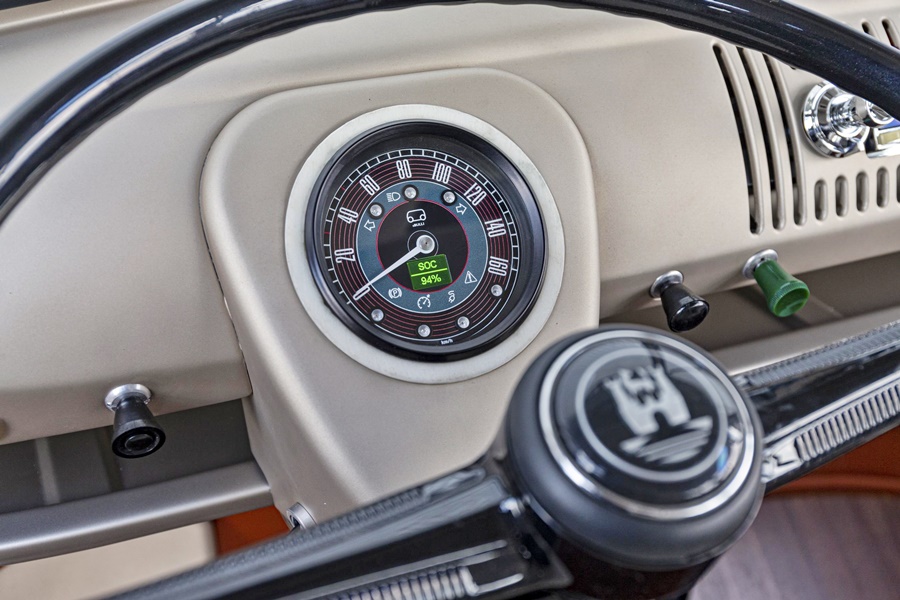
The new speedometer is based on the original while a two-digit display within it creates a link to the modern era. There is a small detail in the centre of the speedometer: a stylised Bulli symbol. A multitude of further information is shown via a tablet integrated into the roof console.
Music on board comes from an authentic-looking retro-style radio which is equipped with cutting edge technology such as DAB+, Bluetooth and USB. The radio is linked to a sound system with high quality components, including an active subwoofer.
The e-BULLI will be available at prices starting from 64,900 euros (about RM307,000) for the T1 conversion (complete with redesigned front and rear axles), with T2 and T3 conversions also being offered by eClassics in Europe.
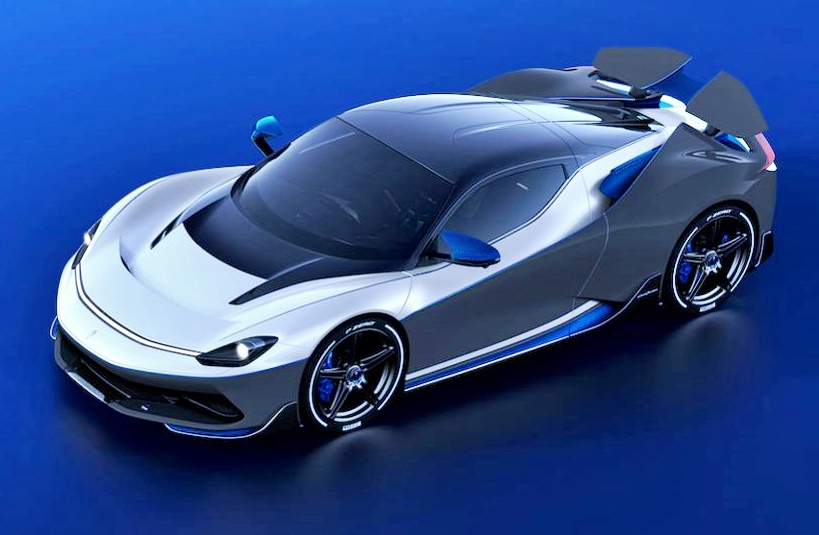
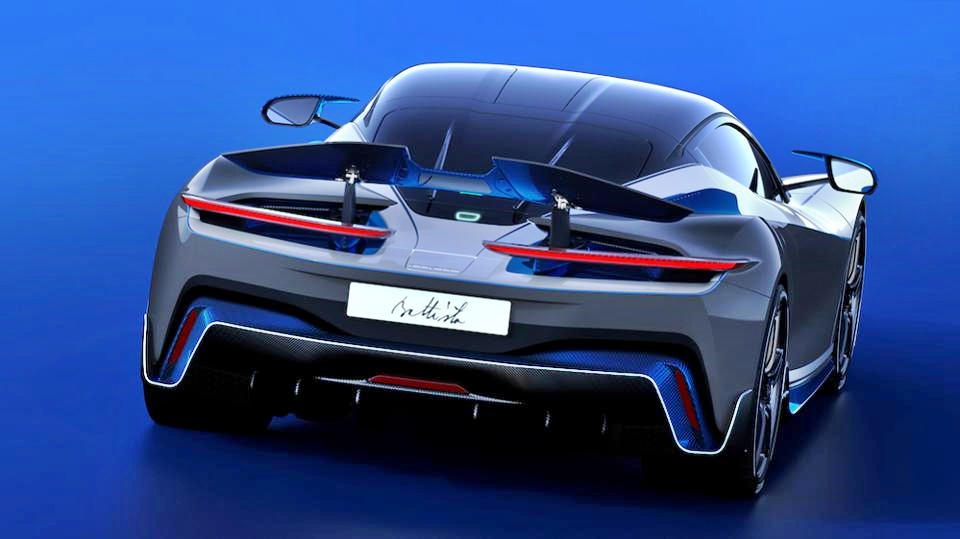
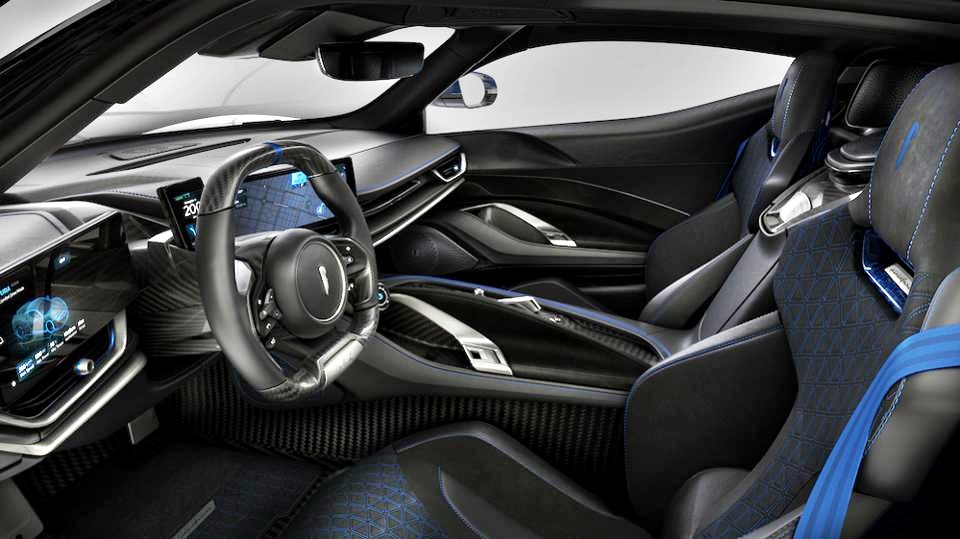
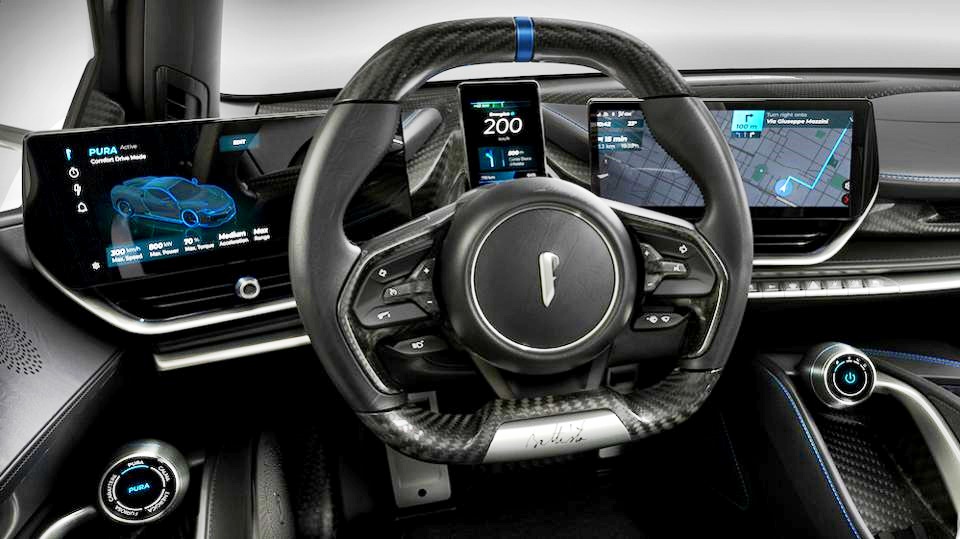
Automobili Pininfarina aims to offer what it describes as ‘the ultimate expression of the world’s first luxury pure-electric hyper GT’. Known as the Battista Anniversario, it celebrates 90 years since Battista ‘Pinin’ Farina started the Pininfarina coachbuilder and design house.
Laying claim to being the most powerful sportscar ever to be designed and built in Italy, 5 Battista Anniversario cars (there will be another 150 Battista hypercars made) will be hand-crafted in Turin, where Pininfarina has established its design centre and headquarters. Each is priced from 2.6 million euros (about RM12.4 million) and will be delivered to customers by the end of this year. Of course, with Italy now having a crisis and lockdown, production will be affected.
“For 90 years, the Pininfarina name has been at the forefront of automotive design and performance, and the Battista perfectly encapsulates these values. This ultimate expression of Battista, the Anniversario, is the distillation of everything that the brand has stood for in the past and which we now strive for in the future, creating a new pinnacle of desirability for sustainable and luxurious electric cars,” said Michael Perschke, CEO of Automobili Pininfarina.
“My grandfather always had the vision that one day, there would be a stand-alone range of Pininfarina-branded cars. The Battista Anniversario, named in his honour to mark 90 years of the carrozzeria that he started, is a glorious way to link our past with the future of motoring,” added Paolo Pininfarina, Chairman of Pininfarina SpA.
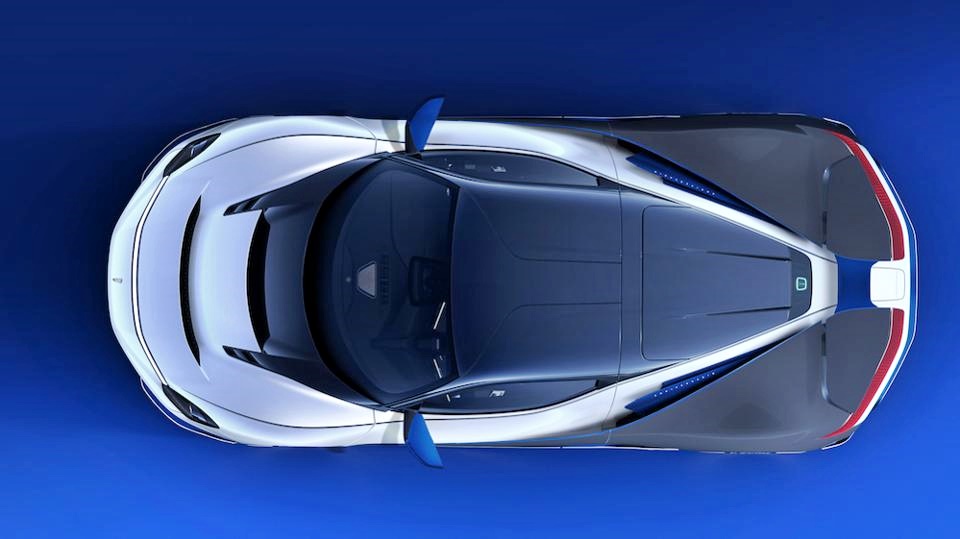
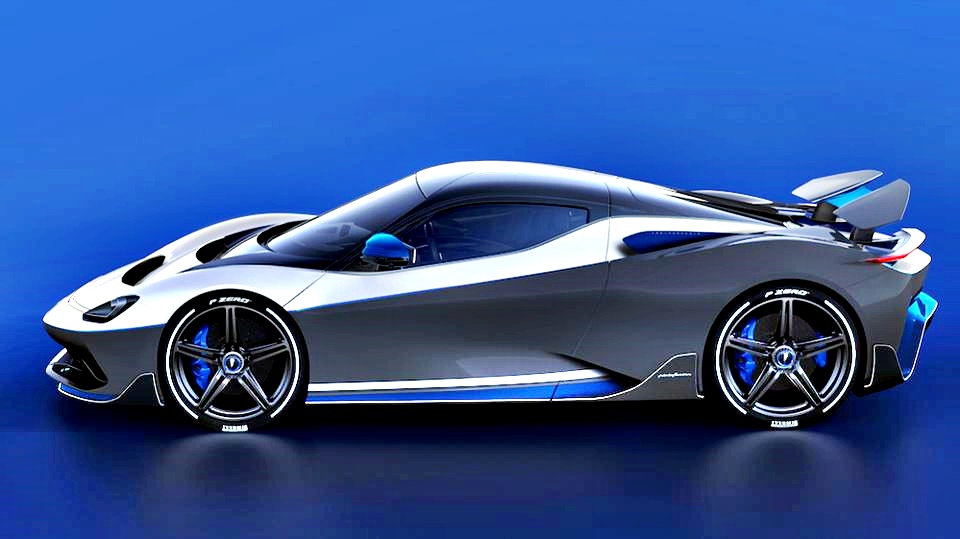
The Battista Anniversario delivers an added level of dynamic ability and a bespoke heritage-inspired anniversary livery. Each of the five cars is finished in a combination of three signature colours: Bianco Sestriere, the never-seen-before Grigio Antonelliano, and Automobili Pininfarina’s signature Iconica Blu.
The Battista Anniversario will have one of the most complex paint finishes in the world, with the process of creating akin to a great artist completing an Old Master painting. Skilled artisans will take several weeks to paint each car, building up the finish layer-by-layer and colour-by-colour – all by hand. The body is disassembled and reassembled three times so pinstripes in the three separate colours can be hand-painted directly onto the body.
The Battista Anniversario is also equipped with the ‘Furiosa’ package, comprising a revised carbonfibre front splitter, side blades and rear diffuser. Exclusively on the Anniversario, these parts are finished in a two-tone combination of exposed signature carbonfibre and carbonfibre tinted in Iconica Blu with pin stripes in Bianco Sestriere.
Besides the exclusive livery, a bespoke rear wing, rear aero fins and other bespoke details are unique to the Battista Anniversario. The aerodynamic enhancements enabled by the Furiosa exterior changes deliver increased downforce and greater stability at higher cornering speeds and a more dynamic balance to the car.
Four electric motors generating 1,900 bhp/2,300 Nm torque, apportioned to each wheel by the most advanced torque vectoring system, will take the car to a claimed top speed of 350 km/h. And faster than a current Formula 1 car in the sub-two second 0-100 km/h sprint, the Battista can also accelerate from 0 to 300 km/h in less than 12 seconds. This level of performance is unachievable today in any road-legal sportscar with an internal combustion engine.
“I have piloted the quickest road and race cars in the world and I’ve never driven anything as powerful as the Battista,” said Nick Heidfeld, Test and Development Driver at Automobili Pininfarina. “The Battista is faster than many race cars, but it is not a pure racing machine. Drivability in all situations is its primary focus. We will now concentrate our time testing and developing Battista to deliver a car that’s at the forefront of technological possibilities and innovation.”
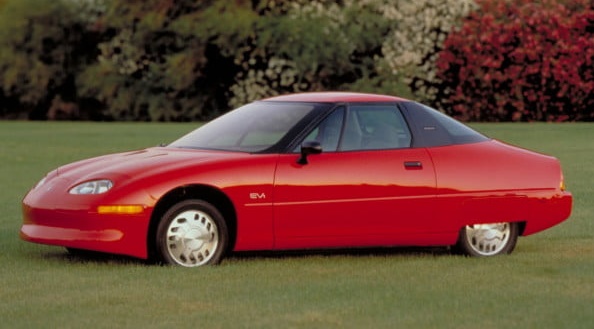
Like many carmakers, General Motors is heading for an all-electric future and putting considerable resources into building a multi-brand, multi-segment EV strategy with economies of scale that can rival its full-size truck business. By right, the company should be way ahead in the EV field today, having come out with the first mass-produced all-electric car, the EV-1, in 1996.
However, advanced as it was, the car was expensive to produce, and GM saw the EV segment then as being unprofitable, so it stopped making the car. Developing EVs then was not a priority (engineers who were assigned to such projects considered them ‘dead-end jobs’) and so GM didn’t advance its EV technology the way Toyota had done so with its hybrid technology after it introduced the Prius in the late 1990s.
In 1996, GM launched the first mass-produced EV known as the EV-1. But it saw the EV segment as unprofitable and did not carry on development and marketing.
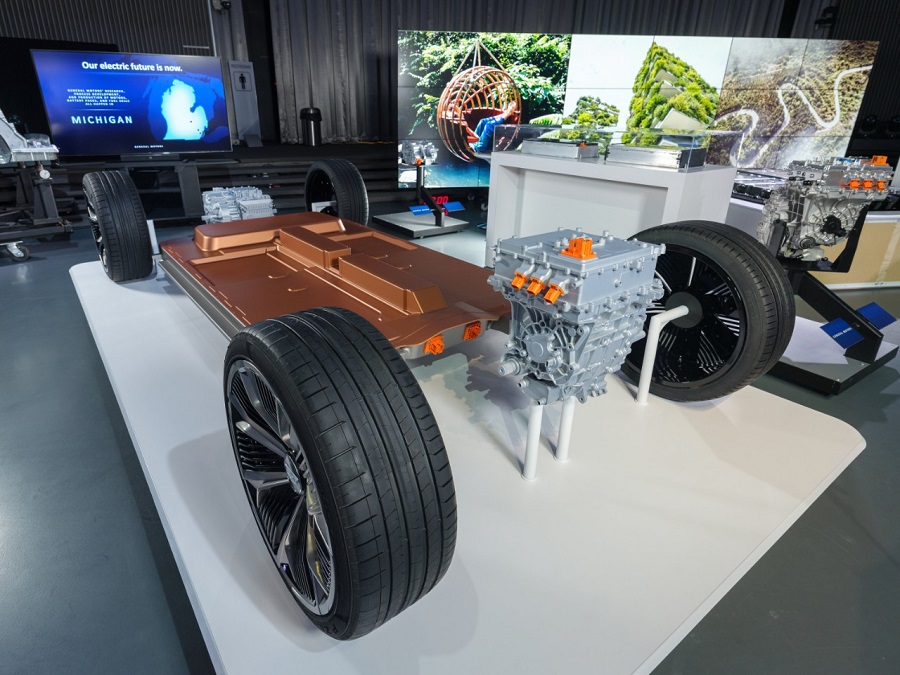
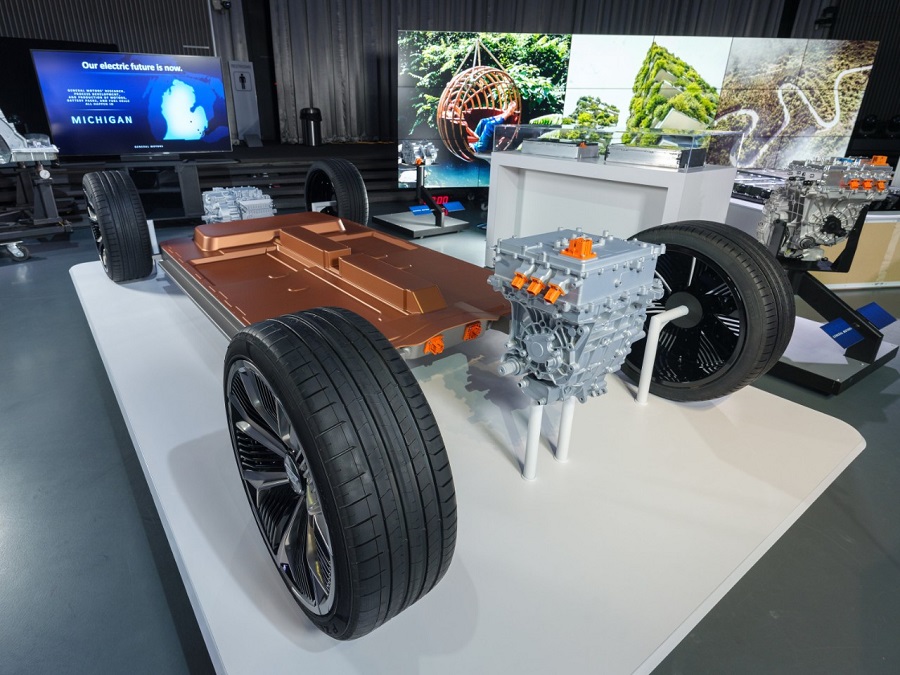
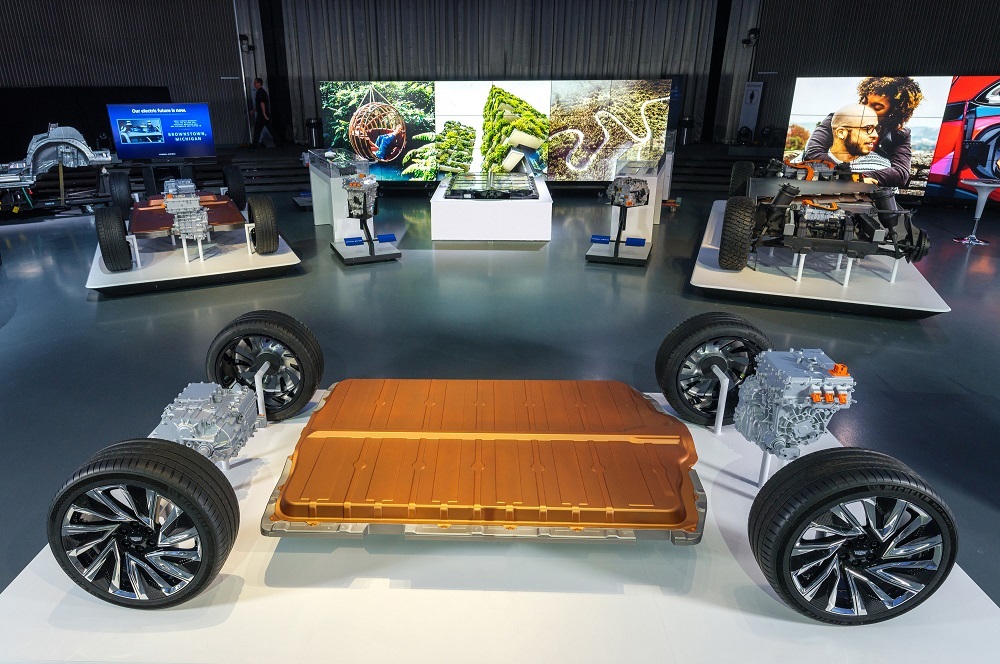
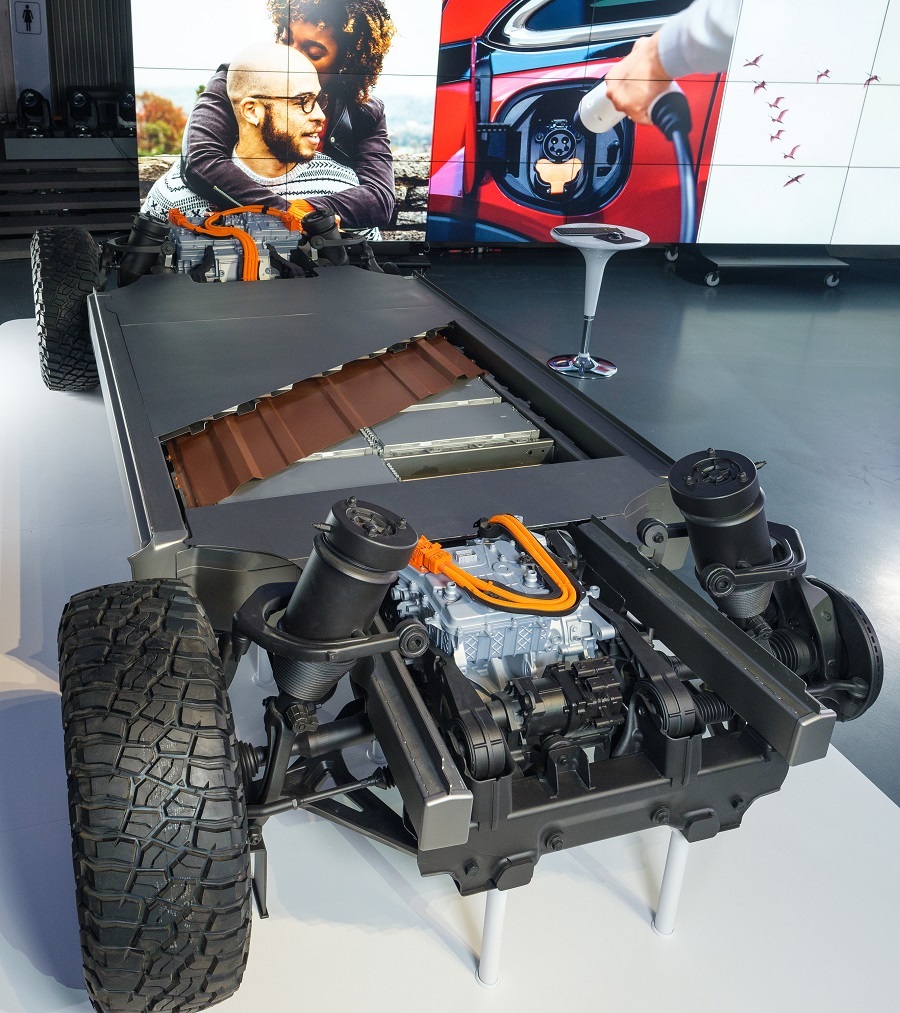
Now GM is accelerating its R&D into EV technology and the heart of its strategy is a modular propulsion system and a highly flexible, third-generation global EV platform powered by proprietary Ultium batteries.
“Thousands of GM scientists, engineers and designers are working to execute a historic reinvention of the company,” said GM President Mark Reuss. “They are on the cusp of delivering a profitable EV business that can satisfy millions of customers.”
The Ultium batteries and Propulsion System
GM’s new Ultium batteries are unique in the industry because the large-format, pouch-style cells can be stacked vertically or horizontally inside the battery pack. This allows engineers to optimize battery energy storage and layout for each vehicle design.
Ultium energy options range from 50 to 200 kWh, which could enable a GM-estimated range up to 640 kms or more on a full charge with 0 to 100 km/h acceleration as low as around 3 seconds. Motors designed in-house will support front-wheel drive, rear-wheel drive, all-wheel drive and even performance all-wheel drive applications.
Ultium-powered EVs are designed for Level 2 and DC fast charging. Most will have 400-volt battery packs and up to 200 kW fast-charging capability while the truck platform will have 800-volt battery packs and 350 kW fast-charging capability.
Driving costs downwards
The flexible, modular approach to EV development is expected to drive significant economies of scale for lower production costs and create new revenue opportunities. The cells use a proprietary low cobalt chemistry and ongoing technological and manufacturing breakthroughs will drive costs even lower. Together with LG Chem, its joint venture partner, GM sees continuous improvement in battery costs as they are driven down to US$100/kWh.
GM’s all-new global platform will be flexible enough to build a wide range of trucks, SUVs, crossovers, cars and commercial vehicles. To build them with capital efficiency, GM will leverage on existing properties, including land, buildings, tools and production equipment such as body shops and paint shops.
The vehicle and propulsion systems are designed together to minimize complexity and part counts beyond today’s EVs, which are less complex than conventional vehicles powered by internal combustion engines. For example, GM plans 19 different battery and drive unit configurations initially, compared with 550 internal combustion powertrain combinations available today.
Third-party forecasters expect EV volumes in the US market to more than double from 2025 to 2030 to about 3 million units on average. But GM believes the numbers could be materially higher as more EVs are launched in popular segments, charging networks grow and the total cost of ownership to consumers continues to fall.
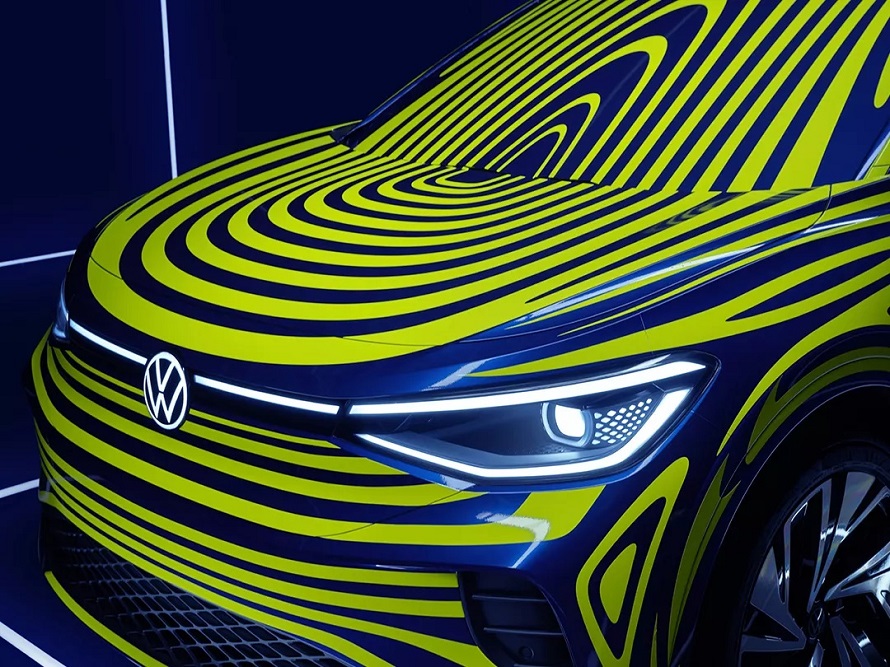
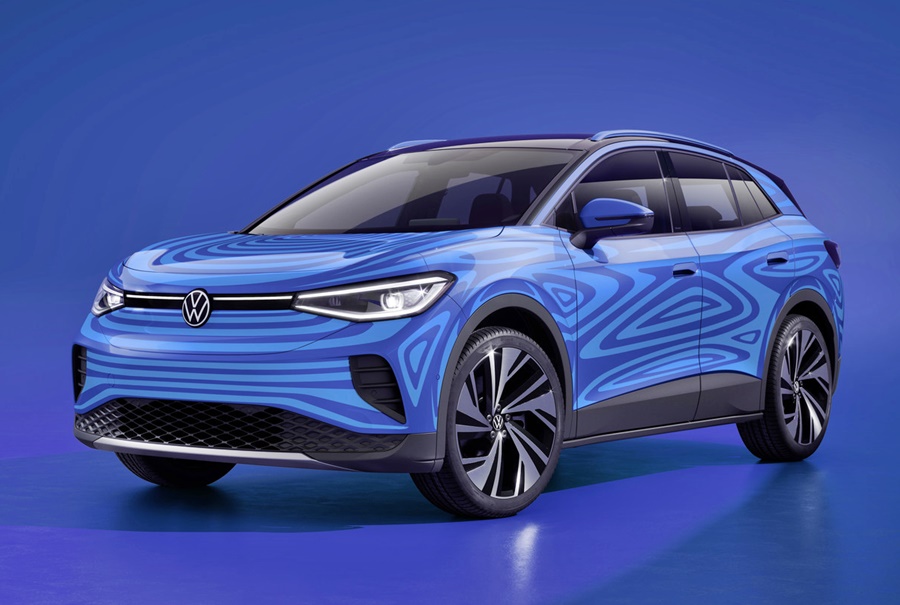
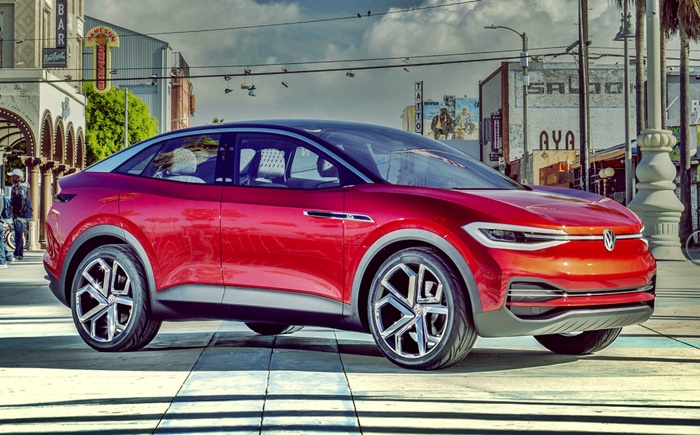
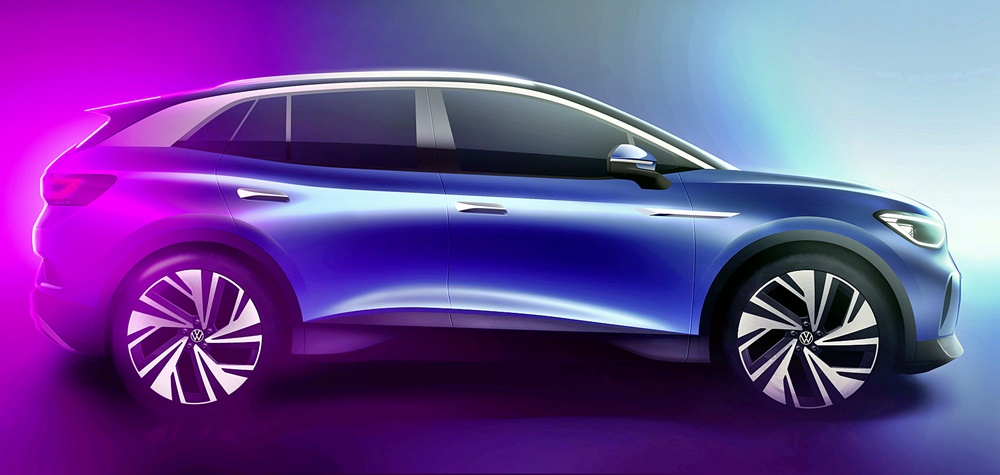
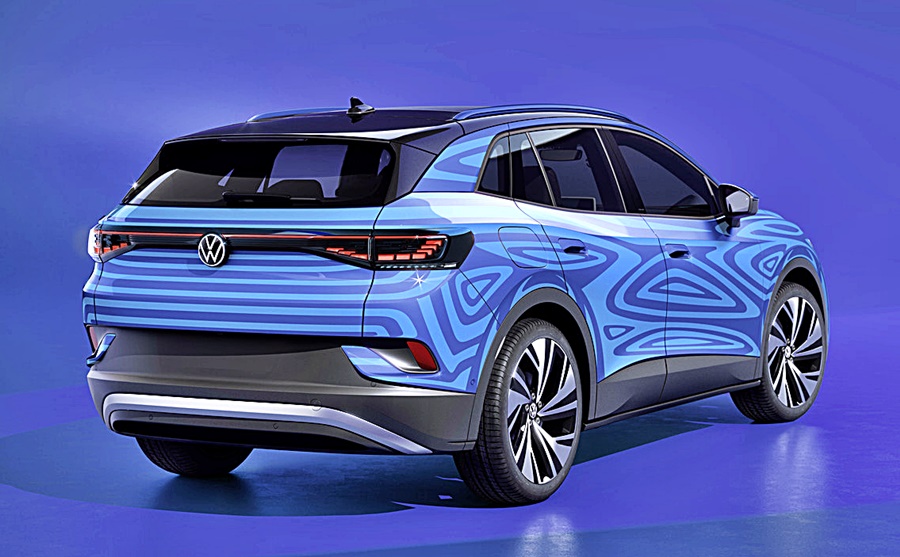
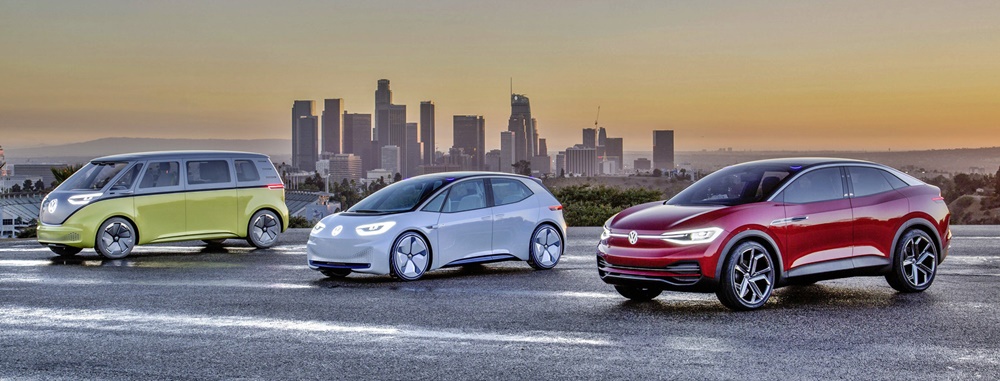
What was presented as the ID. CROZZ showcar by Volkswagen earlier will become a production model known as the ID.4. The two letters, ‘ID’, indicate it as being part of the ID family that will use all-electric powertrains.
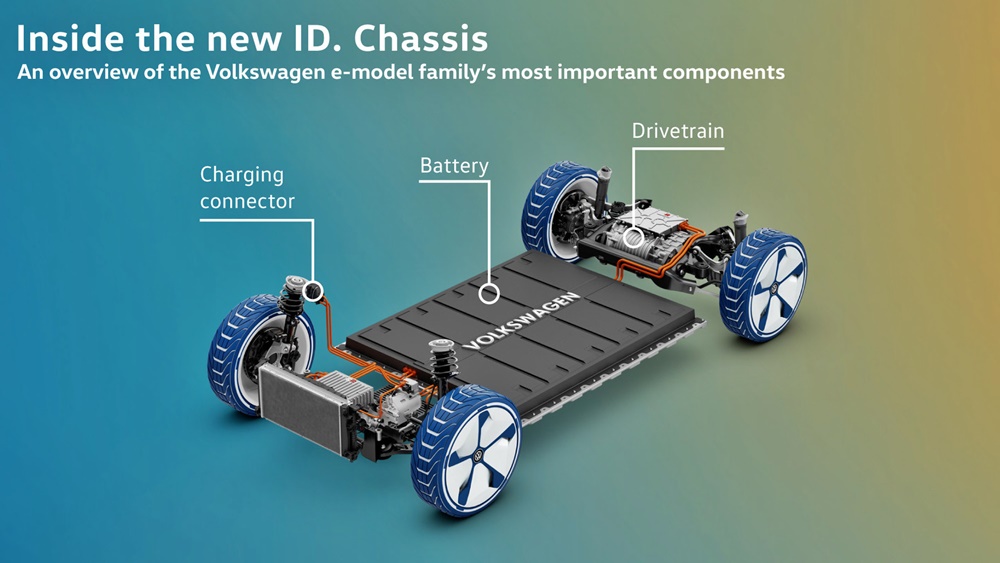
The ID range is part of the carmaker’s electric mobility strategy and following in the tracks of the ID.3, the countdown has already begun for this second model based on the new modular electric drive matrix (MEB). The new ID.4 will also be launched this year, possibly after the ID.3 which is scheduled to be in showrooms from mid-2020.
The ID.CROZZ concept displayed in 2017.
“Just like the ID.3, the ID.4 will also come onto the market as a carbon-neutral vehicle,” said Ralf Brandstätter, Chief Operating Officer of the Volkswagen brand. “We will produce and sell the ID.4 in Europe, China and the U.S.”
The design of this zero-emission SUV is particularly aerodynamic. This is especially necessary for EVs that need every advantage to maximise energy use. More efficient aerodynamics will reduce drag and the electric motor won’t have to work so hard to achieve a desired speed. This can help boost the ID.4’s range to up to 500 kilometres, depending on the drive package.
The ID.4 will initially be launched with rear-wheel drive, while an electric all-wheel drive version will be added at a later date. The high-voltage battery is positioned near the centre of the underbody to create a low centre of gravity and optimise driving dynamics, along with an extremely well-balanced axle load distribution.
Just like all other MEB models, the ID.4 will offer plenty of interior space as its electric drive technology is compactly packaged. The fully digital cockpit of the SUV has been clearly structured and is operated primarily using touch surfaces and intelligent, intuitive voice control.
For Volkswagen, the ID.4 and ID.3 represent important milestones in the brand’s bid to become entirely carbon-neutral by 2050 – in line with the Paris climate agreement. Plans have been put in place to reduce the Volkswagen fleet’s CO2-emissions by a third by as early as 2025.
Prototypes of the initial ID family
Volkswagen is currently investing one billion euros to electrify its model range while also offering an increasing number of hybrid vehicles. This is based on the fact that, just like electric powertrains, new mild and plug-in hybrid drives in high-volume product lines such as the Golf will significantly help to reduce fleet exhaust emissions in the future.
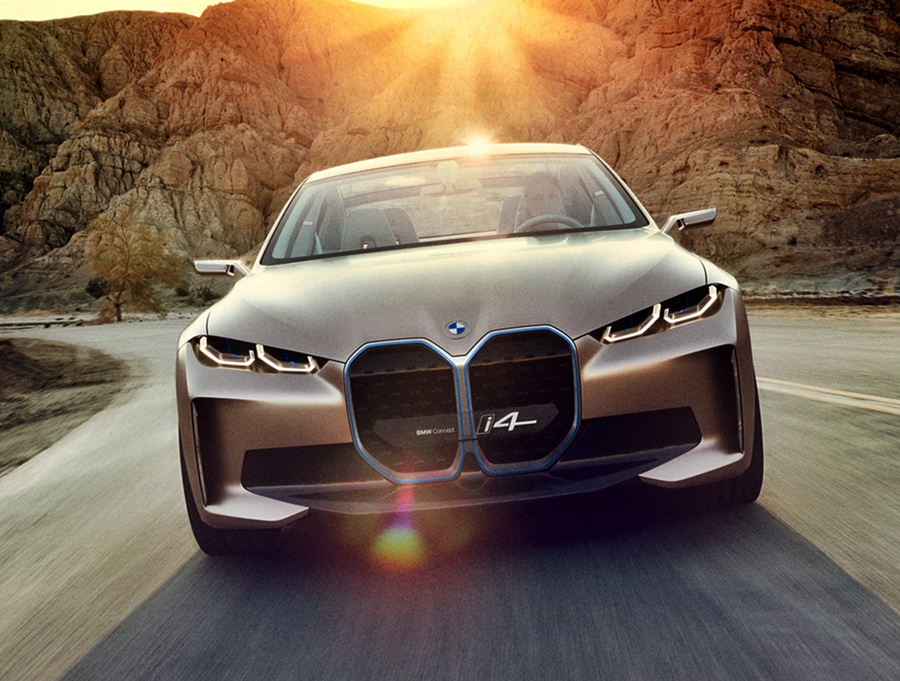
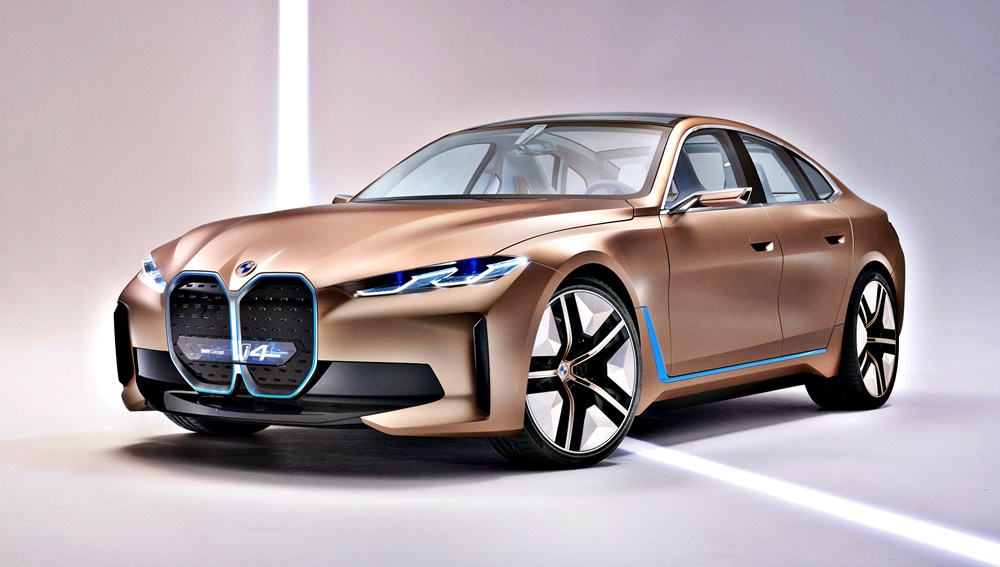
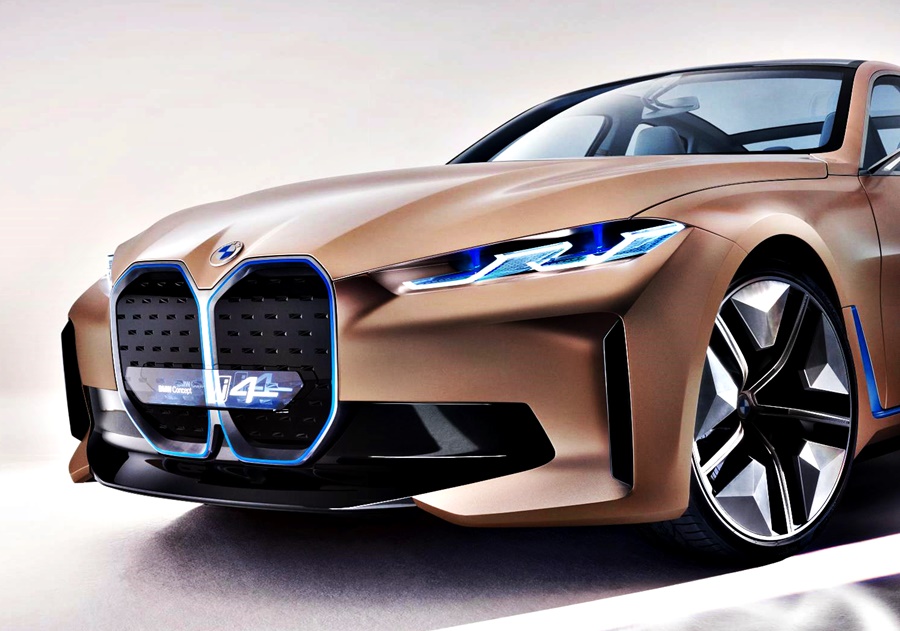
The BMW Concept i4, one of the many models that were to be unveiled at the now-cancelled Geneva International Motor Show, provides a look ahead to the new i4 model to be launched in 2021. It will be the BMW Group’s first all-electric model in the premium midsize class.
“The BMW Concept i4 brings electrification to the core of the BMW brand,” said Adrian van Hooydonk, Senior Vice-President, BMW Group Design. “The design is dynamic, clean and elegant. In short: a perfect BMW that happens to be zero emission.”
“The design of the BMW Concept i4 shows fantastic proportions, a powerfully expressive character and, of course, a lot of attention to detail,” added Domagoj Dukec, Head of BMW Design. “With the Curved Display, we have redefined BMW’s signature driver focus in an extremely elegant way. At the same time, the BMW Concept i4 transports a feeling of sustainable driving pleasure.”
As part of the package, the Concept i4 includes several exterior and interior design elements which will be incorporated in both the i4 and other electrically-powered production vehicles.
Electrifying aesthetics
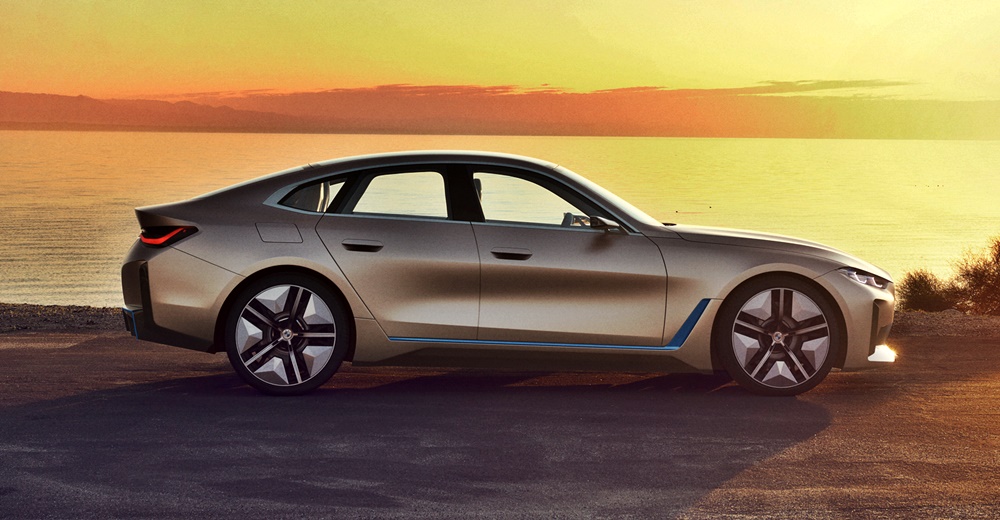
The long wheelbase, fastback roofline and short overhangs form a basic profile for a Gran Coupe. With its four doors, the Concept i4 offers not only a high level of everyday usability and practicality, but also a much larger interior than the car’s modern and dynamic proportions would immediately suggest.
Crisp, smooth lines and taut volumes merge into a rich, smoothly contoured sculpture and create a clear surfacing language. The modern exterior paint shade known as ‘Frozen Light Copper’ mirrors that on the BMW Vision iNEXT and showcases the interplay of surfaces to visually stunning effect.
Blue elements in the front end, flanks and rear end point to the car’s BMW i origins. They shine a spotlight on the signature BMW i icons and bring the technology below the surface to the fore – for example, the kidneys in their role as an intelligence panel, the mouldings in the side skirts concealing the battery technology, and the diffuser elements in the rear end, which fill the design space vacated by exhaust tailpipes and enhance aerodynamic efficiency.
A host of aerodynamic measures help maximise the car’s electric range. The blanked-off kidney grille and clear aero lips provide detail examples of sophisticated airflow engineering at work.
Another distinctive area of the car are the wheel rims. These have been designed exclusively for the Concept i4 and blend aerodynamic and lightweight design; smooth – and therefore aerodynamically optimised – surfaces contrast with ultra-low-weight, high-strength spokes.
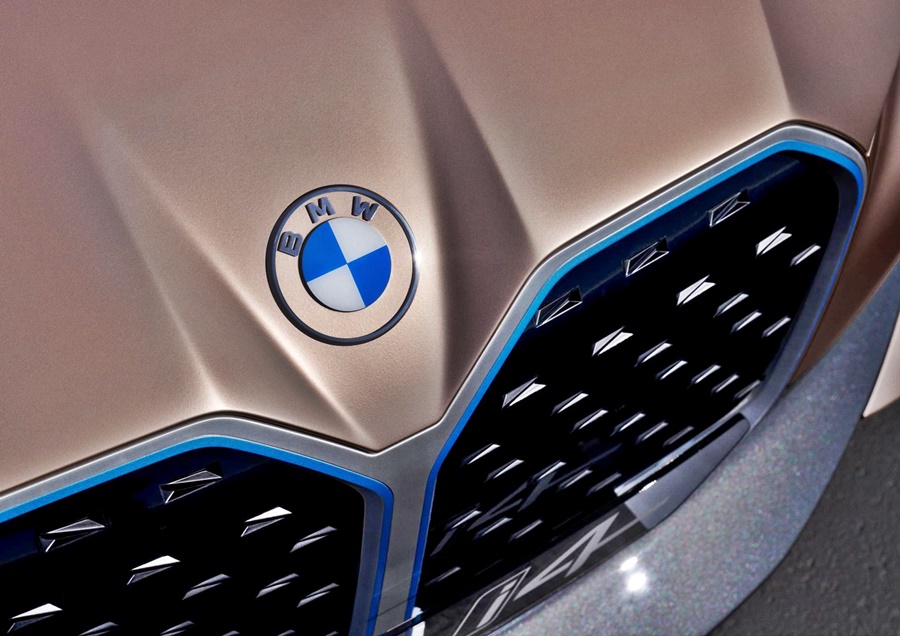
The front-end treatment presents the familiar BMW icons in a new look, lending a visually powerful face to the electric age at BMW. The prominent, closed-off kidney grille provides a tangible connection between the past and future of BMW.
The BMW icon also gains new functionality: With no combustion engine to require cooling, the grille now serves primarily as an ‘intelligence panel’ housing various sensors. The headlights likewise provide a bridge between the past and the future; the classical 4-eyed front end has a very modern and pared-back interpretation.
Innovation meets minimalism
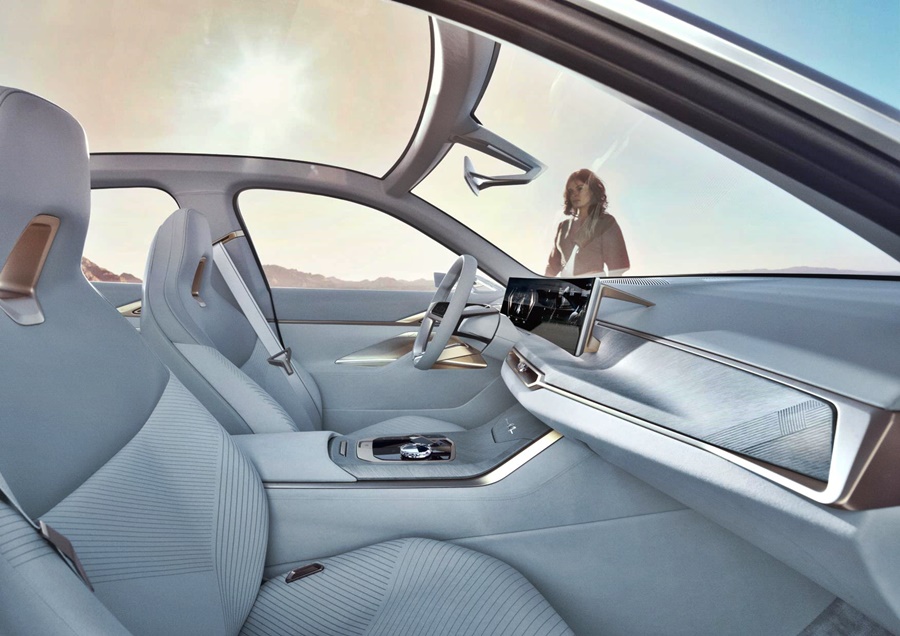
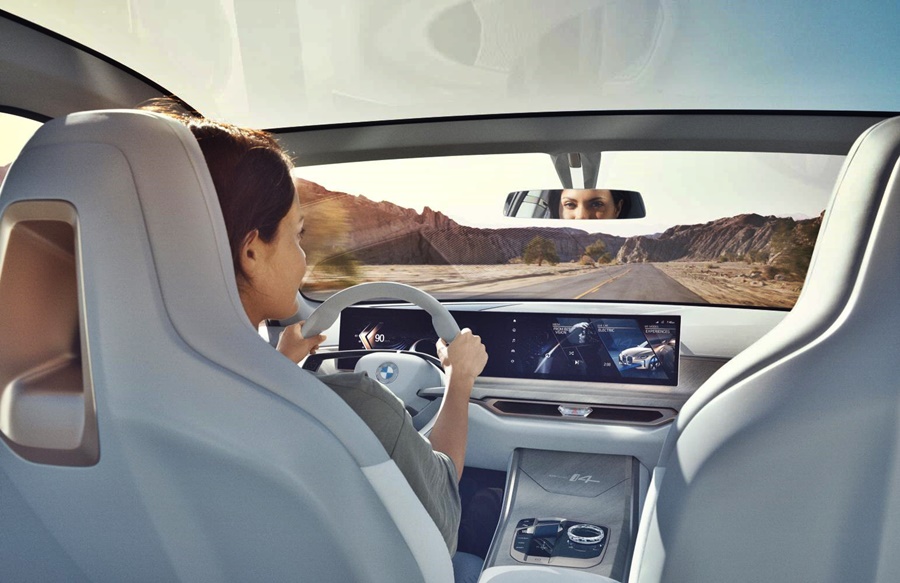
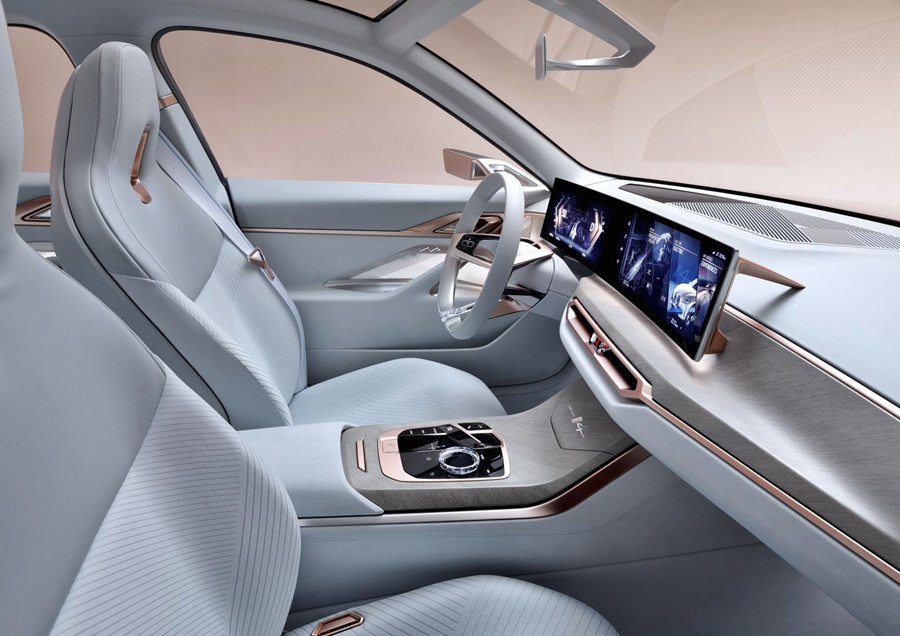
The interior of the Concept i4 focuses on those times when the driver chooses to pilot the car themselves. To this end, every element in the front of the cabin is trained on the driver. The new Curved Display teams up with the steering wheel to reveal a new take on driver orientation and offers a look ahead to the display in the production versions of the iNEXT and i4.
The Curved Display encompasses a large proportion of the section in front of the driver and almost all operating functions are integrated into the display. This is part of an overall approach centred on reducing the number of haptic controls to the minimum.
Spacious rear compartment
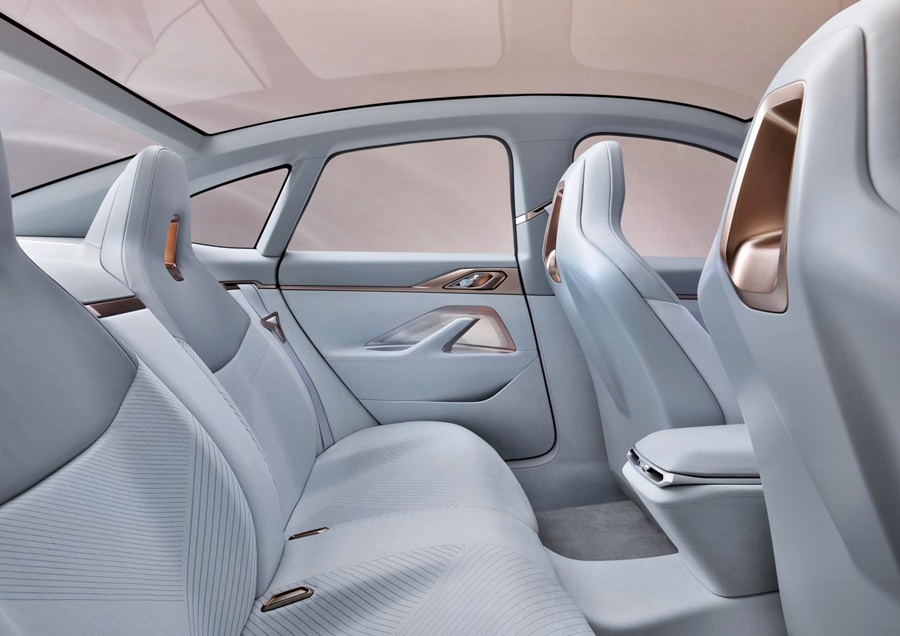
Rear-seat passengers are greeted by a generously-sized compartment offering levels of headroom and legroom that exceed expectations of a coupe. The cut-out in the head restraints is a classy detail that references sporty BMW models from the current line-up.
The rear seats extend the horizontal graphic emerging from the doors to create a lounge feel in the rear. Meanwhile, the outer seats reprise the dynamic form of the front seats, heightening the sporting flavour. They also use very little stitching, which further emphasises the clean and modern feel.
The sound of the Concept i4
The Concept i4 is not only characterised by its individual design but also by its own visionary and unique sound. It was developed under the brand name of BMW IconicSounds Electric by world renowned composer Hans Zimmer together with BMW Sound Designer Renzo Vitale.
BMW IconicSounds Electric aims to emotionalise BMW’s electric vehicles and make them audible using individual sound worlds. The sound combines BMW’s past and future, ranging from the driving sounds in ‘Core’ mode to the more intense and pronounced sounds of ‘Sport’ mode. Also included are the sounds of the door opening and the starting scenario.
Fifth-generation BMW eDrive technology
The electric motor, power electronics, charging unit and high-voltage battery use fifth-generation BMW eDrive technology. These are all-new developments enabling the BMW Group to take another significant step forward in the field of electrified drive systems. The electric motor developed for the i4 generates maximum output of up to 390 kW (530 ps), which ranks it alongside a current BMW V8 combustion engine.
Electrical energy is drawn from a newly designed high-voltage battery pack with the very latest battery cell technology. The version of the battery developed for the i4 has extremely slim construction and optimised energy density. It weighs roughly 550 kgs, has an energy content of around 80 kWh and can provide an operating range that is claimed to be up to 600 kms.
A new BMW brand identity
BMW is unveiling the brand’s new look for the first time. The new logo for communications also provides the basis for the badge on the Concept i4. Its two-dimensional and transparent design ensures seamless integration and brings the special exterior colour shade to even greater prominence.
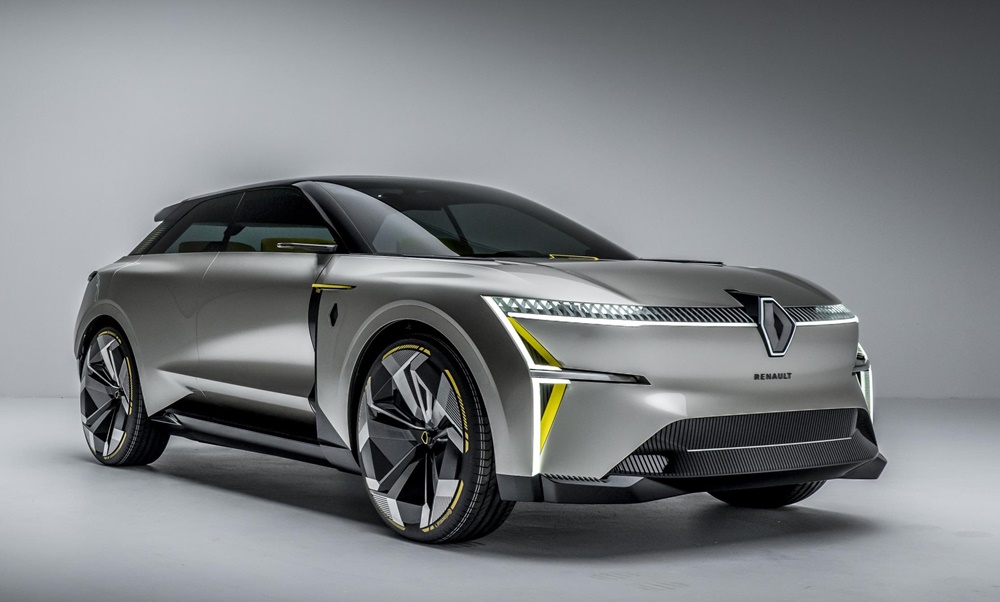
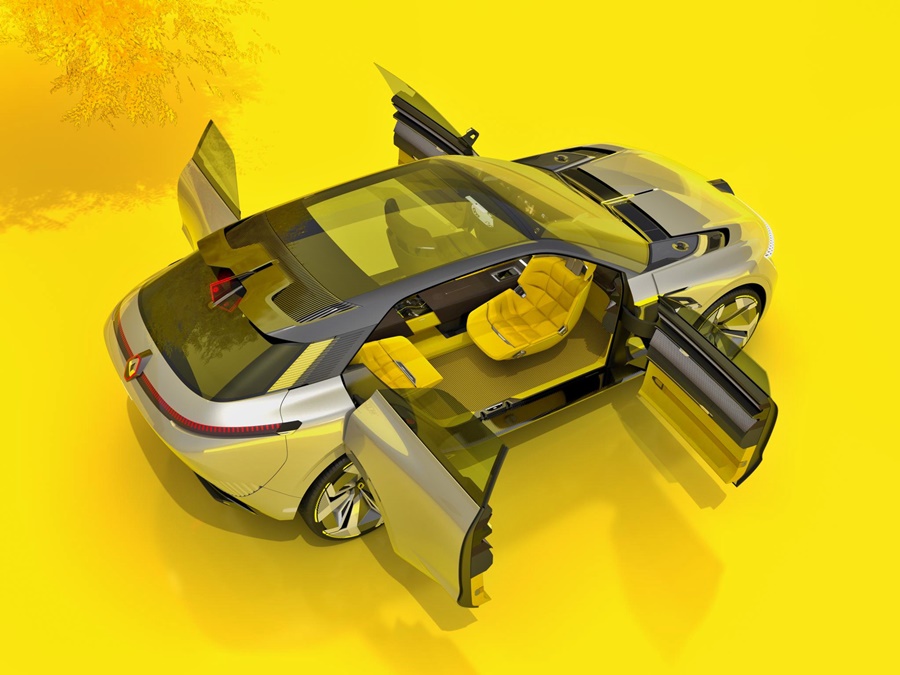
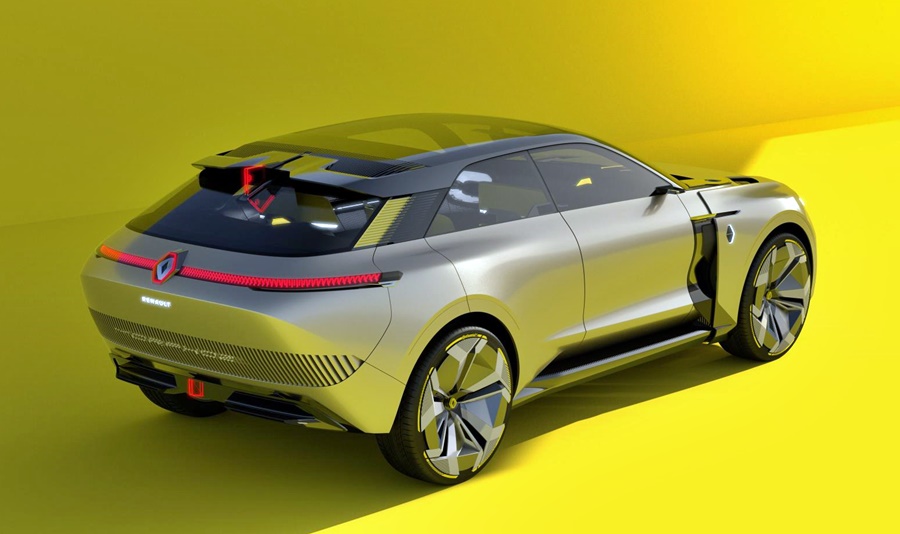
The MORPHOZ concept is Renault’s vision of personal, shareable, electric mobility of the future. Drawing on the Alliance’s new modular CMF-EV 100% electric platform, it offers a number of different configurations for power, capacity and range, as well as user options and boot space.
The concept is faithful to the brand’s DNA embodying Renault’s Family Petal design strategy and heralds a new family of electric models over the coming years. It represents changes in technology, society, the environment and also human behaviour. The MORPHOZ also supports the carmaker’s strategy is to become a supplier of smart mobility solutions for the cities and regions of the future.
Dual use of batteries
Being an electric vehicle (EV), batteries are naturally at the core and with the MORPHOZ concept, Renault is now looking at a different area: the dual use of batteries. When not being used for driving, the batteries remain in the car but can power appliances in the house or the local area via smart charging devices and V2G (Vehicle to Grid) bi-directional technology.
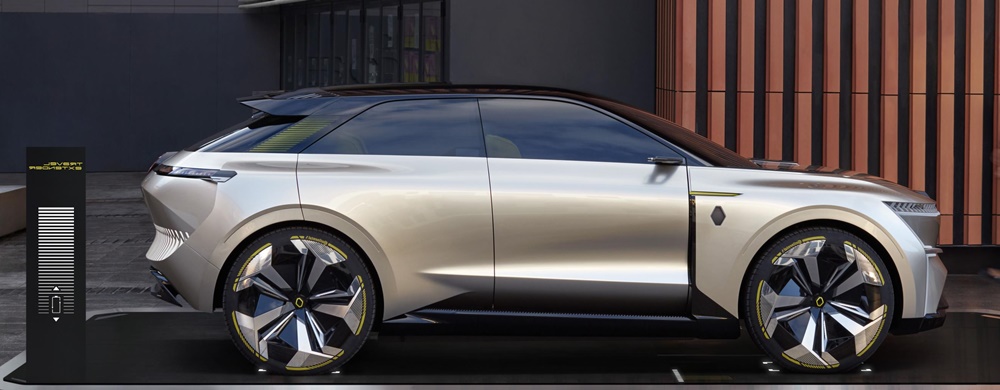
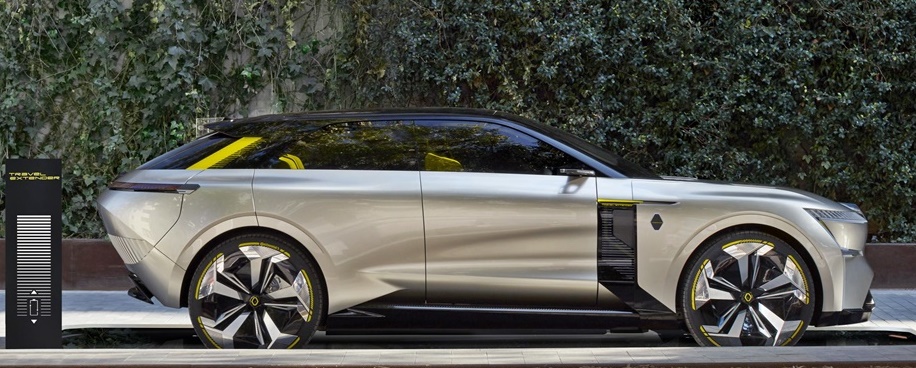
Batteries used in the extended Travel mode are taken out of the vehicle and stored in a charging station for use in other vehicles or to power equipment such as self-service bicycle charging stations or street lighting.
With such a battery-sharing system, there is no need to produce batteries with a nominal 90 kWh capacity for every vehicle. Limiting production in this way is thus good for the carbon footprint and the environment.
The new neighbourhood ecosystem
The MORPHOZ embodies the Me/We concept which says that what is one person’s can be shared. It challenges the idea of the car as private and instead encourages shared use. It meets all the family’s requirements, meaning they don’t have to buy a second or even a third vehicle when it’s not necessary or need a larger vehicle for occasional reasons.
It meets the needs of new kinds of community that are developing around digital infrastructures, regenerative resources and social well-being. As a single vehicle which can also serve the communal well-being, it suits new patterns of living in these urban communities, such as the co-living trend in housing.
The sharing capabilities of the MORPHOZ are central to this philosophy, with the removal of keys and starting cards, for example. It also anticipates regulations which will soon insist on car-sharing for all cars. Everything is accessed using the smartphone, which works as a digital key. This makes sharing with other people easier without the need to swap keys; drivers instead receive an unlocking code which allows access and use of the vehicle for a pre-determined period.
Smart City ecosystem
As a symbol of Groupe Renault’s vision of electric mobility in the years after 2025, the MORPHOZ is a key part of the transformation to Smart Cities, where connected technologies, smart and open data, IoT devices, smart networks, new materials and clean energies can be used to design and build a positive future.
Its Level 3 driving autonomy enhances the safety of everyone by removing human error behind almost 90% of road accidents. Its sensors also detect pedestrians and cyclists, actively alerting the driver to them in manual mode, in order to avoid accidents.
Its electric powertrain helps to improve air quality and means it can be used in areas that are out of bounds to vehicles with internal combustion engines. The shorter City version is ideal for city traffic, with a reduced footprint and less extensive vehicle facilities.
Connectivity and Artificial Intelligence
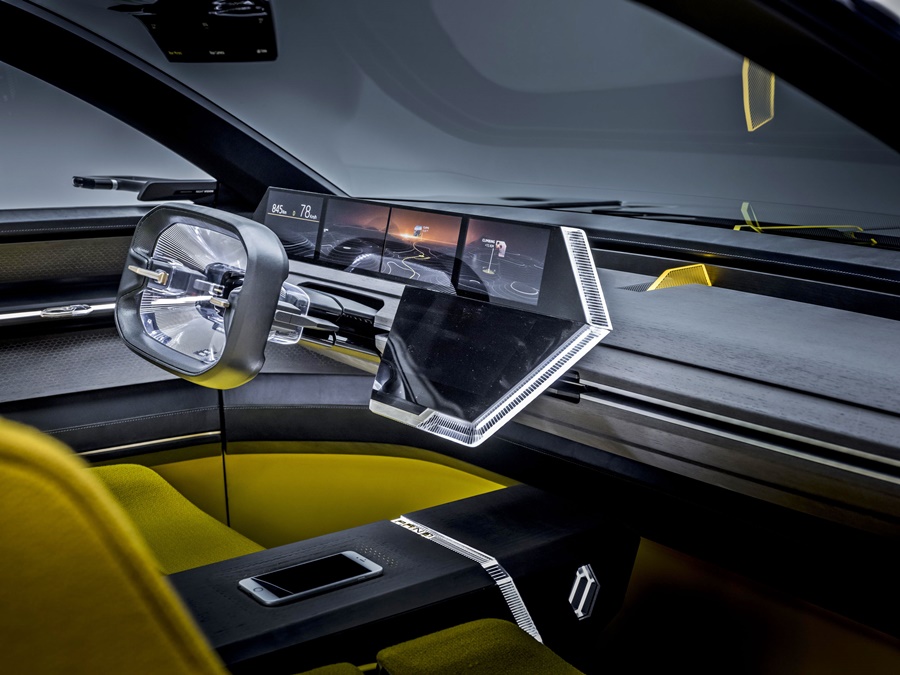
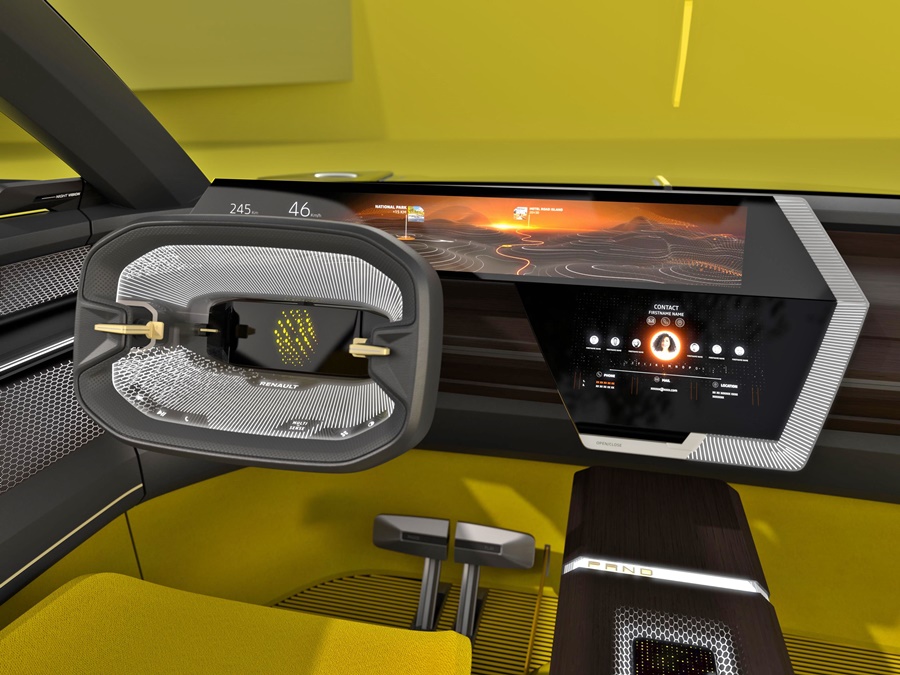
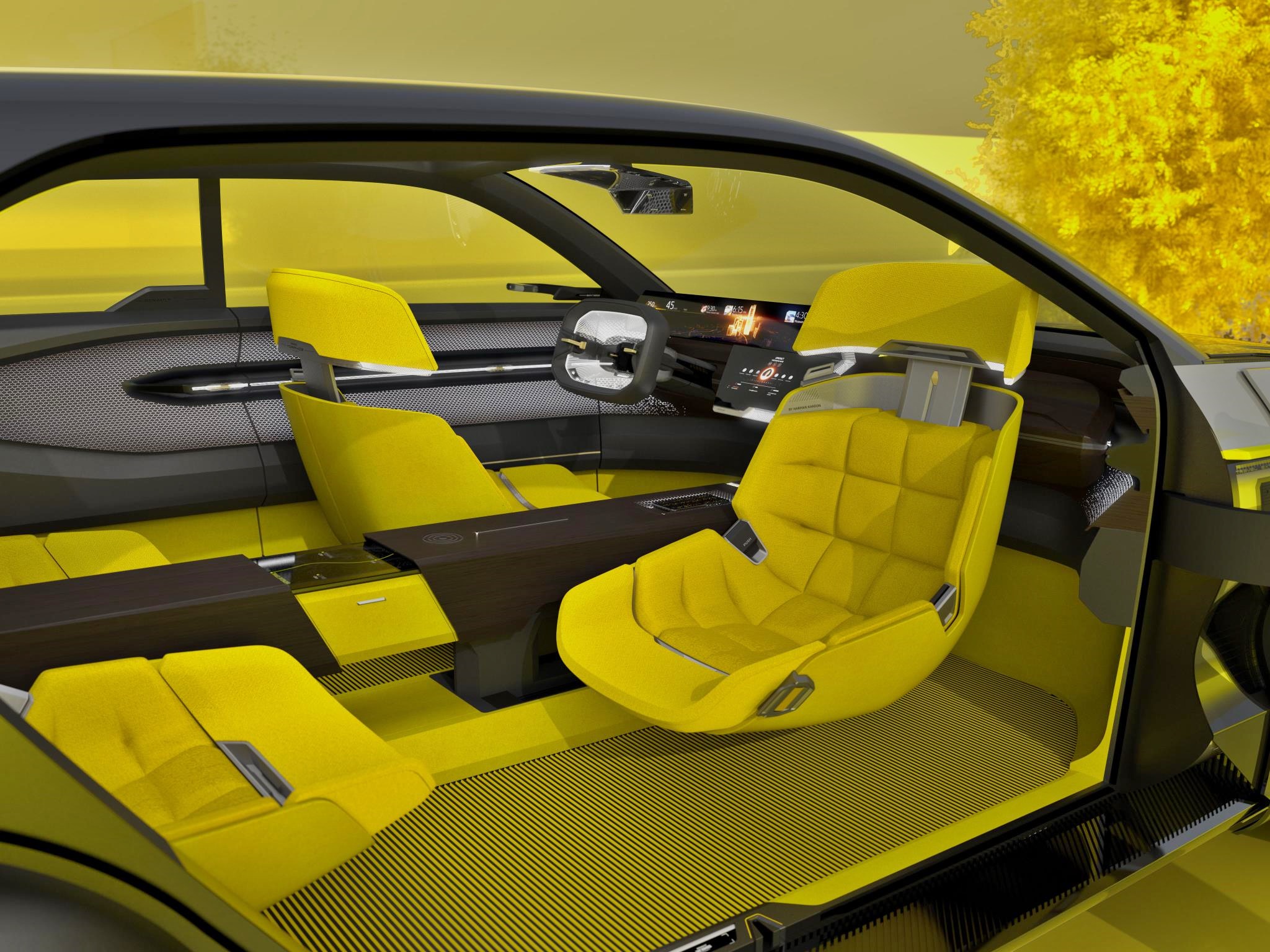
Artificial intelligence (AI) recognises the driver on approach, activating a light sequence on the doors to indicate recognition, and unlocks/opens the doors. The cabin is crossed by a raised centre console which represents the ‘brain’ of the MORPHOZ. There is a special holder for the driver’s smartphone, which is then drawn into the console’s wooden panel to serve as the main data source. The AI will then, if authorised, use data and information from the smartphone to perform its tasks.
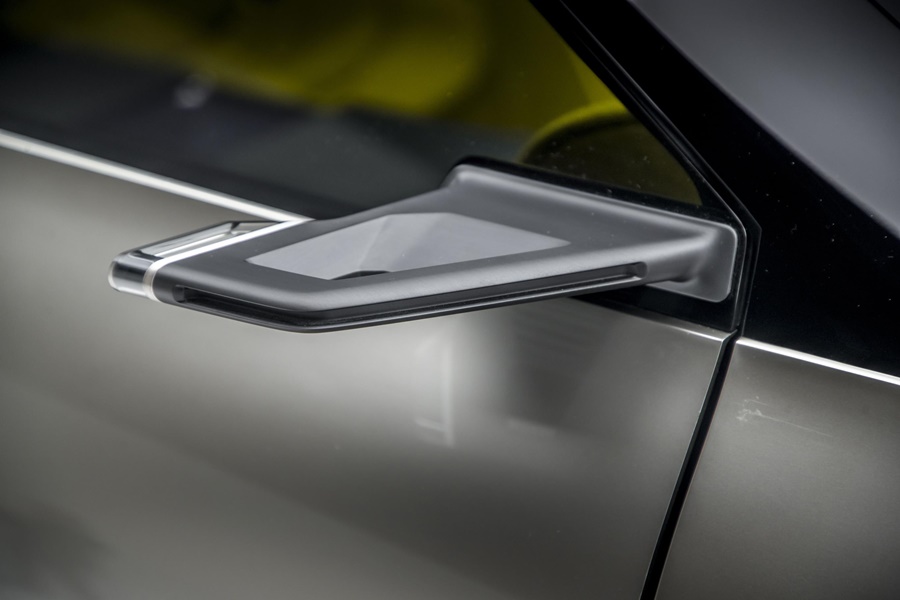
The AI lets the driver see the surrounding area by processing real-time data from external sensors and images from the vehicle cameras, especially the set which replace the door mirrors. Light displays on the inner doors and windows signal the presence of a pedestrian or a cyclist in the blind spot.
The social role of the AI on board is clear by the shared screen located between the seats on the centre console. This is where passengers can scroll through the music library on one of their smartphones or where they can play video games against each other. This screen also lets the users control the comfort of the cabin through the MULTI SENSE settings.
Like the new ZOE’s seat fabric, the cabin in the MORPHOZ uses a selection of recycled materials: wood for the dashboard, plastic for the inner doors and fabric for the seats.
Dedicated and adaptable electric platform
Like the CMF-B platform launched last year on the all-new Clio and used on the latest Captur, the CMF-EV allows engineers to design, build, adjust, and fine-tune electric vehicles more efficiently. The innovative architecture features a long wheelbase, reduced overhangs and a flat floor. A streamlined battery pack means the vehicle can be designed closer to the ground and with a lower roof to deliver improvements to aerodynamic performance.
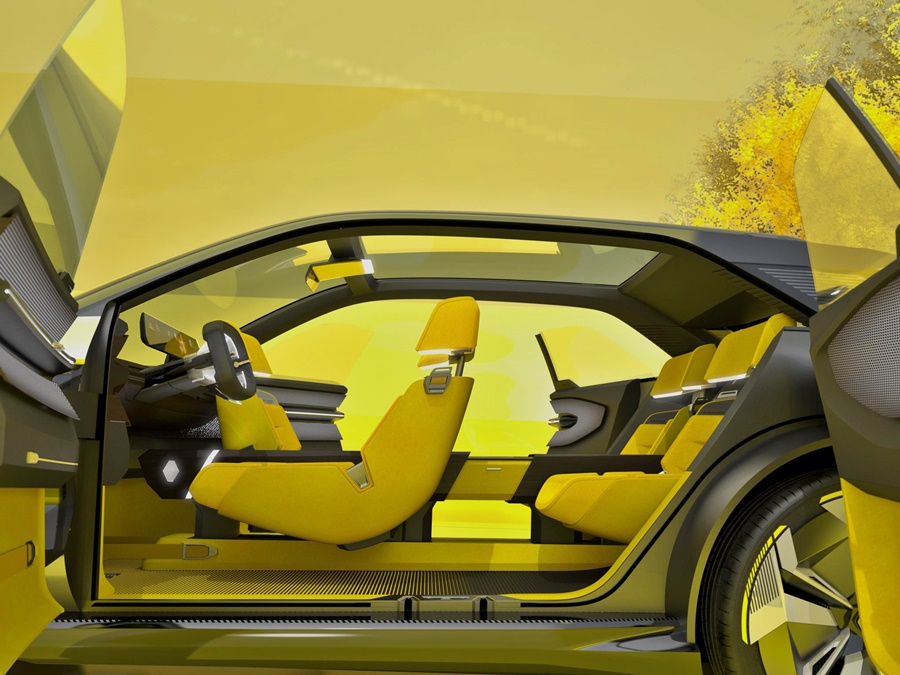
The configurable concept can transform into two different modes: from the shorter City form to the longer Travel version. It is fully adaptable to fit the needs of drivers and passengers, with City mode fitted with the right battery capacity for day-to-day commuting or shopping while in Travel, it is able to accommodate the added capacity needed for long-distance journeys. The Travel Extender battery pack offers an additional 50 kWh of power, for a total capacity of 90 kWh and a total range of up to 700 kms.