Piston.my

EV

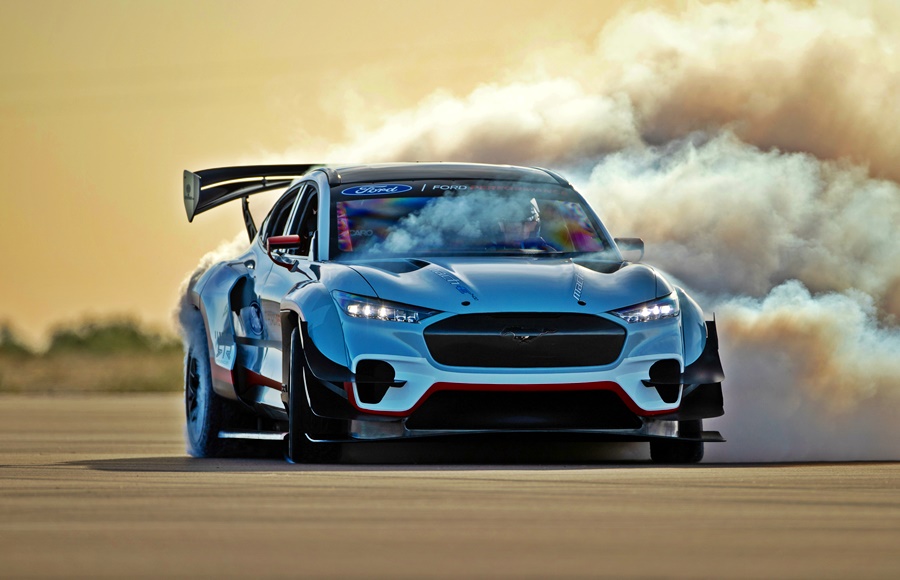
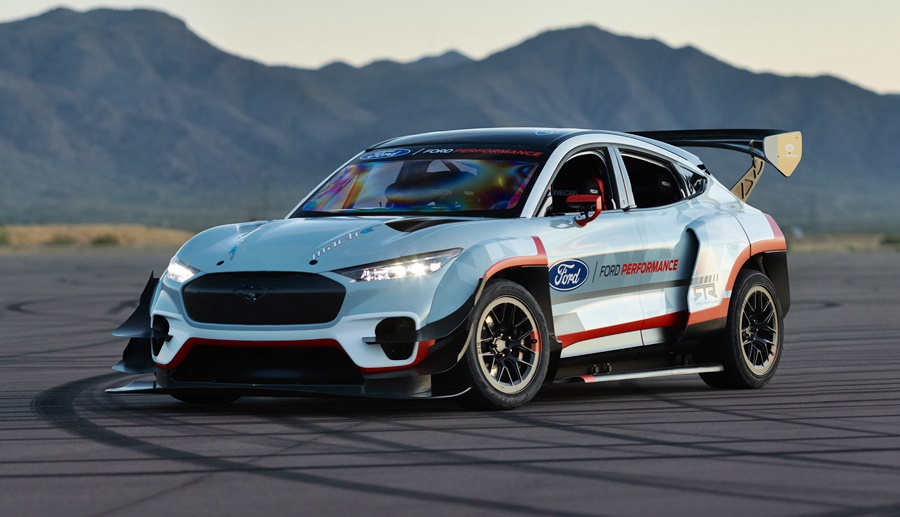
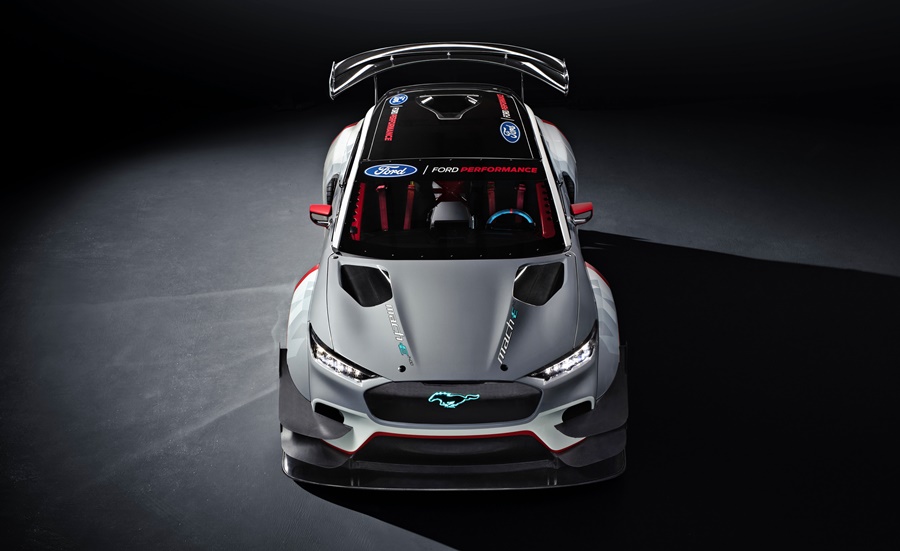
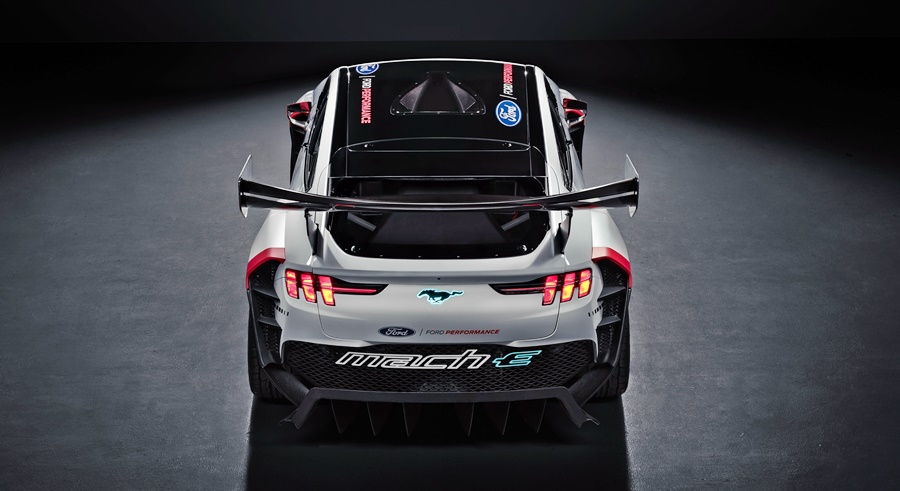
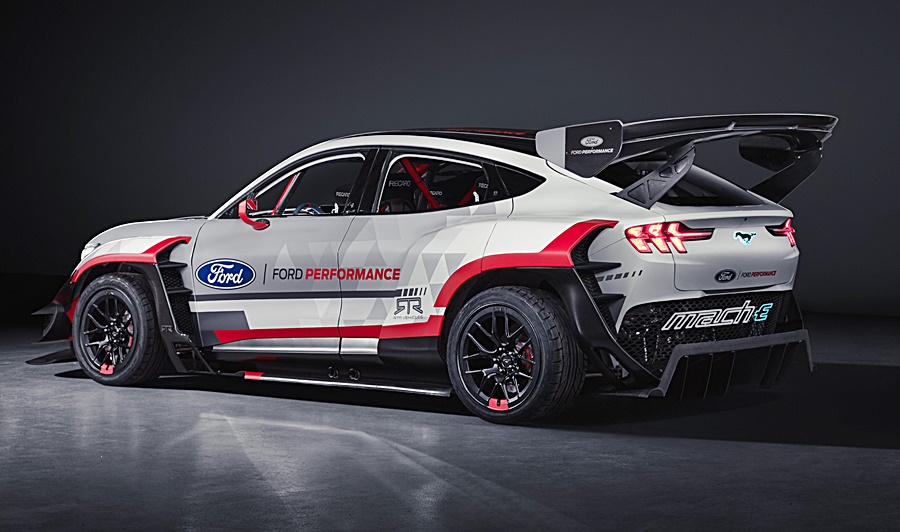
Even before the all-electric Ford Mustang Mach-E reaches its first customers in America at the end of this year, the carmaker has come out with a ‘special’ to show off its performance. The one-off Mustang is called the Mach-E 1400 and where, in the old days, the ‘1400’ might have referred to the engine size, in this case it refers to the output of 1,400 horsepower.

Ford Mustang Mach-E 1400 Prototype

The prototype can generate that much power with 7 electric motors and not a drop of petrol is needed. The chassis and powertrain work together for a multitude of track set-ups offering capability unlike any other vehicle.

“Now is the perfect time to leverage electric technology, learn from it, and apply it to our line-up,” said Ron Heiser, Chief Program Engineer for the Mustang Mach-E. “Mustang Mach-E is going to be fun to drive, just like every other Mustang before it, but Mustang Mach-E 1400 is completely insane, thanks to the efforts of Ford Performance and RTR.”

The Mustang Mach-E 1400 is the result of 10,000 hours of collaboration by Ford Performance and RTR aimed at bridging the gap between what an electric vehicle can do and what customers tend to believe it can do.

“Getting behind the wheel of this car has completely changed my perspective on what power and torque can be,” said Vaughn Gittin Jr., RTR Vehicles founder, motorsports champion and professional fun-haver. “This experience is like nothing you’ve ever imagined, except for maybe a magnetic roller-coaster.”

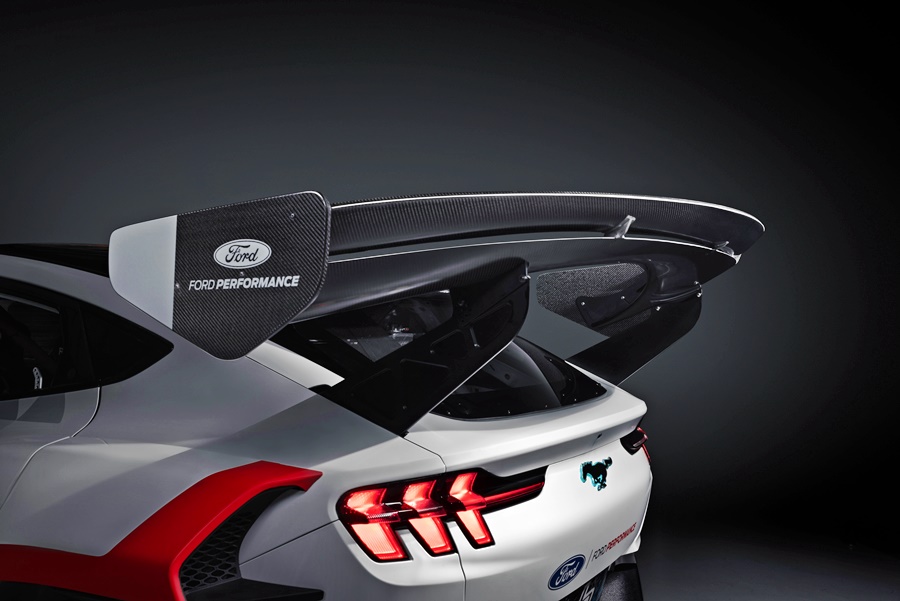
The Mustang Mach-E 1400 has taken shape without rules. The Ford design team and RTR used many of the same tools Ford uses for its racing cars and production programs. Aerodynamics are optimized for shape and location, with a focus on cooling ducts, front splitter, dive planes and rear wing.

Ford Mustang Mach-E 1400 Prototype

Ford Mustang Mach-E 1400 Prototype

Ford Mustang Mach-E 1400 Prototype

There are 5 extra electric motors compared to the Mustang Mach-E GT. Three are attached to the front differential and four are attached to the rear in pancake style, with a single driveshaft connecting them to the differentials, which have a huge range of adjustability to set the car up for everything from drifting to high-speed track racing.

“The challenge was controlling the extreme levels of power provided by the 7 motors,” said Mark Rushbrook, Motorsports Director, Ford Performance. “Mustang Mach-E 1400 is a showcase of the art of the possible with an electric vehicle.”

Ford Mustang Mach-E 1400 Prototype

The chassis and powertrain are set up to allow the team to investigate different layouts and their effects on energy consumption and performance, including rear-wheel drive, all-wheel drive and front-wheel drive.

Ford Mustang Mach-E 1400 Prototype

Drift and track setups have completely different front end configurations like control arms and steering changes to allow for extreme steering angles in drifting. Power delivery can be split evenly between front and rear, or completely to one or the other. Downforce is targeted at more than 1,045 kgs at almost 260 km/h.

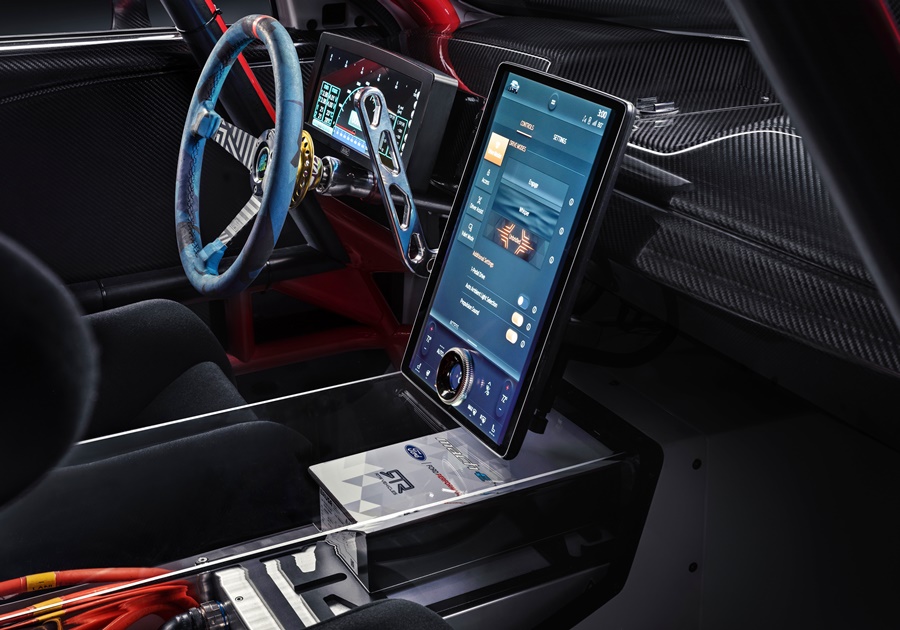
The 56.8-kWh battery pack contains nickel manganese cobalt pouch cells for ultra-high performance and a high discharge rate. The battery system is designed to be cooled during charging using a di-electric coolant, decreasing the time needed between runs.

Ford Mustang Mach-E 1400 Prototype

BHPetrol RON95 Euro4M

An electronic brake booster is integrated to allow series regenerative braking combined with ABS and stability control to optimize the braking system. The Mustang Mach-E 1400 is fitted with Brembo brakes, like the Mustang GT4 racing car, and a hydraulic handbrake system designed for drifting that integrates with the powertrain controls to enable the ability to shut off power to the rear motors.

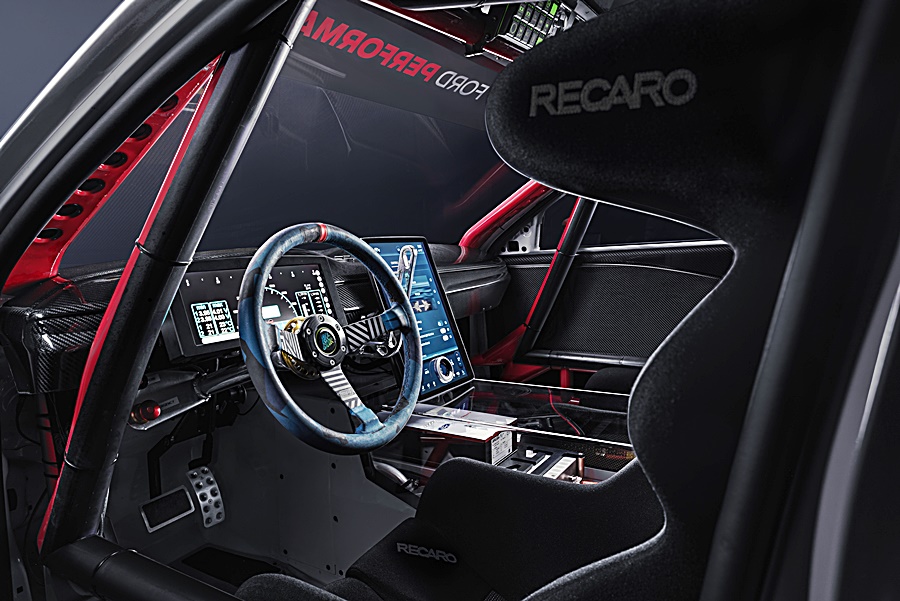
It is set to debut at a NASCAR race soon and will serve as a test bed for new materials. The bonnet is made of organic composite fibres, a lightweight alternative to the carbonfibre that is used on the rest of the bodywork.

Ford Mustang Mach-E 1400 Prototype

The Ford Mustang is officially sold in Malaysia with full aftersales support and warranty. Visit www.sdacford.com.my to know more.

Ford Mustang is bestselling sportscar in the world – for the fifth consecutive year

PISTON.MY

Nissan may be buffeted by financial problems at this time but new products still need to get into the market and even though the COVID-19 pandemic has slowed things down, the carmaker is continuing on the road forward.

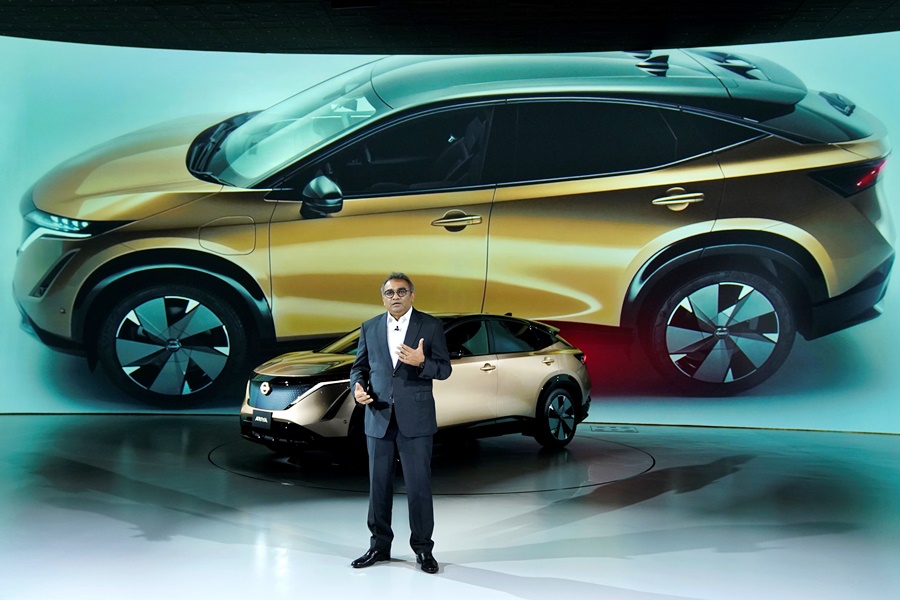
That road is one which requires electric vehicles (EVs) and Nissan is ready with the all-new Ariya, a crossover SUV which, like the successful LEAF, is powered only by electricity. Introduced online to a global audience today from the new Nissan Pavilion in Yokohama, Japan, the Ariya will be priced at around 5 million yen (about RM200,000). It is scheduled to go on sale in Japan in mid-2021, with exports starting by the end of next year to Europe, North America and China.
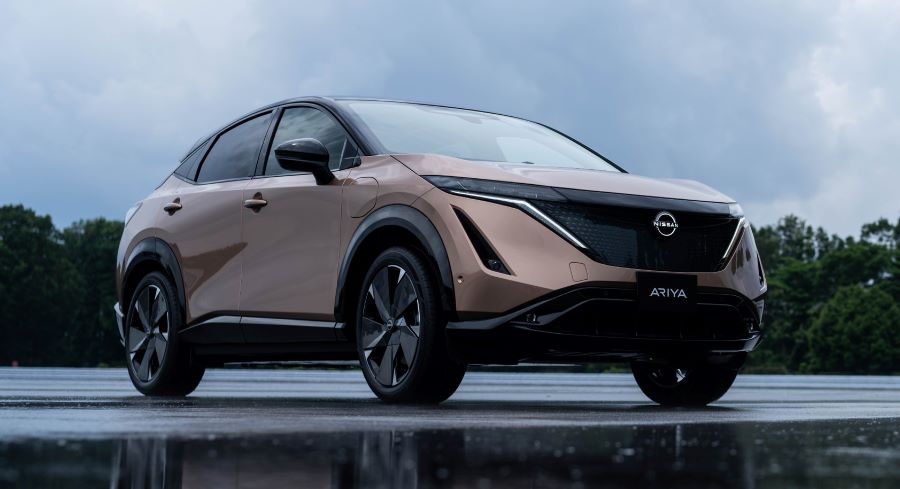
2021 Nissan Ariya

“The Nissan Ariya is a truly beautiful and remarkable car,” said Nissan’s Chief Operating Officer, Ashwani Gupta. “It enables you to go further, easier and in comfort. The Ariya is designed to impress, and to express what Nissan strives for – making our customers’ lives better.”

New electrified brand identity
The Ariya is heavily based on the similarly-named concept vehicle displayed at the 2019 Tokyo Motor Show although the first design ideas started with the IMx at the 2017 Tokyo Motor Show. The first production model to represent Nissan’s new electrified brand identity, it utilizes an all-new Alliance-developed EV platform.
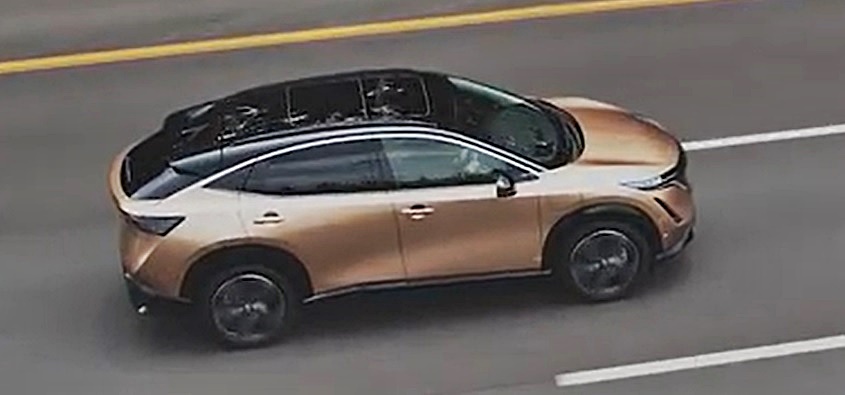
2021 Nissan Ariya

The styling adopts the company’s new design philosophy which is based on what Nissan calls ‘Timeless Japanese Futurism’ – a distinctive Japanese approach conveyed in a simple-yet-powerfully modern way. Embracing the Japanese term ‘iki’, which characterizes the Ariya’s chic, cutting-edge nature, the front of the vehicle appears seamless, elegant and fresh.

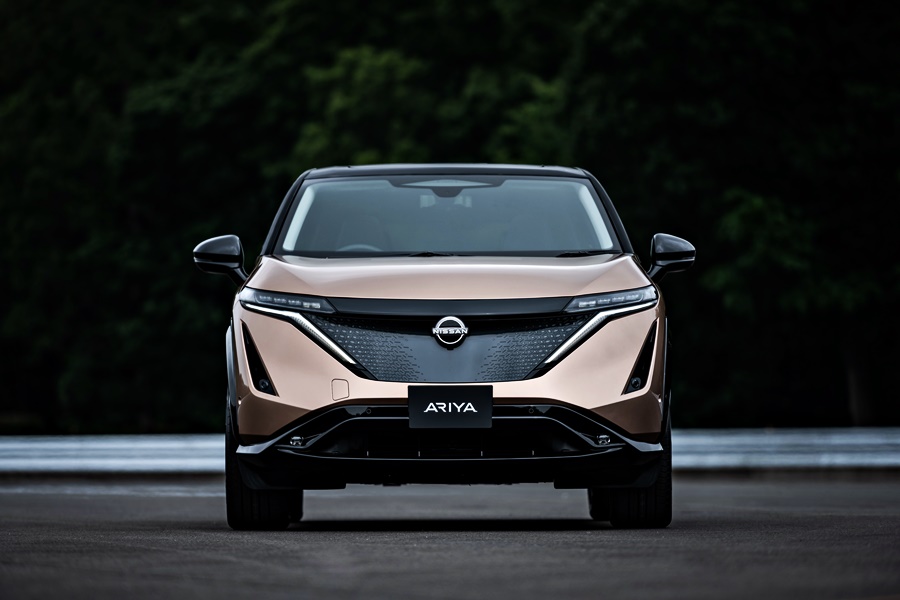
It’s highlighted by a shield – a new term for the traditional grille for the EV era. The shield, incorporating a 3-D, traditional Japanese kumiko pattern just under the smooth surface, protects sensing equipment used for ProPILOT functions and Intelligent Key detection without the aesthetics interrupting operation.

Redesigned brand logo
Nissan’s brand logo, which has been redesigned, is prominently placed at the centre of this aerodynamic shield, beaming with crisp definition from the 20 LEDs that compose it. The lower section of the shield is bordered by subtle lighting that illuminates, along with the logo, when the Ariya is ready for operation. Thin LED headlamps, constructed with four 20-mm mini-projectors, are combined with sequential turn signals to reinvent Nissan’s signature V-motion design.
2021 Nissan ARIYA

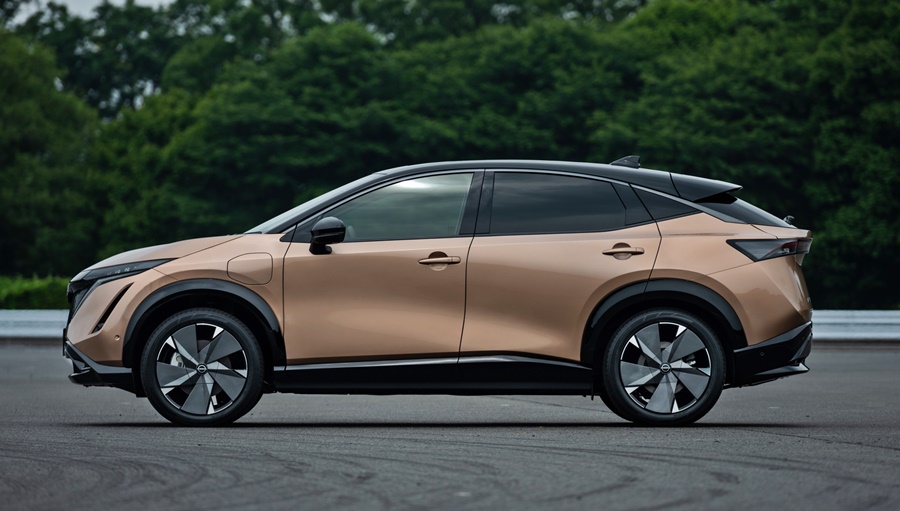
When viewed from the side, the Ariya has a single, uninterrupted horizon line that stretches across the side profile, linking the front fascia and the rear, conveys linear movement, creating architectural beauty in tension and drama from every angle.

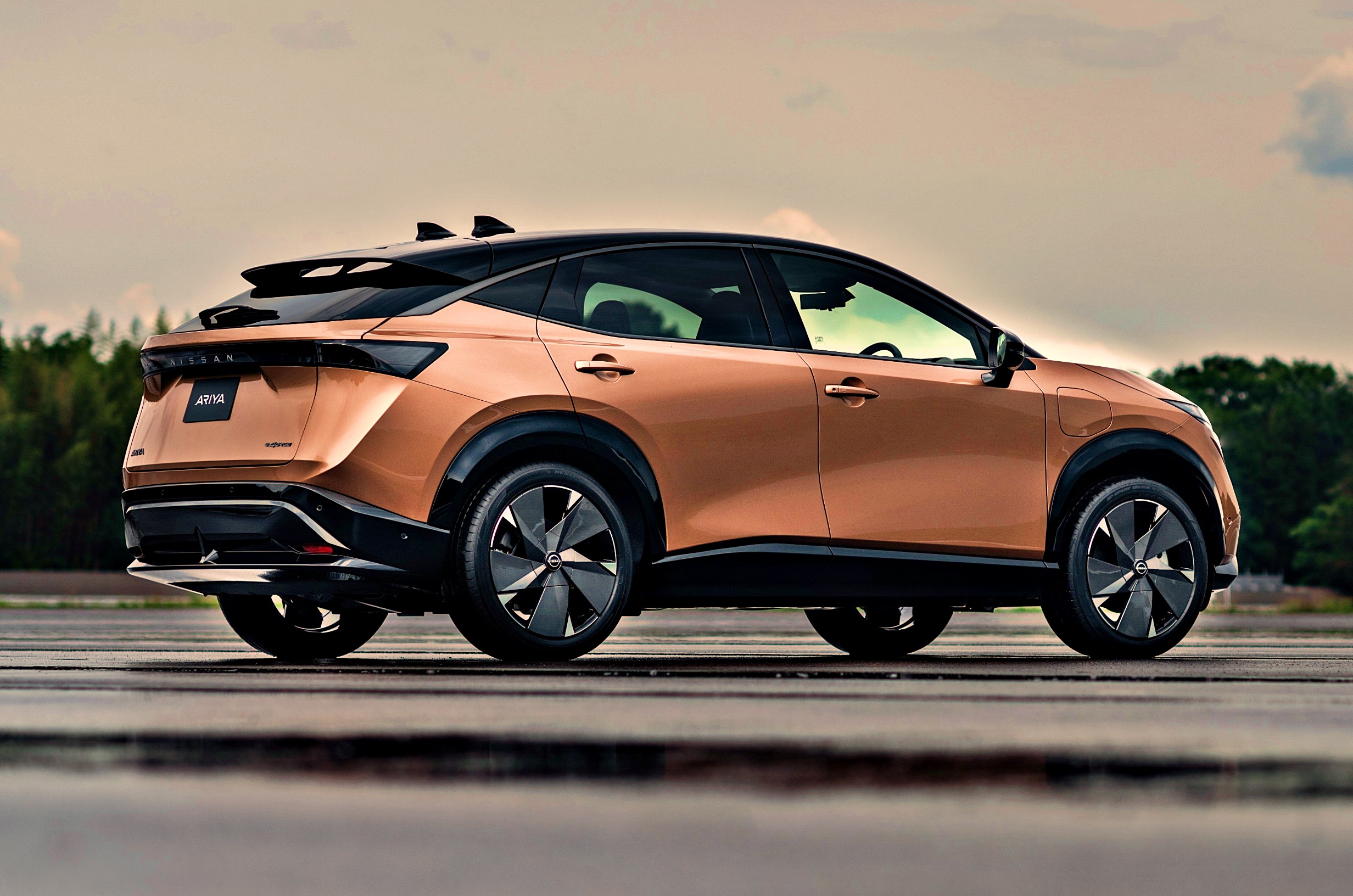
The rear of the Ariya characterized by a steeply raked C-pillar that blends into the rear deck. The one-piece light blade, representing the rear combination lamps, has been engineered to give a black-out effect when parked, and a consistent red illumination, day or night, when in use. Rear fender flares and a high-mounted rear wing signal the Ariya’s powerful EV capabilities.
2021 Nissan ARIYA

2WD and AWD, with two battery pack sizes
Building on Nissan’s strength as an EV pioneer, the Ariya is said to ‘take the powerful performance and capabilities of zero-emission vehicles to a new level’. Four core models are offered with choices of 2-wheel-drive (2WD) and all-wheel drive (AWD). Using peak 130 kW charging, the Ariya can recover up to 375 kms with a 30-minute quick charge using Japan’s CHAdeMO charging system.

The Ariya 2WD can be ordered with 63 kWh of usable battery capacity which is suitable for urban commuters, or a larger battery pack with 87 kWh which can provide additional range. The Ariya with the smaller battery pack has an output of 168 kW while the bigger one has 178 kW, with torque from standstill at 300 Nm for both versions. Factory testing has achieved up to 610 kms on a fully charged battery pack.

Like the 2WD variant, the Ariya AWD also has two choices of battery pack capacities – 63 kWh and 87 kWh. Output is 250 kW/560 Nm for the 63-kWh version and 290 kW/600 M, for the bigger battery pack. The latter has a top speed claim of 200 km/h.
2021 Nissan ARIYA

With e-4ORCE AWD control technology and twin electric motors, Nissan claims it can deliver balanced, predictable power to all four wheels, equal to or better than many premium sportscars.

Vehicle pitch and dive are minimized by adding regenerative rear-motor braking to the usual front-motor regenerative braking employed by typical EV and hybrid systems today. In addition to optimizing front and rear torque allocation, the system applies independent brake control at each of the four wheels to maximize the cornering force generated by each one. This delivers cornering that faithfully follows driver intentions with minimal steering adjustments.

“By taking advantage of e-4ORCE’s precise motor control response, we’re able to control vehicle motion as soon as the brakes are applied for a stable, smooth ride,” said Ryozo Hiraku, expert leader of Nissan’s powertrain and EV engineering division.

BHPetrol RON95 Euro4M

Most technologically advanced Nissan car
The Ariya is also the most technologically advanced Nissan car to date, especially with its ProPILOT 2.0 advanced driver assistance system and ProPILOT Remote Park and e-Pedal features.

The e-Pedal, first introduced in the LEAF, allows the driver to launch, accelerate and decelerate using only the accelerator pedal. It works by initiating the electric motor to start the deceleration process of the vehicle when easing off the accelerator pedal. On low-traction surfaces, the brakes are applied simultaneously with the motor, allowing all four wheels to safely slow down the vehicle. On models equipped with e-4ORCE, regenerative torque is distributed not only to the front wheels, but also the rear.

Also standard across the Ariya line-up is Nissan’s Safety Shield system. This includes Intelligent Around View Monitor, Intelligent Forward Collision Warning, Intelligent Emergency Braking and Rear Automatic Emergency Braking technology.

‘Like a cafe lounge on a starship’
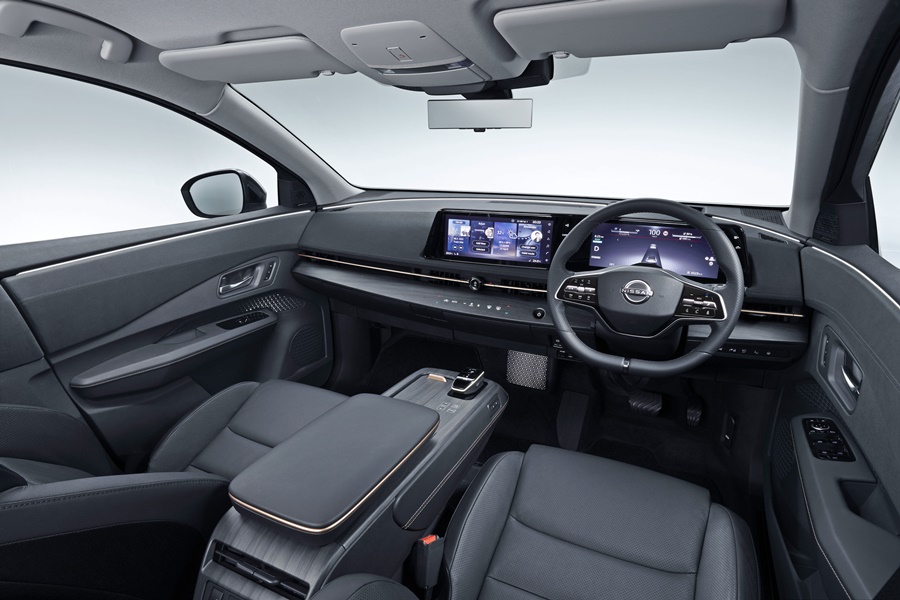
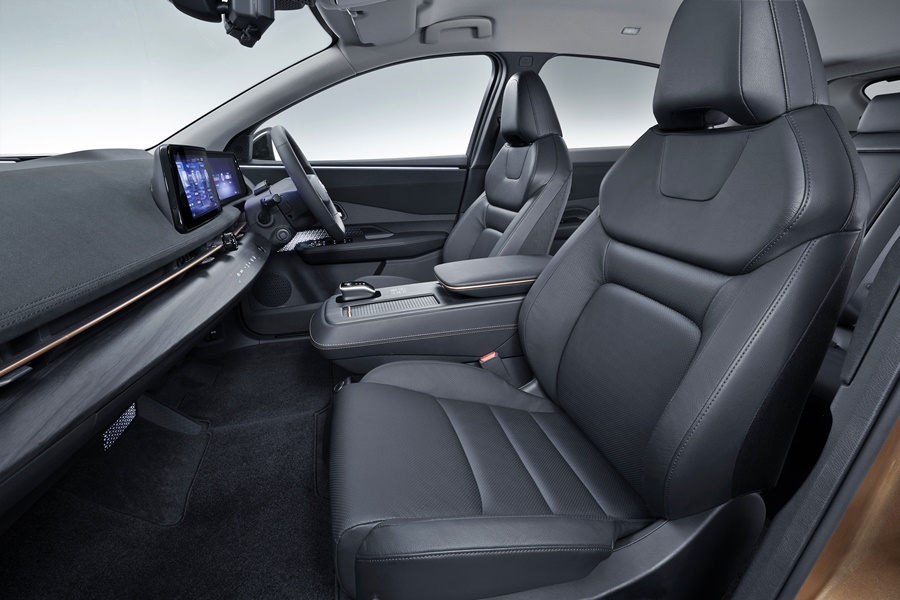
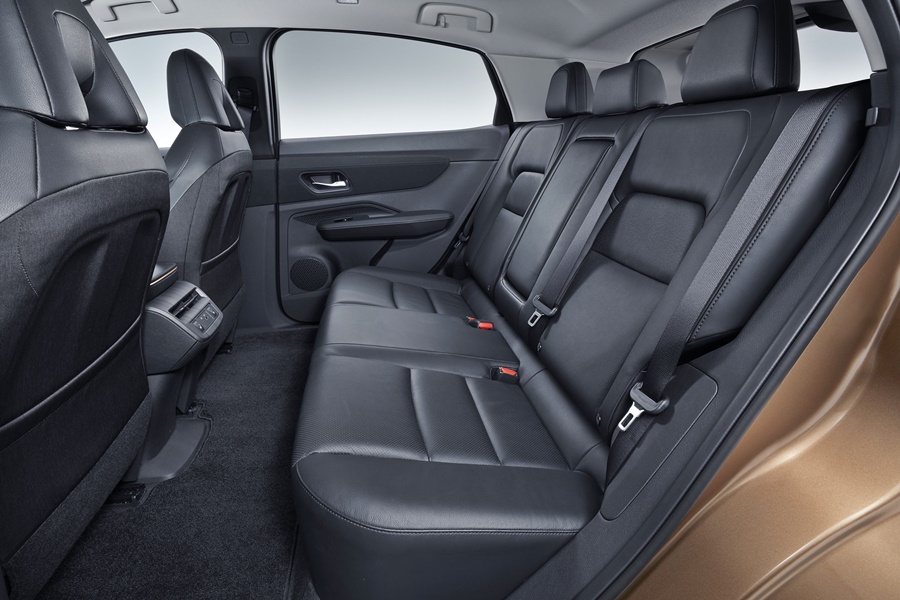
The interior is described as being more akin to a sleek cafe lounge on a starship, evoking performance and intrigue, than to a traditional automotive cabin. The advantages provided by the new EV platform enabled the interior designers to create the most spacious cabin in its class.
2021 Nissan ARIYA

This is also helped by the compact nature of the powertrain components which made it possible for the engineers to install the climate control system under the bonnet (where a traditional gasoline engine would be). This meant that the whole length of the cabin could be utilized without obstructions, such as a transmission tunnel or cabin systems tucked under the instrument panel.
2021 Nissan ARIYA

2021 Nissan ARIYA

Also, a flat, open floor – made possible by the location of the battery at the base of the chassis – and the Ariya’s slim profile Zero Gravity seats result in vast amounts of legroom and easy interaction between front and rear passengers.

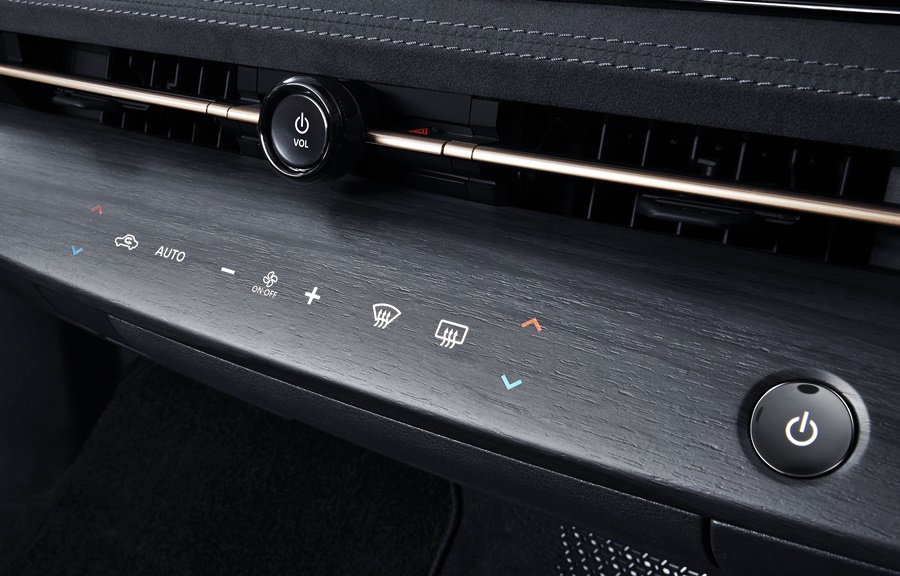
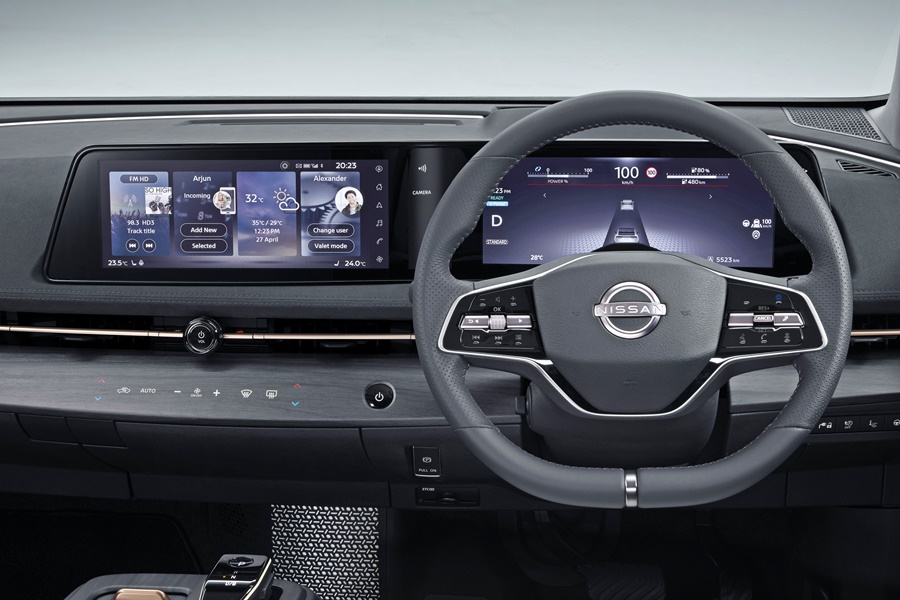
The Ariya’s minimalist dashboard has no buttons and switches, something which is unique. The primary climate control functions are integrated into the wooden centre dash in the form of capacitive haptic switches that offer the same feeling as mechanical switches by vibrating when touched.
2021 Nissan Ariya

2021 Nissan Ariya

2021 Nissan Ariya

The display interface features both a 12.3-inch instrument monitor and 12.3-inch centre display along a single horizon. By displaying multiple facets of information on one horizontal plane, information can be quickly digested without the driver being distracted from the road. The two displays are oriented in a wave-like shape to ensure important vehicle information, such as battery information, range and navigation, can be easily reached and scrolled through with a simple swipe.


Related story: Why Nissan designers avoided the tablet in yhe Ariya Concept


The Ariya is the first Nissan model which can received firmware updates over the air using Remote Software Upgrade. The technology automatically updates various software inside the vehicle, making it unnecessary for the owner to take the car to a service centre. With periodic real-time updates, the Ariya will always be able to operate at its full potential.

DIMENSIONS OF THE ARIYA
Overall length – 4595 mm
Overall width – 1850 mm
Overall height – 1655 mm
Wheelbase – 2775 mm
Kerb weight – 1,900 kgs to 2,200 kgs

The Ariya will only go on sale in 2021 and only in Japan and certain regions, and Malaysia is not included. However, you can own a fully electric EV now as the Nissan LEAF is available in Malaysia. Visit www.nissan.com.my to find out where you can get the EV experience.

Nissan IMk concept EV – the perfect city car of the future? (w/VIDEO)

COVID-19

PISTON.MY

SEAT, like other carmakers (especially in Europe), is steadily making the transition towards electrification, an important move to meet increasingly tough legislative requirements in the years to come. The emission levels are so low that it is necessary to use hybrid powertrains if not all-electric ones to meet them.

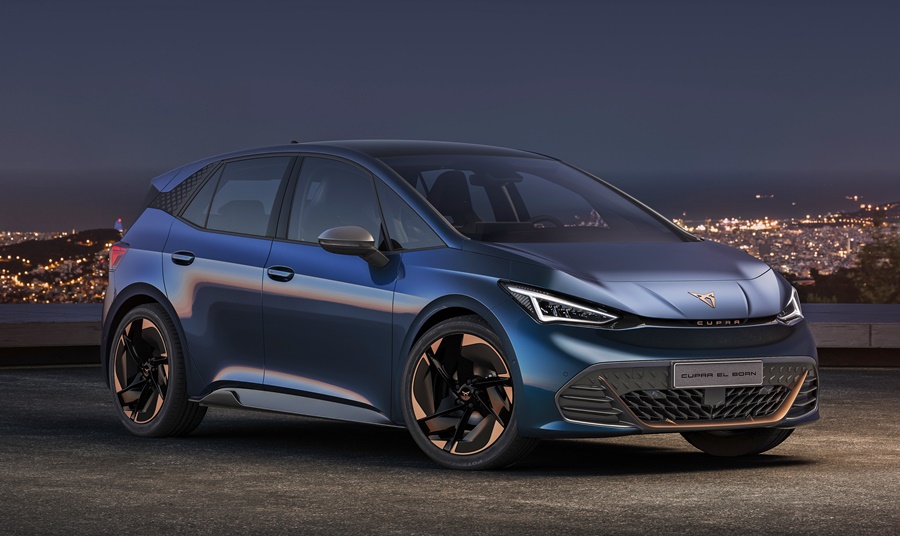
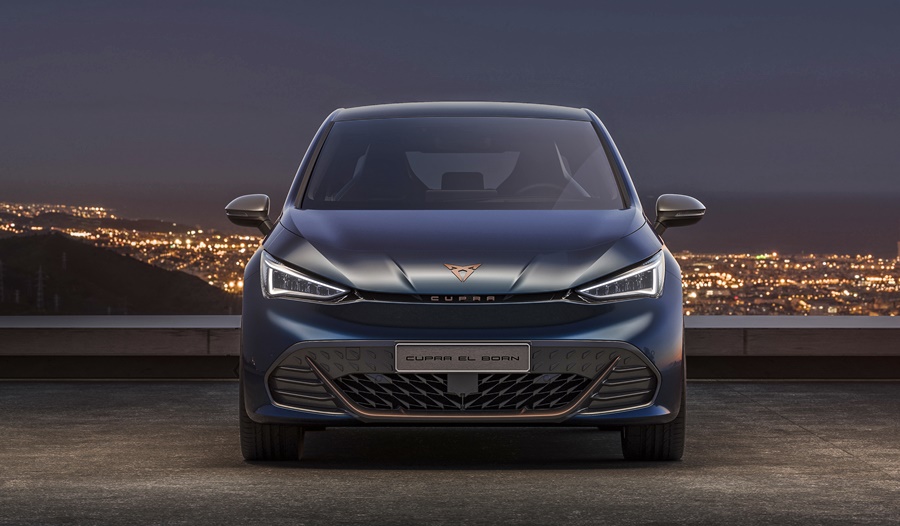
Interestingly, however, the Spanish carmaker will launch its first all-electric model next year using its high-performance CUPRA brand rather than the SEAT brand. The reason for this is said ‘to be to change the dynamic perception of electrically-powered vehicles’.

CUPRA el BORN

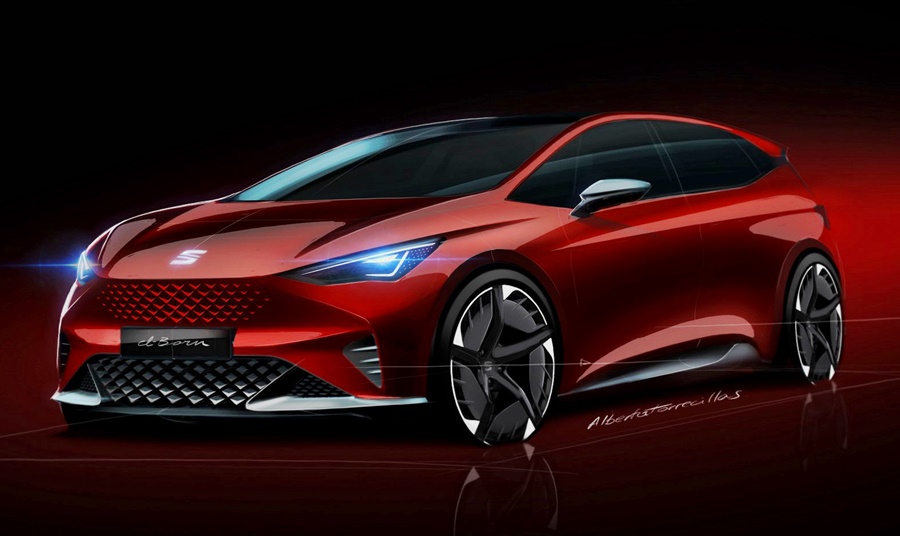
The new electric model will be based on the el-Born Concept which was shown at the Geneva Motor Show in 2019. Since then, the design team and the SEAT Technical Centre have been working on the production model, continuing to evolve the vehicle. Some of the changes they have made have given it a sportier character and an even more impressive visual appeal.

“CUPRA el-Born displays all the genes of the CUPRA brand and we have taken the original concept to the next level creating a new sporty and dynamic design and reengineering the technological content. CUPRA el-Born is the living proof that performance and electrification are a great match,” said CUPRA CEO Wayne Griffiths.

SEAT el-BORN CONCEPT 2019
The SEAT el-BORN concept which was displayed in Geneva last year.

The performance and dynamics of the CUPRA el-Born have been a clear focus during the development of the car, and acceleration from 0 – 50 km/h will be within 2.9 seconds. The Dynamic Chassis Control Sport (DCC Sport), which has been exclusively developed within the VW Group MEB platform for the CUPRA el-Born, combines the low driving height of the car with a system that is adapting automatically to any conditions, offering a superior level of driving dynamics.

For now, the company will reveal that the el-Born will have features such as Head-up Display with Augmented Reality and a range of up to 500 kms on a fully charged battery pack. The 77 kWh battery pack can be fast-charged within 30 minutes which will provide at least 260 kms of range, it is claimed.

CUPRA el BORN

CUPRA el BORN

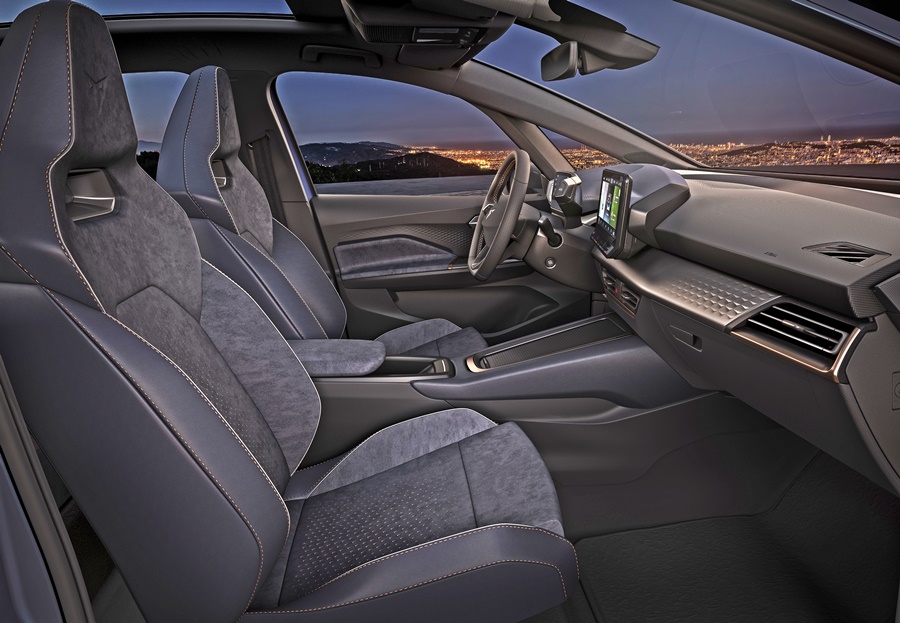
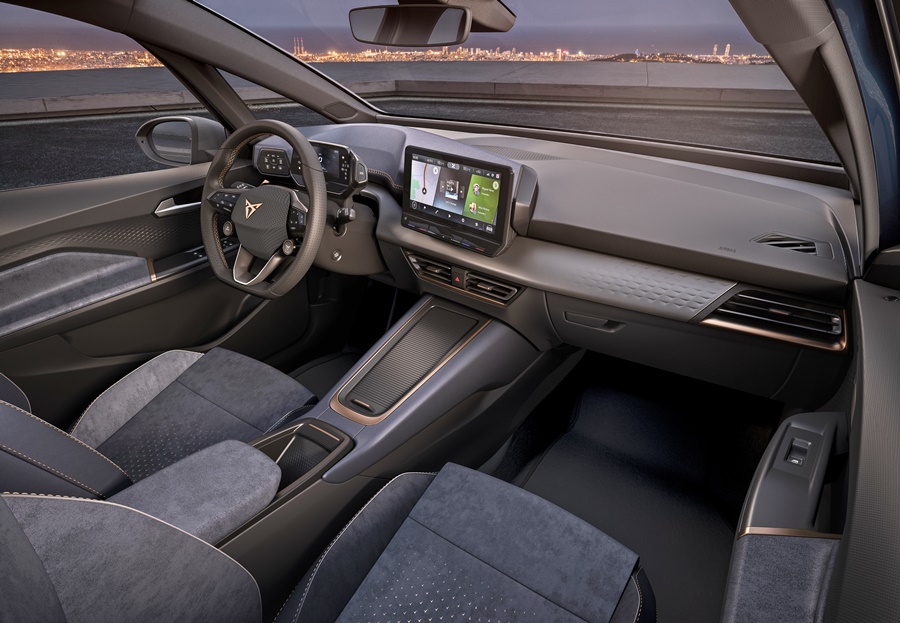
The interior is designed to encapsulate the CUPRA philosophy of quality and performance mixed with sophistication. This is highlighted in the sports bucket seats, the steering wheel with Drive Profile Selection and CUPRA mode buttons, and high-quality material choices. CUPRA puts a particular focus on the sustainability of the el-Born using recycled materials in the interior of the car.

BHPetrol RON95 Euro4M

VW Zwickau
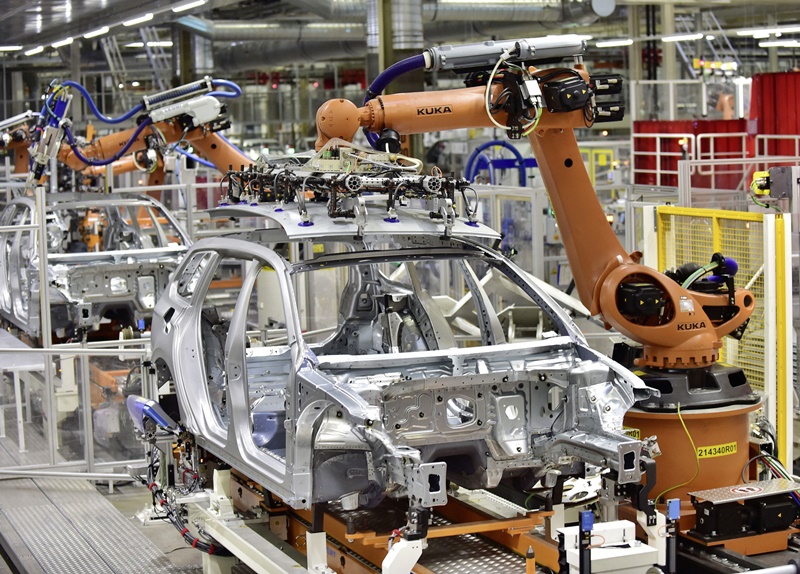
The Volkswagen Group factory in Zwickau, Germany, will produce electric vehicles for the various brands, including SEAT and CUPRA.

The model will be manufactured at the Volkswagen Group factory (SEAT is part of the Group) in Zwickau, Germany. This factory has been renovated and configured to produce electric vehicles for the Group’s different brands from 2021. It will have a production capacity of up to 330,000 electric vehicles a year.

All-new SEAT Leon designed to continue as Spain’s bestselling car

COVID-19

PISTON.MY

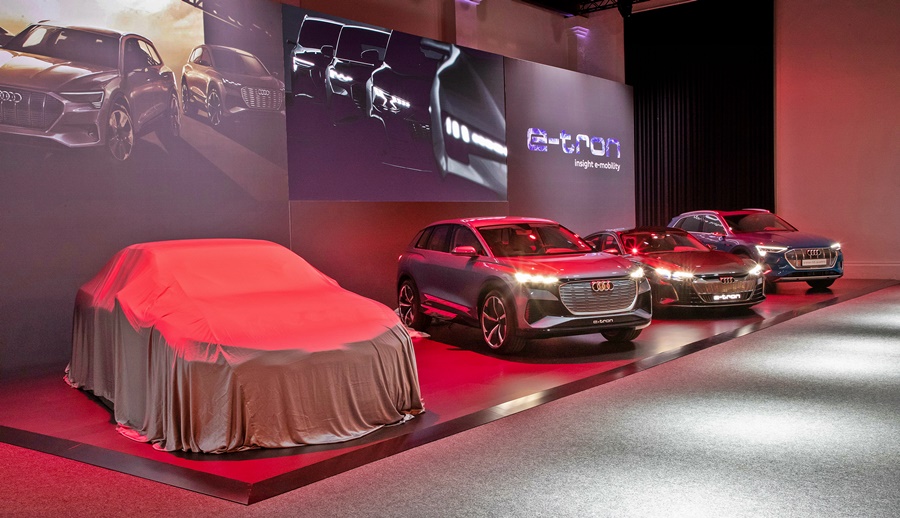
Audi launched its electric offensive with the all-electric  Q4 e-tron SUV in September 2018 and by 2025, the carmaker aims to offer more than 20 vehicles with electric drive and achieve roughly 40% of its sales with electrified models.

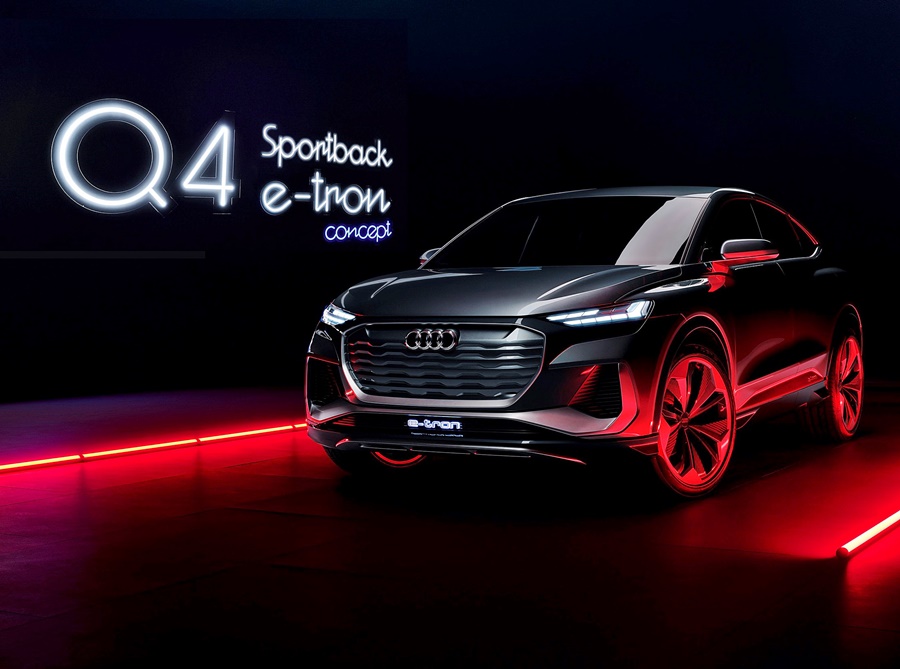
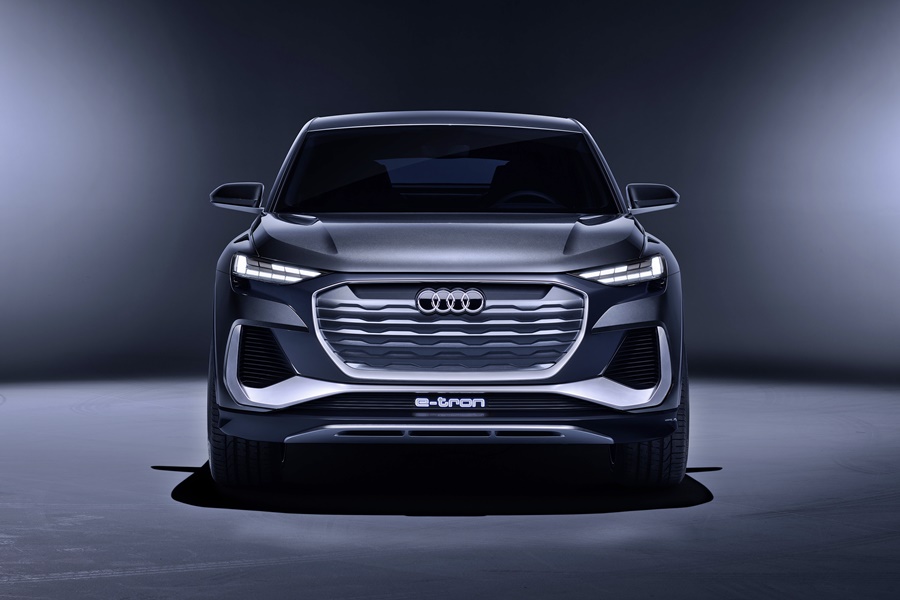
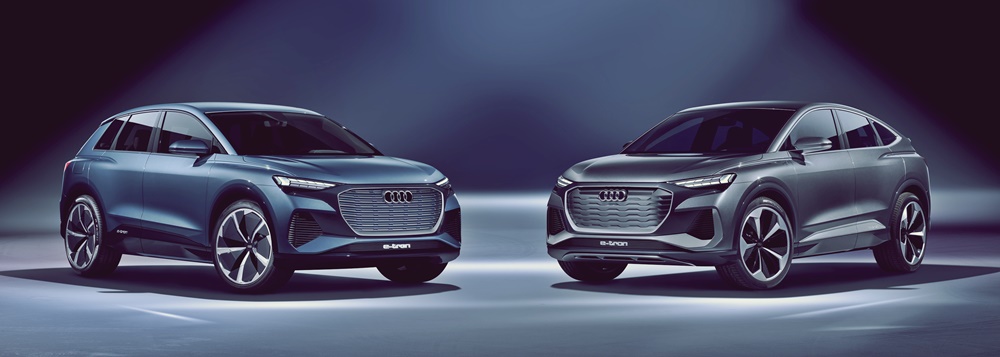
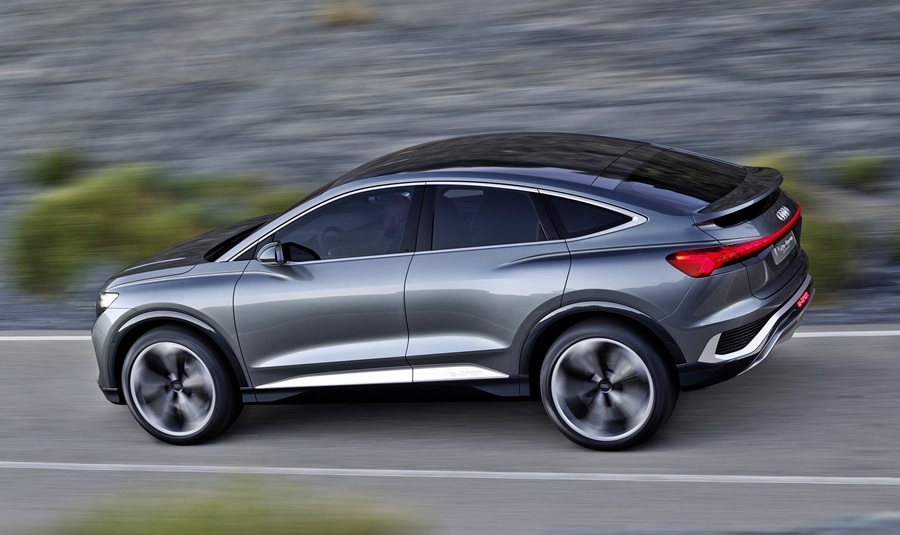
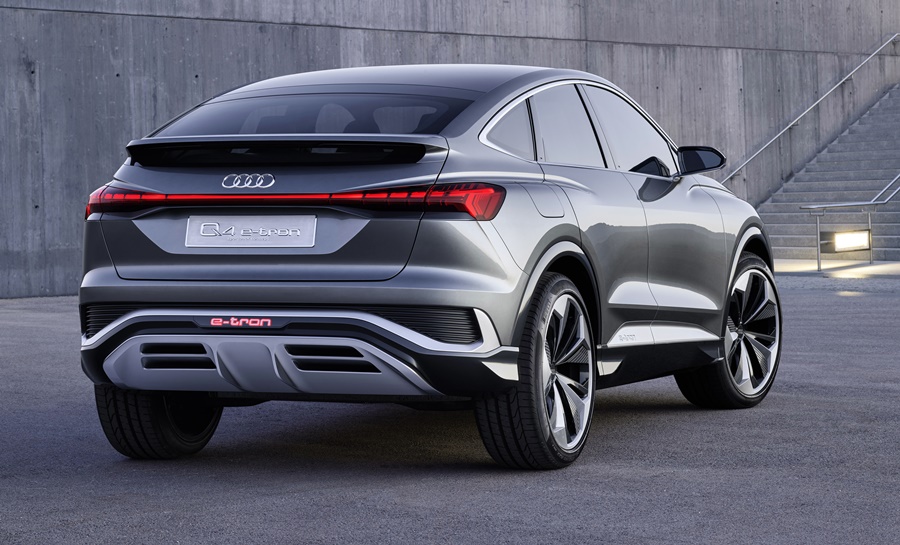
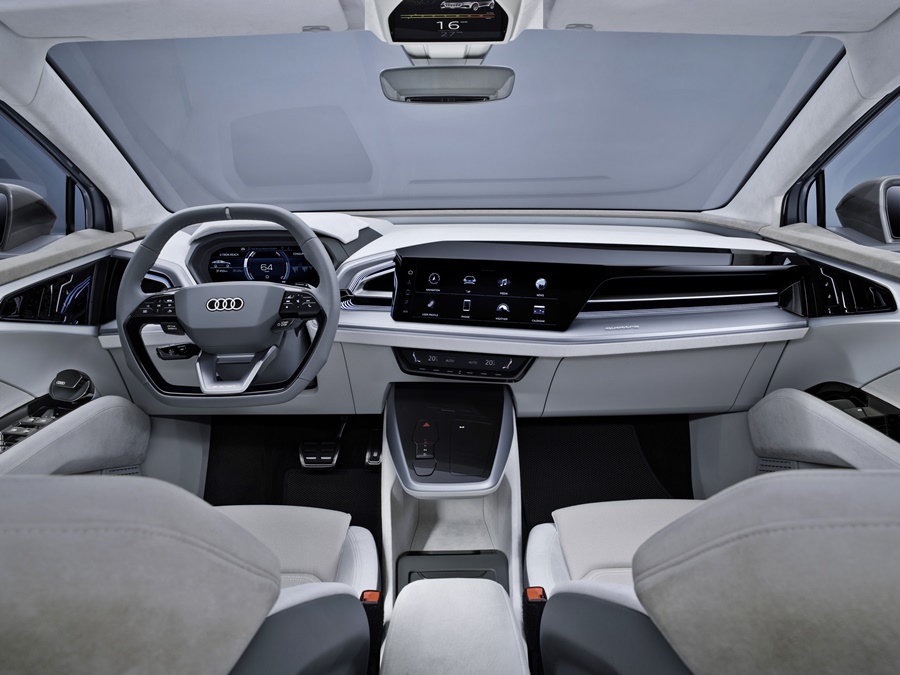
2020 Audi Q4 Sportback e-tron concept

To date, Audi has grown its electrified range to six models and the seventh will be the Q4 Sportback e-tron SUV coupe will be launched next year. Previewing the second e-tron SUV model as a concept study for now, Audi’s aim is to give potential Q4 customers the opportunity to start thinking about which version they prefer roughly a year before the first vehicles will be delivered.

MEB and its importance
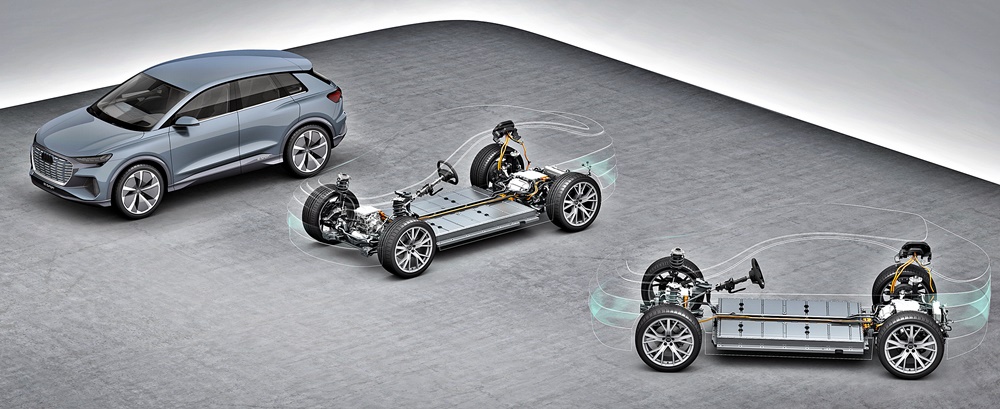
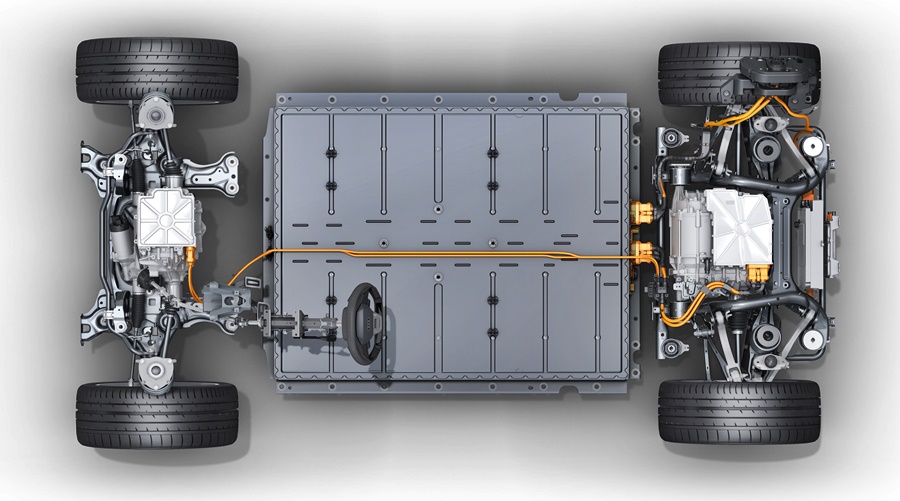
The technology of the Q4 e-tron concept is provided by the modular electrification platform (MEB), which will be used for numerous electric vehicles produced by the Volkswagen Group in the future. This platform serves as the basis primarily for electric cars in the high-volume A segment. It allows the best technology available to be developed jointly across brands and used in many different electric cars. The MEB thus also helps electric mobility to break through even in the particularly price-sensitive compact segment.

Volkswagen Group MEB

The dimensions of the two Q4 models are almost identical. With an exterior length of 4.6 metres and a height of 1.6 metres, the Sportback is just 1 cm longer and flatter. They are identical in terms of their width and wheelbase.

They will also have the same drive technology using two electric motors with 225 kW of system output. Claimed acceleration from 0 to 100 km/h is 6.3 seconds, with the top speed restricted to 180 km/h.

Audi Q4 e-tron
The Q4 e-tron which was launched in 2018 (left) and the Q4 e-tron Sportback concept which previews the next electric SUV model to go on sale in 2021.

Electric quattro
The quattro all-wheel drive system sends the power to the road but there is no mechanical connection between the axles. Instead, an electronic control ensures that the torque distribution is coordinated optimally, and it does so in fractions of a second.

Audi electric Quattro

In most cases, the Q4 Sportback e-tron concept mainly uses its rear electric motor in order to achieve the highest efficiency. For reasons of efficiency, the drive torque is generally distributed with a rear-axle bias. If the driver requires more power than the rear electric motor can supply, the electric all-wheel drive uses the front asynchronous motor to redistribute the torque as required to the front axle. This also happens predictively even before slip occurs in icy conditions or when cornering fast, or if the car understeers or oversteers.

A large battery pack with a capacity of 82 kWh takes up almost the entire space in the underbody area between the axles. The range claimed from a fully charged pack is over 450 kms. Versions with rear-wheel drive can go further, with a range of over 500 kms. The battery is charged with a maximum of 125 kW, requiring little more than 30 minutes to reach 80% of the total capacity.

2020 Audi Q4 e-tron Sportback concept

2020 Audi Q4 Sportback e-tron concept

Sense of spaciousness
With its dimensions, the Q4 Sportback e-tron concept takes its position in the upper third of the compact class. By contrast, its wheelbase of 2.77 metres puts it at least one class higher. As there is no transmission tunnel restricting the space, there is generous legroom at the front and even more in the rear.

The colour scheme in the cabin emphasizes the sense of spaciousness. Sustainability is the top priority not only in terms of the electric drive but also materials used. The floor covering, for example, is made of recycled materials.

2020 Audi Q4 e-tron Sportback concept

The Audi virtual cockpit displays the main elements for speed, charge level, and navigation, while a large-format head-up display with an augmented reality function is a new feature. It can display important graphical information, such as directional arrows for turning, directly on the course of the road.

As the centre console does not need to hold functional elements such as a gearlever or handbrake lever, the area is used for a more spacious stowage compartment that includes a cell phone charging cradle. In addition to the conventional lower storage compartment, the doors now provide the possibility to store bottles in the specially molded upper section, where they are easy to reach.

BHPetrol RON95 Euro4M

Audi electrification strategy
By 2025, Audi aims to offer more than 20 vehicles with electric drive and achieve roughly 40% of its sales with electrified models.

The gripping story of Audi’s quattro all-wheel drive system

PISTON.MY

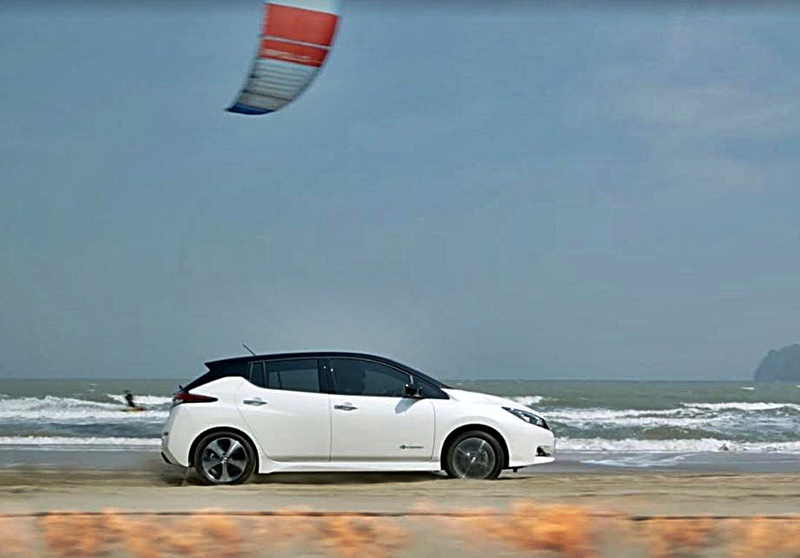
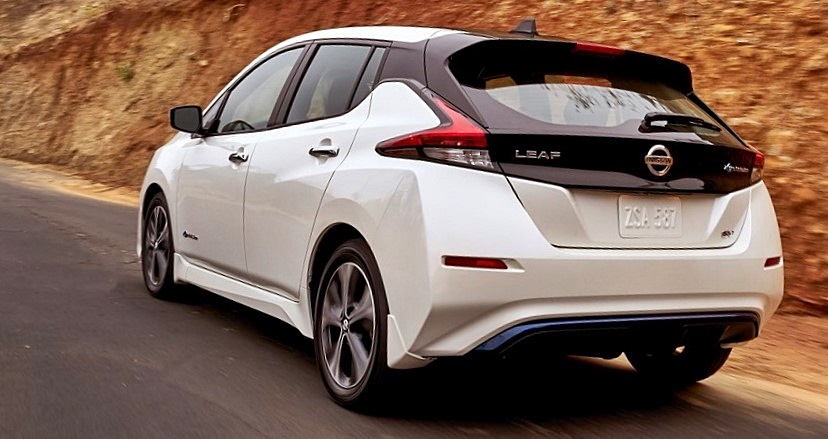
In a first-of-its-kind driving contest, Nissan pitched its LEAF – the world’s first mass-market fully-electric vehicle (EV) – against the speed of nature’s powerful elements – fire and wind. The idea of having the challenge was to change the perception that electric vehicles are not dynamic or exciting.

On an enclosed area at Samroiyod Beach along the western side of the Gulf of Thailand, Nissan set up a one kilometre long course. A pyrotechnician’s ‘fire-line’ and a champion kite surfer raced against the LEAF to cross the finish line in the shortest time.

The Nissan LEAF, with its ability to go from standing still to 100 km/h in 7.9 seconds, raced ahead of its elemental rivals. The quick performance of the EV was made possible by its e-Powertrain. Power from the powerful electric motor goes straight to the wheels to give instant and strong acceleration. Additionally, the LEAF was able to beat both fire and wind in this race due to its light weight.

“Without doubt, electric vehicles are the most environmentally responsible cars of the future. And with this challenge, we aim to show that the Nissan LEAF is simply amazing, not only because of zero-emission, but also being a cool car with mind-blowing acceleration and driving dynamics that can handle any challenge,” said Nirmal Nair, Vice President Marketing, Nissan Asia & Oceania.

Nissan LEAF

The latest Nissan LEAF is available in Malaysia from Edaran Tan Chong Motor. Visit www.nissan.com.my to know more and locate a showroom.

FIRST DRIVE: 2019 Nissan Leaf – “Simply Electrifying”

PISTON.MY

An electrically-powered ambulance would be ideal as it not only generates zero toxic emissions but also runs quietly and smoothly. However, due to the size needed to comfortably accommodate patients or injured people, it has to be quite big and as electric powertrains have become more powerful, it is now possible to have an EV ambulance.

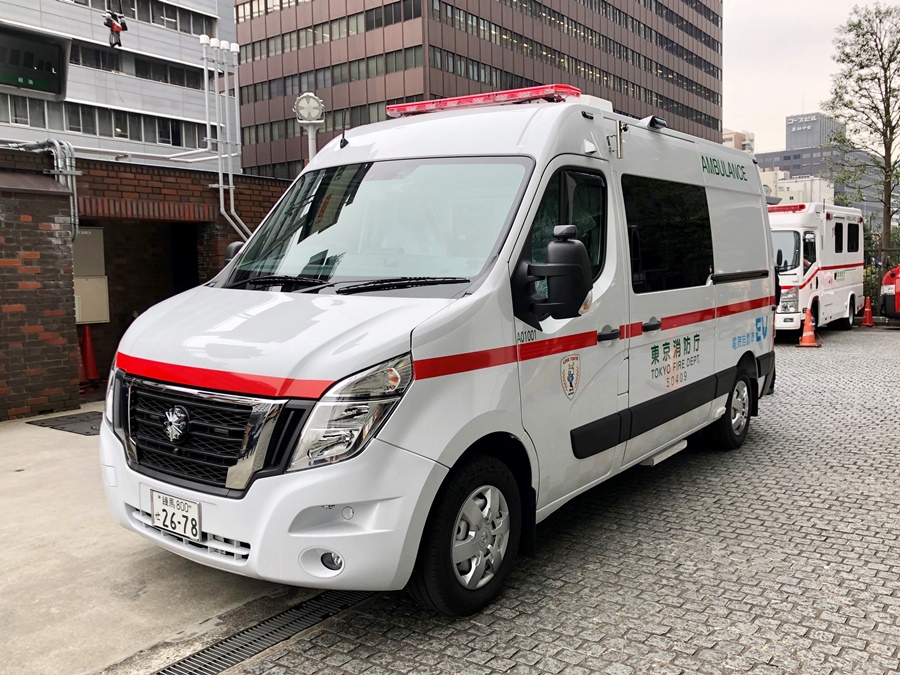
It’s not surprising that Nissan, with its leadership in EVs, has developed an EV ambulance. The project is the result of a strong collaboration between Nissan, the Tokyo Fire Department and the Tokyo Metropolitan Government, which has led to the Nissan NV400 Zero Emission (EV) Ambulance.

The introduction of the first EV ambulance in the Tokyo Fire Department fleet is part of the Tokyo Metropolitan Government’s ‘Zero Emission Tokyo’ initiative.

“Nissan strongly believes in sustainable mobility and strives to contribute to a world with zero emissions and zero fatalities,” said Ashwani Gupta, Representative Executive Officer and Chief Operation Officer at Nissan. “This project is another great example of our efforts to enhance accessibility of eco-friendly vehicles to local communities.”

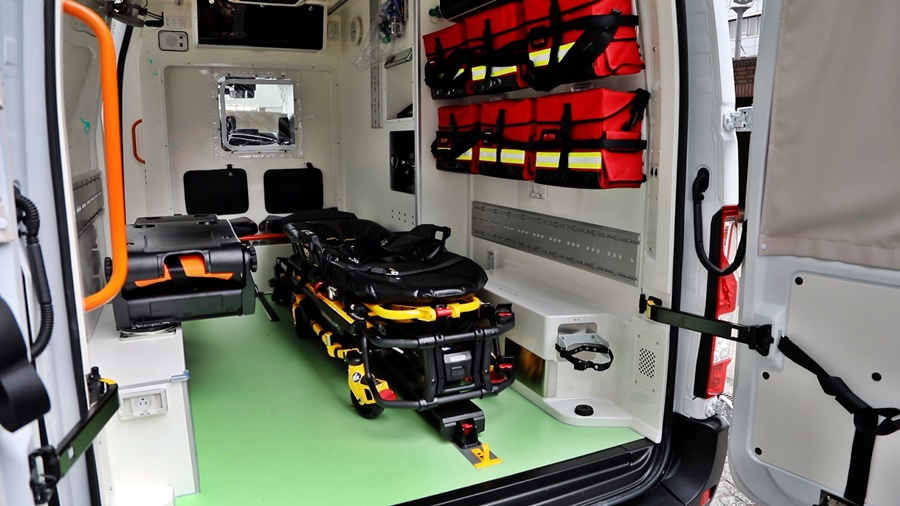
The Nissan EV Ambulance is equipped with an electric stretcher that enables ease of operations for ambulance staff. Thanks to its EV 55 kW/220 Nm powertrain, the noise and vibration levels in the vehicle are significantly lower in comparison with a traditional petrol engine-powered vehicle, helping reduce negative impact on patients as well as on staff handling sensitive equipment.

Two lithium-ion battery packs support its EV capabilities (33 kWh with an additional battery (8 kWh) allowing longer use of electrical equipment and the air-conditioning system. The ambulance can also turn into a mobile source of electrical power in case of a power outage or natural disaster.

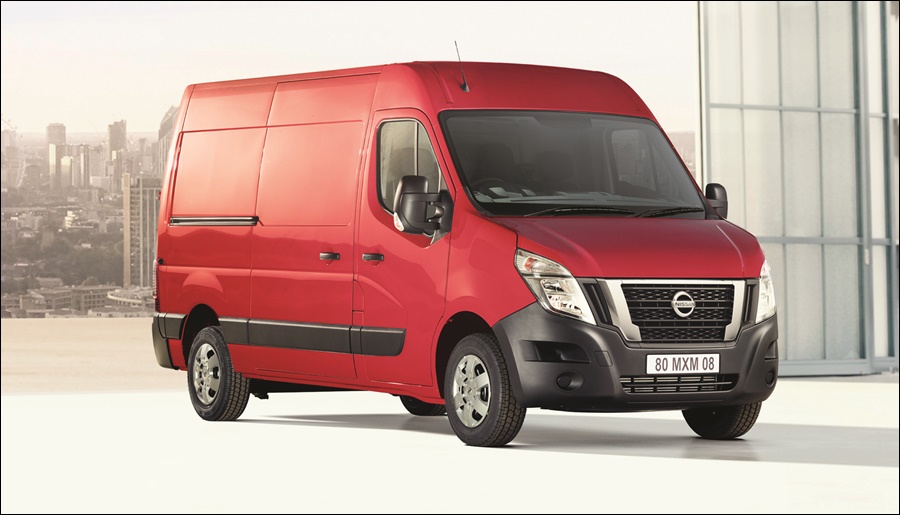
Nissan Van NV400
The EV Ambulance is adapted from Nissan’s NV400 light commercial vehicle.

The Nissan EV Ambulance, which can carry up to 7 persons (including crew), is a cost-efficient solution from a cost-of-charging and maintenance point of view. It is based on the company’s NV400 model sold in various markets.

The 5.548-metre long bodywork was customised by Autoworks Kyoto to be compliant with Japanese regulations and designed to meet customer needs. Additionally, Nissan called on by Gruau, a major European emergency vehicle bodywork company, to assist in its development.

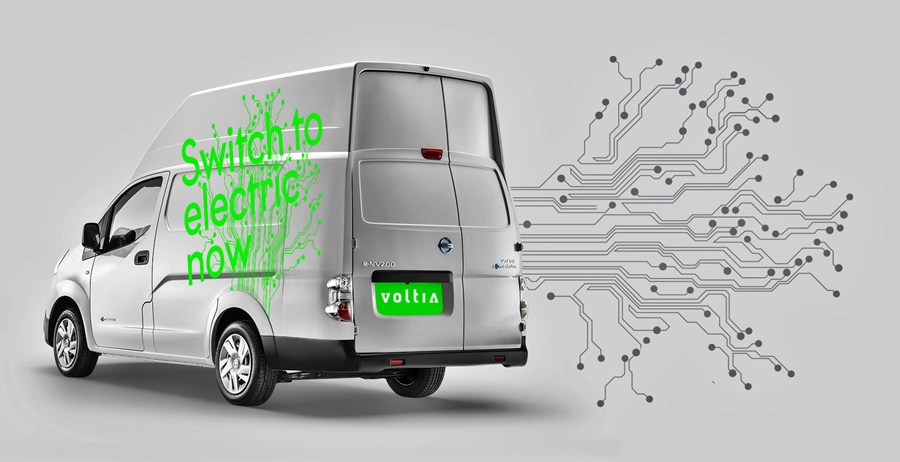
The NV400 EV Ambulance is a continuation of Nissan’s electrification of its light commercial vehicle models. In some European markets, Nissan also offers an electrically-powered van – the e-NV200 – for last-mile deliveries. Its quietness and emission-free operation is appreciated in urban areas.

Nissan E-NV200
The e-NV200 electrically-powered van available in Europe.

The Nissan NV200 is available in Malaysia as a light commercial vehicle. To know more, visit www.nissan.com.my.

Stay in your state

PISTON.MY

BHPetrol RON95 Euro4M

Aerodynamics are one of the crucial elements in achieving high performance. Designers and engineers spend thousands of hours running simulations and then testing prototypes in wind tunnels to get the air to flow optimally around the bodywork.

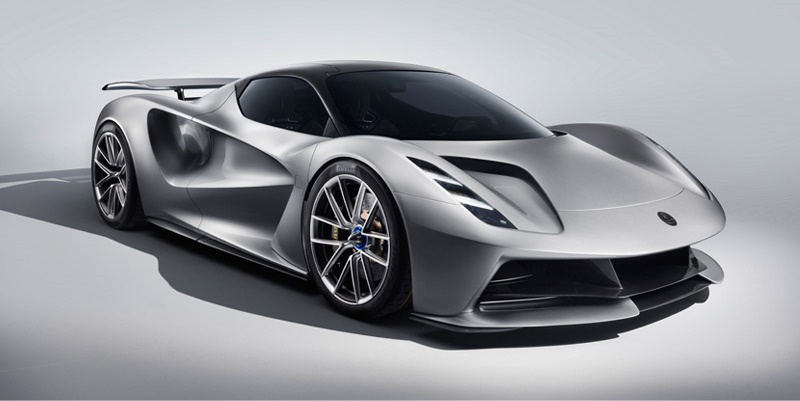
This is the work of Richard Hill as chief aerodynamicist at Lotus Cars, where he has been for more than 30 years. Drawing on his experience and knowledge, the highly experienced senior engineer guided this critical element of the Evija all-electric hypercar to give phenomenal downforce. When asked how the Evija compares to regular sportscars, he replied: “It’s like comparing a fighter jet to a child’s kite.’’

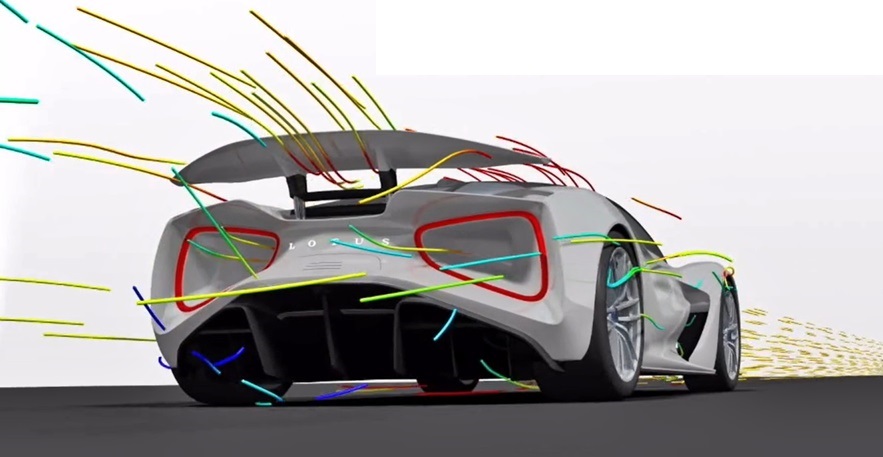
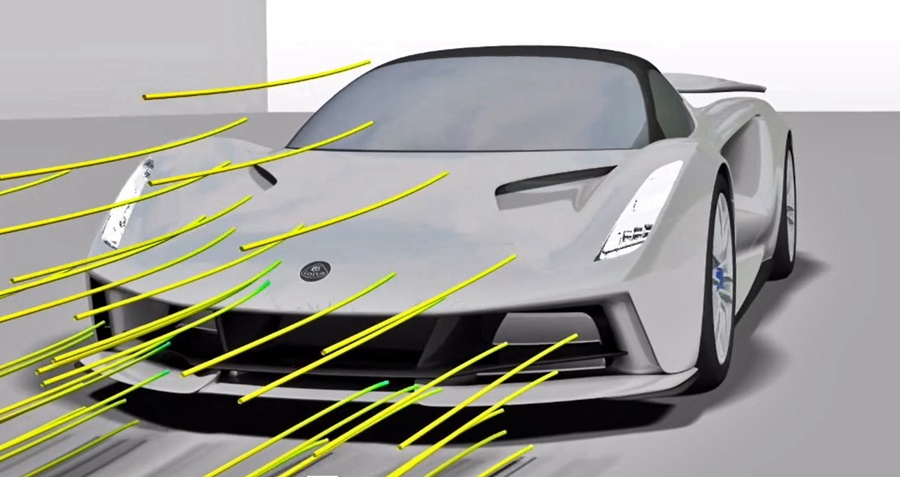
The overall philosophy behind the Evija’s aerodynamics is about keeping the airflow low and flat at the front and guiding it through the body to emerge high at the rear. Put simply, it transforms the whole car into an inverted wing to produce that all-important dynamic downforce.

Lotus Evija aerodynamics

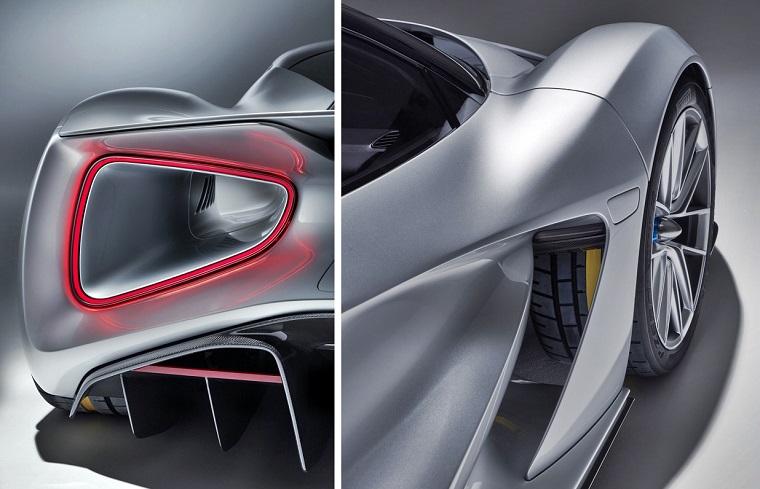
“Most cars have to punch a hole in the air, to get through using brute force, but the Evija is unique because of its porosity. The car literally ‘breathes’ the air. The front acts like a mouth; it ingests the air, sucks every kilogram of value from it – in this case, the downforce – then exhales it through that dramatic rear end,” explained Hill.

And what role does that deep front splitter play? According to Hill, it’s designed in three sections: the larger central area provides air to cool the battery pack – which is mid-mounted behind the two seats – while the air channelled through the two smaller outer sections cools the front e-axle.

Lotus Evija aerodynamics

“The splitter minimises the amount of air allowed under the vehicle, thus reducing drag and lift on the underbody. It also provides something for the difference in pressure between the upper and lower splitter surfaces to push down on, so generating downforce.,” he said.

Venturi tunnels through the rear quarters are part of the porosity. They feed the wake rearward to help cut drag. “Think of it this way – without them, the Evija would be like a parachute but with them, it’s a butterfly net, and they make the car unique in the hypercar world,” the engineer explained.

Lotus Evija aerodynamics

To have active aerodynamics, the Evija’s rear wing elevates from its resting position flush to the upper bodywork. It’s deployed into ‘clean’ air above the car, creating further downforce at the rear wheels. The car also has an F1-style Drag Reduction System (DRS), which is a horizontal plane mounted centrally at the rear, and deploying it make the car faster.

Lotus pioneered the full carbonfibre chassis in Formula 1, and the Evija is the first Lotus road car to use that technology. The chassis a single piece of moulded carbonfibre for exceptional strength, rigidity and safety. The underside is sculpted to force the airflow through the rear diffuser and into the Evija’s wake, causing an ‘upwash’ and the car’s phenomenal level of downforce.

Lotus Evija

The Evija is set to be the world’s lightest EV hypercar but weight does not actually affect aerodynamic performance. Hill said that the car’s weight has no effect on overall aerodynamics. However, the lighter the car, the larger the percentage of overall grip is achieved through downforce and the lower the inertia of the car to change direction.

Richard Hill’s full title is Chief Engineer of Aerodynamics and Thermal Management, and he has worked at the company’s Hethel HQ since 1986. His role involves collaborating with the exterior designers of all new Lotus vehicles, from the early concept phase of a programme through to testing pre-production prototypes.

Lotus Evija Revealed! Facts & Figures + Video of the world’s most powerful series production road car

COVID-19

PISTON.MY

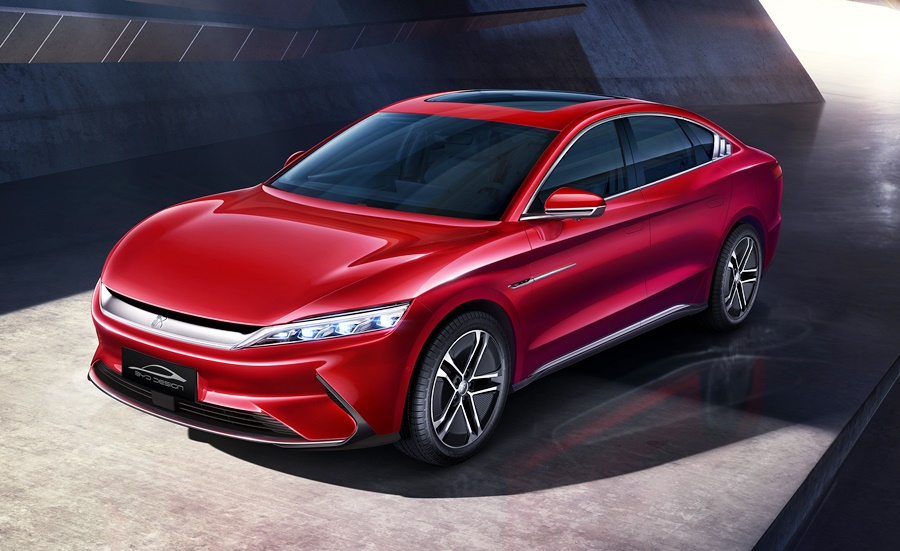
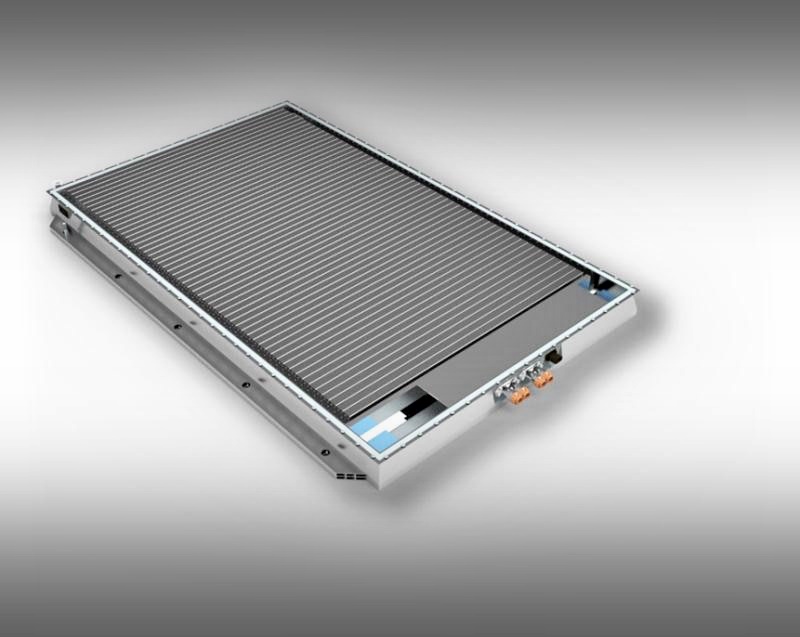
China’s BYD, which started off in 1995 as a company making batteries, is getting ready to enter the competitive premium luxury market in Europe. And it will do so with its new flagship model, the Han EV. The Han EV is the first full-electric passenger car equipped with BYD’s advanced ‘Blade Battery’ technology said to deliver greatly enhanced safety, improved range capability and a simplified, smaller pack design.

Drawing on its 25 years of developing battery technology, BYD is using its most advanced EV technologies for this model. The Blade Battery pack has been developed by BYD over the past several years. The singular cells are arranged together in an array and then inserted into a battery pack. Due to its optimized battery pack structure, the space utilization of the battery pack is increased by over 50% compared to conventional lithium iron phosphate block batteries.

BYD mentions safety a lot with regard to the battery pack because it has seen that, in the past few years, many EV manufacturers have fallen into a competition for ever-greater cruising range. When the range becomes the prime factor to consider, this focus then leads to ‘unreasonable pursuits of ‘energy density’ in the battery industry’. In the company’s view, this is not a practical focus as safety considerations are diminished in power battery development. BYD’s Blade Battery is said to bring battery safety back to the forefront, a redirection from the industry’s tenuous focus on this crucial aspect.

To this end, it has subjected it to extreme tests. For example, in nail penetration tests, the battery pack emitted neither smoke nor fire after being penetrated, and its surface temperature only reached 30°C to 60°C. Under the same conditions, a ternary lithium battery exceeded 500°C and violently burned, and while a conventional lithium iron phosphate block battery did not openly emit flames or smoke, its surface temperature reached dangerous temperatures of 200°C to 400°C.

Other extreme test conditions included being crushed, bent, being heated in a furnace to 300°C and overcharged by 260%. None of these resulted in a fire or explosion.

The Blade Battery pack can produce a stable current of up to 800 amps. With power from a high-performance silicon carbide motor-control that has improved peak-current capacity of 58%, the Han EV is claimed to be able to go from standstill to 100 km/h time in a claimed 3.9 seconds, with the fully-charged battery pack able to last for up to 605 kms.

The Han EV is also China’s first mass-produced EV equipped with the ‘IPB Intelligent Integrated Brake System’ by Bosch. This system not only brings braking safety with higher precision but also delivers a longer range and improved braking comfort.

BYD Blade Battery Pack

While BYD has pursued the tradition of naming its passenger cars after Chinese dynasties, the Han EV has been conceived, designed and manufactured to the standards more in tune with luxury European cars.

The 4980 mm long sedan has BYD’s new ‘EV Dragon Face’ design language, blending elements of a traditional Chinese Dragon with modern European design cues. The curved front-end and Daytime Running Lights evoke the shape of a traditional Chinese dragon’s face. The high waistline evident along the length of the vehicle integrates seamlessly with the sweeping back line of the D-pillar to deliver a strong sense of movement. A tapered rear lighting cluster envelopes the entire width of the car emphasizing a dynamic attitude.

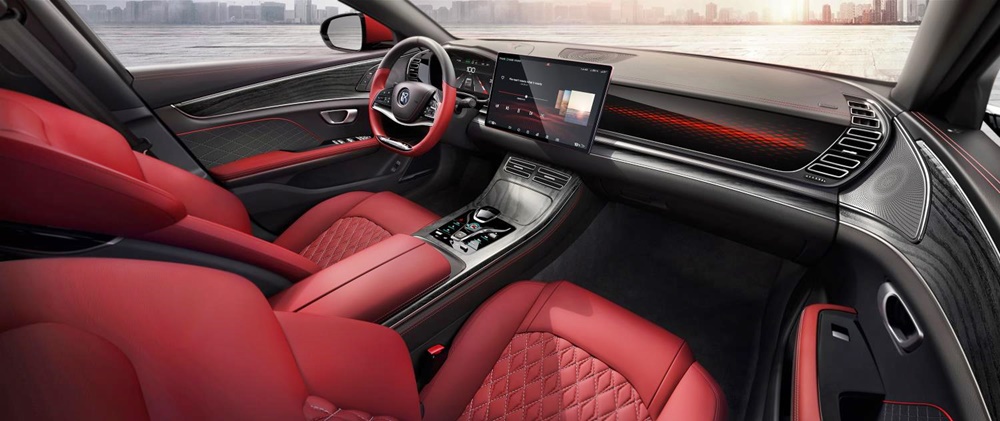
BYD Han EV interior

“The use of the ultra-safe Blade Battery, as well as BYD’s in-house pure electric platform, body structure design, eco-friendly materials and safety systems make the Han EV the safest electric car currently on the market. We believe that the Han EV combines the best of Eastern wisdom and Western aesthetics,” said Yubo Lian, Senior Vice-President of BYD and President of the BYD Auto Engineering Research Institute.

Due for introduction in China at the end of June 2020, the Han EV will go on sale in Europe in due course. The company is confident it can be a contender in the premium-spec, executive car segment and expects to price it in the €45,000 to €55,000 range (about RM212,000 – RM259,000). It is not known if BYD will produce righthand-drive versions, though.

COVID-19

PISTON.MY

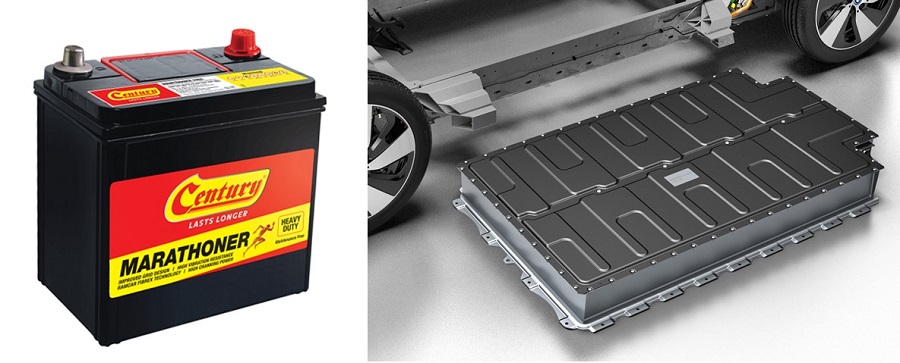
When people started buying hybrids and electric vehicles, the issue of battery pack costs was not so apparent. Perhaps it was due to having used batteries in conventional cars which could last a few years and replaced periodically at a relatively low cost. However, the battery pack in an electrified vehicle (hybrid/EV) is different from the typical 12V battery in millions of vehicles. While the small battery in the engine bay provides electricity to start the engine primarily, the battery pack in an electrified vehicle actually powers the vehicle.

Due to the need to store large amounts of electrical energy, the battery packs have to be bigger and use more advanced technologies and materials. Conventional 12V batteries have typically used a lead-acid combination and though improved over the years, their process of generating electricity through chemical reaction has not changed.

Unlike the conventional 12V battery (left) that has been used for decades in millions of vehicles, battery packs in hybrids and EVs are much larger and cost a great deal more.

Because battery pack technology is still evolving as storage capacity increases, the cost of the new technology is still high, not to mention the economies of scale are still lower than for conventional lead-acid batteries. This means they cost much more and for the early owners of electrified vehicles, there was the sudden shock of discovering that the cost of replacement was very high.

In Malaysia, depending on the model, the price was RM7,000 upwards. This led to reduced appeal for electrified vehicles and in order to provide peace of mind, the companies selling such vehicles began to offer a separate warranty on the battery pack which was longer than the factory warranty for the vehicle.

The prices have come down a bit and the battery pack for some Honda models sold in Malaysia is around RM5,500. Like those 12V batteries, the battery pack can last a while though there is no specific service life promised. Extreme operating conditions or rare system problems can shorten the life which is why the warranty is useful. But this does have an effect on resale value since the next owner would have to consider the added cost of replacement at some point in time.

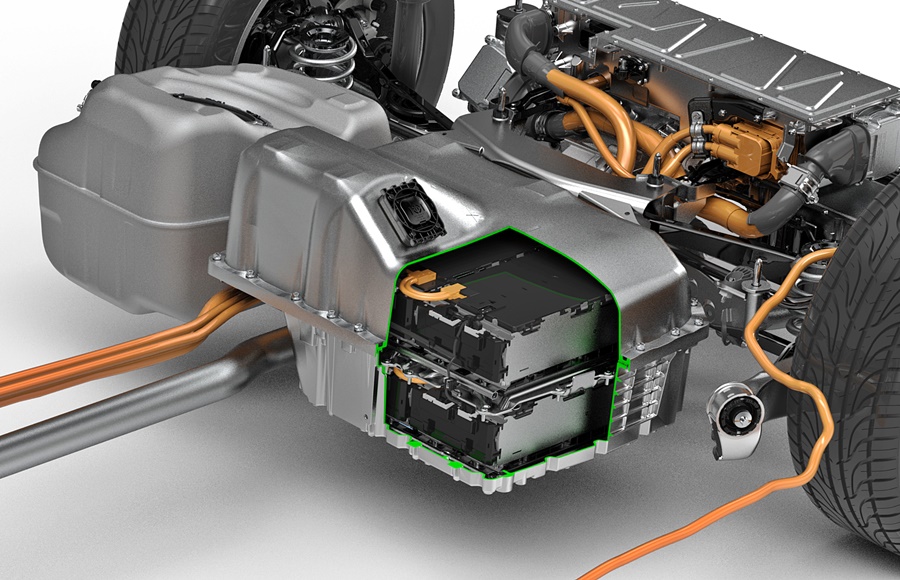
BMW battery
Battery pack in a BMW 530e M Sport (one section exposed to show the cell module inside).

To address this key concern for electrified vehicle ownership, BMW’s high-voltage battery presents solutions to concerns around repair and maintenance by developing their batteries where single modules are replaceable. In the case of a lithium-ion battery pack (increasingly used) that houses multiple modules, there are multiple cells.

In most cases, if a battery pack starts to have problems or has reached the end of its service life, the whole unit has to be replaced – at considerable cost. However, the high-voltage battery pack used in BMWs does not necessarily require this expensive approach.

In the 530e M Sport, for example, the battery pack gas up to 6 cell modules. Should one of the modules be faulty, it does not mean the whole battery pack needs to be replace. Just that module can be changed and the cost is RM5,000 per cell. Although built to last the lifetime of the vehicle, BMW Group Malaysia still offers a comprehensive warranty coverage of 6 years/100,000 kms for the battery packs in its vehicles which should give peace of mind to owners.

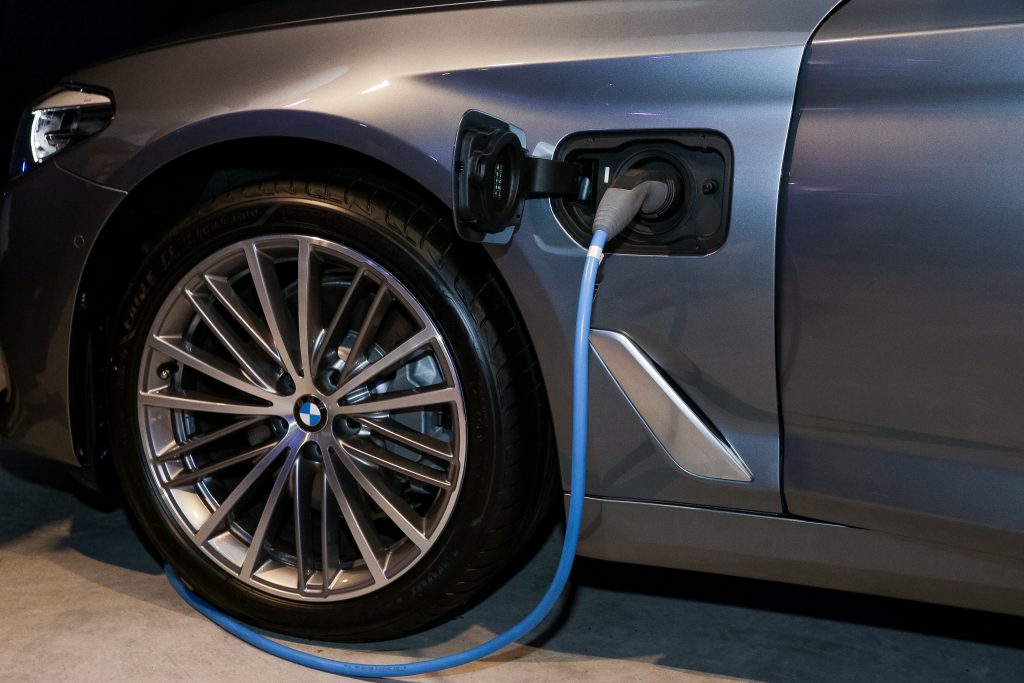
BMW recharging

The lightweight battery pack is capable of storing a great deal of energy, giving the 530e M Sport a maximum output of 83 kW which can get it to a maximum speed of 120 km/h in full electric driving. Recharging time is dependent on the type of system used but said to be under 3 hours with the BMW i Wallbox, with a fully charged battery pack giving an all-electric range of up to 40 kms.

BMW Battery technology
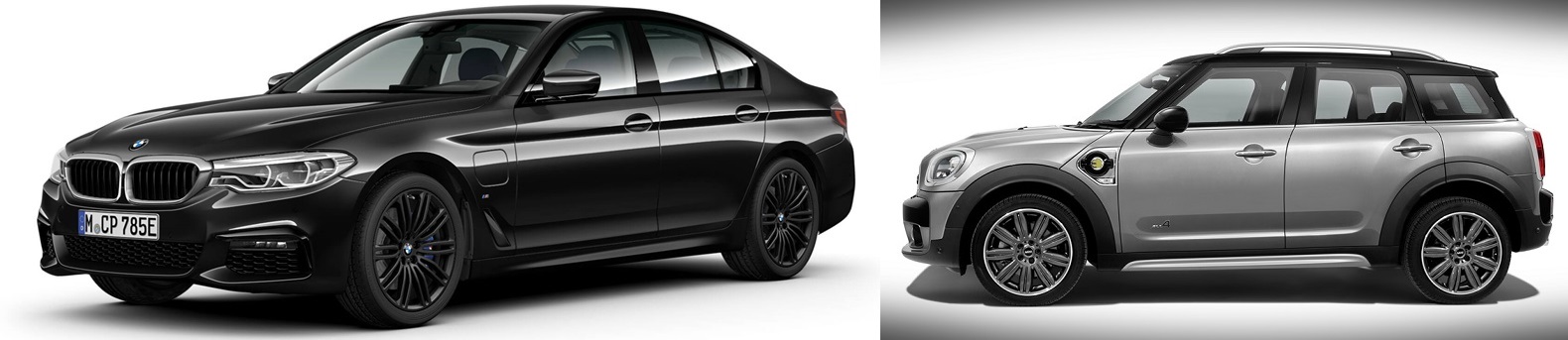
BMW Group’s high-voltage battery technology is available in the plug-in hybrid variants of both BMW and MINI models.

BMW’s high-voltage battery technology is available in the plug-in hybrid variants of the 5-Series, 7-Series, as well as the all-electric i3s and the MINI Plug-In Hybrid.

Production of High-Voltage Batteries for BMW Hybrid Vehicles underway in Thailand

COVID-19

PISTON.MY

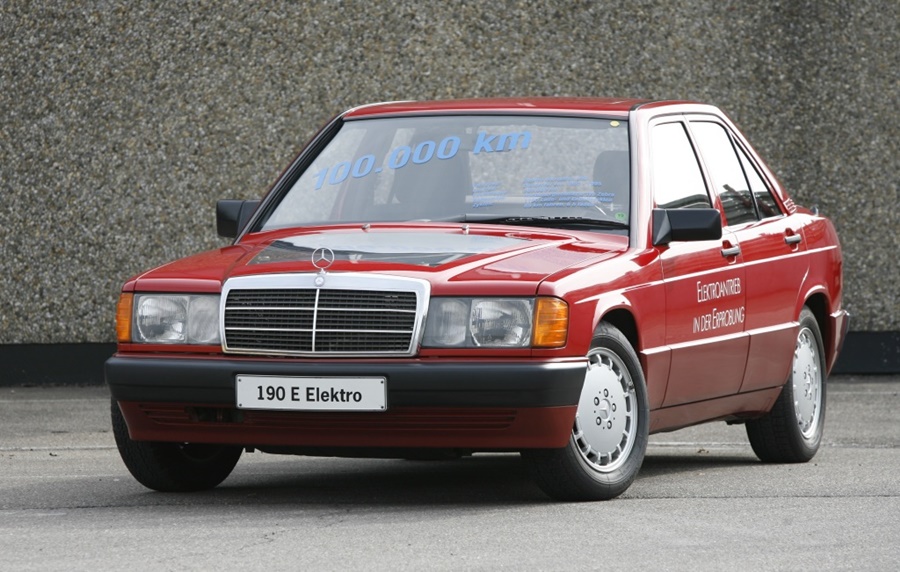
For the past few years, Mercedes-Benz has begun its transition towards electrifications, creating the EQ range for a new line of electric vehicles (EVs). While R&D relating to EVs has accelerated in the past 10 years, the carmaker was already exploring electric propulsion 30 years ago.

In May 1990, it exhibited a 190 (W 201) model that had been converted to electric drive in the innovation market section at the Hanover Fair. “In this way, the Mercedes 190, which in terms of length and weight comes closest to the requirements of an electric vehicle, is an ideal battery test vehicle. The main objective is to assess the functional suitability of all the components in realistic situations with all the vibrations, accelerations and temperature fluctuations experienced in everyday operation,” explained the brochure issued at the time.

1990 Mercedes-Benz 190 EV

A mobile laboratory
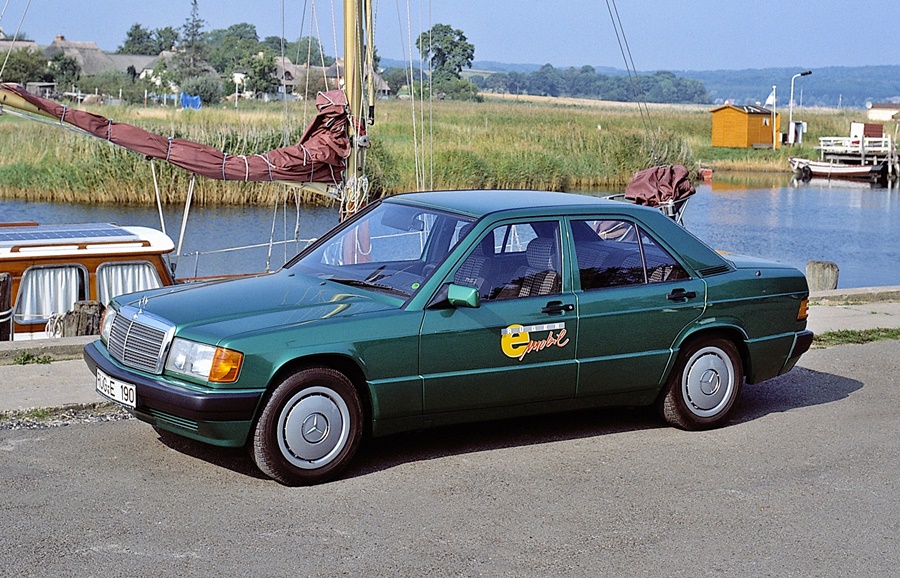
The company made a fleet of electric 190s which were used to test different drive configurations and battery systems. The energy storage devices tested were mainly sodium-nickel chloride or sodium-sulphur high-energy batteries which had a significantly higher energy density than conventional classic lead-acid batteries. However, the working temperature of both systems was around 300 degrees C. which wasn’t so good.

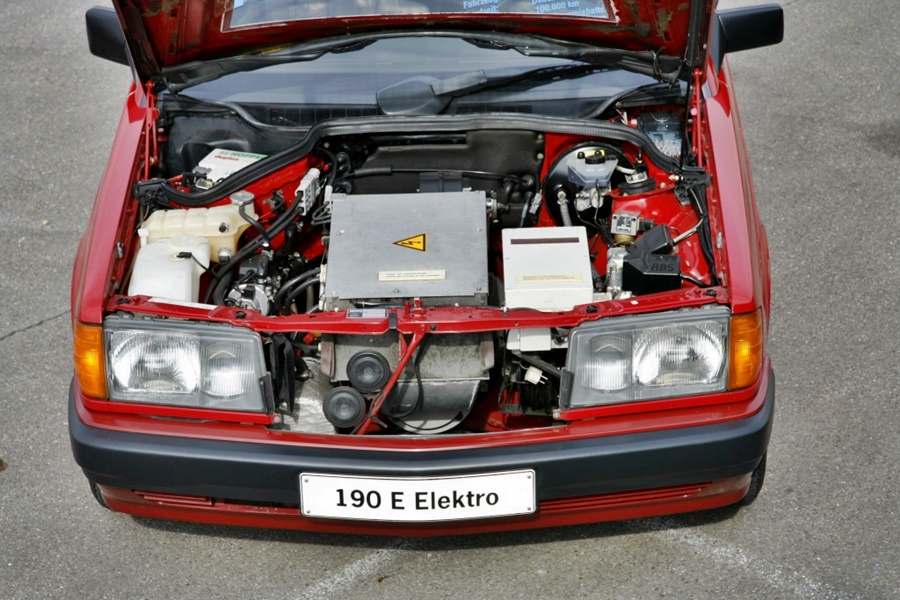
The following year, Mercedes-Benz displayed a more advanced car at the Geneva Motor Show. This prototype with electric drive had an individual 16 kw/22 hp electric motor to drive each wheel. Total power output was 32 kW/44 hp and the energy came from a sodium-nickel chloride battery. Regenerative braking – a feature in many of today’s EVs and hybrids – returned energy to the power pack during braking actions.

1990 Mercedes-Benz 190 EV

A particular advantage of the concept was the elimination of weight-intensive mechanical components, so the additional weight compared to a production model with a combustion engine was only 200 kgs. It was still a substantial amount of extra weight, largely due to the battery pack.

From 1992 onwards, there was a large-scale field trial which ran for 4 years, funded by the German government. The aim of the exercise was to test EVs and energy systems, including batteries, in everyday practice. A total of 60 passenger cars and vans from several brands were involved.

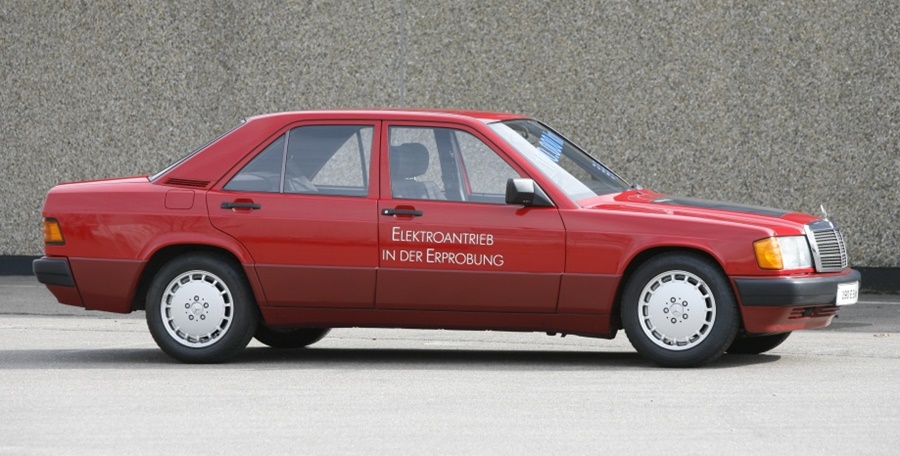
1990 Mercedes-Benz 190 EV

100,000 kms in 1 year
The pioneering 190s were driven by various participants in the trials and these included taxi drivers who used them in daily life. There were hardly any problems and one of the Mercedes prototypes achieved a peak usage rate of around 100,000 kms in 1 year.

The results provided the engineers with new insights into battery service life, the number of possible discharge and charge cycles, range, energy consumption and reliability. In the following years Mercedes-Benz would apply the electric drive concept to other passenger models.

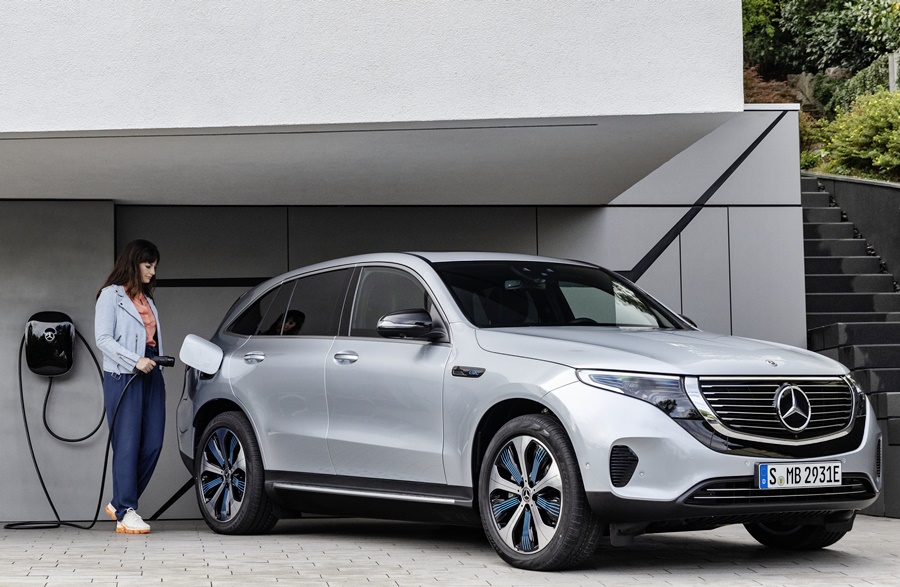
Mercedes-Benz EQC
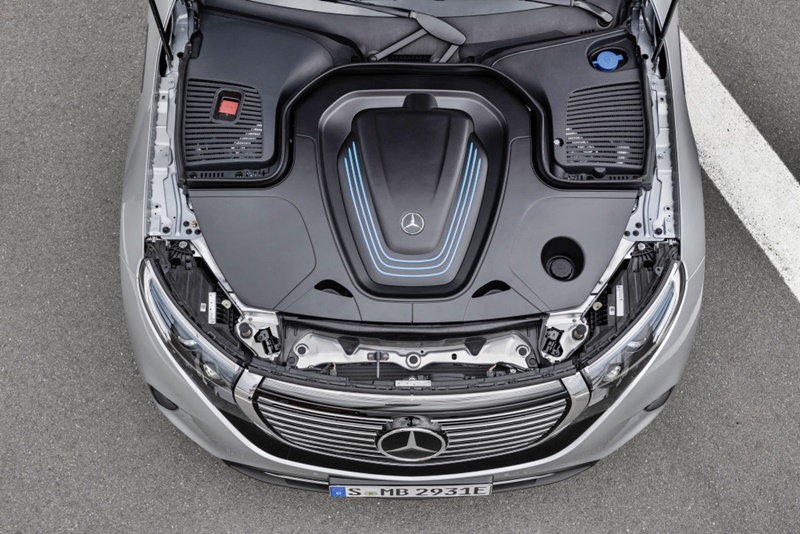
The first fully-electric Mercedes-Benz production model – the EQC. Its powertrain (below) was developed with the data gained from R&D activities since 1990.

Mercedes-Benz EQC

All the knowledge gained by the R&D teams in the 1990s contributed to the comprehensive knowledge pool of vehicle development on which engineers draw in developing today’s vehicles. In fact, some of the engineers who worked on the electric W 201 prototypes are still active in the company’s EV development and are involved in the latest projects.

Mercedes-Benz EQ Range unveiled in Malaysia

StayAtHome

PISTON.MY

Archive

Follow us on Facebook

Follow us on YouTube