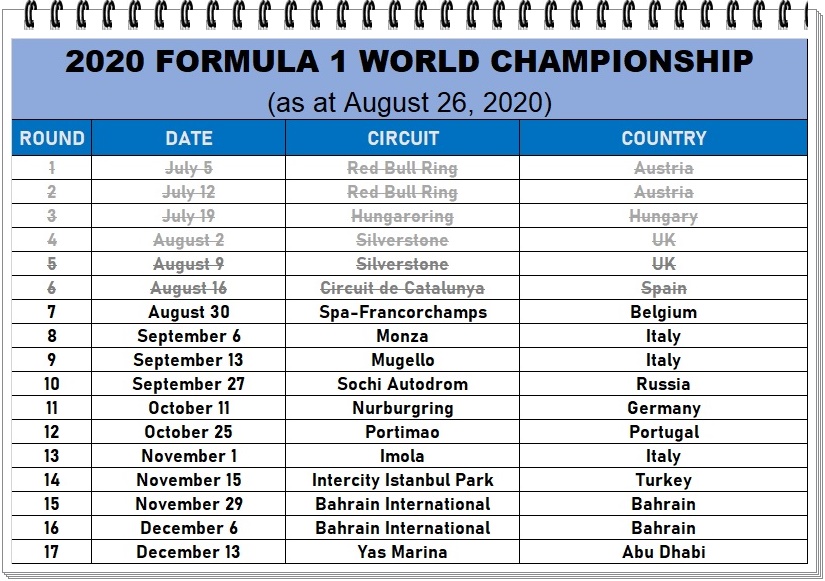
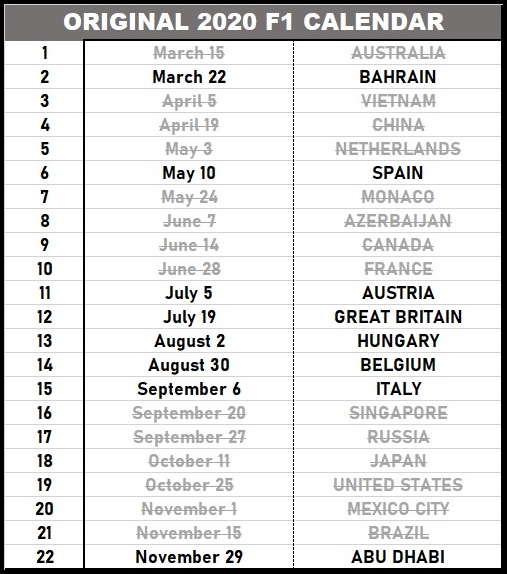
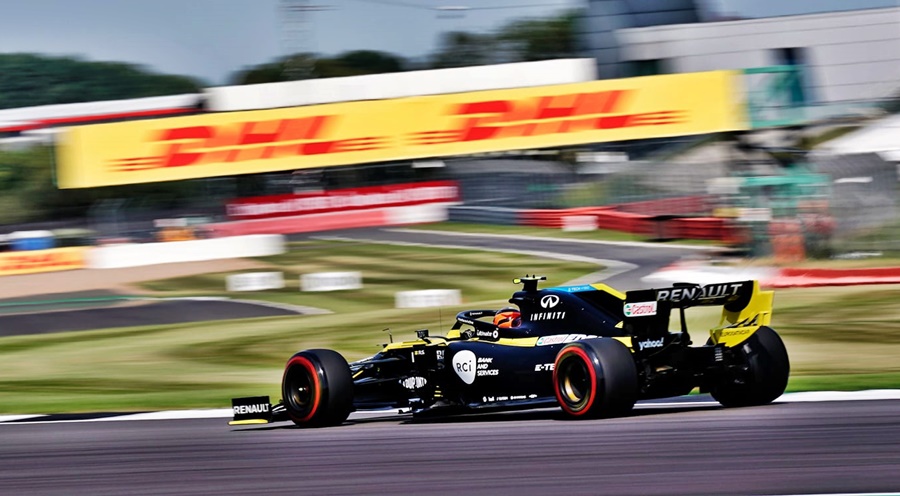
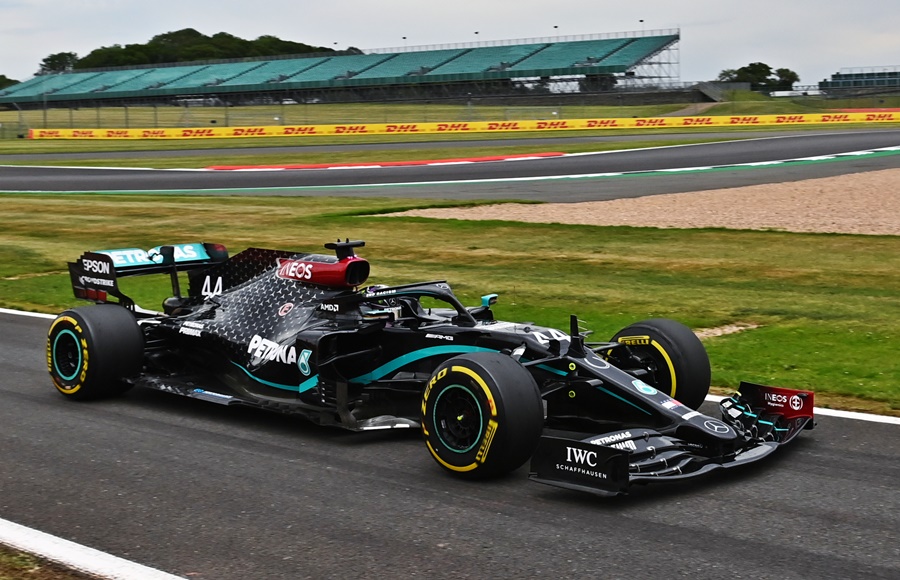
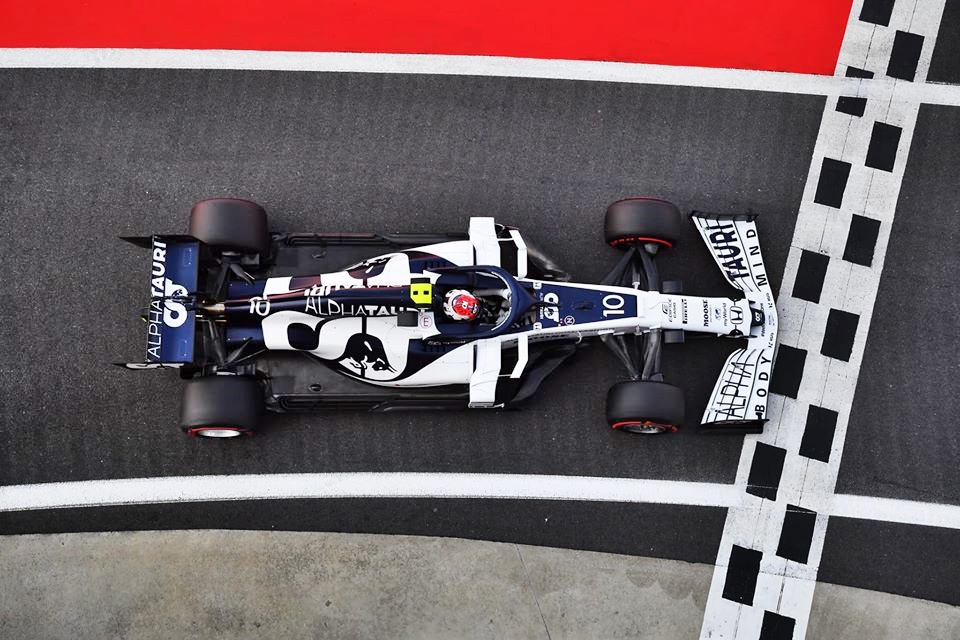
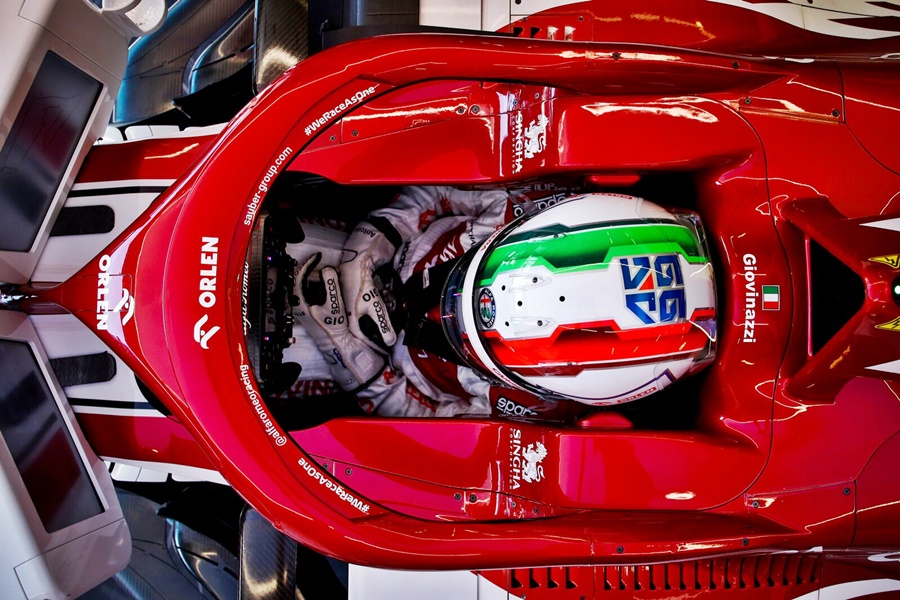
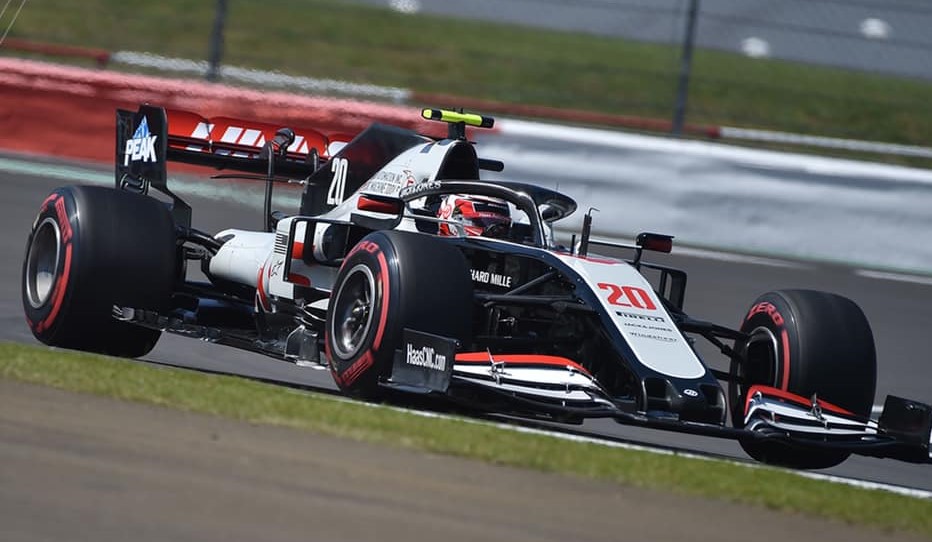
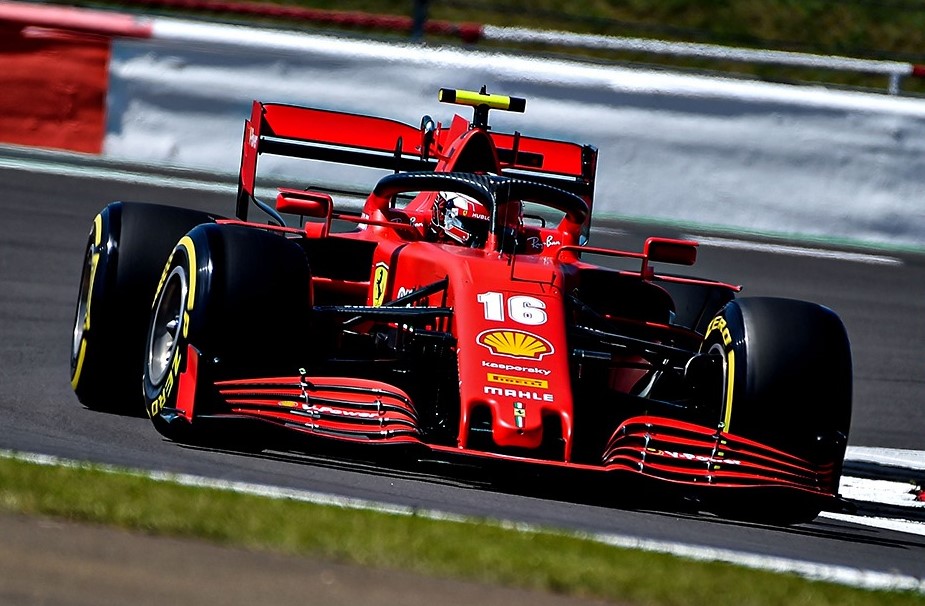
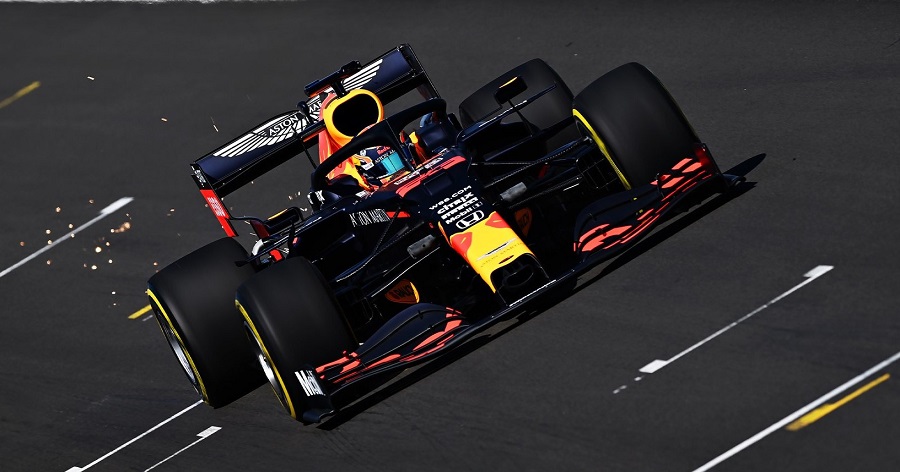
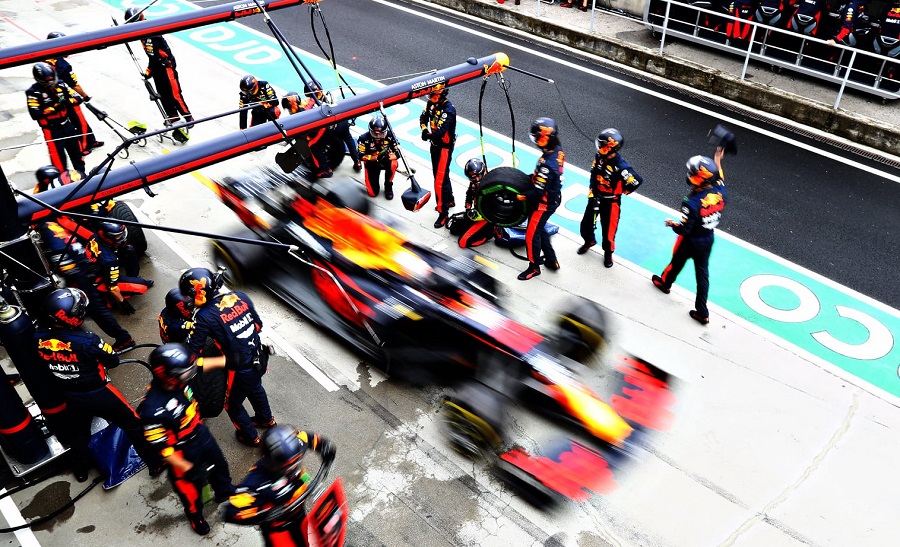
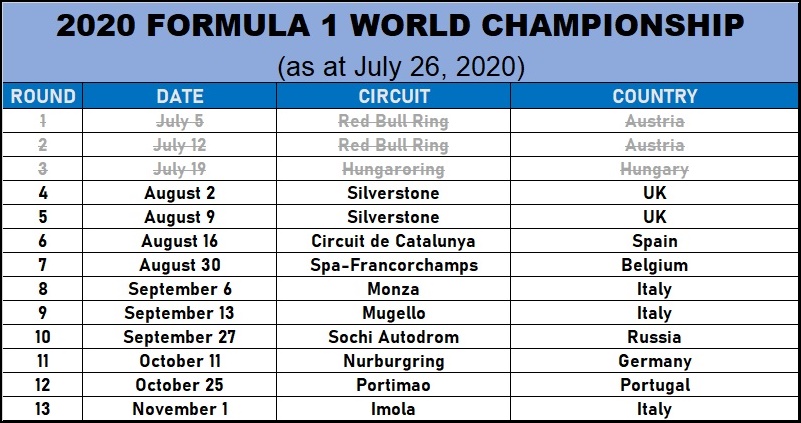
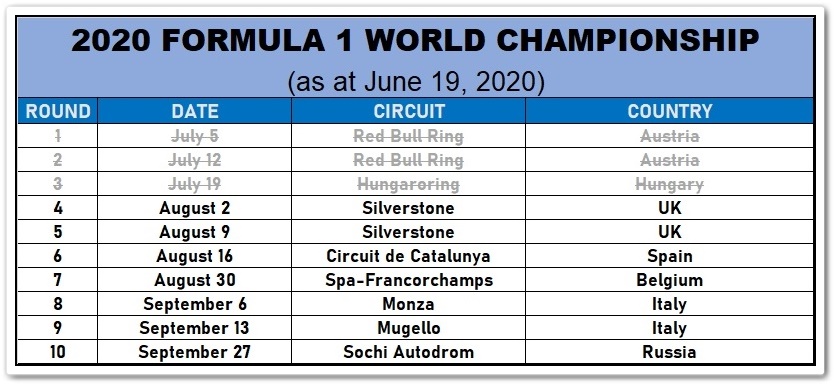
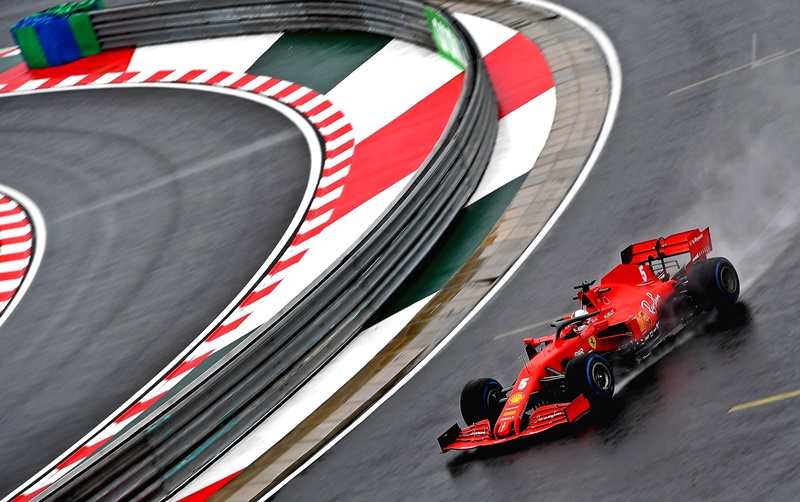
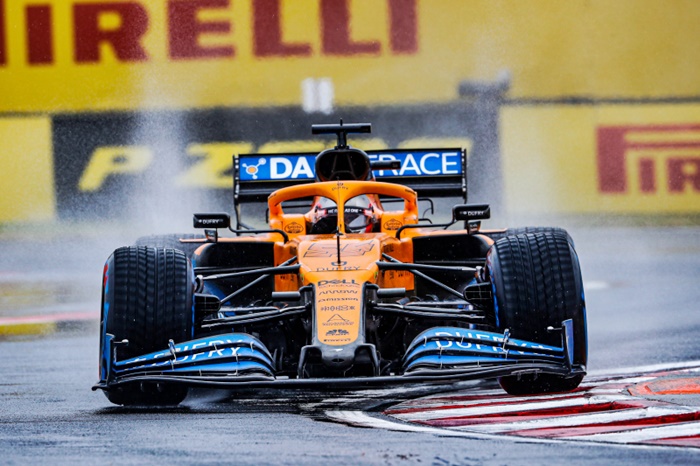
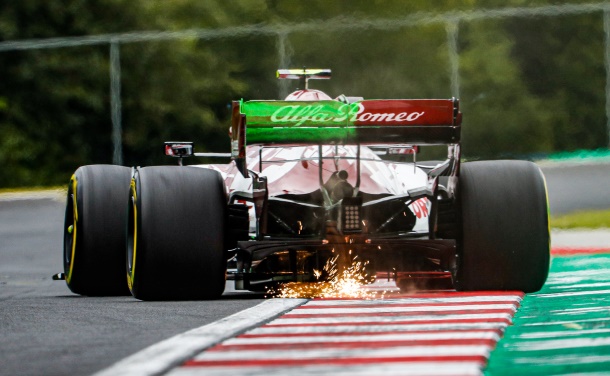
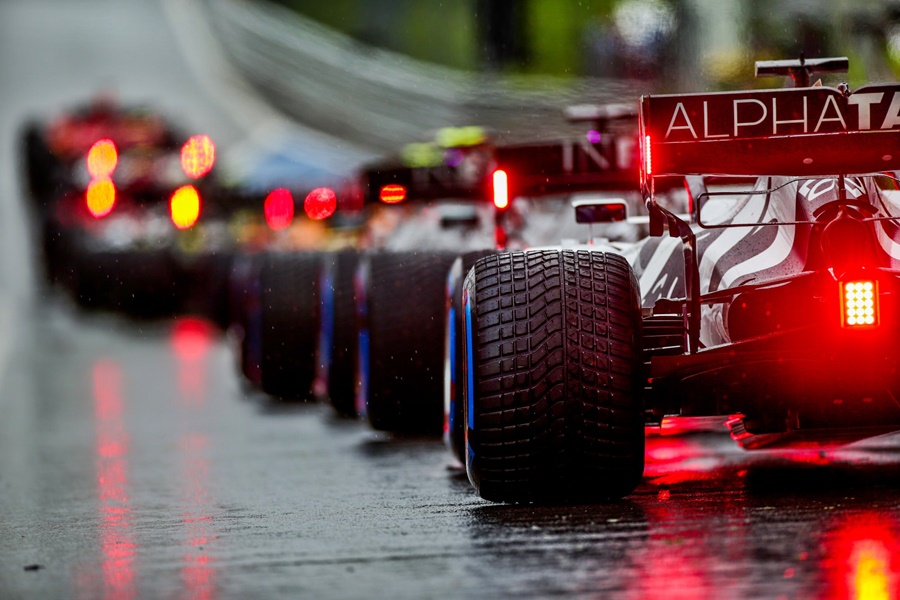
The 2020 Formula 1 World Championship, disrupted by the COVID-19 pandemic just as the opening round was to take place in Australia in March, will end the season with a toral of 17 races. Following the announcements regarding the initial thirteen races of the revised 2020 calendar, 4 additional races have been confirmed which will take place in the months of November and December.
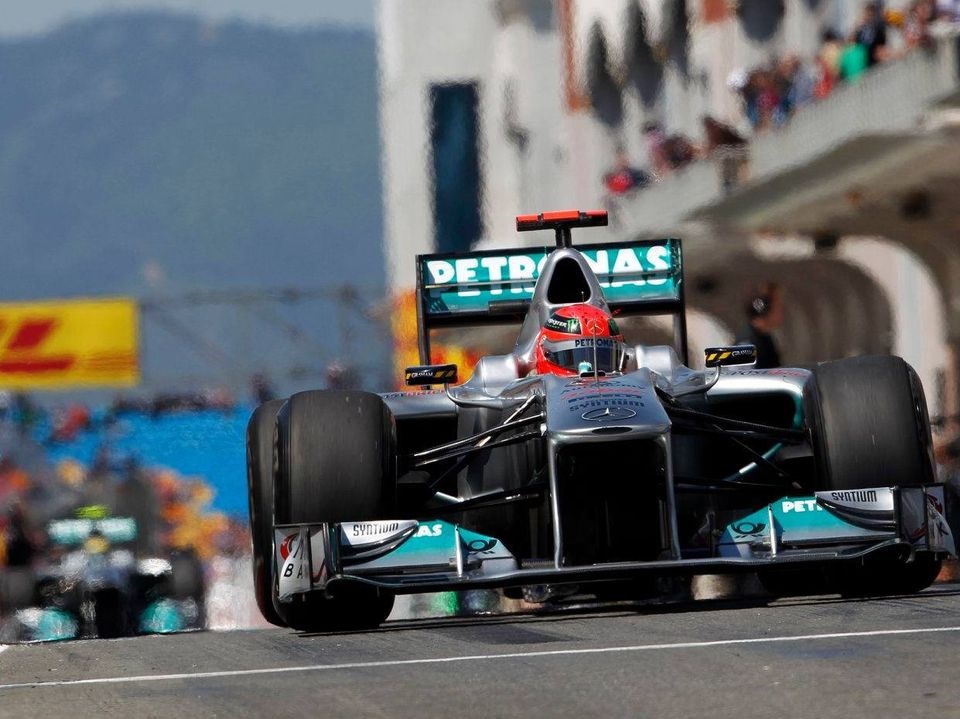
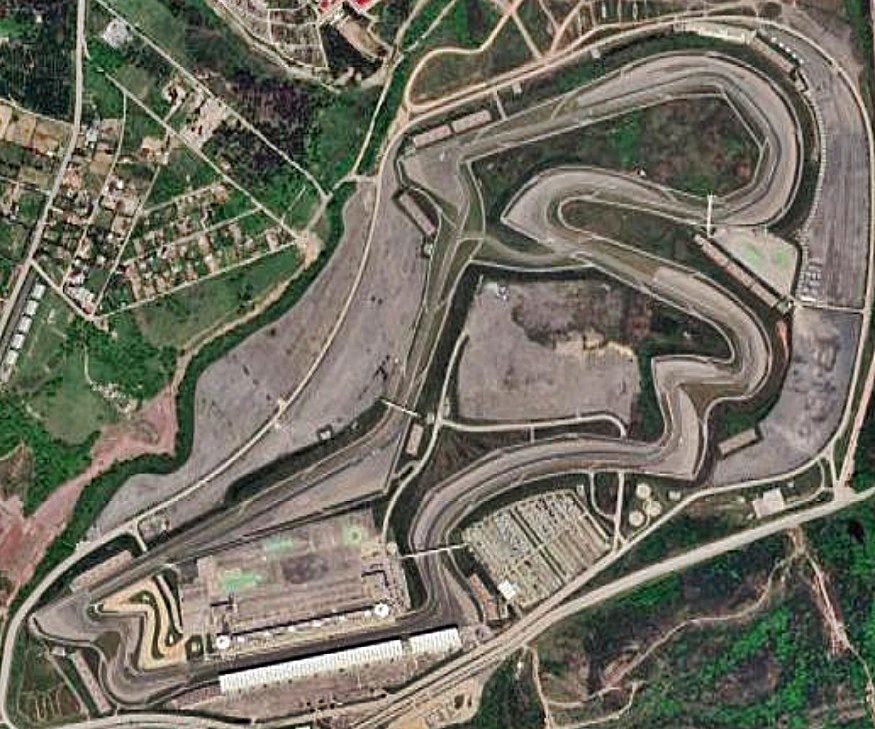
While it was already expected that Bahrain and Abu Dhabi will host the last rounds (the former running two races), a newcomer is Turkey which will have the Formula 1 DHL Turkish Grand Prix 2020. The race will be held at the Istanbul Park Circuit which was opened in 2005 when the first Turkish F1 GP was held. The venue was included on the F1 calendar up to 2011 and then left out over the past 8 years.
The Intercity Istanbul Park Circuit last had a F1 race in 2011.
Familiar circuit to top drivers
The circuit, also designed by Hermann Tilke, the F1 track specialist, has a length of 5.34 kms and 14 turns. Past races have been run for 58 laps with the lap record still held by of 1:24.770 still held by Juan Pablo Montoya when he was driving a McLaren in 2005. Drivers like Lewis Hamilton and Sebastian Vettel would be familiar with the circuit as they have raced and won there before.
“We can confirm that a number of races in the revised 2020 season will be open to a limited number of fans, including hospitality, and we are working with each promoter to finalise the details. While we want to see as many fans as possible return as soon as it is safe to do so, our priority remains the safety of the Formula 1 community and the communities we visit, and we review fan access on this basis,” said Chase Carey, Chairman & CEO of the Formula 1 organisation.
Strict SOPs still applied
This means that the races will continue to be held without spectators and with a minimum number of participants allowed into the circuit. So far, the strict measures taken have ensured that there are no COVID-19 infections spreading and when the health authorities are more comfortable with the situation, perhaps there will be an opportunity for spectators in the stands.
“Sadly, we will not be racing in China this season and want to thank our partner Juss Sports for their support and engagement in recent months and hugely look forward to returning to Shanghai next year,” Carey said.
♦ A spin in Turn 1 for Sebastian Vettel saw the 4-time World Champion drop from 11th to last in the pack as the cars headed away.
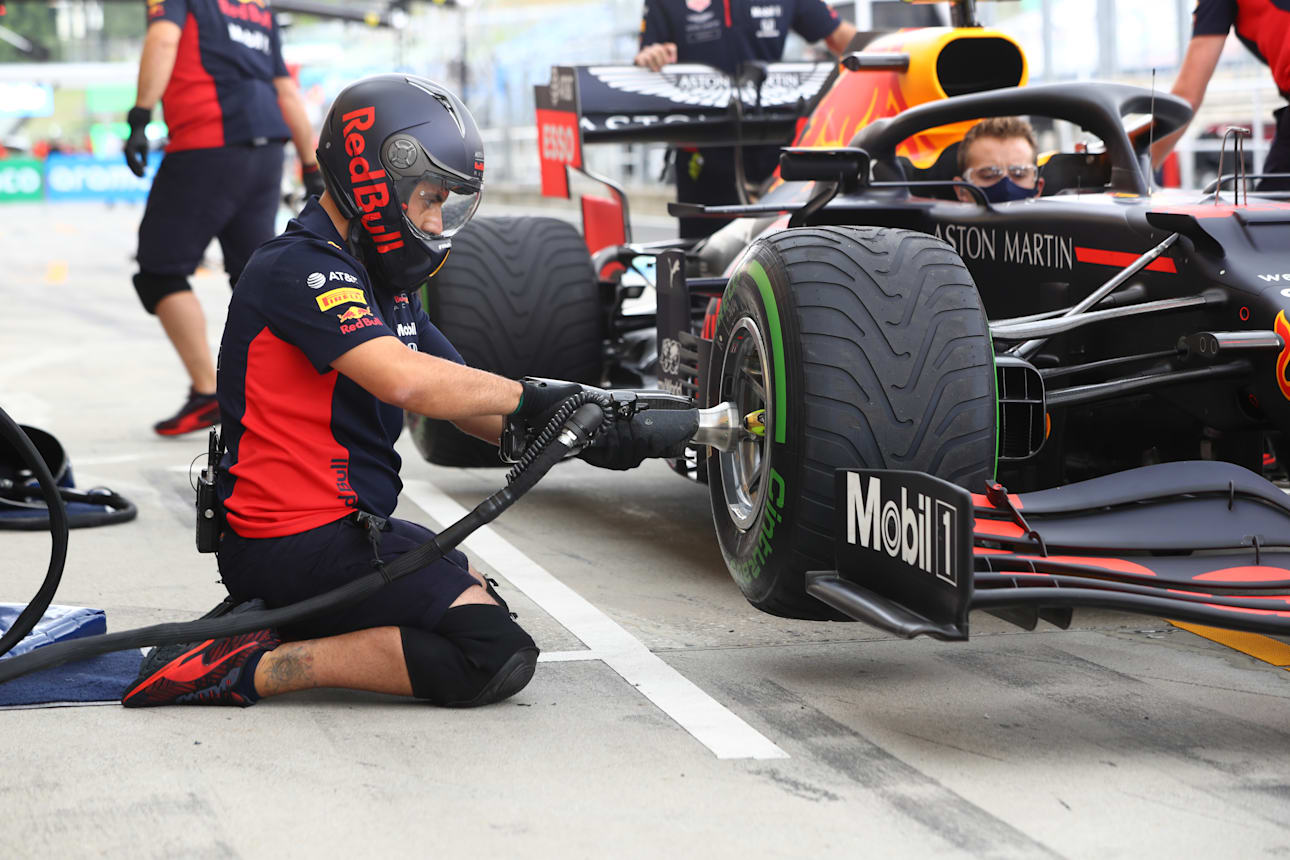
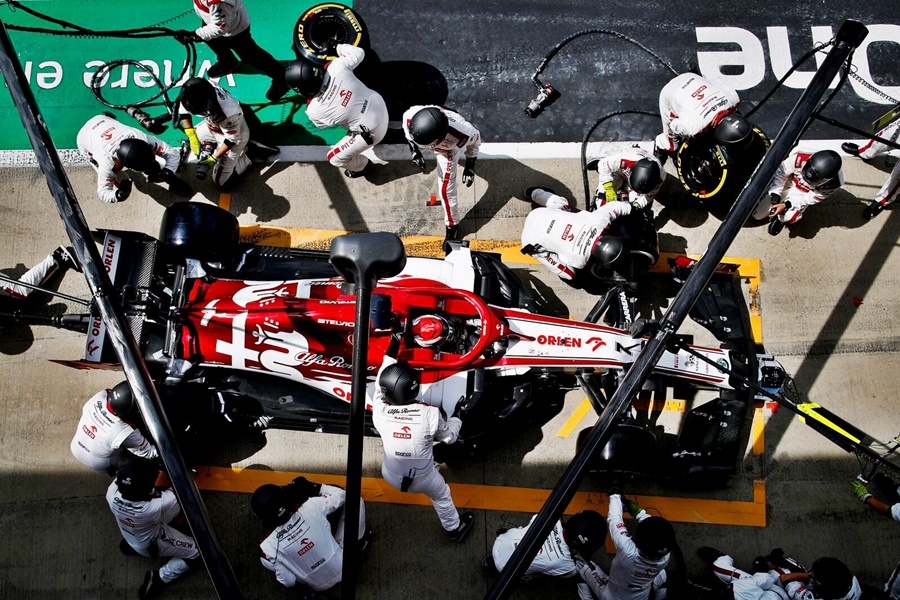
♦ After 10 laps, tyre issues began to start as temperatures rose and the cars came in for tyre changes. Carlos Sainz and Sebastian Vettel stayed out up to 23 laps but Red Bull Racing’s Max Verstappen chose to hang for 27 laps before pitting and giving up his leading position momentarily.
♦ Tyre management became increasingly critical for the two Mercedes-AMG cars as the hard compounds blistered.
♦ With 15 laps to go, Hamilton captured the lead but was very concerned about his tyre condition and the blistering.
♦ Understanding that the Mercedes-AMG driver could only do so much with his well worn tyres, Verstappen was told to put the pressure on and close the gap which was about 11 seconds.
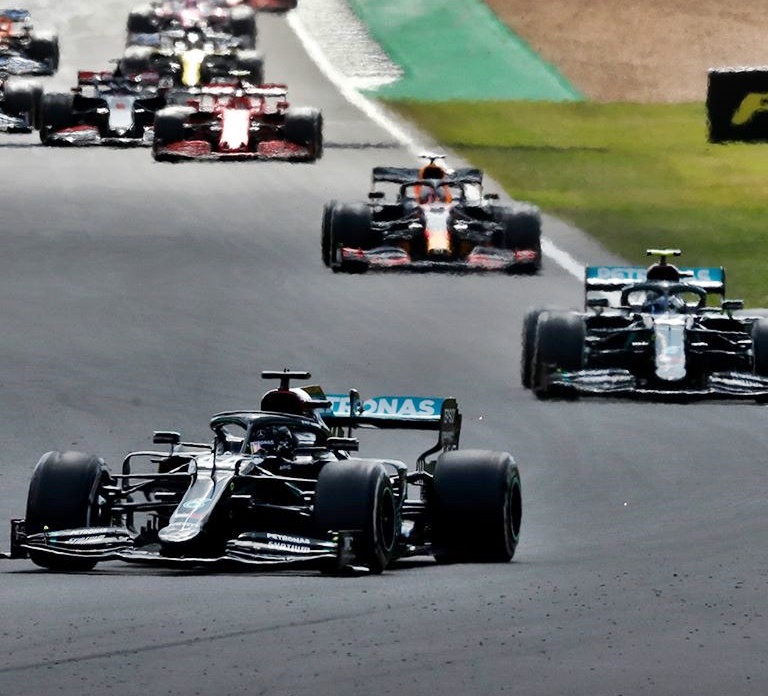
♦ With 10 laps to go, Hamilton came in to get fresh tyres and Verstappen took over the lead, with Bottas 4 seconds behind. Charging confidently ahead and setting a new lap record, he got past Charles Leclerc and closed in on Bottas.
♦ In the closing laps, Hamilton got past his team mate but ran out of time to close in on Verstappen who was 9 seconds ahead.
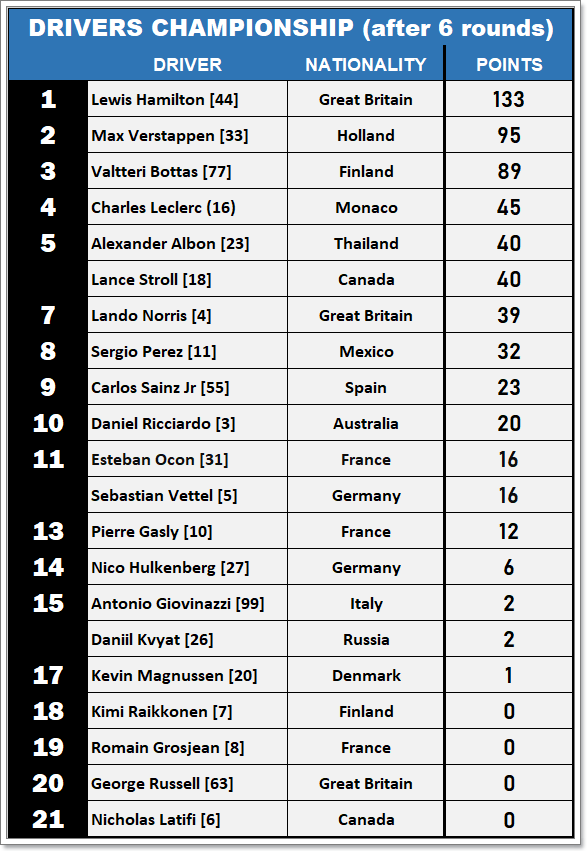
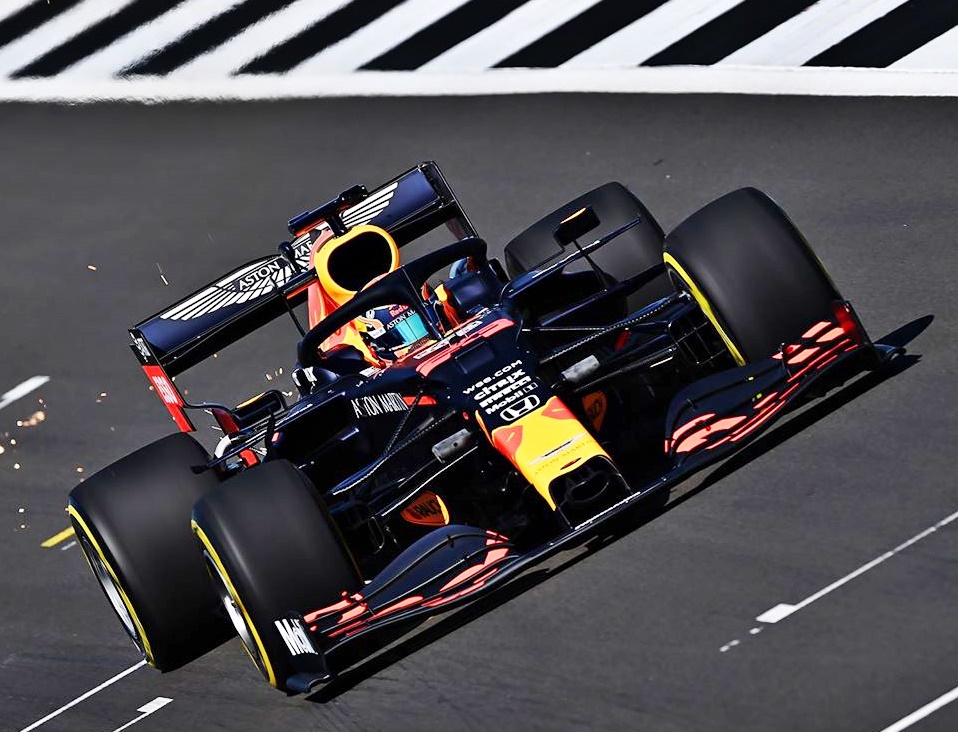
♦ The win today at Silverstone makes it 9 for the Red Bull Racing DutchmanThe 25 points don’t advance his position in the standings but narrow the gap with Bottas.
Race starts at 2:10 pm British time/9:10 pm Malaysian time
Following the British Grand Prix a week ago, F1 extends its stay at Silverstone this weekend with Round 5 of the 2020 FIA Formula One World Championship – the 70th Anniversary Grand Prix. The event has been named in celebration of the inaugural World Championship, the first event of which was the British (and honorary European) Grand Prix which took place at Silverstone on May 13th, 1950.
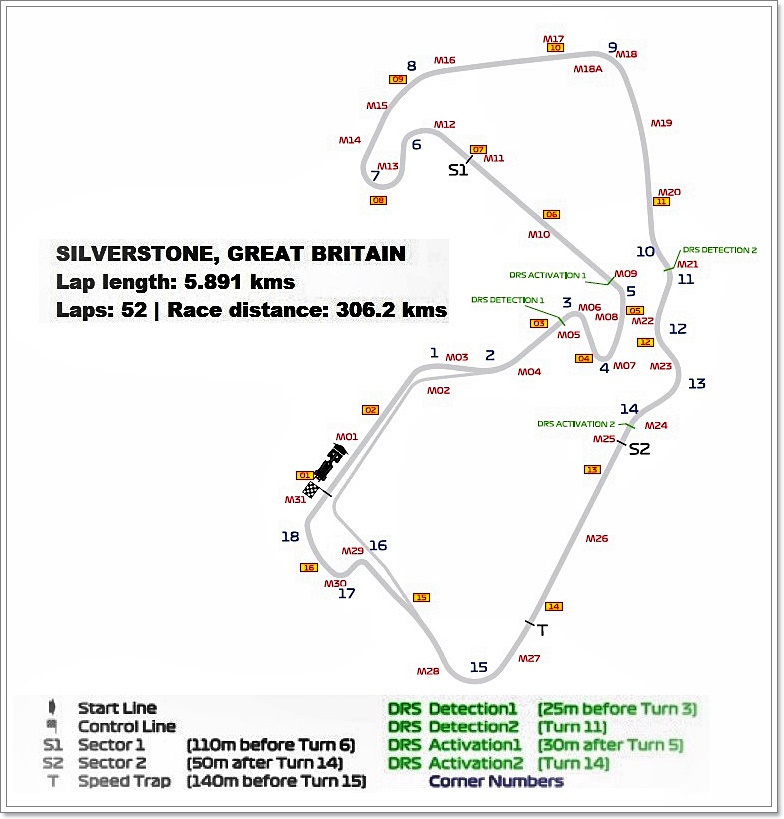
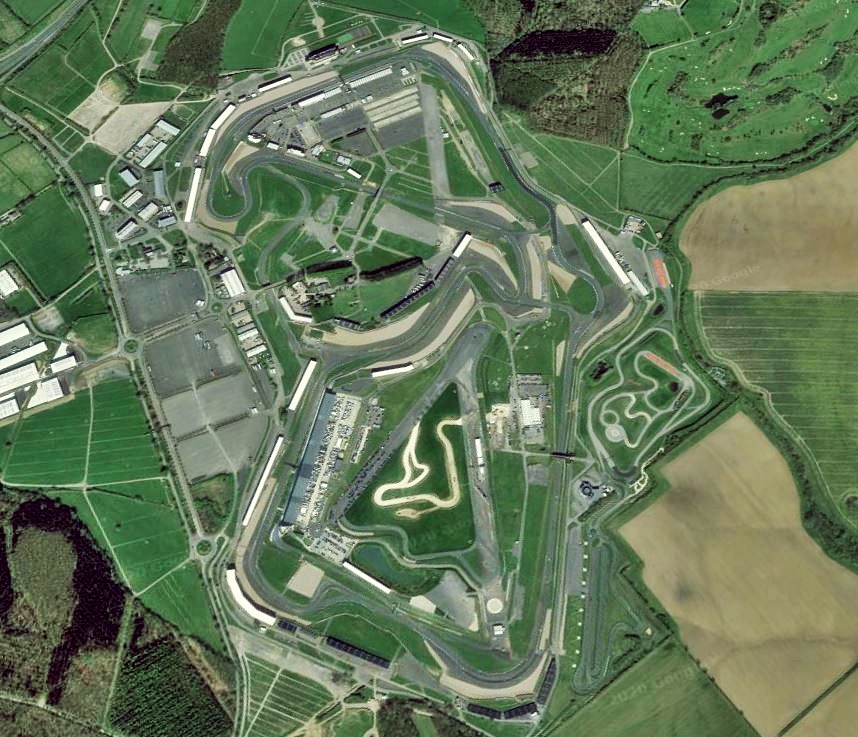
The circuit is noted for its fast, flowing corners but the intricacies of the lower-speed ‘Arena’ section between Abbey and the Wellington Straight are often where time is to be gained or lost. Silverstone is a difficult circuit on which to overtake and qualifying position is frequently paramount: thus, these sections receive just as much attention in set-up discussions as the famed high-speed turns at Copse, Stowe and the Maggotts-Becketts-Chapel complex.
Whereas last weekend’s British Grand Prix used the three hardest compounds in Pirelli’s range, a change in allocation this weekend alters the complexion of the race. For the 70th Anniversary Grand Prix, the allocation moves a step softer with C2, C3 and C4 tyres available.
While every team converged on a one-stop strategy last Sunday, the use of softer tyres on a fast, high-energy circuit makes a similar plan inherently risky this weekend. With a two-stop race more likely, greater strategic options come into play on the fast Silverstone layout.
“This weekend at Silverstone will be a real challenge with higher temperatures and softer compounds. The hotter conditions brought the field closer together last week and the softer tyres will mean more pit stops and more variability with strategy, so we can expect a good fight,” said Toto Wolff, Mercedes-AMG team boss.
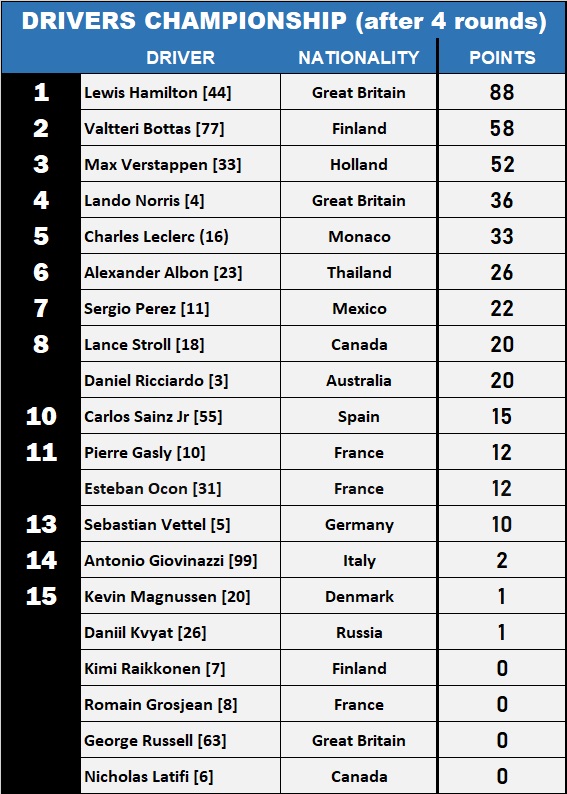
After 4 rounds, Mercedes-AMG driver Lewis Hamilton already has a commanding lead of 30 points in the race for the Drivers’ Championship. His closest rival is team-mate Valtteri Bottas, with Red Bull’s Max Verstappen a further 6 points back.
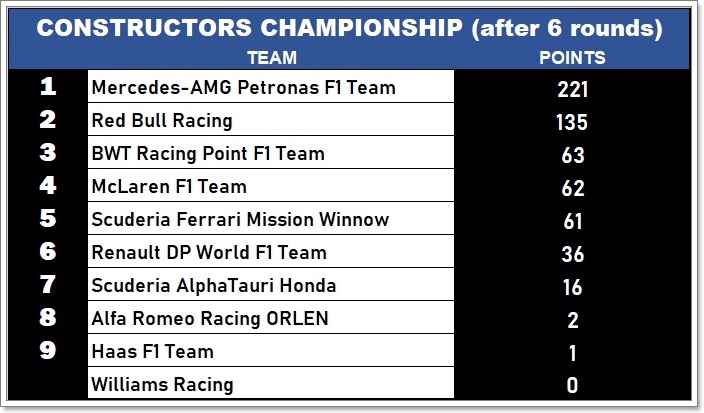
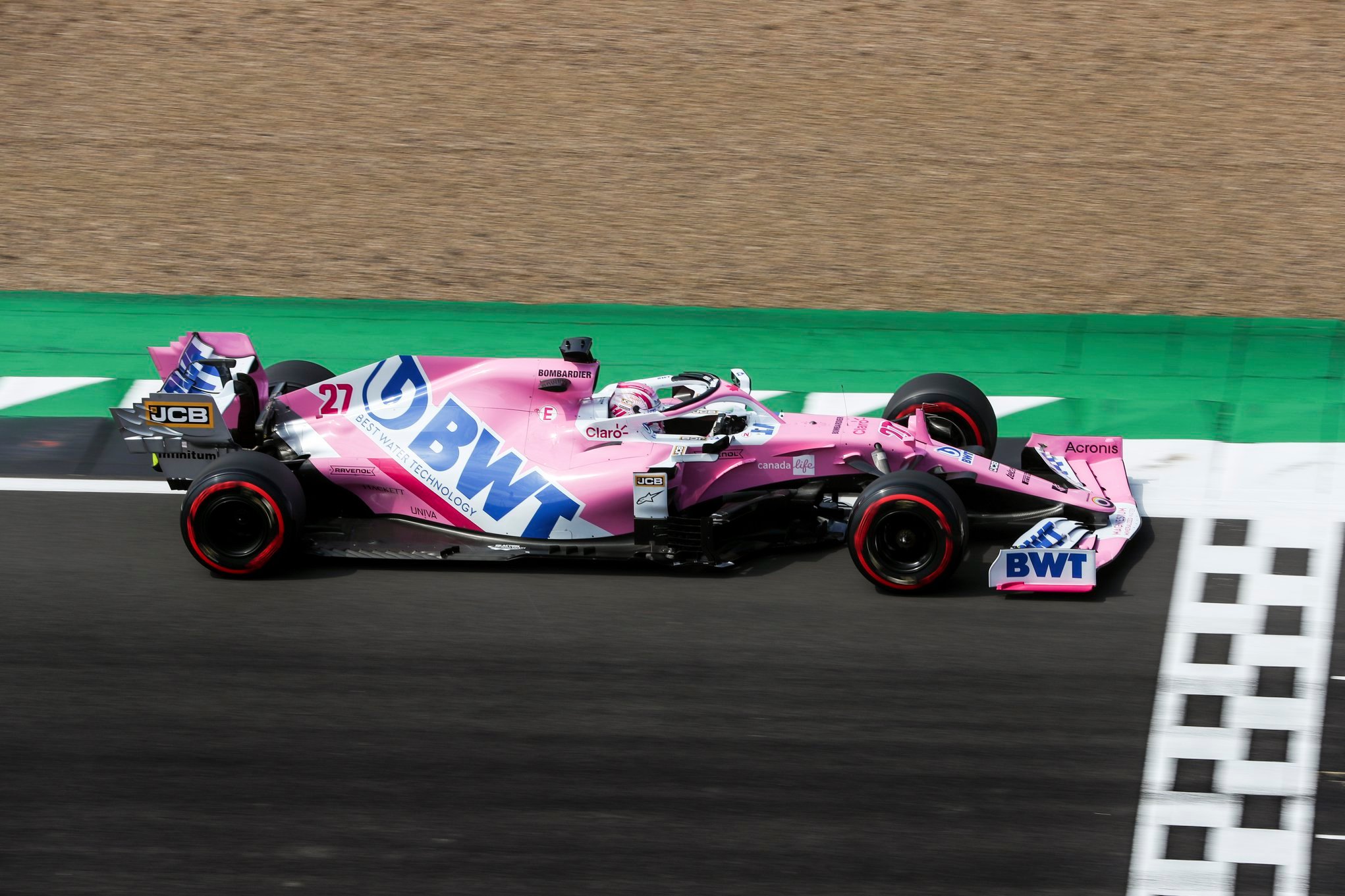
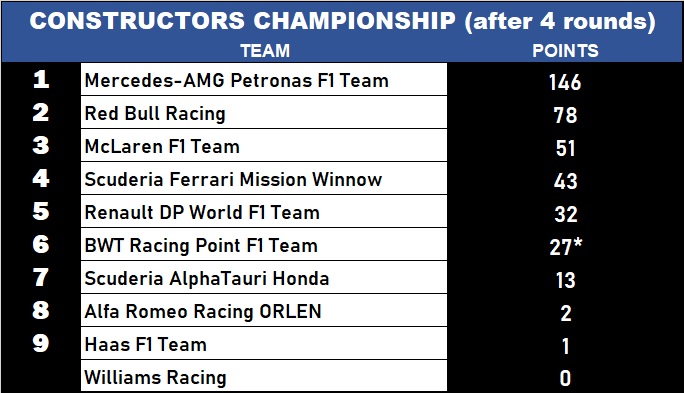
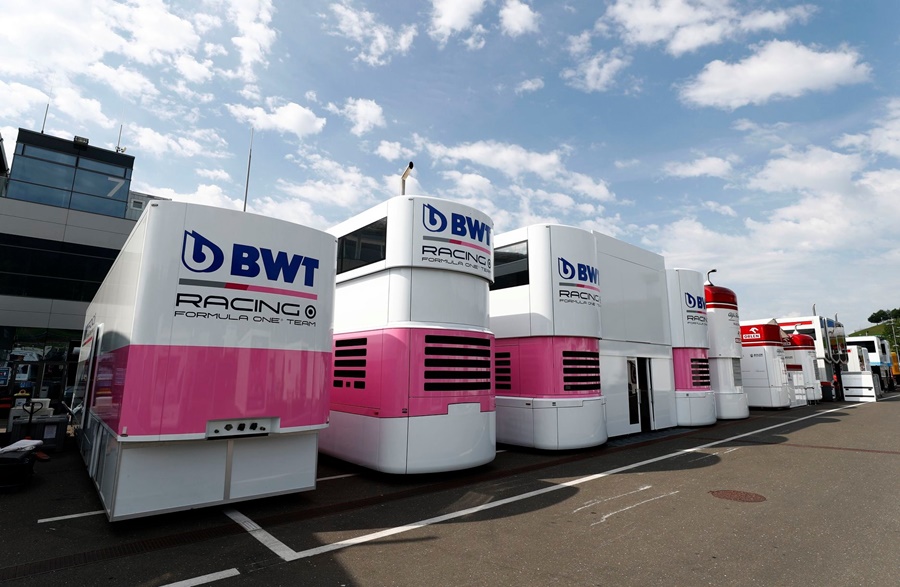
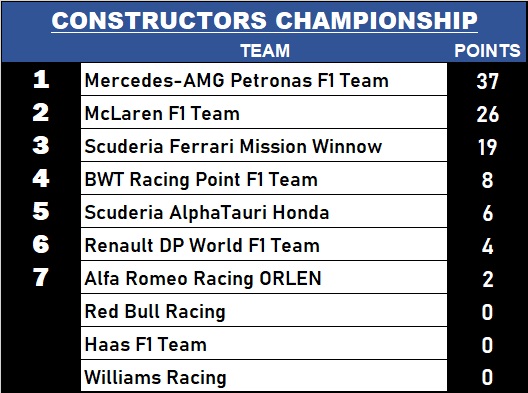
With the contribution made by Hamilton’s victories, the Mercedes-AMG PETRONAS team has an equally daunting advantage in the Constructors’ Championship table, enjoying a 68-point lead. The controversy over the brake ducts on the BWT Racing Point car, which were the subject of a protect by the Renault team, reached a conclusion yesterday as the FIA decided to deduct 15 championship points from the team’s current standing. They have also been fined €400,000 (about RM1.97 million).
BWT Racing Point will be appealing but Ferrari, McLaren and Renault have also issued statement that declare an intention to appeal against that decision. There are other issues which have come to light which the teams now want the FIA to clarify.
*: BWT Racing Point had a 15-point deduction for a technical issue.
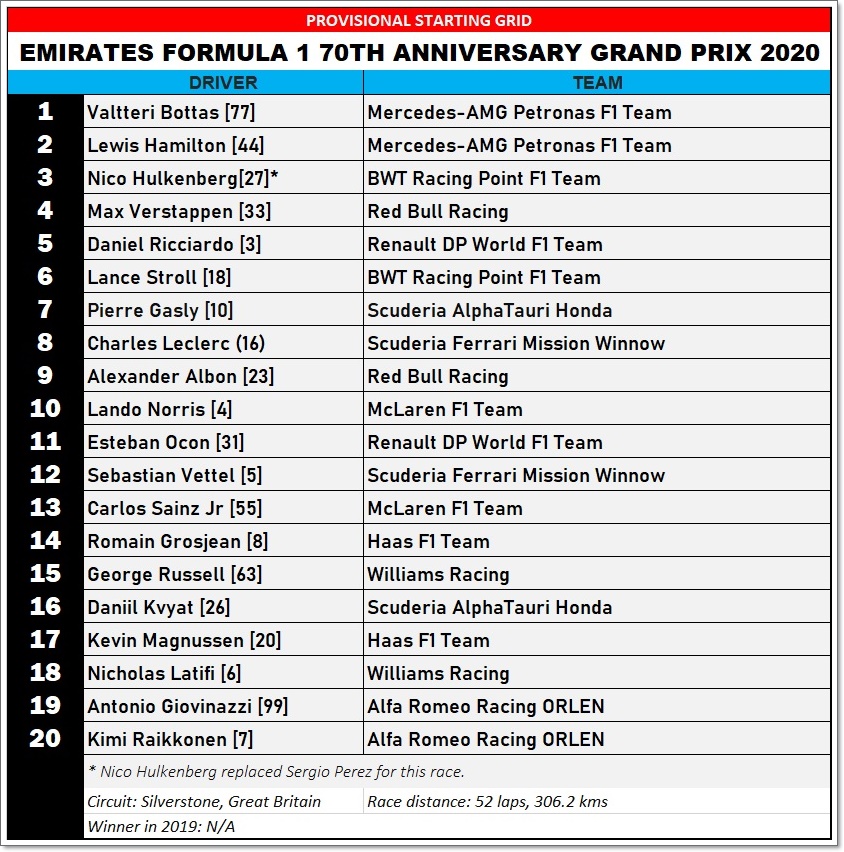
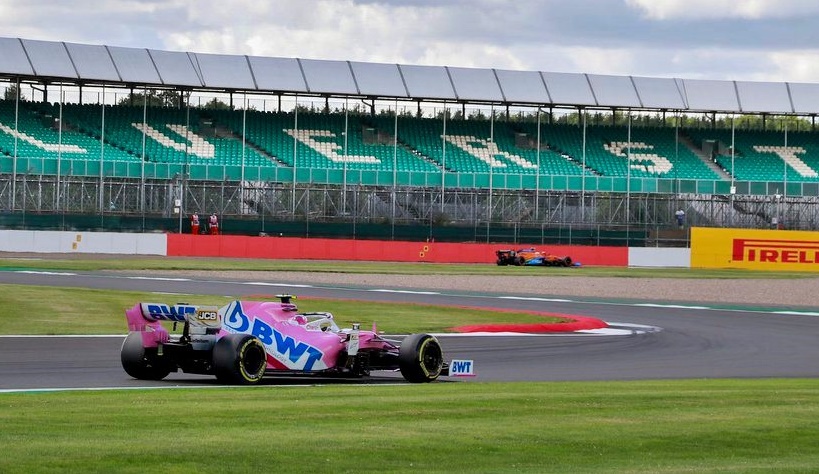
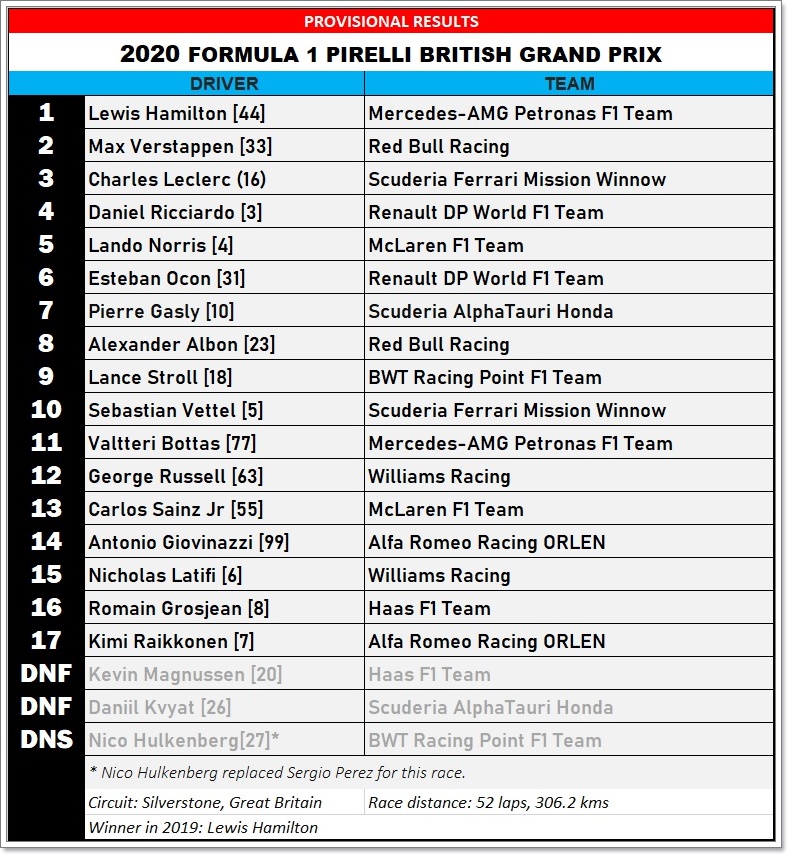
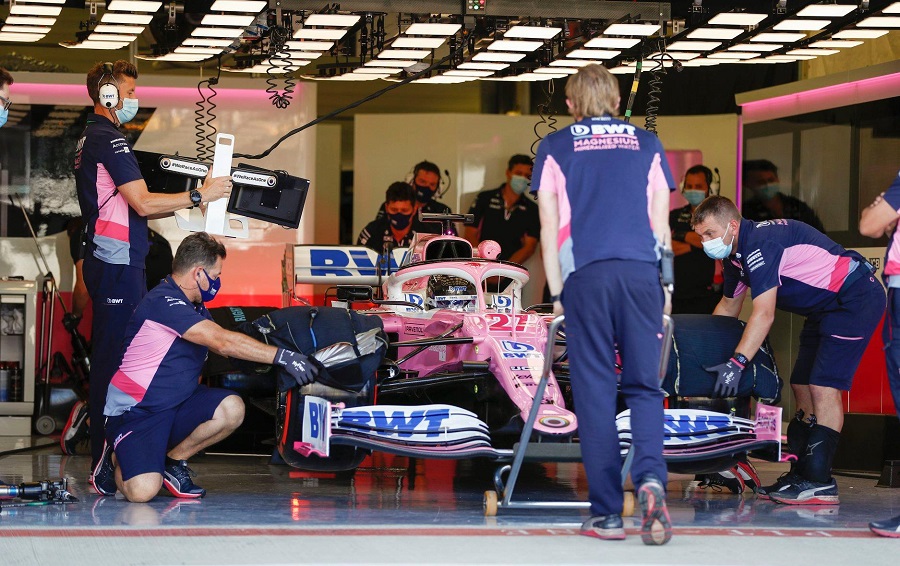
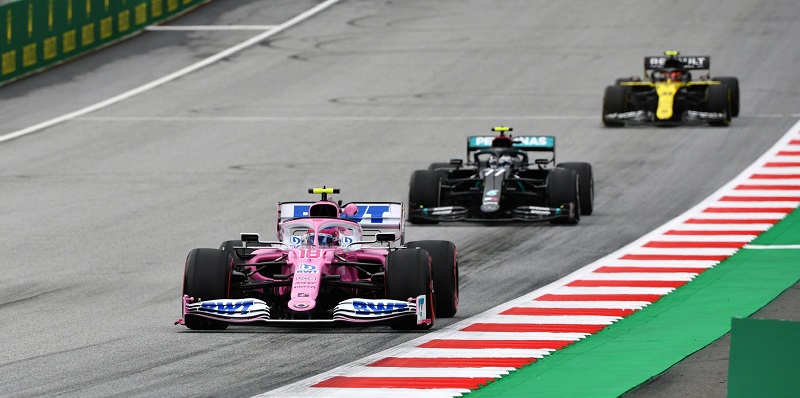
♦ Nico Hulkenberg, replacing Sergio Perez who tested positive for COVID-19 and had to self-isolate, had a bad day. Just before the race was due to start, the pink BWT Racing Point car could not start and the Power Unit could not be fixed in time, he dropped out. He had performed well in qualifying and other drivers were impressed, looking forward to a challenge from him during the race.
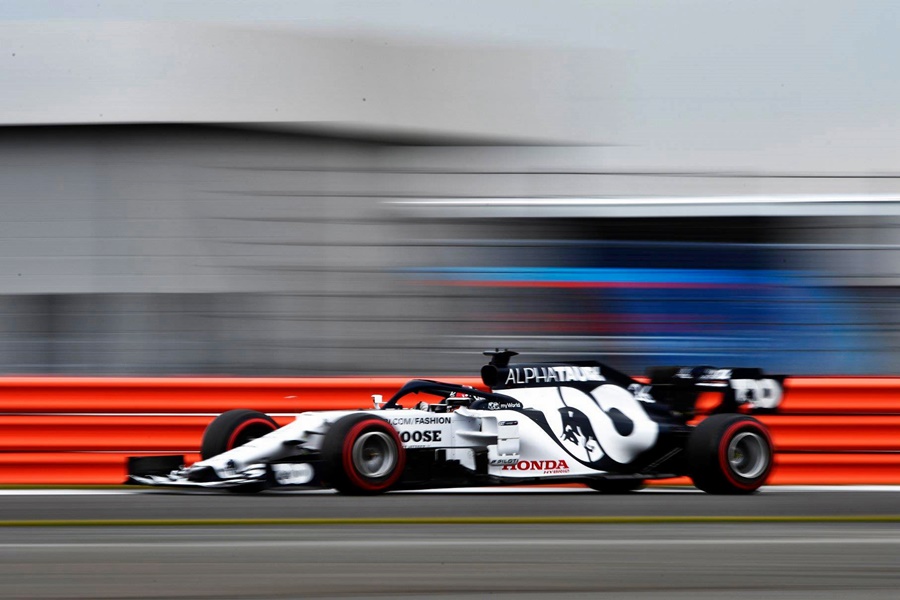
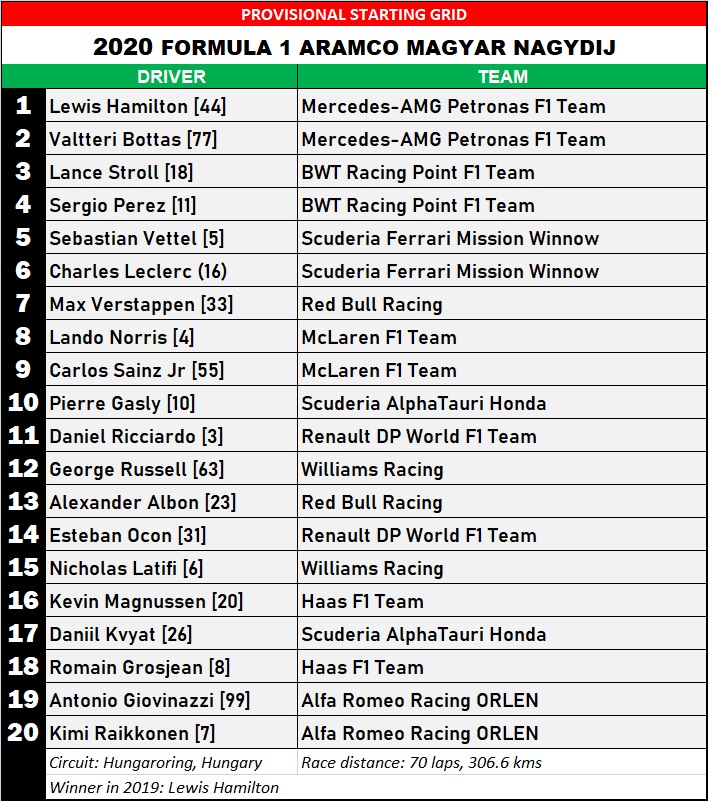
♦ Scuderia Alpha Tauri’s Daniil Kvyat was dropped 5 places on the grid as his team decided to change the gearbox. He was relocating to the back alongside George Russell who also had a 5-place penalty for ignoring yellow flags during qualifying.
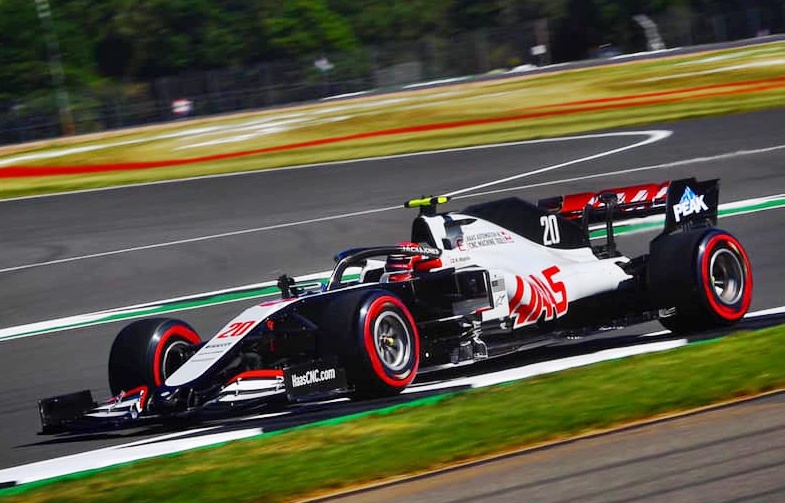
♦ The Safety Car got to work very early – even before the first lap was completed – when Alexander Albon’s car came into contact with Kevin Magnussen and the Haas F1 driver went off into the gravel. The Safety Car was out for 5 laps to manage the racers while Magnussen’s car was removed. Albon would later be given a 5-second penalty for the incident.
♦ Lap 12 saw the Safety Car coming out again after Daniil Kvyat went off the track when his car had suspension failure and hit the barrier heavily.
♦ At the halfway point in the 52-lap race, Lewis Hamilton was 2.3 seconds ahead of Valtteri Bottas who would be a buffer with Max Verstapen as he tried to close the 5-second gap further. After the Red Bull Racing driver, there was a 10-second gap to Charles Leclerc.
♦ In the closing laps, the drivers struggled with heavily worn tyres and Bottas fell to 11th after a puncture, while Kimi Raikkonen spun off – probably due to the tyres too.
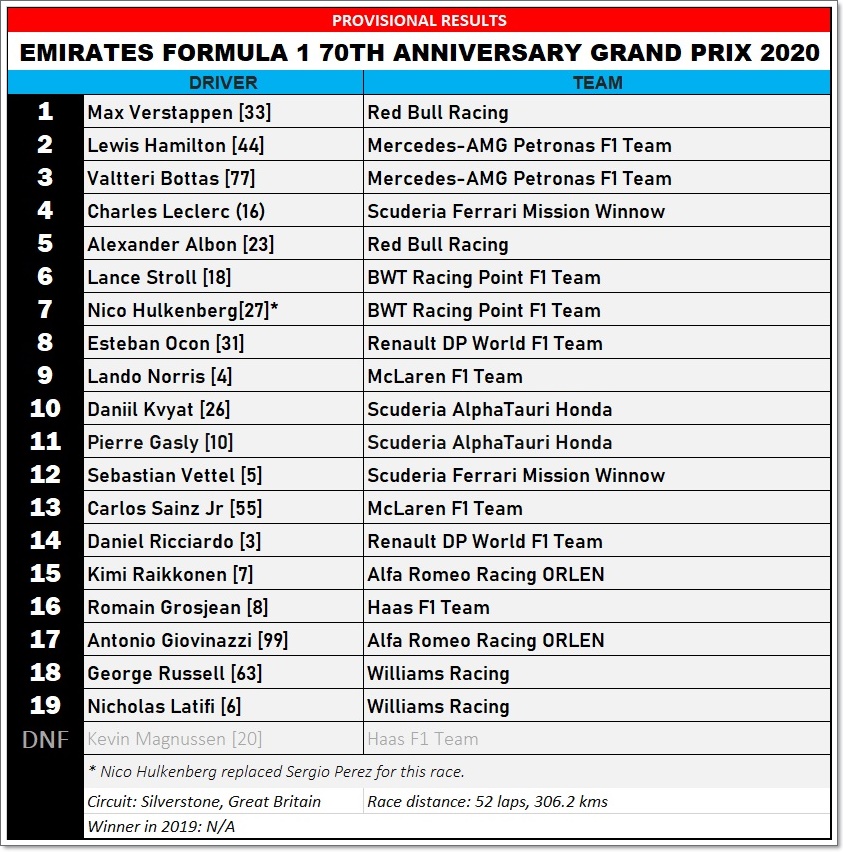
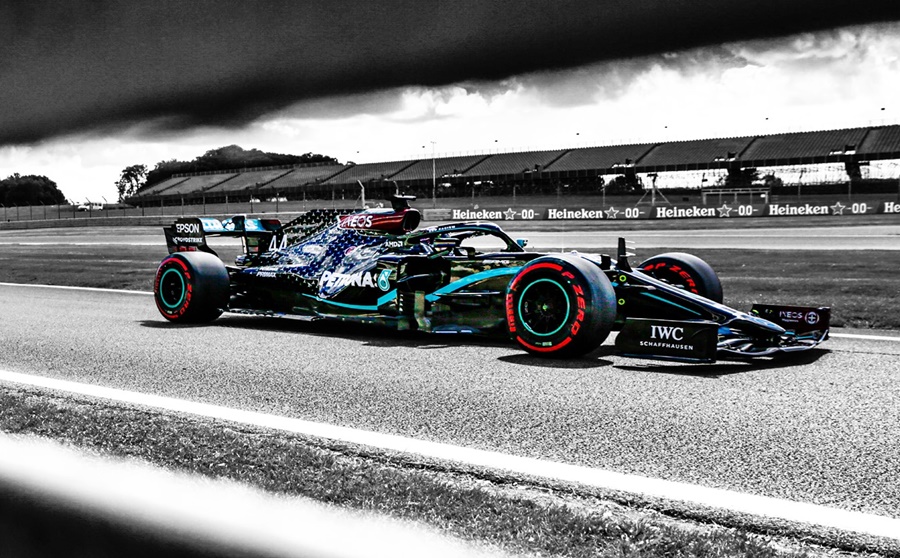
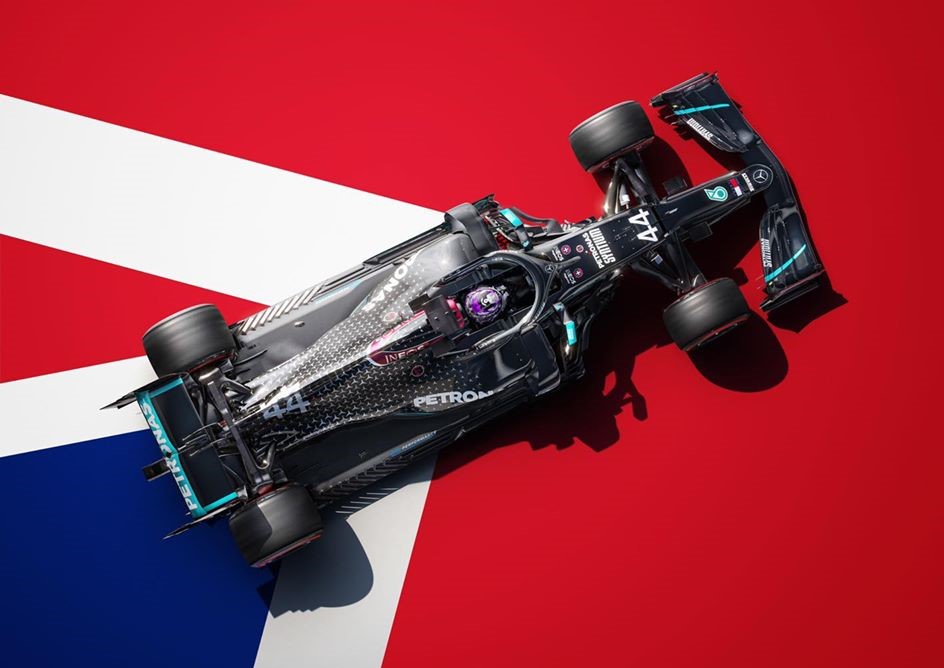
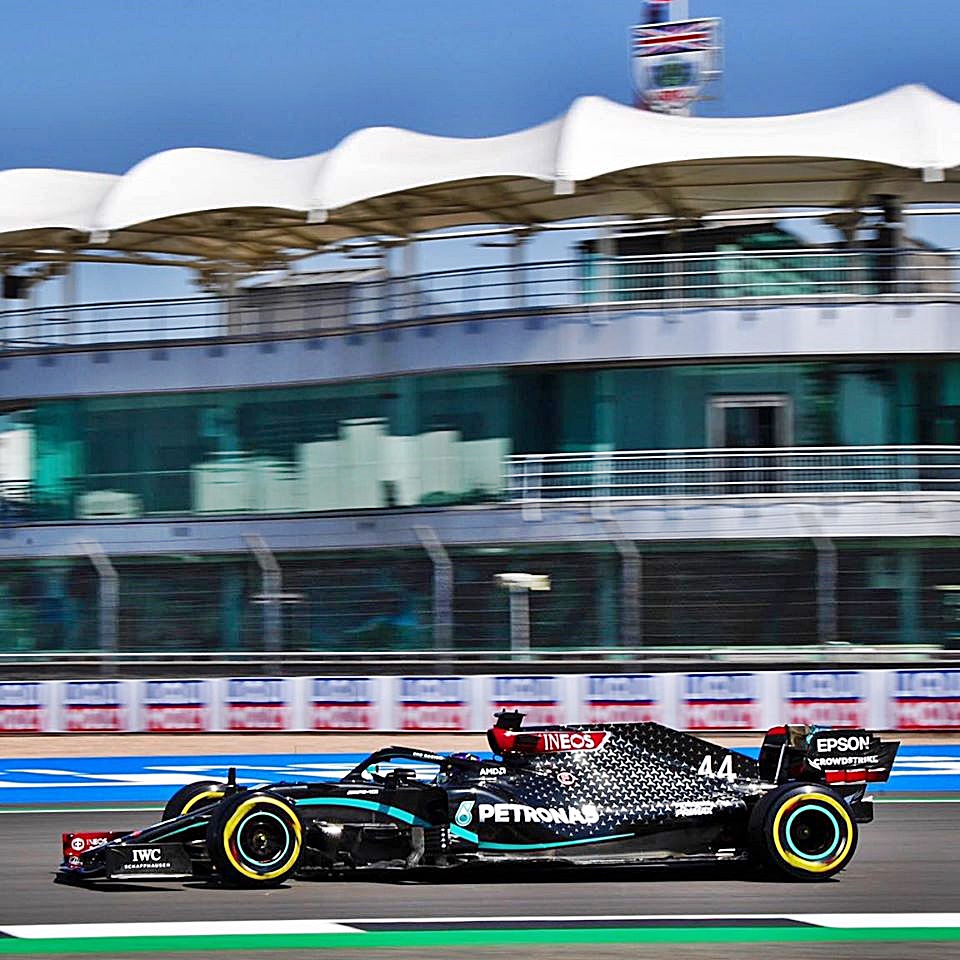
♦ A puncture at the end didn’t stop Lewis Hamilton from winning the race ahead of a determined Verstappen who clocked the fastest lap of the day. With the victory at Silverstone – his seventh at the British GP – he has won more races at his home circuit that any other driver.
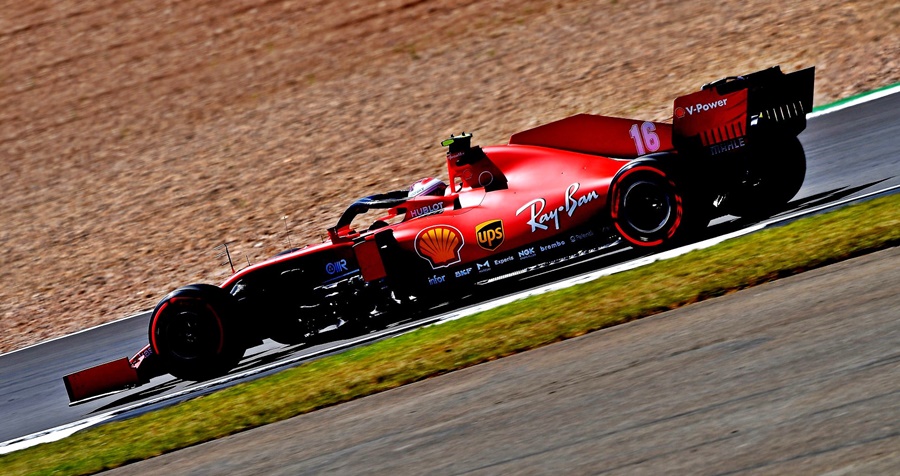
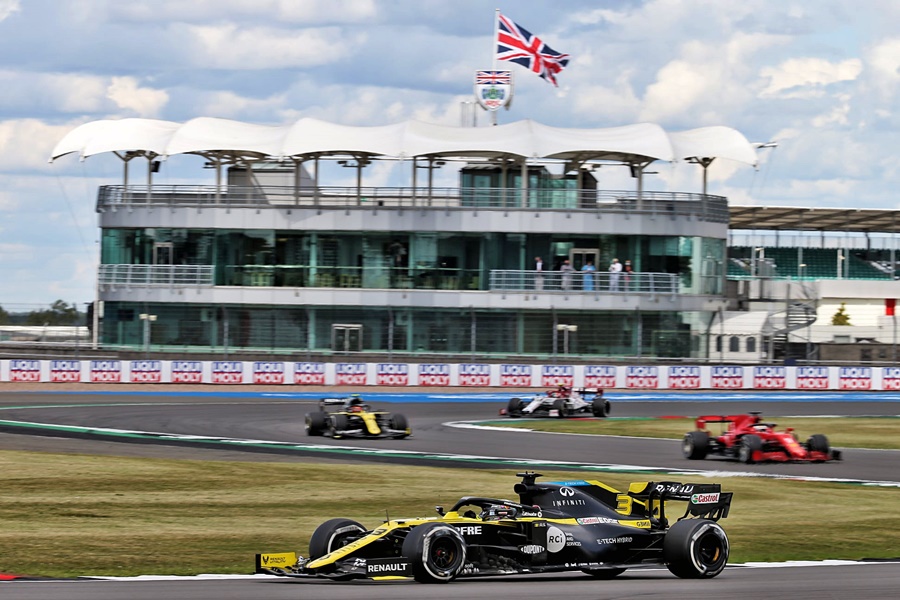
As in Austria and Hungary, there were no spectators watching from the stands due to strict conditions set by the organisers and authorities.Bad luck for BWT Racing Point’s Nico Hulkenberg who had engine problems just as the race was about to start so he had to drop out. But at least the team ended the day with another 2 points from Lance Stroll’s 9th placing.It wasn’t Daniil Kvyat’s day – not only did he have to start from the back due to a gearbox-change penalty but he crashed on the 12th lap due to suspension failure.Charles Leclerc continued to collect points for Ferrari with another podium finish.After his collision with Kevin Magnussen, Alexander Albon was given a 5-second penalty.
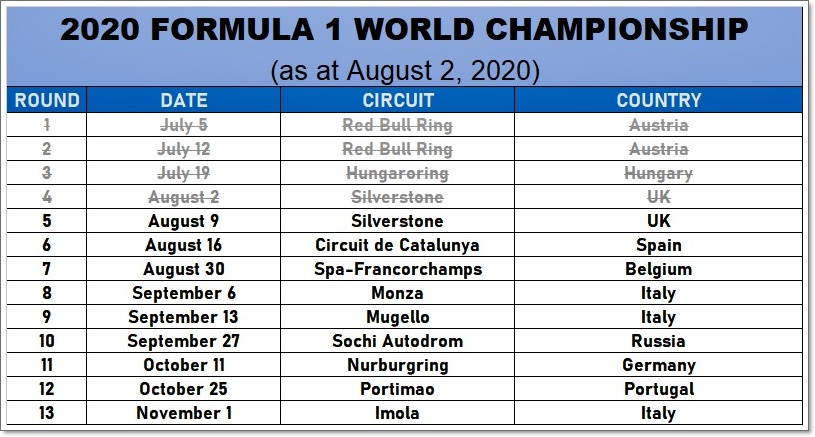
Another three races have been added to the revised calendar for the 2020 Formula 1 World Championship, bringing the total number of confirmed rounds in the calendar to 13. The venues are still in Europe – Nurburgring in Germany, Algarve in Portugal and Imola in Italy and will take place between October 11 and November 1.
F1 returns to Portugal
While the Nurburgring circuit is a familiar venue, the round in Portugal will be the first time the country is hosting a F1 round since 1996. It will be at the 4.65-km long circuit in Portimao located in the Algarve region of southern Portugal.
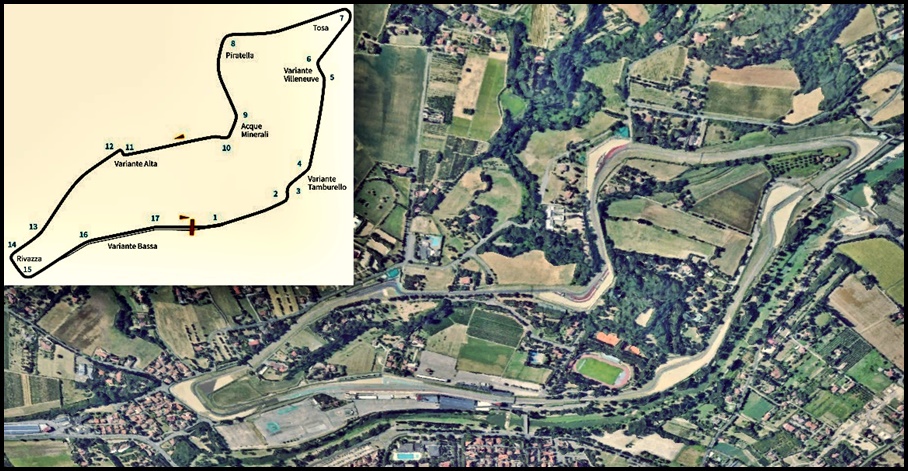
The Imola Circuit in Italy.
A week following the event in Portugal, the next round will be at the Autodromo Enzo e Dino Ferrari in Imola, Italy. The 4.9-km track has a history going back to 1953 but is remembered for being the track where Ayrton Senna lost his life in 1994. In fact, Senna was not the only one to die at that event – the 1994 San Marino Grand Prix – as Austrian driver Roland Ratzenberger sustained fatal skull damage after crashing into a wall at 310 km/h.
So far, three rounds have been run, two at the Red Bull Ring in Austria and one at the Hungaroring in Hungary. Two rounds will be run at Silverstone in the UK, the first scheduled for this weekend and a second round the week after.
Can 18 rounds before 2020 ends?
The Formula 1 organization has been hoping to run up to 18 rounds before the end of the year. With the two final ones to be held in the Middle East Gulf region in mid-December and 13 already confirmed, that leaves another three more slots over about 6 weeks.
Races in Asia
The Americas are out due to the severe pandemic conditions so the only other region is Asia. Vietnam, which was to have had its first-ever F1 event may be keen and able to host a round since it has had a ‘clean record’ where the pandemic is concerned.
Will we see a round of F1 at Sepang?
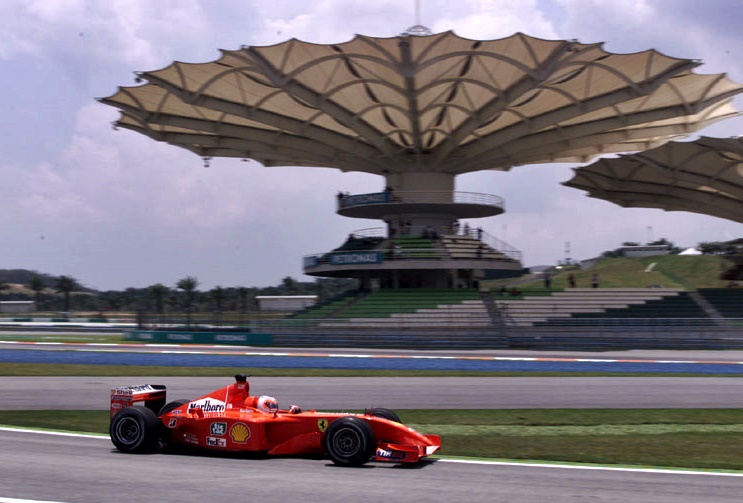
There are also rumours that the Sepang Circuit in Malaysia may host a round but it would depend very much on the situation. Right now, there is concern about the trend in new COVID-19 cases so the government would be unwilling to make any commitments just yet. The Sepang International Circuit is F1-ready as it used to host a round each year between 1999 and 2017.
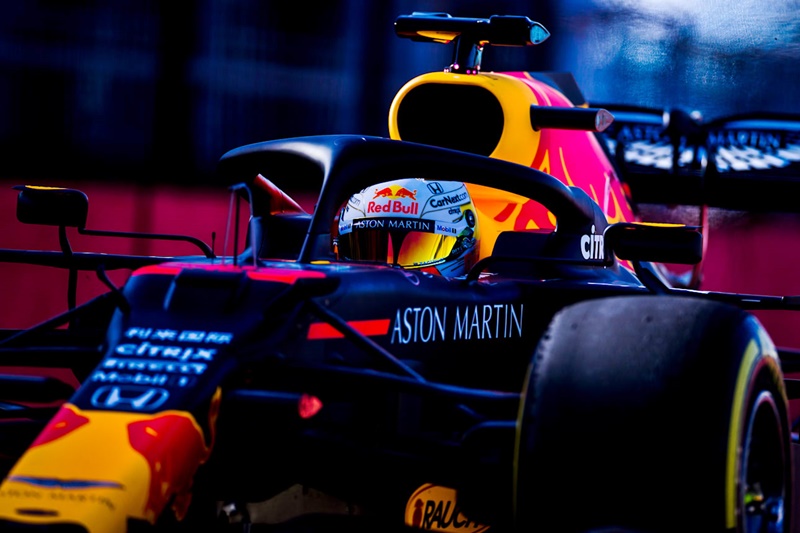
♦ 25 minutes before the race was to start, Max Verstappen slid into a barrier at the tricky Turn 12! The RB16’s nose cone and front wing were damaged and he rushed back to the pits for repairs, which were completed in time for the race start.
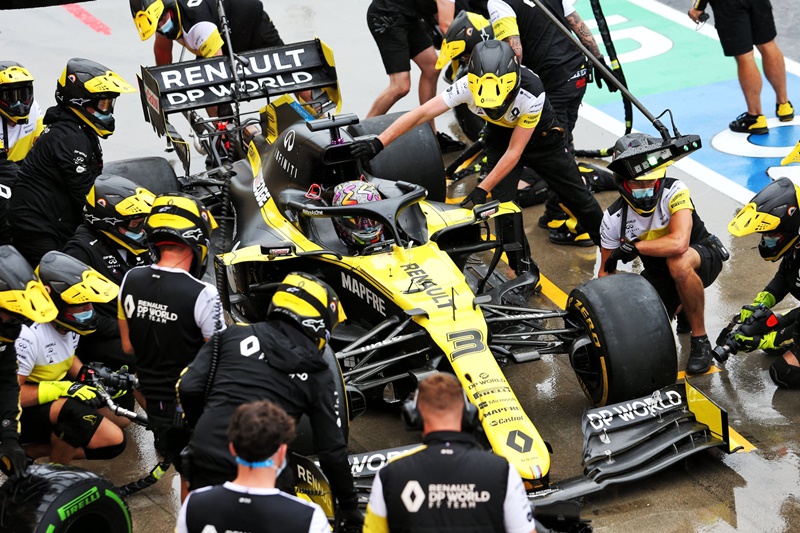
♦ As the track seemed to be drying out after earlier rain, the two Haas cars rushed to their pits as the race started to switch to medium tyres. It was the right move as they would move up to fourth and fifth places by the seventh lap.
♦ On lap 4, Verstappen (who had started from seventh on the grid) took the lead from Lewis Hamilton who had come into the pits to switch to slicks. But it was only a 1-lap lead as he too had to pit to get off the intermediate tyres and Hamilton slotted back to the front.
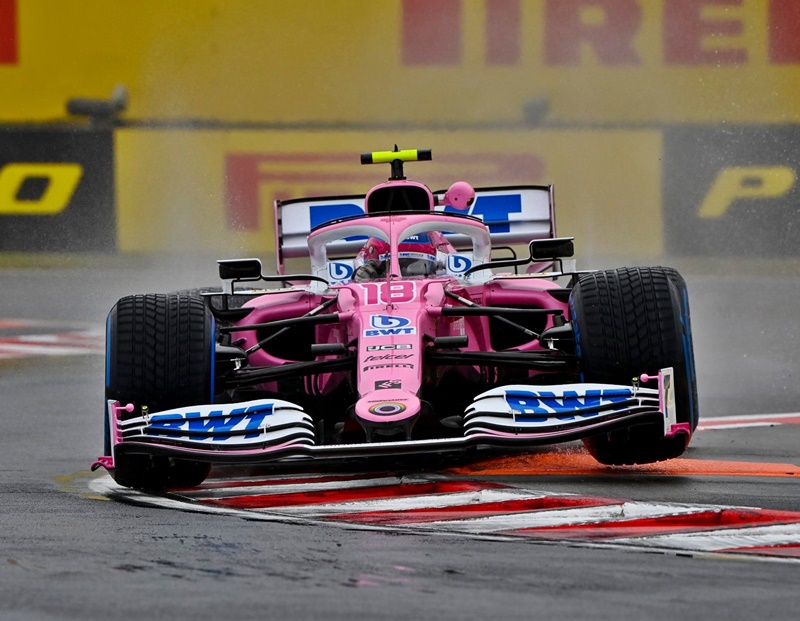
♦ Bad luck for Williams’ Nicholas Latifi who spun in the first turn and then had a puncture a few laps later, forcing him to limp back to the pits. And after replacing the tyre, his release from the pits was considered unsafe by the Stewards and he got a 5-second penalty.
♦ If it wasn’t already bad enough that Kimi Raikkonen qualified in last position on the starting grid, he would be slapped with a 7-second penalty for his car being out of position on the grid.
♦ Pierre Gasly got a new Honda unit for his car but wasn’t penalised as he is still within his limit for the season. However, by lap 16, he had to pull out of the race as the engine started smoking. During practice, he had reported a burning smell which was why the engine was replaced.
♦ Charles Leclerc was the last to get off the soft tyres he had started with when it seemed like the rain expected by lap 23 might not arrive. He went on hard tyres which he hoped would take his Ferrari to the end.
♦ Sebastian Vettel, wanting to move ahead as much as possible, pitted on lap 30 to change to hard tyres. It was a risky move with most forecasters saying rain was due within the next few laps.
Tyre changes were required a few times during the race as the weather alternated between dry and possible rain and then no rain.
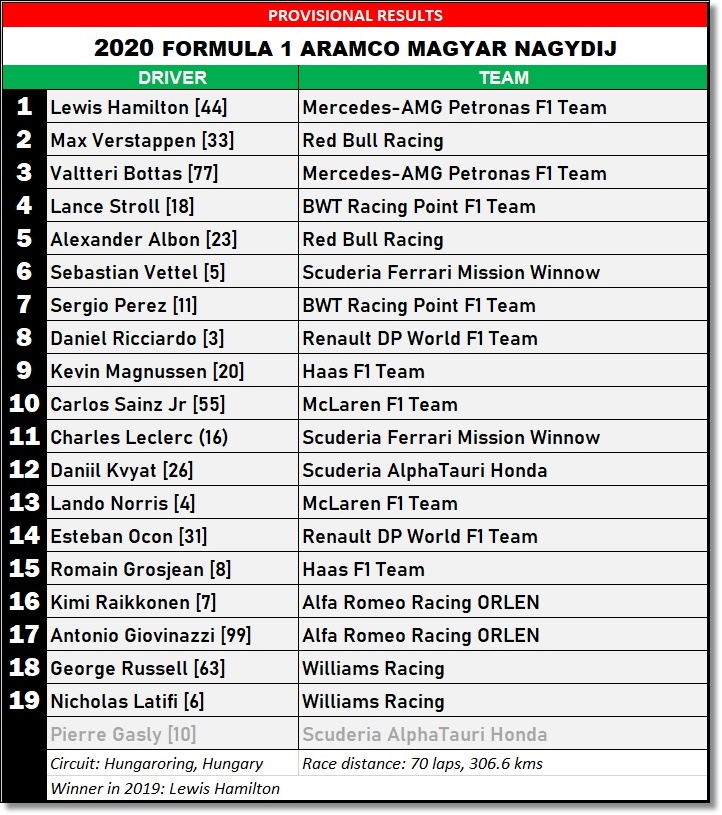
♦ The first drops of rain came down at the halfway point of the race (35 laps). By then, Hamilton was comfortably ahead with a 20-second lead. Behind him was Verstappen and then Valtteri Bottas 5 seconds away.
♦ 20 laps before the end, Bottas came in for a change to hard tyres to give him more speed in the duel with Verstappen.
♦ 5 laps from the end, the Mercedes-AMG team debated whether to switch Hamilton’s tyres to hard but the driver wanted softs. His choice was followed and when he rejoined the race, he had 3 laps to go for a fastest lap as he headed to the finish line. He did that and was in line to collect the extra virtual point.
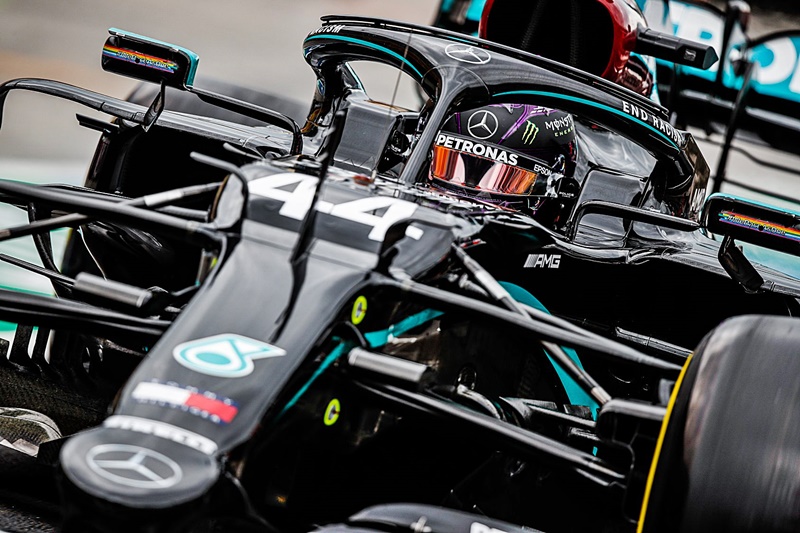
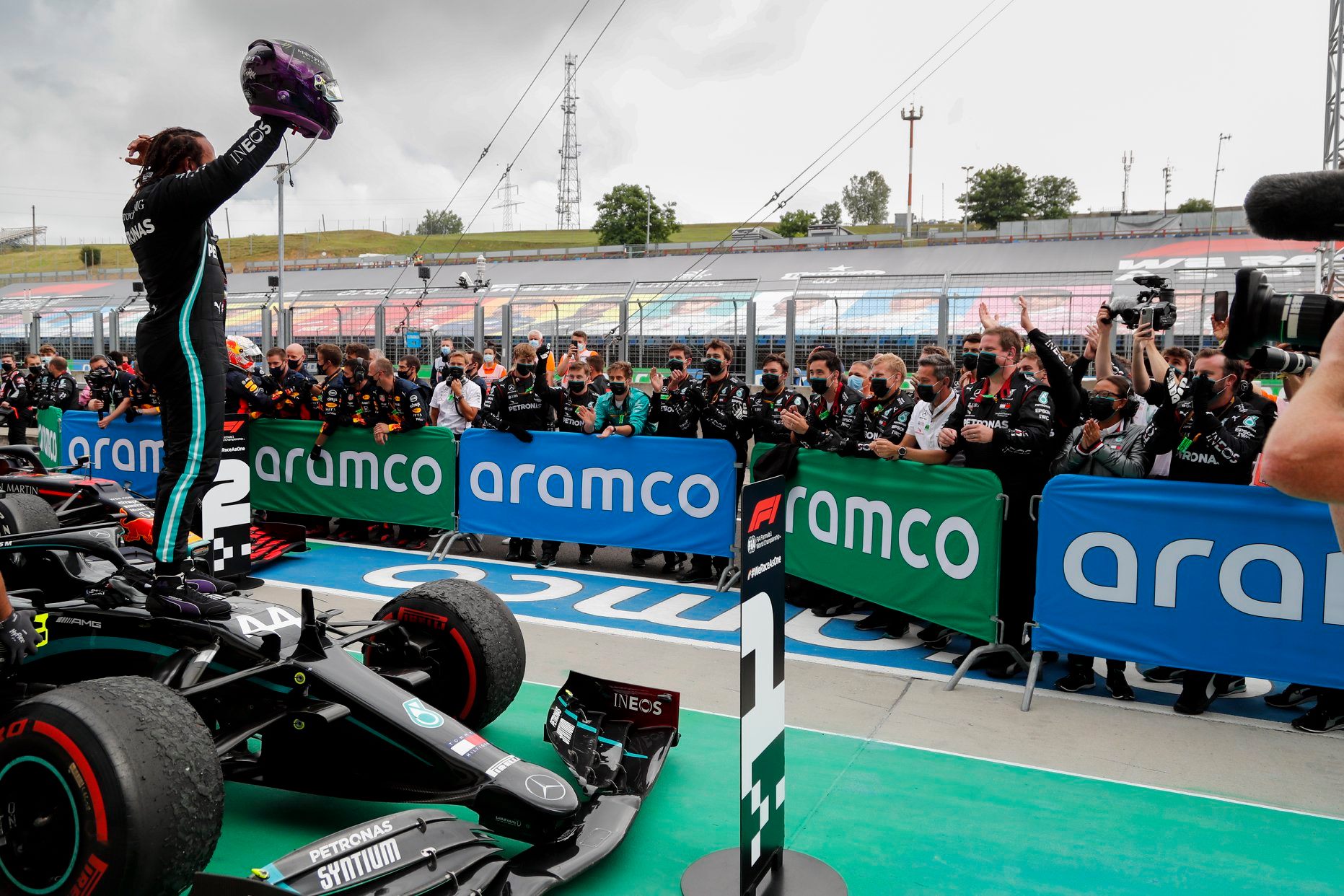
♦ Today’s win puts Hamilton equal with Michael Schumacher of having the most wins at a race. It is eighth win in Hungary, and the third year in a row.
Sebastian Vettel finished 6th to collect 8 points for Ferrari but Leclerc managed only 11th. Not exactly a great race for the team again.Despite crashing even before the raced started, Max Verstappen finished the race in second place, 8 seconds behind Hamilton.
Pierre Gasly had engine problems all week and, during the race, had to retire when smoke started to come out of the engine.
A bad day for Nicholas Latifi with two spins and a 5-second penalty as well. When the race ended, he was 5 laps behind Hamilton.
Race starts at 3:10 pm in Hungary/9:10 pm in Malaysia
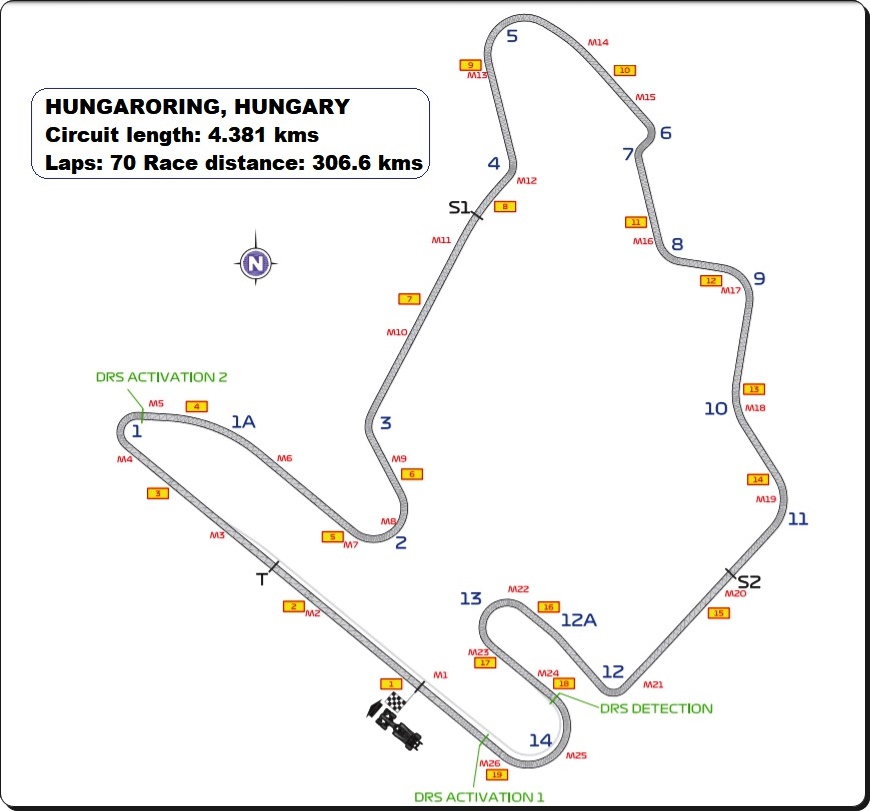
After two weekends at the Red Bull Ring in Austria, the F1 teams travelled 420 kms to the next venue on the calendar, Hungaroring in Hungary. The 2020 Hungarian Grand Prix (which has the official event title of 2020 Formula 1 Aramco Magyar Nagydij) is the third round of the championship.
The authorities are very strict on the conditions of allowing the race to be run. These include staying within the circuit or at their respective hotels and not socialising; breaking the rules can result in a fine of 15,000 euros (about RM73,000) and/or jail time. Both Ferrari drivers were reported to have broken the rules and the team boss has warned them that they cannot be irresponsible and jeopardise the team.
A regular venue
The circuit is a familiar one to the drivers, having been used over the past 34 years. As such, they will be prepared for the hot and dusty environment, more so with the pandemic-related lockdowns further keeping the circuit unused. The air and track temperatures experienced at the Hungarian Grand Prix are typically some of the highest of the season, with an average air temperature of 30°C and average track temperature of 49°C.
The current Hungaroring circuit uses the third layout since 1986 and has 14 turns. Running around a valley, it is twisty and bumpy, giving a ‘street circuit’ feel like that of Monaco. Rain can add to the challenges and it has during practice sessions this week. With the revised 2020 schedule and the circuit’s relentless run of corners, the Hungaroring looks set to be the highest downforce track on the calendar.
Constant cornering
Because of the track’s high-downforce nature, its maximum speed – 318 km/h – is one of the lowest in F1. The cars only spend around 10 seconds going in a straight line during a 4.4-km lap, with the remaining 65 seconds or so spent cornering. As such, the Hungaroring is known for its constant cornering.
Despite the Hungaroring having one of the shortest start/finish straights, the track has the fifth-longest run to Turn 1 from pole position – due to the grid being positioned very close to the exit of the final corner.
The circuit is one of the toughest for brake cooling, in part due to the lack of straights, often made worse by cars being stuck in traffic. Just 65% of the lap distance at the Hungaroring is taken at full throttle, one of the lowest figures in F1.
The average lateral g-force experienced during the course of the lap is one of the highest in F1, due to the grip levels from the new tarmac, long corners, lack of straights and high downforce levels. Drivers report that the kerbs are some of the most severe in F1 for the cars. The spacing, height and speed at which drivers go over kerbs are all important factors. While the kerbs in Hungary are harsh, they are generally taken at slower speeds than in Red Bull Ring.
The track features many long corners, some of which are 180 degrees or more, which impacts the suspension set-up. The majority of corners in Hungary are taken in ‘steady state’, which is where the length of the corner allows the car to settle and stay in a rolled condition for a long period of time. A ‘transient state’ means the opposite and is seen in corners requiring quick changes of direction. For this weekend’s race, ‘steady state’ is more important and the suspension can be tuned to be better suited to this.
A place in F1 history
The 2009 Hungarian Grand Prix was the first race in F1 history to be won by a hybrid car. Back then, using the Kinetic Energy Recovery System (KERS) was optional and the opening races were won by cars with conventional engines. However, Mercedes-AMG had developed a hybrid system run by McLaren-Mercedes in 2009. So, when Lewis Hamilton won the event that year, it was the first ever victory for a hybrid Formula 1 car.
Hamilton has won the Hungarian Grand Prix 7 times, making it his joint-most successful track – shared with the Circuit Gilles Villeneuve in Montreal, Canada. Commenting on his experience this weekend during practices, Hamilton said: “This is such a great track to drive in the dry, but it’s very tricky in the wet and it felt quite low grip out there. It’s not such a power-dependent circuit. I’m hoping for a tighter pack, it’d be great to see the Renaults doing well, the McLarens are doing a fantastic job, as are the Racing Points, it’s really exciting to see. We also expect Red Bull to be strong, so I anticipate a tough battle with them.”
The championship so far
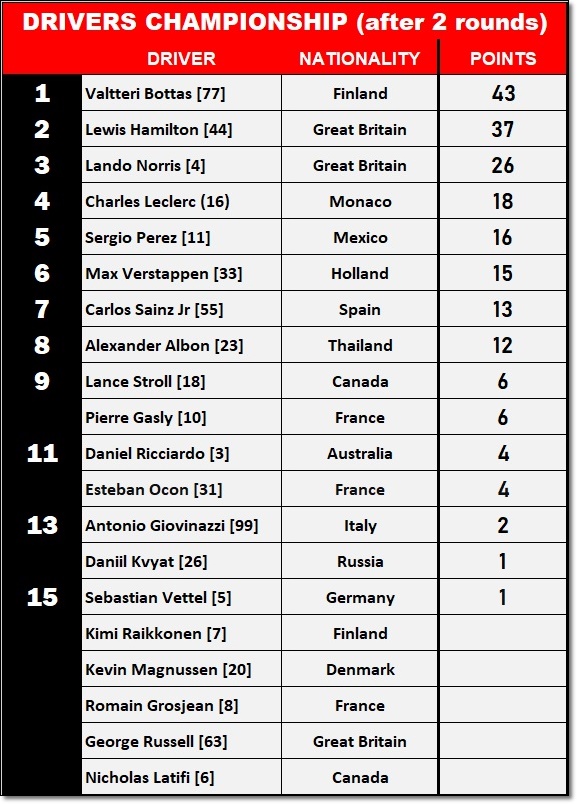
Valtteri Bottas is in top spot after two rounds with 43 points, 6 points ahead of Hamilton. Lando Norris is in third with 26 points while Charles Leclerc, in spite of the fiasco last Sunday, is in fourth with the 18 points collected for his win in the first round.
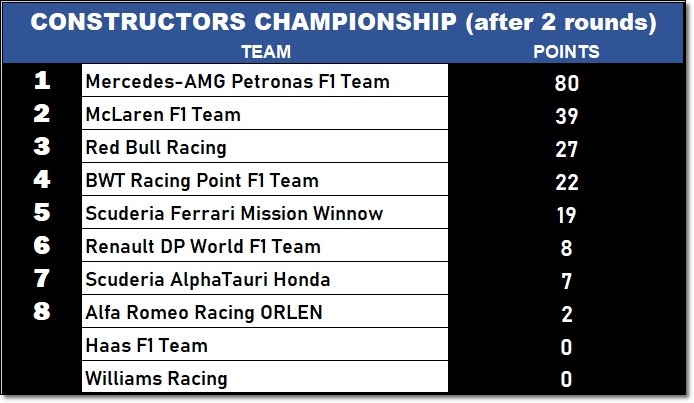
As for the Constructors Championship, the Mercedes-AMG PETRONAS F1 Team has already built up a 41-point lead ahead of McLaren. BWT Racing Point F1 Team is in fourth and will be closely watched as it tries to pass Red Bull Racing which is 5 points ahead.
Race starts at 3:10 pm in Austria | 9:10 pm in Malaysia
Just last weekend, the opening round of the 2020 Formula 1 World Championship was run at the Red Bull Ring in Austria and this Sunday, the second round takes place at the same circuit. It’s unusual to have two consecutive rounds at the same location but this is due to the postponement/cancellation of earlier rounds due to the COVID-19 pandemic.
As a result, the organizers have to compress the schedule for this season as they try to get up to 18 races run by the end of the year. Ten have already been confirmed to date.
The FIA says that this is the first time that a region’s name has been used for a F1 round but then again, there is the European GP and Europe is also a region, isn’t it? The event also has the name of 2020 Formula 1 Pirelli Styrian Grand Prix, only the 43rd time that a round has had an individual tile. Styria is the region in Austria which the Red Bull Ring is located.
To recap on the previous round, the race was certainly a chaotic one and by the time the chequered flag came out, just 13 cars (of the 20 that started the race) were classified as finishers. It was the lowest number since the 2017 Australian GP when the same number completed the race.
Although the Red Bull Ring is familiar to the teams and drivers, the gap of just a week has meant that there has been limited time to analyze performance and address issue and concerns. It seemed that there were some reliability issues as certain systems in some cars had problems.
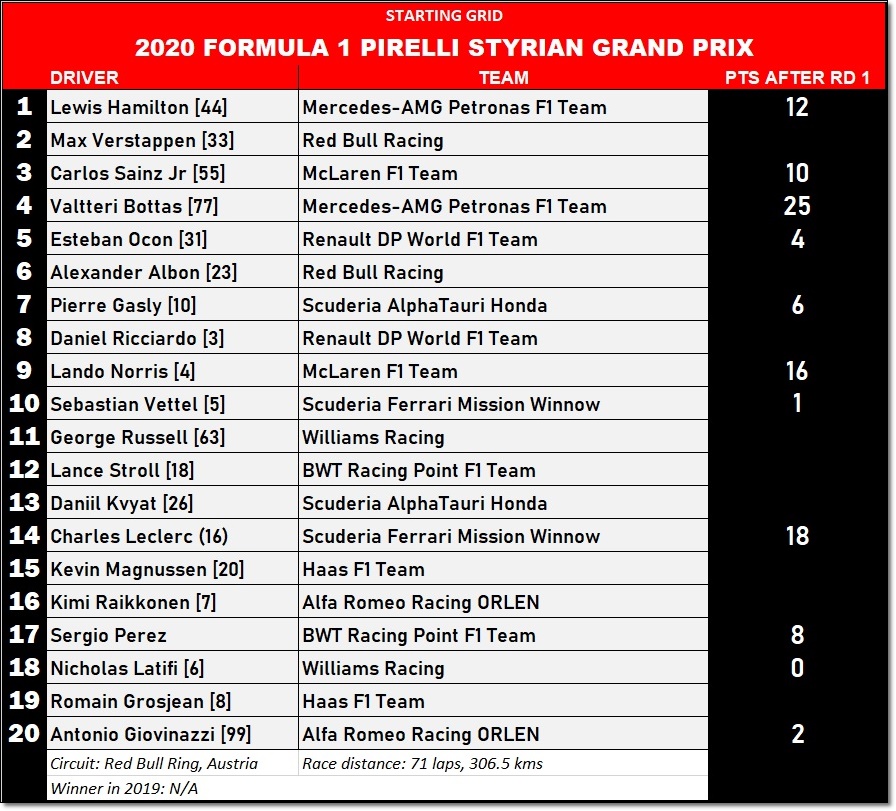
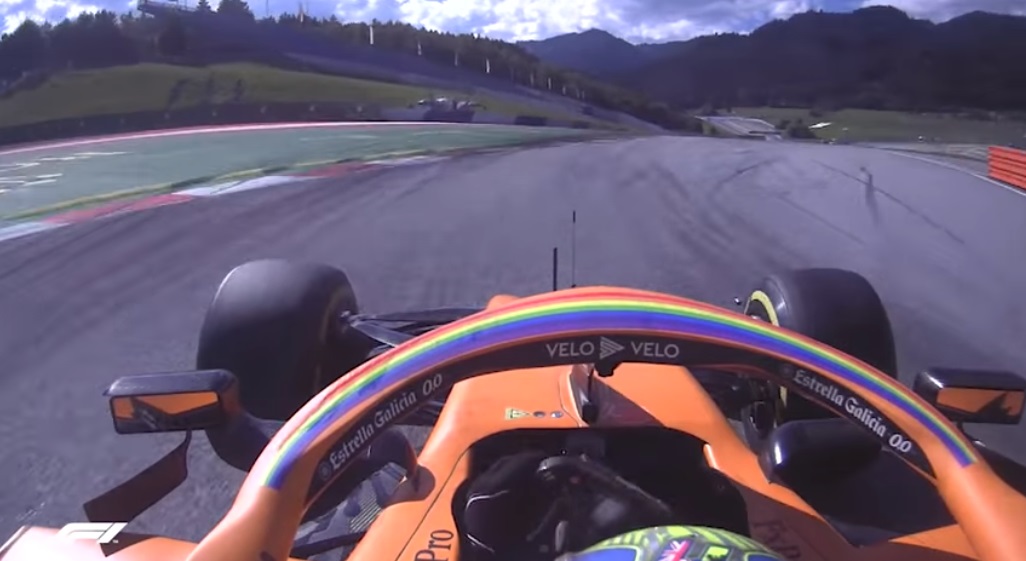
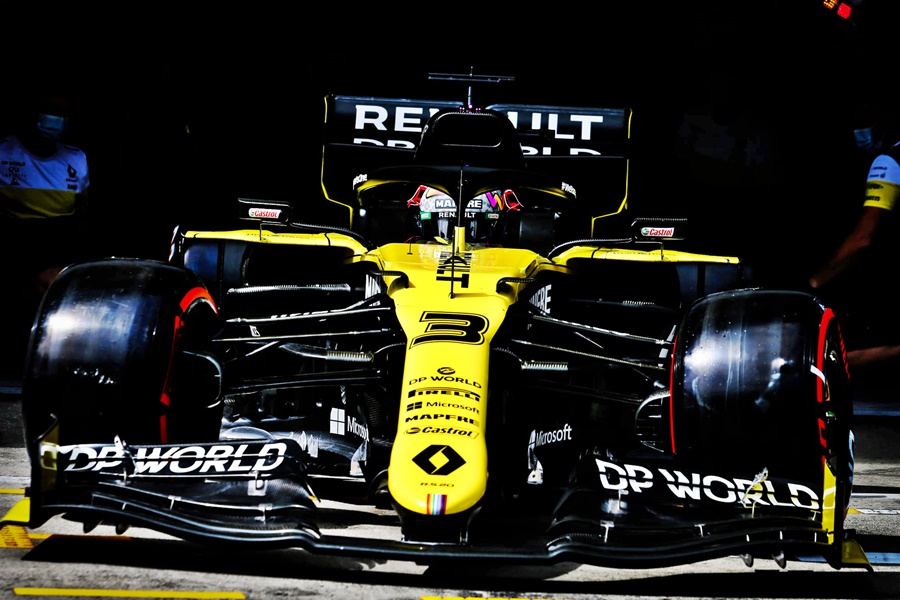
The positions of Lando Norris, Charles Leclerc and Antonio Giovinazzi were changed after they received grid penalties for various offences.The view from Lando Norris’ McLaren.Daniel Ricciardo (Renault) crashed during practices but still made it for the qualifying session.
For the Mercedes-AMG PETRONAS F1 Team, the free practice sessions were used to check whether those reliability concerns were fixed. “The team is still looking into that, but I think we have made some progress. We made some good set-up tweaks and I tried to use the learnings from last weekend, in terms of one-lap pace and driving style over a race distance,” said the winner of the first round, Valtteri Bottas.
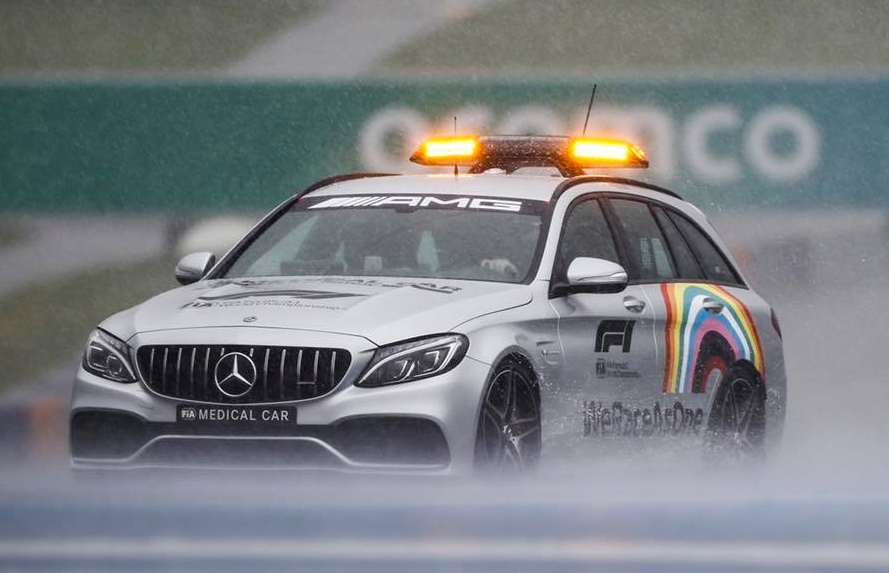
The Official F1 Medical Car assessing track conditions during the heavy rain that delayed qualifying.
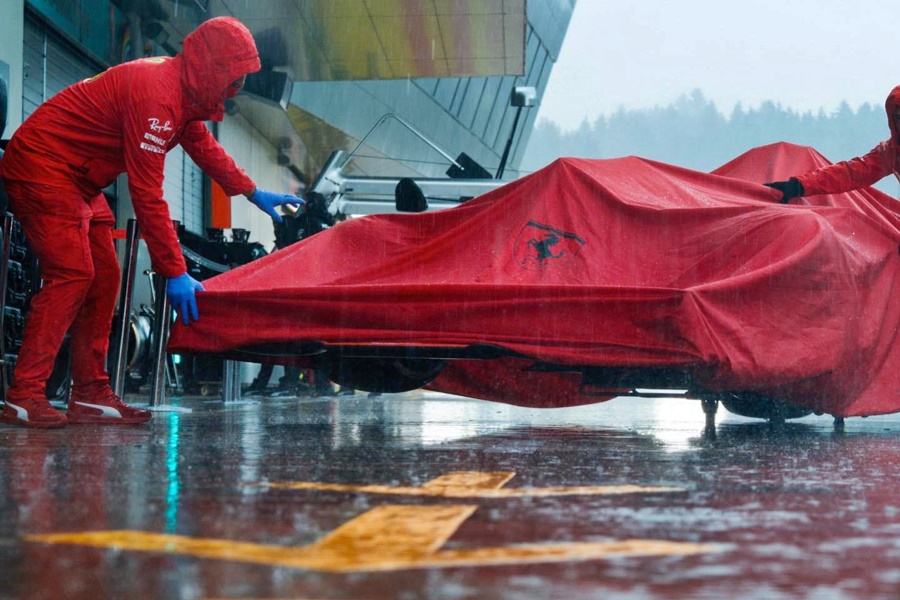
Heavy rain forced the final practice session to be cancelled and today’s qualifying sessions could not start on time due to the same climatic issue. Eventually, the cars went out on wet tyres after a 45-minute wait.
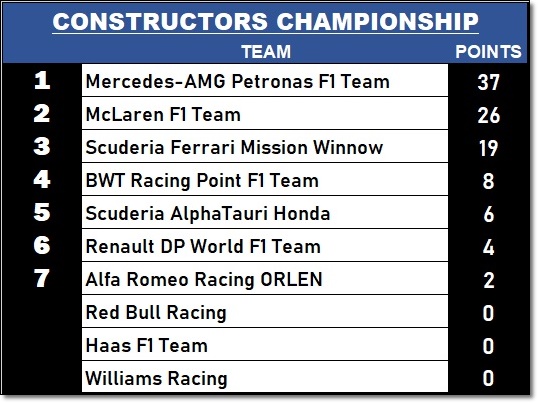
In the Constructors’ battle, Bottas’ win and Lewis Hamilton’s fourth place last weekend put Mercedes-AMG in the familiar position at the top. They have an 11-point lead over McLaren which was the combination of points for the third place of Lando Norris and fifth place of Carlos Sainz, Jr. Ferrari struggled but still collected 19 points with the second placing of Charles Leclerc, plus 1 point from Vettel.
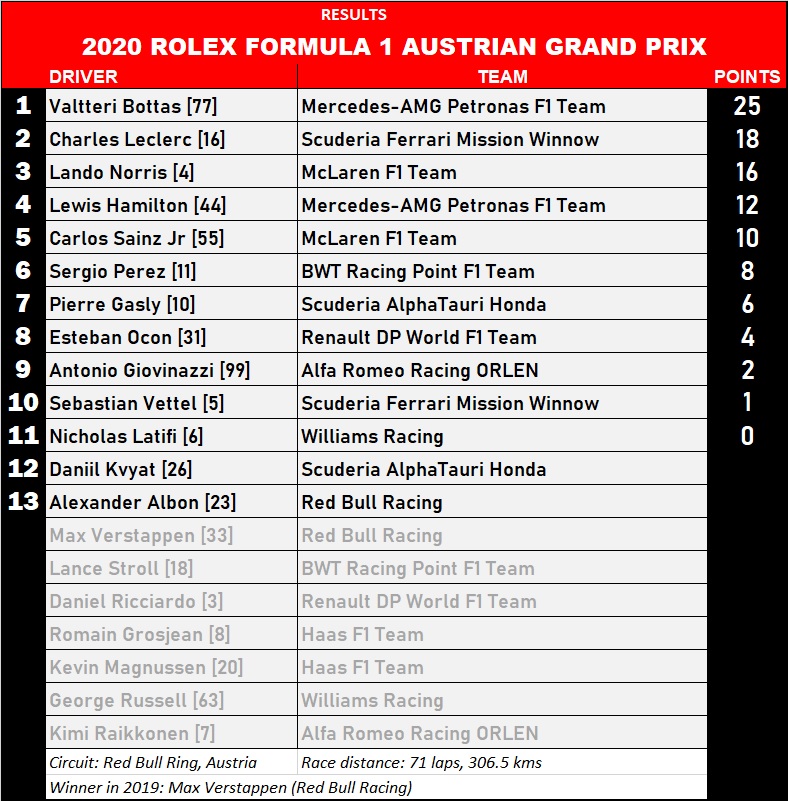
Updated results and points after adjustment for penalties.
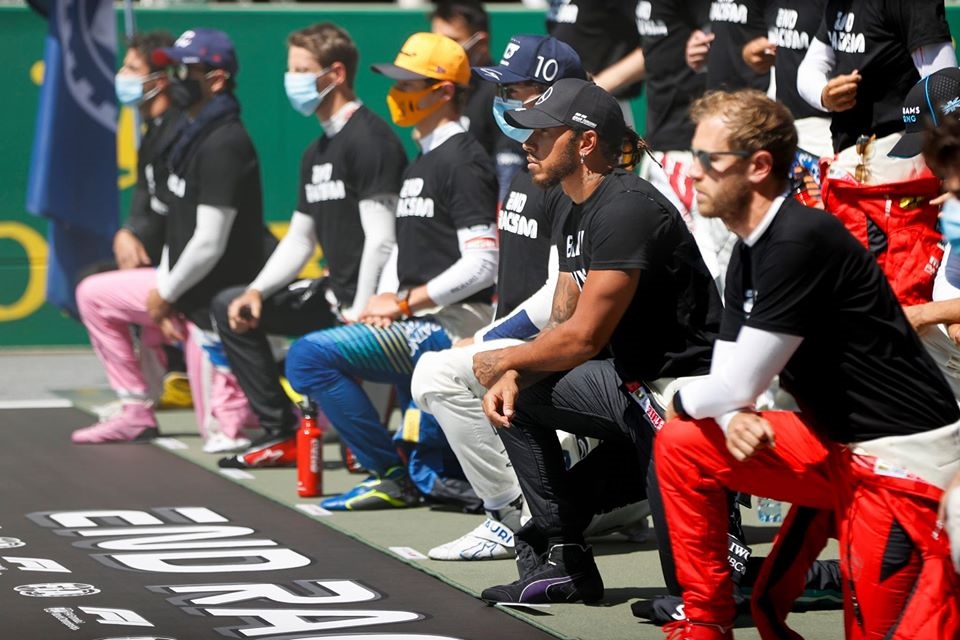
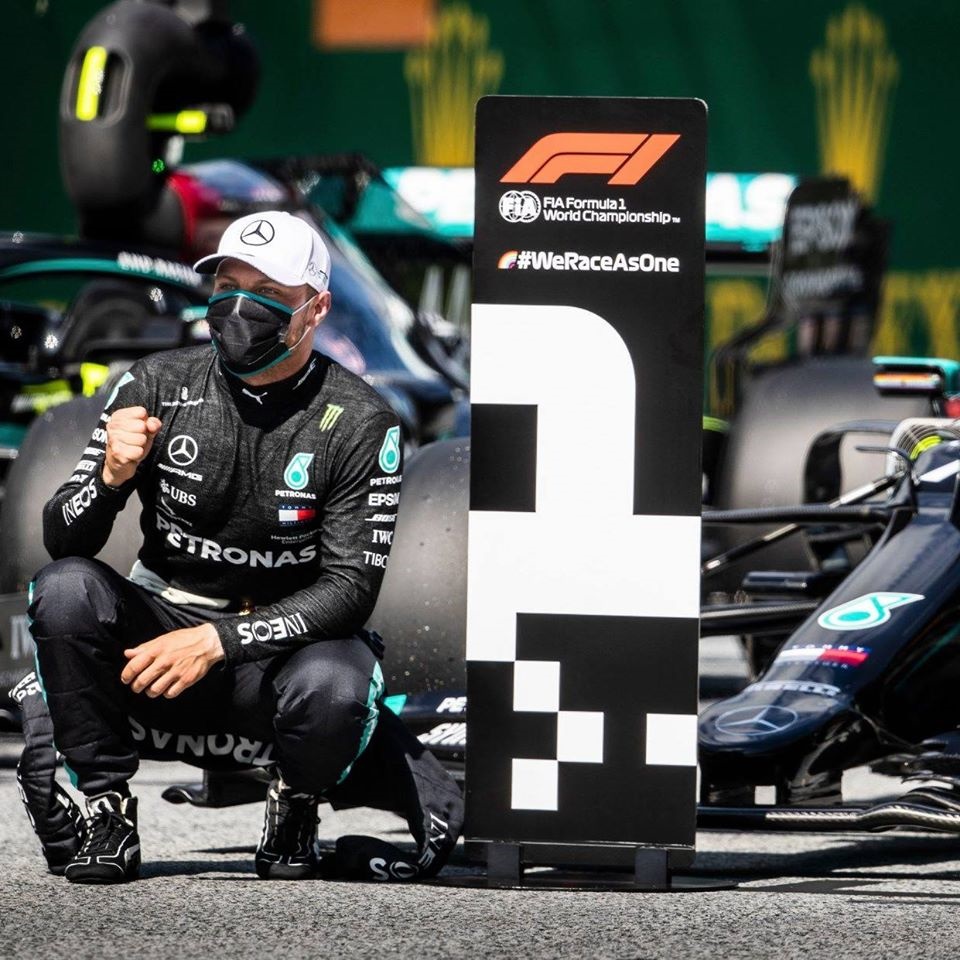
Prior to the start, most drivers ‘took a knee’ (bending down on one knee) to show support for anti-racism and discrimination. The F1 community will this year have a campaign #WeRaceAsOne to spread the message.
Athough the Stewards had earlier taken no action against Lewis Hamilton for not slowing down for yellow flags, a review (requested by Red Bull Racing) saw them reverse their decision – just 85 minutes before the race started – and he was demoted from second position on the starting grid to fifth.
Hamilton’s demotion to fifth slot meant that Red Bull Racing’s Max Verstappen got alongside Valtteri Bottas on the front row. However, even before he could complete the first lap, his car lost power and ended his chance to win at the event again.
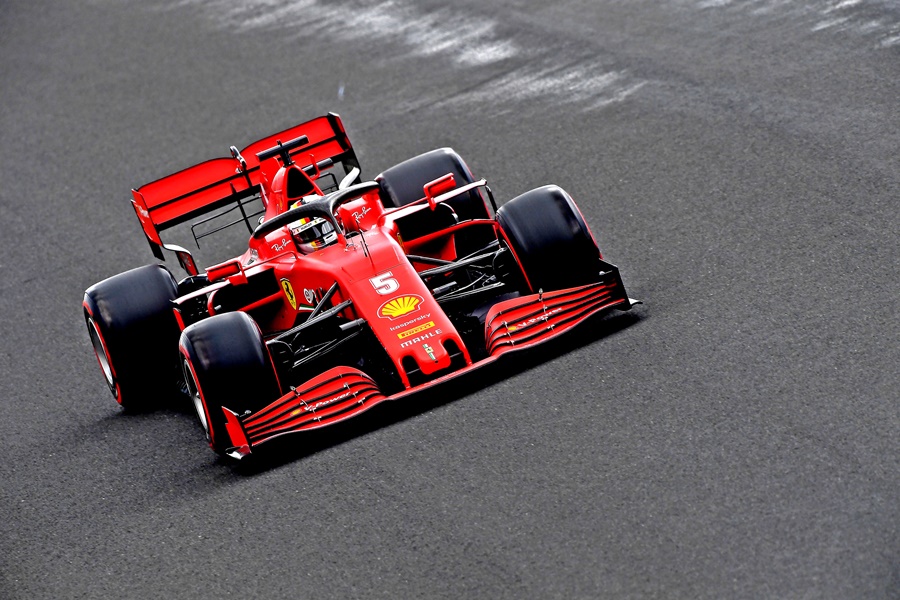
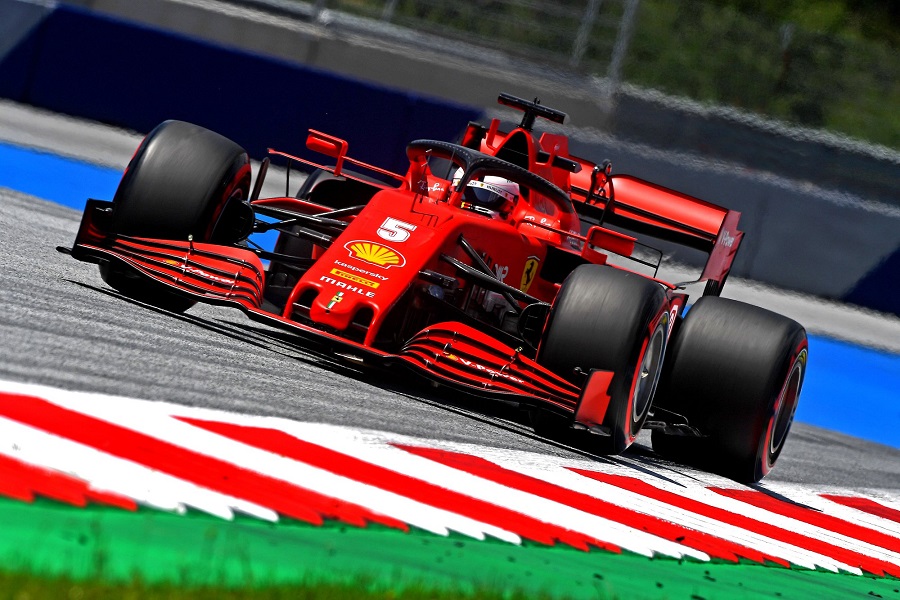
Sebastian Vettel came in contact with Carlos Sainz’ car on lap 30 and sustained damage which dropped his way down the field.
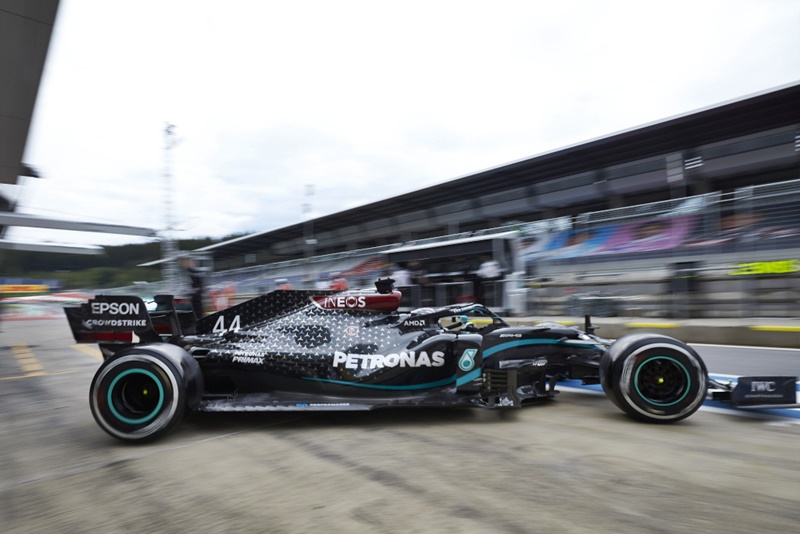
Sensor problems and then gearbox issues appeared in both Mercedes-AMG cars, leading the engineers to urge the drivers to preserve the cars.
As Kimi Raikkonen sprinted forward after a restart on lap 55, wheel came off his Alfa Romeo but fortunately, it rolled towards the pitlane and he managed to get his car off the track. But it brought out the Safety Car, slowing the race again, as track personnel rushed to remove the racing car.
10 laps before the end, Alexander Albon came in contact with Hamilton, and the Thai-British Red Bull Racing lost his strong position to win the race. If the Stewards do not penalise Hamilton, Red Bull Racing will most likely protest against the British driver again.
Sergio Perez was running in fifth but perhaps got anxious and went to fast in the pits, so he got a penalty which will affect his final position.
2 laps from the end, Albon’s car shut down and Daniil Kvyat’s car had a puncture.
9 cars didn’t cross the finish line, almost half the field.
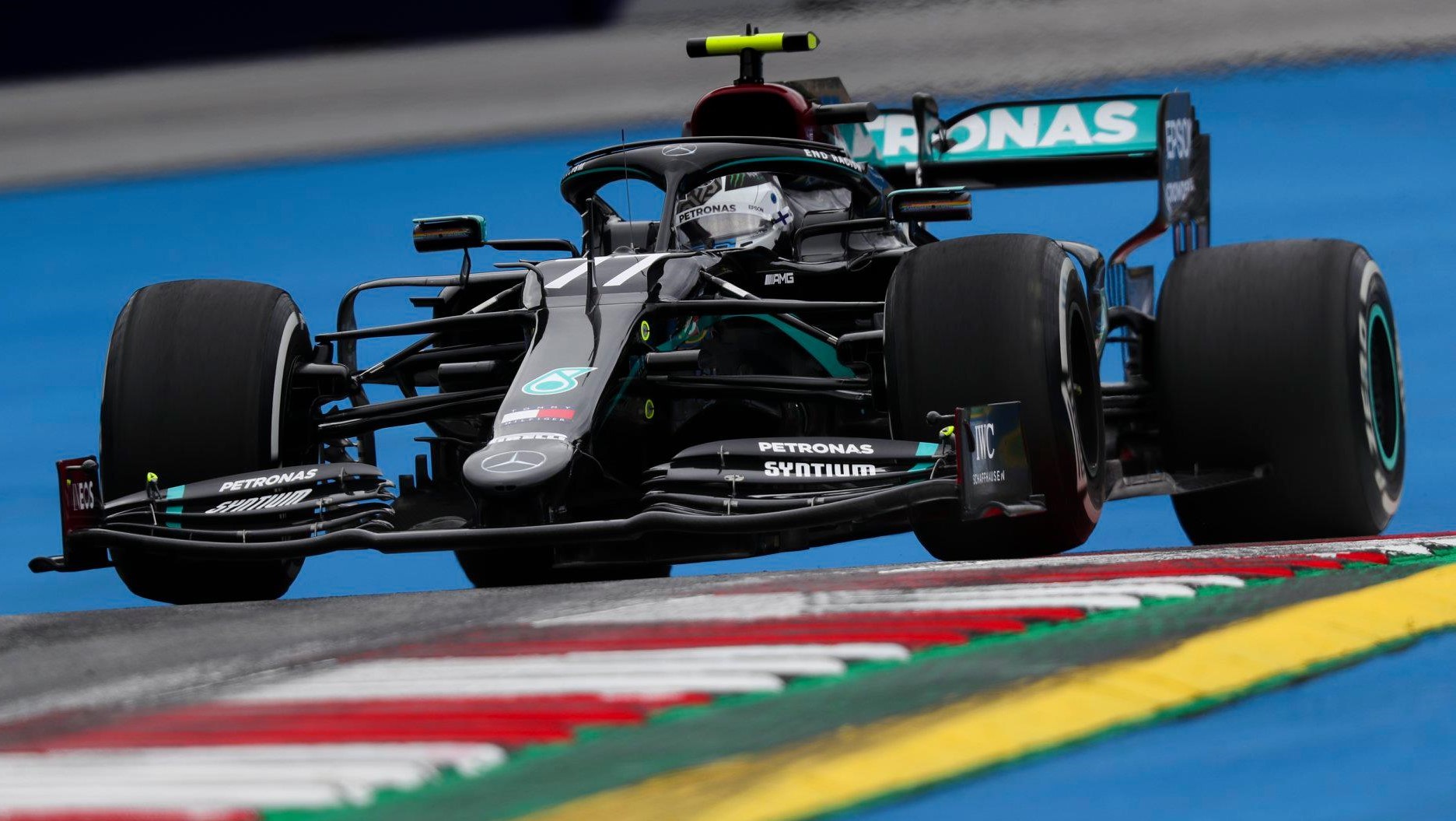
Hamilton crossed the finish line 5.7 seconds behind Bottas, the winner (above). However, he gets a penalty which drops him from second to fourth place. His place was taken by Charles Leclerc, which at least gave Ferrari something to take home from the first race of the season.
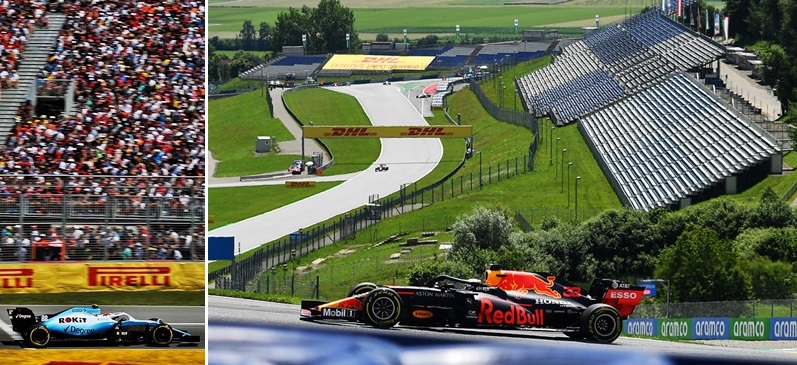
It must have been strange to be racing around with no spectators in the stands, unlike last year (left).
With the next race also at the same track next weekend, the teams would have brought double the number of tyres to the Red Bull Ring. They also don’t have to pack up after today’s race to move on to the next venue.
Updated points and positions.
Next race
 2020 Pirelli F1 Styrian Grand Prix
 July 12, Red Bull Ring, Austria
Race starts at 3:10 pm in Austria | 9:10 pm in Malaysia
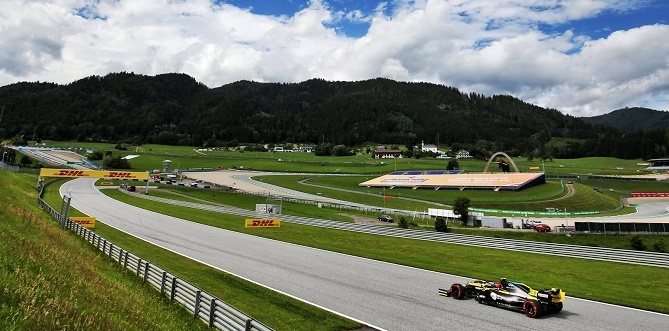
After a delay of almost 16 weeks, the 2020 FIA Formula 1 World Championship at last gets going this weekend with the Austrian Grand Prix at the Red Bull Ring in Spielberg, Austria. The return to racing takes Formula 1’s teams into the green heart of Austria, and to a venue that, despite being one of the sport’s shorter circuits, packs quite a punch.
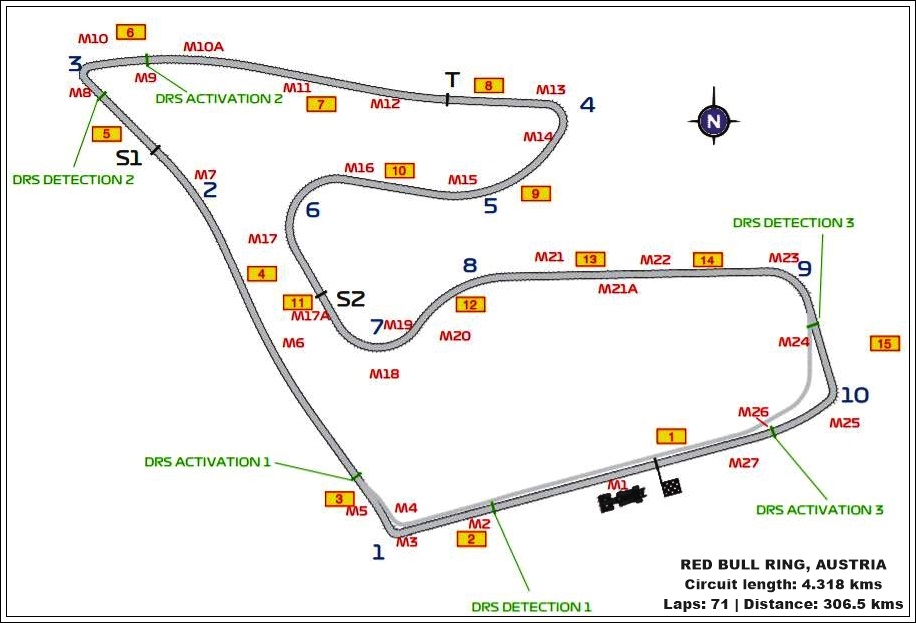
The Red Bull Ring’s compact configuration, made up of just 10 corners and a sequence of short, fast straights, results in it having one of the quickest laps in the sport. One circuit in a F1 car is regularly below 68 seconds and more than 70% of the lap will be spent at full throttle.
However, the circuit is situated in mountainous country and its altitude at 660 metres above sea level puts power units under more stress than at many venues. The creates issues with cooling of engines, often a headache for teams at this circuit.
It’s a similar tale with brakes. While braking events are few at Spielberg, there are three in particular, at Turns 1, 3 and 4, that arrive in quick succession and that can lead to troublesome overheating.
“It’s great to be back! The new car obviously feels different than the 2018 car we got to test at Silverstone a few weeks ago, but I think we have also been able to continue to improve the car compared to last year, so that’s a big positive,” said reigning World Champion, Lewis Hamilton.
“The track was a little bit greasy and while the grip will pick up, it feels like the track only improved a very small amount. It was looking good out there today (Friday), but you can never take too much from practice. You never know what power and fuel other teams are running. So we will take today’s result with a pinch of salt, try and improve the car tonight and come back for the fight tomorrow,” he said.
The 20 cars, in action for the first time this season, will take to the Austrian track more than 4 months after the end of pre-season testing in Barcelona. 6-time Constructors’ Champion Mercedes-AMG remained the benchmark, though Red Bull Racing looked to have gained ground on the Silver Arrows. Ferrari, meanwhile, had an inconclusive test phase and left the Spanish track with more questions to ask than were answered during testing.
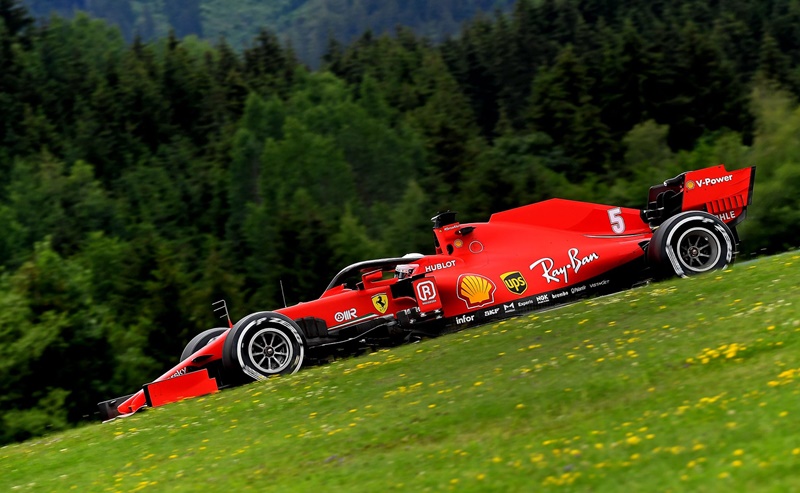
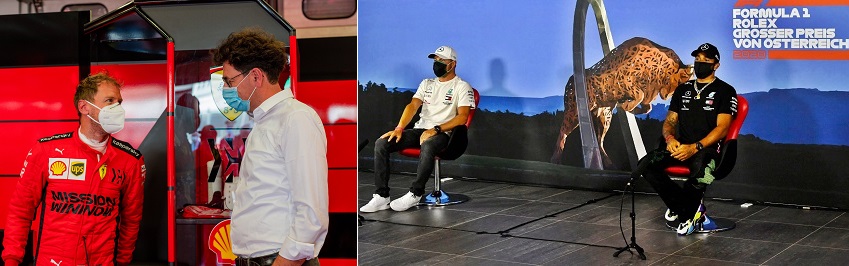
“We didn’t have any trouble with the cars. It was good for us all to be back at the track and it was good to see that the team got up to speed fairly quickly and had no problems running through all the procedures. In terms of speed and competitiveness, it was an interesting day. I think we’ve seen that we are not at the top, that we are not the favourites,” said Ferrari’s Sebastian Vettel. “It’s up to us to develop and work so that the car gets faster. We’re lacking grip and downforce compared to others. So it’s a mix of all these things.”
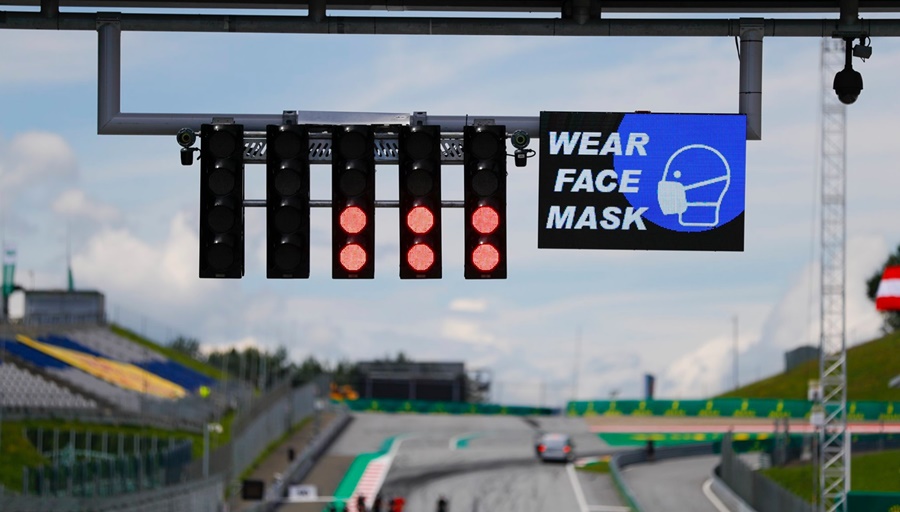
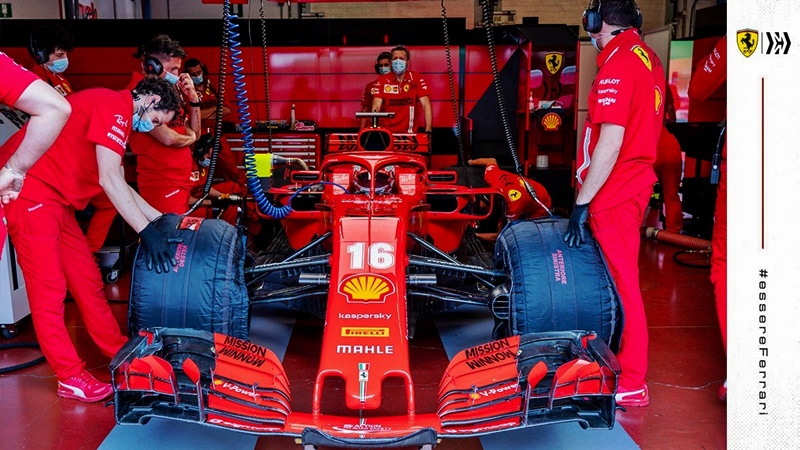
Not taking chances – all participants have to observe safety measures which means face masks whenever possible, and social distancing. Constant testing takes place to ensure no one is infected.
However, the world has changed immeasurably since and the teams have been though the longest shutdown in the sport’s history. Work resumed on this season’s cars only at the beginning of June and in Austria, things could be very different. The 2020 championship may well be the most unpredictable in recent memory.
This will be the 33rd World Championship Austrian Grand Prix. The first was held in 1964 on a circuit at an airbase. Constructed close by, the Osterreichring made its calendar debut 50 years ago in 1970 and hosted the race until 1987. A shortened version of the circuit, named the A1-Ring, was used between 1997 and 2003, and now called the Red Bull Ring, the track has hosted the race since 2014.
This will be the first time a Formula 1 season has started in Austria. It is also the latest start to a season in the history of the championship, beating the previous record holder, the 1951 season, by 37 days. That year, the first race of the season took place on May 27, in Monaco.
Alain Prost has been the most successful driver at the Austrian Grand Prix with victories for Renault in 1983 and then McLaren in 1985 and 1986. Red Bull Racing’s Max Verstappen, who won in 2019, can this weekend match Prost’s record and become the first driver to take 3 consecutive wins in Austria.
As for teams, McLaren has been the most successful constructor at the Austrian Grand Prix with 6 wins. Niki Lauda won for the British team in 1984, while Prost’s double was followed by victory for Mika Hakkinen in 1998 and 2000. David Coulthard took the team’s last win in Austria, which was 19 years ago.