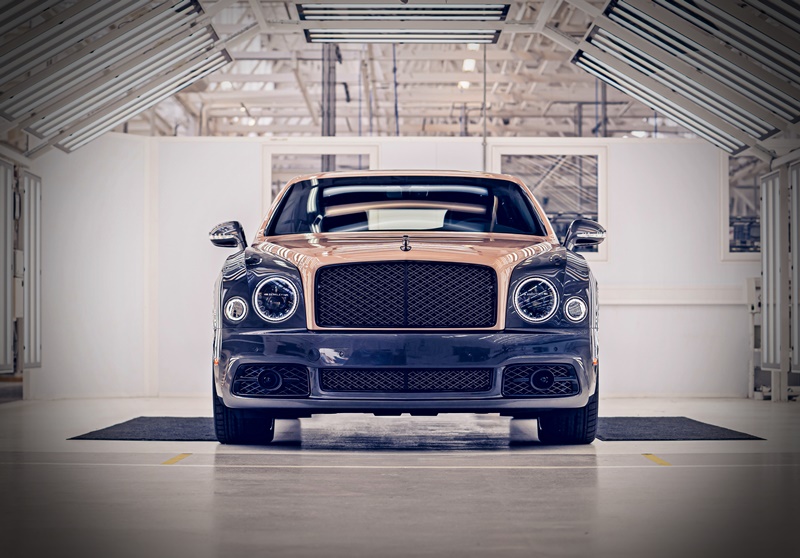
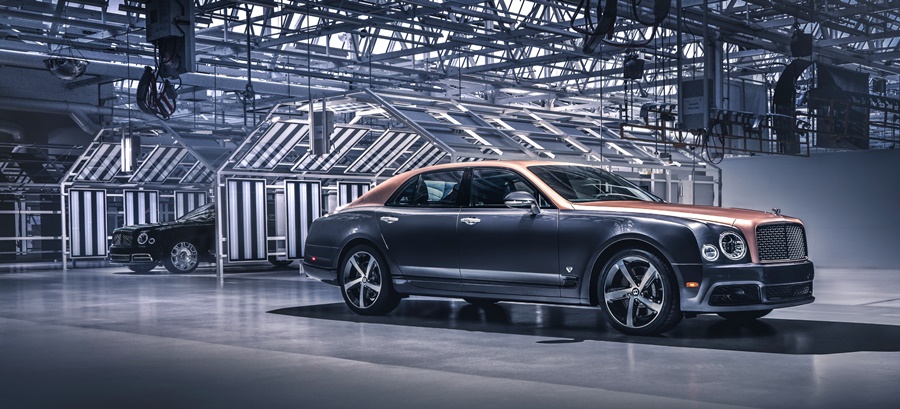
After more than a decade in production, the final Bentley Mulsanne has been completed. During that time, more than 7,300 handcrafted units have been produced of what is undoubtedly the ultimate luxury sedan.
The Mulsanne’s lineage, which comes to an end, can be traced back through Bentley’s history, from the original 8 Litre of 1930 – the last car designed and developed by W.O. Bentley himself – as the most luxurious, coach-built Bentley of its time.
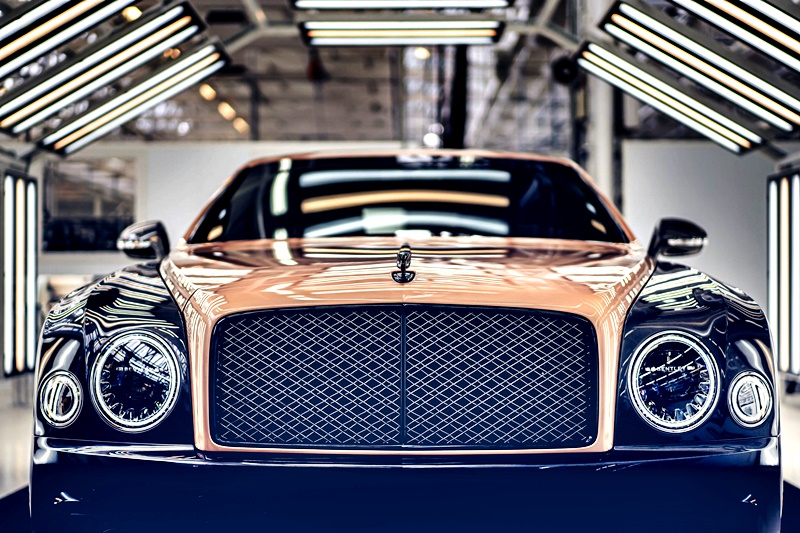
The final unit is a Mulsanne Speed ‘6.75 Edition by Mulliner’ finished in Rose Gold over Tungsten. It will soon be on its way to a lucky customer in the USA. However, it has also been revealed that there is one extremely special unit, a final Mulsanne but its future home remains a closely guarded secret.
A true icon
“The Mulsanne is the culmination of all that we at Bentley have learnt during our first 100 years in producing the finest luxury cars in the world. As the flagship of our model range for over a decade, the Mulsanne has firmly solidified its place in the history of Bentley as nothing less than a true icon,“ said Bentley Chairman & Chief Executive, Adrian Hallmark.
“ I am immensely proud of the hundreds of designers, engineers and craftspeople that brought the Mulsanne to life over the last ten years. Now, as we begin Bentley’s journey to define the future of sustainable luxury mobility through our Beyond100 strategy, the role of Bentley flagship is passed to the new Flying Spur.”
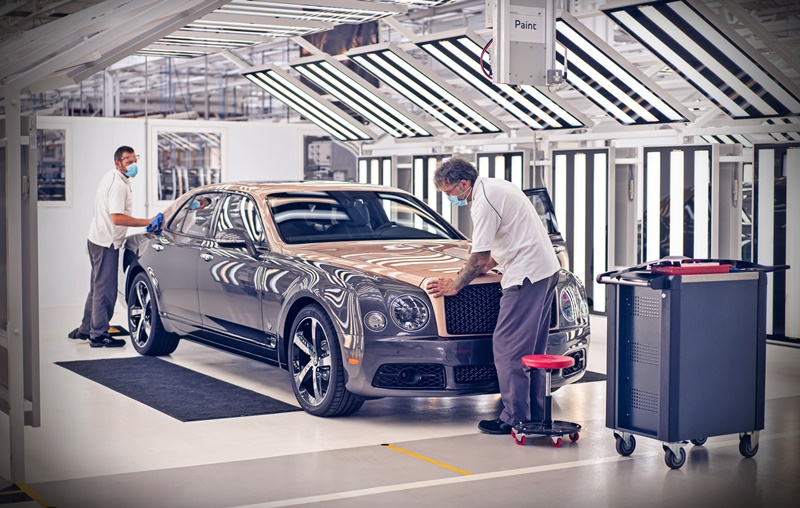
In the last 11 years, over 700 people have invested nearly three million hours crafting Bentley’s ultra-luxury sedan. Producing the Mulsanne bodies required approximately 42 million spot welds, and creating the sumptuous leather interiors took more than a million hours alone. Nearly 90,000 hours have been spent polishing cars, before a total of over four million individual quality checkpoints.
Mulsanne 6.75 Edition by Mulliner
In 2020, the final series production cars formed the unique ‘6.75 Edition by Mulliner’ signifying the end of Mulsanne’s reign. Taking its name from the legendary 6.75-litre engine which, this year, also came to the end of production after more than 60 years, the ‘6.75 Edition’ was limited to only 30 units.
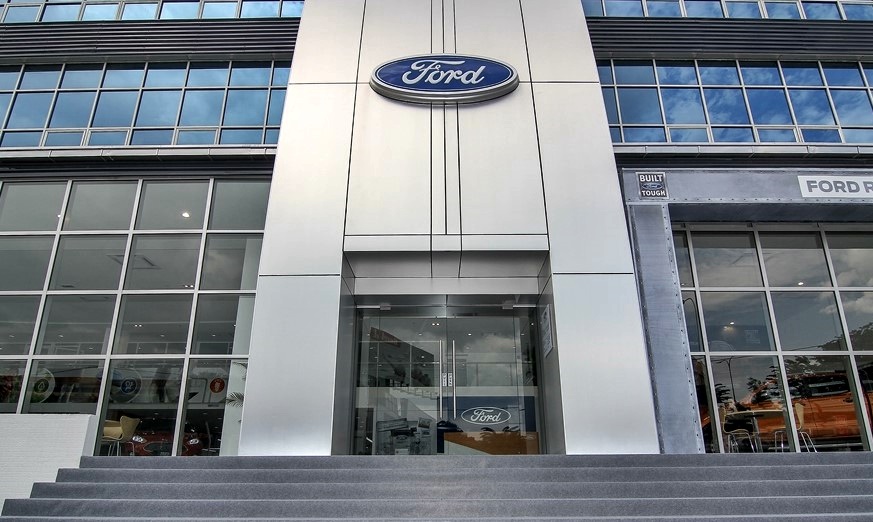
For a long time now, it’s been a ‘buyers’ market’ rather than a ‘sellers’ market’ and car companies have been trying different ways to draw customers to their brand and products. Sales and aftersales services and facilities have been raised in quality and customers who visit showrooms may be pampered with food and drink, besides a very comfortable environment.
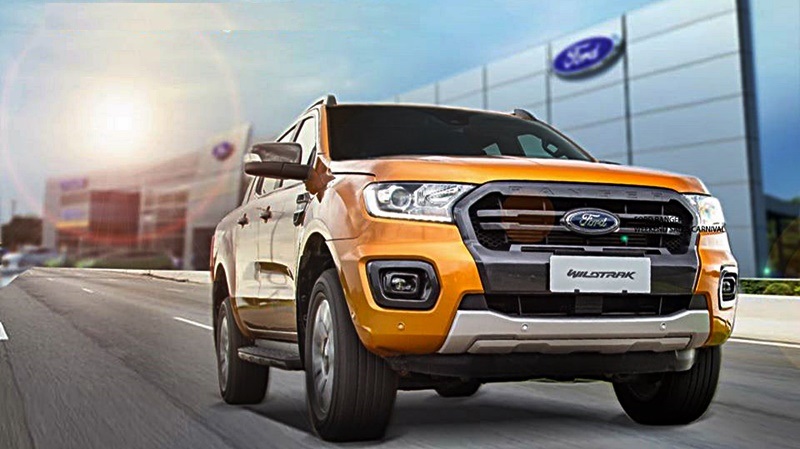
However, in this time of reduced showroom traffic, the car companies are going further in reaching out to customers. For example, Sime Darby Auto ConneXion (SDAC) is enhancing its customer services by offering to bring new models to the customer’s home or office for a test-drive.
Added convenience for interested customers
The Home or Office Delivery Test Drive provides convenience to customers who may be busy or just don’t wish to travel to the showroom. The service is available within a 10-km radius of the customer’s chosen dealership.
To arrange for the test drive delivery, customers can either contact a Ford dealership nearest to them, submit an online test drive request via the SDAC-Ford website, or send a message to the Ford Digital Salesperson on the WhatsApp sales line at 019 204 1200.
“During this period, we understand that customers are in search of additional services for added convenience. That is why we are providing an additional option of delivering our test drive vehicles to our customers home or office to show our commitment of continuously enhancing our customer support and service,” said Syed Ahmad Muzri Syed Faiz, MD of Sime Darby Auto ConneXion.
Precautionary safety measures will be practiced by the sales consultant upon delivering the test drive vehicle. This includes the use of a face mask, recording of body temperature and sanitising the vehicle. The sales consultant will also be seated at the back to adhere to the current social distancing practices.
Showroom visitors welcome too
“Of course, customers are still welcome at our showrooms. For those who prefer to visit a Ford dealership, they can be assured that the necessary safety precautions to ensure health and safety are being practiced. This includes social distancing, temperature checks upon entering the premises, hand sanitiser dispensers located in the showrooms and frequent sanitising of high frequency touchpoints,” added Tuan Syed Ahmad Muzri.
Other existing touchpoints to assist customers in getting in touch with SDAC include the website chatbot to assist users on website navigation, Customer Care and Road Assist service line which is available 24/7 at 1300 38 3181, online book a service appointment, and submission of enquiries and feedback via the SDAC-Ford website.
Visit www.sdacford.com.my to know more about the Ford models available in Malaysia and the locations of dealerships throughout the country.
Ever since businesses resumed their operations, they seem to be catching up with lost time and new models are being quickly launched. Now they can do it faster since there is no need to find a venue and organise all the ‘song and dance’ routine because they can do it online.
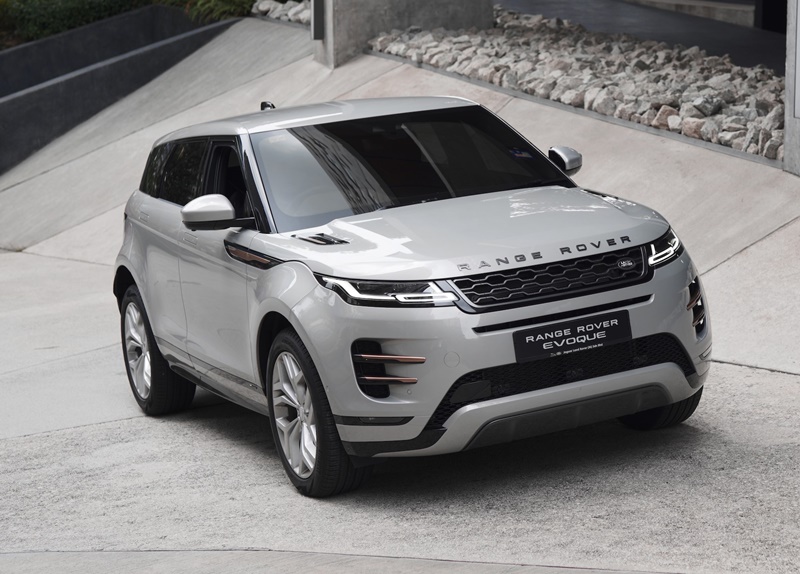
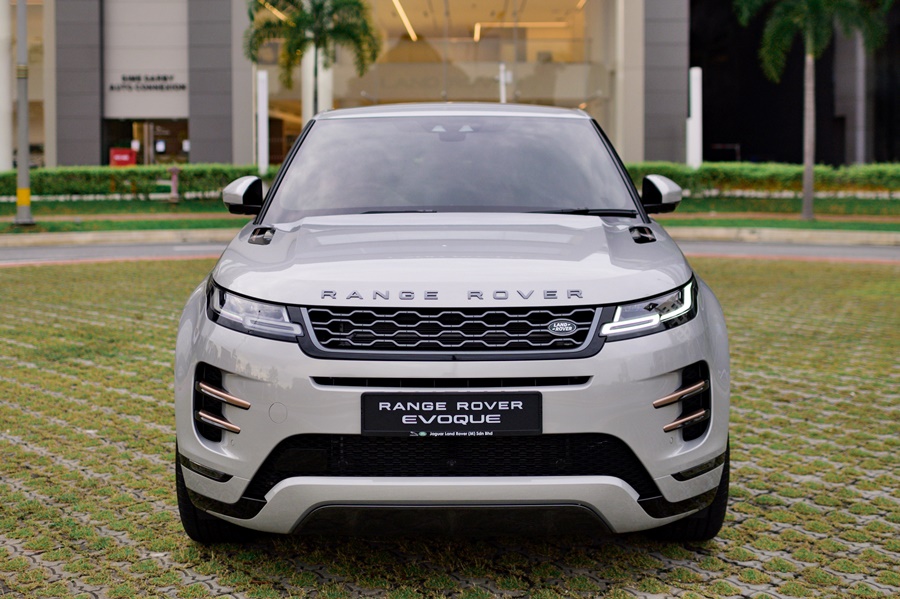
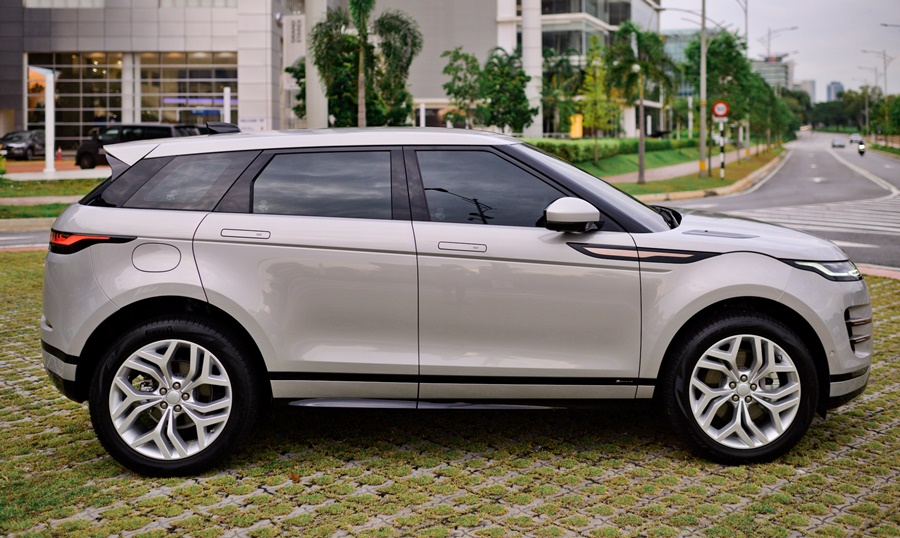
The latest to use the online channel for launching a new model is Jaguar Land Rover Malaysia (JLRM) which today officially launched the new 2020 Range Rover Evoque. Two variants of the luxury compact SUV are available – Evoque and Evoque R-Dynamic – with prices from RM426,828 and RM475,398, respectively (inclusive of 5% sales tax exemption but excluding registration fees, insurance premium and roadtax).
In conjunction with the Malaysian launch, JLRM is also offering RM3,000 worth of accessory vouchers (for a limited time only) that can be used to purchase original Evoque accessories. The accessories come with a 5-year warranty.
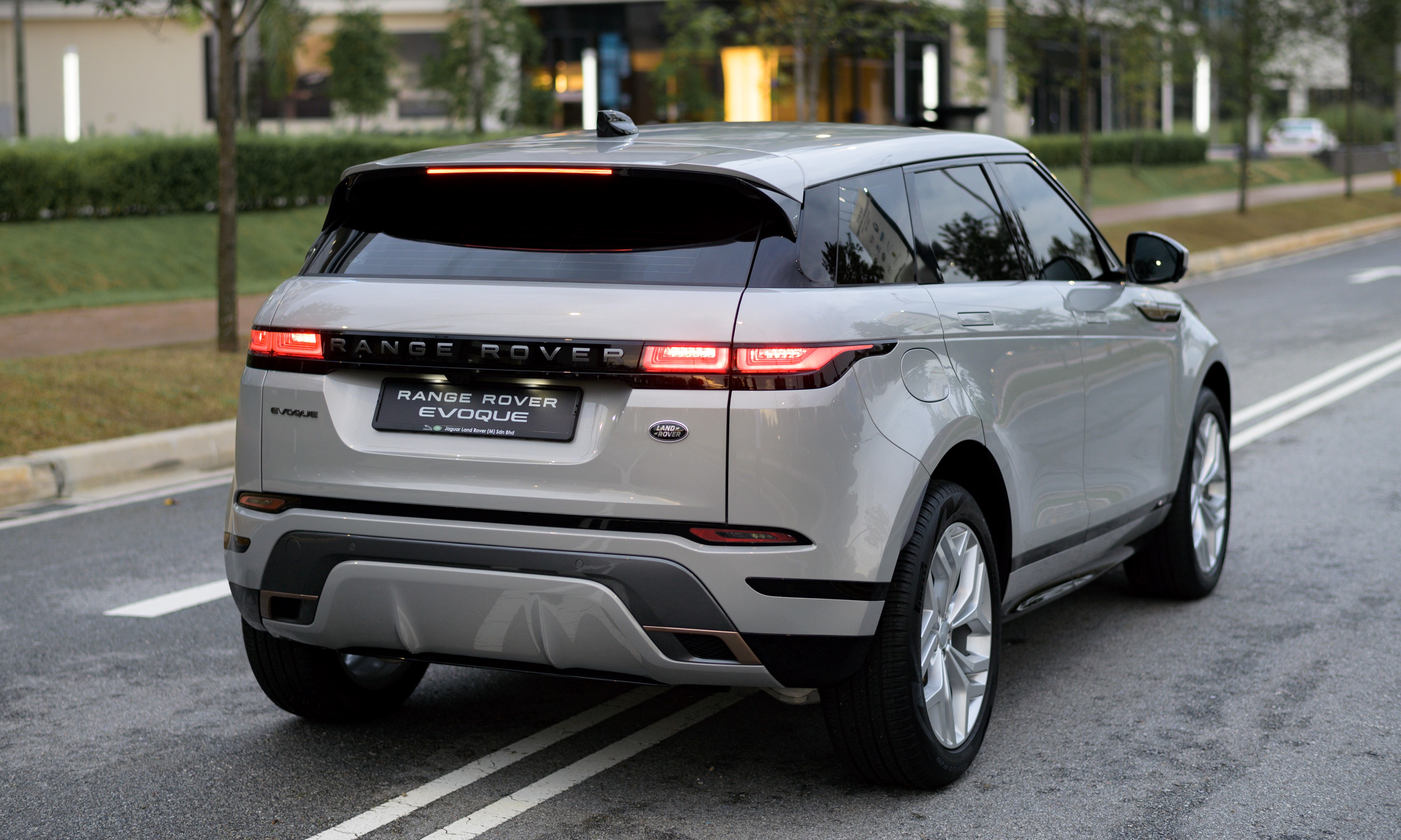
The Evoque is in its second generation which was launched in 2018 and the latest one has received cosmetic and functional updates. The design remains instantly recognisable, a sophisticated evolution of the original’s distinctive coupe-like silhouette.
The R-Dynamic variant features more exterior enhancements such as burnished copper accents on the front and rear bumpers, as well as front fender inserts.
Both variants come with a new 2- litre Ingenium turbocharged petrol engine and a 9-speed automatic transmission. The twin scroll turbocharged engine comes in two states of tune: for the Evoque, the output is 200 ps/320 Nm while for the R-Dynamic variant, it’s 249 ps/365 Nm.
The technical updates
Most of the updates are on the technical aspects, starting with the All-Wheel Drive (AWD) system having Driveline Disconnect technology. Standard for both variants, the system allows the driver to fully disengage drive to the rear wheels when cruising to reduce frictional losses. When conditions require additional traction or stability, the system will seamlessly re-engage in a fraction of a second.
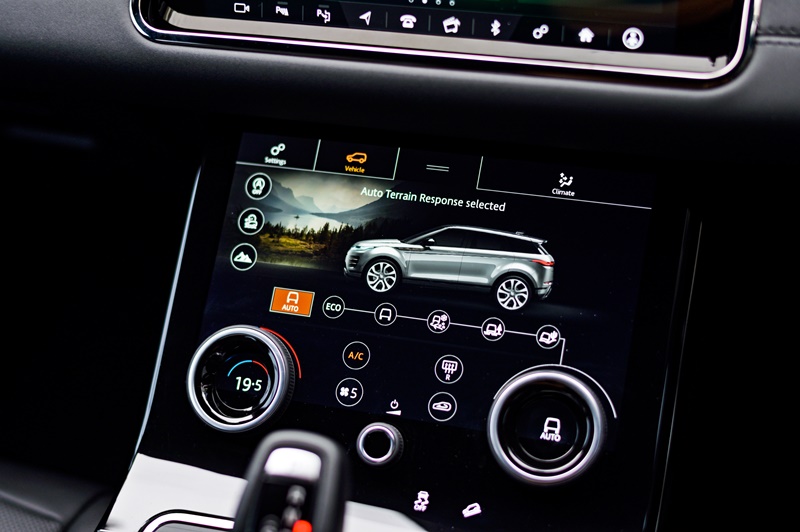
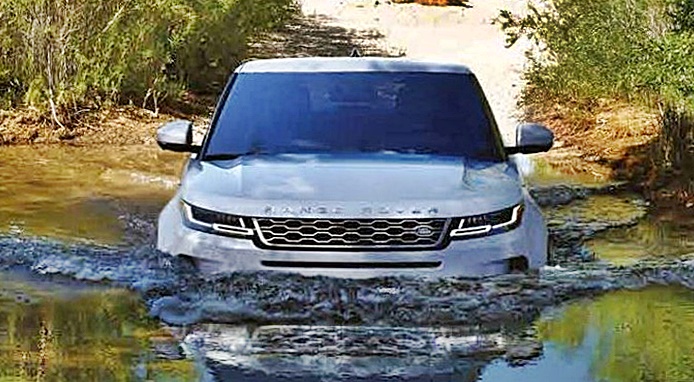
For more challenging conditions, the Terrain Response 2 system (standard as well) is engaged to automatically adjust the vehicle’s driving characteristics to match surface conditions. Flooded roads won’t stop the Evoque either as it is claimed to have the best-in-class wading depth of 600 mm.
Advanced visibility technologies
With the R-Dynamic variant, there is the segment’s first ‘ClearSight Rear View Mirror’ that transforms into a high-definition (HD) video screen when activated. If rear visibility is compromised by passengers or bulky items, the driver can flip a switch located on the underside of the mirror to activate a camera feed from the top of the car to display the back end of the vehicle in crisp high definition. The camera has a 50-degree field of vision and superior visibility in low light.
Also exclusive for the R-Dynamic variant is the world’s first ‘ClearSight Ground View’ technology allows the driver to virtually see through the bonnet and under the front end of the vehicle. The driver can see, on the dashboard display, a 180-degree view of the ground ahead, which should be very useful on rough ground.
The new Evoque is also the first Land Rover model to feature Smart Settings, a system which uses artificial intelligence algorithms to learn the driver’s preference. The system applies the driver’s preference to automate comfort and driver-specific media settings throughout the drive.
The vehicle ‘recognises’ the driver from their key fob and smartphone with the use of ‘self-learning’ technology, enabling specific seat and steering column position set up upon approach. Up to 8 driver profiles can be registered. After a few journeys, the Evoque remembers the driver’s preferred temperature settings, media preference and commonly dialled numbers, depending on the time or day of the week.
Intelligent infotainment system
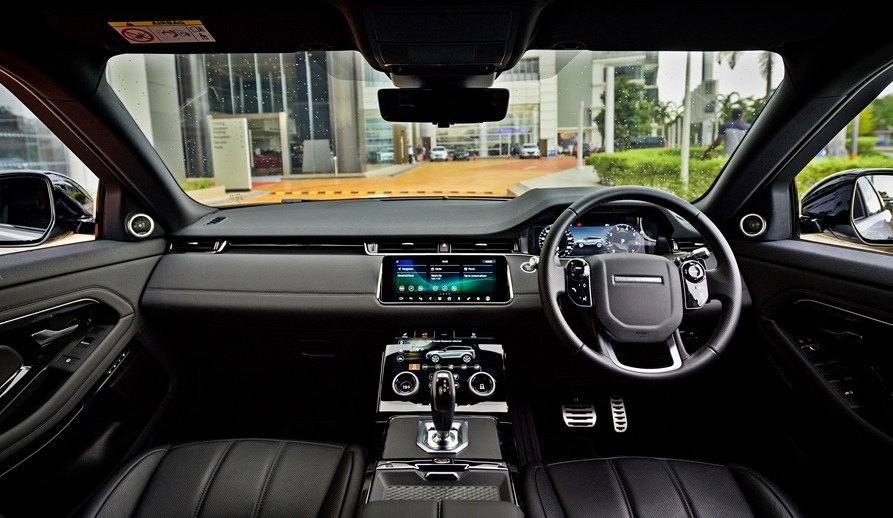
Land Rover’s InControl Touch Pro Duo infotainment system is central to the vehicle’s digital interior experience. This combines two sleek 10-inch high-definition glass touchscreens and a 12.3-inch driver display panel on the instrument panel. To minimise distractions, the ‘hidden until lit’ interior is used for the state-of-the-art digital interface. A Meridian Sound System is installed in the new Evoque and this has no less than 11 speakers including a subwoofer.
According to Nick Rogers, Executive Director, Product Engineering of Jaguar Land Rover, the Evoque is now smarter than ever. The software that sits behind the infotainment system has been refined to provide a more intuitive customer experience. “On top of that, we’ve added Apple CarPlay and Android Auto for seamless smartphone integration. Apple CarPlay connects you to your smartphone while the 4G wifi hotspot connects you to the internet,” he explained.
Additional safety systems
Lane Keep Assist is a new safety feature which helps the driver to stay in their lane by adding a necessary steering correction feature. It initiates a gentle steering input to return the vehicle to its intended position
Also added is Driver Condition Monitor technology, a safety feature that is based on the driver’s steering inputs. Jerky, non-linear movements that are typical symptoms of a fatigued (or drunk) driver will automatically trigger an audible and visual warning from the instrument cluster.
All Land Rover vehicles distributed by JLRM come with Land Rover Care, which entitles owners to 5 years (or maximum of 65,000 kms) of free scheduled servicing, 5 years (or maximum of 150,000 kms) warranty coverage and 3 years of roadside assistance.
During the period of the Movement Control Order when all public activities in Malaysia came to a standstill, motorsports enthusiasts were saddened that not only could they not attend their favourite events but there was also nothing to watch. However, a number of carmakers decided to go racing online and even sent their professional racing drivers to compete in events that were watched globally.
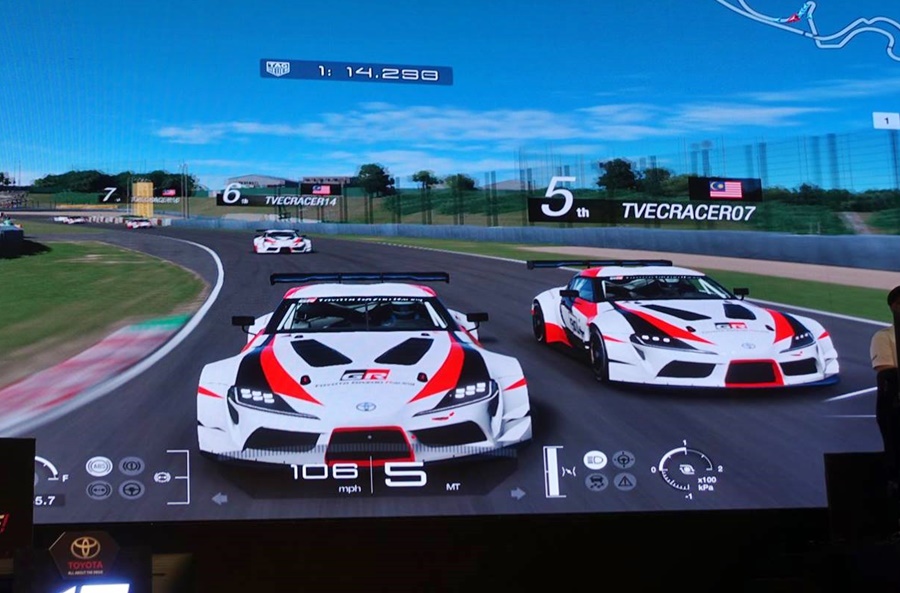
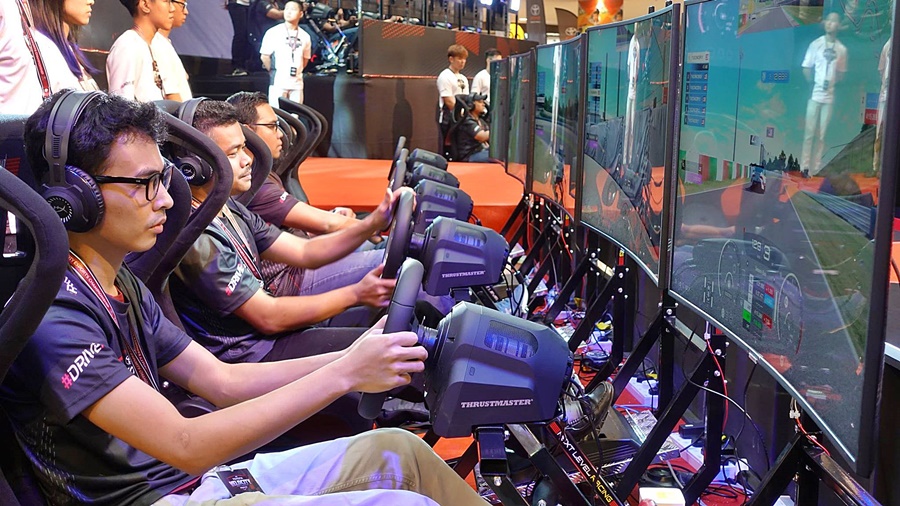
In Malaysia, UMW Toyota Motor (UMWT) held the Toyota GAZOO Racing Online Challenge between April 23 April and May 21, bringing racing excitement to everyone who had to stay at home around the country. The company was the first and is still the only auto brand in Malaysia to become involved in esports, as it is known. In total, the Toyota GAZOO Racing Online Challenge offered prize monies amounting to RM7,500 over the 5 rounds.
Following that successful event, which attracted gamers as young as 6 years old, a second phase will be held on July 12 which will see the top challengers in the first phase compete in a final showdown of the fastest sim-racers in the country.
The Online Challenge Finals will be a mini-championship of 4 rounds, each featuring iconic racing cars – including the Playstation Gran Turismo-exclusive Toyota GT86 Group B Rally Car. The sim-racers will challenge each other around some of the world’s iconic circuits, including the Red Bull Ring and Autodromo De Interlagos.
“The COVID-19 pandemic may have impacted the physical aspect of motor racing but there is no reason why the spirit of competition cannot continue virtually. GAZOO Racing is a philosophy that extends beyond the racing track and that was precisely why we pursued an online presence,” said Toyota GAZOO Racing Malaysia’s Chief Motorsports Officer, Akio Takeyama.
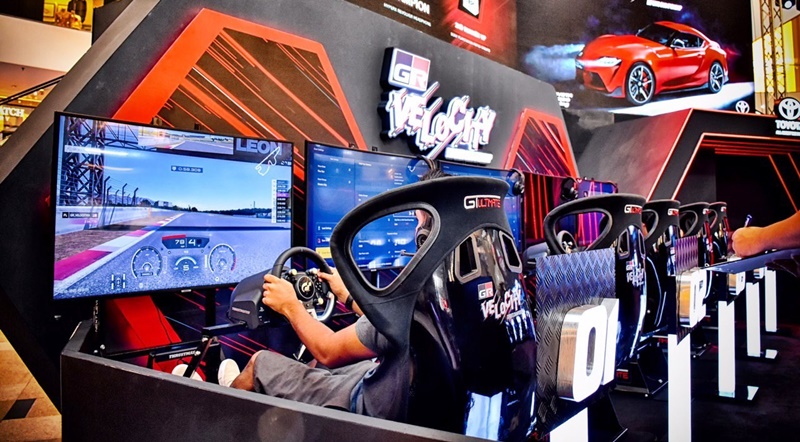
Mr. Takeyama, who is also Deputy Chairman of UMWT, said that the Toyota GAZOO Racing Online Challenge is also a natural extension to the company’s existing Toyota GR Velocity Esports Championship. “It underlines the company’s commitment to not only bring motorsports to the masses but to make it more accessible and affordable,” he explained.
The third edition of the Toyota GR Velocity Esports Championship will be held between August and September this year (dates and race formats to be announced soon).
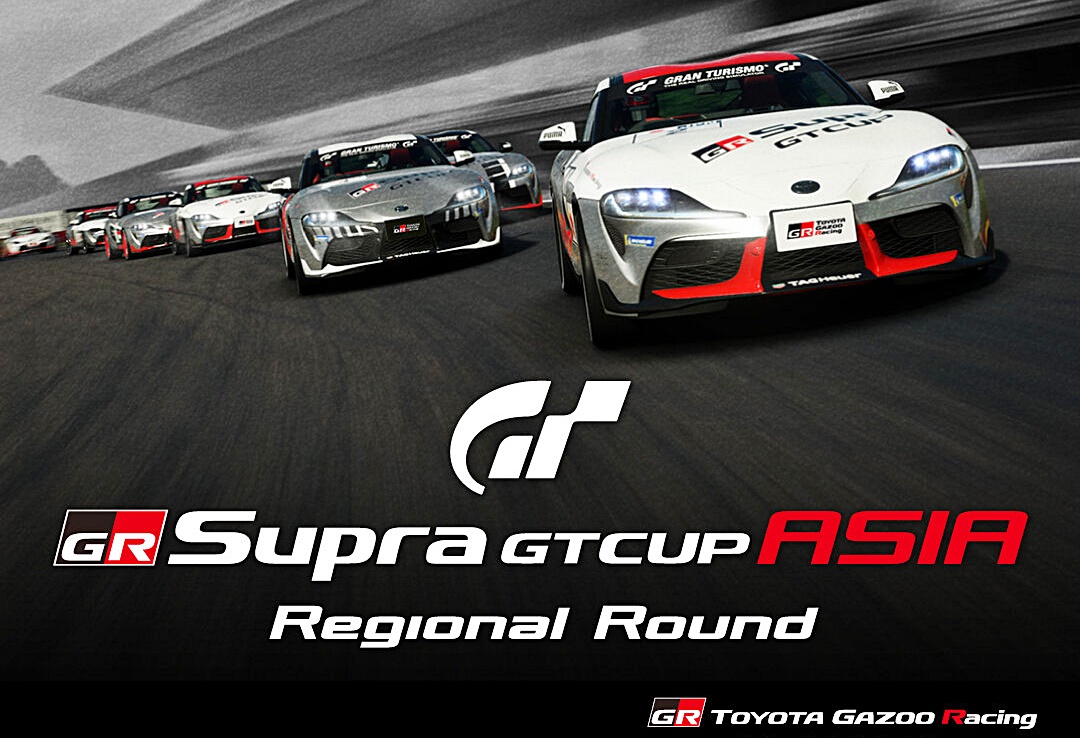
In addition, Toyota Motor Asia Pacific (TMAP) will also be organizing the first-ever GR Supra GT Cup Asia 2020 regional esports competition in October 2020. This event will see qualifying rounds being held in Malaysia (through the Toyota GR Velocity Esports Championship), Thailand, Singapore, the Philippines and India from July to September to select the top three virtual racers who will represent their respective nations at the regional finale.
“The COVID-19 pandemic has presented both challenges and opportunities, the result of which has seen esports and virtual racing propelled to the forefront at an unprecedented scale. The timely introduction of a regional event will certainly fuel Toyota’s momentum of pursuing an aggressive esports agenda in Malaysia,” said Ravindran K., President of UMW Toyota Motor.
“Simulator racing has had a profound impact on Malaysian esports, appealing to both gamers and racing drivers proving that it is an excellent conduit between the virtual and physical realms in motor racing,” he added. “As an automotive brand, Toyota in Malaysia is today in a position of strength being in the forefront of both spectra – with a strong virtual racing presence.”
Mr. Ravindran said that these initiatives solidified Toyota’s commitment to bring motorsports to the masses, promoting the GAZOO Racing philosophy that embodies performance and excellence, besides introducing to the market its new range of specialty models that wear the GR badge.
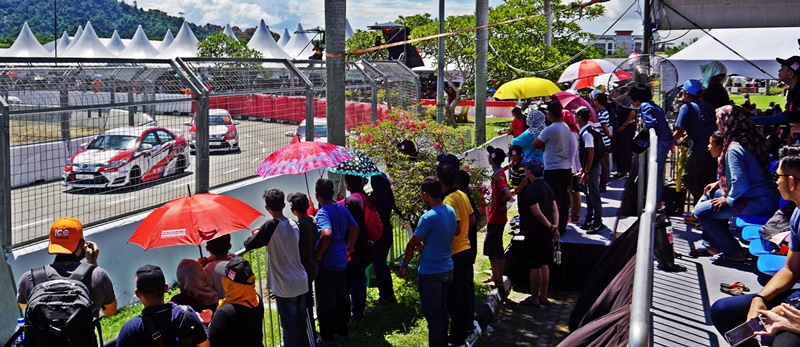
Toyota’s esports activities complement the real-life one-make Vios Challenge which has been successfully run for three seasons.
In the 100 years that Mazda has been in business, a large part of it making automobiles, numerous models have been created out of the engineering ingenuity and convention defying spirit that is in the brand’s DNA. While the public has seen the successful models around the world, there were also unusual and little-known vehicles the company produced. Some were unique concepts or long-forgotten prototypes or even a rare production car that was available in a small volume.
Away from the famous and significant coupes, saloons, sportscars, family cars, commercial vehicles and roadsters Mazda has become famous for, there’s a hidden story of the projects forgotten by time. Here are some of the Mazdas you’ve never heard of.
1930 Mazda motorcycle
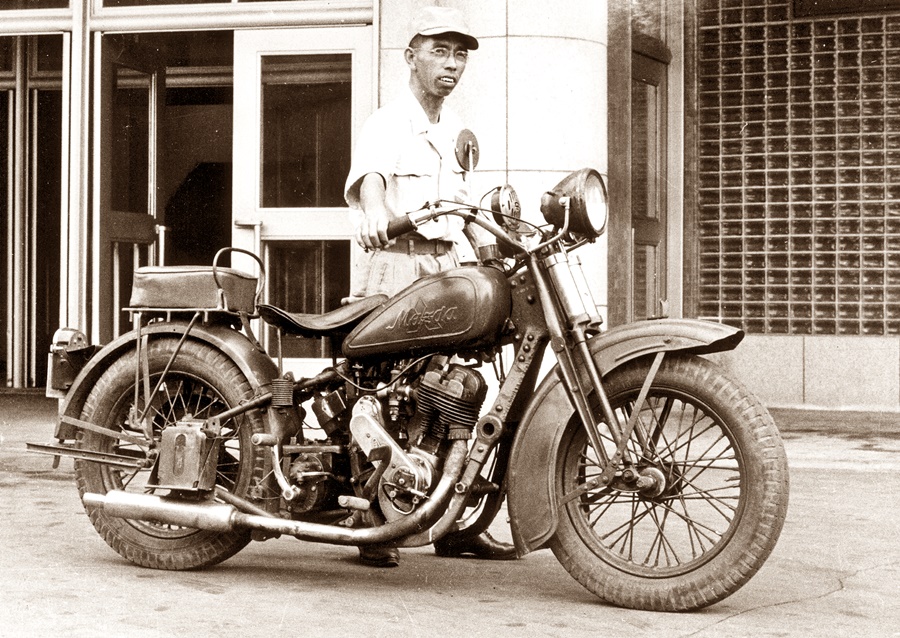
The progression from cork to cars via three-wheeled trikes like the 1931 Mazda Go is relatively well known but before this, Mazda produced a prototype motorcycle as well. Toyo Kogyo, as Mazda was then known, wanted to build a domestic Japanese bike and began development of a prototype in 1929. A 250 cc 2-stroke prototype motorbike was completed in October 1930 and to everyone’s surprise, it won its first race beating a British-made Ariel, which were one of the most-popular bike brands in the 1930s and well-respected in Japan.
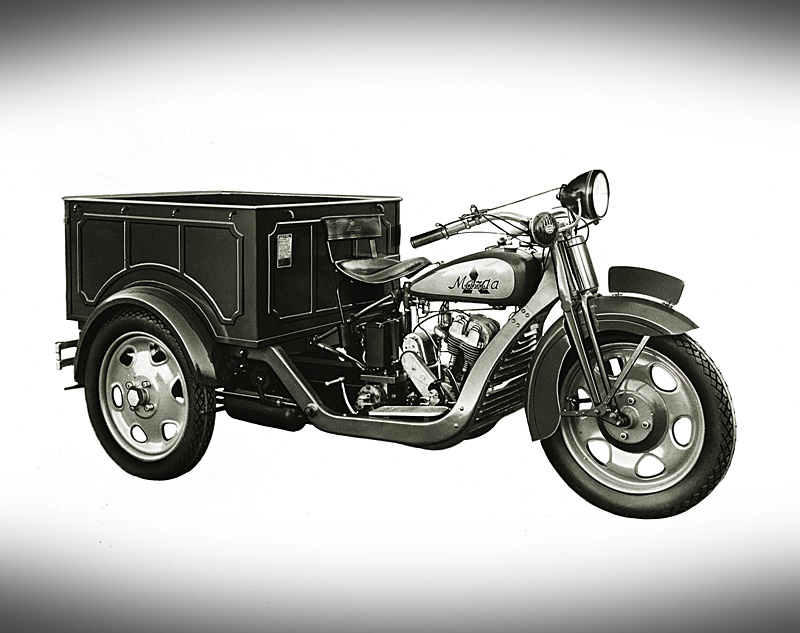
1931 Mazda Go
Toyo Kogyo went on to produce 30 more motorcycles in 1930 but commercially, the company took the decision to instead focus attention on developing the practical Mazda Go three-wheeler, setting the company on the road to success in automobiles rather than motorbikes, and leaving Mazda’s flirtation with motorbikes as a small snippet in its history.
1940 Mazda PKW prototype
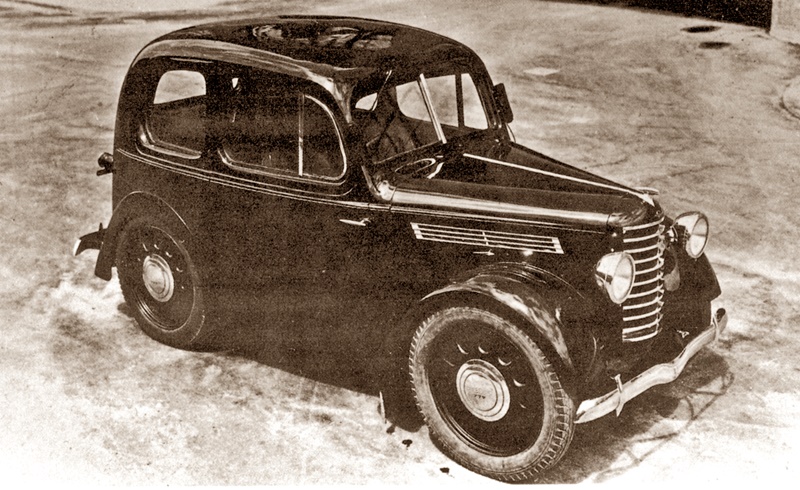
Mazda’s very first car actually never made it beyond the gestation period. In 1940, the company built a small 2-door prototype car called the ‘PKW’ but the onset of World War II prevented it from reaching production. Mazda’s post-war reconstruction instead focused on the production of the Type GA and Type GB 3-wheeled trucks.
1950 Mazda Type-CA
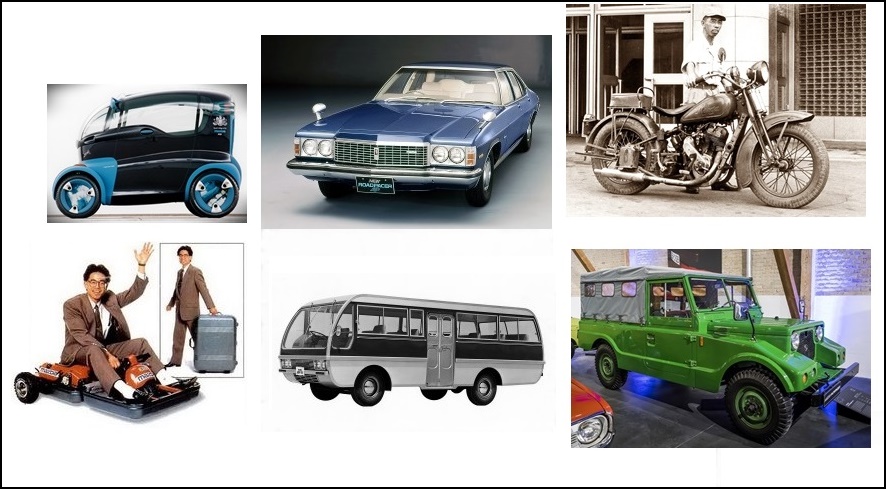
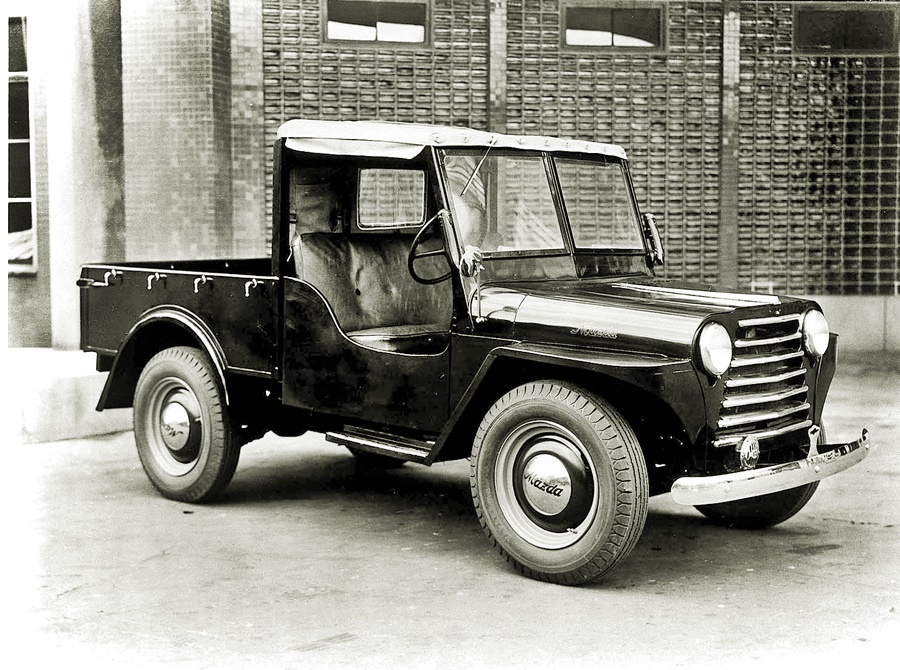
Amongst these successful and popular 3-wheeled trucks, Mazda also produced another one of its little-known four-wheeled pioneers: the Type-CA 1-ton 4-wheeled truck. This had a small open-sided canvas roofed, split-screen open-decked truck that bore some resemblance to the Willys Jeep. It predated Mazda’s first production car the R360 Coupe by 10 years and wasn’t as famous as Mazda’s 3-wheeled trucks.
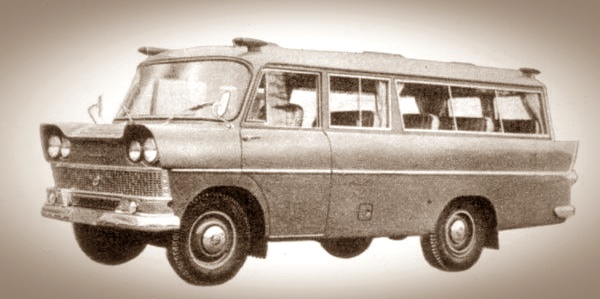
1960 Mazda D1500 Bus
The 1960 R360 was Mazda’s first car and over time, its vehicle range kept expanding to include commercial vans, pick-ups and light trucks. In fact, at the time the R360 appeared, Mazda also sold its first bus, a 13-seater based on the D1500 cab-over compact truck, to the Japanese Defence Agency. The interior was flexible enough that, with the seats folded, it could transport injured soldiers on stretchers. The D1500 bus was exported to the Middle East with centre-opening ‘freestyle doors’ at the back that enhanced its usability as an ambulance.
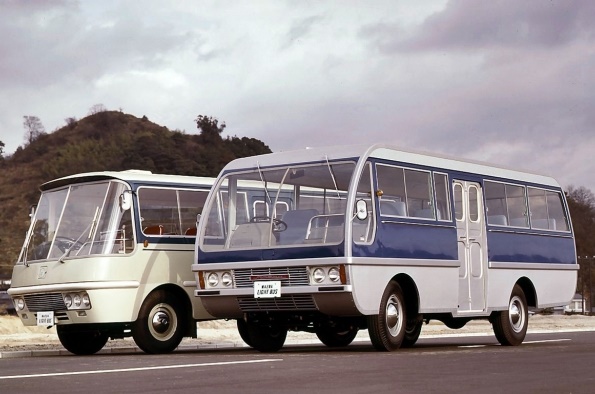
1965 Mazda Light Bus (left Type-C, right Type-A)
Mazda’s first bus for general public use was the 25-seater Mazda Light Bus Type-A of 1965. Based on a concept shown at the 1964 Tokyo Motor Show, with its huge curved laminated safety glass windscreen and futuristic styling, it was a world away from the traditional buses found in Europe in the 1960s. Into the 1970s, Mazda continued to produce upscale mini-buses using the Parkway model name and in 1974, even introduced the world’s first rotary engine-powered bus: the Parkway 26.
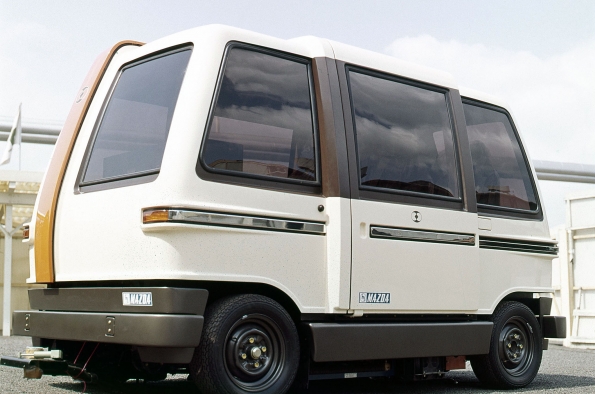
1973 Mazda CVS
The 1974 Mazda CVS Personal Car Concept showed how Mazda looked ahead to transportation possibilities outside the realm of driver-controlled vehicles. ‘CVS’ stood for Computer-controlled Vehicle System, and the CVS was a wheel at each corner with sliding doors and a spacious interior including big leather chairs and even a telephone! Tested on a Mazda-designed rail track, this self-driving pod looked like futuristic fantasy in 1973. Today, though, it may be less unusual as it resembles the transit carriages you see at airports.
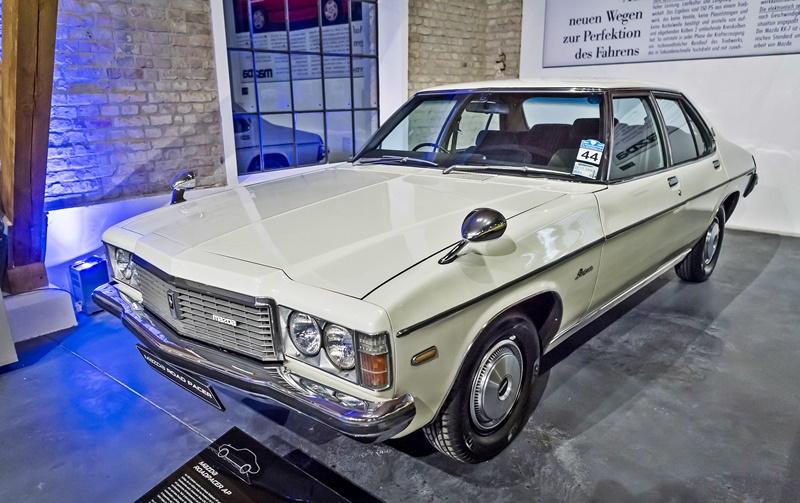
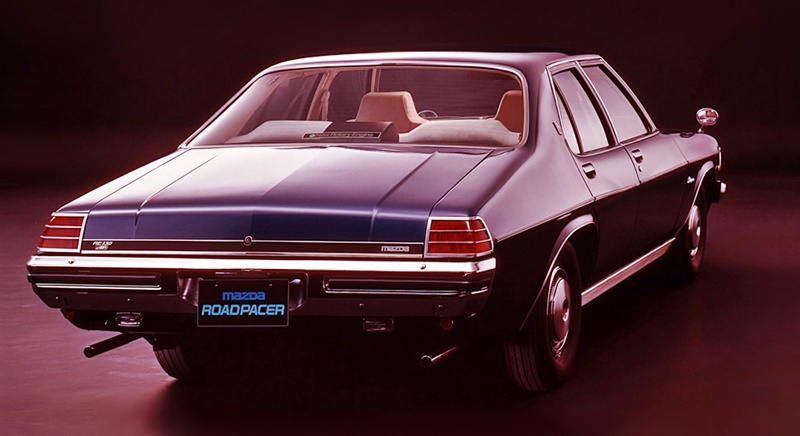
1975 Mazda Road Pacer AP
In the 1970s, although the Japanese brands were known outside Japan for the small and fuel-efficient cars, they also had larger models which were mostly sold in the domestic market. These were models such as the Toyota Century, Nissan President and Isuzu Statesman De Ville. Mazda decided it too would offer a large model which could be used by Japanese government officials.
This saw the development of the Road Pacer AP, which had a completely different look from the usual Mazda models. That was because the model was adapted from the GM-Holden HJ Premier sedan sold in Australia. The huge car bodies were shipped from Australia to Japan without engines whereupon Mazda fitted its compact 135 ps 13B rotary engine within the cavernous bay.
Launched in 1975, the Road Pacer AP featured luxuries such as speed-related central locking and even had a dictation machine! Only sold in Japan, just 800 were produced between 1975 and 1977.
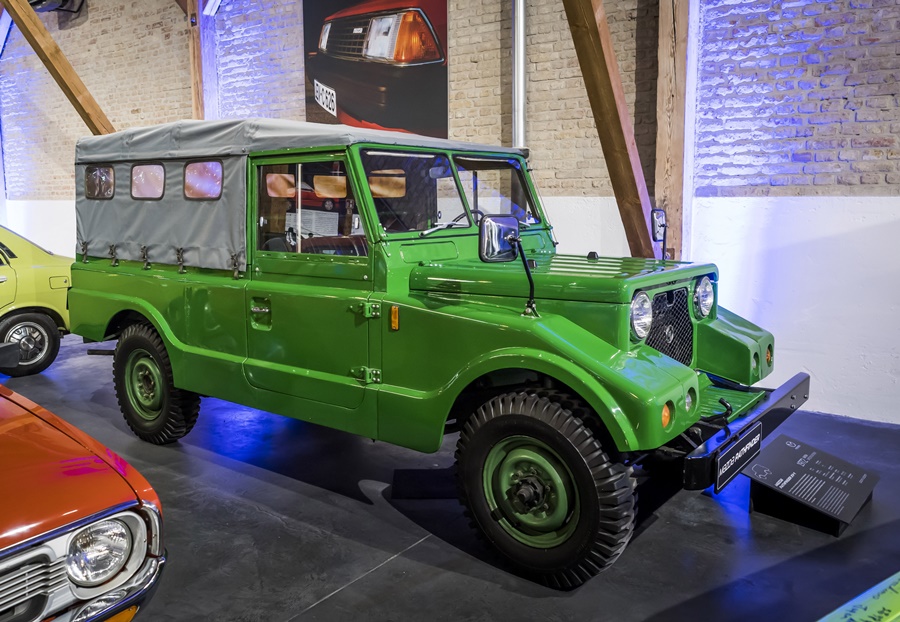
Mazda Pathfinder (sold only in Burma/Myanmar)
The CX-5 is a highly successful Mazda SUV today but largely unknown to the rest of the world, the company also produced a traditional 4×4 SUV that was exclusively assembled and sold in Burma. Called the Pathfinder, it was a rugged off-roader popular with the military and police. It was powered by a 90 ps engine and could carry up to 9 people. A few can still be seen on the roads of Myanmar today.
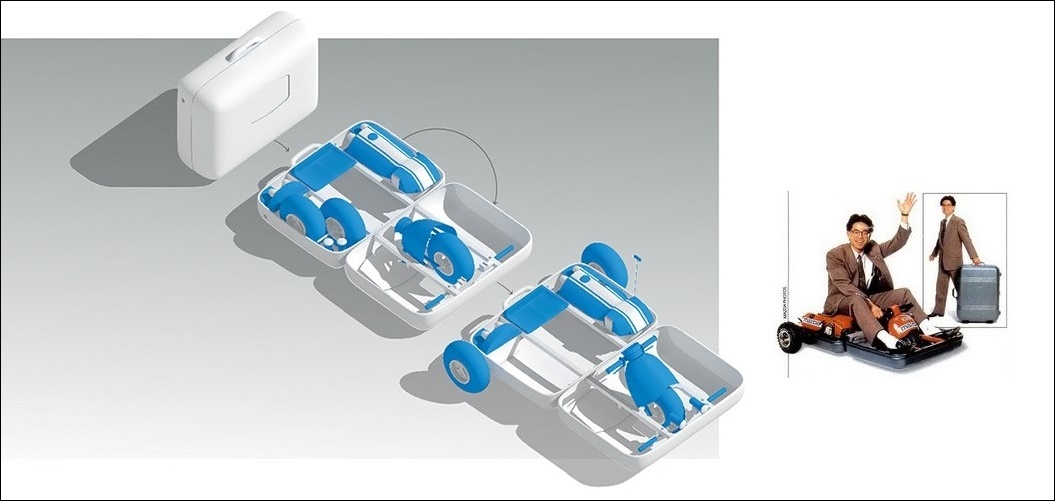
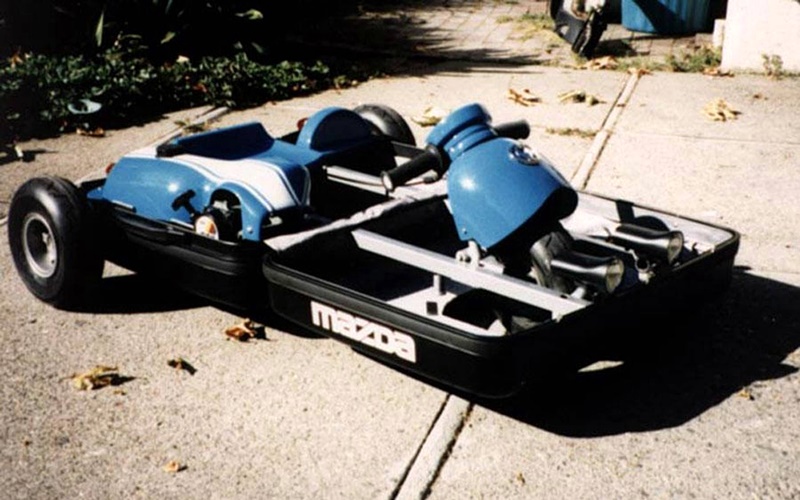
1991 Mazda Suitcase Car
Even stranger than the Burmese built off-roader, futuristic bus or the Holden-based limousine is the 1991 Suitcase Car. The development of a functioning car built into a piece of luggage came about thanks to the 1991 ‘Fantasy Yard’ event. This was an inter-departmental contest to see which group of Mazda employees could come up with the most innovative and creative solution to produce a moving machine.
A group of 7 engineers from Mazda’s manual transmission testing and research group purchased the largest Samsonite suitcase they could find and a quarter-size pocket motorbike and set to work on their idea. The 33.6 cc 2-stroke engine, handlebars from the minibike were fitted into the suitcase, with the rear wheels slotted onto the outside of the case, while the front wheel would pop through a removable hatch in the front.
The suitcase car took just minutes to assemble and had a top speed of about 30 km/h. While the original prototype was accidentally destroyed just a few months after the event, one Mazda suitcase car still remains in existence.
1993 Mazda London Taxi concept
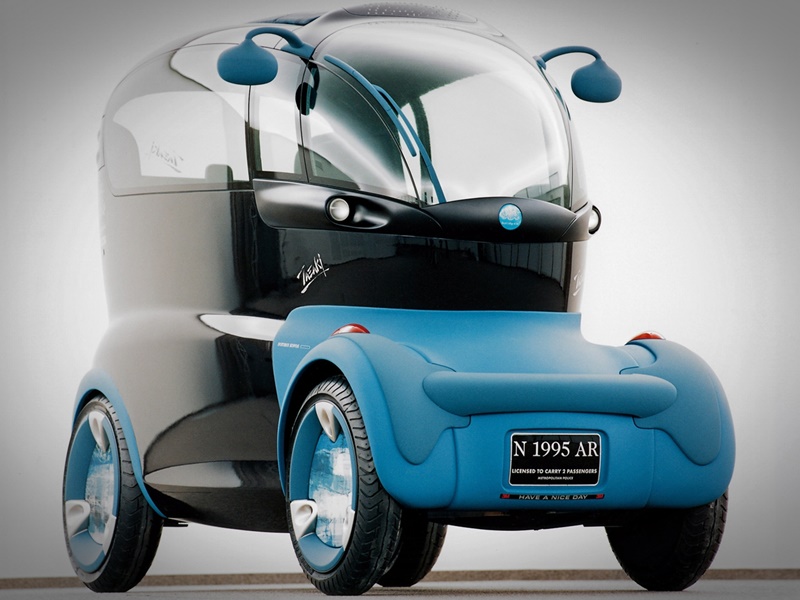
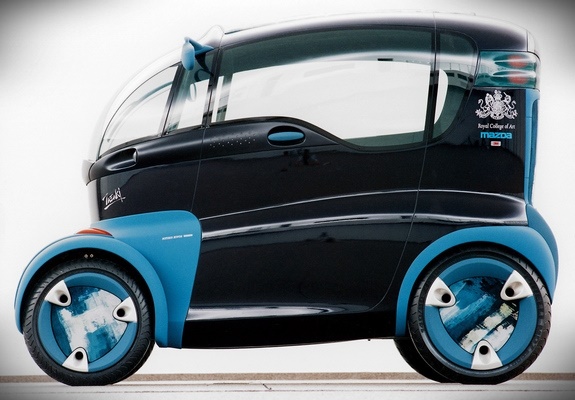
At Mazda, design has a strong focus as it is a key selling feature of the brand. The freedom of thinking for engineers and designers once led to a collaboration with the London Royal College of Art in 1993 to sponsor a design project. This called for a taxi concept for a future where space would restrict vehicle size. While not an official Mazda concept, Mazda assisted by building the prototype, which was a futuristic looking narrow-track pod shaped minicar that was 20 years ahead of its time.
If you are in Japan and visit Hiroshima, the Mazda Museum at the company’s sprawling complex would be worth a visit. You’ll be able to see many of the rare models mentioned and more. It’s presently closed due to precautions relating to the COVID-19 pandemic but will surely be open again in future when the situation improves.
Visit www.mazda.com.my to know more about the Mazda models you can buy in Malaysia.