

Hyundai Motor Company and Kia Motors Corporation have debuted a new virtual reality (VR) design evaluation system at the brands’ global design headquarters. The new system, introduced to the Namyang Research and Development Centre in South Korea, demonstrates a heightened focus on enhancing vehicle development processes through the implementation of VR technology.
The technology uses several development applications, enabling teams of designers and engineers to carry out vehicle design quality assessments and development verification processes. It is part of the 15 billion won (about RM53 million) investment in the Namyang Research and Development Centre announced by Hyundai and Kia in March 2019.
Faster development times, reduced costs
Through the complete implementation of the virtual development processes throughout R&D and pre-production stages, Hyundai and Kia anticipate a 20% reduction in vehicle development times and a 15% reduction in annual development costs. In addition, these new virtual technologies are expected to increase profitability and trigger a cycle of continuously increasing R&D investment for Hyundai and Kia.
“The virtual development process is a necessary step for responding quickly and reacting with agility to the needs of customers and paradigm shifts within the automotive industry,” said Albert Biermann, Head of Research and Development Division for Hyundai Motor Group. “Through reinforced virtual processes, we will enhance quality and profitability, ultimately increasing investment in R&D to secure competitiveness in future mobility.”
20 simultaneous users
VR headsets allow the brands’ vehicle designers and engineers to virtually enter developmental simulations, with 36 motion tracking sensors detecting and tracking the locations and movement of all users, enabling each to participate accurately in real time. The new VR design evaluation system can currently support up to 20 simultaneous users, enabling greater cross-team collaboration than ever before.
As a result, the new cutting-edge facility allows the designers to more efficiently review a multitude of design concepts earlier in the developmental process and in ways that were previously physically impossible. The system simulates interior and exterior design elements, lighting, colours and materials, and even virtual environments.
Testing individual components
VR also enables development teams to simulate operations of individual vehicle components, such as doors, bootlids, bonnets, and windshield wipers. Furthermore, the system enables testing of vehicle ergonomics and aerodynamics more efficiently.
Hyundai HDC-6 NEPTUNE Concept
Hyundai first used this system during the design assessment stages of the HDC-6 NEPTUNE Concept Class 8 heavy-duty truck that was revealed in October. Kia also plans to expand the design assessment capabilities of the facility for developmental use on future models.
Additionally, plans to establish remote VR design assessment capabilities will enable real-time virtual collaboration between each brand’s design centres in Europe, America, China and India, along with an enhanced virtual development process through the implementation of AR (Augmented Reality), among other technology. There are also plans to introduce VR technologies in production and assembly lines to create more ergonomic, efficient and safe working environments.
After a 2-month search, the Volkswagen “Win the Icon” contest reached its conclusion and it was Muhamad Rizal bin Sadiman, a 28-year-old school teacher from Perak who won a brand-new Volkswagen Beetle 1.2TSI.
The contest, which ran throughout the months of October and November, received over 800 posts and submissions of photos and videos of Malaysians test-driving their favourite Volkswagen models while documenting their experience. They had also to caption their submissions creatively with the hashtag #BetterExperiencedThanExplained.
Encik Rizal submitted a video of himself test-driving the Polo and Tiguan and said: “A Volkswagen is truly better experienced than explained. Safety is a top priority for me as I was involved in an accident two years ago where the brakes failed. In my submission video, I showcased how the Tiguan performs during emergency braking and I am very impressed.”
“The Polo is another favourite as we had one in the family and it is a sturdy pocket rocket. I am so thrilled and excited with this win. I can’t wait to drive my new Beetle around town and to school,” he added.
Cult object and design icon, the Beetle has captured the hearts and minds of the people in its 80 years of production. Sadly, after three generations, Volkswagen has decided to cease production of the iconic model, with the last unit being completed in July this year. This makes Encik Rizal of one the lucky few to own a Beetle before all the new ones are sold off. Of course, the Beetle will continue to remain a legend in the auto industry’s history.
Many of today’s cars are having display screens mounted on the dashboard which resemble tablets. From the assembly point of view, it’s easier to install rather than being integrated in an opening in the dashboard. When you look at the display, it seems like a good idea if it could also be detached and taken out of the car for other uses and Pioneer seems to have come up with such an idea for a new product.
In the first quarter of 2020, it will begin shipping the market’s first Smart Unit Receiver which combines a Google-certified 8-inch Android portable display with a smart receiver. Its portability means it can go beyond being just an in-car infotainment system.
For digitally-savvy individuals
“Today’s car owners are more than just drivers. They are digitally-savvy individuals who live a lifestyle that is integrated with their mobile devices and apps. This new wave of smart drivers doesn’t want just a system that accompanies them from point A to point B, but personalised tools and solutions that enhance their way of life and help them with their day-to-day tasks,” said Ronald Lee, General Manager of Sales and Product Division, Pioneer Electronics AsiaCentre.
“Our new Smart Unit Receiver is the first in the market to deliver our Pioneer Smart Sync (PSS) in-car infotainment app with the flexibility of a portable display and a smart receiver, allowing car owners to live a truly digital lifestyle wherever they go,” he explained.
All-in-one functionalities
When motoring, the Smart Unit Receiver drivers with quick access to their favourite music using the display’s dedicated source display for radio and Bluetooth as well as the PSS app’s smart receiver control. The app is a one-stop solution for getting the most out of the Android display, car stereo, and navigation and drivers can activate voice assistants, or have unread text messages read out.
The system can also connect to existing rearview cameras and Pioneer’s parking sensors through the smart receiver. Passengers can also stream videos on the move through apps like YouTube and Netflix. The portable display’s IPS LED screen offers crystal-clear clarity and a wide smooth surface to tap into controls and popular apps in just a few swipes.
With the ability to pre-select the cradle position, drivers can also adjust the display’s elevation for maximum comfort when watching videos and operating the device. The display can also be removed from the mount with just the press of a button so it becomes a tablet which can be taken into the office or home or anywhere else (to be connected to the internet would, of course, require having a SIM card or wifi connection).
“Drivers get to experience a truly seamless digital lifestyle within and outside of the car. When leaving the car, they can simply remove the display and reply to emails, catch up on the news or their favourite shows, and connect with loved ones via messaging apps on the go. The transition is non-disruptive,” said Mr. Lee.
Lower costs, more value
With the Smart Unit Receiver’s multiple capabilities and flexibility, drivers can gain more value just from a single system solution. They stand to reduce their hardware requirements and costs by meeting a diverse range of needs – from entertainment and navigation to productivity and connectivity – from just one portable display receiver system.
The system is also designed with safety and protection in mind, with the display built for durability and longevity within the environment of a car. The secure mount and robust display cover also offer better protection for the investment, preventing damage and extending the usage life of the system.
Information on pricing and availability in Malaysia is not available at this time but as the product will enter the market in the near future, perhaps you would want to hold off on buying a new tablet if you were planning to shop for one.
Following the visit of Prime Minister Tun Dr. Mahathir Mohamad to Pakistan earlier this year where he gifted the Prime Minister of Pakistan a Proton X70, the SUV has now been delivered to the government of Pakistan.
To date, over 26,000 units of the X70 have been delivered in the domestic market and exports are starting as well. In the case of Pakistan, plans were finalised in March this year to build an assembly plant that will be owned and operated by ALHAJ Automotive, Proton’s business partner there. Vehicle manufacturing is not a new activity for the ALHAJ Group as it has a subsidiary which has been producing FAW vehicles for a number of years.
Production is targeted to begin in 2021 with the X70 as the first of several models that will be sold in Pakistan. The long-term goal is to sell 400,000 vehicles by 2027. Just as in Malaysia, assembling its vehicles locally will allow Proton to have more attractive pricing as duties are lower for vehicles assembled in the country.
Parts for the X70 will be sent from Proton’s Tg. Malim factory in completely knocked-down (CKD) packs for assembly at the ALHAJ Automotive plant in Pakistan.
The brand new assembly plant will be located in Karachi, Pakistan’s industrial and financial centre. The initial investment will be US$30 million (around RM124.3 million) and 2,000 direct employment opportunities are expected to be created in its first 3 years of operations. It is estimated that a further 20,000 indirect jobs will also be created as a result of the new plant being commissioned.
“Proton sees a lot of potential in Pakistan and as Malaysia is the only Muslim country to have its own automotive brand, both our countries are natural partners who have so much to share with each other. The Proton X70 has won several awards at home and we hope that eventually, it can accomplish the same feats when it arrives here,” said Mohd Khalid Yusof, Proton’s Director of Investment and Promotion.
According to the Global Status Report on Road Safety published by the World Health Organization (WHO) and the World Bank in December 2018, Malaysia has the third highest fatality rate from road traffic accidents in Asia and ASEAN. In spite of various efforts to change this, the rate has not changed since 2007. The government’s approach has been the conventional ones – stricter enforcement of laws and all sorts of safety campaigns. It hopes that through education and safety awareness, the numbers can drop but that will take a long time.
Across the Asian region, public policies and priorities have been devised and revised in pursuit of enhanced road safety. Policies need to address current and future traffic issues, which will require extensive study of the anatomy of road accidents. “The collaboration of multiple sectors such as the government, automotive industry, and the academe will ensure long-term collection of more comprehensive data, nationwide reach, reduced costs, and unbiased analysis, as well as further recommendations,” said Martin Hayes, Regional President of Bosch Southeast Asia.
Understanding why accidents occur
As one of the world’s leading automotive suppliers, Bosch believes that improving traffic safety will be greatly served by fully utilizing crash data to develop and implement life-saving measures based on facts, rather than intuition. Accident research takes all available data into consideration, as it seeks to understand the root causes of vehicular crashes in order to prevent them in the future.
For Bosch and its multidisciplinary team of mathematicians, physicists, and automotive and mechanical experts at Bosch Accident Research, a vehicular accident is much more than just two objects colliding. Worldwide, driver and rider error or misbehaviour is the leading cause of road accidents, but other circumstances also come into play: bad weather, poorly lit or damaged roads, lack of road signs, animal or pedestrian crossings, and vehicular flaws, either by design or improper maintenance, among many other factors.
Bosch recommends an end-to-end approach to look at the impact of crash statistics, where information gathered from crash scene investigations are analyzed to determine key contributing factors. The root causes, severity, and statistics of accidents are then summarized, along with an estimation of the benefits from preventive actions.
Thomas Lich, senior expert at Bosch Accident Research, explains that “this methodology derives insights that will help bring about safer vehicles and aid government agencies in developing measures that enhance infrastructure, enforcement, and emergency response.”
Accident investigators in India
One such example of this is the Road Accident Sampling System of India (RASSI), a joint accident research project led by 13 members from vehicle manufacturers, research agencies, and automotive suppliers, including Bosch. Since 2009, RASSI has been able to successfully document nearly 4,000 road accidents and paved the way for infrastructure improvements on the Mumbai-Pune Expressway, increased driver and rider safety awareness, as well as countermeasures like the installation of advanced vehicle safety systems.
More motorcycles = need for greater vehicle safety
Southeast Asia is one of the fastest-growing markets for motorized two-wheel vehicles in the world. In the same report published by WHO, riders of motorized two-wheelers, along with pedestrians, are unfortunately also at most risk of road crashes, comprising nearly half of those who die in road accidents.
Since 2005, the data collected and analysed by Bosch Accident Research reveals that majority of riders of motorized two-wheelers do not know how to react in emergency situations. This seems to be a common theme in three countries: Germany (33%), India (35%), and Thailand (43%). In all three countries, the second-highest reaction is falling down due to a lack of brakes, followed by a lack of braking power.
Further research concluded that around one out of four accidents with injuries involving motorized two-wheelers could be prevented if these vehicles were equipped with ABS, assisting the rider in critical situations by reducing the risk of a rider falling.
In India, RASSI results are used to identify effective safety measures, including the potential of Active Safety systems such as a combined braking system (CBS) or antilock braking system (ABS).
Accident research also contributes to the development of state-of-the-art safety technologies. One example is emergency call or eCall for powered two-wheelers. Mandatory for all new passenger cars in the European Union (EU) since April 2018, the technology for powered two-wheelers is still being studied. To technically realize eCall for powered two-wheelers, the significant differences between passenger cars and two-wheelers need to be taken into account, including accident and injury severity. These key factors will then form the baseline for new safety systems.
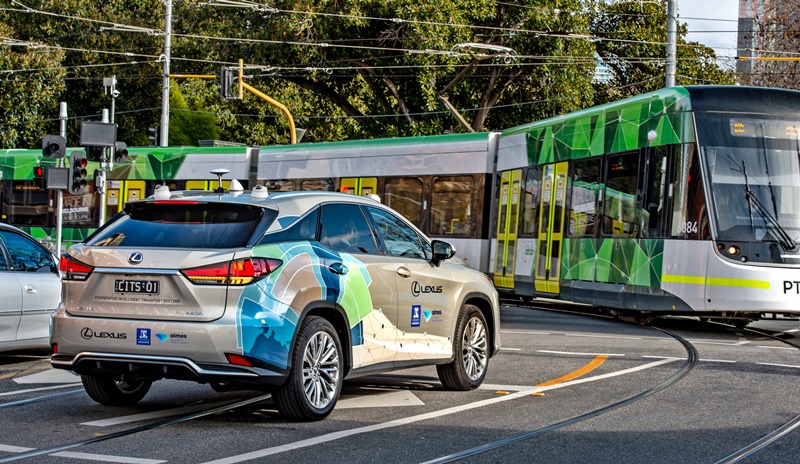
eCall (Emergency Call) is now required in all new passenger cars sold in the European Union (EU) and studies are ongoing to see if the same service can be used for 2-wheelers.
Collective commitment
The cooperation between stakeholders to complete the circle of social responsibility is key to increasing road safety. Fortunately, a growing number of organizations in Southeast Asian countries are now working with Bosch Accident Research to assess local accident situations. Accident analysis is being explored in Indonesia, Malaysia, and Vietnam, while Thailand is focused on establishing on-the-spot accident investigation.
Thailand’s on-the-spot accident research is focused on incidents with personal injuries. The aim is to train researchers on collecting on-the-spot crash data using a similar methodology from other projects. This will equip researchers with the know-how in surveying pre-crash situations, such as road conditions and traffic management systems and analyse post-crash situations to identify root causes, such as driver reactions and vehicle road-worthiness.
They will also be trained to determine efficacy of emergency response. This will be then the baseline for future research to come up with countermeasures to improve safety on Thailand’s roads, as experienced from other countries.
While the causes of road accidents are often universal, research will draw out unique circumstances where a differing action should be instigated. “A holistic approach based on accident research enables all parties to identify hot spots in infrastructure that need to be prioritized, along with the technology needed to improve emergency and rescue services,” added Lich.
Bosch believes that the first step in achieving road safety is an accident research initiative – one that is nationwide in scope and jointly driven by multiple sectors of society. The findings from the research will provide much-needed insights that will serve as the scientific basis for more effective road safety policies, ultimately resulting in millions of lives saved each year.
Until now, Gordon Murray – the famous F1 engineer – has talked about the T.50 supercar which he is developing. He has shown some sketches and outlined the technology but this is the first official picture of the car and the world will see more in May 2020 when it has its global debut.
His company, Gordon Murray Automotive (GMA), is partnering the Racing Point Formula One Team to further develop and test the aerodynamics of the T.50 supercar. According to Professor Murray, the model will have the most advanced and most effective aerodynamics ever seen on a road car.
Unique airflow management system
While the rear view of the car shows ‘purity and drama’, as GMA describes it, the most significant innovation which is now being revealed is a unique airflow management system. The most notable feature of the system, which can be seen at the rear-end, is a 400-mm diameter ground-effect fan.
Coupled with active underbody aerodynamics and dynamic rear aerofoils, the revolutionary aero system enables the T.50 to achieve considerably more aerodynamic performance and control than a conventional ground-effect supercar contributing to an unrivalled driving experience.
Reviving the ‘fan car’ concept that was banned
“I’ve dreamt of delivering a road car with a ground-effect fan since I designed the Brabham BT46B F1 racing car in 1978. The system on the T.50 is much more sophisticated than the Brabham’s and will benefit enormously from Racing Point’s expertise and resources,” Professor Murray said.
The Brabham BT46B Alfa Romeo (above) had a fan installed at the back which sucked air out from under the car, creating enormous downforce that enabled higher cornering speeds. However, it was quickly banned by the FIA because the rules stated that aerodynamic devices must be fixed and a spinning fan was not.

In the T.50, the fan and its associated ducting system build on conventional ground effect systems by actively helping control both the underbody and overbody airflow ensuring that both airflow systems interact to ensure absolute control of the enhanced aerodynamics and improve the car’s performance.
Six aero modes with power boost
Six aero modes enable the driver to optimise dynamic and outright performance, with Vmax Mode boosting output to 700 bhp. Vmax Mode – the most extreme – combines motorsport slipstream technology, extra power from a 48-volt integrated starter-generator, and ram induction to boost power.
Weighing just 980 kgs, the T.50 will deliver ‘the purest, most driver-focused performance and dynamics of any road car’, it is claimed. The car’s bespoke Cosworth V12 engine will be the highest-revving road car engine ever made, capable of an extraordinary 12,100 rpm.
The rear-wheel drive T.50 features Murray’s favoured 3-seat layout (used in the McLaren F1), with the driver benefitting from a central ‘jet-fighter-style’ driving position. Aligned with Gordon Murray’s claim that the T.50 could be the pinnacle of great analogue supercars, the driver-centric analogue controls are positioned to provide the ultimate, highly-intuitive, and totally-immersive driving experience.
Customer allocations of the T.50, priced in excess of £2 million (equivalent to around RM11 million), are now entering their final phase. Planned production is only 100 cars and the supercar has generated demand from a wider than expected global customer base. A significant number are customers in the USA and Japan and the first ones will get their cars in January 2022.