Piston.my

EV

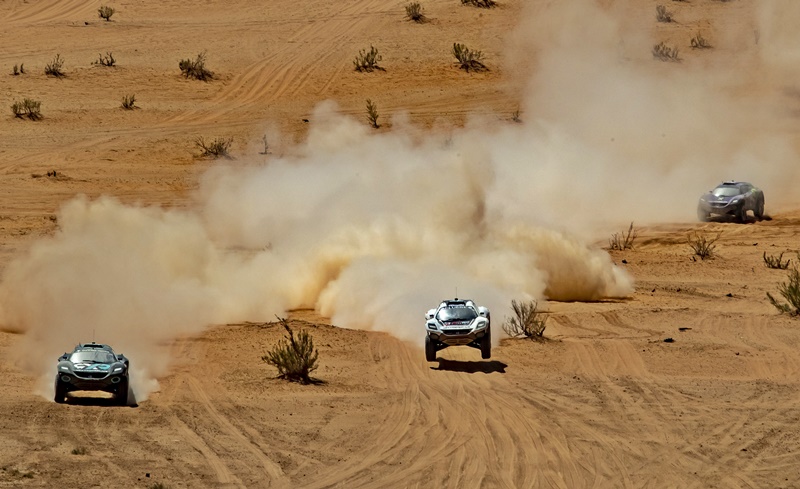
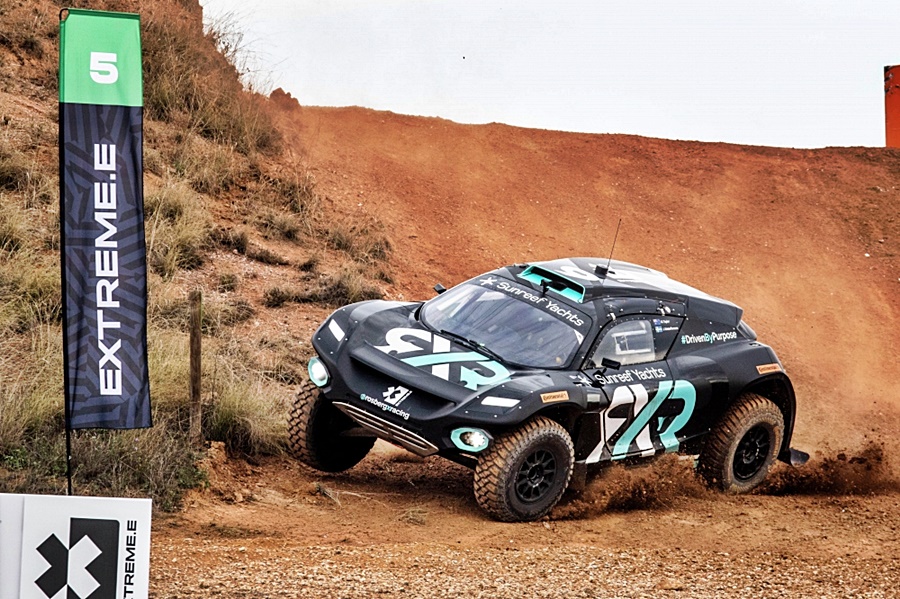
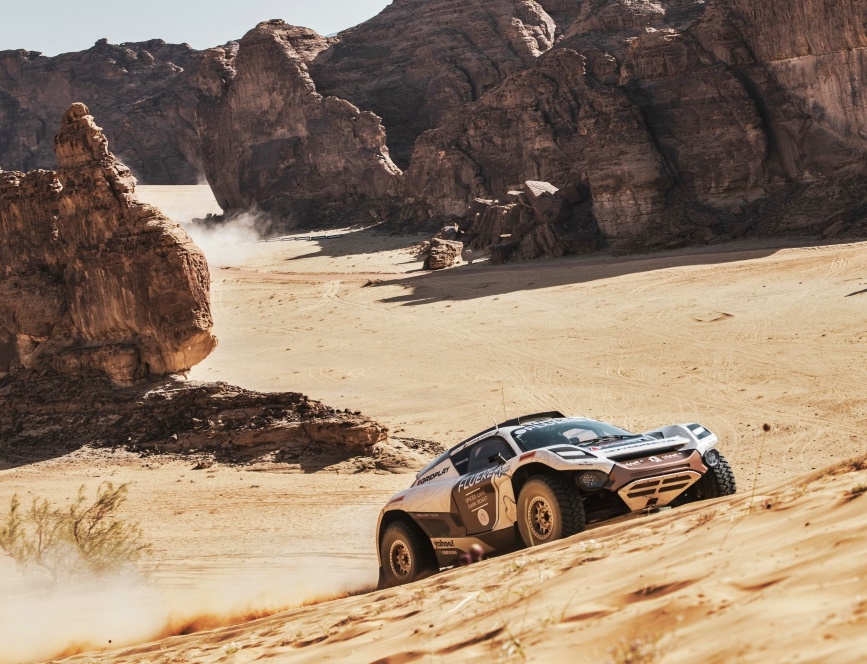
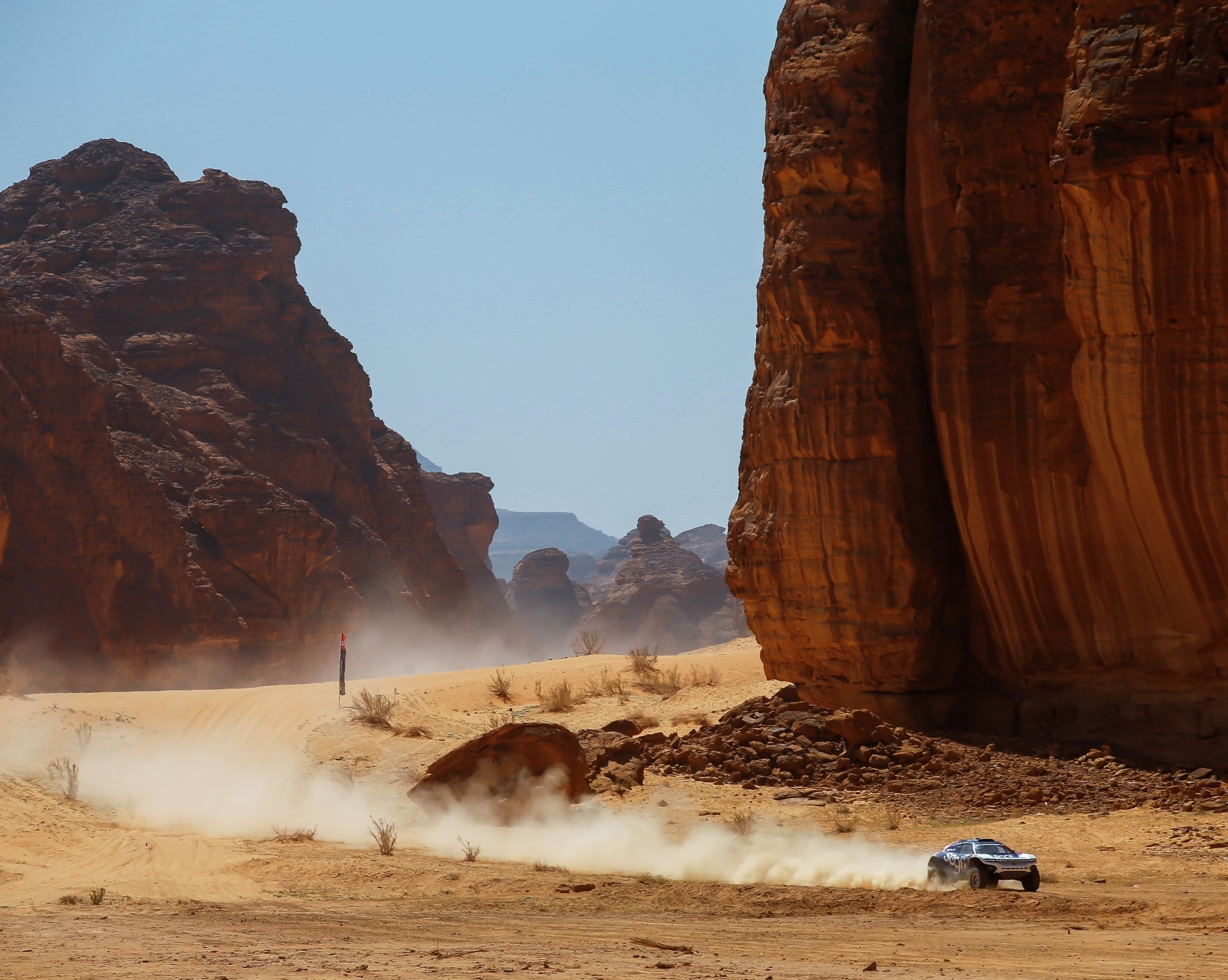
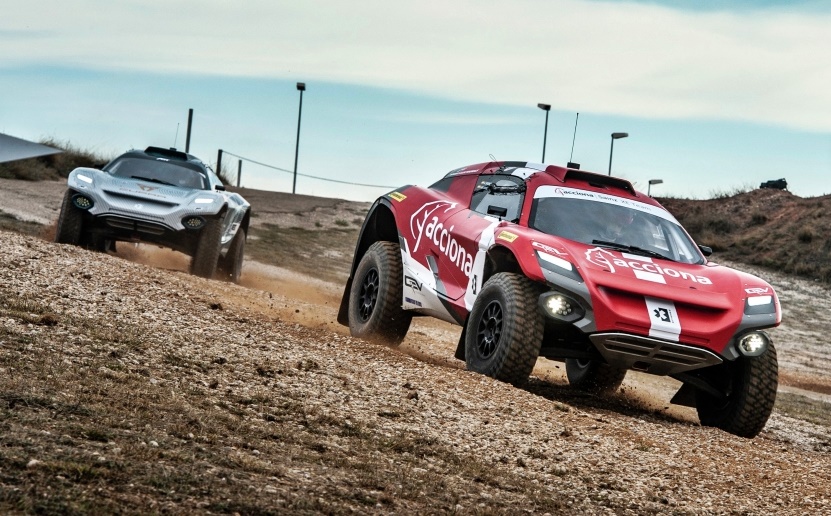
There had been feverish anticipation in the build-up to the weekend’s first Extreme E round – the Desert X Prix held in the remote Al-‘Ula region of Saudi Arabia. The new series, for electrically-powered SUVs, has the off-road challenges of the Dakar Rally but also uses the event to create awareness of environment issues at locations where it will be run.

Following the Qualifying time trials on Saturday, the teams – consisting of one male and one female driver – went wheel-to-wheel for the first time, generating some of the most spectacular images ever seen in the sport and drawing widespread acclaim from competitors and fans alike.

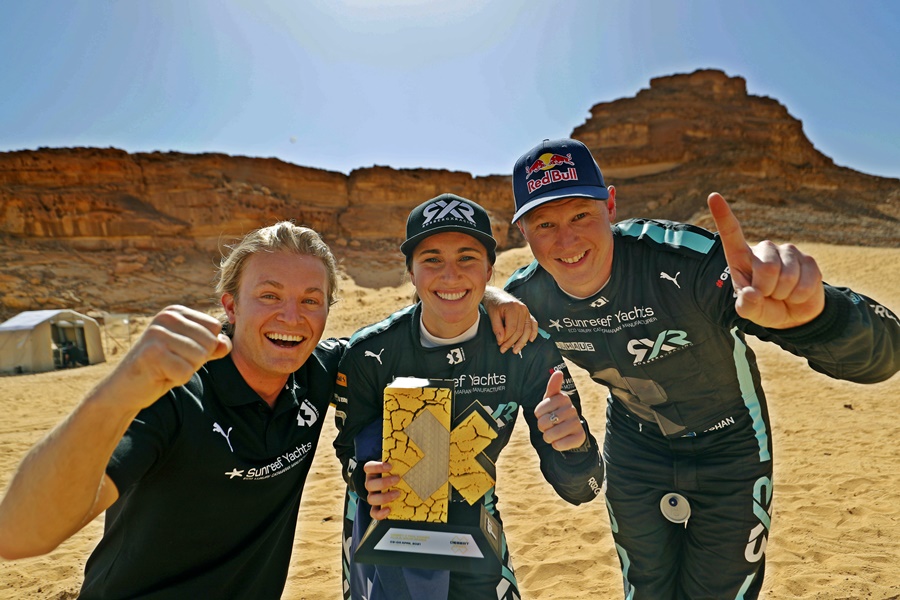
Rosberg X Racing duo Johan Kristoffersson and Molly Taylor were the pace-setters from the outset in, but the pair still had to dig deep in the desert to battle their way to victory and carve themselves out a piece of motorsport history.
Extreme E SEASON 1 RD 1 2021

Extreme E SEASON 1 RD 1 2021
Former F1 driver Nico Rosberg (left) with his winning drivers Molly Taylor and Johan Kristoffersson.

But, ultimately, nothing could stop the duo from storming to the top step of the podium – not a 60-second penalty for exceeding the 30 km/h limit in the driver switch zone yesterday, nor less favourable grid slots in both the Semi-Final and Final today. It was a virtuoso display of speed, skill and superhuman car control in the most challenging of conditions.

“This is insane. I’m so thankful to the whole team for the effort put in this weekend, which has been intense and really on-the-edge. Everything has come together so well and everybody has worked together so well,” said Nico Rosberg, Rosberg X Racing’s Founder and CEO, who is the son of Keke Rosberg, former F1 driver. Their car had No.6 on it, which pays homage to the senior’s racing number when he was in Formula 1.
Extreme E SEASON 1 RD 1 2021

“We have a fantastic team of engineers and mechanics, who prepared perfectly for this first weekend with so many unknowns, and Molly and Johan produced some phenomenal driving. Neither of them put a foot wrong in really tough conditions, and they both showed unbelievable speed out there – their performance was really inspiring and I felt really proud watching them. To come back to claim victory after a 60-second penalty caused by a technical problem is just awesome, and they are definitely deserving winners. For the championship as a whole, it’s really been a good start,” he said.

Shoot Out
The duel for seventh place in the overall classification was fought out between Segi TV Chip Ganassi Racing (Kyle LeDuc/Sara Price) and ABT CUPRA XE (Mattias Ekstrom/Claudia Hurtgen), both of whom endured difficult Qualifying runs. Price initially pulled ahead by using her Hyperdrive power boost, before Ekstrom repaid the favour on the exit of Turn One to snatch the lead.

Once the driver switch was complete, LeDuc set about chasing down Hurtgen, but almost within sight of the finish line, the American – unsighted by the dust – made contact with his German rival and the pair both ended their weekend beached in the desert.
Extreme E SEASON 1 RD 1 2021

Crazy Race
With just one spot up for grabs in the Final, the stakes were high for the three Crazy Race competitors – Andretti United’s Timmy Hansen/Catie Munnings, Hispano Suiza XITE Energy Team pairing Oliver Bennett/Christine Giampaoli Zonca and JBXE duo Jenson Button/Mikaela Ahlin-Kottulinsky.

A wild start by 2019 FIA World Rallycross Champion Hansen saw the Swede already clear of his adversaries before the trio arrived at the first gate, with Bennett narrowly sneaking in front of former F1 World Champion Button to snatch second.

Hansen opened up a 30-second margin before Munnings took over; after which, the 2016 European Rally Championship Ladies’ Trophy winner artfully managed the gap to safely bring the Andretti United car home. Giampaoli Zonca did a good job to peg her British rival throughout, with Ahlin-Kottulinsky similarly showing a strong turn-of-speed on her way to the finish line in third.
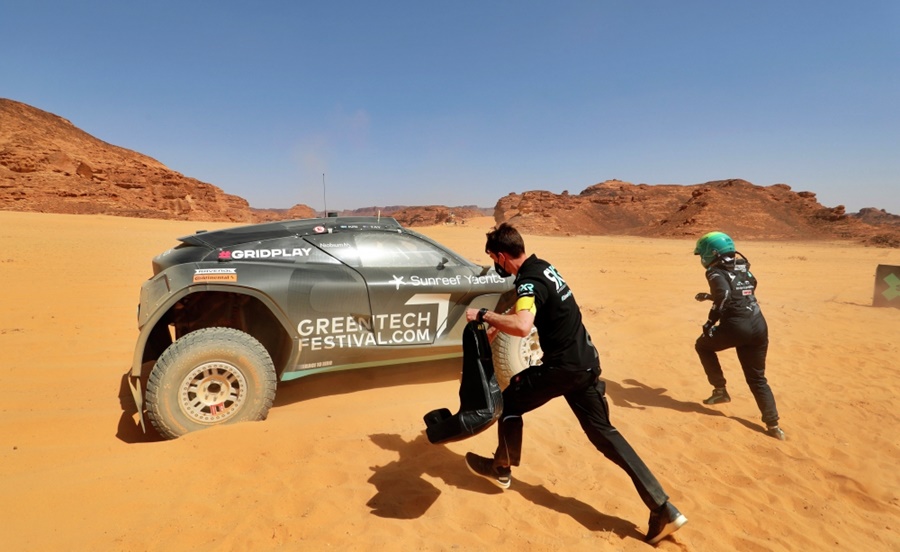
Extreme E SEASON 1 RD 1 2021

Semi-Final
As top qualifiers yesterday, the X44 crew of Sebastien Loeb and Cristina Gutierrez opted to start from the right-hand side of the grid for the Semi-Final – giving them the theoretical inside line for ‘Turn One’. ACCIONA | Sainz XE Team duo Carlos Sainz and Laia Sanz chose the middle slot, with Rosberg X Racing (Kristoffersson/Taylor) taking up position on the left.

When the action got underway, Sainz got the best launch to edge fellow multiple FIA World Rally Champion Loeb away from the line, with the pole-sitter briefly slipping back to third. Loeb then regained the advantage as the battling Sainz and Kristoffersson both drifted wide, but the Swede was not done yet and neatly undercut both of his adversaries on the exit of the first gate to seize the initiative.

Kicking up a sandstorm in his wake, Kristoffersson rapidly made his escape as his pursuers found themselves driving blindly through the dust – and by the time he arrived at the switch zone to hand over to team-mate Taylor, the Rosberg X Racing car was almost 13 seconds to the good.

Thereafter, the former Australian Rally Champion continued to extend the gap, crossing the finish line just under half-a-minute ahead of Gutiérrez, as both teams successfully booked their places in the all-important Final. Another 38 seconds in arrears, ACCIONA | Sainz XE Team wound up third to slip out of contention.
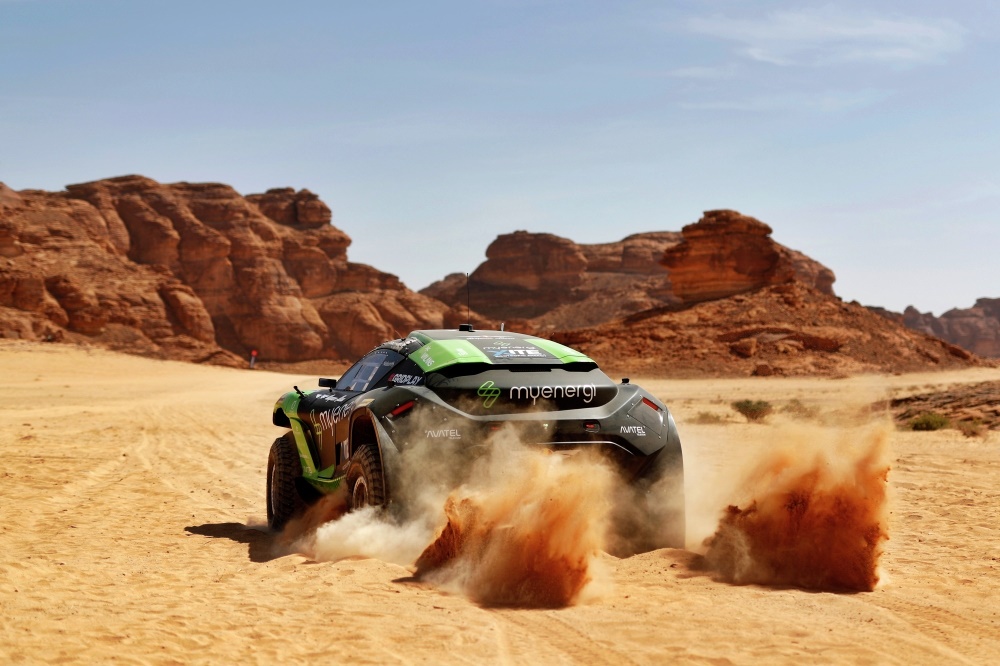
Extreme E SEASON 1 RD 1 2021

The Final Duel
As winners of the fan-led GridPlay vote, Andretti United had the luxury of choosing their starting spot for the Final. Hansen duly plumped for pole position on the right, with Kristoffersson lining up in the middle for Rosberg X Racing and X44’s Loeb taking up the third grid slot on the left.

Hansen replicated his lightning launch from the Crazy Race as Kristoffersson focussed his efforts on fending off Loeb for second, before employing the same tactic that had served him so well in the Semi-Final to sweep wide going into Turn One and undercut compatriot Hansen on the exit in a sensational switchback move.
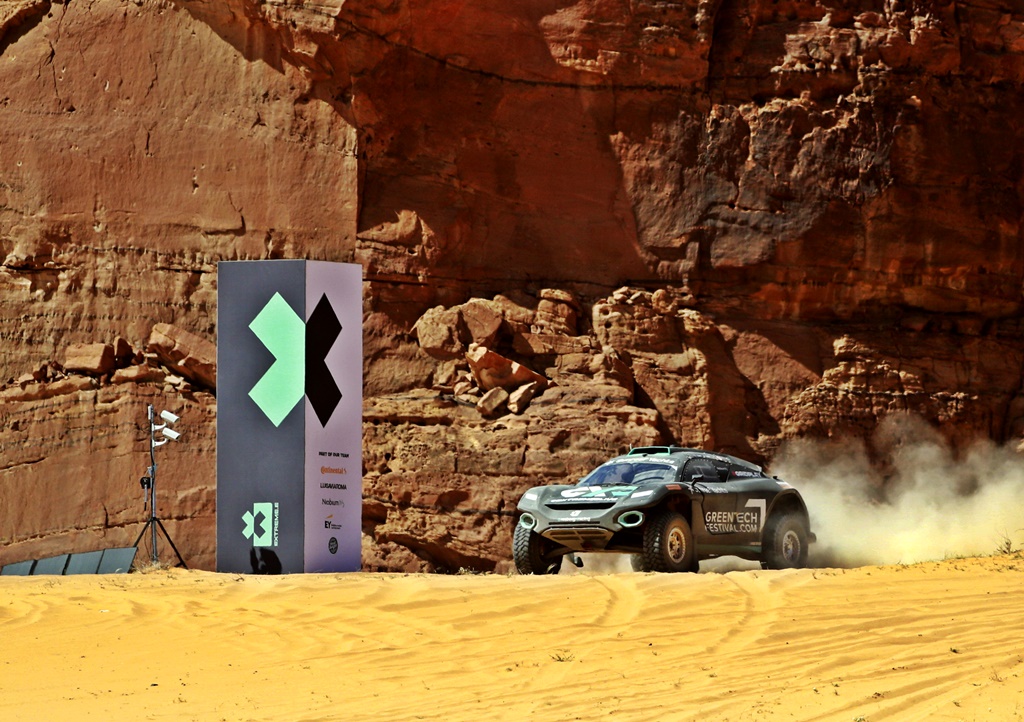
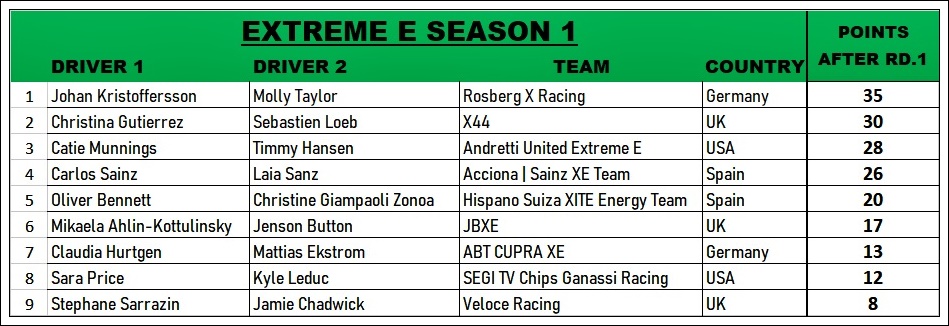
Extreme E SEASON 1 RD 1 2021

The 3-time FIA World Rallycross Champion then wasted no time at all in stretching his lead, as Hansen settled into second and Loeb – grappling with power steering problems – trailed behind the pair in third. Kristoffersson handed the car over to Taylor with a half-minute advantage, and whilst Munnings would go on to narrow the deficit slightly over the course of the second lap, the Australian always had the situation under control and wound up just over 23 seconds clear at the finish.

Alejandro Agag, Founder and CEO of Extreme E, said: “We’ve worked so hard on this for many years, and finally everything has come together this weekend. It really has been beyond my wildest expectations. If I had written a script for the perfect weekend, I could not have come up with anything better than what we have witnessed these past two days – I’ve never seen such extreme racing in my life!”

About Extreme E
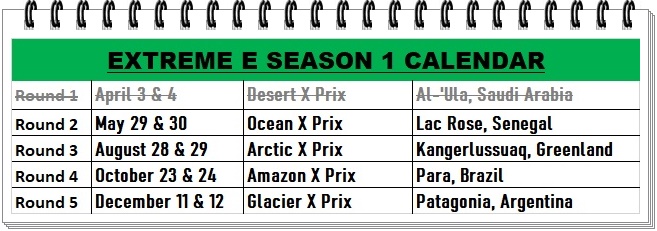
Extreme E is a totally new racing series which will see electric SUVs competing in extreme environments around the world which have already been damaged or affected by climate and environmental issues. During the 5 races at different locations, the impact of climate change and human interference in some of the world’s most remote locations will be highlighted. Extreme E also aims to promote the adoption of electric vehicles in the quest for a lower carbon future for the planet.

Extreme E SEASON 1 RD 1 2021
The first round was held in Saudi Arabia where desertification and water resources are serious environmental issues.

To minimize local impact, Extreme E races will not be open to spectators, with fans instead invited to follow the action through live TV broadcast, and on social media. Additionally, to minimize carbon emissions, a cargo ship – the St. Helena – transports the freight and infrastructure, including vehicles, to the nearest port for the round. Besides serving as Extreme E’s operations hub, the ship will used to facilitate scientific research through its on-board laboratory.
Extreme E SEASON 1 RD 1 2021
All the 9 teams use the same specially-developed SUV, including the powertrain.

Extreme E is also pioneering hydrogen fuel cell technology which will enable its race fleet to be charged using zero emission energy. This innovative solution from AFC Energy uses water and sun to generate hydrogen power. Not only will this process emit no greenhouse emissions, but its only by-product will be water, which will be utilized elsewhere on-site.

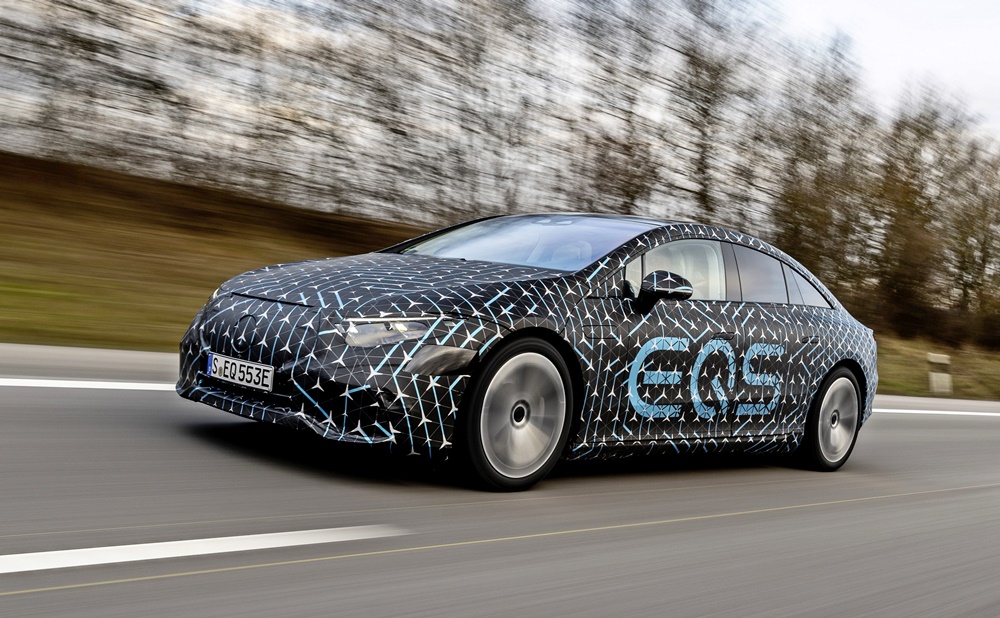
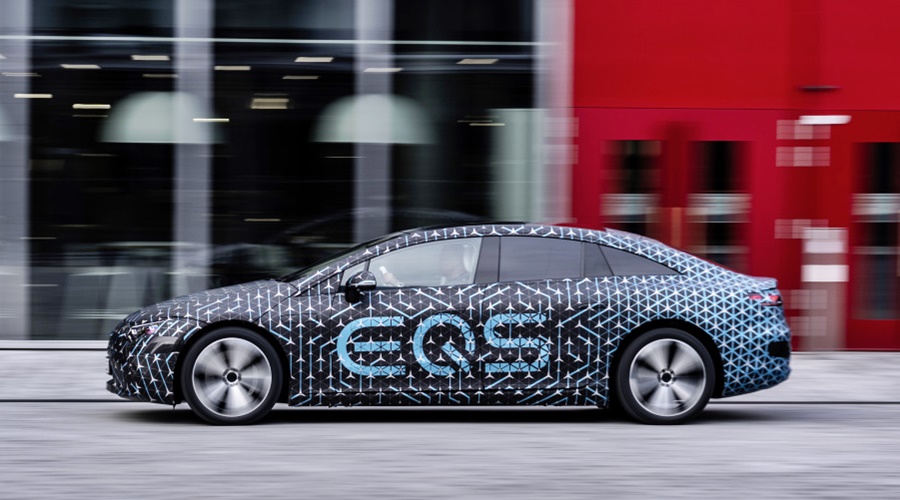
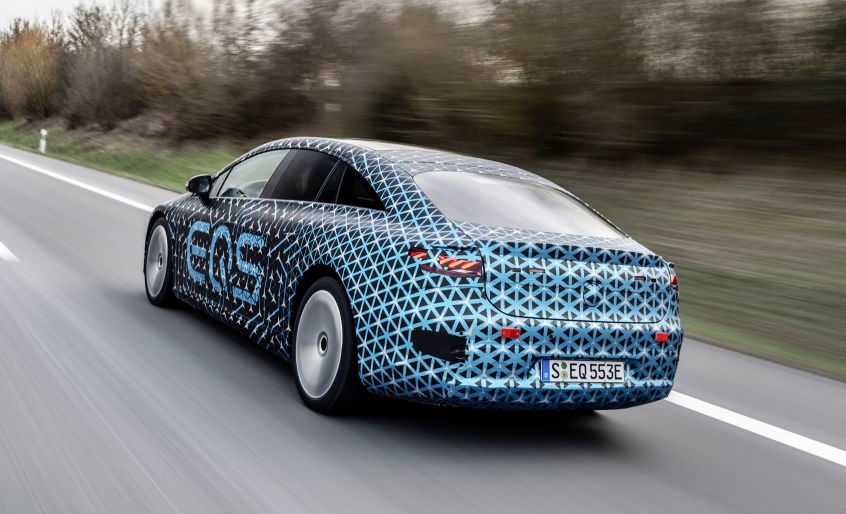
The flagship of the Mercedes-Benz range – the S-Class – finally goes fully electric as the third member of the EQ family of 100% electric vehicles. With the EQE business saloon and the SUV variants of the EQS and EQE, further models based on the new architecture will follow.

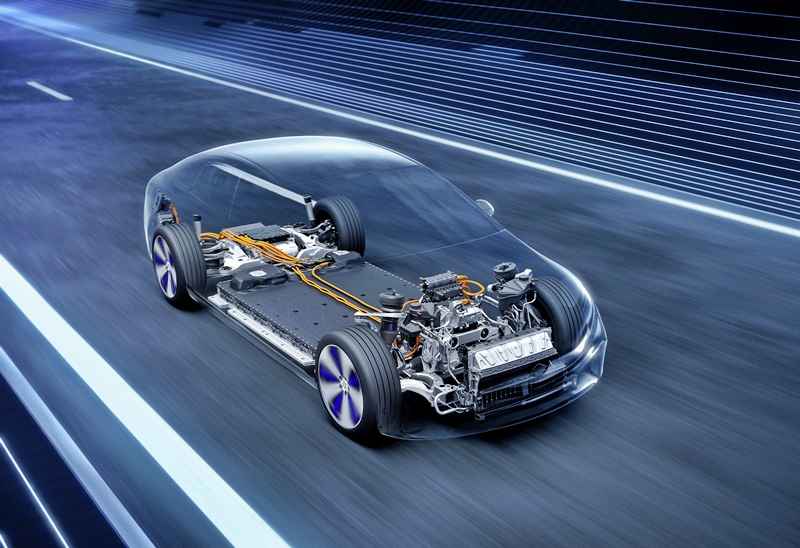
The EQS will allow customers in the luxury segment to benefit fully from all the advantages of an all-electric architecture with respect to space and design. This new generation of electric vehicles in the luxury and executive segment is based on a custom-developed architecture, which is scalable in every aspect and can be used across model series. The wheelbase and track as well as all other system components, especially the batteries, are variable thanks to the modular design.


2021 Mercedes-Benz EQS

770-km range
The vehicle concept is thus optimised to meet every requirement of a future-oriented, battery-electric model family. A range of up to 770 kms is claimed and applying every trick in the book to bring wind resistance down, the EQS sets a new world record in aerodynamics for production cars with a value of 0.202 Cd.

The electric powertrain, which has an output of up to 385 kW (a variant with a higher output is also mentioned), is positioned at the rear axle, while the versions with 4MATIC also have a second powertrain at the front axle. Maximum torque will be 568 Nm in the EQS 450+, and 855 Nm in the EQS 580 4MATIC, and a maximum speed of 210 km/h will be programmed as the limit.

2021 Mercedes-Benz EQS

High energy content in battery packs
The EQS marks the launch of a new generation of batteries with significantly higher energy density. The larger of the two lithium-ion batteries has a usable energy content of up to 107.8 kWh. That is around 26% more than the EQC. A major advance in sustainability has been achieved in the cell chemistry: the proportion of cobalt has been reduced to 10% while the optimised active material consists of nickel, cobalt and manganese in a ratio of 8:1:1.

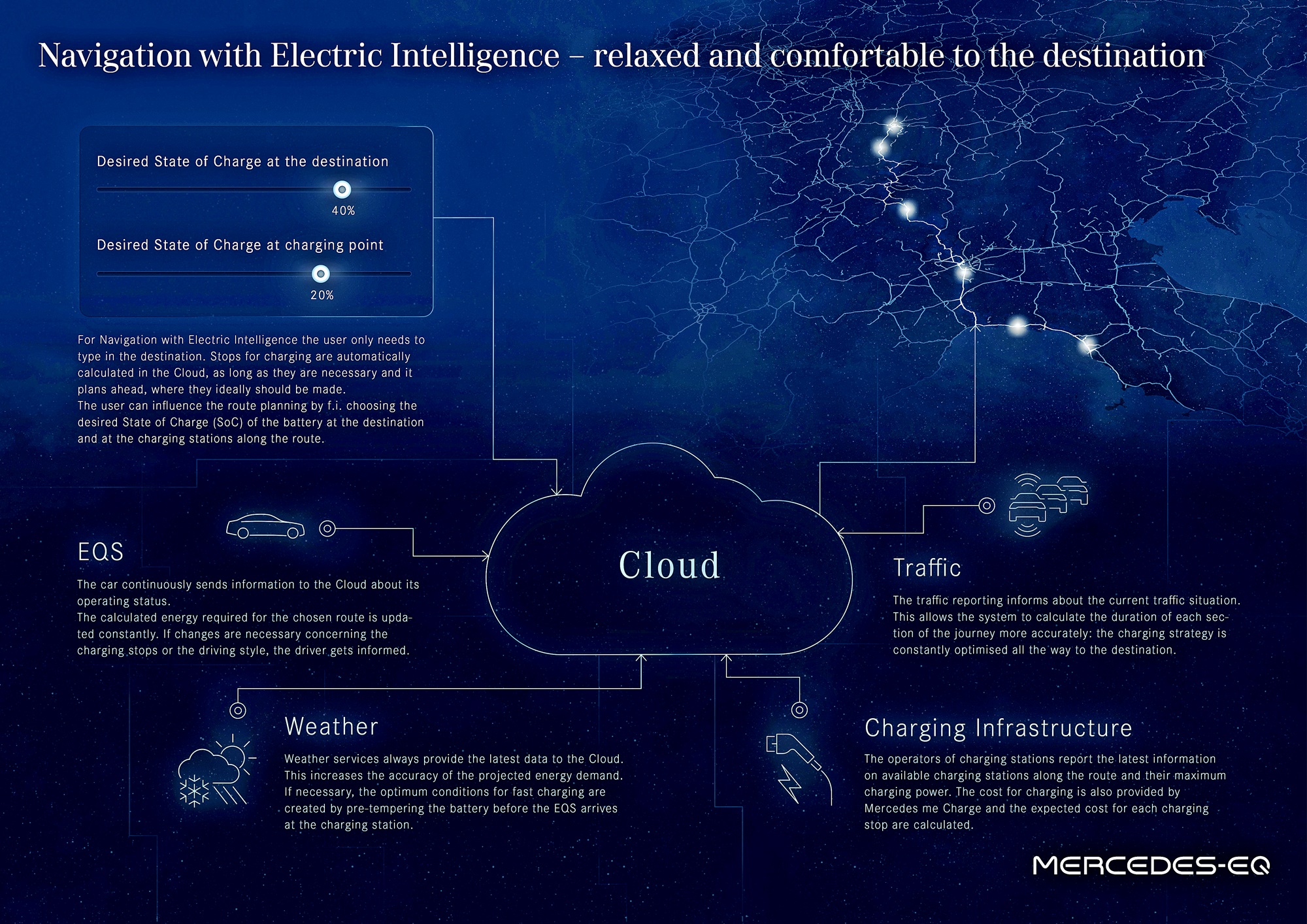
The battery pack can also be preheated or cooled while driving to be at the optimum temperature temperature window at a fast-charging station, which enables faster charging at 200 kW. At home or at public charging stations, the EQS can also be charged with up to 22 kW with AC using the on-board charger. A 15-minute charge is said to be good providing a range of up to 300 kms.

The EQS will also allow bidirectional charging in Japan, ie charging in both directions. In addition, there are various intelligent charging programs that can be activated automatically depending on the location, and functions such as particularly battery-saving charging.

10-year ‘Performance Promise’
Mercedes-Benz is ensuring that the original battery packs are of a very high quality, with extensive testing before installation. A ‘Performance Promise’ is made through battery certificate for customers which covers loss of capacity of the battery pack. It will be valid for 10 years or up to 250,000 kms.

2021 Mercedes-Benz EQS

Navigation with Electric Intelligence means what it says. When a destination is chosen, the system plans the fastest and most convenient route, including charging stops, based on numerous factors and reacts dynamically to traffic jams or a change in driving style. Of course, this will be market-dependent as real-time traffic information and weather reports will be necessary to compute the route.
The new EQS model will be launched in Europe in August this year.


Although Genesis was originally a Hyundai flagship model name, the company decided to spin it off as a stand-alone brand name for a line of more luxurious models. The name is fairly ‘neutral’ in the same way that Lexus, Infiniti and Acura do not immediately register as Japanese brands.

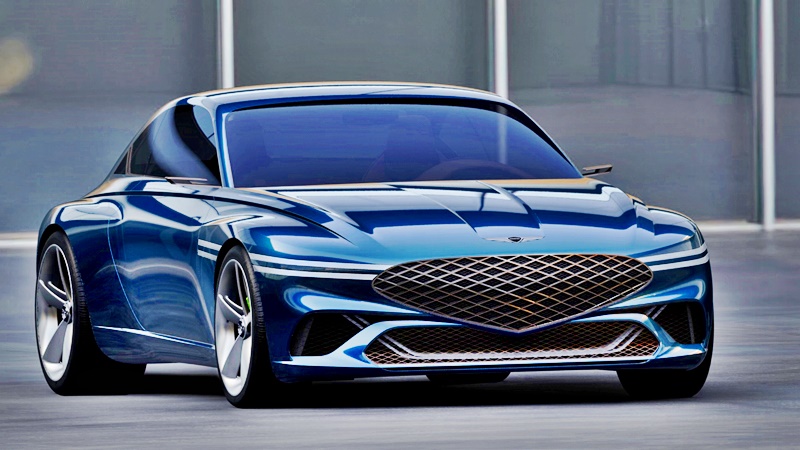
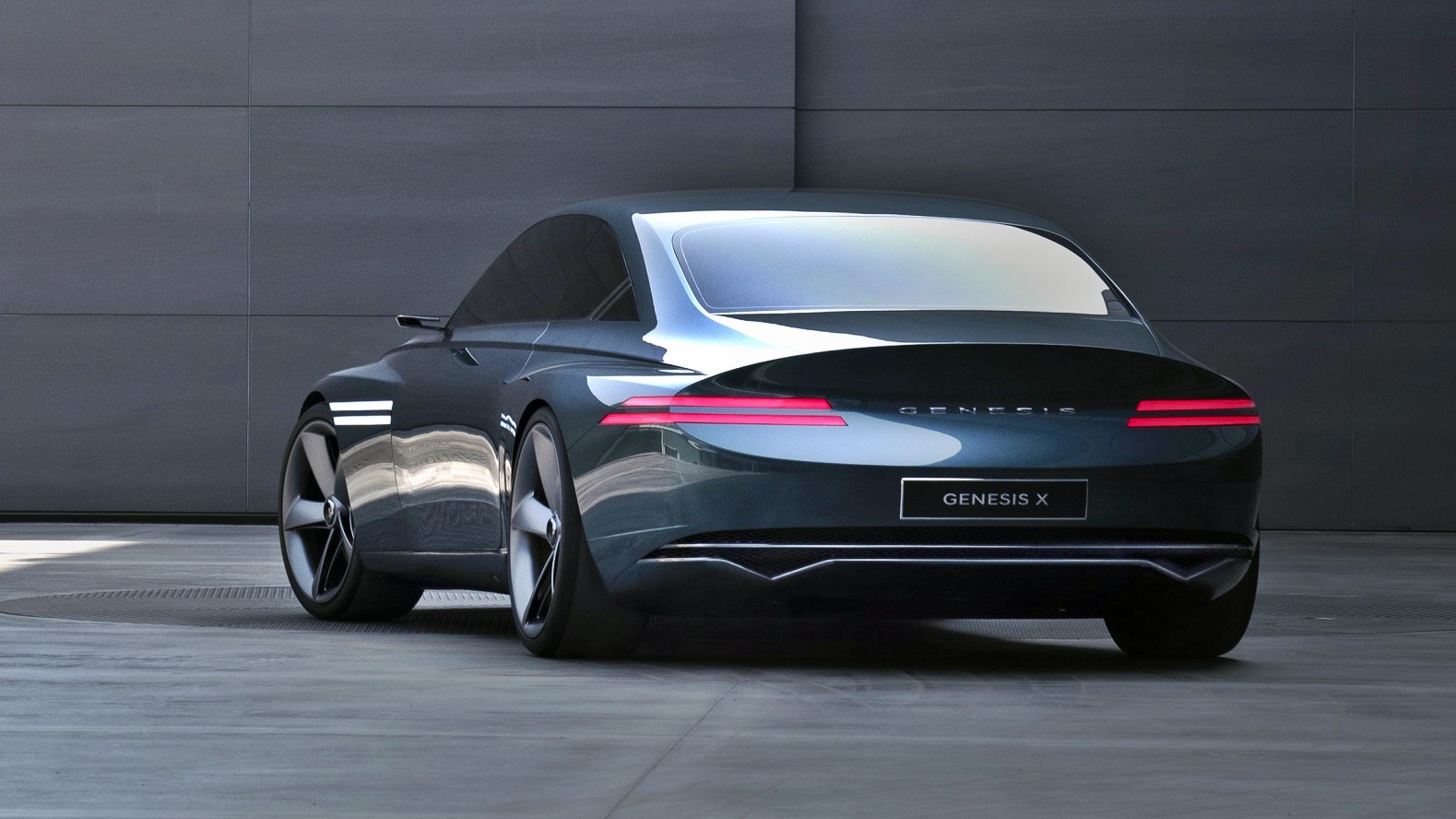
Since being established in 2015, Genesis has steadily built up its portfolio of products, mainly with the American market in mind. There are obviously other models to come and the design language that they may have has been shown in the Genesis X, an EV GT (Gran Turismo) concept car.

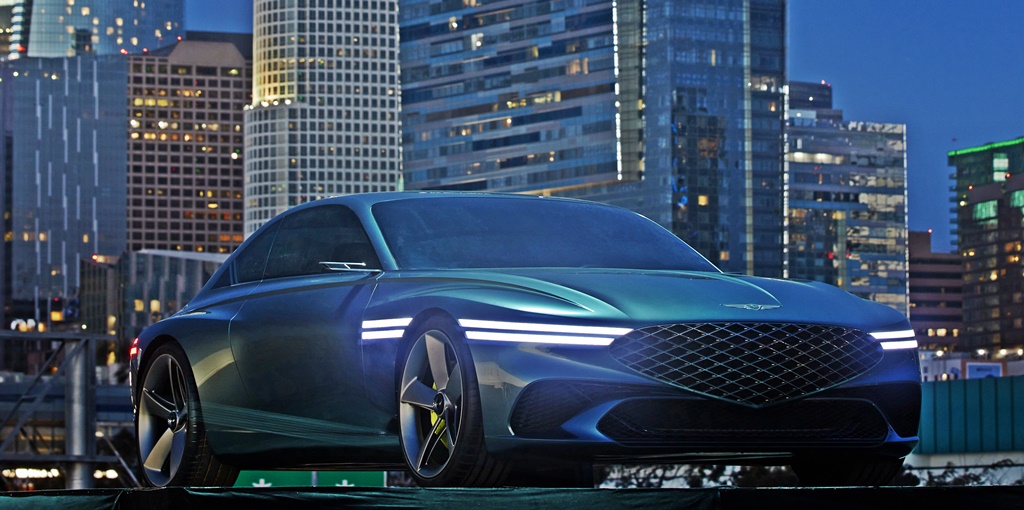
Unveiled on a rooftop in Los Angeles, the presentation depicted the dynamism of California’s car culture and the brand’s pioneering spirit, with the promise of a sustainable future for all. It is the brand’s fifth concept car, following the New York, GV80, Essentia, and Mint concepts.

“The Genesis X Concept embodies the essential elements that Genesis pursues in its designs. Meet the future of Genesis design through this concept car, which embodies our brand’s progressive and audacious spirit” said Jay Chang, Global Head of the Genesis Brand.

In particular, the new concept car is a high-performance GT that maximizes use of the Two Lines design element that Genesis is known for. The Two Lines theme, which is applied throughout the interior and exterior, including electric charging devices, embodies the design language of future Genesis EV models. The name is a combination of ‘Genesis’ and the letter ‘X’, which symbolizes a ‘hidden hero’.

“The Genesis X Concept can be described as the ultimate vision of Athletic Elegance, the inherent design language of Genesis,” said Sang-Yup Lee, Head of Genesis’ Global Design. “The signature Two Lines theme and sustainable luxury will be blueprints for the futuristic designs and state-of-the-art technologies that Genesis seeks to adopt in its future models.”

Inherent dignity and pride
The front of the Genesis X features a low, yet broad silhouette thanks to the combination of the shield-shaped Crest Grille, which represents the brand’s inherent dignity and pride, and the two-lined headlamps, which cut through the wheelarch. The double-layered bumpers also create a strong impression.

The two-lined Quad Lamps symbolize Genesis’ unparalleled technology and design, while a 3-dimensional G-Matrix pattern was applied to the sharp and intricate metal structure of the Crest Grille, the symbol of Genesis, to accentuate the imagery of a futuristic electric car. The internal pattern of the grille has been painted in the same colour as the exterior in order to create a sense of unity.

Simple design with sophisticated image
The styling has a simple, yet sophisticated image by integrating the bonnet and the fender to create a single panel-based Clamshell bonnet, resulting in one clean, sensual and uninterrupted surface. The bottom front air vent intake features a thin and sophisticated mesh form that not only creates a sturdy impression, but also helps cool down the vehicle, facilitates airflow, reduces air resistance, and helps extend mileage.
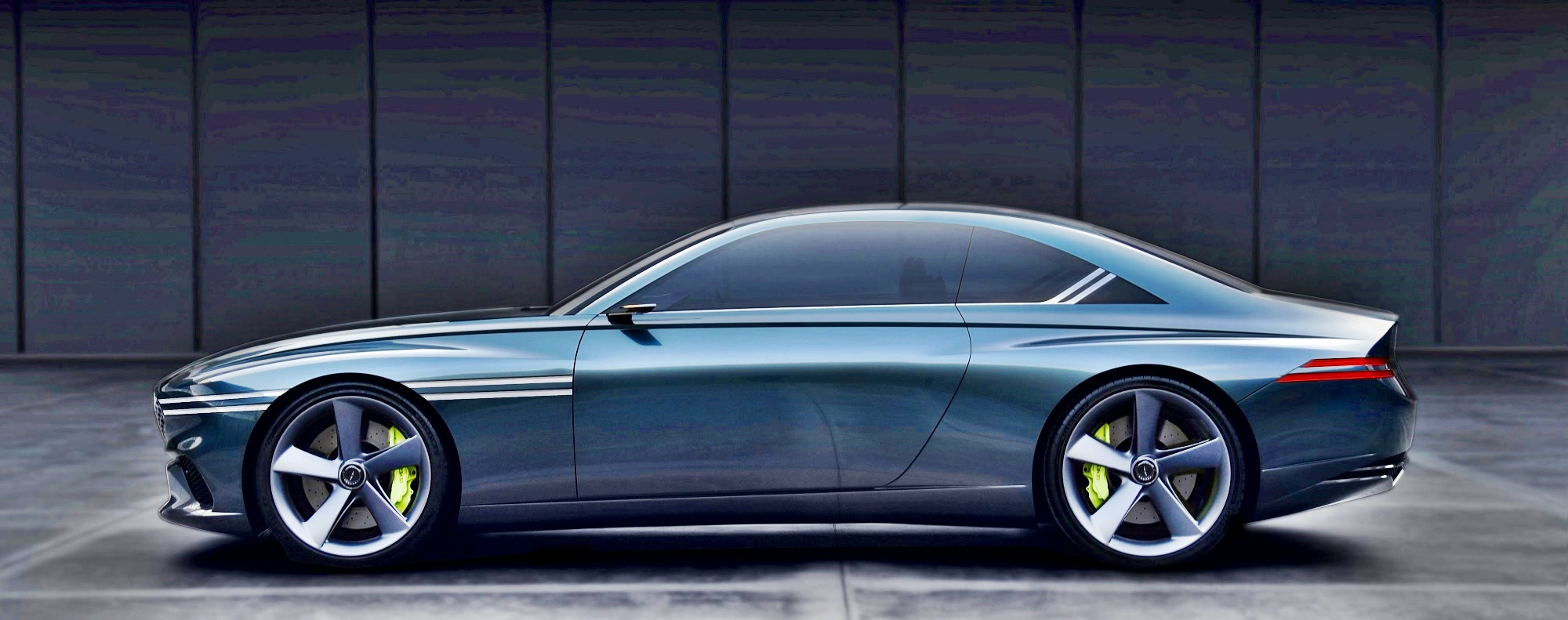
The side profile follows the traditional GT model design with a long bonnet and short rear, and the two-lined lamps leading to the headlamps and taillights are impressive. In addition, the arching Parabolic Line that runs along the side, and the fender’s maximized volume, create a dynamic and elegant impression.

The rear design, incorporating the shape of a horseshoe, exudes a simple and sleek image, while the voluminous fender creates a sophisticated, yet strong impression. In addition, the taillights, which feature a two-lined design like the headlamps, evoke a sense of unity with the front, and create a sophisticated and sensual image with diffusers that accentuate the Two Lines aesthetic.

While the slick, slide-to-open charging door, which features no parting lines, creates a progressive and high-tech image, the Two Lines design element is emphasized through the two-lined lights around the charging port.

Genesis designers maximized the concept car’s sporty sensibility by incorporating two-layered, turbine-type alloy wheels with 5 spokes. The lime accenting on the brake calipers hints at the high-performance character of the Genesis X Concept.

The concept car’s Lençois Blue finish was developed to express the level of sustainable luxury that Genesis pursues. It is inspired by the lagoons of Maranhenses National Park in Brazil, where a lake forms only during the rainy season.

Driver-oriented interior
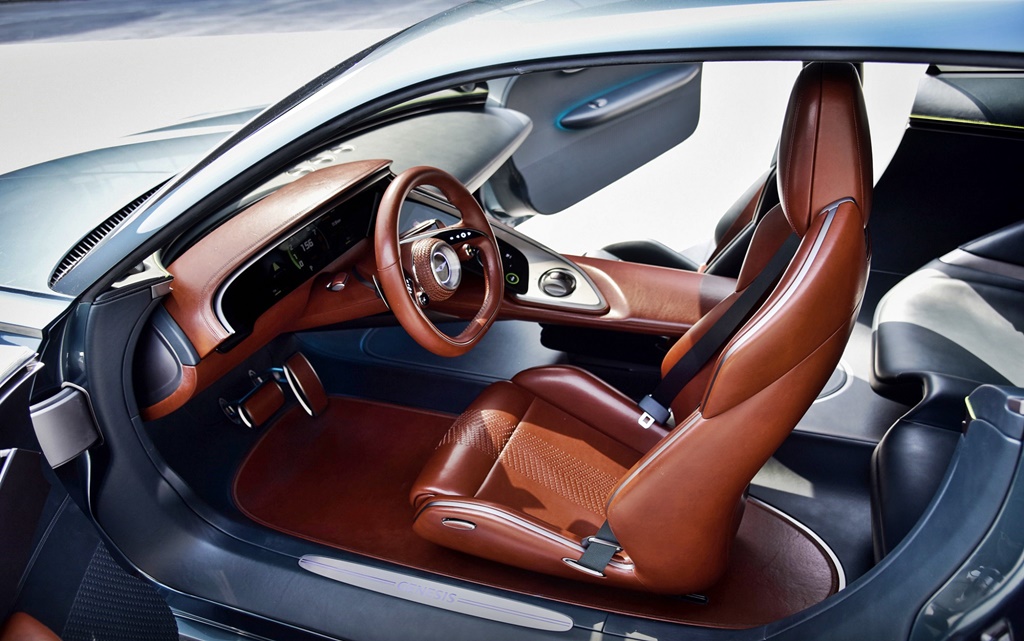
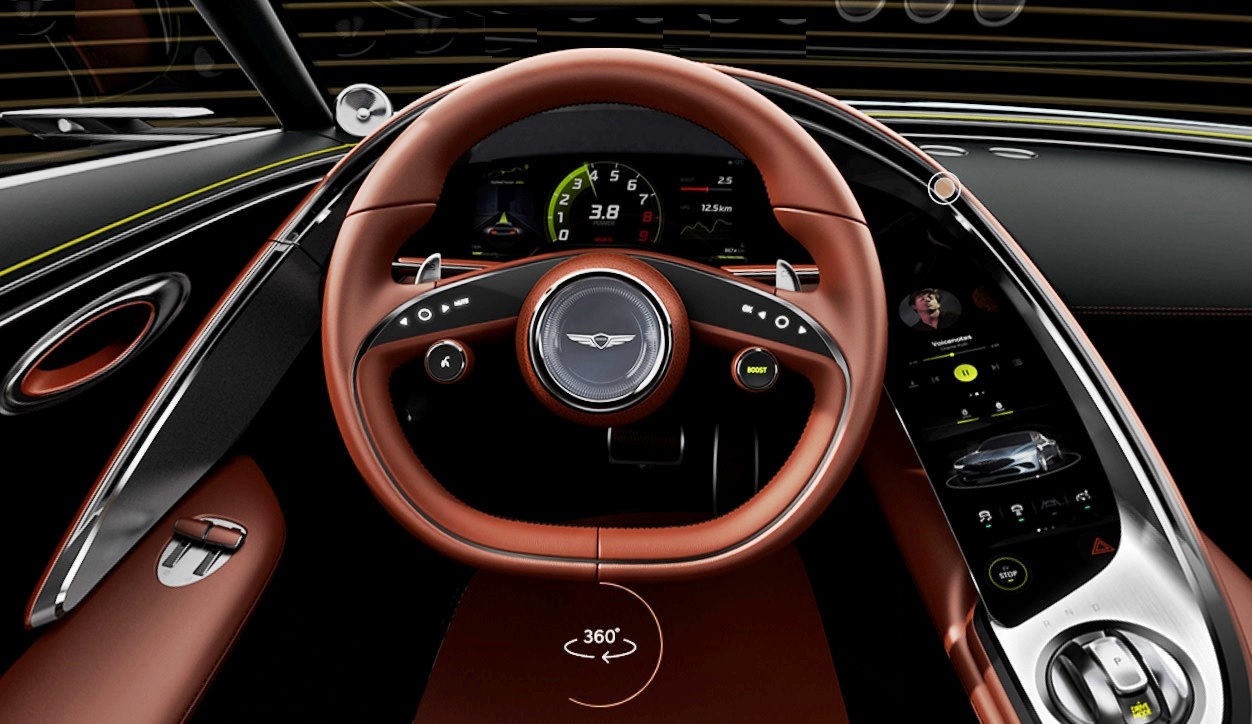
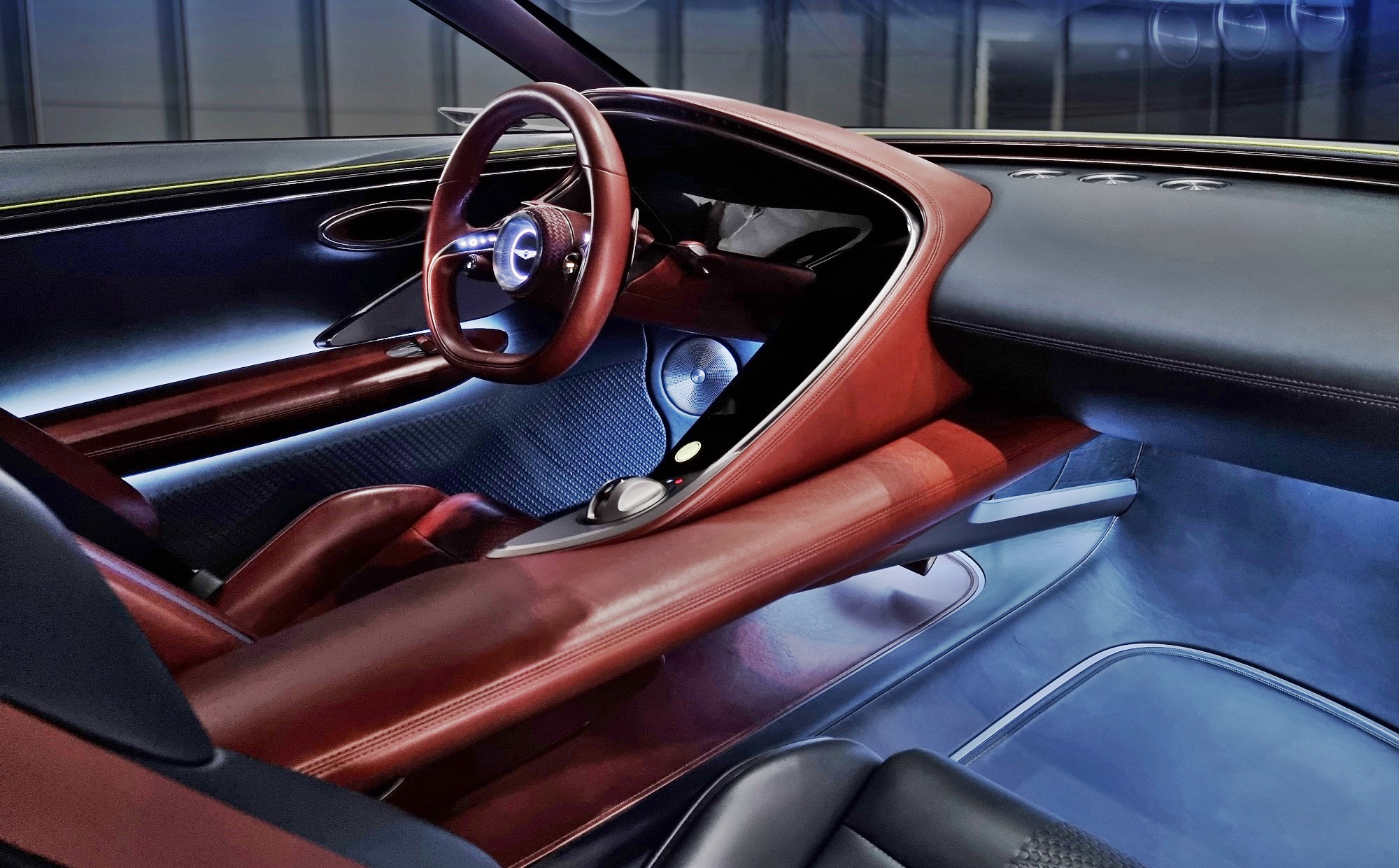
Inspired by the Beauty of White Space, the Genesis X Concept’s interior features a driver-oriented design with a cockpit that surrounds the driver with all operating systems and displays. Differentiation of space by colouring the driver’s seat scotch brown and the passenger seat an ocean-wave green-blue helps emphasize the concept car’s unique design.

The design of the dashboard creates the sense that it is enveloping passengers and is connected to a floating center console. Again, using the Two Lines design element, the slim and indirect air vents that surround passengers, as well as the side window molding, provide a sense of unity with the exterior design. Interior materials showcase the type of sustainable luxury that the Genesis brand pursues.

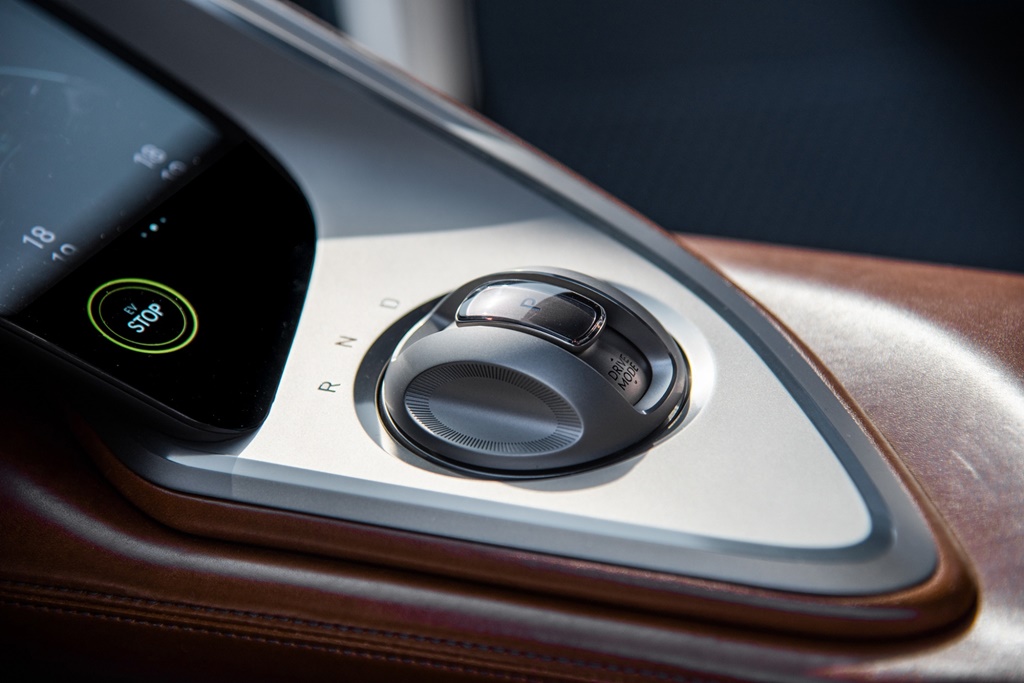
In addition, the Free-Form display, which manages various functions such as clusters, navigation and air conditioning system, and the Crystal Sphere Electronic Shift Lever, which integrates driving mode settings, add a high-tech atmosphere to the interior.

The use of upcycled materials adds unique character to the Genesis X’s interior. A weave-patterned fabric made out of leftover pieces of leather from previous manufacturing processes was used for the safety belts, parts of the steering wheel, and the airbag cover, highlighting the concept car’s eco-friendliness.

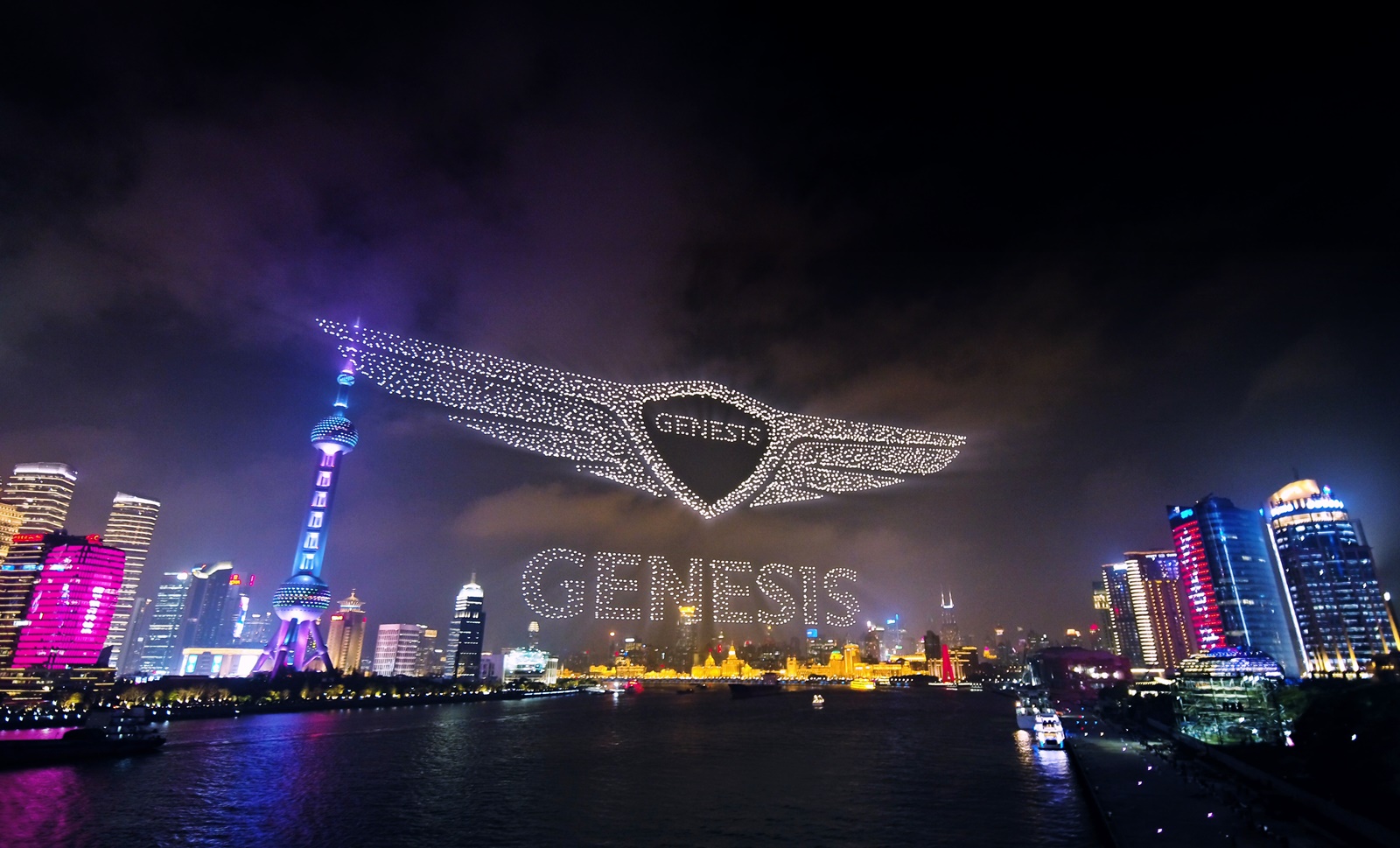
Genesis made its official entry into China this week with a spectacular Brand Night at Shanghai’s International Cruise Terminal. The company will use an all-new business model for the Chinese market and gradually develop its presence through an omnichannel approach based on direct sales, supported by trusted agents and online sales.

3D display becomes a reality in latest Genesis GV80

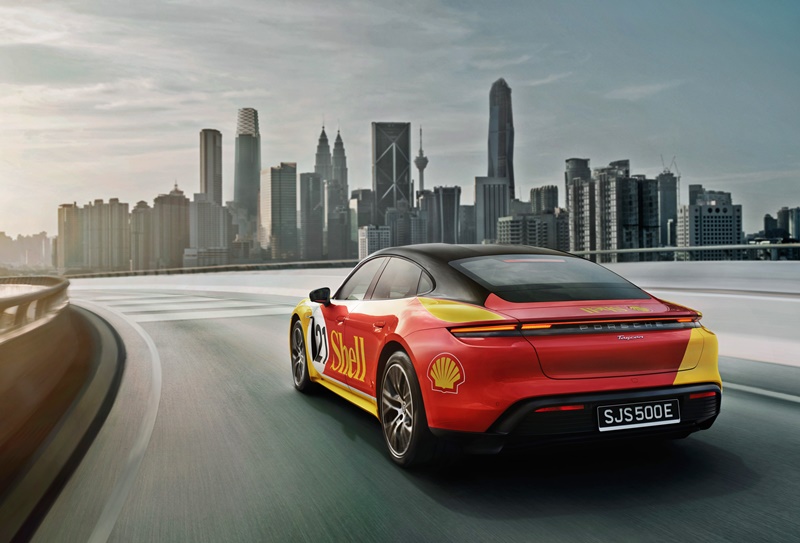
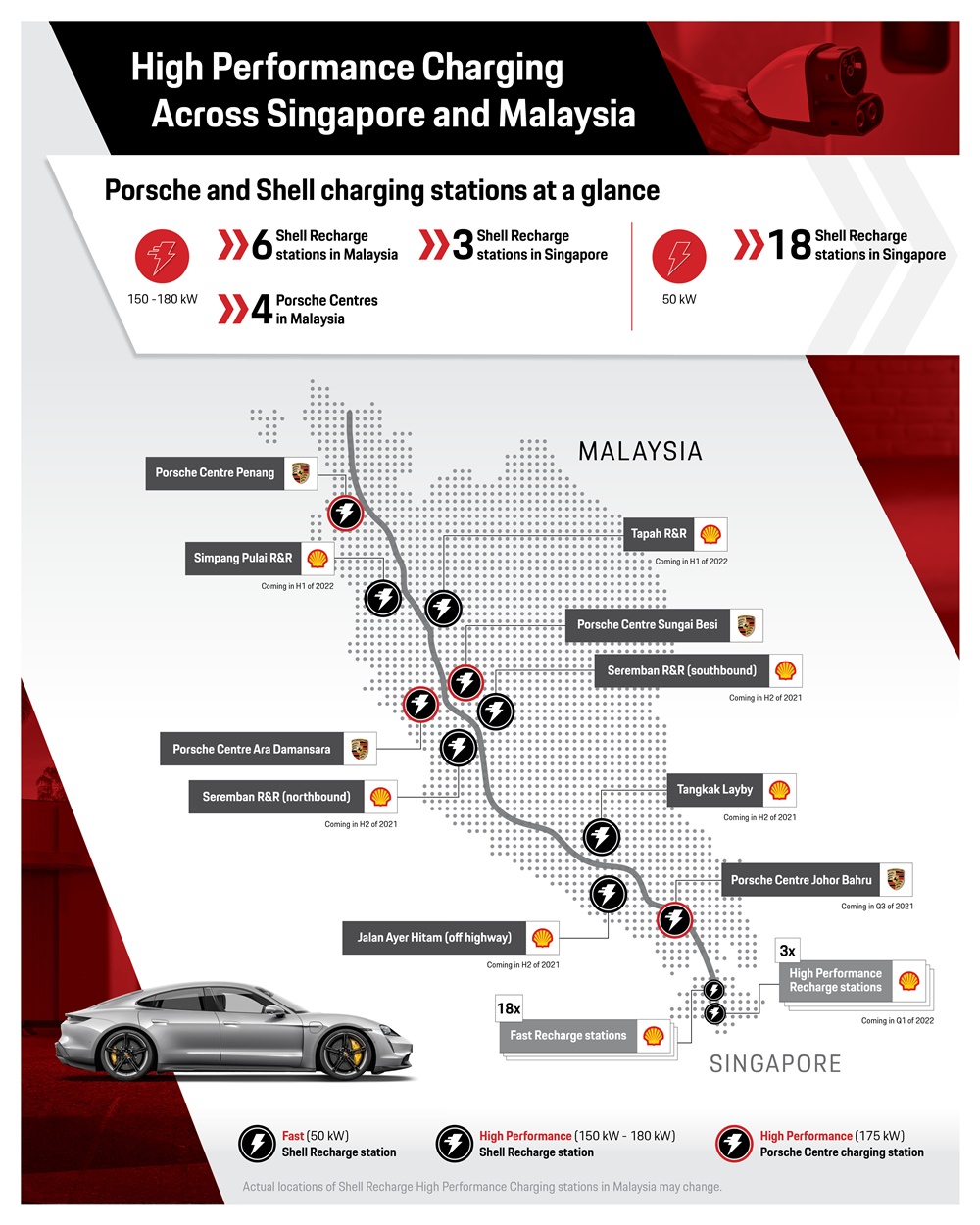
Motorists in Europe who own electric vehicles can drive across the continent, confident that they will be able to recharge their vehicles in different countries. On the Asian continent, that same capability may take a while to realise but a start has been made by Shell and Porsche Asia Pacific in the Malaysian Peninsular. The two companies have partnered to make road trips in electric vehicles (EVs) between Singapore, Kuala Lumpur, and Penang a possibility.

This initiative is the first cross-border high-performance charging (HPC) network in Southeast Asia which will drive the future of electric mobility in the region starting from one of the world’s busiest international land border crossings at the Sultan Iskandar Building and Woodlands Checkpoint at the southern tip of the peninsular. While it is not possible to do so with current travel restrictions between the two countries, the two companies are gearing up for the time when the borders will reopen, and motorists will be able to travel again across the Causeway and Second Link.

Through this partnership, 6 Shell stations will be equipped with 180 kW direct-current (DC) chargers, offering the highest charging capacity currently available in Singapore and Malaysia. The first 4 stations will be ready during the second half of 2021 and the remaining two by the first half of 2022.

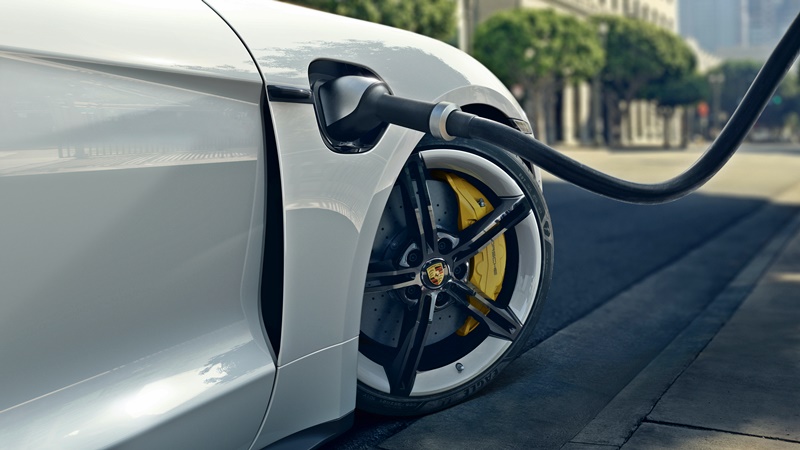
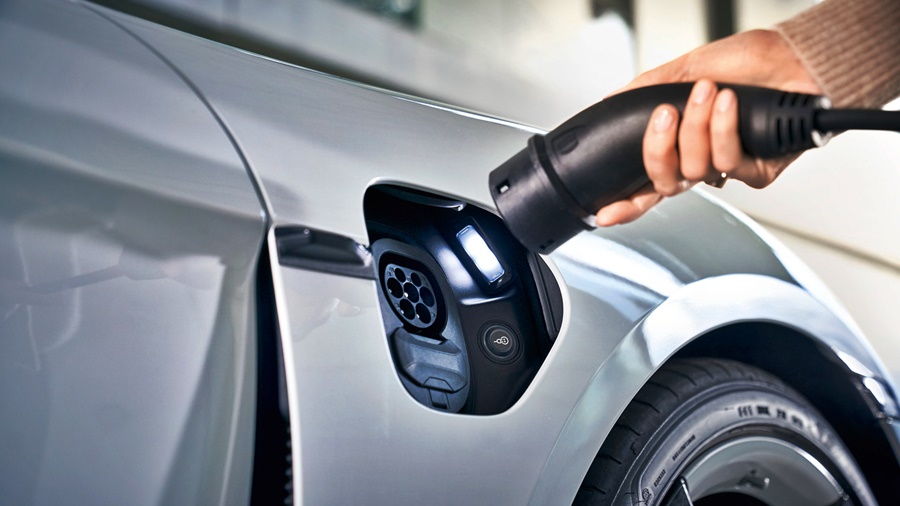
The chargers come with two CCS Type 2 charging connectors, allowing a single vehicle to be charged at up to 180 kW, or two vehicles to charge simultaneously at up to 90 kW each. The sites will be integrated in the existing Shell charging networks, comprising 18 Shell Recharge 50 kW fast charge points at Shell stations and 87 Greenlots public charge points in Singapore, as well as 18 ‘Reserve + Shell Recharge’ charge points in Malaysia. Furthermore, they will complement the established 175 kW high-performance chargers available at all Porsche Centres in Malaysia, as well as the growing ‘Porsche Destination Charging’ network at selected hotels, airports, sports clubs, and other lifestyle venues.

As electric mobility starts gaining momentum in Singapore and Malaysia, the network will enable smooth, convenient, and reliable electric road trips between the two countries. Once launched, the chargers will be available for all EVs that utilise the CCS Type 2 charging connector, which is widely used across both countries, with Porsche customers enjoying special rates at Shell Recharge.

Shell’s new 180kW high performance chargers are equipped to charge EV’s such as the Porsche Taycan from zero to 80% battery capacity in around 30 minutes, providing up to 390 kms of extra travel distance. The petroleum company is also offering additional benefits to Porsche customers such as reserving the HPC points in Malaysia in advance using their mobile app, and preferential prices for food and beverages at the Shell Select shops.

“Customers are at the heart of everything we do,” said Shairan Huzani Husain, Cluster Managing Director, Mobility Malaysia and Singapore, Shell. “We have been investing in building EV charging infrastructure to reduce range anxiety for our customers and this initiative is one of many examples of Shell providing solutions catered to our customers’ need for cleaner energy solutions. In 2019, we introduced EV charging in Singapore and in 2020, we introduced solar-powered retail stations in Malaysia. Now EV customers across the borders can experience Shell Recharge, and also recharge themselves with drinks and snacks at our Shell Select shops.”

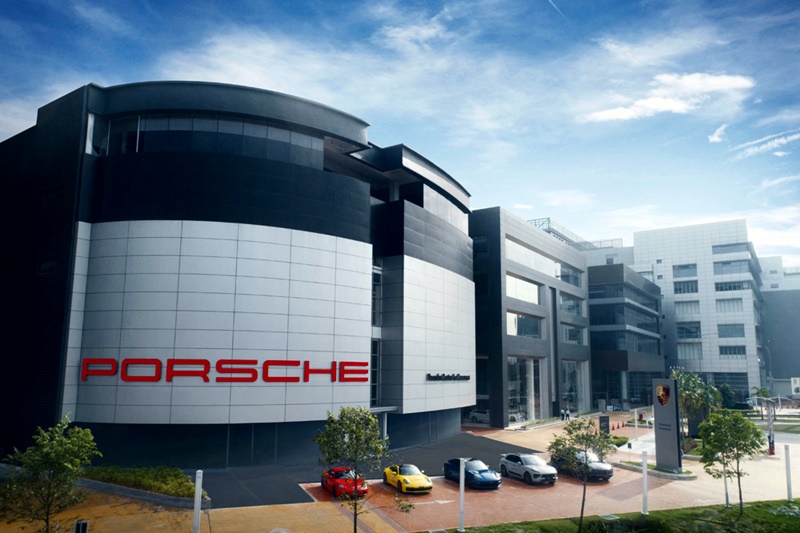
Porsche Centre Ara Damansara 2020
The Porsche Centre at Sime Darby Motors City complex in Ara Damansara, Selangor which is part of the charging network.

The charging network complements the locations and retail formats for current and future Porsche enthusiasts in Malaysia, such as the newest Porsche Centre Ara Damansara as well as the upcoming Porsche Centre Johor Bahru, which are designed to foster brand experience and exclusivity.

The ASEAN markets hold strong potential for Porsche to unlock and we see an opportunity to shape electric mobility in the region. Our high-performance network across Singapore and Malaysia will serve as a lighthouse project for other countries to follow,” said Matthias Becker, Vice-President Region Overseas and Emerging Markets of Porsche AG.

Click here to know more about Taycan and other Porsche models and services in Malaysia.

Porsche’s all-electric Taycan fully revealed, priced from RM632,000


Visit www.bhpetrol.com.my for more information.

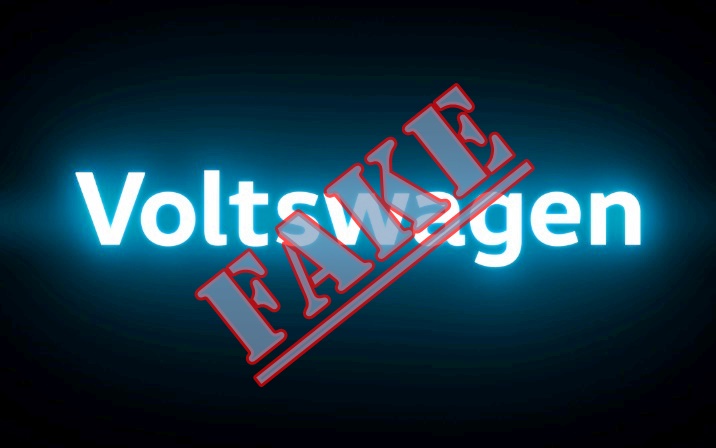
At first, it was hard to believe but because it was not April 1st, it did not occur to anyone that this might be a joke that car companies have been known to make on the day. Furthermore, it was a German company and surely the Germans do not have that sort of humorous behaviour – especially when it comes to a company name that has been in use for over 80 years and is very recognizable throughout the world? The logo can change with the times, and it did last year, but the name is something sacred.

But in the absence of any clarification, the name ‘Voltswagen’ as a replacement for ‘Volkswagen’ was widely believed and reported by the media. The reason given was to amplify the change to a new era of electrification for the company with the introduction of the ID.4 all-electric SUV. It was ‘a public declaration of the company’s future-forward investment in e-mobility’, according to the statement issued. The ‘partial’ release (which was at first thought to have been accidentally posted on the media website) said that the new name would come into use from May this year.

To make it more credible, an image of the ‘VOLTSWAGEN’ badge on a car was also shown while also suggesting that the models with combustion engines would continue to use the ‘VOLKSWAGEN’ brand name, which in German means ‘People’s Car’.

It was an exercise by the US subsidiary of Volkswagen and perhaps the bosses in Germany did not find it amusing as a statement came from Wolfsburg yesterday to clarify that it was indeed an early April Fools’ Day joke. The company had planned to ‘correct’ the matter by today (Wednesday), but things may have become too serious and before getting out of hand, a new statement issued confirmed that there will be no change of name. The fake press release has also been deleted so that a former US President won’t be able to use it to further attack the ‘fake media’ he hates.

Vw Social Distance
This modified brand logo was not fake, though. It was developed last year to help spread the message about social distancing necessary during the pandemic. The move was done through animations and images on social media channels and other media.


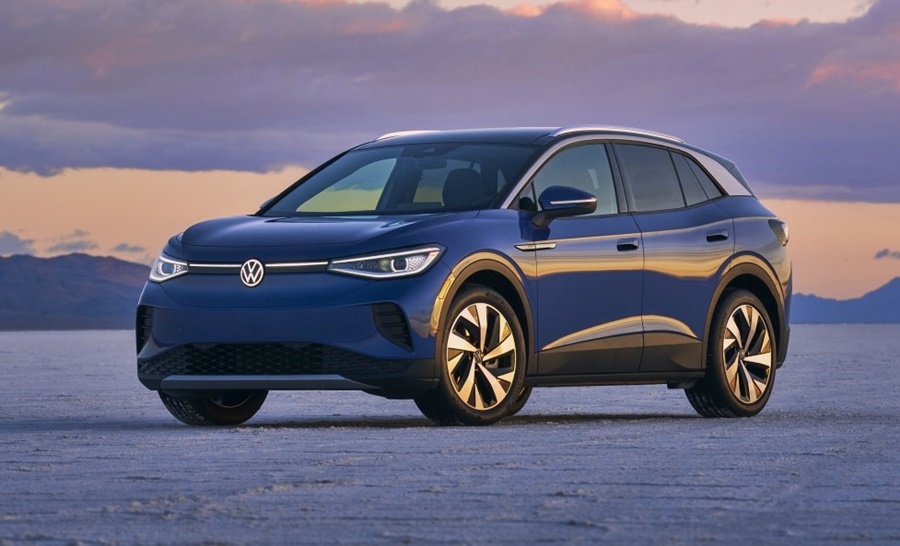
The all-electric zero-emissions ID.4.

The new ID.4 to be launched in the US market in the US is the first of a family of all-electric models to come from Voltswagen… sorry, Volkswagen. By 2025, the company expects to sell a million all-electric vehicles worldwide and by the end of this decade, the group line-up (which includes Audi, Skoda, Bentley, Lamborghini and Bugatti) will have over 70 zero-emission models.

Visit www.volkswagen.com.my to know more about Volkswagen products and services available in Malaysia.

Volkswagen unveils a new logo and brand design for new era

Visit www.bhpetrol.com.my for more information.

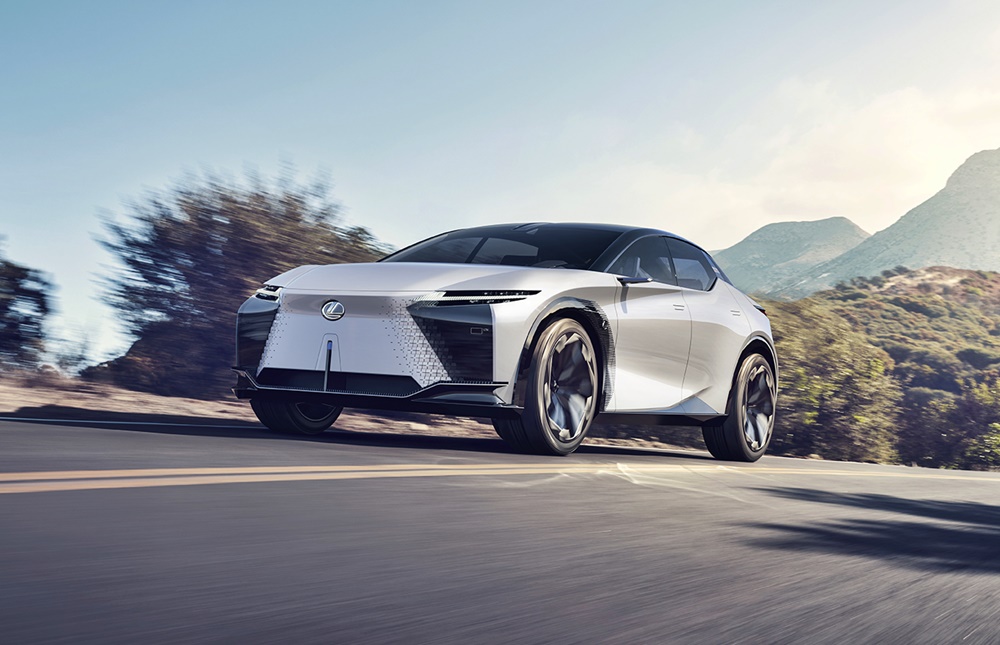
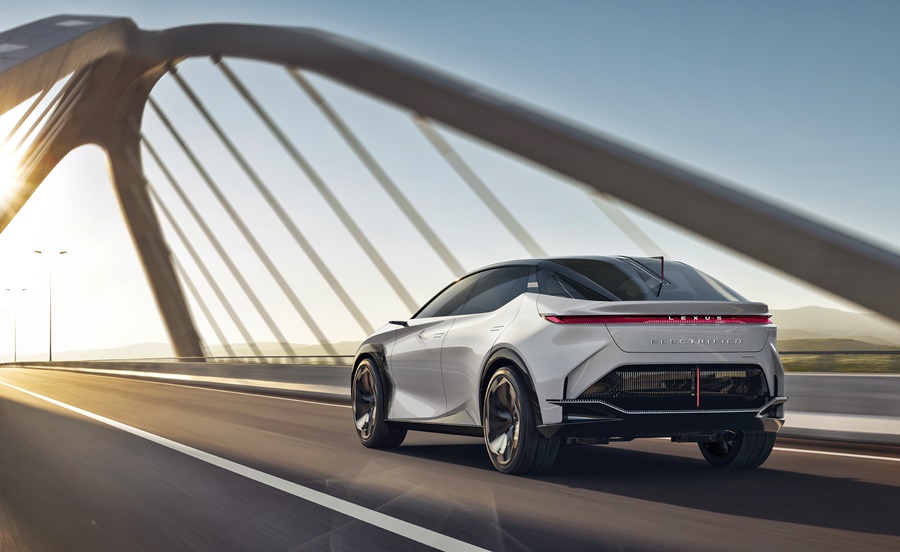
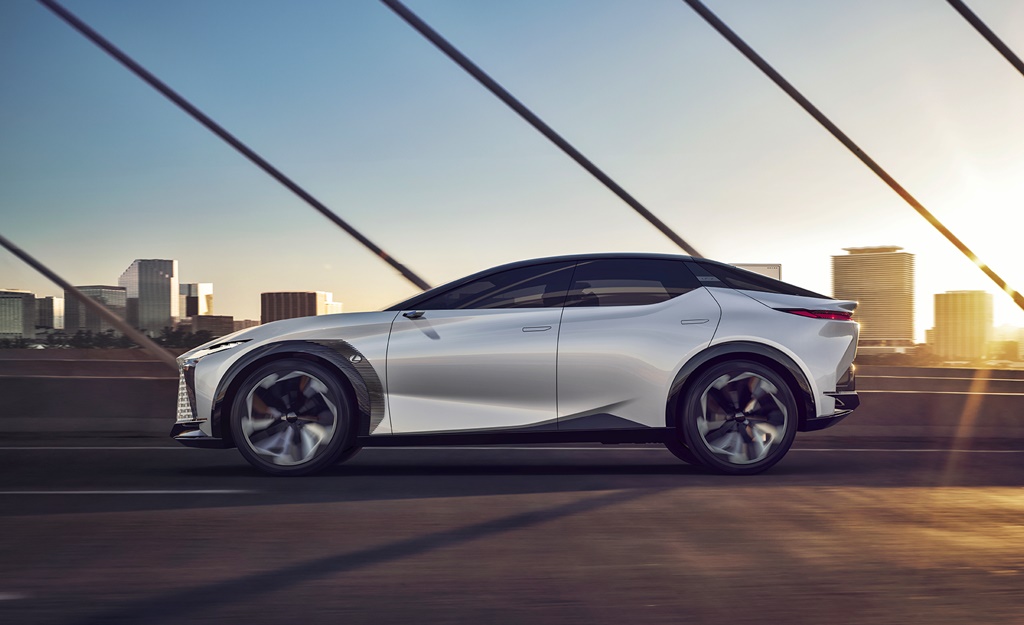
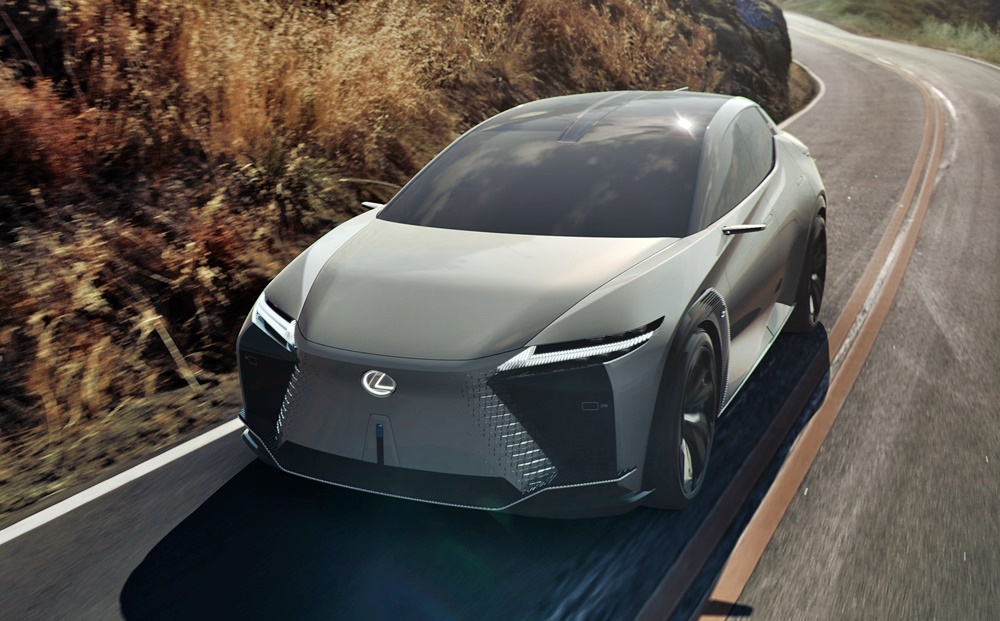
Over the next 4 years, Lexus will step up its electrification program and introduce up to 20 new models, with fully electric as well hybrid powertrains. As a preview of what is to come, Toyota’s luxury brand today presented to the world its LF-Z Electrified concept car. The conceptual BEV (Battery Electric Vehicle) incorporates driving performance, styling, and technologies envisioned for realization by 2025.

The LF-Z Electrified has a BEV-dedicated platform which features a new 4-wheel driving force control technology known as DIRECT4. This uses the instant responsiveness of an electric motor’s driving force to freely control a vehicle’s four wheels for superior and highly flexible driving performance that sets it apart from conventional vehicles. The system controls the distribution of driving force through the seamless orchestration and calculation of accelerator pedal application and steering wheel operation, resulting in powerful acceleration and cornering performance that aligns near-perfectly to the driver’s will.

2021 Lexus LF-Z Electrified Concept

The use of steer-by-wire eliminates the need for a mechanical connection through the steering shaft, resulting in a more direct response between steering operation and driving force. This enables the vehicle to turn with less steering angle―and more precision―in response to driving conditions.

Lexus Driving Signature
Although the LF-Z Electrified marks the move away from conventional combustion engines, future BEV models will still have the Lexus Driving Signature, a unique Lexus driving experience that aims for a linear response that is faithful to the driver’s intentions, including the feeling of seamlessly connecting deceleration, steering and acceleration in all driving situations.

2021 Lexus LF-Z Electrified Concept

The LF-Z Electrified achieves an ideal balance and inertia by optimally positioning the battery and motors. The electrification technology allows for innovative packaging and design, and raises the Lexus Driving Signature to an even higher level by significantly evolving the basic performance of the vehicle.

By orienting the battery assembly longitudinally under the floor of the vehicle, the chassis becomes more rigid and the car’s centre of gravity is lowered for improved dynamics. In addition, this layout  helps mitigate vibrations and unpleasant noises from penetrating the passenger cabin upholding the Lexus DNA of quietness and ride comfort.

2021 Lexus LF-Z Electrified Concept

With a 90 kWh lithium-ion battery pack, the LF-Z Electrified, which is said to weigh 2,100 kgs, is expected to have a range of up to 600 kms. The total system output of 400 kW/700 Nm will be able to accelerate it from 0 to 100 km/h in a projected 3 seconds and reach a maximum speed of 200 km/h.

Styling continues to evolve
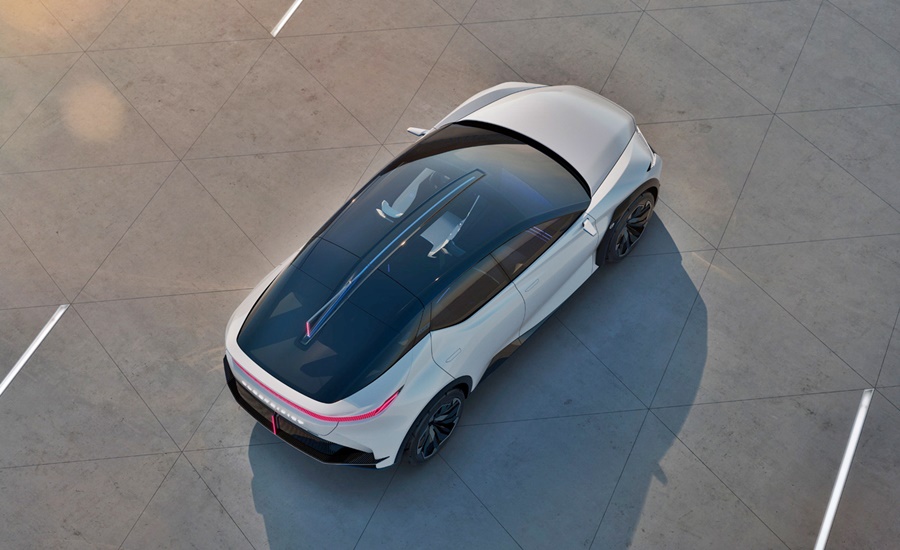
Measuring 4880 mm in overall length and 1960 mm in overall width, the LF-Z Electrified’s sculpted and emotional exterior strongly accentuates the uniqueness of Lexus design. It suggests the direction of the evolution of Lexus styling where the overall form, which starts low in the front and peaks toward the rear, is composed of a continuous silhouette centered on a smooth cabin.

Large-diameter wheels that transmit the power of the high-power electric motors to the road surface are situated as much as possible at the vehicle’s four corners for a wide stance with a low centre of gravity.

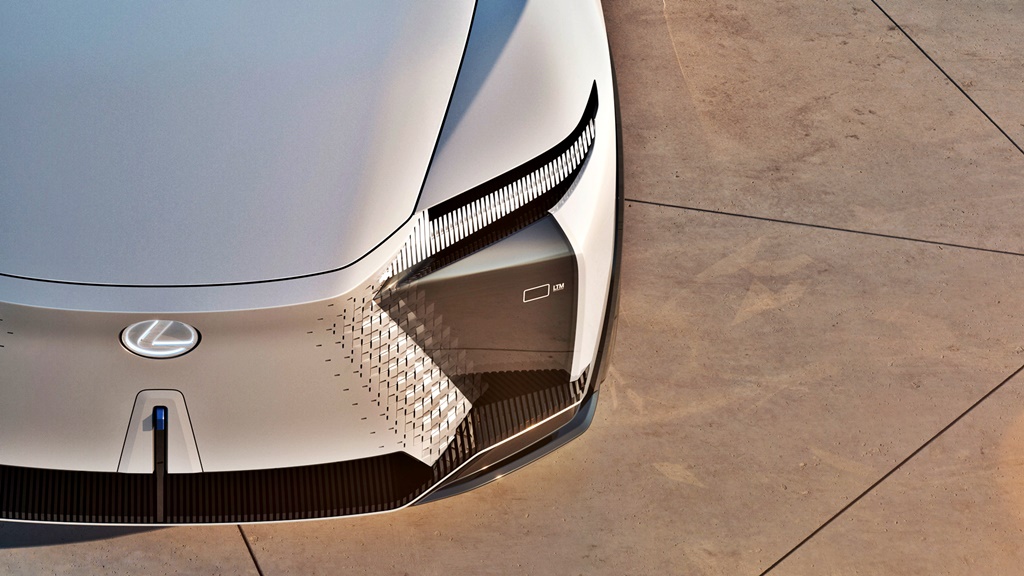
Lexus designers took up the challenge of evolving the Lexus design icon of the spindle shape into a spindle body as the overall body architecture in a new form of expression. The aim was to create a 3-dimensional design that transforms the form of the body itself into the icon of the Lexus brand and to continuously develop functional expressions and styling that keep abreast with the evolution of technology.

2021 Lexus LF-Z Electrified Concept

The use of DIRECT4, which freely controls the driving force of the four wheels, enabled styling that evokes the image of dynamic driving in which the distribution of driving force is linearly shifted. The accentuation of the doors fluently transitions from the front wheels to the rear wheels, which are surrounded by shiny, projecting, flare-shaped molding.

2021 Lexus LF-Z Electrified Concept

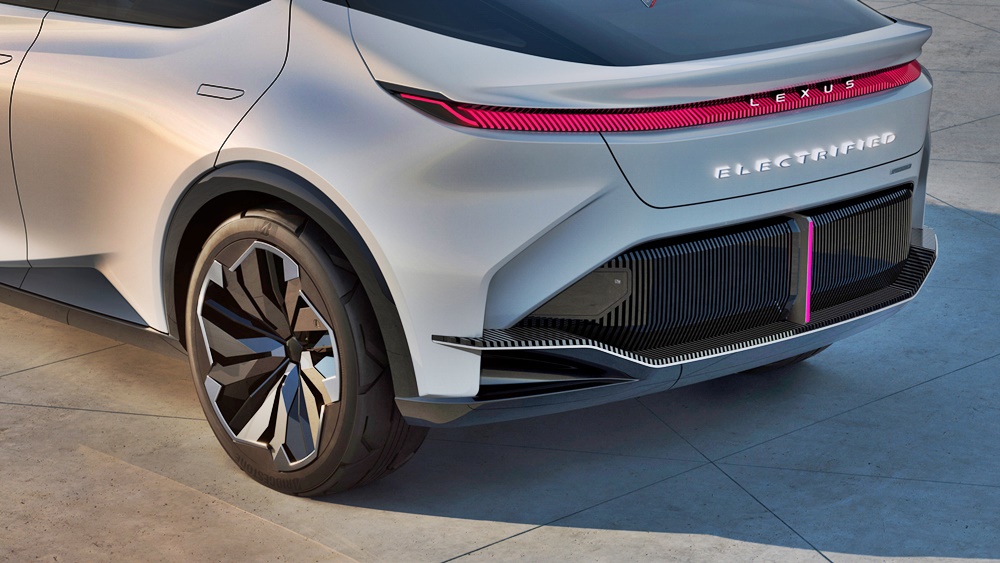
In the rear, a clean and simple horizontal design combines with the molding that emphasizes the projecting wheels to express a powerful stance in support of a torque-strong driving force. Also, horizontally displaying ‘LEXUS’ in the continuous slender rear combination lamp contributes to styling that, along with the front of the vehicle, symbolizes the next generation of Lexus.

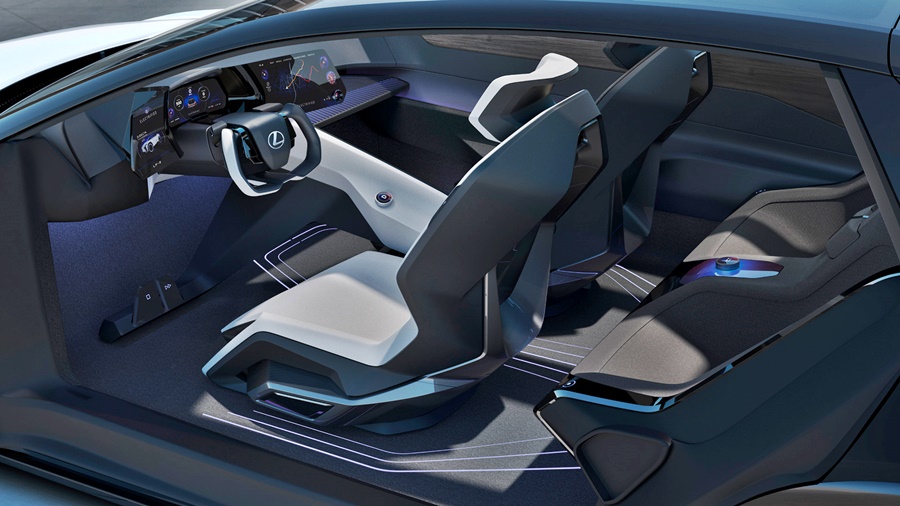
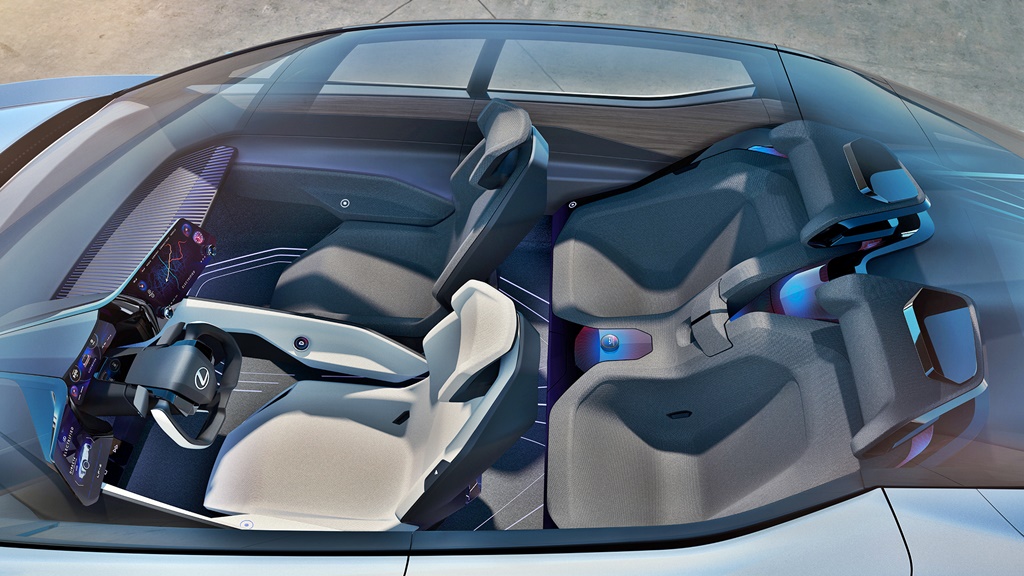
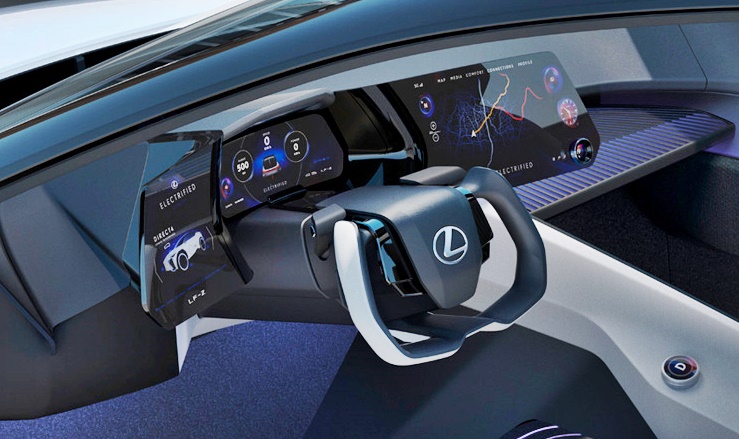
Tazuna cockpit with true Omotenashi
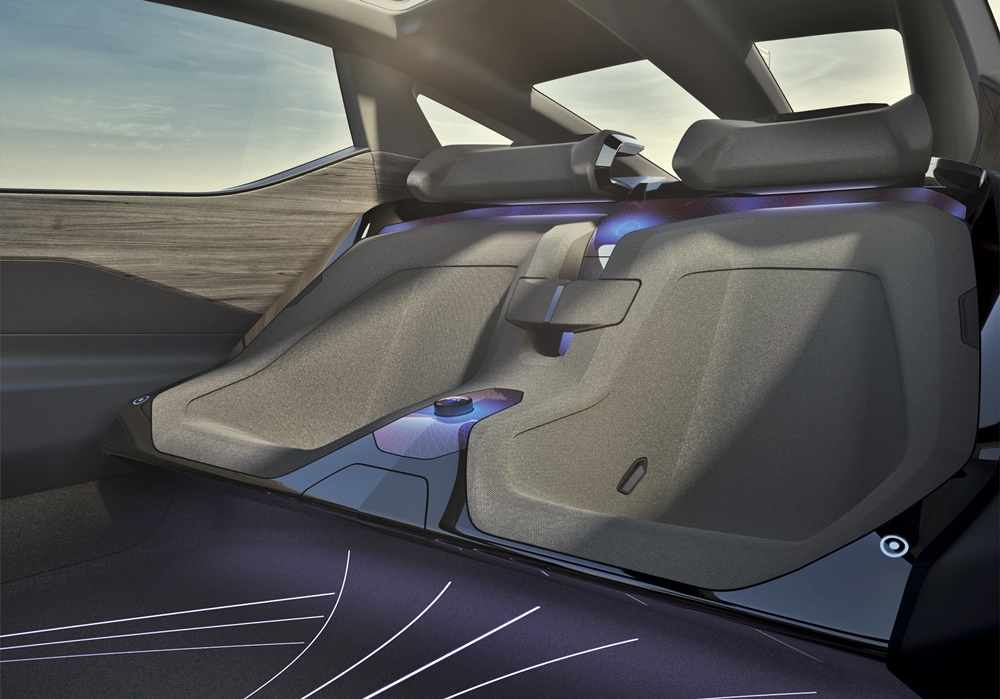
To provide a uniquely BEV driving experience, the interior is equipped with a ‘Tazuna’ cockpit and features an open and minimalist design. ‘Tazuna’ (Japanese for ‘rein’) refers to the relationship between horse and rider, who communicate through a single rein. While the cockpit is a key focal point, the low positioning of the instrument panel relative to the vehicle occupants and other measures are used to express a refreshing minimalism and a space that offers true Omotenashi (hospitality).

2021 Lexus LF-Z Electrified Concept

2021 Lexus LF-Z Electrified Concept

2021 Lexus LF-Z Electrified Concept

The entire interior has been made a clean and high-quality space by a form that seamlessly connects the cowl to the front doors and on to the rear doors. Also, a panoramic roof uses long plates of glass that bring about a feeling of openness, emphasizing the minimalist environment.

In the LF-Z Electrified, Artificial Intelligence (AI), which learns the driver’s preferences and behavioural characteristics, provides constant support to the driver. Voice communication contributes to improved operability while driving. The voice recognition system uses the latest AI to recognize, learn, and adapt to a driver’s habits and preferences, supporting with tasks such as determining driving routes and even making restaurant reservations. Ultimately, it becomes the driver’s ‘concierge’ and partner for every journey.

2021 Lexus LF-Z Electrified Concept

Lexus is also working with Mark Levinson, its long-time partner in the audio field, to develop a system which can reproduce a concert hall-like audio experience. With the next-generation sound management function, active noise cancellation facilitates interaction or privacy amongst passengers, providing a quiet and comfortable interior space.

2021 Lexus LF-Z Electrified Concept

New Lexus IS introduces ‘The Lexus Driving Signature’

COVID-19

Visit www.bhpetrol.com.my for more information.

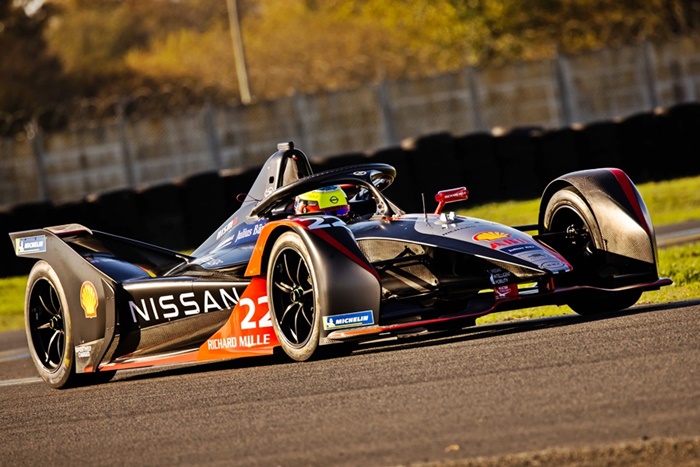
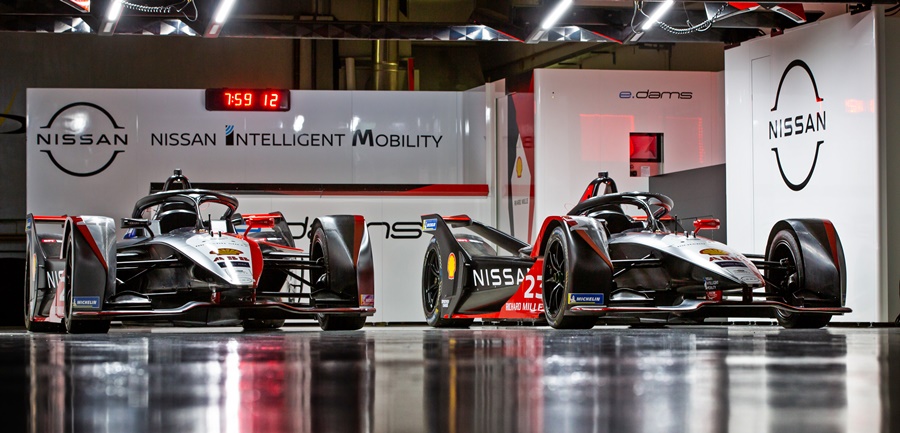
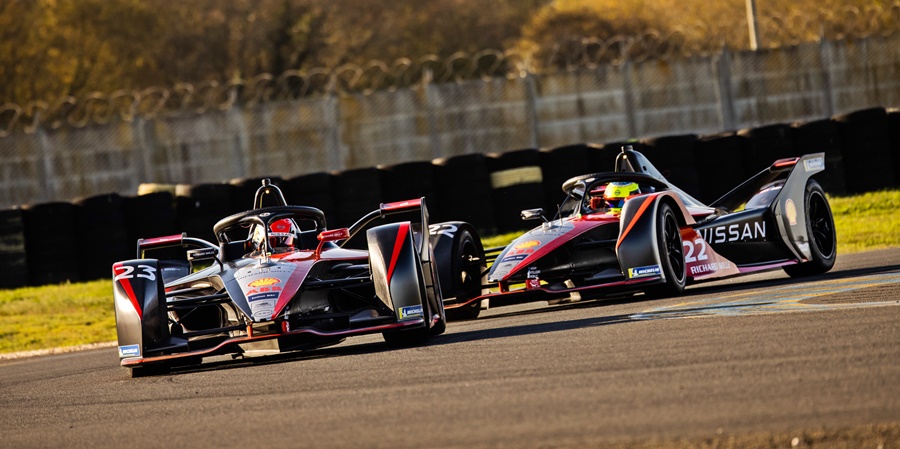
Given its strength in EV technology, it’s not surprising that Nissan has announced a long-term commitment to the ABB FIA Formula E World Championship series. The carmaker, which joined the all-electric single-seater series in season 5 as the only Japanese manufacturer, will participate to the end of season 12 which will take place during 2025 and 2026.

“Nissan’s commitment to the Gen3 era of the ABB FIA Formula E World Championship shows the strength of the all-electric racing series and its pursuit of success in the next phase. The new Gen3 cars will be faster and more powerful, and this constant evolution of racing performance that we continue to see in Formula E is great for the fans and the sport,” said Olivier and Gregory Driot, team principals of Nissan e.dams, added this joint statement:

The Gen3 era of the championship begins in season 9 – the 2022-23 season – and will feature even faster cars. Gen3 will bring performance and efficiency benefits including more powerful, lighter cars, faster charging and cost controls, all increasing the competitive and unpredictable racing Formula E has become known for.

In the first two seasons in Formula E, Nissan focused on its ’Phase One – road-to-track’ technical objectives, which took experience and learnings from the LEAF EV to develop the performance of the Nissan e.dams race car.

In its debut season, Nissan e.dams was the best qualifying team in the championship while, in its second season, the team powered to second place in the teams championship.

As the team races in the current 2020-2021 season 7 and looks toward the future, it embarks on ‘Phase Two – track-to-road’ of its technology transfer goals, where the technically fast-moving championship will help Nissan showcase features that aim to encourage consumer adoption of its EVs.

“We’ve achieved great results during our first two seasons and renewing our long-term commitment to Formula E is a key step,” said Tommaso Volpe, Nissan’s Global Motorsport Director. “We entered the sport with a ‘road-to-track’ technical transfer approach, and by extending our racing program through the Gen3 era, we have the opportunity to close the circle with ‘track-to-road’ technical transfer. We believe that, as one of the most global manufacturers involved in the ABB FIA Formula E World Championship, this sport is the perfect platform to promote our expertise in electrification and demonstrate our commitment to more sustainable mobility solutions.”

As part of its goal to achieve carbon neutrality across its operations and the life-cycle of its products by 2050, Nissan intends to electrify all-new Nissan vehicle offerings by the early 2030s. The company aims to bring its expertise in transferring knowledge and technology between the racetrack and road for better electric vehicles for customers.

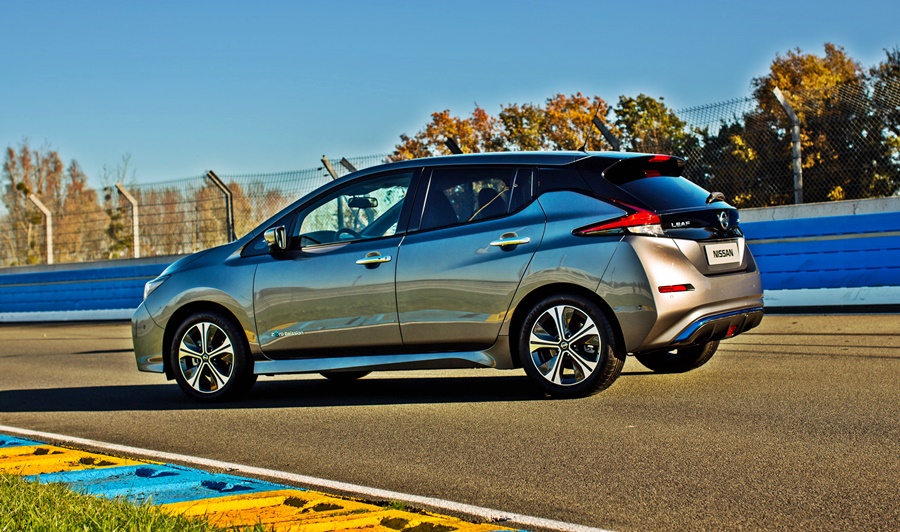
The latest Nissan LEAF EV

“Nissan’s vision for cars goes far beyond simply modes of transport,” said Ashwani Gupta, Nissan’s Chief Operating Officer. “We aim to design and build electric vehicles that transform the way communities connect and move, and inspire us all to work towards a sustainable society. For Nissan, Formula E helps us bring excitement, energy and the environment to the forefront as we deliver this vision of the future to an ever-growing, new, young and diverse audience.”

The first races of the 2021 season took place in Diriyah, Saudi Arabia, as a double- header event at the end of February, where Formula E raced for the first time as an FIA World Championship. It was also Formula E’s first night race, with the cars racing under floodlights. Nissan e.dams took 14 team championship points away from the event.

Season 7 of Formula E opens in Saudi Arabia with first-ever night races

Visit www.bhpetrol.com.my for more information.

Back in the early 1980s, Honda launched a small hatchback called the City (the original one, not the popular model sold today) and an ‘accessory’ which owners could get with it was a Motocompo motorbike. This was a tiny two-wheel weighing about 45 kgs, and it was designed to fit into the boot of the City with its handlebar and footpegs folded to form a rectangular package.

That Honda came out with such an idea was hardly surprising since the company was the world leader in motorcycles and had all sorts of two-wheelers and other type of motorised vehicles. While the car is just another model in Honda’s history, the Motocompo is fondly remembered and has a certain cult status to it in some countries.

The idea of carrying a motorcycle in the car was to provide mobility for ‘the last mile’ in a journey. The driver could park the car at a fringe carpark at the edge of the city and then ride the motorcycle in, an approach which would be ideal for places with traffic-restricted zones  like London and Singapore.

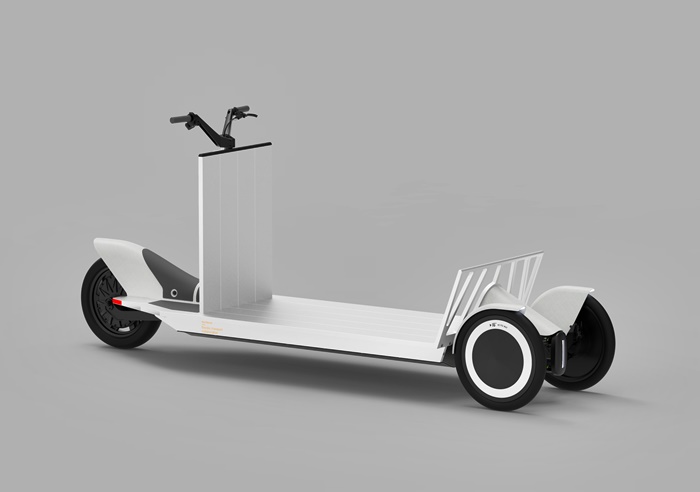
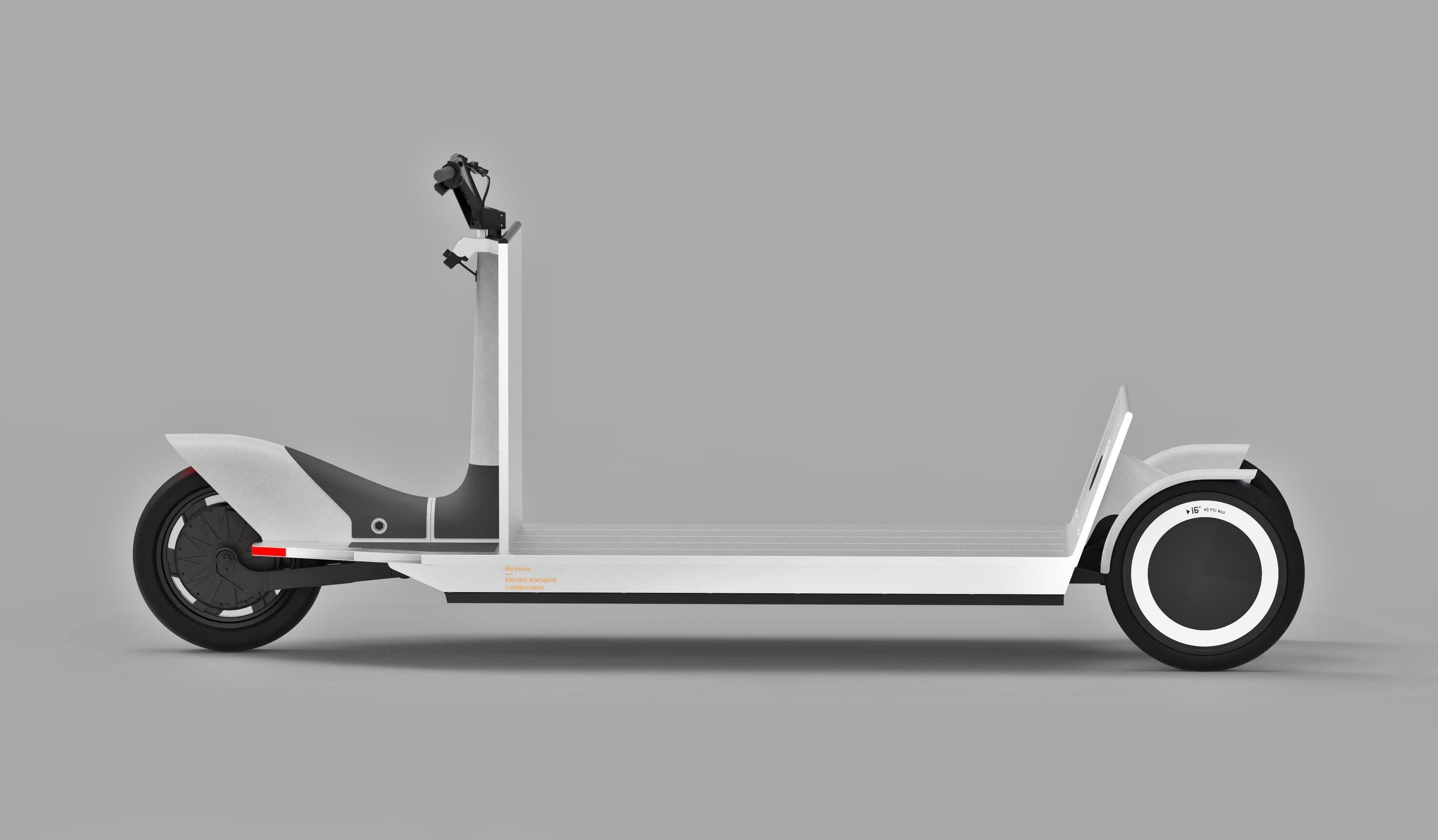
Now Polestar is also revisiting such a concept of mobility using a simple 3-wheeler with a project named Re:Move. The group behind the project saw the need to reimagine last-mile deliveries and how goods are transported within cities as the world looks to reduce reliance on combustion engines. Re:Move strives to become a catalyst for change, inspiring new thinking around electric mobility.

Viable and functional reality
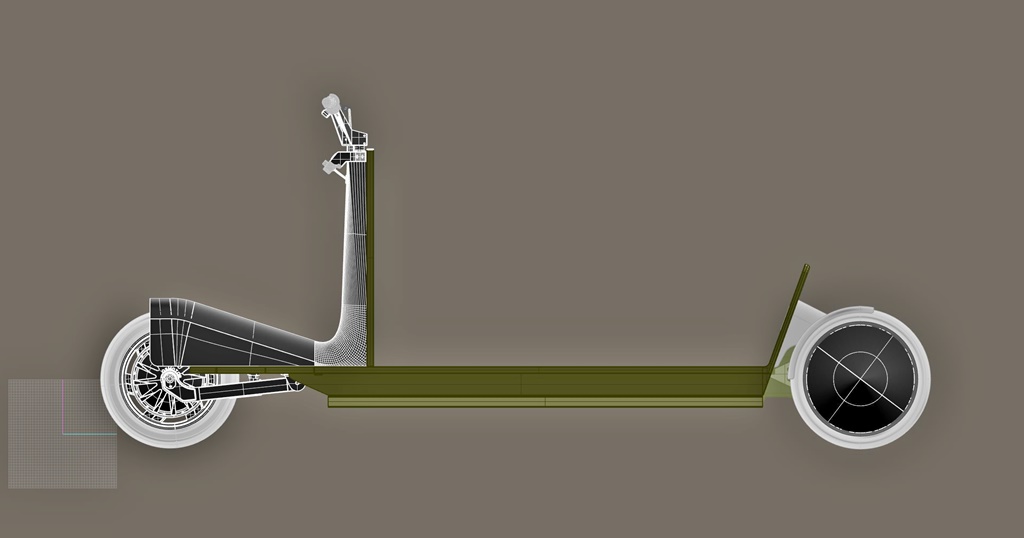
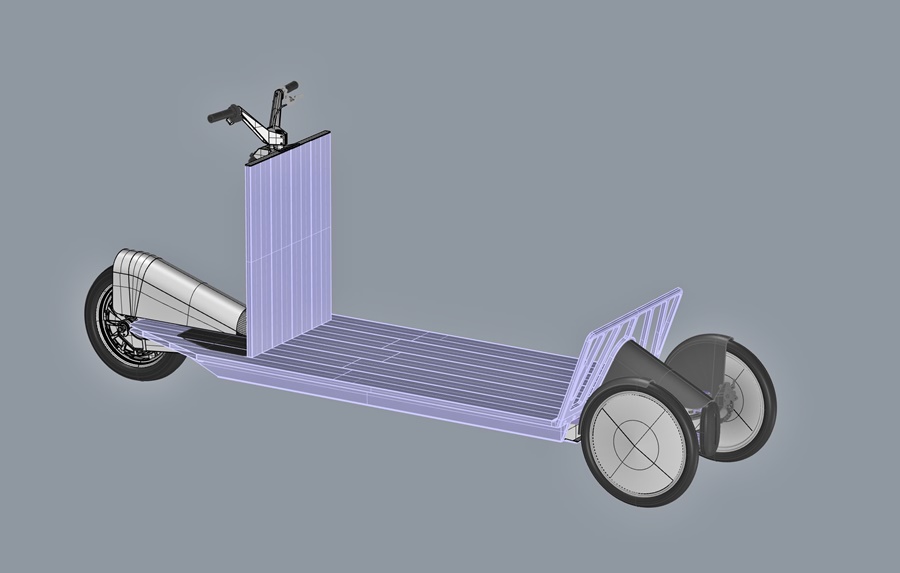
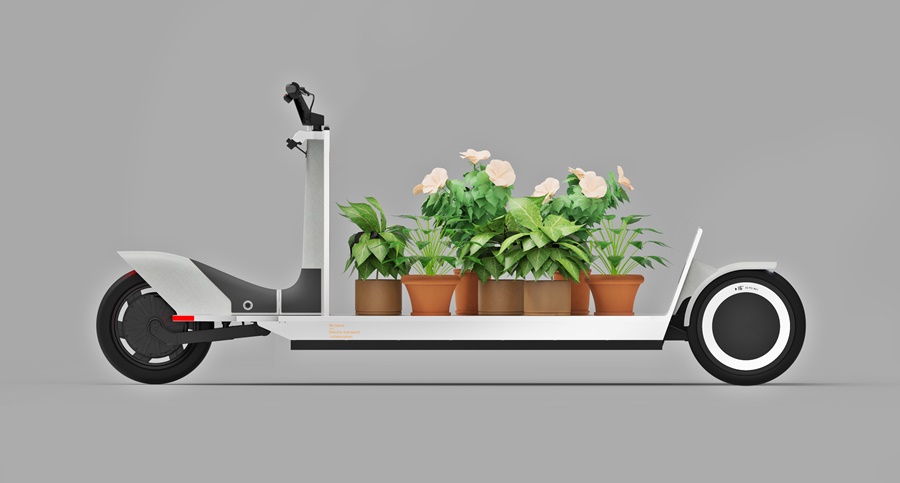
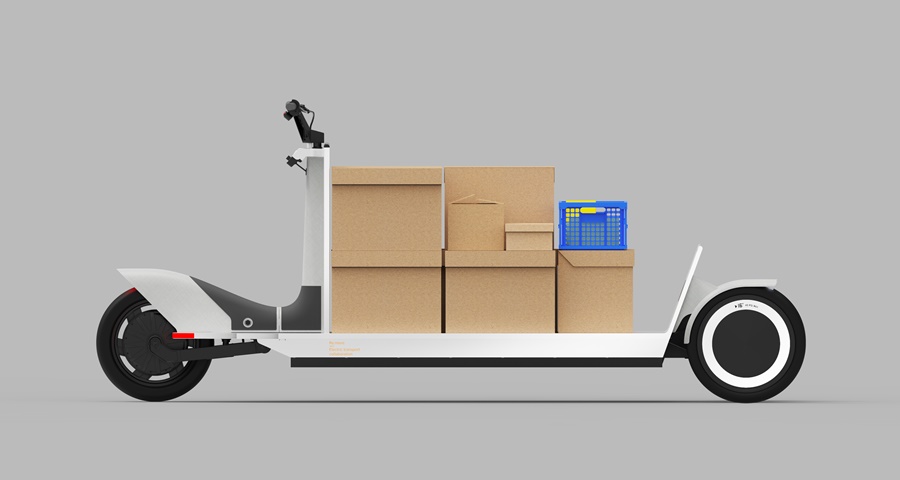
Designer Konstantin Grcic designed Re:Move to be a dynamic, three-wheeled urban ‘sled’, though it is not intended to be carried in a car but could be in a van. A team of e-mobility innovators and material engineers collaborated remotely to make his vision a viable and functional reality. Compact and mobile enough for most bike lanes, but big enough to handle a 275-kg payload, Re:Move defines a new vehicle category. Built with fully recyclable and low carbon aluminium, it will handle deliveries in a cleaner, quieter and kinder way.

“Weight is critical for e-mobility performance, and aluminium offers light weight, high strength and recyclability,” said Jonas Bjuhr, MD of Hydro in Sweden. “As we now see reductions of emissions in the use phase of cars, the next big task for car manufacturers will be to reduce emissions in the production of the vehicles”.

To overcome the complex engineering challenges of realizing his design, Grcic worked with the Hydro engineering team, Polestar’s design engineering lead at the company’s UK R&D facility. A working version of Re:Move will be unveiled sometime during the fourth quarter of this year but the story behind its development thus far will be presented at the SXSW (South by South West) Conference & Festival in Texas next week.

Also involved in the Re:Move project is CAKE, a Swedish company specialising in electric motorcycles. They provide their expertise in drivetrain and battery technology with a view that such a project, involving peak competence, truly accelerates the journey towards zero emissions.

Beginning of a journey
“This is only the beginning,” declared Thomas Ingenlath, CEO of Polestar which is owned by Volvo Cars and recognised as a vehicle manufacturer in its own right. “The electric drivetrain is only the first step; then we have to look at the whole supply chain and what materials we design with. This is so much more exciting than the last 20 years when designers were just making things pretty.”

Commenting on the design of the Re:Move, Grcic said: “The horizontal platform and the vertical shield is something you don’t see in vehicle design. This is how you’d build a table or a shelf. I think the simplicity and directness… the pragmatism… is nice. Good design has always been sustainable, because it’s lasting. Things that have a long lifecycle are sustainable.”

“The Re:Move project is an amazing example of what you can achieve when you bring together the right collaborators and they get behind a good, clear idea. There is just a real energy and sense of purpose in play. The engineering and material challenges are actually quite complex but at every turn, solutions have been found. Konstantin has responded to that and the design of Re:Move has rapidly evolved, becoming more compelling and dynamic,” said Nick Compton, contributing editor of Wallpaper (a British design publication), which commissioned the project.

Ninebot GoKart Pro Lamborghini Edition

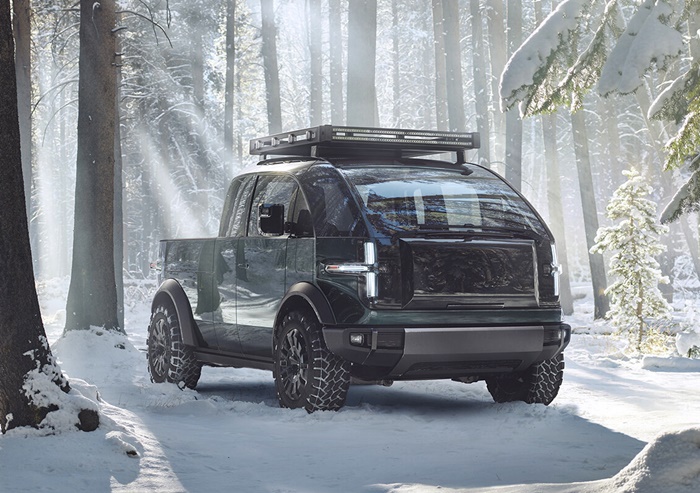
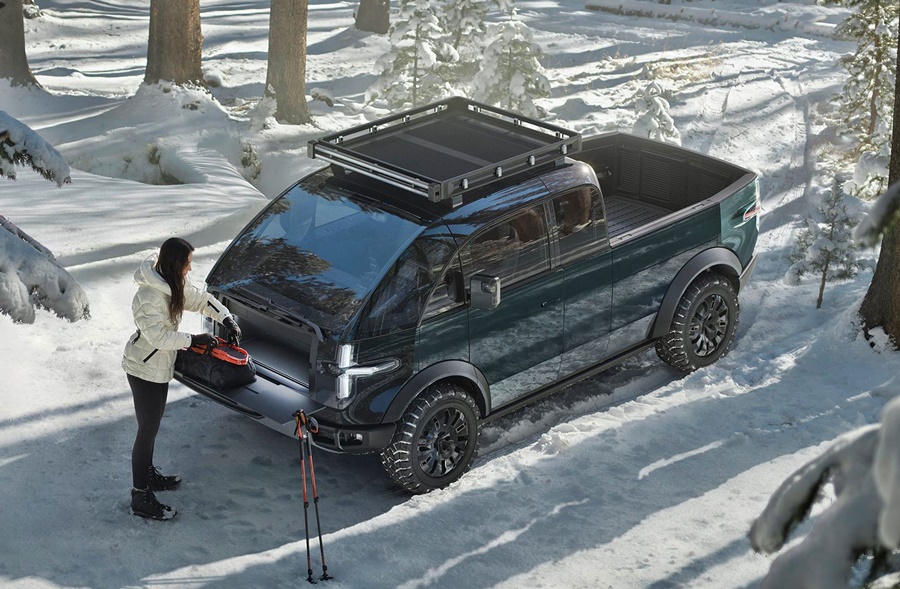
Canoo Inc., the American company which is working with the Hyundai Motor Group to develop a new electric vehicle (EV) platform, has also been working on its on purpose-built EVs with a proprietary and highly versatile platform architecture. The result of its efforts has been revealed in the unveiling of a fully-electric pick-up truck which will go into production for first deliveries beginning in 2023. By then, it won’t be the only electric pick-up as a few other companies have also said they will start delivering their EVs then.

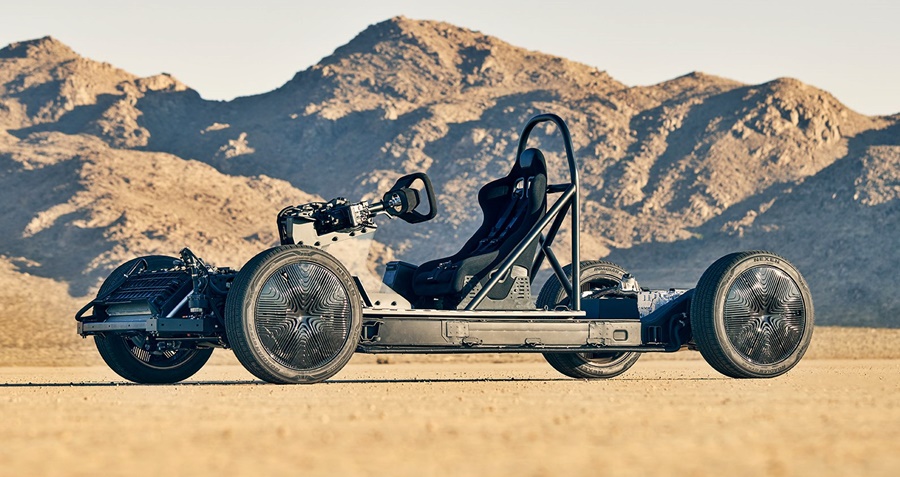
The pick-up truck is the third vehicle that will be based on the company’s proprietary multi-purpose platform architecture, enabling the accelerated development timeline. While traditional EV platforms have power units, shock towers and mechanical steering columns that take up space within the vehicle, Canoo’s EV platform functionally integrates all the critical components of an electric powertrain to be as flat and efficient as possible.

Canoo EV

Prototype Canoo EV platform which was run in desert conditions.

By incorporating steer-by-wire and other space-saving technologies, the thin platform, with no need for an engine compartment, allows a flatbed size comparable to America’s best-selling pick-up truck (the Ford F-Series) on a smaller footprint. This makes the vehicle easier to manoeuvre and more convenient to drive and park in any terrain.

“We are so passionate about building vehicles that can change people’s lives,” said Tony Aquila, Executive Chairman of Canoo. “Our pick-up truck is as strong as the toughest trucks out there and is designed to be exponentially more productive. This truck works for you. We made accessories for people who use trucks – on the job, weekends, adventure.”

Unique features
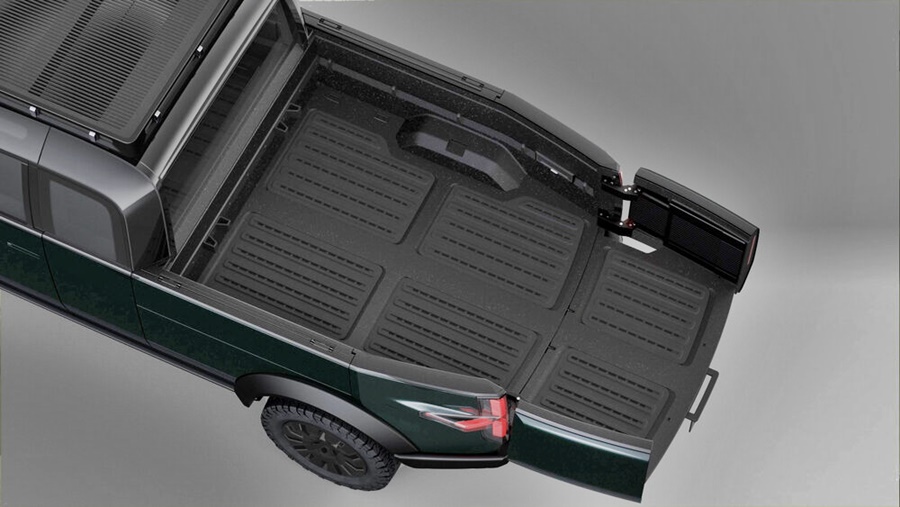
Canoo’s pick-up truck has several unique features to help customers do more with their vehicles. Among them is a pull-handle bed extension that can extend the standard 6-foot ((1.83 metres) bed to a fully enclosed 8 feet (2.44 metres), allowing big items plywood sheets to easily fit inside. The payload is rated at up to 816 kgs.

Canoo EV

The pull-handle bed extension also helps with loading and unloading the truck. When the bed is extended, a second layer of tailgate doors can be swiveled out. The bed-extension also houses a secondary lamp, containing all tail lamp functions, so the truck can be driven while the bed space is maximized. The extension also serves as a license plate holder.

Cargo Storage
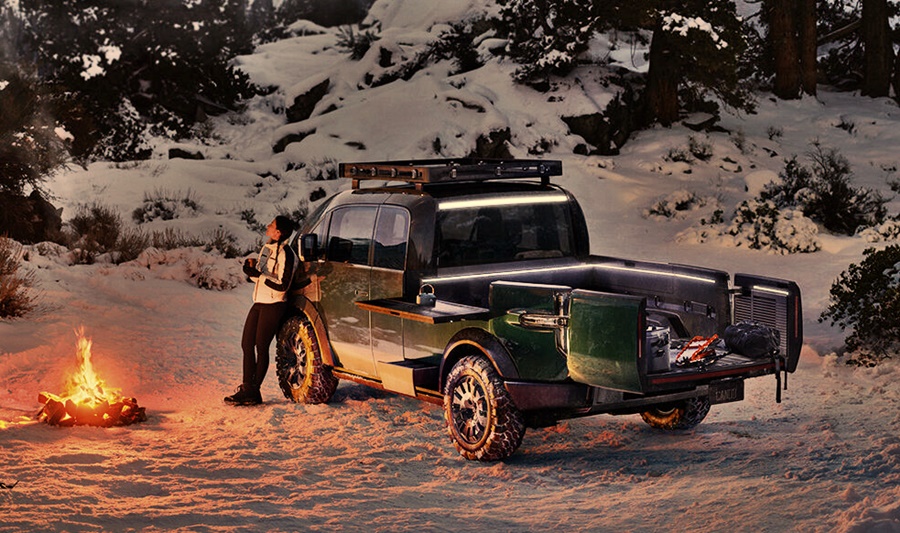
To maximise utility, there’s a fold-down worktable with electrical outlets. The table is extendable to allow a large work surface on the go, in addition to providing an area to put on gear before heading out exploring. Tools and other equipment can be stored in a cargo storage area at the front.

Canoo EV

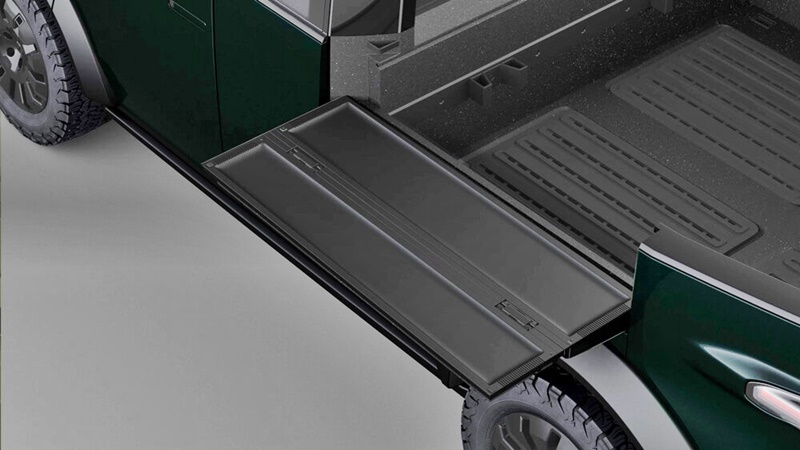
Both sides of the vehicle house built-in flip down tables in two expandable depths. Integrated in the side panels of the truck bed, each table can serve as a workbench with multi-functional power sources in close proximity.

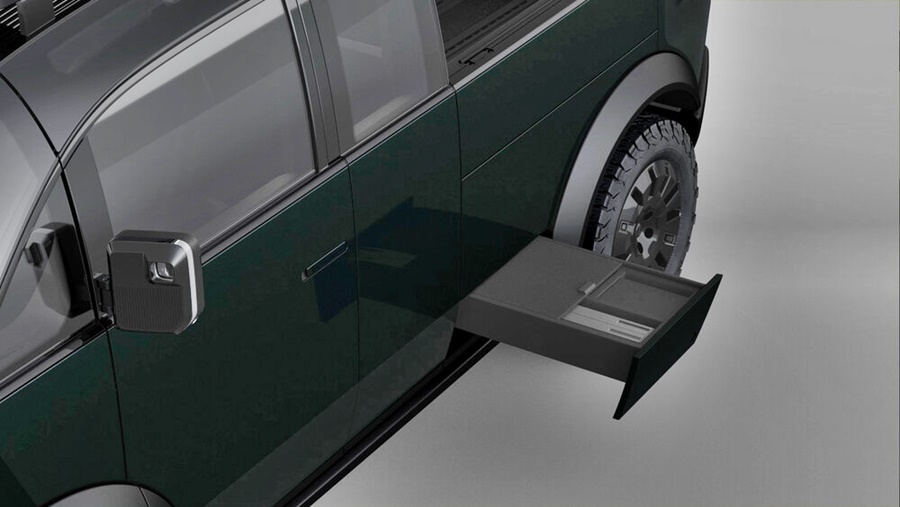
On the side of the vehicle, there is a hidden step to allow quick and easy access to the truck bed. Underneath this step is a flexible storage area for items such as a first-aid kit, cooler for snacks and drinks, lockable laptop storage and more. This space-efficient feature is only possible due to Canoo’s ultra-flat platform.

Canoo EV

Modular bed
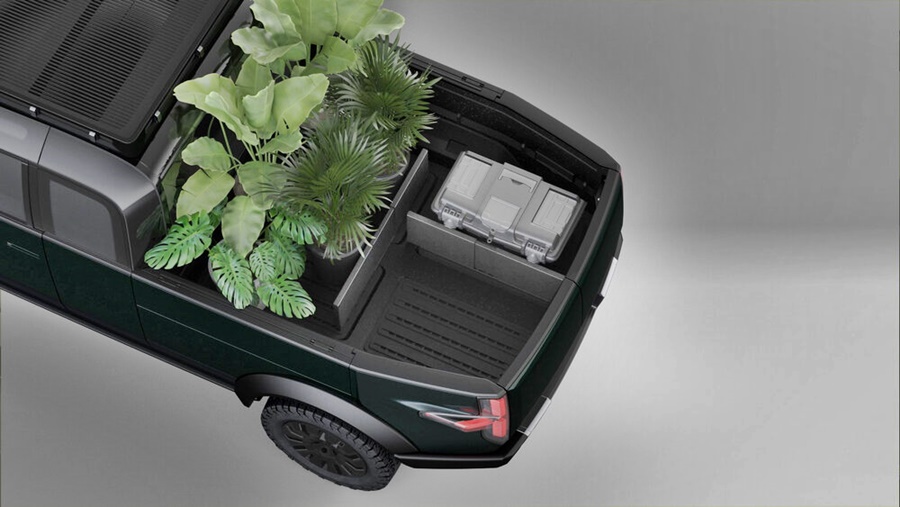
The truck bed is modular, thanks to Canoo’s space divider system designed to keep items separate and secure. The bed wall also incorporates modular wheel chocks to secure bikes and configurable tie-downs for ladders, large equipment and other materials.

The pick-up truck can double as a mobile powerplant too. Electrical power can be supplied all day for tools and devices, ideal for situations like natural disasters where power generating infrastructure might be non-functioning. The draw of electricity is said to have around 10% impact on vehicle range.

Canoo EV

Canoo EV

The third brake light can double as an overhead light to illuminate the cargo bed at night. There’s also perimeter lighting on all sides of the bed wall for added visibility around the vehicle.

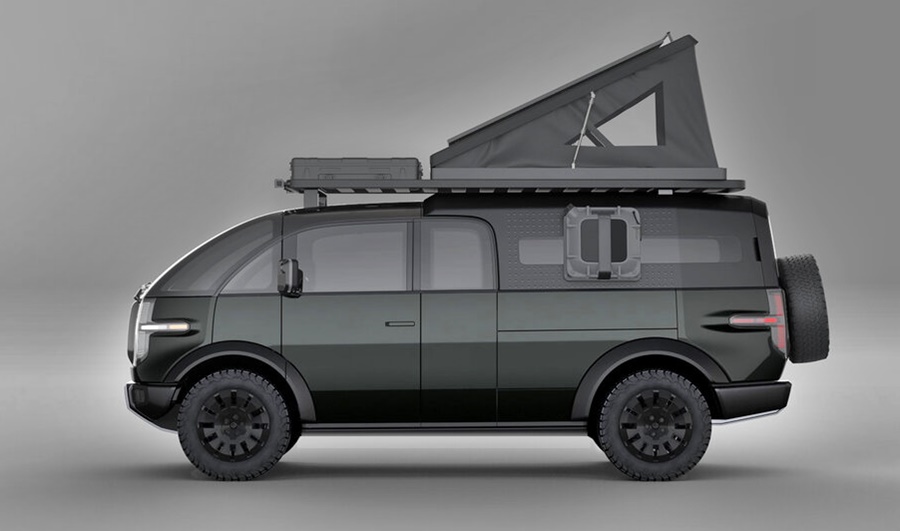
Customers can add roof racks which are in variable sizes for extra cargo storage when needed. The roof rack is easily accessible from the flatbed or via the sidestep. Alternatively, Canoo has a variety of camper shells to fit onto the bed for covered and enclosed accommodations while travelling around.

Powertrain configurations
The truck’s powertrain can generate pp to 600 hp/746 Nm torque with two electric motors. The battery pack is claimed to be able to currently provide a range of 320+ kms although this is likely to change as battery technology continues to advance.

Canoo EV

How big is it?
In standard form, the pick-up truck is 4677 mm long, which makes it shorter than a Ford Ranger (double cab) which has a length of 5426 mm. However, when the bed is extended, the overall length will be similar. So if the extended bed is not needed, the truck is about the same length as a Honda Civic, which would make it convenient to drive around in urban conditions.

While it is not as wide as a Ford Ranger Raptor, it is a bit wider than the average Japanese pick-up truck with an overall width of 1980 mm (bodywork). It sits on a wheelbase of 2850 mm and the roof of the cab is at 1920 mm with 18-inch wheels.

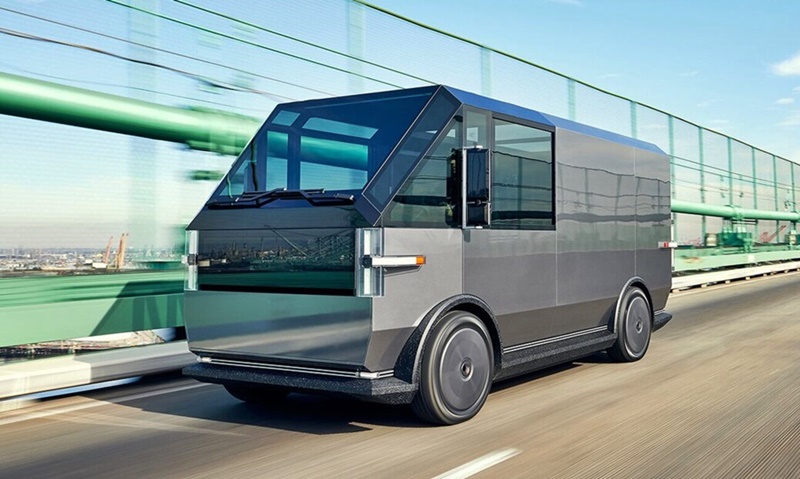
Canoo has already developed an electric delivery van using the same platform.

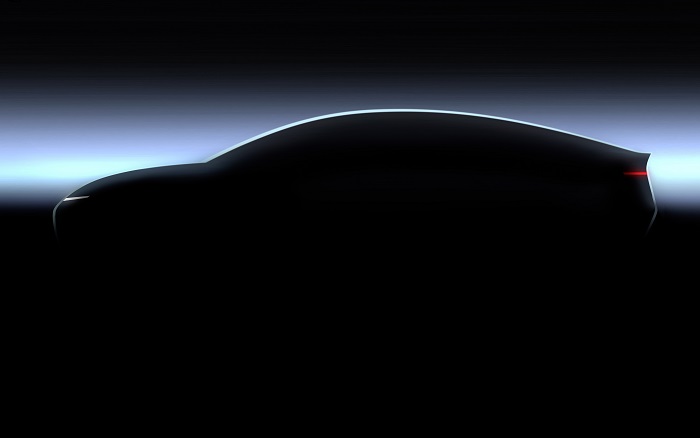
Volkswagen has been rolling out is all-electric ID. range of vehicles but by 2026 – that’s just 5 years away – the carmaker will go further with its electric vehicles. This will be the outcome of Project Trinity which will see an electrically powered sedan that will set new standards in terms of range, charging speed and digitisation. It will also have autonomous driving capabilities higher than what is currently available.

The project name ‘Trinity’ is derived from the Latin ‘trinita’ and stands for the ‘tri-unity’. Accordingly, Trinity stands for three crucial themes: a newly developed electronics platform with state-of-the-art software, the simplification of the supply structure, and fully networked and intelligent production at the main plant in Wolfsburg, Germany.

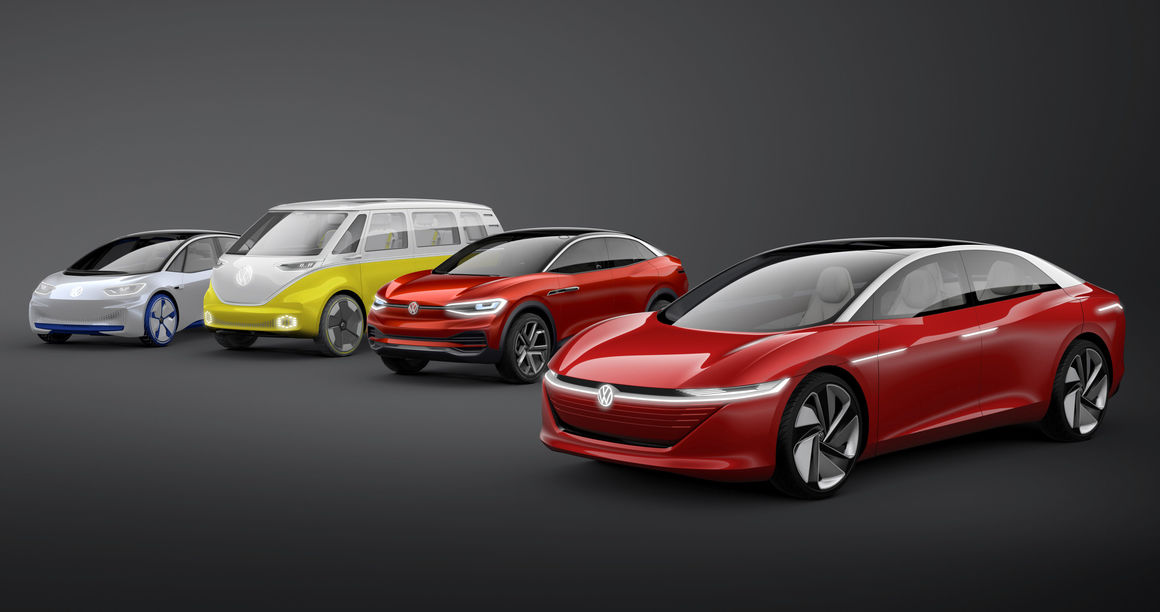
The all-electric Volkswagen ID. family is already appearing in showrooms.

“Trinity is a sort of crystallisation point for our ACCELERATE strategy, a lighthouse project, our software dream car,” said Ralf Brandstatter, CEO of the Volkswagen brand. “The newly developed vehicle architecture will set standards in terms of range, charging speed – charging as fast as refuelling – and digitalisation.”

Greater autonomy, less driver involvement
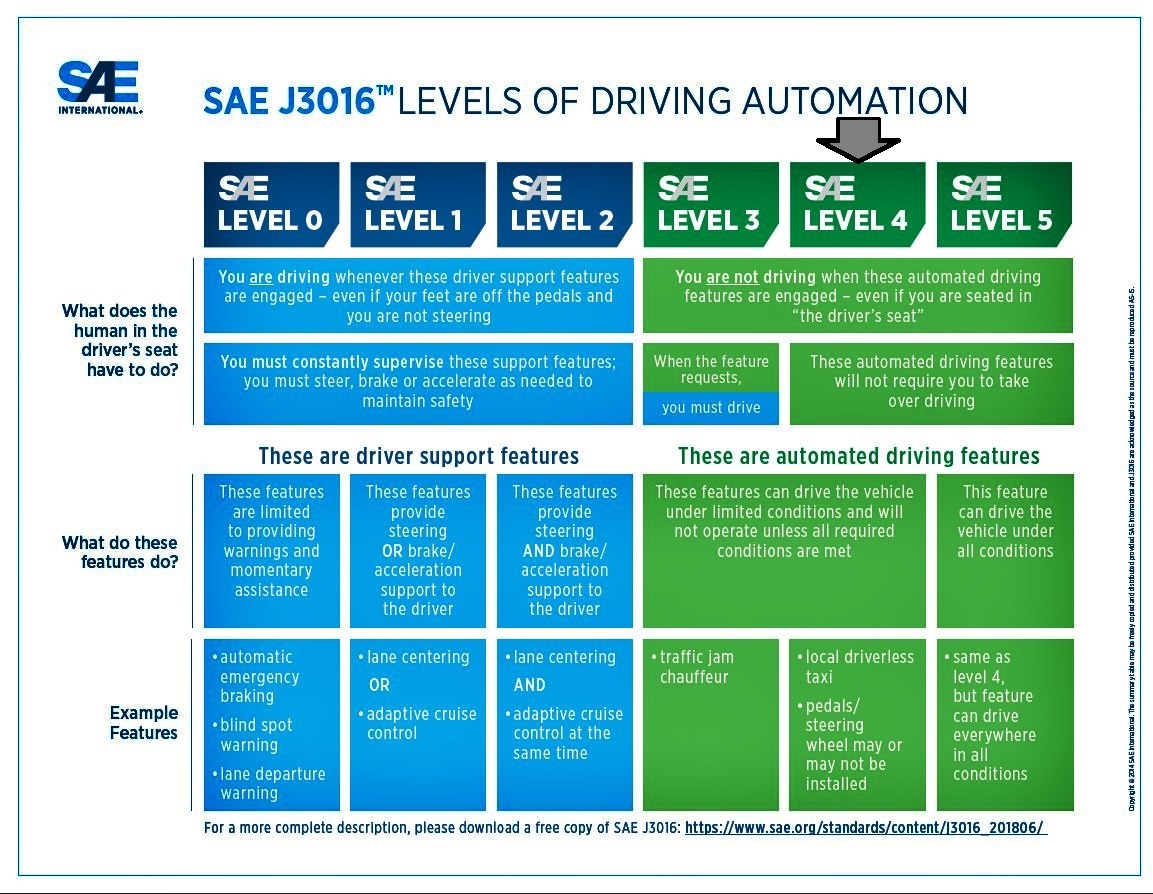
In addition, Trinity will make autonomous driving in the volume segment possible for many people. By the planned start of volume production in 2026, Trinity will already reach Level 2+ and be technically ready for Level 4. With this level, human interaction is not required so the driver does not have to maintain a view of the road ahead or surroundings. It is expected that the artificial intelligence will be advanced enough to assess more complex situations, and take action to avoid an accident. This is already available now with Automatic Emergency Braking but the driver still needs to give attention.

Autonomous driving for more people
“We are using our economies of scale to make autonomous driving available to many people and to build a learning neural network. In this way, we are creating the conditions for the continuous exchange of data from our vehicle fleet – for example, on the traffic situation, on obstacles or on accidents,” said Mr. Brandstatter. “Trinity thus gives people time and saves them stress. After a long highway trip, you arrive at your destination relaxed – because you have been driven by a ‘chauffeur’ to your vacation or to your home after work. Trinity therefore becomes a kind of ‘time machine’ for our customers.”

With the production of the new model, the Wolfsburg plant will become a showcase for state-of-the-art, intelligent and fully networked production processes. “We will completely rethink the way we build cars and introduce revolutionary approaches. Digitalisation, automation and lightweight construction play an important role here,” added Mr. Brandstatter.

Future vehicle models such as Trinity will be produced with considerably fewer variants, and the hardware will be largely standardised. The cars will then have virtually everything on board and customers will be able to activate desired functions ‘on demand’ at any time via the digital ecosystem in the car. This will significantly reduce complexity in production.

Volkswagen

New business models
By developing the automobile into a software-based product, Volkswagen is creating the conditions for new, data-based business models. Entry barriers to individual mobility are to be lowered while, at the same time, offering even more attractive usage packages.

Volkswagen intends to generate additional revenue in the usage phase – for charging and energy services, for software-based functions that customers can book as needed, or for automated driving. “In the future, the individual configuration of the vehicle will no longer be determined by the hardware at the time of purchase. Instead, customers will be able to add functions on demand at any time via the digital ecosystem in the car,” Mr. Brandstatter predicts.

Archive

Follow us on Facebook

Follow us on YouTube