
Piston.my

EV

Visit www.bhpetrol.com.my for more information.

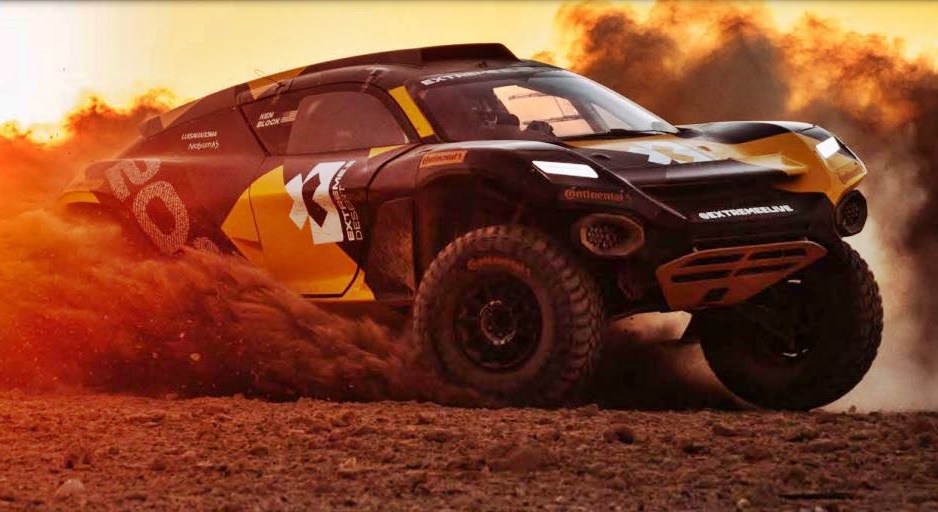
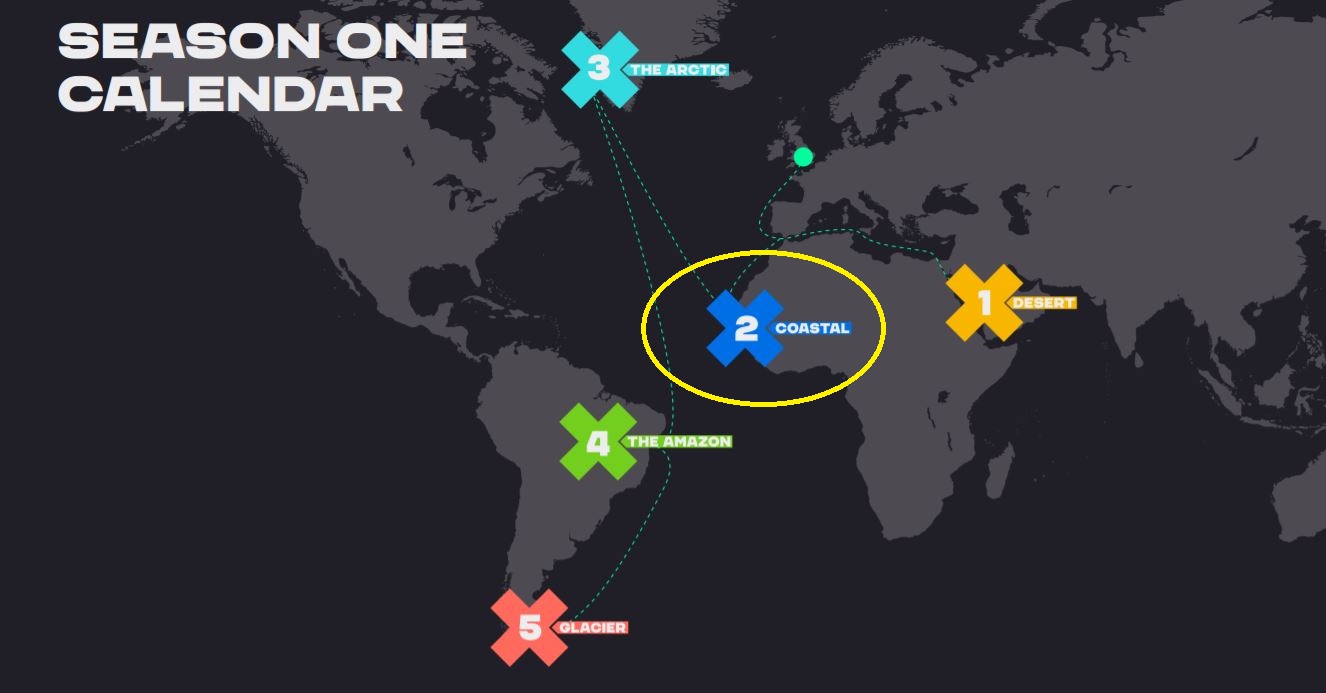
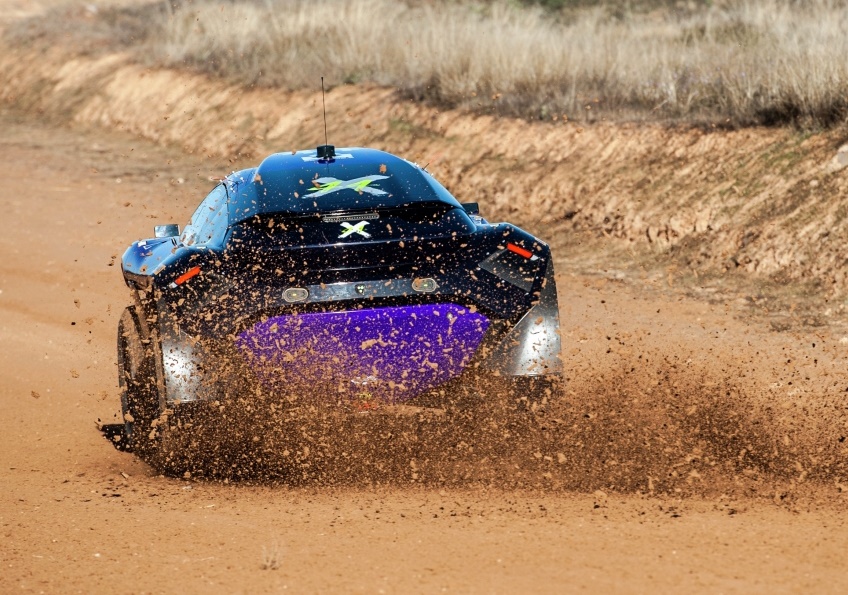
Extreme E – the unique off-road series for electric SUVs – will run its second round this weekend, this time in Lac Rose on the Senegalese coast of West Africa. Known as the Ocean X Prix, the event will be run along the shores of Lac Rose. It is situated 37 kms from the capital, Dakar, a name that was the finish of the world’s most famous cross-country rally – the Paris-Dakar – on numerous occasions between 1979 and 2007 (the Dakar Rally is still running, except that it is now in Saudi Arabia).

Out on the course, the drivers will once again face a mostly sandy terrain, though a very different challenge and location to the deserts of Saudi Arabia. Here the race will take to the existing tracks surrounding the lake, named after, and renowned for its striking pink colour, caused by algae that thrives within its highly-saline waters.
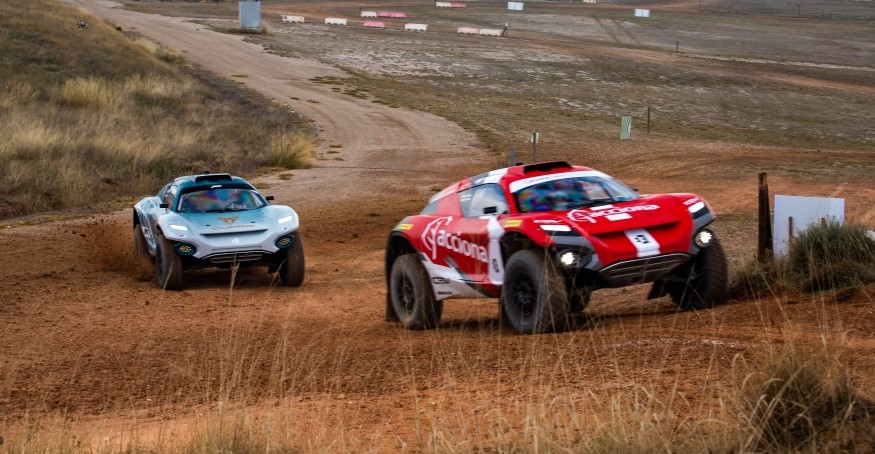
9 teams with dual-gender crews
Once again, 9 teams and 18 drivers – each comprising one male and one female – will compete but in a slight change to the Saudi Arabia race format, the Final will be a 4-car battle, with two teams from each of the two Semi-Finals progressing to the concluding race of the weekend.

Like the Desert X Prix, Qualifying consists of two rounds of time trials. The team starting order is decided by a draw for Qualifying 1 and Qualifying 2. All races feature two laps with the incorporated driver ‘Switch’ feature.
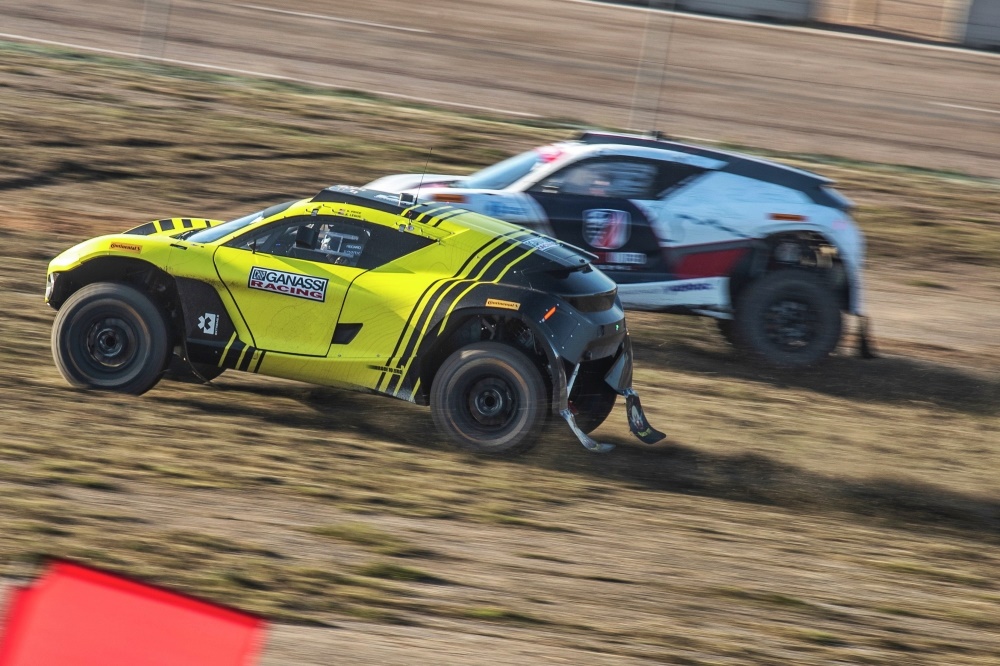
No clear leader yet
Rosberg X Racing (RXR) took victory in the inaugural X Prix last month but doesn’t have a clear lead as the top three teams are within 7 points of each other. So there should be a thrilling racing action as each team tries to score as many points as possible.

Teams can benefit from a ‘HyperDrive boost’ available to each driver on each lap of the race. Activated when the driver presses a button on the steering wheel, they will enjoy an extra push of continuous power for a few seconds.

New for the Ocean X Prix is the ‘Super Sector’ – a part of the course where the fastest driver in that section over the weekend will earn 5 points for their team. This ensures that whatever position the teams find themselves in, there is always an incentive to push to the limit as points are up for grabs.
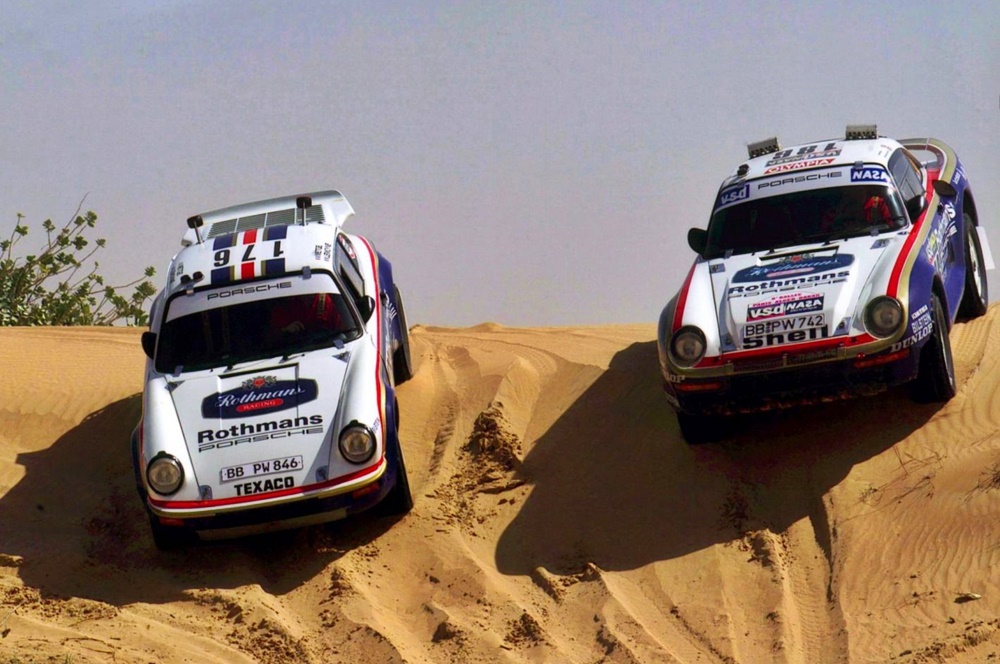
Each year, the famous Paris-Dakar Rally ended in Dakar until security concerns forced the organizers to stop travelling through the region.

“I am delighted to be back in Dakar, a place with a vast motorsport heritage, and I can’t wait to see our world-class line-up of drivers compete on this latest course we have devised. The Desert X Prix delivered some truly thrilling racing with a stunning backdrop and I’m sure Senegal will provide the same,” said Alejandro Agag, Founder and CEO of Extreme E.

“In Lac Rose, we find an area suffering at the hands of the climate crisis, which is the true reason we are here. It doesn’t take long upon arrival to see one of the biggest issues, plastic pollution, which is affecting the local community and its marine life. Through our Legacy Programmes, we are supporting the local community to make change, and I can’t wait to see it for myself and help where I can,” he added.
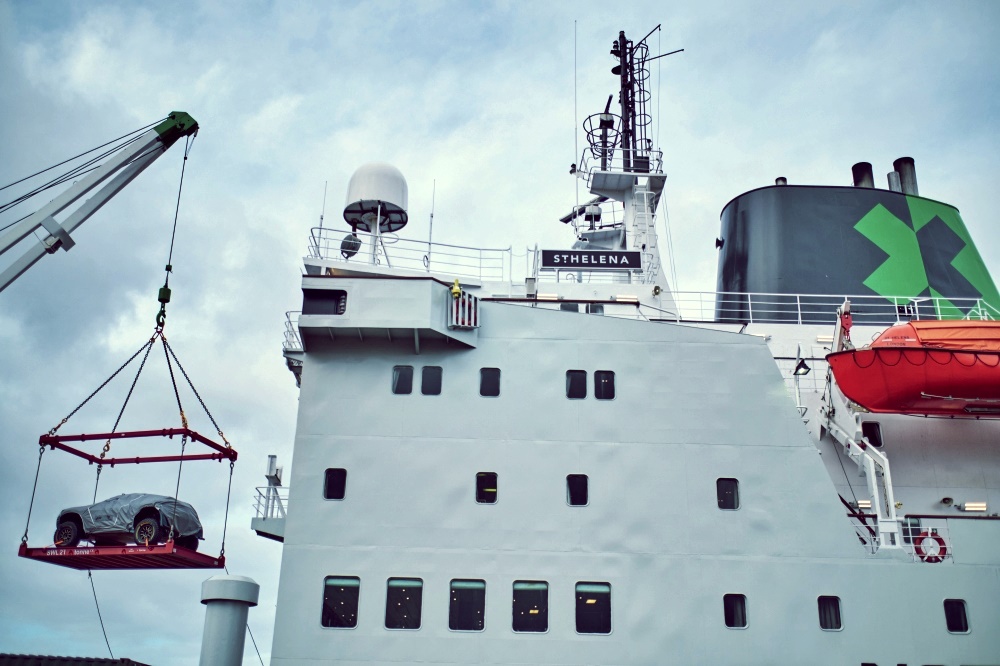
To reduce the carbon footprint of the event, a ship is used to transport the vehicles and event equipment to each location. The ship also serves as a floating laboratory for scientists.

Why Senegal?
Extreme X, while being a motorsport event, is unique in that it also uses its global coverage to create awareness of environmental issues. Senegal was chosen as one of the venues to support the fight against the climate crisis and the local communities suffering due to the many issues it brings.

In addition, plastic pollution is another major issue affecting Senegal, with the mountain of single-use plastic washing up on the shores growing day-by-day and threatening marine species and human health. This is something that not only impacts Senegal but also globally and if left unchecked, it’s estimated that 4 billion tonnes of plastic pollution will enter our land and oceans by 2050 under a ‘business-as-usual’ scenario.
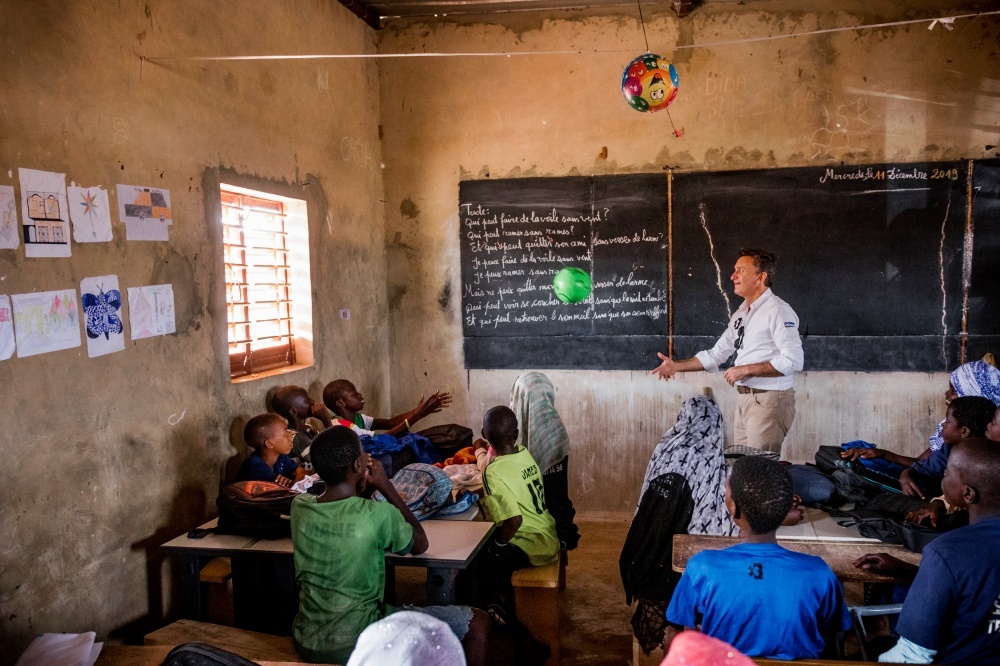
Extreme E will be supporting two projects in Senegal. For the first, the championship has teamed up with a local NGO to plant one million mangrove trees in the country across 60 hectares with the aim of reforesting mangroves, providing education to local populations and improving social cohesion.


The second project is the EcoZone Project, a living lab that addresses the Lac Rose community’s primary needs while preserving the environment through experiential learning, regenerative agriculture and a circular economy. As part of this, the EcoBrique Challenge was launched which tasked the community to create bricks for construction from plastic waste.

Shakedown and qualifications will be aired through Extreme E’s official website (www.extreme-e.com and social channels and the Finals will be shown in more than 180 countries by 75 broadcasters.
Rosberg X Racing team wins first round of the new Extreme E electric off-road series (w/VIDEO)


Visit www.bhpetrol.com.my for more information.

Although Suzuki is well known for motorcycles, its first motorised vehicles were actually cars and that was way back in the late 1930s. It only began making motorised bicycles in the 1950s and went back to making cars in the 1960s and accumulated experience in 2-wheelers and 4-wheelers.

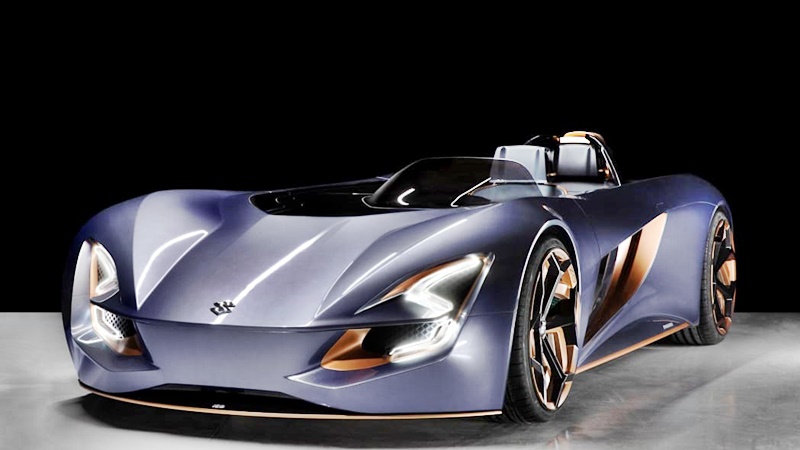
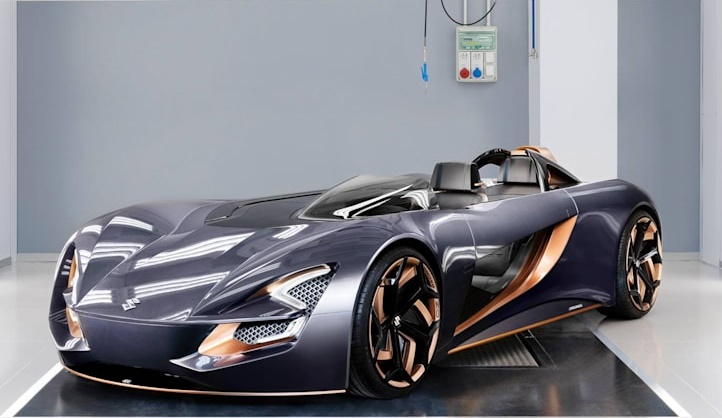
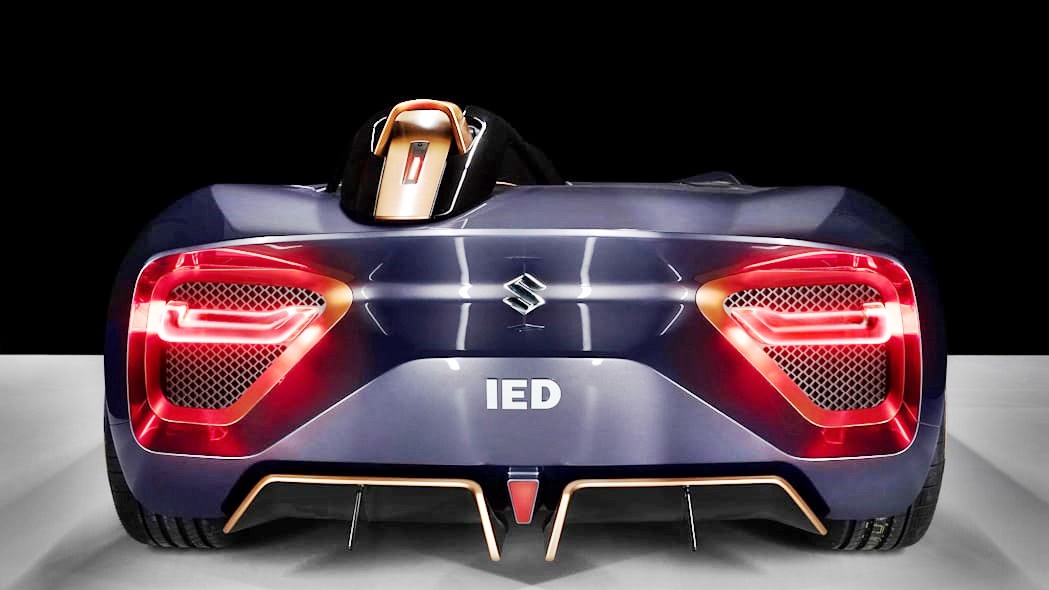
So it’s not surprising that the Misano concept, a design project by 24 students at Istituto Europeo di Design (IED) in Turin, Italy, in collaboration with the Japanese manufacturer is a car that has inspiration from motorcycles. Motorcycle racing fans will, of course, know that the name is also that of a racetrack in Italy.

2021 Suzuki Misano Conceot

Only 1 metre at highest point
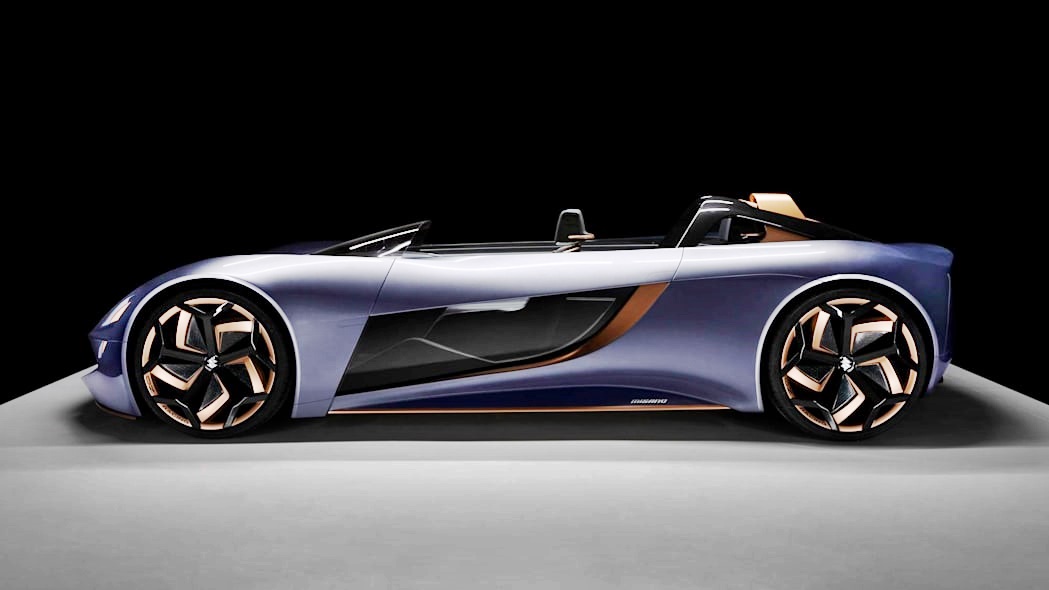
The Misano concept is around 4 metres in overall length and is just 1 metre above the ground at its highest point (which is the top of the roll-over hoops). The topless design adopts the classic barchetta silhouette which gives very good aerodynamics but what is unusual is the tandem 2-seat layout – like a motorcycle.

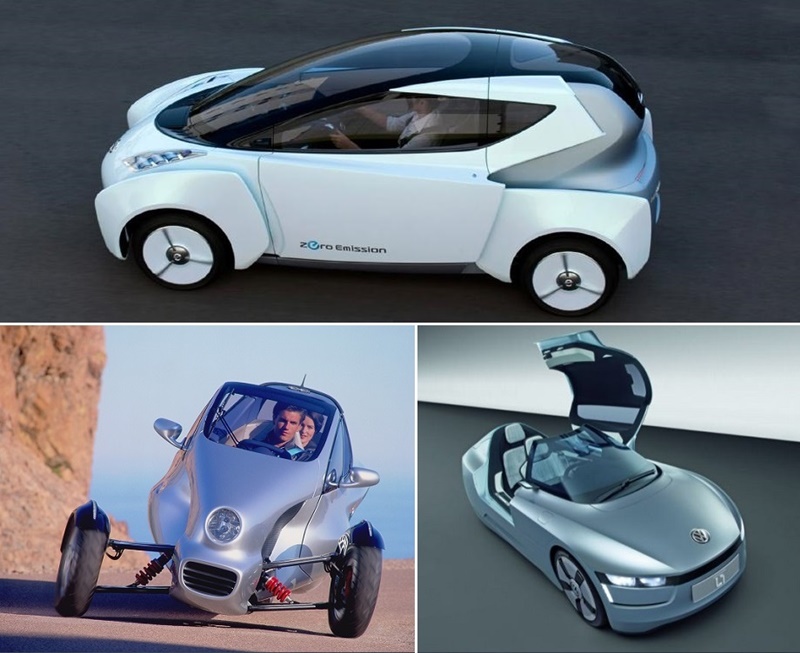
It’s not the first concept car with the passenger sitting directly behind the driver – some others that come to mind are the Volkswagen L1, Nissan Land Glider and Mercedes F300 Life Jet.

Other concept cars with tandem seating – Nissan Land Glider (top), Mercedes F300 Life Jet (above left) and Volkswagen L1 (above right)

Offset seating area
Unlike most of the other concepts, however, the width of the Misano is more generous with space. The seats are positioned on the left side while the right side of the cockpit us used for luggage space and to accommodate a battery pack.

Access is through the single door on the left side of the car which has a glass panel to give the driver a feel of being closer to the road. The windscreen is also motorcycle-inspired, shielding the driver’s side but not extending the full width.

2021 Suzuki Misano Conceot

2021 Suzuki Misano Conceot

No steering wheel
Another motorcycle element is the steering control. Instead of the conventional steering wheel and pedals, there is a control stick to ‘merges the adrenaline rush of two wheels, with the driving experience of four’, according to the designers. Today’s generation will probably be fine with that, having grown up on computer games and joysticks.

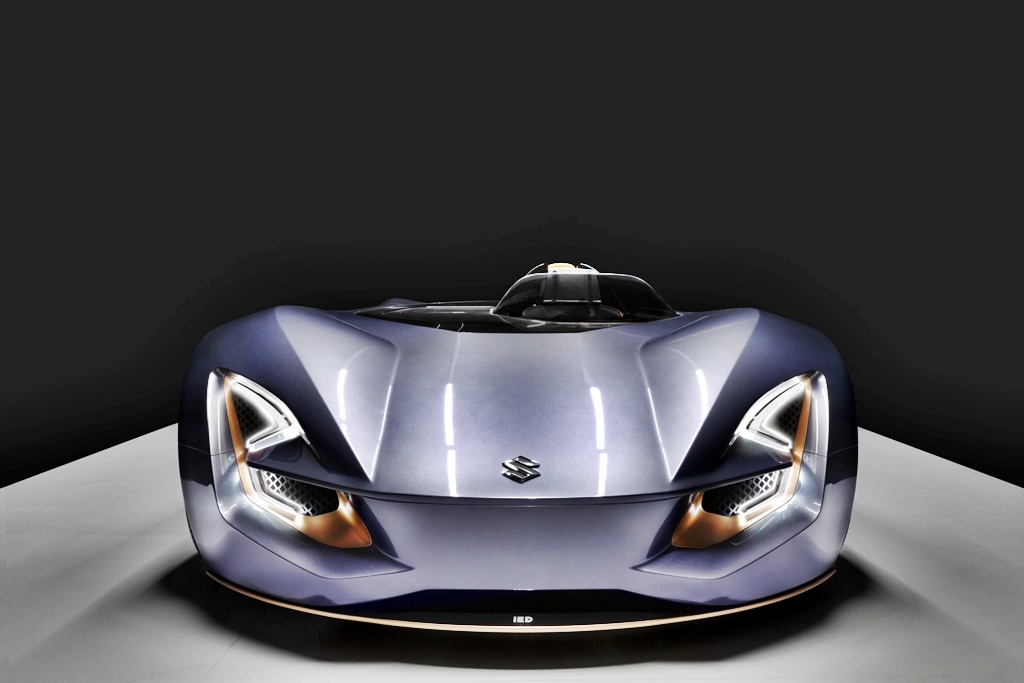
Eye-catching S-shaped headlights on either side of the nose and there is no grille since the Misano Concept is meant to be electrically powered. Powertrain details are not available suggesting that this is nothing more than a design study – which is very appealing.

The concept car is currently being  shown to the public at Mauto, the Italian national automotive museum in Turin.

2021 Suzuki Misano Conceot

Wild One MAX – the R/C model that you can drive!

Carbon dioxide (CO2) is known to be one of the major causes of climate change, causing global warming. However, it is a by-product of modern industrial processes and unavoidable. To address the issue of rising carbon dioxide gas in the atmosphere, carmakers (as well as manufacturers in other industries) aim to become ‘carbon-neutral’ in the near future. This means that their processes, products and activities, while generating carbon dioxide, will be balanced with strategies that offset the CO2 generation to achieve net-zero emissions.

The approach most commonly being adopted, at least as far as the products are concerned, is to stop making and selling motor vehicles with internal combustion engines (ICE) that have been major contributors of carbon dioxide and other undesirable gases in the environment. Some have announced a time-frame for this approach, after which they will not sell models with ICE or, in some cases, models with only ICE (meaning they will still have hybrids). These companies are investing heavily in electric vehicles (EVs), powered by battery packs or fuel cells.

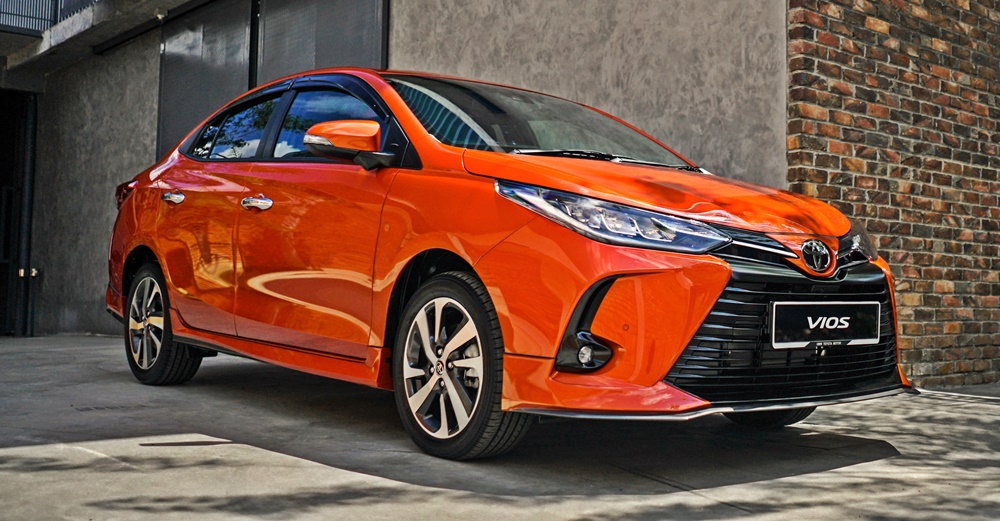
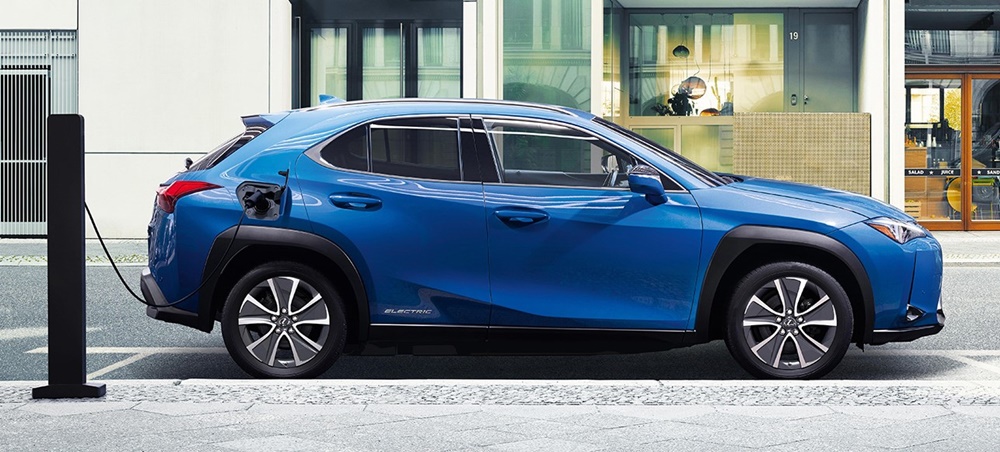
Toyota does not plan to completely stop selling models with petrol or diesel engines in the near-term but, at that same time, it already has a growing line of battery electric vehicles (below) for markets that want such vehicles.

Committed to carbon neutrality by 2050
Toyota is one of the companies firmly committed to carbon neutrality by 2050. However, the company’s strategy does not entirely focus on electrification of its products to the extent that future models will no longer be powered by ICE in the near-term. In time, it may decrease the amount of development of totally new ICE powertrains as EV acceptance in the market rises.

The thing is, advanced countries have developed the infrastructure to support EVs, so consumers are assured that owning an EV is not going to be inconvenient. Apart from widespread availability of public recharging stations, some countries also offer incentives to those who buy an EV. As a result, some countries in Europe already see EVs accounting for a large proportion of new vehicle sales.

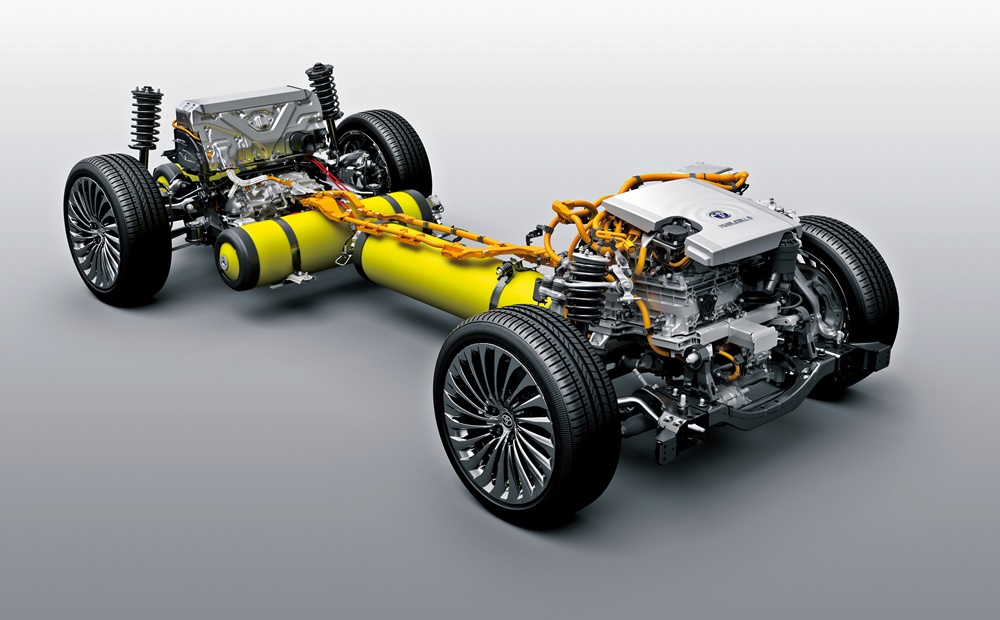
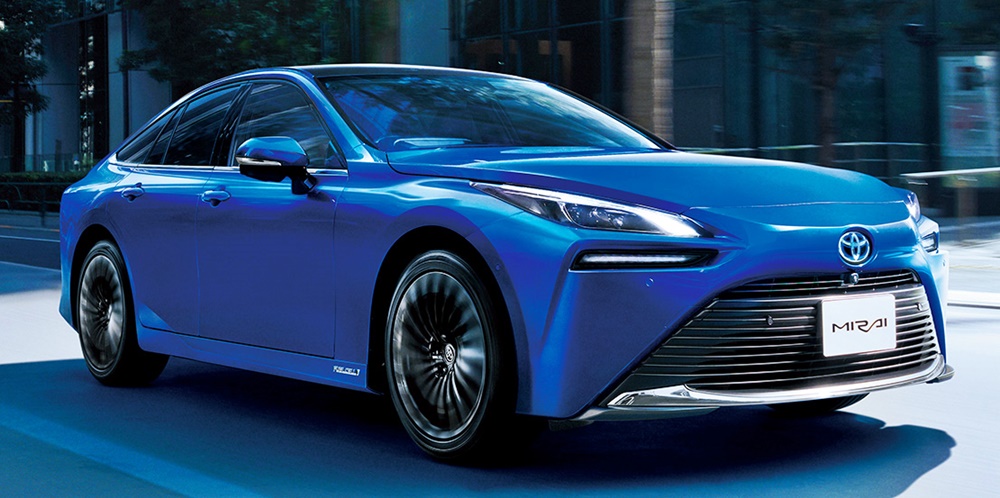
For more advanced markets with the necessary infrastructure to support fuel cell vehicles, Toyota already has the second generation of its Mirai FCEV available.

Different pace in different regions
However, in other countries and regions, the transition to EVs may be at a different pace. For example, Indonesia, Thailand and Singapore already have clearly-defined plans to ‘go electric’ but Malaysia does not (although recent news suggests that some incentives may soon be announced). Countries in Africa might also be slower to stop allowing ICE vehicles due to their economies and other factors.

Toyota wants to make sure that ‘no customer is left behind’ and for this reason, it will use multiple technology solutions in its quest to achieve carbon neutrality, developing advanced electric vehicles as well as continue to make ICE as clean as possible. The carmaker’s view is that companies and societies should work together with all available technologies to achieve the best and fastest results towards carbon neutrality – using whichever solutions and infrastructures suit their local needs best.

7th Environmental Action Plan
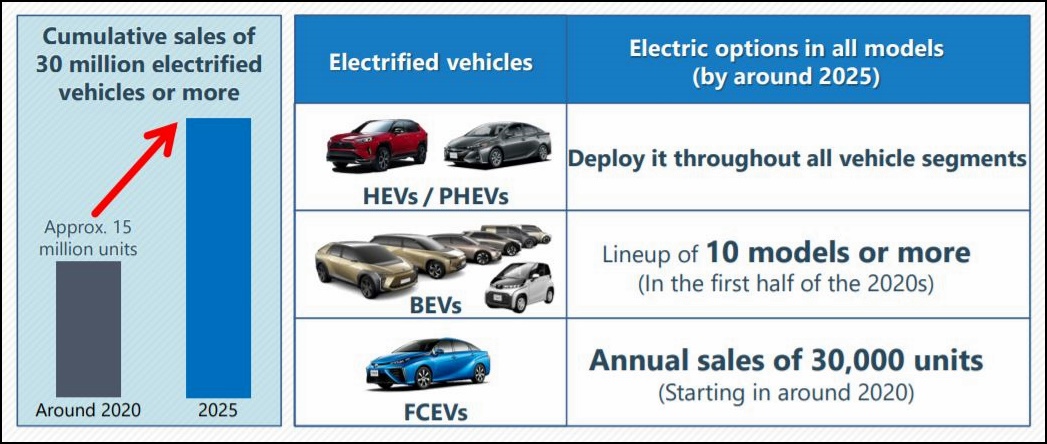
Toyota is currently in its 7th Environmental Action Plan which runs until 2025. The targets for this plan include reduction of CO2 emissions by 30% or more (on average) compared to 2010 levels, and boost cumulative sales of electrified vehicles to 30 million or more. All models in the Toyota and Lexus ranges worldwide are to be available with either full electric or hybrid powertrains by around 2025.

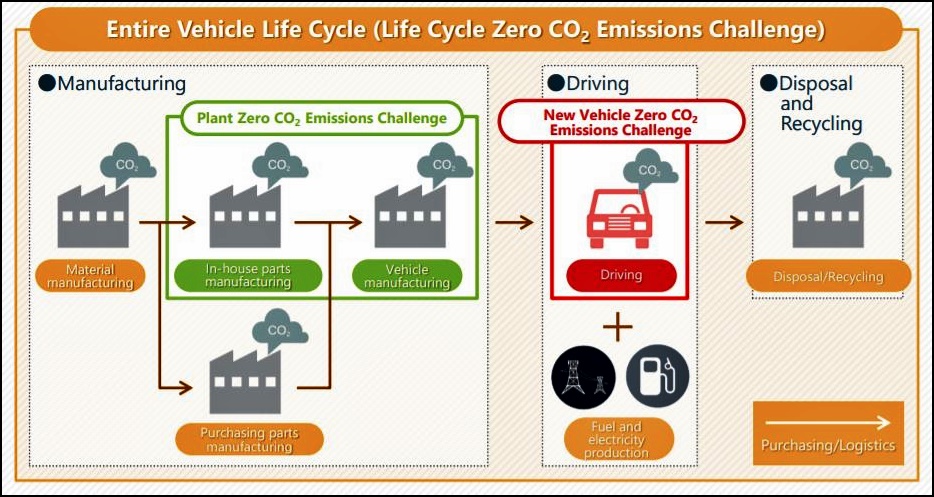
At the same time, CO2 emissions are to be reduced by 18% or more throughout the entire vehicle life cycle (including manufacturing and driving) compared to 2013 levels.

“The goal is carbon neutrality. Promoting Battery Electric Vehicle sales or banning gasoline cars is not in any way the goal. It is a must that cars already on the road be made carbon-neutral. Rather than narrowing the way out by placing importance on the creation of regulations focused only on new cars and internal combustion engines, it is necessary to expand the paths to carbon neutrality by including all approaches,” said Toyota President, Akio Toyoda, in his capacity as President of the Japan Automobile Manufacturers Association (JAMA).

Toyota to build a prototype city of the future in Japan! (w/VIDEO)
StayAtHome

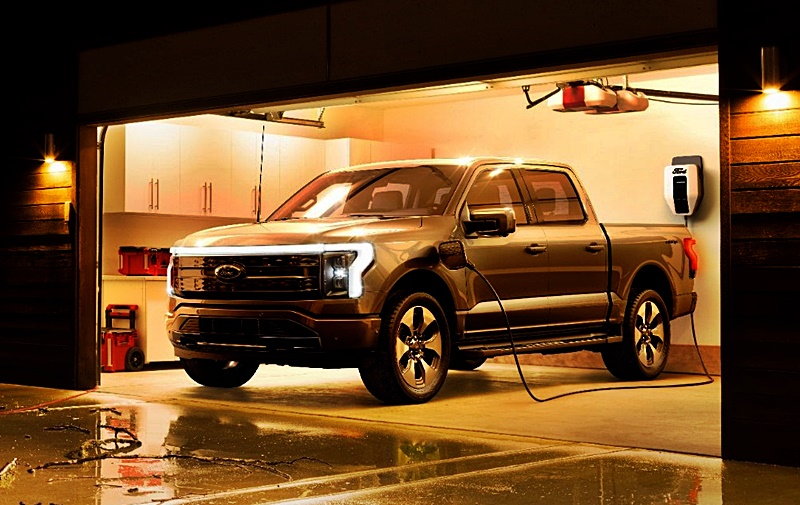
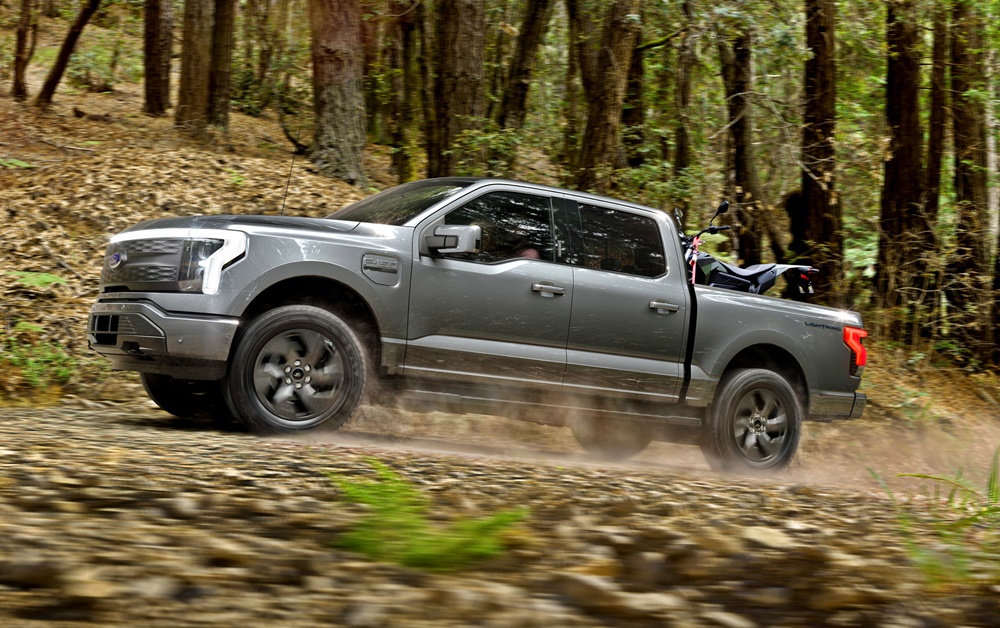
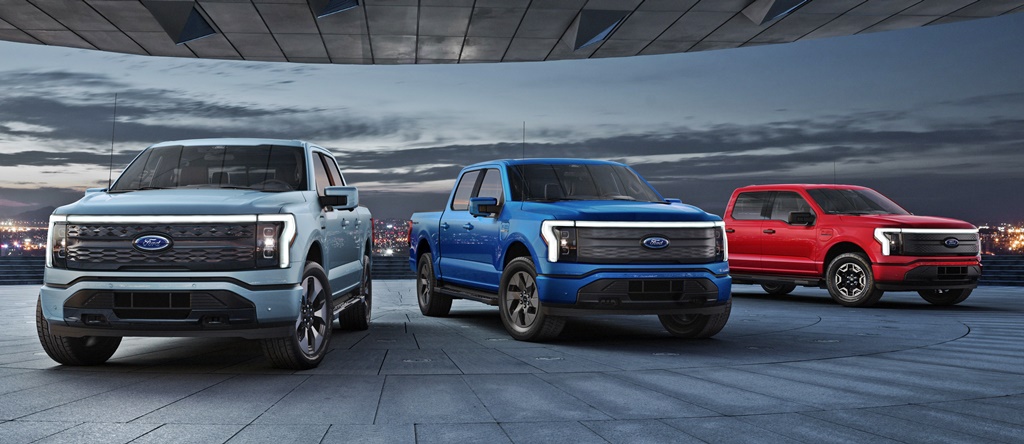
It’s not surprising that Ford will start selling an electrically-powered truck from early 2022, the new version of the F-150 range which is to be called the Lightning. After all, it’s been making pick-up trucks since 1917 and over more than 100 years of making such vehicles, it has built up vast experience. Now, it is using all that experience plus new EV technology to continue the journey forward.

“For both Ford and the American auto industry, F-150 Lightning represents a defining moment as we progress toward a zero-emissions, digitally connected future,” said Bill Ford, Executive Chairman of Ford Motor Company. “F-Series is America’s best-selling truck for 44 years, the backbone of work across the country, and a trusted icon for generations of customers. Now we are revolutionizing it for a new generation.”

2022 Ford F-150 Lightning

The F-150 Lightning is one of the outcomes from the company’s more than US$22 billion global electric vehicle plan to lead electrification in areas of strength. Other fully electrified models developed in recent times have been the Mustang and Transit.

Pricing for the new electric truck will start from US$39,974 (about RM165,550) before any incentives (in the USA) and can rise to US$52,974 (about RM220,000) in versions equipped with the extensive range of features, technology and accessories.
Most aerodynamic F-150
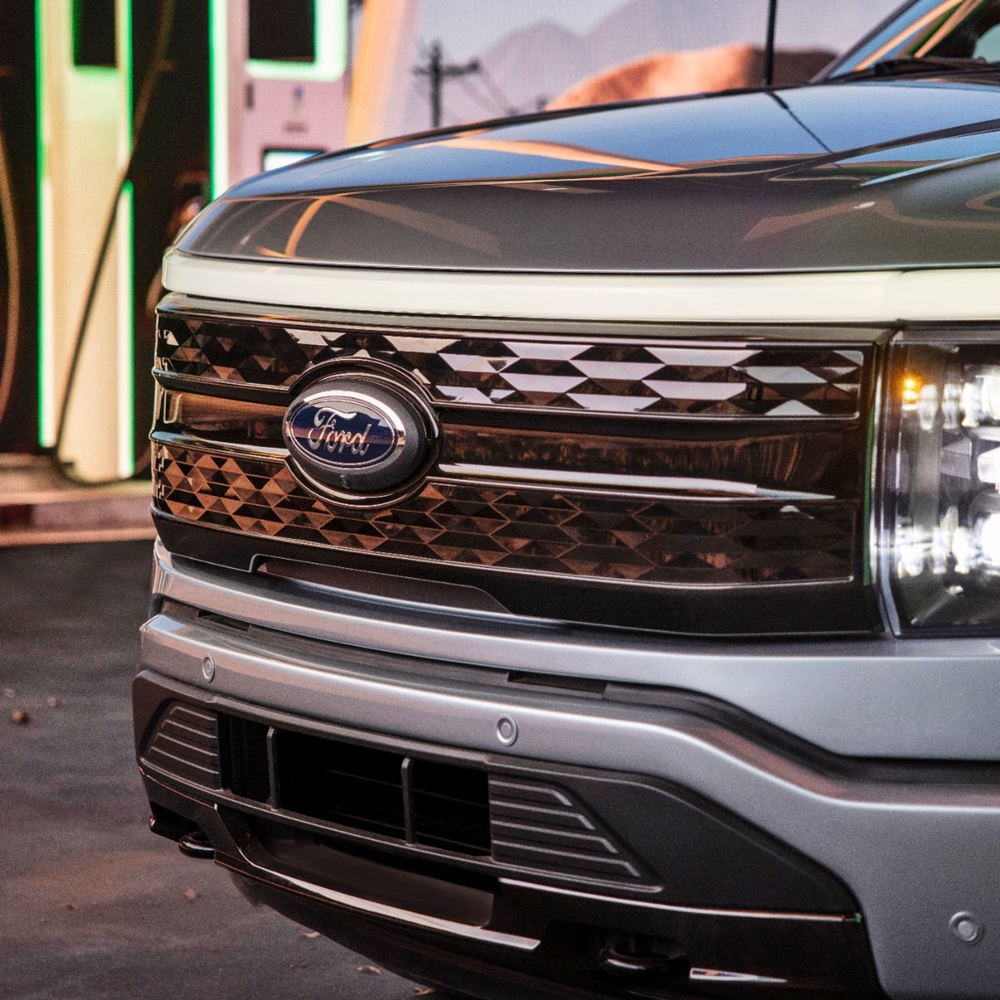
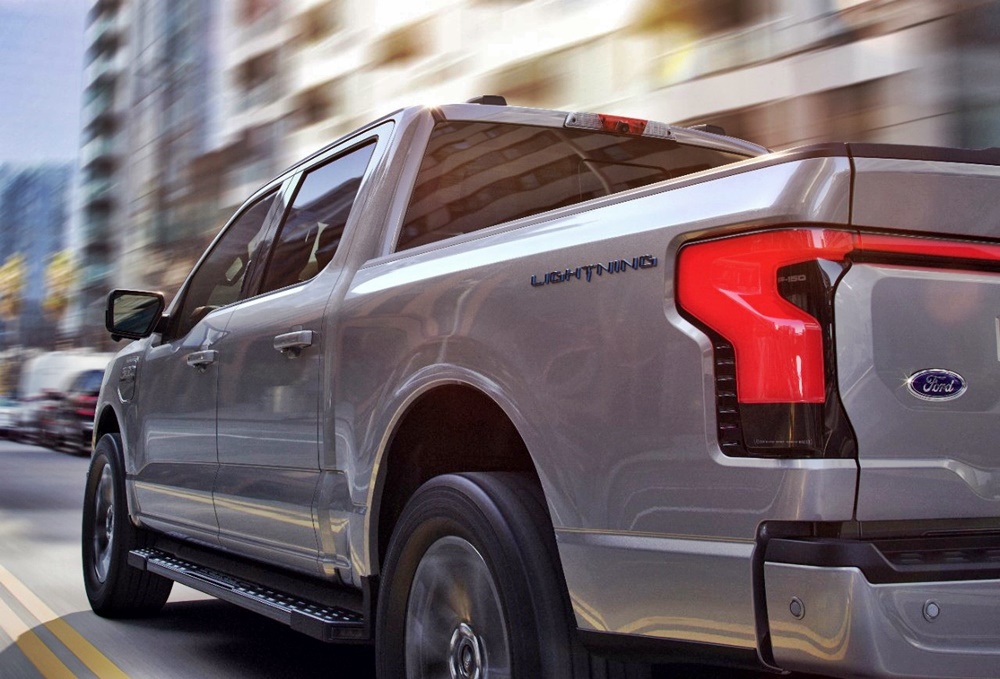
The F-150 Lightning is the most aerodynamic F-150 ever developed. While it started from the current F-150, it has improvements like newly shaped running boards, a sculpted bonnet to reduce drag, and grilles that replace air intake holes with a smoother, textured surface. Even more functional design delivers optional enhanced 360-degree Zone Lighting, which can light up a specific zone or the entire area around the vehicle.

2022 Ford F-150 Lightning

2022 Ford F-150 Lightning

2022 Ford F-150 Lightning

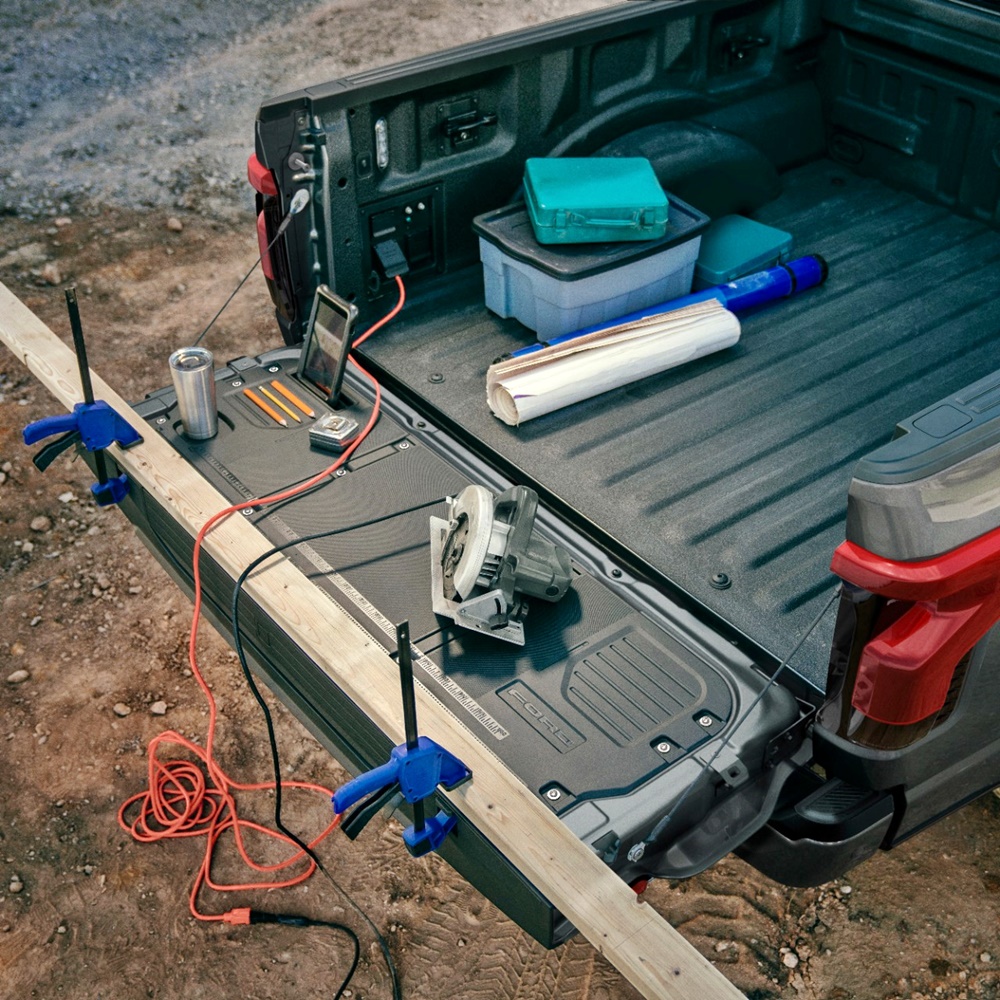
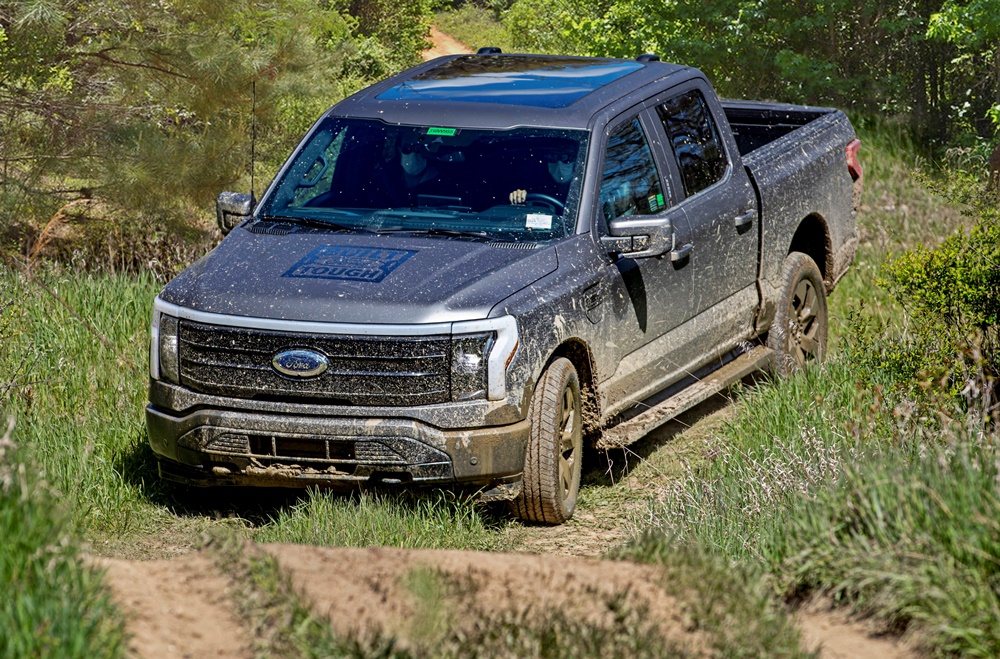
The electric platform unlocks new capabilities as well – such as being a mobile power generation that can supply electricity to power an entire home. Besides providing electrical power when camping, it can also be valuable when in disaster-struck area where emergency power supplies are needed. The added advantage is that the F-150 Lightning will also have the capability to travel through all kinds of terrain, just like other Ford trucks.

The powertrain has dual in-board motors expected to generate the equivalent of 563 hp with up to 1,050 Nm of torque available from almost standstill. That’s more torque than any F-150 have ever offered and will give a claimed 0 – 60 mph (96 km/h) time in the mid 4-second range.

2022 Ford F-150 Lightning

Two battery pack choices
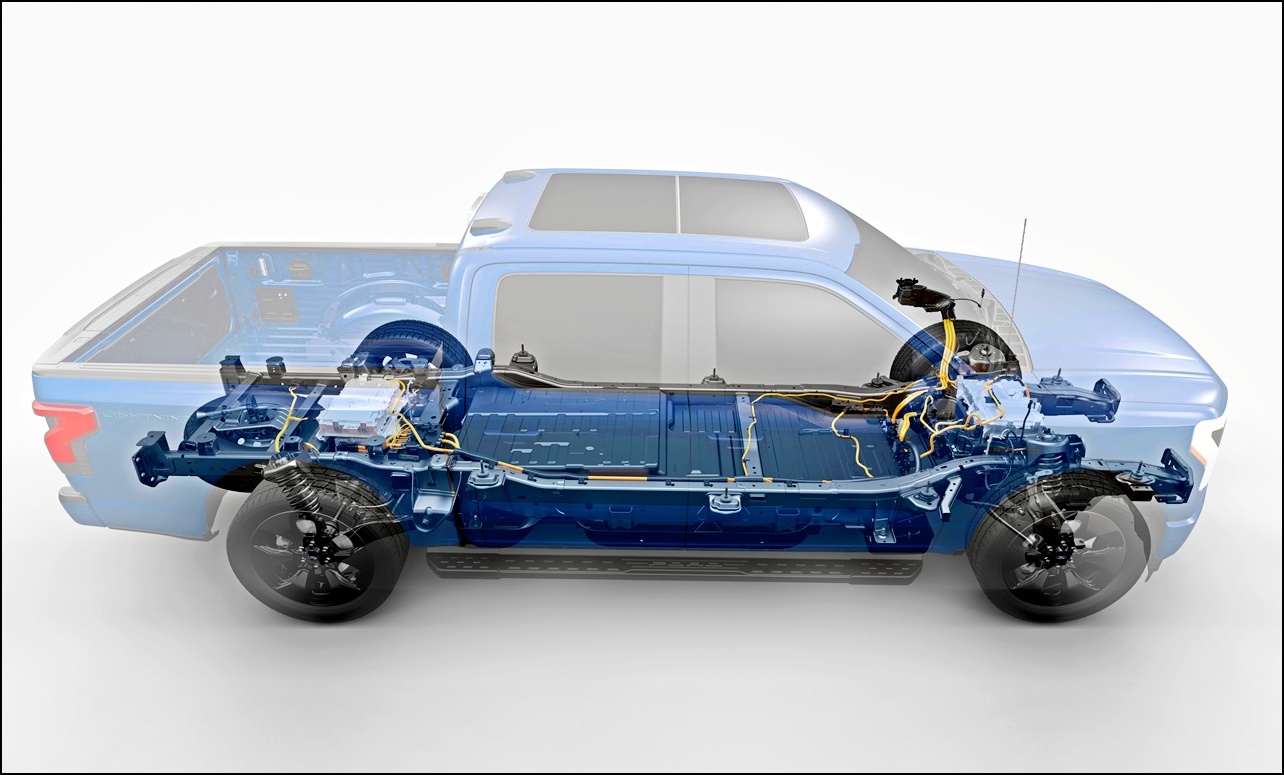
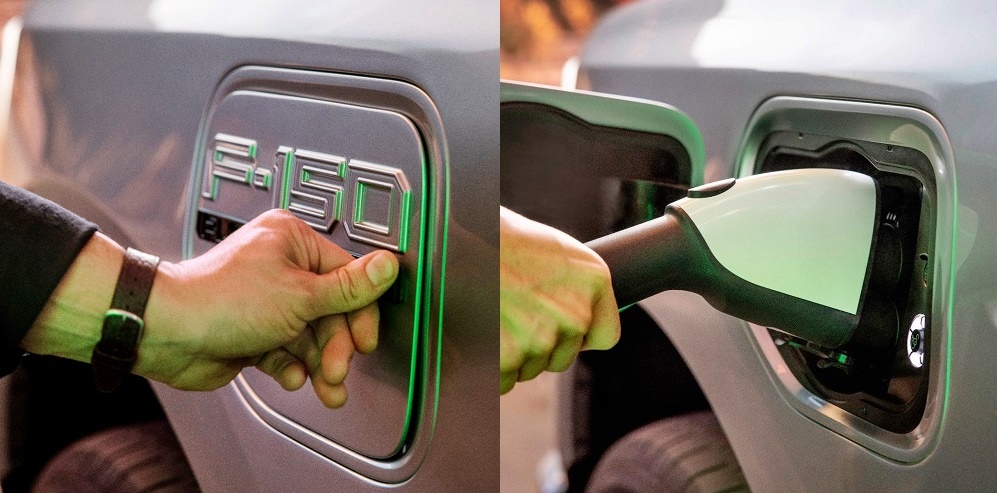
There will be two choices of next-generation lithium-ion battery packs for the F-150 Lightning: a standard-range pack targeting 370 kms and an extended-range pack 480 kms. As with other EVs, charging time depends on the type of charging equipment used. Ford is the only automaker to offer an 80A charge station as standard equipment, allowing owners to recharge easily at home. This system takes advantage of the only dual onboard charging system on an electric truck in the industry for even faster home charging.

With this approach, the F-150 Lightning adds an average range of about 50 kms per charging hour, fully charging an extended-range pack from 15% to 100% in about 8 hours. With a 150-kW DC fast-charger, up to 87 kms of range can be available in 10 minutes and from 15% to 80% will take about 41 minutes, it is claimed.

2022 Ford F-150 Lightning

2022 Ford F-150 Lightning

Considering the sort of conditions that the aluminium-bodied F-150 Lightning will be used in, ‘Built Ford Tough’ has never been more important as the battery pack cannot be damaged. Rugged underbody protection keeps it safe, with metal skid plates shielding both the battery pack and inboard motors from. The battery pack itself is secured inside waterproof casing surrounded by crash-absorption protection and has been tested at temperatures as extreme as -40 degrees Fahrenheit.

Huge front storage area
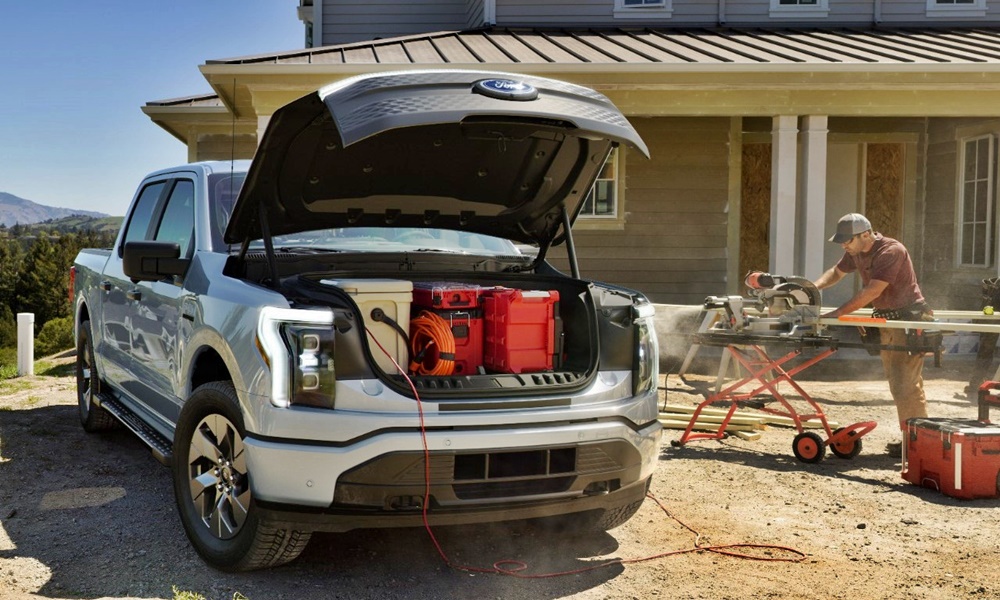
Just as front-wheel drive with transverse engine orientation liberated space that could be allocated to the cabin, the electric powertrain allows for a versatile, high-tech mega power dedicated storage space that’s secure, lockable and easily accessible by a powered open and close system. This spacious area under the bonnet will have 400 litres of volume and can take 180 kgs of payload. It is water-resistant and has 4 electrical outlets, 2 USB chargers and a drainable floor that can double as a food and beverage container. With 2.4 kW of power, there’s enough capability to plug in power tools, TVs, laptops, speakers, crockpots and more.

2022 Ford F-150 Lightning

Talking of payload, a feature called Onboard Scales uses the front boot space sensors to estimate payload and tell customers how much they’re hauling. And since payload can impact range, Onboard Scales is integrated with Intelligent Range to help ensure an accurate estimate.

Smart and connected
Like the Ranger, the F-150 Lightning is packed with intelligent features, combining advanced digital technologies with proven engineering know-how. As part of the optional Ford Co-Pilot360 technology, BlueCruise allows for true hands-free driving on more than 160,000 kms of pre-qualified divided highways in North America, – with more Hands-Free Blue Zones to come in the future.

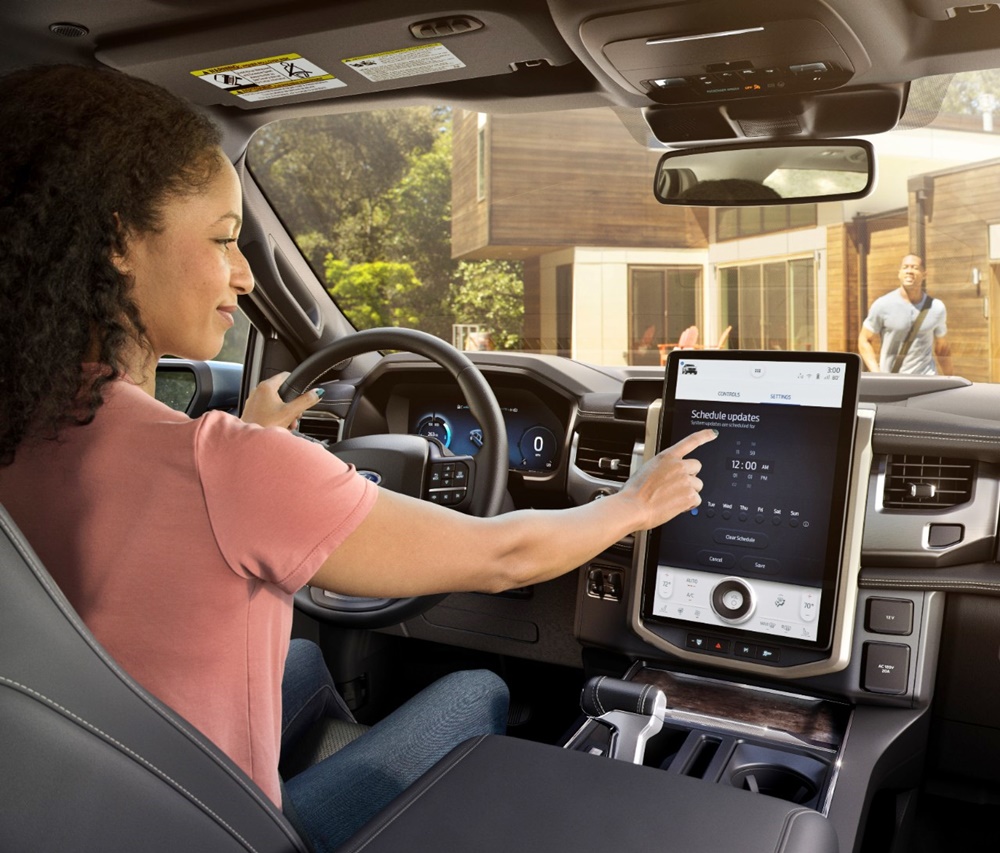
Owners will find that, like their smartphone, the software running certain systems can be updated without going to the service centre. Ford Power-Up software updates will come over the air and improve performance, update existing features or even add all-new functions and capabilities. The majority of updates will be completed in under 2 minutes and whenever the owner chooses.

2022 Ford F-150 Lightning

SYNC gets more advanced
Making its truck debut on F-150 Lightning is SYNC 4A – the latest version of Ford’s interface supported by a 15.5-inch touchscreen and designed to adapt to driver behaviour. SYNC 4A employs natural voice control, cloud-connected navigation and wireless access to favourite services with connectivity that includes Apple CarPlay and Android Auto.

“It really is the smartest F-150 we’ve ever made,” said Darren Palmer, General Manager, Battery Electric Vehicles, Ford Motor Company. “F-150 Lightning offers an immersive touchscreen, giving our customers all the info they want in an instant – a real-time view of where they’re going, what they’re hauling or how much real-world range they’ve got banked. And with Ford Power-Up software updates, the experience is only going to get better.”

2022 Ford F-150 Lightning

Ford wins both 2021 Green Car of the Year and Green Truck of the Year Awards

StayAtHome

Visit www.bhpetrol.com.my for more information.

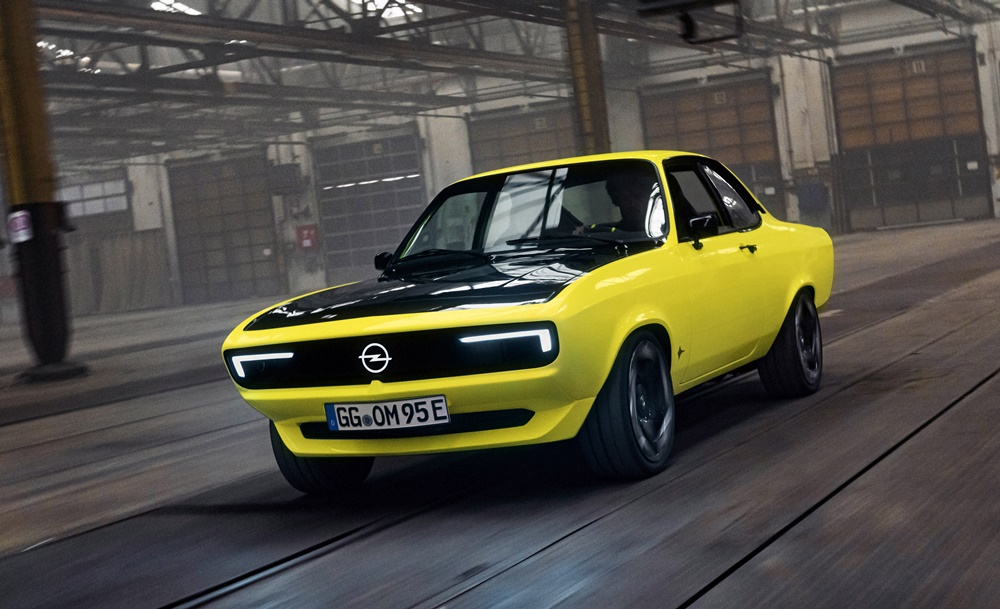
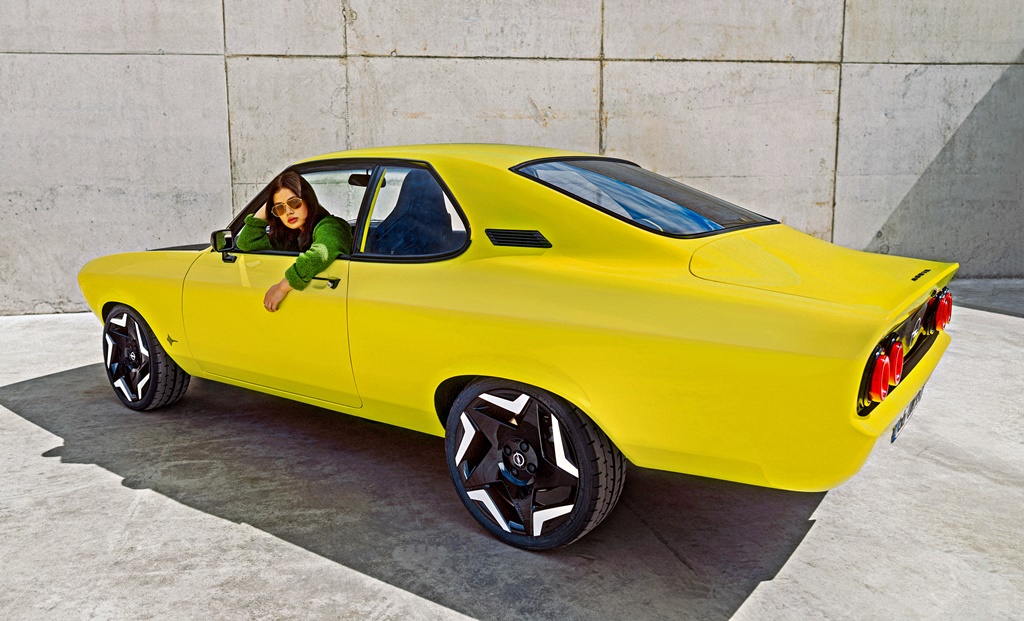
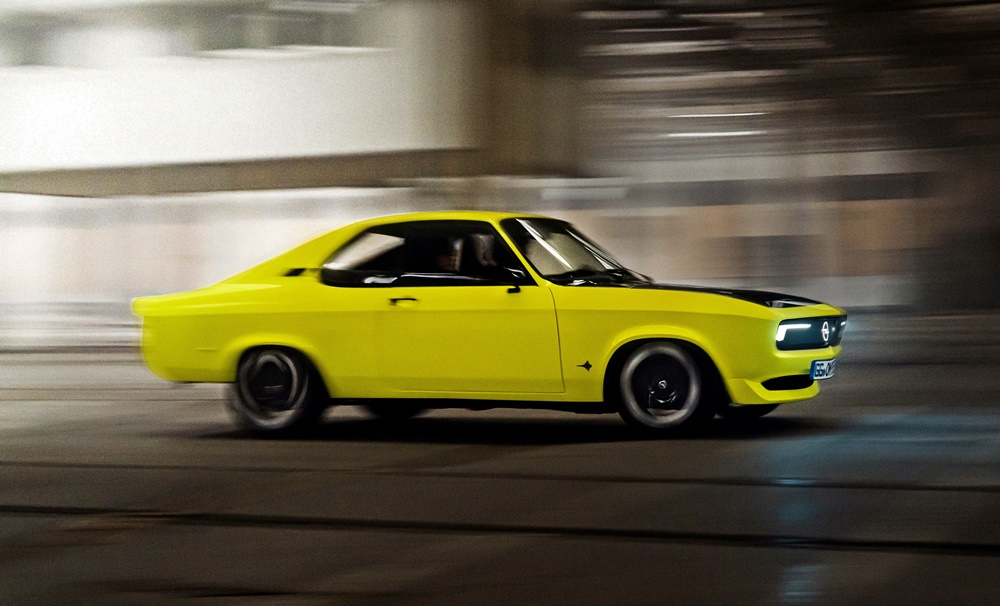
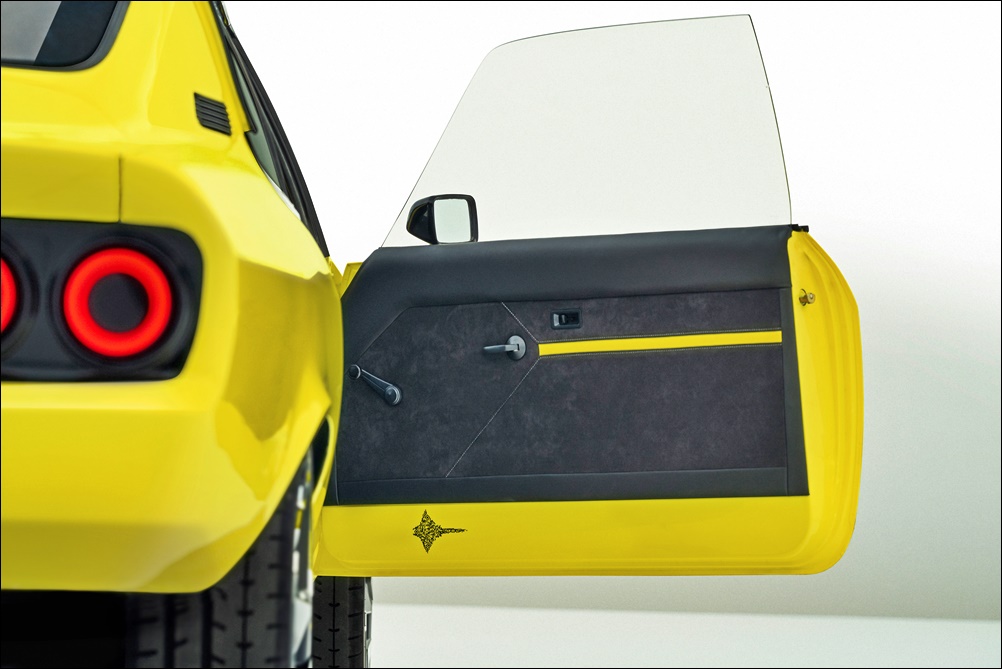
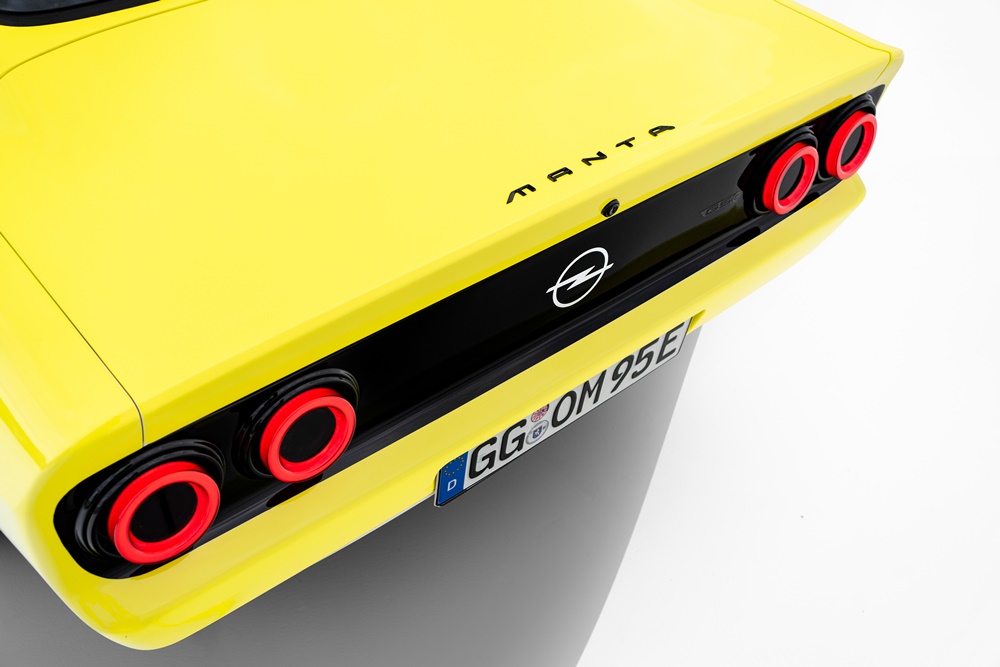
Opel, a brand more familiar to older Malaysians, has brought back the iconic Manta as a one-off all-electric special to celebrate the coupe’s 50th anniversary. Called the Manta GSe ElektroMOD, it reflects the growing trend of transforming classic cars like into so-called ‘RestoMods’ with modern components and powertrains.

Change of ‘heart’
The first electric RestoMod by Opel (once a GM subsidiary and now part of the Stellantis Group), the Manta GSe has an electric powertrain with an output of 108 kW (147 ps) and 225 Nm of torque. It uses the original 4-speed gearbox, allowing drivers to manually change gears, or alternatively, engage the fourth gear and drive automatically.

2021 Opel Manta GSe ElektroMOD

2021 Opel Manta GSe ElektroMOD

With a 31-kWh lithium-ion battery pack, the Manta GSe has a claimed range of around 200 kms, with regenerative braking to improve range. Full recharging with a 9-kW onboard charger can be completed in just under 4 hours.

Design elements from Vauxhall
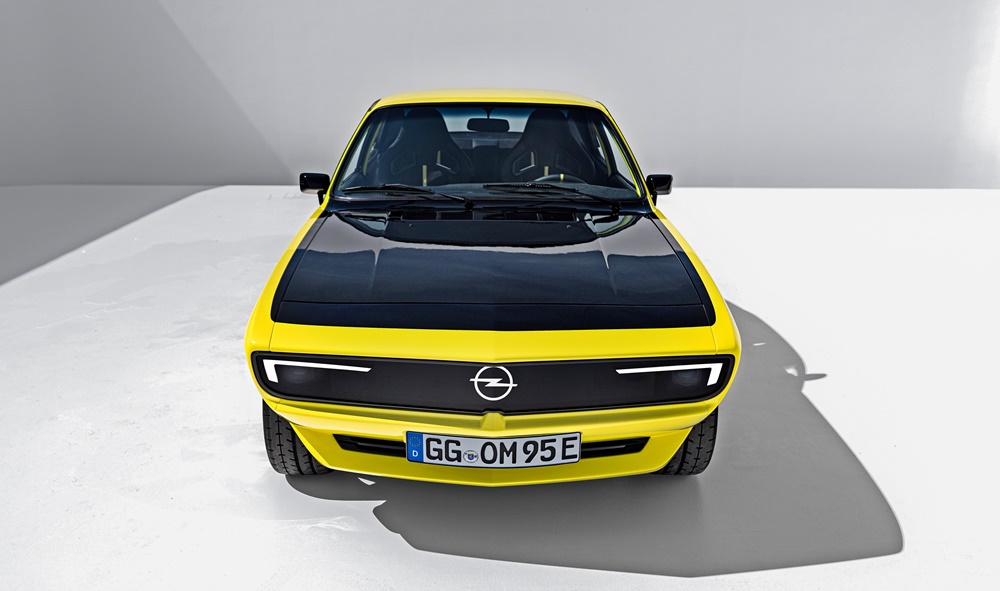
The Manta GSe also uses some of the latest design elements from Vauxhall, the British brand that is also part of the Stellantis Group. These include the brand’s Vizor-styled front end with Pixel technology allowing it to issue messages, such as ‘I am on a zero e-mission’, followed by the silhouette of a manta ray gliding over the Pixel-Vizor.

2021 Opel Manta GSe ElektroMOD

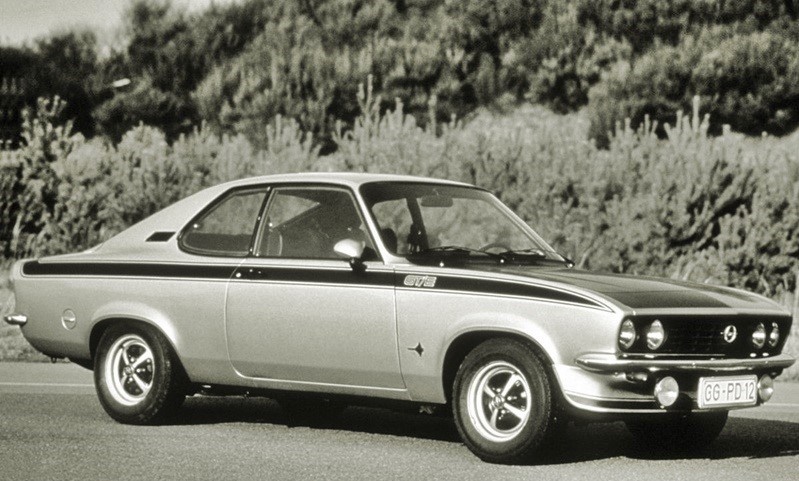
1973 Opel Manta
The original Manta in 1973

The front end also features LED daylight running lights, while the iconic circular rear lights come with a striking three-dimensional LED design. The yellow paintwork is contrasted by the signature black bonnet, with the wheel arches housing specially designed 17-inch Ronal alloy wheels with 195/40 tyres at the front, and 205/40 tyres at the rear.

Digital tech inside
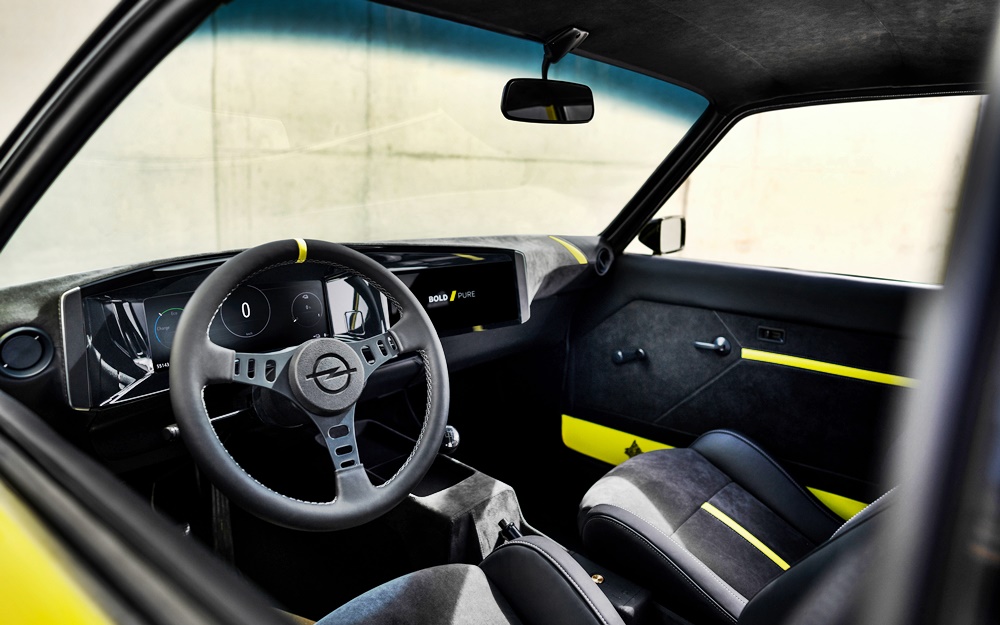
As expected of a modern RestoMod, the interior features the latest digital technology. The classic round instruments have been replaced by a Pure Panel, with two driver-oriented 12-inch and 10-inch digital displays. The sound system has also been modernised with a new unit that has connectivity which was not available in the 1970s.

2021 Opel Manta GSe ElektroMOD

2021 Opel Manta GSe ElektroMOD

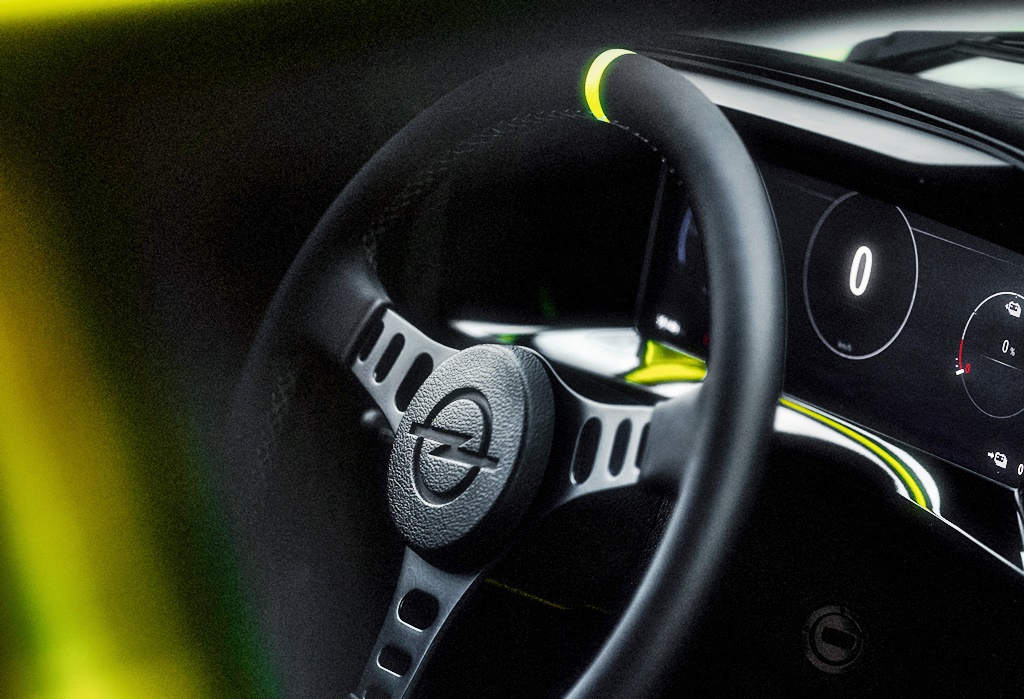
The sports seats come with a yellow centre line and have a modern structure for improved comfort and support. The steering wheel has a classic 3-spoke design (no airbag as this is only a showcar) and features a yellow marker in the 12 o’clock position for an added sporty touch.

Surfaces in the cockpit and door panels are matt grey, matching the neo-classic’s other yellow and black coloured elements. The ceiling of the passenger compartment is lined with fine Alcantara and completes the stylish ambience.

2021 Opel Manta GSe ElektroMOD

2021 Opel Manta GSe ElektroMOD

Volkswagen’s 1966 Classic transformed into a 21st century zero emissions vehicle

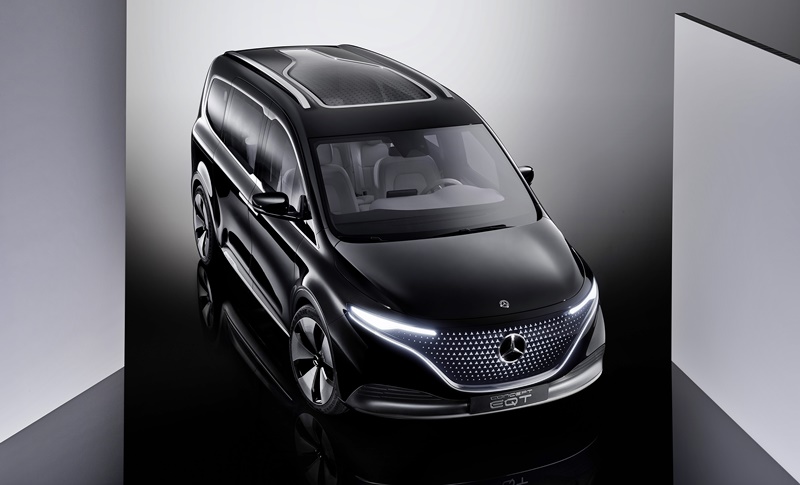
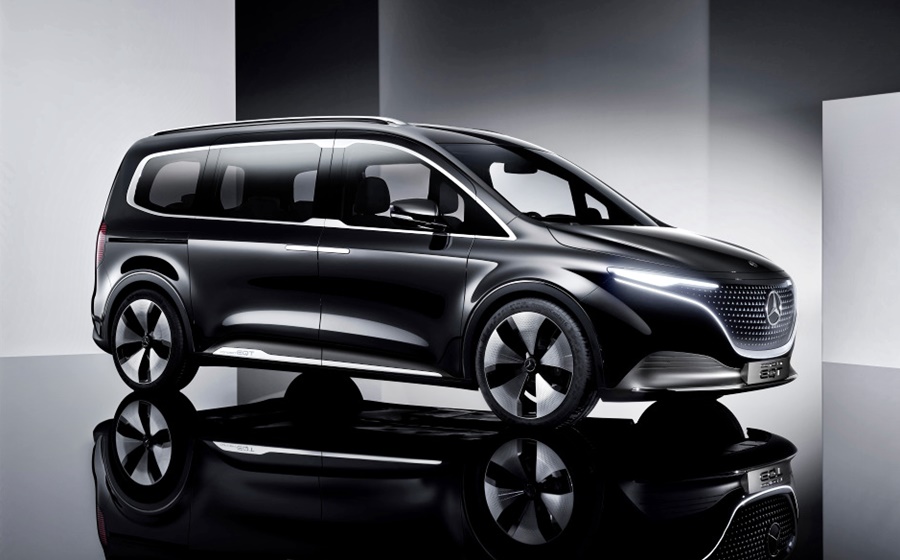
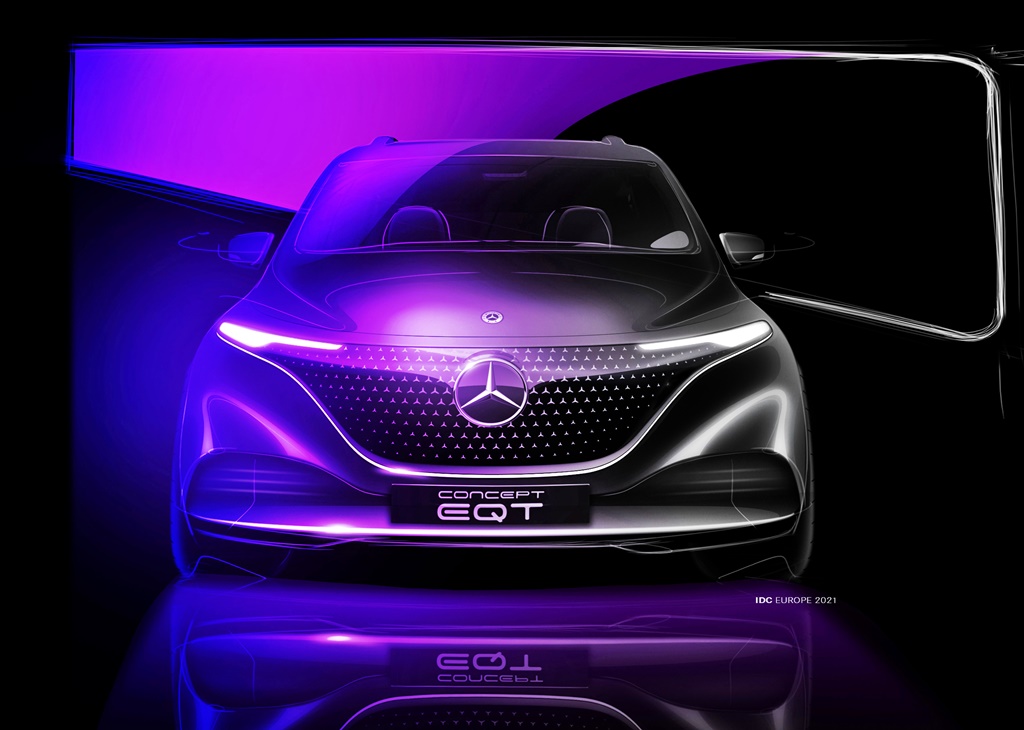
The Mercedes-Benz EQ brand continues to grow each year with the addition of new all-electric models every year. In time, besides the sedans and SUVs we have already seen, there will be other model types just like the range for models with combustion engines. Next to come will be a small van and its appearance is shown in the Concept EQT.

New T-Class
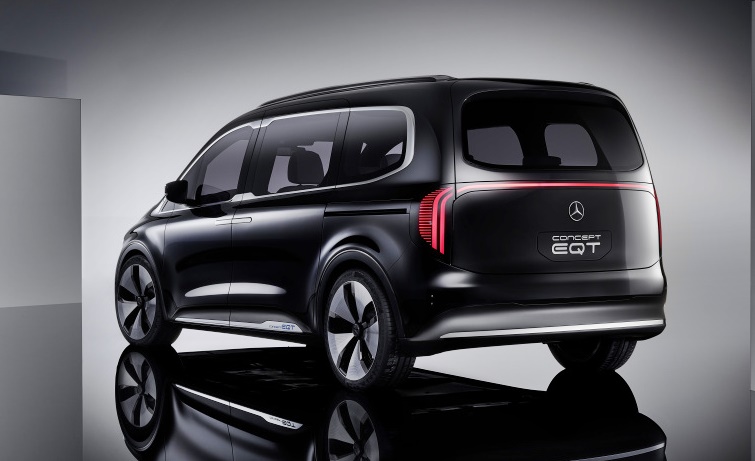
This is a near-production concept vehicle that will be the first premium vehicle in the small van segment which Mercedes-Benz has designated the new T-Class as its representative. Besides the electric variant, there will also be other variants with combustion powertrains. While this new class has nothing to do with the old ‘T’ models that were stationwagons, it does offer storage versatility.

2021 Mercedes-Benz Concept EQT

“We are expanding our portfolio in the small van segment with the forthcoming T-Class. It will appeal to families and all those private customers, whatever their age, who enjoy leisure activities and need a lot of space and maximum variability without forgoing comfort and style. The T-Class provides them with an attractive introduction into the world of Mercedes-Benz. And as the Concept EQT shows, we are consistently implementing our claim to leadership in electromobility and will also be offering a fully electric model in this segment in the future,” said Marcus Breitschwerdt, Head of Mercedes-Benz Vans.

2021 Mercedes-Benz Concept EQT

EQ design DNA
The Concept EQT will be immediately recognisable as a member of the Mercedes-EQ family with the characteristic black panel front and LED front headlights that flows seamlessly from the bonnet and gleams with a star pattern. The different-sized stars with a 3D effect are featured throughout the vehicle exterior.

Explaining the design, Gorden Wagener, Chief Design Officer Daimler Group, said the Concept EQT is a new, holistic van with the Design DNA of ‘Sensual Purity’. “Sensuous shapes, elegant trims and sustainable materials show that this van clearly belongs to our Mercedes-EQ family,” he said.

2021 Mercedes-Benz Concept EQT

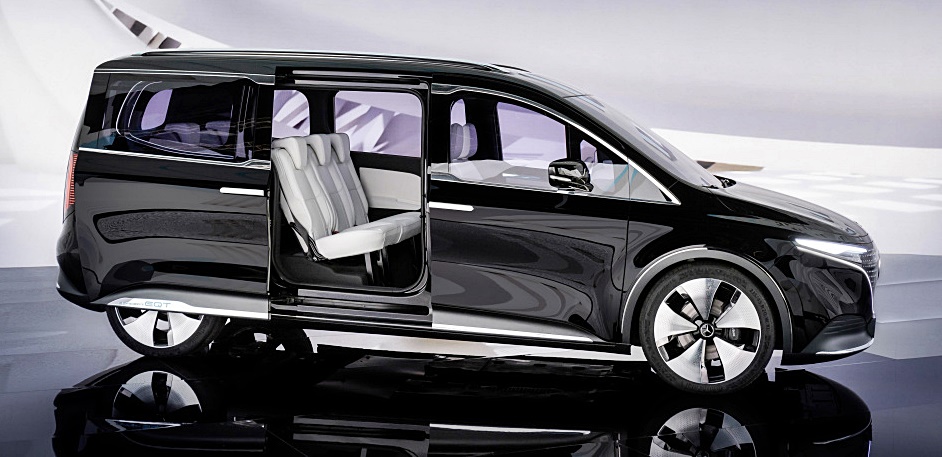
The interior space, which can accommodate 7 persons, is characterised by an elegant contrast of black and white. The seats are upholstered in white nappa leather and the plaited leather applications on the seat centre panel comprise recycled leather.

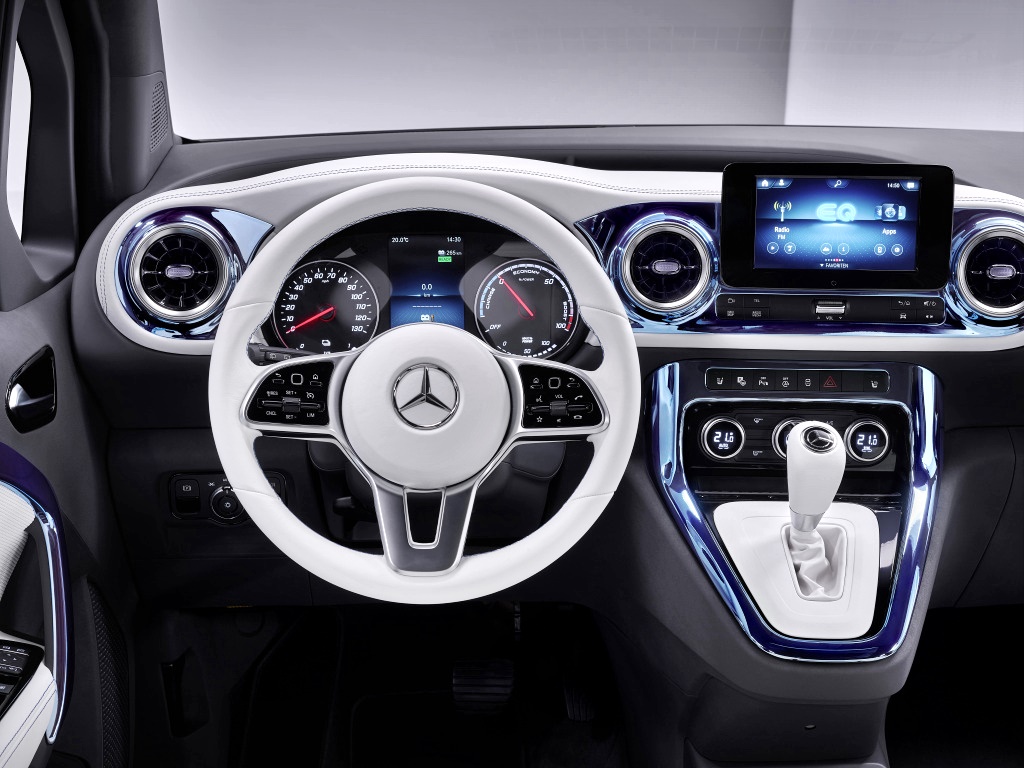
The instrument panel in a sensual design is also particularly eye-catching. The upper section is shaped like a wing profile with the appearance of a seashore pebble and fuses dynamically with the instrument cluster. Round air vents in high-gloss black, galvanised trim elements and the multifunction steering wheel with Touch Control buttons underline the high quality, modern appearance.

2021 Mercedes-Benz Concept EQT

Intuitive, self-teaching MBUX
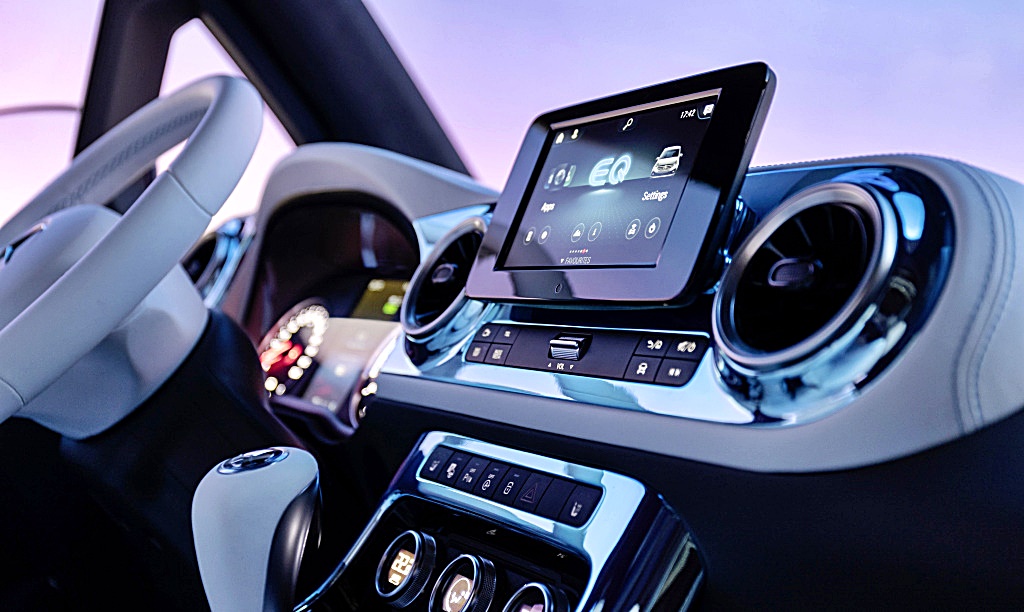
Like every new Mercedes-Benz model, the MBUX infotainment system (Mercedes-Benz User Experience) is present. The system can be conveniently operated using the free-standing central display with touch function, the touch control buttons on the steering wheel and the ‘Hey Mercedes’ voice assistant. It has the ability to ‘learn’, thanks to artificial intelligence. MBUX will be able to anticipate what the driver would like to do next with the help of predictive functions. For instance, if someone regularly calls a certain person on Fridays on the way home, the system will suggest their telephone number on the display on this day of the week.

2021 Mercedes-Benz Concept EQT

In the high-resolution infotainment system media display, the EQ tile in the main menu serves as a central point of access to the specific displays and settings. These include the charging current, departure time, energy flow and consumption histogram. The media display can also be used to operate the navigation as well as the driving modes. On the move, it will display charging stations, the electric range and optimized route planning taking into account the charge level, weather or the traffic situation.

2021 Mercedes-Benz Concept EQT

Maximum variability and functionality
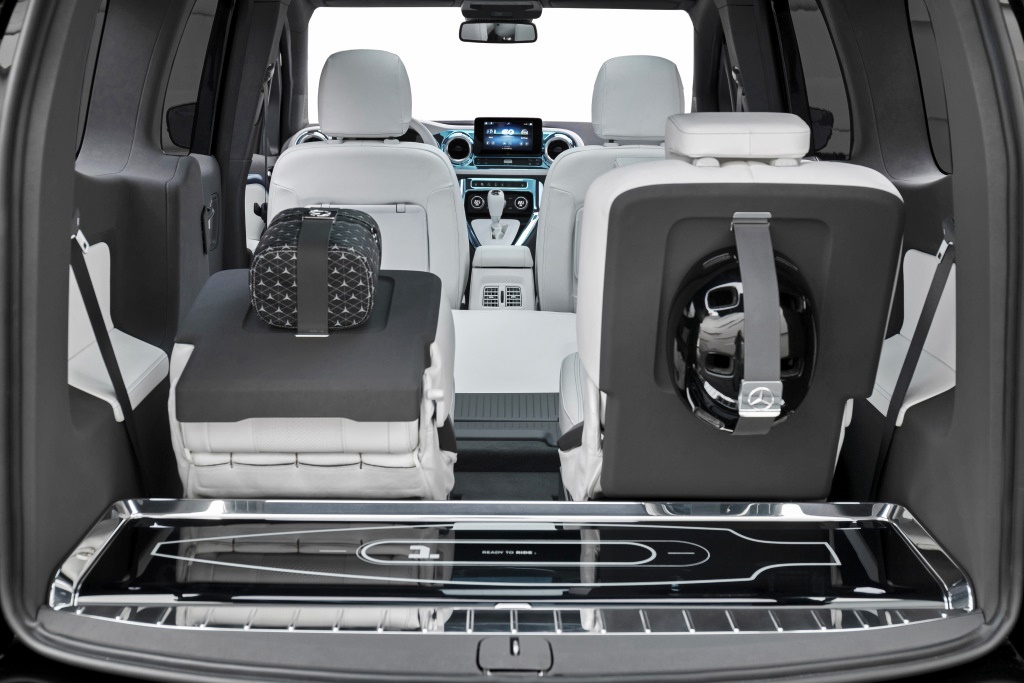
The Concept EQT, which has an overall length of 4945 mm (22 mm longer than an E-Class sedan), has sliding doors on both sides. The openings have been made as wide as possible so that both full-sized individual seats in the third row can be reached without difficulty. If more space is required, the third-row seats can be folded or removed completely, leaving sufficient space for a pram, a transport box for dogs and other leisure equipment.

The vehicle’s elegant bottle design which tapers from the front to the rear makes the vehicle appear longer. The steeply sloping rear with a comfortable, vertical tailgate and window provides for a particularly spacious load compartment. A panoramic roof with a starscape lasered into it floods the interior with light.

2021 Mercedes-Benz Concept EQT

An interesting feature in the concept vehicle is an electric longboard integrated into the load compartment. It is stored in a double-floor compartment beneath a plexiglass lid fitted in an aluminium frame and flush with the load compartment floor. The electric longboard is also made of aluminium and features a star pattern, giving it a particularly stylish look.

The new T-Class will be launched in 2022 and join the commercially-positioned Citan which will celebrate its premiere this year including a fully electric variant. The fully electric version for private customers will follow later.

2021 Mercedes-Benz Concept EQT

Mercedes-EQ EQS – the first luxury EV limousine

Stay in your state

StayAtHome

Visit www.bhpetrol.com.my for more information.

The Ford F-Series pick-up truck has been America’s best-selling vehicle since the 1970s, and though it is hardly seen outside North America, it has also been among the bestselling vehicles in the world due to the sheer numbers with over 1 million sold in 2018.

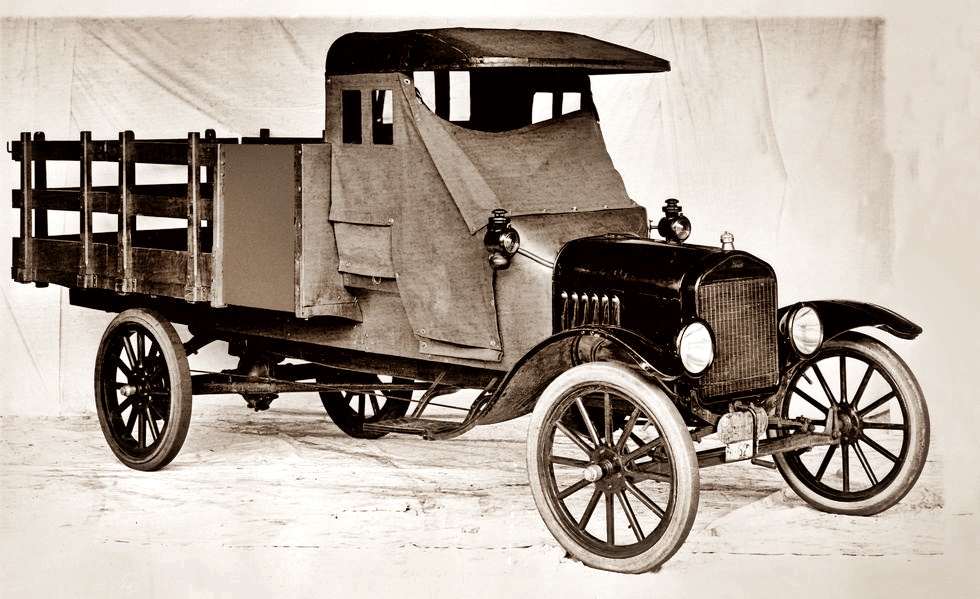
The success of the F-Series can be attributed to many decades of experience in making such vehicles. As far back as 1917, Henry Ford produced the Model TT which would be the first pick-up truck although it was essentially a Model T with a truck bed attached behind.

1917 Model TT was the granddaddy of today’s Ford pick-up trucks like the F-Series and Ranger.

‘Serious capable, purpose-built tool’
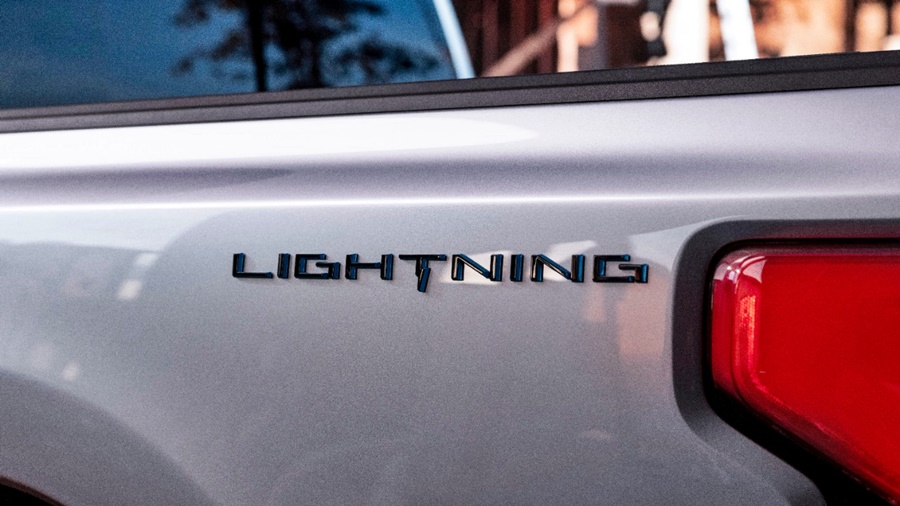
Just over a hundred years later, as the electric era dawns, Ford will offer a fully-electric F-Series model which it says ‘will be a seriously capable, purpose-built tool for serious truck customers. Besides new technology, the electric F-150 Lightning (as it will be known) will also be able to serve as a mobile power generator. It will be able to supply electricity at campsites or construction sites, or even disaster-struck areas.

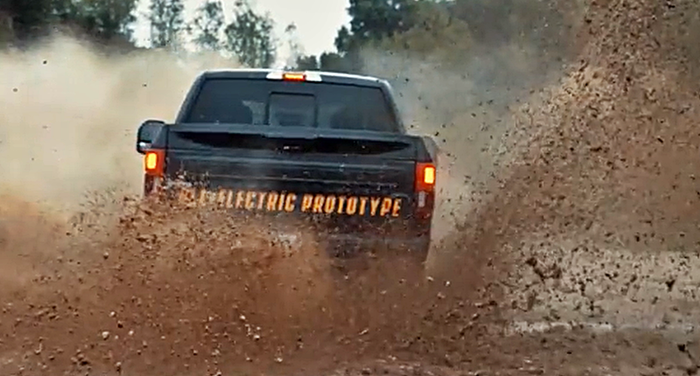
Prototypes have been undergoing tens of thousands of hours of torture testing and targeting millions of kilometres of driving – simulated, laboratory and real-world. The dual electric motor powertrain will deliver more horsepower and torque than any F-150 available today, which means faster acceleration than what F-Series owners have been used to.

Lower operating and running costs
F-Series truck powertrains typically have large displacements – even the smallest has been 2.7 litres – and that has obviously meant high fuel consumption. With the F-150 Lighting which offers higher performance, including strong towing capability, there will be no such consumption penalty at all. Furthermore, Ford claims that it will have the lowest expected lifetime total cost of operation among F-Series trucks with less maintenance than a typical petrol engine.

“Every so often, a new vehicle comes along that disrupts the status quo and changes the game… Model T, Mustang, Prius, Model 3. Now comes the F-150 Lightning,” said Ford President & CEO, Jim Farley. “America’s favourite vehicle for nearly half a century is going digital and fully electric. F-150 Lightning can power your home during an outage; it’s even quicker than the original F-150 Lightning performance truck; and it will constantly improve through over-the-air updates.”

The new F-150 Lightning will be unveiled at Ford World Headquarters in Dearborn on the night of May 19 (morning of May 20 in Malaysia) and the event will be broadcast live online.

An earlier Ford pick-up EV
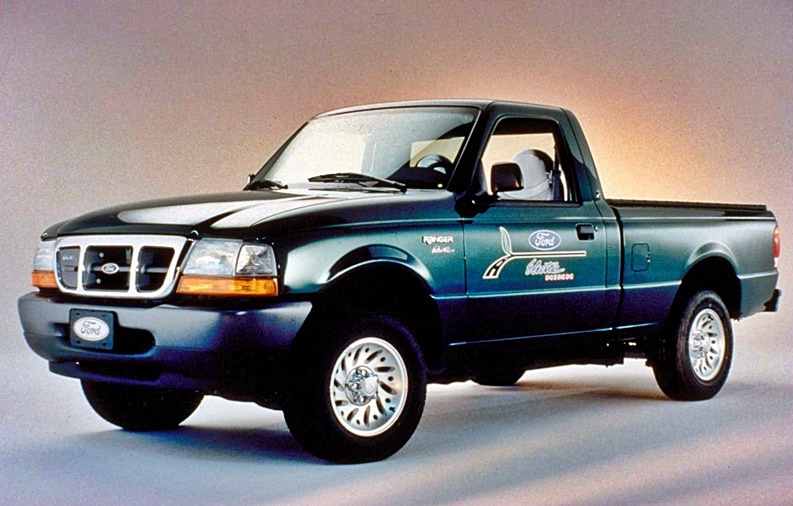
While the F-150 Lightning is a significant new development, it is not Ford’s first electric pick-up. Back in the late 1990s, when the company had brief burst of EV activity, it engineered a Ranger to be powered by electric motors. The battery packs were initially heavy lead-acid types and then switched to nickel-metal hydride, and factory testing showed that a range of up to 132 kms was possible.

Between 1998 and 2002, Ford produced a Ranger EV which was leased for fleet customers.

The Ranger EV was produced between 1998 and 2002 and was leased instead of sold. As interest in EVs faded, Ford didn’t make plans to follow up on the Ranger EV and instead focussed on developing EcoBoost technology for combustion engines.

To know more about today’s Ranger, visit www.sdacford.com.my.

Ford wins both 2021 Green Car of the Year and Green Truck of the Year Awards

StayAtHome

Stay in your state

The EXTREME X series is the ‘Dakar Rally for electric vehicles’ but the small number of SUV EVs taking part are very special models, developed for the purpose of the unique competition. They are not what would be available from showrooms, just as F1 cars are not sold to the public.

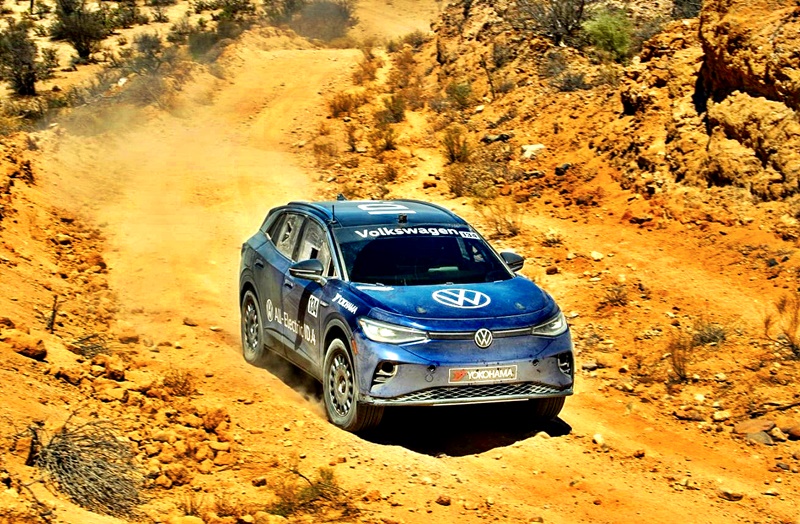
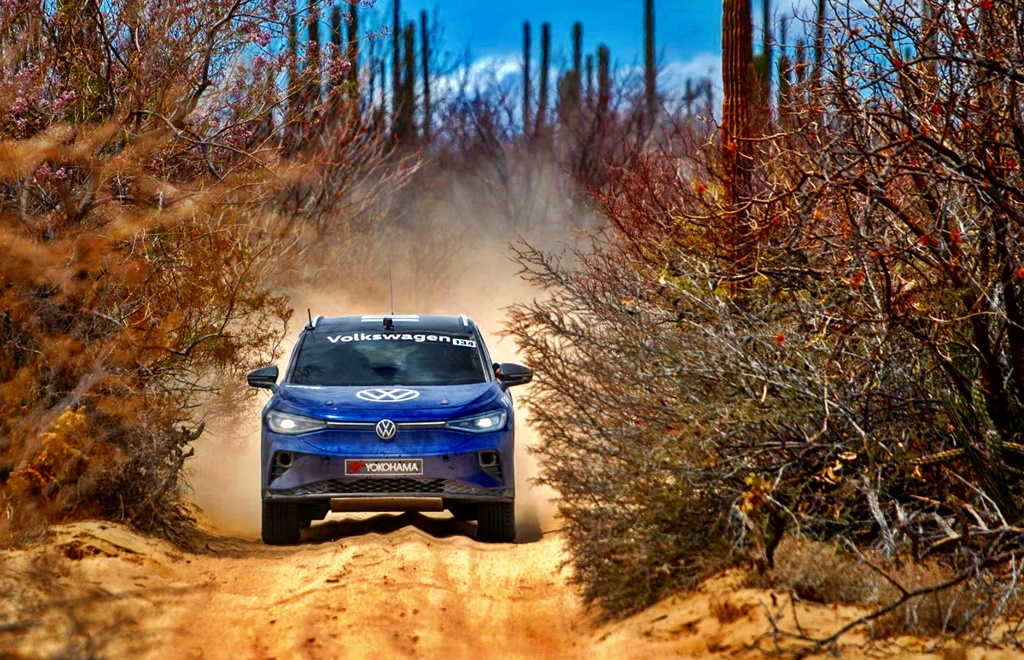
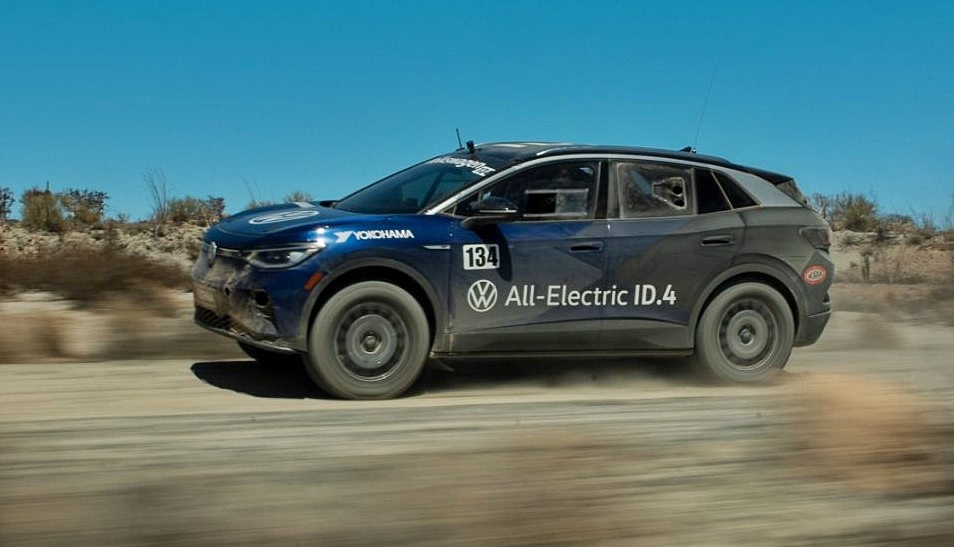
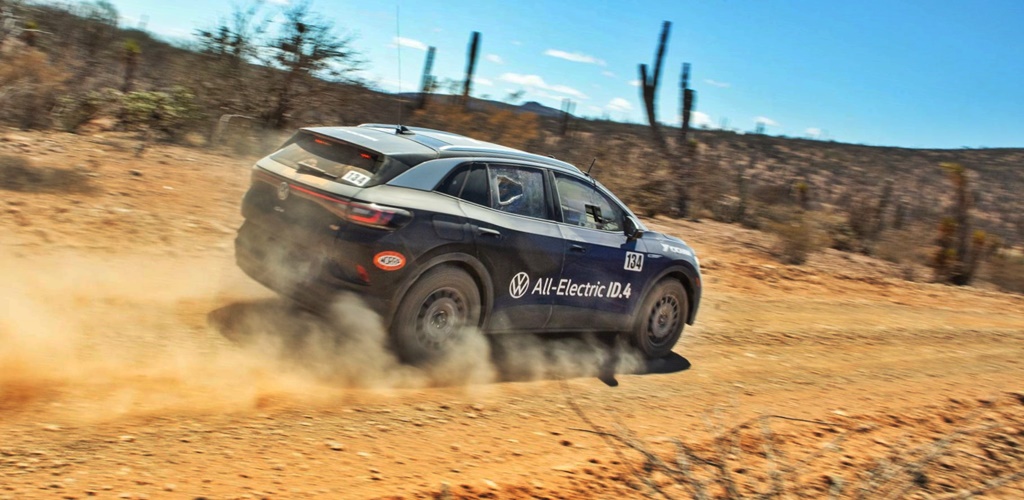
Volkswagen, however, has shown that even production EVs can take the very rough conditions of off-road racing with a specially prepared Volkswagen ID.4 electric SUV having completed the National Off-Road Racing Association (NORRA) Mexican 1000 race recently.

Volkswagen ID.4 NORRA desert race 2021

Standard electric powertrain
The ID.4 was driven by professional racer and Volkswagen brand ambassador, Tanner Foust, and Rhys Millen Racing partially modified a rear-wheel-drive version of the E-SUV model. However, it used a standard powertrain with an 82-kWh battery pack. The radiator was raised several centimetres to improve approach angles and cooling capacity, and additional skid plates of thick steel were added to the undercarriage.

To cope with the demanding conditions and terrain, the suspension was also modified with more travel and ground clearance. Rally-style coil-over struts were fitted to all four wheels along with tubular lower control arms in the front and boxed lower rear links.

Volkswagen ID.4 NORRA desert race 2021

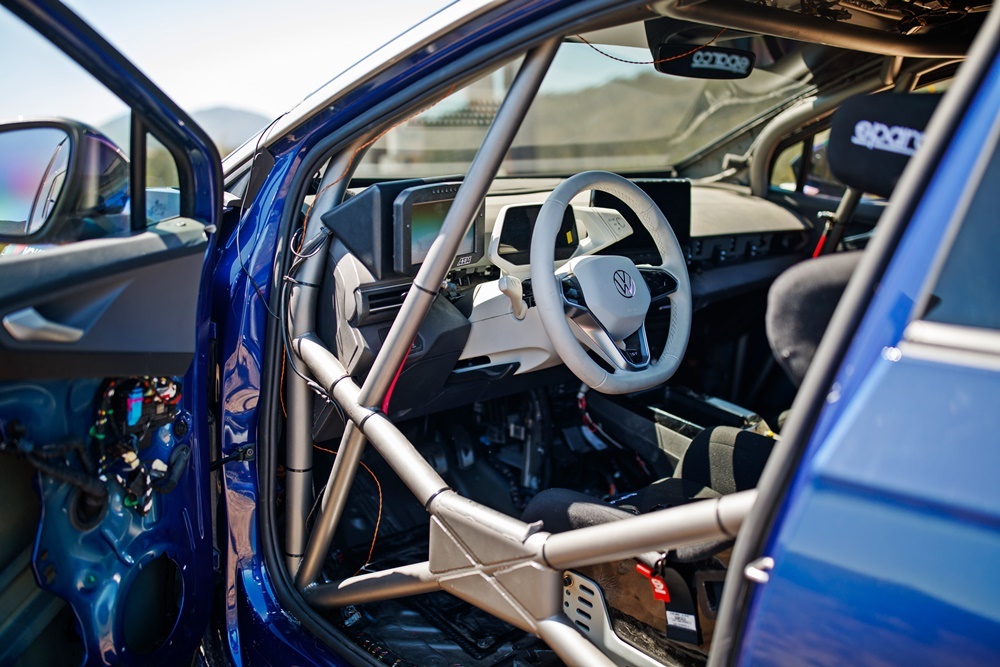
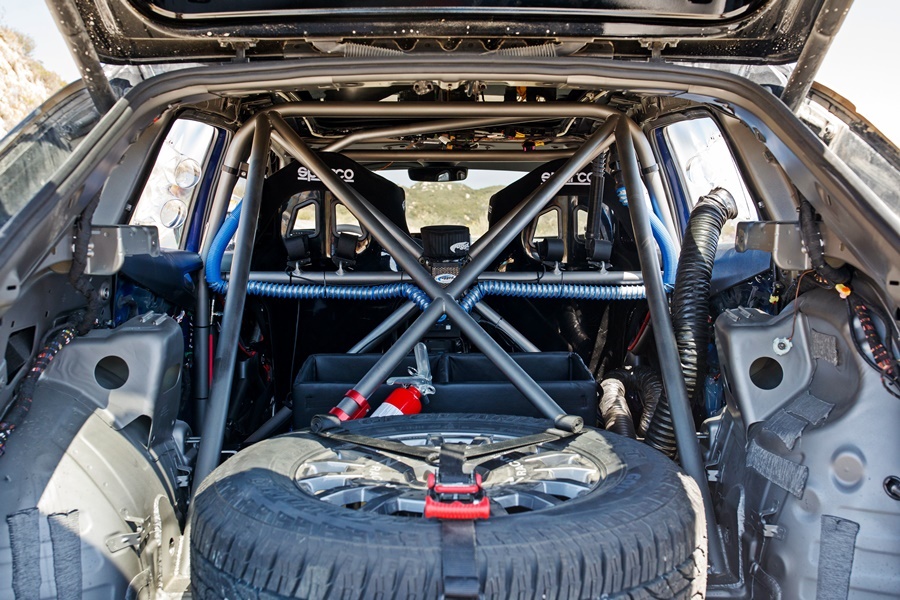
Inside the cabin was a roll cage for safety, racing seats and supplemental screens for key data like battery temperature, crucial information to know with the high desert temperatures and constant high speeds.

Biofuel-powered generator for recharging
The ID.4 was one of the 64 vehicles that finished the entirety of the NORRA 1000, out of 90 cars and trucks entered. Stages measured between 53 kms and up to 270 kms over the 1.600-km route. The ID.4 was able to recharge mostly using a portable biofuel-powered generator connected to a 50 kW flat charger. In a couple of instances where the ID.4 was scheduled to be transited to the next stage but the charger was not available, the team towed it behind a chase vehicle for a short distance, using the regenerative braking to add range.

Volkswagen ID.4 NORRA desert race 2021

Despite the brutal nature of the Baja wilderness, the only damage suffered by the e-SUV was some cosmetic injury to the rear bumper. All of the vehicle’s key power, battery and control systems performed as expected. The ID.4 was raced mostly in ‘B’ level battery regeneration mode with the standard traction control turned on.

“This was an exciting test of ID.4 technology because no other production-based EV had ever entered this event, let alone completed it,” said Scott Keogh, President & CEO of Volkswagen of America.

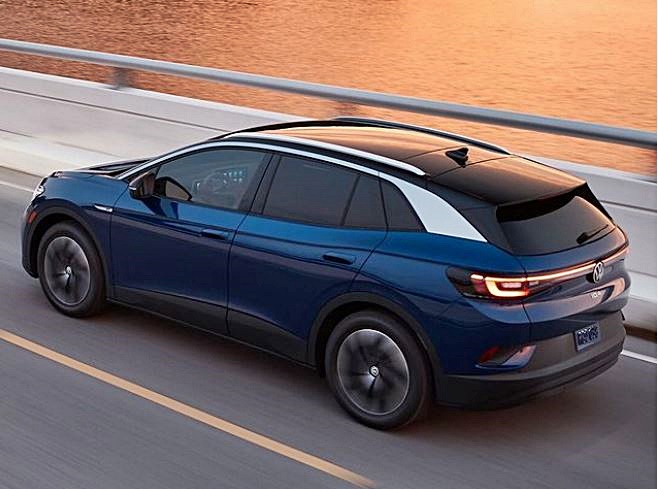
The ID.4 is the second model in Volkswagen’s all-electric ID range. First deliveries in Europe started at the end of 2020 and it is also being sold in North America and China. Last month, it was announced as the 2021 World Car of the Year.

Volkswagen ID.4 is the third EV to win World Car of the Year title

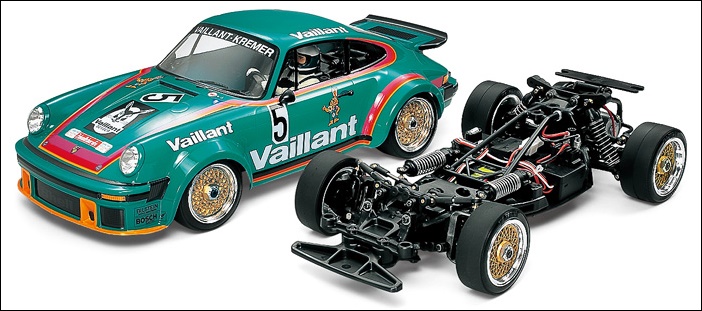
Those who grew up in the 1980s will fondly remember Tamiya, the name of the 75-year old Japanese company that made plastic scale models and became a big name in radio-controlled (R/C) cars after it launched its first R/C assembly kit of a Porsche 934. That first model and those which were to follow sparked the R/C revolution.

Over 5 decades, Tamiya has offered many R/C models such as the Hornet, Lunchbox, Sand Scorcher and Avante, with the Wild One being one of the most iconic. But while they provided many memories of exciting races, they were all ‘driven’ using a remote controller.

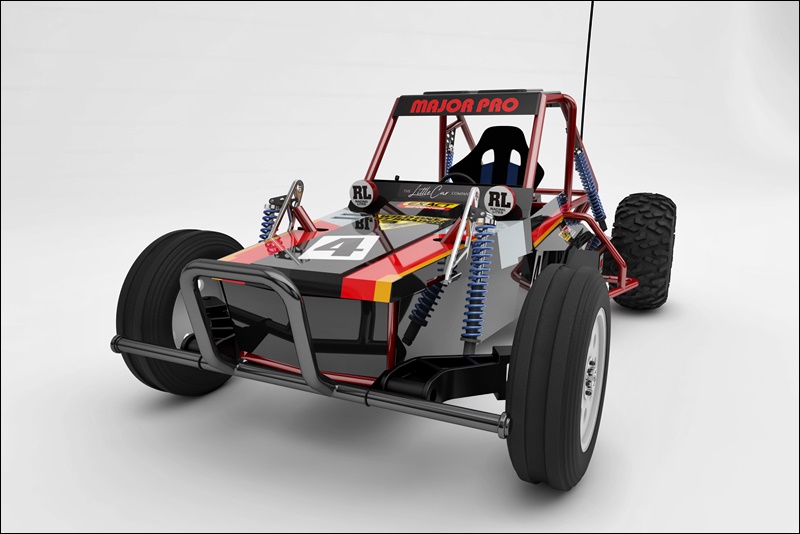
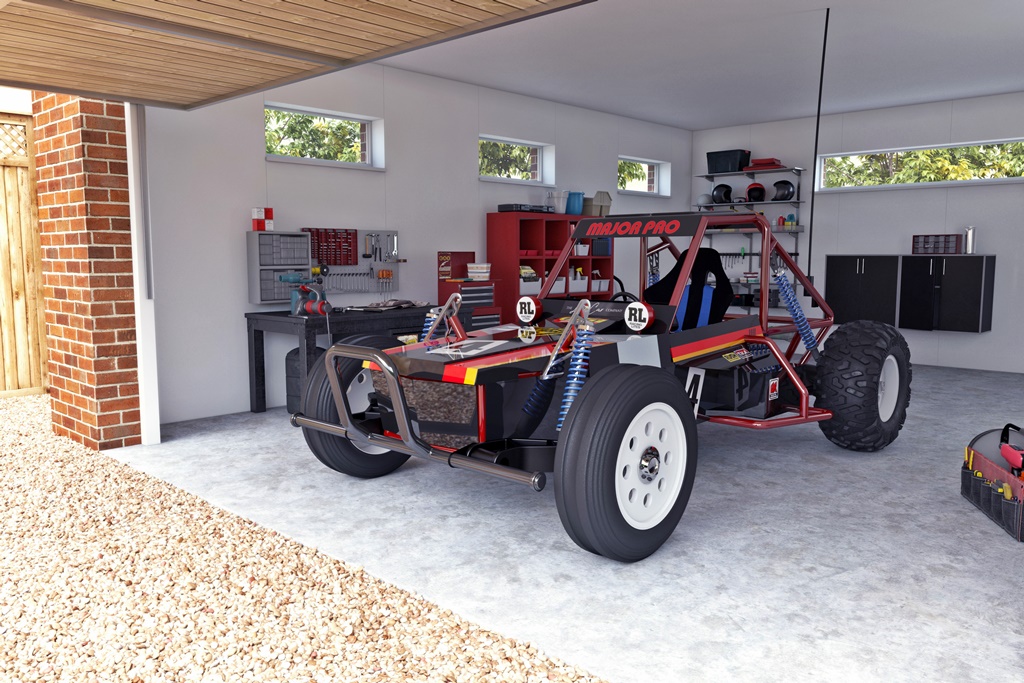
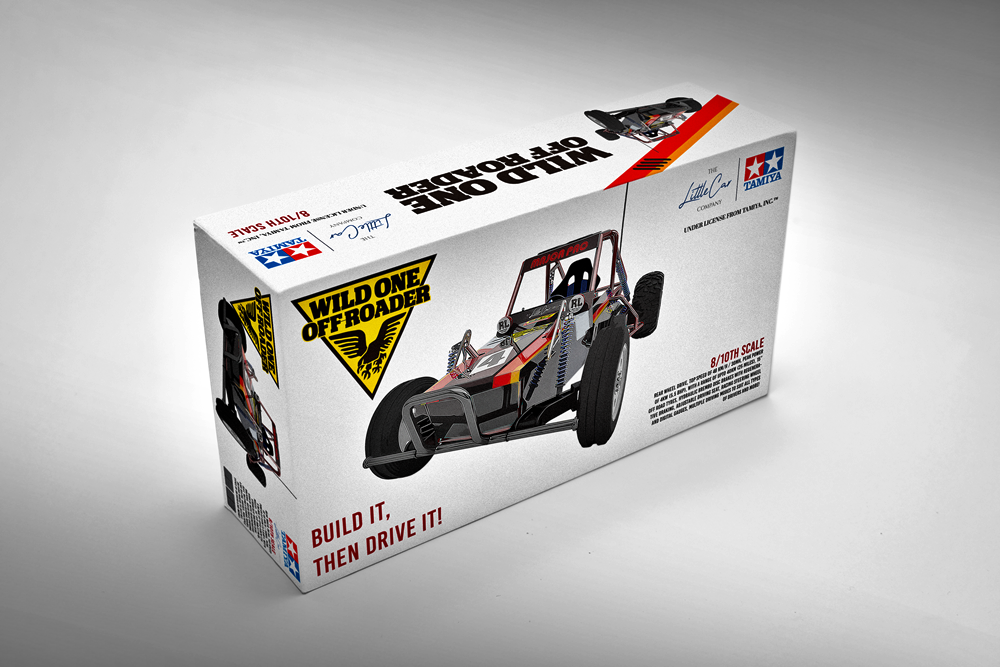
Now, The Little Car Company, based in the UK, is bringing back the Wild One and this is considerably larger than the 1/10th size of the original one sold by Tamiya. With a licence from the Japanese company, The Little Car Company will produce an 8/10 scale car that will be big enough for a person to sit in it.

The Little Car Company Tamiya Wild One MAX 2022

Not just for static show
And it won’t just be a showpiece as it will be able to move around with the same type of propulsion unit as the original – an electric motor. The Wild One MAX, as it will be known, will have rear-wheel drive and a spaceframe chassis with coil-over suspension for all four wheels. It gets the power to the ground through 15-inch off-road tyres on lightweight wheels. The brake system includes hydraulic Brembo disc brakes on each corner, backed up by regenerative braking to maximise range.

There are multiple driving modes which offer different top speeds, throttle mappings and power outputs according to driver skill level. So the younger ones can learn to drive safely and get increased power as they become proficient and more confident.

The Little Car Company Tamiya Wild One MAX 2022

The Little Car Company Tamiya Wild One MAX 2022
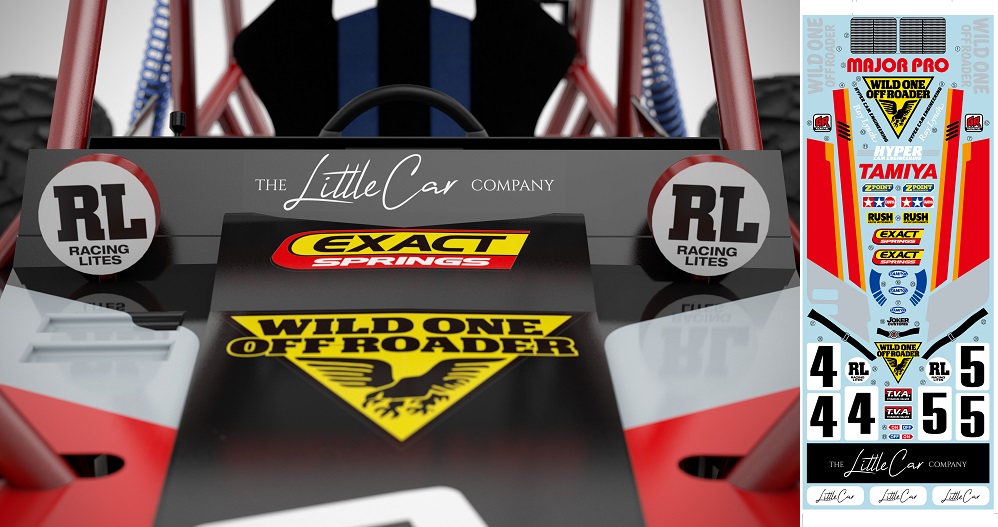
Like the original R/C car, the Wild One MAX can be assembled from parts supplied, with stickers too!

48 km/h top speed
The base Wild One Max can reach a top speed of 48 km/h with maximum power output of 4 kW (5.5 bhp). It has a single PowerPack onboard with a capacity of 2 kWh and a range of up to 40 kms, depending on terrain and driving style. For increased speed or range, modular PowerPacks can be added.

Upsized from the small scale model, the Wild One MAX will be about 3.5 metres long,1.8 metres wide and weigh around 250 kgs. Like the original, the car can be assembled from parts supplied although being considerably larger, it won’t be able to go into a glass case.

The driver will have an adjustable composite seat with a 3-point seatbelt, digital gauges and a racing steering wheel. The Little Car Company says that between 160 cm and 195 cm tall should be  comfortable enough.

1976 Tamiya Porsche 934 RC
The Porsche 934 model introduced by Tamiya in 1976 started the R/C revolution.

Taking things one step further, those who wish to roam on public roads can install Road Legal Packs. These packs add the components required to build the vehicle to be compliant with Quadricycle laws in Europe, or Neighbourhood Electric Vehicle legislation in the USA. The packs include items such as brake lights, turn signals, reflectors and rearview mirrors so the Wild One MAX can be fully road-legal.

Built to order
The Wild One MAX is expected to have a pricetag starting from £6,000 (about RM34,300) and is planned for global release in 2022. The company will be building the cars as orders are received and accompanied by a £100 deposit (refundable)

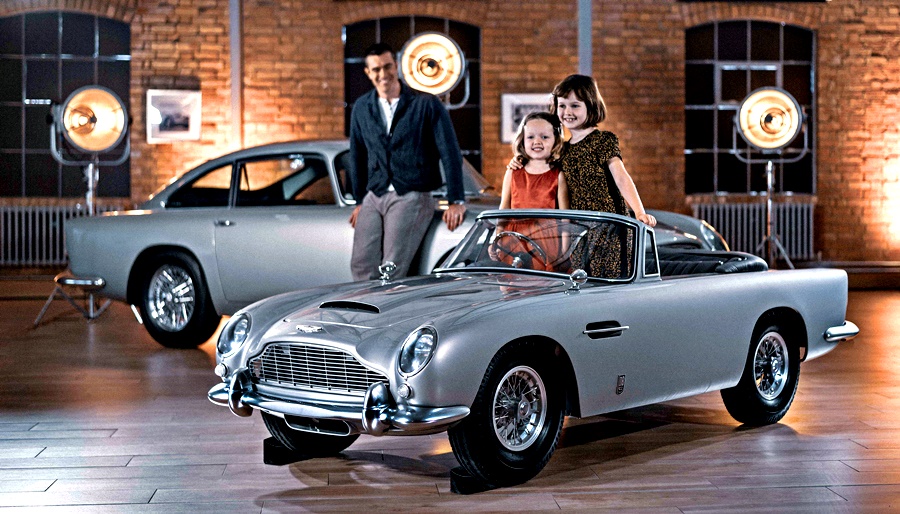
This is not The Little Car Company’s first small car as it has, in partnership with some prestigious carmakers, produced authentic ‘junior cars’. These include the Bugatti Baby II, a 75% scale tribute to the iconic Bugatti Type 35, and a follow up to the 1926 Bugatti Baby. The second model announced in 2020 was the Aston Martin DB5 Junior (pictured below), a 66% scale version of the car driven by Agent 007.

2020 Aston Martin DB5 Junior

Visit www.bhpetrol.com.my for more information.

Henry Ford believed in his company owning and managing every aspect of making cars – including even owning the plantations of rubber trees that provided rubber for his cars. But as the years went by, specialisation began and while carmakers focussed on designing and manufacturing cars, some activities were also farmed out to other companies. Design, for instance, was sometimes done by external consultants more specialised in the work, notable Italian studios like Pininfarina, Ghia and ItalDesign being among them.

In the 21st century, as the whole idea of making cars changes with the transition to electric vehicles, there are many newcomers (especially in China) who want to get into the game. Some of these have experience in other types of manufacturing, eg batteries or mobilephones, but no experience in engineering cars. For them to gain that experience as the global players did will take too long; today’s companies do not have the luxury of time to learn themselves as the market is so competitive.

So the answer has been to commission companies that specialise in certain areas. In fact, Chinese companies have been doing this, not just for design but also for powertrains. There are top-notch engineering consultancies in Europe like Lotus Engineering that can develop a car on par with any experienced manufacturer – and even the established ones sometimes ask Lotus to help.

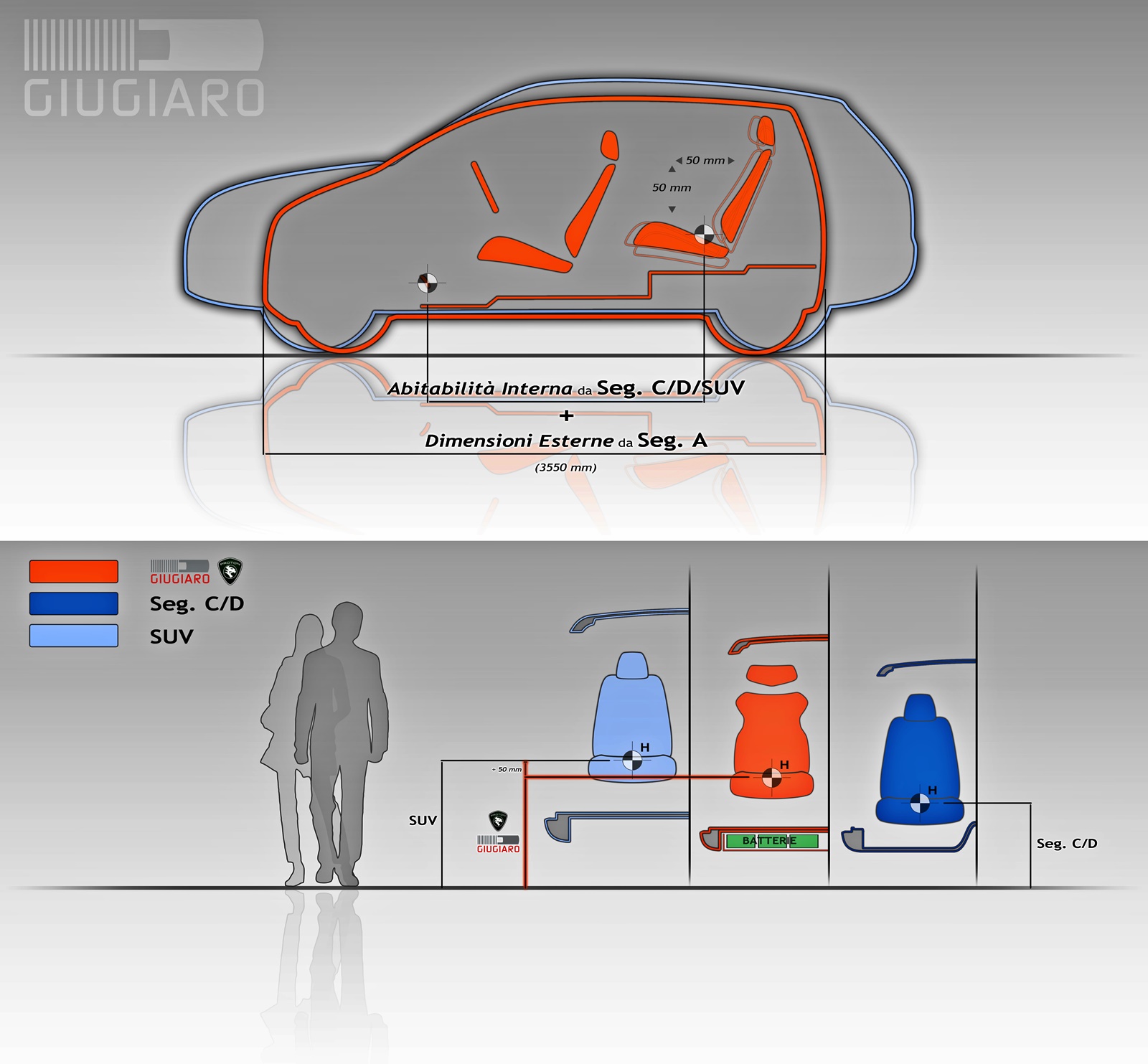
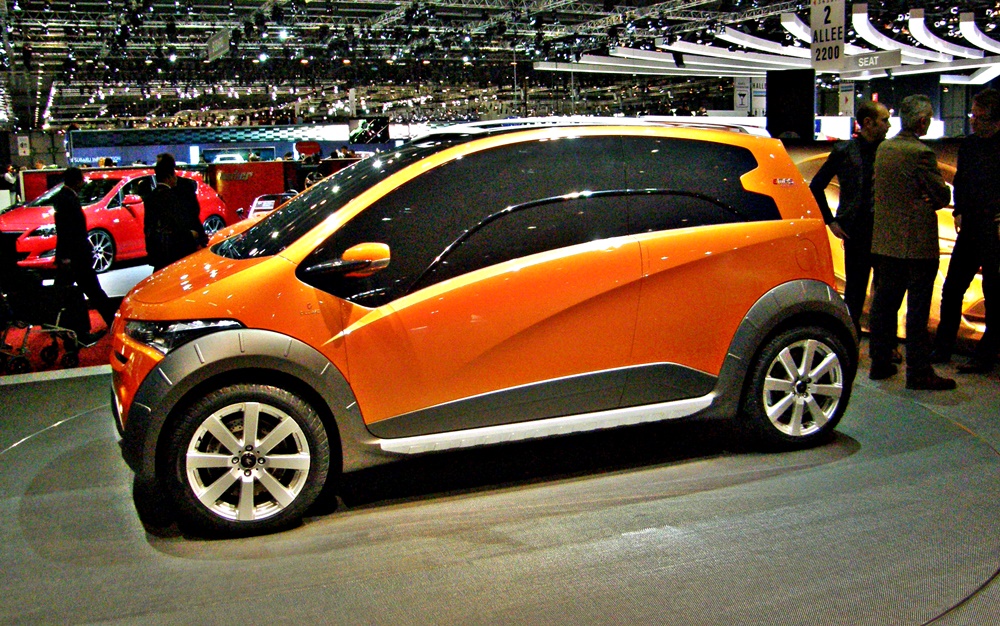
Manufacturers sometimes ask experienced design studios to propose designs for future models. This was the EMAS hybrid concept for Proton by Italdesign Giugiaro which was displayed at the 2010 Geneva Motorshow.

So there’s a growing business in offering a full range of services to develop cars and Italdesign has formed a partnership with Williams Advanced Engineering (WAE)  to provide such services to those who want to produce and sell high-performance EVs. WAE is the technology and engineering business that was established by Williams F1. It takes technology originally developed for Formula One cars and adapts it for commercial applications.

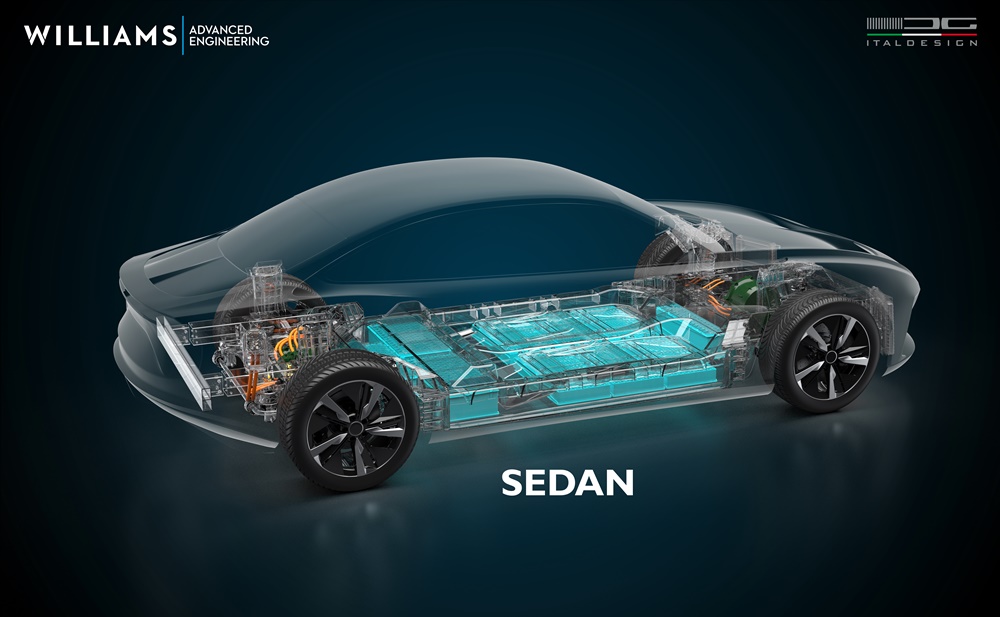
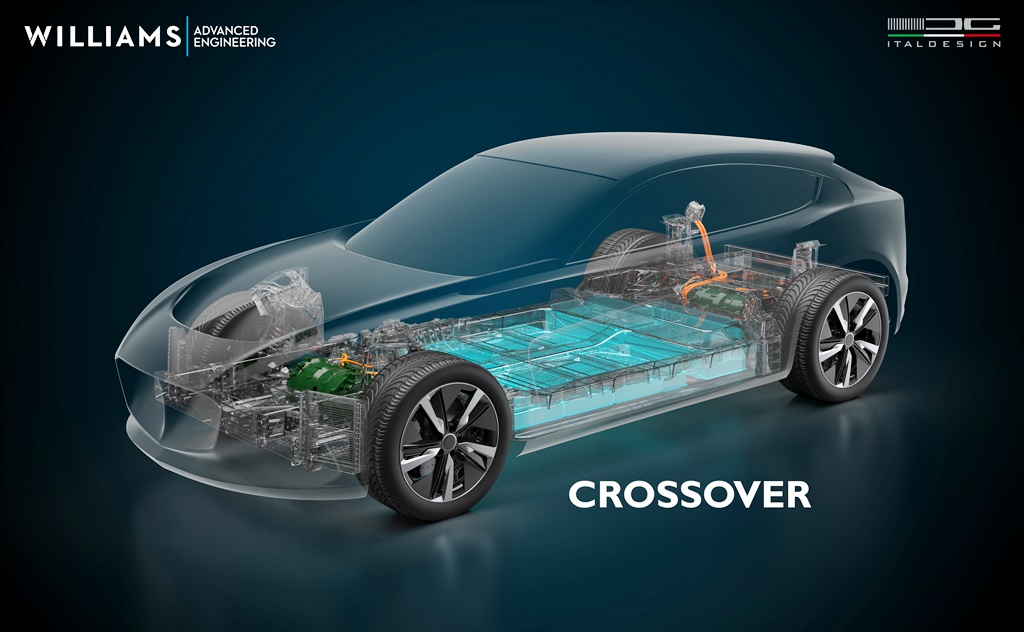
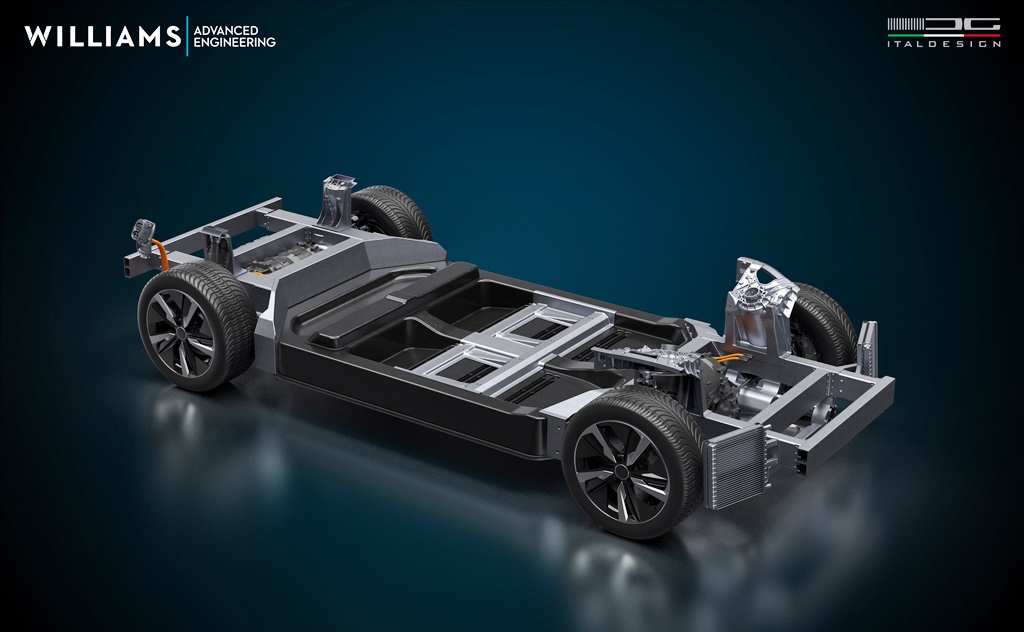
Combining a state-of-the-art composite electric vehicle rolling chassis from WAE with turn-key vehicle development services from Italdesign, the joint venture will enable both newcomers and customers to benefit from the expertise of two global leaders in EV engineering and vehicle design, supporting them in the creation of a range of upper premium EVs from high performance GTs, crossover and sedans.

Italdesign and Williams Advanced Engineering

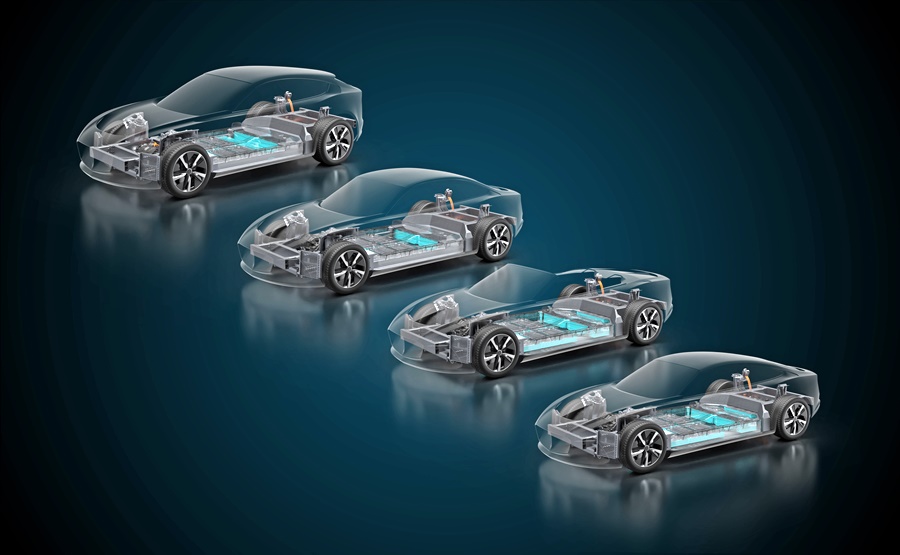
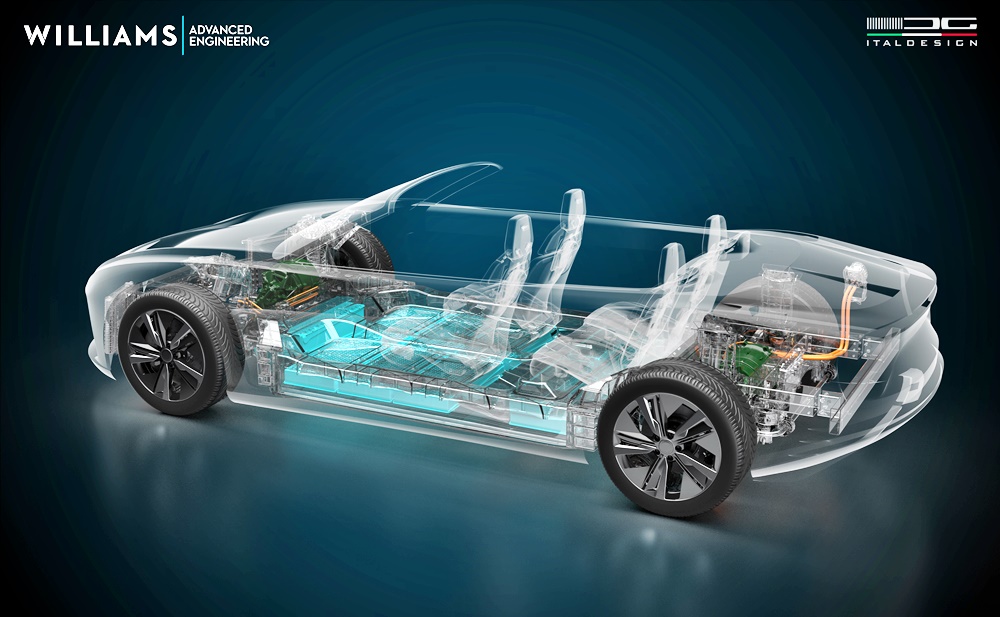
The foundation of this new venture is WAE’s innovative EV architecture – a new rolling chassis which distils WAE’s expertise in electrification, light-weighting, innovative chassis structures and vehicle and system integration into one advanced architecture known as ‘EVX’.

Differentiating itself from other EV platforms currently in the market, EVX integrates the battery pack casing with elements more commonly perceived as part of the body structure. Front and rear chassis structures mount to the carbonfibre composite case and crash loads can be transferred via internal reinforcements to the integral side sills.

Italdesign and Williams Advanced Engineering

The resulting higher profiled cross section achieves much of the torsional stiffness needed to deliver the full potential of the platform. These two design philosophies reduce reliance on the upper structure, which then gives greater design freedom for a variety of ‘top hats’.

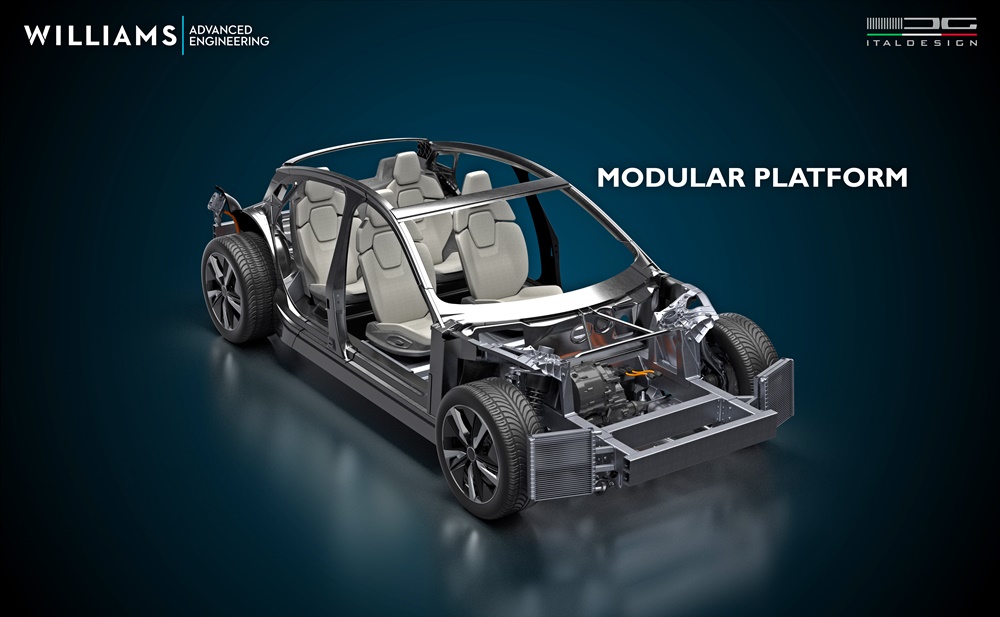
Starting from WAE rolling chassis, Italdesign’s Engineering Team then complete the vehicle architecture adding safety systems, structures, and UX devices to constitute the modular platform that will be the base to build-up several different high-performances vehicles.

Italdesign and Williams Advanced Engineering

Italdesign and Williams Advanced Engineering

The innovative modular platform is ready for customisation by the Italdesign styling team who will shape the final vehicle to match the brand’s requirements in terms of marketing positioning, design direction etc. As well as being a structural component of EVX, the platform can accommodate wheelbases from 2900 mm to 3100 mm, with customers able to choose rear-wheel drive and 4-wheel drive layouts.

Combining recycled composite materials with aluminium, EVX is lightweight and sets new standards for static and torsional stiffness. With class-leading performance and mass targets, EVX will provide the perfect basis for tomorrow’s electric vehicles, supporting a flexible range of powertrain options with outstanding aerodynamics and safety performance.

Majoring on high performance, reduced time to market, flexibility and affordability at low-to-medium volumes, the new platform is capable of supporting production runs up to 10,000 units, up to 500 of which could be manufactured by Italdesign at its facilities in Italy.

WAE was the original supplier of batteries to all participants of the FIA Formula E World Championship cars in 2014, a relationship that has been revived for the 2022-23 season. WAE also supplies battery systems to ETCR and Extreme-E and has considerable experience in high-performance electrified road car programmes stretching back more than a decade.

“We are delighted to join forces with Italdesign on this exciting and timely joint collaboration” said Paul McNamara, Technical Director at WAE. “Demand for high performance electric vehicles is continuing to show considerable growth but to date, there has not been a complete EV production solution. This unique relationship brings together state-of-the-art EV rolling chassis technology with one of the world’s leaders in vehicle body engineering.”

Production-ready Nissan GT-R50 by ItalDesign makes debut on track

Archive

Follow us on Facebook

Follow us on YouTube