Piston.my

Formula 1

Race starts at 1 pm in Mexico/3 am (Monday) in Malaysia
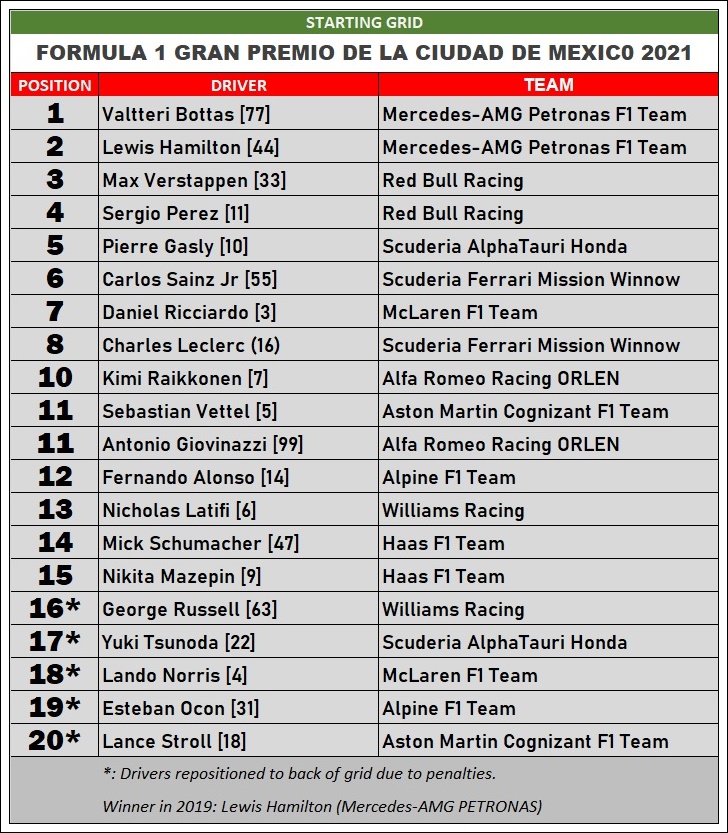
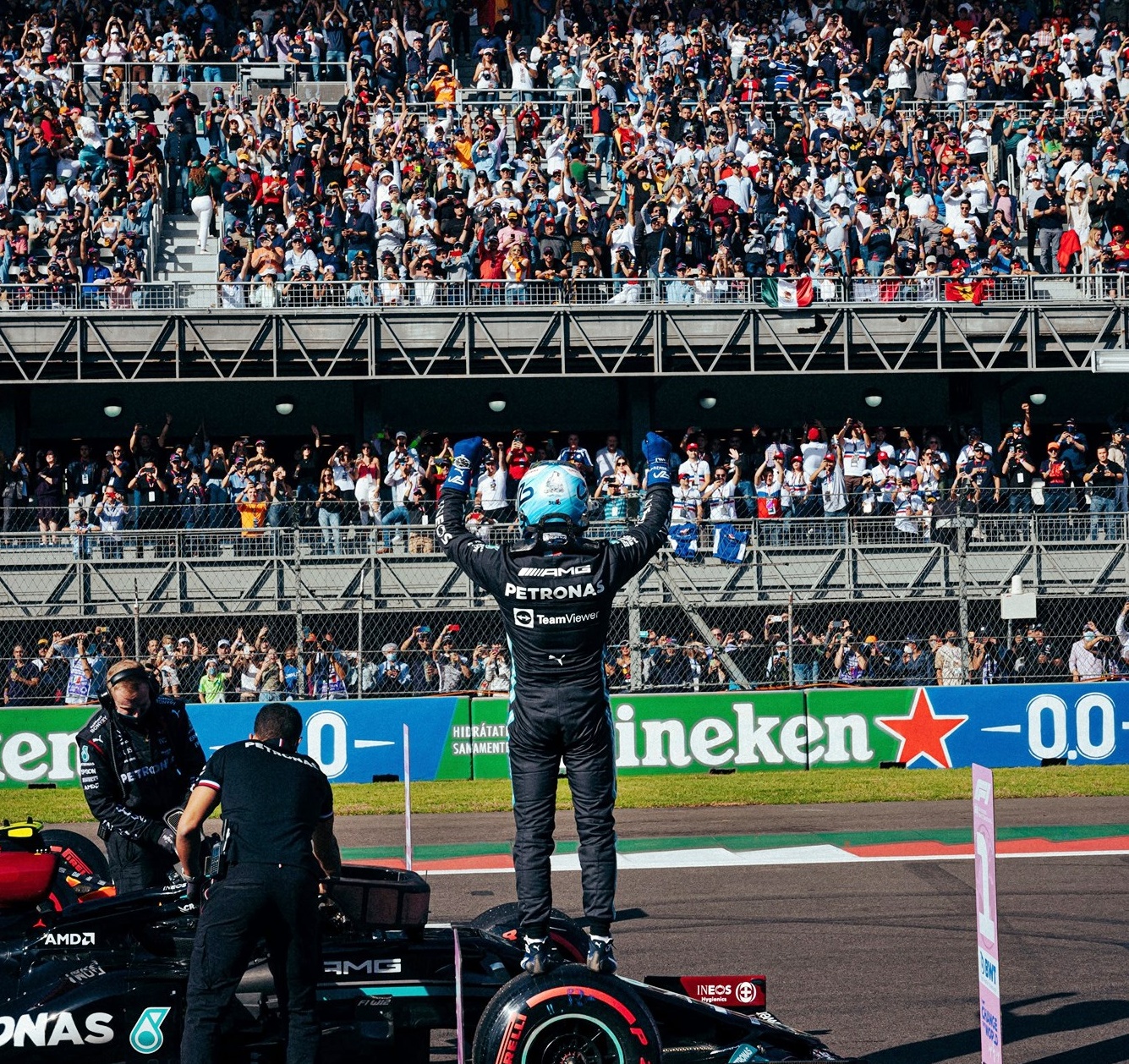
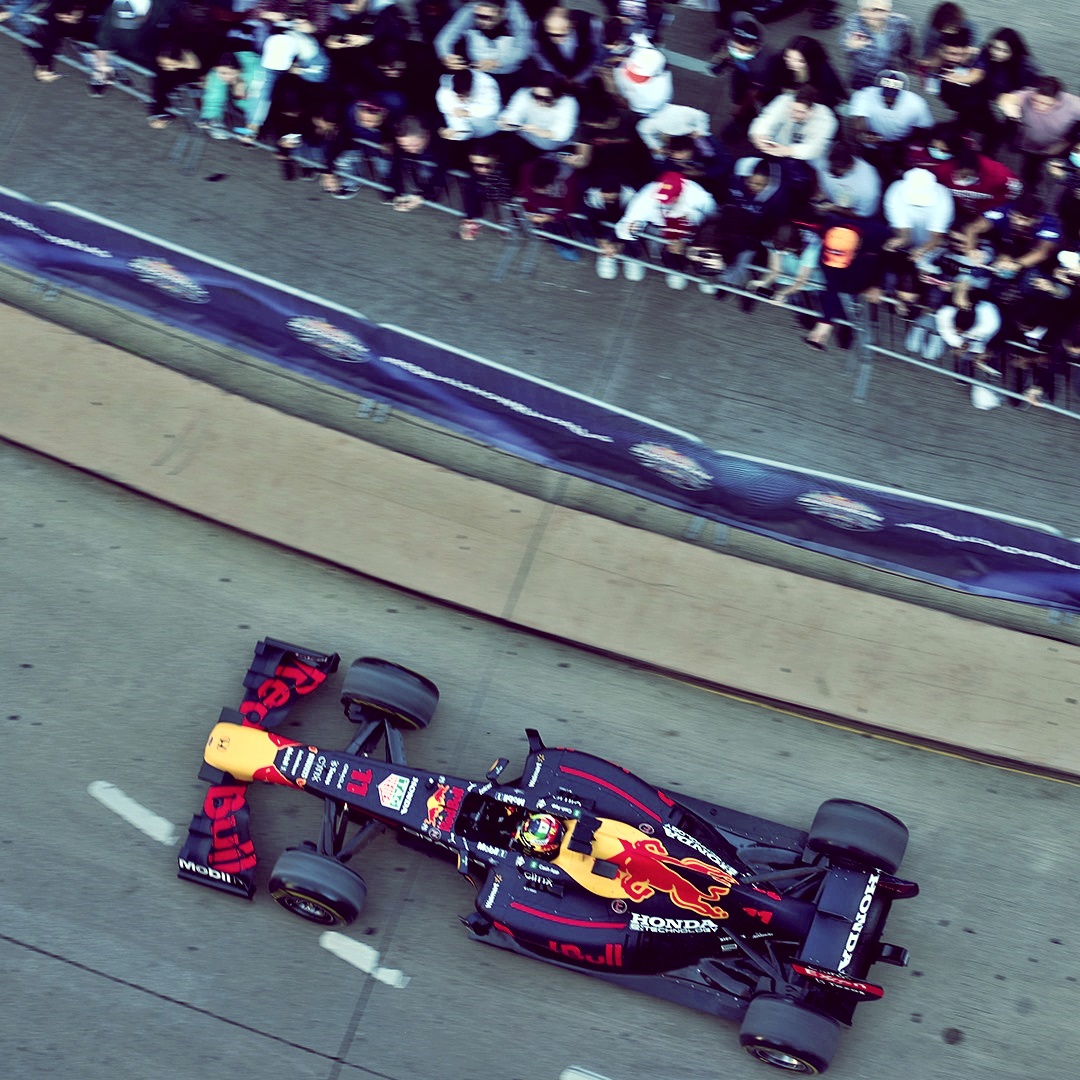
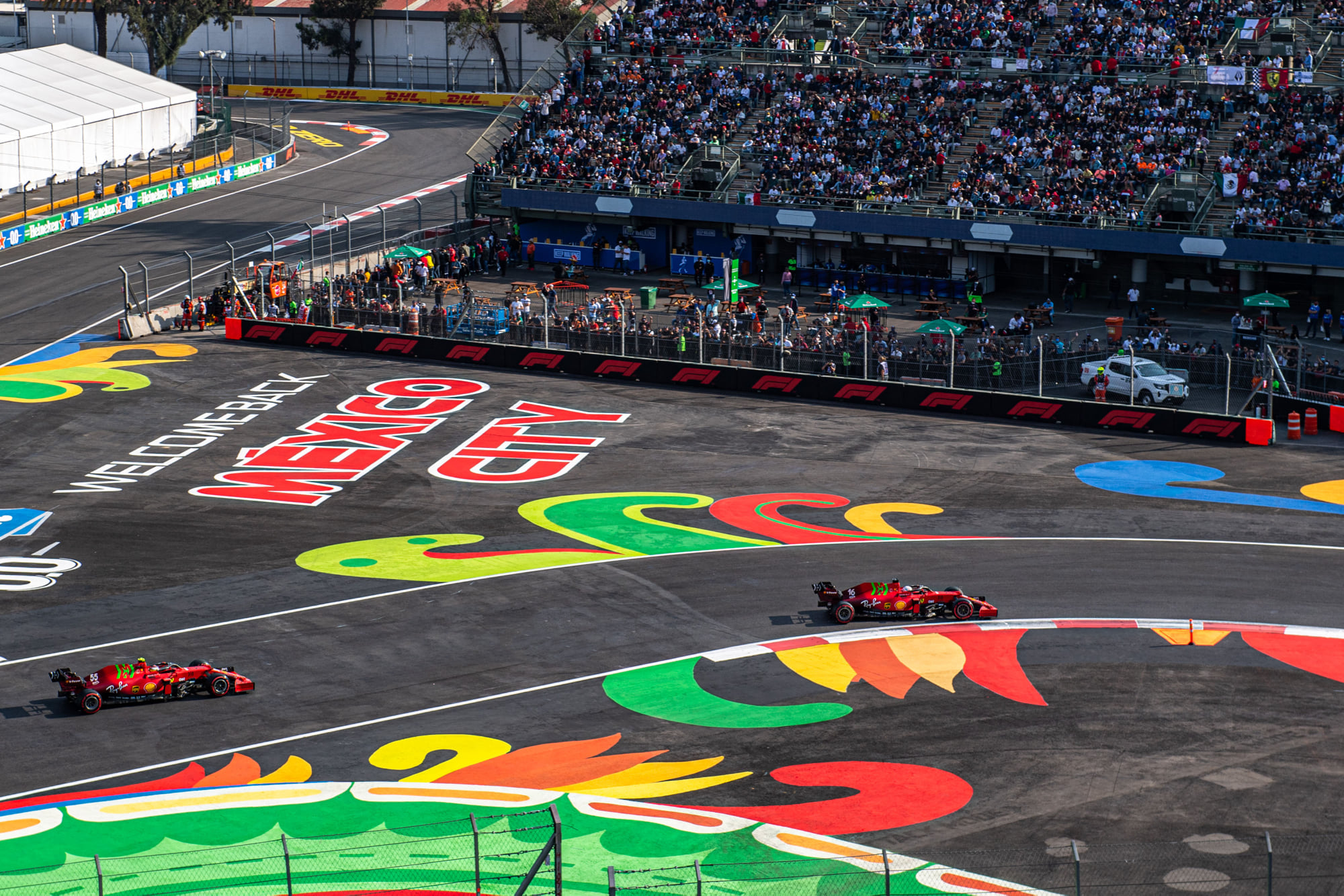
While the racing teams are on the west side of the Atlantic Ocean, they have 3 races in the hemisphere – after the US Grand Prix in Texas, this weekend sees the second one in Mexico City. The event has been known as the Mexican Grand Prix for the 20 times in has been held since 1963 (last year, it was cancelled due to the pandemic) but this year, it will become known as the Mexico City Grand Prix.

An event special to Honda
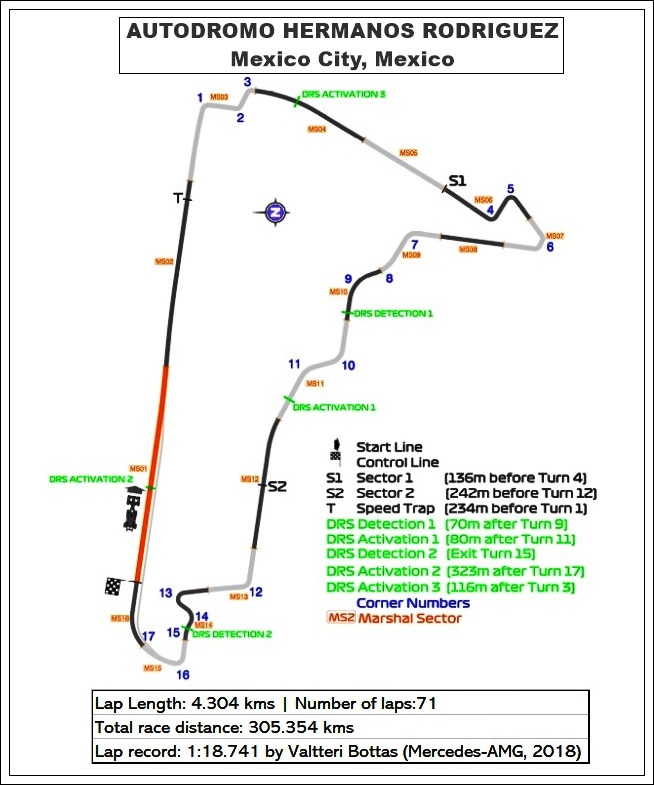
The Mexican Grand Prix has been held at the same circuit which was originally named the Magdalena Mixiuhca Circuit but renamed to Autodromo Hermanos Rodriguez in honour of the country’s racing drivers, Ricardo and Pedro Rodriguez. This circuit in particular is special to Honda because it was the first Japanese team to win a Formula 1 race in the 1965 event. While it did not participate as a factory team later on, it was an engine supplier and contributed to the victories of Williams (1987) and McLaren (1988-1989) in the Mexican rounds of the championship.
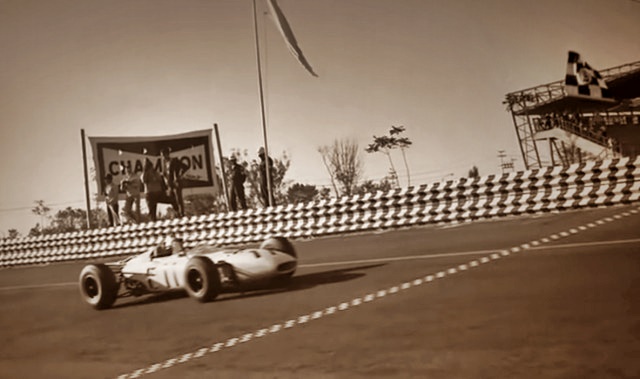
Honda RA272 winning the 1965 Mexican GP – the first F1 win by a team from Japan.

5 times higher than Petronas Twin Towers
The 4.3-km circuit set within a sports park has always presented a unique challenge for the engineers. At 2,385 metres above sea level, it is situated at the highest altitude of any circuit and that’s 5 times higher than the height of the Petronas Twin Towers. This means the air is thinner (by about 25%) so the operating conditions are unlike other tracks. This is where forced induction is vital to avoid the loss that naturally-aspirated engines suffer due to less air being available.

There are also has implications on aerodynamics and the racing cars will be set up with maximum downforce. But because the air is thin, resistance is less so the cars will be able to hit very high speeds of around 350 km/h too.
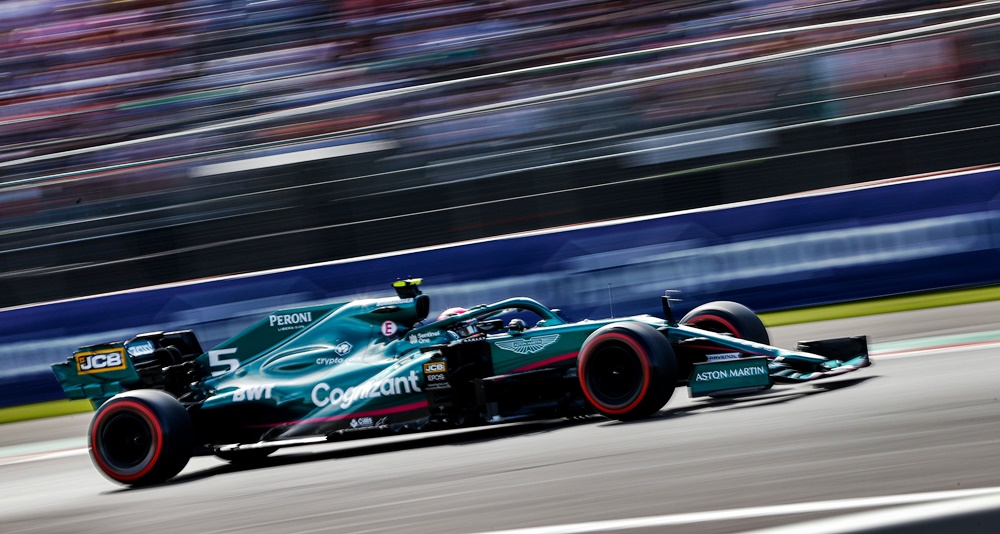
The drivers will have to be alert for cooling problems with the brakes and the turbochargers will also have to work harder, so there is a risk of the Power Unit failing. Cooling the car appropriately is probably the biggest challenge in Mexico. For the Power Unit, the lack of mass flow of air limits the cooling potential, which requires careful management to ensure reliability.
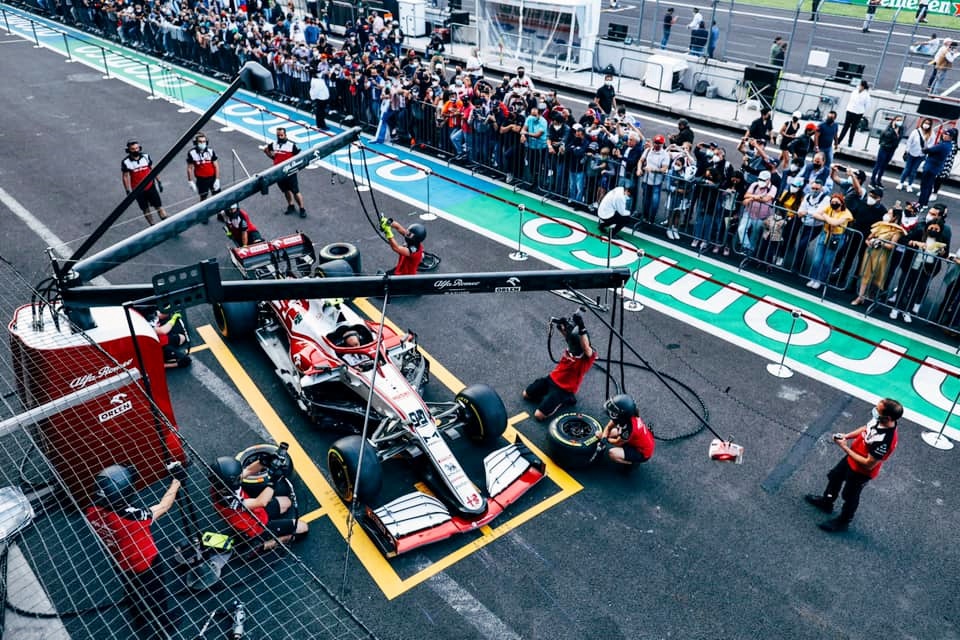
Red Bull Racing or Mercedes-AMG?
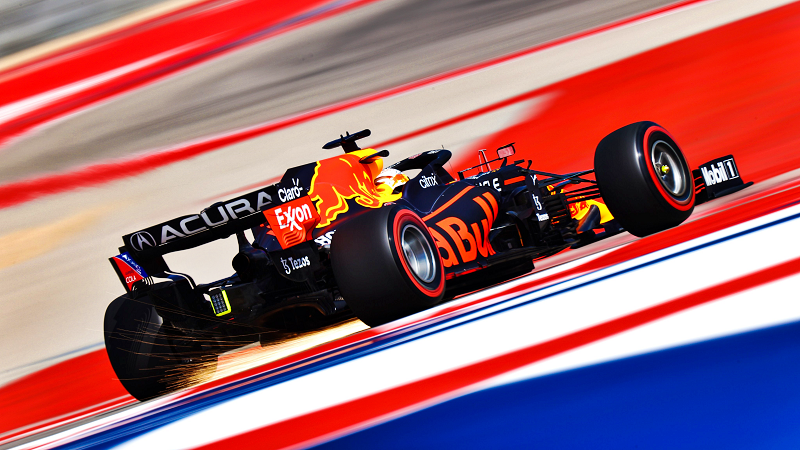
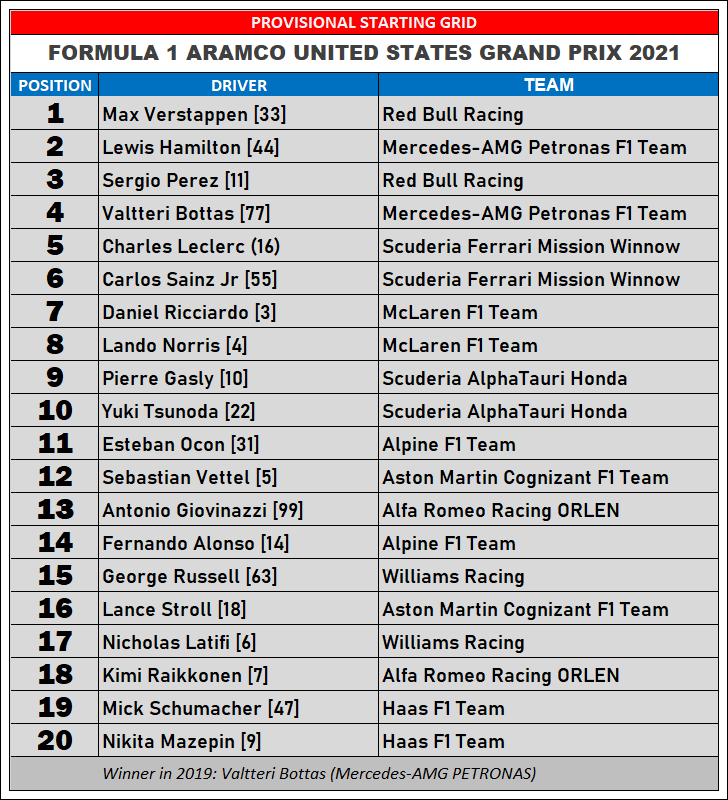
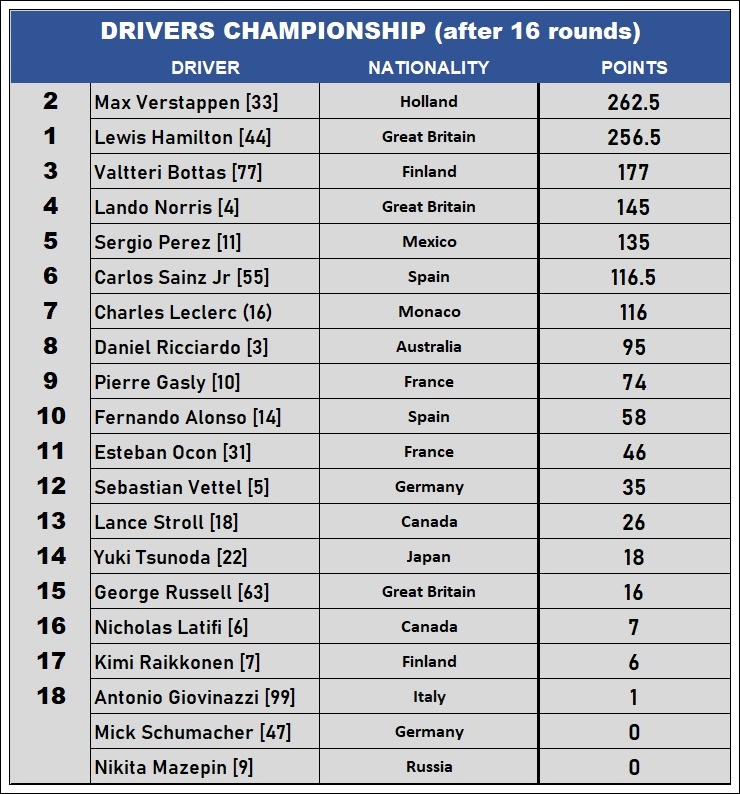
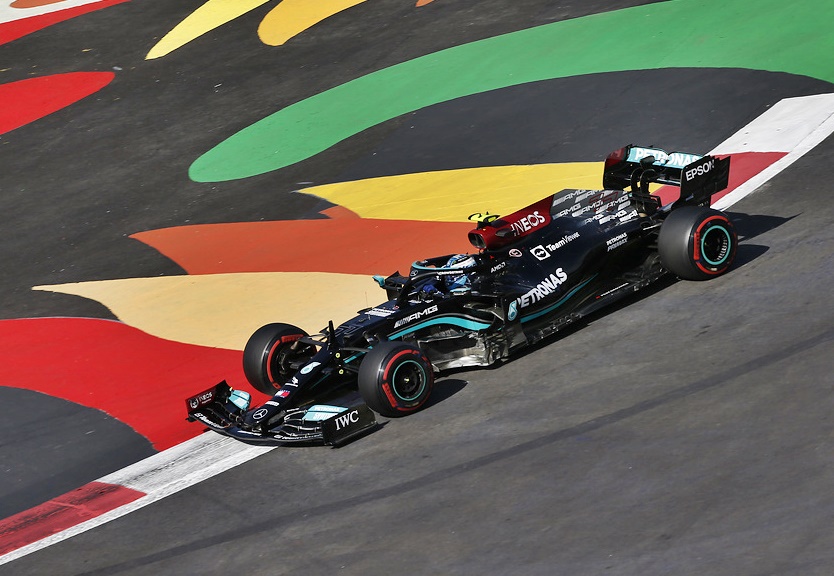
Going into the final quarter of the championship, the battles for the Drivers and Constructors titles are still tight. The lead has alternated between Mercedes-AMG PETRONAS and Red Bull Racing and after the US Grand Prix, Max Verstappen has a lead of just 12 points ahead of Lewis Hamilton 275.5 points. Running in third is Valtteri Bottas with 185 points and he will be starting from pole position for the race after a surprise qualifying run to beat his teammate by 0.145 second. 35 points behind him is Sergio Perez who will be in fourth place on the grid, alongside his teammate, Verstappen.

Historically, the Mexican Grand Prix has been one of the races where the Drivers championship has been decided but in those years when Hamilton was confirmed champion (2017 and 2018), the event was the 19th round of a 20-race calendar.

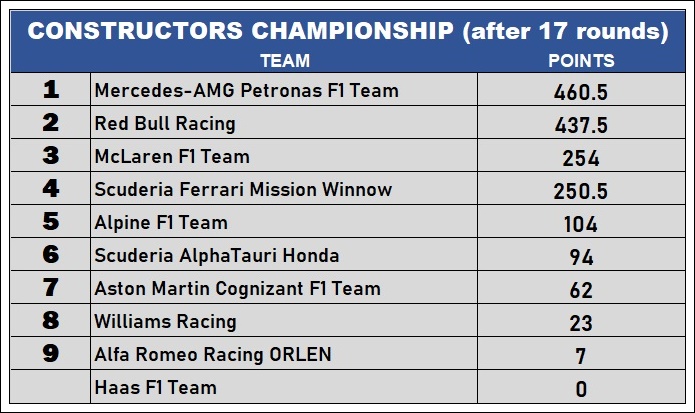
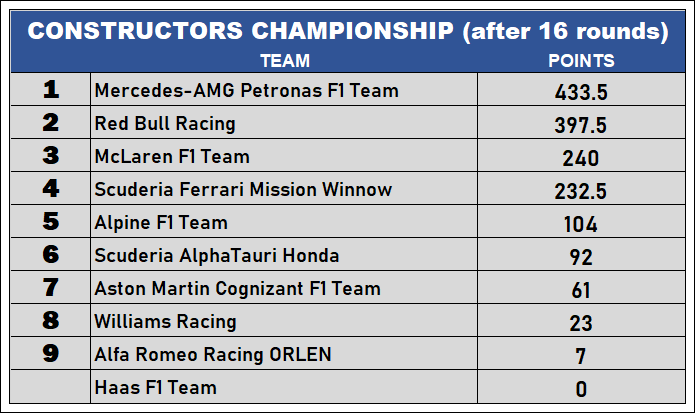
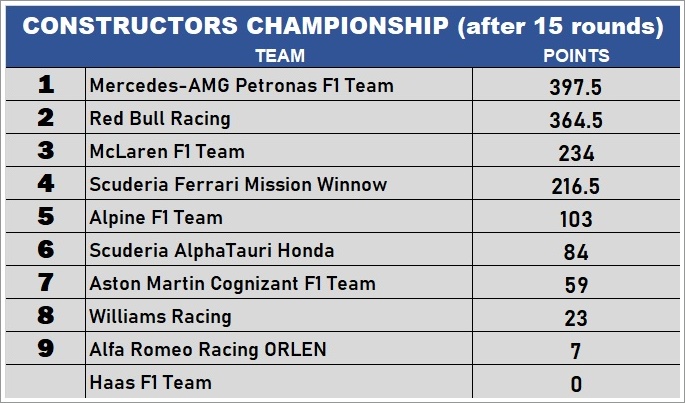
In the Constructors championship, the positions are reversed and it is the German team that is ahead of Red Bull Racing by 23 points. The fight for the title will be confined to these two teams, while third will be fought by McLaren and Scuderia Ferrari which are just 3.5 points apart with 5 rounds remaining.
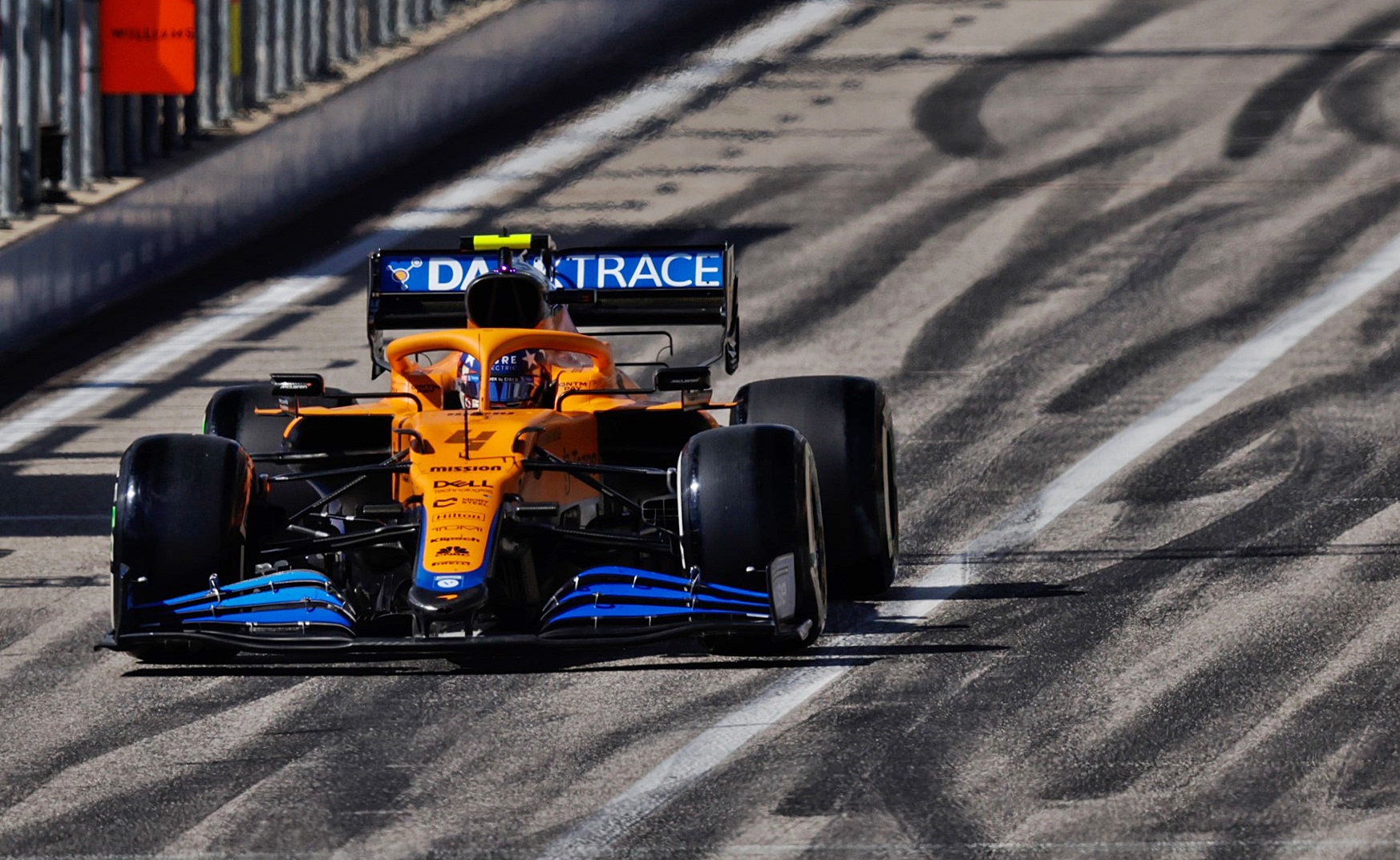
F1: Australian GP to be replaced by Ooredoo Qatar Grand Prix in November
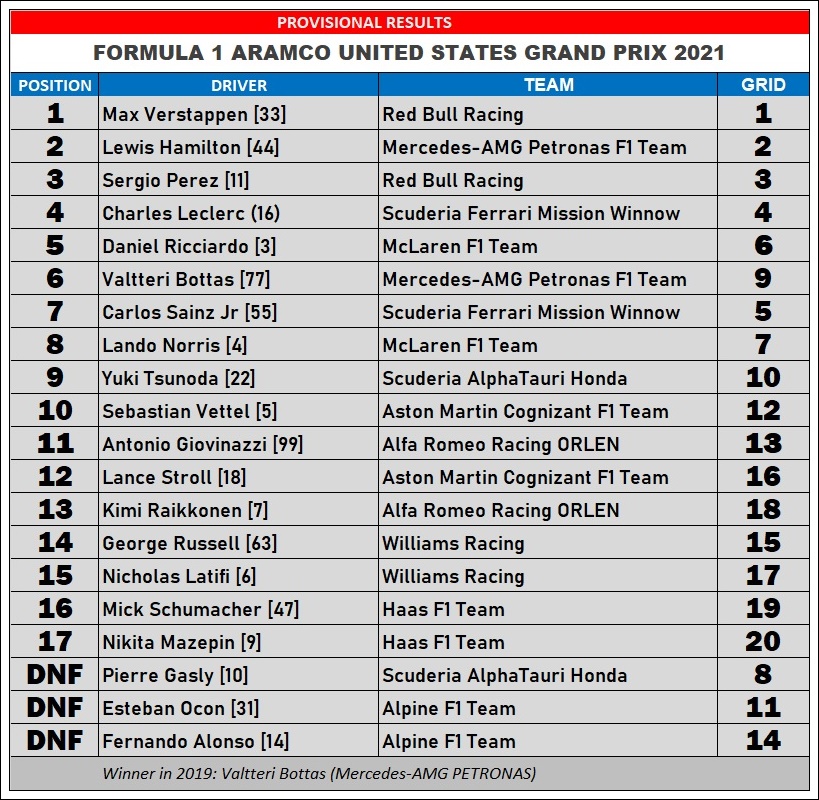
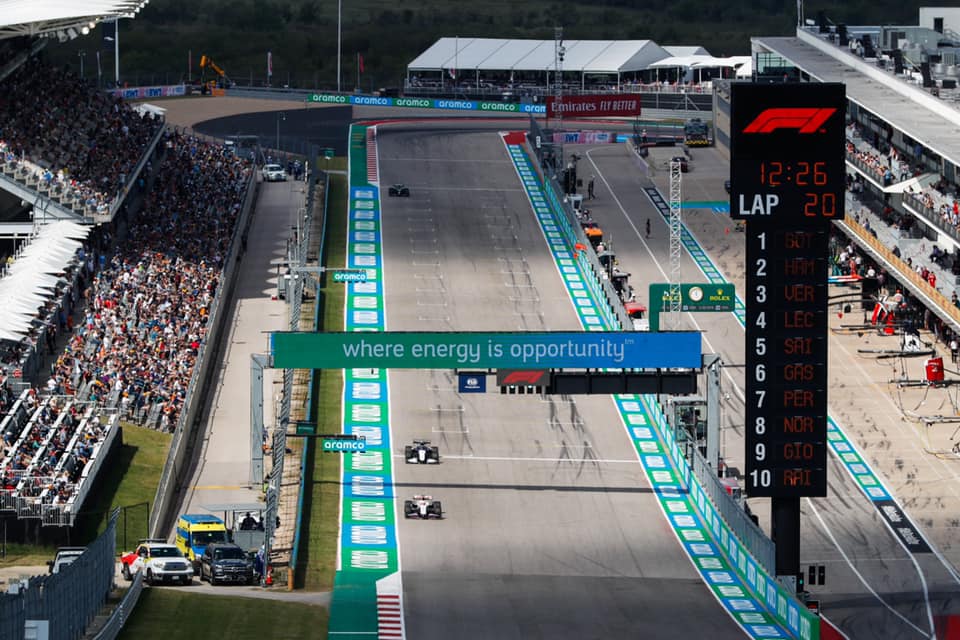
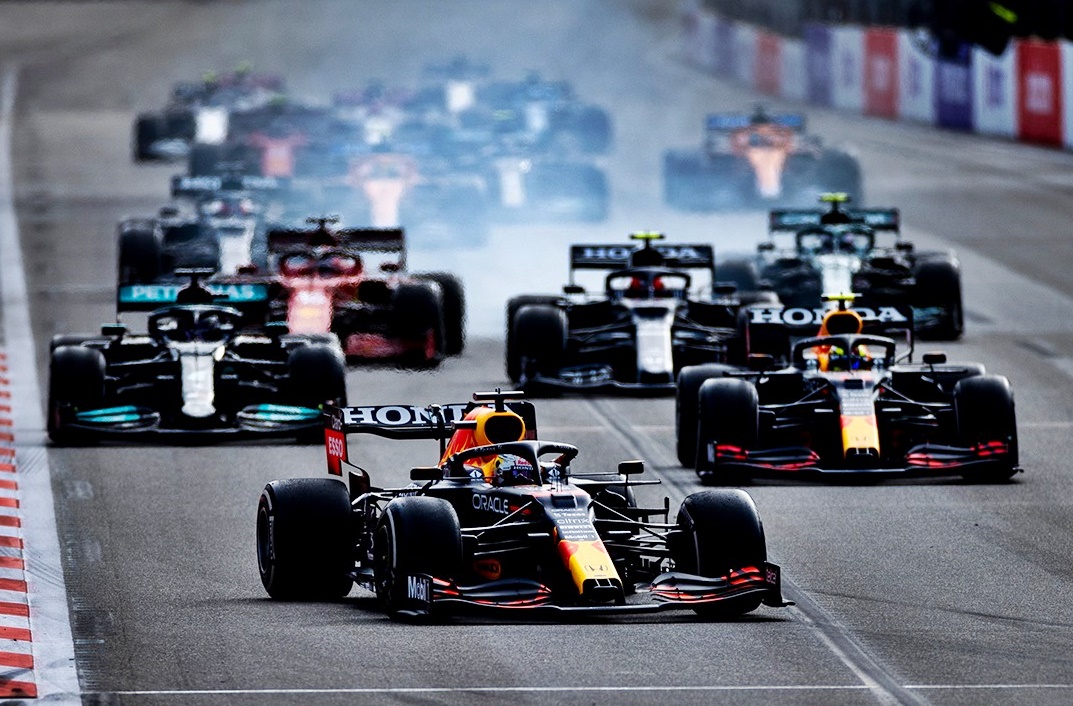
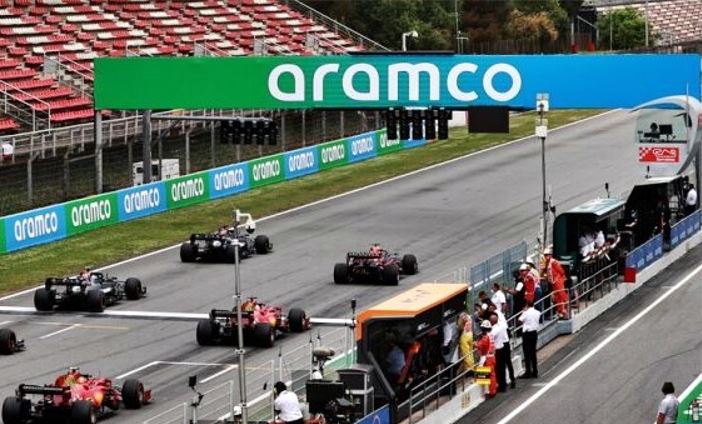
As the lights went green, both drivers on the front row got off to good starts and were side by side heading to Turn 1. Neither was willing to back off and in the end, it was Max Verstappen who had to go wide when Lewis Hamilton did not let him pass. But the Dutchman recovered quickly and rejoined alongside team mate Sergio Perez.

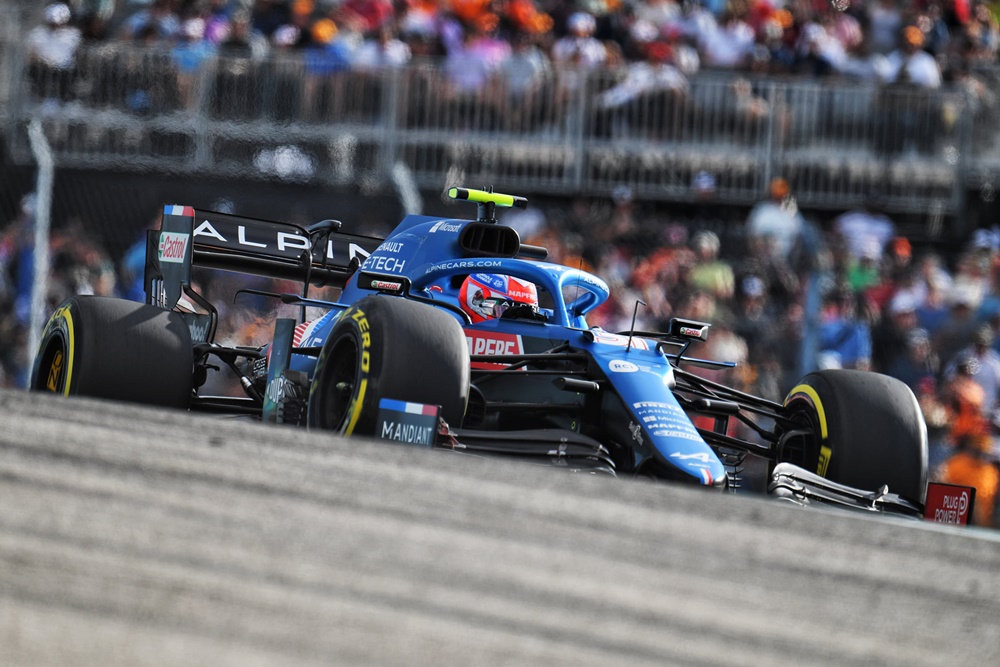
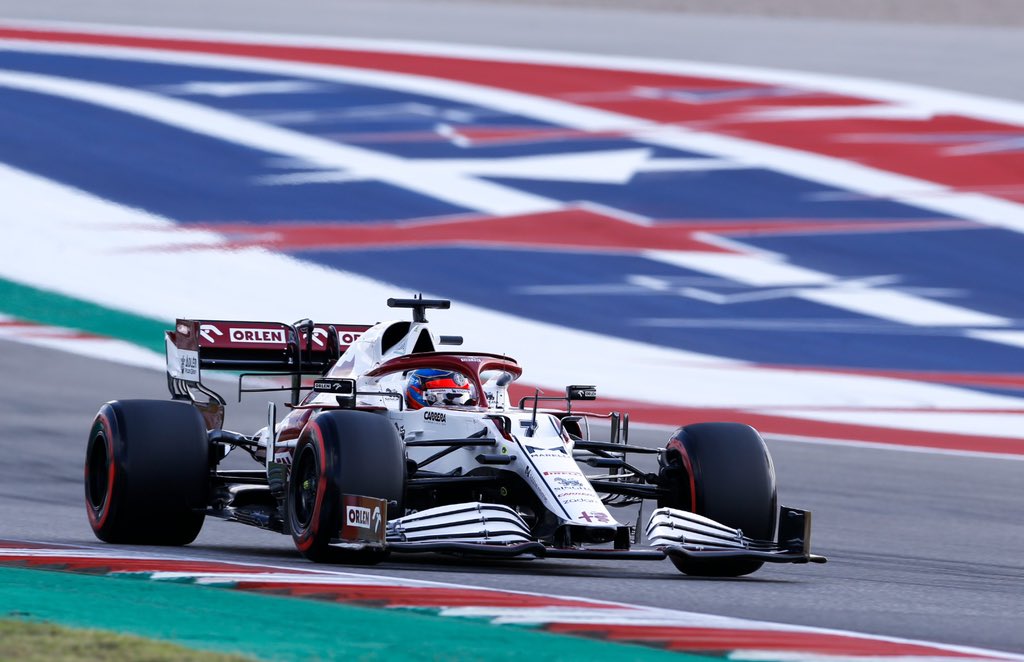
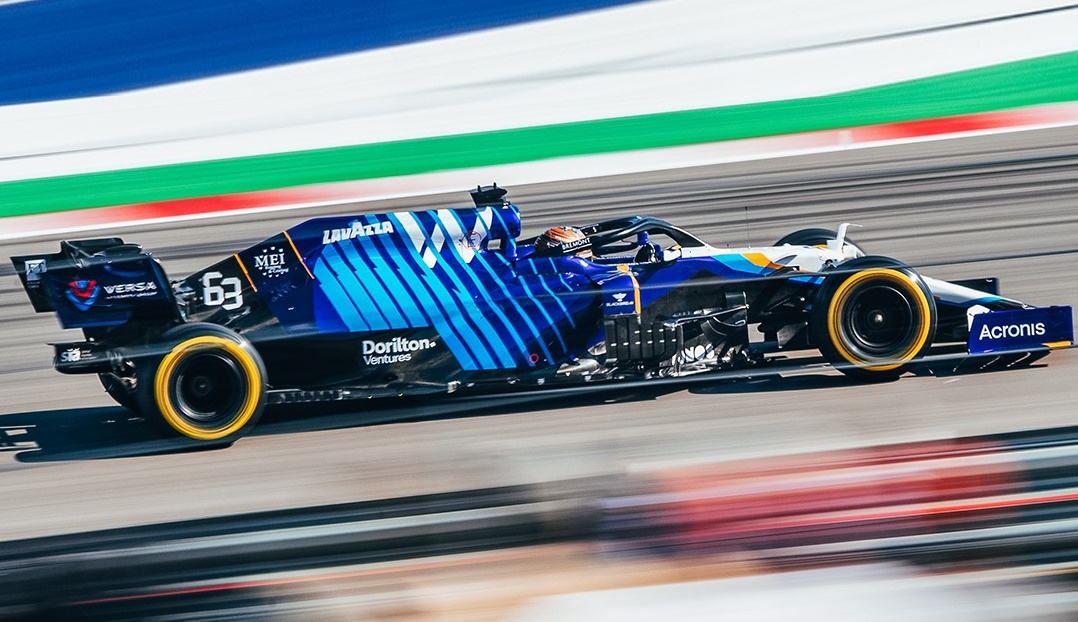
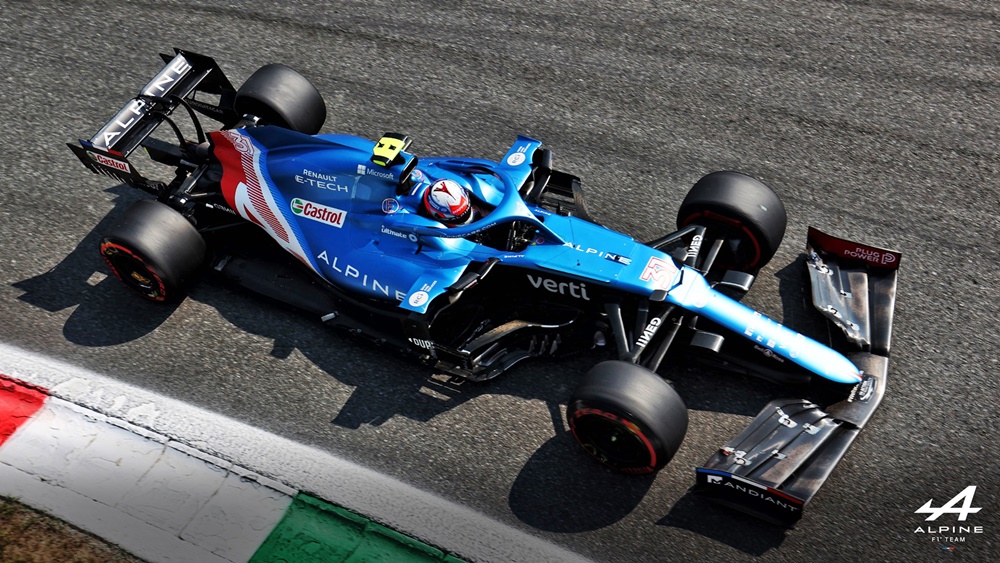
The first vehicle contacts occurred when Wiliiams Racing’s Nicholas Latifi bumped into Aston Martin’s Lance Stroll at the start and the Canadian driver spun. Alpine’s Esteban Ocon also got hit by the Alfa Romeo of Antonio Giovanazzi, resulting in the Alpine’s front wing being damaged and he had to head to the pits for a replacement. As he rejoined the race, he almost collided with a fast-moving Latifi who had also come in.

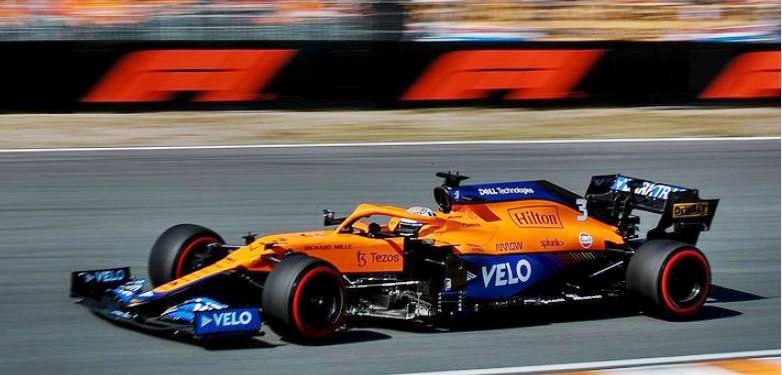
There was a lot of jostling for better positions in the first laps, and starting positions quickly changed. Williams Racing’s George Russell was able to move up to 14th from the back, while McLaren’s Daniel Ricciardo moved from 7th to 5th after getting past Ferrari’s Carlos Sainz.

From lap 8 onwards, the switch to hard tyres had started for most cars, except for Valtteri Bottas and the two Aston Martin drivers. Verstappen came in on lap 10, and Hamilton was forced to do likewise next, The Red Bull Racing driver inherited the lead as Hamilton went into the pits and wasted no time opening up the gap which was almost 7 seconds when the Mercedes-AMG driver came out again.

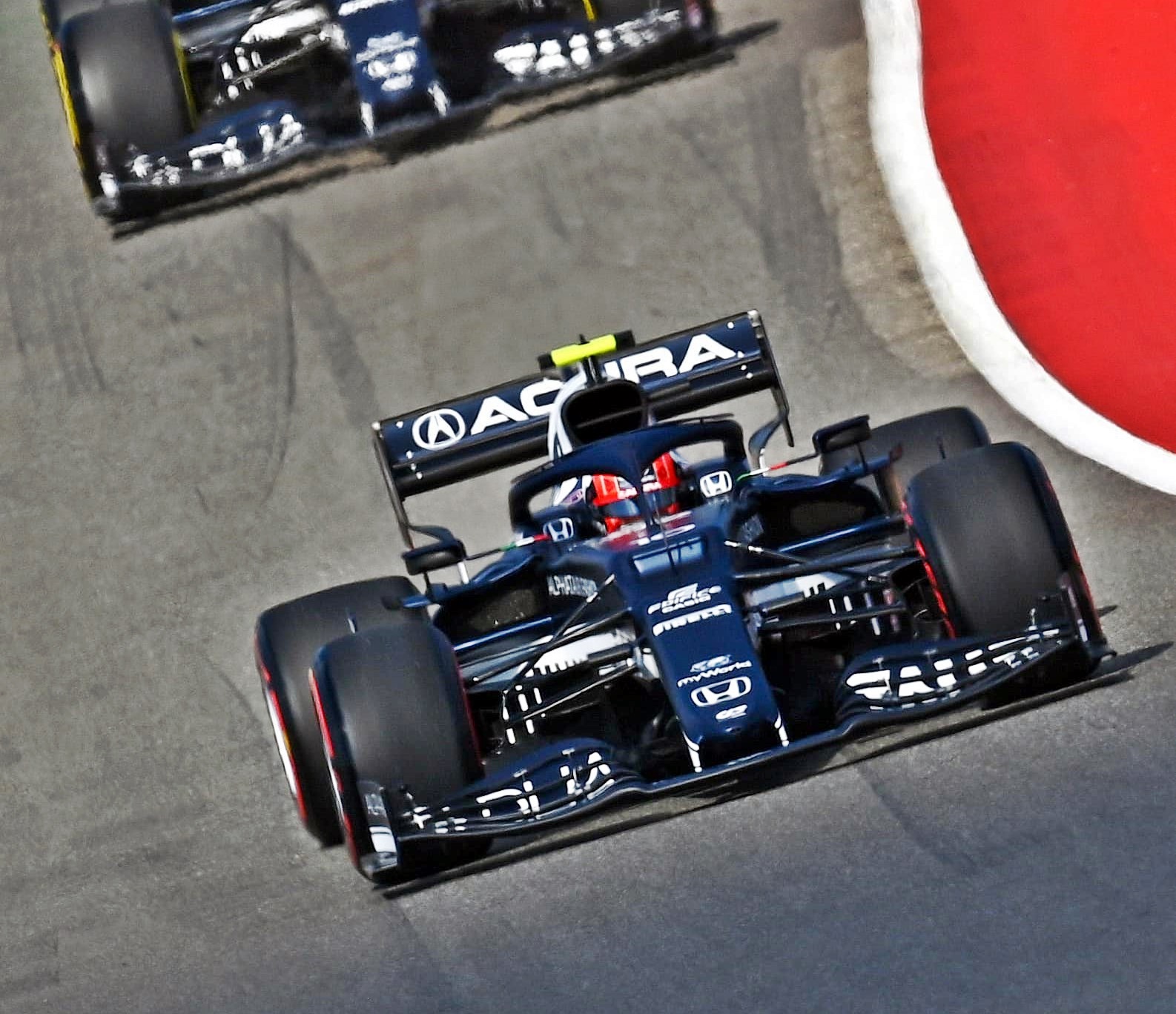
On lap 16, Pierre Gasly’s AlphaTauri had suspension problems serious enough that he had to pit. The problem was serious enough that he did not leave and was the first retiree of the USGP.

Bottas had been struggling to improve on his position but did not make much progress until lap 20 when he finally got past AlphaTauri’s Yuki Tsunoda to move into 8th – only one position better than what he started at (he had incurred a 5-place penalty on the grid for a sixth engine change).

On lap 22, Alonso got past Giovanazzi but it had occurred off the tracks, and after clarifying with the Race Director that it was not permissible, he had to give back the 11th place he had acquired, while Giovanazzi’s team mate, Kimi Raikkonen, moved further ahead. A lap later, an angry Alonso again has a close encounter with  Giovanazzi and this time it was the reverse as the Alfa Romeo driver was told to give back the place to Alonso,

The Virtual Safety Car appeared on lap 29 for a while as a marshal had to get onto the track to collect some debris left by one of the cars during a minor collision earlier. At that point, Hamilton had closed in to around 3 seconds from the leader with no worries from the next car behind (Perez) who was some 17 seconds away.

On lap 30, Hamilton moved into the lead as Verstappen came in for his second tyre change. As he rejoined, he was just behind his team mate but got past quickly and began closing in on his rival who was trying to open up a gap so that he could safely go for a tyre change. This time, the Mercedes-AMG team might get it right. However, Verstappen was not making things easy by steadily eating away at what started as a 16-second gap.

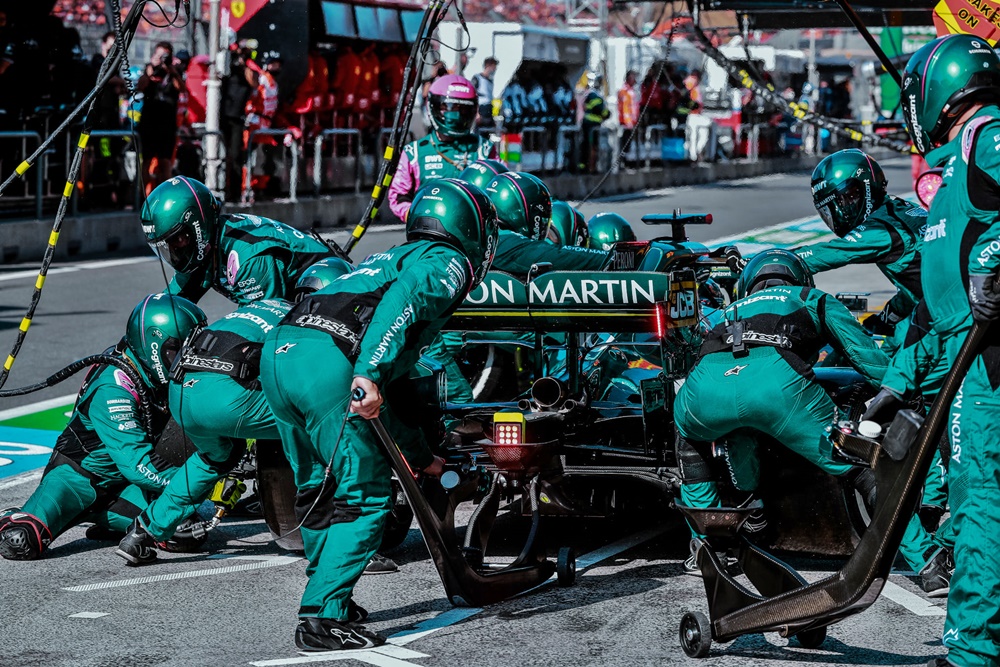
Hamilton finally came in on lap 37, spent 2.4 seconds in the pits to get another set of hard tyres and when he came out, Verstappen was almost 8 seconds in the lead. Not a big gap and still 19 laps left which meant an interesting fight ahead. The tyres should last but track temperatures were high too and could be an unexpected factor. Further back, Perez and Ferrari’s Charle’s Leclerc were reasonably safe in their 3rd and 4th positions, respectively, with wide gaps between them.

Ocon became the second driver to retire as his team radioed him to return to the pits. They didn’t seem to want to explain why but it was a disappointment as he was running well. Alonso, his team mate, was in 13th and trying to take home at least 1 point from the race for the team. But he too would retire 5 laps from the end with a wing problem.

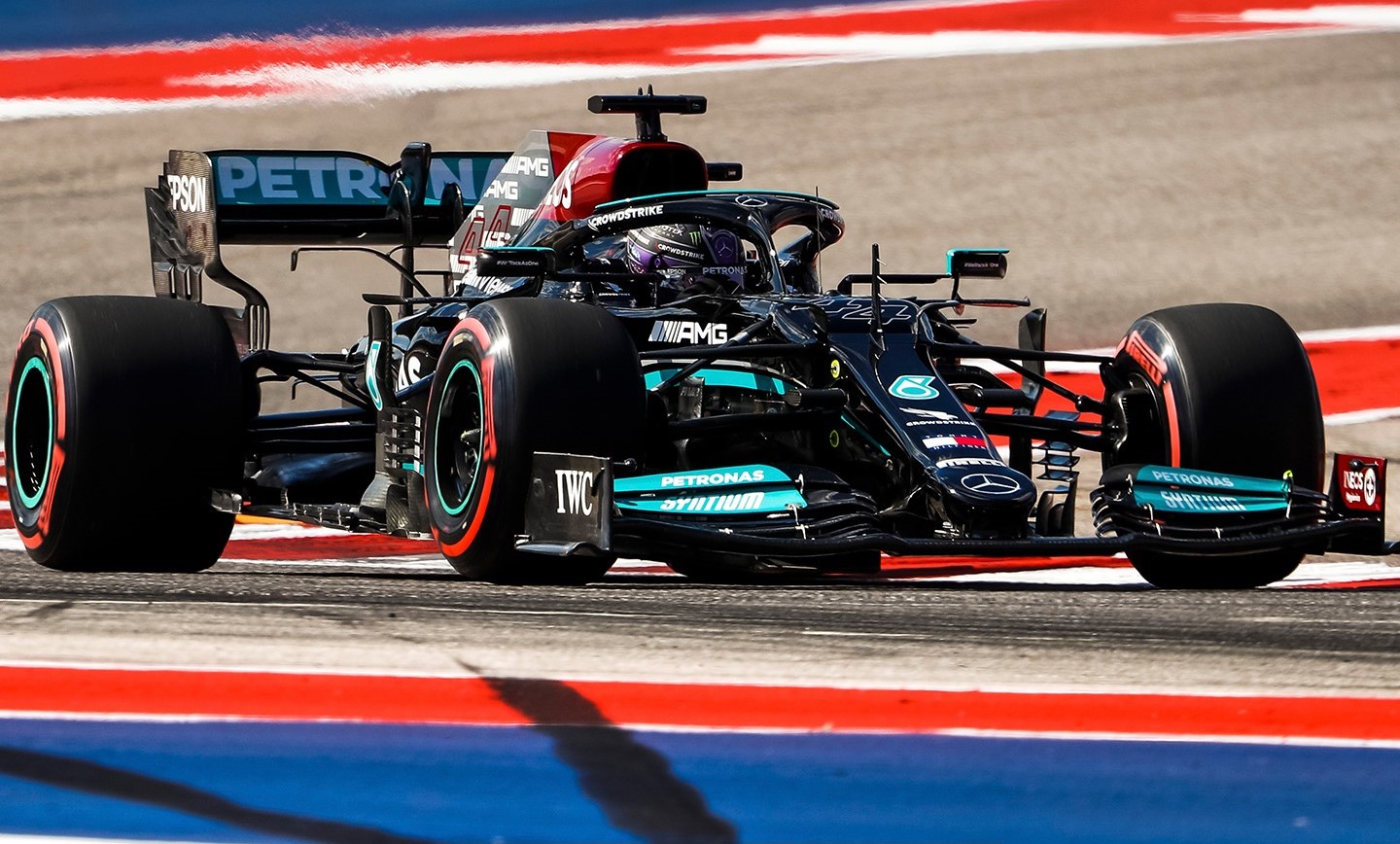
With 10 laps remaining, Hamilton was 2.5 seconds behind Verstappen, pushing as hard as he could and collecting fastest lap along the way. It appeared that Verstappen was not going as fast as he could have, which may have helped the Mercedes-AMG driver close in.

On the second last lap, Vettel was able to slip into the points-paying 10th as Raikkonen spun off into the gravel.

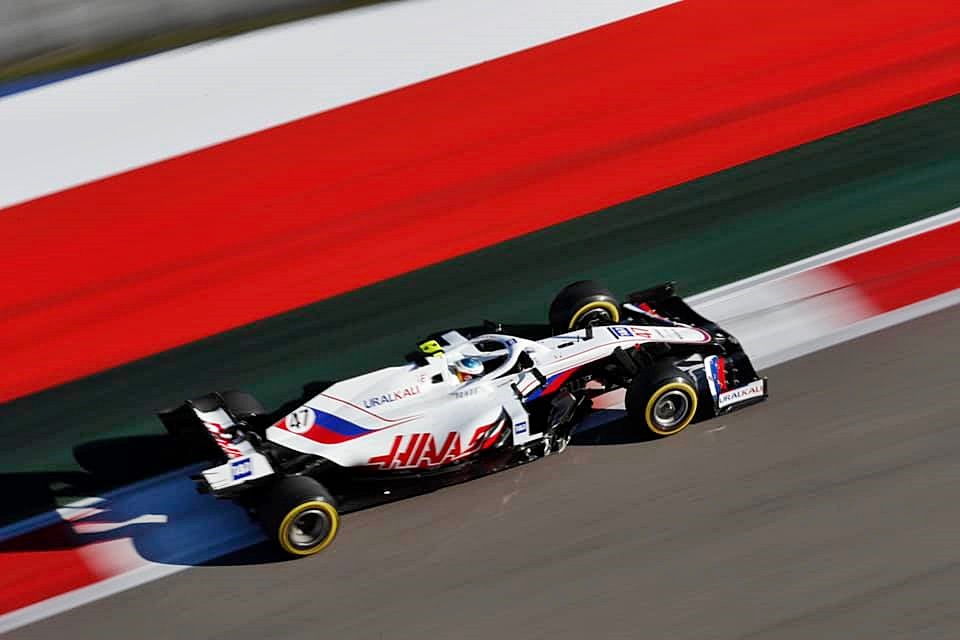
The last lap provided the American spectators a thrilling dual as the gap was under 2 seconds between the leaders. Hamilton seemed to be pushing very hard and sliding round some corners. It was going to be tight and Verstappen had one last back runner – Haas F1’s Mick Schumacher – to get past. But Verstappen just made it across the finish line with less than a second’s gap from Hamilton to win the USGP for the first time.

Race starts at 2 pm in America/3 am on Monday in Malaysia

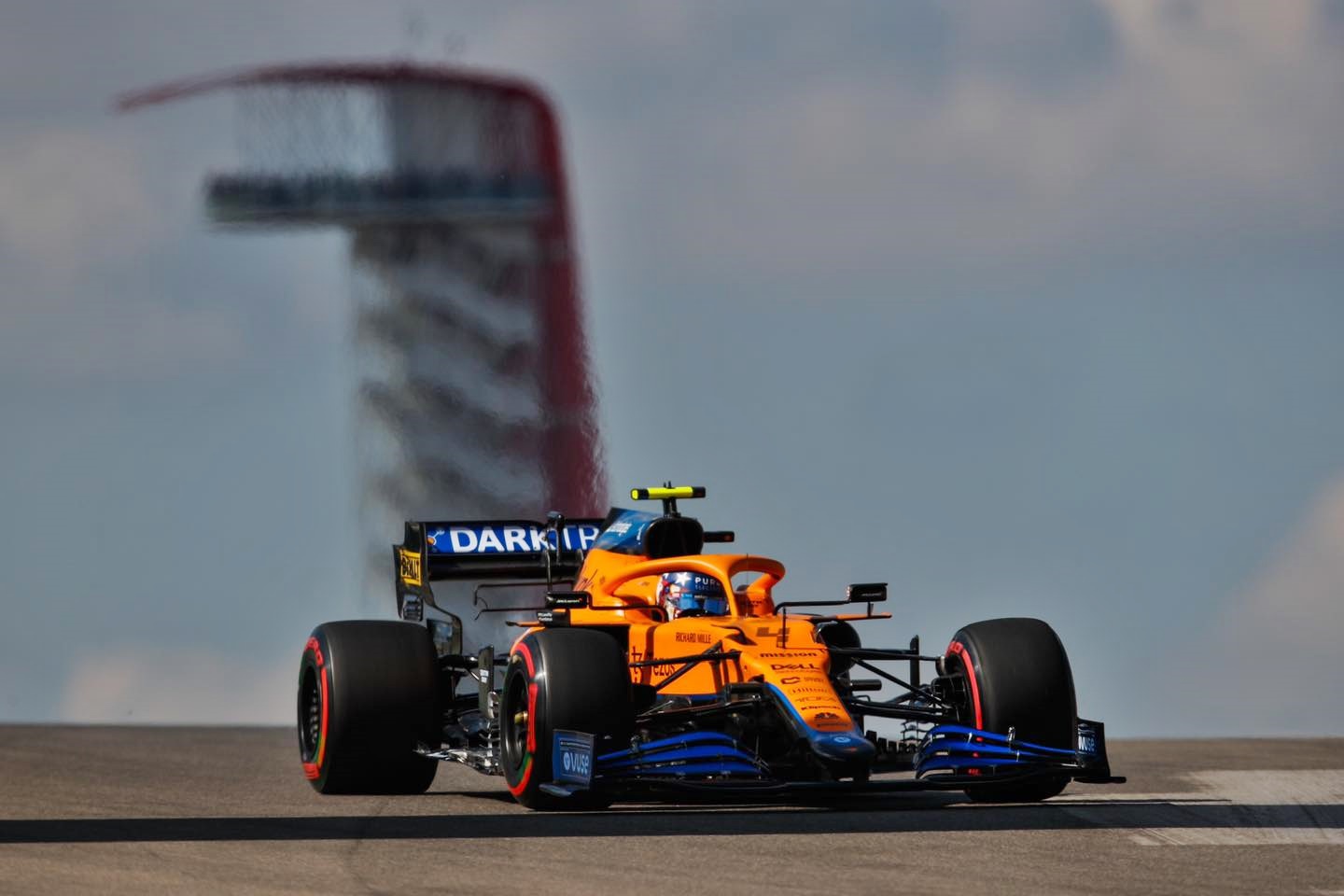
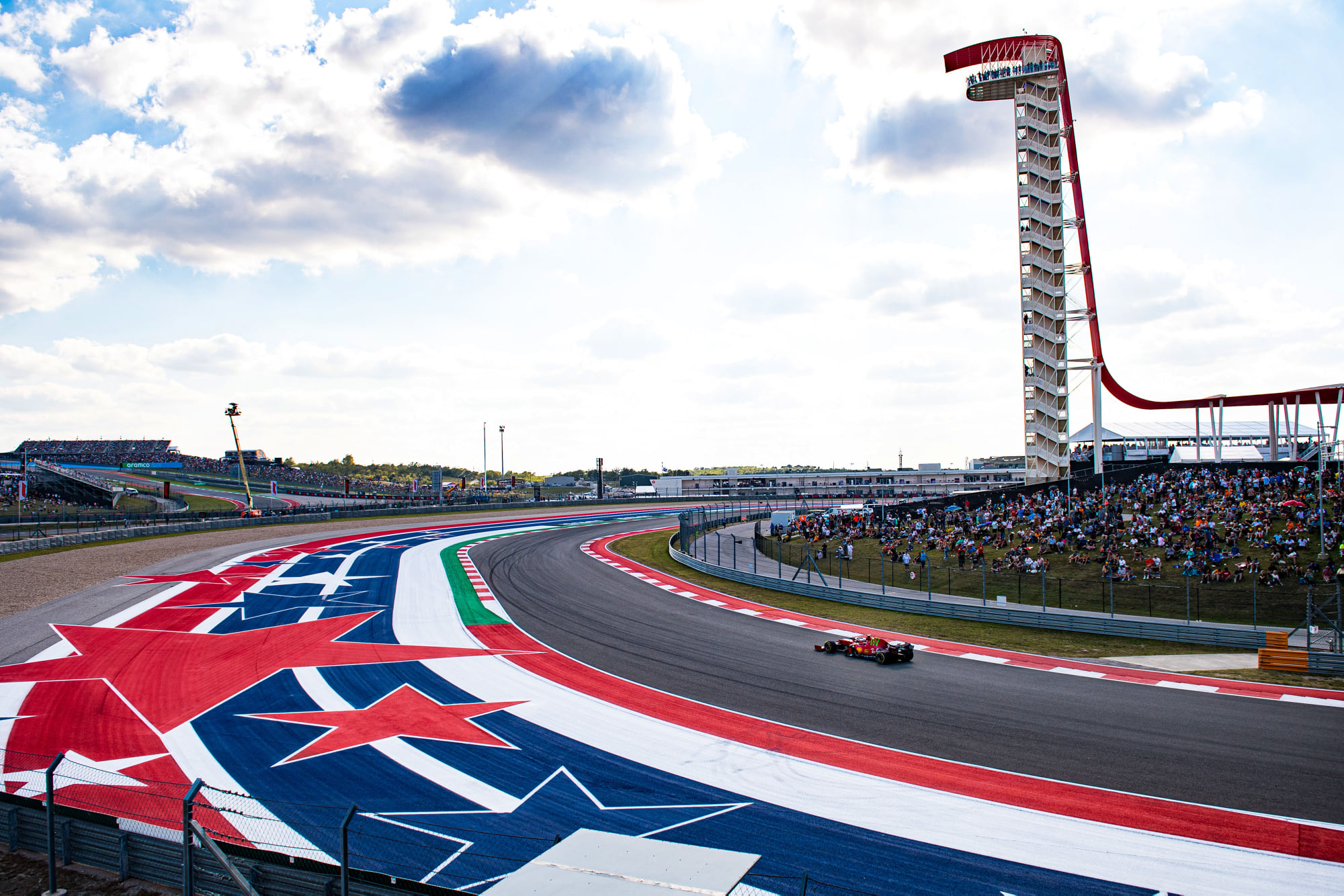
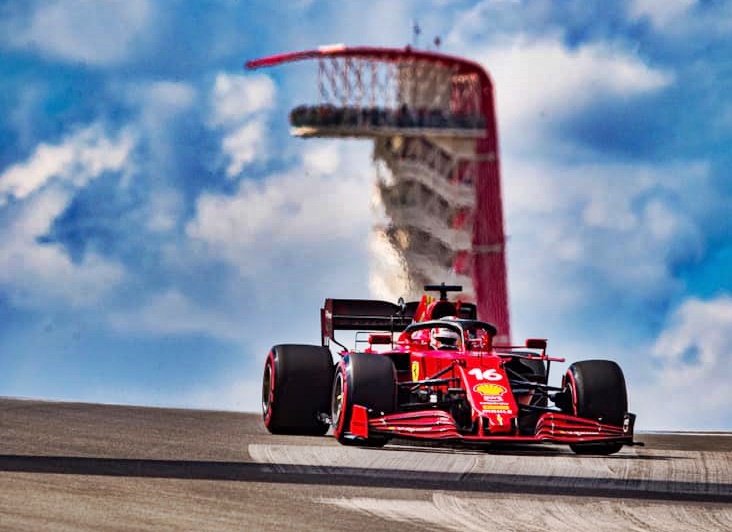
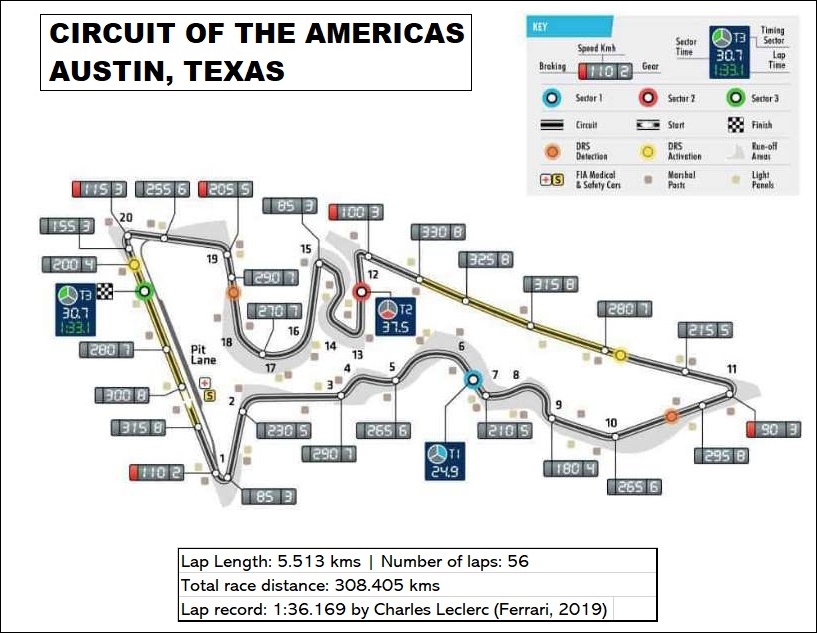
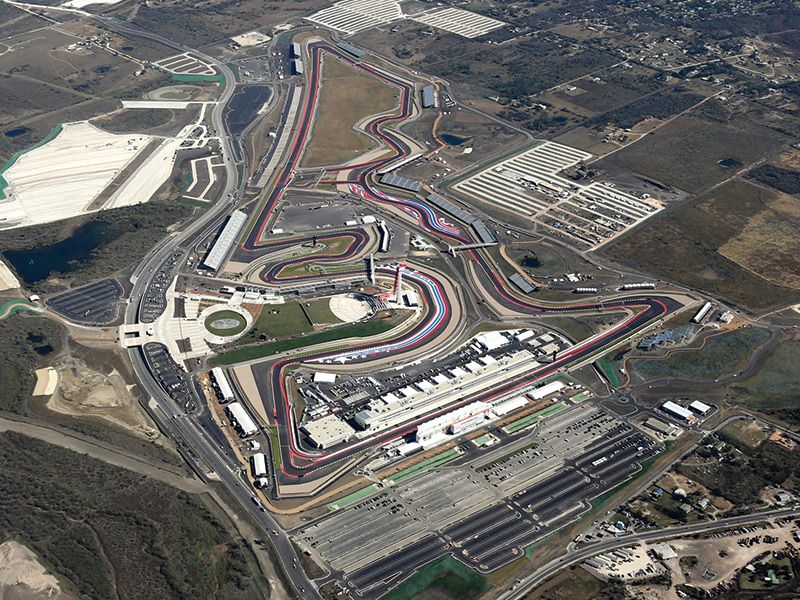
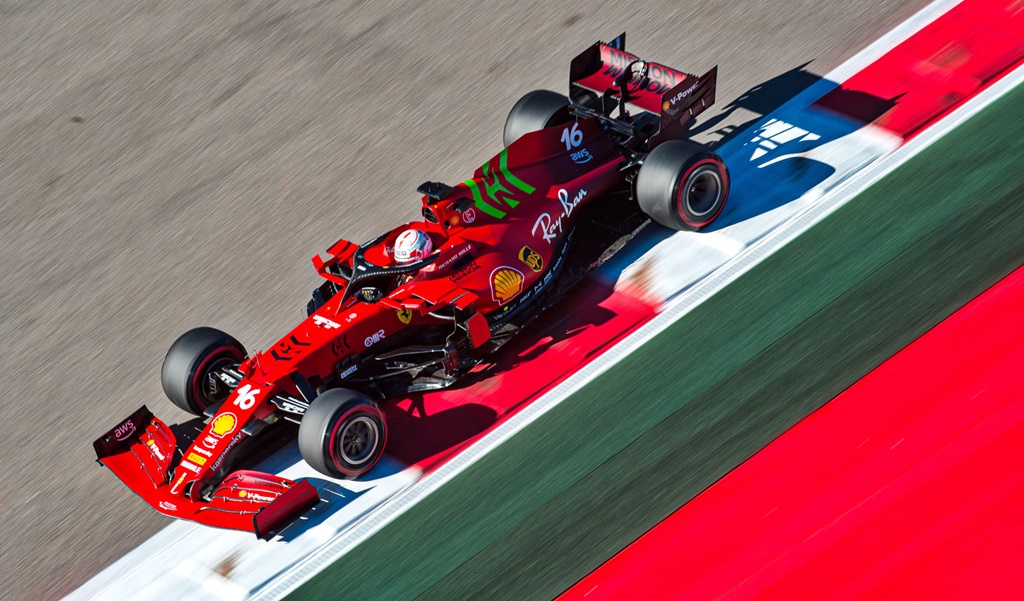
After circulating around Europe since April, the Formula 1 World Championship crosses the Atlantic to the USA for Round 17. The event is at the Circuit of the Americas (COTA) in Austin, Texas, which has to cancel its race last year due to the severity of the COVID-19 pandemic. It’s a venue that the teams have always been happy to visit since it first joined the championship in 2012.

The 5.513-km long circuit with 20 turns offers drivers a variety of challenges. The first sector features a wide, blind first corner that allows for multiple lines, followed by a sequence of rapid changes in direction similar to Suzuka’s Esses. A car with good balance will have an advantage.

The second sector has a long high-speed straight followed by a heavy-braking overtaking point at Turn 12. The cars approach this turn after having traveled the long straight and must lose almost 240 km/h in order to set the braking point up right. They go from 333 km/h to 94 km/h in just 2.52 seconds and 125 metres.

During that time, the drivers are subject to 5.8g in deceleration or almost 6 times their body weight. So a driver weighing 70 kgs will feel like he weighs almost 420 kgs, which requires a high level of fitness to be able to cope with that and control the car properly over 50 times during the race.

Compared to the motorcycles, the single-seaters complete the race 30 seconds sooner because they travel a good part of the corners at a faster speed and sometimes don’t need to brake. Of the 10 braking sections on COTA, Brembo technicians have classified three as demanding on the brakes, one is medium difficulty and five are light. ​

Commenting on the conditions at COTA, Pirelli’s Head of F1 and Car Racing, Mario Isola, said that despite the circuit having been resurfaced for around 40% of its total length, there’s not a huge difference in terms of abrasion compared to the last F1 race in 2019. Several bumps are also still present despite some surface ‘milling’ – a process designed to smooth out the asphalt.

“The biggest difference has instead been the weather, with both track and ambient temperatures considerably warmer than the cool conditions experienced a couple of years ago. As expected in today’s warm temperatures, there was a bit of overheating on the soft C4 compound rear tyre, which is quite stressed given the severe traction demands of this circuit in the final sector especially,” he said.

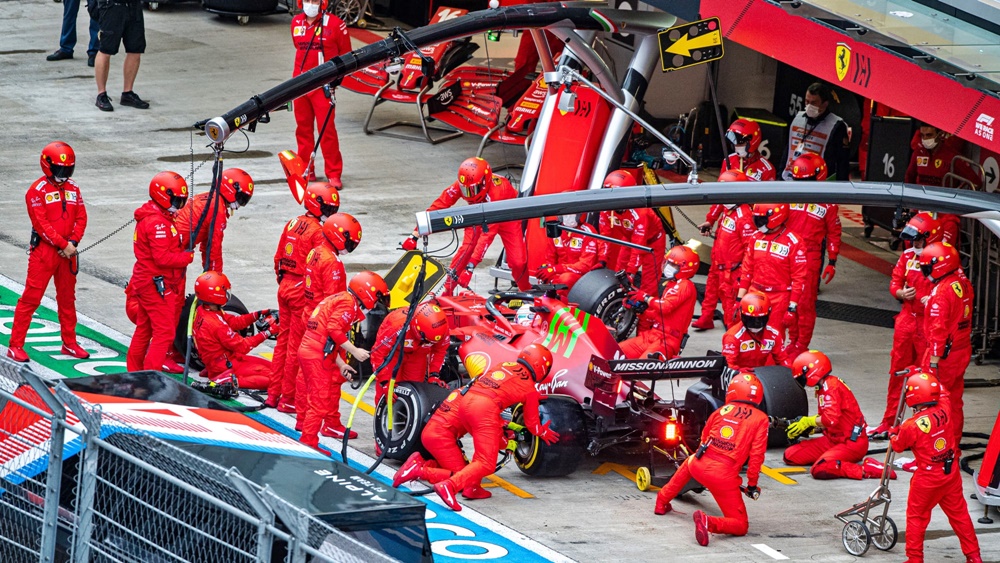
“A two-stop strategy is the more likely, with the high speeds and abrasive surfaces here taking a lot out of the tyres. At the same time, the relatively low pit stop time loss and number of overtaking opportunities mitigate the advantages of a one-stopper. There are a number of different two-stoppers that are quite closely matched, depending on the race circumstances, so this looks set to be an intense strategic battle,” added Isola.

The championship for drivers still remains close at the very top, with Max Verstappen just 6 points ahead of Lewis Hamilton after the 16th round in Istanbul. For the constructors championship, Valtteri Bottas’ win in the Turkish GP plus Hamilton’s 5th placing gives the Mercedes-AMG team a 36-point lead ahead of Red Bull Racing. The Mercedes-AMG PETRONAS team and Lewis Hamilton have been dominant at COTA but Verstappen’s pole position for today’s race may be the beginning of a change.

F1: Australian GP to be replaced by Ooredoo Qatar Grand Prix in November
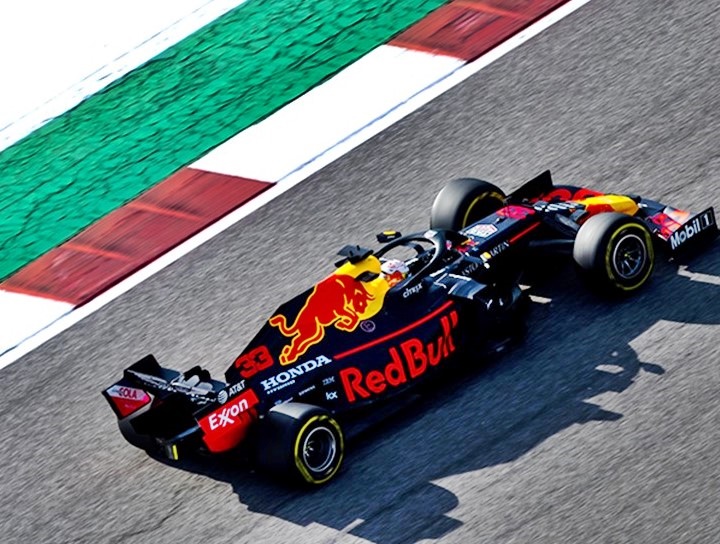
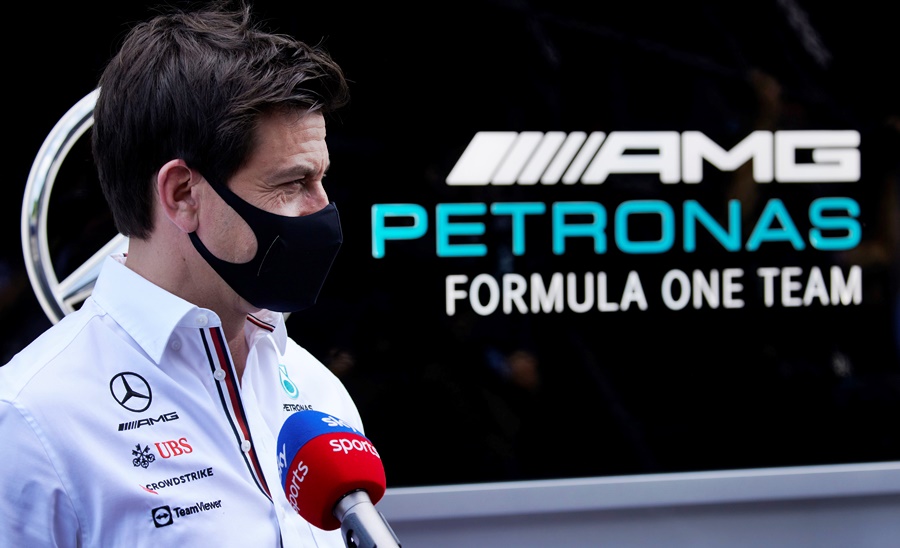
The PETRONAS name will be absent from the racing cars of the successful Mercedes-AMG Formula 1 team after this year’s championship ends. It has been confirmed that the team, which has won 7 world championships, will no longer have Malaysia’s national oil corporation as its title sponsor. This comes after over 10 years of association between the team and the oil company, although its involvement in F1 goes back as far as 1995. The latest development follows Petronas’ ending of their MotoGP title sponsorship at the end of this year and no longer being associated with the Yamaha SRT team.

Over the years, Petronas has used its association with Formula 1 for many marketing activities, leveraging on the development efforts in fuels and technology. More than 50 engine oils, transmission fluids and hydraulic fluids have been developed for the racing cars to use in extreme conditions. The technologies and knowledge from such developments have eventually been used to develop commercial products for sale to the public.

It would certainly have been very expensive and while Petronas products are available in around 65 countries, many may not know it is a Malaysian company (although ‘MALAYSIA’ has occasionally been put on the cars. But the same can also be said of other major sponsors like Repsol, Santander and certainly, not many of the 500 million people who watch F1 worldwide will be aware that the ORLEN which sponsors the Alfa Romeo F1 team is a Polish petroleum company. Brands like Marlboro, Rolex and even Dell would have more global presence and recognition.  But Petronas believes the money has been well spent: in 2016, it estimated the value of brand exposure in F1 from 1995 was worth more than US$900 million.

Saudi Aramco to take over as title sponsor?
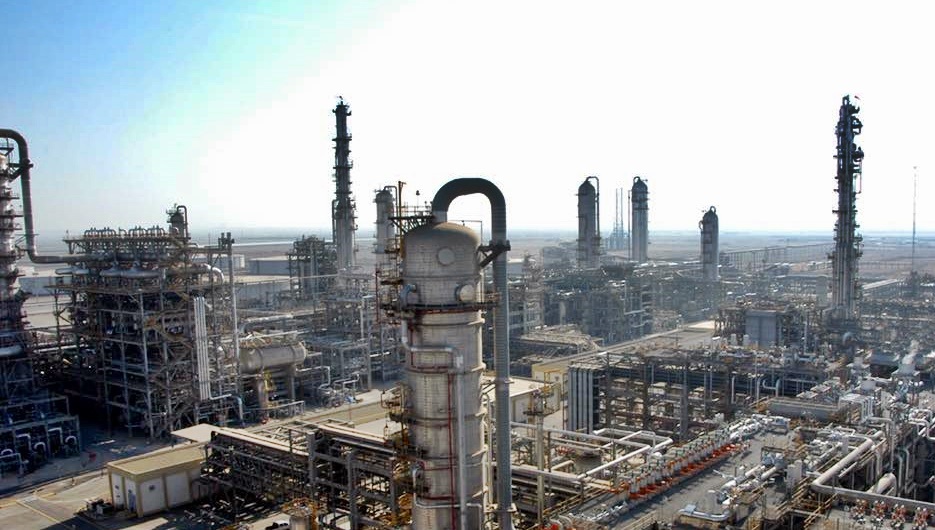
In place of Petronas, Mercedes-AMG is expected to have another oil company – Saudi Aramco. As the main company operating in Saudi Arabia, it has the world’s largest network of oilfields and its revenues are chart-topping. Saudi Aramco (which stands for Arabian American Company) is state-owned and was established in 1933. Described as an integrated oil and gas company, it is mainly in upstream activities and has no visible internationalpresence in consumer products, unlike most other oil companies. It does, however, have a network of fuel and service stations (in partnership with Total of France) in Saudi Arabia.

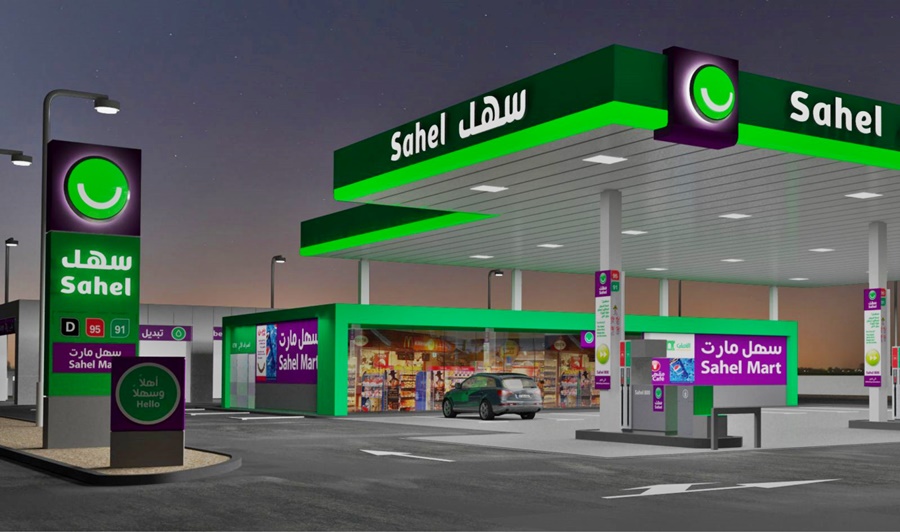
Saudi Aramco, which has been operating for 88 years, is active mainly in upstream oil and gas activities. It also has a network of fuel and service stations under the Sahel brand which is in partnership with Total of France.

The tie-up with Mercedes-AMG is the second major involvement in F1. Last year, Saudi Aramco announced a long-term global sponsorship with the sport, its first global sponsorship of a major sporting event.

“We are excited to partner with Formula 1, a strong global sports brand with millions of fans around the world. As the world’s largest energy supplier and an innovation leader, we have the ambition to find game-changing solutions for better-performing engines and cleaner energy. Partnerships like these are important to help us to deliver on our ambitions,” said Saudi Aramco’s CEO & President, Amin H. Nasser.

Involvement in F1 since 1980s
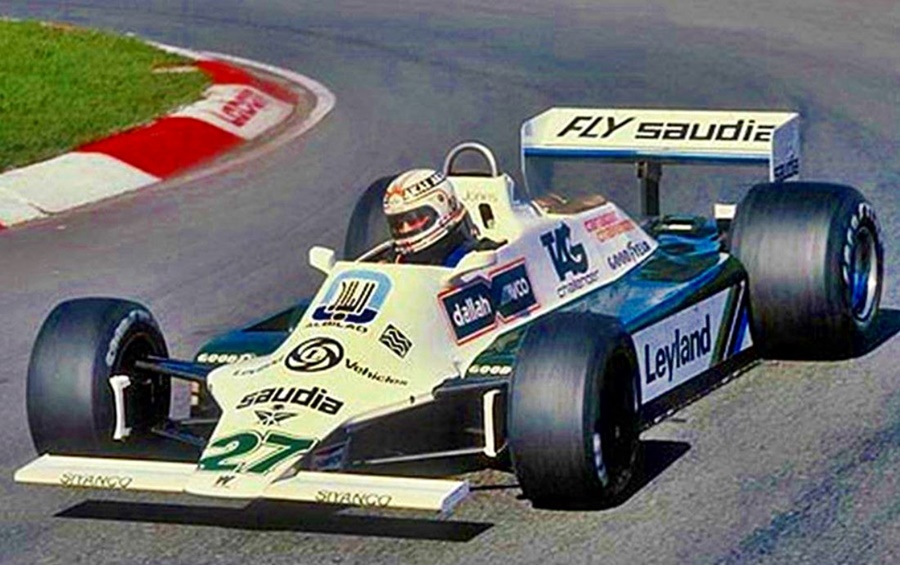
Saudi Aramco’s involvement in F1 is not Saudi Arabia’s first association with the sport. Older readers will remember that, in the 1980s, Saudia Airlines (the country’s national airline) sponsored the Williams team. Though the Saudia name was the most prominent, Frank Williams also managed to get eight other supporters from Saudi Arabia’s growing business community.

Saudia Airlines was one of the Saudi Arabian companies that were sponsors for the Williams F1 team in the 1980s.

The group included TAG (Techniques d’avant Garde), an advanced technology company which was founded by a Saudi businessman. TAG (which bought over the Heuer watchmakers) first sponsored Williams and the McLaren. Today, it also has a major share in the McLaren Group. More recently, TAG Heuer has been a major partner in the all-electric Formula E series as well, along with Saudia Airlines.

Major motorsports events in Saudi Arabia
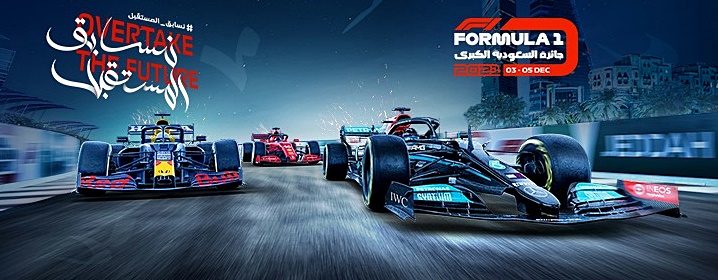
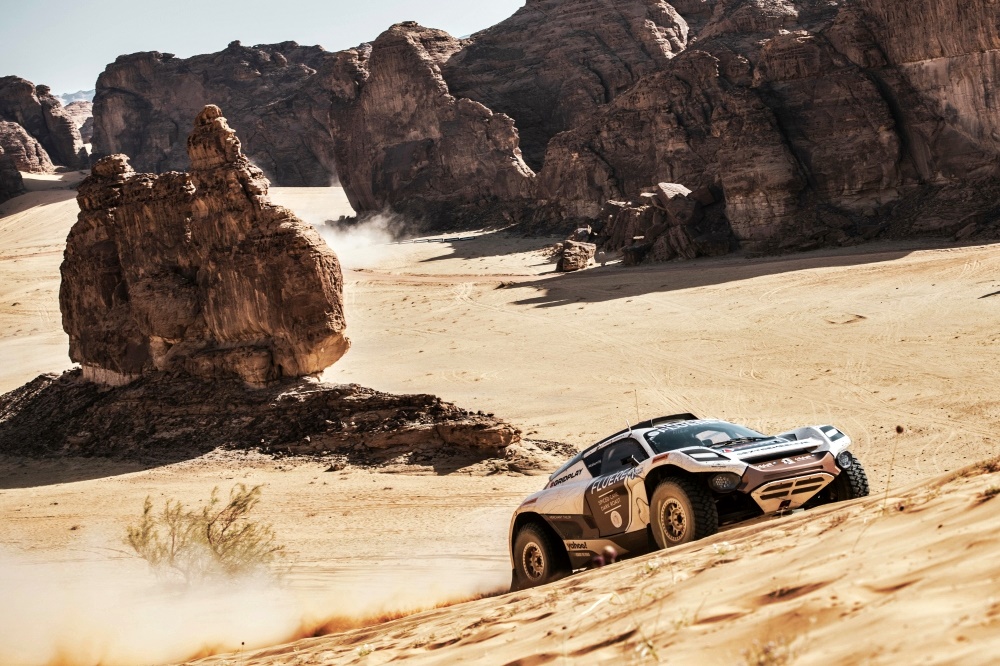
The country’s ‘Vision 2030’ is also bringing Saudi Arabia into the 21st century and its society is changing, eg women have been allowed to drive cars since 2018. As a result, it has attracted three major motorsports events to be run in the country to boost tourism. The Dakar Rally and Extreme E Desert X-Prix, which were run in the deserts for the first time in 2020 and 2021, respectively, and later this year, the first ever F1 race in the streets of Jeddah. All are significant events which will be widely publicized, and organisers have made deals to run them over a number of years.

The first round of the inaugural Extreme E electric off-road series was run in Saudi Arabia in April this year.

2022 Formula 1 calendar to have 23 races, with season-opener in Bahrain

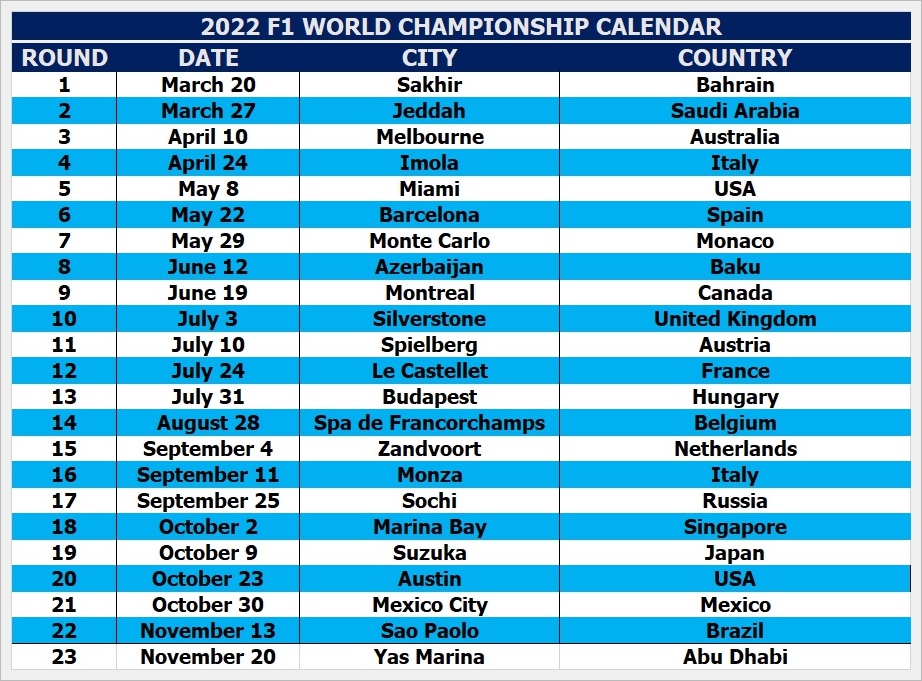
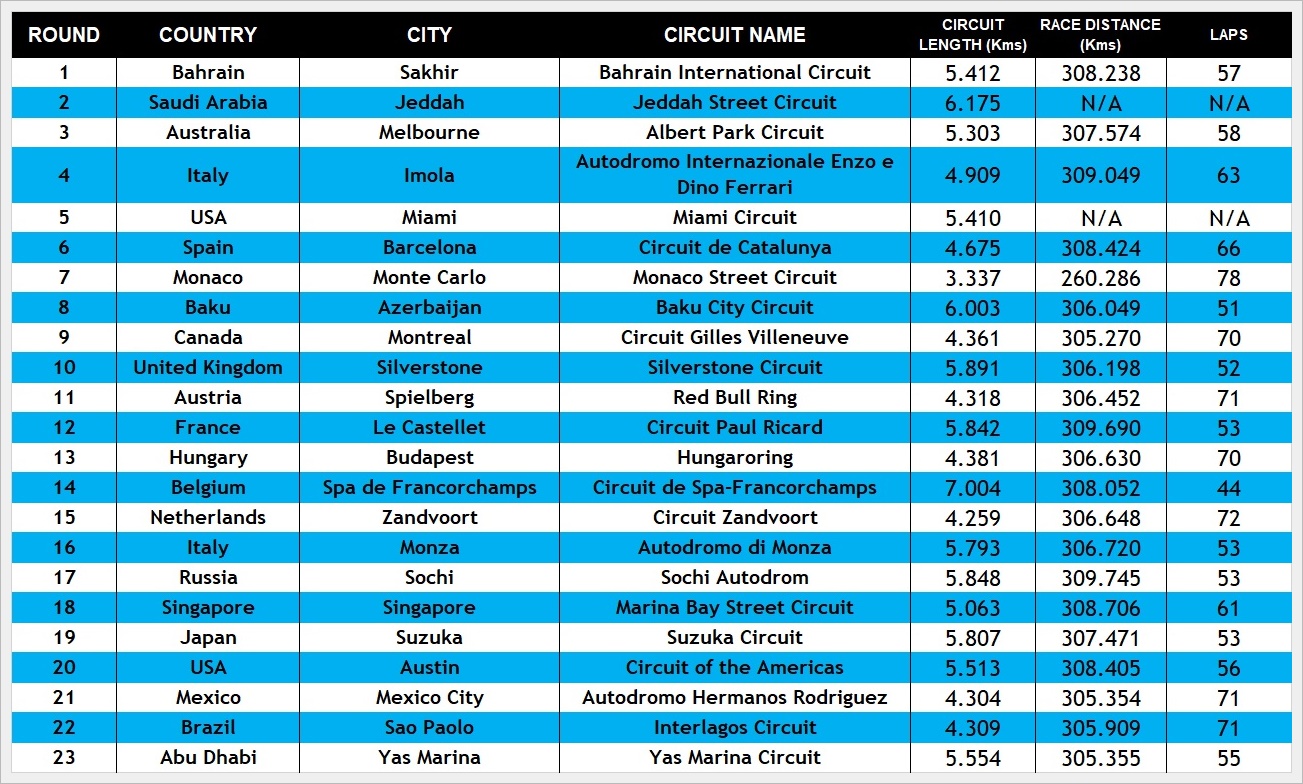
The Formula 1 organisation has released its calendar for next year and the 2022 Formula World Championship will have 23 rounds, one more than 2021. Perhaps to be on the safe side, the Australian GP is no longer the season-opener, as it was for many years. In 2020, the opening round in Melbourne was cancelled at the last moment as the pandemic worsened and there was hope that it could be held later in the year. But that didn’t happen and in 2021, the same thing happened and Bahrain had to quickly take over for the first round.

This year, the Middle Eastern venue is again the season-opener on March 20, along with Jeddah, Saudi Arabia hosting Round 2. It will be the second time for the Jeddah Street Circuit but at this time, little is known about it since the first race on it will only be towards the end of this year’s championship. It is likely to be a night race as it would be cooler, especially in March.

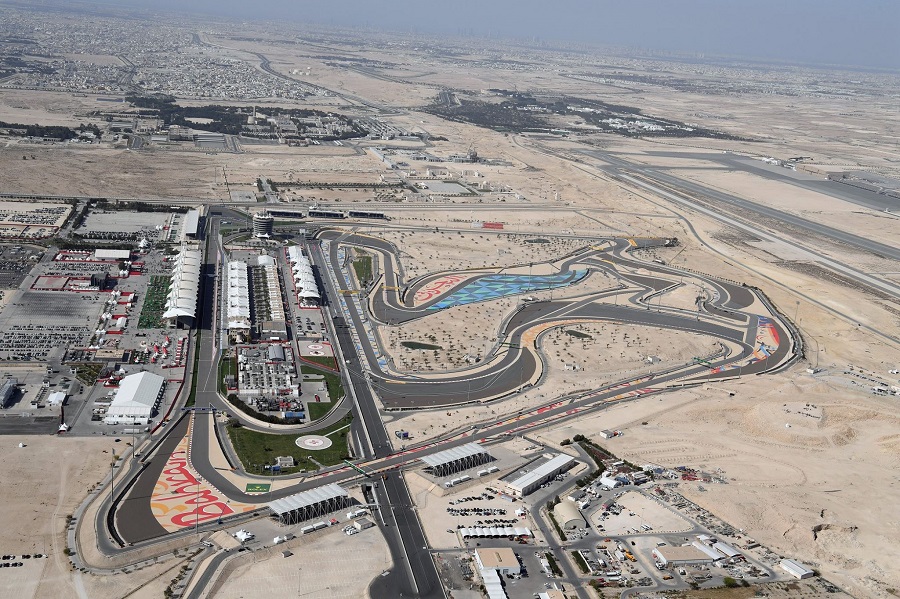
Bahrain Circuit
The Bahrain International Circuit at Sakhir where the 2022 championship will start.

Round 3 will be held in Australia, a rather long journey down under and then for Round 4, the teams will have to fly all the way to Florida in the USA where there will be the first ever F1 race in Miami. It will be one of two races to be held in America, the other being Round 20 in October in Texas. The Miami circuit will be new to everyone but the Circuit of The Americas in Austin, Texas, is a familiar one already.

After Miami in the early part of May, the teams will then return to Europe where there will be 3 rounds before crossing the Atlantic again for the Canadian Grand Prix in Montreal. Then it’s back to Europe for 8 rounds until September 25.

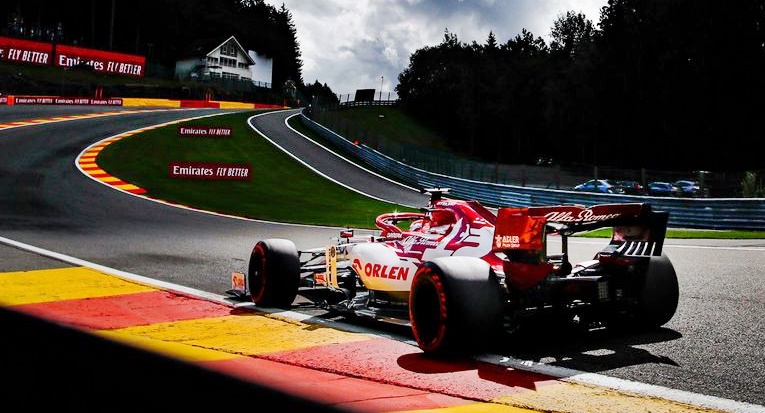
The Spa de Francorchamps Circuit for the Belgian Grand Prix is the longest one on the calendar, with each lap being 7 kms long.

The only two rounds in the Far East are in Singapore and Japan during October. Both venues had cancelled in 2020 and 2021 due to the severity of their pandemic conditions that made it not only risky for the participants but would also have been troublesome logistically with long quarantine periods.

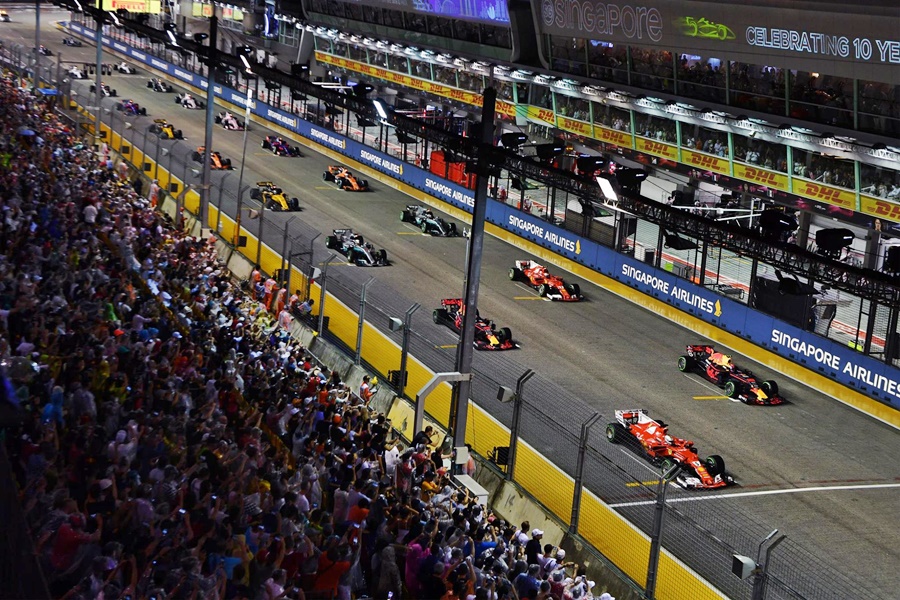
The Singapore GP – which was the first-ever F1 night race – is scheduled for October 2 next year. Hopefully, it will run and not have to be cancelled for the third time due to the pandemic.

After Japan (which hopefully will not be hit by a typhoon at the time), the next venue is in the western hemisphere 14 days later for the second race in America. While they are in the Americas, they will head south to Mexico City for Round 21 and then Sao Paolo’s well known Interlagos Circuit for Round 22. By then, it will be mid-November and the final round of 2022 will be at the Yas Marina Circuit in Abu Dhabi on November 20.

Hopefully, unlike the 2020 and 2021 seasons, the schedule as published can be retained and rounds do not have to be cancelled or postponed because certain countries introduce lockdowns again or tougher quarantine requirements. The COVID-19 pandemic seems to be diminishing and health authorities in many countries are hopeful that we will be able to have ‘normalcy’ in 2022, so motorsports and other activities can be held safely.

Is the Monaco Circuit the hardest on brakes in the F1 championship? (w/VIDEO)

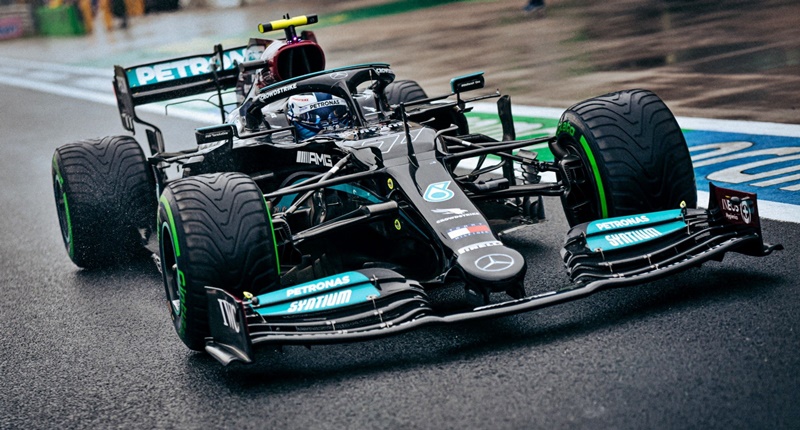
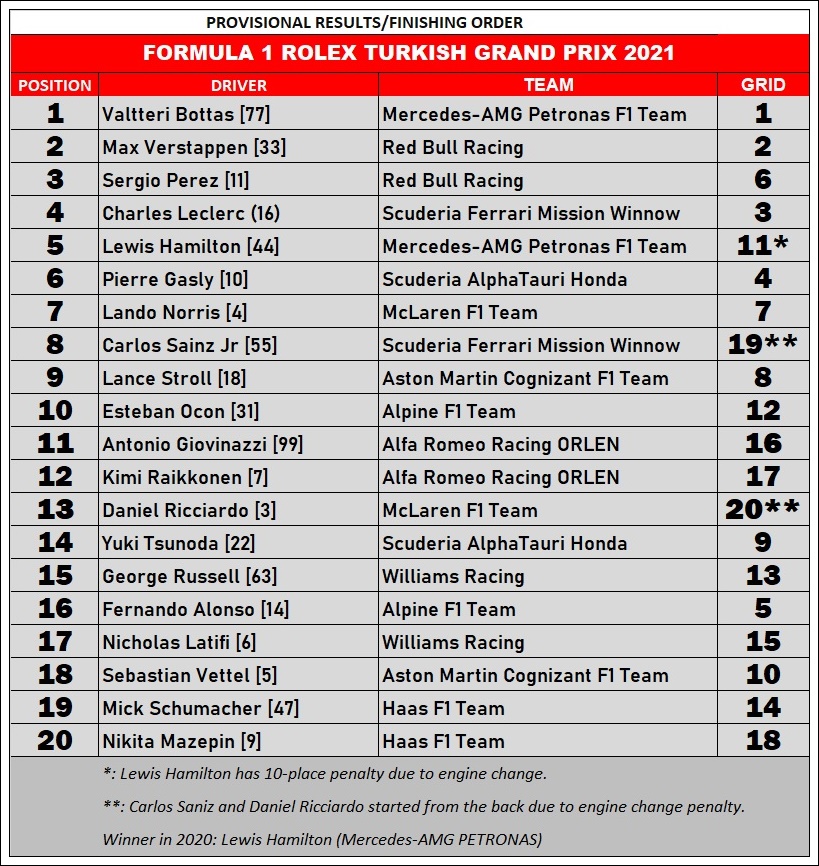
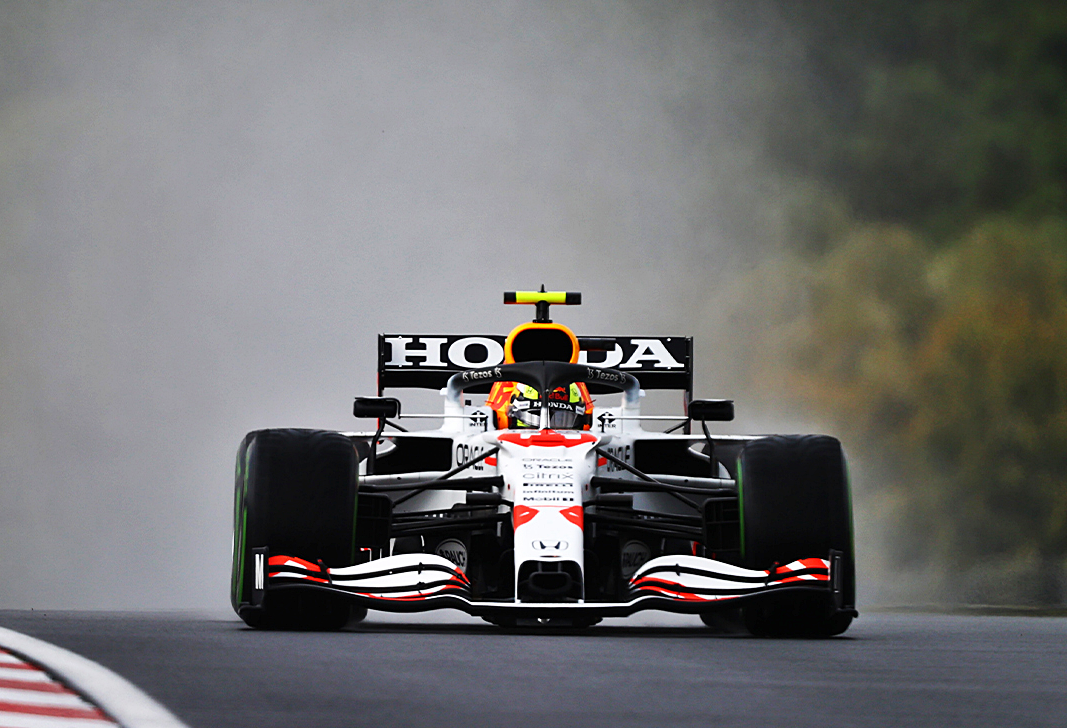
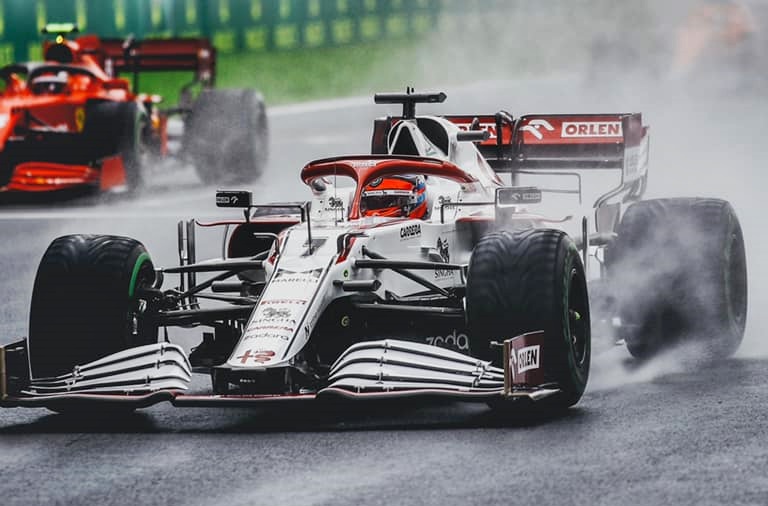
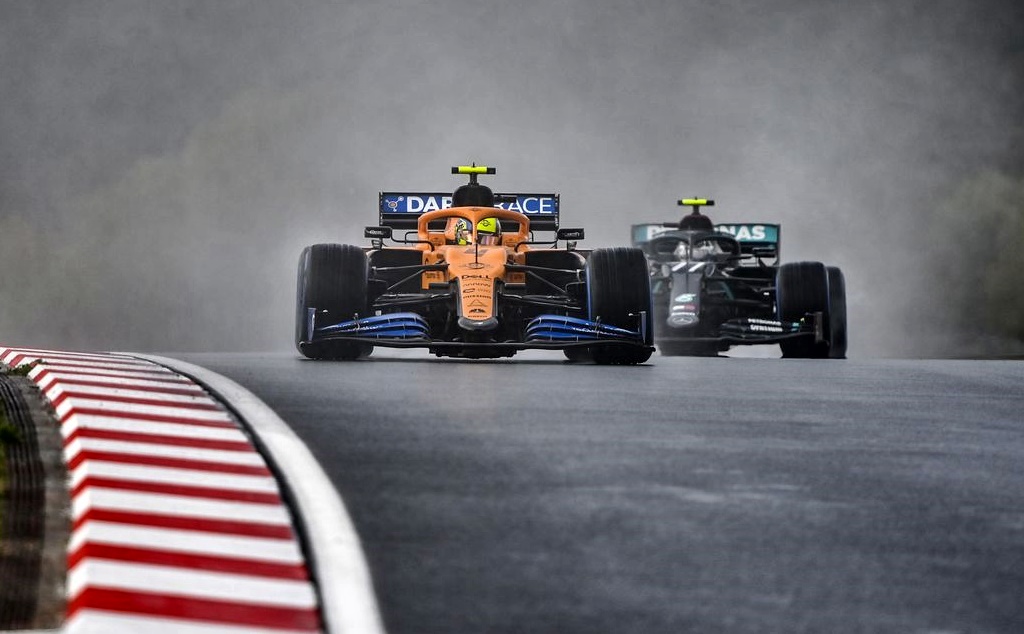
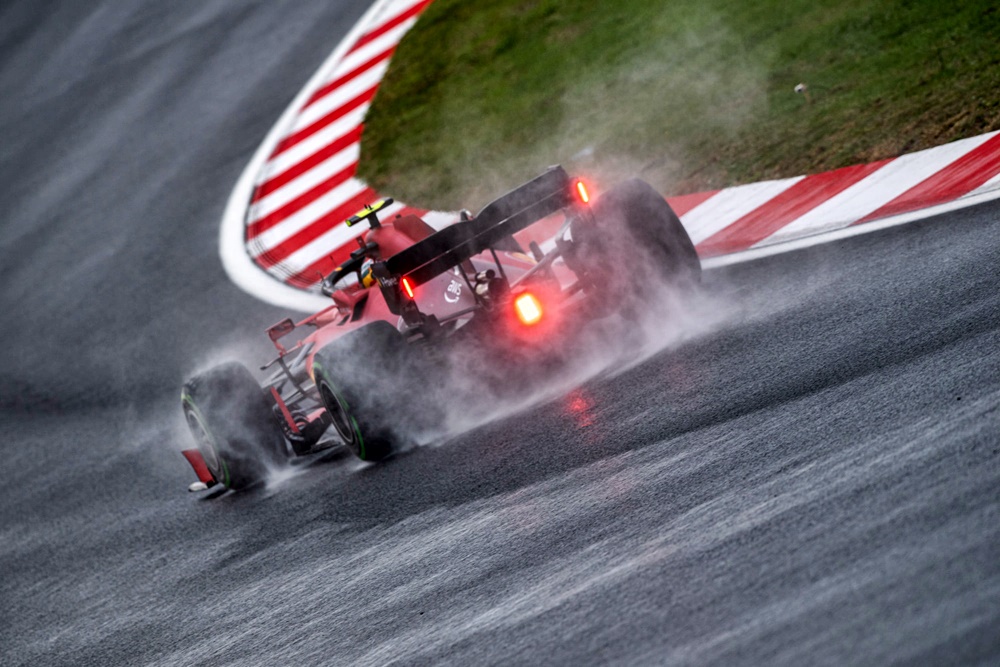
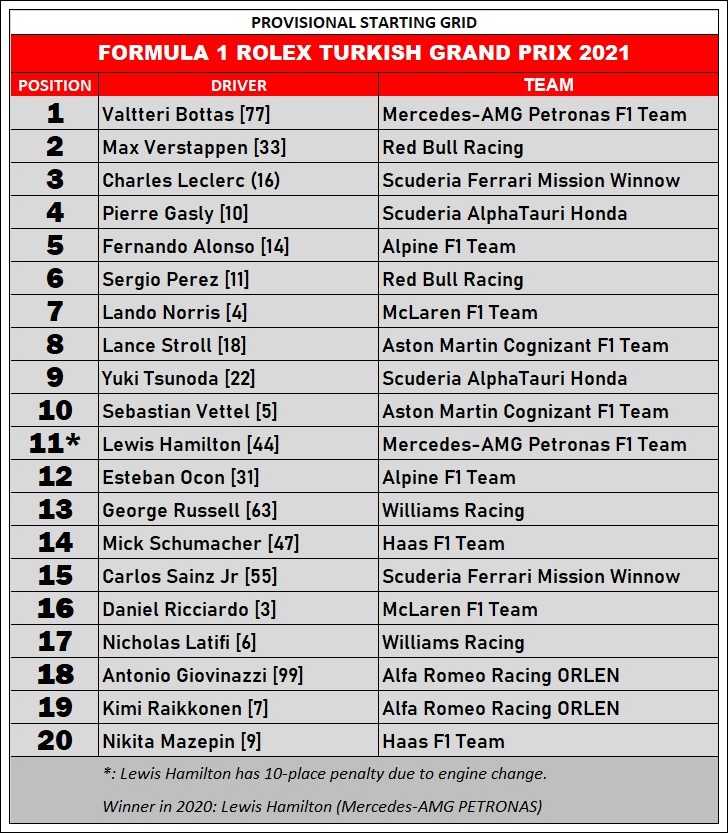
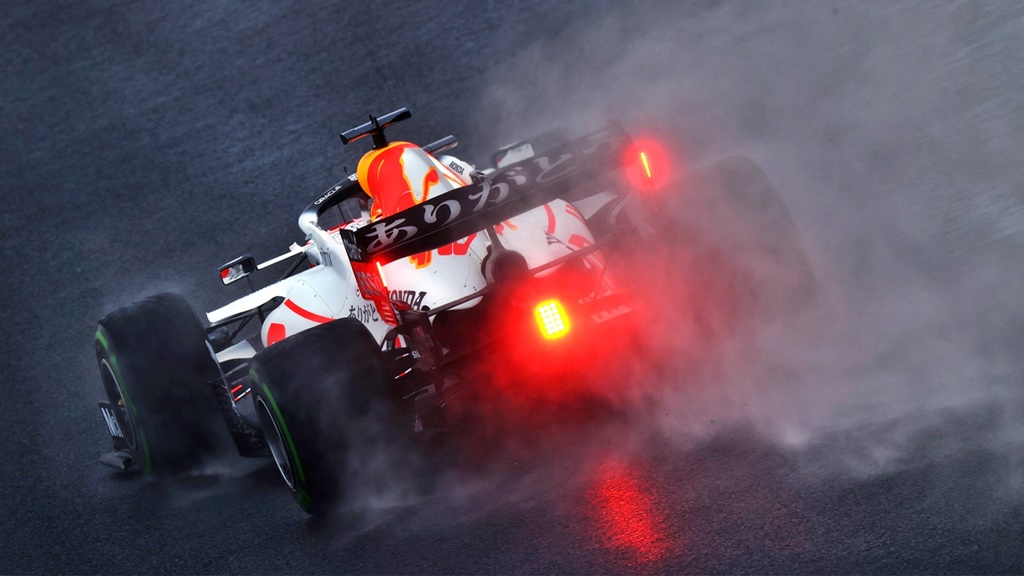
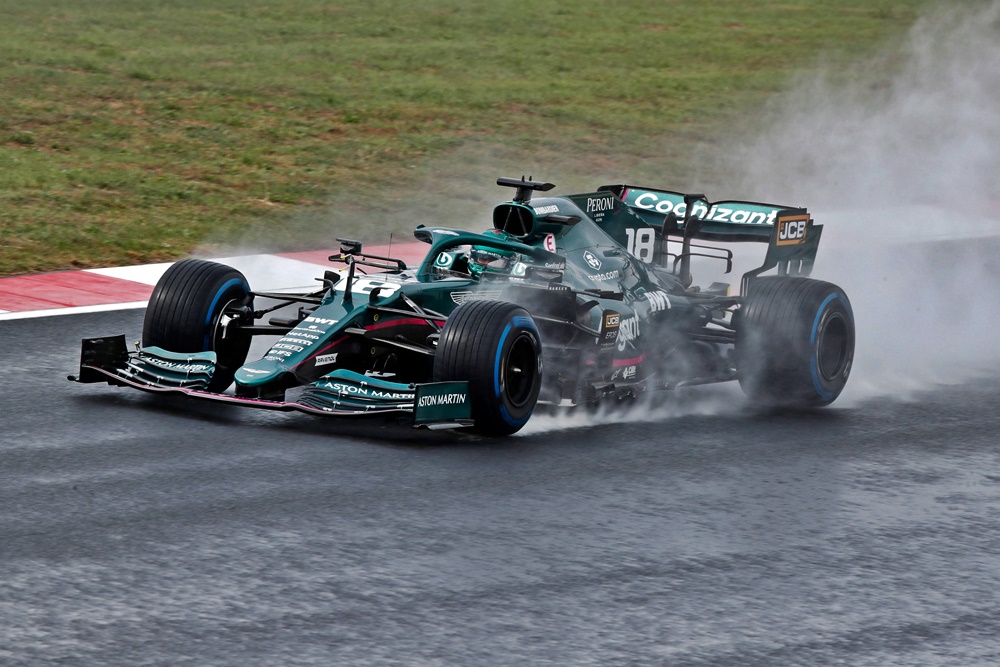
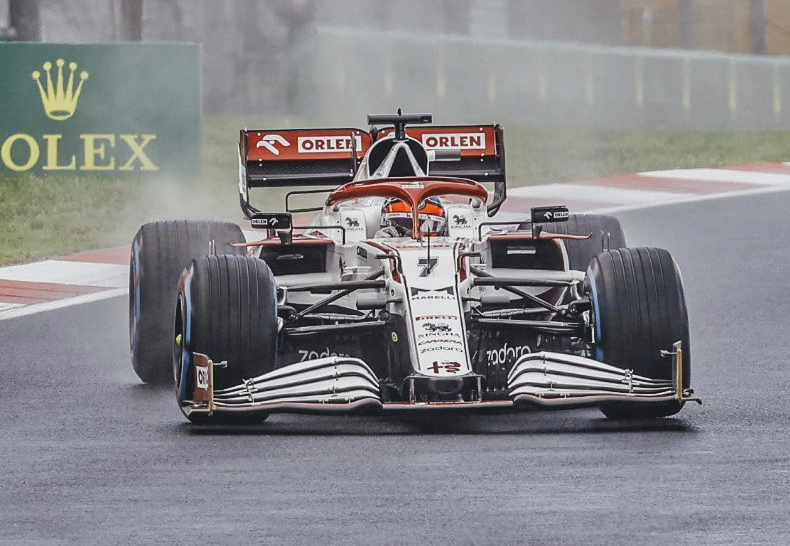
Rain was falling as the cars lined up, Valtteri Bottas in front with Max Verstappen alongside and the fastest driver in qualifying – Lewis Hamilton – down in 11th spot as he had to take a grid penalty for the engine component change. The wet conditions were expected to remain throughout the race.

The Mercedes-AMG driver got off to a good start, and Verstappen slotted behind in his spray. Not surprisingly, there was some drama as Alpine’s Fernando Alonso, Williams Racing Nicholas Latifi and Haas F1’s Mick Schumacher went into spins on the wet track. But Hamilton was quick to slice through traffic within the first few corners and started the second lap to positions higher. He was then held at ninth place for 6 laps as Scuderia AlphaTauri’s Yuki Tsunoda proved difficult to get past.

In third was Ferrari’s Charles Leclerc while Verstappen’s team mate Sergio Perez was shadowing him and waiting for an opportunity to get forward to cover Verstappen. Track temperatures were low due to the rain and as the drivers tried to get the tyres warmer, the racing was still a bit tricky.

On lap 9, the first penalty of the race was imposed on Pierre Gasly. It was a 5-second time penalty for having bumped Alonso in a spin at the start. However, Alonso also got a 5-second penalty as well as he had later bumped in Schumacher.

Within 15 laps, Hamilton had moved from eleventh at the start to fifth and the difficult part would start – ahead were Perez and Leclerc. Meanwhile, Ferrari’s Carlos Sainz, who had started from the back due to an engine change penalty, had moved up to ninth place after 18 laps. McLaren’s Daniel Ricciardo was less successful and stuck at sixteenth place for some time. He would be the first driver to pit on lap 24.

At the halfway point of the race, it was still Bottas leading Verstappen and the gap was around 4 seconds. Leclerc was about 3 seconds behind the Dutchman but Perez was still some distance away with a gap of over 10 seconds. The prospect of more rain was mentioned in the pits.

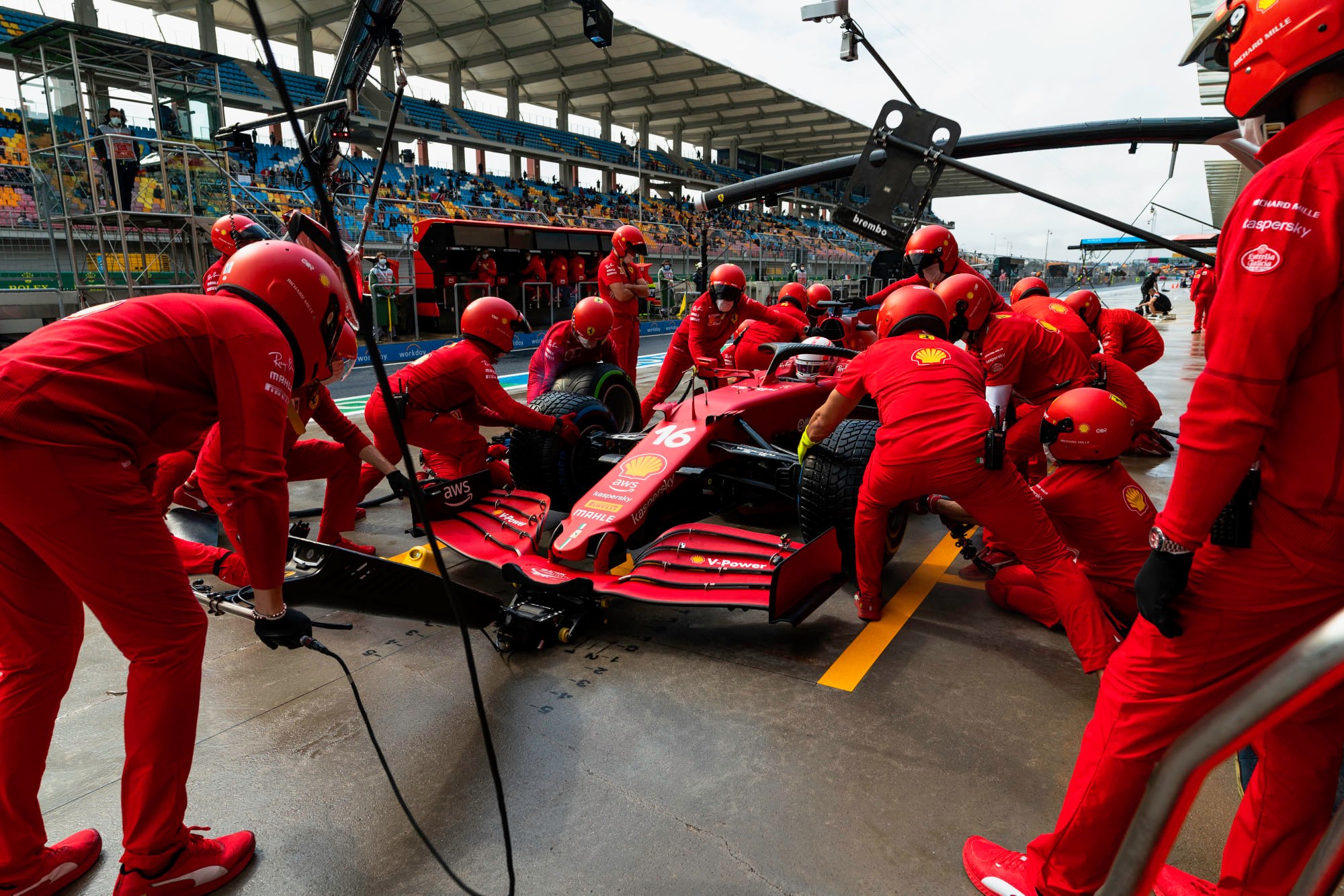
Lap 36 saw Hamilton close in on the Red Bull driver and for a few corners, the two drivers were doing close-up duels. As with Tsunoda, Hamilton’s attempts to overtake keep being frustrated by the Mexican driver. And then Perez headed for the pits on lap 37, letting Hamilton through to start chasing Verstappen. Bottas also came in at around the same time, his lead taken by Leclerc. The Mercedes-AMG driver was able to return to the race just ahead of Verstappen.

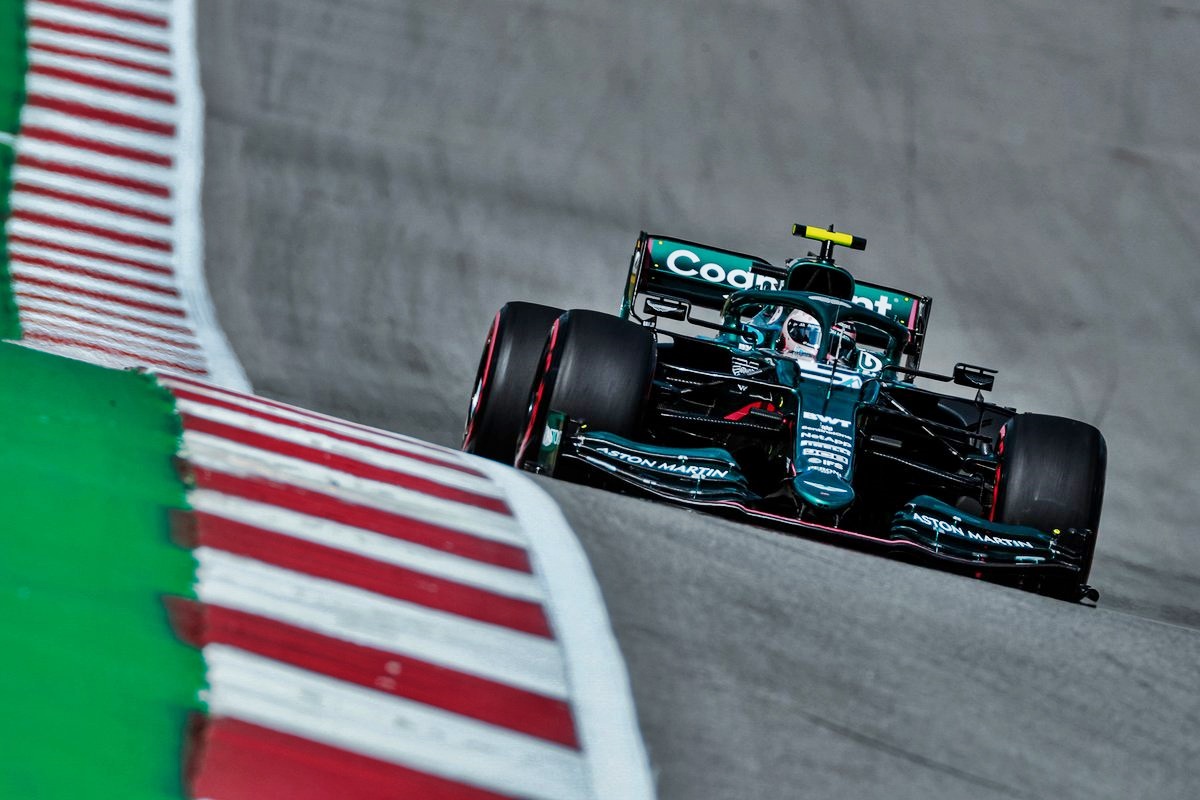
On lap 42, Hamilton was asked to come in but he was reluctant to do so, and remained on the track. Leclerc too was thinking that he might trey to stay with the tyres all the way till the end of the race. Aston Martin COGNIZANT’s Sebastian Vettel had come in and taken the chance on intermediates which proved to be a very bad decision, dropping him totally out of contention.

Bottas started to close in on Leclerc while Verstappen was facing steering problems. With 10 laps remaining, the Mercedes-AMG finally regained the lead. Leclerc was displaced to fourth as Hamilton zipped past him but there was still a 6-second gap with Verstappen.  The pressure was on the Red Bull driver who was aiming for the Finn ahead but also having to keep an eye on his team mate in the mirror.

To be on the safe side, Hamilton decided to come in to change tyres with 7 laps remaining. His quick stop allowed him to return behind Perez and Leclerc. He had fresh tyres and could put in maximum effort all the way to the finish so the 5-second gap was nothing. But even as Hamilton closed in on Perez, he put in a spurt and overtook Leclerc, which was not what the Mercedes-AMG driver was expecting. It didn’t help that Scuderia Alphatauri’s Pierre Gasly had also closed in and was watching for an opening past. Only 3 laps remained.

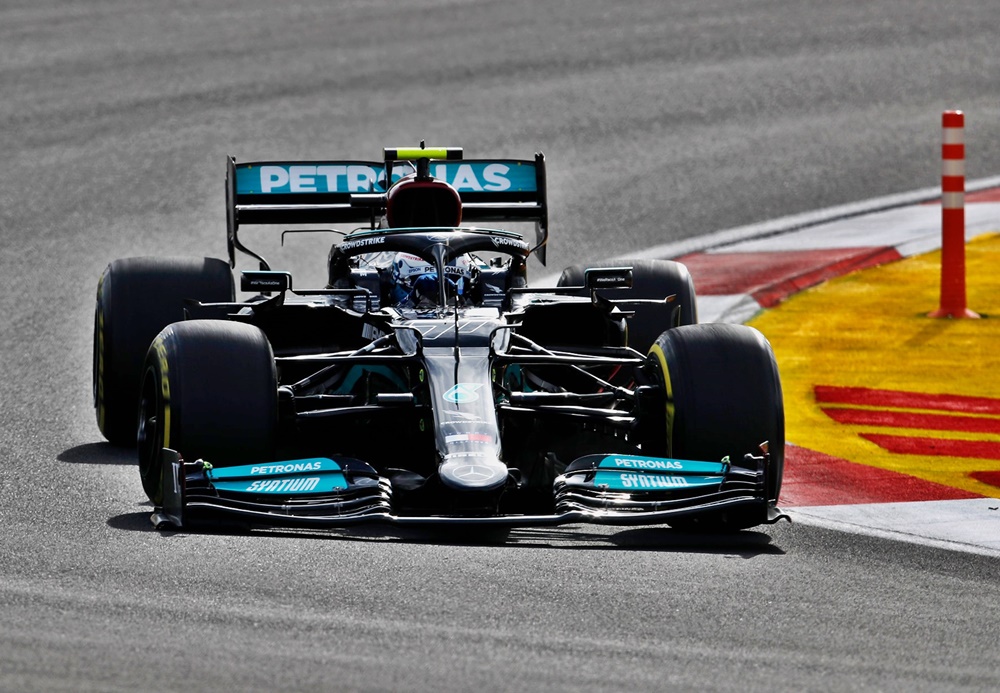
In the final two laps, Bottas had a comfortable 10-second lead over Verstappen, enough for him to concentrate on picking up an extra point by going for the fastest lap just before he took the chequered flag to win the Turkish Grand Prix. It was his tenth win on Formula 1. Strange how, having been confirmed that he will leave the team at the end of this season, his fortunes are getting better.


Race starts at 3 pm in Turkey/8 pm in Malaysia

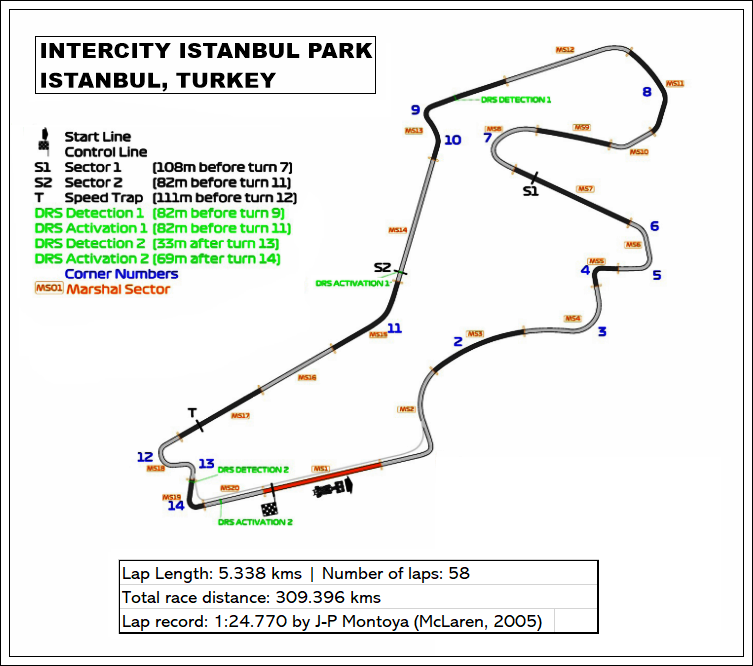
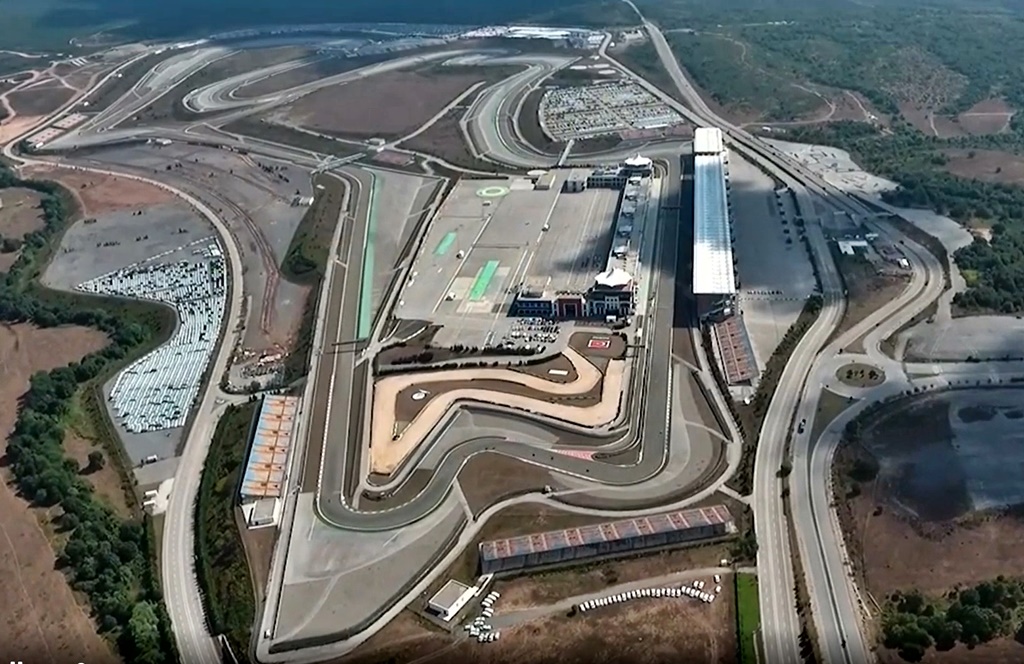
It was less than a year ago that the Formula 1 teams were at the Istanbul Park Circuit in Turkey and this weekend, they are back again for Round 16 of the 2011 Formula 1 World Championship. The Turkish Grand Prix replaces the Singapore Grand Prix which had to be cancelled due to the ongoing pandemic in the country.

The track is not entirely unknown to them and current drivers like Lewis Hamilton, Sebastian Vettel and Kimi Raikkonen have raced at the circuit when the Turkish Grand Prix was held between 2005 and 2011. And even though they also raced there last year, there are unknowns, specifically regarding surface conditions. Last year, as the track had to be prepared for F1 racing after a lapse of 9 years, the freshly laid asphalt was slippery. Since then, the asphalt may have matured slightly and it’s also been completely cleaned with a high-pressure water jet. So this year drivers should benefit from better grip as a consequence of the softer compounds, higher asphalt roughness, and the likelihood of higher temperatures compared to last year.

According to Mario Isola, Head of F1 and Car Racing at Pirelli, the tyre suppliers, drivers reported improved grip during practices, and times in both sessions were considerably faster than 2020. “It’s hard to compare this year to last year, because the weather conditions are different and our tyre nomination this year is a step softer. We’ve seen consistent grip throughout the lap – albeit slightly affected by today’s gusting winds. However, there’s a risk of rain that could cause yet another variable,” he said.

Because Istanbul Park isn’t as frequently used as other F1 venues and with it being resurfaced, the track evolution is high – meaning, the track starts the weekend fresher (or ‘greener’) and develops more grip as more laps are completed and more rubber is laid down by the racing cars.

Istanbul Park is one of 7 anti-clockwise track layouts on the 2021 F1 calendar, the others being: Imola, Interlagos, Baku, COTA in Texas, Jeddah and Yas Marina. These layouts increase the strain on the opposite side of the driver’s neck, which isn’t used to experiencing these forces due to there being more clockwise circuits.

The best-known corner at the 5.338-km circuit is Turn 8, which has been described as one of the great corners in Formula 1. It’s very long, at 640 metres (or 12% of the entire lap) and taken at high speed, with several apexes that place forces peaking at more than 5g on the cars and tyres. Due to the increased downforce levels of the cars today compared to those 15 years ago, it has the highest lateral g-force experienced by the drivers over the course of the lap.

Many other corners place considerable demands on the tyres as well: Turn 1 is approached with a significant descent before heading uphill, and the back straight also contains a swooping uphill kink nicknamed ‘Faux Rouge’ in homage to Spa. The entire track layout makes plenty of use of the area’s natural elevation. It is one of the better circuits in F1 for overtaking, because there are several big braking zones and corners leading onto longer straights which offer several different lines.

The winning strategy last year was a one-stopper. Hamilton was one of only four drivers to stop once, as the majority stopped twice. In terms of car set-up, Turkey is what the engineers call ‘middle of the pack’, because most of its characteristics are pretty average, so not on either end of the spectrum in terms of downforce and power sensitivities.

Pole position on the starting grid seems to give a clear advantage at this circuit as 5 of the 8 winners started from that position. However, Hamilton won’t get that slot no matter how quick he is in qualifying as his engine change incurs a penalty that will put him 10 places down  on the starting grid tomorrow. But it should be remembered that last year, he started the wet race from sixth place – and won it as well as confirmed his seventh World title.

As the teams begin their battle tomorrow, both championship titles are still tightly contested. Hamilton is just 2 points ahead of Max Verstappen, while a good weekend in Russia in the last round put the Mercedes-AMG PETRONAS team extend their lead to 33 points ahead of Red Bull Racing. Behind the two, the battle for third between McLaren and Ferrari should be interesting with the gap of 17.5 points.

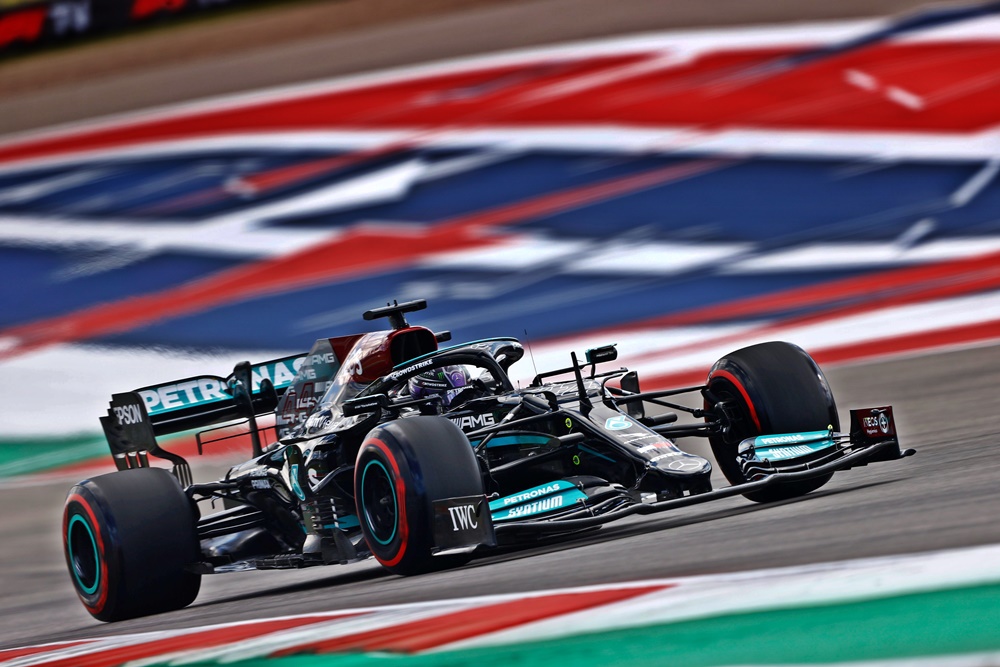
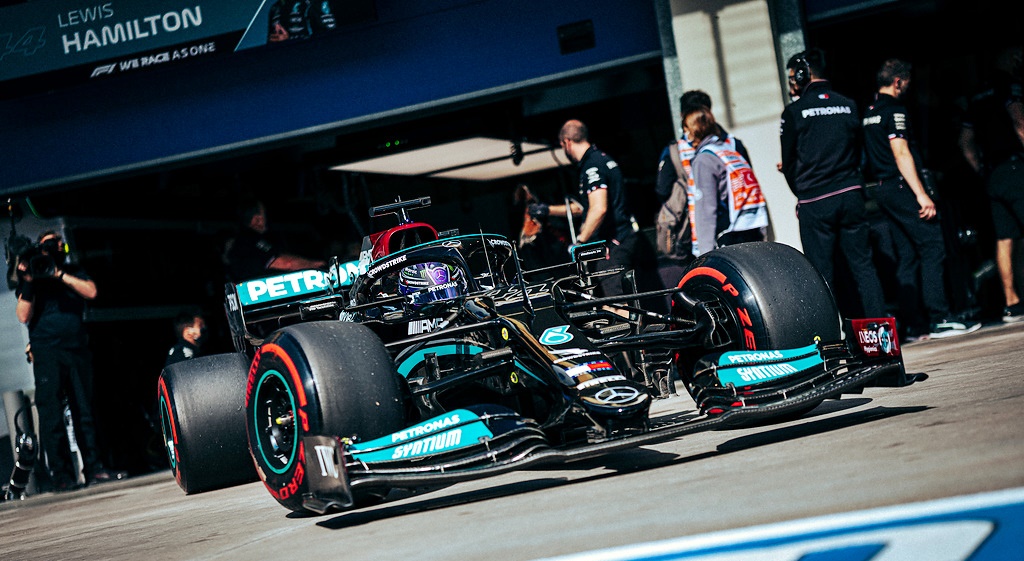
Lewis Hamilton was quick in qualifying but he will still have a 10-place grid penalty as the team has made an engine component change for his car to be on the safe side.


The COVID-19 pandemic disrupted motorsports events around the world last year, including the Formula 1 World Championship. After the opening round in Australia was cancelled literally at the ‘eleventh hour’, other venues also decided that the situation was worsening and they could not be sure their event could be safely held, or that the authorities would not close off the borders (as what happened in Malaysia and many other countries).

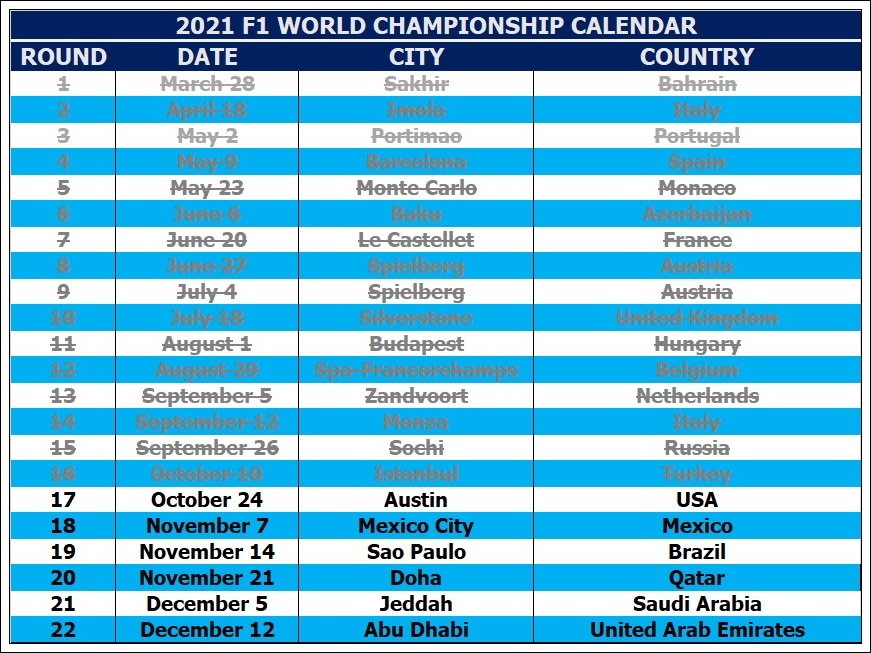
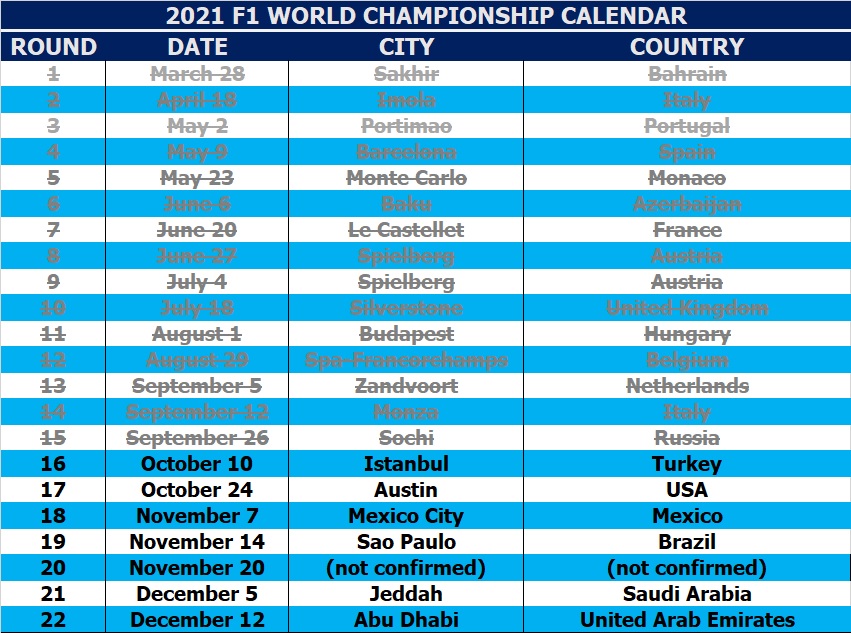
It was only in the middle of the year that the calendar could be revised to have 17 rounds, with 4 races taking place in the months of November and December. The compressed schedule was gruelling for the teams but at least they did not have to do the 22 races that had been planned at the beginning of the 2020 season.
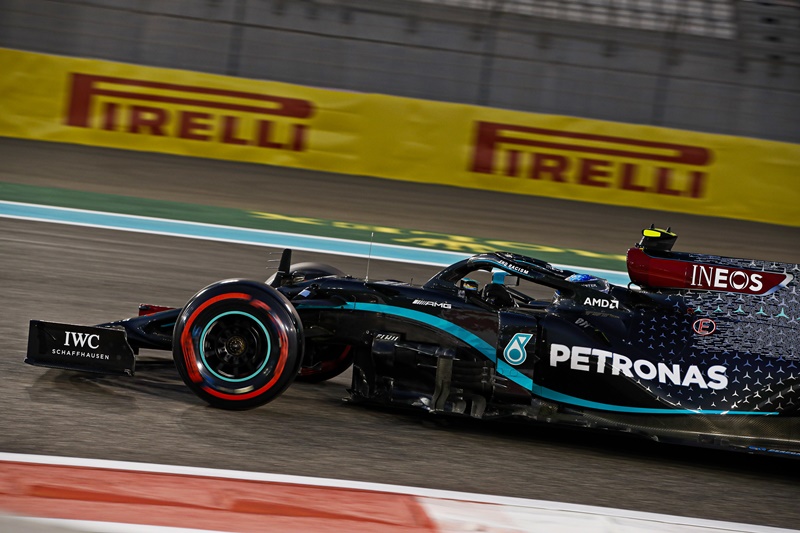
2021 calendar revised a few times

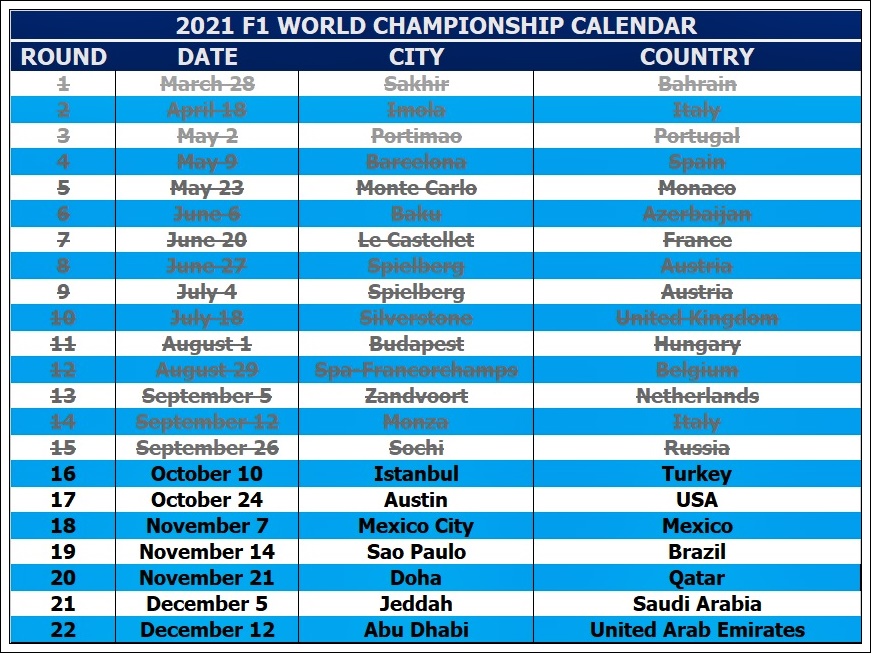
The 2021 calendar has likewise been revised a few times as some countries had changed quarantine conditions making it difficult for teams to travel to them, especially from Europe. The season-opening Australian Grand Prix was one of them and was initially postponed to November and then cancelled. Bahrain got to run the first race of the season.
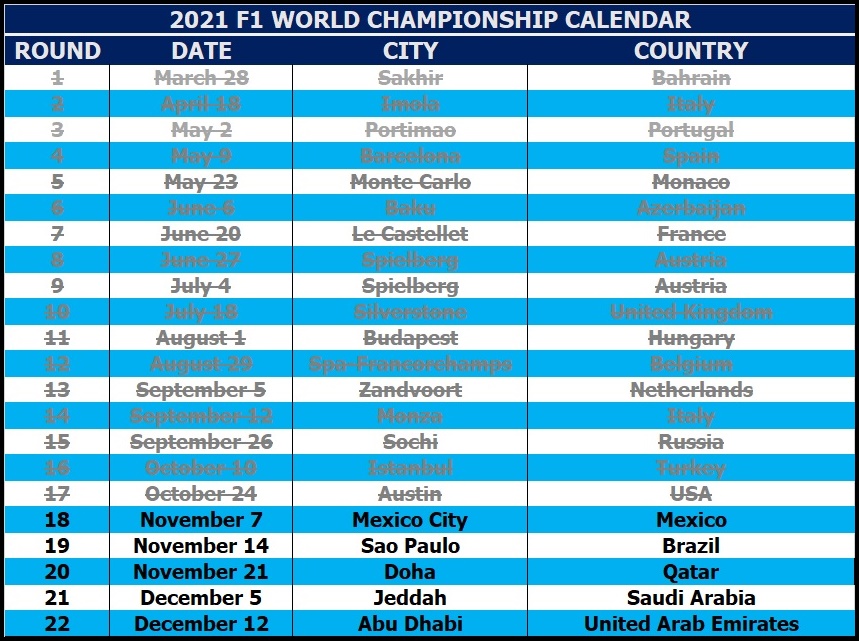
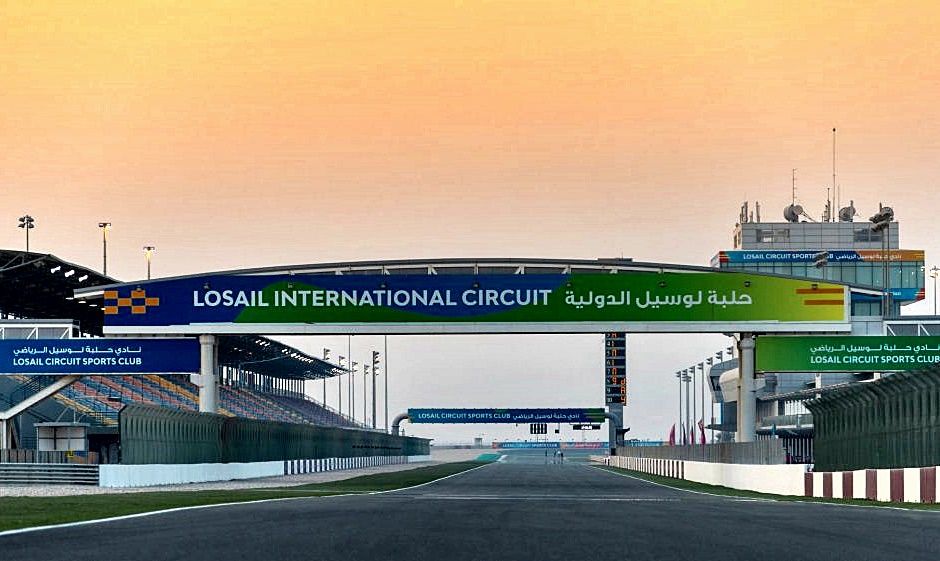
The rounds in China, Singapore and Japan were also cancelled and in their search for new circuits, the organisers decided to bring back Portugal and Turkey, which have had F1 events before. The championship will also see another new circuit which replaces the cancelled Australian round. This is the Losail International Circuit in Qatar which will run Round 20 on November 21. With the Ooredoo Qatar Grand Prix, as the event will be known, the original number of 22 races can be fulfilled.
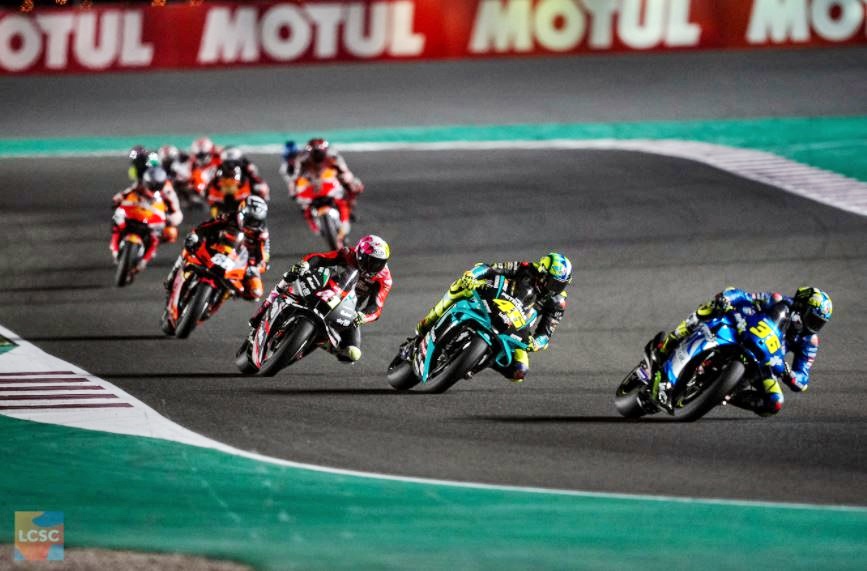
The circuit near Qatar’s capital has held MotoGP races since it was opened 7 years ago.

MotoGP circuit since 2004

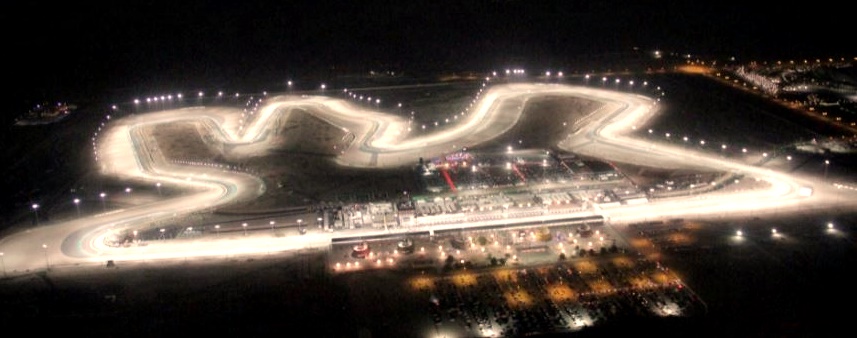
The 7-year old FIA-certified Losail International Circuit is not new to the motorsports world and has been a MotoGP venue since 2004. It will now add Formula 1 to its list, which will be held at the 5.4-km long track until 2032 (except for 2022 as it coincides with Qatar’s hosting of the 2022 FIFA World Cup).

It is not known yet whether the race will be run at night, although the Middle East races are usually at night when it is cooler. The circuit is capable of having a night race as it has the required illumination provided by some 3,600 lights. The race is expected to be 57 laps.

“We have shown that we can continue to adapt and there is huge interest in our sport and the hope from many locations to have a Grand Prix. The huge effort from all the teams, F1 and the FIA has made it possible to deliver a 22-race calendar something that is very impressive during a challenging year and something we can all be proud of,” said Stefano Domenicali, President & CEO of Formula 1.

Human rights controversy

The choice of Qatar is not without controversy as some groups point out that the Middle Eastern country has a poor record with regard to human rights. The Formula 1 organisation has not refuted this but says: “We take our responsibilities very seriously and have made our position on rights clear to all our partners and host countries who commit to respect our responsibilities in the way their events are hosted and delivered.”

“Sports like Formula 1 are uniquely positioned to cross borders and cultures to bring countries and communities together to share the passion and excitement of incredible competition and achievement. For decades, Formula 1 has worked hard be a positive force everywhere it races, including economic, social, and cultural benefits,” its statement added.

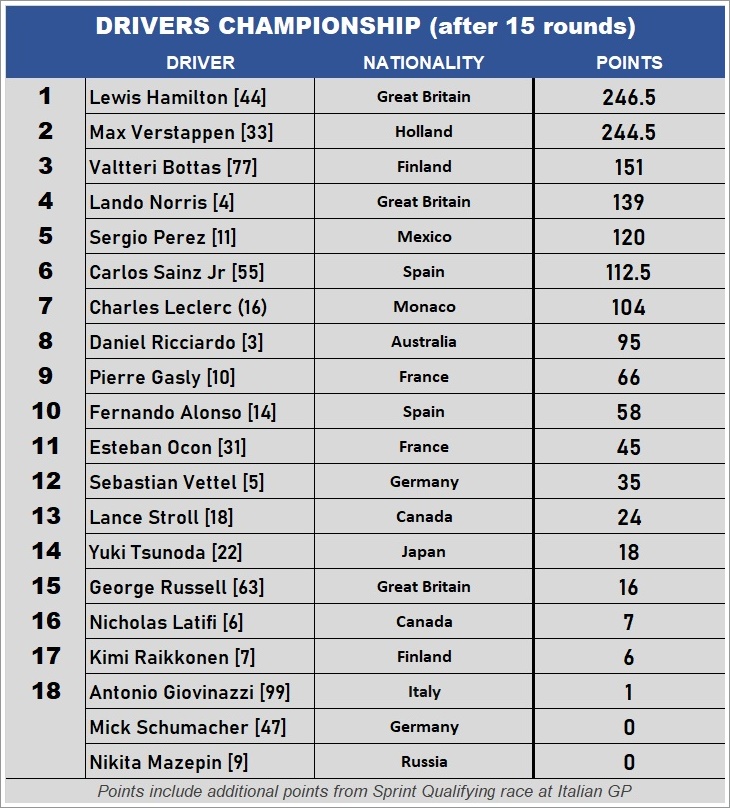
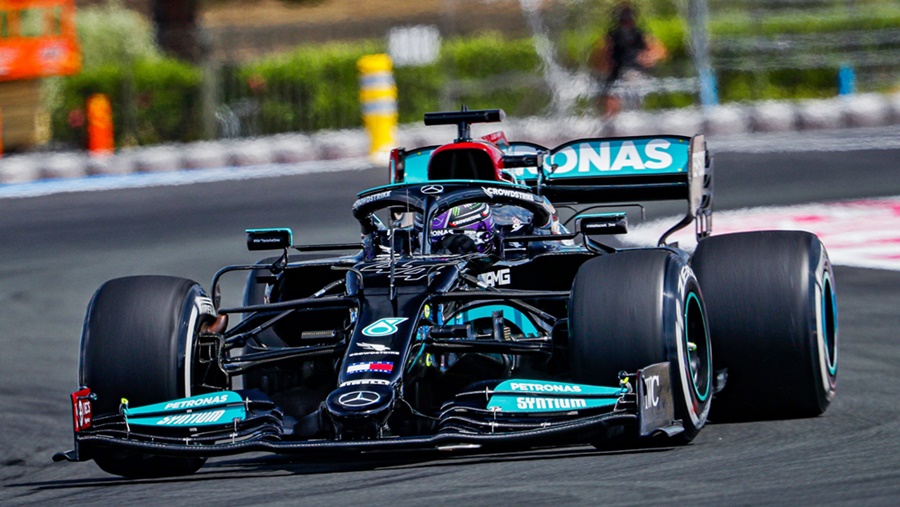
Lewis Hamilton and the Mercedes-AMG PETRONAS Team are in the lead after 15 rounds of the 22-round championship.

Click here for race reports and results of the 2021 Formula 1 World Championship


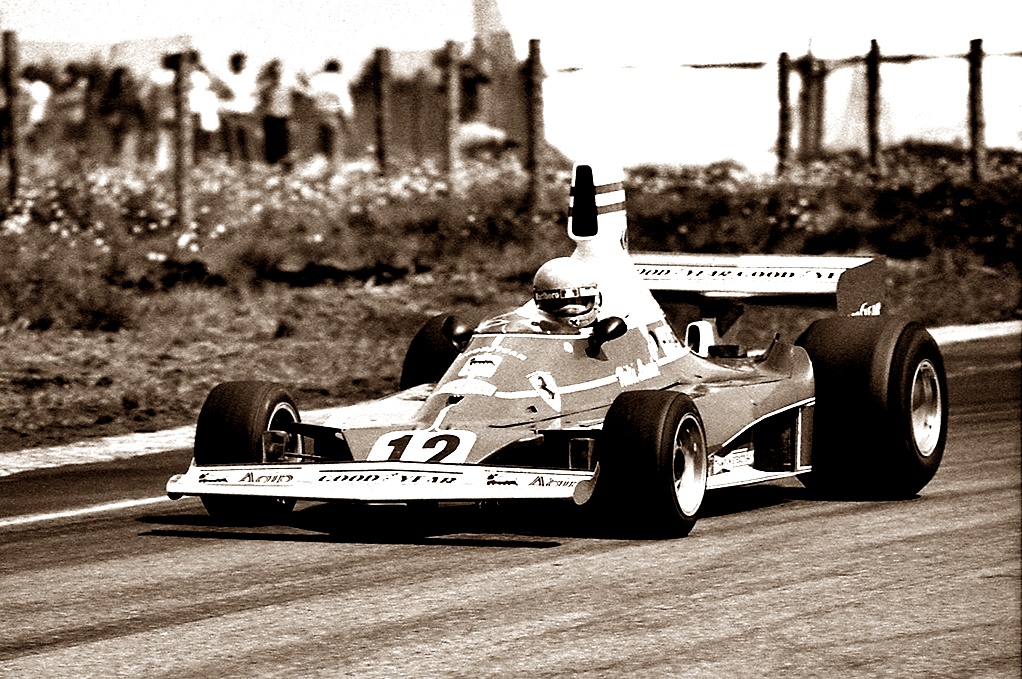
At the 2021 Russian F1 Grand Prix over the weekend, brake manufacturer Brembo celebrated a historic milestone of its vital components having a presence for the 800th Formula 1 race. This milestone comes after 46 years when the company supplied a small number of cast iron discs to Scuderia Ferrari in 1975. At that time, Brembo, which had been founded in 1961, was still a small machine shop but it would grow and remain a supplier to the sportscar maker till today.
Brake supplier for almost all F1 teams
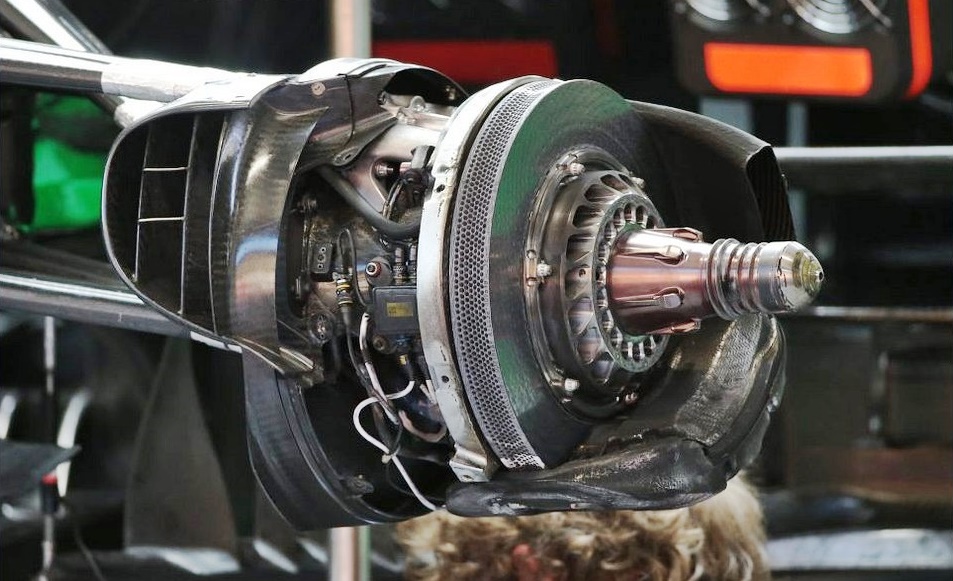
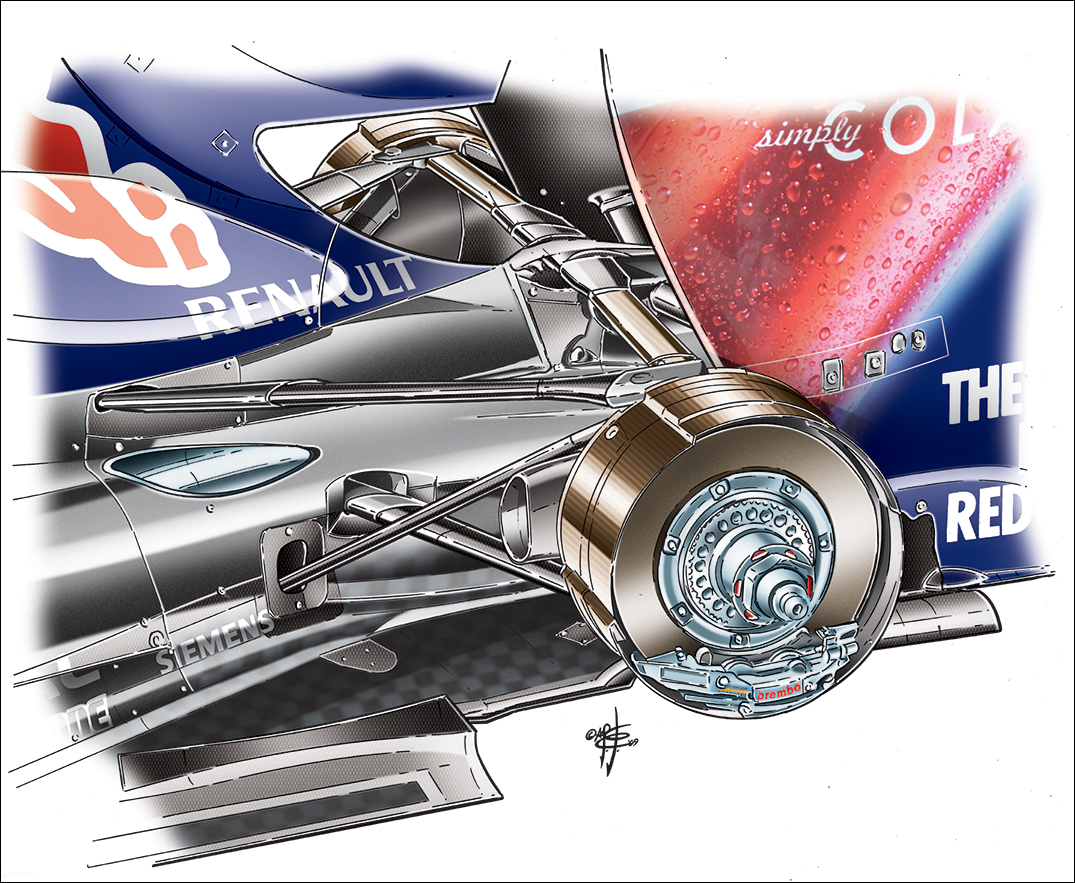
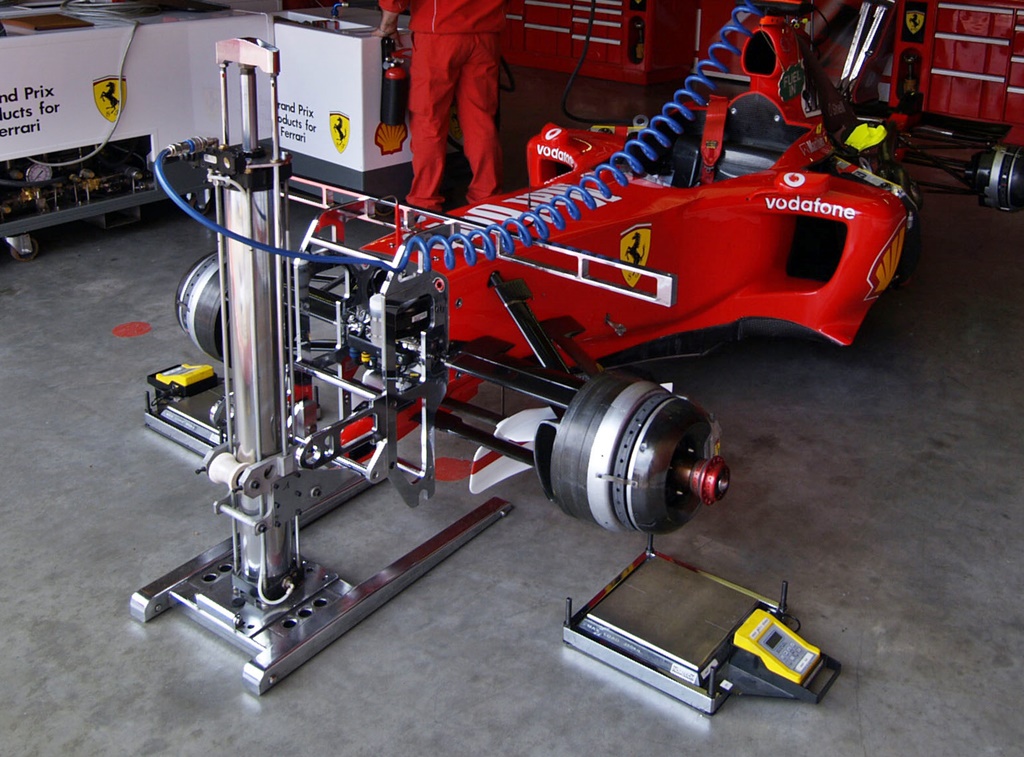
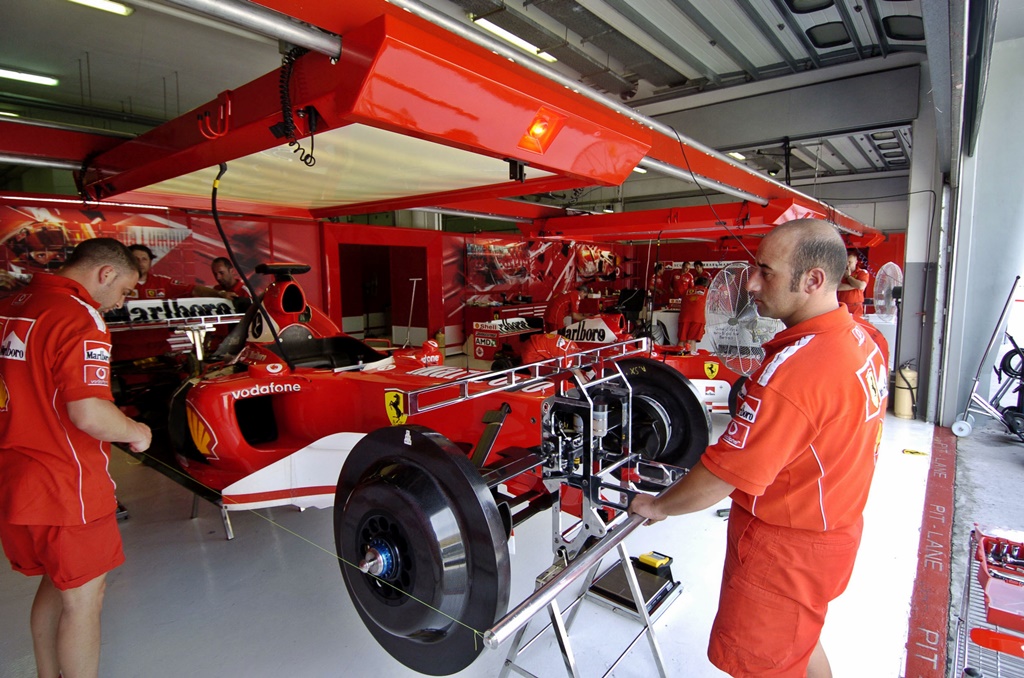
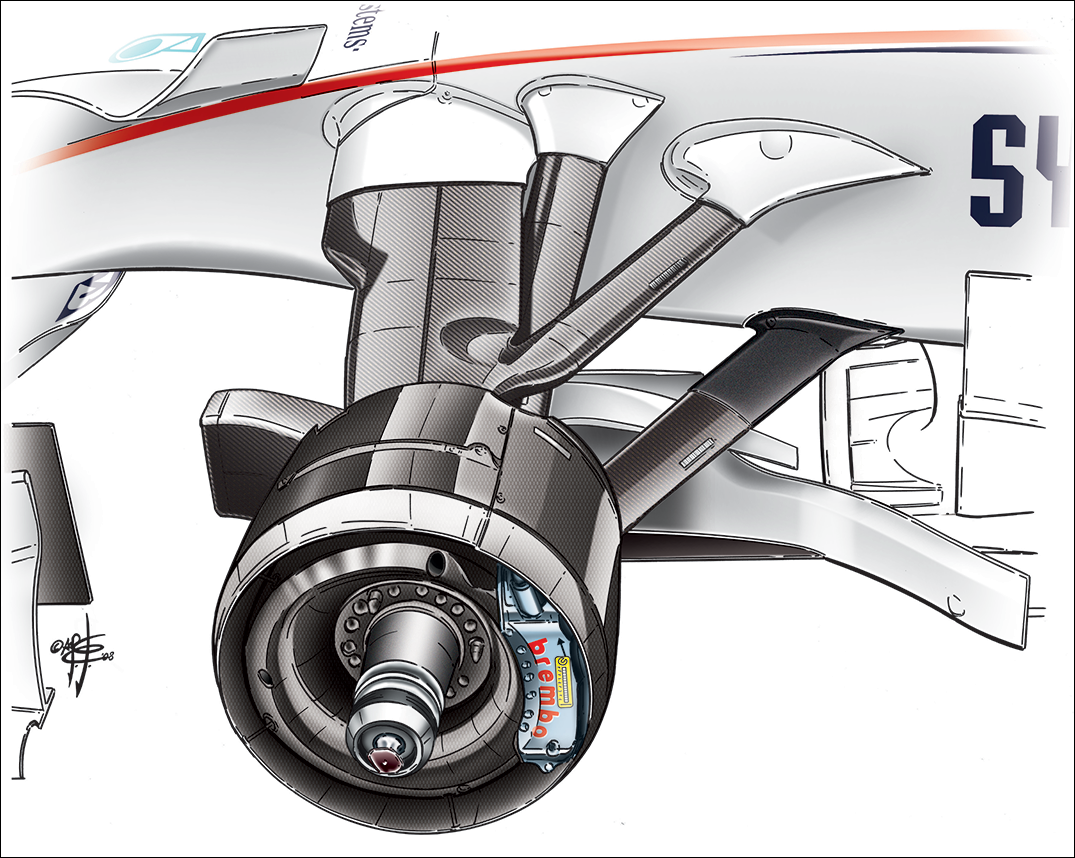
Over the decades, Brembo has supplied brake systems to almost every F1 team, from the most prestigious to the smallest. Initially, these were standardized parts but over time, the solutions have become increasingly customized to suit the design characteristics of the different single-seaters as they evolved (especially with regulation changes). Indeed, co-design activity today involves practically all components destined for the F1 customers, from the brake calipers to the Brake-by Wire (BBW) systems, resulting in very geometrically diverse products.

Brembo has long been well known for innovations in its field. For example, in 1982, it created the first radial mount brake caliper. In 1988, when it introduced the first monobloc caliper to racing, making a caliper from a single block of aluminium seemed like a feat verging on science fiction.

However, Brembo’s engineers managed to create the program and the tooling for the internal machining operations. The result helped write the history of motoring, initially only for competition cars, but later also transferred to road cars.

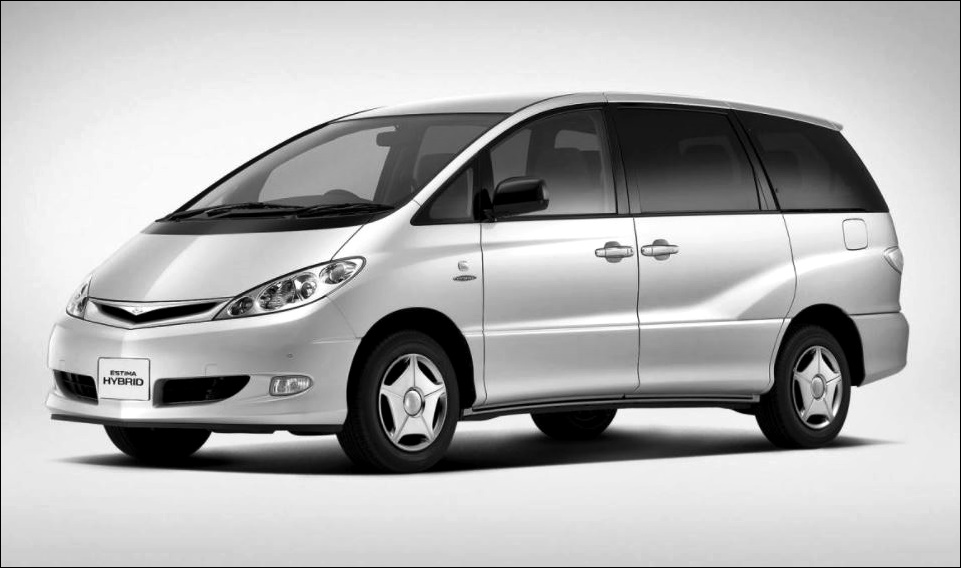
The wire technology for brake systems – referred to as ‘brake-by-wire – was first used in Formula 1 cars (above) and then appeared in production cars. The Toyota Estima Hybrid (below) launched in 2001 had an Electronically Controlled Brake (ECB) system which is believed to be the first brake-by-wire system installed in a production model.


From discs to whole systems
After starting with brake discs (first cast iron and then carbonfibre), Brembo began to supply other related components – calipers, pads, disc housings, brake master cylinders and the development of complex braking systems. These include by wire technology, the electronically-controlled braking system that has been used for rear braking systems of F1 cars since 2014. Like many other technologies which originated in racing cars, wire technology is today available in many cars sold to the public.

During the 800 Grands Prix, cars equipped with Brembo brakes have driven on 56 tracks worldwide, most of them in Europe. However, the number of Asian events has increased since the 1990s, having first appeared on the calendar in 1976.

Whether a race was long or short (as in the 3-lap ‘race’ of the 2021 Belgian GP recently), the brakes supplied by Brembo have still had an important role.

Stopping power needed, whatever the race
No two races are ever identical in course, weather conditions and competitors (constructors and drivers). The longest was the 1975 Swedish GP, a 321.44-km race won by Niki Lauda won with the Ferrari 312T. Last month’s Belgian GP was the shortest – just 3 official laps that were run behind the Safety Car due to the heavy rain. However, the next shortest was the 1991 Australian Grand Prix and there was actually some racing over the 52.92 kms.

Not every car used Brembo’s brakes but of the 800 races, 455 of them were won by cars with their brakes. The driver who won the most number of times in cars with Brembo brakes is Michael Schumacher – 91 times out of the 307 races he entered. All 7 of his world titles were won in cars that had Brembo brakes.

Is the Monaco Circuit the hardest on brakes in the F1 championship? (w/VIDEO)

Max Verstappen had to start from the back as he took a penalty, and while going on the formation lap, he had a battery problem and was concerned he might not be able to start. However, by the time he reached the starting grid, it seemed to go away.

Lewis Hamilton, starting from a few places back, was crowded as he moved forward and without room to manoeuvre, he very quickly slipped to seventh. Perhaps he was being more cautious to avoid any more unnecessary incidents…

McLaren’s Lando Norris, who had pole position, had a clean start but before Trun 2, Ferrari’s Carlos Sainz had managed to catch up and slipped past to take the lead from the British driver.

The two Scuderia AlphaTauris had a poor start, dropping backwards in the field. Verstappen meanwhile was steadily slicing through traffic and moving upwards. By Lap 6, he was 14th after passing Valtteri Bottas and 18 seconds behind the leader, while his team mate was up in seventh.
Up front on lap 10, Norris was narrowing the gap to Sainz and staying in his mirrors. 7 seconds behind, Williams George Russell was watching Aston Martin’s Lance Stroll who was just a second behind.

After lap 12, the drivers started to report their tyres going or gone, and visits to the pits started with Stroll being the first to do so on lap 13. Fortunately, the rain that had been expected did not arrive. Sainz came in on lap 15 and Norris, in spite of worn tyres, took over the lead.

By lap 17, Verstappen was up to sixth and just 3 places and 7 seconds ahead was his arch-rival, Hamilton. The Dutchman was pushing hard and clocking about a second quicker than the other drivers ahead of him. Alpine’s Fernando Alonso was next to pass and that might require a bit more effort and then he would be behind his team mate.

Rain began to fall on lap 22 and drivers who had tried their best to stretch their tyres had to start coming in. The positions began to change and though Hamilton had moved into second, he was still 12 seconds behind the leader.

On lap 24, Verstappen again reported problems, this time that he was having difficulty turning the car. His pit stop had dropped him to 12 place when he rejoined but he was trying to move back up. Hamilton had dropped to ninth and was also not bothering about the Dutchman and just wanting to get to the front.

After most of the other drivers had changed tyres, the order had also changed with Perez in the lead on lap 34 and Alonso behind him, both still staying out. Norris, Leclerc and Hamilton were within reach of each other so the battle was on to try to secure third place but Toto Wolff was urging his driver to go for a win.

As both Perez and Alonso came in on lap 37, Norris got back his lead, with Hamilton 4 seconds behind and Alonso having dropped out for a tyre change. Behind Hamilton was Sainz, a long way away with a 22-second gap.

With 10 laps remaining of the 53-lap race, Sainz was battling to hold on to this third place while McLaren’s Danial Ricciardokept trying to displace him and Perez was waiting for the two to make a mistake that he could gain from.

8 laps from the finish, the rain started to get heavy. Though Hamilton has no problem with wet tracks, he was not finding it easy to close in on Norris who was out to collect his first-ever F1 win.

The rain caused enough concern that teams called their drivers in. The track seemed to be getting slippery and Norris was seen to be running wide in corners a few times, with Hamilton getting closer each time. Hamilton was asked to come in but he chose to ignore the call. He was probably determined to be the one to take the chequered flag but Norris too was determined so both drivers stayed out. The British driver was heard to tell his engineer to ‘shut up’ when a warning came over the radio about cars ahead sliding.

Finally it happened – on lap 52, Norris went very wide and off, and Hamilton was ready to shoot by. The McLaren driver recovered and slotted into second place quickly though the next car (Perez) was 49 seconds away. The slide made Norris lose his spirit a bit and he decided he had to come in. As Perez dropped off for tyres, Verstappen suddenly found himself in second place but way behind Hamilton.

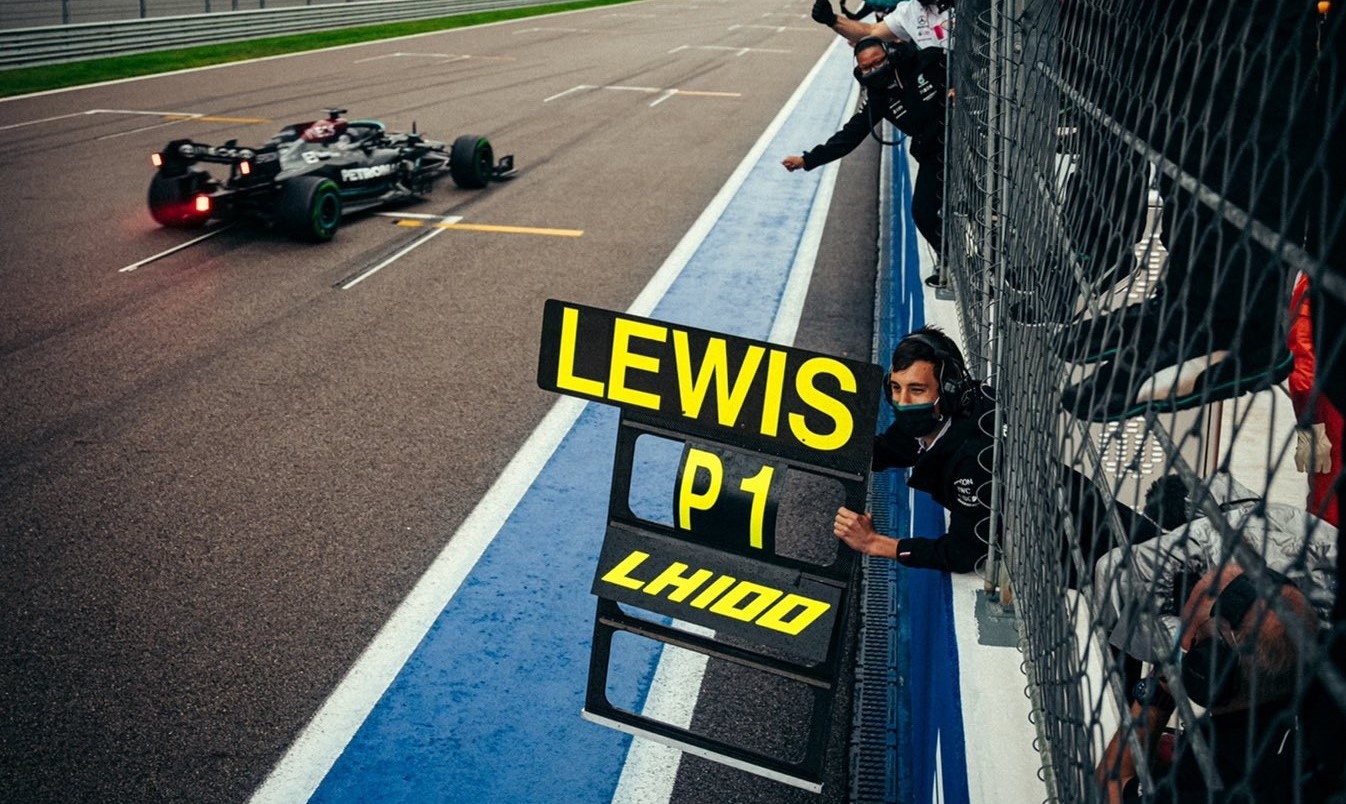
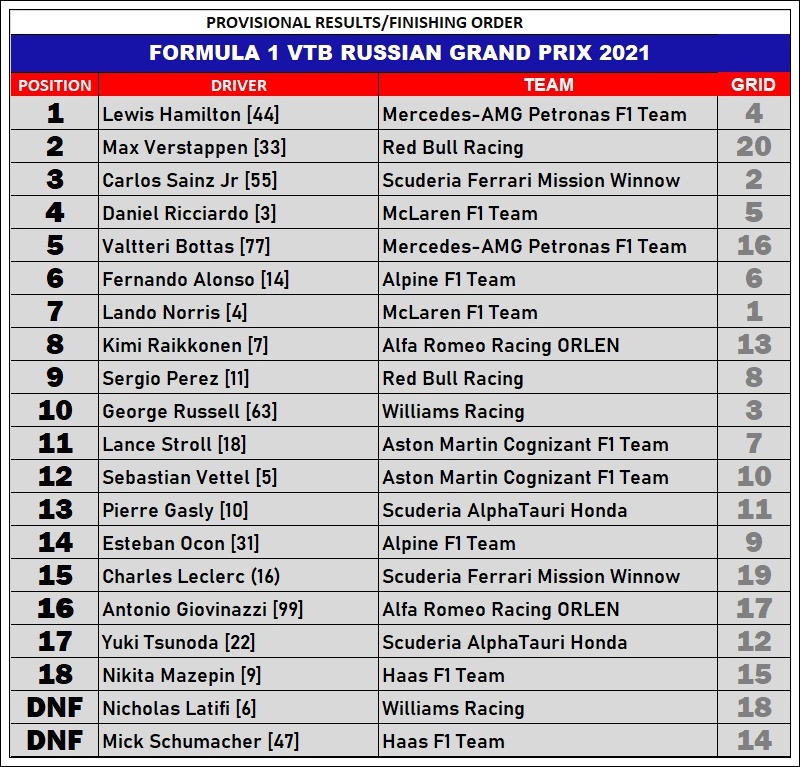
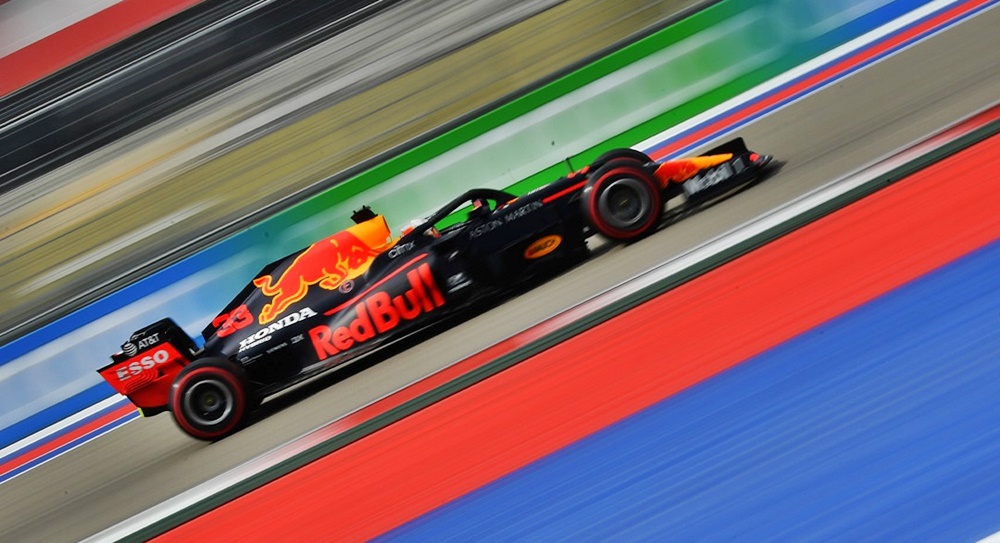
With just one lap left, it was to be Hamilton’s win in Sochi – finally reaching his 100th F1 win. Verstappen had done well to come up all the way from the back to finish second while Bottas was able to hold on to his fifth place till the end.

Archive

Follow us on Facebook

Follow us on YouTube