
Piston.my

Nissan

Having to continuously hold the steering wheel while driving can be tiring but it should be done for safety reasons. On long journeys, many drivers may wish that they could just take their hands off the steering wheel, just like cruise control where you set the desired speed and don’t have to keep pressing on the accelerator pedal. It helps to reduce fatigue and makes motoring more enjoyable.

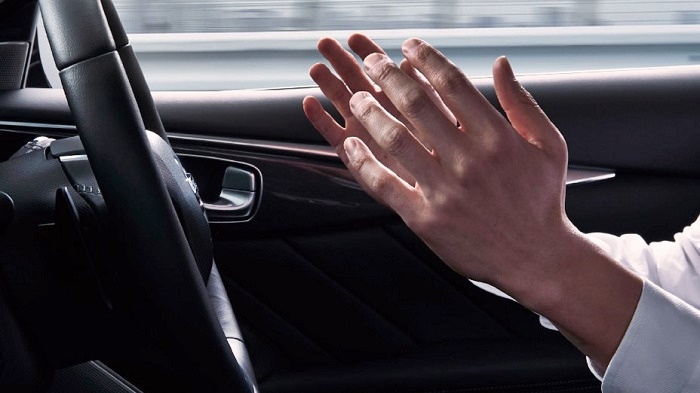
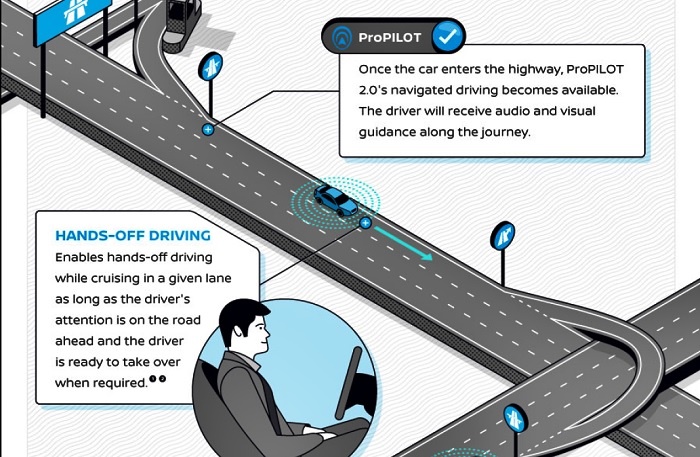
Cruise control is now available in many cars but ‘hands-off driving‘ is still rare as carmakers are still developing the systems to ensure safety. However, Nissan’s new ProPILOT 2.0 system already offers it in the latest Skyline which is now on sale in Japan. The award-winning advanced driver assistance system – a unique ‘wow’ factor for the model – lets drivers take their hands off the wheel under certain conditions in a single lane on certain highways in Japan. It also assists the driver with traveling on a multi-lane highway until reaching a predetermined exit, able to handle overtaking and lane changes.
Nissan ProPilot

For the team that developed the ProPILOT 2.0 system, creating a ‘wow’ factor wasn’t the goal. “Our team started the development of ADAS (advanced driver assistance system) technology 20 years ago,” explained Tetsuya Iijima, General Manager of Autonomous Driving and ADAS at Nissan, whose team developed ProPILOT 2.0. “And in the first 10 years, we were mostly focusing on the driver assistance technology to help avoid accidents.“
Nissan
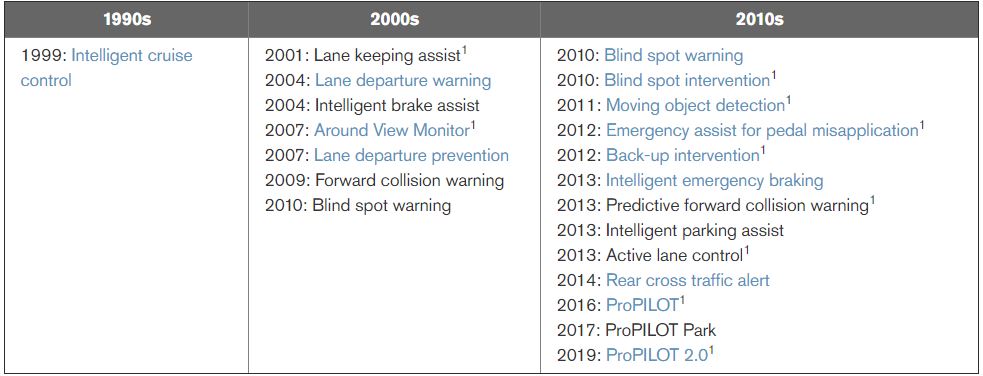
Many safety technologies were world firsts at the time of introduction (indicated by a ”1“).

20 years of innovations in safety
In 1999, Nissan introduced adaptive cruise control, which helps prevent rear-end collisions [with the vehicle ahead] by reducing the car’s speed when it approaches a vehicle in front. In 2004, Nissan was the first carmaker to introduce a lane departure warning system. This evolved into a lane departure prevention system that physically helps the driver manoeuvre their car back into its lane. Neither was intended to ‘wow’ customers – they were simply meant to help avoid collisions due to driver inattention or in emergency situations.

Iijima’s team went further, pursuing driver safety and peace of mind in non-emergency situations as well. “We shifted to more integrated driver assistance systems,” he recalled. “Such systems assist in multiple tasks leading to a safe and comfortable overall driving experience.”
Nissan ProPilot
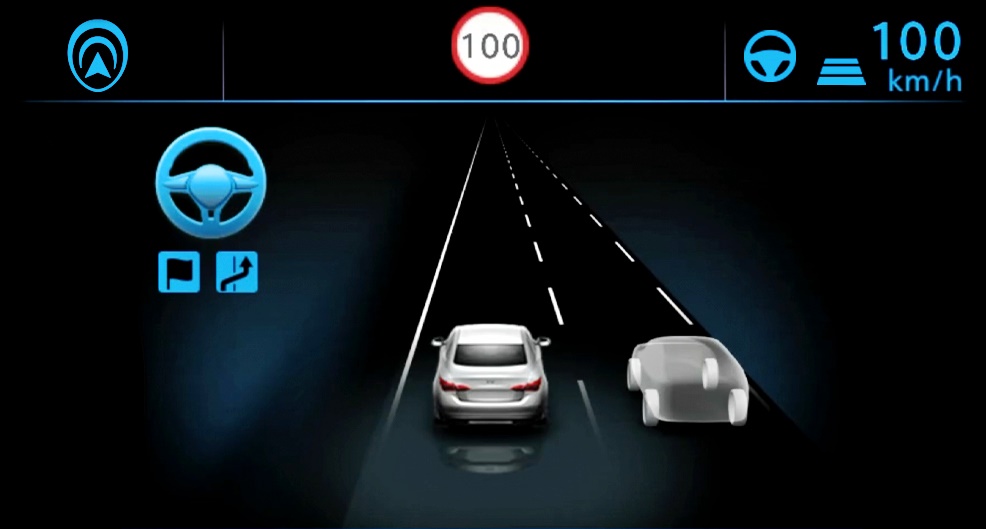
Display when the car’s computer is doing the driving.

Nissan ProPilot

The first-generation ProPILOT was launched in 2016 and was an outcome of this effort. Currently available in certain models in selected markets, it assists with steering, acceleration and braking in a single lane. The technology works in tandem with the driver, providing peace of mind and helping reduce fatigue behind the wheel.

“We drew a realistic roadmap to deliver more sophisticated and trustworthy technologies step by step,” Iijima explained. “That’s the reason we came to this point faster than anyone else.”

Field tests and feedback accelerate introduction
Getting advanced safety technologies to customers early and receiving their feedback helped Nissan in its continued pursuit of driver safety and comfort. Iijima’s team also carried out field tests in San Francisco, Los Angeles, London and Tokyo starting in 2013. “These experiences gave us rich information that helped us expand the technology’s capabilities,” he said.
Nissan ProPilot

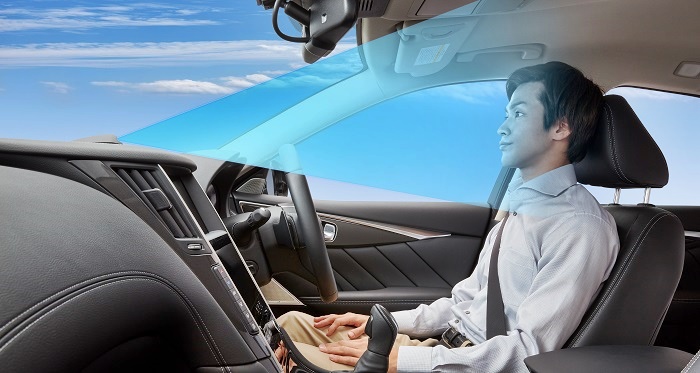
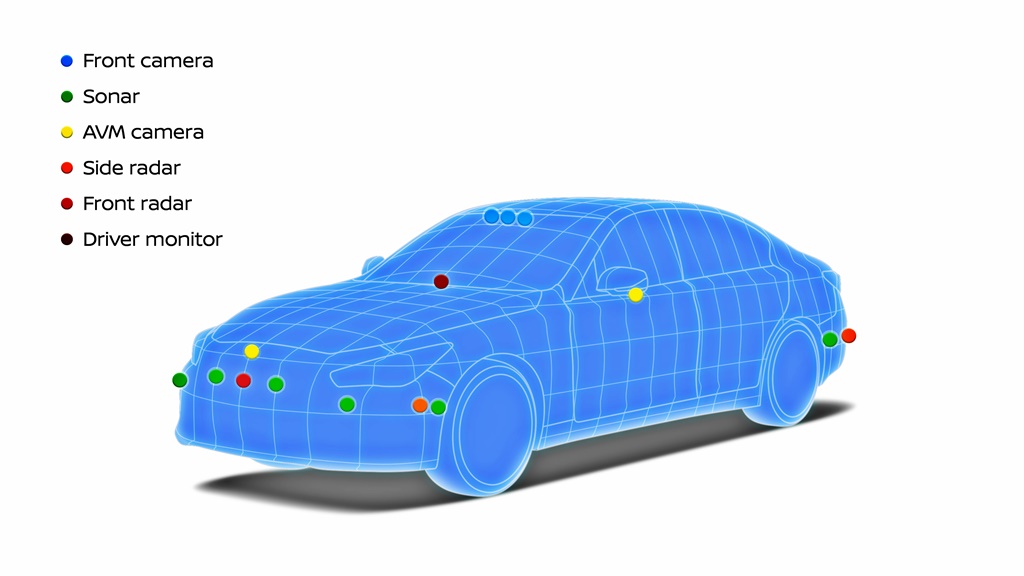
The introduction of ProPILOT 2.0 marked another major milestone for these efforts. It uses 5 cameras including one trifocal camera, 5 radars, and 12 sonars for a 360-degree, real-time picture of the vehicle’s surroundings. The system combines this with high-definition 3D map data that covers the number of lanes, merging and split points and intersections to provide a smooth driving experience. Going beyond the original ProPILOT, the second-generation system also supports lane changes and hands-free driving under certain conditions.

“After 20 years, we’ve come to a certain point where the driver can trust the system and allow it to support major parts of driving on the highway,” Iijima said. “ProPILOT 2.0 integrates a whole suite of new technologies that required support from other suppliers – like a high-definition map provider and a sensing technology provider. So, this is really a collaboration.”

“Our team always gets a bit overwhelmed when starting to work on entirely new technology,” Iijima revealed. “However, when we complete development and see it benefiting customers, we gain new confidence and energy to go to the next step.”

Nissan Intelligent Mobility System
The Nissan Intelligent Mobility System available in some models sold in Malaysia such as the Serena, X-Trail and LEAF EV is also the outcome of constantly evolving safety technology at Nissan. The intelligent technologies available include an Intelligent Around View Monitor which has 360-degree coverage that also has sensors to detect moving objects around the vehicle.
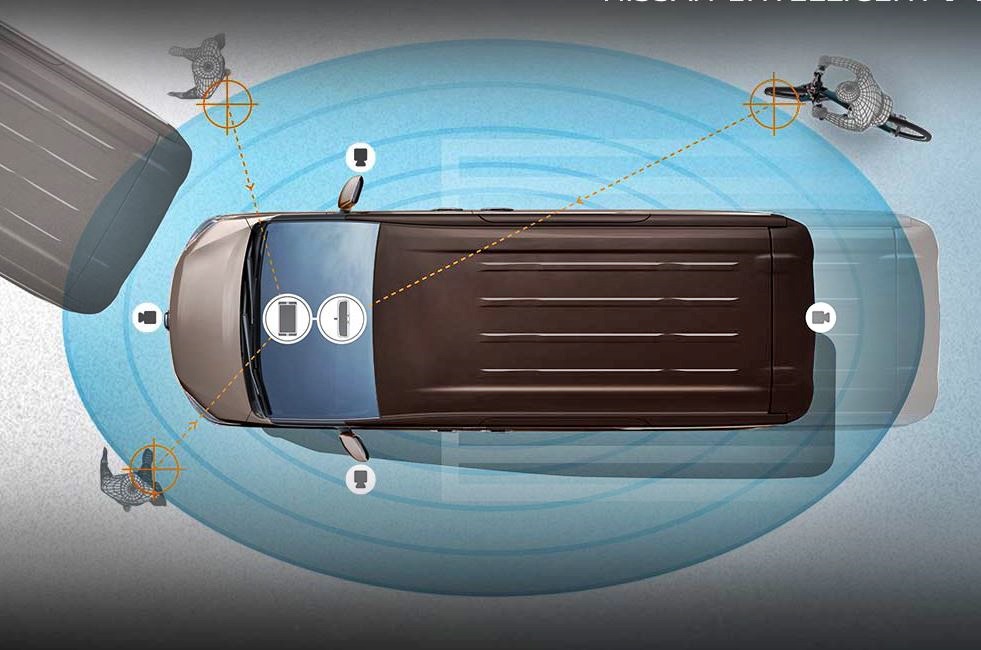
Nissan Intelligent Mobility System
Intelligent Around View Monitor is part of the Nissan Intelligent Mobility System in the Serena.

 There’s also an Intelligent Forward Collision Warning system with emergency braking which immediately activates if there is a likelihood of hitting the vehicle ahead. If the system finds that the driver has not reacted in time, then it will immediately apply the brakes. Even if a collision occurs, its severity can be reduced as the braking lowered the speed earlier.  The Intelligent Driver Alertness system detects when the driver is drowsy and suggests taking a break.

Visit www.nissan.com.my to locate a showroom where you can experience these advanced Nissan technologies.

PISTON.MY

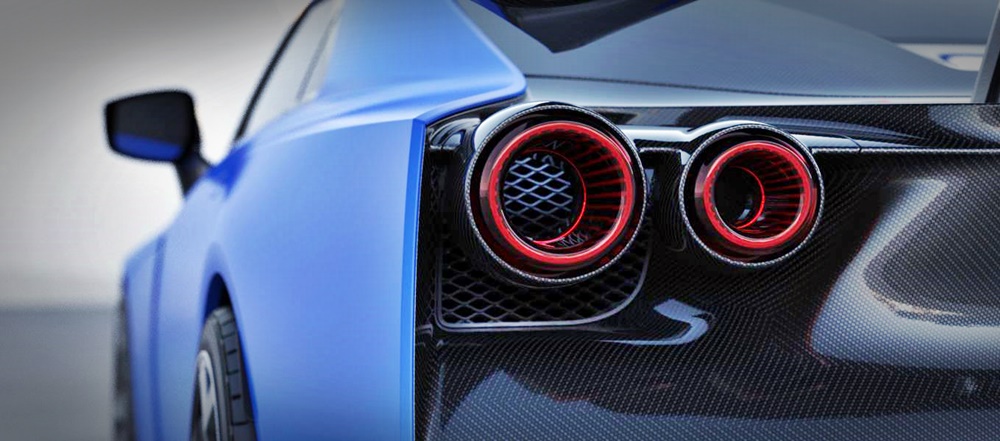
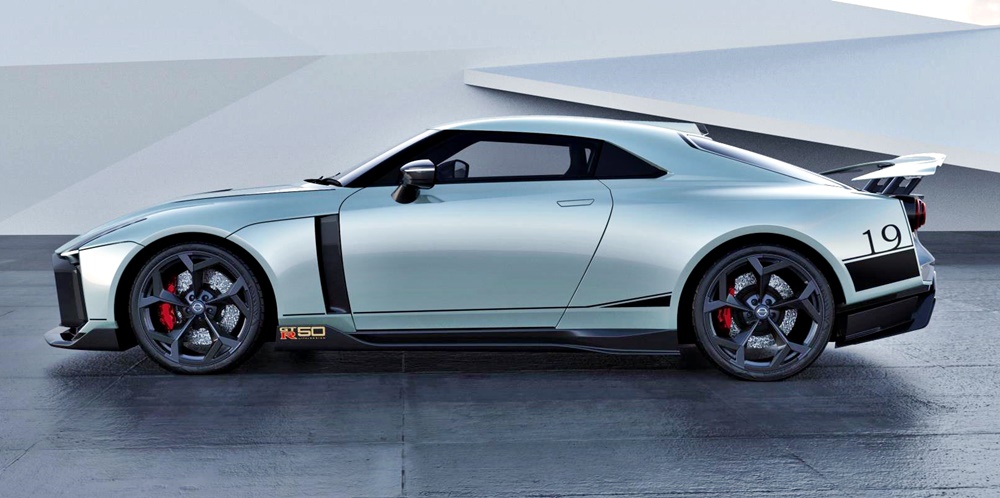
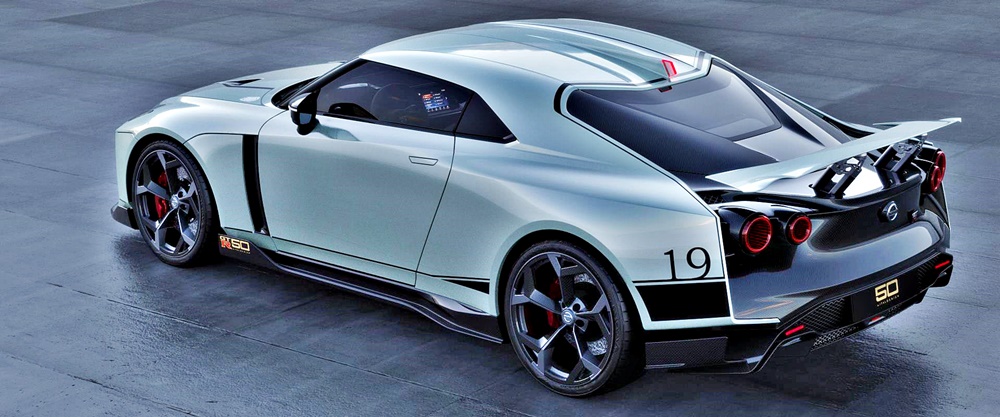
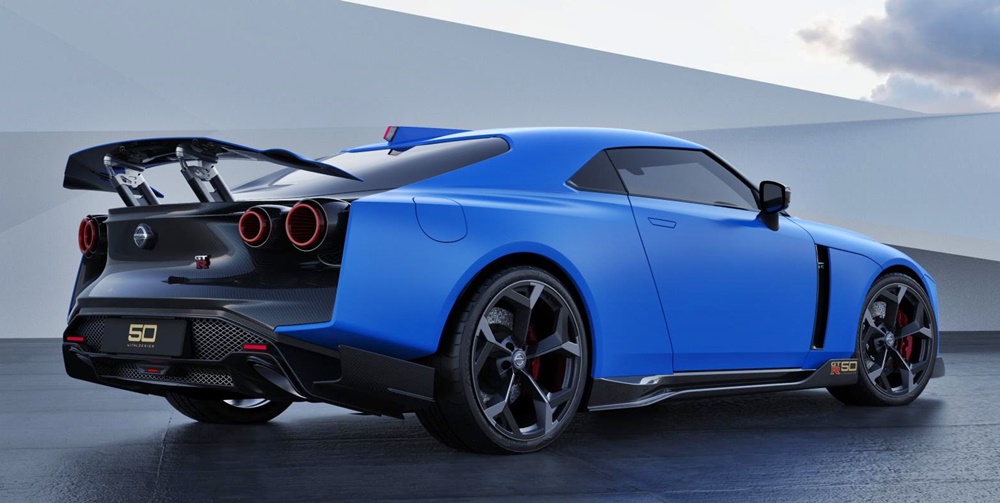
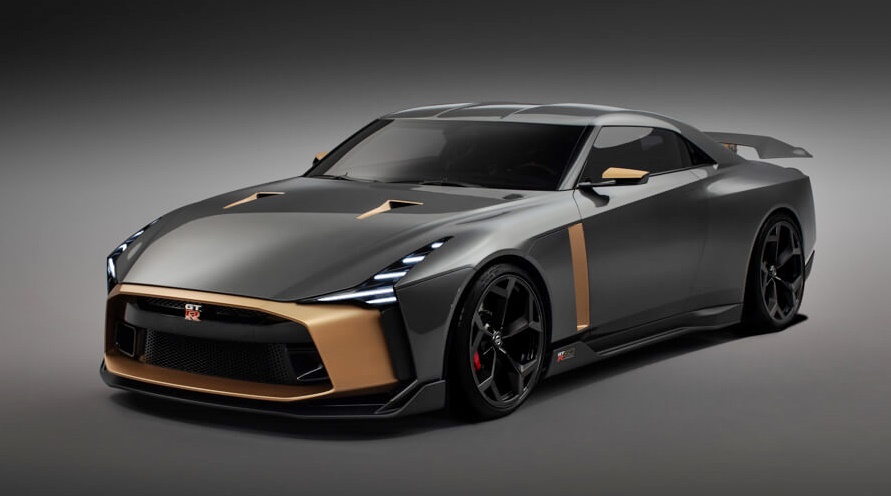
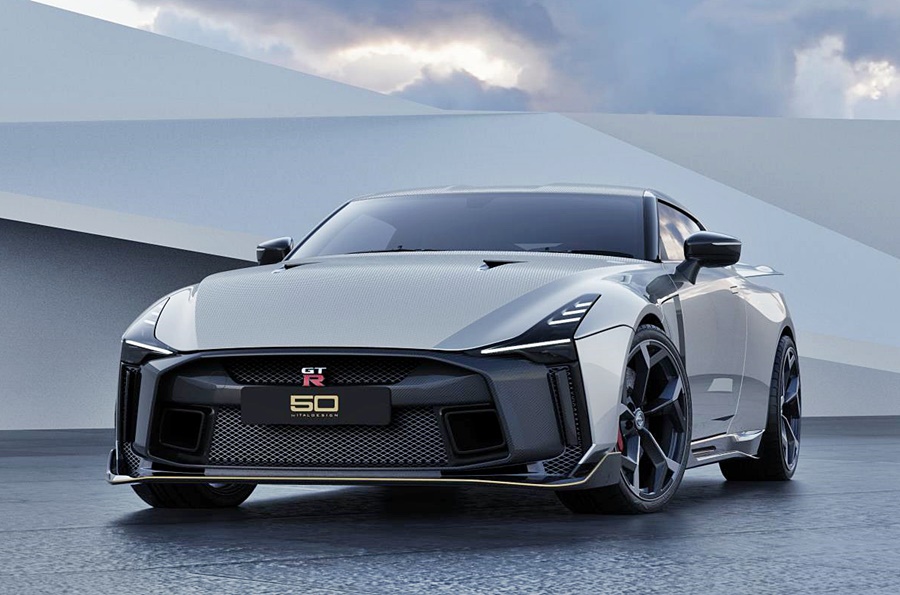
After being approved for limited production, work began on the production version of the Nissan GT-R50 by Italdesign which was shown in June last year. While Italdesign, which has a history that goes pack as far as 1968, developed and engineered the model, Nissan’s design centres in the UK and California worked on the exterior and interior designs.

“Designers dream of creating from a blank canvas, but with GT-R, it is a canvas that has been shaped by an adventurous history, a heart powered by NISMO, and a soul reflecting 50 years of dreams of engineers, designers, artisans, developers, racers and leaders,” said Alfonso Albaisa, Nissan’s Senior Vice-President of Global Design. “The best of Japan and Italy combined with help from our California and London studios are painting on the best canvas any designer can possibly have!”

Nissan GT-R50 by Italdesign

Nissan GT-R50 by Italdesign
All images show rendering of the production version of the Nissan GT-R50 by Italdesign

The production version will go on display at the Geneva Motor Show in March next year and the first customers should receive their cars before the end of 2020. Customer demand has been strong, with a significant number of deposits already taken based on a starting price of 990,000 euros (equivalent to RM4.58 million) for each o the 50 cars that will be produced. Each unit can be personalised to the customer’s requirements.

Meanwhile, fans can see the prototype model at the 2019 NISMO Festival which is on this Sunday. It will subsequently be shown at Nissan Crossing in Tokyo’s Ginza district for the rest of the month, and at the Tokyo Auto Salon in January 2020.

Nissan GT-R50 by Italdesign

Nissan GT-R50 by Italdesign

“Our customers have relished the personalized experience provided by Italdesign, who have a long tradition in the exclusive field of ultra-rare, bespoke high-performance vehicles,” said Bob Laishley, Global Sports Car Program Director at Nissan. “Their experience with the GT-R50 has been incredible and I can say first-hand that each car will certainly be a standalone masterpiece.”

Powering each GT-R50 by Italdesign is a NISMO-tuned 720 ps/780 Nm hand-built 3.8-litre twin-turbocharged V6 (VR38DETT). The engine draws on Nissan extensive GT3 competition experience and knowledge. The E-TS ATTESA all-wheel drive system will deliver power to all four 21-inch wheels. The suspension will be revised with the Bilstein DampTronic system and an upgraded Brembo braking system will be installed for stronger stopping power.

Nissan GT-R50 by Italdesign

At the time of writing, Nissan says that there are still ‘a limited number of reservations’ left so if you want one, you need to contact Italdesign quickly. The address for e-mail is aporta.gtr50@italdesign.com.

22nd NISMO Festival this weekend celebrates 50th anniversaries of Nissan GT-R and Fairlady Z

PISTON.MY


Manufacturing technology in the Japanese auto industry has been constantly improving, enabling carmakers to deliver products that are of higher quality. Initially, the technologies were used in Japan but with the globalisation of the industry today, factories all over the planet also serve as production hubs for certain models, so they too need to have the best technologies for making their vehicles.

In view of this, Nissan will make a substantial investment in advanced technologies and equipment for its factories around the world. Following an initial investment of about 33 billion yen at the company’s Tochigi Plant in Japan, the technologies will be rolled out across factories globally.

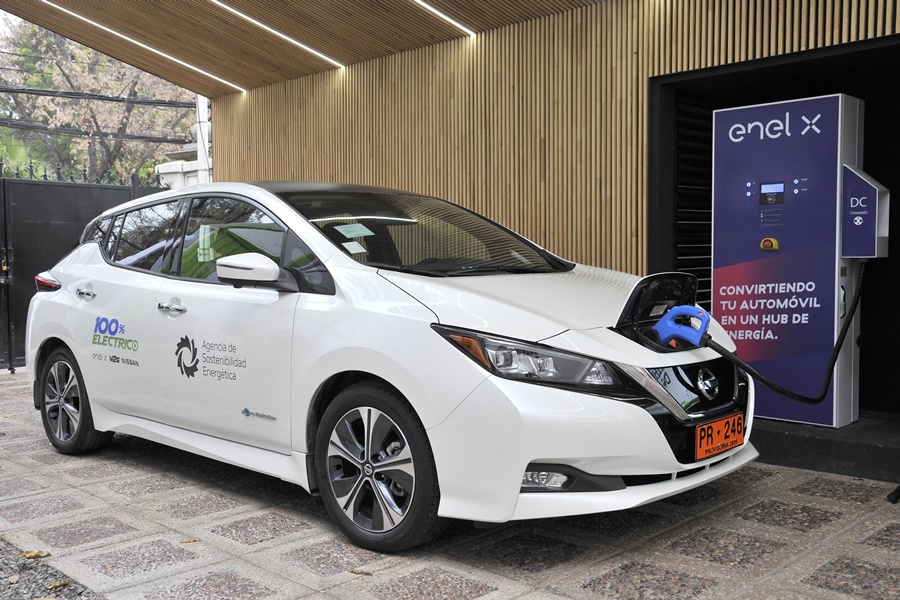
Nissan LEAF

Necessary for new generation of vehicles
These innovations will help deliver a new generation of electrified and intelligent automobiles (like the Nissan LEAF pictured above) that embody the company’s Nissan Intelligent Mobility vision, while also making production operations more flexible, efficient and sustainable. This latest investment represents a necessary rethinking of conventional car-making and tackles the structural and technical challenges of producing vehicles that will lead the industry in a new era of electrification and intelligence.

“We’re facing an unprecedented evolution in the capabilities of our vehicles,” said Hideyuki Sakamoto, Nissan’s Executive Vice-President on charge of manufacturing and supply chain management. “Our job is to make this evolution a reality by rethinking how we build cars. This will also mean shifting the efforts of our expert technicians from techniques they’ve already mastered to new, unexplored areas.”

Building the future of mobility
Nissan’s next generation of cars will be electrified, intelligent and connected. They will be ‘electronics-dense’ and use many materials which are new. This adds new complexity to design and construction, requiring major advancements in production engineering.

Nissan

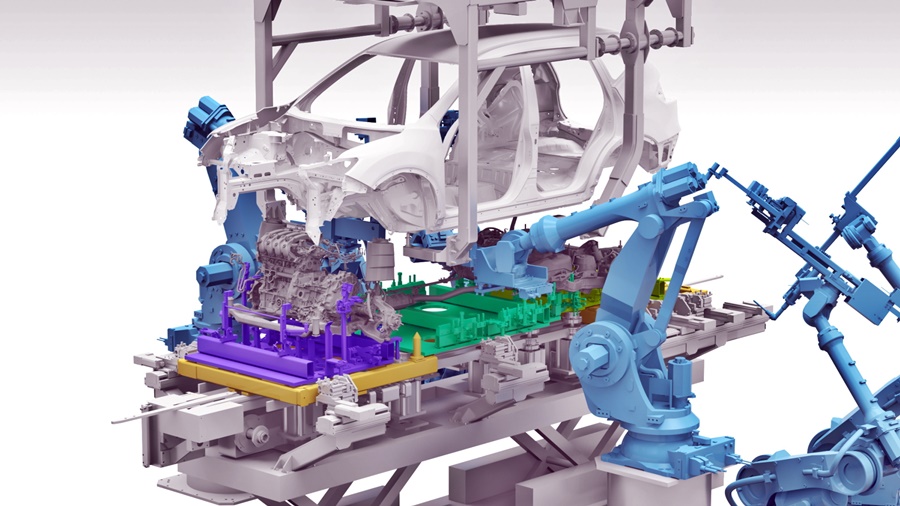
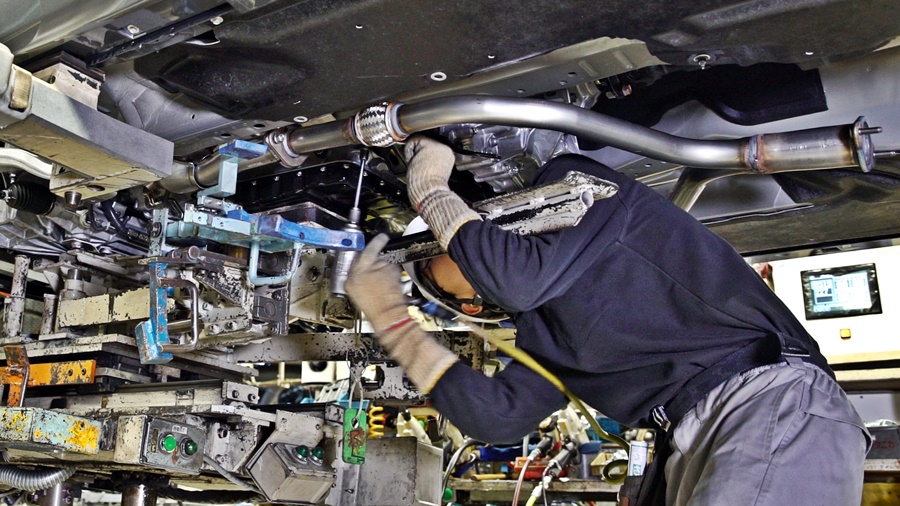
One such advancement is the Universal Powertrain Mounting System (shown above) developed by Nissan’s Production Engineering Research and Development Centre. Mounting powertrains in cars is a lengthy process and strenuous work for assembly line staff, who must install multiple components in sequence. Nissan’s new system uses an automated pallet to mount the entire powertrain at once.

The system measures the car’s dimensions in real time during mounting, and the pallet makes micro-adjustments accordingly. This ensures that powertrains are installed to within a small fraction of a millimetre’s accuracy. The new system is also highly adaptable. The same pallet can mount three types of powertrains (internal combustion engine, e-POWER and pure electric), and can assemble and mount 27 different powertrain module combinations.

Nissan

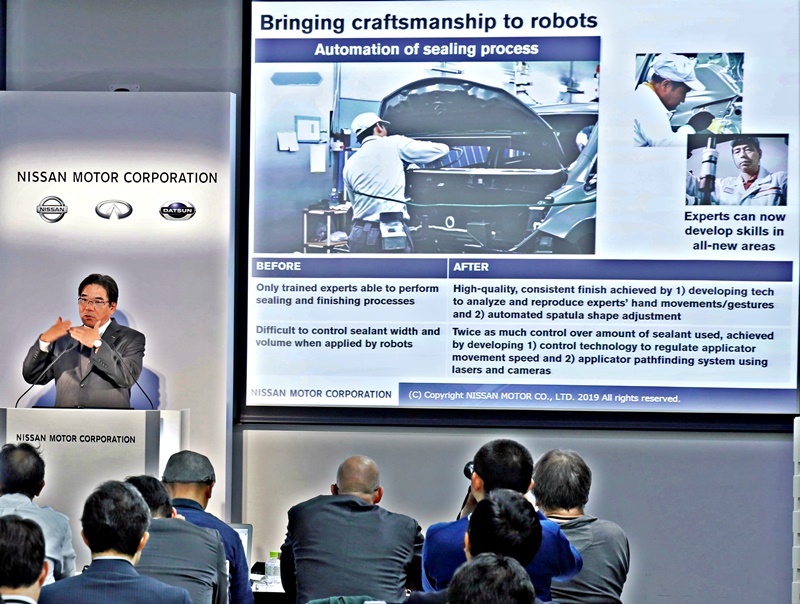
Bringing craftsmanship to robots
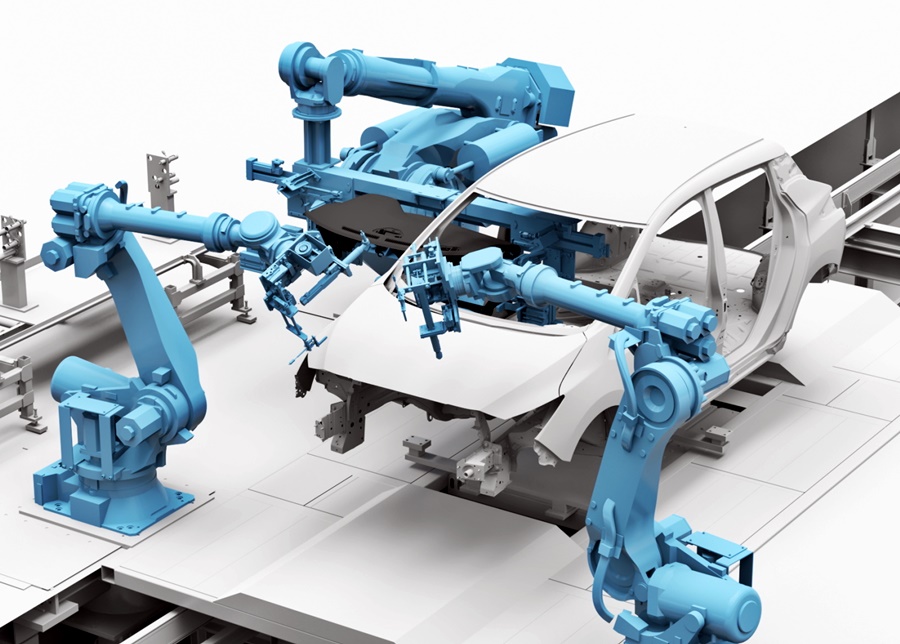
Robots have the advantage of high-speed production and consistent quality, enabling faster and higher output of vehicles. However, they are not so good when there are variations and Nissan has developed certain specialist skills and processes that, until now, could only be performed by trained craftspeople. Through an intensive collaborative process, Nissan’s craftspeople and engineers have digitized parts of these delicate processes and ‘trained’ robots to perform them around the clock. This will allow the craftspeople to focus on new, unexplored areas of expertise.

Making better workplaces with robots
When robots were first used, one of the benefits was that they could do jobs that were dangerous or strenuous for humans, like welding body parts together. Robots can perform such tasks efficiently, freeing workers to perform more valuable jobs elsewhere on the line. This also improves ergonomics, making factories easier places to work.

Nissan

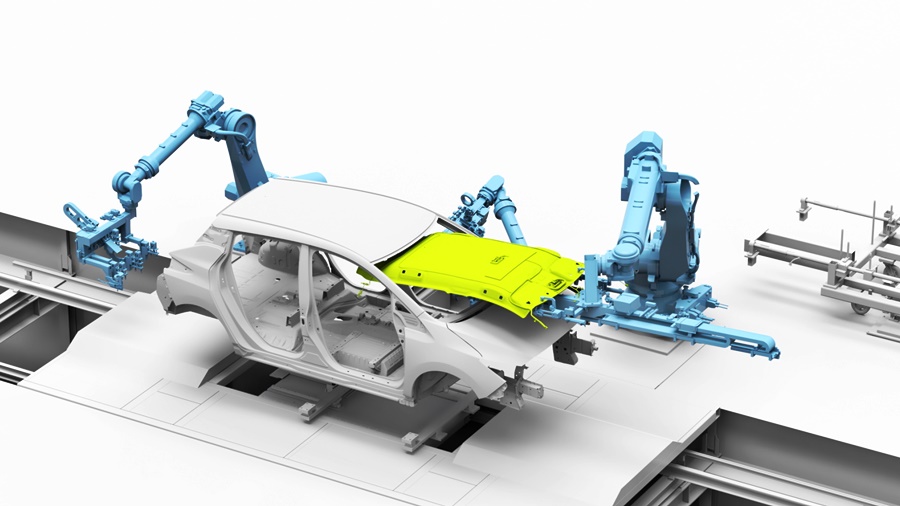
One example is the installation of a headliner, the overhead layer of material on the inside of a car’s roof. Workers must enter each vehicle’s cabin to perform this physically demanding job. The task has become even harder as cars come with more connected features, adding to the number of devices in and around the headliners.

Nissan

Nissan’s solution is to use robots to insert the headliner through the front of the vehicle and then fasten it. Sensors monitor changes in pressure and use a proprietary logic system to determine when the clips have snapped securely into place.

Lower environmental impact
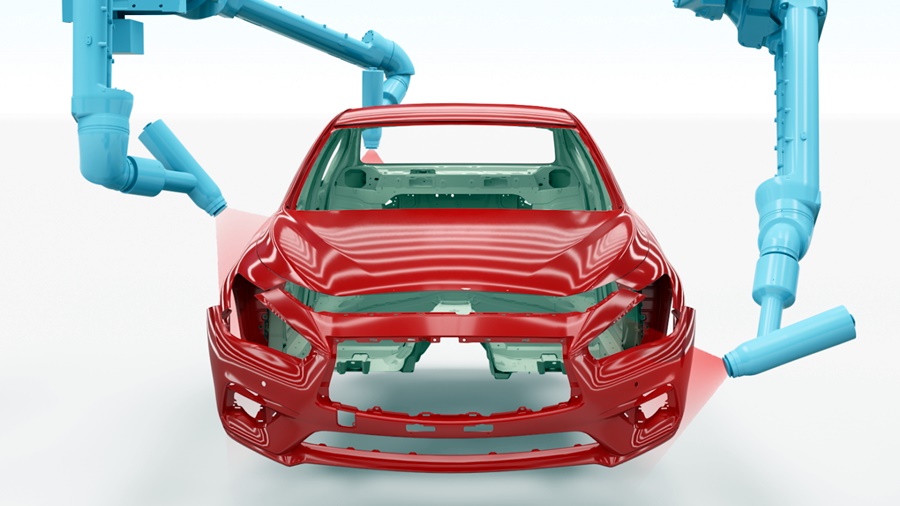
Nissan is also working to reduce the environmental impact of building cars. Changes in the painting process are especially noticeable. Car bodies must usually be painted at high temperatures because the viscosity of paint is hard to control at lower temperatures. By contrast, bumpers are made of plastic, so they need to be painted at low temperatures. This requires two separate painting processes for one vehicle.

Nissan

Nissan has developed a water-based paint that maintains the right viscosity at low temperatures, so that bodies and bumpers can be painted together. This will cut carbon dioxide emissions from the process by 25%. Nissan will also use a water-free painting booth that makes it possible to collect all waste paint and reuse it in other production processes.

“These new technologies and innovations are at the heart of the company’s competitiveness,” said Sakamoto. “They will be rolled out globally in the coming years, underpinning the future of Nissan Intelligent Mobility and reinforcing our status as a leader in technology.”

Nissan has developed new technology to make custom body parts faster and at lower cost

PISTON.MY

Each year, NISMO, Nissan’s motorsports and high-performance division, holds the NISMO Festival which gives fans an opportunity to get up close with their favourite Nissan racing cars and drivers. Tomorrow (December 8) will see the 22nd edition of the event at Japan’s Fuji Speedway.

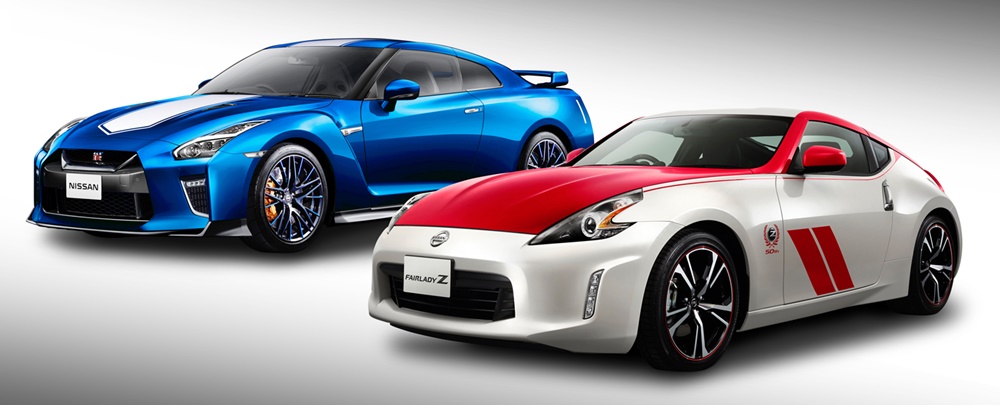
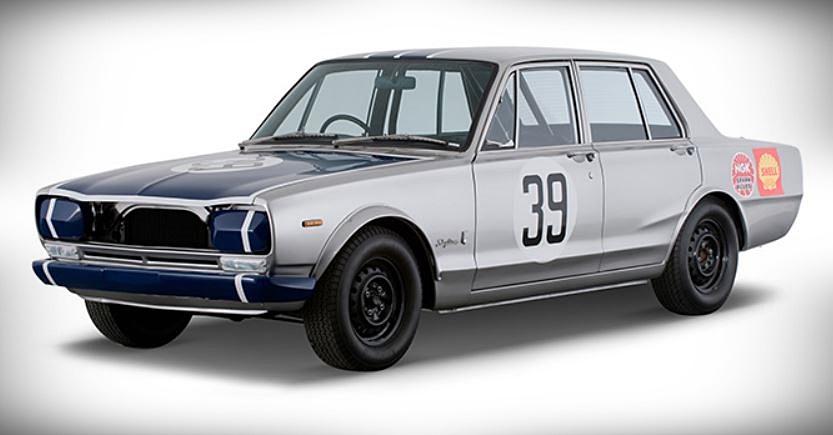
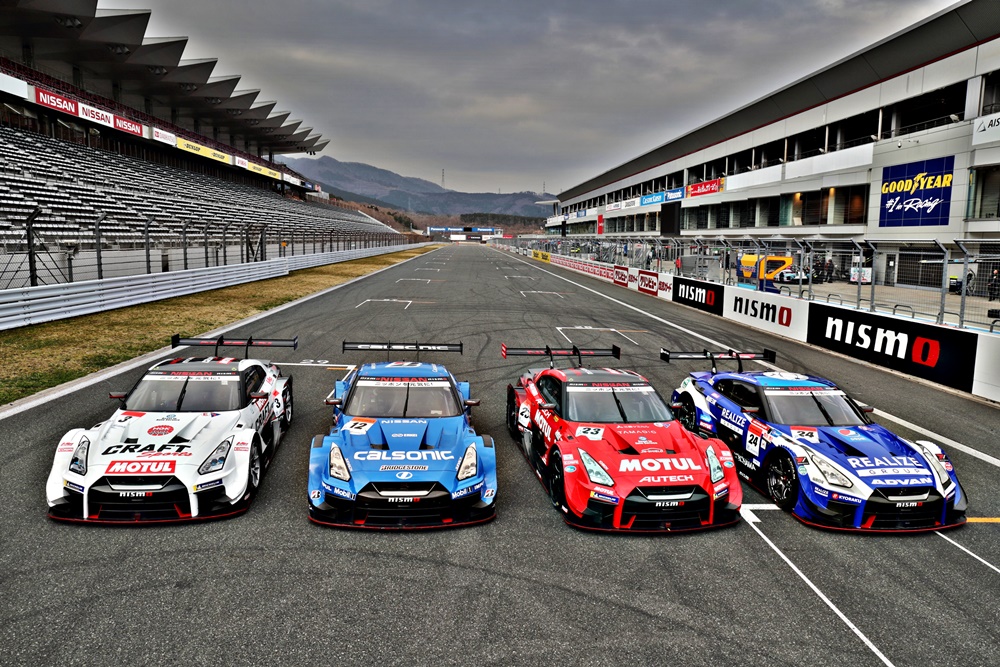
This year’s event, which coincides with the 35th anniversary of NISMO’s establishment, is also a special one as it will highlight the 50th anniversary of Nissan’s legendary GT-R and Z models. To represent the GT-R, the festival will feature the KPGC10 ‘Hakosuka’ Skyline 2000 GT-R which won the JAF GP (Japan Automobile Federation Grand Prix) in 1969; the legendary Group A BNR32 Skyline GT-R; and the 2019 Super GT GT-R racing cars.

1969 Datsun Skyline GT-R
The 1969 Skyline 2000 GT-R (KPGC10) was a high-performance sedan for touring car races with the world’s first 4-valve DOHC engine for production cars. It made its race debut at the JAF Grand Prix at the Fuji International Speedway in May 1969.

2019 NISMO Festival

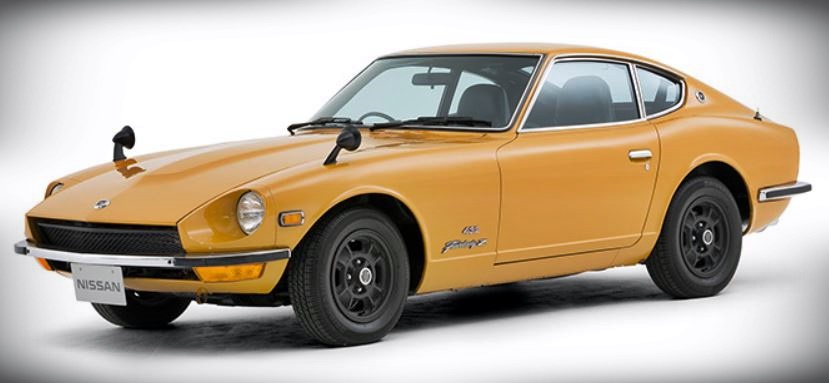
The festivities will also highlight the Fairlady Z – which began with the 240Z as it was known outside Japan – there will be several well-preserved examples ranging from road cruisers to fully bespoke racing machines representing NISMO’s rich history and association with the legendary sportscar. Along with a few other models, the ‘Z’ made a strong impression in the American market in the 1970s, strengthening the Datsun brand which was later changed to ‘Nissan’.

1969 Datsun Fairlady Z
The first generation Fairlady Z (S30), also known as Datsun 240Z or Z-car outside Japan, was launched in December 1969. This model was manufactured for 9 years and its global sales exceeded 520,000 units. This car was powered by a S20 inline DOHC 24-valve 6-cylinder engine which produced 160 ps.

2019 NISMO Festival

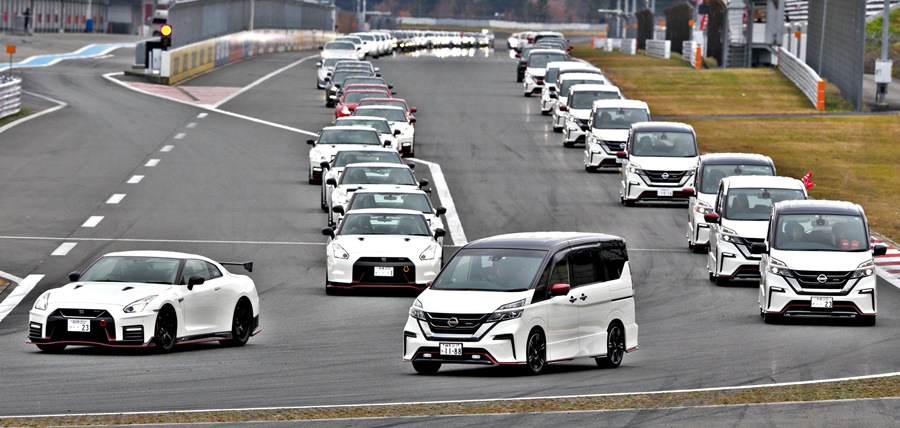
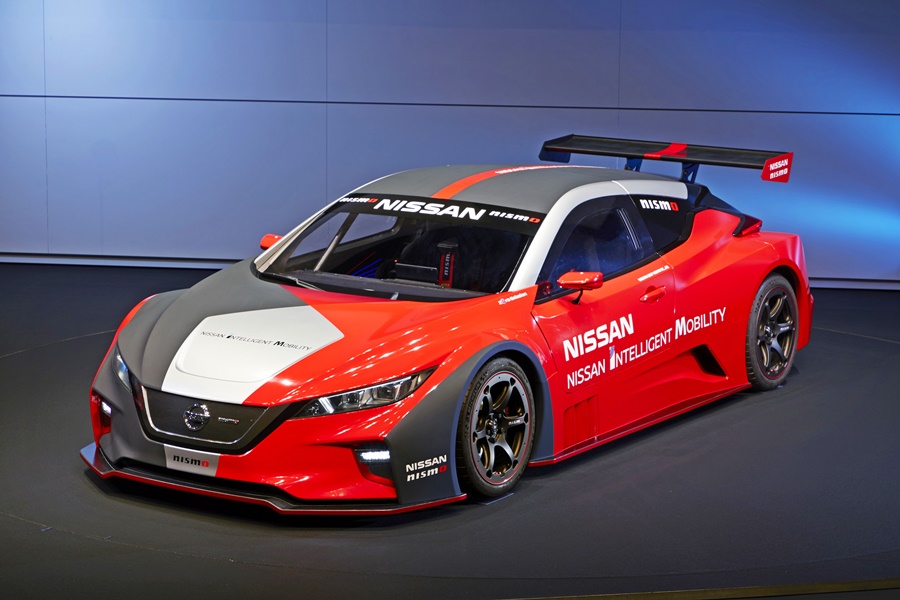
Current Nissan and NISMO cars that embody the Nissan Intelligent Mobility vision, the company’s approach to changing how cars are powered, driven and integrated with society, will also be on display, as well as the new, all-electric Formula E race car and the LEAF NISMO RC – both sporting a new kimono-inspired livery.

2019 NISMO Festival
LEAF NISMO RC sporting a new kimono-inspired livery.

NISMO Festival-goers will have a chance to experience an exhilarating Time Attack event with specially tuned GT-Rs and walk around the first ‘owner’s parking’ area, made exclusive for owners to park their prized GT-R or Z and share their passion with each other.

“The NISMO Festival is an event we have nurtured with great care,” said NISMO President Takao Katagiri, who oversees Nissan’s NISMO road car business. “I hope many of our fans, drivers, team directors, team staff and NISMO employees will join us in creating a fun day again this year.”

s

Nissan GT-R50 by Italdesign
The prototype Nissan GT-R50 by Italdesign will also be on display at the event. 50 unis are being made to celebrate the model’s 50th anniversary.

This Lego Nissan GT-R Nismo is what you’ll want in 2020

PISTON.MY


For nearly as long as there have been cars, people have been collecting and customizing them. Until recently, however, if owners of classic cars wanted to replace a damaged bonnet or fender on an out-of-production model, they had to search through junkyards or hire a craftsman to make a one-off replacement (which might be costly).

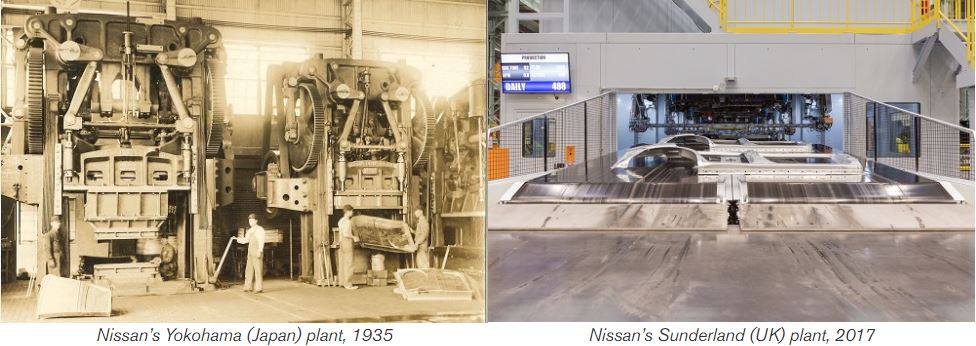
Now, thanks to a new technology called dual-sided die-less forming, Nissan plans to offer original specification pieces at mass-production prices. Automakers traditionally form body parts by pressing sheet metal against specially created dies. Designing and building multiple dies for each part is expensive and only pays off after stamping a large volume of parts. This is why, for locally-assembled models, many body parts are imported from a bigger plant elsewhere as the volume locally is too small to justify the investment in huge stamping machines.
Nissan factory

This basic process has remained largely unchanged since the early days of mass production of motor vehicles. It remains a stumbling block that prevents production of low-volume parts unless costs are raised.

Nissan’s new dual-sided die-less forming technology presents a compelling alternative to the investment-intensive industry norm. It does away with dies and stamping machines altogether, removing one of the most costly and time-consuming steps in auto body manufacturing.

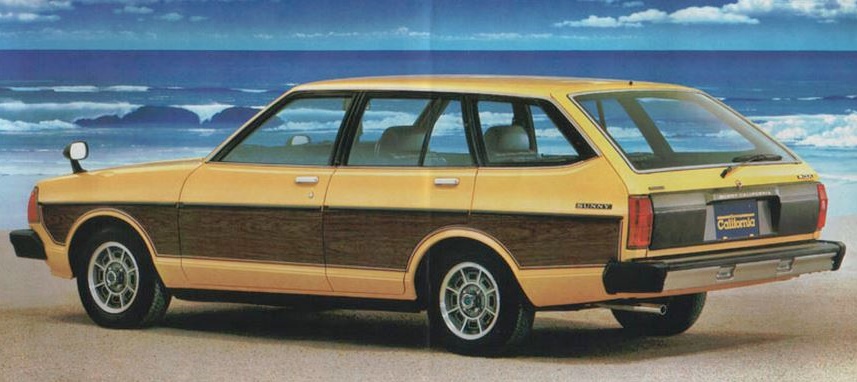
Nissan Sunny California
Owners of old models which Nissan no longer makes usually have to search at junkyards for parts. Nissan’s new technology could make it easier for them to get the parts in future.

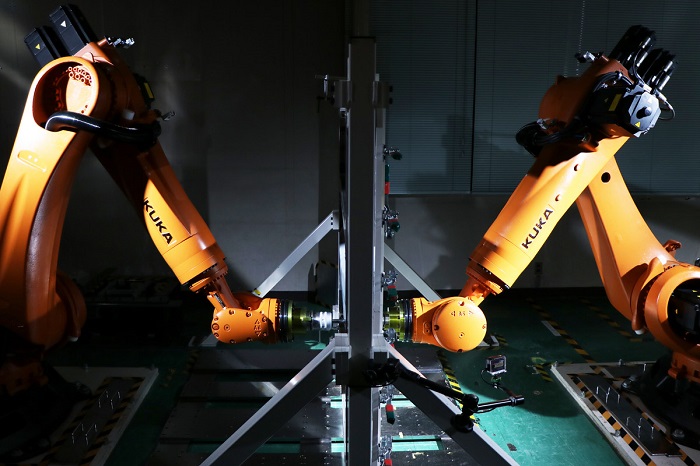
Two robots better than one
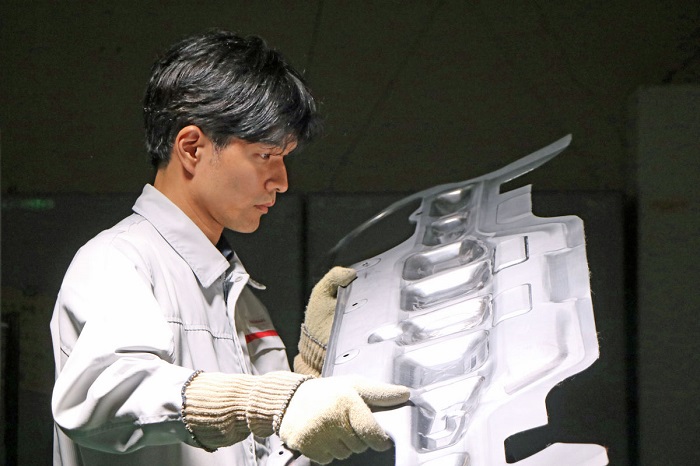
The process involves two robots working on opposite sides of a flat sheet of metal. By syncing their movements precisely and using diamond-tipped tools developed by Nissan, the robots can shape the metal to a high degree of accuracy and detail. Working in tandem, two robots can produce intricate concave and convex shapes that could not be created if one robot were working from a single side of the sheet.

Nissan Dual-sided dieless forming

The new technique was made possible, thanks to the production engineering expertise at Nissan’s Production Engineering Research and Development Centre, along with advancements in materials technology by Nissan’s Research Division.

“About five years ago, we started thinking about ways of forming sheet metal without relying on dies,” said Keigo Oyamada, an assistant manager in Nissan’s vehicle manufacturing element engineering department, who oversaw the project. “Our goal was to solve the cost issues related to creating dies for small-volume production. We want to put this technology to use to create spare parts for old models whose dies have already been thrown away, or potentially even to let people order custom parts from Nissan.”

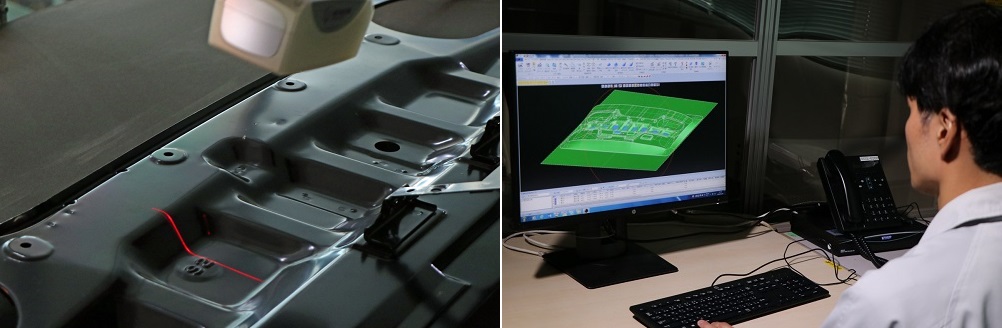
Performing a 3D scan of an existing part creates data that can be used to ‘teach’ the robots to build the scanned part — although some human guidance is still required. This approach will allow Nissan to produce parts that haven’t been made in decades, simply by scanning existing examples of those parts.

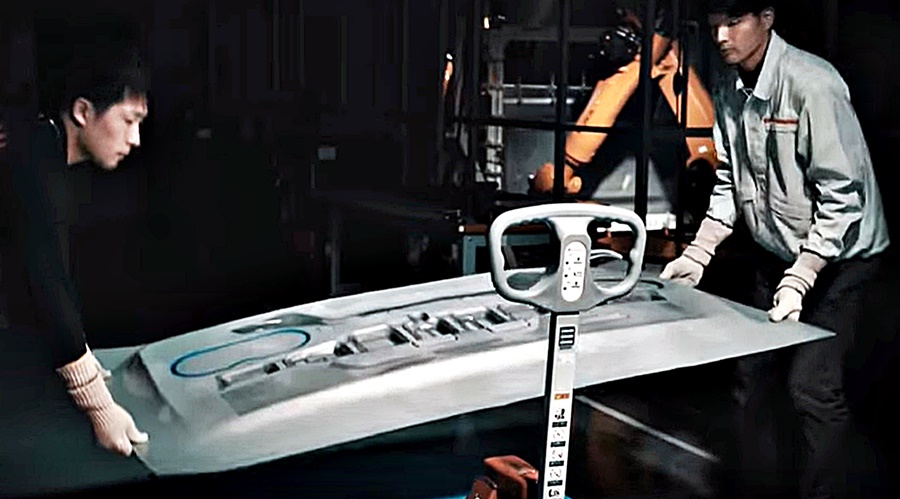
Nissan production

Nissan

Custom parts – in just one week
Dual-sided die-less forming can be used to create custom body parts in less than a week, instead of waiting as long as a year for dies to be designed and manufactured. The process is also inherently adaptable; it can be used to produce small and large parts alike, as well as car parts other than body panels.

For now, Nissan plans to use dual-sided die-less forming to produce replacement parts for cars the company no longer sells. Looking further ahead, the company sees potential for creating customized parts for those who are looking to add a little uniqueness to their future rides.

For assistance in obtaining Nissan Genuine Parts in Malaysia, visit www.tceas.com.my.

PISTON.MY


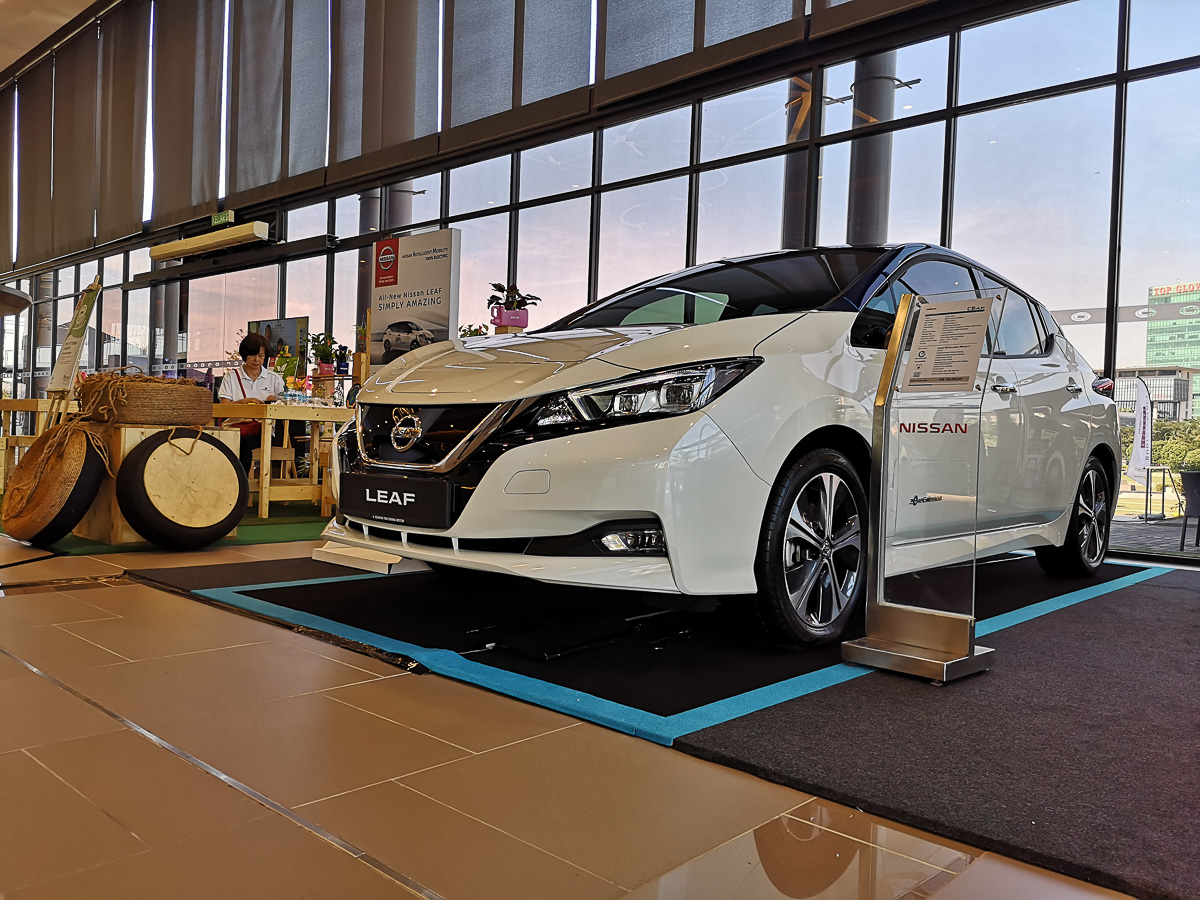
The BodyMindSoul Festival which is currently taking place all weekend long (29 November 2019 – 1 December 2019) at the Setia City Convention Centre (SCCC) in Setia Alam and Edaran Tan Chong Motor Sdn Bhd (Nissan Malaysia) is conducting the Nissan Nurtures Nature (NNN) campaign as part of their efforts to ‘reconnect’ back with nature. (more…)

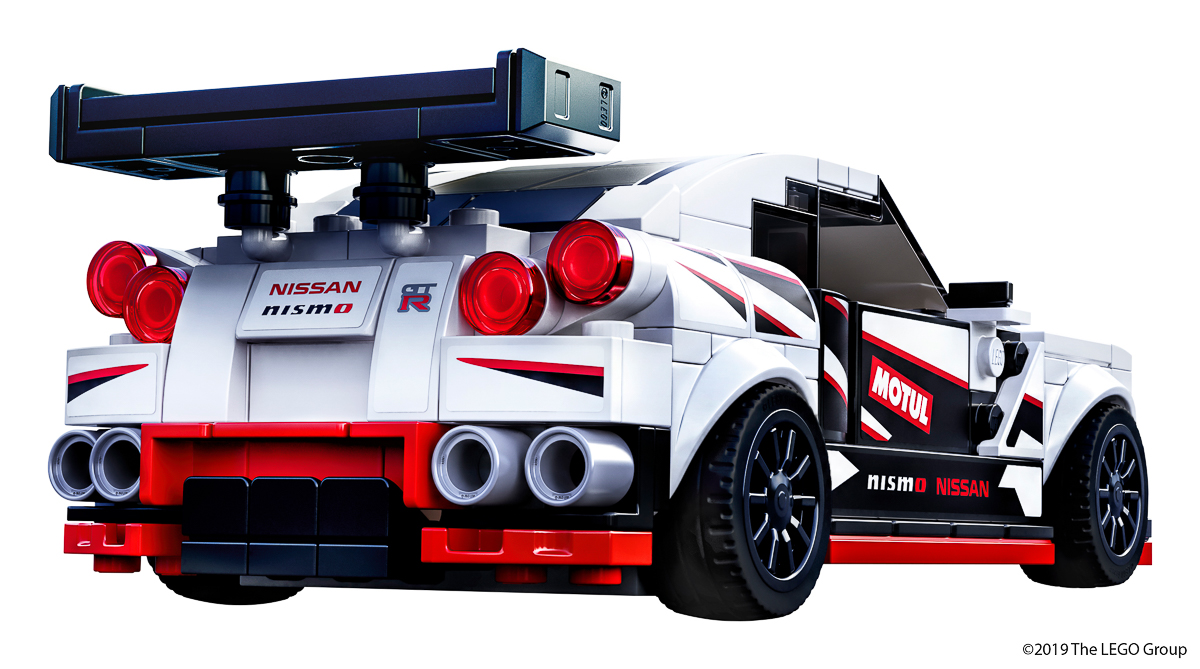
Lego has been around for generations and with its iconic status (and Japan’s involvement in contributing countless ground-breaking innovations), we now have the Lego Nissan GT-R Nismo. Introducing the 2020 Lego Speed Champions Nissan GT-R Nismo and boy oh boy, we sure want a few of them right now. (more…)

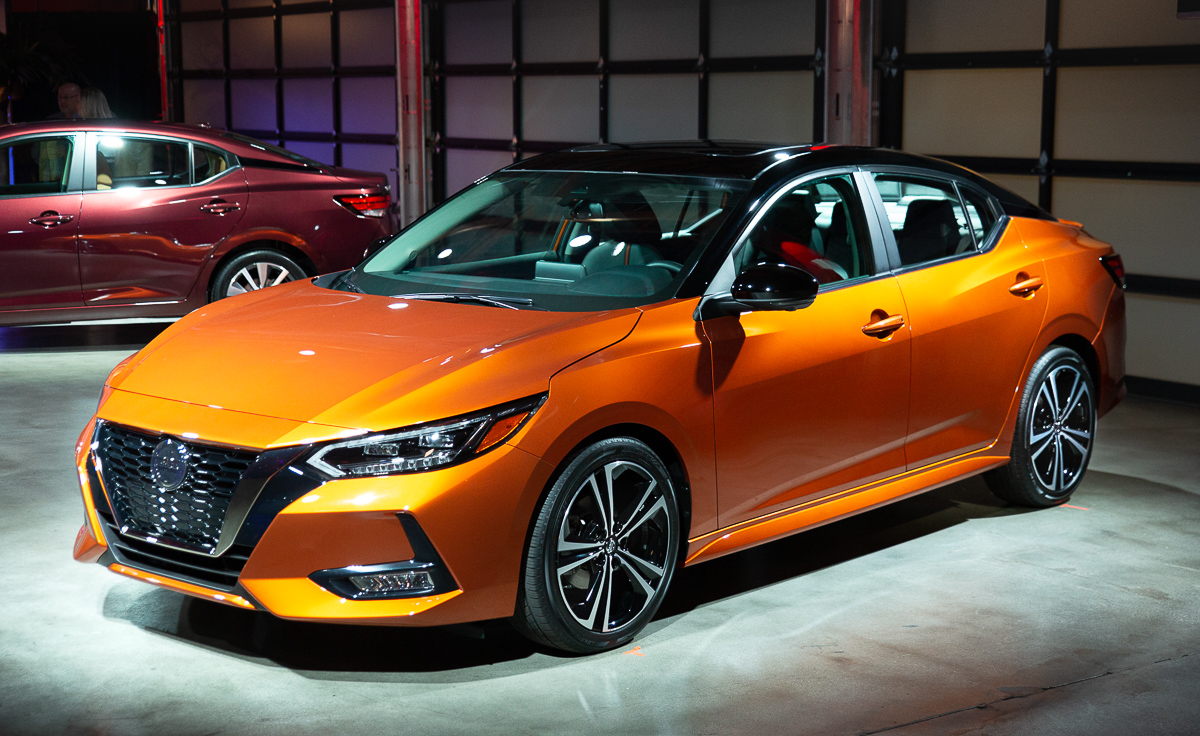
Nissan has unveiled its all-new 2020 Nissan Sentra during the 2019 Los Angeles Auto Show. Known as their best-selling model of all time in the American market, the 2020 Nissan Sentra comes with a lot of desirable features from class-leading interior refinement, standard Safety Shield 360, seamless connectivity, to fun-to-drive performance. (more…)

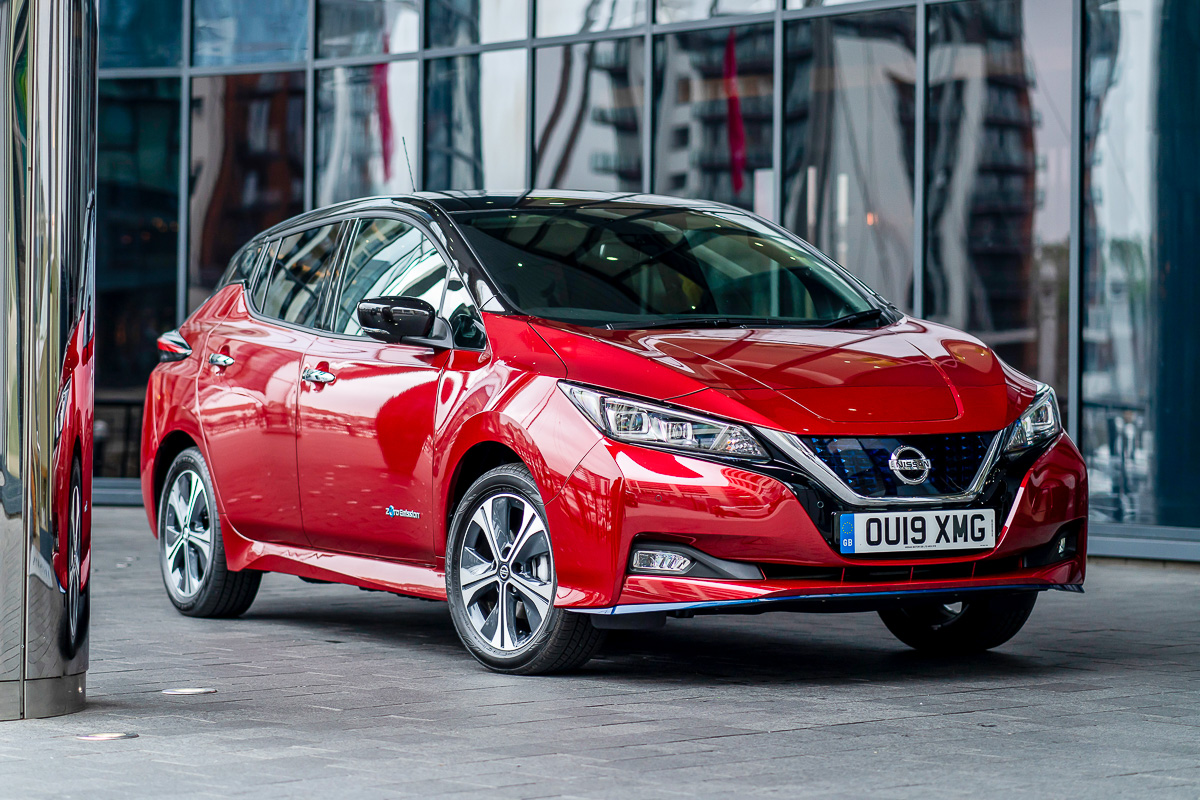
The recent EE Pocket-lint Awards 2019 saw the Nissan LEAF e+ being crowned with the ‘Product of the Year’ award as well as ‘Best Car’ in a single night. Voted by the major players of the industry as well as the general public, the award ceremony celebrates the best of technologies, gadgets, and games that were released in the past 12 months. (more…)

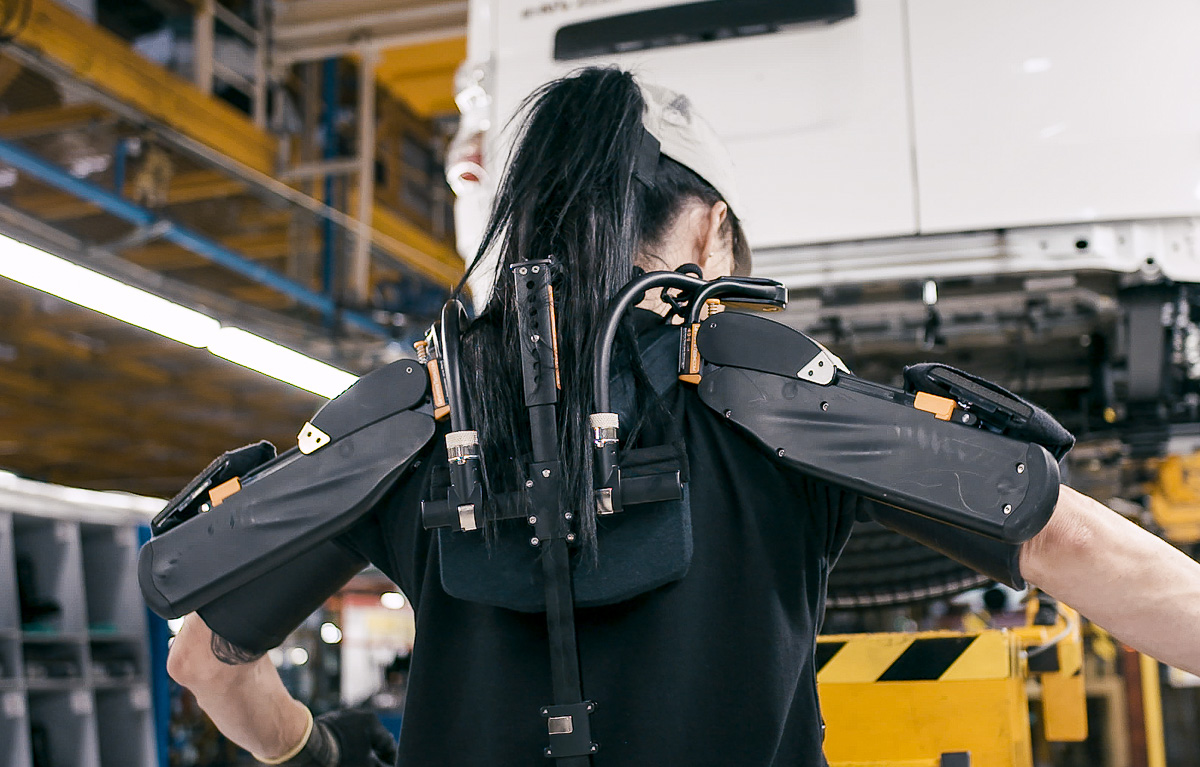
Nissan Spain understands that when it comes to its production line, the physical wellbeing of their staff is one of their major priorities. To ensure that they get all the help they need in order to be safe, healthy, and productive, they’ve come up with a revolutionary method; exoskeleton devices. (more…)

Archive

Follow us on Facebook

Follow us on YouTube