

Piston.my

Nissan

BHPetrol RON95 Euro4M

The epitome of what driving pleasure is all about – the sportscar – will never go away. In spite of periods when the numbers declined and many carmakers decided that they could not afford the luxury of making such cars, the voices of the enthusiasts around the world (and also within the company) have brought back sportscars.

The Nissan Z is one such example. An icon among sportscars, it was among the first from a Japanese brand and it made a tremendous impact, especially in America where the biggest number has been sold in its 50-year existence.
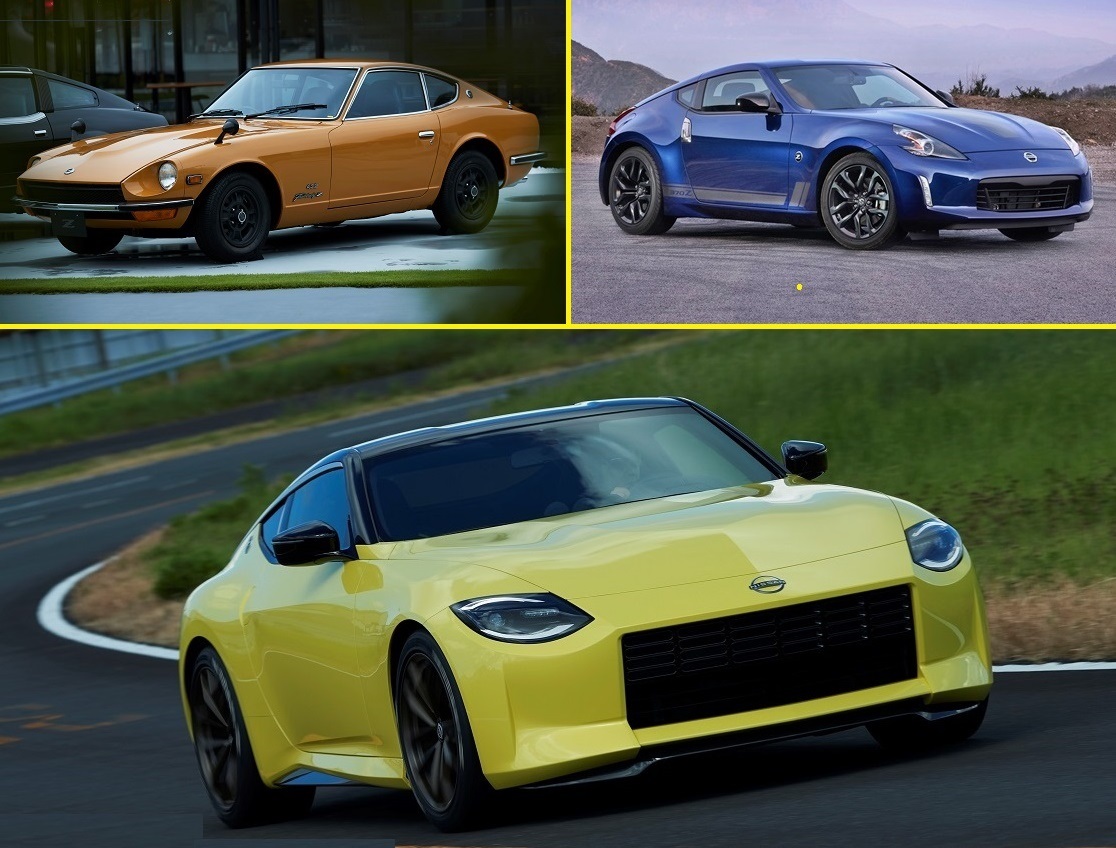
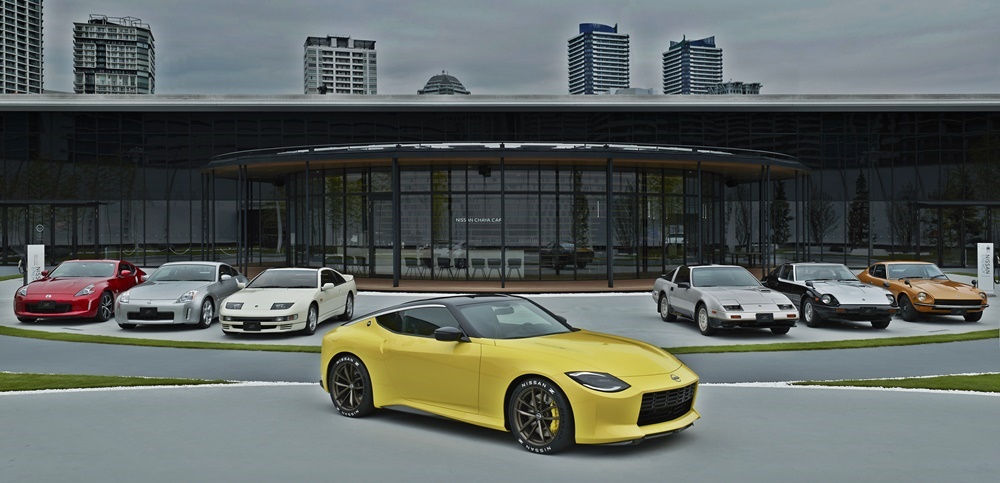
The Z Car – past and present (top), and the future.

Other than a short break in the early 2000s when Nissan was recovering from financial difficulties, the Z has had a presence in the Nissan range with the generation on sale since 2009 being the sixth one.

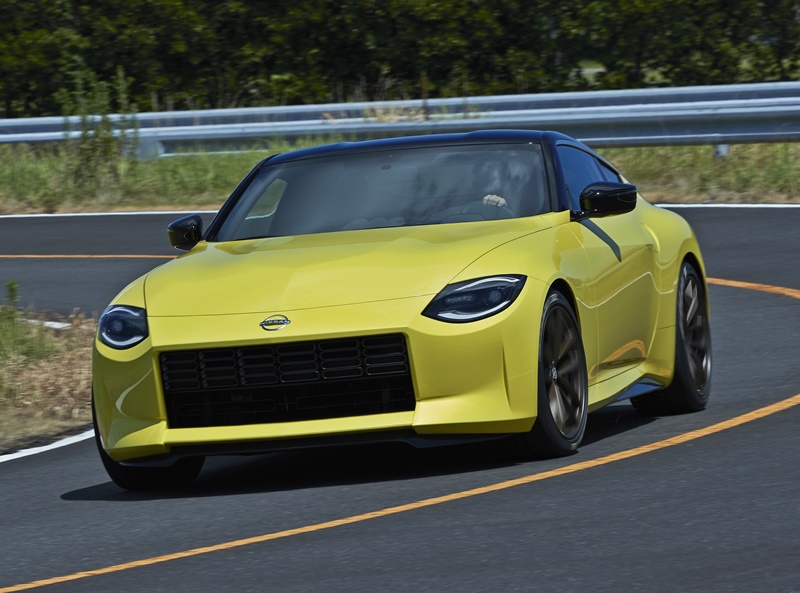
Soon a seventh generation will be launched and it will be a totally new design with new technologies, as would be expected after a lapse of some 10 years. Nissan gave an online preview of the model – referred to as the ‘Z Proto’ for now – today from its base in Yokohama, Japan, with a clear promise that ‘the new Z is on its way’.

It wasn’t difficult to understand the excitement and passion of the original Z and earlier generations as many people involved in the project had memories of the sportscar and even owned it, including Nissan CEO Makoto Uchida, who introduced the Z Proto.

Past meets future
The design of the Z Proto was done largely in Japan and while feedback was considered from many markets, Hiroshi Tamura, Chief Product Specialist of the Z Proto, admitted that the comments of the Z community in America were influential simply because it is where the most Zs have been sold.

Given the heritage of the car, it’s only expected that the designers would constantly look back at past generations, especially the very first one, for inspiration and guidance. The long-nose silhouette, in particular, is a must for the Z but the retro theme is also combined with projected futurism.

“Our designers made countless studies and sketches as we researched each generation and what made them a success,” said Alfonso Albaisa, Head of Design at Nissan. “Ultimately, we decided the Z Proto should travel between the decades, including the future.”
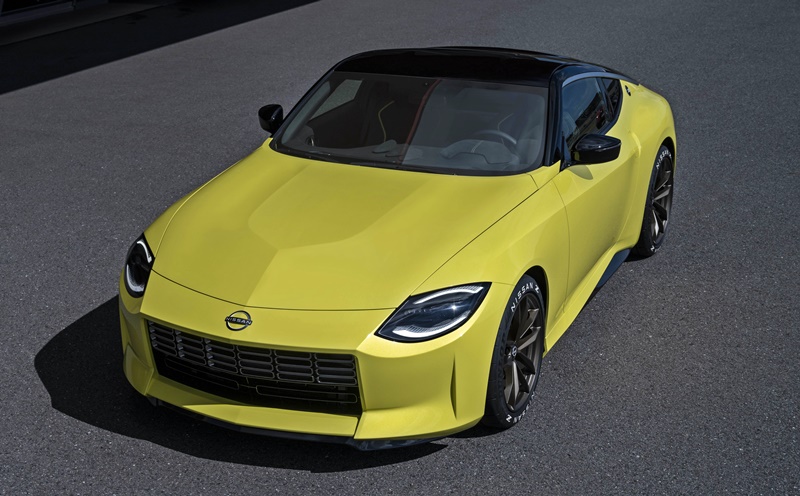
The Z Car - past and present (top), and the future.

2020 Nissan Z PROTO
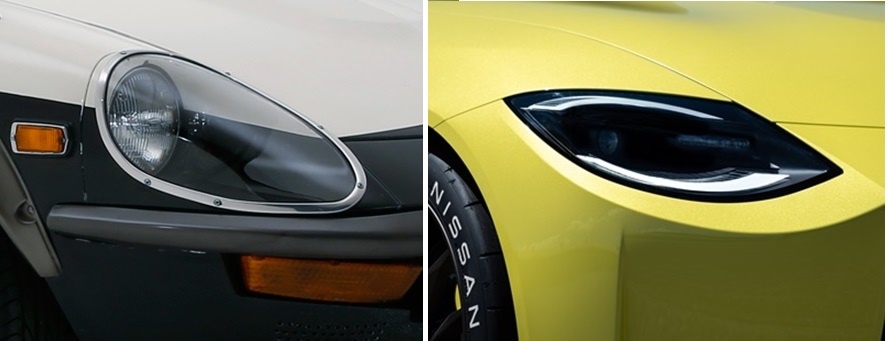
Headlight with cover on the original Z (left) and the PROTO Z headlight (right) which mimics the reflections.

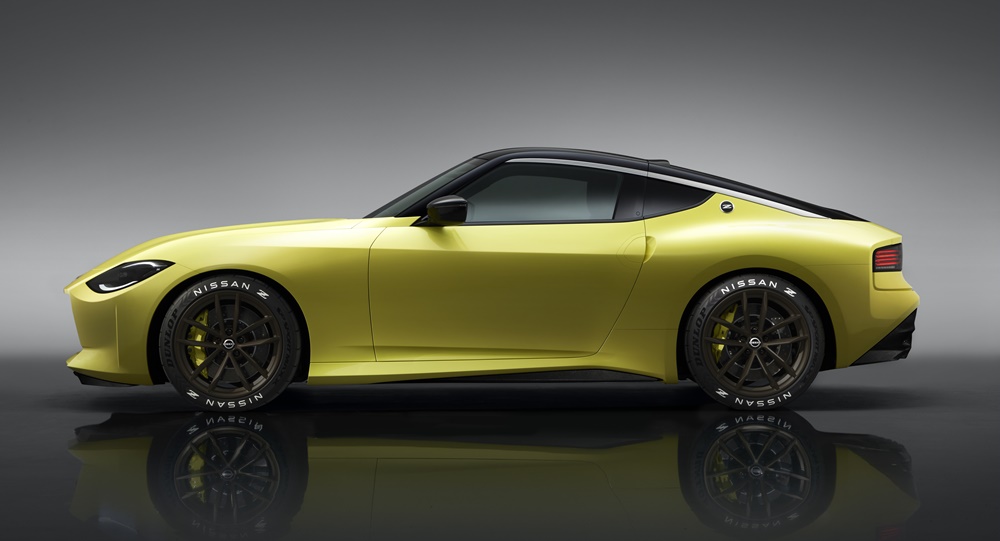
The shape of the bonnet and the canted, teardrop-shaped LED headlights are both unmistakable reminders of the original Z. “The LED headlights have two half-circles that hark back to the Japan market-only 240ZG of the 70s,” Albaisa explained. “The ZG had clear dome lenses over the headlight buckets, which under light give off two circular reflections over each headlight. We liked that unique characteristic and discovered that it naturally fit with the Z’s identity.”
2020 Nissan Z PROTO

The rectangular grille’s dimensions are similar to the current model with the addition of oval grille fins to offer an updated modern look. However, the link to the original Z is most striking when viewing the Z Proto from the side. The roofline flows from the nose to the squared-off rear to create a distinctive first-generation Z profile whose rear edge was slightly lower than the front fender height giving the Z its unique posture. The signature transition from the rear quarter glass to the low-slung position of the rear tail adds to the effect.
2020 Nissan Z PROTO

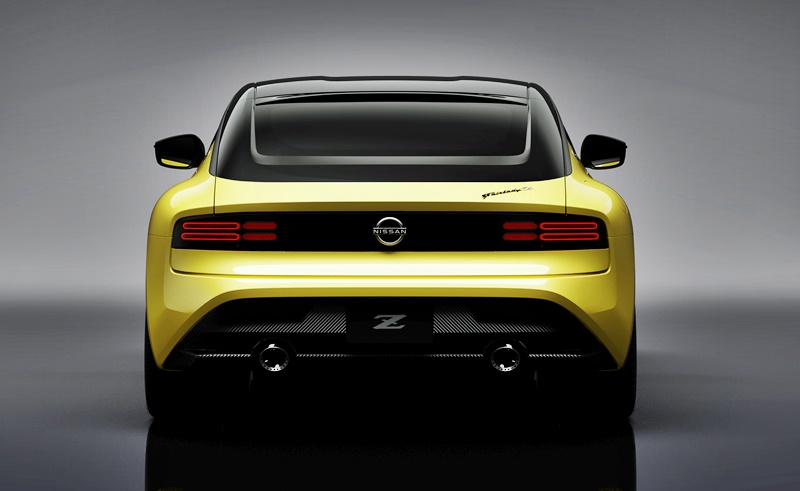
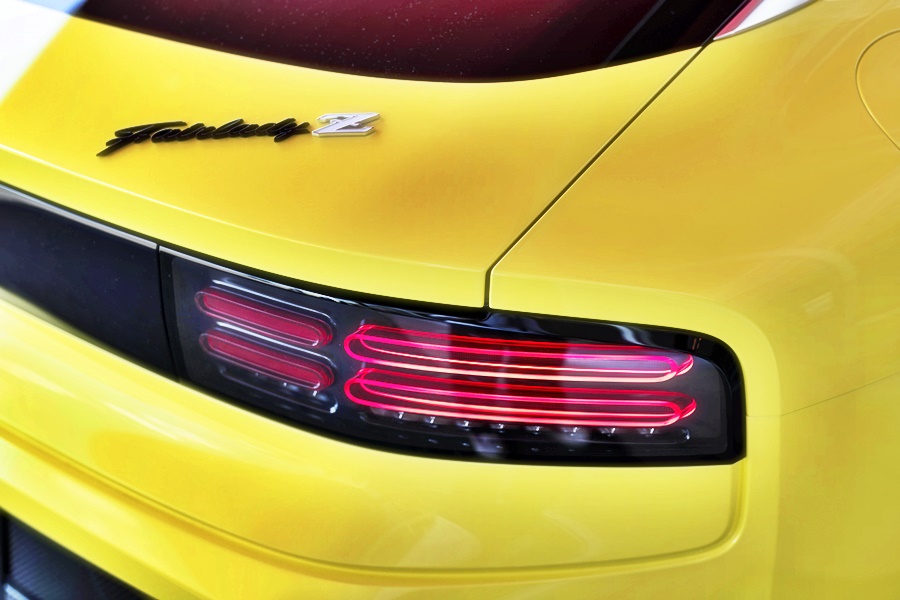
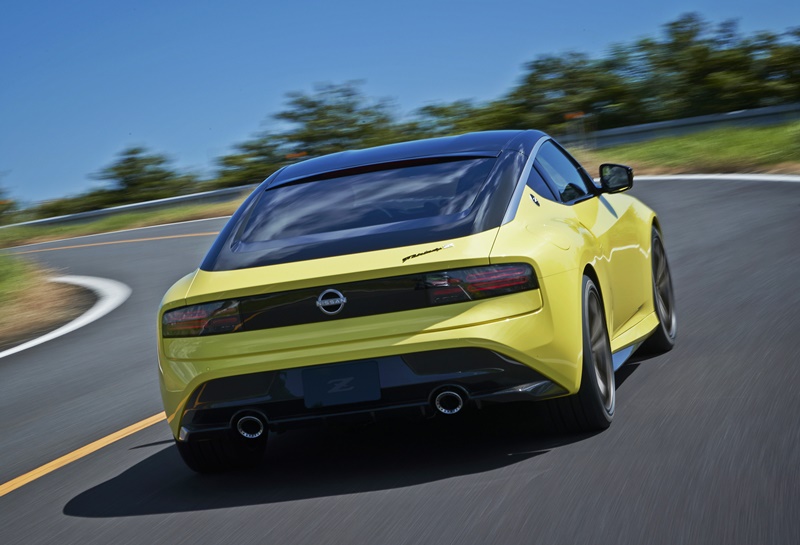
The rear takes inspiration from the 300ZX (Z32) taillights, reinterpreted for the modern world. Set within a rectangular black section that runs across the rear and wraps around the outer edges, the LED taillights convey a sharp glow.

Sharp-eyed readers may notice that the badge on the rear says ‘Fairlady Z’ and this could be a bow to the original legendary car. It might also be used for the future domestic model since the name does have a historical connection to the Japanese fans and owners.
Vintage touch, modern feel
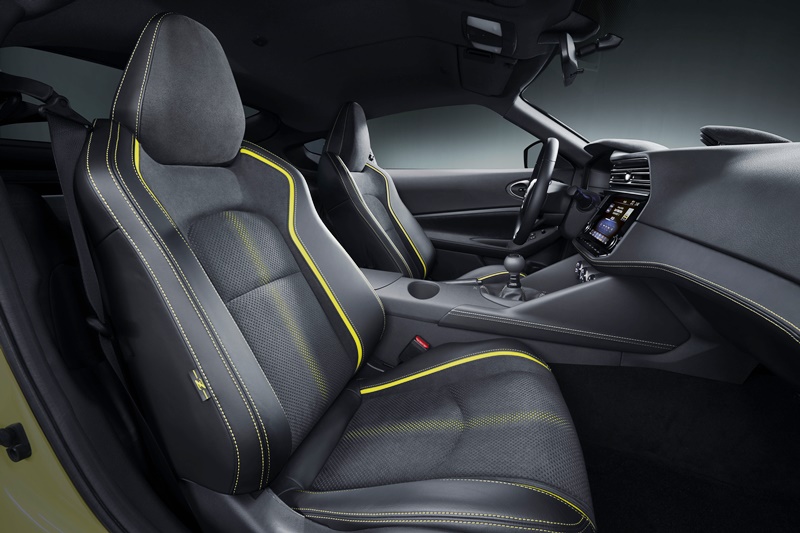
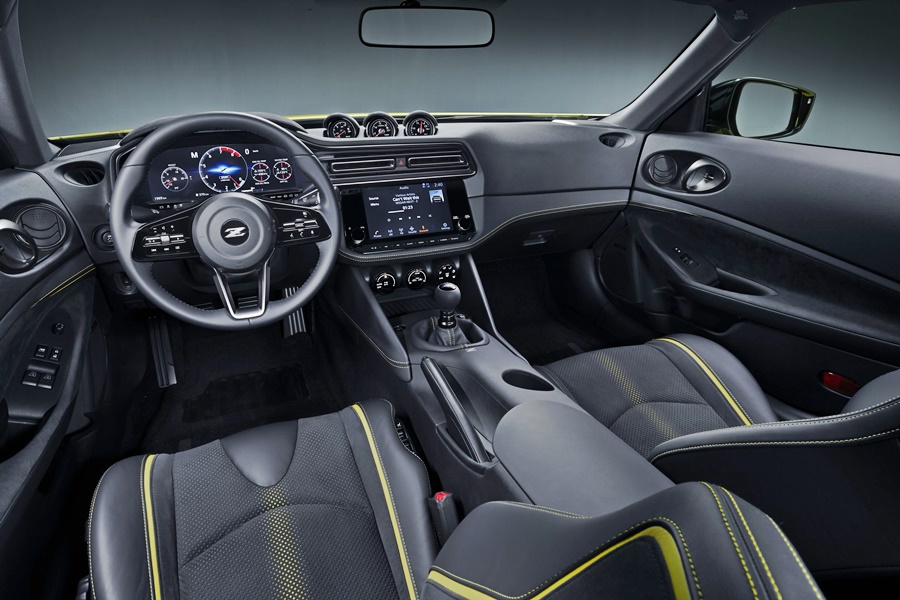
The Z Proto’s cabin blends modern technology with vintage Z touches. The interior design team sought advice from professional motorsports legends to create an ideal sportscar cabin, both for road and track.
2020 Nissan Z PROTO

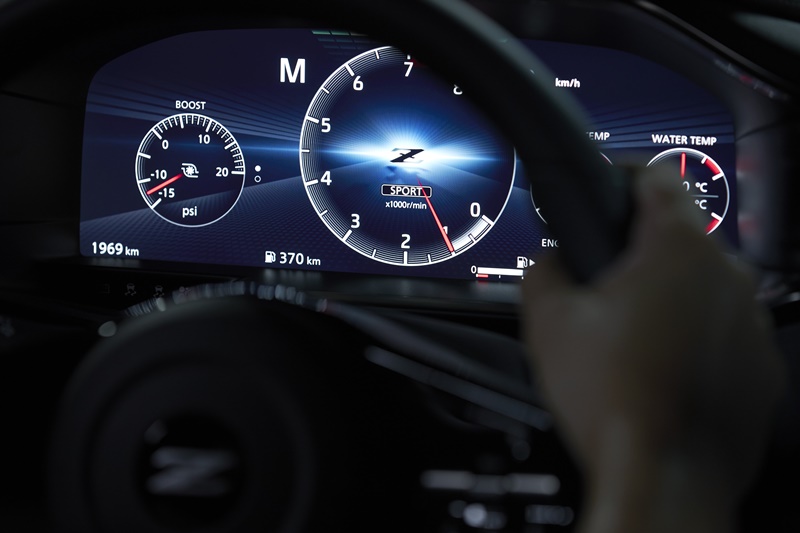
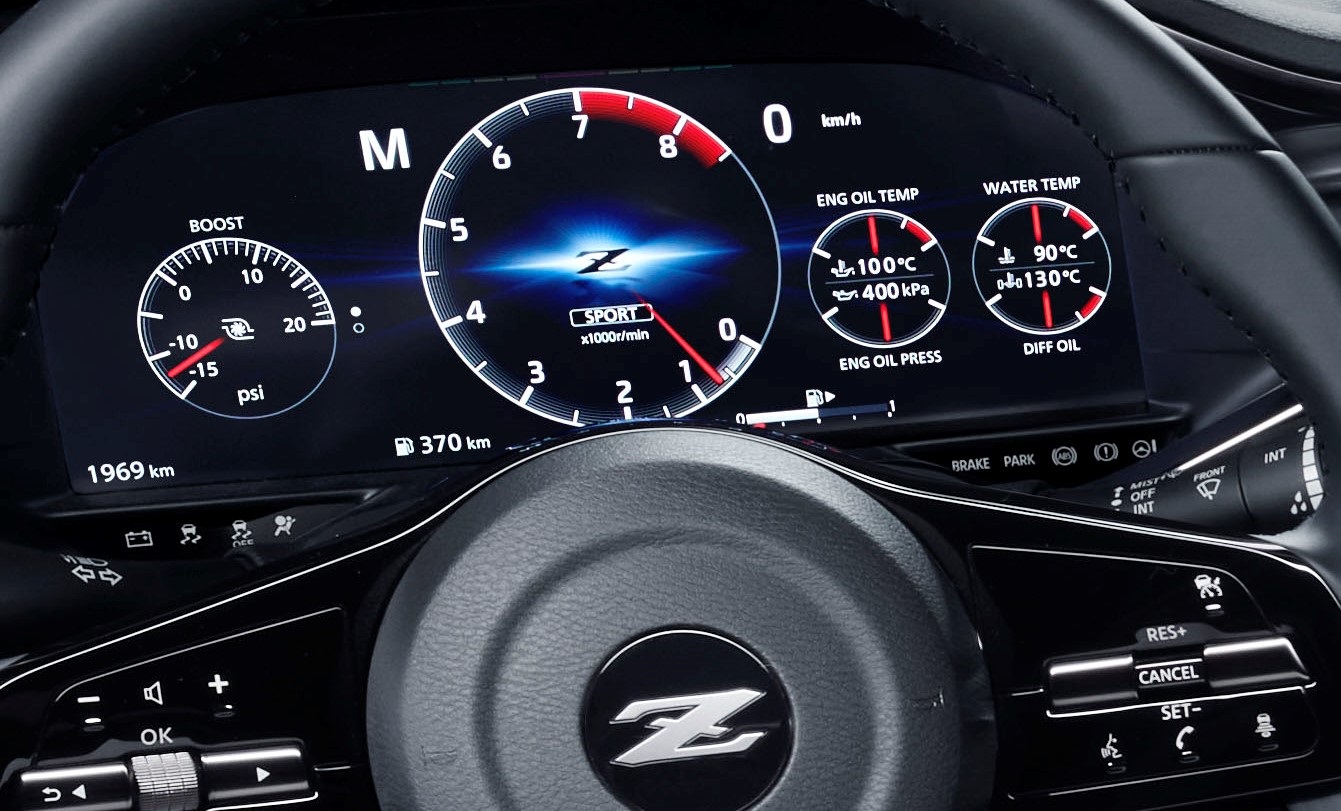
This can be seen in the Z’s instrumentation, a 12.3-inch digital display with all the information the driver needs to have. The tachometer is the dominant item with a digital speedometer and vital information is arranged to help the driver grasp it at a glance, such as the redline shift point at the 12 o’clock position.

It’s difficult to replicate the original steering wheel of the Z due to safety requirements but the designers have still tried to keep some vintage aesthetic. It is deeply dished and the driver has quick access to controls with switches on the left and right spokes.
2020 Nissan Z PROTO

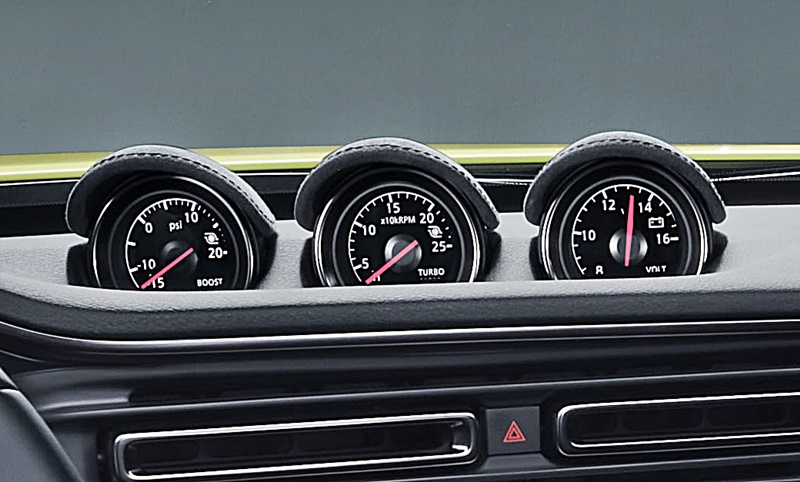
Although digital display screens can be designed to provide the driver with all kinds of information and free up space on the dashboard, the designers have still retained that old-school sportscar look with three small round meters placed on top of the dashboard. In the Z Proto, these show boost pressure, turbocharger rpm and voltage although the ones in the production car might show other information.

2020 Nissan Z PROTO

2020 Nissan Z PROTO

2020 Nissan Z PROTO

Yellow accents are found throughout the cabin, including stitching on the instrument panel. The seats feature special yellow accenting and a layered gradation stripe in the centre of the seats to create depth. Incidentally, the bright yellow pearlescent paint of the exterior is a tribute to a popular paint scheme on both the first generation Z and the 300ZX (Z32).

6-speed manual gearbox lives on
Although the Z is about more than power increases, each new generation has nevertheless had a more powerful engine and the new Z can be expected to continue to provide punchy performance. “Z is a balance of power and agility,” said Tamura. “It is a vehicle that creates a connection with the driver not just on the physical level, but emotionally, and responds to the driver’s impulses.”
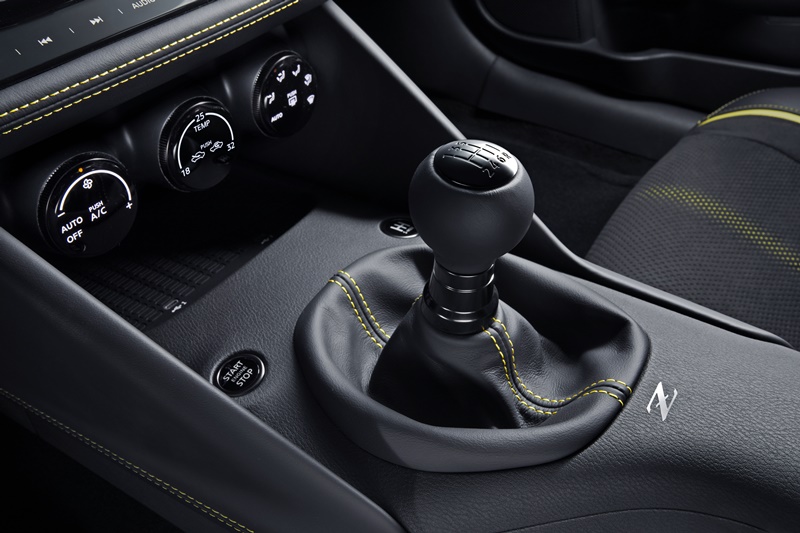
2020 Nissan Z PROTO

For this reason, Nissan will continue to offer a 6-speed manual gearbox. There’s usually not much to say about a manual transmission, unlike automatic transmissions which have constantly improved with advancements in electronic control technologies.

However, 12 years ago, Nissan did draw a lot of attention to its manual transmission in the new 370Z which had the world’s first synchronized downshift rev-matching system. Known as SynchroRev Match, the system blips the throttle just prior to downshifts and upshifts to match engine speed to the next gear. The result is a smoother transition which used to be only possible by drivers who knew about ‘heel-and-toe’. This feature should still appear in the new Z.

Will it be called ‘400Z’?
50 years ago, Yutaka Katayama – regarded as the ‘father of the Datsun Z’ – bravely removed the ‘Fairlady’ badges on the cars that arrived in America. The man in charge of Nissan’s subsidiary in America understood that ‘Fairlady’ (which was the chosen by Nissan’s President after he saw ‘My Fair Lady’, the play) was just not right for such a sportscar. So he chose something from the internal coding (Z432) and used just ‘Z’ to designate the new car. Which worked superbly and started a legendary line of sportscars.
2020 Nissan Z PROTO

The new Z will have the model code ‘Z35’ to follow the sequence that began in 1984 with the 300ZX. Rumours are that it will be badged ‘400Z’. Nissan does have a version of the VQ engine with a 4-litre displacement but this is designed for SUV applications so the ‘400Z’ would likely have an updated 3.7-litre unit as Nissan confirms it will be an ‘enhanced V6 twin-turbocharged engine’. Production is set to start next year so it would probably be in showrooms sometime in the second half of 2021.


 

New Nissan brand logo for a new era

PISTON.MY

With the environment so competitive, distributors need a regular flow of new models to keep drawing customers to showrooms. Those that don’t get new models after some time have to create ‘special editions’ to sustain interest after a few years and that can be challenging. Edaran Tan Chong Motor (ETCM) has been facing that sort of challenge for a long time as Nissan has been able to offer only a limited number of models for this market.
This year, that ‘dry season’ ends with a brand new Almera to replace the one that has been around for a long 8 years. The all-new generation is the fourth for the nameplate though in the Malaysian market, it is the second. Designated ‘N18’, it first appeared as the Versa in America in the third quarter of last year, and then in Thailand by the end of the year. Perhaps we would have got it earlier had it not been for COVID-19 shutting down the country for a few months, and forcing everyone to postpone their launches.

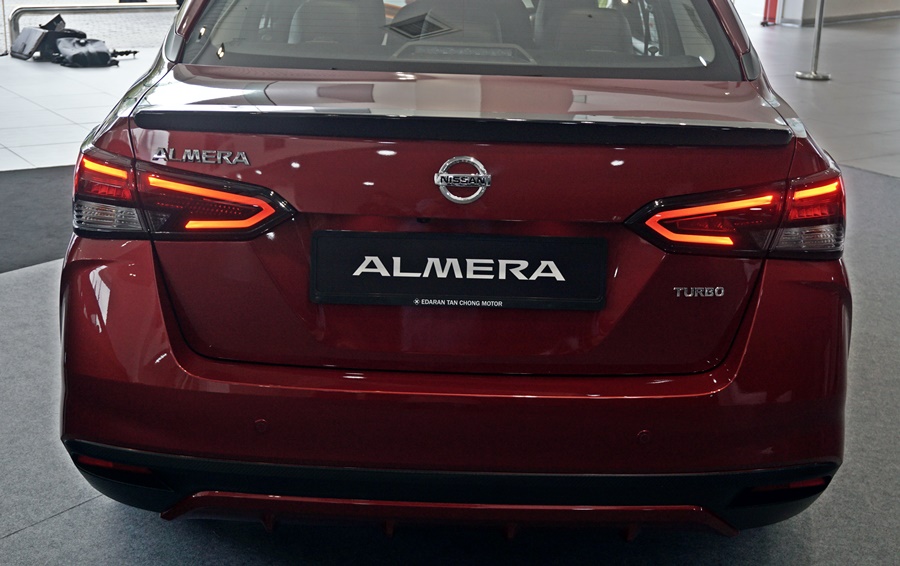
2020 Nissan Almera Turbo

Pay more but get more for your money too
The new Almera Turbo is assembled at the Tan Chong plant in Serendah, Selangor and deliveries will start in October. ETCM is accepting bookings now for the model which will be available in three grades – VL, VLP and the VLT at the top – with estimated pricing between RM8X,XXX and RM9X,XXX. This is higher than the current 2-variant range which starts at RM66,000 and goes up to RM75,000+ (with exemption of 10% sales tax).

The increase in the price range would be justified by the amount of new tech that has been put into the Almera Turbo. Even though it is the entry-level model to the Nissan range in Malaysia, the list of equipment and features is impressive, particularly the driver assistance systems.

ETCM declares that the Almera Turbo VLT (the top version) for the Malaysian market is the best equipped in the region, which was not the case before. For instance, the cars sold in Thailand don’t have LED headlamps and their wheel size goes up to only 15 inches, whereas the Malaysian version is 16 inches with 205/55 tyres.

[Click here to view full specifications]

Joining the family in looks
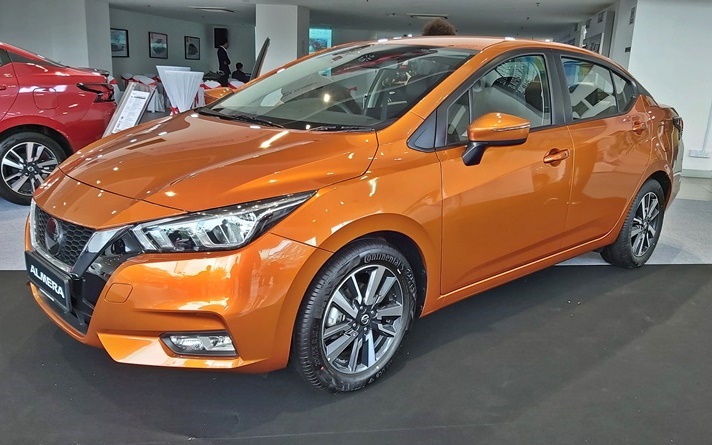
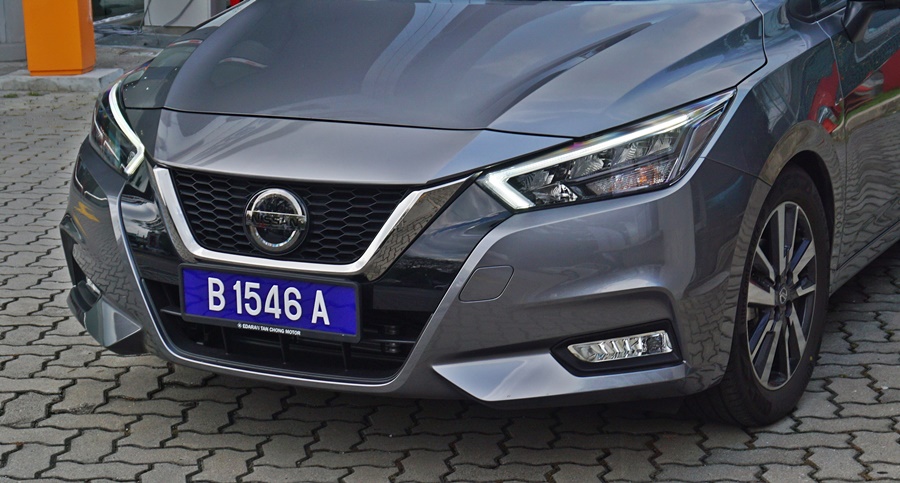
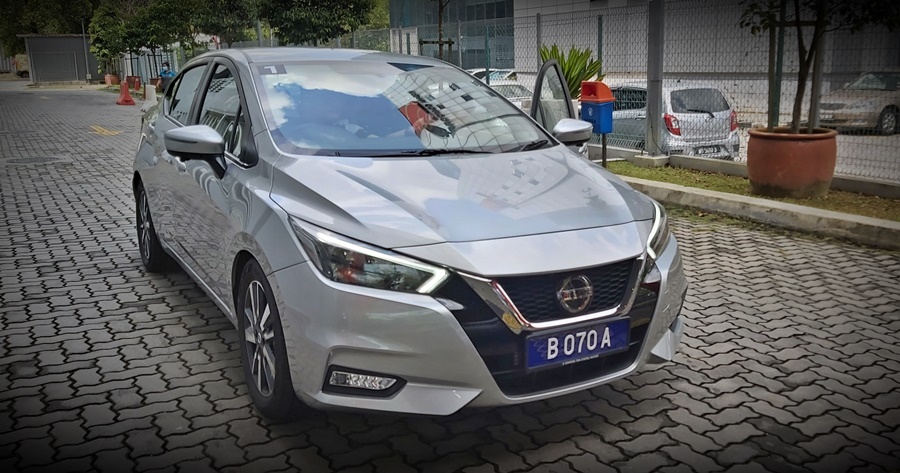
The new car’s overall looks retain the profile of its predecessor but looks much more modern. At the front, the signature V-motion grille design unites the latest model with the rest of today’s Nissan family. The boomerang-shaped LED headlamps are also a familiar signature on Nissan models these days, providing another element of brand identification.

2020 Nissan Almera Turbo

2020 Nissan Almera Turbo

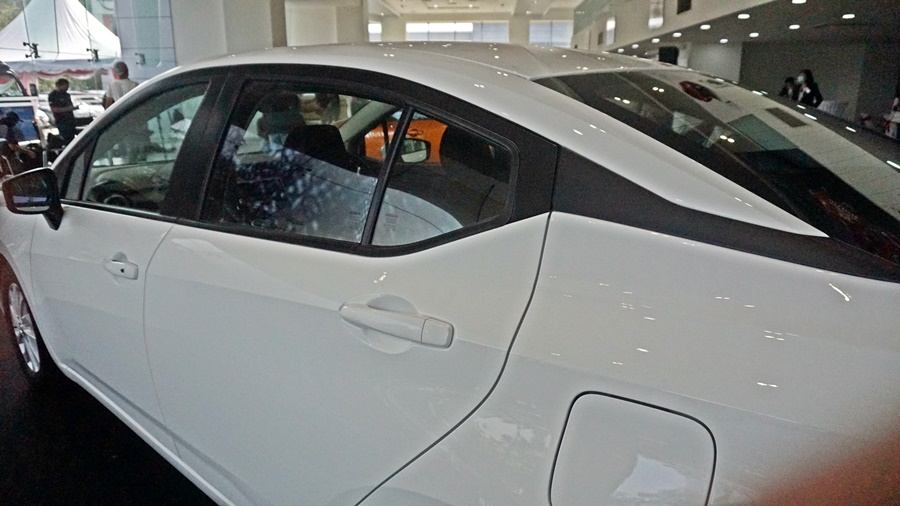
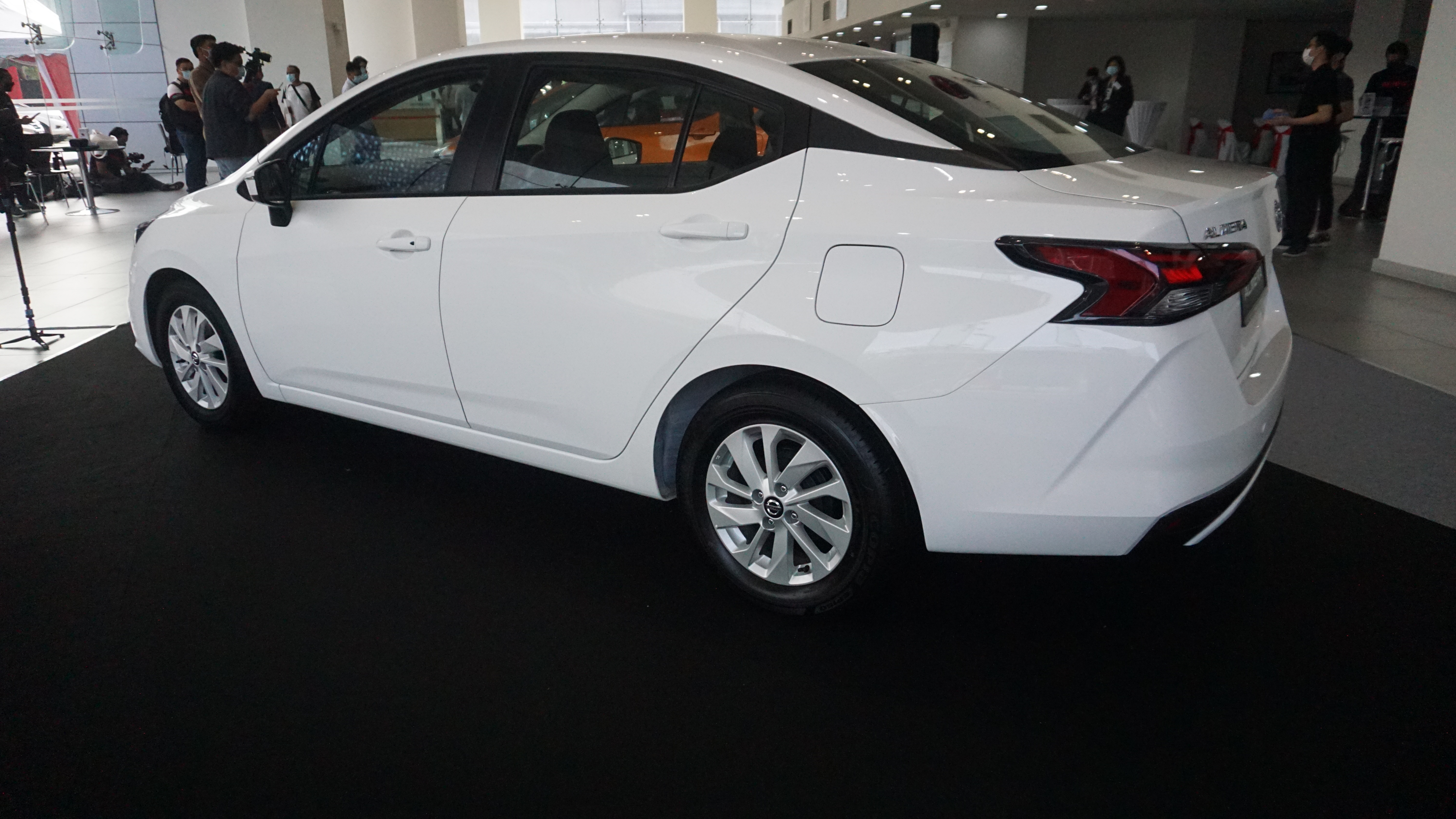
The styling treatment on the C-pillar follows that of the LEAF EV, creating a ‘floating roof’ sort of appearance. The rear end takes on a modern look with LED lighting units and for the top version, there’s also a discreet spoiler which helps lower the Cd to 0.284.

2020 Nissan Almera Turbo

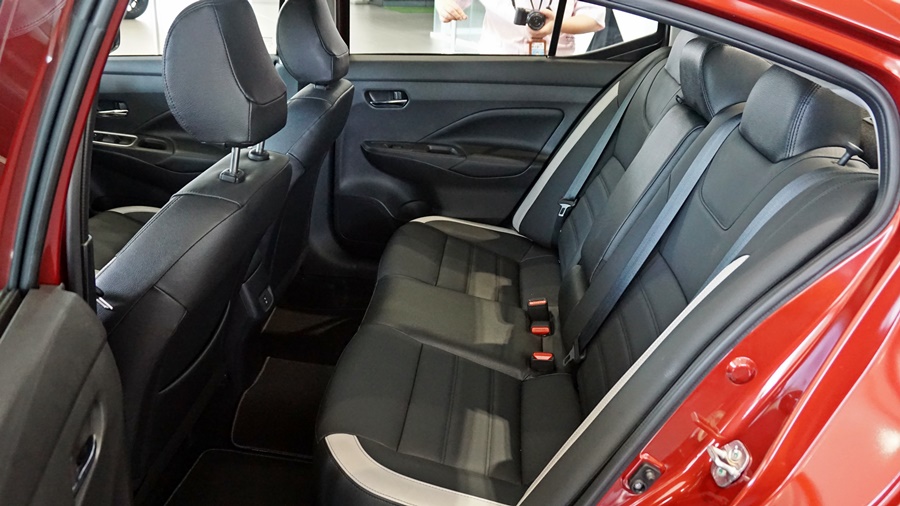
Dimensionally, the Almera Turbo is a bigger car than before – 70 mm longer and 45 mm wider – with a wheelbase that has been extended by 20 mm. This would improve interior space which was one of the strong points of the Almera when it was previously launched. The boot volume is 482 litres and the divided rear backrests can be folded down to expand the capacity by extending the length of the floor.

Intelligent and safe
Promoting Nissan Intelligent Mobility and Nissan Safety Shield 360, ETCM has packed more safety features into the Almera Turbo. All three variants get Intelligent Forward Collision Warning and Emergency Braking which can not only reduce accidents but should a collision occur, the pro-active action can  help to reduce the damage.

There are up to 6 airbags installed at the front and sides and the usual Active Safety Systems – ABS, stability control, traction control, brake assist, etc – are present in all variants. ISOFIX points are also provided in the rear seats for two compatible childsteats.

For those who place safety as a high priority, what comes with the VL variant are features which were only on the more expensive Nissan and Infiniti models just 10 years ago. There’s Blind Spot warning (with the warning shown on the door mirrors as well as the instrument panel), Rear Cross Traffic Alert when reversing, and an Intelligent Around View Monitor.

The monitor gives a top-down view of the car to aid parking and it’s also possible to switch views to one of the four sides for a closer look at the surrounding. No more excuses not being able to park properly in a bay and getting photographed to be shamed!  The system also has Moving Object Detection which alerts the driver when there are moving objects around the car.

2020 Nissan Almera Turbo

2020 Nissan Almera Turbo

2020 Nissan Almera Turbo

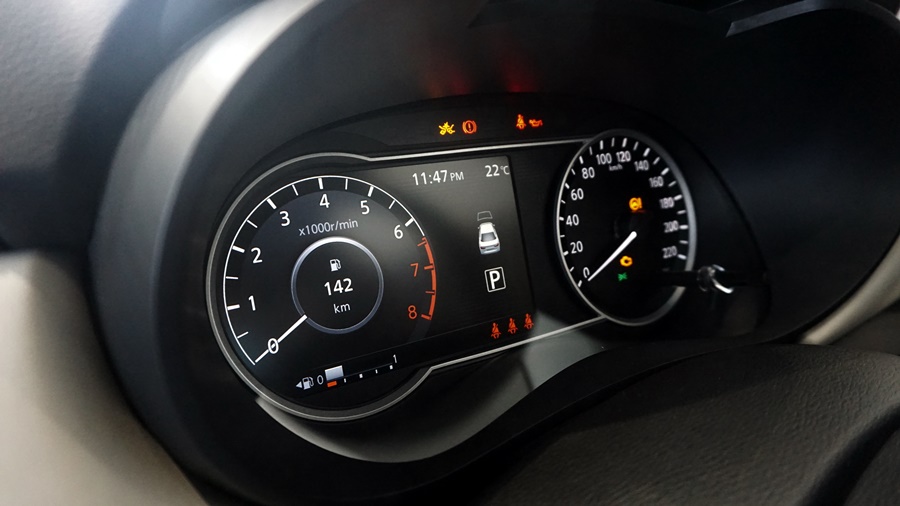
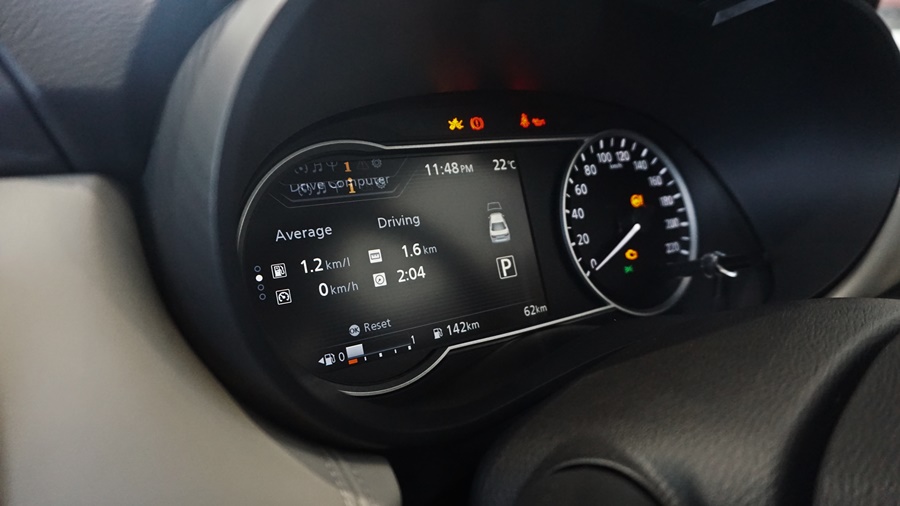
Much of the information is shown on the instrument panel as well as the 8-inch full colour touchscreen in the middle of the dashboard. The new spacious ‘Gliding Wing’ instrument panel design has a combination of a conventional analogue speedometer on the right, and a variable display on the left. The driver can choose to show a tachometer, fuel consumption (average and historical) and warnings of other vehicles ahead or nearby. A coolant temperature bar can also be displayed for those who have concerns about the operating temperature.

2020 Nissan Almera Turbo

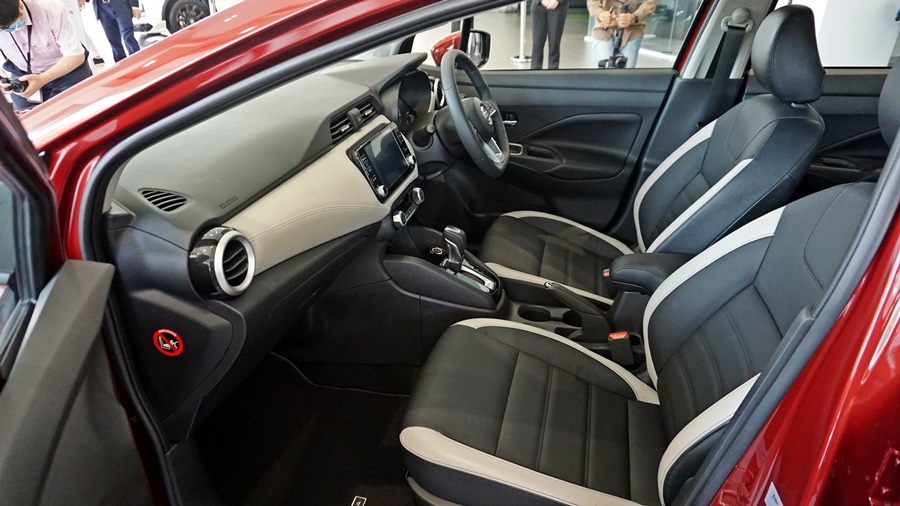
The equipment list is as good as other rivals in the same segment and for the more expensive versions, ETCM has added leather upholstery, cruise control, leather-wrapped steering wheel and shift knob and automatic climate control. Pushbutton starting/stopping of the engine is standard and there’s also Apple CarPlay for smartphone connectivity.

152 Nm of torque from 1 litre
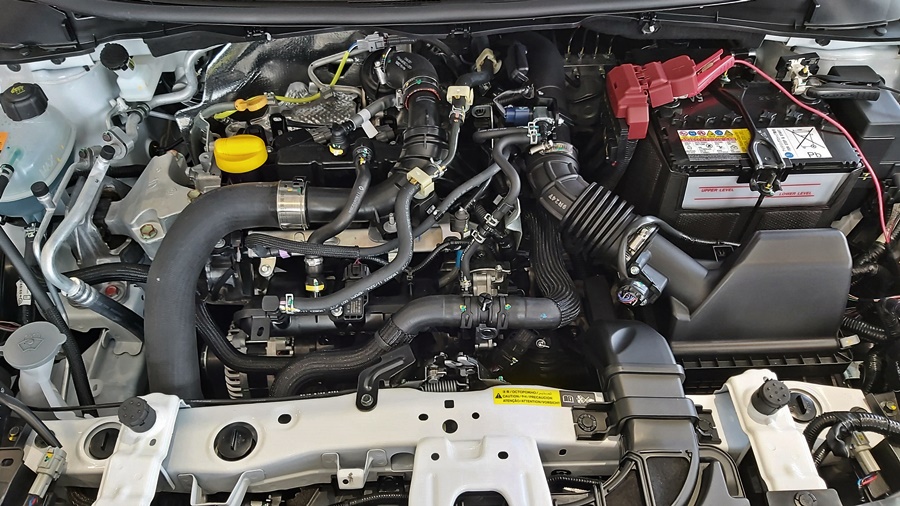
Under the bonnet is a Nissan HR10DET engine and this is a 3-cylinder unit with a displacement of 999 cc. This is big news because it’s a bold move for ETCM to choose a 1-litre engine (although they probably don’t have much choice as they must follow other ASEAN countries) instead of a bigger powertrain. The last time ETCM sold a 1-litre model was in the 1980s when it had the March hatchback.

Malaysians are still displacement conscious, never mind that with all the modern technology plus turbocharging, smaller engines now generate as much power – and even more – as larger engines. Many Malaysians still regard small displacement engines as being ‘weak’. Their first question would be ‘can go up Genting or not?’, the steep road up to the hill resort being a test of performance.

Perhaps it’s because of our fuel being priced low (with subsidies until early this year) that motorists don’t think too much of economizing on fuel costs. But in other countries, motorists are much more conscious and appreciate it when they can get lower fuel consumption and yet not have to sacrifice performance.

2020 Nissan Almera Turbo

The 1-litre engine in the Almera Turbo produces 100 ps, just 1 ps less than the 1.5-litre engine of the outgoing model. But what is more impressive – and useful – is that it generates up to 152 Nm of torque which is 13 Nm or 9.3% more than the 1.5-litre engine. And where the maximum torque in the bigger engine was only available when it was spinning at 4,000 rpm, all 152 Nm is available from 2,400 rpm all the way to 4,000 rpm. This means that take-offs will be strong and overtaking will be quicker.

Over 40 years ago, when Daihatsu introduced the world’s first 3-cylinder, 4-stroke engine in its Charade, the 1-litre engine produced only 60 ps and 81 Nm. It was enough to give zippy performance with the light hatchback. Back then, fuel delivery was by a carburettor but today’s 1-litre engines have a turbocharger which boosts output significantly. The turbocharger in the Nissan engine also has an electronic wastegate, managing the high compression pressures efficiently to reduce turbo lag.

Multipoint electronic fuel injection (EFI) also helps deliver fuel more efficiently and while EFI, turbocharging and 4 vales per cylinder already boost output, the 67% higher output compared to a 1-litre engine in the late 1970s is also due to other technological advancements. For example, there is Mirror Bore Coating Technology – adapted from the mighty GT-R engine – which reduces friction internally.

BHPetrol RON95 Euro4M

So it’s really time to put away the negative perceptions about engine displacement and give attention to the output numbers instead. The displacement may be small but these modern engines like the HR10DET can provide performance comparable to bigger engines, and they will save you money.

ETCM claims that the Almera Turbo can go up to 18.4 kms per litre which means the full tank of 35 litres should be good for at least 650 kms.

First driving impressions
At today’s introduction to the new Almera Turbo, ETCM also offered the chance to get brief driving impressions around the Glenmarie area. It was certainly a welcome opportunity to check out the new engine powering the car.

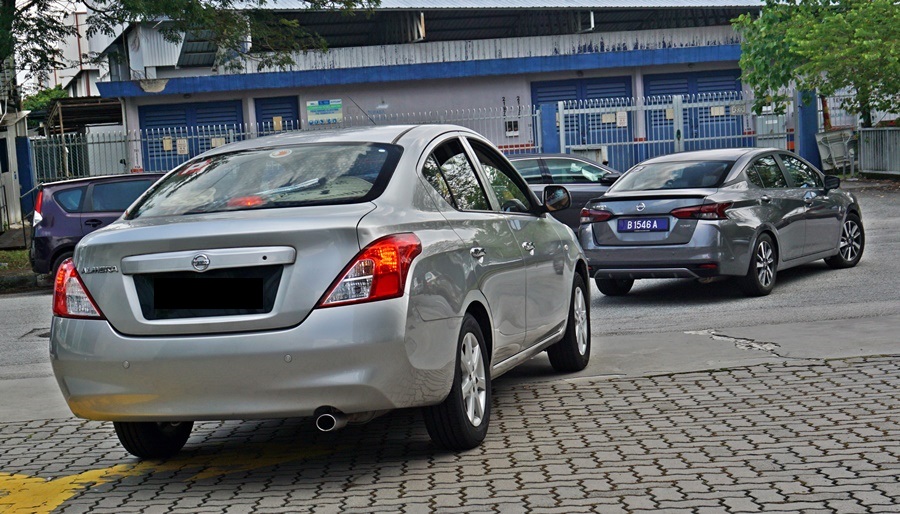
The new Almera Turbo (front car) is larger and lower than the car it replaces.

I certainly remember what a 1-litre engine used to be like, having driven the old Charade back in 1977. Such small engines have also been used in Perodua models over the years and it is clear that they have improved, and with the Almera Turbo’s engine, the advancement is really quite impressive.

As expected, the car moved off the line with eagerness. The shifts were smooth with the next-generation XTRONIC CVT that uses a D-Step Logic System. This software-based system creates a feel of the CVT that is like a conventional torque converter transmission with linear progression. On occasions when the road slopes steeply, the transmission can be locked in low ratio for easier forward progress.

Although noise levels were reasonably low, that ‘motorboat sound’ typical of 3-cylinder engines could still be heard. It’s common with such engines and you get used to it. What’s more important is that the Nissan engineers have been able to overcome the vibration issues that are inherent in 3-cylinder engines. Even under hard acceleration, the engine was almost as smooth as a 4-cylinder unit.

2020 Nissan Almera Turbo

Generally, the engine provides as much performance as most people would require. If you are law-abiding and do not venture over the highest national speed limit, 100 ps is fine. If you are in a hurry, you still have the high torque for safe and quick lane changes when there is a need overtake. There wasn’t a steep slope to check its climbing ability but I am sure that it will do ust fine. Definitely, this car will have no problems going up to the Genting Highlands resort.

If you want to find out yourself, ETCM starts the test-drive program for the public this weekend and next weekend at 18 showrooms around the country. And just for going on a test-drive in the Almera Turbo, you could also win a RM2,199 iPhone SE. To locate a showroom, visit www.nissan.com.my.

PISTON.MY


Nissan has been taking a beating in recent times, with its CEO being charged with financial wrongdoing and massive losses worsened by the COVID-19 pandemic. It’s getting to be like the 1990s when a steady decline in its business saw a debt of US$20 billion by 1999 putting it on the brink of bankruptcy.

The new management team is struggling to slash expenses worldwide, cutting at least 12,500 jobs globally by March 2023 and closing some factories. It’s almost like the early years of the Ghosn era when his ‘Nissan Revival Plan’ called for 5 factories to close with a termination of up to 21,000 jobs and 50% reduction in suppliers. Though criticised for his extreme measures, Ghosn turned Nissan around completely by March 2001 with a net profit of 331.1 billion yen.

Product development was naturally hampered by limited budgets; reduced sales could not generate enough revenue to effectively fund development of the next generations. But Ghosn kept morale high with the revival of the GT-R and also authorised continuation of the legendary Z sportscar, the former still a significant model 13 years after its launch.

Now, Nissan is doing the same thing with what looks like a new Z, and the prototype will be revealed to the world on September 15, 2020 at 7:30 pm in America (8:30 am on September 16 in Malaysia). The prototype could be the final form for the new sportscar which is rumoured to be designated ‘400Z’.

Typically, Japanese manufacturers show off a ‘prototype’ which is pretty much production-ready and then launch the new model within the next 12 months. If it was not something about to go into production, they would more likely call it a ‘concept car’.

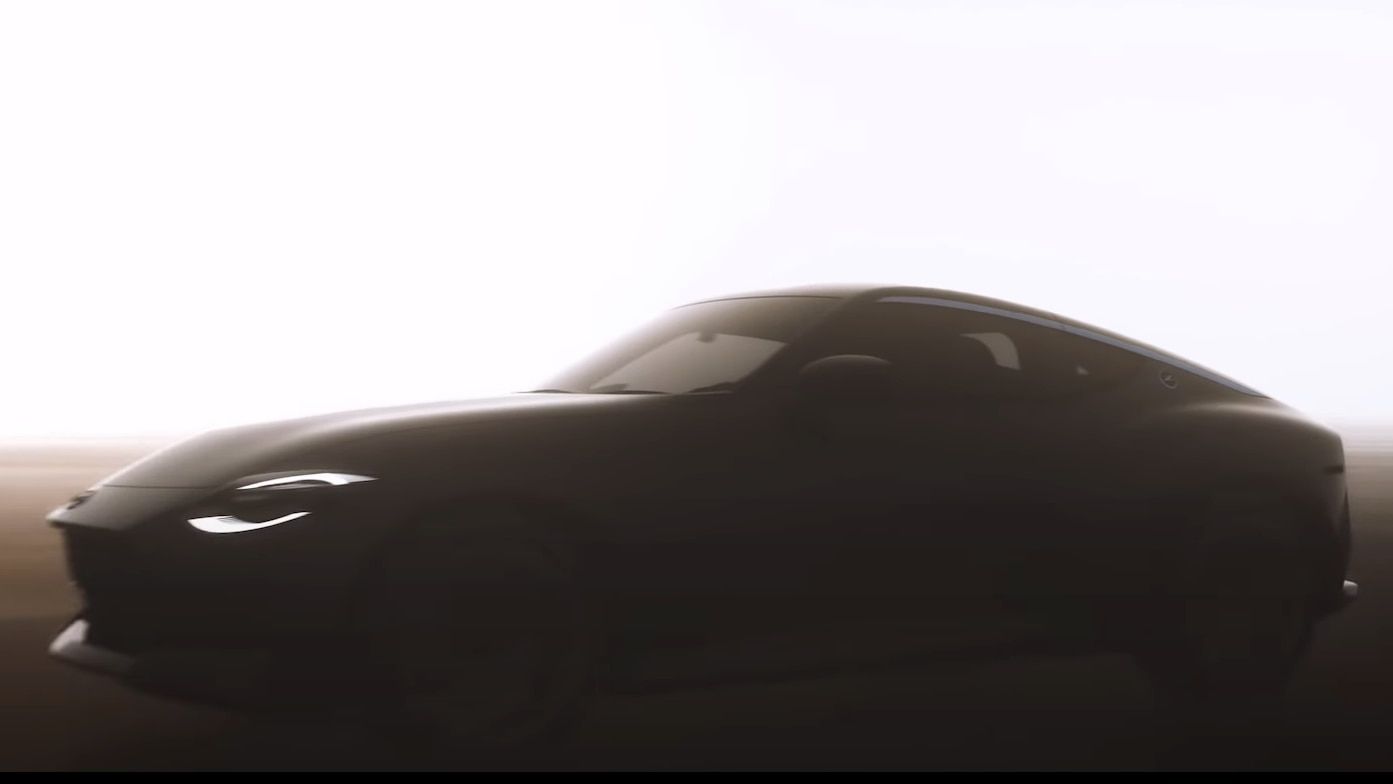
Actually, Nissan already hinted at a new Z in May and a teaser video showed the silhouette of a sportscar (above). It had the characteristic long nose and as for what will be under the bonnet, probably a V6 from the current engine family that has won awards for years and years.

Remember the date: September 16 at 8:30 am in Malaysia.

New Nissan brand logo for a new era

COVID-19

Social distance

PISTON.MY

BHPetrol Euro5 Diesel

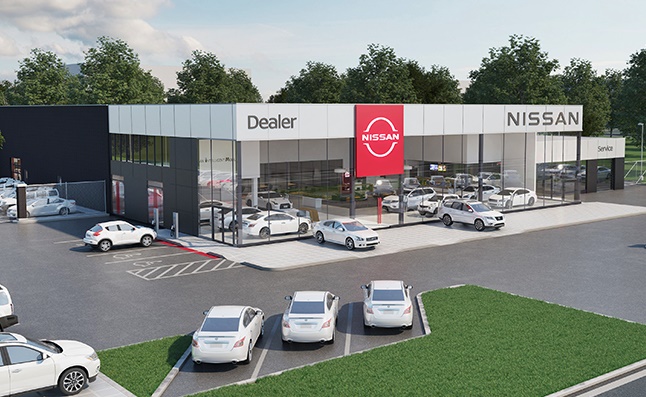
Just as car models receive periodic refreshing and updates, so too do the brand identities and other elements of the retail side of the auto business. For authorised Nissan dealers in Malaysia, that time has come and dealerships are progressively switching to the new Nissan Retail Concept (NRC).

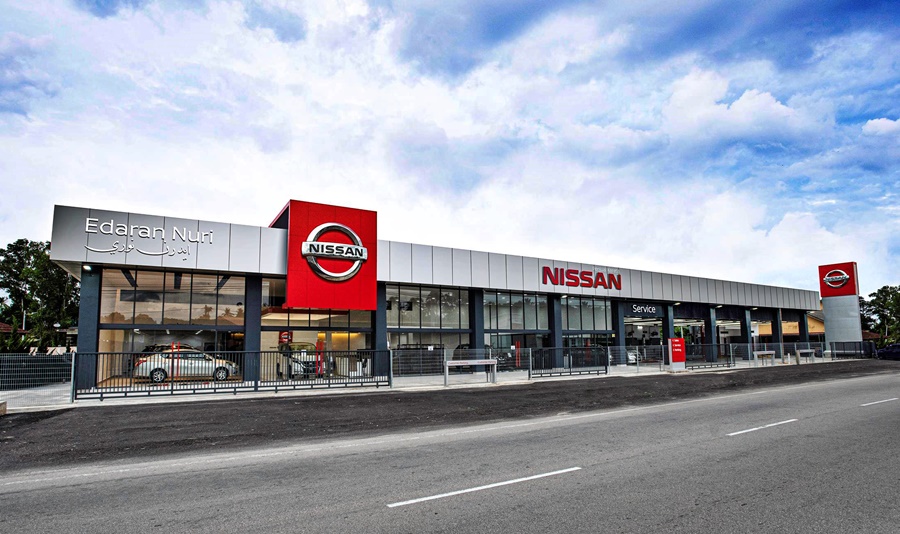
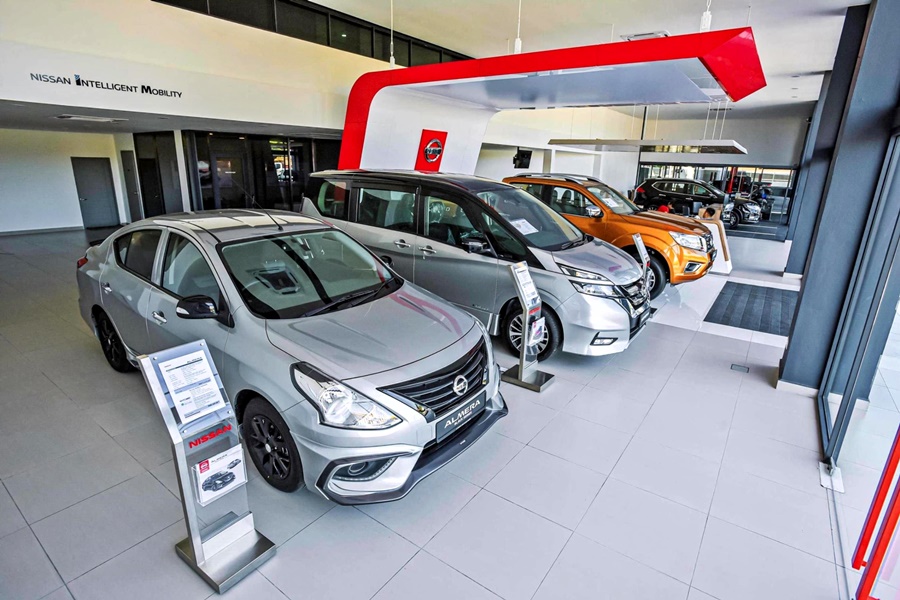
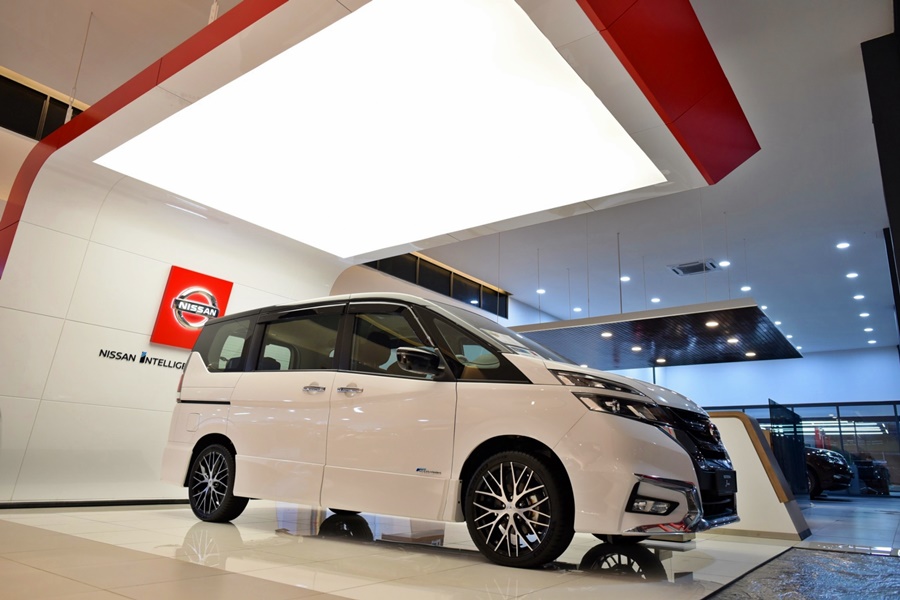
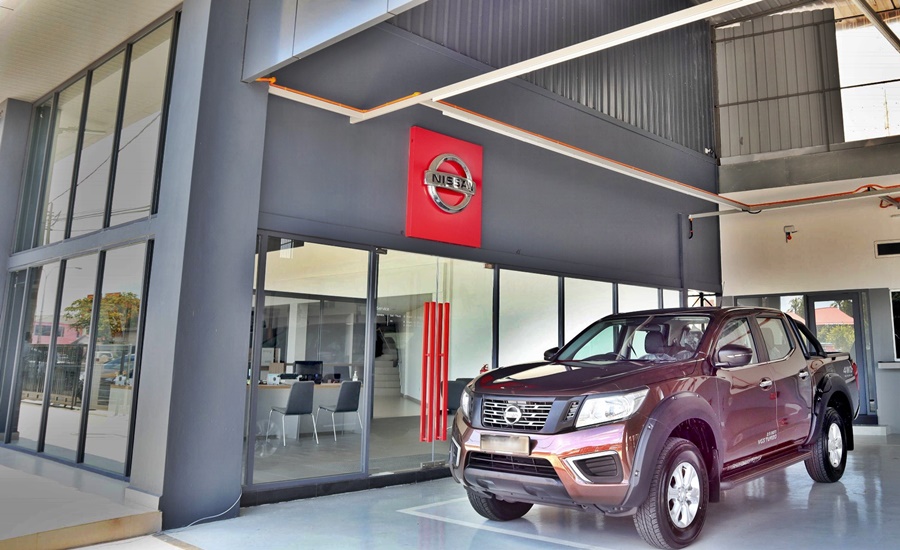
The latest is a Nissan 3S centre in Kota Bharu, Kelantan operated by newly appointed dealer, Edaran Nuri Sdn Bhd. With the new NRC, there is the promise of an improved customer experience and journey of Nissan brand. The exterior features iconic red Nissan tablet signage while the exciting ‘Nissan Drive’ sales and consultation areas greet customers with warmth and comfort.

Nissan Edaran Nuri Kelantan

Nissan Edaran Nuri Kelantan

Everything under one roof
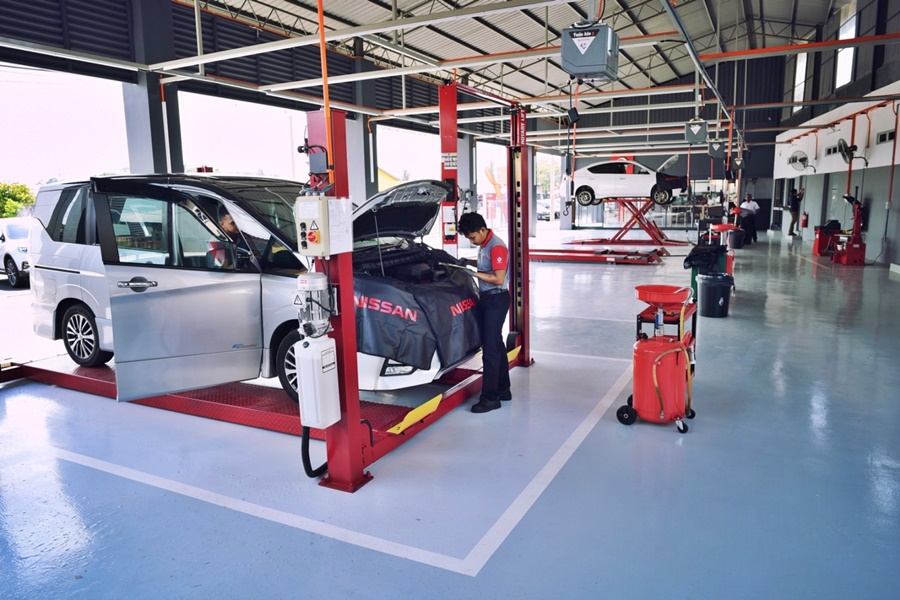
The 3S Nissan Centre has a total built-up area of 12,260 square feet and its showroom can display up to 5 models simultaneously. Within the same site is a service centre with 3 bays which can handle up to 15 vehicles per day.

Additional facilities include a cafe-styled customer lounge, free wifi and kids’ area. As taking delivery of a new Nissan is a special occasion, there’s an exclusive delivery bay for customers to receive their vehicles.

Nissan Edaran Nuri Kelantan

Nissan Edaran Nuri Kelantan

“Customer satisfaction is our main priority, and it is important that we work closely with our dealer to serve our customers better. The Nissan Retail Concept is our commitment in providing customers with high quality services and after-sales offerings from the minute they arrive,” said Mr Christopher Tan, Sales & Marketing Director of Edaran Tan Chong Motor, the distributor of Nissan vehicles for over 50 years.

SOPs observed
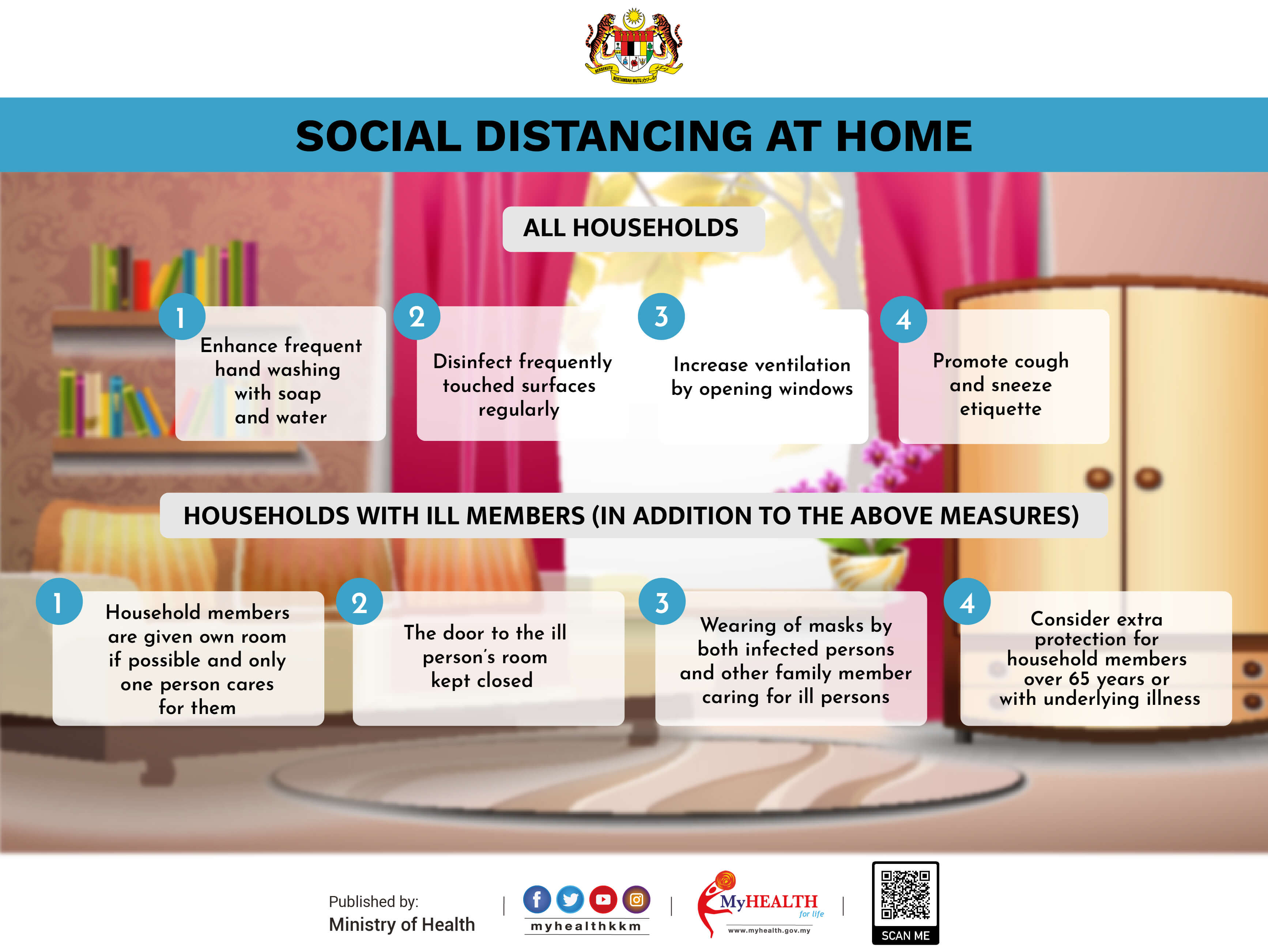
Mr. Tan gave assurance that, in line with government Standard Operating Procedures to curb Covid-19, Nissan showrooms and service centres nationwide carry out temperature checking and social distancing for all staff and customers. Nissan staff wear face masks, while face masks, gloves and hand sanitizers are freely available to customers, if required. Frequent disinfecting is carried out at the showrooms and service centres throughout the day covering every touchpoint including display and test drive vehicles, as well as all customer vehicles before and after service. During this period, contactless payments are encouraged.

For more information on the Nissan network in Malaysia, visit www.nissan.com.my.

New Nissan brand logo for a new era

COVID-19 Facemask

PISTON.MY

BHPetrol RON95 Euro4M

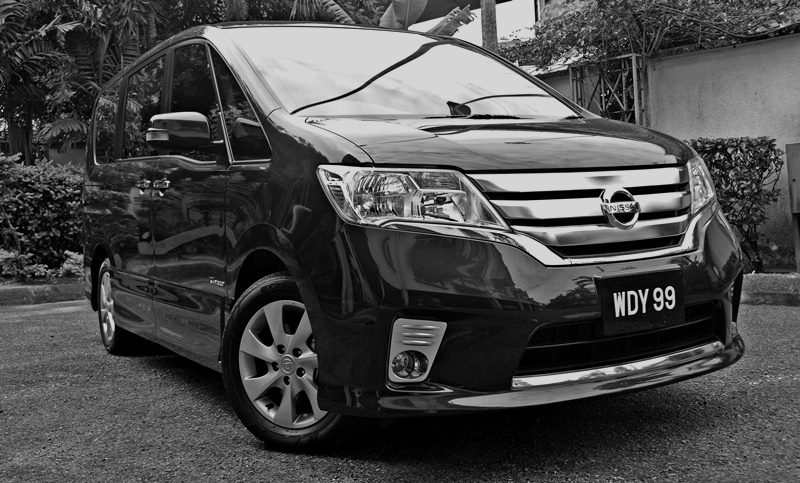
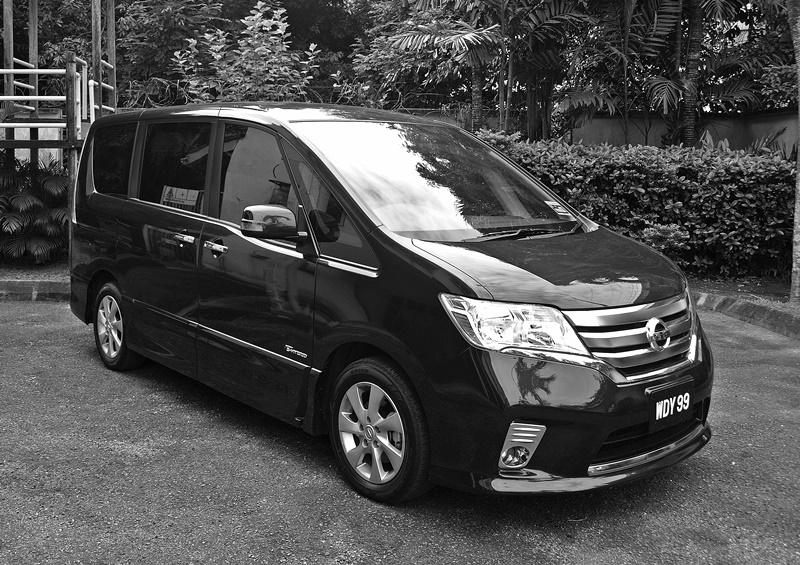
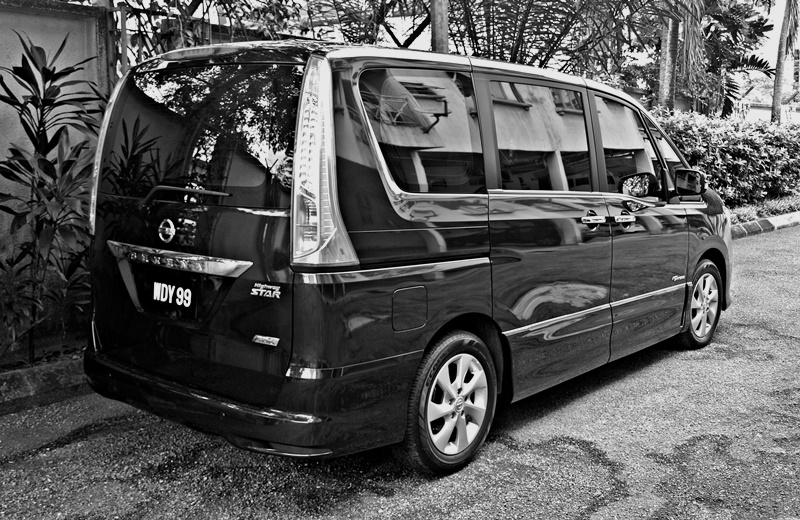
After investigation conducted by Nissan Motor Co. Ltd, Edaran Tan Chong Motor Sdn Bhd (ETCM) has been informed that approximately 4,001 units of Nissan Serena S-Hybrid (C26) manufactured in Japan between September 2012 and November 2013 need to be recalled. The vehicles that were imported and distributed by ETCM require reprogramming of the CVT control unit.

According to ETCM, only the imported CBU units are affected and the locally-assembled Serena that was subsequently introduced in November 2014 does not have the issue. The current locally-assembled Serena S-Hybrid (C27) launched in May 2018 and other Nissan models currently on sale are also not affected.

2012 Nissan Serena S-HYBRID

The work will be carried out by Tan Chong Ekspres Auto Servis (TCEAS) which has outlets nationwide. The reprogramming will take approximately 45 minutes and owners will not be charged for anything related to the exercise.

Owners of the affected MPVs will be notified directly by TCEAS by letter, SMS or Whatsapp. Selected TCEAS outlets have extended hours of operation and will service vehicles on weekends and public holidays as they are open 365 days a year. Owners are advised to call the nearest TCEAS outlet to make an appointment beforehand.

2012 Nissan Serena S-HYBRID

As vehicle ownership of some vehicles may have changed over the years, ETCM advises current owners of the model to call the Nissan Customer Care Centre toll-free line at 1800-88-3838 to find out if their Serena S-Hybrid is among those listed for recall action.

ETCM and TCEAS regret any inconvenience caused to owners and reaffirm their commitment to ensure customers’ safety, service and satisfaction are of the highest level.

DriveOn by TAN CHONG mobile service app

PISTON.MY

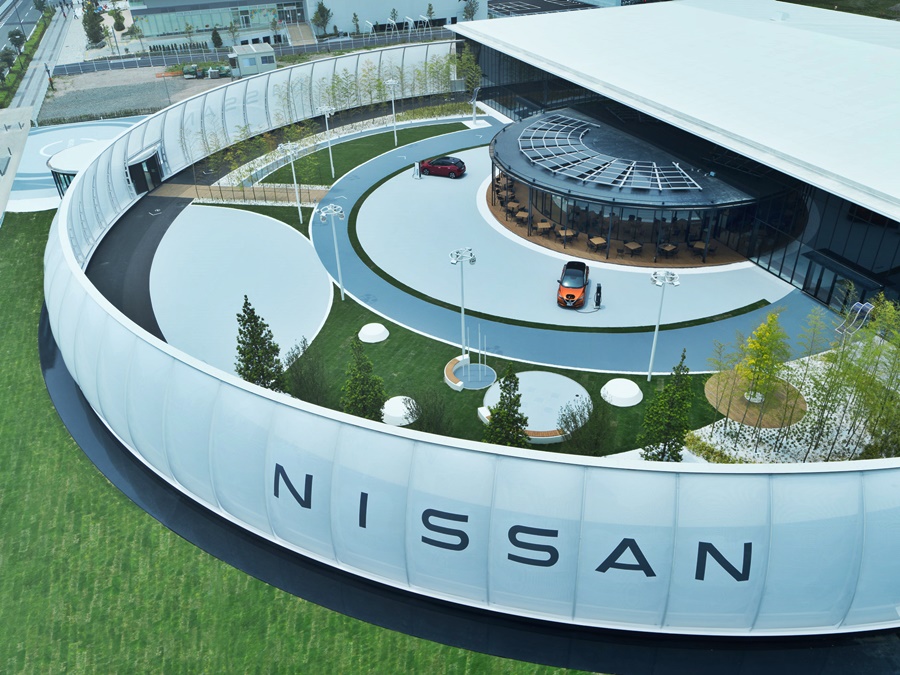
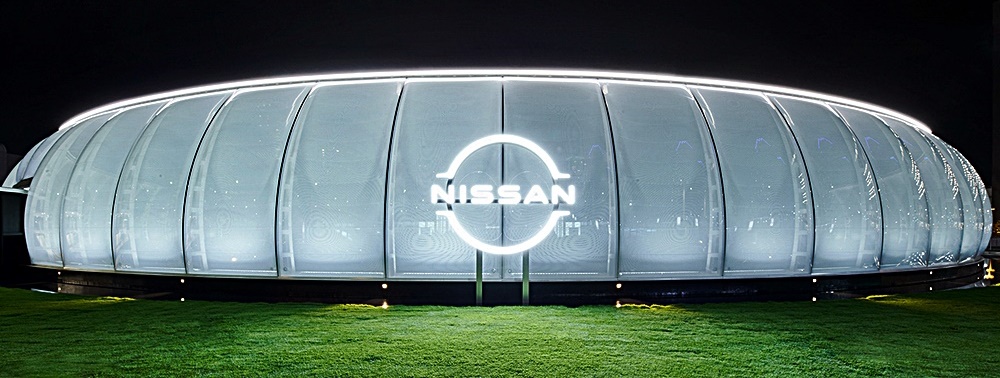
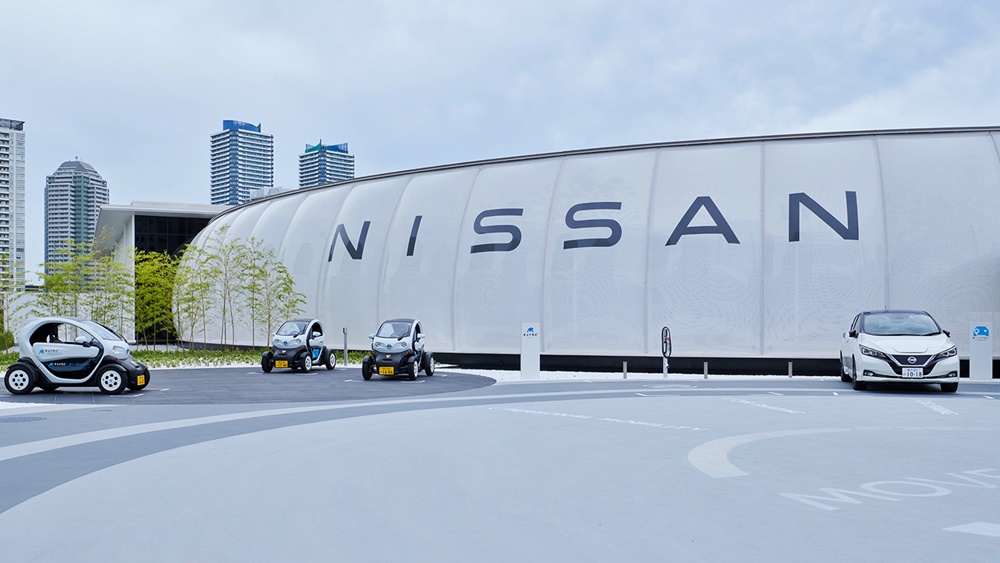
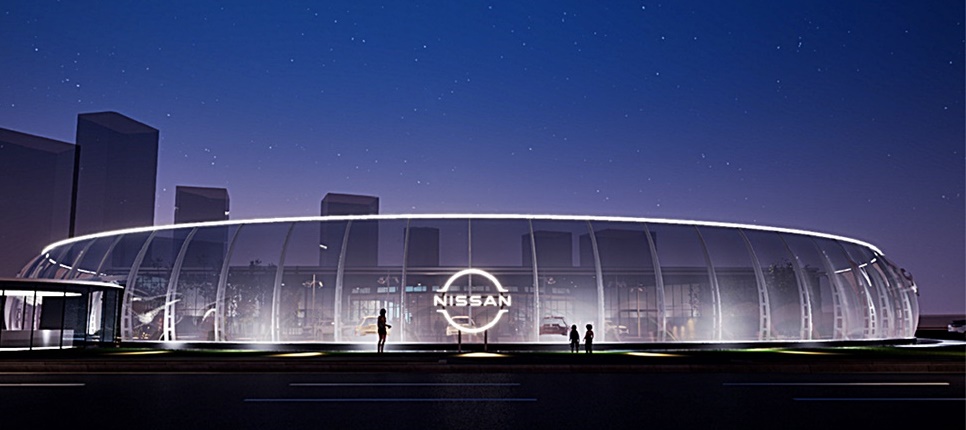
Even though the COVID-19 situation continues, the Nissan Pavilion was opened today in Yokohama, Japan. The 10,000 sq. metre interactive centre to show off Nissan’s products and technologies, located near the company’s headquarters, will be opened until October 23, 2020.

Nissan Pavilion 2020

“The Nissan Pavilion is a place where customers can see, feel, and be inspired by our near-future vision for society and mobility,” said Nissan CEO Makoto Uchida.

With its leadership in sales of electric vehicles (EVs), Nissan will naturally be focussing a lot of EVs at the Pavilion. And in a global first, EV drivers will be able to discharge power from their car’s battery pack to pay for parking while visiting the Nissan Pavilion. The payment system is just one of the many innovations customers can experience at the Pavilion, built to show how Nissan moves people to a better world.

Nissan Pavilion 2020

Nissan Pavilion 2020

Showcase of EV technologies
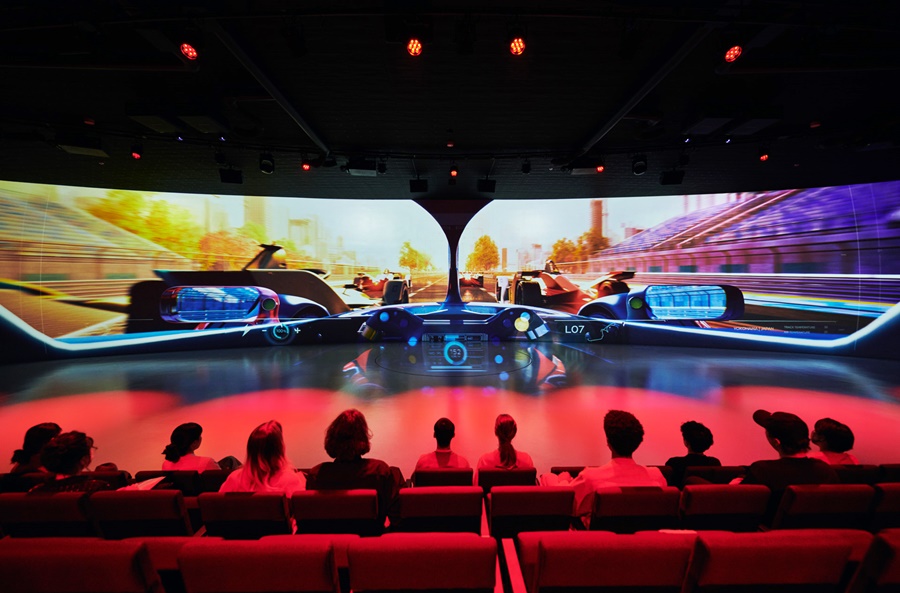
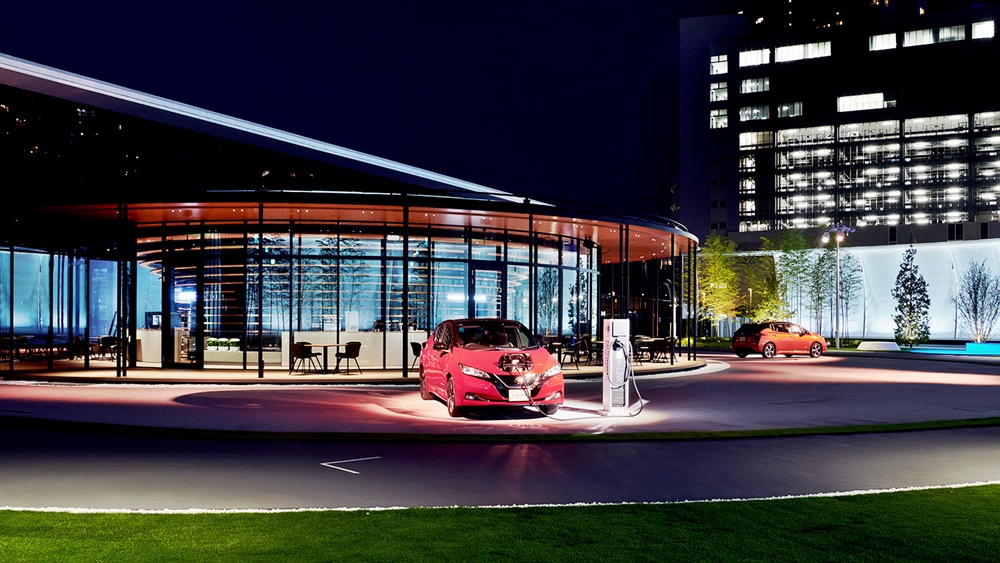
Other examples of EV technology having synergies with society will be demonstrated at Nissan Chaya Cafe, which operates on power supplied by Nissan LEAF EVs and solar energy. Visitors can also enjoy virtual experiences that allow them to feel the thrill of Formula E electric street racing or go for a ride in the all-new Nissan Ariya EV crossover.

Nissan Pavilion 2020

Other innovations on show besides Nissan Energy technologies include the ProPILOT advanced driver assistance system as well as Nissan’s Invisible-to-Visible (I2V) technology, which combines information from the real and virtual worlds to assist drivers.

A Mobility Hub offers various services such as EV car-sharing and rental bicycles. Offered by Nissan and the local community, these services aim to provide increased freedom of mobility.

Nissan Energy
Nissan introduced the world’s first mass-market electric car, the zero-emission Nissan LEAF, in 2010. Since then, the company has partnered with governments and businesses around the world to expand the uses of EVs. The company’s Nissan Energy Share and Nissan Energy Storage technologies allow electricity from EV batteries to be stored, shared and repurposed, for instance by powering homes or businesses.

In Japan, Nissan has also entered agreements with local governments to use LEAF EVs as mobile batteries that can supply energy during natural disasters. In another partnership, the company is repurposing used EV batteries to power streetlights.

BHPetrol RON95 Euro4M

Social distance

PISTON.MY

Nissan may be buffeted by financial problems at this time but new products still need to get into the market and even though the COVID-19 pandemic has slowed things down, the carmaker is continuing on the road forward.

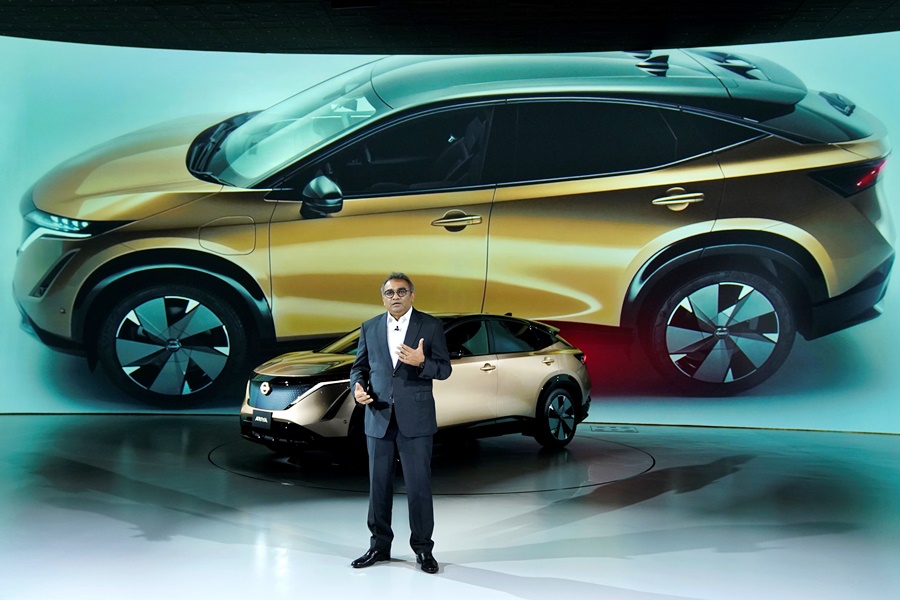
That road is one which requires electric vehicles (EVs) and Nissan is ready with the all-new Ariya, a crossover SUV which, like the successful LEAF, is powered only by electricity. Introduced online to a global audience today from the new Nissan Pavilion in Yokohama, Japan, the Ariya will be priced at around 5 million yen (about RM200,000). It is scheduled to go on sale in Japan in mid-2021, with exports starting by the end of next year to Europe, North America and China.

2021 Nissan Ariya

“The Nissan Ariya is a truly beautiful and remarkable car,” said Nissan’s Chief Operating Officer, Ashwani Gupta. “It enables you to go further, easier and in comfort. The Ariya is designed to impress, and to express what Nissan strives for – making our customers’ lives better.”

New electrified brand identity
The Ariya is heavily based on the similarly-named concept vehicle displayed at the 2019 Tokyo Motor Show although the first design ideas started with the IMx at the 2017 Tokyo Motor Show. The first production model to represent Nissan’s new electrified brand identity, it utilizes an all-new Alliance-developed EV platform.

2021 Nissan Ariya

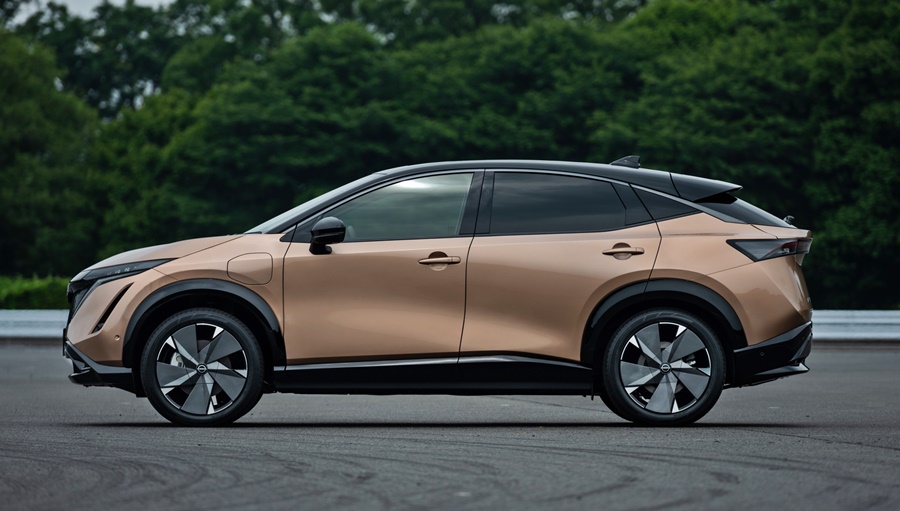
The styling adopts the company’s new design philosophy which is based on what Nissan calls ‘Timeless Japanese Futurism’ – a distinctive Japanese approach conveyed in a simple-yet-powerfully modern way. Embracing the Japanese term ‘iki’, which characterizes the Ariya’s chic, cutting-edge nature, the front of the vehicle appears seamless, elegant and fresh.

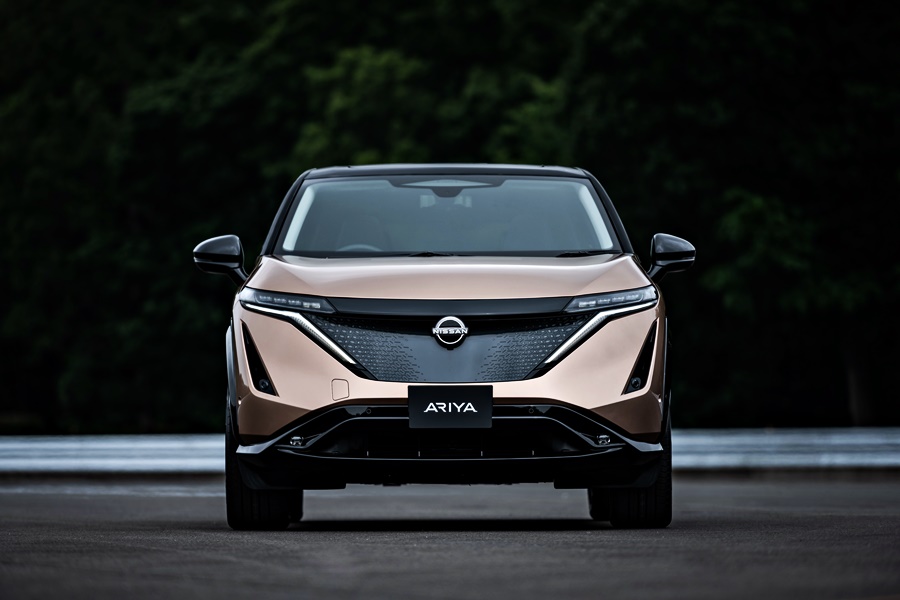
It’s highlighted by a shield – a new term for the traditional grille for the EV era. The shield, incorporating a 3-D, traditional Japanese kumiko pattern just under the smooth surface, protects sensing equipment used for ProPILOT functions and Intelligent Key detection without the aesthetics interrupting operation.

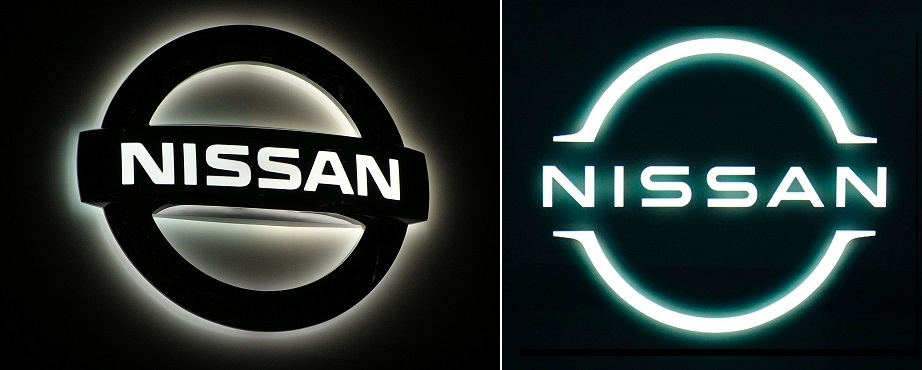
Redesigned brand logo
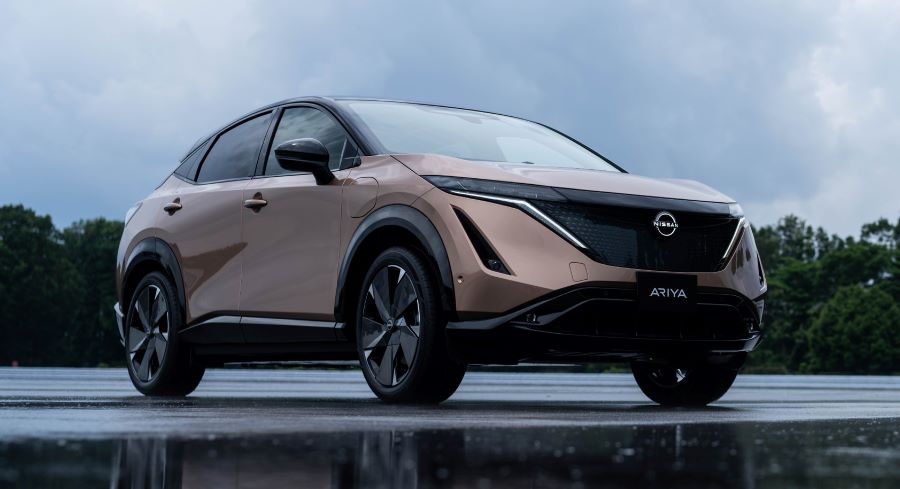
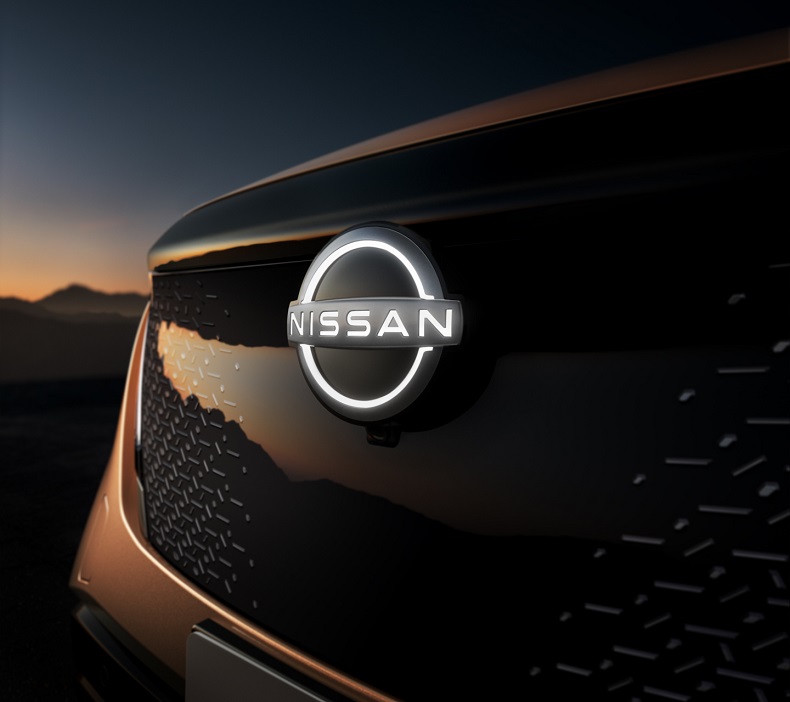
Nissan’s brand logo, which has been redesigned, is prominently placed at the centre of this aerodynamic shield, beaming with crisp definition from the 20 LEDs that compose it. The lower section of the shield is bordered by subtle lighting that illuminates, along with the logo, when the Ariya is ready for operation. Thin LED headlamps, constructed with four 20-mm mini-projectors, are combined with sequential turn signals to reinvent Nissan’s signature V-motion design.

2021 Nissan ARIYA

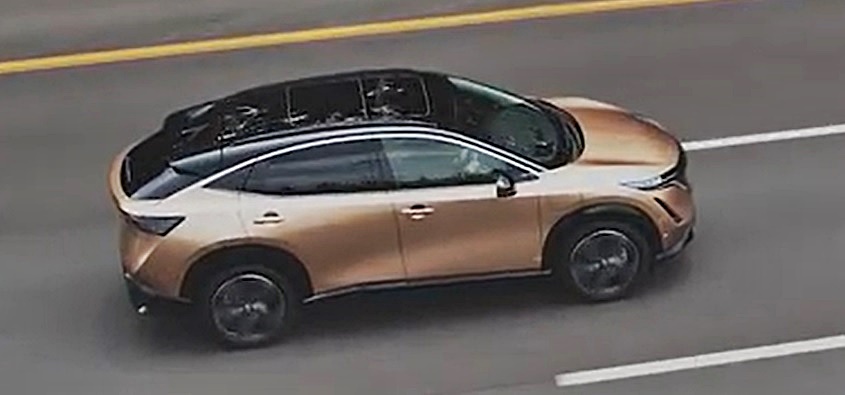
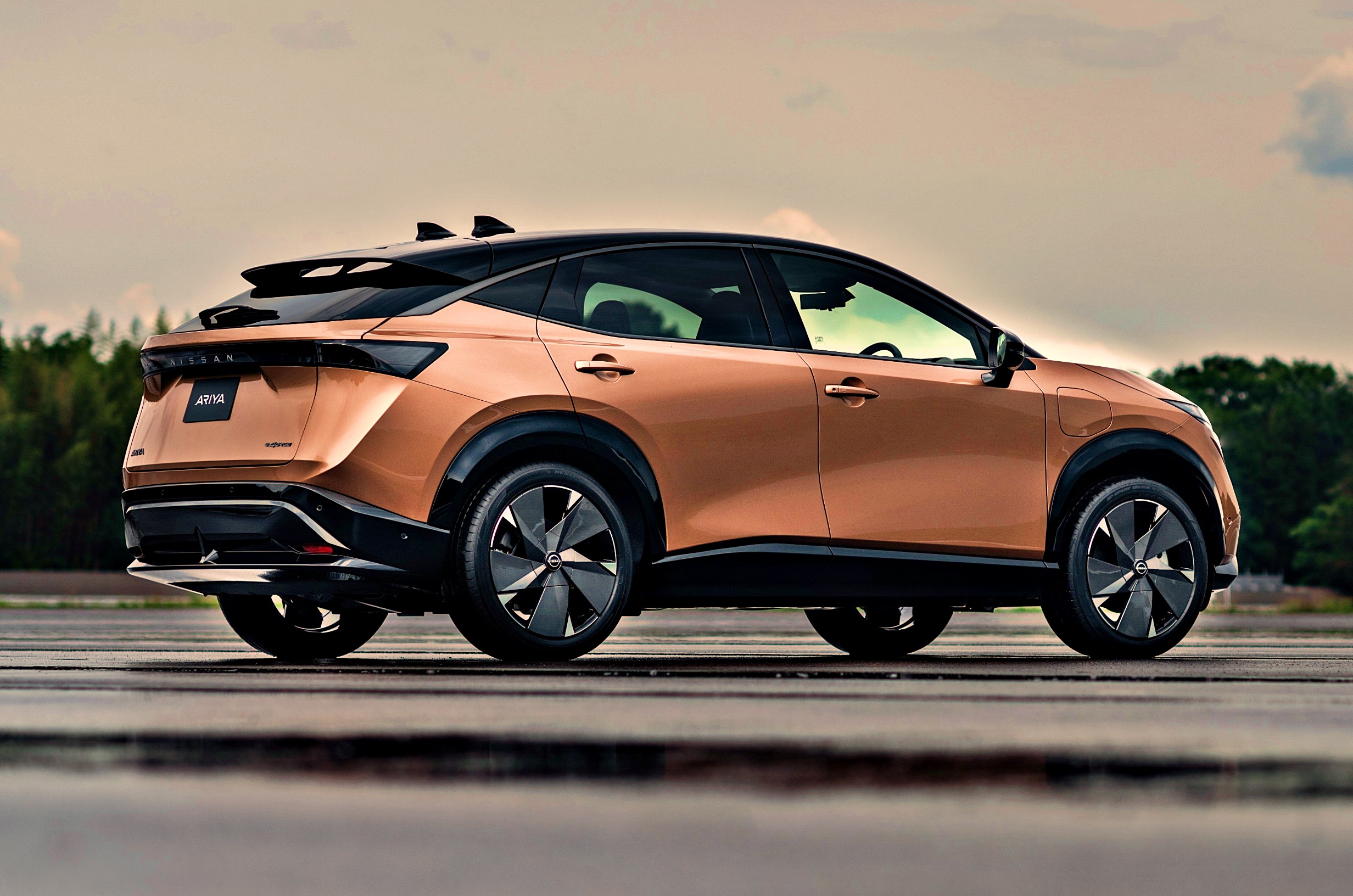
When viewed from the side, the Ariya has a single, uninterrupted horizon line that stretches across the side profile, linking the front fascia and the rear, conveys linear movement, creating architectural beauty in tension and drama from every angle.

The rear of the Ariya characterized by a steeply raked C-pillar that blends into the rear deck. The one-piece light blade, representing the rear combination lamps, has been engineered to give a black-out effect when parked, and a consistent red illumination, day or night, when in use. Rear fender flares and a high-mounted rear wing signal the Ariya’s powerful EV capabilities.

2021 Nissan ARIYA

2WD and AWD, with two battery pack sizes
Building on Nissan’s strength as an EV pioneer, the Ariya is said to ‘take the powerful performance and capabilities of zero-emission vehicles to a new level’. Four core models are offered with choices of 2-wheel-drive (2WD) and all-wheel drive (AWD). Using peak 130 kW charging, the Ariya can recover up to 375 kms with a 30-minute quick charge using Japan’s CHAdeMO charging system.

The Ariya 2WD can be ordered with 63 kWh of usable battery capacity which is suitable for urban commuters, or a larger battery pack with 87 kWh which can provide additional range. The Ariya with the smaller battery pack has an output of 168 kW while the bigger one has 178 kW, with torque from standstill at 300 Nm for both versions. Factory testing has achieved up to 610 kms on a fully charged battery pack.

Like the 2WD variant, the Ariya AWD also has two choices of battery pack capacities – 63 kWh and 87 kWh. Output is 250 kW/560 Nm for the 63-kWh version and 290 kW/600 M, for the bigger battery pack. The latter has a top speed claim of 200 km/h.

2021 Nissan ARIYA

With e-4ORCE AWD control technology and twin electric motors, Nissan claims it can deliver balanced, predictable power to all four wheels, equal to or better than many premium sportscars.

Vehicle pitch and dive are minimized by adding regenerative rear-motor braking to the usual front-motor regenerative braking employed by typical EV and hybrid systems today. In addition to optimizing front and rear torque allocation, the system applies independent brake control at each of the four wheels to maximize the cornering force generated by each one. This delivers cornering that faithfully follows driver intentions with minimal steering adjustments.

“By taking advantage of e-4ORCE’s precise motor control response, we’re able to control vehicle motion as soon as the brakes are applied for a stable, smooth ride,” said Ryozo Hiraku, expert leader of Nissan’s powertrain and EV engineering division.

BHPetrol RON95 Euro4M

Most technologically advanced Nissan car
The Ariya is also the most technologically advanced Nissan car to date, especially with its ProPILOT 2.0 advanced driver assistance system and ProPILOT Remote Park and e-Pedal features.

The e-Pedal, first introduced in the LEAF, allows the driver to launch, accelerate and decelerate using only the accelerator pedal. It works by initiating the electric motor to start the deceleration process of the vehicle when easing off the accelerator pedal. On low-traction surfaces, the brakes are applied simultaneously with the motor, allowing all four wheels to safely slow down the vehicle. On models equipped with e-4ORCE, regenerative torque is distributed not only to the front wheels, but also the rear.

Also standard across the Ariya line-up is Nissan’s Safety Shield system. This includes Intelligent Around View Monitor, Intelligent Forward Collision Warning, Intelligent Emergency Braking and Rear Automatic Emergency Braking technology.

‘Like a cafe lounge on a starship’
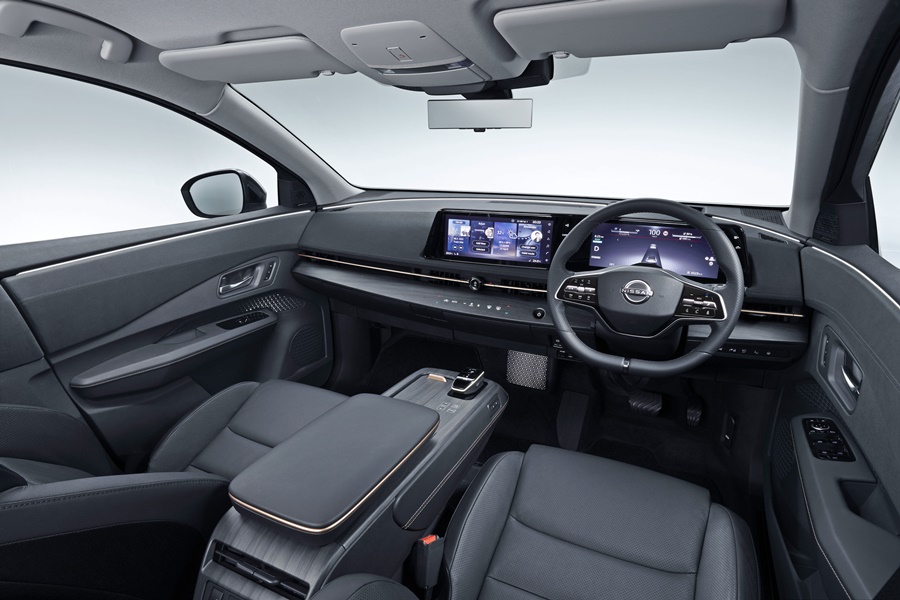
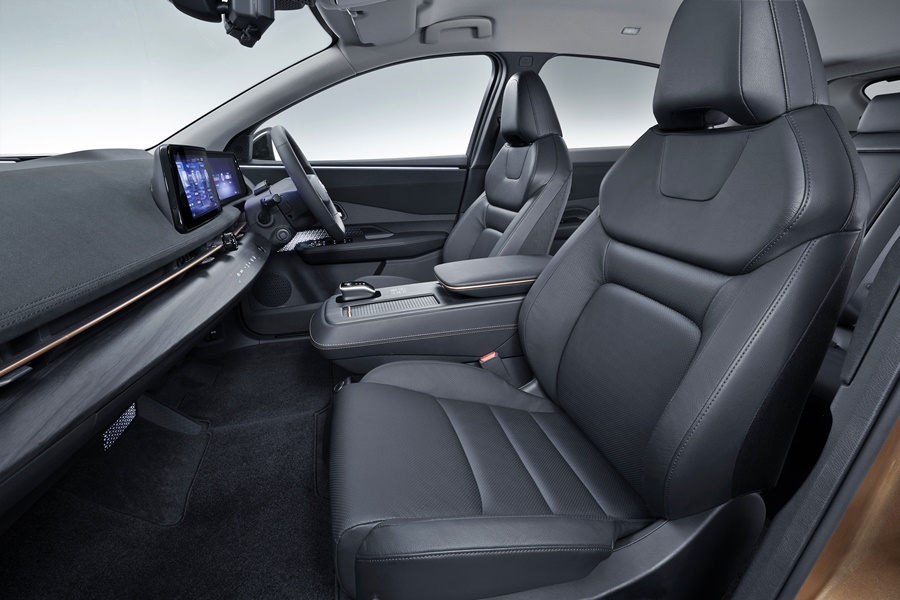
The interior is described as being more akin to a sleek cafe lounge on a starship, evoking performance and intrigue, than to a traditional automotive cabin. The advantages provided by the new EV platform enabled the interior designers to create the most spacious cabin in its class.

2021 Nissan ARIYA

This is also helped by the compact nature of the powertrain components which made it possible for the engineers to install the climate control system under the bonnet (where a traditional gasoline engine would be). This meant that the whole length of the cabin could be utilized without obstructions, such as a transmission tunnel or cabin systems tucked under the instrument panel.

2021 Nissan ARIYA

2021 Nissan ARIYA

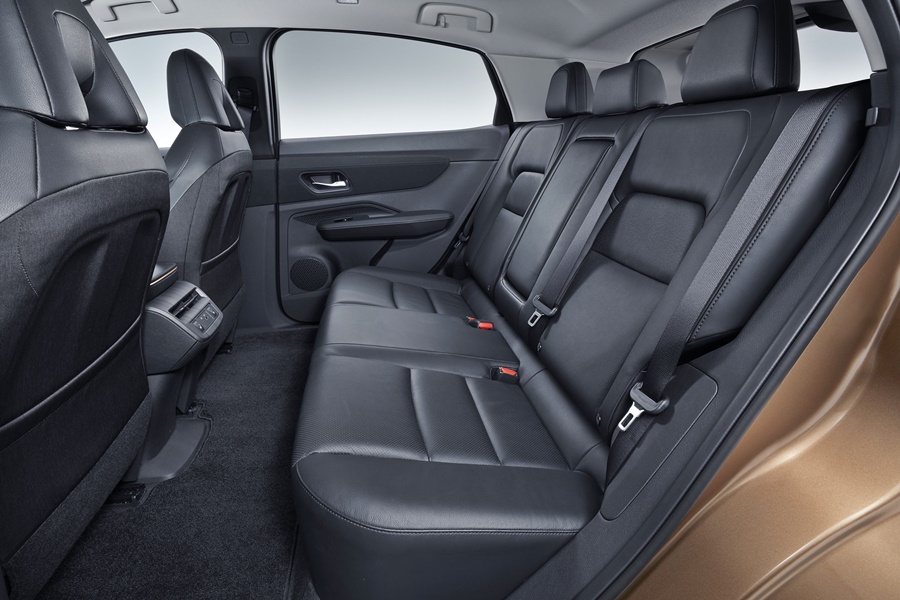
Also, a flat, open floor – made possible by the location of the battery at the base of the chassis – and the Ariya’s slim profile Zero Gravity seats result in vast amounts of legroom and easy interaction between front and rear passengers.

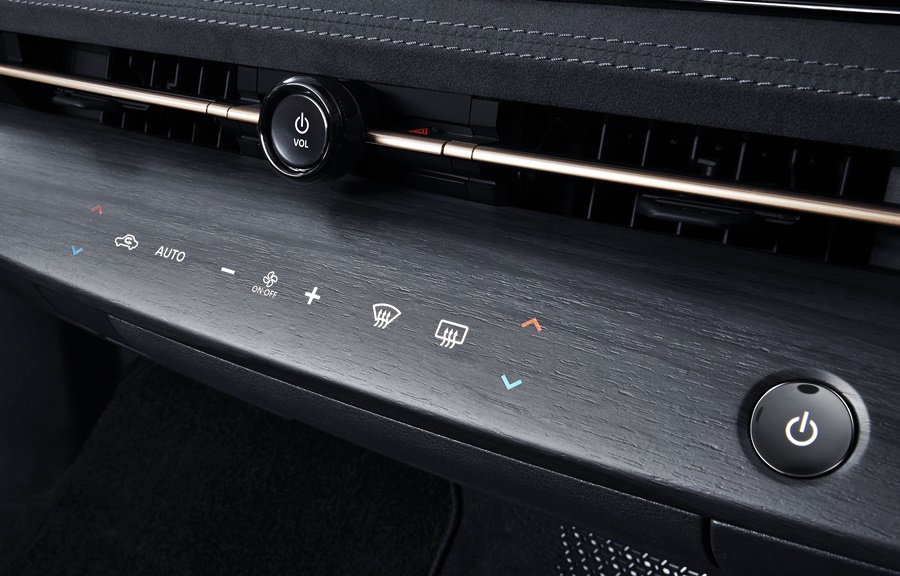
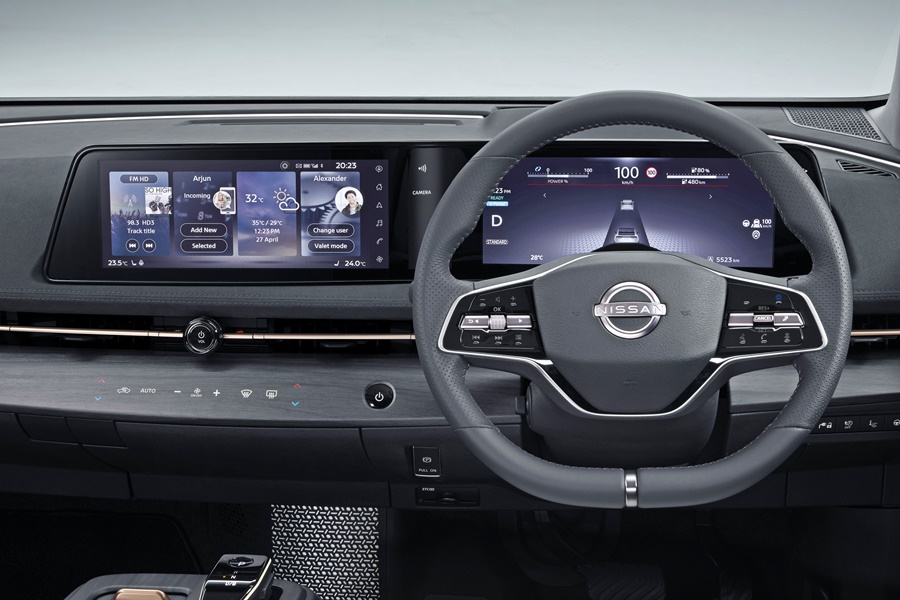
The Ariya’s minimalist dashboard has no buttons and switches, something which is unique. The primary climate control functions are integrated into the wooden centre dash in the form of capacitive haptic switches that offer the same feeling as mechanical switches by vibrating when touched.

2021 Nissan Ariya

2021 Nissan Ariya

2021 Nissan Ariya

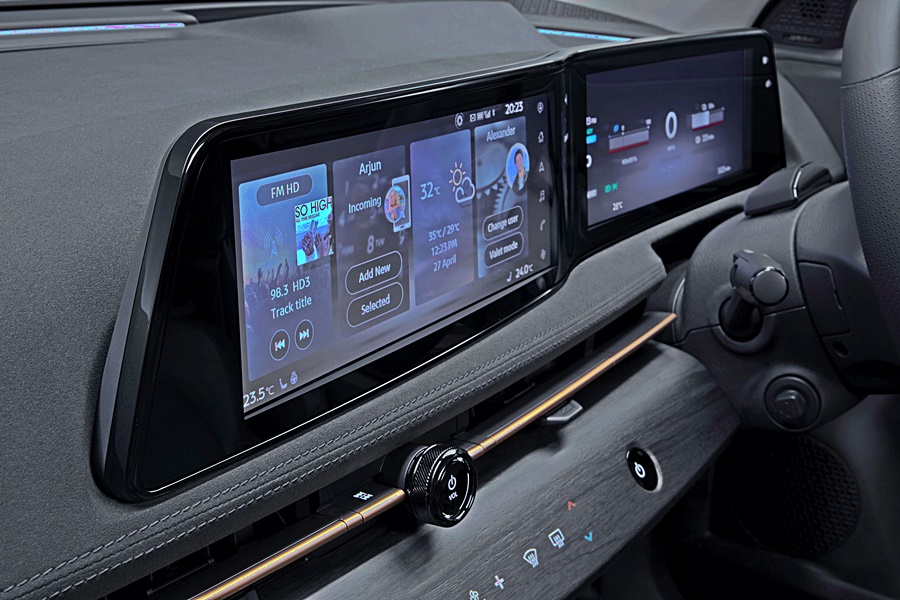
The display interface features both a 12.3-inch instrument monitor and 12.3-inch centre display along a single horizon. By displaying multiple facets of information on one horizontal plane, information can be quickly digested without the driver being distracted from the road. The two displays are oriented in a wave-like shape to ensure important vehicle information, such as battery information, range and navigation, can be easily reached and scrolled through with a simple swipe.


Related story: Why Nissan designers avoided the tablet in yhe Ariya Concept


The Ariya is the first Nissan model which can received firmware updates over the air using Remote Software Upgrade. The technology automatically updates various software inside the vehicle, making it unnecessary for the owner to take the car to a service centre. With periodic real-time updates, the Ariya will always be able to operate at its full potential.

DIMENSIONS OF THE ARIYA
Overall length – 4595 mm
Overall width – 1850 mm
Overall height – 1655 mm
Wheelbase – 2775 mm
Kerb weight – 1,900 kgs to 2,200 kgs

The Ariya will only go on sale in 2021 and only in Japan and certain regions, and Malaysia is not included. However, you can own a fully electric EV now as the Nissan LEAF is available in Malaysia. Visit www.nissan.com.my to find out where you can get the EV experience.

Nissan IMk concept EV – the perfect city car of the future? (w/VIDEO)

COVID-19

PISTON.MY

In a first-of-its-kind driving contest, Nissan pitched its LEAF – the world’s first mass-market fully-electric vehicle (EV) – against the speed of nature’s powerful elements – fire and wind. The idea of having the challenge was to change the perception that electric vehicles are not dynamic or exciting.

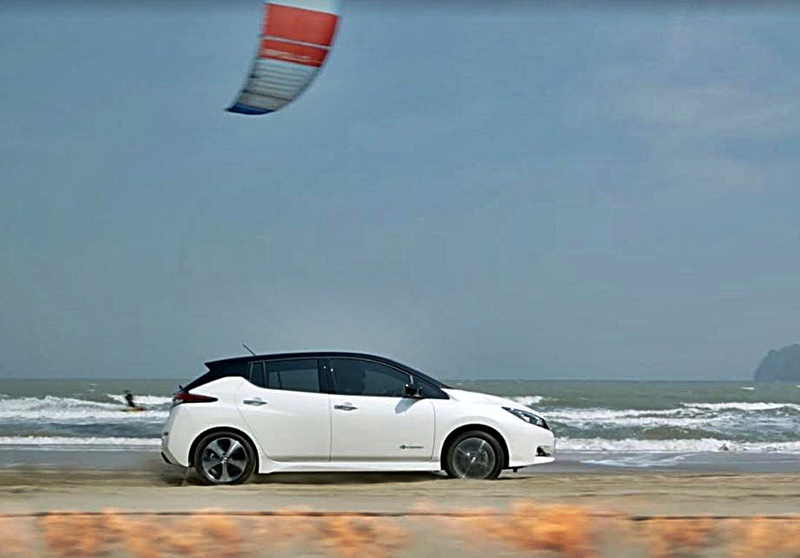
On an enclosed area at Samroiyod Beach along the western side of the Gulf of Thailand, Nissan set up a one kilometre long course. A pyrotechnician’s ‘fire-line’ and a champion kite surfer raced against the LEAF to cross the finish line in the shortest time.

The Nissan LEAF, with its ability to go from standing still to 100 km/h in 7.9 seconds, raced ahead of its elemental rivals. The quick performance of the EV was made possible by its e-Powertrain. Power from the powerful electric motor goes straight to the wheels to give instant and strong acceleration. Additionally, the LEAF was able to beat both fire and wind in this race due to its light weight.

“Without doubt, electric vehicles are the most environmentally responsible cars of the future. And with this challenge, we aim to show that the Nissan LEAF is simply amazing, not only because of zero-emission, but also being a cool car with mind-blowing acceleration and driving dynamics that can handle any challenge,” said Nirmal Nair, Vice President Marketing, Nissan Asia & Oceania.

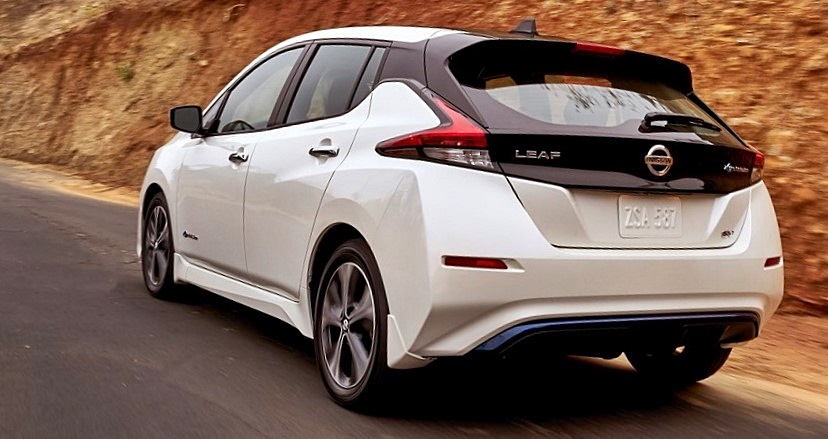
Nissan LEAF

The latest Nissan LEAF is available in Malaysia from Edaran Tan Chong Motor. Visit www.nissan.com.my to know more and locate a showroom.

FIRST DRIVE: 2019 Nissan Leaf – “Simply Electrifying”

PISTON.MY

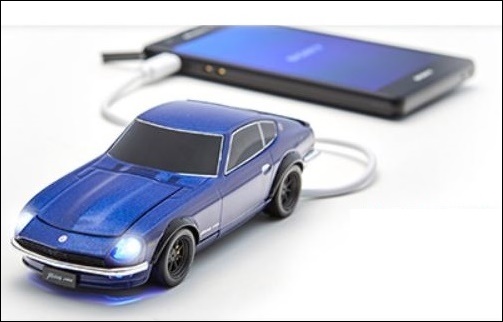
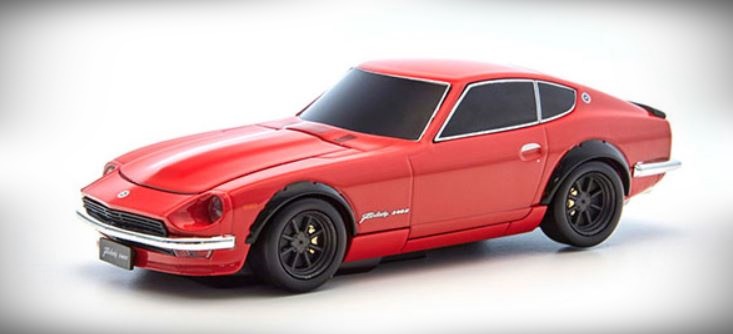
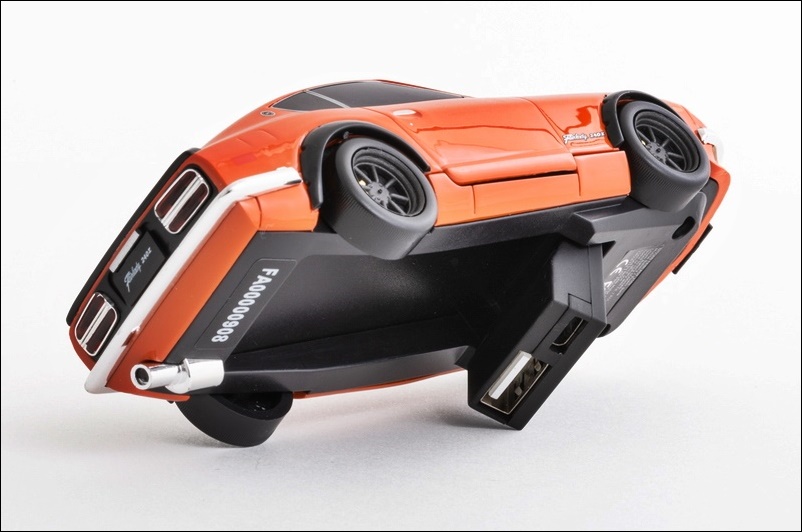
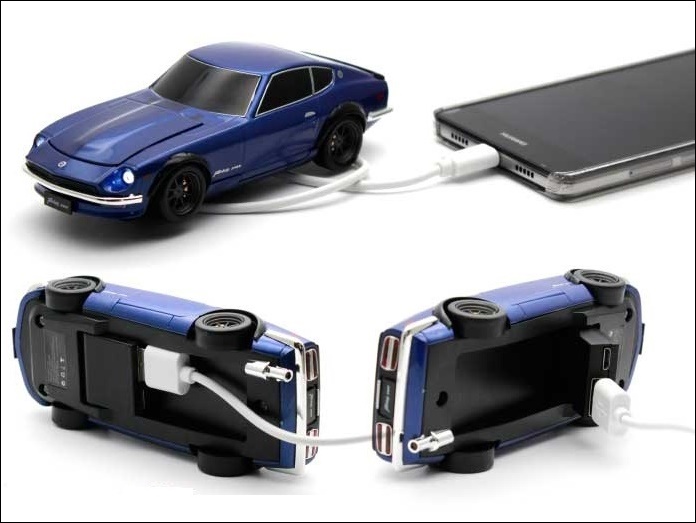
Powerbanks come in all sorts of shapes and sizes these days. Some have unique designs and for car-lovers, especially those who are fans of the Datsun Fairlady 240Z, there’s a powerbank shaped just like the legendary car. A product of Links International based in Japan, the powerbank is a collaboration between the 21-year old company and Nissan.

The energy storage device is a faithful scale reproduction of the sportscar and has functioning headlights and taillights which illuminate to indicate the amount of charge available and status. When charging a device, the white LEDs of the headlights come on, and when the remaining power is 10% or less, the headlights go off. Then the red LEDs of the taillights flash like a brake lamp; when the battery pack is fully recharged again, the headlights will switch on.

Datsun Fairlady 240Z Powerbank

Datsun Fairlady 240Z Powerbank (3)

It has a single USB port that swivels out from the underside to connect a cable to the smartphone and a low charging rate of 1A/5V. The capacity of the 130 gm unit is 4,500 mAh which takes approximately 6 – 9 hours to fully recharge through the Micro USB port. The powerbank can be recharged for 500 times.

To protect the device being charged, there are safety circuits to prevent  overcharging, over-discharging and short-circuit.

Datsun Fairlady 240Z Powerbank

The Datsun Fairlady 240Z Powerbank has been in the Japanese market a while now and is still available from the Nissan Online Shop and some online stores in Japan, priced at 6,600 yen which is equivalent to around RM260.

This Lego Nissan GT-R Nismo is what you’ll want in 2020

COVID-19

PISTON.MY


Archive

Follow us on Facebook

Follow us on YouTube